#questions-2
1 messages · Page 118 of 1
 scenic drift
 fast sable
Does after unter come dativ?
 analog mesa
scenic drift
Yes
analog mesa
scenic drift
Yes
dann habe ich wohl unrecht gehabt entschuldige
scenic drift
fast sable
Does after *unter* come dativ?
accusative if there is movement, dative if there is not
er steht unter dem Dach. er ist unter das Dach gegangen.
fast sable
Ok thanks!!:D
scenic drift
fast sable
Ok thanks!!:D
in the future, if you look up the preposition on e.g. wiktionary it will show you the case it goes with :)
fast sable
scenic drift
in the future, if you look up the preposition on e.g. wiktionary it will show yo...
Thank u!❤️ I’ll check it out! :)
 alpine jackal
is there any difference between ‘heiraten‘ and ‘verheiraten‘ ?
scenic drift
alpine jackal
is there any difference between ‘heiraten‘ and ‘verheiraten‘ ?
yes, kinda. have you looked at the definitions on wiktionary? i think it explains it well.
the key thing is that "verheiraten" can be used when you're e.g. a priest and marrying two people, or you're finding a spouse for someone, but "heiraten" can't be used in that sense
 dapper gorge
in the sense of "get married", you have to say "sich verheiraten", as far as i understand
dapper gorge
alpine jackal
is there any difference between ‘heiraten‘ and ‘verheiraten‘ ?
I checked on context reverso
it seems like these are the most common forms:
verheiratet sein = be married (as a state)
heiraten = get married (as an event)
 autumn marsh
well, 'sich verheiraten' also is to marry but it sounds very, very formal
you can also 'verheiraten' someone else, like:
der Vater verheiratet seine Tochter
but that would imply that the daughter has no saying in this, basically. overall, it's an outdated way of saying 'to marry' unless speaking of forced marriage or when used as Partizip 2 ('ich bin verheiratet')
you can technically say: 'ich verheirate mich mit ihm' but that sounds very formal and unless you want to stress that it's just for formal reasons or when speaking about forced marriage, we do not use it. usually it's:
Ich heirate ihn/sie.
 gleaming sedge
I usually see heiraten used as a verb (to marry) and verheiratet as an adjective (verheiratet sein - to be married, as a civil status).
 fervent kernel
That's the common use case.
autumn marsh
gleaming sedge
I usually see heiraten used as a verb (to marry) and verheiratet as an adjective...
be aware that this is a Partizip, not an Adjective. it behaves just the same, but where it is coming from is different.
 scenic drift
gleaming sedge
scenic drift
gleaming sedge
if it's being conjugated as a verb, yes
fast sable
Difference between die Wanderung and der Umzug ?
 delicate tiger
hike; parade/move
 vague whale
Ich bin sehr glücklich, wenn ich dich sehe. Is this correct?
fervent kernel
vague whale
Ich bin sehr glücklich, wenn ich dich sehe. Is this correct?
it's correct but it's doesnt sound natural german
i would say " du machst meinen Tag glücklicher " or "du bringst mich zum Lächeln"
but i'm not a native so keep that in mind
Du versüßt mir den Tag 
 swift bough
fervent kernel
it's correct but it's doesnt sound natural german
swift bough
fervent kernel
it's correct but it's doesnt sound natural german
🤔 sounds fine
Maybe it’s not the most creative but that doesn’t make it less natural 😄
 dry iron
fervent kernel
it's correct but it's doesnt sound natural german
dry iron
fervent kernel
it's correct but it's doesnt sound natural german
Warum frontest du mein Flirt Game?!?? 🤣
 fervent veldt
Gibt es einen Unterschied zwischen beiden?

 ancient aspen
fervent veldt
Gibt es einen Unterschied zwischen beiden?
ancient aspen
fervent veldt
Gibt es einen Unterschied zwischen beiden?
Beides kann für das Gleiche benutzt werden, aber man kann z.B. auch mit einem Kapitel im Leben abschließen und da kann man dann nicht absperren benutzen
 wise pendant
fervent veldt
Gibt es einen Unterschied zwischen beiden?
wise pendant
fervent veldt
Gibt es einen Unterschied zwischen beiden?
"Abschließen" und "Absperren" beschreiben, was benutzt wird, um den Durchgang zu verhindern:
abschließen - mit einem Schlüssel/Schloss zu machen
absperren - mit einer Sperrung / einem Hindernis
| Siehe auch: abriegeln - mit einem Riegel zu machen
 proven sphinx
wise pendant
"Abschließen" und "Absperren" beschreiben, was benutzt wird, um den Durchgang zu...
proven sphinx
wise pendant
"Abschließen" und "Absperren" beschreiben, was benutzt wird, um den Durchgang zu...
Na ja, wenigstens eines deiner Kommas stimmt. 😂
wise pendant
Ach, Kommas Schmommas sag ich immer 😂
proven sphinx
"Abschließen" und "Absperren" beschreiben, was benutzt wird, um den Durchgang zu verhindern.
So sollte es sein.
Du hast es tatsächlich so editiert. LOL.
wise pendant
Hab einfach deins rauskopiert lel
proven sphinx
Ich musste gerade zwei Maturaarbeiten (Abiturarbeiten) auf solche Fehler korrigieren. Das waren je so 30 Seiten. 😫
wise pendant
Welche Wette hast'n du verlor'n?
proven sphinx
Ich wurde dafür bezahlt.
wise pendant
Dann gehts doch, solange die Entschädigung mehr oder weniger dem Aufwand entspricht
proven sphinx
So 90€ pro Arbeit, die ich korrigierte. Schon nicht schlecht.
wise pendant
Wie viele Stunden saßte dran?
wise pendant
Ist besserer Stundenlohn als ich als Werkstudent bekomm' 😅
proven sphinx
Ja, aber dafür arbeite ich ja nicht den ganzen Tag lang. Ich bin sowieso Vollzeitstudent, also mache ich diese Sachen nur so nebenbei.
wise pendant
Lohnt sich ja fast
 brisk bloom
Wild, ich kriege nichtmal Mindestlohn gezahlt als dualer Student😂
 icy flax
Er hatte ihnen beiden die Hand gedrückt und »herzliches Beileid« gemurmelt.
Ist das eine akzeptiebare Weise, den Tod eines Verwandeten mitzuteilen? Auf meine Sprache klingt es etwas Leeres, als wäre der Artz ein Robot oder als schrieb er halt einen Brief, sehr förmlich, wäre ganz nebenbei ein "im Auftrag", würdes mich nicht überraschen... Der Artz würde bei uns sagen "tut mir Leid, er konnte es nicht durchmachen...😩 ".
fervent kernel
Gemurmelt kling meiner Meinung nach wie ein Witz, als würde er es nicht ernstnehmen. Ich würde stattdessen "ausgesprochen" verwenden.
Er hatte beiden die Hand gedrückt und ein herzliches Beileid ausgesprochen.
ihnen finde ich etwas überflüssig, da du schon beiden hast. Ansonsten in Ordnung
Und man schreibt Arzt und nicht Artz, den Fehler machen viele! Auch Muttersprachler :)
i often tried to improve my wortschatz by reading books, and the words i didn't understand i wrote them down, but after writing them down i seem to just forget them after 2 or 3 days of not seeing them. is there a better way to just not forget words?
I can recommend Quizlet for that. That‘s how I learn words. It's a Quiz app where you can create your own set and test yourself. Maybe repeat that multiple times.
icy flax
fervent kernel
Gemurmelt kling meiner Meinung nach wie ein Witz, als würde er es nicht ernstneh...
Oh hey hi, Nyk! Thanks for you contributions, 👊!
My message in German wasnt that clear. I was not asking about whether the passage is well written. That's a German book from 1979; I get that it might not sound recent to you. What I asked was more about what I suppose being a cultural difference.
I would find it oddly cold if the doctor tells me and my father "heartly condolensce/compassion". We have an almost precise translation to those word in Portuguese, but it sounds robotic, formal and maybe even sarcastic nowadays.
What I wanted to know is what you would expect a doctor to tell you in a such a situation; telling you your mom just died, that is? Like, how would you say, if you were the doctor. Here in my country Germans are rather known for being cold, I would like to know your phrasing (:
Danke!
wise pendant
icy flax
Oh hey hi, Nyk! Thanks for you contributions, 👊!
My message in German wasnt tha...
"Herzliches Beileid" is not sarcastic or robotic in german at all.
In formal german it's actually a common phrase used.
It might be used less often nowadays, but 1979 I think he meant that in a warm compassionate way
icy flax
wise pendant
It might be used less often nowadays, but 1979 I think he meant that in a warm c...
Thaanks!
wise pendant
Though as Nykloon said even 1979 the word murmeln might have meant that he wasnt really serious about it
 dusty pendant
does werden have its own uses/meaning outside of the future tense?
icy flax
dusty pendant
does werden have its own uses/meaning outside of the future tense?
Yes. It means "to become" and it is also used for the process-passive. Unfortunately there is not a 1:1 translation to English, but sth like:
It is being eaten ~ Es wird gegessen
Those are all the usages of werden.
 worldly portal
werden is cool ngl
dusty pendant
i see!
ty :)
it is :D
man that's elegant
that
werden ge-whatever
that's a nice tense
 solid hull
icy flax
Those are all the usages of werden.
solid hull
icy flax
Those are all the usages of werden.
don't forget about the conditional. Formed with werden in the Konjunktiv II + main verb
 frail garden
does this make sense, talking about headphones "Mit der Noise-Cancelling-Technologie blendet man die Verpflichtungen des Lebens aus "
wise pendant
frail garden
does this make sense, talking about headphones "Mit der Noise-Cancelling-Technol...
More or less.
Though it seems like you want to avoid chores around the house or looking for a job with it. But it seems that was an intentional joke.
scenic drift
@bleak rampart please don't post the same thing in both channels
 bleak rampart
icy flax
solid hull
don't forget about the conditional. Formed with werden in the Konjunktiv II + ma...
bleak rampart
icy flax
solid hull
don't forget about the conditional. Formed with werden in the Konjunktiv II + ma...
@worldly portal @dusty pendant, sry theres one more usage. In English you use "would" to talk about thing u would do. In German, there's würde, that originally comes from werden.
 heady vigil
hey guys, does anyone know what it means when you use ^be^ before a verb?
like benutzen zB
scenic drift
heady vigil
hey guys, does anyone know what it means when you use ^be^ before a verb?
wiktionary has a nice summary of the meanings: https://en.wiktionary.org/wiki/be-#German
dapper gorge
it doesn't mean anything specific, neither is it a productive prefix
So it seems impractical to consider its meaning.
It's kinda like thinking of the meaning of the prefix "com" in English. Even worse actually
dusty pendant
icy flax
<@177498789530173440> <@548525370291519488>, sry theres one more usage. In Engli...
is it the past tense of werden or?
dapper gorge
ironically, it is the "would" form of werden
So technically one would expect it to mean "would become"
 cosmic tendon
"Fast 60 Prozent wurden bei Unfällen auf Landstraßen verletzt."
can someone explain to me please where the "n" at the end of "Unfällen" came from?
it is related with "n-deklination" or dative preposition "bei"?
scenic drift
cosmic tendon
"Fast 60 Prozent wurden bei Unfällen auf Landstraßen verletzt."
can someone exp...
haven't you already asked this question/
 long whale
icy flax
Oh hey hi, Nyk! Thanks for you contributions, 👊!
My message in German wasnt tha...
long whale
icy flax
Oh hey hi, Nyk! Thanks for you contributions, 👊!
My message in German wasnt tha...
See above - there is nothing much better than "Mein Beileid". If a friend's mother had died, I'd say something like "Es tut mir wirklich sehr leid für dich" or something, but that is far too informal (and not just because of dich/du) for a doctor. :)
scenic drift
and indeed received an answer in #questions ?
cosmic tendon
scenic drift
haven't you already asked this question/
is it not allowed ? because i need more then one answer
and am sorry if it not allowed to repost a question
scenic drift
cosmic tendon
is it not allowed ? because i need more then one answer
and am sorry if it not ...
well, i'm confused why you'd need more answers if you've already received an answer
 glass hawk
cosmic tendon
"Fast 60 Prozent wurden bei Unfällen auf Landstraßen verletzt."
can someone exp...
glass hawk
cosmic tendon
"Fast 60 Prozent wurden bei Unfällen auf Landstraßen verletzt."
can someone exp...
It's due to the dative preposition, and more specifically it is due to the tendency (rule? Not sure if it's absolute) that nouns in the dative plural take an -(e)n if they don't already end in -n or -s
cosmic tendon
scenic drift
well, i'm confused why you'd need more answers if you've already received an ans...
Then how you trust that one answer, simple method of accumulation of knowledge is to have more than one resources.
cosmic tendon
glass hawk
It's due to the dative preposition, and more specifically it is due to the tende...
vielen dank
scenic drift
cosmic tendon
Then how you trust that one answer, simple method of accumulation of knowledge i...
if no-one's corrected the person who replied to you, you can assume that answer is correct
usually once you've already got one answer, other people won't reply if that answer is correct
cosmic tendon
scenic drift
usually once you've already got one answer, other people won't reply if that ans...
ok thank you i was not familiar with that rule
glass hawk
scenic drift
if no-one's corrected the person who replied to you, you can assume that answer ...
To be fair, the answer was just a simple confirmation of one of the options presented in the latter question (is it related to x or y) without any elaboration or specific address of the former (where does it come from). I feel elaboration goes a long way to helping solidify understanding.
icy flax
long whale
See above - there is nothing much better than "Mein Beileid". If a friend's moth...
Thx, Susana. Luv when u answer me (:
solid hull
icy flax
<@177498789530173440> <@548525370291519488>, sry theres one more usage. In Engli...
Isn’t that what i said 
nvm i just noticed what you did, my bad
icy flax
dusty pendant
is it the past tense of werden or?
That would be "wurden". It's the second form of the conjunctive "würden".
icy flax
solid hull
nvm i just noticed what you did, my bad
Yeaa. Wanted to link em (:
dusty pendant
another quick question about werden
how nonsensical is the sentence "ich werde werden"?
wise pendant
dusty pendant
another quick question about werden
how nonsensical is the sentence "ich werde w...
So much so that it isn't even a full sentence
dusty pendant
ok well without shit in the middle
icy flax
wise pendant
So much so that it isn't even a full sentence
How would you say "I will become it"?
dusty pendant
you obviously need more than that but
yeah yea
my main question is how you'd put werden into the future tense
 night dagger
icy flax
How would you say "I will become it"?
night dagger
icy flax
How would you say "I will become it"?
einfach "ich werde es werden.", oder?
long whale
dusty pendant
yeah yea
my main question is how you'd put werden into the future tense
In theory, "wird werden" works. In practice, you'd just add some adverb to show the future sense, such as "Er wird [ein]mal Astronaut" or "Er wird eines Tages Astronaut", for example. :)
icy flax
night dagger
einfach "ich werde es werden.", oder?
Exactly. It's just not idiomatic. 👍
night dagger
yeah, maybe something like "das werde ich sein" sounds more idiomatic
 bleak helm
ja?
proven sphinx
Eh, I'd definitely prefer the version with "mir".
bleak helm
proven sphinx
Eh, I'd definitely prefer the version with "mir".
with "mir" it hears better but it is also right without?
proven sphinx
bleak helm
with "mir" it hears better but it is also right without?
Maybe the version without "mir" sounds ruder.
Yeah, there I'd definitely only say the former.
fervent kernel
can i ask how i say something specific in german in here?
proven sphinx
Uh, yes?
worldly portal
specific is good
fervent kernel
How do i say "his" for example: "His basement". Would it just be: "er zimmer"?
"er" just doesnt sound right
proven sphinx
fervent kernel
How do i say "his" for example: "His basement". Would it just be: "er zimmer"?
Sein Zimmer.
Don't confuse personal and possessive pronouns.
"er" is a personal pronoun, not a possessive one.
fervent kernel
oh so when its about people its Sein?
proven sphinx
You don't say "he basement" either, do you?
That's literally what "er Zimmer" would mean.
fervent kernel
Thanks alot 😅
fervent kernel
well neither German or English is my native language.
learning both things at the same time.
pain in the ass
bleak helm
fervent kernel
How do i say "his" for example: "His basement". Would it just be: "er zimmer"?
No his Basement means sein Keller
Deutsch ist aber ne coole Sprache
proven sphinx
fervent kernel
How do i say "his" for example: "His basement". Would it just be: "er zimmer"?
Maybe you're confusing this with "ihr Zimmer", which may sound pretty similar to "er Zimmer" to a non-native.
proven sphinx
bleak helm
No his Basement means sein Keller
Oh yeah, I didn't even notice that. 😂
bleak helm
xD
proven sphinx
 stable flame
heute ist so ein schmutz tag ganz ehrlich
stable flame
heute ist so ein schmutz tag ganz ehrlich
Falscher Kanal...
fervent kernel
proven sphinx
Maybe you're confusing this with "ihr Zimmer", which may sound pretty similar to...
im confused
so its keller?
zimmer is room?
proven sphinx
stable flame
bin grad erst gejoint
Hier geht es um Fragen über die deutsche Sprache, nicht um Smalltalk auf Deutsch.
proven sphinx
fervent kernel
zimmer is room?
Yep.
bleak helm
räuspert sich
Grundstücksverkehrsgenehmigungszuständigkeitsübertragungsverordnung
solid hull
proven sphinx
Hier geht es um Fragen über die deutsche Sprache, nicht um Smalltalk auf Deutsch...
Winzigsprechen
wollte kleinreden sagen aber das gibt es schon und bedeutet was anders
swift bough
solid hull
Winzigsprechen
Man I love when you do that
icy flax
swift bough
Man I love when you do that
Dummer ich dachte es war echtes Deutsch, ihr beide Wichser! :,(
Wie sagt man es denn?
plaudern hab ich gefunden.. aber bin zutiefst enttäuscht. Wollen wir dann "winzigsprechen" erfunden?!
swift bough
icy flax
Dummer ich dachte es war echtes Deutsch, ihr beide Wichser! :,(
Wie sagt man es ...
Das Wort „der Smalltalk“ gibt’s im Deutschen eigentlich schon, aber er hat es nur wortwörtlich übersetzt als nen Witz
Er meinte es als kein Verb sondern als ein Nomen
swift bough
„We‘re smalltalking“ gibt’s im Englischen eigentlich auch nicht jetzt wo ich mal drüber nachdenke
icy flax
swift bough
„We‘re smalltalking“ gibt’s im Englischen eigentlich auch nicht jetzt wo ich mal...
Oh, danke! Ich hab selbst mehrmals das beim Englischen Meetings gesagt, als Synonym zum "quatschen". Gut zu wissen ||fuck!|| 😅. Danke für deine Erklärung Bundeees 
 open escarp
How to distinguish male,female,general? :vvvv
scenic drift
open escarp
How to distinguish male,female,general? :vvvv
you mean which gender a noun has?
the third one is neuter, not general
you just need to learn the gender of the noun when you learn the noun
there are some patterns to help you remember / recognize - do >faq gender patterns in #botchannel
open escarp
scenic drift
there are some patterns to help you remember / recognize - do `>faq gender patte...
Danke!
 shut briar
Zugleich wird bald über ein Verhüllungsverbot abgestimmt, das vor allem Touristinnen betreffen würde.
Im having trouble understanding this sentence
Was ist das Subjekt in dem ersten Teil?
bleak helm
shut briar
Zugleich wird bald über ein Verhüllungsverbot abgestimmt, das vor allem Touristi...
Wad ist n Verhüllungsverbot?
shut briar
bleak helm
Wad ist n Verhüllungsverbot?
Ban on veil
 scarlet storm
 shut briar
bleak helm
Wad ist n Verhüllungsverbot?
shut briar
bleak helm
Wad ist n Verhüllungsverbot?
Warte sagst du Verhüllungsverbot ein Subjekt ist?
scarlet storm
scarlet storm
Hey guys, i didn't quite understand the situation here. They are talking about whether they should give the people who are employed a chance to study while working right?
bleak helm
shut briar
Warte sagst du Verhüllungsverbot ein Subjekt ist?
Ne dat sagte ich nicht... Bei Subjekten und so war ich nie wirklich gut
shut briar
bleak helm
Ne dat sagte ich nicht... Bei Subjekten und so war ich nie wirklich gut
Ah kp, ich warte auf die andere
bleak helm
scarlet storm
Hey guys, i didn't quite understand the situation here. They are talking about w...
I explain that quick on german...
Es wird halt an ihrer Universität diskutiert ob Berufstätige die Möglichkeit bekommen währenddessen ein Studium zu absolvieren.
Du willst dazu etwas sagen und Frau Bering fragt sie was sie davon halten/was sie dazu sagen
scarlet storm
bleak helm
I explain that quick on german...
Es wird halt an ihrer Universität diskutiert ...
ohkk klar, dankeschön
bleak helm
scarlet storm
ohkk klar, dankeschön
Kein problem
 sudden cloud
Cenk kann nicht den Mitschüler lieben, weil er nicht in der Fußballmannschaft spielen darf.
How do I know where to place "nicht" in this sentence?
cosmic tendon
ich hab dich nicht verstehen ,kannst du mir noch mehr infos geben ,um ich dich noch besser verstehen kann.
is the sentence correct ?
icy flax
shut briar
Was ist das Subjekt in dem ersten Teil?
Es gibt keines! :O
Im Deutschen kannst du Sätze auch ohne Subjekt wenn du was in erster Position stellst (vergleiche: es wird morgen abgestimmt/morgen wird abgestimmt).
icy flax
sudden cloud
Cenk kann nicht den Mitschüler lieben, weil er nicht in der Fußballmannschaft sp...
Before "in der Fußballmanschaft" negates it.
Just before that "spielen" ends up negating the "spielen darf".
I would put it before spielen, and consider there before "in the team" if I wanted to emphasize that hes really annoyed w not being in the team specifically.
shut briar
icy flax
Es gibt keines! :O
Im Deutschen kannst du Sätze auch ohne Subjekt wenn du was in...
Oh das ist so ungemütlich. Mein Gehirn weigert sich, das zu verstehen
shut briar
icy flax
Es gibt keines! :O
Im Deutschen kannst du Sätze auch ohne Subjekt wenn du was in...
Ich have oft gesehen, Leute entfernen das Verb sprechen wenn sie sagen, ich kann Deutsch ... geht das mit allen Verben? Wie du hier gemacht hat
long whale
shut briar
Ich have oft gesehen, Leute entfernen das Verb sprechen wenn sie sagen, ich kann...
That's totally different. In "Ich kann Deutsch", the verb (sprechen) is omitted, because it's obvious. There is a faq for this, called something like "omission of verb with modal verbs" -> this only works with modal verbs, and only if the verb is absolutely obvious. Another example would be "Ich muss morgen nach Berlin [fahren]".
The sentence with the ban on veils hasn't got a subject because it's Passiv: somebody (we don't know who these people are) will be voting on this ban -> This ban will be voted upon.
shut briar
long whale
That's totally different. In "Ich kann Deutsch", the verb (sprechen) is omitted,...
Oh so Voodoo liegt hier falsch?
shut briar
long whale
The sentence with the ban on veils hasn't got a subject because it's Passiv: som...
In this translation though Ban is the subject
long whale
No, no, he's right. He just didn't mention it was Passiv, that's all. :)
long whale
shut briar
In this translation though Ban is the subject
Correct.
It's just that German grammar differs from English. So, in German, you get this sentence in Aktiv: X (whoever s/he is/they are) stimmt morgen über den Bann ab.
shut briar
long whale
No, no, he's right. He just didn't mention it was Passiv, that's all. :)
No i mean about im Deutschen kannst du Sätze ohne Subject. Klingt das okay oder soll man schreiben oder bilden oder was auch benutzen
long whale
And then, in Passiv, you could either use the dummy subject "es": Es wird morgen über das Verbot abgestimmt. Or, if you put something else in Pos. 1, you get: Morgen wird über das Verbot abgestimmt.
long whale
shut briar
No i mean about im Deutschen kannst du Sätze ohne Subject. Klingt das okay oder ...
Oh, yes, Voodoo just forgot "bilden". :D
You couldn't drop the verb in this case.
shut briar
long whale
And then, in Passiv, you could either use the dummy subject "es": Es wird morgen...
Verstanden, tbh after reading it a lot of times i'm getting a feel of it.
Danke!
icy flax
Oh, i thought that were not necessary, sorryyy, @shut briar @long whale. Danke für die Anmerkung 😅
 spring socket
Is bei uns zu Hause a fixed expression, or can you use it like ,,wie sind die Feuerwehr bei dir zu Hause" (odd example ik)
long whale
spring socket
Is bei uns zu Hause a fixed expression, or can you use it like ,,wie sind die Fe...
die Feuerwehr is singular. Apart from that, yes, you can. :)
spring socket
Thanks!
 alpine dome
Hallo, wenn ich sage "besser als mancher Deutscher", es ist dann SIngular oder? besser als manche Deutsche, wäre mehr als ein Deutscher, oder?
scenic drift
@alpine dome please don't post the same question in two channels
alpine dome
ok
 summer crystal
Is it usually just said as Allerheiligen, or do people say Allerheiligentag? Or would it be two words, Allerheiligen tag
Question from a friend. I'm certain it's either the first or the second, as there is no separation between compound words.
 mighty pebble
In Austria we only say Allerheiligen
But I can’t speak for Germany, Switzerland, Luxemburg etc.
 harsh basalt
mighty pebble
In Austria we only say Allerheiligen
harsh basalt
mighty pebble
In Austria we only say Allerheiligen
Same here in Germany.
summer crystal
Interesting! Thank you both!
mighty pebble
No problem
 spiral bane
Was bedeutet "so eine" hier? Ich kann nicht dieses meme begreifen.

"When she says that she is not ______"
 haughty hinge
spiral bane
Was bedeutet "so eine" hier? Ich kann nicht dieses meme begreifen.
haughty hinge
spiral bane
Was bedeutet "so eine" hier? Ich kann nicht dieses meme begreifen.
I would probably translate it with "When she says she's not that kind of person"
mighty pebble
haughty hinge
I would probably translate it with "When she says she's not that kind of person"
Yes I would say the same
It could also be a reference to Shirin David’s song
spiral bane
mighty pebble
It could also be a reference to Shirin David’s song
Wie heisst das Lied?
mighty pebble
Lass mich nach schauen hab es nicht im Kopf

SHIRIN DAVID - 90-60-111
Single: https://shirindavid.lnk.to/90-60-111
Apple Music: https://umgt.de/6HDiBUi
Spotify: https://spoti.fi/2Y04ht2
iTunes: https://umgt.de/xrmJCff
Amazon Music: https://umgt.de/KR29JXX
Streame und downloade alle weiteren Songs von Shirin David hier 🎧
Alle: https://shirindavid.lnk.to/SUPERSIZE
Spotify: https://spoti...
spiral bane
Danke
haughty hinge
Translated literally it would probably be "When she says that she is not such a [person]"
haughty hinge
mighty pebble
It could also be a reference to Shirin David’s song
Its probably not a reference
spiral bane
Danke
mighty pebble
Kein Ding
spring socket
du wirst früh genug... etwas über den Gom Jabbar erfahren
I'm confused about the meaning here, mainly the use of wirst - you will be early enough to learn something about the Gom Jabbar? I'm also not sure why it isn't "etwas über den Gom Jabbar zu erfahren"
 karmic monolith
spring socket
*du wirst früh genug... etwas über den Gom Jabbar erfahren*
I'm confused about ...
karmic monolith
spring socket
*du wirst früh genug... etwas über den Gom Jabbar erfahren*
I'm confused about ...
I think it means: You will soon enough learn something about Gom Jabbar
"werden" is a modal verb like "können" so there wouldn't be "zu" with another verb. Without the ellipsis, the sentence would be: "du wirst früh genug etwas über den Gom Jabbar erfahren"
spring socket
Makes perfect sense, thanks for your explanation! @karmic monolith
karmic monolith
spring socket
Makes perfect sense, thanks for your explanation! <@378092674927951874>
No problem, glad i could help
 fervent hollow
Would the sentence "ich bin nicht zur Schule gegangen" make sense? I remember watching a show and i vaguely remember a character saying that.
swift bough
fervent hollow
Would the sentence "ich bin nicht zur Schule gegangen" make sense? I remember wa...
Yes
cosmic tendon
which sentence is correct ?
Der Radfahrer wollte an einer Kreuzung geradeaus fahren.
Der Radfahrer wollte an eine Kreuzung geradeaus fahren.
swift bough
fervent hollow
But why tho?
Why don’t I ask you why not, so I can know what about it confused you exactly? 👀
swift bough
But that’s still pretty vague…you want to know how the whole sentence works, or just a certain aspect of it?
solid hull
yeah honestly i wouldn't know how to answer your question. What do you mean "why does it work" lol, what are you comparing it to? It just works, that's how you say it, that's it
fervent hollow
Ok i mean how does it work and how do I know when to use this? That's what I'm asking
solid hull
Ich bin nicht zur Schule gegangen
Ich - pronoun/subject of the sentence
Bin - first person singular conjugated form of the verb sein (to be), which in this case is being used as an auxiliary to form the perfect tense
Nicht - negative particle, “not”
Zur - contraction of zu (preposition that triggers the dative case) + der (feminine dative singular definite article)
Schule - school, feminine noun
Gegangen - past participle of the verb “gehen”
 left wasp
long whale
cosmic tendon
which sentence is correct ?
Der Radfahrer wollte an einer Kreuzung geradeaus fa...
left wasp
long whale
cosmic tendon
which sentence is correct ?
Der Radfahrer wollte an einer Kreuzung geradeaus fa...
Well, what do you think? Have you learnt about Wechselpräpositionen? :)
spiral bane
solid hull
yeah honestly i wouldn't know how to answer your question. What do you mean "why...
Wow, I didnt expect to see you here.
 ocean canopy
Is it “das Husten” or “der Husten”?
scenic drift
ocean canopy
Is it “das Husten” or “der Husten”?
depends on the context
das Husten is the gerund of husten, like the act of coughing
der Husten is a cough
well, maybe 'meaning' is a better word than'context'
 outer nest
spiral bane
Was bedeutet "so eine" hier? Ich kann nicht dieses meme begreifen.
outer nest
spiral bane
Was bedeutet "so eine" hier? Ich kann nicht dieses meme begreifen.
Genau genommen ist das eine Anspielung auf Promiskuität.
 potent hawk
Hallo. Könnte mir jemand erklären, ob ich in dem folgenden Satz bei oder in verwenden soll? Bitte sagen Sie auch den Grund dafür!
"Wegen meiner religiösen Überzeugungen wünsche ich, dass Ihr Großvater auch bei seiner nächsten Geburt eine bessere Lebensform erlangt."
mighty pebble
Ich würde sagen bei
outer nest
[...] bei seiner Geburt [...] bedeutet soviel wie während oder zum Zeitpunkt seiner Geburt. (Theoretisch auch in der unmittelbaren Nähe seiner Geburt.)
[...] in seiner Geburt [...] würde ich als der Geburt zugrunde liegend interpretieren. (Bspw. In der Geburt verbirgt sich das Wunder des Lebens.)
Allerdings muss ich auch sagen, dass Präpositionen zwar meist einer gewissen Logik folgen, aber durch den Vergleich mit anderen Sprachen doch auch klar wird, dass es oft vielmehr eine Sache der Perspektive ist. Ist etwas nun im Gesicht oder warum nicht auch einfach auf dem Gesicht?
Allerdings würde ich die Formulierung eine bessere Lebensform erlangt überdenken, weil sie jedenfalls in der Hinsicht zweideutig ist, dass er so eine andere Lebensform (auch im Sinne eines anderen Individuums) in seinen Besitz bringen könnte, was du sicher nicht ausdrücken möchtest.
Danach hast du zwar nicht gefragt aber wie wäre es mit: durch seine nächste Geburt
potent hawk
outer nest
[...] **bei** seiner Geburt [...] bedeutet soviel wie **während oder zum Zeitpun...
Nach der hinduistischen Auffassungen befindet sich die Menschen in einem Kreislauf von Tod und Wiedergeburt. Wenn ein Mensch stirbt, nehmt die Seele eine andere Gestalt an, indem sie in einem anderen Körper wiedergeboren wird. Die Menschen betrauern den Tod ihres Geliebten 13 Tage lang und an dem dreizehnten Tag nach einem Todesfall wird die Zeremonie "Tehrevin" durchgeführt. Bei dieser Zeremonie wird eine kleine Andacht zum Frieden der Seele des Verstorbenen und dazu, dass er auch in seinem nächsten Leben eine bessere Lebensform erlangt/erhält, abgehalten. Almosen werden den Armen und dem Priester, die die Zeremonie durchführt, gegeben.
Wegen meiner religiösen Überzeugungen wünsche ich also, dass Ihr Großvater auch bei seiner nächsten Geburt eine bessere Lebensform erlangt.
Hier ist der vollständige Kontext
Also es soll hier entweder bei oder in verwendet werden.
outer nest
Vielen Dank, ich war mir sicher, dass es sich hierbei um hinduistische Vorstellungen handeln muss.
Ich würde entweder bei oder durch verwenden.
long whale
outer nest
Ich würde entweder **bei** oder **durch** verwenden.
"durch"? It's not by being born you become a higher being, is it? 🤔
potent hawk
outer nest
Vielen Dank, ich war mir sicher, dass es sich hierbei um hinduistische Vorstellu...
Kann ich also anstatt eine bessere Lebensform erlangt eine bessere Lebensform erhält sagen. Würde dieser Ausdruck dann immer noch zweideutig klingen?
weil Sie jetzt den ganzen Kontext wissen, könnten Sie was anderes empfehlen, wenn keiner von mir vorgeschlagenen Ausdruck passt.
outer nest
long whale
"durch"? It's not by being born you become a higher being, is it? 🤔
You mean that you actually reach a higher form of life through your positive and good previous life and not through birth itself? As far as I know this is true but I would have seen here the birth also as a symbol - the point of time for the evaluation of the past life.
@potent hawk Do not judge me, I am not an expert on Hinduism... 😅
This seems to me to be a philosophical question rather than a grammatical one. 🤦♂️
Schreib doch einfach bei ich denke niemand würde daran Anstoß nehmen.
potent hawk
outer nest
<@!894502748022792192> Do not judge me, I am not an expert on Hinduism... 😅
No, I am not an expert myself I was telling some German about what we believe here in my country. XD
I am just more confused by bei and in and not interested in judging anyone
I am soooo grateful to you that you actually bothered explaining me soo much 😇
@outer nest Allerdings würde ich die Formulierung eine bessere Lebensform erlangt überdenken,...
please also consider answering this question 🙂
Kann ich also anstatt eine bessere Lebensform erlangt eine bessere Lebensform erhält sagen. Würde dieser Ausdruck dann immer noch zweideutig klingen?
Weil Sie jetzt den ganzen Kontext wissen, könnten Sie was anderes empfehlen, wenn keiner von mir vorgeschlagenen Ausdruck passt.
outer nest
Warum nicht alternativ "als eine bessere Lebensform wiedergeboren wird." "als eine bessere Lebensform erneut das Licht der Welt erblicken wird."
Ich denke nicht, dass du das großartig verändern musst. Der Kontext macht doch ziemlich klar, dass es um Wiedergeburt geht und nicht, dass der Großvater nach seiner (erneuten) Geburt direkt zum Tierheim rennt. haha
potent hawk
@outer nest Yes your latest suggestion is even better. You see I'm a poor German learner. My vocabulary is limited. 🙂
outer nest
Sei nicht so streng zu dir selbst, ich fand das alles überhaupt nicht schlecht. 🙂
cosmic tendon
long whale
Well, what do you think? Have you learnt about *Wechselpräpositionen*? :)
yeah ! her we having movement (Bewergung)(AKK) but not to a different place.
in the same time the action occurred in the same place answering the question (Wo ?)=(Dativ) that quite tricky like i said "ich fahre auf der Strasse" so it will be "Der Radfahrer wollte an einer Kreuzung geradeaus fahren."
did i understand it right ?
fervent hollow
solid hull
Ich bin nicht zur Schule gegangen
Ich - pronoun/subject of the sentence
Bin - f...
👍
long whale
cosmic tendon
yeah ! her we having movement (Bewergung)(AKK) but not to a different place.
in ...
Yup, exactly. :) Nobody's moving towards the crossing/Kreuzung, they're at the crossing (-> Wo?) 💐
cosmic tendon
long whale
Yup, exactly. :) Nobody's moving *towards* the crossing/Kreuzung, they're *at* t...
if i said "ich fahre in die kreuzung" and "ich fahre in der kreuzung "
are both correct with different meaning ?
fervent kernel
Hallo zusammen! Welche von den beiden Varianten ist korrekt/klingt neutraler:
"Laut dem Webhostingmarktbericht von FortuneBusinessInsight beträgt im Jahr 2018 der Marktanteil von Shared Hosting am gesamten Webhostingmarkt 31,7%."
"Laut dem Webhostingmarktbericht von FortuneBusinessInsight beträgt der Marktanteil von Shared Hosting am gesamten Webhostingmarkt 31,7% im Jahr 2018."
oder vllt gehört die Jahresangabe gänzlich woanders?
ich bin ein bisschen verwirrt und bräuche Hilfe, danke!
ancient aspen
@fervent kernel the second one is right, but you could change it to: ... am gesamten Webhostingmarkt im Jahr 2018 31,7%
fervent kernel
Danke!
dusty pendant
I'm about to ask the most important question I've ever asked;
how would you go about.. uh
cussing like a sailor
in german
from what I've learned, germans don't really cuss that much, and when they do, it's not varied
but what about the rest of the german speaking world?
ancient aspen
dusty pendant
in german
from what I've learned, germans don't really cuss that much, and when ...
We do cuss a lot (ofc not everyone)
dusty pendant
oh thank god
 fallen galleon
idk what cuss means since English isnt my native language but that made me wonder what it means
dusty pendant
it's just like; swearing is super important to me in general
and i really like german
so if i were to unify them?
[sorry if i come off as rude in some way]
dusty pendant
fallen galleon
idk what cuss means since English isnt my native language but that made me wonde...
swearing, cursing, cussing
 near folio
nein, Wörter wie fuck oder shit, die als beleidigend oder offensiv angesehen werden (können).
fallen galleon
verstehe dankö
long whale
dusty pendant
in german
from what I've learned, germans don't really cuss that much, and when ...
I'd say that's correct - at least the part about it not being very varied. :)
dusty pendant
ye ye
I've only seen a few different expressions used
what about cursing? as in wishing bad luck onto someone/something
is that used?
long whale
dusty pendant
I've only seen a few different expressions used
There are some regional variants/variations. In Bavaria, there's a lot of religious stuff involved in swearing, but still, it isn't that varied, either.
dusty pendant
interesting
long whale
dusty pendant
what about cursing? as in wishing bad luck onto someone/something
is that used?
That depends on the imagination of the person doing the ill-wishing - but that's true for any language, isn't it?
dusty pendant
ofc, ty :D
long whale
dusty pendant
interesting
It's just that Bavaria is almost all Catholics (the same as Spain, where there's also lots of religious stuff involved in swearing).
dusty pendant
huh, you learn something new every day, thank you! :)
ancient aspen
long whale
There are some regional variants/variations. In Bavaria, there's a lot of religi...
das stimmt 
 vague totem
@scenic drift hey man, im looking at the wort fur wort book and ankidroid ( android version of anki i guess) and basically wondering, do i need to write them all in myself or any chance you can send me the file? if you dm me i can give phone number etc.
i dont mind if not, just would save me a few days works you know?
scenic drift
vague totem
<@!425589540246257675> hey man, im looking at the wort fur wort book and ankidro...
I don’t know if I still have them. But you should be able to find the quizlet course online and there is a quizletto Anki extension
If you can’t figure it out gimme a ping and I can take a look and try to generate it for you
vague totem
ok nice ill have a look at that tomorrow, going to bed now
 hushed cave
Gibt es eine interesante buch um b2 zu uben?
 desert panther
kurze Frage: in English, when we write the title of something we tend to either use italics (eg. The Lion King) or “” (eg. “The Lion King”) around the titles
what is the standard formatting in german? is it the same?
icy flax
desert panther
kurze Frage: in English, when we write the title of something we tend to either ...
Rather specific question. I think i've seen in newspaper (süddeutschezeitung) all plain regular formatting
long whale
desert panther
kurze Frage: in English, when we write the title of something we tend to either ...
I bellieve quotation marks ("") are the usual thing. :)
long whale
icy flax
Rather specific question. I **think** i've seen in newspaper (süddeutschezeitung...
How can you say that? :D The paper's called Süddeutsche Zeitung, and yes, the name of a paper is often written without quotation marks around it, unless you're quoting it in an academic paper, in which case I think (!) it's usually written in italics. :)
desert panther
@long whale @icy flax dankeschön, ihr beiden!!
icy flax
long whale
How can you say that? :D The paper's called ***S**üddeutsche **Z**eitung*, and y...
Because that's what I recall.
I didn't feel bold enough to state what's the "standard formatting in german" and bang the hammer on the table, case closed style. Many titles appear with the structure "neues Buch namens X". It's so clear it's the title I didn't build me a frequency table of quotation marks, italics or plain regular text in titles to substantially answer This ||rather specific|| question. As a matter of fact, "think" is very much in bold cz of that. 🤣
I feel they mostly just write the name, then, less frequently, they have it in italics and they use quotation marks to write something sarcastically or to 1:1 quote someone, like in the last IPCC report on climate change.
long whale
But @icy flaxI did say you were right! I just very much objected to your spelling. :D
potent hawk
Bitte korrigieren Sie meine Fehler!
Ich konnte gestern mein übliches Kissen nicht finden. Ich bevorzuge aber ein angenehmes Kissen wie deine Muskeln. Nur wenn es vergleichbare angenehme Kissen wie deine Muskeln existierten /oder ehe existieren würden.
Welche Variante des Verbs sollte man in dem letzten Satz benutzen?
existierten /oder ehe existieren würden.
long whale
potent hawk
Bitte korrigieren Sie meine Fehler!
Ich konnte gestern mein übliches Kissen nich...
Either verb form would be fine. However, your last sentence is not complete. :)
icy flax
long whale
But <@!471476935289995264>I did say you were right! I just very much objected to...
Ach das! Gaal, also, (jz kommt die Ausrede Entschuldigung) das war gegen 3h30 Brasilien, Mitte der sehr beschissenen Nacht vom Gestern. Ich hatte einen Platten am Fahrrad und musste noch ca 15 km nach Hause. 🙀
long whale
*von gestern - Here, have a
potent hawk
long whale
Either verb form would be fine. However, your last sentence is not complete. :)
Wieseo? Ich wollte sagen
If only such comfortable pillows like your muscles existed for real!
übrigens danke ich dir für deine Erklärung. :)
long whale
🧁
Hmm... But what you actually said was "I prefer comfortable pillows like your muscles. Only if comparable comfortable pillows like your muscles existed."
@potent hawk
You see why I said there was something missing from your last sentence?
potent hawk
long whale
You see why I said there was something missing from your last sentence?
I am sorry I thought my sentence conveyed the same sense 😅
Also my vocabulary is limited so I kind of formulated it like that !
long whale
potent hawk
I am sorry I thought my sentence conveyed the same sense 😅
Also my vocabulary i...
"if only" vs. "only if" -> works exactly the same way in German. ;)
potent hawk
Grammatically though the last sentence is correct, right ?
Only the intented meaning differs here, right?
Thanks a lot for that insight Susana <3
spring socket
How does one distinguish Brennstoff from Treibstoff? From my understanding, Treibstoff is kind of a propellant used in planes and jets, while Brennstoff is a more run-of-the-mill kind of fuel used in cars - does this sound about right?
(I'm making a flashcard on Treibstoff and don't want to botch the definition)
long whale
spring socket
How does one distinguish Brennstoff from Treibstoff? From my understanding, Trei...
I'm not too sure about the technical terms, but if you look here https://www.dwds.de/wb/Brennstoff (and under Treibstoff), it might help. Also, you may want to know that "Kraftstoff" is another word for "fuel" (as used for vehicles), used about as much as "Treibstoff". As far as I know, "Brennstoff" is anything you can use to feed a flame and not usually used for car fuel.
spring socket
long whale
I'm not too sure about the technical terms, but if you look here https://www.dwd...
thank you Susana!
 ancient pulsar
Da ist der Wurm drin.
There is something very wrong with it
Is this an idiom or smth?
Cuz Wurm means worm
oh, right
the website says it is figurative
and 'Ugs'
 mellow nova
gotta love idioms
karmic monolith
ancient pulsar
and 'Ugs'
Idk what this idiom means but Ugs stands for umgangssprachlich which means colloquial
ancient pulsar
karmic monolith
Idk what this idiom means but Ugs stands for umgangssprachlich which means collo...
yes yes ik
 wintry geode
 spiral loom
I can't open the file in <#224227249002381313>
spiral loom
I can't open the file in <#224227249002381313>
Did you fix it?
If not use an other application to open
spiral loom
I'll try
wintry geode
You can select your browser
spiral loom
Yeah i fixed it, thx
 onyx rain
Are there tests or anything to have an approximation of German vocab? to say with some definiteness that I know XXXXX number of words? (I was looking at some sites, wanted to know if there is a recommended way)
 little tree
do dative verbs with prefixes stay dative?
 fallow ledge
i did that one for my native langauge and it was like congrats you have the vocab of an average 14 year old
fallow ledge
little tree
do dative verbs with prefixes stay dative?
when you add a prefix to the word it becomes a new word, sometimes its also dative but othertimes not
little tree
mmk ty
swift bough
little tree
do dative verbs with prefixes stay dative?
Really just depends which one you mean. Adding a prefix isn’t what would actually cause that, rather the verb having a prefix, it having a different meaning is more so what might change it from dative to accusative and vise versa. Because dative and accusative do follow logic in terms of the correspondence between meaning and grammar, albeit still not 100% of the time.
solid hull
folgen vs verfolgen for ex is a pair off the top of my head that doesn’t necessarily use the dative when added a prefix
fervent kernel
how could i say "the titanic museum opened in 2012, it's for the titanic that sank in 1912." in german?
i'm making a powerpoint about tourist attractions
swift bough
If you ever need entire sentences translated use DeepL
solid hull
Yeah unfortunately even DeepL won’t give you an accurate translation if you don’t word your original sentence properly for the translator to know what exactly to translate it as
Though i agree with deepl’s eröffnen for open. I wouldn’t use öffnen in this context
True
swift bough
The other thing is that this server isn’t supposed to be a translation service. That‘s what the mods say 🤷♂️
But if you wanna help someone out in DMs nobody can really stop you lol
 fierce idol

 swift bough
Yeah the way it was written by OP wasn’t really going easy on DeepL I have to say..
long whale
I'm afraid it's just that some adjectives + sein require Dativ. "treu" is another one, for example. :)
I'm not sure I understand?
 plain umbra
If it helps, I would say it's the same type of grammar as "Mir ist [adjective]". It's not really about the specific adjectives, but rather that the thing in dative is playing an "indirect object" role in the meaning of the sentence. Like it's something that happens to/for the dative object.
long whale
I think most adjectives require a preposition, for example, if you wanted to say "it's good for me/him", you'd have to say "es ist gut für mich/ihn". Is that what you meant? - Or, well, you could just see it the way Basementality suggested. :)
plain umbra
No, it's the dative object.
The subject is a hidden "es".
Es ist mir gut.
The construction is essentially like "It's good for/to me." just like with the other sentence, it's roughly like "Smoking is detrimental for/to health."
Yeah, exactly.

 sly ferry
Just as a note though, mir ist gut doesn't work grammatically 
plain umbra
I think this might be what it is in Hammer's grammar text but I have to go for now so I'll check it out again when I have time later if you want more info on it.
long whale
Ehh - but, that is only the literal translation. The meaning of "Mir ist nicht gut" is "I'm not feeling well". :)
sly ferry
^
long whale
"Mir ist gut" is fine, grammar-wise, it's just totally unidiomatic. 🤷
sly ferry
No that was the point, it doesn't work, it doesn't mean anything 😅
long whale
Argh. "mir ist nicht gut" is what you'd say in German if you were feeling unwell/sick. It can not be used to say "It isn't good for me", okay?
You would never say Mir ist gut.
sly ferry
Mir ist nicht gut is.. a fixed expression ? Colloquial ? Idk, but it's a special thingy at least
long whale
sly ferry
Mir ist nicht gut is.. a fixed expression ? Colloquial ? Idk, but it's a special...
Umm... Not really, I don't think. Because there's also "mir ist schlecht/langweilig/kalt/heiß...". And they all mean "I feel sick/bored/cold/hot" @fervent kernel
sly ferry
Yeah I meant that it's an exception or special case in the sense that it only works when negated
long whale
sly ferry
Yeah I meant that it's an exception or special case in the sense that it only wo...
Oh, sorry, yes, of course.
Well, the verb would always be "sein", I think. But yes. - And if I were you, I wouldn't worry too much about this. There aren't that many of these adjectives. The overwhelming majority of all adjectives work pretty much the same way they would in English. But you know that, right? Like "Das Haus ist groß", "Tanzen ist schön", etc. :)
 vapid tendon
no
no
You would say "für den" instead of "dem"
But i can't quite tell you why lol
autumn marsh
@fervent kernel @vapid tendon
Tanzen ist für den Körper gesund. >> it technically works, but natives would prefer this word order: 'Tanzen ist gesund für den Körper. Cause otherwise you the additional information jammed between the main sentence, which generally should be avoided. I know Germans love to break their own rules on that, but it's not good style and makes stuff harder to read and understand.
the reason it is Akkusativ and not Dativ: "Körper" is the direct object here. "Tanzen" affects the object directly.
Das Tanzen mit Menschen [Dativ] ist gut für den Körper [Akkusativ] >> the indirect object [Menschen] is part of the action
vapid tendon
right
 primal badger
@fervent kernel this sentence is fals u cannot having 2 verbs in one setence (im talking in case of present) (btw der Gesundheit in this sentence is not dative is "Genitiv".
autumn marsh
why would you not be able to have two verbs in one sentence? oO
"Rauchen ist der Gesundheit abträglich" is a proper german sentence, and "der Gesundheit" is Dativ, not Genitiv
Wem ist Rauchen abträglich? der Gesundheit.
vapid tendon
autumn marsh
"Rauchen ist der Gesundheit abträglich" is a proper german sentence, and "der Ge...
ja
primal badger
Her sentence was: Das Rauchen ist der Gesundheit abträglich : when we have a sentence with sein oder haben should we not put another verb at the end of this setence in infinitive it has no sence( maybe when the sentence conjugate in perfect then yes
autumn marsh
well i can tell you that "Das Rauchen ist der Gesundheit abträglich" is 100% correct 🤷
and there isn't even more than one verb in that sentence ...
i'm not sure where you're getting at, sorry 😄
primal badger
Hhhh it's Okey she can say Rauchen ist gesundheitsschädlich it make sence
autumn marsh
Tanzen ist dem Körper zuträglich >> that works
it just does not work with "gesund"
"Tanzen tut dem Körper gut"
that is a particleverb then, tho
guttun
to benefit someone, basically
primal badger
@autumn marsh why did u put Körper in dative?
Tanzen ist das Körper zuträglich oder?
Cus sein always mit nominative
autumn marsh
Tanzen is die subject here, the other words can not be subjects aswell :p also, it's "der Körper"
primal badger
tanzen ist der Körper zuträglich
autumn marsh
no, dem
primal badger
Cuz sein mit nominative
autumn marsh
sein itself does not state a case ...
in this case it's: "Tanzen ist zuträglich für den Körper
autumn marsh
those would work:
ist dem Körper ... zuträglich, abträglich, zuwider, genehm, recht ... there are a ton more, but this is not how you should look at it
primal badger
@autumn marsh cuz if u say tanzn tut dem Körper gut theen yes correct cuz of tut can we put Körper in dative but the other im not sure
autumn marsh
i'm 100% sure about those sentences @primal badger 😄
i'm sure there is a reason, yes.
Tanzen tut dem Körper gut, tho. not ist
unless you say: Tanzen ist gut für den Körper
primal badger
@autumn marsh yeah yeah okk hhh
autumn marsh
not trying to talk you down or anything but as a native all i can tell you is that those sentences are correct 😅 @primal badger
primal badger
@autumn marsh no of course hhh pleasure to meet u all btw
autumn marsh
i'd be guessing here 🤷 a few things that i can say:
some would work technically, but would not be logical - as it is apparent and the same in every other language. "Tanzen ist dem Körper grün [green]" is grammatically correct, but makes no sense
plain umbra
@fervent kernel I think I found a more relevant section of Hammer's for your question. Let me just post it.


 autumn marsh
other than that, with the Dative-Clause you ask how it is, while with the Akkusative-Clause you ask what it is.
Tanzen ist gut für den Körper.
Tanzen ist angenehm für den Körper.
Tanzen ist anstrengend für den Körper
what is it? good, pleasant, exhausting
while with the Dativ, you're asking how it is, and then some words just do not match.
plain umbra
And then this last part is not about your sentence but the related constructions I mentioned.

Theoretically yeah, though there may be some not listed since it says it's just a "selection" of them.
primal badger
@fervent kernel I know whaht u want to say but grammatically it's not correct
plain umbra
You can read about it here: https://en.wikipedia.org/wiki/Nobiliary_particle
A nobiliary particle is used in a surname or family name in many Western cultures to signal the nobility of a family. The particle used varies depending on the country, language and period of time. However, in some languages the nobiliary particle is the same as a regular prepositional particle that was used in the creation of many surnames. In ...
primal badger
U have to say Wasser ist für die Gesundheit notwendig
plain umbra
Basically it's a preposition used to make surnames that are typically associated with nobility.
vapid tendon
autumn marsh
well technically it works but it makes no sense
it makes sense but nobody would say it like that
delicate tiger
plain umbra
Basically it's a preposition used to make surnames that are typically associated...
(in this case, it can also be just a indicator of your family origin, like "von Franken"....)
plain umbra
Sorry, I'm not a native speaker so I can explain grammar but I can't say which sentences work (since this stuff is quite idiomatic).
autumn marsh
also grammatically correct but wrong
plain umbra
delicate tiger
(in this case, it can also be just a indicator of your family origin, like "von ...
Ja.
autumn marsh
"Leben benötigt Wasser."
that's how you'd say that
the way you put it is grammatically correct but still makes no sense, sounds weird + wrong
and you would not get your point accross
Wasser wird für Leben benötigt
but again, just put it straight and simple: "Leben benötigt wasser." "life needs water"
again, technically correct but very wrong from a logical standpoint + nobody would say it like that
idk why you are trying so hard to make it harder than it has to be 😛
thing is, just because you know the grammtical rules does not mean you necessarily know how Natives would express the same thing you're trying to say
"Rauchen ist der Gesundheit abträglich" also is very ... unusual
"Rauchen schadet der Gesundheit" > plain and simple
it's what we call "bildungssprachlich", as in: educated language
it's not more elegant, it's first and foremost to show off that you've mastered the language 😛
plain umbra
I would say it's one of those things where you have to learn how to use it by seeing it used a lot. Like see what kind of phrases/contexts people use it for and learn from that.
autumn marsh
and imo it's a typical bad german habbit. we love to do that shit, express things more complicated than needed
plain umbra
Since, like I said, it's quite idiomatic. It's hard to put a rule to it since it's one of those "just sounds right" issues.
autumn marsh
sometimes it adds nuances, but often enough it just is for showing off
primal badger
@autumn marsh exactly cuz verb Schäden + dative that's why we put der Gesundheit
autumn marsh
sure it does make language beautiful but that is what poetry or books of fictions are for
it's not necessarily for every day usage, nor for scientific articles or papers
and ESPECIALLY scientific books are often crazy complicated when it comes to their language in german
just so the writer can show off how fuckin smart she or he is
which is, in my not so humble oppinion, a BAD habbit
you want to be understood, not show everyone that you are smart
no
"geben" is "give" in english, you have to state what you are giving
i mean, just translate it into english: "Water gives the body good" 😄
what you can do, is for example: "Wasser gibt dem Körper viel", as in: "a lot"
"Water is giving the body a lot"
that works but we had that already iirc
tun = to do
plain umbra
I can't post it here since we can't share copyrighted content and so on. But it's called Hammer's German Grammar and Usage, so if you have means to acquire books yourself, you can search it and it should be easy to find.
autumn marsh
both sentences work, you'd use them in different situations
wise pendant
er spricht kein deutsch spricht*
Verb always comes second (in a main clause)
autumn marsh
with "nicht", you're basically saying: "he's not speaking german, he is speaking something else" the 2nd part is implied then tho and would have to follow
while "Er spricht kein Deutsch" would just say: he does not [know how to] speak german
"Er spricht nicht Deutsch, er spricht Französisch!"
"he is not speaking German, he's speaking french"
primal badger
Grammatically : nicht stands bevore Adjektive or preposition und kein negates nouns with the indefinite article and the null artical. Kein stands immediately before the noun it negates.
fervent kernel
Hey, how do you say “you are looking good” maybe Sie sieht so schön aus?
scenic drift
fervent kernel
Hey, how do you say “you are looking good” maybe Sie sieht so schön aus?
"sie sieht" = "she looks"
autumn marsh
if you're speaking directly towards a person you know, you'd use "Du"
"Du siehst gut aus." > 'schön' would work aswell, but means beautiful
autumn marsh
if you're not familiar with the person, you can use the Höflichkeitsform (formal way of speaking to someone), then you'd say:
"Sie sehen sehr gut aus."
then again, it's usually not a compliment you'd give to a person you're not familiar with / where you use "du" already
autumn marsh
fervent kernel
You as in 2 people
"Ihr seht gut aus."
fervent kernel
Thanks alot
delicate tiger
">faq keyboard" in #botchannel
vapid tendon
i already pinged him on the message where i did it
 chilly palm
i have a question
why is "ich esse fleisch nicht" incorrect and "ich esse kein fleisch" correct?
chilly palm
i was doing duolingo and i came across this, so just wanted a reason as to why was it incorrect
scenic drift
chilly palm
i was doing duolingo and i came across this, so just wanted a reason as to why w...
there's a guide here that might help you: https://resources.german.lsa.umich.edu/grammatik/nicht/
it's a noun not preceded by any article, so "kein" is what you want.
scenic drift
dartmouth and umich are my go-to resources for grammar questions 😆
vapid tendon
scenic drift
it's a noun not preceded by any article, so "kein" is what you want.
lol i suppose native speakers are bad at explaining things like that lol
scenic drift
yeahh 😅
natives are generally great for answering questions that require Sprachgefühl
but if it's explanations about why the language does things a certain way, teachers (usually non-native) are better
vapid tendon
well, there is no real reason. but yes non-natives usually have some kind of eselsbrücke
long whale
Those are modal particles which will often be dropped in translation, since they just serve to give a certain "flavour" to a sentence, like impatience, or they may be softening the tone. In the first one, I think you might start the sentence with "so" in English to translate the meaning of "ja": "So, you can help me, if you're coming tomorrow". The second one might be translated as "Didn't I tell you he was an idiot" - with the negation kind of giving the same idea as the "doch".
Don't worry about not knowing when to use modal particles yourself - that's best left for when you're at least C1. :)
@copper cedar
potent hawk
Jemand hat dieses Bild mit mir geteilt, und ich dachte, auch andere sollten an meinem Glück beteiligt sein. Denn dieses Bild kann jemand anderen auch zum Lächeln bringen.
Ich bin mir nicht sicher, ob in andere sollten an meinem Glück beteiligt sein **andere **großgeschrieben werden sollte oder nicht, denn hier wird das Adjektiv als ein Substantiv benutzt.
fervent kernel
Du kannst es entweder groß oder klein schreiben.
long whale
potent hawk
Jemand hat dieses Bild mit mir geteilt, und ich dachte, auch andere sollten an m...
... but you'd probably use "teilhaben" instead of "beteiligt sein". :)
potent hawk
long whale
... but you'd probably use "teilhaben" instead of "beteiligt sein". :)
Oh okay thanks for your suggestion too 🙂
potent hawk
fervent kernel
Du kannst es entweder groß oder klein schreiben.
thank you
 karmic monolith
Did this, got into the top 6.27%, the level of a "professional white-collar in Germany"
fervent kernel
karmic monolith
Did this, got into the top 6.27%, the level of a "professional white-collar in G...
not bad
dusty pendant
very fast question:
diminutives, can you slap them onto any noun?
swift bough
dusty pendant
very fast question:
diminutives, can you slap them onto any noun?
Theoretically…but I feel like in most cases nobody actually does that. They will just use klein/winzig/gering
dusty pendant
i see, ty :)
shut briar
Ich habe diese quiz auch gemacht. Es sagt ich habe eine Wortschatz von einem 10 Jahre alt Deutsches Kind. Eine Übertreibung bestimmt
dusty pendant
lmao i just pressed option 1/2 on half of the questions because i know i didn't know them
 whole portal
idk what I did differently

like I likely got everything correct 🤷♀️
I don't think that test is very representative tho
 steel patrol
I just tried it as well, and oh nice, I'm right in the middle - the level of a 10-year-old! 💪 💪 (but saved an extra 8 years to get there, apparently) 😋
I know this is silly, but it did actually give me a bit of motivation to do another session just now 😂
Study session, that is.
dusty pendant
could you technically say "gn" as you would in english
because the abbreviation still works out
gute nacht
good night
just a silly question
 tender panther
dusty pendant
could you technically say "gn" as you would in english
because the abbreviation ...
tender panther
dusty pendant
could you technically say "gn" as you would in english
because the abbreviation ...
I dunno about gn but gn8 is used for gute Nacht... can you figure that one out?
 keen linden
The sentence means, the policeman is able to arrest the criminal
shut briar
It does not mean could have caught him right?
keen linden
yes, cause it said it is able not could, but the word able and could means the same, it's just not the same in the level
fallow ledge
shut briar
Der Polizist hat den Verbrecher verhaften können
Its the perfekt form of können, so its equivalent to, der Polizist konnte den Verbrecher verhaften
fallow ledge
shut briar
It does not mean could have caught him right?
This would require Konjunktiv 2,
Der Polizist hätte den Verbrecher verhaften können (aber er hat es nicht getan)
shut briar
fallow ledge
Its the perfekt form of können, so its equivalent to, der Polizist konnte den Ve...
This sentence seemed so awkward though, i'm guessing the Präteritum one will be used im alltag
fallow ledge
shut briar
This sentence seemed so awkward though, i'm guessing the Präteritum one will be ...
Generally you use Präteritum for modal verbs like können, but some dialects would rather use perfekt.
Also thats not to say its never used, its still used but the präteritum form is more common
shut briar
fallow ledge
Generally you use Präteritum for modal verbs like können, but some dialects woul...
Okay, i guess i was also confused because could in English can't be written as perfect, but the translation is using able to instead so makes sense
 full otter
Hello blu
shut briar
Also cause I've gotten this horrible teacher who told me the sentence meant could have
fallow ledge
Maybe they just slipped on the translation, its tricky on the spot
full otter
Wie geht's?
shut briar
fallow ledge
Maybe they just slipped on the translation, its tricky on the spot
I guess, but i did point hätte out to her, and she just said that k2 means it isn't possible, but in this sentence it is still possible
fallow ledge
Yeah, with habe, it happened, with hätte, it didnt happen
 rare jetty
Der Grusel
long whale
 dry grotto
Was ist das substantive von Grüseligen?
dry grotto
Was ist das substantive von Grüseligen?
Please don't ask the same question in more than one channel. It's unfair on people to make them answer questions which have already been answered in a different channel by somebody else. :)
cosmic tendon
"Da bin ich ganz anderer Meinung"
any explanation on why we using dative here ? (anderer)
long whale
cosmic tendon
"Da bin ich ganz anderer Meinung"
any explanation on why we using dative here ...
It's Genitiv. The explanation for the ending is: it's an Indefinitpronomen, i.e. it works like "ein/e". :)
And I wouldn't worry about the why - it's a fixed expression: anderer Meinung sein :)
cosmic tendon
long whale
It's Genitiv. The explanation for the ending is: it's an *Indefinitpronomen*, i....
ok i see now thank you
 lilac trout
Wir bekommen Informationen in der Gestalt von einem Balkendiagramm.
Is this correct ?
long whale
lilac trout
Wir bekommen Informationen in der Gestalt von einem Balkendiagramm.
Is this corr...
in Gestalt eines Balkendiagramms would be more idiomatic, but it's not wrong, anyway. :)
rare jetty
I think its not wrong, but I would say "Wir bekommen Informationen in Form eines Balkendiagramms" but thats just peanuts
lilac trout
Ok. Thank you!
 proven haven
Hallo, ich habe eine Frage. Welche ist Korrekt? > (1) Ein Mann hat sie eingeladen, Uhren nah zu sehen. // (2) Ein Mann hat sie eingeladen, nah Uhren zu sehen.
vapid tendon
keine von beiden denke ich
 heavy summit
Ja seh ich auch so
proven haven
wie ich schreibe?
heavy summit
Ein Mann hat sie eingeladen, um Uhren nah sehen zu können. (I think lol, depends on the context)
delicate tiger
"Ein Mann hat sie eingeladen, die Uhren von nahem zu sehen"
vapid tendon
depends on what you wanted to write @proven haven
could you maybe write it in english?
proven haven
vapid tendon
could you maybe write it in english?
"A man invited her to watch Clocks closer" something like that
proven haven
delicate tiger
"Ein Mann hat sie eingeladen, die Uhren von nahem zu sehen"
danke schön (:
vapid tendon
delicate tiger
"Ein Mann hat sie eingeladen, die Uhren von nahem zu sehen"
dann das hier
proven haven
vapid tendon
dann das hier
okayy, danke ❤️
fervent kernel
Hey, some weird questions: is schwul also sometimes used to refer to lesbians, or exclusively for gay men? and can it also be a derogatory term?
 strange laurel
I guess for Gay men, but I`m not sure at all
long whale
fervent kernel
Hey, some weird questions: is schwul also sometimes used to refer to lesbians, o...
It used to be derogatory (and I guess among some people, it still is used like that). And it's not used to refer to women. :)
fervent kernel
I see, alright. thanks! 🙂
shut briar
Es gibt ein Zögern an der Tür
An der Tür wird gezögert
I'm trying to write a story and I want to write, there is some hesitation at the door, but after a few seconds the bell is rung again
shut briar
shut briar
Es gibt ein Zögern an der Tür
An der Tür wird gezögert
Which is more smooth and natural here?
proven sphinx
shut briar
Which is more smooth and natural here?
If you're writing a story, wouldn't it maybe sound better if you say "Silence" or something like that?
shut briar
proven sphinx
If you're writing a story, wouldn't it maybe sound better if you say "Silence" o...
Uhm, i want to point out that whoever is at the door hesitates, but then decides to ring the bell again.
proven sphinx
shut briar
Uhm, i want to point out that whoever is at the door hesitates, but then decides...
"Er/sie zögert."
Both of your options sound unnatural here.
shut briar
proven sphinx
Both of your options sound unnatural here.
Here is what i have written until now
@proven sphinx Es ist fünf Uhr morgens. Draußen ist es noch dunkel. C1 schläft tief und fest und es ist still. Plötzlich wird die Tür geklingelt. Aber weil das ungewöhnlich ist, hört C1 sie nicht und schläft weiter. An der Tür wird gezögert, allerdings wird die Tür nach ein paar Sekunde wieder geklingelt.
proven sphinx
shut briar
<@!238070069945565184> Es ist fünf Uhr morgens. Draußen ist es noch dunkel. C1 s...
Hmm...
Yeah, I guess it works.
shut briar
Thing is I'm trying to avoid mentioning anything about the person at the door, that'why passive
That is until the door is opened
I have seen this in stories, not sure how to bring that exact sense in german
proven sphinx
Doesn't sound all that natural either to just use one passive after another here, but I do see what you're trying to do.
Just say "man zögert an der Tür"
It sounds better than overusing the passive.
shut briar
proven sphinx
Doesn't sound all that natural either to just use one passive after another here...
Would using es gibt zögert be better? it's not passive and it doesn't mention the person
proven sphinx
shut briar
Would using es gibt zögert be better? it's not passive and it doesn't mention th...
That's just incorrect. You can't say that.
shut briar
proven sphinx
That's just incorrect. You can't say that.
Oh sorry it's es gibt ein Zögern
proven sphinx
shut briar
Oh sorry it's es gibt ein Zögern
"An der Tür gibt es ein Zögern"
Hmm...
Why not say "An der Tür zögert man"? "man" was made exactly for these kinds of situations where you don't know who exactly is doing it.
fervent kernel
or "Nach einem Zögern, .."
proven sphinx
Yeah, I guess.
shut briar
proven sphinx
"An der Tür gibt es ein Zögern"
Hmm...
Why not say "An der Tür zögert man"? "ma...
In this case, is saying man any different than saying jemand?
proven sphinx
shut briar
In this case, is saying man any different than saying jemand?
Well, "jemand" implies you really have no idea who that person is, whereas "man" implies more that you're still talking about the same person from before, but you still don't know who exactly that is. It's a very small difference.
shut briar
fervent kernel
or "Nach einem Zögern, .."
Hmm, nach einem Zögern, wird die Tür wieder geklingelt.
This actually sounds pretty good, not as long as clumsy as mine
proven sphinx
shut briar
Hmm, nach einem Zögern, wird die Tür wieder geklingelt.
This actually sounds pr...
Yeah, that might be the best solution.
fervent kernel
🙂
proven sphinx
No comma, though.
shut briar
proven sphinx
Well, "jemand" implies you really have no idea who that person is, whereas "man"...
Okay, i guess then man works too. I just always translated man with one in English, so didn't realise it could work here
strange laurel
Schlaft gut, ich gehe ins Bett, bin ab morgen wieder Erreichbar, tschüß!👋
proven sphinx
I read other people's texts in German all the time, and this mistake of writing a comma after a prepositional phrase is so common. 🙄
shut briar
proven sphinx
I read other people's texts in German all the time, and this mistake of writing ...
About that, wouldn't you pause here while speaking? And isn't a comma for that, a speech pause...maybe that's why
proven sphinx
shut briar
About that, wouldn't you pause here while speaking? And isn't a comma for that, ...
Not necessarily. Basically, in German, you use commas to separate clauses more than anything. If there are two different verbs, then there's probably a comma separating them.
sly ferry
German doesn't use the oxford comma, in German commas are used to separate clauses
shut briar
No ik, i mean it must be why this is a commonly made mistake
proven sphinx
shut briar
No ik, i mean it must be why this is a commonly made mistake
Yeah, exactly.
shut briar
sly ferry
German doesn't use the oxford comma, in German commas are used to separate claus...
Oh right, that's what it's called
fervent kernel
offtopic: why did the person at the door hesitate to ring right again?
proven sphinx
I had to read someone's 30-page paper in German, and they made that mistake all the time, so I had a lot of correcting to do. 😅
shut briar
So coming to that again, @proven sphinx an der Tür zögert man isn't exactly as one hesitates at the door right? In English that wouldn't work at all
shut briar
proven sphinx
I had to read someone's 30-page paper in German, and they made that mistake _all...
I'll be sure not to make it again and make my teacher suffer 🥲
proven sphinx
shut briar
So coming to that again, <@!238070069945565184> an der Tür zögert man isn't exac...
Yeah, but "man" is used much, much more often in German than "one" is used in English.
shut briar
Still I wonder how is literature and drama read without the use of an oxford comma
proven sphinx
It can mean a general rule like "Man sollte hier nicht rauchen" or just someone you don't know, like "Man klopfte an der Tür".
shut briar
proven sphinx
Yeah, but "man" is used much, _much_ more often in German than "one" is used in ...
Then it is decided, I'll use man, i feel like it should be a sentence with atleast two clauses
proven sphinx
shut briar
Then it is decided, I'll use man, i feel like it should be a sentence with atlea...
Hmm, I still feel like the option with "nach" sounds even better, though.
Just without the comma. 😂
proven sphinx
shut briar
Still I wonder how is literature and drama read without the use of an oxford com...
German uses the comma much more often than English anyway, since it's used for every subordinate or even coordinate clause that doesn't have "und" or "oder".
shut briar
fervent kernel
offtopic: why did the person at the door hesitate to ring right again?
Well it's early and the person in question isn't too sure they should be here
shut briar
proven sphinx
Hmm, I still feel like the option with "nach" sounds even better, though.
I guess i have a decision to make then, it does sound better, but it's also too quick to dismiss the hesitation.
"After some hesitation"
fervent kernel
shut briar
Well it's early and the person in question isn't too sure they should be here
could give the character some identity by adding an attribute before the "zögern"
shut briar
fervent kernel
could give the character some identity by adding an attribute before the "zögern...
An attribute, like what?
fervent kernel
"ungeduldig" "unsicher" for example 🙂
proven sphinx
Man kann nicht ungeduldig oder unsicher zögern...
Das passt so nicht wirklich zusammen.
proven sphinx
etwas zögern
shut briar
Ok dann here is the final result
Es ist fünf Uhr morgens. Draußen ist es noch dunkel. C1 schläft tief und fest und es ist still. Plötzlich wird die Tür geklingelt. Aber weil das ungewöhnlich ist, hört C1 sie nicht und schläft weiter. Nach etwas Zögern wird die Tür wieder geklingelt.
fervent kernel
👍 also could switch things up " Nach etwas Zögern klingelt es erneut an der Tür" doesnt sound too repetitive this way
fervent kernel
proven sphinx
Das passt so nicht wirklich zusammen.
Wieso?
shut briar
fervent kernel
👍 also could switch things up " Nach etwas Zögern klingelt es erneut an der T...
Ah i was always so hesitant to use this word but i guess ill use it here
Thank you for all your help guys
I sure wish i could write multiple drafts, but for some reason i have to edit it side by side. Hopefully I make progress tomorrow
Gute Nacht 🌙
near folio
"Plötzlich wird die Tür geklingelt"
glaube nicht, dass man die Tür an sich "klingeln" kann. Du könntest vielleicht schrieben:
"Plötzlich wird an der Tür geklingelt"
spring socket
Plötzlich wird das Pferd geklingelt
autumn marsh
near folio
"Plötzlich wird die Tür geklingelt"
glaube nicht, dass man die Tür an sich "klin...
although it's correct that the door can not be ringed, it rings (by itself) in German in colloquial speech.
"Hörst du nicht, dass die Tür klingelt?"
"Die Tür klingelt, ich gehe mal eben aufmachen."
be aware that if you want to 'ting the door', you have to use 'an':
"Er klingelt an der Tür."
"Ich habe an der Tür geklingelt."
wise pendant
I'd say it still seems weird to me to use Tür as the direct object of klingeln.
I'd say "Es hat geklingelt" instead but you still might have a point. Just haven't come across it that often tbh
 slow patio
Why does German have 2 versions of my? For example,
"Mein Vater"
"Meine Mutter"
 kind crystal
German (and many other European languages) have gendered nouns
so depending on the nouns the pronouns ending changes
and since Vater is male and Mutter is female
they have different endings
slow patio
Okay, I didn't know that. Danke!
kind crystal
Bitte 🙂
autumn marsh
wise pendant
I'd say it still seems weird to me to use Tür as the direct object of klingeln.
...
agreed
it definitely IS weird 😄
 nocturne vault
i am a native english and fluent french how long would it take me to learn german?
icy flax
nocturne vault
i am a native english and fluent french how long would it take me to learn germa...
||years||xD
 fluid frost

 plucky berry
icy flax
||years||xD
plucky berry
icy flax
||years||xD
I literally posted the same msg on #questions at the same time, coincidence ? xD
icy flax
plucky berry
I literally posted the same msg on <#221709483284496394> at the same time, coinc...
||No, just me making the most sarcastic answer I could come up with to a guy stating the same question twice within 60s in two different questions channels.||
plucky berry
ahah
icy flax
Mittels require genitiv right? Why it isnt mittels Vernunfts there? This was written in 2013:
Während die Philosophie den Menschen lange als Vernunftswesen betrachtet hatte und die Vernunft selbst, als dem Göttlichen verwandt, als höchste Qualität des Menschen, argumentierten die radikalen Aufklärer ..., die Natur drücke sich durch starke und blinde Leidenschaft aus, die eingentlichen Antriebenskräfte des Daseins. Sie können mittels Vernunft vielleicht gelenkt werden, so wie Segel ein Schiff durch die unwiderstehlichen Winde und Strömungen eines Ozean steuern, aber die Vernunft stehe immer an zweiter Stelle, sei schwächer als die Passion.
worldly portal
Is it because it is feminine?
glass hawk
icy flax
Mittels require genitiv right? Why it isnt mittels Vernunfts there? This was wri...
Feminine nouns don't take -s
vague whale
Ich will mich nicht Sie argern. Is this correct?
icy flax
Omg, sry guys, @worldly portal and @glass hawk , it isnt der Vernunft, and it was even there to be seen. 🤣
mellow nova
why is it aber die Vernunft 
icy flax
vague whale
Ich will mich nicht Sie argern. Is this correct?
*ärgern
No no, this is "i want me not you irritate".
You might wanna say "Ich will Sie nicht ärgern" - i dont want to irritate you
vague whale
ah ok. Thanks!
@icy flax What about the mich? Ich will mich Sie nicht argern?
its a reflexive verb, sich argern
glass hawk
vague whale
its a reflexive verb, sich argern
It's reflexive when the meaning is "to be annoyed", rather than "to annoy". i.e. When it's reflexive, it doesn't take an object (although you can use a prepositional object)
mellow nova
sich ärgern is to be annoyed about something
vague whale
Of course.
icy flax
vague whale
its a reflexive verb, sich argern
I was double-checking for you. The construction with sich is "sich über etw. ärgern".
You irritate yourself about sth
mellow nova
that's not the best English translation of the phrase
icy flax
mellow nova
that's not the best English translation of the phrase
Yeah yeah, I prefer to make more of an 1:1 and less idiomatic translation for learning purposes.
Neverthelesess, please, what would be the most idiomatic? English aint my first so I also wouldnt easilly b able to guess it.
mellow nova
You would say
I am irritated by
or
I am irritated about
I'm irritating myself kind of implies that you are the reason that you are irritated
Only reason I was making the distinction is because, at least in my head, I'm not translating the oddly worded English into German but rather the idiomatic English into hopefully the idiomatic German
maybe that doesn't work for everyone though
vague whale
How can we use sich ärgern to say that "I am annoyed about something".
mellow nova
ich ärgere mich über etw
this works, no?
good to know you can directly translate the English phrase too ig
vague whale
Thank you both!
 light snow
What exactly is nicht??
lilac trout
When two people are in a relationship, is it correct to say "Sie stehen in einer Beziehung"?
light snow
light snow
What exactly is nicht??
Is it night?? Or other meaning?
fervent kernel
lilac trout
When two people are in a relationship, is it correct to say "Sie stehen in einer...
Sie sind in einer Beziehung?
lilac trout
thank you
mellow nova
nicht is not, not no
autumn marsh
lilac trout
When two people are in a relationship, is it correct to say "Sie stehen in einer...
no, you can say "Sie stehen in einer Beziehung zueinander" for just about anything that relates to each other.
"Milch und Butter stehen in Beziehung zueinander, weil man aus Milch Butter macht." >> milk and butter relate to each other, because you make butter from milk
If you say: "Sie sind in einer Beziehung" isn't that necessarily saying that they have a relationship with one another, it could just state the fact that both have a relationship (with whomever)
So, if you want to state explicitly that two persons have a relationship, you'd say:
"Sie haben eine Beziehung", or: "Sie sind in einer Beziehung miteinander", which generally will be understood as a sexual relationship, and although that is not 100% defined without any doubt it is what people will take away from that, at least when talking about man+woman
Then again, those are also valid and not sexually:
"Ich habe eine gute Beziehung zu meiner Mutter." -> i've a good relationship to my mother
when talking about friends tho, especially when they could be potential sexual partners, we'd prefer to speak of friendship (die Freundschaft) or to make it obvious that it is non-sexually in other ways:
"Meine beste Freundin und ich haben eine sehr gute Beziehung." >> beste Freundin states without a doubt that it is your friend, not your significant other
"Die Freundschaft zu meiner Freundin ist mir sehr wichtig!" >> if you use "Beziehung" here, it might be missunderstood
unfortunately we do not have word for boyfriend/girlfriend, which is one of the most incovenient shortcomings in the German language and crazy annoying to deal with, especially when you are single
"Is he/she now talking about just a friend, or about her/his boyfriend/girlfriend? And how do i find that out?" - people are giving each other advice on how to get that particular information out of the one you're interested in, and there are unsuspicious ways to make the other come forward with a non-ambiguous statement, but in general it's a pain in the ass.
mellow nova
how have you guys not come up with something yet
there's new words all the time I don't get it
swift bough
I feel like it’s not really a pain in the ass. All you have to say is „ein Freund/eine Freundin von mir“ and nobody would interpret that as your boyfriend or girlfriend. @autumn marsh
autumn marsh
well there are certain subtle hints you can pick up. e.g., people generally say:
"Meine Freundin kommt gleich." > when they are refering to their romantic relationship
The same sentence with a non-romantic friend would be: "Eine Freundin kommt gleich."
swift bough
Yeah emphasis on ein/eine as well
autumn marsh
swift bough
I feel like it’s not really a pain in the ass. All you have to say is „ein Freun...
and you call that not a pain in the ass? 😂 idk man
i've been living in germoney all my life and i consider it painfully inconvenient
swift bough
autumn marsh
and you call that not a pain in the ass? 😂 idk man
It’s a solution that works.
How is it a pain in the ass?
autumn marsh
it's a terrible solution that could have an easy fix
just because a solution works does not make it good
swift bough
It’s really not that difficult, German just isn’t English
autumn marsh
trust me, it is difficult lol
if it wasn't difficult we would not have to give each other tips on how to find shit like that out
no matter how hard you try to be unambiguous, there will be situations where it will not be just as clear
and also people tend to take the easy route every now and then, skip the "von mir" or whatever you're saying to differentiate a platonic relationship from a romantic one
tl;dr it's terrible and unecessary
swift bough
I mean, maybe it’s subjective. Because I’m not native but I don’t think I’ve ever been confused by what someone meant, as in, friend or partner. It’s usually made clear by the speaker what they mean or the context already gives you hints that will make it obvious as to what someone means.
autumn marsh
i wish it was that easy, trust me it's not :>
swift bough
If you take a sentence without context
glass hawk
swift bough
It’s really not that difficult, German just isn’t English
To me it seems the problem isn't that there are phrases that serve to make the distinction, but more that the phrases specific to a relationship are not unambiguous (in that in some instances people use them for non-romantic friends despite them having a tendency to refer specifically to a romantic relationship). All it takes for ambiguity is for there to be some mixed usage, and it's a hard thing to control the tendencies of language usage through a large population, so it persists 😛
swift bough
It is confusing for sure
autumn marsh
i've had countless, and i mean countless situations with people saying something like:
"Oh, nein nein, sorry, das war missverständlich, haha, nene ... er ist nicht mein Freund, er ist ein Freund."
it happens all the freakin time
swift bough
autumn marsh
i've had countless, and i mean countless situations with people saying something...
Well I‘m glad it hasn’t really been that confusing for me so far
glass hawk
autumn marsh
i've had countless, and i mean countless situations with people saying something...
I can pretty much guarantee some teens would play towards that ambiguity as well to make it seem like they have a boyfriend/girlfriend through an innocent miscommunication >_>
autumn marsh
glass hawk
I can pretty much guarantee some teens would play towards that ambiguity as well...
100%
you also use that on purpose to get rid of people who're bugging you
and that you are not interested in
done that aswell multiple times 😄
swift bough
I just feel like it’s really not that bad lmao…but is English better at making the distinction? Yes. But guess what, at least in German you can make jokes with it that you wouldn’t be able to in English 
autumn marsh
not sure if those jokes are that funny, but sure i guess that is true
i've not seen a funny joke with that so far at least
swift bough
I‘m just saying that it’s unique in that way, not that the jokes are funny
autumn marsh
all that comes from something like that is one person trying really hard and then the other stating: "Oh, das hier ist übrigens mein Freund/meine Freundin : - ) "
well all i'm saying is that there are no upsides to that
"Der Mann geht von der Party seines Freundes nach Hause mit seiner Frau."
what does "seiner" refer to?
the friends woman, or the woman of the man?
it's a shortcoming in german, other languages have that sorted
it's a shortcoming in english aswell, so yea..
autumn marsh
this, again, is a workaround :> just like we say: "Meine Oma mütterlicherseits" if you refer to the mother of your mother
which is just stupid
or take the german numbers, god i hate them
zwei und zwanzig
whoever is acountable for this shall rot in hell
mellow nova
I mean you say other languages have this figured out but saying My mom's mom is the same exact meaning as, for example, pacific islanders with their familial system that just says it in one word
swift bough
Bruh do you just think everything about German is bad 
mellow nova
the word means moms mom
swift bough
What’s wrong with the numbers?
mellow nova
autumn marsh
whoever is acountable for this shall rot in hell
Martin Luther 
is that offensive
swift bough
The english numbers aren’t even longer, they’re just not combined into one word.
mellow nova
to lutherans
autumn marsh
the numbers are terrible and it leads to confusion all the time
our workaround is to not state whole numbers, because that is confusing, but just say them one by one
or in two-pairs
mellow nova
wat how
swift bough
Can you give an example because idk what you mean at all
autumn marsh
if you, as a german learner, think the number system is confusing, then you can ease yourself: it's just as stupid, inconvenient and confusing for natives aswell
swift bough
I might not be German but I lived there for a year abroad and the only reason a number ever confused me was if someone said it extremely fast whilst mumbling lol
So then I had to ask what they said
autumn marsh
imagine someone saying the number: "Rufen sie mich an unter 0178 7797091" and he says it like this:
null siebzehn siebenundachtzig neun sieben null einundneunzig
swift bough
I think the system with millions billions and trillions and etc is stupid
autumn marsh
yea that one is a little stupid aswell but at least you don't jump back and forth all the time, it's consistent
autumn marsh
yea well YOU do not, but a lot of people do haha
mellow nova
I've never heard it personally and it's pretty dum to do it imo
it's confusing in english too
or would be if anyone said it that way
autumn marsh
well at least in english the order of the numbers does not change
no matter if you say "one nintety-one" or "one nine one", the order doesn't change from "1 1 9" to "1 9 1"
it just messes with your head
swift bough
Actually sometimes in English you do hear that. But as long as you give the person time to write / type the number (which I always do) I don’t think it’s that bad.
autumn marsh
but apart from such minor annoyances, german is fuckin awesome so i can overlook those inconveniences
swift bough
Instead of just saying it as fast as possible
autumn marsh
especially our Modalpartikel are just so great, and i miss them in every language i learn
they add so much
swift bough
You will hear „one eight hundred“ instead of „one eight zero zero“
spring socket
ich dachte, ich hätte mich an deine Eifersucht gewöhnt. Ich dachte, ich bin deine Eifersucht gewöhnt. The first one was said in a German movie. I've just made the second sentence up, I'm wondering if it works?
autumn marsh
could work, but sounds better with the Konjunktiv, so either:
"ich dachte, ich hätte mich an deine Eifersucht gewöhnt."
Or:
"ich dachte, ich wäre an deine Eifersucht gewöhnt"
spring socket
autumn marsh
*could* work, but sounds better with the Konjunktiv, so either:
"ich dachte, ic...
thanks
 flint garden
ffs i have been trying to use google translate for sentences and no offence but its like shit so can someone just recommend me some other translator which actually works?
 glass cape
would you say 'nimm dich in acht vor DEN hund' or DEM hund? is there movement applied in this sentence / how would you best translate it?
fervent kernel
Vor dem Hund
glass cape
why is that?
glass cape
and how would you then translate the sentence?
fervent kernel
Be careful of the dog
glass cape
ah ok so its not like take yourself carefully past the dog (literally)?
flint garden
sly ferry
deepl.com
ahh thanks
fervent kernel
glass cape
ah ok so its not like take yourself carefully past the dog (literally)?
No
glass cape
fervent kernel
No
that makes much more sense thank you!
glass cape
fervent kernel
No
how would you very literally translate it
autumn marsh
glass cape
how would you very literally translate it
translate what?
glass hawk
glass cape
how would you very literally translate it
"sich in Acht nehmen" means "to be careful".
"sich vor etwas in Acht nehmen" is "to be careful [wary/beware] of something"
It basically already literally is "beware of the dog".
 royal wyvern
Can someone explain the phrase 'Ich bin außer mir vor Freude'?
Duo translates it simply as 'I am overjoyed'
autumn marsh
well if you translate it literally, it's: "I am out of myself because of joy"
glass hawk
"außer sich vor etwas" = "to be beside oneself with something"
royal wyvern
A very specific saying it seems
spring socket
im Trüben fischen - does this mean that somoene's been searching for something in the wrong place?
autumn marsh
not necessarily the wrong place, but searching for something without clear view or a plan, just guessing basically
glass cape
glass hawk
"sich in Acht nehmen" means "to be careful".
"sich vor etwas in Acht nehmen" is...
thank you!
spring socket
autumn marsh
not necessarily the wrong place, but searching for something without clear view ...
Thank you!
dusty pendant
very fast question
if it's eine gute katze
would it be
die katze ist gut
or die katze ist gute?
icy flax
dusty pendant
very fast question
if it's eine gute katze
would it be
die katze ist gut
or die ...
die Katze ist gut
they only change the adjective ending when it's attached to a noun
dusty pendant
that's what i thought, ty again :)
proven haven
Hallo! Wir können das sagen: "Ihre Motivation ist reich und frei sein." ? ;_;
night dagger
proven haven
Hallo! Wir können das sagen: "Ihre Motivation ist reich und frei sein." ? ;_;
was meinst du eigentlich?
wie sagt man das?
proven haven
night dagger
was meinst du eigentlich?
like Her motivation is to be rich und free
night dagger
ah, ihre Motivation ist es, reich und frei zu sein
long whale
proven haven
Hallo! Wir können das sagen: "Ihre Motivation ist reich und frei sein." ? ;_;
No, we can't. If you wanted to say "She wants to be rich and free", then it might be better to translate this into German. ;)
proven haven
night dagger
ah, ihre Motivation ist es, reich und frei zu sein
okii danke
proven haven
long whale
No, we can't. If you wanted to say "She wants to be rich and free", then it migh...
entschuldigung, ich habe nicht verstanden /:
night dagger
long whale
No, we can't. If you wanted to say "She wants to be rich and free", then it migh...
ihre Motivation ist es, reich und frei zu sein geht nicht?
vielleicht: sie hat gute Motivation, nämlich reich und frei zu sein.
long whale
night dagger
`ihre Motivation ist es, reich und frei zu sein` geht nicht?
Sure. I was just trying to point out that a complicated way of saying something is not necessarily better than the simple way. I mean, if I ask you why you're looking for a blanket, would you really say "my motivation is to stay warm"? - No, no, not the 2nd option, please. That's Denglish. :)
night dagger
k
sie hat eine gute Motivation, die reich und frei zu sein ist. - klingt idiomatischer, oder?
long whale
What you mean is "Sie hat gute Gründe, nämlich...
proven haven
long whale
Sure. I was just trying to point out that a complicated way of saying something ...
thats true ;-;
long whale
night dagger
*sie hat eine gute Motivation, die reich und frei zu sein ist.* - klingt idiomat...
shudder This is getting worse. 👀
night dagger
lmao
proven haven
aber dankeschön ❤️
night dagger
danke schön*
night dagger
long whale
Sure. I was just trying to point out that a complicated way of saying something ...
ehm, no. but if you were to ask "why do you spend all of your time studying finances?" maybe the other person would say "i have good motivation, which is to be rich and free."
or simply: "my motivation is to be rich and free."
proven haven
i wrote like that "my motivation blablabla" because these information is for an text
night dagger
yeah, figured as much
proven haven
(':
night dagger
just use the "es" placeholder then :)
proven haven
okii, ^-^
spring socket
night dagger
ehm, no. but if you were to ask "why do you spend all of your time studying fina...
sounds a bit stilted
night dagger

Duden
you should use a dictionary before asking these types of questions :)
pons is also another one, although that one is bilingual
should develop good study habits early of using a dictionary, and then reaching out for further clarification if necessary; just my opinion tho.
 granite spade
"Nennt es den blitz der traf den wink der lenkte:
Das ding das in mich kam zu meiner stunde"
back with more Georg'sche grammar
that first sentence is a mindfuck for my brain
fervent kernel
lmaoo im german and its a brainfxck for me too xD
granite spade
ok so:
Nennt ihr den Blitz, der [was auch immer] traf, nennt es den Wink, der lenkte
night dagger
yeah i was going to say, it's especially weird because there's no punctuation
dusty pendant
can you use all past participles [or whatever the name is] as adjectives?
like you can with geröstet, if i'm not mistaken
cause in english, you can
roasted, painted, etc. can all be used as adjectives
so what about german?
[ping please]
karmic monolith
dusty pendant
can you use all past participles [or whatever the name is] as adjectives?
like y...
Yes you can
solid hull
dusty pendant
so what about german?
Ye and they receive inflection. So they have to be declined according to case, gender, and number 😎
 rough charm
can someone help me with the lyrics to this song? I can understand all of the chatter between Burt and Earnie, but the song is very hard for me to understand. https://youtu.be/iUH7Pb1DyJs?t=285

Elmo und Steffen Henssler kochen für Krümelmonster und Bert erklärt, warum das Frühstück so wichtig ist.
#sesamstrasse #neuefolgen #elmo
karmic monolith
rough charm
can someone help me with the lyrics to this song? I can understand all of the ch...
How much of the song do you understand already?
 light trout
rough charm
can someone help me with the lyrics to this song? I can understand all of the ch...
light trout
rough charm
can someone help me with the lyrics to this song? I can understand all of the ch...
I understand 0% lol
karmic monolith
light trout
I understand 0% lol
First two lines: Frühstück ist das wichtigste am Tag
Es gibt mir Kraft zu spielen wie ich's mag
Es macht mich fit von Kopf bis Fuß
Ich brauch's weil ich noch wachsen muss
Frühstück ist das wichtigste am Tag
karmic monolith
light trout
I understand 0% lol
I'm getting sleepy but that's the main chunk
mellow nova
Diese Frage ist vielleicht ein bisschen dumm, aber:
Wenn man zwei Konjunktionen gleichzeitig verwendet, sollte man der Regeln der zweiten Konjunktion folgen?
z.B
Ich habe keine Lust, das zu tun, aber wenn ihr es wollt (?), dann ich kann.
'Aber' ist nicht eine Subjunktion, aber 'wenn' ist. Sollte man der Regeln für aber oder wenn folgen? danke
night dagger
mellow nova
Diese Frage ist vielleicht ein bisschen dumm, aber:
Wenn man zwei Konjunktionen...
wenn
mellow nova
dachte schon, dankeschön!
night dagger
na klar
 next crane
Guys, what 'Arbeitsbuch' do you recommend for A2-B1 levels?
I had to take a break from German 7-8 months ago. I was high A2-low B1 at that time.
(Please ping me when you reply)
Also, do I need both Arbeitsbuch and Kursbuch as a self-learner who studies lessons from Youtube and Duolingo?
mellow nova
yeah basically
near folio
next crane
Guys, what 'Arbeitsbuch' do you recommend for A2-B1 levels?
ich hab mit den Büchern "Menschen" von Hueber und "Aspekte|neu" von Kett gelernt
du könntest auch mal in unseren Resources gucken
ex resources
 stoic mauveBOT
Resources
next crane
@near folio Danke sehr, Herr 'Pferd' 😂
Welche Bücher gefallen dir besser, Menschen oder Aspekte Neu?
Soll ich auch die Kursbücher verwenden, wenn ich schon von youtube lerne?
near folio
Welche Bücher gefallen dir besser, Menschen oder Aspekte Neu?
sie sind sehr ähnlich, also habe ich keine Vorliebe. Aspekte Neu Bücher scheinen aber dicker zu sein, also sind sie vielleicht besser?
Soll ich auch die Kursbücher verwenden, wenn ich schon von youtube lerne?
ja, ich würde es auf jeden Fall empfehlen. Die Bücher geben dir Aufgaben, damit du neu gelernte Grammatik üben kannst. Ich weiß nicht, was du auf Youtube guckst, aber die meisten erzählen dir nur irgendwas und zwingen dir nicht dazu, etwas zu üben.
next crane
near folio
> Welche Bücher gefallen dir besser, Menschen oder Aspekte Neu?
sie sind sehr äh...
Okay, danke. Ich weiß jetzt, was ich tun soll. :)
cosmic tendon
....Das auch von Polizei und Feuerwehr [[ "genutzten oder genutzte" ??? ]] Trainingszentrum ist bei Hobbytauchen sehr beliebt.
which one ?
 tulip tiger
das * schöne* Wetter
the verb ist -> sein requires Nominative
das von mir ausgefüllte Formular
karmic monolith
tulip tiger
the verb `ist` -> `sein` requires Nominative
What's the question?
tulip tiger
there is no question, I was responding to A. Kano
karmic monolith
tulip tiger
there is no question, I was responding to A. Kano
Oh oops
cosmic tendon
tulip tiger
`das von mir ausgefüllte Formular`
Thank you , you made my day
dusty pendant
solid hull
Ye and they receive inflection. So they have to be declined according to case, g...
how exactly do they decline?
for instance, how would you decline geröstet in all the 6 ways?
[it's 6, right?]
glass hawk
dusty pendant
how exactly *do* they decline?
for instance, how would you decline geröstet in a...
Just like a normal adjective
dusty pendant
alright, ty
 acoustic breach
Hello,
I would like to ask
If i want to say tht Something is helpful for a topic, which preposition should i use?
Dieses Buch ist hilfreich über/zu/für dieses/m Thema
 tall arrow
acoustic breach
Hello,
I would like to ask
If i want to say tht Something is helpful for a topic...
tall arrow
acoustic breach
Hello,
I would like to ask
If i want to say tht Something is helpful for a topic...
hilfreich fuer jmd.
aber hilfreich und Thema passt nicht
vielleicht du kannst '' relevant'' als ''hilfreich'' nutzen
mellow nova
Der originale Satz war 'hat einen Befehl ____ dieses(m) Thema'
delicate tiger
only if there is a single other land, like parallel world in a fantasy story
"Ich bin manchmal in einem anderen Land"
swift bough
Would be kinda context dependent as it means „sometimes I‘m in the other country“, so another example is if you’d been talking about two different countries you like to visit for example then this could work
glass hawk
delicate tiger
only if there is a single other land, like parallel world in a fantasy story
Could it not also be an understood Land? For example, a specific place discussed previously in the conversation?
 rustic kite
thats better
 hollow ether
yes but the plural is "Länder"
generally one verb comes in the second position of the sentence, and the next verb at the end of it
ich versuche, mein Mittagessen zu essen
for this sentence structure yes
there are simpler sentences like
i can drink juice today: ich kann heute Saft trinken
delicate tiger
hollow ether
yes but the plural is "Länder"
"die Lande" is an older form, but it exists
hollow ether
delicate tiger
"die Lande" is an older form, but it exists
oh good to know. i assumed that was for Land with the meaning of "Gelände"
almost.
Ich versuche, jede Nacht zu schlafen, aber ich kann (es) nicht.
the 'zu' is important for some sentence structures
light trout
is this sentence correct? Guten Tag, wie geht es dir. Im saying Good morning how are you.
hollow ether
light trout
is this sentence correct? Guten Tag, wie geht es dir. Im saying Good morning how...
yes or Guten Morgen instead of Guten Tag
 gloomy fox
if you're in an informal setting, how important is it that you capitalize the nouns? i've heard that it could change the meaning of the word but could that be solved with context?
swift bough
gloomy fox
if you're in an informal setting, how important is it that you capitalize the no...
It’s not too important but it looks a lot prettier imo. There are some contexts where you really should make sure you capitalize them, for example when a verb gets nominalised (fahren vs das Fahren)
It would depend on the sentence but even with that you could probably still not get confused
Capitalization in German is more important than in English in general, though many people are still lazy when writing and won’t always use uppercase
gloomy fox
good to know, danke sehr!
rare jetty
Yes
fervent kernel
ich möchte meine Sprachkompetenzen echt verbessern, deshalb muss ich daran einen aktiveren Teil nehem
is this correct?
fervent kernel
fervent kernel
ich möchte meine Sprachkompetenzen echt verbessern, deshalb muss ich daran einen...
Deshalb muss ich daran (am Unterricht?) aktiv(er) teilnehmen
Ist das was du ausdrücken möchtest?
autumn marsh
gloomy fox
if you're in an informal setting, how important is it that you capitalize the no...
if you are comfortable with the language and sentences are not too long or complicated, capitalisation is unimportant and often people do not follow it at all.
however, it does improve readability a lot. what is even more important are commas - longer German texts without commas can be really difficult to read. imo, commas are far more important than then the capitalisation.
by keeping sentences short you can avoid most problems regarding readability etc. almost completely though, outside of some very rare corner cases.
 dire niche
so can sich lassen be used to form the middle voice or can it only be used to mean werden/ werden können?
long whale
dire niche
so can sich lassen be used to form the middle voice or can it only be used to me...
Don't quite understand your question. What do you mean by "middle voice"? Could you possibly give an example? And "sich lassen" isn't really an equivalent for "werden", it's just one of the ways of avoiding mentioning an agent: Der Computer läßt sich nicht reparieren (The computer can't be repaired) ~ Man kann den Computer nicht reparieren/Der Computer kann nicht repariert werden (please note the use of nicht können) :)
plain umbra
long whale
Don't quite understand your question. What do you mean by "middle voice"? Could ...
Middle voice is like, when something is both the thing doing the action and the thing receiving the action. In English (and I assume German too), there's no middle voice grammar, so instead, it's just an active sentence where the subject is changing somehow, like "the ice melted". It's grammatically active but it can also be called "middle voice" because it's both melting and being melted by the meaning of the verb.
long whale
plain umbra
Middle voice is like, when something is both the thing doing the action and the ...
What an interesting concept! Thank you, Basementality. :) So, would you say "sich lassen" fits into this concept?
plain umbra
That part I'm not sure about, unfortunately. 😄
But I tend to be of the mindset that if the grammar doesn't especially exist in the language, there's not much point in investing time into thinking about whether a certain construction fits the label or not, if that makes sense.
So it depends on whether their question is about technical grammar labels or just about the concept of it.
long whale
I see. Yes. Probably. Well, you answered the question about the grammar label. But I can't really see "sich lassen" fitting into the concept (although maybe there's something which escapes me right now). If you get a sentence like "Das läßt sich machen", it's more about possibility, isn't it?
plain umbra
Yeah, it's kinda tricky with this kind of construction. Like it's easy to understand it with something simple like "the ice melts", but even in English if you come up with similar constructions to sich lassen like "I get my hair cut." (Ich lasse mir die Haare schneiden.) or "The cat lets people pet it." (Die Katze lässt sich streicheln.), it's kinda complicated to decide if the subject is being affected or not because the overall construction is kinda abstract in some sense.
I guess what I mean is it feels like something linguists would argue over, lol.
gleaming sedge
What do you categorize the verb lassen in, when it’s not passiv or modalverb but it also kind of takes the infinitive form of the other verb with it?
karmic monolith
gleaming sedge
What do you categorize the verb lassen in, when it’s not passiv or modalverb but...
Can you give an example?
gleaming sedge
Ich lasse mich meine Haare schneiden.
karmic monolith
gleaming sedge
Ich lasse mich meine Haare schneiden.
I forgot what's its called exactly but there's the same thing in French. In this case, you yourself aren't cutting your hair, you're «letting» someone else cut it for you, it's indirect
gleaming sedge
Is there a linguistic term for that?
karmic monolith
Another example is: ich lasse mich impfen. You aren't injecting yourself with a vaccine but someone else is doing it for you
karmic monolith
gleaming sedge
Is there a linguistic term for that?
There is but i unfortunately just forgot
 icy flax
plain umbra
Middle voice is like, when something is both the thing doing the action and the ...
icy flax
plain umbra
Middle voice is like, when something is both the thing doing the action and the ...
I like the concept. And how did you know about middle voice, Base? Is there a language you habe studied that had middle voice grammar?
plain umbra
icy flax
I like the concept. And how did you know about middle voice, Base? Is there a la...
I googled it. 
In grammar, the voice of a verb describes the relationship between the action (or state) that the verb expresses and the participants identified by its arguments (subject, object, etc.). When the subject is the agent or doer of the action, the verb is in the active voice. When the subject is the patient, target or undergoer of the action, the ve...
karmic monolith
gleaming sedge
That’s also a really good example!
I think the concept is just called the passive voice
karmic monolith
gleaming sedge
That’s also a really good example!
here's a better explanation i think
 gleaming sedge
That’s a really simple explanation. I got it. Thank you so much!
karmic monolith
Np
spring socket
long whale
I see. Yes. Probably. Well, you answered the question about the grammar label. B...
The forbidden ß 😮 !
gleaming sedge
My friend found a video on Passiversatzformen.  https://youtu.be/JBAhaVxm0_A
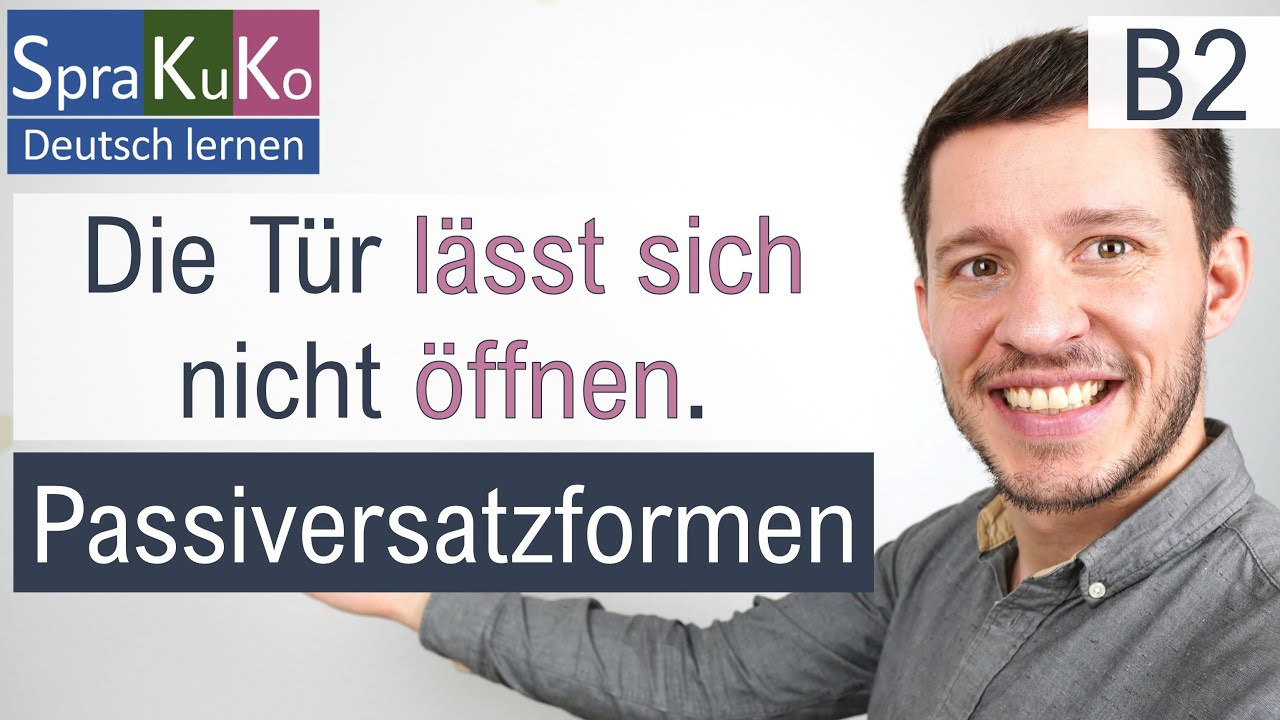
In diesem Video lernen Sie Passiversatzformen in der deutschen Sprache. Sie lernen verschiedene Passiverstatzformen (Passivparaphrasen, passivähnliche Strukturen) kennen. Sie lernen, wie man diese Formen bildet und was sie bedeuten. Am Ende des Videos gibt es eine Übung zu den Passiversatzformen, mit der Sie das Gelernte anwenden können.
UNTER...
 grim wave
Wie wird man ,,Zeugenschranke" ins Englische übersetzen?
delicate tiger
there is probably a technical term for it, but "witness barrier" seems fine
fervent kernel
is there an equivalent of this but in german?

 grim wave
delicate tiger
there is probably a technical term for it, but "witness barrier" seems fine
grim wave
delicate tiger
there is probably a technical term for it, but "witness barrier" seems fine
danke
fervent kernel
mellow nova

 fervent kernel
Can someone explain the "difference" between gehören as in "to belong" and as in "hearing" , like in what form would we use the first one and in which the second?
Maybe with an example 🙏
delicate tiger
always/never
 noble yacht
Gehören - you own something: Mir gehört das Auto
Gehorchen - to follow: Der Hund gehorcht dem Befehl ("The dog follows the command")
hören - to hear: Ich höre einen Vogel
@fervent kernel
delicate tiger
noble yacht
Gehören - you own something: Mir gehört das Auto
Gehorchen - to follow: Der Hund...
*gehorchen für 2 (und Anleitung passt nicht)
fervent kernel
That helps a lot, thanks!
Oh and when i want to say "I listened to that band in college" for example, would "ich habe das gehört" work?
Or is there another verb for "listening"
Oh angehören
delicate tiger
"Ich habe die Band in meiner Collegezeit oft gehört"
angehören -> to belong to
try a dictionary please
noble yacht
delicate tiger
*gehorchen für 2 (und Anleitung passt nicht)
Klar, sorry, autokorrektur
Hast du ein besseres Wort als Anleitung?
delicate tiger
noble yacht
Klar, sorry, autokorrektur
Hast du ein besseres Wort als Anleitung?
"Befehl"?
tulip tiger
gehorchen braucht Genitiv?
delicate tiger
tulip tiger
gehorchen braucht Genitiv?
"jemandem gehorchen"
tulip tiger
yep, i checked in Duden 🙂
night dagger
kommt "wenn du ne Empfehlung hast, sag mir halt Bescheid :)" etwas passiv aggressiv rüber?