#botchannel
1 messages · Page 210 of 1
 vocal sequoia
 lean flickerBOT
I Hate Everything About You [00:01:45] added to the queue.
 crimson swallow

vocal sequoia

 prime fjord
vocal sequoia
>play longlost i hate everything about you
prime fjord
vocal sequoia
>play longlost i hate everything about you
gutes lied
 lean flickerBOT
:notes: Currently playing Birdy - Wings (Nu:Logic Remix), 00:02:28 remaining, by Aarivex #freebrindorn.
vocal sequoia
drum & bass ftw
crimson swallow

vocal sequoia
play numb ryan oakes
lean flickerBOT
RYAN OAKES - NUMB [00:03:47] added to the queue.
crimson swallow

 dreamy moon
play Around the world
lean flickerBOT
Daft Punk - Around the World (Official Audio) [00:07:10] added to the queue.

 crimson swallow
 vocal sequoia

crimson swallow

 lean flickerBOT
:notes: 4 songs currently in the queue.
:small_blue_diamond: **1.** `Apocalyptica - For Whom The Bell Tolls (Plays Metallica By Four Cellos - A Live Performance)`
Duration: 00:05:58, requested by: @warm root
:small_blue_diamond: **2.** `I Hate Everything About You`
Duration: 00:01:45, requested by: @vocal sequoia
:small_blue_diamond: **3.** `RYAN OAKES - NUMB`
Duration: 00:03:47, requested by: @vocal sequoia
:small_blue_diamond: **4.** `Daft Punk - Around the World (Official Audio)`
Duration: 00:07:10, requested by: @dreamy moon
Total duration: 00:18:40
crimson swallow

vocal sequoia

crimson swallow
far rat far er
 hasty prawn
faratfara
hasty prawn
hasty prawn
faratfara
Cyclist
 vocal sequoia

 vocal sequoia
play belgisches viertel
lean flickerBOT
ART - BELGISCHES VIERTEL (prod. by FRIO & EDDY) [00:01:45] added to the queue.
crimson swallow
bist du erzieherin @prime fjord
prime fjord
crimson swallow
bist du erzieherin <@630758737702944798>
 jawoll ja
vocal sequoia
Sie kann dich gerne erziehen 😉
crimson swallow
why did i think you were a highschooler
prime fjord

crimson swallow
vocal sequoia
Sie kann dich gerne erziehen 😉

prime fjord
i graduated many years ago dankje
vocal sequoia
kjein problem
prime fjord
🏅
prime fjord
ja why the fuck
crimson swallow
🥴
prime fjord
verwirrte most definitely
vocal sequoia
play blood kloud
lean flickerBOT
KLOUD - BLOOD [00:03:15] added to the queue.
crimson swallow
i am 12
crimson swallow
what
vocal sequoia

 vocal sequoia

 crimson swallow

 crimson swallow
#coding message @dreamy moon
vocal sequoia
F

 vocal sequoia
systemctl user spotted
vocal sequoia

crimson swallow
omg a normie
lean flickerBOT
EDEN - xo (official audio) [00:02:40] added to the queue.
 vocal sequoia
oh, much excuses
crimson swallow

vocal sequoia
smol chicken!
crimson swallow
much forgiven
vocal sequoia
thank
 vocal sequoia
p 
crimson swallow
was macht er
vocal sequoia

crimson swallow
eigentlch
dreamy moon
 crimson swallow

 crimson swallow
who is screwing you
vocal sequoia
queue
crimson swallow
nowplaying
lean flickerBOT
:notes: 3 songs currently in the queue.
:small_blue_diamond: **1.** `ART - BELGISCHES VIERTEL (prod. by FRIO & EDDY)`
Duration: 00:01:45, requested by: @vocal sequoia
:small_blue_diamond: **2.** `KLOUD - BLOOD`
Duration: 00:03:15, requested by: @vocal sequoia
:small_blue_diamond: **3.** `EDEN - xo (official audio)`
Duration: 00:02:40, requested by: @vocal sequoia
Total duration: 00:07:40
:notes: Currently playing Daft Punk - Around the World (Official Audio), 00:06:08 remaining, by 🦒 Max #freebrindorn.
 crimson swallow

 warm root
play inner city pressure
lean flickerBOT
Flight of the Conchords - Inner City Pressure [00:03:41] added to the queue.
crimson swallow
play tension borns interlude
lean flickerBOT
Tension (Interlude) [00:01:35] added to the queue.
 vocal sequoia
Gute Nacht :3
 vocal sequoia

crimson swallow
queue
lean flickerBOT
:notes: 1 song currently in the queue.
:small_blue_diamond: **1.** `Tension (Interlude)`
Duration: 00:01:35, requested by: @crimson swallow
Total duration: 00:01:35
warm root
play let's go all the way sly fox
lean flickerBOT
Sly Fox - Let's Go All The Way [00:03:55] added to the queue.
warm root
play sowing the seeds of love
lean flickerBOT
Tears For Fears - Sowing The Seeds Of Love (Official Music Video) [00:05:32] added to the queue.
warm root
play ugly kid joe cradle
lean flickerBOT
Ugly Kid Joe - Cats In The Cradle (Official Video) [00:04:16] added to the queue.
 tender trellis
faq beginner
lean flickerBOT
How to get started
The simplest way to learn German is to find topics you don’t understand yet and search for explanations of them. This list provides you with a guide for which topics to learn if you are completely new to German. Type the topic into Google (or YouTube) and start learning!
Introduction
1: Alphabet (especially ä, ü, ö and ß)
2: Basic greetings (hello, goodbye, etc.)
Part 1 - Simple Sentence
1: Noun gender & plurals
2: Nominative case (What are cases?)
3: Nominative pronouns (I, you, he, she, etc.)
4: Verbs in present tense
5: Definite/indefinite articles
6: Accusative case (for nouns)
7: Accusative pronouns
8: Word order of simple sentences
9: How to ask questions
See Part 2 on the next page.
Tips
- Always learn the gender of a noun when you learn a new noun
- Learn to use a translation dictionary (e.g. dict.cc, leo.org)
- Use
>faq resourcesto see our list of German learning resources - For listening and pronunciation practice, try watching movies or videos (incl. YouTube)
- You can listen to pronunciation for words on websites like dict.cc, forvo.com, and others
- Practice writing sentences every day (and asking people to correct them)
- Ask as many questions as possible
- Don’t be scared to make mistakes!!!! If you don’t let yourself make mistakes, you will never be able to learn German
Page 1/2
 abstract vale
faq
lean flickerBOT
:x: The required argument name is missing.
abstract vale
faq duolingo
lean flickerBOT
Duolingo
Duolingo is a decent resource to start with if you're a complete beginner, but it's neither efficient nor comprehensive!
What Duolingo will teach you about grammar is very limited, and none of the systems they use will help you practise much of it.
You can learn some vocabulary with it, but their method (based on the concept of spaced repetition) doesn't work for everybody, and the way Duolingo teaches is not very effective compared to the amount of time it requires from you.
So, if you find it useful, by all means keep using it, but remember not to fall for its gamification of language learning, and move past it when it stops being beneficial. Ignore the streaks.
In any case, keep in mind that Duolingo is not enough to learn a language, ever.
If you're looking for guidance or alternatives, check out >faq beginner in our #botchannel .
tender trellis
purpose
lean flickerBOT
:x: The required argument input is missing.
lean flickerBOT
Information about Reading
Reading
This role is for members of the Reading group. Members of this group will be pinged with updates regarding reading sessions. This involves reading a text in German and (usually) translating it into English. This activity is aimed at all levels.
Enter >sub reading in #botchannel to get pings about sessions.
tender trellis
faq cefr
lean flickerBOT
CEFR levels
If you see something like A1, B2 or C1, these represent the proficiency of a speaker in a language they're not native in, and are called CEFR levels. They are valid for any language, not only German!
Roughly speaking, A levels are beginners and C levels are experts. Remember that CEFR level are self-assessed and indicative!
You can see more specific names and descriptions on the Wikipedia page:
https://en.wikipedia.org/wiki/Common_European_Framework_of_Reference_for_Languages
🗨 How do I know what level I am?
If the table on Wikipedia is too generic for you, you can try using this one here:
https://rm.coe.int/168045bb52
Just check each column one at a time: if you can do all it describes, move to the next column. Your level is the highest where you can do the most things.
Alternatively, you can use this questionnaire to estimate your level more accurately:
https://www.laits.utexas.edu/fi/sites/laits.utexas.edu.fi/files/Self Assessment Checklist European.pdf
lean flickerBOT
How to get started
The simplest way to learn German is to find topics you don’t understand yet and search for explanations of them. This list provides you with a guide for which topics to learn if you are completely new to German. Type the topic into Google (or YouTube) and start learning!
Introduction
1: Alphabet (especially ä, ü, ö and ß)
2: Basic greetings (hello, goodbye, etc.)
Part 1 - Simple Sentence
1: Noun gender & plurals
2: Nominative case (What are cases?)
3: Nominative pronouns (I, you, he, she, etc.)
4: Verbs in present tense
5: Definite/indefinite articles
6: Accusative case (for nouns)
7: Accusative pronouns
8: Word order of simple sentences
9: How to ask questions
See Part 2 on the next page.
Tips
- Always learn the gender of a noun when you learn a new noun
- Learn to use a translation dictionary (e.g. dict.cc, leo.org)
- Use
>faq resourcesto see our list of German learning resources - For listening and pronunciation practice, try watching movies or videos (incl. YouTube)
- You can listen to pronunciation for words on websites like dict.cc, forvo.com, and others
- Practice writing sentences every day (and asking people to correct them)
- Ask as many questions as possible
- Don’t be scared to make mistakes!!!! If you don’t let yourself make mistakes, you will never be able to learn German
Page 1/2
tender trellis
purpose german-only
lean flickerBOT
Information about german-only
german-only
🇩🇪 :flag_at: :flag_ch: :flag_be: :flag_lu: :flag_li: Please only talk in German here. :)
 mossy topaz
sessions
lean flickerBOT
Upcoming Sessions
:calendar: Want to add our sessions schedule to your Google calendar?
:small_blue_diamond: (Your time: <t:1653148800>) held by BobGamer | Maximilian
[ID: 186] (AdvancedReading)
Fortgeschrittene Leserunde Nr. 3 zu "Der neunte Arm des Oktopus"
Recommended level(s):

:small_blue_diamond: (Your time: <t:1653238800>) held by Taiquann
[ID: 189] (AdvancedReading)
Leserunde auf Deutsch: Die drei ??? - Toteninsel
Recommended level(s):
Type `>session info [ID#]` e.g. `>session info 3` for more detail about a specific session.
lean flickerBOT
Moon Knight Personality Switch Sound Effect [00:00:06] added to the queue.
Amogus Earrape Sound [00:00:08] added to the queue.
 pure token
play amogus
lean flickerBOT
:x: The bot is already active in a different channel.
pure token
info
lean flickerBOT

Information about Utopia#5996
Name
@pure token
ID
709530003515244544
Joined
<t:1614259418> (1 year, 2 months and 3 weeks ago)
Account created
<t:1589235535> (2 years, 1 week and 2 days ago)
709530003515244544
pure token
help
lean flickerBOT
Emoji Stats commands
:small_blue_diamond: **📒 emojistats** [order]
Shows statistics about the emoji usage of the server.
This includes the total amount of the top 10 emoji and emoji reaction uses.
By setting the order parameter to desc you can also view the 10 least used emoji and emoji reactions.
Page 18/19 (19 entries)
pure token
play ampgus
lean flickerBOT
:x: The bot is already active in a different channel.
pure token
help
lean flickerBOT
Meme 1/2 commands
:small_blue_diamond: **bonk** <member>
Bonks the given member.
:small_blue_diamond: **cat**
Display a random cat image.
:small_blue_diamond: **dog**
Display a random dog image.
:small_blue_diamond: **inspireme**
Displays an AI-generated inspirational quote.
:small_blue_diamond: **patcat** <member>
Pats the given member's cat.
Page 8/19 (19 entries)
pure token
inspireme
lean flickerBOT
pure token
>inspireme

https://inspirobot.me/
pure token
cat
lean flickerBOT
 pure token
dog
lean flickerBOT
 pure token
patcat
lean flickerBOT
:x: The required argument member is missing.
 uncut heath

Official Video for ”We Are One (Ole Ola)” by Pitbull featuring Jennifer Lopez & Claudia Leitte
Listen to Pitbull: https://Pitbull.lnk.to/listenYD
Watch more videos by Pitbull: https://Pitbull.lnk.to/listenYD/youtube
Subscribe to the official Pitbull YouTube channel: https://Pitbull.lnk.to/subscribeYD
Follow Pitbull
Facebook: https://Pitbull.ln...
lean flickerBOT
We Are One (Ole Ola) [The Official 2014 FIFA World Cup Song] (Olodum Mix) [00:04:06] added to the queue.
lean flickerBOT
:x: This command can only be used by a moderator.
uncut heath
skip
 terse tiger
faq cefr
lean flickerBOT
CEFR levels
If you see something like A1, B2 or C1, these represent the proficiency of a speaker in a language they're not native in, and are called CEFR levels. They are valid for any language, not only German!
Roughly speaking, A levels are beginners and C levels are experts. Remember that CEFR level are self-assessed and indicative!
You can see more specific names and descriptions on the Wikipedia page:
https://en.wikipedia.org/wiki/Common_European_Framework_of_Reference_for_Languages
🗨 How do I know what level I am?
If the table on Wikipedia is too generic for you, you can try using this one here:
https://rm.coe.int/168045bb52
Just check each column one at a time: if you can do all it describes, move to the next column. Your level is the highest where you can do the most things.
Alternatively, you can use this questionnaire to estimate your level more accurately:
https://www.laits.utexas.edu/fi/sites/laits.utexas.edu.fi/files/Self Assessment Checklist European.pdf
dreamy moon
play around the world
lean flickerBOT
Daft Punk - Around the World (Official Audio) [00:07:10] added to the queue.
 plucky halo
play around the world
lean flickerBOT
:x: The bot is already active in a different channel.
dreamy moon
play around the world
lean flickerBOT
:x: The bot is already active in a different channel.
 candid coral

 valid granite
sessions
lean flickerBOT
Upcoming Sessions
:calendar: Want to add our sessions schedule to your Google calendar?
:small_blue_diamond: (Your time: <t:1653148800>) held by BobGamer | Maximilian
[ID: 186] (AdvancedReading)
Fortgeschrittene Leserunde Nr. 3 zu "Der neunte Arm des Oktopus"
Recommended level(s):
:small_blue_diamond: (Your time: <t:1653238800>) held by Taiquann
[ID: 189] (AdvancedReading)
Leserunde auf Deutsch: Die drei ??? - Toteninsel
Recommended level(s):
Type `>session info [ID#]` e.g. `>session info 3` for more detail about a specific session.
dreamy moon
play around the world
lean flickerBOT
Daft Punk - Around the World (Official Audio) [00:07:10] added to the queue.
candid coral

lean flickerBOT
Daft Punk - Around the World (Official Audio) [00:07:10] added to the queue.
 humble walrus
info 828480319857885195
lean flickerBOT

Information about ᴍᴀʀᴍᴀʀᴜʀɪ#7534
Name
@neon granite
ID
828480319857885195
Joined
<t:1643137242> (3 months, 3 weeks and 4 days ago)
Account created
<t:1617595500> (1 year, 1 month and 2 weeks ago)
828480319857885195
dreamy moon
info 394112436246151169
lean flickerBOT

Information about Primax#6455
Name
@humble walrus
ID
394112436246151169
Joined
<t:1607628703> (1 year, 5 months and 1 week ago)
Account created
<t:1514034127> (4 years, 4 months and 4 weeks ago)
394112436246151169
 sand bramble
play diesesliedistspaß
lean flickerBOT
Diesesliedistspass [00:02:15] added to the queue.
sand bramble
stop
lean flickerBOT
:x: This command can only be used by a moderator.
sand bramble
skip
plucky halo
skip
lean flickerBOT
The bot is not playing any songs.
plucky halo
play around the world
lean flickerBOT
Daft Punk - Around the World (Official Audio) [00:07:10] added to the queue.
sand bramble
sand bramble
>play diesesliedistspaß
its a joke btw
mossy topaz
faq
lean flickerBOT
:x: The required argument name is missing.
mossy topaz
faq cefr
lean flickerBOT
CEFR levels
If you see something like A1, B2 or C1, these represent the proficiency of a speaker in a language they're not native in, and are called CEFR levels. They are valid for any language, not only German!
Roughly speaking, A levels are beginners and C levels are experts. Remember that CEFR level are self-assessed and indicative!
You can see more specific names and descriptions on the Wikipedia page:
https://en.wikipedia.org/wiki/Common_European_Framework_of_Reference_for_Languages
🗨 How do I know what level I am?
If the table on Wikipedia is too generic for you, you can try using this one here:
https://rm.coe.int/168045bb52
Just check each column one at a time: if you can do all it describes, move to the next column. Your level is the highest where you can do the most things.
Alternatively, you can use this questionnaire to estimate your level more accurately:
https://www.laits.utexas.edu/fi/sites/laits.utexas.edu.fi/files/Self Assessment Checklist European.pdf
valid granite
sessions
lean flickerBOT
Upcoming Sessions
:calendar: Want to add our sessions schedule to your Google calendar?
:small_blue_diamond: (Your time: <t:1653238800>) held by Taiquann
[ID: 189] (AdvancedReading)
Leserunde auf Deutsch: Die drei ??? - Toteninsel
Recommended level(s):
:small_blue_diamond: (Your time: <t:1654358400>) held by BobGamer | Maximilian
[ID: 190] (AdvancedReading)
Fortgeschrittene Leserunde Nr. 4 zu "Der neunte Arm des Okotpus"
Recommended level(s):
Type `>session info [ID#]` e.g. `>session info 3` for more detail about a specific session.
valid granite
sessions
lean flickerBOT
Upcoming Sessions
:calendar: Want to add our sessions schedule to your Google calendar?
:small_blue_diamond: (Your time: <t:1653238800>) held by Taiquann
[ID: 189] (AdvancedReading)
Leserunde auf Deutsch: Die drei ??? - Toteninsel
Recommended level(s):
:small_blue_diamond: (Your time: <t:1654358400>) held by BobGamer | Maximilian
[ID: 190] (AdvancedReading)
Leserunde Nr. 4 zu "Der neunte Arm des Oktopus"
Recommended level(s):
Type `>session info [ID#]` e.g. `>session info 3` for more detail about a specific session.
candid coral
session info 190
lean flickerBOT
In 1 week, 6 days and 21 hours - (AdvancedReading) held by BobGamer | Maximilian
Recommended Level(s)
Recommended level(s): 
Session Description
Leserunde Nr. 4 zu "Der neunte Arm des Oktopus"
Posted <t:1653156548>
Danke an alle, die heute mitgemacht haben! ❤️ Die nächste Session gibt´s in zwei Wochen, nächste Woche fällt urlaubsbedingt aus! 😁 🐙
Type `>session list` to see a list of all sessions.
candid coral
^ @cloud pelican
 cloud pelican
thanks
candid coral
play around the world
lean flickerBOT
Daft Punk - Around the World (Official Audio) [00:07:10] added to the queue.
dreamy moon
play around the world
lean flickerBOT
Daft Punk - Around the World (Official Audio) [00:07:10] added to the queue.
tender trellis
faq cefr
lean flickerBOT
CEFR levels
If you see something like A1, B2 or C1, these represent the proficiency of a speaker in a language they're not native in, and are called CEFR levels. They are valid for any language, not only German!
Roughly speaking, A levels are beginners and C levels are experts. Remember that CEFR level are self-assessed and indicative!
You can see more specific names and descriptions on the Wikipedia page:
https://en.wikipedia.org/wiki/Common_European_Framework_of_Reference_for_Languages
🗨 How do I know what level I am?
If the table on Wikipedia is too generic for you, you can try using this one here:
https://rm.coe.int/168045bb52
Just check each column one at a time: if you can do all it describes, move to the next column. Your level is the highest where you can do the most things.
Alternatively, you can use this questionnaire to estimate your level more accurately:
https://www.laits.utexas.edu/fi/sites/laits.utexas.edu.fi/files/Self Assessment Checklist European.pdf
 civic thunder
faq beginner
lean flickerBOT
How to get started
The simplest way to learn German is to find topics you don’t understand yet and search for explanations of them. This list provides you with a guide for which topics to learn if you are completely new to German. Type the topic into Google (or YouTube) and start learning!
Introduction
1: Alphabet (especially ä, ü, ö and ß)
2: Basic greetings (hello, goodbye, etc.)
Part 1 - Simple Sentence
1: Noun gender & plurals
2: Nominative case (What are cases?)
3: Nominative pronouns (I, you, he, she, etc.)
4: Verbs in present tense
5: Definite/indefinite articles
6: Accusative case (for nouns)
7: Accusative pronouns
8: Word order of simple sentences
9: How to ask questions
See Part 2 on the next page.
Tips
- Always learn the gender of a noun when you learn a new noun
- Learn to use a translation dictionary (e.g. dict.cc, leo.org)
- Use
>faq resourcesto see our list of German learning resources - For listening and pronunciation practice, try watching movies or videos (incl. YouTube)
- You can listen to pronunciation for words on websites like dict.cc, forvo.com, and others
- Practice writing sentences every day (and asking people to correct them)
- Ask as many questions as possible
- Don’t be scared to make mistakes!!!! If you don’t let yourself make mistakes, you will never be able to learn German
Page 1/2
 latent talon
help remind
lean flickerBOT
remind
**Alias: **reminder
Has the bot remind you about things. You can specify a time in a short time format (e.g., 1y, 7w, 2mo, 1h30m) or a long format (e.g, 2020-12-31 23:59 CET) and a message for your reminder text.
:small_blue_diamond: **remind cancel** <id>
**Aliases: **remind delete, remind remove
Cancels the reminder with the given id. Use >remind all to get the IDs of your reminders.
:small_blue_diamond: **remind list** [user]
**Aliases: **remind all, remind show, remind mine
Shows a list of all your long-term reminders and their IDs.
Moderators may specify an additional user argument.
:small_blue_diamond: **remind** <time> <message>
**Alias: **reminder
Has the bot remind you about things. You can specify a time in a short time format (e.g., 1y, 7w, 2mo, 1h30m) or a long format (e.g, 2020-12-31 23:59 CET) and a message for your reminder text.
Module: Reminders
latent talon
remind list
lean flickerBOT
Your long-term reminders:
In 4 months, 1 day and 17 hours
[ID: 169535] ask @cedar talon to add me to the family tree
In 5 minutes and 45 seconds
[ID: 182368] if caramel is purple remind arrem to tell me more about cefr levels
In 1 year, 11 months and 3 weeks
[ID: 180214] ping arc676 in #general
latent talon
remind cancel 182368
lean flickerBOT
:white_check_mark: Reminder successfully cancelled.
latent talon
remind 7mo if caramel is purple remind arrem to tell me more about cefr levels
lean flickerBOT
Okay @latent talon. You will be reminded in 7 months.
latent talon
remind 2022-07-18 remind tutti to add me to GLaD family tree
lean flickerBOT
:x: The given time could not be parsed.
latent talon
remind 2022-07-18 00:00 CET remind tutti to add me to GLaD family tree
lean flickerBOT
Okay @latent talon. You will be reminded in 1 month, 3 weeks and 5 days.
latent talon
remind cancel 169535
lean flickerBOT
:white_check_mark: Reminder successfully cancelled.
 limber anvil
faq beginner
lean flickerBOT
How to get started - Part 2
Please make sure to read Part 1 before starting Part 2!
Part 2 – Beyond a Simple Sentence
1: Conjunctions (coordinating and subordinating)
2: Subordinate clause word order
3: Dative case
4: Dative verbs
5: Verbs with two objects (e.g. geben)
6: Prepositions (accusative, dative, and two-way)
7: Spoken past tense (Perfekt)
8: Written past tense (Präteritum)
9: Genitive case
10: Relative clauses
11: Adjective declension
Tips
- Make sure to practice writing and reading simple texts
- Some of these concepts are confusing to start with, so it’s a good idea to ask for help in #questions when you’re unsure
- You should use a declension chart to help with declension to start with, because you won’t be able to memorize it straight away
- After you feel confident with creating sentences, you can start learning the adjective declension properly by using the command >faq adjective declension and reading the guide provided
Page 2/2
latent talon
remind lsit
lean flickerBOT
:x: The argument time (lsit) is malformed.
latent talon
remind list
lean flickerBOT
Your long-term reminders:
In 1 year, 11 months and 3 weeks
[ID: 180214] ping arc676 in #general
In 6 months, 4 weeks and 2 days
[ID: 182369] if caramel is purple remind arrem to tell me more about cefr levels
In 1 month, 3 weeks and 5 days
[ID: 182370] remind tutti to add me to GLaD family tree
latent talon
emojistats
lean flickerBOT
Server Emoji Stats
Total Amount Of Emoji Uses
220404
Total Amount Of Emoji Reaction Uses
57877
Top Emojis
 (22644 uses, 10%, 63.42 uses/day)
 (18406 uses, 8%, 51.55 uses/day)
 (13790 uses, 6%, 38.62 uses/day)
 (11574 uses, 5%, 83.21 uses/day)
 (10204 uses, 5%, 28.58 uses/day)
- (9794 uses, 4%, 27.43 uses/day)
 (9201 uses, 4%, 25.77 uses/day)
 (6400 uses, 3%, 17.92 uses/day)
 (5145 uses, 2%, 21.67 uses/day)
 (5015 uses, 2%, 14.05 uses/day)
Top Reaction Emojis
- (4314 uses, 7% 12.08 uses/day)
 (3340 uses, 6% 9.35 uses/day)
- (3271 uses, 6% 23.52 uses/day)
 (2923 uses, 5% 8.19 uses/day)
- (2787 uses, 5% 7.81 uses/day)
- (2596 uses, 4% 7.27 uses/day)
 (2569 uses, 4% 7.2 uses/day)
- (2338 uses, 4% 6.55 uses/day)
- (1854 uses, 3% 5.19 uses/day)
- (1775 uses, 3% 4.97 uses/day)
lean flickerBOT
How to get started
The simplest way to learn German is to find topics you don’t understand yet and search for explanations of them. This list provides you with a guide for which topics to learn if you are completely new to German. Type the topic into Google (or YouTube) and start learning!
Introduction
1: Alphabet (especially ä, ü, ö and ß)
2: Basic greetings (hello, goodbye, etc.)
Part 1 - Simple Sentence
1: Noun gender & plurals
2: Nominative case (What are cases?)
3: Nominative pronouns (I, you, he, she, etc.)
4: Verbs in present tense
5: Definite/indefinite articles
6: Accusative case (for nouns)
7: Accusative pronouns
8: Word order of simple sentences
9: How to ask questions
See Part 2 on the next page.
Tips
- Always learn the gender of a noun when you learn a new noun
- Learn to use a translation dictionary (e.g. dict.cc, leo.org)
- Use
>faq resourcesto see our list of German learning resources - For listening and pronunciation practice, try watching movies or videos (incl. YouTube)
- You can listen to pronunciation for words on websites like dict.cc, forvo.com, and others
- Practice writing sentences every day (and asking people to correct them)
- Ask as many questions as possible
- Don’t be scared to make mistakes!!!! If you don’t let yourself make mistakes, you will never be able to learn German
Page 1/2
tender trellis
purpose
lean flickerBOT
:x: The required argument input is missing.
tender trellis
purpose German Only
lean flickerBOT
:x: 'German Only' is not a channel or a role.
tender trellis
purpose german-only
lean flickerBOT
Information about german-only
german-only
🇩🇪 :flag_at: :flag_ch: :flag_be: :flag_lu: :flag_li: Please only talk in German here. :)
 harsh hound
purpose german-only in
lean flickerBOT
:x: 'german-only in' is not a channel or a role.
harsh hound
purpose german-only
lean flickerBOT
Information about german-only
german-only
🇩🇪 :flag_at: :flag_ch: :flag_be: :flag_lu: :flag_li: Please only talk in German here. :)
lean flickerBOT
Information about Streaming
Streaming
Allows members to stream in the Streaming VCs, the Study Groups and the Gaming VC.
 candid rivet
ex
lean flickerBOT
:x: The required argument name is missing.
candid rivet
ex passiv
lean flickerBOT
Passive Voice
In English and German, a verb can have one of two voices which describe the relationship between the verb and the subject. These voices are the active voice and passive voice.
Typically, we use the active voice, where the subject is the doer or agent of the action. For example:
The man eats the apple.
In this sentence, the agent (the man) is acting upon (by eating) the object (the apple).
In the passive voice, the subject is the receiver or patient of the action. This typically places the emphasis on the patient or action, and the agent can be left out altogether if it is unknown or irrelevant. For example, the above sentence converted into the passive voice becomes:
The apple is being eaten.
In this example, the patient (the apple) is being acted upon (by being eaten) by an unknown agent.
Vorgangspassiv and Zustandspassiv
German offers two passive forms: the Vorgangspassiv and the Zustandspassiv. The Vorgangspassiv refers to the process of an action, while the Zustandspassiv refers to the state of an action. The Vorgangspassiv is more often used and relates closely to the active voice. See >explain Vorgangspassiv for an explanation of the Vorgangspassiv, and see >explain Stative Passive for an explanation of Zustandspassiv.
See Also
https://bit.ly/2Nqu84t (dartmouth university)
https://bit.ly/3sSXs9A (leo.org)
https://bit.ly/2RyEodX (Passive Voice on Pferd's blog)
candid rivet
explain Vorgangspassiv
lean flickerBOT
Vorgangspassiv
Vorgangspassiv
The Vorgangspassiv is formed with werden as the finite/conjugated verb and the past participle of the main verb (or action verb) in the active voice sentence.
For example, when we translate The man eats the apple., we get:
Der Mann isst den Apfel.
When this sentence is converted into its passive voice equivalent, several things happen:
- The finite verb becomes the equivalent conjugation for werden.
isst-->wird - The main verb is then converted into its past participle and placed at the end of the clause, when possible.
isst-->gegessen - The accusative object becomes the (nominative) subject.
den Apfel-->Der Apfel - The subject is indicated with the preposition
vonor simply left out altogether.Der Mann-->(vom Mann)
Putting this together, we create the passive voice sentence:
Der Apfel wird (vom Mann) gegessen.
‼ Only the accusative object of a verb can become the subject in a passive sentence. This means verbs that govern a dative, genitive, or prepositional object can never become the subject. Instead, the object remains as it was.
For example, the verb helfen governs a dative object. An example with it in an active sentence would be:
Der Mann hat dem Kollegen geholfen.
When converted to the passive voice, dem Kollegen does not change case:
Dem Kollegen wurde (vom Mann) geholfen.
This applies equally to verbs that govern genitive and prepositonal objects:
Der Toten wurde gedacht.
Über das Thema wird kaum gesprochen.
Tenses & Moods
Present: Der Apfel wird gegessen.
Simple Past: Der Apfel wurde gegessen.
Future: Der Apfel wird gegessen werden.
Present Perfect: Der Apfel ist gegessen worden.
Past Perfect: Der Apfel war gegessen worden.
Future Perfect: Der Apfel wird gegessen worden sein.
See Also:
https://bit.ly/2Quvo8q (Pferd's blog)
candid rivet
explain Zustandspassiv
lean flickerBOT
Stative Passive
Stative Passive (Zustandspassiv)
The passive voice with werden (Vorgangspassiv) refers to the process of an action; it indicates that an action is taking place. The resulting state of this action can be indicated with a different version of the passive voice called the Stative Passive (Zustandspassiv). This form uses sein instead of werden as its auxiliary verb. For example:
Das Fenster ist zerbrochen. (The window is broken)
Transitive verbs that are valid in the Vorgangspassiv can typically be used in the Zustandspassiv and vice versa. The Zustandspassiv, however, tends to prefer verbs that have a clear end state, such as: zerstören, öffnen, schließen.
Vorgangspassiv vs Zustandspassiv
The difference between the two passive voice forms is best illustrated with an example:
Der Tresor war verschlossen, aber wir haben nicht gesehen, wie er verschlossen wurde.
The safe was locked but we did not see how it was locked.
In the first clause, the state of the safe is being discussed. The process of locking the safe was completed and the safe reached a condition of being locked. The last clause concentrates on the process of locking the safe, namely how it was done. The safe has somehow reached a state of being locked, but this process was not observed.
As the Vorgangspassiv discusses a process, it often relates to the English progressive aspect, but this is never true for the Zustandspassiv. For example, the English sentence:
The product is being packed.
Can be translated as:
Die Ware wird verpackt.
But cannot be translated as:
Die Ware ist verpackt.
This loses the implication of a process, which the English progressive aspect and Vorgangspassiv possess. Instead, this sentence indicates that this process is complete and the product is now packed. Thus, it would be an acceptable translation for:
The product has been packed.
 tidal wharf
help
lean flickerBOT
Help commands
:small_blue_diamond: **help** [term]
Displays help information for modules and individual commands. The optional argument term is the search term to use. If no value is provided, the bot will display a list of all available modules. Otherwise, it will attempt to find information about the given term.
Page 1/19 (19 entries)
humble walrus
ex all
lean flickerBOT
See a listed FAQ with >faq [name]
:small_blue_diamond: Limited Permissions
Aliases: vc pending, vc-pending
:small_blue_diamond: Negation
Aliases: kein, nicht
:small_blue_diamond: nicos
Aliases: nicos weg
:small_blue_diamond: Nominative
Aliases: Nominativ
:small_blue_diamond: Omission of movement verbs
:small_blue_diamond: Passive
Aliases: Passiv
:small_blue_diamond: Past Tense
:small_blue_diamond: Prepositions of Place Part 1
Aliases: Nach-In-Auf-Zu
:small_blue_diamond: Resources
Aliases: resource list
:small_blue_diamond: roles
:small_blue_diamond: seeing verbs
Aliases: schauen, sehen
:small_blue_diamond: so und also
:small_blue_diamond: Stative Passive
Aliases: Zustandspassiv, statal passive
:small_blue_diamond: Structure of Konjunktiv II
Aliases: KII 2
:small_blue_diamond: Study Vocabulary
Aliases: unterrichten, lernen, beibringen, studieren
Page 3/4 (59 entries)
humble walrus
faq
lean flickerBOT
:x: The required argument name is missing.
tender trellis
faq beginner
lean flickerBOT
How to get started
The simplest way to learn German is to find topics you don’t understand yet and search for explanations of them. This list provides you with a guide for which topics to learn if you are completely new to German. Type the topic into Google (or YouTube) and start learning!
Introduction
1: Alphabet (especially ä, ü, ö and ß)
2: Basic greetings (hello, goodbye, etc.)
Part 1 - Simple Sentence
1: Noun gender & plurals
2: Nominative case (What are cases?)
3: Nominative pronouns (I, you, he, she, etc.)
4: Verbs in present tense
5: Definite/indefinite articles
6: Accusative case (for nouns)
7: Accusative pronouns
8: Word order of simple sentences
9: How to ask questions
See Part 2 on the next page.
Tips
- Always learn the gender of a noun when you learn a new noun
- Learn to use a translation dictionary (e.g. dict.cc, leo.org)
- Use
>faq resourcesto see our list of German learning resources - For listening and pronunciation practice, try watching movies or videos (incl. YouTube)
- You can listen to pronunciation for words on websites like dict.cc, forvo.com, and others
- Practice writing sentences every day (and asking people to correct them)
- Ask as many questions as possible
- Don’t be scared to make mistakes!!!! If you don’t let yourself make mistakes, you will never be able to learn German
Page 1/2
 harsh matrix
faq beginner
lean flickerBOT
How to get started - Part 2
Please make sure to read Part 1 before starting Part 2!
Part 2 – Beyond a Simple Sentence
1: Conjunctions (coordinating and subordinating)
2: Subordinate clause word order
3: Dative case
4: Dative verbs
5: Verbs with two objects (e.g. geben)
6: Prepositions (accusative, dative, and two-way)
7: Spoken past tense (Perfekt)
8: Written past tense (Präteritum)
9: Genitive case
10: Relative clauses
11: Adjective declension
Tips
- Make sure to practice writing and reading simple texts
- Some of these concepts are confusing to start with, so it’s a good idea to ask for help in #questions when you’re unsure
- You should use a declension chart to help with declension to start with, because you won’t be able to memorize it straight away
- After you feel confident with creating sentences, you can start learning the adjective declension properly by using the command >faq adjective declension and reading the guide provided
Page 2/2
tender trellis
faq beginner
lean flickerBOT
How to get started
The simplest way to learn German is to find topics you don’t understand yet and search for explanations of them. This list provides you with a guide for which topics to learn if you are completely new to German. Type the topic into Google (or YouTube) and start learning!
Introduction
1: Alphabet (especially ä, ü, ö and ß)
2: Basic greetings (hello, goodbye, etc.)
Part 1 - Simple Sentence
1: Noun gender & plurals
2: Nominative case (What are cases?)
3: Nominative pronouns (I, you, he, she, etc.)
4: Verbs in present tense
5: Definite/indefinite articles
6: Accusative case (for nouns)
7: Accusative pronouns
8: Word order of simple sentences
9: How to ask questions
See Part 2 on the next page.
Tips
- Always learn the gender of a noun when you learn a new noun
- Learn to use a translation dictionary (e.g. dict.cc, leo.org)
- Use
>faq resourcesto see our list of German learning resources - For listening and pronunciation practice, try watching movies or videos (incl. YouTube)
- You can listen to pronunciation for words on websites like dict.cc, forvo.com, and others
- Practice writing sentences every day (and asking people to correct them)
- Ask as many questions as possible
- Don’t be scared to make mistakes!!!! If you don’t let yourself make mistakes, you will never be able to learn German
Page 1/2
 compact wing
faq resources
lean flickerBOT
Resources
compact wing
faq help
lean flickerBOT
FAQ not found. Try >explain all.
compact wing
explain all
lean flickerBOT
See a listed FAQ with >faq [name]
:small_blue_diamond: absentive
Aliases: absentiv
:small_blue_diamond: Accusative
Aliases: Akkusativ
:small_blue_diamond: Adjective Declension
Aliases: adjective endings, Adjektivdeklination
:small_blue_diamond: Anki
Aliases: flashcards
:small_blue_diamond: beginner 2
:small_blue_diamond: Beide vs. Beides
Aliases: Beides vs. Beide, Beides, Beide
:small_blue_diamond: Best way to learn German
Aliases: learn fast, learn German fast, learn efficiently, best way to learn, fastest way to learn, most efficient way to learn
:small_blue_diamond: birthdays
:small_blue_diamond: Cases
Aliases: case, grammatical case
:small_blue_diamond: CEFR levels
Aliases: lvl, CEFR, cerf
:small_blue_diamond: conjugation
Aliases: praesens, präsens, present tense, verbs, verb conjugation, Konjugation
:small_blue_diamond: Contractions
Aliases: Verschmelzung, vom, Schmelzwort
:small_blue_diamond: DACH
:small_blue_diamond: Dative
Aliases: Dativ
:small_blue_diamond: doch
Page 1/4 (59 entries)
compact wing
faq gender
lean flickerBOT
Grammatical gender
German nouns are sorted in three different genders: masculine, neuter and feminine. These have nothing to do with sex or social gender.
The first thing genders will influence are articles like der, das, die. Each word has its own and you better get it right: some words that look identical can have different meanings depending on the gender they're used with. For example:
die Band = the (musical) band,
der Band = the (book) volume,
das Band = the tape.
Some words, mainly trademarks and loanwords, have multiple acceptable genders while having no change in meaning:
der Jogurt = das Jogurt
das Virus = der Virus
These may vary by region or colloquiality.
💢 But WHY, German, WHY ⁉
Gender is actually quite useful! Since sentence structure is less rigid than in English, grammatical case helps you tell the various elements apart (with some practice), and that works through genders: each gender has its own forms, which makes everything a little less ambiguous. Besides, as you've seen with Band above, it allows us to make up words with different meanings that look the same but are not ambiguous, and if that's not magic, I don't know what is. ✨
🙀 But how am I supposed to tell them apart? 🙀
Check out >explain gender patterns. 😉
compact wing
explain german
lean flickerBOT
FAQ not found. I found the following similar entries: Swiss German (1), german keyboard (2), German letters (3)
Select one of the values in the brackets to directly open the suggested FAQ.
compact wing
explain gender
lean flickerBOT
Grammatical gender
German nouns are sorted in three different genders: masculine, neuter and feminine. These have nothing to do with sex or social gender.
The first thing genders will influence are articles like der, das, die. Each word has its own and you better get it right: some words that look identical can have different meanings depending on the gender they're used with. For example:
die Band = the (musical) band,
der Band = the (book) volume,
das Band = the tape.
Some words, mainly trademarks and loanwords, have multiple acceptable genders while having no change in meaning:
der Jogurt = das Jogurt
das Virus = der Virus
These may vary by region or colloquiality.
💢 But WHY, German, WHY ⁉
Gender is actually quite useful! Since sentence structure is less rigid than in English, grammatical case helps you tell the various elements apart (with some practice), and that works through genders: each gender has its own forms, which makes everything a little less ambiguous. Besides, as you've seen with Band above, it allows us to make up words with different meanings that look the same but are not ambiguous, and if that's not magic, I don't know what is. ✨
🙀 But how am I supposed to tell them apart? 🙀
Check out >explain gender patterns. 😉
compact wing
explain gender patterns
lean flickerBOT
**Neuter words (das)**
- nominalised verbs (das Leben, das Lesen)
- metals (das Gold, das Kupfer)
- babies and cubs (das Baby, das Lamm)
- diminutives in
-chen/-lein(das Hündchen) - words ending in:
---mentdas Experiment, das Sakrament
---ma(usually of Greek origin) das Komma, das Thema
Page 3/4
 hallow vapor
faq resources
lean flickerBOT
Resources
lean flickerBOT
How to get started
The simplest way to learn German is to find topics you don’t understand yet and search for explanations of them. This list provides you with a guide for which topics to learn if you are completely new to German. Type the topic into Google (or YouTube) and start learning!
Introduction
1: Alphabet (especially ä, ü, ö and ß)
2: Basic greetings (hello, goodbye, etc.)
Part 1 - Simple Sentence
1: Noun gender & plurals
2: Nominative case (What are cases?)
3: Nominative pronouns (I, you, he, she, etc.)
4: Verbs in present tense
5: Definite/indefinite articles
6: Accusative case (for nouns)
7: Accusative pronouns
8: Word order of simple sentences
9: How to ask questions
See Part 2 on the next page.
Tips
- Always learn the gender of a noun when you learn a new noun
- Learn to use a translation dictionary (e.g. dict.cc, leo.org)
- Use
>faq resourcesto see our list of German learning resources - For listening and pronunciation practice, try watching movies or videos (incl. YouTube)
- You can listen to pronunciation for words on websites like dict.cc, forvo.com, and others
- Practice writing sentences every day (and asking people to correct them)
- Ask as many questions as possible
- Don’t be scared to make mistakes!!!! If you don’t let yourself make mistakes, you will never be able to learn German
Page 1/2
 cedar nacelle
faq beginner
lean flickerBOT
How to get started
The simplest way to learn German is to find topics you don’t understand yet and search for explanations of them. This list provides you with a guide for which topics to learn if you are completely new to German. Type the topic into Google (or YouTube) and start learning!
Introduction
1: Alphabet (especially ä, ü, ö and ß)
2: Basic greetings (hello, goodbye, etc.)
Part 1 - Simple Sentence
1: Noun gender & plurals
2: Nominative case (What are cases?)
3: Nominative pronouns (I, you, he, she, etc.)
4: Verbs in present tense
5: Definite/indefinite articles
6: Accusative case (for nouns)
7: Accusative pronouns
8: Word order of simple sentences
9: How to ask questions
See Part 2 on the next page.
Tips
- Always learn the gender of a noun when you learn a new noun
- Learn to use a translation dictionary (e.g. dict.cc, leo.org)
- Use
>faq resourcesto see our list of German learning resources - For listening and pronunciation practice, try watching movies or videos (incl. YouTube)
- You can listen to pronunciation for words on websites like dict.cc, forvo.com, and others
- Practice writing sentences every day (and asking people to correct them)
- Ask as many questions as possible
- Don’t be scared to make mistakes!!!! If you don’t let yourself make mistakes, you will never be able to learn German
Page 1/2
lean flickerBOT
Resources
lean flickerBOT
CEFR levels
If you see something like A1, B2 or C1, these represent the proficiency of a speaker in a language they're not native in, and are called CEFR levels. They are valid for any language, not only German!
Roughly speaking, A levels are beginners and C levels are experts. Remember that CEFR level are self-assessed and indicative!
You can see more specific names and descriptions on the Wikipedia page:
https://en.wikipedia.org/wiki/Common_European_Framework_of_Reference_for_Languages
🗨 How do I know what level I am?
If the table on Wikipedia is too generic for you, you can try using this one here:
https://rm.coe.int/168045bb52
Just check each column one at a time: if you can do all it describes, move to the next column. Your level is the highest where you can do the most things.
Alternatively, you can use this questionnaire to estimate your level more accurately:
https://www.laits.utexas.edu/fi/sites/laits.utexas.edu.fi/files/Self Assessment Checklist European.pdf
 thorny condor
explain gender patterns
lean flickerBOT
Gender patterns
Unfortunately, many German words don't have immediately clear clues that reveal it, but thankfully, many common words do follow patterns that reveal their gender.
In general, you are advised to learn the article together with the word (and its plural!).
Plural forms always use die and follow plural declension rules, which are the same for all genders (yay 🎉).
For compound words, remember that only the last word matters.
Type >explain grammatical gender for an explanation on grammatical gender.
Here's a list of patterns to recognise word gender.
Note that exceptions may apply.
Page 1/4
lean flickerBOT
Grammatical gender
German nouns are sorted in three different genders: masculine, neuter and feminine. These have nothing to do with sex or social gender.
The first thing genders will influence are articles like der, das, die. Each word has its own and you better get it right: some words that look identical can have different meanings depending on the gender they're used with. For example:
die Band = the (musical) band,
der Band = the (book) volume,
das Band = the tape.
Some words, mainly trademarks and loanwords, have multiple acceptable genders while having no change in meaning:
der Jogurt = das Jogurt
das Virus = der Virus
These may vary by region or colloquiality.
💢 But WHY, German, WHY ⁉
Gender is actually quite useful! Since sentence structure is less rigid than in English, grammatical case helps you tell the various elements apart (with some practice), and that works through genders: each gender has its own forms, which makes everything a little less ambiguous. Besides, as you've seen with Band above, it allows us to make up words with different meanings that look the same but are not ambiguous, and if that's not magic, I don't know what is. ✨
🙀 But how am I supposed to tell them apart? 🙀
Check out >explain gender patterns. 😉
candid coral
play around the world
lean flickerBOT
Daft Punk - Around the World (Official Audio) [00:07:10] added to the queue.
dreamy moon
play around the world
lean flickerBOT
Daft Punk - Around the World (Official Audio) [00:07:10] added to the queue.
Not enough members to play songs. Bye.
candid coral
play around the world
dreamy moon
play around the world
lean flickerBOT
Daft Punk - Around the World (Official Audio) [00:07:10] added to the queue.
Daft Punk - Around the World (Official Audio) [00:07:10] added to the queue.
candid coral
play around the world
lean flickerBOT
Daft Punk - Around the World (Official Audio) [00:07:10] added to the queue.
dreamy moon
play around the world
lean flickerBOT
Daft Punk - Around the World (Official Audio) [00:07:10] added to the queue.
candid coral
a
 tawny portal
purpose german only
lean flickerBOT
:x: 'german only' is not a channel or a role.
tawny portal
purpose German Only
lean flickerBOT
:x: 'German Only' is not a channel or a role.
humble walrus
info 366602364888809473
lean flickerBOT

Information about Cosma#1093
Name
@spark aurora
ID
366602364888809473
Joined
<t:1612691208> (1 year, 3 months and 2 weeks ago)
Account created
<t:1507475214> (4 years, 7 months and 2 weeks ago)
366602364888809473
dreamy moon
play auto bahn kraftwerk
lean flickerBOT
Kraftwerk Autobahn full [00:22:43] added to the queue.
 hearty rampart
faq cefr
lean flickerBOT
CEFR levels
If you see something like A1, B2 or C1, these represent the proficiency of a speaker in a language they're not native in, and are called CEFR levels. They are valid for any language, not only German!
Roughly speaking, A levels are beginners and C levels are experts. Remember that CEFR level are self-assessed and indicative!
You can see more specific names and descriptions on the Wikipedia page:
https://en.wikipedia.org/wiki/Common_European_Framework_of_Reference_for_Languages
🗨 How do I know what level I am?
If the table on Wikipedia is too generic for you, you can try using this one here:
https://rm.coe.int/168045bb52
Just check each column one at a time: if you can do all it describes, move to the next column. Your level is the highest where you can do the most things.
Alternatively, you can use this questionnaire to estimate your level more accurately:
https://www.laits.utexas.edu/fi/sites/laits.utexas.edu.fi/files/Self Assessment Checklist European.pdf
Not enough members to play songs. Bye.
candid coral
play partialbruchzerlegung
lean flickerBOT
Partialbruchzerlegung 1/4: ALLE Möglichkeiten [00:04:16] added to the queue.
dreamy moon

Provided to YouTube by Believe SAS
Sockosophie · Käptn Peng · Die Tentakel von Delphi · Robert Gwisdek · Hannes Gwisdek · Peter Bartz · Boris Nielsen · Moritz Bossmann · Robert Gwisdek · Hannes Gwisdek · Peter Bartz · Boris Nielsen · Moritz Bossmann
Expedition ins O
℗ Kreismusik
Released on: 2013-04-12
Auto-generated by YouTube.
lean flickerBOT
Sockosophie [00:07:07] added to the queue.
 idle yoke
help
lean flickerBOT
German commands
:small_blue_diamond: **lookup** <target> <phrase>
Translates the given phrase into the specified target language using dict.cc. Specify either en or de as targets.
:small_blue_diamond: **noun** <noun>
Provides a link to the declension of the given noun.
:small_blue_diamond: **verb** <infinitive>
Provides a link to the conjugation of the given infinitive.
:small_blue_diamond: **words**
A command that helps you train vocabulary using dict.cc.
Page 14/19 (19 entries)
tender trellis
lessons
lean flickerBOT
Upcoming Sessions
:calendar: Want to add our sessions schedule to your Google calendar?
:small_blue_diamond: (Your time: <t:1654358400>) held by BobGamer | Maximilian
[ID: 190] (AdvancedReading)
Leserunde Nr. 4 zu "Der neunte Arm des Oktopus"
Recommended level(s):
Type `>session info [ID#]` e.g. `>session info 3` for more detail about a specific session.
 blazing jolt
faq beginner
lean flickerBOT
How to get started - Part 2
Please make sure to read Part 1 before starting Part 2!
Part 2 – Beyond a Simple Sentence
1: Conjunctions (coordinating and subordinating)
2: Subordinate clause word order
3: Dative case
4: Dative verbs
5: Verbs with two objects (e.g. geben)
6: Prepositions (accusative, dative, and two-way)
7: Spoken past tense (Perfekt)
8: Written past tense (Präteritum)
9: Genitive case
10: Relative clauses
11: Adjective declension
Tips
- Make sure to practice writing and reading simple texts
- Some of these concepts are confusing to start with, so it’s a good idea to ask for help in #questions when you’re unsure
- You should use a declension chart to help with declension to start with, because you won’t be able to memorize it straight away
- After you feel confident with creating sentences, you can start learning the adjective declension properly by using the command >faq adjective declension and reading the guide provided
Page 2/2
 short cypress
faq beginner
lean flickerBOT
How to get started
The simplest way to learn German is to find topics you don’t understand yet and search for explanations of them. This list provides you with a guide for which topics to learn if you are completely new to German. Type the topic into Google (or YouTube) and start learning!
Introduction
1: Alphabet (especially ä, ü, ö and ß)
2: Basic greetings (hello, goodbye, etc.)
Part 1 - Simple Sentence
1: Noun gender & plurals
2: Nominative case (What are cases?)
3: Nominative pronouns (I, you, he, she, etc.)
4: Verbs in present tense
5: Definite/indefinite articles
6: Accusative case (for nouns)
7: Accusative pronouns
8: Word order of simple sentences
9: How to ask questions
See Part 2 on the next page.
Tips
- Always learn the gender of a noun when you learn a new noun
- Learn to use a translation dictionary (e.g. dict.cc, leo.org)
- Use
>faq resourcesto see our list of German learning resources - For listening and pronunciation practice, try watching movies or videos (incl. YouTube)
- You can listen to pronunciation for words on websites like dict.cc, forvo.com, and others
- Practice writing sentences every day (and asking people to correct them)
- Ask as many questions as possible
- Don’t be scared to make mistakes!!!! If you don’t let yourself make mistakes, you will never be able to learn German
Page 1/2
 minor walrus
lean flickerBOT
minor walrus
lean flickerBOT
CEFR levels
If you see something like A1, B2 or C1, these represent the proficiency of a speaker in a language they're not native in, and are called CEFR levels. They are valid for any language, not only German!
Roughly speaking, A levels are beginners and C levels are experts. Remember that CEFR level are self-assessed and indicative!
You can see more specific names and descriptions on the Wikipedia page:
https://en.wikipedia.org/wiki/Common_European_Framework_of_Reference_for_Languages
🗨 How do I know what level I am?
If the table on Wikipedia is too generic for you, you can try using this one here:
https://rm.coe.int/168045bb52
Just check each column one at a time: if you can do all it describes, move to the next column. Your level is the highest where you can do the most things.
Alternatively, you can use this questionnaire to estimate your level more accurately:
https://www.laits.utexas.edu/fi/sites/laits.utexas.edu.fi/files/Self Assessment Checklist European.pdf
lean flickerBOT
FAQ not found. Try >explain all.
tender trellis
explain all
lean flickerBOT
See a listed FAQ with >faq [name]
:small_blue_diamond: Limited Permissions
Aliases: vc pending, vc-pending
:small_blue_diamond: Negation
Aliases: kein, nicht
:small_blue_diamond: nicos
Aliases: nicos weg
:small_blue_diamond: Nominative
Aliases: Nominativ
:small_blue_diamond: Omission of movement verbs
:small_blue_diamond: Passive
Aliases: Passiv
:small_blue_diamond: Past Tense
:small_blue_diamond: Prepositions of Place Part 1
Aliases: Nach-In-Auf-Zu
:small_blue_diamond: Resources
Aliases: resource list
:small_blue_diamond: roles
:small_blue_diamond: seeing verbs
Aliases: schauen, sehen
:small_blue_diamond: so und also
:small_blue_diamond: Stative Passive
Aliases: Zustandspassiv, statal passive
:small_blue_diamond: Structure of Konjunktiv II
Aliases: KII 2
:small_blue_diamond: Study Vocabulary
Aliases: unterrichten, lernen, beibringen, studieren
Page 3/4 (59 entries)
tender trellis
role
 split zinc
play around the world
lean flickerBOT
:x: There must be at least two users in a voice channel before the bot can start playing songs.
dreamy moon
play around the world
lean flickerBOT
Daft Punk - Around the World (Official Audio) [00:07:10] added to the queue.
dreamy moon

The official video "WE GOT THE MOVES" by Electric Callboy!
Stream the song here: https://open.spotify.com/track/4EFb9FhLyFiDbYKwBwDZre?si=65442921a92a4b6a
Subscribe to our YouTube channel:
https://www.youtube.com/c/electriccallboy?sub_confirmation=1
http://electriccallboy.com
▬▬▬▬▬▬▬▬▬▬▬▬▬▬▬▬▬▬▬▬▬▬▬▬▬▬▬▬▬
• Merch EU: http://electriccallboy.bra...
lean flickerBOT
Electric Callboy - WE GOT THE MOVES (OFFICIAL VIDEO) [00:03:37] added to the queue.
dreamy moon

The official video "PUMP IT" by Electric Callboy!
Stream the song here: https://open.spotify.com/track/3iXNlPQNYPrtimAEM49PsG?si=b6b27ceb48954359
Subscribe to our YouTube channel:
https://www.youtube.com/c/electriccallboy?sub_confirmation=1
http://electriccallboy.com
▬▬▬▬▬▬▬▬▬▬▬▬▬▬▬▬▬▬▬▬▬▬▬▬▬▬▬▬▬
• Merch EU: http://electriccallboy.bravado.de
•...
lean flickerBOT
Electric Callboy - PUMP IT (OFFICIAL VIDEO) [00:03:02] added to the queue.
dreamy moon

Die Single „Wittenberg ist nicht Paris“ jetzt überall hören:
https://kraftklub.lnk.to/KARGO
Das Album, Merch & Tickets exklusiv unter http://www.kraftklub.to
KARGO erscheint am 23.09.2022 und ist ab jetzt vorbestellbar!
Stell Dir Dein eigenes Bundle mit Album, Merch & Tickets zusammen unter http://www.kraftklub.to
Mehr von KRAFTKLUB:
h...
lean flickerBOT
KRAFTKLUB - Wittenberg ist nicht Paris (Official Video) [00:03:22] added to the queue.
dreamy moon

Die Single „Ein Song reicht“ jetzt überall hören:
https://kraftklub.lnk.to/KARGO
Das Album, Merch & Tickets exklusiv unter http://www.kraftklub.to
KARGO erscheint am 23.09.2022 und ist ab jetzt vorbestellbar!
Stell Dir Dein eigenes Bundle mit Album, Merch & Tickets zusammen unter http://www.kraftklub.to
Mehr von KRAFTKLUB:
https://www....
lean flickerBOT
KRAFTKLUB - Ein Song reicht (Official Video) [00:03:34] added to the queue.
dreamy moon
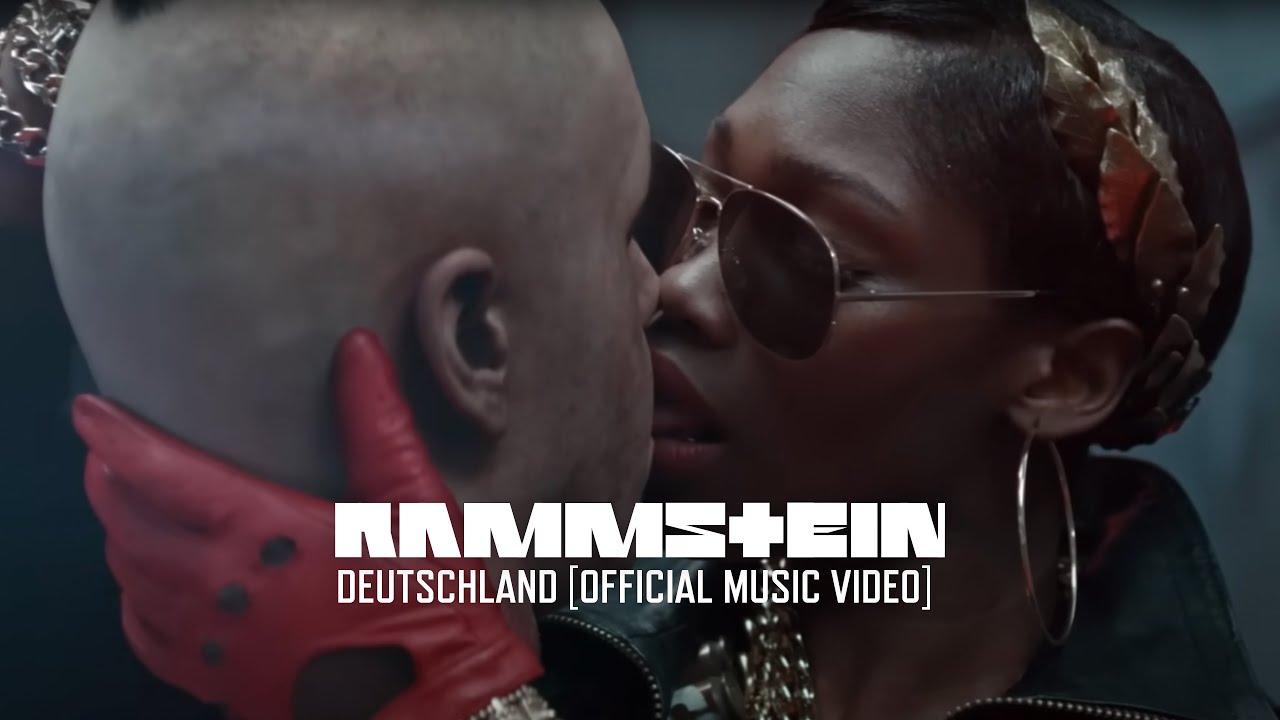
New Album: https://rammstein.lnk.to/Zeit
Video Director: Specter Berlin
Production: Mmaattcchh Berlin
Score: „The Beast” written by Jóhann Jóhannsson. Licensed courtesy of Cutting Edge Music Services, LLC. © by Starr Score Holdings LLC & Hell Yes.
#Rammstein #RammsteinOfficial #Deutschland #duhastvielgeweint
#Раммштайн #духаст #сонне #енгел #д...
lean flickerBOT
Rammstein - Deutschland (Official Video) [00:09:23] added to the queue.
How to get started
The simplest way to learn German is to find topics you don’t understand yet and search for explanations of them. This list provides you with a guide for which topics to learn if you are completely new to German. Type the topic into Google (or YouTube) and start learning!
Introduction
1: Alphabet (especially ä, ü, ö and ß)
2: Basic greetings (hello, goodbye, etc.)
Part 1 - Simple Sentence
1: Noun gender & plurals
2: Nominative case (What are cases?)
3: Nominative pronouns (I, you, he, she, etc.)
4: Verbs in present tense
5: Definite/indefinite articles
6: Accusative case (for nouns)
7: Accusative pronouns
8: Word order of simple sentences
9: How to ask questions
See Part 2 on the next page.
Tips
- Always learn the gender of a noun when you learn a new noun
- Learn to use a translation dictionary (e.g. dict.cc, leo.org)
- Use
>faq resourcesto see our list of German learning resources - For listening and pronunciation practice, try watching movies or videos (incl. YouTube)
- You can listen to pronunciation for words on websites like dict.cc, forvo.com, and others
- Practice writing sentences every day (and asking people to correct them)
- Ask as many questions as possible
- Don’t be scared to make mistakes!!!! If you don’t let yourself make mistakes, you will never be able to learn German
Page 1/2
Rammstein - Stripped (Official Video) [00:03:55] added to the queue.
Rammstein - Stripped (Official Video) [00:03:55] added to the queue.
dreamy moon
skip
lean flickerBOT
The bot is not playing any songs.
Rammstein - Stripped (Official Video) [00:03:55] added to the queue.
dreamy moon

“Ich hasse Kinder” out now:
https://tilllindemann.lnk.to/IchHasseKinder
Directed by Serghey Grey.
Special thanks to Accesstyle - Russian brand of modern gadgets and accessories.
https://accesstyle.ru
And special thanks to https://www.Barline.club
#TillLindemann #IchHasseKinder
lean flickerBOT
Till Lindemann - Ich hasse Kinder (Official Video) [00:05:26] added to the queue.
Rammstein - Stripped (Official Video) [00:03:55] added to the queue.
dreamy moon

The new album: https://rammstein.lnk.to/Zeit
ANGST
CHRISTOPH SCHNEIDER
TILL LINDEMANN
PAUL LANDERS
RICHARD Z. KRUSPE
FLAKE LORENZ
OLIVER RIEDEL
CHILD
MAYA NGOZI
MOTHER
YOLANDA SYLVANA ROTHER
CHEERLEADER
LOUISE ADAMIEC
ELISA ERDMANN
JEANNINE KÜHNE
SONJA SONNENBURG
KATHLYN HOFFMANN
CELINE BINDKE EIRIME
SARA BLEUEL
EILEEN ERDMANN
ISABEL JAHN
S...
lean flickerBOT
Rammstein - Angst (Official Video) [00:05:45] added to the queue.
dreamy moon

The official video "SPACEMAN" by Electric Callboy feat. FiNCH!
Stream the song here: https://electriccallboy.lnk.to/Spaceman-Single
Subscribe to our YouTube channel:
https://www.youtube.com/c/electriccallboy?sub_confirmation=1
http://electriccallboy.com
▬▬▬▬▬▬▬▬▬▬▬▬▬▬▬▬▬▬▬▬▬▬▬▬▬▬▬▬▬
• Merch EU: http://electriccallboy.bravado.de
• Merch US: htt...
lean flickerBOT
Electric Callboy - SPACEMAN feat. @FiNCH (OFFICIAL VIDEO) [00:03:36] added to the queue.
dreamy moon
skip
split zinc
help
lean flickerBOT
Eval commands
:small_blue_diamond: **eval** <code>
Evaluate the given code using an external compilation service. Any attempt to abuse this command will lead to a permanent blacklist.
Supported languages are: csharp (cs), java, python (py), c, c++ (cpp), haskell (hs), perl, nasm, javascript (js), lisp, kotlin (kt), brainfuck (bf) and rust (rs).
To use the command, specify a code block with your language of choice and provide any desired input in the same message, after the code block.
Example invocation with input:
```py
print('Hello,', input())
```
Barnabus Sandlers```
*Note: write out the command yourself, the example won't work if you copy it, due to Discord's formatting.*
:small_blue_diamond: Language specific notes:
- C# - the namespace and class must be called `Rextester` and `Program` respectively.
- Java - the class must be called `Rextester`
Page 4/19 (19 entries)
dreamy moon

https://www.electriccallboy.com
"Hate/Love" taken from our upcoming EP “MMXX”.
Release Date: 11. September 2020.
Music video directed and produced by:
Pascal Schillo & Oliver Schillo (http://www.schillobrothers.com)
Concept by Electric Callboy
Film Crew:
Florian Berwanger - DOP (http://instagram.com/fbwg)
Kami Zero - Hair & Make-up
Jan Schmid...
lean flickerBOT
Electric Callboy - Hate/Love (OFFICIAL VIDEO) [00:03:10] added to the queue.
dreamy moon

The official video "MC THUNDER II" by Electric Callboy!
Stream the song here: https://open.spotify.com/track/10TVQRxEOS3LEIMmSWsRZq?si=86e9f6405f9f4eb5
Subscribe to our YouTube channel:
https://www.youtube.com/c/electriccallboy?sub_confirmation=1
http://electriccallboy.com
▬▬▬▬▬▬▬▬▬▬▬▬▬▬▬▬▬▬▬▬▬▬▬▬▬▬▬▬▬
• Merch EU: http://electriccallboy.bravad...
lean flickerBOT
Electric Callboy - MC Thunder II (Dancing Like a Ninja) OFFICIAL VIDEO [00:04:08] added to the queue.
dreamy moon

Saltatio Mortis vs. Eskimo Callboy - Hypa Hypa
Pre-order the EP now:
► https://eskimo-callboy.lnk.to/MMXX-HypaHypaEdition
Pre-save the Song:
► https://forms.sonymusicfans.com/campaign/eskimo-callboy-presave/
"MMXX Hypa Hypa Edition"
Release Date: May 21st 2021
———————————————
Saltatio Mortis Streamingkonzert 30.04.2...
lean flickerBOT
Saltatio Mortis vs. Eskimo Callboy - Hypa Hypa [00:03:05] added to the queue.
 tame kestrel
faq
lean flickerBOT
:x: The required argument name is missing.
tame kestrel
faq best way to learn
lean flickerBOT
Best way to learn German
There isn’t only one “best” way to learn German, especially since different methods work better for different people. However, this FAQ will outline the main aspects of learning efficiently, which you can cater to your needs.
If you’re a beginner, type >faq beginner in #botchannel to see our beginner guide.
Cover all skills
There are many combinations of activities you can use to study and practice a language. How do you know which combinations are suitable? The key is to make sure you cover each of the main skills with at least one activity. Some activities only train one skills, while some train multiple – either is fine, as long as all the 6 skills are covered somewhere in your studies.
The skills
• Reading
• Writing
• Listening
• Speaking
• Grammar
• Vocabulary
Which resources should I use?
It doesn’t really matter which resources you use, as long as you can follow along, and the information is correct and reliable. If you have any doubts about whether a resource is correct, feel free to ask. You do not need to find just one resource and stick to it – in fact, to learn best, it’s recommended that you use a large variety of resources and switch between them when needed.
Type >faq resources in #botchannel to see our list of resources.
On the next page
• Should I study all these skills every day?
• How much time should I dedicate to studying?
Page 1/2
dreamy moon
play männer sind schweine
lean flickerBOT
Männer sind Schweine [00:04:18] added to the queue.
dreamy moon
Die Single „Ein Song reicht“ jetzt überall hören:
https://kraftklub.lnk.to/KARGO
Das Album, Merch & Tickets exklusiv unter http://www.kraftklub.to
KARGO erscheint am 23.09.2022 und ist ab jetzt vorbestellbar!
Stell Dir Dein eigenes Bundle mit Album, Merch & Tickets zusammen unter http://www.kraftklub.to
Mehr von KRAFTKLUB:
https://www....
lean flickerBOT
KRAFTKLUB - Ein Song reicht (Official Video) [00:03:34] added to the queue.
latent talon
remind list
lean flickerBOT
Your long-term reminders:
In 1 year, 11 months and 3 weeks
[ID: 180214] ping arc676 in #general
In 11 hours, 45 minutes and 38 seconds
[ID: 183274] try verbergen tomorrow
In 6 months, 4 weeks and 1 day
[ID: 182369] if caramel is purple remind arrem to tell me more about cefr levels
In 1 month, 3 weeks and 3 days
[ID: 182370] remind tutti to add me to GLaD family tree
latent talon
remind delete 183274
lean flickerBOT
:white_check_mark: Reminder successfully cancelled.
latent talon
remind 12h try verbergen/verborgen
lean flickerBOT
Okay @latent talon. You will be reminded in 12 hours.
 feral zinc
faq cefr
lean flickerBOT
CEFR levels
If you see something like A1, B2 or C1, these represent the proficiency of a speaker in a language they're not native in, and are called CEFR levels. They are valid for any language, not only German!
Roughly speaking, A levels are beginners and C levels are experts. Remember that CEFR level are self-assessed and indicative!
You can see more specific names and descriptions on the Wikipedia page:
https://en.wikipedia.org/wiki/Common_European_Framework_of_Reference_for_Languages
🗨 How do I know what level I am?
If the table on Wikipedia is too generic for you, you can try using this one here:
https://rm.coe.int/168045bb52
Just check each column one at a time: if you can do all it describes, move to the next column. Your level is the highest where you can do the most things.
Alternatively, you can use this questionnaire to estimate your level more accurately:
https://www.laits.utexas.edu/fi/sites/laits.utexas.edu.fi/files/Self Assessment Checklist European.pdf
 bright garden
faq beginner
lean flickerBOT
How to get started - Part 2
Please make sure to read Part 1 before starting Part 2!
Part 2 – Beyond a Simple Sentence
1: Conjunctions (coordinating and subordinating)
2: Subordinate clause word order
3: Dative case
4: Dative verbs
5: Verbs with two objects (e.g. geben)
6: Prepositions (accusative, dative, and two-way)
7: Spoken past tense (Perfekt)
8: Written past tense (Präteritum)
9: Genitive case
10: Relative clauses
11: Adjective declension
Tips
- Make sure to practice writing and reading simple texts
- Some of these concepts are confusing to start with, so it’s a good idea to ask for help in #questions when you’re unsure
- You should use a declension chart to help with declension to start with, because you won’t be able to memorize it straight away
- After you feel confident with creating sentences, you can start learning the adjective declension properly by using the command >faq adjective declension and reading the guide provided
Page 2/2
 vast radish
getrole level C
tender trellis
faq beginner
lean flickerBOT
How to get started - Part 2
Please make sure to read Part 1 before starting Part 2!
Part 2 – Beyond a Simple Sentence
1: Conjunctions (coordinating and subordinating)
2: Subordinate clause word order
3: Dative case
4: Dative verbs
5: Verbs with two objects (e.g. geben)
6: Prepositions (accusative, dative, and two-way)
7: Spoken past tense (Perfekt)
8: Written past tense (Präteritum)
9: Genitive case
10: Relative clauses
11: Adjective declension
Tips
- Make sure to practice writing and reading simple texts
- Some of these concepts are confusing to start with, so it’s a good idea to ask for help in #questions when you’re unsure
- You should use a declension chart to help with declension to start with, because you won’t be able to memorize it straight away
- After you feel confident with creating sentences, you can start learning the adjective declension properly by using the command >faq adjective declension and reading the guide provided
Page 2/2
 charred raven
faq beginner
lean flickerBOT
How to get started
The simplest way to learn German is to find topics you don’t understand yet and search for explanations of them. This list provides you with a guide for which topics to learn if you are completely new to German. Type the topic into Google (or YouTube) and start learning!
Introduction
1: Alphabet (especially ä, ü, ö and ß)
2: Basic greetings (hello, goodbye, etc.)
Part 1 - Simple Sentence
1: Noun gender & plurals
2: Nominative case (What are cases?)
3: Nominative pronouns (I, you, he, she, etc.)
4: Verbs in present tense
5: Definite/indefinite articles
6: Accusative case (for nouns)
7: Accusative pronouns
8: Word order of simple sentences
9: How to ask questions
See Part 2 on the next page.
Tips
- Always learn the gender of a noun when you learn a new noun
- Learn to use a translation dictionary (e.g. dict.cc, leo.org)
- Use
>faq resourcesto see our list of German learning resources - For listening and pronunciation practice, try watching movies or videos (incl. YouTube)
- You can listen to pronunciation for words on websites like dict.cc, forvo.com, and others
- Practice writing sentences every day (and asking people to correct them)
- Ask as many questions as possible
- Don’t be scared to make mistakes!!!! If you don’t let yourself make mistakes, you will never be able to learn German
Page 1/2
 foggy dock
faq beginner
lean flickerBOT
How to get started - Part 2
Please make sure to read Part 1 before starting Part 2!
Part 2 – Beyond a Simple Sentence
1: Conjunctions (coordinating and subordinating)
2: Subordinate clause word order
3: Dative case
4: Dative verbs
5: Verbs with two objects (e.g. geben)
6: Prepositions (accusative, dative, and two-way)
7: Spoken past tense (Perfekt)
8: Written past tense (Präteritum)
9: Genitive case
10: Relative clauses
11: Adjective declension
Tips
- Make sure to practice writing and reading simple texts
- Some of these concepts are confusing to start with, so it’s a good idea to ask for help in #questions when you’re unsure
- You should use a declension chart to help with declension to start with, because you won’t be able to memorize it straight away
- After you feel confident with creating sentences, you can start learning the adjective declension properly by using the command >faq adjective declension and reading the guide provided
Page 2/2
foggy dock
faq
lean flickerBOT
:x: The required argument name is missing.
foggy dock
faq help
lean flickerBOT
FAQ not found. Try >explain all.
foggy dock
explain all
lean flickerBOT
See a listed FAQ with >faq [name]
:small_blue_diamond: Duolingo
Aliases: duo
:small_blue_diamond: Eszett
Aliases: Scharfes S, ẞ, ß
:small_blue_diamond: FAQ
:small_blue_diamond: Formal and informal speech
Aliases: duzen vs. siezen, Sie, Du vs. Sie, siezen, du, informal, formal, du vs sie
:small_blue_diamond: Gender patterns
:small_blue_diamond: Genitive
Aliases: Genitiv
:small_blue_diamond: German letters
Aliases: german keyboard, keyboard
:small_blue_diamond: Grammar terms
Aliases: Glossary, Grammatical terms
:small_blue_diamond: Grammatical gender
Aliases: genders, der-die-das, gender
:small_blue_diamond: How to ask a question
Aliases: Translation, Homework
:small_blue_diamond: How to get started
Aliases: Starting out, beginner
:small_blue_diamond: How to use writing
:small_blue_diamond: Impersonal Verbs
Aliases: unpersönliche Verben, impersonal es
:small_blue_diamond: IPA
Aliases: Pronunciation, Sound transcription, International Phonetic Alphabet
:small_blue_diamond: lessons
Aliases: sessions, activities
Page 2/4 (59 entries)
 turbid forge
faq keyboard
lean flickerBOT
German letters
Being able to type German letters is quite important!
- Schon = already. Schön = beautiful.
- Mutter = mother. Mütter = mothers.
How to? There are several options.
🔸 US International layout: if you're using a US keyboard or a keyboard based on it, the transition is very easy! Everything stays as you know it, except for some symbol keys like ~, ` or , which can be pressed to add accents. For example `` + a = ä. You can also do RightAlt + s = ß.
To use US International on Windows, look for the Region & Language options and switch your selected keyboard layout to US International.
🔸 If you're on Mac, on most systems you can press and hold a letter to show several variants including umlauts. You can type ß by pressing Option + B.
🔸 Use a program like AutoHotkey to automatically type the symbols you need when you type certain shortcuts: https://www.autohotkey.com/
See the next page for more alternatives.
Page 1/2
 uneven radish
faq beginner
lean flickerBOT
How to get started
The simplest way to learn German is to find topics you don’t understand yet and search for explanations of them. This list provides you with a guide for which topics to learn if you are completely new to German. Type the topic into Google (or YouTube) and start learning!
Introduction
1: Alphabet (especially ä, ü, ö and ß)
2: Basic greetings (hello, goodbye, etc.)
Part 1 - Simple Sentence
1: Noun gender & plurals
2: Nominative case (What are cases?)
3: Nominative pronouns (I, you, he, she, etc.)
4: Verbs in present tense
5: Definite/indefinite articles
6: Accusative case (for nouns)
7: Accusative pronouns
8: Word order of simple sentences
9: How to ask questions
See Part 2 on the next page.
Tips
- Always learn the gender of a noun when you learn a new noun
- Learn to use a translation dictionary (e.g. dict.cc, leo.org)
- Use
>faq resourcesto see our list of German learning resources - For listening and pronunciation practice, try watching movies or videos (incl. YouTube)
- You can listen to pronunciation for words on websites like dict.cc, forvo.com, and others
- Practice writing sentences every day (and asking people to correct them)
- Ask as many questions as possible
- Don’t be scared to make mistakes!!!! If you don’t let yourself make mistakes, you will never be able to learn German
Page 1/2
lean flickerBOT
@latent talon, 12 hours ago
You asked to be reminded about "try verbergen/verborgen"
[Jump to message](#botchannel message)
Reminder created
·
turbid forge
`a
candid coral

lean flickerBOT
CEFR levels
If you see something like A1, B2 or C1, these represent the proficiency of a speaker in a language they're not native in, and are called CEFR levels. They are valid for any language, not only German!
Roughly speaking, A levels are beginners and C levels are experts. Remember that CEFR level are self-assessed and indicative!
You can see more specific names and descriptions on the Wikipedia page:
https://en.wikipedia.org/wiki/Common_European_Framework_of_Reference_for_Languages
🗨 How do I know what level I am?
If the table on Wikipedia is too generic for you, you can try using this one here:
https://rm.coe.int/168045bb52
Just check each column one at a time: if you can do all it describes, move to the next column. Your level is the highest where you can do the most things.
Alternatively, you can use this questionnaire to estimate your level more accurately:
https://www.laits.utexas.edu/fi/sites/laits.utexas.edu.fi/files/Self Assessment Checklist European.pdf
 valid magnet
faq cefr
lean flickerBOT
CEFR levels
If you see something like A1, B2 or C1, these represent the proficiency of a speaker in a language they're not native in, and are called CEFR levels. They are valid for any language, not only German!
Roughly speaking, A levels are beginners and C levels are experts. Remember that CEFR level are self-assessed and indicative!
You can see more specific names and descriptions on the Wikipedia page:
https://en.wikipedia.org/wiki/Common_European_Framework_of_Reference_for_Languages
🗨 How do I know what level I am?
If the table on Wikipedia is too generic for you, you can try using this one here:
https://rm.coe.int/168045bb52
Just check each column one at a time: if you can do all it describes, move to the next column. Your level is the highest where you can do the most things.
Alternatively, you can use this questionnaire to estimate your level more accurately:
https://www.laits.utexas.edu/fi/sites/laits.utexas.edu.fi/files/Self Assessment Checklist European.pdf
dreamy moon
play Around the world
lean flickerBOT
Daft Punk - Around the World (Official Audio) [00:07:10] added to the queue.
 tropic pelican
explain all
lean flickerBOT
See a listed FAQ with >faq [name]
:small_blue_diamond: absentive
Aliases: absentiv
:small_blue_diamond: Accusative
Aliases: Akkusativ
:small_blue_diamond: Adjective Declension
Aliases: adjective endings, Adjektivdeklination
:small_blue_diamond: Anki
Aliases: flashcards
:small_blue_diamond: beginner 2
:small_blue_diamond: Beide vs. Beides
Aliases: Beides vs. Beide, Beides, Beide
:small_blue_diamond: Best way to learn German
Aliases: learn fast, learn German fast, learn efficiently, best way to learn, fastest way to learn, most efficient way to learn
:small_blue_diamond: birthdays
:small_blue_diamond: Cases
Aliases: case, grammatical case
:small_blue_diamond: CEFR levels
Aliases: lvl, CEFR, cerf
:small_blue_diamond: conjugation
Aliases: praesens, präsens, present tense, verbs, verb conjugation, Konjugation
:small_blue_diamond: Contractions
Aliases: Verschmelzung, vom, Schmelzwort
:small_blue_diamond: DACH
:small_blue_diamond: Dative
Aliases: Dativ
:small_blue_diamond: doch
Page 1/4 (59 entries)
tropic pelican
faq Duolingo
lean flickerBOT
Duolingo
Duolingo is a decent resource to start with if you're a complete beginner, but it's neither efficient nor comprehensive!
What Duolingo will teach you about grammar is very limited, and none of the systems they use will help you practise much of it.
You can learn some vocabulary with it, but their method (based on the concept of spaced repetition) doesn't work for everybody, and the way Duolingo teaches is not very effective compared to the amount of time it requires from you.
So, if you find it useful, by all means keep using it, but remember not to fall for its gamification of language learning, and move past it when it stops being beneficial. Ignore the streaks.
In any case, keep in mind that Duolingo is not enough to learn a language, ever.
If you're looking for guidance or alternatives, check out >faq beginner in our #botchannel .
dreamy moon
play Around the world
lean flickerBOT
Daft Punk - Around the World (Official Audio) [00:07:10] added to the queue.
dreamy moon
play pump it
lean flickerBOT
The Black Eyed Peas - Pump It (Official Music Video) [00:03:46] added to the queue.
lean flickerBOT
Electric Callboy - PUMP IT (OFFICIAL VIDEO) [00:03:02] added to the queue.
dreamy moon
The official video "SPACEMAN" by Electric Callboy feat. FiNCH!
Stream the song here: https://electriccallboy.lnk.to/Spaceman-Single
Subscribe to our YouTube channel:
https://www.youtube.com/c/electriccallboy?sub_confirmation=1
http://electriccallboy.com
▬▬▬▬▬▬▬▬▬▬▬▬▬▬▬▬▬▬▬▬▬▬▬▬▬▬▬▬▬
• Merch EU: http://electriccallboy.bravado.de
• Merch US: htt...
lean flickerBOT
Electric Callboy - SPACEMAN feat. @FiNCH (OFFICIAL VIDEO) [00:03:36] added to the queue.
dreamy moon
The official video "SPACEMAN" by Electric Callboy feat. FiNCH!
Stream the song here: https://electriccallboy.lnk.to/Spaceman-Single
Subscribe to our YouTube channel:
https://www.youtube.com/c/electriccallboy?sub_confirmation=1
http://electriccallboy.com
▬▬▬▬▬▬▬▬▬▬▬▬▬▬▬▬▬▬▬▬▬▬▬▬▬▬▬▬▬
• Merch EU: http://electriccallboy.bravado.de
• Merch US: htt...
lean flickerBOT
Electric Callboy - SPACEMAN feat. @FiNCH (OFFICIAL VIDEO) [00:03:36] added to the queue.
dreamy moon
skip
valid granite
sessions
lean flickerBOT
Upcoming Sessions
:calendar: Want to add our sessions schedule to your Google calendar?
:small_blue_diamond: (Your time: <t:1654358400>) held by BobGamer | Maximilian
[ID: 190] (AdvancedReading)
Leserunde Nr. 4 zu "Der neunte Arm des Oktopus"
Recommended level(s):
Type `>session info [ID#]` e.g. `>session info 3` for more detail about a specific session.
 jagged vault
sessions
lean flickerBOT
Upcoming Sessions
:calendar: Want to add our sessions schedule to your Google calendar?
:small_blue_diamond: (Your time: <t:1654358400>) held by BobGamer | Maximilian
[ID: 190] (AdvancedReading)
Leserunde Nr. 4 zu "Der neunte Arm des Oktopus"
Recommended level(s):
Type `>session info [ID#]` e.g. `>session info 3` for more detail about a specific session.
lean flickerBOT

Information about UtopiaClone#4762
Name
@clever pecan
ID
835888653871218719
Joined
<t:1619361992> (1 year, 4 weeks and 1 day ago)
Account created
<t:1619361785> (1 year, 4 weeks and 1 day ago)
835888653871218719

Information about Saloncey#9416
Name
@empty raft
ID
376864935944388609
Joined
<t:1624964444> (10 months, 3 weeks and 4 days ago)
Account created
<t:1509922002> (4 years, 6 months and 2 weeks ago)
376864935944388609

Information about Bottfried W. Leibniz#8528
Name
@lean flicker
ID
650820493557104671
Joined
<t:1575239172> (2 years, 5 months and 3 weeks ago)
Account created
<t:1575238097> (2 years, 5 months and 3 weeks ago)
650820493557104671

Information about krankenwagen#4469
Name
@worn brook
ID
326809341317480458
Joined
<t:1652956980> (5 days, 6 hours and 49 minutes ago)
Account created
<t:1497987818> (4 years, 11 months and 3 days ago)
326809341317480458

Information about Aarivex#6627
Name
@vocal sequoia
ID
246687112424980481
Joined
<t:1644003779> (3 months, 2 weeks and 5 days ago)
Account created
<t:1478885190> (5 years, 6 months and 1 week ago)
246687112424980481
dreamy moon
play pump it
lean flickerBOT
The Black Eyed Peas - Pump It (Official Music Video) [00:03:46] added to the queue.
lean flickerBOT
Electric Callboy - PUMP IT (OFFICIAL VIDEO) [00:03:02] added to the queue.
dreamy moon
play Pump it ec
lean flickerBOT
Electric Callboy - PUMP IT (OFFICIAL VIDEO) [00:03:02] added to the queue.
dreamy moon
play hyper hyper ec
lean flickerBOT
Electric Callboy - Hypa Hypa (OFFICIAL VIDEO) [00:03:32] added to the queue.
tender trellis
ex limited permissions
lean flickerBOT
Limited Permissions
See the last bullet point [here](#getting-started message) in #getting-started!
dreamy moon
play eskimo callboy we got the moves
lean flickerBOT
Electric Callboy - WE GOT THE MOVES (OFFICIAL VIDEO) [00:03:37] added to the queue.
dreamy moon

The official video "HYPA HYPA" by Electric Callboy!
Stream the song here: https://open.spotify.com/track/2qOmcSjOQEDIJKosonn75a?si=b7f921885c704684
Subscribe to our YouTube channel:
https://www.youtube.com/c/electriccallboy?sub_confirmation=1
http://electriccallboy.com
▬▬▬▬▬▬▬▬▬▬▬▬▬▬▬▬▬▬▬▬▬▬▬▬▬▬▬▬▬
• Merch EU: http://electriccallboy.bravado.de...
lean flickerBOT
Electric Callboy - Hypa Hypa (OFFICIAL VIDEO) [00:03:32] added to the queue.
dreamy moon

Mein erster Song mit @Eskimo Callboy - Castrop X Spandau!
Auf Spotify streamen: https://open.spotify.com/track/4cWyJbR7d9AkiHbAFNJVB2?si=0a7ea020d2974564
Auf allen anderen Plattformen einfach Castrop X Spandau suchen :)
Lyrics: https://genius.com/Kalle-koschinsky-castrop-x-spandau-lyrics
Music written by Kalle Koschinsky and Eskimo Callboy
P...
lean flickerBOT
Kalle Koschinsky feat. Electric Callboy - Castrop X Spandau [00:02:41] added to the queue.
 hot stirrup
faq borgen
lean flickerBOT
FAQ not found. Try >explain all.
hot stirrup
help
lean flickerBOT
Voice commands
:small_blue_diamond: **nowplaying**
Displays the currently playing song and its remaining duration.
:small_blue_diamond: **play** <prompt>
Queues a song to be played by the music bot. This command will only work if you are connected to a voice channel that has at least two members.
The given prompt can be either a YouTube link or a query that will be used to search YouTube and fetch the first result.
Please note that playing any sort of nationalistic, war-related songs, songs that violate our rules or abusing the feature in any way will get you blacklisted.
:small_blue_diamond: **queue**
Displays the songs that are in the song queue.
:small_blue_diamond: **skip**
Votes to skip the currently playing song.
For a skip vote to pass, more than a half of the members in the currently playing voice chat (rounded up) must vote for the skip.
:small_blue_diamond: **upcoming**
Displays the upcoming song and its remaining duration.
Page 5/19 (19 entries)
hot stirrup
faq duolinguo
lean flickerBOT
Duolingo
Duolingo is a decent resource to start with if you're a complete beginner, but it's neither efficient nor comprehensive!
What Duolingo will teach you about grammar is very limited, and none of the systems they use will help you practise much of it.
You can learn some vocabulary with it, but their method (based on the concept of spaced repetition) doesn't work for everybody, and the way Duolingo teaches is not very effective compared to the amount of time it requires from you.
So, if you find it useful, by all means keep using it, but remember not to fall for its gamification of language learning, and move past it when it stops being beneficial. Ignore the streaks.
In any case, keep in mind that Duolingo is not enough to learn a language, ever.
If you're looking for guidance or alternatives, check out >faq beginner in our #botchannel .
hot stirrup
faq baginner
lean flickerBOT
How to get started
The simplest way to learn German is to find topics you don’t understand yet and search for explanations of them. This list provides you with a guide for which topics to learn if you are completely new to German. Type the topic into Google (or YouTube) and start learning!
Introduction
1: Alphabet (especially ä, ü, ö and ß)
2: Basic greetings (hello, goodbye, etc.)
Part 1 - Simple Sentence
1: Noun gender & plurals
2: Nominative case (What are cases?)
3: Nominative pronouns (I, you, he, she, etc.)
4: Verbs in present tense
5: Definite/indefinite articles
6: Accusative case (for nouns)
7: Accusative pronouns
8: Word order of simple sentences
9: How to ask questions
See Part 2 on the next page.
Tips
- Always learn the gender of a noun when you learn a new noun
- Learn to use a translation dictionary (e.g. dict.cc, leo.org)
- Use
>faq resourcesto see our list of German learning resources - For listening and pronunciation practice, try watching movies or videos (incl. YouTube)
- You can listen to pronunciation for words on websites like dict.cc, forvo.com, and others
- Practice writing sentences every day (and asking people to correct them)
- Ask as many questions as possible
- Don’t be scared to make mistakes!!!! If you don’t let yourself make mistakes, you will never be able to learn German
Page 1/2
lean flickerBOT
:x: There must be at least two users in a voice channel before the bot can start playing songs.
:x: The bot is already active in a different channel.
hasty prawn
play Peppa Pig
lean flickerBOT
:x: The bot is already active in a different channel.
vocal sequoia
queue
lean flickerBOT
The bot is not playing any songs.
vocal sequoia
@dreamy moon Schmutz
hasty prawn
nowplaying
lean flickerBOT
The bot is not playing any songs.
hasty prawn
help
dreamy moon
vocal sequoia
<@964977618728403066> Schmutz
🦒
Mein erster Song mit @Eskimo Callboy - Castrop X Spandau!
Auf Spotify streamen: https://open.spotify.com/track/4cWyJbR7d9AkiHbAFNJVB2?si=0a7ea020d2974564
Auf allen anderen Plattformen einfach Castrop X Spandau suchen :)
Lyrics: https://genius.com/Kalle-koschinsky-castrop-x-spandau-lyrics
Music written by Kalle Koschinsky and Eskimo Callboy
P...
lean flickerBOT
Kalle Koschinsky feat. Electric Callboy - Castrop X Spandau [00:02:41] added to the queue.
latent talon
info
lean flickerBOT

Information about leer#4509
Name
@latent talon
ID
946155050600915005
Joined
<t:1646309031> (2 months, 3 weeks and 9 hours ago)
Account created
<t:1645651342> (3 months, 23 hours and 55 minutes ago)
946155050600915005
dreamy moon

Provided to YouTube by Antilopen Geldwaesche/WM Germany
Ode an den Mord · Danger Dan
Das ist alles von der Kunstfreiheit gedeckt
℗ 2021 Antilopen Geldwäsche
Producer: Daniel Pongratz
Composer, Lyricist: Daniel Pongratz
Auto-generated by YouTube.
lean flickerBOT
Ode an den Mord [00:02:06] added to the queue.
dreamy moon
Provided to YouTube by Believe SAS
Sockosophie · Käptn Peng · Die Tentakel von Delphi · Robert Gwisdek · Hannes Gwisdek · Peter Bartz · Boris Nielsen · Moritz Bossmann · Robert Gwisdek · Hannes Gwisdek · Peter Bartz · Boris Nielsen · Moritz Bossmann
Expedition ins O
℗ Kreismusik
Released on: 2013-04-12
Auto-generated by YouTube.
lean flickerBOT
Sockosophie [00:07:07] added to the queue.
split zinc
play rolf zuckowski wie schön, dass du geboren bist
lean flickerBOT
Rolf Zuckowski | Wie schön, dass du geboren bist (Lyric Video) [00:02:44] added to the queue.
dreamy moon

Provided to YouTube by Antilopen Geldwaesche/WM Germany
Topf und Deckel · Danger Dan
Das ist alles von der Kunstfreiheit gedeckt
℗ 2021 Antilopen Geldwäsche
Producer: Daniel Pongratz
Composer, Lyricist: Daniel Pongratz
Auto-generated by YouTube.
lean flickerBOT
Topf und Deckel [00:03:07] added to the queue.
 steep merlin
lean flickerBOT
steep merlin
lean flickerBOT
How to get started
The simplest way to learn German is to find topics you don’t understand yet and search for explanations of them. This list provides you with a guide for which topics to learn if you are completely new to German. Type the topic into Google (or YouTube) and start learning!
Introduction
1: Alphabet (especially ä, ü, ö and ß)
2: Basic greetings (hello, goodbye, etc.)
Part 1 - Simple Sentence
1: Noun gender & plurals
2: Nominative case (What are cases?)
3: Nominative pronouns (I, you, he, she, etc.)
4: Verbs in present tense
5: Definite/indefinite articles
6: Accusative case (for nouns)
7: Accusative pronouns
8: Word order of simple sentences
9: How to ask questions
See Part 2 on the next page.
Tips
- Always learn the gender of a noun when you learn a new noun
- Learn to use a translation dictionary (e.g. dict.cc, leo.org)
- Use
>faq resourcesto see our list of German learning resources - For listening and pronunciation practice, try watching movies or videos (incl. YouTube)
- You can listen to pronunciation for words on websites like dict.cc, forvo.com, and others
- Practice writing sentences every day (and asking people to correct them)
- Ask as many questions as possible
- Don’t be scared to make mistakes!!!! If you don’t let yourself make mistakes, you will never be able to learn German
Page 1/2
split zinc
play The End, The Doors
lean flickerBOT
The End [00:11:44] added to the queue.
hot stirrup
faq prepositions
lean flickerBOT
FAQ not found. I found the following similar entries: Prepositions of Place Part 1, verb prepositions, dual prepositions, Verbs with prepositions, two way prepositions, Two-way prepositions.
hot stirrup
faq resources
lean flickerBOT
Resources
 charred hemlock
faq listening
lean flickerBOT
FAQ not found. Try >explain all.
charred hemlock
explain all
humble walrus
faq homework
 cyan marlin
faq beginner
lean flickerBOT
How to get started
The simplest way to learn German is to find topics you don’t understand yet and search for explanations of them. This list provides you with a guide for which topics to learn if you are completely new to German. Type the topic into Google (or YouTube) and start learning!
Introduction
1: Alphabet (especially ä, ü, ö and ß)
2: Basic greetings (hello, goodbye, etc.)
Part 1 - Simple Sentence
1: Noun gender & plurals
2: Nominative case (What are cases?)
3: Nominative pronouns (I, you, he, she, etc.)
4: Verbs in present tense
5: Definite/indefinite articles
6: Accusative case (for nouns)
7: Accusative pronouns
8: Word order of simple sentences
9: How to ask questions
See Part 2 on the next page.
Tips
- Always learn the gender of a noun when you learn a new noun
- Learn to use a translation dictionary (e.g. dict.cc, leo.org)
- Use
>faq resourcesto see our list of German learning resources - For listening and pronunciation practice, try watching movies or videos (incl. YouTube)
- You can listen to pronunciation for words on websites like dict.cc, forvo.com, and others
- Practice writing sentences every day (and asking people to correct them)
- Ask as many questions as possible
- Don’t be scared to make mistakes!!!! If you don’t let yourself make mistakes, you will never be able to learn German
Page 1/2
cyan marlin
faq resources
lean flickerBOT
Resources
tender trellis
faq beginner
lean flickerBOT
How to get started - Part 2
Please make sure to read Part 1 before starting Part 2!
Part 2 – Beyond a Simple Sentence
1: Conjunctions (coordinating and subordinating)
2: Subordinate clause word order
3: Dative case
4: Dative verbs
5: Verbs with two objects (e.g. geben)
6: Prepositions (accusative, dative, and two-way)
7: Spoken past tense (Perfekt)
8: Written past tense (Präteritum)
9: Genitive case
10: Relative clauses
11: Adjective declension
Tips
- Make sure to practice writing and reading simple texts
- Some of these concepts are confusing to start with, so it’s a good idea to ask for help in #questions when you’re unsure
- You should use a declension chart to help with declension to start with, because you won’t be able to memorize it straight away
- After you feel confident with creating sentences, you can start learning the adjective declension properly by using the command >faq adjective declension and reading the guide provided
Page 2/2
tender trellis
faq begginer
lean flickerBOT
How to get started
The simplest way to learn German is to find topics you don’t understand yet and search for explanations of them. This list provides you with a guide for which topics to learn if you are completely new to German. Type the topic into Google (or YouTube) and start learning!
Introduction
1: Alphabet (especially ä, ü, ö and ß)
2: Basic greetings (hello, goodbye, etc.)
Part 1 - Simple Sentence
1: Noun gender & plurals
2: Nominative case (What are cases?)
3: Nominative pronouns (I, you, he, she, etc.)
4: Verbs in present tense
5: Definite/indefinite articles
6: Accusative case (for nouns)
7: Accusative pronouns
8: Word order of simple sentences
9: How to ask questions
See Part 2 on the next page.
Tips
- Always learn the gender of a noun when you learn a new noun
- Learn to use a translation dictionary (e.g. dict.cc, leo.org)
- Use
>faq resourcesto see our list of German learning resources - For listening and pronunciation practice, try watching movies or videos (incl. YouTube)
- You can listen to pronunciation for words on websites like dict.cc, forvo.com, and others
- Practice writing sentences every day (and asking people to correct them)
- Ask as many questions as possible
- Don’t be scared to make mistakes!!!! If you don’t let yourself make mistakes, you will never be able to learn German
Page 1/2
 alpine berry
help
lean flickerBOT
Stargazing commands
:small_blue_diamond: **📒 star**
Provides stargazing functionality for the server. The stargazing system highlights memorable moments from the server. The starboard can be configured dynamically, temporarily locked and posts from it can be displayed.
Page 7/20 (20 entries)
candid coral
help
dreamy moon
play scheisse in meinen keller liegt laura
lean flickerBOT
SDP feat. Sido - Ne Leiche [00:05:28] added to the queue.
dreamy moon
play scheisse in meinen keller liegt laura
lean flickerBOT
SDP feat. Sido - Ne Leiche [00:05:28] added to the queue.
lean flickerBOT
Funny van Dannen - Menschenverachtende Untergrundmusik [00:02:36] added to the queue.
dreamy moon
Mein erster Song mit @Eskimo Callboy - Castrop X Spandau!
Auf Spotify streamen: https://open.spotify.com/track/4cWyJbR7d9AkiHbAFNJVB2?si=0a7ea020d2974564
Auf allen anderen Plattformen einfach Castrop X Spandau suchen :)
Lyrics: https://genius.com/Kalle-koschinsky-castrop-x-spandau-lyrics
Music written by Kalle Koschinsky and Eskimo Callboy
P...
lean flickerBOT
Kalle Koschinsky feat. Electric Callboy - Castrop X Spandau [00:02:41] added to the queue.
dreamy moon
The official video "SPACEMAN" by Electric Callboy feat. FiNCH!
Stream the song here: https://electriccallboy.lnk.to/Spaceman-Single
Subscribe to our YouTube channel:
https://www.youtube.com/c/electriccallboy?sub_confirmation=1
http://electriccallboy.com
▬▬▬▬▬▬▬▬▬▬▬▬▬▬▬▬▬▬▬▬▬▬▬▬▬▬▬▬▬
• Merch EU: http://electriccallboy.bravado.de
• Merch US: htt...
lean flickerBOT
Electric Callboy - SPACEMAN feat. @FiNCH (OFFICIAL VIDEO) [00:03:36] added to the queue.
dreamy moon

Spotify ▸ https://open.spotify.com/album/3UGZnEmUQPXMh1qLOLAqwA
iTunes ▸ https://music.apple.com/de/album/brokkoli-single/1564579231
"BROKKOLI" der erste Song von Muffelwild ist jetzt verfügbar auf allen gängigen Plattformen!
Ja, Marti Fischer und die Space Frogs sind jetzt ne Band. Oder zumindest ein Projekt, gewöhnt euch dran! Und vielen Dank...
lean flickerBOT
BROKKOLI (Official Music Video) // Muffelwild [00:03:10] added to the queue.
dreamy moon

Provided to YouTube by Columbia
Get Lucky · Daft Punk · Pharrell Williams · Nile Rodgers
Random Access Memories
℗ 2013 Daft Life Limited under exclusive license to Columbia Records, a Division of Sony Music Entertainment
Released on: 2013-05-17
Associated Performer: Daft Punk feat. Pharrell Williams and Nile Rodgers
Arranger, Composer, Lyr...
lean flickerBOT
Get Lucky [00:06:10] added to the queue.
dreamy moon
The official video "SPACEMAN" by Electric Callboy feat. FiNCH!
Stream the song here: https://electriccallboy.lnk.to/Spaceman-Single
Subscribe to our YouTube channel:
https://www.youtube.com/c/electriccallboy?sub_confirmation=1
http://electriccallboy.com
▬▬▬▬▬▬▬▬▬▬▬▬▬▬▬▬▬▬▬▬▬▬▬▬▬▬▬▬▬
• Merch EU: http://electriccallboy.bravado.de
• Merch US: htt...
lean flickerBOT
Electric Callboy - SPACEMAN feat. @FiNCH (OFFICIAL VIDEO) [00:03:36] added to the queue.
dreamy moon
play mein herz brennt
lean flickerBOT
Rammstein - Mein Herz Brennt (Official Video) [00:05:07] added to the queue.
prime fjord
play mein herz brennt rammstein
lean flickerBOT
Rammstein - Mein Herz Brennt (Official Video) [00:05:07] added to the queue.
prime fjord
np
lean flickerBOT
The bot is not playing any songs.
prime fjord
play rammstein mein herz
lean flickerBOT
Rammstein - Mein Herz Brennt (Official Video) [00:05:07] added to the queue.
dreamy moon

New Album: https://rammstein.lnk.to/Zeit
► Website: http://www.rammstein.com
► Shop: http://shop.rammstein.de
Mein Herz Brennt - Piano Version by Sven Helbig
Premiere: December 7th, 2012 (rammstein.de)
Shoot: June 12th, 2012
Location: Beelitz, Germany
Director: Zoran Bihać
#Rammstein #RammsteinOfficial #MeinHerzBrennt #RammsteinPiano
#Раммст...
lean flickerBOT
Rammstein - Mein Herz Brennt, Piano Version by Sven Helbig (Official Video) [00:04:44] added to the queue.
prime fjord

Provided to YouTube by Universal Music Group
Mein Herz brennt · Rammstein
Made In Germany 1995 - 2011
℗ 2011 Vertigo/Capitol, a division of Universal Music GmbH
Released on: 2011-12-02
Producer: Jacob Hellner
Producer: Rammstein
Studio Personnel, Recording Engineer: Studio Mirval
Producer: HAUS WEIMAR
Studio Personnel, Engineer: Ulf Kruc...
lean flickerBOT
Mein Herz brennt [00:04:40] added to the queue.
prime fjord
 lean flickerBOT
Rammstein - Mein Herz Brennt (Audio) [00:04:40] added to the queue.
split zinc

Feiern zum 10. Jahrestag des "Ich Bin Dein Gummibär" video mit dem "Ich Bin Dein Gummibär" Video in HD! Reisen rund um die Welt mit Gummibär in 2017, und beobachten Sie die "Ich Bin Dein Gummibär" HD-Video in eine neue Sprache JEDE WOCHE!
From the CD "I Am Your Gummy Bear".
Available on iTunes at: http://tinyurl.com/itunesgummybear
Available on...
lean flickerBOT
Ich Bin Dein Gummibär HD - Long German Version - 10th Anniversary Gummy Bear Song [00:02:45] added to the queue.
split zinc
play baum
lean flickerBOT
Cro - Baum (Official Version) [00:05:26] added to the queue.
split zinc

Provided to YouTube by CDBaby
The Laura Song · The Guy Who Sings Your Name Over and Over
Fun With Names Songs, Vol. 4
℗ 2012 Motern Media
Released on: 2012-05-10
Auto-generated by YouTube.
lean flickerBOT
The Laura Song [00:01:16] added to the queue.
dreamy moon
play super max
lean flickerBOT
Pitstop Boys - Super Max F1 fans Max Verstappen (originele video) [00:03:46] added to the queue.
split zinc

ALLIGATOAH Willst Du vom 'Triebwerke' Album (HITBOX) aus dem Jahr 2013
Triebwerke auf Amazon: http://amzn.to/1bIHthD
Triebwerke auf iTunes: http://tiny.cc/triebwerke
Hier geht's zum Lyricvideo: http://bit.ly/1ofl9GD
ABONNIERE HITBOX !! http://goo.gl/rLXbN
FACEBOOK HITBOX !! http://tiny.cc/hitbox
lean flickerBOT
ALLIGATOAH - Willst Du (OFFICIAL VIDEO) 'Triebwerke' Album (HITBOX) [00:03:44] added to the queue.
lean flickerBOT
Skip vote passed with 1 vote.
dreamy moon

Provided to YouTube by Universal Music Group
Liebe · Kraftklub
Mit K
℗ 2012 Kraftklub, under exclusive license to Universal Domestic Rock/Urban - a division of Universal Music GmbH
Released on: 2012-01-01
Producer, Studio Personnel, Recording Engineer: Philsen
Studio Personnel, Recording Engineer: Michael Tibes
Studio Personnel, Record...
lean flickerBOT
Kraftklub - Eure Mädchen (Official Video) [00:02:50] added to the queue.
dreamy moon
Provided to YouTube by Universal Music Group
Liebe · Kraftklub
Mit K
℗ 2012 Kraftklub, under exclusive license to Universal Domestic Rock/Urban - a division of Universal Music GmbH
Released on: 2012-01-01
Producer, Studio Personnel, Recording Engineer: Philsen
Studio Personnel, Recording Engineer: Michael Tibes
Studio Personnel, Record...
lean flickerBOT
Kraftklub - Eure Mädchen (Official Video) [00:02:50] added to the queue.
dreamy moon
Provided to YouTube by Universal Music Group
Liebe · Kraftklub
Mit K
℗ 2012 Kraftklub, under exclusive license to Universal Domestic Rock/Urban - a division of Universal Music GmbH
Released on: 2012-01-01
Producer, Studio Personnel, Recording Engineer: Philsen
Studio Personnel, Recording Engineer: Michael Tibes
Studio Personnel, Record...
lean flickerBOT
Kraftklub - Eure Mädchen (Official Video) [00:02:50] added to the queue.
dreamy moon
Provided to YouTube by Universal Music Group
Liebe · Kraftklub
Mit K
℗ 2012 Kraftklub, under exclusive license to Universal Domestic Rock/Urban - a division of Universal Music GmbH
Released on: 2012-01-01
Producer, Studio Personnel, Recording Engineer: Philsen
Studio Personnel, Recording Engineer: Michael Tibes
Studio Personnel, Record...
lean flickerBOT
Liebe [00:03:11] added to the queue.
dreamy moon
skip
skip
Provided to YouTube by Universal Music Group
Liebe · Kraftklub
Mit K
℗ 2012 Kraftklub, under exclusive license to Universal Domestic Rock/Urban - a division of Universal Music GmbH
Released on: 2012-01-01
Producer, Studio Personnel, Recording Engineer: Philsen
Studio Personnel, Recording Engineer: Michael Tibes
Studio Personnel, Record...
lean flickerBOT
Liebe [00:03:11] added to the queue.
candid coral
help
lean flickerBOT
CEFR levels
Welcome to the interactive paginator!
This interactively allows you to see pages of text by navigating with reactions. They are as follows:
:track_previous: Goes to the first page.
:arrow_backward: Goes to the previous page.
:arrow_forward: Goes to the next page.
:track_next: Goes to the last page.
:stop_button: Stops the interactive pagination session.
:information_source: Shows this message.
React with ℹ again to hide this message.
candid coral
 normal thunder
sessions
lean flickerBOT
Upcoming Sessions
:calendar: Want to add our sessions schedule to your Google calendar?
:small_blue_diamond: (Your time: <t:1654358400>) held by BobGamer | Maximilian
[ID: 190] (AdvancedReading)
Leserunde Nr. 4 zu "Der neunte Arm des Oktopus"
Recommended level(s):
Type `>session info [ID#]` e.g. `>session info 3` for more detail about a specific session.
 prime venture
faq gender patterns
lean flickerBOT
**Feminine words (die)**
- many words ending in
-e(die Nase, die Kiste) - words ending in:
---in(feminine professions/roles): die Verkäuferin, die Lehrerin
---eidie Fischerei, die Bäckerei
---schaftdie Mannschaft, die Gemeinschaft
---heit/-keitdie Freiheit, die Gerechtigkeit
---ungdie Bedeutung, die Achtung
---iondie Aktion, die Religion
---ikdie Logistik, die Logik
---anzwords of classical origin: die Allianz, die Toleranz
---urdie Natur, die Kultur
---tätdie Professionalität, die Kriminalität
Page 4/4
 umbral shoal
faq gender patterns
lean flickerBOT
**Neuter words (das)**
- nominalised verbs (das Leben, das Lesen)
- metals (das Gold, das Kupfer)
- babies and cubs (das Baby, das Lamm)
- diminutives in
-chen/-lein(das Hündchen) - words ending in:
---mentdas Experiment, das Sakrament
---ma(usually of Greek origin) das Komma, das Thema
Page 3/4
 upbeat compass
nice @neon granite
candid coral
nice
 visual arrow
sessions
lean flickerBOT
Upcoming Sessions
:calendar: Want to add our sessions schedule to your Google calendar?
:small_blue_diamond: (Your time: <t:1654358400>) held by BobGamer | Maximilian
[ID: 190] (AdvancedReading)
Leserunde Nr. 4 zu "Der neunte Arm des Oktopus"
Recommended level(s):
Type `>session info [ID#]` e.g. `>session info 3` for more detail about a specific session.
candid coral
help
lean flickerBOT
Help
Welcome to the interactive paginator!
This interactively allows you to see pages of text by navigating with reactions. They are as follows:
:track_previous: Goes to the first page.
:arrow_backward: Goes to the previous page.
:arrow_forward: Goes to the next page.
:track_next: Goes to the last page.
:stop_button: Stops the interactive pagination session.
:information_source: Shows this message.
React with ℹ again to hide this message.
candid coral

dreamy moon
help
lean flickerBOT
Help
Welcome to the interactive paginator!
This interactively allows you to see pages of text by navigating with reactions. They are as follows:
:track_previous: Goes to the first page.
:arrow_backward: Goes to the previous page.
:arrow_forward: Goes to the next page.
:track_next: Goes to the last page.
:stop_button: Stops the interactive pagination session.
:information_source: Shows this message.
React with ℹ again to hide this message.
dreamy moon
🦒
dreamy moon
candid coral
<:NM_peepoBigSmile:765836527783116820>
hast du mal überlegt beim BND zuarbeiten?
dreamy moon
candid coral
uwu
uwu
was ist denn in denn letzten tagen passiert....
candid coral
dreamy moon
sie Mutiert zum E-Girl
 digital blade
faq begginer
lean flickerBOT
FAQ not found. I found the following similar entries: beginner (1), beginner 2 (2)
Select one of the values in the brackets to directly open the suggested FAQ.
dreamy moon
play around the world
lean flickerBOT
Daft Punk - Around the World (Official Audio) [00:07:10] added to the queue.
warm root
play gainsbourg deadly
lean flickerBOT
Charlotte Gainsbourg - Deadly Valentine (Official Music Video) [00:06:04] added to the queue.
warm root
play rasputin turisas
lean flickerBOT
TURISAS - Rasputin (OFFICIAL VIDEO) [00:03:57] added to the queue.
 dull current
faq gender
lean flickerBOT
Grammatical gender
German nouns are sorted in three different genders: masculine, neuter and feminine. These have nothing to do with sex or social gender.
The first thing genders will influence are articles like der, das, die. Each word has its own and you better get it right: some words that look identical can have different meanings depending on the gender they're used with. For example:
die Band = the (musical) band,
der Band = the (book) volume,
das Band = the tape.
Some words, mainly trademarks and loanwords, have multiple acceptable genders while having no change in meaning:
der Jogurt = das Jogurt
das Virus = der Virus
These may vary by region or colloquiality.
💢 But WHY, German, WHY ⁉
Gender is actually quite useful! Since sentence structure is less rigid than in English, grammatical case helps you tell the various elements apart (with some practice), and that works through genders: each gender has its own forms, which makes everything a little less ambiguous. Besides, as you've seen with Band above, it allows us to make up words with different meanings that look the same but are not ambiguous, and if that's not magic, I don't know what is. ✨
🙀 But how am I supposed to tell them apart? 🙀
Check out >explain gender patterns. 😉
tender trellis
faq begineer
lean flickerBOT
FAQ not found. I found the following similar entries: beginner (1), beginner 2 (2)
Select one of the values in the brackets to directly open the suggested FAQ.
tender trellis
faq begginer
lean flickerBOT
FAQ not found. I found the following similar entries: beginner (1), beginner 2 (2)
Select one of the values in the brackets to directly open the suggested FAQ.
tender trellis
faq beginner
lean flickerBOT
How to get started
The simplest way to learn German is to find topics you don’t understand yet and search for explanations of them. This list provides you with a guide for which topics to learn if you are completely new to German. Type the topic into Google (or YouTube) and start learning!
Introduction
1: Alphabet (especially ä, ü, ö and ß)
2: Basic greetings (hello, goodbye, etc.)
Part 1 - Simple Sentence
1: Noun gender & plurals
2: Nominative case (What are cases?)
3: Nominative pronouns (I, you, he, she, etc.)
4: Verbs in present tense
5: Definite/indefinite articles
6: Accusative case (for nouns)
7: Accusative pronouns
8: Word order of simple sentences
9: How to ask questions
See Part 2 on the next page.
Tips
- Always learn the gender of a noun when you learn a new noun
- Learn to use a translation dictionary (e.g. dict.cc, leo.org)
- Use
>faq resourcesto see our list of German learning resources - For listening and pronunciation practice, try watching movies or videos (incl. YouTube)
- You can listen to pronunciation for words on websites like dict.cc, forvo.com, and others
- Practice writing sentences every day (and asking people to correct them)
- Ask as many questions as possible
- Don’t be scared to make mistakes!!!! If you don’t let yourself make mistakes, you will never be able to learn German
Page 1/2
lean flickerBOT
Resources
 grim stream
faq beginner
lean flickerBOT
How to get started
The simplest way to learn German is to find topics you don’t understand yet and search for explanations of them. This list provides you with a guide for which topics to learn if you are completely new to German. Type the topic into Google (or YouTube) and start learning!
Introduction
1: Alphabet (especially ä, ü, ö and ß)
2: Basic greetings (hello, goodbye, etc.)
Part 1 - Simple Sentence
1: Noun gender & plurals
2: Nominative case (What are cases?)
3: Nominative pronouns (I, you, he, she, etc.)
4: Verbs in present tense
5: Definite/indefinite articles
6: Accusative case (for nouns)
7: Accusative pronouns
8: Word order of simple sentences
9: How to ask questions
See Part 2 on the next page.
Tips
- Always learn the gender of a noun when you learn a new noun
- Learn to use a translation dictionary (e.g. dict.cc, leo.org)
- Use
>faq resourcesto see our list of German learning resources - For listening and pronunciation practice, try watching movies or videos (incl. YouTube)
- You can listen to pronunciation for words on websites like dict.cc, forvo.com, and others
- Practice writing sentences every day (and asking people to correct them)
- Ask as many questions as possible
- Don’t be scared to make mistakes!!!! If you don’t let yourself make mistakes, you will never be able to learn German
Page 1/2
lean flickerBOT
CEFR levels
Welcome to the interactive paginator!
This interactively allows you to see pages of text by navigating with reactions. They are as follows:
:track_previous: Goes to the first page.
:arrow_backward: Goes to the previous page.
:arrow_forward: Goes to the next page.
:track_next: Goes to the last page.
:stop_button: Stops the interactive pagination session.
:information_source: Shows this message.
React with ℹ again to hide this message.
dreamy moon
play Chemie chemie
lean flickerBOT
KRAFTKLUB - Chemie Chemie Ya (official video) [00:04:38] added to the queue.
split zinc
skip
lean flickerBOT
Skip vote passed with 1 vote.
dreamy moon

Provided to YouTube by The Orchard Enterprises
Okay! · Okay / O.K.
Okay!
℗ 2010 TOTAL RECALL e.K.
Released on: 1987-10-01
Producer: Axel Henninger
Producer: Marcus Gabler
Music Publisher: Musikverlag Michael Zosel
Auto-generated by YouTube.
lean flickerBOT
Okay! (Mixed Media Edit) [00:05:43] added to the queue.
dreamy moon

Der letzte Song (Alles wird gut) von KUMMER feat. Fred Rabe jetzt überall hören:
https://lnk.to/DerletzteSong
Mehr von KUMMER:
Instagram: https://www.instagram.com/kummer_offi...
Facebook: https://www.facebook.com/kummerofficial/
Twitter: https://twitter.com/FelixBrummer
Mehr von FRED RABE:
Instagram: https://instagram.com/nadasalada
Liv...
lean flickerBOT
KUMMER - DER LETZTE SONG (ALLES WIRD GUT) FEAT. FRED RABE (official video) [00:03:19] added to the queue.
dreamy moon
Die Single „Ein Song reicht“ jetzt überall hören:
https://kraftklub.lnk.to/KARGO
Das Album, Merch & Tickets exklusiv unter http://www.kraftklub.to
KARGO erscheint am 23.09.2022 und ist ab jetzt vorbestellbar!
Stell Dir Dein eigenes Bundle mit Album, Merch & Tickets zusammen unter http://www.kraftklub.to
Mehr von KRAFTKLUB:
https://www....
lean flickerBOT
KRAFTKLUB - Ein Song reicht (Official Video) [00:03:34] added to the queue.
dreamy moon
The official video "SPACEMAN" by Electric Callboy feat. FiNCH!
Stream the song here: https://electriccallboy.lnk.to/Spaceman-Single
Subscribe to our YouTube channel:
https://www.youtube.com/c/electriccallboy?sub_confirmation=1
http://electriccallboy.com
▬▬▬▬▬▬▬▬▬▬▬▬▬▬▬▬▬▬▬▬▬▬▬▬▬▬▬▬▬
• Merch EU: http://electriccallboy.bravado.de
• Merch US: htt...
lean flickerBOT
Electric Callboy - SPACEMAN feat. @FiNCH (OFFICIAL VIDEO) [00:03:36] added to the queue.
dreamy moon
The official video "WE GOT THE MOVES" by Electric Callboy!
Stream the song here: https://open.spotify.com/track/4EFb9FhLyFiDbYKwBwDZre?si=65442921a92a4b6a
Subscribe to our YouTube channel:
https://www.youtube.com/c/electriccallboy?sub_confirmation=1
http://electriccallboy.com
▬▬▬▬▬▬▬▬▬▬▬▬▬▬▬▬▬▬▬▬▬▬▬▬▬▬▬▬▬
• Merch EU: http://electriccallboy.bra...
lean flickerBOT
Electric Callboy - WE GOT THE MOVES (OFFICIAL VIDEO) [00:03:37] added to the queue.
dreamy moon
The official video "HYPA HYPA" by Electric Callboy!
Stream the song here: https://open.spotify.com/track/2qOmcSjOQEDIJKosonn75a?si=b7f921885c704684
Subscribe to our YouTube channel:
https://www.youtube.com/c/electriccallboy?sub_confirmation=1
http://electriccallboy.com
▬▬▬▬▬▬▬▬▬▬▬▬▬▬▬▬▬▬▬▬▬▬▬▬▬▬▬▬▬
• Merch EU: http://electriccallboy.bravado.de...
lean flickerBOT
Electric Callboy - Hypa Hypa (OFFICIAL VIDEO) [00:03:32] added to the queue.
dreamy moon
“Ich hasse Kinder” out now:
https://tilllindemann.lnk.to/IchHasseKinder
Directed by Serghey Grey.
Special thanks to Accesstyle - Russian brand of modern gadgets and accessories.
https://accesstyle.ru
And special thanks to https://www.Barline.club
#TillLindemann #IchHasseKinder
lean flickerBOT
Till Lindemann - Ich hasse Kinder (Official Video) [00:05:26] added to the queue.
dreamy moon
play mein herz brennt
lean flickerBOT
Rammstein - Mein Herz Brennt (Official Video) [00:05:07] added to the queue.
dreamy moon
skip
prime fjord

dreamy moon
New Album: https://rammstein.lnk.to/Zeit
► Website: http://www.rammstein.com
► Shop: http://shop.rammstein.de
Premiere: April 23rd, 2010 (MySpace)
Shoot: November 2nd, 2009
Location: Berlin
Director: Jörn Heitmann
Single: Haifisch
From the album: Liebe ist für alle da
Worldwide release of HAIFISCH, the third single from the album LIEBE IST FÜ...
lean flickerBOT
Rammstein - Haifisch (Official Video) [00:04:32] added to the queue.
 craggy osprey
faq Beginner
lean flickerBOT
How to get started
The simplest way to learn German is to find topics you don’t understand yet and search for explanations of them. This list provides you with a guide for which topics to learn if you are completely new to German. Type the topic into Google (or YouTube) and start learning!
Introduction
1: Alphabet (especially ä, ü, ö and ß)
2: Basic greetings (hello, goodbye, etc.)
Part 1 - Simple Sentence
1: Noun gender & plurals
2: Nominative case (What are cases?)
3: Nominative pronouns (I, you, he, she, etc.)
4: Verbs in present tense
5: Definite/indefinite articles
6: Accusative case (for nouns)
7: Accusative pronouns
8: Word order of simple sentences
9: How to ask questions
See Part 2 on the next page.
Tips
- Always learn the gender of a noun when you learn a new noun
- Learn to use a translation dictionary (e.g. dict.cc, leo.org)
- Use
>faq resourcesto see our list of German learning resources - For listening and pronunciation practice, try watching movies or videos (incl. YouTube)
- You can listen to pronunciation for words on websites like dict.cc, forvo.com, and others
- Practice writing sentences every day (and asking people to correct them)
- Ask as many questions as possible
- Don’t be scared to make mistakes!!!! If you don’t let yourself make mistakes, you will never be able to learn German
Page 1/2
split zinc

10 hours of the Jeopardy theme song (an American game show, for those not familiar with it).
lean flickerBOT
:x: The requested track is longer than 1h30m and cannot be played.
split zinc
 lean flickerBOT
Jeopardy! Theme Song [1 Hour] [01:00:43] added to the queue.
split zinc
skip
dreamy moon

Das neue Album "Keine Nacht für Niemand" hier bestellen:
http://www.kraftklub.to
Socials:
https://www.facebook.com/kraftklub
https://www.instagram.com/kraftklub/?hl=de
Merch:
https://krasserstoff.com
lean flickerBOT
Kraftklub live von Rock am Ring 2017 (full show) [01:18:01] added to the queue.
tender trellis
faq cefr
lean flickerBOT
CEFR levels
If you see something like A1, B2 or C1, these represent the proficiency of a speaker in a language they're not native in, and are called CEFR levels. They are valid for any language, not only German!
Roughly speaking, A levels are beginners and C levels are experts. Remember that CEFR level are self-assessed and indicative!
You can see more specific names and descriptions on the Wikipedia page:
https://en.wikipedia.org/wiki/Common_European_Framework_of_Reference_for_Languages
🗨 How do I know what level I am?
If the table on Wikipedia is too generic for you, you can try using this one here:
https://rm.coe.int/168045bb52
Just check each column one at a time: if you can do all it describes, move to the next column. Your level is the highest where you can do the most things.
Alternatively, you can use this questionnaire to estimate your level more accurately:
https://www.laits.utexas.edu/fi/sites/laits.utexas.edu.fi/files/Self Assessment Checklist European.pdf
dreamy moon
skip
 wide dust
faq beginner
lean flickerBOT
How to get started
The simplest way to learn German is to find topics you don’t understand yet and search for explanations of them. This list provides you with a guide for which topics to learn if you are completely new to German. Type the topic into Google (or YouTube) and start learning!
Introduction
1: Alphabet (especially ä, ü, ö and ß)
2: Basic greetings (hello, goodbye, etc.)
Part 1 - Simple Sentence
1: Noun gender & plurals
2: Nominative case (What are cases?)
3: Nominative pronouns (I, you, he, she, etc.)
4: Verbs in present tense
5: Definite/indefinite articles
6: Accusative case (for nouns)
7: Accusative pronouns
8: Word order of simple sentences
9: How to ask questions
See Part 2 on the next page.
Tips
- Always learn the gender of a noun when you learn a new noun
- Learn to use a translation dictionary (e.g. dict.cc, leo.org)
- Use
>faq resourcesto see our list of German learning resources - For listening and pronunciation practice, try watching movies or videos (incl. YouTube)
- You can listen to pronunciation for words on websites like dict.cc, forvo.com, and others
- Practice writing sentences every day (and asking people to correct them)
- Ask as many questions as possible
- Don’t be scared to make mistakes!!!! If you don’t let yourself make mistakes, you will never be able to learn German
Page 1/2
split zinc
help
lean flickerBOT
Stargazing commands
:small_blue_diamond: **📒 star**
Provides stargazing functionality for the server. The stargazing system highlights memorable moments from the server. The starboard can be configured dynamically, temporarily locked and posts from it can be displayed.
Page 7/20 (20 entries)
tender trellis
purpose german-only
lean flickerBOT
Information about german-only
german-only
🇩🇪 :flag_at: :flag_ch: :flag_be: :flag_lu: :flag_li: Please only talk in German here. :)
tender trellis
faq gender patterns
lean flickerBOT
**Feminine words (die)**
- many words ending in
-e(die Nase, die Kiste) - words ending in:
---in(feminine professions/roles): die Verkäuferin, die Lehrerin
---eidie Fischerei, die Bäckerei
---schaftdie Mannschaft, die Gemeinschaft
---heit/-keitdie Freiheit, die Gerechtigkeit
---ungdie Bedeutung, die Achtung
---iondie Aktion, die Religion
---ikdie Logistik, die Logik
---anzwords of classical origin: die Allianz, die Toleranz
---urdie Natur, die Kultur
---tätdie Professionalität, die Kriminalität
Page 4/4
 winged sedge
faq gender patterns
lean flickerBOT
**Feminine words (die)**
- many words ending in
-e(die Nase, die Kiste) - words ending in:
---in(feminine professions/roles): die Verkäuferin, die Lehrerin
---eidie Fischerei, die Bäckerei
---schaftdie Mannschaft, die Gemeinschaft
---heit/-keitdie Freiheit, die Gerechtigkeit
---ungdie Bedeutung, die Achtung
---iondie Aktion, die Religion
---ikdie Logistik, die Logik
---anzwords of classical origin: die Allianz, die Toleranz
---urdie Natur, die Kultur
---tätdie Professionalität, die Kriminalität
Page 4/4
 old hound
faq beginner
lean flickerBOT
How to get started
The simplest way to learn German is to find topics you don’t understand yet and search for explanations of them. This list provides you with a guide for which topics to learn if you are completely new to German. Type the topic into Google (or YouTube) and start learning!
Introduction
1: Alphabet (especially ä, ü, ö and ß)
2: Basic greetings (hello, goodbye, etc.)
Part 1 - Simple Sentence
1: Noun gender & plurals
2: Nominative case (What are cases?)
3: Nominative pronouns (I, you, he, she, etc.)
4: Verbs in present tense
5: Definite/indefinite articles
6: Accusative case (for nouns)
7: Accusative pronouns
8: Word order of simple sentences
9: How to ask questions
See Part 2 on the next page.
Tips
- Always learn the gender of a noun when you learn a new noun
- Learn to use a translation dictionary (e.g. dict.cc, leo.org)
- Use
>faq resourcesto see our list of German learning resources - For listening and pronunciation practice, try watching movies or videos (incl. YouTube)
- You can listen to pronunciation for words on websites like dict.cc, forvo.com, and others
- Practice writing sentences every day (and asking people to correct them)
- Ask as many questions as possible
- Don’t be scared to make mistakes!!!! If you don’t let yourself make mistakes, you will never be able to learn German
Page 1/2
lean flickerBOT
:x: The required argument name is missing.
 proper rose
resources
proper rose
faq
lean flickerBOT
:x: The required argument name is missing.
 tardy plank
faq beginner
lean flickerBOT
How to get started - Part 2
Please make sure to read Part 1 before starting Part 2!
Part 2 – Beyond a Simple Sentence
1: Conjunctions (coordinating and subordinating)
2: Subordinate clause word order
3: Dative case
4: Dative verbs
5: Verbs with two objects (e.g. geben)
6: Prepositions (accusative, dative, and two-way)
7: Spoken past tense (Perfekt)
8: Written past tense (Präteritum)
9: Genitive case
10: Relative clauses
11: Adjective declension
Tips
- Make sure to practice writing and reading simple texts
- Some of these concepts are confusing to start with, so it’s a good idea to ask for help in #questions when you’re unsure
- You should use a declension chart to help with declension to start with, because you won’t be able to memorize it straight away
- After you feel confident with creating sentences, you can start learning the adjective declension properly by using the command >faq adjective declension and reading the guide provided
Page 2/2
tardy plank
Hmmm
 misty trellis
faq CEFR
lean flickerBOT
CEFR levels
If you see something like A1, B2 or C1, these represent the proficiency of a speaker in a language they're not native in, and are called CEFR levels. They are valid for any language, not only German!
Roughly speaking, A levels are beginners and C levels are experts. Remember that CEFR level are self-assessed and indicative!
You can see more specific names and descriptions on the Wikipedia page:
https://en.wikipedia.org/wiki/Common_European_Framework_of_Reference_for_Languages
🗨 How do I know what level I am?
If the table on Wikipedia is too generic for you, you can try using this one here:
https://rm.coe.int/168045bb52
Just check each column one at a time: if you can do all it describes, move to the next column. Your level is the highest where you can do the most things.
Alternatively, you can use this questionnaire to estimate your level more accurately:
https://www.laits.utexas.edu/fi/sites/laits.utexas.edu.fi/files/Self Assessment Checklist European.pdf
wide dust
faq beginner
lean flickerBOT
How to get started
The simplest way to learn German is to find topics you don’t understand yet and search for explanations of them. This list provides you with a guide for which topics to learn if you are completely new to German. Type the topic into Google (or YouTube) and start learning!
Introduction
1: Alphabet (especially ä, ü, ö and ß)
2: Basic greetings (hello, goodbye, etc.)
Part 1 - Simple Sentence
1: Noun gender & plurals
2: Nominative case (What are cases?)
3: Nominative pronouns (I, you, he, she, etc.)
4: Verbs in present tense
5: Definite/indefinite articles
6: Accusative case (for nouns)
7: Accusative pronouns
8: Word order of simple sentences
9: How to ask questions
See Part 2 on the next page.
Tips
- Always learn the gender of a noun when you learn a new noun
- Learn to use a translation dictionary (e.g. dict.cc, leo.org)
- Use
>faq resourcesto see our list of German learning resources - For listening and pronunciation practice, try watching movies or videos (incl. YouTube)
- You can listen to pronunciation for words on websites like dict.cc, forvo.com, and others
- Practice writing sentences every day (and asking people to correct them)
- Ask as many questions as possible
- Don’t be scared to make mistakes!!!! If you don’t let yourself make mistakes, you will never be able to learn German
Page 1/2
lean flickerBOT
Perfekt
How to form the Perfekt tense
The Perfekt tense is formed by combining an auxiliary verb (haben or sein) with the past participle form of the main verb.
For example, if I want to write the past tense of “essen”/“to eat”, such as in the English sentence “I ate”, I first need to know the auxiliary verb that goes with essen (which happens to be haben), and the past participle form of essen (which is gegessen).
I can then combine them with the usual verb conjugation and word order rules, as such:
Ich habe gegessen. -> I ate. / I have eaten.
Ich habe das Brot gegessen. -> I ate the bread. / I have eaten the bread.
How to determine the past participle?
Just look it up in the dictionary! There are a few general patterns you can also learn about, but a dictionary will pretty much always list the past participle somewhere near the verb itself.
When to use haben and when to use sein as the auxiliary verb?
The basic rules are:
• Transitive verbs (verbs which take an accusative object) use haben
• Intransitive verbs which describe a change of location or change of state use sein
• Other intransitive verbs use haben
This may not be a 100% reliable set of rules, so if in doubt, you can always use a dictionary to verify the correct auxiliary. Also note that there are a few regional variations.
Page 2/2
wide dust
faq greetings
lean flickerBOT
FAQ not found. Try >explain all.
wide dust
explain all
lean flickerBOT
See a listed FAQ with >faq [name]
:small_blue_diamond: absentive
Aliases: absentiv
:small_blue_diamond: Accusative
Aliases: Akkusativ
:small_blue_diamond: Adjective Declension
Aliases: adjective endings, Adjektivdeklination
:small_blue_diamond: Anki
Aliases: flashcards
:small_blue_diamond: beginner 2
:small_blue_diamond: Beide vs. Beides
Aliases: Beides vs. Beide, Beides, Beide
:small_blue_diamond: Best way to learn German
Aliases: learn fast, learn German fast, learn efficiently, best way to learn, fastest way to learn, most efficient way to learn
:small_blue_diamond: birthdays
:small_blue_diamond: Cases
Aliases: case, grammatical case
:small_blue_diamond: CEFR levels
Aliases: lvl, CEFR, cerf
:small_blue_diamond: conjugation
Aliases: praesens, präsens, present tense, verbs, verb conjugation, Konjugation
:small_blue_diamond: Contractions
Aliases: Verschmelzung, vom, Schmelzwort
:small_blue_diamond: DACH
:small_blue_diamond: Dative
Aliases: Dativ
:small_blue_diamond: doch
Page 1/4 (59 entries)
wide dust
faq alphabet
lean flickerBOT
FAQ not found. Try >explain all.
 shut thistle
wide dust
shut thistle
wide dust
faq gender
lean flickerBOT
Grammatical gender
German nouns are sorted in three different genders: masculine, neuter and feminine. These have nothing to do with sex or social gender.
The first thing genders will influence are articles like der, das, die. Each word has its own and you better get it right: some words that look identical can have different meanings depending on the gender they're used with. For example:
die Band = the (musical) band,
der Band = the (book) volume,
das Band = the tape.
Some words, mainly trademarks and loanwords, have multiple acceptable genders while having no change in meaning:
der Jogurt = das Jogurt
das Virus = der Virus
These may vary by region or colloquiality.
💢 But WHY, German, WHY ⁉
Gender is actually quite useful! Since sentence structure is less rigid than in English, grammatical case helps you tell the various elements apart (with some practice), and that works through genders: each gender has its own forms, which makes everything a little less ambiguous. Besides, as you've seen with Band above, it allows us to make up words with different meanings that look the same but are not ambiguous, and if that's not magic, I don't know what is. ✨
🙀 But how am I supposed to tell them apart? 🙀
Check out >explain gender patterns. 😉
wide dust
faq plural
lean flickerBOT
FAQ not found. Try >explain all.
wide dust
faq case
lean flickerBOT
Cases
Cases
German has four grammatical cases (der Fall or der Kasus in German): nominative, accusative, dative, and genitive. A case alters a noun, pronoun, adjective, etc., in some way to mark its grammatical function in a phrase, clause, or sentence. For example, the main function of the nominative (der Nominativ) case is to mark the subject in a sentence:
Ich liebe die deutsche Sprache!
In this sentence, the pronoun ich represents the first person subject and is in the nominative case. Every noun, pronoun, adjective, etc. has form in every case and it is very important to learn all of them. For example, the accusative form of ich is mich:
Die deutsche Sprache liebt mich!
See >explain adjective declension to get started on that. Don't get discouraged by how much there is, it takes some time master.
To see an explanation of the usages of every case, see their individual articles:
>explain nominative
>explain accusative
>explain dative
>explain genitive
wide dust
explain nominative
lean flickerBOT
Nominative
The nominative case (der Nominativ) is one of the four cases of the German language. A case affects how a noun or noun phrase is inflected, and indicates the role of the noun or noun phrase in a clause.
How do I decline in the nominative case?
Definite articles: der, die, das
Indefinite articles: ein, eine, ein
Personal pronouns:
ich - I
du - you
er - he
es - it
sie - she/they
wir - we
ihr - you guys
Sie - (formal) you/you guys
For a full explanation, including adjectives, see >explain adjective declension
Page 1/2
wide dust
explain nominative
lean flickerBOT
When do I use the nominative case?
The nominative case is mainly used:
- to mark the subject of the finite verb
Ich lese einen Roman.
Der Mann hat die schöne Frau ermordet.
Sie besitzen kein Auto.
- for the predicate complement of copular verbs (a verb that links the subject to the object)
Eine Maus ist ein kleines Tier.
Wir wurden gute Freunde.
Du bleibst immer mein Freund.
- for nouns or pronouns used in isolation, such as in exclamations or when addressing people
Ein schöner Tag heute, nicht?
So geht es nicht, du Idiot.
Ach meine Güte!
Page 2/2
wide dust
explain accusative
lean flickerBOT
Accusative
The accusative case (der Akkusativ) is one of the four cases of the German language. A case affects how a noun or noun phrase is inflected, and indicates the role of the noun or noun phrase in a clause.
How do I decline in the accusative case?
Feminine and neuter nouns and adjectives are the same as nominative. Masculine determiners, adjectives, and weak nouns gain an -en ending::
Ich esse den/einen/keinen kleinen Apfel.
Personal pronouns differ for:
ich --> mich
du --> dich
er --> ihn
wir --> uns
ihr --> euch
For a full explanation see >explain adjective declension
Page 1/2
wide dust
explain adjective declension
lean flickerBOT
Adjective Declension
A Brief Guide to Memorizing German Noun and Adjective Declension by Basementality
https://docs.google.com/document/d/1jWl5-kkqF3FQLDzrz8XLBJj7hvPFQK7MT5SYEDGK65E/edit
wide dust
explain accusative
lean flickerBOT
When do I use the accusative case?
The accusative case is mainly used:
- to mark the direct object of many transitive verbs
Ich lese einen Roman.
Er hat die schöne Frau ermordet.
Sie besitzen kein Auto.
- after some prepositions
Danke für deine Hilfe!
Ohne dich kann ich nicht leben.
Sie hatten keine Einwände gegen den Plan.
The following prepositions are always followed by the accusative case:
bis, durch, für, gegen, ohne, um
- to indicate movement in a particular direction in two-way prepositions
Er steigt auf den Gipfel.
Sie hängt das Bild an die Wand.
Ich gehe gleich ins Bett. (ins = in das)
- by adverbials of time and measurement
A definite length or point in time:
Ich habe den ganzen Tag geschlafen.
Sie kommt nächste Woche zurück.
A measurement:
Das Kind ist vier Jahre alt.
Das Tier ist einen Meter groß.
Expressing distance with verbs of motion:
Ich ging die Treppe hinauf.
Ich lief den ganzen Weg zu Fuß.
- in common greetings and wishes
Guten Morgen/Tag/Abend!
Gute Besserung!
Herzlichen Glückwunsch!
Here there is an implicit verb such as 'wünschen', where the greeting/wish is the direct object.
Page 2/2
wide dust
explain dative
lean flickerBOT
When do I use the dative case?
The dative case has a great number of usages, many of which are idiomatic, but is mainly used:
- to mark the indirect object of many transitive verbs (the indirect objectis that which receives the result of an action)
Ich habe dir ein Bier gekauft.
Sie gibt dem Mann das Buch.
Er zeigte ihm seinen Führerschein.
- to mark the object of some transitive verbs:
Dir fehlen die richtigen Materialien.
Es fällt mir bestimmt gleich wieder ein.
Das gefällt ihr gar nicht.
- after some prepositions:
Ich komme aus den USA.
Komm mit mir.
Ich lerne seit vielen Jahren Deutsch.
The following prepositions are always followed by the dative case:
aus, außer, bei, gegenüber, mit, nach, seit, von, zu
- after two-way prepositions when they do not indicate movement:
Das Bild hängt jetzt an der Wand.
Er joggt im Wald. (he is jogging in the woods)
Sie steht vor mir.
- to show possession, mainly of clothing or body parts:
Ich habe mir in die Finger geschnitten.
Er hat ihr die Nase gebrochen.
Die Mütze fiel mir vom Kopf.
- with many adjectives:
Ich war mir nicht sicher.
Ist dir kalt? (See >ex impersonal verbs for why there is no subject here.)
Er ist seinem Bruder sehr ähnlich.
Page 2/2
dreamy moon
play Around the world
lean flickerBOT
Daft Punk - Around the World (Official Audio) [00:07:10] added to the queue.
wide dust
explain genitive
lean flickerBOT
When do I use the genitive case?
The genitive case is mainly used:
- to link nouns, especially when showing possession
Dies ist der größte Bahnhof der Welt.
Die Hälfte des Kuchens gehört mir.
Es gibt noch einen Strahl der Hoffnung.
For proper names, the order is reversed and an 's' is attached to the proper name as long as it does not end with an 's' sound.
Deutschlands längster Fluss ist der Rhein.
- to mark the object of very few transitive verbs
Empfindliche Haut bedarf besonderer Pflege.
Heute gedenkt die Nation des Jahrestages der Verfassung.
Wir harren einer Antwort.
- after some prepositions
The following prepositions are commonly followed by the genitive case in written German, but usually with the dative case in spoken German:
(an)statt, trotz, während, wegen
Prepositions denoting position are usually followed by the genitive case:
außerhalb, innerhalb, oberhalb, unterhalb, jenseits
A great number of prepositions that are only used in formal German, such as:
angesichts, bezüglich, einschließlich, fernab, infolge, namens, seitens, zugunsten
- by adverbials of indefinite time
Eines Tages werde ich Deutsch beherrschen.
Sonntags sind wir meist unterwegs.
Eines Nachts hörte ihr Vater sie weinen.
Note the declension in the last sentence. Although it is die Nacht, it assumes a similar form as the rest.
Page 2/2
tender trellis
skip
lean flickerBOT
Skip vote added. 1/2 votes required to skip.
dreamy moon
play Around the world
lean flickerBOT
Daft Punk - Around the World (Official Audio) [00:07:10] added to the queue.
 mighty valve
faq cefr
lean flickerBOT
CEFR levels
If you see something like A1, B2 or C1, these represent the proficiency of a speaker in a language they're not native in, and are called CEFR levels. They are valid for any language, not only German!
Roughly speaking, A levels are beginners and C levels are experts. Remember that CEFR level are self-assessed and indicative!
You can see more specific names and descriptions on the Wikipedia page:
https://en.wikipedia.org/wiki/Common_European_Framework_of_Reference_for_Languages
🗨 How do I know what level I am?
If the table on Wikipedia is too generic for you, you can try using this one here:
https://rm.coe.int/168045bb52
Just check each column one at a time: if you can do all it describes, move to the next column. Your level is the highest where you can do the most things.
Alternatively, you can use this questionnaire to estimate your level more accurately:
https://www.laits.utexas.edu/fi/sites/laits.utexas.edu.fi/files/Self Assessment Checklist European.pdf
mighty valve
faq beginner
lean flickerBOT
How to get started - Part 2
Please make sure to read Part 1 before starting Part 2!
Part 2 – Beyond a Simple Sentence
1: Conjunctions (coordinating and subordinating)
2: Subordinate clause word order
3: Dative case
4: Dative verbs
5: Verbs with two objects (e.g. geben)
6: Prepositions (accusative, dative, and two-way)
7: Spoken past tense (Perfekt)
8: Written past tense (Präteritum)
9: Genitive case
10: Relative clauses
11: Adjective declension
Tips
- Make sure to practice writing and reading simple texts
- Some of these concepts are confusing to start with, so it’s a good idea to ask for help in #questions when you’re unsure
- You should use a declension chart to help with declension to start with, because you won’t be able to memorize it straight away
- After you feel confident with creating sentences, you can start learning the adjective declension properly by using the command >faq adjective declension and reading the guide provided
Page 2/2
wide dust
faq beginner
lean flickerBOT
How to get started - Part 2
Please make sure to read Part 1 before starting Part 2!
Part 2 – Beyond a Simple Sentence
1: Conjunctions (coordinating and subordinating)
2: Subordinate clause word order
3: Dative case
4: Dative verbs
5: Verbs with two objects (e.g. geben)
6: Prepositions (accusative, dative, and two-way)
7: Spoken past tense (Perfekt)
8: Written past tense (Präteritum)
9: Genitive case
10: Relative clauses
11: Adjective declension
Tips
- Make sure to practice writing and reading simple texts
- Some of these concepts are confusing to start with, so it’s a good idea to ask for help in #questions when you’re unsure
- You should use a declension chart to help with declension to start with, because you won’t be able to memorize it straight away
- After you feel confident with creating sentences, you can start learning the adjective declension properly by using the command >faq adjective declension and reading the guide provided
Page 2/2
wide dust
faq conjunctions
lean flickerBOT
Contractions
A contraction (Verschmelzung or Schmelzwort) is a shortened form of a word or group of words created by omitting letters and sounds. Common examples of contractions in English are:
I'm = I am
won't = will not
let's = let us
-'re = are (e.g. we're walking home)
Contractions are often used in German, especially with prepositions and definite articles that take the accusative or dative (never the genitive). For example, zu dem is often shortened to zum, as seen here:
Pferd geht zum Zahnarzt.
Some contractions with prepositions are so common (see below) that they are effectively manadatory in normal speech. Writing the full form has the effect of emphasising the definite article, indicating that you are referring to a specific object. For example:
Pferd geht zu dem Zahnarzt, der ihm gestern empfohlen wurde.
Common contractions in German
These contractions are used very often and are acceptable in formal German.
ans = an das
am = an dem
beim = bei dem
im = in dem
ins = in das
vom = von dem
zum = zu dem
zur = zu der
Additionally, the pronoun es is often contracted when it comes directly after the verb in certain set phrases. For example, the greeting Wie geht es dir? is often contracted to Wie geht's dir?
Contractions in informal German
Contracting the article das to -s in prepositions is very commonly used in informal, spoken German, and sometimes appears in formal German in set phrases.
aufs = auf das
durchs = durch das
fürs = für das
übers = über das
ums = um das
unters = unter das
Contracting the article dem to -m is relatively common in spoken German with almost all prepositions. For example:
hinterm = hinter dem
überm = über dem
unterm = unter dem
Contracting the other articles can also occur, but this is relatively rare.
wide dust
faq conjunction
lean flickerBOT
FAQ not found. I found the following similar entry: conjugation (1)
Select one of the values in the brackets to directly open the suggested FAQ.
dreamy moon

IKKE HÜFTGOLD buchen: office@summerfield-booking.de
Ikke Hüftgold mit seiner Sommersingle - Dicke Titten Kartoffelsalat von den Ballermann Hits 2014!.
Jetzt Ikke LIVE buchen unter http://www.ikke-hueftgold.de
Den Song könnt ihr downloaden auf
http://www.amazon.de/Dicke-Titten-Kartoffelsalat/dp/B00LCTRCF4
lean flickerBOT
Ikke Hüftgold - Dicke Titten Kartoffelsalat - Ballermann Hits [00:03:50] added to the queue.
 quaint locust
info
lean flickerBOT

Information about sorokada#1870
Name
@quaint locust
ID
690281983296929832
Joined
<t:1647119767> (2 months, 2 weeks and 22 hours ago)
Account created
<t:1584646449> (2 years, 2 months and 1 week ago)
690281983296929832
dreamy moon
IKKE HÜFTGOLD buchen: office@summerfield-booking.de
Ikke Hüftgold mit seiner Sommersingle - Dicke Titten Kartoffelsalat von den Ballermann Hits 2014!.
Jetzt Ikke LIVE buchen unter http://www.ikke-hueftgold.de
Den Song könnt ihr downloaden auf
http://www.amazon.de/Dicke-Titten-Kartoffelsalat/dp/B00LCTRCF4
lean flickerBOT
Ikke Hüftgold - Dicke Titten Kartoffelsalat - Ballermann Hits [00:03:50] added to the queue.
dreamy moon
skip
split zinc
play around the world
candid coral

dreamy moon
play around the world
lean flickerBOT
Daft Punk - Around the World (Official Audio) [00:07:10] added to the queue.
 spice yacht
faq cefr
lean flickerBOT
CEFR levels
If you see something like A1, B2 or C1, these represent the proficiency of a speaker in a language they're not native in, and are called CEFR levels. They are valid for any language, not only German!
Roughly speaking, A levels are beginners and C levels are experts. Remember that CEFR level are self-assessed and indicative!
You can see more specific names and descriptions on the Wikipedia page:
https://en.wikipedia.org/wiki/Common_European_Framework_of_Reference_for_Languages
🗨 How do I know what level I am?
If the table on Wikipedia is too generic for you, you can try using this one here:
https://rm.coe.int/168045bb52
Just check each column one at a time: if you can do all it describes, move to the next column. Your level is the highest where you can do the most things.
Alternatively, you can use this questionnaire to estimate your level more accurately:
https://www.laits.utexas.edu/fi/sites/laits.utexas.edu.fi/files/Self Assessment Checklist European.pdf
spice yacht
faq past tense
lean flickerBOT
Past Tense
German has two basic past tenses: Perfekt and Präteritum.
What’s the difference? Which one should I use?
To put it simply: Perfekt is used for spoken and casual German, and Präteritum is used for formal writing such as novels. For anything in between or if you’re unsure, it’s best to simply ask a native speaker. But most of the time, you will be using Perfekt, so it’s recommended that you learn that first!
However, even when you are using the Perfekt tense, a few verbs are often still used in Präteritum. This varies by region! Some native speakers use 100% Perfekt tense when they speak, but most people use at least a few words with Präteritum in their speech.
The main verbs commonly used in Präteritum form even when using Perfekt are:
• haben (e.g. ich hatte instead of ich habe gehabt)
• sein (e.g. ich war instead of ich bin gewesen)
• modal verbs
• wissen, denken (e.g. ich wusste, ich dachte)
The following are sometimes also used in Präteritum form but not as pervasively:
• bleiben, brauchen, finden, geben, gehen, laufen, liegen, rufen, sehen, sitzen, stehen, tun
Page 1/2
lean flickerBOT
:x: '<@160926630976421888>' is not a channel or a role.
 ruby gale
info
lean flickerBOT

Information about Pferd#5378
Name
@ruby gale
ID
300969717701541889
Joined
<t:1497299582> (4 years, 11 months and 2 weeks ago)
Account created
<t:1491827172> (5 years, 1 month and 2 weeks ago)
300969717701541889
ruby gale
serverinfo
lean flickerBOT

German Learning and Discussion <a:partner:736180501668298783>
Created
2016-09-03 19:12 (5 years, 8 months and 3 weeks ago)
Channels
 Text: 71 (34 locked)
 Voice: 20 (3 locked)
Members
 76760
76760
Boosts
 Level 3 (24 boosts)
dreamy moon
play Around the world
lean flickerBOT
Daft Punk - Around the World (Official Audio) [00:07:10] added to the queue.
dreamy moon
skip
 naive wind
explain passiv
lean flickerBOT
Passive Voice
In English and German, a verb can have one of two voices which describe the relationship between the verb and the subject. These voices are the active voice and passive voice.
Typically, we use the active voice, where the subject is the doer or agent of the action. For example:
The man eats the apple.
In this sentence, the agent (the man) is acting upon (by eating) the object (the apple).
In the passive voice, the subject is the receiver or patient of the action. This typically places the emphasis on the patient or action, and the agent can be left out altogether if it is unknown or irrelevant. For example, the above sentence converted into the passive voice becomes:
The apple is being eaten.
In this example, the patient (the apple) is being acted upon (by being eaten) by an unknown agent.
Vorgangspassiv and Zustandspassiv
German offers two passive forms: the Vorgangspassiv and the Zustandspassiv. The Vorgangspassiv refers to the process of an action, while the Zustandspassiv refers to the state of an action. The Vorgangspassiv is more often used and relates closely to the active voice. See >explain Vorgangspassiv for an explanation of the Vorgangspassiv, and see >explain Stative Passive for an explanation of Zustandspassiv.
See Also
https://bit.ly/2Nqu84t (dartmouth university)
https://bit.ly/3sSXs9A (leo.org)
https://bit.ly/2RyEodX (Passive Voice on Pferd's blog)
dreamy moon
help
lean flickerBOT
Generic 1/2 commands
:small_blue_diamond: **getrole** <role name>
Assigns you a role with the given name, removing any previous assignable roles.
Note: Use >sub to subscribe to groups and ping a moderator for the native speaker role.
:small_blue_diamond: **info** [user]
Displays information about the given user. If no user is specified, information about you will be displayed.
:small_blue_diamond: **quote** <input>
Quotes a message in the channel you are in.
As input specify the mention or name of the channel that the message was originally posted in and provide the message id of the message (accessible if you turn on developer mode in your Discord settings).
Instead of channel and message id you may also specify a message link.
:small_blue_diamond: **removerole** <role name>
Removes the CEFR role with the given name from you.
Note: Use >unsub for group roles.
:small_blue_diamond: **roles**
Lists all roles on the server.
Page 10/20 (20 entries)
dreamy moon
quote 979897999545221190
 candid coral
>quote #botchannel 979901214340825119
dreamy moon
play #general message
lean flickerBOT
:x: No results found on YouTube. Perhaps try again?
YouTube is currently the only supported service, as streaming from YouTube is free.
 zero ck
Quoted by Anwenden
[Jump to message](#general message)
Content
No message content found. You probably quoted a message attachment.
Quoted by Anwenden

 gusty wigeon
faq beginner
lean flickerBOT
How to get started
The simplest way to learn German is to find topics you don’t understand yet and search for explanations of them. This list provides you with a guide for which topics to learn if you are completely new to German. Type the topic into Google (or YouTube) and start learning!
Introduction
1: Alphabet (especially ä, ü, ö and ß)
2: Basic greetings (hello, goodbye, etc.)
Part 1 - Simple Sentence
1: Noun gender & plurals
2: Nominative case (What are cases?)
3: Nominative pronouns (I, you, he, she, etc.)
4: Verbs in present tense
5: Definite/indefinite articles
6: Accusative case (for nouns)
7: Accusative pronouns
8: Word order of simple sentences
9: How to ask questions
See Part 2 on the next page.
Tips
- Always learn the gender of a noun when you learn a new noun
- Learn to use a translation dictionary (e.g. dict.cc, leo.org)
- Use
>faq resourcesto see our list of German learning resources - For listening and pronunciation practice, try watching movies or videos (incl. YouTube)
- You can listen to pronunciation for words on websites like dict.cc, forvo.com, and others
- Practice writing sentences every day (and asking people to correct them)
- Ask as many questions as possible
- Don’t be scared to make mistakes!!!! If you don’t let yourself make mistakes, you will never be able to learn German
Page 1/2
lean flickerBOT
Negation
Negations or negative sentences in German are formed with either kein or nicht.
You use kein if you want to negate nouns with an indefinite article or without an article, for example:
(1) Ich besitze kein Auto. (I don't own a car.)
(2) Ich habe keinen Hunger. (I'm not hungry.)
‼ kein is always placed right before the noun you want to negate. Also note that you need to decline kein.
If you want to negate anything else you use nicht, for example:
(3) Ich schlafe nicht. (I don't sleep.) [verb]
(4) Ich habe gestern nicht geduscht. (I didn't shower yesterday.) [verb]
(5) Ich gehe nicht gerne schwimmen. (I don't like to go swimming.) [adverb]
(6) Es ist nicht heiß. (It's not hot.) [adjective]
(7) Ich habe nicht dich, sondern ihn gerufen. (I didn't call you, but him.) [pronoun]
(8) Das ist nicht Peters Fahrrad, sondern meins. (This isn't Peters bicycle, but mine.) [proper noun]
(9) Der Zug kommt nicht um 18 Uhr an. (The train doesn't arrive at 6pm.) [preposition]
(10) Ich habe nicht das Essen bezahlt, sondern die Getränke. (I didn't pay for the food, but for the drinks.) [definite article]
‼ Note that nicht almost always comes before the word it negates, unless you want to negate a verb.
If that's the case, it depends on the tense of the verb and on whether there is an auxiliary verb or not. nicht is placed right after the verb if the verb is in present or past tense. For compound tenses or when the sentence has an auxiliary it is placed before the verb.
🌟 Confused by the terminology? See >ex Grammar terms
 tulip maple
sessions
lean flickerBOT
Upcoming Sessions
:calendar: Want to add our sessions schedule to your Google calendar?
:small_blue_diamond: (Your time: <t:1653836400>) held by TakTak🐄 #BulliistDoof [LotM]
[ID: 192] (Reading)
Bergkristall - reading for beginners with focus on comprehension and basic pronunciation.
Recommended level(s):

:small_blue_diamond: (Your time: <t:1653843600>) held by Taiquann
[ID: 191] (AdvancedReading)
Leserunde auf Deutsch: Die drei ??? - Toteninsel
Recommended level(s):
:small_blue_diamond: (Your time: <t:1654358400>) held by BobGamer | Maximilian
[ID: 190] (AdvancedReading)
Leserunde Nr. 4 zu "Der neunte Arm des Oktopus"
Recommended level(s):
Type `>session info [ID#]` e.g. `>session info 3` for more detail about a specific session.
 wooden lantern
faq beginner
lean flickerBOT
How to get started
The simplest way to learn German is to find topics you don’t understand yet and search for explanations of them. This list provides you with a guide for which topics to learn if you are completely new to German. Type the topic into Google (or YouTube) and start learning!
Introduction
1: Alphabet (especially ä, ü, ö and ß)
2: Basic greetings (hello, goodbye, etc.)
Part 1 - Simple Sentence
1: Noun gender & plurals
2: Nominative case (What are cases?)
3: Nominative pronouns (I, you, he, she, etc.)
4: Verbs in present tense
5: Definite/indefinite articles
6: Accusative case (for nouns)
7: Accusative pronouns
8: Word order of simple sentences
9: How to ask questions
See Part 2 on the next page.
Tips
- Always learn the gender of a noun when you learn a new noun
- Learn to use a translation dictionary (e.g. dict.cc, leo.org)
- Use
>faq resourcesto see our list of German learning resources - For listening and pronunciation practice, try watching movies or videos (incl. YouTube)
- You can listen to pronunciation for words on websites like dict.cc, forvo.com, and others
- Practice writing sentences every day (and asking people to correct them)
- Ask as many questions as possible
- Don’t be scared to make mistakes!!!! If you don’t let yourself make mistakes, you will never be able to learn German
Page 1/2
wooden lantern
faq cefr
lean flickerBOT
CEFR levels
If you see something like A1, B2 or C1, these represent the proficiency of a speaker in a language they're not native in, and are called CEFR levels. They are valid for any language, not only German!
Roughly speaking, A levels are beginners and C levels are experts. Remember that CEFR level are self-assessed and indicative!
You can see more specific names and descriptions on the Wikipedia page:
https://en.wikipedia.org/wiki/Common_European_Framework_of_Reference_for_Languages
🗨 How do I know what level I am?
If the table on Wikipedia is too generic for you, you can try using this one here:
https://rm.coe.int/168045bb52
Just check each column one at a time: if you can do all it describes, move to the next column. Your level is the highest where you can do the most things.
Alternatively, you can use this questionnaire to estimate your level more accurately:
https://www.laits.utexas.edu/fi/sites/laits.utexas.edu.fi/files/Self Assessment Checklist European.pdf
lean flickerBOT
FAQ not found. Try >explain all.
 smoky vector
explain all
lean flickerBOT
See a listed FAQ with >faq [name]
:small_blue_diamond: absentive
Aliases: absentiv
:small_blue_diamond: Accusative
Aliases: Akkusativ
:small_blue_diamond: Adjective Declension
Aliases: adjective endings, Adjektivdeklination
:small_blue_diamond: Anki
Aliases: flashcards
:small_blue_diamond: beginner 2
:small_blue_diamond: Beide vs. Beides
Aliases: Beides vs. Beide, Beides, Beide
:small_blue_diamond: Best way to learn German
Aliases: learn fast, learn German fast, learn efficiently, best way to learn, fastest way to learn, most efficient way to learn
:small_blue_diamond: birthdays
:small_blue_diamond: Cases
Aliases: case, grammatical case
:small_blue_diamond: CEFR levels
Aliases: lvl, CEFR, cerf
:small_blue_diamond: conjugation
Aliases: praesens, präsens, present tense, verbs, verb conjugation, Konjugation
:small_blue_diamond: Contractions
Aliases: Verschmelzung, vom, Schmelzwort
:small_blue_diamond: DACH
:small_blue_diamond: Dative
Aliases: Dativ
:small_blue_diamond: doch
Page 1/4 (59 entries)
smoky vector
explain all
lean flickerBOT
See a listed FAQ with >faq [name]
:small_blue_diamond: Swiss German
Aliases: gsw
:small_blue_diamond: Switzerland
Aliases: Schweiz, CH
:small_blue_diamond: Two-way prepositions
Aliases: two way prepositions, dual prepositions
:small_blue_diamond: Umlauts
Aliases: Umlaute, Umlaut, ä, ö, ü
:small_blue_diamond: Usage of Konjunktiv II
Aliases: KII 1
:small_blue_diamond: Usage of zu
Aliases: um zu
:small_blue_diamond: Verbs with prepositions
Aliases: verb prepositions, pferd's verb list
:small_blue_diamond: Vorgangspassiv
:small_blue_diamond: Weak Nouns
Aliases: N-Declension, N-Deklination, weak noun
:small_blue_diamond: weil, denn, da
:small_blue_diamond: What does GLaD mean?
Aliases: GLaD
:small_blue_diamond: wissen und kennen
Aliases: wissen vs. kennen, kennen vs. wissen
:small_blue_diamond: Word Order for Nouns & Pronouns
:small_blue_diamond: Word Order for Verbs
Aliases: word order verbs, word order of verbs
Page 4/4 (59 entries)
smoky vector
faq GLaD
lean flickerBOT
What does GLaD mean?
German Learning and Discussion
smoky vector
faq anki
lean flickerBOT
Flashcard Tips
When creating flashcards it is not enough to just have a single german word on one side, and a single word translation on the other side of the card. You want to provide details that match your learning style and help you better understand what the word means.
For nouns
At the very least, include the gender and the plural form. E.g. Der Mann | Die Männer or Der Mann -:er Whichever form helps you recognise the plural ending and any vowel changes. You may also want to add a note for weak masculine nouns. (See >explain N-Declension.)
For verbs
Include the infinitive, the preterite (simple past) and the past participle (perfect form). E.g. rennen | rannte | gerannt or for a separable verb anrufen | rief an | angerufen. For irregular verbs, you may want to list all present tense conjugations. You may also want to include if the verb uses haben or sein as its auxiliary.
For all words
Adding an example sentence is important for helping you understand the usage and context of a word (dwds.de and linguee.com are good sources of example sentences). You may also want to add multiple translations for words that have multiple meanings. E.g. Die Auflage can mean both a requirement, and the edition of a book. You may also want to try picture cues or audio recordings (possible sources for voice recordings include dict.cc, linguee.com, duden.de, and wiktionary.de).
Close Passages
Flashcards based on close passages can be a very effective way to learn new vocabulary. E.g. put Ich kaufe Lebensmittel im [blank] ein. on one side of the flashcard, and Ich kaufe Lebensmittel im *Markt* ein; der Markt, die Märkte - market. This places vocabulary in context to help you understand its meaning and usages, and also provides you with whole phrases that help jolt your memory when trying to remember an individual word.
Recall vs. Reproduction
Flashcards are most effective when they train your ability to reproduce knowledge. I.e. Seeing the word Baum and recognising it as tree is a lot less effective than being able to look at a picture of a tree and know it means der Baum. Taking that a step further you want to be able to also know that that while die Struktur also means 'tree', it doesn't actually mean the plant. When creating flashcards, try to design them with these concepts in mind. E.g. Using minimal or no flashcards that show you a german word and ask you to recall what it means in english, and instead focus on the other way around: giving you an english word and asking you to recall what it means in german.
Page 2/2
smoky vector
faq konjunctiv II
lean flickerBOT
Usage of Konjunktiv II
Konjunktiv II: Usage
Konjunktiv II is a grammatical mood that expresses irreality - it describes something that isn't guaranteed to happen.
(1) Wenn ich Millionen Dollar hätte, würde ich alle Speisen der ganzen Welt probieren. = “If I had million dollars, I would try all dishes around the world.”
(2) Wäre ich Mod, würde ich alle bannen. = “If I were a Mod, I would ban everybody.”
Konjunktiv II is also used as a form of politeness.
(3) Könnten Sie mir bitte helfen? = “Could you help me, please?”
And it also replaces Konjunktiv I (see >explain Konjunktiv I) when the conjugation of Konjunktiv I is ambiguous. For example, when it matches Präsens:
(4) Sie sagte, ich brauche sie. ➡️ Sie sagte, ich würde sie brauchen.
Now that we have explained the usage of Konjunktiv II, let’s see how it’s built!
Type >explain Structure of Konjunktiv II to read the second part.
smoky vector
explain Structure of Konjunktiv II
lean flickerBOT
Structure of Konjunktiv II
Structure of Konjunktiv II
In the first part, we explained the usage of Konjunktiv II. (see >explain Usage of Konjunktiv II)
Now let’s see how it’s built!
We can create KII through Präteritum - slap an Umlaut on the verb and add the suffixes of Konjunktiv I (or basically suffixes of Präteritum without the -t-).
(5) Ich äße gern mehr, aber ich bin schon satt. = “I would love to eat more but I’m already full.”
(6) Wäre ich nicht arm, ginge ich ab und zu außer Haus essen = “If I wasn’t poor, I would eat out now and then.”
(7) Ich probierte diese Speisen gern, wenn sie nicht ein Vermögen kosten. = “I’d love to try these dishes if they didn’t cost a fortune.”
⁉️ Wait, what?! Isn’t the verb in example (7) in Präteritum?!
Well, yeah, building KII through Präteritum works well with strong verbs, but it doesn’t show in weak verbs because the forms are the same in both Konjunktiv II and Präteritum.
So how do we distinguish between these two?
For weak verb, the würden-structure is used. Würden (= werden in KII) acts as an auxiliary verb with infinitive. The meaning doesn’t change, it’s just clearer what we want to say.
So if we rewrite (7):
(8) Ich würde diese Speisen gern probieren, wenn sie nicht ein Vermögen kosten.
As you can see, würden stays at the second position and the infinitive goes to the end of a clause.
smoky vector
explain Konjunktiv I
lean flickerBOT
FAQ not found. I found the following similar entries: Structure of Konjunktiv II (1), Usage of Konjunktiv II (2)
Select one of the values in the brackets to directly open the suggested FAQ.
smoky vector
O
 hollow bobcat
faq beginner
lean flickerBOT
How to get started
The simplest way to learn German is to find topics you don’t understand yet and search for explanations of them. This list provides you with a guide for which topics to learn if you are completely new to German. Type the topic into Google (or YouTube) and start learning!
Introduction
1: Alphabet (especially ä, ü, ö and ß)
2: Basic greetings (hello, goodbye, etc.)
Part 1 - Simple Sentence
1: Noun gender & plurals
2: Nominative case (What are cases?)
3: Nominative pronouns (I, you, he, she, etc.)
4: Verbs in present tense
5: Definite/indefinite articles
6: Accusative case (for nouns)
7: Accusative pronouns
8: Word order of simple sentences
9: How to ask questions
See Part 2 on the next page.
Tips
- Always learn the gender of a noun when you learn a new noun
- Learn to use a translation dictionary (e.g. dict.cc, leo.org)
- Use
>faq resourcesto see our list of German learning resources - For listening and pronunciation practice, try watching movies or videos (incl. YouTube)
- You can listen to pronunciation for words on websites like dict.cc, forvo.com, and others
- Practice writing sentences every day (and asking people to correct them)
- Ask as many questions as possible
- Don’t be scared to make mistakes!!!! If you don’t let yourself make mistakes, you will never be able to learn German
Page 1/2
hollow bobcat
faq beginner 2
lean flickerBOT
beginner 2
Make sure to check Part 1 if you’re a beginner - >faq beginner
The simplest way to learn German is to find topics you don’t understand yet and search for explanations of them. This list provides you with a guide for which topics to learn if you are completely new to German. Type the topic into Google (or YouTube) and start learning!
Part 2 – Beyond a Simple Sentence
1: Conjunctions (coordinating and subordinating)
2: Subordinate clause word order
3: Dative case
4: Dative verbs
5: Verbs with two objects (e.g. geben)
6: Prepositions (accusative, dative, and two-way)
7: Spoken past tense (Perfekt)
8: Written past tense (Präteritum)
9: Genitive case
10: Relative clauses
11: Adjective declension
Tips
- Make sure to practice writing and reading simple texts
- Some of these concepts are confusing to start with, so it’s a good idea to ask for help in #questions when you’re unsure
- You should use a declension chart to help with declension to start with, because you won’t be able to memorize it straight away
- After you feel confident with creating sentences, you can start learning the adjective declension properly by using the command
>faq adjective declensionand reading the guide provided
lean flickerBOT
:x: No such role exists. Possible roles are: Level A, Level B, Level C.
 proud obsidian
So marmalade, where is my cat if you don't hate me?
 proud obsidian
Definitely should have used the mod channels.
 neon granite
i am GLaD so i'll see it anyway
 cinder hollow
faq
lean flickerBOT
:x: The required argument name is missing.
cinder hollow
faq past tense
lean flickerBOT
Past Tense
German has two basic past tenses: Perfekt and Präteritum.
What’s the difference? Which one should I use?
To put it simply: Perfekt is used for spoken and casual German, and Präteritum is used for formal writing such as novels. For anything in between or if you’re unsure, it’s best to simply ask a native speaker. But most of the time, you will be using Perfekt, so it’s recommended that you learn that first!
However, even when you are using the Perfekt tense, a few verbs are often still used in Präteritum. This varies by region! Some native speakers use 100% Perfekt tense when they speak, but most people use at least a few words with Präteritum in their speech.
The main verbs commonly used in Präteritum form even when using Perfekt are:
• haben (e.g. ich hatte instead of ich habe gehabt)
• sein (e.g. ich war instead of ich bin gewesen)
• modal verbs
• wissen, denken (e.g. ich wusste, ich dachte)
The following are sometimes also used in Präteritum form but not as pervasively:
• bleiben, brauchen, finden, geben, gehen, laufen, liegen, rufen, sehen, sitzen, stehen, tun
Page 1/2
lean flickerBOT
FAQ not found. Try >explain all.
 astral fossil
faq cefr
 orchid cypress
faq past tense 2
lean flickerBOT
Perfekt
How to form the Perfekt tense
The Perfekt tense is formed by combining an auxiliary verb (haben or sein) with the past participle form of the main verb.
For example, if I want to write the past tense of “essen”/“to eat”, such as in the English sentence “I ate”, I first need to know the auxiliary verb that goes with essen (which happens to be haben), and the past participle form of essen (which is gegessen).
I can then combine them with the usual verb conjugation and word order rules, as such:
Ich habe gegessen. -> I ate. / I have eaten.
Ich habe das Brot gegessen. -> I ate the bread. / I have eaten the bread.
How to determine the past participle?
Just look it up in the dictionary! There are a few general patterns you can also learn about, but a dictionary will pretty much always list the past participle somewhere near the verb itself.
When to use haben and when to use sein as the auxiliary verb?
The basic rules are:
• Transitive verbs (verbs which take an accusative object) use haben
• Intransitive verbs which describe a change of location or change of state use sein
• Other intransitive verbs use haben
This may not be a 100% reliable set of rules, so if in doubt, you can always use a dictionary to verify the correct auxiliary. Also note that there are a few regional variations.
Page 2/2
 unreal flare
faq cefr
lean flickerBOT
CEFR levels
If you see something like A1, B2 or C1, these represent the proficiency of a speaker in a language they're not native in, and are called CEFR levels. They are valid for any language, not only German!
Roughly speaking, A levels are beginners and C levels are experts. Remember that CEFR level are self-assessed and indicative!
You can see more specific names and descriptions on the Wikipedia page:
https://en.wikipedia.org/wiki/Common_European_Framework_of_Reference_for_Languages
🗨 How do I know what level I am?
If the table on Wikipedia is too generic for you, you can try using this one here:
https://rm.coe.int/168045bb52
Just check each column one at a time: if you can do all it describes, move to the next column. Your level is the highest where you can do the most things.
Alternatively, you can use this questionnaire to estimate your level more accurately:
https://www.laits.utexas.edu/fi/sites/laits.utexas.edu.fi/files/Self Assessment Checklist European.pdf
dreamy moon
play Around the world
lean flickerBOT
Daft Punk - Around The World (Official Music Video Remastered) [00:04:02] added to the queue.
 viscid elm
play Around the world
lean flickerBOT
:x: The bot is already active in a different channel.
lean flickerBOT
Daft Punk - Around The World (Official Music Video Remastered) [00:04:02] added to the queue.
dreamy moon

HE/RO auf YouTube: @HE/RO
HE/RO auf Spotify: https://he-ro.lnk.to/Pre-save
HE/RO auf Insta: http://instagram.com/youarehero
HE/RO - so heißt unser neues Bandprojekt. Nach 2 Jahren Arbeit, Liebe und Zeit, ist es endlich so weit. bist du bereit?
lean flickerBOT
ICH BIN BLANK | BEREIT FÜR @HE/RO ? [00:03:58] added to the queue.
dreamy moon

HE/RO auf YouTube: @HE/RO
HE/RO auf Spotify: https://he-ro.lnk.to/Pre-save
HE/RO auf Insta: http://instagram.com/youarehero
HE/RO - so heißt unser neues Bandprojekt. Nach 2 Jahren Arbeit, Liebe und Zeit, ist es endlich so weit. bist du bereit?
lean flickerBOT
DURCHGEHEND ONLINE (Musikvideo) | BEREIT FÜR @HE/RO ? [00:04:27] added to the queue.
dreamy moon

Phil's Kanal: https://www.youtube.com/channel/UCwCpW0IbR0Z2WJryfENq7jw?sub_confirmation=1
TCs Kanal http://youtube.com/TC
►►EP auf iTunes http://bit.ly/hdmspecial
►►EP auf Amazon https://amzn.to/2Mm7wBK
►►Album auf iTunes http://bit.ly/sssdeluxeitunes
►►Album auf Amazon https://amzn.to/2lDa6ba
Zu den Extras: http://bit.ly/17ErV9f
Zur KomKomSho...
lean flickerBOT
Halt dein MAUL [00:04:44] added to the queue.
dreamy moon

Phil's Kanal: https://www.youtube.com/channel/UCwCpW0IbR0Z2WJryfENq7jw
TC's Kanal: https://www.youtube.com/tc
iTunes: http://apple.co/1F5NMxg
Amazon: https://amzn.to/2lDpe8Q
Der letzte Sommer unseres Lebens und das muss man natürlich gebührend feiern! Wenn laut den Mayas 2012 die Welt untergeht, dann feiern sogar Bienen, Polizisten und Jesus mi...
lean flickerBOT
Der Letzte Sommer [00:04:46] added to the queue.
dreamy moon

Phil's Kanal: https://www.youtube.com/channel/UCwCpW0IbR0Z2WJryfENq7jw?sub_confirmation=1
TCs Kanal http://youtube.com/TC
iTunes: http://bit.ly/staenderitunes
Amazon: https://amzn.to/2lDpe8Q
Ständertime! Das Musikvideo zu unserem ersten eingenen Song. Mit dabei der epische Trommler, epische Ständer und noch epischere Beats für unsere tolle Comm...
lean flickerBOT
STÄNDERTIME [00:03:42] added to the queue.
dreamy moon
skip
skip
skip
HE/RO auf YouTube: @HE/RO
HE/RO auf Spotify: https://he-ro.lnk.to/Pre-save
HE/RO auf Insta: http://instagram.com/youarehero
HE/RO - so heißt unser neues Bandprojekt. Nach 2 Jahren Arbeit, Liebe und Zeit, ist es endlich so weit. bist du bereit?
lean flickerBOT
DURCHGEHEND ONLINE (Musikvideo) | BEREIT FÜR @HE/RO ? [00:04:27] added to the queue.
dreamy moon

Mit Musik geht alles leichter: TV-Comebacks, der positive Corona-Test nach dem 11.11. und die Schmerzen der gestrigen Haartransplantation. Für alle, die Kummer haben, haben wir was: "Der letzte Song (Alles wird gut)" von Kummer feat. Fred Rabe von den Giant Rooks und dem Rundfunk-Tanzorchester Ehrenfeld.
Arrangement Rundfunk-Tanzorchester Ehre...
lean flickerBOT
Kummer ft. Fred Rabe & RTO - "Der letzte Song (Alles wird gut)" | ZDF Magazin Royale [00:03:02] added to the queue.
dreamy moon

Presenting my complete #Formula1 Theme that I conducted live in concert to commemorate an amazing F1 season. Thank you #F1 for having me be a part of the family! Congrats Lewis Hamilton on a brilliant championship & Fernando for years of greatness! #briantyler Orchestra: Philharmonia Orchestra of London
Royal Festival Hall, London
Composed by Br...
lean flickerBOT
Formula 1 Theme Live in Concert by Brian Tyler [00:03:27] added to the queue.
dreamy moon

Official video for “Get Lucky” by Daft Punk feat. Pharrell Williams and Nile Rodgers
Homework: https://daftpunk.lnk.to/Homework
Discovery: https://daftpunk.lnk.to/Discovery
Alive 1997: https://daftpunk.lnk.to/Alive1997
Daft Club: https://daftpunk.lnk.to/DaftClub
Human After All: https://daftpunk.lnk.to/HumanAfterAll
Human After All (Remixes...
lean flickerBOT
Daft Punk - Get Lucky (Official Audio) ft. Pharrell Williams, Nile Rodgers [00:04:09] added to the queue.
dreamy moon
Die Single „Wittenberg ist nicht Paris“ jetzt überall hören:
https://kraftklub.lnk.to/KARGO
Das Album, Merch & Tickets exklusiv unter http://www.kraftklub.to
KARGO erscheint am 23.09.2022 und ist ab jetzt vorbestellbar!
Stell Dir Dein eigenes Bundle mit Album, Merch & Tickets zusammen unter http://www.kraftklub.to
Mehr von KRAFTKLUB:
h...
lean flickerBOT
KRAFTKLUB - Wittenberg ist nicht Paris (Official Video) [00:03:22] added to the queue.
Not enough members to play songs. Bye.
dreamy moon
play the final countdown
lean flickerBOT
Europe - The Final Countdown (Official Video) [00:04:57] added to the queue.
 lean flickerBOT
Eine Stunde Aufzug-Music [01:00:00] added to the queue.
candid coral
@cursive vapor >play [link/name]
dreamy moon
play The Final Countdown
lean flickerBOT
Europe - The Final Countdown (Official Video) [00:04:57] added to the queue.
dreamy moon
skip
candid coral
play clapping sounds
lean flickerBOT
Clapping Sound Effects [00:00:12] added to the queue.
candid coral
play clapping sounds
lean flickerBOT
Clapping Sound Effects [00:00:12] added to the queue.
cinder hollow
faq Wortstellung
lean flickerBOT
FAQ not found. Try >explain all.
cinder hollow
faq Wortreihenfolge
lean flickerBOT
FAQ not found. Try >explain all.
cinder hollow
explain all
lean flickerBOT
See a listed FAQ with >faq [name]
:small_blue_diamond: absentive
Aliases: absentiv
:small_blue_diamond: Accusative
Aliases: Akkusativ
:small_blue_diamond: Adjective Declension
Aliases: adjective endings, Adjektivdeklination
:small_blue_diamond: Anki
Aliases: flashcards
:small_blue_diamond: beginner 2
:small_blue_diamond: Beide vs. Beides
Aliases: Beides vs. Beide, Beides, Beide
:small_blue_diamond: Best way to learn German
Aliases: learn fast, learn German fast, learn efficiently, best way to learn, fastest way to learn, most efficient way to learn
:small_blue_diamond: birthdays
:small_blue_diamond: Cases
Aliases: case, grammatical case
:small_blue_diamond: CEFR levels
Aliases: lvl, CEFR, cerf
:small_blue_diamond: conjugation
Aliases: praesens, präsens, present tense, verbs, verb conjugation, Konjugation
:small_blue_diamond: Contractions
Aliases: Verschmelzung, vom, Schmelzwort
:small_blue_diamond: DACH
:small_blue_diamond: Dative
Aliases: Dativ
:small_blue_diamond: doch
Page 1/4 (59 entries)
 crisp steeple
faq beginner
lean flickerBOT
How to get started
The simplest way to learn German is to find topics you don’t understand yet and search for explanations of them. This list provides you with a guide for which topics to learn if you are completely new to German. Type the topic into Google (or YouTube) and start learning!
Introduction
1: Alphabet (especially ä, ü, ö and ß)
2: Basic greetings (hello, goodbye, etc.)
Part 1 - Simple Sentence
1: Noun gender & plurals
2: Nominative case (What are cases?)
3: Nominative pronouns (I, you, he, she, etc.)
4: Verbs in present tense
5: Definite/indefinite articles
6: Accusative case (for nouns)
7: Accusative pronouns
8: Word order of simple sentences
9: How to ask questions
See Part 2 on the next page.
Tips
- Always learn the gender of a noun when you learn a new noun
- Learn to use a translation dictionary (e.g. dict.cc, leo.org)
- Use
>faq resourcesto see our list of German learning resources - For listening and pronunciation practice, try watching movies or videos (incl. YouTube)
- You can listen to pronunciation for words on websites like dict.cc, forvo.com, and others
- Practice writing sentences every day (and asking people to correct them)
- Ask as many questions as possible
- Don’t be scared to make mistakes!!!! If you don’t let yourself make mistakes, you will never be able to learn German
Page 1/2
tender trellis
faq beginner
lean flickerBOT
How to get started
The simplest way to learn German is to find topics you don’t understand yet and search for explanations of them. This list provides you with a guide for which topics to learn if you are completely new to German. Type the topic into Google (or YouTube) and start learning!
Introduction
1: Alphabet (especially ä, ü, ö and ß)
2: Basic greetings (hello, goodbye, etc.)
Part 1 - Simple Sentence
1: Noun gender & plurals
2: Nominative case (What are cases?)
3: Nominative pronouns (I, you, he, she, etc.)
4: Verbs in present tense
5: Definite/indefinite articles
6: Accusative case (for nouns)
7: Accusative pronouns
8: Word order of simple sentences
9: How to ask questions
See Part 2 on the next page.
Tips
- Always learn the gender of a noun when you learn a new noun
- Learn to use a translation dictionary (e.g. dict.cc, leo.org)
- Use
>faq resourcesto see our list of German learning resources - For listening and pronunciation practice, try watching movies or videos (incl. YouTube)
- You can listen to pronunciation for words on websites like dict.cc, forvo.com, and others
- Practice writing sentences every day (and asking people to correct them)
- Ask as many questions as possible
- Don’t be scared to make mistakes!!!! If you don’t let yourself make mistakes, you will never be able to learn German
Page 1/2
 timid helm
faq cefr
lean flickerBOT
CEFR levels
If you see something like A1, B2 or C1, these represent the proficiency of a speaker in a language they're not native in, and are called CEFR levels. They are valid for any language, not only German!
Roughly speaking, A levels are beginners and C levels are experts. Remember that CEFR level are self-assessed and indicative!
You can see more specific names and descriptions on the Wikipedia page:
https://en.wikipedia.org/wiki/Common_European_Framework_of_Reference_for_Languages
🗨 How do I know what level I am?
If the table on Wikipedia is too generic for you, you can try using this one here:
https://rm.coe.int/168045bb52
Just check each column one at a time: if you can do all it describes, move to the next column. Your level is the highest where you can do the most things.
Alternatively, you can use this questionnaire to estimate your level more accurately:
https://www.laits.utexas.edu/fi/sites/laits.utexas.edu.fi/files/Self Assessment Checklist European.pdf
 pale venture
fa
uncut heath

Provided to YouTube by The Orchard Enterprises
Jack, I'm Mellow · Trixie Smith
Marijuana Mashup
℗ 2011 Goldenlane Records
Released on: 2011-05-01
Auto-generated by YouTube.
lean flickerBOT
Jack, I'm Mellow [00:02:48] added to the queue.
uncut heath
lyrics:
Unforgettable
That's what you are,
Unforgettable
Tho' near or far.
Like a song of love that clings to me,
How the thought of you does things to me.
Never before
Has someone been more...
Unforgettable
In every way,
And forever more
That's how you'll stay.
That's why, darling, it's incredible
That someone so unforgettable...
lean flickerBOT
Nat King Cole - Unforgettable [00:02:31] added to the queue.
dreamy moon
 lean flickerBOT
SPANNENDE MUSIK! - [NO COPYRIGHT!] - PERFEKT FÜR VIDEOS! [00:08:27] added to the queue.
dreamy moon
lean flickerBOT
SPANNENDE MUSIK! - [NO COPYRIGHT!] - PERFEKT FÜR VIDEOS! [00:08:27] added to the queue.
dreamy moon
play clapping sounds
lean flickerBOT
Clapping Sound Effects [00:00:12] added to the queue.
lean flickerBOT
Clapping Sound Effects [00:00:12] added to the queue.
candid coral
play clapping sounds
lean flickerBOT
Clapping Sound Effects [00:00:12] added to the queue.
candid coral

tender trellis
faq anki
lean flickerBOT
Flashcard Tips
When creating flashcards it is not enough to just have a single german word on one side, and a single word translation on the other side of the card. You want to provide details that match your learning style and help you better understand what the word means.
For nouns
At the very least, include the gender and the plural form. E.g. Der Mann | Die Männer or Der Mann -:er Whichever form helps you recognise the plural ending and any vowel changes. You may also want to add a note for weak masculine nouns. (See >explain N-Declension.)
For verbs
Include the infinitive, the preterite (simple past) and the past participle (perfect form). E.g. rennen | rannte | gerannt or for a separable verb anrufen | rief an | angerufen. For irregular verbs, you may want to list all present tense conjugations. You may also want to include if the verb uses haben or sein as its auxiliary.
For all words
Adding an example sentence is important for helping you understand the usage and context of a word (dwds.de and linguee.com are good sources of example sentences). You may also want to add multiple translations for words that have multiple meanings. E.g. Die Auflage can mean both a requirement, and the edition of a book. You may also want to try picture cues or audio recordings (possible sources for voice recordings include dict.cc, linguee.com, duden.de, and wiktionary.de).
Close Passages
Flashcards based on close passages can be a very effective way to learn new vocabulary. E.g. put Ich kaufe Lebensmittel im [blank] ein. on one side of the flashcard, and Ich kaufe Lebensmittel im *Markt* ein; der Markt, die Märkte - market. This places vocabulary in context to help you understand its meaning and usages, and also provides you with whole phrases that help jolt your memory when trying to remember an individual word.
Recall vs. Reproduction
Flashcards are most effective when they train your ability to reproduce knowledge. I.e. Seeing the word Baum and recognising it as tree is a lot less effective than being able to look at a picture of a tree and know it means der Baum. Taking that a step further you want to be able to also know that that while die Struktur also means 'tree', it doesn't actually mean the plant. When creating flashcards, try to design them with these concepts in mind. E.g. Using minimal or no flashcards that show you a german word and ask you to recall what it means in english, and instead focus on the other way around: giving you an english word and asking you to recall what it means in german.
Page 2/2
dreamy moon
 lean flickerBOT
Fail 🎺 Deutsche Nationalhymne Spezial 🥳 / Niger / Kanzler Scholz 🇩🇪 23.05.2022 [00:01:05] added to the queue.
candid coral
 full quest
i want to unlocked channels but i cant
full quest
i want to unlocked channels but i cant
just read #getting-started 
lean flickerBOT
AMOGUS EARRAPE [00:00:08] added to the queue.
AMOGUS EARRAPE [00:00:08] added to the queue.
AAAAAUUUUGGHHHH.mp4 [00:00:02] added to the queue.
AMOGUS EARRAPE [00:00:08] added to the queue.
digga wallah film heute (gta rp edition) [00:08:54] added to the queue.
pure token

#digga #wallah #film #heute #kartell #beruhigt #meme #lost #2022 #20leute #gezogener #waffe
lean flickerBOT
:x: No results found.
pure token
lean flickerBOT
:x: No results found.
pure token
play diggah wallah film heute saß mit kartel am tisch
lean flickerBOT
KRANK ! Digga wallah Film heute. Saß mit Kartell am Tisch I Tagebuch der Organisierten Kriminalität [00:32:08] added to the queue.
tender trellis
faq beginner
lean flickerBOT
How to get started
The simplest way to learn German is to find topics you don’t understand yet and search for explanations of them. This list provides you with a guide for which topics to learn if you are completely new to German. Type the topic into Google (or YouTube) and start learning!
Introduction
1: Alphabet (especially ä, ü, ö and ß)
2: Basic greetings (hello, goodbye, etc.)
Part 1 - Simple Sentence
1: Noun gender & plurals
2: Nominative case (What are cases?)
3: Nominative pronouns (I, you, he, she, etc.)
4: Verbs in present tense
5: Definite/indefinite articles
6: Accusative case (for nouns)
7: Accusative pronouns
8: Word order of simple sentences
9: How to ask questions
See Part 2 on the next page.
Tips
- Always learn the gender of a noun when you learn a new noun
- Learn to use a translation dictionary (e.g. dict.cc, leo.org)
- Use
>faq resourcesto see our list of German learning resources - For listening and pronunciation practice, try watching movies or videos (incl. YouTube)
- You can listen to pronunciation for words on websites like dict.cc, forvo.com, and others
- Practice writing sentences every day (and asking people to correct them)
- Ask as many questions as possible
- Don’t be scared to make mistakes!!!! If you don’t let yourself make mistakes, you will never be able to learn German
Page 1/2
tender trellis
faq resources
lean flickerBOT
Resources
split zinc
play baum
lean flickerBOT
Cro - Baum (Official Version) [00:05:26] added to the queue.
dreamy moon
play around the world
lean flickerBOT
Daft Punk - Around The World (Official Music Video Remastered) [00:04:02] added to the queue.
 desert mantle
faq B1
lean flickerBOT
FAQ not found. Try >explain all.
lean flickerBOT
See a listed FAQ with >faq [name]
:small_blue_diamond: absentive
Aliases: absentiv
:small_blue_diamond: Accusative
Aliases: Akkusativ
:small_blue_diamond: Adjective Declension
Aliases: adjective endings, Adjektivdeklination
:small_blue_diamond: Anki
Aliases: flashcards
:small_blue_diamond: beginner 2
:small_blue_diamond: Beide vs. Beides
Aliases: Beides vs. Beide, Beides, Beide
:small_blue_diamond: Best way to learn German
Aliases: learn fast, learn German fast, learn efficiently, best way to learn, fastest way to learn, most efficient way to learn
:small_blue_diamond: birthdays
:small_blue_diamond: Cases
Aliases: case, grammatical case
:small_blue_diamond: CEFR levels
Aliases: lvl, CEFR, cerf
:small_blue_diamond: conjugation
Aliases: praesens, präsens, present tense, verbs, verb conjugation, Konjugation
:small_blue_diamond: Contractions
Aliases: Verschmelzung, vom, Schmelzwort
:small_blue_diamond: DACH
:small_blue_diamond: Dative
Aliases: Dativ
:small_blue_diamond: doch
Page 1/4 (59 entries)
 cursive vapor

🎛 Celeste B-Sides 🎛
Purchase: https://radicaldreamland.bandcamp.com/album/celeste-b-sides
Remix by Kuraine
http://radicaldreamland.bandcamp.com
Mastered by Lena Raine
lean flickerBOT
:x: There must be at least two users in a voice channel before the bot can start playing songs.
 astral wadi
faq cefr
lean flickerBOT
CEFR levels
If you see something like A1, B2 or C1, these represent the proficiency of a speaker in a language they're not native in, and are called CEFR levels. They are valid for any language, not only German!
Roughly speaking, A levels are beginners and C levels are experts. Remember that CEFR level are self-assessed and indicative!
You can see more specific names and descriptions on the Wikipedia page:
https://en.wikipedia.org/wiki/Common_European_Framework_of_Reference_for_Languages
🗨 How do I know what level I am?
If the table on Wikipedia is too generic for you, you can try using this one here:
https://rm.coe.int/168045bb52
Just check each column one at a time: if you can do all it describes, move to the next column. Your level is the highest where you can do the most things.
Alternatively, you can use this questionnaire to estimate your level more accurately:
https://www.laits.utexas.edu/fi/sites/laits.utexas.edu.fi/files/Self Assessment Checklist European.pdf
dreamy moon
@prime fjord
 ionic rivet
help
lean flickerBOT
Purpose commands
:small_blue_diamond: **📒 purpose** <input>
Gives information about a role or channel.
Page 6/20 (20 entries)
 heavy coral
faq beginner
lean flickerBOT
How to get started
The simplest way to learn German is to find topics you don’t understand yet and search for explanations of them. This list provides you with a guide for which topics to learn if you are completely new to German. Type the topic into Google (or YouTube) and start learning!
Introduction
1: Alphabet (especially ä, ü, ö and ß)
2: Basic greetings (hello, goodbye, etc.)
Part 1 - Simple Sentence
1: Noun gender & plurals
2: Nominative case (What are cases?)
3: Nominative pronouns (I, you, he, she, etc.)
4: Verbs in present tense
5: Definite/indefinite articles
6: Accusative case (for nouns)
7: Accusative pronouns
8: Word order of simple sentences
9: How to ask questions
See Part 2 on the next page.
Tips
- Always learn the gender of a noun when you learn a new noun
- Learn to use a translation dictionary (e.g. dict.cc, leo.org)
- Use
>faq resourcesto see our list of German learning resources - For listening and pronunciation practice, try watching movies or videos (incl. YouTube)
- You can listen to pronunciation for words on websites like dict.cc, forvo.com, and others
- Practice writing sentences every day (and asking people to correct them)
- Ask as many questions as possible
- Don’t be scared to make mistakes!!!! If you don’t let yourself make mistakes, you will never be able to learn German
Page 1/2
 final raven
faq beginner
lean flickerBOT
How to get started
The simplest way to learn German is to find topics you don’t understand yet and search for explanations of them. This list provides you with a guide for which topics to learn if you are completely new to German. Type the topic into Google (or YouTube) and start learning!
Introduction
1: Alphabet (especially ä, ü, ö and ß)
2: Basic greetings (hello, goodbye, etc.)
Part 1 - Simple Sentence
1: Noun gender & plurals
2: Nominative case (What are cases?)
3: Nominative pronouns (I, you, he, she, etc.)
4: Verbs in present tense
5: Definite/indefinite articles
6: Accusative case (for nouns)
7: Accusative pronouns
8: Word order of simple sentences
9: How to ask questions
See Part 2 on the next page.
Tips
- Always learn the gender of a noun when you learn a new noun
- Learn to use a translation dictionary (e.g. dict.cc, leo.org)
- Use
>faq resourcesto see our list of German learning resources - For listening and pronunciation practice, try watching movies or videos (incl. YouTube)
- You can listen to pronunciation for words on websites like dict.cc, forvo.com, and others
- Practice writing sentences every day (and asking people to correct them)
- Ask as many questions as possible
- Don’t be scared to make mistakes!!!! If you don’t let yourself make mistakes, you will never be able to learn German
Page 1/2
 boreal geyser
faq cefr
lean flickerBOT
CEFR levels
If you see something like A1, B2 or C1, these represent the proficiency of a speaker in a language they're not native in, and are called CEFR levels. They are valid for any language, not only German!
Roughly speaking, A levels are beginners and C levels are experts. Remember that CEFR level are self-assessed and indicative!
You can see more specific names and descriptions on the Wikipedia page:
https://en.wikipedia.org/wiki/Common_European_Framework_of_Reference_for_Languages
🗨 How do I know what level I am?
If the table on Wikipedia is too generic for you, you can try using this one here:
https://rm.coe.int/168045bb52
Just check each column one at a time: if you can do all it describes, move to the next column. Your level is the highest where you can do the most things.
Alternatively, you can use this questionnaire to estimate your level more accurately:
https://www.laits.utexas.edu/fi/sites/laits.utexas.edu.fi/files/Self Assessment Checklist European.pdf
latent talon
remind list
lean flickerBOT
Your long-term reminders:
In 1 year, 11 months and 2 weeks
[ID: 180214] ping arc676 in #general
In 6 months, 3 weeks and 2 days
[ID: 182369] if caramel is purple remind arrem to tell me more about cefr levels
In 1 month, 2 weeks and 5 days
[ID: 182370] remind tutti to add me to GLaD family tree
In 2 days, 3 hours and 36 minutes
[ID: 186043] test
latent talon
remind delete 186043
lean flickerBOT
:white_check_mark: Reminder successfully cancelled.
 swift totem
remind list
lean flickerBOT
Your long-term reminders:
In 4 years, 7 months and 14 hours
[ID: 116986] are you still in school
In 5 months, 3 weeks and 1 day
[ID: 101950] HAPPY BIRTHDAY JUHAINI HAPPY BIRTHDAY
In 5 days, 11 hours and 58 minutes
[ID: 186042] marmüt?
In 5 days, 13 hours and 36 minutes
[ID: 186044] marmüt
Page 2/2 (11 entries)
swift totem
remind delete 186042
lean flickerBOT
:white_check_mark: Reminder successfully cancelled.
lean flickerBOT
:x: The required argument roleName is missing.
tender trellis
gr Level A
lean flickerBOT
:x: You already have the Level A role. Use >rr <role> to remove the role.
 pseudo flare
info @pseudo flare
lean flickerBOT

Information about Retro#6137
Name
@pseudo flare
ID
913108564149678121
Joined
<t:1637773696> (6 months, 5 days and 2 hours ago)
Account created
<t:1637772446> (6 months, 5 days and 2 hours ago)
913108564149678121
pseudo flare
info @latent talon
lean flickerBOT

Information about leer#4509
Name
@latent talon
ID
946155050600915005
Joined
<t:1646309031> (2 months, 3 weeks and 5 days ago)
Account created
<t:1645651342> (3 months, 5 days and 21 hours ago)
946155050600915005
latent talon
info 913108564149678121
lean flickerBOT
Information about Retro#6137
Name
@pseudo flare
ID
913108564149678121
Joined
<t:1637773696> (6 months, 5 days and 2 hours ago)
Account created
<t:1637772446> (6 months, 5 days and 2 hours ago)
913108564149678121
pseudo flare
info @halcyon sail
lean flickerBOT

Information about Caram.el#8894
Name
@halcyon sail
ID
899227931904213032
Joined
<t:1634464204> (7 months, 1 week and 5 days ago)
Account created
<t:1634463045> (7 months, 1 week and 5 days ago)
899227931904213032
pseudo flare
Sorry
pseudo flare

latent talon
why are you spraying me
pseudo flare
Fresh leer is best leer
latent talon
in that case I can accept being sprayed
pseudo flare

dreamy moon
play Around the world
lean flickerBOT
Daft Punk - Around the World (Official Audio) [00:07:10] added to the queue.
dreamy moon
play Around the world
lean flickerBOT
Daft Punk - Around the World (Official Audio) [00:07:10] added to the queue.
latent talon
info 598621390542995465
lean flickerBOT

Information about xverwirrte#0420
Name
@candid coral
ID
598621390542995465
Joined
<t:1629649441> (9 months, 1 week and 5 hours ago)
Account created
<t:1562792861> (2 years, 10 months and 2 weeks ago)
598621390542995465
Minecraft Dar Pot Sa Mananc Mobi... [00:17:03] added to the queue.
vocal sequoia
play anaesthestist pola & bryson
lean flickerBOT
Pola & Bryson Ft. Strategy - Anaesthetist [00:04:33] added to the queue.
vocal sequoia
play rolling on duskee
lean flickerBOT
Duskee X Farflow - Rolling On [00:04:34] added to the queue.
Not enough members to play songs. Bye.
hollow bobcat
purpose study-group-1
lean flickerBOT
:x: 'study-group-1' is not a channel or a role.
hollow bobcat
purpose study-group
lean flickerBOT
:x: 'study-group' is not a channel or a role.
hollow bobcat
purpose practice-room
lean flickerBOT
:x: 'practice-room' is not a channel or a role.
hollow bobcat
purpose german-only
lean flickerBOT
Information about german-only
german-only
🇩🇪 :flag_at: :flag_ch: :flag_be: :flag_lu: :flag_li: Please only talk in German here. :)
hollow bobcat
purpose casual
lean flickerBOT
:x: 'casual' is not a channel or a role.