#botchannel
1 messages · Page 197 of 1
 dim birch
 lean flickerBOT
Resources
 shy basin
lean flickerBOT
shy basin
lean flickerBOT
CEFR levels
If you see something like A1, B2 or C1, these represent the proficiency of a speaker in a language they're not native in, and are called CEFR levels. They are valid for any language, not only German!
Roughly speaking, A levels are beginners and C levels are experts. Remember that CEFR level are self-assessed and indicative!
You can see more specific names and descriptions on the Wikipedia page:
https://en.wikipedia.org/wiki/Common_European_Framework_of_Reference_for_Languages
🗨 How do I know what level I am?
If the table on Wikipedia is too generic for you, you can try using this one here:
https://rm.coe.int/168045bb52
Just check each column one at a time: if you can do all it describes, move to the next column. Your level is the highest where you can do the most things.
Alternatively, you can use this questionnaire to estimate your level more accurately:
https://www.laits.utexas.edu/fi/sites/laits.utexas.edu.fi/files/Self Assessment Checklist European.pdf
 frosty mural
faq DW
lean flickerBOT
FAQ not found. Try >explain all.
 proper canopy
faq cefr
lean flickerBOT
CEFR levels
If you see something like A1, B2 or C1, these represent the proficiency of a speaker in a language they're not native in, and are called CEFR levels. They are valid for any language, not only German!
Roughly speaking, A levels are beginners and C levels are experts. Remember that CEFR level are self-assessed and indicative!
You can see more specific names and descriptions on the Wikipedia page:
https://en.wikipedia.org/wiki/Common_European_Framework_of_Reference_for_Languages
🗨 How do I know what level I am?
If the table on Wikipedia is too generic for you, you can try using this one here:
https://rm.coe.int/168045bb52
Just check each column one at a time: if you can do all it describes, move to the next column. Your level is the highest where you can do the most things.
Alternatively, you can use this questionnaire to estimate your level more accurately:
https://www.laits.utexas.edu/fi/sites/laits.utexas.edu.fi/files/Self Assessment Checklist European.pdf
 tiny rain
explain dative
lean flickerBOT
When do I use the dative case?
The dative case has a great number of usages, many of which are idiomatic, but is mainly used:
- to mark the indirect object of many transitive verbs (the indirect objectis that which receives the result of an action)
Ich habe dir ein Bier gekauft.
Sie gibt dem Mann das Buch.
Er zeigte ihm seinen Führerschein.
- to mark the object of some transitive verbs:
Dir fehlen die richtigen Materialien.
Es fällt mir bestimmt gleich wieder ein.
Das gefällt ihr gar nicht.
- after some prepositions:
Ich komme aus den USA.
Komm mit mir.
Ich lerne seit vielen Jahren Deutsch.
The following prepositions are always followed by the dative case:
aus, außer, bei, gegenüber, mit, nach, seit, von, zu
- after two-way prepositions when they do not indicate movement:
Das Bild hängt jetzt an der Wand.
Er joggt im Wald. (he is jogging in the woods)
Sie steht vor mir.
- to show possession, mainly of clothing or body parts:
Ich habe mir in die Finger geschnitten.
Er hat ihr die Nase gebrochen.
Die Mütze fiel mir vom Kopf.
- with many adjectives:
Ich war mir nicht sicher.
Ist dir kalt? (See >ex impersonal verbs for why there is no subject here.)
Er ist seinem Bruder sehr ähnlich.
Page 2/2
lean flickerBOT
CEFR levels
If you see something like A1, B2 or C1, these represent the proficiency of a speaker in a language they're not native in, and are called CEFR levels. They are valid for any language, not only German!
Roughly speaking, A levels are beginners and C levels are experts. Remember that CEFR level are self-assessed and indicative!
You can see more specific names and descriptions on the Wikipedia page:
https://en.wikipedia.org/wiki/Common_European_Framework_of_Reference_for_Languages
🗨 How do I know what level I am?
If the table on Wikipedia is too generic for you, you can try using this one here:
https://rm.coe.int/168045bb52
Just check each column one at a time: if you can do all it describes, move to the next column. Your level is the highest where you can do the most things.
Alternatively, you can use this questionnaire to estimate your level more accurately:
https://www.laits.utexas.edu/fi/sites/laits.utexas.edu.fi/files/Self Assessment Checklist European.pdf
 frosty maple
faq
lean flickerBOT
:x: The required argument name is missing.
frosty maple
faq preposition
lean flickerBOT
FAQ not found. I found the following similar entries: verb prepositions, dual prepositions, Verbs with prepositions, two way prepositions, Two-way prepositions.
frosty maple
faq verb prepositions
lean flickerBOT
Verbs with prepositions
Linked is a table of verbs with prepositional objects, and nouns and adjectives that are paired with certain prepositions. Examples sentences are given for (almost) every word.
https://docs.google.com/spreadsheets/d/14sOz9dpsht9aw7_z2hVhjCj-5tMc0MxshWbnerdcRPs/edit#gid=0
This table is curated by @ruby gale. Feel free to ping him directly if you have words or examples of your own or have noticed a mistake.
 stiff flame
faq beginner
lean flickerBOT
How to get started
The simplest way to learn German is to find topics you don’t understand yet and search for explanations of them. This list provides you with a guide for which topics to learn if you are completely new to German. Type the topic into Google (or YouTube) and start learning!
Introduction
1: Alphabet (especially ä, ü, ö and ß)
2: Basic greetings (hello, goodbye, etc.)
Part 1 - Simple Sentence
1: Noun gender & plurals
2: Nominative case (What are cases?)
3: Nominative pronouns (I, you, he, she, etc.)
4: Verbs in present tense
5: Definite/indefinite articles
6: Accusative case (for nouns)
7: Accusative pronouns
8: Word order of simple sentences
9: How to ask questions
See Part 2 on the next page.
Tips
- Always learn the gender of a noun when you learn a new noun
- Learn to use a translation dictionary (e.g. dict.cc, leo.org)
- Use
>faq resourcesto see our list of German learning resources - For listening and pronunciation practice, try watching movies or videos (incl. YouTube)
- You can listen to pronunciation for words on websites like dict.cc, forvo.com, and others
- Practice writing sentences every day (and asking people to correct them)
- Ask as many questions as possible
- Don’t be scared to make mistakes!!!! If you don’t let yourself make mistakes, you will never be able to learn German
Page 1/2
 grave hornet
faq beginner
lean flickerBOT
How to get started
The simplest way to learn German is to find topics you don’t understand yet and search for explanations of them. This list provides you with a guide for which topics to learn if you are completely new to German. Type the topic into Google (or YouTube) and start learning!
Introduction
1: Alphabet (especially ä, ü, ö and ß)
2: Basic greetings (hello, goodbye, etc.)
Part 1 - Simple Sentence
1: Noun gender & plurals
2: Nominative case (What are cases?)
3: Nominative pronouns (I, you, he, she, etc.)
4: Verbs in present tense
5: Definite/indefinite articles
6: Accusative case (for nouns)
7: Accusative pronouns
8: Word order of simple sentences
9: How to ask questions
See Part 2 on the next page.
Tips
- Always learn the gender of a noun when you learn a new noun
- Learn to use a translation dictionary (e.g. dict.cc, leo.org)
- Use
>faq resourcesto see our list of German learning resources - For listening and pronunciation practice, try watching movies or videos (incl. YouTube)
- You can listen to pronunciation for words on websites like dict.cc, forvo.com, and others
- Practice writing sentences every day (and asking people to correct them)
- Ask as many questions as possible
- Don’t be scared to make mistakes!!!! If you don’t let yourself make mistakes, you will never be able to learn German
Page 1/2
 sweet thistle
faq plural
lean flickerBOT
FAQ not found. Try >explain all.
sweet thistle
Huh.
 old echo
faq beginner
lean flickerBOT
How to get started - Part 2
Please make sure to read Part 1 before starting Part 2!
Part 2 – Beyond a Simple Sentence
1: Conjunctions (coordinating and subordinating)
2: Subordinate clause word order
3: Dative case
4: Dative verbs
5: Verbs with two objects (e.g. geben)
6: Prepositions (accusative, dative, and two-way)
7: Spoken past tense (Perfekt)
8: Written past tense (Präteritum)
9: Genitive case
10: Relative clauses
11: Adjective declension
Tips
- Make sure to practice writing and reading simple texts
- Some of these concepts are confusing to start with, so it’s a good idea to ask for help in #questions when you’re unsure
- You should use a declension chart to help with declension to start with, because you won’t be able to memorize it straight away
- After you feel confident with creating sentences, you can start learning the adjective declension properly by using the command >faq adjective declension and reading the guide provided
Page 2/2
old echo
faq resources
lean flickerBOT
Resources
 tender trellis
faq
lean flickerBOT
:x: The required argument name is missing.
tender trellis
faq roles
lean flickerBOT
roles
 rare wagon
faq beginners
lean flickerBOT
FAQ not found. I found the following similar entries: beginner, beginner 2.
rare wagon
faq beginner
lean flickerBOT
How to get started - Part 2
Please make sure to read Part 1 before starting Part 2!
Part 2 – Beyond a Simple Sentence
1: Conjunctions (coordinating and subordinating)
2: Subordinate clause word order
3: Dative case
4: Dative verbs
5: Verbs with two objects (e.g. geben)
6: Prepositions (accusative, dative, and two-way)
7: Spoken past tense (Perfekt)
8: Written past tense (Präteritum)
9: Genitive case
10: Relative clauses
11: Adjective declension
Tips
- Make sure to practice writing and reading simple texts
- Some of these concepts are confusing to start with, so it’s a good idea to ask for help in #questions when you’re unsure
- You should use a declension chart to help with declension to start with, because you won’t be able to memorize it straight away
- After you feel confident with creating sentences, you can start learning the adjective declension properly by using the command >faq adjective declension and reading the guide provided
Page 2/2
tender trellis
faq beginner
lean flickerBOT
How to get started
The simplest way to learn German is to find topics you don’t understand yet and search for explanations of them. This list provides you with a guide for which topics to learn if you are completely new to German. Type the topic into Google (or YouTube) and start learning!
Introduction
1: Alphabet (especially ä, ü, ö and ß)
2: Basic greetings (hello, goodbye, etc.)
Part 1 - Simple Sentence
1: Noun gender & plurals
2: Nominative case (What are cases?)
3: Nominative pronouns (I, you, he, she, etc.)
4: Verbs in present tense
5: Definite/indefinite articles
6: Accusative case (for nouns)
7: Accusative pronouns
8: Word order of simple sentences
9: How to ask questions
See Part 2 on the next page.
Tips
- Always learn the gender of a noun when you learn a new noun
- Learn to use a translation dictionary (e.g. dict.cc, leo.org)
- Use
>faq resourcesto see our list of German learning resources - For listening and pronunciation practice, try watching movies or videos (incl. YouTube)
- You can listen to pronunciation for words on websites like dict.cc, forvo.com, and others
- Practice writing sentences every day (and asking people to correct them)
- Ask as many questions as possible
- Don’t be scared to make mistakes!!!! If you don’t let yourself make mistakes, you will never be able to learn German
Page 1/2
tender trellis
faq resource
lean flickerBOT
FAQ not found. I found the following similar entries: resource list, Resources.
tender trellis
faq resources
lean flickerBOT
Resources
tender trellis
purpose
lean flickerBOT
:x: The required argument input is missing.
tender trellis
info
lean flickerBOT

Information about ѕмσкєу#8285
Name
@faint fable
ID
606234745575047185
Joined
<t:1639428068> (12 minutes and 11 seconds ago)
Account created
<t:1564608026> (2 years, 4 months and 1 week ago)
tender trellis
purpose
lean flickerBOT
:x: The required argument input is missing.
 bitter wagon
faq cefr
lean flickerBOT
CEFR levels
If you see something like A1, B2 or C1, these represent the proficiency of a speaker in a language they're not native in, and are called CEFR levels. They are valid for any language, not only German!
Roughly speaking, A levels are beginners and C levels are experts. Remember that CEFR level are self-assessed and indicative!
You can see more specific names and descriptions on the Wikipedia page:
https://en.wikipedia.org/wiki/Common_European_Framework_of_Reference_for_Languages
🗨 How do I know what level I am?
If the table on Wikipedia is too generic for you, you can try using this one here:
https://rm.coe.int/168045bb52
Just check each column one at a time: if you can do all it describes, move to the next column. Your level is the highest where you can do the most things.
Alternatively, you can use this questionnaire to estimate your level more accurately:
https://www.laits.utexas.edu/fi/sites/laits.utexas.edu.fi/files/Self Assessment Checklist European.pdf
tender trellis
faq beginner
lean flickerBOT
How to get started
The simplest way to learn German is to find topics you don’t understand yet and search for explanations of them. This list provides you with a guide for which topics to learn if you are completely new to German. Type the topic into Google (or YouTube) and start learning!
Introduction
1: Alphabet (especially ä, ü, ö and ß)
2: Basic greetings (hello, goodbye, etc.)
Part 1 - Simple Sentence
1: Noun gender & plurals
2: Nominative case (What are cases?)
3: Nominative pronouns (I, you, he, she, etc.)
4: Verbs in present tense
5: Definite/indefinite articles
6: Accusative case (for nouns)
7: Accusative pronouns
8: Word order of simple sentences
9: How to ask questions
See Part 2 on the next page.
Tips
- Always learn the gender of a noun when you learn a new noun
- Learn to use a translation dictionary (e.g. dict.cc, leo.org)
- Use
>faq resourcesto see our list of German learning resources - For listening and pronunciation practice, try watching movies or videos (incl. YouTube)
- You can listen to pronunciation for words on websites like dict.cc, forvo.com, and others
- Practice writing sentences every day (and asking people to correct them)
- Ask as many questions as possible
- Don’t be scared to make mistakes!!!! If you don’t let yourself make mistakes, you will never be able to learn German
Page 1/2
 rose owl
faq possessivartikel
lean flickerBOT
FAQ not found. Try >explain all.
rose owl
explain all
tender trellis
faq beginner
lean flickerBOT
How to get started
The simplest way to learn German is to find topics you don’t understand yet and search for explanations of them. This list provides you with a guide for which topics to learn if you are completely new to German. Type the topic into Google (or YouTube) and start learning!
Introduction
1: Alphabet (especially ä, ü, ö and ß)
2: Basic greetings (hello, goodbye, etc.)
Part 1 - Simple Sentence
1: Noun gender & plurals
2: Nominative case (What are cases?)
3: Nominative pronouns (I, you, he, she, etc.)
4: Verbs in present tense
5: Definite/indefinite articles
6: Accusative case (for nouns)
7: Accusative pronouns
8: Word order of simple sentences
9: How to ask questions
See Part 2 on the next page.
Tips
- Always learn the gender of a noun when you learn a new noun
- Learn to use a translation dictionary (e.g. dict.cc, leo.org)
- Use
>faq resourcesto see our list of German learning resources - For listening and pronunciation practice, try watching movies or videos (incl. YouTube)
- You can listen to pronunciation for words on websites like dict.cc, forvo.com, and others
- Practice writing sentences every day (and asking people to correct them)
- Ask as many questions as possible
- Don’t be scared to make mistakes!!!! If you don’t let yourself make mistakes, you will never be able to learn German
Page 1/2
tender trellis
faq 9
lean flickerBOT
FAQ not found. Try >explain all.
 humble walrus
.
 acoustic halo
sessions
lean flickerBOT
Upcoming Sessions
:calendar: Want to add our sessions schedule to your Google calendar?
:small_blue_diamond: 2021-12-18 at 21:00 UTC (Your time: <t:1639861200>) held by Blüwüleinchen🦜
[ID: 137] (AdvancedReading)
nur Deutsch Leserunde: die Unendliche Geschichte
Recommended level(s):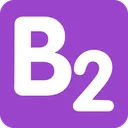

:small_blue_diamond: 2022-01-01 at 21:00 UTC (Your time: <t:1641070800>) held by Blüwüleinchen🦜
[ID: 138] (AdvancedReading)
nur Deutsch Leserunde: die Unendliche Geschichte
Recommended level(s):
:small_blue_diamond: 2022-01-08 at 21:00 UTC (Your time: <t:1641675600>) held by Blüwüleinchen🦜
[ID: 139] (AdvancedReading)
nur Deutsch Leserunde: die Unendliche Geschichte
Recommended level(s):
:small_blue_diamond: 2022-01-15 at 21:00 UTC (Your time: <t:1642280400>) held by Blüwüleinchen🦜
[ID: 140] (AdvancedReading)
nur Deutsch Leserunde: die Unendliche Geschichte
Recommended level(s):
Type `>session info [ID#]` e.g. `>session info 3` for more detail about a specific session.
 wild folio
faq beginner
lean flickerBOT
How to get started
The simplest way to learn German is to find topics you don’t understand yet and search for explanations of them. This list provides you with a guide for which topics to learn if you are completely new to German. Type the topic into Google (or YouTube) and start learning!
Introduction
1: Alphabet (especially ä, ü, ö and ß)
2: Basic greetings (hello, goodbye, etc.)
Part 1 - Simple Sentence
1: Noun gender & plurals
2: Nominative case (What are cases?)
3: Nominative pronouns (I, you, he, she, etc.)
4: Verbs in present tense
5: Definite/indefinite articles
6: Accusative case (for nouns)
7: Accusative pronouns
8: Word order of simple sentences
9: How to ask questions
See Part 2 on the next page.
Tips
- Always learn the gender of a noun when you learn a new noun
- Learn to use a translation dictionary (e.g. dict.cc, leo.org)
- Use
>faq resourcesto see our list of German learning resources - For listening and pronunciation practice, try watching movies or videos (incl. YouTube)
- You can listen to pronunciation for words on websites like dict.cc, forvo.com, and others
- Practice writing sentences every day (and asking people to correct them)
- Ask as many questions as possible
- Don’t be scared to make mistakes!!!! If you don’t let yourself make mistakes, you will never be able to learn German
Page 1/2
lean flickerBOT
How to get started
The simplest way to learn German is to find topics you don’t understand yet and search for explanations of them. This list provides you with a guide for which topics to learn if you are completely new to German. Type the topic into Google (or YouTube) and start learning!
Introduction
1: Alphabet (especially ä, ü, ö and ß)
2: Basic greetings (hello, goodbye, etc.)
Part 1 - Simple Sentence
1: Noun gender & plurals
2: Nominative case (What are cases?)
3: Nominative pronouns (I, you, he, she, etc.)
4: Verbs in present tense
5: Definite/indefinite articles
6: Accusative case (for nouns)
7: Accusative pronouns
8: Word order of simple sentences
9: How to ask questions
See Part 2 on the next page.
Tips
- Always learn the gender of a noun when you learn a new noun
- Learn to use a translation dictionary (e.g. dict.cc, leo.org)
- Use
>faq resourcesto see our list of German learning resources - For listening and pronunciation practice, try watching movies or videos (incl. YouTube)
- You can listen to pronunciation for words on websites like dict.cc, forvo.com, and others
- Practice writing sentences every day (and asking people to correct them)
- Ask as many questions as possible
- Don’t be scared to make mistakes!!!! If you don’t let yourself make mistakes, you will never be able to learn German
Page 1/2
 night heath
faq resources
lean flickerBOT
Resources
 vast quartz
faq beginner
lean flickerBOT
How to get started
The simplest way to learn German is to find topics you don’t understand yet and search for explanations of them. This list provides you with a guide for which topics to learn if you are completely new to German. Type the topic into Google (or YouTube) and start learning!
Introduction
1: Alphabet (especially ä, ü, ö and ß)
2: Basic greetings (hello, goodbye, etc.)
Part 1 - Simple Sentence
1: Noun gender & plurals
2: Nominative case (What are cases?)
3: Nominative pronouns (I, you, he, she, etc.)
4: Verbs in present tense
5: Definite/indefinite articles
6: Accusative case (for nouns)
7: Accusative pronouns
8: Word order of simple sentences
9: How to ask questions
See Part 2 on the next page.
Tips
- Always learn the gender of a noun when you learn a new noun
- Learn to use a translation dictionary (e.g. dict.cc, leo.org)
- Use
>faq resourcesto see our list of German learning resources - For listening and pronunciation practice, try watching movies or videos (incl. YouTube)
- You can listen to pronunciation for words on websites like dict.cc, forvo.com, and others
- Practice writing sentences every day (and asking people to correct them)
- Ask as many questions as possible
- Don’t be scared to make mistakes!!!! If you don’t let yourself make mistakes, you will never be able to learn German
Page 1/2
vast quartz
faq beginner
lean flickerBOT
How to get started - Part 2
Please make sure to read Part 1 before starting Part 2!
Part 2 – Beyond a Simple Sentence
1: Conjunctions (coordinating and subordinating)
2: Subordinate clause word order
3: Dative case
4: Dative verbs
5: Verbs with two objects (e.g. geben)
6: Prepositions (accusative, dative, and two-way)
7: Spoken past tense (Perfekt)
8: Written past tense (Präteritum)
9: Genitive case
10: Relative clauses
11: Adjective declension
Tips
- Make sure to practice writing and reading simple texts
- Some of these concepts are confusing to start with, so it’s a good idea to ask for help in #questions when you’re unsure
- You should use a declension chart to help with declension to start with, because you won’t be able to memorize it straight away
- After you feel confident with creating sentences, you can start learning the adjective declension properly by using the command >faq adjective declension and reading the guide provided
Page 2/2
lean flickerBOT
Gender patterns
Unfortunately, many German words don't have immediately clear clues that reveal it, but thankfully, many common words do follow patterns that reveal their gender.
In general, you are advised to learn the article together with the word (and its plural!).
Plural forms always use die and follow plural declension rules, which are the same for all genders (yay 🎉).
For compound words, remember that only the last word matters.
Type >explain grammatical gender for an explanation on grammatical gender.
Here's a list of patterns to recognise word gender.
Note that exceptions may apply.
Page 1/4
lean flickerBOT
How to get started - Part 2
Please make sure to read Part 1 before starting Part 2!
Part 2 – Beyond a Simple Sentence
1: Conjunctions (coordinating and subordinating)
2: Subordinate clause word order
3: Dative case
4: Dative verbs
5: Verbs with two objects (e.g. geben)
6: Prepositions (accusative, dative, and two-way)
7: Spoken past tense (Perfekt)
8: Written past tense (Präteritum)
9: Genitive case
10: Relative clauses
11: Adjective declension
Tips
- Make sure to practice writing and reading simple texts
- Some of these concepts are confusing to start with, so it’s a good idea to ask for help in #questions when you’re unsure
- You should use a declension chart to help with declension to start with, because you won’t be able to memorize it straight away
- After you feel confident with creating sentences, you can start learning the adjective declension properly by using the command >faq adjective declension and reading the guide provided
Page 2/2
 weary viper
kj
tender trellis
faq duolingo
lean flickerBOT
Duolingo
Duolingo is a decent resource to start with if you're a complete beginner, but it's neither efficient nor comprehensive!
What Duolingo will teach you about grammar is very limited, and none of the systems they use will help you practise much of it.
You can learn some vocabulary with it, but their method (based on the concept of spaced repetition) doesn't work for everybody, and the way Duolingo teaches is not very effective compared to the amount of time it requires from you.
So, if you find it useful, by all means keep using it, but remember not to fall for its gamification of language learning, and move past it when it stops being beneficial. Ignore the streaks.
In any case, keep in mind that Duolingo is not enough to learn a language, ever.
If you're looking for guidance or alternatives, check out >faq beginner in our #botchannel .
Generic 1/2 commands
:small_blue_diamond: **getrole** <role name>
Assigns you a role with the given name, removing any previous assignable roles.
Note: Use >sub to subscribe to groups and ping a moderator for the native speaker role.
:small_blue_diamond: **info** [user]
Displays information about the given user. If no user is specified, information about you will be displayed.
:small_blue_diamond: **quote** <channel> <message id>
Quotes a message in the channel you are in. Specify the channel that the message was originally posted in and the message id of the message (accessible if you turn on developer mode in your Discord settings).
:small_blue_diamond: **removerole** <role name>
Removes the CEFR role with the given name from you.
Note: Use >unsub for group roles.
:small_blue_diamond: **roles**
Lists all roles on the server.
Page 8/19 (19 entries)
 glossy robin
faq cefr
lean flickerBOT
CEFR levels
If you see something like A1, B2 or C1, these represent the proficiency of a speaker in a language they're not native in, and are called CEFR levels. They are valid for any language, not only German!
Roughly speaking, A levels are beginners and C levels are experts. Remember that CEFR level are self-assessed and indicative!
You can see more specific names and descriptions on the Wikipedia page:
https://en.wikipedia.org/wiki/Common_European_Framework_of_Reference_for_Languages
🗨 How do I know what level I am?
If the table on Wikipedia is too generic for you, you can try using this one here:
https://rm.coe.int/168045bb52
Just check each column one at a time: if you can do all it describes, move to the next column. Your level is the highest where you can do the most things.
Alternatively, you can use this questionnaire to estimate your level more accurately:
https://www.laits.utexas.edu/fi/sites/laits.utexas.edu.fi/files/Self Assessment Checklist European.pdf
 sharp oracle
lessons
lean flickerBOT
Upcoming Sessions
:calendar: Want to add our sessions schedule to your Google calendar?
:small_blue_diamond: 2021-12-18 at 21:00 UTC (Your time: <t:1639861200>) held by Blüwüleinchen🦜
[ID: 137] (AdvancedReading)
nur Deutsch Leserunde: die Unendliche Geschichte
Recommended level(s):
:small_blue_diamond: 2022-01-01 at 21:00 UTC (Your time: <t:1641070800>) held by Blüwüleinchen🦜
[ID: 138] (AdvancedReading)
nur Deutsch Leserunde: die Unendliche Geschichte
Recommended level(s):
:small_blue_diamond: 2022-01-08 at 21:00 UTC (Your time: <t:1641675600>) held by Blüwüleinchen🦜
[ID: 139] (AdvancedReading)
nur Deutsch Leserunde: die Unendliche Geschichte
Recommended level(s):
:small_blue_diamond: 2022-01-15 at 21:00 UTC (Your time: <t:1642280400>) held by Blüwüleinchen🦜
[ID: 140] (AdvancedReading)
nur Deutsch Leserunde: die Unendliche Geschichte
Recommended level(s):
Type `>session info [ID#]` e.g. `>session info 3` for more detail about a specific session.
 somber moat
lean flickerBOT
somber moat
lean flickerBOT
CEFR levels
If you see something like A1, B2 or C1, these represent the proficiency of a speaker in a language they're not native in, and are called CEFR levels. They are valid for any language, not only German!
Roughly speaking, A levels are beginners and C levels are experts. Remember that CEFR level are self-assessed and indicative!
You can see more specific names and descriptions on the Wikipedia page:
https://en.wikipedia.org/wiki/Common_European_Framework_of_Reference_for_Languages
🗨 How do I know what level I am?
If the table on Wikipedia is too generic for you, you can try using this one here:
https://rm.coe.int/168045bb52
Just check each column one at a time: if you can do all it describes, move to the next column. Your level is the highest where you can do the most things.
Alternatively, you can use this questionnaire to estimate your level more accurately:
https://www.laits.utexas.edu/fi/sites/laits.utexas.edu.fi/files/Self Assessment Checklist European.pdf
 pastel whale
faq beginner
lean flickerBOT
How to get started
The simplest way to learn German is to find topics you don’t understand yet and search for explanations of them. This list provides you with a guide for which topics to learn if you are completely new to German. Type the topic into Google (or YouTube) and start learning!
Introduction
1: Alphabet (especially ä, ü, ö and ß)
2: Basic greetings (hello, goodbye, etc.)
Part 1 - Simple Sentence
1: Noun gender & plurals
2: Nominative case (What are cases?)
3: Nominative pronouns (I, you, he, she, etc.)
4: Verbs in present tense
5: Definite/indefinite articles
6: Accusative case (for nouns)
7: Accusative pronouns
8: Word order of simple sentences
9: How to ask questions
See Part 2 on the next page.
Tips
- Always learn the gender of a noun when you learn a new noun
- Learn to use a translation dictionary (e.g. dict.cc, leo.org)
- Use
>faq resourcesto see our list of German learning resources - For listening and pronunciation practice, try watching movies or videos (incl. YouTube)
- You can listen to pronunciation for words on websites like dict.cc, forvo.com, and others
- Practice writing sentences every day (and asking people to correct them)
- Ask as many questions as possible
- Don’t be scared to make mistakes!!!! If you don’t let yourself make mistakes, you will never be able to learn German
Page 1/2
 violet agate
faq cefr
lean flickerBOT
CEFR levels
If you see something like A1, B2 or C1, these represent the proficiency of a speaker in a language they're not native in, and are called CEFR levels. They are valid for any language, not only German!
Roughly speaking, A levels are beginners and C levels are experts. Remember that CEFR level are self-assessed and indicative!
You can see more specific names and descriptions on the Wikipedia page:
https://en.wikipedia.org/wiki/Common_European_Framework_of_Reference_for_Languages
🗨 How do I know what level I am?
If the table on Wikipedia is too generic for you, you can try using this one here:
https://rm.coe.int/168045bb52
Just check each column one at a time: if you can do all it describes, move to the next column. Your level is the highest where you can do the most things.
Alternatively, you can use this questionnaire to estimate your level more accurately:
https://www.laits.utexas.edu/fi/sites/laits.utexas.edu.fi/files/Self Assessment Checklist European.pdf
lean flickerBOT
@torn prairie, please read #getting-started for info on how to join VC and more.
 torn prairie
faq beginner
lean flickerBOT
How to get started
The simplest way to learn German is to find topics you don’t understand yet and search for explanations of them. This list provides you with a guide for which topics to learn if you are completely new to German. Type the topic into Google (or YouTube) and start learning!
Introduction
1: Alphabet (especially ä, ü, ö and ß)
2: Basic greetings (hello, goodbye, etc.)
Part 1 - Simple Sentence
1: Noun gender & plurals
2: Nominative case (What are cases?)
3: Nominative pronouns (I, you, he, she, etc.)
4: Verbs in present tense
5: Definite/indefinite articles
6: Accusative case (for nouns)
7: Accusative pronouns
8: Word order of simple sentences
9: How to ask questions
See Part 2 on the next page.
Tips
- Always learn the gender of a noun when you learn a new noun
- Learn to use a translation dictionary (e.g. dict.cc, leo.org)
- Use
>faq resourcesto see our list of German learning resources - For listening and pronunciation practice, try watching movies or videos (incl. YouTube)
- You can listen to pronunciation for words on websites like dict.cc, forvo.com, and others
- Practice writing sentences every day (and asking people to correct them)
- Ask as many questions as possible
- Don’t be scared to make mistakes!!!! If you don’t let yourself make mistakes, you will never be able to learn German
Page 1/2
:x: The required argument input is missing.
tender trellis
FAQ cefr
tender trellis
faq beginner
lean flickerBOT
How to get started - Part 2
Please make sure to read Part 1 before starting Part 2!
Part 2 – Beyond a Simple Sentence
1: Conjunctions (coordinating and subordinating)
2: Subordinate clause word order
3: Dative case
4: Dative verbs
5: Verbs with two objects (e.g. geben)
6: Prepositions (accusative, dative, and two-way)
7: Spoken past tense (Perfekt)
8: Written past tense (Präteritum)
9: Genitive case
10: Relative clauses
11: Adjective declension
Tips
- Make sure to practice writing and reading simple texts
- Some of these concepts are confusing to start with, so it’s a good idea to ask for help in #questions when you’re unsure
- You should use a declension chart to help with declension to start with, because you won’t be able to memorize it straight away
- After you feel confident with creating sentences, you can start learning the adjective declension properly by using the command >faq adjective declension and reading the guide provided
Page 2/2
 worthy bluff
lessons
lean flickerBOT
Upcoming Sessions
:calendar: Want to add our sessions schedule to your Google calendar?
:small_blue_diamond: 2021-12-18 at 21:00 UTC (Your time: <t:1639861200>) held by Blüwüleinchen🦜
[ID: 137] (AdvancedReading)
nur Deutsch Leserunde: die Unendliche Geschichte
Recommended level(s):
:small_blue_diamond: 2022-01-01 at 21:00 UTC (Your time: <t:1641070800>) held by Blüwüleinchen🦜
[ID: 138] (AdvancedReading)
nur Deutsch Leserunde: die Unendliche Geschichte
Recommended level(s):
:small_blue_diamond: 2022-01-08 at 21:00 UTC (Your time: <t:1641675600>) held by Blüwüleinchen🦜
[ID: 139] (AdvancedReading)
nur Deutsch Leserunde: die Unendliche Geschichte
Recommended level(s):
:small_blue_diamond: 2022-01-15 at 21:00 UTC (Your time: <t:1642280400>) held by Blüwüleinchen🦜
[ID: 140] (AdvancedReading)
nur Deutsch Leserunde: die Unendliche Geschichte
Recommended level(s):
Type `>session info [ID#]` e.g. `>session info 3` for more detail about a specific session.
 acoustic cloud
help
lean flickerBOT
German commands
:small_blue_diamond: **lookup** <target> <phrase>
Translates the given phrase into the specified target language using dict.cc. Specify either en or de as targets.
:small_blue_diamond: **noun** <noun>
Provides a link to the declension of the given noun.
:small_blue_diamond: **verb** <infinitive>
Provides a link to the conjugation of the given infinitive.
:small_blue_diamond: **words**
A command that helps you train vocabulary using dict.cc.
Page 19/19 (19 entries)
 atomic flame
sub activities
tender trellis
faq learn fast
 silver pike
faq beginner
lean flickerBOT
How to get started
The simplest way to learn German is to find topics you don’t understand yet and search for explanations of them. This list provides you with a guide for which topics to learn if you are completely new to German. Type the topic into Google (or YouTube) and start learning!
Introduction
1: Alphabet (especially ä, ü, ö and ß)
2: Basic greetings (hello, goodbye, etc.)
Part 1 - Simple Sentence
1: Noun gender & plurals
2: Nominative case (What are cases?)
3: Nominative pronouns (I, you, he, she, etc.)
4: Verbs in present tense
5: Definite/indefinite articles
6: Accusative case (for nouns)
7: Accusative pronouns
8: Word order of simple sentences
9: How to ask questions
See Part 2 on the next page.
Tips
- Always learn the gender of a noun when you learn a new noun
- Learn to use a translation dictionary (e.g. dict.cc, leo.org)
- Use
>faq resourcesto see our list of German learning resources - For listening and pronunciation practice, try watching movies or videos (incl. YouTube)
- You can listen to pronunciation for words on websites like dict.cc, forvo.com, and others
- Practice writing sentences every day (and asking people to correct them)
- Ask as many questions as possible
- Don’t be scared to make mistakes!!!! If you don’t let yourself make mistakes, you will never be able to learn German
Page 1/2
 halcyon sail
purpose heritage speaker
lean flickerBOT
Information about Heritage Speaker
Heritage Speaker
Indicates members who are Heritage Speakers of German.
This means that they were exposed to the language from a very young age (e.g. by their parents) but usually don't consider it their native language and never learned German in a formal school setting, for example.
You cannot assign yourself this role. You must request it by clicking the appropriate button here.
halcyon sail
@subtle smelt
 subtle smelt
thy
lean flickerBOT
:x: The required argument input is missing.
 modern crypt
purpose vc
lean flickerBOT
:x: 'vc' is not a channel or a role.
modern crypt
idi u kurac
 candid coral
modern crypt
idi u kurac
candid coral
modern crypt
idi u kurac
Try reading #getting-started first, before you insult the bot
 unique escarp
faq beginner
lean flickerBOT
How to get started
The simplest way to learn German is to find topics you don’t understand yet and search for explanations of them. This list provides you with a guide for which topics to learn if you are completely new to German. Type the topic into Google (or YouTube) and start learning!
Introduction
1: Alphabet (especially ä, ü, ö and ß)
2: Basic greetings (hello, goodbye, etc.)
Part 1 - Simple Sentence
1: Noun gender & plurals
2: Nominative case (What are cases?)
3: Nominative pronouns (I, you, he, she, etc.)
4: Verbs in present tense
5: Definite/indefinite articles
6: Accusative case (for nouns)
7: Accusative pronouns
8: Word order of simple sentences
9: How to ask questions
See Part 2 on the next page.
Tips
- Always learn the gender of a noun when you learn a new noun
- Learn to use a translation dictionary (e.g. dict.cc, leo.org)
- Use
>faq resourcesto see our list of German learning resources - For listening and pronunciation practice, try watching movies or videos (incl. YouTube)
- You can listen to pronunciation for words on websites like dict.cc, forvo.com, and others
- Practice writing sentences every day (and asking people to correct them)
- Ask as many questions as possible
- Don’t be scared to make mistakes!!!! If you don’t let yourself make mistakes, you will never be able to learn German
Page 1/2
 astral silo
faq beginner
lean flickerBOT
How to get started - Part 2
Please make sure to read Part 1 before starting Part 2!
Part 2 – Beyond a Simple Sentence
1: Conjunctions (coordinating and subordinating)
2: Subordinate clause word order
3: Dative case
4: Dative verbs
5: Verbs with two objects (e.g. geben)
6: Prepositions (accusative, dative, and two-way)
7: Spoken past tense (Perfekt)
8: Written past tense (Präteritum)
9: Genitive case
10: Relative clauses
11: Adjective declension
Tips
- Make sure to practice writing and reading simple texts
- Some of these concepts are confusing to start with, so it’s a good idea to ask for help in #questions when you’re unsure
- You should use a declension chart to help with declension to start with, because you won’t be able to memorize it straight away
- After you feel confident with creating sentences, you can start learning the adjective declension properly by using the command >faq adjective declension and reading the guide provided
Page 2/2
 hollow ocean
faq beginner
lean flickerBOT
How to get started
The simplest way to learn German is to find topics you don’t understand yet and search for explanations of them. This list provides you with a guide for which topics to learn if you are completely new to German. Type the topic into Google (or YouTube) and start learning!
Introduction
1: Alphabet (especially ä, ü, ö and ß)
2: Basic greetings (hello, goodbye, etc.)
Part 1 - Simple Sentence
1: Noun gender & plurals
2: Nominative case (What are cases?)
3: Nominative pronouns (I, you, he, she, etc.)
4: Verbs in present tense
5: Definite/indefinite articles
6: Accusative case (for nouns)
7: Accusative pronouns
8: Word order of simple sentences
9: How to ask questions
See Part 2 on the next page.
Tips
- Always learn the gender of a noun when you learn a new noun
- Learn to use a translation dictionary (e.g. dict.cc, leo.org)
- Use
>faq resourcesto see our list of German learning resources - For listening and pronunciation practice, try watching movies or videos (incl. YouTube)
- You can listen to pronunciation for words on websites like dict.cc, forvo.com, and others
- Practice writing sentences every day (and asking people to correct them)
- Ask as many questions as possible
- Don’t be scared to make mistakes!!!! If you don’t let yourself make mistakes, you will never be able to learn German
Page 1/2
tender trellis
faq beginner
lean flickerBOT
How to get started - Part 2
Please make sure to read Part 1 before starting Part 2!
Part 2 – Beyond a Simple Sentence
1: Conjunctions (coordinating and subordinating)
2: Subordinate clause word order
3: Dative case
4: Dative verbs
5: Verbs with two objects (e.g. geben)
6: Prepositions (accusative, dative, and two-way)
7: Spoken past tense (Perfekt)
8: Written past tense (Präteritum)
9: Genitive case
10: Relative clauses
11: Adjective declension
Tips
- Make sure to practice writing and reading simple texts
- Some of these concepts are confusing to start with, so it’s a good idea to ask for help in #questions when you’re unsure
- You should use a declension chart to help with declension to start with, because you won’t be able to memorize it straight away
- After you feel confident with creating sentences, you can start learning the adjective declension properly by using the command >faq adjective declension and reading the guide provided
Page 2/2
lean flickerBOT
How to get started - Part 2
Please make sure to read Part 1 before starting Part 2!
Part 2 – Beyond a Simple Sentence
1: Conjunctions (coordinating and subordinating)
2: Subordinate clause word order
3: Dative case
4: Dative verbs
5: Verbs with two objects (e.g. geben)
6: Prepositions (accusative, dative, and two-way)
7: Spoken past tense (Perfekt)
8: Written past tense (Präteritum)
9: Genitive case
10: Relative clauses
11: Adjective declension
Tips
- Make sure to practice writing and reading simple texts
- Some of these concepts are confusing to start with, so it’s a good idea to ask for help in #questions when you’re unsure
- You should use a declension chart to help with declension to start with, because you won’t be able to memorize it straight away
- After you feel confident with creating sentences, you can start learning the adjective declension properly by using the command >faq adjective declension and reading the guide provided
Page 2/2
 carmine basin
faq cefr
lean flickerBOT
CEFR levels
If you see something like A1, B2 or C1, these represent the proficiency of a speaker in a language they're not native in, and are called CEFR levels. They are valid for any language, not only German!
Roughly speaking, A levels are beginners and C levels are experts. Remember that CEFR level are self-assessed and indicative!
You can see more specific names and descriptions on the Wikipedia page:
https://en.wikipedia.org/wiki/Common_European_Framework_of_Reference_for_Languages
🗨 How do I know what level I am?
If the table on Wikipedia is too generic for you, you can try using this one here:
https://rm.coe.int/168045bb52
Just check each column one at a time: if you can do all it describes, move to the next column. Your level is the highest where you can do the most things.
Alternatively, you can use this questionnaire to estimate your level more accurately:
https://www.laits.utexas.edu/fi/sites/laits.utexas.edu.fi/files/Self Assessment Checklist European.pdf
 ember ether
lean flickerBOT
ember ether
lean flickerBOT
Resources
carmine basin
sessions
lean flickerBOT
Upcoming Sessions
:calendar: Want to add our sessions schedule to your Google calendar?
:small_blue_diamond: 2021-12-18 at 21:00 UTC (Your time: <t:1639861200>) held by Blüwüleinchen🦜
[ID: 137] (AdvancedReading)
nur Deutsch Leserunde: die Unendliche Geschichte
Recommended level(s):
:small_blue_diamond: 2022-01-01 at 21:00 UTC (Your time: <t:1641070800>) held by Blüwüleinchen🦜
[ID: 138] (AdvancedReading)
nur Deutsch Leserunde: die Unendliche Geschichte
Recommended level(s):
:small_blue_diamond: 2022-01-08 at 21:00 UTC (Your time: <t:1641675600>) held by Blüwüleinchen🦜
[ID: 139] (AdvancedReading)
nur Deutsch Leserunde: die Unendliche Geschichte
Recommended level(s):
:small_blue_diamond: 2022-01-15 at 21:00 UTC (Your time: <t:1642280400>) held by Blüwüleinchen🦜
[ID: 140] (AdvancedReading)
nur Deutsch Leserunde: die Unendliche Geschichte
Recommended level(s):
Type `>session info [ID#]` e.g. `>session info 3` for more detail about a specific session.
 hoary shell
faq begginers
lean flickerBOT
FAQ not found. Try >explain all.
hoary shell
faq beginner
lean flickerBOT
How to get started - Part 2
Please make sure to read Part 1 before starting Part 2!
Part 2 – Beyond a Simple Sentence
1: Conjunctions (coordinating and subordinating)
2: Subordinate clause word order
3: Dative case
4: Dative verbs
5: Verbs with two objects (e.g. geben)
6: Prepositions (accusative, dative, and two-way)
7: Spoken past tense (Perfekt)
8: Written past tense (Präteritum)
9: Genitive case
10: Relative clauses
11: Adjective declension
Tips
- Make sure to practice writing and reading simple texts
- Some of these concepts are confusing to start with, so it’s a good idea to ask for help in #questions when you’re unsure
- You should use a declension chart to help with declension to start with, because you won’t be able to memorize it straight away
- After you feel confident with creating sentences, you can start learning the adjective declension properly by using the command >faq adjective declension and reading the guide provided
Page 2/2
 outer blade
info
lean flickerBOT

Information about Aventador#9854
Name
@outer blade
ID
206481136040411136
Joined
<t:1636575170> (1 month, 5 days and 22 hours ago)
Account created
<t:1469299339> (5 years, 4 months and 3 weeks ago)
lean flickerBOT
How to get started
The simplest way to learn German is to find topics you don’t understand yet and search for explanations of them. This list provides you with a guide for which topics to learn if you are completely new to German. Type the topic into Google (or YouTube) and start learning!
Introduction
1: Alphabet (especially ä, ü, ö and ß)
2: Basic greetings (hello, goodbye, etc.)
Part 1 - Simple Sentence
1: Noun gender & plurals
2: Nominative case (What are cases?)
3: Nominative pronouns (I, you, he, she, etc.)
4: Verbs in present tense
5: Definite/indefinite articles
6: Accusative case (for nouns)
7: Accusative pronouns
8: Word order of simple sentences
9: How to ask questions
See Part 2 on the next page.
Tips
- Always learn the gender of a noun when you learn a new noun
- Learn to use a translation dictionary (e.g. dict.cc, leo.org)
- Use
>faq resourcesto see our list of German learning resources - For listening and pronunciation practice, try watching movies or videos (incl. YouTube)
- You can listen to pronunciation for words on websites like dict.cc, forvo.com, and others
- Practice writing sentences every day (and asking people to correct them)
- Ask as many questions as possible
- Don’t be scared to make mistakes!!!! If you don’t let yourself make mistakes, you will never be able to learn German
Page 1/2
 opaque totem
Ok
 upper karma
help
lean flickerBOT
Generic 1/2 commands
:small_blue_diamond: **getrole** <role name>
Assigns you a role with the given name, removing any previous assignable roles.
Note: Use >sub to subscribe to groups and ping a moderator for the native speaker role.
:small_blue_diamond: **info** [user]
Displays information about the given user. If no user is specified, information about you will be displayed.
:small_blue_diamond: **quote** <channel> <message id>
Quotes a message in the channel you are in. Specify the channel that the message was originally posted in and the message id of the message (accessible if you turn on developer mode in your Discord settings).
:small_blue_diamond: **removerole** <role name>
Removes the CEFR role with the given name from you.
Note: Use >unsub for group roles.
:small_blue_diamond: **roles**
Lists all roles on the server.
Page 8/19 (19 entries)
 supple shuttle
faq beginner
lean flickerBOT
How to get started
The simplest way to learn German is to find topics you don’t understand yet and search for explanations of them. This list provides you with a guide for which topics to learn if you are completely new to German. Type the topic into Google (or YouTube) and start learning!
Introduction
1: Alphabet (especially ä, ü, ö and ß)
2: Basic greetings (hello, goodbye, etc.)
Part 1 - Simple Sentence
1: Noun gender & plurals
2: Nominative case (What are cases?)
3: Nominative pronouns (I, you, he, she, etc.)
4: Verbs in present tense
5: Definite/indefinite articles
6: Accusative case (for nouns)
7: Accusative pronouns
8: Word order of simple sentences
9: How to ask questions
See Part 2 on the next page.
Tips
- Always learn the gender of a noun when you learn a new noun
- Learn to use a translation dictionary (e.g. dict.cc, leo.org)
- Use
>faq resourcesto see our list of German learning resources - For listening and pronunciation practice, try watching movies or videos (incl. YouTube)
- You can listen to pronunciation for words on websites like dict.cc, forvo.com, and others
- Practice writing sentences every day (and asking people to correct them)
- Ask as many questions as possible
- Don’t be scared to make mistakes!!!! If you don’t let yourself make mistakes, you will never be able to learn German
Page 1/2
tender trellis
faq beginner
lean flickerBOT
How to get started - Part 2
Please make sure to read Part 1 before starting Part 2!
Part 2 – Beyond a Simple Sentence
1: Conjunctions (coordinating and subordinating)
2: Subordinate clause word order
3: Dative case
4: Dative verbs
5: Verbs with two objects (e.g. geben)
6: Prepositions (accusative, dative, and two-way)
7: Spoken past tense (Perfekt)
8: Written past tense (Präteritum)
9: Genitive case
10: Relative clauses
11: Adjective declension
Tips
- Make sure to practice writing and reading simple texts
- Some of these concepts are confusing to start with, so it’s a good idea to ask for help in #questions when you’re unsure
- You should use a declension chart to help with declension to start with, because you won’t be able to memorize it straight away
- After you feel confident with creating sentences, you can start learning the adjective declension properly by using the command >faq adjective declension and reading the guide provided
Page 2/2
 astral oasis
faq cefr
lean flickerBOT
CEFR levels
If you see something like A1, B2 or C1, these represent the proficiency of a speaker in a language they're not native in, and are called CEFR levels. They are valid for any language, not only German!
Roughly speaking, A levels are beginners and C levels are experts. Remember that CEFR level are self-assessed and indicative!
You can see more specific names and descriptions on the Wikipedia page:
https://en.wikipedia.org/wiki/Common_European_Framework_of_Reference_for_Languages
🗨 How do I know what level I am?
If the table on Wikipedia is too generic for you, you can try using this one here:
https://rm.coe.int/168045bb52
Just check each column one at a time: if you can do all it describes, move to the next column. Your level is the highest where you can do the most things.
Alternatively, you can use this questionnaire to estimate your level more accurately:
https://www.laits.utexas.edu/fi/sites/laits.utexas.edu.fi/files/Self Assessment Checklist European.pdf
astral oasis
faq beginner
lean flickerBOT
How to get started
The simplest way to learn German is to find topics you don’t understand yet and search for explanations of them. This list provides you with a guide for which topics to learn if you are completely new to German. Type the topic into Google (or YouTube) and start learning!
Introduction
1: Alphabet (especially ä, ü, ö and ß)
2: Basic greetings (hello, goodbye, etc.)
Part 1 - Simple Sentence
1: Noun gender & plurals
2: Nominative case (What are cases?)
3: Nominative pronouns (I, you, he, she, etc.)
4: Verbs in present tense
5: Definite/indefinite articles
6: Accusative case (for nouns)
7: Accusative pronouns
8: Word order of simple sentences
9: How to ask questions
See Part 2 on the next page.
Tips
- Always learn the gender of a noun when you learn a new noun
- Learn to use a translation dictionary (e.g. dict.cc, leo.org)
- Use
>faq resourcesto see our list of German learning resources - For listening and pronunciation practice, try watching movies or videos (incl. YouTube)
- You can listen to pronunciation for words on websites like dict.cc, forvo.com, and others
- Practice writing sentences every day (and asking people to correct them)
- Ask as many questions as possible
- Don’t be scared to make mistakes!!!! If you don’t let yourself make mistakes, you will never be able to learn German
Page 1/2
astral oasis
faq resources
lean flickerBOT
Resources
 nimble frost
explain all
lean flickerBOT
See a listed FAQ with >faq [name]
:small_blue_diamond: Swiss German
Aliases: gsw
:small_blue_diamond: Switzerland
Aliases: Schweiz, CH
:small_blue_diamond: Two-way prepositions
Aliases: two way prepositions, dual prepositions
:small_blue_diamond: Umlauts
Aliases: Umlaute, Umlaut, ä, ö, ü
:small_blue_diamond: Usage of Konjunktiv II
Aliases: KII 1
:small_blue_diamond: Usage of zu
Aliases: um zu
:small_blue_diamond: Verbs with prepositions
Aliases: verb prepositions, pferd's verb list
:small_blue_diamond: Vorgangspassiv
:small_blue_diamond: Weak Nouns
Aliases: N-Declension, N-Deklination, weak noun
:small_blue_diamond: weil, denn, da
:small_blue_diamond: What does GLaD mean?
Aliases: GLaD
:small_blue_diamond: wissen und kennen
Aliases: wissen vs. kennen, kennen vs. wissen
:small_blue_diamond: Word Order for Nouns & Pronouns
:small_blue_diamond: Word Order for Verbs
Aliases: word order verbs, word order of verbs
Page 4/4 (59 entries)
 winter rock
faq cefr
lean flickerBOT
CEFR levels
If you see something like A1, B2 or C1, these represent the proficiency of a speaker in a language they're not native in, and are called CEFR levels. They are valid for any language, not only German!
Roughly speaking, A levels are beginners and C levels are experts. Remember that CEFR level are self-assessed and indicative!
You can see more specific names and descriptions on the Wikipedia page:
https://en.wikipedia.org/wiki/Common_European_Framework_of_Reference_for_Languages
🗨 How do I know what level I am?
If the table on Wikipedia is too generic for you, you can try using this one here:
https://rm.coe.int/168045bb52
Just check each column one at a time: if you can do all it describes, move to the next column. Your level is the highest where you can do the most things.
Alternatively, you can use this questionnaire to estimate your level more accurately:
https://www.laits.utexas.edu/fi/sites/laits.utexas.edu.fi/files/Self Assessment Checklist European.pdf
 modest trail
faq beginner
lean flickerBOT
How to get started
The simplest way to learn German is to find topics you don’t understand yet and search for explanations of them. This list provides you with a guide for which topics to learn if you are completely new to German. Type the topic into Google (or YouTube) and start learning!
Introduction
1: Alphabet (especially ä, ü, ö and ß)
2: Basic greetings (hello, goodbye, etc.)
Part 1 - Simple Sentence
1: Noun gender & plurals
2: Nominative case (What are cases?)
3: Nominative pronouns (I, you, he, she, etc.)
4: Verbs in present tense
5: Definite/indefinite articles
6: Accusative case (for nouns)
7: Accusative pronouns
8: Word order of simple sentences
9: How to ask questions
See Part 2 on the next page.
Tips
- Always learn the gender of a noun when you learn a new noun
- Learn to use a translation dictionary (e.g. dict.cc, leo.org)
- Use
>faq resourcesto see our list of German learning resources - For listening and pronunciation practice, try watching movies or videos (incl. YouTube)
- You can listen to pronunciation for words on websites like dict.cc, forvo.com, and others
- Practice writing sentences every day (and asking people to correct them)
- Ask as many questions as possible
- Don’t be scared to make mistakes!!!! If you don’t let yourself make mistakes, you will never be able to learn German
Page 1/2
modest trail
faq beginner
lean flickerBOT
How to get started
The simplest way to learn German is to find topics you don’t understand yet and search for explanations of them. This list provides you with a guide for which topics to learn if you are completely new to German. Type the topic into Google (or YouTube) and start learning!
Introduction
1: Alphabet (especially ä, ü, ö and ß)
2: Basic greetings (hello, goodbye, etc.)
Part 1 - Simple Sentence
1: Noun gender & plurals
2: Nominative case (What are cases?)
3: Nominative pronouns (I, you, he, she, etc.)
4: Verbs in present tense
5: Definite/indefinite articles
6: Accusative case (for nouns)
7: Accusative pronouns
8: Word order of simple sentences
9: How to ask questions
See Part 2 on the next page.
Tips
- Always learn the gender of a noun when you learn a new noun
- Learn to use a translation dictionary (e.g. dict.cc, leo.org)
- Use
>faq resourcesto see our list of German learning resources - For listening and pronunciation practice, try watching movies or videos (incl. YouTube)
- You can listen to pronunciation for words on websites like dict.cc, forvo.com, and others
- Practice writing sentences every day (and asking people to correct them)
- Ask as many questions as possible
- Don’t be scared to make mistakes!!!! If you don’t let yourself make mistakes, you will never be able to learn German
Page 1/2
modest trail
ex gender
lean flickerBOT
Grammatical gender
German nouns are sorted in three different genders: masculine, neuter and feminine. These have nothing to do with sex or social gender.
The first thing genders will influence are articles like der, das, die. Each word has its own and you better get it right: some words that look identical can have different meanings depending on the gender they're used with. For example:
die Band = the (musical) band,
der Band = the (book) volume,
das Band = the tape.
Some words, mainly trademarks and loanwords, have multiple acceptable genders while having no change in meaning:
der Jogurt = das Jogurt
das Virus = der Virus
These may vary by region or colloquiality.
💢 But WHY, German, WHY ⁉
Gender is actually quite useful! Since sentence structure is less rigid than in English, grammatical case helps you tell the various elements apart (with some practice), and that works through genders: each gender has its own forms, which makes everything a little less ambiguous. Besides, as you've seen with Band above, it allows us to make up words with different meanings that look the same but are not ambiguous, and if that's not magic, I don't know what is. ✨
🙀 But how am I supposed to tell them apart? 🙀
Check out >explain gender patterns. 😉
 proud parrot
explain gender patterns
modest trail
faq beginner
lean flickerBOT
How to get started - Part 2
Please make sure to read Part 1 before starting Part 2!
Part 2 – Beyond a Simple Sentence
1: Conjunctions (coordinating and subordinating)
2: Subordinate clause word order
3: Dative case
4: Dative verbs
5: Verbs with two objects (e.g. geben)
6: Prepositions (accusative, dative, and two-way)
7: Spoken past tense (Perfekt)
8: Written past tense (Präteritum)
9: Genitive case
10: Relative clauses
11: Adjective declension
Tips
- Make sure to practice writing and reading simple texts
- Some of these concepts are confusing to start with, so it’s a good idea to ask for help in #questions when you’re unsure
- You should use a declension chart to help with declension to start with, because you won’t be able to memorize it straight away
- After you feel confident with creating sentences, you can start learning the adjective declension properly by using the command >faq adjective declension and reading the guide provided
Page 2/2
 spiral flame
faq beginner
lean flickerBOT
How to get started - Part 2
Please make sure to read Part 1 before starting Part 2!
Part 2 – Beyond a Simple Sentence
1: Conjunctions (coordinating and subordinating)
2: Subordinate clause word order
3: Dative case
4: Dative verbs
5: Verbs with two objects (e.g. geben)
6: Prepositions (accusative, dative, and two-way)
7: Spoken past tense (Perfekt)
8: Written past tense (Präteritum)
9: Genitive case
10: Relative clauses
11: Adjective declension
Tips
- Make sure to practice writing and reading simple texts
- Some of these concepts are confusing to start with, so it’s a good idea to ask for help in #questions when you’re unsure
- You should use a declension chart to help with declension to start with, because you won’t be able to memorize it straight away
- After you feel confident with creating sentences, you can start learning the adjective declension properly by using the command >faq adjective declension and reading the guide provided
Page 2/2
spiral flame
faq help
lean flickerBOT
FAQ not found. Try >explain all.
spiral flame
explain all
lean flickerBOT
See a listed FAQ with >faq [name]
:small_blue_diamond: absentive
Aliases: absentiv
:small_blue_diamond: Accusative
Aliases: Akkusativ
:small_blue_diamond: Adjective Declension
Aliases: adjective endings, Adjektivdeklination
:small_blue_diamond: Anki
Aliases: flashcards
:small_blue_diamond: beginner 2
:small_blue_diamond: Beide vs. Beides
Aliases: Beides vs. Beide, Beides, Beide
:small_blue_diamond: Best way to learn German
Aliases: learn fast, learn German fast, learn efficiently, best way to learn, fastest way to learn, most efficient way to learn
:small_blue_diamond: birthdays
:small_blue_diamond: Cases
Aliases: case, grammatical case
:small_blue_diamond: CEFR levels
Aliases: lvl, CEFR, cerf
:small_blue_diamond: conjugation
Aliases: praesens, präsens, present tense, verbs, verb conjugation, Konjugation
:small_blue_diamond: Contractions
Aliases: Verschmelzung, vom, Schmelzwort
:small_blue_diamond: DACH
:small_blue_diamond: Dative
Aliases: Dativ
:small_blue_diamond: doch
Page 1/4 (59 entries)
spiral flame
faq beginner 2
lean flickerBOT
beginner 2
Make sure to check Part 1 if you’re a beginner - >faq beginner
The simplest way to learn German is to find topics you don’t understand yet and search for explanations of them. This list provides you with a guide for which topics to learn if you are completely new to German. Type the topic into Google (or YouTube) and start learning!
Part 2 – Beyond a Simple Sentence
1: Conjunctions (coordinating and subordinating)
2: Subordinate clause word order
3: Dative case
4: Dative verbs
5: Verbs with two objects (e.g. geben)
6: Prepositions (accusative, dative, and two-way)
7: Spoken past tense (Perfekt)
8: Written past tense (Präteritum)
9: Genitive case
10: Relative clauses
11: Adjective declension
Tips
- Make sure to practice writing and reading simple texts
- Some of these concepts are confusing to start with, so it’s a good idea to ask for help in #questions when you’re unsure
- You should use a declension chart to help with declension to start with, because you won’t be able to memorize it straight away
- After you feel confident with creating sentences, you can start learning the adjective declension properly by using the command
>faq adjective declensionand reading the guide provided
spiral flame
faq CEFR levels
lean flickerBOT
CEFR levels
If you see something like A1, B2 or C1, these represent the proficiency of a speaker in a language they're not native in, and are called CEFR levels. They are valid for any language, not only German!
Roughly speaking, A levels are beginners and C levels are experts. Remember that CEFR level are self-assessed and indicative!
You can see more specific names and descriptions on the Wikipedia page:
https://en.wikipedia.org/wiki/Common_European_Framework_of_Reference_for_Languages
🗨 How do I know what level I am?
If the table on Wikipedia is too generic for you, you can try using this one here:
https://rm.coe.int/168045bb52
Just check each column one at a time: if you can do all it describes, move to the next column. Your level is the highest where you can do the most things.
Alternatively, you can use this questionnaire to estimate your level more accurately:
https://www.laits.utexas.edu/fi/sites/laits.utexas.edu.fi/files/Self Assessment Checklist European.pdf
modest trail
help
lean flickerBOT
Generic 1/2 commands
:small_blue_diamond: **getrole** <role name>
Assigns you a role with the given name, removing any previous assignable roles.
Note: Use >sub to subscribe to groups and ping a moderator for the native speaker role.
:small_blue_diamond: **info** [user]
Displays information about the given user. If no user is specified, information about you will be displayed.
:small_blue_diamond: **quote** <channel> <message id>
Quotes a message in the channel you are in. Specify the channel that the message was originally posted in and the message id of the message (accessible if you turn on developer mode in your Discord settings).
:small_blue_diamond: **removerole** <role name>
Removes the CEFR role with the given name from you.
Note: Use >unsub for group roles.
:small_blue_diamond: **roles**
Lists all roles on the server.
Page 8/19 (19 entries)
 vagrant trail
faq beginner
lean flickerBOT
How to get started - Part 2
Please make sure to read Part 1 before starting Part 2!
Part 2 – Beyond a Simple Sentence
1: Conjunctions (coordinating and subordinating)
2: Subordinate clause word order
3: Dative case
4: Dative verbs
5: Verbs with two objects (e.g. geben)
6: Prepositions (accusative, dative, and two-way)
7: Spoken past tense (Perfekt)
8: Written past tense (Präteritum)
9: Genitive case
10: Relative clauses
11: Adjective declension
Tips
- Make sure to practice writing and reading simple texts
- Some of these concepts are confusing to start with, so it’s a good idea to ask for help in #questions when you’re unsure
- You should use a declension chart to help with declension to start with, because you won’t be able to memorize it straight away
- After you feel confident with creating sentences, you can start learning the adjective declension properly by using the command >faq adjective declension and reading the guide provided
Page 2/2
 obtuse mist
sessions
lean flickerBOT
Upcoming Sessions
:calendar: Want to add our sessions schedule to your Google calendar?
:small_blue_diamond: 2021-12-18 at 21:00 UTC (Your time: <t:1639861200>) held by Blüwüleinchen🦜
[ID: 137] (AdvancedReading)
nur Deutsch Leserunde: die Unendliche Geschichte
Recommended level(s):
:small_blue_diamond: 2022-01-01 at 21:00 UTC (Your time: <t:1641070800>) held by Blüwüleinchen🦜
[ID: 138] (AdvancedReading)
nur Deutsch Leserunde: die Unendliche Geschichte
Recommended level(s):
:small_blue_diamond: 2022-01-08 at 21:00 UTC (Your time: <t:1641675600>) held by Blüwüleinchen🦜
[ID: 139] (AdvancedReading)
nur Deutsch Leserunde: die Unendliche Geschichte
Recommended level(s):
:small_blue_diamond: 2022-01-15 at 21:00 UTC (Your time: <t:1642280400>) held by Blüwüleinchen🦜
[ID: 140] (AdvancedReading)
nur Deutsch Leserunde: die Unendliche Geschichte
Recommended level(s):
Type `>session info [ID#]` e.g. `>session info 3` for more detail about a specific session.
obtuse mist
session info 136
lean flickerBOT
1 week, 5 days and 13 hours ago - (Reading) held by Calra
Recommended Level(s)
Recommended level(s): 


Session Description
Der wunderliche Spielmann
Posted 1 week, 5 days and 13 hours ago
Hey Everyone! Surprise reading session! It is going to be my first one. We will be reading one from Bruder Grimm's Stories.
I will be following Blu's format. Will be going from top to bottom in the list.
Reading: Place R in front of your name.
Everyone is welcome to join!
Posted 1 week, 5 days and 13 hours ago
Session starts now!
Type `>session list` to see a list of all sessions.
obtuse mist
session info 127
lean flickerBOT
2 weeks, 6 days and 1 hour ago - (AdvancedReading) held by Blüwüleinchen🦜
Recommended Level(s)
Recommended level(s): 
Session Description
nur Deutsch Leserunde: die Unendliche Geschichte
Posted 3 weeks, 1 day and 12 hours ago
Hallo ihr fleißige Leseratten!!
Dieses Wochenende wird wieder mal gelesen! 🐺 👻
Wir werden aus dem Buch "Die Unendliche Geschichte" vorlesen und dann die Handlung in eigenen Worten zusammenfassen. Dabei können wir auch neue Wörter besprechen.
Wir treffen uns zur angegebenen Zeit im Lessons VC, wir werden auch #lessons benutzen um Bilder und Definitionen usw auszutauschen
Beim letzten Mal haben wir beinahe am Ende des Kapitels namens "Spukstadt" auf Seite 137 aufgehört.
Wie immer:
Wenn ihr Vorlesen wollt, könnt ihr bitte mal ein V vor eure Namen hinschreiben.
Und wenn ihr nur zuhören wollt, dann bitte ein Z hinschreiben.
Ich freue mich darauf, euch zu hören!!
Posted 2 weeks, 6 days and 1 hour ago
Wir lesen die Unendliche Geschichte in etwa 30 Minuten. Schaut mal die session-Infos an, wenn ihr mehr wissen wolltet
Posted 2 weeks, 6 days and 1 hour ago
Es geht los!
Type `>session list` to see a list of all sessions.
obtuse mist
session info 129
lean flickerBOT
6 days, 1 hour and 31 minutes ago - (AdvancedReading) held by Blüwüleinchen🦜
Recommended Level(s)
Recommended level(s):
Session Description
nur Deutsch Leserunde: die Unendliche Geschichte
Posted 1 week, 1 day and 22 hours ago
Hallo ihr fleißigen Leseratten!!
Dieses Wochenende wird wieder mal gelesen! 🌑 👧
Wir werden aus dem Buch "Die Unendliche Geschichte" vorlesen und dann die Handlung in eigenen Worten zusammenfassen. Dabei können wir auch neue Wörter besprechen.
Wir treffen uns zur angegebenen Zeit im Lessons VC, wir werden auch lessons benutzen um Bilder und Definitionen usw auszutauschen.
Ihr findet eine Kopie des Buches in den angepinnten Nachrichten in #lessons
Beim letzten Mal haben wir auf Seite 157, etwa am Anfang des Kapitels "die Kindliche Kaiserin" aufgehört.
Wie immer:
Wenn ihr Vorlesen wollt, könnt ihr bitte mal ein V vor eure Namen hinschreiben.
Und wenn ihr nur zuhören wollt, dann bitte ein Z hinschreiben.
Ich freue mich darauf, euch zu hören!!
Posted 6 days, 1 hour and 58 minutes ago
Hallo zusammen! Die Leserunde beginnt in etwa 30 Minuten.
Bitte lest die Infos durch, wenn ihr euch mehr darüber informieren wollt.
Das könnt ihr tun, indem ihr „>session info 129“ in #botchannel eingibt
Posted 6 days, 1 hour and 28 minutes ago
Es geht los!
Type `>session list` to see a list of all sessions.
obtuse mist
session begin
lean flickerBOT
Lessons VC has been unlocked.
 sour kernel
faq cefr
lean flickerBOT
CEFR levels
If you see something like A1, B2 or C1, these represent the proficiency of a speaker in a language they're not native in, and are called CEFR levels. They are valid for any language, not only German!
Roughly speaking, A levels are beginners and C levels are experts. Remember that CEFR level are self-assessed and indicative!
You can see more specific names and descriptions on the Wikipedia page:
https://en.wikipedia.org/wiki/Common_European_Framework_of_Reference_for_Languages
🗨 How do I know what level I am?
If the table on Wikipedia is too generic for you, you can try using this one here:
https://rm.coe.int/168045bb52
Just check each column one at a time: if you can do all it describes, move to the next column. Your level is the highest where you can do the most things.
Alternatively, you can use this questionnaire to estimate your level more accurately:
https://www.laits.utexas.edu/fi/sites/laits.utexas.edu.fi/files/Self Assessment Checklist European.pdf
 frank lichen
gr A
lean flickerBOT
:x: You already have the Level A role. Use >rr <role> to remove the role.
frank lichen
gr B
lean flickerBOT
:white_check_mark: Your current CEFR role has been replaced with Level B.
frank lichen
danke Herr Leibniz
 gentle garnet
faq beginner
lean flickerBOT
How to get started - Part 2
Please make sure to read Part 1 before starting Part 2!
Part 2 – Beyond a Simple Sentence
1: Conjunctions (coordinating and subordinating)
2: Subordinate clause word order
3: Dative case
4: Dative verbs
5: Verbs with two objects (e.g. geben)
6: Prepositions (accusative, dative, and two-way)
7: Spoken past tense (Perfekt)
8: Written past tense (Präteritum)
9: Genitive case
10: Relative clauses
11: Adjective declension
Tips
- Make sure to practice writing and reading simple texts
- Some of these concepts are confusing to start with, so it’s a good idea to ask for help in #questions when you’re unsure
- You should use a declension chart to help with declension to start with, because you won’t be able to memorize it straight away
- After you feel confident with creating sentences, you can start learning the adjective declension properly by using the command >faq adjective declension and reading the guide provided
Page 2/2
 prime timber
sessions
lean flickerBOT
Upcoming Sessions
:calendar: Want to add our sessions schedule to your Google calendar?
:small_blue_diamond: 2021-12-18 at 21:00 UTC (Your time: <t:1639861200>) held by Blüwüleinchen🦜
[ID: 137] (AdvancedReading)
nur Deutsch Leserunde: die Unendliche Geschichte
Recommended level(s):
:small_blue_diamond: 2022-01-01 at 21:00 UTC (Your time: <t:1641070800>) held by Blüwüleinchen🦜
[ID: 138] (AdvancedReading)
nur Deutsch Leserunde: die Unendliche Geschichte
Recommended level(s):
:small_blue_diamond: 2022-01-08 at 21:00 UTC (Your time: <t:1641675600>) held by Blüwüleinchen🦜
[ID: 139] (AdvancedReading)
nur Deutsch Leserunde: die Unendliche Geschichte
Recommended level(s):
:small_blue_diamond: 2022-01-15 at 21:00 UTC (Your time: <t:1642280400>) held by Blüwüleinchen🦜
[ID: 140] (AdvancedReading)
nur Deutsch Leserunde: die Unendliche Geschichte
Recommended level(s):
Type `>session info [ID#]` e.g. `>session info 3` for more detail about a specific session.
 white crescent
faq beginner
lean flickerBOT
How to get started
The simplest way to learn German is to find topics you don’t understand yet and search for explanations of them. This list provides you with a guide for which topics to learn if you are completely new to German. Type the topic into Google (or YouTube) and start learning!
Introduction
1: Alphabet (especially ä, ü, ö and ß)
2: Basic greetings (hello, goodbye, etc.)
Part 1 - Simple Sentence
1: Noun gender & plurals
2: Nominative case (What are cases?)
3: Nominative pronouns (I, you, he, she, etc.)
4: Verbs in present tense
5: Definite/indefinite articles
6: Accusative case (for nouns)
7: Accusative pronouns
8: Word order of simple sentences
9: How to ask questions
See Part 2 on the next page.
Tips
- Always learn the gender of a noun when you learn a new noun
- Learn to use a translation dictionary (e.g. dict.cc, leo.org)
- Use
>faq resourcesto see our list of German learning resources - For listening and pronunciation practice, try watching movies or videos (incl. YouTube)
- You can listen to pronunciation for words on websites like dict.cc, forvo.com, and others
- Practice writing sentences every day (and asking people to correct them)
- Ask as many questions as possible
- Don’t be scared to make mistakes!!!! If you don’t let yourself make mistakes, you will never be able to learn German
Page 1/2
white crescent
faq resources
lean flickerBOT
Resources
 tall wolf
faq begginer
lean flickerBOT
FAQ not found. I found the following similar entries: beginner, beginner 2.
tall wolf
faq beginner
lean flickerBOT
How to get started
The simplest way to learn German is to find topics you don’t understand yet and search for explanations of them. This list provides you with a guide for which topics to learn if you are completely new to German. Type the topic into Google (or YouTube) and start learning!
Introduction
1: Alphabet (especially ä, ü, ö and ß)
2: Basic greetings (hello, goodbye, etc.)
Part 1 - Simple Sentence
1: Noun gender & plurals
2: Nominative case (What are cases?)
3: Nominative pronouns (I, you, he, she, etc.)
4: Verbs in present tense
5: Definite/indefinite articles
6: Accusative case (for nouns)
7: Accusative pronouns
8: Word order of simple sentences
9: How to ask questions
See Part 2 on the next page.
Tips
- Always learn the gender of a noun when you learn a new noun
- Learn to use a translation dictionary (e.g. dict.cc, leo.org)
- Use
>faq resourcesto see our list of German learning resources - For listening and pronunciation practice, try watching movies or videos (incl. YouTube)
- You can listen to pronunciation for words on websites like dict.cc, forvo.com, and others
- Practice writing sentences every day (and asking people to correct them)
- Ask as many questions as possible
- Don’t be scared to make mistakes!!!! If you don’t let yourself make mistakes, you will never be able to learn German
Page 1/2
lean flickerBOT
How to get started
The simplest way to learn German is to find topics you don’t understand yet and search for explanations of them. This list provides you with a guide for which topics to learn if you are completely new to German. Type the topic into Google (or YouTube) and start learning!
Introduction
1: Alphabet (especially ä, ü, ö and ß)
2: Basic greetings (hello, goodbye, etc.)
Part 1 - Simple Sentence
1: Noun gender & plurals
2: Nominative case (What are cases?)
3: Nominative pronouns (I, you, he, she, etc.)
4: Verbs in present tense
5: Definite/indefinite articles
6: Accusative case (for nouns)
7: Accusative pronouns
8: Word order of simple sentences
9: How to ask questions
See Part 2 on the next page.
Tips
- Always learn the gender of a noun when you learn a new noun
- Learn to use a translation dictionary (e.g. dict.cc, leo.org)
- Use
>faq resourcesto see our list of German learning resources - For listening and pronunciation practice, try watching movies or videos (incl. YouTube)
- You can listen to pronunciation for words on websites like dict.cc, forvo.com, and others
- Practice writing sentences every day (and asking people to correct them)
- Ask as many questions as possible
- Don’t be scared to make mistakes!!!! If you don’t let yourself make mistakes, you will never be able to learn German
Page 1/2
tender trellis
faq beginner
lean flickerBOT
How to get started
The simplest way to learn German is to find topics you don’t understand yet and search for explanations of them. This list provides you with a guide for which topics to learn if you are completely new to German. Type the topic into Google (or YouTube) and start learning!
Introduction
1: Alphabet (especially ä, ü, ö and ß)
2: Basic greetings (hello, goodbye, etc.)
Part 1 - Simple Sentence
1: Noun gender & plurals
2: Nominative case (What are cases?)
3: Nominative pronouns (I, you, he, she, etc.)
4: Verbs in present tense
5: Definite/indefinite articles
6: Accusative case (for nouns)
7: Accusative pronouns
8: Word order of simple sentences
9: How to ask questions
See Part 2 on the next page.
Tips
- Always learn the gender of a noun when you learn a new noun
- Learn to use a translation dictionary (e.g. dict.cc, leo.org)
- Use
>faq resourcesto see our list of German learning resources - For listening and pronunciation practice, try watching movies or videos (incl. YouTube)
- You can listen to pronunciation for words on websites like dict.cc, forvo.com, and others
- Practice writing sentences every day (and asking people to correct them)
- Ask as many questions as possible
- Don’t be scared to make mistakes!!!! If you don’t let yourself make mistakes, you will never be able to learn German
Page 1/2
 pliant oar
faq cefr
lean flickerBOT
CEFR levels
If you see something like A1, B2 or C1, these represent the proficiency of a speaker in a language they're not native in, and are called CEFR levels. They are valid for any language, not only German!
Roughly speaking, A levels are beginners and C levels are experts. Remember that CEFR level are self-assessed and indicative!
You can see more specific names and descriptions on the Wikipedia page:
https://en.wikipedia.org/wiki/Common_European_Framework_of_Reference_for_Languages
🗨 How do I know what level I am?
If the table on Wikipedia is too generic for you, you can try using this one here:
https://rm.coe.int/168045bb52
Just check each column one at a time: if you can do all it describes, move to the next column. Your level is the highest where you can do the most things.
Alternatively, you can use this questionnaire to estimate your level more accurately:
https://www.laits.utexas.edu/fi/sites/laits.utexas.edu.fi/files/Self Assessment Checklist European.pdf
 arctic hare
faq beginner
 near oriole
lean flickerBOT
near oriole
lean flickerBOT
CEFR levels
If you see something like A1, B2 or C1, these represent the proficiency of a speaker in a language they're not native in, and are called CEFR levels. They are valid for any language, not only German!
Roughly speaking, A levels are beginners and C levels are experts. Remember that CEFR level are self-assessed and indicative!
You can see more specific names and descriptions on the Wikipedia page:
https://en.wikipedia.org/wiki/Common_European_Framework_of_Reference_for_Languages
🗨 How do I know what level I am?
If the table on Wikipedia is too generic for you, you can try using this one here:
https://rm.coe.int/168045bb52
Just check each column one at a time: if you can do all it describes, move to the next column. Your level is the highest where you can do the most things.
Alternatively, you can use this questionnaire to estimate your level more accurately:
https://www.laits.utexas.edu/fi/sites/laits.utexas.edu.fi/files/Self Assessment Checklist European.pdf
 true locust
info @true locust
lean flickerBOT

Information about God-Emperor#7774
Name
@true locust
ID
193855576869044226
Joined
<t:1502654716> (4 years, 4 months and 4 days ago)
Account created
<t:1466289171> (5 years, 5 months and 4 weeks ago)
 solar veldt
faq beginner
lean flickerBOT
How to get started
The simplest way to learn German is to find topics you don’t understand yet and search for explanations of them. This list provides you with a guide for which topics to learn if you are completely new to German. Type the topic into Google (or YouTube) and start learning!
Introduction
1: Alphabet (especially ä, ü, ö and ß)
2: Basic greetings (hello, goodbye, etc.)
Part 1 - Simple Sentence
1: Noun gender & plurals
2: Nominative case (What are cases?)
3: Nominative pronouns (I, you, he, she, etc.)
4: Verbs in present tense
5: Definite/indefinite articles
6: Accusative case (for nouns)
7: Accusative pronouns
8: Word order of simple sentences
9: How to ask questions
See Part 2 on the next page.
Tips
- Always learn the gender of a noun when you learn a new noun
- Learn to use a translation dictionary (e.g. dict.cc, leo.org)
- Use
>faq resourcesto see our list of German learning resources - For listening and pronunciation practice, try watching movies or videos (incl. YouTube)
- You can listen to pronunciation for words on websites like dict.cc, forvo.com, and others
- Practice writing sentences every day (and asking people to correct them)
- Ask as many questions as possible
- Don’t be scared to make mistakes!!!! If you don’t let yourself make mistakes, you will never be able to learn German
Page 1/2
 misty tendon
faq beginner
lean flickerBOT
How to get started
The simplest way to learn German is to find topics you don’t understand yet and search for explanations of them. This list provides you with a guide for which topics to learn if you are completely new to German. Type the topic into Google (or YouTube) and start learning!
Introduction
1: Alphabet (especially ä, ü, ö and ß)
2: Basic greetings (hello, goodbye, etc.)
Part 1 - Simple Sentence
1: Noun gender & plurals
2: Nominative case (What are cases?)
3: Nominative pronouns (I, you, he, she, etc.)
4: Verbs in present tense
5: Definite/indefinite articles
6: Accusative case (for nouns)
7: Accusative pronouns
8: Word order of simple sentences
9: How to ask questions
See Part 2 on the next page.
Tips
- Always learn the gender of a noun when you learn a new noun
- Learn to use a translation dictionary (e.g. dict.cc, leo.org)
- Use
>faq resourcesto see our list of German learning resources - For listening and pronunciation practice, try watching movies or videos (incl. YouTube)
- You can listen to pronunciation for words on websites like dict.cc, forvo.com, and others
- Practice writing sentences every day (and asking people to correct them)
- Ask as many questions as possible
- Don’t be scared to make mistakes!!!! If you don’t let yourself make mistakes, you will never be able to learn German
Page 1/2
obtuse mist
sessions info 129
lean flickerBOT
Upcoming Sessions
:calendar: Want to add our sessions schedule to your Google calendar?
:small_blue_diamond: 2021-12-18 at 21:00 UTC (Your time: <t:1639861200>) held by Blüwüleinchen🦜
[ID: 137] (AdvancedReading)
nur Deutsch Leserunde: die Unendliche Geschichte
Recommended level(s):
:small_blue_diamond: 2022-01-01 at 21:00 UTC (Your time: <t:1641070800>) held by Blüwüleinchen🦜
[ID: 138] (AdvancedReading)
nur Deutsch Leserunde: die Unendliche Geschichte
Recommended level(s):
:small_blue_diamond: 2022-01-08 at 21:00 UTC (Your time: <t:1641675600>) held by Blüwüleinchen🦜
[ID: 139] (AdvancedReading)
nur Deutsch Leserunde: die Unendliche Geschichte
Recommended level(s):
:small_blue_diamond: 2022-01-15 at 21:00 UTC (Your time: <t:1642280400>) held by Blüwüleinchen🦜
[ID: 140] (AdvancedReading)
nur Deutsch Leserunde: die Unendliche Geschichte
Recommended level(s):
Type `>session info [ID#]` e.g. `>session info 3` for more detail about a specific session.
obtuse mist
session info 129
lean flickerBOT
6 days, 23 hours and 39 minutes ago - (AdvancedReading) held by Blüwüleinchen🦜
Recommended Level(s)
Recommended level(s):
Session Description
nur Deutsch Leserunde: die Unendliche Geschichte
Posted 1 week, 2 days and 20 hours ago
Hallo ihr fleißigen Leseratten!!
Dieses Wochenende wird wieder mal gelesen! 🌑 👧
Wir werden aus dem Buch "Die Unendliche Geschichte" vorlesen und dann die Handlung in eigenen Worten zusammenfassen. Dabei können wir auch neue Wörter besprechen.
Wir treffen uns zur angegebenen Zeit im Lessons VC, wir werden auch lessons benutzen um Bilder und Definitionen usw auszutauschen.
Ihr findet eine Kopie des Buches in den angepinnten Nachrichten in #lessons
Beim letzten Mal haben wir auf Seite 157, etwa am Anfang des Kapitels "die Kindliche Kaiserin" aufgehört.
Wie immer:
Wenn ihr Vorlesen wollt, könnt ihr bitte mal ein V vor eure Namen hinschreiben.
Und wenn ihr nur zuhören wollt, dann bitte ein Z hinschreiben.
Ich freue mich darauf, euch zu hören!!
Posted 1 week, 5 minutes and 34 seconds ago
Hallo zusammen! Die Leserunde beginnt in etwa 30 Minuten.
Bitte lest die Infos durch, wenn ihr euch mehr darüber informieren wollt.
Das könnt ihr tun, indem ihr „>session info 129“ in #botchannel eingibt
Posted 6 days, 23 hours and 36 minutes ago
Es geht los!
Type `>session list` to see a list of all sessions.
 magic thicket
session info 137
lean flickerBOT
In 6 minutes and 50 seconds - (AdvancedReading) held by Blüwüleinchen🦜
Recommended Level(s)
Recommended level(s):
Session Description
nur Deutsch Leserunde: die Unendliche Geschichte
Posted 22 hours, 15 minutes and 31 seconds ago
Hallo ihr fleißigen Leseratten!!
Dieses Wochenende wird wieder mal gelesen! 👧📖👴
Wir werden aus dem Buch "Die Unendliche Geschichte" vorlesen und dann die Handlung in eigenen Worten zusammenfassen. Dabei können wir auch neue Wörter besprechen.
Wir treffen uns zur angegebenen Zeit im Lessons VC, wir werden auch lessons benutzen um Bilder und Definitionen usw auszutauschen.
Ihr findet eine Kopie des Buches in den angepinnten Nachrichten in lessons
Beim letzten Mal haben wir auf Seite 171, etwa am Anfang des Kapitels "der Alte vom wandernden Berge" aufgehört.
Wie immer:
Wenn ihr Vorlesen wollt, könnt ihr bitte mal ein V vor eure Namen hinschreiben.
Und wenn ihr nur zuhören wollt, dann bitte ein Z hinschreiben.
Ich freue mich darauf, euch zu hören!!
Posted 9 minutes and 19 seconds ago
Hallo zusammen die Leserunde fängt in etwa 30 Minuten an.
Lest bitte die Infos durch, wenn ihr euch mehr darüber informieren wollt. Das könnt ihr tun, indem ihr ‚>session info 137‘ in #botchannel eingebt
Type `>session list` to see a list of all sessions.
 hard sierra
faq beginner
lean flickerBOT
FAQ not found. I found the following similar entries: beginner, beginner 2.
hard sierra
faq beginner
lean flickerBOT
How to get started
The simplest way to learn German is to find topics you don’t understand yet and search for explanations of them. This list provides you with a guide for which topics to learn if you are completely new to German. Type the topic into Google (or YouTube) and start learning!
Introduction
1: Alphabet (especially ä, ü, ö and ß)
2: Basic greetings (hello, goodbye, etc.)
Part 1 - Simple Sentence
1: Noun gender & plurals
2: Nominative case (What are cases?)
3: Nominative pronouns (I, you, he, she, etc.)
4: Verbs in present tense
5: Definite/indefinite articles
6: Accusative case (for nouns)
7: Accusative pronouns
8: Word order of simple sentences
9: How to ask questions
See Part 2 on the next page.
Tips
- Always learn the gender of a noun when you learn a new noun
- Learn to use a translation dictionary (e.g. dict.cc, leo.org)
- Use
>faq resourcesto see our list of German learning resources - For listening and pronunciation practice, try watching movies or videos (incl. YouTube)
- You can listen to pronunciation for words on websites like dict.cc, forvo.com, and others
- Practice writing sentences every day (and asking people to correct them)
- Ask as many questions as possible
- Don’t be scared to make mistakes!!!! If you don’t let yourself make mistakes, you will never be able to learn German
Page 1/2
obtuse mist
session start
lean flickerBOT
Lessons VC is already unlocked.
 fleet folio
session info 137
lean flickerBOT
In 16 seconds - (AdvancedReading) held by Blüwüleinchen🦜
Recommended Level(s)
Recommended level(s):
Session Description
nur Deutsch Leserunde: die Unendliche Geschichte
Posted 22 hours, 22 minutes and 5 seconds ago
Hallo ihr fleißigen Leseratten!!
Dieses Wochenende wird wieder mal gelesen! 👧📖👴
Wir werden aus dem Buch "Die Unendliche Geschichte" vorlesen und dann die Handlung in eigenen Worten zusammenfassen. Dabei können wir auch neue Wörter besprechen.
Wir treffen uns zur angegebenen Zeit im Lessons VC, wir werden auch lessons benutzen um Bilder und Definitionen usw auszutauschen.
Ihr findet eine Kopie des Buches in den angepinnten Nachrichten in lessons
Beim letzten Mal haben wir auf Seite 171, etwa am Anfang des Kapitels "der Alte vom wandernden Berge" aufgehört.
Wie immer:
Wenn ihr Vorlesen wollt, könnt ihr bitte mal ein V vor eure Namen hinschreiben.
Und wenn ihr nur zuhören wollt, dann bitte ein Z hinschreiben.
Ich freue mich darauf, euch zu hören!!
Posted 15 minutes and 53 seconds ago
Hallo zusammen die Leserunde fängt in etwa 30 Minuten an.
Lest bitte die Infos durch, wenn ihr euch mehr darüber informieren wollt. Das könnt ihr tun, indem ihr ‚>session info 137‘ in #botchannel eingebt
Type `>session list` to see a list of all sessions.
tender trellis
faq beginner
lean flickerBOT
How to get started
The simplest way to learn German is to find topics you don’t understand yet and search for explanations of them. This list provides you with a guide for which topics to learn if you are completely new to German. Type the topic into Google (or YouTube) and start learning!
Introduction
1: Alphabet (especially ä, ü, ö and ß)
2: Basic greetings (hello, goodbye, etc.)
Part 1 - Simple Sentence
1: Noun gender & plurals
2: Nominative case (What are cases?)
3: Nominative pronouns (I, you, he, she, etc.)
4: Verbs in present tense
5: Definite/indefinite articles
6: Accusative case (for nouns)
7: Accusative pronouns
8: Word order of simple sentences
9: How to ask questions
See Part 2 on the next page.
Tips
- Always learn the gender of a noun when you learn a new noun
- Learn to use a translation dictionary (e.g. dict.cc, leo.org)
- Use
>faq resourcesto see our list of German learning resources - For listening and pronunciation practice, try watching movies or videos (incl. YouTube)
- You can listen to pronunciation for words on websites like dict.cc, forvo.com, and others
- Practice writing sentences every day (and asking people to correct them)
- Ask as many questions as possible
- Don’t be scared to make mistakes!!!! If you don’t let yourself make mistakes, you will never be able to learn German
Page 1/2
tender trellis
session begin
obtuse mist
session end
lean flickerBOT
Lessons VC has been locked.
 livid timber
help
lean flickerBOT
Generic 1/2 commands
:small_blue_diamond: **getrole** <role name>
Assigns you a role with the given name, removing any previous assignable roles.
Note: Use >sub to subscribe to groups and ping a moderator for the native speaker role.
:small_blue_diamond: **info** [user]
Displays information about the given user. If no user is specified, information about you will be displayed.
:small_blue_diamond: **quote** <channel> <message id>
Quotes a message in the channel you are in. Specify the channel that the message was originally posted in and the message id of the message (accessible if you turn on developer mode in your Discord settings).
:small_blue_diamond: **removerole** <role name>
Removes the CEFR role with the given name from you.
Note: Use >unsub for group roles.
:small_blue_diamond: **roles**
Lists all roles on the server.
Page 8/19 (19 entries)
livid timber
faq begginers
lean flickerBOT
FAQ not found. Try >explain all.
livid timber
faq begginer
lean flickerBOT
FAQ not found. I found the following similar entries: beginner, beginner 2.
lean flickerBOT
How to get started - Part 2
Please make sure to read Part 1 before starting Part 2!
Part 2 – Beyond a Simple Sentence
1: Conjunctions (coordinating and subordinating)
2: Subordinate clause word order
3: Dative case
4: Dative verbs
5: Verbs with two objects (e.g. geben)
6: Prepositions (accusative, dative, and two-way)
7: Spoken past tense (Perfekt)
8: Written past tense (Präteritum)
9: Genitive case
10: Relative clauses
11: Adjective declension
Tips
- Make sure to practice writing and reading simple texts
- Some of these concepts are confusing to start with, so it’s a good idea to ask for help in #questions when you’re unsure
- You should use a declension chart to help with declension to start with, because you won’t be able to memorize it straight away
- After you feel confident with creating sentences, you can start learning the adjective declension properly by using the command >faq adjective declension and reading the guide provided
Page 2/2
tender trellis
purpose
lean flickerBOT
:x: The required argument input is missing.
tender trellis
purpose reading
lean flickerBOT
Information about Reading
Reading
This role is for members of the Reading group. Members of this group will be pinged with updates regarding reading sessions. This involves reading a text in German and (usually) translating it into English. This activity is aimed at all levels.
Enter >sub reading in #botchannel to get pings about sessions.
tender trellis
faq beginner
lean flickerBOT
How to get started
The simplest way to learn German is to find topics you don’t understand yet and search for explanations of them. This list provides you with a guide for which topics to learn if you are completely new to German. Type the topic into Google (or YouTube) and start learning!
Introduction
1: Alphabet (especially ä, ü, ö and ß)
2: Basic greetings (hello, goodbye, etc.)
Part 1 - Simple Sentence
1: Noun gender & plurals
2: Nominative case (What are cases?)
3: Nominative pronouns (I, you, he, she, etc.)
4: Verbs in present tense
5: Definite/indefinite articles
6: Accusative case (for nouns)
7: Accusative pronouns
8: Word order of simple sentences
9: How to ask questions
See Part 2 on the next page.
Tips
- Always learn the gender of a noun when you learn a new noun
- Learn to use a translation dictionary (e.g. dict.cc, leo.org)
- Use
>faq resourcesto see our list of German learning resources - For listening and pronunciation practice, try watching movies or videos (incl. YouTube)
- You can listen to pronunciation for words on websites like dict.cc, forvo.com, and others
- Practice writing sentences every day (and asking people to correct them)
- Ask as many questions as possible
- Don’t be scared to make mistakes!!!! If you don’t let yourself make mistakes, you will never be able to learn German
Page 1/2
tender trellis
faq resources
lean flickerBOT
Resources
How to get started
The simplest way to learn German is to find topics you don’t understand yet and search for explanations of them. This list provides you with a guide for which topics to learn if you are completely new to German. Type the topic into Google (or YouTube) and start learning!
Introduction
1: Alphabet (especially ä, ü, ö and ß)
2: Basic greetings (hello, goodbye, etc.)
Part 1 - Simple Sentence
1: Noun gender & plurals
2: Nominative case (What are cases?)
3: Nominative pronouns (I, you, he, she, etc.)
4: Verbs in present tense
5: Definite/indefinite articles
6: Accusative case (for nouns)
7: Accusative pronouns
8: Word order of simple sentences
9: How to ask questions
See Part 2 on the next page.
Tips
- Always learn the gender of a noun when you learn a new noun
- Learn to use a translation dictionary (e.g. dict.cc, leo.org)
- Use
>faq resourcesto see our list of German learning resources - For listening and pronunciation practice, try watching movies or videos (incl. YouTube)
- You can listen to pronunciation for words on websites like dict.cc, forvo.com, and others
- Practice writing sentences every day (and asking people to correct them)
- Ask as many questions as possible
- Don’t be scared to make mistakes!!!! If you don’t let yourself make mistakes, you will never be able to learn German
Page 1/2
 humble horizon
faq beginner
lean flickerBOT
How to get started
The simplest way to learn German is to find topics you don’t understand yet and search for explanations of them. This list provides you with a guide for which topics to learn if you are completely new to German. Type the topic into Google (or YouTube) and start learning!
Introduction
1: Alphabet (especially ä, ü, ö and ß)
2: Basic greetings (hello, goodbye, etc.)
Part 1 - Simple Sentence
1: Noun gender & plurals
2: Nominative case (What are cases?)
3: Nominative pronouns (I, you, he, she, etc.)
4: Verbs in present tense
5: Definite/indefinite articles
6: Accusative case (for nouns)
7: Accusative pronouns
8: Word order of simple sentences
9: How to ask questions
See Part 2 on the next page.
Tips
- Always learn the gender of a noun when you learn a new noun
- Learn to use a translation dictionary (e.g. dict.cc, leo.org)
- Use
>faq resourcesto see our list of German learning resources - For listening and pronunciation practice, try watching movies or videos (incl. YouTube)
- You can listen to pronunciation for words on websites like dict.cc, forvo.com, and others
- Practice writing sentences every day (and asking people to correct them)
- Ask as many questions as possible
- Don’t be scared to make mistakes!!!! If you don’t let yourself make mistakes, you will never be able to learn German
Page 1/2
 dreamy trellis
faq beginner
 severe robin
 lean flickerBOT
:x: No results found on YouTube. Perhaps try again?
YouTube is currently the only supported service, as streaming from YouTube is free.
severe robin
Watch the official music video for The Sound of Silence by Disturbed from the album Immortalized.
🔔 Subscribe to the channel: https://youtube.com/c/DisturbedTV/?sub_confirmation=1
Download or stream the song now: https://wbr.ec/immortalized
New album 'Evolution' out now: https://disturbed.lnk.to/evolution
Directed by Matt Mahurin
https://mattm...
lean flickerBOT
Disturbed - The Sound Of Silence [Official Music Video] [00:04:19] added to the queue.
 shut nexus
faq beginner
lean flickerBOT
How to get started - Part 2
Please make sure to read Part 1 before starting Part 2!
Part 2 – Beyond a Simple Sentence
1: Conjunctions (coordinating and subordinating)
2: Subordinate clause word order
3: Dative case
4: Dative verbs
5: Verbs with two objects (e.g. geben)
6: Prepositions (accusative, dative, and two-way)
7: Spoken past tense (Perfekt)
8: Written past tense (Präteritum)
9: Genitive case
10: Relative clauses
11: Adjective declension
Tips
- Make sure to practice writing and reading simple texts
- Some of these concepts are confusing to start with, so it’s a good idea to ask for help in #questions when you’re unsure
- You should use a declension chart to help with declension to start with, because you won’t be able to memorize it straight away
- After you feel confident with creating sentences, you can start learning the adjective declension properly by using the command >faq adjective declension and reading the guide provided
Page 2/2
 pastel vigil
info @tender trellis
lean flickerBOT

Information about vic#3809
Name
@austere urchin
ID
611525726843174919
Joined
<t:1565898043> (2 years, 4 months and 3 days ago)
Account created
<t:1565869494> (2 years, 4 months and 4 days ago)
hard sierra
faq kennen vs weissen
lean flickerBOT
FAQ not found. I found the following similar entries: kennen vs. wissen, wissen vs. kennen, wissen und kennen.
hard sierra
faq kennen vs wissen
lean flickerBOT
FAQ not found. I found the following similar entries: kennen vs. wissen, wissen vs. kennen, wissen und kennen.
 torpid night
faq kennen vs. wissen
lean flickerBOT
wissen und kennen
The verbs wissen and kennen both translate to know. However, in most cases they are not interchangeably.
You should use wissen with information or facts, for example:
(1) Ich weiß, dass er Peter heißt. (I know his name is Peter.)
(2) Ich weiß nicht, wie alt er ist. (I don't know how old he is.)
(3) Ich weiß, wo er wohnt. (I know where he lives.)
(4) Ich weiß es. (I know it.)
🌟Note that wissen almost always requires a subordinate clause which starts with either dass, wie, wann, wo, wer, or warum.
The verb kennen is used to express that you are familiar with a person, place or simply a thing, for example:
(5) Ich kenne Maria. (I know Maria.)
(6) Ich kenne diesen Fluss. (I know that river.)
(7) Ich kenne das Buch. (I know the book.)
(8) Ich kenne ihn. (I know him.)
🌟 Note that kennen almost always refers to a noun or pronoun.
‼ As with every rule, there are certain exceptions, in which you can use either, for example:
(9) Ich weiß/kenne den Weg. (I know the way.)
(10) Ich weiß/kenne deinen Namen (I know your name.)
Although they are often used interchangeably in this context, the general rules explained above still apply to them.
The wissen sentence is purely about knowing the way/name, while the kennen sentence also means that you already went that way a few times or have heard that name somewhere before.
hard sierra
torpid night
>faq kennen vs. wissen
Thanks
torpid night
np
 inner tulip
explain all
lean flickerBOT
See a listed FAQ with >faq [name]
:small_blue_diamond: Duolingo
Aliases: duo
:small_blue_diamond: Eszett
Aliases: Scharfes S, ẞ, ß
:small_blue_diamond: FAQ
:small_blue_diamond: Formal and informal speech
Aliases: duzen vs. siezen, Sie, Du vs. Sie, siezen
:small_blue_diamond: Gender patterns
:small_blue_diamond: Genitive
Aliases: Genitiv
:small_blue_diamond: German letters
Aliases: german keyboard, keyboard
:small_blue_diamond: Grammar terms
Aliases: Glossary, Grammatical terms
:small_blue_diamond: Grammatical gender
Aliases: genders, der-die-das, gender
:small_blue_diamond: How to ask a question
Aliases: Translation, Homework
:small_blue_diamond: How to get started
Aliases: Starting out, beginner
:small_blue_diamond: How to use writing
:small_blue_diamond: Impersonal Verbs
Aliases: unpersönliche Verben, impersonal es
:small_blue_diamond: IPA
Aliases: Pronunciation, Sound transcription, International Phonetic Alphabet
:small_blue_diamond: lessons
Aliases: sessions, activities
Page 2/4 (59 entries)
**Feminine words (die)**
- many words ending in
-e(die Nase, die Kiste) - words ending in:
---in(feminine professions/roles): die Verkäuferin, die Lehrerin
---eidie Fischerei, die Bäckerei
---schaftdie Mannschaft, die Gemeinschaft
---heit/-keitdie Freiheit, die Gerechtigkeit
---ungdie Bedeutung, die Achtung
---iondie Aktion, die Religion
---ikdie Logistik, die Logik
---anzwords of classical origin: die Allianz, die Toleranz
---urdie Natur, die Kultur
---tätdie Professionalität, die Kriminalität
Page 4/4
IPA
The International Phonetic Alphabet is a system for writing sounds regardless of the language: one sound will have only one letter for it, so it's really helpful for learning pronunciation in any language without relying on approximations.
IPA has a lot of symbols, but you don't need to learn them all.
🔸 What are those // and [] I see around?
Symbols in slashes (like /r/) represent so-called phonemes, units of sound. Each phoneme can be pronounced in different ways depending on where it is in the word. For example, the phoneme /r/ is pronounced [ʁ] in most situations, but [ɐ] after vowels. As you can see, square brackets (like [ʁ]) represent actual sounds. Finally, pointy brackets like ⟨r⟩ represent how a sound is written, which can vary from language to language.
Example: ⟨sprechen⟩ /sprεçən/ [ʃpʁε.çn̩]
🔸 So how to learn it?
All you need to learn is the few symbols used by the language you're interested in. For German, you can look up the relevant letters on Wikipedia: https://en.wikipedia.org/wiki/Help:IPA/Standard_German. Notice the Help:IPA/Language_Name pattern in the URL.
There, you will find a table of symbols with an approximation, but you can also click on each specific symbol to learn exactly how to pronounce it studying the Features section, for example: https://en.wikipedia.org/wiki/Voiceless_palatal_fricative#Features
🔸 Which IPA letters are important for German?
Sounds you are likely to have trouble with are ⟨x⟩, ⟨ç⟩, ⟨ʁ⟩, ⟨ɐ⟩ and several vowels. These are all described in the Wiki link above.
You can use this website to transcribe German words if your dictionary doesn't give an IPA transcription:
http://tom.brondsted.dk/text2phoneme/
inner tulip
help
lean flickerBOT
German commands
:small_blue_diamond: **lookup** <target> <phrase>
Translates the given phrase into the specified target language using dict.cc. Specify either en or de as targets.
:small_blue_diamond: **noun** <noun>
Provides a link to the declension of the given noun.
:small_blue_diamond: **verb** <infinitive>
Provides a link to the conjugation of the given infinitive.
:small_blue_diamond: **words**
A command that helps you train vocabulary using dict.cc.
Page 20/20 (20 entries)
inner tulip
serverinfo
lean flickerBOT

German Learning and Discussion <a:partner:736180501668298783>
Created
2016-09-03 19:12 (5 years, 3 months and 2 weeks ago)
Channels
 Text: 65 (32 locked)
 Voice: 18 (3 locked)
Members
 58421
58421
Boosts
 Level 3 (28 boosts)
inner tulip
stats
lean flickerBOT
Server Command Stats
Total Amount Of Command Invocations
34520
Top Commands
:first_place:: info (4853 uses)
:second_place:: faq (4192 uses)
:third_place:: tts (3499 uses)
:medal:: play (2773 uses)
:medal:: reason (2502 uses)
Top Commands Today
:first_place:: reason (25 uses)
:second_place:: tts (23 uses)
:third_place:: faq (20 uses)
:medal:: info (19 uses)
:medal:: warn note (6 uses)
Top Command Users
:first_place:: @proud obsidian (6408 uses)
:second_place:: @upbeat compass (4042 uses)
:third_place:: @desert mural (3662 uses)
:medal:: @prime fjord (2031 uses)
:medal:: @proper ibex (1830 uses)
Top Command Users Today
:first_place:: @proud obsidian (33 uses)
:second_place:: @upbeat compass (23 uses)
:third_place:: @prime fjord (16 uses)
:medal:: @desert mural (12 uses)
:medal:: @inner tulip (6 uses)
Successful Invocations
100%
Successful Invocations Today
99%
inner tulip
words
lean flickerBOT
**Wrong.** What does *etw. überfliegen* mean?
:regional_indicator_a: to wind down
:regional_indicator_b: to skim sth.
:regional_indicator_c: to overstate
:regional_indicator_d: to undercollateralize
inner tulip
invite
lean flickerBOT
:x: This command can only be used by a moderator.
inner tulip
I see
 hexed mason
any help out here pls
lean flickerBOT
FAQ not found. I found the following similar entries: beginner, beginner 2.
lean flickerBOT
FAQ not found. I found the following similar entries: beginner, beginner 2.
lean flickerBOT
FAQ not found. I found the following similar entries: beginner, beginner 2.
 wary condor
faq beginner
lean flickerBOT
How to get started
The simplest way to learn German is to find topics you don’t understand yet and search for explanations of them. This list provides you with a guide for which topics to learn if you are completely new to German. Type the topic into Google (or YouTube) and start learning!
Introduction
1: Alphabet (especially ä, ü, ö and ß)
2: Basic greetings (hello, goodbye, etc.)
Part 1 - Simple Sentence
1: Noun gender & plurals
2: Nominative case (What are cases?)
3: Nominative pronouns (I, you, he, she, etc.)
4: Verbs in present tense
5: Definite/indefinite articles
6: Accusative case (for nouns)
7: Accusative pronouns
8: Word order of simple sentences
9: How to ask questions
See Part 2 on the next page.
Tips
- Always learn the gender of a noun when you learn a new noun
- Learn to use a translation dictionary (e.g. dict.cc, leo.org)
- Use
>faq resourcesto see our list of German learning resources - For listening and pronunciation practice, try watching movies or videos (incl. YouTube)
- You can listen to pronunciation for words on websites like dict.cc, forvo.com, and others
- Practice writing sentences every day (and asking people to correct them)
- Ask as many questions as possible
- Don’t be scared to make mistakes!!!! If you don’t let yourself make mistakes, you will never be able to learn German
Page 1/2
 elfin shadow
faq beginner
lean flickerBOT
How to get started
The simplest way to learn German is to find topics you don’t understand yet and search for explanations of them. This list provides you with a guide for which topics to learn if you are completely new to German. Type the topic into Google (or YouTube) and start learning!
Introduction
1: Alphabet (especially ä, ü, ö and ß)
2: Basic greetings (hello, goodbye, etc.)
Part 1 - Simple Sentence
1: Noun gender & plurals
2: Nominative case (What are cases?)
3: Nominative pronouns (I, you, he, she, etc.)
4: Verbs in present tense
5: Definite/indefinite articles
6: Accusative case (for nouns)
7: Accusative pronouns
8: Word order of simple sentences
9: How to ask questions
See Part 2 on the next page.
Tips
- Always learn the gender of a noun when you learn a new noun
- Learn to use a translation dictionary (e.g. dict.cc, leo.org)
- Use
>faq resourcesto see our list of German learning resources - For listening and pronunciation practice, try watching movies or videos (incl. YouTube)
- You can listen to pronunciation for words on websites like dict.cc, forvo.com, and others
- Practice writing sentences every day (and asking people to correct them)
- Ask as many questions as possible
- Don’t be scared to make mistakes!!!! If you don’t let yourself make mistakes, you will never be able to learn German
Page 1/2
 unkempt glade
help
lean flickerBOT
Help commands
:small_blue_diamond: **help** [term]
Displays help information for modules and individual commands. The optional argument term is the search term to use. If no value is provided, the bot will display a list of all available modules. Otherwise, it will attempt to find information about the given term.
Page 5/20 (20 entries)
lean flickerBOT
German commands
:small_blue_diamond: **lookup** <target> <phrase>
Translates the given phrase into the specified target language using dict.cc. Specify either en or de as targets.
:small_blue_diamond: **noun** <noun>
Provides a link to the declension of the given noun.
:small_blue_diamond: **verb** <infinitive>
Provides a link to the conjugation of the given infinitive.
:small_blue_diamond: **words**
A command that helps you train vocabulary using dict.cc.
Page 20/20 (20 entries)
unkempt glade
help word
lean flickerBOT
No command or module called word found.
unkempt glade
help words
lean flickerBOT
words
**Aliases: **wordtrainer, wordgame
A command that helps you train vocabulary using dict.cc.
Module: German
unkempt glade
help noun
lean flickerBOT
noun <noun>
Provides a link to the declension of the given noun.
Module: German
unkempt glade
noun Buch
lean flickerBOT

Deklination Substantiv Buch: im Plural, Genitiv, allen Kasus, ... mit Bedeutungen, Übersetzungen, Sprachausgabe und Downloads.
unkempt glade
faq beginner
lean flickerBOT
How to get started
The simplest way to learn German is to find topics you don’t understand yet and search for explanations of them. This list provides you with a guide for which topics to learn if you are completely new to German. Type the topic into Google (or YouTube) and start learning!
Introduction
1: Alphabet (especially ä, ü, ö and ß)
2: Basic greetings (hello, goodbye, etc.)
Part 1 - Simple Sentence
1: Noun gender & plurals
2: Nominative case (What are cases?)
3: Nominative pronouns (I, you, he, she, etc.)
4: Verbs in present tense
5: Definite/indefinite articles
6: Accusative case (for nouns)
7: Accusative pronouns
8: Word order of simple sentences
9: How to ask questions
See Part 2 on the next page.
Tips
- Always learn the gender of a noun when you learn a new noun
- Learn to use a translation dictionary (e.g. dict.cc, leo.org)
- Use
>faq resourcesto see our list of German learning resources - For listening and pronunciation practice, try watching movies or videos (incl. YouTube)
- You can listen to pronunciation for words on websites like dict.cc, forvo.com, and others
- Practice writing sentences every day (and asking people to correct them)
- Ask as many questions as possible
- Don’t be scared to make mistakes!!!! If you don’t let yourself make mistakes, you will never be able to learn German
Page 1/2
 weak yarrow
faq dativ
lean flickerBOT
When do I use the dative case?
The dative case has a great number of usages, many of which are idiomatic, but is mainly used:
- to mark the indirect object of many transitive verbs (the indirect objectis that which receives the result of an action)
Ich habe dir ein Bier gekauft.
Sie gibt dem Mann das Buch.
Er zeigte ihm seinen Führerschein.
- to mark the object of some transitive verbs:
Dir fehlen die richtigen Materialien.
Es fällt mir bestimmt gleich wieder ein.
Das gefällt ihr gar nicht.
- after some prepositions:
Ich komme aus den USA.
Komm mit mir.
Ich lerne seit vielen Jahren Deutsch.
The following prepositions are always followed by the dative case:
aus, außer, bei, gegenüber, mit, nach, seit, von, zu
- after two-way prepositions when they do not indicate movement:
Das Bild hängt jetzt an der Wand.
Er joggt im Wald. (he is jogging in the woods)
Sie steht vor mir.
- to show possession, mainly of clothing or body parts:
Ich habe mir in die Finger geschnitten.
Er hat ihr die Nase gebrochen.
Die Mütze fiel mir vom Kopf.
- with many adjectives:
Ich war mir nicht sicher.
Ist dir kalt? (See >ex impersonal verbs for why there is no subject here.)
Er ist seinem Bruder sehr ähnlich.
Page 2/2
 rare sierra
info @rare sierra
lean flickerBOT

Information about Mightymauz#8396
Name
@rare sierra
ID
357913087698927617
Joined
<t:1505403540> (4 years, 3 months and 5 days ago)
Account created
<t:1505403529> (4 years, 3 months and 5 days ago)
weak yarrow
info Bulli
lean flickerBOT

Information about Bulli#4671
Name
@upbeat compass
ID
122777548391186432
Joined
<t:1595877784> (1 year, 4 months and 3 weeks ago)
Account created
<t:1449342848> (6 years, 2 weeks and 7 hours ago)
weak yarrow
info danny
lean flickerBOT

Information about Khoa Minh#6787
Name
@weak yarrow
ID
880660433638395934
Joined
<t:1638236243> (2 weeks, 6 days and 1 hour ago)
Account created
<t:1630036209> (3 months, 3 weeks and 1 day ago)
weak yarrow
info Bottfried W. Leibniz
lean flickerBOT

Information about Bottfried W. Leibniz#8528
Name
@lean flicker
ID
650820493557104671
Joined
<t:1575239172> (2 years, 2 weeks and 4 days ago)
Account created
<t:1575238097> (2 years, 2 weeks and 4 days ago)
weak yarrow
info Capivara
lean flickerBOT

Information about Capivara#6653
Name
@arctic fiber
ID
817568311687643136
Joined
<t:1639249192> (1 week, 1 day and 7 hours ago)
Account created
<t:1614993875> (9 months, 2 weeks and 1 hour ago)
weak yarrow
info Delli
lean flickerBOT

Information about Delli#5483
Name
@nimble frost
ID
148977164845318144
Joined
<t:1633996900> (2 months, 1 week and 1 day ago)
Account created
<t:1455589323> (5 years, 10 months and 4 days ago)
 lavish rune
faq beginner
lean flickerBOT
How to get started
The simplest way to learn German is to find topics you don’t understand yet and search for explanations of them. This list provides you with a guide for which topics to learn if you are completely new to German. Type the topic into Google (or YouTube) and start learning!
Introduction
1: Alphabet (especially ä, ü, ö and ß)
2: Basic greetings (hello, goodbye, etc.)
Part 1 - Simple Sentence
1: Noun gender & plurals
2: Nominative case (What are cases?)
3: Nominative pronouns (I, you, he, she, etc.)
4: Verbs in present tense
5: Definite/indefinite articles
6: Accusative case (for nouns)
7: Accusative pronouns
8: Word order of simple sentences
9: How to ask questions
See Part 2 on the next page.
Tips
- Always learn the gender of a noun when you learn a new noun
- Learn to use a translation dictionary (e.g. dict.cc, leo.org)
- Use
>faq resourcesto see our list of German learning resources - For listening and pronunciation practice, try watching movies or videos (incl. YouTube)
- You can listen to pronunciation for words on websites like dict.cc, forvo.com, and others
- Practice writing sentences every day (and asking people to correct them)
- Ask as many questions as possible
- Don’t be scared to make mistakes!!!! If you don’t let yourself make mistakes, you will never be able to learn German
Page 1/2
torpid night
faq swiss german
lean flickerBOT
Swiss German
What is Swiss German?
Swiss German is the common name for the group of dialects native to Switzerland. It is closely related to the dialects of south-western Germany (e.g. Swabian), and to a lesser extent to the dialects of Austria and Bavaria.
What do you mean, group of dialects?
Because Swiss German is not standardized in any way, there is a lot of variety in how people speak. The differences aren’t large enough to impede understanding, but they are definitely noticable and range from vocabulary over different sounds being used to even differences in grammar!
If I speak German to a Swiss person, will I be understood?
Yes.
All Swiss German speakers have gone through several years of schooling held in Standard German and will definitely understand you without any problems. However, not all Swiss German speakers are very comfortable speaking it themselves, so keep that in mind.
If I want to move to Switzerland, do I have to learn Swiss German?
First of all, make sure to actually learn Standard German. You’ll need it more urgently. But if that’s out of the way, I would advise you to at least learn to understand it. Swiss people really appreciate it when they don’t have to speak Standard German. You don’t have to learn to speak it yourself to integrate. But feel free to try!
Where can I learn Swiss German?
Good question. There’s a collection of resources here: https://www.reddit.com/r/German/comments/abswl2/i_made_a_collection_of_resources_for_learning/
If you find something, let us know. If you have questions, you can always ask in #dialects.
What does it sound like?
It’s been variously described as everything from melodious to throat cancer. Best you just listen yourself:
https://youtu.be/h5-If3WKqfg (Dialect of Graubünden)
https://youtu.be/Gz2S9iggdzM (Slightly over the top comparison)
https://youtu.be/PkGatIgXERI (Classic Bern German song)
See also: >faq Switzerland, >faq Dialects
 strange totem
faq resources
lean flickerBOT
Resources
 wooden frost
Botty
tender trellis
faq cefr
lean flickerBOT
CEFR levels
If you see something like A1, B2 or C1, these represent the proficiency of a speaker in a language they're not native in, and are called CEFR levels. They are valid for any language, not only German!
Roughly speaking, A levels are beginners and C levels are experts. Remember that CEFR level are self-assessed and indicative!
You can see more specific names and descriptions on the Wikipedia page:
https://en.wikipedia.org/wiki/Common_European_Framework_of_Reference_for_Languages
🗨 How do I know what level I am?
If the table on Wikipedia is too generic for you, you can try using this one here:
https://rm.coe.int/168045bb52
Just check each column one at a time: if you can do all it describes, move to the next column. Your level is the highest where you can do the most things.
Alternatively, you can use this questionnaire to estimate your level more accurately:
https://www.laits.utexas.edu/fi/sites/laits.utexas.edu.fi/files/Self Assessment Checklist European.pdf
outer blade
info
lean flickerBOT

Information about Aventador#9854
Name
@outer blade
ID
206481136040411136
Joined
<t:1636575170> (1 month, 1 week and 2 days ago)
Account created
<t:1469299339> (5 years, 4 months and 3 weeks ago)
tender trellis
faq resources
lean flickerBOT
Resources
 narrow torrent
faq beginner
lean flickerBOT
How to get started
The simplest way to learn German is to find topics you don’t understand yet and search for explanations of them. This list provides you with a guide for which topics to learn if you are completely new to German. Type the topic into Google (or YouTube) and start learning!
Introduction
1: Alphabet (especially ä, ü, ö and ß)
2: Basic greetings (hello, goodbye, etc.)
Part 1 - Simple Sentence
1: Noun gender & plurals
2: Nominative case (What are cases?)
3: Nominative pronouns (I, you, he, she, etc.)
4: Verbs in present tense
5: Definite/indefinite articles
6: Accusative case (for nouns)
7: Accusative pronouns
8: Word order of simple sentences
9: How to ask questions
See Part 2 on the next page.
Tips
- Always learn the gender of a noun when you learn a new noun
- Learn to use a translation dictionary (e.g. dict.cc, leo.org)
- Use
>faq resourcesto see our list of German learning resources - For listening and pronunciation practice, try watching movies or videos (incl. YouTube)
- You can listen to pronunciation for words on websites like dict.cc, forvo.com, and others
- Practice writing sentences every day (and asking people to correct them)
- Ask as many questions as possible
- Don’t be scared to make mistakes!!!! If you don’t let yourself make mistakes, you will never be able to learn German
Page 1/2
 timid steeple
faq beginner
lean flickerBOT
How to get started - Part 2
Please make sure to read Part 1 before starting Part 2!
Part 2 – Beyond a Simple Sentence
1: Conjunctions (coordinating and subordinating)
2: Subordinate clause word order
3: Dative case
4: Dative verbs
5: Verbs with two objects (e.g. geben)
6: Prepositions (accusative, dative, and two-way)
7: Spoken past tense (Perfekt)
8: Written past tense (Präteritum)
9: Genitive case
10: Relative clauses
11: Adjective declension
Tips
- Make sure to practice writing and reading simple texts
- Some of these concepts are confusing to start with, so it’s a good idea to ask for help in #questions when you’re unsure
- You should use a declension chart to help with declension to start with, because you won’t be able to memorize it straight away
- After you feel confident with creating sentences, you can start learning the adjective declension properly by using the command >faq adjective declension and reading the guide provided
Page 2/2
lean flickerBOT
Okay @novel cloud. You will be reminded in 50 minutes.
Okay @novel cloud. You will be reminded in 1 hour and 20 minutes.
Okay @novel cloud. You will be reminded in 1 hour and 50 minutes.
lean flickerBOT
@novel cloud, 50 minutes ago
You asked to be reminded about "mine"
[Jump to message](#botchannel message)
Reminder created
·
 rustic pagoda
faq cefr
lean flickerBOT
CEFR levels
If you see something like A1, B2 or C1, these represent the proficiency of a speaker in a language they're not native in, and are called CEFR levels. They are valid for any language, not only German!
Roughly speaking, A levels are beginners and C levels are experts. Remember that CEFR level are self-assessed and indicative!
You can see more specific names and descriptions on the Wikipedia page:
https://en.wikipedia.org/wiki/Common_European_Framework_of_Reference_for_Languages
🗨 How do I know what level I am?
If the table on Wikipedia is too generic for you, you can try using this one here:
https://rm.coe.int/168045bb52
Just check each column one at a time: if you can do all it describes, move to the next column. Your level is the highest where you can do the most things.
Alternatively, you can use this questionnaire to estimate your level more accurately:
https://www.laits.utexas.edu/fi/sites/laits.utexas.edu.fi/files/Self Assessment Checklist European.pdf
lean flickerBOT
@novel cloud, 1 hour and 20 minutes ago
You asked to be reminded about "mine"
[Jump to message](#botchannel message)
Reminder created
·
lean flickerBOT
@novel cloud, 1 hour and 50 minutes ago
You asked to be reminded about "mine"
[Jump to message](#botchannel message)
Reminder created
·
tender trellis
faq beginner
lean flickerBOT
How to get started
The simplest way to learn German is to find topics you don’t understand yet and search for explanations of them. This list provides you with a guide for which topics to learn if you are completely new to German. Type the topic into Google (or YouTube) and start learning!
Introduction
1: Alphabet (especially ä, ü, ö and ß)
2: Basic greetings (hello, goodbye, etc.)
Part 1 - Simple Sentence
1: Noun gender & plurals
2: Nominative case (What are cases?)
3: Nominative pronouns (I, you, he, she, etc.)
4: Verbs in present tense
5: Definite/indefinite articles
6: Accusative case (for nouns)
7: Accusative pronouns
8: Word order of simple sentences
9: How to ask questions
See Part 2 on the next page.
Tips
- Always learn the gender of a noun when you learn a new noun
- Learn to use a translation dictionary (e.g. dict.cc, leo.org)
- Use
>faq resourcesto see our list of German learning resources - For listening and pronunciation practice, try watching movies or videos (incl. YouTube)
- You can listen to pronunciation for words on websites like dict.cc, forvo.com, and others
- Practice writing sentences every day (and asking people to correct them)
- Ask as many questions as possible
- Don’t be scared to make mistakes!!!! If you don’t let yourself make mistakes, you will never be able to learn German
Page 1/2
tender trellis
info miwoo
lean flickerBOT

Information about miwoo#4691
Name
@patent shale
ID
360035683613540353
Joined
<t:1624429011> (5 months, 3 weeks and 6 days ago)
Account created
<t:1505909596> (4 years, 3 months and 9 hours ago)
 digital holly
info @upbeat compass
lean flickerBOT

Information about Bulli#4671
Name
@upbeat compass
ID
122777548391186432
Joined
<t:1595877784> (1 year, 4 months and 3 weeks ago)
Account created
<t:1449342848> (6 years, 2 weeks and 1 day ago)
digital holly
info @hollow temple
lean flickerBOT

Information about aengste#1195
Name
@hollow temple
ID
826337649861722132
Joined
<t:1617234147> (8 months, 2 weeks and 5 days ago)
Account created
<t:1617084648> (8 months, 2 weeks and 6 days ago)
 trail sonnet
faq resources
lean flickerBOT
Resources
tender trellis
faq beginner
lean flickerBOT
How to get started - Part 2
Please make sure to read Part 1 before starting Part 2!
Part 2 – Beyond a Simple Sentence
1: Conjunctions (coordinating and subordinating)
2: Subordinate clause word order
3: Dative case
4: Dative verbs
5: Verbs with two objects (e.g. geben)
6: Prepositions (accusative, dative, and two-way)
7: Spoken past tense (Perfekt)
8: Written past tense (Präteritum)
9: Genitive case
10: Relative clauses
11: Adjective declension
Tips
- Make sure to practice writing and reading simple texts
- Some of these concepts are confusing to start with, so it’s a good idea to ask for help in #questions when you’re unsure
- You should use a declension chart to help with declension to start with, because you won’t be able to memorize it straight away
- After you feel confident with creating sentences, you can start learning the adjective declension properly by using the command >faq adjective declension and reading the guide provided
Page 2/2
tender trellis
faq adjective declension
lean flickerBOT
Adjective Declension
A Brief Guide to Memorizing German Noun and Adjective Declension by Basementality
https://docs.google.com/document/d/1jWl5-kkqF3FQLDzrz8XLBJj7hvPFQK7MT5SYEDGK65E/edit
 tepid onyx
faq beginner
lean flickerBOT
How to get started
The simplest way to learn German is to find topics you don’t understand yet and search for explanations of them. This list provides you with a guide for which topics to learn if you are completely new to German. Type the topic into Google (or YouTube) and start learning!
Introduction
1: Alphabet (especially ä, ü, ö and ß)
2: Basic greetings (hello, goodbye, etc.)
Part 1 - Simple Sentence
1: Noun gender & plurals
2: Nominative case (What are cases?)
3: Nominative pronouns (I, you, he, she, etc.)
4: Verbs in present tense
5: Definite/indefinite articles
6: Accusative case (for nouns)
7: Accusative pronouns
8: Word order of simple sentences
9: How to ask questions
See Part 2 on the next page.
Tips
- Always learn the gender of a noun when you learn a new noun
- Learn to use a translation dictionary (e.g. dict.cc, leo.org)
- Use
>faq resourcesto see our list of German learning resources - For listening and pronunciation practice, try watching movies or videos (incl. YouTube)
- You can listen to pronunciation for words on websites like dict.cc, forvo.com, and others
- Practice writing sentences every day (and asking people to correct them)
- Ask as many questions as possible
- Don’t be scared to make mistakes!!!! If you don’t let yourself make mistakes, you will never be able to learn German
Page 1/2
 small quail
rr advancedgrammer
lean flickerBOT
:x: No such role exists. Possible roles are: Level A, Level B, Level C.
small quail
unsub advancedgrammer
lean flickerBOT
:x: Group advancedgrammer not found.
Try >groups to see a list of all groups or >group joinall to join all available groups.
small quail
groups
lean flickerBOT
These groups are currently accessible
News
Announcements! Subscribe for pings!
AdvancedReading
Like Reading but only B2+ level content.
AdvancedGrammar
Like Grammar but only B2+ level content.
Grammar
Lessons! Subscribe for pings!
Activities
Lessons! Subscribe for pings!
Reading
Lessons! Subscribe for pings!
Translation
Offers weekly sentences to translate.
Writing
Join to get weekly and monthly prompts!
Pronunciation
Offers weekly texts to practise pronunciation.
Ouija
A Ouija-style game just for fun.
Sensitive-Topics
A group for political and adult topics. Be sure to read and follow the [guidelines](#archived-sensitive-topics message).
Gaming
All gaming-related topics.
TeaWordGame
A fun vocabulary game to play with friends.
Science
STEM-related topics.
Food
A group for food talks.
Type >sub to join a group or >group joinall to join all available groups .
 undone cedar
faq beginner
lean flickerBOT
How to get started - Part 2
Please make sure to read Part 1 before starting Part 2!
Part 2 – Beyond a Simple Sentence
1: Conjunctions (coordinating and subordinating)
2: Subordinate clause word order
3: Dative case
4: Dative verbs
5: Verbs with two objects (e.g. geben)
6: Prepositions (accusative, dative, and two-way)
7: Spoken past tense (Perfekt)
8: Written past tense (Präteritum)
9: Genitive case
10: Relative clauses
11: Adjective declension
Tips
- Make sure to practice writing and reading simple texts
- Some of these concepts are confusing to start with, so it’s a good idea to ask for help in #questions when you’re unsure
- You should use a declension chart to help with declension to start with, because you won’t be able to memorize it straight away
- After you feel confident with creating sentences, you can start learning the adjective declension properly by using the command >faq adjective declension and reading the guide provided
Page 2/2
undone cedar
faq cefr
lean flickerBOT
CEFR levels
If you see something like A1, B2 or C1, these represent the proficiency of a speaker in a language they're not native in, and are called CEFR levels. They are valid for any language, not only German!
Roughly speaking, A levels are beginners and C levels are experts. Remember that CEFR level are self-assessed and indicative!
You can see more specific names and descriptions on the Wikipedia page:
https://en.wikipedia.org/wiki/Common_European_Framework_of_Reference_for_Languages
🗨 How do I know what level I am?
If the table on Wikipedia is too generic for you, you can try using this one here:
https://rm.coe.int/168045bb52
Just check each column one at a time: if you can do all it describes, move to the next column. Your level is the highest where you can do the most things.
Alternatively, you can use this questionnaire to estimate your level more accurately:
https://www.laits.utexas.edu/fi/sites/laits.utexas.edu.fi/files/Self Assessment Checklist European.pdf
 sage arrow
help
lean flickerBOT
Stargazing commands
:small_blue_diamond: **📒 star**
Provides stargazing functionality for the server. The stargazing system highlights memorable moments from the server. The starboard can be configured dynamically, temporarily locked and posts from it can be displayed.
Page 1/20 (20 entries)
sage arrow
faq
lean flickerBOT
:x: The required argument name is missing.
sage arrow
faq advanced
lean flickerBOT
FAQ not found. Try >explain all.
sage arrow
explain all
lean flickerBOT
See a listed FAQ with >faq [name]
:small_blue_diamond: Swiss German
Aliases: gsw
:small_blue_diamond: Switzerland
Aliases: Schweiz, CH
:small_blue_diamond: Two-way prepositions
Aliases: two way prepositions, dual prepositions
:small_blue_diamond: Umlauts
Aliases: Umlaute, Umlaut, ä, ö, ü
:small_blue_diamond: Usage of Konjunktiv II
Aliases: KII 1
:small_blue_diamond: Usage of zu
Aliases: um zu
:small_blue_diamond: Verbs with prepositions
Aliases: verb prepositions, pferd's verb list
:small_blue_diamond: Vorgangspassiv
:small_blue_diamond: Weak Nouns
Aliases: N-Declension, N-Deklination, weak noun
:small_blue_diamond: weil, denn, da
:small_blue_diamond: What does GLaD mean?
Aliases: GLaD
:small_blue_diamond: wissen und kennen
Aliases: wissen vs. kennen, kennen vs. wissen
:small_blue_diamond: Word Order for Nouns & Pronouns
:small_blue_diamond: Word Order for Verbs
Aliases: word order verbs, word order of verbs
Page 4/4 (59 entries)
sage arrow
faq GLaD
lean flickerBOT
What does GLaD mean?
German Learning and Discussion
sage arrow
Leibniz schatz du bist bisschen slow
small quail
sub Ganster Wrappers
lean flickerBOT
:x: Group Ganster Wrappers not found.
Try >groups to see a list of all groups or >group joinall to join all available groups.
 dreamy mesa
faq beginner
lean flickerBOT
How to get started
The simplest way to learn German is to find topics you don’t understand yet and search for explanations of them. This list provides you with a guide for which topics to learn if you are completely new to German. Type the topic into Google (or YouTube) and start learning!
Introduction
1: Alphabet (especially ä, ü, ö and ß)
2: Basic greetings (hello, goodbye, etc.)
Part 1 - Simple Sentence
1: Noun gender & plurals
2: Nominative case (What are cases?)
3: Nominative pronouns (I, you, he, she, etc.)
4: Verbs in present tense
5: Definite/indefinite articles
6: Accusative case (for nouns)
7: Accusative pronouns
8: Word order of simple sentences
9: How to ask questions
See Part 2 on the next page.
Tips
- Always learn the gender of a noun when you learn a new noun
- Learn to use a translation dictionary (e.g. dict.cc, leo.org)
- Use
>faq resourcesto see our list of German learning resources - For listening and pronunciation practice, try watching movies or videos (incl. YouTube)
- You can listen to pronunciation for words on websites like dict.cc, forvo.com, and others
- Practice writing sentences every day (and asking people to correct them)
- Ask as many questions as possible
- Don’t be scared to make mistakes!!!! If you don’t let yourself make mistakes, you will never be able to learn German
Page 1/2
weak yarrow
info elf on shelf
lean flickerBOT

Information about Arrem#4798
Name
@proud obsidian
ID
103161090388545536
Joined
<t:1473798744> (5 years, 3 months and 1 week ago)
Account created
<t:1444665920> (6 years, 2 months and 1 week ago)
weak yarrow
info Akiza
lean flickerBOT

Information about Akiza#1190
Name
@vital comet
ID
612730688491487242
Joined
<t:1637974175> (3 weeks, 3 days and 53 minutes ago)
Account created
<t:1566156780> (2 years, 4 months and 2 days ago)
wooden frost
avatar aldivent
lean flickerBOT
:x: This command can only be used by a staff member.
 frail bone
a
weak yarrow
avatar danny
lean flickerBOT
:x: This command can only be used by a staff member.
weak yarrow
faq all
lean flickerBOT
See a listed FAQ with >faq [name]
:small_blue_diamond: Duolingo
Aliases: duo
:small_blue_diamond: Eszett
Aliases: Scharfes S, ẞ, ß
:small_blue_diamond: FAQ
:small_blue_diamond: Formal and informal speech
Aliases: duzen vs. siezen, Sie, Du vs. Sie, siezen
:small_blue_diamond: Gender patterns
:small_blue_diamond: Genitive
Aliases: Genitiv
:small_blue_diamond: German letters
Aliases: german keyboard, keyboard
:small_blue_diamond: Grammar terms
Aliases: Glossary, Grammatical terms
:small_blue_diamond: Grammatical gender
Aliases: genders, der-die-das, gender
:small_blue_diamond: How to ask a question
Aliases: Translation, Homework
:small_blue_diamond: How to get started
Aliases: Starting out, beginner
:small_blue_diamond: How to use writing
:small_blue_diamond: Impersonal Verbs
Aliases: unpersönliche Verben, impersonal es
:small_blue_diamond: IPA
Aliases: Pronunciation, Sound transcription, International Phonetic Alphabet
:small_blue_diamond: lessons
Aliases: sessions, activities
Page 2/4 (59 entries)
weak yarrow
faq genitiv
lean flickerBOT
When do I use the genitive case?
The genitive case is mainly used:
- to link nouns, especially when showing possession
Dies ist der größte Bahnhof der Welt.
Die Hälfte des Kuchens gehört mir.
Es gibt noch einen Strahl der Hoffnung.
For proper names, the order is reversed and an 's' is attached to the proper name as long as it does not end with an 's' sound.
Deutschlands längster Fluss ist der Rhein.
- to mark the object of very few transitive verbs
Empfindliche Haut bedarf besonderer Pflege.
Heute gedenkt die Nation des Jahrestages der Verfassung.
Wir harren einer Antwort.
- after some prepositions
The following prepositions are commonly followed by the genitive case in written German, but usually with the dative case in spoken German:
(an)statt, trotz, während, wegen
Prepositions denoting position are usually followed by the genitive case:
außerhalb, innerhalb, oberhalb, unterhalb, jenseits
A great number of prepositions that are only used in formal German, such as:
angesichts, bezüglich, einschließlich, fernab, infolge, namens, seitens, zugunsten
- by adverbials of indefinite time
Eines Tages werde ich Deutsch beherrschen.
Sonntags sind wir meist unterwegs.
Eines Nachts hörte ihr Vater sie weinen.
Note the declension in the last sentence. Although it is die Nacht, it assumes a similar form as the rest.
Page 2/2
tender trellis
faq beginner
lean flickerBOT
How to get started - Part 2
Please make sure to read Part 1 before starting Part 2!
Part 2 – Beyond a Simple Sentence
1: Conjunctions (coordinating and subordinating)
2: Subordinate clause word order
3: Dative case
4: Dative verbs
5: Verbs with two objects (e.g. geben)
6: Prepositions (accusative, dative, and two-way)
7: Spoken past tense (Perfekt)
8: Written past tense (Präteritum)
9: Genitive case
10: Relative clauses
11: Adjective declension
Tips
- Make sure to practice writing and reading simple texts
- Some of these concepts are confusing to start with, so it’s a good idea to ask for help in #questions when you’re unsure
- You should use a declension chart to help with declension to start with, because you won’t be able to memorize it straight away
- After you feel confident with creating sentences, you can start learning the adjective declension properly by using the command >faq adjective declension and reading the guide provided
Page 2/2
lean flickerBOT
Word Order for Verbs
Word Order - Verbs
The placement of the finite verb (or conjugated verb) is very important to the structure of a German sentence. While most other elements in a sentence can be moved, the position of the finite verb is fixed.
🔸 Main clause
A main clause is an independent clause that makes sense by itself. Here the finite verb is always the second element.
Der Mann gibt der Frau das Buch.
An auxiliary/modal verb (e.g. müssen) replaces the original verb (called the main verb) as the finite verb and results in the main verb being placed at the end of the clause. Additionally, the main verb is returned to its infinitive or past participle form, depending on the tense.
Der Mann muss der Frau das Buch geben.
🔸 Questions & Statements
The finite verb is always the first element.
Siehst du den Ausgang?
Interrogative words (or w-words) are considered to be in the zeroth position.
Worauf wartet ihr?
Auxiliary/modal verbs have the same effect as before:
Kannst du den Ausgang sehen?
Worauf habt ihr gewartet?
🔸 Subordinate clause
A subordinate clause depends on a main clause to make sense. It is often introduced by a conjunction as the first element and the finite verb is usually the last element.
Ich bin nicht zur Arbeit gefahren, weil ich krank war.
Du könntest ihm helfen, statt dich nur zu beschweren!
When a single auxiliary modal verb is introduced, it becomes the finite verb and the main verb is placed before it::
Er ist sich immer noch nicht sicher, ob er ihr alles erzählen soll.
If a double infintive is present, it is placed at the end and the finite verb comes before it.
Das ist das Haus, das ich hätte verkaufen sollen.
lean flickerBOT
FAQ not found. Try >explain all.
 civic wagon
explain all
lean flickerBOT
See a listed FAQ with >faq [name]
:small_blue_diamond: Limited Permissions
Aliases: vc pending, vc-pending
:small_blue_diamond: Negation
Aliases: kein, nicht
:small_blue_diamond: nicos
Aliases: nicos weg
:small_blue_diamond: Nominative
Aliases: Nominativ
:small_blue_diamond: Omission of movement verbs
:small_blue_diamond: Passive
Aliases: Passiv
:small_blue_diamond: Past Tense
:small_blue_diamond: Prepositions of Place Part 1
Aliases: Nach-In-Auf-Zu
:small_blue_diamond: Resources
Aliases: resource list
:small_blue_diamond: roles
:small_blue_diamond: seeing verbs
Aliases: schauen, sehen
:small_blue_diamond: so und also
:small_blue_diamond: Stative Passive
Aliases: Zustandspassiv, statal passive
:small_blue_diamond: Structure of Konjunktiv II
Aliases: KII 2
:small_blue_diamond: Study Vocabulary
Aliases: unterrichten, lernen, beibringen
Page 3/4 (59 entries)
civic wagon
faq Study Vocabulary
lean flickerBOT
Study Vocabulary
Study Vocabulary
Let’s take a look at differences in meanings between studieren, lernen, unterrichten, lehren and beibringen.
So what does studieren mean? Pfff, to study ofc, duh. Well, NO! Studieren is used only in the sense of studying at a university (or college).
(1) Ich studiere Mathematik. = “I study math as a uni student.”
To study as in to learn, to practice etc. translates to lernen.
(2) Ich lerne Mathematik. = “I’m learning/practicing math (for school).”
Now let’s compare the rest of the verbs - unterrichten, lehren and beibringen. They all mean to teach but are used in different contexts.
Unterrichten means to teach at an institute (school, language school) or some other formal way of teaching (private tutoring).
(3) Meine Schwester unterrichtet Deutsch am Goethe Institut = “My sister teaches German at the Goethe Institute.”
Lehren means to teach but as a tutor at a university.
(4) Herr Arrem lehrt die Kunst der Memes an der Nationalmemeuniversität Wien. = “Mister Arrem teaches the Art of Memes at the National Meme University of Vienna.”
Beibringen is more general, usually used with skills that you learn outside of an institute.
(5) Mein Vater hat mir beigebracht, wie man Fahrrad fährt. = “My father taught me how to ride a bike.”
🌟 Bonus verb üben: to practice is üben in German, not praktizieren.
civic wagon
faq Vocabulary
lean flickerBOT
FAQ not found. I found the following similar entry: Study Vocabulary.
 nova gust
help
 unique birch
remind 30min christmas stuff
lean flickerBOT
Okay @unique birch. You will be reminded in 30 minutes.
lean flickerBOT
@unique birch, 29 minutes and 59 seconds ago
You asked to be reminded about "christmas stuff"
[Jump to message](#botchannel message)
Reminder created
·
candid coral
faq swiss german
lean flickerBOT
Swiss German
What is Swiss German?
Swiss German is the common name for the group of dialects native to Switzerland. It is closely related to the dialects of south-western Germany (e.g. Swabian), and to a lesser extent to the dialects of Austria and Bavaria.
What do you mean, group of dialects?
Because Swiss German is not standardized in any way, there is a lot of variety in how people speak. The differences aren’t large enough to impede understanding, but they are definitely noticable and range from vocabulary over different sounds being used to even differences in grammar!
If I speak German to a Swiss person, will I be understood?
Yes.
All Swiss German speakers have gone through several years of schooling held in Standard German and will definitely understand you without any problems. However, not all Swiss German speakers are very comfortable speaking it themselves, so keep that in mind.
If I want to move to Switzerland, do I have to learn Swiss German?
First of all, make sure to actually learn Standard German. You’ll need it more urgently. But if that’s out of the way, I would advise you to at least learn to understand it. Swiss people really appreciate it when they don’t have to speak Standard German. You don’t have to learn to speak it yourself to integrate. But feel free to try!
Where can I learn Swiss German?
Good question. There’s a collection of resources here: https://www.reddit.com/r/German/comments/abswl2/i_made_a_collection_of_resources_for_learning/
If you find something, let us know. If you have questions, you can always ask in #dialects.
What does it sound like?
It’s been variously described as everything from melodious to throat cancer. Best you just listen yourself:
https://youtu.be/h5-If3WKqfg (Dialect of Graubünden)
https://youtu.be/Gz2S9iggdzM (Slightly over the top comparison)
https://youtu.be/PkGatIgXERI (Classic Bern German song)
See also: >faq Switzerland, >faq Dialects
candid coral
lean flicker
@tender trellis
candid coral
tender trellis
Danke fuer deine hilfe
Gerne!
humble walrus
help remind
lean flickerBOT
remind
**Alias: **reminder
Has the bot remind you about things. Specify a time in a short time format (e.g., 1y, 7w 2mo, 1h30m) and a message for your reminder text.
:small_blue_diamond: **remind cancel** <id>
**Aliases: **remind delete, remind remove
Cancels the reminder with the given id. Use >remind all to get the IDs of your reminders.
:small_blue_diamond: **remind list** [user]
**Aliases: **remind all, remind show, remind mine
Shows a list of all your long-term reminders and their IDs.
Moderators may specify an additional user argument.
:small_blue_diamond: **remind** <time> <message>
**Alias: **reminder
Has the bot remind you about things. Specify a time in a short time format (e.g., 1y, 7w 2mo, 1h30m) and a message for your reminder text.
Module: Reminders
 flat lagoon
lean flickerBOT
flat lagoon
lean flickerBOT
How to get started
The simplest way to learn German is to find topics you don’t understand yet and search for explanations of them. This list provides you with a guide for which topics to learn if you are completely new to German. Type the topic into Google (or YouTube) and start learning!
Introduction
1: Alphabet (especially ä, ü, ö and ß)
2: Basic greetings (hello, goodbye, etc.)
Part 1 - Simple Sentence
1: Noun gender & plurals
2: Nominative case (What are cases?)
3: Nominative pronouns (I, you, he, she, etc.)
4: Verbs in present tense
5: Definite/indefinite articles
6: Accusative case (for nouns)
7: Accusative pronouns
8: Word order of simple sentences
9: How to ask questions
See Part 2 on the next page.
Tips
- Always learn the gender of a noun when you learn a new noun
- Learn to use a translation dictionary (e.g. dict.cc, leo.org)
- Use
>faq resourcesto see our list of German learning resources - For listening and pronunciation practice, try watching movies or videos (incl. YouTube)
- You can listen to pronunciation for words on websites like dict.cc, forvo.com, and others
- Practice writing sentences every day (and asking people to correct them)
- Ask as many questions as possible
- Don’t be scared to make mistakes!!!! If you don’t let yourself make mistakes, you will never be able to learn German
Page 1/2
humble walrus
remind 22-12-2021 test
lean flickerBOT
:x: The argument time (22-12-2021) is malformed.
humble walrus
remind 22-12-2021 19:00 CET test
lean flickerBOT
:x: The argument time (22-12-2021) is malformed.
humble walrus
remind 2021-12-22 19:00 CET test
 eager yarrow
faq beginner
lean flickerBOT
How to get started
The simplest way to learn German is to find topics you don’t understand yet and search for explanations of them. This list provides you with a guide for which topics to learn if you are completely new to German. Type the topic into Google (or YouTube) and start learning!
Introduction
1: Alphabet (especially ä, ü, ö and ß)
2: Basic greetings (hello, goodbye, etc.)
Part 1 - Simple Sentence
1: Noun gender & plurals
2: Nominative case (What are cases?)
3: Nominative pronouns (I, you, he, she, etc.)
4: Verbs in present tense
5: Definite/indefinite articles
6: Accusative case (for nouns)
7: Accusative pronouns
8: Word order of simple sentences
9: How to ask questions
See Part 2 on the next page.
Tips
- Always learn the gender of a noun when you learn a new noun
- Learn to use a translation dictionary (e.g. dict.cc, leo.org)
- Use
>faq resourcesto see our list of German learning resources - For listening and pronunciation practice, try watching movies or videos (incl. YouTube)
- You can listen to pronunciation for words on websites like dict.cc, forvo.com, and others
- Practice writing sentences every day (and asking people to correct them)
- Ask as many questions as possible
- Don’t be scared to make mistakes!!!! If you don’t let yourself make mistakes, you will never be able to learn German
Page 1/2
 prime fjord
faq best way to learn
lean flickerBOT
Best way to learn German
There isn’t only one “best” way to learn German, especially since different methods work better for different people. However, this FAQ will outline the main aspects of learning efficiently, which you can cater to your needs.
If you’re a beginner, type >faq beginner in #botchannel to see our beginner guide.
Cover all skills
There are many combinations of activities you can use to study and practice a language. How do you know which combinations are suitable? The key is to make sure you cover each of the main skills with at least one activity. Some activities only train one skills, while some train multiple – either is fine, as long as all the 6 skills are covered somewhere in your studies.
The skills
• Reading
• Writing
• Listening
• Speaking
• Grammar
• Vocabulary
Which resources should I use?
It doesn’t really matter which resources you use, as long as you can follow along, and the information is correct and reliable. If you have any doubts about whether a resource is correct, feel free to ask. You do not need to find just one resource and stick to it – in fact, to learn best, it’s recommended that you use a large variety of resources and switch between them when needed.
Type >faq resources in #botchannel to see our list of resources.
On the next page
• Should I study all these skills every day?
• How much time should I dedicate to studying?
Page 1/2
 merry spruce
play leichte Beute
lean flickerBOT
:x: There must be at least two users in a voice channel before the bot can start playing songs.
merry spruce
play leichte Beute
lean flickerBOT
:x: The bot is already active in a different channel.
 lunar salmon
faq beginner
lean flickerBOT
How to get started - Part 2
Please make sure to read Part 1 before starting Part 2!
Part 2 – Beyond a Simple Sentence
1: Conjunctions (coordinating and subordinating)
2: Subordinate clause word order
3: Dative case
4: Dative verbs
5: Verbs with two objects (e.g. geben)
6: Prepositions (accusative, dative, and two-way)
7: Spoken past tense (Perfekt)
8: Written past tense (Präteritum)
9: Genitive case
10: Relative clauses
11: Adjective declension
Tips
- Make sure to practice writing and reading simple texts
- Some of these concepts are confusing to start with, so it’s a good idea to ask for help in #questions when you’re unsure
- You should use a declension chart to help with declension to start with, because you won’t be able to memorize it straight away
- After you feel confident with creating sentences, you can start learning the adjective declension properly by using the command >faq adjective declension and reading the guide provided
Page 2/2
humble walrus
info 331231978554785794
lean flickerBOT

Information about ✚✠blitzjäger✠✚#4323
Name
@noble ledge
ID
331231978554785794
Joined
<t:1634675570> (2 months, 2 days and 11 minutes ago)
Account created
<t:1499042257> (4 years, 5 months and 2 weeks ago)
 dry nymph
faq beginner
lean flickerBOT
How to get started
The simplest way to learn German is to find topics you don’t understand yet and search for explanations of them. This list provides you with a guide for which topics to learn if you are completely new to German. Type the topic into Google (or YouTube) and start learning!
Introduction
1: Alphabet (especially ä, ü, ö and ß)
2: Basic greetings (hello, goodbye, etc.)
Part 1 - Simple Sentence
1: Noun gender & plurals
2: Nominative case (What are cases?)
3: Nominative pronouns (I, you, he, she, etc.)
4: Verbs in present tense
5: Definite/indefinite articles
6: Accusative case (for nouns)
7: Accusative pronouns
8: Word order of simple sentences
9: How to ask questions
See Part 2 on the next page.
Tips
- Always learn the gender of a noun when you learn a new noun
- Learn to use a translation dictionary (e.g. dict.cc, leo.org)
- Use
>faq resourcesto see our list of German learning resources - For listening and pronunciation practice, try watching movies or videos (incl. YouTube)
- You can listen to pronunciation for words on websites like dict.cc, forvo.com, and others
- Practice writing sentences every day (and asking people to correct them)
- Ask as many questions as possible
- Don’t be scared to make mistakes!!!! If you don’t let yourself make mistakes, you will never be able to learn German
Page 1/2
hard sierra
faq denn vs weil
lean flickerBOT
FAQ not found. I found the following similar entry: weil, denn, da.
lean flickerBOT
FAQ not found. Try >explain all.
hard sierra
faq deutsch welle
lean flickerBOT
FAQ not found. Try >explain all.
 dull falcon
lessons
lean flickerBOT
Upcoming Sessions
:calendar: Want to add our sessions schedule to your Google calendar?
:small_blue_diamond: 2022-01-01 at 21:00 UTC (Your time: <t:1641070800>) held by Dashing Ornament
[ID: 138] (AdvancedReading)
nur Deutsch Leserunde: die Unendliche Geschichte
Recommended level(s):
:small_blue_diamond: 2022-01-08 at 21:00 UTC (Your time: <t:1641675600>) held by Dashing Ornament
[ID: 139] (AdvancedReading)
nur Deutsch Leserunde: die Unendliche Geschichte
Recommended level(s):
:small_blue_diamond: 2022-01-15 at 21:00 UTC (Your time: <t:1642280400>) held by Dashing Ornament
[ID: 140] (AdvancedReading)
nur Deutsch Leserunde: die Unendliche Geschichte
Recommended level(s):
:small_blue_diamond: 2022-01-22 at 21:00 UTC (Your time: <t:1642885200>) held by Dashing Ornament
[ID: 141] (AdvancedReading)
nur Deutsch Leserunde: die Unendliche Geschichte
Recommended level(s):
Type `>session info [ID#]` e.g. `>session info 3` for more detail about a specific session.
dull falcon
faq deutsche welle
lean flickerBOT
FAQ not found. Try >explain all.
 unkempt shadow
faq beginner in
lean flickerBOT
FAQ not found. I found the following similar entries: beginner, beginner 2.
 errant reef
remind list
lean flickerBOT
Your long-term reminders:
In 3 years, 6 months and 3 weeks
[ID: 302] wtf
In 1 year, 3 months and 3 weeks
[ID: 78598] you're scrumptious now mmm
In 10 minutes and 28 seconds
[ID: 113719] kaz.
In 4 years, 7 months and 5 days
[ID: 48747] It'd be quite amazing if I got this message. Hi, me in uni year 3
errant reef
remind cancel 113719
lean flickerBOT
:white_check_mark: Reminder successfully cancelled.
 hidden nacelle
faq beginner in
lean flickerBOT
FAQ not found. I found the following similar entries: beginner, beginner 2.
lean flickerBOT
How to get started
The simplest way to learn German is to find topics you don’t understand yet and search for explanations of them. This list provides you with a guide for which topics to learn if you are completely new to German. Type the topic into Google (or YouTube) and start learning!
Introduction
1: Alphabet (especially ä, ü, ö and ß)
2: Basic greetings (hello, goodbye, etc.)
Part 1 - Simple Sentence
1: Noun gender & plurals
2: Nominative case (What are cases?)
3: Nominative pronouns (I, you, he, she, etc.)
4: Verbs in present tense
5: Definite/indefinite articles
6: Accusative case (for nouns)
7: Accusative pronouns
8: Word order of simple sentences
9: How to ask questions
See Part 2 on the next page.
Tips
- Always learn the gender of a noun when you learn a new noun
- Learn to use a translation dictionary (e.g. dict.cc, leo.org)
- Use
>faq resourcesto see our list of German learning resources - For listening and pronunciation practice, try watching movies or videos (incl. YouTube)
- You can listen to pronunciation for words on websites like dict.cc, forvo.com, and others
- Practice writing sentences every day (and asking people to correct them)
- Ask as many questions as possible
- Don’t be scared to make mistakes!!!! If you don’t let yourself make mistakes, you will never be able to learn German
Page 1/2
hidden nacelle
faq resources
lean flickerBOT
Resources
hidden nacelle
faq beginner
lean flickerBOT
How to get started - Part 2
Please make sure to read Part 1 before starting Part 2!
Part 2 – Beyond a Simple Sentence
1: Conjunctions (coordinating and subordinating)
2: Subordinate clause word order
3: Dative case
4: Dative verbs
5: Verbs with two objects (e.g. geben)
6: Prepositions (accusative, dative, and two-way)
7: Spoken past tense (Perfekt)
8: Written past tense (Präteritum)
9: Genitive case
10: Relative clauses
11: Adjective declension
Tips
- Make sure to practice writing and reading simple texts
- Some of these concepts are confusing to start with, so it’s a good idea to ask for help in #questions when you’re unsure
- You should use a declension chart to help with declension to start with, because you won’t be able to memorize it straight away
- After you feel confident with creating sentences, you can start learning the adjective declension properly by using the command >faq adjective declension and reading the guide provided
Page 2/2
 tribal kite
sessions
lean flickerBOT
Upcoming Sessions
:calendar: Want to add our sessions schedule to your Google calendar?
:small_blue_diamond: 2022-01-01 at 21:00 UTC (Your time: <t:1641070800>) held by Dashing Ornament
[ID: 138] (AdvancedReading)
nur Deutsch Leserunde: die Unendliche Geschichte
Recommended level(s):
:small_blue_diamond: 2022-01-08 at 21:00 UTC (Your time: <t:1641675600>) held by Dashing Ornament
[ID: 139] (AdvancedReading)
nur Deutsch Leserunde: die Unendliche Geschichte
Recommended level(s):
:small_blue_diamond: 2022-01-15 at 21:00 UTC (Your time: <t:1642280400>) held by Dashing Ornament
[ID: 140] (AdvancedReading)
nur Deutsch Leserunde: die Unendliche Geschichte
Recommended level(s):
:small_blue_diamond: 2022-01-22 at 21:00 UTC (Your time: <t:1642885200>) held by Dashing Ornament
[ID: 141] (AdvancedReading)
nur Deutsch Leserunde: die Unendliche Geschichte
Recommended level(s):
Type `>session info [ID#]` e.g. `>session info 3` for more detail about a specific session.
 harsh shell
faq beginner
lean flickerBOT
How to get started - Part 2
Please make sure to read Part 1 before starting Part 2!
Part 2 – Beyond a Simple Sentence
1: Conjunctions (coordinating and subordinating)
2: Subordinate clause word order
3: Dative case
4: Dative verbs
5: Verbs with two objects (e.g. geben)
6: Prepositions (accusative, dative, and two-way)
7: Spoken past tense (Perfekt)
8: Written past tense (Präteritum)
9: Genitive case
10: Relative clauses
11: Adjective declension
Tips
- Make sure to practice writing and reading simple texts
- Some of these concepts are confusing to start with, so it’s a good idea to ask for help in #questions when you’re unsure
- You should use a declension chart to help with declension to start with, because you won’t be able to memorize it straight away
- After you feel confident with creating sentences, you can start learning the adjective declension properly by using the command >faq adjective declension and reading the guide provided
Page 2/2
harsh shell
faq cefr
lean flickerBOT
CEFR levels
If you see something like A1, B2 or C1, these represent the proficiency of a speaker in a language they're not native in, and are called CEFR levels. They are valid for any language, not only German!
Roughly speaking, A levels are beginners and C levels are experts. Remember that CEFR level are self-assessed and indicative!
You can see more specific names and descriptions on the Wikipedia page:
https://en.wikipedia.org/wiki/Common_European_Framework_of_Reference_for_Languages
🗨 How do I know what level I am?
If the table on Wikipedia is too generic for you, you can try using this one here:
https://rm.coe.int/168045bb52
Just check each column one at a time: if you can do all it describes, move to the next column. Your level is the highest where you can do the most things.
Alternatively, you can use this questionnaire to estimate your level more accurately:
https://www.laits.utexas.edu/fi/sites/laits.utexas.edu.fi/files/Self Assessment Checklist European.pdf
humble walrus
lessons
lean flickerBOT
Upcoming Sessions
:calendar: Want to add our sessions schedule to your Google calendar?
:small_blue_diamond: 2022-01-01 at 21:00 UTC (Your time: <t:1641070800>) held by Blüwüleinchen🦜
[ID: 138] (AdvancedReading)
nur Deutsch Leserunde: die Unendliche Geschichte
Recommended level(s):
:small_blue_diamond: 2022-01-08 at 21:00 UTC (Your time: <t:1641675600>) held by Blüwüleinchen🦜
[ID: 139] (AdvancedReading)
nur Deutsch Leserunde: die Unendliche Geschichte
Recommended level(s):
:small_blue_diamond: 2022-01-15 at 21:00 UTC (Your time: <t:1642280400>) held by Blüwüleinchen🦜
[ID: 140] (AdvancedReading)
nur Deutsch Leserunde: die Unendliche Geschichte
Recommended level(s):
:small_blue_diamond: 2022-01-22 at 21:00 UTC (Your time: <t:1642885200>) held by Blüwüleinchen🦜
[ID: 141] (AdvancedReading)
nur Deutsch Leserunde: die Unendliche Geschichte
Recommended level(s):
Type `>session info [ID#]` e.g. `>session info 3` for more detail about a specific session.
inner tulip
faq resources
lean flickerBOT
Resources
lean flickerBOT
No entries are currently available.
humble walrus
timezone list
lean flickerBOT
:x: This command can only be used by a staff member.
humble walrus
lessons
lean flickerBOT
Upcoming Sessions
:calendar: Want to add our sessions schedule to your Google calendar?
:small_blue_diamond: 2021-12-29 at 18:00 UTC (Your time: <t:1640800800>) held by Freezing Present
[ID: 144] (Reading)
Leserunde: Der Lindwurm von Klagenfurt
Recommended level(s):
:small_blue_diamond: 2022-01-01 at 21:00 UTC (Your time: <t:1641070800>) held by Blüwüleinchen🦜
[ID: 138] (AdvancedReading)
nur Deutsch Leserunde: die Unendliche Geschichte
Recommended level(s):
:small_blue_diamond: 2022-01-08 at 21:00 UTC (Your time: <t:1641675600>) held by Blüwüleinchen🦜
[ID: 139] (AdvancedReading)
nur Deutsch Leserunde: die Unendliche Geschichte
Recommended level(s):
:small_blue_diamond: 2022-01-15 at 21:00 UTC (Your time: <t:1642280400>) held by Blüwüleinchen🦜
[ID: 140] (AdvancedReading)
nur Deutsch Leserunde: die Unendliche Geschichte
Recommended level(s):
Type `>session info [ID#]` e.g. `>session info 3` for more detail about a specific session.
humble walrus
lessons
lean flickerBOT
Upcoming Sessions
:calendar: Want to add our sessions schedule to your Google calendar?
:small_blue_diamond: 2021-12-29 at 18:00 UTC (Your time: <t:1640800800>) held by Primax
[ID: 144] (Reading)
Leserunde: Der Lindwurm von Klagenfurt
Recommended level(s):
:small_blue_diamond: 2022-01-01 at 21:00 UTC (Your time: <t:1641070800>) held by Blüwüleinchen🦜
[ID: 138] (AdvancedReading)
nur Deutsch Leserunde: die Unendliche Geschichte
Recommended level(s):
:small_blue_diamond: 2022-01-08 at 21:00 UTC (Your time: <t:1641675600>) held by Blüwüleinchen🦜
[ID: 139] (AdvancedReading)
nur Deutsch Leserunde: die Unendliche Geschichte
Recommended level(s):
:small_blue_diamond: 2022-01-15 at 21:00 UTC (Your time: <t:1642280400>) held by Blüwüleinchen🦜
[ID: 140] (AdvancedReading)
nur Deutsch Leserunde: die Unendliche Geschichte
Recommended level(s):
Type `>session info [ID#]` e.g. `>session info 3` for more detail about a specific session.
lean flickerBOT
How to get started
The simplest way to learn German is to find topics you don’t understand yet and search for explanations of them. This list provides you with a guide for which topics to learn if you are completely new to German. Type the topic into Google (or YouTube) and start learning!
Introduction
1: Alphabet (especially ä, ü, ö and ß)
2: Basic greetings (hello, goodbye, etc.)
Part 1 - Simple Sentence
1: Noun gender & plurals
2: Nominative case (What are cases?)
3: Nominative pronouns (I, you, he, she, etc.)
4: Verbs in present tense
5: Definite/indefinite articles
6: Accusative case (for nouns)
7: Accusative pronouns
8: Word order of simple sentences
9: How to ask questions
See Part 2 on the next page.
Tips
- Always learn the gender of a noun when you learn a new noun
- Learn to use a translation dictionary (e.g. dict.cc, leo.org)
- Use
>faq resourcesto see our list of German learning resources - For listening and pronunciation practice, try watching movies or videos (incl. YouTube)
- You can listen to pronunciation for words on websites like dict.cc, forvo.com, and others
- Practice writing sentences every day (and asking people to correct them)
- Ask as many questions as possible
- Don’t be scared to make mistakes!!!! If you don’t let yourself make mistakes, you will never be able to learn German
Page 1/2
dry nymph
faq beginner
lean flickerBOT
How to get started
The simplest way to learn German is to find topics you don’t understand yet and search for explanations of them. This list provides you with a guide for which topics to learn if you are completely new to German. Type the topic into Google (or YouTube) and start learning!
Introduction
1: Alphabet (especially ä, ü, ö and ß)
2: Basic greetings (hello, goodbye, etc.)
Part 1 - Simple Sentence
1: Noun gender & plurals
2: Nominative case (What are cases?)
3: Nominative pronouns (I, you, he, she, etc.)
4: Verbs in present tense
5: Definite/indefinite articles
6: Accusative case (for nouns)
7: Accusative pronouns
8: Word order of simple sentences
9: How to ask questions
See Part 2 on the next page.
Tips
- Always learn the gender of a noun when you learn a new noun
- Learn to use a translation dictionary (e.g. dict.cc, leo.org)
- Use
>faq resourcesto see our list of German learning resources - For listening and pronunciation practice, try watching movies or videos (incl. YouTube)
- You can listen to pronunciation for words on websites like dict.cc, forvo.com, and others
- Practice writing sentences every day (and asking people to correct them)
- Ask as many questions as possible
- Don’t be scared to make mistakes!!!! If you don’t let yourself make mistakes, you will never be able to learn German
Page 1/2
Okay @humble walrus. You will be reminded in 1 minute.
@humble walrus, 59 seconds ago
You asked to be reminded about "@cyan scroll"
[Jump to message](#botchannel message)
Reminder created
·
 valid bane
sub
lean flickerBOT
:x: The required argument groupName is missing.
 fair wharf
purpose
lean flickerBOT
:x: The required argument input is missing.
fair wharf
faq beginner
lean flickerBOT
How to get started
The simplest way to learn German is to find topics you don’t understand yet and search for explanations of them. This list provides you with a guide for which topics to learn if you are completely new to German. Type the topic into Google (or YouTube) and start learning!
Introduction
1: Alphabet (especially ä, ü, ö and ß)
2: Basic greetings (hello, goodbye, etc.)
Part 1 - Simple Sentence
1: Noun gender & plurals
2: Nominative case (What are cases?)
3: Nominative pronouns (I, you, he, she, etc.)
4: Verbs in present tense
5: Definite/indefinite articles
6: Accusative case (for nouns)
7: Accusative pronouns
8: Word order of simple sentences
9: How to ask questions
See Part 2 on the next page.
Tips
- Always learn the gender of a noun when you learn a new noun
- Learn to use a translation dictionary (e.g. dict.cc, leo.org)
- Use
>faq resourcesto see our list of German learning resources - For listening and pronunciation practice, try watching movies or videos (incl. YouTube)
- You can listen to pronunciation for words on websites like dict.cc, forvo.com, and others
- Practice writing sentences every day (and asking people to correct them)
- Ask as many questions as possible
- Don’t be scared to make mistakes!!!! If you don’t let yourself make mistakes, you will never be able to learn German
Page 1/2
fair wharf
purpose
lean flickerBOT
:x: The required argument input is missing.
 flat zealot
faq beginner
lean flickerBOT
How to get started
The simplest way to learn German is to find topics you don’t understand yet and search for explanations of them. This list provides you with a guide for which topics to learn if you are completely new to German. Type the topic into Google (or YouTube) and start learning!
Introduction
1: Alphabet (especially ä, ü, ö and ß)
2: Basic greetings (hello, goodbye, etc.)
Part 1 - Simple Sentence
1: Noun gender & plurals
2: Nominative case (What are cases?)
3: Nominative pronouns (I, you, he, she, etc.)
4: Verbs in present tense
5: Definite/indefinite articles
6: Accusative case (for nouns)
7: Accusative pronouns
8: Word order of simple sentences
9: How to ask questions
See Part 2 on the next page.
Tips
- Always learn the gender of a noun when you learn a new noun
- Learn to use a translation dictionary (e.g. dict.cc, leo.org)
- Use
>faq resourcesto see our list of German learning resources - For listening and pronunciation practice, try watching movies or videos (incl. YouTube)
- You can listen to pronunciation for words on websites like dict.cc, forvo.com, and others
- Practice writing sentences every day (and asking people to correct them)
- Ask as many questions as possible
- Don’t be scared to make mistakes!!!! If you don’t let yourself make mistakes, you will never be able to learn German
Page 1/2
 whole spoke
faq beginner
lean flickerBOT
How to get started - Part 2
Please make sure to read Part 1 before starting Part 2!
Part 2 – Beyond a Simple Sentence
1: Conjunctions (coordinating and subordinating)
2: Subordinate clause word order
3: Dative case
4: Dative verbs
5: Verbs with two objects (e.g. geben)
6: Prepositions (accusative, dative, and two-way)
7: Spoken past tense (Perfekt)
8: Written past tense (Präteritum)
9: Genitive case
10: Relative clauses
11: Adjective declension
Tips
- Make sure to practice writing and reading simple texts
- Some of these concepts are confusing to start with, so it’s a good idea to ask for help in #questions when you’re unsure
- You should use a declension chart to help with declension to start with, because you won’t be able to memorize it straight away
- After you feel confident with creating sentences, you can start learning the adjective declension properly by using the command >faq adjective declension and reading the guide provided
Page 2/2
valid bane
purpose Native Speaker
lean flickerBOT
Information about Native Speaker
Native Speaker
Indicates members whose native language is German.
You cannot assign yourself this role. You must request it by clicking the appropriate button here.
 dusky finch
faq cefr
lean flickerBOT
CEFR levels
If you see something like A1, B2 or C1, these represent the proficiency of a speaker in a language they're not native in, and are called CEFR levels. They are valid for any language, not only German!
Roughly speaking, A levels are beginners and C levels are experts. Remember that CEFR level are self-assessed and indicative!
You can see more specific names and descriptions on the Wikipedia page:
https://en.wikipedia.org/wiki/Common_European_Framework_of_Reference_for_Languages
🗨 How do I know what level I am?
If the table on Wikipedia is too generic for you, you can try using this one here:
https://rm.coe.int/168045bb52
Just check each column one at a time: if you can do all it describes, move to the next column. Your level is the highest where you can do the most things.
Alternatively, you can use this questionnaire to estimate your level more accurately:
https://www.laits.utexas.edu/fi/sites/laits.utexas.edu.fi/files/Self Assessment Checklist European.pdf
dusky finch
faq beginner
lean flickerBOT
How to get started
The simplest way to learn German is to find topics you don’t understand yet and search for explanations of them. This list provides you with a guide for which topics to learn if you are completely new to German. Type the topic into Google (or YouTube) and start learning!
Introduction
1: Alphabet (especially ä, ü, ö and ß)
2: Basic greetings (hello, goodbye, etc.)
Part 1 - Simple Sentence
1: Noun gender & plurals
2: Nominative case (What are cases?)
3: Nominative pronouns (I, you, he, she, etc.)
4: Verbs in present tense
5: Definite/indefinite articles
6: Accusative case (for nouns)
7: Accusative pronouns
8: Word order of simple sentences
9: How to ask questions
See Part 2 on the next page.
Tips
- Always learn the gender of a noun when you learn a new noun
- Learn to use a translation dictionary (e.g. dict.cc, leo.org)
- Use
>faq resourcesto see our list of German learning resources - For listening and pronunciation practice, try watching movies or videos (incl. YouTube)
- You can listen to pronunciation for words on websites like dict.cc, forvo.com, and others
- Practice writing sentences every day (and asking people to correct them)
- Ask as many questions as possible
- Don’t be scared to make mistakes!!!! If you don’t let yourself make mistakes, you will never be able to learn German
Page 1/2
weak yarrow
purpose Heritage Speaker
lean flickerBOT
Information about Heritage Speaker
Heritage Speaker
Indicates members who are Heritage Speakers of German.
This means that they were exposed to the language from a very young age (e.g. by their parents) but usually don't consider it their native language and never learned German in a formal school setting, for example.
You cannot assign yourself this role. You must request it by clicking the appropriate button here.
frosty maple
faq N-Declension
lean flickerBOT
Weak Nouns
Weak nouns are called this way because they receive the same endings as adjectives inflected with weak endings. They take an additional ending -n in every case except nominative singular. This is also known as N-Declension and affects almost exclusively masculine nouns.
Nominativ: der Junge, die Junge__n__
Genitiv: des Junge__n__, der Junge__n__
Dativ: dem Junge__n__, den Junge__n__
Akkusativ: den Junge__n__, die Junge__n__
Some nouns end with a suffix -en to make the pronunciation easier:
der Mensch, den Mensch__en__
‼ Das Herz is the only non-masculine (neuter) noun with N-Declension❣
So how do we recognize these nouns? We can divide them into 3 big groups:
- nouns of Greek and Latin origin,
- nouns ending with
-e(most of these refer to people or animals), - other random German nouns (Mensch, Herr, Student, Nachbar, Prinz etc.)
Another way to divide the groups could be:
- nouns denoting male beings in general (der Bauer, der Knabe, der Herr, der Junge, der Kunde etc.)
- nouns indicating nationality or religious affiliation (der Chinese, der Russe, der Türke, der Jude, der Katholik, der Protestant)
- nouns designating male beings and ending in the foreign suffixes (
-ant,-arch,-ast,-ege,-ent,-ist,-oge,-om,-oph,-ot: der Kollege, der Student, der Psychologe, der Polizist, der Philosoph)
‼ der Käse and words ending with -ee aren’t weak nouns.
Genitive of Weak Nouns
You might have noticed from the examples above that weak nouns don’t have the additional -s in genitive like other masculine nouns.
Some exceptions are das Herz and nouns of group 3 that don’t refer to people nor animals (Name, Wille, Glaube, Buchstabe etc.), which take both the -n and -s endings.
Example: der Name, des Name__ns__.
 jovial light
faq cefr
lean flickerBOT
CEFR levels
If you see something like A1, B2 or C1, these represent the proficiency of a speaker in a language they're not native in, and are called CEFR levels. They are valid for any language, not only German!
Roughly speaking, A levels are beginners and C levels are experts. Remember that CEFR level are self-assessed and indicative!
You can see more specific names and descriptions on the Wikipedia page:
https://en.wikipedia.org/wiki/Common_European_Framework_of_Reference_for_Languages
🗨 How do I know what level I am?
If the table on Wikipedia is too generic for you, you can try using this one here:
https://rm.coe.int/168045bb52
Just check each column one at a time: if you can do all it describes, move to the next column. Your level is the highest where you can do the most things.
Alternatively, you can use this questionnaire to estimate your level more accurately:
https://www.laits.utexas.edu/fi/sites/laits.utexas.edu.fi/files/Self Assessment Checklist European.pdf
 icy robin
faq cefr
lean flickerBOT
CEFR levels
If you see something like A1, B2 or C1, these represent the proficiency of a speaker in a language they're not native in, and are called CEFR levels. They are valid for any language, not only German!
Roughly speaking, A levels are beginners and C levels are experts. Remember that CEFR level are self-assessed and indicative!
You can see more specific names and descriptions on the Wikipedia page:
https://en.wikipedia.org/wiki/Common_European_Framework_of_Reference_for_Languages
🗨 How do I know what level I am?
If the table on Wikipedia is too generic for you, you can try using this one here:
https://rm.coe.int/168045bb52
Just check each column one at a time: if you can do all it describes, move to the next column. Your level is the highest where you can do the most things.
Alternatively, you can use this questionnaire to estimate your level more accurately:
https://www.laits.utexas.edu/fi/sites/laits.utexas.edu.fi/files/Self Assessment Checklist European.pdf
worthy bluff
lessons
lean flickerBOT
Upcoming Sessions
:calendar: Want to add our sessions schedule to your Google calendar?
:small_blue_diamond: 2021-12-29 at 18:00 UTC (Your time: <t:1640800800>) held by Primax
[ID: 144] (Reading)
Leserunde: Der Lindwurm von Klagenfurt
Recommended level(s):
:small_blue_diamond: 2022-01-01 at 21:00 UTC (Your time: <t:1641070800>) held by Blüwüleinchen🦜
[ID: 138] (AdvancedReading)
nur Deutsch Leserunde: die Unendliche Geschichte
Recommended level(s):
:small_blue_diamond: 2022-01-08 at 21:00 UTC (Your time: <t:1641675600>) held by Blüwüleinchen🦜
[ID: 139] (AdvancedReading)
nur Deutsch Leserunde: die Unendliche Geschichte
Recommended level(s):
:small_blue_diamond: 2022-01-15 at 21:00 UTC (Your time: <t:1642280400>) held by Blüwüleinchen🦜
[ID: 140] (AdvancedReading)
nur Deutsch Leserunde: die Unendliche Geschichte
Recommended level(s):
Type `>session info [ID#]` e.g. `>session info 3` for more detail about a specific session.
inner tulip
explain all
lean flickerBOT
See a listed FAQ with >faq [name]
:small_blue_diamond: Swiss German
Aliases: gsw
:small_blue_diamond: Switzerland
Aliases: Schweiz, CH
:small_blue_diamond: Two-way prepositions
Aliases: two way prepositions, dual prepositions
:small_blue_diamond: Umlauts
Aliases: Umlaute, Umlaut, ä, ö, ü
:small_blue_diamond: Usage of Konjunktiv II
Aliases: KII 1
:small_blue_diamond: Usage of zu
Aliases: um zu
:small_blue_diamond: Verbs with prepositions
Aliases: verb prepositions, pferd's verb list
:small_blue_diamond: Vorgangspassiv
:small_blue_diamond: Weak Nouns
Aliases: N-Declension, N-Deklination, weak noun
:small_blue_diamond: weil, denn, da
:small_blue_diamond: What does GLaD mean?
Aliases: GLaD
:small_blue_diamond: wissen und kennen
Aliases: wissen vs. kennen, kennen vs. wissen
:small_blue_diamond: Word Order for Nouns & Pronouns
:small_blue_diamond: Word Order for Verbs
Aliases: word order verbs, word order of verbs
Page 4/4 (59 entries)
tender trellis
faq cefr
lean flickerBOT
CEFR levels
If you see something like A1, B2 or C1, these represent the proficiency of a speaker in a language they're not native in, and are called CEFR levels. They are valid for any language, not only German!
Roughly speaking, A levels are beginners and C levels are experts. Remember that CEFR level are self-assessed and indicative!
You can see more specific names and descriptions on the Wikipedia page:
https://en.wikipedia.org/wiki/Common_European_Framework_of_Reference_for_Languages
🗨 How do I know what level I am?
If the table on Wikipedia is too generic for you, you can try using this one here:
https://rm.coe.int/168045bb52
Just check each column one at a time: if you can do all it describes, move to the next column. Your level is the highest where you can do the most things.
Alternatively, you can use this questionnaire to estimate your level more accurately:
https://www.laits.utexas.edu/fi/sites/laits.utexas.edu.fi/files/Self Assessment Checklist European.pdf
humble walrus
lessons
lean flickerBOT
Upcoming Sessions
:calendar: Want to add our sessions schedule to your Google calendar?
:small_blue_diamond: 2021-12-29 at 18:00 UTC (Your time: <t:1640800800>) held by Primax
[ID: 144] (Reading)
Leserunde: Der Lindwurm von Klagenfurt
Recommended level(s):
:small_blue_diamond: 2022-01-01 at 21:00 UTC (Your time: <t:1641070800>) held by Blüwüleinchen🦜
[ID: 138] (AdvancedReading)
nur Deutsch Leserunde: die Unendliche Geschichte
Recommended level(s):
:small_blue_diamond: 2022-01-08 at 21:00 UTC (Your time: <t:1641675600>) held by Blüwüleinchen🦜
[ID: 139] (AdvancedReading)
nur Deutsch Leserunde: die Unendliche Geschichte
Recommended level(s):
:small_blue_diamond: 2022-01-15 at 21:00 UTC (Your time: <t:1642280400>) held by Blüwüleinchen🦜
[ID: 140] (AdvancedReading)
nur Deutsch Leserunde: die Unendliche Geschichte
Recommended level(s):
Type `>session info [ID#]` e.g. `>session info 3` for more detail about a specific session.
 elfin rivet
faq beginner
lean flickerBOT
How to get started
The simplest way to learn German is to find topics you don’t understand yet and search for explanations of them. This list provides you with a guide for which topics to learn if you are completely new to German. Type the topic into Google (or YouTube) and start learning!
Introduction
1: Alphabet (especially ä, ü, ö and ß)
2: Basic greetings (hello, goodbye, etc.)
Part 1 - Simple Sentence
1: Noun gender & plurals
2: Nominative case (What are cases?)
3: Nominative pronouns (I, you, he, she, etc.)
4: Verbs in present tense
5: Definite/indefinite articles
6: Accusative case (for nouns)
7: Accusative pronouns
8: Word order of simple sentences
9: How to ask questions
See Part 2 on the next page.
Tips
- Always learn the gender of a noun when you learn a new noun
- Learn to use a translation dictionary (e.g. dict.cc, leo.org)
- Use
>faq resourcesto see our list of German learning resources - For listening and pronunciation practice, try watching movies or videos (incl. YouTube)
- You can listen to pronunciation for words on websites like dict.cc, forvo.com, and others
- Practice writing sentences every day (and asking people to correct them)
- Ask as many questions as possible
- Don’t be scared to make mistakes!!!! If you don’t let yourself make mistakes, you will never be able to learn German
Page 1/2
tender trellis
faq begginer
lean flickerBOT
FAQ not found. I found the following similar entries: beginner, beginner 2.
tender trellis
faq beginner
lean flickerBOT
How to get started
The simplest way to learn German is to find topics you don’t understand yet and search for explanations of them. This list provides you with a guide for which topics to learn if you are completely new to German. Type the topic into Google (or YouTube) and start learning!
Introduction
1: Alphabet (especially ä, ü, ö and ß)
2: Basic greetings (hello, goodbye, etc.)
Part 1 - Simple Sentence
1: Noun gender & plurals
2: Nominative case (What are cases?)
3: Nominative pronouns (I, you, he, she, etc.)
4: Verbs in present tense
5: Definite/indefinite articles
6: Accusative case (for nouns)
7: Accusative pronouns
8: Word order of simple sentences
9: How to ask questions
See Part 2 on the next page.
Tips
- Always learn the gender of a noun when you learn a new noun
- Learn to use a translation dictionary (e.g. dict.cc, leo.org)
- Use
>faq resourcesto see our list of German learning resources - For listening and pronunciation practice, try watching movies or videos (incl. YouTube)
- You can listen to pronunciation for words on websites like dict.cc, forvo.com, and others
- Practice writing sentences every day (and asking people to correct them)
- Ask as many questions as possible
- Don’t be scared to make mistakes!!!! If you don’t let yourself make mistakes, you will never be able to learn German
Page 1/2
 wet isle
faq beginner
lean flickerBOT
FAQ not found. I found the following similar entries: beginner, beginner 2.
 bronze flame
faq beginner
lean flickerBOT
How to get started
The simplest way to learn German is to find topics you don’t understand yet and search for explanations of them. This list provides you with a guide for which topics to learn if you are completely new to German. Type the topic into Google (or YouTube) and start learning!
Introduction
1: Alphabet (especially ä, ü, ö and ß)
2: Basic greetings (hello, goodbye, etc.)
Part 1 - Simple Sentence
1: Noun gender & plurals
2: Nominative case (What are cases?)
3: Nominative pronouns (I, you, he, she, etc.)
4: Verbs in present tense
5: Definite/indefinite articles
6: Accusative case (for nouns)
7: Accusative pronouns
8: Word order of simple sentences
9: How to ask questions
See Part 2 on the next page.
Tips
- Always learn the gender of a noun when you learn a new noun
- Learn to use a translation dictionary (e.g. dict.cc, leo.org)
- Use
>faq resourcesto see our list of German learning resources - For listening and pronunciation practice, try watching movies or videos (incl. YouTube)
- You can listen to pronunciation for words on websites like dict.cc, forvo.com, and others
- Practice writing sentences every day (and asking people to correct them)
- Ask as many questions as possible
- Don’t be scared to make mistakes!!!! If you don’t let yourself make mistakes, you will never be able to learn German
Page 1/2
FAQ not found. Try >explain all.
 brisk rampart
explain all
lean flickerBOT
See a listed FAQ with >faq [name]
:small_blue_diamond: Swiss German
Aliases: gsw
:small_blue_diamond: Switzerland
Aliases: Schweiz, CH
:small_blue_diamond: Two-way prepositions
Aliases: two way prepositions, dual prepositions
:small_blue_diamond: Umlauts
Aliases: Umlaute, Umlaut, ä, ö, ü
:small_blue_diamond: Usage of Konjunktiv II
Aliases: KII 1
:small_blue_diamond: Usage of zu
Aliases: um zu
:small_blue_diamond: Verbs with prepositions
Aliases: verb prepositions, pferd's verb list
:small_blue_diamond: Vorgangspassiv
:small_blue_diamond: Weak Nouns
Aliases: N-Declension, N-Deklination, weak noun
:small_blue_diamond: weil, denn, da
:small_blue_diamond: What does GLaD mean?
Aliases: GLaD
:small_blue_diamond: wissen und kennen
Aliases: wissen vs. kennen, kennen vs. wissen
:small_blue_diamond: Word Order for Nouns & Pronouns
:small_blue_diamond: Word Order for Verbs
Aliases: word order verbs, word order of verbs
Page 4/4 (59 entries)
brisk rampart
faq wissen vs. kennen
lean flickerBOT
wissen und kennen
The verbs wissen and kennen both translate to know. However, in most cases they are not interchangeably.
You should use wissen with information or facts, for example:
(1) Ich weiß, dass er Peter heißt. (I know his name is Peter.)
(2) Ich weiß nicht, wie alt er ist. (I don't know how old he is.)
(3) Ich weiß, wo er wohnt. (I know where he lives.)
(4) Ich weiß es. (I know it.)
🌟Note that wissen almost always requires a subordinate clause which starts with either dass, wie, wann, wo, wer, or warum.
The verb kennen is used to express that you are familiar with a person, place or simply a thing, for example:
(5) Ich kenne Maria. (I know Maria.)
(6) Ich kenne diesen Fluss. (I know that river.)
(7) Ich kenne das Buch. (I know the book.)
(8) Ich kenne ihn. (I know him.)
🌟 Note that kennen almost always refers to a noun or pronoun.
‼ As with every rule, there are certain exceptions, in which you can use either, for example:
(9) Ich weiß/kenne den Weg. (I know the way.)
(10) Ich weiß/kenne deinen Namen (I know your name.)
Although they are often used interchangeably in this context, the general rules explained above still apply to them.
The wissen sentence is purely about knowing the way/name, while the kennen sentence also means that you already went that way a few times or have heard that name somewhere before.
 hasty burrow
faq beginner
lean flickerBOT
How to get started
The simplest way to learn German is to find topics you don’t understand yet and search for explanations of them. This list provides you with a guide for which topics to learn if you are completely new to German. Type the topic into Google (or YouTube) and start learning!
Introduction
1: Alphabet (especially ä, ü, ö and ß)
2: Basic greetings (hello, goodbye, etc.)
Part 1 - Simple Sentence
1: Noun gender & plurals
2: Nominative case (What are cases?)
3: Nominative pronouns (I, you, he, she, etc.)
4: Verbs in present tense
5: Definite/indefinite articles
6: Accusative case (for nouns)
7: Accusative pronouns
8: Word order of simple sentences
9: How to ask questions
See Part 2 on the next page.
Tips
- Always learn the gender of a noun when you learn a new noun
- Learn to use a translation dictionary (e.g. dict.cc, leo.org)
- Use
>faq resourcesto see our list of German learning resources - For listening and pronunciation practice, try watching movies or videos (incl. YouTube)
- You can listen to pronunciation for words on websites like dict.cc, forvo.com, and others
- Practice writing sentences every day (and asking people to correct them)
- Ask as many questions as possible
- Don’t be scared to make mistakes!!!! If you don’t let yourself make mistakes, you will never be able to learn German
Page 1/2
 proper ibex
star random
lean flickerBOT
 Broseidon
:star: 3 - `#general`
[Jump to post](#general message)
OwO what’s this notices u nuzzles
Message ID: 740375662560411690
·
proper ibex
star random
lean flickerBOT
Broseidon
:star: 2 - `#general`
[Jump to post](#general message)
Nice thighs
Message ID: 474975576000823326
·
proper ibex
star random
lean flickerBOT
Deleted User
:star: 2 - `#general`
[Jump to post](#general message)
isnt a berliner a döner
Message ID: 501081515011211264
·
proper ibex
star random
lean flickerBOT
 candid coral
faq duolingo
lean flickerBOT
Duolingo
Duolingo is a decent resource to start with if you're a complete beginner, but it's neither efficient nor comprehensive!
What Duolingo will teach you about grammar is very limited, and none of the systems they use will help you practise much of it.
You can learn some vocabulary with it, but their method (based on the concept of spaced repetition) doesn't work for everybody, and the way Duolingo teaches is not very effective compared to the amount of time it requires from you.
So, if you find it useful, by all means keep using it, but remember not to fall for its gamification of language learning, and move past it when it stops being beneficial. Ignore the streaks.
In any case, keep in mind that Duolingo is not enough to learn a language, ever.
If you're looking for guidance or alternatives, check out >faq beginner in our #botchannel .
tender trellis
You are a genius
 final vault
Ja Duolingo ist ScheiB
 glacial sage
faq niqo
lean flickerBOT
FAQ not found. Try >explain all.
glacial sage
explain all
lean flickerBOT
See a listed FAQ with >faq [name]
:small_blue_diamond: Duolingo
Aliases: duo
:small_blue_diamond: Eszett
Aliases: Scharfes S, ẞ, ß
:small_blue_diamond: FAQ
:small_blue_diamond: Formal and informal speech
Aliases: duzen vs. siezen, Sie, Du vs. Sie, siezen
:small_blue_diamond: Gender patterns
:small_blue_diamond: Genitive
Aliases: Genitiv
:small_blue_diamond: German letters
Aliases: german keyboard, keyboard
:small_blue_diamond: Grammar terms
Aliases: Glossary, Grammatical terms
:small_blue_diamond: Grammatical gender
Aliases: genders, der-die-das, gender
:small_blue_diamond: How to ask a question
Aliases: Translation, Homework
:small_blue_diamond: How to get started
Aliases: Starting out, beginner
:small_blue_diamond: How to use writing
:small_blue_diamond: Impersonal Verbs
Aliases: unpersönliche Verben, impersonal es
:small_blue_diamond: IPA
Aliases: Pronunciation, Sound transcription, International Phonetic Alphabet
:small_blue_diamond: lessons
Aliases: sessions, activities
Page 2/4 (59 entries)
candid coral
glacial sage
>faq niqo
Are you looking for nicos weg?
glacial sage
Yea 😂😂
candid coral
faq nicos
lean flickerBOT
nicos
Nicos Weg is a free online program aimed at helping people learn German. It includes video, audio, text, grammar explanations, notes, vocabulary, and exercises. It also includes very useful cultural and bureaucratic information, such as how to open a bank account, while teaching you the relevant grammar and vocabulary.
It’s fairly popular and well-recommended, but keep in mind that you can’t learn a language with only one resource, even if it’s a good one!
You can find the courses here: https://learngerman.dw.com/en/overview/
You can also see various other courses for learners by dw.com here: https://www.dw.com/en/learn-german/s-2469/
glacial sage
Thank you! 
candid coral
You are welcome!
outer blade
info
lean flickerBOT

Information about Aventador#9854
Name
@outer blade
ID
206481136040411136
Joined
<t:1636575170> (1 month, 1 week and 6 days ago)
Account created
<t:1469299339> (5 years, 5 months and 5 hours ago)
 rain ledge
faq beginner
brisk rampart
faq um zu
lean flickerBOT
Usage of zu
Usage of ZU
Zu is a word that has a lot of uses.
As a preposition it means “to/towards”. (see >ex Dative and >ex Prepositions of Place Part 1)
But it can also be used to indicate an infinitive/gerund in a sentence, for example:
(1) Es ist schwierig, Deutsch zu lernen. = “Learning German is hard.” or ”It’s hard to learn German.”
As you can see, the zu is placed before the infinitive verb that has no prefix or a non-separable prefix. For verbs with a separable prefix, the zu goes between the prefix and the verb with no space in between:
(2) Ich habe heute bloß vor, Essen einzukaufen. = I only plan to buy food today.
You can also see it in the um...zu structure, where it means ”in order to”.
The um goes to the beginning of the phrase and zu works the same way as explained above.
(3) Wir sind zum Supermarkt gegangen, um etwas Brot zu kaufen. = We went to the shop (in order) to buy some bread.
(4) Ich lerne Deutsch, um mit Deutschen reden zu können. = I am learning German (in order) to be able to speak to Germans.
‼you can use um...zu only if the people doing both actions are the same. So in the examples above:
• in (3) we go and we buy bread
• in (4) I learn and I speak
❌ *ich gebe ihm ein Geschenk, um er glücklich zu sein - This and other weird stuffs are WRONG!
🌟 Bonus: When you want to say in order to, but the subjects are different, you use the subordinate conjunction damit.
 hexed pivot
faq cefr
lean flickerBOT
CEFR levels
If you see something like A1, B2 or C1, these represent the proficiency of a speaker in a language they're not native in, and are called CEFR levels. They are valid for any language, not only German!
Roughly speaking, A levels are beginners and C levels are experts. Remember that CEFR level are self-assessed and indicative!
You can see more specific names and descriptions on the Wikipedia page:
https://en.wikipedia.org/wiki/Common_European_Framework_of_Reference_for_Languages
🗨 How do I know what level I am?
If the table on Wikipedia is too generic for you, you can try using this one here:
https://rm.coe.int/168045bb52
Just check each column one at a time: if you can do all it describes, move to the next column. Your level is the highest where you can do the most things.
Alternatively, you can use this questionnaire to estimate your level more accurately:
https://www.laits.utexas.edu/fi/sites/laits.utexas.edu.fi/files/Self Assessment Checklist European.pdf
 ruby gale
faq all
lean flickerBOT

Information about Denise nile#6081
Name
@tacit rampart
ID
911607769784807494
Joined
<t:1640338198> (2 hours, 4 minutes and 29 seconds ago)
Account created
<t:1637414629> (1 month, 3 days and 22 hours ago)
rose owl
faq adjektivendungen
lean flickerBOT
FAQ not found. Try >explain all.
rose owl
explain all
lean flickerBOT
See a listed FAQ with >faq [name]
:small_blue_diamond: absentive
Aliases: absentiv
:small_blue_diamond: Accusative
Aliases: Akkusativ
:small_blue_diamond: Adjective Declension
Aliases: adjective endings, Adjektivdeklination
:small_blue_diamond: Anki
Aliases: flashcards
:small_blue_diamond: beginner 2
:small_blue_diamond: Beide vs. Beides
Aliases: Beides vs. Beide, Beides, Beide
:small_blue_diamond: Best way to learn German
Aliases: learn fast, learn German fast, learn efficiently, best way to learn, fastest way to learn, most efficient way to learn
:small_blue_diamond: birthdays
:small_blue_diamond: Cases
Aliases: case, grammatical case
:small_blue_diamond: CEFR levels
Aliases: lvl, CEFR, cerf
:small_blue_diamond: conjugation
Aliases: praesens, präsens, present tense, verbs, verb conjugation, Konjugation
:small_blue_diamond: Contractions
Aliases: Verschmelzung, vom, Schmelzwort
:small_blue_diamond: DACH
:small_blue_diamond: Dative
Aliases: Dativ
:small_blue_diamond: doch
Page 1/4 (59 entries)
 tardy frigate
faq adjektivdeklination
lean flickerBOT
Adjective Declension
A Brief Guide to Memorizing German Noun and Adjective Declension by Basementality
https://docs.google.com/document/d/1jWl5-kkqF3FQLDzrz8XLBJj7hvPFQK7MT5SYEDGK65E/edit
lean flickerBOT
When do I use the accusative case?
The accusative case is mainly used:
- to mark the direct object of many transitive verbs
Ich lese einen Roman.
Er hat die schöne Frau ermordet.
Sie besitzen kein Auto.
- after some prepositions
Danke für deine Hilfe!
Ohne dich kann ich nicht leben.
Sie hatten keine Einwände gegen den Plan.
The following prepositions are always followed by the accusative case:
bis, durch, für, gegen, ohne, um
- to indicate movement in a particular direction in two-way prepositions
Er steigt auf den Gipfel.
Sie hängt das Bild an die Wand.
Ich gehe gleich ins Bett. (ins = in das)
- by adverbials of time and measurement
A definite length or point in time:
Ich habe den ganzen Tag geschlafen.
Sie kommt nächste Woche zurück.
A measurement:
Das Kind ist vier Jahre alt.
Das Tier ist einen Meter groß.
Expressing distance with verbs of motion:
Ich ging die Treppe hinauf.
Ich lief den ganzen Weg zu Fuß.
- in common greetings and wishes
Guten Morgen/Tag/Abend!
Gute Besserung!
Herzlichen Glückwunsch!
Here there is an implicit verb such as 'wünschen', where the greeting/wish is the direct object.
Page 2/2
tardy frigate
faq anki
lean flickerBOT
Flashcard Tips
When creating flashcards it is not enough to just have a single german word on one side, and a single word translation on the other side of the card. You want to provide details that match your learning style and help you better understand what the word means.
For nouns
At the very least, include the gender and the plural form. E.g. Der Mann | Die Männer or Der Mann -:er Whichever form helps you recognise the plural ending and any vowel changes. You may also want to add a note for weak masculine nouns. (See >explain N-Declension.)
For verbs
Include the infinitive, the preterite (simple past) and the past participle (perfect form). E.g. rennen | rannte | gerannt or for a separable verb anrufen | rief an | angerufen. For irregular verbs, you may want to list all present tense conjugations. You may also want to include if the verb uses haben or sein as its auxiliary.
For all words
Adding an example sentence is important for helping you understand the usage and context of a word (dwds.de and linguee.com are good sources of example sentences). You may also want to add multiple translations for words that have multiple meanings. E.g. Die Auflage can mean both a requirement, and the edition of a book. You may also want to try picture cues or audio recordings (possible sources for voice recordings include dict.cc, linguee.com, duden.de, and wiktionary.de).
Close Passages
Flashcards based on close passages can be a very effective way to learn new vocabulary. E.g. put Ich kaufe Lebensmittel im [blank] ein. on one side of the flashcard, and Ich kaufe Lebensmittel im *Markt* ein; der Markt, die Märkte - market. This places vocabulary in context to help you understand its meaning and usages, and also provides you with whole phrases that help jolt your memory when trying to remember an individual word.
Recall vs. Reproduction
Flashcards are most effective when they train your ability to reproduce knowledge. I.e. Seeing the word Baum and recognising it as tree is a lot less effective than being able to look at a picture of a tree and know it means der Baum. Taking that a step further you want to be able to also know that that while die Struktur also means 'tree', it doesn't actually mean the plant. When creating flashcards, try to design them with these concepts in mind. E.g. Using minimal or no flashcards that show you a german word and ask you to recall what it means in english, and instead focus on the other way around: giving you an english word and asking you to recall what it means in german.
Page 2/2
tardy frigate
faq Dative
lean flickerBOT
When do I use the dative case?
The dative case has a great number of usages, many of which are idiomatic, but is mainly used:
- to mark the indirect object of many transitive verbs (the indirect objectis that which receives the result of an action)
Ich habe dir ein Bier gekauft.
Sie gibt dem Mann das Buch.
Er zeigte ihm seinen Führerschein.
- to mark the object of some transitive verbs:
Dir fehlen die richtigen Materialien.
Es fällt mir bestimmt gleich wieder ein.
Das gefällt ihr gar nicht.
- after some prepositions:
Ich komme aus den USA.
Komm mit mir.
Ich lerne seit vielen Jahren Deutsch.
The following prepositions are always followed by the dative case:
aus, außer, bei, gegenüber, mit, nach, seit, von, zu
- after two-way prepositions when they do not indicate movement:
Das Bild hängt jetzt an der Wand.
Er joggt im Wald. (he is jogging in the woods)
Sie steht vor mir.
- to show possession, mainly of clothing or body parts:
Ich habe mir in die Finger geschnitten.
Er hat ihr die Nase gebrochen.
Die Mütze fiel mir vom Kopf.
- with many adjectives:
Ich war mir nicht sicher.
Ist dir kalt? (See >ex impersonal verbs for why there is no subject here.)
Er ist seinem Bruder sehr ähnlich.
Page 2/2
 scarlet gate
sessions
lean flickerBOT
Upcoming Sessions
:calendar: Want to add our sessions schedule to your Google calendar?
:small_blue_diamond: 2021-12-29 at 18:00 UTC (Your time: <t:1640800800>) held by Primax
[ID: 144] (Reading)
Leserunde: Der Lindwurm von Klagenfurt
Recommended level(s):
:small_blue_diamond: 2022-01-01 at 21:00 UTC (Your time: <t:1641070800>) held by Blüwüleinchen🦜
[ID: 138] (AdvancedReading)
nur Deutsch Leserunde: die Unendliche Geschichte
Recommended level(s):
:small_blue_diamond: 2022-01-08 at 21:00 UTC (Your time: <t:1641675600>) held by Blüwüleinchen🦜
[ID: 139] (AdvancedReading)
nur Deutsch Leserunde: die Unendliche Geschichte
Recommended level(s):
:small_blue_diamond: 2022-01-15 at 21:00 UTC (Your time: <t:1642280400>) held by Blüwüleinchen🦜
[ID: 140] (AdvancedReading)
nur Deutsch Leserunde: die Unendliche Geschichte
Recommended level(s):
Type `>session info [ID#]` e.g. `>session info 3` for more detail about a specific session.
humble walrus
session info 144
lean flickerBOT
In 5 days, 48 minutes and 54 seconds - (Reading) held by Primax
Recommended Level(s)
Recommended level(s):
Session Description
Leserunde: Der Lindwurm von Klagenfurt
Posted 1 day, 23 hours and 23 minutes ago
We will read "Der Lindwurm von Klagenfurt" which is a short and easy Austrian legend.
Type `>session list` to see a list of all sessions.
lean flickerBOT
In 4 days, 22 hours and 57 minutes - (Reading) held by Primax
Recommended Level(s)
Recommended level(s):
Session Description
Leserunde: Der Lindwurm von Klagenfurt
Posted 2 days, 1 hour and 14 minutes ago
We will read "Der Lindwurm von Klagenfurt" which is a short and easy Austrian legend.
Type `>session list` to see a list of all sessions.
tender trellis
avatar @misty otter
lean flickerBOT
:x: This command can only be used by a staff member.
tender trellis
faq beginner
lean flickerBOT
How to get started
The simplest way to learn German is to find topics you don’t understand yet and search for explanations of them. This list provides you with a guide for which topics to learn if you are completely new to German. Type the topic into Google (or YouTube) and start learning!
Introduction
1: Alphabet (especially ä, ü, ö and ß)
2: Basic greetings (hello, goodbye, etc.)
Part 1 - Simple Sentence
1: Noun gender & plurals
2: Nominative case (What are cases?)
3: Nominative pronouns (I, you, he, she, etc.)
4: Verbs in present tense
5: Definite/indefinite articles
6: Accusative case (for nouns)
7: Accusative pronouns
8: Word order of simple sentences
9: How to ask questions
See Part 2 on the next page.
Tips
- Always learn the gender of a noun when you learn a new noun
- Learn to use a translation dictionary (e.g. dict.cc, leo.org)
- Use
>faq resourcesto see our list of German learning resources - For listening and pronunciation practice, try watching movies or videos (incl. YouTube)
- You can listen to pronunciation for words on websites like dict.cc, forvo.com, and others
- Practice writing sentences every day (and asking people to correct them)
- Ask as many questions as possible
- Don’t be scared to make mistakes!!!! If you don’t let yourself make mistakes, you will never be able to learn German
Page 1/2
lean flickerBOT
How to get started
The simplest way to learn German is to find topics you don’t understand yet and search for explanations of them. This list provides you with a guide for which topics to learn if you are completely new to German. Type the topic into Google (or YouTube) and start learning!
Introduction
1: Alphabet (especially ä, ü, ö and ß)
2: Basic greetings (hello, goodbye, etc.)
Part 1 - Simple Sentence
1: Noun gender & plurals
2: Nominative case (What are cases?)
3: Nominative pronouns (I, you, he, she, etc.)
4: Verbs in present tense
5: Definite/indefinite articles
6: Accusative case (for nouns)
7: Accusative pronouns
8: Word order of simple sentences
9: How to ask questions
See Part 2 on the next page.
Tips
- Always learn the gender of a noun when you learn a new noun
- Learn to use a translation dictionary (e.g. dict.cc, leo.org)
- Use
>faq resourcesto see our list of German learning resources - For listening and pronunciation practice, try watching movies or videos (incl. YouTube)
- You can listen to pronunciation for words on websites like dict.cc, forvo.com, and others
- Practice writing sentences every day (and asking people to correct them)
- Ask as many questions as possible
- Don’t be scared to make mistakes!!!! If you don’t let yourself make mistakes, you will never be able to learn German
Page 1/2
 misty otter
@tender trellis
humble walrus
session info 144
lean flickerBOT
In 4 days, 22 hours and 3 minutes - (Reading) held by Primax
Recommended Level(s)
Recommended level(s):
Session Description
Leserunde: Der Lindwurm von Klagenfurt
Posted 2 days, 2 hours and 8 minutes ago
We will read "Der Lindwurm von Klagenfurt" which is a short and easy Austrian legend.
Type `>session list` to see a list of all sessions.
 sand sequoia
faq beginner
lean flickerBOT
How to get started
The simplest way to learn German is to find topics you don’t understand yet and search for explanations of them. This list provides you with a guide for which topics to learn if you are completely new to German. Type the topic into Google (or YouTube) and start learning!
Introduction
1: Alphabet (especially ä, ü, ö and ß)
2: Basic greetings (hello, goodbye, etc.)
Part 1 - Simple Sentence
1: Noun gender & plurals
2: Nominative case (What are cases?)
3: Nominative pronouns (I, you, he, she, etc.)
4: Verbs in present tense
5: Definite/indefinite articles
6: Accusative case (for nouns)
7: Accusative pronouns
8: Word order of simple sentences
9: How to ask questions
See Part 2 on the next page.
Tips
- Always learn the gender of a noun when you learn a new noun
- Learn to use a translation dictionary (e.g. dict.cc, leo.org)
- Use
>faq resourcesto see our list of German learning resources - For listening and pronunciation practice, try watching movies or videos (incl. YouTube)
- You can listen to pronunciation for words on websites like dict.cc, forvo.com, and others
- Practice writing sentences every day (and asking people to correct them)
- Ask as many questions as possible
- Don’t be scared to make mistakes!!!! If you don’t let yourself make mistakes, you will never be able to learn German
Page 1/2
hasty burrow
faq beginner
lean flickerBOT
How to get started
The simplest way to learn German is to find topics you don’t understand yet and search for explanations of them. This list provides you with a guide for which topics to learn if you are completely new to German. Type the topic into Google (or YouTube) and start learning!
Introduction
1: Alphabet (especially ä, ü, ö and ß)
2: Basic greetings (hello, goodbye, etc.)
Part 1 - Simple Sentence
1: Noun gender & plurals
2: Nominative case (What are cases?)
3: Nominative pronouns (I, you, he, she, etc.)
4: Verbs in present tense
5: Definite/indefinite articles
6: Accusative case (for nouns)
7: Accusative pronouns
8: Word order of simple sentences
9: How to ask questions
See Part 2 on the next page.
Tips
- Always learn the gender of a noun when you learn a new noun
- Learn to use a translation dictionary (e.g. dict.cc, leo.org)
- Use
>faq resourcesto see our list of German learning resources - For listening and pronunciation practice, try watching movies or videos (incl. YouTube)
- You can listen to pronunciation for words on websites like dict.cc, forvo.com, and others
- Practice writing sentences every day (and asking people to correct them)
- Ask as many questions as possible
- Don’t be scared to make mistakes!!!! If you don’t let yourself make mistakes, you will never be able to learn German
Page 1/2
 elder widget
sessions
lean flickerBOT
Upcoming Sessions
:calendar: Want to add our sessions schedule to your Google calendar?
:small_blue_diamond: 2021-12-29 at 18:00 UTC (Your time: <t:1640800800>) held by Primax
[ID: 144] (Reading)
Leserunde: Der Lindwurm von Klagenfurt
Recommended level(s):
:small_blue_diamond: 2022-01-01 at 21:00 UTC (Your time: <t:1641070800>) held by Blüwüleinchen🦜
[ID: 138] (AdvancedReading)
nur Deutsch Leserunde: die Unendliche Geschichte
Recommended level(s):
:small_blue_diamond: 2022-01-08 at 21:00 UTC (Your time: <t:1641675600>) held by Blüwüleinchen🦜
[ID: 139] (AdvancedReading)
nur Deutsch Leserunde: die Unendliche Geschichte
Recommended level(s):
:small_blue_diamond: 2022-01-15 at 21:00 UTC (Your time: <t:1642280400>) held by Blüwüleinchen🦜
[ID: 140] (AdvancedReading)
nur Deutsch Leserunde: die Unendliche Geschichte
Recommended level(s):
Type `>session info [ID#]` e.g. `>session info 3` for more detail about a specific session.
 slow leaf
faq beginner
lean flickerBOT
How to get started
The simplest way to learn German is to find topics you don’t understand yet and search for explanations of them. This list provides you with a guide for which topics to learn if you are completely new to German. Type the topic into Google (or YouTube) and start learning!
Introduction
1: Alphabet (especially ä, ü, ö and ß)
2: Basic greetings (hello, goodbye, etc.)
Part 1 - Simple Sentence
1: Noun gender & plurals
2: Nominative case (What are cases?)
3: Nominative pronouns (I, you, he, she, etc.)
4: Verbs in present tense
5: Definite/indefinite articles
6: Accusative case (for nouns)
7: Accusative pronouns
8: Word order of simple sentences
9: How to ask questions
See Part 2 on the next page.
Tips
- Always learn the gender of a noun when you learn a new noun
- Learn to use a translation dictionary (e.g. dict.cc, leo.org)
- Use
>faq resourcesto see our list of German learning resources - For listening and pronunciation practice, try watching movies or videos (incl. YouTube)
- You can listen to pronunciation for words on websites like dict.cc, forvo.com, and others
- Practice writing sentences every day (and asking people to correct them)
- Ask as many questions as possible
- Don’t be scared to make mistakes!!!! If you don’t let yourself make mistakes, you will never be able to learn German
Page 1/2
slow leaf
faq resources
lean flickerBOT
Resources
 wary stream
faq beginner
lean flickerBOT
How to get started
The simplest way to learn German is to find topics you don’t understand yet and search for explanations of them. This list provides you with a guide for which topics to learn if you are completely new to German. Type the topic into Google (or YouTube) and start learning!
Introduction
1: Alphabet (especially ä, ü, ö and ß)
2: Basic greetings (hello, goodbye, etc.)
Part 1 - Simple Sentence
1: Noun gender & plurals
2: Nominative case (What are cases?)
3: Nominative pronouns (I, you, he, she, etc.)
4: Verbs in present tense
5: Definite/indefinite articles
6: Accusative case (for nouns)
7: Accusative pronouns
8: Word order of simple sentences
9: How to ask questions
See Part 2 on the next page.
Tips
- Always learn the gender of a noun when you learn a new noun
- Learn to use a translation dictionary (e.g. dict.cc, leo.org)
- Use
>faq resourcesto see our list of German learning resources - For listening and pronunciation practice, try watching movies or videos (incl. YouTube)
- You can listen to pronunciation for words on websites like dict.cc, forvo.com, and others
- Practice writing sentences every day (and asking people to correct them)
- Ask as many questions as possible
- Don’t be scared to make mistakes!!!! If you don’t let yourself make mistakes, you will never be able to learn German
Page 1/2
 vagrant hazel
faq beeginner
lean flickerBOT
FAQ not found. I found the following similar entries: beginner, beginner 2.
vagrant hazel
faq beginner
lean flickerBOT
How to get started
The simplest way to learn German is to find topics you don’t understand yet and search for explanations of them. This list provides you with a guide for which topics to learn if you are completely new to German. Type the topic into Google (or YouTube) and start learning!
Introduction
1: Alphabet (especially ä, ü, ö and ß)
2: Basic greetings (hello, goodbye, etc.)
Part 1 - Simple Sentence
1: Noun gender & plurals
2: Nominative case (What are cases?)
3: Nominative pronouns (I, you, he, she, etc.)
4: Verbs in present tense
5: Definite/indefinite articles
6: Accusative case (for nouns)
7: Accusative pronouns
8: Word order of simple sentences
9: How to ask questions
See Part 2 on the next page.
Tips
- Always learn the gender of a noun when you learn a new noun
- Learn to use a translation dictionary (e.g. dict.cc, leo.org)
- Use
>faq resourcesto see our list of German learning resources - For listening and pronunciation practice, try watching movies or videos (incl. YouTube)
- You can listen to pronunciation for words on websites like dict.cc, forvo.com, and others
- Practice writing sentences every day (and asking people to correct them)
- Ask as many questions as possible
- Don’t be scared to make mistakes!!!! If you don’t let yourself make mistakes, you will never be able to learn German
Page 1/2
 tawny zephyr
faq beginner
lean flickerBOT
How to get started - Part 2
Please make sure to read Part 1 before starting Part 2!
Part 2 – Beyond a Simple Sentence
1: Conjunctions (coordinating and subordinating)
2: Subordinate clause word order
3: Dative case
4: Dative verbs
5: Verbs with two objects (e.g. geben)
6: Prepositions (accusative, dative, and two-way)
7: Spoken past tense (Perfekt)
8: Written past tense (Präteritum)
9: Genitive case
10: Relative clauses
11: Adjective declension
Tips
- Make sure to practice writing and reading simple texts
- Some of these concepts are confusing to start with, so it’s a good idea to ask for help in #questions when you’re unsure
- You should use a declension chart to help with declension to start with, because you won’t be able to memorize it straight away
- After you feel confident with creating sentences, you can start learning the adjective declension properly by using the command >faq adjective declension and reading the guide provided
Page 2/2
 thick hamlet
faq beginner
lean flickerBOT
How to get started
The simplest way to learn German is to find topics you don’t understand yet and search for explanations of them. This list provides you with a guide for which topics to learn if you are completely new to German. Type the topic into Google (or YouTube) and start learning!
Introduction
1: Alphabet (especially ä, ü, ö and ß)
2: Basic greetings (hello, goodbye, etc.)
Part 1 - Simple Sentence
1: Noun gender & plurals
2: Nominative case (What are cases?)
3: Nominative pronouns (I, you, he, she, etc.)
4: Verbs in present tense
5: Definite/indefinite articles
6: Accusative case (for nouns)
7: Accusative pronouns
8: Word order of simple sentences
9: How to ask questions
See Part 2 on the next page.
Tips
- Always learn the gender of a noun when you learn a new noun
- Learn to use a translation dictionary (e.g. dict.cc, leo.org)
- Use
>faq resourcesto see our list of German learning resources - For listening and pronunciation practice, try watching movies or videos (incl. YouTube)
- You can listen to pronunciation for words on websites like dict.cc, forvo.com, and others
- Practice writing sentences every day (and asking people to correct them)
- Ask as many questions as possible
- Don’t be scared to make mistakes!!!! If you don’t let yourself make mistakes, you will never be able to learn German
Page 1/2
outer blade
info
lean flickerBOT
Information about Aventador#9854
Name
@outer blade
ID
206481136040411136
Joined
<t:1636575170> (1 month, 2 weeks and 21 hours ago)
Account created
<t:1469299339> (5 years, 5 months and 1 day ago)
 mellow trout
info
lean flickerBOT

Information about Louis ツ#3551
Name
@mellow trout
ID
491990414090436613
Joined
<t:1638570939> (3 weeks, 19 hours and 44 minutes ago)
Account created
<t:1537370055> (3 years, 3 months and 6 days ago)
mellow trout
info @lean flicker
lean flickerBOT
Information about Bottfried W. Leibniz#8528
Name
@lean flicker
ID
650820493557104671
Joined
<t:1575239172> (2 years, 3 weeks and 2 days ago)
Account created
<t:1575238097> (2 years, 3 weeks and 2 days ago)
 rocky hearth
info
lean flickerBOT

Information about Nescada#9923
Name
@rocky hearth
ID
310523203200221187
Joined
<t:1624956662> (5 months, 3 weeks and 5 days ago)
Account created
<t:1494104900> (4 years, 7 months and 2 weeks ago)
 lyric sun
Haha funny number
humble walrus
remind 17h pfett
lean flickerBOT
Okay @humble walrus. You will be reminded in 17 hours.
valid bane
remind 10h LOL.
lean flickerBOT
Okay @valid bane. You will be reminded in 10 hours.
 zinc pond
faq cefr
lean flickerBOT
CEFR levels
If you see something like A1, B2 or C1, these represent the proficiency of a speaker in a language they're not native in, and are called CEFR levels. They are valid for any language, not only German!
Roughly speaking, A levels are beginners and C levels are experts. Remember that CEFR level are self-assessed and indicative!
You can see more specific names and descriptions on the Wikipedia page:
https://en.wikipedia.org/wiki/Common_European_Framework_of_Reference_for_Languages
🗨 How do I know what level I am?
If the table on Wikipedia is too generic for you, you can try using this one here:
https://rm.coe.int/168045bb52
Just check each column one at a time: if you can do all it describes, move to the next column. Your level is the highest where you can do the most things.
Alternatively, you can use this questionnaire to estimate your level more accurately:
https://www.laits.utexas.edu/fi/sites/laits.utexas.edu.fi/files/Self Assessment Checklist European.pdf
FAQ not found. I found the following similar entry: CEFR.
FAQ not found. Try >explain all.
 eternal pelican
sub streaming
lean flickerBOT
:x: Group streaming not found.
Try >groups to see a list of all groups or >group joinall to join all available groups.
lean flickerBOT
:x: No such role exists. Possible roles are: Level A, Level B, Level C.
zinc pond
gr A
lean flickerBOT
:white_check_mark: Your current CEFR role has been replaced with Level A.
 onyx coral
ex impersonal verbs
lean flickerBOT
Common usages of impersonal subject es
Impersonal es is commonly used:
- with verbs referring to weather
Es wird morgen sehr wahrscheinlich regnen.
Bei Temperaturen über 0°C taut es.
Jetzt blitzt es wieder.
- with verbs referring to natural phenomena
Wie viel Zeit habe ich, wenn es in meiner Wohnung brennt?
Hier zieht es ganz fürchterlich, mach bitte die Tür zu.
Es riecht nach Algen vom Meer und nach gebrannten Mandeln.
These verbs can have an agent, but are used impersonally if the agent is unclear or unknown.
- with verbs referring to noises
Es klopfte an der Tür.
Es krachte gewaltig, als das Haus einstürzte.
Es brodelte und zischte im Inneren des Kessels und dünne Dampfwolken stiegen empor.
These verbs can have an agent, but are used impersonally if the agent is unclear or unknown.
- with verbs referring to sensations and emotions
Es friert mich.
Es graut mir vor der Prüfung.
Es hält ihn hier nicht länger.
With these verbs, the impersonal es denotes an unknown or unclear force causing the sensation and an accusative object indicates who is experiencing the action.
- with sein or werden and a dative object to indicate a sensation
Ist (es) dir kalt?
Mir wird schwindlig.
ich trank einen heißen Tee und mir war sofort warm.
Unless it is in the first postion of a clause, the impersonal es is often omitted with these verbs.
- with reflexive verbs and the impersonal passive
Es wurde mir empfohlen, mit dir zu reden.
Es wurde der Toten gedacht.
Es lebt sich gut in und um Darmstadt herum.
In this usage, the impersonal es is always the first element in a clause or is hidden by other elements which take its place.
=- in various idiomatic constructions*
Einen besseren Weg gibt es nicht.
Ich hoffe, dass es dir gut geht.
Es handelt sich nicht um deinen Job.
Page 2/2
onyx coral
faq dativ
lean flickerBOT
When do I use the dative case?
The dative case has a great number of usages, many of which are idiomatic, but is mainly used:
- to mark the indirect object of many transitive verbs (the indirect objectis that which receives the result of an action)
Ich habe dir ein Bier gekauft.
Sie gibt dem Mann das Buch.
Er zeigte ihm seinen Führerschein.
- to mark the object of some transitive verbs:
Dir fehlen die richtigen Materialien.
Es fällt mir bestimmt gleich wieder ein.
Das gefällt ihr gar nicht.
- after some prepositions:
Ich komme aus den USA.
Komm mit mir.
Ich lerne seit vielen Jahren Deutsch.
The following prepositions are always followed by the dative case:
aus, außer, bei, gegenüber, mit, nach, seit, von, zu
- after two-way prepositions when they do not indicate movement:
Das Bild hängt jetzt an der Wand.
Er joggt im Wald. (he is jogging in the woods)
Sie steht vor mir.
- to show possession, mainly of clothing or body parts:
Ich habe mir in die Finger geschnitten.
Er hat ihr die Nase gebrochen.
Die Mütze fiel mir vom Kopf.
- with many adjectives:
Ich war mir nicht sicher.
Ist dir kalt? (See >ex impersonal verbs for why there is no subject here.)
Er ist seinem Bruder sehr ähnlich.
Page 2/2
lean flickerBOT
:tools: An error happened. This has been logged and reported.
 proud obsidian
cam on ali stop deleting the facking message
humble walrus

 sand jolt
faq beginner
lean flickerBOT
How to get started
The simplest way to learn German is to find topics you don’t understand yet and search for explanations of them. This list provides you with a guide for which topics to learn if you are completely new to German. Type the topic into Google (or YouTube) and start learning!
Introduction
1: Alphabet (especially ä, ü, ö and ß)
2: Basic greetings (hello, goodbye, etc.)
Part 1 - Simple Sentence
1: Noun gender & plurals
2: Nominative case (What are cases?)
3: Nominative pronouns (I, you, he, she, etc.)
4: Verbs in present tense
5: Definite/indefinite articles
6: Accusative case (for nouns)
7: Accusative pronouns
8: Word order of simple sentences
9: How to ask questions
See Part 2 on the next page.
Tips
- Always learn the gender of a noun when you learn a new noun
- Learn to use a translation dictionary (e.g. dict.cc, leo.org)
- Use
>faq resourcesto see our list of German learning resources - For listening and pronunciation practice, try watching movies or videos (incl. YouTube)
- You can listen to pronunciation for words on websites like dict.cc, forvo.com, and others
- Practice writing sentences every day (and asking people to correct them)
- Ask as many questions as possible
- Don’t be scared to make mistakes!!!! If you don’t let yourself make mistakes, you will never be able to learn German
Page 1/2
lean flickerBOT
@humble walrus, 16 hours, 59 minutes and 59 seconds ago
You asked to be reminded about "pfett"
[Jump to message](#botchannel message)
Reminder created
·
lean flickerBOT
@valid bane, 10 hours ago
You asked to be reminded about "LOL."
[Jump to message](#botchannel message)
Reminder created
·
 glacial finch
help
lean flickerBOT
Stargazing commands
:small_blue_diamond: **📒 star**
Provides stargazing functionality for the server. The stargazing system highlights memorable moments from the server. The starboard can be configured dynamically, temporarily locked and posts from it can be displayed.
Page 1/20 (20 entries)
 winged sequoia
faq beginner
lean flickerBOT
How to get started - Part 2
Please make sure to read Part 1 before starting Part 2!
Part 2 – Beyond a Simple Sentence
1: Conjunctions (coordinating and subordinating)
2: Subordinate clause word order
3: Dative case
4: Dative verbs
5: Verbs with two objects (e.g. geben)
6: Prepositions (accusative, dative, and two-way)
7: Spoken past tense (Perfekt)
8: Written past tense (Präteritum)
9: Genitive case
10: Relative clauses
11: Adjective declension
Tips
- Make sure to practice writing and reading simple texts
- Some of these concepts are confusing to start with, so it’s a good idea to ask for help in #questions when you’re unsure
- You should use a declension chart to help with declension to start with, because you won’t be able to memorize it straight away
- After you feel confident with creating sentences, you can start learning the adjective declension properly by using the command >faq adjective declension and reading the guide provided
Page 2/2
tender trellis
faq beginner
lean flickerBOT
How to get started
The simplest way to learn German is to find topics you don’t understand yet and search for explanations of them. This list provides you with a guide for which topics to learn if you are completely new to German. Type the topic into Google (or YouTube) and start learning!
Introduction
1: Alphabet (especially ä, ü, ö and ß)
2: Basic greetings (hello, goodbye, etc.)
Part 1 - Simple Sentence
1: Noun gender & plurals
2: Nominative case (What are cases?)
3: Nominative pronouns (I, you, he, she, etc.)
4: Verbs in present tense
5: Definite/indefinite articles
6: Accusative case (for nouns)
7: Accusative pronouns
8: Word order of simple sentences
9: How to ask questions
See Part 2 on the next page.
Tips
- Always learn the gender of a noun when you learn a new noun
- Learn to use a translation dictionary (e.g. dict.cc, leo.org)
- Use
>faq resourcesto see our list of German learning resources - For listening and pronunciation practice, try watching movies or videos (incl. YouTube)
- You can listen to pronunciation for words on websites like dict.cc, forvo.com, and others
- Practice writing sentences every day (and asking people to correct them)
- Ask as many questions as possible
- Don’t be scared to make mistakes!!!! If you don’t let yourself make mistakes, you will never be able to learn German
Page 1/2
tender trellis
purpose
lean flickerBOT
:x: The required argument input is missing.
tender trellis
huh
humble walrus
info 229341755345076226
lean flickerBOT

Information about grogmeister#0843
Name
@novel cloud
ID
229341755345076226
Joined
<t:1550893099> (2 years, 10 months and 3 days ago)
Account created
<t:1474749735> (5 years, 3 months and 2 days ago)
 rotund orbit
groups
lean flickerBOT
These groups are currently accessible
News
Announcements! Subscribe for pings!
AdvancedReading
Like Reading but only B2+ level content.
AdvancedGrammar
Like Grammar but only B2+ level content.
Grammar
Lessons! Subscribe for pings!
Activities
Lessons! Subscribe for pings!
Reading
Lessons! Subscribe for pings!
Translation
Offers weekly sentences to translate.
Writing
Join to get weekly and monthly prompts!
Pronunciation
Offers weekly texts to practise pronunciation.
Ouija
A Ouija-style game just for fun.
Sensitive-Topics
A group for political and adult topics. Be sure to read and follow the [guidelines](#archived-sensitive-topics message).
Gaming
All gaming-related topics.
TeaWordGame
A fun vocabulary game to play with friends.
Science
STEM-related topics.
Food
A group for food talks.
Type >sub to join a group or >group joinall to join all available groups .
 vestal basin
faq resources
lean flickerBOT
Resources
 sour wind
faq beginner
lean flickerBOT
How to get started
The simplest way to learn German is to find topics you don’t understand yet and search for explanations of them. This list provides you with a guide for which topics to learn if you are completely new to German. Type the topic into Google (or YouTube) and start learning!
Introduction
1: Alphabet (especially ä, ü, ö and ß)
2: Basic greetings (hello, goodbye, etc.)
Part 1 - Simple Sentence
1: Noun gender & plurals
2: Nominative case (What are cases?)
3: Nominative pronouns (I, you, he, she, etc.)
4: Verbs in present tense
5: Definite/indefinite articles
6: Accusative case (for nouns)
7: Accusative pronouns
8: Word order of simple sentences
9: How to ask questions
See Part 2 on the next page.
Tips
- Always learn the gender of a noun when you learn a new noun
- Learn to use a translation dictionary (e.g. dict.cc, leo.org)
- Use
>faq resourcesto see our list of German learning resources - For listening and pronunciation practice, try watching movies or videos (incl. YouTube)
- You can listen to pronunciation for words on websites like dict.cc, forvo.com, and others
- Practice writing sentences every day (and asking people to correct them)
- Ask as many questions as possible
- Don’t be scared to make mistakes!!!! If you don’t let yourself make mistakes, you will never be able to learn German
Page 1/2
hasty burrow
faq beginner
lean flickerBOT
How to get started
The simplest way to learn German is to find topics you don’t understand yet and search for explanations of them. This list provides you with a guide for which topics to learn if you are completely new to German. Type the topic into Google (or YouTube) and start learning!
Introduction
1: Alphabet (especially ä, ü, ö and ß)
2: Basic greetings (hello, goodbye, etc.)
Part 1 - Simple Sentence
1: Noun gender & plurals
2: Nominative case (What are cases?)
3: Nominative pronouns (I, you, he, she, etc.)
4: Verbs in present tense
5: Definite/indefinite articles
6: Accusative case (for nouns)
7: Accusative pronouns
8: Word order of simple sentences
9: How to ask questions
See Part 2 on the next page.
Tips
- Always learn the gender of a noun when you learn a new noun
- Learn to use a translation dictionary (e.g. dict.cc, leo.org)
- Use
>faq resourcesto see our list of German learning resources - For listening and pronunciation practice, try watching movies or videos (incl. YouTube)
- You can listen to pronunciation for words on websites like dict.cc, forvo.com, and others
- Practice writing sentences every day (and asking people to correct them)
- Ask as many questions as possible
- Don’t be scared to make mistakes!!!! If you don’t let yourself make mistakes, you will never be able to learn German
Page 1/2
rare wagon
faq beginner
lean flickerBOT
How to get started - Part 2
Please make sure to read Part 1 before starting Part 2!
Part 2 – Beyond a Simple Sentence
1: Conjunctions (coordinating and subordinating)
2: Subordinate clause word order
3: Dative case
4: Dative verbs
5: Verbs with two objects (e.g. geben)
6: Prepositions (accusative, dative, and two-way)
7: Spoken past tense (Perfekt)
8: Written past tense (Präteritum)
9: Genitive case
10: Relative clauses
11: Adjective declension
Tips
- Make sure to practice writing and reading simple texts
- Some of these concepts are confusing to start with, so it’s a good idea to ask for help in #questions when you’re unsure
- You should use a declension chart to help with declension to start with, because you won’t be able to memorize it straight away
- After you feel confident with creating sentences, you can start learning the adjective declension properly by using the command >faq adjective declension and reading the guide provided
Page 2/2
rare wagon
faq resources
lean flickerBOT
Resources
lean flickerBOT
CEFR levels
If you see something like A1, B2 or C1, these represent the proficiency of a speaker in a language they're not native in, and are called CEFR levels. They are valid for any language, not only German!
Roughly speaking, A levels are beginners and C levels are experts. Remember that CEFR level are self-assessed and indicative!
You can see more specific names and descriptions on the Wikipedia page:
https://en.wikipedia.org/wiki/Common_European_Framework_of_Reference_for_Languages
🗨 How do I know what level I am?
If the table on Wikipedia is too generic for you, you can try using this one here:
https://rm.coe.int/168045bb52
Just check each column one at a time: if you can do all it describes, move to the next column. Your level is the highest where you can do the most things.
Alternatively, you can use this questionnaire to estimate your level more accurately:
https://www.laits.utexas.edu/fi/sites/laits.utexas.edu.fi/files/Self Assessment Checklist European.pdf
lean flickerBOT
FAQ not found. Try >explain all.
See a listed FAQ with >faq [name]
:small_blue_diamond: Swiss German
Aliases: gsw
:small_blue_diamond: Switzerland
Aliases: Schweiz, CH
:small_blue_diamond: Two-way prepositions
Aliases: two way prepositions, dual prepositions
:small_blue_diamond: Umlauts
Aliases: Umlaute, Umlaut, ä, ö, ü
:small_blue_diamond: Usage of Konjunktiv II
Aliases: KII 1
:small_blue_diamond: Usage of zu
Aliases: um zu
:small_blue_diamond: Verbs with prepositions
Aliases: verb prepositions, pferd's verb list
:small_blue_diamond: Vorgangspassiv
:small_blue_diamond: Weak Nouns
Aliases: N-Declension, N-Deklination, weak noun
:small_blue_diamond: weil, denn, da
:small_blue_diamond: What does GLaD mean?
Aliases: GLaD
:small_blue_diamond: wissen und kennen
Aliases: wissen vs. kennen, kennen vs. wissen
:small_blue_diamond: Word Order for Nouns & Pronouns
:small_blue_diamond: Word Order for Verbs
Aliases: word order verbs, word order of verbs
Page 4/4 (59 entries)
 sturdy socket
faq beginner
lean flickerBOT
How to get started
The simplest way to learn German is to find topics you don’t understand yet and search for explanations of them. This list provides you with a guide for which topics to learn if you are completely new to German. Type the topic into Google (or YouTube) and start learning!
Introduction
1: Alphabet (especially ä, ü, ö and ß)
2: Basic greetings (hello, goodbye, etc.)
Part 1 - Simple Sentence
1: Noun gender & plurals
2: Nominative case (What are cases?)
3: Nominative pronouns (I, you, he, she, etc.)
4: Verbs in present tense
5: Definite/indefinite articles
6: Accusative case (for nouns)
7: Accusative pronouns
8: Word order of simple sentences
9: How to ask questions
See Part 2 on the next page.
Tips
- Always learn the gender of a noun when you learn a new noun
- Learn to use a translation dictionary (e.g. dict.cc, leo.org)
- Use
>faq resourcesto see our list of German learning resources - For listening and pronunciation practice, try watching movies or videos (incl. YouTube)
- You can listen to pronunciation for words on websites like dict.cc, forvo.com, and others
- Practice writing sentences every day (and asking people to correct them)
- Ask as many questions as possible
- Don’t be scared to make mistakes!!!! If you don’t let yourself make mistakes, you will never be able to learn German
Page 1/2
 hearty mantle
help
lean flickerBOT
Latex commands
:small_blue_diamond: **latex** <content>
Renders the given LaTeX content and posts the result. The provided code is automatically wrapped in a math environment.
:small_blue_diamond: **latextext** <content>
Renders the given LaTeX content and posts the result. If you want the code to be automatically wrapped in a math environment use >latex instead.
Page 10/20 (20 entries)
Rolf Zuckowski - In der Weihnachtsbäckerei (HBz Christmas Fun Remix) (feat. PASE) [00:03:15] added to the queue.
Skip vote added. 1/2 votes required to skip.
hearty mantle
leave
tender trellis
faq beginner
lean flickerBOT
How to get started
The simplest way to learn German is to find topics you don’t understand yet and search for explanations of them. This list provides you with a guide for which topics to learn if you are completely new to German. Type the topic into Google (or YouTube) and start learning!
Introduction
1: Alphabet (especially ä, ü, ö and ß)
2: Basic greetings (hello, goodbye, etc.)
Part 1 - Simple Sentence
1: Noun gender & plurals
2: Nominative case (What are cases?)
3: Nominative pronouns (I, you, he, she, etc.)
4: Verbs in present tense
5: Definite/indefinite articles
6: Accusative case (for nouns)
7: Accusative pronouns
8: Word order of simple sentences
9: How to ask questions
See Part 2 on the next page.
Tips
- Always learn the gender of a noun when you learn a new noun
- Learn to use a translation dictionary (e.g. dict.cc, leo.org)
- Use
>faq resourcesto see our list of German learning resources - For listening and pronunciation practice, try watching movies or videos (incl. YouTube)
- You can listen to pronunciation for words on websites like dict.cc, forvo.com, and others
- Practice writing sentences every day (and asking people to correct them)
- Ask as many questions as possible
- Don’t be scared to make mistakes!!!! If you don’t let yourself make mistakes, you will never be able to learn German
Page 1/2
tender trellis
lessons
lean flickerBOT
Upcoming Sessions
:calendar: Want to add our sessions schedule to your Google calendar?
:small_blue_diamond: 2021-12-29 at 18:00 UTC (Your time: <t:1640800800>) held by Primax
[ID: 144] (Reading)
Leserunde: Der Lindwurm von Klagenfurt
Recommended level(s):
:small_blue_diamond: 2022-01-01 at 21:00 UTC (Your time: <t:1641070800>) held by Blüwüleinchen🦜
[ID: 138] (AdvancedReading)
nur Deutsch Leserunde: die Unendliche Geschichte
Recommended level(s):
:small_blue_diamond: 2022-01-08 at 21:00 UTC (Your time: <t:1641675600>) held by Blüwüleinchen🦜
[ID: 139] (AdvancedReading)
nur Deutsch Leserunde: die Unendliche Geschichte
Recommended level(s):
:small_blue_diamond: 2022-01-15 at 21:00 UTC (Your time: <t:1642280400>) held by Blüwüleinchen🦜
[ID: 140] (AdvancedReading)
nur Deutsch Leserunde: die Unendliche Geschichte
Recommended level(s):
Type `>session info [ID#]` e.g. `>session info 3` for more detail about a specific session.
lean flickerBOT
How to get started - Part 2
Please make sure to read Part 1 before starting Part 2!
Part 2 – Beyond a Simple Sentence
1: Conjunctions (coordinating and subordinating)
2: Subordinate clause word order
3: Dative case
4: Dative verbs
5: Verbs with two objects (e.g. geben)
6: Prepositions (accusative, dative, and two-way)
7: Spoken past tense (Perfekt)
8: Written past tense (Präteritum)
9: Genitive case
10: Relative clauses
11: Adjective declension
Tips
- Make sure to practice writing and reading simple texts
- Some of these concepts are confusing to start with, so it’s a good idea to ask for help in #questions when you’re unsure
- You should use a declension chart to help with declension to start with, because you won’t be able to memorize it straight away
- After you feel confident with creating sentences, you can start learning the adjective declension properly by using the command >faq adjective declension and reading the guide provided
Page 2/2
 limpid matrix
faq adjective declension
lean flickerBOT
Adjective Declension
A Brief Guide to Memorizing German Noun and Adjective Declension by Basementality
https://docs.google.com/document/d/1jWl5-kkqF3FQLDzrz8XLBJj7hvPFQK7MT5SYEDGK65E/edit
limpid matrix
faq
lean flickerBOT
:x: The required argument name is missing.
limpid matrix
faq help
lean flickerBOT
FAQ not found. Try >explain all.
limpid matrix
explain all
lean flickerBOT
See a listed FAQ with >faq [name]
:small_blue_diamond: absentive
Aliases: absentiv
:small_blue_diamond: Accusative
Aliases: Akkusativ
:small_blue_diamond: Adjective Declension
Aliases: adjective endings, Adjektivdeklination
:small_blue_diamond: Anki
Aliases: flashcards
:small_blue_diamond: beginner 2
:small_blue_diamond: Beide vs. Beides
Aliases: Beides vs. Beide, Beides, Beide
:small_blue_diamond: Best way to learn German
Aliases: learn fast, learn German fast, learn efficiently, best way to learn, fastest way to learn, most efficient way to learn
:small_blue_diamond: birthdays
:small_blue_diamond: Cases
Aliases: case, grammatical case
:small_blue_diamond: CEFR levels
Aliases: lvl, CEFR, cerf
:small_blue_diamond: conjugation
Aliases: praesens, präsens, present tense, verbs, verb conjugation, Konjugation
:small_blue_diamond: Contractions
Aliases: Verschmelzung, vom, Schmelzwort
:small_blue_diamond: DACH
:small_blue_diamond: Dative
Aliases: Dativ
:small_blue_diamond: doch
Page 1/4 (59 entries)
limpid matrix
faq learn fast
lean flickerBOT
Best way to learn German
Welcome to the interactive paginator!
This interactively allows you to see pages of text by navigating with reactions. They are as follows:
:track_previous: Goes to the first page.
:arrow_backward: Goes to the previous page.
:arrow_forward: Goes to the next page.
:track_next: Goes to the last page.
:stop_button: Stops the interactive pagination session.
:information_source: Shows this message.
React with ℹ again to hide this message.
 molten oyster
lean flickerBOT
molten oyster
lean flickerBOT
How to get started
The simplest way to learn German is to find topics you don’t understand yet and search for explanations of them. This list provides you with a guide for which topics to learn if you are completely new to German. Type the topic into Google (or YouTube) and start learning!
Introduction
1: Alphabet (especially ä, ü, ö and ß)
2: Basic greetings (hello, goodbye, etc.)
Part 1 - Simple Sentence
1: Noun gender & plurals
2: Nominative case (What are cases?)
3: Nominative pronouns (I, you, he, she, etc.)
4: Verbs in present tense
5: Definite/indefinite articles
6: Accusative case (for nouns)
7: Accusative pronouns
8: Word order of simple sentences
9: How to ask questions
See Part 2 on the next page.
Tips
- Always learn the gender of a noun when you learn a new noun
- Learn to use a translation dictionary (e.g. dict.cc, leo.org)
- Use
>faq resourcesto see our list of German learning resources - For listening and pronunciation practice, try watching movies or videos (incl. YouTube)
- You can listen to pronunciation for words on websites like dict.cc, forvo.com, and others
- Practice writing sentences every day (and asking people to correct them)
- Ask as many questions as possible
- Don’t be scared to make mistakes!!!! If you don’t let yourself make mistakes, you will never be able to learn German
Page 1/2
 brave shale
faq cefr
lean flickerBOT
CEFR levels
If you see something like A1, B2 or C1, these represent the proficiency of a speaker in a language they're not native in, and are called CEFR levels. They are valid for any language, not only German!
Roughly speaking, A levels are beginners and C levels are experts. Remember that CEFR level are self-assessed and indicative!
You can see more specific names and descriptions on the Wikipedia page:
https://en.wikipedia.org/wiki/Common_European_Framework_of_Reference_for_Languages
🗨 How do I know what level I am?
If the table on Wikipedia is too generic for you, you can try using this one here:
https://rm.coe.int/168045bb52
Just check each column one at a time: if you can do all it describes, move to the next column. Your level is the highest where you can do the most things.
Alternatively, you can use this questionnaire to estimate your level more accurately:
https://www.laits.utexas.edu/fi/sites/laits.utexas.edu.fi/files/Self Assessment Checklist European.pdf
sweet thistle
faq dativ
lean flickerBOT
When do I use the dative case?
The dative case has a great number of usages, many of which are idiomatic, but is mainly used:
- to mark the indirect object of many transitive verbs (the indirect objectis that which receives the result of an action)
Ich habe dir ein Bier gekauft.
Sie gibt dem Mann das Buch.
Er zeigte ihm seinen Führerschein.
- to mark the object of some transitive verbs:
Dir fehlen die richtigen Materialien.
Es fällt mir bestimmt gleich wieder ein.
Das gefällt ihr gar nicht.
- after some prepositions:
Ich komme aus den USA.
Komm mit mir.
Ich lerne seit vielen Jahren Deutsch.
The following prepositions are always followed by the dative case:
aus, außer, bei, gegenüber, mit, nach, seit, von, zu
- after two-way prepositions when they do not indicate movement:
Das Bild hängt jetzt an der Wand.
Er joggt im Wald. (he is jogging in the woods)
Sie steht vor mir.
- to show possession, mainly of clothing or body parts:
Ich habe mir in die Finger geschnitten.
Er hat ihr die Nase gebrochen.
Die Mütze fiel mir vom Kopf.
- with many adjectives:
Ich war mir nicht sicher.
Ist dir kalt? (See >ex impersonal verbs for why there is no subject here.)
Er ist seinem Bruder sehr ähnlich.
Page 2/2
 sullen laurel
faq dativ
lean flickerBOT
When do I use the dative case?
The dative case has a great number of usages, many of which are idiomatic, but is mainly used:
- to mark the indirect object of many transitive verbs (the indirect objectis that which receives the result of an action)
Ich habe dir ein Bier gekauft.
Sie gibt dem Mann das Buch.
Er zeigte ihm seinen Führerschein.
- to mark the object of some transitive verbs:
Dir fehlen die richtigen Materialien.
Es fällt mir bestimmt gleich wieder ein.
Das gefällt ihr gar nicht.
- after some prepositions:
Ich komme aus den USA.
Komm mit mir.
Ich lerne seit vielen Jahren Deutsch.
The following prepositions are always followed by the dative case:
aus, außer, bei, gegenüber, mit, nach, seit, von, zu
- after two-way prepositions when they do not indicate movement:
Das Bild hängt jetzt an der Wand.
Er joggt im Wald. (he is jogging in the woods)
Sie steht vor mir.
- to show possession, mainly of clothing or body parts:
Ich habe mir in die Finger geschnitten.
Er hat ihr die Nase gebrochen.
Die Mütze fiel mir vom Kopf.
- with many adjectives:
Ich war mir nicht sicher.
Ist dir kalt? (See >ex impersonal verbs for why there is no subject here.)
Er ist seinem Bruder sehr ähnlich.
Page 2/2
lean flickerBOT
FAQ not found. Try >explain all.
 flat carbon
explain all
lean flickerBOT
See a listed FAQ with >faq [name]
:small_blue_diamond: absentive
Aliases: absentiv
:small_blue_diamond: Accusative
Aliases: Akkusativ
:small_blue_diamond: Adjective Declension
Aliases: adjective endings, Adjektivdeklination
:small_blue_diamond: Anki
Aliases: flashcards
:small_blue_diamond: beginner 2
:small_blue_diamond: Beide vs. Beides
Aliases: Beides vs. Beide, Beides, Beide
:small_blue_diamond: Best way to learn German
Aliases: learn fast, learn German fast, learn efficiently, best way to learn, fastest way to learn, most efficient way to learn
:small_blue_diamond: birthdays
:small_blue_diamond: Cases
Aliases: case, grammatical case
:small_blue_diamond: CEFR levels
Aliases: lvl, CEFR, cerf
:small_blue_diamond: conjugation
Aliases: praesens, präsens, present tense, verbs, verb conjugation, Konjugation
:small_blue_diamond: Contractions
Aliases: Verschmelzung, vom, Schmelzwort
:small_blue_diamond: DACH
:small_blue_diamond: Dative
Aliases: Dativ
:small_blue_diamond: doch
Page 1/4 (59 entries)
flat carbon
faq Best way to learn German
lean flickerBOT
Best way to learn German
There isn’t only one “best” way to learn German, especially since different methods work better for different people. However, this FAQ will outline the main aspects of learning efficiently, which you can cater to your needs.
If you’re a beginner, type >faq beginner in #botchannel to see our beginner guide.
Cover all skills
There are many combinations of activities you can use to study and practice a language. How do you know which combinations are suitable? The key is to make sure you cover each of the main skills with at least one activity. Some activities only train one skills, while some train multiple – either is fine, as long as all the 6 skills are covered somewhere in your studies.
The skills
• Reading
• Writing
• Listening
• Speaking
• Grammar
• Vocabulary
Which resources should I use?
It doesn’t really matter which resources you use, as long as you can follow along, and the information is correct and reliable. If you have any doubts about whether a resource is correct, feel free to ask. You do not need to find just one resource and stick to it – in fact, to learn best, it’s recommended that you use a large variety of resources and switch between them when needed.
Type >faq resources in #botchannel to see our list of resources.
On the next page
• Should I study all these skills every day?
• How much time should I dedicate to studying?
Page 1/2
flat carbon
faq beginner
lean flickerBOT
How to get started
The simplest way to learn German is to find topics you don’t understand yet and search for explanations of them. This list provides you with a guide for which topics to learn if you are completely new to German. Type the topic into Google (or YouTube) and start learning!
Introduction
1: Alphabet (especially ä, ü, ö and ß)
2: Basic greetings (hello, goodbye, etc.)
Part 1 - Simple Sentence
1: Noun gender & plurals
2: Nominative case (What are cases?)
3: Nominative pronouns (I, you, he, she, etc.)
4: Verbs in present tense
5: Definite/indefinite articles
6: Accusative case (for nouns)
7: Accusative pronouns
8: Word order of simple sentences
9: How to ask questions
See Part 2 on the next page.
Tips
- Always learn the gender of a noun when you learn a new noun
- Learn to use a translation dictionary (e.g. dict.cc, leo.org)
- Use
>faq resourcesto see our list of German learning resources - For listening and pronunciation practice, try watching movies or videos (incl. YouTube)
- You can listen to pronunciation for words on websites like dict.cc, forvo.com, and others
- Practice writing sentences every day (and asking people to correct them)
- Ask as many questions as possible
- Don’t be scared to make mistakes!!!! If you don’t let yourself make mistakes, you will never be able to learn German
Page 1/2
flat carbon
faq
lean flickerBOT
:x: The required argument name is missing.
flat carbon
explain all
lean flickerBOT
See a listed FAQ with >faq [name]
:small_blue_diamond: absentive
Aliases: absentiv
:small_blue_diamond: Accusative
Aliases: Akkusativ
:small_blue_diamond: Adjective Declension
Aliases: adjective endings, Adjektivdeklination
:small_blue_diamond: Anki
Aliases: flashcards
:small_blue_diamond: beginner 2
:small_blue_diamond: Beide vs. Beides
Aliases: Beides vs. Beide, Beides, Beide
:small_blue_diamond: Best way to learn German
Aliases: learn fast, learn German fast, learn efficiently, best way to learn, fastest way to learn, most efficient way to learn
:small_blue_diamond: birthdays
:small_blue_diamond: Cases
Aliases: case, grammatical case
:small_blue_diamond: CEFR levels
Aliases: lvl, CEFR, cerf
:small_blue_diamond: conjugation
Aliases: praesens, präsens, present tense, verbs, verb conjugation, Konjugation
:small_blue_diamond: Contractions
Aliases: Verschmelzung, vom, Schmelzwort
:small_blue_diamond: DACH
:small_blue_diamond: Dative
Aliases: Dativ
:small_blue_diamond: doch
Page 1/4 (59 entries)
flat carbon
faq resources
lean flickerBOT
Resources
 floral heron
faq anki
lean flickerBOT
Flashcard Tips
When creating flashcards it is not enough to just have a single german word on one side, and a single word translation on the other side of the card. You want to provide details that match your learning style and help you better understand what the word means.
For nouns
At the very least, include the gender and the plural form. E.g. Der Mann | Die Männer or Der Mann -:er Whichever form helps you recognise the plural ending and any vowel changes. You may also want to add a note for weak masculine nouns. (See >explain N-Declension.)
For verbs
Include the infinitive, the preterite (simple past) and the past participle (perfect form). E.g. rennen | rannte | gerannt or for a separable verb anrufen | rief an | angerufen. For irregular verbs, you may want to list all present tense conjugations. You may also want to include if the verb uses haben or sein as its auxiliary.
For all words
Adding an example sentence is important for helping you understand the usage and context of a word (dwds.de and linguee.com are good sources of example sentences). You may also want to add multiple translations for words that have multiple meanings. E.g. Die Auflage can mean both a requirement, and the edition of a book. You may also want to try picture cues or audio recordings (possible sources for voice recordings include dict.cc, linguee.com, duden.de, and wiktionary.de).
Close Passages
Flashcards based on close passages can be a very effective way to learn new vocabulary. E.g. put Ich kaufe Lebensmittel im [blank] ein. on one side of the flashcard, and Ich kaufe Lebensmittel im *Markt* ein; der Markt, die Märkte - market. This places vocabulary in context to help you understand its meaning and usages, and also provides you with whole phrases that help jolt your memory when trying to remember an individual word.
Recall vs. Reproduction
Flashcards are most effective when they train your ability to reproduce knowledge. I.e. Seeing the word Baum and recognising it as tree is a lot less effective than being able to look at a picture of a tree and know it means der Baum. Taking that a step further you want to be able to also know that that while die Struktur also means 'tree', it doesn't actually mean the plant. When creating flashcards, try to design them with these concepts in mind. E.g. Using minimal or no flashcards that show you a german word and ask you to recall what it means in english, and instead focus on the other way around: giving you an english word and asking you to recall what it means in german.
Page 2/2
sullen laurel
faq adjective declension
lean flickerBOT
Adjective Declension
A Brief Guide to Memorizing German Noun and Adjective Declension by Basementality
https://docs.google.com/document/d/1jWl5-kkqF3FQLDzrz8XLBJj7hvPFQK7MT5SYEDGK65E/edit
 surreal fable
faq
lean flickerBOT
:x: The required argument name is missing.
surreal fable
faq getstarted
lean flickerBOT
FAQ not found. I found the following similar entry: How to get started.
surreal fable
faq beginner
lean flickerBOT
How to get started
The simplest way to learn German is to find topics you don’t understand yet and search for explanations of them. This list provides you with a guide for which topics to learn if you are completely new to German. Type the topic into Google (or YouTube) and start learning!
Introduction
1: Alphabet (especially ä, ü, ö and ß)
2: Basic greetings (hello, goodbye, etc.)
Part 1 - Simple Sentence
1: Noun gender & plurals
2: Nominative case (What are cases?)
3: Nominative pronouns (I, you, he, she, etc.)
4: Verbs in present tense
5: Definite/indefinite articles
6: Accusative case (for nouns)
7: Accusative pronouns
8: Word order of simple sentences
9: How to ask questions
See Part 2 on the next page.
Tips
- Always learn the gender of a noun when you learn a new noun
- Learn to use a translation dictionary (e.g. dict.cc, leo.org)
- Use
>faq resourcesto see our list of German learning resources - For listening and pronunciation practice, try watching movies or videos (incl. YouTube)
- You can listen to pronunciation for words on websites like dict.cc, forvo.com, and others
- Practice writing sentences every day (and asking people to correct them)
- Ask as many questions as possible
- Don’t be scared to make mistakes!!!! If you don’t let yourself make mistakes, you will never be able to learn German
Page 1/2
FAQ not found. Try >explain all.
magic thicket
sessions
lean flickerBOT
Upcoming Sessions
:calendar: Want to add our sessions schedule to your Google calendar?
:small_blue_diamond: 2021-12-29 at 18:00 UTC (Your time: <t:1640800800>) held by Primax
[ID: 144] (Reading)
Leserunde: Der Lindwurm von Klagenfurt
Recommended level(s):
:small_blue_diamond: 2022-01-01 at 21:00 UTC (Your time: <t:1641070800>) held by Blüwüleinchen🦜
[ID: 138] (AdvancedReading)
nur Deutsch Leserunde: die Unendliche Geschichte
Recommended level(s):
:small_blue_diamond: 2022-01-08 at 21:00 UTC (Your time: <t:1641675600>) held by Blüwüleinchen🦜
[ID: 139] (AdvancedReading)
nur Deutsch Leserunde: die Unendliche Geschichte
Recommended level(s):
:small_blue_diamond: 2022-01-15 at 21:00 UTC (Your time: <t:1642280400>) held by Blüwüleinchen🦜
[ID: 140] (AdvancedReading)
nur Deutsch Leserunde: die Unendliche Geschichte
Recommended level(s):
Type `>session info [ID#]` e.g. `>session info 3` for more detail about a specific session.
 mellow citrus
faq beginner
lean flickerBOT
How to get started - Part 2
Please make sure to read Part 1 before starting Part 2!
Part 2 – Beyond a Simple Sentence
1: Conjunctions (coordinating and subordinating)
2: Subordinate clause word order
3: Dative case
4: Dative verbs
5: Verbs with two objects (e.g. geben)
6: Prepositions (accusative, dative, and two-way)
7: Spoken past tense (Perfekt)
8: Written past tense (Präteritum)
9: Genitive case
10: Relative clauses
11: Adjective declension
Tips
- Make sure to practice writing and reading simple texts
- Some of these concepts are confusing to start with, so it’s a good idea to ask for help in #questions when you’re unsure
- You should use a declension chart to help with declension to start with, because you won’t be able to memorize it straight away
- After you feel confident with creating sentences, you can start learning the adjective declension properly by using the command >faq adjective declension and reading the guide provided
Page 2/2
 novel warren
faq resources
lean flickerBOT
Resources
tender trellis
faq beginner
lean flickerBOT
How to get started
The simplest way to learn German is to find topics you don’t understand yet and search for explanations of them. This list provides you with a guide for which topics to learn if you are completely new to German. Type the topic into Google (or YouTube) and start learning!
Introduction
1: Alphabet (especially ä, ü, ö and ß)
2: Basic greetings (hello, goodbye, etc.)
Part 1 - Simple Sentence
1: Noun gender & plurals
2: Nominative case (What are cases?)
3: Nominative pronouns (I, you, he, she, etc.)
4: Verbs in present tense
5: Definite/indefinite articles
6: Accusative case (for nouns)
7: Accusative pronouns
8: Word order of simple sentences
9: How to ask questions
See Part 2 on the next page.
Tips
- Always learn the gender of a noun when you learn a new noun
- Learn to use a translation dictionary (e.g. dict.cc, leo.org)
- Use
>faq resourcesto see our list of German learning resources - For listening and pronunciation practice, try watching movies or videos (incl. YouTube)
- You can listen to pronunciation for words on websites like dict.cc, forvo.com, and others
- Practice writing sentences every day (and asking people to correct them)
- Ask as many questions as possible
- Don’t be scared to make mistakes!!!! If you don’t let yourself make mistakes, you will never be able to learn German
Page 1/2
humble walrus
sessions
lean flickerBOT
Upcoming Sessions
:calendar: Want to add our sessions schedule to your Google calendar?
:small_blue_diamond: 2021-12-29 at 18:00 UTC (Your time: <t:1640800800>) held by Primax
[ID: 144] (Reading)
Leserunde: Der Lindwurm von Klagenfurt
Recommended level(s):
:small_blue_diamond: 2022-01-01 at 21:00 UTC (Your time: <t:1641070800>) held by Blüwüleinchen🦜
[ID: 138] (AdvancedReading)
nur Deutsch Leserunde: die Unendliche Geschichte
Recommended level(s):
:small_blue_diamond: 2022-01-08 at 21:00 UTC (Your time: <t:1641675600>) held by Blüwüleinchen🦜
[ID: 139] (AdvancedReading)
nur Deutsch Leserunde: die Unendliche Geschichte
Recommended level(s):
:small_blue_diamond: 2022-01-15 at 21:00 UTC (Your time: <t:1642280400>) held by Blüwüleinchen🦜
[ID: 140] (AdvancedReading)
nur Deutsch Leserunde: die Unendliche Geschichte
Recommended level(s):
Type `>session info [ID#]` e.g. `>session info 3` for more detail about a specific session.
 spare gate
explain all
lean flickerBOT
See a listed FAQ with >faq [name]
:small_blue_diamond: Duolingo
Aliases: duo
:small_blue_diamond: Eszett
Aliases: Scharfes S, ẞ, ß
:small_blue_diamond: FAQ
:small_blue_diamond: Formal and informal speech
Aliases: duzen vs. siezen, Sie, Du vs. Sie, siezen
:small_blue_diamond: Gender patterns
:small_blue_diamond: Genitive
Aliases: Genitiv
:small_blue_diamond: German letters
Aliases: german keyboard, keyboard
:small_blue_diamond: Grammar terms
Aliases: Glossary, Grammatical terms
:small_blue_diamond: Grammatical gender
Aliases: genders, der-die-das, gender
:small_blue_diamond: How to ask a question
Aliases: Translation, Homework
:small_blue_diamond: How to get started
Aliases: Starting out, beginner
:small_blue_diamond: How to use writing
:small_blue_diamond: Impersonal Verbs
Aliases: unpersönliche Verben, impersonal es
:small_blue_diamond: IPA
Aliases: Pronunciation, Sound transcription, International Phonetic Alphabet
:small_blue_diamond: lessons
Aliases: sessions, activities
Page 2/4 (59 entries)
spare gate
explain all
lean flickerBOT
See a listed FAQ with >faq [name]
:small_blue_diamond: Limited Permissions
Aliases: vc pending, vc-pending
:small_blue_diamond: Negation
Aliases: kein, nicht
:small_blue_diamond: nicos
Aliases: nicos weg
:small_blue_diamond: Nominative
Aliases: Nominativ
:small_blue_diamond: Omission of movement verbs
:small_blue_diamond: Passive
Aliases: Passiv
:small_blue_diamond: Past Tense
:small_blue_diamond: Prepositions of Place Part 1
Aliases: Nach-In-Auf-Zu
:small_blue_diamond: Resources
Aliases: resource list
:small_blue_diamond: roles
:small_blue_diamond: seeing verbs
Aliases: schauen, sehen
:small_blue_diamond: so und also
:small_blue_diamond: Stative Passive
Aliases: Zustandspassiv, statal passive
:small_blue_diamond: Structure of Konjunktiv II
Aliases: KII 2
:small_blue_diamond: Study Vocabulary
Aliases: unterrichten, lernen, beibringen
Page 3/4 (59 entries)
spare gate
explain all
lean flickerBOT
See a listed FAQ with >faq [name]
:small_blue_diamond: Swiss German
Aliases: gsw
:small_blue_diamond: Switzerland
Aliases: Schweiz, CH
:small_blue_diamond: Two-way prepositions
Aliases: two way prepositions, dual prepositions
:small_blue_diamond: Umlauts
Aliases: Umlaute, Umlaut, ä, ö, ü
:small_blue_diamond: Usage of Konjunktiv II
Aliases: KII 1
:small_blue_diamond: Usage of zu
Aliases: um zu
:small_blue_diamond: Verbs with prepositions
Aliases: verb prepositions, pferd's verb list
:small_blue_diamond: Vorgangspassiv
:small_blue_diamond: Weak Nouns
Aliases: N-Declension, N-Deklination, weak noun
:small_blue_diamond: weil, denn, da
:small_blue_diamond: What does GLaD mean?
Aliases: GLaD
:small_blue_diamond: wissen und kennen
Aliases: wissen vs. kennen, kennen vs. wissen
:small_blue_diamond: Word Order for Nouns & Pronouns
:small_blue_diamond: Word Order for Verbs
Aliases: word order verbs, word order of verbs
Page 4/4 (59 entries)
spare gate
faq roles
lean flickerBOT
roles
lean flickerBOT
FAQ not found. I found the following similar entries: CEFR, CEFR levels.
 pulsar fern
faq cefr
lean flickerBOT
CEFR levels
If you see something like A1, B2 or C1, these represent the proficiency of a speaker in a language they're not native in, and are called CEFR levels. They are valid for any language, not only German!
Roughly speaking, A levels are beginners and C levels are experts. Remember that CEFR level are self-assessed and indicative!
You can see more specific names and descriptions on the Wikipedia page:
https://en.wikipedia.org/wiki/Common_European_Framework_of_Reference_for_Languages
🗨 How do I know what level I am?
If the table on Wikipedia is too generic for you, you can try using this one here:
https://rm.coe.int/168045bb52
Just check each column one at a time: if you can do all it describes, move to the next column. Your level is the highest where you can do the most things.
Alternatively, you can use this questionnaire to estimate your level more accurately:
https://www.laits.utexas.edu/fi/sites/laits.utexas.edu.fi/files/Self Assessment Checklist European.pdf
 elfin quail
help
lean flickerBOT
German commands
:small_blue_diamond: **lookup** <target> <phrase>
Translates the given phrase into the specified target language using dict.cc. Specify either en or de as targets.
:small_blue_diamond: **noun** <noun>
Provides a link to the declension of the given noun.
:small_blue_diamond: **verb** <infinitive>
Provides a link to the conjugation of the given infinitive.
:small_blue_diamond: **words**
A command that helps you train vocabulary using dict.cc.
Page 20/20 (20 entries)
humble walrus
sessions
 hexed tide
lessons
lean flickerBOT
Upcoming Sessions
:calendar: Want to add our sessions schedule to your Google calendar?
:small_blue_diamond: 2021-12-29 at 18:00 UTC (Your time: <t:1640800800>) held by Primax
[ID: 144] (Reading)
Leserunde: Der Lindwurm von Klagenfurt
Recommended level(s):
:small_blue_diamond: 2022-01-01 at 21:00 UTC (Your time: <t:1641070800>) held by Blüwüleinchen🦜
[ID: 138] (AdvancedReading)
nur Deutsch Leserunde: die Unendliche Geschichte
Recommended level(s):
:small_blue_diamond: 2022-01-08 at 21:00 UTC (Your time: <t:1641675600>) held by Blüwüleinchen🦜
[ID: 139] (AdvancedReading)
nur Deutsch Leserunde: die Unendliche Geschichte
Recommended level(s):
:small_blue_diamond: 2022-01-15 at 21:00 UTC (Your time: <t:1642280400>) held by Blüwüleinchen🦜
[ID: 140] (AdvancedReading)
nur Deutsch Leserunde: die Unendliche Geschichte
Recommended level(s):
Type `>session info [ID#]` e.g. `>session info 3` for more detail about a specific session.
 zenith hearth
removerole B
 topaz spoke
faq beginner
lean flickerBOT
How to get started
The simplest way to learn German is to find topics you don’t understand yet and search for explanations of them. This list provides you with a guide for which topics to learn if you are completely new to German. Type the topic into Google (or YouTube) and start learning!
Introduction
1: Alphabet (especially ä, ü, ö and ß)
2: Basic greetings (hello, goodbye, etc.)
Part 1 - Simple Sentence
1: Noun gender & plurals
2: Nominative case (What are cases?)
3: Nominative pronouns (I, you, he, she, etc.)
4: Verbs in present tense
5: Definite/indefinite articles
6: Accusative case (for nouns)
7: Accusative pronouns
8: Word order of simple sentences
9: How to ask questions
See Part 2 on the next page.
Tips
- Always learn the gender of a noun when you learn a new noun
- Learn to use a translation dictionary (e.g. dict.cc, leo.org)
- Use
>faq resourcesto see our list of German learning resources - For listening and pronunciation practice, try watching movies or videos (incl. YouTube)
- You can listen to pronunciation for words on websites like dict.cc, forvo.com, and others
- Practice writing sentences every day (and asking people to correct them)
- Ask as many questions as possible
- Don’t be scared to make mistakes!!!! If you don’t let yourself make mistakes, you will never be able to learn German
Page 1/2
lean flickerBOT
Upcoming Sessions
:calendar: Want to add our sessions schedule to your Google calendar?
:small_blue_diamond: 2021-12-29 at 18:00 UTC (Your time: <t:1640800800>) held by Primax
[ID: 144] (Reading)
Leserunde: Der Lindwurm von Klagenfurt
Recommended level(s):
:small_blue_diamond: 2022-01-01 at 21:00 UTC (Your time: <t:1641070800>) held by Blüwüleinchen🦜
[ID: 138] (AdvancedReading)
nur Deutsch Leserunde: die Unendliche Geschichte
Recommended level(s):
:small_blue_diamond: 2022-01-08 at 21:00 UTC (Your time: <t:1641675600>) held by Blüwüleinchen🦜
[ID: 139] (AdvancedReading)
nur Deutsch Leserunde: die Unendliche Geschichte
Recommended level(s):
:small_blue_diamond: 2022-01-15 at 21:00 UTC (Your time: <t:1642280400>) held by Blüwüleinchen🦜
[ID: 140] (AdvancedReading)
nur Deutsch Leserunde: die Unendliche Geschichte
Recommended level(s):
Type `>session info [ID#]` e.g. `>session info 3` for more detail about a specific session.
 cold cairn
faq beginner
lean flickerBOT
How to get started - Part 2
Please make sure to read Part 1 before starting Part 2!
Part 2 – Beyond a Simple Sentence
1: Conjunctions (coordinating and subordinating)
2: Subordinate clause word order
3: Dative case
4: Dative verbs
5: Verbs with two objects (e.g. geben)
6: Prepositions (accusative, dative, and two-way)
7: Spoken past tense (Perfekt)
8: Written past tense (Präteritum)
9: Genitive case
10: Relative clauses
11: Adjective declension
Tips
- Make sure to practice writing and reading simple texts
- Some of these concepts are confusing to start with, so it’s a good idea to ask for help in #questions when you’re unsure
- You should use a declension chart to help with declension to start with, because you won’t be able to memorize it straight away
- After you feel confident with creating sentences, you can start learning the adjective declension properly by using the command >faq adjective declension and reading the guide provided
Page 2/2
lean flickerBOT
Upcoming Sessions
:calendar: Want to add our sessions schedule to your Google calendar?
:small_blue_diamond: 2021-12-29 at 18:00 UTC (Your time: <t:1640800800>) held by Primax
[ID: 144] (Reading)
Leserunde: Der Lindwurm von Klagenfurt
Recommended level(s):
:small_blue_diamond: 2022-01-01 at 21:00 UTC (Your time: <t:1641070800>) held by Blüwüleinchen🦜
[ID: 138] (AdvancedReading)
nur Deutsch Leserunde: die Unendliche Geschichte
Recommended level(s):
:small_blue_diamond: 2022-01-08 at 21:00 UTC (Your time: <t:1641675600>) held by Blüwüleinchen🦜
[ID: 139] (AdvancedReading)
nur Deutsch Leserunde: die Unendliche Geschichte
Recommended level(s):
:small_blue_diamond: 2022-01-15 at 21:00 UTC (Your time: <t:1642280400>) held by Blüwüleinchen🦜
[ID: 140] (AdvancedReading)
nur Deutsch Leserunde: die Unendliche Geschichte
Recommended level(s):
Type `>session info [ID#]` e.g. `>session info 3` for more detail about a specific session.
 visual solar
faq beginner
lean flickerBOT
How to get started - Part 2
Please make sure to read Part 1 before starting Part 2!
Part 2 – Beyond a Simple Sentence
1: Conjunctions (coordinating and subordinating)
2: Subordinate clause word order
3: Dative case
4: Dative verbs
5: Verbs with two objects (e.g. geben)
6: Prepositions (accusative, dative, and two-way)
7: Spoken past tense (Perfekt)
8: Written past tense (Präteritum)
9: Genitive case
10: Relative clauses
11: Adjective declension
Tips
- Make sure to practice writing and reading simple texts
- Some of these concepts are confusing to start with, so it’s a good idea to ask for help in #questions when you’re unsure
- You should use a declension chart to help with declension to start with, because you won’t be able to memorize it straight away
- After you feel confident with creating sentences, you can start learning the adjective declension properly by using the command >faq adjective declension and reading the guide provided
Page 2/2
 split crow
sessions
lean flickerBOT
Upcoming Sessions
:calendar: Want to add our sessions schedule to your Google calendar?
:small_blue_diamond: 2021-12-29 at 18:00 UTC (Your time: <t:1640800800>) held by Primax
[ID: 144] (Reading)
Leserunde: Der Lindwurm von Klagenfurt
Recommended level(s):
:small_blue_diamond: 2022-01-01 at 21:00 UTC (Your time: <t:1641070800>) held by Blüwüleinchen🦜
[ID: 138] (AdvancedReading)
nur Deutsch Leserunde: die Unendliche Geschichte
Recommended level(s):
:small_blue_diamond: 2022-01-08 at 21:00 UTC (Your time: <t:1641675600>) held by Blüwüleinchen🦜
[ID: 139] (AdvancedReading)
nur Deutsch Leserunde: die Unendliche Geschichte
Recommended level(s):
:small_blue_diamond: 2022-01-15 at 21:00 UTC (Your time: <t:1642280400>) held by Blüwüleinchen🦜
[ID: 140] (AdvancedReading)
nur Deutsch Leserunde: die Unendliche Geschichte
Recommended level(s):
Type `>session info [ID#]` e.g. `>session info 3` for more detail about a specific session.
 cunning patrol
faq cefr
lean flickerBOT
CEFR levels
If you see something like A1, B2 or C1, these represent the proficiency of a speaker in a language they're not native in, and are called CEFR levels. They are valid for any language, not only German!
Roughly speaking, A levels are beginners and C levels are experts. Remember that CEFR level are self-assessed and indicative!
You can see more specific names and descriptions on the Wikipedia page:
https://en.wikipedia.org/wiki/Common_European_Framework_of_Reference_for_Languages
🗨 How do I know what level I am?
If the table on Wikipedia is too generic for you, you can try using this one here:
https://rm.coe.int/168045bb52
Just check each column one at a time: if you can do all it describes, move to the next column. Your level is the highest where you can do the most things.
Alternatively, you can use this questionnaire to estimate your level more accurately:
https://www.laits.utexas.edu/fi/sites/laits.utexas.edu.fi/files/Self Assessment Checklist European.pdf
 cobalt flower
sessions
lean flickerBOT
Upcoming Sessions
:calendar: Want to add our sessions schedule to your Google calendar?
:small_blue_diamond: 2021-12-29 at 18:00 UTC (Your time: <t:1640800800>) held by Primax
[ID: 144] (Reading)
Leserunde: Der Lindwurm von Klagenfurt
Recommended level(s):
:small_blue_diamond: 2022-01-01 at 21:00 UTC (Your time: <t:1641070800>) held by Blüwüleinchen🦜
[ID: 138] (AdvancedReading)
nur Deutsch Leserunde: die Unendliche Geschichte
Recommended level(s):
:small_blue_diamond: 2022-01-08 at 21:00 UTC (Your time: <t:1641675600>) held by Blüwüleinchen🦜
[ID: 139] (AdvancedReading)
nur Deutsch Leserunde: die Unendliche Geschichte
Recommended level(s):
:small_blue_diamond: 2022-01-15 at 21:00 UTC (Your time: <t:1642280400>) held by Blüwüleinchen🦜
[ID: 140] (AdvancedReading)
nur Deutsch Leserunde: die Unendliche Geschichte
Recommended level(s):
Type `>session info [ID#]` e.g. `>session info 3` for more detail about a specific session.
 pulsar canopy
faq beginner
lean flickerBOT
How to get started
The simplest way to learn German is to find topics you don’t understand yet and search for explanations of them. This list provides you with a guide for which topics to learn if you are completely new to German. Type the topic into Google (or YouTube) and start learning!
Introduction
1: Alphabet (especially ä, ü, ö and ß)
2: Basic greetings (hello, goodbye, etc.)
Part 1 - Simple Sentence
1: Noun gender & plurals
2: Nominative case (What are cases?)
3: Nominative pronouns (I, you, he, she, etc.)
4: Verbs in present tense
5: Definite/indefinite articles
6: Accusative case (for nouns)
7: Accusative pronouns
8: Word order of simple sentences
9: How to ask questions
See Part 2 on the next page.
Tips
- Always learn the gender of a noun when you learn a new noun
- Learn to use a translation dictionary (e.g. dict.cc, leo.org)
- Use
>faq resourcesto see our list of German learning resources - For listening and pronunciation practice, try watching movies or videos (incl. YouTube)
- You can listen to pronunciation for words on websites like dict.cc, forvo.com, and others
- Practice writing sentences every day (and asking people to correct them)
- Ask as many questions as possible
- Don’t be scared to make mistakes!!!! If you don’t let yourself make mistakes, you will never be able to learn German
Page 1/2
tender trellis
explain Alphabet
lean flickerBOT
FAQ not found. Try >explain all.
lean flickerBOT
Upcoming Sessions
:calendar: Want to add our sessions schedule to your Google calendar?
:small_blue_diamond: 2021-12-29 at 18:00 UTC (Your time: <t:1640800800>) held by Primax
[ID: 144] (Reading)
Leserunde: Der Lindwurm von Klagenfurt
Recommended level(s):
:small_blue_diamond: 2022-01-01 at 21:00 UTC (Your time: <t:1641070800>) held by Blüwüleinchen🦜
[ID: 138] (AdvancedReading)
nur Deutsch Leserunde: die Unendliche Geschichte
Recommended level(s):
:small_blue_diamond: 2022-01-08 at 21:00 UTC (Your time: <t:1641675600>) held by Blüwüleinchen🦜
[ID: 139] (AdvancedReading)
nur Deutsch Leserunde: die Unendliche Geschichte
Recommended level(s):
:small_blue_diamond: 2022-01-15 at 21:00 UTC (Your time: <t:1642280400>) held by Blüwüleinchen🦜
[ID: 140] (AdvancedReading)
nur Deutsch Leserunde: die Unendliche Geschichte
Recommended level(s):
Type `>session info [ID#]` e.g. `>session info 3` for more detail about a specific session.
humble walrus
session start Leserunde: Der Lindwurm
lean flickerBOT
Lessons VC has been unlocked.
The name you entered was too long. Names must be 20 characters or less.
humble walrus
session start Der Lindwurm
lean flickerBOT
Lessons VC is already unlocked.
humble walrus
session end
lean flickerBOT
Lessons VC has been locked.
humble walrus
sessions
lean flickerBOT
Upcoming Sessions
:calendar: Want to add our sessions schedule to your Google calendar?
:small_blue_diamond: 2021-12-29 at 18:00 UTC (Your time: <t:1640800800>) held by V Primax
[ID: 144] (Reading)
Leserunde: Der Lindwurm von Klagenfurt
Recommended level(s):
:small_blue_diamond: 2022-01-01 at 21:00 UTC (Your time: <t:1641070800>) held by Blüwüleinchen🦜
[ID: 138] (AdvancedReading)
nur Deutsch Leserunde: die Unendliche Geschichte
Recommended level(s):
:small_blue_diamond: 2022-01-08 at 21:00 UTC (Your time: <t:1641675600>) held by Blüwüleinchen🦜
[ID: 139] (AdvancedReading)
nur Deutsch Leserunde: die Unendliche Geschichte
Recommended level(s):
:small_blue_diamond: 2022-01-15 at 21:00 UTC (Your time: <t:1642280400>) held by Blüwüleinchen🦜
[ID: 140] (AdvancedReading)
nur Deutsch Leserunde: die Unendliche Geschichte
Recommended level(s):
Type `>session info [ID#]` e.g. `>session info 3` for more detail about a specific session.
humble walrus
remind 2022-4-1
lean flickerBOT
:x: The given time could not be parsed.
humble walrus
remind 2022-4-1 12:00 CET a
lean flickerBOT
Okay @humble walrus. You will be reminded in 3 months, 2 days and 14 hours.
tender trellis
help
lean flickerBOT
Voice commands
:small_blue_diamond: **nowplaying**
Displays the currently playing song and its remaining duration.
:small_blue_diamond: **play** <prompt>
Queues a song to be played by the music bot. This command will only work if you are connected to a voice channel that has at least two members.
The given prompt can be either a YouTube link or a query that will be used to search YouTube and fetch the first result.
Please note that playing any sort of nationalistic, war-related songs, songs that violate our rules or abusing the feature in any way will get you blacklisted.
:small_blue_diamond: **queue**
Displays the songs that are in the song queue.
:small_blue_diamond: **skip**
Votes to skip the currently playing song.
For a skip vote to pass, more than a half of the members in the currently playing voice chat (rounded up) must vote for the skip.
:small_blue_diamond: **upcoming**
Displays the upcoming song and its remaining duration.
Page 15/20 (20 entries)
lean flickerBOT
Stargazing commands
:small_blue_diamond: **📒 star**
Provides stargazing functionality for the server. The stargazing system highlights memorable moments from the server. The starboard can be configured dynamically, temporarily locked and posts from it can be displayed.
Page 1/20 (20 entries)
tender trellis
start
tender trellis
lessons
lean flickerBOT
Upcoming Sessions
:calendar: Want to add our sessions schedule to your Google calendar?
:small_blue_diamond: 2022-01-01 at 21:00 UTC (Your time: <t:1641070800>) held by Blüwüleinchen🦜
[ID: 138] (AdvancedReading)
nur Deutsch Leserunde: die Unendliche Geschichte
Recommended level(s):
:small_blue_diamond: 2022-01-08 at 21:00 UTC (Your time: <t:1641675600>) held by Blüwüleinchen🦜
[ID: 139] (AdvancedReading)
nur Deutsch Leserunde: die Unendliche Geschichte
Recommended level(s):
:small_blue_diamond: 2022-01-15 at 21:00 UTC (Your time: <t:1642280400>) held by Blüwüleinchen🦜
[ID: 140] (AdvancedReading)
nur Deutsch Leserunde: die Unendliche Geschichte
Recommended level(s):
:small_blue_diamond: 2022-01-22 at 21:00 UTC (Your time: <t:1642885200>) held by Blüwüleinchen🦜
[ID: 141] (AdvancedReading)
nur Deutsch Leserunde: die Unendliche Geschichte
Recommended level(s):
Type `>session info [ID#]` e.g. `>session info 3` for more detail about a specific session.
 tropic basin
faq beginner
lean flickerBOT
How to get started
The simplest way to learn German is to find topics you don’t understand yet and search for explanations of them. This list provides you with a guide for which topics to learn if you are completely new to German. Type the topic into Google (or YouTube) and start learning!
Introduction
1: Alphabet (especially ä, ü, ö and ß)
2: Basic greetings (hello, goodbye, etc.)
Part 1 - Simple Sentence
1: Noun gender & plurals
2: Nominative case (What are cases?)
3: Nominative pronouns (I, you, he, she, etc.)
4: Verbs in present tense
5: Definite/indefinite articles
6: Accusative case (for nouns)
7: Accusative pronouns
8: Word order of simple sentences
9: How to ask questions
See Part 2 on the next page.
Tips
- Always learn the gender of a noun when you learn a new noun
- Learn to use a translation dictionary (e.g. dict.cc, leo.org)
- Use
>faq resourcesto see our list of German learning resources - For listening and pronunciation practice, try watching movies or videos (incl. YouTube)
- You can listen to pronunciation for words on websites like dict.cc, forvo.com, and others
- Practice writing sentences every day (and asking people to correct them)
- Ask as many questions as possible
- Don’t be scared to make mistakes!!!! If you don’t let yourself make mistakes, you will never be able to learn German
Page 1/2
 neon geyser
faq beginner
lean flickerBOT
How to get started
The simplest way to learn German is to find topics you don’t understand yet and search for explanations of them. This list provides you with a guide for which topics to learn if you are completely new to German. Type the topic into Google (or YouTube) and start learning!
Introduction
1: Alphabet (especially ä, ü, ö and ß)
2: Basic greetings (hello, goodbye, etc.)
Part 1 - Simple Sentence
1: Noun gender & plurals
2: Nominative case (What are cases?)
3: Nominative pronouns (I, you, he, she, etc.)
4: Verbs in present tense
5: Definite/indefinite articles
6: Accusative case (for nouns)
7: Accusative pronouns
8: Word order of simple sentences
9: How to ask questions
See Part 2 on the next page.
Tips
- Always learn the gender of a noun when you learn a new noun
- Learn to use a translation dictionary (e.g. dict.cc, leo.org)
- Use
>faq resourcesto see our list of German learning resources - For listening and pronunciation practice, try watching movies or videos (incl. YouTube)
- You can listen to pronunciation for words on websites like dict.cc, forvo.com, and others
- Practice writing sentences every day (and asking people to correct them)
- Ask as many questions as possible
- Don’t be scared to make mistakes!!!! If you don’t let yourself make mistakes, you will never be able to learn German
Page 1/2
 tardy ether
faq beginner
lean flickerBOT
How to get started
The simplest way to learn German is to find topics you don’t understand yet and search for explanations of them. This list provides you with a guide for which topics to learn if you are completely new to German. Type the topic into Google (or YouTube) and start learning!
Introduction
1: Alphabet (especially ä, ü, ö and ß)
2: Basic greetings (hello, goodbye, etc.)
Part 1 - Simple Sentence
1: Noun gender & plurals
2: Nominative case (What are cases?)
3: Nominative pronouns (I, you, he, she, etc.)
4: Verbs in present tense
5: Definite/indefinite articles
6: Accusative case (for nouns)
7: Accusative pronouns
8: Word order of simple sentences
9: How to ask questions
See Part 2 on the next page.
Tips
- Always learn the gender of a noun when you learn a new noun
- Learn to use a translation dictionary (e.g. dict.cc, leo.org)
- Use
>faq resourcesto see our list of German learning resources - For listening and pronunciation practice, try watching movies or videos (incl. YouTube)
- You can listen to pronunciation for words on websites like dict.cc, forvo.com, and others
- Practice writing sentences every day (and asking people to correct them)
- Ask as many questions as possible
- Don’t be scared to make mistakes!!!! If you don’t let yourself make mistakes, you will never be able to learn German
Page 1/2
tender trellis
faq intermediate
lean flickerBOT
FAQ not found. Try >explain all.
 devout marlin
faq cefr
lean flickerBOT
CEFR levels
If you see something like A1, B2 or C1, these represent the proficiency of a speaker in a language they're not native in, and are called CEFR levels. They are valid for any language, not only German!
Roughly speaking, A levels are beginners and C levels are experts. Remember that CEFR level are self-assessed and indicative!
You can see more specific names and descriptions on the Wikipedia page:
https://en.wikipedia.org/wiki/Common_European_Framework_of_Reference_for_Languages
🗨 How do I know what level I am?
If the table on Wikipedia is too generic for you, you can try using this one here:
https://rm.coe.int/168045bb52
Just check each column one at a time: if you can do all it describes, move to the next column. Your level is the highest where you can do the most things.
Alternatively, you can use this questionnaire to estimate your level more accurately:
https://www.laits.utexas.edu/fi/sites/laits.utexas.edu.fi/files/Self Assessment Checklist European.pdf
lean flickerBOT
When do I use the dative case?
The dative case has a great number of usages, many of which are idiomatic, but is mainly used:
- to mark the indirect object of many transitive verbs (the indirect objectis that which receives the result of an action)
Ich habe dir ein Bier gekauft.
Sie gibt dem Mann das Buch.
Er zeigte ihm seinen Führerschein.
- to mark the object of some transitive verbs:
Dir fehlen die richtigen Materialien.
Es fällt mir bestimmt gleich wieder ein.
Das gefällt ihr gar nicht.
- after some prepositions:
Ich komme aus den USA.
Komm mit mir.
Ich lerne seit vielen Jahren Deutsch.
The following prepositions are always followed by the dative case:
aus, außer, bei, gegenüber, mit, nach, seit, von, zu
- after two-way prepositions when they do not indicate movement:
Das Bild hängt jetzt an der Wand.
Er joggt im Wald. (he is jogging in the woods)
Sie steht vor mir.
- to show possession, mainly of clothing or body parts:
Ich habe mir in die Finger geschnitten.
Er hat ihr die Nase gebrochen.
Die Mütze fiel mir vom Kopf.
- with many adjectives:
Ich war mir nicht sicher.
Ist dir kalt? (See >ex impersonal verbs for why there is no subject here.)
Er ist seinem Bruder sehr ähnlich.
Page 2/2
 fathom ore
faq beginner
lean flickerBOT
How to get started
The simplest way to learn German is to find topics you don’t understand yet and search for explanations of them. This list provides you with a guide for which topics to learn if you are completely new to German. Type the topic into Google (or YouTube) and start learning!
Introduction
1: Alphabet (especially ä, ü, ö and ß)
2: Basic greetings (hello, goodbye, etc.)
Part 1 - Simple Sentence
1: Noun gender & plurals
2: Nominative case (What are cases?)
3: Nominative pronouns (I, you, he, she, etc.)
4: Verbs in present tense
5: Definite/indefinite articles
6: Accusative case (for nouns)
7: Accusative pronouns
8: Word order of simple sentences
9: How to ask questions
See Part 2 on the next page.
Tips
- Always learn the gender of a noun when you learn a new noun
- Learn to use a translation dictionary (e.g. dict.cc, leo.org)
- Use
>faq resourcesto see our list of German learning resources - For listening and pronunciation practice, try watching movies or videos (incl. YouTube)
- You can listen to pronunciation for words on websites like dict.cc, forvo.com, and others
- Practice writing sentences every day (and asking people to correct them)
- Ask as many questions as possible
- Don’t be scared to make mistakes!!!! If you don’t let yourself make mistakes, you will never be able to learn German
Page 1/2
fathom ore
faq resources
lean flickerBOT
Resources
 spare tulip
ex impersonal verbs
lean flickerBOT
Common usages of impersonal subject es
Impersonal es is commonly used:
- with verbs referring to weather
Es wird morgen sehr wahrscheinlich regnen.
Bei Temperaturen über 0°C taut es.
Jetzt blitzt es wieder.
- with verbs referring to natural phenomena
Wie viel Zeit habe ich, wenn es in meiner Wohnung brennt?
Hier zieht es ganz fürchterlich, mach bitte die Tür zu.
Es riecht nach Algen vom Meer und nach gebrannten Mandeln.
These verbs can have an agent, but are used impersonally if the agent is unclear or unknown.
- with verbs referring to noises
Es klopfte an der Tür.
Es krachte gewaltig, als das Haus einstürzte.
Es brodelte und zischte im Inneren des Kessels und dünne Dampfwolken stiegen empor.
These verbs can have an agent, but are used impersonally if the agent is unclear or unknown.
- with verbs referring to sensations and emotions
Es friert mich.
Es graut mir vor der Prüfung.
Es hält ihn hier nicht länger.
With these verbs, the impersonal es denotes an unknown or unclear force causing the sensation and an accusative object indicates who is experiencing the action.
- with sein or werden and a dative object to indicate a sensation
Ist (es) dir kalt?
Mir wird schwindlig.
ich trank einen heißen Tee und mir war sofort warm.
Unless it is in the first postion of a clause, the impersonal es is often omitted with these verbs.
- with reflexive verbs and the impersonal passive
Es wurde mir empfohlen, mit dir zu reden.
Es wurde der Toten gedacht.
Es lebt sich gut in und um Darmstadt herum.
In this usage, the impersonal es is always the first element in a clause or is hidden by other elements which take its place.
=- in various idiomatic constructions*
Einen besseren Weg gibt es nicht.
Ich hoffe, dass es dir gut geht.
Es handelt sich nicht um deinen Job.
Page 2/2
spare tulip
help
lean flickerBOT
German commands
:small_blue_diamond: **lookup** <target> <phrase>
Translates the given phrase into the specified target language using dict.cc. Specify either en or de as targets.
:small_blue_diamond: **noun** <noun>
Provides a link to the declension of the given noun.
:small_blue_diamond: **verb** <infinitive>
Provides a link to the conjugation of the given infinitive.
:small_blue_diamond: **words**
A command that helps you train vocabulary using dict.cc.
Page 20/20 (20 entries)
spare tulip
verb streicheln
lean flickerBOT

Konjugation Verb streicheln: im Präsens, Präteritum, Konjunktiv, Perfekt, ... viele Beispiele, Grammatik, Regeln erklärt, Übersetzung, Übungen, Bedeutung und kostenlose Downloads.
 rustic viper
lessons
lean flickerBOT
Upcoming Sessions
:small_blue_diamond: 2022-01-29 at 21:00 UTC (Your time: <t:1643490000>) held by Blüwüleinchen🦜
[ID: 142] (AdvancedReading)
nur Deutsch Leserunde: die Unendliche Geschichte
Recommended level(s):
Type `>session info [ID#]` e.g. `>session info 3` for more detail about a specific session.
spare tulip
verb tun
lean flickerBOT

Konjugation Verb tun: im Präsens, Präteritum, Konjunktiv, Perfekt, ... viele Beispiele, Grammatik, Regeln erklärt, Übersetzung, Übungen, Bedeutung und kostenlose Downloads.
 gaunt hull
faq beginner
lean flickerBOT
How to get started - Part 2
Please make sure to read Part 1 before starting Part 2!
Part 2 – Beyond a Simple Sentence
1: Conjunctions (coordinating and subordinating)
2: Subordinate clause word order
3: Dative case
4: Dative verbs
5: Verbs with two objects (e.g. geben)
6: Prepositions (accusative, dative, and two-way)
7: Spoken past tense (Perfekt)
8: Written past tense (Präteritum)
9: Genitive case
10: Relative clauses
11: Adjective declension
Tips
- Make sure to practice writing and reading simple texts
- Some of these concepts are confusing to start with, so it’s a good idea to ask for help in #questions when you’re unsure
- You should use a declension chart to help with declension to start with, because you won’t be able to memorize it straight away
- After you feel confident with creating sentences, you can start learning the adjective declension properly by using the command >faq adjective declension and reading the guide provided
Page 2/2
 stray wind
faq cefr
lean flickerBOT
CEFR levels
If you see something like A1, B2 or C1, these represent the proficiency of a speaker in a language they're not native in, and are called CEFR levels. They are valid for any language, not only German!
Roughly speaking, A levels are beginners and C levels are experts. Remember that CEFR level are self-assessed and indicative!
You can see more specific names and descriptions on the Wikipedia page:
https://en.wikipedia.org/wiki/Common_European_Framework_of_Reference_for_Languages
🗨 How do I know what level I am?
If the table on Wikipedia is too generic for you, you can try using this one here:
https://rm.coe.int/168045bb52
Just check each column one at a time: if you can do all it describes, move to the next column. Your level is the highest where you can do the most things.
Alternatively, you can use this questionnaire to estimate your level more accurately:
https://www.laits.utexas.edu/fi/sites/laits.utexas.edu.fi/files/Self Assessment Checklist European.pdf
 terse apex
verb speichern
lean flickerBOT

Konjugation Verb speichern: im Präsens, Präteritum, Konjunktiv, Perfekt, ... viele Beispiele, Grammatik, Regeln erklärt, Übersetzung, Übungen, Bedeutung und kostenlose Downloads.
 atomic bronze
faq beginner
lean flickerBOT
How to get started - Part 2
Please make sure to read Part 1 before starting Part 2!
Part 2 – Beyond a Simple Sentence
1: Conjunctions (coordinating and subordinating)
2: Subordinate clause word order
3: Dative case
4: Dative verbs
5: Verbs with two objects (e.g. geben)
6: Prepositions (accusative, dative, and two-way)
7: Spoken past tense (Perfekt)
8: Written past tense (Präteritum)
9: Genitive case
10: Relative clauses
11: Adjective declension
Tips
- Make sure to practice writing and reading simple texts
- Some of these concepts are confusing to start with, so it’s a good idea to ask for help in #questions when you’re unsure
- You should use a declension chart to help with declension to start with, because you won’t be able to memorize it straight away
- After you feel confident with creating sentences, you can start learning the adjective declension properly by using the command >faq adjective declension and reading the guide provided
Page 2/2
 wide wasp
faq cefr
lean flickerBOT
CEFR levels
If you see something like A1, B2 or C1, these represent the proficiency of a speaker in a language they're not native in, and are called CEFR levels. They are valid for any language, not only German!
Roughly speaking, A levels are beginners and C levels are experts. Remember that CEFR level are self-assessed and indicative!
You can see more specific names and descriptions on the Wikipedia page:
https://en.wikipedia.org/wiki/Common_European_Framework_of_Reference_for_Languages
🗨 How do I know what level I am?
If the table on Wikipedia is too generic for you, you can try using this one here:
https://rm.coe.int/168045bb52
Just check each column one at a time: if you can do all it describes, move to the next column. Your level is the highest where you can do the most things.
Alternatively, you can use this questionnaire to estimate your level more accurately:
https://www.laits.utexas.edu/fi/sites/laits.utexas.edu.fi/files/Self Assessment Checklist European.pdf
 woeful heart
faq beginner
lean flickerBOT
How to get started - Part 2
Please make sure to read Part 1 before starting Part 2!
Part 2 – Beyond a Simple Sentence
1: Conjunctions (coordinating and subordinating)
2: Subordinate clause word order
3: Dative case
4: Dative verbs
5: Verbs with two objects (e.g. geben)
6: Prepositions (accusative, dative, and two-way)
7: Spoken past tense (Perfekt)
8: Written past tense (Präteritum)
9: Genitive case
10: Relative clauses
11: Adjective declension
Tips
- Make sure to practice writing and reading simple texts
- Some of these concepts are confusing to start with, so it’s a good idea to ask for help in #questions when you’re unsure
- You should use a declension chart to help with declension to start with, because you won’t be able to memorize it straight away
- After you feel confident with creating sentences, you can start learning the adjective declension properly by using the command >faq adjective declension and reading the guide provided
Page 2/2
 round fiber
sessions
lean flickerBOT
Upcoming Sessions
:calendar: Want to add our sessions schedule to your Google calendar?
:small_blue_diamond: 2022-01-01 at 21:00 UTC (Your time: <t:1641070800>) held by Blüwüleinchen🦜
[ID: 138] (AdvancedReading)
nur Deutsch Leserunde: die Unendliche Geschichte
Recommended level(s):
:small_blue_diamond: 2022-01-08 at 21:00 UTC (Your time: <t:1641675600>) held by Blüwüleinchen🦜
[ID: 139] (AdvancedReading)
nur Deutsch Leserunde: die Unendliche Geschichte
Recommended level(s):
:small_blue_diamond: 2022-01-15 at 21:00 UTC (Your time: <t:1642280400>) held by Blüwüleinchen🦜
[ID: 140] (AdvancedReading)
nur Deutsch Leserunde: die Unendliche Geschichte
Recommended level(s):
:small_blue_diamond: 2022-01-22 at 21:00 UTC (Your time: <t:1642885200>) held by Blüwüleinchen🦜
[ID: 141] (AdvancedReading)
nur Deutsch Leserunde: die Unendliche Geschichte
Recommended level(s):
Type `>session info [ID#]` e.g. `>session info 3` for more detail about a specific session.
tender trellis
faq beginner
lean flickerBOT
How to get started
The simplest way to learn German is to find topics you don’t understand yet and search for explanations of them. This list provides you with a guide for which topics to learn if you are completely new to German. Type the topic into Google (or YouTube) and start learning!
Introduction
1: Alphabet (especially ä, ü, ö and ß)
2: Basic greetings (hello, goodbye, etc.)
Part 1 - Simple Sentence
1: Noun gender & plurals
2: Nominative case (What are cases?)
3: Nominative pronouns (I, you, he, she, etc.)
4: Verbs in present tense
5: Definite/indefinite articles
6: Accusative case (for nouns)
7: Accusative pronouns
8: Word order of simple sentences
9: How to ask questions
See Part 2 on the next page.
Tips
- Always learn the gender of a noun when you learn a new noun
- Learn to use a translation dictionary (e.g. dict.cc, leo.org)
- Use
>faq resourcesto see our list of German learning resources - For listening and pronunciation practice, try watching movies or videos (incl. YouTube)
- You can listen to pronunciation for words on websites like dict.cc, forvo.com, and others
- Practice writing sentences every day (and asking people to correct them)
- Ask as many questions as possible
- Don’t be scared to make mistakes!!!! If you don’t let yourself make mistakes, you will never be able to learn German
Page 1/2
lean flickerBOT
:x: The required argument name is missing.
 earnest moss
faq beginner
lean flickerBOT
How to get started
The simplest way to learn German is to find topics you don’t understand yet and search for explanations of them. This list provides you with a guide for which topics to learn if you are completely new to German. Type the topic into Google (or YouTube) and start learning!
Introduction
1: Alphabet (especially ä, ü, ö and ß)
2: Basic greetings (hello, goodbye, etc.)
Part 1 - Simple Sentence
1: Noun gender & plurals
2: Nominative case (What are cases?)
3: Nominative pronouns (I, you, he, she, etc.)
4: Verbs in present tense
5: Definite/indefinite articles
6: Accusative case (for nouns)
7: Accusative pronouns
8: Word order of simple sentences
9: How to ask questions
See Part 2 on the next page.
Tips
- Always learn the gender of a noun when you learn a new noun
- Learn to use a translation dictionary (e.g. dict.cc, leo.org)
- Use
>faq resourcesto see our list of German learning resources - For listening and pronunciation practice, try watching movies or videos (incl. YouTube)
- You can listen to pronunciation for words on websites like dict.cc, forvo.com, and others
- Practice writing sentences every day (and asking people to correct them)
- Ask as many questions as possible
- Don’t be scared to make mistakes!!!! If you don’t let yourself make mistakes, you will never be able to learn German
Page 1/2
lean flickerBOT
See a listed FAQ with >faq [name]
:small_blue_diamond: Duolingo
Aliases: duo
:small_blue_diamond: Eszett
Aliases: Scharfes S, ẞ, ß
:small_blue_diamond: FAQ
:small_blue_diamond: Formal and informal speech
Aliases: duzen vs. siezen, Sie, Du vs. Sie, siezen
:small_blue_diamond: Gender patterns
:small_blue_diamond: Genitive
Aliases: Genitiv
:small_blue_diamond: German letters
Aliases: german keyboard, keyboard
:small_blue_diamond: Grammar terms
Aliases: Glossary, Grammatical terms
:small_blue_diamond: Grammatical gender
Aliases: genders, der-die-das, gender
:small_blue_diamond: How to ask a question
Aliases: Translation, Homework
:small_blue_diamond: How to get started
Aliases: Starting out, beginner
:small_blue_diamond: How to use writing
:small_blue_diamond: Impersonal Verbs
Aliases: unpersönliche Verben, impersonal es
:small_blue_diamond: IPA
Aliases: Pronunciation, Sound transcription, International Phonetic Alphabet
:small_blue_diamond: lessons
Aliases: sessions, activities
Page 2/4 (59 entries)
lean flickerBOT
Upcoming Sessions
:calendar: Want to add our sessions schedule to your Google calendar?
:small_blue_diamond: 2022-01-01 at 21:00 UTC (Your time: <t:1641070800>) held by Blüwüleinchen🦜
[ID: 138] (AdvancedReading)
nur Deutsch Leserunde: die Unendliche Geschichte
Recommended level(s):
:small_blue_diamond: 2022-01-08 at 21:00 UTC (Your time: <t:1641675600>) held by Blüwüleinchen🦜
[ID: 139] (AdvancedReading)
nur Deutsch Leserunde: die Unendliche Geschichte
Recommended level(s):
:small_blue_diamond: 2022-01-15 at 21:00 UTC (Your time: <t:1642280400>) held by Blüwüleinchen🦜
[ID: 140] (AdvancedReading)
nur Deutsch Leserunde: die Unendliche Geschichte
Recommended level(s):
:small_blue_diamond: 2022-01-22 at 21:00 UTC (Your time: <t:1642885200>) held by Blüwüleinchen🦜
[ID: 141] (AdvancedReading)
nur Deutsch Leserunde: die Unendliche Geschichte
Recommended level(s):
Type `>session info [ID#]` e.g. `>session info 3` for more detail about a specific session.
lean flickerBOT
Upcoming Sessions
:calendar: Want to add our sessions schedule to your Google calendar?
:small_blue_diamond: 2022-01-01 at 21:00 UTC (Your time: <t:1641070800>) held by Blüwüleinchen🦜
[ID: 138] (AdvancedReading)
nur Deutsch Leserunde: die Unendliche Geschichte
Recommended level(s):
:small_blue_diamond: 2022-01-08 at 21:00 UTC (Your time: <t:1641675600>) held by Blüwüleinchen🦜
[ID: 139] (AdvancedReading)
nur Deutsch Leserunde: die Unendliche Geschichte
Recommended level(s):
:small_blue_diamond: 2022-01-15 at 21:00 UTC (Your time: <t:1642280400>) held by Blüwüleinchen🦜
[ID: 140] (AdvancedReading)
nur Deutsch Leserunde: die Unendliche Geschichte
Recommended level(s):
:small_blue_diamond: 2022-01-22 at 21:00 UTC (Your time: <t:1642885200>) held by Blüwüleinchen🦜
[ID: 141] (AdvancedReading)
nur Deutsch Leserunde: die Unendliche Geschichte
Recommended level(s):
Type `>session info [ID#]` e.g. `>session info 3` for more detail about a specific session.
earnest moss
explain all
lean flickerBOT
See a listed FAQ with >faq [name]
:small_blue_diamond: absentive
Aliases: absentiv
:small_blue_diamond: Accusative
Aliases: Akkusativ
:small_blue_diamond: Adjective Declension
Aliases: adjective endings, Adjektivdeklination
:small_blue_diamond: Anki
Aliases: flashcards
:small_blue_diamond: beginner 2
:small_blue_diamond: Beide vs. Beides
Aliases: Beides vs. Beide, Beides, Beide
:small_blue_diamond: Best way to learn German
Aliases: learn fast, learn German fast, learn efficiently, best way to learn, fastest way to learn, most efficient way to learn
:small_blue_diamond: birthdays
:small_blue_diamond: Cases
Aliases: case, grammatical case
:small_blue_diamond: CEFR levels
Aliases: lvl, CEFR, cerf
:small_blue_diamond: conjugation
Aliases: praesens, präsens, present tense, verbs, verb conjugation, Konjugation
:small_blue_diamond: Contractions
Aliases: Verschmelzung, vom, Schmelzwort
:small_blue_diamond: DACH
:small_blue_diamond: Dative
Aliases: Dativ
:small_blue_diamond: doch
Page 1/4 (59 entries)
earnest moss
faq activities
lean flickerBOT
lessons
Lessons
The lessons held on the server don’t have a consistent schedule, because we allow lesson hosts to choose their own times and days. Lessons are held in the Lessons voice channel along with the #lessons text channel. Everyone is welcome to listen to the lessons even if they don’t wish to participate.
You can subscribe to a specific group to get pings whenever a session is announced. The current lesson groups are:
- Reading: Read and translate German texts together.
- AdvancedReading: Like Reading but aimed at B2+ speakers.
- Grammar: Lesson about a specific grammar topic.
- Activities: Speaking practice, learning games, or things that don’t fit in the other categories.
Subscribe by typing >sub Reading (for example) in #botchannel.
Lesson Hosting
Lesson hosting is a voluntary role and we welcome any members who are interested to host their own sessions. If you’re interested in running a session, feel free to DM one of the moderators to discuss the process.
Even if you feel inexperienced or have no idea what to run a session about, we’re always happy to provide guidance and teach people how they can hold learning sessions.
earnest moss
sub Reading
 dusty kettle
faq beginner
lean flickerBOT
How to get started
The simplest way to learn German is to find topics you don’t understand yet and search for explanations of them. This list provides you with a guide for which topics to learn if you are completely new to German. Type the topic into Google (or YouTube) and start learning!
Introduction
1: Alphabet (especially ä, ü, ö and ß)
2: Basic greetings (hello, goodbye, etc.)
Part 1 - Simple Sentence
1: Noun gender & plurals
2: Nominative case (What are cases?)
3: Nominative pronouns (I, you, he, she, etc.)
4: Verbs in present tense
5: Definite/indefinite articles
6: Accusative case (for nouns)
7: Accusative pronouns
8: Word order of simple sentences
9: How to ask questions
See Part 2 on the next page.
Tips
- Always learn the gender of a noun when you learn a new noun
- Learn to use a translation dictionary (e.g. dict.cc, leo.org)
- Use
>faq resourcesto see our list of German learning resources - For listening and pronunciation practice, try watching movies or videos (incl. YouTube)
- You can listen to pronunciation for words on websites like dict.cc, forvo.com, and others
- Practice writing sentences every day (and asking people to correct them)
- Ask as many questions as possible
- Don’t be scared to make mistakes!!!! If you don’t let yourself make mistakes, you will never be able to learn German
Page 1/2
 languid pewter
faq beginner
lean flickerBOT
How to get started
The simplest way to learn German is to find topics you don’t understand yet and search for explanations of them. This list provides you with a guide for which topics to learn if you are completely new to German. Type the topic into Google (or YouTube) and start learning!
Introduction
1: Alphabet (especially ä, ü, ö and ß)
2: Basic greetings (hello, goodbye, etc.)
Part 1 - Simple Sentence
1: Noun gender & plurals
2: Nominative case (What are cases?)
3: Nominative pronouns (I, you, he, she, etc.)
4: Verbs in present tense
5: Definite/indefinite articles
6: Accusative case (for nouns)
7: Accusative pronouns
8: Word order of simple sentences
9: How to ask questions
See Part 2 on the next page.
Tips
- Always learn the gender of a noun when you learn a new noun
- Learn to use a translation dictionary (e.g. dict.cc, leo.org)
- Use
>faq resourcesto see our list of German learning resources - For listening and pronunciation practice, try watching movies or videos (incl. YouTube)
- You can listen to pronunciation for words on websites like dict.cc, forvo.com, and others
- Practice writing sentences every day (and asking people to correct them)
- Ask as many questions as possible
- Don’t be scared to make mistakes!!!! If you don’t let yourself make mistakes, you will never be able to learn German
Page 1/2
CEFR levels
If you see something like A1, B2 or C1, these represent the proficiency of a speaker in a language they're not native in, and are called CEFR levels. They are valid for any language, not only German!
Roughly speaking, A levels are beginners and C levels are experts. Remember that CEFR level are self-assessed and indicative!
You can see more specific names and descriptions on the Wikipedia page:
https://en.wikipedia.org/wiki/Common_European_Framework_of_Reference_for_Languages
🗨 How do I know what level I am?
If the table on Wikipedia is too generic for you, you can try using this one here:
https://rm.coe.int/168045bb52
Just check each column one at a time: if you can do all it describes, move to the next column. Your level is the highest where you can do the most things.
Alternatively, you can use this questionnaire to estimate your level more accurately:
https://www.laits.utexas.edu/fi/sites/laits.utexas.edu.fi/files/Self Assessment Checklist European.pdf
tender trellis
sub gaming
 stable onyx
faq cefr
lean flickerBOT
CEFR levels
If you see something like A1, B2 or C1, these represent the proficiency of a speaker in a language they're not native in, and are called CEFR levels. They are valid for any language, not only German!
Roughly speaking, A levels are beginners and C levels are experts. Remember that CEFR level are self-assessed and indicative!
You can see more specific names and descriptions on the Wikipedia page:
https://en.wikipedia.org/wiki/Common_European_Framework_of_Reference_for_Languages
🗨 How do I know what level I am?
If the table on Wikipedia is too generic for you, you can try using this one here:
https://rm.coe.int/168045bb52
Just check each column one at a time: if you can do all it describes, move to the next column. Your level is the highest where you can do the most things.
Alternatively, you can use this questionnaire to estimate your level more accurately:
https://www.laits.utexas.edu/fi/sites/laits.utexas.edu.fi/files/Self Assessment Checklist European.pdf
worthy bluff
lessons
lean flickerBOT
Upcoming Sessions
:calendar: Want to add our sessions schedule to your Google calendar?
:small_blue_diamond: 2022-01-01 at 21:00 UTC (Your time: <t:1641070800>) held by Blüwüleinchen🦜
[ID: 138] (AdvancedReading)
nur Deutsch Leserunde: die Unendliche Geschichte
Recommended level(s):
:small_blue_diamond: 2022-01-08 at 21:00 UTC (Your time: <t:1641675600>) held by Blüwüleinchen🦜
[ID: 139] (AdvancedReading)
nur Deutsch Leserunde: die Unendliche Geschichte
Recommended level(s):
:small_blue_diamond: 2022-01-15 at 21:00 UTC (Your time: <t:1642280400>) held by Blüwüleinchen🦜
[ID: 140] (AdvancedReading)
nur Deutsch Leserunde: die Unendliche Geschichte
Recommended level(s):
:small_blue_diamond: 2022-01-22 at 21:00 UTC (Your time: <t:1642885200>) held by Blüwüleinchen🦜
[ID: 141] (AdvancedReading)
nur Deutsch Leserunde: die Unendliche Geschichte
Recommended level(s):
Type `>session info [ID#]` e.g. `>session info 3` for more detail about a specific session.
 faint hawk
ex gender patterns
lean flickerBOT
Gender patterns
Unfortunately, many German words don't have immediately clear clues that reveal it, but thankfully, many common words do follow patterns that reveal their gender.
In general, you are advised to learn the article together with the word (and its plural!).
Plural forms always use die and follow plural declension rules, which are the same for all genders (yay 🎉).
For compound words, remember that only the last word matters.
Type >explain grammatical gender for an explanation on grammatical gender.
Here's a list of patterns to recognise word gender.
Note that exceptions may apply.
Page 1/4
faint hawk
help
lean flickerBOT
Groups commands
:small_blue_diamond: **📒 group**
Commands for the bot's group system. You can use these to join and leave groups.
Group moderators can also start sessions, ping members and manage group membership.
Page 7/20 (20 entries)
faint hawk
what
 cold forum
faq duo
lean flickerBOT
Duolingo
Duolingo is a decent resource to start with if you're a complete beginner, but it's neither efficient nor comprehensive!
What Duolingo will teach you about grammar is very limited, and none of the systems they use will help you practise much of it.
You can learn some vocabulary with it, but their method (based on the concept of spaced repetition) doesn't work for everybody, and the way Duolingo teaches is not very effective compared to the amount of time it requires from you.
So, if you find it useful, by all means keep using it, but remember not to fall for its gamification of language learning, and move past it when it stops being beneficial. Ignore the streaks.
In any case, keep in mind that Duolingo is not enough to learn a language, ever.
If you're looking for guidance or alternatives, check out >faq beginner in our #botchannel .
faint hawk
ex reflexive verben
lean flickerBOT
FAQ not found. Try >explain all.
faint hawk
explain all
lean flickerBOT
See a listed FAQ with >faq [name]
:small_blue_diamond: Limited Permissions
Aliases: vc pending, vc-pending
:small_blue_diamond: Negation
Aliases: kein, nicht
:small_blue_diamond: nicos
Aliases: nicos weg
:small_blue_diamond: Nominative
Aliases: Nominativ
:small_blue_diamond: Omission of movement verbs
:small_blue_diamond: Passive
Aliases: Passiv
:small_blue_diamond: Past Tense
:small_blue_diamond: Prepositions of Place Part 1
Aliases: Nach-In-Auf-Zu
:small_blue_diamond: Resources
Aliases: resource list
:small_blue_diamond: roles
:small_blue_diamond: seeing verbs
Aliases: schauen, sehen
:small_blue_diamond: so und also
:small_blue_diamond: Stative Passive
Aliases: Zustandspassiv, statal passive
:small_blue_diamond: Structure of Konjunktiv II
Aliases: KII 2
:small_blue_diamond: Study Vocabulary
Aliases: unterrichten, lernen, beibringen
Page 3/4 (59 entries)
faint hawk
ex all
lean flickerBOT
See a listed FAQ with >faq [name]
:small_blue_diamond: Swiss German
Aliases: gsw
:small_blue_diamond: Switzerland
Aliases: Schweiz, CH
:small_blue_diamond: Two-way prepositions
Aliases: two way prepositions, dual prepositions
:small_blue_diamond: Umlauts
Aliases: Umlaute, Umlaut, ä, ö, ü
:small_blue_diamond: Usage of Konjunktiv II
Aliases: KII 1
:small_blue_diamond: Usage of zu
Aliases: um zu
:small_blue_diamond: Verbs with prepositions
Aliases: verb prepositions, pferd's verb list
:small_blue_diamond: Vorgangspassiv
:small_blue_diamond: Weak Nouns
Aliases: N-Declension, N-Deklination, weak noun
:small_blue_diamond: weil, denn, da
:small_blue_diamond: What does GLaD mean?
Aliases: GLaD
:small_blue_diamond: wissen und kennen
Aliases: wissen vs. kennen, kennen vs. wissen
:small_blue_diamond: Word Order for Nouns & Pronouns
:small_blue_diamond: Word Order for Verbs
Aliases: word order verbs, word order of verbs
Page 4/4 (59 entries)
 foggy fog
faq beginner
lean flickerBOT
How to get started
The simplest way to learn German is to find topics you don’t understand yet and search for explanations of them. This list provides you with a guide for which topics to learn if you are completely new to German. Type the topic into Google (or YouTube) and start learning!
Introduction
1: Alphabet (especially ä, ü, ö and ß)
2: Basic greetings (hello, goodbye, etc.)
Part 1 - Simple Sentence
1: Noun gender & plurals
2: Nominative case (What are cases?)
3: Nominative pronouns (I, you, he, she, etc.)
4: Verbs in present tense
5: Definite/indefinite articles
6: Accusative case (for nouns)
7: Accusative pronouns
8: Word order of simple sentences
9: How to ask questions
See Part 2 on the next page.
Tips
- Always learn the gender of a noun when you learn a new noun
- Learn to use a translation dictionary (e.g. dict.cc, leo.org)
- Use
>faq resourcesto see our list of German learning resources - For listening and pronunciation practice, try watching movies or videos (incl. YouTube)
- You can listen to pronunciation for words on websites like dict.cc, forvo.com, and others
- Practice writing sentences every day (and asking people to correct them)
- Ask as many questions as possible
- Don’t be scared to make mistakes!!!! If you don’t let yourself make mistakes, you will never be able to learn German
Page 1/2
tender trellis
faq beginner
lean flickerBOT
Upcoming Sessions
:calendar: Want to add our sessions schedule to your Google calendar?
:small_blue_diamond: 2022-01-01 at 21:00 UTC (Your time: <t:1641070800>) held by Blüwüleinchen🦜
[ID: 138] (AdvancedReading)
nur Deutsch Leserunde: die Unendliche Geschichte
Recommended level(s):
:small_blue_diamond: 2022-01-08 at 21:00 UTC (Your time: <t:1641675600>) held by Blüwüleinchen🦜
[ID: 139] (AdvancedReading)
nur Deutsch Leserunde: die Unendliche Geschichte
Recommended level(s):
:small_blue_diamond: 2022-01-15 at 21:00 UTC (Your time: <t:1642280400>) held by Blüwüleinchen🦜
[ID: 140] (AdvancedReading)
nur Deutsch Leserunde: die Unendliche Geschichte
Recommended level(s):
:small_blue_diamond: 2022-01-22 at 21:00 UTC (Your time: <t:1642885200>) held by Blüwüleinchen🦜
[ID: 141] (AdvancedReading)
nur Deutsch Leserunde: die Unendliche Geschichte
Recommended level(s):
Type `>session info [ID#]` e.g. `>session info 3` for more detail about a specific session.
obtuse mist
session delete 138
lean flickerBOT
:white_check_mark: Session successfully cancelled.
obtuse mist
sessions
lean flickerBOT
Upcoming Sessions
:calendar: Want to add our sessions schedule to your Google calendar?
:small_blue_diamond: 2022-01-08 at 21:00 UTC (Your time: <t:1641675600>) held by Blüwüleinchen🦜
[ID: 139] (AdvancedReading)
nur Deutsch Leserunde: die Unendliche Geschichte
Recommended level(s):
:small_blue_diamond: 2022-01-15 at 21:00 UTC (Your time: <t:1642280400>) held by Blüwüleinchen🦜
[ID: 140] (AdvancedReading)
nur Deutsch Leserunde: die Unendliche Geschichte
Recommended level(s):
:small_blue_diamond: 2022-01-22 at 21:00 UTC (Your time: <t:1642885200>) held by Blüwüleinchen🦜
[ID: 141] (AdvancedReading)
nur Deutsch Leserunde: die Unendliche Geschichte
Recommended level(s):
:small_blue_diamond: 2022-01-29 at 21:00 UTC (Your time: <t:1643490000>) held by Blüwüleinchen🦜
[ID: 142] (AdvancedReading)
nur Deutsch Leserunde: die Unendliche Geschichte
Recommended level(s):
Type `>session info [ID#]` e.g. `>session info 3` for more detail about a specific session.
 celest mauve
faq cefr
lean flickerBOT
CEFR levels
If you see something like A1, B2 or C1, these represent the proficiency of a speaker in a language they're not native in, and are called CEFR levels. They are valid for any language, not only German!
Roughly speaking, A levels are beginners and C levels are experts. Remember that CEFR level are self-assessed and indicative!
You can see more specific names and descriptions on the Wikipedia page:
https://en.wikipedia.org/wiki/Common_European_Framework_of_Reference_for_Languages
🗨 How do I know what level I am?
If the table on Wikipedia is too generic for you, you can try using this one here:
https://rm.coe.int/168045bb52
Just check each column one at a time: if you can do all it describes, move to the next column. Your level is the highest where you can do the most things.
Alternatively, you can use this questionnaire to estimate your level more accurately:
https://www.laits.utexas.edu/fi/sites/laits.utexas.edu.fi/files/Self Assessment Checklist European.pdf
 wise mist
faq resources
lean flickerBOT
Resources
tender trellis
beginner
 quick hemlock
faq cefr
lean flickerBOT
CEFR levels
If you see something like A1, B2 or C1, these represent the proficiency of a speaker in a language they're not native in, and are called CEFR levels. They are valid for any language, not only German!
Roughly speaking, A levels are beginners and C levels are experts. Remember that CEFR level are self-assessed and indicative!
You can see more specific names and descriptions on the Wikipedia page:
https://en.wikipedia.org/wiki/Common_European_Framework_of_Reference_for_Languages
🗨 How do I know what level I am?
If the table on Wikipedia is too generic for you, you can try using this one here:
https://rm.coe.int/168045bb52
Just check each column one at a time: if you can do all it describes, move to the next column. Your level is the highest where you can do the most things.
Alternatively, you can use this questionnaire to estimate your level more accurately:
https://www.laits.utexas.edu/fi/sites/laits.utexas.edu.fi/files/Self Assessment Checklist European.pdf
 lavish vessel
faq beginner
lean flickerBOT
How to get started
The simplest way to learn German is to find topics you don’t understand yet and search for explanations of them. This list provides you with a guide for which topics to learn if you are completely new to German. Type the topic into Google (or YouTube) and start learning!
Introduction
1: Alphabet (especially ä, ü, ö and ß)
2: Basic greetings (hello, goodbye, etc.)
Part 1 - Simple Sentence
1: Noun gender & plurals
2: Nominative case (What are cases?)
3: Nominative pronouns (I, you, he, she, etc.)
4: Verbs in present tense
5: Definite/indefinite articles
6: Accusative case (for nouns)
7: Accusative pronouns
8: Word order of simple sentences
9: How to ask questions
See Part 2 on the next page.
Tips
- Always learn the gender of a noun when you learn a new noun
- Learn to use a translation dictionary (e.g. dict.cc, leo.org)
- Use
>faq resourcesto see our list of German learning resources - For listening and pronunciation practice, try watching movies or videos (incl. YouTube)
- You can listen to pronunciation for words on websites like dict.cc, forvo.com, and others
- Practice writing sentences every day (and asking people to correct them)
- Ask as many questions as possible
- Don’t be scared to make mistakes!!!! If you don’t let yourself make mistakes, you will never be able to learn German
Page 1/2
 modern jay
faq cefr
lean flickerBOT
CEFR levels
If you see something like A1, B2 or C1, these represent the proficiency of a speaker in a language they're not native in, and are called CEFR levels. They are valid for any language, not only German!
Roughly speaking, A levels are beginners and C levels are experts. Remember that CEFR level are self-assessed and indicative!
You can see more specific names and descriptions on the Wikipedia page:
https://en.wikipedia.org/wiki/Common_European_Framework_of_Reference_for_Languages
🗨 How do I know what level I am?
If the table on Wikipedia is too generic for you, you can try using this one here:
https://rm.coe.int/168045bb52
Just check each column one at a time: if you can do all it describes, move to the next column. Your level is the highest where you can do the most things.
Alternatively, you can use this questionnaire to estimate your level more accurately:
https://www.laits.utexas.edu/fi/sites/laits.utexas.edu.fi/files/Self Assessment Checklist European.pdf
tender trellis
faq beginner
lean flickerBOT
How to get started
The simplest way to learn German is to find topics you don’t understand yet and search for explanations of them. This list provides you with a guide for which topics to learn if you are completely new to German. Type the topic into Google (or YouTube) and start learning!
Introduction
1: Alphabet (especially ä, ü, ö and ß)
2: Basic greetings (hello, goodbye, etc.)
Part 1 - Simple Sentence
1: Noun gender & plurals
2: Nominative case (What are cases?)
3: Nominative pronouns (I, you, he, she, etc.)
4: Verbs in present tense
5: Definite/indefinite articles
6: Accusative case (for nouns)
7: Accusative pronouns
8: Word order of simple sentences
9: How to ask questions
See Part 2 on the next page.
Tips
- Always learn the gender of a noun when you learn a new noun
- Learn to use a translation dictionary (e.g. dict.cc, leo.org)
- Use
>faq resourcesto see our list of German learning resources - For listening and pronunciation practice, try watching movies or videos (incl. YouTube)
- You can listen to pronunciation for words on websites like dict.cc, forvo.com, and others
- Practice writing sentences every day (and asking people to correct them)
- Ask as many questions as possible
- Don’t be scared to make mistakes!!!! If you don’t let yourself make mistakes, you will never be able to learn German
Page 1/2
 scarlet silo
faq swiss
lean flickerBOT
FAQ not found. I found the following similar entry: Swiss German.
scarlet silo
faq austrian
lean flickerBOT
FAQ not found. Try >explain all.
scarlet silo
explain all
lean flickerBOT
See a listed FAQ with >faq [name]
:small_blue_diamond: Swiss German
Aliases: gsw
:small_blue_diamond: Switzerland
Aliases: Schweiz, CH
:small_blue_diamond: Two-way prepositions
Aliases: two way prepositions, dual prepositions
:small_blue_diamond: Umlauts
Aliases: Umlaute, Umlaut, ä, ö, ü
:small_blue_diamond: Usage of Konjunktiv II
Aliases: KII 1
:small_blue_diamond: Usage of zu
Aliases: um zu
:small_blue_diamond: Verbs with prepositions
Aliases: verb prepositions, pferd's verb list
:small_blue_diamond: Vorgangspassiv
:small_blue_diamond: Weak Nouns
Aliases: N-Declension, N-Deklination, weak noun
:small_blue_diamond: weil, denn, da
:small_blue_diamond: What does GLaD mean?
Aliases: GLaD
:small_blue_diamond: wissen und kennen
Aliases: wissen vs. kennen, kennen vs. wissen
:small_blue_diamond: Word Order for Nouns & Pronouns
:small_blue_diamond: Word Order for Verbs
Aliases: word order verbs, word order of verbs
Page 4/4 (59 entries)
 barren gyro
faq beginner
lean flickerBOT
How to get started
The simplest way to learn German is to find topics you don’t understand yet and search for explanations of them. This list provides you with a guide for which topics to learn if you are completely new to German. Type the topic into Google (or YouTube) and start learning!
Introduction
1: Alphabet (especially ä, ü, ö and ß)
2: Basic greetings (hello, goodbye, etc.)
Part 1 - Simple Sentence
1: Noun gender & plurals
2: Nominative case (What are cases?)
3: Nominative pronouns (I, you, he, she, etc.)
4: Verbs in present tense
5: Definite/indefinite articles
6: Accusative case (for nouns)
7: Accusative pronouns
8: Word order of simple sentences
9: How to ask questions
See Part 2 on the next page.
Tips
- Always learn the gender of a noun when you learn a new noun
- Learn to use a translation dictionary (e.g. dict.cc, leo.org)
- Use
>faq resourcesto see our list of German learning resources - For listening and pronunciation practice, try watching movies or videos (incl. YouTube)
- You can listen to pronunciation for words on websites like dict.cc, forvo.com, and others
- Practice writing sentences every day (and asking people to correct them)
- Ask as many questions as possible
- Don’t be scared to make mistakes!!!! If you don’t let yourself make mistakes, you will never be able to learn German
Page 1/2
sweet thistle
faq nicht
lean flickerBOT
Negation
Negations or negative sentences in German are formed with either kein or nicht.
You use kein if you want to negate nouns with an indefinite article or without an article, for example:
(1) Ich besitze kein Auto. (I don't own a car.)
(2) Ich habe keinen Hunger. (I'm not hungry.)
‼ kein is always placed right before the noun you want to negate. Also note that you need to decline kein.
If you want to negate anything else you use nicht, for example:
(3) Ich schlafe nicht. (I don't sleep.) [verb]
(4) Ich habe gestern nicht geduscht. (I didn't shower yesterday.) [verb]
(5) Ich gehe nicht gerne schwimmen. (I don't like to go swimming.) [adverb]
(6) Es ist nicht heiß. (It's not hot.) [adjective]
(7) Ich habe nicht dich, sondern ihn gerufen. (I didn't call you, but him.) [pronoun]
(8) Das ist nicht Peters Fahrrad, sondern meins. (This isn't Peters bicycle, but mine.) [proper noun]
(9) Der Zug kommt nicht um 18 Uhr an. (The train doesn't arrive at 6pm.) [preposition]
(10) Ich habe nicht das Essen bezahlt, sondern die Getränke. (I didn't pay for the food, but for the drinks.) [definite article]
‼ Note that nicht almost always comes before the word it negates, unless you want to negate a verb.
If that's the case, it depends on the tense of the verb and on whether there is an auxiliary verb or not. nicht is placed right after the verb if the verb is in present or past tense. For compound tenses or when the sentence has an auxiliary it is placed before the verb.
🌟 Confused by the terminology? See >ex Grammar terms
 vernal plover
faq beginner
lean flickerBOT
How to get started
The simplest way to learn German is to find topics you don’t understand yet and search for explanations of them. This list provides you with a guide for which topics to learn if you are completely new to German. Type the topic into Google (or YouTube) and start learning!
Introduction
1: Alphabet (especially ä, ü, ö and ß)
2: Basic greetings (hello, goodbye, etc.)
Part 1 - Simple Sentence
1: Noun gender & plurals
2: Nominative case (What are cases?)
3: Nominative pronouns (I, you, he, she, etc.)
4: Verbs in present tense
5: Definite/indefinite articles
6: Accusative case (for nouns)
7: Accusative pronouns
8: Word order of simple sentences
9: How to ask questions
See Part 2 on the next page.
Tips
- Always learn the gender of a noun when you learn a new noun
- Learn to use a translation dictionary (e.g. dict.cc, leo.org)
- Use
>faq resourcesto see our list of German learning resources - For listening and pronunciation practice, try watching movies or videos (incl. YouTube)
- You can listen to pronunciation for words on websites like dict.cc, forvo.com, and others
- Practice writing sentences every day (and asking people to correct them)
- Ask as many questions as possible
- Don’t be scared to make mistakes!!!! If you don’t let yourself make mistakes, you will never be able to learn German
Page 1/2
 tepid garnet
faq beginner
lean flickerBOT
How to get started
The simplest way to learn German is to find topics you don’t understand yet and search for explanations of them. This list provides you with a guide for which topics to learn if you are completely new to German. Type the topic into Google (or YouTube) and start learning!
Introduction
1: Alphabet (especially ä, ü, ö and ß)
2: Basic greetings (hello, goodbye, etc.)
Part 1 - Simple Sentence
1: Noun gender & plurals
2: Nominative case (What are cases?)
3: Nominative pronouns (I, you, he, she, etc.)
4: Verbs in present tense
5: Definite/indefinite articles
6: Accusative case (for nouns)
7: Accusative pronouns
8: Word order of simple sentences
9: How to ask questions
See Part 2 on the next page.
Tips
- Always learn the gender of a noun when you learn a new noun
- Learn to use a translation dictionary (e.g. dict.cc, leo.org)
- Use
>faq resourcesto see our list of German learning resources - For listening and pronunciation practice, try watching movies or videos (incl. YouTube)
- You can listen to pronunciation for words on websites like dict.cc, forvo.com, and others
- Practice writing sentences every day (and asking people to correct them)
- Ask as many questions as possible
- Don’t be scared to make mistakes!!!! If you don’t let yourself make mistakes, you will never be able to learn German
Page 1/2
winged sequoia
ex duo
lean flickerBOT
Duolingo
Duolingo is a decent resource to start with if you're a complete beginner, but it's neither efficient nor comprehensive!
What Duolingo will teach you about grammar is very limited, and none of the systems they use will help you practise much of it.
You can learn some vocabulary with it, but their method (based on the concept of spaced repetition) doesn't work for everybody, and the way Duolingo teaches is not very effective compared to the amount of time it requires from you.
So, if you find it useful, by all means keep using it, but remember not to fall for its gamification of language learning, and move past it when it stops being beneficial. Ignore the streaks.
In any case, keep in mind that Duolingo is not enough to learn a language, ever.
If you're looking for guidance or alternatives, check out >faq beginner in our #botchannel .
winged sequoia
faq beginner
lean flickerBOT
How to get started
The simplest way to learn German is to find topics you don’t understand yet and search for explanations of them. This list provides you with a guide for which topics to learn if you are completely new to German. Type the topic into Google (or YouTube) and start learning!
Introduction
1: Alphabet (especially ä, ü, ö and ß)
2: Basic greetings (hello, goodbye, etc.)
Part 1 - Simple Sentence
1: Noun gender & plurals
2: Nominative case (What are cases?)
3: Nominative pronouns (I, you, he, she, etc.)
4: Verbs in present tense
5: Definite/indefinite articles
6: Accusative case (for nouns)
7: Accusative pronouns
8: Word order of simple sentences
9: How to ask questions
See Part 2 on the next page.
Tips
- Always learn the gender of a noun when you learn a new noun
- Learn to use a translation dictionary (e.g. dict.cc, leo.org)
- Use
>faq resourcesto see our list of German learning resources - For listening and pronunciation practice, try watching movies or videos (incl. YouTube)
- You can listen to pronunciation for words on websites like dict.cc, forvo.com, and others
- Practice writing sentences every day (and asking people to correct them)
- Ask as many questions as possible
- Don’t be scared to make mistakes!!!! If you don’t let yourself make mistakes, you will never be able to learn German
Page 1/2
mellow trout
reminder
lean flickerBOT
:x: The required argument time is missing.
:x: The specified ID is invalid. Use >remind all to get the IDs of your reminders.
mellow trout
remind all
lean flickerBOT
You don't have any long-term reminders.
:x: The argument time (Remove) is malformed.
proper ibex
help remind
lean flickerBOT
remind
**Alias: **reminder
Has the bot remind you about things. Specify a time in a short time format (e.g., 1y, 7w 2mo, 1h30m) and a message for your reminder text.
:small_blue_diamond: **remind cancel** <id>
**Aliases: **remind delete, remind remove
Cancels the reminder with the given id. Use >remind all to get the IDs of your reminders.
:small_blue_diamond: **remind list** [user]
**Aliases: **remind all, remind show, remind mine
Shows a list of all your long-term reminders and their IDs.
Moderators may specify an additional user argument.
:small_blue_diamond: **remind** <time> <message>
**Alias: **reminder
Has the bot remind you about things. Specify a time in a short time format (e.g., 1y, 7w 2mo, 1h30m) and a message for your reminder text.
Module: Reminders
mellow trout
remind 7d remove '2022' status
lean flickerBOT
Okay @mellow trout. You will be reminded in 1 week.
 worthy edge
purpose [channel name]
lean flickerBOT
:x: '[channel name]' is not a channel or a role.
worthy edge
purpose Gaming
lean flickerBOT
Information about gaming
gaming
Here you can discuss your favourite games, find people to play with, or discuss strategies!
 prime jay
faq beginner
lean flickerBOT
How to get started
The simplest way to learn German is to find topics you don’t understand yet and search for explanations of them. This list provides you with a guide for which topics to learn if you are completely new to German. Type the topic into Google (or YouTube) and start learning!
Introduction
1: Alphabet (especially ä, ü, ö and ß)
2: Basic greetings (hello, goodbye, etc.)
Part 1 - Simple Sentence
1: Noun gender & plurals
2: Nominative case (What are cases?)
3: Nominative pronouns (I, you, he, she, etc.)
4: Verbs in present tense
5: Definite/indefinite articles
6: Accusative case (for nouns)
7: Accusative pronouns
8: Word order of simple sentences
9: How to ask questions
See Part 2 on the next page.
Tips
- Always learn the gender of a noun when you learn a new noun
- Learn to use a translation dictionary (e.g. dict.cc, leo.org)
- Use
>faq resourcesto see our list of German learning resources - For listening and pronunciation practice, try watching movies or videos (incl. YouTube)
- You can listen to pronunciation for words on websites like dict.cc, forvo.com, and others
- Practice writing sentences every day (and asking people to correct them)
- Ask as many questions as possible
- Don’t be scared to make mistakes!!!! If you don’t let yourself make mistakes, you will never be able to learn German
Page 1/2
tender trellis
Hallo ..ich bin emad .aus Syrien komme ich ..ich wohne in einer kleine stadt ..ich bin 24 Jahr alt .. In Hama Uni studiere ich medizin ..ich würde gern nach deutsch reisen 🤘🏽🌍
tender trellis
tender trellis
Hallo ..ich bin emad .aus Syrien komme ich ..ich wohne in einer kleine stadt ..i...
This is bot commands btw
tender trellis
tender trellis
This is bot commands btw
Where are i should to connect some people?
tender trellis
tender trellis
Where are i should to connect some people?
uhhh general, #introductions is where you can say your greeting and people can dm you
and off topic stuff
topaz spoke
B
 vital badge
faq beginner