#botchannel
1 messages · Page 190 of 1
 tender trellis
 lean flickerBOT
How to get started
The simplest way to learn German is to find topics you don’t understand yet and search for explanations of them. This list provides you with a guide for which topics to learn if you are completely new to German. Type the topic into Google (or YouTube) and start learning!
Introduction
1: Alphabet (especially ä, ü, ö and ß)
2: Basic greetings (hello, goodbye, etc.)
Part 1 - Simple Sentence
1: Noun gender & plurals
2: Nominative case (What are cases?)
3: Nominative pronouns (I, you, he, she, etc.)
4: Verbs in present tense
5: Definite/indefinite articles
6: Accusative case (for nouns)
7: Accusative pronouns
8: Word order of simple sentences
9: How to ask questions
See Part 2 on the next page.
Tips
- Always learn the gender of a noun when you learn a new noun
- Learn to use a translation dictionary (e.g. dict.cc, leo.org)
- Use
>faq resourcesto see our list of German learning resources - For listening and pronunciation practice, try watching movies or videos (incl. YouTube)
- You can listen to pronunciation for words on websites like dict.cc, forvo.com, and others
- Practice writing sentences every day (and asking people to correct them)
- Ask as many questions as possible
- Don’t be scared to make mistakes!!!! If you don’t let yourself make mistakes, you will never be able to learn German
Page 1/2
 fresh dome
play vielen dank 187
lean flickerBOT
:x: There must be at least two users in a voice channel before the bot can start playing songs.
fresh dome
rlly
 fervent arch
faq cefr
lean flickerBOT
CEFR levels
If you see something like A1, B2 or C1, these represent the proficiency of a speaker in a language they're not native in, and are called CEFR levels. They are valid for any language, not only German!
Roughly speaking, A levels are beginners and C levels are experts. Remember that CEFR level are self-assessed and indicative!
You can see more specific names and descriptions on the Wikipedia page:
https://en.wikipedia.org/wiki/Common_European_Framework_of_Reference_for_Languages
🗨 How do I know what level I am?
If the table on Wikipedia is too generic for you, you can try using this one here:
https://rm.coe.int/168045bb52
Just check each column one at a time: if you can do all it describes, move to the next column. Your level is the highest where you can do the most things.
Alternatively, you can use this questionnaire to estimate your level more accurately:
https://www.laits.utexas.edu/fi/sites/laits.utexas.edu.fi/files/Self Assessment Checklist European.pdf
 plain creek
faq
lean flickerBOT
:x: The required argument name is missing.
plain creek
faq beginner
lean flickerBOT
How to get started
The simplest way to learn German is to find topics you don’t understand yet and search for explanations of them. This list provides you with a guide for which topics to learn if you are completely new to German. Type the topic into Google (or YouTube) and start learning!
Introduction
1: Alphabet (especially ä, ü, ö and ß)
2: Basic greetings (hello, goodbye, etc.)
Part 1 - Simple Sentence
1: Noun gender & plurals
2: Nominative case (What are cases?)
3: Nominative pronouns (I, you, he, she, etc.)
4: Verbs in present tense
5: Definite/indefinite articles
6: Accusative case (for nouns)
7: Accusative pronouns
8: Word order of simple sentences
9: How to ask questions
See Part 2 on the next page.
Tips
- Always learn the gender of a noun when you learn a new noun
- Learn to use a translation dictionary (e.g. dict.cc, leo.org)
- Use
>faq resourcesto see our list of German learning resources - For listening and pronunciation practice, try watching movies or videos (incl. YouTube)
- You can listen to pronunciation for words on websites like dict.cc, forvo.com, and others
- Practice writing sentences every day (and asking people to correct them)
- Ask as many questions as possible
- Don’t be scared to make mistakes!!!! If you don’t let yourself make mistakes, you will never be able to learn German
Page 1/2
 cloud crypt
faq
lean flickerBOT
:x: The required argument name is missing.
cloud crypt
faq beginner
lean flickerBOT
How to get started
The simplest way to learn German is to find topics you don’t understand yet and search for explanations of them. This list provides you with a guide for which topics to learn if you are completely new to German. Type the topic into Google (or YouTube) and start learning!
Introduction
1: Alphabet (especially ä, ü, ö and ß)
2: Basic greetings (hello, goodbye, etc.)
Part 1 - Simple Sentence
1: Noun gender & plurals
2: Nominative case (What are cases?)
3: Nominative pronouns (I, you, he, she, etc.)
4: Verbs in present tense
5: Definite/indefinite articles
6: Accusative case (for nouns)
7: Accusative pronouns
8: Word order of simple sentences
9: How to ask questions
See Part 2 on the next page.
Tips
- Always learn the gender of a noun when you learn a new noun
- Learn to use a translation dictionary (e.g. dict.cc, leo.org)
- Use
>faq resourcesto see our list of German learning resources - For listening and pronunciation practice, try watching movies or videos (incl. YouTube)
- You can listen to pronunciation for words on websites like dict.cc, forvo.com, and others
- Practice writing sentences every day (and asking people to correct them)
- Ask as many questions as possible
- Don’t be scared to make mistakes!!!! If you don’t let yourself make mistakes, you will never be able to learn German
Page 1/2
 final sleet
unsub ouija
 hollow scroll
sub
lean flickerBOT
:x: The required argument groupName is missing.
hollow scroll
sub >gr
lean flickerBOT
:x: Group >gr not found.
Try >groups to see a list of all groups or >group joinall to join all available groups.
hollow scroll
groups
lean flickerBOT
These groups are currently accessible
News
Announcements! Subscribe for pings!
AdvancedReading
Like Reading but only B2+ level content.
AdvancedGrammar
Like Grammar but only B2+ level content.
Activities
Lessons! Subscribe for pings!
Grammar
Lessons! Subscribe for pings!
Reading
Lessons! Subscribe for pings!
Translation
Offers weekly sentences to translate.
Writing
Join to get weekly and monthly prompts!
Pronunciation
Offers weekly texts to practise pronunciation.
Ouija
A Ouija-style game just for fun.
Sensitive-Topics
A group for political and adult topics. Be sure to read and follow the [guidelines](#archived-sensitive-topics message).
Gaming
All gaming-related topics.
TeaWordGame
A fun vocabulary game to play with friends.
Science
STEM-related topics.
Food
A group for food talks.
Type >sub to join a group or >group joinall to join all available groups .
 compact escarp
lessons
lean flickerBOT
There are no sessions currently scheduled.
 sick garnet
play john cage 4'33"
lean flickerBOT
John Cage's 4'33" [00:07:45] added to the queue.
lean flickerBOT
Marshmello ft. Khalid - Silence - 1 Hour [01:00:01] added to the queue.
sick garnet
skip

J Dilla's "Sunbeams" beat extended
Artist: J Dilla
Titles Used: Sunbeams
Beat Tape/Album: The 1996 What Up Doe Sessions (Unofficial)
Year: 1996
Original: Joe Sample - Black is The Color [Invitation] (1993)
Photographer: Unknown
Photo Location: New York, NY, West Orange, NJ
Photo Year: Unknown
lean flickerBOT
J Dilla - Sunbeams (Extended) [00:18:25] added to the queue.
 true zealot
faq beginner
lean flickerBOT
How to get started
The simplest way to learn German is to find topics you don’t understand yet and search for explanations of them. This list provides you with a guide for which topics to learn if you are completely new to German. Type the topic into Google (or YouTube) and start learning!
Introduction
1: Alphabet (especially ä, ü, ö and ß)
2: Basic greetings (hello, goodbye, etc.)
Part 1 - Simple Sentence
1: Noun gender & plurals
2: Nominative case (What are cases?)
3: Nominative pronouns (I, you, he, she, etc.)
4: Verbs in present tense
5: Definite/indefinite articles
6: Accusative case (for nouns)
7: Accusative pronouns
8: Word order of simple sentences
9: How to ask questions
See Part 2 on the next page.
Tips
- Always learn the gender of a noun when you learn a new noun
- Learn to use a translation dictionary (e.g. dict.cc, leo.org)
- Use
>faq resourcesto see our list of German learning resources - For listening and pronunciation practice, try watching movies or videos (incl. YouTube)
- You can listen to pronunciation for words on websites like dict.cc, forvo.com, and others
- Practice writing sentences every day (and asking people to correct them)
- Ask as many questions as possible
- Don’t be scared to make mistakes!!!! If you don’t let yourself make mistakes, you will never be able to learn German
Page 1/2
sick garnet
play j dilla nag champa
lean flickerBOT
J Dilla - Nag Champa (Instrumental) [Extended] [00:21:36] added to the queue.
sick garnet
play phoenicia ruff harmonizer
lean flickerBOT
Phoenecia- Ruff Harmonizer [00:05:04] added to the queue.
 thorn cedar
faq cefr
lean flickerBOT
CEFR levels
If you see something like A1, B2 or C1, these represent the proficiency of a speaker in a language they're not native in, and are called CEFR levels. They are valid for any language, not only German!
Roughly speaking, A levels are beginners and C levels are experts. Remember that CEFR level are self-assessed and indicative!
You can see more specific names and descriptions on the Wikipedia page:
https://en.wikipedia.org/wiki/Common_European_Framework_of_Reference_for_Languages
🗨 How do I know what level I am?
If the table on Wikipedia is too generic for you, you can try using this one here:
https://rm.coe.int/168045bb52
Just check each column one at a time: if you can do all it describes, move to the next column. Your level is the highest where you can do the most things.
Alternatively, you can use this questionnaire to estimate your level more accurately:
https://www.laits.utexas.edu/fi/sites/laits.utexas.edu.fi/files/Self Assessment Checklist European.pdf
 grizzled isle
faq beginner.
lean flickerBOT
FAQ not found. I found the following similar entries: beginner, beginner 2.
grizzled isle
faq beginner
lean flickerBOT
How to get started
The simplest way to learn German is to find topics you don’t understand yet and search for explanations of them. This list provides you with a guide for which topics to learn if you are completely new to German. Type the topic into Google (or YouTube) and start learning!
Introduction
1: Alphabet (especially ä, ü, ö and ß)
2: Basic greetings (hello, goodbye, etc.)
Part 1 - Simple Sentence
1: Noun gender & plurals
2: Nominative case (What are cases?)
3: Nominative pronouns (I, you, he, she, etc.)
4: Verbs in present tense
5: Definite/indefinite articles
6: Accusative case (for nouns)
7: Accusative pronouns
8: Word order of simple sentences
9: How to ask questions
See Part 2 on the next page.
Tips
- Always learn the gender of a noun when you learn a new noun
- Learn to use a translation dictionary (e.g. dict.cc, leo.org)
- Use
>faq resourcesto see our list of German learning resources - For listening and pronunciation practice, try watching movies or videos (incl. YouTube)
- You can listen to pronunciation for words on websites like dict.cc, forvo.com, and others
- Practice writing sentences every day (and asking people to correct them)
- Ask as many questions as possible
- Don’t be scared to make mistakes!!!! If you don’t let yourself make mistakes, you will never be able to learn German
Page 1/2
 lament sequoia
explain all
lean flickerBOT
See a listed FAQ with >faq [name]
:small_blue_diamond: absentive
Aliases: absentiv
:small_blue_diamond: Accusative
Aliases: Akkusativ
:small_blue_diamond: Adjective Declension
Aliases: adjective endings, Adjektivdeklination
:small_blue_diamond: Anki
Aliases: flashcards
:small_blue_diamond: beginner 2
:small_blue_diamond: Beide vs. Beides
Aliases: Beides vs. Beide, Beides, Beide
:small_blue_diamond: Best way to learn German
Aliases: learn fast, learn German fast, learn efficiently, best way to learn, fastest way to learn, most efficient way to learn
:small_blue_diamond: birthdays
:small_blue_diamond: Cases
Aliases: case, grammatical case
:small_blue_diamond: CEFR levels
Aliases: lvl, CEFR, cerf
:small_blue_diamond: conjugation
Aliases: praesens, präsens, present tense, verbs, verb conjugation, Konjugation
:small_blue_diamond: Contractions
Aliases: Verschmelzung, vom, Schmelzwort
:small_blue_diamond: DACH
:small_blue_diamond: Dative
Aliases: Dativ
:small_blue_diamond: doch
Page 1/4 (59 entries)
 austere dagger
faq cases
lean flickerBOT
Cases
Cases
German has four grammatical cases (der Fall or der Kasus in German): nominative, accusative, dative, and genitive. A case alters a noun, pronoun, adjective, etc., in some way to mark its grammatical function in a phrase, clause, or sentence. For example, the main function of the nominative (der Nominativ) case is to mark the subject in a sentence:
Ich liebe die deutsche Sprache!
In this sentence, the pronoun ich represents the first person subject and is in the nominative case. Every noun, pronoun, adjective, etc. has form in every case and it is very important to learn all of them. For example, the accusative form of ich is mich:
Die deutsche Sprache liebt mich!
See >explain adjective declension to get started on that. Don't get discouraged by how much there is, it takes some time master.
To see an explanation of the usages of every case, see their individual articles:
>explain nominative
>explain accusative
>explain dative
>explain genitive
lament sequoia
explain nominative
lean flickerBOT
Nominative
The nominative case (der Nominativ) is one of the four cases of the German language. A case affects how a noun or noun phrase is inflected, and indicates the role of the noun or noun phrase in a clause.
How do I decline in the nominative case?
Definite articles: der, die, das
Indefinite articles: ein, eine, ein
Personal pronouns:
ich - I
du - you
er - he
es - it
sie - she/they
wir - we
ihr - you guys
Sie - (formal) you/you guys
For a full explanation, including adjectives, see >explain adjective declension
Page 1/2
lament sequoia
explain accusative
lean flickerBOT
When do I use the accusative case?
The accusative case is mainly used:
- to mark the direct object of many transitive verbs
Ich lese einen Roman.
Er hat die schöne Frau ermordet.
Sie besitzen kein Auto.
- after some prepositions
Danke für deine Hilfe!
Ohne dich kann ich nicht leben.
Sie hatten keine Einwände gegen den Plan.
The following prepositions are always followed by the accusative case:
bis, durch, für, gegen, ohne, um
- to indicate movement in a particular direction in two-way prepositions
Er steigt auf den Gipfel.
Sie hängt das Bild an die Wand.
Ich gehe gleich ins Bett. (ins = in das)
- by adverbials of time and measurement
A definite length or point in time:
Ich habe den ganzen Tag geschlafen.
Sie kommt nächste Woche zurück.
A measurement:
Das Kind ist vier Jahre alt.
Das Tier ist einen Meter groß.
Expressing distance with verbs of motion:
Ich ging die Treppe hinauf.
Ich lief den ganzen Weg zu Fuß.
- in common greetings and wishes
Guten Morgen/Tag/Abend!
Gute Besserung!
Herzlichen Glückwunsch!
Here there is an implicit verb such as 'wünschen', where the greeting/wish is the direct object.
Page 2/2
 nimble heath
sessions
lean flickerBOT
There are no sessions currently scheduled.
lean flickerBOT
:x: The required argument name is missing.
nimble heath
help
lean flickerBOT
Generic 1/2 commands
:small_blue_diamond: **getrole** <role name>
Assigns you a role with the given name, removing any previous assignable roles.
Note: Use >sub to subscribe to groups and ping a moderator for the native speaker role.
:small_blue_diamond: **info** [user]
Displays information about the given user. If no user is specified, information about you will be displayed.
:small_blue_diamond: **quote** <channel> <message id>
Quotes a message in the channel you are in. Specify the channel that the message was originally posted in and the message id of the message (accessible if you turn on developer mode in your Discord settings).
:small_blue_diamond: **removerole** <role name>
Removes the CEFR role with the given name from you.
Note: Use >unsub for group roles.
:small_blue_diamond: **roles**
Lists all roles on the server.
Page 8/19 (19 entries)
 warped loom
getrole A2
 drowsy lake
warped loom
>getrole A2
drowsy lake
warped loom
>getrole A2
I don't think there's a "A2" role
oh, fair enough
I guess the bot is big brain enough to interpret A2 as A
 idle ember
faq beginner
lean flickerBOT
How to get started
The simplest way to learn German is to find topics you don’t understand yet and search for explanations of them. This list provides you with a guide for which topics to learn if you are completely new to German. Type the topic into Google (or YouTube) and start learning!
Introduction
1: Alphabet (especially ä, ü, ö and ß)
2: Basic greetings (hello, goodbye, etc.)
Part 1 - Simple Sentence
1: Noun gender & plurals
2: Nominative case (What are cases?)
3: Nominative pronouns (I, you, he, she, etc.)
4: Verbs in present tense
5: Definite/indefinite articles
6: Accusative case (for nouns)
7: Accusative pronouns
8: Word order of simple sentences
9: How to ask questions
See Part 2 on the next page.
Tips
- Always learn the gender of a noun when you learn a new noun
- Learn to use a translation dictionary (e.g. dict.cc, leo.org)
- Use
>faq resourcesto see our list of German learning resources - For listening and pronunciation practice, try watching movies or videos (incl. YouTube)
- You can listen to pronunciation for words on websites like dict.cc, forvo.com, and others
- Practice writing sentences every day (and asking people to correct them)
- Ask as many questions as possible
- Don’t be scared to make mistakes!!!! If you don’t let yourself make mistakes, you will never be able to learn German
Page 1/2
idle ember
faq beginner
lean flickerBOT
How to get started
The simplest way to learn German is to find topics you don’t understand yet and search for explanations of them. This list provides you with a guide for which topics to learn if you are completely new to German. Type the topic into Google (or YouTube) and start learning!
Introduction
1: Alphabet (especially ä, ü, ö and ß)
2: Basic greetings (hello, goodbye, etc.)
Part 1 - Simple Sentence
1: Noun gender & plurals
2: Nominative case (What are cases?)
3: Nominative pronouns (I, you, he, she, etc.)
4: Verbs in present tense
5: Definite/indefinite articles
6: Accusative case (for nouns)
7: Accusative pronouns
8: Word order of simple sentences
9: How to ask questions
See Part 2 on the next page.
Tips
- Always learn the gender of a noun when you learn a new noun
- Learn to use a translation dictionary (e.g. dict.cc, leo.org)
- Use
>faq resourcesto see our list of German learning resources - For listening and pronunciation practice, try watching movies or videos (incl. YouTube)
- You can listen to pronunciation for words on websites like dict.cc, forvo.com, and others
- Practice writing sentences every day (and asking people to correct them)
- Ask as many questions as possible
- Don’t be scared to make mistakes!!!! If you don’t let yourself make mistakes, you will never be able to learn German
Page 1/2
cloud crypt
faq begginer
lean flickerBOT
FAQ not found. I found the following similar entries: beginner, beginner 2.
cloud crypt
faq beginner
lean flickerBOT
How to get started - Part 2
Please make sure to read Part 1 before starting Part 2!
Part 2 – Beyond a Simple Sentence
1: Conjunctions (coordinating and subordinating)
2: Subordinate clause word order
3: Dative case
4: Dative verbs
5: Verbs with two objects (e.g. geben)
6: Prepositions (accusative, dative, and two-way)
7: Spoken past tense (Perfekt)
8: Written past tense (Präteritum)
9: Genitive case
10: Relative clauses
11: Adjective declension
Tips
- Make sure to practice writing and reading simple texts
- Some of these concepts are confusing to start with, so it’s a good idea to ask for help in #questions when you’re unsure
- You should use a declension chart to help with declension to start with, because you won’t be able to memorize it straight away
- After you feel confident with creating sentences, you can start learning the adjective declension properly by using the command >faq adjective declension and reading the guide provided
Page 2/2
 stark prairie
faq begginer
lean flickerBOT
FAQ not found. I found the following similar entries: beginner, beginner 2.
stark prairie
faq begginer 2.
lean flickerBOT
FAQ not found. I found the following similar entries: beginner, beginner 2.
 fathom yew
getrole A1
lean flickerBOT
:x: You already have the Level A role. Use >rr <role> to remove the role.
 cobalt ridge
faq keyboard
lean flickerBOT
More alternatives
🔸 Alternatively, you can memorise the altcodes for German characters. Learning them is easier than you might think! Simply hold Alt and type the numbers on your numpad:
ä = 132; Ä = 142
ö = 148; Ö = 153
ü = 129; Ü = 154
ß = 225
🔸 If all else fails, you can use ASCII conventions for the characters: add an e to other vowels, and write ss or sz for ß. For example:
ae = ä
oe = ö
ue = ü
ss = ß
But this is discouraged since it's harder to read and... looks ugly. It is only done in situations where alternatives are impossible (fonts with no unicode etc).
Page 2/2
 sharp oracle
lessons
lean flickerBOT
There are no sessions currently scheduled.
cloud crypt
faq
lean flickerBOT
:x: The required argument name is missing.
 median fjord
lean flickerBOT
median fjord
lean flickerBOT
How to get started
The simplest way to learn German is to find topics you don’t understand yet and search for explanations of them. This list provides you with a guide for which topics to learn if you are completely new to German. Type the topic into Google (or YouTube) and start learning!
Introduction
1: Alphabet (especially ä, ü, ö and ß)
2: Basic greetings (hello, goodbye, etc.)
Part 1 - Simple Sentence
1: Noun gender & plurals
2: Nominative case (What are cases?)
3: Nominative pronouns (I, you, he, she, etc.)
4: Verbs in present tense
5: Definite/indefinite articles
6: Accusative case (for nouns)
7: Accusative pronouns
8: Word order of simple sentences
9: How to ask questions
See Part 2 on the next page.
Tips
- Always learn the gender of a noun when you learn a new noun
- Learn to use a translation dictionary (e.g. dict.cc, leo.org)
- Use
>faq resourcesto see our list of German learning resources - For listening and pronunciation practice, try watching movies or videos (incl. YouTube)
- You can listen to pronunciation for words on websites like dict.cc, forvo.com, and others
- Practice writing sentences every day (and asking people to correct them)
- Ask as many questions as possible
- Don’t be scared to make mistakes!!!! If you don’t let yourself make mistakes, you will never be able to learn German
Page 1/2
lean flickerBOT
Resources
final sleet
sub writing
lean flickerBOT
Peter Schilling - Völlig losgelöst German 1982 [00:04:53] added to the queue.
So ein schöner Tag (Das Fliegerlied) - Partylieder zum Mitsingen || Kinderlieder [00:03:20] added to the queue.
100,000 Abo spezial Skrrr Skrrr Offizielles Musikvideo [00:02:07] added to the queue.
Die Atzen - Ananas (Atzen macht die Anna Nass) [00:02:49] added to the queue.
 gritty oak
skip
lean flickerBOT
Skip vote added. 1/6 votes required to skip.
gritty oak
ufg
lean flickerBOT
Fritz - Thüringer Klöße (Das Original) [00:02:49] added to the queue.
 prime fjord
 quaint dome
play link
lean flickerBOT
SPELLETJES AVOND MET MILAN KNOL & PUDDING! [00:27:35] added to the queue.
tender trellis
play ngee Kinder der Straße
lean flickerBOT
NGEE - Kinder der Straße [Official Video] [00:02:43] added to the queue.
tender trellis
skip
lean flickerBOT
Skip vote added. 1/8 votes required to skip.
 smoky ocean
play Dirndl W33d
lean flickerBOT
SÄÄFTIG - Dirndl W33d (Musikvideo) [00:02:13] added to the queue.
prime fjord
lmao
tender trellis
skip
lean flickerBOT
You have already voted to skip this song.
smoky ocean
skip
lean flickerBOT
Skip vote added. 2/7 votes required to skip.
prime fjord
fskip
lean flickerBOT
A moderator has skipped the song.
smoky ocean
queue
lean flickerBOT
:notes: 1 song currently in the queue.
:small_blue_diamond: **1.** `SÄÄFTIG - Dirndl W33d (Musikvideo)`
Duration: 00:02:13, requested by: @smoky ocean
Total duration: 00:02:13
smoky ocean
np
lean flickerBOT
:notes: Currently playing NGEE - Kinder der Straße [Official Video], 00:00:14 remaining, by Eksi.
tender trellis
play 2pac changes
lean flickerBOT
2Pac - Changes (Official Music Video) ft. Talent [00:04:31] added to the queue.
tender trellis
play noch einen drehen omar
lean flickerBOT
OMAR - NOCH EIN DREHEN (prod. by COLLEGE & SEYFO) [00:02:07] added to the queue.
tender trellis
play yarala meni
lean flickerBOT
Ka Re Prod YARALA MENI [00:04:38] added to the queue.
tender trellis
play pnl coeurs
lean flickerBOT
PNL - Cœurs ( Deux Frères ) ( Official Visualizer ) [00:05:59] added to the queue.
tender trellis
play pnl deux freres
lean flickerBOT
PNL - Deux Frères [Clip Officiel] [00:07:39] added to the queue.
tender trellis
play dealer ngee
lean flickerBOT
NGEE - Dealer [Official Video] [00:03:26] added to the queue.
tender trellis
play ak in meinem Benz
lean flickerBOT
AK AusserKontrolle x Bonez MC - In meinem Benz [00:03:11] added to the queue.
tender trellis
play gullydeckelbande
lean flickerBOT
Gullydeckelbande [00:02:14] added to the queue.
 robust gyro
faq beginner
lean flickerBOT
How to get started
The simplest way to learn German is to find topics you don’t understand yet and search for explanations of them. This list provides you with a guide for which topics to learn if you are completely new to German. Type the topic into Google (or YouTube) and start learning!
Introduction
1: Alphabet (especially ä, ü, ö and ß)
2: Basic greetings (hello, goodbye, etc.)
Part 1 - Simple Sentence
1: Noun gender & plurals
2: Nominative case (What are cases?)
3: Nominative pronouns (I, you, he, she, etc.)
4: Verbs in present tense
5: Definite/indefinite articles
6: Accusative case (for nouns)
7: Accusative pronouns
8: Word order of simple sentences
9: How to ask questions
See Part 2 on the next page.
Tips
- Always learn the gender of a noun when you learn a new noun
- Learn to use a translation dictionary (e.g. dict.cc, leo.org)
- Use
>faq resourcesto see our list of German learning resources - For listening and pronunciation practice, try watching movies or videos (incl. YouTube)
- You can listen to pronunciation for words on websites like dict.cc, forvo.com, and others
- Practice writing sentences every day (and asking people to correct them)
- Ask as many questions as possible
- Don’t be scared to make mistakes!!!! If you don’t let yourself make mistakes, you will never be able to learn German
Page 1/2
robust gyro
faq resources
lean flickerBOT
Resources
 uncut ember
faq cefr
lean flickerBOT
CEFR levels
If you see something like A1, B2 or C1, these represent the proficiency of a speaker in a language they're not native in, and are called CEFR levels. They are valid for any language, not only German!
Roughly speaking, A levels are beginners and C levels are experts. Remember that CEFR level are self-assessed and indicative!
You can see more specific names and descriptions on the Wikipedia page:
https://en.wikipedia.org/wiki/Common_European_Framework_of_Reference_for_Languages
🗨 How do I know what level I am?
If the table on Wikipedia is too generic for you, you can try using this one here:
https://rm.coe.int/168045bb52
Just check each column one at a time: if you can do all it describes, move to the next column. Your level is the highest where you can do the most things.
Alternatively, you can use this questionnaire to estimate your level more accurately:
https://www.laits.utexas.edu/fi/sites/laits.utexas.edu.fi/files/Self Assessment Checklist European.pdf
 tender sundial
faq lesson
lean flickerBOT
FAQ not found. I found the following similar entry: lessons.
tender sundial
faq lessons
lean flickerBOT
lessons
Lessons
The lessons held on the server don’t have a consistent schedule, because we allow lesson hosts to choose their own times and days. Lessons are held in the Lessons voice channel along with the #lessons text channel. Everyone is welcome to listen to the lessons even if they don’t wish to participate.
You can subscribe to a specific group to get pings whenever a session is announced. The current lesson groups are:
- Reading: Read and translate German texts together.
- AdvancedReading: Like Reading but aimed at B2+ speakers.
- Grammar: Lesson about a specific grammar topic.
- Activities: Speaking practice, learning games, or things that don’t fit in the other categories.
Subscribe by typing >sub Reading (for example) in #botchannel.
Lesson Hosting
Lesson hosting is a voluntary role and we welcome any members who are interested to host their own sessions. If you’re interested in running a session, feel free to DM one of the moderators to discuss the process.
Even if you feel inexperienced or have no idea what to run a session about, we’re always happy to provide guidance and teach people how they can hold learning sessions.
lean flickerBOT
Translations for ink:
**:small_blue_diamond:** CIS *[Continuous-Ink-System]*
continuous ink system <CIS>
lean flickerBOT
Translations for ink:
**:small_blue_diamond:** Tinte
ink
**:small_blue_diamond:** Druckfarbe
ink
**:small_blue_diamond:** Farbe *[Druckfarbe]*
ink
**:small_blue_diamond:** Druckerschwärze
ink
**:small_blue_diamond:** Tätowierung
ink [sl.] [tattoo]
Page 2/2 (10 entries)
 hexed forum
faq beginner
lean flickerBOT
How to get started
The simplest way to learn German is to find topics you don’t understand yet and search for explanations of them. This list provides you with a guide for which topics to learn if you are completely new to German. Type the topic into Google (or YouTube) and start learning!
Introduction
1: Alphabet (especially ä, ü, ö and ß)
2: Basic greetings (hello, goodbye, etc.)
Part 1 - Simple Sentence
1: Noun gender & plurals
2: Nominative case (What are cases?)
3: Nominative pronouns (I, you, he, she, etc.)
4: Verbs in present tense
5: Definite/indefinite articles
6: Accusative case (for nouns)
7: Accusative pronouns
8: Word order of simple sentences
9: How to ask questions
See Part 2 on the next page.
Tips
- Always learn the gender of a noun when you learn a new noun
- Learn to use a translation dictionary (e.g. dict.cc, leo.org)
- Use
>faq resourcesto see our list of German learning resources - For listening and pronunciation practice, try watching movies or videos (incl. YouTube)
- You can listen to pronunciation for words on websites like dict.cc, forvo.com, and others
- Practice writing sentences every day (and asking people to correct them)
- Ask as many questions as possible
- Don’t be scared to make mistakes!!!! If you don’t let yourself make mistakes, you will never be able to learn German
Page 1/2
tender trellis
faq begginer
lean flickerBOT
FAQ not found. I found the following similar entries: beginner, beginner 2.
tender trellis
faq beginner
lean flickerBOT
How to get started - Part 2
Please make sure to read Part 1 before starting Part 2!
Part 2 – Beyond a Simple Sentence
1: Conjunctions (coordinating and subordinating)
2: Subordinate clause word order
3: Dative case
4: Dative verbs
5: Verbs with two objects (e.g. geben)
6: Prepositions (accusative, dative, and two-way)
7: Spoken past tense (Perfekt)
8: Written past tense (Präteritum)
9: Genitive case
10: Relative clauses
11: Adjective declension
Tips
- Make sure to practice writing and reading simple texts
- Some of these concepts are confusing to start with, so it’s a good idea to ask for help in #questions when you’re unsure
- You should use a declension chart to help with declension to start with, because you won’t be able to memorize it straight away
- After you feel confident with creating sentences, you can start learning the adjective declension properly by using the command >faq adjective declension and reading the guide provided
Page 2/2
 tropic saddle
faq beginner
lean flickerBOT
How to get started
The simplest way to learn German is to find topics you don’t understand yet and search for explanations of them. This list provides you with a guide for which topics to learn if you are completely new to German. Type the topic into Google (or YouTube) and start learning!
Introduction
1: Alphabet (especially ä, ü, ö and ß)
2: Basic greetings (hello, goodbye, etc.)
Part 1 - Simple Sentence
1: Noun gender & plurals
2: Nominative case (What are cases?)
3: Nominative pronouns (I, you, he, she, etc.)
4: Verbs in present tense
5: Definite/indefinite articles
6: Accusative case (for nouns)
7: Accusative pronouns
8: Word order of simple sentences
9: How to ask questions
See Part 2 on the next page.
Tips
- Always learn the gender of a noun when you learn a new noun
- Learn to use a translation dictionary (e.g. dict.cc, leo.org)
- Use
>faq resourcesto see our list of German learning resources - For listening and pronunciation practice, try watching movies or videos (incl. YouTube)
- You can listen to pronunciation for words on websites like dict.cc, forvo.com, and others
- Practice writing sentences every day (and asking people to correct them)
- Ask as many questions as possible
- Don’t be scared to make mistakes!!!! If you don’t let yourself make mistakes, you will never be able to learn German
Page 1/2
 civic fossil
faq learn fast
lean flickerBOT
Best way to learn German
There isn’t only one “best” way to learn German, especially since different methods work better for different people. However, this FAQ will outline the main aspects of learning efficiently, which you can cater to your needs.
If you’re a beginner, type >faq beginner in #botchannel to see our beginner guide.
Cover all skills
There are many combinations of activities you can use to study and practice a language. How do you know which combinations are suitable? The key is to make sure you cover each of the main skills with at least one activity. Some activities only train one skills, while some train multiple – either is fine, as long as all the 6 skills are covered somewhere in your studies.
The skills
• Reading
• Writing
• Listening
• Speaking
• Grammar
• Vocabulary
Which resources should I use?
It doesn’t really matter which resources you use, as long as you can follow along, and the information is correct and reliable. If you have any doubts about whether a resource is correct, feel free to ask. You do not need to find just one resource and stick to it – in fact, to learn best, it’s recommended that you use a large variety of resources and switch between them when needed.
Type >faq resources in #botchannel to see our list of resources.
On the next page
• Should I study all these skills every day?
• How much time should I dedicate to studying?
Page 1/2
civic fossil
faq beginner
lean flickerBOT
How to get started
The simplest way to learn German is to find topics you don’t understand yet and search for explanations of them. This list provides you with a guide for which topics to learn if you are completely new to German. Type the topic into Google (or YouTube) and start learning!
Introduction
1: Alphabet (especially ä, ü, ö and ß)
2: Basic greetings (hello, goodbye, etc.)
Part 1 - Simple Sentence
1: Noun gender & plurals
2: Nominative case (What are cases?)
3: Nominative pronouns (I, you, he, she, etc.)
4: Verbs in present tense
5: Definite/indefinite articles
6: Accusative case (for nouns)
7: Accusative pronouns
8: Word order of simple sentences
9: How to ask questions
See Part 2 on the next page.
Tips
- Always learn the gender of a noun when you learn a new noun
- Learn to use a translation dictionary (e.g. dict.cc, leo.org)
- Use
>faq resourcesto see our list of German learning resources - For listening and pronunciation practice, try watching movies or videos (incl. YouTube)
- You can listen to pronunciation for words on websites like dict.cc, forvo.com, and others
- Practice writing sentences every day (and asking people to correct them)
- Ask as many questions as possible
- Don’t be scared to make mistakes!!!! If you don’t let yourself make mistakes, you will never be able to learn German
Page 1/2
robust gyro
faq learn fast
lean flickerBOT
Best way to learn German
Should I study all these skills every day?
If you want to study them all every day, you can, but some people may find it easier to focus on particular skills on particular days. For example, on Monday you might choose to do a lot of writing practice, and then on Tuesday you might plan some conversation practice with some speaking partners.
If you try to cover too many different things in one day, then you might be jumping around all over the place and not able to focus on each individual task. It’s also a really good idea to have a different schedule or set of tasks each day to keep things from getting boring. So setting a special schedule or set of tasks for each day of the week - like the Monday writing day, or every Friday you do some grammar exercises followed by watching TV shows, or any other combination you like – is a really good way to go.
How much time should I dedicate to studying?
Everyone has a different schedule and everyone learns at a different pace. It is recommended to study every day, preferably for 30 minutes or more, but taking 1-2 days off is okay. More important is how many hours you study in a week.
A casual pace will be roughly around 5-8 hours a week, a steady pace would be around 10-14 hours a week, and a fast pace (around the same pace as a university subject) will be 15-20 hours a week.
Anything less than 5 hours and you may find it hard to keep improving steadily (but feel free to try it and see how it works for you), while studying one subject for over 25 hours a week may quickly lead to burnout.
How you choose to spread those hours out over the week is not that important; for example, if you have a lot of time on the weekend but not during the week, it’s fine to do short study sessions on weekdays and then dedicate a bunch of time on Saturday and Sunday.
Page 2/2
 wary island
cefr b
lean flickerBOT
:white_check_mark: Your current CEFR role has been replaced with Level B.
wary island
cefr b
lean flickerBOT
:x: You already have the Level B role. Use >rr <role> to remove the role.
wary island
rr
lean flickerBOT
:x: The required argument roleName is missing.
wary island
cefr glad member
lean flickerBOT
:x: No such role exists. Possible roles are: Level A, Level B, Level C.
wary island
😄
 rotund light
faq beginner
lean flickerBOT
How to get started
The simplest way to learn German is to find topics you don’t understand yet and search for explanations of them. This list provides you with a guide for which topics to learn if you are completely new to German. Type the topic into Google (or YouTube) and start learning!
Introduction
1: Alphabet (especially ä, ü, ö and ß)
2: Basic greetings (hello, goodbye, etc.)
Part 1 - Simple Sentence
1: Noun gender & plurals
2: Nominative case (What are cases?)
3: Nominative pronouns (I, you, he, she, etc.)
4: Verbs in present tense
5: Definite/indefinite articles
6: Accusative case (for nouns)
7: Accusative pronouns
8: Word order of simple sentences
9: How to ask questions
See Part 2 on the next page.
Tips
- Always learn the gender of a noun when you learn a new noun
- Learn to use a translation dictionary (e.g. dict.cc, leo.org)
- Use
>faq resourcesto see our list of German learning resources - For listening and pronunciation practice, try watching movies or videos (incl. YouTube)
- You can listen to pronunciation for words on websites like dict.cc, forvo.com, and others
- Practice writing sentences every day (and asking people to correct them)
- Ask as many questions as possible
- Don’t be scared to make mistakes!!!! If you don’t let yourself make mistakes, you will never be able to learn German
Page 1/2
rotund light
faq cefr
lean flickerBOT
CEFR levels
If you see something like A1, B2 or C1, these represent the proficiency of a speaker in a language they're not native in, and are called CEFR levels. They are valid for any language, not only German!
Roughly speaking, A levels are beginners and C levels are experts. Remember that CEFR level are self-assessed and indicative!
You can see more specific names and descriptions on the Wikipedia page:
https://en.wikipedia.org/wiki/Common_European_Framework_of_Reference_for_Languages
🗨 How do I know what level I am?
If the table on Wikipedia is too generic for you, you can try using this one here:
https://rm.coe.int/168045bb52
Just check each column one at a time: if you can do all it describes, move to the next column. Your level is the highest where you can do the most things.
Alternatively, you can use this questionnaire to estimate your level more accurately:
https://www.laits.utexas.edu/fi/sites/laits.utexas.edu.fi/files/Self Assessment Checklist European.pdf
 jade bronze
faq learn fast
lean flickerBOT
Best way to learn German
Should I study all these skills every day?
If you want to study them all every day, you can, but some people may find it easier to focus on particular skills on particular days. For example, on Monday you might choose to do a lot of writing practice, and then on Tuesday you might plan some conversation practice with some speaking partners.
If you try to cover too many different things in one day, then you might be jumping around all over the place and not able to focus on each individual task. It’s also a really good idea to have a different schedule or set of tasks each day to keep things from getting boring. So setting a special schedule or set of tasks for each day of the week - like the Monday writing day, or every Friday you do some grammar exercises followed by watching TV shows, or any other combination you like – is a really good way to go.
How much time should I dedicate to studying?
Everyone has a different schedule and everyone learns at a different pace. It is recommended to study every day, preferably for 30 minutes or more, but taking 1-2 days off is okay. More important is how many hours you study in a week.
A casual pace will be roughly around 5-8 hours a week, a steady pace would be around 10-14 hours a week, and a fast pace (around the same pace as a university subject) will be 15-20 hours a week.
Anything less than 5 hours and you may find it hard to keep improving steadily (but feel free to try it and see how it works for you), while studying one subject for over 25 hours a week may quickly lead to burnout.
How you choose to spread those hours out over the week is not that important; for example, if you have a lot of time on the weekend but not during the week, it’s fine to do short study sessions on weekdays and then dedicate a bunch of time on Saturday and Sunday.
Page 2/2
jade bronze
faq resources
lean flickerBOT
Resources
lean flickerBOT
:x: User 'user 394112436246151169' not found.
 humble walrus
info 394112436246151169
lean flickerBOT

Information about Primax#6455
Name
@humble walrus
ID
394112436246151169
Joined
<t:1607628703> (9 months, 6 days and 16 hours ago)
Account created
<t:1514034127> (3 years, 8 months and 3 weeks ago)
humble walrus
info 218476503070015488
lean flickerBOT

Information about Cornsnake#8304
Name
@lyric sun
ID
218476503070015488
Joined
<t:1623233496> (3 months, 1 week and 1 day ago)
Account created
<t:1472159257> (5 years, 3 weeks and 1 day ago)
 chilly skiff
faq heritage
lean flickerBOT
FAQ not found. Try >explain all.
 leaden yacht
faq beginner
lean flickerBOT
How to get started - Part 2
Please make sure to read Part 1 before starting Part 2!
Part 2 – Beyond a Simple Sentence
1: Conjunctions (coordinating and subordinating)
2: Subordinate clause word order
3: Dative case
4: Dative verbs
5: Verbs with two objects (e.g. geben)
6: Prepositions (accusative, dative, and two-way)
7: Spoken past tense (Perfekt)
8: Written past tense (Präteritum)
9: Genitive case
10: Relative clauses
11: Adjective declension
Tips
- Make sure to practice writing and reading simple texts
- Some of these concepts are confusing to start with, so it’s a good idea to ask for help in #questions when you’re unsure
- You should use a declension chart to help with declension to start with, because you won’t be able to memorize it straight away
- After you feel confident with creating sentences, you can start learning the adjective declension properly by using the command >faq adjective declension and reading the guide provided
Page 2/2
 merry spruce

للاستماع على جميع المنصات
https://hussainjassmi.lnk.to/MaNesitakID
اشترك في قناة حسين الجسمي الرسمية
http://bit.ly/HussainAlJassmiYT
حسين الجسمي - ما نسيتك (حصرياً) | 2019
Hussain Al Jassmi - Ma Nesitak (EXCLUSIVE) | 2019
كلمات وألحان: إسماعيل الفروه جي
توزيع : زيد عادل
رؤية وغناء : حسين الجسمي
من روائع الفنان عادل عگله
مكساج وماستر: م.ج...
للاستماع على جميع المنصات
https://hussainjassmi.lnk.to/MaNesitakID
اشترك في قناة حسين الجسمي الرسمية
http://bit.ly/HussainAlJassmiYT
حسين الجسمي - ما نسيتك (حصرياً) | 2019
Hussain Al Jassmi - Ma Nesitak (EXCLUSIVE) | 2019
كلمات وألحان: إسماعيل الفروه جي
توزيع : زيد عادل
رؤية وغناء : حسين الجسمي
من روائع الفنان عادل عگله
مكساج وماستر: م.ج...
lean flickerBOT
حسين الجسمي - ما نسيتك (حصرياً) | 2019 [00:06:26] added to the queue.
حسين الجسمي - ما نسيتك (حصرياً) | 2019 [00:06:26] added to the queue.
 lapis pike

Sofia Sadok along with Thekra and Amina Fakhet is one of the most successful Tunisian singers. Zekra Mohamed Soufia Soufeya Latifa Arfaoui Dhekra Fakhit mezwed mizwed mezoued tunisien tounsi. صوفية صادق ذكرى محمد
لطيفة العرفاوي اهيم بتونس الخضراء صوفيا
lean flickerBOT
Reminders commands
:small_blue_diamond: **📒 remind** <time> <message>
Has the bot remind you about things. Specify a time in a short time format (e.g., 1y, 7w 2mo, 1h30m) and a message for your reminder text.
Page 12/19 (19 entries)
lean flickerBOT
How to get started
The simplest way to learn German is to find topics you don’t understand yet and search for explanations of them. This list provides you with a guide for which topics to learn if you are completely new to German. Type the topic into Google (or YouTube) and start learning!
Introduction
1: Alphabet (especially ä, ü, ö and ß)
2: Basic greetings (hello, goodbye, etc.)
Part 1 - Simple Sentence
1: Noun gender & plurals
2: Nominative case (What are cases?)
3: Nominative pronouns (I, you, he, she, etc.)
4: Verbs in present tense
5: Definite/indefinite articles
6: Accusative case (for nouns)
7: Accusative pronouns
8: Word order of simple sentences
9: How to ask questions
See Part 2 on the next page.
Tips
- Always learn the gender of a noun when you learn a new noun
- Learn to use a translation dictionary (e.g. dict.cc, leo.org)
- Use
>faq resourcesto see our list of German learning resources - For listening and pronunciation practice, try watching movies or videos (incl. YouTube)
- You can listen to pronunciation for words on websites like dict.cc, forvo.com, and others
- Practice writing sentences every day (and asking people to correct them)
- Ask as many questions as possible
- Don’t be scared to make mistakes!!!! If you don’t let yourself make mistakes, you will never be able to learn German
Page 1/2
 slow smelt
faq resources
lean flickerBOT
Resources
tender trellis
unsub oija
lean flickerBOT
:x: Group oija not found.
Try >groups to see a list of all groups or >group joinall to join all available groups.
tender trellis
unsub ouija
 tough rivet
play fortnite dance
lean flickerBOT
Top 50 Legendary Fortnite Dances With Best Music! (Socks TikTok, My World, Wake Up, Get Griddy..) [00:08:06] added to the queue.
 pine python
faq beginner
lean flickerBOT
How to get started
The simplest way to learn German is to find topics you don’t understand yet and search for explanations of them. This list provides you with a guide for which topics to learn if you are completely new to German. Type the topic into Google (or YouTube) and start learning!
Introduction
1: Alphabet (especially ä, ü, ö and ß)
2: Basic greetings (hello, goodbye, etc.)
Part 1 - Simple Sentence
1: Noun gender & plurals
2: Nominative case (What are cases?)
3: Nominative pronouns (I, you, he, she, etc.)
4: Verbs in present tense
5: Definite/indefinite articles
6: Accusative case (for nouns)
7: Accusative pronouns
8: Word order of simple sentences
9: How to ask questions
See Part 2 on the next page.
Tips
- Always learn the gender of a noun when you learn a new noun
- Learn to use a translation dictionary (e.g. dict.cc, leo.org)
- Use
>faq resourcesto see our list of German learning resources - For listening and pronunciation practice, try watching movies or videos (incl. YouTube)
- You can listen to pronunciation for words on websites like dict.cc, forvo.com, and others
- Practice writing sentences every day (and asking people to correct them)
- Ask as many questions as possible
- Don’t be scared to make mistakes!!!! If you don’t let yourself make mistakes, you will never be able to learn German
Page 1/2
pine python
faq resources
lean flickerBOT
Resources
 normal siren
stop
lean flickerBOT
:x: This command can only be used by a moderator.
lean flickerBOT
:x: The requested track is longer than 1h30m and cannot be played.
normal siren
play dragostei tin tei
lean flickerBOT
O-Zone - Dragostea Din Tei [Official Video] [00:04:46] added to the queue.
normal siren
play dragostei din tei
lean flickerBOT
O-Zone - Dragostea Din Tei [Official Video] [00:04:46] added to the queue.
normal siren
play schrei nach liebe
lean flickerBOT
Die Ärzte "Schrei nach Liebe" [00:04:13] added to the queue.
lean flickerBOT
MushiFlo & Scher ft. Ikko Frisch - FICKEN GELD DROGEN NUTTEN [00:03:39] added to the queue.
lean flickerBOT
Money Boy - Monte Carlo (Offizielles Musikvideo) [00:03:34] added to the queue.
lean flickerBOT
Money Boy Dreh den Swag auf HQ - Official Video + Lyrics [00:03:27] added to the queue.
lean flickerBOT
Mördan & Triple G - Hiphop ist unser Leben [00:03:44] added to the queue.
normal siren
play make me move ncs
lean flickerBOT
Culture Code - Make Me Move (feat. Karra) [NCS Release] [00:03:16] added to the queue.
normal siren
skip
lean flickerBOT
Robin Hustin x TobiMorrow - Light It Up (feat. Jex) [NCS Release] [00:03:05] added to the queue.
Robin Hustin x TobiMorrow - Light It Up (feat. Jex) [NCS Release] [00:03:05] added to the queue.
Robin Hustin x TobiMorrow - Light It Up (feat. Jex) [NCS Release] [00:03:05] added to the queue.
Robin Hustin x TobiMorrow - Light It Up (feat. Jex) [NCS Release] [00:03:05] added to the queue.
lean flickerBOT
There are no sessions currently scheduled.
 unkempt fjord
sessions
humble walrus
sessions
lean flickerBOT
There are no sessions currently scheduled.
 obtuse mist
session create Advancedreading 2021-09-19 07:00 AEST nur Deutsch Leserunde: die Unendliche Geschichte
lean flickerBOT
Okay @obtuse mist. Your session has been scheduled for in 21 hours, 59 minutes and 6 seconds. The session ID is: 112
obtuse mist
sessions
lean flickerBOT
Upcoming Sessions
:small_blue_diamond: 2021-09-18 at 21:00 UTC (Your time: <t:1631998800>) held by Blüwüleinchen🦜
[ID: 112] (AdvancedReading)
nur Deutsch Leserunde: die Unendliche Geschichte
Recommended level(s):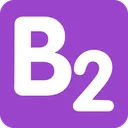

Type `>session info [ID#]` e.g. `>session info 3` for more detail about a specific session.
obtuse mist
session create Advancedreading 2021-09-26 07:00 AEST nur Deutsch Leserunde: die Unendliche Geschichte
lean flickerBOT
Okay @obtuse mist. Your session has been scheduled for in 1 week, 21 hours and 57 minutes. The session ID is: 113
obtuse mist
session create Advancedreading 2021-10-03 07:00 AEST nur Deutsch Leserunde: die Unendliche Geschichte
lean flickerBOT
Okay @obtuse mist. Your session has been scheduled for in 2 weeks, 20 hours and 56 minutes. The session ID is: 114
obtuse mist
session create Advancedreading 2021-10-10 07:00 AEST nur Deutsch Leserunde: die Unendliche Geschichte
lean flickerBOT
Okay @obtuse mist. Your session has been scheduled for in 3 weeks, 20 hours and 56 minutes. The session ID is: 115
obtuse mist
sessions
lean flickerBOT
Upcoming Sessions
:small_blue_diamond: 2021-09-18 at 21:00 UTC (Your time: <t:1631998800>) held by Blüwüleinchen🦜
[ID: 112] (AdvancedReading)
nur Deutsch Leserunde: die Unendliche Geschichte
Recommended level(s):
:small_blue_diamond: 2021-09-25 at 21:00 UTC (Your time: <t:1632603600>) held by Blüwüleinchen🦜
[ID: 113] (AdvancedReading)
nur Deutsch Leserunde: die Unendliche Geschichte
Recommended level(s):
:small_blue_diamond: 2021-10-02 at 20:00 UTC (Your time: <t:1633204800>) held by Blüwüleinchen🦜
[ID: 114] (AdvancedReading)
nur Deutsch Leserunde: die Unendliche Geschichte
Recommended level(s):
:small_blue_diamond: 2021-10-09 at 20:00 UTC (Your time: <t:1633809600>) held by Blüwüleinchen🦜
[ID: 115] (AdvancedReading)
nur Deutsch Leserunde: die Unendliche Geschichte
Recommended level(s):
Type `>session info [ID#]` e.g. `>session info 3` for more detail about a specific session.
normal siren
disconnect
normal siren
play Khaled - C'est La Vie
lean flickerBOT
Khaled - C'est La Vie [00:03:57] added to the queue.
normal siren
play boom boom
lean flickerBOT
Tiësto & Sevenn - BOOM (Official Video) [00:02:35] added to the queue.
lean flickerBOT
:notes: 1 song currently in the queue.
:small_blue_diamond: **1.** `Tiësto & Sevenn - BOOM (Official Video)`
Duration: 00:02:35, requested by: @normal siren
Total duration: 00:02:35
lean flickerBOT
Daddy Yankee, RedOne, French Montana & Dinah Jane | "Boom Boom" (Video Oficial) [00:05:12] added to the queue.
lean flickerBOT
:x: This command can only be used by a moderator.
normal siren
disconnect
lean flickerBOT
Not enough members to play songs. Bye.
lean flickerBOT
Generic 1/2 commands
:small_blue_diamond: **getrole** <role name>
Assigns you a role with the given name, removing any previous assignable roles.
Note: Use >sub to subscribe to groups and ping a moderator for the native speaker role.
:small_blue_diamond: **info** [user]
Displays information about the given user. If no user is specified, information about you will be displayed.
:small_blue_diamond: **quote** <channel> <message id>
Quotes a message in the channel you are in. Specify the channel that the message was originally posted in and the message id of the message (accessible if you turn on developer mode in your Discord settings).
:small_blue_diamond: **removerole** <role name>
Removes the CEFR role with the given name from you.
Note: Use >unsub for group roles.
:small_blue_diamond: **roles**
Lists all roles on the server.
Page 8/19 (19 entries)
 lapis seal

Rina Sawayama - LUCID (Extended Reality Video)
Taken from SAWAYAMA: DELUXE EDITION - out now: http://dirtyh.it/sawayamadeluxe
Production & Engineering: Bild Studios
Filmed at MARS Studios
Design & Animation: Real Good Liars
Directors: Dave Ferner & Ksenia Kulakova
Creative Director: Dave Ferner
Director of Photography: James Medcraft
Editor: Un...
lean flickerBOT
Rina Sawayama - LUCID (Extended Reality Video) [00:04:12] added to the queue.
lapis seal
 lean flickerBOT
Rina Sawayama, Lady Gaga & Ariana Grande - Lucid / Rain On Me (Mashup) [00:03:16] added to the queue.
lapis seal

●ストリーミングはコチラ♪
https://umj.lnk.to/Superfly_music
●CD購入はコチラ💿
https://umj.lnk.to/Superfly_CD
Twitter
https://twitter.com/Superfly_staff
Instagram
https://www.instagram.com/superfly_sh...
YouTube
https://www.youtube.com/Superfly/
================================================================
フジテレビ系水10ドラマ「無痛〜診える眼〜」主題歌「黒い雫」収録!!
Superfly 20thシングル...
lean flickerBOT
Superfly『黒い雫』Music Video〜フジテレビ系水10ドラマ「無痛〜診える眼〜」主題歌〜 [00:03:44] added to the queue.
lapis seal
skip
lean flickerBOT
The bot is not playing any songs.
lapis seal
●ストリーミングはコチラ♪
https://umj.lnk.to/Superfly_music
●CD購入はコチラ💿
https://umj.lnk.to/Superfly_CD
Twitter
https://twitter.com/Superfly_staff
Instagram
https://www.instagram.com/superfly_sh...
YouTube
https://www.youtube.com/Superfly/
================================================================
フジテレビ系水10ドラマ「無痛〜診える眼〜」主題歌「黒い雫」収録!!
Superfly 20thシングル...
lean flickerBOT
Superfly『黒い雫』Music Video〜フジテレビ系水10ドラマ「無痛〜診える眼〜」主題歌〜 [00:03:44] added to the queue.
lapis seal

2011.02.02発売ニューシングル WHAT'S MY NAME? music video
lean flickerBOT
MIYAVI - WHAT'S MY NAME? [00:03:28] added to the queue.
lapis seal

Arlo Parks - Caroline (Official Lyric Video)
Arlo's debut album Collapsed In Sunbeams - Out Now. https://arloparks.ffm.to/collapsedinsunbeams
Caroline out now on Transgressive. https://arloparks.ffm.to/caroline
Follow Arlo Parks:
https://www.instagram.com/arlo.parks/
https://twitter.com/arloparks
https://www.facebook.com/arloparks/
https://ww...
lean flickerBOT
Arlo Parks - Caroline (Official Lyric Video) [00:03:37] added to the queue.
lean flickerBOT
:x: The required argument prompt is missing.
 lapis bear
 lean flickerBOT
:x: No results found on YouTube. Perhaps try again?
YouTube is currently the only supported service, as streaming from YouTube is free.
lapis bear
:)
tender trellis
faq cefr
lean flickerBOT
CEFR levels
If you see something like A1, B2 or C1, these represent the proficiency of a speaker in a language they're not native in, and are called CEFR levels. They are valid for any language, not only German!
Roughly speaking, A levels are beginners and C levels are experts. Remember that CEFR level are self-assessed and indicative!
You can see more specific names and descriptions on the Wikipedia page:
https://en.wikipedia.org/wiki/Common_European_Framework_of_Reference_for_Languages
🗨 How do I know what level I am?
If the table on Wikipedia is too generic for you, you can try using this one here:
https://rm.coe.int/168045bb52
Just check each column one at a time: if you can do all it describes, move to the next column. Your level is the highest where you can do the most things.
Alternatively, you can use this questionnaire to estimate your level more accurately:
https://www.laits.utexas.edu/fi/sites/laits.utexas.edu.fi/files/Self Assessment Checklist European.pdf
 whole flume
purpose
lean flickerBOT
:x: The required argument input is missing.
lean flickerBOT
Resources
whole flume
faq beginner
lean flickerBOT
How to get started - Part 2
Please make sure to read Part 1 before starting Part 2!
Part 2 – Beyond a Simple Sentence
1: Conjunctions (coordinating and subordinating)
2: Subordinate clause word order
3: Dative case
4: Dative verbs
5: Verbs with two objects (e.g. geben)
6: Prepositions (accusative, dative, and two-way)
7: Spoken past tense (Perfekt)
8: Written past tense (Präteritum)
9: Genitive case
10: Relative clauses
11: Adjective declension
Tips
- Make sure to practice writing and reading simple texts
- Some of these concepts are confusing to start with, so it’s a good idea to ask for help in #questions when you’re unsure
- You should use a declension chart to help with declension to start with, because you won’t be able to memorize it straight away
- After you feel confident with creating sentences, you can start learning the adjective declension properly by using the command >faq adjective declension and reading the guide provided
Page 2/2
 fickle sparrow
faq beginner
lean flickerBOT
How to get started
The simplest way to learn German is to find topics you don’t understand yet and search for explanations of them. This list provides you with a guide for which topics to learn if you are completely new to German. Type the topic into Google (or YouTube) and start learning!
Introduction
1: Alphabet (especially ä, ü, ö and ß)
2: Basic greetings (hello, goodbye, etc.)
Part 1 - Simple Sentence
1: Noun gender & plurals
2: Nominative case (What are cases?)
3: Nominative pronouns (I, you, he, she, etc.)
4: Verbs in present tense
5: Definite/indefinite articles
6: Accusative case (for nouns)
7: Accusative pronouns
8: Word order of simple sentences
9: How to ask questions
See Part 2 on the next page.
Tips
- Always learn the gender of a noun when you learn a new noun
- Learn to use a translation dictionary (e.g. dict.cc, leo.org)
- Use
>faq resourcesto see our list of German learning resources - For listening and pronunciation practice, try watching movies or videos (incl. YouTube)
- You can listen to pronunciation for words on websites like dict.cc, forvo.com, and others
- Practice writing sentences every day (and asking people to correct them)
- Ask as many questions as possible
- Don’t be scared to make mistakes!!!! If you don’t let yourself make mistakes, you will never be able to learn German
Page 1/2
compact escarp
lessons
lean flickerBOT
Upcoming Sessions
:small_blue_diamond: 2021-09-18 at 21:00 UTC (Your time: <t:1631998800>) held by Blüwüleinchen🦜
[ID: 112] (AdvancedReading)
nur Deutsch Leserunde: die Unendliche Geschichte
Recommended level(s):
:small_blue_diamond: 2021-09-25 at 21:00 UTC (Your time: <t:1632603600>) held by Blüwüleinchen🦜
[ID: 113] (AdvancedReading)
nur Deutsch Leserunde: die Unendliche Geschichte
Recommended level(s):
:small_blue_diamond: 2021-10-02 at 20:00 UTC (Your time: <t:1633204800>) held by Blüwüleinchen🦜
[ID: 114] (AdvancedReading)
nur Deutsch Leserunde: die Unendliche Geschichte
Recommended level(s):
:small_blue_diamond: 2021-10-09 at 20:00 UTC (Your time: <t:1633809600>) held by Blüwüleinchen🦜
[ID: 115] (AdvancedReading)
nur Deutsch Leserunde: die Unendliche Geschichte
Recommended level(s):
Type `>session info [ID#]` e.g. `>session info 3` for more detail about a specific session.
obtuse mist
session info 111
lean flickerBOT
6 days, 12 hours and 42 minutes ago - (AdvancedReading) held by Blüwüleinchen🦜
Recommended Level(s)
Recommended level(s): 
Session Description
Nur Deutsch Leserunde: Die Unendliche Geschichte
Posted 1 week, 3 hours and 51 minutes ago
Hallo ihr fleißige Leseratten!!
Dieses Wochenende wird wieder mal gelesen! 📚 🦇 🐌
Beim letzen Mal haben wir etwa in der Mitte des zweiten Kapitels aufgehört. Dieses Kapitels werden wir zu Ende lesen und werden wohl mit dem Nächsten anfangen.
Wann: Schau mal ganz oben
Was: Aus dem Buch "Die Unendliche Geschichte" vorlesen, die Handlung in eigenen Worten zusammenfassen, neue Wörter besprechen.
Wenn ihr Vorlesen wollt, könnt ihr bitte mal ein V vor eure Namen hinschreiben.
Und wenn ihr nur zuhören wollt, dann bitte ein Z hinschreiben.
Ich freue mich darauf, euch zu hören!!
Posted 6 days, 13 hours and 9 minutes ago
Hallo zusammen, die Leserunde fängt in etwa 30 Minuten an.
Wenn ihr gern weitere Informationen zu diesem Event hättest, schaut mal die Eventbeschreibung an, indem man durch „>session info 111“ in #botchannel eingibt
Type `>session list` to see a list of all sessions.
lean flickerBOT
Upcoming Sessions
:small_blue_diamond: 2021-09-18 at 21:00 UTC (Your time: <t:1631998800>) held by Blüwüleinchen🦜
[ID: 112] (AdvancedReading)
nur Deutsch Leserunde: die Unendliche Geschichte
Recommended level(s):
:small_blue_diamond: 2021-09-25 at 21:00 UTC (Your time: <t:1632603600>) held by Blüwüleinchen🦜
[ID: 113] (AdvancedReading)
nur Deutsch Leserunde: die Unendliche Geschichte
Recommended level(s):
:small_blue_diamond: 2021-10-02 at 20:00 UTC (Your time: <t:1633204800>) held by Blüwüleinchen🦜
[ID: 114] (AdvancedReading)
nur Deutsch Leserunde: die Unendliche Geschichte
Recommended level(s):
:small_blue_diamond: 2021-10-09 at 20:00 UTC (Your time: <t:1633809600>) held by Blüwüleinchen🦜
[ID: 115] (AdvancedReading)
nur Deutsch Leserunde: die Unendliche Geschichte
Recommended level(s):
Type `>session info [ID#]` e.g. `>session info 3` for more detail about a specific session.
tender trellis
faq cefr
lean flickerBOT
CEFR levels
If you see something like A1, B2 or C1, these represent the proficiency of a speaker in a language they're not native in, and are called CEFR levels. They are valid for any language, not only German!
Roughly speaking, A levels are beginners and C levels are experts. Remember that CEFR level are self-assessed and indicative!
You can see more specific names and descriptions on the Wikipedia page:
https://en.wikipedia.org/wiki/Common_European_Framework_of_Reference_for_Languages
🗨 How do I know what level I am?
If the table on Wikipedia is too generic for you, you can try using this one here:
https://rm.coe.int/168045bb52
Just check each column one at a time: if you can do all it describes, move to the next column. Your level is the highest where you can do the most things.
Alternatively, you can use this questionnaire to estimate your level more accurately:
https://www.laits.utexas.edu/fi/sites/laits.utexas.edu.fi/files/Self Assessment Checklist European.pdf
tough rivet
play chicken
lean flickerBOT
J.Geco - Chicken Song [00:02:31] added to the queue.
tough rivet
skip
fresh dome
play caillou intro
lean flickerBOT
Caillou Intro [00:00:46] added to the queue.
fresh dome
skip
tough rivet
play cailou intro
lean flickerBOT
Caillou Intro [00:00:46] added to the queue.
 lapis zodiac
skip
lean flickerBOT
Skip vote added. 1/3 votes required to skip.
tough rivet
😦
lapis zodiac
play Die Aerzte
lean flickerBOT
die ärzte – NOISE (Offizielles Video) [00:03:50] added to the queue.
lean flickerBOT
Die Ärzte "Schrei nach Liebe" [00:04:13] added to the queue.
tough rivet
oh yeah B)
 pine glen
faq cefr
lean flickerBOT
CEFR levels
If you see something like A1, B2 or C1, these represent the proficiency of a speaker in a language they're not native in, and are called CEFR levels. They are valid for any language, not only German!
Roughly speaking, A levels are beginners and C levels are experts. Remember that CEFR level are self-assessed and indicative!
You can see more specific names and descriptions on the Wikipedia page:
https://en.wikipedia.org/wiki/Common_European_Framework_of_Reference_for_Languages
🗨 How do I know what level I am?
If the table on Wikipedia is too generic for you, you can try using this one here:
https://rm.coe.int/168045bb52
Just check each column one at a time: if you can do all it describes, move to the next column. Your level is the highest where you can do the most things.
Alternatively, you can use this questionnaire to estimate your level more accurately:
https://www.laits.utexas.edu/fi/sites/laits.utexas.edu.fi/files/Self Assessment Checklist European.pdf
pine glen
faq beginner
lean flickerBOT
How to get started
The simplest way to learn German is to find topics you don’t understand yet and search for explanations of them. This list provides you with a guide for which topics to learn if you are completely new to German. Type the topic into Google (or YouTube) and start learning!
Introduction
1: Alphabet (especially ä, ü, ö and ß)
2: Basic greetings (hello, goodbye, etc.)
Part 1 - Simple Sentence
1: Noun gender & plurals
2: Nominative case (What are cases?)
3: Nominative pronouns (I, you, he, she, etc.)
4: Verbs in present tense
5: Definite/indefinite articles
6: Accusative case (for nouns)
7: Accusative pronouns
8: Word order of simple sentences
9: How to ask questions
See Part 2 on the next page.
Tips
- Always learn the gender of a noun when you learn a new noun
- Learn to use a translation dictionary (e.g. dict.cc, leo.org)
- Use
>faq resourcesto see our list of German learning resources - For listening and pronunciation practice, try watching movies or videos (incl. YouTube)
- You can listen to pronunciation for words on websites like dict.cc, forvo.com, and others
- Practice writing sentences every day (and asking people to correct them)
- Ask as many questions as possible
- Don’t be scared to make mistakes!!!! If you don’t let yourself make mistakes, you will never be able to learn German
Page 1/2
tough rivet
play cailou intro
lean flickerBOT
Caillou Intro [00:00:46] added to the queue.
tough rivet
play caliou intro
lean flickerBOT
Caillou Intro [00:00:46] added to the queue.
 upper breach
faq cefr
lean flickerBOT
CEFR levels
If you see something like A1, B2 or C1, these represent the proficiency of a speaker in a language they're not native in, and are called CEFR levels. They are valid for any language, not only German!
Roughly speaking, A levels are beginners and C levels are experts. Remember that CEFR level are self-assessed and indicative!
You can see more specific names and descriptions on the Wikipedia page:
https://en.wikipedia.org/wiki/Common_European_Framework_of_Reference_for_Languages
🗨 How do I know what level I am?
If the table on Wikipedia is too generic for you, you can try using this one here:
https://rm.coe.int/168045bb52
Just check each column one at a time: if you can do all it describes, move to the next column. Your level is the highest where you can do the most things.
Alternatively, you can use this questionnaire to estimate your level more accurately:
https://www.laits.utexas.edu/fi/sites/laits.utexas.edu.fi/files/Self Assessment Checklist European.pdf
tender trellis
sessioninfo112
 polar dust
lean flickerBOT
polar dust
lean flickerBOT
In 19 minutes and 1 second - (AdvancedReading) held by Blüwüleinchen🦜
Recommended Level(s)
Recommended level(s):
Session Description
nur Deutsch Leserunde: die Unendliche Geschichte
Posted 10 hours and 57 minutes ago
Hallo ihr fleißige Leseratten!!
Dieses Wochenende wird wieder mal gelesen! 📚 🦇 🐌
Beim letzen Mal haben wir etwa in der Mitte des dritten Kapitels aufgehört. Dieses Kapitels werden wir zu Ende lesen und werden wohl mit dem Nächsten anfangen.
Wann: Schau mal ganz oben
Was: Aus dem Buch "Die Unendliche Geschichte" vorlesen, die Handlung in eigenen Worten zusammenfassen, neue Wörter besprechen.
Wenn ihr Vorlesen wollt, könnt ihr bitte mal ein V vor eure Namen hinschreiben.
Und wenn ihr nur zuhören wollt, dann bitte ein Z hinschreiben.
Ich freue mich darauf, euch zu hören!!
Posted 3 minutes and 35 seconds ago
Wir fangen in etwa 30 Minuten mit dem Vorlesen an.
Schaut mal die Informationen durch den Botbefehl „>session info 112“ in #botchannel an.
Type `>session list` to see a list of all sessions.
 normal linden
session info 112
lean flickerBOT
In 14 minutes and 40 seconds - (AdvancedReading) held by Blüwüleinchen🦜
Recommended Level(s)
Recommended level(s):
Session Description
nur Deutsch Leserunde: die Unendliche Geschichte
Posted 11 hours, 1 minute and 21 seconds ago
Hallo ihr fleißige Leseratten!!
Dieses Wochenende wird wieder mal gelesen! 📚 🦇 🐌
Beim letzen Mal haben wir etwa in der Mitte des dritten Kapitels aufgehört. Dieses Kapitels werden wir zu Ende lesen und werden wohl mit dem Nächsten anfangen.
Wann: Schau mal ganz oben
Was: Aus dem Buch "Die Unendliche Geschichte" vorlesen, die Handlung in eigenen Worten zusammenfassen, neue Wörter besprechen.
Wenn ihr Vorlesen wollt, könnt ihr bitte mal ein V vor eure Namen hinschreiben.
Und wenn ihr nur zuhören wollt, dann bitte ein Z hinschreiben.
Ich freue mich darauf, euch zu hören!!
Posted 7 minutes and 56 seconds ago
Wir fangen in etwa 30 Minuten mit dem Vorlesen an.
Schaut mal die Informationen durch den Botbefehl „>session info 112“ in #botchannel an.
Type `>session list` to see a list of all sessions.
 cosmic peak
help
lean flickerBOT
German commands
:small_blue_diamond: **lookup** <target> <phrase>
Translates the given phrase into the specified target language using dict.cc. Specify either en or de as targets.
:small_blue_diamond: **noun** <noun>
Provides a link to the declension of the given noun.
:small_blue_diamond: **verb** <infinitive>
Provides a link to the conjugation of the given infinitive.
:small_blue_diamond: **words**
A command that helps you train vocabulary using dict.cc.
Page 19/19 (19 entries)
lean flickerBOT
:x: Use the >group leaveall command to leave all groups you are in.
cosmic peak
group leaveall
lean flickerBOT
:white_check_mark: Removed you from 18 groups: TeaWordGame, Pronunciation, Sensitive-Topics, AdvancedGrammar, News, AdvancedReading, Translation, Grammar, Gaming, Ouija, Science, Food, Coding, Writing, Activities, Art, Dialects, Reading
lean flickerBOT
:x: Group streaming not found.
Try >groups to see a list of all groups or >group joinall to join all available groups.
cosmic peak
sub pronunciation
tough rivet
play fortnite dance 10h
lean flickerBOT
:x: The requested track is longer than 1h30m and cannot be played.
lean flickerBOT
1 Hour of the Fortnite Default Dance [01:00:06] added to the queue.
obtuse mist
session start Vorlesen
lean flickerBOT
Lessons VC has been unlocked.
 naive harbor
faq beginner
lean flickerBOT
How to get started - Part 2
Please make sure to read Part 1 before starting Part 2!
Part 2 – Beyond a Simple Sentence
1: Conjunctions (coordinating and subordinating)
2: Subordinate clause word order
3: Dative case
4: Dative verbs
5: Verbs with two objects (e.g. geben)
6: Prepositions (accusative, dative, and two-way)
7: Spoken past tense (Perfekt)
8: Written past tense (Präteritum)
9: Genitive case
10: Relative clauses
11: Adjective declension
Tips
- Make sure to practice writing and reading simple texts
- Some of these concepts are confusing to start with, so it’s a good idea to ask for help in #questions when you’re unsure
- You should use a declension chart to help with declension to start with, because you won’t be able to memorize it straight away
- After you feel confident with creating sentences, you can start learning the adjective declension properly by using the command >faq adjective declension and reading the guide provided
Page 2/2
naive harbor
faq resources
lean flickerBOT
Resources
obtuse mist
session end
lean flickerBOT
Lessons VC has been locked.
tough rivet
play Native speaker
lean flickerBOT
:x: The bot is already active in a different channel.
lean flickerBOT
Upcoming Sessions
:small_blue_diamond: 2021-09-25 at 21:00 UTC (Your time: <t:1632603600>) held by Blüwüleinchen🦜
[ID: 113] (AdvancedReading)
nur Deutsch Leserunde: die Unendliche Geschichte
Recommended level(s):
:small_blue_diamond: 2021-10-02 at 20:00 UTC (Your time: <t:1633204800>) held by Blüwüleinchen🦜
[ID: 114] (AdvancedReading)
nur Deutsch Leserunde: die Unendliche Geschichte
Recommended level(s):
:small_blue_diamond: 2021-10-09 at 20:00 UTC (Your time: <t:1633809600>) held by Blüwüleinchen🦜
[ID: 115] (AdvancedReading)
nur Deutsch Leserunde: die Unendliche Geschichte
Recommended level(s):
Type `>session info [ID#]` e.g. `>session info 3` for more detail about a specific session.
tough rivet
lessons
lean flickerBOT
Upcoming Sessions
:small_blue_diamond: 2021-09-25 at 21:00 UTC (Your time: <t:1632603600>) held by Blüwüleinchen🦜
[ID: 113] (AdvancedReading)
nur Deutsch Leserunde: die Unendliche Geschichte
Recommended level(s):
:small_blue_diamond: 2021-10-02 at 20:00 UTC (Your time: <t:1633204800>) held by Blüwüleinchen🦜
[ID: 114] (AdvancedReading)
nur Deutsch Leserunde: die Unendliche Geschichte
Recommended level(s):
:small_blue_diamond: 2021-10-09 at 20:00 UTC (Your time: <t:1633809600>) held by Blüwüleinchen🦜
[ID: 115] (AdvancedReading)
nur Deutsch Leserunde: die Unendliche Geschichte
Recommended level(s):
Type `>session info [ID#]` e.g. `>session info 3` for more detail about a specific session.
 wicked lava
faq beginner
lean flickerBOT
How to get started
The simplest way to learn German is to find topics you don’t understand yet and search for explanations of them. This list provides you with a guide for which topics to learn if you are completely new to German. Type the topic into Google (or YouTube) and start learning!
Introduction
1: Alphabet (especially ä, ü, ö and ß)
2: Basic greetings (hello, goodbye, etc.)
Part 1 - Simple Sentence
1: Noun gender & plurals
2: Nominative case (What are cases?)
3: Nominative pronouns (I, you, he, she, etc.)
4: Verbs in present tense
5: Definite/indefinite articles
6: Accusative case (for nouns)
7: Accusative pronouns
8: Word order of simple sentences
9: How to ask questions
See Part 2 on the next page.
Tips
- Always learn the gender of a noun when you learn a new noun
- Learn to use a translation dictionary (e.g. dict.cc, leo.org)
- Use
>faq resourcesto see our list of German learning resources - For listening and pronunciation practice, try watching movies or videos (incl. YouTube)
- You can listen to pronunciation for words on websites like dict.cc, forvo.com, and others
- Practice writing sentences every day (and asking people to correct them)
- Ask as many questions as possible
- Don’t be scared to make mistakes!!!! If you don’t let yourself make mistakes, you will never be able to learn German
Page 1/2
 astral oriole
faq declension
lean flickerBOT
FAQ not found. I found the following similar entries: N-Declension, Adjective Declension.
astral oriole
faq adjective declension
lean flickerBOT
Adjective Declension
A Brief Guide to Memorizing German Noun and Adjective Declension by Basementality
https://docs.google.com/document/d/1jWl5-kkqF3FQLDzrz8XLBJj7hvPFQK7MT5SYEDGK65E/edit
astral oriole
faq N-declension
lean flickerBOT
Weak Nouns
Weak nouns are called this way because they receive the same endings as adjectives inflected with weak endings. They take an additional ending -n in every case except nominative singular. This is also known as N-Declension and affects almost exclusively masculine nouns.
Nominativ: der Junge, die Junge__n__
Genitiv: des Junge__n__, der Junge__n__
Dativ: dem Junge__n__, den Junge__n__
Akkusativ: den Junge__n__, die Junge__n__
Some nouns end with a suffix -en to make the pronunciation easier:
der Mensch, den Mensch__en__
‼ Das Herz is the only non-masculine (neuter) noun with N-Declension❣
So how do we recognize these nouns? We can divide them into 3 big groups:
- nouns of Greek and Latin origin,
- nouns ending with
-e(most of these refer to people or animals), - other random German nouns (Mensch, Herr, Student, Nachbar, Prinz etc.)
Another way to divide the groups could be:
- nouns denoting male beings in general (der Bauer, der Knabe, der Herr, der Junge, der Kunde etc.)
- nouns indicating nationality or religious affiliation (der Chinese, der Russe, der Türke, der Jude, der Katholik, der Protestant)
- nouns designating male beings and ending in the foreign suffixes (
-ant,-arch,-ast,-ege,-ent,-ist,-oge,-om,-oph,-ot: der Kollege, der Student, der Psychologe, der Polizist, der Philosoph)
‼ der Käse and words ending with -ee aren’t weak nouns.
Genitive of Weak Nouns
You might have noticed from the examples above that weak nouns don’t have the additional -s in genitive like other masculine nouns.
Some exceptions are das Herz and nouns of group 3 that don’t refer to people nor animals (Name, Wille, Glaube, Buchstabe etc.), which take both the -n and -s endings.
Example: der Name, des Name__ns__.
lapis seal

Provided to YouTube by The Orchard Enterprises
Sweet Transvestite · Laverne Cox · Ryan McCartan
The Rocky Horror Picture Show: Let's Do the Time Warp Again
℗ 2016 Ode Sounds & Visuals
Released on: 2016-10-21
Music Publisher: Druidcrest Music
Auto-generated by YouTube.
lean flickerBOT
:x: The bot is already active in a different channel.
lapis seal
Provided to YouTube by The Orchard Enterprises
Sweet Transvestite · Laverne Cox · Ryan McCartan
The Rocky Horror Picture Show: Let's Do the Time Warp Again
℗ 2016 Ode Sounds & Visuals
Released on: 2016-10-21
Music Publisher: Druidcrest Music
Auto-generated by YouTube.
lean flickerBOT
Sweet Transvestite [00:03:41] added to the queue.
lapis seal
play dua lipa don't start now
lean flickerBOT
Dua Lipa - Don't Start Now (Official Music Video) [00:03:02] added to the queue.
 civic skiff
faq beginner
lean flickerBOT
How to get started
The simplest way to learn German is to find topics you don’t understand yet and search for explanations of them. This list provides you with a guide for which topics to learn if you are completely new to German. Type the topic into Google (or YouTube) and start learning!
Introduction
1: Alphabet (especially ä, ü, ö and ß)
2: Basic greetings (hello, goodbye, etc.)
Part 1 - Simple Sentence
1: Noun gender & plurals
2: Nominative case (What are cases?)
3: Nominative pronouns (I, you, he, she, etc.)
4: Verbs in present tense
5: Definite/indefinite articles
6: Accusative case (for nouns)
7: Accusative pronouns
8: Word order of simple sentences
9: How to ask questions
See Part 2 on the next page.
Tips
- Always learn the gender of a noun when you learn a new noun
- Learn to use a translation dictionary (e.g. dict.cc, leo.org)
- Use
>faq resourcesto see our list of German learning resources - For listening and pronunciation practice, try watching movies or videos (incl. YouTube)
- You can listen to pronunciation for words on websites like dict.cc, forvo.com, and others
- Practice writing sentences every day (and asking people to correct them)
- Ask as many questions as possible
- Don’t be scared to make mistakes!!!! If you don’t let yourself make mistakes, you will never be able to learn German
Page 1/2
 flat lagoon
faq beginner
lean flickerBOT
How to get started
The simplest way to learn German is to find topics you don’t understand yet and search for explanations of them. This list provides you with a guide for which topics to learn if you are completely new to German. Type the topic into Google (or YouTube) and start learning!
Introduction
1: Alphabet (especially ä, ü, ö and ß)
2: Basic greetings (hello, goodbye, etc.)
Part 1 - Simple Sentence
1: Noun gender & plurals
2: Nominative case (What are cases?)
3: Nominative pronouns (I, you, he, she, etc.)
4: Verbs in present tense
5: Definite/indefinite articles
6: Accusative case (for nouns)
7: Accusative pronouns
8: Word order of simple sentences
9: How to ask questions
See Part 2 on the next page.
Tips
- Always learn the gender of a noun when you learn a new noun
- Learn to use a translation dictionary (e.g. dict.cc, leo.org)
- Use
>faq resourcesto see our list of German learning resources - For listening and pronunciation practice, try watching movies or videos (incl. YouTube)
- You can listen to pronunciation for words on websites like dict.cc, forvo.com, and others
- Practice writing sentences every day (and asking people to correct them)
- Ask as many questions as possible
- Don’t be scared to make mistakes!!!! If you don’t let yourself make mistakes, you will never be able to learn German
Page 1/2
lapis seal
play lucid dreams riyama
lean flickerBOT
I learned how to lucid dream. [00:14:13] added to the queue.
Rina Sawayama - LUCID (Extended Reality Video) [00:04:12] added to the queue.
Jessie J - I Want Love (Official Music Video) [00:03:37] added to the queue.
Jessie J - Thunder (Official Video) [00:03:36] added to the queue.
ZAYN - PILLOWTALK (Official Music Video) [00:03:27] added to the queue.
Dino Merlin & Senidah - Dođi (Official Video) [00:04:52] added to the queue.
 stray jacinth
lean flickerBOT
stray jacinth
lean flickerBOT
Jelena Karleusa 2011 - Muskarac koji mrzi zene HQ + LYRIC [00:04:01] added to the queue.
Libertango, Astor Piazzolla, Cello by Junghoon Han (Vincello) [00:03:39] added to the queue.
Johann Sebastian Bach-Air on G String [00:05:24] added to the queue.
Antonio Vivaldi - Storm [00:02:58] added to the queue.
Ana María Martínez - Amy Fisher (Pseudo Video) [00:05:05] added to the queue.
lapis seal
play je suis malade laura
lean flickerBOT
Je suis malade Lara Fabian French and English subtitles [00:05:15] added to the queue.
sick garnet
play insane clown possee game show
lean flickerBOT
ICP DATING GAME LYRICS [00:04:06] added to the queue.
lean flickerBOT
Isao Tomita - Arabesque No. 1 [00:04:03] added to the queue.
sick garnet
skip

We're available on Spotify!
https://open.spotify.com/playlist/05tdW3fw1NDaqVELGgYuWm?si=Z-alZcFWQGWFsJ1TX1TpSw
SUBSCRIBE for new videos every week!►https://www.youtube.com/user/LittleBabyBum?sub_confirmation=1
►Little Baby Bum Spotify: https://littlebabybum.lnk.to/music
Brand New Little Baby Bum Videos | Baby Songs | Nursery Rhymes
https://www...
lean flickerBOT
Lullabies For Kids - Sleep Baby +More Nursery Rhymes for Kids | Little Baby Bum [00:33:43] added to the queue.
Not enough members to play songs. Bye.
sick garnet
play slipknot sic
lean flickerBOT
Slipknot - (Sic) (Audio) [00:03:20] added to the queue.
sick garnet
skip
 tawdry pasture
faq beginner
lean flickerBOT
How to get started
The simplest way to learn German is to find topics you don’t understand yet and search for explanations of them. This list provides you with a guide for which topics to learn if you are completely new to German. Type the topic into Google (or YouTube) and start learning!
Introduction
1: Alphabet (especially ä, ü, ö and ß)
2: Basic greetings (hello, goodbye, etc.)
Part 1 - Simple Sentence
1: Noun gender & plurals
2: Nominative case (What are cases?)
3: Nominative pronouns (I, you, he, she, etc.)
4: Verbs in present tense
5: Definite/indefinite articles
6: Accusative case (for nouns)
7: Accusative pronouns
8: Word order of simple sentences
9: How to ask questions
See Part 2 on the next page.
Tips
- Always learn the gender of a noun when you learn a new noun
- Learn to use a translation dictionary (e.g. dict.cc, leo.org)
- Use
>faq resourcesto see our list of German learning resources - For listening and pronunciation practice, try watching movies or videos (incl. YouTube)
- You can listen to pronunciation for words on websites like dict.cc, forvo.com, and others
- Practice writing sentences every day (and asking people to correct them)
- Ask as many questions as possible
- Don’t be scared to make mistakes!!!! If you don’t let yourself make mistakes, you will never be able to learn German
Page 1/2
 hexed tide
sessions
lean flickerBOT
Upcoming Sessions
:small_blue_diamond: 2021-09-25 at 21:00 UTC (Your time: <t:1632603600>) held by Blüwüleinchen🦜
[ID: 113] (AdvancedReading)
nur Deutsch Leserunde: die Unendliche Geschichte
Recommended level(s):
:small_blue_diamond: 2021-10-02 at 20:00 UTC (Your time: <t:1633204800>) held by Blüwüleinchen🦜
[ID: 114] (AdvancedReading)
nur Deutsch Leserunde: die Unendliche Geschichte
Recommended level(s):
:small_blue_diamond: 2021-10-09 at 20:00 UTC (Your time: <t:1633809600>) held by Blüwüleinchen🦜
[ID: 115] (AdvancedReading)
nur Deutsch Leserunde: die Unendliche Geschichte
Recommended level(s):
Type `>session info [ID#]` e.g. `>session info 3` for more detail about a specific session.
lean flickerBOT
:x: The required argument input is missing.
lean flickerBOT
Upcoming Sessions
:small_blue_diamond: 2021-09-25 at 21:00 UTC (Your time: <t:1632603600>) held by Blüwüleinchen🦜
[ID: 113] (AdvancedReading)
nur Deutsch Leserunde: die Unendliche Geschichte
Recommended level(s):
:small_blue_diamond: 2021-10-02 at 20:00 UTC (Your time: <t:1633204800>) held by Blüwüleinchen🦜
[ID: 114] (AdvancedReading)
nur Deutsch Leserunde: die Unendliche Geschichte
Recommended level(s):
:small_blue_diamond: 2021-10-09 at 20:00 UTC (Your time: <t:1633809600>) held by Blüwüleinchen🦜
[ID: 115] (AdvancedReading)
nur Deutsch Leserunde: die Unendliche Geschichte
Recommended level(s):
Type `>session info [ID#]` e.g. `>session info 3` for more detail about a specific session.
 timber ledge
faq beginner
lean flickerBOT
How to get started
The simplest way to learn German is to find topics you don’t understand yet and search for explanations of them. This list provides you with a guide for which topics to learn if you are completely new to German. Type the topic into Google (or YouTube) and start learning!
Introduction
1: Alphabet (especially ä, ü, ö and ß)
2: Basic greetings (hello, goodbye, etc.)
Part 1 - Simple Sentence
1: Noun gender & plurals
2: Nominative case (What are cases?)
3: Nominative pronouns (I, you, he, she, etc.)
4: Verbs in present tense
5: Definite/indefinite articles
6: Accusative case (for nouns)
7: Accusative pronouns
8: Word order of simple sentences
9: How to ask questions
See Part 2 on the next page.
Tips
- Always learn the gender of a noun when you learn a new noun
- Learn to use a translation dictionary (e.g. dict.cc, leo.org)
- Use
>faq resourcesto see our list of German learning resources - For listening and pronunciation practice, try watching movies or videos (incl. YouTube)
- You can listen to pronunciation for words on websites like dict.cc, forvo.com, and others
- Practice writing sentences every day (and asking people to correct them)
- Ask as many questions as possible
- Don’t be scared to make mistakes!!!! If you don’t let yourself make mistakes, you will never be able to learn German
Page 1/2
tough rivet
play can i put my ballz in your jaws
lean flickerBOT
can i put my balls in your jaw (extended version) [00:00:40] added to the queue.
tough rivet
skip
lean flickerBOT
The bot is not playing any songs.
tough rivet
play winter wonderland
lean flickerBOT
Michael Bublé - Winter Wonderland [Official HD] [00:02:31] added to the queue.
tough rivet
SKIP
skip

Album: Super Mario Galaxy Original Soundtrack (Platinum Edition)
Composer: Mahito Yokota
I do not own the rights to this soundtrack, nor am I affiliated with the composer or the company. I'm simply here to give the fans what they want: easy access to their favorite video game music.
lean flickerBOT
:x: No results found.
tough rivet
Album: Super Mario Galaxy Original Soundtrack (Platinum Edition)
Composer: Mahito Yokota
I do not own the rights to this soundtrack, nor am I affiliated with the composer or the company. I'm simply here to give the fans what they want: easy access to their favorite video game music.
lean flickerBOT
Super Mario Galaxy OST - Gusty Garden Galaxy [00:03:44] added to the queue.
lean flickerBOT
Purpose commands
:small_blue_diamond: **📒 purpose** <input>
Gives information about a role or channel.
Page 18/19 (19 entries)
tough rivet
help music
lean flickerBOT
No command or module called music found.
tough rivet
help musicbot
lean flickerBOT
No command or module called musicbot found.
tough rivet
help
lean flickerBOT
Voice commands
:small_blue_diamond: **nowplaying**
Displays the currently playing song and its remaining duration.
:small_blue_diamond: **play** <prompt>
Queues a song to be played by the music bot. This command will only work if you are connected to a voice channel that has at least two members.
The given prompt can be either a YouTube link or a query that will be used to search YouTube and fetch the first result.
Please note that playing any sort of nationalistic, war-related songs, songs that violate our rules or abusing the feature in any way will get you blacklisted.
:small_blue_diamond: **queue**
Displays the songs that are in the song queue.
:small_blue_diamond: **skip**
Votes to skip the currently playing song.
For a skip vote to pass, more than a half of the members in the currently playing voice chat (rounded up) must vote for the skip.
:small_blue_diamond: **upcoming**
Displays the upcoming song and its remaining duration.
Page 15/19 (19 entries)
lean flickerBOT
 tough rivet
help
lean flickerBOT
Voice commands
:small_blue_diamond: **nowplaying**
Displays the currently playing song and its remaining duration.
:small_blue_diamond: **play** <prompt>
Queues a song to be played by the music bot. This command will only work if you are connected to a voice channel that has at least two members.
The given prompt can be either a YouTube link or a query that will be used to search YouTube and fetch the first result.
Please note that playing any sort of nationalistic, war-related songs, songs that violate our rules or abusing the feature in any way will get you blacklisted.
:small_blue_diamond: **queue**
Displays the songs that are in the song queue.
:small_blue_diamond: **skip**
Votes to skip the currently playing song.
For a skip vote to pass, more than a half of the members in the currently playing voice chat (rounded up) must vote for the skip.
:small_blue_diamond: **upcoming**
Displays the upcoming song and its remaining duration.
Page 15/19 (19 entries)
lean flickerBOT
No songs are in the queue.
tough rivet
nowplaying
lean flickerBOT
:notes: Currently playing Super Mario Galaxy OST - Gusty Garden Galaxy, 00:00:30 remaining, by Snackse.
tough rivet
Album: Super Mario Galaxy Original Soundtrack (Platinum Edition)
Composer: Mahito Yokota
I do not own the rights to this soundtrack, nor am I affiliated with the composer or the company. I'm simply here to give the fans what they want: easy access to their favorite video game music.
lean flickerBOT
Super Mario Galaxy OST - Gusty Garden Galaxy [00:03:44] added to the queue.
lean flickerBOT
No songs are in the queue.
tough rivet
queue
lean flickerBOT
No songs are in the queue.
tough rivet
Album: Super Mario Galaxy Original Soundtrack (Platinum Edition)
Composer: Mahito Yokota
I do not own the rights to this soundtrack, nor am I affiliated with the composer or the company. I'm simply here to give the fans what they want: easy access to their favorite video game music.
lean flickerBOT
Super Mario Galaxy OST - Gusty Garden Galaxy [00:03:44] added to the queue.
tough rivet
queue
lean flickerBOT
:notes: 1 song currently in the queue.
:small_blue_diamond: **1.** `Super Mario Galaxy OST - Gusty Garden Galaxy`
Duration: 00:03:44, requested by: @tough rivet
Total duration: 00:03:44
 little cradle

Music: Dragon Roost Island (Original Version)
Composers: Kenta Nagata, Hajime Wakai, Toru Minegishi, Koji Kondo
Playlist: http://www.youtube.com/playlist?list=PL3E7B876342ECE5C0
Platform: Nintendo Gamecube
lean flickerBOT
Super Mario Galaxy OST - Gusty Garden Galaxy [00:03:44] added to the queue.
 hazy saffron
explain doch
lean flickerBOT
doch
⭐ doch for beginners ⭐
Germans tend to use the word doch in lots of different situations. But what does it mean, and when do you use it? ⁉
🔆 Using doch to contradict negative statements 🔆
You can use doch to contradict a negative statement/question in the same manner as you would use nein to contradict a positive statement.
(1) Laura hat keinen Fernseher, oder? - Doch, sie hat einen Fernseher!
Laura doesn't have a TV, does she? - Yes, she does!
(2) Du kannst kein Schach spielen! - Doch, das kann ich!
You can't play chess! - Yes, I can!
💡 With doch, correctly answering negative questions (with positive tags) has never been easier. Isn't that awesome? Doch, it is! 😏
🔅 Using doch as an adversative conjunction 🔅
You can also use doch as an adversative conjunction (yet, however, ...).
(3) Du hattest genug Zeit, doch du hast nicht für die Prüfung gelernt.
You had enough time, yet you didn't study for the exam.
(4) Es ist noch nicht Sommer, doch es ist fast genauso heiß.
It is not yet summer, it is, however, almost as hot.
‼ Keep in mind that doch as an adversative conjunction doesn't change the word order. ‼
🔅 Using doch as a subjunctive 🔅
Furthermore, you can use doch in concessive clauses.
(5) Auch wenn wir erwarteten, zu verlieren, so haben wir das Spiel doch gewonnen.
Though we expected to lose, we still won the game.
(6) Obwohl sie sehr nett ist, findet sie doch keine neuen Freunde.
Although she's very kind, she doesn't make new friends.
lean flickerBOT
FAQ not found. I found the following similar entry: sessions.
hazy saffron
faq resource list
lean flickerBOT
Resources
Super Mario Galaxy OST - Gusty Garden Galaxy [00:03:44] added to the queue.
Super Mario Galaxy OST - Gusty Garden Galaxy [00:03:44] added to the queue.
Super Mario Galaxy OST - Gusty Garden Galaxy [00:03:44] added to the queue.
Super Mario Galaxy OST - Gusty Garden Galaxy [00:03:44] added to the queue.
little cradle
queue
lean flickerBOT
:notes: 3 songs currently in the queue.
:small_blue_diamond: **1.** `Super Mario Galaxy OST - Gusty Garden Galaxy`
Duration: 00:03:44, requested by: @tough rivet
:small_blue_diamond: **2.** `Super Mario Galaxy OST - Gusty Garden Galaxy`
Duration: 00:03:44, requested by: @tough rivet
:small_blue_diamond: **3.** `Super Mario Galaxy OST - Gusty Garden Galaxy`
Duration: 00:03:44, requested by: @tough rivet
Total duration: 00:11:12
lean flickerBOT
Session Schedule commands
:small_blue_diamond: **📒 session**
Commands for the bot's session scheduling system.
Group moderators can edit and delete existing sessions for their group.
Page 4/19 (19 entries)
 uneven storm
session
 deft isle
explain noch
lean flickerBOT
FAQ not found. Try >explain all.
deft isle
explain all
lean flickerBOT
See a listed FAQ with >faq [name]
:small_blue_diamond: Swiss German
Aliases: gsw
:small_blue_diamond: Switzerland
Aliases: Schweiz, CH
:small_blue_diamond: Two-way prepositions
Aliases: two way prepositions, dual prepositions
:small_blue_diamond: Umlauts
Aliases: Umlaute, Umlaut, ä, ö, ü
:small_blue_diamond: Usage of Konjunktiv II
Aliases: KII 1
:small_blue_diamond: Usage of zu
Aliases: um zu
:small_blue_diamond: Verbs with prepositions
Aliases: verb prepositions, pferd's verb list
:small_blue_diamond: Vorgangspassiv
:small_blue_diamond: Weak Nouns
Aliases: N-Declension, N-Deklination, weak noun
:small_blue_diamond: weil, denn, da
:small_blue_diamond: What does GLaD mean?
Aliases: GLaD
:small_blue_diamond: wissen und kennen
Aliases: wissen vs. kennen, kennen vs. wissen
:small_blue_diamond: Word Order for Nouns & Pronouns
:small_blue_diamond: Word Order for Verbs
Aliases: word order verbs, word order of verbs
Page 4/4 (59 entries)
tender trellis
faq beginner
lean flickerBOT
How to get started
The simplest way to learn German is to find topics you don’t understand yet and search for explanations of them. This list provides you with a guide for which topics to learn if you are completely new to German. Type the topic into Google (or YouTube) and start learning!
Introduction
1: Alphabet (especially ä, ü, ö and ß)
2: Basic greetings (hello, goodbye, etc.)
Part 1 - Simple Sentence
1: Noun gender & plurals
2: Nominative case (What are cases?)
3: Nominative pronouns (I, you, he, she, etc.)
4: Verbs in present tense
5: Definite/indefinite articles
6: Accusative case (for nouns)
7: Accusative pronouns
8: Word order of simple sentences
9: How to ask questions
See Part 2 on the next page.
Tips
- Always learn the gender of a noun when you learn a new noun
- Learn to use a translation dictionary (e.g. dict.cc, leo.org)
- Use
>faq resourcesto see our list of German learning resources - For listening and pronunciation practice, try watching movies or videos (incl. YouTube)
- You can listen to pronunciation for words on websites like dict.cc, forvo.com, and others
- Practice writing sentences every day (and asking people to correct them)
- Ask as many questions as possible
- Don’t be scared to make mistakes!!!! If you don’t let yourself make mistakes, you will never be able to learn German
Page 1/2
 fossil haven
play Heyayayaya
lean flickerBOT
HEYYEYAAEYAAAEYAEYAA [00:02:07] added to the queue.
flat lagoon
faq beginner
lean flickerBOT
How to get started
The simplest way to learn German is to find topics you don’t understand yet and search for explanations of them. This list provides you with a guide for which topics to learn if you are completely new to German. Type the topic into Google (or YouTube) and start learning!
Introduction
1: Alphabet (especially ä, ü, ö and ß)
2: Basic greetings (hello, goodbye, etc.)
Part 1 - Simple Sentence
1: Noun gender & plurals
2: Nominative case (What are cases?)
3: Nominative pronouns (I, you, he, she, etc.)
4: Verbs in present tense
5: Definite/indefinite articles
6: Accusative case (for nouns)
7: Accusative pronouns
8: Word order of simple sentences
9: How to ask questions
See Part 2 on the next page.
Tips
- Always learn the gender of a noun when you learn a new noun
- Learn to use a translation dictionary (e.g. dict.cc, leo.org)
- Use
>faq resourcesto see our list of German learning resources - For listening and pronunciation practice, try watching movies or videos (incl. YouTube)
- You can listen to pronunciation for words on websites like dict.cc, forvo.com, and others
- Practice writing sentences every day (and asking people to correct them)
- Ask as many questions as possible
- Don’t be scared to make mistakes!!!! If you don’t let yourself make mistakes, you will never be able to learn German
Page 1/2
 spring maple
faq best way to learn
lean flickerBOT
Best way to learn German
There isn’t only one “best” way to learn German, especially since different methods work better for different people. However, this FAQ will outline the main aspects of learning efficiently, which you can cater to your needs.
If you’re a beginner, type >faq beginner in #botchannel to see our beginner guide.
Cover all skills
There are many combinations of activities you can use to study and practice a language. How do you know which combinations are suitable? The key is to make sure you cover each of the main skills with at least one activity. Some activities only train one skills, while some train multiple – either is fine, as long as all the 6 skills are covered somewhere in your studies.
The skills
• Reading
• Writing
• Listening
• Speaking
• Grammar
• Vocabulary
Which resources should I use?
It doesn’t really matter which resources you use, as long as you can follow along, and the information is correct and reliable. If you have any doubts about whether a resource is correct, feel free to ask. You do not need to find just one resource and stick to it – in fact, to learn best, it’s recommended that you use a large variety of resources and switch between them when needed.
Type >faq resources in #botchannel to see our list of resources.
On the next page
• Should I study all these skills every day?
• How much time should I dedicate to studying?
Page 1/2
flat lagoon
faq beginner
lean flickerBOT
How to get started
The simplest way to learn German is to find topics you don’t understand yet and search for explanations of them. This list provides you with a guide for which topics to learn if you are completely new to German. Type the topic into Google (or YouTube) and start learning!
Introduction
1: Alphabet (especially ä, ü, ö and ß)
2: Basic greetings (hello, goodbye, etc.)
Part 1 - Simple Sentence
1: Noun gender & plurals
2: Nominative case (What are cases?)
3: Nominative pronouns (I, you, he, she, etc.)
4: Verbs in present tense
5: Definite/indefinite articles
6: Accusative case (for nouns)
7: Accusative pronouns
8: Word order of simple sentences
9: How to ask questions
See Part 2 on the next page.
Tips
- Always learn the gender of a noun when you learn a new noun
- Learn to use a translation dictionary (e.g. dict.cc, leo.org)
- Use
>faq resourcesto see our list of German learning resources - For listening and pronunciation practice, try watching movies or videos (incl. YouTube)
- You can listen to pronunciation for words on websites like dict.cc, forvo.com, and others
- Practice writing sentences every day (and asking people to correct them)
- Ask as many questions as possible
- Don’t be scared to make mistakes!!!! If you don’t let yourself make mistakes, you will never be able to learn German
Page 1/2
 analog wave
 lean flickerBOT
"Мен – тыва мен" - Anthem of the Tuva Republic (Russia) [00:03:24] added to the queue.
 robust echo
/help
analog wave
help
lean flickerBOT
Generic 1/2 commands
:small_blue_diamond: **getrole** <role name>
Assigns you a role with the given name, removing any previous assignable roles.
Note: Use >sub to subscribe to groups and ping a moderator for the native speaker role.
:small_blue_diamond: **info** [user]
Displays information about the given user. If no user is specified, information about you will be displayed.
:small_blue_diamond: **quote** <channel> <message id>
Quotes a message in the channel you are in. Specify the channel that the message was originally posted in and the message id of the message (accessible if you turn on developer mode in your Discord settings).
:small_blue_diamond: **removerole** <role name>
Removes the CEFR role with the given name from you.
Note: Use >unsub for group roles.
:small_blue_diamond: **roles**
Lists all roles on the server.
Page 8/19 (19 entries)
 lean gull
faq duolingo
lean flickerBOT
Duolingo
Duolingo is a decent resource to start with if you're a complete beginner, but it's neither efficient nor comprehensive!
What Duolingo will teach you about grammar is very limited, and none of the systems they use will help you practise much of it.
You can learn some vocabulary with it, but their method (based on the concept of spaced repetition) doesn't work for everybody, and the way Duolingo teaches is not very effective compared to the amount of time it requires from you.
So, if you find it useful, by all means keep using it, but remember not to fall for its gamification of language learning, and move past it when it stops being beneficial. Ignore the streaks.
In any case, keep in mind that Duolingo is not enough to learn a language, ever.
If you're looking for guidance or alternatives, check out >faq beginner in our #botchannel .
 ruby gale
remind 9h Senf geben
lean flickerBOT
Okay @ruby gale. You will be reminded in 9 hours.
 warped rapids
faq cefr
lean flickerBOT
CEFR levels
If you see something like A1, B2 or C1, these represent the proficiency of a speaker in a language they're not native in, and are called CEFR levels. They are valid for any language, not only German!
Roughly speaking, A levels are beginners and C levels are experts. Remember that CEFR level are self-assessed and indicative!
You can see more specific names and descriptions on the Wikipedia page:
https://en.wikipedia.org/wiki/Common_European_Framework_of_Reference_for_Languages
🗨 How do I know what level I am?
If the table on Wikipedia is too generic for you, you can try using this one here:
https://rm.coe.int/168045bb52
Just check each column one at a time: if you can do all it describes, move to the next column. Your level is the highest where you can do the most things.
Alternatively, you can use this questionnaire to estimate your level more accurately:
https://www.laits.utexas.edu/fi/sites/laits.utexas.edu.fi/files/Self Assessment Checklist European.pdf
warped rapids
help
lean flickerBOT
Eval commands
:small_blue_diamond: **eval** <code>
Evaluate the given code using an external compilation service. Any attempt to abuse this command will lead to a permanent blacklist.
Supported languages are: csharp (cs), java, python (py), c, c++ (cpp), haskell (hs), perl, nasm, javascript (js), lisp, kotlin (kt), brainfuck (bf) and rust (rs).
To use the command, specify a code block with your language of choice and provide any desired input in the same message, after the code block.
Example invocation with input:
```py
print('Hello,', input())
```
Barnabus Sandlers```
*Note: write out the command yourself, the example won't work if you copy it, due to Discord's formatting.*
:small_blue_diamond: Language specific notes:
- C# - the namespace and class must be called `Rextester` and `Program` respectively.
- Java - the class must be called `Rextester`
Page 13/19 (19 entries)
warped rapids
serverinfo
lean flickerBOT

German Learning and Discussion <a:partner:736180501668298783>
Created
2016-09-03 19:12 (5 years, 2 weeks and 2 days ago)
Channels
 Text: 58 (25 locked)
 Voice: 16 (3 locked)
Members
 47682
47682
Boosts
 Level 3 (22 boosts)
 blazing pelican
help
lean flickerBOT
Stargazing commands
:small_blue_diamond: **📒 star**
Provides stargazing functionality for the server. The stargazing system highlights memorable moments from the server. The starboard can be configured dynamically, temporarily locked and posts from it can be displayed.
Page 1/19 (19 entries)
blazing pelican
faq beginner
lean flickerBOT
How to get started - Part 2
Please make sure to read Part 1 before starting Part 2!
Part 2 – Beyond a Simple Sentence
1: Conjunctions (coordinating and subordinating)
2: Subordinate clause word order
3: Dative case
4: Dative verbs
5: Verbs with two objects (e.g. geben)
6: Prepositions (accusative, dative, and two-way)
7: Spoken past tense (Perfekt)
8: Written past tense (Präteritum)
9: Genitive case
10: Relative clauses
11: Adjective declension
Tips
- Make sure to practice writing and reading simple texts
- Some of these concepts are confusing to start with, so it’s a good idea to ask for help in #questions when you’re unsure
- You should use a declension chart to help with declension to start with, because you won’t be able to memorize it straight away
- After you feel confident with creating sentences, you can start learning the adjective declension properly by using the command >faq adjective declension and reading the guide provided
Page 2/2
blazing pelican
faq Written past tense (Präteritum)
lean flickerBOT
FAQ not found. I found the following similar entry: Past Tense.
blazing pelican
faq past tense
lean flickerBOT
Perfekt
How to form the Perfekt tense
The Perfekt tense is formed by combining an auxiliary verb (haben or sein) with the past participle form of the main verb.
For example, if I want to write the past tense of “essen”/“to eat”, such as in the English sentence “I ate”, I first need to know the auxiliary verb that goes with essen (which happens to be haben), and the past participle form of essen (which is gegessen).
I can then combine them with the usual verb conjugation and word order rules, as such:
Ich habe gegessen. -> I ate. / I have eaten.
Ich habe das Brot gegessen. -> I ate the bread. / I have eaten the bread.
How to determine the past participle?
Just look it up in the dictionary! There are a few general patterns you can also learn about, but a dictionary will pretty much always list the past participle somewhere near the verb itself.
When to use haben and when to use sein as the auxiliary verb?
The basic rules are:
• Transitive verbs (verbs which take an accusative object) use haben
• Intransitive verbs which describe a change of location or change of state use sein
• Other intransitive verbs use haben
This may not be a 100% reliable set of rules, so if in doubt, you can always use a dictionary to verify the correct auxiliary. Also note that there are a few regional variations.
Page 2/2
tough rivet
Album: Super Mario Galaxy Original Soundtrack (Platinum Edition)
Composer: Mahito Yokota
I do not own the rights to this soundtrack, nor am I affiliated with the composer or the company. I'm simply here to give the fans what they want: easy access to their favorite video game music.
lean flickerBOT
:x: The bot is already active in a different channel.
tough rivet
Snackse
Album: Super Mario Galaxy Original Soundtrack (Platinum Edition)
Composer: Mahito Yokota
I do not own the rights to this soundtrack, nor am I affiliated with the composer or the company. I'm simply here to give the fans what they want: easy access to their favorite video game music.
lean flickerBOT
:x: The bot is already active in a different channel.
tough rivet
why
normal siren
A man of culture
tough rivet
Otto
normal siren
Otto is typing ...
lean flickerBOT
@ruby gale, 9 hours ago
You asked to be reminded about "Senf geben"
[Jump to message](#botchannel message)
Reminder created
·
 sacred glen
faq beginner
lean flickerBOT
How to get started
The simplest way to learn German is to find topics you don’t understand yet and search for explanations of them. This list provides you with a guide for which topics to learn if you are completely new to German. Type the topic into Google (or YouTube) and start learning!
Introduction
1: Alphabet (especially ä, ü, ö and ß)
2: Basic greetings (hello, goodbye, etc.)
Part 1 - Simple Sentence
1: Noun gender & plurals
2: Nominative case (What are cases?)
3: Nominative pronouns (I, you, he, she, etc.)
4: Verbs in present tense
5: Definite/indefinite articles
6: Accusative case (for nouns)
7: Accusative pronouns
8: Word order of simple sentences
9: How to ask questions
See Part 2 on the next page.
Tips
- Always learn the gender of a noun when you learn a new noun
- Learn to use a translation dictionary (e.g. dict.cc, leo.org)
- Use
>faq resourcesto see our list of German learning resources - For listening and pronunciation practice, try watching movies or videos (incl. YouTube)
- You can listen to pronunciation for words on websites like dict.cc, forvo.com, and others
- Practice writing sentences every day (and asking people to correct them)
- Ask as many questions as possible
- Don’t be scared to make mistakes!!!! If you don’t let yourself make mistakes, you will never be able to learn German
Page 1/2
lean flickerBOT
:x: No code block was found in your input.
 galexy
Evaluation failed
  File "1195082154/source.py", line 1
    print('Hello,', input())
    ^
IndentationError: unexpected indent
Evaluation failed
  File "471349080/source.py", line 1
    print('Hello')
    ^
IndentationError: unexpected indent
Evaluated code
Hello
Absolute running time: 0.22 sec, cpu time: 0.04 sec, memory peak: 8 Mb, absolute service time: 0,33 sec
galexy
Evaluation failed
Traceback (most recent call last):
  File "1937989026/source.py", line 1, in <module>
    print('Hello' + 42)
TypeError: must be str, not int
 mellow cloud
faq beginner
lean flickerBOT
How to get started
The simplest way to learn German is to find topics you don’t understand yet and search for explanations of them. This list provides you with a guide for which topics to learn if you are completely new to German. Type the topic into Google (or YouTube) and start learning!
Introduction
1: Alphabet (especially ä, ü, ö and ß)
2: Basic greetings (hello, goodbye, etc.)
Part 1 - Simple Sentence
1: Noun gender & plurals
2: Nominative case (What are cases?)
3: Nominative pronouns (I, you, he, she, etc.)
4: Verbs in present tense
5: Definite/indefinite articles
6: Accusative case (for nouns)
7: Accusative pronouns
8: Word order of simple sentences
9: How to ask questions
See Part 2 on the next page.
Tips
- Always learn the gender of a noun when you learn a new noun
- Learn to use a translation dictionary (e.g. dict.cc, leo.org)
- Use
>faq resourcesto see our list of German learning resources - For listening and pronunciation practice, try watching movies or videos (incl. YouTube)
- You can listen to pronunciation for words on websites like dict.cc, forvo.com, and others
- Practice writing sentences every day (and asking people to correct them)
- Ask as many questions as possible
- Don’t be scared to make mistakes!!!! If you don’t let yourself make mistakes, you will never be able to learn German
Page 1/2
mellow cloud
faq resources
lean flickerBOT
Resources
naive harbor
sessions
lean flickerBOT
Upcoming Sessions
:small_blue_diamond: 2021-09-25 at 21:00 UTC (Your time: <t:1632603600>) held by Blüwüleinchen🦜
[ID: 113] (AdvancedReading)
nur Deutsch Leserunde: die Unendliche Geschichte
Recommended level(s):
:small_blue_diamond: 2021-10-02 at 20:00 UTC (Your time: <t:1633204800>) held by Blüwüleinchen🦜
[ID: 114] (AdvancedReading)
nur Deutsch Leserunde: die Unendliche Geschichte
Recommended level(s):
:small_blue_diamond: 2021-10-09 at 20:00 UTC (Your time: <t:1633809600>) held by Blüwüleinchen🦜
[ID: 115] (AdvancedReading)
nur Deutsch Leserunde: die Unendliche Geschichte
Recommended level(s):
Type `>session info [ID#]` e.g. `>session info 3` for more detail about a specific session.
naive harbor
faq all
lean flickerBOT
See a listed FAQ with >faq [name]
:small_blue_diamond: absentive
Aliases: absentiv
:small_blue_diamond: Accusative
Aliases: Akkusativ
:small_blue_diamond: Adjective Declension
Aliases: adjective endings, Adjektivdeklination
:small_blue_diamond: Anki
Aliases: flashcards
:small_blue_diamond: beginner 2
:small_blue_diamond: Beide vs. Beides
Aliases: Beides vs. Beide, Beides, Beide
:small_blue_diamond: Best way to learn German
Aliases: learn fast, learn German fast, learn efficiently, best way to learn, fastest way to learn, most efficient way to learn
:small_blue_diamond: birthdays
:small_blue_diamond: Cases
Aliases: case, grammatical case
:small_blue_diamond: CEFR levels
Aliases: lvl, CEFR, cerf
:small_blue_diamond: conjugation
Aliases: praesens, präsens, present tense, verbs, verb conjugation, Konjugation
:small_blue_diamond: Contractions
Aliases: Verschmelzung, vom, Schmelzwort
:small_blue_diamond: DACH
:small_blue_diamond: Dative
Aliases: Dativ
:small_blue_diamond: doch
Page 1/4 (59 entries)
naive harbor
faq doch
lean flickerBOT
doch
⭐ doch for beginners ⭐
Germans tend to use the word doch in lots of different situations. But what does it mean, and when do you use it? ⁉
🔆 Using doch to contradict negative statements 🔆
You can use doch to contradict a negative statement/question in the same manner as you would use nein to contradict a positive statement.
(1) Laura hat keinen Fernseher, oder? - Doch, sie hat einen Fernseher!
Laura doesn't have a TV, does she? - Yes, she does!
(2) Du kannst kein Schach spielen! - Doch, das kann ich!
You can't play chess! - Yes, I can!
💡 With doch, correctly answering negative questions (with positive tags) has never been easier. Isn't that awesome? Doch, it is! 😏
🔅 Using doch as an adversative conjunction 🔅
You can also use doch as an adversative conjunction (yet, however, ...).
(3) Du hattest genug Zeit, doch du hast nicht für die Prüfung gelernt.
You had enough time, yet you didn't study for the exam.
(4) Es ist noch nicht Sommer, doch es ist fast genauso heiß.
It is not yet summer, it is, however, almost as hot.
‼ Keep in mind that doch as an adversative conjunction doesn't change the word order. ‼
🔅 Using doch as a subjunctive 🔅
Furthermore, you can use doch in concessive clauses.
(5) Auch wenn wir erwarteten, zu verlieren, so haben wir das Spiel doch gewonnen.
Though we expected to lose, we still won the game.
(6) Obwohl sie sehr nett ist, findet sie doch keine neuen Freunde.
Although she's very kind, she doesn't make new friends.
naive harbor
faq beginner
lean flickerBOT
How to get started
The simplest way to learn German is to find topics you don’t understand yet and search for explanations of them. This list provides you with a guide for which topics to learn if you are completely new to German. Type the topic into Google (or YouTube) and start learning!
Introduction
1: Alphabet (especially ä, ü, ö and ß)
2: Basic greetings (hello, goodbye, etc.)
Part 1 - Simple Sentence
1: Noun gender & plurals
2: Nominative case (What are cases?)
3: Nominative pronouns (I, you, he, she, etc.)
4: Verbs in present tense
5: Definite/indefinite articles
6: Accusative case (for nouns)
7: Accusative pronouns
8: Word order of simple sentences
9: How to ask questions
See Part 2 on the next page.
Tips
- Always learn the gender of a noun when you learn a new noun
- Learn to use a translation dictionary (e.g. dict.cc, leo.org)
- Use
>faq resourcesto see our list of German learning resources - For listening and pronunciation practice, try watching movies or videos (incl. YouTube)
- You can listen to pronunciation for words on websites like dict.cc, forvo.com, and others
- Practice writing sentences every day (and asking people to correct them)
- Ask as many questions as possible
- Don’t be scared to make mistakes!!!! If you don’t let yourself make mistakes, you will never be able to learn German
Page 1/2
 zinc cliff
faq beginner
lean flickerBOT
How to get started - Part 2
Please make sure to read Part 1 before starting Part 2!
Part 2 – Beyond a Simple Sentence
1: Conjunctions (coordinating and subordinating)
2: Subordinate clause word order
3: Dative case
4: Dative verbs
5: Verbs with two objects (e.g. geben)
6: Prepositions (accusative, dative, and two-way)
7: Spoken past tense (Perfekt)
8: Written past tense (Präteritum)
9: Genitive case
10: Relative clauses
11: Adjective declension
Tips
- Make sure to practice writing and reading simple texts
- Some of these concepts are confusing to start with, so it’s a good idea to ask for help in #questions when you’re unsure
- You should use a declension chart to help with declension to start with, because you won’t be able to memorize it straight away
- After you feel confident with creating sentences, you can start learning the adjective declension properly by using the command >faq adjective declension and reading the guide provided
Page 2/2
tender trellis
faq resources
lean flickerBOT
Resources
tough rivet

Official HD video for "September" by Earth, Wind and Fire
Listen to Earth, Wind and Fire: https://EarthWindandFire.lnk.to/listenYD
Subscribe to the official Earth, Wind and Fire: https://EarthWindandFire.lnk.to/subscribeYD
Watch more Earth, Wind and Fire videos: https://EarthWindandFire.lnk.to/listenYC/youtube
Follow Earth, Wind and Fire:
Fac...
lean flickerBOT
Earth, Wind & Fire - September (Official HD Video) [00:03:35] added to the queue.
tough rivet
explain to
lean flickerBOT
FAQ not found. Try >explain all.
tough rivet
explain all
lean flickerBOT
See a listed FAQ with >faq [name]
:small_blue_diamond: absentive
Aliases: absentiv
:small_blue_diamond: Accusative
Aliases: Akkusativ
:small_blue_diamond: Adjective Declension
Aliases: adjective endings, Adjektivdeklination
:small_blue_diamond: Anki
Aliases: flashcards
:small_blue_diamond: beginner 2
:small_blue_diamond: Beide vs. Beides
Aliases: Beides vs. Beide, Beides, Beide
:small_blue_diamond: Best way to learn German
Aliases: learn fast, learn German fast, learn efficiently, best way to learn, fastest way to learn, most efficient way to learn
:small_blue_diamond: birthdays
:small_blue_diamond: Cases
Aliases: case, grammatical case
:small_blue_diamond: CEFR levels
Aliases: lvl, CEFR, cerf
:small_blue_diamond: conjugation
Aliases: praesens, präsens, present tense, verbs, verb conjugation, Konjugation
:small_blue_diamond: Contractions
Aliases: Verschmelzung, vom, Schmelzwort
:small_blue_diamond: DACH
:small_blue_diamond: Dative
Aliases: Dativ
:small_blue_diamond: doch
Page 1/4 (59 entries)
tender trellis
faq Beides vs. Beide
lean flickerBOT
Beide vs. Beides
Both Beide and Beides mean both, then how to differentiate them?
🔸 Use beide if the items are of the same kind.
🔸 If the items are different, use beides.
- Ich will beide Äpfel!
- Möchten Sie Ketchup oder Mayo?
- Beides, danke.
🔸 With people you always use beide.
🔸 Article or no article?
An article is used when the people described are doing something together.
- Die beiden sind verlobt. (they are engaged to one another)
- Beide sind verlobt. (they are both engaged, each to their own significant other)
Note: other forms of beid* like beidem or beiden depend on grammatical case, see >explain case.
lean flickerBOT
Eval commands
:small_blue_diamond: **eval** <code>
Evaluate the given code using an external compilation service. Any attempt to abuse this command will lead to a permanent blacklist.
Supported languages are: csharp (cs), java, python (py), c, c++ (cpp), haskell (hs), perl, nasm, javascript (js), lisp, kotlin (kt), brainfuck (bf) and rust (rs).
To use the command, specify a code block with your language of choice and provide any desired input in the same message, after the code block.
Example invocation with input:
```py
print('Hello,', input())
```
Barnabus Sandlers```
*Note: write out the command yourself, the example won't work if you copy it, due to Discord's formatting.*
:small_blue_diamond: Language specific notes:
- C# - the namespace and class must be called `Rextester` and `Program` respectively.
- Java - the class must be called `Rextester`
Page 13/19 (19 entries)
tender trellis
eval ```py
import os
print(os.listdir())```
lean flickerBOT
 Avaxar
Evaluated code
Absolute running time: 0.22 sec, cpu time: 0.04 sec, memory peak: 8 Mb, absolute service time: 0,34 sec
lean flickerBOT
German commands
:small_blue_diamond: **lookup** <target> <phrase>
Translates the given phrase into the specified target language using dict.cc. Specify either en or de as targets.
:small_blue_diamond: **noun** <noun>
Provides a link to the declension of the given noun.
:small_blue_diamond: **verb** <infinitive>
Provides a link to the conjugation of the given infinitive.
:small_blue_diamond: **words**
A command that helps you train vocabulary using dict.cc.
Page 19/19 (19 entries)
tender trellis
noun arbeitsgemeinschaften
lean flickerBOT

Deklination Substantiv Arbeitsgemeinschaft: im Plural, Genitiv, allen Kasus, ... mit Bedeutungen, Übersetzungen, Sprachausgabe und Downloads.
 hardy token
lessons
lean flickerBOT
Upcoming Sessions
:small_blue_diamond: 2021-09-25 at 21:00 UTC (Your time: <t:1632603600>) held by Blüwüleinchen🦜
[ID: 113] (AdvancedReading)
nur Deutsch Leserunde: die Unendliche Geschichte
Recommended level(s):
:small_blue_diamond: 2021-10-02 at 20:00 UTC (Your time: <t:1633204800>) held by Blüwüleinchen🦜
[ID: 114] (AdvancedReading)
nur Deutsch Leserunde: die Unendliche Geschichte
Recommended level(s):
:small_blue_diamond: 2021-10-09 at 20:00 UTC (Your time: <t:1633809600>) held by Blüwüleinchen🦜
[ID: 115] (AdvancedReading)
nur Deutsch Leserunde: die Unendliche Geschichte
Recommended level(s):
Type `>session info [ID#]` e.g. `>session info 3` for more detail about a specific session.
 civic vessel
faq beginner
lean flickerBOT
How to get started - Part 2
Please make sure to read Part 1 before starting Part 2!
Part 2 – Beyond a Simple Sentence
1: Conjunctions (coordinating and subordinating)
2: Subordinate clause word order
3: Dative case
4: Dative verbs
5: Verbs with two objects (e.g. geben)
6: Prepositions (accusative, dative, and two-way)
7: Spoken past tense (Perfekt)
8: Written past tense (Präteritum)
9: Genitive case
10: Relative clauses
11: Adjective declension
Tips
- Make sure to practice writing and reading simple texts
- Some of these concepts are confusing to start with, so it’s a good idea to ask for help in #questions when you’re unsure
- You should use a declension chart to help with declension to start with, because you won’t be able to memorize it straight away
- After you feel confident with creating sentences, you can start learning the adjective declension properly by using the command >faq adjective declension and reading the guide provided
Page 2/2
tough rivet
Official HD video for "September" by Earth, Wind and Fire
Listen to Earth, Wind and Fire: https://EarthWindandFire.lnk.to/listenYD
Subscribe to the official Earth, Wind and Fire: https://EarthWindandFire.lnk.to/subscribeYD
Watch more Earth, Wind and Fire videos: https://EarthWindandFire.lnk.to/listenYC/youtube
Follow Earth, Wind and Fire:
Fac...
lean flickerBOT
Earth, Wind & Fire - September (Official HD Video) [00:03:35] added to the queue.
 ripe depot
faq cefr
lean flickerBOT
CEFR levels
If you see something like A1, B2 or C1, these represent the proficiency of a speaker in a language they're not native in, and are called CEFR levels. They are valid for any language, not only German!
Roughly speaking, A levels are beginners and C levels are experts. Remember that CEFR level are self-assessed and indicative!
You can see more specific names and descriptions on the Wikipedia page:
https://en.wikipedia.org/wiki/Common_European_Framework_of_Reference_for_Languages
🗨 How do I know what level I am?
If the table on Wikipedia is too generic for you, you can try using this one here:
https://rm.coe.int/168045bb52
Just check each column one at a time: if you can do all it describes, move to the next column. Your level is the highest where you can do the most things.
Alternatively, you can use this questionnaire to estimate your level more accurately:
https://www.laits.utexas.edu/fi/sites/laits.utexas.edu.fi/files/Self Assessment Checklist European.pdf
 upper moon
groups
lean flickerBOT
These groups are currently accessible
News
Announcements! Subscribe for pings!
AdvancedReading
Like Reading but only B2+ level content.
AdvancedGrammar
Like Grammar but only B2+ level content.
Activities
Lessons! Subscribe for pings!
Grammar
Lessons! Subscribe for pings!
Reading
Lessons! Subscribe for pings!
Translation
Offers weekly sentences to translate.
Writing
Join to get weekly and monthly prompts!
Pronunciation
Offers weekly texts to practise pronunciation.
Ouija
A Ouija-style game just for fun.
Sensitive-Topics
A group for political and adult topics. Be sure to read and follow the [guidelines](#archived-sensitive-topics message).
Gaming
All gaming-related topics.
TeaWordGame
A fun vocabulary game to play with friends.
Science
STEM-related topics.
Food
A group for food talks.
Type >sub to join a group or >group joinall to join all available groups .
lean flickerBOT
@humble walrus, 1 week ago
You asked to be reminded about "Alya muss 20 Pushups machen"
[Jump to message](#botchannel message)
Reminder created
·
humble walrus
@jagged blade ich hoffe, du hast die gemacht
 jagged blade
humble walrus
<@!685818504661958697> ich hoffe, du hast die gemacht
jagged blade
humble walrus
<@!685818504661958697> ich hoffe, du hast die gemacht
Wzf ich wusste nd mal dass du dafür n reminder gemacht hast  außerdem nö ich und sport? Nicht mal in deinen träumen
humble walrus
jagged blade
Wzf ich wusste nd mal dass du dafür n reminder gemacht hast <:shocked_horse:8137...
Wtf geht es dir gut? Ein Kommentar ohne Beleidigungen?
jagged blade
humble walrus
Wtf geht es dir gut? Ein Kommentar ohne Beleidigungen?
Wann bitte hab ich dich beleidigt ich beleidige nur carrots und bulli ununterbrochen
 oblique remnant
groups
lean flickerBOT
These groups are currently accessible
News
Announcements! Subscribe for pings!
AdvancedReading
Like Reading but only B2+ level content.
AdvancedGrammar
Like Grammar but only B2+ level content.
Activities
Lessons! Subscribe for pings!
Grammar
Lessons! Subscribe for pings!
Reading
Lessons! Subscribe for pings!
Translation
Offers weekly sentences to translate.
Writing
Join to get weekly and monthly prompts!
Pronunciation
Offers weekly texts to practise pronunciation.
Ouija
A Ouija-style game just for fun.
Sensitive-Topics
A group for political and adult topics. Be sure to read and follow the [guidelines](#archived-sensitive-topics message).
Gaming
All gaming-related topics.
TeaWordGame
A fun vocabulary game to play with friends.
Science
STEM-related topics.
Food
A group for food talks.
Type >sub to join a group or >group joinall to join all available groups .
lean flickerBOT
German commands
:small_blue_diamond: **lookup** <target> <phrase>
Translates the given phrase into the specified target language using dict.cc. Specify either en or de as targets.
:small_blue_diamond: **noun** <noun>
Provides a link to the declension of the given noun.
:small_blue_diamond: **verb** <infinitive>
Provides a link to the conjugation of the given infinitive.
:small_blue_diamond: **words**
A command that helps you train vocabulary using dict.cc.
Page 19/19 (19 entries)
lean flickerBOT
:x: Group Oija not found.
Try >groups to see a list of all groups or >group joinall to join all available groups.
oblique remnant
sub Ouija
lean flickerBOT
How to get started
The simplest way to learn German is to find topics you don’t understand yet and search for explanations of them. This list provides you with a guide for which topics to learn if you are completely new to German. Type the topic into Google (or YouTube) and start learning!
Introduction
1: Alphabet (especially ä, ü, ö and ß)
2: Basic greetings (hello, goodbye, etc.)
Part 1 - Simple Sentence
1: Noun gender & plurals
2: Nominative case (What are cases?)
3: Nominative pronouns (I, you, he, she, etc.)
4: Verbs in present tense
5: Definite/indefinite articles
6: Accusative case (for nouns)
7: Accusative pronouns
8: Word order of simple sentences
9: How to ask questions
See Part 2 on the next page.
Tips
- Always learn the gender of a noun when you learn a new noun
- Learn to use a translation dictionary (e.g. dict.cc, leo.org)
- Use
>faq resourcesto see our list of German learning resources - For listening and pronunciation practice, try watching movies or videos (incl. YouTube)
- You can listen to pronunciation for words on websites like dict.cc, forvo.com, and others
- Practice writing sentences every day (and asking people to correct them)
- Ask as many questions as possible
- Don’t be scared to make mistakes!!!! If you don’t let yourself make mistakes, you will never be able to learn German
Page 1/2
 valid arrow
explain all
lean flickerBOT
See a listed FAQ with >faq [name]
:small_blue_diamond: Duolingo
Aliases: duo
:small_blue_diamond: Eszett
Aliases: Scharfes S, ẞ, ß
:small_blue_diamond: FAQ
:small_blue_diamond: Formal and informal speech
Aliases: duzen vs. siezen, Sie, Du vs. Sie, siezen
:small_blue_diamond: Gender patterns
:small_blue_diamond: Genitive
Aliases: Genitiv
:small_blue_diamond: German letters
Aliases: german keyboard, keyboard
:small_blue_diamond: Grammar terms
Aliases: Glossary, Grammatical terms
:small_blue_diamond: Grammatical gender
Aliases: genders, der-die-das, gender
:small_blue_diamond: How to ask a question
Aliases: Translation, Homework
:small_blue_diamond: How to get started
Aliases: Starting out, beginner
:small_blue_diamond: How to use writing
:small_blue_diamond: Impersonal Verbs
Aliases: unpersönliche Verben, impersonal es
:small_blue_diamond: IPA
Aliases: Pronunciation, Sound transcription, International Phonetic Alphabet
:small_blue_diamond: lessons
Aliases: sessions, activities
Page 2/4 (59 entries)
 silver turret
faq beginner
lean flickerBOT
How to get started
The simplest way to learn German is to find topics you don’t understand yet and search for explanations of them. This list provides you with a guide for which topics to learn if you are completely new to German. Type the topic into Google (or YouTube) and start learning!
Introduction
1: Alphabet (especially ä, ü, ö and ß)
2: Basic greetings (hello, goodbye, etc.)
Part 1 - Simple Sentence
1: Noun gender & plurals
2: Nominative case (What are cases?)
3: Nominative pronouns (I, you, he, she, etc.)
4: Verbs in present tense
5: Definite/indefinite articles
6: Accusative case (for nouns)
7: Accusative pronouns
8: Word order of simple sentences
9: How to ask questions
See Part 2 on the next page.
Tips
- Always learn the gender of a noun when you learn a new noun
- Learn to use a translation dictionary (e.g. dict.cc, leo.org)
- Use
>faq resourcesto see our list of German learning resources - For listening and pronunciation practice, try watching movies or videos (incl. YouTube)
- You can listen to pronunciation for words on websites like dict.cc, forvo.com, and others
- Practice writing sentences every day (and asking people to correct them)
- Ask as many questions as possible
- Don’t be scared to make mistakes!!!! If you don’t let yourself make mistakes, you will never be able to learn German
Page 1/2
 twilit lynx
faq beginner
lean flickerBOT
How to get started - Part 2
Please make sure to read Part 1 before starting Part 2!
Part 2 – Beyond a Simple Sentence
1: Conjunctions (coordinating and subordinating)
2: Subordinate clause word order
3: Dative case
4: Dative verbs
5: Verbs with two objects (e.g. geben)
6: Prepositions (accusative, dative, and two-way)
7: Spoken past tense (Perfekt)
8: Written past tense (Präteritum)
9: Genitive case
10: Relative clauses
11: Adjective declension
Tips
- Make sure to practice writing and reading simple texts
- Some of these concepts are confusing to start with, so it’s a good idea to ask for help in #questions when you’re unsure
- You should use a declension chart to help with declension to start with, because you won’t be able to memorize it straight away
- After you feel confident with creating sentences, you can start learning the adjective declension properly by using the command >faq adjective declension and reading the guide provided
Page 2/2
humble walrus
@kindred wyvern the Problem is That Aldi has an illegal Emoji Server
 kindred wyvern
no she's supposed to be adding two new emojis on the server
humble walrus
The Emojis from #archived-emote-suggestions will all be added in the next week I guess
kindred wyvern
humble walrus
The Emojis from <#836240959623790642> will all be added in the next week I guess
nahh this is like a separate thing to that meme :^)
humble walrus

 rotund tide
explain all
lean flickerBOT
See a listed FAQ with >faq [name]
:small_blue_diamond: absentive
Aliases: absentiv
:small_blue_diamond: Accusative
Aliases: Akkusativ
:small_blue_diamond: Adjective Declension
Aliases: adjective endings, Adjektivdeklination
:small_blue_diamond: Anki
Aliases: flashcards
:small_blue_diamond: beginner 2
:small_blue_diamond: Beide vs. Beides
Aliases: Beides vs. Beide, Beides, Beide
:small_blue_diamond: Best way to learn German
Aliases: learn fast, learn German fast, learn efficiently, best way to learn, fastest way to learn, most efficient way to learn
:small_blue_diamond: birthdays
:small_blue_diamond: Cases
Aliases: case, grammatical case
:small_blue_diamond: CEFR levels
Aliases: lvl, CEFR, cerf
:small_blue_diamond: conjugation
Aliases: praesens, präsens, present tense, verbs, verb conjugation, Konjugation
:small_blue_diamond: Contractions
Aliases: Verschmelzung, vom, Schmelzwort
:small_blue_diamond: DACH
:small_blue_diamond: Dative
Aliases: Dativ
:small_blue_diamond: doch
Page 1/4 (59 entries)
 serene marsh
<faq nominativ
 frozen tapir
help
lean flickerBOT
German commands
:small_blue_diamond: **lookup** <target> <phrase>
Translates the given phrase into the specified target language using dict.cc. Specify either en or de as targets.
:small_blue_diamond: **noun** <noun>
Provides a link to the declension of the given noun.
:small_blue_diamond: **verb** <infinitive>
Provides a link to the conjugation of the given infinitive.
:small_blue_diamond: **words**
A command that helps you train vocabulary using dict.cc.
Page 19/19 (19 entries)
frozen tapir
help
lean flickerBOT
German commands
:small_blue_diamond: **lookup** <target> <phrase>
Translates the given phrase into the specified target language using dict.cc. Specify either en or de as targets.
:small_blue_diamond: **noun** <noun>
Provides a link to the declension of the given noun.
:small_blue_diamond: **verb** <infinitive>
Provides a link to the conjugation of the given infinitive.
:small_blue_diamond: **words**
A command that helps you train vocabulary using dict.cc.
Page 19/19 (19 entries)
 bronze sigil
faq beginner
lean flickerBOT
How to get started
The simplest way to learn German is to find topics you don’t understand yet and search for explanations of them. This list provides you with a guide for which topics to learn if you are completely new to German. Type the topic into Google (or YouTube) and start learning!
Introduction
1: Alphabet (especially ä, ü, ö and ß)
2: Basic greetings (hello, goodbye, etc.)
Part 1 - Simple Sentence
1: Noun gender & plurals
2: Nominative case (What are cases?)
3: Nominative pronouns (I, you, he, she, etc.)
4: Verbs in present tense
5: Definite/indefinite articles
6: Accusative case (for nouns)
7: Accusative pronouns
8: Word order of simple sentences
9: How to ask questions
See Part 2 on the next page.
Tips
- Always learn the gender of a noun when you learn a new noun
- Learn to use a translation dictionary (e.g. dict.cc, leo.org)
- Use
>faq resourcesto see our list of German learning resources - For listening and pronunciation practice, try watching movies or videos (incl. YouTube)
- You can listen to pronunciation for words on websites like dict.cc, forvo.com, and others
- Practice writing sentences every day (and asking people to correct them)
- Ask as many questions as possible
- Don’t be scared to make mistakes!!!! If you don’t let yourself make mistakes, you will never be able to learn German
Page 1/2
lean flickerBOT
What does *zaudernd* mean?
:regional_indicator_a: bloody
:regional_indicator_b: myopic
:regional_indicator_c: underloaded
:regional_indicator_d: lagging
lean flickerBOT
Invalid target language. Specify en or de.
 rigid locust
lookup de viel
lean flickerBOT
No results were found when translating the given term to German.
 green swallow
faq beginner
lean flickerBOT
How to get started - Part 2
Please make sure to read Part 1 before starting Part 2!
Part 2 – Beyond a Simple Sentence
1: Conjunctions (coordinating and subordinating)
2: Subordinate clause word order
3: Dative case
4: Dative verbs
5: Verbs with two objects (e.g. geben)
6: Prepositions (accusative, dative, and two-way)
7: Spoken past tense (Perfekt)
8: Written past tense (Präteritum)
9: Genitive case
10: Relative clauses
11: Adjective declension
Tips
- Make sure to practice writing and reading simple texts
- Some of these concepts are confusing to start with, so it’s a good idea to ask for help in #questions when you’re unsure
- You should use a declension chart to help with declension to start with, because you won’t be able to memorize it straight away
- After you feel confident with creating sentences, you can start learning the adjective declension properly by using the command >faq adjective declension and reading the guide provided
Page 2/2
rigid locust
faq word order
lean flickerBOT
FAQ not found. I found the following similar entries: word order verbs, Word Order for Verbs, Word Order for Nouns & Pronouns, word order of verbs.
green swallow
faq resources
lean flickerBOT
Resources
serene marsh
faq cases
lean flickerBOT
Cases
Cases
German has four grammatical cases (der Fall or der Kasus in German): nominative, accusative, dative, and genitive. A case alters a noun, pronoun, adjective, etc., in some way to mark its grammatical function in a phrase, clause, or sentence. For example, the main function of the nominative (der Nominativ) case is to mark the subject in a sentence:
Ich liebe die deutsche Sprache!
In this sentence, the pronoun ich represents the first person subject and is in the nominative case. Every noun, pronoun, adjective, etc. has form in every case and it is very important to learn all of them. For example, the accusative form of ich is mich:
Die deutsche Sprache liebt mich!
See >explain adjective declension to get started on that. Don't get discouraged by how much there is, it takes some time master.
To see an explanation of the usages of every case, see their individual articles:
>explain nominative
>explain accusative
>explain dative
>explain genitive
FAQ not found. I found the following similar entries: Nominativ, Nominative.
serene marsh
faq resources cases
lean flickerBOT
FAQ not found. I found the following similar entries: Resources, Cases.
serene marsh
faq Nominativ case
lean flickerBOT
FAQ not found. I found the following similar entries: Nominativ, Nominative.
serene marsh
faq resources
lean flickerBOT
Resources
serene marsh
explain nominative
lean flickerBOT
When do I use the nominative case?
The nominative case is mainly used:
- to mark the subject of the finite verb
Ich lese einen Roman.
Der Mann hat die schöne Frau ermordet.
Sie besitzen kein Auto.
- for the predicate complement of copular verbs (a verb that links the subject to the object)
Eine Maus ist ein kleines Tier.
Wir wurden gute Freunde.
Du bleibst immer mein Freund.
- for nouns or pronouns used in isolation, such as in exclamations or when addressing people
Ein schöner Tag heute, nicht?
So geht es nicht, du Idiot.
Ach meine Güte!
Page 2/2
serene marsh
explain accusative
lean flickerBOT
When do I use the accusative case?
The accusative case is mainly used:
- to mark the direct object of many transitive verbs
Ich lese einen Roman.
Er hat die schöne Frau ermordet.
Sie besitzen kein Auto.
- after some prepositions
Danke für deine Hilfe!
Ohne dich kann ich nicht leben.
Sie hatten keine Einwände gegen den Plan.
The following prepositions are always followed by the accusative case:
bis, durch, für, gegen, ohne, um
- to indicate movement in a particular direction in two-way prepositions
Er steigt auf den Gipfel.
Sie hängt das Bild an die Wand.
Ich gehe gleich ins Bett. (ins = in das)
- by adverbials of time and measurement
A definite length or point in time:
Ich habe den ganzen Tag geschlafen.
Sie kommt nächste Woche zurück.
A measurement:
Das Kind ist vier Jahre alt.
Das Tier ist einen Meter groß.
Expressing distance with verbs of motion:
Ich ging die Treppe hinauf.
Ich lief den ganzen Weg zu Fuß.
- in common greetings and wishes
Guten Morgen/Tag/Abend!
Gute Besserung!
Herzlichen Glückwunsch!
Here there is an implicit verb such as 'wünschen', where the greeting/wish is the direct object.
Page 2/2
serene marsh
explain dative
lean flickerBOT
When do I use the dative case?
The dative case has a great number of usages, many of which are idiomatic, but is mainly used:
- to mark the indirect object of many transitive verbs (the indirect objectis that which receives the result of an action)
Ich habe dir ein Bier gekauft.
Sie gibt dem Mann das Buch.
Er zeigte ihm seinen Führerschein.
- to mark the object of some transitive verbs:
Dir fehlen die richtigen Materialien.
Es fällt mir bestimmt gleich wieder ein.
Das gefällt ihr gar nicht.
- after some prepositions:
Ich komme aus den USA.
Komm mit mir.
Ich lerne seit vielen Jahren Deutsch.
The following prepositions are always followed by the dative case:
aus, außer, bei, gegenüber, mit, nach, seit, von, zu
- after two-way prepositions when they do not indicate movement:
Das Bild hängt jetzt an der Wand.
Er joggt im Wald. (he is jogging in the woods)
Sie steht vor mir.
- to show possession, mainly of clothing or body parts:
Ich habe mir in die Finger geschnitten.
Er hat ihr die Nase gebrochen.
Die Mütze fiel mir vom Kopf.
- with many adjectives:
Ich war mir nicht sicher.
Ist dir kalt? (See >ex impersonal verbs for why there is no subject here.)
Er ist seinem Bruder sehr ähnlich.
Page 2/2
 marsh perch
sessions
lean flickerBOT
Upcoming Sessions
:small_blue_diamond: 2021-09-25 at 21:00 UTC (Your time: <t:1632603600>) held by Blüwüleinchen🦜
[ID: 113] (AdvancedReading)
nur Deutsch Leserunde: die Unendliche Geschichte
Recommended level(s):
:small_blue_diamond: 2021-10-02 at 20:00 UTC (Your time: <t:1633204800>) held by Blüwüleinchen🦜
[ID: 114] (AdvancedReading)
nur Deutsch Leserunde: die Unendliche Geschichte
Recommended level(s):
:small_blue_diamond: 2021-10-09 at 20:00 UTC (Your time: <t:1633809600>) held by Blüwüleinchen🦜
[ID: 115] (AdvancedReading)
nur Deutsch Leserunde: die Unendliche Geschichte
Recommended level(s):
Type `>session info [ID#]` e.g. `>session info 3` for more detail about a specific session.
ripe depot
faq cefr
lean flickerBOT
CEFR levels
If you see something like A1, B2 or C1, these represent the proficiency of a speaker in a language they're not native in, and are called CEFR levels. They are valid for any language, not only German!
Roughly speaking, A levels are beginners and C levels are experts. Remember that CEFR level are self-assessed and indicative!
You can see more specific names and descriptions on the Wikipedia page:
https://en.wikipedia.org/wiki/Common_European_Framework_of_Reference_for_Languages
🗨 How do I know what level I am?
If the table on Wikipedia is too generic for you, you can try using this one here:
https://rm.coe.int/168045bb52
Just check each column one at a time: if you can do all it describes, move to the next column. Your level is the highest where you can do the most things.
Alternatively, you can use this questionnaire to estimate your level more accurately:
https://www.laits.utexas.edu/fi/sites/laits.utexas.edu.fi/files/Self Assessment Checklist European.pdf
ripe depot
faq resources
lean flickerBOT
Resources
 analog pewter
Hallo
lean gull
faq duolingo
lean flickerBOT
Duolingo
Duolingo is a decent resource to start with if you're a complete beginner, but it's neither efficient nor comprehensive!
What Duolingo will teach you about grammar is very limited, and none of the systems they use will help you practise much of it.
You can learn some vocabulary with it, but their method (based on the concept of spaced repetition) doesn't work for everybody, and the way Duolingo teaches is not very effective compared to the amount of time it requires from you.
So, if you find it useful, by all means keep using it, but remember not to fall for its gamification of language learning, and move past it when it stops being beneficial. Ignore the streaks.
In any case, keep in mind that Duolingo is not enough to learn a language, ever.
If you're looking for guidance or alternatives, check out >faq beginner in our #botchannel .
lean flickerBOT
Bach - Buss und Reu from St Matthew Passion BWV 244 | Netherlands Bach Society [00:03:57] added to the queue.
 strange sigil
play bach Ich habe genug
lean flickerBOT
J.S. Bach / Ich habe genug, BWV 82 (Herreweghe) [00:22:32] added to the queue.
lean flickerBOT
Luigi's Mansion: Dark Moon Ringtone High-Quality [Professor E. Gadd Calling] [00:01:16] added to the queue.
strange sigil
play fart noise compilation
lean flickerBOT
99 different FARTS!! [00:14:56] added to the queue.
sick garnet
play wet farts volume 2
lean flickerBOT
FUNNY WET FART Prank on the BEACH! Daddy Parkour Pt 2 [00:08:10] added to the queue.
tender trellis
faq begginer
lean flickerBOT
FAQ not found. I found the following similar entries: beginner, beginner 2.
tender trellis
faq beginer
lean flickerBOT
FAQ not found. I found the following similar entries: beginner, beginner 2.
strange sigil
@tender trellis dude
sick garnet
skip the next meal
lean flickerBOT
Skip vote added. 1/2 votes required to skip.
tender trellis
Ja?
lean flickerBOT
Skip vote added. 1/2 votes required to skip.
lean flickerBOT
J Dilla - Sunbeams (Extended) [00:18:26] added to the queue.
sick garnet
skip
strange sigil
@tender trellis are you drunk
sick garnet
play wet farts volume 2
lean flickerBOT
FUNNY WET FART Prank on the BEACH! Daddy Parkour Pt 2 [00:08:10] added to the queue.
lean flickerBOT
J Dilla - Sunbeams (Extended) [00:18:26] added to the queue.
tender trellis
strange sigil
<@456226577798135808> are you drunk
Maybe
faq beginner
YEAAAAAAA
faq beginner
lean flickerBOT
How to get started
The simplest way to learn German is to find topics you don’t understand yet and search for explanations of them. This list provides you with a guide for which topics to learn if you are completely new to German. Type the topic into Google (or YouTube) and start learning!
Introduction
1: Alphabet (especially ä, ü, ö and ß)
2: Basic greetings (hello, goodbye, etc.)
Part 1 - Simple Sentence
1: Noun gender & plurals
2: Nominative case (What are cases?)
3: Nominative pronouns (I, you, he, she, etc.)
4: Verbs in present tense
5: Definite/indefinite articles
6: Accusative case (for nouns)
7: Accusative pronouns
8: Word order of simple sentences
9: How to ask questions
See Part 2 on the next page.
Tips
- Always learn the gender of a noun when you learn a new noun
- Learn to use a translation dictionary (e.g. dict.cc, leo.org)
- Use
>faq resourcesto see our list of German learning resources - For listening and pronunciation practice, try watching movies or videos (incl. YouTube)
- You can listen to pronunciation for words on websites like dict.cc, forvo.com, and others
- Practice writing sentences every day (and asking people to correct them)
- Ask as many questions as possible
- Don’t be scared to make mistakes!!!! If you don’t let yourself make mistakes, you will never be able to learn German
Page 1/2
tender trellis
faq resources
lean flickerBOT
Resources
 elder widget
"O-o-h Child" by The Five Stairsteps
Listen to The Five Stairsteps: https://TheFiveStairsteps.lnk.to/listenYD
Chorus:
Some day, yeah
We'll get it together and we'll get it all done
Some day
When your head is much lighter
Some day, yeah
We'll walk in the rays of a beautiful sun
Some day
When the world is much brighter
#TheFiveStairsteps #OohChi...
lean flickerBOT
The Five Stairsteps - O-o-h Child (Audio) [00:03:19] added to the queue.
sick garnet
play clarence carter strokin
lean flickerBOT
Clarence Carter- Strokin' [00:04:39] added to the queue.
strange sigil
play that thing
lean flickerBOT
Lauryn Hill - Doo-Wop (That Thing) (Official Video) [00:03:57] added to the queue.
strange sigil
play the beatles girl
lean flickerBOT
Girl (Remastered 2009) [00:02:32] added to the queue.
sick garnet
play daft punk da funk
lean flickerBOT
Daft Punk - Da Funk (Official audio) [00:05:29] added to the queue.
sick garnet
play da funk dust brothers mix
lean flickerBOT
Da Funk (Chemical Brothers Remix) [00:04:24] added to the queue.
lean flickerBOT
Collective Soul - Shine (Official Video) [00:04:40] added to the queue.
Not enough members to play songs. Bye.
strange sigil
play I promise to stop loving you tomorrow
lean flickerBOT
:x: You must be connected to a voice channel to use the play command.
 surreal peak
lessons
lean flickerBOT
Upcoming Sessions
:small_blue_diamond: 2021-09-25 at 21:00 UTC (Your time: <t:1632603600>) held by Blüwüleinchen🦜
[ID: 113] (AdvancedReading)
nur Deutsch Leserunde: die Unendliche Geschichte
Recommended level(s):
:small_blue_diamond: 2021-10-02 at 20:00 UTC (Your time: <t:1633204800>) held by Blüwüleinchen🦜
[ID: 114] (AdvancedReading)
nur Deutsch Leserunde: die Unendliche Geschichte
Recommended level(s):
:small_blue_diamond: 2021-10-09 at 20:00 UTC (Your time: <t:1633809600>) held by Blüwüleinchen🦜
[ID: 115] (AdvancedReading)
nur Deutsch Leserunde: die Unendliche Geschichte
Recommended level(s):
Type `>session info [ID#]` e.g. `>session info 3` for more detail about a specific session.
 gilded eagle
faq cefr
lean flickerBOT
CEFR levels
If you see something like A1, B2 or C1, these represent the proficiency of a speaker in a language they're not native in, and are called CEFR levels. They are valid for any language, not only German!
Roughly speaking, A levels are beginners and C levels are experts. Remember that CEFR level are self-assessed and indicative!
You can see more specific names and descriptions on the Wikipedia page:
https://en.wikipedia.org/wiki/Common_European_Framework_of_Reference_for_Languages
🗨 How do I know what level I am?
If the table on Wikipedia is too generic for you, you can try using this one here:
https://rm.coe.int/168045bb52
Just check each column one at a time: if you can do all it describes, move to the next column. Your level is the highest where you can do the most things.
Alternatively, you can use this questionnaire to estimate your level more accurately:
https://www.laits.utexas.edu/fi/sites/laits.utexas.edu.fi/files/Self Assessment Checklist European.pdf
 terse forum
help
lean flickerBOT
Meme 2/2 commands
:small_blue_diamond: **petdog** <member>
Pets the given member's dog.
:small_blue_diamond: **shootdog** <member>
Shoot the given member's dog, like the monster you are.
Page 3/19 (19 entries)
lean flickerBOT
 terse forum
dog
lean flickerBOT
 terse forum
shootdog <pa>
lean flickerBOT
:x: Member '<pa>' not found.
humble walrus
cat
lean flickerBOT

 trim heath
help
lean flickerBOT
Stargazing commands
:small_blue_diamond: **📒 star**
Provides stargazing functionality for the server. The stargazing system highlights memorable moments from the server. The starboard can be configured dynamically, temporarily locked and posts from it can be displayed.
Page 1/19 (19 entries)
trim heath
Nutzloser Bot.
 cedar iris
faq starter
lean flickerBOT
FAQ not found. Try >explain all.
lean flickerBOT
How to get started - Part 2
Please make sure to read Part 1 before starting Part 2!
Part 2 – Beyond a Simple Sentence
1: Conjunctions (coordinating and subordinating)
2: Subordinate clause word order
3: Dative case
4: Dative verbs
5: Verbs with two objects (e.g. geben)
6: Prepositions (accusative, dative, and two-way)
7: Spoken past tense (Perfekt)
8: Written past tense (Präteritum)
9: Genitive case
10: Relative clauses
11: Adjective declension
Tips
- Make sure to practice writing and reading simple texts
- Some of these concepts are confusing to start with, so it’s a good idea to ask for help in #questions when you’re unsure
- You should use a declension chart to help with declension to start with, because you won’t be able to memorize it straight away
- After you feel confident with creating sentences, you can start learning the adjective declension properly by using the command >faq adjective declension and reading the guide provided
Page 2/2
lean flickerBOT
FAQ not found. Try >explain all.
lean flickerBOT
See a listed FAQ with >faq [name]
:small_blue_diamond: Duolingo
Aliases: duo
:small_blue_diamond: Eszett
Aliases: Scharfes S, ẞ, ß
:small_blue_diamond: FAQ
:small_blue_diamond: Formal and informal speech
Aliases: duzen vs. siezen, Sie, Du vs. Sie, siezen
:small_blue_diamond: Gender patterns
:small_blue_diamond: Genitive
Aliases: Genitiv
:small_blue_diamond: German letters
Aliases: german keyboard, keyboard
:small_blue_diamond: Grammar terms
Aliases: Glossary, Grammatical terms
:small_blue_diamond: Grammatical gender
Aliases: genders, der-die-das, gender
:small_blue_diamond: How to ask a question
Aliases: Translation, Homework
:small_blue_diamond: How to get started
Aliases: Starting out, beginner
:small_blue_diamond: How to use writing
:small_blue_diamond: Impersonal Verbs
Aliases: unpersönliche Verben, impersonal es
:small_blue_diamond: IPA
Aliases: Pronunciation, Sound transcription, International Phonetic Alphabet
:small_blue_diamond: lessons
Aliases: sessions, activities
Page 2/4 (59 entries)
cedar iris
faq german letters
lean flickerBOT
German letters
Being able to type German letters is quite important!
- Schon = already. Schön = beautiful.
- Mutter = mother. Mütter = mothers.
How to? There are several options.
🔸 US International layout: if you're using a US keyboard or a keyboard based on it, the transition is very easy! Everything stays as you know it, except for some symbol keys like ~, ` or , which can be pressed to add accents. For example `` + a = ä. You can also do RightAlt + s = ß.
To use US International on Windows, look for the Region & Language options and switch your selected keyboard layout to US International.
🔸 If you're on Mac, on most systems you can press and hold a letter to show several variants including umlauts. You can type ß by pressing Option + B.
🔸 Use a program like AutoHotkey to automatically type the symbols you need when you type certain shortcuts: https://www.autohotkey.com/
See the next page for more alternatives.
Page 1/2
cedar iris
faq alphabet
lean flickerBOT
FAQ not found. Try >explain all.
cedar iris
faq all
lean flickerBOT
See a listed FAQ with >faq [name]
:small_blue_diamond: Swiss German
Aliases: gsw
:small_blue_diamond: Switzerland
Aliases: Schweiz, CH
:small_blue_diamond: Two-way prepositions
Aliases: two way prepositions, dual prepositions
:small_blue_diamond: Umlauts
Aliases: Umlaute, Umlaut, ä, ö, ü
:small_blue_diamond: Usage of Konjunktiv II
Aliases: KII 1
:small_blue_diamond: Usage of zu
Aliases: um zu
:small_blue_diamond: Verbs with prepositions
Aliases: verb prepositions, pferd's verb list
:small_blue_diamond: Vorgangspassiv
:small_blue_diamond: Weak Nouns
Aliases: N-Declension, N-Deklination, weak noun
:small_blue_diamond: weil, denn, da
:small_blue_diamond: What does GLaD mean?
Aliases: GLaD
:small_blue_diamond: wissen und kennen
Aliases: wissen vs. kennen, kennen vs. wissen
:small_blue_diamond: Word Order for Nouns & Pronouns
:small_blue_diamond: Word Order for Verbs
Aliases: word order verbs, word order of verbs
Page 4/4 (59 entries)
cedar iris
faq ipa
lean flickerBOT
IPA
The International Phonetic Alphabet is a system for writing sounds regardless of the language: one sound will have only one letter for it, so it's really helpful for learning pronunciation in any language without relying on approximations.
IPA has a lot of symbols, but you don't need to learn them all.
🔸 What are those // and [] I see around?
Symbols in slashes (like /r/) represent so-called phonemes, units of sound. Each phoneme can be pronounced in different ways depending on where it is in the word. For example, the phoneme /r/ is pronounced [ʁ] in most situations, but [ɐ] after vowels. As you can see, square brackets (like [ʁ]) represent actual sounds. Finally, pointy brackets like ⟨r⟩ represent how a sound is written, which can vary from language to language.
Example: ⟨sprechen⟩ /sprεçən/ [ʃpʁε.çn̩]
🔸 So how to learn it?
All you need to learn is the few symbols used by the language you're interested in. For German, you can look up the relevant letters on Wikipedia: https://en.wikipedia.org/wiki/Help:IPA/Standard_German. Notice the Help:IPA/Language_Name pattern in the URL.
There, you will find a table of symbols with an approximation, but you can also click on each specific symbol to learn exactly how to pronounce it studying the Features section, for example: https://en.wikipedia.org/wiki/Voiceless_palatal_fricative#Features
🔸 Which IPA letters are important for German?
Sounds you are likely to have trouble with are ⟨x⟩, ⟨ç⟩, ⟨ʁ⟩, ⟨ɐ⟩ and several vowels. These are all described in the Wiki link above.
You can use this website to transcribe German words if your dictionary doesn't give an IPA transcription:
http://tom.brondsted.dk/text2phoneme/
 topaz kettle
faq cefr
lean flickerBOT
CEFR levels
If you see something like A1, B2 or C1, these represent the proficiency of a speaker in a language they're not native in, and are called CEFR levels. They are valid for any language, not only German!
Roughly speaking, A levels are beginners and C levels are experts. Remember that CEFR level are self-assessed and indicative!
You can see more specific names and descriptions on the Wikipedia page:
https://en.wikipedia.org/wiki/Common_European_Framework_of_Reference_for_Languages
🗨 How do I know what level I am?
If the table on Wikipedia is too generic for you, you can try using this one here:
https://rm.coe.int/168045bb52
Just check each column one at a time: if you can do all it describes, move to the next column. Your level is the highest where you can do the most things.
Alternatively, you can use this questionnaire to estimate your level more accurately:
https://www.laits.utexas.edu/fi/sites/laits.utexas.edu.fi/files/Self Assessment Checklist European.pdf
tender trellis
faq beginner
lean flickerBOT
How to get started
The simplest way to learn German is to find topics you don’t understand yet and search for explanations of them. This list provides you with a guide for which topics to learn if you are completely new to German. Type the topic into Google (or YouTube) and start learning!
Introduction
1: Alphabet (especially ä, ü, ö and ß)
2: Basic greetings (hello, goodbye, etc.)
Part 1 - Simple Sentence
1: Noun gender & plurals
2: Nominative case (What are cases?)
3: Nominative pronouns (I, you, he, she, etc.)
4: Verbs in present tense
5: Definite/indefinite articles
6: Accusative case (for nouns)
7: Accusative pronouns
8: Word order of simple sentences
9: How to ask questions
See Part 2 on the next page.
Tips
- Always learn the gender of a noun when you learn a new noun
- Learn to use a translation dictionary (e.g. dict.cc, leo.org)
- Use
>faq resourcesto see our list of German learning resources - For listening and pronunciation practice, try watching movies or videos (incl. YouTube)
- You can listen to pronunciation for words on websites like dict.cc, forvo.com, and others
- Practice writing sentences every day (and asking people to correct them)
- Ask as many questions as possible
- Don’t be scared to make mistakes!!!! If you don’t let yourself make mistakes, you will never be able to learn German
Page 1/2
tender trellis
faq resources
lean flickerBOT
Resources
 topaz spade
faq cefr
 oblique umbra
faq beginner
lean flickerBOT
How to get started - Part 2
Please make sure to read Part 1 before starting Part 2!
Part 2 – Beyond a Simple Sentence
1: Conjunctions (coordinating and subordinating)
2: Subordinate clause word order
3: Dative case
4: Dative verbs
5: Verbs with two objects (e.g. geben)
6: Prepositions (accusative, dative, and two-way)
7: Spoken past tense (Perfekt)
8: Written past tense (Präteritum)
9: Genitive case
10: Relative clauses
11: Adjective declension
Tips
- Make sure to practice writing and reading simple texts
- Some of these concepts are confusing to start with, so it’s a good idea to ask for help in #questions when you’re unsure
- You should use a declension chart to help with declension to start with, because you won’t be able to memorize it straight away
- After you feel confident with creating sentences, you can start learning the adjective declension properly by using the command >faq adjective declension and reading the guide provided
Page 2/2
oblique umbra
faq resources
lean flickerBOT
Resources
oblique umbra
faq cefr
lean flickerBOT
CEFR levels
If you see something like A1, B2 or C1, these represent the proficiency of a speaker in a language they're not native in, and are called CEFR levels. They are valid for any language, not only German!
Roughly speaking, A levels are beginners and C levels are experts. Remember that CEFR level are self-assessed and indicative!
You can see more specific names and descriptions on the Wikipedia page:
https://en.wikipedia.org/wiki/Common_European_Framework_of_Reference_for_Languages
🗨 How do I know what level I am?
If the table on Wikipedia is too generic for you, you can try using this one here:
https://rm.coe.int/168045bb52
Just check each column one at a time: if you can do all it describes, move to the next column. Your level is the highest where you can do the most things.
Alternatively, you can use this questionnaire to estimate your level more accurately:
https://www.laits.utexas.edu/fi/sites/laits.utexas.edu.fi/files/Self Assessment Checklist European.pdf
lean flickerBOT
Rammstein - Haifisch (Official Video) [00:04:32] added to the queue.
Rammstein - Du Hast (Official Video) [00:03:56] added to the queue.
Rammstein - Sonne (Official Video) [00:03:49] added to the queue.
Not enough members to play songs. Bye.
 sinful kernel
faq begginer
lean flickerBOT
FAQ not found. I found the following similar entries: beginner, beginner 2.
lean flickerBOT
How to get started
The simplest way to learn German is to find topics you don’t understand yet and search for explanations of them. This list provides you with a guide for which topics to learn if you are completely new to German. Type the topic into Google (or YouTube) and start learning!
Introduction
1: Alphabet (especially ä, ü, ö and ß)
2: Basic greetings (hello, goodbye, etc.)
Part 1 - Simple Sentence
1: Noun gender & plurals
2: Nominative case (What are cases?)
3: Nominative pronouns (I, you, he, she, etc.)
4: Verbs in present tense
5: Definite/indefinite articles
6: Accusative case (for nouns)
7: Accusative pronouns
8: Word order of simple sentences
9: How to ask questions
See Part 2 on the next page.
Tips
- Always learn the gender of a noun when you learn a new noun
- Learn to use a translation dictionary (e.g. dict.cc, leo.org)
- Use
>faq resourcesto see our list of German learning resources - For listening and pronunciation practice, try watching movies or videos (incl. YouTube)
- You can listen to pronunciation for words on websites like dict.cc, forvo.com, and others
- Practice writing sentences every day (and asking people to correct them)
- Ask as many questions as possible
- Don’t be scared to make mistakes!!!! If you don’t let yourself make mistakes, you will never be able to learn German
Page 1/2
lean flickerBOT
Sleepy Hallow - 2055 (Official Video) [00:02:03] added to the queue.
lean flickerBOT
How to get started - Part 2
Please make sure to read Part 1 before starting Part 2!
Part 2 – Beyond a Simple Sentence
1: Conjunctions (coordinating and subordinating)
2: Subordinate clause word order
3: Dative case
4: Dative verbs
5: Verbs with two objects (e.g. geben)
6: Prepositions (accusative, dative, and two-way)
7: Spoken past tense (Perfekt)
8: Written past tense (Präteritum)
9: Genitive case
10: Relative clauses
11: Adjective declension
Tips
- Make sure to practice writing and reading simple texts
- Some of these concepts are confusing to start with, so it’s a good idea to ask for help in #questions when you’re unsure
- You should use a declension chart to help with declension to start with, because you won’t be able to memorize it straight away
- After you feel confident with creating sentences, you can start learning the adjective declension properly by using the command >faq adjective declension and reading the guide provided
Page 2/2
 swift cliff
faq
lean flickerBOT
:x: The required argument name is missing.
swift cliff
faq beginner
lean flickerBOT
How to get started - Part 2
Please make sure to read Part 1 before starting Part 2!
Part 2 – Beyond a Simple Sentence
1: Conjunctions (coordinating and subordinating)
2: Subordinate clause word order
3: Dative case
4: Dative verbs
5: Verbs with two objects (e.g. geben)
6: Prepositions (accusative, dative, and two-way)
7: Spoken past tense (Perfekt)
8: Written past tense (Präteritum)
9: Genitive case
10: Relative clauses
11: Adjective declension
Tips
- Make sure to practice writing and reading simple texts
- Some of these concepts are confusing to start with, so it’s a good idea to ask for help in #questions when you’re unsure
- You should use a declension chart to help with declension to start with, because you won’t be able to memorize it straight away
- After you feel confident with creating sentences, you can start learning the adjective declension properly by using the command >faq adjective declension and reading the guide provided
Page 2/2
swift cliff
faq all
lean flickerBOT
See a listed FAQ with >faq [name]
:small_blue_diamond: absentive
Aliases: absentiv
:small_blue_diamond: Accusative
Aliases: Akkusativ
:small_blue_diamond: Adjective Declension
Aliases: adjective endings, Adjektivdeklination
:small_blue_diamond: Anki
Aliases: flashcards
:small_blue_diamond: beginner 2
:small_blue_diamond: Beide vs. Beides
Aliases: Beides vs. Beide, Beides, Beide
:small_blue_diamond: Best way to learn German
Aliases: learn fast, learn German fast, learn efficiently, best way to learn, fastest way to learn, most efficient way to learn
:small_blue_diamond: birthdays
:small_blue_diamond: Cases
Aliases: case, grammatical case
:small_blue_diamond: CEFR levels
Aliases: lvl, CEFR, cerf
:small_blue_diamond: conjugation
Aliases: praesens, präsens, present tense, verbs, verb conjugation, Konjugation
:small_blue_diamond: Contractions
Aliases: Verschmelzung, vom, Schmelzwort
:small_blue_diamond: DACH
:small_blue_diamond: Dative
Aliases: Dativ
:small_blue_diamond: doch
Page 1/4 (59 entries)
swift cliff
faq Best way to learn German
lean flickerBOT
Best way to learn German
Should I study all these skills every day?
If you want to study them all every day, you can, but some people may find it easier to focus on particular skills on particular days. For example, on Monday you might choose to do a lot of writing practice, and then on Tuesday you might plan some conversation practice with some speaking partners.
If you try to cover too many different things in one day, then you might be jumping around all over the place and not able to focus on each individual task. It’s also a really good idea to have a different schedule or set of tasks each day to keep things from getting boring. So setting a special schedule or set of tasks for each day of the week - like the Monday writing day, or every Friday you do some grammar exercises followed by watching TV shows, or any other combination you like – is a really good way to go.
How much time should I dedicate to studying?
Everyone has a different schedule and everyone learns at a different pace. It is recommended to study every day, preferably for 30 minutes or more, but taking 1-2 days off is okay. More important is how many hours you study in a week.
A casual pace will be roughly around 5-8 hours a week, a steady pace would be around 10-14 hours a week, and a fast pace (around the same pace as a university subject) will be 15-20 hours a week.
Anything less than 5 hours and you may find it hard to keep improving steadily (but feel free to try it and see how it works for you), while studying one subject for over 25 hours a week may quickly lead to burnout.
How you choose to spread those hours out over the week is not that important; for example, if you have a lot of time on the weekend but not during the week, it’s fine to do short study sessions on weekdays and then dedicate a bunch of time on Saturday and Sunday.
Page 2/2
 sand bramble
play XO Tour Life
lean flickerBOT
Lil Uzi Vert - XO Tour Llif3 (Official Music Video) [00:04:17] added to the queue.
lean flickerBOT
:x: This command can only be used by a moderator.
 small quail
tough rivet
small quail
tough rivet
play Cailou intro
lean flickerBOT
Caillou Intro [00:00:46] added to the queue.
humble walrus
 paper obsidian
>native
lapis seal
paper obsidian
>native
lapis seal

What you know about rollin down in the deep?
lean flickerBOT
Astronaut In The Ocean (jazz piano version) [00:00:59] added to the queue.
lapis seal

new album out now: http://ffm.to/widow
Stream my latest single now: http://smarturl.it/FALLOUTantagonizer
Subscribe: http://bit.ly/RuncrywolfYoutubeSubscribe
Buy on iTunes: http://bit.ly/CataclasmiTunes
Free Download of Rising, Rising: http://bit.ly/RisingFreeDL
Watch all 4 episodes of the mini-documentary: bit.ly/MakingOfCataclasm
Photograph...
lean flickerBOT
Crywolf - Wake [E-bow] (Cataclasm) [00:03:48] added to the queue.
lapis seal
queue
lean flickerBOT
:notes: 7 songs currently in the queue.
:small_blue_diamond: **1.** `Masked Wolf - Astronaut In The Ocean (Official Music Video)`
Duration: 00:02:33, requested by: @prime fjord
:small_blue_diamond: **2.** `Yummy & Pretty! Mom Boiled Purple Potatoes For Lunch, How Fitness For Jessi Between Dress And Food`
Duration: 00:11:12, requested by: @wooden frost
:small_blue_diamond: **3.** `Masked Wolf - Astronaut In The Ocean (Rock Cover by Our Last Night)`
Duration: 00:02:28, requested by: @kindred wyvern
:small_blue_diamond: **4.** `Astronaut In The Ocean (jazz piano version)`
Duration: 00:00:59, requested by: @lapis seal
:small_blue_diamond: **5.** `Crywolf - Wake [E-bow] (Cataclasm)`
Duration: 00:03:48, requested by: @lapis seal
:small_blue_diamond: **6.** `SpongeBob Trap Remix "Krusty Krab"`
Duration: 00:02:00, requested by: @old slate
:small_blue_diamond: **7.** `Bruno Mars - That’s What I Like (Official Music Video)`
Duration: 00:03:31, requested by: @wooden frost
Total duration: 00:26:31
lapis seal
np
lean flickerBOT
:notes: Currently playing Gerry Cinnamon - Sometimes (Lyrics), 00:01:46 remaining, by blaldinest.
lapis seal
np
lean flickerBOT
:notes: Currently playing Yummy & Pretty! Mom Boiled Purple Potatoes For Lunch, How Fitness For Jessi Between Dress And Food, 00:10:45 remaining, by Trax.
lapis seal
skip
lean flickerBOT
Skip vote passed with 3 votes.
serene marsh
faq prapositionen
lean flickerBOT
FAQ not found. Try >explain all.
serene marsh
explain all
lean flickerBOT
See a listed FAQ with >faq [name]
:small_blue_diamond: Duolingo
Aliases: duo
:small_blue_diamond: Eszett
Aliases: Scharfes S, ẞ, ß
:small_blue_diamond: FAQ
:small_blue_diamond: Formal and informal speech
Aliases: duzen vs. siezen, Sie, Du vs. Sie, siezen
:small_blue_diamond: Gender patterns
:small_blue_diamond: Genitive
Aliases: Genitiv
:small_blue_diamond: German letters
Aliases: german keyboard, keyboard
:small_blue_diamond: Grammar terms
Aliases: Glossary, Grammatical terms
:small_blue_diamond: Grammatical gender
Aliases: genders, der-die-das, gender
:small_blue_diamond: How to ask a question
Aliases: Translation, Homework
:small_blue_diamond: How to get started
Aliases: Starting out, beginner
:small_blue_diamond: How to use writing
:small_blue_diamond: Impersonal Verbs
Aliases: unpersönliche Verben, impersonal es
:small_blue_diamond: IPA
Aliases: Pronunciation, Sound transcription, International Phonetic Alphabet
:small_blue_diamond: lessons
Aliases: sessions, activities
Page 2/4 (59 entries)
serene marsh
faq praeteritum
lean flickerBOT
FAQ not found. Try >explain all.
tender trellis
faq beginner
lean flickerBOT
How to get started
The simplest way to learn German is to find topics you don’t understand yet and search for explanations of them. This list provides you with a guide for which topics to learn if you are completely new to German. Type the topic into Google (or YouTube) and start learning!
Introduction
1: Alphabet (especially ä, ü, ö and ß)
2: Basic greetings (hello, goodbye, etc.)
Part 1 - Simple Sentence
1: Noun gender & plurals
2: Nominative case (What are cases?)
3: Nominative pronouns (I, you, he, she, etc.)
4: Verbs in present tense
5: Definite/indefinite articles
6: Accusative case (for nouns)
7: Accusative pronouns
8: Word order of simple sentences
9: How to ask questions
See Part 2 on the next page.
Tips
- Always learn the gender of a noun when you learn a new noun
- Learn to use a translation dictionary (e.g. dict.cc, leo.org)
- Use
>faq resourcesto see our list of German learning resources - For listening and pronunciation practice, try watching movies or videos (incl. YouTube)
- You can listen to pronunciation for words on websites like dict.cc, forvo.com, and others
- Practice writing sentences every day (and asking people to correct them)
- Ask as many questions as possible
- Don’t be scared to make mistakes!!!! If you don’t let yourself make mistakes, you will never be able to learn German
Page 1/2
tender trellis
how can I save this?
humble walrus
info 169505607076937737
lean flickerBOT

Information about Carrots#7470
Name
@wet locust
ID
169505607076937737
Joined
<t:1600802466> (1 year, 1 day and 16 hours ago)
Account created
<t:1460483685> (5 years, 5 months and 1 week ago)
tender trellis
help
lean flickerBOT
Help
Welcome to the interactive paginator!
This interactively allows you to see pages of text by navigating with reactions. They are as follows:
:track_previous: Goes to the first page.
:arrow_backward: Goes to the previous page.
:arrow_forward: Goes to the next page.
:track_next: Goes to the last page.
:stop_button: Stops the interactive pagination session.
:information_source: Shows this message.
React with ℹ again to hide this message.
tender trellis
sub streaming
lean flickerBOT
:x: Group streaming not found.
Try >groups to see a list of all groups or >group joinall to join all available groups.
tender trellis
groups
lean flickerBOT
These groups are currently accessible
News
Announcements! Subscribe for pings!
AdvancedReading
Like Reading but only B2+ level content.
AdvancedGrammar
Like Grammar but only B2+ level content.
Activities
Lessons! Subscribe for pings!
Grammar
Lessons! Subscribe for pings!
Reading
Lessons! Subscribe for pings!
Translation
Offers weekly sentences to translate.
Writing
Join to get weekly and monthly prompts!
Pronunciation
Offers weekly texts to practise pronunciation.
Ouija
A Ouija-style game just for fun.
Sensitive-Topics
A group for political and adult topics. Be sure to read and follow the [guidelines](#archived-sensitive-topics message).
Gaming
All gaming-related topics.
TeaWordGame
A fun vocabulary game to play with friends.
Science
STEM-related topics.
Food
A group for food talks.
Type >sub to join a group or >group joinall to join all available groups .
lean flickerBOT
:x: Group Stream not found.
Try >groups to see a list of all groups or >group joinall to join all available groups.
:white_check_mark: Added you to 17 available groups: TeaWordGame, Pronunciation, Sensitive-Topics, AdvancedGrammar, News, AdvancedReading, Translation, Grammar, Ouija, Science, Food, Coding, Writing, Activities, Art, Dialects, Reading.
 merry marten
lessons
lean flickerBOT
Upcoming Sessions
:small_blue_diamond: 2021-09-25 at 21:00 UTC (Your time: <t:1632603600>) held by Blüwüleinchen🦜
[ID: 113] (AdvancedReading)
nur Deutsch Leserunde: die Unendliche Geschichte
Recommended level(s):
:small_blue_diamond: 2021-10-02 at 20:00 UTC (Your time: <t:1633204800>) held by Blüwüleinchen🦜
[ID: 114] (AdvancedReading)
nur Deutsch Leserunde: die Unendliche Geschichte
Recommended level(s):
:small_blue_diamond: 2021-10-09 at 20:00 UTC (Your time: <t:1633809600>) held by Blüwüleinchen🦜
[ID: 115] (AdvancedReading)
nur Deutsch Leserunde: die Unendliche Geschichte
Recommended level(s):
Type `>session info [ID#]` e.g. `>session info 3` for more detail about a specific session.
 woven quail
faq beginner
lean flickerBOT
How to get started
The simplest way to learn German is to find topics you don’t understand yet and search for explanations of them. This list provides you with a guide for which topics to learn if you are completely new to German. Type the topic into Google (or YouTube) and start learning!
Introduction
1: Alphabet (especially ä, ü, ö and ß)
2: Basic greetings (hello, goodbye, etc.)
Part 1 - Simple Sentence
1: Noun gender & plurals
2: Nominative case (What are cases?)
3: Nominative pronouns (I, you, he, she, etc.)
4: Verbs in present tense
5: Definite/indefinite articles
6: Accusative case (for nouns)
7: Accusative pronouns
8: Word order of simple sentences
9: How to ask questions
See Part 2 on the next page.
Tips
- Always learn the gender of a noun when you learn a new noun
- Learn to use a translation dictionary (e.g. dict.cc, leo.org)
- Use
>faq resourcesto see our list of German learning resources - For listening and pronunciation practice, try watching movies or videos (incl. YouTube)
- You can listen to pronunciation for words on websites like dict.cc, forvo.com, and others
- Practice writing sentences every day (and asking people to correct them)
- Ask as many questions as possible
- Don’t be scared to make mistakes!!!! If you don’t let yourself make mistakes, you will never be able to learn German
Page 1/2
 stable hearth
play Molchat Doma
lean flickerBOT
Молчат Дома - Этажи FULL ALBUM (Molchat Doma - Etazhi) [00:33:17] added to the queue.
stable hearth
play Молчат Дома
lean flickerBOT
Молчат Дома (Molchat Doma) - Судно (Sudno) [00:02:25] added to the queue.
stable hearth
skip
 manic widget
faq
lean flickerBOT
:x: The required argument name is missing.
 torpid field
help
lean flickerBOT
German commands
:small_blue_diamond: **lookup** <target> <phrase>
Translates the given phrase into the specified target language using dict.cc. Specify either en or de as targets.
:small_blue_diamond: **noun** <noun>
Provides a link to the declension of the given noun.
:small_blue_diamond: **verb** <infinitive>
Provides a link to the conjugation of the given infinitive.
:small_blue_diamond: **words**
A command that helps you train vocabulary using dict.cc.
Page 19/19 (19 entries)
torpid field
verb flehen
lean flickerBOT

Konjugation Verb flehen: im Präsens, Präteritum, Konjunktiv, Perfekt, ... viele Beispiele, Grammatik, Regeln erklärt, Übersetzung, Übungen, Bedeutung und kostenlose Downloads.
 quaint lark
verb treffen
lean flickerBOT
Stargazing commands
:small_blue_diamond: **📒 star**
Provides stargazing functionality for the server. The stargazing system highlights memorable moments from the server. The starboard can be configured dynamically, temporarily locked and posts from it can be displayed.
Page 1/19 (19 entries)
 forest stump
sessions
lean flickerBOT
Upcoming Sessions
:small_blue_diamond: 2021-09-25 at 21:00 UTC (Your time: <t:1632603600>) held by Blüwüleinchen🦜
[ID: 113] (AdvancedReading)
nur Deutsch Leserunde: die Unendliche Geschichte
Recommended level(s):
:small_blue_diamond: 2021-10-02 at 20:00 UTC (Your time: <t:1633204800>) held by Blüwüleinchen🦜
[ID: 114] (AdvancedReading)
nur Deutsch Leserunde: die Unendliche Geschichte
Recommended level(s):
:small_blue_diamond: 2021-10-09 at 20:00 UTC (Your time: <t:1633809600>) held by Blüwüleinchen🦜
[ID: 115] (AdvancedReading)
nur Deutsch Leserunde: die Unendliche Geschichte
Recommended level(s):
Type `>session info [ID#]` e.g. `>session info 3` for more detail about a specific session.
 royal citrus
faq beginner
lean flickerBOT
How to get started - Part 2
Please make sure to read Part 1 before starting Part 2!
Part 2 – Beyond a Simple Sentence
1: Conjunctions (coordinating and subordinating)
2: Subordinate clause word order
3: Dative case
4: Dative verbs
5: Verbs with two objects (e.g. geben)
6: Prepositions (accusative, dative, and two-way)
7: Spoken past tense (Perfekt)
8: Written past tense (Präteritum)
9: Genitive case
10: Relative clauses
11: Adjective declension
Tips
- Make sure to practice writing and reading simple texts
- Some of these concepts are confusing to start with, so it’s a good idea to ask for help in #questions when you’re unsure
- You should use a declension chart to help with declension to start with, because you won’t be able to memorize it straight away
- After you feel confident with creating sentences, you can start learning the adjective declension properly by using the command >faq adjective declension and reading the guide provided
Page 2/2
royal citrus
faq resources
lean flickerBOT
Resources
tender trellis
faq beginner
lean flickerBOT
How to get started
The simplest way to learn German is to find topics you don’t understand yet and search for explanations of them. This list provides you with a guide for which topics to learn if you are completely new to German. Type the topic into Google (or YouTube) and start learning!
Introduction
1: Alphabet (especially ä, ü, ö and ß)
2: Basic greetings (hello, goodbye, etc.)
Part 1 - Simple Sentence
1: Noun gender & plurals
2: Nominative case (What are cases?)
3: Nominative pronouns (I, you, he, she, etc.)
4: Verbs in present tense
5: Definite/indefinite articles
6: Accusative case (for nouns)
7: Accusative pronouns
8: Word order of simple sentences
9: How to ask questions
See Part 2 on the next page.
Tips
- Always learn the gender of a noun when you learn a new noun
- Learn to use a translation dictionary (e.g. dict.cc, leo.org)
- Use
>faq resourcesto see our list of German learning resources - For listening and pronunciation practice, try watching movies or videos (incl. YouTube)
- You can listen to pronunciation for words on websites like dict.cc, forvo.com, and others
- Practice writing sentences every day (and asking people to correct them)
- Ask as many questions as possible
- Don’t be scared to make mistakes!!!! If you don’t let yourself make mistakes, you will never be able to learn German
Page 1/2
tender trellis
faq resources
lean flickerBOT
Resources
humble walrus
remind 1w Carrots owes me a talk
lean flickerBOT
Okay @humble walrus. You will be reminded in 1 week.
 gusty marten
faq beginner
lean flickerBOT
How to get started - Part 2
Please make sure to read Part 1 before starting Part 2!
Part 2 – Beyond a Simple Sentence
1: Conjunctions (coordinating and subordinating)
2: Subordinate clause word order
3: Dative case
4: Dative verbs
5: Verbs with two objects (e.g. geben)
6: Prepositions (accusative, dative, and two-way)
7: Spoken past tense (Perfekt)
8: Written past tense (Präteritum)
9: Genitive case
10: Relative clauses
11: Adjective declension
Tips
- Make sure to practice writing and reading simple texts
- Some of these concepts are confusing to start with, so it’s a good idea to ask for help in #questions when you’re unsure
- You should use a declension chart to help with declension to start with, because you won’t be able to memorize it straight away
- After you feel confident with creating sentences, you can start learning the adjective declension properly by using the command >faq adjective declension and reading the guide provided
Page 2/2
gusty marten
faq beginner
lean flickerBOT
How to get started - Part 2
Please make sure to read Part 1 before starting Part 2!
Part 2 – Beyond a Simple Sentence
1: Conjunctions (coordinating and subordinating)
2: Subordinate clause word order
3: Dative case
4: Dative verbs
5: Verbs with two objects (e.g. geben)
6: Prepositions (accusative, dative, and two-way)
7: Spoken past tense (Perfekt)
8: Written past tense (Präteritum)
9: Genitive case
10: Relative clauses
11: Adjective declension
Tips
- Make sure to practice writing and reading simple texts
- Some of these concepts are confusing to start with, so it’s a good idea to ask for help in #questions when you’re unsure
- You should use a declension chart to help with declension to start with, because you won’t be able to memorize it straight away
- After you feel confident with creating sentences, you can start learning the adjective declension properly by using the command >faq adjective declension and reading the guide provided
Page 2/2
gusty marten
faq resources
lean flickerBOT
Resources
gusty marten
faq adjective declension
lean flickerBOT
Adjective Declension
A Brief Guide to Memorizing German Noun and Adjective Declension by Basementality
https://docs.google.com/document/d/1jWl5-kkqF3FQLDzrz8XLBJj7hvPFQK7MT5SYEDGK65E/edit
 coarse copper
faq beginner
lean flickerBOT
How to get started - Part 2
Please make sure to read Part 1 before starting Part 2!
Part 2 – Beyond a Simple Sentence
1: Conjunctions (coordinating and subordinating)
2: Subordinate clause word order
3: Dative case
4: Dative verbs
5: Verbs with two objects (e.g. geben)
6: Prepositions (accusative, dative, and two-way)
7: Spoken past tense (Perfekt)
8: Written past tense (Präteritum)
9: Genitive case
10: Relative clauses
11: Adjective declension
Tips
- Make sure to practice writing and reading simple texts
- Some of these concepts are confusing to start with, so it’s a good idea to ask for help in #questions when you’re unsure
- You should use a declension chart to help with declension to start with, because you won’t be able to memorize it straight away
- After you feel confident with creating sentences, you can start learning the adjective declension properly by using the command >faq adjective declension and reading the guide provided
Page 2/2
 sharp frigate
info Amm0
lean flickerBOT

Information about Amm0#1666
Name
@sharp frigate
ID
244586624166395905
Joined
<t:1632170045> (3 days, 21 hours and 24 minutes ago)
Account created
<t:1478384395> (4 years, 10 months and 2 weeks ago)
 wooden frost
lessons
lean flickerBOT
Upcoming Sessions
:small_blue_diamond: 2021-09-25 at 21:00 UTC (Your time: <t:1632603600>) held by Blüwüleinchen🦜
[ID: 113] (AdvancedReading)
nur Deutsch Leserunde: die Unendliche Geschichte
Recommended level(s):
:small_blue_diamond: 2021-10-02 at 20:00 UTC (Your time: <t:1633204800>) held by Blüwüleinchen🦜
[ID: 114] (AdvancedReading)
nur Deutsch Leserunde: die Unendliche Geschichte
Recommended level(s):
:small_blue_diamond: 2021-10-09 at 20:00 UTC (Your time: <t:1633809600>) held by Blüwüleinchen🦜
[ID: 115] (AdvancedReading)
nur Deutsch Leserunde: die Unendliche Geschichte
Recommended level(s):
Type `>session info [ID#]` e.g. `>session info 3` for more detail about a specific session.
 alpine sentinel
lean flickerBOT
alpine sentinel
lean flickerBOT
Roddy Ricch - The Box (INDIAN VERSION) [00:02:16] added to the queue.
 small tangle
play distorted ncs music
lean flickerBOT
Candyland, But it is low quality [00:03:21] added to the queue.
small tangle
stop
lean flickerBOT
:x: This command can only be used by a moderator.
small tangle
play salam aleikum meme
lean flickerBOT
:x: The bot is already active in a different channel.
lean flickerBOT
The bot is not playing any songs.
small tangle
play salam aleikum meme
lean flickerBOT
:x: The bot is already active in a different channel.
 dapper plank
sessions
lean flickerBOT
Upcoming Sessions
:small_blue_diamond: 2021-09-25 at 21:00 UTC (Your time: <t:1632603600>) held by Blüwüleinchen🦜
[ID: 113] (AdvancedReading)
nur Deutsch Leserunde: die Unendliche Geschichte
Recommended level(s):
:small_blue_diamond: 2021-10-02 at 20:00 UTC (Your time: <t:1633204800>) held by Blüwüleinchen🦜
[ID: 114] (AdvancedReading)
nur Deutsch Leserunde: die Unendliche Geschichte
Recommended level(s):
:small_blue_diamond: 2021-10-09 at 20:00 UTC (Your time: <t:1633809600>) held by Blüwüleinchen🦜
[ID: 115] (AdvancedReading)
nur Deutsch Leserunde: die Unendliche Geschichte
Recommended level(s):
Type `>session info [ID#]` e.g. `>session info 3` for more detail about a specific session.
 weak basin
faq beginner
lean flickerBOT
How to get started
The simplest way to learn German is to find topics you don’t understand yet and search for explanations of them. This list provides you with a guide for which topics to learn if you are completely new to German. Type the topic into Google (or YouTube) and start learning!
Introduction
1: Alphabet (especially ä, ü, ö and ß)
2: Basic greetings (hello, goodbye, etc.)
Part 1 - Simple Sentence
1: Noun gender & plurals
2: Nominative case (What are cases?)
3: Nominative pronouns (I, you, he, she, etc.)
4: Verbs in present tense
5: Definite/indefinite articles
6: Accusative case (for nouns)
7: Accusative pronouns
8: Word order of simple sentences
9: How to ask questions
See Part 2 on the next page.
Tips
- Always learn the gender of a noun when you learn a new noun
- Learn to use a translation dictionary (e.g. dict.cc, leo.org)
- Use
>faq resourcesto see our list of German learning resources - For listening and pronunciation practice, try watching movies or videos (incl. YouTube)
- You can listen to pronunciation for words on websites like dict.cc, forvo.com, and others
- Practice writing sentences every day (and asking people to correct them)
- Ask as many questions as possible
- Don’t be scared to make mistakes!!!! If you don’t let yourself make mistakes, you will never be able to learn German
Page 1/2
obtuse mist
sessions
lean flickerBOT
Upcoming Sessions
:small_blue_diamond: 2021-09-25 at 21:00 UTC (Your time: <t:1632603600>) held by Blüwüleinchen🦜
[ID: 113] (AdvancedReading)
nur Deutsch Leserunde: die Unendliche Geschichte
Recommended level(s):
:small_blue_diamond: 2021-10-02 at 20:00 UTC (Your time: <t:1633204800>) held by Blüwüleinchen🦜
[ID: 114] (AdvancedReading)
nur Deutsch Leserunde: die Unendliche Geschichte
Recommended level(s):
:small_blue_diamond: 2021-10-09 at 20:00 UTC (Your time: <t:1633809600>) held by Blüwüleinchen🦜
[ID: 115] (AdvancedReading)
nur Deutsch Leserunde: die Unendliche Geschichte
Recommended level(s):
Type `>session info [ID#]` e.g. `>session info 3` for more detail about a specific session.
obtuse mist
session info 112
lean flickerBOT
6 days, 4 hours and 13 minutes ago - (AdvancedReading) held by Blüwüleinchen🦜
Recommended Level(s)
Recommended level(s):
Session Description
nur Deutsch Leserunde: die Unendliche Geschichte
Posted 6 days, 15 hours and 29 minutes ago
Hallo ihr fleißige Leseratten!!
Dieses Wochenende wird wieder mal gelesen! 📚 🦇 🐌
Beim letzen Mal haben wir etwa in der Mitte des dritten Kapitels aufgehört. Dieses Kapitels werden wir zu Ende lesen und werden wohl mit dem Nächsten anfangen.
Wann: Schau mal ganz oben
Was: Aus dem Buch "Die Unendliche Geschichte" vorlesen, die Handlung in eigenen Worten zusammenfassen, neue Wörter besprechen.
Wenn ihr Vorlesen wollt, könnt ihr bitte mal ein V vor eure Namen hinschreiben.
Und wenn ihr nur zuhören wollt, dann bitte ein Z hinschreiben.
Ich freue mich darauf, euch zu hören!!
Posted 6 days, 4 hours and 35 minutes ago
Wir fangen in etwa 30 Minuten mit dem Vorlesen an.
Schaut mal die Informationen durch den Botbefehl „>session info 112“ in #botchannel an.
Posted 6 days, 4 hours and 9 minutes ago
Die stunde fängt jetzt an
Type `>session list` to see a list of all sessions.
obtuse mist
faq beginner
lean flickerBOT
How to get started
The simplest way to learn German is to find topics you don’t understand yet and search for explanations of them. This list provides you with a guide for which topics to learn if you are completely new to German. Type the topic into Google (or YouTube) and start learning!
Introduction
1: Alphabet (especially ä, ü, ö and ß)
2: Basic greetings (hello, goodbye, etc.)
Part 1 - Simple Sentence
1: Noun gender & plurals
2: Nominative case (What are cases?)
3: Nominative pronouns (I, you, he, she, etc.)
4: Verbs in present tense
5: Definite/indefinite articles
6: Accusative case (for nouns)
7: Accusative pronouns
8: Word order of simple sentences
9: How to ask questions
See Part 2 on the next page.
Tips
- Always learn the gender of a noun when you learn a new noun
- Learn to use a translation dictionary (e.g. dict.cc, leo.org)
- Use
>faq resourcesto see our list of German learning resources - For listening and pronunciation practice, try watching movies or videos (incl. YouTube)
- You can listen to pronunciation for words on websites like dict.cc, forvo.com, and others
- Practice writing sentences every day (and asking people to correct them)
- Ask as many questions as possible
- Don’t be scared to make mistakes!!!! If you don’t let yourself make mistakes, you will never be able to learn German
Page 1/2
obtuse mist
@loud mist
 loud mist
ty
 simple shuttle
faq beginner
lean flickerBOT
How to get started - Part 2
Please make sure to read Part 1 before starting Part 2!
Part 2 – Beyond a Simple Sentence
1: Conjunctions (coordinating and subordinating)
2: Subordinate clause word order
3: Dative case
4: Dative verbs
5: Verbs with two objects (e.g. geben)
6: Prepositions (accusative, dative, and two-way)
7: Spoken past tense (Perfekt)
8: Written past tense (Präteritum)
9: Genitive case
10: Relative clauses
11: Adjective declension
Tips
- Make sure to practice writing and reading simple texts
- Some of these concepts are confusing to start with, so it’s a good idea to ask for help in #questions when you’re unsure
- You should use a declension chart to help with declension to start with, because you won’t be able to memorize it straight away
- After you feel confident with creating sentences, you can start learning the adjective declension properly by using the command >faq adjective declension and reading the guide provided
Page 2/2
tender trellis
help
lean flickerBOT
Stargazing commands
:small_blue_diamond: **📒 star**
Provides stargazing functionality for the server. The stargazing system highlights memorable moments from the server. The starboard can be configured dynamically, temporarily locked and posts from it can be displayed.
Page 1/19 (19 entries)
tender trellis
faq beginner
lean flickerBOT
How to get started
The simplest way to learn German is to find topics you don’t understand yet and search for explanations of them. This list provides you with a guide for which topics to learn if you are completely new to German. Type the topic into Google (or YouTube) and start learning!
Introduction
1: Alphabet (especially ä, ü, ö and ß)
2: Basic greetings (hello, goodbye, etc.)
Part 1 - Simple Sentence
1: Noun gender & plurals
2: Nominative case (What are cases?)
3: Nominative pronouns (I, you, he, she, etc.)
4: Verbs in present tense
5: Definite/indefinite articles
6: Accusative case (for nouns)
7: Accusative pronouns
8: Word order of simple sentences
9: How to ask questions
See Part 2 on the next page.
Tips
- Always learn the gender of a noun when you learn a new noun
- Learn to use a translation dictionary (e.g. dict.cc, leo.org)
- Use
>faq resourcesto see our list of German learning resources - For listening and pronunciation practice, try watching movies or videos (incl. YouTube)
- You can listen to pronunciation for words on websites like dict.cc, forvo.com, and others
- Practice writing sentences every day (and asking people to correct them)
- Ask as many questions as possible
- Don’t be scared to make mistakes!!!! If you don’t let yourself make mistakes, you will never be able to learn German
Page 1/2
lean flickerBOT
FAQ not found. Try >explain all.
tender trellis
faq beginner
lean flickerBOT
How to get started
The simplest way to learn German is to find topics you don’t understand yet and search for explanations of them. This list provides you with a guide for which topics to learn if you are completely new to German. Type the topic into Google (or YouTube) and start learning!
Introduction
1: Alphabet (especially ä, ü, ö and ß)
2: Basic greetings (hello, goodbye, etc.)
Part 1 - Simple Sentence
1: Noun gender & plurals
2: Nominative case (What are cases?)
3: Nominative pronouns (I, you, he, she, etc.)
4: Verbs in present tense
5: Definite/indefinite articles
6: Accusative case (for nouns)
7: Accusative pronouns
8: Word order of simple sentences
9: How to ask questions
See Part 2 on the next page.
Tips
- Always learn the gender of a noun when you learn a new noun
- Learn to use a translation dictionary (e.g. dict.cc, leo.org)
- Use
>faq resourcesto see our list of German learning resources - For listening and pronunciation practice, try watching movies or videos (incl. YouTube)
- You can listen to pronunciation for words on websites like dict.cc, forvo.com, and others
- Practice writing sentences every day (and asking people to correct them)
- Ask as many questions as possible
- Don’t be scared to make mistakes!!!! If you don’t let yourself make mistakes, you will never be able to learn German
Page 1/2
 hollow mortar
faq beginner
lean flickerBOT
CEFR levels
If you see something like A1, B2 or C1, these represent the proficiency of a speaker in a language they're not native in, and are called CEFR levels. They are valid for any language, not only German!
Roughly speaking, A levels are beginners and C levels are experts. Remember that CEFR level are self-assessed and indicative!
You can see more specific names and descriptions on the Wikipedia page:
https://en.wikipedia.org/wiki/Common_European_Framework_of_Reference_for_Languages
🗨 How do I know what level I am?
If the table on Wikipedia is too generic for you, you can try using this one here:
https://rm.coe.int/168045bb52
Just check each column one at a time: if you can do all it describes, move to the next column. Your level is the highest where you can do the most things.
Alternatively, you can use this questionnaire to estimate your level more accurately:
https://www.laits.utexas.edu/fi/sites/laits.utexas.edu.fi/files/Self Assessment Checklist European.pdf
FAQ not found. I found the following similar entries: beginner, beginner 2.
FAQ not found. I found the following similar entries: beginner, beginner 2.
FAQ not found. I found the following similar entries: beginner, beginner 2.
How to get started - Part 2
Please make sure to read Part 1 before starting Part 2!
Part 2 – Beyond a Simple Sentence
1: Conjunctions (coordinating and subordinating)
2: Subordinate clause word order
3: Dative case
4: Dative verbs
5: Verbs with two objects (e.g. geben)
6: Prepositions (accusative, dative, and two-way)
7: Spoken past tense (Perfekt)
8: Written past tense (Präteritum)
9: Genitive case
10: Relative clauses
11: Adjective declension
Tips
- Make sure to practice writing and reading simple texts
- Some of these concepts are confusing to start with, so it’s a good idea to ask for help in #questions when you’re unsure
- You should use a declension chart to help with declension to start with, because you won’t be able to memorize it straight away
- After you feel confident with creating sentences, you can start learning the adjective declension properly by using the command >faq adjective declension and reading the guide provided
Page 2/2
tender trellis
faq beginner 2
lean flickerBOT
beginner 2
Make sure to check Part 1 if you’re a beginner - >faq beginner
The simplest way to learn German is to find topics you don’t understand yet and search for explanations of them. This list provides you with a guide for which topics to learn if you are completely new to German. Type the topic into Google (or YouTube) and start learning!
Part 2 – Beyond a Simple Sentence
1: Conjunctions (coordinating and subordinating)
2: Subordinate clause word order
3: Dative case
4: Dative verbs
5: Verbs with two objects (e.g. geben)
6: Prepositions (accusative, dative, and two-way)
7: Spoken past tense (Perfekt)
8: Written past tense (Präteritum)
9: Genitive case
10: Relative clauses
11: Adjective declension
Tips
- Make sure to practice writing and reading simple texts
- Some of these concepts are confusing to start with, so it’s a good idea to ask for help in #questions when you’re unsure
- You should use a declension chart to help with declension to start with, because you won’t be able to memorize it straight away
- After you feel confident with creating sentences, you can start learning the adjective declension properly by using the command
>faq adjective declensionand reading the guide provided
Adjective Declension
A Brief Guide to Memorizing German Noun and Adjective Declension by Basementality
https://docs.google.com/document/d/1jWl5-kkqF3FQLDzrz8XLBJj7hvPFQK7MT5SYEDGK65E/edit
tender trellis
faq dativ
lean flickerBOT
When do I use the dative case?
The dative case has a great number of usages, many of which are idiomatic, but is mainly used:
- to mark the indirect object of many transitive verbs (the indirect objectis that which receives the result of an action)
Ich habe dir ein Bier gekauft.
Sie gibt dem Mann das Buch.
Er zeigte ihm seinen Führerschein.
- to mark the object of some transitive verbs:
Dir fehlen die richtigen Materialien.
Es fällt mir bestimmt gleich wieder ein.
Das gefällt ihr gar nicht.
- after some prepositions:
Ich komme aus den USA.
Komm mit mir.
Ich lerne seit vielen Jahren Deutsch.
The following prepositions are always followed by the dative case:
aus, außer, bei, gegenüber, mit, nach, seit, von, zu
- after two-way prepositions when they do not indicate movement:
Das Bild hängt jetzt an der Wand.
Er joggt im Wald. (he is jogging in the woods)
Sie steht vor mir.
- to show possession, mainly of clothing or body parts:
Ich habe mir in die Finger geschnitten.
Er hat ihr die Nase gebrochen.
Die Mütze fiel mir vom Kopf.
- with many adjectives:
Ich war mir nicht sicher.
Ist dir kalt? (See >ex impersonal verbs for why there is no subject here.)
Er ist seinem Bruder sehr ähnlich.
Page 2/2
tender trellis
help
lean flickerBOT
Session Schedule commands
:small_blue_diamond: **📒 session**
Commands for the bot's session scheduling system.
Group moderators can edit and delete existing sessions for their group.
Page 4/19 (19 entries)
 velvet gust
faq beginner
lean flickerBOT
How to get started
The simplest way to learn German is to find topics you don’t understand yet and search for explanations of them. This list provides you with a guide for which topics to learn if you are completely new to German. Type the topic into Google (or YouTube) and start learning!
Introduction
1: Alphabet (especially ä, ü, ö and ß)
2: Basic greetings (hello, goodbye, etc.)
Part 1 - Simple Sentence
1: Noun gender & plurals
2: Nominative case (What are cases?)
3: Nominative pronouns (I, you, he, she, etc.)
4: Verbs in present tense
5: Definite/indefinite articles
6: Accusative case (for nouns)
7: Accusative pronouns
8: Word order of simple sentences
9: How to ask questions
See Part 2 on the next page.
Tips
- Always learn the gender of a noun when you learn a new noun
- Learn to use a translation dictionary (e.g. dict.cc, leo.org)
- Use
>faq resourcesto see our list of German learning resources - For listening and pronunciation practice, try watching movies or videos (incl. YouTube)
- You can listen to pronunciation for words on websites like dict.cc, forvo.com, and others
- Practice writing sentences every day (and asking people to correct them)
- Ask as many questions as possible
- Don’t be scared to make mistakes!!!! If you don’t let yourself make mistakes, you will never be able to learn German
Page 1/2
velvet gust
faq resources
lean flickerBOT
Resources
velvet gust
faq cefr
lean flickerBOT
CEFR levels
If you see something like A1, B2 or C1, these represent the proficiency of a speaker in a language they're not native in, and are called CEFR levels. They are valid for any language, not only German!
Roughly speaking, A levels are beginners and C levels are experts. Remember that CEFR level are self-assessed and indicative!
You can see more specific names and descriptions on the Wikipedia page:
https://en.wikipedia.org/wiki/Common_European_Framework_of_Reference_for_Languages
🗨 How do I know what level I am?
If the table on Wikipedia is too generic for you, you can try using this one here:
https://rm.coe.int/168045bb52
Just check each column one at a time: if you can do all it describes, move to the next column. Your level is the highest where you can do the most things.
Alternatively, you can use this questionnaire to estimate your level more accurately:
https://www.laits.utexas.edu/fi/sites/laits.utexas.edu.fi/files/Self Assessment Checklist European.pdf
 wheat osprey
help star
lean flickerBOT
star
Provides stargazing functionality for the server. The stargazing system highlights memorable moments from the server. The starboard can be configured dynamically, temporarily locked and posts from it can be displayed.
:small_blue_diamond: **star random** [user]
Displays a random public star entry. If the user is specified, only starred entries from that user will be displayed.
:small_blue_diamond: **star recent**
Shows the most recent stars on the server. If the command is invoked in a public channel, it will display stars from all public channels. If it is executed in a group channel, it will display only the stars from that channel.
:small_blue_diamond: **star recentlist**
Shows the most recent stars on the server in a list form. If the command is invoked in a public channel, it will display stars from all public channels. If it is executed in a group channel, it will display only the stars from that channel.
:small_blue_diamond: **star show** <message id>
**Aliases: **star display, star view
Shows the starred post with the given message ID.
Module: Stargazing
humble walrus
help
lean flickerBOT
Stargazing commands
:small_blue_diamond: **📒 star**
Provides stargazing functionality for the server. The stargazing system highlights memorable moments from the server. The starboard can be configured dynamically, temporarily locked and posts from it can be displayed.
Page 1/19 (19 entries)
 icy arrow
lean flickerBOT
icy arrow
lean flickerBOT
Stargazing commands
:small_blue_diamond: **📒 star**
Provides stargazing functionality for the server. The stargazing system highlights memorable moments from the server. The starboard can be configured dynamically, temporarily locked and posts from it can be displayed.
Page 1/19 (19 entries)
tender trellis
help
lean flickerBOT
Emoji Stats commands
:small_blue_diamond: **📒 emojistats** [order]
Shows statistics about the emoji usage of the server.
This includes the total amount of the top 10 emoji and emoji reaction uses.
By setting the order parameter to desc you can also view the 10 least used emoji and emoji reactions.
Page 17/19 (19 entries)
 sleek mason
help vc
lean flickerBOT
No entries are currently available.
 wet locust