#botchannel
1 messages · Page 122 of 1
 livid scarabBOT
Page 6/13 (35 commands)
German Commands
Commands used by the German learning server.
cefr [role]
Assigns a role to you from a list of available roles.
removecefr <role>
Removes a previously assigned role.
verb <verb>
Get the conjugation for a verb you provided.
Use ">help command" for more info on a command.
 broken plank
removecefr a
livid scarabBOT
No command called "command" found.
 frigid ridge
group
livid scarabBOT
This command needs a sub-command. Further help:
Page 1/2 (8 commands)
group
Commands for the central bot group system.
group info <group>
Gets information about a group.
group join <group>
Join a group
group joinall
Join all available groups at once.
group leave <group>
Leave an existing group.
Use ">help command" for more info on a command.
frigid ridge
group joinall
livid scarabBOT
:white_check_mark: Added you to all available groups.
 left cliff
katze
livid scarabBOT

 tender trellis
cefr a
 frank orbit
sub translations
livid scarabBOT
❌ Bad argument: Group "translations" not found.
 supple elm
sub all
livid scarabBOT
❌ Bad argument: Group "all" not found.
 proper ibex
try >group joinall @supple elm ^^
supple elm
group joinall
livid scarabBOT
:white_check_mark: Added you to all available groups.
supple elm
vielen dank!
 heady bloom
group code
livid scarabBOT
This command needs a sub-command. Further help:
Page 1/2 (8 commands)
group
Commands for the central bot group system.
group info <group>
Gets information about a group.
group join <group>
Join a group
group joinall
Join all available groups at once.
group leave <group>
Leave an existing group.
Use ">help command" for more info on a command.
 naive oracle
groups
livid scarabBOT
These groups are currently accessible
- Activities - Lessons! Subscribe for pings!
- Grammar - Lessons! Subscribe for pings!
- Reading - Lessons! Subscribe for pings!
- Advancedreading - Like Reading but only B2+ level content.
- Coding - For all the coding nerds.
- Food - A group for food talks.
- Gaming - All gaming-related topics.
- Ouija - A Ouija-style game just for fun.
- Science - STEM-related topics.
- Translation - Offers weekly sentences to translate.
- Writing - Join to get weekly and monthly prompts!
Type >sub to join a group or >group joinall to join all available groups .
livid scarabBOT
:x: You're already in this group.
tender trellis
cefr A
 frail crest
faq begginers
livid scarabBOT
FAQ not found. Did you mean...
beginner
beginner 2
frail crest
faq beginner
livid scarabBOT
How to get started
The simplest way to learn German is to find topics you don’t understand yet and search for explanations of them. This list provides you with a guide for which topics to learn if you are completely new to German. Type the topic into Google (or YouTube) and start learning!
Introduction
1: Alphabet (especially ä, ü, ö and ß)
2: Basic greetings (hello, goodbye, etc.)
Part 1 - Simple Sentence
1: Noun gender & plurals
2: Nominative case (What are cases?)
3: Nominative pronouns (I, you, he, she, etc.)
4: Verbs in present tense
5: Definite/indefinite articles
6: Accusative case (for nouns)
7: Accusative pronouns
8: Word order of simple sentences
9: How to ask questions
See Part 2 with >faq beginner 2
Tips
- Always learn the gender of a noun when you learn a new noun
- Learn to use a translation dictionary (e.g. dict.cc, leo.org)
- Use
>faq resourcesto see our list of German learning resources - For listening and pronunciation practice, try watching movies or videos (incl. YouTube)
- You can listen to pronunciation for words on websites like dict.cc, forvo.com, and others
- Practice writing sentences every day (and asking people to correct them)
- Ask as many questions as possible
- Don’t be scared to make mistakes!!!! If you don’t let yourself make mistakes, you will never be able to learn German
tender trellis
faq begineer
livid scarabBOT
FAQ not found. Did you mean...
beginner
beginner 2
tender trellis
faq beginner
livid scarabBOT
How to get started
The simplest way to learn German is to find topics you don’t understand yet and search for explanations of them. This list provides you with a guide for which topics to learn if you are completely new to German. Type the topic into Google (or YouTube) and start learning!
Introduction
1: Alphabet (especially ä, ü, ö and ß)
2: Basic greetings (hello, goodbye, etc.)
Part 1 - Simple Sentence
1: Noun gender & plurals
2: Nominative case (What are cases?)
3: Nominative pronouns (I, you, he, she, etc.)
4: Verbs in present tense
5: Definite/indefinite articles
6: Accusative case (for nouns)
7: Accusative pronouns
8: Word order of simple sentences
9: How to ask questions
See Part 2 with >faq beginner 2
Tips
- Always learn the gender of a noun when you learn a new noun
- Learn to use a translation dictionary (e.g. dict.cc, leo.org)
- Use
>faq resourcesto see our list of German learning resources - For listening and pronunciation practice, try watching movies or videos (incl. YouTube)
- You can listen to pronunciation for words on websites like dict.cc, forvo.com, and others
- Practice writing sentences every day (and asking people to correct them)
- Ask as many questions as possible
- Don’t be scared to make mistakes!!!! If you don’t let yourself make mistakes, you will never be able to learn German
 oblique halo
sub all
livid scarabBOT
❌ Bad argument: Group "all" not found.
oblique halo
groups
livid scarabBOT
These groups are currently accessible
- Activities - Lessons! Subscribe for pings!
- Grammar - Lessons! Subscribe for pings!
- Reading - Lessons! Subscribe for pings!
- Advancedreading - Like Reading but only B2+ level content.
- Coding - For all the coding nerds.
- Food - A group for food talks.
- Gaming - All gaming-related topics.
- Ouija - A Ouija-style game just for fun.
- Science - STEM-related topics.
- Translation - Offers weekly sentences to translate.
- Writing - Join to get weekly and monthly prompts!
Type >sub to join a group or >group joinall to join all available groups .
oblique halo
sub join all
livid scarabBOT
❌ Bad argument: Group "joinall" not found.
oblique halo
sub join all
livid scarabBOT
❌ Bad argument: Group "join all" not found.
oblique halo
group joinall
livid scarabBOT
:white_check_mark: Added you to all available groups.
tender trellis
explain all
livid scarabBOT
Please enter an FAQ name
- Accusative [Akkusativ]
- Adjective Declension [Adjektivdeklination]
- Beide [Beide vs. Beides, Beides, Beides vs. Beide]
- Birthdays
- CEFR [CEFR levels, lvl]
- CH [Schweiz, Switzerland]
- Cases [case, grammatical case]
- Dativ [Dative]
- Du vs. Sie [Formal and informal speech, Sie, duzen vs. siezen]
- Duolingo [duo]
- Eszett [Scharfes S, ß, ẞ]
- FAQ
- Gender patterns
- Genitiv [Genitive]
- German letters [german keyboard, keyboard]
- Glossary [Grammar terms, Grammatical terms]
- Grammatical gender [der-die-das, gender, genders]
- Homework [How to ask a question, Translation]
- How to get started [Starting out, beginner]
- IPA [International Phonetic Alphabet, Pronunciation, Sound transcription]
Confused? React with ℹ for more info.
Page 1/3 (43 entries)
tender trellis
explain cases
livid scarabBOT
Cases
German has four grammatical cases (der Fall or der Kasus in German): nominative, accusative, dative, and genitive. A case alters a noun, pronoun, adjective, etc., in some way to mark its grammatical function in a phrase, clause, or sentence. For example, the main function of the nominative (der Nominativ) case is to mark the subject in a sentence:
Ich liebe die deutsche Sprache!
In this sentence, the pronoun ich represents the first person subject and is in the nominative case. Every noun, pronoun, adjective, etc. has form in every case and it is very important to learn all of them. For example, the accusative form of ich is mich:
Die deutsche Sprache liebt mich!
See >explain adjective declension to get started on that. Don't get discouraged by how much there is, it takes some time master.
To see an explanation of the usages of every case, see their individual articles:
>explain nominative
>explain accusative
>explain dative
>explain genitive
tender trellis
explain all
livid scarabBOT
Please enter an FAQ name
- Accusative [Akkusativ]
- Adjective Declension [Adjektivdeklination]
- Beide [Beide vs. Beides, Beides, Beides vs. Beide]
- Birthdays
- CEFR [CEFR levels, lvl]
- CH [Schweiz, Switzerland]
- Cases [case, grammatical case]
- Dativ [Dative]
- Du vs. Sie [Formal and informal speech, Sie, duzen vs. siezen]
- Duolingo [duo]
- Eszett [Scharfes S, ß, ẞ]
- FAQ
- Gender patterns
- Genitiv [Genitive]
- German letters [german keyboard, keyboard]
- Glossary [Grammar terms, Grammatical terms]
- Grammatical gender [der-die-das, gender, genders]
- Homework [How to ask a question, Translation]
- How to get started [Starting out, beginner]
- IPA [International Phonetic Alphabet, Pronunciation, Sound transcription]
Confused? React with ℹ for more info.
Page 1/3 (43 entries)
tender trellis
explain acusative
livid scarabBOT
FAQ not found. Did you mean...
Accusative
Akkusativ
Dative
tender trellis
explain accusative
livid scarabBOT
Accusative
The accusative case (der Akkusativ) is one of the four cases of the German language. A case affects how a noun or noun phrase is inflected, and indicates the role of the noun or noun phrase in a clause.
🗨 How do I decline in the accusative case?
Feminine and neuter nouns and adjectives are the same as nominative. Masculine nouns, adjectives (and weak nouns) gain an -en ending:
Ich esse den/einen/keinen kleinen Apfel.
Personal pronouns differ for:
ich --> mich
du --> dich
er --> ihn
wir --> uns
ihr --> euch
For a full explanation see >explain adjective declension
🗨 When do I use the accusative case?
The accusative case is mainly used:
- to mark the direct object of many transitive verbs
Ich lese einen Roman.
Er hat die schöne Frau ermordet.
Sie besitzen kein Auto.
- after some prepositions
Danke für deine Hilfe!
Ohne dich kann ich nicht leben.
Sie hatten keine Einwände gegen den Plan.
The following prepositions are always followed by the accusative case:
bis, durch, für, gegen, ohne, um
- to indicate movement in a particular direction in two-way prepositions
Er steigt auf den Gipfel.
Sie hängt das Bild an die Wand.
Ich gehe gleich ins Bett. (ins = in das)
- by adverbials of time and measurement
A definite length or point in time:
Ich habe den ganzen Tag geschlafen.
Sie kommt nächste Woche zurück.
A measurement:
Das Kind ist vier Jahre alt.
Das Tier ist einen Meter groß.
Expressing distance with verbs of motion:
Ich ging die Treppe hinauf.
Ich lief den ganzen Weg zu Fuß.
- in common greetings and wishes
Guten Morgen/Tag/Abend!
Gute Besserung!
Herzlichen Glückwunsch!
Here there is an implicit verb such as 'wünschen', where the greeting/wish is the direct object.
tender trellis
explain all
livid scarabBOT
Please enter an FAQ name
- Accusative [Akkusativ]
- Adjective Declension [Adjektivdeklination]
- Beide [Beide vs. Beides, Beides, Beides vs. Beide]
- Birthdays
- CEFR [CEFR levels, lvl]
- CH [Schweiz, Switzerland]
- Cases [case, grammatical case]
- Dativ [Dative]
- Du vs. Sie [Formal and informal speech, Sie, duzen vs. siezen]
- Duolingo [duo]
- Eszett [Scharfes S, ß, ẞ]
- FAQ
- Gender patterns
- Genitiv [Genitive]
- German letters [german keyboard, keyboard]
- Glossary [Grammar terms, Grammatical terms]
- Grammatical gender [der-die-das, gender, genders]
- Homework [How to ask a question, Translation]
- How to get started [Starting out, beginner]
- IPA [International Phonetic Alphabet, Pronunciation, Sound transcription]
Confused? React with ℹ for more info.
Page 1/3 (43 entries)
tender trellis
explain adjective declension
livid scarabBOT
A Brief Guide to Memorizing German Noun and Adjective Declension by Basementality
https://docs.google.com/document/d/1jWl5-kkqF3FQLDzrz8XLBJj7hvPFQK7MT5SYEDGK65E/edit

Google Docs
A Brief Guide to Memorizing German Noun and Adjective Declension Introduction Don’t try to memorize this whole guide at once. This guide was written to help people learn these concepts in parts over a period of time. This way you will (hopefully) be able to remember the i...
tender trellis
explain cases
livid scarabBOT
Cases
German has four grammatical cases (der Fall or der Kasus in German): nominative, accusative, dative, and genitive. A case alters a noun, pronoun, adjective, etc., in some way to mark its grammatical function in a phrase, clause, or sentence. For example, the main function of the nominative (der Nominativ) case is to mark the subject in a sentence:
Ich liebe die deutsche Sprache!
In this sentence, the pronoun ich represents the first person subject and is in the nominative case. Every noun, pronoun, adjective, etc. has form in every case and it is very important to learn all of them. For example, the accusative form of ich is mich:
Die deutsche Sprache liebt mich!
See >explain adjective declension to get started on that. Don't get discouraged by how much there is, it takes some time master.
To see an explanation of the usages of every case, see their individual articles:
>explain nominative
>explain accusative
>explain dative
>explain genitive
tender trellis
explain nominative
livid scarabBOT
Nominative
The nominative case (der Nominativ) is one of the four cases of the German language. A case affects how a noun or noun phrase is inflected, and indicates the role of the noun or noun phrase in a clause.
🗨 How do I decline in the nominative case?
Definite articles: der, die, das
Indefinite articles: ein, eine, ein
Personal pronouns:
ich - I
du - you
er - he
es - it
sie - she/they
wir - we
ihr - you guys
Sie - (formal) you/you guys
For a full explanation, including adjectives, see >explain adjective declension
🗨 When do I use the nominative case?
The nominative case is mainly used:
- to mark the subject of the finite verb
Ich lese einen Roman.
Der Mann hat die schöne Frau ermordet.
Sie besitzen kein Auto.
- for the predicate complement of copular verbs (a verb that links the subject to the object)
Eine Maus ist ein kleines Tier.
Wir wurden gute Freunde.
Du bleibst immer mein Freund.
- for nouns or pronouns used in isolation, such as in exclamations or when addressing people
Ein schöner Tag heute, nicht?
So geht es nicht, du Idiot.
Ach meine Güte!
livid scarabBOT
This command needs a sub-command. Further help:
Page 1/2 (8 commands)
group
Commands for the central bot group system.
group info <group>
Gets information about a group.
group join <group>
Join a group
group joinall
Join all available groups at once.
group leave <group>
Leave an existing group.
Use ">help command" for more info on a command.
 silk elbow
group info
livid scarabBOT
❌ Bad argument: group is a required argument that is missing.
tender trellis
group joinall
livid scarabBOT
:white_check_mark: Added you to all available groups.
 pearl halo
`help
livid scarabBOT
Page 3/13 (35 commands)
Faqs Commands
FAQ related commands that serve as FAQ
faq <name>
Allows you to create automatic replies to popular questions and things.
Use ">help command" for more info on a command.
livid scarabBOT
FAQ not found. Did you mean...
Prepositions of Place Part 1
 paper inlet
faq Prepositions of place part 1
livid scarabBOT
Generally you use the preposition nach when talking about going to countries, cities or directions, for example:
(1) Ich fahre nach Berlin. (I’m going to Berlin.)
(2) Ich gehe nach Westen. (I’m going west.)
(3) Ich fahre nach Deutschland. (I'm going to Germany.)
‼ Note that nach does not work with countries or regions that take an article. In this case you need to replace it with in, for example: Ich fahre in die Schweiz. (I’m going to Switzerland.)
In addition to that you will need to use auf for specific islands, for example: Ich fliege auf die Balearen. (I fly to the Balearic Islands.)
Here you can find a map with countries that take an article: http://i.imgur.com/QRFA2WI.png
🌟 nach is also idiomatically used in nach Hause gehen (to go home)
The preposition zu is used when talking about going to people, or places with a proper name, for example:
(4) Ich gehe zu ihm. (I go to him.)
(5) Ich gehe zum [zu dem] Arzt. (I go to the doctor.)
(6) Ich gehe zu Aldi. (I go to Aldi.)
You use in if you will end up inside a place or location, for example:
(7) Ich gehe in die Kirche. (I go to church.)
(8) Ich gehe ins [in das] Kino. (I go to the cinema.)
You use auf if you will end up on something, or for going to formal events, for example:
(9) Ich klettere auf den Berg. (I climb up the mountain.)
(10) Ich gehe auf die Toilette. (I go to the toilet.)
(11) Ich gehe auf eine Party. (I go to a party.)
🌟 When in doubt, use zu, since you can often replace in and auf with zu, for example:
(12) Ich gehe zur Kirche. (I go to the church.) [but not necessarily inside]
(13) Ich gehe zu einer Party. (I go to a party.)
‼ However, note that you cannot replace zu with in if it would be absurd to speak of going inside:
(14) Ich fahre in die Kirche. (I drive into the church.)
livid scarabBOT
How to get started
The simplest way to learn German is to find topics you don’t understand yet and search for explanations of them. This list provides you with a guide for which topics to learn if you are completely new to German. Type the topic into Google (or YouTube) and start learning!
Introduction
1: Alphabet (especially ä, ü, ö and ß)
2: Basic greetings (hello, goodbye, etc.)
Part 1 - Simple Sentence
1: Noun gender & plurals
2: Nominative case (What are cases?)
3: Nominative pronouns (I, you, he, she, etc.)
4: Verbs in present tense
5: Definite/indefinite articles
6: Accusative case (for nouns)
7: Accusative pronouns
8: Word order of simple sentences
9: How to ask questions
See Part 2 with >faq beginner 2
Tips
- Always learn the gender of a noun when you learn a new noun
- Learn to use a translation dictionary (e.g. dict.cc, leo.org)
- Use
>faq resourcesto see our list of German learning resources - For listening and pronunciation practice, try watching movies or videos (incl. YouTube)
- You can listen to pronunciation for words on websites like dict.cc, forvo.com, and others
- Practice writing sentences every day (and asking people to correct them)
- Ask as many questions as possible
- Don’t be scared to make mistakes!!!! If you don’t let yourself make mistakes, you will never be able to learn German
tender trellis
faq beginner 2
livid scarabBOT
Make sure to check Part 1 if you’re a beginner - >faq beginner
The simplest way to learn German is to find topics you don’t understand yet and search for explanations of them. This list provides you with a guide for which topics to learn if you are completely new to German. Type the topic into Google (or YouTube) and start learning!
Part 2 – Beyond a Simple Sentence
1: Conjunctions (coordinating and subordinating)
2: Subordinate clause word order
3: Dative case
4: Dative verbs
5: Verbs with two objects (e.g. geben)
6: Prepositions (accusative, dative, and two-way)
7: Spoken past tense (Perfekt)
8: Written past tense (Präteritum)
9: Genitive case
10: Relative clauses
11: Adjective declension
Tips
- Make sure to practice writing and reading simple texts
- Some of these concepts are confusing to start with, so it’s a good idea to ask for help in #questions when you’re unsure
- You should use a declension chart to help with declension to start with, because you won’t be able to memorize it straight away
- After you feel confident with creating sentences, you can start learning the adjective declension properly by using the command
>faq adjective declensionand reading the guide provided
 drifting folio
cefr Level A
 eternal rune
cefr a
livid scarabBOT
FAQ not found. Did you mean...
beginner
beginner 2
tender trellis
faq beginee
livid scarabBOT
FAQ not found. Did you mean...
beginner
beginner 2
tender trellis
faq beginner
livid scarabBOT
How to get started
The simplest way to learn German is to find topics you don’t understand yet and search for explanations of them. This list provides you with a guide for which topics to learn if you are completely new to German. Type the topic into Google (or YouTube) and start learning!
Introduction
1: Alphabet (especially ä, ü, ö and ß)
2: Basic greetings (hello, goodbye, etc.)
Part 1 - Simple Sentence
1: Noun gender & plurals
2: Nominative case (What are cases?)
3: Nominative pronouns (I, you, he, she, etc.)
4: Verbs in present tense
5: Definite/indefinite articles
6: Accusative case (for nouns)
7: Accusative pronouns
8: Word order of simple sentences
9: How to ask questions
See Part 2 with >faq beginner 2
Tips
- Always learn the gender of a noun when you learn a new noun
- Learn to use a translation dictionary (e.g. dict.cc, leo.org)
- Use
>faq resourcesto see our list of German learning resources - For listening and pronunciation practice, try watching movies or videos (incl. YouTube)
- You can listen to pronunciation for words on websites like dict.cc, forvo.com, and others
- Practice writing sentences every day (and asking people to correct them)
- Ask as many questions as possible
- Don’t be scared to make mistakes!!!! If you don’t let yourself make mistakes, you will never be able to learn German
tender trellis
faq beginner 2
livid scarabBOT
Make sure to check Part 1 if you’re a beginner - >faq beginner
The simplest way to learn German is to find topics you don’t understand yet and search for explanations of them. This list provides you with a guide for which topics to learn if you are completely new to German. Type the topic into Google (or YouTube) and start learning!
Part 2 – Beyond a Simple Sentence
1: Conjunctions (coordinating and subordinating)
2: Subordinate clause word order
3: Dative case
4: Dative verbs
5: Verbs with two objects (e.g. geben)
6: Prepositions (accusative, dative, and two-way)
7: Spoken past tense (Perfekt)
8: Written past tense (Präteritum)
9: Genitive case
10: Relative clauses
11: Adjective declension
Tips
- Make sure to practice writing and reading simple texts
- Some of these concepts are confusing to start with, so it’s a good idea to ask for help in #questions when you’re unsure
- You should use a declension chart to help with declension to start with, because you won’t be able to memorize it straight away
- After you feel confident with creating sentences, you can start learning the adjective declension properly by using the command
>faq adjective declensionand reading the guide provided
 keen garden
cefr A
 elder widget
cefr C
heady bloom
info @steel ruin
livid scarabBOT
Information about Raine 籁呢#2644
ID
165836156754329600
Joined
31/12/2018 20:04 (11 months, 3 weeks and 3 days ago)
Created
02/04/2016 14:53 (3 years, 8 months and 3 weeks ago)
Roles
10 roles
 tender trellis
cefr C
livid scarabBOT
:heavy_check_mark: I replaced your old CEFR role with Level C.
 glad path
faq beginner
livid scarabBOT
How to get started
The simplest way to learn German is to find topics you don’t understand yet and search for explanations of them. This list provides you with a guide for which topics to learn if you are completely new to German. Type the topic into Google (or YouTube) and start learning!
Introduction
1: Alphabet (especially ä, ü, ö and ß)
2: Basic greetings (hello, goodbye, etc.)
Part 1 - Simple Sentence
1: Noun gender & plurals
2: Nominative case (What are cases?)
3: Nominative pronouns (I, you, he, she, etc.)
4: Verbs in present tense
5: Definite/indefinite articles
6: Accusative case (for nouns)
7: Accusative pronouns
8: Word order of simple sentences
9: How to ask questions
See Part 2 with >faq beginner 2
Tips
- Always learn the gender of a noun when you learn a new noun
- Learn to use a translation dictionary (e.g. dict.cc, leo.org)
- Use
>faq resourcesto see our list of German learning resources - For listening and pronunciation practice, try watching movies or videos (incl. YouTube)
- You can listen to pronunciation for words on websites like dict.cc, forvo.com, and others
- Practice writing sentences every day (and asking people to correct them)
- Ask as many questions as possible
- Don’t be scared to make mistakes!!!! If you don’t let yourself make mistakes, you will never be able to learn German
glad path
faq beginner 2
livid scarabBOT
Make sure to check Part 1 if you’re a beginner - >faq beginner
The simplest way to learn German is to find topics you don’t understand yet and search for explanations of them. This list provides you with a guide for which topics to learn if you are completely new to German. Type the topic into Google (or YouTube) and start learning!
Part 2 – Beyond a Simple Sentence
1: Conjunctions (coordinating and subordinating)
2: Subordinate clause word order
3: Dative case
4: Dative verbs
5: Verbs with two objects (e.g. geben)
6: Prepositions (accusative, dative, and two-way)
7: Spoken past tense (Perfekt)
8: Written past tense (Präteritum)
9: Genitive case
10: Relative clauses
11: Adjective declension
Tips
- Make sure to practice writing and reading simple texts
- Some of these concepts are confusing to start with, so it’s a good idea to ask for help in #questions when you’re unsure
- You should use a declension chart to help with declension to start with, because you won’t be able to memorize it straight away
- After you feel confident with creating sentences, you can start learning the adjective declension properly by using the command
>faq adjective declensionand reading the guide provided
 amber ocean
info @tender trellis
livid scarabBOT
Information about chrimas!!!!!!#0463
ID
236952555265982464
Joined
18/12/2019 05:14 (1 week, 19 hours and 1 minute ago)
Created
15/10/2016 20:44 (3 years, 2 months and 1 week ago)
Roles
15 roles
 tender trellis
l :
proper ibex
info awesome
livid scarabBOT
proper ibex
yeah that works too 
tender trellis
explain all
livid scarabBOT
Please enter an FAQ name
- Accusative [Akkusativ]
- Adjective Declension [Adjektivdeklination]
- Beide [Beide vs. Beides, Beides, Beides vs. Beide]
- Birthdays
- CEFR [CEFR levels, lvl]
- CH [Schweiz, Switzerland]
- Cases [case, grammatical case]
- Dativ [Dative]
- Du vs. Sie [Formal and informal speech, Sie, duzen vs. siezen]
- Duolingo [duo]
- Eszett [Scharfes S, ß, ẞ]
- FAQ
- Gender patterns
- Genitiv [Genitive]
- German letters [german keyboard, keyboard]
- Glossary [Grammar terms, Grammatical terms]
- Grammatical gender [der-die-das, gender, genders]
- Homework [How to ask a question, Translation]
- How to get started [Starting out, beginner]
- IPA [International Phonetic Alphabet, Pronunciation, Sound transcription]
Confused? React with ℹ for more info.
Page 1/3 (43 entries)
tender trellis
explain birthdays
livid scarabBOT
livid scarabBOT
If you want something corrected, you can put it in a Google Docs and share a link with suggestions permissions in #writing.
Don't ask us to translate something for you outright: that takes professional time and effort and we're not here for that. You can try your luck with deepl.com.
For single words, use dict.cc or another dictionary, it'll be quicker.
If you want to know if/how a word can be used, provide some context to help us understand the situation.
Don't ask us to do your homework for you! Show us your best attempt at something and try to pinpoint what exactly you don't understand.
tender trellis
explain all
livid scarabBOT
Please enter an FAQ name
- Accusative [Akkusativ]
- Adjective Declension [Adjektivdeklination]
- Beide [Beide vs. Beides, Beides, Beides vs. Beide]
- Birthdays
- CEFR [CEFR levels, lvl]
- CH [Schweiz, Switzerland]
- Cases [case, grammatical case]
- Dativ [Dative]
- Du vs. Sie [Formal and informal speech, Sie, duzen vs. siezen]
- Duolingo [duo]
- Eszett [Scharfes S, ß, ẞ]
- FAQ
- Gender patterns
- Genitiv [Genitive]
- German letters [german keyboard, keyboard]
- Glossary [Grammar terms, Grammatical terms]
- Grammatical gender [der-die-das, gender, genders]
- Homework [How to ask a question, Translation]
- How to get started [Starting out, beginner]
- IPA [International Phonetic Alphabet, Pronunciation, Sound transcription]
Confused? React with ℹ for more info.
Page 1/3 (43 entries)
tender trellis
explain gentiv
livid scarabBOT
FAQ not found. Did you mean...
Genitiv
Genitive
livid scarabBOT
Please enter an FAQ name
- Accusative [Akkusativ]
- Adjective Declension [Adjektivdeklination]
- Beide [Beide vs. Beides, Beides, Beides vs. Beide]
- Birthdays
- CEFR [CEFR levels, lvl]
- CH [Schweiz, Switzerland]
- Cases [case, grammatical case]
- Dativ [Dative]
- Du vs. Sie [Formal and informal speech, Sie, duzen vs. siezen]
- Duolingo [duo]
- Eszett [Scharfes S, ß, ẞ]
- FAQ
- Gender patterns
- Genitiv [Genitive]
- German letters [german keyboard, keyboard]
- Glossary [Grammar terms, Grammatical terms]
- Grammatical gender [der-die-das, gender, genders]
- Homework [How to ask a question, Translation]
- How to get started [Starting out, beginner]
- IPA [International Phonetic Alphabet, Pronunciation, Sound transcription]
Confused? React with ℹ for more info.
Page 1/3 (43 entries)
tender trellis
explain genitiv
livid scarabBOT
Genitive
The genitive case (der Genitiv) is one of the four cases of the German language. A case affects how a noun or noun phrase is inflected, and indicates the role of the noun or noun phrase in a clause.
🗨 How do I decline in the genitive case?
Nouns and adjective declension is completely different compared to the nominative case. Pronoun declension does exist but it is virtually never used. See >explain adjective declension for a full explanation.
🗨 When do I use the genitive case?
The genitive case is mainly used:
- to link nouns, especially when showing possession
Dies ist der größte Bahnhof der Welt.
Die Hälfte des Kuchens gehört mir.
Es gibt noch einen Strahl der Hoffnung.
For proper names, the order is reversed and an 's' is attached to the proper name as long as it does not end with an 's' sound.
Deutschlands längster Fluss ist der Rhein.
- to mark the object of very few transitive verbs
Empfindliche Haut bedarf besonderer Pflege.
Heute gedenkt die Nation des Jahrestages der Verfassung.
Wir harren einer Antwort.
- after some prepositions
The following prepositions are commonly followed by the genitive case in written German, but usually with the dative case in spoken German:
(an)statt, trotz, während, wegen
Prepositions denoting position are usually followed by the genitive case:
außerhalb, innerhalb, oberhalb, unterhalb, jenseits
A great number of prepositions that are only used in formal German, such as:
angesichts, bezüglich, einschließlich, fernab, infolge, namens, seitens, zugunsten
- by adverbials of indefinite time
Eines Tages werde ich Deutsch beherrschen.
Sonntags sind wir meist unterwegs.
Eines Nachts hörte ihr Vater sie weinen.
Note the declension in the last sentence. Although it is die Nacht, it assumes a similar form as the rest.
 mighty cedar
faq Duolingo
livid scarabBOT
Duolingo is a decent resource to start with if you're a complete beginner, but it's neither efficient nor comprehensive!
What Duolingo will teach you about grammar is very limited, and none of the systems they use will help you practise much of it.
You can learn some vocabulary with it, but their method (based on the concept of spaced repetition) doesn't work for everybody, and the way Duolingo teaches is not very effective compared to the amount of time it requires from you.
So, if you find it useful, by all means keep using it, but remember not to fall for its gamification of language learning, and move past it when it stops being beneficial. Ignore the streaks.
In any case, keep in mind that Duolingo is not enough to learn a language, ever.
If you're looking for guidance or alternatives, check out >faq beginner in our #botchannel .
 mossy geyser
faq beginner
livid scarabBOT
How to get started
The simplest way to learn German is to find topics you don’t understand yet and search for explanations of them. This list provides you with a guide for which topics to learn if you are completely new to German. Type the topic into Google (or YouTube) and start learning!
Introduction
1: Alphabet (especially ä, ü, ö and ß)
2: Basic greetings (hello, goodbye, etc.)
Part 1 - Simple Sentence
1: Noun gender & plurals
2: Nominative case (What are cases?)
3: Nominative pronouns (I, you, he, she, etc.)
4: Verbs in present tense
5: Definite/indefinite articles
6: Accusative case (for nouns)
7: Accusative pronouns
8: Word order of simple sentences
9: How to ask questions
See Part 2 with >faq beginner 2
Tips
- Always learn the gender of a noun when you learn a new noun
- Learn to use a translation dictionary (e.g. dict.cc, leo.org)
- Use
>faq resourcesto see our list of German learning resources - For listening and pronunciation practice, try watching movies or videos (incl. YouTube)
- You can listen to pronunciation for words on websites like dict.cc, forvo.com, and others
- Practice writing sentences every day (and asking people to correct them)
- Ask as many questions as possible
- Don’t be scared to make mistakes!!!! If you don’t let yourself make mistakes, you will never be able to learn German
 surreal fable
help
livid scarabBOT
Page 8/13 (35 commands)
Latex Commands
Provides the latex rendering command.
latex <latex>
Renders the specified LaTeX text.
Use ">help command" for more info on a command.
surreal fable
help
livid scarabBOT
Page 9/13 (35 commands)
OpenEval Commands
Open eval command made for the German server.
Do not try to exploit this.
compile <code>
Compiles code via rextester.com
Use ">help command" for more info on a command.
 small sigil
group
livid scarabBOT
This command needs a sub-command. Further help:
Page 2/2 (8 commands)
group
Commands for the central bot group system.
group list
List all groups this server has.
group members <group>
Get a list of all group members for a group.
group mine
List all groups that you've joined.
group moderators <group>
Get a list of all moderators for a group.
Use ">help command" for more info on a command.
small sigil
group list
livid scarabBOT
These groups are currently accessible
- Activities - Lessons! Subscribe for pings!
- Grammar - Lessons! Subscribe for pings!
- Reading - Lessons! Subscribe for pings!
- Advancedreading - Like Reading but only B2+ level content.
- Coding - For all the coding nerds.
- Food - A group for food talks.
- Gaming - All gaming-related topics.
- Ouija - A Ouija-style game just for fun.
- Science - STEM-related topics.
- Translation - Offers weekly sentences to translate.
- Writing - Join to get weekly and monthly prompts!
Type >sub to join a group or >group joinall to join all available groups .
 potent delta
faq beginner
livid scarabBOT
How to get started
The simplest way to learn German is to find topics you don’t understand yet and search for explanations of them. This list provides you with a guide for which topics to learn if you are completely new to German. Type the topic into Google (or YouTube) and start learning!
Introduction
1: Alphabet (especially ä, ü, ö and ß)
2: Basic greetings (hello, goodbye, etc.)
Part 1 - Simple Sentence
1: Noun gender & plurals
2: Nominative case (What are cases?)
3: Nominative pronouns (I, you, he, she, etc.)
4: Verbs in present tense
5: Definite/indefinite articles
6: Accusative case (for nouns)
7: Accusative pronouns
8: Word order of simple sentences
9: How to ask questions
See Part 2 with >faq beginner 2
Tips
- Always learn the gender of a noun when you learn a new noun
- Learn to use a translation dictionary (e.g. dict.cc, leo.org)
- Use
>faq resourcesto see our list of German learning resources - For listening and pronunciation practice, try watching movies or videos (incl. YouTube)
- You can listen to pronunciation for words on websites like dict.cc, forvo.com, and others
- Practice writing sentences every day (and asking people to correct them)
- Ask as many questions as possible
- Don’t be scared to make mistakes!!!! If you don’t let yourself make mistakes, you will never be able to learn German
potent delta
faq beginner 2
livid scarabBOT
Make sure to check Part 1 if you’re a beginner - >faq beginner
The simplest way to learn German is to find topics you don’t understand yet and search for explanations of them. This list provides you with a guide for which topics to learn if you are completely new to German. Type the topic into Google (or YouTube) and start learning!
Part 2 – Beyond a Simple Sentence
1: Conjunctions (coordinating and subordinating)
2: Subordinate clause word order
3: Dative case
4: Dative verbs
5: Verbs with two objects (e.g. geben)
6: Prepositions (accusative, dative, and two-way)
7: Spoken past tense (Perfekt)
8: Written past tense (Präteritum)
9: Genitive case
10: Relative clauses
11: Adjective declension
Tips
- Make sure to practice writing and reading simple texts
- Some of these concepts are confusing to start with, so it’s a good idea to ask for help in #questions when you’re unsure
- You should use a declension chart to help with declension to start with, because you won’t be able to memorize it straight away
- After you feel confident with creating sentences, you can start learning the adjective declension properly by using the command
>faq adjective declensionand reading the guide provided
 wintry token
faq beginner
livid scarabBOT
How to get started
The simplest way to learn German is to find topics you don’t understand yet and search for explanations of them. This list provides you with a guide for which topics to learn if you are completely new to German. Type the topic into Google (or YouTube) and start learning!
Introduction
1: Alphabet (especially ä, ü, ö and ß)
2: Basic greetings (hello, goodbye, etc.)
Part 1 - Simple Sentence
1: Noun gender & plurals
2: Nominative case (What are cases?)
3: Nominative pronouns (I, you, he, she, etc.)
4: Verbs in present tense
5: Definite/indefinite articles
6: Accusative case (for nouns)
7: Accusative pronouns
8: Word order of simple sentences
9: How to ask questions
See Part 2 with >faq beginner 2
Tips
- Always learn the gender of a noun when you learn a new noun
- Learn to use a translation dictionary (e.g. dict.cc, leo.org)
- Use
>faq resourcesto see our list of German learning resources - For listening and pronunciation practice, try watching movies or videos (incl. YouTube)
- You can listen to pronunciation for words on websites like dict.cc, forvo.com, and others
- Practice writing sentences every day (and asking people to correct them)
- Ask as many questions as possible
- Don’t be scared to make mistakes!!!! If you don’t let yourself make mistakes, you will never be able to learn German
 hearty topaz
faq begginer
livid scarabBOT
FAQ not found. Did you mean...
beginner
beginner 2
hearty topaz
faq beginner
livid scarabBOT
How to get started
The simplest way to learn German is to find topics you don’t understand yet and search for explanations of them. This list provides you with a guide for which topics to learn if you are completely new to German. Type the topic into Google (or YouTube) and start learning!
Introduction
1: Alphabet (especially ä, ü, ö and ß)
2: Basic greetings (hello, goodbye, etc.)
Part 1 - Simple Sentence
1: Noun gender & plurals
2: Nominative case (What are cases?)
3: Nominative pronouns (I, you, he, she, etc.)
4: Verbs in present tense
5: Definite/indefinite articles
6: Accusative case (for nouns)
7: Accusative pronouns
8: Word order of simple sentences
9: How to ask questions
See Part 2 with >faq beginner 2
Tips
- Always learn the gender of a noun when you learn a new noun
- Learn to use a translation dictionary (e.g. dict.cc, leo.org)
- Use
>faq resourcesto see our list of German learning resources - For listening and pronunciation practice, try watching movies or videos (incl. YouTube)
- You can listen to pronunciation for words on websites like dict.cc, forvo.com, and others
- Practice writing sentences every day (and asking people to correct them)
- Ask as many questions as possible
- Don’t be scared to make mistakes!!!! If you don’t let yourself make mistakes, you will never be able to learn German
 desert mural
faq all
livid scarabBOT
Please enter an FAQ name
- Accusative [Akkusativ]
- Adjective Declension [Adjektivdeklination]
- Beide [Beide vs. Beides, Beides, Beides vs. Beide]
- Birthdays
- CEFR [CEFR levels, lvl]
- CH [Schweiz, Switzerland]
- Cases [case, grammatical case]
- Dativ [Dative]
- Du vs. Sie [Formal and informal speech, Sie, duzen vs. siezen]
- Duolingo [duo]
- Eszett [Scharfes S, ß, ẞ]
- FAQ
- Gender patterns
- Genitiv [Genitive]
- German letters [german keyboard, keyboard]
- Glossary [Grammar terms, Grammatical terms]
- Grammatical gender [der-die-das, gender, genders]
- Homework [How to ask a question, Translation]
- How to get started [Starting out, beginner]
- IPA [International Phonetic Alphabet, Pronunciation, Sound transcription]
Confused? React with ℹ for more info.
Page 1/3 (43 entries)
desert mural
ex du
livid scarabBOT
FAQ not found. Did you mean...
duo
Du vs. Sie
desert mural
ex du vs sie
livid scarabBOT
FAQ not found. Did you mean...
Du vs. Sie
duzen vs. siezen
Sie
desert mural
ex sie
livid scarabBOT
You may have heard of du vs. Sie. What's the difference?
Du is informal speech, and you use it when talking to friends, family, children, young people, and on the internet. The verb meaning to be on du-basis with someone is duzen, and you can use it to ask whether it's ok to switch from Sie to du. While talking to multiple people on informal basis, the plural pronoun is ihr.
- Hast du Hunger?
- Du bist ein Idiot.
- Ich komme mit dir.
- Was macht ihr?
Sie (note that the capitalisation is important here) is formal speech, and it's used with strangers, older people, on the workplace (unless you've agreed to use du instead), and in other formal situations. The counterpart to duzen is siezen. This pronoun can be used both for singular and plural, so, when you're addressing multiple people formally, you use Sie. Grammatically, Sie declines like the 3rd person plural pronoun sie, even when talking to just one person.
- Haben Sie Hunger?
- Sie sind ein Idiot.
- Ich komme mit Ihnen.
- Was machen Sie?
tender trellis
faq beginner
livid scarabBOT
How to get started
The simplest way to learn German is to find topics you don’t understand yet and search for explanations of them. This list provides you with a guide for which topics to learn if you are completely new to German. Type the topic into Google (or YouTube) and start learning!
Introduction
1: Alphabet (especially ä, ü, ö and ß)
2: Basic greetings (hello, goodbye, etc.)
Part 1 - Simple Sentence
1: Noun gender & plurals
2: Nominative case (What are cases?)
3: Nominative pronouns (I, you, he, she, etc.)
4: Verbs in present tense
5: Definite/indefinite articles
6: Accusative case (for nouns)
7: Accusative pronouns
8: Word order of simple sentences
9: How to ask questions
See Part 2 with >faq beginner 2
Tips
- Always learn the gender of a noun when you learn a new noun
- Learn to use a translation dictionary (e.g. dict.cc, leo.org)
- Use
>faq resourcesto see our list of German learning resources - For listening and pronunciation practice, try watching movies or videos (incl. YouTube)
- You can listen to pronunciation for words on websites like dict.cc, forvo.com, and others
- Practice writing sentences every day (and asking people to correct them)
- Ask as many questions as possible
- Don’t be scared to make mistakes!!!! If you don’t let yourself make mistakes, you will never be able to learn German
tender trellis
faq resources
livid scarabBOT

Google Docs
The resource list of the German Learning and Discussion Discord server. Join us at https://discord.gg/german Grammar: Schenke and Seago - Basic German Miell and Schenke - Intermediate German Hammer’s German grammar and usage, 4th edition pdf Modern German grammar: A pract...
 dawn panther
ex beginner
livid scarabBOT
How to get started
The simplest way to learn German is to find topics you don’t understand yet and search for explanations of them. This list provides you with a guide for which topics to learn if you are completely new to German. Type the topic into Google (or YouTube) and start learning!
Introduction
1: Alphabet (especially ä, ü, ö and ß)
2: Basic greetings (hello, goodbye, etc.)
Part 1 - Simple Sentence
1: Noun gender & plurals
2: Nominative case (What are cases?)
3: Nominative pronouns (I, you, he, she, etc.)
4: Verbs in present tense
5: Definite/indefinite articles
6: Accusative case (for nouns)
7: Accusative pronouns
8: Word order of simple sentences
9: How to ask questions
See Part 2 with >faq beginner 2
Tips
- Always learn the gender of a noun when you learn a new noun
- Learn to use a translation dictionary (e.g. dict.cc, leo.org)
- Use
>faq resourcesto see our list of German learning resources - For listening and pronunciation practice, try watching movies or videos (incl. YouTube)
- You can listen to pronunciation for words on websites like dict.cc, forvo.com, and others
- Practice writing sentences every day (and asking people to correct them)
- Ask as many questions as possible
- Don’t be scared to make mistakes!!!! If you don’t let yourself make mistakes, you will never be able to learn German
livid scarabBOT
❌ Bad argument: Group "all" not found.
 rich hornet
faq beginner
livid scarabBOT
How to get started
The simplest way to learn German is to find topics you don’t understand yet and search for explanations of them. This list provides you with a guide for which topics to learn if you are completely new to German. Type the topic into Google (or YouTube) and start learning!
Introduction
1: Alphabet (especially ä, ü, ö and ß)
2: Basic greetings (hello, goodbye, etc.)
Part 1 - Simple Sentence
1: Noun gender & plurals
2: Nominative case (What are cases?)
3: Nominative pronouns (I, you, he, she, etc.)
4: Verbs in present tense
5: Definite/indefinite articles
6: Accusative case (for nouns)
7: Accusative pronouns
8: Word order of simple sentences
9: How to ask questions
See Part 2 with >faq beginner 2
Tips
- Always learn the gender of a noun when you learn a new noun
- Learn to use a translation dictionary (e.g. dict.cc, leo.org)
- Use
>faq resourcesto see our list of German learning resources - For listening and pronunciation practice, try watching movies or videos (incl. YouTube)
- You can listen to pronunciation for words on websites like dict.cc, forvo.com, and others
- Practice writing sentences every day (and asking people to correct them)
- Ask as many questions as possible
- Don’t be scared to make mistakes!!!! If you don’t let yourself make mistakes, you will never be able to learn German
 viral spire
help group
livid scarabBOT
Page 2/2 (8 commands)
group
Commands for the central bot group system.
group list
List all groups this server has.
group members <group>
Get a list of all group members for a group.
group mine
List all groups that you've joined.
group moderators <group>
Get a list of all moderators for a group.
Use ">help command" for more info on a command.
viral spire
group list
livid scarabBOT
These groups are currently accessible
- Activities - Lessons! Subscribe for pings!
- Grammar - Lessons! Subscribe for pings!
- Reading - Lessons! Subscribe for pings!
- Advancedreading - Like Reading but only B2+ level content.
- Coding - For all the coding nerds.
- Food - A group for food talks.
- Gaming - All gaming-related topics.
- Ouija - A Ouija-style game just for fun.
- Science - STEM-related topics.
- Translation - Offers weekly sentences to translate.
- Writing - Join to get weekly and monthly prompts!
Type >sub to join a group or >group joinall to join all available groups .
viral spire
group join Trandlation
livid scarabBOT
❌ Bad argument: Group "Trandlation" not found.
 severe rune
dog
livid scarabBOT
 severe rune
dog
tender trellis
TwT
livid scarabBOT
 severe rune
christmas doggies
tender trellis
help
livid scarabBOT
Page 4/13 (35 commands)
Generic Commands
Generic commands used by basically every bot.
cat
Responds with a random cat image.
charinfo <characters>
Show information about a number of characters.
danke
Gerne.
dog
Responds with a random dog image.
freedisappointment <member> <message>
Bully your fellow users with this wonderful meme command.
friendshipendedwith <old_friend> <new_friend>
Bully your fellow users even more with this wonderful meme command.
help [command]
Shows help about the bot, a command, or a category
memename
Shuffles the consonants in the given member's nickname.
ping
Pong.
Use ">help command" for more info on a command.
 proud obsidian
we only have >dog and >cat.
severe rune
dog
livid scarabBOT
 tender trellis
TwT
proud obsidian
dog

 livid scarabBOT
Page 7/13 (35 commands)
Group Commands
Commands for temporary sessions.
Groups are made of text and voice channels that are
temporarily created whenever a session is happening.
All groups are opt-in by default which means you
have to explicitly join them in order to be able
to access them.
Each group has moderators assigned to it who can
either start or end a group session and even ping
all members of it along with the ability to manage
messages within the group channel.
group
Commands for the central bot group system.
groups
List all groups this guild has.
sub <group>
Join an existing group.
unsub <group>
Leave an existing group
Use ">help command" for more info on a command.
 zenith furnace
unsub all
livid scarabBOT
❌ Bad argument: Group "all" not found.
zenith furnace
unsub grammar
 formal summit
livid scarabBOT
formal summit
livid scarabBOT
❌ Bad argument: Group "Level A" not found.
 golden furnace
faq beginner
livid scarabBOT
How to get started
The simplest way to learn German is to find topics you don’t understand yet and search for explanations of them. This list provides you with a guide for which topics to learn if you are completely new to German. Type the topic into Google (or YouTube) and start learning!
Introduction
1: Alphabet (especially ä, ü, ö and ß)
2: Basic greetings (hello, goodbye, etc.)
Part 1 - Simple Sentence
1: Noun gender & plurals
2: Nominative case (What are cases?)
3: Nominative pronouns (I, you, he, she, etc.)
4: Verbs in present tense
5: Definite/indefinite articles
6: Accusative case (for nouns)
7: Accusative pronouns
8: Word order of simple sentences
9: How to ask questions
See Part 2 with >faq beginner 2
Tips
- Always learn the gender of a noun when you learn a new noun
- Learn to use a translation dictionary (e.g. dict.cc, leo.org)
- Use
>faq resourcesto see our list of German learning resources - For listening and pronunciation practice, try watching movies or videos (incl. YouTube)
- You can listen to pronunciation for words on websites like dict.cc, forvo.com, and others
- Practice writing sentences every day (and asking people to correct them)
- Ask as many questions as possible
- Don’t be scared to make mistakes!!!! If you don’t let yourself make mistakes, you will never be able to learn German
livid scarabBOT
This command needs a sub-command. Further help:
Page 1/2 (8 commands)
group
Commands for the central bot group system.
group info <group>
Gets information about a group.
group join <group>
Join a group
group joinall
Join all available groups at once.
group leave <group>
Leave an existing group.
Use ">help command" for more info on a command.
❌ Bad argument: Group "c" not found.
These groups are currently accessible
- Activities - Lessons! Subscribe for pings!
- Grammar - Lessons! Subscribe for pings!
- Reading - Lessons! Subscribe for pings!
- Advancedreading - Like Reading but only B2+ level content.
- Coding - For all the coding nerds.
- Food - A group for food talks.
- Gaming - All gaming-related topics.
- Ouija - A Ouija-style game just for fun.
- Science - STEM-related topics.
- Translation - Offers weekly sentences to translate.
- Writing - Join to get weekly and monthly prompts!
Type >sub to join a group or >group joinall to join all available groups .
 silver pier
cefr A
 rough abyss
faq all
heady bloom
dog
livid scarabBOT
 heady bloom
cat
livid scarabBOT
 heady bloom
human
 vast owl
faq word order of verbs
livid scarabBOT
FAQ not found. Did you mean...
Word Order for Verbs
Word Order for Nouns & Pronouns
vast owl
faq word order for nouns & pronouns
livid scarabBOT
Word Order - Nouns & Pronouns
The placement of nouns and pronouns in a German sentence is dependent on their case and is flexible, but still tends to come in a particular order. When placed outside this neutral word order, the noun/pronoun is often emphasised.
🔸 Nouns Only
Sentence with only nouns: Nominativ -> Dativ -> Akkusativ
Der Mann gibt der Frau das Buch.
Heute muss der Mann der Frau das Buch geben.
🔸 Pronouns Only
Sentence with only personal pronouns: Nominativ -> Akkusativ -> Dativ
Er gibt es ihr.
Heute gibt er es ihr.
🔸 Nouns & Pronouns
Pronouns tend to go before nouns. If a noun is the topic (the focus of the sentence), then it's always the first element in a main clause and the pronoun does not go before it.
Er gibt der Frau das Buch.
Der Mann gibt ihr das Buch.
Der Mann gibt es der Frau.
If something else is the topic, then pronouns tend to precede nouns:
Heute gibt er der Frau das Buch.
Heute gibt ihr der Mann das Buch.
Heute gibt es der Mann der Frau.
‼ However, a pronoun object (i.e. Akkusativ/Dativ) can also go after the noun subject (and only the noun subject) when confusion is possible. Compare these two sentences:
Heute ruft die Journalistin sie an.
Heute ruft sie die Journalistin an.
They will not be interpreted to mean the same thing, so you need to be careful.
🔸 Other Pronouns
Demonstrantive pronouns (das, der, dies, etc.) always go after personal pronouns, irrespective of case.
Heute gibt er mir das.
Reflexive pronouns follow the same order as personal pronouns (Akk -> Dat) and tend to also precede nouns. Sometimes it can be very important to stick to this rule, as seen here:
Gestern hat er sich mir vorgestellt. (He introduced himself to me yesterday.)
Gestern hat er es sich vorgestellt. (He imagined it yesterday.)
vast owl
faq word order for verbs
livid scarabBOT
Word Order - Verbs
The placement of the finite verb (or conjugated verb) is very important to the structure of a German sentence. While most other elements in a sentence can be moved, the position of the finite verb is fixed.
🔸 Main clause
A main clause is an independent clause that makes sense by itself. Here the finite verb is always the second element.
Der Mann gibt der Frau das Buch.
An auxiliary/modal verb (e.g. müssen) replaces the original verb (called the main verb) as the finite verb and results in the main verb being placed at the end of the clause. Additionally, the main verb is returned to its infinitive or past participle form, depending on the tense.
Der Mann muss der Frau das Buch geben.
🔸 Questions & Statements
The finite verb is always the first element.
Siehst du den Ausgang?
Interrogative words (or w-words) are considered to be in the zeroth position.
Worauf wartet ihr?
Auxiliary/modal verbs have the same effect as before:
Kannst du den Ausgang sehen?
Worauf habt ihr gewartet?
🔸 Subordinate clause
A subordinate clause depends on a main clause to make sense. It is often introduced by a conjunction as the first element and the finite verb is usually the last element.
Ich bin nicht zur Arbeit gefahren, weil ich krank war.
Du könntest ihm helfen, statt dich nur zu beschweren!
When a single auxiliary modal verb is introduced, it becomes the finite verb and the main verb is placed before it::
Er ist sich immer noch nicht sicher, ob er ihr alles erzählen soll.
If a double infintive is present, it is placed at the end and the finite verb comes before it.
Das ist das Haus, das ich hätte verkaufen sollen.
tender trellis
faq beginner 2
livid scarabBOT
Make sure to check Part 1 if you’re a beginner - >faq beginner
The simplest way to learn German is to find topics you don’t understand yet and search for explanations of them. This list provides you with a guide for which topics to learn if you are completely new to German. Type the topic into Google (or YouTube) and start learning!
Part 2 – Beyond a Simple Sentence
1: Conjunctions (coordinating and subordinating)
2: Subordinate clause word order
3: Dative case
4: Dative verbs
5: Verbs with two objects (e.g. geben)
6: Prepositions (accusative, dative, and two-way)
7: Spoken past tense (Perfekt)
8: Written past tense (Präteritum)
9: Genitive case
10: Relative clauses
11: Adjective declension
Tips
- Make sure to practice writing and reading simple texts
- Some of these concepts are confusing to start with, so it’s a good idea to ask for help in #questions when you’re unsure
- You should use a declension chart to help with declension to start with, because you won’t be able to memorize it straight away
- After you feel confident with creating sentences, you can start learning the adjective declension properly by using the command
>faq adjective declensionand reading the guide provided
 civic wind
cefr B
tender trellis
%help
 karmic peak
remind 1d meme
livid scarabBOT
Alright @karmic peak, in 1 day: meme
 quartz whale
faq beginner 1
livid scarabBOT
FAQ not found. Did you mean...
beginner
beginner 2
quartz whale
faq beginner 2
livid scarabBOT
Make sure to check Part 1 if you’re a beginner - >faq beginner
The simplest way to learn German is to find topics you don’t understand yet and search for explanations of them. This list provides you with a guide for which topics to learn if you are completely new to German. Type the topic into Google (or YouTube) and start learning!
Part 2 – Beyond a Simple Sentence
1: Conjunctions (coordinating and subordinating)
2: Subordinate clause word order
3: Dative case
4: Dative verbs
5: Verbs with two objects (e.g. geben)
6: Prepositions (accusative, dative, and two-way)
7: Spoken past tense (Perfekt)
8: Written past tense (Präteritum)
9: Genitive case
10: Relative clauses
11: Adjective declension
Tips
- Make sure to practice writing and reading simple texts
- Some of these concepts are confusing to start with, so it’s a good idea to ask for help in #questions when you’re unsure
- You should use a declension chart to help with declension to start with, because you won’t be able to memorize it straight away
- After you feel confident with creating sentences, you can start learning the adjective declension properly by using the command
>faq adjective declensionand reading the guide provided
livid scarabBOT
:x: You're already in this group.
quartz whale
sub grammar
livid scarabBOT
:x: You're already in this group.
 jolly kraken
cefr Level A.
livid scarabBOT
❌ Bad argument: Role "Level A." not found.
jolly kraken
cefr Level A
livid scarabBOT
Google Docs
The resource list of the German Learning and Discussion Discord server. Join us at https://discord.gg/german Grammar: Schenke and Seago - Basic German Miell and Schenke - Intermediate German Hammer’s German grammar and usage, 4th edition pdf Modern German grammar: A pract...
mighty cedar
cefr level A
 sharp trout
cefr level A
tender trellis
faq beginner
livid scarabBOT
How to get started
The simplest way to learn German is to find topics you don’t understand yet and search for explanations of them. This list provides you with a guide for which topics to learn if you are completely new to German. Type the topic into Google (or YouTube) and start learning!
Introduction
1: Alphabet (especially ä, ü, ö and ß)
2: Basic greetings (hello, goodbye, etc.)
Part 1 - Simple Sentence
1: Noun gender & plurals
2: Nominative case (What are cases?)
3: Nominative pronouns (I, you, he, she, etc.)
4: Verbs in present tense
5: Definite/indefinite articles
6: Accusative case (for nouns)
7: Accusative pronouns
8: Word order of simple sentences
9: How to ask questions
See Part 2 with >faq beginner 2
Tips
- Always learn the gender of a noun when you learn a new noun
- Learn to use a translation dictionary (e.g. dict.cc, leo.org)
- Use
>faq resourcesto see our list of German learning resources - For listening and pronunciation practice, try watching movies or videos (incl. YouTube)
- You can listen to pronunciation for words on websites like dict.cc, forvo.com, and others
- Practice writing sentences every day (and asking people to correct them)
- Ask as many questions as possible
- Don’t be scared to make mistakes!!!! If you don’t let yourself make mistakes, you will never be able to learn German
tender trellis
faq beginner 2
livid scarabBOT
Make sure to check Part 1 if you’re a beginner - >faq beginner
The simplest way to learn German is to find topics you don’t understand yet and search for explanations of them. This list provides you with a guide for which topics to learn if you are completely new to German. Type the topic into Google (or YouTube) and start learning!
Part 2 – Beyond a Simple Sentence
1: Conjunctions (coordinating and subordinating)
2: Subordinate clause word order
3: Dative case
4: Dative verbs
5: Verbs with two objects (e.g. geben)
6: Prepositions (accusative, dative, and two-way)
7: Spoken past tense (Perfekt)
8: Written past tense (Präteritum)
9: Genitive case
10: Relative clauses
11: Adjective declension
Tips
- Make sure to practice writing and reading simple texts
- Some of these concepts are confusing to start with, so it’s a good idea to ask for help in #questions when you’re unsure
- You should use a declension chart to help with declension to start with, because you won’t be able to memorize it straight away
- After you feel confident with creating sentences, you can start learning the adjective declension properly by using the command
>faq adjective declensionand reading the guide provided
tender trellis
faq resources
livid scarabBOT
Google Docs
The resource list of the German Learning and Discussion Discord server. Join us at https://discord.gg/german Grammar: Schenke and Seago - Basic German Miell and Schenke - Intermediate German Hammer’s German grammar and usage, 4th edition pdf Modern German grammar: A pract...
tender trellis
cefr level A
 stuck nebula
faq beginner
livid scarabBOT
How to get started
The simplest way to learn German is to find topics you don’t understand yet and search for explanations of them. This list provides you with a guide for which topics to learn if you are completely new to German. Type the topic into Google (or YouTube) and start learning!
Introduction
1: Alphabet (especially ä, ü, ö and ß)
2: Basic greetings (hello, goodbye, etc.)
Part 1 - Simple Sentence
1: Noun gender & plurals
2: Nominative case (What are cases?)
3: Nominative pronouns (I, you, he, she, etc.)
4: Verbs in present tense
5: Definite/indefinite articles
6: Accusative case (for nouns)
7: Accusative pronouns
8: Word order of simple sentences
9: How to ask questions
See Part 2 with >faq beginner 2
Tips
- Always learn the gender of a noun when you learn a new noun
- Learn to use a translation dictionary (e.g. dict.cc, leo.org)
- Use
>faq resourcesto see our list of German learning resources - For listening and pronunciation practice, try watching movies or videos (incl. YouTube)
- You can listen to pronunciation for words on websites like dict.cc, forvo.com, and others
- Practice writing sentences every day (and asking people to correct them)
- Ask as many questions as possible
- Don’t be scared to make mistakes!!!! If you don’t let yourself make mistakes, you will never be able to learn German
livid scarabBOT
This command needs a sub-command. Further help:
 teal kraken
group list
livid scarabBOT
These groups are currently accessible
- Activities - Lessons! Subscribe for pings!
- Grammar - Lessons! Subscribe for pings!
- Reading - Lessons! Subscribe for pings!
- Advancedreading - Like Reading but only B2+ level content.
- Coding - For all the coding nerds.
- Food - A group for food talks.
- Gaming - All gaming-related topics.
- Ouija - A Ouija-style game just for fun.
- Science - STEM-related topics.
- Translation - Offers weekly sentences to translate.
- Writing - Join to get weekly and monthly prompts!
Type >sub to join a group or >group joinall to join all available groups .
teal kraken
cefr A
How do you know if you're A or B?
I mean I got a diploma last year that says I have B1 in Leseverstehen, A2 in Hörverstehen, A2 in Schriftliche Kommunikation and B1 in Mündliche Kommunikation
amber ocean
Well there is no strict way to find out, I'd say. They are only guidelines. You can check them out at the end of the resources document in the #resources tab.
And they are self-assigned as well so there's that
teal kraken
Okay
livid scarabBOT
@karmic peak, 1 day ago: meme
https://discordapp.com/channels/221708975698083841/248530603165614080/661252334050869249
 plain plume
explain nominativ
livid scarabBOT
Nominative
The nominative case (der Nominativ) is one of the four cases of the German language. A case affects how a noun or noun phrase is inflected, and indicates the role of the noun or noun phrase in a clause.
🗨 How do I decline in the nominative case?
Definite articles: der, die, das
Indefinite articles: ein, eine, ein
Personal pronouns:
ich - I
du - you
er - he
es - it
sie - she/they
wir - we
ihr - you guys
Sie - (formal) you/you guys
For a full explanation, including adjectives, see >explain adjective declension
🗨 When do I use the nominative case?
The nominative case is mainly used:
- to mark the subject of the finite verb
Ich lese einen Roman.
Der Mann hat die schöne Frau ermordet.
Sie besitzen kein Auto.
- for the predicate complement of copular verbs (a verb that links the subject to the object)
Eine Maus ist ein kleines Tier.
Wir wurden gute Freunde.
Du bleibst immer mein Freund.
- for nouns or pronouns used in isolation, such as in exclamations or when addressing people
Ein schöner Tag heute, nicht?
So geht es nicht, du Idiot.
Ach meine Güte!
plain plume
explain accusative
livid scarabBOT
Accusative
The accusative case (der Akkusativ) is one of the four cases of the German language. A case affects how a noun or noun phrase is inflected, and indicates the role of the noun or noun phrase in a clause.
🗨 How do I decline in the accusative case?
Feminine and neuter nouns and adjectives are the same as nominative. Masculine nouns, adjectives (and weak nouns) gain an -en ending:
Ich esse den/einen/keinen kleinen Apfel.
Personal pronouns differ for:
ich --> mich
du --> dich
er --> ihn
wir --> uns
ihr --> euch
For a full explanation see >explain adjective declension
🗨 When do I use the accusative case?
The accusative case is mainly used:
- to mark the direct object of many transitive verbs
Ich lese einen Roman.
Er hat die schöne Frau ermordet.
Sie besitzen kein Auto.
- after some prepositions
Danke für deine Hilfe!
Ohne dich kann ich nicht leben.
Sie hatten keine Einwände gegen den Plan.
The following prepositions are always followed by the accusative case:
bis, durch, für, gegen, ohne, um
- to indicate movement in a particular direction in two-way prepositions
Er steigt auf den Gipfel.
Sie hängt das Bild an die Wand.
Ich gehe gleich ins Bett. (ins = in das)
- by adverbials of time and measurement
A definite length or point in time:
Ich habe den ganzen Tag geschlafen.
Sie kommt nächste Woche zurück.
A measurement:
Das Kind ist vier Jahre alt.
Das Tier ist einen Meter groß.
Expressing distance with verbs of motion:
Ich ging die Treppe hinauf.
Ich lief den ganzen Weg zu Fuß.
- in common greetings and wishes
Guten Morgen/Tag/Abend!
Gute Besserung!
Herzlichen Glückwunsch!
Here there is an implicit verb such as 'wünschen', where the greeting/wish is the direct object.
 pastel moat
faq beginner
livid scarabBOT
How to get started
The simplest way to learn German is to find topics you don’t understand yet and search for explanations of them. This list provides you with a guide for which topics to learn if you are completely new to German. Type the topic into Google (or YouTube) and start learning!
Introduction
1: Alphabet (especially ä, ü, ö and ß)
2: Basic greetings (hello, goodbye, etc.)
Part 1 - Simple Sentence
1: Noun gender & plurals
2: Nominative case (What are cases?)
3: Nominative pronouns (I, you, he, she, etc.)
4: Verbs in present tense
5: Definite/indefinite articles
6: Accusative case (for nouns)
7: Accusative pronouns
8: Word order of simple sentences
9: How to ask questions
See Part 2 with >faq beginner 2
Tips
- Always learn the gender of a noun when you learn a new noun
- Learn to use a translation dictionary (e.g. dict.cc, leo.org)
- Use
>faq resourcesto see our list of German learning resources - For listening and pronunciation practice, try watching movies or videos (incl. YouTube)
- You can listen to pronunciation for words on websites like dict.cc, forvo.com, and others
- Practice writing sentences every day (and asking people to correct them)
- Ask as many questions as possible
- Don’t be scared to make mistakes!!!! If you don’t let yourself make mistakes, you will never be able to learn German
pastel moat
faq resources
livid scarabBOT
Google Docs
The resource list of the German Learning and Discussion Discord server. Join us at https://discord.gg/german Grammar: Schenke and Seago - Basic German Miell and Schenke - Intermediate German Hammer’s German grammar and usage, 4th edition pdf Modern German grammar: A pract...
proper ibex
ping
livid scarabBOT
:ping_pong: Pong! | 172.36ms
livid scarabBOT
The dative case (der Dativ) is one of the four cases of the German language. A case affects how a noun or noun phrase is inflected, and indicates the role of the noun or noun phrase in a clause.
🗨 How do I decline in the dative case?
Nouns, pronouns, and adjective declension is completely different compared to the nominative case. See >explain adjective declension for a full explanation.
🗨 When do I use the dative case?
The dative case has a great number of usages, many of which are idiomatic, but is mainly used:
- to mark the indirect object of many transitive verbs (the indirect object is that which receives the result of an action):
Ich habe dir ein Bier gekauft.
Sie gibt dem Mann das Buch.
Er zeigte ihm seinen Führerschein.
- to mark the object of some transitive verbs:
Dir fehlen die richtigen Materialien.
Es fällt mir gleich bestimmt wieder ein.
Das gefällt ihr gar nicht.
- after some prepositions:
Ich komme aus den USA.
Komm mit mir.
Ich lerne seit vielen Jahren Deutsch.
The following prepositions are always followed by the dative case:
aus, außer, bei, gegenüber, mit, nach, seit, von, zu
- after two-way prepositions when they do not indicate movement:
Das Bild hängt jetzt an der Wand.
Er geht im Wald. (he is roaming in the woods)
Sie steht vor mir.
- to show possession, mainly of clothing or body parts:
Ich habe mir in die Finger geschnitten.
Er hat ihr die Nase gebrochen.
Die Mütze fiel mir vom Kopf.
- with many adjectives:
Ich war mir nicht sicher.
Ist dir kalt?
Er ist seinem Bruder sehr ähnlich.
tender trellis
explain dative pronouns
livid scarabBOT
FAQ not found. Did you mean...
Dative
tender trellis
explain thing like mir dir
livid scarabBOT
FAQ not found. Try >explain all.
Note: This entry has been added to our FAQ idea pool.
tender trellis
explain KII
livid scarabBOT
FAQ not found. Did you mean...
KII 1
KII 2
tender trellis
explain KII 2
livid scarabBOT
Structure of Konjunktiv II
In the first part, we explained the usage of Konjunktiv II. (see >explain Usage of Konjunktiv II)
Now let’s see how it’s built!
We can create KII through Präteritum - slap an Umlaut on the verb and add the suffixes of Konjunktiv I (or basically suffixes of Präteritum without the -t-).
(5) Ich äße gern mehr, aber ich bin schon satt. = “I would love to eat more but I’m already full.”
(6) Wäre ich nicht arm, ginge ich ab und zu außer Haus essen = “If I wasn’t poor, I would eat out now and then.”
(7) Ich probierte diese Speisen gern, wenn sie nicht ein Vermögen kosten. = “I’d love to try these dishes if they didn’t cost a fortune.”
⁉️ Wait, what?! Isn’t the verb in example (7) in Präteritum?!
Well, yeah, building KII through Präteritum works well with strong verbs, but it doesn’t show in weak verbs because the forms are the same in both Konjunktiv II and Präteritum.
So how do we distinguish between these two?
For weak verb, the würden-structure is used. Würden (= werden in KII) acts as an auxiliary verb with infinitive. The meaning doesn’t change, it’s just clearer what we want to say.
So if we rewrite (7):
(8) Ich würde diese Speisen gern probieren, wenn sie nicht ein Vermögen kosten.
As you can see, würden stays at the second position and the infinitive goes to the end of a clause.
tender trellis
explain KI
livid scarabBOT
FAQ not found. Try >explain all.
Note: This entry has been added to our FAQ idea pool.
tender trellis
explain all
livid scarabBOT
Please enter an FAQ name
- KII 1 [Usage of Konjunktiv II]
- KII 2 [Structure of Konjunktiv II]
- N-Declension [Weak Nouns]
- Nach-In-Auf-Zu [Prepositions of Place Part 1]
- Negation [kein, nicht]
- Nominativ [Nominative]
- Passiv [Passive]
- Proposals [suggestions]
- Resources [resource list]
- Stative Passive [Zustandspassiv]
- Study Vocabulary [beibringen, lernen, unterrichten]
- Swiss German [gsw]
- Usage of zu [um zu]
- Vorgangspassiv
- Word Order for Nouns & Pronouns
- Word Order for Verbs
- beginner 2
- denn [weil, weil, denn, da]
- doch
- schauen [seeing verbs, sehen]
Page 2/3 (43 entries)
tender trellis
explain tias
livid scarabBOT
 tender trellis
Lmao
 rotund wren
help
livid scarabBOT
Page 6/13 (35 commands)
German Commands
Commands used by the German learning server.
cefr [role]
Assigns a role to you from a list of available roles.
removecefr <role>
Removes a previously assigned role.
verb <verb>
Get the conjugation for a verb you provided.
Use ">help command" for more info on a command.
 marble sluice
faq beginner
livid scarabBOT
How to get started
The simplest way to learn German is to find topics you don’t understand yet and search for explanations of them. This list provides you with a guide for which topics to learn if you are completely new to German. Type the topic into Google (or YouTube) and start learning!
Introduction
1: Alphabet (especially ä, ü, ö and ß)
2: Basic greetings (hello, goodbye, etc.)
Part 1 - Simple Sentence
1: Noun gender & plurals
2: Nominative case (What are cases?)
3: Nominative pronouns (I, you, he, she, etc.)
4: Verbs in present tense
5: Definite/indefinite articles
6: Accusative case (for nouns)
7: Accusative pronouns
8: Word order of simple sentences
9: How to ask questions
See Part 2 with >faq beginner 2
Tips
- Always learn the gender of a noun when you learn a new noun
- Learn to use a translation dictionary (e.g. dict.cc, leo.org)
- Use
>faq resourcesto see our list of German learning resources - For listening and pronunciation practice, try watching movies or videos (incl. YouTube)
- You can listen to pronunciation for words on websites like dict.cc, forvo.com, and others
- Practice writing sentences every day (and asking people to correct them)
- Ask as many questions as possible
- Don’t be scared to make mistakes!!!! If you don’t let yourself make mistakes, you will never be able to learn German
 simple blade
groups
livid scarabBOT
These groups are currently accessible
- Activities - Lessons! Subscribe for pings!
- Grammar - Lessons! Subscribe for pings!
- Reading - Lessons! Subscribe for pings!
- Advancedreading - Like Reading but only B2+ level content.
- Coding - For all the coding nerds.
- Food - A group for food talks.
- Gaming - All gaming-related topics.
- Ouija - A Ouija-style game just for fun.
- Science - STEM-related topics.
- Translation - Offers weekly sentences to translate.
- Writing - Join to get weekly and monthly prompts!
Type >sub to join a group or >group joinall to join all available groups .
simple blade
group joinall
livid scarabBOT
:white_check_mark: Added you to all available groups.
 tiny mauve
faq beginner
livid scarabBOT
How to get started
The simplest way to learn German is to find topics you don’t understand yet and search for explanations of them. This list provides you with a guide for which topics to learn if you are completely new to German. Type the topic into Google (or YouTube) and start learning!
Introduction
1: Alphabet (especially ä, ü, ö and ß)
2: Basic greetings (hello, goodbye, etc.)
Part 1 - Simple Sentence
1: Noun gender & plurals
2: Nominative case (What are cases?)
3: Nominative pronouns (I, you, he, she, etc.)
4: Verbs in present tense
5: Definite/indefinite articles
6: Accusative case (for nouns)
7: Accusative pronouns
8: Word order of simple sentences
9: How to ask questions
See Part 2 with >faq beginner 2
Tips
- Always learn the gender of a noun when you learn a new noun
- Learn to use a translation dictionary (e.g. dict.cc, leo.org)
- Use
>faq resourcesto see our list of German learning resources - For listening and pronunciation practice, try watching movies or videos (incl. YouTube)
- You can listen to pronunciation for words on websites like dict.cc, forvo.com, and others
- Practice writing sentences every day (and asking people to correct them)
- Ask as many questions as possible
- Don’t be scared to make mistakes!!!! If you don’t let yourself make mistakes, you will never be able to learn German
 void blaze
cefr A
 wise stone
cefr A1
livid scarabBOT
❌ Bad argument: Role "A1" not found.
wise stone
cefr A
 timid zodiac
cefr A
 dim stirrup
faq beginner
livid scarabBOT
How to get started
The simplest way to learn German is to find topics you don’t understand yet and search for explanations of them. This list provides you with a guide for which topics to learn if you are completely new to German. Type the topic into Google (or YouTube) and start learning!
Introduction
1: Alphabet (especially ä, ü, ö and ß)
2: Basic greetings (hello, goodbye, etc.)
Part 1 - Simple Sentence
1: Noun gender & plurals
2: Nominative case (What are cases?)
3: Nominative pronouns (I, you, he, she, etc.)
4: Verbs in present tense
5: Definite/indefinite articles
6: Accusative case (for nouns)
7: Accusative pronouns
8: Word order of simple sentences
9: How to ask questions
See Part 2 with >faq beginner 2
Tips
- Always learn the gender of a noun when you learn a new noun
- Learn to use a translation dictionary (e.g. dict.cc, leo.org)
- Use
>faq resourcesto see our list of German learning resources - For listening and pronunciation practice, try watching movies or videos (incl. YouTube)
- You can listen to pronunciation for words on websites like dict.cc, forvo.com, and others
- Practice writing sentences every day (and asking people to correct them)
- Ask as many questions as possible
- Don’t be scared to make mistakes!!!! If you don’t let yourself make mistakes, you will never be able to learn German
dim stirrup
faq beginner 2
livid scarabBOT
Make sure to check Part 1 if you’re a beginner - >faq beginner
The simplest way to learn German is to find topics you don’t understand yet and search for explanations of them. This list provides you with a guide for which topics to learn if you are completely new to German. Type the topic into Google (or YouTube) and start learning!
Part 2 – Beyond a Simple Sentence
1: Conjunctions (coordinating and subordinating)
2: Subordinate clause word order
3: Dative case
4: Dative verbs
5: Verbs with two objects (e.g. geben)
6: Prepositions (accusative, dative, and two-way)
7: Spoken past tense (Perfekt)
8: Written past tense (Präteritum)
9: Genitive case
10: Relative clauses
11: Adjective declension
Tips
- Make sure to practice writing and reading simple texts
- Some of these concepts are confusing to start with, so it’s a good idea to ask for help in #questions when you’re unsure
- You should use a declension chart to help with declension to start with, because you won’t be able to memorize it straight away
- After you feel confident with creating sentences, you can start learning the adjective declension properly by using the command
>faq adjective declensionand reading the guide provided
 rocky nymph
groups
livid scarabBOT
These groups are currently accessible
- Activities - Lessons! Subscribe for pings!
- Grammar - Lessons! Subscribe for pings!
- Reading - Lessons! Subscribe for pings!
- Advancedreading - Like Reading but only B2+ level content.
- Coding - For all the coding nerds.
- Food - A group for food talks.
- Gaming - All gaming-related topics.
- Ouija - A Ouija-style game just for fun.
- Science - STEM-related topics.
- Translation - Offers weekly sentences to translate.
- Writing - Join to get weekly and monthly prompts!
Type >sub to join a group or >group joinall to join all available groups .
livid scarabBOT
❌ Bad argument: Group "Grammer" not found.
livid scarabBOT
Roles you can give yourself
- Level A
- Level B
- Level C
Use >groups for a list of group roles.
 jovial herald
faq beginner
livid scarabBOT
How to get started
The simplest way to learn German is to find topics you don’t understand yet and search for explanations of them. This list provides you with a guide for which topics to learn if you are completely new to German. Type the topic into Google (or YouTube) and start learning!
Introduction
1: Alphabet (especially ä, ü, ö and ß)
2: Basic greetings (hello, goodbye, etc.)
Part 1 - Simple Sentence
1: Noun gender & plurals
2: Nominative case (What are cases?)
3: Nominative pronouns (I, you, he, she, etc.)
4: Verbs in present tense
5: Definite/indefinite articles
6: Accusative case (for nouns)
7: Accusative pronouns
8: Word order of simple sentences
9: How to ask questions
See Part 2 with >faq beginner 2
Tips
- Always learn the gender of a noun when you learn a new noun
- Learn to use a translation dictionary (e.g. dict.cc, leo.org)
- Use
>faq resourcesto see our list of German learning resources - For listening and pronunciation practice, try watching movies or videos (incl. YouTube)
- You can listen to pronunciation for words on websites like dict.cc, forvo.com, and others
- Practice writing sentences every day (and asking people to correct them)
- Ask as many questions as possible
- Don’t be scared to make mistakes!!!! If you don’t let yourself make mistakes, you will never be able to learn German
 cursive mica
exbeginner
proper ibex
With a space ^^
livid scarabBOT
How to get started
The simplest way to learn German is to find topics you don’t understand yet and search for explanations of them. This list provides you with a guide for which topics to learn if you are completely new to German. Type the topic into Google (or YouTube) and start learning!
Introduction
1: Alphabet (especially ä, ü, ö and ß)
2: Basic greetings (hello, goodbye, etc.)
Part 1 - Simple Sentence
1: Noun gender & plurals
2: Nominative case (What are cases?)
3: Nominative pronouns (I, you, he, she, etc.)
4: Verbs in present tense
5: Definite/indefinite articles
6: Accusative case (for nouns)
7: Accusative pronouns
8: Word order of simple sentences
9: How to ask questions
See Part 2 with >faq beginner 2
Tips
- Always learn the gender of a noun when you learn a new noun
- Learn to use a translation dictionary (e.g. dict.cc, leo.org)
- Use
>faq resourcesto see our list of German learning resources - For listening and pronunciation practice, try watching movies or videos (incl. YouTube)
- You can listen to pronunciation for words on websites like dict.cc, forvo.com, and others
- Practice writing sentences every day (and asking people to correct them)
- Ask as many questions as possible
- Don’t be scared to make mistakes!!!! If you don’t let yourself make mistakes, you will never be able to learn German
cursive mica
@proper ibex thank you again
rocky nymph
ex beginner
livid scarabBOT
How to get started
The simplest way to learn German is to find topics you don’t understand yet and search for explanations of them. This list provides you with a guide for which topics to learn if you are completely new to German. Type the topic into Google (or YouTube) and start learning!
Introduction
1: Alphabet (especially ä, ü, ö and ß)
2: Basic greetings (hello, goodbye, etc.)
Part 1 - Simple Sentence
1: Noun gender & plurals
2: Nominative case (What are cases?)
3: Nominative pronouns (I, you, he, she, etc.)
4: Verbs in present tense
5: Definite/indefinite articles
6: Accusative case (for nouns)
7: Accusative pronouns
8: Word order of simple sentences
9: How to ask questions
See Part 2 with >faq beginner 2
Tips
- Always learn the gender of a noun when you learn a new noun
- Learn to use a translation dictionary (e.g. dict.cc, leo.org)
- Use
>faq resourcesto see our list of German learning resources - For listening and pronunciation practice, try watching movies or videos (incl. YouTube)
- You can listen to pronunciation for words on websites like dict.cc, forvo.com, and others
- Practice writing sentences every day (and asking people to correct them)
- Ask as many questions as possible
- Don’t be scared to make mistakes!!!! If you don’t let yourself make mistakes, you will never be able to learn German
left cliff
ex duolingo
livid scarabBOT
Duolingo is a decent resource to start with if you're a complete beginner, but it's neither efficient nor comprehensive!
What Duolingo will teach you about grammar is very limited, and none of the systems they use will help you practise much of it.
You can learn some vocabulary with it, but their method (based on the concept of spaced repetition) doesn't work for everybody, and the way Duolingo teaches is not very effective compared to the amount of time it requires from you.
So, if you find it useful, by all means keep using it, but remember not to fall for its gamification of language learning, and move past it when it stops being beneficial. Ignore the streaks.
In any case, keep in mind that Duolingo is not enough to learn a language, ever.
If you're looking for guidance or alternatives, check out >faq beginner in our #botchannel .
left cliff
@tender trellis ^
livid scarabBOT
Google Docs
The resource list of the German Learning and Discussion Discord server. Join us at https://discord.gg/german Grammar: Schenke and Seago - Basic German Miell and Schenke - Intermediate German Hammer’s German grammar and usage, 4th edition pdf Modern German grammar: A pract...
tender trellis
ex Rosetta Stone
livid scarabBOT
FAQ not found. Try >explain all.
Note: This entry has been added to our FAQ idea pool.
livid scarabBOT
Unfortunately, many German words don't have immediately clear clues that reveal it, but thankfully, many common words do follow patterns that reveal their gender.
Plural forms always use die and follow plural declension rules, which are the same for all genders (yay 🎉).
Type >explain grammatical gender for an explanation on grammatical gender.
Here's a list of patterns to recognise word gender.
Note that exceptions may apply.
💙 Masculine words (der):
- profession/role names (der Verkäufer, der Lehrer)
- many elements of time (der Tag, der Monat, der Winter)
- cardinal directions (der Norden, der Süden)
- words ending in:
---igder König, der Teig
---lingder Neuling, der Schwächling
---antder Praktikant, der Elefant
---ismusder Faschismus, der Sozialismus
💚 Neuter words (das):
- nominalised verbs (das Leben, das Lesen)
- metals (das Gold, das Kupfer)
- babies and cubs (das Baby, das Lamm)
- diminutives in
-chen/-lein(das Hündchen) - words ending in:
---mentdas Experiment, das Sakrament
---ma(usually of Greek origin) das Komma, das Thema
❤ Feminine words (die):
- many words ending in
-e(die Nase, die Kiste) - words ending in:
---in(feminine professions/roles): die Verkäuferin, die Lehrerin
---eidie Fischerei, die Bäckerei
---schaftdie Mannschaft, die Gemeinschaft
---heit/-keitdie Freiheit, die Gerechtigkeit
---ungdie Bedeutung, die Achtung
---iondie Aktion, die Religion
---ikdie Logistik, die Logik
---anzwords of classical origin: die Allianz, die Toleranz
---urdie Natur, die Kultur
---tätdie Professionalität, die Kriminalität
tender trellis
group joinall
livid scarabBOT
:white_check_mark: Added you to all available groups.
tender trellis
cefr C
tender trellis
sub Grammar Advancedreading Translation Writing Gaming
livid scarabBOT
❌ Bad argument: Group "Grammar Advancedreading Translation Writing Gaming" not found.
 stray steppe
cefr A
livid scarabBOT
How to get started
The simplest way to learn German is to find topics you don’t understand yet and search for explanations of them. This list provides you with a guide for which topics to learn if you are completely new to German. Type the topic into Google (or YouTube) and start learning!
Introduction
1: Alphabet (especially ä, ü, ö and ß)
2: Basic greetings (hello, goodbye, etc.)
Part 1 - Simple Sentence
1: Noun gender & plurals
2: Nominative case (What are cases?)
3: Nominative pronouns (I, you, he, she, etc.)
4: Verbs in present tense
5: Definite/indefinite articles
6: Accusative case (for nouns)
7: Accusative pronouns
8: Word order of simple sentences
9: How to ask questions
See Part 2 with >faq beginner 2
Tips
- Always learn the gender of a noun when you learn a new noun
- Learn to use a translation dictionary (e.g. dict.cc, leo.org)
- Use
>faq resourcesto see our list of German learning resources - For listening and pronunciation practice, try watching movies or videos (incl. YouTube)
- You can listen to pronunciation for words on websites like dict.cc, forvo.com, and others
- Practice writing sentences every day (and asking people to correct them)
- Ask as many questions as possible
- Don’t be scared to make mistakes!!!! If you don’t let yourself make mistakes, you will never be able to learn German
Make sure to check Part 1 if you’re a beginner - >faq beginner
The simplest way to learn German is to find topics you don’t understand yet and search for explanations of them. This list provides you with a guide for which topics to learn if you are completely new to German. Type the topic into Google (or YouTube) and start learning!
Part 2 – Beyond a Simple Sentence
1: Conjunctions (coordinating and subordinating)
2: Subordinate clause word order
3: Dative case
4: Dative verbs
5: Verbs with two objects (e.g. geben)
6: Prepositions (accusative, dative, and two-way)
7: Spoken past tense (Perfekt)
8: Written past tense (Präteritum)
9: Genitive case
10: Relative clauses
11: Adjective declension
Tips
- Make sure to practice writing and reading simple texts
- Some of these concepts are confusing to start with, so it’s a good idea to ask for help in #questions when you’re unsure
- You should use a declension chart to help with declension to start with, because you won’t be able to memorize it straight away
- After you feel confident with creating sentences, you can start learning the adjective declension properly by using the command
>faq adjective declensionand reading the guide provided
A Brief Guide to Memorizing German Noun and Adjective Declension by Basementality
https://docs.google.com/document/d/1jWl5-kkqF3FQLDzrz8XLBJj7hvPFQK7MT5SYEDGK65E/edit
Google Docs
A Brief Guide to Memorizing German Noun and Adjective Declension Introduction Don’t try to memorize this whole guide at once. This guide was written to help people learn these concepts in parts over a period of time. This way you will (hopefully) be able to remember the i...
FAQ not found. Try >explain all.
Note: This entry has been added to our FAQ idea pool.
Please enter an FAQ name
- Accusative [Akkusativ]
- Adjective Declension [Adjektivdeklination]
- Beide [Beide vs. Beides, Beides, Beides vs. Beide]
- Birthdays
- CEFR [CEFR levels, lvl]
- CH [Schweiz, Switzerland]
- Cases [case, grammatical case]
- Dativ [Dative]
- Du vs. Sie [Formal and informal speech, Sie, duzen vs. siezen]
- Duolingo [duo]
- Eszett [Scharfes S, ß, ẞ]
- FAQ
- Gender patterns
- Genitiv [Genitive]
- German letters [german keyboard, keyboard]
- Glossary [Grammar terms, Grammatical terms]
- Grammatical gender [der-die-das, gender, genders]
- Homework [How to ask a question, Translation]
- How to get started [Starting out, beginner]
- IPA [International Phonetic Alphabet, Pronunciation, Sound transcription]
Page 1/3 (43 entries)
Duolingo is a decent resource to start with if you're a complete beginner, but it's neither efficient nor comprehensive!
What Duolingo will teach you about grammar is very limited, and none of the systems they use will help you practise much of it.
You can learn some vocabulary with it, but their method (based on the concept of spaced repetition) doesn't work for everybody, and the way Duolingo teaches is not very effective compared to the amount of time it requires from you.
So, if you find it useful, by all means keep using it, but remember not to fall for its gamification of language learning, and move past it when it stops being beneficial. Ignore the streaks.
In any case, keep in mind that Duolingo is not enough to learn a language, ever.
If you're looking for guidance or alternatives, check out >faq beginner in our #botchannel .
⭐ doch for beginners ⭐
Germans tend to use the word doch in lots of different situations. But what does it mean, and when do you use it? ⁉
🔆 Using doch to contradict negative statements 🔆
You can use doch to contradict a negative statement/question in the same manner as you would use nein to contradict a positive statement.
(1) Laura hat keinen Fernseher, oder? - Doch, sie hat einen Fernseher!
Laura doesn't have a TV, does she? - Yes, she does!
(2) Du kannst kein Schach spielen! - Doch, das kann ich!
You can't play chess! - Yes, I can!
💡 With doch, correctly answering negative questions (with positive tags) has never been easier. Isn't that awesome? Doch, it is! 😏
🔅 Using doch as an adversative conjunction 🔅
You can also use doch as an adversative conjunction (yet, however, ...).
(3) Du hattest genug Zeit, doch du hast nicht für die Prüfung gelernt.
You had enough time, yet you didn't study for the exam.
(4) Es ist noch nicht Sommer, doch es ist fast genauso heiß.
It is not yet summer, it is, however, almost as hot.
‼ Keep in mind that doch as an adversative conjunction doesn't change the word order. ‼
🔅 Using doch as a subjunctive 🔅
Furthermore, you can use doch in concessive clauses.
(5) Auch wenn wir erwarteten, zu verlieren, so haben wir das Spiel doch gewonnen.
Though we expected to lose, we still won the game.
(6) Obwohl sie sehr nett ist, findet sie doch keine neuen Freunde.
Although she's very kind, she doesn't make new friends.
weil vs denn vs da
These are the three common causal conjunctions in German: weil, denn, and da. They are all used to introduce a cause or reason to something and are analagous to 'because' or 'since' in English.
So what are the differences between them?
The main difference is the placement of the verb. denn is a coordinating conjunction, so it introduces a main clause and the verb is the second element:
Ich habe einen Apfel gegessen, denn ich hatte Hunger.
weil and da are subordinating conjunctions, so introduce subordinate clauses, where the verb is (usually) the last element:
Ich habe einen Apfel gegessen, weil/da ich Hunger hatte.
Subordinating conjunctions can introduce a sentence:
Weil/da ich Hunger hatte, habe ich einen Apfel gegessen.
But this does not work with a coordinating conjunction like denn:
❌ Denn ich hatte Hunger, habe ich einen Apfel gegessen.
What are the other differences?
There are many subtle differences in usage between them that you can only really learn by immersion. However, there are a few of note:
da is similar to English 'as' or 'since', in that it often precedes a main clause and introduces a reason that is already known.
weil can have qualifiers like nur, but this does not work (or sounds pecuilar) with the other conjunctions:
Ich habe ihn festgenommen, nur weil ich sein Grinsen nicht mochte.
It can also have a 'placeholder' adverb, like darum, deshalb, or deswegen, in a main clause, where it points to the subordinate clause:
Er konnte deswegen nicht kommen, weil er krank war.
When should I use which?
You can use whichever one you like and you will be understood. However, weil is widely favoured in spoken language, followed by da. denn is not common in spoken language, but still fairly common in written language.
The International Phonetic Alphabet is a system for writing sounds regardless of the language: one sound will have only one letter for it, so it's really helpful for learning pronunciation in any language without relying on approximations.
IPA has a lot of symbols, but you don't need to learn them all.
🔸 What are those // and [] I see around?
Symbols in slashes (like /r/) represent so-called phonemes, units of sound. Each phoneme can be pronounced in different ways depending on where it is in the word. For example, the phoneme /r/ is pronounced [ʁ] in most situations, but [ɐ] after vowels. As you can see, square brackets (like [ʁ]) represent actual sounds. Finally, pointy brackets like ⟨r⟩ represent how a sound is written, which can vary from language to language.
Example: ⟨sprechen⟩ /sprεçən/ [ʃpʁε.çn̩]
🔸 So how to learn it?
All you need to learn is the few symbols used by the language you're interested in. For German, you can look up the relevant letters on Wikipedia: https://en.wikipedia.org/wiki/Help:IPA/Standard_German. Notice the Help:IPA/Language_Name pattern in the URL.
There, you will find a table of symbols with an approximation, but you can also click on each specific symbol to learn exactly how to pronounce it studying the Features section, for example: https://en.wikipedia.org/wiki/Voiceless_palatal_fricative#Features
🔸 Which IPA letters are important for German?
Sounds you are likely to have trouble with are ⟨x⟩, ⟨ç⟩, ⟨ʁ⟩, ⟨ɐ⟩ and several vowels. These are all described in the Wiki link above.
You can use this website to transcribe German words if your dictionary doesn't give an IPA transcription:
http://tom.brondsted.dk/text2phoneme/
livid scarabBOT
Page 6/13 (35 commands)
German Commands
Commands used by the German learning server.
cefr [role]
Assigns a role to you from a list of available roles.
removecefr <role>
Removes a previously assigned role.
verb <verb>
Get the conjugation for a verb you provided.
Use ">help command" for more info on a command.
livid scarabBOT
❌ Bad argument: Role "native" not found.
 left rock
help cefr
livid scarabBOT
[cefr|getcefr|gr] [role]
Assigns a role to you from a list of available roles.
If you abuse this command, you will get blacklisted.
Use ">help command" for more info on a command.
left rock
cefr Native Speaker
livid scarabBOT
:x: Sorry, this role is not assignable.
Roles you can give yourself
- Level A
- Level B
- Level C
Use >groups for a list of group roles.
left rock
groups
livid scarabBOT
These groups are currently accessible
- Activities - Lessons! Subscribe for pings!
- Grammar - Lessons! Subscribe for pings!
- Reading - Lessons! Subscribe for pings!
- Advancedreading - Like Reading but only B2+ level content.
- Coding - For all the coding nerds.
- Food - A group for food talks.
- Gaming - All gaming-related topics.
- Ouija - A Ouija-style game just for fun.
- Science - STEM-related topics.
- Translation - Offers weekly sentences to translate.
- Writing - Join to get weekly and monthly prompts!
Type >sub to join a group or >group joinall to join all available groups .
left rock
help
livid scarabBOT
Page 13/13 (35 commands)
Suggestions Commands
suggest <text>
This command can be used in order to suggest something for the server.
Use ">help command" for more info on a command.
livid scarabBOT
❌ Bad argument: Role "Native" not found.
left rock
cefr nativespeaker
livid scarabBOT
❌ Bad argument: Role "nativespeaker" not found.
left rock
cefr native speaker
livid scarabBOT
:x: Sorry, this role is not assignable.
Roles you can give yourself
- Level A
- Level B
- Level C
Use >groups for a list of group roles.
left rock
groups
livid scarabBOT
These groups are currently accessible
- Activities - Lessons! Subscribe for pings!
- Grammar - Lessons! Subscribe for pings!
- Reading - Lessons! Subscribe for pings!
- Advancedreading - Like Reading but only B2+ level content.
- Coding - For all the coding nerds.
- Food - A group for food talks.
- Gaming - All gaming-related topics.
- Ouija - A Ouija-style game just for fun.
- Science - STEM-related topics.
- Translation - Offers weekly sentences to translate.
- Writing - Join to get weekly and monthly prompts!
Type >sub to join a group or >group joinall to join all available groups .
 polar plover
help
livid scarabBOT
Page 4/13 (35 commands)
Generic Commands
Generic commands used by basically every bot.
cat
Responds with a random cat image.
charinfo <characters>
Show information about a number of characters.
danke
Gerne.
dog
Responds with a random dog image.
freedisappointment <member> <message>
Bully your fellow users with this wonderful meme command.
friendshipendedwith <old_friend> <new_friend>
Bully your fellow users even more with this wonderful meme command.
help [command]
Shows help about the bot, a command, or a category
memename
Shuffles the consonants in the given member's nickname.
ping
Pong.
Use ">help command" for more info on a command.
tender trellis
ex cefr
livid scarabBOT
If you see something like A1, B2 or C1, these represent the proficiency of a speaker in a language they're not native in, and are called CEFR levels. They are valid for any language, not only German!
Roughly speaking, A levels are beginners and C levels are experts. Remember that CEFR level are self-assessed and indicative!
You can see more specific names and descriptions on the Wikipedia page:
https://en.wikipedia.org/wiki/Common_European_Framework_of_Reference_for_Languages
🗨 How do I know what level I am?
If the table on Wikipedia is too generic for you, you can try using this one here:
https://rm.coe.int/168045bb52
Just check each column one at a time: if you can do all it describes, move to the next column. Your level is the highest where you can do the most things.
Alternatively, you can use this questionnaire to estimate your level more accurately:
https://www.laits.utexas.edu/fi/sites/laits.utexas.edu.fi/files/Self Assessment Checklist European.pdf
tender trellis
cefr A
tender trellis
group joinall
livid scarabBOT
:white_check_mark: Added you to all available groups.
tender trellis
groups
livid scarabBOT
These groups are currently accessible
- Activities - Lessons! Subscribe for pings!
- Grammar - Lessons! Subscribe for pings!
- Reading - Lessons! Subscribe for pings!
- Advancedreading - Like Reading but only B2+ level content.
- Coding - For all the coding nerds.
- Food - A group for food talks.
- Gaming - All gaming-related topics.
- Ouija - A Ouija-style game just for fun.
- Science - STEM-related topics.
- Translation - Offers weekly sentences to translate.
- Writing - Join to get weekly and monthly prompts!
Type >sub to join a group or >group joinall to join all available groups .
livid scarabBOT
❌ Bad argument: group is a required argument that is missing.
jovial herald
faq Genitiv
livid scarabBOT
Genitive
The genitive case (der Genitiv) is one of the four cases of the German language. A case affects how a noun or noun phrase is inflected, and indicates the role of the noun or noun phrase in a clause.
🗨 How do I decline in the genitive case?
Nouns and adjective declension is completely different compared to the nominative case. Pronoun declension does exist but it is virtually never used. See >explain adjective declension for a full explanation.
🗨 When do I use the genitive case?
The genitive case is mainly used:
- to link nouns, especially when showing possession
Dies ist der größte Bahnhof der Welt.
Die Hälfte des Kuchens gehört mir.
Es gibt noch einen Strahl der Hoffnung.
For proper names, the order is reversed and an 's' is attached to the proper name as long as it does not end with an 's' sound.
Deutschlands längster Fluss ist der Rhein.
- to mark the object of very few transitive verbs
Empfindliche Haut bedarf besonderer Pflege.
Heute gedenkt die Nation des Jahrestages der Verfassung.
Wir harren einer Antwort.
- after some prepositions
The following prepositions are commonly followed by the genitive case in written German, but usually with the dative case in spoken German:
(an)statt, trotz, während, wegen
Prepositions denoting position are usually followed by the genitive case:
außerhalb, innerhalb, oberhalb, unterhalb, jenseits
A great number of prepositions that are only used in formal German, such as:
angesichts, bezüglich, einschließlich, fernab, infolge, namens, seitens, zugunsten
- by adverbials of indefinite time
Eines Tages werde ich Deutsch beherrschen.
Sonntags sind wir meist unterwegs.
Eines Nachts hörte ihr Vater sie weinen.
Note the declension in the last sentence. Although it is die Nacht, it assumes a similar form as the rest.
jovial herald
explain adjective declension
livid scarabBOT
A Brief Guide to Memorizing German Noun and Adjective Declension by Basementality
https://docs.google.com/document/d/1jWl5-kkqF3FQLDzrz8XLBJj7hvPFQK7MT5SYEDGK65E/edit
Google Docs
A Brief Guide to Memorizing German Noun and Adjective Declension Introduction Don’t try to memorize this whole guide at once. This guide was written to help people learn these concepts in parts over a period of time. This way you will (hopefully) be able to remember the i...
jovial herald
faq resources
livid scarabBOT
Google Docs
The resource list of the German Learning and Discussion Discord server. Join us at https://discord.gg/german Grammar: Schenke and Seago - Basic German Miell and Schenke - Intermediate German Hammer’s German grammar and usage, 4th edition pdf Modern German grammar: A pract...
livid scarabBOT
These groups are currently accessible
- Activities - Lessons! Subscribe for pings!
- Grammar - Lessons! Subscribe for pings!
- Reading - Lessons! Subscribe for pings!
- Advancedreading - Like Reading but only B2+ level content.
- Coding - For all the coding nerds.
- Food - A group for food talks.
- Gaming - All gaming-related topics.
- Ouija - A Ouija-style game just for fun.
- Science - STEM-related topics.
- Translation - Offers weekly sentences to translate.
- Writing - Join to get weekly and monthly prompts!
Type >sub to join a group or >group joinall to join all available groups .
 obtuse mist
group joinall
livid scarabBOT
:white_check_mark: Added you to all available groups.
jovial herald
faq beginner
livid scarabBOT
How to get started
The simplest way to learn German is to find topics you don’t understand yet and search for explanations of them. This list provides you with a guide for which topics to learn if you are completely new to German. Type the topic into Google (or YouTube) and start learning!
Introduction
1: Alphabet (especially ä, ü, ö and ß)
2: Basic greetings (hello, goodbye, etc.)
Part 1 - Simple Sentence
1: Noun gender & plurals
2: Nominative case (What are cases?)
3: Nominative pronouns (I, you, he, she, etc.)
4: Verbs in present tense
5: Definite/indefinite articles
6: Accusative case (for nouns)
7: Accusative pronouns
8: Word order of simple sentences
9: How to ask questions
See Part 2 with >faq beginner 2
Tips
- Always learn the gender of a noun when you learn a new noun
- Learn to use a translation dictionary (e.g. dict.cc, leo.org)
- Use
>faq resourcesto see our list of German learning resources - For listening and pronunciation practice, try watching movies or videos (incl. YouTube)
- You can listen to pronunciation for words on websites like dict.cc, forvo.com, and others
- Practice writing sentences every day (and asking people to correct them)
- Ask as many questions as possible
- Don’t be scared to make mistakes!!!! If you don’t let yourself make mistakes, you will never be able to learn German
 frigid fractal
group joinall
livid scarabBOT
:white_check_mark: Added you to all available groups.
jovial herald
faq resources
livid scarabBOT
Google Docs
The resource list of the German Learning and Discussion Discord server. Join us at https://discord.gg/german Grammar: Schenke and Seago - Basic German Miell and Schenke - Intermediate German Hammer’s German grammar and usage, 4th edition pdf Modern German grammar: A pract...
jovial herald
faq beginner 2
livid scarabBOT
Make sure to check Part 1 if you’re a beginner - >faq beginner
The simplest way to learn German is to find topics you don’t understand yet and search for explanations of them. This list provides you with a guide for which topics to learn if you are completely new to German. Type the topic into Google (or YouTube) and start learning!
Part 2 – Beyond a Simple Sentence
1: Conjunctions (coordinating and subordinating)
2: Subordinate clause word order
3: Dative case
4: Dative verbs
5: Verbs with two objects (e.g. geben)
6: Prepositions (accusative, dative, and two-way)
7: Spoken past tense (Perfekt)
8: Written past tense (Präteritum)
9: Genitive case
10: Relative clauses
11: Adjective declension
Tips
- Make sure to practice writing and reading simple texts
- Some of these concepts are confusing to start with, so it’s a good idea to ask for help in #questions when you’re unsure
- You should use a declension chart to help with declension to start with, because you won’t be able to memorize it straight away
- After you feel confident with creating sentences, you can start learning the adjective declension properly by using the command
>faq adjective declensionand reading the guide provided
 stark flame
livid scarabBOT
stark flame
livid scarabBOT
:x: You're already in this group.
tender trellis
faq beginner
livid scarabBOT
How to get started
The simplest way to learn German is to find topics you don’t understand yet and search for explanations of them. This list provides you with a guide for which topics to learn if you are completely new to German. Type the topic into Google (or YouTube) and start learning!
Introduction
1: Alphabet (especially ä, ü, ö and ß)
2: Basic greetings (hello, goodbye, etc.)
Part 1 - Simple Sentence
1: Noun gender & plurals
2: Nominative case (What are cases?)
3: Nominative pronouns (I, you, he, she, etc.)
4: Verbs in present tense
5: Definite/indefinite articles
6: Accusative case (for nouns)
7: Accusative pronouns
8: Word order of simple sentences
9: How to ask questions
See Part 2 with >faq beginner 2
Tips
- Always learn the gender of a noun when you learn a new noun
- Learn to use a translation dictionary (e.g. dict.cc, leo.org)
- Use
>faq resourcesto see our list of German learning resources - For listening and pronunciation practice, try watching movies or videos (incl. YouTube)
- You can listen to pronunciation for words on websites like dict.cc, forvo.com, and others
- Practice writing sentences every day (and asking people to correct them)
- Ask as many questions as possible
- Don’t be scared to make mistakes!!!! If you don’t let yourself make mistakes, you will never be able to learn German
rotund wren
sub translations
livid scarabBOT
❌ Bad argument: Group "translations" not found.
tender trellis
ex beginner
livid scarabBOT
How to get started
The simplest way to learn German is to find topics you don’t understand yet and search for explanations of them. This list provides you with a guide for which topics to learn if you are completely new to German. Type the topic into Google (or YouTube) and start learning!
Introduction
1: Alphabet (especially ä, ü, ö and ß)
2: Basic greetings (hello, goodbye, etc.)
Part 1 - Simple Sentence
1: Noun gender & plurals
2: Nominative case (What are cases?)
3: Nominative pronouns (I, you, he, she, etc.)
4: Verbs in present tense
5: Definite/indefinite articles
6: Accusative case (for nouns)
7: Accusative pronouns
8: Word order of simple sentences
9: How to ask questions
See Part 2 with >faq beginner 2
Tips
- Always learn the gender of a noun when you learn a new noun
- Learn to use a translation dictionary (e.g. dict.cc, leo.org)
- Use
>faq resourcesto see our list of German learning resources - For listening and pronunciation practice, try watching movies or videos (incl. YouTube)
- You can listen to pronunciation for words on websites like dict.cc, forvo.com, and others
- Practice writing sentences every day (and asking people to correct them)
- Ask as many questions as possible
- Don’t be scared to make mistakes!!!! If you don’t let yourself make mistakes, you will never be able to learn German
 placid peak
faq beginner
livid scarabBOT
How to get started
The simplest way to learn German is to find topics you don’t understand yet and search for explanations of them. This list provides you with a guide for which topics to learn if you are completely new to German. Type the topic into Google (or YouTube) and start learning!
Introduction
1: Alphabet (especially ä, ü, ö and ß)
2: Basic greetings (hello, goodbye, etc.)
Part 1 - Simple Sentence
1: Noun gender & plurals
2: Nominative case (What are cases?)
3: Nominative pronouns (I, you, he, she, etc.)
4: Verbs in present tense
5: Definite/indefinite articles
6: Accusative case (for nouns)
7: Accusative pronouns
8: Word order of simple sentences
9: How to ask questions
See Part 2 with >faq beginner 2
Tips
- Always learn the gender of a noun when you learn a new noun
- Learn to use a translation dictionary (e.g. dict.cc, leo.org)
- Use
>faq resourcesto see our list of German learning resources - For listening and pronunciation practice, try watching movies or videos (incl. YouTube)
- You can listen to pronunciation for words on websites like dict.cc, forvo.com, and others
- Practice writing sentences every day (and asking people to correct them)
- Ask as many questions as possible
- Don’t be scared to make mistakes!!!! If you don’t let yourself make mistakes, you will never be able to learn German
placid peak
faq resources
livid scarabBOT
Google Docs
The resource list of the German Learning and Discussion Discord server. Join us at https://discord.gg/german Grammar: Schenke and Seago - Basic German Miell and Schenke - Intermediate German Hammer’s German grammar and usage, 4th edition pdf Modern German grammar: A pract...
placid peak
faq beginner 2
livid scarabBOT
Make sure to check Part 1 if you’re a beginner - >faq beginner
The simplest way to learn German is to find topics you don’t understand yet and search for explanations of them. This list provides you with a guide for which topics to learn if you are completely new to German. Type the topic into Google (or YouTube) and start learning!
Part 2 – Beyond a Simple Sentence
1: Conjunctions (coordinating and subordinating)
2: Subordinate clause word order
3: Dative case
4: Dative verbs
5: Verbs with two objects (e.g. geben)
6: Prepositions (accusative, dative, and two-way)
7: Spoken past tense (Perfekt)
8: Written past tense (Präteritum)
9: Genitive case
10: Relative clauses
11: Adjective declension
Tips
- Make sure to practice writing and reading simple texts
- Some of these concepts are confusing to start with, so it’s a good idea to ask for help in #questions when you’re unsure
- You should use a declension chart to help with declension to start with, because you won’t be able to memorize it straight away
- After you feel confident with creating sentences, you can start learning the adjective declension properly by using the command
>faq adjective declensionand reading the guide provided
 junior bronze
cefr A
left rock
cefr groups
livid scarabBOT
❌ Bad argument: Role "groups" not found.
livid scarabBOT
These groups are currently accessible
- Activities - Lessons! Subscribe for pings!
- Grammar - Lessons! Subscribe for pings!
- Reading - Lessons! Subscribe for pings!
- Advancedreading - Like Reading but only B2+ level content.
- Coding - For all the coding nerds.
- Food - A group for food talks.
- Gaming - All gaming-related topics.
- Ouija - A Ouija-style game just for fun.
- Science - STEM-related topics.
- Translation - Offers weekly sentences to translate.
- Writing - Join to get weekly and monthly prompts!
Type >sub to join a group or >group joinall to join all available groups .
tender trellis
cefr Level A
livid scarabBOT
:x: You already have this role.
livid scarabBOT
These groups are currently accessible
- Activities - Lessons! Subscribe for pings!
- Grammar - Lessons! Subscribe for pings!
- Reading - Lessons! Subscribe for pings!
- Advancedreading - Like Reading but only B2+ level content.
- Coding - For all the coding nerds.
- Food - A group for food talks.
- Gaming - All gaming-related topics.
- Ouija - A Ouija-style game just for fun.
- Science - STEM-related topics.
- Translation - Offers weekly sentences to translate.
- Writing - Join to get weekly and monthly prompts!
Type >sub to join a group or >group joinall to join all available groups .
 woven marsh
group joinall
livid scarabBOT
:white_check_mark: Added you to all available groups.
 blissful delta
groups
livid scarabBOT
These groups are currently accessible
- Activities - Lessons! Subscribe for pings!
- Grammar - Lessons! Subscribe for pings!
- Reading - Lessons! Subscribe for pings!
- Advancedreading - Like Reading but only B2+ level content.
- Coding - For all the coding nerds.
- Food - A group for food talks.
- Gaming - All gaming-related topics.
- Ouija - A Ouija-style game just for fun.
- Science - STEM-related topics.
- Translation - Offers weekly sentences to translate.
- Writing - Join to get weekly and monthly prompts!
Type >sub to join a group or >group joinall to join all available groups .
 simple goblet
group join Reading
livid scarabBOT
:x: You're already in this group.
 brave spruce
faq beginner 2
livid scarabBOT
Make sure to check Part 1 if you’re a beginner - >faq beginner
The simplest way to learn German is to find topics you don’t understand yet and search for explanations of them. This list provides you with a guide for which topics to learn if you are completely new to German. Type the topic into Google (or YouTube) and start learning!
Part 2 – Beyond a Simple Sentence
1: Conjunctions (coordinating and subordinating)
2: Subordinate clause word order
3: Dative case
4: Dative verbs
5: Verbs with two objects (e.g. geben)
6: Prepositions (accusative, dative, and two-way)
7: Spoken past tense (Perfekt)
8: Written past tense (Präteritum)
9: Genitive case
10: Relative clauses
11: Adjective declension
Tips
- Make sure to practice writing and reading simple texts
- Some of these concepts are confusing to start with, so it’s a good idea to ask for help in #questions when you’re unsure
- You should use a declension chart to help with declension to start with, because you won’t be able to memorize it straight away
- After you feel confident with creating sentences, you can start learning the adjective declension properly by using the command
>faq adjective declensionand reading the guide provided
brave spruce
faq adjective declension
livid scarabBOT
A Brief Guide to Memorizing German Noun and Adjective Declension by Basementality
https://docs.google.com/document/d/1jWl5-kkqF3FQLDzrz8XLBJj7hvPFQK7MT5SYEDGK65E/edit
Google Docs
A Brief Guide to Memorizing German Noun and Adjective Declension Introduction Don’t try to memorize this whole guide at once. This guide was written to help people learn these concepts in parts over a period of time. This way you will (hopefully) be able to remember the i...
brave spruce
faq
livid scarabBOT
❌ Bad argument: name is a required argument that is missing.
brave spruce
help
livid scarabBOT
Page 13/13 (35 commands)
Suggestions Commands
suggest <text>
This command can be used in order to suggest something for the server.
Use ">help command" for more info on a command.
 edgy sparrow
livid scarabBOT
edgy sparrow
livid scarabBOT
These groups are currently accessible
- Activities - Lessons! Subscribe for pings!
- Grammar - Lessons! Subscribe for pings!
- Reading - Lessons! Subscribe for pings!
- Advancedreading - Like Reading but only B2+ level content.
- Coding - For all the coding nerds.
- Food - A group for food talks.
- Gaming - All gaming-related topics.
- Ouija - A Ouija-style game just for fun.
- Science - STEM-related topics.
- Translation - Offers weekly sentences to translate.
- Writing - Join to get weekly and monthly prompts!
Type >sub to join a group or >group joinall to join all available groups .
tender trellis
cefr
livid scarabBOT
Roles you can give yourself
- Level A
- Level B
- Level C
Use >groups for a list of group roles.
tender trellis
help
livid scarabBOT
Page 4/13 (35 commands)
Generic Commands
Generic commands used by basically every bot.
cat
Responds with a random cat image.
charinfo <characters>
Show information about a number of characters.
danke
Gerne.
dog
Responds with a random dog image.
freedisappointment <member> <message>
Bully your fellow users with this wonderful meme command.
friendshipendedwith <old_friend> <new_friend>
Bully your fellow users even more with this wonderful meme command.
help [command]
Shows help about the bot, a command, or a category
memename
Shuffles the consonants in the given member's nickname.
ping
Pong.
Use ">help command" for more info on a command.
:x: Sorry, this role is not assignable.
Roles you can give yourself
- Level A
- Level B
- Level C
Use >groups for a list of group roles.
 marsh yew
faq
livid scarabBOT
❌ Bad argument: name is a required argument that is missing.
marsh yew
faq beginner
livid scarabBOT
How to get started
The simplest way to learn German is to find topics you don’t understand yet and search for explanations of them. This list provides you with a guide for which topics to learn if you are completely new to German. Type the topic into Google (or YouTube) and start learning!
Introduction
1: Alphabet (especially ä, ü, ö and ß)
2: Basic greetings (hello, goodbye, etc.)
Part 1 - Simple Sentence
1: Noun gender & plurals
2: Nominative case (What are cases?)
3: Nominative pronouns (I, you, he, she, etc.)
4: Verbs in present tense
5: Definite/indefinite articles
6: Accusative case (for nouns)
7: Accusative pronouns
8: Word order of simple sentences
9: How to ask questions
See Part 2 with >faq beginner 2
Tips
- Always learn the gender of a noun when you learn a new noun
- Learn to use a translation dictionary (e.g. dict.cc, leo.org)
- Use
>faq resourcesto see our list of German learning resources - For listening and pronunciation practice, try watching movies or videos (incl. YouTube)
- You can listen to pronunciation for words on websites like dict.cc, forvo.com, and others
- Practice writing sentences every day (and asking people to correct them)
- Ask as many questions as possible
- Don’t be scared to make mistakes!!!! If you don’t let yourself make mistakes, you will never be able to learn German
marsh yew
faq resources
livid scarabBOT
Google Docs
The resource list of the German Learning and Discussion Discord server. Join us at https://discord.gg/german Grammar: Schenke and Seago - Basic German Miell and Schenke - Intermediate German Hammer’s German grammar and usage, 4th edition pdf Modern German grammar: A pract...
tender trellis
evalin
words = "hello hecke you are uwu"
words = words.split(' ')
for i in words:
  if len(i) >= 3:
    i = i + "%say" % (i[0])
    i = i[1:]
    print (i)
  else:
    pass
 Birdgirl
Evaluation has finished
Result
ellohay
eckehay
ouyay
reaay
wuuay
Absolute running time: 0.19 sec, cpu time: 0.19 sec, memory peak: 13 Mb, absolute service time: 0,19 sec
tender trellis
evalin
words = "test here owo python is awesome because i can translate pig latin with it. this is purposefully a long sentence to see what happens with punctuation, as well as what happens when I have a sentence that is extremely long and see how the list words"
words = words.split(' ')
for i in words:
  if len(i) >= 3:
    i = i + "%say" % (i[0])
    i = i[1:]
    print (i)
  else:
    pass
Evaluation has finished
Result
esttay
erehay
wooay
ythonpay
wesomeaay
ecausebay
ancay
ranslatetay
igpay
atinlay
ithway
t.iay
histay
urposefullypay
onglay
entencesay
eesay
hatway
appenshay
ithway
unctuation,pay
ellway
hatway
appenshay
henway
avehay
entencesay
hattay
xtremelyeay
onglay
ndaay
eesay
owhay
hetay
istlay
ordsway
Absolute running time: 0.19 sec, cpu time: 0.21 sec, memory peak: 13 Mb, absolute service time: 0,2 sec
tender trellis
Haha
 supple vigil
faq beginner 2
livid scarabBOT
Make sure to check Part 1 if you’re a beginner - >faq beginner
The simplest way to learn German is to find topics you don’t understand yet and search for explanations of them. This list provides you with a guide for which topics to learn if you are completely new to German. Type the topic into Google (or YouTube) and start learning!
Part 2 – Beyond a Simple Sentence
1: Conjunctions (coordinating and subordinating)
2: Subordinate clause word order
3: Dative case
4: Dative verbs
5: Verbs with two objects (e.g. geben)
6: Prepositions (accusative, dative, and two-way)
7: Spoken past tense (Perfekt)
8: Written past tense (Präteritum)
9: Genitive case
10: Relative clauses
11: Adjective declension
Tips
- Make sure to practice writing and reading simple texts
- Some of these concepts are confusing to start with, so it’s a good idea to ask for help in #questions when you’re unsure
- You should use a declension chart to help with declension to start with, because you won’t be able to memorize it straight away
- After you feel confident with creating sentences, you can start learning the adjective declension properly by using the command
>faq adjective declensionand reading the guide provided
 ruby gale
faq help
livid scarabBOT
FAQ not found. Try >explain all.
Note: This entry has been added to our FAQ idea pool.
ruby gale
help faq
livid scarabBOT
Page 2/4 (14 commands)
[faq|explain|ex] <name>
Allows you to create automatic replies to popular questions and things.
If a subcommand is not provided, the bot will search its DB for the requested
FAQ.
faq create <name> <content>
Creates a new FAQ which is owned by you.
faq edit <name> <content>
Modifies an existing FAQ that you own.
faq ideas
Fetches new FAQ ideas based on user searches.
faq info <name>
Fetches info about an FAQ.
Use ">help command" for more info on a command.
livid scarabBOT
Please enter an FAQ name
- Accusative [Akkusativ]
- Adjective Declension [Adjektivdeklination]
- Beide [Beide vs. Beides, Beides, Beides vs. Beide]
- Birthdays
- CEFR [CEFR levels, lvl]
- CH [Schweiz, Switzerland]
- Cases [case, grammatical case]
- Dativ [Dative]
- Du vs. Sie [Formal and informal speech, Sie, duzen vs. siezen]
- Duolingo [duo]
- Eszett [Scharfes S, ß, ẞ]
- FAQ
- Gender patterns
- Genitiv [Genitive]
- German letters [german keyboard, keyboard]
- Glossary [Grammar terms, Grammatical terms]
- Grammatical gender [der-die-das, gender, genders]
- Homework [How to ask a question, Translation]
- How to get started [Starting out, beginner]
- IPA [International Phonetic Alphabet, Pronunciation, Sound transcription]
Confused? React with ℹ for more info.
Page 1/3 (43 entries)
livid scarabBOT
Genitive
The genitive case (der Genitiv) is one of the four cases of the German language. A case affects how a noun or noun phrase is inflected, and indicates the role of the noun or noun phrase in a clause.
🗨 How do I decline in the genitive case?
Nouns and adjective declension is completely different compared to the nominative case. Pronoun declension does exist but it is virtually never used. See >explain adjective declension for a full explanation.
🗨 When do I use the genitive case?
The genitive case is mainly used:
- to link nouns, especially when showing possession
Dies ist der größte Bahnhof der Welt.
Die Hälfte des Kuchens gehört mir.
Es gibt noch einen Strahl der Hoffnung.
For proper names, the order is reversed and an 's' is attached to the proper name as long as it does not end with an 's' sound.
Deutschlands längster Fluss ist der Rhein.
- to mark the object of very few transitive verbs
Empfindliche Haut bedarf besonderer Pflege.
Heute gedenkt die Nation des Jahrestages der Verfassung.
Wir harren einer Antwort.
- after some prepositions
The following prepositions are commonly followed by the genitive case in written German, but usually with the dative case in spoken German:
(an)statt, trotz, während, wegen
Prepositions denoting position are usually followed by the genitive case:
außerhalb, innerhalb, oberhalb, unterhalb, jenseits
A great number of prepositions that are only used in formal German, such as:
angesichts, bezüglich, einschließlich, fernab, infolge, namens, seitens, zugunsten
- by adverbials of indefinite time
Eines Tages werde ich Deutsch beherrschen.
Sonntags sind wir meist unterwegs.
Eines Nachts hörte ihr Vater sie weinen.
Note the declension in the last sentence. Although it is die Nacht, it assumes a similar form as the rest.
 rain cloud
help
livid scarabBOT
Page 2/13 (35 commands)
Emoji Commands
Custom emoji tracking
emojistats [emoji]
Shows you statistics about the emoji usage in this server.
Use ">help command" for more info on a command.
ruby gale
help faq
tender trellis
ex passiv
livid scarabBOT
Passive Voice
In English and German, a verb can have one of two voices which describe the relationship between the verb and the subject. These voices are the active voice and passive voice.
Typically, we use the active voice, where the subject is the doer or agent of the action. For example:
The man eats the apple.
In this sentence, the agent (the man) is acting upon (by eating) the object (the apple).
In the passive voice, the subject is the receiver or patient of the action. This typically places the emphasis on the patient or action, and the agent can be left out altogether if it is unknown or irrelevant. For example, the above sentence converted into the passive voice becomes:
The apple is being eaten.
In this example, the patient (the apple) is being acted upon (by being eaten) by an unknown agent.
German offers two passive forms: the Vorgangspassiv and the Zustandspassiv. The Vorgangspassiv refers to the process of an action, while the Zustandspassiv refers to the state of an action. The Vorgangspassiv is more often used and relates closely to the active voice. See >explain Vorgangspassiv for an explanation of the Vorgangspassiv, and see >explain Stative Passive for an explanation of Zustandspassiv.
See Also:
https://bit.ly/2Nqu84t (dartmouth university)
https://bit.ly/2y6iy9D (canoo)
https://bit.ly/2RyEodX (Passive Voice on Pferd's blog)
Network Solutions - Original domain name registration and reservation services with variety of internet-related business offerings. Quick, dependable and reliable.
Introduction to the passive voice in German and links to articles explaining more.
tender trellis
explain Vorgangspassiv
livid scarabBOT
Vorgangspassiv
The Vorgangspassiv is formed with werden as the finite/conjugated verb and the past participle of the main verb (or action verb) in the active voice sentence.
For example, when we translate The man eats the apple., we get:
Der Mann isst den Apfel.
When this sentence is converted into its passive voice equivalent, several things happen:
- The finite verb becomes the equivalent conjugation for werden.
isst-->wird - The main verb is then converted into its past participle and placed at the end of the clause, when possible.
isst-->gegessen - The accusative object becomes the (nominative) subject.
den Apfel-->Der Apfel - The subject is indicated with the preposition
vonor simply left out altogether.Der Mann-->(vom Mann)
Putting this together, we create the passive voice sentence:
Der Apfel wird (vom Mann) gegessen.
‼ Only the accusative object of a verb can become the subject in a passive sentence. This means verbs that govern a dative, genitive, or prepositional object can never become the subject. Instead, the object remains as it was.
For example, the verb helfen governs a dative object. An example with it in an active sentence would be:
Der Mann hat dem Kollegen geholfen.
When converted to the passive voice, dem Kollegen does not change case:
Dem Kollegen wurde (vom Mann) geholfen.
This applies equally to verbs that govern genitive and prepositonal objects:
Der Toten wurde gedacht.
Über das Thema wird kaum gesprochen.
Tenses & Moods
Present: Der Apfel wird gegessen.
Simple Past: Der Apfel wurde gegessen.
Future: Der Apfel wird gegessen werden.
Present Perfect: Der Apfel ist gegessen worden.
Past Perfect: Der Apfel war gegessen worden.
Future Perfect: Der Apfel wird gegessen worden sein.
See Also:
https://bit.ly/2Quvo8q (Pferd's blog)
tender trellis
ex stative passiv
livid scarabBOT
FAQ not found. Did you mean...
Stative Passive
Passive
Passiv
livid scarabBOT
Stative Passive (Zustandspassiv)
The passive voice with werden (Vorgangspassiv) refers to the process of an action; it indicates that an action is taking place. The resulting state of this action can be indicated with a different version of the passive voice called the Stative Passive (Zustandspassiv). This form uses sein instead of werden as its auxiliary verb. For example:
Das Fenster ist zerbrochen. (The window is broken)
Transitive verbs that are valid in the Vorgangspassiv can typically be used in the Zustandspassiv and vice versa. The Zustandspassiv, however, tends to prefer verbs that have a clear end state, such as: zerstören, öffnen, schließen.
Vorgangspassiv vs Zustandspassiv
The difference between the two passive voice forms is best illustrated with an example:
Der Tresor war verschlossen, aber wir haben nicht gesehen, wie er verschlossen wurde.
The safe was locked but we did not see how it was locked.
In the first clause, the state of the safe is being discussed. The process of locking the safe was completed and the safe reached a condition of being locked. The last clause concentrates on the process of locking the safe, namely how it was done. The safe has somehow reached a state of being locked, but this process was not observed.
As the Vorgangspassiv discusses a process, it often relates to the English progressive aspect, but this is never true for the Zustandspassiv. For example, the English sentence:
The product is being packed.
Can be translated as:
Die Ware wird verpackt.
But cannot be translated as:
Die Ware ist verpackt.
This loses the implication of a process, which the English progressive aspect and Vorgangspassiv possess. Instead, this sentence indicates that this process is complete and the product is now packed. Thus, it would be an acceptable translation for:
The product has been packed.
civic wind
explain Beid
livid scarabBOT
FAQ not found. Did you mean...
Beide
Beides
Beide vs. Beides
civic wind
explain beide
livid scarabBOT
Both Beide and Beides mean both, then how to differentiate them?
🔸 Use beide if the items are of the same kind.
🔸 If the items are different, use beides.
- Ich will beide Äpfel!
- Möchten Sie Ketchup oder Mayo?
- Beides, danke.
🔸 With people you always use beide.
🔸 Article or no article?
An article is used when the people described are doing something together.
- Die beide sind verlobt. (they are engaged to one another)
- Beide sind verlobt. (they are both engaged, each to their own significant other)
Note: other forms of beid* like beidem or beiden depend on grammatical case, see >explain case.
tender trellis
faq
livid scarabBOT
❌ Bad argument: name is a required argument that is missing.
livid scarabBOT
How to get started
The simplest way to learn German is to find topics you don’t understand yet and search for explanations of them. This list provides you with a guide for which topics to learn if you are completely new to German. Type the topic into Google (or YouTube) and start learning!
Introduction
1: Alphabet (especially ä, ü, ö and ß)
2: Basic greetings (hello, goodbye, etc.)
Part 1 - Simple Sentence
1: Noun gender & plurals
2: Nominative case (What are cases?)
3: Nominative pronouns (I, you, he, she, etc.)
4: Verbs in present tense
5: Definite/indefinite articles
6: Accusative case (for nouns)
7: Accusative pronouns
8: Word order of simple sentences
9: How to ask questions
See Part 2 with >faq beginner 2
Tips
- Always learn the gender of a noun when you learn a new noun
- Learn to use a translation dictionary (e.g. dict.cc, leo.org)
- Use
>faq resourcesto see our list of German learning resources - For listening and pronunciation practice, try watching movies or videos (incl. YouTube)
- You can listen to pronunciation for words on websites like dict.cc, forvo.com, and others
- Practice writing sentences every day (and asking people to correct them)
- Ask as many questions as possible
- Don’t be scared to make mistakes!!!! If you don’t let yourself make mistakes, you will never be able to learn German
 versed raven
help
livid scarabBOT
❌ Bad argument: Group "Learning" not found.
livid scarabBOT
Page 6/14 (36 commands)
German Commands
Commands used by the German learning server.
cefr [role]
Assigns a role to you from a list of available roles.
removecefr <role>
Removes a previously assigned role.
verb <verb>
Get the conjugation for a verb you provided.
Use ">help command" for more info on a command.
tender trellis
Cool
small sigil
cefr
livid scarabBOT
Roles you can give yourself
- Level A
- Level B
- Level C
Use >groups for a list of group roles.
livid scarabBOT
Roles you can give yourself
- Level A
- Level B
- Level C
Use >groups for a list of group roles.
small sigil
faq cefr
livid scarabBOT
If you see something like A1, B2 or C1, these represent the proficiency of a speaker in a language they're not native in, and are called CEFR levels. They are valid for any language, not only German!
Roughly speaking, A levels are beginners and C levels are experts. Remember that CEFR level are self-assessed and indicative!
You can see more specific names and descriptions on the Wikipedia page:
https://en.wikipedia.org/wiki/Common_European_Framework_of_Reference_for_Languages
🗨 How do I know what level I am?
If the table on Wikipedia is too generic for you, you can try using this one here:
https://rm.coe.int/168045bb52
Just check each column one at a time: if you can do all it describes, move to the next column. Your level is the highest where you can do the most things.
Alternatively, you can use this questionnaire to estimate your level more accurately:
https://www.laits.utexas.edu/fi/sites/laits.utexas.edu.fi/files/Self Assessment Checklist European.pdf
small sigil
in case you're unsure of level
 latent coyote
cefr A
 frozen girder
cefr A
tender trellis
explain konjunktiv
livid scarabBOT
FAQ not found. Did you mean...
Usage of Konjunktiv II
Structure of Konjunktiv II
tender trellis
explain Usage of Konjunktiv II
livid scarabBOT
Konjunktiv II: Usage
Konjunktiv II is a grammatical mood that expresses irreality - it describes something that isn't guaranteed to happen.
(1) Wenn ich Millionen Dollar hätte, würde ich alle Speisen der ganzen Welt probieren. = “If I had million dollars, I would try all dishes around the world.”
(2) Wäre ich Mod, würde ich alle bannen. = “If I were a Mod, I would ban everybody.”
Konjunktiv II is also used as a form of politeness.
(3) Könnten Sie mir bitte helfen? = “Could you help me, please?”
And it also replaces Konjunktiv I (see >explain Konjunktiv I) when the conjugation of Konjunktiv I is ambiguous. For example, when it matches Präsens:
(4) Sie sagte, ich brauche sie. ➡️ Sie sagte, ich würde sie brauchen.
Now that we have explained the usage of Konjunktiv II, let’s see how it’s built!
Type >explain Structure of Konjunktiv II to read the second part.
tender trellis
explain Structure of Konjunktiv II
livid scarabBOT
Structure of Konjunktiv II
In the first part, we explained the usage of Konjunktiv II. (see >explain Usage of Konjunktiv II)
Now let’s see how it’s built!
We can create KII through Präteritum - slap an Umlaut on the verb and add the suffixes of Konjunktiv I (or basically suffixes of Präteritum without the -t-).
(5) Ich äße gern mehr, aber ich bin schon satt. = “I would love to eat more but I’m already full.”
(6) Wäre ich nicht arm, ginge ich ab und zu außer Haus essen = “If I wasn’t poor, I would eat out now and then.”
(7) Ich probierte diese Speisen gern, wenn sie nicht ein Vermögen kosten. = “I’d love to try these dishes if they didn’t cost a fortune.”
⁉️ Wait, what?! Isn’t the verb in example (7) in Präteritum?!
Well, yeah, building KII through Präteritum works well with strong verbs, but it doesn’t show in weak verbs because the forms are the same in both Konjunktiv II and Präteritum.
So how do we distinguish between these two?
For weak verb, the würden-structure is used. Würden (= werden in KII) acts as an auxiliary verb with infinitive. The meaning doesn’t change, it’s just clearer what we want to say.
So if we rewrite (7):
(8) Ich würde diese Speisen gern probieren, wenn sie nicht ein Vermögen kosten.
As you can see, würden stays at the second position and the infinitive goes to the end of a clause.
tender trellis
explain strong verbs
livid scarabBOT
FAQ not found. Did you mean...
seeing verbs
tender trellis
explain verbs
livid scarabBOT
FAQ not found. Did you mean...
seeing verbs
Word Order for Verbs
tender trellis
explain weak verbs
livid scarabBOT
FAQ not found. Did you mean...
seeing verbs
 random summit
faq beginner
livid scarabBOT
How to get started
The simplest way to learn German is to find topics you don’t understand yet and search for explanations of them. This list provides you with a guide for which topics to learn if you are completely new to German. Type the topic into Google (or YouTube) and start learning!
Introduction
1: Alphabet (especially ä, ü, ö and ß)
2: Basic greetings (hello, goodbye, etc.)
Part 1 - Simple Sentence
1: Noun gender & plurals
2: Nominative case (What are cases?)
3: Nominative pronouns (I, you, he, she, etc.)
4: Verbs in present tense
5: Definite/indefinite articles
6: Accusative case (for nouns)
7: Accusative pronouns
8: Word order of simple sentences
9: How to ask questions
See Part 2 with >faq beginner 2
Tips
- Always learn the gender of a noun when you learn a new noun
- Learn to use a translation dictionary (e.g. dict.cc, leo.org)
- Use
>faq resourcesto see our list of German learning resources - For listening and pronunciation practice, try watching movies or videos (incl. YouTube)
- You can listen to pronunciation for words on websites like dict.cc, forvo.com, and others
- Practice writing sentences every day (and asking people to correct them)
- Ask as many questions as possible
- Don’t be scared to make mistakes!!!! If you don’t let yourself make mistakes, you will never be able to learn German
livid scarabBOT
This command needs a sub-command. Further help:
Page 1/2 (8 commands)
group
Commands for the central bot group system.
group info <group>
Gets information about a group.
group join <group>
Join a group
group joinall
Join all available groups at once.
group leave <group>
Leave an existing group.
Use ">help command" for more info on a command.
 pseudo jewel
group join <Gaming>
 spark veldt
help
 gritty viper
cefr a
 topaz river
ex beginner
livid scarabBOT
How to get started
The simplest way to learn German is to find topics you don’t understand yet and search for explanations of them. This list provides you with a guide for which topics to learn if you are completely new to German. Type the topic into Google (or YouTube) and start learning!
Introduction
1: Alphabet (especially ä, ü, ö and ß)
2: Basic greetings (hello, goodbye, etc.)
Part 1 - Simple Sentence
1: Noun gender & plurals
2: Nominative case (What are cases?)
3: Nominative pronouns (I, you, he, she, etc.)
4: Verbs in present tense
5: Definite/indefinite articles
6: Accusative case (for nouns)
7: Accusative pronouns
8: Word order of simple sentences
9: How to ask questions
See Part 2 with >faq beginner 2
Tips
- Always learn the gender of a noun when you learn a new noun
- Learn to use a translation dictionary (e.g. dict.cc, leo.org)
- Use
>faq resourcesto see our list of German learning resources - For listening and pronunciation practice, try watching movies or videos (incl. YouTube)
- You can listen to pronunciation for words on websites like dict.cc, forvo.com, and others
- Practice writing sentences every day (and asking people to correct them)
- Ask as many questions as possible
- Don’t be scared to make mistakes!!!! If you don’t let yourself make mistakes, you will never be able to learn German
topaz river
faq resources
livid scarabBOT
Google Docs
The resource list of the German Learning and Discussion Discord server. Join us at https://discord.gg/german Grammar: Schenke and Seago - Basic German Miell and Schenke - Intermediate German Hammer’s German grammar and usage, 4th edition pdf Modern German grammar: A pract...
 junior jetty
 wet locust
cefr b
livid scarabBOT
:x: You already have this role.
wet locust
that command
junior jetty
gr level B
 fallen viper
help
livid scarabBOT
Page 13/13 (35 commands)
Suggestions Commands
suggest <text>
This command can be used in order to suggest something for the server.
Use ">help command" for more info on a command.
fallen viper
cefr level A
livid scarabBOT
❌ Bad argument: Role "A2" not found.
fallen viper
help cefr
livid scarabBOT
[cefr|getcefr|gr] [role]
Assigns a role to you from a list of available roles.
If you abuse this command, you will get blacklisted.
Use ">help command" for more info on a command.
fallen viper
cefr B
 proud radish
cefr a
fallen viper
faq beginner
livid scarabBOT
How to get started
The simplest way to learn German is to find topics you don’t understand yet and search for explanations of them. This list provides you with a guide for which topics to learn if you are completely new to German. Type the topic into Google (or YouTube) and start learning!
Introduction
1: Alphabet (especially ä, ü, ö and ß)
2: Basic greetings (hello, goodbye, etc.)
Part 1 - Simple Sentence
1: Noun gender & plurals
2: Nominative case (What are cases?)
3: Nominative pronouns (I, you, he, she, etc.)
4: Verbs in present tense
5: Definite/indefinite articles
6: Accusative case (for nouns)
7: Accusative pronouns
8: Word order of simple sentences
9: How to ask questions
See Part 2 with >faq beginner 2
Tips
- Always learn the gender of a noun when you learn a new noun
- Learn to use a translation dictionary (e.g. dict.cc, leo.org)
- Use
>faq resourcesto see our list of German learning resources - For listening and pronunciation practice, try watching movies or videos (incl. YouTube)
- You can listen to pronunciation for words on websites like dict.cc, forvo.com, and others
- Practice writing sentences every day (and asking people to correct them)
- Ask as many questions as possible
- Don’t be scared to make mistakes!!!! If you don’t let yourself make mistakes, you will never be able to learn German
fallen viper
faq beginner 2
livid scarabBOT
FAQ not found. Did you mean...
beginner
beginner 2
fallen viper
faq beginner 2
livid scarabBOT
Make sure to check Part 1 if you’re a beginner - >faq beginner
The simplest way to learn German is to find topics you don’t understand yet and search for explanations of them. This list provides you with a guide for which topics to learn if you are completely new to German. Type the topic into Google (or YouTube) and start learning!
Part 2 – Beyond a Simple Sentence
1: Conjunctions (coordinating and subordinating)
2: Subordinate clause word order
3: Dative case
4: Dative verbs
5: Verbs with two objects (e.g. geben)
6: Prepositions (accusative, dative, and two-way)
7: Spoken past tense (Perfekt)
8: Written past tense (Präteritum)
9: Genitive case
10: Relative clauses
11: Adjective declension
Tips
- Make sure to practice writing and reading simple texts
- Some of these concepts are confusing to start with, so it’s a good idea to ask for help in #questions when you’re unsure
- You should use a declension chart to help with declension to start with, because you won’t be able to memorize it straight away
- After you feel confident with creating sentences, you can start learning the adjective declension properly by using the command
>faq adjective declensionand reading the guide provided
tender trellis
faq beginner
livid scarabBOT
How to get started
The simplest way to learn German is to find topics you don’t understand yet and search for explanations of them. This list provides you with a guide for which topics to learn if you are completely new to German. Type the topic into Google (or YouTube) and start learning!
Introduction
1: Alphabet (especially ä, ü, ö and ß)
2: Basic greetings (hello, goodbye, etc.)
Part 1 - Simple Sentence
1: Noun gender & plurals
2: Nominative case (What are cases?)
3: Nominative pronouns (I, you, he, she, etc.)
4: Verbs in present tense
5: Definite/indefinite articles
6: Accusative case (for nouns)
7: Accusative pronouns
8: Word order of simple sentences
9: How to ask questions
See Part 2 with >faq beginner 2
Tips
- Always learn the gender of a noun when you learn a new noun
- Learn to use a translation dictionary (e.g. dict.cc, leo.org)
- Use
>faq resourcesto see our list of German learning resources - For listening and pronunciation practice, try watching movies or videos (incl. YouTube)
- You can listen to pronunciation for words on websites like dict.cc, forvo.com, and others
- Practice writing sentences every day (and asking people to correct them)
- Ask as many questions as possible
- Don’t be scared to make mistakes!!!! If you don’t let yourself make mistakes, you will never be able to learn German
tender trellis
1
fallen viper
faq passiv
livid scarabBOT
Passive Voice
In English and German, a verb can have one of two voices which describe the relationship between the verb and the subject. These voices are the active voice and passive voice.
Typically, we use the active voice, where the subject is the doer or agent of the action. For example:
The man eats the apple.
In this sentence, the agent (the man) is acting upon (by eating) the object (the apple).
In the passive voice, the subject is the receiver or patient of the action. This typically places the emphasis on the patient or action, and the agent can be left out altogether if it is unknown or irrelevant. For example, the above sentence converted into the passive voice becomes:
The apple is being eaten.
In this example, the patient (the apple) is being acted upon (by being eaten) by an unknown agent.
German offers two passive forms: the Vorgangspassiv and the Zustandspassiv. The Vorgangspassiv refers to the process of an action, while the Zustandspassiv refers to the state of an action. The Vorgangspassiv is more often used and relates closely to the active voice. See >explain Vorgangspassiv for an explanation of the Vorgangspassiv, and see >explain Stative Passive for an explanation of Zustandspassiv.
See Also:
https://bit.ly/2Nqu84t (dartmouth university)
https://bit.ly/2y6iy9D (canoo)
https://bit.ly/2RyEodX (Passive Voice on Pferd's blog)
Network Solutions - Original domain name registration and reservation services with variety of internet-related business offerings. Quick, dependable and reliable.
Introduction to the passive voice in German and links to articles explaining more.
fallen viper
explain Vorgangspassiv
livid scarabBOT
Vorgangspassiv
The Vorgangspassiv is formed with werden as the finite/conjugated verb and the past participle of the main verb (or action verb) in the active voice sentence.
For example, when we translate The man eats the apple., we get:
Der Mann isst den Apfel.
When this sentence is converted into its passive voice equivalent, several things happen:
- The finite verb becomes the equivalent conjugation for werden.
isst-->wird - The main verb is then converted into its past participle and placed at the end of the clause, when possible.
isst-->gegessen - The accusative object becomes the (nominative) subject.
den Apfel-->Der Apfel - The subject is indicated with the preposition
vonor simply left out altogether.Der Mann-->(vom Mann)
Putting this together, we create the passive voice sentence:
Der Apfel wird (vom Mann) gegessen.
‼ Only the accusative object of a verb can become the subject in a passive sentence. This means verbs that govern a dative, genitive, or prepositional object can never become the subject. Instead, the object remains as it was.
For example, the verb helfen governs a dative object. An example with it in an active sentence would be:
Der Mann hat dem Kollegen geholfen.
When converted to the passive voice, dem Kollegen does not change case:
Dem Kollegen wurde (vom Mann) geholfen.
This applies equally to verbs that govern genitive and prepositonal objects:
Der Toten wurde gedacht.
Über das Thema wird kaum gesprochen.
Tenses & Moods
Present: Der Apfel wird gegessen.
Simple Past: Der Apfel wurde gegessen.
Future: Der Apfel wird gegessen werden.
Present Perfect: Der Apfel ist gegessen worden.
Past Perfect: Der Apfel war gegessen worden.
Future Perfect: Der Apfel wird gegessen worden sein.
See Also:
https://bit.ly/2Quvo8q (Pferd's blog)
fallen viper
explain Stative Passiv
livid scarabBOT
FAQ not found. Did you mean...
Stative Passive
Passive
Passiv
fallen viper
explain Stative Passive
livid scarabBOT
Stative Passive (Zustandspassiv)
The passive voice with werden (Vorgangspassiv) refers to the process of an action; it indicates that an action is taking place. The resulting state of this action can be indicated with a different version of the passive voice called the Stative Passive (Zustandspassiv). This form uses sein instead of werden as its auxiliary verb. For example:
Das Fenster ist zerbrochen. (The window is broken)
Transitive verbs that are valid in the Vorgangspassiv can typically be used in the Zustandspassiv and vice versa. The Zustandspassiv, however, tends to prefer verbs that have a clear end state, such as: zerstören, öffnen, schließen.
Vorgangspassiv vs Zustandspassiv
The difference between the two passive voice forms is best illustrated with an example:
Der Tresor war verschlossen, aber wir haben nicht gesehen, wie er verschlossen wurde.
The safe was locked but we did not see how it was locked.
In the first clause, the state of the safe is being discussed. The process of locking the safe was completed and the safe reached a condition of being locked. The last clause concentrates on the process of locking the safe, namely how it was done. The safe has somehow reached a state of being locked, but this process was not observed.
As the Vorgangspassiv discusses a process, it often relates to the English progressive aspect, but this is never true for the Zustandspassiv. For example, the English sentence:
The product is being packed.
Can be translated as:
Die Ware wird verpackt.
But cannot be translated as:
Die Ware ist verpackt.
This loses the implication of a process, which the English progressive aspect and Vorgangspassiv possess. Instead, this sentence indicates that this process is complete and the product is now packed. Thus, it would be an acceptable translation for:
The product has been packed.
 rustic smelt
cefr
livid scarabBOT
Roles you can give yourself
- Level A
- Level B
- Level C
Use >groups for a list of group roles.
rustic smelt
groups
livid scarabBOT
These groups are currently accessible
- Activities - Lessons! Subscribe for pings!
- Grammar - Lessons! Subscribe for pings!
- Reading - Lessons! Subscribe for pings!
- Advancedreading - Like Reading but only B2+ level content.
- Coding - For all the coding nerds.
- Food - A group for food talks.
- Gaming - All gaming-related topics.
- Ouija - A Ouija-style game just for fun.
- Science - STEM-related topics.
- Translation - Offers weekly sentences to translate.
- Writing - Join to get weekly and monthly prompts!
Type >sub to join a group or >group joinall to join all available groups .
rustic smelt
activities
karmic peak
ping
livid scarabBOT
:ping_pong: Pong! | 7070.98ms
karmic peak
oh wow
tender trellis
ping
livid scarabBOT
:ping_pong: Pong! | 155.33ms
tender trellis
ping
livid scarabBOT
:ping_pong: Pong! | 132.28ms
tender trellis
ping
livid scarabBOT
:ping_pong: Pong! | 166.31ms
livid scarabBOT
:ping_pong: Pong! | 247.17ms
tender trellis
that ping is fake news, bot is wrong..
proper ibex
You‘re aware of the fact that it‘s not your ping right ? 👀
tender trellis
no thx. for fixing .... i was like this can't be true...i have fibre optics at my desk
 terse salmon
faq beginner
livid scarabBOT
How to get started
The simplest way to learn German is to find topics you don’t understand yet and search for explanations of them. This list provides you with a guide for which topics to learn if you are completely new to German. Type the topic into Google (or YouTube) and start learning!
Introduction
1: Alphabet (especially ä, ü, ö and ß)
2: Basic greetings (hello, goodbye, etc.)
Part 1 - Simple Sentence
1: Noun gender & plurals
2: Nominative case (What are cases?)
3: Nominative pronouns (I, you, he, she, etc.)
4: Verbs in present tense
5: Definite/indefinite articles
6: Accusative case (for nouns)
7: Accusative pronouns
8: Word order of simple sentences
9: How to ask questions
See Part 2 with >faq beginner 2
Tips
- Always learn the gender of a noun when you learn a new noun
- Learn to use a translation dictionary (e.g. dict.cc, leo.org)
- Use
>faq resourcesto see our list of German learning resources - For listening and pronunciation practice, try watching movies or videos (incl. YouTube)
- You can listen to pronunciation for words on websites like dict.cc, forvo.com, and others
- Practice writing sentences every day (and asking people to correct them)
- Ask as many questions as possible
- Don’t be scared to make mistakes!!!! If you don’t let yourself make mistakes, you will never be able to learn German
terse salmon
faq beginner 2
livid scarabBOT
Make sure to check Part 1 if you’re a beginner - >faq beginner
The simplest way to learn German is to find topics you don’t understand yet and search for explanations of them. This list provides you with a guide for which topics to learn if you are completely new to German. Type the topic into Google (or YouTube) and start learning!
Part 2 – Beyond a Simple Sentence
1: Conjunctions (coordinating and subordinating)
2: Subordinate clause word order
3: Dative case
4: Dative verbs
5: Verbs with two objects (e.g. geben)
6: Prepositions (accusative, dative, and two-way)
7: Spoken past tense (Perfekt)
8: Written past tense (Präteritum)
9: Genitive case
10: Relative clauses
11: Adjective declension
Tips
- Make sure to practice writing and reading simple texts
- Some of these concepts are confusing to start with, so it’s a good idea to ask for help in #questions when you’re unsure
- You should use a declension chart to help with declension to start with, because you won’t be able to memorize it straight away
- After you feel confident with creating sentences, you can start learning the adjective declension properly by using the command
>faq adjective declensionand reading the guide provided
terse salmon
faq resources
livid scarabBOT
Google Docs
The resource list of the German Learning and Discussion Discord server. Join us at https://discord.gg/german Grammar: Schenke and Seago - Basic German Miell and Schenke - Intermediate German Hammer’s German grammar and usage, 4th edition pdf Modern German grammar: A pract...
 tawdry kraken
cefr b1
livid scarabBOT
:heavy_check_mark: I replaced your old CEFR role with Level B.
tawdry kraken
cefr B1
livid scarabBOT
❌ Bad argument: Role "B1" not found.
 safe current
livid scarabBOT
safe current
livid scarabBOT
:x: Sorry, this role is not assignable.
Roles you can give yourself
- Level A
- Level B
- Level C
Use >groups for a list of group roles.
 fringe notch
cefr c1
livid scarabBOT
❌ Bad argument: Role "c1" not found.
fringe notch
cefr c
livid scarabBOT
:heavy_check_mark: I replaced your old CEFR role with Level C.
stray steppe
removerole A
livid scarabBOT
❌ Bad argument: role is a required argument that is missing.
tender trellis
removerole A
frigid fractal
help command
livid scarabBOT
No command called "command" found.
frigid fractal
help role
livid scarabBOT
No command called "role" found.
livid scarabBOT
❌ Bad argument: Role "<Ouija>" not found.
frigid fractal
removecefr Ouija
livid scarabBOT
:x: Cannot remove this role. Are you sure this isn't a group role?
frigid fractal
.
desert mural
ex beginner
livid scarabBOT
How to get started
The simplest way to learn German is to find topics you don’t understand yet and search for explanations of them. This list provides you with a guide for which topics to learn if you are completely new to German. Type the topic into Google (or YouTube) and start learning!
Introduction
1: Alphabet (especially ä, ü, ö and ß)
2: Basic greetings (hello, goodbye, etc.)
Part 1 - Simple Sentence
1: Noun gender & plurals
2: Nominative case (What are cases?)
3: Nominative pronouns (I, you, he, she, etc.)
4: Verbs in present tense
5: Definite/indefinite articles
6: Accusative case (for nouns)
7: Accusative pronouns
8: Word order of simple sentences
9: How to ask questions
See Part 2 with >faq beginner 2
Tips
- Always learn the gender of a noun when you learn a new noun
- Learn to use a translation dictionary (e.g. dict.cc, leo.org)
- Use
>faq resourcesto see our list of German learning resources - For listening and pronunciation practice, try watching movies or videos (incl. YouTube)
- You can listen to pronunciation for words on websites like dict.cc, forvo.com, and others
- Practice writing sentences every day (and asking people to correct them)
- Ask as many questions as possible
- Don’t be scared to make mistakes!!!! If you don’t let yourself make mistakes, you will never be able to learn German
 rancid ridge
ex Dativ
livid scarabBOT
The dative case (der Dativ) is one of the four cases of the German language. A case affects how a noun or noun phrase is inflected, and indicates the role of the noun or noun phrase in a clause.
🗨 How do I decline in the dative case?
Nouns, pronouns, and adjective declension is completely different compared to the nominative case. See >explain adjective declension for a full explanation.
🗨 When do I use the dative case?
The dative case has a great number of usages, many of which are idiomatic, but is mainly used:
- to mark the indirect object of many transitive verbs (the indirect object is that which receives the result of an action):
Ich habe dir ein Bier gekauft.
Sie gibt dem Mann das Buch.
Er zeigte ihm seinen Führerschein.
- to mark the object of some transitive verbs:
Dir fehlen die richtigen Materialien.
Es fällt mir gleich bestimmt wieder ein.
Das gefällt ihr gar nicht.
- after some prepositions:
Ich komme aus den USA.
Komm mit mir.
Ich lerne seit vielen Jahren Deutsch.
The following prepositions are always followed by the dative case:
aus, außer, bei, gegenüber, mit, nach, seit, von, zu
- after two-way prepositions when they do not indicate movement:
Das Bild hängt jetzt an der Wand.
Er geht im Wald. (he is roaming in the woods)
Sie steht vor mir.
- to show possession, mainly of clothing or body parts:
Ich habe mir in die Finger geschnitten.
Er hat ihr die Nase gebrochen.
Die Mütze fiel mir vom Kopf.
- with many adjectives:
Ich war mir nicht sicher.
Ist dir kalt?
Er ist seinem Bruder sehr ähnlich.
 rapid root
faq beginner
livid scarabBOT
How to get started
The simplest way to learn German is to find topics you don’t understand yet and search for explanations of them. This list provides you with a guide for which topics to learn if you are completely new to German. Type the topic into Google (or YouTube) and start learning!
Introduction
1: Alphabet (especially ä, ü, ö and ß)
2: Basic greetings (hello, goodbye, etc.)
Part 1 - Simple Sentence
1: Noun gender & plurals
2: Nominative case (What are cases?)
3: Nominative pronouns (I, you, he, she, etc.)
4: Verbs in present tense
5: Definite/indefinite articles
6: Accusative case (for nouns)
7: Accusative pronouns
8: Word order of simple sentences
9: How to ask questions
See Part 2 with >faq beginner 2
Tips
- Always learn the gender of a noun when you learn a new noun
- Learn to use a translation dictionary (e.g. dict.cc, leo.org)
- Use
>faq resourcesto see our list of German learning resources - For listening and pronunciation practice, try watching movies or videos (incl. YouTube)
- You can listen to pronunciation for words on websites like dict.cc, forvo.com, and others
- Practice writing sentences every day (and asking people to correct them)
- Ask as many questions as possible
- Don’t be scared to make mistakes!!!! If you don’t let yourself make mistakes, you will never be able to learn German
rapid root
faq resources
livid scarabBOT
Google Docs
The resource list of the German Learning and Discussion Discord server. Join us at https://discord.gg/german Grammar: Schenke and Seago - Basic German Miell and Schenke - Intermediate German Hammer’s German grammar and usage, 4th edition pdf Modern German grammar: A pract...
small sigil
groups
livid scarabBOT
These groups are currently accessible
- Activities - Lessons! Subscribe for pings!
- Grammar - Lessons! Subscribe for pings!
- Reading - Lessons! Subscribe for pings!
- Advancedreading - Like Reading but only B2+ level content.
- Coding - For all the coding nerds.
- Food - A group for food talks.
- Gaming - All gaming-related topics.
- Ouija - A Ouija-style game just for fun.
- Science - STEM-related topics.
- Translation - Offers weekly sentences to translate.
- Writing - Join to get weekly and monthly prompts!
Type >sub to join a group or >group joinall to join all available groups .
left cliff
cefr level B
livid scarabBOT
:heavy_check_mark: I replaced your old CEFR role with Level B.
tender trellis
cefr V
livid scarabBOT
❌ Bad argument: Role "V" not found.
livid scarabBOT
This command needs a sub-command. Further help:
Page 1/2 (8 commands)
group
Commands for the central bot group system.
group info <group>
Gets information about a group.
group join <group>
Join a group
group joinall
Join all available groups at once.
group leave <group>
Leave an existing group.
Use ">help command" for more info on a command.
tender trellis
group joinall
livid scarabBOT
:white_check_mark: Added you to all available groups.
tender trellis
faq beginner
livid scarabBOT
How to get started
The simplest way to learn German is to find topics you don’t understand yet and search for explanations of them. This list provides you with a guide for which topics to learn if you are completely new to German. Type the topic into Google (or YouTube) and start learning!
Introduction
1: Alphabet (especially ä, ü, ö and ß)
2: Basic greetings (hello, goodbye, etc.)
Part 1 - Simple Sentence
1: Noun gender & plurals
2: Nominative case (What are cases?)
3: Nominative pronouns (I, you, he, she, etc.)
4: Verbs in present tense
5: Definite/indefinite articles
6: Accusative case (for nouns)
7: Accusative pronouns
8: Word order of simple sentences
9: How to ask questions
See Part 2 with >faq beginner 2
Tips
- Always learn the gender of a noun when you learn a new noun
- Learn to use a translation dictionary (e.g. dict.cc, leo.org)
- Use
>faq resourcesto see our list of German learning resources - For listening and pronunciation practice, try watching movies or videos (incl. YouTube)
- You can listen to pronunciation for words on websites like dict.cc, forvo.com, and others
- Practice writing sentences every day (and asking people to correct them)
- Ask as many questions as possible
- Don’t be scared to make mistakes!!!! If you don’t let yourself make mistakes, you will never be able to learn German
tender trellis
faq beginner 2
livid scarabBOT
Make sure to check Part 1 if you’re a beginner - >faq beginner
The simplest way to learn German is to find topics you don’t understand yet and search for explanations of them. This list provides you with a guide for which topics to learn if you are completely new to German. Type the topic into Google (or YouTube) and start learning!
Part 2 – Beyond a Simple Sentence
1: Conjunctions (coordinating and subordinating)
2: Subordinate clause word order
3: Dative case
4: Dative verbs
5: Verbs with two objects (e.g. geben)
6: Prepositions (accusative, dative, and two-way)
7: Spoken past tense (Perfekt)
8: Written past tense (Präteritum)
9: Genitive case
10: Relative clauses
11: Adjective declension
Tips
- Make sure to practice writing and reading simple texts
- Some of these concepts are confusing to start with, so it’s a good idea to ask for help in #questions when you’re unsure
- You should use a declension chart to help with declension to start with, because you won’t be able to memorize it straight away
- After you feel confident with creating sentences, you can start learning the adjective declension properly by using the command
>faq adjective declensionand reading the guide provided
tender trellis
group joinall
livid scarabBOT
:white_check_mark: Added you to all available groups.
rapid root
group joinall
livid scarabBOT
:white_check_mark: Added you to all available groups.
livid scarabBOT
:white_check_mark: Added you to all available groups.
Page 7/13 (35 commands)
Group Commands
Commands for temporary sessions.
Groups are made of text and voice channels that are
temporarily created whenever a session is happening.
All groups are opt-in by default which means you
have to explicitly join them in order to be able
to access them.
Each group has moderators assigned to it who can
either start or end a group session and even ping
all members of it along with the ability to manage
messages within the group channel.
group
Commands for the central bot group system.
groups
List all groups this guild has.
sub <group>
Join an existing group.
unsub <group>
Leave an existing group
Use ">help command" for more info on a command.
[cefr|getcefr|gr] [role]
Assigns a role to you from a list of available roles.
If you abuse this command, you will get blacklisted.
Use ">help command" for more info on a command.
❌ Bad argument: Role "a2" not found.
 livid scarabBOT
:x: You're already in this group.
❌ Bad argument: name is a required argument that is missing.
How to get started
The simplest way to learn German is to find topics you don’t understand yet and search for explanations of them. This list provides you with a guide for which topics to learn if you are completely new to German. Type the topic into Google (or YouTube) and start learning!
Introduction
1: Alphabet (especially ä, ü, ö and ß)
2: Basic greetings (hello, goodbye, etc.)
Part 1 - Simple Sentence
1: Noun gender & plurals
2: Nominative case (What are cases?)
3: Nominative pronouns (I, you, he, she, etc.)
4: Verbs in present tense
5: Definite/indefinite articles
6: Accusative case (for nouns)
7: Accusative pronouns
8: Word order of simple sentences
9: How to ask questions
See Part 2 with >faq beginner 2
Tips
- Always learn the gender of a noun when you learn a new noun
- Learn to use a translation dictionary (e.g. dict.cc, leo.org)
- Use
>faq resourcesto see our list of German learning resources - For listening and pronunciation practice, try watching movies or videos (incl. YouTube)
- You can listen to pronunciation for words on websites like dict.cc, forvo.com, and others
- Practice writing sentences every day (and asking people to correct them)
- Ask as many questions as possible
- Don’t be scared to make mistakes!!!! If you don’t let yourself make mistakes, you will never be able to learn German
livid scarabBOT
Google Docs
The resource list of the German Learning and Discussion Discord server. Join us at https://discord.gg/german Grammar: Schenke and Seago - Basic German Miell and Schenke - Intermediate German Hammer’s German grammar and usage, 4th edition pdf Modern German grammar: A pract...


 vast wedge
group leaveall
livid scarabBOT
This command needs a sub-command. Further help:
Page 1/2 (8 commands)
group
Commands for the central bot group system.
group info <group>
Gets information about a group.
group join <group>
Join a group
group joinall
Join all available groups at once.
group leave <group>
Leave an existing group.
Use ">help command" for more info on a command.
vast wedge
group leave lessons
livid scarabBOT
❌ Bad argument: Group "lessons" not found.
vast wedge
group leave g-translation
livid scarabBOT
❌ Bad argument: Group "g-translation" not found.
 mystic arrow
group joinall
livid scarabBOT
:white_check_mark: Added you to all available groups.
livid scarabBOT
Page 6/13 (35 commands)
German Commands
Commands used by the German learning server.
cefr [role]
Assigns a role to you from a list of available roles.
removecefr <role>
Removes a previously assigned role.
verb <verb>
Get the conjugation for a verb you provided.
Use ">help command" for more info on a command.
proud radish
faq resources
livid scarabBOT
Google Docs
The resource list of the German Learning and Discussion Discord server. Join us at https://discord.gg/german Grammar: Schenke and Seago - Basic German Miell and Schenke - Intermediate German Hammer’s German grammar and usage, 4th edition pdf Modern German grammar: A pract...
tender trellis
<@&305455824174710787> can someone change my role to native speaker?
proper ibex
Kommt drauf an, bist du denn einer @tender trellis ? 👀
proper ibex
Mh woher kommst du denn wenn ich fragen darf ? ^^
tender trellis
Das Bundesland oder was?
proper ibex
Joa zb
proper ibex
Reicht mir schon :D
 round elk
cefr A1
livid scarabBOT
❌ Bad argument: Role "A1" not found.
round elk
cefr A
 frosty nebula
cefr b
 sudden moon
cefr A
plain plume
explain bei
livid scarabBOT
FAQ not found. Did you mean...
Beide
Beides
plain plume
help explain
livid scarabBOT
Page 4/4 (13 commands)
[faq|explain|ex] <name>
Allows you to create automatic replies to popular questions and things.
If a subcommand is not provided, the bot will search its DB for the requested
FAQ.
faq transfer <member> <tag>
Transfers a tag to another member.
Use ">help command" for more info on a command.
plain plume
explain prepositions
livid scarabBOT
FAQ not found. Did you mean...
Prepositions of Place Part 1
plain plume
explain prepositions of place part 1
livid scarabBOT
Generally you use the preposition nach when talking about going to countries, cities or directions, for example:
(1) Ich fahre nach Berlin. (I’m going to Berlin.)
(2) Ich gehe nach Westen. (I’m going west.)
(3) Ich fahre nach Deutschland. (I'm going to Germany.)
‼ Note that nach does not work with countries or regions that take an article. In this case you need to replace it with in, for example: Ich fahre in die Schweiz. (I’m going to Switzerland.)
In addition to that you will need to use auf for specific islands, for example: Ich fliege auf die Balearen. (I fly to the Balearic Islands.)
Here you can find a map with countries that take an article: http://i.imgur.com/QRFA2WI.png
🌟 nach is also idiomatically used in nach Hause gehen (to go home)
The preposition zu is used when talking about going to people, or places with a proper name, for example:
(4) Ich gehe zu ihm. (I go to him.)
(5) Ich gehe zum [zu dem] Arzt. (I go to the doctor.)
(6) Ich gehe zu Aldi. (I go to Aldi.)
You use in if you will end up inside a place or location, for example:
(7) Ich gehe in die Kirche. (I go to church.)
(8) Ich gehe ins [in das] Kino. (I go to the cinema.)
You use auf if you will end up on something, or for going to formal events, for example:
(9) Ich klettere auf den Berg. (I climb up the mountain.)
(10) Ich gehe auf die Toilette. (I go to the toilet.)
(11) Ich gehe auf eine Party. (I go to a party.)
🌟 When in doubt, use zu, since you can often replace in and auf with zu, for example:
(12) Ich gehe zur Kirche. (I go to the church.) [but not necessarily inside]
(13) Ich gehe zu einer Party. (I go to a party.)
‼ However, note that you cannot replace zu with in if it would be absurd to speak of going inside:
(14) Ich fahre in die Kirche. (I drive into the church.)
plain plume
explain prepositions of place part 2
livid scarabBOT
FAQ not found. Did you mean...
Prepositions of Place Part 1
left cliff
help quote
livid scarabBOT
quote <channel> <message>
Quote a message from a <channel>.
This takes the source channel as first and the message ID of said message as second argument.
You need to be in the channel you want the message to appear in.
livid scarabBOT


Page 6/13 (35 commands)
German Commands
Commands used by the German learning server.
cefr [role]
Assigns a role to you from a list of available roles.
removecefr <role>
Removes a previously assigned role.
verb <verb>
Get the conjugation for a verb you provided.
Use ">help command" for more info on a command.

Konjugation von sein: Verb sein konjugiert im Präteritum, Partizip, Konjunktiv, Imperativ, ... Tabellen, Regeln, Übungen, Downloads, Beispiele und Sprachausgabe.
tender trellis
word
 frozen isle
help
livid scarabBOT
Page 3/13 (35 commands)
Faqs Commands
FAQ related commands that serve as FAQ
faq <name>
Allows you to create automatic replies to popular questions and things.
Use ">help command" for more info on a command.
gritty viper
faq beginners
livid scarabBOT
FAQ not found. Did you mean...
beginner
beginner 2
gritty viper
faq beginner
livid scarabBOT
How to get started
The simplest way to learn German is to find topics you don’t understand yet and search for explanations of them. This list provides you with a guide for which topics to learn if you are completely new to German. Type the topic into Google (or YouTube) and start learning!
Introduction
1: Alphabet (especially ä, ü, ö and ß)
2: Basic greetings (hello, goodbye, etc.)
Part 1 - Simple Sentence
1: Noun gender & plurals
2: Nominative case (What are cases?)
3: Nominative pronouns (I, you, he, she, etc.)
4: Verbs in present tense
5: Definite/indefinite articles
6: Accusative case (for nouns)
7: Accusative pronouns
8: Word order of simple sentences
9: How to ask questions
See Part 2 with >faq beginner 2
Tips
- Always learn the gender of a noun when you learn a new noun
- Learn to use a translation dictionary (e.g. dict.cc, leo.org)
- Use
>faq resourcesto see our list of German learning resources - For listening and pronunciation practice, try watching movies or videos (incl. YouTube)
- You can listen to pronunciation for words on websites like dict.cc, forvo.com, and others
- Practice writing sentences every day (and asking people to correct them)
- Ask as many questions as possible
- Don’t be scared to make mistakes!!!! If you don’t let yourself make mistakes, you will never be able to learn German
gritty viper
faq beginner 2
livid scarabBOT
Make sure to check Part 1 if you’re a beginner - >faq beginner
The simplest way to learn German is to find topics you don’t understand yet and search for explanations of them. This list provides you with a guide for which topics to learn if you are completely new to German. Type the topic into Google (or YouTube) and start learning!
Part 2 – Beyond a Simple Sentence
1: Conjunctions (coordinating and subordinating)
2: Subordinate clause word order
3: Dative case
4: Dative verbs
5: Verbs with two objects (e.g. geben)
6: Prepositions (accusative, dative, and two-way)
7: Spoken past tense (Perfekt)
8: Written past tense (Präteritum)
9: Genitive case
10: Relative clauses
11: Adjective declension
Tips
- Make sure to practice writing and reading simple texts
- Some of these concepts are confusing to start with, so it’s a good idea to ask for help in #questions when you’re unsure
- You should use a declension chart to help with declension to start with, because you won’t be able to memorize it straight away
- After you feel confident with creating sentences, you can start learning the adjective declension properly by using the command
>faq adjective declensionand reading the guide provided
 vital axle
faq beginner
livid scarabBOT
How to get started
The simplest way to learn German is to find topics you don’t understand yet and search for explanations of them. This list provides you with a guide for which topics to learn if you are completely new to German. Type the topic into Google (or YouTube) and start learning!
Introduction
1: Alphabet (especially ä, ü, ö and ß)
2: Basic greetings (hello, goodbye, etc.)
Part 1 - Simple Sentence
1: Noun gender & plurals
2: Nominative case (What are cases?)
3: Nominative pronouns (I, you, he, she, etc.)
4: Verbs in present tense
5: Definite/indefinite articles
6: Accusative case (for nouns)
7: Accusative pronouns
8: Word order of simple sentences
9: How to ask questions
See Part 2 with >faq beginner 2
Tips
- Always learn the gender of a noun when you learn a new noun
- Learn to use a translation dictionary (e.g. dict.cc, leo.org)
- Use
>faq resourcesto see our list of German learning resources - For listening and pronunciation practice, try watching movies or videos (incl. YouTube)
- You can listen to pronunciation for words on websites like dict.cc, forvo.com, and others
- Practice writing sentences every day (and asking people to correct them)
- Ask as many questions as possible
- Don’t be scared to make mistakes!!!! If you don’t let yourself make mistakes, you will never be able to learn German
 candid epoch
groups
livid scarabBOT
These groups are currently accessible
- Activities - Lessons! Subscribe for pings!
- Grammar - Lessons! Subscribe for pings!
- Reading - Lessons! Subscribe for pings!
- Advancedreading - Like Reading but only B2+ level content.
- Coding - For all the coding nerds.
- Food - A group for food talks.
- Gaming - All gaming-related topics.
- Ouija - A Ouija-style game just for fun.
- Science - STEM-related topics.
- Translation - Offers weekly sentences to translate.
- Writing - Join to get weekly and monthly prompts!
Type >sub to join a group or >group joinall to join all available groups .
tender trellis
cefr A
civic wind
group translation
livid scarabBOT
This command needs a sub-command. Further help:
Page 1/2 (8 commands)
group
Commands for the central bot group system.
group info <group>
Gets information about a group.
group join <group>
Join a group
group joinall
Join all available groups at once.
group leave <group>
Leave an existing group.
Use ">help command" for more info on a command.
livid scarabBOT
This command needs a sub-command. Further help:
Page 1/2 (8 commands)
group
Commands for the central bot group system.
group info <group>
Gets information about a group.
group join <group>
Join a group
group joinall
Join all available groups at once.
group leave <group>
Leave an existing group.
Use ">help command" for more info on a command.
livid scarabBOT
FAQ not found. Try >explain all.
Note: This entry has been added to our FAQ idea pool.
civic wind
explain all
livid scarabBOT
Please enter an FAQ name
- schauen [seeing verbs, sehen]
- so und also
- tias
- wisen vs. kennen [wissen und kennen]
Page 3/3 (44 entries)
civic wind
explain FAQ
livid scarabBOT
Q: What does FAQ mean?
A: Frequently Asked Questions.
Q: How does it relate to this server?
A: You can invoke answers to FAQs regarding grammar, geography and culture of DACH or other topics related to GLaD.
Q: What does GLaD mean?
A: German Language and Discussion (a.k.a. this server).
Q: How do I invoke these answers?
A: Type >explain [faq name] (additionally >ex or >faq instead of >explain)
Q: Where do I invoke the answers?
A: Please use #botchannel for the FAQs.
Q: I can’t find an answer to my question.
A: Use >explain [topic name] and the results will either show you related searches, or add your questions to our suggestion list.
Q: I want to write an FAQ entry, how do I do it?
A: Try writing something in the same style as other FAQs and ping Pferd to ask for proofreading.
Q: I found some mistakes/typos in an FAQ entry.
A: Ping Pferd to correct it.
Q: I don’t understand some parts of an FAQ entry.
A: Ask in #questions or ping Pferd for help.
livid scarabBOT

Konjugation von essen: Verb essen konjugiert im Präteritum, Partizip, Konjunktiv, Imperativ, ... Tabellen, Regeln, Übungen, Downloads, Beispiele und Sprachausgabe.
 dusty smelt
cefr A
 spice hare
faq begginer
livid scarabBOT
FAQ not found. Did you mean...
beginner
beginner 2
livid scarabBOT
How to get started
The simplest way to learn German is to find topics you don’t understand yet and search for explanations of them. This list provides you with a guide for which topics to learn if you are completely new to German. Type the topic into Google (or YouTube) and start learning!
Introduction
1: Alphabet (especially ä, ü, ö and ß)
2: Basic greetings (hello, goodbye, etc.)
Part 1 - Simple Sentence
1: Noun gender & plurals
2: Nominative case (What are cases?)
3: Nominative pronouns (I, you, he, she, etc.)
4: Verbs in present tense
5: Definite/indefinite articles
6: Accusative case (for nouns)
7: Accusative pronouns
8: Word order of simple sentences
9: How to ask questions
See Part 2 with >faq beginner 2
Tips
- Always learn the gender of a noun when you learn a new noun
- Learn to use a translation dictionary (e.g. dict.cc, leo.org)
- Use
>faq resourcesto see our list of German learning resources - For listening and pronunciation practice, try watching movies or videos (incl. YouTube)
- You can listen to pronunciation for words on websites like dict.cc, forvo.com, and others
- Practice writing sentences every day (and asking people to correct them)
- Ask as many questions as possible
- Don’t be scared to make mistakes!!!! If you don’t let yourself make mistakes, you will never be able to learn German
spice hare
faq beginner 2
livid scarabBOT
Make sure to check Part 1 if you’re a beginner - >faq beginner
The simplest way to learn German is to find topics you don’t understand yet and search for explanations of them. This list provides you with a guide for which topics to learn if you are completely new to German. Type the topic into Google (or YouTube) and start learning!
Part 2 – Beyond a Simple Sentence
1: Conjunctions (coordinating and subordinating)
2: Subordinate clause word order
3: Dative case
4: Dative verbs
5: Verbs with two objects (e.g. geben)
6: Prepositions (accusative, dative, and two-way)
7: Spoken past tense (Perfekt)
8: Written past tense (Präteritum)
9: Genitive case
10: Relative clauses
11: Adjective declension
Tips
- Make sure to practice writing and reading simple texts
- Some of these concepts are confusing to start with, so it’s a good idea to ask for help in #questions when you’re unsure
- You should use a declension chart to help with declension to start with, because you won’t be able to memorize it straight away
- After you feel confident with creating sentences, you can start learning the adjective declension properly by using the command
>faq adjective declensionand reading the guide provided
spice hare
cefr A
 simple willow
faq beginner
livid scarabBOT
How to get started
The simplest way to learn German is to find topics you don’t understand yet and search for explanations of them. This list provides you with a guide for which topics to learn if you are completely new to German. Type the topic into Google (or YouTube) and start learning!
Introduction
1: Alphabet (especially ä, ü, ö and ß)
2: Basic greetings (hello, goodbye, etc.)
Part 1 - Simple Sentence
1: Noun gender & plurals
2: Nominative case (What are cases?)
3: Nominative pronouns (I, you, he, she, etc.)
4: Verbs in present tense
5: Definite/indefinite articles
6: Accusative case (for nouns)
7: Accusative pronouns
8: Word order of simple sentences
9: How to ask questions
See Part 2 with >faq beginner 2
Tips
- Always learn the gender of a noun when you learn a new noun
- Learn to use a translation dictionary (e.g. dict.cc, leo.org)
- Use
>faq resourcesto see our list of German learning resources - For listening and pronunciation practice, try watching movies or videos (incl. YouTube)
- You can listen to pronunciation for words on websites like dict.cc, forvo.com, and others
- Practice writing sentences every day (and asking people to correct them)
- Ask as many questions as possible
- Don’t be scared to make mistakes!!!! If you don’t let yourself make mistakes, you will never be able to learn German
simple willow
faq resources
livid scarabBOT
Google Docs
The resource list of the German Learning and Discussion Discord server. Join us at https://discord.gg/german Grammar: Schenke and Seago - Basic German Miell and Schenke - Intermediate German Hammer’s German grammar and usage, 4th edition pdf Modern German grammar: A pract...
 astral bison
cefr A
 small canyon
ex beginner
livid scarabBOT
How to get started
The simplest way to learn German is to find topics you don’t understand yet and search for explanations of them. This list provides you with a guide for which topics to learn if you are completely new to German. Type the topic into Google (or YouTube) and start learning!
Introduction
1: Alphabet (especially ä, ü, ö and ß)
2: Basic greetings (hello, goodbye, etc.)
Part 1 - Simple Sentence
1: Noun gender & plurals
2: Nominative case (What are cases?)
3: Nominative pronouns (I, you, he, she, etc.)
4: Verbs in present tense
5: Definite/indefinite articles
6: Accusative case (for nouns)
7: Accusative pronouns
8: Word order of simple sentences
9: How to ask questions
See Part 2 with >faq beginner 2
Tips
- Always learn the gender of a noun when you learn a new noun
- Learn to use a translation dictionary (e.g. dict.cc, leo.org)
- Use
>faq resourcesto see our list of German learning resources - For listening and pronunciation practice, try watching movies or videos (incl. YouTube)
- You can listen to pronunciation for words on websites like dict.cc, forvo.com, and others
- Practice writing sentences every day (and asking people to correct them)
- Ask as many questions as possible
- Don’t be scared to make mistakes!!!! If you don’t let yourself make mistakes, you will never be able to learn German
small canyon
interesting
 brave nova
ex begginer
livid scarabBOT
FAQ not found. Did you mean...
beginner
beginner 2
small canyon
faq resources
livid scarabBOT
Google Docs
The resource list of the German Learning and Discussion Discord server. Join us at https://discord.gg/german Grammar: Schenke and Seago - Basic German Miell and Schenke - Intermediate German Hammer’s German grammar and usage, 4th edition pdf Modern German grammar: A pract...
brave nova
ex beginner
livid scarabBOT
How to get started
The simplest way to learn German is to find topics you don’t understand yet and search for explanations of them. This list provides you with a guide for which topics to learn if you are completely new to German. Type the topic into Google (or YouTube) and start learning!
Introduction
1: Alphabet (especially ä, ü, ö and ß)
2: Basic greetings (hello, goodbye, etc.)
Part 1 - Simple Sentence
1: Noun gender & plurals
2: Nominative case (What are cases?)
3: Nominative pronouns (I, you, he, she, etc.)
4: Verbs in present tense
5: Definite/indefinite articles
6: Accusative case (for nouns)
7: Accusative pronouns
8: Word order of simple sentences
9: How to ask questions
See Part 2 with >faq beginner 2
Tips
- Always learn the gender of a noun when you learn a new noun
- Learn to use a translation dictionary (e.g. dict.cc, leo.org)
- Use
>faq resourcesto see our list of German learning resources - For listening and pronunciation practice, try watching movies or videos (incl. YouTube)
- You can listen to pronunciation for words on websites like dict.cc, forvo.com, and others
- Practice writing sentences every day (and asking people to correct them)
- Ask as many questions as possible
- Don’t be scared to make mistakes!!!! If you don’t let yourself make mistakes, you will never be able to learn German
livid scarabBOT
Roles you can give yourself
- Level A
- Level B
- Level C
Use >groups for a list of group roles.
tender trellis
groups
livid scarabBOT
These groups are currently accessible
- Activities - Lessons! Subscribe for pings!
- Grammar - Lessons! Subscribe for pings!
- Reading - Lessons! Subscribe for pings!
- Advancedreading - Like Reading but only B2+ level content.
- Coding - For all the coding nerds.
- Food - A group for food talks.
- Gaming - All gaming-related topics.
- Ouija - A Ouija-style game just for fun.
- Science - STEM-related topics.
- Translation - Offers weekly sentences to translate.
- Writing - Join to get weekly and monthly prompts!
Type >sub to join a group or >group joinall to join all available groups .
tender trellis
huh
livid scarabBOT
 tender trellis
dog

 livid scarabBOT
 tender trellis
Look at cats, its better
bird
baby
i have never had a cat unfortunately
perhaps i will in the future
i think i am more of a cat person but i have never had neither as a pet so i don't really know
i might change
dog eating cat
livid scarabBOT
 livid scarabBOT

 mortal verge
help
livid scarabBOT
Page 7/13 (35 commands)
Group Commands
Commands for temporary sessions.
Groups are made of text and voice channels that are
temporarily created whenever a session is happening.
All groups are opt-in by default which means you
have to explicitly join them in order to be able
to access them.
Each group has moderators assigned to it who can
either start or end a group session and even ping
all members of it along with the ability to manage
messages within the group channel.
group
Commands for the central bot group system.
groups
List all groups this guild has.
sub <group>
Join an existing group.
unsub <group>
Leave an existing group
Use ">help command" for more info on a command.
 rustic trellis
grammar
 river saffron
groups
livid scarabBOT
These groups are currently accessible
- Activities - Lessons! Subscribe for pings!
- Grammar - Lessons! Subscribe for pings!
- Reading - Lessons! Subscribe for pings!
- Advancedreading - Like Reading but only B2+ level content.
- Coding - For all the coding nerds.
- Food - A group for food talks.
- Gaming - All gaming-related topics.
- Ouija - A Ouija-style game just for fun.
- Science - STEM-related topics.
- Translation - Offers weekly sentences to translate.
- Writing - Join to get weekly and monthly prompts!
Type >sub to join a group or >group joinall to join all available groups .
❌ Bad argument: Group "test" not found.
❌ Bad argument: group is a required argument that is missing.
tender trellis
cefr translation
livid scarabBOT
:x: Sorry, this role is not assignable.
Roles you can give yourself
- Level A
- Level B
- Level C
Use >groups for a list of group roles.
livid scarabBOT
These groups are currently accessible
- Activities - Lessons! Subscribe for pings!
- Grammar - Lessons! Subscribe for pings!
- Reading - Lessons! Subscribe for pings!
- Advancedreading - Like Reading but only B2+ level content.
- Coding - For all the coding nerds.
- Food - A group for food talks.
- Gaming - All gaming-related topics.
- Ouija - A Ouija-style game just for fun.
- Science - STEM-related topics.
- Translation - Offers weekly sentences to translate.
- Writing - Join to get weekly and monthly prompts!
Type >sub to join a group or >group joinall to join all available groups .
tender trellis
sub translations
livid scarabBOT
❌ Bad argument: Group "translations" not found.
desert mural
ex beginner
livid scarabBOT
How to get started
The simplest way to learn German is to find topics you don’t understand yet and search for explanations of them. This list provides you with a guide for which topics to learn if you are completely new to German. Type the topic into Google (or YouTube) and start learning!
Introduction
1: Alphabet (especially ä, ü, ö and ß)
2: Basic greetings (hello, goodbye, etc.)
Part 1 - Simple Sentence
1: Noun gender & plurals
2: Nominative case (What are cases?)
3: Nominative pronouns (I, you, he, she, etc.)
4: Verbs in present tense
5: Definite/indefinite articles
6: Accusative case (for nouns)
7: Accusative pronouns
8: Word order of simple sentences
9: How to ask questions
See Part 2 with >faq beginner 2
Tips
- Always learn the gender of a noun when you learn a new noun
- Learn to use a translation dictionary (e.g. dict.cc, leo.org)
- Use
>faq resourcesto see our list of German learning resources - For listening and pronunciation practice, try watching movies or videos (incl. YouTube)
- You can listen to pronunciation for words on websites like dict.cc, forvo.com, and others
- Practice writing sentences every day (and asking people to correct them)
- Ask as many questions as possible
- Don’t be scared to make mistakes!!!! If you don’t let yourself make mistakes, you will never be able to learn German
desert mural
ex present tense
livid scarabBOT
FAQ not found. Try >explain all.
Note: This entry has been added to our FAQ idea pool.
desert mural
faq all
desert mural
faq all
 keen plaza
cefr A
gritty viper
help
livid scarabBOT
Page 3/13 (35 commands)
Faqs Commands
FAQ related commands that serve as FAQ
faq <name>
Allows you to create automatic replies to popular questions and things.
Use ">help command" for more info on a command.
livid scarabBOT
Page 1/4 (13 commands)
[faq|explain|ex] <name>
Allows you to create automatic replies to popular questions and things.
If a subcommand is not provided, the bot will search its DB for the requested
FAQ.
faq alias <new_name> <old_name>
Creates an alias for an existing FAQ.
faq all
Lists all server-specific faqs for this server.
faq backup <name>
Creates a backup of an FAQ entry
faq create <name> <content>
Creates a new FAQ which is owned by you.
Use ">help command" for more info on a command.
gritty viper
faq all
livid scarabBOT
Please enter an FAQ name
- KII 1 [Usage of Konjunktiv II]
- KII 2 [Structure of Konjunktiv II]
- N-Declension [Weak Nouns]
- Nach-In-Auf-Zu [Prepositions of Place Part 1]
- Negation [kein, nicht]
- Nominativ [Nominative]
- Passiv [Passive]
- Proposals [suggestions]
- Resources [resource list]
- Stative Passive [Zustandspassiv]
- Study Vocabulary [beibringen, lernen, unterrichten]
- Swiss German [gsw]
- Usage of zu [um zu]
- Vorgangspassiv
- Word Order for Nouns & Pronouns
- Word Order for Verbs
- beginner 2
- denn [weil, weil, denn, da]
- doch
- lessons [sessions]
Page 2/3 (44 entries)
livid scarabBOT
Negations or negative sentences in German are formed with either kein or nicht.
You use kein if you want to negate nouns with an indefinite article or without an article, for example:
(1) Ich besitze kein Auto. (I don't own a car.)
(2) Ich habe keinen Hunger. (I'm not hungry.)
‼ kein is always placed right before the noun you want to negate. Also note that you need to decline kein.
If you want to negate anything else you use nicht, for example:
(3) Ich schlafe nicht. (I don't sleep.) [verb]
(4) Ich habe gestern nicht geduscht. (I didn't shower yesterday.) [verb]
(5) Ich gehe nicht gerne schwimmen. (I don't like to go swimming.) [adverb]
(6) Es ist nicht heiß. (It's not hot.) [adjective]
(7) Ich habe nicht dich, sondern ihn gerufen. (I didn't call you, but him.) [pronoun]
(8) Das ist nicht Peters Fahrrad, sondern meins. (This isn't Peters bicycle, but mine.) [proper noun]
(9) Der Zug kommt nicht um 18 Uhr an. (The train doesn't arrive at 6pm.) [preposition]
(10) Ich habe nicht das Essen bezahlt, sondern die Getränke. (I didn't pay for the food, but for the drinks.) [definite article]
‼ Note that nicht almost always comes before the word it negates, unless you want to negate a verb.
If that's the case, it depends on the tense of the verb and on whether there is an auxiliary verb or not. nicht is placed right after the verb if the verb is in present or past tense. For compound tenses or when the sentence has an auxiliary it is placed before the verb.
🌟 Confused by the terminology? See >ex Grammar terms
fringe notch
sub all
livid scarabBOT
❌ Bad argument: Group "all" not found.
livid scarabBOT
❌ Bad argument: Group "all" not found.
 balmy void
groups
livid scarabBOT
These groups are currently accessible
- Activities - Lessons! Subscribe for pings!
- Grammar - Lessons! Subscribe for pings!
- Reading - Lessons! Subscribe for pings!
- Advancedreading - Like Reading but only B2+ level content.
- Coding - For all the coding nerds.
- Food - A group for food talks.
- Gaming - All gaming-related topics.
- Ouija - A Ouija-style game just for fun.
- Science - STEM-related topics.
- Translation - Offers weekly sentences to translate.
- Writing - Join to get weekly and monthly prompts!
Type >sub to join a group or >group joinall to join all available groups .
 fluid trout
cefr A
livid scarabBOT
Page 13/13 (35 commands)
Suggestions Commands
suggest <text>
This command can be used in order to suggest something for the server.
Use ">help command" for more info on a command.
civic wind
cat
livid scarabBOT
 civic wind
cat
livid scarabBOT
 civic wind
cat
livid scarabBOT
 livid scarabBOT
How to get started
The simplest way to learn German is to find topics you don’t understand yet and search for explanations of them. This list provides you with a guide for which topics to learn if you are completely new to German. Type the topic into Google (or YouTube) and start learning!
Introduction
1: Alphabet (especially ä, ü, ö and ß)
2: Basic greetings (hello, goodbye, etc.)
Part 1 - Simple Sentence
1: Noun gender & plurals
2: Nominative case (What are cases?)
3: Nominative pronouns (I, you, he, she, etc.)
4: Verbs in present tense
5: Definite/indefinite articles
6: Accusative case (for nouns)
7: Accusative pronouns
8: Word order of simple sentences
9: How to ask questions
See Part 2 with >faq beginner 2
Tips
- Always learn the gender of a noun when you learn a new noun
- Learn to use a translation dictionary (e.g. dict.cc, leo.org)
- Use
>faq resourcesto see our list of German learning resources - For listening and pronunciation practice, try watching movies or videos (incl. YouTube)
- You can listen to pronunciation for words on websites like dict.cc, forvo.com, and others
- Practice writing sentences every day (and asking people to correct them)
- Ask as many questions as possible
- Don’t be scared to make mistakes!!!! If you don’t let yourself make mistakes, you will never be able to learn German
 onyx path
faq beginner 2
livid scarabBOT
Make sure to check Part 1 if you’re a beginner - >faq beginner
The simplest way to learn German is to find topics you don’t understand yet and search for explanations of them. This list provides you with a guide for which topics to learn if you are completely new to German. Type the topic into Google (or YouTube) and start learning!
Part 2 – Beyond a Simple Sentence
1: Conjunctions (coordinating and subordinating)
2: Subordinate clause word order
3: Dative case
4: Dative verbs
5: Verbs with two objects (e.g. geben)
6: Prepositions (accusative, dative, and two-way)
7: Spoken past tense (Perfekt)
8: Written past tense (Präteritum)
9: Genitive case
10: Relative clauses
11: Adjective declension
Tips
- Make sure to practice writing and reading simple texts
- Some of these concepts are confusing to start with, so it’s a good idea to ask for help in #questions when you’re unsure
- You should use a declension chart to help with declension to start with, because you won’t be able to memorize it straight away
- After you feel confident with creating sentences, you can start learning the adjective declension properly by using the command
>faq adjective declensionand reading the guide provided
tender trellis
help
livid scarabBOT
Page 13/13 (35 commands)
Suggestions Commands
suggest <text>
This command can be used in order to suggest something for the server.
Use ">help command" for more info on a command.
tender trellis
removecefr all
livid scarabBOT
❌ Bad argument: Role "all" not found.
tender trellis
removecefr Grammar
livid scarabBOT
:x: Cannot remove this role. Are you sure this isn't a group role?
proper ibex
groups
livid scarabBOT
These groups are currently accessible
- Activities - Lessons! Subscribe for pings!
- Grammar - Lessons! Subscribe for pings!
- Reading - Lessons! Subscribe for pings!
- Advancedreading - Like Reading but only B2+ level content.
- Coding - For all the coding nerds.
- Food - A group for food talks.
- Gaming - All gaming-related topics.
- Ouija - A Ouija-style game just for fun.
- Science - STEM-related topics.
- Translation - Offers weekly sentences to translate.
- Writing - Join to get weekly and monthly prompts!
Type >sub to join a group or >group joinall to join all available groups .
proper ibex
@glad maple you can join the above groups if you'd like
the one's labeled with Lessons will ping you if there's a session available
proper ibex
read the embed from the bot :D
 glad maple
faq all
livid scarabBOT
Please enter an FAQ name
- Accusative [Akkusativ]
- Adjective Declension [Adjektivdeklination]
- Beide [Beide vs. Beides, Beides, Beides vs. Beide]
- Birthdays
- CEFR [CEFR levels, lvl]
- CH [Schweiz, Switzerland]
- Cases [case, grammatical case]
- Dativ [Dative]
- Du vs. Sie [Formal and informal speech, Sie, duzen vs. siezen]
- Duolingo [duo]
- Eszett [Scharfes S, ß, ẞ]
- FAQ
- Gender patterns
- Genitiv [Genitive]
- German letters [german keyboard, keyboard]
- Glossary [Grammar terms, Grammatical terms]
- Grammatical gender [der-die-das, gender, genders]
- Homework [How to ask a question, Translation]
- How to get started [Starting out, beginner]
- IPA [International Phonetic Alphabet, Pronunciation, Sound transcription]
Confused? React with ℹ for more info.
Page 1/3 (44 entries)
glad maple
faq beginner
livid scarabBOT
How to get started
The simplest way to learn German is to find topics you don’t understand yet and search for explanations of them. This list provides you with a guide for which topics to learn if you are completely new to German. Type the topic into Google (or YouTube) and start learning!
Introduction
1: Alphabet (especially ä, ü, ö and ß)
2: Basic greetings (hello, goodbye, etc.)
Part 1 - Simple Sentence
1: Noun gender & plurals
2: Nominative case (What are cases?)
3: Nominative pronouns (I, you, he, she, etc.)
4: Verbs in present tense
5: Definite/indefinite articles
6: Accusative case (for nouns)
7: Accusative pronouns
8: Word order of simple sentences
9: How to ask questions
See Part 2 with >faq beginner 2
Tips
- Always learn the gender of a noun when you learn a new noun
- Learn to use a translation dictionary (e.g. dict.cc, leo.org)
- Use
>faq resourcesto see our list of German learning resources - For listening and pronunciation practice, try watching movies or videos (incl. YouTube)
- You can listen to pronunciation for words on websites like dict.cc, forvo.com, and others
- Practice writing sentences every day (and asking people to correct them)
- Ask as many questions as possible
- Don’t be scared to make mistakes!!!! If you don’t let yourself make mistakes, you will never be able to learn German
glad maple
groups
livid scarabBOT
These groups are currently accessible
- Activities - Lessons! Subscribe for pings!
- Grammar - Lessons! Subscribe for pings!
- Reading - Lessons! Subscribe for pings!
- Advancedreading - Like Reading but only B2+ level content.
- Coding - For all the coding nerds.
- Food - A group for food talks.
- Gaming - All gaming-related topics.
- Ouija - A Ouija-style game just for fun.
- Science - STEM-related topics.
- Translation - Offers weekly sentences to translate.
- Writing - Join to get weekly and monthly prompts!
Type >sub to join a group or >group joinall to join all available groups .
small sigil
cefr
livid scarabBOT
Roles you can give yourself
- Level A
- Level B
- Level C
Use >groups for a list of group roles.
small sigil
cefr B
livid scarabBOT
:x: You already have this role.
tender trellis
cefr A
 obtuse trout
cefr Level A
small sigil
cefr B
livid scarabBOT
:heavy_check_mark: I replaced your old CEFR role with Level B.
proper ibex
groups
livid scarabBOT
These groups are currently accessible
- Activities - Lessons! Subscribe for pings!
- Grammar - Lessons! Subscribe for pings!
- Reading - Lessons! Subscribe for pings!
- Advancedreading - Like Reading but only B2+ level content.
- Coding - For all the coding nerds.
- Food - A group for food talks.
- Gaming - All gaming-related topics.
- Ouija - A Ouija-style game just for fun.
- Science - STEM-related topics.
- Translation - Offers weekly sentences to translate.
- Writing - Join to get weekly and monthly prompts!
Type >sub to join a group or >group joinall to join all available groups .
 hoary plank
ex beginner
livid scarabBOT
How to get started
The simplest way to learn German is to find topics you don’t understand yet and search for explanations of them. This list provides you with a guide for which topics to learn if you are completely new to German. Type the topic into Google (or YouTube) and start learning!
Introduction
1: Alphabet (especially ä, ü, ö and ß)
2: Basic greetings (hello, goodbye, etc.)
Part 1 - Simple Sentence
1: Noun gender & plurals
2: Nominative case (What are cases?)
3: Nominative pronouns (I, you, he, she, etc.)
4: Verbs in present tense
5: Definite/indefinite articles
6: Accusative case (for nouns)
7: Accusative pronouns
8: Word order of simple sentences
9: How to ask questions
See Part 2 with >faq beginner 2
Tips
- Always learn the gender of a noun when you learn a new noun
- Learn to use a translation dictionary (e.g. dict.cc, leo.org)
- Use
>faq resourcesto see our list of German learning resources - For listening and pronunciation practice, try watching movies or videos (incl. YouTube)
- You can listen to pronunciation for words on websites like dict.cc, forvo.com, and others
- Practice writing sentences every day (and asking people to correct them)
- Ask as many questions as possible
- Don’t be scared to make mistakes!!!! If you don’t let yourself make mistakes, you will never be able to learn German
mighty cedar
faq Genitive
livid scarabBOT
Genitive
The genitive case (der Genitiv) is one of the four cases of the German language. A case affects how a noun or noun phrase is inflected, and indicates the role of the noun or noun phrase in a clause.
🗨 How do I decline in the genitive case?
Nouns and adjective declension is completely different compared to the nominative case. Pronoun declension does exist but it is virtually never used. See >explain adjective declension for a full explanation.
🗨 When do I use the genitive case?
The genitive case is mainly used:
- to link nouns, especially when showing possession
Dies ist der größte Bahnhof der Welt.
Die Hälfte des Kuchens gehört mir.
Es gibt noch einen Strahl der Hoffnung.
For proper names, the order is reversed and an 's' is attached to the proper name as long as it does not end with an 's' sound.
Deutschlands längster Fluss ist der Rhein.
- to mark the object of very few transitive verbs
Empfindliche Haut bedarf besonderer Pflege.
Heute gedenkt die Nation des Jahrestages der Verfassung.
Wir harren einer Antwort.
- after some prepositions
The following prepositions are commonly followed by the genitive case in written German, but usually with the dative case in spoken German:
(an)statt, trotz, während, wegen
Prepositions denoting position are usually followed by the genitive case:
außerhalb, innerhalb, oberhalb, unterhalb, jenseits
A great number of prepositions that are only used in formal German, such as:
angesichts, bezüglich, einschließlich, fernab, infolge, namens, seitens, zugunsten
- by adverbials of indefinite time
Eines Tages werde ich Deutsch beherrschen.
Sonntags sind wir meist unterwegs.
Eines Nachts hörte ihr Vater sie weinen.
Note the declension in the last sentence. Although it is die Nacht, it assumes a similar form as the rest.
 gritty sable
cefr A
proper ibex
ex all
livid scarabBOT
Please enter an FAQ name
- Accusative [Akkusativ]
- Adjective Declension [Adjektivdeklination]
- Beide [Beide vs. Beides, Beides, Beides vs. Beide]
- Birthdays
- CEFR [CEFR levels, lvl]
- CH [Schweiz, Switzerland]
- Cases [case, grammatical case]
- Dativ [Dative]
- Du vs. Sie [Formal and informal speech, Sie, duzen vs. siezen]
- Duolingo [duo]
- Eszett [Scharfes S, ß, ẞ]
- FAQ
- Gender patterns
- Genitiv [Genitive]
- German letters [german keyboard, keyboard]
- Glossary [Grammar terms, Grammatical terms]
- Grammatical gender [der-die-das, gender, genders]
- Homework [How to ask a question, Translation]
- How to get started [Starting out, beginner]
- IPA [International Phonetic Alphabet, Pronunciation, Sound transcription]
Confused? React with ℹ for more info.
Page 1/3 (44 entries)
tender trellis
cefr A
livid scarabBOT
:heavy_check_mark: I replaced your old CEFR role with Level A.
small sigil
ex ideas
 split willow
faq beginner
livid scarabBOT
How to get started
The simplest way to learn German is to find topics you don’t understand yet and search for explanations of them. This list provides you with a guide for which topics to learn if you are completely new to German. Type the topic into Google (or YouTube) and start learning!
Introduction
1: Alphabet (especially ä, ü, ö and ß)
2: Basic greetings (hello, goodbye, etc.)
Part 1 - Simple Sentence
1: Noun gender & plurals
2: Nominative case (What are cases?)
3: Nominative pronouns (I, you, he, she, etc.)
4: Verbs in present tense
5: Definite/indefinite articles
6: Accusative case (for nouns)
7: Accusative pronouns
8: Word order of simple sentences
9: How to ask questions
See Part 2 with >faq beginner 2
Tips
- Always learn the gender of a noun when you learn a new noun
- Learn to use a translation dictionary (e.g. dict.cc, leo.org)
- Use
>faq resourcesto see our list of German learning resources - For listening and pronunciation practice, try watching movies or videos (incl. YouTube)
- You can listen to pronunciation for words on websites like dict.cc, forvo.com, and others
- Practice writing sentences every day (and asking people to correct them)
- Ask as many questions as possible
- Don’t be scared to make mistakes!!!! If you don’t let yourself make mistakes, you will never be able to learn German
split willow
faq resources
livid scarabBOT
Google Docs
The resource list of the German Learning and Discussion Discord server. Join us at https://discord.gg/german Grammar: Schenke and Seago - Basic German Miell and Schenke - Intermediate German Hammer’s German grammar and usage, 4th edition pdf Modern German grammar: A pract...
 graceful wolf
faq beginner
livid scarabBOT
How to get started
The simplest way to learn German is to find topics you don’t understand yet and search for explanations of them. This list provides you with a guide for which topics to learn if you are completely new to German. Type the topic into Google (or YouTube) and start learning!
Introduction
1: Alphabet (especially ä, ü, ö and ß)
2: Basic greetings (hello, goodbye, etc.)
Part 1 - Simple Sentence
1: Noun gender & plurals
2: Nominative case (What are cases?)
3: Nominative pronouns (I, you, he, she, etc.)
4: Verbs in present tense
5: Definite/indefinite articles
6: Accusative case (for nouns)
7: Accusative pronouns
8: Word order of simple sentences
9: How to ask questions
See Part 2 with >faq beginner 2
Tips
- Always learn the gender of a noun when you learn a new noun
- Learn to use a translation dictionary (e.g. dict.cc, leo.org)
- Use
>faq resourcesto see our list of German learning resources - For listening and pronunciation practice, try watching movies or videos (incl. YouTube)
- You can listen to pronunciation for words on websites like dict.cc, forvo.com, and others
- Practice writing sentences every day (and asking people to correct them)
- Ask as many questions as possible
- Don’t be scared to make mistakes!!!! If you don’t let yourself make mistakes, you will never be able to learn German
livid scarabBOT
Make sure to check Part 1 if you’re a beginner - >faq beginner
The simplest way to learn German is to find topics you don’t understand yet and search for explanations of them. This list provides you with a guide for which topics to learn if you are completely new to German. Type the topic into Google (or YouTube) and start learning!
Part 2 – Beyond a Simple Sentence
1: Conjunctions (coordinating and subordinating)
2: Subordinate clause word order
3: Dative case
4: Dative verbs
5: Verbs with two objects (e.g. geben)
6: Prepositions (accusative, dative, and two-way)
7: Spoken past tense (Perfekt)
8: Written past tense (Präteritum)
9: Genitive case
10: Relative clauses
11: Adjective declension
Tips
- Make sure to practice writing and reading simple texts
- Some of these concepts are confusing to start with, so it’s a good idea to ask for help in #questions when you’re unsure
- You should use a declension chart to help with declension to start with, because you won’t be able to memorize it straight away
- After you feel confident with creating sentences, you can start learning the adjective declension properly by using the command
>faq adjective declensionand reading the guide provided
tender trellis
ex cefr
livid scarabBOT
If you see something like A1, B2 or C1, these represent the proficiency of a speaker in a language they're not native in, and are called CEFR levels. They are valid for any language, not only German!
Roughly speaking, A levels are beginners and C levels are experts. Remember that CEFR level are self-assessed and indicative!
You can see more specific names and descriptions on the Wikipedia page:
https://en.wikipedia.org/wiki/Common_European_Framework_of_Reference_for_Languages
🗨 How do I know what level I am?
If the table on Wikipedia is too generic for you, you can try using this one here:
https://rm.coe.int/168045bb52
Just check each column one at a time: if you can do all it describes, move to the next column. Your level is the highest where you can do the most things.
Alternatively, you can use this questionnaire to estimate your level more accurately:
https://www.laits.utexas.edu/fi/sites/laits.utexas.edu.fi/files/Self Assessment Checklist European.pdf
 north storm















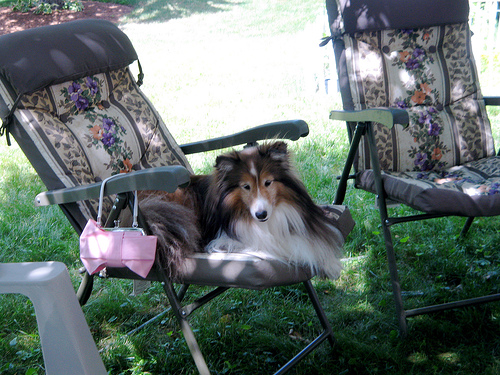







 livid scarabBOT
:heavy_check_mark: I replaced your old CEFR role with Level C.
 chrome moat
help
livid scarabBOT
Page 12/13 (35 commands)
Stats Commands
about
Display information about the bot.
info [user]
Shows info about a user.
serverinfo
Shows info about the current server.
stats [member]
Tells you command usage stats for the server or a member.
uptime
Tells you how long the bot has been up for.
Use ">help command" for more info on a command.
 river elbow
ex dativ
chrome moat
help ex
livid scarabBOT
Page 1/4 (13 commands)
[faq|explain|ex] <name>
Allows you to create automatic replies to popular questions and things.
If a subcommand is not provided, the bot will search its DB for the requested
FAQ.
faq alias <new_name> <old_name>
Creates an alias for an existing FAQ.
faq all
Lists all server-specific faqs for this server.
faq backup <name>
Creates a backup of an FAQ entry
faq create <name> <content>
Creates a new FAQ which is owned by you.
Use ">help command" for more info on a command.
river elbow
ex dative
chrome moat
ex dative
livid scarabBOT
The dative case (der Dativ) is one of the four cases of the German language. A case affects how a noun or noun phrase is inflected, and indicates the role of the noun or noun phrase in a clause.
🗨 How do I decline in the dative case?
Nouns, pronouns, and adjective declension is completely different compared to the nominative case. See >explain adjective declension for a full explanation.
🗨 When do I use the dative case?
The dative case has a great number of usages, many of which are idiomatic, but is mainly used:
- to mark the indirect object of many transitive verbs (the indirect object is that which receives the result of an action):
Ich habe dir ein Bier gekauft.
Sie gibt dem Mann das Buch.
Er zeigte ihm seinen Führerschein.
- to mark the object of some transitive verbs:
Dir fehlen die richtigen Materialien.
Es fällt mir gleich bestimmt wieder ein.
Das gefällt ihr gar nicht.
- after some prepositions:
Ich komme aus den USA.
Komm mit mir.
Ich lerne seit vielen Jahren Deutsch.
The following prepositions are always followed by the dative case:
aus, außer, bei, gegenüber, mit, nach, seit, von, zu
- after two-way prepositions when they do not indicate movement:
Das Bild hängt jetzt an der Wand.
Er geht im Wald. (he is roaming in the woods)
Sie steht vor mir.
- to show possession, mainly of clothing or body parts:
Ich habe mir in die Finger geschnitten.
Er hat ihr die Nase gebrochen.
Die Mütze fiel mir vom Kopf.
- with many adjectives:
Ich war mir nicht sicher.
Ist dir kalt?
Er ist seinem Bruder sehr ähnlich.
chrome moat
help cefr
livid scarabBOT
[cefr|getcefr|gr] [role]
Assigns a role to you from a list of available roles.
If you abuse this command, you will get blacklisted.
Use ">help command" for more info on a command.
chrome moat
gr
livid scarabBOT
Roles you can give yourself
- Level A
- Level B
- Level C
Use >groups for a list of group roles.
chrome moat
groups
livid scarabBOT
These groups are currently accessible
- Activities - Lessons! Subscribe for pings!
- Grammar - Lessons! Subscribe for pings!
- Reading - Lessons! Subscribe for pings!
- Advancedreading - Like Reading but only B2+ level content.
- Coding - For all the coding nerds.
- Food - A group for food talks.
- Gaming - All gaming-related topics.
- Ouija - A Ouija-style game just for fun.
- Science - STEM-related topics.
- Translation - Offers weekly sentences to translate.
- Writing - Join to get weekly and monthly prompts!
Type >sub to join a group or >group joinall to join all available groups .
chrome moat
help sub
livid scarabBOT
sub <group>
Join an existing group.
chrome moat
help
livid scarabBOT
Page 13/13 (35 commands)
Suggestions Commands
suggest <text>
This command can be used in order to suggest something for the server.
Use ">help command" for more info on a command.
chrome moat
ex faq
livid scarabBOT
Q: What does FAQ mean?
A: Frequently Asked Questions.
Q: How does it relate to this server?
A: You can invoke answers to FAQs regarding grammar, geography and culture of DACH or other topics related to GLaD.
Q: What does GLaD mean?
A: German Language and Discussion (a.k.a. this server).
Q: How do I invoke these answers?
A: Type >explain [faq name] (additionally >ex or >faq instead of >explain)
Q: Where do I invoke the answers?
A: Please use #botchannel for the FAQs.
Q: I can’t find an answer to my question.
A: Use >explain [topic name] and the results will either show you related searches, or add your questions to our suggestion list.
Q: I want to write an FAQ entry, how do I do it?
A: Try writing something in the same style as other FAQs and ping Pferd to ask for proofreading.
Q: I found some mistakes/typos in an FAQ entry.
A: Ping Pferd to correct it.
Q: I don’t understand some parts of an FAQ entry.
A: Ask in #questions or ping Pferd for help.
chrome moat
groups
livid scarabBOT
These groups are currently accessible
- Activities - Lessons! Subscribe for pings!
- Grammar - Lessons! Subscribe for pings!
- Reading - Lessons! Subscribe for pings!
- Advancedreading - Like Reading but only B2+ level content.
- Coding - For all the coding nerds.
- Food - A group for food talks.
- Gaming - All gaming-related topics.
- Ouija - A Ouija-style game just for fun.
- Science - STEM-related topics.
- Translation - Offers weekly sentences to translate.
- Writing - Join to get weekly and monthly prompts!
Type >sub to join a group or >group joinall to join all available groups .
 toxic cliff
ex beginner
livid scarabBOT
How to get started
The simplest way to learn German is to find topics you don’t understand yet and search for explanations of them. This list provides you with a guide for which topics to learn if you are completely new to German. Type the topic into Google (or YouTube) and start learning!
Introduction
1: Alphabet (especially ä, ü, ö and ß)
2: Basic greetings (hello, goodbye, etc.)
Part 1 - Simple Sentence
1: Noun gender & plurals
2: Nominative case (What are cases?)
3: Nominative pronouns (I, you, he, she, etc.)
4: Verbs in present tense
5: Definite/indefinite articles
6: Accusative case (for nouns)
7: Accusative pronouns
8: Word order of simple sentences
9: How to ask questions
See Part 2 with >faq beginner 2
Tips
- Always learn the gender of a noun when you learn a new noun
- Learn to use a translation dictionary (e.g. dict.cc, leo.org)
- Use
>faq resourcesto see our list of German learning resources - For listening and pronunciation practice, try watching movies or videos (incl. YouTube)
- You can listen to pronunciation for words on websites like dict.cc, forvo.com, and others
- Practice writing sentences every day (and asking people to correct them)
- Ask as many questions as possible
- Don’t be scared to make mistakes!!!! If you don’t let yourself make mistakes, you will never be able to learn German
toxic cliff
faq beginner 2
livid scarabBOT
Make sure to check Part 1 if you’re a beginner - >faq beginner
The simplest way to learn German is to find topics you don’t understand yet and search for explanations of them. This list provides you with a guide for which topics to learn if you are completely new to German. Type the topic into Google (or YouTube) and start learning!
Part 2 – Beyond a Simple Sentence
1: Conjunctions (coordinating and subordinating)
2: Subordinate clause word order
3: Dative case
4: Dative verbs
5: Verbs with two objects (e.g. geben)
6: Prepositions (accusative, dative, and two-way)
7: Spoken past tense (Perfekt)
8: Written past tense (Präteritum)
9: Genitive case
10: Relative clauses
11: Adjective declension
Tips
- Make sure to practice writing and reading simple texts
- Some of these concepts are confusing to start with, so it’s a good idea to ask for help in #questions when you’re unsure
- You should use a declension chart to help with declension to start with, because you won’t be able to memorize it straight away
- After you feel confident with creating sentences, you can start learning the adjective declension properly by using the command
>faq adjective declensionand reading the guide provided
toxic cliff
faq beginner
livid scarabBOT
How to get started
The simplest way to learn German is to find topics you don’t understand yet and search for explanations of them. This list provides you with a guide for which topics to learn if you are completely new to German. Type the topic into Google (or YouTube) and start learning!
Introduction
1: Alphabet (especially ä, ü, ö and ß)
2: Basic greetings (hello, goodbye, etc.)
Part 1 - Simple Sentence
1: Noun gender & plurals
2: Nominative case (What are cases?)
3: Nominative pronouns (I, you, he, she, etc.)
4: Verbs in present tense
5: Definite/indefinite articles
6: Accusative case (for nouns)
7: Accusative pronouns
8: Word order of simple sentences
9: How to ask questions
See Part 2 with >faq beginner 2
Tips
- Always learn the gender of a noun when you learn a new noun
- Learn to use a translation dictionary (e.g. dict.cc, leo.org)
- Use
>faq resourcesto see our list of German learning resources - For listening and pronunciation practice, try watching movies or videos (incl. YouTube)
- You can listen to pronunciation for words on websites like dict.cc, forvo.com, and others
- Practice writing sentences every day (and asking people to correct them)
- Ask as many questions as possible
- Don’t be scared to make mistakes!!!! If you don’t let yourself make mistakes, you will never be able to learn German
toxic cliff
faq adjective declension
livid scarabBOT
A Brief Guide to Memorizing German Noun and Adjective Declension by Basementality
https://docs.google.com/document/d/1jWl5-kkqF3FQLDzrz8XLBJj7hvPFQK7MT5SYEDGK65E/edit
Google Docs
A Brief Guide to Memorizing German Noun and Adjective Declension Introduction Don’t try to memorize this whole guide at once. This guide was written to help people learn these concepts in parts over a period of time. This way you will (hopefully) be able to remember the i...
 echo sluice
cefr A
livid scarabBOT
:heavy_check_mark: I replaced your old CEFR role with Level C.
Page 13/13 (35 commands)
Suggestions Commands
suggest <text>
This command can be used in order to suggest something for the server.
Use ">help command" for more info on a command.
Command "remove" has no subcommand named role
 craggy wedge
group
livid scarabBOT
This command needs a sub-command. Further help:
Page 1/2 (8 commands)
group
Commands for the central bot group system.
group info <group>
Gets information about a group.
group join <group>
Join a group
group joinall
Join all available groups at once.
group leave <group>
Leave an existing group.
Use ">help command" for more info on a command.
craggy wedge
group joinall
livid scarabBOT
:white_check_mark: Added you to all available groups.
rustic trellis
faq beginner 2
livid scarabBOT
Make sure to check Part 1 if you’re a beginner - >faq beginner
The simplest way to learn German is to find topics you don’t understand yet and search for explanations of them. This list provides you with a guide for which topics to learn if you are completely new to German. Type the topic into Google (or YouTube) and start learning!
Part 2 – Beyond a Simple Sentence
1: Conjunctions (coordinating and subordinating)
2: Subordinate clause word order
3: Dative case
4: Dative verbs
5: Verbs with two objects (e.g. geben)
6: Prepositions (accusative, dative, and two-way)
7: Spoken past tense (Perfekt)
8: Written past tense (Präteritum)
9: Genitive case
10: Relative clauses
11: Adjective declension
Tips
- Make sure to practice writing and reading simple texts
- Some of these concepts are confusing to start with, so it’s a good idea to ask for help in #questions when you’re unsure
- You should use a declension chart to help with declension to start with, because you won’t be able to memorize it straight away
- After you feel confident with creating sentences, you can start learning the adjective declension properly by using the command
>faq adjective declensionand reading the guide provided
 glass cloud
cefr B
livid scarabBOT
FAQ not found. Did you mean...
beginner
beginner 2
FAQ not found. Did you mean...
beginner
beginner 2
How to get started
The simplest way to learn German is to find topics you don’t understand yet and search for explanations of them. This list provides you with a guide for which topics to learn if you are completely new to German. Type the topic into Google (or YouTube) and start learning!
Introduction
1: Alphabet (especially ä, ü, ö and ß)
2: Basic greetings (hello, goodbye, etc.)
Part 1 - Simple Sentence
1: Noun gender & plurals
2: Nominative case (What are cases?)
3: Nominative pronouns (I, you, he, she, etc.)
4: Verbs in present tense
5: Definite/indefinite articles
6: Accusative case (for nouns)
7: Accusative pronouns
8: Word order of simple sentences
9: How to ask questions
See Part 2 with >faq beginner 2
Tips
- Always learn the gender of a noun when you learn a new noun
- Learn to use a translation dictionary (e.g. dict.cc, leo.org)
- Use
>faq resourcesto see our list of German learning resources - For listening and pronunciation practice, try watching movies or videos (incl. YouTube)
- You can listen to pronunciation for words on websites like dict.cc, forvo.com, and others
- Practice writing sentences every day (and asking people to correct them)
- Ask as many questions as possible
- Don’t be scared to make mistakes!!!! If you don’t let yourself make mistakes, you will never be able to learn German
livid scarabBOT
❌ Bad argument: name is a required argument that is missing.
 drowsy lake
faq help
livid scarabBOT
FAQ not found. Try >explain all.
Note: This entry has been added to our FAQ idea pool.
drowsy lake
explain all
livid scarabBOT
Please enter an FAQ name
- Accusative [Akkusativ]
- Adjective Declension [Adjektivdeklination]
- Beide [Beide vs. Beides, Beides, Beides vs. Beide]
- Birthdays
- CEFR [CEFR levels, lvl]
- CH [Schweiz, Switzerland]
- Cases [case, grammatical case]
- Dativ [Dative]
- Du vs. Sie [Formal and informal speech, Sie, duzen vs. siezen]
- Duolingo [duo]
- Eszett [Scharfes S, ß, ẞ]
- FAQ
- Gender patterns
- Genitiv [Genitive]
- German letters [german keyboard, keyboard]
- Glossary [Grammar terms, Grammatical terms]
- Grammatical gender [der-die-das, gender, genders]
- Homework [How to ask a question, Translation]
- How to get started [Starting out, beginner]
- IPA [International Phonetic Alphabet, Pronunciation, Sound transcription]
Page 1/3 (46 entries)
drowsy lake
faq imperativ
livid scarabBOT
FAQ not found. Try >explain all.
Note: This entry has been added to our FAQ idea pool.