I've always wanted an option to have filaments like PC CF and PC GF, but the filaments I found were either hard to source, extremely expensive, or really low quality. I'd love if polymaker merged their PC line of products with Fiber fill (so like Polymax PC CF or Polymaker PC PBT GF or Polymaker PC ABS CF FR). PC has much lower creep it seems compared to other common polymers so combining the heat resistance, impact resistance and low creep of PC with the stiffness and ease of printing with fiber reinforcement can make a stiff material thats easier to print and more useful than PACF when not around certain oils and greases (unless you use PCPBT as the base (please make a PC PBT GF and/or PC PBT CF) which might be better for chemical resistance)
#Fiber Reinforced PC filaments
327 messages · Page 1 of 1 (latest)
 summer socket
 halcyon dock
Seconded, PC CF/GF and PC-PBT CF/GF would be amazing. PC-ABS CF/GF seems kinda counterintuitive, isn't the point of the ABS to make the PC less rigid?
I know Prusament already sells PCCF, but they only offer 1.75mm filament.
summer socket
halcyon dock
Seconded, PC CF/GF and PC-PBT CF/GF would be amazing. PC-ABS CF/GF seems kinda c...
the only thing is PC-ABS seems to have the best HDT curve of all the PC filaments. Only thing is I found it to be quite a bit softer than even abs and have worse layer adhesion than asa. Prints look amazing tho minus tons of warping. Fiber fill might just exacerbate the layer adhesion issue though.
summer socket
halcyon dock
I know Prusament already sells PCCF, but they only offer 1.75mm filament.
prusament pc-blend cf is also kinda soft based on tds. around as stiff as pla or less stiff, which isn't very stiff considering its a cf pc blend
summer socket
halcyon dock
Isn't PLA incredibly stiff?
compared to carbon fiber composites its not
here a comparison between pa6gf, pa6cf, and polylite pla

in youngs modulus
and heres prusa's mechanical properties on their PC-Blend CF TDS
 summer socket
here a comparison between pa6gf, pa6cf, and polylite pla
summer socket
summer socket
here a comparison between pa6gf, pa6cf, and polylite pla
note pa6-gf and pa6cf are shown with their dry state properties
 lapis eagle
Agreed ASA-GF (if interlayer adhesion can be improved) would be a great choice for automotive applications and PC-CF based on a high tg PC grade.
 young bear
Would love to see more pc choices. Seams to be the answer im looking for in printer parts and car parts! Will be keeping an eye on what new stuff comes out
summer socket
lapis eagle
Agreed ASA-GF (if interlayer adhesion can be improved) would be a great choice f...
or PC PBT-CF or GF because its semicrystalline and has a high Tg.
fiber adhesion technology
lapis eagle
LoL no to PC-PBT
Demand is too low for the raw material
It may have good properties but it won't sell well compared to the ASA or PC cfs /gfs
Maybe as an option but it won't fulfill the demand of an ABS / ASA.
In the case of PC, the high tg PC is better than PC-PBT in heat resistance and there's no fuss in crystallinity.
young bear
lapis eagle
Demand is too low for the raw material
I agree the demand is low i think because people are scared off with the requirements. For the pc-pbt what chambers temps are you able to print in i have had success with temps as low as 80c chamber
Also i think the community in general is scared off with active heating. Which their is a safety concern but it can be done safely
young bear
lapis eagle
Maybe as an option but it won't fulfill the demand of an ABS / ASA.
In the case ...
Also where are you getting your data

The material comparison shows pc-pbt as the highest TG
lapis eagle


HDT matters more when we discuss heat resistance. PC-PBT is worse than Polymaker PC-FR
Polymaker PC is also a lower tg than the grades use for injection molding which makes it easier to print
I'm suggesting a high tg PC from Covestro. It will result in a much higher glass transition temperature and heat deflection temperature.


The first one in green are covestros glass fiber PC grades. You'll notice high tg and high HDT. Below are the general purpose PC grades, also have a high tg and high hdt.
Polymaker PC is great because it's a lower tg so it's so much easier to use. If they didn't do so, you'd need a heated chamber and 320C nozzle to print PC 😅 I think there's value though in a PC with GF or CF reinforcement based on a high tg PC. This material I think is better than PC-PBT, similar in tg but better in HDT.
Here's the source. https://solutions.covestro.com/en/brands/makrolon
Versatile, proven and sustainable: Makrolon® has an outstanding balance of properties that have made it one of the most successful high-performance thermoplastics ever.
PC-PBT is advertised as based on Covestro Makroblend. There is a Makroblend PC-PBT with glass fiber called UT 4045 G. HDT is 110C @ 1.8 MPa. Lower than the PC GF which is between 137 - 140C for same HDT test.
 summer socket
lapis eagle
HDT matters more when we discuss heat resistance. PC-PBT is worse than Polymaker...
summer socket
lapis eagle
HDT matters more when we discuss heat resistance. PC-PBT is worse than Polymaker...
possibly, i've noticed pure nylon even tho it can be annealed always has pretty mediocre heat resistance. add some cf and now its really good
summer socket
lapis eagle
PC-PBT is advertised as based on Covestro Makroblend. There is a Makroblend PC-P...
oh huh
maybe pc gf
lapis eagle
summer socket
possibly, i've noticed pure nylon even tho it can be annealed always has pretty ...
Yeah pure nylon has high heat resistance in terms of hardness, with load not so great. I suspect it's because the nylon isn't incredibly rigid, a more rigid filament such as GF / CF Nylon will have advantages in a HDT test. See PolyTerra PLA vs PolyLite PLA. Similar tg but PolyTerra PLA has a lower HDT result as it is more susceptible to flexing under load, even at room temp.
lapis eagle
I think of it like this
PA-CF - Automotive chemical resistance, high heat resistance but requires annealing and moisture management. Expensive for low moisture variants.
PC-PBT - Great low temperature toughness and automotive chemical resistance. High heat resistance but requires a heated chamber to print well.
Fibers increase brittleness so I'd think that the fiber PC-PBT might be less beneficial for low temperatures, leaving the main advantage as heat resistance and chemical resistance. Both of these factors will depend on the crystallinity of the PBT component and the material still requires a high temp printer.
ASA-GF - Amorphous so heat resistance will be the same whether you process in a heated chamber, anneal or print on a open frame printer. UV resistant and high stiffness / strength.
PC-CF - Not UV resistant like ASA but better tensile strength, heat resistance and stiffness without needing to crystallize. It could be a good alternative to PA-CF for applications where Nylons low Tg is a problem and more cost-effective without the moisture problems during printing or application, it's more stable. I'm suggesting the PC component not be PolyMax PC or PolyLite PC (110 Tg), rather a raw PC material with a 140C Tg so that it adds a PC in Polymakers range with a 130C - 140C HDT.
PPS-GF - Meets the needs of PC-PBT in chemical resistance, in fact offers improvements. Also offers UV resistance as well and generally the customer base for PC-PBT would likely have hardware to suit PPS-GF. Like PC-PBT is is also semi-crystalline so you can think of it as a step up from the Nylons.
lapis eagle
summer socket
or pps-cf
Lol great minds think alike
PC-PBT GF could be useful for engine bay components, anything in contact with fuel, but I think PA-CF or PPS-GF would be better, either in ease of use (in the case of PA) or in performance and application versatility (in the case of PPS).
lapis eagle
how come?
summer socket
cf absorbs uv
summer socket
lapis eagle
PC-PBT GF could be useful for engine bay components, anything in contact with fu...
pps gf tho... the print temps arent even that much higher than pc
lapis eagle
PC base material isn't resistant though unless you pick a grade which is UV stabilized.
summer socket
lapis eagle
I think of it like this
PA-CF - Automotive chemical resistance, high heat resist...
yeah i was thinkjng pc-r or 147tg pc for the gf or cf as well
summer socket
lapis eagle
PC base material isn't resistant though unless you pick a grade which is UV stab...
yes but the cf filler can absorb some uv making it more uv resistant
lapis eagle
summer socket
yes but the cf filler can absorb some uv making it more uv resistant
More UV resistant, but not UV resistant 😉
For UV resistance I'm meaning 15 years no change in colour or mechanical properties
lapis eagle
Nope
young bear
Looking at doing a project with pc-pbt and it will live outside mainly snow but still see sun
lapis eagle
summer socket
lapis eagle
More UV resistant, but not UV resistant 😉
yeah
summer socket
lapis eagle
For UV resistance I'm meaning 15 years no change in colour or mechanical propert...
ohhhhh
lapis eagle
You'll see here how many grades of just regular PC Covestro make. Some are UV stabilized, some not.
summer socket
young bear
Looking at doing a project with pc-pbt and it will live outside mainly snow but ...
yeah use black filament if you want slight improvement
young bear
summer socket
yeah use black filament if you want slight improvement
I would be happy if i get 5 years
young bear
Man im so new to this stuff
summer socket
young bear
I would be happy if i get 5 years
maybe. We need a PC PBT UV stabilized tho
young bear
Low market?
summer socket
lapis eagle
Only 5 grades are UV stabilized
yeah i remembered pc isnt usually uv resistant
lapis eagle
young bear
Low market?
PPS-GF would fill that demand and open up more applications
summer socket
young bear
Low market?
polymaker custom materials line???
summer socket
lapis eagle
PPS-GF would fill that demand and open up more applications
yeeah
i really want pps cf or pps gf but it costs so much
polymaker could price pps gf like $99 per 500g
usd
$99.99
and that isnt that bad
young bear
Do they have any pps?
lapis eagle
young bear
Man im so new to this stuff
Lel the dunning-kruger effect 😉
 summer socket
sadly no
summer socket
lapis eagle
Lel the dunning-kruger effect 😉
LOL
lapis eagle
The more you learn the more you realize how much you don't know
young bear
True
Im trying to bring more awareness to polymakers engineering filaments
Its crickets here
summer socket
yeah
personal fav polymaker filaments are their engineering ones
theyre really affordable for engineering filaments
young bear
So where do the nylons shine. The more i learned about it. It seams like pc is my answer
lapis eagle
Generally the lower the popularity, the more expensive it is. That's why we find PLA is so cheap compared to Nylon etc.
young bear
lapis eagle
Generally the lower the popularity, the more expensive it is. That's why we find...
My vary greedy interest in gaining popularity in engineering filaments to bring the price down🤣
summer socket
young bear
So where do the nylons shine. The more i learned about it. It seams like pc is m...
low friction?
summer socket
young bear
My vary greedy interest in gaining popularity in engineering filaments to bring ...
yes buy then all
haha
lapis eagle
Unreinforced Nylon shines in wear resistance, it has some self-lubricating properties. It can be more ductile / more flexible. Easier to print (in the case of Polymakers), whether it warps more or less during annealing depends on geometry. Heat resistance can also get pretty high, but it depends what we define heat resistance as.
young bear
I rebuilt my printer to print pc-pbt
summer socket
ah yeah thats what it was. forgot it was self lubricating
lapis eagle
So CoPA is up to 180C vicat softening temp. PC is around 110. So above 110C CoPA is better, but before 110C the PC is a better choice.
So higher data point isn't always the better choice
summer socket
young bear
I rebuilt my printer to print pc-pbt
good job. I might get a dedicated printer for this
or build
summer socket
lapis eagle
So CoPA is up to 180C vicat softening temp. PC is around 110. So above 110C CoPA...
isnt the hdt of copa like 110
or lower
young bear
summer socket
good job. I might get a dedicated printer for this
I can tell you all what not to do
🔥
lapis eagle
summer socket
isnt the hdt of copa like 110
Yes, I'm describing vicat softening temp
Hardness with temperature
young bear
summer socket
wdym by that
No lots of parts died
summer socket
lapis eagle
Yes, I'm describing vicat softening temp
isnt that like a melting point like thing
lapis eagle
summer socket
isnt the hdt of copa like 110
Think of it like this. If you print a cylinder and put it in the oven, no load. At 150C you'll likely have the PC start to collapse, Nylon CoPA probably won't.
summer socket
young bear
No lots of parts died
oops. Was gonna change the motors and stuff. Using an ender 5 as a base? but upgraded
young bear
Belts stretch if not high temp rated
summer socket
lapis eagle
Think of it like this. If you print a cylinder and put it in the oven, no load. ...
true.
summer socket
young bear
Belts stretch if not high temp rated
that too
lapis eagle
summer socket
isnt that like a melting point like thing
By melting point what do you mean? printing temperature
summer socket
lapis eagle
By melting point what do you mean? printing temperature
not rlly. I just realized how vicat works
young bear
summer socket
that too
Ldo has nice high temp motors but get the 1.8 steppers the 0.9 are super loud
summer socket
yeah was@gonna replace 1.8s with 1.8s
lapis eagle
summer socket
not rlly. I just realized how vicat works
Ok 🙂 DSC is good to understand "melting"
 summer socket
ok thanks a lot
lapis eagle
Sorry wrong one, this one
 young bear
You can definitely let me know if you need more info
summer socket
lapis eagle
Ok 🙂 DSC is good to understand "melting"
what would endo and exo be for
lapis eagle
I'm not too familiar, I assume it's short for endothermic and exothermic
summer socket
lapis eagle
Sorry wrong one, this one
i've seen that one lol. Yeah I've worked with HT PLA and nylons so that makes some sense to me
with ovens
lapis eagle
Possibly a reaction at that temp
summer socket
lapis eagle
I'm not too familiar, I assume it's short for endothermic and exothermic
so it gets colder and hotter as you change the flow?
i see
summer socket
lapis eagle
Sorry wrong one, this one
with semicrystallines, it stays that rigid after tg?
i mean i know pps cf can resist like 200c level temps
sooo
lapis eagle
@fresh ferry may be best to speak on this and confirm if I mispeak. My understanding is Tg is a defined point of the "phase change". For amorphous it's pretty much when it shifts, for semi-crystallines it's spends more time in the leathery stage before entering the rubbery stage because you still have the alignment of the polymer chain helping with the modulus. As heat increases the molecules are more and more excited, with enough heat they are unstable to a point that we can more easily bend the semi-crystalline as temp increases.


 lapis eagle
Tg is glass transition temperature
Tm is melting temperature. It's the temperature where semi-crystalline regions will melt and dissolve.
It's why Polymaker PLA is heat resistant at 140C when produced as a filament, but when we print the heat resistance is only 60C.
It has a degree of crystallization when spooled as a filament, the the crystallization is destroyed around 150C, and since we are printing at 200 - 220C our crystallization is basically the same as normal PLA.
young bear
Interesting
lapis eagle
So if you anneal Nylon, it'll handle say 120C. Heat it above it's melting temperature (190C) and you will destroy the crystallization, when it cools down it'll have very different crystallinity / heat resistance to what you had before and thus if you tried to heat it back up to 120C, it would not have that heat resistance.
Unless you recrystallize it
young bear
So is their a way to get it back higher?
lapis eagle
Amorphous plastics like ABS, ASA etc. don't have a defined melting temperature. So if you heat it up to 100C it is great. Let it cool down great. Heat it to 140C above it's heat resistance, the shape will change but if you let it cool and heat it back up to 100C that new shape will be kept because the heat resistance is still 100C no matter what.
lapis eagle
young bear
So is their a way to get it back higher?
Re-crystallizing it, aka annealing it again
young bear
lapis eagle
Re-crystallizing it, aka annealing it again
Ah still learning terms
lapis eagle
Td is the decomposition temperature, which is when the backbone of the polymer actually breaks down. It basically means you're destroying the plastic irreversibly.
 fresh ferry
lapis eagle
<@806899248028188682> may be best to speak on this and confirm if I mispeak. My...
fresh ferry
lapis eagle
<@806899248028188682> may be best to speak on this and confirm if I mispeak. My...
Woah so many messages, I could not find where I was pinged lol.
Anything I can help with?
I see Matt is here so I dont think I will bring much more knowledge 🤣
lapis eagle
Tc is crystallization temperature, it's the temperature at which the crystallization is at it's fastest. The best energy for crystallization. It doesn't mean it's the best temperature to anneal at. Purely just a data point.
Naturally, ABS has no crystallization temp since it isn't semi-crystalline.
lapis eagle
lapis eagle
<@806899248028188682> may be best to speak on this and confirm if I mispeak. My...
lel this comment @fresh ferry I was asked if with semicrystallines, if they stay rigid after tg. I'm not sure if my explanation is the best, it's how I understand it.
fresh ferry
lapis eagle
lel this comment <@806899248028188682> I was asked if with semicrystallines, if ...
Yes, its correct.
After Tg, the amorphous phase of the polymers will soften (rubbery state) however the crystal phase will stay unchanged maintaining the polymer overall structure.
It comes down to the crystallinity degree of the polymer, the higher the degree to closer to Tm the HDT will be, the lower the degree to closer to Tg.
There is a little bit more to it when you add fibers but in general I believe thats how it behaves 🙂
lapis eagle
fresh ferry
Yes, its correct.
After Tg, the amorphous phase of the polymers will soften (ru...
Thanks Nico 🙂 wonderfully described!
young bear
lapis eagle
Td is the decomposition temperature, which is when the backbone of the polymer a...
So this would be important for me because i always print hot
lapis eagle
Yeah most of the data is in the tds
Looks like it wasn't listed on the PC-PBT TDS
For ABS the Td is >380°C
summer socket
lapis eagle
Looks like it wasn't listed on the PC-PBT TDS
the crystallization temp for PC-PBT is so high lol
lapis eagle
Yes, it's quite high for most materials
summer socket
wait isn't prusa pc blend cf pc-pbt?
or am I just plain wrong
because i know their PC gets more heat resistant as its annealed
which makes 0 sense considering normal PC is amorphous
but if it was a blend, who knows whats in the blend
lapis eagle

Nope, no PBT
Always search the filament and TDS along with the filament name and SDS (Safety Data Sheet)


I'd ask them directly if PC Blend is Amorphous or Semi-Crystalline. Keep in mind there are many additives beyond PBT. For example PC/PET (PET is semi-crystalline, PETG is not), then there's also some wild things like this https://patents.google.com/patent/CN103951955A/en
The invention discloses a PC/PA6 composition and a preparation method for the same. The PC/PA6 composition is prepared from the following raw materials in parts by weight: 65-90 parts of polycarbonate, 10-35 parts of polyamide 6, 0.1-3 parts of toluene diisocynate, 0.1-3 parts of 2,2'-(1,3-phenylene)-dioxazoline, 0.1-6 parts of styrene-mal...
My best guess is that perhaps annealing helps the bond between the PC and carbon fibres + reduces stress. It may help with heat resistance. Or maybe the marketing team are misleading 😅 who knows
lapis eagle
Ok well certainly it's not PC-PBT.
So someone asked this question.
Q: If I choose to anneal would that make the part stiffer, potentially allowing similar damage to what I experienced with the annealed HTPLA-CF?"
Prusa Response: Unfortunatelly, annealing improves significantly only the heat deflection temperature. Other values stay more or less the same, within standard measurement deviation.
I also came across this response as well from the Prusa team
"Also, it shouldn’t be stressed with too much weight on it, the 130 °C resistance applies for 0.45 MPa stress. When stressed with 1.8 MPa, the heat deflection temperature is 119.4 °C."
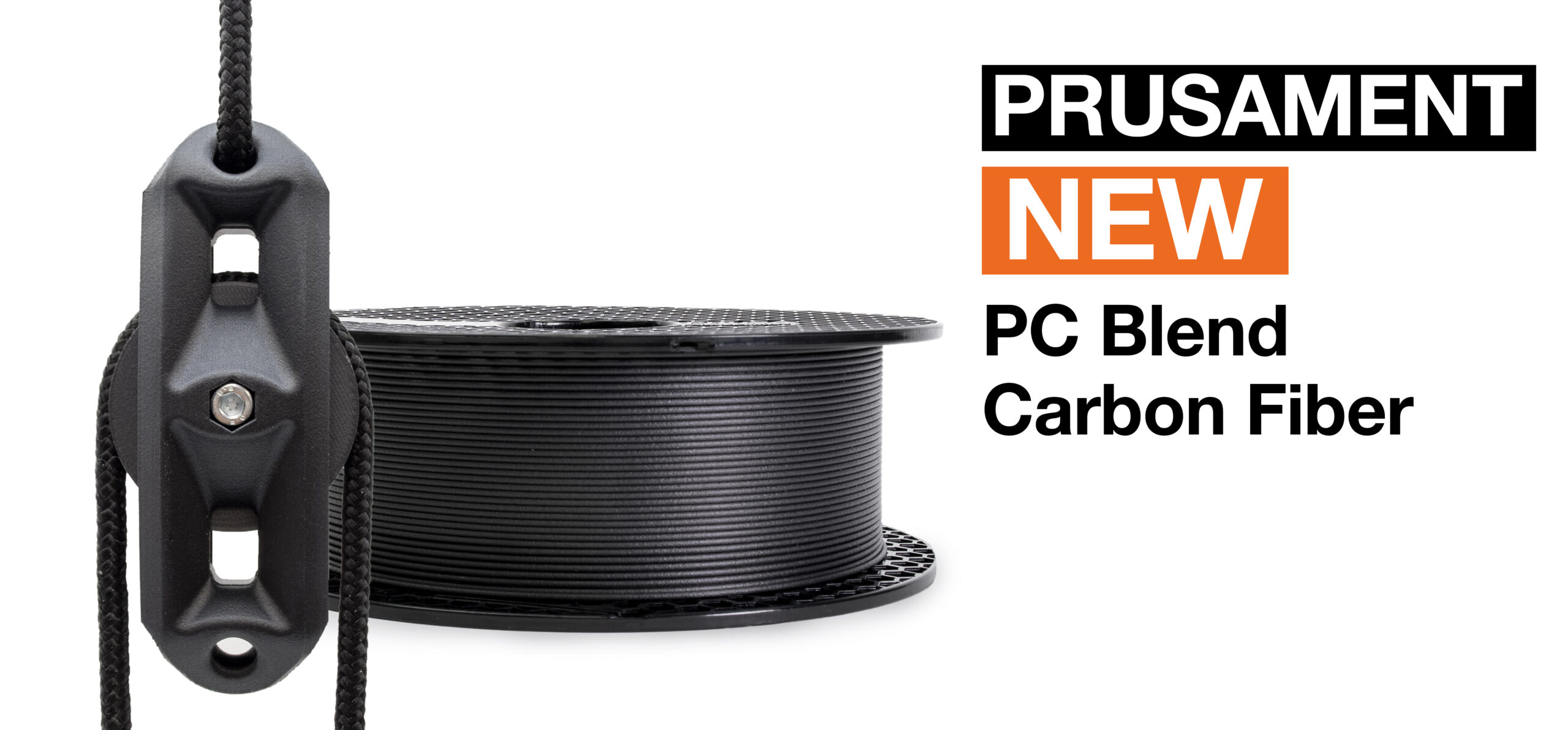
It’s been a year since we released Prusament PC Blend so we thought it was a great time to introduce a new member to the…
One thought I had was that perhaps the heat resistance isn't improving per say. Maybe stress from the printing process is effecting the result of the 0.45 MPa test. Releasing the stress via annealing might help with the result of that test. According to Prusa team the HDT with higher load is unchanged after annealing.
I found this paper, unfortunately it's hidden behind a paywall. The abstract mentions residual stress and HDT values, it seems to suggest no relation, opposite to my unqualified thought. It does however mention factors which can cause HDT values to vary over 20°C, so perhaps there are factors which can change the HDT result of amorphous PolyCarbonate.
"This paper qualitatively disputes the claims of the effect of residual stress on HDT values. It is argued that changes in residual stress level and HDT values with physical aging are symptoms of the structural relaxation, but no causal effect exists between these two symptoms."
https://onlinelibrary.wiley.com/doi/abs/10.1002/mame.200800334
summer socket
interesting...

idk what prusa put in their pc blend
but it makes it more chemical resistant>
lapis eagle
I don't see anything saying it's more chemical resistant due to their blend?
They say it's one of their most chemical resistant materials, as in more chemical resistant than Prusament PLA, PETG, ASA etc.


With growing interest in 3D printing, there are new materials coming to market - and with them new means and opportunities for using 3D printers.…
I'll cross reference tomorrow but I presume that Prusas PC-Blend has similar chemical resistance to "standard" PC. Which can also be good. https://www.calpaclab.com/polycarbonate-chemical-compatibility-chart/
lapis eagle
Prusa results seem similar to the compatibility chart I shared. Key differences were that PC Blend is worse with isopropyl, better with hydrochloric acid, worse with nitric acid.
summer socket
lapis eagle
I'll cross reference tomorrow but I presume that Prusas PC-Blend has similar che...
oh huh
lapis eagle
Yeah PC doesn't necessarily have bad chemical resistance, but it's not as wide a range as PP or PEEK etc.

If you're interested this is a useful chart from professional plastics. Very generic but good to try find a family of plastics. The specifics can differ of course, this is just a general overview. https://www.professionalplastics.com/professionalplastics/ChemicalResistanceChartofPlastics.pdf
lapis eagle
Polymaker™ PC-PBT is resistant to hydrocarbons, alcohols, organic acids, inorganic aqueous salts, and mild base and acid solutions.
Polymaker™ PC-PBT is not resistant to strong alkalis or chlorinated, aromatic, ketone- or ester-containing solvents.
So I'd expect aromatic hydrocarbons are a no go with PC, PC-PBT and PC-blend. Haven't tried though.
young bear
lapis eagle
Polymaker™ PC-PBT is resistant to hydrocarbons, alcohols, organic acids, inorgan...
Wow this is a great resource
summer socket
lapis eagle
So I'd expect aromatic hydrocarbons are a no go with PC, PC-PBT and PC-blend. Ha...
oh huh
lapis eagle
@summer socket "Aromatic hydrocarbons are an important series of hydrocarbons found in almost every petroleum mixture from any part of the world. " https://www.e-education.psu.edu/fsc432/content/aromatic-hydrocarbons
Not a chemist or mechanic, but in automotive industry my understanding is that aromatic hydrocarbons are found in automotive exhaust, for example benzene is found in diesel exhaust. So probably for a plastic part near a car exhaust or for a fuel cap or carbon canister you probably would want something with good resistance to aromatic hydrocarbons. If we look at the chart PA12 supposedly has good resistance so could be useful for some applications, but of course it's best to refer to what is used in the real industry and do some real world testing. For a fuel cap supposedly HDPE is used (high density polyethylene), not an easy filament to print.
summer socket
ah... rip pcpbt
summer socket
lapis eagle
So I'd expect aromatic hydrocarbons are a no go with PC, PC-PBT and PC-blend. Ha...
how abt pcabs
lapis eagle
summer socket
ah... rip pcpbt
Why RIP? PC-PBT still has great chemical resistance.
summer socket
true except maybe not for automotive
lapis eagle
I wouldn't agree. Automotive has varying requirements depending on the part. So for an EV battery holder, PC-PBT may be great.
PC-PBT is also commonly used for exterior body parts for automotive industry.
summer socket
lapis eagle
I wouldn't agree. Automotive has varying requirements depending on the part. So ...
okay interesting
summer socket
lapis eagle
PC-PBT is also commonly used for exterior body parts for automotive industry.
did not know that :)
goes to show how little i know about this
 wary berry
speaking of PPS... thoughts on this stuff? 50% off right now https://www.amazon.com/toughened-Retardant-Engineering-Temperature-Resistance/dp/B09N9JDV6Q

YXPOLYER PPS-TF 3D printing filamentt YXPOLYER PPS-TF is a toughened modified high temperature 3d printing material with high flame retardancy (UL94-V0), excellent chemical resistance and high thermo-mechanical properties.It has extraordinary strength and modulus even at high temperatures. Featur...
summer socket
hmmmmmmmmmmmmmmmmmmmm i have no clue tbh.
its not reinforced though so its heat resistance is around like 90-100c
established in '97?
 lapis eagle
Maybe a division of an existing plastics business
They are saying 180C heat resistance, not sure what testing method. Stiffness (HDT) or hardness (vicat). Generic data suggests around 100C - 135C HDT for PPS. Tg at around 85C. Perhaps contact them for the TDS, they said on Amazon that you can contact them for it 🙂
wary berry
I've sent a request
summer socket
lapis eagle
Maybe a division of an existing plastics business
possibly
 silent charm
@fresh ferry multiple people in the dutch community have noticed that Prusa changed their formula of their PC_CF over the last year making it weaker. This makes having a good alternative like Polymaker PC CF even more important i've been looking for a good replacement but haven't found any so if Polymaker were to produce it i would love t
young bear
silent charm
<@806899248028188682> multiple people in the dutch community have noticed that P...
add this to the #1046065844364517457 page so he can look into it
fresh ferry
silent charm
<@806899248028188682> multiple people in the dutch community have noticed that P...
Very good to know, we should be releasing ours in a few months! 🙂
silent charm
fresh ferry
Very good to know, we should be releasing ours in a few months! 🙂
that's awesome news be sure to let us know when it gets released haha i need some new spools 🤣
i've only got 1 spool left of the good PC-CF from prusa and then i'm stuck with the newer less good batches
summer socket
fresh ferry
Very good to know, we should be releasing ours in a few months! 🙂
im excited :D
halcyon dock
silent charm
<@806899248028188682> multiple people in the dutch community have noticed that P...
I had a few rolls of the old stuff (it'd just been a while and I hadn't used it up) and the new stuff at the same time and the new stuff seemed to print worse for me, of course that's just anecdotal and could be up to inconsistencies apart from formula.
There's no functional difference for my use case but it's interesting nonetheless.
 dim bridge
fresh ferry
Very good to know, we should be releasing ours in a few months! 🙂
dim bridge
fresh ferry
Very good to know, we should be releasing ours in a few months! 🙂
what happened with this? Any PC CF coming up?
fresh ferry
dim bridge
what happened with this? Any PC CF coming up?
A few announcements towards this direction next week at Rapid 🙂
dim bridge
fresh ferry
A few announcements towards this direction next week at Rapid 🙂
I'm keeping an eye on tct 2024 news today but please post info here if you can. I am ready to replace my PLA test parts in my printer build and just found out pa6-cf won't work due to creep
 maiden mortar
@dim bridge pps-cf, pet-cf, and petg-cf
wary berry
Nice additions!
lapis eagle
lapis eagle
PPS-GF would fill that demand and open up more applications
almost called it 😉
 molten socket
@young bear 2 questions
young bear
Sure
molten socket
- pps-cf what hotend temp, what bed temp
young bear
molten socket
1) pps-cf what hotend temp, what bed temp
310-350
 molten socket
- pps-cf tg vs heat deflection tmp ...what....(isnt pps tg 85) whats this 200c heat deflection temp
polymaker.link test page
molten socket
tg vs heat defection
isnt tg is when it start softing
how can the heat deflection be 200 when pps tg is 85
young bear
molten socket
tg vs heat defection
@fresh ferry any word on the TDS for the new PPS-10
molten socket
so basically is PPS-cf a good printer material for printed parts
or is it too brittle
young bear
molten socket
how can the heat deflection be 200 when pps tg is 85
That is because the product is semi-crystalline and the crystals will line up once you annealed the product giving you the higher htd
molten socket
so print it and anneal it (say 100c) then it will handel 200c?
young bear
molten socket
so basically is PPS-cf a good printer material for printed parts
You will need to anneal to get the full listed properties.
It reacts a lot like metal.
molten socket
what temp to annel
young bear
We had 200ish lbs on a printed part and it was holding just fine


This was 200+ lbs don't recall the exact number and it didn't break in the z axis
molten socket
what u printing the pps-cf on
young bear
molten socket
what u printing the pps-cf on
Voron v0
molten socket
rapido?
molten socket
i though that cant handel 350
young bear
 molten socket
hummm
fresh ferry
young bear
<@806899248028188682> any word on the TDS for the new PPS-10
In 2 weeks I think 🙂
fresh ferry
young bear
This was 200+ lbs don't recall the exact number and it didn't break in the z axi...
It broke at 250lbs 🙂
It held 4 people before from 60kg to 100kg I think (220lbs)
halcyon dock
molten socket
how can the heat deflection be 200 when pps tg is 85
TG is more or less a useless number
HDT actually measures deflection by temperature which is what matters
Though usually the two are pretty similar, TG is more of a material property whereas HDT is a tested value like impact strength
molten socket
Hope to see some real word test on high temp Voron - doom cube test on this pps-cf
@young bear pps-cf doom cube soon tm?
young bear
molten socket
<@505410768687333380> pps-cf doom cube soon tm?
I have a peek capable tridant 😂
maiden mortar
@fresh ferry can we have a channel for engineering filaments?
i just learned so much reading back in this channel but iut is buried until @new ideas
maiden mortar
@fresh ferry pretty please?
fresh ferry
maiden mortar
<@806899248028188682> can we have a channel for engineering filaments?
Sure, but we need to be more precised, what do you think the channel will be about? Because if its about new ideas of engineering filament then its the same as this forum.
If its about printbuster then we have this #1046470181746118706 🙂
maiden mortar
I was thinking print assistance or discussion around engineering filaments, there use cases, and they needs however, on a side note, maybe rename print busters sometime more intuitive
I take it back though, this server has too many channels as it is lol
lapis eagle
Maybe a form for users with high temp specs (heated chambers) (400C nozzles) that way users can help with advice for materials like PEEK, Ultem, PET, PC-PBT, PEKK, Annealing
Call it "over 300 club"
fresh ferry
maiden mortar
I was thinking print assistance or discussion around engineering filaments, ther...
We used to have product oriented channels, but we found that application oriented channels was more effective
halcyon dock
lapis eagle
Maybe a form for users with high temp specs (heated chambers) (400C nozzles) tha...
that's a good idea
maiden mortar
Well, I was thinking more pa and the new pet/pps filament PM is releasing.
But to be honest, I think I've found a home in the armchair engineering discord..
They aren't huge fans of PM filaments but they are really pushing things. 100c chanber temps, etc
fresh ferry
maiden mortar
They aren't huge fans of PM filaments but they are really pushing things. 100c c...
Oh really, is it because the lack of Ultra Performance material? (Hopefully they will like Fiberon more 🙂 )
maiden mortar
no, it was more a believe that pm sacrifices material performance for printablility
they honestly seem like preetty level headed guys. i think if you joined you could get some insight form some guys who are really pushing the envelope
this is their hot printer channel
fresh ferry
maiden mortar
they honestly seem like preetty level headed guys. i think if you joined you co...
Yes I am actually already in the Discord (just didnt remembered the name).
I am more of a data oriented guy and recently many Discord are growing hearsay information too quickly, and although I keep figthing on the Voron Discord, I give up a little bit on all the other.
(At least until I have time to resume Printbusters)
maiden mortar
well, i think these guys are more hands on, pushing thigns to failure, and reporting back type of guys
fresh ferry
I just scanned a few recent message about Polymaker, and its still that Blend ABS thinking (like Blend VS Pure) which I disagree with
maiden mortar
theyt are all running printers with 80-100c chambers
i was just a user so i think they were a little less reserved. i think if made it known that you were from PM and actually looking for feedback to improve thigns, it would bear fruit
fresh ferry
maiden mortar
well, i think these guys are more hands on, pushing thigns to failure, and repo...
Absolutely, my meaning is more that I like more constructive "reporting"
For example some explanation of test they did, not just "yeah thats blended "curse word" ABS and will not work"
maiden mortar
i think youi woudl get that is what i am saying
fresh ferry
maiden mortar
i was just a user so i think they were a little less reserved. i think if made i...
Very open to it for sure
I like the Printbuster community here that we built, searching for scientific answers, ressources, papers, ect..
My personal opinion is some (not all) other groups of users are more affecting by marketing claims (which sometime works in our favor and sometime dont)
I like how the Prinbuster crew dig information much deeper on everything (at least thats the part I enjoy) its very objective 🙂
(even if sometimes it shows how not good some of our materials are lol )
maiden mortar
where i can fidn printbusters?
fresh ferry
We have #1046470181746118706 and archive #1046470181746118706
Additionally we had a 3-4h weekly livestream (which I will resume in a few weeks) 🙂
We may develop this much further and we have very active members such as but not limited to;
@devout vessel @young bear @lament kiln @night tiger @molten socket @lofty copper @santiago (twitter) and many more
I would define Printbuster as a movement trying to be more critical about what it is said about 3D printing and develop knowledge and resources using first principles thinking and (a lot) of testing.
We also built the community with an open mind meaning we accept different reasoning without judgement and we accept to be challenged and try to always stay constructive. (We can end up on heated debate but always for the good of developing our 3d printing knowledge 🙂 )
molten socket
So 8hrs stream on pps-cf warping stream
fresh ferry
molten socket
So 8hrs stream on pps-cf warping stream
Wait our PPS-CF warps?? 😂
 lament kiln
fresh ferry
Wait our PPS-CF warps?? 😂
lament kiln
fresh ferry
Wait our PPS-CF warps?? 😂
I pushed the PPS-CF with as low of a temperature as I could and couldnt make it warp. I have successful prints down to 300c/60c. The physical properties of the material will be absolutely terrible, but it doesnt warp.
@maiden mortar Bob and I hang out in #custom-printers. You can ask engineering material questions there or open up a thread in #1044149747621048360 if it's going to be a longer discussion. We use lots of PA etc.
maiden mortar
I'm looking to build an annealing oven out of a toaster oven so I much be and to do some testing soon
 lofty copper
I'm beginning Izod sheer testing of the entire Fiberon line today, video will probably drop next Saturday at 1200 CDT. I will also be adding tensile tests to the rest of the materials already tested in my last video. Following the sheer test I will be moving onto bending tests in a controlled manner utilizing 200g weights.
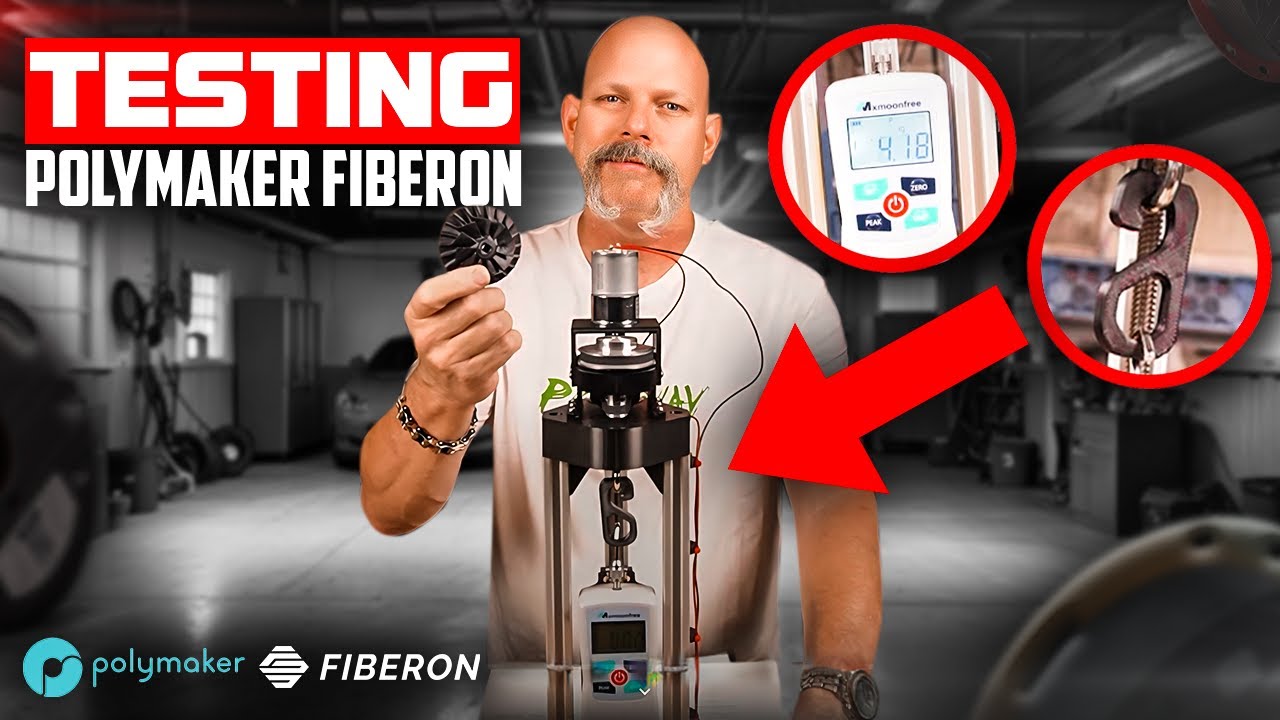
How strong is the new Fiberon filaments from Polymaker? We build a tension testing device and break some parts. More testing to come........
👉 *** UPDATED WITH DRY FILAMENT*** Results: https://drive.google.com/file/d/1en9KDNgrJA8KJxTUj27f5IGfI8oRO-z9/view?usp=sharing
👉 Graphed Results: https://drive.google.com/file/d/1oSrUU3rFYprsBgkB88ldkK9Ce...
Annealing oven (lab oven) has been shipped, no tracking in the US yet so I don't know when it will arrive so in the mean time I will be doing very un-scientific annealing in a regular convection oven.
 lofty copper
young bear
PPS recovery / or abstract art 🎨
lofty copper
young bear
PPS recovery / or abstract art 🎨
I'm fortunate, I haven't made any of this "abstract art" with the very expensive media.........yet.
young bear
Available for purchase now.
Here are the direct affiliate links
https://us.polymaker.com/products/fiberon-petg-rcf08?aff=823

Fiberon™ PETG-rCF08 is a recycled carbon fiber reinforced PETG filament. It inherits the comprehensive performance of PETG, featuring recycled carbon fiber for enhanced surface texture and improved mechanical properties. Spool Compatible with spool rack systems (AMS, CFS, ...) Download the TDS to learn more about the

Fiberon™ PPS-CF10 is a carbon fiber reinforced PPS (Polyphenylene sulfide) filament, with minimal warping during mechanical strength, high heat resistance, chemical resistance, printing and no need for a heated chamber. With exceptional V0 flame retardancy, and moisture insensitivity, it's specifically designed for pro

Fiberon™ PET-CF17 is a carbon fiber reinforced PET (polyethylene terephthalate) filament. It's the preferred choice for engineering 3D printing composite materials, featuring high modulus, heat resistance, moisture insensitivity, and ease of printing. Spool Compatible with spool rack systems (AMS, CFS, ...) Download t
halcyon dock
young bear
Available for purchase now.
Here are the direct affiliate links
https://us.pol...
Why do two of the title lines say Nylon @fresh ferry

 lament kiln
halcyon dock
Why do two of the title lines say Nylon <@806899248028188682>
lament kiln
halcyon dock
Why do two of the title lines say Nylon <@806899248028188682>
It's just the links showing weird things. They go to the correct page
fresh ferry
halcyon dock
Why do two of the title lines say Nylon <@806899248028188682>
Because I am not careful 😢
lemme fix that now