#Balancing the Ifrit: Part 3 - High Altitude Performance

915 messages · Page 1 of 1 (latest)

rain geyser
#

https://discord.com/channels/909034158205059082/1347411688047247502
https://discord.com/channels/909034158205059082/1348093032909770804

The Ifrit is described as highly capable as an air superiority fighter, and to understand how it should be balanced we need to keep it’s heritage- a stealth, twin engine, high performance 5th generation fighter- firmly in context.

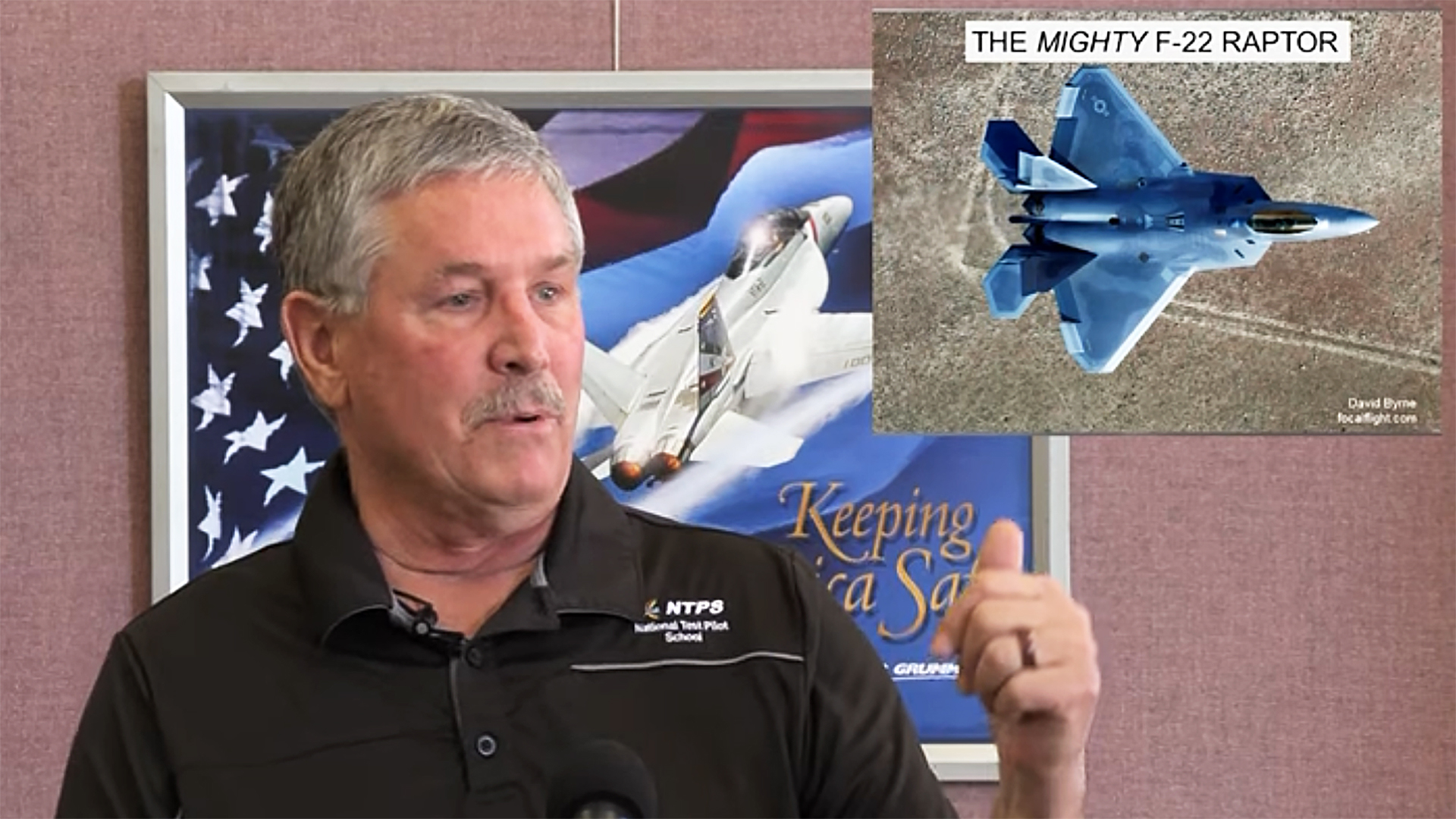
The Ifrit struggles to achieve the high speeds at altitude that twin engine 5th gen fighters are known for. At 40k ft, the F-22A can achieve Mach 2.2 with a combat load. The Su-57 and J-20A supposedly hit Mach 2, according to official stats. The Ifrit over speeds at Mach 1.72 (which is Mach 1.9 IRL) at the same altitude, far below what the maximum emergency speed should be for a fighter of its type.

It took me the full length of the map to reach Mach 1.32 (1.5 IRL) at 99% throttle in the Ifrit at 40k ft, again, significantly below the capabilities of the aircraft the Ifrit is based on. Meanwhile, according to AirForceNews (1999), "Sustaining the target Mach was not difficult for the Raptor," said Col. C.D. Moore, Combined Test Force commander, at Edwards Air Force Base, Calif. "The difficulty was keeping the Raptor from going faster than the target speed. Yesterday the airplane demonstrated that it can achieve awesome speed, flying above 1.5 Mach at a low power setting, for a sustained period of time.”

The Ifrit struggled to reach the above speeds. It felt sluggish to accelerate at this altitude, incredibly easy to bleed speed, and would often drop subsonic seconds into a 6G turn. I understand that the Ifrit has had its speed/drag tinkered with to make sure it’s not too powerful, but this is absolutely ridiculous. A clean Ifrit should be highly capable at altitudes above 20,000 feet, and should have greater energy retention, acceleration, and max speed at high altitudes.

Edit: [Start here](#1348138478805712977 message)

#

@ocean crypt This is the final part of my 3 part series on the Ifrit that you asked me to ping you about. I think the buffs I've suggested should be considered regardless of the economy suggestion, as the Ifrit is severely underperforming at altitude and could really use MMR-S3 weapon bays to grant it more flexibility.

long flame
#

high alt performance can definitely be better for the ifrit for what it's design draws from

rain geyser
#

There has been discussion about

-moving the center of gravity farther back in the Ifrit to increase performance

-reducing the drag at altitude instead of increasing the engine thrust

-increasing the acceleration curve at altitude but not below 10,000 ft

and honestly, they're all valid ideas. The problem is The Revoker accelerates faster and reaches the same top speed as the Ifrit at 40k ft. I tested it. This is insanity. The Revoker literally afterburns better than an Ifrit in the regime the Ifrit was designed for.

#

Heck, the Revoker climbs to 40k feet in what feels like half the time. This is a single engine fighter designed for high agility at lower altitudes completely outperforming an Ifrit at the high altitudes the Ifrit should have an advantage it. The Revoker can maintain energy better, maintain nose authority much easier, accelerate through high energy-bleed maneuvers, and overspeeds at Mach 1.71 instead of the Ifrits 1.74. It pulls significantly higher AoA and does. not. care. about. it.

THIS IS NOT GOOD BALANCE FOR AN AIRCRAFT HALF THE COST AND A FULL RANK LOWER.

#

The Ifrit should be the F-22A to the Revoker's Gripen. Instead, the Revoker behaves like a Eurofighter Typhoon, and the Ifrit is a nerfed F/A-18E.

#

If you want PALA to have a Revoker equivilant, give it a Revoker equivalent. But don't nerf the literal F-22 analogue to sub-F-15-performance.

long flame
#

eh I think the revoker does its job of getting the limited amount of long range missiles to Mach and altitude fast

rain geyser
long flame
#

the gripen easily contends with twin engine bvr platforms

rain geyser
# long flame the gripen easily contends with twin engine bvr platforms

The Revoker is supposed to be very powerful down low. It's the epitome of the single engine "low" fighter of the high-low mix, low typically being below 20k ft. It is way, waaaaaaaaaaaaaay outperforming it's role, and the Ifrit is significantly underperforming.

The most modern Gripen-while very capable at altitude- is decidedly inferior to the F-22A, Eurofighter Typhoon/Rafale, F-15EX, etc at +20k ft altitude. It's a matter of physics, the combination of powerful twin engines and lifting bodies give the aforementioned fighters advantages that single engine fighters simply cannot exploit.

#

The Gripen cannot supercruise like a Raptor, and its top speed is Mach 2. The Raptor’s public top speed is Mach 2.2, and the F-15EX surpassed Mach 2.5 with ease.

long flame
#

I do think the ifrit should perform better still :>

I think it's the best solution is to alter the ifrits high alt thrust and acceleration curve, or say it has cool multi stage things (new f35 engine I forgot what its called)

rain geyser
#

The Revoker is balanced like the absolute best 4.5 gen single engine fighter to ever exist, while the Ifrit is balanced worse than a F/A-18

long flame
#

I am not arguing that the ifrit is underperforming, I agree that it should be buffed

#

I wonder what the thought process behind the ifrits current state is?

rain geyser
#

Maybe a significant amount of former Revoker pilots were worried about the Revoker becoming "irrelevant" and lobbied to get the Ifrit massively nerfed. Would explain the drive-by-downvotes, honestly. I'm all ears if someone wants to talk about this in detail.

craggy sandal
#

Does overspeed actually do anything or what

rain geyser
long flame
#

I just really would like the yf23 parts of the ifrits DNA to be represented

craggy sandal
#

I mean I know what overspeed means, but I've ripped off both wings in an ifrit and got it well over mach 2 with no additional damage
At least I think it was mach 2 😄

rain geyser
craggy sandal
#

Maybe this is just how it's mean tot be flown

rain geyser
long flame
#

yf23 did better in speed during all regimes, also deltawing, the overspeed (irl at least) compresses the airframe and makes the stress during turns and maunourving (can't spell rn sorry)

craggy sandal
#

Let me clarify, I didn't rip the wings from overspeed, I ripped the wings by spawning them inside type-12's and then flew well into overspeed with no problems

long flame
rain geyser
#

@gray cape ok, why the driveby downvote a minute after I posted, on all of my posts? At least give a reason man, feels pretty rude. The random emoji too, tf man?

gray cape
#

No. The Compass. Emote.
Listen, The Ifrit has enough missiles... It's kinda insane.

rain geyser
#

What? Wrong post man that's part 1. Did you even read this?

long flame
#

this guy might be trolling

gray cape
#

Why does the Ifrit need to be able to climb so high? Mach 2?

rain geyser
gray cape
#

No, But I feel that buffing the Ifrit to be able to do more of everything.
Won't be good for future additions.

long flame
#

did you even read the post, there's justification for each point in this thread in particular

woeful wasp
rain geyser
# gray cape No, But I feel that buffing the Ifrit to be able to do more of everything. Won't...

I think there’s a miscommunication here. None of my posts enabled the Ifrit to do “more of everything.”

-the heater bays are defensive in nature, fighting an Ifrit won’t change meaningfully from the current experience

-the ifrit would become less common if it received an economy nerf to Rank 5 and a price increase

-the high altitude performance buff would only impact a clean Ifrit with internal weapons only at an altitudes where you’re focused on air combat, not make ground strikes significantly more effective than they are now.

gray cape
craggy sandal
#

Given the sacrifices that an airframe makes for twin engines, it should be able to match if not outmatch the real world aircraft performance given the time period

#

Man, the nose authority of the wing clipped ifrit is phenomenal... at leastuntil you need to do any kind of turn

woeful wasp
rain geyser
craggy sandal
#

Welp, I did it

rain geyser
#

How long did that take you? Because I couldn’t break Mach 2 from corner to corner of the map.

#

I’ll go back and test pushing the over speed in a bit. The acceleration curve was so poor I treated the over speed mark as the functional top speed.

haughty ore
#

it can easily do mach 2 without them, though it does take a good bit to get up to speed

rain geyser
haughty ore
#

oh wait, 40k

rain geyser
#

Which, again, doesn’t match up to the acceleration curves of proper twin engine contemporaries at that altitude

haughty ore
#

57.8k ft is where you want to be for mach 2.25, which is a little too high honestly

rain geyser
#

Yeah most top speed tests are performed at 40,000ft for modern combat aircraft. Google any 4th gen and you’ll see its top speed is set at 40k, if the Ifrit is somehow faster at lower, thicker air altitudes then something is modeled wrong. Especially because the Ifrit has the same 50-60k ft max altitude as the F-22 and other twin engine jets.

#

Oh, you set it at almost 60k feet, yeah that’s way too high. 40k is the sweet spot it seems for most jets, that’s what all the quoted speeds are based on (I checked)

#

That’s the estimated altitude the F-15EX came close to breaking Mach 3 at lmao, for a 2070 5th gen the Ifrit has abysmal high alt performance, especially compared to the Revoker which is supposed to be an older, more low-alt-focused jet (edit: Boeing says the top speed was simply over Mach 2.5, not necessarily breaking Mach 3, but you get my point)

haughty ore
#

for nuclear option jets, more altitude means more speed

#

until your engine flames out that it

rain geyser
#

Considering the Revoker is much much much faster to get to said alt and then performs waaaaaay better at that alt in both speed, acceleration, energy retention, high AoA maneuvers, and nose authority at any point during its flight regime… If anything that puts the Ifrit in a worse spot. Clean. While the Revoker has a full missile load.

uncut gust
#

its a manned missile

gray cape
# rain geyser I think there’s a miscommunication here. None of my posts enabled the Ifrit to d...

-The Heater Bays would carry the MMR-S3 right? I wouldn't exactly count that as a defensive missile. When paired with Scythes to force the enemy to be on the defensive then they can be outright lethal as the enemy is forced to dive or notch, and generally not moving away from you letting you close the gap and secure a kill with an IR. (Even worse in some situations depending on your exact usage of both a Scythe and IR as they cannot counter both at the same time.)

While I think internal IRs would be an amazing addition, Should be in the game to encourage more use of stealth loadouts as a whole and make a stealth Ifrit with bombs or nukes able to defend itself. My worry is that it'd be abit much compared to all the current aircraft. Not sure about the upcoming VTOL Jet, Might make this less important if the Ifrit isn't the only one with more missiles than the Compass/Revoker.

-I actually don't feel like the issue with the Ifrit is it's rank right now? But more the factories usually leave a surplus ready to reserve while multiple people are also flying and reserving them. Maybe making it take longer for factories to produce them to limit the ability for them to show up? And maybe a slight price bump to ~130-140? (130 being the price of two Revokers.) The Ifrit shouldn't really be easily able to be treated as expendable unless you find yourself in a massive cash surplus somehow.

-High altitude... If it's mostly impacting a stealth Ifrit. I'll be honest, Could be a good change? Letting it be able to get up high and take target Medusa, Darkreach at altitude able to hunt hard to reach valuable targets at altitude. Stealth helping the Ifrit to not worry about radar sam sites as much as say a Revoker would at altitude. Only concern would be perhaps stealing the Revoker's spotlight at high altitude, But if it's limited to stealth loadouts then the Revoker would still have the missile count to be a threat if you over-extend which would be an interesting dynamic.

#

Took awhile since I was testing the Ifrit at altitude and trying to do some things at all similar to the Revoker.
For a two engine aircraft... It's got poor acceleration and handling up there even with no load to minimize drag/weight. It could use some buffs at altitude. Especially without a full load of externally mounted weapons.
Normally I fly it lower altitude so it handling like that was abit surprising with how badly it flew, Not mention turning off the limit and trying a tight turn became a stall quickly.
It almost feels like the Ifrit was designed to just operate at low altitude almost exclusively for aircraft carrier and going along the ocean? Which just feels weird considering the aircrafts I think of when I look at it.

rain geyser
gray cape
rain geyser
# gray cape -The Heater Bays would carry the MMR-S3 right? I wouldn't exactly count that as ...

The heater bays don't change the experience of fighting an Ifrit. Many pilots (myself included) take 3 IR and 3 ARH missiles internally currently. Players already expect to fight both types of missiles when they go up against an Ifrit. You can also take 6 ARHs and 8 IR missiles currently- the problem is the increased RCS that comes with that. An additional pair of IR missiles would be a massive QoL improvement for Ifrit pilots, without making the jet any different to fight. It would help Ifrit pilots extend their patrols in stealth mode, and would give them more loadout flexibility across the board, enhancing the jet's role as a multirole air superiority fighter. I go into it in more depth with another user in Part 1 linked [here](#1347411688047247502 message)

rain geyser
#

I hope this discussion has been enough to change your mind. I think the Ifrit gets a bad rap because the aircraft is spammed with full missile loadouts, when the intended configuration for it is severly underperforming.

#

I would gladly trade a pair of missiles from each wing in exchange for significant buffs to clean/stealth flight performance and heater bays. The obscene missile loadout appears to be compensating for a truly abysmal, overexpensive, underwhelming aircraft.

gray cape
rain geyser
hushed portal
# rain geyser That's the point I'm trying to make- the aircraft it draws the *most* from, the ...

I just think revoker should still out perform it at acceleration at any altitude. Maybe ifrit gets a higher top speed in optimal conditions at altitude, maybe it gets better energy retention, but it should still be more of a sluggish airframe than revoker

revoker is small, like 50% engine by volume, and really well aerodynamically optimized with few sacrifices made for stealth, it should be on par or superior than ifrit in some things

uncut gust
#

If you ignore the non existant area ruling on the revoker it has a huge engine and low drag so yeah.

fallen anvil
#

honestly, i'd like better high alt peformance for all aircrafts; mostly benefitting afterburning planes since they're the only planes able to access high alt reliably

hushed portal
#

the biggest thing I think it needs improvement is supercruise. ifrit should be able to effortlessly supercruise above mach 1.3 and be able to hold mach 1.5 with enough altitude. it'll be nice for the larger map.

gray cape
uncut gust
#

im sure there were good balancing reasons especially for the smaller current map to keep the speeds a bit lower
but its hard to justify when bigger maps are available
i thought maybe those futuristic engines made tradeoffs to generate more alternator power for passive jamming and datalink stuff but idk

rain geyser
rain geyser
hushed portal
# rain geyser I disagree with you somewhat on the first paragraph, I’d like to see the Revoker...

Something that happens kinda a lot on BFM servers are people joining, not reading the rules, and flying Revoker for hit-and-run RDMing, and when they do, they usually come to the merge around 500-600kt. I usually come at the merge at 300kt. I turn around by the time they're at 0.5nm, them still at 500kt and me at ~260kt.

In these situations, revoker pulls away until it gets about 1.5nm from the ifrit, but by that point Ifrit has caught up. After this point, ifrit keeps up at any altitude, and is too close for Revoker to turn more than 90 degrees before Ifrit is shooting. This honestly is a balanced and competitive performance for the two airframes. but it would be interesting if Ifrit could actually close the gap in a straight line when chasing above 10,000ft, but i dont really know if ifrit even needs it.

haughty ore
gray cape
# rain geyser Hey man I appreciate you coming around, but if you agree with the general sentim...

I'm on the fence. Since I feel like it being able to be a Stealthy high altitude hunter would be a good role for it to fill. I feel like the Revoker should remain capable enough to be a threat should one opt to come up to intercept you and protect it's airspace/friendly aircraft. Ideally it should favor the Revoker... But only due to missile load and speed. Ifrit would be able to still attack high altitude targets and slip away before a Revoker can be a real threat (IR range), But if you are over-extending the Revoker should be able to cut you off and take you out depending on the situation, Skill, Approach, Speed, etc.

rain geyser
rain geyser
# hushed portal Something that happens kinda a lot on BFM servers are people joining, not readin...

I think that between 10-20k ft the Ifrit should be able to slowly close that gap, and above 20k ft the Ifrit should rapidly close that gap.

Revoker pilots should be encouraged to keep the fight at or below 15k ish ft, while Ifrit pilots should have more of an advantage the higher they climb, which would befit an expensive investment of an airframe that they’re choosing to sacrifice missile payload to maximize stealth and high altitude performance.

#

Remember, a Revoker completely dictates that engagement in a close range gunfight currently at any altitude. The Ifrit gaining the edge in high altitude engagements would create a dynamic where they’re encouraged to operate in a high threat environment where they’re constantly notching stratolance SAMs.

idle bobcat
#

I think one thing that needs to be considered too is the fact that most people just aren't going up to 40K feet/10K metres in regular gameplay.

We really need to look at the fact that, first and foremost, this is a plane in a game and that considerations of gameplay apply far over and above any considerations of how IRL airframes ought to perform in a fictional setting.

Put more bluntly; one can not presume people acting like this were a study sim, nor work around presumptions based on what we expect IRL airframes to be or do.

Bluntly put, this is not a study sim and performance at 12K metres is not a situation that arises in regular play, and nor can we presume to treat the airframe as some sort of superweapon that ought to be used as if the player only had a single one in the entire match.

The reality is that players will eventually make the amount of money needed for an Ifrit and more besides; and treating airframes as a simple case of 'more expensive = better' will just result in making the roster as a whole boring and more of a race to the "best" plane, which is already somewhat a bit of an issue at present.

That said, the issue IMO does lie in other airframes just as much as the Ifrit, where they do not excel enough within their own role to really set themselves apart from the Ifrit and make them good picks in their own right.

rain geyser
# idle bobcat I think one thing that needs to be considered too is the fact that most people j...

Performance at 40k ft is simply a measuring stick used to determine an aircraft’s performance at higher altitudes. Currently there’s no reason to take an Ifrit to high altitudes because it’s absolutely dog water. With the upcoming RCS changes, introduction of a new significantly larger map, and the sheer fact that bombing from altitude massively increases your effective range, there’s going to be a whole new meta around high altitude strikes on an ocean map where there’s no terrain cover for low altitude missions.

My proposed changes put gameplay first and foremost. The gameplay of the Ifrit is abysmal. Adding heater bays improves the gameplay loop for Ifrit pilots without making it worse for opponents, increasing the rank to 5 and increasing the price (as said in Part 2) improves the gameplay for everyone (including the devs adding new aircraft!), and increasing the Ifrit’s high altitude performance increases the quality of gameplay for, again, everyone, because right now it’s primed to become yet another Revoker stomping ground.

This isn’t a hero shooter. Aircraft can do and often do multiple things well. The Ifrit is clearly a capable fighter first and a strike platform second because that’s how multirole fighters conceptually work.

#

At no point in any of these three posts have I explicitly called for the Revoker to be nerfed. It will remain the insanely strong A2A platform that it currently is for half the price (or less!) of an Ifrit, with comparable effective missile load. And none of these suggestions elevate the Ifrit into “superweapon” territory, it literally is an attempt to introduce a viable alternative to the Revoker beyond raw missile spam. A Stealthfrit -even with heater bays- currently carries two missiles less than a Revoker in a dogfight. For twice the price. And far, far worse kinematic performance at any altitude. It’s absolutely broken.

At some point players will recognize that there is depth to this game, and that it emphasizes the basics of both BVR and WVR air combat and it’s not a complete arcade, nor was it ever intended to be.

#

Saying we should not strive to judge aircraft by the nuances of their physical design is tantamount to asking players in a shooter to not judge guns by the size of their magazines, or the magnification of their scopes, or the length of their barrels. You’re saying- “ignore the bolt action mechanism, ignore the hand loaded ammunition, this is actually a machine gun! Don’t judge a feature based on its modeled functions, that’s too complicated.”

To paraphrase a quote from the developers of Helldivers 2, one of the most successful games last year, about how they design armor and guns - “We don’t want to design an Apple and make it taste like Bacon.”

Right now the Ifrit looks like an Apple, and tastes like the most charred piece of Bacon I’ve ever ate.

hushed portal
#

well, I don't necessarily agree that revoker dictates the engagement in close range gunfights. it holds a significant one circle turn advantage, if entering merge at optimal airspeed, and ifrit pilot allows angles to the revoker in the first few turns. Due to a whole lot of factors but primarily due to the G-limit of 6.5 and the ability for the S3 to kill you if you dont jam the WEZ, the regime in which gunfights take place is somewhere between 200 and 300kt. At this speed, Ifrit can comfortably win at 2c rate fighting, and Revoker can bail from 2c and dominates 1c turn radius fights. Really, neither airframe dominates either at any altitude, and fighting in ifrit, you're often not in afterburner because getting too fast and accumulating too many G's can cause more of a detriment to your fight than getting too slow.

hushed portal
rain geyser
# hushed portal well, I don't necessarily agree that revoker dictates the engagement in close ra...

The Ifrit’s canted stabilators make it very, very unstable hard to control the nose even with 2D thrust vectoring. Meanwhile the Revoker can literally hover with precise control via 3D thrust vectoring, canards, ailerons, and insane TWR. It absolutely dictates any gunfight, especially at high altitude where it can out thrust even a clean, empty, 10% fuel Revoker that somehow manages to slew its nose around without falling out of the sky.

haughty ore
#

both have 2d thrust vectoring, irfrit has pitch and roll while revoker has pitch and yaw

rain geyser
#

It’s not even traditional circle fighting or rate fighting at that point, the Revoker has complete manipulation of its energy state while the Ifrit is defunct on the loan it had from the supercruise it could barely reach

haughty ore
#

they are both nearly equal in dogfight performance, often just coming down to pure pilot skill

hushed portal
rain geyser
hushed portal
#

I don't actually know the exact numbers but outside of unrealistically low merge speeds, ifrit is competitive enough through even unfavorable merge geometry to survive guns the first turn - and jam the WEZ of S3s, when merged by Revoker, even at altitude

rain geyser
#

It’s a different story at high altitude. I would be very surprised to see the current Ifrit keep up that performance claim at, say, 25k ft

hushed portal
#

most of the absurd Revoker UFO maneuvers are done well below 140kt, which, if you're below 140kt at 20,000ft, you're in an incredibly bad situation

rain geyser
hushed portal
#

and a cheat code for surviving revoker psm bs in ifrit is turning directly downwards. when they try to PSM nose-down, they pick up too much speed and fall out of your circle, which usually results in you getting their six pretty quickly afterwards

rain geyser
#

Both with stabilizing on, the Revoker felt far more responsive, capable, and sharp, while the Ifrit felt like a drunk on roller skates trying to make a turn on ice.

rain geyser
hushed portal
#

I would like to do some BFM with you sometime with you in Revoker and me in Ifrit at 20,000ft to test this tbh

rain geyser
#

Remember too this is a clean Ifrit vs a fully loaded Revoker. Even with heater bays, it’s still down 2 missiles. Without it’s down 4 and forced to either split them or forgo an entire missile type.

rain geyser
hushed portal
#

I've practiced Ifrit a lot lately and I'm comfortable saying in my experience it's a very fair fight between Revoker and Ifrit in BFM right now.

rain geyser
#

At 10k ft, maybe. From what little I’ve experienced testing today (and from when I go high altitude on public servers now and then) it’s definitely not equivalent

hushed portal
#

it's also... idk. Is a merge higher than 10,000ft really that realistic of a scenario?

BVR, Absolutely, but BFM? Normally by the time the range has closed that far you've both descended a bit

rain geyser
#

Anyone who has seen either a skilled Medusa or Darkreach player understands that high altitude is a regime not to be ignored, and that’ll exponentially increase with the next map

#

Seriously, 72 250s lobbed at transonic speed from 20k feet is absolutely terrifying. Stratolances often literally can’t chew through half of them before they start slamming into the ground- if there’s even strato’s left to intercept them.

Talented Darkreach drivers often end up deciding matches this way in the Talon server. That’s with the current, cramped, radar SAM filled map.

#

Also, Medusas will be a huge issue. They’re gonna have insane line of sight. Stealth is going to be almost a prerequisite to attempt to fight past any escorts to kill AWACs players on this new map… and the AWACs can jam you, laser your long range missile shots, and shoot back with up to 4 heaters themselves, all while running away to friendly SAM cover.

Yes, high altitude will decide matches even more than it already does, and it already plays a big role if used correctly.

rain geyser
noble mortar
#

Aren't there balance issues with high speed Nuke Yeets?

rain geyser
#

Nothing I’ve suggested will make high altitude nuke drops any more capable. Radar SAMs already target nukes first before any other bombs, and the higher altitude you are the more time they have to intercept them even if you launch them from a higher speed.

swift oak
#

I have a feeling that aircrafts here are artificially tuned down, at least it max speed and its not a bad thing
they all plays and feels quite good, maxing their speed would be quite op for smaller maps, but on bigger maps for sure (tho i still think that this change is not needed)

swift oak
half steppe
#

If we get friction for missiles reworked, then BVR at high altitude should be better and will make more sense

vital hatch
rain geyser
# vital hatch max alt/speed is 57300, mach 2 in afterburner

That’s way too slow for how high it is. 40k ft is typically the measuring stick for max speed, aircraft actually typically perform worse above that altitude. As far as I can tell it’s Mach 1.8ish at 40k, whereas the Raptor is Mach 2.2 and the Eagle is Mach 2.5+

vital hatch
#

thats what ive tested

rain geyser
#

Okay, I understand, and I’m saying that 57k ft is not the altitude the Ifrit should be hitting Mach 2 at. Realistically it should be hitting Mach 2 under 40k ft.

rain geyser
rain geyser
# swift oak Yeah, because those pab's have ridiculous glide ration, and from 8-9k you are fr...

The real reason it’s viable is each bomb has the tracking of a laser guided bomb for each independent target. It’s truly a 2070-tier-capability- modern ordinance that can do that (GBU-53?) requires onboard radar while all these bombs require is a datalink update.

High altitude bombing is like ordering AI ships into formation- most players don’t realize how important it is, until they see it completely change the course of a match.

rain geyser
# swift oak I still wonder what Ifrit suppose to be doing there, that high up where it cant ...

Those altitudes are currently the prime real estate of the Darkreach and Medusa. Those aircraft are going to need to be intercepted/protected, and fighters dispatched to do that should have the performance to competently fight in that regime.

What sounds better- having a single airframe be the best at everything air to air in the game, or buffing the Ifrit to perform better at altitude so that the air combat meta is more diverse and complex? Because right now the Revoker is far more capable at high altitude than the Ifrit.

strong ermine
rain geyser
#

Remember, this entire series of posts is about buffing the performance of a clean Ifrit. The Revoker will perform just as well as it currently does, at half the cost or less with 2-4 missiles more than an Ifrit.

rain geyser
strong ermine
#

Agree, clean Ifrit should have some freedoms in the stratosphere unlike the boat it becomes atm.

#

And we should absolutely go by the IRL counterparts. Not for the actual values but for feel. Most other planes clearly reflect their IRL design ancestors in how they fly. Ifrit should not be "outfeeled" by an IRL F-15

rain geyser
#

Thing is actual IRL values for something like the F-22 wouldn’t be game breaking, because the drag of external pylons is so great you couldn’t dream of hitting those speeds on the deck or at altitude. It would just be a buff to clean performance, which requires significant sacrifice to commit to.

uncut gust
#

I really like this series, the heater bays would make the Ifrit quite the clean monster and very viable to pick, generally buffing internal loadouts would be nice in this game, it should be viable to pick internal only.

rain geyser
#

Thanks, I’ve put a lot of effort into refining the suggestions/posts as much as possible, and more trying to explain the unspoken nuance to people in the comments.

swift oak
rain geyser
#

Again, the Ifrit’s main issue is it’s currently used as a free disposable 18 PAB 250 bomb sled, and then once air defenses are gone a free one way 250 kt nuke sled. Part 2 aims to address this while the buffs in Part 1 and Part 3 aim to encourage a different, more healthy play style and meta.

swift oak
# rain geyser Those altitudes are currently the prime real estate of the Darkreach and Medusa....

Not like Ifrit as is for now, not best at everything, its really good in all aspects
its faster than compass, it can carry more and varied A2G munitions than compass and revoker

DR and Medusas only climbs that high up so they could be practically invulnerable to ground AA
and most of the time its quite long at least for DR to climb that high up and they all do that in friendly airspace, I doubt that increase in performance at high altitude gonna fix that issue, or somehow disrupt it

swift oak
rain geyser
# swift oak Not like Ifrit as is for now, not best at everything, its really good in all asp...

Why are you comparing the Ifrit- a supersonic 5th gen fighter- to the Compass- a subsonic trainer/attacker/light fighter- as if they should have any sort of parity?

That’s the same as saying a F-22 should be balanced to be fair to fight in a T-38, that’s absolutely ridiculous. Yes, a T-38 can technically get guns/heaters on a Raptor if it gets close enough, but there’s no way it should be able to climb up to a Raptor on combat air patrol and pose a legitimate threat. Especially because the Raptor/Ifrit has a flyaway cost 5 times more than the T-38/Compass and represents the pinnacle of development both from a gameplay and meta standpoint.

An increase in performance at altitude would make a world of difference. I don’t know how to explain it more to you other than encouraging you to test an Ifrit vs a Revoker out as a high alt fighter yourself.

No, the Ifrit cannot carry more bombs in clean mode compared to a Darkreach, tf?

Have you ever seen a Darkreach get to altitude and completely change a match? It sounds like you haven’t.

#

You climb that high in a Darkreach because PAB-250s can glide like 4 ft for every 1 ft they fall, the higher you get not only the longer range you have, but the faster you can toss your massive bomb load.

#

If I can’t change your mind, I understand, this is a divisive topic. But I can point to multiple game-changing moments on the Talon server (completely default Escalation settings) this last week alone where a high altitude Darkreach has basically won the game with a key saturation strike.

#

Look, you can spawn twice with cruise missiles at like 10% fuel to rapidly launch, land, rearm, and launch again to kill both strato batteries- 2 waves of 8 each time from different directions does the trick. Then you have the rest of the match to climb and saturate. That’s a single player’s effort- even easier when you have teammates.

swift oak
# rain geyser Why are you comparing the Ifrit- a supersonic 5th gen fighter- to the Compass- a...

I compare them like that, because other than them Ifrit dont have any competitors, its already a good airframe that would be even better with those changes

No, the Ifrit cannot carry more bombs in clean mode compared to a Darkreach, tf?
Thats why I said NOT in clean mode, because there isnt that much point to be "stealthier" than effective right now and i never tell you that it can carry more than DR, I said it can carry more not in stealth loadout

Have you ever seen a Darkreach get to altitude and completely change a match? It sounds like you haven’t.
No, but I have tested DR at high altitudes and its not that "skill" based to be able to just climb at around 8-9km above your airbase, to be able to just release all your pab's on enemy base across the map

rain geyser
swift oak
rain geyser
# swift oak ~~thats quite a lot of money to spent, where you can just do better in ifrit~~

Let me know when you can launch cruise missiles or 72 bombs per sortie with full stealth. The Darkreach is the best saturation platform, full stop. The problem is the Ifrit is easier and cheaper to rapidly suicide bomb with. And the Compass should not be a viable competitor to the Ifrit. Period. It’s not even close. Why are you trying to nerf a Rank 4 jet to a Rank 1 (0, effectively) level? That’d really, really bad balance.

swift oak
rain geyser
swift oak
swift oak
# rain geyser We won’t have faction specific aircraft until both sides have parity. This won’t...

We already getting SF-1 that will be able to be spawned only on airbases and assault carriers, so PALA cant spawn them in their own carrier but can on airbase and vice versa for Ifrit
and your whole idea for making up room for future planes wont tie up if you want to balance Ifrit that way right now and not when that faction divercity will come

Overall idea is good (buffing its performance at high altitude, would be for now quite a niche upgrade) but making it rank 5 and cost more is somewhat questionable solution, not to mention 2 free IR missiles with well, nice to have ?

rain geyser
rain geyser
swift oak
rain geyser
#

“I compare them like that, because other than them Ifrit dont have any competitors, its already a good airframe that would be even better with those changes”

The Ifrit and Compass should not be treated as competitors for air superiority. The Ifrit should vastly outperform the Compass. They are not equals or anywhere close to it.

The discussion is clearly about the Ifrit vs the Revoker in air to air combat at high altitude.

#

What’s funny is that, for its price point, the Compass is vastly overperforming, but that’s another discussion entirely

swift oak
swift oak
rain geyser
coarse stratus
rain geyser
coarse stratus
#

I was replying to Rome bc he got the max altitude wrong I said nothing about speed tests being conducted at 40k ft

rain geyser
#

Gotcha, apologies, I saw the reply and misinterpreted.

vital hatch
rain geyser
vital hatch
#

hes livestreamed getting to 120 iirc, theres a screenshot of it if i can go find it

vital hatch
#

i have no idea what he did i only saw his final alt

haughty ore
#

58.7k ft is max alt while still having your engines running

rain geyser
#

I’ve heard stories of F/A-18 pilots getting in trouble for zoom climbing to some incredible altitudes, basically at the edge of the atmosphere, so I’m not that surprised an Ifrit can do it.

rain geyser
#

Alright, I did some more testing, this time based on rate of climb. I tested the Ifrit and Revoker in constant rate of climb, starting the timer as soon as I throttled up on the runway. I rotated each aircraft at 200 kts and held the velocity vector squarely on 45 degrees- not necessarily the most efficient way to climb in a jet, but I wanted to get a better understanding of each aircraft's engine performance and TWR. I marked the time at 20k ft, 40k ft, and at the "flameout" altitude (roughly 55k ft for both aircraft). Time is in min:seconds:fractions of a second, both aircraft were stripped clean (not even gun ammo or a tailhook!) and started with 100% fuel.

20k ft:
-Revoker took 0:58:47, accelerating rapidly through the climb
-Ifrit took 1:03:96, accelerating slowly through the climb

40k ft:
-Revoker took 1:29:51, continuing to accelerate rapidly through the climb
-Ifrit took 1:44:41, ceasing to accelerate and holding about 460 kts

Flameout alt:
-Revoker took 1:52.8 seconds to hit the flameout altitude of around 55k ft, traveling Mach 0.82 and not stopping soon.
-Ifrit took 2:21:74 to reach 55k ft, dramatically losing thrust and decellerating. It was unable to hold the nose at the appropriate climb angle past this point.

The performance of each aircraft up to 20k ft makes sense- the Revoker has crazy TWR, has an engine optimized for low altitude performance, and occupies the role of point-defense-air-superiority platform, while the Ifrit had respectable climb rate that, while inferior, remained competitive with constant acceleration. The problem arises past that- the Ifrit, even though it's TWR improved as it burned fuel, began to decelerate. Meanwhile the Revoker constantly accelerated at an astounding rate.

This is the regime that the Ifrit needs significant improvement in. Above 20,000 feet the engines of the Ifrit should begin to become more efficent, as they (like the F-22, YF-23, F-15, etc) are optimized for high altitude.

long flame
#

you said ifrit twice btw

rain geyser
#

It's very napkin-math-testing, but I think it could be replicated. There's a noticeable drop in Ifrit flight performance at the 25-30k ft mark, and by 40k ft you're really struggling. If we choose to ignore the capabilities of IRL aircraft and instead claim a perspective based on "balance," the issue still remains. The Ifrit- a significantly more expensive, more sophisticated fighter- lacks an area that it can outperform a cheaper, older, supposedly-less-capable competitor. The poor engine performance of the Ifrit at altitude relgates it to spam external missiles- pretty much the only major reason to spawn an Ifrit, which is sad.

rain geyser
stray flicker
#

I think this’d be good for the bigger map +1

idle bobcat
# rain geyser It's very napkin-math-testing, but I think it could be replicated. There's a not...

I'll have to disagree there

The Ifrit has a much better engine than the Revoker, with any perceived sluggishness being on account of extra weight that the Ifrit tends to carry.

The TWR for the Ifrit and Revoker, while carrying the same load of 6 ARHs, only skew marginally in favour of the Revoker at full tanks for both planes, equalise at about 50% fuel load for both (a point at which the Ifrit is easily carrying more fuel) and then turn quite sharply in favour of the Ifrit.

The Revoker also loses a lot more TWR when carrying munitions; with each extra missile pushing the point of convergence with the TWR of the Ifrit to a higher fuel capacity point.

With the same amount (as opposed to percentage) of fuel, with the Revoker at 100%, the TWRs for the Revoker and Ifrit stand at 1.10 and 1.31 respectively.

rain geyser
#

The Ifrit’s TWR can be 1.31 yet its drag at high altitude renders it completely anemic. It fails to hit defining benchmarks of twin engine 4th and 5th gen capability, regardless of what generation it is.

#

Meanwhile the Revoker

-climbs to altitude significantly faster

-accelerates to Mach 1 in a dead 45 degree climb, allowing it to transition to combat at altitude without having to rebuild speed

-super cruises faster than the Ifrit at altitude

-after burns faster than the Ifrit at altitude

-maintains nose authority in maneuvers with twice the AoA than the Ifrit

-maintains energy, recovers energy, and stall fights better than the Ifrit

-carries the same amount of ARH missiles without pylons as a clean Ifrit

for half of the price, a full rank earlier.

swift oak
rain geyser
#

This entire post series has been about increasing the performance of a stealth configuration Ifrit.

swift oak
rain geyser
#

uhhhhhhhhhhhh bud I can’t help you with reading comprehension like idk what to even say at this point

I listed all the advantages a Revoker has over an Ifrit, assuming both have equal payloads and full fuel. It’s not a complicated argument to understand.

#

This entire post series revolves around a clean form Ifrit. Obviously additional pylons would ruin its RCS and flight performance, like it does currently on live.

swift oak
# rain geyser Meanwhile the Revoker -climbs to altitude significantly faster -accelerates to...

You cant just like, be "amazed" that revoker is outperforming ifrit in that area, because one is dedicated platform that trying to be a strike craft sometimes and other one is strike fighter that trying to be an interceptor

But revoker been faster on high alt is weird yes, but other stuff is mainly comes from revoker base weight, with is lighter than ifrit
Ifrit can have more mounts and variaty of weapons

rain geyser
#

The Revoker is a single engine 4.5 gen that can do light strike, the Ifrit is a twin engine air dominance fighter that can perform multirole missions. Stop buying into this Pier Sprey-tier myth that multirole fighters are automatically inferior air dominance platforms.

#

The fighter mafia found this out the hard way. I can list a dozen different examples of highly successful air dominance fighters that are classified as multirole, but very few multirole fighters purposely designed to suck at air dominance.

rain geyser
# swift oak You cant just like, be "amazed" that revoker is outperforming ifrit in that area...

Hey guess what that “dedicated platform” is dedicated to

guess

surprise! HIGH ALTITUDE AIR DOMINANCE.

https://en.m.wikipedia.org/wiki/Advanced_Tactical_Fighter

The Advanced Tactical Fighter (ATF) was a program undertaken by the United States Air Force to develop a next-generation air superiority fighter to replace the F-15 Eagle in order to counter emerging worldwide threats in the 1980s, including Soviet Sukhoi Su-27 and Mikoyan MiG-29 fighters under development, Beriev A-50 airborne warning and contr...

stray flicker
#

Isn’t dropping a bomb basically just carrying a heavy object and then dropping it. Doesn’t sound so hard except for weight and spotting the target

rain geyser
stray flicker
#

The capabilities are identical, right?

Big wing, big engine. [big eyes]

rain geyser
#

The capabilities are informed by design

stray flicker
#

Better word choice would be design requirements

rain geyser
#

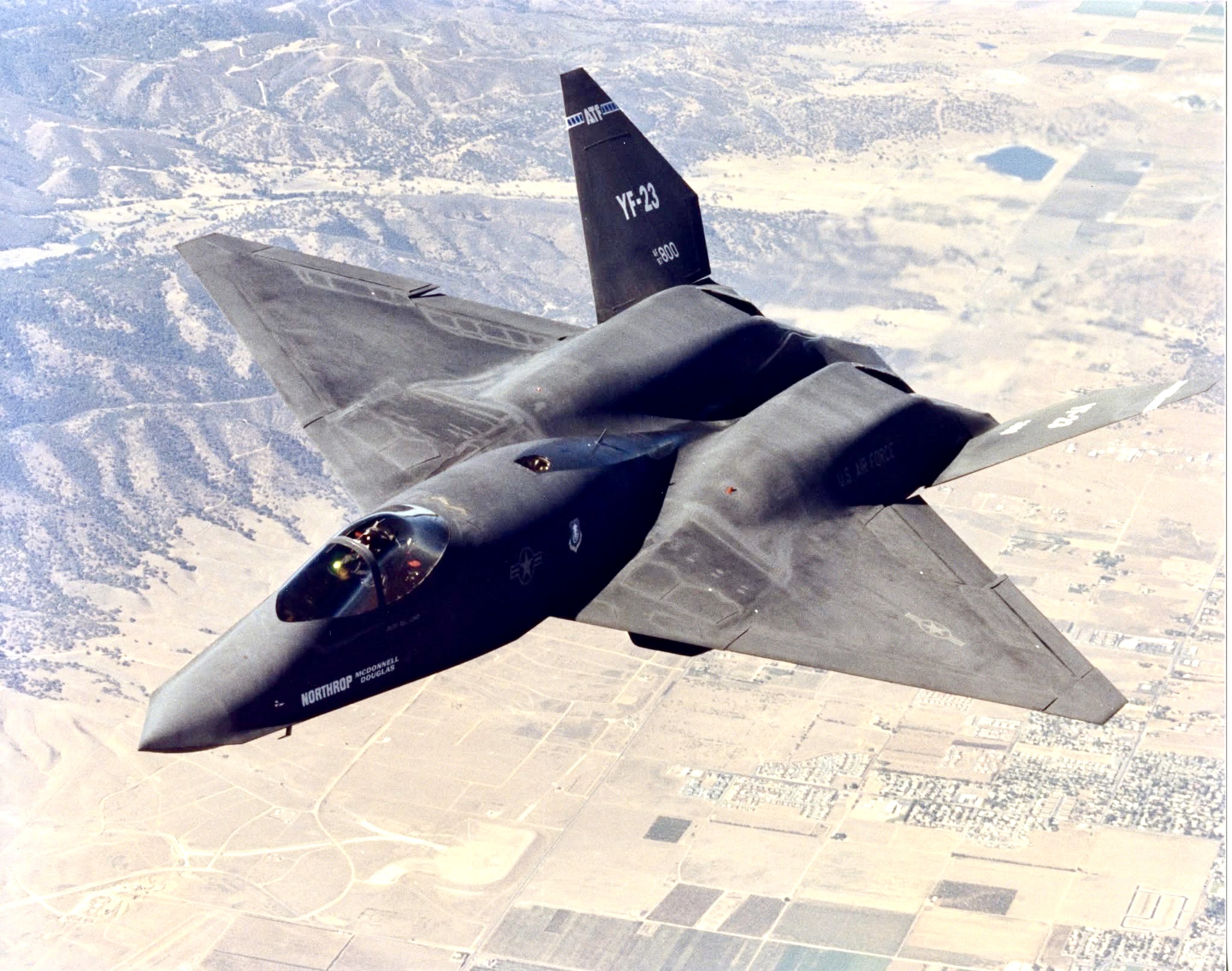
The Ifrit’s design draws heavily from twin engine 5th gen stealth fighters- 3 in particular, the YF-23, the Su-57, and the F-22A.

Yet people wanna balance it like an F-4 phantom while treating the Revoker like the absolute best, most modern variant of the Gripen. Drives me nuts.

stray flicker
#

There’s also more than one way to attack ground targets. Fast jets like to do the high speed version, (drop bombs or fire missiles while flying fast)

and slow planes do the A-10 / cricket thing

rain geyser
stray flicker
#

The compass should focus on low speed tactics and the ifrit should just zoom by and blow stuff up

They seem pretty different to me

rain geyser
#

The Compass should be treated like an A-4 or A-7 for balance purposes, idk why anyone would think it’s supposed to go toe to toe with a Revoker let alone an Ifrit outside of gun-only-dogfights

quasi agate
#

Why do you keep insisting that the ifrit is an air superiority fighter….. When literally all official media and Mitch himself refer to it as a multirole fighter?

Seems like you’re trying to see things that aren’t there.

stray flicker
#

I think Cactus’s argument is that multirole means it’s good at air combat and can carry bombs, and that the two are not mutually exclusive.

#

So it’s good at air fighting first and then it is a bomber second

swift oak
# rain geyser The fighter mafia found this out the hard way. **I can list a dozen different ex...

Good for you i guess
but im saing this about gameplay perspective of the game
simplifying things, its better to assume one (revoker) is superb a2a but bad somewhat good a2g platform, while other one (ifrit) is either good at a2a and a2g

All planes should have their cons and i said that about revoker, that its having less possible a2g option and less availability of munition
while its lighter and less stealthier

rain geyser
# quasi agate Why do you keep insisting that the ifrit is an air superiority fighter….. When l...

"A large, carrier capable, twin engine multirole fighter, the Ifrit is equally suited to air superiority and ground attack missions. It features excellent thrust and maneuverability alongside reduced radar signature and powerful sensors. Two internal weapon bays can conceal up to 6 missiles or bombs."

  • Ingame Encyclopedia description

Go back, reread this post and comment thread, go read about the Advanced Tactical Fighter program, and you’ll be up to speed.

swift oak
rain geyser
# swift oak Good for you i guess but im saing this about gameplay perspective of the game si...

It’s also half the price and a rank lower. By your logic the Revoker needs to be equal to the Compass, because having a more complex fighter platform be better at air superiority is “bad.”

Stop trying to make a specialized 4.5 gen middle rank affordable fighter the absolute pinnacle of every aspect of air superiority. ITS NOT. A twin engine 5th gen air dominance fighter should have the advantage in the high altitude regime, period.

stray flicker
#

I think I’d like it if the revoker and ifrit where more different to each other

swift oak
rain geyser
stray flicker
rain geyser
hushed portal
#

its not. I will always argue against this. It's not dominant at every altitude, it just has its own advantages.

Ifrits engines might be underperforming at altitude, ifrit might be generating more drag than it should due to its excess stability, whatever, but through the combination of cost and performance of Revoker, it has a slight efficiency advantage over Ifrit at Specifically A2A dominance missions, which is different than just being superior. I think this is an expected reality and one we shouldn't try to balance away from.

swift oak
#

because having a more complex fighter platform be better at air superiority is “bad.”
I never said that tho, I only said that its logical that lither and build for only air superiority jet in mind, would perform better in some cases against a multirole fighter, that either heavy and was design for air and ground attacks

Its like saing that IFV with autocannon and atgm launcher, would be better than IFV with only dedicated atgm launcher
in somecases it will, in some

stray flicker
#

If the ifrit were made into the super high altitude plane, then you could play to the revoker’s low altitude strength and probably still have a good chance I think.

swift oak
hushed portal
# hushed portal its not. I will always argue against this. It's not dominant at every altitude, ...

in BFM they're a very close match with airframe advantage in their specific dogfighting regime, in loadout they're a tradeoff between cost and maximum volume of munitions, they should probably be a tradeoff between high altitude performance and cost but that's the topic of this thread so. yeah. I think you improve that, and all the tradeoffs don't make "equivalent" platforms or even platforms attempting to be equivalent, but different value tradeoffs for mission efficiency

swift oak
stray flicker
#

Sure make it faster, that’s fine. Speed is good for ground attack too.

On a big map, you’ll still have reaction time to take off and try to stop it

hushed portal
#

have we considered that the new map really isn't all that big

#

ifrit can cruise at its current sustainable supercruise speed from one corner of the current map to the other in like... two,three minutes? if that?

new map is same height 2x width

there's probably an upward limit to the top speed we could give ifrit without it dominating maybe a bit too hard, and the limit is probably slower than what real life stuff can get to

rain geyser
#

@swift oak Your fault in logic is assuming the Revoker is the only air superiority platform. It’s not. the wiki explicitly states the Ifrit is designed to excel at air to air combat, the aircraft is designed to mimic the most successful fighter jet in human history, and the Ifrit occupies an explicitly higher investment role above the Revoker as a higher rank platform. Of course it’s also an air superiority fighter.

swift oak
swift oak
hushed portal
#

there's a change that can be made, but it miiiiight be a bit too much to give it F-22A-level performance

haughty ore
#

-# fyi: at mach 1.2 (approximate supercruise speed), you cross 24km in one minute, which would mean one end to the other (160km) in about 7 minutes

rain geyser
hushed portal
rain geyser
haughty ore
#

its just a loose number

swift oak
rain geyser
#

Again, at no point have I advocated for nerfing the Revoker. If the Ifrit got high altitude performance buffs to be more like the Raptor in super cruise and afterburner acceleration and top speed, it would

-create a better meta around how the Ifrit and Revoker interact

-encourage players to stick to the Revoker for one style of air superiority and fly the Ifrit for another

-make the Ifrit worth your time and actually enjoyable at high alt

rain geyser
swift oak
stray flicker
swift oak
rain geyser
#

What servers are yall playing on that you haven’t seen this? 20-30k feet becomes the most vital altitude once the Stratolances are dead.

swift oak
stray flicker
#

What I meant is you can still attack the ifrit in a revoker. Fly up at it like a rocket and try to take it down.

hushed portal
#

here's some other factors at play making high altitude combat funky right now, and things that might contribute to Ifrit's perceived and true disadvantages:

-missiles have weird drags and insane delta v making defeating missiles through kinematics infeasible

-there is no real system to simulate difficulty to aquire and gain locks on stealth aircraft

-long range shots with Scythes are trivial to defeat due to instant RWR warning and missiles self destructing during datalink phase if track is lost

-Scythes loft, but they loft in a suboptimal way and do not preserve energy as well as IRL missiles do during their cruise phase

EVEN IF ifrit suddenly became 0.5 mach faster than revoker at altitude, some, or all of these would need to be addressed before Ifrit's intended high-alt BVR dominance.

quasi agate
# rain geyser What? *What?* -Darkreaches are *game ending* if they climb to altitude -Medus...

In WHAT WORLD does climbing higher make you a more difficult target!? If anything it makes you a MASSIVE BULLSEYE that EVERYONE can see. ARH exists, so do revokers punching up to said alt to kick your ass. You have very much reduced control authority due to the thinner air, so you can’t notch or do maneuvers as easily…

Also a dark reach at alt is not the game-ender you think it is.

What are you smoking my man? I want some.

swift oak
hushed portal
swift oak
swift oak
quasi agate
# hushed portal At high altitude you have no ground based defense to worry about so long as the ...

I understand that, hence why I didn’t mention the stratolances. But the main thing is when you’re up there, EVERYONE sees you. This is a massive issue, since BVR missiles like the scythe exist. And notching at those altitudes is a genuine pain due to said reduced control surface authority. Any attacker firing from below towards you can very easily become a death sentence, no matter how fast you’re going.

swift oak
swift oak
hushed portal
# quasi agate I understand that, hence why I didn’t mention the stratolances. But the main thi...

well, Yeah. But that's one of the tradeoffs of altitude really, there should be both more benefits and disadvantages to altitude that we don't have - you shouldn't be able to notch at all if you're above the incoming missiles radar, and missiles should be able to kill you even better than they can now at altitude, and they should bleed more speed at lower altitudes. Really, there should be reasons to both climb to altitude, and dive back down to thicker air in this game, but there's little bits and pieces of the game that need improvements to make this possible

swift oak
rain geyser
#

Just got back from a call, lemme get my gear situated in the firehouse and I’ll start working on a response

hushed portal
rain geyser
#

@quasi agate and @swift oak - over the last month I have played on the most consistently populated server in my region, the Talon server, which attracts on average 15-30 players every match, as it runs the 128 player server mod and has a healthy moderation team, which fosters larger lobbies. If I were to record the key sorties that decided the match- key strikes on strato batteries, fleets, factories, airbases, with and without nuclear weapons- I’d say, conservatively, 8 out of every 10 matches has skilled Darkreach, Ifrit, and Revoker pilots winning the game via +20k ft strikes.

When you climb to altitude, you become more visible. However, you

-have greater distance between you and threats, and aircraft struggle to climb towards you if you’re 45 degrees or more above them. The higher you go, the easier it is to stay in that difficult-to-intercept cone.

-stealth aircraft like SEAD Medusas, Ifrits, and especially darkreaches can notch like 30 degrees side to side of the notch angle with jamming. You have more altitude to translate into energy to defend with from incoming Scythes at altitude in a lumbering aircraft like the Darkreach.

-The higher the Medusa is the more effective its AWAC and jamming is. A Medusa on the deck has a completely different role. Plus, a Medusa or Darkreach at altitude encourages enemy fighters to climb to intercept- making it easier for allied fighters to shoot them down from range as they burn energy in their climb.

-Taking an Ifrit to 20,000 feet allows you to dive bomb and accelerate bombs and nukes to incredible speed. The attached clip of @zinc hemlock highlights this terrifying tactic.

-Taking a Darkreach to altitude allows you to saturate enemy air defenses so thoroughly from range that you literally never get fired upon (if the stratos are dead). We’re talking lobbing 72 PAB-250s from beyond Scythe range and having them be transonic or more in their terminal phase.

rain geyser
# zinc hemlock

Literally every lobby Witch or Birb or Sidewinder has been in has ended this way over… gosh, it’s been at least a month now. Sorry for the ping, but I wanted to credit you for the vid.

And by this way I’m referring not only to high altitude Revoker/Ifrit/Darkreach nukes, but also Darkreach saturation bombing.

zinc hemlock
#

@rain geyser but to be fair these tactics can be done with a Revoker with even more effect since it can climb to mach 2 in a dive which can be pretty scary how well it works

rain geyser
rain geyser
zinc hemlock
rain geyser
swift oak
swift oak
rain geyser
#

Do I need to start recording every match and compiling a database of key high altitude plays? I’m gonna run out of hard drive space if I do, but if it puts this issue to bed I’ll consider it.

swift oak
# rain geyser I literally showed you how climbing to **over 50,000 ft** was a viable tactic af...

I can see that someone climbed that high lel
probably took a lot of time
Its a viable tactic only because its easy to execute and most of the time cant be countered properly if player already that high
not to mention that he is invulnerable to ground AA, because only real threat is boltstrikes
and ah yes suicide nuking from orbit almost in 80-90 degree of dead zone of SPAAGS what a "good" strat (no)

Im not saing thats its not a viable strat, its bad by design, because you kinda literally "cheesing" your way through

rain geyser
# hushed portal At high altitude you have no ground based defense to worry about so long as the ...

Altitude should be a trade off, you get extended range for both bombs and missiles and you can pick up targets easier with your radar, but you’re at greater risk of detection and missiles have better kinemarics. But cranking/F-poling should still be a viable tactic to bleed missiles of energy- just at farther ranges than on the deck.

We both agree on realistic missile performance being a positive addition, and it seems like we agree for the most part on these Ifrit suggestions, so I’m not sure what we disagree on.

swift oak
rain geyser
rain geyser
swift oak
stray flicker
#

Why is it abusing the game if you shoot out all the air defense and then use it to your advantage? Isn’t that the point of shooting out stratos

rain geyser
#

It’s almost as if aircraft are designed to fly high and fast for a reason.

I stg I’m gonna crash out this community is infested with COD kids

swift oak
stray flicker
#

It’s only viable if you kill all the stratolances

There’s a process you have to go through before it’s safe to do

rain geyser
swift oak
rain geyser
#

You’ve been presented with multiple hard sources- from multiple pilots, clips of matches, raw test data confirmed by dev testers in this very thread, and all you’ve done is move the goalposts. Really dude? I put a lot of work into this thread and you want to make that bad of a bad faith argument?

stray flicker
rain geyser
#

Guess what? Got to control high altitude to do that. And that’s where the Ifrit should shine.

swift oak
rain geyser
swift oak
stray flicker
rain geyser
#

I do it all the time on Talon. I both zoom climb to intercept fighters/bombers and also patrol at high altitudes.

Literal, undeniable, laughable skill issue.

swift oak
rain geyser
stray flicker
#

Just carry more missiles. If the enemy is loading up stealth you can load up with your max load and just circle around over your bade and defend against a few ifrits

rain geyser
#

That’s the whole point of missile pylons, but it won’t fix his inability to comprehend air tactics

swift oak
rain geyser
swift oak
#

whatever

strong ermine
#

Even if you dont make it to co-altitude. Scythes at high alt against a full load Ifrit will delay it since it has to somewhat turn to get an ok notch. it is a boat at high alt with full load. Especially when the missiles are coming from a steep angle the notching can be a pain. An airsup ifrit can delay and catch from 5000m

rain geyser
#

Right, taking full pylons on an Ifrit is fine right now. Don’t want to change flight performance of a fully loaded Ifrit, so extra drag should be modeled for pylons if the Ifrit does in fact get an engine and aerodynamic boost at high altitude

#

But you can stop a divebombing Ifrit or Revoker with purely internal scythes. Just gotta be on the ball about targeting the nukes rapidly before they hit the detonation altitude/timer

#

Full pylons should be a defensive loadout for the Ifrit, pilots that want to take the Ifrit out on offensive air patrols should be encouraged to run it clean instead of a missile boat. This is not the case in the current meta.

hushed portal
# rain geyser Altitude should be a trade off, you get extended range for both bombs and missil...

I just think you're... maybe overcorrecting a little bit.

The comparison of Revoker to Ifrit in A2A is really fair, and i know that you also want to see ifrit see a quite brutal nerf in economy, so i kinda think you're looking for ways to make the advantages and disadvantages of revoker/ifrit big enough to justify the gap in price. i don't think going as far as making it mach 2.2 supercruise and i dont think we need it to cost as much as an F-22A, because in my eyes its really not a F-22A. And I know you've said your reasons for thinking it should closest to F-22A/Su-57 in performance and your reasons are entirely sound, but i still see Ifrit as "If there was an F/A-18E replacement with low RCS", and its current role in-game and logical role within the PALA navy is most similar to a low RCS F/A-18E, which i could see having the cost and capabilities we get in the ifrit. I ALSO think that it needs a buff in both the categories you've mentioned (heater bays, and drag reduction at altitude) to better fufill that Stealth F/A-18E role, because I envision 0.30 and Opal to shatter our current perspective on the meta. I've said it a bunch of times but Opal will be 70% the cost for 100%/75% of the munitions stealth/nonstealth, and with less restriction on landing locations, and with lower RCS. People worry about Ifrit being "too efficient" at everything for its cost at 126m? Opal is going to be effective enough of a multirole to make 126m look like Darkreach money. so Ifrit is going to need that little bit of buffing thru the heater bays and drag reduction to keep up.

#

but, we wont know. Not until the update drops, and we get a few weeks of playing it to feel it out.

#

And I know I want to do BFM at 20,000ft with you to test how the matchup is, because im super curious now.

#

But fr, cmon guys, 70% the cost, for only a 25% reduction in munitions, but the ability to rearm from shards? AND its stealthier??? People are gonna realize that there's lots of room for this meta to grow as higher performacne aircraft are added to it, and the dominance we see now in 0.29 with Ifrit as the sole "Premium" fighter might look like a joke to something Mitch cooks up down the road.

#

Ifrit needs Tweaks, not Reworks, and the game and its systems need to rework and form themselves around the potential that Ifrit, Opal, and future competing "premium" aircraft have

rain geyser
# hushed portal I just think you're... maybe *overcorrecting* a little bit. The comparison of R...

I’ve enjoyed discussing this to you, it’s very interesting how we both agree on buffs/changes but for semi-different reasons. Personally, I see the Ifrit as a product of an alternate timeline NATF program, the navalized version of a jet very similar to the YF-23. It would still perform the same missions as a F/A-18E, but at a much higher level of sophistication, with the downside of significantly increased price and operating cost.

I’ve avoided talking about the SF-1 entirely because it’s still cooking, not even Mitch knows the exact details of its performance until 0.30 is pushed to live. But I think the addition of the SF-1 will definitely create a need for more Ifrit buffs, because an even stealthier fighter with the acceleration of a Revoker will be craaaaaaaaazy good at nuke runs.

stray flicker
#

Not to mention the possibility of spawning at forward bases like a good not-F-35B

rain geyser
#

My big picture mentality is something you touched on- I want to spread out the Revoker and Ifrit, make them represent different ends of a spectrum of a variety of 4.5 and 5th gens aircraft. Not nearly as many as IRL, but stuff like fighter bombers, twin engine interceptors, more high end 5th gens, dedicated supersonic SEAD platforms, the works.

rain geyser
hushed portal
rain geyser
#

I liked the idea of the Revoker getting a centerline pylon. Could be a way for it to load another triple rack of bombs, or another Auger or something

zinc hemlock
# swift oak I can see that someone climbed that high lel ~~probably took a lot of time~~ Its...

Lol wow so much shade has been threw at me before but this kinda takes the cake look if people can't hit me with a missile while I'm not hiding under a magical 20m ground clutter that's on them also there was a Medusa up that could have used their laser but didn't or all the other aircraft that can use ARH at those bombs as well not to mention dropping those bombs at the right point so they don't smoke the ground actually takes some effort but again it all comes down to oh that's suicide nuking and not the effort someone took to get around that much enemy air threats to land a nuke

rain geyser
rain geyser
haughty ore
#

this one is better

rain geyser
#

https://www.reddit.com/r/NuclearOption/comments/1ii2e1h/uhh_payload_yea/

https://www.reddit.com/r/NuclearOption/comments/1iiwfnf/too_much_payload/

I like seeing aircraft full to the brim with ordinance but also I understand that ordinance capacity is a very careful balancing act- players will find the optimal strategy and ignore everything else, so sometimes the absolute maximum capacity of ordinance wouldn’t necessarily be the best for healthy balance.

Reddit

Explore this post and more from the NuclearOption community

Reddit

Explore this post and more from the NuclearOption community

haughty ore
# haughty ore this one is better

changes are:
20cm longer bays (a scythe doesnt fit in the revokers bay right now)
additional wing pylon
additional centerline pylon
folded scthes so you can fit 3 in the bay

rain geyser
# haughty ore this one is better

Are the folding fin Scythes a feature of current Scythes or something you put together to make it work?

Also, if everything got increased A2A missiles, I doubt players would complain about the Ifrit as much lol

haughty ore
rain geyser
#

Could easily be balanced with massive drag penalties tbh

haughty ore
#

and weight

#

have you tried bomb compass? its very sluggish

rain geyser
#

I don’t think it’s unrealistic for 2070 fighters to start carrying 12+ missiles, thats what the F-15EX can carry without the proposed quad rack pylons that would up it to something crazy like 24

Bomb Compass is indeed sluggish, but glidebomb compass is super nice

hushed portal
rain geyser
#

I have no issue with the Revoker getting ordinance capacity buffs, so long as the Ifrit does as well- specifically internal weapon capacity buffs, definitely heater bays and, if the buffs are major, maybe more internal Scythes per bay.

hushed portal
rain geyser
#

Yeah the Scythe sucks lmao. It’s the major reason we’ll never see a 6th gen in NO- the hit to flight performance wouldn’t be worth the stealth (neutered by datalink and small map size) and the weapons (Scythe is a poor man’s AIM-120, let alone an AIM-260)

stray flicker
#

I wonder what the game would be like with “realistic”ally good long range AA missiles

rain geyser
#

The Scythe would have much longer range, you wouldn’t get a solid RWR warning ping unless the missile went pitbull- which if the mothership keeps a solid TWS track I’m pretty sure won’t happen.

You would have to fly patterns/maneuvers proactively, to avoid getting blown out of the sky, like an actual fighter pilot. Probably too unfun for the sim-lite mechanics of NO. Missile kinematics (and maybe slightly less time spent pitbull if you keep your radar on the target vs using datalink) could be nice updates.

rain geyser
#

Anyways, we’re a bit off topic. I’d like to do some rough testing for energy retention at 40kft tonight with the Revoker and Ifrit. Planning on entering 4G/6G/max AoA 180 degree turns at max cruising and afterburner speeds with various fuel levels, and recording the results. I’ll fly them clean as always but I might do some 6 missile tests for both if I have time.

As always, I have no idea what the SF-1 will be like, so I’m gonna hold off on speculating.

rain geyser
#

Started testing. Anecdotally the Revoker is kicking the Ifrit’s butt at 20-30k ft at pretty much any level of fuel. If you start turning in the Ifrit you bleed speed like a stuck pig, pull more than 15 degrees AoA and the aircraft will begin to depart from controlled flight. You can’t use rudder to effectively coordinate your turn either- because the “rudder” is a combo of canted stabs and 1942 tier clamshell speed brakes for yaw you quickly yaw, roll, and unintentionally barrel roll. Meanwhile the Revoker accelerates through turns at the same power levels (mil power), has similar roll control and far superior rudder control at insanely high AoA- literally able to drift like a rally car, point its nose up, and climb with full fuel and 6 scythes and 4 heaters. And yes, I’m flying a fully loaded Revoker against a stealth config Ifrit to stack the deck in the Ifrit’s favor and at this point I’d take a fully loaded and fueled Revoker over a stealth Ifrit with 30% fuel every single time in a high altitude dogfight.

#

I’m testing on my steam deck right now, going to get hard data when I get back to my PC and can sit down and test it more accurately. But it’s lining up with my previous tests so far and the Ifrit is absolute dogwater in a regime where it really shouldn’t be.

I think in addition to engine efficiency buffs, raw thrust increase, and drag reduction, the Ifrit needs its center of gravity tweaked with. Right now every time I try to do a 4-6G turn, a very energy-conservative maneuver for most jets, the Ifrit waddles through the air, its massive lifting body acting like a speed brake. This has to be unintentional, as the YF-23 supposedly had much better maneuvering performance at comparable altitudes. What’s going on with the Ifrit?

#

“Test pilot Paul Metz stated that the YF-23 had superior high AoA performance compared to legacy aircraft, with trimmed AoA of up to 60°” uhhhhh the Ifrit departs controlled flight at 40, something is seriously wrong with its flight model

idle bobcat
# rain geyser I’m testing on my steam deck right now, going to get hard data when I get back t...

You said it yourself.

It's a lifting body paired with ruddervators.

We don't actually know anything about the YF-23 aside from anecdotes from test pilots and engineers; and those tend to be unreliable at best. There's no hard information on how they actually performed.

The design (looking at just the design elements themselves) helps with straight line speed and stealth, but a Ruddervator is just plain worse at control vs regular control surfaces, despite the lower drag produced. It's constantly controlling for yawing (apparently an issue for all non long ruddervator designs), while also trying to do the job of 4-6 control surfaces with just 2.

rain geyser
#

But of course you know better than USAF test pilots. I should have known.

Can you leave? Seriously?

#

Every time you chime in it’s without any primary sources, test data, or actual factual logic, and the irony of you saying “we shouldn’t believe test pilots or engineers just go off of vibes” makes my head spin. You’re a bad faith poster, go away.

#

A Wikipedia article literally is a better commentator than you are. https://en.m.wikipedia.org/wiki/Northrop_YF-23

The Northrop/McDonnell Douglas YF-23 is an American single-seat, twin-engine, stealth fighter technology demonstrator prototype designed for the United States Air Force (USAF). The design team, with Northrop as the prime contractor, was a finalist in the USAF's Advanced Tactical Fighter (ATF) demonstration/validation competition, battling the YF...

idle bobcat
rain geyser
#

Anecdotal evidence

Congressional reports from high ranking test pilots

I’m gonna crash out, my god.

#

https://www.afsc.af.mil/News/Article-Display/Article/2919531/flashback-northrop-yf-23-black-widow-ii/

https://www.thisdayinaviation.com/tag/paul-metz/

https://www.porchlightbooks.com/products/northrop-yf23-atf-op-paul-metz-9780989258371

@idle bobcat

**Paul Metz was a combat veteran of Vietnam who earned two DFCs flying F-105. He was THE CHIEF FRAGGING TEST PILOT FOR THE ATF PROGAM.

HE WROTE A FRAGGIN BOOK ON THE YF-23.**

Air Force Sustainment Center

A look back at the Northrop YF-23 Black Widow II.

Porchlight Book Company

Author Paul Metz, Chief Test Pilot for the Northrop YF-23 ATF stealth fighter program, provides a detailed look at the YF-23's construction, flight test program, engines, and performance specs. While the competing Lockheed YF-22 was eventually chosen by the USAF, the YF-23 ATF proved to be a very ca

#

And he’s “anecdotal”?

Your comments in this thread are a waste of discords server space. Go away.

#

Pre-Order Red Eagles: America's Secret MiGs: https://www.10percenttrue.com/shop

Support me with a coffee! https://www.buymeacoffee.com/10percenttrue

Discussion on Discord: https://discord.gg/9vJ3hPYFQh

10PCT #27: Paul Metz, Part 1.

00:00:00 Introduction
00:02:20 F-105 Instructor Pilot
00:04:20 Test Pilot School
00:07:54 Test Pilot S...

▶ Play video
#

If you call him a liar I’m getting the mods involved. I put too much effort into this thread I will not let trolls and bad faith posters derail it.

idle bobcat
rain geyser
#

That’s it, <@&1118065368657821747> , this user is 100% trolling this thread

#

Constant low effort posts followed by no engagement with the topic outside of continuing to reiterate irrelevant or inflammatory talking points, even after high effort responses. I cant submit a ticket- service has been sunset, apparently- so this is all I can do.

dire sinew
#

so much yap at this point 🥱

plush scaffold
#

"Test pilot biased towards his airplane", even if it's objectively wrong, doesn't seem like such an unreasonable statement to justify immediately calling the mods over trolling.

#

To be completely frank, I agree with you on this point; but you constantly being hostile towards everybody who even slightly disagrees gets old remarkably quickly.

rain geyser
#

He’s done this throughout this thread and others. Any time I engage him with

-in game test results

-actually detailed, sourced arguments

-factually correct claims

He ignores it, ignores sources, and repeats the same point. Fine, but I draw the line at him claiming a combat decorated Air Force pilot is outright lying about the detailed data provided to the public over decades of service.

It’s more than condescending, it’s insulting to imply that by virtue of being employed by Northrop he is automatically corrupt and lying.

It’s infuriating when he offers no alternative. No effort in his comments, just “trust me bro, believe me, I’m adding nothing to this conversation, no sources or test results or anything whatsoever, but Paul Metz and by extension you are lying.”

That’s where I draw the line. It’s bad faith posting and I’ve spent enough effort dealing with it, I can’t submit a ticket, so this is what I’m left with.

plush scaffold
#

If you think somebody is trying to waste your time, why continue letting them?

rain geyser
#

Because I can’t ban them for bad faith posting from this thread. He wasnt even part of this discussion until he opened with claiming Metz was lying.

dire sinew
#

what if the ifrit is already balanced??

plush scaffold
rain geyser
# dire sinew what if the ifrit is already balanced??

Then make a constructive argument about it and actually participate in the discussion, or if you dont want to you can express that with a downvote. But when I’m spending time actually testing things and engaging with constructive conversation, it’s unfair to have to deal with repeated bad faith factually incorrect comments from the peanut gallery.

dire sinew
rain geyser
#

It’s not like I did this without warning. As you said, there have been multiple interactions. I clearly expressed where my line in the sand was, still went the extra mile to be constructive and educate him on where he was wrong, and he still chose to respond that way.

That’s where I draw the line. Do as you will.

#

But I draw the line at bad faith posters slandering the same types of men and women who are my friends and family. Reprehensible behavior.

#

I have family friends who are dead test pilots. Tired of this server throwing them under the bus at the first possible opportunity and I’m not going to stand it from bad faith posters. And I can’t submit a ticket… so here we are.

sacred slate
#

Dropping in here to remind everyone to keep discussion and posts in here civil and respectful between users. I understand there's frustrations when one person's arguments are not fully accepted.

dire sinew
mild spade
rain geyser
# dire sinew I get where you're coming from, but as cool lad was trying to tell you: Test pil...

Paul Metz served as Vice President for Integrated Test and Evaluation (Flight Test) on Lockheed Martin’s F-35 Joint Strike Fighter program from 2001 until his retirement in February 2006. He had previously served as Lockheed Martin’s Chief Test Pilot for the F-22 Advanced Tactical Fighter from 1992-2001 and made the first flight on the F-22A Raptor on September 7, 1997. Prior to joining Lockheed Martin, he was an Engineering Test Pilot and Chief Test Pilot for Northrop Aircraft for 12 years. He made the first flight of the YF-23A Advanced Tactical Fighter in August 1990 while at Northrop Grumman. He also served as an engineering test pilot on the B-2 program, was an F-105G Wild Weasel pilot in the USAF for twelve years and was decorated for combat missions in Southeast Asia. Metz is a Fellow and past-president of the Society of Experimental Test. In 1992, he received the Kincheloe Award, the test pilot profession’s highest award, for his flight testing of the YF-23 Advanced Tactical Fighter prototype. In 2002 he was enshrined in the Aerospace Walk of Honor at Lancaster, California, the gateway to the USAF Flight Test Center. He has written numerous articles on the flight test of modern fighter aircraft. He has over 7,000 hours and more than 37 years of experience flying 70 aircraft types including the F-86, F-105, F-4, F-5, F-15, F-20, YF-23 and F-22. He received a bachelor's degree in aeronautical and astronautical engineering from the Ohio State University, Summa C_m Laude, in 1968. His graduate studies have been in Aeronautical Engineering at Ohio State and California State University, Fresno and Aviation Safety at the Naval Post Graduate School, Monterey, California.

dire sinew
#

Listing a wall of texts worth of accomplishments still doesn't change the fact that people can lie.

rain geyser
#

(Needed to retype my message because C_m Laude got it deleted by the filter)

This is obviously not an individual comparable to Chinese propaganda. Metz represents the top 1% of fighter pilots with an incredible service history.

This was easily accesible information. Heck, I even linked directly to it. And not only Cool but now you are claiming we should automatically doubt them?

Cool has already had extended discussions in this thread and elsewhere. We clearly disagreed, he even made his own thread where the discussion continued. He chose to engage and escalate this- while I was very rough, not only did I clearly explain my perspective and provide a host of sources, I also explicitly warned him about this multiple times.

There’s no moderation tools available for threads. I have no way to keep conversations on track, keep a list of sources, or discourage spam posts. I’m trying and have tried very hard to have a higher level discussion about this topic, obviously spending significant time and effort testing my own claims when challenged and for the health of the post.

I can always stand to be more polite but I have no patience for this individual who chose to re-engage with low effort incorrect statements, ignore any attempt at providing sources or even stats, and then slander men who dedicated their life to this.

plush scaffold
rain geyser
# dire sinew Listing a wall of texts worth of accomplishments still doesn't change the fact t...

It’s this attitude that kills me. Everyone is lying, even members of the military industrial complex with high level clearances who have a vested interest in providing the air force with the best aircraft available and have worked for both companies involved for decades. Of course, how should I have known he was lying about specific technical capabilities he had to write a report on to Congress and also prove through a regime of maneuvers done in front of representatives of both companies and filmed.

#

This smug attitude of “well, he was probably lying, because if you’re privately employed you just have to be corrupt” is nauseating.

dire sinew
rain geyser
#

For the record this all started as I was going the extra mile to explicitly test AoA. Data is the discussion.

dire sinew
rain geyser
# dire sinew There's no way you genuinely believe that military industrial complex is this sa...

Tell me you don’t know how much effort goes into the development process of combat aircraft without telling me you don’t know. This isn’t a used car dealership, prototype fly offs have so many layers of testing and observation that you can’t just lie about easily provable claims that the prototypes were made to test.

This isn’t LM claiming they can deliver Block 4 of the F-35 by X date where they overestimate their ability to deliver a future product, this is a USAF led prototype fly off where both Northrop and LM brought their absolute best to the table and both were rigorously tested. It’s the whole point of having a coalition of observers, multiple test pilots, briefs to Congress, the works.

dire sinew
rain geyser
dire sinew
#

No one is denying the rigor of the prototype flyoff process or the layers of oversight involved. But it's important to remember that even in highly controlled and scrutinized defense programs, human factors—like personal bias, institutional priorities, and competing narratives—still play a role. Test pilots, engineers, and company reps are often advocates for their programs. That doesn't mean they're dishonest, but it does mean their perspectives can be influenced by loyalty to their teams, career incentives, or corporate culture.

And while the testing was comprehensive, not everything tested makes it into the public reports, and not all performance characteristics are directly comparable in early prototypes. The USAF makes final decisions based on a mix of data, strategic priorities, and future potential—not just raw performance in a flyoff. That leaves room for different interpretations, especially from people who were deeply involved in one side of the competition.

rain geyser
# dire sinew No one is denying the rigor of the prototype flyoff process or the layers of ove...

There’s no “different interpretations” of the raw data of the actual prototype performance. It’s not an argument over if the YF-23 was better or worse than the YF-22, you’re moving the goalposts.

Mitz specifically described 60 degrees as the YF-23’s high AoA capability. I remarked that the Ifrit tended to depart controlled flight at 40 in my testing tonight. Where, exactly, is there room for “different interpretations” of explicitly stated technical data?

dire sinew
# rain geyser Neither is he by that logic. Neither are you. He can go make another low effort ...

Fair enough. But if the expectation is a productive discussion, that standard should apply across the board. If you’re committed to keeping this thread focused and high-effort, sometimes the best approach is to disengage from the posts you feel are derailing things. Not every comment deserves a response, and giving attention to low-effort ones can end up amplifying the distraction rather than keeping the conversation on track.

rain geyser
# dire sinew Fair enough. But if the expectation is a productive discussion, that standard sh...

I would be far more amenable to disengaging if I

-hadn’t already had difficulty with Cool lad ignoring primary sources

-hadn’t already seen him disengage, post his own thread, then return to this one

-he crossed an explicit line in the sand I clearly communicated.

Again, it’s more than just a disagreement. It’s textbook bad faith posting that left unchecked details any attempts at discussion combined with slander.

#

Part of holding a thread to a higher standard is calling out bad faith actors in action instead of letting them muddy the waters.

dire sinew
# rain geyser There’s no “different interpretations” of the raw data of the actual prototype p...

You're right that maximum AoA is a specific figure, but numbers alone don’t capture the full picture. What matters just as much is how stable and controllable the aircraft is at those extremes, and whether it can recover consistently from them. Reaching a particular AoA in testing doesn’t automatically mean it was practical or sustainable in broader operational conditions.

In-game, those kinds of nuances often get simplified or adjusted for balance, which can explain differences between real-world specs and gameplay behavior. So while the technical figure might be straightforward, how it’s applied or interpreted—whether in testing, reporting, or simulation—can vary for valid reasons.

rain geyser
dire sinew
# rain geyser I would be far more amenable to disengaging if I -hadn’t already had difficulty...

I get why you’re frustrated—when someone repeatedly ignores sources, disengages from meaningful discussion, and crosses clearly stated boundaries, it can feel like it undermines the entire conversation. Holding discussions to a higher standard is important, and it’s understandable to want to protect that.

That said, sometimes the most effective way to maintain that standard is by not giving bad faith posts any oxygen. Engaging, even to call them out, can keep the distraction alive and shift focus away from the quality discussion you’re trying to have. Letting your well-researched points speak for themselves often does more to reinforce credibility than getting drawn into those side arguments.

dire sinew
# rain geyser Nice attempt at making a clear statement vague. The YF-23 was specifically desig...

No one’s disputing that the YF-23 was designed for high AoA stability or that it performed well in that regime during testing. The distinction here is between what a real-world prototype demonstrated under specific test conditions and how an in-game aircraft behaves within a different set of design and balance parameters.

The Ifrit isn’t a direct copy of the YF-23—it’s inspired by it, but its flight model, stability margins, and control laws are ultimately tailored for gameplay balance, not a one-to-one recreation. So while the YF-23 may have been remarkably stable at 60 degrees, that doesn’t automatically mean the Ifrit should or would perform the same way in this context.

rain geyser
#

I’m very much aware of that. The problem is the claim was that Metz was lying.

I have stood by and watched as faith in US institutions- including my own- have been eroded as outright lies are spewed by members of the public, elected officials, and even the President himself. I will not tolerate calling commissioned officers of the US military corrupt liars solely on the basis of participating in development programs for weapons and technology that protect the very freedom of speech I and many others use to engage in this conversation.

#

You are the fourth person in two weeks I’ve engaged with that has explicitly done so. This server will continue to perpetuate this baseless, disgusting attitude unless someone says something. I refuse to let it happen in my threads, period.

dire sinew
# rain geyser *You are the fourth person in two weeks I’ve engaged with that has explicitly do...

I completely respect how strongly you feel about this, and I understand why you’re drawing a firm line. The service and dedication of those involved in these programs deserve recognition and respect, and I want to be clear that I’m not here to discredit anyone’s integrity or contribution.

My goal is to have a thoughtful, respectful conversation about complex topics, where different perspectives can be explored without it being seen as an attack. Questioning aspects of a program, or acknowledging the potential for bias in any large and competitive process, isn’t the same as calling someone dishonest. These discussions are important, and being able to have them openly is part of maintaining a healthy, informed community.

I’m here to engage in good faith and exchange ideas, always with respect for the people and the history we’re discussing.

rain geyser
#

This community uses “acknowledging bias” as an excuse to automatically assume US test pilots are lying on behalf of third party employers. It’s instant, constant, and pervasive. Look at how different your language has changed from earlier- and how @plush scaffold claimed that all pilots throughout history claim their aircraft are the best which is laughably false as pilots are often the first to claim their aircraft are absolute dog water.

Again. I’m not going to abide this sentiment. I will not tolerate discussion in my thread that starts with the position that US test pilots are inherently corrupt liars with no factual basis other than disgusting sentiment. It’s pervasive in this community and it needs. To. Stop.

dire sinew
# rain geyser This community uses “acknowledging bias” as an excuse to automatically assume US...

I completely understand why you feel strongly about this, and I respect your commitment to defending the integrity of those test pilots. Their experience and service deserve recognition, and it’s fair to push back when people make unfounded accusations.

That said, acknowledging the possibility of bias or external influence in large, complex programs isn’t the same as calling anyone a liar. It’s part of understanding how decisions get made and why different perspectives exist. We can have that conversation without undermining the professionalism or integrity of the people involved.

At the end of the day, I’m here to have a respectful, informed discussion. We may not agree on every point, but keeping the conversation focused on facts and good-faith arguments benefits everyone.

dire sinew
#

Really enjoying the discussion, but it’s late and I need to get some sleep. I would like to have a more in depth discussion with you tomorrow about this.

rain geyser
#

Only reason I’m even up still is I’m on shift and we’re getting slammed with calls. Probably gonna crash here in a couple hours once I shift change rolls around and we finally get back to the firehouse.

#

Sadly I won’t be buying the actual book anytime soon, but I’m gonna start looking for scans. It’ll be useful to compare to the Ifrit, it’s probably the closest IRL design and will be the best primary source (I hope) for the nitty gritty of improving the Ifrit’s regime. 1700 bucks is uh not worth it though lmao

ocean crypt
# rain geyser Because I can’t ban them for bad faith posting from this thread. He wasnt even p...

I'm only posting here because you specifically asked me on stream to read this thread, but you are coming across as very belligerent, to the point where it's hard for me to engage with your feedback. You keep saying others are arguing in bad faith, but overwhelmingly it has been you who has:
1.) Attacked and insulted disagreeing members, even reporting them to moderators on false pretenses
2.) Refused to interpret the well-intentioned points of others charitably, instead blatantly mischaracterizing their arguments(where exactly did cool_lad call anyone a liar?)
3.) Engaged in ad-hominem insinuations against other members repeatedly and constantly, then hid behind bizarrely emotional "lines" that you consider to be off-limits.
You may have some valid observations to make, but it's very difficult to find them amid the aggressive and disrespectful tone that you have fomented in this discussion area.

rain geyser
#

Alright, appreciate your feedback.

ocean crypt
#

thank you, I hope we can continue discussing with a charitable tone

hushed portal
#

while you were out partying about NATF and YF-23, I studied the ifrit

last night I was doing bfm where I was specifically trying to pull >40aoa in turn fights and there is a regime below 200kt where it can pull upwards of 60° aoa without losing control if you feed it pitch slowly and gently as you're already slow and hammering the afterburner. It's not... easy... and it does give it a slight 1c turn advantage over the normal maneuvering speed I try to hit. And it's not necessarily an advantage compared to flying ifrit 2c. but... it can pull it off.

rain geyser
#

Fritz and I have been putting the Ifrit through it's paces at altitude and I'm going to try to identify some of the specific issues with its flight model. One of the first, most noticeable ones is the Ifrit suffers from unintuitive yaw. Let me explain- I'm going to use left/right instead of port/starboard for simplicity's sake.

To test the yaw of ruddervator aircraft, my easiest option was to fly the F-117 in Warthunder sim mode (I figure any amateur F-117/YF-23 mod for something like DCS or Microsoft Flight Sim would have similar levels of flight performance fidelity). I've attached two images of the F-117 performing a left rudder input. There is no instructor, no automatic leveling, full real controls input. As you can see, left rudder induces left roll. This is an expected product of yaw- when you yaw in a fixed wing aircraft, the lifting surface in the direction of yaw experiences less lift than the lifting surfaces on the other side, creating asymmetric lift that induces a roll towards the direction of yaw.

I've also attached pictures of the Revoker performing a left rudder input. Just like the F-117, left rudder induces a roll to the left. This is expected, and intuitive. However, as seen in the following pictures, when the Ifrit applies left rudder, the aircraft rolls to the right, the opposite side it should roll to, and within a second of constant rudder the Ifrit is nose high and struggling to maintain stable flight. Please note that the F-117 did have stablization on (because its such an unstable aircraft that it departs controlled flight without it) but the Revoker and Ifrit did not, to fully, accurately, and adequately demonstrate the impact of yaw.

This is not, as far as I can tell or demonstrate, an inherent byproduct of V tails or ruddervators. According to what primary sources I could find, ruddervators produce the same yaw force as standard vertical rudders.

#

The culprit appears to be the clamshell flaps on the Ifrit. It is incredibly hard to find a jet aircraft with a similar set of control surfaces (probably for good reason) so I can only speculate, but it appears the clamshell flaps simultaneously induce a massive amount of deflection while stalling out the wing in question. This is not ideal, not for small rudder adjustments (the clamshells open partially even with the smallest amount of rudder, as tested with trigger controls via controller) or for attempting harsh rudder inputs for maneuvers such as snap rolls, or nose control at high AoA.

#

Put simply- in a Revoker, yaw acts the way every pilot intuitively expects it to act, allowing smooth coordinated turns and aiding in nose authority during maneuvers. In an Ifrit, yaw acts counterintuitively, forcing the pilot to either fight their instincts and attempt to rudder in the opposite direction for some maneuvers or fight the aircraft when left yaw is absolutely needed.

#

The YF-23- probably the closest aircraft aerodynamically to the Ifrit, though obviously not an exact comparison- utilized flaps to effectively maneuver and to serve as a speed brake.

#

I think the implementation of clamshell flaps should possibly be reexamined- maybe changed so that greater emphasis is placed on normal ruddervator movement, and clamshells only serve as ailerons/flaps/speedbrakes. This would assist the Ifrit at all altitudes and at all speeds, reducing the tendency to depart from controlled flight when rudder is used.

#

Because right now it appears the clamshell flaps are doing the majority of the rudder input while the ruddervators aren't doing much. Even left rudder causes the flaps to overcorrect and induce dramatic right roll- which, at low speeds when the gear is deployed, could easily kill the pilot.

The Ifrit has the exact same amount of control surfaces as the YF-23 per wing- leading edge flaps, ailerons, and trailing edge flaps. If the YF-23- no thrust vectoring, ruddervators- had enough agility to compete with the YF-22- 2D thrust vectoring, horizontal stabilators and vertical stabilizers- then I think the Ifrit doesn't need to rely on its clamshell flaps nearly as much as it does currently. Attached are images showing how the Ifrit has the same amount of control surfaces, and how when the gear is out applying rudder causes dramatic overcorrection from the clamshell flaps.

#

https://youtu.be/EaMgKUOsWJ4?t=276 At 4:53 you can clearly see the YF-23 effectively adjust their turn with left rudder, no clamshell flaps needed with the way that flight model had ruddervators implemented. You can see it in slow motion at 12:08, the YF-23 pilot uses right rudder to get guns on target, without adverse roll affects whatsoever.

Check out the Store: https://growling-sidewinder.creator-spring.com/

Apex Gaming PC: https://apexgamingpcs.com/products/growling-sidewinder

CHECK OUT THE MINI DOCS CHANNEL: @Mini_Docs

Join the channel if you wish to support
https://www.youtube.com/channel/UCh2rDh7vXGeoh1LlzL3QEwg/join

If You'd like to Support the Channel on Patreon:
https:...

▶ Play video
#

(Yes I'm aware it's DCS and Growling Sidewinder and fan made content but this is fundamental aerodynamics, if anyone has a better example regarding ruddervators and yaw inducing roll I'd love to see it.)

hushed portal
#

it's a source of drag, for sure, which is something Ifrit already has enough of a hard time with during maneuvering because of its stability.

rain geyser
#

I'm not sure why it's so aggressively modeled. I'd get the clamshells for a speedbrake but I'm struggling to understand why they're the go-to rudder input, versus the proven capable ruddervators.

zinc hemlock
#

Yeah the whole stealth design with the tail section makes for a somewhat not ideal situation for energy retention due to any pitch movement creates a airbrake with the tail I'd say a slight increase in dry thrust would solve this but the whole yaw roll would need some sort of modification to the clamshell where maybe half of the clamshell opens in use of the rudder to counter some of the roll

rain geyser
# zinc hemlock Yeah the whole stealth design with the tail section makes for a somewhat not ide...

I would think the 2D thrust vectoring would help with pitch/yaw pretty significantly, plus, just based on the performance of the YF-23 in that DCS video, it seems like it had the ability to keep up with the Raptor fairly well. I can try to find out more on how that was modeled if it would help, but both test pilots and public record says the YF-23 was very competitive in agility compared to the YF-22 during the ATF flyoffs. I really think if the clamshell was removed from the rudder input entirely it would be a straight up improvement to the Ifrit, unless I'm missing something.

#

Lemme find a source so I'm not tilting at windmills

zinc hemlock
craggy sandal
rain geyser
#

https://archive.org/details/americasstealthf00good/page/n1/mode/1up?view=theater I borrowed this via Internet Archive, starting on pg 91 it goes into the YF-22 and YF-23. Couple of interesting tidbits to note that I'll quote/paraphrase as I read through it.

"The Advanced Tactical Fighter engines are so powerful, that to keep up with either YF-22, the F-16 chase planes were constantly going into full military power... Operating at speeds as low as eighty knots and angles of attack as high as sixty degrees, the YF-22... is believed to be able to fly at angles of attack at ninety degrees at 1g."

The super cruise milestone the YF-22 achieved was Mach 1.58, and the milestone the YF-23 achieved was Mach 1.43, and their designs were optimized for supercruise speeds between Mach 1.5 and 1.7, however the book states their top speeds are classified but probably greater than Mach 2 (which we now know the F-22A can AB faster than Mach 2.2 at least).

I've attached an image of the YF-23's ruddervators having massive deflection, stated to compensate for lack of thrust vectoring, and an image describing how the all-moving tail would shift slightly in flight to generate coordinated turns, which are a combination of roll, pitch, and yaw.

Sadly there was little describing the actual performance of the YF-23, but I have read excerpts descrbing how the massive ruddervators (each one was the size of an F/A-18 wing!) were able to keep the aircraft competitive with the YF-22 in maneuvering, which is quite a feat.

rain geyser
#

Looks like the Ifrit does have extensive ruddervator control- at borderline stall speeds- but, at the same speed, rudder control doesn't fully engage the ruddervators and relies on the clamshell flaps. Again, yaw was the only input in the second image.

#

Another angle of the Ifrit yawing left. Right ruddervator is moving, but the left one isn't, instead, the clamshell flap on the wing is open.

#

A better view of the right ruddervator. Again, this is purely yaw input, no pitch, so both ruddervators should be engaged the way ruddervators are designed to operate- both deflecting to the left, slewing the aircraft left, and inducing roll to the left, unlike what's pictured.

rain geyser
# zinc hemlock Just remember that 2d thrust is gonna kind of act like using a E-Brake in a car ...

AFAIK one of the advantages of 2D thrust vectoring is you can pitch/roll without moving control surfaces, helping reduce RCS. The YF-23 was built to compensate for lack of 2D thrust vectoring, however. The Ifrit represents the best of both worlds- having both 2D thrust vectoring and ruddervators, I would think that a balance of both would help the Ifrit maneuver without bleeding energy to an extraordinary extent.

rain geyser
#

Found another primary (secondary? I guess? Images within could be considered primary, I suppose) source, https://archive.org/details/lockheedmartinf20000wall/page/16/mode/2up?q="YF-23"&view=theater, reading through it now. Will post relevant excerpts to ruddervators and the YF-23's performance overall.

"With its unique shaping, the YF-23 proved to be an excellent performer at high angles of attack (AOA). But the -23 didn't prove to be as maneuverable mostly because it didn't have the thrust vector control system carried by the F-22. That innovation enables the F-22 to turn at very low and very high speeds. It really came down to comparing the superior stealth capabilities of the YF-23 versus the better maneuvering capability of the -22..."

Less focus on the YF-23 here, and little to describe how effective the ruddervators were/are, but it does confirm that the main difference between the two prototypes was not the ruddervators so much as it was the YF-22's thrust vectoring that set it apart in the realm of agility. And the Ifrit has both.

#

https://youtu.be/q28veNkYYR8?t=563 At 9:25 onward you can see how the YF-23 used both ailerons and flaps fully extended as a speedbrake, and could utilize one side more than the other to induce yaw in addition to the ruddervators. The major difference between the Ifrit and the YF-23 in this regard is utilizing both ailerons and flaps in this way doesn't create a stall over the majority of the aircraft's wing.

#

I'd imagine, much like how the F/A-18 hornet's rudders "toe in" at low speeds and rudder control becomes a matter of relaxing the right or left rudder to induce yaw right or left, the YF-23's control surfaces would act in conjunction to maximise lift while inducing the pilot's intended roll/pitch/yaw. With 2D thrust vectoring, you'd think the Ifrit would have an easier time of it than the YF-23- which was explicitly constrained by lack of 2D thrust vectoring- had, but the way clamshell flaps are implemented kinda sabotoges the Ifrit's flight regime.

#

I honestly can't tell what's going on with the Ifrit. The clamshell flaps open partially to induce yaw- but in doing so, they can either increase the effecive lift via deflection or create such a massive disturbance it can induce a stall along the entire wing root. Either way it often leads to unintended maneuvers and/or the aircraft departing controlled flight.

#

The only two instances of clamshell control surfaces that come to mind are the airbrakes on the A-10 and the slats on the SBD Dauntless, and neither is used for yaw. The airbrakes on the A-10 barely disrupt the lift of the aircraft, being so far out on its wings and so small compared to the lifting surface, while the Dauntless's are specifically designed solely for steep (85 degree!) dive bombing attack runs.

#

The whole reason 5th gen fighters utilize a variety of control surfaces and fly-by-wire technology is to convert the pilot's inputs into movement, regardless of what control surfaces have to be manipulated. Pulling up on the stick results in positive pitch, for example. In this instance rudder should induce the typical, expected, intuitive yaw, then gradual roll, but the Ifrit's flight model isn't modeled correctly, as this is not the case.

#

TL;DR: Something is funky in Ifrit town and the clamshell flaps are a big part of that. Gonna keep looking at other aspects of the Ifrit's FM like roll rate, engine performance, energy retention, etc.

Yaw performance conclusion: The Ifrit should feature commanding nose control via coordinated flight controls and powerful ruddervators, but the current flight model engages clamshell flaps that neuter the aircrafts performance and often force it to depart from desired maneuvers or even controlled flight.

#

Roll Rate: Starting near 10k ft with 5% fuel cruising at Mach .97, the Ifrit was able to complete 4.5 rolls in a 10 second test. The Revoker, similarly at minimum fuel at Mach .9 speed at 10k ft, was able to complete 5 rolls in 10 seconds. This is, by far, not a super scientific way to test roll rate, but it does highlight a kinda feeling I've gotten with the Ifrit- even though the Ifrit has 2D thrust vectoring and utilizes the majority of the trailing edge of its wings, it kinda sucks at rolling.

#

At least, compared to the Revoker. Which is somewhat understandable when you compare the designs, much easier to roll the Revoker given it's shorter wings and more cylindrical frame, but it doesn't feel like the 2D thrust vectoring engages at high enough angles when rolling to really help the Ifrit much. Any ideas on how to test it or compare it to the Raptor's TVC would be appreciated as I muddle my way through this.

#

I can't tell if that's a realistic amount of angle on the TVC, and here you can also see how the TVC and entire trailing edges of the wings engage during rolls.

plush scaffold
#

In fairness, the roll TVC does matter at least somewhat at high AoA, where the Revoker essentially loses the ability to roll, but the plane with roll vectoring losing at optimal roll rate under normal circumstances is pretty funny.

rain geyser
#

lmao A Compass with 5% fuel at 500kts, 10k ft had a roll rate of 7 rotations in 10 seconds, close to (if not) twice the roll rate of an Ifrit.

For an aircraft like the A-4, a super high roll rate makes sense, but for a wide body jet like the compass with small control surfaces? This is a hilarious disparity.

#

Alright, source time. First up is a forum thread discussing what the roll rates of combat aircraft are, and buried within it is a very interesting primary source. I think the graphs are from here but I'm not entirely sure, and that whole research paper makes my head spin.

#

As you can see, even at low AoA, the TVC of the YF-22 makes a massive difference in the roll rate. At 20 degrees, for example, control surfaces only generated a roll rate of approx 60 deg/sec, whereas TVC + flight controls enabled the YF-22 to attain upwards of 110 deg/sec.

#

This graph may have dubious orgins, so I'm going to find other sources to corroborate the impact of TVC on roll rate if I can.

#

Similar chart to the YF-22, TVC shows a massive impact on roll rate.

uncut gust
#

idk if im impressed by the research or if i want to tell you to climb out of the rabbithole (impressive either way)

rain geyser
#

Conclusion from Mansson's paper. I'll quote the TVC part if you're having trouble reading the image- "The addition of thrust vectoring adds considerable control power and rate such that the aerodynamic control surfaces can be significantly reduced in size and/or deflection rate for the same roll performance. Furthermore, particularly demanding post-stall manoeuvres have been demonstrated with the use of thrust vectoring, although with a degradation in roll response qualities."

#

According to this article from TheAviationist,

-the Rafael features a roll rate of 270 deg/s
-the Typhoon features a roll rate of 250 deg/s
-the F-16 features a roll rate of 240 deg/s
-the F/A-18E features a roll rate of 120 deg/s

Thats not too far off from the Ifrit’s testing, but those aircraft don’t have thrust vectoring. Plus the Revoker to an extent (and the Compass to a massive extent) completely outperform that, if I have my math right.

Ifrit- 162 deg/sec
Revoker- 180 deg/sec
Compass- 252 deg/sec

…wait, the Compass has a higher roll rate than the Eurofighter Typhoon? And the Revoker/Ifrit have lower roll rates than an F-16?

Guess the Revoker and Ifrit could use roll rate buffs. That’s crazy.

Modern jets feature an impressive instantaneous roll rate The roll rate, expressed in degrees per second, is the rate at which an aircraft can change its

rain geyser
#

According to what documentation I can find, the exhaust nozzles on the Raptor can articulate 20 degrees in either direction. I’m going to try and find a picture of the Raptor rolling with TVC enabled so I can compare it to the Ifrit.

#

I’m gonna hop on in a bit and test if the Ifrit uses its nozzles fully during roll maneuvers. If it doesn’t, there’s an obvious fix, but if it does then the flight model is gonna need adjustments to how effective the control surfaces are and/or how much they deflect during max roll.

rain geyser
#

Ok, held max roll and attempted to snag some relevant shots. Kept it on full afterburner to make it easier to see the vectoring angles. It appears that the Ifrit's TVC achieves the same 20 degree angle that the Raptor's does, but the only way to be sure is to examine the model in blender, which I don't have the ability to do. However, I think it's close enough for this shoddy investigation of mine. This implies that some combination of insufficent thrust from the thrust vectoring, or simply insufficient control surface deflection is the root of the Ifrit's subpar roll.

#

This is where it ties back into roll- if the Ifrit didn't open it's clamshell flaps, the pilot could use the appropriate rudder to increase the rate of roll. The Ifrit currently cannot effectively snap roll.

#

Roll conclusion: It needs improvement, mainly through increased efficiency of control surfaces, though increased thrust could have a positive impact on the Ifrit's ability to roll. Even though the Ifrit lacks horizontal stabilators, the massive amount of surface area on its trailing edge control surfaces combined with TVC should enable it to roll faster than it does currently. The Raptor only uses horizontal stabs + ailerons + TVC for rolling, and the Ifrit utilizes it's flaps as additional ailerons to make up for roll capacity. I think a buff would make sense, considering the amount of impact the control surfaces should be having. https://www.youtube.com/watch?v=VXJ5K6qc4xU

F-22 Raptor rolls to the right pretty hard after disconnecting from air refueling with KC-10 over the pacific

▶ Play video
zinc hemlock
#

@rain geyser keep in mind the Ifrit received a nerf shortly after release to cut a %'d off of it's dry thrust so people couldn't reach mach 3 if they cruised at the same bearing for over 300km

coarse stratus
#

I think it was 5% also I remember the ab thrust being 140+ kN and now it's 136

rain geyser
zinc hemlock
rain geyser
#

Yup, just timed the second roll in that clip again, 1.78 second instantaneous roll. That puts the YF-23 at a roll rate of 202 deg/s, about 40 degrees higher than what I figure the Ifrit is currently at.

rain geyser
# zinc hemlock Whatever the % it was taken away was minimal but made for a vastly different fee...

I was gonna skip pitch and talk about engine efficency and power curves next, but, uh, not only is that a suprisingly drastic outcome for only a 5% nerf to the engine, but was that really the best way to nerf the top speed? Couldn't there have been some kind of drag modifier implemented so it dramatically slowed around Mach 2.2 instead of continuing to accelerate to Mach 3? Because pitch seems okay on the Ifrit, though I have heard complaints about its center of gravity compared to its center of lift, sadly I can't infer that without blender or backend access. But it was the least of the issues with the Ifrit at the moment, IMO.

zinc hemlock
rain geyser
rain geyser
coarse stratus
#

I don't sadly

rain geyser
#

Gotcha, I'll wing it then, and try to find good data on a variety of engines, not just the ATF program ones

#

Alright, to keep it formal-

Pitch: Determining what pitch the Ifrit should hypothetically achieve is... difficult. Pitch/high AoA flight depends on a number of factors I have very little or no information on- center of gravity vs center of lift (and how that center shifts as the Ifrit burns fuel, uses ordinance, etc.), how the overall airframe handles airflow at different amounts of AoA, and how to determine what to expect from an aircraft that combines critical pitch-related-aspects of the ATF program (ruddervators and TVC).

I'm inclined to think the Ifrit's pitch is too nebulous for me to determine an opinion on, at least for now. I would be interested to experiment with center of mass/lift and see how that changes the flight profile, but sadly that's not something I can do for the moment. So! Moving on!

rain geyser
#

Engine performance, Acceleration, and Maximum Speed: Ah, the truly divisive topic. From what I understand balancing the Ifrit's speed has been a headache for the development team, however, I believe the Ifrit is underperforming slightly in top speed, significantly in supercruise, and dramatically in acceleration. First, time to find some sources and explore what we should expect from an aircraft like the Ifrit.

When I look for sources, I'm going to focus on the following:

  1. What kind of engine performance should a 4th gen twin engine fighter have? What about a 5th gen fighter? What should that look like in NO?

  2. What was the expected engine performance the USAF had of the winner of the ATF program? What was the engine performance of each competitor, and was the USAF satistfied with them?

  3. What is the current engine performance of the Ifrit, and how does it affect the Ifrit's playstyle and capabilities? How does the Ifrit stack up to the Revoker, the only other supersonic jet currently in NO?

I'll reiterate that engine performance is far more than just "top speed" and also significant amounts of data on engines are classified and derived from implication, insinuation, and estimation. I'm going to balance the raw, public data with the unspoken assumptions common with assessing engine performance for the top twin engine fighters in the last 50 years.

zinc hemlock
#

I'd just be happy with being able to hit mach 2 at 15km without diving other than that I could careless about the maneuverability of it just make it fast again, we need the mach 2 bumblebee again

rain geyser
#

(working on post now, will update when complete)

craggy sandal
#

I'm curious if the visual deflection of the nozzles matches the flight model deflection. It might appear to deflect by 20 degrees but be scaled differently in reality, that's probably a question for mitch

hushed portal
rain geyser
rain geyser
#

Working on the engine content, will post tomorrow, gonna be a long one.

gentle ruin
#

Seeing how deep this Ifrit Balance discussion has gone has been really perplexing for me. Nuclear Option, in contrast to a lot of other games I play, just feels right.

I don’t have balance concerns, I don’t have gripes, Nuclear Option is just a fun, well-made game.

Part of the appeal of N.O. for me is the fictional aircraft. Unlike any other military vehicle game, you can’t really argue that “this vehicle is underperforming” when the vehicle doesn’t exist, and I love that the developers have the design space to tune for gameplay and balance as opposed to matching real-world expectations.

That’s why this whole discussion chain seems to bizzare for me. Sure, we COULD push for the Ifrit to be faster, or have extra hidden missile bays, but I honestly really like how the game feels at the moment, and don’t see a reason to change the working wheel in the pursuit of trying to make a plane seem more ‘fifth gen’, especially if it hurts the experience of main game modes like escalation.

Let’s say the Ifrit does get these proposed changes, what benefit does it achieve for the health of the game? I already think one of the most groan-inducing strategies is a space shuttle Ifrit going up to the altitude limit to drop bombs, because it is time consuming to deal with. I don’t really see a reason to buff things that would make that easier.

craggy sandal
#

The only way I see that occuring is if the vectoring is far less than what is visible

#

Although maybe it would be worth testing roll with power cut entirely

strong ermine
gentle ruin
strong ermine
gentle ruin
# strong ermine Then let me change the question: how often do you fly the ifrit with the wing py...

Let me change your question change: Do Shockfront actually have a documented design goal that states they wish to encourage this style of gameplay? Is a very hard to detect, stealthy 5th gen with capable ordinance something they want?

That's for Shockfront to decide on. They created the plane to meet their design goals.

Suggest it? Sure. Maybe another hull in the future will do this at Rank 5? Who knows.

But people are calling it 'unhealthy' that their own personal vision of the Ifrit doesn't match with what Shockfront have designed, and I don't really like that discourse.

craggy sandal
rain geyser
# gentle ruin Let me change your question change: Do Shockfront actually have a documented des...

Hi JAV, welcome to the thread. I feel like I've answered this question several times in several different ways, so I'm going to try to explain it once, and if you're not buying it we'll just have to agree to disagree, okay? That way I can go back to my research on engines.

"Nuclear Option is a combat flight game set on a dynamic and realistic battlefield of the near future... Experience realistic flight dynamics, with stalls, spins and g-force effects fully implemented, as each aircraft is composed of up to 50 individually simulated physics parts . A highly detailed damage model means that the condition of each part affects the way your aircraft flies." -Steam Page

You know what adjective is the most common, most proudly advertised on Nuclear Options store page, arguably this game's best source? Realism. Nuclear Option prides itself on applying a heavy dose of realism to an otherwise simple gameplay loop. It's a core feature of what this game is- a "sim-lite," a simulator simplified for ease of access, not an arcade game mimicking the aesthetics of reality.

This is readily apparent when players ask the devs for content. Sci-fi concepts like flying aircraft carriers, orbital lasers, Mach 3+ combat aircraft are all explicitly denied. Heck, its summarized in the rules in #1207176484083601449 - Technology must be realistic, but existing technology cannot be nerfed.

Wouldn't it be cool to have lynchpins on the Revoker? Fighter jets use Zuni rockets all the time IRL. Yet the devs have denied this, stating "Lynchpins aren't rated for supersonic deployment." What about nukes, don't you feel they fall a little fast, maybe they should be artifically slowed down for balance reasons? Nope, the devs clearly state "don't suggest balancing nukes by making them large or cumbersome; nukes are not large or cumbersome."

The design goal of Nuclear Option aligns itself with the fundamental principles of modern air combat even as it explores new designs.

#

How does this apply to the Ifrit?

Every aircraft in this game is based on IRL designs to an extent. The Revoker is based on the Gripen and some concept stealth designs that never saw light of day. The Darkreach apes the B-2, the Compass the TF-50, the Chicane the RAH-66 Comanche, the Tarantula the Boeing quad-tiltrotor concept, and the Medusa a combination of the E-2 Hawkeye, the EA-6 Prowler, and the AV-8B Harrier. The SF-1 is clearly an X-32 with F-35 internals, and when future aircraft are described it's always in the context of what IRL aircraft they will mimic. None of these aircraft had to look like they do but the devs explicitly chose to draw from IRL designs to craft these aircraft, and IRL designs inform their capability. The Darkreach sure could use afterburners to make it a more viable, fun to fly platform- but it will never get them, because the aircraft (B-2) and the role that aircraft (B-2) occupies doesn't allow that sort of change to be viable. The Compass will never be supersonic- not because it can't be coded to be, but because the physical aircraft is designed to fulfill the role of a subsonic attacker/fighter which is why it draws from IRL designs with the same constraints.

The Ifrit could have been based on any number of twin engine multirole fighters- seriously, there's a ton. Phantoms, Tomcats, Hornets, Eagles, MiGs, Flankers, Eurofighters, Indian and Chinese native designs, there's so many that picking one indicated a clear vision for the capabilities of the aircraft, in the same way that the Revoker was envisioned to embody insane agility, hence 3D thrust vectoring on a single engine canard fighter (like the Gripen). I've linked some "stealthy" 4.5 gens from other games that the Ifrit easily could have been similar to.

What was the Ifrit actually based on?

The YF-23, Su-57, and F-22A.

#

Each of those aircraft sacrifice design aspects of 4th gen fighters to achieve stealth air dominance capability. They're significantly larger, are forced to utilize angular geometry, often have complicated internal weapon bays that limit payload capacity, and cannot use the full suite of 4th gen technologies or airframe design due to their stealth requirement.

That whole sentence is the Ifrit in a nutshell. The Ifrit sacrifices too much in its innate design for its stealth capacity to not be considered its intended purpose.

In addition to how the Ifrit fits into the internal consistency of the "documented design goal" you need to look at how is the Ifrit best balanced. Currently, the Ifrit is most efficiently used as a supersonic bomb truck or missile spam platform. As you said- nobody likes this. The Ifrit should be discouraged to take external payloads as it sacrifices RCS and kinematic capability, and these buffs are aimed at enhancing the gameplay loop of a clean Ifrit. The only reason the Ifrit should keep exterior missile pylons is for intercepting waves of bombs or multiple attack aircraft, it should do so with an almost subsonic speed limit and severe drag.

However, this sentiment- "I already think one of the most groan-inducing strategies is a space shuttle Ifrit going up to the altitude limit to drop bombs, because it is time consuming to deal with." is an opinion I really think you should revise. High altitude air dominance has been a realistic feature of Nuclear Option since the Revoker was added, and it's been essential to air combat since the high altitude strategic bombing campaigns of WWII. That's decades and decades of development of combat aircraft designed to wrest control of the thin blue skies, and [I talked earlier](#1348138478805712977 message) and showed examples about how important it is for a team to patrol and control high altitudes.

#

Finally, the devs themselves have explicitly described the Ifrit as a stealth fighter as the next patch will introduce an RCS mechanic update that mainly impacts the Ifrit, SF-1, and Darkreach. All three platforms have low enough RCS to be considered "stealth" which is Shockfront's documented design goal that states they wish to encourage this style of gameplay.

I'm glad you enjoy the game, but there's definitely enough discussion and interaction with all three of these posts that implies the Ifrit isn't quite perfectly balanced or modeled. The tests I've done in this post specifically show some major, major shortcomings of the aircraft- beyond balance, even, honestly the yaw and roll are closer to bug reports than actual balance suggestions.

#

I hope this is enough to change your perspective. If not, then I think we need to agree to disagree, because I've talked at length throughout all three threads about the logic behind each of my suggestions, and tested my claims in this thread extensively to the best of my ability, and it doesn't appear that it has changed your mind before this. I appreciate you participating and voicing your opinion. I'm gonna step away to resume researching the next string of posts on engine performance and all that jazz.

#

Before I forget, here are some of the aircraft I mentioned the Ifrit could have chosen to look more like. Pictured are a "stealthified" F/A-18 from ARMA 3, the "stealthified" F-14 from VTOL VR, and Boeing's Silent Eagle RCS-reducing F-15 prototype, all three of which are classic 4th gens that would completely fit with NO's style and mechanics, introducing an aircraft with similar capabilities to the Ifrit that had even worse RCS and would be easier to balance to fit the aircraft I think you picture the Ifrit to be, which isn't what it actually is.

None of these aircraft are the Ifrit- they're all explicitly "stealthified" designs, not true low-RCS stealth fighters.

#

Fun fact, I talked (in part 2) about how improving the Ifrit and moving it up to Rank 5 actually creates space for a whole variety of designs like this to flourish in Rank 4. Currently, any of the above aircraft would have to be balanced directly against the Ifrit leading to pretty negative outcomes.

Okay, okay, yap over, getting back to research. Thanks for reading.

mild spade
#

i was just about to say 'wait, that looks a lot like the f/a-181 black wasp ii' when i realized it indeed was the f/a-181 black wasp ii

rain geyser
hushed portal
#

I disagree that there needs to be a niche in the meta carved out for those aircraft to be viable because I think they'd directly compete with Revoker at level 3. however I also don't think you need to significantly nerf ifrit in the economy and in level to get its high altitude performance, and even low altitude high speed performance to be less draggy, and I don't think a slight optimization to how the Ifrit uses its flight control systems in order to make supercruise at mach 1.5 at 30000ft would make it OP at its current price.

rain geyser
# hushed portal I disagree that there needs to be a niche in the meta carved out for those aircr...

Honestly (and you already know this) I agree with you that these "buffs" are minor enough that on their own a massive cost increase and rank increase doesn't make sense, but I wanted to create space for the Ifrit and adjust how players view it, so that stuff like the above can exist without being skipped over. Yeah, the Ifrit and any other fighters will always be compared to the Revoker, but the Revoker is the budget option, lest we forget. Half the price of the Ifrit, 2/3rds the price of the SF-1, and will probably remain the "cheapest" dedicated A2A option for the forseeable future. I'm more saying this for other people reading this discussion, I think we're already on the same page of overlapping results coming from different opinions.

hushed portal
#

if ifrit had a tweak to its FCS that:
-Disabled TVC motion in pitch within the first 30 degrees of stick deflection when above 400kt
-disabled yaw brakes from first 50-75% of rudder pedal deflection when above 400kt

it would be much more viable to maneuver at high speed without "pulling the E-brake"

rain geyser
plush scaffold
rain geyser
# plush scaffold “Stealthified” definitely gets air quotes in the case of the Silent Eagle, as we...

Very true, but the same applies to the Revoker. There's really no reason it has internal weapon bays apart from aesthetics, the idea was to demonstrate that a there are plenty of 4th gens with stealthy aesthetics that the Ifrit could have been, but instead the dev(s) explicitly designed the Ifrit based on actual stealth fighters, with all the capabilities, nuance, and drawbacks that those designs entail.

uncut gust
rain geyser
# uncut gust So far all nukes are carried internally only, might be a gameplay/worldbuilding ...

Gotcha. I could see it. Pretty big hit to the Revoker's weight and aerodynamics though for an aircraft with large enough RCS that stealth is off the table already.

I love the Revoker's design, not trying to change it, just pointing out that it firmly falls into the "4th gen with stealth aesthetics" camp while the Ifrit is fundamentally different, falling into the "actual stealth fighter" camp.

rain geyser
# rain geyser **Engine performance, Acceleration, and Maximum Speed:** Ah, the truly divisive ...

Alright, gonna pick up from here again. Lets start with the first question- What kind of engine performance should a 4th gen twin engine fighter have? What about a 5th gen fighter? What should that look like in NO?

Jet fighters arose as an evolution of the pursuit/fighter aircraft utilized in the Second World War. Advancements in propulsion technology required major redesigns of what was considered the typical propellor-based-fighter-aircraft, and the 20th century saw rapid iteration of the fighter concept.

Fighters began as purely air superiority aircraft- typically split into interceptors (fast, high altitude fighters meant to intercept strategic bombers) or fighters (kinematically superior combat aircraft meant to down enemy fighters first and foremost), sometimes with escort fighters or carrier-based fighters being considered their own categories. However, by the advent of the Vietnam war jet propulsion and weapon development had advanced so far that the "fighter" was now a catch-all term for a dedicated air superority platform. The introduction of radar guided missiles ushered in a new era of air combat- Beyond Visual Range (BVR), a concept that spurred massive debates at even the highest levels of leadership on how the USAF (and other nations) should adapt their design and strategic methodologies. For the sake of this little history yap I'm going to primarily focus on USAF/USN fighter development.

The first truly relevant twin engine air superiority jet fighter was the F-4 Phantom. I'd like to take a second to post a highly relevant quote that defined the Phantom, and its successors.

"(The) Navy clarified its concept of air superiority: The service wanted a two-seat, high-altitude interceptor to neutralize the threat Soviet bombers posed to America’s new fleet of Forrestal-class super-carriers... “Speed is life,” Phantom pilots liked to say."

#

The F-4 Phantom was not without it's shortcomings, but its design purpose was clear: a twin engine, high altitude air dominance platform- at least, one of the earliest iterations of the still-forming concept.

Following the Vietnam War, the USAF was determined to learn from the mistakes of the F-4 program, as the USAF realized Soviet airpower was an increasingly sophisticated threat. The compromises required for the F-4 Phantom to be capable of carrier operations were at odds with the design philosophy of the USAF, and even though Defense Secretary Robert McNamara pushed hard for both the USAF and USN to continue sharing as many aircraft as possible, both the USAF and USN were able to generate enough political leverage to develop and acquire a new roster of fighter aircraft- the teen series: USAF F-15/F-16, and the USN's F-14/F-18.

I'm going to cheat a little bit here and quote Wikipedia on the mentality that led to the development of the F-15-

"In 1967, the Soviet Union revealed the Mikoyan-Gurevich MiG-25 at the Domodedovo airfield near Moscow. The MiG-25 was designed as a high-speed, high-altitude interceptor aircraft, and made many performance tradeoffs to excel in this role. Among these was the requirement for very high speed, over Mach 2.8, which demanded the use of stainless steel instead of aluminum for many parts of the aircraft. The added weight demanded a much larger wing to allow the aircraft to operate at the required high altitudes. However, to observers, it appeared outwardly similar to the very large F-X studies, an aircraft with high speed and a large wing offering high maneuverability, leading to serious concerns throughout the Department of Defense and the various arms that the US was being outclassed... in May 1968, it was stated that "We (The USAF) finally decided – and I hope there is no one who still disagrees – that this aircraft is going to be an air superiority fighter".."

The McDonnell Douglas F-15 Eagle is an American twin-engine, all-weather fighter aircraft designed by McDonnell Douglas (now part of Boeing). Following reviews of proposals, the United States Air Force (USAF) selected McDonnell Douglas's design in 1969 to meet the service's need for a dedicated air superiority fighter. The Eagle took its maiden ...

#

The USAF designed the F-15 and F-16 in tandem, with the idea that the F-15 would represent the twin engine, high complexity air superiority fighter that controlled high altitude, while the F-16 was an agile, single engine on-the-deck multirole light fighter that would be easier to export to allied nations. The USN stumbled into a similar mix- the F-14 was explicitly designed as a Mach 2 capable interceptor and air superiority fleet defense fighter, capable of impressive speeds to rocket up to altitude where it could fire off it's payload of AIM-54s at incoming Soviet Backfire bomber formations. Later on both the F-15 and F-14 would receive iteration in the form of aircraft variants, introducing new capabilities such as wiring for advanced munitions, targeting pods, control surface redesigns, and extensive air to ground capability.

The F-14 and F-15 represent the peak of US 4th gen twin engine fighter development- both aircraft with powerful engines optimized for high altitude Mach 2+ performance with combat loads.

Here's a fun lil video of a F-14 flyby, wish the Navy still had one flying for airshow demos, but alas, Iran happened.

it's real qucik. Listen to the people react on the other side of the ship who can see it coming. Priceless.
FOR ALL THOSE WHO DON'T KNOW: This video was shot on the deck of the USS Teddy Roosevelt during a "day cruise", approc 50-60 miles off the coast of Norfolk VA. YES, over the ocean, NAVY pilots are allowed to execute high speed, super sonic...

▶ Play video
#

I'm going to take a second to talk about the Hornet- the F/A-18 Hornet is a unique entry in the list of twin engine 4th gens for the US, mainly because it's origins aren't really as a fighter. It was based off of the YF-17, a prototype entered into the light fighter competition as an alternative to the YF-16, which the USAF chose as the winner. The Navy chose the YF-17 fearing that the narrow landing gear and single engine of the YF-16 would prove detrimental for the role they wanted to fill- an aircraft that combined the roles of the A-4 Skyhawk, A-7 Corsair II, and F-4 Phantom, as a self escorting multirole strike/attack platform. Hence the F/A in the name, a distinct (and yet to be replicated) reminder of the aircraft's dedicated attack role.

The Hornet... kinda gives 4th gens a bad name. The original engines on the legacy hornets were underpowered and the airframe was not nearly as optimized for BFM as the F-16 or even F-15, quickly sticking it with a reputation as a slow, incapable fighter. This was rectified with engine improvements for the F/A-18C, and the Super Hornet was billed to Congress as an yet another iteration on the Hornet as an attempt to save money, when it actually was 25% larger and practically an entire new aircraft. However, because the Super Hornet followed roughly the same design as the Hornet, it inherited some of its shortcomings- such as a slower top speed of merely Mach 1.8.

#

Okay, so we've reached the general end of USAF/USN 4th gens without getting too far into the weeds with variants and technical data. How is this relevant?

Let me point out 3 key points.

  1. Each 4th gen twin engine fighter features similar characteristics- two engines, two vertical stabilizers, 2 horizontal stabilators, large missile capacity, and (with the exception of the Hornet, a unique entry) Mach 2+ capable top speeds.

  2. Each 4th gen twin engine fighter was the product of a development program focused purely on producing an air superority fighter. Yes, even the Hornet, anemic as it was at first, was the product of the light fighter competition.

  3. For the most part, other major 4th gen twin engine fighters are very very similar. The Eurofighter Typhoon, Rafale, MiG-29/35, Su-27/30/33/35, J-11/16, etc., all feature the above two points. They were all designed to be air superiority fighters first and foremost, and all of them have max speeds at or above Mach 2.

(I would also like to point out that in their standard air to air configuration, almost every fighter pictured carry 8 missiles. I think the MiG-29 is the only exception, and all of the US 4th gen twin engine fighters carry 8 or more missiles.)

#

Without even touching the capabilities of 5th generation fighters, it is clearly obvious that twin engine 4th generation fighters are all explicitly designed to operate at or above Mach 2 at altitude and perform as capable air superority platforms.

There has been a constant argument that the Ifrit should somehow suffer as an air superiority fighter because of it's ability to carry large quantities of ordinance. This is, in my opinion, a mistake.

Nuclear Option focuses on translating real air combat mechanics into a sim-lite focus. Twin engine fighter aircraft are explicitly designed for high altitude air dominance performance, even ones designated or modified as "multirole." Multirole doesn't mean bad at air combat. The F-15E, for example, is arguably the best multirole fighter jet in the world. It carries a truly staggering amount of bombs. The F-15E succeeds at this for the same reason it succeeds as an air superority platform- when you take the conformal fuel tanks off, it's a fantastic fighter. The same should be true of the Ifrit- take the external pylons off, and the Ifrit should be a highly potent air superority fighter, not a mediocre one completely outclassed by budget fighters half its price.

The War Zone

Some F-15E Strike Eagles have ditched their conformal fuel tanks as they take on more air-to-air missions in the absence of the F-15C.

#

Ok, phew, that's a (actually very light) summary of 4th gens. What about the bread and butter here, 5th gens?

[Earlier in this thread I linked some sources describing the Advanced Tactical Fighter program flyoff.](#1348138478805712977 message) I've already referenced some high quality primary/secondary sources, lemme cheat and quote Wikipedia again for the summary.

"The Advanced Tactical Fighter (ATF) was a program undertaken by the United States Air Force to develop a next-generation air superiority fighter to replace the F-15 Eagle in order to counter emerging worldwide threats in the 1980s... The ATF would make a leap in performance and capability by taking advantage of emerging technologies, including advanced avionics and flight control systems, more powerful propulsion systems, and stealth technology. Lockheed and Northrop were selected in 1986 to respectively develop the YF-22 and YF-23 technology demonstrator prototype aircraft... After evaluations, the Lockheed team was selected in 1991 for ATF full-scale development...The Lockheed team then developed the F-22 Raptor, which first flew in 1997, for production and operational service. The U.S. Navy considered using a naval version of the ATF (called NATF) as a replacement for the F-14 Tomcat, but these plans were later canceled due to costs."

The Ifrit clearly draws on designs from 5th generation fighters. The community agrees on this and the dev(s) have said as much. Trying to balance the Ifrit like a inferior 4th gen is incompatible with it's 5th gen DNA. The Ifrit utilizes specific technologies from the ATF program as key immutable building blocks for its flight performance. To understand how the Ifrit flies, we HAVE to use the YF-23, F-22, and Su-57 (to an extent) as references. This does not mean we need to make the Ifrit overperforming- this means that the ATF program is the appropriate starting point for discussion.

#

In Nuclear Option, the key issue appears to be top speed- the Revoker has significantly better acceleration than the Ifrit, and similar top speed, and literally nobody bats an eye at it. For our expectations of the Ifrit's engine performance we should examine how efficient it is up to and at the Mach 2-ish regime. Considering the Ifrit was already nerfed to deliberately stop avoid reaching Mach 3, I think this is a very reasonable expectation. Especially since Mach 2 is the public, unclassified top speed of the Su-57, while the YF-23 had a public top speed of Mach 1.8, and the F-22 has a public top speed of Mach 2.2, putting Mach 2 as the happy medium and realistic expectation of a twin engine air superiority fighter.

#

Pictured are the F-22A, Su-57, and YF-23, as well as the Ifrit in similar headon photos. The DNA is undeniable.

#

I would also like to share what the US Navy was considering before going with the Super Hornet- the NATF program, a spinoff of the ATF program was an attempt to navalize one of the ATF prototypes to replace the F-14 and A-6 as the USN's high end air superority fighter and strike aircraft. The Northrop design featured angled canards while retaining a somewhat similar design to the YF-23. Other proposals included the stealth swing wing fighter similar to the F-14 also pictured.

#

And finally, I'd like to share this interesting article exploring what the YF-23 would have looked like if it had been selected. Major differences include a redesigned nose to fit better radar, changes to the shaping of the fuselage and leading edges, etc and etc.

The War Zone

Many argue that the YF-23 should have been selected over the YF-22 and these exclusive renderings show what a production F-23 would have looked like.

#

Posting the images for easier access, the article talks about the thought process behind the design changes. Anyways, wanted to share that more because its cool, honestly, we've already covered enough ground regarding the design of the Ifrit and what we should be referencing.

#

...have we actually talked about why the Ifrit should be considered in this context? Lemme do a quick summary if I haven't, my mistake.

In Nuclear Option, aircraft are balanced several ways:

  1. Flight performance and ordinance capacity are kept as realistic as possible with the capabilities of the physical model in mind at all times. Darkreaches can't afterburn, Medusa's risk overspeed at Mach 1, Compass's can't carry triple racks of 250s on their outer pylons for weight reasons, there's plenty of examples of this. If an aircraft has a specific type of thrust vectoring, it can use that thrust vectoring fully and completely, the skill ceiling is the pilot, not the airframe artificially limiting the technology. Remember the stated design philosophy- Existing technology cannot be (artificially) nerfed. If an afterburning jet should break the sound barrier, it does, but the extent to which it does so it up what is in play for balancing.

  2. Rank and Price are used to give value to aircraft by gating them behind time (how long it takes to earn XP or money through multiple sorties). More advanced aircraft require more time to unlock. It's fairly straightforward progression for a game with no grind.

  3. Nuclear Option aircraft are designed with realistic aerodynamics at the forefront of their flight models. As far as I'm aware there aren't invisible control surfaces for any aircraft- if you lose a wing, you lose the lift from that wing, control of that aileron, etc. Aircraft have detailed, aerodynamically viable models, not healthbars.

All of the Ifrit balance changes I've proposed bear these three tenets in mind. The Ifrit is a sophisticated, highly capable fighter located towards the end of NO's progression. It costs twice as much as the nearest comparable aircraft, draws on explicit design characteristics from 5th gen air dominance fighters, and obviously suffers from flight model issues that it shouldn't have to, according to its physical design.

#

Phew, okay, that's a lotta yap to answer one part of a three part question. Onto part 2: What was the expected engine performance the USAF had of the winner of the ATF program? What was the engine performance of each competitor, and was the USAF satistfied with them? This one is gonna take some research, I'm going to start with my prevous sources and branch out as needed.

rain geyser
#

Key aspects of the ATF program included:

-highly maneuverable fighter design

-high top speed to surpass Soviet designs, assumed to be above Mach 2

-the ability to super cruise over Mach 1 at altitude, allowing a fighter to fly a full combat mission at supersonic speeds without having to utilize afterburner

-stealth, which a 1981 Northrop paper identified as "the ability to detect an opponent first and fire first even if hostile aircraft had a more powerful radar and longer range missile."

#

Here we go- the exact requirements the Air Force Advanced Tactical Fighter Program office devised to meet the USAF's essential requirements.

#

Key notes: Supercruise was intended for Mach 1.4-1.5 with significant amounts of fuel and munitions onboard because any ATF entering and traversing 300 miles of enemy-occupied airspace would logically have a full combat payload, not a bare minimum amount of fuel.

#

Ooh, pretty picture of the YF-22's TVC testing. Remember, the Ifrit has the exact same nozzels and TVC capability. It would stand to reason that the Ifrit would have similar engines to either the Raptor or the YF-23, given that it explicitly features S-ducted afterburning supercruise-capable engines in a similar layout. Using the ATF engine performance is probably the most relevant and detailed reference we can use here to understand what kind of capability the Ifrit should have engine-wise.

#

Bingo, we've got an engine. Both the YF-22, early F-22A, and YF-23 were powered by the same engine, the Pratt & Whitney F-119-PW engine, at least initially.

#

Ooh, it also has a Wikipedia page! Because I'm feeling lazy, I'm going to let it do the talking.

"The Pratt & Whitney F119, company designation PW5000, is an afterburning turbofan engine developed by Pratt & Whitney for the Advanced Tactical Fighter (ATF) program, which resulted in the Lockheed Martin F-22 Raptor. The engine delivers thrust in the 35,000 lbf (156 kN) class and was designed for sustained supersonic flight without afterburners, or supercruise. Delivering almost 22% more thrust with 40% fewer parts than its F100 predecessor, the F119 allows the F-22 to achieve supercruise speeds of up to Mach 1.8. The F119's nozzles incorporate thrust vectoring that enable them to direct the engine thrust ±20° in the pitch axis to give the F-22 enhanced maneuverability.

The F119 is also the basis for the Joint Strike Fighter (JSF) propulsion system, with variants powering both the Boeing X-32 and Lockheed Martin X-35 concept demonstrators. The X-35 won the JSF competition and the production Lockheed Martin F-35 Lightning II is powered by an F119 derivative, the Pratt & Whitney F135 which produces up to 43,000 lbf (191 kN) of thrust."

The Pratt & Whitney F119, company designation PW5000, is an afterburning turbofan engine developed by Pratt & Whitney for the Advanced Tactical Fighter (ATF) program, which resulted in the Lockheed Martin F-22 Raptor. The engine delivers thrust in the 35,000 lbf (156 kN) class and was designed for sustained supersonic flight without afterburners...

#

Lemme repost that if you missed it- the F-22 is capable of supercruise up to Mach 1.8. Not top speed, supercruise.

[That's as fast as the Ifrit can fully afterburn at 40,000 ft, the typical testing altitude for performance.](#1348138478805712977 message) From my testing, the Ifrit struggles to achieve Mach 1.3 supercruise with any amount of fuel at 40,000 ft.

This puts the supercruise argument in perspective- the engines the Ifrit's propulsion system is based on are able to accelerate the aircraft to well over 300 kts faster in a supercruise than the Ifrit is capable of. While I don't believe the Ifrit should be able to supercruise that fast, the ability to efficiently accelerate to and hold Mach 1.5 supercruise is a much more reasonable goal than the current sluggish, almost snail-like acceleration to Mach 1.32 or thereabouts.

#

Why should the Ifrit supercruise at all? (Guess this answers part 3)

  1. It's essential to the design of the aircraft. High altitude performance is what the Ifrit sacrifices everything for- weight, size, geometry, even aspects of stealth are sacrificed for high altitude performance (otherwise it would be a much stealthier platform like the SF-1).

  2. Supercruise is a key feature of all three aircraft the Ifrit is based on. The F-22, YF-23, and even the Su-57 are (supposedly) all capable of supercruise, at Mach 1.5-1.8, Mach 1.72, and Mach 1.3 respectively.

Wait, why shouldn't we balance the Ifrit with the Su-57? They look kinda similar!

The Su-57 has similar length (only a meter longer), wingspan and height (both the same) as the Ifrit. Yet the Su-57 utilizes the Saturn AL-31 engine, which has 147.1 kN maximum thrust at sea level.

According to dev testers, the Ifrit has only 105kN at sea level which is strange, because the stated thrust of the Ifrit via NO wiki is 140 kN of maximum thrust. (Update, Ifrit has 136kN of thrust in full burner).

The Ifrit's thrust is underperforming compared to the Su-57's AL-41F engines, let alone the PW F119 that both the YF-23 and F-22 utilized. And more importantly the Ifrit kinematically is underperforming compared to the Revoker at the same altitude, for twice the price, and a full rank higher investment.

SlashGear

There are only a handful of jets flying today that can supercruise -- that is, achieve supersonic speeds without using their afterburners. Here they are.

Nuclear Option Wiki

KR-67 IFRIT - MULTIROLE JET FIGHTER
Image by offiry

The Saturn AL-31 (originally Lyulka) is a family of axial flow turbofan engines, developed by the Lyulka-Saturn design bureau in the Soviet Union, now NPO Saturn in Russia, originally as a 12.5-tonne (122.6 kN, 27,560 lbf) powerplant for the Sukhoi Su-27 long range air superiority fighter. The AL-31 currently powers the Su-27 family of combat ai...

#

What's frustrating to me is the Ifrit should have much higher thrust than the AL-31, closer to the 156 kN of the 119 engine both the F-22 and YF-23 used, as the Ifrit's lift generating surfaces clearly imitate the designs of the ATF program far more than the Su-57, indicating a design philsophy in line with the ATF program's methodology (and not whatever the Russians thought would work for their Su-27 bodykit lol) Plus, the Revoker vastly out-accelerates the Ifrit even when the Ifrit has minimum amounts of fuel. A higher acceleration to Mach and higher supercruise would give the Ifrit a reason to climb to altitude and operate there, would allow it to recover energy better from maneuvers at altitude, and would encourage clean configuration sorties as a way to maximise high altitude performance. Given the blended nature of the Ifrit's DNA, the Ifrit should gain thrust to allow it to accelerate faster and supercruise at higher speeds, with a greater falloff past Mach 1.5 to cap the top speed at around Mach 2.

#

Pictured is a rough idea of how I believe the Ifrit's thrust should be balanced. Instead of a raw thrust reduction, decrease the engine power exponentinally as it approaches the top speed. Then the Ifrit can actually accelerate at a decent clip past 20k ft (testing showed it struggles to do so) and can supercruise at a proper Mach 1.5, and can finally hit the max AB speed of Mach 2 in level flight- at least at high altitude.

#

Alright, I don't have access to the backend, so time to start asking some questions.

rain geyser
# coarse stratus I think it was 5% also I remember the ab thrust being 140+ kN and now it's 136

The wiki still displays the thrust as 140 kN, but the ingame Encyclopedia gives the top speed as Mach 1.2, which is the sea level top speed and not useful for this context. How does one find out the actual, current thrust of each engine? Because I've had dev testers tell me explicitly it's 105 kN at sea level, and highest at 10k ft, 125 kN maximum. (I misread the data, this is wrong. Highest thrust is 136 kN)

forest panther
#

Jesus there's a lot of this

rain geyser
#

It's a complicated topic.

#

Good news is that's pretty much all there is to say on it. I don't have any more data to work with, and I can't model drag because the Ifrit's airframe is so unique.

coarse stratus
rain geyser
#

Gotcha, I see it now. 136 kN AB makes more sense

half steppe
#

Man, you wrote so much you can write a book 🗣️

craggy sandal
#

You should read it

#

Ngl, a lot of ifrit problems can be solved by declaring it to be a specced down export or just a flawed design, although I'm not sure if that 100% conforms to their phillosophy

rain geyser
#

Starting with 20% fuel in both the Ifrit and Revoker- which is more flight time for the Ifrit, which you would think would give it an advantage- and holding burner at around 9500 ft, the Ifrit is juuuuuuuuuuuust slower than the Revoker.

Starting with 20% fuel at 20k ft, the Ifrit (slowly) hit and held Mach 1.39 while the Revoker (rapidly) hit and held Mach 1.44

Starting with 20% fuel at 40k ft, the Ifrit (very slowly) hit and held Mach 1.81 while the Revoker (rapidly) hit and held Mach 1.89

Every time I test I come to the same results- there's not a single altitude a clean Ifrit has an advantage in acceleration or top speed compared to a clean Revoker.

Now, I'm gonna test a Stealth Ifrit (6 scythes) with 20% fuel against a fully armed Revoker (6 Scythes, 4 MMRs) with 20% fuel at 40k ft.
-The Ifrit hit Mach 1.78
-The Revoker hit Mach 1.79 with external double MMR pylons WTF

coarse stratus
rain geyser
# craggy sandal Ngl, a lot of ifrit problems can be solved by declaring it to be a specced down ...

Sure, for sure, there's no reason from a lore standpoint why the Ifrit has to hit a certain speed. I'm aiming for an argument from two perspectives- internal consistency and balance.

Right now the Ifrit utilizes F-22 TVC, YF-23 ruddervators, a design I'd argue is more similar to the ATF proposals than the Su-57 with the exception of the hooked nose... and has a top speed of Mach 1.8, Mach 0.2 slower than the Su-57 and Mach 0.4 slower than the F-22. Internally it just doesn't feel right especially when the Revoker has similar if not better performance at altitude.

That brings us to balance. A Stealth Ifrit is slower at 40,000ft than a fully armed Revoker. The jet that's twice the cost gets 4 less missiles and semi-effective stealth, worse nose authority, and the inability to regain the energy it bleeds so easily at altitude.

#

The internal consistency of NO's logic- based on basic attributes of IRL fighter jets, where twin engine jets typically achieve Mach 2+ at altitude while single engine jets struggle to reach Mach 2- is completely discarded with the current balance of Ifrit vs Revoker.

#

If the goal is to design the Ifrit to fly like a Super Hornet, then give it the advantages of a Super Hornet. But the design philosophy behind the Ifrit is clearly based on the stealth capability of the aircraft, and it can't currently operate effectively with that.

zinc hemlock
empty olive
rain geyser
# zinc hemlock Just keep in mind the Revoker isn't built with full stealth where it makes compr...

While this is true,

  1. The Revoker costs half of an Ifrit.

  2. The Revoker out accelerates and has a higher top speed than the Ifrit at all altitudes, even with a full external missile load.

  3. The Revoker can nullify the Ifrit's stealth advantage by intercepting 2/3rds of it's internal missile payload solely with external MMRs. That leaves the Revoker with 6 missiles at the merge to the Ifrit's 2.

The cheaper jet that doesn't have to sacrifice external pylons for performance is able to out perform the more sophisticated jet with less weapons at literally every altitude. I don't understand how (even solely from a balance perspective!) this makes any sense, let alone from the devs stated perspective of realistic air combat.

#

That's really all there is to say on the subject, unless a dev chimes in. Thank you all who made it this far for reading.

craggy sandal
#

I don't think it's fair to compare a fully loaded revoker to a slim ifrit (unless the comparison in question is a stat that the slim ifrit should have an advantage over). If we want to talk about realism, fully loaded 4/4.5 gen planes always have a larger payload than a stealth config stealth aircraft. It is a fundamental and realistic trade off

zinc hemlock
# rain geyser While this is true, 1. The Revoker costs half of an Ifrit. 2. The Revoker out ...

Yeah it's kinda the whole mentality of 4th gen vs 5th gen aircraft 4th gen are typically faster and don't have to worry about ram coatings getting damaged flying past mach for a fraction of the price but with a big downside of being a huge dinner bell for radar based missiles where the more expensive 5th gen with all of the RCS reduction can easily overcome a radar based missile threat

rain geyser
uncut gust
#

idk why twin engine and single engine is mentioned so much
does it actually matter if the thrust to weight and stuff is similar

craggy sandal
rain geyser
# zinc hemlock Yeah it's kinda the whole mentality of 4th gen vs 5th gen aircraft 4th gen are t...

I would not consider this to be correct, considering the afterburning speed of a Gripen is Mach 2 while a F-22A is Mach 2.2, and the Gripen super cruises at Mach 1 while the Su-57 cruises at Mach 1.3, the Raptor 1.5-1.8.

Any of the 4th gens with comparable speed feats to 5th gens are twin engine. The Gripen reaching Mach 2 is a recent byproduct of engine advancement- the vast majority of single engine fighters (F-16, J-10, etc) struggle to reach that speed, let alone with double missile racks.

uncut gust
#

I think an earlier mentioned point was that a clean ifrit doesnt have a too big drag advantage over a fully loaded ifrit
i think there should be good benefits to taking internal only

rain geyser
# craggy sandal That is a valid comparison, but not any payload comparisons since that's the who...

The problem is the stealth doesn't really matter in a 1v1. Seriously, unless the RCS changes completely overhaul it (which I'm hoping for) you tend to get picked up within a close enough window that it doesn't even matter.

Lets say the Revoker notices a scythe fired at it. It can intercept the scythe with an MMR, chase down the Ifrit, and hammer it with a superior missile load at higher speeds it can attain easier via significantly better acceleration... for 60 million less than an Ifrit.

hushed portal
#

really, they're both underperforming at top speed at high altitude. The extent this underperformance is intentional due to the map size I'm not sure, but I'd imagine that the map size played a role in the current max capability

rain geyser
uncut gust
rain geyser
# empty olive Like stealth <:Shrug:897798243793137665>

Is the minor advantage stealth grants you (which is quickly nullified by datalink in matches) great enough to trade away 4 missiles, superior acceleration, superior energy retention, greater top speed, precise nose authority, and an intuitive yaw instead of risking departing controlled flight every time you tap the rudder?

empty olive
rain geyser
uncut gust
haughty ore
#

i didnt see revoker mentioned with bays anywhere. apologies

craggy sandal
#

In terms of not nerfing existing technology, why are all ingame radars doppler based?

stray flicker
#

The dopple treaty

rain geyser
hushed portal
#

do we actually know if externals add drag or if they only add weight?

rain geyser
#

I don't know and I'm not sure how I'd tell. The Revoker was slightly slower with external double MMR pylons, but not by much.

hushed portal
#

maybe do a test with a slick ifrit and a externals ifrit where you make them equal weight through different internals and fuel loads and then do the test from spawn to mach 1

empty olive
rain geyser
#

Remember, the supercruise tests were designed to test the F-22 with internal munitions. Mach 1.5 was considered the goal, and the jet can supposedly hit Mach 1.8 empty supercruise. Not saying the Ifrit needs to be that fast but if it's going to supercruise by god it should be good at it, because what else is it good for?

empty olive
zinc hemlock
#

I just want mach 2 in level flight with internal bays filled in the Ifrit

rain geyser
# hushed portal maybe do a test with a slick ifrit and a externals ifrit where you make them equ...

There's a lot of factors there I'm not sure how to isolate, it was already hard to isolate the speed tests at altitude, though I think I did a pretty good job.

  1. Why should both jets be equal weight if they have vastly different fuel consumption?

  2. On large maps, or when players want to climb to altitude, they're going to bring more fuel so they can loiter and make the most of their time spent climbing. Wouldn't higher fuel loads be more accurate? That's where the Ifrit struggles more, honestly, taking ages and burning far more % of its fuel climbing than a Revoker.

  3. I've tested both aircraft with different fuel levels and payloads, and the same behaviour happens pretty much every time. They accelerate at their different rates until they get close to their top speed, then kinda just hover there. Proporitonally the Revoker always appears faster than the Ifrit during these tests, even with full externals.

hushed portal
rain geyser
uncut gust
hushed portal
rain geyser
hushed portal
#

if they take the same amount of time to go from 0 to mach 1, the drag is either negligible or not calculated

rain geyser
#

Alright, I took off from the carrier with the first payload, 25% fuel. It took me 35.52 seconds to hit Mach 1 flying level at 1k ft.
With the second payload of exterior pylons, it took me 38.48 seconds. Bit of a sloppy test, but there's a time difference for sure. Whether that's because of my performance or actual modelled drag, IDK.

I can try to find out what kinda drag the SPAMRAAM loadout gives the F/A-18, but anecdotally it's a lot higher than what the SPAMRAAM loadout on the Ifrit feels like. Could be because the Hornet is already so slow though.

#

Okay, I've managed to find a content creator who actually paused long enough on the 10 AMRAAM loadout for me to see some stats. Link is here

Thank you for watching! I hope you guys enjoyed today's video. Please consider subscribing if you enjoyed!

Also... There will be a cinematic later this year on the F/A-18. It'll be released once we hit 500 subscribers!

#warthunder #warthundergameplay #warthundermoments #aviation #dogfight #fighterjet #f18 #fa18 #hornet #toptiergameplay ...

▶ Play video
#

Sadly it's just weight and impact to top speed/rate of climb/turn time, I'm not sure how to extrapolate that. I think it drops the top speed from 1.51 Mach to 1.49 Mach.

stray flicker
#

Has this post hit the record for comments

empty olive
#

The "balancing the ifrit" series combined definitely has, but idk which one has the most. this might be it?

empty olive
raven elbow
gentle ruin
raven elbow
#

I think it was more interesting in some parts

uncut gust
stray flicker
#

well if this one goes on it could easily exceed that

fast vigil
#

holy crap 592

#

holy crap 593

hushed portal
# hushed portal IRL TVC systems don't gimbal at low pitch inputs for this reason

I've been thinking about this a LOT and did some research to make sure i wasn't just straight up lying.

https://www.youtube.com/watch?v=opE6u6Fj5Wo

Here is slow-mo of a F-22 doing air display, in multiple shots (specifically at 0:50), you can see manouvers being initiated with high elevator deflection, but no noticable TVC deflection. Both in roll manouvering and in pitch manouvering.

Ifrit, imo, needs some kind of FCS adjustment to change how the TVC is used, so that every manouver does not result in "pulling the E-break", as inputting maximum deflection on TVC and forcing the aircraft into a high drag state does.

My IG: https://www.instagram.com/dustin_farrell

Join this channel to get access to perks:
https://www.youtube.com/channel/UC2sz4UUggmeUutsvzJWx7ww/join

Filmed in July 2020 at Joint Base Elmendorf-Richardson in Anchorage, AK. during a F-22 "Raptor" demonstration by pilot Maj. Joshua "Cabo" Gunderson. All footage was shot on the Phantom Flex4K ...

▶ Play video
rain geyser
#

Pretty sure we don’t see it because the Raptor doesn’t need to use it, its ailerons and horizontal stabs are already plenty effective. However,

  1. The Raptors TVC nozzles are clearly able of independent maneuvering and I’m pretty sure that TVC roll was part of its stated capabilities

  2. The Su-57, which the Ifrit also pays homage to, has 2D TVC that engages for roll

  3. The Ifrit lacks the horizontal stabs of both the Raptor and Felon. Kinda uncharted territory for a FCS but it seems logical to me that the Ifrit’s FCS would be more likely to engage TVC for roll as a result.

rain geyser
#

When I get home I’ll dig for a definitive source regarding the PW 119 TVC

#

Also, do remember the devs have explicitly stated the Ifrit has 2D thrust vectoring for pitch and roll, while the Revoker has 3D thrust vectoring for pitch and yaw

haughty ore
#

ifrit has 2 1d nozzles, revoker has 1 2d nozzle

hushed portal
rain geyser
# hushed portal I'm not saying raptor doesn't do it, I just notice it doing it only when the ele...

That would make sense to me. I've definitely seen it get modelled in other games, but finding IRL footage of a raptor showing off TVC in a roll is hard. Finding footage of the raptor snap rolling at all is hard- not the kind of maneuver that is common in airshows, and not the kind of maneuver that is often recorded from a rear aspect either.

Found a wayback archive of F-22 flight test data. Posting some relevant data- looks like it's explicitly a 2D TVC system. Also very interesting segment talking about how the F-22 surpasses the supercruise requirement, and why that's important. And some cool graphics of how stealth actually works for the Raptor, for those in this thread still unsure what 5th gen stealth actually entails in air combat.

rain geyser
#

Ok, here's where it gets funky, and we all might be wrong. I managed to find this article regarding "Thrust Vector Aided Maneuvering of the YF-22 Advanced Tactical Fighter Prototype." It's used as a source for the Wikipedia claim that the F-22 only utilizes TVC for pitch. I don't want to pay for access to the article though, so I'm going to keep trying to find sources. It's the only source right now that I've found claiming the TVC is pitch-only but I don't know why- is it only possible for pitch only, or does the FCS only use it for pitch unless extreme circumstances occur, or what?

#

Ok, so the Russians are claiming it's also actually a 3D nozzle. I don't even know anymore man lmao

It was this TV show whose trailer showed the Su-57's flat nozzle testing for the first time: "Masters of the Sky". This is a Russian language documentary about the 85 anniversary of the Sukhoi and MiG design bureaus.

Exported from the Shotcut video editor at 4K and 60FPS just to prove you can't make a 4K silk purse of out of 1080p sow's ear. ...

▶ Play video
hushed portal
#

I think it's just a 1 axis nozzle but they're offset at angles to each other and the combination of different positions on the two nozzle can cause an impulse in pitch, roll, or yaw

rain geyser
#

I think it's safe to assume that the F-22 only uses TVC in pitch, not roll. But I also think the tech for 2D TVC for roll is definitely possible and plausible- especially on an aircraft like the Ifrit, where both nozzles are offset from each other which could indicate more space for independent TVC controls in the airframe.

#

Especially since the Ifrit doesn't have horizontal stabiliators, so it's really in virgin territory as far as flight models go. The YF-23 didn't have TVC and was able to achieve faster roll rates than the Ifrit, at least from that quick roll it did in the clip back in the Yaw section I posted. I'll go find it and link it real quick.

rain geyser
#

Fast roll is at 1:09, the YF-23 appears to roll 360 degrees in like 1.8 seconds (I just timed it again) putting it firmly at 200 deg/s or more roll rate.

hushed portal
#

so, at low speed, at high AoA, at very high altitude, and on extreme stick inputs

#

right now, the moment you pull on your stick, you get exactly corresponding tvc movement regardless of speed, altitude, or aoa. which I think is causing it to generate more drag in high speed maneuvering and making its kinematics worse

rain geyser
# hushed portal no no, I'm not saying it doesn't use it in roll, it probably *does* and I think ...

Actually I'm inclined to walk back the claim that the Raptor uses it in rolls, unless it's a specific feature that never gets shown off for some reason. The fact that the YF-22 TVC paper claimed that the Raptor had pitch-only TVC makes me think that from the get go it didn't or couldn't use those nozzles asymmetrically. Which I honestly should have noticed- Ace Combat 7 doesn't model asymmetric nozzle authority, neither does the fan-made DCS mod. I probably got confused because I played through F59 in Project Wingman not too far back and the VX-23 features asymmetric TVC nozzles and I just assumed it was a realistic capability to enhance roll. That one is on me, apologies.

The inability for either of us to find footage/photos of the Raptor using asymmetric TVC, plus the (scant but legit) sources claiming the Raptor only has pitch authority for TVC, not roll authority... yeah, I'm going to assume its something the LM team decided wasn't as important considering the Raptors horizontal stabilators and ailerons, but I would think it's a realistic expectation of a stabilator-lacking Ifrit to have.

Ace Combat 7: Skies Unknown gameplay. Mission 19 Lighthouse. Using an F-22. Max graphic settings on PC.

▶ Play video

Hii, welcome mate :D

The VX-23 is a prototype aircraft. It is rarely seen in combat outside of elite units such as Federation Peacekeepers. (Project Wingman Wiki)

You can follow our Instagram :
https://www.instagram.com/esberuang.e2 (esberuang.e2)

Thanks and Godspeed mate :D

▶ Play video
rain geyser
#

I think that would be a fantastic quality of life option. More control over the FCS is always welcome, and I'd hate to tie TVC to either stabilized or unstabilized flight. However, I think the clamshell flaps should only be activated as speedbrakes, regardless of stabilized/unstablilized control mode. They really don't make sense to me as an efficient control surface.

#

However, I also think the Ifrit should utilize it's ruddervators more as speedbrakes, have them toe-in or toe-out at low speeds for better nose control instead of using it's clamshell flaps.

The more I see how the F-22/YF-23 control surfaces work, the more I really scratch my head about those dang clamshell flaps. I just don't get how they're a good idea.

Northrop/McDonnell Douglas YF-23
YF-23 Advanced Tactical Fighter DEM/VAL

MF DOOM - Coffin Nails (HOME - Resonance style) - Sqizzo

▶ Play video
#

This review captures the Ifrit's aerodynamic shortcomings fairly well - "The truth... is that this monster (the Ifrit) sinks through turns like a tank through mud. Carve that nose in too deep and watch that belly plough air like a dump truck as all your momentum bleeds away. Sure, you can hit an evasive turn and burn every bit as hard as a Revoker, but it only works 2 or 3 times before that stall warning hits like the bottom of a mudhole, and you realize just how stuck you are as the smaller, faster opponent literally flies circles around your lumbering bulk. The Ifrit does not like to be thrown around like a cheap interceptor. It likes to go in fast and get out before things get dirty."

Which sounds balanced until you realize that cheap interceptor (half the cost) is just as fast as a clean Ifrit with more missiles and the aircraft the Ifrit was based on are all far more capable at slow speeds than the Ifrit. So "going in fast" with the Ifrits best go-in-fast configuration is less efficient than a fully loaded Revoker, at any altitude.

Sorry, got on my soapbox again, watching the F-22 and YF-23 pirouette through high AoA maneuvers with crazy engine power while the Ifrit waddles like a pig through a mudpit after happy hour at the feeding trough really grinds my gears.

The KR-67 Ifrit is a multi-role fighter bomber with emphasis on flexibility and high payload capacity. Despite its large airframe, the Ifrit’s pitch vectoring twin engine design allows for surprising maneuverability and responsive acceleration. These features create an expensive but versatile platform that can deal with most threats, but remains...

▶ Play video
rain geyser
#

TL;DR: The F-22 probably doesn't have asymmetric TVC control, but the Ifrit probably would and definitely should keep it. Adding the ability to toggle TVC via holding the stabilizor button (just like autohover) would be a great QoL improvement for all fixed wing fighters. And the Ifrit's clamshell flaps should be only activated as speedbrakes, they detract from the Ifrit's capabilities far more than they add to it.

zinc hemlock
rain geyser
zinc hemlock
rain geyser
zinc hemlock
rain geyser
#

I’ll start with the yaw/clamshell flaps, it’s a proper FCS bug IMO. Roll and thrust suggestions are technically buff suggestions, even if they’re extraordinarily reasonable.

rain geyser
#

Post is live @zinc hemlock @long flame

rain geyser
rain geyser
#

(Forgot to post the link to the report, oops)

long flame
#

I can't click that shit on mobile

rain geyser
#

Well shoot. I haven’t run the numbers yet but it sounds like part of the issue is the HUD isn’t actually displaying the correct Mach number for what it should be at altitude. Wish I knew this 10,000 words ago, but better late than never.

If this is the case, I think an acceleration buff would still be appropriate to increase engine responsiveness, but top speed is obviously much closer to what it should be. I’m not sure though.

#

…After further thought, however, my speed tests are still relevant when comparing the Revoker and Ifrit, and that in and of itself is probably enough to justify a top speed buff to the Ifrit, albeit a minor one.

craggy sandal
haughty ore
#

mach doesnt exist in the game except on the hud, where mach is just speed divided by 340, since speed is measured in m/s

rain geyser
#

however,

I do dearly hope the Ifrit Ruddervator Yaw bug report gets acted on relatively soon. It’s a pretty big hindrance to the flight profile of the Ifrit.

rain geyser
dire sinew
#

640...

rain geyser
#

You can uncheck that checkmark in the upper right if you’d like to avoid further notifications.

rain geyser
#

Now that the Vortex is out we have 3 fighters based off of clear IRL counterparts to compare internal consistency with. Lets start with a simple speed test at maximum flight ceiling (50k ft). I'm going to list the maximum speed I've been able to achieve holding 50k ft in full afterburn, and then convert that speed to the "correct" IRL Mach number.

Revoker: Mach 2.20 ingame (truly Mach 2.54)

Vortex: Mach 2.15 ingame (truly Mach 2.48)

Ifrit: Mach 2.00 ingame (truly Mach 2.31)

Lets compare this to the most relevant aircraft for each platform- again, Mitch has explicitly said he modeled the Revoker on the Gripen, the Vortex on the X-32/F-35B, and the Ifrit on the YF-23/Su-57/F-22A as the main sources of inspiration for each design.

Gripen: Mach 2.0 at 50k ft

X-32: Mach 1.60 "at altitude" (typically 40k ft or above)

F-35B: Mach 1.60 at "high altitude"

Su-57: Mach 2.00 at "high altitude"

YF-23/F-22A: The YF-23 was only tested up to Mach 1.8 due to canopy glass cracks- both aircraft were designed to surpass Mach 2. The F-22’s public top speed is Mach 2.2

What does this mean in context of NO's fighters?

The Revoker is faster than the Gripen by Mach 0.54, a 27% increase in top speed.

The Vortex is faster than both the X-32 and F-35B by Mach 0.88, a 55% increase in top speed.

The Ifrit is equal to the Su-57 and slower than the YF-23/F-22A by Mach 0.2, which is a 10% decrease in top speed. Seeing as the Ifrit's engines clearly utilize the PW119 engine design and the aircraft mimics the YF-23's aerodynamics, it's reasonable to compare it to the YF-23 in this context.

If we compare NO fighters to IRL examples purely for the sake of establishing internal consistency with regard to their capability for balancing purposes, the Revoker and Vortex clearly outperform the aircraft they're based on, while the Ifrit matches or underperforms the aircraft it descends from. This really doesn't make sense within the broader context of Nuclear Option.

#

Remember that the engine on the Gripen F is the F414-GE-39E, which is based off the F414-GE-400 engine found in the Superhornet. It's a newer variant however- the F414-GE-39E was produced in the 2010s.

The F-35B's engine is the PW F135, first produced in the early 2000s, as a derivated of the PW 119.

The YF-23 utilized the PW 119 (same as the Raptor) and flew in 1990.

The engine technology the Ifrit is based on is easily 30 years older than the engine technology the Revoker is based on.

#

Now factor in that Mitch has explicitly said the Revoker is not experimental or even all that advanced.

#

As for balancing the Ifrit around the YF-23's capabilities, Mitch clearly used the YF-23 for reference (and the engines are modeled almost explicitly as the PW-119 with TVC). I'll also link images showing that the Ifrit explicitly takes design cues from the Su-57, but if we're going to examine engine performance then the quotes that talk about the Ifrit utilizing F-22 engines should be the most relevant, I'd argue.

#

More context around the Ifrit's design. The engines are explicitly similar to the YF-23's engines, and the nozzles are F-22A nozzles... the assumption of the PW-119 engine being the most relevant IRL comparison definitely holds water. The main Fulcrum influences of the Ifrit appear to be the nose droop and layout of internal bays, while the overall design pulls far more from the YF-23.

#

Anyways, all of this is to say that- if we examine the internal consistency of NO fighters, something is wrong. While most NO fighters overperform in top speed compared to IRL counterparts, the Ifrit underperforms. For a large, heavy fighter that experiences significant drag and has poor acceleration, this is a major issue.

#

As of 0.30, I think the Ifrit deserves the following:

  1. Increase high altitude supercruise by about 0.2 Mach. Ingame that would mean going from Mach 1.3 supercruise to Mach 1.5 supercruise (IRL Mach 1.5 to Mach 1.7, which the Raptor can achieve IRL)

  2. Increase the maximum high altitude top speed by about 0.2 Mach, making the new top speed Mach 2.2 ingame (IRL Mach 2.5, which again is not out of the realm of the Raptor or the YF-23 which could surpass Mach 2 by design).

  3. Change the engine efficiency so that the Ifrit accelerates faster to the aforementioned top speeds, instead of struggling to slowly hit those benchmarks. (See the source at the end for a better description.)

  4. Make sure the Ifrit's low altitude performance does not significantly increase, the goal here is to improve high altitude performance only.

A source for all of the above quoted from an active duty F-22 pilot: "There are especially fascinating details shared about the Raptor’s speed, including the advantages of supercruise (cruising at over the speed of sound without afterburner). As well as being more fuel efficient and stealthier in terms of infrared signature, the Raptor can happily cruise at Mach 1.6 or 1.7, without afterburner, depending on the temperature at altitude. Getting faster, the F-22 is just as impressive. While level acceleration from Mach 0.9 to 1.2 at 40,000 feet takes around 45 seconds, the time from Mach 1.6 to 1.9 is less than half that. Noteworthy, too, is that in full afterburner the F-22 pumps out 150 percent power (100 percent being full dry or ‘military’ power without afterburning). At Mach 2 and 40,000 feet, an F-22 will be at about 118 percent — “So you still got plenty left at the other end to push it up.” The Raptor tops out at Mach 2.0 — according to the Air Force manual — however, JB pushed one of the jets to Mach 2.1, just to prove that this was feasible."

The War Zone

A chief test pilot on both the F-117 and the F-22, James “JB” Brown III, provides a fascinating inside look at these remarkable stealth jets.

rain geyser
#

If you don’t want thread notifications, you can uncheck that checkmark up top to never worry about it again.

craggy sandal
#

It probably should just have like 20% more thrust across the board

#

The revoker shouldn't be faster than it and the vortex certainly has no business being faster

rain geyser
#

The thrust was nerfed across the board in the first place because it was too fast specifically at high altitude (like, close to Mach 3, which is obv too fast)- which feels like a heavy handed balance change worth reconsidering. I’d like to see thrust increased with the caveat that top speed should be capped at Mach 2.2ish ingame via engine efficiency dropping past Mach 2, but the Ifrit should have an easier time accelerating from Mach 1 to Mach 1.8 ingame than from Mach 0.2 to Mach 1, if I’ve gotten the gist of the Raptors high altitude engine performance right.

cerulean lagoon
#

bumping this because i think it'd be neat

past flume
#

I respect the research.
If there should be a bigger difference in performance of the jets, than I think it should be more difficult to earn the rank for it.

rain geyser
#

I suggested raising the Rank in conjunction with buffs, but there are alternatives- reducing the reserve production rate, for example, that could work. We won’t see any new fighter jets until 2026 (the rest of NO updates for this year are pretty locked in) so probably best to keep it at Rank 4 for now, but tweak the cost and reserve rate as needed.

coarse stratus
#

im gonna perish if we get an a10,,

stray flicker
#

I think we should get #1349948843223154709

maiden palm
rain geyser
# maiden palm im pretty sure you *cant* do solo stratobombing if there was 64x64

That would be hard to test lol

Largest lobby I’ve been in was a Talon one with like 48 players, which was pretty large. High altitude bombing was vital and there was a surplus of escort fighters and bombers to conduct multiple simultaneous strikes at high altitude.

We were PALA. Defending Vigil Cay was absolutely terrifying, even with the fleet bolstering its still-operational-Stratolance defenses

Seeing how in a crowded lobby high altitude became a highly contested airspace, it would only become more vital in a 64v64

#

Especially after the 0.30 radar changes where stealth fighters/bombers can slip through your defenses for devastating strikes

maiden palm
# rain geyser That would be hard to test lol Largest lobby I’ve been in was a Talon one with ...

tbh discussion in that part of thread kinda silly
Only reason you can perform such things - public servers dont have any good way to communicate, so you generally can slip between cracks of zones of responsobilities, there just wasnt a player who would choose to climb to you over, you know, having fun

Same with cruising missiles - only reason they work is that sometimes all players choose to not bother with that, so 1 darkreach can just launch ALMs untill all players just tired of em

Tbh in most cases i dont think we need more than 5-8 kilometers of altitude, we dont really want to make problem with lack of responsobility even worse

rain geyser
# maiden palm tbh discussion in that part of thread kinda silly Only reason you can perform su...

Cruise missiles actually got quite the buff with 0.30- on the new map, once radar sources are attritted, often times entire cruise missile waves will go undetected until they’re 5nm out and closing, giving teams no time to respond.

As for teamwork, in mini-NOCS high altitude becomes important as teams that coordinate Medusa/Fighters at altitude can control the tempo of entire matches. Those were games with 6-8 players per team, voice comms, etc. and high altitude remained incredibly relevant.

#

I really don’t like this cognitive dissonance that high altitude only matters in public lobbies with large amounts of players yet simultaneously is irrelevant? Doesn’t make sense, and in both large/small/coordinated/uncoordinated lobbies control of the airspace at and above 20k ft is essential.

I can share clips of game changing plays at high altitude, or the impact of a pair of Medusas at 30k ft, I already shared Kia dive bomb nuking a base that had multiple fighters and SAMs firing on him as he dove and he still got through specifically because he was able to dive from altitude.

#

Fighter pilots have a saying- “Speed is life, altitude is life insurance.” It does matter in NO. I’m continually amazed when people disagree. I’m not sure what else I can say to explain, or to show hard data/footage that I haven’t already shared.

rain geyser
#

Also, upcoming changes will only make high altitude even more relevant

plush scaffold
#

The first two base wipes of NOCS 3 were 15km altitude Revoker nuke runs, with an enemy Medusa present and spotting for both, and this was back when the only way to be stealthy was hiding under the radar floor.

craggy sandal
proper ocean
haughty ore
proper ocean
#

they always hit me anyway even if i turn

rain geyser
#

that sounds like a skill issue ngl, no offense or anything

#

Often times it easier to notch scythes at altitude than on the deck because they’re being fired up at you, giving you flatter notch angles instead of having to go perfectly perpendicular. If they’re fired straight up at you (from directly below you) you can notch em by literally flying straight and level

#

Plus, if you get slow, you can trade that altitude for airspeed.

Speed is life. Altitude is life insurance.

proper ocean
#

i was talking about heatseekers

rain geyser
#

…flare them?

That’s just confusing, heat seekers are defeated the same way at any altitude. Altitude has no impact AFAIK. And heatseekers aren’t really BVR weapons, if you’re getting hit by S3s past 5nm… uh, idk what to tell you, maybe practice defeating them more? Because it’s not altitude that’s the problem at that point.

haughty ore
#

you can just run away from them, and when they are about to hit just do a high G jink

craggy sandal
#

For future reference, when is "about?" I've always been confused on the timing

proper ocean
rain geyser
rain geyser
# maiden palm

Congrats, you succesfully intercepted me with 3 fighters and a stratolance battery like you're supposed to. Notice how you had to climb to 20k ft or so to do so. Nice job. Here, enjoy a video of @zinc hemlock pulling off a dive bomb in a similar circumstance.

candid knoll
rain geyser
#

I do hope we get more in depth missile kinematics down the road, would be nice to be able to properly bleed them of energy via maneuvering

candid knoll
#

So break the missiles ankles at high alt. What about low altitude though? I know that using hills is one good way. Is there a way to defeat a missile at low alt if you dont have cover to hide from it?

rain geyser
# candid knoll So break the missiles ankles at high alt. What about low altitude though? I know...

Seeing as you can't get going fast on the deck and have no altitude to trade for speed, point blank missile shots without adequate countermeasures on the deck are pretty lethal. I will say that if you're riiiiiiiight on the edge of the engagement envelop and you're circling with your opponent sometimes you can escape the IR's seeker head by continuing to turn tightly into your opponent- but that's like cockpit-to-cockpit range, by that point you'd already be dead by the first IR if you didn't have flares.

craggy sandal
rain geyser
dense delta
#

Has delta wing
complains about the delta wing bleeding speed to much
mfw

#

Though in all seriousness I think the Ifrit is in a decent spot
The over speed warning doesn’t mean much and I’ve been able to get to Mach 2.3 at 16 kilometers clean

rain geyser
#

It’s not a delta wing though, the Vortex is a proper delta wing

dense delta
#

Well, it has quite large wing area

rain geyser
#

The issue is twofold

  1. All other aircraft overperform compared to IRL counterparts while the Ifrit underperforms, and all other aircraft as as fast (if not faster) and accelerate better at every altitude

  2. The Ifrit’s engine performance is hilariously anemic at altitude, the regime where its engine performance should be best in class. It should feel punchy, fast to hit super cruise and hold a high supercruise level at MIL power, whereas right now it’s incredibly slow to reach Mach 1.3 supercruise ingame (1.5 IRL) and takes almost the entire fuel capacity to approach its top speed. The F-22 pilot interview describes the engine performance the Ifrit should at least somewhat mimic.

#

And the center of mass is off, meaning the aircraft is actually stable instead of having relaxed stability like it (and every other fighter) should have.

Oh, and the LERXs suck. Both in design and how they are modeled, from what I can tell, but it’s always hard to figure out what is and isn’t accurately modeled.

dense delta
#

I think the engines are pretty good, at least for me it accelerates decently quick and can reach supersonic pretty fast. Has a good TWR for its weight as well
Also the wings not only have a large surface area but have a bigger thickness than most planes iirc

Though I do think it could use a bit of a boost in engine performance

rain geyser
#

In a vacuum it’s easy to enjoy the Ifrit’s performance, but when you compare it to the other two supersonic fighters ingame, or the aircraft the Ifrit is based on, you kinda realize it should be better. Both for balance and for realism.

dense delta
#

Yeah

rain geyser
#

Please note that the Ifrit actually has the best sustained turn rate of any fighter in NO, making it the king of 2 circle fights.

However, the Revoker’s insane PSM capabilities combined with its massive advantage in climb rate means it can just go vertical and energy trap the Ifrit in a gunfight. The Vortex, uh, isn’t really designed to win gunfights, so it’s not really relevant, but it is currently the only example of a true delta wing fighter.

light brook
#

I hate Ifrits so much it's unreal

fallen anvil
zinc hemlock
mild spade
rain geyser
# mild spade

Uh, he posted that earlier and it and all the responses appear to have been pruned, idk what’s going on

ancient fox
rain geyser
mild spade
ancient fox
rain geyser
rain geyser
#

The curve at the wing root is really throwing me off on the Ifrit’s model, feels like antethical to 5th gen angular design.

#

YF-23 and Su-57 don’t have it either. Very weird design choice.

ancient fox
rain geyser
#

It’s definitely smaller than the F-22 or Su-57’s LERX, and the YF-23 doesn’t even have LERX so this is some weird, lesser middle ground that misses the advantage of either, I guess.

rain geyser
#

Oh I see it now

ancient fox
#

its the thing that made it maneuverable, actually, that goes for a lot of aircraft really

#

they removed it on the EMD F-23 💔

rain geyser
#

This is what I was pointing out

#

Both the Raptor and Felon have sharp angles like I’ve been led to believe all 5th gens should have, especially on the geometry visible head on

#

Vortex also has a curve but it’s not nearly as aggressive

ancient fox
rain geyser
ancient fox
rain geyser
# ancient fox

Now try to do one with the Ifrit. My gut is telling me it won’t quite work with the frontal geometry…

ancient fox
rain geyser
mild spade
#

iirc trailing edges are the exact same as those on the wing trailing edge

ancient fox
mild spade
#

dunno

#

this is an older render anyway, proportions have changed

#

and in the end it's just a model for a game...

haughty ore
#

this isnt even about high altitude performance anymore

rain geyser
mild spade
#

newer ortho view

ancient fox
#

unknown diagonal angle, as a flyout player its my weakness

rain geyser
# mild spade

Still has the weird angles around the intake, and half of the lines you made in your image aren’t actually parallel :/

ancient fox
# mild spade

i dont even have to add a 3rd angle to see how tragic this is (the inner trailing edge is not parallel to the leading edge btw, only slightly off)

rain geyser
# mild spade

The greens aren’t parallel, neither are the yellows, and it’s missing the whole intake/LERX/nose region which doesn’t have symmetry either

#

You know, overhauling the Ifrit model at this point is probably more trouble than it’s worth, but if Mitch did decide to do it, I don’t think it would require that crazy of a remodel

ancient fox
#

the thing is already made and it looks good enough

rain geyser
#

Plus there’s hundreds of liveries that would break with a remodel which would suck.

#

Anyways

#

@ancient fox how tf would you suggest testing the modeling of the LERX to see if it makes a kinematic difference

ancient fox
#

idk im not smart enough

craggy sandal
#

What is LERX

rain geyser
ancient fox
fast vigil
fast vigil
# craggy sandal What is LERX

Leading Edge Extension, idfk where the R comes from, it can be seen here on the F18, where the wing extends from close to the root (I think) and down the side of the forward fuselage

I think it basically catches and pushes more air across the wings at high AoA so you retain more control and lift and it delays stalling

ancient fox
#

LEX is just a general term for leading edge stuff that extends chord length

fast vigil
#

yeah basically, is my summary of its function accurate? like, idfk

ancient fox
#

close enough, a LERX is just an extension on the leading edge at the root of the wing

#

Slats, Dogtooth and Cuffs basically are just for improving aoa control at lower speeds due to extending the chord length of the wing (which reduces the chance of stall), a LERX has the extra feature of being able to generate more lift at aoa due to creating a pocket of lower pressure air over the wing, which forces a vortex over it, increasing lift. a LEVCON is like that but it can control when it wants vortex lift depending if it wants more control or not

mild spade
#

huh

#

what i marked as parallel is radially translational parallel, i.e. if the ruddervator was rotated ~60 degrees downward to be flat, the angles would match

ancient fox
mild spade
#

anyways, tldr buff ifrit

coarse stratus
#

buff everything 🙏

dense delta
ancient fox
dense delta
#

Like I could barely tell you much about planes
But I could tell you just about anything you want about rockets
My plane autism is not there 😭

west sky
#

Seven hundred messages. Whata hell? You cannot decide for 100-200 messages? How i and devs must read this all?
Nah, just skip

rain geyser
#

You can hit that checkmark that says Following to unfollow the post to avoid further notifications.

rain geyser
#

Alright, to get back on track, here's what the current balance issues with the Ifrit's kinematic performance are as of 0.30.

  1. Anemic high altitude acceleration and engine efficiency, especially since the Ifrit underperforms compared to it's IRL counterparts while other NO fighters significantly overperform. [Relevant testing here](#1348138478805712977 message), conclusion is Ifrit should have significantly better engine performance at altitude, resulting in noticeably improved acceleration and a higher supercruise/top speed by about 0.2 Mach each.

  2. The Ifrit has artificially nerfed roll. The YF-23, it's closest kinematic comparison, has a faster roll rate without thrust vectoring. Logically the Ifrit should have equivalent or better roll rate- otherwise, why advertise the TVC for roll as an advantage, if it's still subpar? Seen here the YF-23 has a maximum roll rate of 208 deg/s while the Ifrit only has a 162 deg/s roll rate. This makes no sense from a physics perspective, and it's supposed to be a key attribute of the Ifrit, but it's not modeled correctly.

  3. https://discord.com/channels/909034158205059082/1351025743773044788 Just... this. This whole thing is a mess.

  4. The center of mass needs tweaking, right now the Ifrit doesn't actually have relaxed stability, and it plows through turns like a boat. Relaxed stability being properly modeled would help with that, and without changing the physical model, shifting the center of mass is probably the best way to tweak this.

  5. I'm not sure the LERX's are modeled (specifically to generate lift via vortices) but it sure doesn't seem like it.

rain geyser
#

Some visual examples of LERX/strakes in action.

ancient fox
#

vortex generator action, not as good as a LERX though

rain geyser
ancient fox
#

but the sweep is too shallow imo

rain geyser
ancient fox
#

go go gadget i want vortex lift i dont want vortex lift

rain geyser
ancient fox
#

could be wider spanwise, but yeah

rain geyser
#

Also, for anyone reading the thread, here’s a quick summary of LERX/LEVCON

A leading-edge extension (LEX) is a small extension to an aircraft wing surface, forward of the leading edge. The primary reason for adding an extension is to improve the airflow at high angles of attack and low airspeeds, to improve handling and delay the stall. A dog tooth can also improve airflow and reduce drag at higher speeds.

ancient fox
#

TLDR: its a LERX but can control when it wants to generate vortex lift for control reasons, it does not increase the potential lift generation if anyone thinks that

rain geyser
#

Seeing as the Ifrit (and Vortex) already have leading edge flaps, LERX and/or LEVCON should be modeled as well, IMO. Like always it’ll be simplified for NO but it’s still worth modeling, it’s a pretty key feature of modern fighter design.

#

Articulated LEVCONs seem like an interesting way to buff the Ifrit’s slow speed high AoA maneuvers, and possibly its turning radius, without dramatically changing the model. Just articulating what’s already present, or, in the case of a simpler LERX, modeling the additional lift it generates in certain regimes.

mild spade
#

matter of fact, the LEVCONs are cutout on the model as well

rain geyser
mild spade
#

it's not a full levcon, but that entire portion is separated on the mesh already

#

you can see how the curved edge loops on the larger part section (highlighted in above image) has that line cutting through it, that’s intended to be the LEVCON seam

empty olive
#

so the ifrit has smth on the model that's not shown in game?

ancient fox
#

absolutely miniscule, peculiar they dont extend to the tip

rain geyser
#

Like a reverse Fowler Flap, if you will

ancient fox
#

basically glorified slats, pretty useless

rain geyser
#

Yeah the Felon’s are pretty big in comparison. Still, maybe it can serve as the impetus for the LERXs to get their lift buff, overall buffing the Ifrit

hushed portal
empty olive
#

F

tardy musk
rain geyser
#

Even a small LEVCON is better than nothing, I’d imagine, especially since its impact is going to be pretty abstract (not high fidelity model tier) but important anyways

empty olive
#

what's LEVCON?

empty olive
#

fun

cold rock
rain geyser
# cold rock I'm bookmarking this, it's an interesting discussion but stupid ass app on the p...

I would start from the comment I linked in the original post, I didn't have critical information until that point, stuff from before is still accurate but the ingame Mach number is technically "wrong" compared to IRL. There is some interesting research immediately before that however, with the best primary/secondary sources I could find publicly.

If you have any questions feel free to ping me.

rain geyser
#

After some discussion in another channel, I decided to try and do a high altitude supersonic acceleration test to see if the Ifrit is anywhere near this claim from the F-22 interview I've referenced before in this thread.

"Getting faster, the F-22 is just as impressive. While level acceleration from Mach 0.9 to 1.2 at 40,000 feet takes around 45 seconds, the time from Mach 1.6 to 1.9 is less than half that."

At 40,000 ft the relevant speeds for the Ifrit are different because of the Mach difference, so I'll be timing the Ifrit from Mach 0.7 to Mach 0.9 and Mach 1.4 to Mach 1.7 (which is IRL Mach 0.9 to Mach 1.2 and Mach 1.6 to Mach 1.9, respectively).

Ifrit Mach 0.7 to Mach 0.9 test (80% fuel): about 12.95 seconds
Ifrit Mach 1.4 to Mach 1.7 test (75% fuel): about 57.25 seconds

Given that this is a proportionate relationship, I don't think weight/TWR matters as much as acceleration with similar values for both speed regimes. With that in mind, based on off-the-cuff testing, the Ifrit's acceleration curve is demonstrably worse than it's IRL counterpart.

The Ifrit takes over 4 times as long to accelerate post Mach, whereas the F-22 takes half as long. No wonder the aircraft feels anemic, it's acceleration takes a nose dive in the regime it's supposed to be best in class in.

#

(I'd also like to add @ancient fox 's suggestion, if only for a cool visual addition to the Ifrit)

rain geyser
# rain geyser After some discussion in another channel, I decided to try and do a **high altit...

Anyways, this is a huge deal for BVR. Being able to accelerate is life or death in BVR engagements, where you often have to perform serpentine-like maneuvers, weaving between firing angles to launch Scythes and between multiple notch angles to defeat incoming missiles. The Ifrit's struggle to accelerate past Mach is unrealistic and arguably far more important than any raw thrust buff- the entire acceleration curve needs to be reexamined, IMO, because it's really unrealistic.

#

As you can see, past a certain Mach number, acceleration increases significantly for 4th gen fighters. I haven't tested if this is the case for the Revoker or Vortex yet, but it's certainly not the case with the Ifrit. Got the graph from a blog post talking about the F-35 here

#

If there's a single change that results from this thread, the most important change is fixing the acceleration of the Ifrit. This would have the greatest possible impact on the Ifrit's combat capabilities, IMO.

uncut gust
quasi agate
#

Ima be real here homie, why do you insist on the ifrit having the performance of the F22/YF23? Like, the ifrit is clearly not a real life aircraft, so why do you assume it should have the performance characteristics of a real fighter?

uncut gust
quasi agate
#

I mean it really seems just like this is just “it looks like F22/YF-23/SU-57 and Mitch said it was inspired by these aircraft, so it’s gotta have the performance of these craft”

I don’t think I need to say how this argument is completely flawed.

uncut gust
#

hes not arguing hes just stating information that might interest the devs
this aint a battlefield

gaunt sequoia
uncut gust
#

still twice as much acceleration as the ifrit in the 40k feet chart, or am i reading it wrong

gaunt sequoia
#

I think it's about even with the Ifirit in the 40k feet chart, 40 seconds from Mach 1.6 to Mach 1.9(150-110). The difference is that at 40k feet it also is only acclerating from Mach 0.9 to Mach 1.2 in about 30 seconds. So the Ifrit acclerates better at low speeds, but only about the same at high speeds. This implies that the ingame Ifrit should either acclerate much better on the top end, or much worse on the low end(or some mixture). Ifrit is supposed to be more modern than F-15, so it should probably be closer to the former than the latter.

#

The shape of these graphs is implicitly because the engine is generating more thrust in proportion with the additional drag from speed, until the point at which the engine reaches its design limits and acceleration drops off with additional drag.

rain geyser
# gaunt sequoia I think it's about even with the Ifirit in the 40k feet chart, 40 seconds from M...

The difference is also in generation of engine- the F-15 used non-S-ducted Pratt & Whitney F100 engines, while the YF-23/YF-22/F-22 used the PW 119 and were required to meet super cruise capability requirements the F-15 never had to meet. Logically, when comparing the Ifrit, it makes sense to compare it to 5th gen fighters it closely resembles that have similar performance capabilities. Otherwise we could be comparing it to twin or even single engine fighters like the F-4 Phantom or F-104 for no real reason.

rain geyser
# quasi agate Ima be real here homie, why do you insist on the ifrit having the performance of...

I mean I've explained this several times, so at this point you just disagree with me. Which is fine, but since you asked, I'll try one more time to explain. Forgive the bullet points and lack of references, I've elaborated at length in the thread about this already.

-Mitch explicitly designed the Ifrit to mimic the physical design of 5th gen fighters- notably, the YF-23, Su-57, and F-22.

-The Ifrit has similar design requirements as those fighters- internal weapon bays with 6 ARH missiles, Mach 2+ capability, Supercruise, multirole capability, slow speed high AoA control, 2D TVC, etc.

-The Ifrit has a unique set of control surfaces that literally only the YF-23 had. For comparison purposes the YF-23 (and F-22, as it shared the same design requirements) are the most relevant aircraft to compare the Ifrit to in regards to kinematic performance.

-The Ifrit is underperforming compared to it's counterparts, which overperform compared to their IRL counterparts. Again, Mitch explicitly based them off IRL designs, and they overperform compared to those designs by a significant margin.

-The Ifrit currently is outperformed by cheaper, less capable fighters in the specific areas it should be (logically, based on the immersive physics of the setting) at least on par if not superior in.

Note that I didn't ask for it to explicitly match an F-22 just pointed out that the Ifrit's acceleration curve is massively underperforming compared to the most relevant IRL aircraft I could find data on- the F-22 shares the same engine as the YF-23, had the exact same design requirements, and testers said the YF-23 was designed to be faster, so if anything it's undervaluing the comparison.

rain geyser
# gaunt sequoia I think it's about even with the Ifirit in the 40k feet chart, 40 seconds from M...

To elaborate- the top end has a disproportionate impact on the Ifrit, compared to other fighters, because supercruise is a big feature the Ifrit is supposed to be able to capitalize on in combat. But with the current acceleration, the Ifrit struggles to hit Mach 1.5 supercruise, and really struggles to build up speed to Mach 2 in a timely fashion, when that should be part of the reason it's the most expensive fighter in the game- fantastic high altitude engine performance for proper air dominance sorties above Mach 1.

gaunt sequoia
#

The issue is that we have highly reliable performance data for older aircraft, while we don't for newer aircraft. And certainly the F119 performs differently than the F100 does, but these engines and installations are more alike than they are different(both are low bypass afterburning turbofans with internal shock intakes). We also know how they are different, so we can estimate how F119 likely performs differently- it is likely it performs better at high speed, continuing to gain thrust longer than F100 does, and has much better military power thrust given lower bypass and presumed higher EPR and max operating temp.

ancient fox
#

Single engine and twin engines usually follow similar trends between their respective types

empty olive
rain geyser
# gaunt sequoia The issue is that we have highly reliable performance data for older aircraft, w...

I would posit the design requirements also have a major impact- the PW-119 (and both prototypes that utilized it) had significantly greater requirements than the F-15, regardless of variant (A vs C vs E vs EX). To quote the wikipedia article, the PW 119 delivered "almost 22% more thrust with 40% fewer parts than its F100 predecessor" and also was designed from the get-go to incorporate 2D Thrust Vectoring.

If it was just a twin engine 4th gen I'd be looking at all kinds of engines for examples. But the

-S ducts

-2D TVC

-Mach 1.5 or greater supercruise capability

-fact that most 5th gen fighters utilize "recent" engine designs, not designs from the 1960s

Means that for comparison purposes, I don't think the F-100 (or the F-15) is more relevant than the ATF program requirements. Or the Su-57. But I don't have data for the Felon, and the engine physically resembles the PW-119, so I went with the PW-119.

It's like the Vortex- the Vortex's engine clearly mimics the F-35B's F135 engine, so why would we be looking at acceleration curves of the F-16A's F100-PW-220E?

And a direct interview with hard numbers for engine efficiency of the F-22A at 40,000 ft is about as good of a source as I've been able to find this entire time.

gaunt sequoia
# rain geyser I would posit the design requirements also have a major impact- the PW-119 (and ...

The only real relevant point here is that the F119 was designed for supercruise capability which does imply significant design changes to the engine, but I already acknowledged that? The F-15 already has signficant turns in airflow in the intake system. I generally think that it's a much stronger argument to rely on data of reasonably comparable aircraft than single points from interviews, especially when the aircraft in question remains mostly classified.

craggy sandal
#

I'm fairly certain that all afterburning aircraft in the game significantly underperform at mach punching (Definitely a real used term that I didn't just make up on the spot)

ancient fox
#

Not originally adding supersonic aircraft and it's consequences

rain geyser
# gaunt sequoia The only real relevant point here is that the F119 was designed for supercruise ...

The F-15A's F100-PW-100 were the absolute worst engine the F-15 family had, the 200 was a major upgrade and the 229 the E received was a massive upgrade to that. Essentially, you're comparing the Ifrit- an export 5th gen fighter with technology relatively on par with modern day engine design- to an engine that was designed prior to 1972.

Add in the fact the PW-119 was purposely designed to surpass the F-15's engines, it's clear that relying on data of an older generation of engines for an aircraft that clearly doesn't use them is not a "stronger argument."

I'm going to shamelessly link someone else's due dilliigence- see how even the engine upgrades dramatically changed the F-15's performance, an aircraft a generation before the likes of the Ifrit, which was designed to surpass it.

#

My point is not that the Ifrit should have specific thrust of an IRL aircraft- rather, to fit the fact that the Ifrit is a 5th gen twin engine air dominance fighter design, it should have fitting engine performance of an aircraft with that series of design goals and requirements.

Basing the Ifrit on an F-15A is like basing the armor values of a M1 Abrams on a M60, not even a M60A1/A2/A3, just a bog standard first edition M60.

gaunt sequoia
#

This is an extremely silly argument to have with someone who is basically agreeing with you

rain geyser
#

As for which 5th gen the Ifrit is closest to, as far as I can tell it's physically closer to the layout of the PW-119 on the YF23/F-22 than the Su-57. Obviously it's not the same exact engine, but considering the Ifrit's speed feats, 2D TVC, and engine shape + the fact that Mitch referenced the YF-23 in designing the engines specifically, it clearly mimics it.

ancient fox
#

Should be outputting equal or more thrust as it's historical equivalents

rain geyser
#

At the very least its acceleration should be competitive with its IRL counterparts, if not it’s supercruise and top speed.

ancient fox
rain geyser
#

But, the PW-119 is literally the most relevant engine, so that’s what I’ve gone with

craggy sandal
#

PW 119 is a msterpiece anyway

empty olive
#

The 1990s are as far away from the tech level of NO as the 1910's are from the 1990's.
NO fighter jets should be to 90's planes what 90's planes are to biplanes.

rain geyser
empty olive
#

yeah

cold rock
#

Reading through the parts, I'll agree with most points here. Right now the Ifrit doesn't feel fun to fly. And most of my experience with it is 'why would i take this over the Revoker?' which is half the cost, and does the same thing. Also I'm more likely to earn enough for at least another Revoker in a sortie, making it less painful if i get shot down

proper ocean
#

i think the primary reason why it's so slow is because it was made with heartland in mind, a fairly tight map

proper ocean
#

lofting all 18 pab 250s over a hill at mach 1 can strip 60% of a base's air defenses if you do it right

cold rock
#

But the cost though. Imma go with the Compass with a that cost a fraction

proper ocean
#

the cost never seemed prohibitive to me, when it can be reserved

young bear
#

You need the rank to reserve it, and it's not always in stock.
Meanwhile the revoker a s basically always sticker and cheap if it isn't. And has a very similar capability to the ifrit.

With the compass you can do cheap and reliable bomb runs at a fraction of the cost.

Currently the best use for the ifrit I found was using it's stealth load out and doing interceptions as it is the best option in that role.

God do I want heater bays on it.

rain geyser
#

Something like a B-1 is going to massively shift the meta- imagine having greater than Ifrit speeds with a full payload, and having twice the amount of bombs in internal bays.

proper ocean
#

i'm silently coping that the new bomber will have swing wings like the b1
but that probably wont happen

rain geyser
proper ocean
#

at the same time a knockoff b1 won't be able to defend itself, so it may balance itself out

rain geyser
#

That's all internal payload as well, so the aircraft will be able to get those bombs on target much easier than a non-stealthy Ifrit. Even if it had a similar payload to a fighter-bomber (like the F-111) aka tactical bomber and not a strategic bomber like the B-1, it would still have a greater payload than the Ifrit does currently. But seeing as it's called a supersonic bomber and not a multirole, or fighter-bomber, I think it's fair to expect a payload closer to the B-1 (and Darkreach) than the F-111 (or Ifrit).

plush scaffold
rain geyser
#

The first quote was before the Ifrit was revealed as a multirole, second quote Mitch clarified what he conceptualizes a "light" bomber as, and third quote reveals that originally the Darkreach was going to be a supersonic bomber, showing that a supersonic bomber with at least a somewhat similar payload capacity to the Darkreach is very much on the table conceptually.

#

Would be funny if the Darkreach just straight up got afterburners though.

rain geyser
# plush scaffold What’s the Ifrit’s RCS get up to with eighteen PABs? I feel like there’s a non-z...

Ifrit Bomber: 0.602
Darkreach: 0.010

That's an absolutely massive RCS difference. Seeing as any dedicated bomber is going to compete with both an Ifrit and the Darkreach, not only is it logical to assume it'll be somewhere in the middle, I'd argue that it's better to assume it'll be directly competitive with the slower but more capable Darkreach. So probably a stealth RCS- maybe 0.010-0.020

proper ocean
ancient fox
rain geyser
# ancient fox Already had way more thrust than it should in its class, so it basically does, y...

I'd love to talk about this more but we're getting way off topic for an Ifrit post, I'll respond in #feedback-and-suggestions

To sum up this sidebar, I don't think the Ifrit's current role as a supersonic bombsled will remain uncontested after the supersonic bomber gets added, and the Ifrit desperately needs an acceleration buff at a minimum. Supercruise/top speed, roll rate, FBW controls (ruddervators and yaw/roll), clamshell flap employment, LERX/LEVCON modeling, and of course heater bays all come to mind as additional issues with the Ifrit.

hexed turret
rain geyser
hexed turret
rain geyser
rain geyser
noble mortar
# hexed turret define relaxed stability

Typically CoL in front of CoM the pratical effect of such being that the airframe is unstable in flight and requires active dynamic control to remain stable in flight.

rain geyser
hexed turret
# rain geyser

yes......... but disabling pitch limiter != disabling FBW. the FCS could very well still be active regardless if you had enabled pitch limiter or not.

rain geyser
#

That should adequately explain relaxed stability, and how it’s clearly obvious none of the NO fighters have relaxed stability. I can try to find clips of him testing the Revoker and Ifrit if you want but they display the same issues as the Vortex, and FBW clearly isn’t modeled.

And Flight Control System for a relaxed stability aircraft is Fly By Wire.

ancient fox
#

Revoker is only relaxed when at pretty high aoa, it basically only holds it's aoa at 70 degrees

uncut gust
#

Stable 💔

rain geyser
ancient fox
noble mortar
ancient fox
rain geyser
# rain geyser After some discussion in another channel, I decided to try and do a **high altit...

I went ahead and tested the Revoker and Vortex at the same speeds for the heck of it. For context, I'm going to relist the Ifrit's times at the beginning.

Ifrit Mach 0.7 to Mach 0.9 test (80% fuel): about 12.95 seconds
Ifrit Mach 1.4 to Mach 1.7 test (75% fuel): about 57.25 seconds

Revoker Mach 0.7 to Mach 0.9 test (80% fuel): about 10.45 seconds
Revoker Mach 1.4 to Mach 1.7 test (75% fuel): about 31 seconds flat

Vortex Mach 0.7 to Mach 0.9 test (80% fuel): about 11.65 seconds
Vortex Mach 1.4 to 1.7 test (75% fuel): about 35.47 seconds

Conclusions: Obviously aircraft acceleration curves increasing when at supersonic speeds isn't accurately modeled, however, the Ifrit's acceleration in the supersonic regime is roughly twice as worse as it's competitors. For an aircraft that experiences significant drag during maneuvers, this inability to regain speed is a major balance issue.

The Ifrit's supersonic acceleration doesn't make sense in the context of the "immersive physics" the game champions, the capabilities of the aircraft it's explicitly modeled to perform similar to, and hamstrings it in the balance of BVR. Ideally all supersonic aircraft will recieve their own properly modeled acceleration curves, and the Ifrit will be able to compete or even exceed in the realm of supersonic acceleration, as it's design clearly indicates it should.

bitter lava
ancient fox
#

ignore the warning

rain geyser
hexed turret
uncut gust
#

Congrats on 900 comments!
I see the low overspeed as a relict of it being introduced on Heartland.

rain geyser
#

What's funny is that even with the adjustment for Mach number, the Ifrit's speeds are still pretty slow compared to the aircraft it's based on.

For all those people complaining about me basing the Ifrit off an F-22 or YF-23, we could base it off what the Russian MOD claims the Su-57M can do. Supercruise at Mach 2.0 https://militarywatchmagazine.com/article/super-cruiser-su57-mach-2-nonafterburner

Military Watch Magazine

The Russian Air Force is scheduled to begin receiving an enhanced new variant of the Su-57 fifth generation fighter from 2025, the Su-57M, which was reported in October

#

Probably propaganda, but still
There's a reason I'm sticking with sources about the ATF program and the F-22/YF-23

ancient fox
uncut gust
#

Pala propaganda at its finest, the Ifrit has NO power as its a WIMPY, THROTTLED DOWN export aircraft.

rain geyser
uncut gust
#

Does it have the engine its supposed to have? Im sure if it ever gets it, why not.

rain geyser
ancient fox
stray flicker
#

wow this one is still going

empty olive
#

yeah it's eternal

rain geyser
# stray flicker wow this one is still going

Kept doing tests and kept finding areas the Ifrit needs tweaking. Supersonic acceleration, supercruise and top speed, roll rate, yaw/roll relationship, there’s a bunch of stuff. But the supersonic acceleration is probably the biggest balance issue- it’s really bad.

young bear
#

Justice for our boy