#╰・virtualization
1 messages · Page 1 of 1 (latest)
 wraith mica
 golden plinth
The 3.0 storage/clusters api says it needs
ControllerRequestV3 {
host (string, optional),
password (string, optional),
port (integer, optional),
public_certificate (string, optional),
username (string, optional)
}
However, I get the following error (when supplied only host, user and pass):
{
"errorMessage": "public_certificate is required.",
"errorCode": 10005
}
Public certificate seems to be optional when cluster is added in the UI... Being mandatory here would make automating this slightly more complicated. Emphasis being on more, not slightly 😄
wraith mica
@golden plinth , When I tried with swagger, it works fine with just sessionid in headers. Can you please provide more info on which version of ONTAP Tools you are facing issues with? For sample code with Ansible, please refer - https://github.com/NetApp-Automation/ONTAP_Tools_Datastore_Management

GitHub
Sample Ansible Playbook utilizing ONTAP Tools for VMware vSphere to manage the Datastore. - GitHub - NetApp-Automation/ONTAP_Tools_Datastore_Management: Sample Ansible Playbook utilizing ONTAP Tool...
 late goblet
Question about Cinder with NFS on openstack, how is the hash formed for /var/lib/cinder/mnt/<hashed_value> from the NFS shares provided to cinder, is there an article that describes this process ? is it a combination of the IP and flexvol name, what if a dynamic DNS name is provided for mount point ?
 random reef
Anyone running esxi 6.5u3 with ontap 9.12.1?
random reef
yeah.. ihac w/problems..
 sinful finch
late goblet
Question about Cinder with NFS on openstack, how is the hash formed for /var/lib...
sinful finch
late goblet
Question about Cinder with NFS on openstack, how is the hash formed for /var/lib...
I feel like there's another room for this. This isn't my cup of tea but I wonder if the Kubernetes room is better?
sinful finch
random reef
yeah.. ihac w/problems..
That's not very specific. What kind of problems?
 little hill
sinful finch
I feel like there's another room for this. This isn't my cup of tea but I wonder...
little hill
sinful finch
I feel like there's another room for this. This isn't my cup of tea but I wonder...
I think you’re thinking of OpenSHIFT. OpenStack is virtualization. I just don’t remember who manages those projects these days.
sinful finch
Ah.
All I know is they are kinda similar to Docker in some way or form but a not too much up on it.
late goblet
sinful finch
I feel like there's another room for this. This isn't my cup of tea but I wonder...
Thanks @sinful finch , which room should i use to direct these Openstack + NetApp questions ?
 white scaffold
#┊・openstack is archived/locked. Its fine here
sinful finch
Oh ok. I don't know who knows the answer tho.
random reef
sinful finch
That's not very specific. What kind of problems?
Any volumes accessed indirectly are dog slow.. from Vmware side, perf stat/analysis on our side says it’s fine..
sinful finch
random reef
Any volumes accessed indirectly are dog slow.. from Vmware side, perf stat/analy...
Get packet traces.

NetApp Knowledge Base
KB article provides steps to investigate network latency when High-end user latency reported from Internal monitoring software, Low throughput/Poor Performance reported by end users and Data ONTAP …
random reef
Cluster update was interrupted by hardware failure.. resuming tomorrow. Mostly looking for a “yes, this configuration generally works” for 6.5U3 + 9.12.1P2 + NFSv3
2009564766 if you’re up for having a second look at what’s been done so far
 eternal wagon
Just NFSv3, no plugins etc is OK AFAIK. It's not really listed in the IMT.
random reef
yeah, that's pretty much my thinking too - we haven't changed NFS in years
sinful finch
No idea Alex. Looks like that case is kinda all over the place a bit.
Incorrect: I see some TCP delays in the ONTAP trace.
I'd get traces from both the ESXi host and ONTAP host at the exact same time.
random reef
sinful finch
No idea Alex. Looks like that case is kinda all over the place a bit.
True facts
random reef
sinful finch
I'd get traces from both the ESXi host and ONTAP host at the exact same time.
When the node hosting the LIFs went to 9.12, everything came good again. Little bit concerning.. should have been supported
But oh well, onwards and upwards
golden plinth
wraith mica
<@305431071141396482> , When I tried with swagger, it works fine with just sess...
Yes, this one works as it uses /api/rest/2.0/storage/clusters and this is how I had my clusters registered all the time. However in ONTAP tools 9.12 only /api/rest/3.0/storage/clusters is available where things have changed in the body. Swagger says public_certificate is optional field, but then comes with an error that is missing and is mandatory. In fact I use very similar approach to what is in the role above. You should try and register a cluster to 9.12 tools.
golden plinth
This is the error message: {"errorCode": 10005, "errorMessage": "public_certificate is required."}
little hill
Ok gang, reaching for straws here, but hoping someone has their ears on!
I powered everything down today to replace my core switches. Cabled everything back up, powered up the first ESXi host, powered on a VM, NOPE. Insufficient permissions. I can vmkping, I can register/unregister, and I can MOVE a VM to a new datastore that I was also able to mount with the same NFS export policy. But no matter what host or what VM, that datastore is not letting me write to it, or power anything on.
Any thoughts?
eternal wagon
export rule just r/w 0.0.0.0?
little hill
eternal wagon
export rule just r/w 0.0.0.0?
Failed to power on virtual machine DC02. An error occurred while opening configuration file "/vmfs/volumes/a527c25b-9a57c93e/DC02/DC02.vmx": Insufficient permission to access the file.

Was worth a shot.
 upper flame
I bet that the storage isn't even the one denying access here. It's never the storage's fault ;)
little hill
At this point, I’ll try anything. I’m half a step away from having to tear it all down and start over. I’ve lost an entire day and night trying to crack this one
eternal wagon
if you do a new Datastore?
Could also try and rip everything else out except 0.0.0.0. or create a new one with just 0.0.0.0/0 and change the policy?
packet captures?
little hill
New host, no vCenter, standard vSwitches, mounted the datastore, registered VM, same error.

No idea where this is coming from. I am so completely and utterly lost. Tried everything.
It's been boiled down to barebones at this point. It's either something with the vmx config file, or the storage.
little hill
Welp, I have no idea wtf was going on, but re-mounting the datastores over NFSv4.1 has allowed the VMs to start booting.
Gonna have to dig deep on this one.
 fading shard
What's the export-policy of the SVM root vol? And on which junction-path is the datastore-volume mounted?
These things sometimes happen when NFS VAAI offloading is not correctly configured.
Also when you're connecting to a datastore via NFSv3 and NFSv4.1 simultaneously.
I remember Veeam suddenly noticing a new datastore and accessing it via NFSv4.1 to scan if any VMs are inside. While all the ESXi hosts used NFSv3. Because of all the NFSv4.1 locks blocking the files ESXi was going crazy... it couldn't figure out why writing to some files was not possible (NFSv3 does not know about NFSv4.1 locks).
little hill
Nothing was 4/4.1 enabled prior, No Veeam, but the svm-root vol is interesting. Def wanna peek at that, will report back
 proven narwhal
Hi. I just searched about ONTAP/HyperV 2022 integration. No much information. I heard SMI-S wouldn't be developed for 2022. What about SMHV? I could not find any CVD/NVA on HV 2022.
Is there anything I missed?
 amber lotus
proven narwhal
Hi. I just searched about ONTAP/HyperV 2022 integration. No much information. I ...
amber lotus
proven narwhal
Hi. I just searched about ONTAP/HyperV 2022 integration. No much information. I ...
Hey Luc - TMK, we are not planning any future integration w/Hyper-V
SMHV I'm pretty sure is now end-of-life
Give me a few minutes, and i'll get the details and CPQ
golden plinth
wraith mica
<@305431071141396482> , When I tried with swagger, it works fine with just sess...
More on the topic - when a new VSC 9.12 is deployed and I try to add a cluster manually the thing pops with this error:
Note that the storage system has AD issued certificates. Also note that if I come back a day later or so manual add just works..
Really hope this helps 🙂

 high forum
Did you happen to "update" the NetApp certificates? are they still valid on the ONTAP side?
golden plinth
Yes, they are and I have them issued by our AD CA..
high forum
little hill
Welp, I have no idea wtf was going on, but re-mounting the datastores over NFSv4...
Many times this is the mtu mismatch. Did you try pinging through with jumbo frames? The mtu mismatch can manifest in different ways. I had a customer recently…they migrated to a vDS and didn’t enable jumbo in the vDS. They saw exactly the same thing.
high forum
golden plinth
Yes, they are and I have them issued by our AD CA..
And are you adding the cluster or the svm to OTV?
golden plinth
The cluster.
This is the error:
"json": {
"errorCode": 10000,
"errorMessage": "An error occurred while adding Storage System. PKIX path building failed: sun.security.provider.certpath.SunCertPathBuilderException: unable to find valid certification path to requested target"
},
Also the OTVs I deployed on Friday now can add the clusters. The ones that were just deployed popped with the error above. Probably all will work tomorrow or something like that.
Aaand for v3.0 API call to register the cluster with OTV public_certificate is a must - either note that in documentation or mak it optional 🙂
One can grab the public certificate of the cluster with "openssl s_client -showcerts -connect ontap.cluster.fqdn:443 </dev/null 2>/dev/null|openssl x509 -outform PEM" - just register that with ansible shell and use its stdout as public_certificate 🙂
little hill
@wraith juniper
fading shard
Can someone help these guys out?
https://community.netapp.com/t5/ONTAP-Discussions/NFS-4-1-multipathing/m-p/446692

We now have iSCSI luns, but from vSphere management perspective we prefer to use NFS, but since that has no redundant links (we can't use trunking since our switches don't support cross stack LACP) we have to use multipathing. With iSCSI this works fine, but since NFS 4.1 also supports this, we want...
sinful finch
I'm trying to think who would be good to help with that.
little hill
@wraith juniper
sinful finch
I poked a couple people. I think Chance is going to close the loop on this.
From what I'm told it works but VMware's implementation is still rough but ours is fine as long as you don't expect multi-node trunking.
@fading shard
wraith mica
My understanding is, currently, you can create multiple NFS lifs on a node with same VLAN. Have another set of LIFs on the secondary node with different VLAN.
wraith mica
This summer is a great time to be a VMware and NetApp user, especially if you happen to be in the service provider space. Why? This summer NetApp is releasing version 10.0 of ONTAP tools for VMware vSphere. This release is completely rearchitected for the needs of the modern hybrid multi-cloud envir...
fading shard
Noooo, why is it gone? 😭

Closed it too fast but I read something about a version number 10?!

Since OTV has been linked to ONTAP versioning so far... ONTAP 10 this summer?! Start a Hype train!
white scaffold
@fading shard It's back now 🙂
 wraith juniper
Woot! Lets goooooo!
wraith juniper
fading shard
Closed it too fast but I read something about a version number 10?!
You betcha. OTV is turning 10! Actually, the concept of OTV goes back many years, but since it's been completely redesigned from the ground up, we decided to make a clean break from the legacy product's numbering scheme. Especially since it will continue to be supported and patched for quite some time to come.
Meaning, the legacy 9.x generation of OTV will still be around for a while.
little hill
“SMVI” “ghettoVCB” #triggerwords
 craggy wing
<triggered>
wraith juniper
@little hill if we consider the OTV family tree to have started with VIBE, when was that? 2007?
I think SMVI was 2008 and VSC 2009 if my notes are correct.
little hill
Yea … ish. I’d have to ask the OG, Matt Robinson, when he first wrote the original script
 hollow roost
Wow... VIBE. Was a great starting point for customers that had the ability to manage it. We had sales people pitching it to shops with like 1 or 2 admins and it created some awful experiences.
random reef
Anyone remember RCU? 🙂
 robust moth
Sure. Rapid Cloning Utility. But does anyone remember VCB? 😉
high forum
Older: Bare Metal Backup: the first version on floppy disk
robust moth
hm, oldest I remember is Central Point Backup for MS DOS, back in '93 or so? used it with QIC-80 tapes, accessed through the floppy controller. slow as molasses but easier than shipping around hundreds of floppy disks 😄
wraith mica
VCB - VMware Consolidated Backup.
 clear palm
Anyone know when NVMe datastores on VMWare are supported by ONTAP tools for vSphere and SnapCenter plug-in for vSphere? Just upgraded to latest version, and NVMe SVMs/datastores are not even shown in ONTAP tools.... hmm
fading shard
NVMe/FC is supported already with OTV. You need vSphere 8.0 for that.
With SCV it's not yet supported.
clear palm
Well just upgraded to OTV 9.13 and it does not see the NVMe over TCP datastore... maybe it's only FC that is supported? (I'm on vSphere 8)
fading shard
Yes, only NVMe over FC.
 woeful ingot
So... I upgraded to 9.13.1 in my lab, and decided to let SM enable those anti-ransomware fpolicy rules it keeps nagging me about. They blocked me from making new VMs ><. Turns out .nvram is in the extension blacklist, so maybe don't do that if you keep VMs on an NFS datastore 😉
robust moth
I wouldn't enable Anti-Ransomware on NFS datastores anyway. Those should only be exported to your ESX servers, and every attacker who gains access to those is probably smart enough to not use any of those well-known extensions 🤷♂️
those fpolicy lists try to protect you against automated ransomware tools which encrypt every drive/share they can get their hands on. NFS datastores shouldn't be accessible by clients
little hill
NFS datastores for VMware should exclusively be available and exported only to ESXi hosts IP addresses, nothing else.
Would also highly recommend using the NetApp OTV plugin to deploy your datastores via vCenter. It will set all these best practices for you.
woeful ingot
sure, I'm just concerned that our UI will guide an unsuspecting customer down an unfortunate path.
robust moth
@woeful ingot where exactly did the System Manager nag you about these fpolicy rules? I have mine open right now and can't even find where those are configured 😅 (shows that I'm definitely more of a CLI guy 🙈 )
ah, found it, that tile was hidden in the "Insights" tab. Had to (re-)enable it
I mean, the UI asks you to make sure you have verified all the extensions in the list... but tbh, I guess nobody reads through 3000+ extensions in a tiny textbox and finds the nvram extension in there 😄
woeful ingot
and it's presented as a "best practice"
robust moth
yeah, I can see a couple of our customers just hitting "enable" there and then wondering why their VMs won't start anymore 🤔
 tame cradle
robust moth
yeah, I can see a couple of our customers just hitting "enable" there and then w...
tame cradle
robust moth
yeah, I can see a couple of our customers just hitting "enable" there and then w...
Same here. Would be great to have some sort of undo button from the Insights actions.
tame cradle
Hi all, I trying to figure out what processes are optimzied when using VaaI with NetApp NFS.
After research I only see a few improvements when deploying a template to the same datastore and cloning a powered-off VM.
Is there some more info available?
Thanks!
high forum
See the bottom of this page

Installing the NFS Plug-in involves enabling VMware vStorage for NFS on the NetApp storage system, verifying that VAAI (VMware vStorage APIs for Array Integr...
clear palm
How about NFS 4.x in VMWare 8, is that fully supported yet? I tried it some versions ago and it had some issues where it went offline if we did failovers on the NetApp Cluster... I think it was VMWare that had the issue... maybe there is a recent Best Practice VMware with NFS paper? Also missing this on NVME over TCP (which works great btw. but not fully supported by other NetApp tools...)
high forum
Nvme/TCP is actually block based and works great. You will not see that in any nfs document.
NFSv4.1 was supposed to be supported in 7.0 but I think it took a couple updates to get there.
With that said, everything I’ve heard is that unless you need 4.1, it is generally slower in the way it is implemented between ONTAP and ESXi
clear palm
Most of the time the convienence of NFS by far overway the performance gains. I still think the way you need volumes for LUNs is an abstraction layer that NetApp should remove as it just makes it harder for the customers to understand what is going on... the classic is that they see available space at four different stages... (aggregate, volume, lun, vmfs) and then of cause there is the ever ongoing issues with unmap 😉 But it looks like they are trying to fix this with the NVME implementation... anyway.. the reason NFS 4 is interesting is of cause the multipathing support.. an annoying issue with NFS3 is that it is "locked" to the IP address is was mapped in ESXi... of you have to move the volume from one controller to the other on the NetApp, you will end up with cross-talk traffic between the controllers...
fading shard
The additional latency introduced by intracluster traffic is negligible with current platforms.
tame cradle
Overview Large enterprises and service providers require a scalable, centralized, and automation-enabled platform for storage lifecycle management as the data center landscape grows and evolves with a wide array of workloads. We are excited to share the General Availability of ONTAP tools for VM...
 wooden geyser
awesome..
does ONTAP tools V10 add in the ability to VMware VM snapshots etc.. or do you still need to use SnapCenter Plug-in for VMware vSphere 4.9
fading shard
Backup & restore is still separated from OTV and I doubt that will get merged again.
random reef
anyone done proxmox and ontap? 😄
robust moth
we have a few customers using it more or less successfully (they mainly do storage via simple NFSv3 mounts AFAIK)
fading shard
I have a customer using NFSv4.2 with Promox because of DEALLOCATE support
 sacred atlas
What does everyone think about the new licensing for VMware? Does that move more customers to vSAN vs NFS and Block? Does this new licensing model hurt the storage market?
little hill
VSAN is a 4-letter word at this point, 10 years in. There's a reason it still has < 10% market share. Situationally, for test beds, it's hella-useful. But if you've already got an enterprise array, you'd be a fool to lean on it for anything other than piddling around.
DISCLAIMER: I'm sure there's a VSAN lover or two out there that adores it, and happy to have that debate.
sacred atlas
Oh I know. With part of the new licensing is that they are giving customers free vSAN but anything more than that it’s $210 per TiB. I’m trying to disprove someone that the storage market is going hurt because of this. I disagree with him.
little hill
virtual infra architectures are not going to drive the storage industry forward. Next-gen LLMs and AI will.
No Data? No AI.
 lament tapir
I don't think it's going to make a huge impact to the storage market. The hypervisor market, on the other hand...
 clever vapor
I'm not sure if this is the right category here.... Santa gave me a DS224+, so I finally joined the church of Synology.... I tried to install the ONTAP simulator, but it won't boot ... I see a few "Illegal instruction" and it hangs with "Waiting until daemon ktlsd starts up." wrong CPU (Celeron J4125) in the NAS?
robust moth
You could try an older version of the Simulator, maybe the newer versions require specific CPU extensions that your Celeron doesn't have
clever vapor
9.11.1 didn't work either, should I go back to even older versions?
sinful finch
Probably.
In ESX you have to upgrade VMDK version as well. That might be a problem. The hypervisor and VM must support the newer CPU versions.
clever vapor
so I should have bought a DS723+ with a Zen1 CPU... looking at the Broadcom deal, I will not start looking into having an ESX host online 24/7 any more, proxmox is good enough
high forum
Honestly, I don’t think any of those processors on the NAS devices contain all the elements the cpu needs to run ONTAP sim
Unless the NAS has a full Intel or amd.
clever vapor
my NetApp-SE has a DS1821+ with a 4core-zen1 CPU, toaster-VM works on his machine, but yeah, different CPU type
 maiden yacht
Does anyone have any advice for me?
I need to virtualize OSx on the M1 chip.
More than two at a time.
I saw GitHub would rather shuck Mac Minis like corn and put them into custom build sleds than deal with virtualization.
That's not a viable solution for me. XD
little hill
VMware Fusion an option? They support Apple Silicon in Fusion 13 Pro
Like what are you using as the host machine?
maiden yacht
Mac mini with m1.
The VM also needs to be remotely accessible as if it is its own machine to the network just like it would be on ESXi. It's going to talk to remote infrastructure.
high forum
I’ve seen posts about this. I had osx running on an Intel windows (workstation pro) for years. I finally switched to an m2 last year. Only thing I can’t do now is run a virtualized version of esxi
robust moth
high forum
I’ve seen posts about this. I had osx running on an Intel windows (workstation p...
did you try the ARM build of ESXi? 😅
(kidding, of course, as that is supposed to run on small SBCs like the Raspberry Pi and the Pine64... but hey, maybe an M2 version is not too far off, who knows)
high forum
Actually yes. It 100% is not supported on the M2(yet). The instruction set the m2 uses won’t allow it to boot. M1 will never allow it. Doesn’t have the right stuff for esx virtualization
maiden yacht
I am not confident that it will... I have tried so far ESXi, Virtualbox (Apparently it wont work for OSx? I had issues getting it to recognize my input devices) parallels (only runs two at a time, also very slow) and right now my biggest success is with Fusion.
Although I am not certain I can meet my networking goals with Fusion yet.
It needs to lease an IP from DNS, and it needs to be reachable over the network.
I think that should be doable, I just need to bridge it to the hosts NIC. Ive just never done this before, I am used to ESXi.
maiden yacht
My coworker wants to take another stab at Mac virtualization with ESXi.
 cosmic yacht
it will all come down to what M series chip is being used. I don't think the M1 has any type of nested virtual support and m2/m3 support ARM 8.4-A nested
maiden yacht
We had a disagreement on what chip was in the damn thing (I swore it was M1, my coworker says he explicitly ordered intel) so I am headed in to the office to put eyes on the darn thing. If its M2 I am going to laugh and then pray for Jesus to take me. :V
cosmic yacht
I'm sure you've already looked at this
https://developer.apple.com/documentation/virtualization/running_macos_in_a_virtual_machine_on_apple_silicon
Details on how to setup virtualization for MacOS on Mac silicon/etc

Apple Developer Documentation
Install and run macOS in a virtual machine using the Virtualization framework.
maiden yacht
I did it.
I got ESXi to begin installing.
I had to turn off Secure Boot.
I am completely unfamiliar with macs.
maiden yacht
Does anyone know if VMWare prevents you from downloading files?
white scaffold
In what way?
maiden yacht
white scaffold
In what way?
So yesterday while I was beating my head against this task, I downloaded an ESXi ISO for 7.0.X. However as I tried out new stuff I wanted to try a method that required the ESXi offline zip file. However when I went to download it VMWare's website gave me an error stating that I did not have the requisite permissions. Which makes no sense because I had downloaded that file earlier that day.
So does VMWare restrict how many times my account can download their files?
white scaffold
That’s silly, but nothing would surprise me with them lately 😕
maiden yacht
I was talking to my team lead about it as I was leaving the office (I am usually last man to leave) and had already wrapped up and had that brain storm as I was leaving, as one does. On Monday I am going to ask them to make a VMWare account and see if it will let them download an offline zip file, and we will specifically choose one to match one of the NVMe Community Apple drivers.
Assuming VMWare wont allow me to download an offline depot myself.
high forum
If you have the VMware power cli:
Add-EsxSoftwareDepot -DepotUrl https://hostupdate.vmware.com/software/VUM/PRODUCTION/main/vmw-depot-index.xml
Get-EsxImageProfile| select Name,Version,Vendor | Sort-Object -Property name
$src="use version from output"
$dst="my-use version from output"
New-EsxImageProfile -CloneProfile $src -name $dst -Vendor ForMe
Export-EsxImageProfile -ImageProfile $dst -ExportToBundle -FilePath .$dst.zip
Export-EsxImageProfile -ImageProfile $dst -ExportToIso -FilePath .$dst.iso
That will create both the iso and the zip
maiden yacht
high forum
If you have the VMware power cli:
Add-EsxSoftwareDepot -DepotUrl https://hostu...
Is this downloading from VMWare's website?
Why would this get me the ESXi I need when I cant download from their product download center?
high forum
The destination site is vmware.com. This is where vsphere goes for updates. Freely available without a login. Been doing this for years to build custom images for installs.
I download the offline bundle (zip) then add in the Netapp vaai vib and update drivers as needed. Got a whole script to do this.
maiden yacht
Ooo nice.
 junior cove
Simple Question: What is the difference between ONTAP tools for VMware vSphere 10.0 and 9.X? Are they used for specific environments? Or is v10 an upgraded version of v9?
fading shard
OTV v9.X --> OTV with the known 3x features (VSC, VASA-provider, SRA), basically everything written here https://docs.netapp.com/us-en/ontap-tools-vmware-vsphere/concepts/concept_virtual_storage_console_overview.html
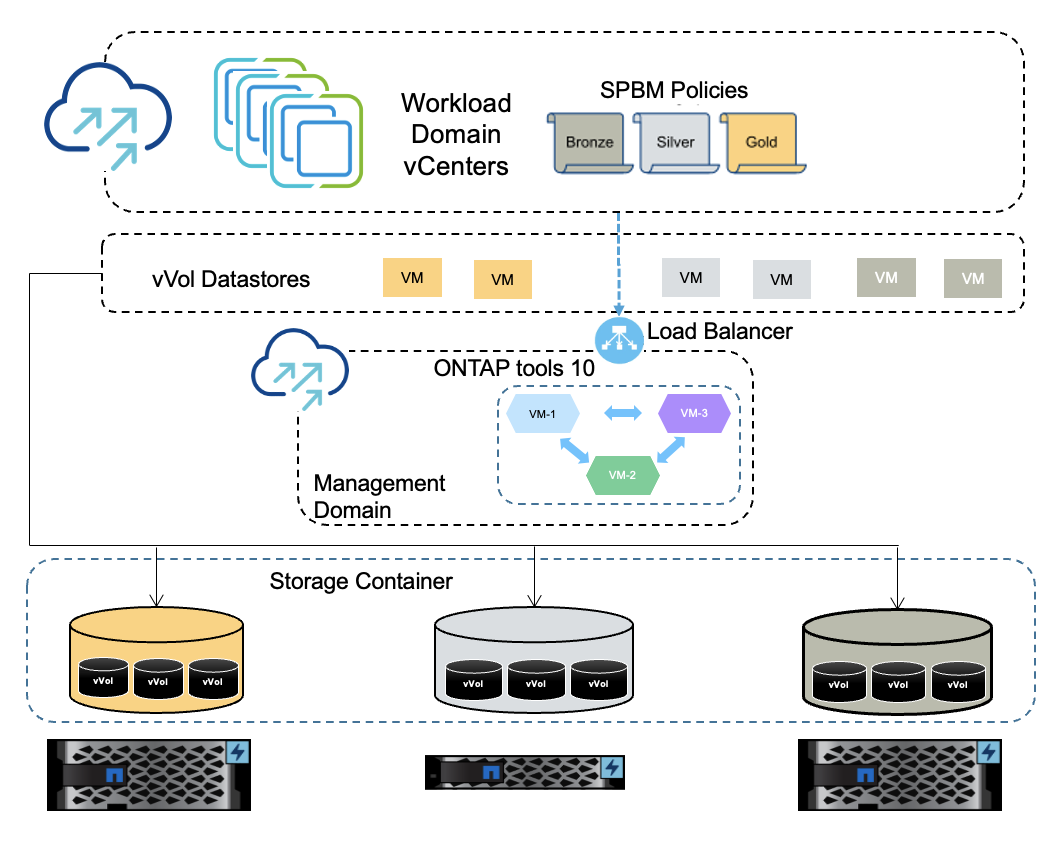
OTV v10 --> currently vVol-only, you can deploy 3x of those VMs so you always have a VASA-provider available in case a host dies; currently REST-API only, will get a GUI in the next version; the other two features are also planned to get included in v10
https://community.netapp.com/t5/Tech-ONTAP-Blogs/Announcing-General-Availability-of-ONTAP-tools-for-VMware-vSphere-10-0/ba-p/447616
If you don't use vVols, currently choose OTV v9. This most likely will also get some more updates, like 9.14 or so.
In the future (maybe 6-12 months, mayber more) OTV10 will supersede v9.

The ONTAP tools for VMware vSphere provides end-to-end life cycle management for virtual machines in VMware environments that use NetApp storage systems. It ...
Overview Large enterprises and service providers require a scalable, centralized, and automation-enabled platform for storage lifecycle management as the data center landscape grows and evolves with a wide array of workloads. We are excited to share the General Availability of ONTAP tools for VM...

 bitter tusk
fading shard
Since OTV has been linked to ONTAP versioning so far... ONTAP 10 this summer?! S...
bitter tusk
fading shard
Since OTV has been linked to ONTAP versioning so far... ONTAP 10 this summer?! S...
I bet the new version will not be 10, I will bet X or AI or something markety (made a word up)
robust moth
But we already have ontap 10.x ... it is (was) called "ONTAP GX". I still have versions 10.0.3 to 10.0.5 lying around here, just no FAS 3040 anymore to run it on 😄
little hill
<@&1131581028138487969> <@&1132034827655336046> <@&1132035203188142211> We know a lot of you depend on VMware and NetApp to run your enterprise environments. With the recent news, shakeups, and licensing changes Broadcom have implemented for the VMware stack, we're seeing lots of customers entertaining alternatives for a variety of reasons; cost and uncertainty being the predominant ones. For what it's worth, we're looking at all of them too, and we're curious which ones have caught your eye and why? We want to insure we provide proper documentation and support for as many as we can. I'm also going to make some content trying each of them out throughout the course of the year. If you would prefer to DM me your response anonymously, please feel free.
 ebon scaffoldBOT
**:bar_chart: Are you looking to switch hypervisors? If so, which ones are you evaluating and/or transitioning to? **
🇦 Hyper-V / Azure
🇧 Nutanix
🇨 XCP-ng
🇩 Harvester
🇪 ProxMox
🇫 Xenserver
🇬 KVM / kubevirt
🇭 None, we're sticking with VMware
🇮 Other option not listed
🇯 Undecided
Appreciate Simple Poll? Upgrade to premium :star:
 feral citrus
https://www.proxmox.com/en/about/media-kit "Proxmox" is the only correct way in how to write the Proxmox name. Neither ProxMox nor proXmoX. 😄
Don't want to be an ass, but I just found it funny cause I read that like yesterday.
little hill
At least I got VMware right? And not vmWare or VMWare. 🤣
Thanks for letting me know!
feral citrus
Thats the one where I always have a capitalized W 🙂
lament tapir
If Proxmox starts getting more traction, I'm going to purposely randomize capitalization because tradition
 little hill
teh pRoXm0x
 carmine fractal
prauxmaux
 glossy summit
little hill
<@&1131581028138487969> <@&1132034827655336046> <@&1132035203188142211> We know ...
glossy summit
little hill
<@&1131581028138487969> <@&1132034827655336046> <@&1132035203188142211> We know ...
We haven't had much luck, but we also don't have budget atm
I've PoC'd a number of alternatives, including
- oVirt (Redhat Enterprise Virtualization upstream)
- OKD (Redhat OpenShift upstream)
- Apache Cloudstack
They all have issues. oVirt couldn't even get installed, and RHEV is EOL'd. OKD works fine if you just wanted containers, or NAT'd VMs, but the documentation is horrible - they basically copy-paste it from redhat without updating it. For example, 100% of queries, both official documentation and third-party, state to use nmstate in OKD for configuring bridges networks with VMs - and none of them tell you that nmstate requires a redhat subscription so you can't actually use it in OKD
we declined to use Proxmox due to security issue, like all nodes in a proxmox cluster having passwordless root access to other nodes
We are a linux shop, and also don't have much budget - that rules out Hyper-V
 chilly whale
little hill
<@&1131581028138487969> <@&1132034827655336046> <@&1132035203188142211> We know ...
chilly whale
little hill
<@&1131581028138487969> <@&1132034827655336046> <@&1132035203188142211> We know ...
If we had to propose something to our customers, likely will be Hyper-V for its Virtual SAN (I prefer it greatly over RDM) and compatibility with Snapmanager :)
Though with Hyper-V and most other hypervisors is compatibility, such as EMC Unity VSA, Netscaler, Check Point Open server appliances etc that ties into VMware - we'd have to come up with something for that
glossy summit
Harvester is currently local hardware only and we vms on 100% external storage, so that rules it out - although a very helpful Project Manager for Harvester informed me that they plan to support 100% vm storage on Netapp Trident around October with 1.4.0, in which case it might be useful for us
I could talk about this for a while - replacing vmware is my current project at work, so I'm knee-deep in it
glossy summit
but atm, it's looking like we are opting for basic KVM+Qemu with Cockpit and custom automation for the moment
feral citrus
No clue if it's any good tho.
glossy summit
because the options are very very thin. The majority of solutions are dead, everyone is abandoning hypervisors in favour of containers
and what's more, they are abandoning baremetal
so often I ask these questions and just get the reply "deploy it in the cloud" as if that's always possible
little hill
One of the poll options I debated including was "We're out. Refactoring everything to containers" but that opens up a whole other can of worms.
glossy summit
@feral citrus Hai! I think I've seen you around before :)
glossy summit
little hill
One of the poll options I debated including was "We're out. Refactoring everythi...
Yeah. It's not always so simple sadly
not to mention that people forget that 99.999% of container infrastructure requires you to have existing infrastructure in place
lament tapir
What features are you looking for in an alternative, i.e. live migration, HA, REST API? What's the highest priority?
glossy summit
good luck deploying baremetal highly-available kubernetes with no existing infrastructure - DNS, DHCP, NTP, etc.
they have to exist somewhere
meanwhile, none of that is required to deploy a simple VM in KVM
again, you have this chicken and egg problem where everyone develops their products assuming you are deploying it in something like AWS or Azure and can just use their infrastructure
which means you can't use it when it is your infrastructure
little hill
I do miss the good ol' days of RHEV.
glossy summit
and it's a waste of resources to just run 1 service per server when all of your servers are multi-unit rack-mount servers with 1TB of RAM and 500+ CPU cores, just to run a single DNS or NTP server
it's the exact reason that virtualization and containerization came to be in the first place
chilly whale
Either way Cisco Hyperflex is moving to Nutanix, fwiw
feral citrus
glossy summit
and it's a waste of resources to just run 1 service per server when all of your ...
3 raspberry pi cluster for DNS DHCP and NTP each with failover to the other 🙂
glossy summit
feral citrus
3 raspberry pi cluster for DNS DHCP and NTP each with failover to the other 🙂
Not sure that's really an answer
feral citrus
me neither
glossy summit
and raises complicated issues too - for example, if it's required that all hardware has a support contract, or SLAs for repair or something, can we get that with raspberry pis? lol
sacred atlas
You know I asked this right after the acquisition…
glossy summit
It seems like there just isn't a good answer TBH - as a community, we've completely abandoned VMs and now we are paying for it
the other issue I run into is that so many projects, both mature and fledgling, want to be the diva of your network
they want you to configure your network to play nice with them
which was an issue we had with Apache Cloudstack - we have hundreds of VLANs, but apache cloudstack required that you configure your network just so, in order to play nice with them
which baffles me - why is it so hard to just have a web application that plugs into libvirt to give you details, console access, and live migration, and let you just configure the networking yourself? I've been managing linux for 15 years, I can configure some networking details on virtual machines and manage my own virtual switches
feral citrus
I guess that's why VMware is still the only king in virtualization. They just have a complete package.
glossy summit
Yup
sacred atlas
Seen a lot of uptick in Nutanix ever since the acquistion completed and the new sku's came out.
glossy summit
- Doesn't require existing infrastructure to deploy - can be installed as the first server in your environment
- doesn't dictate your network layout, lets you configure it to match your existing network
- Minimum server requirement is 1, and you can deploy HA later
OKD was a pain - the minimum servers to deploy OKD was 8!
- 1 server to provide DNS, DHCP, PXE Booting, Ignition, etc.
- 1 server to act as a bootstrap
- 3 master nodes
- 3 worker nodes
If you didn't deploy it as HA from the very beginning, you could never make it HA later, you would have to completely reinstall from scratch
feral citrus
glossy summit
we declined to use Proxmox due to security issue, like all nodes in a proxmox cl...
That such a big problem? If one of your hypervisors is compromised you already got big problems.
glossy summit
feral citrus
That such a big problem? If one of your hypervisors is compromised you already g...
As I hear it, yes. Our InfoSec team is pretty strict. Mentioning it was enough that other people veto'd it for me
I mentioned that I could have a Proxmox cluster deployed and fully functioning for production in a few days since I'm familiar with it, but the option was declined
 median tulip
little hill
I do miss the good ol' days of RHEV.
median tulip
little hill
I do miss the good ol' days of RHEV.
oVirt is still there..
feral citrus
glossy summit
As I hear it, yes. Our InfoSec team is pretty strict. Mentioning it was enough t...
But it's the same with vSphere/vCenter. That one component has root access to all hosts.
So for your InfoSec team to allow Proxmox you'd need to have an additional VM with hosts the Management UI...
glossy summit
median tulip
oVirt is still there..
technically. We spent a week or more trying to get it working. Had a thousand issues trying to deploy it
tried different versions, all kinds of things
glossy summit
feral citrus
But it's the same with vSphere/vCenter. That one component has root access to al...
does it?  Or does it have access to an API or a service user that can privilege escalate?
IMO, proxmox would be better if they had an internal service user that could privilege escalate for specific tasks, like vm migration
@little hill I like your username btw. datacenterdude lol
little hill
Thanks! Been my alter-ego since 2011!
glossy summit
Nice!
little hill
ebon scaffold
**:bar_chart: Are you looking to switch hypervisors? If so, which ones are you ...
feral citrus
glossy summit
does it? <:Thinking:562727723806490654> Or does it have access to an API or a se...
https://docs.vmware.com/en/VMware-vSphere/8.0/vsphere-security/GUID-2215AADC-D4CD-49DD-AF92-65BED243D851.html seems like vcenter uses the vpxuser to communicate with the hosts and it has the same permissions but cannot manage users
glossy summit
Anyway, I'm hoping to find some gold here, because it's been a tough road. Someone point out a holy grail that I missed please
glossy summit
feral citrus
https://docs.vmware.com/en/VMware-vSphere/8.0/vsphere-security/GUID-2215AADC-D4C...
That’s the proper way. Principle of least privilege. It would need some obviously, but not just “here, have all”
robust moth
AFAIK, the final rebate structurings and partner discounts/levels are not even out yet. We had some opp'ties where the Broadcom pricing came out actually cheaper than the previous VMware ones. So we won't rush anything with switching to something else.
If it turns out we need another solutions (e.g. for smaller customers or whatever) it will be tricky. Many engineers/architects in our company are voicing concerns about Hyper-V since it still doesn't work properly, has issues and/or bugs, or is generally not ready for "enterprise" usage, so they do not want to have to support that 😂 In that case we will probably look at Proxmox
median tulip
ten create RFE for Proxmox? 🙂 I think they are going to listen to "users" now even more, as there will be a lot of new one..
little hill
The sheer amount of patents and IP that VMware holds is one of the things that is going to hold the industry back, if I'm being honest.
median tulip
robust moth
AFAIK, the final rebate structurings and partner discounts/levels are not even o...
really? My friend just sent me that new "partner" pricing for them is 7 times more expensive then before 😄
robust moth
OTOH, even though Proxmox is based on KVM, we have been told by NetApp engineers that the Efficiency Guarantee program (which explicitly lists guarantees for "KVM") does not apply to Proxmox. We're currently trying to figure out what's that all about but it seems to be difficult to get an answer
robust moth
median tulip
really? My friend just sent me that new "partner" pricing for them is 7 times mo...
we have seen different numbers and done some calculations based on list prices but 7x seems a bit far off. The invitations for our partner status/kickoff meeting/whatever it's called is still a few days in the future though (and I'm not directly involved) so yeah, maybe something has changed already
again, we have at least one Opp'ty/quote where the actual price is cheaper (something like 32k€ vs. 40k€ so not even insignificant)
chilly whale
robust moth
OTOH, even though Proxmox is based on KVM, we have been told by NetApp engineers...
That's interesting
Though prox also lacks proper shared storage, you don't get snapshots with iSCSI and FC / NVMeOF is straight up not supported
robust moth
Proxmox supports NFS though? And it can do qcow-based snapshots IIRC, so basically all of our scripts from 2008 when NetApp didn't have a product to snapshot ESX datastores will still work I guess (i.e. quiesce VM, trigger snapshot, unquiesce VM)
chilly whale
NFS has its limitations, you could do Ceph but again that would require you to re-architect your storage infra entirely which not all of us can do
robust moth
yeah, but let's face it, every alternative to VMware will have shortcomings and limitations, so if you have to rely on Proxmox then there will be stuff you're not getting anymore (e..g backup software integration, SnapCenter functionality, etc.)
or rather, the money you don't pay to VMware anymore will go towards hiring a person or otherwise paying someone else to fix/re-engineer all these things. If you factor this in, I guess most of our customers will still stick with VMware 🤷♂️
chilly whale
At least for us, it's everything surrounding vSphere that's the problem not vSphere itself, Citrix PVS integration is a hard requirement in addition to a plethera of things
But yea, as you've mentioned unfortunately it'll likely have to all be re-architected
robust moth
yeah, and re-engineering an entire datacenter virtualization environment will probably cost much more than simply accepting the new Broadcom pricings. I mean there are ways to save there, too (i.e. by using larger CPUs with more cores).
We had a similar situation a few years ago when Oracle massively increased their prices. It was claimed that everyone would move away, e.g. to MS SQL, but this didn't happen (at least not on a larger scale). Why? Because even swapping one SQL database with another is not easy. Now imagine swapping a whole virtualization stack + everything surrounding it? Probably won't happen.
glossy summit
chilly whale
NFS has its limitations, you could do Ceph but again that would require you to r...
The primary reason we can't use Harvester - we have Netapps, but they don't support 100% external storage. ATM, boot volumes for VMs have to be on local storage, and you can only mount extra volumes from Netapp I guess
robust moth
you could always boot them from FC SAN, as long as you have HBAs in your server (or are using FlexPod 😉 )
there should be no difference to the OS between a "local" disk and an FCP LUN
 real forge
little hill
<@&1131581028138487969> <@&1132034827655336046> <@&1132035203188142211> We know ...
real forge
little hill
<@&1131581028138487969> <@&1132034827655336046> <@&1132035203188142211> We know ...
Think many customers will consider outsourcing vSphere? I.e. "We don't want to deal with this garbage any more, let's move to AVS/VMC/GCVE and let the hyperscaler deal with the relationship"
When I say "garbage" i mean the rollercoaster that is the Broadcom acquisition but also some of the previous issues that have come about, while it definitely dates me, the vRAM tax comes to mind
random reef
chilly whale
NFS has its limitations, you could do Ceph but again that would require you to r...
What are the limitations of nfs on Proxmox?
glossy summit
robust moth
there should be no difference to the OS between a "local" disk and an FCP LUN
That would be complicated, you’d need to attach disks to each node then format them all with longhorn or whatever - idk if it would be worth it
little hill
random reef
What are the limitations of nfs on Proxmox?
I'm about to find out. I'm hearing there's some issues with NFS on host clusters
I'm gonna start loading it onto my gear soon
It does appear they have early NVMe/TCP support just not through the GUI just yet

Proxmox Support Forum
Hi,
today, when nvme world grow, there is any plan to support NVMe-over-TCP / NVMe of as additional Storage for Proxmox?
Regards
random reef
I’ve just built a proxmox cluster too. Setup is pretty simple - few minor UI issues, but nothing horrible
woeful ingot
I stood up a proxmox cluster when the deal closed since it gets mentioned so much. The good? We can use an NFS datastore as swing space to help move VMs off of broadcom. We can provide primary storage over NFS, iSCSI or presumably FC SAN. My issues with it were getting my lab VMs to boot on it. VSIM hangs loading kernel, even if I tell PVE/KVM to use all VMW device types. OTS also fails to boot because its virtio drivers won't recognize the proxmox variants of the virtio devices, and even if I get could past those initial stumbling blocks, there are other oddball PVE constraints I'll hit, like only supporting one virtual scsi controller, and only allowing 15 virtual disks. It would be fine for click ops installing vanilla linux and windows, but virtual appliances are a no go.
So I'm about ready to declare that one a dead end and spin up XCP-NG.
little hill
I’m also looking for engineering opportunities where we can contribute back to some of these projects, similar for how we did with OpenStack 10 years ago
woeful ingot
I understand proxmox has a storage plugin framework. That might be worth exploring as they pick up VMW expats
little hill
Yup. And if I’m being blunt, at this stage, running VSIM and Select are the last things on my priority list. We’ll get around to that when we get to it
woeful ingot
For sure. It’s an abnormally large percentage of my lab vm population. But I’m not a typical user of anything 🙂
little hill
I love you testing all this stuff. I wanna put LOD to work and have them put all these things through their paces and see what shakes out. Need to go harass Toby. He’ll love hearing from me. 🤣
woeful ingot
That will be interesting to me, since my homelab is a homegrown lab on demand.
little hill
In case anyone is just now joining the conversation, please head back up and read the announcement and respond to the poll! #╰・virtualization message
woeful ingot
As part of my setup / testing I automated build out of a nested proxmox lab in Ansible. 🙂
little hill
I swear if you nested it in VMware… 🤣
woeful ingot
I did ><
Lab blueprint is here:
https://github.com/madlabber/LabBuilder/blob/master/inventories/lab_proxmox81.yml

GitHub
A collection of playbooks and tooling for building labs - madlabber/LabBuilder
A DC/jumphost, 3 PVE hosts, and a single node OTS
Sorry about the giant preview box 😆
 wicked lichen
glossy summit
I've PoC'd a number of alternatives, including
* oVirt (Redhat Enterprise Virtua...
wicked lichen
glossy summit
I've PoC'd a number of alternatives, including
* oVirt (Redhat Enterprise Virtua...
RHV is EOL in favor of OpenShift Virtualization, but oVirt is still the upstream basis of Oracle Virtualization if you want to play with that.
glossy summit
wicked lichen
RHV is EOL in favor of OpenShift Virtualization, but oVirt is still the upstream...
we couldn't even get oVirt installed, it was such a nightmare
wicked lichen
glossy summit
we couldn't even get oVirt installed, it was such a nightmare
Yeah, I haven't played with it since the early 4.2 days, I was just suggesting that if you wanted to test that product, Oracle and their documentation was the way to do it.
glossy summit
oracle is dangerous to get into bed with. Or to even be in the same bedroom with
robust moth
glossy summit
That would be complicated, you’d need to attach disks to each node then format t...
if it's only for booting there is no reason to "format it with longhorn" or anything. Just boot from it and use NFS for all the actual data
glossy summit
ah, you misunderstand then - you have to boot the VMS
and as I understand, Harvester doesn't let you store the boot volumes of the VMS on external storage
3rd party storage classes (including those based on Trident) can only be used for non-boot volumes of Harvester VMs.
https://harvesterhci.io/kb/install_netapp_trident_csi/
Installation procedure for NetApp Astra Trident CSI Driver
robust moth
glossy summit
and as I understand, Harvester doesn't let you store the boot volumes of the **V...
yes but FC LUNs are not storage classes... they are, to the OS, exactly the same as physical disks. Especially if they're VMs (on, say, a hypervisor like ESX) you can put them on any sort of datastore, especially SAN LUNs or NFS
glossy summit
right - but afaik, you can ONLY use VMs with longhorn storage on Harvester, and nothing else
so you would have to format your LUNs with longhorn as local storage, and it's be a bit of a pain to manage them all that way I'd think
but tbf, I've never managed network storage like that 
robust moth
you're still thinking inside k8s... longhorn, storage classes, etc. that all doesn't matter for the OS
an FC LUN looks exactly like a local SATA disk to the OS
glossy summit
it does if we want to deploy VMs through Harvester, and Harvester will only let us deploy on longhorn
robust moth
a VMDK on an FC datastore even more so
but you cannot boot your nodes from longhorn, can you?
glossy summit
idc about booting the actual hypervisor, that will be on local storage
I care about booting the vms from external storage
robust moth
you said you need local storage to boot the VMs from
glossy summit
no, I need external storage to boot the VMs from
but you can only use local storage with Harvester
robust moth
glossy summit
The primary reason we can't use Harvester - we have Netapps, but they don't supp...
ATM, boot volumes for VMs have to be on local storage
glossy summit
robust moth
> ATM, boot volumes for VMs have to be on local storage
right, that's the limitation of Harvester, not our requirement
robust moth
an FC LUN is local storage. Your HBA shows it like a direct attached SAS disk. It shows up as /dev/sda in linux.
glossy summit
I'm aware of this
robust moth
that's the whole point of an FC san 🙂
glossy summit
what I don't know is how scalable it is to carve a bunch of LUNS per node, then format them as part of the Longhorn distributed storage array vs. just being able to say "here's NFS/Trident/Ceph/etc use it"
robust moth
Well, everyone I talked to seemed to agree that Longhorn storage is slow as molasses
so I would generally advise against it
glossy summit
right, but longhorn is the only thing you can use with Harvester as far as I'm aware
robust moth
I have not personally tested it yet, so I can't give first-hand experience tho
glossy summit
so you can't present raw disks or nfs, or ceph, or anything else to Harvester to consume as storage for VMs - only the Harvester-managed longhorn storage array
robust moth
well that would be bad. I mean if they ripped out the CSI interface from k8s then they're technically not even k8s-compliant anymore 🤷♂️
ah wait
no sorry
I mixed something up
they do more than k8s right
but still, if the k8s below has a CSI plugin for storage I don't see why the VMs on top couldn't use that
I think longhorn is what they ship with but I'm pretty sure you can attach/use other storage as well. it would be pretty bad if not
glossy summit
well, I know I've seen some github issues asking why they can't use existing k8s plugins like csi-nfstorage or whatever
robust moth
I mean we have a customer where we're implementing harvester at the moment, I can check with the team that does it but I'm 99,9% sure they are not using Longhorn because they are the ones who have tested it in the past and got very bad performance from it
glossy summit
the issue we have, is there's no good alternatives, particularly if we can't pay for it
robust moth
I think there are some more free virtualizers if you absolutely need to go the "free-as-in-beer" route (proxmox for example). But I sure hope you're not running enterprise or business-critical environments on a "free" system without some sort of (paid) support in case something goes wrong
glossy summit
Nope, there's a number of reasons we decided not to use proxmox
we PoC'd OKD and oVirt specifically because there was a route for paid support/upgrading to RHEV/OpenShift, but had way too many issues
robust moth
but OKD is k8s only, not VMs?
or did they add VM workloads now too?
if you only need k8s there's even more free alternatives (rancher, k3s, kubespray, ...)
glossy summit
no, we need VMs, k8s is just incidental
glossy summit
robust moth
or did they add VM workloads now too?
they tecnically added it...
I explained some of the issue earlier, rather than retype it all 😛
#╰・virtualization message
robust moth
did you look at opennebula?
that's something we have deployed for self-service VMs in a (small) cloud environment
glossy summit
interesting
robust moth
I think it can also run on kvm
(we're using it on vmware though because that's what we already have)
glossy summit
I can't find a comparison matrix
is their enterprise version only support and hosting, or is it the standard "you are limited to X CPUs, no ldap, no monitoring, etc" bullcrap lots of products pull?
is it really necessary to censor that word? 
IMO, it's stupid because I'm liable to choose solutions for work that I'm familiar with in my homelab. And if you don't suppose LDAP/SSO without paying tens of thousands of dollars a year, I'm not touching it
robust moth
yeah, well, sadly usually "you get what you pay for" is kinda true... if you can't/won't/don'T spend money on something, you basically have to connect all the bits & pieces yourself. It sucks but that's where we are at 🤷♂️
and if you can't justify to your superiors that an investment in a properly-supported base technology for basically your entire datacenter is warranted, well, I don't know what to tell you (but I know that I would leave that place... fast... it's a disaster waiting to happen)
glossy summit
Meh, I agree for some things
but SSO should be a basic, not a $50,000/year add-on
https://sso.tax/
The SSO Wall of Shame
A list of vendors that treat single sign-on as a luxury feature, not a core security requirement.
in most cases, there are free libraries in the language of choice available, and some projects even actively reject PRs to include them in the FOSS version, just to keep charging money
robust moth
I see it a bit more nuanced. SSO can actually be bad for security because it allows a compromised AD account (for example) to take over the virtualization or backup environment. Sometimes, separate users (with different passwords) are actually a good thing, as some sort of air-gap
so yeah, SSO might be nice and all, but I wouldn't put it that high on my list of requirements
glossy summit
maybe, but there's a sliding scale of security and convenience, and manually managing many users across hundreds or thousands of systems is at the very far end of it
not to mention that it generates other security holes
robust moth
do you really need thousands of users accessing your virtualization infrastructure?
glossy summit
say you have 1000 services, and someone leaves the company, and you remove or disable access to 998 of them
but you forget two
now you have a potential problem
glossy summit
robust moth
do you really need thousands of users accessing your virtualization infrastructu...
that's certainly not my call
robust moth
that's easily avoided by security audit tools and/or scripting
anyway I need to sign off for today. see you later!
glossy summit
well, I guess you can go hire the intern to manage all the accounts, because it's not a job I'm signing up for - I'd have stayed in helpdesk if i wanted to do nothing but manage user accounts all day long
glossy summit
robust moth
anyway I need to sign off for today. see you later!
Later, thanks for chatting! 
wicked lichen
robust moth
and if you can't justify to your superiors that an investment in a properly-supp...
Usually disasters is how you secure the funding to build a real datacenter.
median tulip
robust moth
we have seen different numbers and done some calculations based on list prices b...
looks like he is not only one.. https://www.youtube.com/watch?v=peH4ic7g5yc&

We discuss how some VMware customers are being faced with 10x or more price increases in the wake of the Broadcom acquisition changes.
STH Main Site Article: https://www.servethehome.com/vmware-vcsp-customers-seeing-10x-or-more-cost-increases-under-broadcom/
STH Top 5 Weekly Newsletter: https://eepurl.com/dryM09
------------------------------...
little hill

Recently, I conducted a poll in our 4000-member Discord community asking some of our customers and partners about their plans and intentions following some of…
For those of you that participated in the poll here, I invite you to contribute on this one as well! (non-NetApp folks, please)
robust moth
I would but I don't have a LinkedIn account 🙈 (probably the only one in the world without one)
sinful finch
robust moth
I would but I don't have a LinkedIn account 🙈 (probably the only one in the wo...
I think I technically did but I don't use it.
 rigid needle
Is it normal for there to be this big of a difference between what Ontap shows versus what vCenter shows? Is there any way to get these closer? I've tried refreshing, rescanning, and increasing storage in vCenter with no results.
 clear palm
rigid needle
Is it normal for there to be this big of a difference between what Ontap shows v...
clear palm
rigid needle
Is it normal for there to be this big of a difference between what Ontap shows v...
Very normal... this can be caused by dedupe/compression of the NetApp volume. If the space is skew the other way (netapp larger than datastore) it is typically because of snapshots. And you might want to lookup "storage unmap" which can also skew things up....
rigid needle
clear palm
Very normal... this can be caused by dedupe/compression of the NetApp volume. I...
Thanks
sinful finch
rigid needle
Is it normal for there to be this big of a difference between what Ontap shows v...
Yes. Remember that the file systems are owned by different systems with LUNs. In VMware (or any LUN client OS for that matter), VMFS is the file system it sees. ONTAP sees space usage at the volume level/WAFL. Also, space can be reclaimed using SCSI UNMAP/TRIM/Zeroing (kind of same thing), but if you don't have space utilization issues it's unnecessary
If you have NFS it will report correctly since it's straight from ONTAP.
 tight turret
An interesting read: https://www.reddit.com/r/vmware/comments/1b0ww9b/our_journey_to_proxmox_from_vmware/
 robust moth
to quote George Pamboris: "Relax. Take a deep breath. VMware is not going away"
cosmic yacht
no, it isn't going away, but it will be unobtainable for a lot of people.
little hill

^Current VMware admins playing with their hosts with a renewal on the horizon, remembering the good times.
wooden geyser
The biggest issue i see is all the people (brain drain) leaving VMware, i really doubt there is going to be a lot more active development.. Will NetApp release all their snap tools/plugins for other hypervisors ? word on the street is Veeam will support Proxmox very shorty
robust moth
wooden geyser
The biggest issue i see is all the people (brain drain) leaving VMware, i really...
I don't think so. I mean the product will stay, it's just the various bundles and add-on possibilities that they're axing. vSphere, NSX, Aria, etc. will probably all continue to exist for quite a while. As for the official statement, I don't think NetApp released anything publicly but my quote from George Pamboris (PM for all ONTAP and FAS/AFF hardware) above was made by him in front of 400+ customers at an event this week. They are not in panic mode to try and support other hypervisors. They're of course watching and evaluating the situation but don't engage in knee-jerk reactions (which is a pretty good approach to the situation IMHO)
most medium to large customers will stay with VMware, and many smaller ones as well. Smaller cloud providers might move away because of the huge entry cost wrt. the core count (3000+ cores minimum IIRC) but those don't usually run SnapCenter anyway
 sonic mortar
A lot of the folks I've been talking to are still in negotiation mode.. knee jerk reactions aren't really going to pan out cost wise either for lots of shops. But curious if anyone here has had a management team that said yeah we're out and then how you plan to deal with the transition! (maybe to openshift virtualization?)
cosmic yacht
our team has already been told to make plans and find a replacement, by end of year, when our contract is up
sonic mortar
Ooh - that's not a lot of time to move.
Spoke with a team that basically said - to replace everything (not just migrate) is going to take a lot longer than the time left we have on our contract so we'll probably have to renew at least some portion. But that probably depends on how big / complex your environment is.
little hill
The data to examine is not which to choose, but the sheer fact that only ~30% of the installed base are no doubt sticking with VMware. The other 70% are some varying levels of “we want out but we’re not sure how”
random reef
3x seems to be the a average uplift in pricing from what I’ve read
So if they lose 50% of their customer base, they’ll still be ahead
woeful ingot
Yup. That aligns with what I’ve seen reported too. 3x uplift is typical. Renew that 4node 128 core cluster and find a new home for everything that won’t fit in that cluster. Current customers control the bleed but would any new accounts sign up for that? Is this a drain the swamp over 5 years scenario? I think in 5 years we’ll have a good view of the new normal. Between now and then… it’ll be an adventure.
robust moth
random reef
3x seems to be the a average uplift in pricing from what I’ve read
I would guess that's pretty biased towards the upper end, as usually you wouldn't hear a lot from people that get similar or even cheaper prices than before 🤔
Again, we have seen customer quotes (actual orderable quotes) that were in the same ballpark (+/- 20%) than their existing contracts
sonic mortar
I think as the dust settles we'll get a better idea. There are huge uplifts in some reports (and I wonder what they're using - really storage heavy maybe?). Definitely tough to find new customers right now but in a few years people will have forgotten/adapted circa Oracle of 2003..
sinful finch
If some product can get a good enough feature set and support it might take off to replace VMware.
cosmic yacht
for smaller shops i think there are already options out there, for those not using options like vsan/etc, most of the shops I know using VM simply use it because it's the most common thing around and easiest to get somebody to work on because they already know the product.
and, again, many of those shops are hunting alternatives because their cost is going to skyrocket at the end of their contract.
From the few people I've had hitting me up about helping with migrations, so far, are mostly looking to either Nutanix or Scale(new one for me) for a paid solution or Proxmox for *nix shops and Hyper-V for hybrid
it will be interesting to see what solutions other companies start to provide to fill in the gaps they have compared to VMware right now, or what tech partners will start to build out integrations/addons/etc to work with others
wraith mica
Red Hat OpenShift Virtualization (based on Kube-Virt) enables to run VMs on Kubernetes cluster. Kubernetes is becoming the platform of choice for many customers to run their containerized workloads. Kubernetes cluster can have 1000s of nodes. Scheduling the workloads across the nodes and restart of ...


 sinful finch
wraith mica
https://community.netapp.com/t5/Tech-ONTAP-Blogs/OpenShift-Virtualization-for-vS...
sinful finch
wraith mica
https://community.netapp.com/t5/Tech-ONTAP-Blogs/OpenShift-Virtualization-for-vS...
This might be a good alternative for many customers. RedHat is a company that is comparable to VMware in terms of support, so it's possible. I don't have much Kubernetes experience though to comment effectively on it. I always thought it was like Docker, but maybe not?
woeful ingot
wraith mica
https://community.netapp.com/t5/Tech-ONTAP-Blogs/OpenShift-Virtualization-for-vS...
great job on this one.
wicked lichen
wraith mica
https://community.netapp.com/t5/Tech-ONTAP-Blogs/OpenShift-Virtualization-for-vS...
Pretty good job breaking it down there man.
wicked lichen
sinful finch
This might be a good alternative for many customers. RedHat is a company that is...
Hey Paul, if you want to find out a little more about OpenShift Virtualization, Red Hat has a learning path set up here: https://cloud.redhat.com/learn/getting-started-red-hat-openshift-virtualization

Red Hat Hybrid Cloud
Having the freedom to run virtual machines (VMs) within a container and on a single platform can simplify VM management and reduce time to production. Using Red Hat® OpenShift® Virtualization can enable administrators to incorporate virtual machines into their containerized workflows without having to drastically alter their existing infrastruct...
sinful finch
wicked lichen
Hey Paul, if you want to find out a little more about OpenShift Virtualization, ...
Thanks Alan. I may check it out at some point but I have enough to keep me busy for now. 🙂
white scaffold

Reddit
Explore this post and more from the homelab community
random reef
I've got my 3 node NUC proxmox cluster up and running some workloads. It's very well documented, and once you get used to some of its.. expectations.. it's quite easy
biggest thing I found was that it treats everything it can as block storage, it makes sense
woeful ingot
I've decomm'ed my vsphere management cluster to free up 4 nodes for bare metal alt hypervisor testing. PVE is going first. want to see if there is any way to convince ontap to boot on it.
random reef
how many physical test boxes do you have at home @woeful ingot ?
with a name like madlabber, I gotta assume it's a few 🙂
cosmic yacht
heh.. how many physical boxes... 5 desktops, 3 laptops, 1 frankentop.. laptop with no lcd, 2 cisco 220m4 servers, franken dual asus server, dell T630, dozen or so SBC and a new mini-pc that isn't online yet
woeful ingot
random reef
with a name like madlabber, I gotta assume it's a few 🙂
😄 My vsphere lab was 7 hosts, now down to 3. I peeled off all the NUCs and collapsed the management domain into the workload domain, which is now 3 hosts, 2 running an OTS HA pair, and with a single node and the deploy VM living on the 3rd. There are several other NUC class hosts, mostly running KVM OTS variants at the moment, and a "travel" lab nuc that is usually in the backpack when I'm on the road. I wish I could make better use of LoD, but I need custom labs, labs that live more than 7 days, and labs that I'm not locked out of if I don't have my corp laptop in hand.
oh, and a DL380 in the garage if I run out of oomph 🙂
 neon lodge
Dang, that's impressive @woeful ingot. I only have two Dell R730's now, At one point I had 6 running VSAN as well as iSCSI and NFS from 2 Synology DS1813+ and 1613's. Not currently powered on but when they are, I have a pretty decent environment 🙂
cosmic yacht
neon lodge
Dang, that's impressive <@271530192193716224>. I only have two Dell R730's now, ...
I picked up a couple of 'new old stock' cisco 220m4 units for ~250 shipped. 2 procs, minimum memory, 2 1tb sas disks, etc. and I have a whole lot of v3/v4 xeons sitting around as well as memory, so it was a no brainer to grab them and upgrade my older systems
woeful ingot
At one point my lab was a mix of ML and DL series HP, but as impressive as that power bill was, my wife was not amused. I ended up redesigning everything for low power and low noise. So lots of NUCs and XeonD
white scaffold

TechRadar
Perpetual license customers get a lifeline
woeful ingot
It's an interesting concession.
little hill
Yesterday, I had the privilege of hosting Rich from the 2GuysTek YouTube channel on an episode of NetApp ONAIR. Typically, we have stuck with bringing NetApp people on the NetApp show, but after discovering his extensive evaluation work across a myriad of #VMware alternatives, I selfishly wanted to have a deeper conversation with him about some of his findings.
What we got was a deep, rich conversation full of doubt, hope, and solid recommendations depending on your particular degree of situation you might be in.
My thanks to Rich for not only being on the show, but being vulnerable and willing to discuss his journey and recent work he's done on evaluating Hyper-V, ProxMoxVE, XCP-ng, and several others.
Enjoy the conversation, and if there's any questions, drop them in the comments! 🤘

Second only to the white-hot nature of AI, the predominant topic of conversation amongst enterprise professionals of-late is VMware, alternative options, and even virtualization itself is being taken to task. So for this SPECIAL FEATURE episode of NetApp ONAIR, I wanted to bring in a special guest who, as a VMware admin and enthusiast, has just ...
white scaffold
Whatever, call me biased, but that was a good episode. It was relevant and genuine.
cosmic yacht
I'm still wondering if major vendors (netapp, pure, etc) will start working integrations with other companies outside of vmware. hopefully it will expand well beyond vmware
random reef
vmware has the most options, so it's what we've done the most for. There's nothing too magical about plain NFS or block to KVM, proxmox, Nutanix.
could we write a site recovery manager for proxmox using snapmirror or metrocluster? probably. But without demand it's a hard one to show ROI for to do so.
little hill
cosmic yacht
I'm still wondering if major vendors (netapp, pure, etc) will start working inte...
This will happen when customers start moving the needle. The absolute best way to get traction will be for our customers to begin communicating their intentions of migrating to a particular platform (away from VMware) to their account teams and/or VARs. Engineering dollars and prioritization require demand. Exploration into potential partnership with some are in progress. No promises, but we're putting things through their paces internally. Side-note, I'm also standing up a 3-node ProxMoxVE cluster and working on hooking it up to a C250 to start developing some best practices. Ideally, they are the same as what's worked for VMware over the years. At the end of the day, it's NFS. We can likely recommend some host/node settings and configuration practices to help make the best of connected NetApp storage.
 shrewd stone
Hi there, anyone been using XCP-NG extensively and can provide insights on its stability, performance, and usability within a multi-tenant environment, especially with NetApp NFS. I've been testing XCP-NG for the past 2-3 weeks and have been impressed by its large feature set. I find it quite user friendly and very similar to vSphere in alot of aspects. Pricing doesn't seem to be to bad either.
little hill
I’m putting ProxMox through the paces currently, but expect I’ll be landing on XCP next. I’ve got a C250 and (3) HP DL380 gen8’s
high forum
I’d like to know how XCP-NG is mounting using NFS. I had a customer using XenServer that had a data center failure (sure handler stopped, everything either shutdown-NetApp-or crashed-Dell). After a restart, they found nearly all the VMs were corrupted in some fashion. I could really only attribute this to the way xen default nfs mounts: SOFT! Worse, they (xen) adjusted the timeout to be only 10 seconds. Hence when the Netapp gracefully shutdown, the xen storage repositories got confused with soft mounts and bad stuff happened.
So if anyone is using xcp-ng, please log into a console and run mount. See if nfs mounts are hard or soft by default
shrewd stone
You can set NFS mount options within Xen Orchestrator. Good point though @high forum thanks for highlighting that
 high forum
I know you can set them. The default, especially these days should be hard! Otherwise it’s simply a ticking time bomb
For Citrix/xen. There was a script to change to hard for default. Not supported though
shrewd stone
high forum
I know you can set them. The default, especially these days should be hard! Othe...
Just tested, and I can confirm that if you don't specify 'hard' in the mount options, default is soft.
high forum
Thanks. That’s really stupid. Especially if you go to the console and just do “man nfs” and find the soft option
Nothing like having holes punched in your data
fading shard
Being discussed here but no real progress:
robust moth
hehe, here I am thinking you're all talking about a new version of NetApp XCP 😂
little hill
Proxmox Support Forum
We are excited to announce that our latest software version 8.2 for Proxmox Virtual Environment is now available for download. This release is based on Debian 12.5 "Bookworm" but uses a newer Linux kernel 6.8, QEMU 8.1, LXC 6.0, Ceph 18.2 and ZFS 2.2.
We have an import wizard to migrate VMware...
shrewd stone
little hill
https://forum.proxmox.com/threads/proxmox-ve-8-2-released.145723/
And there's the VMware import wizard 🙂
little hill
shrewd stone
And there's the VMware import wizard 🙂
I'm hoping we can accelerate the process by adding QEMU commands to convert vmdk's to qcow2's. Stay tuned....
random reef
Been playing with making nested ESXi inside proxmox today - wrote this page to help anyone else doing it - https://alexdawson.net/2024/05/creating-nested-esxi-inside-proxmox/
little hill
BREAKING: Veeam announces support for ProxMox VE! https://www.veeam.com/news/veeam-extends-data-freedom-for-customers-with-support-for-proxmox-ve.html

Veeam Software
New addition to the Veeam Data Platform will be showcased at VeeamON 2024 event, highlighting how it simplifies data management and enables cyber resiliency
random reef
TIL - VMWare Certified Professional no longer requires taking a course - https://blogs.vmware.com/learning/2024/05/06/exciting-updates-to-the-vmware-certification-program/
eternal wagon
Fantastic !
woeful ingot
For once a positive change.
 granite comet
Hi All,
Can a vCenter datastore have more than one IP for performance? Our NetApp that we are using for centralized storage of our VM’s has two port channels leading to the switch that our ESXI hosts/vCenter is connected to, each with their own IP on the NetApp side, however on our datastore we only have 1 of those IPs added. The two port channels on the NetApp do provide redundancy on the NetApp side as the IP can hop to the other port channel if it’s own port channel dies somehow, however I was hoping we could increase throughput and performance. Would appreciate any 2cents. Thanks!
fading shard
It's quite easy: Use nconnect with NFSv3 on your ESXi-hosts and your throughput will increase.
https://docs.netapp.com/us-en/netapp-solutions/virtualization/vmware-vsphere8-nfsv3-nconnect.html
It's non-disruptive and there are basically no cons.
granite comet
nice! thank you! i wonder why NFSv3 and not v4/4.1?
robust moth
ESX can do v4.1 but (at least in the past) was quite buggy and not very stable (especially on takeover/giveback) so I'd stay away from it. Also NFSv4.1 session trunking works only on a single node, not with IPs spread across nodes. speed-wise it doesn't make any difference anyway for ESX
granite comet
Hmmm.. seems I will need to do my research on NFSv3 vs NFSv4.1 for VMware datastores, my predecessor used 4.1 and I am just now doing my first ever build outs for tech upgrades of our stacks
robust moth
if you use 4.1, at least thoroughly test takeover/givebacks and LIF migrations between nodes to see if it is stable
granite comet
That seems like a huge flaw in 4.1 for it to be viable, the reliability of LIF failover
high forum
I have yet to see 4.1 work reliably every single time (storage takeover and storage giveback or just a node failure in general). More often than not I still see an ESXi host get “stuck” and the only recourse is to hard-reboot it
I have seen it work occasionally but once v4.1 gets under load, all bets for me are off the table (when using VMware)
robust moth
high forum
I have seen it work occasionally but once v4.1 gets under load, all bets for me ...
yeah, that last part is important, I think it works much more reliable and better on Linux, but ESX has always been troublesome with 4.1
granite comet
Roger that! I’ll relay all this to my VMware counter part, I wonder if there was a reason why my predecessor began using v4.1, we did have some older FAS systems that I saw he was using v3 on
If there’s no sincere reason for me to use v4.1 I would rather stick with the reliable v3 even if it is older
high forum
the crux is support. ONTAP supports pNFS which is mutually exclusive from VMwares session Trunking. As has already been indicated, session trunking in ONTAP is limited to a trunking group per node. ONTAP 9.14 does "support" session trunking but until someone can prove to me it works in a multi netap node cluster reliably under load/pressure there is no way I can suggest it
just stick with v3.
random reef
Yeah if you find a VMware setup using nfs other than 3, you need to find out if the admin was a nerd knob twiddler who assumed newer = better, or if they had a genuine reason. It’s normally the first
granite comet
I thought maybe the vSphere STIG that we have implemented may have required it, but I looked through it and didn’t find anything
high forum
The stig absolutely does not require it. The only possible reason someone should even think about using v4.1 is to use Kerberos but that just slows performance so no one uses it.
granite comet
Yeah it’ll be interesting to hear why it was used in our last build outs. Guessing it’s what Alex mentioned above, someone thinking newer = better
 boreal thunder
Saw the poll Nick did back in February, and noticed that HyperV/Azure was fairly high on the list. Anyone actually follow through with that and are using NetApp in Hyper-V/Azure Stack HCI? Trying to find folks with a similar setup to ours has been a challenge
cosmic yacht
we're in Azure with 25+ clusters, but it's all CVO
robust moth
we will be testing Azure Stack in our lab sometime in the next weeks. But so far we have no experience
granite comet
Hi all, a little confused on the wording from nConnect documentation. The highlighted portion initially seemed contracting to me, however is it just talking about supporting multiple TCP connections across one singular physical connection?

Does that still increase performance? like, if i have one 10gb connection from e0c, but now am able to put more than one NFSv3 data LIF on that e0c and connect both to my datastore, wouldn't that still have a 10gb limit?
thats what this documentation is saying to my smooth brain at least
 high forum
granite comet
thats what this documentation is saying to my smooth brain at least
high forum
granite comet
thats what this documentation is saying to my smooth brain at least
of course the 10G limit is still there. The benefit is the ability to use the 10G to its fullest. Most things do not fully use a 10G connection. Allowing multiple simultaneous connections allows for more to pass.
Impact of nconnect on total connections
When an NFS mount is established, a single NFS connection ID is used. However, with the new NFS
option nconnect, it is possible to open multiple TCP connections per NFS mount. For instance, using
nconnect=8 with your NFS mount option creates as many as eight NFS connection IDs to the data LIF
in the SVM. Although this can deliver extra performance benefits, it can also use up more connection IDs than expected
If you plan on using nconnect in environments that generate a large number of mounts, be aware of the
connection ID limits per node for your platform, and plan to distribute connections across multiple cluster nodes to balance connections appropriately. In cases where a single node/data LIF is being used for NFS mounts, connection IDs run out much faster than if multiple nodes are used. Connection ID limits should be factored into scale discussions when architecting the solutions.
You should review https://www.netapp.com/pdf.html?item=/media/10720-tr-4067.pdf and read about nconnect
tight turret
If you use ESXi and are Active Directory joined, Heads Up: https://www.microsoft.com/en-us/security/blog/2024/07/29/ransomware-operators-exploit-esxi-hypervisor-vulnerability-for-mass-encryption/
Microsoft Security Blog
Microsoft Security researchers have observed a vulnerability used by various ransomware operators to get full administrative access to domain-joined ESXi hypervisors and encrypt the virtual machines running on them. The vulnerability involves creating a group called “ESX Admins” in Active Directory and adding an attacker-controlled user account ...
fading shard
I really really hope nobody does that 🙄
tight turret
I know more than one tier one university / healthcare org who does do this.
little hill
Wanted to share with everyone some efforts that are underway at NetApp around ProxMox VE as an alternative to VMware. If you have any questions, requests, etc, now is the time to get those in!
https://www.reddit.com/r/Proxmox/comments/1ell5dr/netapp_proxmox_ve/
Reddit
Explore this post and more from the Proxmox community
 frank crystal
We need a second coming of oncommand shift to deal with this VMware problem… would make mine and my customers’ lives so much better
little hill
It’s under way. I can’t share more than that for right now.
Reach out thru your TPM private channels for an update
frank crystal
I’m in RTP today with Brandon Miller and some others at an EBC…
We “kind of” just talked about it 😛
white scaffold
frank crystal
I’m in RTP today with Brandon Miller and some others at an EBC…
I’d come meet you there today, but I’m in our San Jose office this week.
frank crystal
@white scaffold too bad…
sinful finch
BMilly!
robust moth
Are there any details on when ONTAP Select will be supported (or "will work", rather) on vSphere 8 u3? IMT still only goes up to u2. A customer tested it recently and the Select VMs either outright crash or don't work properly (as in "no login prompt" but System Manager works, etc)
sinful finch
Contact the IMT team. I bet you could do "report a problem". They used to have a NG back in the day.
 atomic umbra
Hi! is it possible/supported to use Openshift Virtualization with NetApp Trident (ontap-san) using Snapmirror Active Sync with RWX PVCs?
little hill
That’s a lot of moving pieces! @proud kayak is this something you can assist with?
robust moth
RWX with LUNs is difficult. What filesystem are you intending to use there?
technically it is possible but you need a cluster-aware filesystem on it (GFS2, OCFS2, etc.), but even then the question remains on how/where to run the lock manager that those require
 drowsy steppe
Hey all, at work we are looking to setup Hyper-V. I want to make sure I'm doing this right from the stroage side and looking for input. I have three nodes, each node is connected to 3 LUNs via iscsi using an initiator group. We clustered the three nodes using WSFC and added the LUNs as cluster shared volumes. Does this make sense to do it that way? We are licensed for scvmm and wonder if there is a better way regarding storage.
little hill

The solution provides the steps required to deploy Hyper-V on NetApp storage
Have you been through these yet @drowsy steppe?
for iSCSI LUNs, insure you've got the server feature for MPIO installed.
Add-WindowsFeature Hyper-V, Failover-Clustering, Multipath-IO `-IncludeManagementTools –Restart
^We recommend just running that to insure you have the features all installed
drowsy steppe
Hi @little hill thanks for the follow up. Yes, after I posted I did another search and found that. I think I’m good
little hill
Awesome! Been a while since I've tinkered with H=V but I know the person that writes those docs. Let me know if you run into anything!
drowsy steppe
That would be great! Bit of a learning curve from VMWare but the basic idea is there. Thanks Nick
little hill
It runs great on core if you know your powershell. But SCVMM does most of the heavy lifting anyway from a mgmt host, similar to vcenter
atomic umbra
robust moth
technically it is possible but you need a cluster-aware filesystem on it (GFS2, ...
Hi @robust moth , the plan is to install openshift VMs - so the plan is to use RWX Block and the operating system is installing its OS and filesystem.
drowsy steppe
little hill
It runs great on core if you know your powershell. But SCVMM does most of the h...
We plan on going with core, it makes the most sense.
atomic umbra
atomic umbra
Hi <@189749672921792512> , the plan is to install openshift VMs - so the plan i...
any thoughts from @proud kayak too? thx!
wicked lichen
atomic umbra
Hi! is it possible/supported to use Openshift Virtualization with NetApp Trident...
OpenShift Virtualization works perfectly fine with both ONTAP and Trident, and we do recommend RWX block for both performance and in order to support live migration of virtual guests between worker nodes.
I know he's been tagged a few times, but @proud kayak did do a demonstration on some of the Astra business continuity stuff with Snapmirror at Red Hat Summit a few months ago, and I believe the support for protecting VMs in OpenShift is slated for an upcoming release.
 scenic rune
Figured this is a good a place as any to ask. We're currently standing on a proxmox cluster to replace our VMWare Cluster and have an ONTAP. Love the storage but we're having tons of NFS issues... Has anyone solved the constant time out? Fwiw we have bonded 25gbps DACs from the new cluster to a Nexus9k and same on the NetApp. Same setup with esxi has zero issues. Ports mentioned are dedicated only to talking to the NetApp.
high forum
Make sure the nfs Mount is using v3 and is a hard mount.
Might not hurt to go to the proxmox cli and run “mount “ to show what mount options are being used.
Might need to start using iSCSI?
scenic rune
We've tried 3, 4, 4.1, 4.2. Will check mount options. Would rather run NFS for thin provisioning if possible.
high forum
Don’t use 4.x! That is a stateful connection that may be disrupted during takeover/giveback
What are the default mount options for v3? Post them. Educate us
little hill
Currently iSCSI is the only IMT-qualified protocol. We expect NFS and FC to be done any time now, followed by some best practices later this year or early next year. I know this doesn't help right now, but we're going thru the paces ourselves to find the best configurations to run PVE on ONTAP.
robust moth
Also check the MTU on all devices if you are using jumbo frames
high forum
Good call although that usually manifests different issues. For instance You can mount, but can’t do anything or the mount will start but hang. I’ve haven’t yet come across an nfs mount with a mtu mismatch with normal working access later misbehave
 primal wave
Hi, I hope everyone is fine today. I'm trying to see if there is anyone who has stumbled over a NFS-Offloading capability outside of VMware API (VAAI). 🙏
cosmic yacht
only thing I know of is from Chelsio, TOE controllers
https://service.chelsio.com/netapp/index.php
Not sure if that's what you're looking for though
primal wave
cosmic yacht
only thing I know of is from Chelsio, TOE controllers
https://service.chelsio.co...
Ah, not quite but thank you. I should have been more specfic. We are trying to see if the NFS-VAAI capability that is provided by VMware proprietary API is found on any of the KVM management providers out there. It may be that we just need to create our own and use the API from Ontap directly in hook from within the management plane.
little hill
primal wave
Ah, not quite but thank you. I should have been more specfic. We are trying to s...
Not that I’m aware of. I do know that ProxMox is working on a ground up rebuild of their Storage Plugin API that could enable some similar functionality. We’re investigating, but they just started this project in July.
primal wave
little hill
Not that I’m aware of. I _do_ know that ProxMox is working on a ground up rebui...
Thank you, for the quick reply. I hope you have a blast at both Insight and the meet up with the community. I hope I can attend next year and meet you again Rockstar 😊
scenic rune
little hill
Currently iSCSI is the only IMT-qualified protocol. We expect NFS and FC to be ...
Hey Nick, I think one of my engineers already reached out to you from your post on the Proxmox Forums. We're an enterprise customer going through those paces right now with our Netapp appliance. Up for collaborating to make it the best it can be? I can DM you my info if interested, I'm the Head of our IT Department
scenic rune
high forum
Don’t use 4.x! That is a stateful connection that may be disrupted during takeov...
That really depends on what your architecture is. We have a dedicated storage network with bonded 25gbps DACs on each server on an isolated VLAN with nothing competing for either the queues or backplane so 4.x is what we use with our current ESXi architecture with zero issues holding the actual VM Disk Images for our production environment with around 70 VMs. Pretty sure we have either 4 or 6 (bonded in pairs) DACs running from the netapp to the same Nexus9k switch.
little hill
scenic rune
Hey Nick, I think one of my engineers already reached out to you from your post ...
We would love to hear about your results and any hurdles you might run into.
That can help steer engineering prioritization!
scenic rune
little hill
We would love to hear about your results and any hurdles you might run into.
DM Sent
robust moth
scenic rune
That really depends on what your architecture is. We have a dedicated storage n...
have you ever done a storage failover/giveback on the storage? 😉
the NFS 4.x issues have nothing to do with network speed, cabling or bonding
NFS v4 has no advantages over v3 (at least for ESX/virtualization), especially on dedicated VLANs. It only brings pain
high forum
^^^ this!
scenic rune
🤷♂️ Never really experienced any pain with it except that it's finnicky to a bad network. 4.2 is pretty solid since they fixed a bunch of the issues from 4.1.
robust moth
does VMware support 4.2 now? I thought they were stuck with 4.1
but good thing that it works for you. I have never seen an ESX setup that doesn't choke on a lif failover to another node... but maybe it's been improved recently, haven't had any customers using 4.x for a while now
high forum
At this point, I do not think I can ever trust ESX with 4.1
little hill
If you don’t mind the up-front investment setup, NVMe/TCP with vSphere is sweet
robust moth
little hill
If you don’t mind the up-front investment setup, NVMe/TCP with vSphere is sweet
I can second that, NVMe/TCP is really nice and insanely fast, especially on NVMe disks. The upfront investment is also not that big, all you need is a fast network. even on regular SAS SSDs over 10gig Ethernet, you see massive latency reduction in I/Os and a corresponding increase in IOPS
atomic umbra
wicked lichen
OpenShift Virtualization works perfectly fine with both ONTAP and Trident, and w...
Thank you Alan for the feedback! good to know that is a supported config. pretty cool when VM protection comes along too.
beside of the block only support of Snapmirror Active sync - @wicked lichen you mentioned the performance advantage: why is there any over NFS?
cc @earnest estuary
high forum
robust moth
I can second that, NVMe/TCP is really nice and insanely fast, especially on NVMe...
Too bad NVMe/tcp doesn’t support thin provisioning
Sure you still get dedupe and more on the volume, but unlike a fc/iscsi lun which can be thin, currently any NVMe namespace can only be thick
little hill
robust moth
I can second that, NVMe/TCP is really nice and insanely fast, especially on NVMe...
I more meant the upfront level of effort compared to NFS.
wicked lichen
atomic umbra
Thank you Alan for the feedback! good to know that is a supported config. pretty...
The performance advantage is a bit subjective and may depend on the storage backing the solution, but it essentially comes down to one less layer of filesystem operations required. With block, the volume is directly attached to the pod. With filesystem, there is a disk.img file on top of the filesystem and the disk.img then shows up as the block device in the VM.
robust moth
high forum
Too bad NVMe/tcp doesn’t support thin provisioning
Sure you still get dedupe an...
I'm not sure that is correct though. If I create a namespace, it does not allocate any space in the volume until I write data into it. So at least to me it looks like it is always thin provisioned? And with 9.16.1 there will be UNMAP support coming (fingers crossed) so you can even reclaim space later
high forum
Nope. It’s actually something we tested on.
There is an argument to allow a lun to be thin. Nothing exists yet for nvme. If I recall, it’s not in the spec!
https://kb.netapp.com/on-prem/ontap/da/SAN/SAN-KBs/Nvme_namespace_size_and_volume_size_doesn't_match
and the takeaway there is: As per design. NVMe namespace doesn't support thin provisioning
NetApp Knowledge Base
robust moth
so why is my volume then not full?
what if I put a dozen 80gb namespaces in a single 100g volume?
high forum
It is ONTAP and the VOLUME that you are seeing. the namespace itself doesnt support thin. The underlying volume will still dedupe
robust moth
the namespace is just a file though
for me this looks exactly like in the LUN case with a non-space-reserved LUN
 fading shard
high forum
There is an argument to allow a lun to be thin. Nothing exists yet for nvme. If ...
fading shard
high forum
There is an argument to allow a lun to be thin. Nothing exists yet for nvme. If ...
It's definitely in the spec but ONTAP might still need to implement it: https://nvmexpress.org/wp-content/uploads/NVM-Express-1_4c-2021.06.28-Ratified.pdf
 high forum
looks like snapshot space reserved
 high forum
try to change that option
robust moth
fading shard
It's definitely in the spec but ONTAP might still need to implement it: https://...
this only shows what is reported to the client. even if that bit is not set, the backend can still do thin provisioning (i.e. exactly what ONTAP does with a thin provisioned LUN if you don't enable Space Allocation, i.e. the server doesn't "know" the backend is thin provisioned)
robust moth
high forum
try to change that option
why? it is already thin provisioned
"Space Reservation: false" means thin provisioned
the KB says it is fixed to "Space Reservation: true" which is thick provisioned
this is all 9.14, and the KB has not been updated for a year...
high forum
Show me how you change that option. it is not available on the CLI at all
robust moth
high forum
Show me how you change that option. it is not available on the CLI at all
I don't change it why should I change it?
high forum
convert thin/thick
robust moth
I created a new namespace and this is what it was set to
I don't want to convert thin to thick
Maybe I cannot change it, but that's besides the point 🙂
there isn't even an option to change it to thick provisioned
high forum
I have a 9.14 and it defaulted to space res false
robust moth
yes
that is what I said
That's why I said nvme namespaces are always thin provisioned ("Space Reservation: false"). there is no option to change it to thick provisioned ("Space Reservation: true")
that KB might be old
fading shard
well guess what: The space guarantee for namespaces is the same as the space guarantee of the containing volume. 🤓
https://docs.netapp.com/us-en/ontap/nvme/support-limitations.html#namespaces
cl1::*> vol show -volume test_og1_* -fields space-guarantee,size,available,used
vserver  volume         size available used    space-guarantee
-------- -------------- ---- --------- ------- ---------------
gw2_NVMe test_og1_thick 1GB  872.1MB   100.7MB volume
gw2_NVMe test_og1_thin  1GB  972.5MB   300KB   none
2 entries were displayed.

cl1::*> vserver nvme namespace show -volume test_og1_* -fields size,is-space-reserved,is-space-reserved-honored
vserver  path                                size  is-space-reserved is-space-reserved-honored
-------- ----------------------------------- ----- ----------------- -------------------------
gw2_NVMe /vol/test_og1_thick/namespace_thick 100MB true              true
gw2_NVMe /vol/test_og1_thin/namespace_thin   100MB false             false
2 entries were displayed.
yeah, makes sense 🤷♂️
I wish they would put something like "correct as of ONTAP 9.x" into the KBs so that you know if they still apply... I mean I guess it was different before 9.14 otherwise that KB wouldn't exist, but since we have no older systems anymore (or do we?) it would mean setting up some simulators to check that now 🤔
scenic rune
robust moth
but good thing that it works for you. I have never seen an ESX setup that doesn'...
I have seen that hiccup you mentioned one time when we accidentally pulled power to a node during standup of the recent ESXi Cluster but other than that one hang node failure seems to function and migrate pretty flawlessly.
high forum
based on the KB I provided, it is correct based on the setup being used. There should 100% be better clarification in the KB about the space-reserved on nvme namespaces.
moral of this: when creating a nvme namespace, you do not currently have control if the provisioned space is thick or thin, you rely on the underlying volume
I also just did some bit flips. changing the underlying volume from none to/from volume seems to make no change to the space-reservation" flag for the namespace
robust moth
high forum
I also just did some bit flips. changing the underlying volume from none to/from...
isn't this what @fading shard just showed above? that when you change the volume, the space-reserved flag of the namespace also changes?
also, can you clarify what you mean by "the KB is correct based on the setup"? because as I see it, the KB is not correct (it shows different values for "space reservation" and "space reservation honored", which I couldn't reproduce: for me those are always in sync, just as OG1 showed in his output above)
fading shard
robust moth
isn't this what <@132611480943198208> just showed above? that when you change th...
No, I did not change the space guarantee of an existing volume. I've created two new volumes, one thick, one thin.
Then I've created two namespaces and depending on the space guarantee of the containing volume the namespace is now also thick or thin.
I guess if you change the space guarantee of the volume, the namespace will not change. At least that's how I understood TMAC. I have not tried that yet.
robust moth
fading shard
No, I did not change the space guarantee of an existing volume. I've created two...
ah. I misunderstood your above comment then
then it kinda makes sense I guess
high forum
right. @fading shard I did the same. thick vol thin vol and the namespaces did as we expected (thin/thick based on volume). When I flipped the volumes to all thick and and all thin, the "-is-space-reserved" did not change, so I think it is possible to get that combination from the KB.
Like I said, it is probably worth putting much more detail into the KB or generate a new KB about nvme namespaces and how thin-provisioning plays
especially that you cannot change it
robust moth
yeah I think so too
wraith mica
atomic umbra
Hi! is it possible/supported to use Openshift Virtualization with NetApp Trident...
PVs are tied to backend. Even though the Snapmirror active sync keeps the volume in sync and accessible from both source and target, from trident perspective, the backends for source and target will be different. Need to use a load balancer and utilize virtual server to register the backend. Just a thought. Need to validate it doesn't break any other features.
wraith mica
primal wave
Ah, not quite but thank you. I should have been more specfic. We are trying to s...
If you are using anything KubeVirt based like OpenShift Virtualization or Rancher, you could use Trident CSI and get similar benefits.
scenic rune
little hill
If you don’t mind the up-front investment setup, NVMe/TCP with vSphere is sweet
Does ONTAP support this?
scenic rune
robust moth
but good thing that it works for you. I have never seen an ESX setup that doesn'...
Did some additional testing. Moved critical vms off a PVE host and failed it. VMs will still get in a stuck state and not migrate sometimes. Definitely an improvement. Tried the same with our CEPH cluster and had no issues. Assuming NFS issues are not 100% dealt with.
So we're planning to keep VM disks on CEPH and use our NetApp for bulk data storage of our robot generated data.
scenic rune
Anyone played with NVMe/TCP with Proxmox yet? @little hill got my interest piqued and I wanted to see what opinions are.
little hill
I’ll get Florian and the guys from Credativ in here for some Q&A
scenic rune
^^He really is the best
I promised my engineering team that I wouldn't dive in to it yet, some Q&A would definitely sate the thirst for performance 😄
wraith mica
scenic rune
Anyone played with NVMe/TCP with Proxmox yet? <@277739185786454016> got my inte...
Shared storage in Proxmox Virtual Environment(VE) reduces the time for VM live migration, and makes for a better target for backups and consistent templates ...
scenic rune
wraith mica
https://docs.netapp.com/us-en/netapp-solutions/proxmox/proxmox-ontap.html#lvm-wi...
Thanks for that, I see your opinion is of the technical document kind. The question is....provisioning, does PVE support thin provisioning over nVME yet...more research to do 🙂
robust moth
scenic rune
Thanks for that, I see your opinion is of the technical document kind. The ques...
Thin provisioning? yes. Namespaces on an AFF or ASA are always thin provisioned (as long as the backing volume is thin provisioned, which it always is by default on these systems).
NVMe Unmap/Deallocate? not yet, this will be in ONTAP 9.16.1
woeful ingot
I did some preliminary lab testing of using a common NFS/SMB datastore to swing VMs over to Proxmox from ESX, and it worked pretty well. Basically configure NFS volume that both can access, create stub VM in proxmox using VMware device types, single file flex clone the vmdk and -flat.vmdk into the stubs directory, qm rescan -vmid <stub vm ID>, connect disks and power on. Fun stuff. ONTAP is awesome.
robust moth
you don't even need to flexclone the vmdk descriptor file as that is a few bytes anyway, you can just copy that over. The flat file is the big chunk and there flexclone really helps 👍
frank crystal
So when is oncommand shift officially coming back? I have a potential to wipe out 14 Pure Flasharray XLs but it is contingent on OnCommand shift
cosmic yacht
why shift specifically? there are other options that will convert
frank crystal
because it is fast like a marsupial and not as janky as say starwind or veeam... It is for a mass conversion to speed time... and vmotioning to a new array and then shifting it to a prebuilt hypervisor is epic... used it successfully the first go round
little hill
frank crystal
So when is oncommand shift officially coming back? I have a potential to wipe o...
I’m looking into this for you Ben. There is progress, but I need to see what I can share publicly. Stay tuned.
frank crystal
Oh I get it... I'm all NDA'd up... Just thought since this a change to change a major amount of curtains from orange to blue; this might prime the pump of progress a little more >5 million opportunity
Literally 14 pure flasharrays displaced
 cobalt tangle
Hi there, quick question. Is running Exchange on VMware with NFS Data stores supported?
I'm pretty sure thats an unsupported use Case
robust moth
supported by who? Microsoft?
I think Exchange only supports block storage, at least that's how it has been in the past. Nevertheless it works just fine on NFS (and has been for almost 20 years now). If you want to be on the safe side, use in-guest iscsi LUNs. If you want an easy solution, use a vmdk on an NFS datastore
cobalt tangle
Yeah but the easy solution seems to lead in some edge cases to a dirty shutdown DB. At least the Exchange Admins told me that..
Is there an official NetApp statement about Exchange servers? So I can pressure the Exchange Admins to get the setup right..
robust moth
Don't think I have ever seen that. The SQL server doesn't know or even see it's running on NFS. As long as your ESX has a stable NFS connection to the datastore (and NO NFS 4.1!!) it should all be fine
eternal wagon

Summary: How to use hardware virtualization software with Exchange 2016 and Exchange 2019.
cobalt tangle
From your perspective, when can I call a NFS Connection stable? During our latest ANDU we saw storage latency around 1500ms during the failover. Is that normal or should I be worried?
robust moth
but that article talks about mounting the NFS from within the Windows server VM, which is of course not supported. "All storage used by Exchange for storage of Exchange data must be block-level storage" -> a VMDK is block level storage for what the Exchange server is concerned 🙂
eternal wagon
check the second one
robust moth
eternal wagon
check the second one
yeah second article is better:
NAS storage that's presented to the guest as block-level storage via the hypervisor isn't supported.
(nevertheless we have dozens of customers doing exactly that for over 10 years 😂 )
so yeah if you're concerned (or your DBAs are concerned) use in-guest iscsi to be on the safe side
little hill
Use iSCSI LUNs. You’ll have a much better experience. I was doing this in 2008 with VMware and NetApp
cobalt tangle
🙏 thanks for your input @eternal wagon @robust moth @eternal wagon
high forum
Correct. If you want to use something like SnapCenter to protect your exchange vm the vm itself can be on an nfs datastore. The exchange should be on a vm attached iscsi lun. I think that exchange also possibly supports using continuously available shares but I don’t that works with SnapCenter
wraith mica
High level overview of VPC with VCF and its integration with ONTAP features. https://community.netapp.com/t5/Tech-ONTAP-Blogs/Private-Cloud-with-VMware-Cloud-Foundation/ba-p/456247
Private Cloud with VMware Cloud Foundation Customers often find the gap between the public cloud and their private cloud with VMware. In this blog, let me explore how to make it seamless with VMware Cloud Foundation (VCF) based on announcements made at VMware Explore. For example, in AWS, the cu...


vSphere standard and Enterprise plus is back .. https://news.broadcom.com/cloud/bringing-more-value-and-options-to-the-vmware-cloud-foundation-portfolio

Broadcom News and Stories
Earlier this year, I offered up the point of view that change is never easy. And as we approach the one year anniversary of VMware joining Broadcom, some
robust moth
Has anyone heard of a NetApp tool called "VMDC", aka "Virtual Machine Data Collector"? Apparently that is a thing that partners should have access to, but I can't seem to find anything anywhere 🤔
cosmic yacht
I know of the data collector for vsphere and hyperv, but believe they are part of Data Infrastructure Insights
never heard of a stand alone for it
robust moth
ah that might be it. thanks
wraith mica
VMDC will be available soon as standalone script right after the shift tool.
little hill
wraith mica
VMDC will be available soon as standalone script right after the shift tool.
Do we have a timeframe we can share here publicly?
 glossy vortex
What does this tool do? Similar to rvtools?
little hill
It's a data collector "plugin" (for lack of a better word) for our Insights observability product
You may also wanna check out this episode with @patent pumice who may be able to fill in the blanks here on some of these questions, since he's in here.

Cloud Insights brings the power of observability, analytics, and insights to solve the most complex on-prem and cloud infrastructure problems at scale. Cloud...
 patent pumice
If Data Infrastructure Insights (DII - formerly known as Cloud Insights) is the thing in question, @glossy vortex you could say yes like rvtools in terms of what data it collects, but that's largely where the comparison ends. DII does a lot of AIOps heavy lifting (config change analysis & correlation, custom metadata, heterogeneous compute/storage support by design, ML-powered smarts for minimizing alert nosie, etc. etc.) to make admin/ops life easier - the doc release notes of the last couple months can give you a pretty good idea of what I mean: https://docs.netapp.com/us-en/cloudinsights/concept_whats_new.html That said, it does sound like @wraith mica is talking about something different than what I just described in relation to @robust moth's original question.

New features and functionality available in Data Infrastructure Insights.
glossy vortex
I see; yeah we did a poc with oci on-prem some years ago. I really liked the tool but due to costs was scrapped.
patent pumice
ahh that's unfortunate to hear! While it does have a cost, the benefits vs that cost are massive. hopefully next time you get an opportunity to put it into production 🙂
fading shard
robust moth
Has anyone heard of a NetApp tool called "VMDC", aka "Virtual Machine Data Colle...
You mean this? https://mysupport.netapp.com/site/tools/tool-eula/vm-data-collector
Looks like it just got released
robust moth
fading shard
You mean this? https://mysupport.netapp.com/site/tools/tool-eula/vm-data-collect...
...maybe? I was just asking here because a coworker asked me about VMDC and I never heard about it 🙂 But this might be it, yeah
 fluid kernel
fading shard
You mean this? https://mysupport.netapp.com/site/tools/tool-eula/vm-data-collect...
fluid kernel
fading shard
You mean this? https://mysupport.netapp.com/site/tools/tool-eula/vm-data-collect...
Found any documentation about it?
robust moth
looks interesting so far but I guess it needs a while to populate all the metrics and stuff 😄

 robust moth
fluid kernel
Found any documentation about it?
robust moth
fluid kernel
Found any documentation about it?
Basically: launch the EXE and go to localhost:3000 in a browser, then add your vCenter
wraith mica
robust moth
Basically: launch the EXE and go to localhost:3000 in a browser, then add your v...
Actually, need to use the start_vma.bat file to install as service and use port 3000. Initially it was referred as VM analytics and later renamed to VM data collector.
 robust moth
wraith mica
Actually, need to use the start_vma.bat file to install as service and use port ...
robust moth
wraith mica
Actually, need to use the start_vma.bat file to install as service and use port ...
you don't need to install it as a service, for testing it is sufficient to just run the exe as-is
but yeah once you log off it's gone so if you want to have permanent access, installing as service is better
the topology window sounded interesting but it is still rather empty 🙂

Will be interesting to see what will happen with this tool in the next weeks/months
wraith mica
robust moth
the topology window sounded interesting but it is still rather empty 🙂
I just downloaded and tried. It works
 robust moth
wraith mica
I just downloaded and tried. It works
robust moth
wraith mica
I just downloaded and tried. It works
oh. interesting....
Maybe I need a different browser, this runs in my test VM with only Edge installed
wraith mica
robust moth
Maybe I need a different browser, this runs in my test VM with only Edge install...
I'm also used Edge browser. Permission issue?
robust moth
hm. no idea. The logs show nothing helpful I think. What vSphere version are you running?
or maybe it just takes a while to scan our lab environment with >1000 VMs and >300 networks 😉
wraith mica
I'm running vSphere 8.0.3. I was told VMDC is going out after Shift tool. Let me double check whether we are using the right version.
robust moth
okay, I tried on both, 8.0.2 and 8.0.3 vcenter.
 tame cradle
Hi all,
Just deployed OnTap tools for vSphere 10.2 and added vCenter. vSphere is version 7.0.3
The plugin is deployed and showing up in the menu.
We cannot start the update host data, option is there but not clickable, and everytime we right click on a cluster we get the following message:
 little hill
Let’s see if we can get @wraith juniper ‘s attention…
wraith mica
robust moth
https://tenor.com/view/south-park-its-gone-gif-4104229
I was told, it is not yet officially released. Waiting on documentation to be done and rebranding to VM data collector is still pending..
tame cradle
tame cradle
Hi all,
Just deployed OnTap tools for vSphere 10.2 and added vCenter. vSphere is...
Anyone?
wraith mica
tame cradle
Anyone?
Just curious using domain account or local sso account for vSphere? Anyhow, both should be supported. Did you contact support? They can collect and look into the logs.
 inner obsidian
Hi all. We are planning a migration from VMware to Hyper-V at NetApp IT. Currently we use 4 NFS datastores exported to multiple ESX hosts per ESX cluster. We are trying to determine if it would be better from a performance standpoint to use SMB 3.0 or iSCSI for Hyper-V volumes (AFF 700). Any advice is greatly appreciated.
 faint steeple
If you use anything past Windows Server 2019 or ONTAP 9.13, you will need a 3rd party backup technology for automated VM or application consistent snapshots. NetApp unfortunately has not continued support for Hyper-V on Server 2022 or Server 2025, or newer versions of ONTAP, with their SnapManager/SnapCenter line. You may want to evaluate this aspect first to see how it impacts your supported storage topology. If I had to pick from the two options you provided, it would be SMB 3.0, as it is more future proof than iSCSI due to possible SMB Direct support, would have less configuration complexity, and would be easier to manage (IMHO), however both SMB and iSCSI support ODX. I would closely evaluate Server 2025's support for the NVMe/TCP flavor of NVMe-oF, using the integrated initiator, with promised future native initiator updates to support RDMA.
Hyper-V has been in a odd place for the last few years with Microsoft telling everyone it was being sunset to push people to Azure, then the VMware acquisition fiasco causing reevaluation and renewed development. Even though Server 2025 is getting modern features, I would wager most of these are likely due to Hyper-V being the hypervisor for Azure Stack HCI, a hypervisor that cuts NetApp out of the storage stack. I am currently a VMware customer on perpetual licensing with dwindling support, and I haven't made a decision yet on which hypervisor to jump ship too, since I am currently supported and waiting for options to shake out and materialize. I can say that every mainstream hypervisor out there has implemented their own storage subsystem, and not all of them even support integrating NetApp. I am hoping NetApp announces renewed support for Hyper-V on Server 2025, with all of the new features, and all of the downline support via SnapCenter.
inner obsidian
faint steeple
Hyper-V has been in a odd place for the last few years with Microsoft telling ev...
Thank you for the reply.
fading shard
As far as I know support for Hyper-V has already be announced but not sure if it's public yet. There should be support for newer Windows versions for SnapManager Hyper-V in the IMT, renewed support for SMI-S in SCVMM and also talks about possible SnapCenter support.
Also a new way to migrate from ESXi to other hypervisors like Hyper-V without needing to copy data (it's converting the disk formats) should be announced very soon (actually I don't know what they're waiting for...)
glossy vortex
Are you referring to the zero touch migration from esx to hyper-v?
https://docs.netapp.com/us-en/netapp-solutions/hyperv/hyperv-deploy-considerations.html#migration
The solution provides the steps required to deploy Hyper-V on NetApp storage
little hill
inner obsidian
Hi all. We are planning a migration from VMware to Hyper-V at NetApp IT. Current...
Hit me up on Teams, I can connect you with the right engineering resources for an update
inner obsidian
glossy vortex
Are you referring to the zero touch migration from esx to hyper-v?
https://docs...
Yes. We have reviewed the instructions on this page. Thank you. We were looking to get any feedback on experience with SMB 3.0 vs iSCSI protocols for the Hyper-V CSV.
cosmic yacht
We have used both for HV over the years and they both work well. It's really a matter of preference. I prefer iSCSI simply because of block and easier for us to manage. We are currently in the process of moving most of our MS SQL iSCSI to SMB because of limitations on the hosts, but again, they both work just fine.
inner obsidian
cosmic yacht
We have used both for HV over the years and they both work well. It's really a ...
Thank you
wraith mica
For SMB, you can use multichannel, continous availability feature etc. While adding more nodes, the process will be simple. iSCSI can provide you multipathing, igroup, etc. With AFF, you have chocie. If you use ASA, restricted to block protocols.
wraith mica
robust moth
https://tenor.com/view/south-park-its-gone-gif-4104229
I see the documentation and VMDC is available to download. We can expect the official announcement soon... https://docs.netapp.com/us-en/netapp-solutions/vmware/vmdc.html
The Virtual machine Data Collector (VMDC) is a free, lightweight, simple GUI based toolkit for VMware environments that allows users to collect detailed inve...
woeful ingot
So this was fun. Spun up a new cluster on 9.15.1 to evacuate my old cluster on 9.15.1. OTV (9.13) works fine on the old one, not on the new one. KB for the error was basically, "IDK, remove and reinstall OTV". After much head scratching, it was zapi being disabled on a new install. D'oh. It works now but I should have gone to OTV10.
high forum
No man. 10 is not cool for small installs
Just do
set diag
web ONTAP modify -suspended false
Enables ONTAPi
10 requires vasa to be enabled and once you deploy a volume through otv10 it is not trivial to uninstall if needed.
Stick with otv9 if you can. Although with ONTAP 9.15 you may need to use otv10
fading shard
Deployment should be easier with 10.3
high forum
I hope so. 10.1/2 are not “trivial” in as much as you are guessing at some ova template responses since they are not documented well
woeful ingot
9.15.1 is working fine with OTV9.13 after turning zapi back on. Will see if it breaks when I go to 9.16.1 later this month. busy with my esxodus for now.
wraith mica
high forum
I hope so. 10.1/2 are not “trivial” in as much as you are guessing at some ova ...
You can install in single node config if vVol is not required.
Shift Toolkit documentation is out https://docs.netapp.com/us-en/netapp-solutions/vm-migrate/migrate-overview.html
high forum
Still MUST enable the VASA provider even for traditional volumes. That’s nuts! Once you deploy a single traditional data store over nfs you cannot unregister the plugin!
If you don’t believe me…try it
robust moth
true you cannot unregister the plugin as long as there is a storage backend registered, and you cannot remove the storage backend if there are volumes that were provisioned through it. It doesn't require you to enable VASA though
high forum
From what I’ve tested, I could not deploy any data store until vasa was registered
robust moth
it works without VASA provider in LOD at least

I guess the unregistrering is some sort of safety or something... I'm sure you can just delete the OTV server and clean up the plugin registration from the vCenter afterwards. Not optimal, but if you absolutely have to get rid of OTV I'm sure there's some way to do that
little hill
@wraith juniper Can you confirm the findings here? Is VASA required now?
woeful ingot
I'm redeploying my OTV, I think I'll stick with 9 :D.
high forum
So I played in the LOD last night. I could not get it to work at all using the stand alone tool (adding vcenter, adding backend storage, associating storage to center). So I removed the association and the storage. Went into vcenter and added the storage. I was able to use it after that. No vasa.
Got more playing to do
 merry pumice
OTV 10.2 error trying to deploy a NFS datastore
ONTAP 9.16.1rc1, vSphere 8u3
I get to the point, where you're supposed to decide NFS versions (used to be radio buttons, now it's a dropdown), but the dropdown is empty!
Is this a known bug (didn't find anything related to this behavior)?
A workaround?
Also: the RBAC JSON file to create users is not yet 9.16-compatible (just have to add it in the JSON, though)
 high forum
Make sure it’s licensed and the NFS server is configured and running. I start with manually adding a user to ONTAP called otv, role admin. For now skip the rbac. Make sure the vserver has
-vstorage enabled
-tcp enabled
-udp disable
-v3 enabled
-v4.0 disabled
-v4.1 disabled
-v3-64-bit enabled
-v4-64-bit enabled
(I usually set all those when I set up a SVM for VMware. Need advanced mode for some options. Enable the 64 bit file handles in case flex groups are used in the future)
I know otv should set it, but start off with a policy for your svm to allow the tax hosts
robust moth
note that this seems to happen even before selecting the actual storage system (see the steps on the left side) so I would rule out any ONTAP configuration issues at this step...
wraith mica
robust moth
true you cannot unregister the plugin as long as there is a storage backend regi...
I was able to provision without VASA. Are you using 10.2?
wraith mica
merry pumice
OTV 10.2 error trying to deploy a NFS datastore
ONTAP 9.16.1rc1, vSphere 8u3
I...
With ONTAP tools, check the SVM to ensure NFS is enabled. You can confirm from storage registration page on vCenter plugin.
robust moth
wraith mica
I was able to provision without VASA. Are you using 10.2?
yeah that's basically what I said... you can provision without VASA. See also my screenshot
wraith mica
robust moth
yeah that's basically what I said... you *can* provision without VASA. See also ...
Sorry, I meant to reply to TMAC
wraith juniper
robust moth
I guess the unregistrering is some sort of safety or something... I'm sure you c...
No, VASA is only required if you plan to use vVols. You should be able to use a small (t-shirt size) single-node deployment for most other use cases if you aren't using vVols. Although you will gain some performance benefits with SRA if you scale out to HA.
Generally the issue with not seeing a suitable combination of options like unable to select the desired SVM or unable to select the desired protocol ends up being due to the onboarded storage not being configured in a way that ONTAP tools expects. Like missing NFS server on an onboarded SVM for example, or something along those lines.
robust moth
wraith juniper
No, VASA is only required if you plan to use vVols. You should be able to use a ...
guys, that is what I said! You don't need to enable VASA if you don't use VVOLs 🙂 Why is everyone replying to me like I said something else?😂
wraith mica
Here are my top 3 reasons why I will use ONTAP tools 10.x over 9.x
- Single instance of ONTAP tools can manage multiple instances of vCenter servers. In VCF, just deploy to management domain and workload domains can just consume it.
- HA option available to support vVol deployments and SRA providing fault tolerance.
- Ease of deployment of vSphere Metro Storage Cluster using protect cluster feature.
wraith juniper
wraith mica
Here are my top 3 reasons why I will use ONTAP tools 10.x over 9.x
1. Single in...
Also NVMe/TCP and FC for VMFS 🙂
robust moth
yeah, NVMe/TCP is awesome. Too bad most backup tools in use by our customers don't have integration yet 😅 (yes, I know that SnapCenter supports it, but for some reason people often choose another backup solution 🙈 )
wraith juniper
robust moth
yeah, NVMe/TCP is awesome. Too bad most backup tools in use by our customers don...
I even see some customers use SnapCenter to supplement 3rd party backups. There really is no better way to quickly restore a VM or attach a VMDK from backup than SCV in my somewhat biased opinion.
high forum
Unless you’re using SnapCenter to replicate, it’s simply a protection/recovery point. If replicated to another cluster then I might accept it as a backup (second copy)
merry pumice
wraith mica
With ONTAP tools, check the SVM to ensure NFS is enabled. You can confirm from s...
NFS was enabled (including -vstorage)...
I've got 2 equally configured clusters. On one 1 manually configured an NFS datastore, now the OTV wizard immediately offered me NFS versions (though sometimes in a different sequence - NFS 4.1 above NFS 3) and I can select the 1st cluster to create the datastore. The 2nd cluster/SVM was not offered in the drop-down.
On the 2nd cluster/SVM (no manually created datastore yet), it took forever (I gave up yesterday, but tried again just now), but now it seemed to work, but only a datastore with default settings.
When I try to set QoS settings in the create-datastore wizard, the datastore creation fails.
One possible culprit for the discovery failure: I had created a VSCAdmin with the JSON file offered by OTV and found out, it could not even do a correct discovery of the "Storage Backend". I had to change it back to "admin"...
OTV 10.2 NFS VAAI Plug-In suggestion:
Is it possible to trigger the start of the vaai-nasd service after rolling out the plugin, i.e.
[root@esxi1:~] /etc/init.d/vaai-nasd start
I always have to manually start the service after rolling out the plugin before HW acceleration is recognized...
robust moth
merry pumice
I always have to manually start the service after rolling out the plugin before ...
yeah, the docs say to reboot the server after installation but manually starting the service should work as well
merry pumice
high forum
Make sure it’s licensed and the NFS server is configured and running. I start w...
-vstorage enabled
and
-v4.0 disabled
-v4.1 disabled
contradicts one another.
AFAIK VAAI (i.e. "-vstorage") depends on NFSv4 being enabled...
OTV 10.2 NFS 4.1 datastore does not work:
It mentions a Kerberos incompatibility:
But as you can see, the Kerberos setting is "Do NOT use Kerberos" ...
???
 high forum
Note: if a datastore is currently mounted, You need to reboot (or somehow unmount/remount the datastore).
Otherwise, going to each node and starting vaai-nasd before mounting should also work without a reboot (no mounted datastores)
@merry pumice vstorage DOES NOT require NFSv4 to be enabled at all. What is REQUIRED is the export-policy rule MUST have NFSv4 (I just use protocol=nfs -> this implies v3 and v4)
vstorage uses the "v4 nfs protocol" in the export-policy as essentially a back-door to use vaai calls for NFS. NFSv4 being enabled in the SVM is 100% not required.
I always always turn it off. too many issues/headaches. V3 is easy and works reliably
robust moth
yeah, if you don't actually need it (for Linux hosts, for example) then I also turn it off ... If only to make sure that the VMware admin doesn't accidentally mount a datastore with 4.1 🙂
clear palm
A quick question on the "new" Shift software... We have a customer who has some large NFSv3 datastores mapped up to their VMWare environment. They would like to migrate selected VMs from their datastores to Hyper-V... Is it just as easy as setting up CIFS on the SVM to connect to the Hyper-V hosts, and then presenting the existing datastore to Hyper-V? And Shift will then do its magic converting the selected VMs from one to the other? Will you then end up with a "mixed" mess of a datastore where some is VMWare and other is Hyper-V ? Or do you setup a "migration" datastore to avoid this?
 vernal vale
clear palm
A quick question on the "new" Shift software... We have a customer who has some ...
vernal vale
clear palm
A quick question on the "new" Shift software... We have a customer who has some ...
Im Not familiar with shift.
But I think Hyper V needs a cifs share with a Ntfs file system.
The nfs volume has Unix file system. Presenting the old datastore to HyperV will not work.
high forum
Hyper-V users either iscsi luns or smb continuously available (CA) shares on ntfs. Not NFS.
robust moth
also you don't need an NTFS filesystem in the backend, WAFL will work just fine 👍 (nitpicking, I know 😉 )
high forum
Yeah…I’m not sure that would be supported. Should check IMT
high forum
Just use cifs on the backend. Keep it simple. It will work fine. I suspect you may run into user mapping issues possibly other issues using a ca share without cifs.
Just because you can doesn’t me you should.
vernal vale
robust moth
also you don't need an NTFS filesystem in the backend, WAFL will work just fine ...
Ntfs Security Style* 😜
little hill
Just use iSCSI and call it a day. It cleans everything up when working with MS and eliminates any locking or availability issues. Been doing this with virtualized MSSQL/Exchange all the way back in 2008. You could also run into MS support discrepancies.
high forum
I agree @little hill ! But there are customers out there that just don’t want to do or deal with something new to them (iscsi).
I just helped a customer fully setup Microsoft cluster and hyper-v all on ca-shares. Works perfectly fine.
Heck, way way back, I was asked to setup a Microsoft cluster to support mssql for an old VMware installation. Back then, didn’t have iscsi they bought just NAS protocols. Did cifs and ca-shares. Again, works great if needed!
little hill
All depends on risk tolerance. We went through the same stuff when 10GbE NFS was first intro'ed in VMware.
I definitely YOLO'ed my way into 10GbE NFS putting all VMs on a single datastore to maximize dedupe.
Notorious flow control bugs in those early UTAs
clear palm
But if your vmware is on NFS datastores and you want to go to Hyper-V with iSCSI, Shift will not be able to help you? Isn't the idea with Shift that you don't need to move the data? 😉
vernal vale
There is a oncommand Shift best practice guide. I didn’t read the whole document, just flied a little bit over, but it’s described here which volumes nfs exports and cifs shares are needed.
robust moth
clear palm
But if your vmware is on NFS datastores and you want to go to Hyper-V with iSCSI...
shift will convert vmdk to vhdx (and eventually vice-versa). So you would still have to copy the vhdx over to the iSCSI LUN somehow after converting it. There are other ways of course, e.g. if your vmdk is a single flat file with external descriptor file, you can lun create -file-path ... to convert that file to an ONTAP LUN that you can then attach to a VM as RDM (or whatever the equivalent is called in Hyper-V)
glossy vortex
https://docs.netapp.com/us-en/netapp-solutions/vm-migrate/migrate-overview.html#using-the-gui
if the VMs reside in a SAN environment (iSCSI, FC, FCoE, NVMeFC), then they must be migrated to a NAS environment before conversion.
glossy vortex
I got a question which hopefully makes sense regarding configuring SMB and Hyper-V. The netapp docs mention to create two data lifs; one per node
Should we also use these for domain communications or do we create dedicated mgmt lif for that purpose?
high forum
Personally, I deal a lot in secure environments.
What I do:
create auth svm
Create one lif, with default-management service policy on e0M (can’t serve data this way), auto revert true, broadcast domain wide failover policy.
Create DNS for svm
Create an active-directory svm
Create the domain-tunnel to the auth svm
Create your domain logins (security login create -auth domain…)
faint steeple
Hyper-V requires SMB 3.0 which is a multipath aware protocol with recovery procedures baked in. The reason you create two data LIFs for an SVM, one for each node, is so that when your sessions are terminated on one node due to maintenance or fault, there is an active path to the SVM from the client to the node that survives. Each LIF requires an IP, so clients will know about both IPs on the data LIF. SMB sessions are stateful and HA takeover drops sessions on LIF migration. A dropped session is a dead session. The management LIF will flow between the nodes. Yes, sessions will be dropped, but the management life does not use protocols that are multipath aware. All SVMs are created with a management LIF, then you should create one data LIF for each node in your cluster. If you had a 2 node cluster, you would have 1 management LIF and 2 data LIFs.
 mental blade
Python script for Proxmox Ontap snapshots..
https://www.credativ.de/en/blog/credativ-inside/ontap-snapshots-for-proxmox-ve/
ONTAP snapshots for Proxmox VE In modern IT infrastructure, virtualization is the key to efficient resource management. With virtualization, memory, cpu, network and storage resources can easily be assigned to and shared between virtual machines (VM). Virtualization also comes with the advantage of being able to easily change the resources assig...
 ripe grove
Will there be some future blog post regarding this VCF Netapp option announcement ?
 little hill
What would you like to know? @wraith juniper is our resident VMware dude, and can answer any questions you may have.
wraith mica
ripe grove
Will there be some future blog post regarding this VCF Netapp option announceme...
Here is the solutions document on this use case - https://docs.netapp.com/us-en/netapp-solutions/vmware/vmware_vcf_asa_mgmt_stretchcluster.html#scenario-overview . We are in process of updating the document, so expect some changes in couple of weeks.
robust moth
Oh maybe you could fix the video in the Proxmox documentation here to not use Mixed security style for SMB please? Every NetApp engineer in the last 15 years has said to not use Mixed security style, now customers start asking us annoying questions about why the official NetApp videos suddenly use Mixed security style 😅
Shared storage in Proxmox Virtual Environment(VE) reduces the time for VM live migration, and makes for a better target for backups and consistent templates ...
wraith mica
robust moth
Oh maybe you could fix the video in the Proxmox documentation [here](https://doc...
Updated the video.
wraith juniper
ripe grove
Will there be some future blog post regarding this VCF Netapp option announceme...
@wraith mica can correct me if I'm wrong, but as of VCF 5.2.1 IIRC they removed vSAN as a hard requirement for VCF, however to get a management domain deployed without vSAN you basically have to deploy vSphere just like you always have, then you go in and use the VCF import utility. Voila, management domain without vSAN.
fluid kernel
Good job Broadcom, all docs.vmware.com links are broken and just points to techdocs.broadcom.com main site 😭
Seems like there's a lot to do for the NetApp Docs team during the next weeks.
clear palm
We have a customer with Hyper-V who would like to do backups to our setup with SnapMirror and that part is trivial. We do not have any HyperV in our DC, but only VMWare. Can we some how use OnCommand Shift to recover/convert a Hyper-V VM into VMWare? PS: The Hyper-V datastore is CIFS and our VMWare hosts can of cause mount NFS datastores... We have been looking at different tools that can convert Hyper-V to ESX, but it looks like they convert the whole disk and as far as i know OnCommand Shift can do this with only converting the descriptor of the disk? Does anyone know how/if this can be done without Oncommand Shift?
wraith mica
clear palm
We have a customer with Hyper-V who would like to do backups to our setup with S...
Have you looked into latest Shift toolkit? - https://docs.netapp.com/us-en/netapp-solutions/vm-migrate/migrate-overview.html#usecase
robust moth
wraith mica
Have you looked into latest Shift toolkit? - https://docs.netapp.com/us-en/netap...
Shift only does ESX -> Hyper-V, not the other way round (at least not yet)
ripe grove
wraith mica
Here is the solutions document on this use case - https://docs.netapp.com/us-en/...
But VCF 5.2 SDDC native deployment still blocks deployment of management domain without vSAN. This is more a workaround where a VCF import tool is used in order to import pre-existing vSphere SAN cluster ?
Is there a work in future that SDDC from start can deploy management on SAN or that ISCSI will be supported ? Since without ISCSI there is no NetApp NFS Ransomware, Netapp FlexGroups etc.
wraith mica
ripe grove
Is there a work in future that SDDC from start can deploy management on SAN or t...
That's right. Currently, (with VCF 5.2) need to use VCF import tool to use with NFS, VMFS over FC. You can have a vSphere environment without VSAN and convert to management domain or import as workload domain. Note: All the clusters in a vCenter environment will be part of same VCF domain. Need to wait on VCF 9 to see what features it brings.
Broadcom documentation on this topic - https://techdocs.broadcom.com/us/en/vmware-cis/vcf/vcf-5-2-and-earlier/5-2/map-for-administering-vcf-5-2/importing-existing-vsphere-environments-admin/supported-scenarios-for-importing-vsphere-infrastructure-to-vmware-cloud-foundation-admin.html
glossy vortex
Create a minimum of 8 volumes.
Havent seen this before - any reason why minimum of 8?
The solution provides the steps required to deploy Hyper-V on NetApp storage
high forum
Probably something to do with waffinity. The number of affinities per wafl /aggr. 4 volumes per aggregate would be 8 volumes in an ha pair
And the expectation is one lun per volume per the link you sent
little hill
Didn’t H-V also drive Continuous Availability (CA) shares? That would lead to multiple redundant constituents underneath
high forum
I don’t think as much. The link referred to above was for SAN connections. Going to ca-shares can still use multiple volumes but it is all file based. It suggests enabling odx (offloading). There are a few other tweaks. I’ve run through the ca-shares config one time with a customer. Works great with ms cluster
little hill
<@&1131581028138487969> <@&1131580957393166367> <@&1132035203188142211> A year has gone by since we did our [first poll](#╰・virtualization message) on this topic, but we wanted to revisit it a year later and see where you all ended up. Did you make any decisions? Changes? Did you start down a path and revert to VMware after discovering blockers? Fill us in! We're making some product decisions and want to hear from our community about what your priorities are heading into 2025! Check out the poll below and give us your candid feedback about what we can do better to enable you with any of the hypervisors out there!
 spice steppeBOT
 datacenterdude
Question
Are you looking to switch hypervisors? If so, which one(s) are you evaluating and/or transitioning to?
Choices
🇦 Sticking with VMware
🇧 Azure/Hyper-V
🇨 RedHat OpenShift (OSV)
🇩 OSS Alternatives (Proxmox, XCP, KVM)
🇪 Nutanix
🇫 Other
🇬 Still undecided
Ends
Never
Mode
Multiple votes allowed
glossy summit
I was really hoping to see market pressures create some real competition in the virtualization space - but to my knowledge, it hasn't.
One of the biggest flaws I see is that so many virtualization "solutions" are designed by people who forget that lots of software as a service is infrastructure that has to be implemented and managed. E.G. DNS, DHCP, Databases, etc.
Yeah, if you deploy in a cloud, you can just use their SaaS, but not if you deploy baremetal. In lots of companies and environments I've worked in, this is a big strength of vmware - if you have an internally routable IP, and at least one physical server, you can bootstrap your infrastructure. You can even host vsphere on the same infrastructure it manages.
Many other solutions come with a huge list of requirements, hardcoded DNS entries that you have to satisfy, databases you have to provide and connect to that can't be hosted on the virtual infrastructure - it really increases the complexity of their deployments.
cosmic yacht
what deployments have hardcoded dns or have a list of reqs that are hard to meet, especially one that you cant host on the same infra
glossy summit
OpenShift was a big one:
https://docs.redhat.com/en/documentation/openshift_container_platform/4.18/html/installing_on_bare_metal/user-provisioned-infrastructure#installation-dns-user-infra_installing-bare-metal
api.<cluster_name>.<base_domain>.
api-int.<cluster_name>.<base_domain>.
*.apps.<cluster_name>.<base_domain>.
bootstrap.<cluster_name>.<base_domain>.
<control_plane><n>.<cluster_name>.<base_domain>.
<compute><n>.<cluster_name>.<base_domain>.
Of course, OKD (FOSS OpenShift) had a whole host of other issues too, so... that might not be the worst one
Like the fact that OKD just automated the copy and paste of the OpenShift docs, and did zero validation on them - so we built out a cluster on the premise that we can use virtualization with bridged networking, in OKD, since it was seemingly well documented... only to find out after it was deployed, that is relied on an operator that was only available with a paid OpenShift subscription or something, and so unavailable in OKD. And you couldn't just manually create a bridge on the linux host - it's not seen by OKD. It was a mess
Proxmox would be a good alternative, but to date, I haven't found or heard of any solutions for the fact that it uses passwordless root access to all the nodes in a cluster. IMO, they should have been using an API or service account based method that doesn't require root having SSH access to nodes, let alone using passwordless ssh-keys
wraith juniper
robust moth
Shift only does ESX -> Hyper-V, not the other way round (at least not *yet*)
Expect to see further investment in Shift with more releases this year.
In the mean time, you can use the NetApp PowerShell Toolkit which has Cmdlets to convert VMDK<->VHDX and vice versa. You can even convert them to LUNs so that you can consume them over block protocols.
 dense frost
We may be glued to VMWare but there is a big right-sizing initiative and a big shift for specific workloads to possibly shift to Nutanix
forcing easily a 1/3 reduction in billing to VMWare.
But, we have the time and flex to work with it because we locked in rates//pricing for X years when Broadcom began sniffing out vmware.
I will say, this put a damper on possibly moving off of our Cisco MDS's as well for FC to Brocade, because apprehension.
inner obsidian
Hi All. Good Morning. Had a question regarding multi-channel with SMB 3.0 used for the shared storage in Hyper-V. Currently we have 4x SMB shares on 4 different ONTAP nodes, accessed via LIFs local to the node.
There are currently accessed from Hyper-V cluster as below:
\\LIF_node1\SMB_share_node1
\\LIF_node2\SMB_share_node2
\\LIF_node3\SMB_share_node3
\\LIF_node4\SMB_share_node4
Should we instead use a DDNS record with the SVM name pointing to LIFs on all 4 nodes and mount as below ? Please advise...
\\SVM_name\SMB_share_node1
\\SVM_name\SMB_share_node2
\\SVM_name\SMB_share_node3
\\SVM_name\SMB_share_node4
frank crystal
glossy summit
I was really hoping to see market pressures create some real competition in the ...
HP has VM essentials - Runs on anything with shared storage capability
Dell has native edge
glossy summit
frank crystal
HP has VM essentials - Runs on anything with shared storage capability
Dell has ...
I've never heard of either of these - got any links?
frank crystal
glossy summit
I've never heard of either of these - got any links?

Simplify virtualization management and reduce costs with HPE VM Essentials. Gain enterprise-grade features, flexible licensing, and seamless integration with your existing VMware environment.
glossy summit
Thank you! :)
frank crystal
glossy summit
Thank you! :)

Generate actionable insights, digitize business processes, and transform your customer experiences with the right technology.
glossy vortex
Has anyone encountered a Hyper-V SMB issue like this before?
We're working with a customer and have followed the NetApp documentation meticulously. LIF migrations work as expected, and takeover processes seem fine. However, a few minutes after a giveback, the virtual machines enter a paused state and require a reboot to recover.
We've opened a case with NetApp, but I wanted to see if anyone else has experienced this issue or has any insights.
cosmic yacht
never seen that. I don't remember ever having an SVM pausing, let alone requiring a reboot/restart to serve data
glossy vortex
The hyperv vm's on the data store enter a paused state
tame cradle
Hi all,
I deployed 10.3 yesterday in a site with a six-node cluster and running VMware 7.0.3.
Deployement went very smooth and adding vCenter and back-end storage as well.
Did the association.
Opened the plugin, no data present. Did the discovery twice, still no content.
Any ideas?


 mental blade
Proxmox 8.4 released with a new backup API as one of the new features.
https://forum.proxmox.com/threads/proxmox-ve-8-4-released.164821/
Proxmox Support Forum
We are excited to announce that our latest software version 8.4 for Proxmox Virtual Environment is now available for download. This release is based on Debian 12.10 "Bookworm" but uses the Linux kernel 6.8.12 and kernel 6.14 as opt-in, QEMU 9.2.0, LXC 6.0.0, ZFS 2.2.7 with compatibility patches...
frank crystal
Anyone using vvols with ontap and Veeam currently? Any musings? Have an unsatisfied customer with Nimble storage using about 400 vvols and is very pained by the thought of going back to VMFS
fading shard
frank crystal
Anyone using vvols with ontap and Veeam currently? Any musings? Have an unsati...
We have absolutely no vVol customers afaik. 😬
Over 1000nodes but most are doing NFSv3, some VMFS (especially with the introduction of SM-as, and also some NVMe_oF here and there).
I've always wanted to try vVols but despite the advertised benefits it was always too complicated, too risky (because of the single VASA provider VM we had earlier) or even buggy compared to easy-peasy-NFS datastores. I think I'll give OTV another year before trying again.
wraith mica
tame cradle
Hi all,
I deployed 10.3 yesterday in a site with a six-node cluster and running ...
Hi Martijn,
If you add the storage backends on ONTAP tools Manager UI, your intention is to share the storage array across multiple vCenter servers with SVM credential . Otherwise add the storage backend using the vCenter Plugin. Refer Global vs Local Scope of storage backends.
wraith mica
fading shard
We have absolutely no vVol customers afaik. 😬
Over 1000nodes but most are doi...
You should try vVol with OTV 10.x
tame cradle
Will try!
little hill

I also saw reports from Duncan Epping and William Lam this week that the Free ESXi has returned with an embedded non-expiring license. Looking into the details of what that entails
 civic summit
tame cradle
Hi all,
I deployed 10.3 yesterday in a site with a six-node cluster and running ...
civic summit
tame cradle
Hi all,
I deployed 10.3 yesterday in a site with a six-node cluster and running ...
Did you figure this one out? Don't add the storage backend in the OTV GUi. Add it from the OTV vCenter plugin instead.
 high forum
Just curious…what user are you registering with for vcenter? Is it possible the user doesn’t have the correct permissions?
Another “test”… if you have aiqum installed, use the same user to have aiqum check in with vcenter. After it scans it should at least see the VMs and if not it may be a role issue
And I’m not saying this is the issue. Just think something it could be
tame cradle
administrator@vsphere.local. Did not want any issues there. Use a different account later
high forum
Do you have AIQUM? Did you try scanning from there?
tame cradle
Wil try tomorrow
wraith mica
tame cradle
Did you create a datastore using the vCenter Plugin? Any VMs hosted on that datastore?
tame cradle
high forum
Do you have AIQUM? Did you try scanning from there?
AIQUM works fine with the same data
tame cradle
wraith mica
Did you create a datastore using the vCenter Plugin? Any VMs hosted on that data...
No
wraith mica
tame cradle
No
Check the video on the following link - https://docs.netapp.com/us-en/netapp-solutions/vmware/vmw-vcf-mgmt-supplemental-fc.html#video-demo-for-this-solution
tame cradle
Hi, Thanks for your reply! watched the video. We do not use VCF, nor FC (NFS only). So it only works for storage created with the OTV plugin? I thought it would do some sort of inventary as well.
wraith mica
tame cradle
Hi, Thanks for your reply! watched the video. We do not use VCF, nor FC (NFS onl...
Yes, I know for sure, it shows the datastore created by ONTAP tools. You can inspect the SVM details including logical network interface, etc. under the storage backend.
tame cradle
Ok, will try to create a new datastore (NFS) tomorrow.
boreal thunder
Hey All - it's been about... 4/5 months since any mention of SMI-S and SCVMM had happened for Hyper-V.. Nothing was publically posted from Ignite as expected.. There was mention of it being "Announced internally but not publically"... Has anything changed? I'm still not seeing anything available for download regarding new SMI-S Provider releases or updates for WUHU, SnapManager for Hyper-V, etc anywhere.. Just some toolchain around migrations (I think it's called Shift?)
boreal thunder
Guess not?
little hill
Sorry, @boreal thunder, was traveling all last week and missed that one. Let me go check with engineering and get back to you.
high forum
@boreal thunder you might want to visit the Netapp support site today. SMI-S 5.2.7 was released
This release is not compatible with Windows Server 2012 or System Center Virtual Machine Manager (SCVMM) 2012.
•SMI-S Provider 5.2.7 supports Windows Server 2025, Windows Server 2022, Windows Server 2019, Windows Server 2016, SCVMM 2025, SCVMM 2022, SCVMM 2019 and SCVMM 2016.
little hill
NetApp SMI-S Provider 5.2.7 enables you to manage and monitor storage systems and to manage LUNs and volumes of storage systems, CIMOM configuration settings...
For SMHV, contact your NetApp rep or VAR/Partner and we can work thru them to get something approved.
Shift toolkit is currently in Preview with an expected GA soon in Q2
boreal thunder
Woo!
shrewd stone
awesome been waiting for this as well
boreal thunder
Huh - Interesting differences between this and the previous release. Can't install this on my SCVMM server anymore - requires a separate server to host just the SMI-S Provider
But otherwise, the release notes don't list any changes beyond what OS's are supported
Some wickedly old OpenSSL/Libxml2 vulns I guess
little hill
little hill
This article summarizes supported storage arrays for VMM.
NetApp added to SCVMM 2025
Note: Requires ONTAP 9.15+ and SMI-S v5.2.7
boreal thunder
This makes me excited ^_^ @little hill any chance you know or can find out why SMI-S Provider needs to be on a separate server than SCVMM now?
white scaffold
@little hill 🙂
little hill
Let me dig in to this and get back to ya
 distant kelp
Anyone have any good experiences with migrating from OTV 9. 13 to OTV 10.4 using SRM, I notice documentation talks you thro migrating but not so much on the cleanup of the old 9.13 plugin etc. Interested to hear experiences.
little hill
@wraith juniper
wraith juniper
distant kelp
Anyone have any good experiences with migrating from OTV 9. 13 to OTV 10.4 using...
You really only need to do the data migration if you are using vVols. If you aren't using vVols, you can just do a clean install. Let me see if I can dig up the instructions on how to rip out the old OTV.
https://kb.netapp.com/data-mgmt/OTV/VSC_Kbs/ONTAP_Tools___How_to_resolve_display_issues_with_the_vSphere_Client_when_using_OTV_9_12_and_later will give you all the information you need on removing 9.13.
NetApp Knowledge Base
distant kelp
To confirm. You'd be best doing the removal of 9.13 after completing the installation of OTV 10.4. No vvols in use so should be straight forward I guess, procedure should be:
- Deploy new OTV at each site.
- Register Vcenter for each site on respective OTV.
- Add local storage to each OTV.
- Clear down and reset sra, install new 10.4 sra at each site.
- Rescan both sras in srm
- Check snapmirror relationships etc can be seen.
- Proceed to remove 9.13 plugin from vcenters.
- Power off and delete 9.13 OTV at each site.
robust moth
vvols are soon a thing of the past anyways... best to migrate away if you're still using them
white scaffold
Reddit is all over that one
robust moth
yeah. I think we have one customer (out of many hundreds) or maybe two who use them....
 winged needle
Hey there,
out of curiosity - are there any news regarding Proxmox and block storage (iSCSI, NVMeoF) on OnTap regarding Snapshot support?
little hill
News, sure! All protocols are now officially supported and on our IMT, both block and file.
There’s nothing stopping a really sharp Python coder from writing some scripts to trigger dirty snaps of VMs currently.
I can tell you that it’s a side project I’m working on myself. We’ll see where that goes.
Engineering has stated no current plans to build a dedicated integration like OTV for VMware within the PVE ecosystem yet. That’s not to say never, just not anytime soon.
winged needle
yeah, ok. That's more or less the way I currently do including Proxmox UI integration. Just wanted to know if there's something official to avoid maintaining such solutions - thanks so far!
winged needle
So, currently I think the easiest way for "Endusers" is to integrate such solutions in parallel to the Proxmox UI and fetch the upstream capabilities. Selecting on the capabilities deciding if this should be presented to users. A further tooling then orchestrates the backend stuff and holding the meta data in a dedicated database (currently a sqllite).
 mental blade
@winged needle That looks nice, is that something you might have available for the public? or is it still a work in progress?
winged needle
Thank! Unlike my ProxLB project, I’m not yet sure about it. I’m currently in a way of too many opensource projects and do not have that much time for maintaining additional tools.
Quality over quantity. Currently, it’s not planned but that might change
winged needle
but maybe an idea to integrate this into ProxLB as an additional feature next to DRS and DPM
mental blade
ok, thanks for the info 🙂
boreal thunder
Hey @little hill - Any updates on my previous question about SMI-S needing to be on a separate server? Figure it's been about 10 days or so so I'd poke around and see what's what
little hill
boreal thunder
Hey <@277739185786454016> - Any updates on my previous question about SMI-S need...
I'm told it's been that way since v5.2.1 in SCVMM 2012. That's the only information I've been able to dig up.
boreal thunder
Hm.. I don't believe it was in the documentation for the last release - unless I'm completely blind
little hill

Amazon Web Services, Inc.
Discover more about what's new at AWS with Amazon Elastic VMware Service now integrates with Amazon FSx for NetApp ONTAP
mental blade
Just released, a "GUI" for taking real Ontap snapshots when running proxmox on NFS, also restore and some other features baked in
https://github.com/nwtobbe/BareProx

GitHub
Backup for Proxmox on NetApp NFS storage. Contribute to nwtobbe/BareProx development by creating an account on GitHub.
distant kelp
Any technical reason why Vcenter HA isn't supported with OTV, specifically OTV10, think it applies to 9 too. Flip over between master and slave should be invisible to anything using it, in theory. If it's not supported is it possible to get fpvr? A lot of organisations will use vcenter HA. Thanks.
robust moth
for an HA deployment of OTV it shouldn't really matter. I think what they mean by "vSphere HA is not supported" is that if you have a single-node OTV installation and think that's good enough because you're using vSphere HA for that VM
distant kelp
I also wondered that. But the wording made me question it as it calls it out specifically as "Vcenter HA is not supported"
Also the HA deployment specs of OTV seems massive. Wanted to try and keep it simple with a small deployment with regular backups.
robust moth
IMHO you only really need the HA deployment if you're using the VASA provider, every other config should be fine with a single instance. then again I'm not a vSphere expert so don't quote me on that 🙂
high forum
This is exactly what I do as well. As long as VASA isn’t required for vvols(being deprecated by VMware) and I teach the customer not to use storage profiles, then VASA really isn’t needed and a single instance is fine
For what it’s worth, it (10.4) makes deploying nvme/tcp stupid easy:
set the variable on esx (cli or GUI)
esxcfg-advcfg -s 0 /Misc/HppManageDegradedPaths
(reboot needed)
setup the nvme/tcp adapters on both ends and test ping for jumbo frames
Use Otv to create namespaces
distant kelp
Otv is literally being deployed to facilitate sra for srm
high forum
That too! Not sure if the multi-node is necessary for SRA/srm or not
wraith juniper
high forum
That too! Not sure if the multi-node is necessary for SRA/srm or not
Not really, but it helps with performance and lowering RTO in very large scale environments because the K8s pods inside of the OTV nodes are load balanced.
little hill
mental blade
Just released, a "GUI" for taking real Ontap snapshots when running proxmox on N...
Are you nwtobbe?
little hill
Nevermind, looks like the real @raven mantle just joined! Perhaps they will give us a demo of the new project!
 raven mantle
Hi 👋 Being in the spotlight is not really my thing. I just hope that BareProx will work and survive in the wild (outside my lab).
 obsidian hedge
sure it will! 🤘
robust moth
raven mantle
Hi 👋 Being in the spotlight is not really my thing. I just hope that BareProx ...
Can you elaborate a bit on how it works? I have not much experience with Proxmox myself. This is not some sort of "plug in" that integrates directly into the Proxmox UI, but rather a separate (Windows? .NET?) application, right? So one would deploy a separate VM to run this on? And the backups/snapshots/schedules etc. are configured not in Proxmox but in this application?
mental blade
yes, it's a separate machine you install, you can install a docker image if you want, but its totally standalone and talks to proxmox and ontap to handle backups, and restores, with its own web based gui
robust moth
is there a reason why it can't be integrated into the Proxmox UI itself? Doesn't Proxmox support plugins, similar to vCenter? That would be much easier for the admins if they can manage everything in one place
mental blade
Might be possible, well see what the future has in sight.. this is a first release just to get it working.. so we can get our fantastic storage the right way with proxmox.. 🙂
obsidian hedge
We know that it is requested to create an integrated part into Proxmox UI but we are not there yet.
raven mantle
The menus and tabs under “Datacenter” in Proxmox are hard-coded in the pve-manager source code (JavaScript and Perl).
They are defined as static lists or classes when the UI is built and are not designed to load new menu entries or panels dynamically at runtime from external JavaScript files. Unlike some plugin frameworks, Proxmox does not provide an API or plugin system for injecting custom tabs, menus, or sections into the Datacenter area via user scripts.
So that's the main reason. At least to my knowledge.
A workaround is to create a new pve-manager with the menus/"plugins" added in source code. And No! I won't do that.
Maybe I'll get deeper into hocking on to menus and functions in the Proxmox-gui but.. That can be a nightmare every apt-get upgrade.
The application is created in VS 2022 and it's C# MVC. It Can probably run on whatever that handles .NET 8
Currently there is a docker image on docker.io for debian. I'm running the application on a small Debian-vm with docker-compose.
wraith mica
For customers staying with VMware and looking for Private Cloud, VCF 9 is now generally available.
Interesting features are Boot from NVMe-oF, Memory tiering, etc. VCF Operations and Automation now becomes as required components of VCF.
robust moth
What servers do support boot from NVMe-of yet? In the NVMe Boot Spec Task Group, the only server vendors I think are Dell and HP
woeful ingot
Also bye bye vVols
But the best part is you can now greenfield the management domain without vSAN.
white scaffold
@wraith juniper published a blog about it yesterday:
https://community.netapp.com/t5/Tech-ONTAP-Blogs/The-Future-of-vVols-and-the-NetApp-Advantage/ba-p/461642
Many of you have seen VMware's announcement today regarding the general availability of VMware Cloud Foundation (VCF) 9.0. VCF 9.0 delivers many powerful new capabilities as well as changes to existing supported technologies. Among other things, one change you will see is that “starting with VCF 9.0...
woeful ingot
Nice
I went and did the VCP-VCF. Remains to be seen if it was worth the effort. VMUG license portal has been down for a while.
little hill
woeful ingot
Also bye bye vVols
There's a small teeny-tiny part of me, down in the subcockles, that feels empathy for anyone that bit on the Pure + vVols solution. Because they're in trouble.
woeful ingot
But only just a little 😆
 lethal shuttle
little hill
There's a small teeny-tiny part of me, down in the subcockles, that feels empath...
lethal shuttle
little hill
There's a small teeny-tiny part of me, down in the subcockles, that feels empath...
The PureMarketing Storage Company....
fading shard
boreal thunder
Hey <@277739185786454016> - Any updates on my previous question about SMI-S need...
"Best Practice:
NetApp recommends using a dedicated Windows Server to install NetApp SMI-S Provider, - do not be installed on the SCVMM server to prevent interference, optimize performance and simplify troubleshooting."
From: https://community.netapp.com/t5/Tech-ONTAP-Blogs/Unlocking-the-Power-of-SMIS-with-Hyper-V-A-Comprehensive-Guide/ba-p/461896
NetApp Storage Management Initiative Specification (SMI-S) is a powerful tool for managing and monitoring storage systems. NetApp SMI-S leverages the Web-Based Enterprise Management (WBEM) protocols to provide a unified interface for various management tasks, including the handling of LUNs, volumes,...

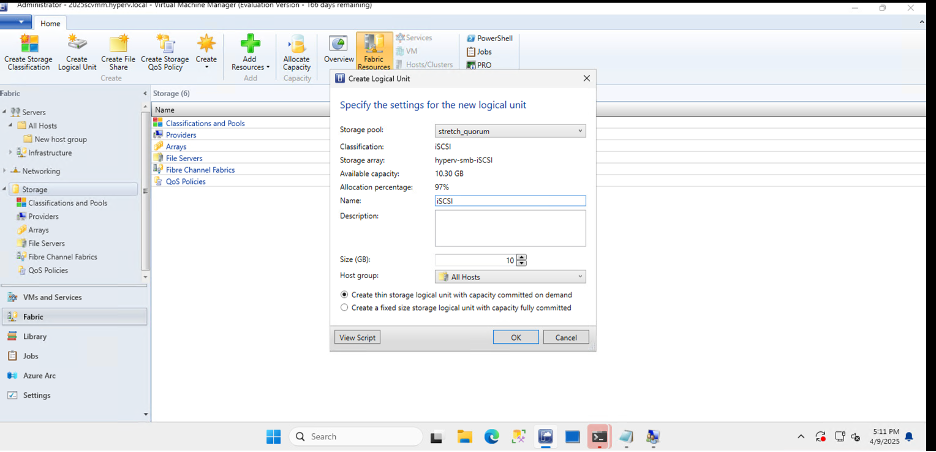
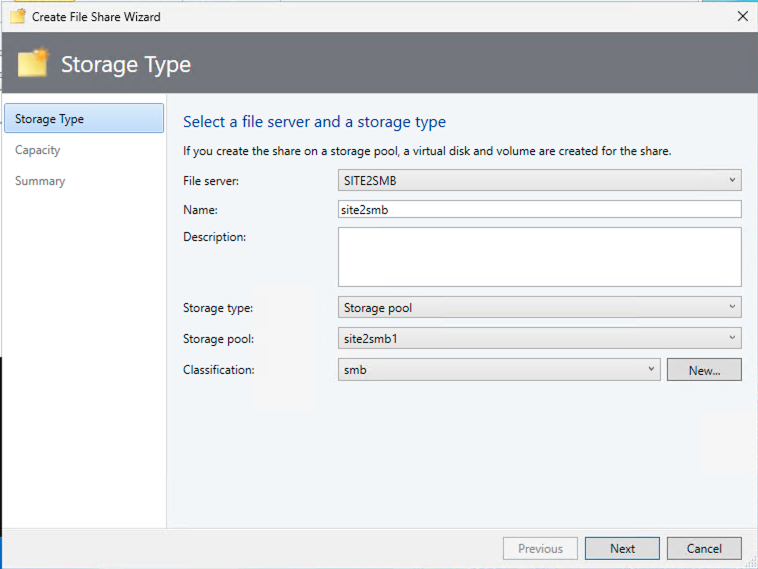 little hill
@wheat gate Just now ran across your video, appreciate the highlights and hat tips! Feel free to share those in here if you make more! https://www.youtube.com/watch?v=efd1Q6u5WGA

🚩 Zur NetApp/Proxmox Doku: https://docs.netapp.com/us-en/netapp-solutions/proxmox/proxmox-ontap.html
🚩 Weihnachtsgeschenke fällig? - https://amzn.to/3VAJN70
#netapp #proxmox #storage
Kapitel
00:00 Einleitung
00:56 Lasst uns starten
02:48 NetApp NFS und Proxmox verbinden
06:57 Active Active iSCSI Multipathing
08:52 NetApp iSCSI und Prox...
wooden geyser
very small 2 node Hyper-V cluster to run off NetApp, 30 VMs and not a lot of IO.. should we use iSCSI or CIFS (SMB3)? ..currently they have NFS4 with VMware.. prefer to keep it as simple as possible
little hill
ISCSI is always my default with anything Microsoft, especially VMs, and even more especially if you’re going to be doing any direct to guest LUN mounting.
high forum
Iscsi, but please make sure you are setup correctly with appropriate multi pathing!!!
 knotty rivet
wooden geyser
very small 2 node Hyper-V cluster to run off NetApp, 30 VMs and not a lot of IO....
knotty rivet
wooden geyser
very small 2 node Hyper-V cluster to run off NetApp, 30 VMs and not a lot of IO....
Which product will you use to manage that hyperV cluster?
Just asking
little hill
Proxmox Support Forum
We are pleased to announce the first stable release of Proxmox Virtual Environment v9.0 - immediately available for download!
The new version is based on the great Debian 13 "Trixie" but we're using a newer Linux kernel 6.14.8-2 as stable default in Proxmox VE.
Beyond the core system updates...
woeful ingot
neither of the bugs I filed for their ovf importer were fixed. :/. I guess I keep making my own importers. But iSCSI improvements alone are worth the bump.
high forum
But can it easily do iscsi boot? The last attempt was hideous
woeful ingot
That's something I haven't even attempted.
high forum
I can easily tell my dell server (in the BIOS) to boot from iSCSI. The (I think) INT13 handler does its thing and passes off to ESX and installs just fine. When I do the same with Proxmox, it just does build the "stuff" inside linux to accomodate a boot. All the help online is not geared towards the hardware I am using. I am sure I can figure it out if I get time, but rather, it should not be so difficult in 2025 to make it happen...especially with a "new" version
woeful ingot
My PVE test boxes are all the old NUCs that used to run my VMW management domain. I’ve had them booting from iSCSI before so that might be fun to revisit.
clear palm
Just a quick "rookie" question about VMWare... had a customer with a little 3 host cluster running vCenter on one of the hosts... this node ofcause had memory issues and triggered a purple screen of death... the vCenter was gone and not restarted on another host, so the HA-stuff also didn't happen for the other VMs on that host... is this the way it's supossed to "happen"? Is the only solution to this problem vSphere FT ? Or is the a way to setup VMWare so that it will startup the vCenter on another node?
...also for whatever reason the server didn't just reboot automatically, it stayed on the purple screen... is there a way to make it just reboot automatically at this point? (I realize that the server might not boot because of the faulty memory, unless it's disabled...)
robust moth
no. The vCenter should definitely restart on another node. Although it might take a few minutes until that happens because of datastore locks, timeouts, etc.
This is definitely how it is supposed to work, but I can imagine maybe the other nodes did not have enough RAM to re-start the HA VMs... have you allowed resource overprovisioning ("Admission Control") in the cluster?
robust moth
And the HA is independent of the vCenter host, so even if the vCenter didn't restart on another node for some reasons, the other VMs that have HA enabled should still restart
clear palm
Well there are actually 4 nodes in the cluster, but normally one two are powered on because of DPM is enabled... I am just thinking that when vCenter is dead and not restating, there are noone to control things... But I guess the clustering for some reason didn't restart the vCenter... because it was down for several hours... I think we have to do a few tests on this, so make sure it works
robust moth
yeah, definitely check the logs for the VMs on why they couldn't restart. There are multiple possibilities.
- not enough RAM or CPU resources and overcommitment disabled (the "slots"-calculation in the HA settings is weird, it's usually best to just disable admission control)
- Inaccessible datastores
- Communication issues between the hosts
- ...
clear palm
It does state the vCenter will try to restart the VM and not the Cluster 😉
 robust moth
check this setting

if you don't set this to "disabled", the hosts will only restart VMs if they have enough RAM and/or CPU capacity for the VMs, which can be tight in smaller clusters
clear palm
Is was/is set to disabled...
Of cause the DNS servers were also placed on this server 🙂 Which of cause causes issues... so I have now created a rule that doesn't allow them to be placed on the same host...
robust moth
that shouldn't cause HA issues though? Unless you have mounted NFS datastores via hostname or configured export-policy rules for hostnames?
but yeah, definitely check the log files (both the ESX logs of the surviving host and the vmware.log files from the vCenter VM)
clear palm
nope we use IP's (we learned the hard way) 🙂
But I guess we need to schedule a service window and simply test this again to make sure it works as expected...
clear palm
While we are at it... is there a "known" way to add new ESXi hosts to a setup with OTV 10. and SnapMirror Active Sync? When we set this up we used the OTV, and it created the iGroups etc.. now we need to add and replace some hosts... do we still need to add the ESXi hosts to the igroups? Or can OTV help us out?
clear palm
I think I figured it out at last.. you have to change the "Host Cluster Relationships"... and it then creates the new igroups for the new hosts...
Why does OTV keep on adding other datastores into the Protected Cluster? (We have a few datastores from other Clusters that are not mirrored... ) they are added automatically into the Protected Cluster causing it to go into warning state... pretty annoying
clear palm
It boggles the mind how OTV version 10 has besome so complex that it takes about an hour to upgrade... K8s cluster f... if you ask me
high forum
I always complain about how long it takes to install. That first power on can take 30 minutes
clear palm
Just attempted an update from 10.2 to 10.4... took forever... of cause failed despite following all guides to the letter... I have wasted the good part of 4 hours waiting for it to stop start and reboot...
high forum
please open a case! I am usually doing this in secure spaces and cannot upload anything.
little hill
Anyone have any thoughts they'd like to share from the VMworld Explore keynote this morning?
white scaffold
Well that sounds like crickets 🦗

 agile hazel
little hill
Anyone have any thoughts they'd like to share from the VMworld Explore keynote t...
agile hazel
little hill
Anyone have any thoughts they'd like to share from the VMworld Explore keynote t...
Interesting to hear after years of pushing to the cloud so many organizations repatriating back to on-prem private clouds?
little hill
agile hazel
I’m in Vegas, wondering why the NetApp logo is red.
One of our core brand colors is "Crimson Red." You'll see it occassionally.
agile hazel
I was just in a session and the percentage of orgs was 69%. Crazy…
agile hazel
little hill
One of our core brand colors is "Crimson Red." You'll see it occassionally.
Everyone at the NetApp booth wearing red hoodies, ready for war lol
little hill
 agile hazel
Stone cold!!
little hill
Actually, that's a photo of me looking across the aisle at the Pure booth
agile hazel
little hill
Actually, that's a photo of me looking across the aisle at the Pure booth
Yo, what do I have to do to get one of those hoodies. lol
little hill
Go find the short girl at the entry stand of the booth named Sam and tell her Nick said to give you one
I’ll be over there this afternoon and trying to get one myself
agile hazel
Sam was MIA.
 agile hazel
Lol in an AI session I’ll be down in 5.
agile hazel
Got my hoodie, thanks buddy lol.
clear palm
high forum
please open a case! I am usually doing this in secure spaces and cannot upload a...
haha NetApp support just told me to reinstall OTV 10.4 rather than trying to upgrade it... 😉 Jesus christ what a pice of ... software... I hope it will pick up the SMas configuration as I reinstall...
clear palm
I think I might have "figured" it out... I did a test (yes I have too much time on my hands) where I installed 10.2, then enabled VASA and then did the upgrade to 10.4, and it worked first time... once 10.4 was installed you can now disable VASA in the web gui of the OTV... I will give this approach a go at the customer tomorrow...
fading shard
Does your customer use vVols?
clear palm
Nope does anyone? 😉
fading shard
Well then you don't need to enable VASA. Or did I misread that?
clear palm
The problem is that on OTV 10.2 you cannot disable the VASA services, and apparently if you haven't registered it, it will fail the update to 10.4... then when you are on 10.4 you can unregister it, and disable the VASA service... strange pice of very large software 🙂 I think it's sad to see that they use CEPH as storage when they could have added a whole ONTAP Select in that space 😉 For what it's worth, 10.4 seems to have a lot of fixes compared to 10.2, and the GUI even seems faster... 🙂
fading shard
Ah, I never updated the new OTV.
Still hoping it becomes a bit more lightweight. Since vVols are becoming deprecated everything VASA related could get removed in the future.
But I guess having a redundant VASA provider has been the main reason for the new architecture. If that's gone I don't really see the need to deploy multiple OTV instances. (Never used SRM, no idea if that needs an HA-capability.)
clear palm
I did another update attempt today, after I have registered the VASA provider... ended up at the same result again... and had to revert back. So tomorrow I will attempt a reinstall and hope it will pick up the SMas setup as I add the storage clusters to the new installation....
clear palm
OK, just a little update on the OTV update issue... We ended up removing the old 10.2 plugin from VMWare and stop the OTV VM... Then install 10.4 as a new installation. This is what NetApp Support instructed us to... The 10.4 installation completed OK, and we have the plugin... yet the existing SMAs setup isn't "discovered".... we then reported this to support... after a week they have now come back to suggest to tear down the SMAs mirrors and re-configure it... to which I just told them "hell no!"... This is a production system so we will not compromise the system, just because NetApp doesn't tests their software before releasing it... yeah.. a bit disappointed
white scaffold
@wraith juniper ^ see above ^
wraith juniper
Good morning!
You shouldn't have to re-do the SMas mirrors. At least, that is not the intended behavior. You will likely have to onboard both the source and destination ONTAP clusters, then run a manual discovery from the OTV main page in the vCenter UI. Watch for the tasks to complete in the vCenter task list. Once they are done, it should see them.
As a side note, moving forward, as we deprioritize vVols and VASA, we are working on slimming down the product. You are correct, the large size and scale of ONTAP tools is there to serve tens of thousands of vVols. As that becomes less of an issue, we will no longer need to be quite so stout.
clear palm
wraith juniper
You shouldn't have to re-do the SMas mirrors. At least, that is not the intended...
Yeah we tried excatly that, and it wasn't discovered. And if you try to add protection to the vSphere cluster it cannot do it...
clear palm
wraith juniper
As a side note, moving forward, as we deprioritize vVols and VASA, we are workin...
I am so happy that I totally have ruled out vVols from day one... first time I saw it in action, I remember the long volume names of the UUID and I could only see nothing but pain in a debugging situation 😉 Glad to head that vVol is finally "dead" and you can slim down the OTV... to be honnest it also "bugged" be that if you turned off the vVol services in OTV you get a big red banner in the GUI as it something was "broken"... so at some customer I just configured vVol to get rid of that message 😉
clear palm
Long shot here 🙂 Does anyone know if there is a way to re-register the vCenter plugin with OTV 10.3 ? We have tried to do a modify on the vCenter, which didn't help... we would rather not remove it because it has associated storage systems... I seem to remember that the old OTV had a URL https://otvip/regsiter.htm or something like this... but apparently this has changed in version 10...
clear palm
Yeah I had a poke arround, but I cannot seem to find anything that will kick off the register... wonder if you could do it yourself via the MOB? I have another system where the OTV plugin is installed, so maybe it would be possible to export the records, modify it to fix the new IP etc.. and import it via the MOB... but then again, why doesn't NetApp just have this as a button in their OTV Management GUI? 😉
high forum
It looks like it is call "add" and not register
From the swagger interface -> /virtualization/api/v1/vcenters -> Adds a vCenter.
And there is a "patch" that says: Update vCenter details (json-patch) Fields supported: username, password, storage-backends, plugin_desired_version and vasa_provider
clear palm
high forum
It looks like it is call "add" and not register
Well if we look inside the OTV Management GUI we have a vCenter there already... and I think (but will have to verify with NetApp) that the "Add" you are refering to is actually this.. and I would rather not remove this vCenter because it has some storage systems "attached" with SMas configured.. and this is excatly what we are trying to retain because OTV from 10.4 and back isn't able to pickup already created SMas relationships... only from 10.5 this is possible, and only if created by 10.5....
high forum
There is also a patch function
 oblique ravine
Fujitsu delivers Proxmox support 24/7 https://www.fujitsu.com/emeia/about/resources/news/press-releases-fsas/fsas-technologies-teams-with-proxmox-to-launch-data-sovereignty-focused.html
Fsas Technologies, Fujitsu’s advanced data center solutions provider, today announced a reseller partner agreement with the open-source virtualization leader Proxmox, providing European companies an alternative for those who desire more control, flexibility, independence, and increased data sovereignty.
 orchid gorge
Fsas Technologies* 
 novel peak
Am I asking too much out of the Ontap simulator? I just want to stand them up and leave them up and use them to develop some sre tools. Seems as soon as I get them setup, a few volumes, mirrors, etc. then for any number of reasons they crash and always have a volume recovery needed.
VMWare Workstation,
Tons of Memory,
Expanded root volumes,
Added disks and extra aggregates,
Disabled snapshots, etc
robust moth
yeah they're kind of fragile. You can make the NVRAM persistent with a bootarg, it makes them slower but also more stable
novel peak
robust moth
yeah they're kind of fragile. You can make the NVRAM persistent with a bootarg, ...
they are already slow, considering all things that I am used to at work. I just need them to stay online.
robust moth
try setting setenv bootarg.vm.vnvram full in the loader
woeful ingot
That and super-size the root volume
little hill
 static zinc
When do we get Proxmox support for ONTap Select????? FPBR has been submitted.
 obtuse pecan
static zinc
When do we get Proxmox support for ONTap Select????? FPBR has been submitted.
obtuse pecan
static zinc
When do we get Proxmox support for ONTap Select????? FPBR has been submitted.
Hopefully soon, we've been waiting for it for a while now too... @everyone
 silk copper
We're also waiting for support for deploying ONTAP Select to Proxmox
static zinc
@everyone we need Proxmox support!
white scaffold
What do you need?
static zinc
we need Proxmox support!
little hill
Define “support” because it IS “supported” and all protocols are on the IMT.
If you’re looking for “integrations” like VSC/OTV, we’re still scoping what that would look like.
“Support” happened back in Aug/Sept 2024
I think what you’re after is the ability to deploy the ONTAP appliance into an LXC container via PVE
THAT is more of an integration and part of that work that’s being scoped out.
@wraith juniper can relay this feedback into engineering
mental blade
Our company have built a backup software that integrates with ontap an proxmox so you get real ontap snapshots with proxmox, and it also gives you a fast vmware to proxmox migration with mapping up vmdk files to a proxmox vm in the backup gui
https://github.com/nwtobbe/BareProx
GitHub
Backup for Proxmox on NetApp NFS storage. Contribute to nwtobbe/BareProx development by creating an account on GitHub.
robust moth
hmm.... Looks like at least the summary in the README is AI-generated 😂
mental blade
yes, som of the documentation got som "external" help.. 😉
little hill
I tried to vibe code some python to do something similar myself.
wraith juniper
Feedback received. Appreciate everyone's input.
static zinc
@little hill More than anything we want to be able to deploy from NetApp Deploy to a Proxmox host. Plan and simple deployments. Single node deployed to VMware via Ontap Select Deploy. We want to be able to do the same to a Proxmox host. Plus have support from NNetApp when we break it.
 tulip fog
static zinc
<@277739185786454016> More than anything we want to be able to deploy from NetA...
tulip fog
static zinc
<@277739185786454016> More than anything we want to be able to deploy from NetA...
Exactly @static zinc - a Netapp engineer (Sean Hatfield) we spoke to was able to get the Ontap Select VM running on Proxmox by deploying the VM from the backend (not via Select Deploy), but there remains an issue where Netapp Select Deploy won't talk to the Proxmox host as it would a VMWare host or Rocky/RHEL Host. The issue seems to be mostly adapting Deploy to speak to a Proxmox stack like it does the other "supported" hypervisors, and for Netapp to bless running on Proxmox end to end. At the end of the day, we are looking to be delivered from VMWare, not ready to pay the same amount to switch to RHEL, and Proxmox has better centralized management than Rocky KVM. Please, Netapp, please help deliver us from the cost overruns of RHEL and Broadcom. And @little hill - no interest in running Ontap Select inside a container - just a standard KVM VM.
wraith juniper
I think Select Deploy is bigger than a NiMo project. The problem with Proxmox and Select Deploy, as it always is with all things Proxmox, is they ripped out Libvirt and replaced with their own control plane. Yes, Proxmox runs on QEMU/KVM, but the peice that all the integration components talk to is missing. So, we might design something for generic KVM, Oracle Virtualization, HPE VME, etc... But it won't work with Proxmox.
That said, we are not ignoring Proxmox.
I'll talk to the ONTAP Select PM and see what he says.
woeful ingot
tulip fog
Exactly <@736659754012770405> - a Netapp engineer (Sean Hatfield) we spoke to wa...
I use single node OTS in nested virtual labs, so I automated that bringup in ansible on proxmox (without deploy) as part of a larger project to move my homelab from broadcom to proxmox. I have done manual deployment of HA pairs on proxmox so I know they can work as well. As you said its a matter of getting deploy to speak proxmox apis. Until then my main lab clusters are on Rocky. It works fine there, but I would also like to bring those hosts into the proxmox cluster someday.
Until then, please get your account teams to file those PVRs. It may feel like it goes into a void, but it documents customer demand and feeds into product planning.
glossy vortex
IMT doesnt show nfs support for proxmox 9.0 but does show nfs 4.1 and 4.2 support with Proxmox 8.4 and older
I assume this just means it hasnt been tested or validated by netapp but will work just fine? Also strange it doesnt validate nfsv3
 little hill
That validation is in the works
glossy vortex
We are preparing a proxmox proof of concept with nfs specifically in mind; looking forward to see how that goes.
Might be good for of our small client use cases and isnt a headache to manage.
little hill
I need to correct this, slightly. The current qual under way is for 8.3/8.4. I'm checking to see if we can also consolidate qual'ing 9.0. Bear with me.
@glossy vortex
wraith mica
Shift 6.0 is now available at Support Tools. AI Chat bot and Storage Manager for Proxmox VE is included as Tech Preview. Storage Manager for Proxmox VE supports NFS (Provisioning, Backup, Restore and Clone) and iSCSI (Provisioning, Backup). Known limitations are NFS DNS not supported with this tool. Need to perform discovery between the operations. Give a try and please provide feedbacks to make it better. If need Storage Manager for Proxmox VE alone as standalone (without Shift tool), it can be downloaded from NetApp Console.


 rotund tendon
I'm researching moving hundreds of vSphere 7.x VMs (NFS datastores on NetApp C800s) to Proxmox over the next year.
The Shift Toolkit looks like it could speed up individual VM migrations quite a bit which would be great.
Are there plans to add Proxmox migration (rather than disk conversion) to the Shift Toolkit?
fading shard
wraith mica
Shift 6.0 is now available at Support Tools. AI Chat bot and Storage Manager for...
Oh, sounds nice! I tried the standalone "Storage Manager for Proxmox" but whatever I'm trying I'm not able to add any ONTAP storage or Proxmox cluster. Always getting the same error. I'm able to ping without issues. ONTAP-user with admin-role, login of the user has http, ontapi and ssh applications (but I guess http is enough).
