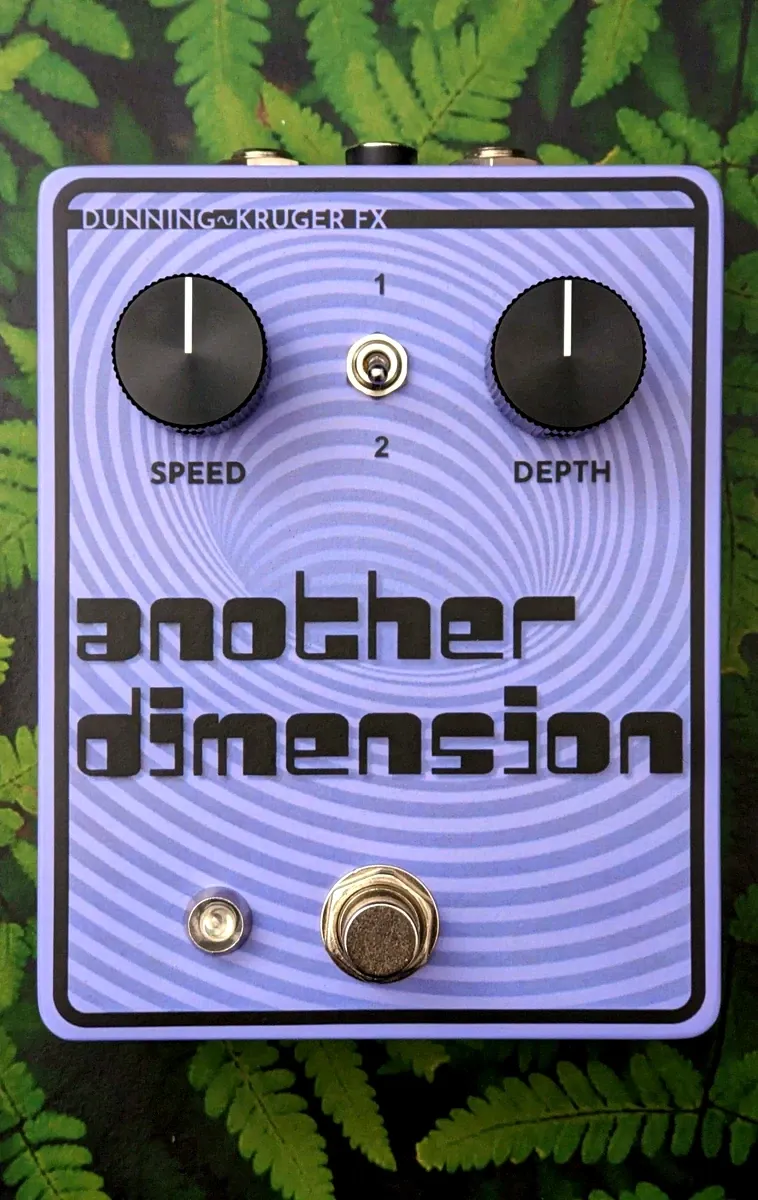
#Another Dimension
130 messages · Page 1 of 1 (latest)
 sage zenith
 viscid gale
it's here finally! yayy
(yet) another dimension
the text looks like it's floating above the background, nice effect
sage zenith
It's the most believable version of a drop shadow I've ever seen. I didn't know MS Word had it in it.
viscid gale
well now don't reveal your dirty secrets like that
viscid gale
what am I doing with my life, I should read this now.
sage zenith
I think you know the full story of it already
viscid gale
it's always better to read it on your site
oh heck there's math
do you notice ohm's law hiding everywhere in the formulas you used?
sage zenith
No, should I have? Nothing I was messing with involved current, as far as I know.
I think the mixer is still wrong. I think the reason the slapback is so strong is because there are two wet signals and only one dry signal and they're out of balance.
but that's just a guess
viscid gale
I'm curious about that line at the beginning of "the sound" about it being farther from the ideal dimension C than the P. there's no reason this can't sound the same as the P, while improving on the other aspects
viscid gale
sage zenith
No, should I have? Nothing I was messing with involved current, as far as I know...
nah, just something that might be interesting
viscid gale
sage zenith
I think the mixer is still wrong. I think the reason the slapback is so strong i...
it's easy to have the same ratio as the P or the C, as long as you keep in mind that the pelota has some gain
sage zenith
Yeah. It's something for me to think about for v2. I'll have to figure out how measure that. Or maybe put in a blend knob or something.
viscid gale
i can help with that. otherwise, maybe the delay time is somehow different but i doubt that
viscid gale
hmm I was checking the layout and I can't see well what's been done with the spare op amp half
sage zenith
The extra opamp isn't used
viscid gale
but which is it in the layout?
tying it into a buffer with a jumper might avoid negative effects
sage zenith
I'm not at my computer now. I think it's the right half on the second board
viscid gale
oh i see there's a sneaky cut, I like to decrease alpha when there are cuts under components. it should be easy to slip a jumper where the cut is, or just bridge the pins on the copper side.
can I share a no stick, rework friendly board insulation method? zip tie a piece of cardboard to the bottom of the board
viscid gale
I've listened to the demo and i liked it. I think the most important thing is that you actually followed through with the ideas i've thrown at you to the end, and that's not something that happens to me often
sage zenith
Yeah, I wouldn't have actually gotten there without the help. It sat on my bench in a non-working state for the duration of two other complete pedal builds
viscid gale
viscid gale
oh i see there's a sneaky cut, I like to decrease alpha when there are cuts unde...
consider these two tips though
not the alpha one, the jumper and not using tape
sage zenith
Yeah, the tape is easy to fix.
viscid gale
even without considering the sticky residue, you might consider pulling the ICs and fets off before pulling the tape off for whatever reason because of the static discharge it can cause
sage zenith
I'm not sure what you mean
I don't think this is static-y tape. But I'll pay attention to it just in case
viscid gale
any tape is static-y, it has to do with it being sticky
sage zenith
I don't know what this means, regarding the unused op-amp: tying it into a buffer with a jumper might avoid negative effects
viscid gale
take a piece of lead, jumper out to - and that's already a big improvement. if you want you can also tie + to 5v or vref so it's buffering a stable voltage instead of whatever it happens to pickup on +
just as a comparison, as it is now the output is randomly jumping between 1 and 8 V depending on which of the two floating inputs happens to be higher
sage zenith
Oh, ok. I can do that
sage zenith
To be totally clear, you're saying that for the unused op-amp, I should quiet it down by:
- Connecting Pin 1 to Pin 2 (output to
-) - Connecting Pin 3 to Vr (
+to stable medium power)
viscid gale
yes, and that's how you would always treat unused op amps (if they have to be unused)
sage zenith
cool, thanks
sage zenith
I updated the schematic to show the terminated op-amp. I'm not going to actually do it yet, because I'm going to have to take it apart again.
I got a hold of some of these 🫢 https://www.experimentalistsanonymous.com/diy/Datasheets/HT8970.pdf
They're pin-for-pin to a PT2399 as far as I can tell, but with less than half the ram, and supposedly will do shorter delay times
viscid gale
that's exciting. and pin compatible is nice. that part number or series feels familiar but i don't remember from where. are they cheap or easy to find? if so they deserve attention
sage zenith
They went out of production in 2020, but there are some around. I posted this on another board and someone got curious about it and is sending me a couple to try. It looks like they're $5 each in the US
 graceful dawn
Banzai have some in stock but they're SMD ones https://www.banzaimusic.com/HT8970.html

Holtek Echo Processor. DIP16.
viscid gale
hmm, the datasheet not showing delay times under 2.2k/30ms is concerning though, even if you say it has half the ram. what did the 2399 do with the same resistance? 40-50?
sage zenith
something like that
Here they are in the US: https://smallbear-electronics.mybigcommerce.com/ic-ht8970/
viscid gale
sage zenith
They went out of production in 2020, but there are some around. I posted this on...
the price isn't appealing. or if production for dip or everything? what other board?
sage zenith
I don't know, it's worth a try since this dude is sending me some
the pedalpcb board
graceful dawn
Interesting these other chips have a higher maximum output voltage
For comparison of delay times
 viscid gale
that's pretty active, I just don't like the idea of discussing an original diy project in a forum of a company selling clone pcbs. are you active on fsb? that's the only forum i know with a section explicitly for original designs
sage zenith
I'm not
graceful dawn
Looks like the HT chips use double the PT resistance to get similar delay times
sage zenith
I got on pedalpcb when I was building a bunch of their stuff.
viscid gale
graceful dawn
For comparison of delay times
hm yeah, they're very different, the 2399 is in its last legs with the vco shorted to reach 30
viscid gale
graceful dawn
Looks like the HT chips use double the PT resistance to get similar delay times
it could be worth to do linear regression on the datasheet to find the minimum time
viscid gale
graceful dawn
Interesting these other chips have a higher maximum output voltage
what does that mean? the output should be close to rail to rail and you can adjust the gain
supply is the same too
graceful dawn
The PT max output in the datasheet was like 1.5v whereas typical max output for the HT was 1.8v
viscid gale
hmm nah that's not worth much
sage zenith
You guys read these datasheets so much differently that I do. I didn't get past the first page where it said
Applications
- Television
- Video disc player
- Sound equipments
Who would want their TV or "video disc" to have delay? And "sound equipments" is just funny.
viscid gale
you either scroll looking for a number you're interested in, or skip to the tables, the pinout, the internal schematic. the rest could be interesting but only if you need to know more
so who's going to do the linear regression?
graceful dawn
viscid gale
it could be worth to do linear regression on the datasheet to find the minimum t...
 viscid gale
no no wrong relationship
graceful dawn
You want resistance to delay time rather than oscillator frequency to delay time?
 graceful dawn
Ugh fine, gimme 5
viscid gale
you're offering, i'm not forcing you
 viscid gale
woah!

 viscid gale
you had the 2399 data already? could have sent it
graceful dawn
I typed it out from the datasheet
I don't mind the practice since I can't touch type numbers like I can letters
viscid gale
i can with numpad, with the number row hell no
graceful dawn
I have a TKL keyboard so no numpad for me
sage zenith
They are wildly linear
viscid gale
the actual points bend a bit near the origin because the vco op amp saturates
sage zenith
what is the unit of the x axis? 10s of ohms?
viscid gale
kohm in the first i think
graceful dawn
And in the curved plots it's oscillator frequency
sage zenith
oh. ok
viscid gale
@sage zenith anyway the reason for the applications in the datasheet is that you can fake surround with delay
graceful dawn
Also here's your semi-regular reminder that since the clock frequency of a PT2399 is above a certain threshold you need to get it FCC tested if you're selling a device that contains one
sage zenith
I don't sell anything
graceful dawn
I'll be honest I forgot this wasn't #🌐│general lmao
sage zenith
I only sometimes make my website read like a retailer's because I think it's funny
viscid gale
it's sad that it seems like most digital black box delay chips are more expensive than bbd reissues
sage zenith
They're about the same here. Although you also need a clock for a BBD which makes it like twice as much overall.
viscid gale
you can diy the clock with various kinds of oscillators, you don't have to use a specialized ic as long as you can generate two out of phase clocks
we've seen the electric mistress doing it one way, I've seen some using a 555
sage zenith
Ah, ok. I've never tried to fully diy anything with BBD. The only thing I've ever made was a pedalpcb Julia clone, and the canned PCB uses a dedicated clock. In that case the BBD and clock were $4.39 each. The last PT2399 I bought was $3.95 and that HT8970 is $4.95. 🤷♂️
viscid gale
the only other chips under that price on banzai are the 2396 which is like a stereo 2399, and the pt2387, which is a "3d effect chip"
sage zenith
I don't know Banzai. Is that more like a place for curated, guaranteed-legit components or Alibaba?
graceful dawn
Banzai are like an EU Small Bear
sage zenith
cool
I was wrong about the 2399 prices...I actually got them for $2.40 from StompBoxParts.
sage zenith
I got those HT8970s. They definitely work, but it's not quite what I expected. It's just kind of less effect overall. If anything, I think it's less lush, not more like I was hoping.
This is off > gradually more and more effect > the big thunk indicates when I turned it down to single delay mode
 upper warrenBOT
@sage zenith has reached level 41. Congratulations!
sage zenith
I also forcibly shut down the extraneous op-amp and upped the resistor in the feedback loop of the mixer from 12k to 15k to get a little boost. It's much closer to unity now.
(there was previously a noticeable loss of volume when the effect was engaged.)
viscid gale
you still might want to adjust the relative amount of dry and delay
viscid gale
I kinda like it. longer delay times give a more lush effect, but from what we saw the HT chip can't go that low, it's still more than most chori
viscid gale
viscid gale
you still might want to adjust the relative amount of dry and delay
each delay line in the pelota is 3dB louder than the input. if you want each singluarly to be the same volume as the dry, that's the 1.4 ratio like 33k dry and 47k delay in the pelota. since you have two delay lines, you might want to halve the gain for each, making them 33k 100k 100k. then you would halve them all (and the feedback too) because 100k is where i draw the line. the happy place could also be somewhere in between, with the delay lines being 1.4x larger rather than twice. in any case, I don't think equal values would give the best results
you might think "oh but then what about the single chorus mode". you can better exploit that switch by having it move the resistor that fed the other delay line in parallel with the one you're using, which doubles its gain. if instead the optimal ratio ends up being a bit smaller, it would switch a different resistor in parallel to the delay line to compensate the gain
sage zenith
Thanks, I'll have to figure out the math. Although it's annoying to me that the math didn't work on my first attempt. In the original diagram, they were all 33k ("all" meaning dry, wet1, wet2, feedback loop) and it was distorted and/or too loud. I did math and it made it seem like the feedback resistor should be 1/3 of the others. I don't have an 11k, so I made it 12k, which I thought would give it a small (likely imperceptible) boost, but it was actually too quiet and I just had to bump it up to 15k. I don't know why that is, especially if each delay line is 3dB louder.
But yes, I've been thinking about the balance between dry and wet
viscid gale
you're assuming to sum three identical signals, which these aren't, add that's throwing off any more math you can do on it
sage zenith
oh, ok
viscid gale
I'd say the two delay lines should have equal gain, but the ratio of each compared to the dry should be either equal (considering the 3db so you need 1.4 less gain, 1.4 larger resistors) or half (-6dB) or somewhere in between (-3dB)
the important ratios are all 2 and 1.4
which thankfully can be approximated by e6 well
then you can worry about tweaking the output so it's the same as bypass
viscid gale
@sage zenith ha! here's where you stole the name from! http://www.muzines.co.uk/articles/another-dimension/11512
sage zenith
we must have come up with it independently. i was mostly basing it off the Beastie's song
viscid gale
I'm joking, it's easy to come up with
 merry dock
I just figured Chip was into psychedelics cuz you got a groovy way with words maaaan