#decode from binary to bcd to 2 display?
181 messages · Page 1 of 1 (latest)
 woven edge
 gilded condor
yes.
woven edge
gilded condor
yes.
I don't know exactly how to do it because I tried to decompose each number by adding, but of course that is too many conventions for a small size.
 peak tendon
how would you convert binary to decimal in real life?
woven edge
peak tendon
how would you convert binary to decimal in real life?
Counting
peak tendon
A smarter way
Something more efficient
Simply counting up to N in both bases is far too slow
Instead of counting with addition and subtraction, try multiplication and division
woven edge
peak tendon
Instead of counting with addition and subtraction, try multiplication and divisi...
And how am I going to represent that multiplication and division in 2 display?
peak tendon
In the displays? No you convert it before displaying
 late topaz
woven edge
It's possible?
late topaz
woven edge
It's possible?
what exactly do you want to do?
woven edge
late topaz
what exactly do you want to do?
I am making a calculator whose inputs are A and B and they are BCD
late topaz
What is BCD?
woven edge
late topaz
What is BCD?
An encoding where the highest number is 9
late topaz
Oh, why do you need that?
woven edge
late topaz
Oh, why do you need that?
simplicity to show the selected number on a display with some switches before multiplying them
late topaz
Right, and what type of display do you have in this case?
woven edge
late topaz
Right, and what type of display do you have in this case?
a 7 segment,i used a convert from bcd to 7 segment
late topaz
You can easily convert a normal binary number into a decimal one, you know?
woven edge
define decimal
late topaz
You don't know what a decimal number is?
woven edge
like 10,9 right?
late topaz
The decimal numeral system (also called the base-ten positional numeral system and denary or decanary) is the standard system for denoting integer and non-integer numbers. It is the extension to non-integer numbers (decimal fractions) of the Hindu–Arabic numeral system. The way of denoting numbers in the decimal system is often referred to as d...


 woven edge
hmm let me do some tests
but how i can i show in the display a 9 when its 100000000? with xnor?
late topaz
????
woven edge
in decimal 9 its 1 with 8 zero rigth?
late topaz
Have you played Turing Complete?
woven edge
yes
late topaz
How much computer science do you knw?
 late topaz
why are you already making a calculator?
woven edge
late topaz
why are you already making a calculator?
curiosity
 gloomy crescent
9 in binary 1001
 mellow lily
What exactly is the goal here? BCD to 7 segment display is easy
Many calculators work by storing the numbers internally in BCD and doing arithmetic on BCD numbers
Additional conversion is not required
 proven pecan
mellow lily
Many calculators work by storing the numbers internally in BCD and doing arithme...
proven pecan
mellow lily
Many calculators work by storing the numbers internally in BCD and doing arithme...
FWIW, some (older) ISAs even have instructions that help with BCD math. Like the Gameboy CPU based on (but not equivalent to) z80 has a DAA instruction, m68k has ABCD, SBCD, NBCD and 68020 and up have PACK, UNPK
BCD math can in some isolated instances be more efficient on those older architectures where every cycle may count, for instance for score-keeping, where you need to display each digit of a score 25, 30, 50 or 60 times per second and dividing is costly on that architecture. In BCD you have a simple direct correspondence between stored nibble or byte and displayed digit.
mellow lily
x86 has them too lol
 lilac citrus
Double dabble
woven edge
gloomy crescent
9 in binary 1001
but in decimal its 10^8 rigth?
gloomy crescent
No, 10 in decimal is 10
woven edge
mellow lily
Many calculators work by storing the numbers internally in BCD and doing arithme...
I have not yet found a design exclusively for BCD only binary
gloomy crescent
decimal is base 10
woven edge
gloomy crescent
decimal is base 10
And what's the point with what the other guy says because I don't understand it?
gloomy crescent
They were explaining that it's base ten and not a number with a decimal point. (which it also is, but not relevant for this context)
woven edge
aah I only put the comma to put 10,9,8... etc just numbers
mellow lily
woven edge
I have not yet found a design exclusively for BCD only binary
GeeksforGeeks
A Computer Science portal for geeks. It contains well written, well thought and well explained computer science and programming articles, quizzes and practice/competitive programming/company interview Questions.
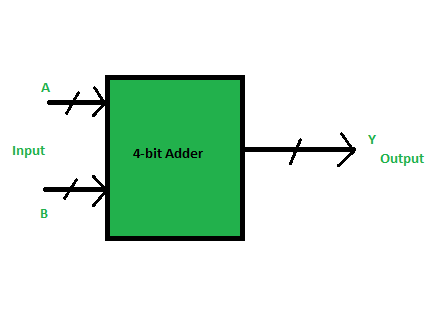
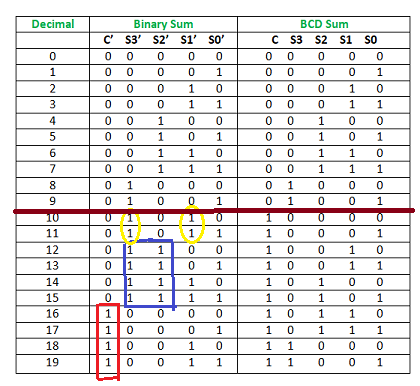
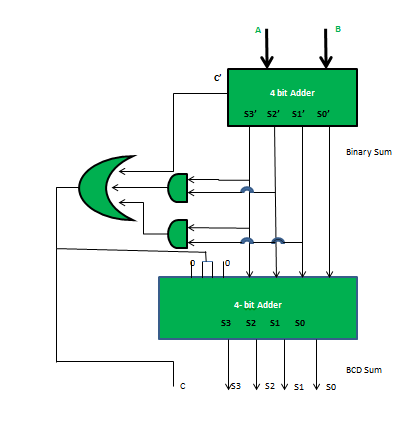
Here's algorithms for packed BCD https://homepage.divms.uiowa.edu/~jones/bcd/bcd.html#packed
proven pecan
mellow lily
x86 has them too lol
fair enough, I'm not an x86 guy at heart 🫣 But yeah, figures, the x86 architecture goes far back in time
mellow lily
the original 8086 had them* and now we're stuck with them
*presumably because it was being marketed at calculators initially, though that changed
peak tendon
woven edge
And what's the point with what the other guy says because I don't understand it?
it seems like you might not understand how numbers work?
123 means 1 * (5 + 5)^2 + 2 * (5 + 5)^1 + 3 (*index error)
for binary numbers you need to use 1+1 instead of 5+5
1 * (5 + 5)^2 + 2 * (5 + 5)^1 + 3 = 2^6 + 2^5 + 2^4 + 2^3 + 2^1 + 1 (notice 2^2 was skipped, but it's mostly a coincidence that almost all the rest were here)
changing between them is best done by multiplication and division NOT addition and subtraction
to convert 123 into binary: just keep dividing by 2
123/2 = 61 remainder 1;
61/2 = 30 remainder 1;
30/2 = 15;
15/2 = 7 remainder 1;
7/2 = 3 remainder 1;
3/2 = 1 remainder 1;
1/2 = 0 remainder 1
then just read off all the remainders backwards
1 1 1 1 0 1 1 (no remainder = remainder 0)
to convert into decimal just keep dividing by (try to guess) ||the thing you get when you do 5+5|| and read off all the remainders backwards
if your goal is to take a binary number and put it on a 7-segment display in decimal then you need to turn the binary number into a decimal number and then just pick the right lights for each digit
mellow lily
peak tendon
123 means 1 * (5 + 5)^2 + 2 * (5 + 5)^1 + 3 (\*index error)
for binary numbers y...
The irony of being so rudely sarcastic and then doing the math incorrectly 🙃
Please remember and take to heart rule 1 of the server.
Bluntness is fine, disagreements are fine, but strictly with respect
mellow lily
peak tendon
it seems like you might not understand how numbers work?
This is blatantly disrespectful, both in tone/content, and also because it seems you didn't do the due diligence of reading the thread back enough to understand the question you were answering before responding like that.
peak tendon
woven edge
but how i can i show in the display a 9 when its 100000000? with xnor?
but after reading comments like this
peak tendon
woven edge
I am making a calculator whose inputs are A and B and they are BCD
i think this was it, then?
but for BCD calculation really you have to grind it out by hand and endure the struggle
implement everything the game told you to do with binary except do it in decimal this time
gloomy crescent
That's not exactly a particularly helpful solution since they don't know how in the first place.
peak tendon
for addition it's not too awful but multiplication is rough
the first possible solution for BCD addition, to start, is just binary addition and then fix the answer if it's out of bounds (more than 9)
mellow lily
peak tendon
but after reading comments like this
He was confused because "decimal" is an overloaded word - the much more common usage is to refer to fractional numbers written with a radix point ("decimal point" in base 10) and that's a perfectly understandable confusion. Your answer to the question was unrelated.
For BCD addition, you may notice the question is already well-answered in the thread.
mellow lily
mellow lily
https://www.geeksforgeeks.org/bcd-adder-in-digital-logic/
For example here, and the next comment which also includes information about packed BCD. Repeating the same algorithms isn't helpful, though fresh contributions (e.g. multiplication?) may be welcomed by OP
woven edge
peak tendon
but after reading comments like this
When the first image you see is this one, what do you think I'm going to think?
@peak tendon As I said for me, I need to have an acceptable size
Of course I could make my own converter with Karnaugh maps but it would be impractical at a practical size....
woven edge
mellow lily
https://www.geeksforgeeks.org/bcd-adder-in-digital-logic/
This its perfect, Thanks
but i still need one with cascade output,because its maximum output will always be 19 and I need 81
woven edge
I have only found this but it is discontinued and does not have an internal diagram to recreate it just for operation

Descarga 74185 Datasheet. Tamaño del archivo: 376.64 Kbytes. No. de pieza: 74185. Descripción Electrónicos: BCD TO BINARY AND BINARY TO BCD CONVERTERS. Fabricante Electrónico: Texas Instruments.
mellow lily
woven edge
but i still need one with cascade output,because its maximum output will always ...
Yes, the carry output can cascade into the carry input of the next one just fine
That's the whole point of the carries!
woven edge
I mean to have an output greater than 19
mellow lily
Then I don't understand, since that single circuit only has outputs up to 18 (9+9)
BCD adders work like regular adders; if you want more digits~bits, you connect them by rippling the carries and it works
The carry-in to a BCD adder goes into the top 4-bit adder in that diagram, idk why they didn't include that
Do you want me to build it and send a screenshot? Might be clearer
woven edge
mellow lily
Then I don't understand, since that single circuit only has outputs up to 18 (9+...
but I need a multiplier (9*9=81)
so I don't think it will help me just to add the carry I would need to differentiate when the decimal is greater than 1
To put 2,3...etc
mellow lily
ok i'll build it, hang on
there's the circuit from the diagram

8888 + 1022 = 9910

@woven edge
if you also want to do multiplication with your bcd digits (e.g. because you want your calculator to do multiplication) then you can do it the same way you'd do it on paper - compute partial products and add them with BCD adders. Or you could convert to binary, use a binary multiplier, and convert back, but that's even harder I think.
but you don't need to do multiplication in order to implement addition
to reiterate, the suggestion here is to never use binary at all
keep all of your calculator's numbers in BCD, all the time
woven edge
Oh let me try this,thanks
I will built this
Wait because I don't know if you're making me understand, would there be any way to differentiate between units and tens to be able to use two BCD to 7 segment converters?
mellow lily
the difference between units and tens doesn't matter
I have four byte wires up there at the output, in order from left to right they have the values 9, 9, 1, 0
to convert those values to 7seg displays, you don't have to know or care which one represents which power of 10
you just have 4 7seg displays and put each digit on one of them
woven edge
hhm I think I understand it, I'm going to simulate it in Proteus
woven edge
I have already adapted it to my problem

now I can use another multiplier design that uses binary or use a sequential adder
Thanks @mellow lily
Although I will have to still investigating because I still have the same problem because if it has a number greater than 19 it does not separate the number

 tropic notch
What's the top input, that looks like a backwards c?
mellow lily
woven edge
Although I will have to still investigating because I still have the same proble...
I'm not sure what I'm looking at here but 19 in BCD should be encoded as [0b0001][0b1001] (whether those two nybbles are packed into a byte or carried around separately is irrelevant)
feeding that to two separate 7 segment decoder+displays will display a 1 and a 9
woven edge
What happens is you gave me an adder but from bytes to bcd and I tried to adapt it to bits
mellow lily
no, that adder was for BCD
mellow lily
mellow lily
8888 + 1022 = 9910
this is adding two 4-digit BCD numbers and getting a 4-digit BCD result
mellow lily
mellow lily
there's the circuit from the diagram
I'm using byte wires but you can see that the adder is completely ignoring the top 4 bits
so each "byte" wire is really just carrying a single 4-bit BCD digit
no "adapt"ing was needed
what is the value in the top left of your image supposed to be?
tropic notch
Squinting at the switches it looks like 11
mellow lily
which is not a valid BCD value
BCD can only represent the values 0-9
binary values 0b1010, 0b1011, 0b1100, 0b1101, 0b1110, and 0b1111 are all invalid
woven edge

It's my fault I didn't see the output carry and I thought I was doing it wrong but no.
mellow lily
so this output is correct then
woven edge
yes,Now I just have to investigate to be able to create a sequential multiplier.
proven pecan
You could do a matrix / ROM based multiplication for 4 bits BCD multiplier times 4 bits BCD multiplicand -> 2 x 4 bits digit product. The multiplier could address the row and the multiplicand the column (or vice versa).
It's super wasteful regarding space / number of gates, but also "instant" and simple to understand.
mellow lily
you can ignore the difference between rows and columns and just use a program component for the table
(actually you probably have to use a ROM because you can't put programs in customs for some reason, but you can flash the ROM once and then treat it like a program)
woven edge
Right now I am doing sequential multiplication
woven edge
proven pecan
You could do a matrix / ROM based multiplication for `4 bits BCD multiplier` ti...
i don´t like to use ROMs
mellow lily
why not? lookup tables are realistic
woven edge
would lose grace for me

I am making a sequential multiplier and what I am going to do is compare A and B and depending on which is smaller, I add the larger B or A times
mellow lily
woven edge
would lose grace for me
hardware isn't graceful 🙃
all sorts of "hacks" and tricks to improve performance that are not elegant
mellow lily
woven edge
I am making a sequential multiplier and what I am going to do is compare A and B...
that is not a good algorithm
you should use the "sequential" aspect to compute one partial product per cycle and keep a running total
this limits the number of cycles you take to the number of digits in the numbers
(or a constant factor, if it takes more than one clock to compute each partial product)
but repeated addition can take much, much, much, much, much longer - completely unacceptable for a calculator
woven edge

like my multiplier is not going to be result+A or B, the speed is not going to affect me so much.
mellow lily
I don't understand the image
my point is that a multiplication like 999x999 should take ~3 iterations
not 999 iterations
woven edge
it takes 2 interactions for 3*7, if the result of the first sum is greater than 6 add 6 otherwise leave the number and then the result+initial number again
woven edge
mellow lily
my point is that a multiplication like 999x999 should take ~3 iterations
I don't know if you could show me how to decompose the numbers.
woven edge
So you add the numbers in parallel?
mellow lily
i'd do it by computing one partial product per cycle
use the least significant digit of the multiplier and the entire multiplicand
compute the product of just those
add it to the running total
then shift the multiplier right one digit and the multiplicand left one digit
and repeat
woven edge
hmm let me design it mathematically
mellow lily
mellow lily
i'd do it by computing one partial product per cycle
for the record this algorithm is quite a bit easier in binary
if you want to invest in the binary <-> bcd conversions just for multiplications, that might be worth it
idk what real old calculators did
woven edge
I have not found information about multiplications with bcd, only additions with bcd
mellow lily
one digit by N digit multiplication seems feasible
multiply the one digit by each of the N digits, which gives you a bunch of 2-digit results, and then combine the results with an N digit bcd adder
so the whole multiplier should be two N-digit BCD adders and two bcd shift registers (one for the multier and one for the multiplicand)
plus some small amount of control logic I guess
 odd estuary
Im late to the party but I made a binary to 7-seg converter before

It uses the shift add-3/double-dabble algo, heres the 8bit one

add-3

 wooden spruce
Some easy way to do the conversion is, simply store the LUT into a program component
BCD to display is essentially LUT
LUT = Look Up Table
if the LUT is not that complicated, just hardcode it in whatever means you prefer
but for Binary to BCD, that require some work, but for 2 digits it's still easy to store the conversion LUT in a program component