
#Bury My Heart at Wounded Knee: An Indian History of the American West - Dee Brown
1 messages · Page 1 of 1 (latest)
 fervent groveBOT
fervent grove
### From <t:1777593600:D> to <t:1798675200:D> | Leader(s): <@208719638136225793>...
fervent groveBOT
fervent groveBOT
fervent groveBOT
fervent grove
### From <t:1777593600:D> to <t:1798675200:D> | Leader(s): <@208719638136225793>...
fervent groveBOT
@fleet loom,@tacit flume,@normal marsh,@carmine barn,@errant girder,@sand sinew,@lethal stone,@slender pivot,@frosty kernel,@late spruce,@thin tapir,@eternal heron,@rustic turret,@tardy sable,@marsh blade,@jolly flame
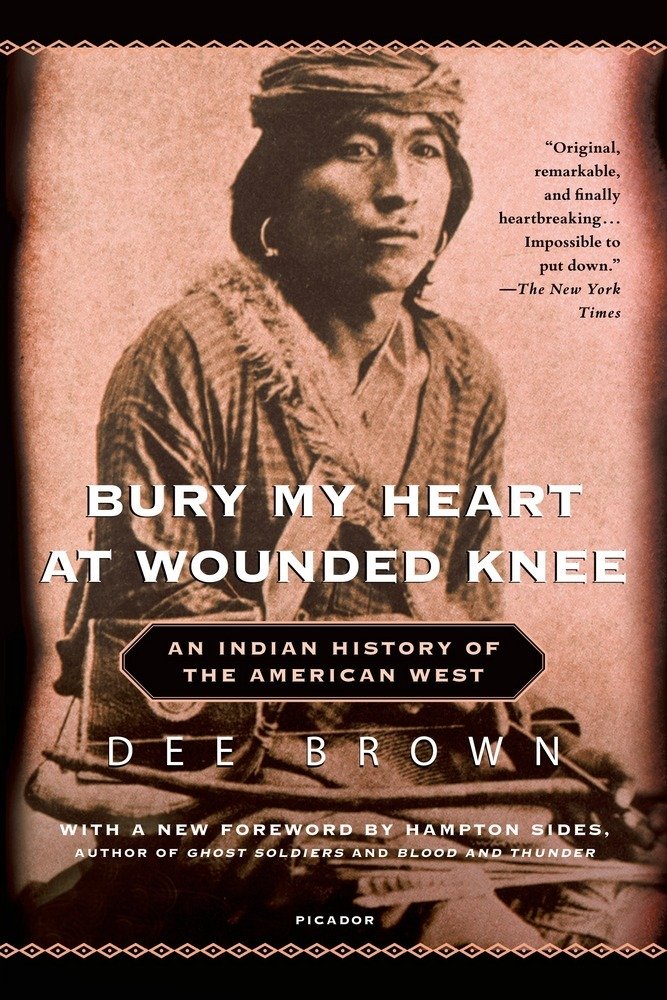
Bury My Heart at Wounded Knee
Link to the rest of the menu for this Classics Event: #classics-2026 message
Hello patrons to another Chef Gregg special. This intense course of Bury My Heart at Wounded Knee by Dee Brown is filling, but this is no comfort meal. While this book will nourish, expect a lingering bitterness. Written in 1970, this book explores the history of the American West in the time of expansion and how this influenced the Indigenous people in ruinous ways.
⪼------➢
Dee Brown, a white Southerner born in Louisiana, was a renowned historian and novelist. While not of Native heritage, his work for Bury My Heart at Wounded Knee broke ground due to having a platform that most Native authors didn't. This book was published in 1970, right at a time when the American Indian Movement was making white readers keen on a narrative that showed the truth of history. While this book has had criticisms in its time, it's impact still remains profound even today.
"The whites made us many promises, more than I can remember.
But they never kept but one; they promised to take our land, and they took it."
The title of this work comes from the poem American Names by author Stephen Vinvent Benet. While Benet's poem often served as a nostalgic mourning of the American frontier, Brown takes the line and reframes it to the perspective of the loss of life that that romanticized frontier holds. Benet's poem is a love letter to sharp and poignant American naming conventions, whereas Brown reminds us that Wounded Knee was the scene of a massacre—the death of nearly 300 Lakota, where children were slaughtered and US soldiers were awarded Medals of Honor.
There was no longer a frontier—only fragments of tribes.
⪼------➢
fervent groveBOT
fervent grove
## Bury My Heart at Wounded Knee
Link to the rest of the menu for this Classics ...
 errant girder
and the rest due to Gregg silencing me:
As a reminder, to be eligible for BR points you must offer meaningful discussion and read the book in full within the time frame. Please mark spoilers with || on either side and don't forget to check the CW/TW if needed. 🤍
And some discussion questions to get us started:
• When you think of the American West, what images come to mind? Where do you think these impressiosn came from?
• How much do you think the author's identity matters when telling historical events? Both for this book and others overall.
• What do you think makes a difficult history worth reading? When reading tragic and heavy material such as this, do you think it is important to lean in or distance yourself from it?
• What feelings or expectations does the title Bury My Heart at Wounded Knee evoke for you? What do you think the title suggests about the book?
errant girder
errant girder
and the rest due to Gregg silencing me:
As a reminder, to be eligible for BR po...
 tardy sable
- I think one thing I think of about the American West is the gold rush. Or (more midwest) cowboys and ranching / interactions with Native Americans. I think some of this is based off the amount of attention that was given to these topics during the time. As well as romanticized stories.
- I think an author's identity is definitely important when it comes to the retelling of historical events. However, I feel that it is important for these types of the books that the author is as impartial as possible. In some cases, books can drift towards biases that can skew the reading.
- It is important to read history to better understand how events came to pass as well as better understand different people and their struggles and triumphs. With tragic/heavy reading material, you have to do what is best for you. Leaning in or distancing from the topic is super dependent on the person and how well they handle the subject matter.
- I have an expectation of being sad and potentially upset as I read through this. The title seems to suggest that a devastating event happens at Wounded Knee, thus the 'bury my heart.' Which I think is where character(s) are heartbroken in some capacity.
 fleet loom
errant girder
and the rest due to Gregg silencing me:
As a reminder, to be eligible for BR po...
fleet loom
errant girder
and the rest due to Gregg silencing me:
As a reminder, to be eligible for BR po...
• What do you think makes a difficult history worth reading? When reading tragic and heavy material such as this, do you think it is important to lean in or distance yourself from it?
it's important to learn any history 100% no matter how painful it is for sure
 lethal stone
• What do you think makes a difficult history worth reading? When reading tragic and heavy material such as this, do you think it is important to lean in or distance yourself from it?
What makes difficult history worth reading is that it tells us the story of the people who went through such sufferings and whose stories are still hidden/buried somewhere out there, waiting for people to be heard and tell everyone about the unspeakable crimes that were committed. As for, leaning in or distancing yourself, it highly depends on how much comfortable one is with the subject matter that is being told. One could lean in one part of the story but might have to distance themselves for the other since it just hurts so much
• What feelings or expectations does the title Bury My Heart at Wounded Knee evoke for you? What do you think the title suggests about the book?
I think the book is going to make me very sad and very angry

 jolly flame
errant girder
and the rest due to Gregg silencing me:
As a reminder, to be eligible for BR po...
jolly flame
errant girder
and the rest due to Gregg silencing me:
As a reminder, to be eligible for BR po...
- I think of Westerns (film) - so lots of desert land, saloons, cowboy hats, and gun duels.
- It depends on the content and intention of the book. Ideally yes, it would matter. However, I think it's important to note that not everyone is/was able to have a voice (especially back then). The first thing that comes to mind is author Tony Hillerman who wrote a lot of (mystery) books featuring Navajo characters and their customs, but he wasn't Navajo or even Native American himself. He did seek to be as accurate as possible with research and reviewing with his Navajo friends. Some people criticized him for being a white man using the Navajo culture to his benefit - but you can't deny that he's also given them a voice and representation in a society that doesn't.
- Back to point #2 - Not everyone is/was able to have a voice (especially back then). There's so much of history that we still don't know and may never know, and that's what I think makes it worth reading. I usually don't veer towards heavy or tragic material, but I also want to learn more and educate myself in this case.
- I'm expecting a lot of grief and anger.
tardy sable
Starting!
tardy sable
Chap 1
||I feel like this was a pretty concise overview of the history prior to 1860. Even so condensed, it isn't any easier to read about the betrayal of Native American hospitality and subsequent pushing back to shrink the land they have access to.||
tardy sable
Chap 2
||This chapter both saddened me and made me angry. The zeal that the Americans had to force the Navaho from their lands was unsettling. The audacity of white men being "better" than everyone else riles me up every time. The Navaho are treated so poorly and forced to a place that isn't viable to survive. Those that held out for as long as they did should be lauded.||
tardy sable
Chap 3
||More heartbreak here. It's so upsetting to see the Sioux struggle so much because American's pushed fraudulent treaties on them and never held up their side of things. The scuffles and fighting by the Sioux seemed to have a decent impact, but not a big enough one to turn the tide to help them. Also, the farce that was the trials against the Sioux was terrible. Lincoln pushing back on the number to execute was nice to see, but not nearly enough. This is so frustrating to read.||
tardy sable
Chap 4
||Black Kettle definitely tried his best to keep the peace between the Cheyenne and Americans. There even appear to be a few good men among the Americans, though their attempts at aiding in peace talks were quickly pushed aside. It is devastating to watch as these tribes strive for a happy and contented life but are thwarted at every turn.||
Chap 5
||I wonder how different things would have been if the Native Americans had better weapons closer to what the Americans have during this time. The outcome may still have been the same, but perhaps not.||
tardy sable
Chap 6-11
||Watching all of these disagreements and battles over the course of a few handfuls of years is pretty wild to comprehend. The back and forth between the peoples is brutal. On top of that, they are losing their land as well as the source of their livelihood (farming, hunting).
It is also difficult to see laws passing that consider blacks to be “equal” but not Indians. I can’t fully fathom the thought process here.||
tardy sable
Chap 12-14
||The fact that these white men just keep breaking promises and just plowing over the natives to get to the mines is abysmal.
Trying to get to Canada in this time period seems like an arduous task. Especially when you factor in race.||
tardy sable
Chap 15-19
||The cycle continues as we see how the white Americans treat the Native Americans. They continue to lose their land and their lives. It's no wonder that they reacted to the genocide the way they did - by fighting back. For so many (like Sitting Bull) to do their absolute best to be peaceful only to end up caving in to the demands of the white Americans and their brutality is so devastating.||