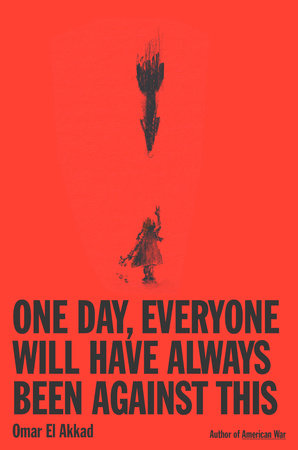

#One Day, Everyone Will Have Always Been Against This - Omar El Akkad
1 messages · Page 1 of 1 (latest)
 bright finchBOT
bright finch
### From <t:1754784000:D> to <t:1760054400:D> | Leader(s): <@658000195627515984>...
bright finchBOT
bright finchBOT
bright finchBOT
bright finch
### From <t:1754784000:D> to <t:1760054400:D> | Leader(s): <@658000195627515984>...
bright finchBOT
@young robin,@kind heath,@sly saffron,@shrewd viper,@reef finch,@foggy pelican,@digital rose,@woven wasp,@iron elm,@serene rampart,@neon nimbus,@modest thicket,@crisp parrot,@ashen atlas,@sly chasm,@gusty yoke,@formal trench,@timber atlas,@sly fulcrum,@lusty wren,@sonic tree,@autumn cape,@pure spindle,@lament nest,@silent basalt
 young robin
welcome to this buddy read of one day, everyone will have always been against this! 
 cws & tws: ||genocide, war, child death, islamophobia, racism, colonisation, hate crime, police brutality, suicide||
in order to get reader points, read and meaningfully discuss the book during the br timeframe and don‘t forget to properly label and cover your thoughts with spoiler bars. check out what meaningful discussion is here: #faq message and you can cover your messages with spoiler bars like this -> || message ||
according to the description of the book, it is a reckoning with what it means to live in the west, and what it means to live in a world run by a small group of countries—america, the uk, france and germany.
remember: please keep all political commentary in the context of this book only. this is not a space for political debates or discussion that stray from the contents of the book.

 if you are from one of the aforementioned countries above^, how do you think living in, or being a citizen of, those countries have benefitted or disadvantaged you? if you don't, how has not living in, or being a citizen of, those countries benefitted or disadvantaged you?
◟ let's keep discussion neutral and respectful, please. keep in mind that for a good chunk of the world, your nationality and where you live in, and which country you were born in is pretty much a lottery.
do you think that on a global stage, some lives are “prioritised” more than the other?
when do you plan on starting this book?
 digital rose
question time!
- I live in Germany, I grew up here, have German parents, a German passport and am white af. I think that has benefitted me a lot. To be able to live in a peaceful country, I dont have to worry about a war in my city. We are a rich nation, and I think a lot of that is on the back of other people. Whether that is other nations or calling for guestworkers from Turkey and Vietnam in the 50s/60s for them to do our dirty work, but treating them like shit. I absolutely think that my voice as a white German is louder on the global scale than the voices of people from other nations. I grew up with people looking like me, living like me in the most popular media. I have never been proud of this country, since it is a lottery where I was born, I didnt do anything for it. But I would not want to change it either. Healthcare, peace, a strong passport... of course all of that shapes the way I think. But I am well aware that we dont live like that because we are just "working harder" than others. I think a lot is the result of ongoing exploitation, and nowadays, more and more isolationalism.
- oh absolutely.
- as soon as I get it? I got other brs I want to read first.
young robin
◟ i'm not from one of the countries mentioned above and yeah, i do feel it everyday. first off i think the very basis of my country is already setting it up for failure. thanks to dutch colonisation ( ) my country was essentially set up to be part of a company and not a kingdom. we didn't speak dutch and we still don't but my neighbours who were colonised by the brits for example speak english. they didn't think of us as part of their kingdom but just a piggy bank in a sense. so when we got independence—nothing really changed. the business was just passed onto different but still greedy politicians. and i hate it here. i wish we were a country that wasn't created on the basis of making a few people rich. my passport is pretty weak (high unemployment rate, shitty economy), and the moment that i got whiplash and sort of realised that the world was unfair and bad guys don't always get what they should get is when i sat in the dutch embassy about to apply for a tourist visa and on my lap, i had documents all the way from my grandma's birth certificate to my report card just so i could eat stroopwafels in amsterdam
  meanwhile just 70-ish years ago i have family members fighting off these dutchmen and the royal family that they serve because they were colonising here but who cares Lol, now they are the "civilised world" and we are just greedy backwards immigrants even though most of the gold and wealth that they have came off of the backs of my people's suffering and our natural resources being exploited
◟ yeah, i think recently this has become even more evident
◟ september! i dont have money to buy it right now
 serene rampart
- I’m from the UK and now live in Australia, and am not white; the short answer to this question is it was easy for my family to emigrate to Australia based on the UK being my birth country, and one of my parents being born in a country colonised by the British, though ironically moving away from the UK also meant no access to one part of my heritage (and a lot of extended family).
Universal healthcare and fairly accessible education is a privilege I’m forever grateful for and have access to due to my citizenship status, but it was tremendously lonely growing up in Australia, white Australian poked fun at me for my (British) accent and for being a person of colour. Also, when one considers what indigenous Australians have had to live through - and still live through - it is also important to note that again, I have access to and often occupy spaces which I feel I don’t fully have the right to.
My other parent is from a country which was colonised by the Spanish, as well as by the US, and I think that because that parent wasn’t (isn’t, really) able or wanting to interrogate the damage of both those legacies, it also meant growing up in an environment with people who resemble their oppressors? I’m extremely grateful to having spent time living there (the Philippines) too as it taught me from an early age that even what the first world considers ‘poor’ for themselves is…sometimes not quite accurate (I hope I’m being sensitive in say that - the definitions of poverty for the developed and developing world I’m using are still quite reductive).
I don’t think my sense of loneliness or alienation, or even disconnection from my heritage can be considered a true disadvantage, though it’s something which quite early on affected my mental health (or lack thereof, sigh)
dear god, i am SO sorry that first answer was so long 
-
Absolutely; this is reflected even in what gets chosen to have news coverage, even down to what news outlets we have access to and who owns them.
-
I’ve got a few BRs I’m in the midst of but hoping to start in Sept - earlier if I’m able to!
young robin
no thats okay! its why i asked this question—this book is about what it means to live in the western world as a poc and living in a world where the west seemingly dictates and controls everything so i wanted to see what your personal experiences were. and mx, i completely get what you mean about people ending up being like their oppressors 
serene rampart
young robin
no thats okay! its why i asked this question—this book is about what it means to...
tysm seriously, you lot are all so lovely and i really value that you allow these conversations 
young robin
of course! in the context of this book i think this kind of self reflection is important. glad to hear your story mx.
young robin
young robin
◟ i'm *not* from one of the countries mentioned above and yeah, i do feel it eve...
also i'm not white either, i'm chinese-indonesian. being a double minority (religious and ethnic) in a country that is not even nice for its majority population is a different kind of sword in my chest.
 silent basalt
 i was born in pakistan and then we immigrated to the UK when i was 10 and honestly the most jarring things for me were the history lessons at school; in pk the content was the british rule in the indian subcontinent and the independence of india/pakistan, how our grand and great grandparents and families were distressed bcz when the border was announced ppl had to find ways to get to the right side, and how cruel the british were to us, but when i was in the UK history content was the middle ages, the holocaust & only the american side of the slave trade -- the other jarring thing was having to stand and observe minute's silences for soldiers of a war more than 100 yrs ago now, yet not acknowledge how many of those soldiers were from colonies
living here has rly disillusioned me; ppl in pk love the UK but living in both places i feel very at odds with it all  ive lost my mother tongue so much (i can only communicate at an 8 y/o's level), im so far away and out of touch from my family but in the little things i have internet, hot running water, electricity that doesnt run out and i have formally recognised education and qualifications but also like who decided what gets formally recognised and what doesn't, y'know? when my mom wanted to study at university, she had to restart from high school, because they dont recognise her pakistani education
all in all i feel like ive gained opportunities but ive lost all sense of self, bcz those opportunities come from and are controlled by people who once ruled people like me, people from my very family even, a few generations back
 it has always been plain as day in my opinion, but more and more people see it every day
 my library says it'll be available in october (cutting it close) (
 )
)
young robin
damn. i thought they would at least have the balls to teach their descendants what they did to other people. guess not
silent basalt
young robin
damn. i thought they would at least have the balls to teach their descendants wh...
they just straight dont like to even think about any bad part of their past like i literally just finished reading a book about how the british empire affects modern day britain itself, it was really so interesting and one thing they said, which ive seen and felt first hand is that the thing w britain is that first they think theyre the best in the world e.g. not using the euro even when in the EU and second, if anyone even hints at looking at the challenging side of british history e.g. participation in the slave trade then they get dogpiled on and labelled "anti-british" 
young robin
silent basalt
they just straight dont like to even think about any bad part of their past like...
jeez. i also recently saw something about how a woman went on tv to say british colonialism was a good thing. i feel like because colonialism brings power and wealth a lot of countries just turn their eyes off to it.
silent basalt
young robin
jeez. i also recently saw something about how a woman went on tv to say british ...
yeah, we're heading in or i guess its more catapulting in a direction where its like getting more ok to say "actually all the bad things we did were good" and its so scary like every day i feel more unsafe living here 
serene rampart
i'm currently reading #1393145403276267530 and just earmarked a page where one of the characters says that the great contradiction of colonialism is it's built to destroy that which it prizes most, which seemed pertinent to the above conversation, thinking about Brexit in particular
young robin
silent basalt
yeah, we're heading in or i guess its more catapulting in a direction where its ...
jesus thats maadddd 
 timber atlas
Questions!
-
I am from one of the countries mentioned above, specifically the US. As a white person who grew up within the middle class, I can definitely say that I have had a lot of privilege here in the past. I still have a lot of privilege. I have not and will not experience the same amount of discrimination as people of color here do. However, I am a queer person living in the American South. As a gay trans man, it has been terrifying as of late to be here in the wake of the anti-trans laws being passed left and right. I did try detransitioning at one point for various reasons, and that didn't make me feel any safer. So while I can definitely acknowledge the privilege I've had, I can also acknowledge that I am currently in a bad place in this current political climate, as well as the fact that, as a white person, I still have it easier than many others.
-
Absolutely. This is something that is seen across milennia, across wars, so on. Humans, in my opinion, are inherently selfish, and compassion is something that is often learned.
-
I have a hold on this book on Libby, so hopefully that comes in before the end of the BR! If it doesn't, I plan on purchasing a copy of this myself
 gusty yoke
- I am not from the countries mentioned. I am from a country in Asia that is not considered a country by the rest of the world. Technically we are always in constant threat of war, and act as a pawn piece for the USA. I don't live there a lot, because my father works as a diplomat, so for most of my life I travel and move around the world, trying to convince others of my identity and try to befriend others who will speak up for us in the UN or other international organisations. I'm not allow to carry my flag in a lot of places which is especially disappointing when its our national day. However, I do recognise that where I'm from, life is actually pretty good. The economy is not bad and even if the world doesn't recognise us we still do a lot of trade with them, especially in tech. (A bit funny that other places, especially the Western globe will only want to be associated with us when they want something)
- I definitely think that on a global stage some lives are prioritised. From my understanding, I would assume its because of colonisation leads to continuous power even after colonies are all independent/"independent" .
- As soon as the buddyread starts, I really want to put this book first on the list, particularly because of the relevancy of the topics that will be mentioned. I hope I can also finish it asap, but I don't read nonfiction a lot, so it might be a bit heavy for me to consume all at once.
 sly fulcrum
-
I was born in Australia as a person of colour, and we've adopted the same Eurocentric values as the mentioned countries, and unfortunately also bear the same mark of colonialism* (no surprise given it was once a British colony). That also means there is a big question mark about how Australia treats and has treated minorities, people of colour, and Indigenous races. I will say however, that despite the media's constant attempts to shove people into this "us vs them mentality", from someone who lives in Sydney, I'd say we have a dearth of thriving multicultural communities and representatives, and the average Aussie will just look at you funny if you think this country wasn't built on the backs of immigrants. Though not perfect, the standard of living and healthcare for an Australia is quite decent, and I've never really considered living anywhere else. Our politicians and governments are usually milquetoast at best, preferring to maintain the status quo then pursue any radical change to it, whether good or bad. The general voting bloc of Aussies also seems to reflect this, although it always feels like this country could be on the brink of being pulled in radically different directions due to the government's delicate balancing act with US-China relations as well as media manipulation and fringe parties trying to become the majority.
-
Yes, and I think social media especially in light of recent global events has not only pierced the veil on the façade of equality, it's completely torn it to shreds. People are scratching their heads as their governments who were once proud advocates of human rights have shown themselves to be complete hypocrites.
-
Probably very soon. As I'm planning to read 4 BRs including this one, I am living on borrowed time before a huge reading slump comes and knocks me out for months as it usually does

*when i refer to colonialism I don't necessarily mean a country being colonised, but also whether that country has also been responsible for colonising other countries
 sonic tree
-
if you are from one of the aforementioned countries above^, how do you think living in, or being a citizen of, those countries have benefitted or disadvantaged you? if you don't, how has not living in, or being a citizen of, those countries benefitted or disadvantaged you?
- born and raised in the US and while it's beneficial in terms of resources and access to resources, it's also so divided in processes and how to serve it's own people. the access to resources vary on location because it trickles down from federal/national to state level and it can be jarring to visit a different state (or even city) because the differences can be massive. i live in a state that's relatively populated with a decent education system and has a some community programs/activities (on a scale, it's in the middle), but i travel to a different state and suddenly none of those things exist (the low end of the scale). I travel to a another state and it's densely populated and all sorts of things exist (the high end of the scale). i think there are lots of opportunities available, but it also feels that they're only available in certain areas. so in a nutshell, living in america feels like a double edged sword. i could also go into a whole spiel about systematic racism and socioeconomic mobility and how that also plays a role but we can save that for later lol
-
do you think that on a global stage, some lives are “prioritised” more than the other?
- 100%. it feels like some lives are worth more to save, and other lives are worth pitying and "hoping to save". there's always a little bit of racism too whether consciously or subconsciously
-
when do you plan on starting this book?
- once i get my copy! I currently have a hold in my library so i'm hoping to get it soon ;n;
young robin
currently reading:
finished: evet7070, fribbitgua, pauliney, radhauswife, mxpixieears, mypilot, hryhorivna, vetrina, ctrlaltmerdel, ulyssesthetrying
 iron elm
questions:
-
living in the US has meant i never have to think about travel visas hardly, and political issues from my country will be known around the world. I never knew for a long time that people from some countries have to go through a long process just to visit other countries.
-
yes, non-white lives are deprioritized completely
-
i already started it a couple weeks ago when I got my book off library hold ... I'll share my notes so far soon
thoughts from 46% ||the juxtaposition of passages mentioning South Africa's action and the Middle East's inaction, mentioning that Palestine's neighboring countries are lead by corrupt governments and don't gain anything politically from taking real action against Israel... although not said explicitly, this helped me contextualize South Africa's involvement as something that is not only enabled by fresh memories, but something that is politically important for South African politicians to care about. the democracy is functioning well enough for leaders to listen to cries to protect democracy. maybe they know there will be political consequences to inaction||
thoughts from 66% pg 124 ||I liked this point ... that the fact that people feel like they have to vote Dem so that they don't fall into fascism is not really a democratic choice. and the point he made earlier about how functioning democracy isn't like spectacle... it's voting on public policy and infrastructure issues people spent years studying ||
 autumn cape
young robin
welcome to this buddy read of *one day, everyone will have always been against t...
autumn cape
young robin
welcome to this buddy read of *one day, everyone will have always been against t...
-
I live in the US and I have a rare disease, so the thing I think of is medical care. I know that there's a lot of problems with our for-profit medical system (and I support universal healthcare), and general treatments and care are usually about the same as other western countries. But with my rare disease, the US leads with treatment options and doctors who specialize in the disease. You just gotta hope that your insurance pays for all the costs or you're gonna be in a lot of debt 🥲
-
Absolutely. We see time and time again that "poorer" nations or nations with majority non-white citizens are treated as expendable.
-
I assume it'll be in September, but who knows lol
young robin
iron elm
thoughts from 46% ||the juxtaposition of passages mentioning South Africa's acti...
awesome :D but for br points you need to have started and finished during the duration of the buddy read 
iron elm
young robin
awesome :D but for br points you need to have started and finished during the du...
oh I didn't realize, I guess I'll leave this one!!
young robin
iron elm
oh I didn't realize, I guess I'll leave this one!!
no no it's okay if you'd like to stay and give your thoughts and discuss! you just won't be getting points  you can restart too if you'd like!
i haven't started the book yet but i'm already itching to open up your spoilers and thoughts haha i'd love to hear as many different povs on this as possible
sly fulcrum
Prologue/She is fog-colored when... (this part didn't really have a title): || *“As the men carry the girl of out what used to be her home, she asks if they’re going to take her to the cemetery. One of the men says, Mashallah, mashallah.” * ||
|| Okay so I know that Omar has talked about the literal meaning of MashaAllah as well as its meaning as an expression of joy, but I think it's worth mentioning that the word can also be an expression of astonishment, wonder, or admiration. In the context of a girl asking whether she is going to die, I thought it was worth mentioning the other meanings attached to the word as "expression of joy" in this context may be confusing to some. ||
Chapter 1: || *“…an assumption, in hindsight, of virtuous resistance as the only polite expectation of people on the receiving end of colonialism.” * And part of this assumption is that those resisting are on equal footing with the colonial powers attacking them. Acts of resistance are labelled as disproportionate, and inhumane, while acts of colonialism are justified or considered civilised.
And the irony is that it's the colonial powers themselves who are acting as the judge of their own acts and that of the resistance. It reminds me of a saying I've heard being used to mock how irrational this dynamic is: "We have investigated ourselves and found no wrongdoing." ||
|| *"expat" is largely reserved for white Westerners who leave their homes for another country... When other people do this, they might be deemed "aliens" or "illegals"... *
It's scary how much I can relate to this  I've never really heard the word expat be used in the context of brown migrants ||
Ch 2: || "Jettisoning the requirement to report news in favor of inciting the rage and fear and hatred of your audience....is a perfectly functional business model." Yeah honestly I hate how sensationalist many media outlets have become these days. And with how dominant short-form content has become, it's become a game of trying to generate as many clicks with the lowest amount of buzz words possible to capture our attention spans. ||
|| "Civilian victims aren't ordered by their interviewers to performatively condemn groups with which they have no affiliation." I remember seeing some of these instances on the news, it was outrageous ||
|| Loving Omar's takes on integrity in journalism so far. In other books I've read on Israel-Palestine it does get covered, but not nearly in as much depth. Here, it feels that he's really digging into why journalists act and write the way they do ||
Ch 3: || As Omar talks about the atrocities in Gaza, I can never get used to the fact that these aren't just words in a book making a claim, these are atrocities which have been livestreamed on social media for the world to see. I can't recall the amount of times I've seen it show up on my Insta feed, and it's incredibly depressing. ||
sly fulcrum
|| "And then I watch former vice president Mike Pence write messages of support on the side of bombs." Yeah honestly, writing messages on bombs and being happy about it has to be one of the weirdest things I've ever seen. It's not even about political allegiances, but like as a human being why are you so happy being affiliated with something inherently violent and destructive ||
gusty yoke
ch1
||I didn't expect this to read more like a memoir, I thought it would be more about giving historical context and political commentaries.
p.12: regarding "expat". I moved to the Netherlands around 3 years ago, and I first heard of this word being used in an adult Dutch language course. I was the youngest in the course and I thought it's just another new English word, but then I realised that those people hate being called the word immigrants and very much prefer being called "expats". As if it's any different? Both move to another country and live/work/pursue education there for a long period or permanently. I hate the word expat now because of this realisation.
p.14: "It is a hallmark of failing societies, I've learned, this requirement that one always be in possession of a valid reason to exist." The follow story of how Omar's father was harassed and how it led to leaving your home despite your love of it resonates with me. I don't plan on moving back home ever I think, I'll visit of course, but my westernised values and looks will always prevent me from fitting in. The political situation will always drain people mentally and physically, so I know that it's safer to love my country from a distance. ||
ch2
||It feels weird to say that I'm enjoying the book so far, but it's very thought-provoking. I'm full of rage and honestly depressed about reality.
The part where 108 Palestinian journalist were killed and the example of Wael Dahdouh watching his family die but going back to reporting the next day broke me. I can't help but wonder that if the journalist stopped and focused on grieving, how much more blind will the world be of the genocide?||

 sly fulcrum
Ch 3: || *"the unsaid thing is that it is all right because that's what those people do, they die." * I remember Plestia Alaqad in her book The Eyes of Gaza also voiced her frustrations about the media's unhealthy obsession with deficit framing Palestinians such that we come to define them not by their achievements or life experiences or anything remotely positive, but by their suffering and death. A university student with hopes and dreams suddenly becomes "137 dead in latest airstrike." ||
Ch 5: || Reading this chapter makes me want to tear my hair out, not because I disagree with Omar but because he's right ||
ch 8: || "because the soonest this book could go out into the world is the following year, and the situation will almost certainly be different then." So true I think Omar wrote this book last year, when Joe Biden was still president.
The situation's changed so much since then that I think any book that attempts to talk the circumstances in Gaza and Palestine in general after 2023 will always seem historically outdated. But it's nice to have a grounded book on these events without all the noise of social media and misinformation. ||
|| And as a reader, I think what interests me is realising that whether you go 50 years into the past or future, Omar's discussions on Western liberalism would not feel dated. Add or take 200 years, and people would still understand his critiques of colonialism. The patterns of injustice have persisted over time, but the medium in which they are presented which has changed. ||
sly fulcrum
Ch 9:
|| re: the us vetoing ceasefire resolutions at the United Nations
The UN’s idea of giving a select few nations the power to shut down decisions made by the collective majority is something that I’ll never quite understand. ||
gusty yoke
ch 3, 4, 5
||p.59 "the argument in favor of voting for the lesser evil is frequently made in good faith, by people who have plenty to lose should the greater evil win. But it also establishes the lowest of benchmarks: want my vote? be less monstrous than the monsters."
I hate politics because of politicians. I haven't gotten the chance to vote yet, because I always live abroad, but every election I see how it breaks my family apart. They say its about what these parties and politicians can do for us, but really it's about what will they not do to us.
p.71 " of all the aftereffects of the war on terror years, the most frequently underestimated is the heightened derangement of language for the purpose of sanitizing violence."
Death become just a statistic or written as if its bad weather forecast.
The media wants us to understand but also don't want to scare us, but we should be scared and we need to understand. ||
sly fulcrum
Ch 9: || This idea of presenting negative participation (e.g. boycotting) as a more effective means of resistance to a system more used to responding to active participation is quite interesting. It’s a stake driven at the heart of the system rather than its mouthpiece. Governments need funding. Armies. Corporations. Politicians. Taking that away represents an existential threat to the source of their power ||
sly fulcrum
Ch 10: || I think it’s a powerful gesture to end the book with examples of people who demonstrate humanity, who rise above self-interest to help others. imo cynicism can only go so far before it becomes beneficial to the unjust systems. These systems of power count on defeatism, apathy, and people becoming so disillusioned to state-sanctioned injustice that they just go along with it. ||
Anyways, I’m finished  || I appreciated the author’s political commentaries on Western liberalism and journalistic integrity. Even as the rapidly changing circumstances in Gaza make it difficult to follow along with a stable course of events, the value of discovering new experiences and opinions on this matter is underrated, whether that’s from poets, journalists, or academics. This book in particular heavily emphasised perspectives specific to a journalist, which I found quite refreshing. ||
young robin
that shrugging emoji scares me aaa
sly fulcrum
|| This isn’t an attempt to discredit the author’s experiences, but I did find the anecdote - commentary switch up a bit jarring at times and hard to follow. However I may be a bit nitpicky. || overall 4/5 stars
sly fulcrum
sly fulcrum
|| This isn’t an attempt to discredit the author’s experiences, but I did find t...
|| Also this isn’t really the author’s fault, but it is a bit difficult to reconcile discussions of past events with what’s happening now. Like I keep thinking “okay I get what he’s saying about Joe Biden but I wonder whether Omar’s opinions would stay the same in 2025.” At the same time, it’s a good reminder of things that I may have forgotten. I almost forgot about what Aaron Bushnell did for example, and this book reminded me of that ||
digital rose
Will start this today
 woven wasp
I think I might start this in a day or two! My book’s here surprisingly early (although I need to check my BR schedule first to see if I’m nearing any deadlines in which case, I’ll have to have my book delivered later )
digital rose
Chapter 1
|| I can already feel that I will have trouble writing my thoughts down here. Mostly because I dont want to get too political, dont want my political opinion all over this.
Not sure what I expect going forward - a memoir, a thinkpiece, a historical non-fiction that retells what happened? I can feel his (very justified) rage through his controlled language, and it also feels like he controls himself because it is the "right, justified" way. ||
digital rose
Chapter 3
|| so far, it feels like half memoir, half his (again, very justified) anger.
And I just deleted a huge chunk I wrote because I realized it would be way too political. ||
sly fulcrum
digital rose
Chapter 3
|| so far, it feels like half memoir, half his (again, very justified)...
btw in case u missed it political commentary within the context of the book is allowed (see the pinned announcement for more info)
the book is heavily political in nature so discussion of *that * kind is almost unavoidable
digital rose
Yup I saw that! What I wrote would have been more than this, and it was hard to draw a line. So I decided to rather delete it all
sly fulcrum
ahh okay fair enough 
digital rose
But thanks for telling me 💛
digital rose
Chapter 5
|| Really good point with the stories about underdogs. How there are so many stories where the underdog fights against an unjust system.
I had to think about how one of the very first things the newly elected German chancellor said was that he would invite Netanjahu to Berlin. Despite him being wanted by law. One of the very first things as chancellor.
||
digital rose
Chapter 8
|| I absolutely get being afraid of country flags. Similar here. Every time a big soccer event rolls around, I feel uncomfortable because everyone gets their flags out. But I am sure I am coming from another place than he is. Still, nationalism scares me. ||
gusty yoke
Finished
||Like I expected, this book was heavy, very heavy. I think I personally resonate with the experience of being an immigrant or being a POC in a white environment. Having to learn to adapt and wear a mask to show you're not a threat to their precious lives. I read this book to have a more tangible(?) form of information and overview of the genocide in comparison to what's going on online. These days I never know if the videos and news I see are speaking the truth or telling the full story. Not saying that this book gave me all the information I need, but it definitely felt more like a slap in the face, as if seeing the starving people in Gaza wasn't enough. What I didn't expect from this book was a call-out/criticism to government and authorities not only in the West, as many of the examples in the book are applicable probably all over the globe. I wouldn't say that I enjoy the book, because it gave me more existential dread than ever, but it made me reflect on my place in the world and how I feel about the state of the world.||
digital rose
Finished!
|| somehow, this was not what I expected. This isnt a bad thing - I dont know why, I expected more of a history background on Palestine. I already know a little, but thought this was more explaining the background.
I did still like the book for what it was. If like is the right word. I could feel his anger and frustration through the pages, and that is so very understandable. I didnt know that the US vetoed certain things, holy shit, why is this system the way that they are allowed to do it? And this one thing I saw in this book again and again, and something I agree with - this is not a few bad actors in the system; but it is a system working the way it was designed to. Whereas a liberal opinion is more "the system isnt at fault! Its just this one bad apple!"
I think Evet wrote how powerful it is that the book ends with listing acts of resistance. And I agree. It is easy to become cynical, to turn off everything, to abandon hope. But resisting, no matter how little, is powerful. And I personally still have hope - this is a man-made system, and humans can also change it. Maybe I do have to believe in this hope, because the alternative (cynicism) wouldnt change anything either.
I am very white and living in Germany. So there were a lot of parts where I could not completely understand every feeling, but I am trying. And trying to do my part, with a voice that will be heard louder than those of others. For a world, maybe, one day, where things are different and everyone can be heard the same way. ||
young robin
i cant wait to read all of your thoughts omg
sonic tree
i'm still waiting for my copy 😭 i placed a hold with my library but i haven't heard how long it'll be 🥲
 dusky comet
Pre Reading Questions (ik this is kinda political but how can I not be)
- As somebody who is white and was born and raised in the USA I would say I’ve been born into an incredibly privileged position. I’ve always been in a position where I am able to hold my beliefs freely, receive a proper education, and have my most basic needs met, most of the time with some room left over for at the very least small luxuries. I also see quite frequently, especially right now as a born and raised angelino, how our country can only function on the backs of people born less fortunate who immigrated here. I see every day the stress that friends and neighbors are put under due to the very thought that at any given moment they could loose the life of more fortunate that they were able to build for themselves. I see the businesses they run on every block building our communities, the food that they spend hours in the fields picking for our grocery stores because nobody born into my privilege wants to live such a humble life, the carts in the park with ice creams, and shave ice, and elotes, and more forming the foundational memories of a childhood where one doesn’t have to think about weather they can go to school tomorrow but how they don’t want to, where they can choose who they become and be much more sure they can get it than the vast majority of the world. There are definitely parts of my life that are scary right now as an American, my rights are under attack both as an AFAB person and as a trans person, but I think I’m still more fortunate than the millions if not billions whose concerns are if they get to eat tomorrow, have clean water, if they have to evacuate their homes because of violence and war. Being from a geopolitically dominant country has given me a million blessings in life and I would be a fool to not acknowledge that (1/2)
- Absolutely. I mean I don’t know what people’s thoughts on current events are but just look at the news. The people dying day after day from western aligned nations get to be people with lives; the ones who aren’t are statistics at best, acceptable deaths because maybe the enemy was in the schools and homes and hospitals. The societal acceptability of the needless taking of lives all depends on whose lives those are.
- Already have a ebook copy, will probably start this weekend. (2/2)
 shrewd viper
Bought my first book using my employee discount and it was this 
sonic tree
My hold is available to pick up from the library! I'll pick it up this weekend but I might need to wait a little bit to start reading (currently preoccupied with other BRs 🥲 )
shrewd viper
Staaaaaarting thiiiiis 
young robin
yay!! 
shrewd viper
-# If you are from one of the aforementioned countries above, how do you think living in, or being a citizen of, those countries have benefitted or disadvantaged you? if you don't, how has not living in, or being a citizen of, those countries benefitted or disadvantaged you?
I am Canadian, but I have lived in the States for a good chunk of my life. I have experienced more advantages than some, and more disadvantages than others. I don't know how to quantify it, really.
Being Native American has, in my experience, meant growing up missing a good chunk of my life given my family and tribes unique and unfortunate situation. My mother was taken from her family as a child, alongside many other native American children at that time, and adopted into a white, Christian family. There's a loss of kin, of connection, of feeling like I belong anywhere that I don't think I will ever get back. Certainly the white-centric areas I have lived in have never contributed in making me feel welcome. Yet, separated from the mercury that poisoned the water of my tribe's territory and took most of my relatives, perhaps I am luckily in that my mother is alive.
In terms of advantages, I think there is an advantage in having a place to live, in having reliable food, in having an internet connection to talk to you lovely people. These are simple, basic things that not everyone can get. My hurdles may be generational in ways that I can't really alter, but today and now I can at least live. And as we progress further into political tension, we lucky few can experience the terrible advantage of not being in an active war zone, or of dying senselessly because of the fighting of powerful men.
-# Do you think that on a global stage, some lives are “prioritised” more than the other?
Yes. You see this everywhere, in everything. The Gaza and Ukraine wars, both featured very heavily at least in western media and news coverage, experience different levels of bias. Ukraine garners much more sympathetic language than Gaza ever has and I think that's telling. And then there's other horrific conflicts happening that receive little or no coverage that are (not coincidentally) in brown/black nations, like the massacres happening in Congo.
And certainly you can't expect everyone all the time always to constantly juggle the litany of horrors happening across the globe, but we can and should pay attention to a) what voices are being heard and b) what voices are being heard sympathetically.
-# When do you plan on starting this book?
Right. MEOW. 
shrewd viper
-# I lied I made tea first but ANYWAY—
Prologue
||[...] and people are killed as though to be killed is the only natural and rightful ordering of their existence. As though living was the aberration.||
||Because it is the middle of the empire that must look upon this and say: Yes, this is tragic, but necessary, because the alternative is barbarism. The alternative to the countless killed and maimed and orphaned and left without home without school without hospital and the screaming from under the rubble and the corpses disposed of by cultures and dogs and the days-old babies left to scream and starve, is barbarism.||
||What a fricken introduction. Both of these make very poignant points, especially in the lens of how people disconnected from these things can explain it away, rationalize something horrific into something "necessary" and "normal." And I can't speak for the UK, France, or Germany as I'm less familiar with their military power, but the US especially is known for instigating fights and deciding what wars are worth it, what wars "need" to be fought. And to claim that their violence is the solution and is preferable.||
shrewd viper
Chapter One: Departure
||I've learned to justify it to myself, this severance. It'll overwhelm her, confuse her, and anyway, I've been gone so long from the country of my blood that there's really no point, no connection left.||
||In truth, I lean away from the faraway side of my daughter's lineage on her behalf because for more than forty years I've seen what carrying that weight means.||
||Great lines I just wanted to highlight. I imagine there's a little guilt in there, too. Giving up your lineage with your daughter, turning your back to it a little, so that your child might benefit from a Western lifestyle.||
||It was just what happened to certain places, to certain people: they became balls of pale white light. What mattered was, it wasn't us.||
||This made me think. It reminds me of a piece I'd read and genuinely don't remember where or when or from who, but basically discussing how morality plays with the constant stream of global news we now get with the invention of the internet and widespread media.||
||It debated whether we, as humans, were ever truly meant to experience such a constant flow of negative experiences from around the world, and how we're meant to process it. Murder, war, natural catastrophe. It's not something we have experienced globally for most of our existence as humans, and when faced with back-to-back news of horrors, is it morally wrong to succumb to a numb sort of feeling? And what is one supposed to do to avoid feeling helpless?||
||It is a hallmark of failing societies, I've learned, this requirement that one always be in possession of a valid reason to exist.||
||Rules, conventions, morals, reality itself: all exist so long as their existence is convenient to the preservation of power. Otherwise, they, like all else, are expendable.||
||I like these lines because they emphasize an idea I like seeing in similar media. People live in an area and then wars get built around them, and now those people have to explain themselves even when it is the government that has changed, not the people. Not their homes, their families, their history. But the people are meant to adapt to these new rules, new regulations and expectations. This has been happening for as long as we've had wars.||
||In the unfree world, the free world isn't a place or a policy or a way of living; it's a negation.||
||Even on a smaller scale this is true! It's not uncommon, at least from what I've seen, to have lower/middle class folks in my areas half-joke that they'll move to some other country for better healthcare, better dental. That by having these benefits, the entire nation is in itself better than America even without taking into consideration anything else about the other country because really that doesn't matter so much as the current absence of the basic needs being met.||
||But for now we argue, in this part of the world, the part not reduced to rubble, about how words make us feel.||
||I feel like this line alone summarizes the current state of political and social commentary—how it's more important that what you say won't get you "cancelled" rather than what you say actually mattering. Nitpick the little words, spend hours crafting the perfect handful of words for your social post, your news article. How some people care more about raging at others for not saying the right words rather than actually caring about the community that needs defending.||
||So far really great!! I do get a little lost in the memoiry areas, because sometimes I am not so sure it adds much to the political commentary, but they are interesting to read nevertheless.||
-# that's a lot I'm so sorry
young robin
oh dont be sorry at all pilot!
shrewd viper
Chapter Two: Witness
||So normalized was this walling off that a Westerner could spend decades in a place like Qatar and only briefly contend with the inconvenience of their host nation's way of living.||
||It would come as a genuine surprise to me, years later, when I came to the West and found that this precise thing was a routine accusation lobbed at people from my part of the world. We simply did not do enough to learn the language, the culture. We stubbornly refuse to assimilate.||
||I know some folks are reading Kuang's Babel right now or have recently, but there's even a scene in there similar to this mentality. Living in the middle of a different nation and refusing to partake. The difference is that western cultures don't integrate because there is an assumption of superiority. "You should be like me, not the other way around, because we are the culture to aspire to be." Kind of an interesting mentality, and honestly I don't think it's one limited strictly to outwardly racist people, but rather ingrained a little in the general populace mindset.||
||But morals complicate the matter. They introduce an obligation to oppose.||
||The only serious, nuanced position, in such circles, is to plant oneself firmly halfway between what is assumed to be the standard left and standard right. Should one party propose stripping immigrants of all rights and the other propose stripping them of only some rights, the intellectually rigorous thing to do is to consider that what's best is stripping immigrants of most rights. To compromise.||
||More banger lines!! The problem with not picking "a side" and instead choosing to stand in the middle is that it implies that the two sides are on complete opposition, not that one side is grotesquely horrible and the other is merely moderately terrible. Like taking the middle ground between Ultron and Thanos.||
||That most every major Western journalism prize that emerges from the coverage of this onslaught will overlook or at best offer glancing recognition of the work of men and women like Dahdouh for fear of being labeled biased is as clear an indictment of the industry's cracked moral compass as exists anywhere.||
||100% and that circles back to the very quote this book is named after. No chosen sides until it's safe on their careers to do so||
||And then you have the empty sympathies from people who are responsible, directly or indirectly, to the very thing that kills the innocent. It's infuriorating and performative, and it's what makes up American politics for sure. And the worst part is it works, because people will see those small sympathies and think 'aww, so kind' and not 'why did you help support this war to begin with, then?'||
sly fulcrum
I think I read this after Babel and there were definitely parallels or similar messaging between the two stories in some instances! 
shrewd viper
Interesting how colonialism can lead to similar experiences across nations 
young robin
yeeeeeeeeeeeeepppppppppp probably because the “european standard of civilisation” was forced onto all of us and eradicated cultures and local traditions lol
shrewd viper
Chapter Three: Values
||It is somewhat pointless to note that most Gazans are too young to have voted for Hamas in the most recent election, or that collective punishment of a civilian population for their electoral choices would be subject to a far higher standard of scrutiny if that population weren't a politically powerless contingent of Brown people||
||When those dying are deemed human enough to warrant discussion, discussion must be had. When they're deemed nonhuman, discussion becomes offensive, an affront to civility.||
||This chapter has a certain hopeless feeling to it, that we're just stuck in a cycle of outright hate and subtle indifference and that nothing good will come of it.||
||Being Canadiam born but an adult in America means I can't vote. In fact, I never have. And there are times where I wonder what the point of it is, because throughout my entire life, no matter who is in office, it seems terrible things continue to happen. And I do agree that the average American philosophy is that so long as the bad thing isn't happening to them, then it's the right path. But if there's really only two paths to take then there isn't much of a choice to begin with.||
shrewd viper
Chapter Four: Language
||It is easy enough to focus on the words, the phrases—their plain, malicious absurdity. But alone, words can only obscure so much.||
||This bit is important I think for everyone to consider in every scenario, because need isn't as straightforward as we want it to be. It is altered and precisely worded to paint a very specific picture, and it's more work to look past that and form your own opinion, but it's worth it to do so.||
||It doubly defiles the dead, first killing then imposing upon them a designation they are no longer around to refute.||
||A sad line||
||For some, the worst plausible thing might be the ending of their bloodline in a missile strike. Their entire lives turned to rubble and all of it preemptively justified in the name of fighting terrorists who are terrorists by default on account of having been killed. For others, the worst plausible thing is being yelled at.||
||This ties back into a sentiment from the previous chapter, where people im the safety of a non-wartorn country can take the leisure of time to nitpick what they say and worry over their public image.||
||Absent an act to describe and the language to describe it, we are capable of believing nothing, or multiple contradictory things, or anything at all.||
||Yeah!! I know a lot of people, myself included, arent super politically savvy because there's a lack of general experience and because in youth we're satisfied with ignorance. And that leads to an adulthood where it's hard to find footing in what is truth, what side is the "right" side, because the fact is that we're manipulated into a certain way of thinking, and without a trustful voice to actually tell us with honesty the truth, it's hard to ever escape that uncertainty.||
||One in which every round of violence is the sole consequence of the last Palestinian act of violence. One in which tens of thousands of dead children have only their support of Hamas to blame—an organization that last won an election before those kids were born.||
||Once again reiterating the point that wars happen around civilians who are made to suffer for it, as well as the idea that Western nations are the ones who get to decide what wars are "worth it" to fight and whether their violence is righteous.||
 fringe wave
started this a few moments ago, just finishing the prologue and wow. ||this is starting with a heavy hit, which is to be expected. honestly, i've had this in my library for a while now and have been hesitant to start it due to the heavy subject matter. i'm grateful there is a buddy read that gave me the push to start it. i'm going to be listening slowly and trying to reflect as much as i can as an american, as someone jewish, and just as a human.||
"the dead dig wells in the living"
 crisp parrot
young robin
welcome to this buddy read of *one day, everyone will have always been against t...
crisp parrot
young robin
welcome to this buddy read of *one day, everyone will have always been against t...
- i think i'm very privileged, cause even though my country is not one of the top 5 most powerful countries, i'm still from a place that has a lot of social, economic and political platforms that make easier for human rights to be respected (obv not entirely, like everywhere else). So I feel like I'm kinda out of the peephole of it all while still enjoying the same western privileges as those countries you've mentioned. Also I'm indeed white so that always makes things easier. Also my country has a very broad colonizer history, so we benefited from not being on the other side a lot.
- For sure, I firmly believe european/north american white lives (also afiliated to some type of christianity) are very often prioritised over everyone else's lifes, and I say so myself as a white european indeed.
- Some time along late september or the first days of october!
fringe wave
uuahh thank you, lu, i forgot to do this!
i'm from the united states and there are a lot of ways i have been advantaged. i'm educated, middle class, and in a heterosexual-presenting marriage - above all i'm white which wields a tremendous amount of power here. i am blessed to have a partner that affords me the ability to homeschool so issues with school danger here doesn't touch me personally, i live in a safe neighborhood, my neighbors are friendly to me. much is granted to me without much consideration solely on my race which might not seem country specific but in many ways is concerning the usa.
i think white, christian lives are very much prioritized, worldwide. i think it probably has to do with missionary trips and colonialism. but i think the christian part transmutable when concerning race. i face/ed a certain amount of discomfort being jewish and existing here (most notably when i lived in the deeper south) but have seen many times in my life where i had more value as a white jew than a black christians did.
i started today, i'm actually posting this after my post about the prologue because i forgot to do this first. i'm going to try to only tackle one chapter a day.
chapter one: ||the juxtaposition from talking about his family in America, his children, and the happiness he has carved for himself then reflecting on the ongoing genocide and horrors in Palestine is heartbreaking. sits heavy like a stone in my stomach as I listen. I think it's a testament to being human, being there but here, away but still tethered through blood.||
||"I try to explain to a couple of children, who have no idea what the hell I'm talking about, that these cars were the status symbol of the time. Proof my family had joined the ranks of the upper middle class. I see their eyes starts to glaze over. All at once, I am struck with the absurdity. How did any of this ever seem important?"||
||i think its so important to reflect on acts of well meaning, things that are perhaps borne from a place of kindness or an attempt to do good but unfortunately place burdens on those already overburdened.||
shrewd viper
Chapter Five: Resistance
||Whatever crimes they may have once been accused of, their mistreatment becomes, eventually, its own kind of self-perpetuating indictment. If they didn't hate the West before decades of their lives were taken from them, mustn't they hate it now? What is the statute of limitations on resentment, on rage, on revenge?||
||A horrible truth of imprisonment in general. I cannot imagine being imprisoned for some fabricated reason, for an amount of time you don't even know.||
||A central privilege of being of this place becomes, then, the ability to hold two contradictory thoughts simultaneously. The first being the belief that one's nation behaves in keeping with the scrappy underdog. The second being an unspoken understanding that, in reality, the most powerful nation in human history is no underdog, cannot possibly be one, but at least the immense violence implicit in the contradiction will always be inflicted on someone else.||
||!!! so many American films beat this idea into the ground. I never really thought of it like this, and I suppose that's why I hated that sort of media. Top Gun and all that garbage. But the "underdog" is the sort of vision the American military sees for themselves and that's what makes it propaganda in the end. Did you know America is bigger than the Holy Roman Empire ever was even at its largest? Underdog indeed.||
||I'm an outlaw; also, anyone who disobeys the cops deserves to be killed.||
||Genuinely the type of mentality I have seen firsthand too many times to count||
||The reality is that an ally of the West is killing civilians by the tens of thousand and it would be politically inconvenient to call this wrong now when for months, years, decades it has been deemed perfectly fine.||
||This is such a fantastically written line. And it's a mentality that seems true for most powerful governments, this idea that to go back on previous ideals is so impossible without some complete government overhaul. And perhaps that's true, that things are too horribly ingrained that a simple statement cannot be made without an overhaul of it all||
||If the people well served by a system that condones such butchery ever truly believed the same butchery could one day be inflicted on them, they'd tear the system down tomorrow. And anyway, by the time such a thing happens, the rest of us will already be dead.||
||No, there is no terrible thing coming for you in some distant future, but know that a terrible thing is happening to you now. You are being asked to kill off a part of you that would otherwise scream in opposition to injustice. You are being asked to dismantle the machinery of a functioning conscience. Who cares if diplomatic expediency prefers you shrug away the sight of dismembered children? Who cares if great distance from the bloodstained middle allows obliviousness. Forget pity, forget even the dead if you must, but at least fight against the theft of your soul.||
||Politics has always been so self serving it feels like. The fact that even in this work, which strives to educate, still feels the need to appeal to the reader's own soul above all else in order to achieve change and justice. It's disheartening and depressing to think about||
shrewd viper
Chapter Six: Craft
||And it's the way every ideal turns vaporous the moment it threatens to move beyond the confines of the speeches and statements, the moment it threatens even the most frivolous parcel of self-interest.||
||What good are words, severed from anything real?||
||A frequent theme in this work, that words without actions means nothing. That the words our governments offer often go nowhere fast, because in truth they are too reluctant to follow through.||
||And sometimes that thing is so grotesque—what we do to one another so grotesque—that sitting with it feels an affront to the notion of art as a conduit of beauty.||
||Another great liiiiine. "What we do to one another so grotesque" UGH. All of this war and hate and me VS you idealism when we're all just floating on the same rock in space. We're just monkeying around committing horrors.||
serene rampart
started reading!
Prologue: ||this reminded me of how in 80s Britain bombs going off were normalised to the point where if a threat went off and you couldn't evacuate, you were supposed to go and hide in a space like the cupboard under the stairs and try to pack yourself in with as many blankets, coats, similar thick things to try and slow down the pressure/force if an explosion occurred.
But English, tasked with a word like this, turns stiff and monophonic, and Mashallah is orchestral.
I think so much about this whenever my head has to translate some Tagalog words into English - how so much flavour and colour is lost even though English has such a large vocabulary, and how frustrating it sometimes is because it feels like it also 'dilutes' the cultural context. The quote struck me as really poetic.||
serene rampart
ch. 1 Departure: ||
Some, maybe most, might resist the wanting whims of empire, but all must figure out a way to survive them. And survival is not clean, does not subscribe to any one narrative. For every victim of colonialism who resisted, there might be another who…looked to the French and the British and thought: This is what winners look like.
I hate how rampant and how true this is. It feels so unfair because the complicity is forced on so many purely for survival, and that the people who downplay this can be others trying to survive, as well as those who have no idea what this type of survival mode might even be like.
It ties to another quote which spoke to me further on:
Whatever mainstream Western liberalism is -- and I have no useful definition of it beyond something at its core transactional, centred on the magnanimous, enlightened image of the self and the dissonant belief that empathising with the plight of the faraway oppressed is compatible with benefiting from the systems that oppress them
I mean, sometimes the oppressed aren't even that faraway (e.g. Indigenous populations/generations destroyed by colonialism) but liberalism has this way of just pretending some forms of oppression are only far removed.||
sonic tree
Finally started this - ch: 1
|| I quite like the writing style for the most part, it's concise but still descriptive. There are times where I do get lost in his descriptors but for the most part, I like it. Majority of chapter 1, there's this theme about being a child of immigrants and what that means for the parent to protect their child. There's always this hope of going to a new world for a better life, but to protect one's children, have them assimilate as much as possible, even at the consequence of losing one's familial history. I think a lot of children of immigrants can relate to that - growing up not knowing your parent's native language or the culture they grew up in, often with regret in the adult years for not being able to communicate well with them. Near the end of the chapter, as it leads into the current events, you can hear the anger through his writing and the defeat at what's already been done but cannot be saved. ||
serene rampart
ch. 2 Witness: ||hazardous environment training sounds terrifying and it probably still isn’t anything like the actual experience. Also had no idea the Israeli military is responsible for killing the largest number of journalists. There were a few notable quotes about journalism on p. 40:
They say what you’re supposed to do, in this line of work, is comfort the afflicted and afflict the comfortable…journalism at its core is one of the most activist endeavours there is. A reporter is supposed to agitate against power, against privilege…A reporter is supposed to agitate against silence.
this also makes the quote on p. 45 more powerful, especially after the author lists examples:
The afflicted don't need comforting, they need what the comfortable have always had.
It also highlights how much of a privilege it is for many of us to actually ignore the news or even choose what sources we get our news from; i personally have a lot of guilt surrounding having to not follow the news regularly even though it genuinely is something i have to do for my mental health (i struggle with nightmares due to side effects of medications, as well as one of my mood disorders).
It feels like such a fight to even keep ethical journalism as an institution alive.||
serene rampart
ch. 3 Values: ||the format where he starts each chapter with personal background is really effective - and personal - in contextualising and demonstrating what racism, culture shock and immigration looks like. It also reminded me of how unfair profiling was if you tried to travel after Sep 11 happened, I remember being terrified of (forced) overseas travel because if you happened to be a POC it pretty much meant being pulled over and being scanned for no discernible reason.
More notable quotes:
Years later it dawns on me that the immigrant class, which in one form or another describe…most of the world, is segregated by many things, chief among them narrative. Some are afforded the privilege of an arrival story, a homecoming. Others, only departure after departure.
Made me think about how lots of people from the UK move to Australia and are never called ‘immigrants’, but expats (I think he also made this point in the previous chapter?), specifically referring to Anglo folks. It’s not really even a point of interrogation as to why they move, it’s just accepted that it’s a choice - I guess this happens with the ‘British expat’ population in Spain too?||
serene rampart
serene rampart
ch. 3 Values: ||the format where he starts each chapter with personal background...
ch. 3 cont. ||
Narrative power, maybe all power, was never about flaunting the rules…it was knowing that, for a privileged class, there existed a hard ceiling on the consequences…the entire edifice of equality under law and process, of fair treatment, could just as easily be set aside to reward those who belong as to punish those who don’t. A hard ceiling for some, no floor for others.
This bit about dehumanising others and power was chilling, and how some of us (through decisions made by our governments) actually profit from war:
Tomorrow more Palestinians will die, but in the places where the bombs are built and launched it will have no bearing on mortgages, bills, employment. Indeed, in many of these places, what will have a real economic effect is if the bombing stops.
Last quote: Want my vote? Be less monstrous than the monsters.
I feel like the structure of how governments are formed in certain Western countries don’t really give people the choice to vote for those who could or want to make a difference because of how cabinets and houses are put together. It’s so frustrating because even now, people are protesting what’s happening in Palestine constantly and our governments aren’t really doing anything.||
woven wasp
Starting this now!
fringe wave
chapter two: ||It is so grotesque that a new acronym had to be invented for injured orphaned children. It reminds me just how privileged I am to be able to turn the TV off, walk away, step outside and breathe fresh air when I feel it’s too much.||
||”the afflicted don’t need comforting, they need what the comfortable have always had.”||
chapter three: ||It is so frustrating to, for a large degree, be all but powerless to illicit any real change here in the US. The lower class is kneecapped by late stage capitalism to the degree that many of us can’t even get out to protest because we can’t miss work. The system is so broken and so corrupt and so rotten to the root. But in the end my feelings of helplessness and defensiveness don’t do any good or aid those who are suffering.||
||”Is there distance great enough to be free of this? To be made clean?”||
fringe wave
chapter four: ||it's strange to think that these issues have been going on so long, bringing up how much of the Arab hatred bloomed after 9/11, a time when i was barely a child. you think that, things are better, more progressive, that the world has learned in all those years only to be shown that things have changed so little. there is a real threat of propaganda here, the things shown and told in an effort to desensitize people to the violence. worst of all the threat that if you sympathize you must want that violence to come here.||
fringe wave
chapter five: ||hearing about Guantanamo bay was jarring. i remember being a preteen and reading about it online. i think it was my first exposure to the cruelty of man. i don't think anyone who ever found those photos online, or read those reports were ever the same.||
||"...what is the statute of limitation on rage, on revenge?"||
||"it is not without reason that the most powerful nations on earth won't intervene to stop a genocide, but will happily bomb one of the poorest countries on the planet to keep a shipping lane open."||
||It's difficult to contend with since I am also guilty of being irritated or put out by things I want being unavailable during times of unrest. I do live in a society that will do whatever and look away from whatever so long as the way of life that we know stays the same.||
fringe wave
chapter six: ||I can’t imagine how frustrating it is to work in a field that is meant to shine a light upon the suffering of the world, yet to find that even there, the corruption of capitalism and cowardice has found a way to poison it as well.||
||Thinking about the untruths that even the left has spread about Palestine, gives me pause and I wonder… is it any better now that we have someone heading our country that is so hateful? does it matter that he is, at least, honest in his hatred? So much of this has been a confrontation with helplessness.||
fringe wave
finished: ||I have a lot of heavy thoughts. I think this was an important read, one that made me think critically about myself, my positions politically, and my activism. I don’t agree with everything (mainly the support for not voting) but that’s an important part of growth. Glad to not always be in an echo chamber of my own making. It’s heartbreaking, and nuanced, and horrible. For better or worse I know I will be thinking about this for a long time to come.||
serene rampart
ch. 4 Language: ||
It is the purpose of Westerners to contend with stakes, it is the purpose of everyone else to establish them.
Not sure I agree with this entirely - wouldn’t it be more accurate to say ‘it is the purpose of everyone else to act with what has been established’?
…the difference between British and American approaches to empire — that the former felt compelled to civilise those they considered savage, a personal calling of sorts, a point of pride. The latter, on the other hand, had no use for any such notion.
I think it’s worth mentioning that white America had its start with communities moving from Europe to escape persecution from their home countries, usually on sectarian religious grounds (not dismissing that expansion of colonial empires framed as exploration was also sanctioned by state powers).
Victims of empire aren’t murdered. Their killers aren’t butchers, their killers aren’t anything at all. Victims of empire don’t die, they simply cease to exist.
Really enjoying this chapter’s breaking down of passive language as a weapon to dilute horrific narratives, and hating how prevalent it is, because if you’re subject to it constantly, it can’t help but affect how you perceive what the news reports to you. You have to actively search for objective and thorough accounts, and even that is still largely sanitised and subject to approval prior to getting an audience.||
ch. 5 Resistance: ||
…writer and former soldier Roy Scranton…is forced…to confront the reality that so much of American self-image demands a narrative in which his country plays the role of the rebel, the resistance, when at the same time every shred of contemporary evidence around him leads to the conclusion that, by scope and scale and purpose of violence, this country is clearly the empire.
This is definitely shaped by what I mentioned in comments about the previous chapter and religious persecution of Europeans who moved to America.
No, there is no terrible thing coming for you in some distant future, but know that a terrible thing is happening to you now. You are being asked to kill off a part of you that would otherwise scream in opposition to injustice. You are being asked to dismantle the machinery of a functioning conscience.
Humanity often feels really hopeless because it feels like in order to survive in our current society, we have to do this with so many types of injustices and inequalities. It often feels unfair that the people who can enact actual change don’t seem to be as conflicted or emotionally tortured by this.||
sonic tree
ch 2:
|| when i first picked up this book, i didn't quite understand what kind of book it was and now that i'm on chapter 2, i'm starting to understand it a little better. it's part memoir on his life and career, while also a clear stance on the western world and the dichotomies it often plays against the rest of the world - especially in the current climate. the flow of this is so beautifully written and woven. From reminiscing on his immigration to Canada and starting college, to the 9/11 attack and the start of his journalism career, to journalism now in the today's culture. there's bits of humors that lighten up the piece and make me smile. i also find myself learning a lot about journalism/reporting - i didn't know they had training before going into war zones (it makes sense and i'm glad they do) or the "m-copy" of trying to appear neutral. i find myself relating to a lot of this - probably because i'm also a child of immigrants living in the west and the feeling of "do i fit in?" never really go away.||
serene rampart
ch. 6 Craft: ||
Years later, after I sold the manuscript, one of my editors returned the section to me and suggested it would hit harder if the speech itself were not so transparently insincere, if it seemed the head of this empire had at least some belief in the platitudes he was espousing. I had copied the text, almost word for word, from Barack Obama’s 2009 speech in Cairo…
Oof. This is scathing in that it highlights just how empty our politicians’ words and disjunctive their actions can be.
Meanwhile, so many of the most established writers are either totally silent or engaged in the tritest finger-wagging about just how terrible it would be for the art if we get too shrill about this sort of thing. Yes, the killing happens how, but there’ll be plenty of time later to write very moving stories about the shape and shade of the bones.
And submit manuscripts which tick boxes to be considered for literary prizes - it sometimes reads as exploitative and voyeuristic.
This chapter really highlighted how writing is actually hard, ill-paying work, and how one’s colleagues might not necessarily be allies in acknowledging social injustices (which is something we tend generally to identify those in the creative arts as bring attention towards). I have very faint ties to some writing communities in my country, and it was pretty disappointing to have similar experiences to what El Akkad describes about Canadian writing colleagues, in that I know people who have constantly spoken about opposing what is being done to Palestinians and losing writing-related work as a result.
I really want to read his novel American War||
serene rampart
ch. 7 Lesser Evils ||
(Donald Trump) understands what his opponents don’t - that the people who will decide this election have gone well past red meat. They want the body served up alive.
Maybe this is just a boomer thing, but it feels like there are a lot of people from Trump’s generation who love to complain about what Trump is doing but not really actually do anything about it - not even at the level of practising the antithesis of his beliefs. It’s like by complaining, they can try to convince themselves they’re good humans, but if you ask them to get off their couches and stop watching mainstream media on the TV, they give you a lecture on how ungrateful their children’s and grandchildren’s generations are.
Which is also what I think El Akkad is getting at here:
And should some activist interrupt their night out at a restaurant to show them pictures of the children they’ve helped kill, they will be deeply offended. Civilised people shouldn’t behave so rudely.
I’ve experienced this when trying to talk to what I thought was one of my more reasonable family elders about how there are people other than him who have experienced discrimination and oppression. I was made to feel like I was trying to be smarter than I actually am and manipulative. It was a pretty painful turning point in my life.
I don’t want someone who’s an embodiment of me. An embodiment of me doesn’t stand a chance in hell. (…) I want a candidate who doesn’t bankroll genocide. Failing that, I want the superhuman powers of dissociation that even the Democratic Party’s progressive seem able…to conjure.
Same bruv, same.||
serene rampart
finished - will be posting thoughts on the remaining chapters in a bit.
autumn cape
Prologue: ||So sad, and such beautiful writing. I love how Akkad calls out the passive voice in Western journalism and how it's not for the fringe believers but for the "well-meaning, easily upset middle." Reminds me of Martin Luther King Jr.'s writing about the white moderate in Letter from Birmingham Jail.||
Ch 1: ||It's heartbreaking that Akkad has to shield his daughter from her heritage in order for her to have an easier life. I'm loving his commentary about power, how people in power that society deems subhuman, and how rules and morals are easily discarded by those in power.||
||> "...come to experience the world under the reign of someone who thinks of you as subhuman, as undeserving of a future, and an ugly impression is settled that true power is the ability to do the same to someone else."||
serene rampart
ch. 8 Fear ||this was one of the longer chapters in the book and I ended up bookmarking a lot of quotes. The commentary on Thomas Friedman’s piece about Iran was enlightening, in that it also points out other ways supposedly intelligent, ‘reasonable’ people can be responsible for dehumanising others. How does stuff like that even get published?
It’s the kind of thinking or taunt you’d expect more from ignorant school bullies (I’m thinking of a time when newly arrived in Australia, at my primary school, white kids were constantly teasing me for eating dog - which some people in rural parts of the Philippines do practise; as far as I remember, they don’t actually do that in the part my family is from - but also, if you’re really fucking poor, it happens?!
I’m not entirely sure if I agree with some of the points El Akkad makes about violence - or perhaps I didn’t quite understand them fully, especially as military warfare has led to the construction of industries which make capitalism harder to dismantle but that’s also based on my knowledge of what it’s like to exist in a democratic, capitalist society - it might be different in countries with different political regimes.
Ending with two quotes (which actually reminded me of reading #1393145403276267530 ):
A very odd thing, to be deemed a potential agent of terrible violence and also be expected to offer unending deference.
Colonialism demands history begin past the point of colonisation precisely because, under those narrative conditions, the colonist’s every action is necessarily one of self-defence. (both p150)||
serene rampart
ch. 9 Leavetaking ||It was really interesting learning about the differences between active and negative resistance, and it was validating to read that there are others who feel like sometimes it feels like it doesn’t make a difference.
It makes sense that the previous chapter was devoted to fear in that when El Akkad talks about negation, there is fear attached to making that choice (and there can be more at stake for certain people who choose that mode of resistance, thinking specifically of actions like strikes).
Two notable quotes:
The walking away is not nihilism, it’s not cynicism, it’s not doing nothing — it’s a form of engagement more honest, more soul-affirming, than anything the system was prepared to offer. (p 174)
In time, negation becomes all there is. To walk away from this system is to speak the only language the system will ever understand. (p 177)||
ch. 10 & final thoughts ||I think this is supposed to be a hopeful chapter - and maybe it hints at a future which I don't think I'll see in my lifetime but that isn't going to deter me from trying in my own small ways to make a difference.
For such a short book, this covers so much ground and did a really good job of educating and weaving personal history. I hope it's okay to admit that it's also a distressing read in that it's amplified anxieties I already have, and reminded me of how much colonial-type hatred me and communities I belong to have been subject to and had to constantly downplay, but with that, it's also been deeply validating and informative.||
autumn cape
Ch 2: ||Love the commentary about journalism in this chapter. How journalism is supposed to be simultaneously neutral and activist. How reporters are expected to consider both sides, no matter how ridiculous one side might be, and meet both sides in the middle (which only shifts the perception away from the rational side and toward the ridiculous side). How if you're not aligned with Western values and allies, you're biased, but if you clearly call out enemies of the West, you're a good journalist. Also Akkad is funny while also being very morose lol.||
Ch 3: ||I totally agree with Akkad's feelings about the Democratic party  They're so hollow and performative, and have zero backbone. But I've always bought into the messaging that I need to vote for them because the other side is much worse. Akkad finally made me understand why some voters decided not to not vote for Democrats because of their support for the genocide of Palestine when the other side would be a lot worse for Palestine. I mean, I knew it was a moral issue, but it seemed so counter-intuitive. But honestly, in regards to Palestine, would voting for either party have made a difference? Both will endorse Israel and send over bombs anyway.||
sonic tree
ch 3: || This chapter really made me think about the two major political parties in the US and how much they've changed now. Specifically the Republican party (GOP), has strayed so far from it's original values (I looked them up) and it's baffling to me that the current policies or plan of actions intended by the GOP basically infringes on those original values. Likewise, the Democratic Party isn't that much better because it just feels guilty for doing similar things. And in a nutshell, I don't think newer voters really understand either party anymore and what they were ever meant to stand for because it's overshadowed by constant media attention of varying degrees and a shift of "current issues". ||
sonic tree
ch 5 - || This quote is the perfect summation of America (pg 83): "In a 2016 essay, the writer and former soldier Roy Scranton describes watching Star Wars while stationed in Baghdad. He is forced in that moment to confront the reality that so much of the American self-image demands a narrative in which his country plays the role of the rebel, the resistance, when at the same time every shred of contemporary evidence around him leads to the conclusion that, by scope and scale and purpose of violence, this country is clearly the empire." WOW. That is the best summary of America in a nutshell and aligns with the dichotomy of America as it presents itself to its own citizens vs the rest of the world. As an American, we always talk about the troubles we've gone through as a nation (all the wars, Great Depression, etc), but we're constantly inserting ourselves into other countries businesses because we have the power and influence. ||
sonic tree
ch 5 might be my favorite so far - || the ending quote (pg. 92), "How many would want to believe ... that they side with the underdog, ... the rebel in the face of empire? And then, should the scenes be transposed back to the unforgiving reality of the world as it is ... would just as instinctively retreat into the comforting fold of empire?" sums up the American society pretty well.||
bright finchBOT
@young robin,@kind heath,@sly saffron,@shrewd viper,@reef finch,@foggy pelican,@digital rose,@woven wasp,@iron elm,@serene rampart,@neon nimbus,@modest thicket,@crisp parrot,@ashen atlas,@sly chasm,@gusty yoke,@formal trench,@timber atlas,@sly fulcrum,@lusty wren,@sonic tree,@autumn cape,@pure spindle,@lament nest,@silent basalt,@umbral rapids,@summer fiber,@dusky comet,@crisp parrot
hi everyone, this br for one day, everyone will have always been against this ends on the 10th of october, which means we are halfway through!
progress tracker
currently reading: mypilot, ulyssesthetrying, vetrina
finished: evet7070, fribbitgua, pauliney, radhauswife, mxpixieears
let me know if i missed you or have you marked down incorrectly!
i haven‘t read this book (yet), so i‘m sorry for these general questions
discussion questions
ㆍdid this book reach any expectations that you had of it prior to reading?
ㆍdid you learn anything new or gain a new viewpoint of the world?
ㆍis there anything you‘d like to criticise about this book?
bright finchBOT
bright finch
hi everyone, this br for one day, everyone will have always been against this en...
young robin
young robin
currently reading:
finished: evet7070, fribbitgua, pauliney, radhauswife, mxpix...
serene rampart
bright finch
hi everyone, this br for one day, everyone will have always been against this en...
-
||I actually didn't expect the language to be so accessible, for some reason I assumed it'd be harder reading, but am really glad that wasn't the case as it also likely means it gets a wider audience - which it deserves.||
-
||that journalists have to learn a lot in a short amount of time, and really hit the ground running, so to speak.||
-
||not really; I'm really glad El Akkad pointed out how complicit the writing and publishing industries are and can be when it comes to profiting off injustice||
digital rose
bright finch
hi everyone, this br for one day, everyone will have always been against this en...
|| - no. I expected more of a history lesson and explanation. So it was completely different from what I expected. I still liked the book for what it was though - a very personal, angry essay with some explanations.
- There were things about the Wests complicity in many crimes that I did not know about and only learned through this book. Feels like for the news I get to see, a lot is "there are two sides, and both have their reasons but one is slightly better!" (you can guess yourself which side is presented as the "better" one...)
- not really. I think it was on me that I completely misunderstood what kind of book this was. And like I said, it isnt a bad thing that this was different from what I thought. ||
sonic tree
bright finch
hi everyone, this br for one day, everyone will have always been against this en...
ㆍ|| I didn't really have any expectations of it prior - I thought it would mostly focus on Palestine so I was surprised to see he also parts of his own life woven through it. ||
ㆍ|| A lot of the current news coverage both from news networks and social media are often too much for me to handle so I haven't kept up with a lot of the details. I was surprised by some of the other countries' responses that he mentions (Germany, Canada etc).||
ㆍ|| I'm only halfway through the book so I don't have much to say in terms of critique. I think he does a great job writing concisely but there are occasional points where he interjects his personal opinion or in general, it seems more like a run-on sentence and I lose the focus of the connection or topic. I kind of like the moments where he "Breaks the fourth wall" with the reader.||
fringe wave
- ||Not really? I went into this expecting much more history breakdown and focus on Palestine and less the authors backstory and his personal accounts.||
- ||I did learn a lot about the darker sides of journalism and publishing and how much the old adage of “if it bleeds it leads” is true. It was a little shocking to see how much profit/over/people there is. I think I held journalists to a higher standard but there is corruption and greed everywhere.||
- ||I would have liked the focus to be more on Palestine and more from Palestinian people? I understand he has experienced prejudice and intolerance and hate too as an Egyptian man but I think I might have gained more from a Palestinian author. It did push me to seek out those authors and I have added Hala Alyan, Noor Hindi, Mohammad El-Kurd, and Rashid Khalidi to my TBR.||
shrewd viper
Took a wee break and back to finishing this 
shrewd viper
back to yap city
Chapter Seven: Lesser Evils
||By the chapter title alone I know this is gonna hit
[...] there is great care on the part of many mainstream liberals to focus on the destructive potential of Trump as a singular entity, a freak storm somehow returned to shore, rather than a symptom of an entirely different climate.
‼️ I fully agree. People who think that getting Trump out of office will "fix everything" are deeply blind to what is going on in America
It is an admirable thing, in a politics possessed of a moral floor, to believe one can change the system from the inside, [...] but when the condition one arrives at is reticent of acceptance of genocide, is it not at least worth considering that you are not changing the system nearly as much as the system is changing you?
bars. especially followed with: "all of them too, led overwhelmingly by young people and derided as naive and inconsequential until they weren't, until they became central facets of the story the United States tells itself about how, inevitably, justice prevails."
which perfectly brings us back to the very title of this work, how suddenly everyone was always for the side that is now the winner. It's so easy for people to rag on public displays of protest and say it's unhelpful or too aggressive. but quietly sitting on your ass isn't written in the history books because it doesn't do anything.
Beyond self-interest, what do you believe in? And every morning the answer, dressed up in anesthetic euphemism and dependent on our collective capacity for resignation to the lesser of two evils, is: Nothing.
this eats ^
but this I am struggling with v
How empty does your message have to be for a deranged right wing to even have a chance of winning?
Because I feel like it clashes with the notion brought up earlier that right wing is winning because people in Western society are more willing to embrace that 'us vs them' rhetoric that is prevalent in mainstream Republicanism. This section instead argues that its winning simply because Democrats aren't pitching a good enough counterpoint. Which isn't wrong per se but I feel like it doesn't coincide with this work arguing that the problem with modern liberalism is that it claims to be the better choice while still allowing the deaths of anyone considered "other"||
shrewd viper
Chapter Eight: Fear
||I fear, for example, large flags of the Western world, in almost any context. When I see them hanging off the backs of pickup trucks anywhere in the United States, I have an instinctual negative reaction.||
||Real
When a white man kills dozens of people in a concert or a synagogue or a school, it's a crime. A hate crime, sometimes.
I have actually seen the argument for labeling these types of men as terrorists more frequently, I suppose as a way to counter the belief that being a terrorist is limited to brown people and muslims. But I think El Akkad summarizes it well in saying that this word and the laws it inspires is changed to fit whatever ideals the so-called-victim defines, which is to say that many white Western people will only ever consider brown/muslim people as terrorists and anyone who terrorizes and isn't under that category is simply a criminal in the most standard way of the word
What is the word for what [Hind] felt? Because on the other side of the planet countless people cheering on this liquidation will wake up and say that they too are afraid. But if these are equal and offsetting fears then the word means nothing.
What a line. I put the book down and stared at a wall just to process it.
But the word "radicalize" feels wrong, seems to imply an element of extremism, as though rage at this kind of blatant hypocrisy is the abnormal thing, when what is plainly abnormal is to accept it.
YEAH. Having morals, basic human decency, should not be radical and if it's truly considered as such then we are in a bad place||
shrewd viper
Chapter Nine: Leavetaking
||By the standards of Western normalcy [...] even minimal inconvenience is tantamount to apocalypse.||
||This and the second reasoning for resistance, which is that by small acts of resistance you might grow a taste for it, really is a reminder that there is hope. I think the biggest thing I hear from people who question the boycotting of brands like Starbucks and McDonalds is that it won't do anything because these companies are too big, and who cares about them anyway? But it matters because the alternative is doing nothing, and being okay with doing nothing.||
Chapter Ten: Arrival
||Maybe this is the truly weightless time, after the front page loses interest but before the history books arrive.||
Well I finished. I don't even know what to say now.
shrewd viper
final thoughts:
||For starters, I think much of the message is important and, even if it has been said before, benefits from being repeated. It is not a new concept that people tend to stray on the side of inaction, that a great many people have grown numb to a level of violence that they see and hear only through the television screen, social media, and biased news. How much easier it is for the average individual to simply stay right in the center of opinions, to express no strong belief in any right or wrong, and to simply wait and see how everything turns out. And those who do speak focus more on the appearance of that speech, if they’ve said the right pretty words or if those words will be received in a favourable light. Not if what they say actually matters, or actually adheres to their true moral values—if indeed they have any at all.
But at the same time I struggle to understand who the audience is supposed to be. The message was overall very bleak, and at times El Akkad’s memoir seemed more akin to an opportunity to take some weight off of his chest and speak about his experiences. There is no fault in that at all, that is the heart of a memoir. Yet, when the message is mostly bleak, with only a brief glimmer of hope, and your audience is primarily people of like mind, then what is the takeaway? There is a certain hopelessness at the end of this book, and no real indication for an alternative to that other than in the small, simple ways people rebel and protest. And the hope that that’ll eventually be enough.
I don’t think this book is going to change any minds. I think that people who are already anti-Palestine and who are okay with the systematic slaughter of its people aren’t going to read this work and suddenly find their humanity. And while I think a lot of the message echoes things I and others might indeed already feel, it doesn’t really add anything to the table except a keen understanding of El Akkad’s own mind. And I’m not really sure what to make of that.||
I think I am going to rate it four stars. I think the message was important, the writing clear and concise, and the logic sound. I think it lacked in bringing anything new to the table, but it reiterated a message that should be stated as many times as needed for it to sink in. I think it lacks a five star rating chiefly because it feels like it leaves the reader to flounder in a sea of grim thoughts with not much gained but a sense of mutual understanding
young robin
i started this and the introduction is so devastatingly beautiful—and i feel bad for saying it is beautiful but with the way the author wrote about ||the language used||, i‘m thinking that might have been his intention
young robin
one: departure
||i never really understood the weight that a name has until when i got older. like as a kid i only took names at face value and whether or not they sounded good. turns out a name has more weight than i thought. your last name especially. shows what ‘kind’ of family you come from. your ethnic background. your religion. your race. your nationality. i never thought of these kinds of things in the context of names and how they might be weaponised against you or come to be beneficial to you||
||what mattered was, it wasn‘t us i have to say that this is how most of the people around me think. i think the same way too but in a different way: what mattered was, it wasn‘t us, but if it was us, i‘d rather be killed than have to see the reactions of governments & people toward my death||
||OMG YESSSS my soul CONTORTS whenever i see a white person label themselves an expat when they‘re also an economic migrant, but like reversed i guess because they usually come to places with lower cost of living so they can stretch their dollars, euros and pounds out—tell me how is that not economic migration? and you know what else irritates me is that if they overstay their visas in these countries all they have to do is pay a few bucks and that‘s done but if it‘s the other way around we‘d be blacklisted and unable to go virtually anywhere anymore  ||
||
||his description of how egypt is. FELT  sometimes it does feel like whenever we talk about colonialism as victims it‘s always “get over it and just move on” when most times the reason why the country is flopping is the aftermath of colonialism. like yeah it depends on the country too but sometimes when your borders are formed by people who know nothing from you and only “took care” of you to push their own financial and economic progress... it‘s difficult||
||what this man said about western liberalism is so right—they expect victims of colonialism and imperialism to just sit there and take it and sit pretty and if we dare to even fight back it‘s terrorism and unjust violence. and he‘s also right about how when enough of the indigenous population is killed it‘s suddenly the norm to cry about them as if you hadn‘t just been perpetuating genocides against them|| i‘m going kind of crazy
young robin
young robin
one: departure
||i never really understood the weight that a name has until whe...
it‘s really just ||to wipe out the blood and guilt off of their hands but you have all your economic privileges—i can argue this, especially western europe after world war 2—because you have the resources of your colonies to fuel your industrialisation years and for some reason it‘s weird if you bring it up and it has nothing to do with them when they‘re still actively benefitting off of the blood spilled by their ancestors|| i‘m actually going insane & need a break
does the author know indians or pakistanis are south asians and not south east asians
i get very annoyed by this inability to distinguish which is which
||actually crazy that you‘re expected to slave away for these people but your presence can‘t be known  ||
||
||oh yeah this pisses me the fuck off especially when the united nations pumps out reports of genocide done towards the palestinians but they don‘t do anything to stop it. it‘s essentially just: hey! yeah! this is bad! but we‘re looking away! so feel free to continue like what the fuck do you think your words and condemnations are going to matter to a 5 year old palestinian child who‘s just lost their entire family and soon will lose their life?||
||i‘m not western or a liberal (i don‘t think i am idk) but honestly the way people who call themselves western liberals have been acting about the genocide is... insane to say the least, genuinely stunned me and it felt like a hard slap to the face||
serene rampart
young robin
does the author know indians or pakistanis are south asians and not south east a...
||shit, i must've missed that, and i'm both that type of asian (as in SA and SEA)||
young robin
serene rampart
||shit, i must've missed that, and i'm both that type of asian <:kekCry:12693039...
I honestly get so annoyed because they’re very distinct identities and it takes like one google search to know the difference
young robin
i wanna continue reading but not really
okay i will continue and only limit myself to a paragraph of thoughts for each chapter 
serene rampart
young robin
I honestly get *so* annoyed because they’re very distinct identities and it take...
||actually, this now seems especially odd given the author is from Egypt, and a journalist, and grown up in the West, though i wonder if it might also be how being from Egypt translates to, given that the designation 'Middle East' is Eurocentric, and 'North African' is more neutral a term? (just thinking out loud, definitely not excusing it)||
young robin
serene rampart
||actually, this now seems especially odd given the author is from Egypt, and a ...
||oh does this mean that he was using the term southeast asian as a more neutral term? i’m a bit lost||
serene rampart
young robin
||oh does this mean that he was using the term southeast asian as a more neutral...
||not really sure - more that he might not be aware of the Westernised meanings and full implications of these terms? or to refer to a larger body of Asia geographically without breaking it up into its distinct cultures?
there wasn't anything else in the book to indicate he doesn't know the difference between Pakistanis and (South Asian) Indians, at least not that i can recall. but damn, weird oversight on his part, now that you've mentioned it||
young robin
serene rampart
||not really sure - more that he might not be aware of the Westernised meanings ...
||ahh okay, i see what you mean!  maybe tbh like a big maybe. the thing is south asia is countries like bangladesh, india, pakistan & sri lanka while south east asian countries are malaysia, singapore, thailand, indonesia, timor-leste, laos, myanmar, cambodia, vietnam etc... culturally we‘re very different from south asians, look different, eat different, etc, if this makes sense? it‘s kind of like calling russians western europeans for example, it just doesn‘t work because culturally they‘re so different
  ||
||
||also we have completely embraced the south east asian identity online, i do have to say—there‘s a lot of south east asian solidarity with how... rough our countries are, and we don‘t usually include india and pakistan in this south east asian familial embrace/support||
serene rampart
young robin
||ahh okay, i see what you mean! <a:BunNod:821248442282016798> *maybe* tbh like ...
||yeah, i absolutely agree with you, and i do think it's lazy on his part.||
young robin
||not that we don‘t support those countries btw LMAOAO we do||
i fear this has left a little teeny bit of an ick on my tongue
serene rampart
it's something an editor should've asked him to clarify.
young robin
yeah, i can‘t believe it flew under the radar
and honestly this is a pretty simple mistake so now i‘m thinking what if he wrote other misinformations in this book (unknowingly) but i could just be too judgemental
sonic tree
i realized too late that this copy of the book is due on sunday but i don't want to make an extra trip to the library on sunday since i'm already going on saturday. so here are some quick thoughts on ch 6-7 and i hope to finish later in the morning after i wake up:
|| His writing feels like raw honesty as he voices his discontent about the world (and the us government) and it's relatable. He's disappointed in the government and the world (rightfully so) and it's very clear in this book. I like the moments of introspection and observation he has too. Especially now, both (political) parties kind of suck and it feels like they're just different sides of the same coin.||
young robin
three: values
this might be a hot take but i ||kind of understand where his assimilated friend is coming from. whenever indonesians cause issues abroad (the hot topic right now is japan, lol) i always go ‘damn indonesians’ too, because like. where is your respect to be doing such uncivilised things in a country not yours?||
||WHAT THE FUCK LMAOAOA HELEN MIRREN? what in the FUCK. yes I am seeing war crimes and crimes against humanity but this is just beautiful seeing a new country take root ????????? did you leave your brain and human empathy in your mother’s womb?||
young robin
young robin
three: values
this might be a hot take but i ||kind of understand where his as...
i don‘t have a lot to say about this chapter on account of me not being american and so i kind of feel weird commenting about ||their inner politics but i did think that the democrats were ‘the good people’ so imagine my surprise when they were closing their ears when the names of palestinian victims were being called out and their steadfast support for israel after everything. and then i knew about aipac and how their golden boy obama is a bit of a war criminal himself and i just felt so stupid.||
young robin
four: language
||yep. feels weird to compare but these two 'wars' (one is an invasion and one is a genocide imo) happening in ukraine and palestine are reported so differently. with ukrainian victims you know who the killer is and what they did. with palestinian victims it's just... "starved to death" or "found under rubble" or "a palestinian 5-year-old man"||
young robin
five: resistance
||the beginning message of this slapped me in the face omg ||
||i love the star wars comparisons. the empire did nothing wrong!!!||
||i watched the entirety of the court proceedings between south africa and israel. it genuinely says a lot that the country that stood up to you is one that has been a victim of one of the most evil evilness of european imperialism, dutch-manufactured apartheid. it just says a lot and it says enough.||
||i'm not a nazi but i'm not anti nazi either. it's complicated!||
young robin
i'm tired of reading and thinking and feeling. he words my thoughts so exactly about the genocide especially in seven: lesser evils ||when people act like it's such a burden to boycott certain businesses or just show EMPATHY meanwhile PEOPLE halfway across the world are getting killed each second. this inequality and geographical-birth-luck hurts my soul to no fucking end||
young robin
eight: fear
||colonialism demands history begin past the point of colonization precisely because, under those narrative conditions, the colonist’s every action is necessarily one of self-defense. you just hear of oh no they attacked me. it's never why did they attack me.||
nine: leavetaking
||this is one of the reasons why i don't think the un security council really means anything if one country can just veto everything especially one in the grips of a violent ethnostate.||
||love that he mentioned aaron bushnell in this as well. poor boy. and i honestly think the officer pointing the gun at him wanted to do a sort of coup de grâce but it could also be to silence any kind of opposition||
finished. ||i like that it ended on a peaceful note.||
i have to agree with evet‘s goodreads review i don‘t really want to rate this as it‘s a memoir so i‘m rating the reading experience i guess. i agreed with everything he said about ||the empire and western imperialism and western hypocrisy || + the way ||victims of colonialism and imperialism and genocide and apartheid are supposed to act; with grace and to not fight back against our oppressors because if we do, we‘re terrorists!|| but the reading experience was all over the place for me, it felt like the author‘s political commentary and his real life experiences were kind of just jumbled up together with no clear picture? not to mention the blunder of something very simple as the geographics of ethnicities too
sonic tree
young robin
i don‘t have a lot to say about this chapter on account of me not being american...
||With last year's election, I think a lot of the people who normally would view "democrats as the good people" felt torn because it was more like "democrats were the lesser of two evils" in their eyes. That also led to a lot more people voting for 3rd party because of how disappointed they were with the democrats and their response to the genocide. I think the author really highlights it in ch 7. (There's more I could touch on, but I don't want to stray too far into general politics outside of this book so I'll leave it at that.)||
young robin
sonic tree
||With last year's election, I think a lot of the people who normally would view...
||i totally get it. i mean as an outsider i do think that the way american democrats paint themselves as the "good" guys has something to do with my previous thinking of them and then boom—a genocide they finance and support. i even looked up to AOC before this.||
sonic tree
young robin
||i totally get it. i mean as an outsider i do think that the way american democ...
in ch 7, pg 120/121 - ||on the same note of disappointment, I HAD NO CLUE NANCY PELOSI SAID THAT MAYBE PEOPLE ALIGNED WITH WANTING THE CEASEFIRE MIGHT BE WITH THE RUSSIANS OR CHINESE ???? BECAUSE GENUINELY WHAT THE FUCK KIND OF BACKWARDS ASS REASONING IS THAT??????? I couldn't believe my eyes AND SHE REALLY SAID IT (I had to look it up to validate because it sounded so wild)||
young robin
sonic tree
in ch 7, pg 120/121 - ||on the same note of disappointment, I HAD NO CLUE NANCY ...
||ME NEITHER LMAO (not funny lmao just... lmao but not funny) seems like the us scapegoats are russia and china.||
serene rampart
@sonic tree @young robin ||and it seems to be something which also includes countries which benefit were 'borne' of colonialism? (am thinking the UK, Australia, Canada) that realisation that liberal or centre-left voting choices don't really want to cut off the industries which profit from war or make excuses for not cutting off industries which fuel Israel's genocide. We're also seeing this with regards to the amount these countries have to concede to the US demands with the new tariffs?||
young robin
serene rampart
<@1055324490608951366> <@658000195627515984> ||and it seems to be something whi...
||YES—they‘re really just two sides of the same coin. not to even mention that a good chunk of the developed and powerful countries of today‘s age are borne out of colonialism, imperialism and war crimes. when you get rewarded with wealth, security and privileges after plundering and pillaging under the pretense of “bringing culture, civilisation and light” & the constant exploitation of the third world (historically colonised countries btw) of course you‘d want to support the system that keeps you in your privileged little life.||
also this graphic

republicans: ||BOMBS||
democrats: || 🏳️🌈 BOMBS🏳️⚧️ ||
also if a mod is reading this i can promise you this is all in the context of this book, it gets brought up lmao
sonic tree
young robin
i told my friend last year after the election ||"[us] politics is really just a circle now" and we discussed how both parties will have some similar values but "word them differently" to appeal their audience (they still have different values as a whole, but some of them have similar goals w/ different verbiage). and I think with the genocide that's been going on - it really feels like that more than ever||
young robin
sonic tree
i told my friend last year after the election ||"[us] politics is really just a ...
you‘re spot on with this
||i honestly wish that i, as a non-american, do not care so much about what american politics are like as i don‘t live there but their tentacles are everywhere and it‘s a matter of must at this point. it‘s the same in this book like why are americans sosupportive of a so-called middle eastern country so far away from them? would make sense if they were neighbours but?||
sonic tree
young robin
you‘re spot on with this <a:BunNod:821248442282016798>
||i honestly wish that i...
i think a lot about the author's analogy in ch 5 where ||he talks about soldier comparing Star Wars to America. I don't know a lot about Star Wars but America's influence is everywhere and it relies a lot on preserving it's image of * this helpful entity! * as well as preserving historical connections/allies from the war(s) (I also don't know much about wars but I should probably study more on how much it relates to current politics and political connections)||
sonic tree
ch 9 quote - ||" ' Where you are, whatever sand you can throw on the gears of genocide, do it now. If it's a handful, throw it. If it's a fingernail full, scrape it out and throw. Get in the way however you can.' " I love this - no matter how big or small your action, it still means something.||
young robin
sonic tree
i think a lot about the author's analogy in ch 5 where ||he talks about soldier ...
star wars spoilers ||so in star wars there is “the empire” and they paint themselves as the good guys but they‘re really not... so, kind of like the usa ||
sonic tree
young robin
star wars spoilers ||so in star wars there is “*the empire*” and they paint them...
that analogy is ||even more accurate than i thought ||
young robin
sonic tree
that analogy is ||even more accurate than i thought <:kekCry:1269303993411047434...
(star wars spoilers) this is what george lucas said in an interview (to my best research this is a trustable source) ||On one level, Lucas' science-fiction epic hearkens back to World War II and the Nazis, as Lucas clarified in a 2005 interview with History. That comes as no surprise. Similar to Nazi Germany, the Emperor is the head of state, directing policy solely through his will, with a colossal industrial apparatus that views individuals as disposable assets. Militarism is rampant, with a huge portion of the Empire's budget spent on maintaining its armed forces and building terrifying weapons like the Death Star. There are even subtle hints of racism since the Empire clearly favors human beings over the galaxy's plethora of alien species. Lucas even takes the term "Stormtrooper" from the Nazis' real-life paramilitary wing. However, when Lucas sat down with Avatar director James Cameron in 2018, he revealed how the Empire was also meant to resemble America — particularly the way it prosecuted the Vietnam War.||
||Cameron pointed out how the Rebels are a small group using asymmetric warfare against a highly organized Empire. Today, Cameron added, the Rebels would be called terrorists. "When I did it," Lucas replied, "they were Viet Cong." In other words, Lucas viewed the Vietnamese as the rebels and America as the invading villains. He further explained that Star Wars was a "vessel" in which to place his worldview that the United States had become an empire during the Vietnam War, doomed to fail like every empire before it. Cameron noted how those views carried over into the Star Wars prequel trilogy, especially in Padmé's line, "This is how liberty dies, with thunderous applause." Lucas replied, "We're in the middle of it right now," referring to the country's political state.||
||i do feel like there are some similarities between what happened in vietnam + palestine..||
sonic tree
young robin
||i do feel like there are *some* similarities between what happened in vietnam ...
||I had no clue about that background context for Star Wars, that's good to know! History repeats itself in some way shape or form and unfortunately, we're at the age to witness the current world events - the good, the bad, and the ugly, and for some, it's not their first time witnessing it 😭 ||
young robin
||yeeeep. i don‘t know if i want to live to see how the future is—doesn‘t seem too bright||
sonic tree
finished! - tbh i kind of skimmed the last 3 ch so i may not have a full understanding of it - but i do want to buy a copy of it so i can highlight in it.
overall thoughts - ||I've said it before, but I like his writing style in this, the mix of his personal memories with current day events about Palestine. There's moments of introspection, observation, and it feels partly like an exploration as to why some people do the things they do (or react in the way they do). I really appreciated that it was a good balance of all of these things. But I don't quite know how to categorize this book because of it though (other than Non-Fiction?). I learned a lot of things about certain countries/politicians and what they've said in the current events (major yikes). There's this feeling of exasperation and tiredness of living as well that runs through his words and it's so relatable, to feel the compassion fatigue, to feel sad and angry at others who turn a blind eye or straight-up don't care, and/or the corporate greed that seems to control almost everyone. I also related a lot to his experience as an immigrant and as a child of immigrants. There's this underlying theme of racism and how the color of your skin changes the narrative of how other people view your actions, and the attempt at trying to "fit in" to prevent/shift that perceived narrative.||
 sly saffron
This is ending soon and I gotta return my copy like. Tomorrow so-
sly saffron
1- ||Yeah, the expat vs migrant thing is really noticeable. Like, Hemingway used it for The Sun Also Rises.
Re:Qatar- wasn’t the World Cup stadium built using effectively slave labor? And there were no real consequences for it?
This first 10% is doing a really good job of setting the tone and themes.
The UN declared the war against Palestine a genocide only a couple weeks ago :/
I will admit, the only knee-jerk reaction I’ve given in to is the “With the line about Hawai’i, maybe also consider the five restricted-rights US territories. Obvs not the same, but the risk destruction of indigenous tradition via statehood is very much present.” thought||
woven wasp
I’d started this on the audiobook of this about a month or so ago and had finished the first chapter but I remember nothing except ||some immigration stuff, racism in the ME countries and some stuff along those lines. || I’l restart it today once through with #1411654645742571621
sly saffron
Chp 3- ||What the fuck, Helen.
If I wanted to read about the failures of the Democratic Party + how they’re no better than the Republican Party with regards to Palestine-as-a-single-policy-position + how the 2024 election was the culmination of “compromise is when no one’s happy”, I’d go read Tumblr posts. I’m cutting the rest of what I initially wrote.||
woven wasp
I’m two chapters in! ||Listening to it narrated by the author and I’m finding the writing to be quite smooth and a lot of it resonates with me. I’ve experienced second hand (?) some of the things he’s mentioned here like the racism in ME and the whole system that sort of thrives on it in a way and how ‘white’ expats have these special compounds for themselves with everything they need away from the ‘locals’ and how different expats anywhere else get treated if they try the same ‘refusing to assimilate’ bit. Also, everything about journalism, Palestine, I’m just too numb on it now to comment anything anymore. Yesterday being October 7th, a whole two years of the world witnessing a gen*cide live and no one doing anything about it all||
woven wasp
Ch.3
||“When gen*cide is permissible”??? Is that even a question  ||
||
 umbral rapids
leader is the extension possible?
woven wasp
Ch.5
||“I’m not a zionist but it’s complicated”
You mean you can’t choose a side when there are literal babies being beheaded sure yeah||
young robin
umbral rapids
leader is the extension possible?
No, sorry!
I think 3 months is long enough, personally, and I don’t have the time for an extension 
woven wasp
Currently on Ch.7
Sorry I haven’t been sharing many thoughts as I listen  It keeps hitting a little too close to home and I feel numb to comment something comprehensible and coherent
woven wasp
Ch.8
||How does one live? How do we live knowing everything that’s going on. Both these chapters with simple glimpse into the brutality I already know is evoking in me something that I cannot explain. My heart’s crying but my brain’s numb ||
woven wasp
I finished this and will share my final thoughts tomorrow when hopefully I’d be able to share them better
autumn cape
I'll finish this book today! I need to copy all my notes over too 😅
Ch 5: ||The American view of resistance is so interesting (in a negative way). We celebrate the American Revolution (and some celebrate the Civil War) as a great act of rebellion, and therefore Americans at heart are rebels. We stand up for what we believe in. We fight for the cause of freedom. But from the beginning, the only freedom that has mattered is white, evangelical Christian freedom. POC voices are silenced. Left-leaning views are silenced. Women's voices are silenced unless they are right-wing and Christian. It's disgusting. ||
Ch 6: ||It's really interesting to hear once again that the least established authors are the ones continuously sticking their necks out and risking their budding career to stand up for Palestine. You'd think it'd be the other way around, where the people secure in their career are more likely to speak out than the ones who aren't, but that's hardly ever the case. It's almost as if success makes people less likely to empathize with people "below" them. Also that anecdote about El Akkad's publisher inadvertently calling Obama's speech too on the nose and insincere is hilarious.||
autumn cape
Ch 8: ||People in power really do be justifying literally any violence they commit by saying "I feared for my life," and everyone else just eats it up, no matter how bullshit that excuse is. You see it with cops, military, entire governments. Sometimes even regular citizens can get away using that excuse, especially if the perpetrator is a white man and the victim is a POC. Also, I love how the US government also excuses violence against brown people by saying "Well think of what they could do in the future with all their rage and hatred!" Gee, I wonder why they are angry? Can't possibly be because you killed their entire family for no reason?? And then you keep doing it to other families and are surprised when the same thing keeps happening?? It really is like what El Akkad writes about their attitude: "We treat you so much better than we have to; why are you so angry? Why did you make us do this to you?"||
||Also I love how El Akkad says that oppressed people respond overwhelmingly with love for one another. It reminds me of all the mutual aid and communities that comes together after a natural disaster. And it's awful that so many people have to come together like this because of a manmade disaster.||
Ch 9: ||Honestly this chapter is really inspiring, and I love how it affirms that any amount of resistance matters. I like how El Akkad talks about negative resistance and walking away from the system as much as you can. The police/government can suppress an active resistance, but there's a lot less they can do to suppress a boycott. ||
||Side note: Tf you mean 38 states have passed bills retaliating against boycotts against Israeli companies?? Wikipedia says that, for the most part, government entities have to pinkie promise they're not boycotting Israel and blacklisting those that do (simplifying). It seems pretty hard to regulate unless the company is open about their boycotts (or the government just makes up who is boycotting Israel because vibes), but it's still very dangerous.||
sly saffron
Finished. I’m not going to rate it for the same reasons as y’all, but ||I didn’t really learn anything new. Most of this is what you hear/see if you’re paying attention or have been running in (semi)leftist social media circles. Like, PBS News Hour regularly has updates on Gaza that are akin to what was written in this book (or at least they were still going back in July).
Despite the short length, it felt longer due to the heavy subject matter. It’s definitely an important book, but the ones who read it are already aware. For all his talk of resistance, it felt like it took too long to get to a mention of people actually helping in Gaza and what the average person can start doing (if they aren’t already doing it).||
sonic tree
sly saffron
Finished. I’m not going to rate it for the same reasons as y’all, but ||I didn’t...
my friend had a similar take! she read it shortly after it came out and || felt disappointed by it since it wasn't anything new to her. I liked the book but I also had to shift my expectations early on because it wasn't what i expected either ||
autumn cape
Finished! 4 stars.
||This book is powerful and beautifully written. I know that it's not exactly saying anything new for most of its target audience, but I think it's an important message nonetheless. And it did make me see a couple issues a tiny bit differently, especially the issue of not participating in US national elections.||
||I love how El Akkad weaves in his life story with the politics. It did kinda feel like a venting session of a book, but I think it worked well. I totally empathize with his anger and despair, and I feel much of the same feelings. Things feel so hopeless sometimes and it feels like I as an individual can do nothing to help stop the atrocities that are happening. I really appreciate that El Akkad ends the book with a little hope and assurance that individual resistance is enough, as long as you do something.||
bright finchBOT
@young robin,@kind heath,@sly saffron,@shrewd viper,@reef finch,@foggy pelican,@digital rose,@woven wasp,@iron elm,@serene rampart,@neon nimbus,@modest thicket,@crisp parrot,@ashen atlas,@sly chasm,@gusty yoke,@formal trench,@timber atlas,@sly fulcrum,@lusty wren,@sonic tree,@autumn cape,@pure spindle,@lament nest,@silent basalt,@umbral rapids,@summer fiber,@dusky comet
Hi everyone, this br of “One Day, Everyone Will Have Always Been Against This” is now over. Thank you so much for joining me, I think this book was a read for sure (/pos) and I loved reading all your thoughts on it.
For finished readers + did enough discussion I have: evet7070, fribbitgua, pauliney, radhauswife, mxpixieears, mypilot, hryhorivna, vetrina, ctrlaltmerdel, ulyssesthetrying
Let me know if I‘ve missed you. Also sorry for how late this ending announcement is.
bright finchBOT
bright finch
Hi everyone, this br of “One Day, Everyone Will Have Always Been Against This” i...
sly fulcrum
Loved reading everyone's thoughts as well! I kept coming back to this thread 
shrewd viper
Thank you for hosting!! and thank you for introducing me to this book
digital rose
Thank you for hosting!💛