#📚|english-questions
1 messages · Page 123 of 1
 boreal ingot
 dense oasis
So smart. My admiration for you knows no bounds baby
 supple holly
dense oasis
So smart. My admiration for you knows no bounds baby
supple holly
dense oasis
So smart. My admiration for you knows no bounds baby
Thank you cupcake. I know I'm the best 
dense oasis
supple holly
Thank you cupcake. I know I'm the best <:shysmile:881976423420690482>
Yes. Very beautiful. You're short tho, real men begin from 180cm. Or 6 feet in the states so that's 182.88cm for them. Thus we both are girls
That's why we both so gay
 odd wind
my teacher told us to write an essay about some islamic prophet, even tho im an atheist and know nothing about him 😭 , i put "He Was A Loyal And Faithful Man To His Religion" And my teacher told me i got it wrong and got angry at me 😭 im not sure if its wrong or right can somebody tell me
 torn knot
odd wind
my teacher told us to write an essay about some islamic prophet, even tho im an ...
torn knot
odd wind
my teacher told us to write an essay about some islamic prophet, even tho im an ...
which profet did you choose
what class was this from?
odd wind
The prophet was chosen for us and it was prophet muhammed, and it was english class
torn knot
well it isnt religion class i dont believe its fair to judge how "right" you got it
plus based on what you said i dont believe you said anything wrong
he asked for you to do an essay on him, not necessarily praising him right?
could be just a factual essay
odd wind
She meant it as in a wording, not really what he did in his life, she was basically telling me my wording was wrong
supple holly
Just punch her or something I guess
boreal ingot
odd wind
my teacher told us to write an essay about some islamic prophet, even tho im an ...
10 words isn't an essay lol
oh also your capitalisation is wrong
He was a loyal and faithful man to his religion.
 upper leaf
Hi guys, how can I learn all the meanings of get ?
dense oasis
in my case I've learned them in context. I realized that after listening to english for long periods of time, I somehow managed to connect the dots and use it myself
 hollow night
Question. How do I say that a person may have one, two or three dollars in his pocket? Which of the following sentences is correct?
**#1. He has one to three dollars in his pocket.
#2. He has between one and three dollars in his pocket.**
dense oasis
hollow night
Question. How do I say that a person may have one, two or three dollars in his p...

I've found three usecases of the bottom option
at least three
usecases
from .us sites
so american

some usecases with your first option, also .us websites so america
Therefore I really think that both of these options make sense
And my own intuition suggests so as well

canadian websites using the first expression too

aaaand also australian websites using the first expression

some australian websites following your second option
Definitely both make sense I guess. Canada, USA, and Australia use them many many times all over again. Too lazy to search for British domain websites
upper leaf
dense oasis
in my case I've learned them in context. I realized that after listening to engl...
Thanks, I'm going to learn like you
 sacred mirage
hollow night
Question. How do I say that a person may have one, two or three dollars in his p...
sacred mirage
hollow night
Question. How do I say that a person may have one, two or three dollars in his p...
he has about 1 to 3 dollars in his pocket
 fallow viper
Guys is it a point to use watching and repeating english videos as a main way to learn english? Iv been learning english this way 3-5 hours per day for 2 months and Iv reached only A2 level from A1. I know that grammar and vocedulary is important, but I have no idea how to learn and practise it
 hollow heart
fallow viper
Guys is it a point to use watching and repeating english videos as a main way to...
hollow heart
fallow viper
Guys is it a point to use watching and repeating english videos as a main way to...
Research shadowing
 agile oriole
fallow viper
Guys is it a point to use watching and repeating english videos as a main way to...
agile oriole
fallow viper
Guys is it a point to use watching and repeating english videos as a main way to...
watching and repeating is such a great way to practice. Also frequently talking with friends help alot especially to improve pronunciation. You can always hop on VC and listen to people talk
dense oasis
fallow viper
Guys is it a point to use watching and repeating english videos as a main way to...
no need to really repeat after them all the time. listening and reading both develop your skills, all of them, the more time you spend on these the quicker you are able to process what is being said and the sooner you can start forming your own thoughts
there is a well-reputed american linguist called Stephen Krashen, who formed a theory about this
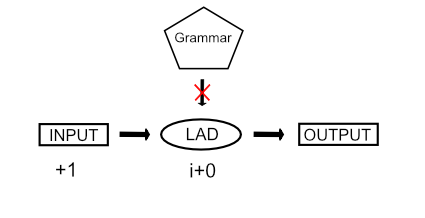
The input hypothesis, also known as the monitor model, is a group of five hypotheses of second-language acquisition developed by the linguist Stephen Krashen in the 1970s and 1980s. Krashen originally formulated the input hypothesis as just one of the five hypotheses, but over time the term has come to refer to the five hypotheses as a group. Th...

linguists came up with these ideas in the 1970s and 1980s
unfortunately they didn't really have widespread Internet back then, so for them it was not simple to listen and read many things for so long
fallow viper
Guys thank you all for this advises, I wasn't expected for someone's feedback at all, I really appreciate it 

boreal ingot
 flat rune
How to pronounce the exact Your, like him?
flat rune
How to pronounce the exact Your, like him?
He kinda says it like 'yer'
That's normal in fast casual speech
 signal shell
It could also mean "to fall in love with" or "to become infatuated with"
flat rune
boreal ingot
He kinda says it like 'yer'
its not easy
 teal locust
Hey, I've been asking the same question but haven't gotten my answer yet the question is, is it wrong to prioritize immersion over consentrated studying?
teal locust
This channel is so dead
sacred mirage
teal locust
Hey, I've been asking the same question but haven't gotten my answer yet the que...
It depends what you want to go for
more casual and native like - immersion
more academic - concentrated study
but both are important
 lyric parcel
Just found out fishes and fish are plural, is that true?
boreal ingot
lyric parcel
Just found out fishes and fish are plural, is that true?
fish is the plural, fishes is like 'different kinds of fish'
lyric parcel
boreal ingot
fish is the plural, fishes is like 'different kinds of fish'
do people all know this or do they say fish regardless?
sacred mirage
lyric parcel
do people all know this or do they say fish regardless?
people say fish
but miss scella is right
 hybrid cobalt
To brush up, how can I use this phrasal verb related to reminding things.
supple holly
teal locust
Hey, I've been asking the same question but haven't gotten my answer yet the que...
That is the first time you asked this question in this channel
supple holly
teal locust
This channel is so dead
And have you ever considered that people here are busy with school/work? Learn some patience. You'll need it when learning anything, including English
dense oasis
supple holly
And have you ever considered that people here are busy with school/work? Learn s...
This is not true, I am busy with existential crisis
fallow viper
Guys I have question - english or span.. sorry, not that - British english or American english? And will I be able to know British if I will learn only American
 whole egret
Hello fellers
supple holly
fallow viper
Guys I have question - english or span.. sorry, not that - British english or Am...
Yes. I learned almost exclusively with American accent. And didn't even know there were Canadian and Australian accents. But I still hear them just fine
Minus region-specific words. Like, how Brits call chips fries and the opposite. Or how Aussies call flip-flops thongs
dense oasis
supple holly
Minus region-specific words. Like, how Brits call chips fries and the opposite. ...
slip-slops, south african english
they also speak english
as their first language
 static sorrel
supple holly
Minus region-specific words. Like, how Brits call chips fries and the opposite. ...
static sorrel
supple holly
Minus region-specific words. Like, how Brits call chips fries and the opposite. ...
We call them chips and fries depending on how they look
static sorrel
You're welcome :))
fallow viper
supple holly
Yes. I learned almost exclusively with American accent. And didn't even know the...
So I don't have to choose only one specific type of english for entire life? Wow, that's nice
supple holly
fallow viper
So I don't have to choose only one specific type of english for entire life?<:pe...
but most likely you'll be used to only using one forever
fallow viper
supple holly
but most likely you'll be used to only using one forever
But if I got a point I'll be able to communicate with speakers with different accents? That's enough for me
dense oasis
fallow viper
But if I got a point I'll be able to communicate with speakers with different ac...
you are able to communicate with others based on your recognition of words and context. Like if I do "a cat" but change the vowel inside it into idk, "ea" sound from "easy", so do "a ceat" to mean "a cat", then this is confusing. But if I embed it in some context and do "I like ceats more than dogs" then this actually makes sense
of course it's still mispronounced but now it's easy to understand
so like even if others have different accents, if you can understand the context, you'll understand them
The more words you know, the more things you understand, the more you generally get from all accents
 coral quail
dense oasis
The more words you know, the more things you understand, the more you generally ...
coral quail
dense oasis
The more words you know, the more things you understand, the more you generally ...
Very potent answer indeed
 sand axle
i got a question guys
How can I break through the barrier of fear I feel when I start speaking, which makes me lose my train of thought even if I am right in my opinion?
 stone crown
thats anxiety and nervousness, the biggest help I would suggest is just practicing and debating more, thinking the points beforehand and slowly letting them out, taking your proper time when you speak
 willow dawn
sand axle
How can I break through the barrier of fear I feel when I start speaking, which ...
willow dawn
sand axle
How can I break through the barrier of fear I feel when I start speaking, which ...
try speaking in duo channels first, they can be more comfortable for beginners
 silk scroll
can you write it like 'who're you?' - instead of who are you ?
boreal ingot
silk scroll
https://prnt.sc/Xwp6qXAoHyGe
can you write it like 'who're you?' - instead of ...
Yes, that's fine informally
But this is one contraction where the apostrophe is paramount :p
 random kite
does anyone have any tips to identify prepositional infintive and appositive phrases
lyric parcel
is "I believe there's no god" and "I don't believe a god exists" the same thing?
disbelief VS belief
fallow viper
dense oasis
you are able to communicate with others based on your recognition of words and c...
Thank you very much, its helpfull for me 

 crude garnet
lyric parcel
is "I believe there's no god" and "I don't believe a god exists" the same thing?
crude garnet
lyric parcel
is "I believe there's no god" and "I don't believe a god exists" the same thing?
Similar
boreal ingot
What's the difference between a grating and a lattice?
 distant crescent
I thought this was Miniscule all this time.
#🌄|word-of-the-day message
distant crescent
boreal ingot
What's the difference between a grating and a lattice?
As far as I know.. both are pattern based words.
Grating are raised bars / lines / surface topography that has a specific pattern.
Bar grating, visual card gratings (Very specific example I think)
Lattice is a crisscross pattern over something - be it cloth, again.. bars / metallic gates etc.
 boreal cypress
distant crescent
I thought this was Miniscule all this time.
https://discord.com/channels/8016095...
boreal cypress
distant crescent
I thought this was Miniscule all this time.
https://discord.com/channels/8016095...
Mini skull 💀 
I'm hearing: I need you to work on those accounting repports. But I scarcely have time to finish the ones I already have.
 solemn rampart
Why don't Brits pronounce the letter 'r' at the end of words?
static sorrel
I would answer this but I don't know the reason 😆
 mortal quail
solemn rampart
Why don't Brits pronounce the letter 'r' at the end of words?
mortal quail
solemn rampart
Why don't Brits pronounce the letter 'r' at the end of words?
because Rs are non-rhotic for us
fallow viper
Chat what does phrase like "that's a thing" or "it's a thing" mean, and in what cases word "thing" is used?
dense oasis
fallow viper
Chat what does phrase like "that's a thing" or "it's a thing" mean, and in what ...
"that's a thing" usually means "something like this happens"
- you know that some rabbits can not eat grass?
- oh, really? I didn't even know that that's a thing
or like "something like this is true"
- do cats actually recognize their owners purely by the scent? is that a thing or...?
- yes they do, it's definitely a thing
Do not confuse it with something very similar like "The thing is that..."
dense oasis
dense oasis
Do not confuse it with something very similar like "The thing is that..."
"The thing is..." is commonly used to start a new sentence and explain why something something. So it means like "The nuance here is that..." or "I want to explain that..."
fallow viper
dense oasis
"that's a thing" usually means "something like this happens"
Thank you very much for this explanation black cat now it's way more clear to me
dense oasis
fallow viper
Thank you very much for this explanation black cat <:FroggieLovesYou:13940501938...
you're welcome. aren't you polish by any chance by the way? lol. asking cuz I am and your nickname ends with -ska
very typical ending
fallow viper
dense oasis
you're welcome. aren't you polish by any chance by the way? lol. asking cuz I am...
Lol I only wrote randome letters
dense oasis
Ah okay lol. I thought you were polish like me for some reason 😭
fallow viper
dense oasis
you're welcome. aren't you polish by any chance by the way? lol. asking cuz I am...
And I'm not a polish, but I still love my nickname
dense oasis
fallow viper
And I'm not a polish, but I still love my nickname
okay okay okay. But you definitely are slavic lol
I can feel it
The magical cosmic energy you know. Yeah
It's like the stars aligned in a perfect way and they sent me this magical vibe and now I feel it. You definitely are 👀
fallow viper
dense oasis
okay okay okay. But you definitely are slavic lol
Yes your guess is right, I'm Frome belorus
dense oasis
fallow viper
Yes your guess is right, I'm Frome belorus <:Juuzuuz:1356344632530829332>
ah yeah omg haha. Almost. My grandparents come from Belarus
my parents and I were already raised in poland so yeah we're just polish
boreal ingot
solemn rampart
Why don't Brits pronounce the letter 'r' at the end of words?
Sound changes in the 1700s
If you want to know more, watch this: https://youtu.be/gFszuhsNPOY?si=xG3ObPKif_ejOC7B

In this video, I explore the idea that southeastern standard British pronunciation was 'invented' in the 1700s, to distance upper-class British people either from Americans or from working-class people. I examine phonetic evidence from the 1600s-1800s to put across the historical reality: that sound changes like R-dropping (non-rhoticity) and ba...
This is more of a historical linguistics question you're asking, and Simon Roper is all about historical linguistics
Also, it's not just at the end of words. It's whenever a vowel doesn't follow the R
barter
Both R's aren't pronounced, even the one in the middle of the word
whether you
R is silent
whether it
R is pronounced
 random path
Hello! I'm not sure where to ask my question, so I'm just going to ask it here. Does anyone know any good books, Apps, resources, or anything in general to help with learning how to read English? Although I'm a native speaker/reader, I never learned how to actually read properly. I never learned proper Phonics, so I'm asking since I know I'm still young enough for my literacy skills to be saved (16 btw)
 waxen cradle
This is an interesting question, and I commend you for wanting to improve your reading! Reading and writing are some of the most important skills we can have.
If you don't feel confident with basic vowel and consonant sounds, then as awkward as it might be, I think watching programs for children could be a good first step. There are lots of phonics videos on youtube aimed at kids who are just beginning to read, and there are American PBS shows like Between the Lions and Electric Company Spelling that have phonics and pronunciation segments. The key with this is understanding the way consonants and vowels sound individually, then put together! Try saying the alphabet not by the names of the letters, but by their sounds. "Ah, Buh, SSuh/Kuh, Duh, Eh, Fff" etc. It will feel silly, but remembering the fundamental sounds each letter makes will help tremendously when you encounter a new word.
You can also study prefixes and suffixes (roots). For example: sub-: submarine, substrate, subterfuge, etc. Maybe some of the words there are new, but they all have the prefix sub- in common. Learning how to read sub- and understanding its meaning ("under" or "below") helps you infer meanings of new words that use that prefix.
From there, I suggest reading YA (young adult) novels or material that interests you. Any time you encounter a word that you know, but don't know how to pronounce, force yoruself to pause and try to sound it out. Listen to a pronunciation guide online, and sound out the letters one by one as you match the pronunciation guide. Speak the word out loud to yourself while you hear it read, looking carefully at each letter. Don't skip over words just because you "kinda know what they mean", really force yourself to learn it.
This is what comes to mind for me. There is no shame in not knowing how to read properly as a native speaker; it is your desire to improve that will take you far. Best of luck!
boreal ingot
waxen cradle
This is an interesting question, and I commend you for wanting to improve your r...
Hi, I'm not a native (nor am I the person who asked the question originally), but I too often struggle to sound out words I haven't heard before. I find that phonics don't really work for me, though. I read your lovely explanation here and went on about my typical online activities. Then, I happened upon the word 'parenchyma'. Typically, I would rush to a dictionary to hear it (not only to read the definition), but I thought to myself, since your message was yet fresh in my mind, that I could attempt to sound out the word. I then went to a dictionary to check whether my deduction (in which I was fairly confident) was correct or not, and found that the word is pronounced quite differently to what its spelling might indicate. This has left me wondering whether it is the case that I have made some mistake in my application of phonics to that word, or if it is a fault of phonics that I couldn't guess the pronunciation of this word (and many others in the past). Below is a recording of my guess, followed by the actual pronunciation:
waxen cradle
Hi Miss Scella, interesting example! You are right that phonics is not the best tool here-- partly because the pronunciation of parenchyma depends heavily on stressing the second syllable, and partly because the hard truth of the English language is that the correct pronunciation sometimes simply can't be known until you hear it. Who would ever guess that "Arkansas" is pronounced without an S sound at the end, but "Kansas" is pronounced with an S? There is no reading strategy that can help us guess that, only experience can.
The importance of phonics is not to give us a master code to pronounce every word correctly. Rather, it is to give us a method for reading and making sense of words we are unfamiliar with. Take the made-up word "Snorflexagomy". Someone who knows phonics can immediately begin sounding this out into syllables, and break down those syllables into the sounds each letter makes. Something like "Snore-flex-uh-go-mee". But someone who only knows how to read words by sight/shape will likely get stuck, and might jumble it up into a sound like "Snfgamy..." from the consonants before moving on. I have seen this habit with peers and younger folks who only learned sight reading in school; they sometimes skip complex words entirely.
Phonics is not a perfect method. But in my experience it will always get us close enough to saying most of the word correctly, and a listener who is familiar with the topic can understand what we mean and continue the conversation.
(For what it's worth, I would have phonically read parenchyma the same way you read it first. Pa-ren-ky-muh, with that first "pa" sounding like "peh". Now that I know it is pronounced Pa-ren-ky-ma, I will say it correctly, keeping the first "pa" sounding like "puh" and emphasizing "ren". It is a word that comes with experience. Our phonics gets us far enough to voice the basic sounds, and our experience teaches us which syllable to stress)
(And hey, AvilesTe, perhaps making up your own imaginary words and trying to spell them the way you want them pronounced can be a fun exercise in phonics itself! I wrote "snorflexagomy" with the sounds snore-flex-ah-go-mee in mind. Maybe you can try creating a made up word yourself based on a few sounds, then figure out how to best spell it. Then, present that spelling to a friend [or to this chat here] and see if we all read it the same way you intended it to be read. Reverse engineering some phonics!)
supple holly
Actual intellectual discussions taking place in the channel. Who did we sacrifice to the ancients one to achieve this
boreal ingot
waxen cradle
Hi Miss Scella, interesting example! You are right that phonics is not the best ...
Oh, yes, that makes a lot of sense! The idea that phonics is a tool that helps us get further, not necessarily the key to the pronunciation of all words, is not one that I've considered before. Truly, my many thanks to you for this immensely detailed answer. I truly appreciate it. The made-up-word exercise has shown me that I have an okay grasp of phonics, since I could indeed come up with a pronunciation where all the vowels were pronounced and the consonants were not jumbled. It's truly a shame English doesn't indicate word stress as Spanish does. I shall henceforth rely on a mix of experience and phonics as you have suggested. Once again, my many thanks!
distant crescent
waxen cradle
Hi Miss Scella, interesting example! You are right that phonics is not the best ...
Me and few friends struggle with this and this is a great way for a start! Also, sign us up for a fun exercise!
Thank you!
Can any mods pin this message ?
flat rune
boreal cypress
I'm hearing: I need you to work on those accounting repports. But I scarcely hav...
I asked my Kansas friend, he said "seriously"
solemn rampart
boreal ingot
Sound changes in the 1700s
Thx
boreal ingot
flat rune
I asked my Kansas friend, he said "seriously"
It's 100% 'scarcely'
 vital axle
Hey there ! Could anyone help me with some english grammar questions pretty please ?
dense oasis
vital axle
Hey there ! Could anyone help me with some english grammar questions pretty plea...
just ask them, maybe someone will answer
vital axle
alrighty I'm asked to analyse and point at impersonal subjects in a text
I want to make sure the definition I give is kinda complete
An impersonal subject is the subject of a non personal phrase, which refers to no one nor anything
silk scroll
boreal ingot
Yes, that's fine informally
okay thanks.
and what does 'you should get going' mean?
I thought it's 'you should go'.
why get going?
dense oasis
silk scroll
and what does 'you should get going' mean?
I thought it's 'you should go'.
why...
it's more like "start to go", "get ready to go and go, don't wait"
it's just a saying
get going
 runic jay
how to be more formal? gotta write letters and ect, but i can't shift my head into writting or speaking better for me its harder than math
 still spruce
runic jay
how to be more formal? gotta write letters and ect, but i can't shift my head in...
still spruce
runic jay
how to be more formal? gotta write letters and ect, but i can't shift my head in...
Learn the formal words and phrases
runic jay
still spruce
Learn the formal words and phrases
th-that's it?
still spruce
I learnt the formal words and phrases in Dutch and I could become a formal speaker more than an informal
Just learn mostly from dictionaries and not from the street
Cuz people are rather informal on a daily basis
runic jay
all i need is to write a formal email and speak for 2 minutes about a certain topic. All i need is to have a structure ready
still spruce
runic jay
all i need is to write a formal email and speak for 2 minutes about a certain to...
What's the topic?
Type in Youtube -> how to write a formal e-mail in English. They will show you how to do it and it'll be harder to forget if you watch a video about it, then you just get the answer here
That's the way I'd do it at least.
runic jay
still spruce
Type in Youtube -> how to write a formal e-mail in English. They will show you h...
Joins education discord server
Gets told to watch youtube
still spruce
runic jay
> Joins education discord server
> Gets told to watch youtube
In this case, it's a good idea
You don't have to tho
 narrow forge
Hi Server! is there any web application or software where I can get feedback for my IELST essay practice?
flat rune
boreal ingot
It's 100% 'scarcely'
Two native speakers said different word
seriously
barely
Both said, scarcely doesnt make sense for them
boreal ingot
To scarcely have any time is to barely have any time. 'Scarcely' does make sense in this context
dense oasis
I barely have any time for myself. I scarcely have any time for dancing naked in front of my neighbour's windows
😔
 glad lynx
CHAT what is the place u put hairties in? Like wrist? Hand? Arm?? Saying "I put my hairties on my wrist" sounds weird HELP😭
 strong cradle
glad lynx
CHAT what is the place u put hairties in? Like wrist? Hand? Arm?? Saying "I put ...
strong cradle
glad lynx
CHAT what is the place u put hairties in? Like wrist? Hand? Arm?? Saying "I put ...
Same.
I also have a hook next to my bed, I just hang them on the hook.
dense oasis
glad lynx
CHAT what is the place u put hairties in? Like wrist? Hand? Arm?? Saying "I put ...
it does not sound weird
it is indeed "I put my hair ties on my wrist"
hollow night
Question. Which one of the following is grammatically correct?
**1) Adventurers Association
-
Adventurer Association
-
Adventurers' Association**
waxen cradle
I would say 3!
boreal ingot
dense oasis
it is indeed "I put my hair ties on my wrist"
Hmm, a part of me wants to say 'around my wrist' but I don't know if 'on' is wrong
boreal ingot
hollow night
Question. Which one of the following is grammatically correct?
**1) Adventurers...
2 and 3
static sorrel
hollow night
Question. Which one of the following is grammatically correct?
**1) Adventurers...
It wouldn't be any of them, it's Adventurer's Association. The 's is to show possession, the Association belongs to the Adventurers
 tawny saffron
If it's a group or one-on-one tutoring session outside of school, what would you guys actually say in the U.S.?
Do any of these sound natural, or are some of them too formal, or even giving too much unnecessary information?
- I'm going to my English class.
- I'm going to my English lesson.
- I'm going to my private English lesson.
- I'm going to my English tutoring session.
- I'm going to my one-on-one English tutoring session.
- I'm going to my English tutor.
- I've got an English class today.
- I've got an English lesson today.
- I've got a private English lesson today.
- I've got an English tutoring session today.
- I've got a one-on-one English tutoring session today.
 brittle whale
hollow night
Question. Which one of the following is grammatically correct?
**1) Adventurers...
brittle whale
hollow night
Question. Which one of the following is grammatically correct?
**1) Adventurers...
Am, 3. I think
boreal ingot
tawny saffron
If it's a group or one-on-one tutoring session outside of school, what would you...
2, 6, and 8 are the most natural imo
 upper prawn
Hi everyone, quick question. When writing a post in English, is it okay to use the phrase “big thanks,” or do native speakers not use it?
Like: “Big thanks to everyone who was part of this event.”
 buoyant hemlock
Which on is gramatically correct, guys?
This is me speaking or This is I speaking?
sacred mirage
buoyant hemlock
Which on is gramatically correct, guys?
This is me speaking or This is I speak...
me
 dusk sequoia
upper prawn
Hi everyone, quick question. When writing a post in English, is it okay to use t...
dusk sequoia
upper prawn
Hi everyone, quick question. When writing a post in English, is it okay to use t...
I don't think it's common for native speakers to say that in a formal setting, but it really depends on where you are
I've seen a lot of people say that to conclude a formal event
 void finch
upper prawn
Like: “Big thanks to everyone who was part of this event.”
void finch
upper prawn
Like: “Big thanks to everyone who was part of this event.”
Works, It’s pretty natural to say
void finch
buoyant hemlock
Which on is gramatically correct, guys?
This is me speaking or This is I speak...
This is me speaking sounds odd…do you have the full context ?
 slim willow
Hey, I just have a basic question, but for an exam I need to explain clearly the using of Present and Preterit, their use and also the aspect, but I don't find a clear definition of it... 😅
 spiral lynx
How do I help someone learn English from the basics, when they are probably B1 level
Like they understand some contexts but struggle to make a coherent sentence when speaking
I asked them how and what would they want to learn, they said they wanna learn from the basics
In short: should I teach them what is a vowel, consonant, article, subject, verb, object, phrase, clause, conjunctions...etc
Or higher up the level a bit?
I'm genuinely asking
 deft siren
spiral lynx
How do I help someone learn English from the basics, when they are probably B1 l...
deft siren
spiral lynx
How do I help someone learn English from the basics, when they are probably B1 l...
so do you teach or help? These things completely differ from each other.
spiral lynx
deft siren
so do you teach or help? These things completely differ from each other.
I teach Like ESP english for specific purposes, they don't need to dig deeper into the language only need to know key terms and some concepts in English related to their field,(Psychology)
But few students approached me asking If i could help them learn English and speak it
Which is out of their curriculum
deft siren
spiral lynx
I teach Like ESP english for specific purposes, they don't need to dig deeper in...
okay, that's great
spiral lynx
I'm a little inexperienced in teaching from zero, what i wanna know is
Should i start from the basics or go high a bit?
deft siren
spiral lynx
I'm a little inexperienced in teaching from zero, what i wanna know is
Should i...
It’s up to you, as you’re teaching so it’s the thing you should know your students’ levels and their abilities.
I might look rude, but just tryna to say the fact
😅
spiral lynx
deft siren
I might look rude, but just tryna to say the fact
Not at all rude
I know that it's my duty to know ,but it's just that i was struggling to know their exact level
They could be A2_ B1 at most
Thank you for answering, i think i'll start from the basics( nouns pronouns, verbs...etc)
deft siren
Np
boreal ingot
upper prawn
Like: “Big thanks to everyone who was part of this event.”
I think people use 'many thanks' most commonly
upper prawn
boreal ingot
I think people use 'many thanks' most commonly
Thanks! Just to check, is "Big thanks" acceptable in a conference post, or does it sound wrong to native speakers?
boreal ingot
It sounds a bit off, but most wouldn't really pay attention to it I think. It's fine but 'many' is preferable
upper prawn
boreal ingot
It sounds a bit off, but most wouldn't really pay attention to it I think. It's ...
Appreciate the clarification. I’ll keep that in mind.
 vital trout
Hii, if you have any questions about pronunciation, we'd love to help, cheers!
boreal ingot
vital trout
Hii, if you have any questions about pronunciation, we'd love to help, cheers!
Could you send a recording of hoow you might say 'periparturiently'?
vital trout
I just can't find the option for the mic. Here's the transcription though for this rare technical word:
GA
Full transcription: /ˌpɛr.ə.pɑr.tʃəˈri.ənt.li/
Elided: the /t/ elided because of cluster /ntl/: **/ˌpɛr.ə.pɑr.tʃəˈri.ən.li/ **
I can send you my voice recording in DM if you want.
boreal ingot
vital trout
I just can't find the option for the mic. Here's the transcription though for th...
Oh, thanks for the transcription! I thankfully can read IPA, but I couldn't find a transcription haha. This is good enough 💜
dense oasis
vital trout
I just can't find the option for the mic. Here's the transcription though for th...
wait, shouldn't it be without this /ʃ/

pɑːˈtjʊərɪənt
vital trout
dense oasis
wait, shouldn't it be without this /ʃ/
Correct
boreal ingot
dense oasis
wait, shouldn't it be without this /ʃ/
wdym? the /tʃ/ is one unit (iss an affricate). They jus didn't use the crossbar
/t͡ʃ/
dense oasis
boreal ingot
wdym? the /tʃ/ is one unit (iss an affricate). They jus didn't use the crossbar
Hm, I mean, according to what I found in collins dictionary, it's supposed to be /tj/
boreal ingot
dense oasis
Hm, I mean, according to what I found in collins dictionary, it's supposed to be...
ohh
boreal ingot
that's yod coalescence at work
in English 'ty' becomes 'ch', 'dy' becomes 'j', 'sy' becomes 'sh', and 'zy' becomes 'zh' very often
Not all dialects do it
But it's very common
particularly before 'u', since that has a built-in /j/ ('y') sound
best example is that 'sure' was historically pronounced as 'syure'
Sometimes 'i' can trigger this as well, since a lot of the time instead of saying 'ia', people say 'ya'. So 'controversial' is pronounced 'controversyal' which then becomes 'controvershal'
Old posh British folk will still say 'sial'
I say it that way personally
Think of 'dune' pronounced as 'june' is. 'Tube' pronounced as 'chube' etc.
dense oasis
I guess it's not even a common word so maybe what I found in that dictionary doesn't even have to be followed anyway...
boreal ingot
I mean, it just depends on your accent and whether you normally do yod-coalescence or yod-dropping
Americans more often drop the /j/
Brits more often coalesce it with the sound before it or keep it
boreal ingot
dense oasis
I guess it's not even a common word so maybe what I found in that dictionary doe...
If you want to learn more just check this section of the wiki page out: https://en.wikipedia.org/wiki/Phonological_history_of_English_consonant_clusters#Yod-coalescence
The phonological history of English includes various changes in the phonology of consonant clusters.
I'd recommend reading the whole y-cluster reduction section, but the yod-coalescence section should be enough
dense oasis
okay I got your point
supple holly
spiral lynx
How do I help someone learn English from the basics, when they are probably B1 l...
I'm an ESL teacher. But I don't think I'm great at my job, so take this with a grain of salt
Always start from the basics. Some fundamental mistakes may seem simple but become hard to fix once they've become a habit. Like, not knowing where an adj should stand in a sentence. Or, not having an article
It's also good to have them work on the confidence in speaking too. Most people do fine with listening and reading, but the moment they have to say something in English, they freeze up because they're not used to it. So, they wanna get good at speaking, they just gotta speak
They also should learn what nouns, verbs, adjs, advs,... are and how they work
Then once all that is done, you can have them form basic sentences. Then move on to longer, more advanced ones with conjs
 wraith schooner
:(
dense oasis
supple holly
I'm an ESL teacher. But I don't think I'm great at my job, so take this with a g...
What a good summary. I agree
 muted nebula
Hi
I wanna read book for A2 level
& Give my advice to improve my English quickly
 kind parrot
supple holly
I'm an ESL teacher. But I don't think I'm great at my job, so take this with a g...
kind parrot
supple holly
I'm an ESL teacher. But I don't think I'm great at my job, so take this with a g...
do ur students know
supple holly
kind parrot
do ur students know
Know what
kind parrot
that u have discord
 somber garnet
muted nebula
Hi
I wanna read book for A2 level
& Give my advice to improve my English quick...
somber garnet
muted nebula
Hi
I wanna read book for A2 level
& Give my advice to improve my English quick...
Hey, for beginner friendly books some good suggestions are Charlotte's Web and Roald Dahl books such as Charlie and the chocolate factory. For improving your English quickly, I would recommend listening to audiobooks, and watching English shows or youtube videos.
 placid lark
hi everyone
i want to ask about dicord app, i can't deal with it
can anyone explain it to me?
 long stump
Hey, guy, I need help with this word, how I pronounce that: currently
 granite stirrup
Hellooo, Could someone help me resolve some doubts I have about English?
lyric parcel
Suppose someone says many do and many dont, do you think both are equal?
Reason I asked because someone says "many(millions)" without comparing to other number which is 70x(70%) more "many" than the one she considered "many" (1%) it's actually not that many
 wraith python
hello guys i have a question on grammar
"I’m here to argue the importance of the alternation from private cars to public transport being people’s primary transportation choice."
In this sentence do i need to add any prepositions after argue?
boreal ingot
wraith python
"I’m here to argue the importance of the alternation from private cars to public...
Nope
Arguing [x] means asserting [x] as your stance in an argument or discussion
Arguing about [x] means that the topic of a heated discussion is [x]. It says nothing about who holds what view
so for example
She argues that veganism isn't sustainable on large scales.
This means that she holds that opinion and presents it as her opinion
She argues about [the idea] that veganism isn't sustainable on large scales.
Here she engages in arguments where that opinion is the subject under discussion/point of contention. It tells us nothing about what she thinks
You also see this in the noun form
His argument is sound.
Here, 'argument' means the view he holds and how he supports it.
That was a long argument.
Here, 'argument' just means a heated discussion.
 vague gust
what the difference Interrelated and related (relate)
is there any different
@boreal ingot sorry to interrupt
boreal ingot
vague gust
what the difference Interrelated and related (relate)
There's a slight difference. To interrelate is a bit more like a web of connections, and all of them affect one another (both ways). So A has an effect on B, B on A, C on A, A on C, C on B, B on C and so on. Alll of them affect one another. They're interrelated. If they were related, some connections are present, but it doesn't have to be so complete and reciprocal. The two words are often interchangeable, though
I visualise relation as a line going between the elements, but I visualise interrelation as a web connecting them all
flat rune
Hello, I am looking at a word that I don't know.
The situation is like this.
You are a student and you are at class in school. You have subject... Let's say math subject. But the math teacher isn't in school because he is sick, so you can do anything in class until next subject
I don't know how to say that. Like empty subject?
empty time?
vague gust
boreal ingot
I visualise relation as a line going between the elements, but I visualise inter...
ayyo thank u, and i wanna ask about 'queer' i know what it is but currently I'm reading "the secret garden" and a lot of that word show up but not as a representation of identity so that why i confused what's in general like of that word, this for example:
"How queer and quiet it is," she said
"And made him queerer than ever. He care about nobody. He wont see people..."
boreal ingot
vague gust
ayyo thank u, and i wanna ask about 'queer' i know what it is but currently I'm ...
Ohhh! That is the older sense of 'queer'. It's sadly falling out of use in favour of the new sense, but it means 'odd' or 'weird', basically
Some people still use it, so you should know it
(I use it cuz I'm old fashioned like that lmao)
But yeah, it just means odd. Everyone is aware of this meaning but not everyone uses it
It's modern sense actually comes from the fact people used the old sense of the word 'queer' ('weird'/'odd') to insult us, the LGBTQIA+, but we ended up reclaiming it
flat rune
flat rune
Hello, I am looking at a word that I don't know.
The situation is like this.
Yo...
uh... no one answers this?
boreal ingot
flat rune
Hello, I am looking at a word that I don't know.
The situation is like this.
Yo...
I suppose you could call it a free period

 flat rune
boreal ingot
I suppose you could call it a free period
flat rune
boreal ingot
I suppose you could call it a free period
ah... thank you. That is what I look at. I didn't know if English has that too
boreal ingot
flat rune
ah... thank you. That is what I look at. I didn't know if English has that too
💜 no problem!
vague gust
boreal ingot
(I use it cuz I'm old fashioned like that lmao)
i thought that slang or something else but yeah that make sense from i know earlier 🙂↕️
vague gust
boreal ingot
I suppose you could call it a free period
i used to call it 'free time' 😭
flat rune
vague gust
i used to call it 'free time' 😭
That is what I thought, but I am not sure
boreal ingot
vague gust
i used to call it 'free time' 😭
welp, you've now learnt :p
'free time' is just in general. In school specifically, you call it a free period
vague gust
thank youu the more i know 
wraith python
boreal ingot
Arguing [x] means asserting [x] as your stance in an argument or discussion
thank you for yoy response
so like my argument is to stress the importance ,so** no** need to add about
if i want to show my opinion on whether the shift is good , then i say i will argue about this topic
 empty marlin
Hey I just read a book titled 'The Boy, The Mole, The Fox, The Horse'
One of the page had this conversation and im still wondering what do you guys think about it? Like what message is it trying to convey? I still cannot wrap my head around what this is supposed to mean
This is the page conversation:
"I got you a delicious cake" said the mole
"Did you?" Said the boy
"Yes" Mole said
"Where is it?" said the boy
"I ate it" said the mole
"Oh" said the boy
"But I got you another" Said the mole
"Did you? Where is that one?" Said the boy
"The same thing seems to have happened" Said the mole
supple holly
empty marlin
Hey I just read a book titled 'The Boy, The Mole, The Fox, The Horse'
One of th...
It's just a joke. The set-up is that the mole brought a cake for the boy, and the punchline (the funny part) is that he ate it. And this happened twice, with the second cake
That's it. No deeper meaning (from what I read at least)
 obsidian smelt
this chat for serious scintefic quastions from the educator , isnt it ?
sacred mirage
obsidian smelt
this chat for serious scintefic quastions from the educator , isnt it ?
no
dense oasis
obsidian smelt
this chat for serious scintefic quastions from the educator , isnt it ?
oh sweet summer child...
dense oasis
supple holly
It's just a joke. The set-up is that the mole brought a cake for the boy, and th...
The deeper meaning is that there was never a cake and the mole spent it all on girls and alcohol so he came up with an excuse and it worked so well that now in 2025 people still mention it
We all should learn from the mole
Always cover your failures with loud jokes
The mole was the ultimate sigma OG rizzler skibidi player
@jovial plinth you can confirm that I'm saying the truth and only the truth
 jovial plinth
dense oasis
<@848907579571961907> you can confirm that I'm saying the truth and only the tru...
jovial plinth
dense oasis
<@848907579571961907> you can confirm that I'm saying the truth and only the tru...
Yes the mole is my friend
Nah seriously he parties all night with 12 girls 😭😭
dense oasis
jovial plinth
Nah seriously he parties all night with 12 girls 😭😭
I saw him when he was trying to drive away while drunk, called the cops, and they got the mole. All 12 girls were crying. Just kidding, they weren't, I stole his cash and they loved me instead
 raw blade
When should I use 's?
Ik that theres 2 moments, one when you talk about Possessive("Arthur's sword is called Excalibur"), but when i use the other?
boreal ingot
raw blade
When should I use 's?
Ik that theres 2 moments, one when you talk about Possess...
Three, actually:
Arthur's sword (ownership)
Arthur's annoying ('is')
Arthur's done it ('has')
raw blade
boreal ingot
Three, actually:
Arthur's sword (ownership)
Arthur's annoying ('is')
Arthur's d...
Hmmm i see, thanks.
raw blade
boreal ingot
Three, actually:
Arthur's sword (ownership)
Arthur's annoying ('is')
Arthur's d...
Also, loved your aesthetic.
boreal ingot
raw blade
Hmmm i see, thanks.
np
boreal ingot
raw blade
Also, loved your aesthetic.
awh, thank you
boreal ingot
raw blade
Hmmm i see, thanks.
Oh, also, after 'what' and 'how' it can mean 'does' but that's VERY informal
What's that mean?
How's it look?
raw blade
boreal ingot
Oh, also, after 'what' and 'how' it can mean 'does' but that's VERY informal
Hmmm ok, good know.
After all, if i know what is informal, i can be formal.
boreal ingot
Indeed
raw blade
boreal ingot
awh, thank you
I love this "living corpse" aesthetic.
hybrid cobalt
@boreal ingot Scella you that are the best one here. How did you jumped on from b1 to b2 ? And how many topics did you have to learn to pass the exam. Can I only focus on the specific questions of the exam (let's say cambridge) and not be as intermediate as I could really be ? I have been learning by myself all this way alone, and now I feel like I need a tutor or a teacher to boost my english to fluency in the next 2 years.
I want to have a certificate summing it up. Don't mind answering me if you don't feel like it. Greetings :v
boreal ingot
hybrid cobalt
<@754163802659880981> Scella you that are the best one here. How did you jumped...
Hi, I have not taken official exams, so I fear I can't give any sort of detailed answer to that part of your question. I mainly improved my English through reading and questioning every construction I found queer. If I hadn't seen a word before, it was my wont to look it up and ensure that I learnt it through often employing it in my daily writing and speech. If I was not sure of a sentence's syntax, I asked questions about it in the English server (the other one) and delved into Googling rabbit holes regarding grammatical matters. If it happened that a sentence's meaning eluded me, I did not skip over it. I would analyse such sentences and attempt to break them down to their constituent parts, that I may understand them fundamentally. Beyond simply doing the above, I did all my research in English, I spoke to natives and fluent people regularly, and I slowly but surely worked my way to improving my accent, which I did through, firstly, deciding that I wanted to learn a standard British accent, and then comparing the phonetic properties of that accent to those of American English. I had much help regarding phonetics and phonology from a friend.
Overall, there is no 'trick' to the matter. You ought to consistently and frequently use the language and challenge your intuition regarding it (as your intuition, being that of a non-native, will very often misguide you).
Regarding exams, there are many mock tests online that you can take and use to evaluate yourself with the answer key. I would use them to prepare, were it the case that I was to take an official exam soon.
I wish you the best of luck, and I am much honoured that you regard me as 'the best one here'. Thank you.
 random swan
Is there an efficient way to practice having English conversations for socially awkward people?
 real spoke
Who use the Pratical English Usage of Michael Swan? You have a form for search with effect in this book?
 terse mesa
random swan
Is there an efficient way to practice having English conversations for socially ...
terse mesa
random swan
Is there an efficient way to practice having English conversations for socially ...
AI
random swan
terse mesa
AI
I see! Thanks for the suggestion.
boreal ingot
English is an Ingvaeonic West Germanic language.
The Germanic tribes/peoples that occupied modern-day Northern Europe all originally spoke a (hypothesised) tongue descended from the hypothesised language Proto-Indo-European: Proto-Germanic. This language is typically regarded as having branched out in 500 BCE after the sound changes known as Grimm's law and Verner's law affected the speech of the peoples who lived there, but not that of the speakers of the other Indo-European language family branches. They later expanded to modern-day Central and Eastern Europe (refer to the first image below), where the Celts originally were. Thence, given their distance from one another, it was only natural that their speeches would diverge, not unlike how Latin split into the Romance languages. The hypothesised language Proto-Germanic evolved into through many sound changes and much semantic drift were Proto-East-Germanic, Proto-North-Germanic, and Proto-West-Germanic. The first was spoken in Scandinavia by the Vikings and developed into Old Norse; thence, into the modern Scandinavian languages (which are yet dialect continua). The Continental Nordic languages, Danish, Norwegian, and Swedish, and the Insular Nordic languages, Faroese and Icelandic.
The second, Proto-East-Germanic, was spoken in modern-day Central and Eastern Europe. It developed into several East Germanic languages, all of which have gone extinct. However, the single most important one of these was the Gothic language, whose speakers expanded their territory greatly and which is very well documented. It too died out as other languages came to rule throughout the regions where it was spoken. The third branch, that of Proto-West-Germanic, was spoken in modern-day Central Europe (refer to the second image. The area demarcated by a black dotted line is that of the West Germanic languages). The West Germanic branch is further split into three subbranches, one of which is 'North Sea Germanic', also known as Ingvaeonic. From the two other branches, which were spoken in all but the northernmost parts of the demarcated area, descend modern-day Dutch, Central German, and Upper German. I don't know much about these two branches, so I can't speak much about them. However, Central German and Upper German are together called High German (they are not of the same branch but share similarities). The standardised form of High German is called Standard German or Standard High German (and is what is typically meant in saying 'German').
Regarding the Ingvaeonic branch, it was spoken throughout modern-day Jutland (which comprises modern-day continental Denmark) and in Holstein (the northernmost state of modern-day Germany). From it descended Old Saxon, also known as Old Low German, and thence modern-day Low German dialects. The other Ingvaeonic descendant is Anglo-Frisian. I don't know much about Frisian, but the Frisian languages are closely related to the Anglic languages.


The island of Great Britain and that of Ireland had been inhabited by Celtic-speaking peoples, including the Picts (in modern-day Scotland), the Gaels (in modern-day Ireland and Northern Ireland), and the Britons (who occupied the south of the larger island, Great Britain). They spoke languages that are today classified as 'Insular Celtic' (Which are further subdivided into Goidelic and Brythonic). The Gaels (in Ireland) would eventually come to significantly influence the language and culture of the Picts in Scotland through much migration and intermixing. From about 50 BCE until 400 CE, these peoples were under Roman rule. Some Germanic peoples had migrated to Britain as soldiers throughout and before that period. There was intermarriage between the Romans, the native inhabitants of the British Isles, and the increasing population of Germanic settlers: the Angles, Saxons, and Jutes, often styled 'The Anglo-Saxons' (who spoke Ingvaeonic West Germanic dialects).
This part of the history is classically portrayed as a violent invasion after a call for military aid made by the Celts, requesting Anglo-Saxon soldiers. However, the modern view is that it was more of a gradual intermixing and slow overtaking than a major invasion. It's uncertain when the Anglo-Saxon kingdoms formed, but at some point, they did form throughout Britain. It's said there were 7 main kingdoms and other small kingdoms. Each spoke their own dialect of Anglo-Saxon, also known as Old English. This is around the years 450 to 550 CE. Later, in 597, Augustine of Canterbury alighted on the Isle of Thanet, and that was the beginning of the conversion of the Anglo-Saxons, who had been pagans, to Christianity. Then, the Viking invasions happened. Throughout the 800s Vikings (who spoke Old Norse, a North Germanic language) spread throughout most of the south of Britain. They intermingled with the Anglo-Saxons, and there was much intermarriage. This was the state of affairs until 1066.
Normandy, a geographical area in the north-west of modern-day France, spoke Old Norman, also known as Old Norman French. This form of French had significant influence from Old Norse, the North Germanic language, due to Viking invasions. In other words, Old Norman was Old French mixed with Old Norse. I don’t know much about the history of Normandy, so I can’t speak about how exactly this language or dialect came to be, but these people, in 1066, invaded Britain in what is now known as the Norman Conquest. They came to be the ruling class. Old Norman French and Latin were the languages of education and the upper classes. English, now Middle English (not Old English anymore), became a lowly tongue. However, Latin and this patois of Old French significantly influenced it, both in lexicon and in grammar. Eventually, as Norman did not have the prestige of the French of Paris, it was no longer so much venerated, and the English language arose once again, now practically a different tongue from Anglo-Saxon. At the same time, other Anglic languages, such as Scots (not to be confused with Scottish Gaelic) and Yola, arose from the dialects of Anglo-Saxon. All of these Anglic languages except Scots and English have gone extinct.
There were great writers throughout the Middle English period. The most well-known of these writers is Geoffrey Chaucer. His writing set the standard for proper, standard language in the Middle English period. Later came William Shakespeare, whose writing is still read today, and who served to put many words to paper, and invented many words that we still use today. He wrote in Early Modern English, which underwent the Great Vowel Shift.
Now, you and I speak Late Modern English. English was spread to America by the Brits in the early 1600s, and then the Brits lost non-prevocalic R. They then colonised Australia in the late 1700s. English continued and yet continues to develop and evolve, as all languages do.
I hope this has helped.
It took me very long to write this, so I hope it can serve to educate anyone who is curious about the matter.
dense oasis
boreal ingot
English is an Ingvaeonic West Germanic language.
The Germanic tribes/peoples t...
interesting, 500 BCE
that's later, at least as far as I recall, than the moment when vietnamese detached itself from khmer (cambodian)
boreal ingot
oo interesting
 hasty trout
boreal ingot
English is an Ingvaeonic West Germanic language.
The Germanic tribes/peoples t...
hasty trout
boreal ingot
English is an Ingvaeonic West Germanic language.
The Germanic tribes/peoples t...
it might be just me, but such a high amount of the word "hypothesised" makes it sound as if we have little to no evidence and this is just an unsupported hypothesis, when it is pretty much a scientific consensus that it was a thing
dense oasis
boreal ingot
oo interesting
vietnamese and cambodian are thought to have abandoned each other like 2000 BCE (I mean, that's a generalisation, "austroasiatic" languages started to drive apart at that time so not only vietnamese and cambodian but also muong and some other extinct languages that existed to the south of China and to the east of modern Thailand and Laos)
so yeah
500 BCE is quite late compared to it
boreal ingot
hasty trout
it might be just me, but such a high amount of the word "hypothesised" makes it ...
Oh yeah, I see what you mean. Perhaps I should have said 'theorised' since a scientific theory is very much different from your avrg everyday theory in terms of evidence
hasty trout
boreal ingot
There were great writers throughout the Middle English period. The most well-kno...
actually not all languages do
some ded
-# /j
boreal ingot
Lmao 😭
 azure maple
hi, random question: how hard is it to switch to an australian accent?
if you can pull off a reasonably good north american accent for instance
 dense aurora
 violet dagger
<@1266393889057673287> ask your question here
violet dagger
<@1266393889057673287> ask your question here
Thanks a lot
 velvet viper
azure maple
if you can pull off a reasonably good north american accent for instance
velvet viper
azure maple
if you can pull off a reasonably good north american accent for instance
If you had learnt the American or Canadian accent, and want to attempt the Australian accent. It may be a little difficult, but achievable if you try and put in effort.
As a Canadian myself, it may sound ironic for what I’m about to say next, but it is difficult for me to mimic a typical American accent. Every time that I attempt it, it sounds kind of forced.
Despite having similar accents
azure maple
velvet viper
As a Canadian myself, it may sound ironic for what I’m about to say next, but it...
interesting, but idk to me they seem kind of identical in their "standard" forms
except you guys pronounce the "o" differently
maybe some regional accents differ tho
velvet viper
boreal ingot
The second, Proto-East-Germanic, was spoken in modern-day Central and Eastern Eu...
Well done on the analysis, I take it that you had been putting in a lot of effort into learning the history of the English language.
velvet viper
azure maple
interesting, but idk to me they seem kind of identical in their "standard" forms
They sound similar to an outsider
But Atlantic Canada has heavy accents that cannot be mistaken for an American, it sounds a bit Irish
velvet viper
azure maple
except you guys pronounce the "o" differently
Yep, and my accent has a few quirks to it
Like ar > er
So hard becomes herd, cart is cert, etc
azure maple
hmmmmm thats interesting, didnt know that
is it widely spoken?
or like just a regional thing
velvet viper
To put it quite frankly, I’m from an area that used to have a thick dialect but is now endangered. It used to be in the capital and you may find it amongst the elderly to this day,
velvet viper
azure maple
or like just a regional thing
Regional
azure maple
would you say it has french influence by any chance
cuz i know qubecois french is heavily influenced by english but idk if its the other way around too
velvet viper
azure maple
would you say it has french influence by any chance
That I don’t know, but it was influenced by Irish and Scottish settlers
However, if you go outside the city you’ll hear heavier and thicker variations of this dialect
More quirks, it’s called the Ottawa Valley Twang
azure maple
now that i think about it, ive never really watched a canadian movie
do you have any recommendation for classics?
cuz i think its the only english speaking country i still didnt watch a movie from
velvet viper
I do not think that I had ever watched a movie specifically from Canada however, I had seen shows
Most movies that I had consumed during my childhood had been from the U.S or other countries
supple holly
random swan
Is there an efficient way to practice having English conversations for socially ...
No.
boreal ingot
velvet viper
Well done on the analysis, I take it that you had been putting in a lot of effor...
Mhm, It's an interest of mine! Thank you 💜
boreal ingot
azure maple
cuz i think its the only english speaking country i still didnt watch a movie fr...
New Zealand? 
I think New Zealand doesn't exist and is just a global joke played by the natives Anglophones on non-natives 
dense oasis
supple holly
No.
Meow
boreal ingot
Meow
supple holly
Meow
 hearty oak
hi everyonee
 quaint crystal
Meow
dense oasis
I have converted 3 other grown up men to being gay
boreal ingot
i'm not a man or grown up 😭
I believe that everyone ought to meow some, gay or otherwise
to meow is to be happy
dense oasis
That's exactly what a grown up gay man would say
boreal ingot
dense oasis
That's exactly what a grown up gay man would say
That's exactly what a man whose masculinity is fragile would think a grown-up gay man would say 
dense oasis
boreal ingot
That's exactly what a man whose masculinity is fragile would think a grown-up ga...
That's sexism by the way. Terms like "fragile masculinity" are used by feminazis to humiliate the gender that built the world
usually w#men refuse to say that fragile femininity exists
because they can not be wrong. Of course
boreal ingot
dense oasis
usually w#men refuse to say that fragile femininity exists
you almost got the tone right, but people preaching all that would say 'females', not 'women' :p
dense oasis
thankfully I don't care about what someone would say
sacred mirage
dense oasis
That's sexism by the way. Terms like "fragile masculinity" are used by feminazis...
pack it in 🙂
flat rune
Heyy there! if anyone is from the UK and is a native English speaker, could you please help me with my Accent?
 ionic ocean
flat rune
Heyy there! if anyone is from the UK and is a native English speaker, could you ...
ionic ocean
flat rune
Heyy there! if anyone is from the UK and is a native English speaker, could you ...
Sure. I'm from America, but I have British ancestry and know the accents well
ionic ocean
boreal ingot
I think New Zealand doesn't exist and is just a global joke played by the native...
New Zealand is a conspiracy. It is a mirage only visible from AUS
Ask yourself: what happened to OLD Zealand???
boreal ingot
RIGHT that's what I'm saaying dude
flat rune
ionic ocean
Sure. I'm from America, but I have British ancestry and know the accents well
Sure, whenever I’m free I’ll ping you to join me on vc and we’ll talk
ionic ocean
flat rune
Sure, whenever I’m free I’ll ping you to join me on vc and we’ll talk
Alright, but you'll have to give me some new Arabic vocabulary in exchange
flat rune
ionic ocean
Alright, but you'll have to give me some new Arabic vocabulary in exchange
Suuure why not I’d be more than happy to help!
hybrid cobalt
Hi, how can I reach a B2 stable level in english having known the most common b2 vocabulary, except for the phrasal verbs. Is it worth it to pay for a teacher to boost my skills or idk, what would you do if you'd be in my situation?
ionic ocean
hybrid cobalt
Hi, how can I reach a B2 stable level in english having known the most common b2...
A teacher is mostly used to correct your mistakes and let you know what you need to focus on studying. Most of your learning will be done by yourself, so it just depends how much time you are willing to invest and if you have the right resources (like quality dictionaries or translation tools) to learn and verify bits of information
And I say that as a teacher
If you have the funds, invest in one, but it won't help you much if you're lazy.
Keep speaking, writing, reading, and listening to English content daily so that you have lots of new questions and discussion topics for your teacher between classes.
A lot of people only study during their meeting with their tutor once or twice a week and then wonder why other people are learning so much faster than them
hasty trout
ionic ocean
Ask yourself: what happened to OLD Zealand???
Same thing that happened to Old York and such, I'd assume
 wanton flume
Hi guys! Can someone help me please? I can speak English, but can’t write/text.
My problem is that whenever I'm chatting with someone over text, I have trouble forming sentences and my mind goes blank, so I always use a translator (except when I'm writing very short, easy phrases). But I can speak and have no trouble maintaining a conversation in voice chat/irl. Even if I make mistakes, it doesn't bother me and my main goal is to convey my thoughts clearly. Since there's no time to think long in voice chat/real life conversation, my brain seems to work harder. And using a translator and not overloading myself in text messages has become such a habit that I can't do anything without it. I'm also really afraid of making grammar mistakes in text messages, also I know I need to expand my vocabulary. But when I speak, I easily find simpler alternatives for words I don't know in English. Please tell me what I should do. I get that I need to write more, but for me, this is like a barrier. How can I overcome this?
Even this post I am writing with the help of a translator.
signal shell
wanton flume
Hi guys! Can someone help me please? I can speak English, but can’t write/text. ...
You really need to practice sometimes where you don't allow yourself to use a translator. Write it down exactly as your brain is thinking it. Then you can make changes later. If it helps, record yourself speaking the words and then write it down after listening to your recording
wanton flume
signal shell
You really need to practice sometimes where you don't allow yourself to use a tr...
Thank you so much for your advice! I will do my best
 shrewd parcel
ionic ocean
Keep speaking, writing, reading, and listening to English content daily so that ...
shrewd parcel
ionic ocean
Keep speaking, writing, reading, and listening to English content daily so that ...
Practicing English every day and using it in every possible way is the best way to reach B2
 humble beacon
whats B2
boreal ingot
humble beacon
whats B2
https://www.coe.int/en/web/common-european-framework-reference-languages/level-descriptions
look up 'CEFR levels' for more
dense oasis
boreal ingot
https://www.coe.int/en/web/common-european-framework-reference-languages/level-d...
Scella meow
boreal ingot
Meow, dear Black Cat
 round aspen
YOO need some help with indirect speech
 velvet swallow
can someone solve 7

 analog burrow
Hi
hasty trout
Question, anyone ever heard the word "hue" bein used as a verb? Like "as the sun set below the horizon, the sky hued red"
I saw like one mention of it on a random website with definitions and thought "oh thas cool" but then decided to double check and literally no dictionary mentions that at all
supple holly
hasty trout
Question, anyone ever heard the word "hue" bein used as a verb? Like "as the sun...
I tried looking up "hued" as an adjective and it showed up on Collins and Merriam Webster. Must be a rare usage, because I've never seen this before
No sign of it being used as a verb though
dense oasis
hasty trout
Question, anyone ever heard the word "hue" bein used as a verb? Like "as the sun...
it's an adjective in your sentence
like above
red-hued
boreal ingot
not really, it's a verb in that sentence
The sky gained a red hue
The sky hued red
In the latter sentence 'hued' is serving the function of 'gained' in the first
it would be an adjective as
The sky red hued
or
The red-hued sky
I've found 'behue' on Wiktionary. That's like 'to make have [x] hue'
'The sun behued the sky in/with red'
However, I haven't found anything on 'hue' as a verb
boreal ingot
hasty trout
Question, anyone ever heard the word "hue" bein used as a verb? Like "as the sun...
I've managed to find one instance where 'hue' is really a verb and acting verbally (not adjectivally like it typically would), but iss from the 1200s and also uses the meaning of 'make [x]-coloured' instead of 'become [x]-coloured':
Translation:
A shield are three things: the wood & the leather & the colouring. Also was in this shield the wood of the rood, that leather of God's body, the colouring of the red blood that hued her so fully.
('her' refers to the shield)

So I feel confident in saying it doesn't exist in the meaning you listed
hasty trout
boreal ingot
I've managed to find one instance where 'hue' is really a verb and acting verbal...
Woah thanks
So basically the answer to my question is no lol
boreal ingot
but it might exist in the sense of 'make [x]-coloured'
boreal ingot
hasty trout
Woah thanks
So basically the answer to my question is no lol
yeah kinda lmao
supple holly
boreal ingot
not really, it's a verb in that sentence
why not 'the sky (which is) hued red'
ah nevermind I have no idea
velvet swallow
welcome to egypt education system
 fossil grove
Guys!
If you’re learning English through movies, try
https://movievocabs.com/
It helps you learn all the key words before watching the movie.
 eager roost
fossil grove
Guys!
If you’re learning English through movies, try
https://movievocabs.com/
I...
eager roost
fossil grove
Guys!
If you’re learning English through movies, try
https://movievocabs.com/
I...
no chinese
hybrid cobalt
Steady and study seem to sound equal. How can see their differences ?
real spoke
I have a great problem with my english. I write with a high register, and this is maded in my own language, but it is not a large problem in this: just its seems with a fancy language. How solve this?
real spoke
real spoke
I have a great problem with my english. I write with a high register, and this i...
For example, this own sentence. The Chat Gpt make a similar for me, with a most common to use in english.
I struggle with English because I naturally write in a high register. This works in my native language, but in English it sounds unnatural rather than elegant. How can I fix this?
dense oasis
hybrid cobalt
Steady and study seem to sound equal. How can see their differences ?
they sound distinctly different
in every major dialect like american english/british english/canadian/australian
who knows if there is some less spoken, rare dialect hidden somewhere in the UK... but no, they are not supposed to sound the same usually
waxen cradle
hybrid cobalt
Steady and study seem to sound equal. How can see their differences ?
Steady and study have different vowel sounds. "Steady" has an "eh" sound, like in "egg". "Study" has an "uh" sound, like in "utter".
waxen cradle
real spoke
For example, this own sentence. The Chat Gpt make a similar for me, with a most ...
I'm not familiar with the term "high register" in English. But I recommend you focus on studying basics, rather than trying to write in a fancy way. You have several grammar mistakes in your sentences here.
real spoke
waxen cradle
I'm not familiar with the term "high register" in English. But I recommend you f...
Thanks, i will make this
 junior jasper
Given the sentence: "Piccard, who had just turned 41, and jones, who was 51, had taken off from Chateau d'Oex, a small town in the Swiss Alps.
The objective is to identify the appositive or appositive phrase, and if it is essential or nonessential
I identified three nonessential appositive phrases: "who had just turned 41" and "who was 51" and "a small town in the Swiss Alps"
is this right?
vague gust
is there any word of "quiet" to use
static sorrel
vague gust
is there any word of "quiet" to use
What do you mean?
vague gust
eh i mena quite, like did any pharse to use instead of that word (quite)
vague gust
static sorrel
What do you mean?
.
 honest robin
vague gust
eh i mena quite, like did any pharse to use instead of that word (quite)
honest robin
vague gust
eh i mena quite, like did any pharse to use instead of that word (quite)
Variants of quiet? Depends on the context if I remember well. There is "peaceful", for example instead of saying "the street is quiet" you could say "the street is peaceful", there is also "still", "the street was still that night"
Wait
Yeah
vague gust
honest robin
Yeah
quite 😭
honest robin
vague gust
is there any word of "quiet" to use
I saw that 😭
honest robin
vague gust
eh i mena quite, like did any pharse to use instead of that word (quite)
I thought this was a typo or something like that
honest robin
vague gust
quite 😭
In american or british english?
vague gust
honest robin
In american or british english?
up to u, both the more we know :)):tomsip:
honest robin
vague gust
up to u, both the more we know :)):tomsip:
Oki so in american english, "quite" usually means a degree of intensity of something for example "the street is quite silent today" so the most used variants are:
-"somewhat", example: "the street is somewhat silent today" (kind of surprizingly silent)
-"pretty", example: "the street is pretty silent today" or "this kid ate pretty much everything that was on the table".
Now for british english, "quite" means "absolutely" or "completely", the usual variants are:
-"totally", example: "you are totally right", "you totally deserve to go oxford after you worked that hard"
-"absolutely", example: "you are absolutely right", "the fact that you are still motivated after all this time is absolutely mind blowing"
boreal ingot
honest robin
Oki so in american english, "quite" usually means a degree of intensity of somet...
I think in British English 'quite' reallyy depends on the tone. Likewise with 'rather'. They can vary significantly in the degree to which they intensify something depending on how you say them mand in what context you say them
boreal ingot
boreal ingot
I think in British English 'quite' reallyy depends on the tone. Likewise with 'r...
I imagine this holds true for American English as well, but I'm a learner of British English
waxen cradle
junior jasper
Given the sentence: "Piccard, who had just turned 41, and jones, who was 51, had...
This seems right to me!
hybrid cobalt
Luck, lock, lot. How are these vowels suposed to be spelt?
honest robin
in wich case are em dashes used?
honest robin
boreal ingot
I think in British English 'quite' reallyy depends on the tone. Likewise with 'r...
oooh, thanks for the rectification
 grim ivy
honest robin
in wich case are em dashes used?
grim ivy
honest robin
in wich case are em dashes used?
When you want to carry on a long sentence, but they are used less often in formal writing
Example:
Yap yap yap yap yap—yap yap yap
It’s used instead of saying 1.) and 2.) making an entirely new sentences or 3.) trying to continue the sentence in any other way
supple holly
hybrid cobalt
Luck, lock, lot. How are these vowels suposed to be spelt?
With a u, and an o, and an o
supple holly
honest robin
in wich case are em dashes used?

Be dashing—and do it well
The em dash is perhaps the most versatile punctuation mark. Depending on the context, the em dash can take the place of commas, parentheses, or colons—in each case to slightly different effect.
Just look it up on google next time. Much more reliable and consistent
dense oasis
supple holly
[Merriam Webster](https://www.merriam-webster.com/grammar/em-dash-en-dash-how-to...
Baby you're so helpful
dense oasis
supple holly
Now go pick up the kids
Baby I don't know how to tell you this, but... I think I have sold all of them
boreal ingot
dense oasis
Baby I don't know how to tell you this, but... I think I have sold all of them
Father, why have you forsaken us?
dense oasis
boreal ingot
Father, why have you forsaken us?
I mean, I needed some pennies to buy more alcohol so yeah I guess I just went like sorry guys you gotta go bye bye aggressive door slamming sounds
But not for me! All the alcohol was for @supple holly
He is the alcoholic here
 inner thorn
Is "magy" a word? I want to say something like "is Lillia (a character with magic damage, a mage) not magy enough?" to mean something close to "doesn't Lillia have enought magic damage?". "Is Lillia not magic enough?" sounds very strange to me.
boreal ingot
inner thorn
Is "magy" a word? I want to say something like "is Lillia (a character with magi...
While that word doesn't exist, you can say witchlike, witchly, wizardly
You can also use words that describe the act itself rather than the actor
Like magical and sorcerous
You can also make up a word, but I wouldn't say 'magy' or 'magey'. I'd say 'magely' would work best
However, I believe there isn't a word that's derivative from 'mage'
You may derive 'mage-like', if you'd like to use a suffix that's very much productive as opposed to '-ly', which mayn't be added to words as readily as '-like' may
 verbal heron
boreal ingot
However, I believe there isn't a word that's derivative from 'mage'
verbal heron
boreal ingot
However, I believe there isn't a word that's derivative from 'mage'
maybe we'll have to make one up - i mean a word that's derived from mage 
boreal ingot
verbal heron
maybe we'll have to make one up - i mean a word that's derived from *mage* <:tom...
Yes, as I said, 'magely' would be best
verbal heron
boreal ingot
Yes, as I said, 'magely' would be best
Indeed
Let's create some words
from mage ofc
boreal ingot
verbal heron
Let's create some words
I really need chiropteranthropy to become a word
verbal heron
boreal ingot
I really need chiropteranthropy to become a word
Chiro- what?
boreal ingot
verbal heron
from *mage* ofc
woops 😅 😅
boreal ingot
verbal heron
Chiro- what?
chiro- hands
pter- wings
anthro- human
-y just noun
I trust you've heard of lycanthropy. This is the same idea but with bats, since taxonomically they're called 'chiroptera' and the prefix for them is 'chiroptero-' (as in 'chiropterologist)
I just ned a word for that come on
how doesn't this word exist already
verbal heron
boreal ingot
chiro- hands
pter- wings
anthro- human
-y just noun
I trust you've heard of lyc...
No I never heard of lycanthropy
boreal ingot

Lycanthropy is used in two ways:
- the clinical delusion that one can transform into a wolf
- The fantastical/folkloric ability to transform into a wolf or werewolf
boreal ingot
So chiropteranthropy would be the fantastical ability to transform into aa bat!!
WE NEED THIS WORD VAMPIRE
WE NEED THIS WORD
verbal heron
Which word
verbal heron
you mean we need an English-sounding word for this?
boreal ingot
'chiropteranthropy' isn''t a real word, I just made it up lol
verbal heron
Oh lmao
dense oasis
boreal ingot
chiro- hands
pter- wings
anthro- human
-y just noun
I trust you've heard of lyc...
this pter- is funny cuz in polish "a bird" is "ptak"
verbal heron
boreal ingot
We need 'chiropteranthropy' to be in English
It sounded too believable to not exist 😭
boreal ingot
Remember when you were asking about how to make words up using affixes and such? It's like this! You make it sound like a real word by using Latin and Greek elements
boreal ingot
dense oasis
this pter- is funny cuz in polish "a bird" is "**pt**ak"
oh interesting. Do you pronounce the p?
dense oasis
yes
verbal heron
boreal ingot
We need 'chiropteranthropy' to be in English
But sounds too technical
dense oasis
both p and t
boreal ingot
In English the 'p' of 'pter' isn't pronounced unless the root is being used word-medially or -finally
as in helicopter
verbal heron
Imagine saying helicoter
boreal ingot
yeeye
dense oasis
dense oasis
I've always been saying the p in helicopter...
Maybe because helicopter is helikopter in polish
Soooooo different. So hard to memorize
lmfao
verbal heron
Aha
boreal ingot
if it has a vowel to latch on to in the previous syllable, you pronounce it. If there is no vowel, iss just dropped. My fav example of this is the words chthonic and autochthonous. The 'ch' of 'chthono' is silent in the first word (for most but not all people) while it's pronounced in the second
dense oasis
I don't even know these words
boreal ingot
chthonic is like releating to hell, autochthonous is like native/indiginous
dense oasis
chtoniczny
boreal ingot
smth like that idk
dense oasis
in polish
boreal ingot
ofc polish has it
dense oasis
chthonic
boreal ingot
why do you all have every word in existance
dense oasis
lmfao polish has a lot of words
As every language I guess
But like maybe idk... maybe because polish has been influenced by a ton of languages because of all these german and russian and austrian invasions
boreal ingot
Actually that makes sense
dense oasis
then also polish people have always been really in many countries abroad, they used to escape from invasions and stuff. Especially scientists poets writers etc
boreal ingot
English borrowed words from both its invaders and those whom it invaded

Yet somehow you retain native words in anatomical/medical contexts
dense oasis
thankfully Poland never had to be invaded by the British booohwahwatahs
Bottle of water
boreal ingot
I will shank ye mate
dense oasis
censorship
boreal ingot
😭
boreal ingot
ecclesiastical questions
boreal ingot
'If you saw a Christian baby about to explode, would you become a Christian to save it, atheists?'
boreal ingot
dense oasis
eklektyczny
Gosh I love Polish orthography it makes every word look terrifying to my anglophone brain
 mossy field
hello guys. Can I rely on ai to learn English? what's your thought?
lyric parcel
Watching this movie on netflix - "wake up dead man: a knives out mystery" - I realize I'm not sure I have full grasp on article usage - I haven't really seen "A" used with plural often..does it make a difference compared to without article?
Or is it because of what kind of mystery it is like "knives out" mystery?
dense oasis
lyric parcel
Or is it because of what kind of mystery it is like "knives out" mystery?
it's because of this, yes
"knives out" just describes the word "mystery"
"a" refers to "mystery"
Like "a new mystery" or maybe "a possible mystery". Just some sort of a mystery
lyric parcel
dense oasis
Like "a new mystery" or maybe "a possible mystery". Just some sort of a mystery
ah ok..is it still the same without article?
like does it matter?
 mighty sierra
guys how can i decode english words?
 tame python
mighty sierra
guys how can i decode english words?
tame python
mighty sierra
guys how can i decode english words?
choose you a environment and the trying to read a book in English
and trying to use the language in your life
fallow viper
Is sentence "what are you doing" should be pronounsed like "whaaudung" ?
boreal ingot
fallow viper
Is sentence "what are you doing" should be pronounsed like "whaaudung" ?
fallow viper
boreal ingot
Thank you, can you also explaine how to pronouns sentences like "No matter what" "Is that what it is"
tame python
fallow viper
Thank you, can you also explaine how to pronouns sentences like "No matter what"...
Try this website it gives you the pronunciation of words from movies according to the dialect you choose.
boreal ingot
it's from YouTube videos, not specifically movies
vague gust
"im a whole air conditioner" what's that even meannn  😭
😭
mossy field
vague gust
"im a whole air conditioner" what's that even meannn <:whyy:1197825199131861082>...
I think it's an exaggeration of "i am your fan"
fallow viper
tame python
Try this website it gives you the pronunciation of words from movies according t...
Wow, cool, I can write any sentence and it gives me several examples from real speaking, it's so very cool much
dense oasis
vague gust
"im a whole air conditioner" what's that even meannn <:whyy:1197825199131861082>...
I'm not only your fan, I'm your whole air conditioner
verbal heron
vague gust
"im a whole air conditioner" what's that even meannn <:whyy:1197825199131861082>...
Sounds more like a situational metaphor to me tho @dense oasis
 austere mesa
how about venessa's english?
 small scaffold
What's the best way to perfect a new accent? I have a rather strong accent, and I'm doing my best for a British one.
 ancient pond
small scaffold
What's the best way to perfect a new accent? I have a rather strong accent, and ...
ancient pond
small scaffold
What's the best way to perfect a new accent? I have a rather strong accent, and ...
shadowing helps a lot
 jolly niche
 cyan lynx
What does bane of my existence mean
cyan lynx
 frigid vector
That is correct
Also that phrase could be corrected by saying "I do not prefer chinese food"
dense oasis
cyan lynx
What does bane of my existence mean
Me
You
We
They
He! She! It!
banes everywhere
silk scroll
dense oasis
it's more like "start to go", "get ready to go and go, don't wait"
ok ty.
silk scroll
dense oasis
get going
thanks.
 minor laurel
hi
mossy field
cyan lynx
What does bane of my existence mean
If you despise lemons then I could be the bane of your life, your existence, your very being!
Muhahahahhaa
 spice dew
Hey
lyric parcel
What is it called when drs are strictly textbook version? What I mean is they don't rely on their job experience and observations..or rather limited qualifications
I tried google "textbook dr" and a bunch of search result are about books
dense oasis
lyric parcel
What is it called when drs are strictly textbook version? What I mean is they do...
maybe you mean they rely on theory rather than on actual practice
their knowledge is theoretical, not practical
but to be fair, I am pretty sure doctors have to go through a lot of practical training to actually be a real independent doctor working alone without any constant guidance
lyric parcel
dense oasis
but to be fair, I am pretty sure doctors have to go through a lot of practical t...
Hmm because I feel like I have a bad luck with drs. Plenty of time they got it wrong.
And someone like diabetic educator who isn't diabetic
So they insisted and later when I figured it out or when I get better, it wasn't what they said it was and they were incorrect
 vernal turret
This question is for not native English speakers. In what way u learn English words, I can memorize some by just reading manhva, watching YouTube, shiws and so on. Also I tried anki, but its not interesting for me
Do u have any tips, advises u can say to make words learning more exciting
Or its just better to lock in and use anki every day for an hour or smth
 tiny charm
Today my class learned the word “cheap,” but I knew another word with the same meaning, “inexpensive,” when I was in second grade (I am in fourth grade now). My teacher at that time said, use “inexpensive” as much as possible and not to use “cheap”, because “cheap” is very impolite, but sometimes it can still be used. Isn’t my teacher right?
 tepid bough
tiny charm
Today my class learned the word “cheap,” but I knew another word with the same m...
tepid bough
tiny charm
Today my class learned the word “cheap,” but I knew another word with the same m...
yes
inexpensive is just a formal alternative to cheap
both can be used to describe something not expensive
also why did you learn the word inexpensive before cheap???
tepid bough
vernal turret
Or its just better to lock in and use anki every day for an hour or smth
i would say no
though anki and quizlet are useful and rlly good at creating flashcards to learn
they are boring
use them but dont spend most of your vocabulary learning time (my own opinion)
 hoary lichen
tiny charm
Today my class learned the word “cheap,” but I knew another word with the same m...
hoary lichen
tiny charm
Today my class learned the word “cheap,” but I knew another word with the same m...
politeness is your tone and isn’t hard fixed to the words you use
cheap is not impolite it’s how you use it
tiny charm
Thank you for explaining!
 cedar wraith
Hey everyone, I'm a complete beginner in English and I'm even using Google Translate here. Can you give me a guide? Where should I start with English?
 fleet vale
For me Engllish came naturally because I used to speak to my cousins in English and also watched youtube in English. So you can join debates in this group to help your English
 unkempt yacht
Hello, I have an intermediate english, i usually can chat in text, and watch youtube without subtitles just fine, but when it comes to watch movies or listen to musicals i just can't understand really well what it's being said, i get completely lost. does it mean i need to listen more? even when i watch youtube videos or there is a way to effectively learn how to listen and understand what they said? for example, when i was watching rebel without a cause, i misheard plato for playdo, or sometimes i just understood gibrish even when replaying the audio, until i read the subtitles, turned off them again, and boom i heard it right.
 quiet sequoia
hodor
dense oasis
unkempt yacht
Hello, I have an intermediate english, i usually can chat in text, and watch you...
I had the same problem. I solved it by listening to more things more. So from suffering comes excellence
mossy field
what did you listen to most? did you force yourself to listen to English podcasts?
even though everything i watch is always in English, my listening skill hasn't gotten any better. @dense oasis
unkempt yacht
dense oasis
I had the same problem. I solved it by listening to more things more. So from su...
here we go again, well, at least will be fun to watch the old movies.
 sterile tundra
I have a problem and I am not sure what to do with it. I'd say that my understanding of the english language is on a very high level, but speaking or letting my thoughts out is subpar compared to my aforementioned understanding of the language. It's absolutely bonkers! Sometimes, I forget a very basic word such as for example "hesitate," and in the next sentence I am spouting very complex words. It is driving me nuts and I don't know what to do. I'm feeling exhausted from all of that. Is it just all in my head and I should ignore it? Is it something that should be fixed? Or maybe is my language evolving and there is nothing to worry about? I'm torn between those 2 thoughts. Did anyone here have a problem like that and is willing to help?
Sorry for the long message.
 modern peak
sterile tundra
I have a problem and I am not sure what to do with it. I'd say that my understan...
modern peak
sterile tundra
I have a problem and I am not sure what to do with it. I'd say that my understan...
Hi, I have some advice about vocabulary. I heard something like active and passive vocabulary, which means that you already know that word, you would recognize the word if you saw it, but when it comes to speaking, you might not recall it. Personally, I freeze when it comes to that. My point is that your English is good enough, but some of the words are in your passive vocabulary. I think you can fix this by reading articles. Or, you can simply read a book in English. You don't even have to buy one, try to find one on the internet if you want to. Whenever I read books, I feel like my vocabulary is being replenished. Even if you don't know the meaning of the word, you can still guess the meaning based on the sentence. After translating it, that word might be a part of your active vocabulary, and you will start to use that word without even realizing it. Also, remember that your English is evolving all the time!
sterile tundra
modern peak
Hi, I have some advice about vocabulary. I heard something like active and passi...
Thanks!
vague gust
modern peak
Hi, I have some advice about vocabulary. I heard something like active and passi...
such a great idea, thanks surely i had same thought.
anyw indeed and yes is any specific differences like when we should kind of that?
 stoic mauve
Hi there, can anybody tell me if there is a difference between these two sentences? So the first sentence is She pushed me out of the way before the truck could hit me And the other sentence is She pushed me out of the way before the truck had hit me
boreal ingot
The latter is incorrect
The past perfect is used for events that happened before other past events.
If you're saying the truck had hit you, that means that that's the first thing that happened, probably, or one of the very first things, followed by some other past event(s), but in this case, the pushing happened before the hitting, so the hitting can't be past perfect cuz it's not the antecedent to another past event
dense oasis
the first one is very nice
the second one is immediately confusing to me
she pushed me out of the way, so naturally the truck was not even able to hit me
"before it could hit me"
stoic mauve
That what I thought. I got confused because the book I read said that we could use the past perfect this way for a past action which prevented a later action from happening: “she sacked him before he had had a chance to explain his behavior “
Thanks for answering by the way
 silk oar
Hello, how can i differenciate between past simple and past continuous please ?
Like in this sentence : "Luckily the driver (see) me and (stop) the lorry in time."
What time would you use ?
dense oasis
stoic mauve
That what I thought. I got confused because the book I read said that we could u...
you meant *the latter action.
later = later in time, "something will happen later", "I will do it later" etc.
latter = the next thing, the second thing. "the latter", "the latter option", "I would prefer the latter one" etc.
they also sound very different
"a" in latter sounds like a in "cat"
"a" in later sounds like a in "hate" or "date"
flat rune
Hi, I want someone to give me advice about how to learn English well. I don’t know how to start
Every time I start learning English, I stop because I’m confused by all the different ways
 fading charm
flat rune
Hi, I want someone to give me advice about how to learn English well. I don’t k...
fading charm
flat rune
Hi, I want someone to give me advice about how to learn English well. I don’t k...
Speak in english
Read books
Find someone who knows English well so you can practice it with him.
And you can also benefit from YouTube videos about how others started learning english language.
flat rune
fading charm
And you can also benefit from YouTube videos about how others started learning e...
I’ve done all of this, but I’m frustrated and not getting any results I need a plan
 autumn elk
Can whose be used for inanimate objects as follows?
“Get on the train whose final stop/last station is X.”
According to Merriam Webster, Cambridge/Oxford dictionaries, it is perfectly fine to use whose as the equivalent of “possessive which” so I am not sure if there is an ambiguity/awkwardness here.
dense oasis
autumn elk
Can whose be used for inanimate objects as follows?
“Get on the train whose fin...
it's okay
it may look slightly odd at first but that's the way
modern peak
flat rune
Hi, I want someone to give me advice about how to learn English well. I don’t k...
First of all, there are too many resources if you want to learn English. But sometimes the problem is that you are procrastinating. Check YouTube for short English classes, or even listen to a podcast on Spotify while playing a game - look for the ones that speak slowly. Try to learn a few words per day. There are too many apps focused on vocabulary. If you need help with grammar, check YouTube to find your favorite teacher. For example, mine is Lingua Marina. If you struggle to start, just spend 1-2 minutes each day until you want to learn more. If you are intrigued, you'll want to spend more time learning. You can also try to talk about common topics, translate words, and when you have reached a certain level, don't translate the word to your own language, I use Cambridge dictionary to see the definition of a word in English. Getting familiar with the language is essential. I'd also recommend reading articles about topics you are interested in, or even a short book. There are some books focused on your level, like A1/A2/B1/B2. I'm sure you can enjoy it if you find a book that interests you. But if the book contains lots of new words, you'll get bored eventually. Which is why you should choose one according to your level. Lastly, you can even ask ChatGPT to ask you questions, it could be about grammar, specialized and personal recommendations to improve your English. There are too many things to do, you just have to start. Procrastination is extremely common, so you are not alone. I want to take an English test called IELTS, and yet I face this exact problem. Remember that you have an advantage especially as a beginner, like I said, there are too many resources. I wish you luck on your journey, let me know if you need any help, I will try my best.
flat rune
modern peak
First of all, there are too many resources if you want to learn English. But som...
I did this and collected some new words and wrote them in my notes, but I feel a bit lazy or bored because I have to review them from time to time.
modern peak
flat rune
I did this and collected some new words and wrote them in my notes, but I feel a...
I have the same problem. Try to learn words about a specific topic. Start with the one that you will not feel bored while studying. If you aren't studying for an exam about English, or something like that, you don't have to rush it. Learning takes time either way. Personally, I can't focus when I feel like I have to do something, and I have no other choice - this mindset is completely wrong and overwhelming. Are there any specific skill you want to improve, like speaking/listening/writing/reading or something else?
 forest solar
unkempt yacht
Hello, I have an intermediate english, i usually can chat in text, and watch you...
forest solar
unkempt yacht
Hello, I have an intermediate english, i usually can chat in text, and watch you...
Old old movies can have bad sound track, and that can make it a little more difficult to hear words. Modern shows, the people literally mumble, so its also hard to hear. Even as a native speaker, I need to relisten to some parts multiple times to get something that is said in some of the movies I watch.
But generally I think the important thing to understanding while listening, it to pick up the general trend of the meaning of what is being said. Don't try and pick up every word, and especially don't focus on anything (unless you have the ability to replay). Once you focus on a missed word, you will lose 30+ seconds of following sentences, and you can then become even more lost.
forest solar
stoic mauve
That what I thought. I got confused because the book I read said that we could u...
This is a correct example. I also read the original example this way, but as pointed out, it is a little strange in its meaning. I had read it (in order to make it semantically correct) that she pushed 'me' out of the way (and then I moved back in front of the truck) before it had hit. The truck example was poorly contrived.
Your example in this post is a much clearer use of this format. (IMO)
unkempt yacht
forest solar
Old old movies can have bad sound track, and that can make it a little more diff...
oooh, i get it, thanks for explaining!
boreal ingot
Is this sense of 'down' common at all?
He can't object to my worldly position, so it must be myself that he has this down on. What has he against me?
It seems to mean distaste or grudge
dense oasis
boreal ingot
Is this sense of 'down' common at all?
> He can't object to my worldly position...
In this case, even "mrrrrrr"
Not only meow
 brazen moth
boreal ingot
Is this sense of 'down' common at all?
> He can't object to my worldly position...
brazen moth
boreal ingot
Is this sense of 'down' common at all?
> He can't object to my worldly position...
HAVE A DOWN ON SOMEONE - Cambridge English Dictionary https://share.google/5DhVdz44bIsBnt5qG
- to dislike someone, often unfairly: 2. to dislike someone, often unfairly:
I think it's common because it's informal
brazen moth
boreal ingot
Anyways, I'd like to wait for a better answer. Tahnks for trying to help
dense oasis
boreal ingot
Anyways, I'd like to wait for a better answer. Tahnks for trying to help
My answer was the best
boreal ingot
cat I know you like to joke and stuff but I'm really asking my questionin seriousness 
dense oasis
Okay
 fluid beacon
 Does anybody has got tips in writing a better composition (300-350 words) and which one should i choose specifically (ANY GUIDANCE WILL BE WHOLEHERTEDLY ACCEPTED) : 1.Write an original story or imaginative story which brings out the truth of the statement , 'A bird in hand is worth two in the bush'. or 2.'Our deeds determine us much as we determine our deeds.' Narrate an incident to support the statement. or 3.'Competition destroys Competition'.Express your views either for or agaisnt the statement.
 charred kestrel
 livid python
Hello guys i have question.
How can i improve my spelling?
modern peak
livid python
Hello guys i have question.
How can i improve my spelling?
Get familiar with the language, write simple essays. You can even listen to conversations that contains B1/B2 level words and try to write them down without looking at what they're saying, check it later, or try it with more advanced words so you'll have better comprehension. In my opinion it's not so hard when you read lots of words in English.
 dapper oar
hello guys
i wanna someone who speaks native or fluent english
i have a deal for him
boreal ingot
Is this sense of 'down' common at all?
He can't object to my worldly position, so it must be myself that he has this down on. What has he against me?
It seems to mean distaste or grudge
dense oasis
boreal ingot
Is this sense of 'down' common at all?
> He can't object to my worldly position...
 dense oasis
okay true sorry
lmfao
But I think I can somehow find how common it is as well
lemme try
dense oasis
boreal ingot
Is this sense of 'down' common at all?
> He can't object to my worldly position...
It is in the most often used 8000 words
Wiktionary
A partially cleaned list of most commonly occurring English words, based on the Wortschatz Leipzig 2016 English Wikipedia 1M sentence corpus, available for public download courtesy of Universität Leipzig / Sächsische Akademie der Wissenschaften / InfAI, 2023.
See suggestions for how to use these lists. Most importantly, please remember inclusi...


"down on"
specifically. Not only "down" as an adjective or something else
I think I can't find any other source. But according to this frequency list, it's one of the top8000 most common ones, specifically somewhere between 7000-8000
(the list goes from 1 to 10000)
dense oasis
dense oasis
@boreal ingot you may want to take a look at the other words surrounding this phrase. This would suggest that it's as common as phrases like "forgotten" or "brightness" or "contrary to" or "peninsula"
boreal ingot
hmm, really
odd
thank you though
perhaps there is a more common meaning of 'down on'
dense oasis
it's kinda weird yeah. But idk... I don't wanna bother digging the entire web to find another frequency lists
boreal ingot
probably like 'fell down on him'
boreal ingot
real
dense oasis
lmfao
 turbid bridge
boreal ingot
Is this sense of 'down' common at all?
> He can't object to my worldly position...
turbid bridge
boreal ingot
Is this sense of 'down' common at all?
> He can't object to my worldly position...
As far as my personal usage, the only time it’s really used is when you describe that you are “looking down on someone” or “feeing down” I would say no in terms of is it common because there are better ways to express both examples on top of it already being rarely used.
 leaden ridge
I have an English test tomorrow, and the questions are as follows: "Write an 80-120 word paragraph about the benefits of an invention. In your writing, describe at least two or three benefits of the invention and explain how it improves people's lives or society. Give examples to support your ideas"
The smartphone was invention of by Alexander Arambam Bell, it is a useful invention for users. Smartphone offer many benefits.First, they help us communicate easily with family and friends anytime and anywhere. Second, smartphone support learning by providing access to the internet, online lessons and useful apps. In adition, they help us relax by listening to music or watching video. Thank to smartphone,our life become more convenient and connected.
I don't know who else to ask for help, but I hope you can help me find the grammatical errors in my writing. Thank!
 hard solstice
leaden ridge
The smartphone was invention of by Alexander Arambam Bell, it is a useful invent...
hard solstice
leaden ridge
The smartphone was invention of by Alexander Arambam Bell, it is a useful invent...
Write paragraph of about internet
The smartphone was invented by Alexander Arambam Bell. It is a useful invention for everyone. It help us to communicate easily with someone who is far away from us. It support internet access which will help to browse through the internet. It has a media player which will allow to play music and video.
dense oasis
hard solstice
The smartphone was invented by Alexander Arambam Bell. It is a useful invention ...
he/she/it verb + s
it helps
it supports
just like he likes, she likes, she loves, she eats
leaden ridge
dense oasis
just like he likes, she likes, she loves, she eats
After "they," should "like" have an "s" added?
dense oasis
no, no need for this
I like
You like
She/he/it likes
We like
You (all, guys, etc.) like
They like
leaden ridge
leaden ridge
The smartphone was invention of by Alexander Arambam Bell, it is a useful invent...
Is the grammar in my writing correct?
supple holly
leaden ridge
Is the grammar in my writing correct?
No. Put it in Grammarly. There are a lot of mistakes
hard solstice
dense oasis
he/she/it verb + s
Thanks for correction
dense oasis
supple holly
No. Put it in Grammarly. There are a lot of mistakes
My whole life was a mistake
 balmy hollow
do u guys use "fashion" with s ? like is it popular?
supple holly
balmy hollow
do u guys use "fashion" with s ? like is it popular?
as a verb, yes. As a noun, no
 mortal ginkgo
Where do i beging?
dense oasis
I usually start from the end
sacred mirage
its used for people also 🙂
so yes it is used and is common
down on and downer on is the same too 🙂
"To have a down on [someone]" To have a grudge/prejudice. Rare / Old-fashioned
"To have a downer on [something]" To be negative or pessimistic. Common (mainly UK/Aus)
"To be down on [someone]" To be critical or mean to them. Very Common
sacred mirage
leaden ridge
Is the grammar in my writing correct?
no
also alexander graham bell invented telephones not smartphones
boreal ingot
sacred mirage
"To have a down on [someone]" To have a grudge/prejudice. Rare / Old-fashi...
Thank you!
 north frost
Any of you know the definition of Real Momin or true believer?
 celest condor
north frost
Any of you know the definition of Real Momin or true believer?
celest condor
north frost
Any of you know the definition of Real Momin or true believer?
Someone who is perceived or self-identified as meeting the idealized standards of commitment, orthodoxy, and practice within a particular belief system or ideology
verbal heron
dense oasis
My whole life was a mistake
To fix that we'll need a physical version of grammarly that talks over us and keeps correcting us
 royal prairie
Hi
 idle marsh
hi
 spice cliff
HI
 loud orbit
 wheat geode
Anybody here to make conversation
wheat geode
Anybody here to make conversation
I’m here
hasty trout
is there an adjective or smth for like all heavy force? like pushing somebody or hitting with a hammer or with a car or stuff like that
like "this material can withstand a lot of [adjective] damage"
pressuring maybe? idk if that would sound right
verbal heron
hasty trout
like "this material can withstand a lot of [adjective] damage"
heavy damage?
 cedar plover
hello every oneee
Is there anyone who can befriend and chat with me? I'm gradually learning English, huhu.
dense oasis
hasty trout
like "this material can withstand a lot of [adjective] damage"
I am not sure if I can recall anything like this. But if you want to highlight the strength of the force, then you can use "immense" or "prodigious" or "overwhelming"
none of these really mean pressure specifically
hasty trout
verbal heron
heavy damage?
i feel like this sounds more about severity of the damage
if someone says that an item is heavily damage i wouldn't necessarily think it was damaged by hits
like a house can be heavily damaged from the fire, but that wouldn't be the same kind of damage than from a wrecking ball machine
boreal ingot
hasty trout
is there an adjective or smth for like all heavy force? like pushing somebody or...
blunt-force
verbal heron
hasty trout
i feel like this sounds more about severity of the damage
if someone says that a...
Ah yeah and heavy is kinda broad lol. Even if something drops from a height, it'll get damaged not necessarily from hits. Btw what kind of objects are we talking about? Let's say it's an iron gate. Say someone tries to damage the gate with brute force. then the gate is taking a lot of brute-force damage. And if it's strong enough, it can withstand the (a lot of) damage. if they're trying to damage the gate by punching or kicking it or using other things (eg: a stick) and the gate can resist all the attacks then the gate is withstanding a lot of punching/pummeling/bludgeoning/hitting/rapid-blow/rapid-pound damage.
and if it's a post (like a metal pole), pummeling/hitting/ punching/bludgeoning damage will work.
If it's a car, then hitting damage/physical damage/punching damage/pummeling/pounding damage ig
dang i rambled a lot sorry
hasty trout
boreal ingot
blunt-force
oh wait that fits perfectly
is it an adjective tho i feel like force is a noun here no?
nvm ig it works as adjective cuz its hypenated
boreal ingot
hasty trout
oh wait that fits perfectly
is it an adjective tho i feel like force is a noun h...
it can work as a noun aadjunvt
like in 'blunt-force trauma'
hasty trout
verbal heron
Ah yeah and heavy is kinda broad lol. Even if something drops from a height, it'...
Btw what kind of objects are we talking about?
like armour/shields and stuff ig, or well humans/animals/dummies
hasty trout
boreal ingot
like in 'blunt-force trauma'
so like would this work
"they took some blunt-force damage from the fall"
boreal ingot
Idk
 icy barn
Is anybody down to practice English with me? Just dm me
 plucky void
 thorn wind
what's the mean of individual
thorn wind
what's the mean of individual
Did the definition of the word confuse you, and how so?
boreal ingot
thorn wind
what's the mean of individual
Do you have a sentence? The word has a few meanings
 dusty plume
I want a sentence that begins with "Say".
sacred mirage
dusty plume
I want a sentence that begins with "Say".
say what you want
dusty plume
sacred mirage
say what you want
I need help to develop my language skills faster and better. My English level is A1.
And memorize words quickly
sacred mirage
dusty plume
I need help to develop my language skills faster and better. My English level is...
watch english shows and youtubers, write down words you do not know ( but make sure to do this after watching the video first listening only )
dusty plume
sacred mirage
watch english shows and youtubers, write down words you do not know ( but make s...
👍
 karmic lion
good morning
mossy field
could anyone recommend a podcast to listen to?
 fading gazelle
Hello everyone can we be friends
 long lantern
mossy field
could anyone recommend a podcast to listen to?
long lantern
mossy field
could anyone recommend a podcast to listen to?
Whatcha intoo?
mossy field
long lantern
Whatcha intoo?
I want to improve my listening skill
 hexed pasture
 tranquil lantern
hello envery one me dm are open pls come talk to me and practice english
 short oxide
Hi
I want learn English
I begginer in English
 nocturne obsidian
Me too
 nimble brook
Me too bro
boreal ingot
Jeez this channel has no real questions anymore :/
 honest night
guys what sites do you use to study for ielts
 main echo
I have been doing english course since 2023, but i need to improve my skill, does someone here to help me ?
main echo
honest night
guys what sites do you use to study for ielts
I use tandem and this app
 visual moon
boreal ingot
Jeez this channel has no real questions anymore :/
visual moon
boreal ingot
Jeez this channel has no real questions anymore :/
how to use (-)?
like war-torn landscape
boreal ingot
visual moon
how to use (-)?
like war-torn landscape
Compound adjectives (adjectives made from two or more words) and compound nouns (nouns made from two or more words) use the hyphen.
'War-torn' acts as an adjective but it's made of two words, so we connect them with a hyphen
Generally we don't use a hyphen for compound adjectives if they don't come before the noun
A war-torn town is a town that is war torn.
visual moon
yep, but like, from what i looked up, the first thing is like the cause (war) then the action/state then what suffers it
could i put it like this?
a hand-made toy
🧐
hoary lichen
boreal ingot
Jeez this channel has no real questions anymore :/
theres a reason they took my english helper role
barely anyone wants help
so i dipped
hoary lichen
visual moon
a hand-made toy
you can but its considered stylistic really
boreal ingot
visual moon
a hand-made toy
Oh, you mean specifically compound adjectives with a participle! Generally, you need to see if the verb is transitive or intransitive, firstly. I assume you know what those are, since you're already dealing with compound adjectives, which are a bit advanced, but I'll explain them anyway. Intransitive verbs take one argument in the subject position. Transitive verbs take two (or more) arguments: subject and object. You can't really use intransitive verbs in compound adjectives, but you can use the present participle (-ing version) as an adjective on its own ('a laughing man', 'a smiling lady'). As for transitive verbs, you can use them in two ways as adjectives (and then I'll explain them in compound adjectives): present participles and past participles. The present participles are those that end in '-ing'. When you use them as adjectives, they have an active sense. That means that the person or thing that you specify is doing the verb (is the cause). Let's use an example: 'to eat' is a transitive verb. It takes a subject and an object (one eats something). When you use its active participle as an adjective, it means 'the one who does the action', in this case, 'the one who eats'. 'The eating man seemed to need some water'. He eats. As for part participles of transitive verbs, that means the action is done to the person or thing being described by the word. 'The eaten man' is 'The man who was eaten'. Past participles have a passive sense. Active = '[x] [verb]s'; passive = '[x] was [verb]ed'.
Now that you understand how using the present or past participles affects the meaning of the adjective. Let's look at them within compounds.
When you want to use a compound adjective, firstly consider whether the person or thing the adjective will describe is going to do the verb to something else or have the verb done to it. The former is the active sense (the adjective describes the do-er as doing the action to the done-to), and, as we've said, the present participle has an active sense:
man-eating [x]
town-tearing [x]
horse-riding [x]
potato-loving [x]
ass-kissing [x]
All of these mean that [x] does the action:
man-eating [x] -> [x] that eats man
town-tearing [x] -> [x] that tears towns
horse-riding [x] -> [x] that rides horses
potato-loving [x] -> [x] that loves potatos
ass-kissing [x] -> [x] that kisses ass
Active ^ [x] does the action to something else.
Now, for passive ones, you use the past participle! That means the verb is done to [x]! :>
human-eaten [x] -> [x] that is eaten by humans
war-torn [x] -> [x] that was torn by war
man-ridden [x] -> [x] that is ridden by man
(can't come up with a natural example)
(can't come up with a natural example)
And you can do this with basically any verb, but it might sound less natural with some
Hammer-shattered dishes were scattered across the floor.
The above is grammatical, but it sounds weird because no one really uses it.
I apologise for taking so long to formulate my reponse.
Check this for more detail on adjectival participles: #📚|english-questions message
visual moon
wow
visual moon
boreal ingot
I apologise for taking so long to formulate my reponse.
this is okay lol
i appreciate that
boreal ingot
Happy to help!
dusty plume
Hello friends,
I am looking for advice from someone with a high English level (B2–C1) or anyone who faced the same problem and solved it.
How do you memorise new vocabulary? Is it better to write the words or just listen to them?
Thank you.
turbid bridge
boreal ingot
Jeez this channel has no real questions anymore :/
Ask question scella I love answering them 🥺
hollow night
Question for those of you living in the USA. When paramedics arrive at the scene of an accident, what term do they use to refer to the victims of the accident?
Do they say, "Where are the patients?" or "Where are the victims?"
thorn wind
hello guys. what's the mean of "particular"
 hollow epoch
hollow night
Question for those of you living in the USA. When paramedics arrive at the scene...
hollow epoch
hollow night
Question for those of you living in the USA. When paramedics arrive at the scene...
Almost always "patients." Saying "victims" I would think of police reports, or news coverage tbh
"Where are the patients?" "This patient is hypertensive."
I've watched a lot of police shows 😂
hollow epoch
thorn wind
hello guys. what's the mean of "particular"
Can you give a sentence to go with it so I know the context?
hollow epoch
hollow epoch
Almost always "patients." Saying "victims" I would think of police reports, or n...
btw, this doesn't really matter too much. both "victims" and "patients" work in this context
 cyan dawn
hollow night
Question for those of you living in the USA. When paramedics arrive at the scene...
cyan dawn
hollow night
Question for those of you living in the USA. When paramedics arrive at the scene...
although i've never witnessed it happen IRL
"patient" is often used in movies.
 rancid bone
i want to read books but how i can benefit from reading to improve my english
boreal ingot
turbid bridge
Ask question scella I love answering them 🥺
It's seldom that I find myself needing to ask any questions nowadays, sadly
 rough tulip
 ashen tide
do you ever use "y'all" in its posessive form irl, for instance "is that y'all's food" (or rather spelled yall's?)
rancid bone
How i can learn English i want a plan
 analog wave
ashen tide
do you ever use "y'all" in its posessive form irl, for instance "is that y'all's...
analog wave
ashen tide
do you ever use "y'all" in its posessive form irl, for instance "is that y'all's...
As far as I know the "y'all" in its possessive form is generally only used in dialect in some parts of the US. So yes, it is used irl.
I would just write it as "y'all's", that's more common than "yall's".
Though it's pretty uncommon in general, you wouldn't really use it when writing.
ashen tide
analog wave
As far as I know the "y'all" in its possessive form is generally only used in di...
Apart from associating it with southern english, I think it may well be a feature of AAVE, or maybe im completely off
analog wave
Puh, that's difficult. Not quite my area of expertise here.
I think you're right there. AAVE has it's own grammatical rules, so I wouldn't see why it's false.
I think there's some overlap there, but I'm by no means an expert.
ashen tide
since I heard many aave speakers use "yall", I assumed they also may use y'all's, but I'm not sure. I havent been to the states yet
hoary lichen
analog wave
As far as I know the "y'all" in its possessive form is generally only used in di...
it’s used irregularly where i live
generally among younger people
autumn elk
Is “a man of low value” sound from a grammatical perspective, and is it natural?
 clever tulip
Hey! I made a Macbeth revision guide because I kept forgetting quotes 😭
It covers key quotes, themes, and exam tips.
If anyone finds it useful, here’s the link:
https://sherwynanna.gumroad.com/l/fluafa
boreal ingot
autumn elk
Is “a man of low value” sound from a grammatical perspective, and is it natural?
Yes, this is grammatically sound. It's also natural if the overall tone is formal
boreal ingot
clever tulip
Hey! I made a Macbeth revision guide because I kept forgetting quotes 😭
It co...
Riigghhtt
 vague gust
what's the mean of NOVEL as a adj not like novel as a book cos i hear many of that on movies i didnt knew the meaning of it, i forgot the example, but kind of "that novel" kind of that 😭 🥀 sorry for ts confusing explanation
 winter sequoia
guys anyone if you hear "master beaster"? i looking for what does this word "beaster" it mean
boreal ingot
vague gust
what's the mean of NOVEL as a adj not like novel as a book cos i hear many of th...
it means that something is new and unfamiliar and therefore interesting
boreal ingot
winter sequoia
guys anyone if you hear "master beaster"? i looking for what does this word "bea...
hmm, 'beaster' doesn't seem to be a word
Did you hear this or see it written?
The context might also be helpful
If it's a fantasy setting, it's not unlikely that 'beaster' is a made-up job, 'someone who takes care of beasts'. If you heard it, you may have misheard 'masturbater'. It may also be sexual joke about masturbation
verbal heron
boreal ingot
hmm, 'beaster' doesn't seem to be a word
Might be a typo of beater
Wait
Master beater doesn't make much sense imo
Or a pun on masturbater?
boreal ingot
verbal heron
Or a pun on masturbater?
That's not how that word is spelt, but yes, it could be
I was formulating my thoughts on what it might be and have edited the message I already sent
verbal heron
boreal ingot
That's not how that word is spelt, but yes, it could be
My bad, it's 'masturbator'
verbal heron
boreal ingot
If it's a fantasy setting, it's not unlikely that 'beaster' is a made-up job, 's...
That's very plausible yeah
ashen tide
How do yall use/say "quote unquote" irl, right after you said sth youd write in quotes? (i reckon you dont actually split it)
boreal ingot
ashen tide
How do yall use/say "quote unquote" irl, right after you said sth youd write in ...
If it's short (one or two words), I would personally split it up
I typically use it as a synonym for 'purportedly' or 'as per [x] (negative tone)', but if I'm reading, I use it genuinely and across full sentences
However, if I'm not reading, I'm most inclined to prefix it to whatever I doubt
Suffixing it is also acceptable, but I tend to do so less often
He's, quote-unquote, 'the leading expert regarding this', but he's proven his dearth of knowledge time and time again.
He's quote, 'a fucktwat', unquote, according to my Australian companion, but I should beg to differ.
ashen tide
I use it to mean "alleged". I reckon it's the same. Regarding as to whether you split it or not, yes it depends on whether the quote is short or long (I think two words tops?)
Also, when you preffix it, how do you make it clear when then quote ends, do you have a falling tone in your voice?
boreal ingot
ashen tide
I use it to mean "alleged". I reckon it's the same. Regarding as to whether you ...
I feel I apply the same tone I would to a parenthetical statement, but I'm not quite sure what that is. It also sounds more sarcastic than the rest of the sentence when I say it. Regardless, the word following the quote is always more stressed than it would be had the quote not been there
boreal ingot
 potent cosmos
what the fucking doing today brothers!
potent cosmos
what the fucking doing today brothers!
You typically say 'what the fuck', not 'what the fucking'. Reminder, this is very vulgar and can sound angry in the English language, even if your mother tongue allows you to curse more freely
However, if you mean to sound angry/accusatory/rude, you could format that correctly by saying
Hello, what the fuck are you doing today, brothers?
This is tonally contradictory, since 'brothers' has a friendly tone, as would 'hello' in most contexts
If you are accusing someone of doing something absurd by asking them 'What the fuck are you doing?', you typically do not use any greetings like 'hello'. You ask the question directly in an exclamatory tone without perfunctory niceties. You would also not indicate a time, as that is extraneous
However, if you are genuinely asking, you would not include the word 'fuck' at all
This is more the social aspect of language, which can be quite difficult to grasp for learners
 weary hare
What’s “to hold out” mean?
flat rune
weary hare
What’s “to hold out” mean?
depeneds on the context
flat rune
weary hare
What’s “to hold out” mean?
“To hold out” usually means to keep resisting or enduring, even when it’s tough. It’s the image of someone standing their ground, refusing to give in, waiting it out until the end. In a human way, it’s like saying I’ll keep going, I’ll keep standing, even if I’m tired, even if it feels endless. It’s about stretching your strength just a little longer, holding on until relief or change finally comes.
boreal ingot
weary hare
What’s “to hold out” mean?
It can also literally mean 'to proffer'
I held out my hand
What Rayla explained can be recapitulated as 'to survive/to persevere', which is also a valid sense:
I held out in the forest for days despite the heavy rain.
 tall anchor
how to ask someone what flavour their ice cream is
 desert lynx
tall anchor
how to ask someone what flavour their ice cream is
desert lynx
tall anchor
how to ask someone what flavour their ice cream is
what flavour is your ice cream?
desert lynx
tall anchor
can i ask what flavour is it
yes
desert lynx
tall anchor
or whats it flavour
no
tall anchor
desert lynx
no
whats it flavoured?
 floral orchid
If im quoting something that has a quote in it what do i do?
boreal ingot
floral orchid
If im quoting something that has a quote in it what do i do?
American:
Bernard said, "I was speaking to Tim, and he told me that 'Scella is dumb.' I was pretty shocked he would say that.'
British:
Bernard said, 'I was speaking to Tim, and he told me that "Scella is dumb". I was pretty shocked he would say that'.
If you have another one inside of those, you switch back to the other kind between double and single
floral orchid
Thank you ! ;>
boreal ingot
No problem ! :>
winter sequoia
boreal ingot
If it's a fantasy setting, it's not unlikely that 'beaster' is a made-up job, 's...
maybe you right, because i saw that video like made by disney (it's not disney it is ai video) when... student... has one giant arm abnormal size. and guess what is was hear in last second that video... right, that what i asked about that word
 warm shuttle
😆👍
 livid estuary
What should I do to have c1 in english
I think my current level is b2+
If I can name thise thing levels
visual moon
livid estuary
What should I do to have c1 in english
you already know the majority of the things in english
i'd say you need more vocabulary
i'm sort of in the same boat
 molten sun
Is it true that singular nouns are uncountable nouns? For instance, water boils at 100 degrees. pls help me
boreal ingot
molten sun
Is it true that singular nouns are uncountable nouns? For instance, water boils ...
Are you asking whether uncountable nouns take a singular verb conjugation?
If so, then yes
The rice is
The water boils
Money is
They take singular verbs
 granite dagger
hi guys
 bitter moss
is there a phrase or designation for shaking head on yes(up-down)/no(left-right)?
 void halo
Heloooooooo
hollow epoch
bitter moss
is there a phrase or designation for shaking head on yes(up-down)/no(left-right)...
up and down (yes) is called a "nod"
Ex. "I asked him, and he nodded his head in agreement."
for left and right (no), there's not really a noun that describes it, but the verb is "to shake"
Ex. "She shook her head in defiance."
maybe "head shake"
boreal ingot
bitter moss
is there a phrase or designation for shaking head on yes(up-down)/no(left-right)...
Typically, we simply explain why the head was shaken and leave the reader to imagine the motion. However, the up-down motion has the name 'nod'. 'He nodded'
He shook his head in dissapointment.
Makes one imagine a right-left motion
He shook his head in agreement.
up-down
He shook his head disaprovingly.
right-left
He shook his head and started taking notes.
(probably) up-down (but context could change that)
I'd go with 'nod' if it's truly just a 'yes' or 'okay', and I'd use 'shake one's head' if I want to explain a particular feeling or attitude. It's a very context-dependent thing
We often also suffix it:
He shook his head yes and started right away.
He shook his head no and proceeded to ignore me.
Here, it's clear which motion is meant. It's a very common way of phrasing it
There is no word, of which I'm aware, that refers to a right-left motion exclusively
void halo
Hello
tall anchor
how does "for" as in to contradict work exactly i keep seeing it in books and it confuses me a lot
boreal ingot
tall anchor
how does "for" as in to contradict work exactly i keep seeing it in books and it...
Could you please give an example sentence?
It's hard to understand what you mean by '"for as in to contradict'
tall anchor
“You refuse to understand me. I try to prevent the doom, not herald it. But, after tonight I will not come to you again unbidden. **For **if you do not summon the Assassin and me when you wake, then it will be too late to save your sister or the empire.”
tall anchor
boreal ingot
It's hard to understand what you mean by '"for as in to contradict'
yea i still suck at expressing myself sorry 
boreal ingot
tall anchor
“You refuse to understand me. I try to prevent the doom, not herald it. But, aft...
Ohhh
boreal ingot
tall anchor
“You refuse to understand me. I try to prevent the doom, not herald it. But, aft...
Dear, that doesn't mean 'to contradict'. 'For' can mean 'because', and that's how it's being used here.
This is a very bookish sense of the word
Thank you for providing the sentence
This meaning of 'for' is very formal and literary
tall anchor
boreal ingot
Dear, that doesn't mean 'to contradict'. 'For' can mean 'because', and that's ho...
yea i got confused writing sorry
boreal ingot
It's okay :>
tall anchor
boreal ingot
This meaning of 'for' is very formal and literary
so i dont really have to worry about it 
boreal ingot
tall anchor
so i dont really have to worry about it <:kitty_MilkyShy:809881272955437088>
You will see it a lot in books, especially older books. I would recommend knowing it exists, even if you don't use it
It's exactly the same as 'because'
tall anchor
boreal ingot
You will see it a lot in books, especially older books. I would recommend knowin...
well i love books :p
tall anchor
boreal ingot
It's exactly the same as 'because'
aha i see
@boreal ingot thanks a lot 
boreal ingot
tall anchor
aha i see
Here are screenshots of the definition in various dictionaries, btw:


 boreal ingot
tall anchor
<@754163802659880981> thanks a lot <:m_zerotwolove:1337872905043837033>
boreal ingot
tall anchor
<@754163802659880981> thanks a lot <:m_zerotwolove:1337872905043837033>
No problem!
You should also keep in mind that this meaning can be both a conjunction and a preposition
tall anchor
boreal ingot
Here are screenshots of the definition in various dictionaries, btw:
thank you 😭 😭
tall anchor
boreal ingot
You should also keep in mind that this meaning can be both a conjunction and a p...
like howw
@boreal ingot you def should tutor if u dont already 
boreal ingot
tall anchor
like howw
We hid under the desk, for there was a beast in the house.
^ connects two clauses: conjunction
As a preposition, it's much more common, but, it's much more restricted in terms of what phrases it's used in (look at the examples in the screenshots to see when we use it in modern times):
He was better for his troubles. (He was better because of the troubles)
Here, it's not a conjunction; it's not connecting clauses. It's adding info about the adjective 'better'
I screamed for joy and jumped around. (Screamed because of joy)
He's the better, mentally, for having left those pr!cks behind. (He's mentally better because of having left them behind)
I'm not certain this will always apply, but I've noticed one can generally replace it with 'because of' as a preposition and with 'because' as a conjunction


 boreal ingot
tall anchor
thank you 😭 😭
boreal ingot
tall anchor
thank you 😭 😭
I'm happy to help. It's seldom that people ask actual questions (like yours) instead of just saying 'how learn English  ?'
?'
boreal ingot
tall anchor
<@754163802659880981> you def should tutor if u dont already <:shyhide:100039806...
I don't like the responsibility lmao
tall anchor
boreal ingot
> We hid under the desk, for there was a beast in the house.
^ connects two clau...
i liked the conjunction one more the second one is confusing but ill get used to it over time i think
tall anchor
boreal ingot
I don't like the responsibility lmao
fair enough lol
tall anchor
boreal ingot
I'm happy to help. It's seldom that people ask actual questions (like yours) ins...
what u say to them?
boreal ingot
tall anchor
i liked the conjunction one more the second one is confusing but ill get used to...
Yeah, it's okay. This is the sort of thing you'll notice while listening to people and reading English texts, and you'll slowly pick up naturally!
Just keep an ear out for it
boreal ingot
tall anchor
what u say to them?
'practice' 😭
It's a matter of immersing oneself, in my opinion. Use the language a lot, and you'll get used to producing and processing it. Grammar is a good tool, which will aid you, but it can only get you so far
tall anchor
boreal ingot
Yeah, it's okay. This is the sort of thing you'll notice while listening to peop...
yep people should pick up languages from natives over time thats how we were meant to learn all along
like the way babies learn their first language
@boreal ingot is that a poem in your bio
boreal ingot
tall anchor
<@754163802659880981> is that a poem in your bio
It's actually a monologue at the very start of a metal song I like. I agree with the message of the monologue, so I decided to quote it
If you're curious, volume warning, and here's the song: https://www.youtube.com/watch?v=wxBeN_qPnn4
tall anchor
boreal ingot
It's actually a monologue at the very start of a metal song I like. I agree with...
its beautiful and meaningful you got really nice taste
tall anchor
boreal ingot
If you're curious, volume warning, and here's the song: <https://www.youtube.com...
i was just going to ask tyy
boreal ingot
Be careful, it's really an acquired taste 😅
tall anchor
boreal ingot
Be careful, it's really an acquired taste 😅
it really must be lol
boreal ingot

weary hare
Citizenship vs nationality.
hollow epoch
what about em