#📚|english-questions
1 messages · Page 98 of 1
 frail river
 boreal ingot
it's an alphabet linguists use to write how words sound in various languages. In it, you indicate a syllable boundary with a full stop
/pʰɑɪn.ˈæp.l̩/
frail river
it would be a pain to work with because those contain utf-8 characters that take more than 1 byte of memory
and I have 0 experience in IPA
boreal ingot
yea that would be three syllables, the suffix is on its own
frail river
i have no idea what those characters are
frail river
boreal ingot
yea that would be three syllables, the suffix is on its own
Are suffixes always on their own?
no exceptions?
boreal ingot
I can't think of any exceptions. That's not to say there aren't any
frail river
if they are really rare
I can pass it
i will consider a suffix as 1 syllable
So a method is. If a word contains suffix, remove it and separate the remaining into syllables using CVC method.
Will it work?
Interesting how -burger is considered a suffix
boreal ingot
frail river
i will consider a suffix as 1 syllable
I think '-ed' often merges into the syllable, but that's normally indkicated with the spelling
Said, tried.
but that's not always the case:
Played
played is one syllable, with a suffix

 flat rune
boreal ingot
but the suffix idea wouldnt work with '-ed'
flat rune
boreal ingot
but the suffix idea wouldnt work with '-ed'
i-de-a
boreal ingot
frail river
okay
further, some words are pronounced with any extra syllable depending on how theyre used
I learnt/learned something
^ one syllable 'learnt'
He is a learned man
^ two syllables 'learn - id'
frail river
so every vowel combination such as ae, io, uo, au are considered a single vowel?
headphones
head-pho-nes
boreal ingot
frail river
headphones
head-pho-nes
that would be
head - phones
two syllables. The vowel method isn't that good
frail river
why is phones 1 syllable?
frail river
yes
boreal ingot
the spelling doesn't say much about how many syllables are in a word
frail river
spelling contains no information about syllables?
well
Then another question rises in my mind
Is it possible to convert phones into fownz and then fownz back into phones conveniently?
ph is always f
boreal ingot
frail river
spelling contains no information about syllables?
it can, but English spelling is too irregular for it to be reliable
boreal ingot
frail river
Is it possible to convert phones into fownz and then fownz back into phones conv...
well, the IPA is an exact way to represent sounds. You could use some database, if exists one, that has English words in normal spelling and in IPA
frail river
I'll just look for a web API that will do that work for me
 crimson vortex
@boreal ingot . Hello, you seem to be a pretty advanced english speaker. What's your method of learning english?
flat rune
They have already learnt english
boreal ingot
crimson vortex
<@754163802659880981> . Hello, you seem to be a pretty advanced english speaker....
Oh my, thank you 😅 I'm still learning. I mostly just intook a lot of content and looked up all that I didn't know. I later became interested in the grammar of the language and then the phonology. I'd say I'm not the best person to ask for a method of study since I mostly learnt through osmosis from constant immersion in English content online over the years
flat rune
still learning
 frail river
I guess lol
crimson vortex
boreal ingot
Oh my, thank you 😅 I'm still learning. I mostly just intook a lot of content an...
What is phonology. I looked it up on the Internet, but I still can't understand what exactly it is. But I understood your method of learning English, I do the same.
crimson vortex
frail river
i found something
What program exactly are you going to build?
frail river
I want to make a function that takes in an English word and returns an array of syllables that make up that word
This is what I wanted to do for several hours now
no one has been able to help me yet, people only give me remotely accurate answers
@crimson vortex
flat rune
And ?
We don't know anything about your program
Because we DO NOT have the knowledge
frail river
This program doesnt exist yet
frail river
frail river
I want to make a function that takes in an English word and returns an array of ...
And this is exactly what it does
what I want it to do
flat rune
Be happy that some of us gave you answers
One day, i asked a question no one answered me
crimson vortex
frail river
I want to make a function that takes in an English word and returns an array of ...
I am not sure that English language has a specific algorithm that can spread a word into separate syllables. Try asking chatGPT about it or google it
flat rune
crimson vortex
I am not sure that English language has a specific algorithm that can spread a w...
He said he already did that
frail river
ChatGPT just told me about CVC method that will turn "pineapple" into "pi-nea-pple"
flat rune
But apprezntly google and chatgpt weren't helpful
Then we're not better than google and chatgpt
crimson vortex
flat rune
He said he already did that
So what's his current question now?
flat rune
.
frail river
I think I already got the answer. Spelling contains no userful information about syllables
flat rune
Then why are you still axsking the same question
frail river
i answered their question
flat rune
What question
frail river
the program i was planning to build
crimson vortex
flat rune
One day, i asked a question no one answered me
I recalled the moment when I asked a question and no one answered it. So after long time of waiting I complained about why this channel was so inactive and some guy strictly scolded me for being super impatient and many other unnecessary silly things. He bothered to write a huge message about how wrong I was, but didn't answer my question, lol
flat rune
Yeah
And him he's complaining because he hasn't gotten a ( good ) answer
Be happy brother
frail river
maybe there is no answer to my question
The only thing I learned is that spelling contains no info about syllables
flat rune
Yes there's no answer
crimson vortex
frail river
The only thing I learned is that spelling contains no info about syllables
Can I ask you why you need this kind of function in your programm if you don't mind?
frail river
It's my weekend programming project
I wanted to create a language translator
For that I need to know the syllables of a word
crimson vortex
Apparently It's a pretty hard project. Do you use API for translation process?
frail river
nope
It's just a novelty translation program
nothing serious
I will make the translation myself from scratch, because I know how it works
crimson vortex
You have a database containing english words and their translations into some other languages?
frail river
Nope
I just have a wordlist containing about 180k english words
but the language I will be translating to isnt english
its a cryptic language
crimson vortex
What is a cryptic language?
frail river
a language that allows you to secretly communicate with someone else
Basically the method is, I separate a word into syllables and give every syllable a unique ID.
Then I will find an English word which ID matches with the syllable and take 1 random syllable from that word.
I will construct a new word this way
This will work bidirectionally
meaning this can be reversed and that translated text can be translated back to english
flat rune
crimson vortex
What is a cryptic language?
Like C'
frail river
I think I will use the CVC method
Even though it isnt correct, in my case it will work fine
boreal ingot
crimson vortex
What is phonology. I looked it up on the Internet, but I still can't understand ...
I'm no phonologist, so I can't give you an exact definition, but phonology is like the study of sounds in a language. To be specific, phonemes, as opposed to any sounds. A phoneme is a set of sounds that are connected in a speaker's mind as one.
For example, 'p' in 'pin' and 'p' in 'spin' are slightly different sounds, but to an English speaker, they are the same sound (even though some languages treat them as separate), which means that these two types of 'p' together, probably along with some other similar sounds, form the phoneme /p/. Phonemes, while on their own not having any semantic significance, combine to form morphemes with meaning. You can test if two sounds are phonemes in a given language if swapping one out for the other could (in some word in the language) change the meaning. An example would be 'pin' and 'bin'. They are identical save for the first sound, and when you swap one sound for the other the meaning changes, which means that those two sounds belong in separate phonemes.
Phonology is all about studying these phonemes, studying the relationships between them, studying allophones within these phonemes, and so on. While I've not gone very deep into it, it slightly interests me. However, the fact I haven't studied it extensively means I'm not the best to give you an exact answer for what phonology is.
This video describes the difference between phonetics and phonology and explains both of them: https://youtu.be/80d2CEeMyQQ
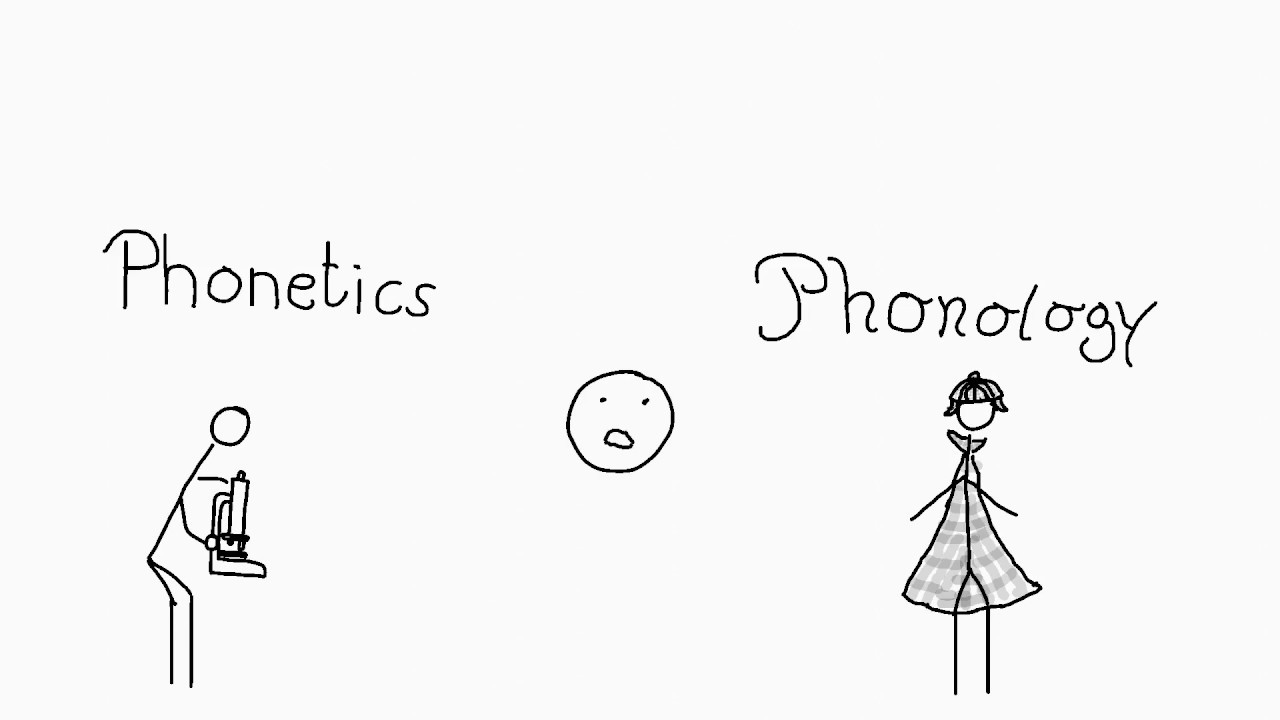
The first in our Introduction to linguistics series! Here, we'll have a look phonetics and phonology - the disciplines that are all about what sounds we make to communicate.
For this series, we will be using Bernd Kortmann's "English Linguistics: Essentials", publishes by Cornelsen, first edition (ISBN: 978-3-44-31162-2). It's a detailed but a...
crimson vortex
boreal ingot
I'm no phonologist, so I can't give you an exact definition, but phonology is li...
Thanks, it is a quite precise answer, I'll necessarily check out the video
 verbal heron
I noticed that, but it'd better to bear with it, as we are here to help and to be helped
verbal heron
crimson vortex
I recalled the moment when I asked a question and no one answered it. So after l...
Ah, the person must have endeavored to cloak their unknowingness
verbal heron
flat rune
why is ur role beginner ?
The reasons behind my taking the beginner role are: (1) my vocabulary does not contain much colloquials, (2) I learn from books and dictionary only, (3) it is less pertinent to the question, but I am not good at enunciating my thoughts during an oral conversation
crimson vortex
Do you intentionally use quite advanced vocabulary in your messages to practice it?
verbal heron
crimson vortex
Do you intentionally use quite advanced vocabulary in your messages to practice ...
Yes, sometimes, but I keep in mind that the readers of the messages should be able to infer the meaning of the expressions which may be obscure to them, from the context. So I try to provide more background to them
verbal heron
crimson vortex
Do you intentionally use quite advanced vocabulary in your messages to practice ...
Btw, that's a really good way to retain them in your memory
 distant hazel
Please repeat the problem for me.
frail river
It was a problem about extracting syllables from a word based on spelling alone
boreal ingot
distant hazel
Please repeat the problem for me.
They were trying to find an algorithm for separating syllables from only the spelling of a word
distant hazel
boreal ingot
They were trying to find an algorithm for separating syllables from only the spe...
difficult to impossible
boreal ingot
yea what I was thinking. English spelling is much too irregular for that
frail river
Well, I will not attempt this any further
distant hazel
that's what is meant by calling the spelling arbitrary
the best thing is simply to learn the phonetics
Are you familiar with this book? #esl-material message
frail river
I would have to somehow convert a word into it's phonetic representation, and then extract the syllables
boreal ingot
frail river
I would have to somehow convert a word into it's phonetic representation, and th...
Further, I'd like to note that syllable count can vary from speaker to speaker, and in some cases, from one usage of a word to another (the only example I can think of is 'learned person', but I remember there being at least one other word following that same pattern).
A lot of the time people don't even mark syllable boundaries in their IPA transcriptions, so you'd need something that converts to IPA and marks syllable boundaries, unless it's the case that through having the exact pronunciation of a word it's possible to derive where the syllables are through some algorithm
Maybe if you research English phonotactics and use a good database of words and their IPA, you could arrive at a decent method
 cloud badge
Yeah, for some words said in certain contexts, the syllable count is just something you have to memorize, like in 'learned'. 'I learned(1) something today' vs 'i am a learned(2, lear-ned) person' And some accents change how many syllables are annunciated.
Also fun fact, the words 'strengths' is the longest 1 syllable word in the English language
boreal ingot
cloud badge
Yeah, for some words said in certain contexts, the syllable count is just someth...
Yea exactly. The other word I was thinking of was 'blessed' as in 'blessed souls' and 'cursed' as in 'cursed place'
Though I think the latter may be pronounced either way?
cloud badge
boreal ingot
Yea exactly. The other word I was thinking of was 'blessed' as in 'blessed souls...
Oh yes those are other great examples. Many words with that suffix can be said that way
boreal ingot
Fun fact from me: when '-ed' is supposed to be pronounced separately, it can be written as '-èd'. I,e, 'learned person' would be 'learnèd person'
This is mostly for poems
cloud badge
boreal ingot
This is mostly for poems
Interesting, I've never seen that before but it makes sense based on what i know about French. But people who don't know about that accent will probably be confused by that 😅 that's the cool thing about poetry though, you can be very creative with everything.
boreal ingot
cloud badge
Interesting, I've never seen that before but it makes sense based on what i know...
I haven't seen it in actual use, but I've seen it being talked about lol. I find that sort of funny
but yea, English retains some diacritics here and there. the diaeresis in 'naïve', the acute accent in 'café', and the grave accent (I think it's called) in my example above.
I like these niche things, they're cool. Even though I'll never really use them or see them in use 
cloud badge
One i can think of that depends on accent is the word flour. In the south, it's common for people to blend the ou together and drop the r a bit, and the word comes out more like flar, one syllable, but further north where i am, there's a clear difference, it sounds like flow-wer. So if you were to see the word flour in, say, a haiku, where it only makes sense to have one, you may also be able to assume the poem was meant to be read in a southern American accent :p
boreal ingot
cloud badge
One i can think of that depends on accent is the word flour. In the south, it's ...
yeah, 'fire' is a similar situation
cloud badge
Yeah true, usually people drop the accents but its cool to see them. And yeah fire is another, and so is crayon, it can be pronounced cran, crown, cray-ahn, all depends where you live.
boreal ingot
boreal ingot
yeah, 'fire' is a similar situation
'fire' in older posh rp was either a slight diphthong (almost a monophthong) or at some point it was a triphthong? Nowawadays, it's a two syllables
Both of the first ones would be 1 syllable
cloud badge
boreal ingot
Both of the first ones would be 1 syllable
Yeah they would. And yeah, my best friend growing up was from western Pennsylvania and they all say fire like faarr.
Oil is another. Can be oll, or oy-ul
And I'm sure there's many more but yeah, not easily predictable with a computer program
boreal ingot
cloud badge
Yeah they would. And yeah, my best friend growing up was from western Pennsylvan...
Yeah, I always found it a little funny how Southern American and old-timey RP share this smoothing of triphthongs
 robust bone
 boreal ingot
Is Pennsylvania southern, actually? Idk my geography
robust bone
isn't handout supposed to mean pamphlet?
boreal ingot
cloud badge
And I'm sure there's many more but yeah, not easily predictable with a computer ...
an impossible task 
boreal ingot
robust bone
isn't handout supposed to mean pamphlet?
I haven't heard it, but it's a thing:

look at sense 3
cloud badge
boreal ingot
Is Pennsylvania southern, actually? Idk my geography
nope, its part of the midatlantic region, and considered north.
boreal ingot
cloud badge
nope, its part of the midatlantic region, and considered north.
I see. Wonder why they do the 'faaarr' thing then :p
Interesting
cloud badge
boreal ingot
Interesting
mhmm, im not sure, maybe because the accents that far west are closer to southern accents, Pennsylvania has a ton of interesting accents throughout it tho. I guess thats partly why they call the west part pennsyltucky :p
cloud badge
robust bone
isn't handout supposed to mean pamphlet?
a handout is just something, can be paper, can be money, can be food, anything that is handed out to poeple or given away to a lot of people.
boreal ingot
It's only a matter of time until the whole world will turn against me
Should that 'will turn' not be 'turns'?
Also, 'before' or 'until'? I'm seeing both are used, but which is prefered?
 random lava
boreal ingot
Is Pennsylvania southern, actually? Idk my geography
random lava
boreal ingot
Is Pennsylvania southern, actually? Idk my geography
No Pennsylvania is North East US.
robust bone
how often is the word "gruesome" used?
boreal ingot
robust bone
how often is the word "gruesome" used?
it's very common
robust bone
just learned "oftenly" isn't a real word five minutes ago
boreal ingot
robust bone
just learned "oftenly" isn't a real word five minutes ago
Lol
 amber jackal
what does 'yall' mean ? and 'tbh' ?
 fallow saddle
amber jackal
what does 'yall' mean ? and 'tbh' ?
fallow saddle
amber jackal
what does 'yall' mean ? and 'tbh' ?
Yall is shorter version of you all, and tbh is an abbreviation of to be honest.
amber jackal
ok thanks
 neat bone
Is it correct to say "There's some rice residue stuck to the pan"?
boreal ingot
You must document every word and the derivatives thereof in this exact format.
Is this sentence correct?
 median sapphire
Hye
amber jackal
hi
neat bone
What does the phrase "Sensitize teachers to the experiences of their students" mean?
boreal ingot
neat bone
What does the phrase "Sensitize teachers to the experiences of their students" m...
So when someone is desensitised to something bad, they don't care anymore cuz they've been so exposed to it or for some other reason, but it doesn't inspire any bad emotion in them. So to desensitise someone is to make them desensitised, to make them apathetic to something. Now reverse the meaning of 'desensitise', which is much more common than 'sensitise', as far as I know, and you get 'make more sensitive to something'. They're saying 'make teachers more sensitive and sympathetic to their students' experiences'. The opposit of making someone apathetic to something is making someone able to feel emotional about a certain matter. It's much more common to use 'resensitise' for this, but that word implies the person has already been desensitised, and they're being sensitised again, which 'sensitise' doesn't imply
 rapid bison
- being "desensitized" is not expressing emotions to situations, usually because they've seen them so much.
- being "sensitized" is, then, be likely to express emotions to situations, or become sensitive.
- this means, teachers should be sensitive to what the students experience/go through.
// oversimplified for fun - scella's answer is sufficient
 obsidian marsh
Hi
neat bone
boreal ingot
So when someone is desensitised to something bad, they don't care anymore cuz th...
Thx guys
boreal ingot
No problem!
obsidian marsh
I need helps I need someone who is living in the U S text me in private please I need a friends
 hardy jay

boreal ingot
boreal ingot
> You must document every word and the derivatives thereof in this exact format....
^ ?
boreal ingot
... choose [of/up] the 48 mages ...
What does he say?
 sour fulcrum
Hi everyone
I'm new here
I still don't know how to use this app
But I'm searching for a debate club to improve my speaking skills
cloud badge
neat bone
Is it correct to say "There's some rice residue stuck to the pan"?
Yes it is, if you mean the starch or something from the rice. If youre talking about whole grains of rice then no.
 graceful hare
boreal ingot
> ... choose [***of/up***] the 48 mages ...
What does he say?
graceful hare
boreal ingot
> ... choose [***of/up***] the 48 mages ...
What does he say?
Up to 48
boreal ingot
graceful hare
Up to 48
yes, thank you. Someone has already answered, but they deleted their answer for some reason
I appreciate it regardless
boreal ingot
boreal ingot
> You must document every word and the derivatives thereof in this exact format....
If you're able to answer this I'd be thankful ^
It has yet to be answered sadly
graceful hare
boreal ingot
> You must document every word and the derivatives thereof in this exact format....
Strictly speaking, the grammar is perfectly correct.
However, depending on the context, it could be improved for clarity. For example, in a casual conversation, "thereof" would be considered archaic, and it would be better to say "and its derivatives" as opposed to "and the derivatives thereof".
boreal ingot
graceful hare
Strictly speaking, the grammar is perfectly correct.
However, depending on the ...
Yes, I intended for it to have a more formal tone. I'm not very experienced in using 'thereof', so I'm glad I managed to use it correctly! Thanks for your help 
 swift canopy
Hi guys could someone tell me how can I improve my pronunciation
 hoary lichen
it’d be better to ask in #🗒|pronunciation
 warm garden
I’m writing translations, can anyone help me with the grammar and mistakes or better word to use in this.
“History keeps telling that war will occur terrible disasters.”
and
“Avoid conflict, keeping the world peace should be the goal of the mankind.”
Thanks for the time
boreal ingot
I see. What about 'until' vs. 'before'?
boreal ingot
 jolly mica
up to
jolly mica
up to
thanks!
boreal ingot
warm garden
I’m writing translations, can anyone help me with the grammar and mistakes or be...
For the second, get rid of two 'the's: the one before 'world' and the one before 'mankind'
As for the first, I'm not sure what you're trying to say, so I can't properly correct it
jolly mica
warm garden
I’m writing translations, can anyone help me with the grammar and mistakes or be...
“History keeps telling that war will occur have terrible disasters.”
“Avoid conflict, keeping the world peaceful should be the goal of the mankind.”
boreal ingot
jolly mica
also he doesn't say "the" he says "Chose up to 48 mages"
yea I was mishearing the 'to' as 'the', and wasn't sure if the 'up' was 'up' or 'of'
jolly mica
boreal ingot
yea I was mishearing the 'to' as 'the', and wasn't sure if the 'up' was 'up' or ...
definite article is hard especially in languages where it behaves differently or languages that dont have it at all
boreal ingot
But I think it's 'choose' not 'chose'
boreal ingot
jolly mica
definite article is hard especially in languages where it behaves differently or...
I don't struggle with using articles much. This was mainly me mishearing what was said
jolly mica
boreal ingot
But I think it's 'choose' not 'chose'
yeah youre right, even as a native speaker i make spelling mistakes like that
boreal ingot
jolly mica
yeah youre right, even as a native speaker i make spelling mistakes like that
yeye, sorry. I thought that was meant to be a correction to inform me it's actually 'chose' 😅
boreal ingot
jolly mica
“History keeps telling that war will ~~occur~~ **have** terrible disasters.”
“A...
'keeping the world peaceful' or 'keeping world peace', I think both work. Not sure which is better though
jolly mica
boreal ingot
'keeping the world peaceful' or 'keeping world peace', I think both work. Not su...
both are good
boreal ingot
boreal ingot
Also, 'before' or 'until'? I'm seeing both are used, but which is prefered?
Anyway, I'll bump this question ^ Someone already told me they think 'turns' is better, but I still dk about the second question
jolly mica
world peace implies that there are no conflicts at all, "the world peaceful" means that the world is peaceful to the best of its ability
boreal ingot
jolly mica
world peace implies that there are no conflicts at all, "the world peaceful" mea...
That makes sense
thank you :>
verbal heron
Wouldn't 'maintain' be a better choice here?
boreal ingot
verbal heron
Wouldn't 'maintain' be a better choice here?
'to keep the peace/world peace' is more of a set expression, I'd say, but I would imagine it derives from this definition of keep, which I was not familiar with

'Maintain' would work fine too, ofc
 bitter hill
boreal ingot
Also, 'before' or 'until'? I'm seeing both are used, but which is prefered?
bitter hill
boreal ingot
Also, 'before' or 'until'? I'm seeing both are used, but which is prefered?
Personally I don't really have a preference but 'before' is a lot more common
flat rune
Yo fam.
I think TEXT is the output we make whenever we CHAT
boreal ingot
bitter hill
Personally I don't really have a preference but 'before' is a lot more common
Thank youuuu!
 wise anchor
how do I know if the sentence has a faulty parallelism
 cloud badge
wise anchor
how do I know if the sentence has a faulty parallelism
cloud badge
wise anchor
how do I know if the sentence has a faulty parallelism
All of these sentences are examples of faulty parallelism. You can know that by the first sentence is the challenge where it says 'identify THE faulty parallelism'
cloud badge
wise anchor
how do I know if the sentence has a faulty parallelism
And how you know is by looking at the verb tenses and making sure that they are all in agreement, they all are happening at the same time as eachother.
cloud badge
boreal ingot
Yes, I intended for it to have a more formal tone. I'm not very experienced in u...
Archaic is not the same as formal. The suggestion was still very formal, using thereof is archaic in that it sounds out of place and jarring to read in modern writing, formal or otherwise.
boreal ingot
wise anchor
how do I know if the sentence has a faulty parallelism
I think the last one could be fixed by adding 'to' before 'attain' and 'be'
but idk what the issue with the second is
boreal ingot
cloud badge
Archaic is not the same as formal. The suggestion was still very formal, using t...
'thereof' isn't really archaic afaik. It's still used (you often hear 'or the lack thereof')
archaic means it's actually not used anymore, liek 'wherefore' and 'whither'
'unto' and 'thee', those are archaic
cloud badge
boreal ingot
'thereof' isn't really archaic afaik. It's still used (you often hear 'or the la...
That phrase, yes, but more because its a whole phrase that has stuck around, rather than because therof is a common word. Thereof on its own is definitely archaic in my mind.
boreal ingot
cloud badge
That phrase, yes, but more because its a whole phrase that has stuck around, rat...
I'm not saying it's not old, but it hasn't really fallen out of use yet, afaik. I'm pretty sure you see it around in legeal stuff, but idk.
Looking at the Collins sentences section for 'thereof', most are 'lack thereof', but there are these two from the 1990s which use it differently:

Ofc iss old, I jus don't think it's so old it deserves to be called archaic
tbh Im not really in any mood to argue abt anything, I just wanted to know if I used 'thereof' properly
cloud badge
boreal ingot
tbh Im not really in any mood to argue abt anything, I just wanted to know if I ...
Yeah i just wanted to let you know that to most, it will be confusing to see that, because it's so seldom used, it can trip people up, (like that second sentence is doing to me), that's why peoples suggestions for simplifying and just saying 'its' is preferred, and still formal.
Cuz it looked like you thought the suggestions werent as formal but they are, that's all.
boreal ingot
Btw, Im just sharing this in the least argumentative way possible, cuz I know we often get into debates here, which im trying to avoid: these three dictionaries classify it as either formal or law
But yea, I 100% understand how it can be unnatural or odd, since it's so seldom used. I don't disagree


 boreal ingot
cloud badge
Cuz it looked like you thought the suggestions werent as formal but they are, th...
boreal ingot
cloud badge
Cuz it looked like you thought the suggestions werent as formal but they are, th...
It did sound less formal to me to say 'and its derivatives' but I dont read enough formal texts to know for sure
So it's formal too?
cloud badge
boreal ingot
So it's formal too?
Yup, the sentence still sounds formal and clear c:
boreal ingot
cloud badge
Yup, the sentence still sounds formal and clear c:
I see, many thanks
cloud badge
wise anchor
how do I know if the sentence has a faulty parallelism
For the first sentence, look at the last two things in the list. They don't follow the same pattern as the first three. Students like teachers who are 'being patient'? Students like teachers who are 'with creativity'? those don't sound right. I don't want to tell you the answers if this is homework but happy to help if you ask more questions.
boreal ingot
ngl I still dk what's wrong with the second :p
cloud badge
boreal ingot
ngl I still dk what's wrong with the second :p
The second sentence or the 'with creativity'
boreal ingot
nono second sentence
sorry shoulve veen clearer
second sentence sounds okay to me
bitter hill
boreal ingot
second sentence sounds okay to me
Compare the conjuncts
cloud badge
boreal ingot
second sentence sounds okay to me
The value of excellence, and peoples passion to learn are not written the same way. It does make sense, but they want the focus on the passion. The value, the passion, not the peoples something.
boreal ingot
bitter hill
Compare the conjuncts
'[the value of excelence] and [how people are pattionate to learn] '
is it that one is a noun phrase while the other is a noun cluase?
boreal ingot
you're not allowed to whaa, that breaks parallelism? It sounds fine tho
does it sound weird?
I don't get parallelism :p
cloud badge
IDK, i would say a torch symbolizes passion before id say it symbolizes what someone is passionate about.
You want the parallels to match, and excellence and passionate do not
bitter hill
boreal ingot
you're not allowed to whaa, that breaks parallelism? It sounds fine tho <:AA_Aya...
I mean technically, but I probably wouldn't pick up on it if I wasn't actively looking out for it
It'd probably be more glaring if it was a list
 frozen ore
CHAT GPT:
- "Would you please ______ late?"
In the context of TOEFL or grammar-based exams, we usually choose the answer that is grammatically correct. However, in this question, the given answer is "Don’t be" because:
- TOEFL often tests understanding of common phrases or expressions in English, not just formal rules.
- A phrase like "Don’t be late" is a more idiomatic form of polite request and is commonly used in everyday conversation.
Why not "not be"?
- "Would you please not be late?" is grammatically correct but sounds very formal or outdated. In practice, this form is rarely used, even in formal writing.
- TOEFL often prioritizes answers that match modern English usage.
Guys , is this true?
boreal ingot
frozen ore
CHAT GPT:
1. "Would you please ______ late?"
In the context of TOEFL or gramm...
uh
'would you please don't be late' is wrong
if that's what it's saying
the blank should have 'not be'
It's either 'Would you please not be late?' or 'Don't be late' but not both
frozen ore
yupp, it sounds weird. I’ve no idea what’s wrong with chat gpt, his answer makes no sense
boreal ingot
frozen ore
yupp, it sounds weird. I’ve no idea what’s wrong with chat gpt, his answer makes...
ChatGPT isn't a good grammar tool
It's good for vocabulary or as a conversation partner, but it can't really answer English questions or tell you the difference in nuance between multiple things
 sly pier
frozen ore
CHAT GPT:
1. "Would you please ______ late?"
In the context of TOEFL or gramm...
sly pier
frozen ore
CHAT GPT:
1. "Would you please ______ late?"
In the context of TOEFL or gramm...
Adding onto what Scella said (the first part is incorrect), “Would you please not be late?” is not outdated at all. It is perfectly acceptable in modern English usage.
When you ask ChatGPT why something is wrong/right (even when it 100% isn’t) it’ll simply just make up reasons to support a point.
 ruby void
sly pier
When you ask ChatGPT why something is wrong/right (even when it 100% isn’t) it’l...
ruby void
sly pier
When you ask ChatGPT why something is wrong/right (even when it 100% isn’t) it’l...
Lowkey we need to touch it up by training it (cuz it has memory now). We can just point out where it went wrong and tell it to not make such mistakes next time.
flat rune
What's the difference between : Nonetheless, i wish he became doctor instead of becoming artist. Nevertheless, i wish he became doctor instead of becoming artist.
sly pier
flat rune
What's the difference between : Nonetheless, i wish he became doctor instead of ...
They are synonyms and can be used interchangeably.
Both definitions are “in spite of that”
Just a note: you’re missing articles in both sentences.
I wish he became a doctor instead of becoming an artist.
flat rune
ty
boreal ingot
This grammarly article seems to think there' some difference between them, but I didn't really understand what they exaplined, to be honest:
https://www.grammarly.com/blog/commonly-confused-words/nonetheless-nevertheless

The Difference Between “Nonetheless” and “Nevertheless” | Grammarly
Nonetheless and nevertheless appear to be similar words, but they have slightly different meanings. Nonetheless means “in contrast to something that happened or was said.”…
To me they're synonymous but idk
boreal ingot
sly pier
They are synonyms and can be used interchangeably.
Both definitions are “in sp...
Hey, isn't it acceptable to drop articles in more poetic texts?
This is something I wrote a while ago. I feel that it's alright to drop the article when it's something poetic, but idk, so I'd like to know what you have to say
I would like to be composer of book, painter of a world whence many a person might derive a great deal of joy.
cloud badge
boreal ingot
Hey, isn't it acceptable to drop articles in more poetic texts?
This is somethin...
That sounds so wrong, it makes me think the writer was joking 😅 definitely not acceptable. The only way that would be gramatically ok is if 'Composer of Book' was some kind of title, like Spider Man. Even then, its really weird and book should still be plural... idk. Dropping articles isn't a good idea unless you're doing it for a reason (like making a joke about wanting to be a writer while writing badly)
Its making me think of The Office quote 'why waste time say lot word when few word do trick' haha
flat rune
Can anyone explain me the difference between even though and even if
same for as though and as if
bitter hill
boreal ingot
Hey, isn't it acceptable to drop articles in more poetic texts?
This is somethin...
I would expect that sort of thing when using grandiose titles
 rapid ingot
is it racist or bad if i refre to how black people speak english to "black English "?
 lunar token
rapid ingot
is it racist or bad if i refre to how black people speak english to "black Engli...
lunar token
rapid ingot
is it racist or bad if i refre to how black people speak english to "black Engli...
No, there are plenty of people in academia that call it exactly this
Some other names floating around are African American English (AAE), African American Language (AAL) and Black Language (I don't know what academia outside the US uses)
cloud badge
rapid ingot
is it racist or bad if i refre to how black people speak english to "black Engli...
ehm i dont know if its racist but there is a proper word for it. "ebonics" or AAVE to be more formal, (african american vernacular english). it has a lot of very inteterting characteristics. anyone please correct me if im wrong about any of this
lunar token
there are also people who would have a little bit of a problem with the 'V' in AAVE if you're using it as a generic way of labeling all black speech (like a lot of people seem to do)
because obviously not everything a black person says differently is because they're speaking 'vernacular'
cloud badge
lunar token
because obviously not everything a black person says differently is because they...
vernacular is just another word for vocabulary though?
bitter hill
cloud badge
ehm i dont know if its racist but there is a proper word for it. "ebonics" or AA...
I usually see people use ebonics
cloud badge
but yes not every black person uses that vernacular
verbal heron
sly pier
When you ask ChatGPT why something is wrong/right (even when it 100% isn’t) it’l...
For precise answers what we need to do is to entertain no partiality in our questions
cloud badge
rapid ingot
is it racist or bad if i refre to how black people speak english to "black Engli...
i saw this video about black english a while ago, it was really interesting and might give you a better answer https://www.youtube.com/watch?v=JDAj9OVooyY&t=105s

Black English is misunderstood. It's not what the stereotype about ebonics would lead you to believe. It's grammatically more complex than classroom English, especially in the grammar of tense, aspect, and mood. Let's see why.
patreon: www.patreon.com/languagejones
Edited with Gling AI: https://bit.ly/46bGeYv
#linguistics #languagelearning #l...
verbal heron
Doesn't the word "black" often convey the idea of corruption?
cloud badge
verbal heron
Doesn't the word "black" often convey the idea of corruption?
there any many things the word black conveys, positive negative, everything in between, as do most if not all the color names
lunar token
i mean yeah, but calling the way black people talk 'black' is just about as neutral as calling black people themselves 'black'
jones also has another video that explicitly talks about names for the language https://youtu.be/a4NrrUtRShw
flat rune
No one has answered my question
verbal heron
cloud badge
there any many things the word black conveys, positive negative, everything in b...
It rarely conveys positivity though
lunar token
flat rune
Can anyone explain me the difference between even though and even if
X, even though Y = Y definitely happens
X, even if Y = Y might not happen
X, as though Y / X, as if Y = these are synonyms
bitter hill
lunar token
i mean yeah, but calling the way black people talk 'black' is just about as neut...
Well 'neutral' is a debatable topic for some
flat rune
lunar token
X, even though Y = Y definitely happens
X, even if Y = Y might not happen
X, as...
ty
cloud badge
flat rune
same for as though and as if
as though and as if are the same pretty much, but though and even if are not.
verbal heron
lunar token
i mean yeah, but calling the way black people talk 'black' is just about as neut...
However, don't you think 'black english' might be perceived to be a corrupted version of english?
flat rune
cloud badge
as though and as if are the same pretty much, but though and even if are not.
ty too
bitter hill
verbal heron
However, don't you think 'black english' might be perceived to be a corrupted ve...
No
cloud badge
verbal heron
However, don't you think 'black english' might be perceived to be a corrupted ve...
not at all, at least to me.
lunar token
verbal heron
However, don't you think 'black english' might be perceived to be a corrupted ve...
again not more than 'black people' is seen as pejorative by itself
there are plenty of people who use black/Black (sometimes capitalized explicitly out of respect/because it's a racial category) without playing into stereotypes that black people are inferior
and there are a whole lot of people who use 'more respectful' terms like African American while still definitely playing into those stereotypes
verbal heron
In that case I can't comment anything more on it
From the way we use terms like 'black magic', 'black money', 'black market', it is quite plausible to think that the usage of 'black english' might have a negative connotation
Moreover, we often use the color black to symbolise sombre or grief
lunar token
what I'm getting at is how much power those associations have is just as much power as you give them (this is exactly the same mechanism that allows other once offensive words like 'deaf' and 'gay' and 'qu*er' to be reclaimed and reused as a source of identity)
boreal ingot
bitter hill
I would expect that sort of thing when using grandiose titles
Hmm, so I take it from your and RedSunBlues' answers that articles shouldn't be elided, be it in a poetic text or a normal one. What would you say about these sentences then?
With shield and sword, she fought valiantly to the very end.
Then in blood I write this will to you, without paper or pen.
Do they sound fine?
rapid ingot
cloud badge
i saw this video about black english a while ago, it was really interesting and ...
thanks
I play gta v
its really hard to understand the converstion between lamar and frank they're black
and they always use n word
but i dont have issue when frank talks to white people
cloud badge
verbal heron
Moreover, we often use the color black to symbolise sombre or grief
there are plenty of examples to the contrary though as well, black tie, black friday, black belts ha it depends on context. the use of black here is just about color, oversimplified but not with negative associations necessarily
lunar token
boreal ingot
Hmm, so I take it from your and RedSunBlues' answers that articles shouldn't be ...
These sound fine, but I get the feeling that the meaning changes to be more abstract, like instead of a literal shield & literal sword it's also referring to the notion of what a shield & sword mean (i.e. with protection & strength)
When talking about people, there's a (to me) unrelated way of using the zero-article with positions of power: When I become king, As president I will, etc... these don't sound like abstract notions to me & they only work with certain positions
boreal ingot
lunar token
These sound fine, but I get the feeling that the meaning changes to be more abst...
I see, then I wonder what sets apart 'without paper or pen' and 'with shield and sword' from my 'composer of book' in 'I would like to be composer of book, painter of a world whence many a person might derive a great deal of joy.' Is it the fact that this one doesn't contain 'with'? Can 'a'/'the' only be elided after 'with' and 'without'?
cloud badge
boreal ingot
Hmm, so I take it from your and RedSunBlues' answers that articles shouldn't be ...
they sound fine because the things theyre talking about have such symbolic significance or something, im not exactly sure how to explain it, but yeah its ok there.
lunar token
boreal ingot
I see, then I wonder what sets apart 'without paper or pen' and 'with shield and...
why not 'composer' = re read my second paragraph: this isn't a position of power like 'king' or 'advisor'
why not 'book' = re read my first paragraph: I could see how this could maybe work but it really has to fit into the notion of what a book represents
I also thought it might have something to do with the word 'with', but also be careful with that (I'm not really sure how good a sentence like 'I sat down at my desk without book' would sound even in a poetic style)
bitter hill
boreal ingot
I see, then I wonder what sets apart 'without paper or pen' and 'with shield and...
Might just boil down to idiomatic usage, also not necessarily about with/without
Sword and shield in hand, she fought valiantly to the very end.
boreal ingot
I'd like to know how this sounds, then I think I'm done asking about this:
With magic tome* in hand, she recited words from a time immemorial, and thereby damned him to a ghastly end.
lunar token
tome, not tomb
boreal ingot
bitter hill
Might just boil down to idiomatic usage, also not necessarily about with/without...
Ohh, I see, that makes a lot of sense
boreal ingot
lunar token
tome, not tomb
right, sorry. But that one doesn't need an article?
bitter hill
boreal ingot
I'd like to know how this sounds, then I think I'm done asking about this:
> Wit...
With article sounds better here
lunar token
I can see it working if the tome is like really important to the story, or the tome is like an object she is always associated with/always carries, etc...
but again the meaning really plays into the poetic/literary style
boreal ingot
bitter hill
With article sounds better here
Damn, wish I had a good intuition for this. I'll grow it in due time, hopefully
Well, thank you @lunar token, @bitter hill, and @cloud badge for all your help 💜
bitter hill
boreal ingot
Damn, wish I had a good intuition for this. I'll grow it in due time, hopefully
However, after considering corb's response, I do think no article sounds fine without the 'with'
Magic tome in hand, she recited words...
boreal ingot
What might you be doing?
What sort of effect does 'might' have on this question? In other words, what's the difference between 'What are you doing?' and 'What might you be doing?'
boreal ingot
bitter hill
*However*, after considering corb's response, I do think no article sounds fine ...
I guess this confirms it's not the 'with' that allows article omission
cloud badge
bitter hill
*However*, after considering corb's response, I do think no article sounds fine ...
Agreed
I think it would also be ok if magic wasn't there, like 'with tome in hand' but with the adjective its too much, unless like, the magic tome was very significant.
lunar token
it has to be a big boy tome
bitter hill
Might as well make it a proper noun
cloud badge
lunar token
it has to be a big boy tome
lol
boreal ingot
boreal ingot
> What might you be doing?
What sort of effect does 'might' have on this questio...
Also, small metaquestion: how should I have punctuated that question? At the end there, I know I'm supposed to have a question mark, but the question mark at the end of the quote disallows me from using one after it, so what do I do? Is it okay as is? Imagine it's an essay or a formal email, how should such a sentence be punctuated?
bitter hill
boreal ingot
> What might you be doing?
What sort of effect does 'might' have on this questio...
Kind of sounds formal/posh, but in terms of effect it makes the question less direct and more polite
cloud badge
boreal ingot
> What might you be doing?
What sort of effect does 'might' have on this questio...
its the same as saying 'what, possibly, could you be doing' like therye being extra curious, there are many possibilities
bitter hill
But also depends on context
cloud badge
it could also be asking about a time in the future
boreal ingot
Ohhh thank you both! It seems my intuition lines up with both your answers. Thank you
boreal ingot
boreal ingot
Also, small metaquestion: how should I have punctuated that question? At the end...
Also, meta-metaquestion: did I use 'metaquestion' properly there, and have I used 'meta-metaquestion' properly here?
lunar token
boreal ingot
Also, small metaquestion: how should I have punctuated that question? At the end...
in an essay or a formal email: just end it exactly like you did, question mark end quote and nothing after (you would do the same thing with a period to show that the end of a declarative quote is the end of a statement)
metaquestion seems fine, i don't really think i've seen a style guide address whether to use a hyphen when you're nesting things multiple times like this
cloud badge
boreal ingot
Also, meta-metaquestion: did I use 'metaquestion' properly there, and have I use...
Yeah i think you used both correctly haha
boreal ingot
lunar token
in an essay or a formal email: just end it exactly like you did, question mark e...
And if the quote didn't have terminating punctuation, would the question mark go outisde or inside the quote? 
bitter hill
boreal ingot
And if the quote didn't have terminating punctuation, would the question mark go...
If question mark is part of quoted material you put inside quote and leave it as that
If not then outside
cloud badge
bitter hill
If not then outside
agreed
boreal ingot
So
What is the meaning of 'What might you be doing?'
What is the meaning of 'Hello'?
What is the meaning of 'I hereby renounce smoking.'
Yes?
lunar token
boreal ingot
And if the quote didn't have terminating punctuation, would the question mark go...
What I was taught in school (America) was:
1 - He used the word "cute" often.
2 - Did he use the word "cute" often?
3 - He often used the word "cute."
4 - Did he often use the word "cute?"
5 - She told him, "You often use that word."
6 - She asked him, "Do you often use that word?"
I was also taught that British writers & some American writers put the punctuation outside the quote in 3 & 4, but I don't think they would add anything outside the quote in 5 or 6
personally i put it outside the quote in 3 & 4 because i think it looks less silly
cloud badge
boreal ingot
So
> What is the meaning of 'What might you be doing?'
> What is the meaning of ...
the first would be
"What is the meaning of 'What might you be doing?'?"
lunar token
boreal ingot
So
> What is the meaning of 'What might you be doing?'
> What is the meaning of ...
I would have to look up an actual style guide for how the 3rd one here goes because I really don't remember
cloud badge
so like
"What is the meaning of 'What might you be doing?'?"
boreal ingot
cloud badge
the first would be
"What is the meaning of 'What might you be doing?'?"
Two marks in a row??
That is very odd, I could have sworn one must be removed
lunar token
I was definitely taught it without the two marks like that, just the one inside the quote
cloud badge
boreal ingot
Two marks in a row??
yeah cuz the first is part of the quote, and you still didnt end the question
so you need the second, but many would reorganize the sentence if that happened. i dont mind it
boreal ingot
lunar token
What I was taught in school (America) was:
1 - He used the word "cute" often.
2...
Oh I see. I think that's what I tend to follow (although I put my punctuation outside for 3 and 4). Thank you for explaining!
boreal ingot
lunar token
I would have to look up an actual style guide for how the 3rd one here goes beca...
I think I'll DM Jbuck and ask him about the third case. Thank you for your help with the rest 💜
cloud badge
the third should still have a question mark on the end as well
What is the meaning of 'I hereby renounce smoking.'?
boreal ingot
I don't really know how to use guides or where to find them :p
boreal ingot
cloud badge
the third should still have a question mark on the end as well
What is the mean...
So in a context where you're trying to be as formal as possible and punctuate everything properly, you would write it thus? I must admit I've not seen anything written like that before
cloud badge
boreal ingot
So in a context where you're trying to be as formal as possible and punctuate ev...
yes, 100%, and it doesnt even have to be formal, it just depends on if you want to end your sentence properly or not. quotes are never used to end a sentence, only to show where a piece of quoted text ends.
boreal ingot
I see, thanks
I have another question. Is it appropriate to use quotation marks alongside 'quote ... unquote'?
For example,
He said that I sound, quote, 'like a mad killer', unquote. I find that quite funny.
He said that I sound, quote, like a mad killer, unquote. I find that quite funny.
cloud badge
boreal ingot
I have another question. Is it appropriate to use quotation marks alongside 'quo...
if youre writing, you dont need to type out the words, but if youre writing dialog, or speaking out loud, and the person said the word quotes out loud, you could write that. If i read "He said that I sound 'like a mad killer'. I find that quite funny." I would say "He said that I sound, quote, like a mad killer, unquote. I find that quite funny." out loud, so yeah, it depends but i think saying AND typing the quotes is too much.
boreal ingot
cloud badge
if youre writing, you dont need to type out the words, but if youre writing dial...
I mean, I sometimes use 'quoute ... unquote' in writing to get that same sarcastic tone or to emphasise that what I'm saying is a quote. I've always used both the quotes and teh expression 'quote ... unquote'. Is that really too much? If so, is it also stylistically incorrect?
cloud badge
boreal ingot
I mean, I sometimes use 'quoute ... unquote' in writing to get that same sarcast...
yeah, i think its redundant, type them out if you really want to make sure the sarcasm is emphasized, i think
boreal ingot
cloud badge
yeah, i think its redundant, type them out if you really want to make sure the s...
I mean, looking around online, I'm seeing both examples with and without the quotation marks, but idk what would count as the proper way, since both are used
cloud badge
If i was to read the one with both out loud id say 'quote quote... unquote unquote' though lol so i think just using one is best technically but it's nitpicking at that point, people will understand either way.
bitter hill
boreal ingot
Does 'pulverise' have any implication of fire?
Not to my knowledge
boreal ingot
bitter hill
Not to my knowledge
Ah alright, thank you
For some reason, my brain thought it was like 'incinerate', so when I heard it in a context without fire I was confused, and when I looked it up and saw nothing about fire I was doubly so
I guess it doesn't have anything to do with fire lol
flat rune
Can we say : it doesn't bother you if i do that? instead of Do you mind me doing that?
lunar token
flat rune
Can we say : it doesn't bother you if i do that? instead of Do you mind me doing...
does it bother you if I...? (or even more hypothetical 'would it bother you')
Asking somebody 'it doesn't bother you if I...?' makes it sound like you're genuinely expecting them to say they're bothered
flat rune
Would it bother you if i took that
 grand agate
Can we use "mustn't" for negative deductions?
flat rune
Yes
 trail slate
"seems like you have had a tough start to the year." Is this okay to say?
Can I also say it has been a tough start to the year for you?
boreal ingot
trail slate
"seems like you have had a tough start to the year." Is this okay to say?
I'd add 'it' at the start but this is fine informally
boreal ingot
trail slate
Can I also say it has been a tough start to the year for you?
I think this technically works (?), but it sounds bad
trail slate
Thank you
 final cargo
trail slate
Thank you
final cargo
trail slate
Thank you
your parrot?
boreal ingot
What's the difference between 'circumfixation' and 'parasynthesis'?
Actually does this even count as an English question
 leaden herald
boreal ingot
What's the difference between 'circumfixation' and 'parasynthesis'?
leaden herald
boreal ingot
What's the difference between 'circumfixation' and 'parasynthesis'?
As a native english person, i was stunned looking at this question
A lot of people who are fluent in English never use those words,m
I like calling them filler words
boreal ingot
leaden herald
As a native english person, i was stunned looking at this question
Well, they are linguistic terms. I wouldn't expect laypeople to know them. I myself am only getting acquainted with the latter, since I don't really have a linguistic background
leaden herald
According to Google
Parasynthesis is kind of like a way to remake words
Like for example
Black eyes, black-eyed
Black eyes is for multiple but black-eyed can be refered to for one person
So while they mean the same thing, they’re used in a different context
Does that make sense?
boreal ingot
leaden herald
I like calling them filler words
Well, I'd say they're argot, not filler 😅
lunar token
parasynthesis is my favorite word to use when i can't think of what to say next
boreal ingot
leaden herald
Does that make sense?
Oh, that's the other defenition, a compound combined with an affix. I was more wondering about this second one:
 lunar token
Oh hold on I can actually try to answer this one
boreal ingot
lunar token
Oh hold on I can actually try to answer this one
:0
leaden herald
lunar token
Oh hold on I can actually try to answer this one
I suck at explaining, so go ahead
boreal ingot
Are you a linguistics professor, perchance 👀
either way, it would be appreciated :>
lunar token
multifaceted doesn't use a circumfix (= an affix that goes on both sides of a word), it just uses a prefix & a suffix (= two different affixes)
circumfixes are really rare in languages, but english has one if you've ever heard a word like 'he was a-hunting' (a...ing is the circumfix)
boreal ingot
leaden herald
I suck at explaining, so go ahead
hey at least you tried. I appreciate that too 
boreal ingot
lunar token
circumfixes are really rare in languages, but english has one if you've ever hea...
Ohhh
I see
I thought that in parasynthesis the word would be incorrect if either affix should be removed, which reminds me of circumfixes, since, well, if you remove half the circumfix the word would be incorrect
Would, say, 'crosslinguistically' be considered a parasynthetic construction? It does use multiple affixes, after all: 'cross-' + 'linguist' + '-ic' + '-al' + '-ly'
lunar token
boreal ingot
I thought that in parasynthesis the word would be incorrect if either affix shou...
I've never heard of parasynthesis before right now, but it looks like people use it as a label for any word that looks like it's derived from a compound/other derived word that doesn't exist (so browneye+ed counts, multifacet+ed counts, French embarqu+er counts)
This article says it's mostly for words like French embarquer because it's mostly a Romance technical word https://oxfordre.com/linguistics/display/10.1093/acrefore/9780199384655.001.0001/acrefore-9780199384655-e-509
either way crosslinguistically wouldn't count because the 'crosslinguistic' part of crosslinguistic+ly already exists
but maybe crosslinguist+ic would count (i have no idea because again i have never heard of parasynthesis before)
I'm leaning toward it maybe doesn't count because cross+linguistic already exists, unlike em+barquer which doesn't exist no matter which way you split it
boreal ingot
lunar token
I'm leaning toward it maybe doesn't count because cross+linguistic already exist...
Hmm I see. Thank you a lot for explaining 💜 I was confused over what the difference is. It's still a bit hard to grasp but this helps decentely
boreal ingot
lunar token
circumfixes are really rare in languages, but english has one if you've ever hea...
By the way, I love that example of a circumfix in English. It hadn't ever occured to me that 'a- ... -ing' is one! It's very interesting
If I'm not mistaken the derives from the preposition 'on' becoming a prefix and '-ing/-ung' verb forms being used as the prepositional complement right?
I heard something about that being how English got its progressive tenses
lunar token
boreal ingot
By the way, I love that example of a circumfix in English. It hadn't ever occure...
Apparently Czech uses a circumfix to make superlatives (where English uses -est)
so 'strong' is silný, 'strongest' is nej+silněj+ší (where nej+ší both make up the meaning of '-est')
& yes historically a+ing came from adding a separate word to ones like hunting, but in dialects that use it there's no real reason to say it acts like two words
lunar token
lunar token
Apparently Czech uses a circumfix to make superlatives (where English uses -est)...
& german participles like ge+mach+t ('made')
boreal ingot
lunar token
Apparently Czech uses a circumfix to make superlatives (where English uses -est)...
Oh that's really cool. I read a short paper abt this language called Degema, and apparently they form agent nouns, what they called 'Gerundive nominals' and nouns that mean 'the state of being [x]'. I found that pretty cool but I didnt understand most of the paper :p Iss always fun learning about random language facts lol
lunar token
boreal ingot
Are you a linguistics professor, perchance 👀
i'm not a professor or plan on being one, i just take college classes for it
boreal ingot
lunar token
i'm not a professor or plan on being one, i just take college classes for it
Ohh I see, that's cool
lunar token
before college i read as many wikipedia articles on language phonologies that i could, so i know about how you feel
boreal ingot
yeaa it's pretty fun :p I wonder if uni will sap the fun out of it or not, since id like to go into linguistics
lunar token
I know for me it didn't, I just need a career plan for something that's slightly different because I'm not planning on doing a linguistics masters
if anything going to college just let me learn more about how insanely broad "linguistics" really is
verbal heron
lunar token
what I'm getting at is how much power those associations have is just as much po...
You may be right here, though I am not sure if 'black english' will be accepted universally. However I look at it, it appears to be something that cannot refer to the English spoken by black people alone, as even asians are regarded as black (though they are coloured) in relation to westerners.
That's my opinion though, it may be correct or incorrect
Moreover, it's Africa which is known as 'dark continent'
verbal heron
cloud badge
there are plenty of examples to the contrary though as well, black tie, black fr...
The examples you mentioned are not that traditional if we we don't count Black Friday.
Apparently, it would be more reasonable to call a day 'black day', if a reknowned person were assissinated on that day—marked by the color black
cloud badge
verbal heron
The examples you mentioned are not that traditional if we we don't count Black F...
It's not "more reasonable". It's just a different use
And the ones i mentioned are very common. Black isn't always associated with bad things...
verbal heron
It's because people nowadays tend to think that black is a sophisticated color
verbal heron
cloud badge
It's not "more reasonable". It's just a different use
Maybe in your culture
cloud badge
verbal heron
Maybe in your culture
In English in general there are many different uses of the word black. Some positive some negative some neutral.
None 'more reasonable' than the rest
verbal heron
cloud badge
In English in general there are many different uses of the word black. Some posi...
That may be true, but I don't think it would be very good to use it together with 'English'
verbal heron
cloud badge
None 'more reasonable' than the rest
Ah, in the west, don't people often wear black dresses on funerals tho?
verbal heron
cloud badge
And weddings
They didn't use to do that in the past
cloud badge
And sports games, doing a blackout is fun, everybody dresses in black to stand out and show suppirt to the team
cloud badge
verbal heron
They didn't use to do that in the past
We're not in the past
verbal heron
cloud badge
And sports games, doing a blackout is fun, everybody dresses in black to stand o...
These are relatively new
cloud badge
So?
verbal heron
cloud badge
We're not in the past
Did I dip so much into old literature 💀
cloud badge
If by new you mean since the 1900s then sure
cloud badge
verbal heron
Did I dip so much into old literature 💀
I think you always do haha
verbal heron
cloud badge
If by new you mean since the 1900s then sure
That period is regarded as 'modern' tho
cloud badge
So is this one
verbal heron
cloud badge
I think you always do haha
💀
cloud badge
verbal heron
💀
I really think it would benefit you greatly to read more modern books, meaning within the last 10/20 years.
Even the past 50 years, would greatly help some of the gaps that seem to be in your understanding sometimes
verbal heron
I even made a notebook to jot the down the meanings of all the unknown expressions. I did that when reading To Kill A Mockingbird
cloud badge
verbal heron
I even made a notebook to jot the down the meanings of all the unknown expressio...
That book is oldddd
boreal ingot
cloud badge
Even the past 50 years, would greatly help some of the gaps that seem to be in y...
But older books are so much prettier in language 
verbal heron
Moreover, I prefer plot-driven narratives
cloud badge
They are pretty but they do not help with understanding modern/ current English
verbal heron
boreal ingot
But older books are so much prettier in language <:Cry:1203016425002766366>
xD
cloud badge
verbal heron
Moreover, I prefer plot-driven narratives
There is no lack of plot driven narratives in current literature
boreal ingot
I'm just gonna sit over here with Robinson Crusoe and A Study in Scarlet 
verbal heron
cloud badge
There is no lack of plot driven narratives in current literature
But they do not employ as powerful language as the Victorians did
cloud badge
verbal heron
But they do not employ as powerful language as the Victorians did
That's not true, you just haven't found the ones that do
cloud badge
boreal ingot
I'm just gonna sit over here with Robinson Crusoe and A Study in Scarlet <a:ablo...
And that's great, i only suggest this to @verbal heron because it seems to be where they have the biggest gap of understanding
boreal ingot
cloud badge
And that's great, i only suggest this to <@776382472924954624> because it seems ...
Oh my understanding is tiny lol
But yea, immesring oneself in more modern stuff is good too
Doesnt have to be books
cloud badge
Youre both very good with English, but yeah, focusing on one time period will not help you understand the others
boreal ingot
I personally like older writing cuz I find myself in awe at the English of yore, but I also am engaged in online media so Im not fully unaware of what's going on in the modern times (if you ignore my total lack of political knowledge). Vampire, I think even if you don't read modern books, engaging with modern online media could serve the same use
cloud badge
So yeah, in current English, black does not have an inherent negative connotation and most people will see nothing wrong with calling African American or African English language 'black English'
verbal heron
cloud badge
That's not true, you just haven't found the ones that do
Recently, I found a book, called The Time Traveller's Wife, which I greatly admired at first. But as I read more chapters, the story didn't progress directly. Instead the story was written as separate parts within the book
verbal heron
cloud badge
And that's great, i only suggest this to <@776382472924954624> because it seems ...
Thank you 🙏
cloud badge
verbal heron
Recently, I found a book, called *The Time Traveller's Wife*, which I greatly ad...
Every book is different. My favorites are cheezy mystery novels by dean koontz. I love the creativity, imagery, and vocabulary he uses, and the pacing of the stories. Hope you find some more you can like c:
boreal ingot
cloud badge
So yeah, in current English, black does not have an inherent negative connotatio...
Yea, it's not insulting afaik. It's the same as calling a black person, well, a black person :p I know 'black' can have negative connotations, but 'green' can be jealousy but also nature, blue is sadness but also serenity, red is anger but also passion, white is 'cold and clinical' but also holy, and so on. All the colours have both positive and negatives meanings, and 'black' is no different
cloud badge
boreal ingot
Yea, it's not insulting afaik. It's the same as calling a black person, well, a ...
Yes exactly c:
verbal heron
boreal ingot
I personally like older writing cuz I find myself in awe at the English of yore,...
Yea, thanks for the suggestion
verbal heron
cloud badge
Every book is different. My favorites are cheezy mystery novels by dean koontz. ...
Hey what do you mean by 'cheezy', is it same as 'cheesy'?
It has only been 2 years since I developed passion for English 💀
I have taken the beginner role to mask the fact that I've been learning English for 12 years 💀
boreal ingot
7 years here, but only 3 or 2.5 with actual interest
cloud badge
verbal heron
Hey what do you mean by 'cheezy', is it same as 'cheesy'?
It has only been 2 ye...
Yeah i always mess up the spelling of that one haha
boreal ingot
lmao
verbal heron
All I learnt were “tense”, “voice”, "narration”
verbal heron
boreal ingot
7 years here, but only 3 or 2.5 with actual interest
You are doing great
boreal ingot
I've much to learn, but thank you :>
verbal heron
cloud badge
Yeah i always mess up the spelling of that one haha
American English sometimes replace 's' with 'z', so I thought it could have been a spelling unbeknown to me
cloud badge
You're both doing really well c: better than half the people i see in person most days haha
And yeah, cheezy is like, the cheezy way to say cheesy hahaha
boreal ingot
verbal heron
American English sometimes replace 's' with 'z', so I thought it could have been...
American English silly like that 
boreal ingot
cloud badge
You're both doing really well c: better than half the people i see in person mos...
Thanks so much :D
 boreal ingot
Too much cheese
cloud badge
Hahaha
cloud badge
boreal ingot
Too much cheese
Impossible 
verbal heron
cloud badge
You're both doing really well c: better than half the people i see in person mos...
Thanks mate, I hope you will be helping us whenever we need you 😆
boreal ingot
Can 'cheese' be used as a noun in the same sense as the verb?
There's a way to cheese this section of the level
Can I say this, for example?
This section has cheese
If so, can an adjective be derived? Something like this:
This level is pretty cheesy. It's obvious no play-testing was done
cloud badge
boreal ingot
Can 'cheese' be used as a noun in the same sense as the verb?
> There's a way to...
Cheesing and cheesy have different meanings, you can say the first one, but the rest don't really make sense the way you mean them to.
boreal ingot
cloud badge
Cheesing and cheesy have different meanings, you can say the first one, but the ...
I see, that's a shame
Thanks :p
cloud badge
You can call a level cheesy but itd be because it has a lot of overly-used tropes or stereotypes, or is gimmicky
boreal ingot
Oh, so not the meaning I intended, yeah
cloud badge
Yeah
verbal heron
I have a question: can we use parentheses inside parentheses, that is, to capture additional information inside additional information?
This is often resolved with commas, semicolons or colons. But I am not sure as to whether double parentheses is possible
verbal heron
boreal ingot
Can 'cheese' be used as a noun in the same sense as the verb?
> There's a way to...
Scella, the second example gives me the idea of the setting being a bakery
This section has cheese, this section has pizza, this section has doughnut
boreal ingot
verbal heron
This section has cheese, this section has pizza, this section has doughnut
Lmfao
boreal ingot
verbal heron
This is often resolved with commas, semicolons or colons. But I am not sure as t...
Inside round brackets you use square brackets for parenthetical comments
verbal heron
boreal ingot
Lmfao
😅
verbal heron
boreal ingot
Inside round brackets you use square brackets for parenthetical comments
Could you give an example as to how to use it?
boreal ingot
verbal heron
Could you give an example as to how to use it?
It's a bit hard to come up with examples for double-nested brackets that soun natural, but I'll try:
So, if you wanna pronounce far-back consonants (stuff like uvulars or [god forbid] pharyngeals [or epiglottals, if you for whatever fucking reason wanna go there...]), you have to practice a lot. We Arabic speakers are lucky it's natural for us
This is not good practice
verbal heron
Ah, there are so many terms here which I do not understand at all 😅
boreal ingot
verbal heron
Ah, there are so many terms here which I do not understand at all 😅
Don't worry about em, they're places of articulation
They're just places you can make sounds that are far back in your throat lol
'uvular', 'pharyngeal', and 'epiglottal'. 'epiglottal' is technically considered 'lower pharyngeal'
anyways, I shouldn't bore you with my phonology crap
That example shows two instances of brackets in brackets
boreal ingot
verbal heron
Ah, there are so many terms here which I do not understand at all 😅
A simpler example would be this:
I recited your instructions to the team 3 times (I also made sure they read the whole manual [which, by the way, you provided] cover to cover), and I made sure everyone followed everything to a tee, so this failure is entierly on you. I only did as you asked me to.
You'll most often see it when a citation is added to something that's already between round brackets:
Gemination has semantic significance in Finnish (e.g., 'muta' means 'mud', but 'mutta' means 'but' [example from 'Finnish: An Essential Grammar' by Fred Karlsson]), so, yes, you do need to learn how to geminate plosives.
trail slate
final cargo
your parrot?
Nah 😅
 quiet ridge
Fuck u all I'm at school and I receive notification
 livid tiger
quiet ridge
Fuck u all I'm at school and I receive notification
livid tiger
quiet ridge
Fuck u all I'm at school and I receive notification
Same dude.. same
rapid bison
boreal ingot
Inside round brackets you use square brackets for parenthetical comments
must you alternate brackets?
boreal ingot
rapid bison
**must** you alternate brackets?
I think that depends on the style guide you use
But I've always been told to alternate but never go past 2
rapid bison
you didn't say "you can use" but "you use", hence my question
boreal ingot
boreal ingot
But I've always been told to alternate but never go past 2
I'm not sure what style guide that's in accordance with
rapid bison
when in dire need of nesting, you can just ( [ { } ] ) the heck out of it lol
boreal ingot
rapid bison
you didn't say "you __can__ use" but "you use", hence my question
Sorry for the phrasing
rapid bison
it's oki
boreal ingot
rapid bison
when in dire need of nesting, you can just ( [ { } ] ) the heck out of it lol
I think I've heard something about curly brackets for the third layer, but Idk if it was credible or not. I sometimes get to 2 but I've never actually had any need for 3, and if I were to need it, I'd probably rephrase to make it 2
rapid bison
that something might just as well be order of mathematical operations crap
verbal heron
boreal ingot
A simpler example would be this:
> I recited your instructions to the team 3 tim...
Now that's much clearer to me, thanks a lot
boreal ingot
rapid bison
~~that something might just as well be order of mathematical operations crap~~
Found this

It seems Chicago Manual say not to use them like brackets
rapid bison
what would be the examples 🤔
boreal ingot
Here's the full thing if you're interested https://jamesg.blog/2024/03/30/braces/#:~:text=Chicago Manual of Style%2C AP Stylebook&text=Braces ({})%2C also,see%2C e.g.%2C 12.28).
The convoluted and arguably superfluous nature of the title of this post is an apt reflection of my ambivalence associated with the use of braces in English prose. Earlier today, I blogged on the topic of braces {}, pondering the use – and potential use – of the braces. While used extensively in programming, the University of Lynchberg documente...
lunar token
boreal ingot
It seems Chicago Manual say not to use them like brackets
Nobody ever told me anything about alternating with brackets in school either, I was taught the same thing about parentheses & brackets meaning two different things
the alternating was only for math, not writing
verbal heron
lunar token
the alternating was only for math, not writing
Do you mean the curly brackets?
lunar token
like x(y[z{a}])
 fading needle
is there any difference between "will not" and "won't"?
verbal heron
fading needle
is there any difference between "will not" and "won't"?
The latter is the contraction
boreal ingot
lunar token
the alternating was only for math, not writing
I'm positive it's used in writing as well. Maybe your school followed a guide that doesn't use square brackets as nested brackets?
Found this article that backs it up and claims Chicago Style follows that: https://knowadays.com/blog/proofreading-tips-parentheses-and-square-brackets-in-chicago-style/


Knowadays
In this blog post, we explain everything you need to know about using parentheses and square brackets in Chicago style.
boreal ingot
boreal ingot
A simpler example would be this:
> I recited your instructions to the team 3 tim...
As I said, it's common for when a citation is in round brackets already
boreal ingot
boreal ingot
Found this
^ But if you meant curly brackets/braces, then yeah, according to this they aren't used like round and square brackets. A shame, but tbh, if I'm nesting 3 times, at that point what am I even doing lmao
I mean, if you need a third nest, you could use em dashes
Anyway, if anything interesting about brackets comes up, do ping me. I'd like to check it out when I wake up lmao.
I should stop delaying my sleep for square brackets 
 gaunt mango
 acoustic geyser
Can I use either singular or plural with collective nouns in BrE?
acoustic geyser
Can I use either singular or plural with collective nouns in BrE?
I believe it depends on the noun
“A group of mates”
“A catch of fish”
acoustic geyser
gaunt mango
I believe it depends on the noun
“A group of mates”
“A catch of fish”
I mean, it is like that:
The band are playing
The band is playing
gaunt mango
acoustic geyser
I mean, it is like that:
*The band are playing*
*The band is playing*
You would say “The bands are playing”
So I assume yes to your original question?
acoustic geyser
gaunt mango
You would say “The bands are playing”
So I assume yes to your original question?
Thanks
gaunt mango
Main difference being “The band is playing” and “the bands are playing” is you’re signaling that there is a single band playing or there are multiple bands playing
trail slate
final cargo
do you like bird?
Yeah
neat bone
What does depot mean?
rapid bison
in which context? most likely, it's a railroad; could be a storage of stuff
 silk flower
I'm able to ask for how do I could translate or adapt some idiom in Spanish to English?
neat bone
What's the meaning of "speak emphatically"?
boreal ingot
gaunt mango
I believe it depends on the noun
“A group of mates”
“A catch of fish”
My favourite is 'an unkindness of ravens'
boreal ingot
acoustic geyser
I mean, it is like that:
*The band are playing*
*The band is playing*
This is called notional agreement. It means the verb (and sometimes pronouns) agrees in number with the meaning of the subject, not with the actual form. Brits are more likely to use plural verbs for singular collective nouns like this than Americans are. When you use the plural, you emphasise the multi-individual-ed-ness of the group (if you will), the fact of them not being one entity.
The best example of this is when talking about Instagram lmao:
Instagram are bad = the people who run Instagram are bad
Instagram is bad = the app Instagram is bad
An example where 'are' is more natural than 'is' is this:
The band are having a barbecue together.
Though I'm guessing an American would still use 'is'
boreal ingot
neat bone
What's the meaning of "speak emphatically"?
I think it would mean you're emphasising a lot, stressing most words
boreal ingot
I think water has to be my most[-]drank thing ever
I saw this on Reddit. Why is it 'most-drank' and not 'most-drunk'?
 sly pier
wise anchor
can anyone help me answer this
sly pier
wise anchor
can anyone help me answer this
We can’t help with homework, but we can answer specific questions.
wise anchor
i'm just confused with "be"
and how do I even know that I used it correctly
plus "present"
had been present or had present
it doesn't even match the sentence
gaunt mango
wise anchor
it doesn't even match the sentence
It’s telling you to use “Be” in that form
For example, “Be” in perfect tense would be “Been”
“The literature of Thailand had been greatly influenced by Indian culture”
The text also says “Comprise - Past” so similarly you would use the past tense of comprise
gaunt mango
boreal ingot
> I think water has to be my most[-]drank thing ever
I saw this on Reddit. Why i...
They were wrong. It is most-drunk
cloud badge
boreal ingot
This is called notional agreement. It means the verb (and sometimes pronouns) ag...
Yeah an American would indeed use is, because a band and a company (Instagram) are 1 unit comprised of multiple people.
boreal ingot
cloud badge
Yeah an American would indeed use is, because a band and a company (Instagram) a...
yea, seems this confirms that Americans tend to not do notional agreement
but wiki does say that some amount of it is used
 cloud badge
boreal ingot
but wiki does say that some amount of it is used
cloud badge
boreal ingot
but wiki does say that some amount of it is used
Yeah there's probably a few niche exceptions, and some things are hard to tell weather you're talking about singular or plural until you see the is or are. Like moose, and fish. They can be either singular or plural.
boreal ingot
I think the examples they give fall under the verb agreeing with the closest noun
boreal ingot
boreal ingot
I think the examples they give fall under the verb agreeing with the closest nou...
@cloud badge, in the folowing example, would you use singular or plural?
This group of seven old tired men [was/were] aproaching us. [They/It] [was/were] weary as all hell, as was evidenced by [its/their] pitiable state.
cloud badge
boreal ingot
<@774016014974451712>, in the folowing example, would you use singular or plural...
Was, they, were, their. I think because the second sentence is referring more specifically to the men than the group but the first is more about the group unit itself.
 signal shell
cloud badge
Was, they, were, their. I think because the second sentence is referring more sp...
signal shell
cloud badge
Was, they, were, their. I think because the second sentence is referring more sp...
I tend to agree with this. Although, I wouldn't complain if the first option was "were"
cloud badge
signal shell
I tend to agree with this. Although, I wouldn't complain if the first option was...
Yeah true, same here, it just wouldnt be my preference.
boreal ingot
I see, thank you both! @cloud badge @signal shell
boreal ingot
I think it's funny that I learnt 'sinewy' from a book, then went on to learn 'sinious' from the same book but around a year and a half or two later and assumed it meant 'sinewy' lol
Is there a way to make this sentence more natural? Is ir natural already?
 iron star
In English, 'you' can mean one person or many people,
if i only want to mean one or many people,what should i do?
gaunt mango
iron star
In English, 'you' can mean one person or many people,
if i only want to mean on...
In what context
gaunt mango
boreal ingot
> I think it's funny that I learnt 'sinewy' from a book, then went on to learn '...
I think it's funny that I learnt 'sinewy' from a book, then around 1 or 2 years later I went on to learn 'sinious' from the same book and assumed it meant 'sinewy' lol
You can move some stuff around to make it a little smoother
boreal ingot
iron star
In English, 'you' can mean one person or many people,
if i only want to mean on...
You can make 'you' mean 'many people' by saying 'you all' or 'y'all', but 'you' can mean either, and there isn't a way to make it only plural or only singular. In English, both of them are the same, unlike many other languages
You can only tell them apart through context
People noramlly would specify 'all of you/you all/you lot/the bunch of you' if they think 'you' would be ambiguous
boreal ingot
gaunt mango
> I think it's funny that I learnt 'sinewy' from a book, then around 1 or 2 year...
Ohh that sounds much better
thank you
💜
boreal ingot
If I should happen upon them, the wishes of the dying shall become fulfiled, for the final want of a soul can bind it to its mortal coil, unable to wander off, not to heaven or to hell.
Is this sentence correct?
gaunt mango
boreal ingot
> If I should happen upon them, the wishes of the dying shall become fulfiled, f...
Yeah
The only thing I can think of it changing “become” to “be” but I assume you chose become on purpose
boreal ingot
gaunt mango
The only thing I can think of it changing “become” to “be” but I assume you chos...
Would you say there is any meaningful difference between 'become' and 'be' there? I feel it doesn't change much, as is the case with 'I will become/be a doctor when I'm older', no?
gaunt mango
boreal ingot
Would you say there is any meaningful difference between 'become' and 'be' there...
It just makes it the tiniest bit more smooth imo
Like I said it’s fine as is but that’s really the only thing I can think of, if anything
boreal ingot
I mean, I'm using it more to mean 'the wishes shall be trasnitioned into a state of (become) being fulfiled'
gaunt mango
“Be fulfilled” just sounds better but again, “become fulfilled” works fine as well
They mean the same
boreal ingot
One uses it as a predicitive adjective while the other (with 'be') uses it as a passive voice verb, I think, but I guess it doesn't affect meaning overall?
boreal ingot
gaunt mango
“Be fulfilled” just sounds better but again, “become fulfilled” works fine as we...
Understood
Thank you lots 💜 Is there any punctuation issues?
gaunt mango
I don’t think so
boreal ingot
Oh, actually, having re-read it, I wonder if the 'or' should be 'nor'
what do you think?
gaunt mango
boreal ingot
Oh, actually, having re-read it, I wonder if the 'or' should be 'nor'
Nor needs “neither” to precede it
So yeah
“Not to heaven nor to hell”
boreal ingot
gaunt mango
“Not to heaven nor to hell”
Wait, you said 'nor' needs 'neither', then showed an example using 'nor' without 'neither'. Sorry, I'm jus a lil confused 😅
rapid ingot
what does cult mean in gen z language ?
boreal ingot
rapid ingot
what does cult mean in gen z language ?
Ig it's like 'group of people obsessed with [x]'
rapid ingot
boreal ingot
Ig it's like 'group of people obsessed with [x]'
twitter?
boreal ingot
instead of the more-typical, more-stagmatised religious meaning, informally the term is used as 'group of obsessed people'
 boreal ingot
rapid ingot
twitter?
boreal ingot
rapid ingot
twitter?
Pardon?
rapid ingot
boreal ingot
Pardon?
x is twitter
boreal ingot
Yes, what about it?
I'm not sure what this has to do with cults 😅
Oh
Ohhh wait
'[x]' as in 'repalce this with anything else'
you know, 'x' is used as a variable lol
verbal heron
boreal ingot
Ig it's like 'group of people obsessed with [x]'
The 'x' here replaces people's name right?
boreal ingot
Let me redefine it. Sorry, I haven't faced any confusion with using '[x]' so before 😅
The word 'cult' is used informally in the meaning of 'A group of people that are obsessed with [something]' (that '[something]' could be basketball, a person, an animal, etc.). It's normally used humorously, a way to say that it's funny how focused on the [something] (sport, person, animal, etc.) the people are or used by the 'cult' quote-unquote themselves to refer to themselves, again, humorously. The more typical sense of 'cult' is something like 'a group of people with odd/non-typical religious practices that go against that vox populi'. It implies a sense of 'creepiness' and may inspire ideas of human-, self- or animal-sacrifice and seclusion from society and going into a life of religious misanthropy.
@rapid ingot
boreal ingot
verbal heron
The 'x' here replaces people's name right?
It's just 'Something'
I use it liek that
Idk if anyone else does
It's just a variable, you pass it a value
verbal heron
boreal ingot
It's just 'Something'
K, now it's clearer
verbal heron
boreal ingot
I use it liek that
But I have never seen you using it
boreal ingot
verbal heron
But I have never seen you using it
Really?
I think I've used it with you even today lol
verbal heron
boreal ingot
I think I've used it with you even today lol
what is the 'it' here?
boreal ingot
verbal heron
what is the 'it' here?
the '[x]' thing. Is that not what you meant?
verbal heron
boreal ingot
Really?
I mean you don't use the word 'cult'
rapid ingot
boreal ingot
<@817295629528727582>
oh yeah i understand now thanks for your time and typing this
boreal ingot
verbal heron
I mean you don't use the word 'cult'
Ohhh I thought you were saying I haven't used '[x]' before
rapid ingot
boreal ingot
'[x]' as in 'repalce this with anything else'
I see
boreal ingot
I use it all the time :p But I confused this person somehow by using it
verbal heron
boreal ingot
Ohhh I thought you were saying I haven't used '[x]' before
No, you always use '[x]'
boreal ingot
My apologies by the way 😅
verbal heron
At least within my knowledge
boreal ingot
rapid ingot
oh yeah i understand now thanks for your time and typing this
No problem!
 winged needle
what is the best site to do english tests?
 noble wasp
hello. what does the slang "fw" mean? i saw this comment on a music video: "gang cant know i fw this"
what does it mean in this context tho? cuz i can think only abt the literal meaning and it doesnt make sense
thanks!
also, in "they will do anything except _ [write] their essay", write or writing?
can u explain why it cant be "writing"?
boreal ingot
Thanks for the answer, but is 'pitiable' that wierd? I feel I've heard it plenty 
is this both American and British or American only?
I see
I feel there is a difference in meaning, though. 'Pitable' isn't really as negative as 'pitful', to me. Something like this:
- your state is pitiul ~= your state is bad and sad; I pity you (negative),
- your state is pitabe ~= your state is bad; I feel for you (neutral/positive?)
I'm not sure if this is correct, but it's what my gut tells me
Not sure what that is
Sorry
But I'm just wondering if this difference is correct. I understand now that 'pitabe' is less common, but I'd also like to know any difference in nuance
oh that sounds interesting
Yea, googled around, no idea how to access one of those :p
Anyways, thank you for all the other corrections
 agile crow
"Pitiable" sounds more poetic to me.
And unusual.
But there's nothing wrong with being poetic and unusual, sometimes.
boreal ingot
https://www.vocabulary.com/articles/commonly-confused-words/pitiable-pitiful-piteous-pitiless/
this site seems to sort of agree with me? I can't find much :p

Ngl I have no idea what this data means
Lol, I get a similar reaction whenever I use 'indeed' or 'I suppose so' in VC with one of my friends
'I suppose so' is like my go-to expression of slight agreement
Oh understood
agile crow
I say "indeed" a lot, and "I suppose so" is extremely common.
boreal ingot
agile crow
I say "indeed" a lot, and "I suppose so" is extremely common.
Is it an age-demographic sort of thing? Are older people more inclined to use those terms?
How do you even document everything you say lol
For me 'I suppose so', 'I guess' and 'Yeah', maybe also 'Typically' would be among the most-used, for sure
agile crow
Not sure about that. I think those who tend to read a lot are more likely to say "indeed".
boreal ingot
agile crow
Not sure about that. I think those who tend to read a lot are more likely to sa...
Why I barely read at all 😅
Oh that's true
This is my first time seeing 'SES': google says it's short for 'socioeconomic status'. Is it common at all?
Why would you repeat 'care' thrice? And so many timess
ohh
Yea, that makes sense. I don't read papers much at all
How does 'SES' differ from 'Economic stratum'?
boreal ingot
ahh this is too economic for mee ahh I'll just ignore its existance iss okay
boreal ingot
agile crow
Insults with no repercussions = boring
I suppose it can feel like 'hehe they're too dumb to even realise what I'm saying' but, also, it could be a sort of insult that's indirect enough that the insultee can't comment on it but it still attacks them and they recognise it. A polite insult, if you will
I'm not socially competent enough to execute these, but they seem cool
agile crow
I suppose one cannot be faulted for occasionally deriving smug satisfaction from insulting an idiot and having it go over their head.
boreal ingot
lmfao 😭 that one is amazing, although, I don't think it would work on Americans? As far as I know there aren't different social-class accents over there?
agile crow
Indeed. 😉
boreal ingot
Oh, really? I had thought it to mainly be a British thing. I can't imagine a 'posh' American accent, to be honest :p
 night ferry
Does anyone have any advice for those who are learning English and having trouble with some expressions?
The case is that I'm currently reading books completely in English, and I'm around the intermediate level, so I think that it is quite normal to have some struggle with these things...
Expressions such as "Get this over with" "run into" , "somewhere down the line" so I'd like to know how can I fix these things in my mind? Even after I already have seen, I forget and have to take a look again to remember the whole thing
boreal ingot
I see
night ferry
I have nobody who I can chat with, so maybe I could write imaginary situations or maybe describe my day and try to put them on the context, right?
Oh, I got it! So if I use them at a meeting table it wouldn't be good. but people usually use that in daily conversations?
I just don't know how. People around me don't know English, so I can't practice with them
Fr! You're right
You're amazing, thx for the support!
Haha, LMAO
Now you got me with this example
 worldly radish
night ferry
Does anyone have any advice for those who are learning English and having troubl...
worldly radish
night ferry
Does anyone have any advice for those who are learning English and having troubl...
Talking to other people, and after hearing and reading those expressions a lot of times you'll get used to them
night ferry
worldly radish
Talking to other people, and after hearing and reading those expressions a lot o...
Alr, I'll try to do that!
worldly radish
It's practice I think, we learn by practice, so it's that
night ferry
Do you guys know any platform focused on English studies where people can chat freely with each other?
night ferry
worldly radish
It's practice I think, we learn by practice, so it's that
Perfect! Sometimes, I feel a bit frustrated because I don't feel like I belong at the intermediate level...
I think that I need to know more, and I've been putting a lot of pressure on myself
Alr, I'm grateful!
boreal ingot
I once read this philosophy thing. I had no idea they liked to define everyyything like that. It was defining 'determinism', but they expanded on soo many parts of the first definition they gave. I found that very cool and interesting, but also surprising and confusing :p
agile crow
night ferry
Does anyone have any advice for those who are learning English and having troubl...
With weird idioms and expressions, you can try picturing it in your head. For example, with "run into" you can picture in your head someone running into a wall. Why does "piece of cake" mean easy? Well, imagine a piece of cake. It's pleasant and easy to eat; everyone likes cake.
worldly radish
night ferry
Do you guys know any platform focused on English studies where people can chat f...
Discord is the best place that I know
 teal locust
what does "put stank on it" mean
agile crow
It means, put some real effort into it
teal locust
i searched stank and i realize that stank is past tens of stink but i thought stink is a noun
agile crow
It's an idiom from black American English
teal locust
tysm
night ferry
agile crow
With weird idioms and expressions, you can try picturing it in your head. For e...
Fr, you really helped me and made me laugh out loud with your analogy 😆

noble wasp
noble wasp
also, in "they will do anything except _ [write] their essay", write or writing?
can anyone tell me why it cant be "writing"? pls
agile crow
Because do... write; doing... writing
boreal ingot
noble wasp
can anyone tell me why it cant be "writing"? pls
It probably has something to do with the first part using 'write'
They are doing everything except writing their essays
but
They will do everything except write their essays
noble wasp
thank u!
night ferry
@boreal ingot are you there?
boreal ingot
Hi?
night ferry
In a context that there's a living armor, should I refer to this as "It'? For example, would it be correct to say "It dropped its sword?"
gaunt mango
night ferry
In a context that there's a living armor, should I refer to this as "It'? For ex...
Personally i would say it could change from the POV
if it's from someone who doesn't know the armor is living you could say "The armor dropped it's sword" (nonexclusively though)
whereas if it's in a narrative sense and it's a continuation you could definitely say "it dropped its sword"
"The armor started moving around, making a lot of creaking noises"
...
"It dropped its sword"
night ferry
gaunt mango
Personally i would say it could change from the POV
if it's from someone who doe...
ooooh that's perfect!
I'm really really grateful!
noble wasp
if i say im "tweaking out" will it be implied im on drugs? i mean i wonder if i can use it simply as a synonym for "freaking out" without it being related to drugs
gaunt mango
noble wasp
if i say im "tweaking out" will it be implied im on drugs? i mean i wonder if i ...
'tweaking' or 'tweaking out' is slang for someone who is on drugs, so yeah most people would assume you are on drugs
you could possibly say "stressed out" instead
noble wasp
alr, thanks
night ferry
gaunt mango
Personally i would say it could change from the POV
if it's from someone who doe...
Would the same fit well if we were talking about skeletons and demons?
For things that aren't people, should we always use "it" right? I'm just remembering it
gaunt mango
night ferry
Would the same fit well if we were talking about skeletons and demons?
For thing...
not always
a good example is that a lot of people refer to boats as "she"
"Her course is steady"
boreal ingot
night ferry
In a context that there's a living armor, should I refer to this as "It'? For ex...
To me it depends on what you mean by living. If it's seems like a monster, or some not very human entity, something queer and unnatural, or just, more instincts than intellect, I'd call it 'it' (as I have been calling it). If it's treated more as a living, maybe feeling, thinking, human-like being, then I would use 'they' (or, if a gender is assigned to it, the corresponding gendered pronouns)
Zov makes a great point by mentioning the point of view. Some character may think of it as human-like, while another may see it as not, and thus they would use different pronouns
gaunt mango
or when sentience is known as well
cause if your dog starts running away you wouldn't say
"it started running, let me go grab it"
instead you could say "he started running, let me go grab him"
night ferry
gaunt mango
a good example is that a lot of people refer to boats as "she"
Wow, that's actually a curious fact to me, I've never heard or seen anything similar to that
night ferry
boreal ingot
To me it depends on what you mean by living. If it's seems like a monster, or so...
I Gotchu!
I appreciate your explanation!
boreal ingot
night ferry
Wow, that's actually a curious fact to me, I've never heard or seen anything sim...
'She' is also used for other vehicles and for countries
night ferry
boreal ingot
To me it depends on what you mean by living. If it's seems like a monster, or so...
So, thinking by this way that Zov has pointed, there's no correct or incorrect way, right?
night ferry
boreal ingot
'She' is also used for other vehicles and for countries
Okay, my mind is about to blow just now
boreal ingot
night ferry
So, thinking by this way that Zov has pointed, there's no correct or incorrect w...
Well, if this typically inanimate/non-living thing is alive, then it's truly a matter of how you perceive it. At least, that's how I understand it
gaunt mango
boreal ingot
'She' is also used for other vehicles and for countries
i believe this is where the term 'mother earth' comes from
boreal ingot
night ferry
Okay, my mind is about to blow just now
Mind you, they aren't always refered to as such, but it is a thing
gaunt mango
^
night ferry
It's really good to talk with you guys. Here, there's knowledge sharing that helps all of us a lot!
gaunt mango
you'll see it a lot in people who have strong affections towards the object
though specifically for vehicles it's somewhat more common
boreal ingot
night ferry
It's really good to talk with you guys. Here, there's knowledge sharing that hel...
I'm jus a gal who likes language :p
I'm glad I can be of help
night ferry
gaunt mango
though specifically for vehicles it's somewhat more common
Tony stark would call his armor as "she" so 
night ferry
boreal ingot
I'm glad I can be of help
night ferry
boreal ingot
Mind you, they aren't *always* refered to as such, but it *is* a thing
Oh, at least
boreal ingot
boreal ingot
I'm glad I can be of help
Hmm, re-reading this, I'm not sure if it sounds alright. Is the collocation not 'be of astistance', and if so, does that make 'be of help' unnatural?
Or perhaps even incorrect?
night ferry
Even Scella has doubts
gaunt mango
boreal ingot
Hmm, re-reading this, I'm not sure if it sounds alright. Is the collocation not ...
i see "I'm glad i can/could be of service" commonly
and when i read it the first time i didn't think anything was wrong with it
night ferry
I see already "I'm glad I could be of some help"
boreal ingot
gaunt mango
i see "I'm glad i can/could be of service" commonly
Oh, I guess the order goes 'service' then 'assistance' then 'help'?
In terms of most to least natural
gaunt mango
i don't know if naturality is really a concern when using a difference between the three terms for that specific sentence
i just seem service or assistance a lot more commonly than help
boreal ingot
Understood, yeah
gaunt mango
because people who usually say that are subserviant to the person they are speaking to, and therefore speak in a more formal tone
while "help" would be considered a little less formal
boreal ingot
It sounded ever so slightly off to me upon my second read, so I felt I had to inquire further
Thanks for the help
boreal ingot
night ferry
Even Scella has doubts
I am a learner lol, and I'm someone who often gets stuck on the small details
At least when it comes to English
So yeah, ofc I have doubts
night ferry
Zovixi, as a native do you have any advice for those who are learning/practicing English while reading books entirely in English? There's a lot of words and expressions that I've never seen before, I think it's quite normal even for the native people, I mean about all words that do exist in the English language, it's almost impossible to know definitely everything
night ferry
boreal ingot
I am a learner lol, and I'm someone who often gets stuck on the small details
Oh, so you're just like me!
gaunt mango
night ferry
Zovixi, as a native do you have any advice for those who are learning/practicing...
you're right, it is pretty hard to know everything
most natives infer definitions and phrases from context
so it's not required to know everything
if you're not at that level yet i would definitely think about just googling or researching the terms you find interesting
(Ai generated sentence)
"After hours of hiking, they found solace in the xeric landscape, where only the hardiest plants like cacti and sagebrush thrived under the scorching sun."
i guarantee most natives don't know "xeric" unless they are spelling bee people or study English every day
however a lot of natives would infer "xeric" to mean desolate, or harsh
night ferry
gaunt mango
(Ai generated sentence)
`"After hours of hiking, they found solace in the xeric ...
This sentence contains more than one word that I've never seen, bruh
boreal ingot
This chart is interesting. It seems 'service' has undergone a bit of a resurgence in recent years. 'Help' has also started to overtake 'assistance'
 gaunt mango
night ferry
This sentence contains more than one word that I've never seen, bruh
gaunt mango
night ferry
This sentence contains more than one word that I've never seen, bruh
sorry 😟
night ferry
gaunt mango
sorry 😟
Np, it happens every time while I'm reading, haha
gaunt mango
cacti and sagebush are nouns, solace is is kind of like being comforted in a hard time
boreal ingot
gaunt mango
if you're not at that level yet i would definitely think about just googling or ...
I can't help but look up every word despite being able to derive the meaning, and it makes reading so tedious
gaunt mango
boreal ingot
I can't help but look up every word despite being able to derive the meaning, an...
that's not a bad way of going about it at all
night ferry
So, because I need to stop sometimes to research words and expressions, you'd say that I'm not at the level for reading books entirely in English yet?
gaunt mango
i have found myself sometimes misinterpreting words and then using them incorrectly
gaunt mango
night ferry
So, because I need to stop sometimes to research words and expressions, you'd sa...
not at all. in fact i encourage you to keep reading books entirely in english
pushing yourself outside of any comfort zone is an incredible way to learn
gaunt mango
gaunt mango
i have found myself sometimes misinterpreting words and then using them incorrec...
i used to think "marginal" was a large difference
until i was corrected after like 3 years of using it that way
gaunt mango
night ferry
So, because I need to stop sometimes to research words and expressions, you'd sa...
the only time i would really say you probably should dial it back is if you cannot understand literally anything going on
but from the way you speak now it seems you have a pretty good grasp of english
night ferry
gaunt mango
not at all. in fact i encourage you to keep reading books entirely in english
I'm glad and appreciate it!
So I'll keep it up!
boreal ingot
gaunt mango
the only time i would really say you probably should dial it back is if you cann...
me when Shakespeare
I hate that guy
gaunt mango
boreal ingot
me when Shakespeare
ugh. yeah
cloud badge
That's the best way to learn new words c: i still have to look things up when i read certain authors
gaunt mango
i remember having to do shakespeare in english class
it's not that you can't really understand what is being written
it's just like guhhhh
night ferry
gaunt mango
the only time i would really say you probably should dial it back is if you cann...
Oh, that's not the case! I understand everything that's happening even if I can't understand a single word, but I'm the kind of person who likes to understand all the words in a sentence, so sometimes I need to research a word or an expression
boreal ingot
cloud badge
That's the best way to learn new words c: i still have to look things up when i ...
Sir Arthur Conan Doyle uses a lot of fancy words in his stuff, pretty hard to read but it's still understandable :p
gaunt mango
night ferry
Oh, that's not the case! I understand everything that's happening even if I can'...
wonderful
the only thing you can do from here is get even better
boreal ingot
gaunt mango
it's not that you can't really understand what is being written
for me it takes too much thought lmao, I dont have the energy to read, nevermmind think to understand what Im reading
gaunt mango
boreal ingot
for me it takes too much thought lmao, I dont have the energy to read, nevermmin...
ikr
it takes extra processing power just to comprehend that stuff
gaunt mango
i feel bad for stage performers who have to memorize those lines
boreal ingot
gaunt mango
i feel bad for stage performers who have to memorize those lines
Oh heaven forbid, that must be a dismal task :/
night ferry
I was thinking of putting new learned words and expressions on some kind of flashcards system so I can practice them every time constantly
noble wasp
is "as of right now" the same as "from now on"? i heard it on a video and in the context itd make more sense if it meant "until now"
boreal ingot
noble wasp
is "as of right now" the same as "from now on"? i heard it on a video and in the...
It means 'from this moment'
'as of' means this:
 night ferry
Perfect! I'll do that
acoustic geyser
Can I live well in England if I use American English?
boreal ingot
acoustic geyser
Can I live well in England if I use American English?
I mean, isn't England full of immigrants? I doubt they aren't used to foreign (American or otherwise) accents, but you'd probably need to get used to the slang they use there. Though, I don't live in the UK, so I can't say anything for sure
night ferry
Haha, fr
boreal ingot
To be honest, I'd imagine a bad immitation of a British accent woul give you more trouble than having an American accent :p
noble wasp
boreal ingot
It means 'from this moment'
'as of' means this:
im sorry, im a bit confused. like, in "as of now, we havent received any updates", itd have the same usage as "until now", right?
night ferry
The situation would be different if he was asking, "Can I live well in England if I use Chinese?"
But bro, you'll be fine with American English
boreal ingot
noble wasp
im sorry, im a bit confused. like, in "as of now, we havent received any updates...
Oh, that would be the other meaning that Riidefi mentioend
'presently'/'currently'
I guess it can mean 2 things, never thought about that
noble wasp
so that would be an ambiguous phrase i think?
boreal ingot
noble wasp
so that would be an ambiguous phrase i think?
Which one?
noble wasp
the one riidefi used as example
night ferry
noble wasp
so that would be an ambiguous phrase i think?
Sorry, do you study braziliam Portuguese?
noble wasp
cuz of the two menaings of that expression
i speak native brazilian portuguese actually
night ferry
noble wasp
i speak native brazilian portuguese actually
Oh, that's amazing! Nice to meet you, fellow!
Could we practice English together?
boreal ingot
noble wasp
cuz of the two menaings of that expression
The tense of what follows is different depending on the meaning you're using, I believe, so there is no ambiguity
As of now, laws [exist] to give queer people their rights.
As of now, laws [are being passed] that aim to give queer people their rights.
^ present simple/continuous (meaning: at this moment)
As of now, no one [has been] to Mars.
^ present perfect (meaning: until now)
night ferry
Are you all guys who are here with us, studies English by yourselves?
Or do you guys attend any school or course?
noble wasp
thank u for the help, guyss
noble wasp
night ferry
Oh, that's amazing! Nice to meet you, fellow!
Could we practice English together...
sure! are u brazilian?
night ferry
noble wasp
thank u for the help, guyss
You're welcome, fellow!
Feel free to ask always!
night ferry
noble wasp
sure! are u brazilian?
Yeah!
boreal ingot
night ferry
Are you all guys who are here with us, studies English by yourselves?
I just kinda absorbed it over the years lol, learning through imerssion online
night ferry
Because of that I was surprised
night ferry
boreal ingot
I just kinda absorbed it over the years lol, learning through imerssion online
Oh, you're really intelligent, Scella! It's great to have someone like you on our learning way!
boreal ingot
night ferry
Oh, you're really intelligent, Scella! It's great to have someone like you on ou...
😅 I'm not I just got lucky
noble wasp
night ferry
Or do you guys attend any school or course?
i took an english course for 2 years. the promise was that id get fluent by the end, but i finished it being b2 lol (i took the toeic exam). i kinda regret taking that course, learning passively with videos or talking with natives on servers like this one is way more effective imo
night ferry
noble wasp
i took an english course for 2 years. the promise was that id get fluent by the ...
Oh, I feel so sorry for hearing that!
There're a lot of courses promising that kind of thing around everywhere. But you're fine, you have a good English ngl! And you seem to be dedicated and focused on your goal, I like to practice with people who are like you!
I took an English course for about 2 years as well, it was quite good for me, I have no complaints about it.
But I'm taking the next steps alone for now
night ferry
noble wasp
i took an english course for 2 years. the promise was that id get fluent by the ...
Sorry to ask, however, how much did you pay for the toeic exam?
noble wasp
night ferry
Oh, I feel so sorry for hearing that!
There're a lot of courses promising that ...
my english is actually rusty and i make a lotta mistakes. i havent practiced a lot cuz i was busy with entrance exams and other stuff, so ive been stuck at b2 since then. but yea i can communicate fairly well. ill just try to immerse myself more in english now that im on vacation. ur english is really good btw. what level are u at?
noble wasp
night ferry
Sorry to ask, however, how much did you pay for the toeic exam?
i actually got it for free
but i think the price back then was around R$400
night ferry
noble wasp
my english is actually rusty and i make a lotta mistakes. i havent practiced a l...
I gotchu! Just don't put much pressure on yourself. It's a bad thing to do, and I don't advise anyone doing that.
I finished at the intermediate III in the course I'd done, idk what level would it be in terms, like you said in your case, the "b2" but idk mine
night ferry
noble wasp
i actually got it for free
Wow, you made a bargain!
The price is kind of expensive
noble wasp
night ferry
Wow, you made a bargain!
The price is kind of expensive
its prob more expensive now 😛
night ferry
noble wasp
its prob more expensive now 😛
Fr 🤕
noble wasp
night ferry
I gotchu! Just don't put much pressure on yourself. It's a bad thing to do, and ...
nahh im fine, ill just learn it passively and thats it. i want it to be fun so i wont stress out
night ferry
noble wasp
nahh im fine, ill just learn it passively and thats it. i want it to be fun so i...
I'm doing that as well!
I think it's the best way
noble wasp
night ferry
I think it's the best way
ikr? i think u were talking abt learning with books earlier. i got a book entirely in english, ill start reading it soon. the vocabulary doesnt seem too formal, so i think itll be quite easy. ill just write down words and expressions i dont know to google them up and memorize. i think itll be effective and not that stressful
night ferry
Yeah, I was! And you're right!
night ferry
noble wasp
ikr? i think u were talking abt learning with books earlier. i got a book entire...
I usually do it too
There's the only way to not struggle with words and expressions that we don't know
acoustic geyser
What's the difference between:
I've done something five times
I did something five times
neat bone
"You've 6 months left to live, but I digress" meaning?
neat bone
Dark
 primal dagger
??ban 1329384644033908738 scammer
neat bone
Most people here are looking for help with their english
primal dagger
Dealt with it.
 hushed abyss
Fast af boi
neat bone
Good job chief
noble wasp
reading this makes me so happy, thank u! (:
rapid bison
noble wasp
my english is actually rusty and i make a lotta mistakes. i havent practiced a l...
this is at least c1 performance ._.
(in language production, anyway)
signal shell
To be fair, we are seeing only their writing skills. Don't they test your fluency in other ways, as well, such as speaking and listening?
signal shell
neat bone
"You've 6 months left to live, but I digress" meaning?
When you admit to digressing, you are acknowledging that you are getting off topic. It's a way to get the conversation back to where it was.
rapid bison
signal shell
To be fair, we are seeing only their writing skills. Don't they test your fluenc...
the TOEIC is most often taken for the two language reception components (i.e. reading & listening).
you would be right.
neat bone
signal shell
When you admit to digressing, you are acknowledging that you are getting off top...
Thought it was getting off the main conversation
signal shell
neat bone
Thought it was getting off the main conversation
I don't see the difference
neat bone
signal shell
I don't see the difference
Oh, well I'm basically saying that's it's not a way to get the conversation back to where it was.
It's moving on from that conversation
acoustic geyser
What is different?
Darla split up the fish with the chips because she hates the fish taste.
Darla split up the fish from the chips because she hates the fish taste.
signal shell
neat bone
It's moving on from that conversation
I see what you are saying
signal shell
neat bone
Oh, well I'm basically saying that's it's not a way to get the conversation back...
I found at least one person to agree with me on this
 neat bone
signal shell
I found at least one person to agree with me on this
neat bone
signal shell
I found at least one person to agree with me on this
Very interesting, that's a bit of a pickle ay?
Ultimately, it's moving on from a topic whether it's the main or side topic
I think we both can agree on that
signal shell
neat bone
I think we both can agree on that
Yeah it would almost certainly be one or the other. I doubt the conversation would just end at that point
neat bone
signal shell
Yeah it would almost certainly be one or the other. I doubt the conversation wou...
Precisely
 vocal hill
Where is the a question?
livid tiger
Anyone got knowledge bout how technology is affecting life :^
signal shell
It all started back when the printing press was invented...
winged needle
To say "I'll go to school" sounds very formal? I always use "will" for future, but i see people saying that is formal and that it's better to say "I'm going to school"
Or I'm gonna
boreal ingot
winged needle
To say "I'll go to school" sounds very formal? I always use "will" for future, b...
It's not formal, no. 'I'm going to school in 10 minutes' is much more casual, but 'I will go to school' isn't formal. You wouldn't get any weird looks if you said that in an informal context
Especially when contracted as 'I'll go'
noble wasp
"i gotta brush up on my english", for the expression "brush up" do i need to always add "on" as well?
 errant kettle
neat bone
Ultimately, it's moving on from a topic whether it's the main or side topic
errant kettle
neat bone
Ultimately, it's moving on from a topic whether it's the main or side topic
But saying “I digress” allows the speaker to go back to the original topic.
 lusty marten
Hi guys
 tardy ember
Hi
 lusty pollen
Hi
noble wasp
i heard this in a video: "that's my five-step approach to learning...". why is the verb "learn" in the gerund form and not in the infinitive?
noble wasp
i see, thanks
in "let's get on to the first step", could "get on" be replaced for "move on"?
neat bone
errant kettle
But saying “I digress” allows the speaker to go back to the original topic.
Your answer is similar to mr ross's, but the internet says otherwise
 neat bone
errant kettle
But saying “I digress” allows the speaker to go back to the original topic.
neat bone
errant kettle
But saying “I digress” allows the speaker to go back to the original topic.
So me and Ross came to the conclusion that whether it's going back to the original topic or moving on from it, it's a 100% ditching the current topic
The way I see it that that it's either going back to the original topic or start a completely new one
signal shell
this brief article expresses some ideas about how "i digress" is used
https://www.dictionary.com/e/slang/i-digress/

Dictionary.com
I digress is a phrase used when someone realizes they've been rambling .
boreal ingot
neat bone
The way I see it that that it's either going back to the original topic or start...
Idk what the consensus is, but I use 'I digress' when I wanna say 'I have gone too off-offtopic, let me move on' :p
neat bone
boreal ingot
Idk what the consensus is, but I use 'I digress' when I wanna say 'I have gone t...
Yeah, same opinion. You move on to a new topic
But some people said you go back to the original topic
Hang on, Ima check ross's link
verbal heron
What's wrong with it being continued till it's not resolved?
neat bone
No it's not
Look
As early as 1530, digress was being used in its modern sense, “to go off topic in speech or writing.”
By at least the mid-1800s, I digress, usually in the phrase but I digress, was already well-established as a signpost in speech and writing as if to say: “I know I’ve strayed from my point but I’m returning to it now.”
Sorry man
Wish it was simple too
errant kettle
neat bone
By at least the mid-1800s, I digress, usually in the phrase but I digress, was a...
I think it is a matter of nuance but I also don’t thin what I said is that different from this definition. You are talking about two different things. There is the verb “to digress” and the phrase “I digress”. So “I digress” is the acknowledgment that you went in an entirely different direction in the conversation or line of reasoning. Stating “I digress” creates a break to then either return to the main point, or yes, potentially move on to something else.
Change the subject if you want to ask something different
boreal ingot
I would imagine an adult has already developed the immune system to handle the bacteria in the water and air.
'the' before 'water and air' or no?
cloud badge
boreal ingot
> I would imagine an adult has already developed the immune system to handle the...
No, in front of one is enough. You can do either but using 2 thes would sound redundant
cloud badge
boreal ingot
Idk what the consensus is, but I use 'I digress' when I wanna say 'I have gone t...
I digress is closer to going on a tangent than going off topic. Its not off topic, its just getting too deep into something that doesn't progress the conversation. Usually people say it as a segue to loop back to the main point of the conversation or just to say that they are going too deep into something that 'is a story for another day'
Let's say we're talking about the flavor of oranges, and then someone says the pith doesn't taste good, if someone were to then say, 'yeah i don't like the pith because it gets in my teeth' that is digressing. It's still about eating oranges, so not fully off topic, but you've moved away from talking about the flavor, you've gone off on a tangent that does not progress, but digress, the conversion. And saying i digress would prompt people to get back to the topic of flavor or end the conversation if they realize they have no more relevant points about it.
acoustic geyser
Hello
When I was watching YouTube reel, I saw a grammar that I didn't know it was correct or not
he is a coming
Did they say it intentionally?
cloud badge
acoustic geyser
Did they say it intentionally?
Probably, that is a trend of southen speech, its not grammatical but people do that to be playful. You can add a before almost any verb, its for emphasis and i think they just like the way it sounds.
acoustic geyser
cloud badge
Probably, that is a trend of southen speech, its not grammatical but people do t...
But that's from a British show.
cloud badge
acoustic geyser
But that's from a British show.
Oh, I'm not sure then, I don't know if they do that there as well.
boreal ingot
cloud badge
No, in front of one is enough. You can do either but using 2 thes would sound re...
nono, I mean' do I say 'water and air' or 'the water and air'
'the water and the air' sounds kinda meh
cloud badge
boreal ingot
nono, I mean' do I say 'water and air' or 'the water and air'
'the water and th...
Oh oh, i would say yes, because you said 'the immune system' and 'the bacteria'. If you hadn't used the there, i would not necessarily use it before water and air. For example 'developed an immune system to handle bacteria in water and air'