#math-help
1 messages · Page 24 of 1
 night flint
 graceful remnant
law of cosines
 tardy crown
how i can resolve this? |((3-4x)/(2x-3))| ≥ 2
i need the interval notation, and i now is (3/2,∞) but i don't get the process
 left knoll
tardy crown
how i can resolve this? |((3-4x)/(2x-3))| ≥ 2
i need the interval notation, an...
left knoll
tardy crown
how i can resolve this? |((3-4x)/(2x-3))| ≥ 2
i need the interval notation, an...
You've to apply the properties of absolute value
 left knoll
tardy crown
how i can resolve this? |((3-4x)/(2x-3))| ≥ 2
i need the interval notation, an...
left knoll
tardy crown
how i can resolve this? |((3-4x)/(2x-3))| ≥ 2
i need the interval notation, an...
And the solution interval is this:
 left knoll
And the solution interval is this:
left knoll
left knoll
And the solution interval is this:
Yeah, i found like this, too


I'm sorry about my writing :/
tardy crown
@left knoll @left knoll thx work very well!
left knoll
https://youtu.be/FoNLQvf4NUs
In case someone wanna review calculus 2
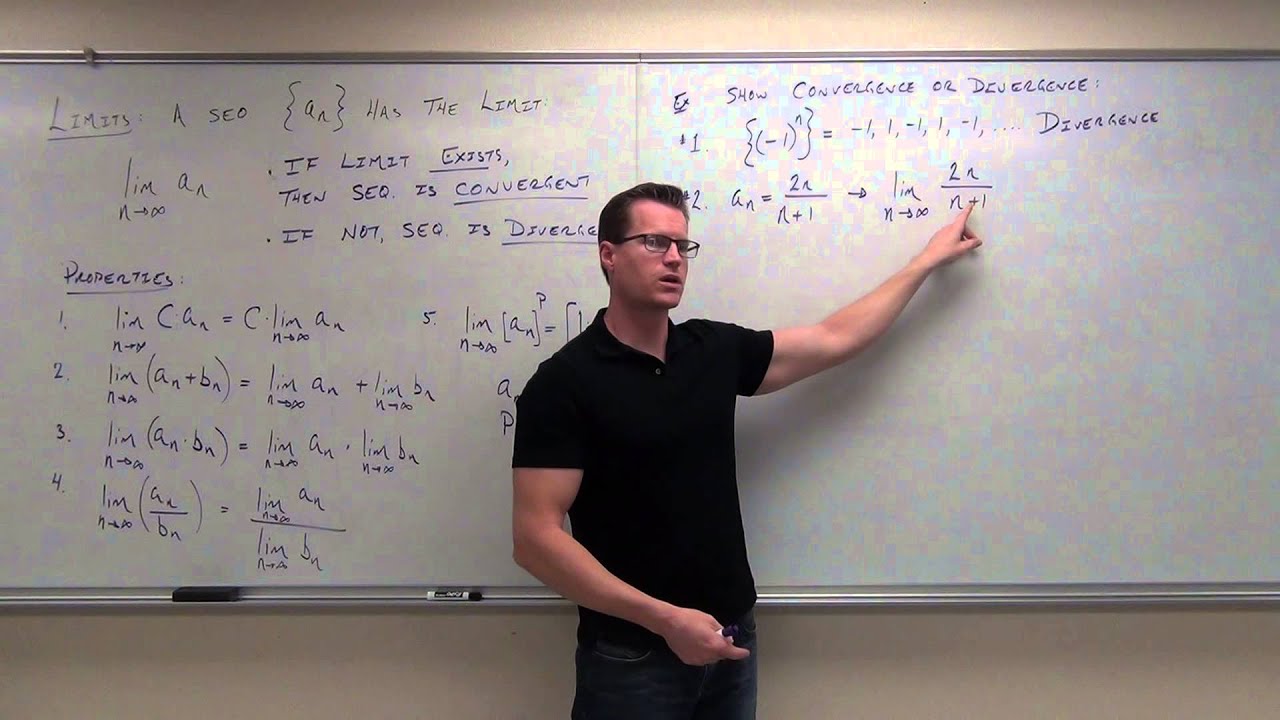
Calculus 2 Lecture 9.1: Convergence and Divergence of Sequences
 tall mortar
Can someone please help with this problem?

I can't figure out what the interval of proportions would be for the population size of 340 that would still have a margin of error of 0.05
To find the population sizes I've been using the formula of n=p(1-p)*((1.96/M)^2)
left knoll
left knoll
integrate (3x+1)e^(3x) dx
By parts
left knoll
left knoll
By parts
yuss i know but can you find the answers please
 silk quiver
left knoll
integrate (3x+1)e^(3x) dx
silk quiver
left knoll
integrate (3x+1)e^(3x) dx
 left knoll
thank you
 frigid violet
… I’m so stupid-

 flat bolt
 silk quiver
frigid violet
… I’m so stupid-
silk quiver
frigid violet
… I’m so stupid-
i got 1/6
frigid violet
silk quiver
i got 1/6
Same. I got 1/6 too. But what if you double it. Like make it 2 x 4
silk quiver
then the height will be double and the base will double making it A=1/2bh = 1/2 * 2 * 2/3 =2/3
frigid violet
silk quiver
then the height will be double and the base will double making it A=1/2bh = 1/2 ...
Oh right, I’m so stupid. Thank you so much!
 quasi nova
Hi guys how to learn calculations faster.. suggest me some ideas
 fair lion
the 17th term of an AP exceeds its 10th term by 7. find the common difference. (ik its 1 obvio but idk the method yet..)
 cosmic goblet
@fair lion
fair lion
thank you! :).
cosmic goblet
got it ? My handwriting xD
 random flame
Hi can someone help me with this? Ping if you do and thanks!!
 silk quiver
random flame
Hi can someone help me with this? Ping if you do and thanks!!
silk quiver
random flame
Hi can someone help me with this? Ping if you do and thanks!!
y = -2x^2 + 2x + 7
y = -2(x^2 - x) + 7
y = -2(x^2 - x + 0.25) + 7 + 0.5
y = -2(x - 0.5)^2 + 7.5
 hidden basin
Can anyone here help me with limits in calculus?
silk quiver
hidden basin
Can anyone here help me with limits in calculus?
i can try. is calcu shortcut allowed?

 thick pine
Looks good to me
thick pine
random flame
Hi can someone help me with this? Ping if you do and thanks!!

In elementary algebra, completing the square is a technique for converting a quadratic polynomial of the form
    a

      x

        2


    +
    b
    x
    +
    c


{\displaystyle ax^{2}+bx+c}
to the form
    a
    (
...
hidden basin
thick pine
Looks good to me
it was, thanks! I just wanted to be sure because i really need this 100 lol
silk quiver
thick pine
Looks good to me
yeah i think it's right
hidden basin
I’m stuck on this one, can someone help me pls?
 silk quiver
i think they're all -6
hidden basin
oh that makes sense
thick pine
silk quiver
i think they're all -6
correct
random flame
thick pine
https://en.wikipedia.org/wiki/Completing_the_square
Ah thanks! I actually know the answer but I forgot how to make the equation into a completing the square form 😅
 viral estuary
ayo anyone whos good at math and can do year 10 igcse stuff please dm me asap
 quartz cove
can someone help me with this question please.
Find the absolute and relative increase in lateral area of a blood vessel
A = 2 πRL, with radius of the lumen R = 1mm, and length L =5 mm, given that the
change in radius stands at ∆R = 0.1 mm, change in length ∆L = 0.002 mm.
 stuck mauve
Anyone know how to do?

 elder mist
@stuck mauve is the answer 432?
it should be 5.76*75=432
as standard deviation is not affected by the (-100).Standard deviation remains constant unless you multiply or divide something.. Subtraction or addition has no effect
stuck mauve
That’s what the answer key said
Oh yeah, that makes sense. Thanks
I definitely overthought that
elder mist
yeah..if they wanted the probability distribution ,it would be (19.25*75)-100
 analog kettle
hidden basin
I’m stuck on this one, can someone help me pls?
analog kettle
hidden basin
I’m stuck on this one, can someone help me pls?
limit is -6 both from right and left side at 2 i guess from the graph
analog kettle
hidden basin
I’m stuck on this one, can someone help me pls?
fill all the four blanks with -6
 solar pilot
i dont even know how to start this
 analog kettle
solar pilot
i dont even know how to start this
analog kettle
solar pilot
i dont even know how to start this
isnt the angle H = H' ?
 autumn dune
If the triangle is only reflected, that means the angles are unchanged
solar pilot
oh ok sorry
autumn dune
So H = H', K = K', G = G' (where i noted "H" = "internal angle at H" etc)
But you (should) have a theorem saying that : "The sum of the angles of a triangles always add up to 180°"
silk quiver
so that just means H' is 40?
autumn dune
You know one angle : K = 50 °
And you know another one : the right angle at G
According to our theorem :
K + G + H = 180
meaning
50 + 90 + H = 180
by substacting successively 90 and 50 on both sides, we get
H = 40
but H = H' !
solar pilot
autumn dune
You know one angle : K = 50 °
And you know another one : the right angle at G
Ac...
tysm
autumn dune
(:
 pliant drum
Hey, can someone explain me how to prove that this limit doesn't exist, by taking two paths that gives you different results?

(I don't know if these are the actual english terms but I think you understand : s)
left knoll
how to find the range of real function: |x-4|/x-4 (the ans is {-1,1})
someone pls help ;-;

 somber hemlock
left knoll
how to find the range of real function: |x-4|/x-4 (the ans is {-1,1})
somber hemlock
left knoll
how to find the range of real function: |x-4|/x-4 (the ans is {-1,1})
|x-4| can be two values. One (x-4) when x>4 and second -(x-4) when x<4
pliant drum
left knoll
how to find the range of real function: |x-4|/x-4 (the ans is {-1,1})

Find the range of (i) f(x)=|x-4|/(x-4) and domain of (ii) f(x)=1/(log_10 (1-x))+sqrt(x+2)
somber hemlock
Yeah basically this only
pliant drum
I don't know what is that language but I hope it helps
somber hemlock
Doubtnut is an indian website.. so ya it is in the indian language
left knoll
ohh thank you everyone for your help!! I've understood it now :) thanks!
 latent siren
pliant drum
latent siren
pliant drum
You still there, first, try to look at the path x=pi, and take the limit as y approaches 1. What do you get?
 dawn crypt
How do i integrate y=240sin(2t)
pliant drum
latent siren
You still there, first, try to look at the path x=pi, and take the limit as y ap...
0/0, denominator equals 0 and cos(pi) = -1
latent siren
dawn crypt
How do i integrate y=240sin(2t)
Use sin(2t)=2sin(t)cos(t), then let u=sin(t)
thick pine
Is anybody good with vector analysis?
latent siren
pliant drum
0/0, denominator equals 0 and cos(pi) = -1
No, the limit is 0.
When you are in the line x=pi, the function is always 0. So when you take the limit as y-> 1, you get 0.
pliant drum
Oh, okay, that makes sense
latent siren
pliant drum
0/0, denominator equals 0 and cos(pi) = -1
So you have one path that evaluates to 0. Next, try the path x=-arccos(y), and let y->1 (from the left). You see then that your input approaches the point (pi,1).
dawn crypt
latent siren
Use sin(2t)=2sin(t)cos(t), then let u=sin(t)
hmm ty
latent siren
dawn crypt
hmm ty
I made a mistake, use the path x=arccos(-y), then evaluate y-> 1.
Also you should know that y^2+y-2 = (y+2)(y-1)
dawn crypt
hmm idk
the answer should be -120cos(2t)+c
and integrating sin results in -cos right?
or is this composite function?
pliant drum
let 2t = u, and integrate in in terms of u
change your dt to du
u = 2t
du = 2dt
dt = du/2, plug that and integrate sin(u)
pliant drum
np : s
thick pine
Can anybody help me, I have absolutely no clue... I roughly translated the text so sorry for any mistakes

@latent siren I heard you're doing a PhD in maths, maybe you can help me 🙃 😫
dawn crypt
😳🙏🏼 praying for you bud
thick pine
😆


 north temple
think you just have to integrate it
dawn crypt
Where does the 260 come from
north temple
yeah
let me see
you have to find the c
the c is 260
basically when you get the velocity by integrating the acceleration, you still have to get the c term, thats why he gave you the speed
c = 140 + 120
you get me?
dawn crypt
yeah i get the integration part
but rn hella confused about the 260
i get 140 is starting velocity at t=0
north temple
do you know when you integrate you have to add a (constant) that you dont know the value of
dawn crypt
yeah
north temple
yeah basically he gave you the t = 0 and the value of speed to get that constant
north temple
yes
north temple
it's ok
silk quiver
also you can check at t=0 velocity is 140 to make sure your expression is correct
dawn crypt
😔 🔫
 manic tartan
can anyone here help me with probability and statitstics
thick pine
Just ask maybe somebody knows something
 latent drum
Hi, guys I'm looking for someone who can prepare for SAT/TOEFL IBT with me. If anyone is interested you can message me directly here or at instagram: edushab_ and then I can introduce myself and tell about myself so you can make a decision
silk quiver
we can try
115
opposite angles of a quadrilateral are supplementary
as long as it's inscribed in a circle tho
thick pine
Damn the things you guys in the US learn in school are crazy
 bleak tree
anyone who can help with NCERT syllabus for grade 10 th? , react or reply
thick pine
Maths is so different from the stuff here in germany, it's crazy
latent siren
thick pine
<@!504144642070020096> I heard you're doing a PhD in maths, maybe you can help m...
I'll go back to it bud. Lemme just get my coffee.
Daaaamn, this is analysis stuff. Do you have a higher resolution image? I cannot read the bounds on the partial derivatives.
latent siren
Ah, I get it. This is hard, I don't know if I can figure this out tonight hah.
Hess_0(f) is the Hessian evaluated at 0?
thick pine
Yep
latent siren
Usually you can get bits of hints within the lecture. What were you studying before this? Maybe you were given a crucial theorem within the class?
thick pine
They teach this stuff in 2nd semester of university here 😁
Wait I can send you the script
thick pine
latent siren
sure
1.7 should be the relevant part
 agile sail
can i get some help with this
 silk quiver
50%
12.5%
25%
87.5%
no, because red has 25% probability and if you spin 80 times, it should land red about 20 times@agile sail
latent siren
thick pine
1.7 should be the relevant part
Sorry man, I can't read German (yet). I don't think I can do the problem. Seems like a lot of it is topology though. I have a feeling that this has something to do with generalized Taylor's theorem (i.e. for dimension n=2).
silk quiver
100
agile sail
thanks a lot @silk quiver
thick pine
latent siren
Sorry man, I can't read German (yet). I don't think I can do the problem. Seems ...
Yes that's what my tutor also recommended but I am completely lost - to me it seems like the variable p is in there far too often
latent siren
So, the thing is that, you can probably approximate f(p) by expanding near 0. You can probably control the bounds using the hypotheses given to you. Seems like a lot of work though, and... I still have research to do tonight.
thick pine
If D_p f = 0, aren't all the partial derivatives 0 automatically? Because then the 2nd part with the root makes no sense
thick pine
latent siren
So, the thing is that, you can probably approximate f(p) by expanding near 0. Yo...
Don't worry about it 🙂 If you have time, I can still solve it until wednesday, but it's fine otherwise
thick pine
latent siren
Or is p any point in the closed ball?
That's what I dont understand
I mean it says it's some point in the ball
latent siren
This is not neatly posed. Maybe you can ask the instructor?
Cause p was only invoked to be in the ball later in the question
thick pine
Exactly, that's what's confusing me too. It feels like there should be D_q f for some q in K or whatever
I'll ask her tomorrow morning
latent siren
thick pine
If D_p f = 0, aren't all the partial derivatives 0 automatically? Because then t...
Because this is not true if you mean total derivative.
thick pine
By D_p f I mean the total derivative
latent siren
Okay, so the total derivative is pretty much the sum of partial derivatives, if the sum of the partial derivatives is zero, then it does not necessarily mean that all the partial derivatives are zero.
thick pine
But that’s a 1x2 jacobi matrix right?
latent siren
Ahhh, I see you defined it to be the Jacobi matrix.
latent siren
thick pine
But that’s a 1x2 jacobi matrix right?
Ahh, okay I get it. The zero total derivative means that the first order partial derivatives are zero. But the bounds are talking about third order partial derivatives.
Recall that f'(x_0)=0 does not mean that f''(x_0)=0 as well take for example the function $f(x)=cos(x)$ at x=0.
latent siren
latent siren
Okay, so the total derivative is pretty much the *sum* of partial derivatives, i...
Seems like I'm wrong, eep.
thick pine
Ahh, thanks I missed that!
pliant drum
oh, since we are talking about partial derivatives...
So, I have this top equation that I had to calculate the partial derivatives (Zx, Zy, Zxx, Zyy and Zxy) and now I haveto use them to calculate the bottom total derivatives. Any clues? I think it's something with the chain rule, but I'm not getting any closer to ):

nevermind, think I got it ( :
thick pine
Not e^x x^{e^x -1}?
 velvet terrace
The location of S is (-4, -4) but I don't see that answer choice there. The distance between point A and point T is sqrt (10) = 3.16227766

 wintry violet
actually Q isn't center of the circle
left knoll
wintry violet
actually Q isn't center of the circle
Yeah, it is not so we don't say 100 degress
İ think the answer is 67
velvet terrace
wintry violet
actually Q isn't center of the circle
you right
 left knoll
wintry violet
and PMO = 50
left knoll
wintry violet
and PMO = 50
Yeah
wintry violet
67
 left knoll
velvet terrace
left knoll
velvet terrace
Yeah, it is so
wintry violet
so i just proved it
left knoll
And this is formula but i dont remember this
left knoll
wintry violet
so i just proved it
Yeah i agree with u
 coarse rose

 fiery haven
frigid violet
fiery haven
frigid violet
uh i don't know for sure but i think it's e because theyre asking for the interior angles of this combined triangle-square-pentagon polygon and an equilaterial triangle has 180 degrees total, square has 360, and pentagon has 540, so 180+360+540=1080, and 6*180=1080. idk for sure but that's my guess!
left knoll
have you tried asking siri?
 fossil needle
fiery haven
uh i don't know for sure but i think it's e because theyre asking for the interi...
fossil needle
fiery haven
uh i don't know for sure but i think it's e because theyre asking for the interi...
you right
 candid rivet
by decomposing the square into 2 triangles and decomposing the pentagon into 3 triangles you get a total of 6 triangles, so the sum of the interior angles of the polygon is 6 times 180°
 teal karma
Is proofing reciprocal identities difficult or am I stupid
 hollow escarp
frigid violet
hollow escarp
frigid violet
There is a general formula for any polygon , That the sum of all interior angles is (n-2) * 180. Here , the number of sides n is 8. So, sum of the interior angles is (8-2) * 180 = 6*180.
hollow escarp
hollow escarp
There is a general formula for any polygon , That the sum of all interior angles...
@frigid violet . The basic concept behind this is what @candid rivet said. We break down the polygon into triangles and multiply by 180. if a polygon has n sides , the number of triangles it can be decomposed to is n-2
frigid violet
hollow escarp
<@!698709362872418355> . The basic concept behind this is what <@!6894715522357...
Thank you so much! Both of your explanations are super helpful! Thanks!
frigid violet
fiery haven
uh i don't know for sure but i think it's e because theyre asking for the interi...
Thank you!
thick pine
latent siren
This is not neatly posed. Maybe you can ask the instructor?
Ah damn there are multiple typos in the text. First p should be 0 (so D_0 f = 0), and the variable we're looking for should be q in B_2(0). That makes much more sense for the Taylor series around 0
I'll try solving it but I'm still not sure if I can do it haha
 restive kraken
anyone is free? i need help in this. intergration topic...
 thick pine
V = pi * A
thick pine
restive kraken
anyone is free? i need help in this. intergration topic...
So step one would be to find the area under the function
Do you have an idea how to get the area?
 bronze edge
Could anyone help me with number 15? The awnser os 1/3 but i don't understand how to get on it
 left knoll
bronze edge
Could anyone help me with number 15? The awnser os 1/3 but i don't understand ho...
left knoll
bronze edge
Could anyone help me with number 15? The awnser os 1/3 but i don't understand ho...
Gotta rationalize the numerator
bronze edge
I did that but still the result i got was 1/2
left knoll
Try Photomath
bronze edge
Why in that case i have to multiply by ∛(x+1)² + ∛(x+1)+1 /[∛(x+1)² + ∛(x+1)+1]?
 minor sluice
bronze edge
Could anyone help me with number 15? The awnser os 1/3 but i don't understand ho...
minor sluice
bronze edge
Could anyone help me with number 15? The awnser os 1/3 but i don't understand ho...
Lmao I got a test on this tomorrow
latent siren
thick pine
Ah damn there are multiple typos in the text. First p should be 0 (so D_0 f = 0)...
I think I have a sketch. Now, look at the following article: https://en.wikipedia.org/wiki/Taylor's_theorem#Taylor's_theorem_for_multivariate_functions
Look at the first summation, ignore the remainder terms first. You have all the information to estimate the first summation.
The hypotheses say that at the point p=0, the first order partial derivatives are zero, the hessian says the values of the second order partial derivatives, and an estimate about the third order partial derivatives are given to you.
restive kraken
thick pine
So step one would be to find the area under the function
wait can you use the intergration method?
 robust prism

anyone can tell me how to build equation for this and tell me reason
please
thank you so much
thick pine
latent siren
The hypotheses say that at the point p=0, the first order partial derivatives ar...
That gives me x^2/2 + 2xy + y^2/2 + 1/(2sqrt(2)) when I use the estimates
thick pine
restive kraken
wait can you use the intergration method?
Yeah you can integrate the function to get the area, correct
restive kraken
thick pine
Yeah you can integrate the function to get the area, correct
can you show me how?
silk quiver
robust prism
6.80 + 0.90x = 7.30 + 0.65x
0.25x = 0.5
x=2
thick pine
restive kraken
can you show me how?
You need to find the integration bounds first
as in, where does the graph meet the x axis?
bronze edge
robust prism
You want to find which one is followed by x and which one is not followed by x -the constant.
 charred marsh
Can someone help me?Name 6 numbers that, rounded to the nearest hundredth, add up to 7.83
thick pine
 restive kraken
thick pine
restive kraken
thick pine
0 and 2?
thick pine
restive kraken
0 and 2?
Yes correct so now you have the bounds for your integral
restive kraken
thick pine
Yes correct so now you have the bounds for your integral
so i just can find the volume by finding the area first? because i was a bit confused when the question ask towards the y-axis
bronze edge
bronze edge
You want to find which one is followed by x and which one is not followed by x -...
In that case, you will always buy a large pizza, so, the constant is the price of the large pizza and the toppings are relative to how many toppings you want, so they are followed by x
thick pine
restive kraken
so i just can find the volume by finding the area first? because i was a bit con...
I think it doesnt matter which axis it is
Not 100% sure though
restive kraken
thick pine
I think it doesnt matter which axis it is
oh it's okay. Ty for your kindness
thick pine
No problem I hope it helps
charred marsh
Can someone help me?Name 6 numbers that, rounded to the nearest hundredth, add up to 7.83
latent siren
thick pine
That gives me x^2/2 + 2xy + y^2/2 + 1/(2sqrt(2)) when I use the estimates
Now try to use the fact that (x,y) is in B_0(2)
Maybe you'll get something like |f(z)|<1, which means -1<f(z)<1, then you're done.
 latent siren
actually after you get the estimates, try to let (x,y) -> (0,0)
thick pine
😳
latent siren
your remainder will go to 0 as well.
So in the end, p=0
I'm not sure if this will work though.
You're basically approximating f(0) here, and we'll try to show that -1<f(0)<1.
thick pine
But of what use is this if I have to find a q with f(q) < -1
latent siren
That's what I'm wondering too. It's technically true that 0 is in the ball, but I'm not sure about finding a particular q in the ball.
thick pine
Maths is too hard for me 🙁 😆
latent siren
Is this for a graduate class?
Seems like too estimate heavy for an undergraduate class
robust prism
Noice
charred marsh
Can someone help me?Name 6 numbers that, rounded to the nearest hundredth, add up to 7.83
robust prism
This is a nice grup thanks everyone
bronze edge
robust prism
This is a nice grup thanks everyone
no problem!
silk quiver
bronze edge
Could anyone help me with number 15? The awnser os 1/3 but i don't understand ho...


 autumn sorrel
Can anyone help me with advanced statistics?
 white sierra
if f(x)=0.5x does this mean that F(x)=(x^1.5)/1.5?
I'm trying to figure out the primitive function of 0.5x
 supple island
F(x) would be (x^3/2)/3 +c
white sierra
Wouldn't that look like this?

I end up with 0.5x^1.5
I don't know how to get rid of the ^1.5
supple island
x^(3/2 -1) is definitely not x^(1.5)
it's x^(1/2)
which is x^(0.5)
thou i suggest using fractions rather than decimals with exponentials, it's much easier
generally decimals are very "ugly", fractions are much easier to simplify
white sierra
Ooh I see my mistake. Using decimals has given me the wrong answers several times so I'll take your advice and to start using fractions. Thanks for the help <3
supple island
np 😉
white sierra
The question is literally rigged

Question 6. It says "The figure shows y=f(x). Calculate the integral from 2 to 6 with the help of the figure"
You're meant to be able to do it without a calculator...
The super easy way would be to split it into a square and a triangle but how do I do it using the actual integral?
thick pine
f(x) = 1/2x + 2
Integral from 2 to 6 is F(6) - F(2), and F(x) = 1/4x^2 + 2x
@white sierra
 olive marten
completely stuck on this, anyone have an idea?
 olive marten
completely stuck on this, anyone have an idea?
olive marten
olive marten
completely stuck on this, anyone have an idea?
Urgent please help

 novel sonnet
Is this an exam?
olive marten
No it’s homework
novel sonnet
Ok 👍
olive marten
My prof said that it was the hardest question in one exam


 merry coral
novel sonnet
merry coral
novel sonnet
This integral tells us that 22/7>π and it also approximates pi to five decimal places
agile sail
can someone help me with this question if you don’t mind
 fiery haven
agile sail
can someone help me with this question if you don’t mind
fiery haven
agile sail
can someone help me with this question if you don’t mind
well basically correct me if im wrong but i think what you have to do is find the probability for each event and then multiply it together. so like the probability of getting 4 is 1/8 since there are 8 separate choices in the spinner and the probability of getting c is also 1/8 and 1/8*1/8=1/64
that's for question 1 btw
u can do the same with the rest
agile sail
fiery haven
well basically correct me if im wrong but i think what you have to do is find th...
thanks for your help
 spring sphinx
pyth theorem
 silk quiver
robust prism
silk quiver
robust prism
Just set y=0 that will be the minimum points of parabola in absolute value. In this case, 2x^2 +5x -3 = 0. That will give us x=-3 and 0.5. Therefore the minimum points are (-3, 0) and (0.5, 0)
silk quiver
the shortcut is to do the rise over run method since there is a graph available
the proper way would be this

 analog token

 lean hearth
hey guys, I'm currently conducting a survey for my statistics class involving time spent on phones and school performance. it's completely anonymous and open to all ages. i'm really interested in this subject as I was previously severely addicted to my phone. thanks everyone https://forms.gle/C35RNUHkWmuEPf666

Google Docs
This survey is completely anonymous. Open to students of all ages. Please answer questions to the best of your ability
robust prism
silk quiver
Just set y=0 that will be the minimum points of parabola in absolute value. In t...
but this is actually find the x intercept
minimum point need use some completing the square method
silk quiver
robust prism
minimum point need use some completing the square method
x intercepts are the minimum points of parabolas in absolute value
y can't be negative
silk quiver
robust prism
minimum point need use some completing the square method
that is if the expression is not in absolute value. the lowest point will be the vertex
silk quiver
robust prism
but this is actually find the x intercept
here is the graph with and without the absolute value
 white sierra
thick pine
So 1/4 * 6^2 + 2*6 - (1/4 * 2^2 + 2*2)
white sierra
thick pine
So 1/4 * 6^2 + 2*6 - (1/4 * 2^2 + 2*2)
thank you!
 ancient pasture
any german people here who can help me with some maths?
thick pine
white sierra
thank you!
No problem I hope it helps
ancient pasture
thick pine
Yes
i already got some help from a classmate but thanks :D (nächstes mal, wenn ich wieder am verzweifeln bin, meld ich mich :D)
thick pine
ancient pasture
i already got some help from a classmate but thanks :D (nächstes mal, wenn ich w...
Okay sure (Mach das gerne ☺️)
random flame
Hi can someone help me with this? I have to find the area of the triangle. Ping if you do and thanks!!

 dawn girder
supple island
that seems a right triangle
dawn girder
supple island
that seems a right triangle
i don’t think it is, doesn’t obey pythagoras’ theorem
supple island
idk, can't read the numbers
dawn girder
random flame
Hi can someone help me with this? I have to find the area of the triangle. Ping ...
I would check out heron’s formula 🙂
random flame
You mean the one that goes smtg like 1/2(b)(c)sinA ?
dawn girder
random flame
You mean the one that goes smtg like 1/2(b)(c)sinA ?
Nope, it’s one that gives the area of a triangle given the length of all three sides
random flame
Erm don't think I have learned that yet
robust prism
silk quiver
here is the graph with and without the absolute value
ooo thank you so much👍
 true nexus
hey could anyone help w 71

all I really need help w is figuring how to set up the equation
true nexus
ohhh oki tysmm
supple island
generally if you modify the argument of the function (ex. from f(x) you go to f(x+2)) you only modify the argument ( so if f(x)=3x+5, f(x+4)=3(x+4)+5 )
 slender vault
Could anyone tell how to do the b part
 true nexus
supple island
generally if you modify the argument of the function (ex. from f(x) you go to f(...
true nexus
supple island
generally if you modify the argument of the function (ex. from f(x) you go to f(...
ooo I see tyy
 bronze edge
silk quiver
bronze edge
silk quiver
Sorry I'm since yesterday trying to understand but I can't :/
 chrome marsh
This formula is to calculate the distance you are from a lighthouse (from a boat), I have no more information than this, are the formulas the same? I understand that I can use one or the other, right?
 left knoll
Hello!! does please anyone know how to solve this?I'm happy for any advice. Thank you!
 supple island
left knoll
Hello!! does please anyone know how to solve this?I'm happy for any advice. Than...
supple island
left knoll
Hello!! does please anyone know how to solve this?I'm happy for any advice. Than...
consider that every dimension of the model is reduced by 50, and area is given by multiplying 2 dimensions
supple island
chrome marsh
This formula is to calculate the distance you are from a lighthouse (from a boat...
they are the same formula
left knoll
supple island
consider that every dimension of the model is reduced by 50, and area is given b...
thank you for the hint!
sorry does someone know how to do this?- ive been stuck on this for a while
 silk quiver
left knoll
sorry does someone know how to do this?- ive been stuck on this for a while
silk quiver
left knoll
sorry does someone know how to do this?- ive been stuck on this for a while
That aint the graph of the equation
The center should be at (1,2) with radius 4
left knoll
oh wait ive been doing this all wrong, thank you @silk quiver !!
 crude zealot
can anyone help me with a math that needs thevenin resistance>
Message #tech-related-help
chrome marsh
good math question, I don't know how to solve this variable
bronze edge
I think it was just some kind of theory that's why was deleted ||/j||
 woven orchid
A company makes umbrellas. Each parasol is sewn together from eleven equal parts, and the parts are cut out in the shape of a circular sector. The radius of the sectors is 115 cm and the degree is 30 °. Find the area of the circular sector.

how do i find the area?
supple island
to find the lenght of a sector of a circle you have to multiply the angle of the sector in radiants by its radius
chrome marsh
I'm bad at trigonometry, How can I know the angle alpha? I think that it's tanAlpha=h/d? If so, then how do I separate the angle from the tangent?
 woven orchid
supple island
to find the lenght of a sector of a circle you have to multiply the angle of the...
woven orchid
supple island
to find the lenght of a sector of a circle you have to multiply the angle of the...
In radiants?
silk quiver
woven orchid
A company makes umbrellas. Each parasol is sewn together from eleven equal part...
calculate first the area of the full circle using pi*r^2 that's the area of 360 but since you need only 30 deg you need to divide it by 12
woven orchid
silk quiver
calculate first the area of the full circle using pi*r^2 that's the area of 360 ...
oooh ok i understand, thank you
supple island
silk quiver
calculate first the area of the full circle using pi*r^2 that's the area of 360 ...
which is the same thing but it doesn't apply to all cases
bronze edge
chrome marsh
I'm bad at trigonometry, How can I know the angle alpha? I think that it's tanAl...
There is no way to separate the tangent from the angle, you need to find the tangent of alpha then look up in a table to know what is the angle if i'm not wrong
silk quiver
supple island
which is the same thing but it doesn't apply to all cases
that's basically the formula of sector tho so it applies to all A = pi*r^2 * (angle/360)
chrome marsh
bronze edge
There is no way to separate the tangent from the angle, you need to find the tan...
Perhaps he has left me something or does not understand it, the good thing is that I have found another formula that allows me to get what I need. Weird things from boats and lighthouses, but thank you very much
north temple
Can you explain how did you solve it
Because I don't get what's happening there
Isn't tan alpha equal h/d how can it be h*d like they gave
silk quiver
woven orchid
oooh ok i understand, thank you
you're welcome invincible
woven orchid
silk quiver
you're welcome invincible
😮
silk quiver
woven orchid
😮
waiting for season 2
woven orchid
silk quiver
waiting for season 2
Yeah same. Season 1 was really good.
silk quiver
north temple
Isn't tan alpha equal h/d how can it be h*d like they gave
yeah it also triggers me because d should be h/ tan (alpha)
chrome marsh
north temple
Can you explain how did you solve it
Another thing may be that I was wrong in stating the problem
I start over just in case. I have the height of the lighthouse (h) and I have the distance to its base (d), I need to know the angle (I don't know very well because since the distance is what interests me in this problem)
I already say that trigonometry is not my thing, so from my logic tan(alpha) is not the same as (alpha), or am i wrong?
So what interests me is, having tan(alpha) obtain (alpha), I imagined that maybe with the arctangent o some shit like that
 crude trail
it is only if alpha is a small value
bronze edge
chrome marsh
I already say that trigonometry is not my thing, so from my logic tan(alpha) is ...
that's right
north temple
I don't think I understand the question though, what does he need
silk quiver
chrome marsh
So what interests me is, having tan(alpha) obtain (alpha), I imagined that maybe...
yeah to obtain alpha. just use arctan(height/distance)
north temple
did he not give any numbers?
chrome marsh
I imagine this because (example): tan alpha= 0,587347, in the calculator if I press Shift tan of 0.587347 {tan^-1 (ans)}=30º25´40´
chrome marsh
Thank goodness, It was driving me crazy
I hate these conversions when I have to operate with arctan, arcsen, cosec, cotan ...
thanks you all for trying to understand me hahahaha
bronze edge
No problem c:
silk quiver
shoot it
 red spruce
5th one


 weary arrow
basically, they've put the n in front of the parenthesis to show both parts of the equation includes one n
idk if that made any sense
 rain gorge
exactly
 hearty sandal
thx a lot !
silk quiver
red spruce
5th one
 left knoll
@red spruce hi another jee aspirant
silk quiver
if you want the center - radius form it is (x +2/7)^2 + (y-41/7)^2 = 1300/49
chrome marsh
How good are you with vectors and trigonometry? I have another question about boats
silk quiver
red spruce
5th one
here is the graph for checking
 silk quiver
chrome marsh
How good are you with vectors and trigonometry? I have another question about bo...
silk quiver
chrome marsh
How good are you with vectors and trigonometry? I have another question about bo...
shoot
chrome marsh
Leave me a moment that I am preparing an image in paint so that you understand it as well as possible
red spruce
silk quiver
Thnx
red spruce
silk quiver
Line point form of family of circle man I should've thot bout this smh
rain gorge
silk quiver
shoot
I solved it and got the same results but in a different method
the numbers looked silly though so i thought I was wrong
I mean 1300/49
for real?
silk quiver
rain gorge
for real?
if the answer is in big fractions we always doubt our answers that's why it's better to have tools like online grapher to double-check
 rain gorge
I did it differently
I am not familiar with Line point form of family of circle
that is prolly why
red spruce
What was it
Well one thing we can do is take the general eqn of circle, satisfy it with both the points nd then consider tangential distance as radius to get three relations with three variables g, f, C but its very tedious and Calc mistake
woven orchid
determine the perimeter of the square ABCD exactly.

I know that i need to find AD, but how?
rain gorge
red spruce
Well one thing we can do is take the general eqn of circle, satisfy it with both...

@red spruce that is pretty much what I did yea but I used the perpendicular lines equation
woven orchid
Wait, nvm its pretty easy
red spruce
rain gorge
<@!738631596202000454> that is pretty much what I did yea but I used the perpend...
Isn't that how u find radius from tangent that's what I said
But this approach is tedious
rain gorge
That is true
red spruce
:)
silk quiver
woven orchid
determine the perimeter of the square ABCD exactly.
find the length of DB first using cosine law then another cosine law to find the length of DA
chrome marsh
silk quiver
shoot
I had prepared 2 images explaining everything but in the meantime I have realized where the problem was, so for now there is no need for help with vectors hahahaha
red spruce
silk quiver
find the length of DB first using cosine law then another cosine law to find the...
Cosine law is pretty useful everywhere ngl!!!
woven orchid
silk quiver
find the length of DB first using cosine law then another cosine law to find the...
Yeah i thought of that too. Thank you though!
chrome marsh
in the study room 13 we don't believe in the cosine law
 wooden spade
does anyone now how to get r^3 from the equation above?

 onyx gorge

 median juniper
im completely lost w this question haha :
You deal two cards at random from a 52-card deck simultaneously. What is the probability that the total of the cards is more than 3 and less than 12, if aces count as 1, twos are 2, threes are 3, etc., and face cards are 10?
 iron void
The final grades in a math class have a mean of 72 and a standard deviation of 5.43. If the professor plans to give an A to the top 7% of the class, what is the cutoff for an A?
could someone help me understand this ^^^ please
 round rampart
helppp

 sullen lantern
the coordinates of the center of the circle will be (2,-1) as it is a circle (equation (x-h)^2+(y-g)^2=r^2 with center, (h,g) ) and the radius will then be 13/2 as the right hand side of the equation is r^2, so taking the square root we have 13/2 as radius cannot be negative
sullen lantern
i don't think so :( it's been a long while since i've done questions like those
yep no problem
 marble gale
Help me with this plz!


 twin bolt
silk quiver
=2 log2 3 - 4 log2 3
=-2 log2 3
twin bolt
silk quiver
=2 log2 3 - 4 log2 3
=-2 log2 3
Do you mind me asking how you did it?
If not that's completely fine haha, thanks for the help though
silk quiver
The distance of center to the chord is (13/2)^2 = (6)^2 + d^2
silk quiver
twin bolt
Do you mind me asking how you did it?
log x^n = n log x


 urban berry
Hello everyone!) I have a problem with this third-order nonlinear ordinary differential equation...

Can you help me please🙏
sullen lantern
left knoll
hm its been a while but when taking the derivative if cosh(7x) and sinh(7x) it should be 7sinh(7x) and 7cosh(7x)? i could be wrong though, then using the wronksian, you would write those below each other, and taking the determinant you would get
cosh(7x)*7(cosh(7x)-sinh(7x)7sinh(7x) you would get 7, and since w(x) is non 0, that means it is linearly independent
i could be wrong thats just my thought process
 queen thistle
hello, could someone help me please. How do I find the reference angle of -5pi/12?
hearty sandal
Hello, can someone explain how we go from the first to the second

I suppose that's u'/u = ln |u|
so it gives us 2 x ln (x +1)
but where does the + of the (2/x+1) come from
F(b) - F(a) seems to be the answer but i don't get it
thick pine
2(x+1)^(-1)' = -2(x+1)^(-2)
You have 2/(x+1) which has negative exponent, so if you differentiate it the sign changes
(The same but backwards if you integrate, like here)
hearty sandal
Thank you !
woven orchid
The perimeter of the figure is 16. What must the sides of the two squares be in order for the area of the figure to be as small as possible?

 lavish jungle
woven orchid
The perimeter of the figure is 16. What must the sides of the two squares be in ...
lavish jungle
woven orchid
The perimeter of the figure is 16. What must the sides of the two squares be in ...
 woven orchid
lavish jungle
woven orchid
lavish jungle
Thank you so much!
 urban berry
hearty sandal
urban berry
hearty sandal
 urban berry
Does everybody know how to solve this differential equation? I know that it is Bernoulli’s eq


 safe ruin
desmos OP


 tacit sun
Thank you so much @silk quiver ❤️
 slow moat
So basically I passed my exams because I watched this guy. https://www.youtube.com/channel/UCEWpbFLzoYGPfuWUMFPSaoA

YouTube
This channel focuses on providing tutorial videos on organic chemistry, general chemistry, physics, algebra, trigonometry, precalculus, and calculus.
queen thistle
silk quiver
Thank you very much @silk quiver
Can someone also help me understand this problem please.
 slow moat
queen thistle
slow moat
queen thistle
Have you worked with Quadrants before?
queen thistle
yes, i think I do remember
slow moat
Aight, I'll find my math notes, until then someone else might answer your question.
queen thistle
thank you ^^
silk quiver
queen thistle
 queen thistle
how would that look like in fraction form?
slow moat
@queen thistle Also check out this guy if you still have difficulties understanding a topic. https://www.youtube.com/channel/UCEWpbFLzoYGPfuWUMFPSaoA
silk quiver
queen thistle
how would that look like in fraction form?
56/65
queen thistle
thanks guys!

 restive oasis
 silk quiver
 twilit wasp
could someone help me with this sum
twilit wasp
could someone help me with this sum

 maiden sigil
I never really understood cubed root radicals
 weary arrow
2*3sqrt(7)
left knoll
 silk quiver
urban berry
silk quiver
urban berry
 urban berry
Thank you very much!!!!💚💚💚💚💚💚💚💚
 merry sentinel
Yo wassup
Help here

I accept step by step solution
@tribal bison
You sound like a math boi
silk quiver
merry sentinel
how come x is 8 if 3.2^4 - 7.2^2 = 53.0176
 silk quiver
queen thistle
silk quiver
queen thistle
it's sin(-15) or sin(345)
 plain terrace
merry sentinel
plain terrace
merry sentinel
 queen thistle
silk quiver
it's sin(-15) or sin(345)
queen thistle
silk quiver
it's sin(-15) or sin(345)
how is the calculation?
 tranquil tendon
queen thistle
tranquil tendon
queen thistle
-0.26
plain terrace
plain terrace
Put a equals to 2^x/4, u will get 8
plain terrace
queen thistle
how is the calculation?
I will send u the solution just wait a minute
silk quiver
queen thistle
how is the calculation?
that (-pi/12) means that the angle is in radian just set pi to 180 to get the angle in degrees. in this case, sin(-180/12) = sin(-15)
plain terrace
merry sentinel
 silk quiver
(-sqrt(6) + sqrt(2))/4 @queen thistle
queen thistle
silk quiver
(-sqrt(6) + sqrt(2))/4 <@!440578757565349895>
may I please see the step by step calculation for this please
sorry I meant in the calculation to find it in the radical form. But thank you for that answer ^^
silk quiver
plain terrace
ohh, so . there is multiply not decimal
plain terrace
silk quiver
ohh, so . there is multiply not decimal
Yup I hope I did it right
queen thistle
silk quiver
(-sqrt(6) + sqrt(2))/4 <@!440578757565349895>
how did you get that radical form?
silk quiver
queen thistle
how did you get that radical form?
just type sin(-15) in calcu and it will show up
 silk quiver
queen thistle
how did you get that radical form?
silk quiver
queen thistle
how did you get that radical form?
aren't you allowed to use calcu?
queen thistle
Thank you 🙏 @plain terrace @silk quiver
plain terrace
queen thistle
Thank you 🙏 <@!824372092849881129> <@!831222921237102592>
Is this a right answer, it's completely fine if I did wrong u can say it
queen thistle
silk quiver
(-sqrt(6) + sqrt(2))/4 <@!440578757565349895>
no no, I'm confused on how @silk quiver got this answer, but they do have the same value. I jsut want to see the work
plain terrace
queen thistle
no no, I'm confused on how <@!831222921237102592> got this answer, but they do h...
He mentioned the value of sin(-15) directly using calculus
woven orchid
How do i find ED?
 silk quiver
woven orchid
How do i find ED?
silk quiver
woven orchid
How do i find ED?
can you translate it in english? because i got confused on AD = 9,6
woven orchid
silk quiver
can you translate it in english? because i got confused on AD = 9,6
Yeah, it says that AB=13, AC=12 and AD=9,6. Just forget the other stuff like "ovenfor"
It only says that the figure on top
silk quiver
woven orchid
Yeah, it says that AB=13, AC=12 and AD=9,6. Just forget the other stuff like "ov...
what's the 6 for at AD=9,6?
is it like 9.6 like the decimal?
silk quiver
oh ok ok i'll try
silk quiver
woven orchid
How do i find ED?
 woven orchid
silk quiver
woven orchid
silk quiver
Thank you so much! You are really good at math 🙂
plain terrace
silk quiver
Well done brother ❤️😀
woven orchid
Yeah ^
silk quiver
woven orchid
Thank you so much! You are really good at math 🙂
you're welcome. just save us from omni-man😆
woven orchid
silk quiver
you're welcome. just save us from omni-man😆
Hahha i will
 undone vapor
 silk quiver
you're right
 silk quiver
what do you mean by positive or negative?

 lavish jungle
queen thistle
lavish jungle
queen thistle
the real part of complex numbers represents x coordinate and imaginary part represents the y coordinate.
lavish jungle
 fringe kite
no, w(t) represents radius at any time while the question is asking time at which the radius is increasing at a rate of 3. Therefore first differentiate w(t) wrt t and then equate the differentiated equation with 3 to get the time
fringe kite
lavish jungle
no, w(t) represents radius at any time while the question is asking time at whic...
sheeeesh thanks
 quartz finch
left knoll
Negative would be upside down
quartz finch
left knoll
Negative would be upside down
same
queen thistle
Hello, I have a quick math question
what is the modulus of 75
does it have one or does it stay the same value?
 near acorn
queen thistle
what is the modulus of 75
near acorn
queen thistle
what is the modulus of 75
75
queen thistle
i do not need to use this equation at all?? for some reason I am scared its a trick question at first I thought it would be like 1 (which I doubt)
 near acorn
If you want to calculate the modulus of a complex number z where z=a+ib then yes you would want to use that equation
The modulus of a real number is basically the absolute value of that number
 reef timber
the modulus is geometrically the distance from a point to the origin O. So if the point is on the axis it basically doesn't change. You can see it as that.
random flame
Hihi can someone help me with Q1bi? Ping if you do and thank you!!

 frail nova
random flame
Hihi can someone help me with Q1bi? Ping if you do and thank you!!
frail nova
random flame
Hihi can someone help me with Q1bi? Ping if you do and thank you!!
Hmmm
If you guys right the question in a another way i can solve it
random flame
As in?
candid rivet
random flame
Hihi can someone help me with Q1bi? Ping if you do and thank you!!
you can do it by applying the cosine rule in the triangle PRQ
frail nova
Give me a time to think im not good at sine cosine
random flame
candid rivet
you can do it by applying the cosine rule in the triangle PRQ
You mean a^2=b^2+c^2-2bc cosA ?
I tried that but I got the wrong ans
frail nova
Sorry i cant help
random flame
frail nova
Sorry i cant help
Issokay ^^
candid rivet
random flame
You mean a^2=b^2+c^2-2bc cosA ?
yes, you have : RQ²=PQ²+PR²-2PQ×PR×cos(38°)
candid rivet
candid rivet
yes, you have : RQ²=PQ²+PR²-2PQ×PR×cos(38°)
and then you just take the square root of it
random flame
Hmm
frail nova
Couldn't think if that
random flame
Thing is I did that, but I got it wrong
frail nova
Lemme try it
random flame
Hold on lemme send my working
candid rivet
i get RQ=201,5
candid rivet
frail nova
Nice job
thanks ^^
 candid rivet
random flame
😅😅
candid rivet
random flame
😅😅
the first line looks ok but then i donc really know what you did
frail nova
candid rivet
yes, you have : RQ²=PQ²+PR²-2PQ×PR×cos(38°)
-2PQ
You mean -PQ²?
candid rivet
but just grab a calculator it's easier haha
candid rivet
random flame
Thanks btw XD
no problem :)
candid rivet
frail nova
-2PQ
You mean -PQ²?
no it is -2×PQ×PR×cos(38)
random flame
I literally have a calculator with me and I'm just screaming how can I still get the same wrong ans
frail nova
Sorry im not good at math not used to handle these math problems
candid rivet
random flame
I literally have a calculator with me and I'm just screaming *how can I still ge...
if you copy the first equality you wrote you should get it right i guess
random flame
I’m still getting the same thing 😂

OH WAIT-
I GOT IT-
;-;”””
Again, thanks guys!! 😂
candid rivet
frail nova
Sorry im not good at math not used to handle these math problems
no need to apologize
candid rivet
random flame
I GOT IT-
Yeayyy !
random flame
Thanks y’all!!! TvT
candid rivet
random flame
Again, thanks guys!! 😂
you're welcome budy ^^
 vivid knot
Nevest has N equilateral triangles. Nevest wants to arrange them into a polygon. He can resize or rotate each of the existing triangles. The triangles should not overlap and the polygons should be simple. Determine the minimum number of sides of the polygon to form.
hii can someone help me with this problem? im guessing there will be some formula to solve this problem
silk quiver
vivid knot
Nevest has N equilateral triangles. Nevest wants to arrange them into a polygon....
i'm guessing that if N is greater than 1 then the minimum number of sides of the polygon to form is 4
 hardy hare
hey besties can someone help me with math LOL
autumn sorrel
vivid knot
Nevest has N equilateral triangles. Nevest wants to arrange them into a polygon....
pretty sure a triangle is a polygon
there needs to be a min of 3 sides and 3 angels for a poly to form
hardy hare
its asking to simplify this is it right that the answer is zero
 hardy hare
to simplify a trig equation bestie
hardy hare
rest in pisces

 autumn sorrel
np I tried
hardy hare
autumn sorrel
np I tried
it actually helpedLOL i was wrong thx thx
left knoll
Actually i think it can be the answer too
 hardy hare
left knoll
Actually i think it can be the answer too
hardy hare
left knoll
Actually i think it can be the answer too
yeahh! thats actually the answer lololol
left knoll
That’s cool btw!!:))
merry sentinel
plain terrace
Bruh i thought it was decimal 3.2 and 7.2 😂
plain terrace
merry sentinel
Bruh i thought it was decimal 3.2 and 7.2 😂
It's ok buddy , I hope my solution helped u
merry sentinel
Yeh i figured it out but thanks anyways
woven orchid
determine k so that the equation below has only one solution

 silk quiver
robust prism
silk quiver
robust prism
Range: [2, +infinity)
 peak eagle
robust prism
For question 3 is the range of g
g(x)>/= 2?
peak eagle
robust prism
For question 3 is the range of g
g(x)>/= 2?
it's right you can write it as you did or like Born did 🙂
 silk quiver
woven orchid
silk quiver
woven orchid
find the length of CA 1st using cosine law
the quadrilateral will be divided into two triangles.
then just use heron's formula to find the area of each triangle then add it
silk quiver
woven orchid

 still flower
lol I've been trying to do this without even hearing about heron's formula. u learn that in highschool?
find it weird i haven't learned it
 obtuse basin
I haven't learnt it too
silk quiver
never heard of it in high school as well
obtuse basin
I just saw it in a textbook
silk quiver
only learned about it in college
hardy hare
HELP I REALLY NEED HELP RN PLEASE
silk quiver
shoot
hardy hare
HOW DO I MANIPULATE THESE SO THE eQUATIONS IN BOTH SIDES WILL BE THE SAME IM BEGGING
 silk quiver
just moving left side? or right side?
hardy hare
WHAKTJHEAKHGK NO
woven orchid
silk quiver
i found that the whole areal of the figure is 1490
silk quiver
hardy hare
HOW DO I MANIPULATE THESE SO THE eQUATIONS IN BOTH SIDES WILL BE THE SAME IM BEG...
 still flower
@woven orchid For A2 i also got 809.2, so something is wrong with A1 for one of u.
silk quiver
woven orchid
i found that the whole areal of the figure is 1490
how come? because even if i don't round up the values, it still shows 1480.99
woven orchid
yeah i did wrong
hardy hare
silk quiver
THANK U LOL
 latent coyote
hello! may i ask how to factor an equation with a missing term?
robust prism
Thanks born sinner and patri🥳

 woven orchid
silk quiver
what is the relationship of x and y?
woven orchid
silk quiver
what is the relationship of x and y?
O is the perimeter to both triangles
i don tknow the relationship?
still flower
3x +3y = 42
silk quiver
ok ok so O is the perimeter of the whole shape
silk quiver
woven orchid
O = 42.
 silk quiver
woven orchid
oooh ok i understand now
silk quiver
woven orchid
oooh ok i understand now
just practice playing with formulas and you'll get better
woven orchid
silk quiver
just practice playing with formulas and you'll get better
Its so annoying that they teach us basic trigonometri, but then give is questions like these
silk quiver
woven orchid
Its so annoying that they teach us basic trigonometri, but then give is question...
yeah, that's why you always need a reference book. you won't survive with just their lessons

 latent coyote
6 times x and then times it to two
latent coyote
(6x)(2) or from FOIL method
First term: x^2 plus
Outside term: 6x plus
Inside Term: 6x plus
Last term: 6^2 = 36
silk quiver
left knoll
guys i need help. where did this 12x came from?
foe better understanding
 left knoll
omg thanks
this helped
i faced few questions like this and did not know where the values were coming from
latent coyote
you can use this for your other problems credits to the organic chemistry tutor :))
 left knoll
okay i will :))
silk quiver
still flower
<@!831222921237102592> watchu doing at college?
i'm studying electronics engineering in philippines
still flower
nice
latent siren
silk quiver
i'm studying electronics engineering in philippines
EEE UPD?
 latent siren
Do you know the quadratic formula?
You can use it to deduce that, without loss of generality, alpha = (b+sqrt(b^2-4ac))/2a and beta = (b-sqrt(b^2-4ac))/2a. Now you just compute the required expression using alpha and beta in terms of a,b,c for your problem. I think you should end up with something without radicals.
left knoll

Well, this is the solution to it... It didn't really require the formula as they just deduced it
latent siren
why do you think alpha + beta = -b/a ?

 prisma heron
Can anyone pls show me an example of deriving equations?
hardy hare
does anyone recall the equation for this lol
 rain gorge
latent coyote
you can use this for your other problems credits to the organic chemistry tutor ...
rain gorge
latent coyote
you can use this for your other problems credits to the organic chemistry tutor ...
The last one is wrong
 proper sail
hardy hare
does anyone recall the equation for this lol
proper sail
hardy hare
does anyone recall the equation for this lol
a2 = b2 + c2 − 2bc cosA for finding the other side
hardy hare
proper sail
a2 = b2 + c2 − 2bc cosA for finding the other side
amen thank u thank u
hardy hare
proper sail
a2 = b2 + c2 − 2bc cosA for finding the other side
a would be x right?
 proper sail
ans then sinA/A =sinB/B for the othet angles
latent siren
left knoll
So we ended up using the quadratic formula to derive it
left knoll
latent siren
So we ended up using the quadratic formula to derive it
Yes, but after derivation what will we do?
woven orchid
Do you guys know programing?
 final island
woven orchid
Do you guys know programing?
final island
woven orchid
Do you guys know programing?
which language?
woven orchid
final island
which language?
english most likely
its math though
i got this program and when i run it, it gives me -2.0
 final island
i meant programming language lol
woven orchid
python?
final island
yea that's python
woven orchid
i dont get what this program does though
 serene ginkgo
@woven orchid i think for a it takes c + dx (2+0.000001) as the parameter for f(x) to return (0.5 x (2 + 0.000001)^3 - 2 x (2 + 0.000001)^2 + 3) then takes c (2) as the parameter for f(x) to return (0.5x 2^3 - 2 x (2)^2 + 3) then subtracts the two results and divides that answer by dx (0.000001) then prints it rounded to 1dp (the a:.1f part) which gives -2.0
 night wolf
can anyone help with science?
 vapid spruce
can someone pls explain this part?

- Form the pair of linear equations in the following problems and find their solutions (if
they exist) by any algebraic method :
V)
The area of a rectangle gets reduced by 9 square units, if its length is reduced by
5 units and breadth is increased by 3 units. If we increase the length by 3 units and
the breadth by 2 units, the area increases by 67 square units. Find the dimensions
of the rectangle.
original ques for reference
latent siren
left knoll
Yes, but after derivation what will we do?
You just posted the solution??
left knoll
@latent siren dude, that was done by someone else .. I need to understand that and need the right explanation 🤦🏻♂️
latent siren
left knoll
<@504144642070020096> dude, that was done by someone else .. I need to understan...
Man, you need to start taking the effort of asking detailed questions.
I couldn't have known that you need MORE explaining when you just posted the solution yourself. God.
serene ginkgo
hey:) @left knoll so pretty much what they're trying to do is simplify (im gonna use alpha = d and beta = e) d^4 + e^4 +(de)^2 into an expression using the terms d+e = -b/a and de = c/a so you can just sub those values in
they start off by finding a way to rewrite d^4 + e^4 so they used (d^2 + e^2)^2 which gives d^4 + e^4 + 2(de)^2
however the question asks for only one (de)^2
which is why they subtract a (de)^2 from (d^2 + e^2)^2
they then simplified d^2+e^2 in a similar way
(d+e)^2 gives d^2+e^2+2de
you only want d^2+e^2 so to get rid of the 2de you subtract it
so the expression d^2+e^2 is equal to (d+e)^2-2de
this now gives you the expression of [(d+e)^2-2de]^2-(de)^2 which is equal to d^4+e^4+(de)^2 (the thing youre trying to find in terms of a,b,c)
at this point they sub in the values d + e = -b/a and de = c/a
then they expanded the brackets and simplified it down
that was so long sorry lol
left knoll
serene ginkgo
so the expression d^2+e^2 is equal to (d+e)^2-2de
Finally! Thank you so much!!
serene ginkgo
youre welcome:)
 snow eagle
can anyone help me
 peak eagle
snow eagle
can anyone help me
peak eagle
snow eagle
can anyone help me
give me a second 🙂
snow eagle
@peak eagle have you finished
peak eagle
it follows with side angle side
paint your the given things in the same color, than you should be able to see it. I could make a foto of a proof but its a german math book...
peak eagle

 peak eagle
peak eagle
peak eagle
last picture first, and the one with the triangles
peak eagle
snow eagle
its ok i really need to undertsand this
the proof I just posted is for the Hilbertroom (?) -> don't know if it's the right term in english
silk quiver
snow eagle
can anyone help me

these are the ways to prove if 2 triangles are conguent

 peak eagle
snow eagle
peak eagle
snow eagle
start with putting in different numbers for x and then try to think what is in that.
be careful if with the >= and just <
paint those points in the system and afterwards if you still don't know what to do we can see where the problem is 🙂
snow eagle
thanks
silk quiver
snow eagle
draw the lines first by changing the sign to =
then if y is greater it is the upper part of the graph. if x is greater it is the lower part of the graph. Also if there's an = the line will be straight line and if there's no = then the line to be used is broken lines
hollow escarp
vapid spruce
4. Form the pair of linear equations in the following problems and find their so...

 hollow escarp
vapid spruce
can someone pls explain this part?
hollow escarp
vapid spruce
can someone pls explain this part?
Since the question was to do it using any algebraic method. I’ve used a simple method and have tried to explain it within the answer itself. I know the cross multiplication method can look very confusing to you. It’s not very easy to explain via text. So I’d suggest you check a YouTube video of cross multiplication method and learn it. Once you understand that, you’ll be able to follow the solution pretty easily. @vapid spruce
vapid spruce
thank you so much@hollow escarp
vapid spruce
hollow escarp
Since the question was to do it using any algebraic method. I’ve used a simple m...
yes i messed up a - sign in the beginning that's why i was wrong and cross multiplication is somewhat confusing, the website also had a very simplified answer, thank you very much again
vapid spruce
hollow escarp
No problem.
😇
snow eagle
@silk quiver does this look good

 silk quiver
snow eagle
<@!831222921237102592> does this look good
silk quiver
snow eagle
<@!831222921237102592> does this look good
this should not be included
 peak eagle
snow eagle
so am wrong?
peak eagle
snow eagle
so am wrong?
only the one with the broken line. there you still to draw (maybe another color) what is on the left/up or right/down side
silk quiver
the part where the two colors overlap are the only solutions
snow eagle
Thanks
 gentle coral
Use the information to answer the following question.
Casey conducted research on the amount of time people spent at the mall and the amount of money they spent. Casey calculated the line of best fit as f(x) = 1.05x – 2.63 and correlation coefficient of r = 0.08 for her data set.
Which of the following statements BEST describes the relationship between the amount of money spent and the amount of time people were in the mall?
A.
The events have a strong positive linear correlation.
B.
The events have a strong negative linear correlation.
C.
The events have a weak positive linear correlation.
D.
There is little or no linear correlation.
what is the answer
 uncut mason
gentle coral
Use the information to answer the following question.
Casey conducted research ...
uncut mason
gentle coral
Use the information to answer the following question.
Casey conducted research ...
What do you think the correlation coefficient (r) tells you?
 analog cliff
hey, can someone help me solve this?
 uncut mason
What do you think the correlation coefficient (r) tells you?
uncut mason
uncut mason
What do you think the correlation coefficient (r) tells you?
here's a hint:
 uncut mason
analog cliff
hey, can someone help me solve this?
uncut mason
analog cliff
hey, can someone help me solve this?
hint: multiply both sides of the equation with x(x-6)(x-1)
 pine dust
Can someone help with this simple indices
The bottom 2..

I can't figure out how to equalise the base
north temple
There is another say to do it since you can't easily do thay
Take Ln on both sides
And bring the power outside
 wraith olive
hey, could someone help me figuring out what the region R is

my head cant deal with modules
latent siren
Wolframalpha can really help when you want to graph these kind of things. https://www.wolframalpha.com/input/?i=|x|%2B|y|<%3D1

Wolfram|Alpha brings expert-level knowledge and capabilities to the broadest possible range of people—spanning all professions and education levels.
If you want to do it manually though, you should think about what graphs you'll get by considering four different cases. What does the graph look like if x and y>0, what if x, y <0, what if x>0 while y<0, and finally, what if x<0 while y>0?
Then you look for the intersection of those graphs.
I guess that's how you get the diamond shape.
 full badger
 north temple
It's gonna be (sinx)^3/3 +c
sullen lantern
full badger
use u-sub, u=sinx which gives you du=cosxdx, and from there, integral of u^2 du, then u^3/3+C, then undoing the sub, (sinx)^3/3+C as helloyeah stated
full badger
sullen lantern
use u-sub, u=sinx which gives you du=cosxdx, and from there, integral of u^2 du,...
ohh alright thanks bro
silk quiver
pine dust
The bottom 2..

 wide idol
Does anyone know how to do part b? I have the answer but idk how to do it.
 left knoll
wide idol
Does anyone know how to do part b? I have the answer but idk how to do it.
left knoll
wide idol
Does anyone know how to do part b? I have the answer but idk how to do it.
Am not sure but take Monday and Tuesday or Tuesday and Wednesday probability and add them so it will be like 80%+80% = ... then divided at 2 and that's it
I hope it's right ... Am not sure thou
@wide idol
wide idol
left knoll
Am not sure but take Monday and Tuesday or Tuesday and Wednesday probability and...
yeah i tried that method and i didn't get that answer sadly
silk quiver
wide idol
Does anyone know how to do part b? I have the answer but idk how to do it.
1st one is 0.8^3
 potent cypress
- should be 0.2 * 0.8 * 0.8
but my english is to bad to understand consecutive days
left knoll
wait maybe * not plus
silk quiver
no 2 isn't like that
silk quiver
 left knoll
idk dude
left knoll
silk quiver
try it @wide idol
wide idol
okay ill try it thanks.
The final answer is 32/125
thing is i have no clue how they got to that answer
silk quiver
the probability for 2 rainis 3C2 * 0.8^2 * 0.2 = 0.384
but we need to subtract the time that it is not consecutive
wide idol
the decimal form is 0.256
silk quiver
got it
0.384 is for 2 rains no matter what order
there are 3 ways that we can arrange the days in 2, we need to subtract the rain on Monday + Wednesday
therefore 0.384*(2/3)
wide idol
im confused, why do you have to times them together?
silk quiver
wait i'll write it for you
wide idol
sorry im a bit slow aha
 wide idol
silk quiver
<@!835085365844770817>
wide idol
silk quiver
<@!835085365844770817>
Thank you!!!
 peak eagle
 faint thistle
for a)
think where the point P would be if it were cos (x)
x-30 means that the roots are shifted
same goes for cosinus: a = stretch/shrink on the y-Axe, b=stretch/shrink on the x-axe, c= shift on the x-axe, d=shift on the y-axe
 peak eagle
faint thistle
peak eagle
faint thistle
if you need more tips write again 🙂
 north temple
Have you tried integrating by parts?
left knoll
2-sec0*
left knoll

Guys i need help
Where is -(-1) coming from in both of the solutions?
No one's here to help?
latent coyote
im not sure but i think they multiplied it to (3b)^2 so that it will be equal to +9b^2
left knoll
Okk
latent siren
They want to use the identity (z+w)(z-w)=z^2-w^2 for complex numbers
So that -1 is just a tricky way to do it
left knoll
YOOOOOOO I got math question pls you geniuses in this chat help me
If I have exponential decay (radioactive element e.g.)
--and I´m asked "decay halfing is every 10h, start is 12800u --> when is 100u reached?
----> WHY am I getting different answers just manually counting down (12800->6400->3200 etc...) FROM using 12800/2^x = 100
I dont understand this, its the same isnt it??
(counting down gives me x = 11 , algebraic solving gives me x = 7
oh no
Im just a retard with an added zero
nvm
candid rivet
left knoll
hope it's not wrong

 tall apex
anyone here revising for there mock exams????
silk quiver
left knoll
YOOOOOOO I got math question pls you geniuses in this chat help me
If I have e...
is the answer 70hrs?
left knoll
candid rivet
hope it's not wrong
its right thanks man
 topaz narwhal
any statistics majors in here ?
need help double checking my work
need to convert 2159420.917 to grams. Since after the decimal I have a 9 I simply raise the zero and I would have <<<2159421 >>>
 vestal minnow
candid rivet
hope it's not wrong
vestal minnow
candid rivet
hope it's not wrong
The given function is not continuous througout the limit specified. Hence you cannot apply limit the way that you have.
 hollow pier
Anyone know how to do 12? I’m not sure what I’m meant to do after anti deriving it
 vestal minnow
hollow pier
Anyone know how to do 12? I’m not sure what I’m meant to do after anti deriving ...
vestal minnow
hollow pier
Anyone know how to do 12? I’m not sure what I’m meant to do after anti deriving ...
Do you have the answer? Like the final curve equation?
 ruby tinsel
hollow pier
Anyone know how to do 12? I’m not sure what I’m meant to do after anti deriving ...
ruby tinsel
hollow pier
Anyone know how to do 12? I’m not sure what I’m meant to do after anti deriving ...
This is what I got! Let me know if I am wrong 🙂 Btw is that Sadler?!!

 hollow pier
yeah thats the answer thank you very much 🙂
left knoll
silk quiver
is the answer 70hrs?
yessir
 latent siren
For (a): This just means that 3x-1 and f(x) share the same root.
So what's the root of 3x-1?
For (b), we know that 3x-1 is one of the factors of f(x), this will give you a hint on how to proceed. Try to factor out the polynomial with that in mind.
 atomic elm
thx
latent siren
If you still don't get it, please ask for more details.
atomic elm
yeah
latent siren
You know that 3x-1 is a factor of f(x), so you can divide f(x) by 3x-1 by synthetic/long division
atomic elm
but the question says use the factor theorum
yeah
how do you do the synthetic dvision bit
latent siren
Okay, so let's focus on (a)
The factor theorem says: f(x) has a factor (mx+b) if and only if f(-b/m)=0.
latent siren
So, in our case, mx+b is 3x+1. What's m and b in this case?
atomic elm
3 and 1
latent siren
Nice! Now, we are done if we can show that f(-m/b)=0
latent siren
So just check that f(-1/3)=0