#math-help
1 messages · Page 5 of 1
 left ether

 plain pendant
wtf
left ether
n for the second part, idk what ur exactly looking for
but this is how the system looks
 plain pendant
left ether
plain pendant
left ether
5 and 2 are below x-y at the same time
Oh, forget it, it will be difficult to explain the issue
but thank u so much for try

 left ether
plain pendant
but thank u so much for try
left ether
plain pendant
but thank u so much for try
np
 glass crater
my brains stuck on it too so i put it in an app to try

for a function x and y would both be 0
idk if that helps tho good luck
plain pendant
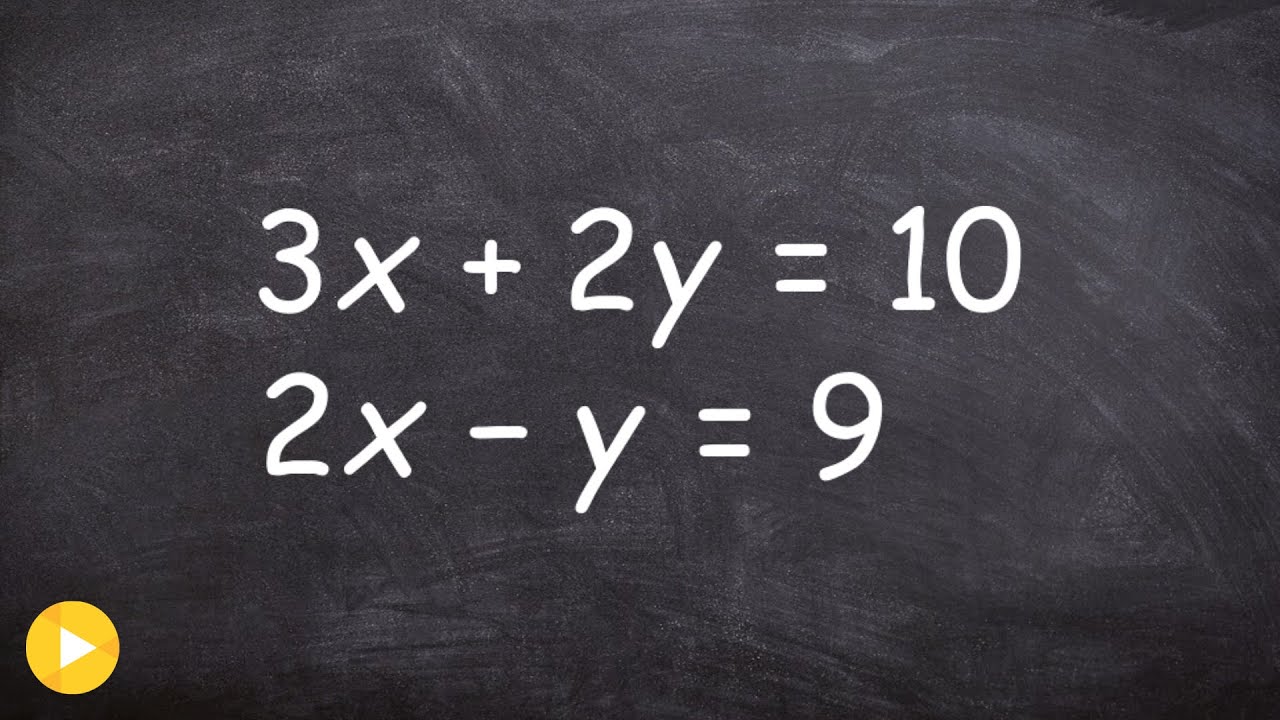
👉Learn how to solve a system of equations by substitution. To solve a system of equations means to obtain a common values of the variables that makes the each of the equation in the system true. To solve a system of equations by substitution, we solve for one of the variables in one of the equations and then substitute for the variable in the ot...
 left knoll
glass crater
for a function x and y would both be 0
left knoll
glass crater
for a function x and y would both be 0
One of them has to be (x+y) so that we can get an answer
plain pendant
is this
plain pendant
glass crater
in mine show me different
left knoll
plain pendant
in mine show me different
Did u copy this from ur text book or anything ? might want to check if u didn't write anything wrong
glass crater
^
plain pendant
 plain pendant
left knoll
Did u copy this from ur text book or anything ? ~~might want to check if u didn'...
plain pendant
left knoll
Did u copy this from ur text book or anything ? ~~might want to check if u didn'...
no,my teacher did pass in the class
left ether

 drowsy stream
you have x=(1-5y/2) and you replace it in the first line
glass crater
plain pendant
(it shows u the steps on how to solve it in the app)
 weak lotus
thats it? nothing else of information they give you?
i would assume you have a vector Esub1 with a certain length
you can use that as an example, but since i do not have enough information on the problem you are working at i would not know
 silent pendant
left knoll
how do u project a point?
silent pendant
left knoll
how do u project a point?
vector a projection on vector b is = a dot product b/ magnitude of b
 timber coyote
calc 2 help if anyone can offer it
currently trying to get the integral of cos(9t)cos(18t)
I know I'm supposed to use product to sum rule
but with my understanding I believe it should be
cos(-9t) + cos (27t) but each time I see the problem solved online it simplifies to cos(9t) + cos(27t).
does anyone know why the first cos is cos(9t) instead of cos(-9t)
silent pendant
Cos(-9t)=cos(9t)
timber coyote
i feel dumb for being in calc 2 and not knowing this, but can you explain why?
wait nvm i think i understand
i just had to think about it in terms of a circle
ty that saved me a headache ❤️
silent pendant
Np : D
 valid carbon
anyone knows how to show the equality between the two?

 valid carbon
is it because of the trigo identity fomula (confunction)
silent pendant
valid carbon
is it because of the trigo identity fomula (confunction)
- because of definite integral (as shown in the picture)
2)Not a formula, but quadrant change
valid carbon
ohh i see thank you!
silent pendant
Np : )
 lunar dome
Hi! could anyone help me with a very simple math question?
left ether
sure
 ripe jay

 languid compass

Can someone please walk me through how to solve problems like these? Would I find the derivative of the equation and replace the t with x?
 ripe swan
languid compass
ripe swan
languid compass
you need to substitute the expression of dy/dx into that formula for starters :)
and input the integral range of 3 ≤ x ≤ 7
languid compass
ripe swan
and input the integral range of 3 ≤ x ≤ 7
Ok gotcha thank you! Would it be something like this then?

Oh that wasn't right, I did something wrong 😅
ripe swan
right, so you dont do the calculation all the way to the end. you stop at √[(16x^4)-1]
substitute that expression into the formula for the length of the curve. and make sure you replace the integral of 1 to x with your range.
languid compass
Ok I got it now, thank you so much!
ripe swan
what answer did you get?
languid compass
421.35714
ripe swan
show the working?
maybe my hand-me-down casio calculator is deciding to retire, i got something close to that
languid compass
My bad I just checked and I actually got 421.333 if that's what you got
ripe swan
no 😭
languid compass
Oh oop 😭 I got marked right on my practice problem system so it has to be somewhere around there
languid compass
Probably 😅 what did your calculator give you
ripe swan
436.27
languid compass
Oh wow yeah I was pretty off
ripe swan
meh as long as it's marked correctly
languid compass
Yeah haha thank you again I appreciate it
ripe swan
no probs, pay it forward :)
 rich pelican
anyone here can helo me with diferential calculus please
drowsy stream
but it is correct
 static pasture
Hello, math peeps! I have a question.
Initially, I tried doing my revisions according to its chapter sequence beginning with 1. Since I have a limited time, I tried revising the chapters beginning with the one I had the least mastery on (measured by practice tests scores) instead. My scores went by a couple points higher lol.
Next attempt, I tried to factor in its importance in the exam (current mastery/total items in the exam). It made some difference though a bit smaller than last time. Still. Every point counts.
Now, I realize there's also the length of the chapter as in time spent on it. So I kinda came up with this table to try to figure out how I could efficiently go with my revision.
I'm not a math person. This is me being a Type A person and a procrastinator. Is this right? Any input would help! Thanks!
Edit: The last column probably shouldn't be efficiency since I'll be revising the chapter with the least value first...but I also probably did something wrong with my formula.
 left knoll
So I have online classes, and in the lectures they showed how to solve limits like these:

But they didn't show how to solve an example like this:

what does this problem mean and how do I solve this?
 surreal flint
left knoll
But they didn't show how to solve an example like this:
surreal flint
left knoll
But they didn't show how to solve an example like this:
that is just a fancy way to write a function
it simply says that whenever x is not 5 the value of function is 4
and when x is 5 the value of function is 1
and as we know x is tending to 5
the answer of the question will be 1
left knoll
oh I see, tysm!!
 lucid hollow
Hey there, im having some trouble finding the correct path to solve this problem and i hope someone can help me out. The figure shows an equilateral triangle ABC. Points D, E and F are the midpoints of the sides of [ABC] and the area of the triangle is equal to 20. Find the area of the triangle [XYZ].
 drowsy stream
did you draw the triangle ?
lucid hollow
drowsy stream
did you draw the triangle ?
Im not able to understand the triangle side size
we have 20 as the area of the triangle
A= ABxEC/2
how am i suppost to get the size
drowsy stream
I guess you have to find the height of xyz
The information given for x y z are coordinates imo
lucid hollow
drowsy stream
The information given for x y z are coordinates imo
But it asks to provide the area of the triangle [xyz]
i am suppost to know beforehand the size of one side of the triangle i think
 supple island
lucid hollow
i am suppost to know beforehand the size of one side of the triangle i think
supple island
lucid hollow
i am suppost to know beforehand the size of one side of the triangle i think
you do know that
you have the area of an equilateral triangle, so you have the side
supple island
yep
lucid hollow
so how do i get one of the side sizes
supple island
you find EC using the triangle EBC
drowsy stream
Pythagore maybe
supple island
yep
lucid hollow
Im still so confused @supple island 🤯
supple island
lucid hollow
Im still so confused <@269761410744057856> 🤯
about what
supple island
yes
lucid hollow
EC=sqrt(bc^2-bc/2^2) how did you transformed into this?
supple island
eb=cb/2
lucid hollow
supple island
eb=cb/2
ok that makes sense
drowsy stream
X is in the middle of EB, Y is in the middle of FB and z is in the middle of EF i think
 obsidian forge
Hey guys I'm having trouble understanding how my professor got the answer to this question (I hope I'm putting this in the right chat because this is for my Gen. Biology 1 class):
( I attached a picture of the question) Calculate the mass - volume ratio as % and as mg/ml for the following:
10g of salt in 200ml of water
______%
______mg/ml
The correct answer is 5% and 50mg/ml
However I can't figure out the math in which he did this - I attached a screenshot of how I tried to solve the problem and the answer I got was 2,000 and 0.02 mg/ml
I'm stumped


 tidal kelp
thanks so much!
obsidian forge
Thank you so much!!! Yes I agree my math was just off, I appreciate you catching that mistake and helping out!!
 sly night
hello
left knoll
hi@sly night
sly night
left knoll
hi<@972290635900018708>
hru
left knoll
sly night
hru
im good
sly night
left knoll
im good
cool gtht
left knoll
sly night
cool gtht
do u need help?
sly night
left knoll
do u need help?
Do you study the possibilities well
left knoll
sly night
Do you study the possibilities well
probability?
sly night
left knoll
probability?
ya
left knoll
sly night
ya
i know a thing or two from my course
sly night
left knoll
i know a thing or two from my course
I have difficulty with random variable
left knoll
sly night
I have difficulty with random variable
Oh show your question
sly night
left knoll
Oh show your question
I don't have a problem with the random variable, but with questions related to it
For example, define the probability law for the random variable x, then calculate its mathematical hope in terms of m
Where m is a real number, which takes the value m*m if event a is met and takes the value m if event b is met.
left knoll
sly night
I don't have a problem with the random variable, but with questions related to i...
Ohhh
left knoll
sly night
I don't have a problem with the random variable, but with questions related to i...
i could give u some links to learn from
sly night
left knoll
i could give u some links to learn from
ya thank you
left knoll
sly night
ya
Courses on Khan Academy are always 100% free. Start practicing—and saving your progress—now: https://www.khanacademy.org/math/statistics-probability/random-variables-stats-library/random-variables-discrete/v/random-variables
Basic idea and definitions of random variables
Practice this lesson yourself on KhanAcademy.org right now:
https://www...
i think this is pretty basic stuff

MIT RES.6-012 Introduction to Probability, Spring 2018
View the complete course: https://ocw.mit.edu/RES-6-012S18
Instructor: John Tsitsiklis
License: Creative Commons BY-NC-SA
More information at https://ocw.mit.edu/terms
More courses at https://ocw.mit.edu
this is pretty trustable
sly night
left knoll
this is pretty trustable
good
left knoll
the following lectures of this will probably be related so check those out too!
sly night
left knoll
the following lectures of this will probably be related so check those out too!
ok thanks bro


 edgy sun
left knoll
did u solve it yet?
edgy sun
left knoll
did u solve it yet?
yea i got it
but im having trouble on the next problem that relies on problem 3

im not sure how to start
edgy sun
yea
 craggy scaffold
edgy sun
i need help on this
craggy scaffold
edgy sun
i need help on this
Try plugging it in the Pythagorean theorem
Does anyone know a good system that is time efficient and effective at taking notes and practicing problems for math?
left knoll
craggy scaffold
Does anyone know a good system that is time efficient and effective at taking no...
Don't take notes on the content because they are already in the textbooks, instead focus on doing problems and noting down their solutions.
 craggy scaffold
left knoll
Don't take notes on the content because they are already in the textbooks, inste...
craggy scaffold
left knoll
Don't take notes on the content because they are already in the textbooks, inste...
I will try this approach
Maybe I will rephrase some of the content
 formal forge
are non linear inequalities and quadratic inequalities the same
left knoll
formal forge
are non linear inequalities and quadratic inequalities the same
almost
non linear inequalities may include inequalities with power 3 whereas quadratic inequalities will have maximum of power 2
formal forge
left knoll
almost
non linear inequalities may include inequalities with power 3 whereas qua...
TYY
left knoll
formal forge
TYY
NP!
left knoll
left knoll
almost
non linear inequalities may include inequalities with power 3 whereas qua...
3 or more*
left knoll
craggy scaffold
Pastor are you studying math?
I am studying maths, physics and chem rn, indian high school level
final year
left knoll
@ebon ravine what level would you consider this? don't mind the line above that's a different question

 spice flare
integrate with partial fractions
tidal kelp
please help, i know its difference of two cubes or something like that but how do i expand then simplify???
 tidal kelp
please help, i know its difference of two cubes or something like that but how d...
tidal kelp
tidal kelp
please help, i know its difference of two cubes or something like that but how d...
it says the answers a-b\
 mystic thunder
okay I think
ur supposed to multiply
I'll try once
oh it is (3√a-3√b)^3
so the root will cut
and u get a-b
tidal kelp
thx!
mystic thunder
tidal kelp
thx!
there
 tidal kelp
thank you
left knoll
@mystic thunder send here
mystic thunder
yeah js a sec im lunch
left knoll
spice flare
integrate with partial fractions
yuh
left knoll
mystic thunder
yeah js a sec im lunch
oh late lunch
mystic thunder
left knoll
oh late lunch
yeah cuz
it was rice
me no rice
there

I had a problem ith the b and d part
left knoll
what
left knoll
did u solve it yet tho
 mystic thunder
real
left knoll
lmao i thought of a way but that didn't work
like use the radius to make em all isosceles triangles so the base angles are equal in the triangles and then equate
mystic thunder
left knoll
like use the radius to make em all isosceles triangles so the base angles are eq...
yeah that's what I did
in the fourth part
snd then I used angle sum of quadi
somehow got the answer but I wonder if it's even correct
left knoll
use the
mystic thunder
how did u get ir
left knoll
right triangle
mystic thunder
WAIT OF MY GOD
left knoll
draw a perpendicular from o to ac
left knoll
😭
left knoll
happens
mystic thunder
yeah idc
 worldly spoke
a,b and c are pozitive int

How many a,b,c are there
a+b+c=12
Answer is 7 , ı can do it by writing every posibility but is there any other solution
Like permutation , comb etc.
left knoll
n= 12 r = 3
n+r-1
C
r-1
14C2
14!/2!x12!
14x13/2x1
OH WAIT
i forgot that a is smallest
left knoll
left knoll
14x13/2x1
= 91
that's total possibilities
I'm not sure about the a<b<c part
worldly spoke
left knoll
= 91
I've come this far but thanks anyway
left knoll
worldly spoke
I've come this far but thanks anyway
oops
worldly spoke

 kindred prairie
i personally, do maths while listening songs... like chill songs or sometimes some hype songs... i keeps me focused and dont let me think of other stuffs... so yeah u can give it a try
NOTE: YOU DONT HAVE TO FORCE YOURSELF TO FOLLOW THIS IF YOU CAN'T
and for learning... tbh there are no tips except some topics (depends)... just revise solve and if u are getting stuck somewhere... run back to basics and doing examples.... and practice again...
tidal kelp
how do i do question 5
 mystic thunder
tidal kelp
how do i do question 5
mystic thunder
tidal kelp
how do i do question 5
pythagoras theorem
 green swift
ab+c = 2020 a +bc = 2021 can someone explain why you have to subtract these
to get to the answer
i watched a video on how to solve
they label it first then subtract but i dont understand
tidal kelp
mystic thunder
pythagoras theorem
thx
mystic thunder
tidal kelp
thx
is x=4 and x=12
 obsidian pond
tidal kelp
how do i do question 5
obsidian pond
tidal kelp
how do i do question 5
 tidal kelp
mystic thunder
is x=4 and x=12
tidal kelp
mystic thunder
is x=4 and x=12
no its just 12 bc in the x-7 side then it would be negative so u cant do that
mystic thunder
tidal kelp
no its just 12 bc in the x-7 side then it would be negative so u cant do that
OH yeah ur right my bad
tidal kelp
all g
 craggy scaffold
obsidian pond
craggy scaffold
obsidian pond
Man you got some good handwriting
 grave harbor
 worthy skiff
hey, ik it’s dumb
worthy skiff
hey, ik it’s dumb
May i know what topic is this
worthy skiff
grave harbor
May i know what topic is this
transform the decimal numbers into fractions and then resolve the value of X
mystic thunder
worthy skiff
transform the decimal numbers into fractions and then resolve the value of X
is there bar on 5 and 9?
worthy skiff
yes
mystic thunder
worthy skiff
yes
okay I think that first u need to convert the decimal numbers with bar into fractional form (p/q form like a rational number) and then cross multiply
btw ur pfp is cool
worthy skiff
mystic thunder
okay I think that first u need to convert the decimal numbers with bar into frac...
oh
okey ill try this
mystic thunder
wait
worthy skiff
thx for the pfp compliment :3
mystic thunder
is it
worthy skiff
what
worthy skiff
10-5
mystic thunder
ok cool

 dusk knoll
Hey, does anybody know a good app/program to study maths with or simply just for documenting mathematical topics because it’s such a bother to always have to copy and paste certain symbols?
left knoll
if writing the math symbols is the problem learn LaTeX
 civic osprey
 cursive quest
you'll have to pay a mathematician to solve this xd. What year r un in btw?
cursive quest
Bro i am a high school student
And thats an entrance exam level question
Lol JEE
civic osprey
We also do integrals in high school but i think ur is way to complex
cursive quest
Yup
civic osprey
this is one of the easiest on the school book
 cursive quest
Lol
 cursive quest
Just search JEE
civic osprey
i thought out school system was considered hard in comparison with other EU countries
cursive quest
You'll get to know to know about it
cursive quest
civic osprey
what country are u from and u do such hard integrals in high school wtf xd
T-Series lmao
civic osprey
that kind of math is usually met in universities xd. India is on some kind of stuff lol
cursive quest
Idk why exam body in my country is obsessed with high level mathematics
civic osprey
if they teach that to 07 students then what the hell do they teach to 05 who are in their last year of high school
cursive quest
Last year of high school is comparatively easy than that of entrance exam since there are much more students appearing there
We can say 70% per easier
civic osprey
that makes 0 sense xd
why make it harder for younger students but easy for older ones
cursive quest
cursive quest
I mean this is the question for undergrad entrance exam
Jee advanced
High school students with last year give this exam
I.e class/grade 12th
left knoll
civic osprey
why make it harder for younger students but easy for older ones
i swear i hate the entrance culture here 💀 they are like rejection centred not acceptance
left knoll
civic osprey
these are the easier bunch
civic osprey
left knoll
i swear i hate the entrance culture here 💀 they are like rejection centred not ...
yeah but how many students fail them?
left knoll
civic osprey
yeah but how many students fail them?
the thing is the advanced is the second part of the exam which you get to appear if you qualify the first part to get in the premier institute and selection is done on basis of percentile so even if you attempt 1 question and rest all of the students attempt 0 you will get in
first one is comparatively much easier but i think still pretty tough compared to other countries
civic osprey
that's weird. So, if u dont show up, then u repeat the class?
left knoll
civic osprey
that's weird. So, if u dont show up, then u repeat the class?
you get to give it another shot the next uear
year
2 attempts
civic osprey
left knoll
first one is comparatively much easier but i think still pretty tough compared t...
we have tough entry exams for unis here. Last year of high school is tough af for the students
left knoll
in total
civic osprey
left knoll
you get to give it another shot the next uear
but, do u pass the year or no?
left knoll
civic osprey
we have tough entry exams for unis here. Last year of high school is tough af fo...
yeah this is one of those
civic osprey
ah ok
left knoll
civic osprey
but, do u pass the year or no?
yes you graduate high school but to enter in an uni u need to give this
civic osprey
as long as u have a paper confirming that u finished high school, then u can take as many tries as u want for the uni exams
left knoll
high school finals is a different one
left knoll
civic osprey
as long as u have a paper confirming that u finished high school, then u can tak...
no only 2
left knoll
the year you graduate and the year following that
ohhhh
i see i see
i mean we have a huge population and a stupidly difficult education system
civic osprey
yeah but lets say u pass at the uni u want at the first try, then u graduate from the uni and u want to enter another one. At that case, u take the exams again
left knoll
civic osprey
yeah but lets say u pass at the uni u want at the first try, then u graduate fro...
ahh i see i see
civic osprey
left knoll
i mean we have a huge population and a stupidly difficult education system
Ours is also difficult here compared to other countries (meaning that our class material is a couple years more advanced than other countries), but after seeing that Integral that guy sent I freaked out xd
left knoll
civic osprey
Ours is also difficult here compared to other countries (meaning that our class ...
lmaoo yeah I don't get why it needs to be this hard lmao
civic osprey
if school maths is so hard then wtf do u even do at ur unis
u design rocket ships? xd
 proven mason
 willow basin

 fluid parrot

 muted beacon
Am i correct ? ;-;

Coulombs law:free-diagram
If anyone doesn't understand my writing pls ask
This due tomorrow
-4.77x10^9 is my total for Fnet charge
 reef igloo
cursive quest
reef igloo
cursive quest
make denominator in terms of tan and make it in terms of sec in numberator then substitute
tidal kelp
my math test is on monday, wish me luck!
left knoll
goodlucj
tidal kelp
thx
 tawny kelp
hi i need help
i honestly don’t get it

i think it would be this my answer is in red but i’m unsure
 civic osprey
basically u flip y=h(x), mirroring on y'y and then u do the -4
I think the red one on ur picture is fine
 civic osprey
based on the cords yeah
tawny kelp
thx
 bright widget
good day everyone
can someone help me with this
Please calculate a variation of the golden ratio using the following recursive equation:
a(n+2)=2a(n+1)+a_n,n≥1,
by starting with a_1=a_2=1.
left knoll
bright widget
can someone help me with this
**Please calculate a variation of the golden ratio...
We use Newton's formula for quadratic equations here
but I don't fully understand wdym by variation
left knoll
left knoll
We use Newton's formula for quadratic equations here
guess internet doesn't complete agree with that name
left knoll
bright widget
can someone help me with this
**Please calculate a variation of the golden ratio...
So basically you can suppose a_n as p^n + q^n
Then convert the equation into a quadratic and find p and q
bright widget
thank you so much
left knoll
Can someone give me a little help?
How can I do potentiation really fast mentally?
I have a math Olympiad next month
left knoll
An object is moving along the x-axis. At t= 0 it is at x= 0. Its x-component of velocity vx as a function of time is given by vx(t)=αt−βt3, where α=7.6 m/s2 and β=3.2 m/s4. At what nonzero time t is the object again at x= 0?
 silver rover
are there any websites that gives you like a bunch of questions to train
practice questions
cause im the type of person who learn tremendously from deliberate practice
supple island
silver rover
are there any websites that gives you like a bunch of questions to train
really depends on what you're preparing for
 cosmic kestrel
silver rover
are there any websites that gives you like a bunch of questions to train
cosmic kestrel
silver rover
are there any websites that gives you like a bunch of questions to train
Akinator
or specify what exact topic you are preparing for
left knoll
💀
left knoll
silver rover
Lmao
standard? country? topics?
silver rover
Idk just basic math? I'm trying to learn calculus
I'm prepping for my country's national college admissions test
 woven orchid
The table below shows the percentage of young people aged 16 to 24 who smoked in a country.
a) use regression to create a linear function expression for the proportion of smokers r(t) t years after the year 2006.
b) in which year will the proportion of smokers in this age group be 1% according to the model? and find the turning point of the graph and give a practical interpretation of the answer
c) in 1968, the proportion aged 16 to 24 who smoked daily was 35% Can the model be used for the years before 2000? Justify the answer with calculations
 cosmic kestrel
silver rover
I'm prepping for my country's national college admissions test
cosmic kestrel
silver rover
I'm prepping for my country's national college admissions test
what country? Google at first previous year problems from this test and send here
silver rover
Indonesia
cosmic kestrel
silver rover
Idk just basic math? I'm trying to learn calculus
wtf is basic math
 cedar storm
woven orchid
The table below shows the percentage of young people aged 16 to 24 who smoked in...
cedar storm
woven orchid
The table below shows the percentage of young people aged 16 to 24 who smoked in...
What do you need help with?
woven orchid
cedar storm
What do you need help with?
Oh, i need help with question b and c
i found out about question a, i just needed to put the years to 2006 = 0, 2008 = 2, 2010 = 4
etc...
cedar storm
Have you determined the linear regression equation?
 cedar storm
gimme a minute
woven orchid
cedar storm
gimme a minute
totally fine!
cedar storm
I think your linear regression equation is wrong, cuz if I put 2006 under the x I got -3464
I should get someting around 29
I calculated the linear regression and got
 cedar storm
why?
woven orchid
because The problem defined t as the number of years after 2006
woven orchid
no its fine, i got that wrong too
cedar storm
for the b) first you need to put 1 under the y
woven orchid
ok, so 1 = -1.7x + 29
cedar storm
ye, we are calculating how many years after 2006 we got 1% of smokers in this age group
and then 2006 + x we have in which year the percentage of smokers will be 1%
woven orchid
could you show me how?
cedar storm
our y is a precentage of smokers in this age group
our x is a number of year after 2006
So if we have a linear regression equation, we just need to put 1% under the y, and the just solve the linear equation and we will have how many years after the 2006 the precentage of smokers will be 1%.
1 = -1.74x + 29.71
x = 16,5 (something like this)
So 16,5 years after 2006 the precentage of smokers will be 1%, so 2006 + 17 (rounds up) = 2023
woven orchid
cedar storm
our y is a precentage of smokers in this age group
our x is a number of year aft...
do you also know for the question turning point and what that tells us? and question c?
cedar storm
What do they mean by turning point of the linear function graph?
woven orchid
cedar storm
What do they mean by turning point of the linear function graph?
When you double derivative/second derivaitive the graph
maybe its called the inflection point?
cedar storm
I won't help with next questions i think, sorryyy
woven orchid
cedar storm
I won't help with next questions i think, sorryyy
do you know anything about probability?
cedar storm
woven orchid
do you know anything about probability?
gimme questions i'll see
woven orchid
@cedar storm There are 29 students in a class. One day, 23 of the students had done their homework. The teacher checks the homework of 12 random students. Let X be the number of students who have done the homework among the 12. a) determine the expression for the probability distribution P(X=x).
i got this:

but my question is, if i need to find P(X=8) how do i do that in here?
cedar storm
just put 8 under the x
woven orchid
but there is a method of solving this probability? for 23 / x its:

but how do i do that when its 12-x?
cedar storm
12-8 = 4
so you just calculate (6 4)
and just use binomial theorem to calculate it
 cedar storm
you mean that?
woven orchid
yeah that was it thank you 😭🙏
cedar storm
no problem
cosmic kestrel

 open tide
a.(bxc) can also be written as (axb).c
 fair belfry
could someone help me with 3d please 🙏
 left knoll
fair belfry
could someone help me with 3d please 🙏
left knoll
fair belfry
could someone help me with 3d please 🙏
Summation of frequency = Summation(xf)/Mean
 dire aurora
Can someone please explain why my approach this question is logically wrong? The answer is 36^4, which I agree with but I don't understand how its logic differs from my approach.


 graceful vault
dire aurora
Can someone please explain why my approach this question is logically wrong? The...
graceful vault
dire aurora
Can someone please explain why my approach this question is logically wrong? The...
digits 0-9
so
10 more characters
dire aurora
graceful vault
digits 0-9
but why is the logic behind my approach wrong in comparison?
graceful vault
dire aurora
but why is the logic behind my approach wrong in comparison?
ig
the permutation
coz
when you choose 2 digits
for eg 3 and 6
and 2 letters
a and b
they can be
permuted amongst each other
like
36ab
can be
dire aurora
but my multiplication brings about all the different ordered selections too
in each case I use the multiplication principle
and then added all the cases together
dire aurora
are u sure?
graceful vault
dire aurora
26^2 x 10^2 should include 36ab and ba63
thats more like selecting 4 characters
dire aurora
sadly my approach is wrong and i dont know why; so in a test I'll have to get lucky with which logic i decide to use as I cant differentiate between the two logics
dire aurora
graceful vault
thats more like selecting 4 characters
dont agree
selecting 4 characters is 26^2 x 10^2 / 4!
dire aurora
which?
dire aurora
ok !
graceful vault
i'll send what i did on paper
dire aurora
take ur time im in no rush
graceful vault

there will be 4 different cases
for 1 letter
codes
ig you took account of only one
dire aurora
I dont agree from what i understand but will take a look with open mind
ok will try your way
to see if its the same as 36^4
graceful vault
graceful vault
there will be 4 different cases
there will be 24 if the numbers interchange
graceful vault
ok yea
graceful vault
36^4 should be around 10^7 right
dire aurora
um
dire aurora
36^4 is miniscule in comparison yeah
u just need to remember multiplication principle gives ordered selections of objects
dire aurora
i think i mispressed a number on the calculator
your answer is 5600416
not bad
still wrong
gosh i think your approach is more correct than mine
questioning everything i know now lol
graceful vault
yea
dire aurora
how many ways can 5 girls and 6 boys sit in a row
so here replacement is not allowed
so the answer is 11!
graceful vault
yea
graceful vault
there is only one case
no.of boys and girls dont matter
only the total
matters
 dire aurora
I know that
graceful vault
it shd be 2 sat 9 left
dire aurora
we are trying to see if ur previous approach can also work
dire aurora
10^4 + (4 x 10^3 x 26) + (12 x 10^2 x 26^2)+ (24x10x26^3) + 26^4
graceful vault
every person is different
there
2 letters cd have
been the same
or 2 numbers
graceful vault
dire aurora
i dont understand
uhh
its fine
my communication skills are pretty bad
dire aurora
my brain is fried rn
it always happens
at a certain threshold i cant think as clearly
graceful vault
coffee helps
dire aurora
and this is very abstract topic
its past midnight here haha will try coffee next time
dire aurora
sleep schedule is messed up rn hence im still up
dire aurora
i feel sleepy; hop into bed and then insomnia
so hopping into bed wasted time
yep
i think i get it
your explanation is correct
I think my method is wrong as you have explained, but modifying my way to make it a correct method is too hard compared to 36^4
i.e smth is wrong with this calculation: 10^4 + (4 x 10^3 x 26) + (12 x 10^2 x 26^2)+ (24x10x26^3) + 26^4
graceful vault
dire aurora
I think my method is wrong as you have explained, but modifying my way to make i...
yea
i just tried
the basic way
that is
counting
for all unique
and like
some diff and some unique
dire aurora
think some time i will be able to do it correctly the hard way
idk man
10^4 + (4 x 10^3 x 26) + (12 x 10^2 x 26^2)+ (4x10x26^3) + 26^4
this should be correct now but it still isnt
idk why
you still addressed a gaping hole in my logic though
which ur first explanation
thats clear to me now
I was putting letters in a specific place
and assumed otherwise
graceful vault
wait
ig i figured out why it wouldnt work
like my logic
gets the wrong answer
because
when i choose like 1 letter 3 no.s
i cd have a code B666
this is one case
and there is a repetition
when there is a repetion u divide by (no.of repetitions)! to the total number of cases
so
1 letter and 3 numbers
can have 1 letter 3 unique numbers
1 letter 1 pair of same numbers and a different number
1 letter and 1 triplet of same numbers
so 3 cases
graceful vault
1st case will have 4!(26)(10)(9*8 + 9/2! + 9/3!)
that should be around
400000
im guessing
put in the calculator
and check
dire aurora
wait whats the problem with ur original method?
dire aurora
ur method includes these arrangments: can have 1 letter 3 unique numbers
1 letter 1 pair of same numbers and a different number
1 letter and 1 triplet of same numbers
(4 x 10^3 x 26)
that includes those 3 sub-cases
graceful vault
dire aurora
ur method includes these arrangments: can have 1 letter 3 unique numbers
1 lette...
for the second case
dire aurora
doesnt it?
graceful vault
i cd have
twice the number of cases
because the digits repeat
once
like
once when the first number is equal to the other number
and again when the latter is equal to the prev
ig im juust complicating rn
holup
lemme refresh
dire aurora
I dont think this over counts: (4 x 10^3 x 26)
dire aurora
its (10^3 x 26) + (10^3 x 26) + (10^3 x 26) + (10^3 x 26)
for 4 places the letter could be
there no overcounting across those 4 sub-cases
because the letter is in a different position each time
1st, 2nd, 3rd then 4th
if its a circle then we are over counting
graceful vault
how close is this to the answer
 dire aurora
67600 short
graceful vault
this?
 dire aurora
exact
graceful vault
 graceful vault
yea
dire aurora
10^4 + (4 x 10^3 x 26) + (12 x 10^2 x 26^2)+ (4x10x26^3) + 26^4
either way this prove everything
why did u put 6 instead of 12
graceful vault
it shd be 4c2
dire aurora
i think i see
graceful vault
NNLL
NLNL
NLLN
LLNN
LNLN
LNNL
these are the 6 cases
N for number
L for letter
graceful vault
yea
dire aurora
amazing
Thank you very much
rigorously proved that: number of possible selections in multiplication only gives their arrangements where items of a type are in fixed position.
hence to find arrangements where the selections are in every position, those selections must multiply with a permutation
for some reason I forgot that
also forgot that when items are identical, arrangements of such items must not overcount
this is such a hard topic lol
but i guess I now know that i can in fact take the sum of mutually exclusive cases. All i needed to discover was that my construction of the sum was not diligent enouhg
my main concern was not being able to take the sum of mutually exclusive cases and that was boggling to me hence I came here in desperation
but u showed that i can and that got rid of my doubt
I just need to do it properly
dire aurora
dire aurora
I just need to do it properly
i.e. number of possible selections in multiplication only gives their arrangements where items of a type are in fixed position.
hence to find arrangements where the selections are in every position, those selections must multiply with a permutation. If that permutation is of identical items r, then u must remove overcounting by dividing by r!
idk how long i had this misconception
taht multiplication takes all cases
graceful vault
yea
dire aurora
it only has the case of each item in its fixed position
dire aurora
high school
graceful vault
ayy same
dire aurora
awesome
its also interesting to me to note that there's a relativity to the "repositioning" of the items of different types
we repositioned the letters
and that automatically repostioned the numbers
because doing it the other way by repositioning the numbers manually would just be symetrical
assuming our layout is kept constant
graceful vault
also idk if you have done binomial theorem but this is nothing but the binomial expansion of (10+26)^4
dire aurora
OH
graceful vault
 dire aurora
WOW
oh
my
god
did u see what i just said
i came to that conclusion
without realising
its a trend
graceful vault
 dire aurora
with ALL binomials
graceful vault
yea
dire aurora
taking the sum of mutually exclusive cases not only works (which was my biggest relief), it is the expansion of the binomial with which you use to arrange all cases in intersection
im fucking mind blown
ive been doing weeks of counting
but didnt think it would be this closely related to binomial theorem
btw what software do you use
when u worked with me?
like how do u have such nice equations
whereas I typed mine onto the chat here?
so
If a counting question has the conditions: replacement allowed and items of the same type (identical type), then it will most likely be corelated to the binimial theorem
graceful vault
dire aurora
btw what software do you use
dire aurora
because replacement means the number can be brought to the power of smth
graceful vault
really good website
dire aurora
and items of the same type need to be permutated whilst removing overcounts, yielding combination coefficients of the terms in a binomial when using the logical approach of summing mutually exclusive cases.
so beautiful
and specific
correlation
i only ever used desmos for graphing
thanks for your help!
better highschooler than me
graceful vault
dire aurora
thanks for your help!
ayy it's fine
I also never thought about your approach
i would have just done 36^4
dire aurora
Are u in ur final year?
graceful vault
and got over it
graceful vault
dire aurora
Are u in ur final year?
Like
It's a different type of
Education system here
dire aurora
How so?
graceful vault
But like we have 4 years
In high school
I'm in the third
Will step into 4th in a month
graceful vault
yea
cosmic kestrel
when people say "high school"
I am imagining bachelor degree
because here it's called high education
and school is just called school
how old I am jesus
cosmic kestrel
 left knoll
Help
Let and ellipse with semi major axis "a" and semi minor axis "b" slides between coordinate axes.Find locus of focus of ellipse.
left knoll
heyo im lookin for your notion notes to literally any subject of yours im tryna collect a big amount of data to make an overview over any subject that is out there and bring it together to a big pool of useful notes.If u feel like u could help me out please dm! PEACE
 silver coral
hiiii, would anyone of you like to help me on a mass and energy balance calculation?
left knoll
I know I might botch this explanation, but I will try my best. I am going to do it for the first example, and you can try to apply for all.
We can see that T takes in a vector V = (x, y) and 'outputs' a new vector V' = (2x+y, x-y).
If we want to show that T is a Matrix Transformation, T must follow the TWO rules:
(1) T(u+v) = T(u) + T (v) where u, v are vectors
(2) T(ku) = kT(u) where k is a scalar
Let's consider two vectors u = (x1, y1) and v = (x2, y2).
- What is u + v? (Hint: it's a vector)
- What is T(u+v) (Hint: it's also a vector)
- Can you take this new vector T(u+v) and split it into a sum of two vectors? (Hint: you can and try to split it such away that the first vector is T(u) and the second one is T(v) as you already know T(u) and T(v))
T(u) = (2x1 + y1, x1-y1)
T(v) = (2x2 + y2, x2-y2)
Of course it has to satisfies the second condition
Let's use the vector we already defined u = (x1, y1) and a scalar k
- What is k.u (Hint: it's a vector, as always)
- What is T(k.u) (Hint: yep it's a vector)
- Using basic properties of vectors can you take the scalar out? and what does it leave you with? (Hint: it's k.T(u))
Lay those 6 steps out and you should have the complete proof for the first question.
 elfin breach

 pure crescent
elfin breach
pure crescent
elfin breach
can write them in vector form and then use cross product = 0 as they are perpendicular
 static monolith
anyone know how to do this?
 cosmic kestrel
static monolith
anyone know how to do this?
cosmic kestrel
static monolith
anyone know how to do this?
 left knoll
Let and ellipse with semi major axis "a" and semi minor axis "b" slides between coordinate axes.Find locus of focus of ellipse.
 nimble bone
hello, have been stuck on this problem for a while pls help
Use the method of cylindrical shells to find the volume V generated by rotating the region bounded by the given curves about the specified axis.
y = 8sqrt(x), y = 0, x = 1; about x = - 2
Struggle explanation (if it matters): ||When I graph it out, x = 1 is outside, so it would be (-2-1)^2 - (-2-8sqrt(x))^2, but each time I do the math I end up with integrals that ALWAYS end up negative, and I feel like it has to do with my initial set up but I can't figure it out to save my life||
nimble bone
^solved, ty
 tiny vessel
Hello, does anyone know what the idea is here . i believe its adjacency matrix multiplied by itself -- but i could be way off:

 rain solstice
we have a game
if you win you get 20$
if you lose you pay 13$
you played 18 times and at the end you lost 3 $
how many times you won?
 broken hinge
rain solstice
we have a game
if you win you get 20$
if you lose you pay 13$
you played 18 time...
broken hinge
rain solstice
we have a game
if you win you get 20$
if you lose you pay 13$
you played 18 time...
create two linear eqn upon given condition
rain solstice
broken hinge
create two linear eqn upon given condition
what are the they and how many is it 2 or 3
broken hinge
2 equations
first declare two variables
x = no. of games won
y = games lost
now what can you say about x and y?
@rain solstice
rain solstice
we will do
18-y=x right
18 number of games played
but the problem here is y since we have 2 variable we need two equation
broken hinge
rain solstice
18-y=x right
right
broken hinge
rain solstice
but the problem here is y since we have 2 variable we need two equation
think about how you can form the second one
they have said winning game gives you 20 and losing takes away 13
in the end you are left with a loss of 3
rain solstice
y=-13x-3?
broken hinge
not quite
rain solstice
should't we do another variable of how much money we have
broken hinge
no need
in the end you are left with -3
which would have come by adding all the money you gained and subtracting all the money you lost
remember you have won x games and lost y games
rain solstice
20x -13y=-3?
broken hinge
you got it
rain solstice
fr?
broken hinge
now you need to solve the two equations and you will get the answer
rain solstice
i feel dumb man
rain solstice
ayo thx for making it simpler
rain solstice
thx man
static monolith
cosmic kestrel
Wow. Thanks man. Very much appreciated.
 copper heart
Is it possible to do this math under 75 seconds . "a,b,c,d are in GP are in ascending order such a+d=112 and b+c=48 that If the GP is continued with a as the first term, then what is the sum of the first six term ?"
broken hinge
copper heart
Is it possible to do this math under 75 seconds . "a,b,c,d are in GP are in asce...
not sure about the 75 seconds part but it could be done pretty quick
copper heart
broken hinge
not sure about the 75 seconds part but it could be done pretty quick
I don't think it could be under 5 minutes
broken hinge
copper heart
I don't think it could be under 5 minutes
i think i did it in a minute or two
copper heart
broken hinge
i think i did it in a minute or two
Can u send me a picture of it
broken hinge
copper heart
Can u send me a picture of it
i did it in mind calculations so don’t have any solving to show
copper heart
Like can you elaborate
It would be helpful if you could show me or tell me how did you solve it
broken hinge
is the answer 1456? @copper heart
copper heart
Yes
broken hinge
ok so i am right
broken hinge
broken hinge
see 4th term of gp = a * r^3
@copper heart do you agree with this?
copper heart
broken hinge
<@818338216410873876> do you agree with this?
Yes
copper heart
Yes
broken hinge
what can you take common in this
copper heart
A(1+r'3)
broken hinge
right
copper heart
Then again ar(1+r)=48
broken hinge
yes
copper heart
Then??
broken hinge
i did it with this approach:
find factors of 112
broken hinge
broken hinge
i did it with this approach:
find factors of 112
here what you need to remember is one of the factors must be a cube + 1
broken hinge
copper heart
112=4*4*7
which is 28 * 4 am i right?
copper heart
broken hinge
which is 28 * 4 am i right?
Yes
copper heart
Yes
broken hinge
now then if you compare a(1 + r^3) with 4(1 + 3^3) can you tell me what will be a and r?
broken hinge
copper heart
Bro u really found it ... Great i understand now🔥🔥
well you found it yourself too now ggs
copper heart
Thanks again mate👍
broken hinge
good luck and im glad i could help
 pulsar terrace
How can I identify these distributions? I still do not have some clue about this part in probability and statistics for computer science.

 silk sandal
Have you read the chapters
All the distributions come from the world around us, so i would suggest looking into examples for each one
For example, the binomial random variable is just a counting variable. It counts how many times an event happens over a finite amount of trials
Say, you are throwing a 6 sided dice N times and wish to know the probability of get a 4, k times
Look for other examples online too
cosmic kestrel
Just how did he randomly put exterior product on these places

its Kirillov-Kostant-Souriau symplectic 2form as I understand
copper heart
Can some one solve this
 left knoll
copper heart
Can some one solve this
left knoll
copper heart
Can some one solve this
use sum of ap formula...n/2(2a+(n-1)d) > 1000
a=3
d=3solve n
copper heart
left knoll
use sum of ap formula...n/2(2a+(n-1)d) > 1000
a=3
d=3solve n
Bro try solving... I couldn't able to using this ...
copper heart
left knoll
use sum of ap formula...n/2(2a+(n-1)d) > 1000
a=3
d=3solve n
I will make it easy for you, 3(n^2 + n) >2000
left knoll
copper heart
I will make it easy for you, 3(n^2 + n) >2000
okay doing
copper heart
left knoll
okay doing
Plz try, i really need the help... Remember not to use calculator.. use pure reasoning and formula
left knoll
copper heart
Plz try, i really need the help... Remember not to use calculator.. use pure rea...
n=25.32
hence least is 26
copper heart
How can you send ... Me the solution.. answer is right btw
left knoll
copper heart
How can you send ... Me the solution.. answer is right btw
transpose 2000 to side of n and apply quadraic formula of sridharya acharya...and get n...u will get roots as n-25.32 and other I guess 26..so (n-25.32)(n+26) >0
apply wavy curve and get n=25.32
 solid anvil
it is c
 pale sigil
 rain solstice
broken hinge
good luck and im glad i could help
rain solstice
broken hinge
good luck and im glad i could help
can i ask u how you are good i math i mean i do a lot of problems but i find difficulties in solving a problem i never saw before i can solve anything similar i already did but i noticed some can get it even if they never saw a similar one like you
copper heart
rain solstice
can i ask u how you are good i math i mean i do a lot of problems but i find dif...
I think he is a topG .🙃
 dusk jetty
what is the gradient of the tangent to the function y = (2x^2 - 5)/x at the point (1,-3)
copper heart
Can someone provide me notes (digital: pdf ) for whole probability... More like revision sheet
broken hinge
rain solstice
can i ask u how you are good i math i mean i do a lot of problems but i find dif...
my classmates always ask the same thing and i really don't have an answer to it lol
but it's probably because i have solved similar problems before and also i just like solving math in general i find it fun
i find problems difficult at times too lol i am a human too, it's just that i knew how to solve the problems asked here
 hexed scaffold
How to calculate a number ^raised to a number in a calculator?
rain solstice
broken hinge
my classmates always ask the same thing and i really don't have an answer to it ...
so the key is doing lot of problems as possible thx
left knoll
rain solstice
can i ask u how you are good i math i mean i do a lot of problems but i find dif...
Pattern recognition is the key
rain solstice
left knoll
Pattern recognition is the key
you got a point i noticed it too also there is a lot of methods to solve a problem to more you know the easier it is
left knoll
But stick to one...I would suggest
rain solstice
nop i suggest the opposite some problems wont be solved unless u use a specific method some might but other methods will be way faster
left knoll
Nah I mean like know all the methods but while doing a particular sum solve it in one of the way..not all...while an exact same sum but which can be done easier by another method, then apply that for that one
rain solstice
yeah that's true like master a method and if it didn't work use the others
left knoll
Yeah yeah
 fervent rain
hiya does anyone know how i could solve exp(z) = -exp(1)?
pulsar terrace
silk sandal
Have you read the chapters
yes...I read it but I'm still confused that is any difference between these distributions?
like binomial, geometric these two are quite similar....
so How can I know when I could use it?
and the Poisson distribution depends on what situation?

 mental yew
 ancient prawn
help
ancient prawn
help
e^(x+e^x) is e^x*e^(e^x) dx
u=e^x
du=e^xdx
leads us to e^u du
which is just e^u sub back u
 primal delta
yo
 sullen thicket


 trim saddle
dusk jetty
what is the gradient of the tangent to the function y = (2x^2 - 5)/x at the poin...
trim saddle
dusk jetty
what is the gradient of the tangent to the function y = (2x^2 - 5)/x at the poin...
derivative y on those points
 haughty rivet
helpppppppppp The system of equations whose translation is written below is written
 left knoll
happy pi day guys
left knoll
3.141😀
fair belfry
😭 🙏

 past crown
@fair belfry (2x-3) is common in equation so you can use it as a substitution and than multiply equation by your substitute, now its just solving quadratic equation
 past crown
you can also solve it like that but its much more complicated i think
past crown
use substitution t=(2x-3)^2