#math-help
1 messages · Page 4 of 1
 dire aurora
silly mistake?
dire aurora
i dont think u need the quadratic formula for that one right
 gritty palm
ik but im dumb TvT
gritty palm
dire aurora
i dont think u need the quadratic formula for that one right
wait i do tho, to solve for x
anyways, i finally solved 1 thanks to u TvT <3
now number 4... TvT
dire aurora
ill show u my working in a min
gritty palm
oh that would be useful,thx
dire aurora
 dire aurora
let me ask u, if instead of C(x) = 0.01x^3-10x+150
gritty palm
ok for 4 im assuming i start of with R-C
gritty palm
huhhh
dire aurora
how would that change things
gritty palm
there is no negative in the problem tho?
is it cause its a cost
so u lose money hence the negative sign?
dire aurora
the shape of cubic would change
gritty palm
righttt
dire aurora
so the min t.p would be in the negative side, in many cases
gritty palm
so it would be the graph on the right in ur notes page?
gritty palm
ok
gritty palm
right ok
dire aurora
because u would have the max t.p no the min t.p (assumming the function still has 2 turning points)
so u need to think because u use calculus
otherwise ur just guess essentially
gritty palm
okkkk
 gritty palm
so i did whwat we did in question 1 for both equations?
dire aurora
assumming theres two turning points, we want the min t.p
im not sure if ur teacher will deduct a mark if u dont test the solutions for max or min t.p
u have to make sure
gritty palm
ok
lemme calculate rlly quick
gimme a sec
wait but r'(x) equals 35
what do i do with that?
dire aurora
if u want to test if a solution to the first derivative is a local max or min., you can simply substitute the solution into the original function and see which is the higher and the lower one
in terms of y or C(x) in this case
or
the cool way to do it is to find the second derivative
and then sub a solution where x is a turning point into the second derivative
and if the result is positive
i think i means its concave down
therefore max t.p
and if its negative
the t.p is min
because the nearby values make a concave up arc
can u check if im correct by looking at ur drawings yesterday please?
gritty palm
hmmmm, i dont think i quite get what ur saying, sorry TvT
dire aurora
so when u solve the first derivative in this case u get two answers right?
gritty palm
yes
dire aurora
even if u are very good with understanding cubic functions, it can be very hard to tell which solutions give the max t.p and which solution gives the negative t.p
gritty palm
i was just not understanding the part where u talked about the third derivative ;-;
dire aurora
thats why it may be neccessary (even in an exam) to test which t.p ur solution give
dire aurora
gritty palm
i was just not understanding the part where u talked about the third derivative ...
did i say third?
second haha
dire aurora
third derivative is all 0
gritty palm
dire aurora
thats why it may be neccessary (even in an exam) to test which t.p ur solution g...
ok
dire aurora
u should test the solutions of the first derivative to see it give a min or a max t.p
best way to do that is using the second derivative
imo
gritty palm
ah i see
dire aurora
 dire aurora
 dire aurora
dire aurora
dire aurora
please verify these results by looking at the sketches u made yesterday
dire aurora
dire aurora
in this case u want to test to know if ur t.p is the local minimum (minimum t.p). if it isnt, then logically this solution is not the answer to the questions how much goods x should be made at the lowest cost C(x)
let me know if u need help with question 4
 grave elbow
tysm i got it
dire aurora
part b looks like a simultaneous equation i think
c is asking u to articulate u know what the heck happened
i.e why was ur method is part b correct dependent upon how part a's method was correct
 dire aurora
tbh i dont know the answer to part a
part b is ok
if cost cant be negative then c(x) is a discontinuous function
that makes little sense to me
maybe theres a typo and the constant should be 4000?
idk
please tell me the answer to part a
 dire aurora
lol its a poor question
c(x) is negative at x = 272
c(x) is cost
cost cant be negative
by definition
gritty palm
dire aurora
maybe theres a typo and the constant should be 4000?
there r many typos in this textbook 😭
it’s a rlly shit textbook
😭
thx for helping tho lol
u were very helpful
dire aurora
if u can understand why the writer made an inaccuracy then ur fine
gritty palm
thanksss <3333
gritty palm
dire aurora
if u can understand why the writer made an inaccuracy then ur fine
yeh, thx :)))
dire aurora
if this was a test then u would have found x = 272... by testing the second derivative
and found it is the min t.p
then, u sub x=272 into c(x)
and u see that its negative
and then u note that
idk
smth is wrong
u should write, since cost c(x) cant be negative, c(x) is a discontinuous function and undefined at x = 272
part b is fine
profit = revenue - cost
so u do r(x) - c(x)
and solve for x
i think
the answer is still 563
i think the textbook is just bonkers tbh
like really bad if im not mistaken
 raven galleon
Would the education variable be an ordinal or scale?


there are no set values (just number of years)
 left knoll
I don't understand where did 1/4 came from
 left knoll
I don't understand where did 1/4 came from
left knoll
left knoll
I don't understand where did 1/4 came from
cos60 =1/2
left knoll
left knoll
cos60 =1/2
1/4*
left knoll
left knoll
1/4*
u sure?
Did they multiple whole equation? if say why is cos80 outside
left knoll
left knoll
u sure?
I meant where did 1/4 came from
my bad
1/2= 2/4 = 2 * 1/4
i think he wants to reach this form


so he made 1/2 = 2/4
i didn't solve the whole question so i don't know well
 left knoll
I meant where did 1/4 came from
left knoll
left knoll
I meant where did 1/4 came from
Interesting question
You just use the formula over and over again to get to the solution
2cos90cos10* instead of 2cos100cos90
@left knoll yo tysm but my dumb brain still can't understand I have to cram whole trigonometry and other 4 chapters because i procastinated
left knoll
left knoll
<@456226577798135808> yo tysm but my dumb brain still can't understand I have to...
totally understand your pain
left knoll
left knoll
totally understand your pain
What should I do
I don't want to fail :(
do your best and whatever will happen isn't a problem
it's not the end of world if u fail. just learn from mistakes and don't procrastinate anymore
going to the exam with 30% studying better than you going with 0% because you were afraid of failing or because you thought you would not be able to pass
like i said just do ur best in this moment
 left knoll
I will try(hopefully)
left knoll
left knoll
going to the exam with 30% studying better than you going with 0% because you we...
bruh I need 28/70 means 40% i have past papers even if i did all sums i know perfectly it still only adds up to like 15 :(
@left knoll Thank you <333
left knoll
left knoll
bruh I need 28/70 means 40% i have past papers even if i did all sums i know per...
Do not count like that
God only knows 😂
yup am gonna definitely fail will try nevertheless
left knoll
left knoll
<@456226577798135808> Thank you <333
np bro
I had some times that I thought it was impossible to succeed but it was a miracle and I succeed so don't give up
left knoll
left knoll
yup am gonna definitely fail will try nevertheless
yeah better than not trying
 rotund vessel
 silk patio
Can some help me😭
silk patio
Can some help me😭
 left knoll
silk patio
Can some help me😭
left knoll
silk patio
Can some help me😭
bruh just use photomath
its free
and explains the steps
 ebon sage
hi everyone, I'm trying to use geogebra commands but it doesn't work. do u have any idea?
 forest tapir
ebon sage
hi everyone, I'm trying to use geogebra commands but it doesn't work. do u have ...
forest tapir
ebon sage
hi everyone, I'm trying to use geogebra commands but it doesn't work. do u have ...
i don't think i remember😕
 fierce slate
is the math help chat also for accounting???
left knoll
can someone explain?

 acoustic forge
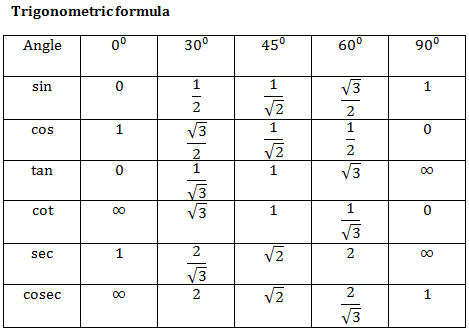
Here students get important trigonometric formula like ratios, relation, sum, difference between angles, sine, cosine rule and identities etc.
just use these formulas
left knoll
acoustic forge
just use these formulas
oh it was identify i thought they simplified or something
acoustic forge
left knoll
oh it was identify i thought they simplified or something
They simplified it but they used this, not the usual fraction simplification(you get what I mean)
left knoll
yup got it
acoustic forge
Yes
rotund vessel

 wispy wind
Can someone help question b?

 shadow wasp
what is the proportion method
 ruby holly
 ebon sage
Hi everyone, is there anyone who's studying calculus 1 and 2? I'm searching for a study buddy so we can exchange exercise...
shadow wasp
Do I just multiply, the 7/8 and 1/2 of the inches is confusing me

 stone locust
Can anyone help me with this¿

 ember garnet
shadow wasp
Do I just multiply, the 7/8 and 1/2 of the inches is confusing me
ember garnet
shadow wasp
Do I just multiply, the 7/8 and 1/2 of the inches is confusing me
it's ( 7 + (1/12)*(11 + 1/2) ) x ( 28 + (1/12)*(3 + 7/8) ) square feet
 dire aurora
left knoll
dire aurora
left knoll
My attempt. With trig questions like these with bearings its a great habit to immediately look for information based on the 3 pairs of parallel lines pointing north. Whenever two parallel lines are intersected by another straight line thats is where u have insight and you should spot them easier with practise.

Can somebody tell me if two rectangular hyperbolas intersect if there have the same sign but different scale factor? i.e does y= 3/x and 1/x intersect? If so, how might i find the intersection points?
ember garnet
dire aurora
Can somebody tell me if two rectangular hyperbolas intersect if there have the s...
If two functions f(x) and g(x) intersect, that means they have the same value at the point of intersection, which means there is a solution to the equation f(x) = g(x). So try to solve 3/x = 1/x
dire aurora
limx->0 is the answer?
so theres no intersection point?
does that make sense logically too?
as y f(x) and g(x) increase at the same height they are ever closer yet never intersecting?
 ember garnet
Yeah the only solution is 0 but they diverge at that point so they don't intersect
dire aurora
ok thanks for ur explanation and your answer 🙂
ember garnet
np
 mellow latch
can someone help me 
it's in german but i think you will still understand it
i have to find the volume of the right cylinder
 clever talon
mellow latch
i have to find the volume of the right cylinder
clever talon
mellow latch
i have to find the volume of the right cylinder
Volume = pi×r²h
I don't understand the full thing
mellow latch
The blue cylinder has a volume of 144cm^3. Give the volume of the purple cylinder with the same height and a quarter of the radius of the base.
Is that even english idk I trust google translator
clever talon
mellow latch
Is that even english idk I trust google translator
Vol is Directly proportional to square of radius
So if radius becomes 1/4th then volume becomes 1/16th
So I guess 9
What's the answer?
mellow latch
9 was correct thank you 
clever talon
Np
 dark sparrow

 undone ledge
Nvm I got it :))
left knoll
undone ledge
Nvm I got it :))
Ah. Solved it anyway
 undone ledge
left knoll
Ah. Solved it anyway
undone ledge
left knoll
Ah. Solved it anyway
Still helpful I’ll go through ur notes thank you!
 plain gazelle
dire aurora
plain gazelle
dire aurora
algebra? looks similar to what i’m doing today
silk patio
Can someone help me ? With this
 silk patio
 left knoll
silk patio
Can someone help me ? With this
left knoll
silk patio
Can someone help me ? With this
Do u know pythagorean theorem?
dire aurora

Can someone please show me the working to get tanx . -tan(pi/2-x) = -1 ? I have no idea
I just know its true and verified on graphing software

I can get it like this but i want to know if there is a purely algebraic way to simplify tanx . -tan(90-x) into -1.

 lost flare
TIPS for SAT?
 worldly spoke
dire aurora
I can get it like this but i want to know if there is a purely algebraic way to ...
worldly spoke
dire aurora
I can get it like this but i want to know if there is a purely algebraic way to ...
Do you know tan(90-x) = cot(x)
dire aurora
worldly spoke
Do you know tan(90-x) = cot(x)
no. not yet.
i dont know why tan(90-x) is cot x but i see tan x times -cot x is sinx/cosx times -cosx/sinx =-1 now, thanks to you
i think i know why tan (90-x) is cotx actually
its the complimentary angle
dire aurora
so tan of 90-x is x/y on the unit circle
worldly spoke
Yes accorindg to what you draw above
 pulsar jewel
Anyone familiar with lie algebra and its application in yang mills SU(N) guage theory?
dire aurora
 worldly spoke
dire aurora
worldly spoke
dire aurora
Yes , thats correct
dire aurora
ok, thanks for telling me about the cotx identity! that should tie it all together for me.
worldly spoke
Np
 copper heart
does a empty set consider a proper subset of a set 🙃
left knoll
copper heart
does a empty set consider a proper subset of a set 🙃
These questions were a pain for me 
left knoll
copper heart
does a empty set consider a proper subset of a set 🙃
Yes empty set is subset of every set
 lusty narwhal
hi, do you guys have any tips on how to learn math fast? like im ass at math im like at a 4th grade level and by june i gotta know pretty much all thats there to learn between 1st and 8th grade (both geometry & algebra) cus i have a very important exam thats basically gonna determinate the highschool that ill go to for the next 4 years and i need at least a 90% on that exam
let me know if you need additional info on the situation that im in
ebon sage
Hi everyone, I have to prove that this function is continuous but I cannot use limit or polar coordinates. I have to prove that the distance between f(X) and f(x0) is 0 when the limit of the distance X - X0 approaches the zero

In this case this is the distance: (x^2 + y^2)^(1/2)
So you have to prove that: 0 < |(xy)/(x^2 + y^2)(1/2)| < (x^2 + y^2)^(1/2). and then lim (x^2 + y^2)^(1/2) = 0 as x --> 0, so |(xy)/(x^2 + y^2)(1/2)| is zero, therefore f(x,y) is continuous
silk patio
left knoll
Do u know pythagorean theorem?
Kinda forgot 😭
rotund vessel

In mathematics, the Pythagorean theorem or Pythagoras' theorem is a fundamental relation in Euclidean geometry between the three sides of a right triangle. It states that the area of the square whose side is the hypotenuse (the side opposite the right angle) is equal to the sum of the areas of the squares on the other two sides. This theorem can...
left knoll
silk patio
Kinda forgot 😭
Courses on Khan Academy are always 100% free. Start practicing—and saving your progress—now: https://www.khanacademy.org/math/cc-eighth-grade-math/cc-8th-geometry/cc-8th-pythagorean-theorem/v/the-pythagorean-theorem
Introduction to the Pythagorean Theorem
Practice this lesson yourself on KhanAcademy.org right now:
https://www.khanacademy.org/...
and don't forget the sum of the angles of a triangle = 180
dire aurora
lusty narwhal
hi, do you guys have any tips on how to learn math fast? like im ass at math im ...
My advice would be to have a day-to-day system where you are able to spend your free time anyway you see fit and are free from addictions and distractions. A plan like this will require a lot of work, thinking and self-awareness, but if you are able to study 3 or more hours every day until June with proper math guidance and real patience there is no goal that is too far fetched for you. Get a good textbook and use khan academy or similarly talented teachers online to learn each topic and investigate every single concept you encounter. First you will need to do a lot of thinking to yourself and figure out what is important to you. If you realise that working hard towards your dream(s) will provide more meaning and fulfilment and improvement to your life than you can possibly comprehend at first then the next step is to progressively abandon the habits that stop you from acting freely toward any such goals. As you understand more and more over time exactly how much more meaningful and rewarding your dreams are as well as why it is necessary to not become mediocre then hopefully things will start falling into place and you start to form solid habits that align toward your health and improvement. You will pick up tools too keep you accountable and routines that you can keep a record of each day. All in all I am just trying my best to give you my honest opinion of how i think someone achieve their goal no matter how immense they may be. Its a personal journey of progress and its very complex and not easy to achieve, but as you learn more as you go you will improve as you go as you will be able to adopt an increasingly comprehensive plan for your self that includes a day-to-day regime of how you can achieve your giant goals by achieving each and every tiny goal that you set after conscious measurement and consideration.
dire aurora
lusty narwhal
hi, do you guys have any tips on how to learn math fast? like im ass at math im ...
Oh and no. We don’t have any tips to “learn maths fast” if you know what i mean. Thats not what you actually want for yourself. I hope what i said above made sense and i wish the best of luck for you 
 obsidian forge
Hey all, could someone help me understand what the formula this question is asking for? I'm not understanding how the input and output relates to the initial rates given? I think there's algebraic formula in here somewhere?
 left knoll
obsidian forge
Hey all, could someone help me understand what the formula this question is aski...
left knoll
obsidian forge
Hey all, could someone help me understand what the formula this question is aski...
I can't understand ur question but the code should be something like this
 obsidian forge
left knoll
I can't understand ur question but the code should be something like this
obsidian forge
left knoll
I can't understand ur question but the code should be something like this
Ah I see, so what I was initially thinking was to do an algebraic formula because this is for my Intro To Programming class and we're using Python thru-out this class. We just learned variables/operations in Python and I'd assumed it would be some kind of math formula that we have to show within the IDE. Thanks for your help! I'll keep looking over what you wrote and try to replicate it so I can further understand it
left knoll
obsidian forge
Ah I see, so what I was initially thinking was to do an algebraic formula becaus...
Not a problem . If u found an algebraic formula to solve the problem please tell me.
obsidian forge
@left knoll Will do!
left knoll
ebon sage
Hi everyone, I have to prove that this function is continuous but I cannot use l...
are you sure this is continuous?
im like pretty sure this is not continuous at (0,0)
 fair belfry
hi can someone pls help me with the first 2 questions i completely forgot how to do it 😅

 clear condor
if cos^-1 (0) is equal to 90 degrees because at 90 degrees cosine equals 0, why isn't it also equal to 270, since at 270 it is also equal to 0
left knoll
clear condor
if cos^-1 (0) is equal to 90 degrees because at 90 degrees cosine equals 0, why ...
when you say cos ^ -1 you are implicitly implying it's the invertible function of cos. but that is simply not true for all R (real numbers)
first, cos^ -1 is defined on [-1,1]
when we say cos^-1 we mean the invertible function
an invertible function is first and foremost a function, and for all numbers in it's domain (which is the interval [-1,1]) it should be well defined (it should define a single value for every x). in the case you're describing cos^-1 is not a function because cos^-1 assigns two different values to 0. therefore, in order for it to be function we should restrict it's range to intervals of the length pi. and in the case of cos^-1 [0,pi] is used (it's just defined like that, if you wish to use other ranges it's not "cos^-1" "anymore"). that's because when we ask what is cos^-1(1/2) we are really asking.. what's the smallest angle x for which cosx=1/2.
i didnt give a super formal explanation, but i hope it helps
 formal forge
can someone please show me how to do this conversion (step by step using the whole table thing)
Convert 45 kg cm / hr^2 to Newtons

 odd fog

Khan Academy
Learn for free about math, art, computer programming, economics, physics, chemistry, biology, medicine, finance, history, and more. Khan Academy is a nonprofit with the mission of providing a free, world-class education for anyone, anywhere.
Khan Academy
Learn for free about math, art, computer programming, economics, physics, chemistry, biology, medicine, finance, history, and more. Khan Academy is a nonprofit with the mission of providing a free, world-class education for anyone, anywhere.
odd fog
 cosmic elm
what is this problem called so i can khan acadamey it 😓
cosmic elm
what is this problem called so i can khan acadamey it 😓
Those should get you up to speed in no time :)
ebon sage
left knoll
are you sure this is continuous?
im like pretty sure this is not continuous at (...
I'm not sure but I should prove it with the distance. Idk if you know that definition
left knoll
oh actually it's my bad i didn't see the sqrt there

Mathematics Stack Exchange
How to show this function's continuity?
My book's 'Hint' says $|xy| \leq \frac12(x^2+y^2)$ can be used.
$ f(x,y) = \left{
\begin{array}{l l}
\frac{xy}{\sqrt{x^2+y^2}} & \quad , \quad...
left knoll
ebon sage
I'm not sure but I should prove it with the distance. Idk if you know that defin...
math exchange is usually a good source
ebon sage
left knoll
math exchange is usually a good source
Thank you
 tiny sphinx
it will be a great help if you anyone could solve this
 left knoll
tiny sphinx
it will be a great help if you anyone could solve this
left knoll
tiny sphinx
it will be a great help if you anyone could solve this
Is it algebra?
ebon sage
tiny sphinx
it will be a great help if you anyone could solve this
I've never seen something like this in C.
= is the assignment operator
left knoll
tiny sphinx
it will be a great help if you anyone could solve this
If you mean C as in the coding language… wouldn’t this be a compilation error?
But this is the math help channel so maybe that’s not what that means idk? Regardless I’m curious about what this is lol
So like if someone knows what this is can you tell us 🙏
tiny sphinx
left knoll
Is it algebra?
no its evaluation problem in C language
tiny sphinx
ebon sage
I've never seen something like this in C.
= is the assignment operator
exactly, it does not make any sense to me
tiny sphinx
left knoll
If you mean C as in the coding language… wouldn’t this be a compilation error?
...
yes in coding only, its supposed to be related to operators precedence and associativity
left knoll
tiny sphinx
no its evaluation problem in C language
oh ok. I'm kinda sure 100% there is nothing like this in programming
ember garnet
tiny sphinx
exactly, it does not make any sense to me
maybe the second equal sign should be a double equal sign instead? Then it would make sense
left knoll
That would make sense
 maiden wasp
yeah the double equal sign is what's used in c
i think this problem's meant to show how c doesn't have a strict "boolean" type
booleans are represented by integers basically
so even though subtracting a number by true/false makes zero sense to us it technically works in c (iirc, true is equivalent to any positive nonzero number)
maiden wasp
tiny sphinx
it will be a great help if you anyone could solve this
just tested (sorry for ping)
#include <stdio.h>

int main(int argc, char *argv[]){
  printf("%d\n", (4 + 5) - (4 == 5));
  return 0;
}
9 is printed on screen
oh hm
right if (5 == 5) is put in, it comes back with 8
so true -> 1, false -> 0
when it comes to equality checks
what's it going chat i (believe i) failed my calc quiz on integration by parts and trig identities substitution
 floral lake
Hey guys, need help here with java in eclipse ide. First time learning, I'm not sure if im doing this right. Some help would be really appreciated thank you!


 rustic shuttle
floral lake
Hey guys, need help here with java in eclipse ide. First time learning, I'm not ...
rustic shuttle
floral lake
Hey guys, need help here with java in eclipse ide. First time learning, I'm not ...
There are a few problems there
From what i understand from the question, time 2 should be later than time 1, your code suggests the opposite
Also the "min1>min2+45" doesnt account for time in between hours, such as 14:30 and 15:20 (50 minutes = True) which in your code would not pass
I'm only focusing on the logic because idk the coding language so well
left knoll
maiden wasp
what's it going chat i (believe i) failed my calc quiz on integration by parts a...
ouch noo i hope it's not too bad
maiden wasp
hope i still get some partial, it was a very short quiz
one nice thing at least is that we get a couple of our quiz scores dropped through the semester, so provided i can understand that topic going forward, it’ll be alright
just had a bit of a shaky start this semester since there was a lot i didn’t fully grasp during the latter part of calc 1, so that’s been taking some time to catch up on, like u sub, i sorta understand it but it hasn’t clicked in the way that i’d hoped, and i’m still a little lost without the formulas
just a little worried that i can’t keep to pace since we also have graded homework this semester, albeit on completion
the grade drops are a nice buffer so i’m remaining optimistic, as long as i keep filling in the gaps
it’ll be alright i’m sure, pardon my ramble
left knoll
maiden wasp
hope i still get some partial, it was a very short quiz
one nice thing at least ...
Oh I can’t stress enough how much I hate the technical part of calculus lol
None of it is easy I feel you 🥲
But at the end of the day that’s what I really need to do since I’m not a math major
I just finished my calc 2 course and it doesn’t get any easier but you learn to push through it 🥲
Thank god my course isn’t too technical
It’ll be alright though just keep at it
I’ve gotten some pretty bad grades (like really bad) in math in the last semester on my midterms
They aren’t always a good indicator of how things will go moving forward
I learned from my mistakes and improved and got higher grades than I expected… there’s always hope
You got this!
maiden wasp
thank you @left knoll!! it means a lot
 willow sage
guys what is the right way to find the Highest Common Factor (HCF / GCD) of two integers?
there's so many ways and it's confusing me now
left knoll
willow sage
guys what is the *right* way to find the Highest Common Factor (HCF / GCD) of tw...
generally i think you'd want to use the Euclidean algorithm since it's an efficient way to do it
the euclidean algorithm
at least as long as the two integers we're talking about arent two consecutive terms of the Fibonacci sequence
 mystic thunder
fair belfry
hi can someone pls help me with the first 2 questions i completely forgot how to...
mystic thunder
fair belfry
hi can someone pls help me with the first 2 questions i completely forgot how to...
do you still need help?
 tacit coral
willow sage
guys what is the *right* way to find the Highest Common Factor (HCF / GCD) of tw...
tacit coral
willow sage
guys what is the *right* way to find the Highest Common Factor (HCF / GCD) of tw...

EBOB means HCF
you just divide the integers sequentially 2,3,4,..,etc.
willow sage
tacit coral
https://matematikdelisi.com/Orta/Sinif8/Hesaplama/images/EBOB-hesaplama.png
wow this is realyl insane, thanks
 indigo flint
ser
fair belfry
mystic thunder
do you still need help?
yes pls 🙏
mystic thunder
fair belfry
yes pls 🙏
for the first qs, u need to split the middle term (it's a method for factorizing)
u need to split it in such a way that when u add/subtract the numbers it's the middle number, and when u multiply it you get the product of the first and the third term
like-->
6p^2 - 9pq+4pq - 6q^2
(-9pq+4pq= -5pq, i.e the middle term) and
-9*4=-36 (product of the first and third term
Now, after splittiing the term, u have to find common
6p^2 - 9pq+4pq -6q^2
3p(2p-3q) + 2q(2p-3q)
=> (3p+2q)(2p-3q)
and in the second one, we have to use an identity, we can write the above question as
(a)^2 - (12)^2
as we can see, the identity x^2 - y^2 = (x+y)(x-y)
here x corresponds to "a" and y corresponds to "12"
==> (a+12)(a-12)
there you go
fair belfry
mystic thunder
and in the second one, we have to use an identity, we can write the above questi...
ohhh ic ty!
 vital flax
hello, if anyone here has good experience in mathematical logic, I have one question that I asked in my Uni's discord but no one responded there at all lol. If I have a formula or a set of clauses, let's say { p(x), p(f(x)) } with p a predicate, and I apply a substitution onto it like [x/y], would the x inside the function call also be exchanged or will it be unchanged? I'd argue it would change as well
 snow dock
dumn question but is it possible to go for 40 to 80-100 in math with 3 months in exams
from*
left knoll
vital flax
hello, if anyone here has good experience in mathematical logic, I have one ques...
When applying a substitution such as [x/y] to a formula or set of clauses, the variable x will be replaced by the variable y throughout the entire formula or set of clauses. This includes inside function calls. So in the case you provided, the x inside the function call of f(x) would also be replaced by y, resulting in the clause p(f(y))
vital flax
left knoll
When applying a substitution such as [x/y] to a formula or set of clauses, the v...
Thank you! staying on the topic of substitution to clean a FOL formula. I've followed the various exercises and solutions by my prof and his assistants. Let's say in a exercise involving converting a given FOL formula into it's prenex and/or skolar form, and the formula F looks like this:
Vy: (p(x,y) ^ Ex: q(x))
They would first notice that x is both bound and unbound, and according to both wikipedia and the slides, the x in the subformula Ex: q(x) must be renamed to a var that's not yet existing like lets say z, so the formula F becomes F' := Vy: (p(x,y) ^ Ez: q(z)), but I have also seen them substitute the free instance of an x in videos or the solution to the mock exam as well instead, so:
Vy: (p(z,y) ^ Ex: q(x))
Which version is valid? are both valid? because for me both seem valid, because we're trying to resolve this naming conflict by changing either one of these to something else and both achieve that that the cut between both free and bound variables is empty.
in said mock exam solution this was given:

and this is the cleaned version
 left knoll
vital flax
Thank you! staying on the topic of substitution to clean a FOL formula. I've fol...
left knoll
vital flax
Thank you! staying on the topic of substitution to clean a FOL formula. I've fol...
Both versions are valid ways to resolve the naming conflict between the free and bound occurrences of the variable x. In the first version, you rename the free occurrence of x to a new variable z, which ensures that all free variables are distinct from all bound variables. In the second version, you rename the bound occurrence of x to a new variable z, which also ensures that all free variables are distinct from all bound variables.
it is important to be careful when renaming variables to avoid introducing new errors or ambiguities into the formula, and to always check that the renaming preserves the meaning of the formula.
left knoll
any time
ebon sage
Hi, I have a problem with contour lines. If I have f(x,y)=(x^1/2 + y^1/2)^2 and if I search for the contour line for z=1=f(x,y) I find: y = (1-x^1/2)^2 but using geogebra I obtain the same curve from x=0 to x=1 but then it's different and I don't understand why
in yellow the contour line. in red the function of the contour line that I found. In x from 0 to 1 it's the same


 spark fern
ebon sage
Hi, I have a problem with contour lines. If I have f(x,y)=(x^1/2 + y^1/2)^2 and ...
spark fern
ebon sage
Hi, I have a problem with contour lines. If I have f(x,y)=(x^1/2 + y^1/2)^2 and ...
The equation you have provided, f(x,y)=(x^1/2 + y^1/2)^2, represents a surface in three-dimensional space, with x, y, and z as the coordinates. To find the contour line for a specific value of z, you need to solve for x and y when the value of z is fixed.
In this case, the contour line for z=1 is given by y = (1-x^1/2)^2. This line represents the set of points (x,y) on the surface for which the value of z is equal to 1.
The difference between the curve you obtained from the equation and the one from Geogebra may be due to the range of x values being used. The equation y = (1-x^1/2)^2 only holds for values of x between 0 and 1. If Geogebra is plotting the curve for a range of x values outside of this interval, the shape of the curve may be different.
It is also possible that there is an error in either the equation or the way it was implemented in Geogebra. It may be helpful to double-check both the equation and the input in Geogebra to make sure they are correct.
 severe crane
does anyone know how to rotate text on geogebra?
ebon sage
spark fern
The equation you have provided, f(x,y)=(x^1/2 + y^1/2)^2, represents a surface i...
Thank you for the answer.
But, the contour line is raised to the second so x can assume any value, so the range is not from 0 to 1.
Not any value but x≥0
 sage cobalt
Hi everyone! could someone be so kind to help me with this? I have been stuck on this qn for 2 hours now.........

 silk sandal
sage cobalt
Hi everyone! could someone be so kind to help me with this? I have been stuck on...
silk sandal
sage cobalt
Hi everyone! could someone be so kind to help me with this? I have been stuck on...
Here you go

this is for b)
You can get c) from there
left knoll

 neat dome
Hi
I know that the area of the parallelogram is 100 cm² and the AC diagonal intersects the BE height in the point O.
BO/OE=5/3
I need to know the area of BEDC.
I think that the solving has something to do with AOE and COB triangles but I'm lost.
Please help.
 left knoll
left knoll
left knoll
Isn't it the difference of two squares?
 jade creek
neat dome
Hi
I know that the area of the parallelogram is 100 cm² and the AC diagonal inte...
jade creek
neat dome
Hi
I know that the area of the parallelogram is 100 cm² and the AC diagonal inte...
did u solve yet?
left knoll
left knoll
Isn't it the difference of two squares?
What??
 jade creek
greatOR
rotund vessel
 full sorrel
just square it and find the two roots
the answer will turn out to be some kind of interval
dire aurora
full sorrel
how'd you solve this?
when u look at the solution you may not understand it anyway. please check PM shortly for some youtube videos that you should watch
dire aurora
Why doesn't null factor law apply to solving inequalities of a quadratic?

only using vertex form and taking absolute values works but not (x+a)(x+b)>0 x>-a or x>-b
I understand why its a wrong result
but I don't know the reasoning behind why the algebra doesn't work correctly that way when it does with equations
jade creek
because ones a rule for equations and another is a rule for inequalities?
 fluid saffron
fluid saffron
fluid saffron
can someone pls help
left knoll
fluid saffron
can someone pls help
not sure tbh

 whole wren
Sure enough ChatGPT is handy, but wouldn't it be even more handy to learn to find the answer by yourself so you get a better understanding of it ?
Maybe I'm oldschool, who knows 
fluid saffron
left knoll
not sure tbh
i dont really get it either, but thanks for going out of your way to take the time to ask the AI
i was doing revision so ill see if i can ask for an explanation at school
left knoll
whole wren
Sure enough ChatGPT is handy, but wouldn't it be even more handy to learn to fin...
lol, idc to understand the answer cuz it's not my question
not old school i totally agree with u
fair belfry
snow dock
dumn question but is it possible to go for 40 to 80-100 in math with 3 months in...
yea, revise the syllable/subtopics taught and study the ones you dont know and keep practicing questions from each subtopic until youre familiar ig, i actually have no right to say this bc my math tests are usually in the 70% 💀
 grizzled lotus
Does anyone knows where they get that log 25?
 whole wren
grizzled lotus
Does anyone knows where they get that log 25?
whole wren
grizzled lotus
Does anyone knows where they get that log 25?
there are 25 patients
left knoll
hello, i am struggling with 8a. any help appreciated!!


 fallen flower
This seems like kind of a silly problem, but if try to find the factors of of a trinomial it doesn't seem to yield the exact answer. The answer was either (x + a)(x + b) or (x + b)(x + a), are both correct or is there only one singular answer?
When I take the factors of the third term it could either be (a × b) or (b × a) if it is a positive term
In example is x^2 + 10x + 16 factored (x + 2)(x + 8) or is it (x + 8) (x + 2)?
whole wren
Lemme grab a pen and paper pal
fallen flower
Yeah it just seems so simple and yet I'm not grasping it
whole wren
Sorry for the time, I checked, and it is (x+8)(x+2)
fallen flower
What is the exact process to that answer though?
Just so I don't make the same mistake on future equations
 quartz silo
both answer is correct. doesn't matter the order in this problem
fallen flower
quartz silo
both answer is correct. doesn't matter the order in this problem
Okay thats what I was thinking, either way it achieves the same answer
quartz silo
yeah
fallen flower
whole wren
Sorry for the time, I checked, and it is (x+8)(x+2)
Could it also be (x+2) (x+8) since it is commutative?
whole wren
Using the difference of squares:
x² + 10x + 16 can be written as (x + a)² + b, where a = 8 and b = 16 - 64 = -48
Factor the expression (x + 8)² - 48, using the difference of squares formula (a - b)(a + b)
The result is (x + 8)(x + 8 - 6) = (x + 8)(x + 2).
I don't know if that makes sense to you though, I nearly fell asleep on my phone here so I'll go now
fallen flower
whole wren
Using the difference of squares:
x² + 10x + 16 can be written as (x + a)² + b, ...
Are both answers correct or does it have to be just one?
whole wren
If you want it to be precisely according to the formula, (x+8)(x+2), but otherwise (x+2)(x+8) also works
Neither can be wrong as long as you got it right
quartz silo
left knoll
hello, i am struggling with 8a. any help appreciated!!
did you already complete this?
ember garnet
fluid saffron
you can find one solution by observation if you set both sides equal to zero
fluid saffron
ember garnet
you can find one solution by observation if you set both sides equal to zero
one of the solution(s) is 2/3?
how can i find another if theres another?
thanks btw wouldnt have guessed that
cosmic elm
how to solve
 rotund vessel
cosmic elm
how to solve
rotund vessel
cosmic elm
how to solve
 cosmic elm
rotund vessel
cosmic elm
rotund vessel
i see thank u
left knoll
quartz silo
did you already complete this?
not yet!
 oblique solar
left knoll
hello, i am struggling with 8a. any help appreciated!!
oblique solar
left knoll
hello, i am struggling with 8a. any help appreciated!!
did you got α and θ in terms of arctan?
oblique solar
fluid saffron
you got the answer?
left knoll
oblique solar
did you got α and θ in terms of arctan?
no, i’m still struggling with applying all of this
 cunning fern
left knoll
no, i’m still struggling with applying all of this
cunning fern
left knoll
no, i’m still struggling with applying all of this
i got the answes but they are in terms of arctan or tan-¹
left knoll
if you’ve got it written down somewhere i’d love to look over it
cunning fern
left knoll
if you’ve got it written down somewhere i’d love to look over it
yes 2 min please
I'm in middle of something
left knoll
cunning fern
yes 2 min please
ofc it’s not pressing at all please take your time
cunning fern
left knoll
if you’ve got it written down somewhere i’d love to look over it

if you do not understand something, please let me know
left knoll
thank you so much this is so helpful 🥹🥹
cunning fern
left knoll
thank you so much this is so helpful 🥹🥹
glad I was able to help
left knoll
CS students: how proof-based are your math courses? And when did you have to take them? (Say linear algebra and calculus 1+2 and or vector analysis, maybe discrete math if you take that? and so on)
Just curious about how it is elsewhere bc I took my proof-based math courses in the first semester + second semester and heard that some don’t take them till a bit later but idk how true that is
 peak comet
Anyone got some good algebra books? Some pretty basic ones, i wanna get better at the fundamentals
cunning fern
peak comet
Anyone got some good algebra books? Some pretty basic ones, i wanna get better a...
Hall and Knight is very good
even though it's not very basic
ember garnet
fluid saffron
how can i find another if theres another?
i graphed it and there is another solution at 5 point something iirc. However I have no idea how you can solve it analytically, it's not a conventional equation and even online equation solvers won't give you a step by step answer (at least the ones that are free)
peak comet
cunning fern
Hall and Knight is very good
I’ll give it a go
cunning fern
ember garnet
i graphed it and there is another solution at 5 point something iirc. However I ...

got till here but I have no idea how to go further
ember garnet
cunning fern
yeah you can also write this way which resembles a quadratic but instead of degree two it is degree 1.29... :p
 cunning fern
ember garnet
yeah you can also write this way which resembles a quadratic but instead of degr...
cunning fern
ember garnet
yeah you can also write this way which resembles a quadratic but instead of degr...
ah that's another way to write it
thanks, learnt something new
 left knoll
cunning fern
left knoll
cunning fern
doesn't this diverge?
cunning fern
left knoll
doesn't this diverge?
yes it should
cunning fern
left knoll
why would you want to sum it
it was a calc question
i ended up with this
left knoll
oh so you should check whether it's divergent or convergent and if it's convergent you want to sum it?
 cunning fern
left knoll
oh so you should check whether it's divergent or convergent and if it's converge...
cunning fern
left knoll
oh so you should check whether it's divergent or convergent and if it's converge...
it's probably convergent because the numbers are getting smaller and smaller
left knoll
cunning fern
it's probably convergent because the numbers are getting smaller and smaller
i wouldn't say that's enough of a reason for it to converge
like as you already might know 1/n also follows that pattern but the infinite sum is not convergent
you'd have to prove it
intuitively i'd say that it "looks" like 1/n
left knoll
cunning fern
as in the sequence here
cunning fern
left knoll
i wouldn't say that's enough of a reason for it to converge
like as you already...
yes
cunning fern
left knoll
intuitively i'd say that it "looks" like 1/n
it kinda does, but it's like 1/4n
left knoll
yea but a 4 doesnt matter in infinity
you can use the comparison test probably
and play around with it
cunning fern
please elaborate
left knoll
how far are you into calculus might i ask
cunning fern
i am in high achool
left knoll
ooh
cunning fern
last year of high school to be precise
left knoll
umm do you know anything about convergence tests of infinite sums?
cunning fern
honestly I don't know much
i stumbled from this question from a social media post
and I thought I'll be able to solve it using telescoping method
as taught to us in sequence and series
left knoll
okok there are plenty of sources online i'll link a wiki page if you want to check it out https://en.wikipedia.org/wiki/Convergence_tests
In mathematics, convergence tests are methods of testing for the convergence, conditional convergence, absolute convergence, interval of convergence or divergence of an infinite series
      ∑

        n
        =
        1


        ∞


   ...
i have no idea :(
cunning fern
left knoll
okok there are plenty of sources online i'll link a wiki page if you want to che...
thank you for helping, appreciate it
left knoll
cunning fern
is this a power series i cant see it too well
cunning fern
left knoll
is this a power series i cant see it too well
wait I'll send a better picture
 left knoll
cunning fern
left knoll
cunning fern
I think it’s a power series aka a Taylor series
Idk if there’s an easier way but typically what you’d want to do is you’d want to find the function whose Taylor series is that and then that limit would be easier cuz you’d have a more concrete function… usually you’d try to find that function through playing around with the power series and seeing which already known Taylor series it looks like
Then again you can still try to play around with the expression and find an easier way to do it I’m not sure
of course assuming I’m assuming so many things here about the convergence radius
But yea
Does anyone else have any input on it?
cunning fern
left knoll
I think it’s a power series aka a Taylor series
Idk if there’s an easier way bu...
I am sorry but I am not able to understand anything of this :'). Thanks a lot for your time tho
left knoll
cunning fern
I am sorry but I am not able to understand anything of this \:'). Thanks a lot f...
Ouch I’m sorry 😭
Where did you get this from
Like the problem
You’ll learn all of this in calculus 2 🙏
cunning fern
black pen red pen ig
cunning fern
he has a solution video too, but that one is very different from the question I posted
cunning fern
cunning fern
he has a solution video too, but that one is very different from the question I ...
like the question he posted on ug
ig*
left knoll
Ooh
cunning fern
and then solved on yt was different
left knoll
How did he solve it
left knoll
Oh okok
cunning fern
he double differentiated the expression inside
and was left with x^ 4n+2 / 4n + 2 which he said becomes tanh-1
left knoll
Yea then he probably used Taylor series as well
cunning fern
left knoll
Yea then he probably used Taylor series as well
Can you provide me a source to read about these power series
left knoll
of course
Wikipedia has everything and you can also use khan academy
i'd honestly recommend studying cacl 1 and all before you jump to this (calc 2)
then again calc 1 and 2 is different depending on where you're getting your education haha
but here: https://en.wikipedia.org/wiki/Power_series
https://www.khanacademy.org/math/ap-calculus-bc/bc-series-new/bc-10-13/v/power-series-radius-interval-convergence
In mathematics, a power series (in one variable) is an infinite series of the form
where an represents the coefficient of the nth term and c is a constant. Power series are useful in mathematical analysis, where they arise as Taylor series of infinitely differentiable functions. In fact, Borel's theorem implies that every power series is the Ta...
Khan Academy
Learn for free about math, art, computer programming, economics, physics, chemistry, biology, medicine, finance, history, and more. Khan Academy is a nonprofit with the mission of providing a free, world-class education for anyone, anywhere.
left knoll
cunning fern
Can you provide me a source to read about these power series
also pretty cool that you do all of this already and are exploring things
wish i had done more exploring back in the day lol
cunning fern
left knoll
also pretty cool that you do all of this already and are exploring things
wish ...
:)
cunning fern
left knoll
also pretty cool that you do all of this already and are exploring things
wish ...
Are things like expansion of log(1+x), a^x also Taylor series
(haven't seen the links, i am in forest and chrome is disabled :/)
 cyan tartan
 fluid saffron
ember garnet
i graphed it and there is another solution at 5 point something iirc. However I ...
fluid saffron
ember garnet
i graphed it and there is another solution at 5 point something iirc. However I ...

fluid saffron
cunning fern
hmm i dont know lol cant really follow
fluid saffron
oblique solar
you got the answer?
nope, the only answer i have is 2/3 but cant find the other
cunning fern
fluid saffron
nope, the only answer i have is 2/3 but cant find the other
what is your grade, if you don't mind me asking
fluid saffron
im in highschool last year (its called form five in botswana)
cunning fern
fluid saffron
im in highschool last year (its called form five in botswana)
ah same
fluid saffron
cunning fern
ah same
thanks for the help you offered, ill see what i can do
cunning fern
:)
 flint urchin


(ignore the red marks)
is it wrong to square both sides and then prove that the squared LHS is equal to squared RHS?
cunning fern
flint urchin
is it wrong to square both sides and then prove that the squared LHS is equal to...
1 ≠ -1 but if you square them, you'll get same result
so it isn't the best way
flint urchin
Hmm
cunning fern
flint urchin
Hmm
do you know about square root being always in |mod|
flint urchin
No..
cunning fern
oh
square root of X² is |X|
not just X
I think I am complicating it
ignore it
flint urchin
Does the || mean +-?
cunning fern
the || means that no matter what is inside, the result will be always ≥ 0
so you proved that X² = Y²
but that does not prove X = Y
because after taking roots, it will give |X| = |Y|
which means X = ± Y
flint urchin
Ok Ty
 remote linden
cunning fern
How is log0/log0 a ∞/∞ form
remote linden
cunning fern
How is log0/log0 a ∞/∞ form
log(0) -> -∞, so log(0)/log(0) = -∞/-∞ = ∞/∞
 cunning fern
remote linden
log(0) -> -∞, so log(0)/log(0) = -∞/-∞ = ∞/∞
cunning fern
remote linden
log(0) -> -∞, so log(0)/log(0) = -∞/-∞ = ∞/∞
Oh yehhhh
Thanks a lot! :)
shadow wasp
How do I add area I got the area of two rectangle 270 and 288 and got 558. Is this right. I just added both
whole wren
shadow wasp
How do I add area I got the area of two rectangle 270 and 288 and got 558. Is th...
That's correct
 shadow wasp
whole wren
That's correct
shadow wasp
whole wren
That's correct
thx
whole wren
np
 nimble wedge
Does anyone know this, I can't find a solution to this expression. I need to find x1 and x2 but I can't figure out where the error is
 cunning fern
nimble wedge
Does anyone know this, I can't find a solution to this expression. I need to fin...
cunning fern
nimble wedge
Does anyone know this, I can't find a solution to this expression. I need to fin...
there is only x in the expression
x1 and x2?
nimble wedge
so I need to extract x1 and x2 from all that via the quadratic equation
but no matter how I tried to get it, it was impossible to get it
cunning fern
oh you mean the roots
nimble wedge
something like that
with us, it is an equivalent equation, so through it I finally get a quadratic equation and only then do I get x1 and x2
but I think that this task is impossible to solve if it doesn't exist, so I wanted to check with you people
nimble wedge
okay, if you manage to solve it somehow, although I tried to do it on the easy and on the thesis, but nothing, and I only know that somehow the solution should be 1 and 2
cunning fern
nimble wedge
okay, if you manage to solve it somehow, although I tried to do it on the easy a...
is the left hand side multiplied?
because I assume it is
nimble wedge
cunning fern
is the left hand side multiplied?
the left side is subtracted and the right side is multiplied
cunning fern
nimble wedge
the left side is subtracted and the right side is multiplied
1 and 2 are not the solution then
nimble wedge
cunning fern
1 and 2 are not the solution then
I don't know, that's what it says in the solution book, and now I don't know if they made a mistake about the task or about the solution. but I think this task is impossible to solve
nimble wedge
cunning fern
1 and 2 are not the solution then
Did you get something?
whole wren
2^(x^2)^(-3) is 0.01 if we assume its x is 1, no ?
(sorry, not trying to intrude just to understand as well)
cunning fern
whole wren
2^(x^2)^(-3) is 0.01 if we assume its x is 1, no ?
(sorry, not trying to intru...
isn't it like 2^ x² - 3
which gives the answer 1/4 when x = 1
nimble wedge
well, like me, I only know that x1 should be 1, and x2 should be 2. but that's before I get the quadratic equation
cunning fern
whole wren
2^(x^2)^(-3) is 0.01 if we assume its x is 1, no ?
(sorry, not trying to intru...
no need to be sorry, I am sorry if that came out as rude
nimble wedge
whole wren
2^(x^2)^(-3) is 0.01 if we assume its x is 1, no ?
(sorry, not trying to intru...
it's ok you don't have to apologize trust me i'm confused about the task too
cunning fern
nimble wedge
well, like me, I only know that x1 should be 1, and x2 should be 2. but that's b...
that means the LHS is not substracted
instead it multiplied
LHS = (-1)^-2 . (2)^-2. (5)^-2
which is 0.01
same as RHS when we put x = 1
yes it's definitely multiplied
@nimble wedge @whole wren
 whole wren
may i ask where the (-1)^x²-3 comes from ?
i'm assuming it's the (-) sign
nimble wedge
whole wren
may i ask where the (-1)^x²-3 comes from ?
i'm assuming it's the (-) sign
that's what I wanted to ask
cunning fern
whole wren
may i ask where the (-1)^x²-3 comes from ?
i'm assuming it's the (-) sign
(-5) = (-1).(5)
(a.b)^m = a^m.b^m
cunning fern
cunning fern
this is correct for x = 1
but for x = 2, it is not
because the power of (-1) will be odd i.e 1
which will make the left hand side negative of the right hand side

 cunning fern
nimble wedge
I don't know, that's what it says in the solution book, and now I don't know if ...
cunning fern
nimble wedge
I don't know, that's what it says in the solution book, and now I don't know if ...
I think there is only one solution i.e 1
x = 2 doesn't satisfies
solution mistake maybe
nimble wedge
now I understand how you did it and I see what now. thank you very much for the result and the solution 😁😁
 left knoll
If I understood you correctly, generally speaking when you have a variable you as an exponent and you’d want to isolate it you’d use log because it’s the inverse function of the exponential function a^x, (a is a given number)
And from what I can see they are trying to find what T_(1/2) so that’s why they did that
@last saffron
Otherwise tell me if I misunderstood you
 last saffron
You're absolutely right, thank you very much!
severe crane
can anyone explain why eulers number is used to model functions
whole wren
because it is exponential
severe crane
whole wren
because it is exponential
why is it used over other constants in exponential functions?
left knoll
severe crane
can anyone explain why eulers number is used to model functions
it's literally just found almost everywhere. and perfectly describes different phenomena in different fields (finance and so on). which is why it's used over other constants
left knoll
Hello, someone wanna some math books links for free?
severe crane
left knoll
it's literally just found almost everywhere. and perfectly describes different p...
i need to provide an explanation in a portion of my paper, would you be willing to read a paragraph and let me know if it makes sense?
 lyric delta
hi, can anyone recommend me exercises? most of the time i understand how to solve a question but still ended up being wrong because i wasnt careful on very very basic and easy operation. i tried being more careful but things still got out of my sight. thanks in advance
left knoll
severe crane
i need to provide an explanation in a portion of my paper, would you be willing ...
I’m not that well-versed in this I just know that fact
cunning fern
lyric delta
hi, can anyone recommend me exercises? most of the time i understand how to solv...
exercises on?
I mean like algebra, geometry, calculas
 finite lodge
Q. Find the number of co prime divisors of the number 2^5 × 3⁴ × 5⁷ × 7²
 cunning fern
undone ledge
cunning fern
undone ledge
do you know about fundamental principle of multiplication?
undone ledge
cunning fern
do you know about fundamental principle of multiplication?
Nope
Should I look into it?
cunning fern
it's a very basic principle
when you have to do two simultaneous operation, you multiply both of them
like there are two tasks A and B
undone ledge
Ohhh wait I know it
cunning fern
A can be done in 3 ways and B in 4 ways
if you are going to do A and B simultaneously, it'll be 3.4 = 12 ways
simple as that
so you can break the problem into two parts
undone ledge
So that equation I have can be done in 8 ways
But I need to find the number of ways for females
cunning fern
I'll solve b part for you
So we need 1 female players in the team of two players. Now we have two choices, either take the female player from the team A, or take the female player from team B.
If we take female player from one team, it's a necessity that we take a male player from other team.
The required probability will be :- 3/4 x 1/2 + 1/4 x 1/2
Is the answer 1/2 for part b @undone ledge
cunning fern
finite lodge
Q. Find the number of co prime divisors of the number 2^5 × 3⁴ × 5⁷ × 7²
Is this from permutations and combinations?
I learnt something like this last year but can't recall
undone ledge
cunning fern
Is the answer 1/2 for part b <@710365921243299932>
Yep it is
undone ledge
cunning fern
So we need 1 female players in the team of two players. Now we have two choices,...
I’m going to work it out going over what you just said it’s making more sense now thank you :))
cunning fern
finite lodge
Q. Find the number of co prime divisors of the number 2^5 × 3⁴ × 5⁷ × 7²
720?
 solid anvil
I need help

Please solve this inequality

The answer is c
But I don't get how
Ohh
Wait
I get it
😄
grizzled lotus
How do I find mean using scores ?
 cunning fern

I am not able to understand why the right hand limits doesn't exist at x = 1
This is the solution

but I can't understand what does "oscillating" mean here
 pliant agate
solid anvil
pliant agate
solid anvil
its b not c
cunning fern
pliant agate
its b not c
c is correct!
 sweet karma
cunning fern
I am not able to understand why the right hand limits doesn't exist at x = 1
sweet karma
cunning fern
I am not able to understand why the right hand limits doesn't exist at x = 1
when X → 1+ lim 1/1-x= + infinit , and when x→ +infinit lim cos does not exist
pliant agate
cunning fern
c is correct!
can you explain it to me please
cunning fern
multiply the equation by -1
that'll change the sign of inequality
-4 ≤ 3x - 2 ≤ -1
add two to each side and then divide the whole equation by 3
which'll give -2/3 ≤ x ≤ 1/3 @pliant agate
cunning fern
sweet karma
when X → 1+ lim 1/1-x= + infinit , and when x→ +infinit lim cos does not exist
can you explain please, I do not understand
 lament wren
Anyone knows what chapters do i study before complex numbers (11th grade India)
cunning fern
lament wren
Anyone knows what chapters do i study before complex numbers (11th grade India)
it doesn't have a lot of pre-requisite
before the algebra part, study trigonometry
lament wren
cunning fern
it doesn't have a lot of pre-requisite
it does when you see questions
cunning fern
and before the geometry part, study circles and straight lines
lament wren
cunning fern
and before the geometry part, study circles and straight lines
yeessss needed thet
cunning fern
lament wren
<:Emotionalshrek:940660195300868116> it does when you see questions
well, if you'd do jee advanced question, they'll require more than one concept
lament wren
cunning fern
well, if you'd do jee advanced question, they'll require more than one concept
yea
ik
thenks
sweet karma
cunning fern
can you explain please, I do not understand
kinda hard to explain in english since i know math in french
cunning fern
will it work with google translate?
sweet karma
basically all i did is calcultale the lim of 1/1-x =+ ∞ ( and then u use the lim GoF rule) then lim cosx when x→+∞ does not exist , you can see it in this graph


Socratic.org
There is no limit. The real limit of a function f(x), if it exists, as x->oo is reached no matter how x increases to oo. For instance, no matter how x is increasing, the function f(x)=1/x tends to zero. This is not the case with f(x)=cos(x). Let x increases to oo in one way: x_N=2piN and integer N increases to oo. For any x_N in this sequence co...
here is a better explanation than the graph lol
 compact fable
grizzled lotus
How do I find mean using scores ?
compact fable
grizzled lotus
How do I find mean using scores ?
Hope it helps❤️
 cunning fern
write down all the formulas somewhere and then memorise it and solve a lot of question after that
you'll get used to it
oh
you know the DI table method?
you can use that in place of integration by parts
and it's easy to learn
they are both very similar
when you solve question, do you need to show the full procedure?
nah that's not the case I assure you
maths and physics don't really require frequent revision
ah for written you'll have to go with the parts one, no choice for you
also I think you are having difficulty in those sinx, cosx problems
cunning fern
cunning fern
also I think you are having difficulty in those sinx, cosx problems
where you gotta do the steps again and again
nah I am not taking stats
trig problems in by parts are hard
maybe you should do like 5 question on that concept daily for a week atleast
pliant agate
cunning fern
which'll give -2/3 ≤ x ≤ 1/3 <@516584159859310612>
oohhh thanks maan
 unborn igloo
anyone have a video or can explain how people came up with the addition and subtraction identities in trig
i understnad thing more when i see where they came from
and i couldnt find any yt videos
left knoll
search up Ptolemy's theorem for the sine addition formula explanation
sweet karma
unborn igloo
anyone have a video or can explain how people came up with the addition and subt...

I derive forms of the double and half angle formulae for the sine and cosine using Euler's formula for complex exponentials. I state how these methods can be generalized to derive any trigonometric identity far more easily than using purely real methods.
if you studied complex numbers, you'll remember them easily
 solemn estuary
can anyone help me with solving my math homework

i keep having trouble finding the point A
cunning fern
can you translate what's written in arabic
solemn estuary
kk
we need to find the equation of AB and the equation of AC
we are givin that both AC and AB touch the circle
cunning fern
they are tangent
solemn estuary
idk much english
cunning fern
tangent means a line which touches at only one point
solemn estuary
and we are givin that B = (-2 , 1) C = (10,-5) and M = (3,-4)
cunning fern
solemn estuary
the equation of a tangent is
xx1 + yy1 + g ( x + x1 ) + f ( y + y1 ) + c
where x1 and y1 are the points where the line ( tangent ) intersects the circle, in this case B ( -2, 1 ) and C ( 10 , - 5 )
g is the negative of x coordinate of centre of circle
f is negative of y coordinate of circle
c is the constant in the circle's equation, which you'll get when you will write the equation of circle
@solemn estuary
solemn estuary
kk
ebon sage
cunning fern
can you translate what's written in arabic
Sometime math seems like Arabic lol, jk
left knoll
 ebon sage
De l'hopital
Lim X --> inf {(1/X)/1 } = 0
 oak sphinx
 cunning fern
n is tending to?
oak sphinx
n tending to N
sweet karma
cunning fern
n is tending to?
i think + infinit


 whole wren
So you solved it ?
Also correct me if I'm wrong but these are vectors right ?
 fading sonnet
whole wren
So you solved it ?
Also correct me if I'm wrong but these are vectors right ?
fading sonnet
whole wren
So you solved it ?
Also correct me if I'm wrong but these are vectors right ?
Yes i did, i just had to prove that the determinant of that matrice is equal to (a-b)³, there no vectors.
silk patio

 jade drum

Sine takes value between -1 and +1 when we solve in the second case the argument of sine inverse it comes out to be somewhere above 2 which isn't possible hense an error
While in the ist case it comes under 1 that's why no error
silk patio
You have the same calculator
 trim slate
i have no specific math problem i need help on, but i'm just curious on how to go about studying math. since i'm in precalc i know to memorize limits, derivatives and equations but i feel like i'm missing something/i still end up forgetting stuff when i get test papers handed to me
 pallid bear
Can someone help me do my math homework?
I am super behind and I’m trying to get tutored to get caught up but it’s difficult
silk patio
I feel you
quartz silo
silk patio
which number?
quartz silo
silk patio
here's #1 and #4 to get you started

 obsidian carbon
Anyone down to help with some trig?
cunning fern
obsidian carbon
Anyone down to help with some trig?
send question
obsidian carbon
Ah I got it figured out, thanks though mate!
jade drum
silk patio
You have the same calculator
You asking me
left knoll
hey guys does anyone have a counterexample for 2
we're given a function sequence f_n which is bounded for all n in N and x in I, I=[1,inf) and it's (the function sequence) uniformly convergent to a function f
and 2 says if the the improper integral of f_n on 1 to inf is convergent for all n in N then the improper integral of f on 1 to inf is convergent and is equal to that limit
all of the examples im able to come up with wind up being convergent to 0 and that's why im struggling

thanks in advancee
 winter grail
left knoll
hey guys does anyone have a counterexample for 2
we're given a function sequenc...
winter grail
left knoll
hey guys does anyone have a counterexample for 2
we're given a function sequenc...
if I remember correctly fn should also be approximated by a staircase function for 2 to work
left knoll
winter grail
if I remember correctly fn should also be approximated by a staircase function f...
i'll look into it thanks a lot!
trim slate
trim slate
i have no specific math problem i need help on, but i'm just curious on how to g...
if anybody has strategies that they used for calc + general ideas for practicing math that would be helpful (i forget everything for my tests)
trim slate
ty!
 red comet
jade drum
Sine takes value between -1 and +1 when we solve in the second case the argument...
red comet
jade drum
Sine takes value between -1 and +1 when we solve in the second case the argument...
Also I put the side length as the angle on accident soo oops
 rain plinth
if triangle YZX correlates with XZW then shouldn't XY correlate with XW? If so then option B should be right too.
(key says option A is correct)
 cunning fern
rain plinth
if triangle YZX correlates with XZW then shouldn't XY correlate with XW? If so t...
cunning fern
rain plinth
if triangle YZX correlates with XZW then shouldn't XY correlate with XW? If so t...
no YZX is not similar to XZW
wait it is
mb
yeah, B should be correct too
rain plinth
cunning fern
yeah, B should be correct too
ikrrr but key says only A is correct
im losing my mind here
this book is rarely wrong so i think we might be missing something
cunning fern
rain plinth
ikrrr but key says only A is correct
im losing my mind here
are multiple answers correct?
if its single correct mcq then A is more appropriate
rain plinth
cunning fern
if its single correct mcq then A is more appropriate
why so
cunning fern
rain plinth
why so
because first we got YZ/XZ = 1/k, then we got XY/XW = YZ/XZ so maybe thatswhy

 obtuse mural
i'm trying to solve it

i divided the problem in 2 parts, solved the second one (i think it's right)
i will try the first part now
I'm not taking into account the constants, bc we can just group them at the end
obtuse mural
i have no idea how to do this, sorry
ember garnet
cunning fern
Hi, needed help with this prblem
Solve definite and indefinite integrals (antiderivatives) using this free online calculator. Step-by-step solution and graphs included!
left knoll
cunning fern
Idk why but I smell long division
 sonic remnant
left knoll
Idk why but I smell long division
sonic remnant
left knoll
Idk why but I smell long division
really? O.o
cunning fern
obtuse mural
i have no idea how to do this, sorry
no problem mate, thanks for help
cunning fern
ember garnet
Use https://www.integral-calculator.com/
damn, didnt knew something like this existed
cunning fern
left knoll
Idk why but I smell long division
yeah , kinda long division and then breaking the denominator into x(1 + xlnx)
cunning fern
sonic remnant
i used to know this back in high school
haha no worries

 turbid edge
silk patio
turbid edge
silk patio
use sin cos tan cot
example 1
sin60* = y/10
=> y = 5 multiple square root of 3 (i can't type it, doesn't see any square root symbol)
similar to another, it's easy
 warped grove
Could someone walk me through how I substitute the 5/root(2) for terms of theta. The answer is pi/4 and I can integrate it but I don't know how to get my X in terms of theta.

 clear hearth
 warped grove
Thank you
 neat nova
cunning fern
neat nova
cunning fern
@obtuse mural
 grizzled lotus
What’s the difference between PVIFA and PMT
 grizzled lotus
anyone got discounted cash flow analytics questions and answers? i cant seems to do any practice T_T
acoustic forge
I've done the "A" part right but can't understand how to do the "B" part as my answer doesn't match it

This is from Edexcel Core Math C2 A level math and the topic is "Radian measures and its applications"
These are the answers

 raven cypress
acoustic forge
I've done the "A" part right but can't understand how to do the "B" part as my a...
raven cypress
acoustic forge
I've done the "A" part right but can't understand how to do the "B" part as my a...
i think for part b we differentiate
i'll try to do it
hold on
is it okay if we turn the sin into a (1-cos) here or is it invalid?
 raven cypress
acoustic forge
I've done the "A" part right but can't understand how to do the "B" part as my a...
raven cypress
acoustic forge
I've done the "A" part right but can't understand how to do the "B" part as my a...
part i, we differentiate 50r-r^2 into 50-2r
equation will become 0=50-2r, which gives r as 25
to show A as a maximum just differentiate the equation of the area given, which will give you -2 (when the answer is negative the point is a maximum)
wait the ms is confusing
but for the second part it's substituting the value of r into the perimeter ewuation
giving you the angle as 2 radians
raven cypress
raven cypress
wait the ms is confusing
nvm i understood it wrong
for the last part substitute the value of r into the area equation given
 grizzled lotus
How to do 5.11

 cedar ermine
undone ledge
Question 4
cedar ermine
undone ledge
Question 4
Hey , you need solution of this ?
 gray echo
grizzled lotus
How to do 5.11
gray echo
grizzled lotus
How to do 5.11
Does $1,0759.50 mean 1,0759 x 50 = $53,795 ? And this is the amount of money u get after 10 years ?
 silent pendant
Hi, I would like some help on this question please. As I arrived at the end of my answer I ended up with sin inverse 3/5 which doesn't give a definite value so I am confused whether I did get the correct answer or not
 silent pendant
grizzled lotus
How to do 5.11
silent pendant
grizzled lotus
How to do 5.11
 undone ledge
cedar ermine
Hey , you need solution of this ?
undone ledge
cedar ermine
Hey , you need solution of this ?
Yeah ><
cedar ermine
undone ledge
Yeah ><
Thanks me later : )
 cedar ermine
Thanks me later : )
cedar ermine
cedar ermine
Thanks me later : )
I actually added an extra step to get more values
@forest iris Guys, If you need any help regarding any solution or something else related to maths , you can dm me for your problems
undone ledge
cedar ermine
I actually added an extra step to get more values
Thanks :DDD
obtuse mural
neat nova
<@248540532916092929>
really smart solution!!
silent pendant
cedar ermine
Thanks me later : )
Hey Shot cool, I believe your method for finding p(x) was incorrect. Here is what I believe is the correct way of finding out the pr(X)


 weak lotus
 novel pumice
what topic are you learning?
like what kind of math
i would think like this:
(a)
you know the price for 10m --> 7500
you know the price for 20m --> 9300
the difference in depth is 10m, so for an extra 10m you pay 9300-7500 = 1800
so if you need to know how much it is for 100m i would do the price for 10m = 7500 + 9(1800) since its givin that its a constant price for every subsequent extra depth of 10m
copper heart
Can some one help me with this
 silent pendant
copper heart
Can some one help me with this
silent pendant
copper heart
Can some one help me with this
if not for the m!=0 condition it couldve been equivalence (as condition for symmetric wouldve been met) but since it exists this will be symmetric and transitive only
copper heart
silent pendant
if not for the m!=0 condition it couldve been equivalence (as condition for symm...
I think it would be equivalence as you mentioned 2 already ... We have m!=0 but n can be able to 0 (n=0) .. hence we can say a-a = 0 where m!=0 ... Correct me if am wrong
silent pendant
copper heart
I think it would be equivalence as you mentioned 2 already ... We have m!=0 but ...
n is mentioned a positive integer and I think 0 isn't included in it, otherwise it will be equivalence only
copper heart
Isn't positive integers are same as whole numbers
silent pendant


 silent pendant
 silver pier
You have to mention FR=EP (perpendicular from centre bisects the chord)
And then prove them congruent cuz RHS
silver pier
i see
left knoll
** rth term from beginning is (n−r+2)th term from end.** but how ?? (I read this line in BINOMIAL THEOREM)
cunning fern
copper heart
Then what could be the solution since answers can't be multiples 🙃
gotta be (c) then i think because its not reflexive as a - a = 0 and neither n nor m are 0
 vague dagger

 fallen galleon
i think it means
it is closer to the origin
by half of the other one?

sorry for the sloppy line
i ws using a trackpad
@vague dagger
but im not 100% sure that is what it means
fallen galleon
also if you do end up using my answer
there should be another perpendicular line at positive 2.5
that is perpendicular to the line
since i only gave 1 solution
 fallen galleon
 languid compass
do you know how to do volume of revolution
im a bit rusty with the integrals
but i can explain what the problem wants

so given this graph of all the lines
they want you to rotate where the area from quadrant 1 (upper right) around the line x=-3
since it is a vertical rotation around the y axis it will be an integral with dy
languid compass
fallen galleon
since it is a vertical rotation around the y axis it will be an integral with dy
Thank you, I think I'm supposed to use the disk method, I was just a bit confused on how the process would change with having 3 functions instead of 2, and with me only having to find the volume in the first quadrant
fallen galleon
if you are finding the volume of whatever is in the first quadrant
you will be using the range
with respects to whatever is in the first quadrant
actually
i dont want to misinform you because it has been years since i have done calculus
so
i would just watch this

Courses on Khan Academy are always 100% free. Start practicing—and saving your progress—now: https://www.khanacademy.org/math/ap-calculus-ab/ab-applications-of-integration-new/ab-8-10/v/disc-method-rotating-around-vertical-line
Volume of solid created by rotating around vertical line that is not the y-axis using the disc method. Created by Sal...
languid compass
Ok gotcha thank you, I appreciate the help
fallen galleon
yeah sorry I couldnt be of more help
languid compass
No worries! Still appreciate it nonetheless, I'll check out the video
 tidal creek
does anybody know how to simplify this question

 eager palm
tidal creek
does anybody know how to simplify this question
eager palm
tidal creek
does anybody know how to simplify this question
I think the only thing you can do is to get rid of the brackets but that wouldn't be simplifying it
eager palm
can someone explain how to get that ax²+bx+c type of function with the function on the left?

 tidal creek
 left ether
thx
left ether
ofc
left ether
eager palm
can someone explain how to get that ax²+bx+c type of function with the function ...
is the function on the right any type of hint or smth or it has to be totally ignored
eager palm
left ether
is the function on the right any type of hint or smth or it has to be totally ig...
the funtion on the right is the solution you get by changing the left side. but idk how
left ether
eager palm
the funtion on the right is the solution you get by changing the left side. but ...
idk what i did LMFAO
i hope its correct
 left knoll
"Prove that if a plane is perpendicular to two secant planes, then it is perpendicular to the intersection of these planes"
pls help
eager palm
left ether
idk what i did LMFAO
i hope its correct
makes sense, thanks
left ether
no problem
 vernal comet
Been trying to solve this for a little. I don't think squeeze theorem works but I can't get the term stuck in the cos out

pls help 😩
 blissful swan
Can anyone help me to solve this?
 fluid saffron
Hi have i done this correctly?

 stark dune
blissful swan
Can anyone help me to solve this?
stark dune
blissful swan
Can anyone help me to solve this?
 blissful swan
stark dune
blissful swan
stark dune
thanks dude!!

 thick pine
Is anybody familiar with Gauss' and Stokes' Theorems in differential geometry?
 long terrace
In the context of Vector Analysis from the book of Apostol, yes, but I don't know in differential geometry
long terrace
Is this Chat only for math help in High School or are university maths also welcomed?
thick pine
long terrace
In the context of Vector Analysis from the book of Apostol, yes, but I don't kno...
This is the exercise task
 left knoll
vernal comet
Been trying to solve this for a little. I don't think squeeze theorem works but ...
left knoll
vernal comet
Been trying to solve this for a little. I don't think squeeze theorem works but ...
Hii, but can't we directly substitute the limits in this case? Wouldn't the resulting answer be 1?
vernal comet
left knoll
Hii, but can't we directly substitute the limits in this case? Wouldn't the resu...
I got it-- took the conjugate. Forgot it was a thing x) Thanks though
left knoll
vernal comet
I got it-- took the conjugate. Forgot it was a thing x) Thanks though
Np :)
But why take the conjugate though?
 proper cosmos
hey
can someone please explain me in the simplest way why its true?
 stark dune
proper cosmos
hey
can someone please explain me in the simplest way why its true?
stark dune
proper cosmos
hey
can someone please explain me in the simplest way why its true?
take 2^(x-2) common
you'll be left with 2^2-1 which is 3
proper cosmos
stark dune
you'll be left with 2^2-1 which is 3
how can i take 2^(x-2) common if its the biggest among the two?
(thanks for the reply)
thick pine
 stark dune
proper cosmos
how can i take 2^(x-2) common if its the biggest among the two?
(thanks for the ...
stark dune
proper cosmos
how can i take 2^(x-2) common if its the biggest among the two?
(thanks for the ...
2^x is bigger lol it can be broken down to 2^(x-2 +2)
 spice flare
 edgy sun
the integral of cos x = sinx , then sub in the value of 2pi into the sinx and minus that from the sin of 0
 trim kayak
i need help in inequation 2

why cant i find the solutions even i am doing the right steps
edgy sun
spice flare
the integral of cos x = sinx , then sub in the value of 2pi into the sinx and mi...
wdym?
im pretty confused
like they give us 3 integrals
trim kayak
Guys I found the answer
left ether
goodjob
edgy sun
how would i start this problem
 fluid saffron
I need help
 edgy sun
how would i start this problem
edgy sun
edgy sun
how would i start this problem
i did integration by parts once but im not sure where to go from there
fair belfry
hey guys this is apparently wrong but im not sure where pls help 🙏
 edgy sun
fair belfry
hey guys this is apparently wrong but im not sure where pls help 🙏
edgy sun
fair belfry
hey guys this is apparently wrong but im not sure where pls help 🙏
u can simplify 2x^2-2x-24 =0 as x^2-x-12 = 0
and then factor it as (x-4)(x+3) = 0
which is 4,-3
fair belfry
ohhh right tysm
 sick egret
edgy sun
how would i start this problem
sick egret
edgy sun
how would i start this problem

might wanna double check the values, but this is how you do integration by parts
 thick pine
Q7 or Q8?
 thin solar
8 please
thick pine
So 10 <= a <= 100, so it could be a=28 or a=79
Standard form means only one digit before the dot
So 4 in standard notation would be 4 * 10^0, 455 in standard notation would be 4.55 * 10^2
thick pine
No problem 🙂
left ether
how is a cubic equation solved? the book I'm using didn't give me a solution to this n straight forward gave me the answer "0.25", I end up getting to 16x^3-4x^2+4x-1=0 but idk what to do next and how to get to the "0.25" answer

i searched up abt how to solve a cubic equation but it looked really complicated, can anyone explain it to me in a less complicated way? I'm a science major n this is my first time coming across something like this n we don't really get straight forward questions from this topic, but today i came across this two times in chemistry n since im not a math major the books aren't helping at all 💀
 dreamy oasis
left ether
i searched up abt how to solve a cubic equation but it looked really complicated...
dreamy oasis
left ether
i searched up abt how to solve a cubic equation but it looked really complicated...
Well
Here is the solution
16x³-4x²+4x-1=0
U can regroup this with 4x²
4x²(4x-1) + 4x-1
And then u can again regroup this
4x-1 (4x²+1) =0
Then u can find the solution easily.
Hopefully this helps.
left ether
dreamy oasis
Well
Here is the solution
16x³-4x²+4x-1=0
U can regroup this with 4x²
4x²(4x-1) ...
OH MY GOD 😭
i was literally sitting there for an hour n i couldn't think of a solution this was way too good and easy tysm
i feel dumb as hell ngl
if it wasn't possible for the equation to be regrouped n stuff, how is it solved?
dreamy oasis
left ether
if it wasn't possible for the equation to be regrouped n stuff, how is it solved...
You're welcome
We have cube expansion
(a-b)³= a³-3a²b+3ab²-b³
(a+b)³=a³+3a²b+3ab²+b³
If the equations fits these formula we can use these formula.
Sometimes equations can also be solved by factoring.
But I don't have a very good knowledge of math, so maybe there are other ways, I don't know.
left ether
dreamy oasis
You're welcome
We have cube expansion
(a-b)³= a³-3a²b+3ab²-b³
(a+b)³=a³+3a²b+3a...
oh alright, tysm!
 karmic crest
someone have some tips for me?
I am learning second degree equation
Delta, Bhaskara, etc
 rain solstice
dont worry from then to university it will get way easier in factorisation
like taylor formula i dont know if you study it in your country but you can look for it
rain solstice
dreamy oasis
You're welcome
We have cube expansion
(a-b)³= a³-3a²b+3ab²-b³
(a+b)³=a³+3a²b+3a...
he can also do this (a-b)³=(a-b)(a-b)²
it make it waaaay easier

 left ether
is the 2x= 2-5y the answer for the thing u wrote at top?
cause the first one seems to have a problem, since the (x-y) are the same they can be removed, but then there won't be any answer
 plain pendant
left ether
is the 2x= 2-5y the answer for the thing u wrote at top?
plain pendant
left ether
is the 2x= 2-5y the answer for the thing u wrote at top?
noo,This is a system
i dont know the name this problem in english
left ether
hmm
 glass crater
bottom line looks like linear equation for a graph
left ether
yeah but what's the one on the top
plain pendant
x-y/5 = x-y/2
left ether
ohh so the 2 and 5 r under y? not the whole (x-y) thing?
plain pendant
yeah
glass crater
ooo
left ether
nah again it'll be false
plain pendant
Is my handwriting that bad?
left ether
no no it's not about the handwriting