#Book Suggestions
566 messages · Page 1 of 1 (latest)
 sullen bear
 copper wigeon
Previous book suggestions https://discordapp.com/channels/709752884257882135/1060033935897264239
 runic void
OK....I'm going in with a suggestion as it was mentioned a few times in the OG discussions:
Investigative Aesthetics - Conflicts and Commons in the Politics of Truth - Fuller and Weizman

Goodreads
Today, artists are engaged in investigation. They probe…
sullen bear
It's good but it's suuuuper heavy
Tons of references to philosophers, including some less known ones
runic void
sullen bear
Tons of references to philosophers, including some less known ones
Yeah agree..... can be a bit of a slog.
I'd actually prefer 'Violence on the Threshold of Detectability' from that crew as there would be some interesting technical discussion.
Not to say that there isn't a time for chin-stroking and pondering the deeper stuff..... yeah, I know.... no memes....set a good example TH!

 knotty moat
runic void
Yeah agree..... can be a bit of a slog.
I'd actually prefer 'Violence on the Thr...
knotty moat
runic void
Yeah agree..... can be a bit of a slog.
I'd actually prefer 'Violence on the Thr...
I have Violence.... but I keep putting it off because it looks extremely technical and I am extremely technical from 9-5.
sullen bear
Ya I'm not putting it down, just in case folks though that it was like "We are Bellingcat" but for Forensic Architecture
runic void
knotty moat
I have Violence.... but I keep putting it off because it looks extremely technic...
It's not too techy .... it's a really good read.
knotty moat
I'd commit to it now....but what if I have to read it again for book club? 
 vague nimbus
knotty moat
I'd commit to it now....but what if I have to read it again for book club? <:dog...
vague nimbus
knotty moat
I'd commit to it now....but what if I have to read it again for book club? <:dog...
Lol someone’s found a new excuse!
 burnt comet
Hi, I went to a public event a few months back which was launching this book: https://www.routledge.com/Social-Media-and-Hate/Banaji-Bhat/p/book/9780367537272 It’s open access (just google the title). It is an investigation of the misinformation and social media hate in contemporary societies. It also delves into the historical and colonial roots of this type of hatred. I have read a few things by the author and she is thoughtful, concise and hugely empathetic. She is a professor at my alma mater, and is at the forefront of research of this kind.

Routledge & CRC Press
Using expert interviews and focus groups, this book investigates the theoretical and practical intersection of misinformation and social media hate in contemporary societies.
Social Media and Hate argues that these phenomena, and the extreme violence and discrimination they initiate against targeted groups, are connected to the socio-political ...
sullen bear
burnt comet
Hi, I went to a public event a few months back which was launching this book: ht...
Nice! Extra points for being open access
 pine imp
Michael Bazzell's OSINT Techniques: Resources for Uncovering Online Information (no plans for future editions).
Cons: 48, 22 Euro. purely pragmatical.
Pros: a track through the jungle. 🐆 purely pragmatical
 real talon
Hi all, I have 2 suggestions

 runic void
I'm going to throw-down the Psychology of Intelligence Analysis by Richards J. Heuer Jr.
It was actually the book that planted the book club seed and we never actually got around to tackling it.
It's widely available and a classic.
https://www.goodreads.com/book/show/113714.Psychology_of_Intelligence_Analysis

Goodreads
With intelligence now getting a front-row seat in gover…
 viscid yacht
Snowwhite Grimm
pine imp
viscid yacht
Snowwhite Grimm
Thanks so much for recommending my memoir 😊.
 elder ember
Pegasus: How a Spy in Your Pocket Threatens the End of Privacy, Dignity, and Democracy by Laurent Richard, Sandrine Rigaud

Goodreads
Featuring an introduction by Rachel Maddow, Pegasus: Ho…
knotty moat

Exposure: Poisoned Water, Corporate Greed, and One Lawyer's Twenty-Year Battle against DuPont is the 2019 memoir by Robert Bilott, an American environmental attorney at Taft Stettinius & Hollister. The book follows Bilott’s personal and professional journey through the litigation surrounding the global crisis of persistent organic pollution due ...
 vale lake
I don't know how much it needs to relate to OSINT, but Vaclav Smil's How the World Really Works puts actual hard data and numbers behind the decisions behind international relations by baseing them on pure resource attrition. It puts a scientist's eye at the transfer of oil into power, and does not attempt to remedy any problems or give answers to complex problems, but simply lay them out in their complete entirety, giving every single piece of the puzzle for scientists to study.
It has reshaped the way I view international relations and energy dependance, and made me reevaluate what natural resources governments prioritize.
I cannot recommend this book enough, I suggested reading it for a book club, and it was a great success then.
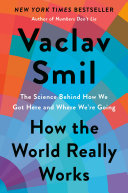
anti-spam filter ate up my post, so my explanation of recommendation got deleted 😂
But here are assorted screenshots from the appendix + introduction explaining the need for such a book


 runic void
vale lake
anti-spam filter ate up my post, so my explanation of recommendation got deleted...
runic void
vale lake
anti-spam filter ate up my post, so my explanation of recommendation got deleted...
I love Vaclav Smil's work.... I've read "Energy", "Energy and Civilisation, "Numbers don't lie" and "Oil" .... always learn so much every time I read anything from him.
pine imp
A humble suggestion:
Mikhail Zygar, "The Empire Must Die"
https://www.amazon.co.uk/Empire-Must-Die-Revolutionary-1900-1917/dp/1610398319
and uhhh I'm quite sure Mr. Zygar doesn't object pdf-sharing of his book
runic void
The History of Burma - Thant Myint-U
https://www.goodreads.com/book/show/44075878-the-hidden-history-of-burma

Goodreads
Precariously positioned between China and India, Burma’…
Western Sahara: War, Nationalism, and Conflict Irresolution - Zunes, Mundy & McGovern
Generally considered to be THE definitive tome on this conflict.

Goodreads
The Western Sahara conflict has proven to be one of the…
pine imp
runic void
The History of Burma - Thant Myint-U
https://www.goodreads.com/book/show/440758...
👍
viscid yacht

Jamie's Italy: Jamie Oliver (E)
pine imp
Timothy Snyder, “Black Earth: The Holocaust as History and Warning”
The book centers on what author describes as a the Bloodlands, the epicenter of WWII. Profound and essential read for understanding the invasion of Ukraine. Also, an example of fact-based storytelling helpful for anyone investigating atrocities.
The paperback is quite affordable.
Book extract: https://www.theguardian.com/world/2015/sep/16/hitlers-world-may-not-be-so-far-away

the Guardian
The long read: Misunderstanding the Holocaust has made us too certain we are ethically superior to the Europeans of the 1940s. Faced with a new catastrophe – such as devastating climate change – could we become mass killers again?
 tribal frigate
Hitler's American Model: The United States and the Making of Nazi Race Law - James Q. Whitman https://press.princeton.edu/books/hardcover/9780691172422/hitlers-american-model

How American race law provided a blueprint for Nazi Germany
Plus there's a series of books coming out from Goldsmith's Centre for Research Architecture that might be of interest to any Forensic Architecture obsessives out these:

Photography courtesy of Gert Mothes In 2022 the Centre for Research Architecture launched its four part book series exploring Pedagogy, Politics,...
knotty moat
Check this out! https://a.co/d/0zY1n7P

Bring the War Home: The White Power Movement and Paramilitary America
vale lake

Bowling Alone: The Collapse and Revival of American Community is a 2000 nonfiction book by Robert D. Putnam. It was developed from his 1995 essay entitled "Bowling Alone: America's Declining Social Capital". Putnam surveys the decline of social capital in the United States since 1950. He has described the reduction in all the forms of in-person...
knotty moat
vale lake
https://en.wikipedia.org/wiki/Bowling_Alone
thanks for putting this here, I've been trying to organize all of the recommendations that came out of today's chat!
vale lake
Lots of great ones, I'm going through them myself
feel like a ton of them can have their own group focused discussion, like the one Tehuringa posted about ethics problems in OSINT and what parameters the student would take into account when going through them
vale lake
also related to Bowling Alone

Business Insider
The types of neighborhoods — walkable, dense, and green — that make it easier to connect with neighbors are often much more expensive to live in.
pine imp
The Moscow Rules by Joanna and Tony mendez. Lots of great stories and perspectives
 whole lotus
Spin Dictators by Sergei Guriev and Daniel Treisman
whole lotus
And before I forget, The Moralist International: Russia in the Global Culture Wars by Kristina Stoeckl and Dmitri Uzlaner
pine imp
Sexy but Psycho. Uncovering the Psychiatric Labelling of Women and Girls, by Jessica Taylor
Authored by forensic psychologist Dr. Jessica Taylor, who also trains media professionals and the police on sexual and gender-based violence. Although prioritizing women and girls, she also discusses the classist and racist history of psychiatry. Example: The alleged mental illness of drapetomania, as conceived by 19th century American physician Samuel A. Cartwright, that made Afro-Americans wanting to escape slavery. It provides important knowledge that might enable OSINT analysts to communicate such crimes in ways that don't harm the people subjected to them. It would make for an interesting discussion with the author:

Sexy But Psycho
pine imp
pine imp
Sexy but Psycho. Uncovering the Psychiatric Labelling of Women and Girls, by Jes...
Times radio did an factual and useful interview with the author. There's a lot of interesting stuff going on in the UK right now in regard to trauma-informed practice and communication. It would be interesting to tap into that knowledge as psychiatric labelling, a form of othering, might very well interact with what Hannah writes about, the need to dissociate while investigating atrocious crimes, in harmful ways. We might be so used to pathologising human beings subjected to sexualized violence, that we're not even aware of it:

"I don't particularly think that we've made any progress in 100 years"
Dr Jessica Taylor talks to Hugo Rifkind about systemic problems in mental health care and the pathologizing of women and girls.
Times Radio brings you the latest breaking news, expert analysis and well-informed discussion on the biggest stories of the day, delivered with...
copper wigeon
That's a very interesting suggestion. I'm sure it will cover the blanket term of "female hysteria" as a pathologisation of pretty much any behaviour a woman would do and the way it was treated (for anyone unaware it was, ehm, stimulating certain parts) and how it persisted until fairly recently and it's still a huge stereotype and still part of many people's views.
Also I hope it has at least a chapter dedicated to psychoanalysis because that was very messed up and the thought it still quite persists today is unsettling.
And besides women, who still are pathologised in many ways, I think it can be used as an example of how also other groups, minorities and anything not socially normative often gets pathologised
viscid yacht
I link that here for late summer
https://www.netgalley.com/book/285885/review/164471
 pine imp
copper wigeon
That's a very interesting suggestion. I'm sure it will cover the blanket term of...
pine imp
copper wigeon
That's a very interesting suggestion. I'm sure it will cover the blanket term of...
Absolutely, although the. book centers on violence against women and girls, including the misogynist history of psychiatry, it also discusses its racism and classism. I think it could be a useful read as it helps us to develop a sensitive language. Voila, book extract from Reader's: https://www.readersdigest.co.uk/inspire/life/the-shocking-history-of-female-asylums

Did you know that for centuries “being female” was classed as a mental disorder? Dr Jessica Taylor shares the surprising history
pine imp
Wanted to throw a potential future suggestion out there:
Escape from Pretoria - Tim Jenkins
Covers the real life story of an ANC underground operative who was arrested in apartheid era South Africa and sentenced to 12 years in a maximum security prison. While there he and a number of other underground members begin a very methodical escape plan. It's a fairly practical and details oriented read on what a jail break looks like in practice along side a really interesting look at their larger plans as a revolutionary group which eventually culminated in the election of Nelson Mandella in 1994. While not specifically covered in the book Tim also wrote a really great lessons learned document(https://web.archive.org/web/20180722014538/http://www.anc.org.za/content/talking-vula/) about how they went about establishing a transnational covert communications network in a pre-internet era after escaping that I think a lot of people here might find interesting.
The book was eventually turned into a film with Daniel Radclife but I haven't seen it and can't really speak to it. You can hear Tim tell the story himself here from a talk he gave at LockCon 2017 which to be fair is targeted at a very specific kind of audience unlike the book https://www.youtube.com/watch?v=6YWhfQLWNqQ
One other upside worth considering is that the book is freely available online (legitimately) here https://www.sahistory.org.za/sites/default/files/archive-files/escape_from_pretoria.pdf

Tim Jenkin talks at the 2017 annual international LockCon Conference about the lock aspect of his escape from a South African prison where he was held as a political prisoner from 1978-1979.
 worldly stream
#5 - James Olsen, To Catch a Spy
viscid yacht
viscid yacht
I link that here for late summer
https://www.netgalley.com/book/285885/review/16...
I bring this back to remind you of it. The book gets negative reporting by random Ukrainians since he wrote about UK Neonazis.
copper wigeon
Maria Ressa - How to Stand Up to a Dictator
pine imp
pine imp
Wanted to throw a potential future suggestion out there:
**Escape from Pretoria...
Have to admit, this is interesting.
pine imp
pine imp
Wanted to throw a potential future suggestion out there:
**Escape from Pretoria...
I'm four minutes into this video and I'm hooked!

 brisk nova
Has anyone suggested Tracers in the Dark or Gray Day?
viscid yacht

150 years before ChatGPT, a Victorian visionary wrote brilliantly about our civilizational future with artificial intelligence https://t.co/AVMG0qe0ud
 Twitter
·
copper wigeon
Twitter
·
copper wigeon
Christophe Jaffrelot - Modi's India: Hindu Nationalism and the Rise of Ethnic Democracy
pine imp
copper wigeon
Christophe Jaffrelot - Modi's India: Hindu Nationalism and the Rise of Ethnic De...
Like a fine bottle of wine, this sounds like it would pair nicely with next month's read on Burma.
tribal frigate
These could be of interest to future book club discussions:
Michael Blastland – The Tiger that Isn’t
Daniel Kahneman – Thinking Fast, Thinking Slow
Daniel Levitin – A Field Guide to Lies and Statistics
David Spiegelhalter – The Art of Statistics
They were recommended as part of a course I did a while back.
copper wigeon
There's going to be a lot of vouching for Kahneman's book now in the event 😉
tribal frigate
copper wigeon
There's going to be a lot of vouching for Kahneman's book now in the event 😉
Ah-ha! Yes I'll add an upvote for that.
 hazy belfry
The RSS: And the Making of the Deep Nation Book by Dinesh Narayan, in case folks are interested in Indian far right
pine imp
I have a few suggestions to blend in some more of the Middle East in this book club and if one of them gets voted in, I will also join a session to discuss them:
Syria:
-
Assad or We Burn the Country by Sam Dagher. (This one is huge, +500 pages, so included a second option which might be easier to consume)
-
We crossed a bridge and it Trembled: Voices from Syria by Wendy Pearlman
Palestine:
- Palestinian Walks by Raja Shehadeh
Iraq:
- The Corpse Washer by Sinan Antoon
pine imp
pine imp
I have a few suggestions to blend in some more of the Middle East in this book c...
Palestine:
Palestinian Walks by Raja Shehadeh💯
vale lake
If we're adding in books from the middle east, I highly suggest Letters to my Palestinian Neighbour by Yossi Klein Halevi

Letters to My Palestinian Neighbor is a 2018 non-fiction book on the Israeli–Palestinian conflict by Yossi Klein Halevi.
In the book, Halevi
open[s] a dialogue with an imagined Palestinian neighbor ... He frames his chapters as a series of letters to that neighbor that include both concise, balanced histories—of such topics as the history of m...
knotty moat
Dancing in the Glory of Monsters: The Collapse of the Congo and the Great War of Africa by Jason K. Stearns https://www.goodreads.com/book/show/10046142-dancing-in-the-glory-of-monsters

Goodreads
At the heart of Africa is Congo, a country the size of …
pine imp
The Third Reich of Dreams by Charlotte Beradt. Freely available on achive.org:
https://www.newyorker.com/books/second-read/how-dreams-change-under-authoritarianism

The New Yorker
When the Nazis came to power, the writer Charlotte Beradt began collecting people’s dreams. The resulting book uncovered the effects the regime had on the collective unconscious.
pine imp
What Doesn’t Kill Us: The New Psychology of Post-traumatic Growth by Stephen Joseph, a trauma expert from Nottingham University. There are several recent journal articles and blog posts available from the author, i.e. in relation to the Rwandan genocide
https://www.amazon.com/What-Doesnt-Kill-Psychology-Posttraumatic/dp/B00SLWCDYU

What Doesn't Kill Us: The New Psychology of Posttraumatic Growth
 haughty gust
Interesting books here! 📚 These might also be of interest to read together,
Fiction,
📕 Fahrenheit 451 by Ray Bradbury
📘 Home Fire by Kamila Shamsie
Non-fiction,
📙 How to Lose a Country: The 7 Steps from Democracy to Dictatorship by Ece Temelkuran
📗 The Capital Order: How Economists Invented Austerity and Paved the Way to Fascism by Clara E. Mattei
📘 Hope in the Dark: Untold Histories, Wild Possibilities by Rebecca Solnit
knotty moat
haughty gust
Interesting books here! 📚 These might also be of interest to read together,
Fi...
Thanks for the suggestions, I've not heard of some of these before!
pine imp
Ajit Maan: Narrative Warfare
https://www.amazon.com/Narrative-Warfare-Ajit-Maan-Ph-D/dp/198669495X

Contemporary wars are largely wars of influence and they will not necessarily be won by those with the most information or the most accurate data. They will be won by those effectively tell the meaning of the information and what difference it makes for the audience.
pine imp
David de Jong: Nazi Billionaires: The Dark History of Germany's Wealthiest Dynasties
https://www.amazon.com/Nazi-Billionaires-Germanys-Wealthiest-Dynasties/dp/1328497887

Nazi Billionaires: The Dark History of Germany's Wealthiest Dynasties
pine imp
pine imp
David de Jong: Nazi Billionaires: The Dark History of Germany's Wealthiest Dynas...
Good book.
runic void
Breakup - A Reporter’s Marriage amid a Central African War by Anjan Sundaram
TIME Magazine Best Book of the Month (April 2023) & The Washington Post’s ‘What to Read in 2023’


A TIME Magazine Best Book of the Month (April 2023) Featured in The Washington Post’s ‘What to Read in 2023’ An award-winning journalist courageously reveals the personal cost of war reporting, vividly recalling his dangerous assignment and confronting its devastating impact on his family.
pine imp
pine imp
Good book.
It cuts through the fog with meticulous research:
“What struck me was this is a country that’s so cognisant of its history in many ways but seemingly the most economically powerful actors do not engage with that,” says author David de Jong, a 35-year-old Dutchman.
[…]
I hope people will become more aware on a consumer level that the money they spend on these products might end up as dividends for these families and might go towards the maintaining of foundations, corporate headquarters and media properties in the name of Nazi war criminals.”
https://www.theguardian.com/books/2022/may/18/nazi-billionaires-book-hitler-bmw-porsche

the Guardian
In his new book Nazi Billionaires, David de Jong explores the damning history of companies who have refused to examine their murky history with Hitler
haughty gust
The Avoidable War: The Dangers of a Catastrophic Conflict Between the US and Xi Jinping's China by Kevin Rudd
https://www.goodreads.com/book/show/57432319-the-avoidable-war

Goodreads
A war between China and the US would be catastrophic, d…
pine imp
Amy E. Herman, Visual Intelligence: Sharpen Your Perception, Change Your Life
https://www.kirkusreviews.com/book-reviews/amy-e-herman/visual-intelligence-sharpen/

Kirkus Reviews
A comprehensive guide to seeing what others do not, distilled from art historian Herman’s acclaimed seminar The Art of Perception.
pine imp
I recently listened to a Q and A with scientist and author, Peter Turchin, discussing his recent book, "End Times: Elites, Counter-Elites, and the Path of Political Disintegration" (June 13, 2023).
It's a fascinating discussion on social/societal collapse, with a great deal of empirical reference and may interest our book club in the future.
Here is the Q and A for anyone who's interested:
https://www.youtube.com/watch?v=XGhBTKzrJEY
Here is Peter's website:

 full summit
pine imp
I recently listened to a Q and A with scientist and author, Peter Turchin, discu...
full summit
pine imp
I recently listened to a Q and A with scientist and author, Peter Turchin, discu...
I've looked at Turchin's work in cliometrics. It's glorified astrology.
He didn't predict BLM or the tumult of 2020. He made a vague prediction of "societal unrest" around 2020 or so and the media retroactively proclaimed him a prophet.
His work has no rigor and is basically eyeballing charts of dubious value, picking out even more dubious cycles, and seeing where these cycles "coincide".
It's vague and hand wavy to the point of basically being societal cold reading
And I don't buy his argument about overproduction of elites. It sounds vaguely right wing as well.

New Statesman
The social scientist has made a career from predicting global instability. But in the new book End Times, his analysis produces nothing but banalities.
sullen bear
Sounds like plenty of debate for a book club meeting! Haha
pine imp
Yes indeed. I personally never heard of the guy until the video came to my attention. I listened attentively and there were some definite take aways worth considering. Now that there's some skepticism on his legitimacy, I'm intrigued to look into him and what he's truly about.
pine imp
full summit
See also https://www.newstatesman.com/the-weekend-essay/2023/06/peter-turchins-e...
Thanks for the heads up. I'm definitely going to dig around and see what I learn about Turchin.
pine imp
sullen bear
Sounds like plenty of debate for a book club meeting! Haha
Or like the perfect moment to advertise my book recommendation hahaha
📣 📢 Visual Intelligence:
Sharpen your perception , change your life
👇
Bellingcat Geoguessr will never be the same:
“The ability to see, to pay attention to what is often readily available right in front of us,” write author Amy Herman, “is not only a means to avert disaster but also the precursor and prerequisite to great discovery.”
https://www.kirkusreviews.com/book-reviews/amy-e-herman/visual-intelligence-sharpen/
Kirkus Reviews
A comprehensive guide to seeing what others do not, distilled from art historian Herman’s acclaimed seminar The Art of Perception.
pine imp
pine imp
Or like the perfect moment to advertise my book recommendation hahaha
📣 📢 ***...
Shameless plug. I like it!
To add insult to injury, Visual Intelligence: Sharpen your perception , change your life is even used to train medical students to avoid bias. Add that to The Psychology of Intelligence and imagine how smart we all will be after reading this awesome book
LOLOL. What a sell!
Guess what, this awesome book is even used to train navy seals and the CIA! Who would have known? Imagine the book talk we’re going to have with the author. Amy will certainly love to discuss her ideas with an intelligence agency for the people: 👁️ 🚀
https://www.telegraph.co.uk/art/what-to-see/meet-art-expert-trains-doctors-navy-seals-cia/

The Telegraph
Twice a year, in February and July, fledgling units of special-operations forces undergoing training at the world’s largest naval base in Norfolk, Virginia, head downtown to the city’s Chrysler Museum of Art.
pine imp

 steel venture
Here’s a Dutch book suggestion.
Karremann, J. (2017). In het diepste geheim: spionage-operaties van Nederlandse onderzeeboten van 1968 tot 1991.
https://www.bol.com/nl/nl/f/in-het-diepste-geheim/9200000077571388/
Karremann, J. (2018). In Deepest Secrecy: Dutch Submarine Espionage Operations from 1968 to 1991.
https://www.bol.com/nl/nl/p/in-deepest-secrecy/9200000095744938/
Other international stockists (Amazon, etc) are available, including as an e-book.
https://www.amazon.co.uk/Deepest-Secrecy-Submarine-Espionage-Operations-ebook/dp/B0BRVGTM7C

In het diepste geheim (Paperback). Het enige boek over geheime spionage-operaties van Nederlandse onderzeeboten. Lees hoe Nederlandse boten Russische...

In deepest secrecy (Paperback). ‘You need to realise that we are operating as if it were war.’ During the Cold War, six Dutch submarines secretly...

In Deepest Secrecy: Dutch Submarine Espionage Operations from 1968 to 1991 eBook : Karremann, Jaime, Hesse, Frank, Hogg, Deborah: Amazon.co.uk: Books
He’s a very approachable and knowledgeable guy, runs Marineschepen.nl naval news website, so I’m sure he’d come on to speak about his book/stuff he knows about.
(For clarification, it’s available in a Dutch and English version, not suggesting a book we can only read in Dutch  )
)
 strange sun
pine imp
David de Jong: Nazi Billionaires: The Dark History of Germany's Wealthiest Dynas...
strange sun
pine imp
David de Jong: Nazi Billionaires: The Dark History of Germany's Wealthiest Dynas...
This looks interesting to me.
pine imp
strange sun
This looks interesting to me.
It is.
Also interesting how the descendants of them with companies such as Allianz and Dr. Oetker do still enjoy of the fortune made by their Nazi ancestors but have difficulties confronting the past.
viscid yacht
Launching tomorrow
Already seen
in London

 tall flame
This is my suggestion
 runic void
Heya folks.... regarding Chris Miller's new book "The War Came To Us".....please check out the following message over at #1094689638981062757 message
pine imp
Pherson & Pherson, Critical thinking for strategic intelligence (3rd Edition)
Pricey, but telling libraries that they need to buy “this classic no library can do without” works well in my experience.
https://www.amazon.com/Critical-Thinking-Strategic-Intelligence-Katherine-ebook/dp/B08H5NFP1C

Critical Thinking for Strategic Intelligence
pine imp
This book recommendation is inspired by the previous one and Heuer’s Psychology of Intelligence, i.e. questioning the mental frameworks that shape our analyses. For example, reframing human suffering as “mental health”-problem tends to be viewed as common wisdom in the Global North. Yet, a study led by the University of Liverpool, among others, found that “psychiatric diagnosis” is a “scientifically meaningless” idea and encourages us to “think beyond diagnoses”. That’s particularly important for researching e.g. SGBV or anti-child exploitation.
James Davis, teaching in the Departments of Life Sciences and Psychology at the University of Roehampton, provides a solid foundation for such critical thinking. His book
Sedated, How Modern Capitalism Created our Mental Health Crisis
is a compelling read as indicated by this book extract: ⬇️
He’s quite articulate on Twitter and would be certainly happy to discuss his ideas with us. That not only would be helpful for enhancing intelligence but also Bellingcat’s collaborations with the Global South: Researchers such as China Mills have criticized the mental health-movement for years, as a means of “Pathologising the Global South” and colonization.
(Edited because of vandermarish typing errors.)
https://iai.tv/articles/the-new-opium-of-the-people-auid-1817

IAI TV - Changing how the world thinks
As Marx thought of religion, the role of the mental health sector is now to sedate, to distract from distress and to prevent political action, all in the interests of our neo-liberal economy, writes James Davies.
pine imp
pine imp
This book recommendation is inspired by the previous one and Heuer’s *Psychology...
@copper wigeon: Davies has doctorate in social and medical anthropology and a book event with both of you will be most interesting. I will therefore make a true vandermarish sacrifice and limit myself to two book recommendations this month.
🙂
copper wigeon
You flatter me 
 tired remnant
+1 to @viscid yacht’s suggestion about Christopher Miller’s book The War Came to Us. I’m currently reading it, and it’s really good.
Another suggestion that I would like to make is Mick West’s book Escaping the Rabbit Hole: https://www.skyhorsepublishing.com/9781510776333/escaping-the-rabbit-hole/

Revised and updated for the first time in 2023—Now includes strategies for debunking conspiracies regarding the coronavirus pandemic, election fraud, QAnon...
It’s about an important topic given the amount of conspiracy theories that are going around. I think Mick would be glad to talk about his book too.
knotty moat
tired remnant
+1 to <@651761310656364545>’s suggestion about Christopher Miller’s book The War...
tired remnant
knotty moat
https://discord.com/channels/709752884257882135/1135316444435992646
Thanks! I noticed that it was already chosen for September shortly after I wrote that.
 craggy wedge
https://www.wnycstudios.org/podcasts/otm/segments/rewriting-russian-history-on-the-media interesting listen...

WNYC Studios
A journalist reckons with the connections between Russian history, propaganda, and empire.
https://www.simonandschuster.com/books/War-and-Punishment/Mikhail-Zygar/9781668013724 is the publisher (in the United States) - War and Punishment
Putin, Zelensky, and the Path to Russia's Invasion of Ukraine by Mikhail Zygar. I enjoyed The Empire Must Die (2017) of his as well. This new one looks like a good read.

From “one of Russia’s smartest and best-sourced young journalists” (The New York Times) comes the first work by a Russian author to reveal his coun...
pine imp
craggy wedge
https://www.wnycstudios.org/podcasts/otm/segments/rewriting-russian-history-on-t...
Thanks for sharing! Sounds like hell of a book: https://www.kirkusreviews.com/book-reviews/mikhail-zygar/war-and-punishment-putin/

Kirkus Reviews
An award-winning writer explains the cultural background to Putin’s ill-fated invasion of Ukraine.
pine imp
copper wigeon
You flatter me <:worryShy:785708252801400833>
Well, it’s difficult to have a factual discussion about mental health, or that psychiatric diagnoses lack scientific validity, or their social impact.
When we come across Sexual and Gender Based Violence and don’t question our assumptions, we might violate the Murad-code and worsen “the societal attitude and stigma which further harm survivors.”
copper wigeon
I mean, that's all valid but questioning assumptions should be applied in all fields, simply in order to attain better knowledge. Of course one consequence of not questioning assumptions is indeed harming and/or further stigmatising groups that have a history of stigma and discrimination, like trauma survivors are
pine imp
Let’s stick to the book as this is the book channel.
James Davies argues that “the role of the mental health sector is now to sedate, to distract from distress and to prevent political action” and that it now plays a similar role as formerly religion, as “Opium of the people”. Psychiatry has always been used to pathologize dissent, for example by labelling African American civil rights activists as mentally ill (“protest psychosis”). We need to have a discussion about this in OSINT.
craggy wedge
https://press.princeton.edu/books/hardcover/9780691211411/spin-dictators Spin Dictators: The Changing Face of Tyranny in the 21st Century
By authors Sergei Guriev and Daniel Treisman

How a new breed of dictators holds power by manipulating information and faking democracy
 lilac vector
- Putin's People (https://www.amazon.com/Putins-People-Took-Back-Russia/dp/0374238715): best book I've read about Russia in the 90s, the KGB's role in the USSR's privatization, and the rise of Putin.
- The Anatomy of Fascism (https://en.wikipedia.org/wiki/The_Anatomy_of_Fascism): IMO the definitive book on fascist history and politics
strange sun
lilac vector
- Putin's People (https://www.amazon.com/Putins-People-Took-Back-Russia/dp/03742...
+1 for The Anatomy of Fascism
lilac vector
I recommended this yesterday in the book club meeting, but I'll do it again here.
Reign of Terror by Spencer Ackerman, in-depth history of the war on terror and its consequences
https://www.penguinrandomhouse.com/books/622555/reign-of-terror-by-spencer-ackerman/

PenguinRandomhouse.com
A New York Times Critics’ Top Book of 2021 "An impressive combination of diligence and verve, deploying Ackerman’s deep stores of knowledge as a national security journalist to full...
tribal frigate
Not sure if this is covered elsewhere with more rigour https://dogsection.bigcartel.com/product/post-internet-far-right ?

Dog Section
POST-INTERNET FAR RIGHT 234 pages 12X17cm The far right has changed. Since the rise of the internet, it has scattered, diversified, and stuck...
 strong mantle
That's a cool site. I'll be buying a couple of books from them soon
pine imp
One of the best books exploring the discontent driving the “populist backlash” from Hungary to the US:
Michael Sandel, The Tyranny of Merit: What’s Become of the Common Good?
In-depth review:
“Populism has proven particularly challenging in this respect. Not only are its causes a source of lively debate (Hawkins et al. 2017), but the literature in this area affords little guidance for how we might respond to the phenomenon. How, then, should we understand the recent surge of populist movements within Western democracies? And what can be done in aid of repair?
Michael Sandel affords a novel and sobering analysis of these questions in his latest book, The Tyranny of Merit: What’s Become of the Common Good? Steering away from the parsimonious temptation to construe populism as mere economic protest or an expression of deep-seated prejudice, he instead suggests that the ‘populist complaint is about the tyranny of merit’ (p. 25).
It is a response to the elite’s self-aggrandizing belief that the successful are entitled to their success (as it represents their talent and effort), and that those sitting on the lower rungs of society are likewise deserving of their fate. It gives voice and direction to the resentment fostered by this meritocratic belief, serving as a vehicle for resisting the hubris of the meritocratic elite and, ultimately, meritocracy itself.”
https://link.springer.com/article/10.1007/s11158-022-09549-0
 whole lotus
The Great Firewall of China: How to Build and Control an Alternative Version of the Internet by James Griffiths
https://www.jamestgriffiths.com/book
James Griffiths
Once little more than a glorified porn filter, China’s ‘Great Firewall’ has evolved into the most sophisticated system of online censorship in the world. Through years of reporting, James Griffiths gained a unique insight into how this system works, and how it is spreading around the world.
lilac vector
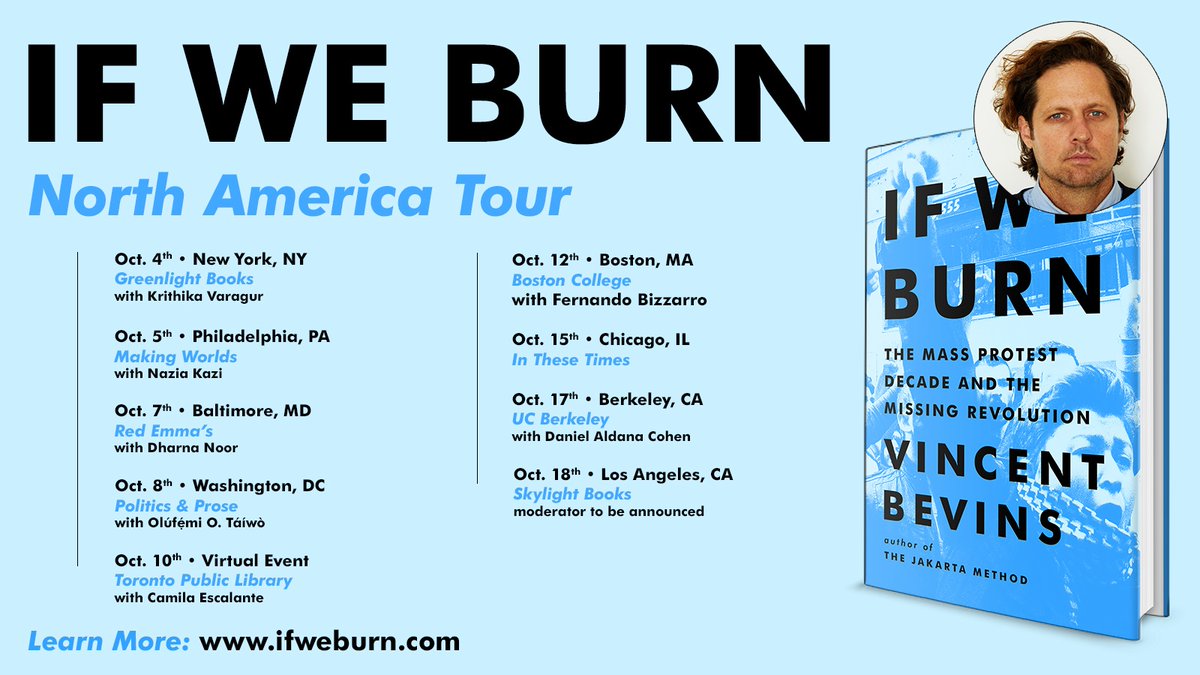
Vincent Bevins has a new book: https://twitter.com/Vinncent/status/1700230844281970908

The Jakarta Method came out in 2020, so I missed the chance to meet people and talk about the work. This time, I want to do it right, and might be over-compensating a little. We have put together a real book tour. I can't wait to come to North America 💘
Likes
313
 Twitter
·
strange sun
Twitter
·
strange sun

Representing Radicals helps lawyers understand ways to work with radical defendants, with an explicit focus on how to help them achieve ends that go beyond traditional legal goals.
viscid yacht
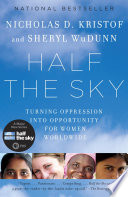
I was thinking to link a cookbook for December to do an interactive month but yall want to read heavy cost so it's time for a women's rights book, cause that's a forgotten world issue
Half the Sky - Nicholas D. Kristof, Sheryl WuDunn - Google Books https://g.co/kgs/B66whc
Google Books
pine imp
Hank Prunckun - Counterintelligence Theory and Practice https://www.goodreads.com/book/show/15872498-counterintelligence
 whole lotus
East Asia at the Center by Warren Cohen
https://www.amazon.com/East-Asia-Center-Warren-Cohen/dp/0231101090

East Asia at the Center
tribal frigate
strange sun

Nonviolence has failed on a global level. It has proven to be a great friend to governments, political parties, police departments, and ngos, and a traitor to our struggles for freedom, dignity, and well-being.
http://detritusbooks.com/failure
💖 88
strong mantle
Ooooo I'm keen on this
craggy wedge
Best book I've read on the logistics challenges of WW2. Certainly applicable to today's challenges in making shells for Ukraine. Engineers of Victory By Paul Kennedy https://www.penguinrandomhouse.com/books/91616/engineers-of-victory-by-paul-kennedy/

PenguinRandomhouse.com
NEW YORK TIMES BESTSELLER Paul Kennedy, award-winning author of The Rise and Fall of the Great Powers and one of today’s most renowned historians, now provides a new and unique look at how World...
 olive loom
https://en.wikipedia.org/wiki/India_After_Gandhi indian poll-workers cross the most remote areas so that every single person can vote - many people have a blind spot on the true history and identity of the biggest democracy in human history - india is a rising superpower, not only influencing its region but also globally, it is a highly valued partner on the international stage, in the future even more so
Ramachandra Guha is an Indian historian and environmentalist, recognized by the American Historical Association for the expertise
the book is written very eloquently and is well-researched, the author has a way with words that makes history make the most exciting fiction sound boring in comparison :)

India After Gandhi: The History of the World's Largest Democracy is a non-fiction book by Indian historian Ramachandra Guha. First published by HarperCollins in August 2007.The book covers the history of the India after it gained independence from the British in 1947. A revised and expanded edition was published in 2017.
knotty moat
olive loom
https://en.wikipedia.org/wiki/India_After_Gandhi indian poll-workers cross the m...
thanks, I'll put it on the poll!
olive loom
knotty moat
thanks, I'll put it on the poll!
dope 
germen ideas always beat the competition in the polls
vague nimbus
knotty moat
thanks, I'll put it on the poll!
Let's put it on two polls...
 knotty moat
olive loom
dope <:dog_smile:780501421514031104>
knotty moat
olive loom
dope <:dog_smile:780501421514031104>
912 pages!!
if it wins, you lead book club
knotty moat
pine imp
Hank Prunckun - Counterintelligence Theory and Practice https://www.goodreads.co...
this book looked cool so I almost added it to the January poll, but I'm only seeing it with academic pricing (like $50 a copy) - if anyone can find a more affordable source, tell me about it, and I'll add it to the February poll!
vague nimbus
knotty moat
if it wins, you lead book club
We make it a two-hour meeting and do an hour each.
 knotty moat
it better be!
olive loom
knotty moat
if it wins, you lead book club
Ah, in my blood,,,
 shadow owl
@knotty moat my Amsterdam hackathon books...
#1

#2

#3

and last but not least, #4 by the brave Julia Ebner
 knotty moat
we were just talking about the social lives of extremists!
shadow owl
knotty moat
we were just talking about the social lives of extremists!
about the book or about the social lives?
did I miss that book?
knotty moat
shadow owl
about the book or about the social lives?
we are currently reading Women of the Far Right, and we were talking about the social lives of those women
knotty moat
this is our forum where you can see past, current, and vote on upcoming books #1082266004366827571
shadow owl
knotty moat
this is our forum where you can see past, current, and vote on upcoming books <#...
I know I already voted for next week
🙂
The hardcover version of The Women of the Far Right is 102,80EUR
strange sun
shadow owl
and last but not least, #4 by the brave Julia Ebner
The MacNish and Ebner books are especially interesting to me!
shadow owl
strange sun
The MacNish and Ebner books are especially interesting to me!
yeah +1 on both
knotty moat
I use the library as much as I can
oh wait is this some kind of download where the author doesn't get paid?
shadow owl
Yes, totally stolen
knotty moat
because any sort of ripping is against Discord TOS, we can't have it posted here
shadow owl
yeah I took the epub down and replaced it with the search link, just for educational purposes
knotty moat
you can also go to a physical library and borrow their copy/electronic copy, so authors get paid
shadow owl
so it's not ripping, and I'm not responsible for what you do on libgen
knotty moat
I'm going to take the link down for now until I discuss with other mods
shadow owl
knotty moat
I'm going to take the link down for now until I discuss with other mods
wait, wait///
PLR payments.
In some countries, there's a system known as Public Lending Right (PLR). PLR gives authors a small payment each time their books are borrowed from public libraries. This system recognizes that authors should receive some income from the free public access to their works in libraries. The United Kingdom, Canada, Australia, and several European countries have PLR systems in place.
In the United States, however, there is no PLR system. Authors typically earn income from libraries through the initial purchase of their books by the library. Libraries buy books just like any other customer, so authors earn royalties from these sales. But in the U.S., they don't receive additional payments for subsequent borrowings.
@knotty moat I took the opportunity and registered at my local library online for 10Eur/year... unfortunately, it's not available digitally and at the moment I can't order the book either

I mean I already have the book and I'm sure Eviane Leidig wouldn't mind. According to wikipedia, the PLR system in Germany pays 2-3ct per loan. The money goes to the Verwertungsgesellschaft Wort (VG WORT, Collection Management Organisation VG WORT), a Munich-based German copyright collective that administers copyright-related royalties. However, if I read their website correctly, as a foreign author you must register as a Wahrnehmungberechtigte*r and fill out a Inkassoauftrag in the framework of the Gegenseitigkeitsverträgen mit ausländischen Verwertungsgesellschaften zur treuhänderischen Verwaltung
I got the email address of her publicist, I'm just gonna ask for permission.
knotty moat
if you want to email her publicist, that's all you, but please do not involve bellingcat/the discord
shadow owl
knotty moat
if you want to email her publicist, that's all you, but please do not involve be...
never
knotty moat
as a writer myself, my position is that writers should be paid for their work, and I've also invited Eviane Leidig to give a talk here
shadow owl
I will refer to you however, as my '(online) book club' if that's OK
knotty moat
Please don't, thanks
shadow owl
not even in completely anonymized? OK well I mean considering the circumstances it's maybe a bit touchy. Either way I wouldn't want to act against your expressed wish, so...
knotty moat
Thanks!
shadow owl
I'll just delete the draft and leave it be
if Eviane Leidig gives a talk I can still decide whether I want to ask for her forgiveness that I pirated her book.
To be fair, I did pay 10EUR to try to get it legally from the library!
 azure dune
Urban exploration allowed? ISBN of 0973778709 “Access All Areas” by author Ninjalicous might be worth a read to understand the phycology and mental state of people who explore abandoned locations
viscid yacht
How to Fight a War | Hurst Publishers https://www.hurstpublishers.com/book/how-to-fight-a-war/

An indispensable guide to understanding modern warfare, especially the decisions made by politicians and generals—both good and bad.
 brisk wren
To catch a dictator: The Pursuit and trial of Hissène Habré. Fascinating book written by human rights lawyer Reed Brody. To learn a bit more on how to investigate, track and bring to justice an ex dictator. https://www.goodreads.com/book/show/60746546-to-catch-a-dictator

Goodreads
What does it take to make a dictator answer for his cri…
tribal frigate

Goodreads
Since 1980, the number of people in U.S. prisons has in…
 gilded fiber

Goodreads
An unmatched guide to the religious dimensions of Ameri…
viscid yacht
Men Who Hate Women by Laura Bates | Goodreads https://www.goodreads.com/book/show/48635408-men-who-hate-women
 knotty moat
viscid yacht
Men Who Hate Women by Laura Bates | Goodreads https://www.goodreads.com/book/sho...
knotty moat
viscid yacht
Men Who Hate Women by Laura Bates | Goodreads https://www.goodreads.com/book/sho...
I actually have this book! I like it
 modest flame
I don’t think this has been suggested yet: https://www.goodreads.com/en/book/show/58999198

Goodreads
Bad Mexicans tells the dramatic story of the magonistas…
It’s very good and more about Mexico than the US if we’re looking for something less centered around the US. History, but it lays the groundwork for why immigration is such an issue for the US and Mexico
 undone hawk
Was How Infrastructure Works by Deb Chachra suggested before? https://www.penguinrandomhouse.com/books/612711/how-infrastructure-works-by-deb-chachra/

PenguinRandomhouse.com
NAMED A BEST BOOK OF 2023 BY PUBLISHERS WEEKLY "Revelatory, superbly written, and pulsing with wisdom and humanity, How Infrastructure Works is a masterpiece.” —Ed Yong, author of...
vague nimbus
undone hawk
Was How Infrastructure Works by Deb Chachra suggested before? https://www.pengu...
This sounds interesting.
undone hawk
vague nimbus
This sounds interesting.
Not read it yet but heard great things
 frosty lion
Spy Alone
https://youtu.be/jQTpxmbrdeM?feature=shared
Personally, I would recommend Golden Age Shtetle by Yohanan Petrovsky Shtern - there is a wave of antiJewish racism pummelling otherwise rather pleasant European climbs. Maybe this will give people insight into what it means to say pre-war Polish & Jewish Poland.

David Clark interviews former MI6 officer and debut author Charles Beaumont, whose novel A Spy Alone has just been published in the UK. (Available on Kindle elsewhere.) A QUICK HEADS UP. A Spybrary first, due to Charles Beaumont's work for the Intelligence Services, our technical division has digitally altered his voice to protect his identity....
Red Notice / Browder
undone hawk
Again, not read it yet but apparently there's a bunch of stuff on global extreme-right financing in here (might be a bit too repetitive if people have dug into people like Bannon and Traditionalism though ) https://www.plutobooks.com/9780745341897/right-across-the-world/

'John Feffer is our 21st-century Jack London' - Mike Davis
In a post-Trump world, the right is still very much in power. Significantly more than half the ...
knotty moat

Ibram X. Kendi
From the National Book Award-winning author of Stamped from the Beginning comes a refreshing approach that will radically reorient America on the urgent issues of race, justice, and equality.

Goodreads
Referring to the defensive moves that white people make…
lilac vector
This one looks decent
https://www.goodreads.com/book/show/33606119-why-i-m-no-longer-talking-to-white-people-about-race

Goodreads
In 2014, award-winning journalist Reni Eddo-Lodge wrote…
knotty moat
lilac vector
This one looks decent
https://www.goodreads.com/book/show/33606119-why-i-m-no-lo...
Oh cool
undone hawk
"By cleverly inserting Hindutva into popular culture, H-Pop normalizes Islamophobia, demonizes minorities and vilifies its critics each day, without ever making headlines." https://harpercollins.co.in/blog/announcements/harpercollins-presents-h-pop-the-secretive-world-of-hindutva-pop-stars-by-kunal-purohit/

HarperCollins Publishers India Books, Novels, Authors and Reviews
HarperCollins Publishers India has completed more than 25 years in India and HarperCollins as a brand has completed over 200 years globally. HarperCollins India is one of the world’s largest entertainment to education publisher.
undone hawk

An inspiring testament to China's dissident historians and activists, from the 1940s to the present
viscid yacht
shadow owl
I'm preparing a course about quantitative research for master students in business psychology. It's required to produce a quantitative study as a result. I've done similar courses in the past and I always loved teachinf it, but I want to avoid the usual 'please fill out this questionnaire for my study' kind of study. So, I decided heavily steer the students in the direction of open source research. Since people usually start an empirical study from the position of at least some knowledge of their field, I decided that the first thing my students will have to do is to read "The misinformation age" by Cailin O'Connor and James Owen Weatherall. It just arrived in the mail.

Taking part in a Bellingcat book club discussion would be a great way to make open source research even more tangible for them, because research never happens in a vacuum.
It's only going to be a small handful of students, probably even in the single digits. Is that gonna be something you'd want to support/take part in?
Also Cailin O'Connor's work came highly recommended by my hackathon teammate @supple hearth
craggy wedge
strong mantle
Just finished this. Really interesting stuff
strange sun
Looks interesting but quite spendy: https://manchesteruniversitypress.co.uk/9781526173874/
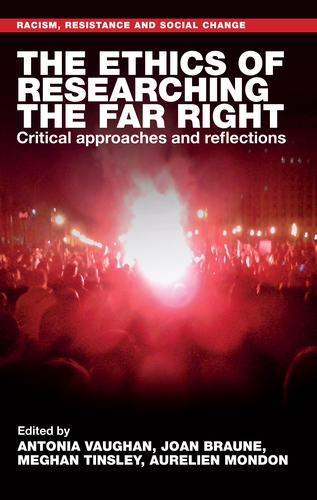
The ethics of researching the far right - Browse and buy the Hardcover edition of The ethics of researching the far right by Antonia Vaughan
craggy wedge
https://www.goodreads.com/en/book/show/13037156 and https://www.cambridge.org/core/books/originalism-as-faith/24BD81CE5C34480BEDB02E3C004137DE# and https://www.hachettebookgroup.com/titles/stephen-vladeck/the-shadow-docket/9781541602632/?lens=basic-books and https://www.penguinrandomhouse.com/books/305175/packing-the-court-by-james-macgregor-burns/ all available via local libraries and in the Libby app

Goodreads
This book explores some of the most glaring misundersta…
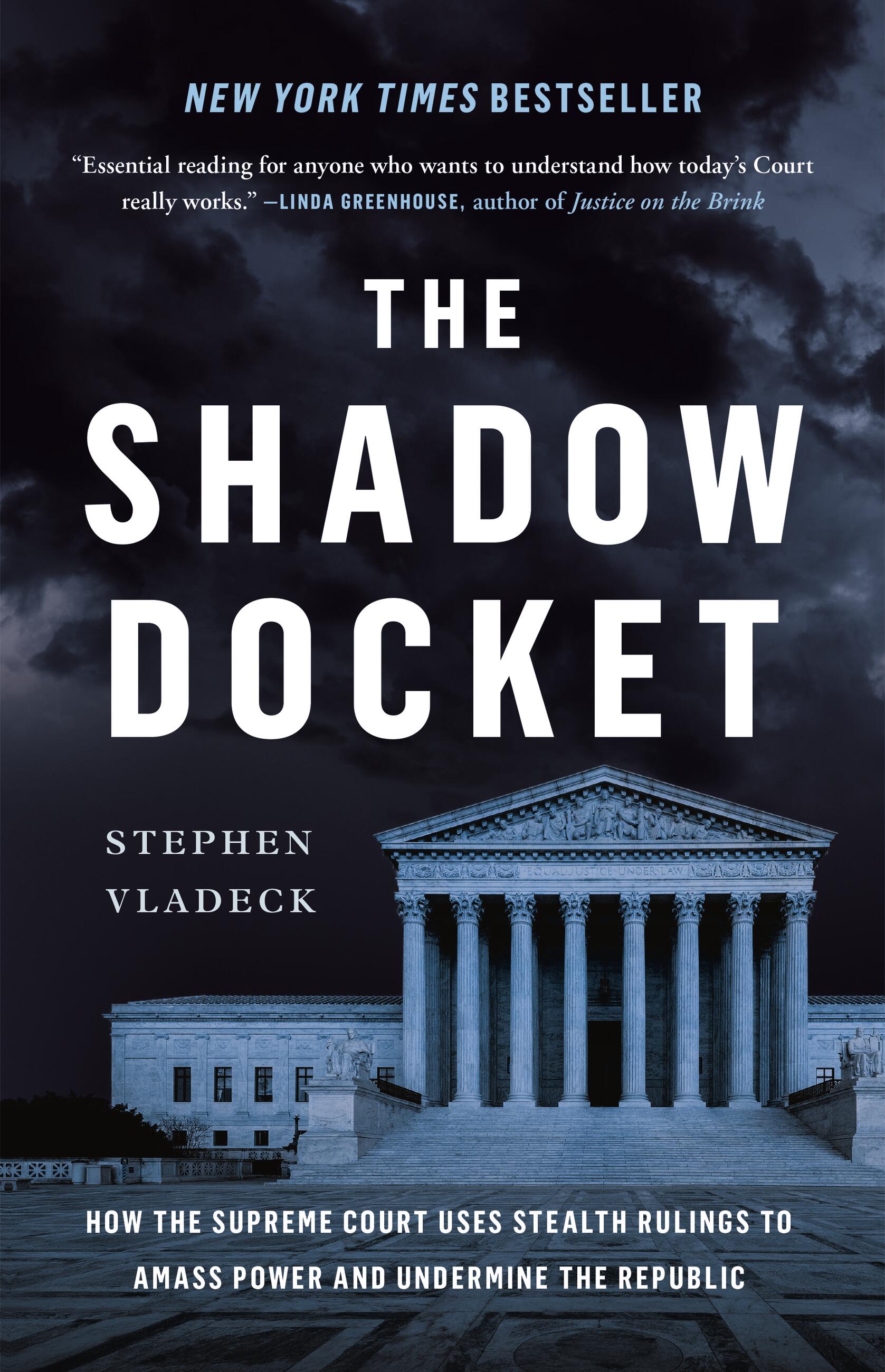
An instant New York Times bestseller: An acclaimed legal scholar’s “important” (New York Times) and “fascinating&rdquo...
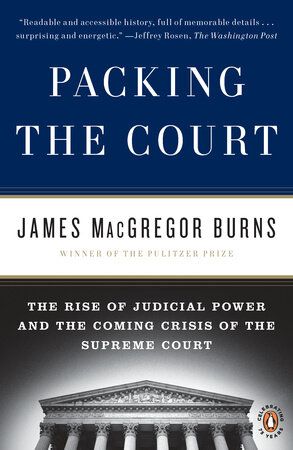
PenguinRandomhouse.com
From renowned political theorist James MacGregor Burns, an incisive critique of the overreaching power of an ideological Supreme Court For decades, Pulitzer Prize-winner James MacGregor Burns has...

Cambridge Core
Cambridge Core - American Government, Politics and Policy - Originalism as Faith
lilac vector
I've been meaning to read Black Sun: Aryan Cults, Esoteric Nazism, and the Politics of Identity by Nicholas Goodrick-Clarke and just ordered a physical copy. I'll be aggressively lobbying for this in the upcoming vote
https://nyupress.org/9780814731550/black-sun/

NYU Press
Uncovers the mindset and motives that drive far-right extremists More than half a century after the defeat of Nazism and fascism, the far right is again chal...
The original cover goes way harder tho
 strong mantle
Looks super interesting. I'd be keen to hear your thoughts on it
knotty moat
strange sun
Looks interesting but quite spendy: https://manchesteruniversitypress.co.uk/9781...
I just had a look at this and Goodreads says expected publication is next month, so we will revisit
undone hawk
lilac vector
I've been meaning to read *Black Sun: Aryan Cults, Esoteric Nazism, and the Poli...
Hm. might be my next read. Just getting to the end of the H-pop book 🙂
 real stream
https://www.goodreads.com/book/show/174156150-the-achilles-trap?from_search=true&from_srp=true&qid=Eci6Rtn1HN&rank=11
I heard really great things about this book 🙂

Goodreads
From bestselling and Pulitzer Prize-winning author Stev…
It reads like a novel and is accessible enough for someone who doesn't know a ton about the Iraq war
craggy wedge
https://press.uchicago.edu/ucp/books/book/chicago/R/bo15220099.html Restricted Data (2024) by Alex Wellerstein. The History of Nuclear Secrecy in the United States

University of Chicago Press
The first full history of US nuclear secrecy, from its origins in the late 1930s to our post–Cold War present. The American atomic bomb was born in secrecy. From the moment scientists first conceived of its possibility to the bombings of Hiroshima and Nagasaki and beyond, there were efforts to control the spread of nuclear information and the ne...
knotty moat
Subtle and I are both reading this, so might as well throw it up for discussion
https://www.hup.harvard.edu/books/9780674291072
 cloud walrus
Some of my book recommendations:
Catch and Kill: Lies, Spies, and a Conspiracy to Protect Predators
by Ronan Farrow
https://www.goodreads.com/book/show/51022071-catch-and-kill
Bad Blood: Secrets and Lies in a Silicon Valley Startup by John Carreyrou
https://www.goodreads.com/book/show/37976541-bad-blood
The Confidence Game: Why We Fall for It ... Every Time by Maria Konnikova
https://www.goodreads.com/book/show/25387895-the-confidence-game
The Aquariums of Pyongyang: Ten Years in the North Korean Gulag by Kang Chol-Hwan
https://www.goodreads.com/book/show/69951.The_Aquariums_of_Pyongyang

Goodreads
In 2017, a routine network television investigation led…

Goodreads
The full inside story of the breathtaking rise and shoc…

Goodreads
From the New York Times bestselling author of Mastermin…

Goodreads
"Destined to become a classic" (Iris Chang, author of T…
tribal frigate
A little academic but: https://www.taylorfrancis.com/books/edit/10.4324/9780429452734/routledge-handbook-conspiracy-theories-peter-knight-michael-butter?refId=837839ca-055a-4001-9b22-be99230ca36f&context=ubx

Taylor & Francis
Taking a global and interdisciplinary approach, the Routledge Handbook of Conspiracy Theories provides a comprehensive overview of conspiracy theories as an
copper wigeon
I have a copy of that one, definitely not for a Book club read but a very good resource - just skip the psychoanalysis chapter tho 😉
tribal frigate
Thanks @copper wigeon! Thought it might be a bit too much for book club. Looks interesting though.
copper wigeon
If someone wants to peek through it, I, ehm, can help you with that 😉
tribal frigate
Oh! so long as no one is watching I could be keen 🙊
 harsh crest
"Tor: From the Dark Web to the Future of Privacy" by Ben Collier https://mitpress.mit.edu/9780262548182/tor/ https://twitter.com/JohnnyHistone/status/1780322920817951146

Book out now (lots of first day discounts) https://t.co/0GE8vL5VNv @torproject + the future of privacy online. Spies + journalists, underwater robots + satellites, and the role of a lot of people in Tor's history, from @xychelsea + @isislovecruft to @Snowden + (oddly) @vindiesel
 Twitter
·
knotty moat
Twitter
·
knotty moat
ughghgh I'm brokenhearted when I go over these suggestions and some are $40+. they all look so cool!
craggy wedge
If any of you are in the correct age category BooksUnbanned will set up any teen, young adult or student in the United States with a library card and access to multiple Library Systems(Boston, LA, BKLN, SD, SeaTac) Digital collections. You don’t have to be a resident of that systems geographic area. Then download libby to access the ebooks and audiobooks. https://www.bklynlibrary.org/books-unbanned.
*readingrainbow.gif 📖
cloud walrus
second hand market, and the usual sources which shall not be named
knotty moat
I use the library but I have been told that the EU readers don't have as robust of a system. Since it needs to be available to the whole bellingcat community I need to factor that in
Since I'm a working writer who collects a paycheck for writing, I have a moral objection to not-named sources
cloud walrus
if I want a book I generally just buy it (as e-book, without DRM) provided the price is OK. But not everyone is wealthy enough. The question then becomes do you want someone to read the book yes or no? Cause either way, they can't afford it
craggy wedge
https://www.hachettebookgroup.com/titles/joseph-cox/dark-wire/9781541702691/#preorder Joseph Cox new book about ANOM.
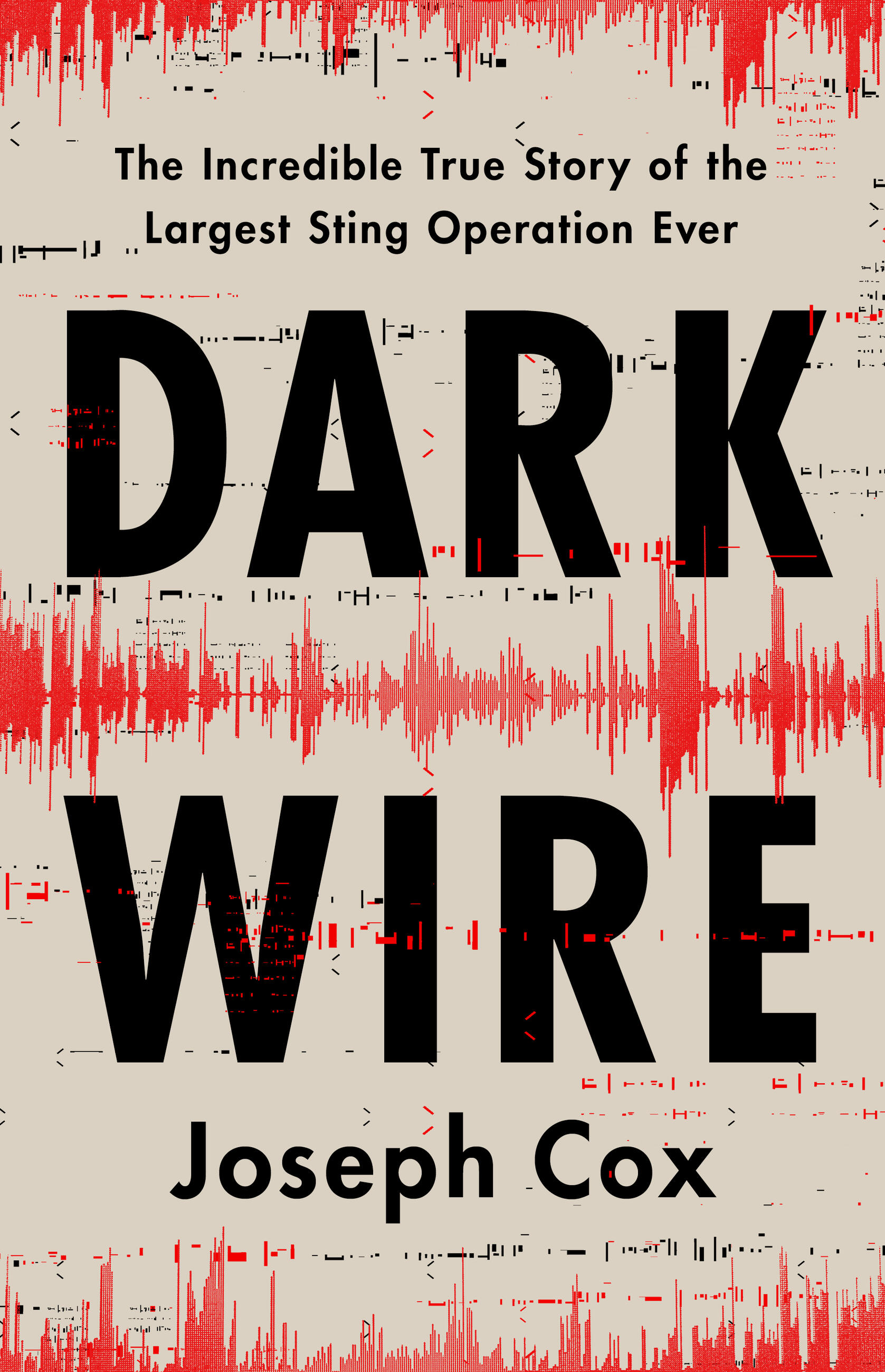
The inside story of the largest law-enforcement sting operation ever, in which the FBI made its own tech start-up to wiretap the world, shows how cunning bot...
 rugged sable

Internet Archive
Includes indexes
vague nimbus
rugged sable
https://archive.org/details/doublespeakfromr00will/mode/2up
Who does that money go to?
rugged sable
vague nimbus
Who does that money go to?
What money?
If you make an account on archive.org then you can borrow the book for an hour at a time (for free)!
 lean vessel
I liked reading this one recently. Not too heavy, not a book that will last but still a good read 🙂 https://www.goodreads.com/en/book/show/60833953

 signal zealot
A suggestion after listening to a recent 'Behind the Bastards' podcast episode about forensic science: https://mitpressbookstore.mit.edu/book/9781636141350
IndieCommerce
Now in an expanded paperback edition, Innocence Project attorney M. Chris Fabricant presents an insider’s journey into the heart of a broken, racist system of justice and the role junk science plays in maintaining the status quo. "Fierce and absorbing . . . Fabricant chronicles the battles he and his colleagues have fought to unravel a century o...
cloud walrus
lean vessel
I liked reading this one recently. Not too heavy, not a book that will last but ...
what is interesting about this book? would be interested in a podcast around the subject
https://en.wikipedia.org/wiki/The_PayPal_Wars 'The PayPal Wars is an insider's perspective on the people and events that helped create the company, and its acquisition by eBay in 2002. The book recounts PayPal's clashes with lawyers, regulators, and the Mafia.[1] Many of PayPal's founding employees went on to start other companies like LinkedIn, Tesla Motors, YouTube, and Yelp, Inc.;[2] they would become known as the PayPal Mafia.' contains some anecdotes on Musk
The PayPal Wars: Battles with eBay, the Media, the Mafia, and the Rest of Planet Earth (2004) is a book by former PayPal marketing executive Eric M. Jackson.
 bold ether
Would love to read these two:
'We discover the shocking impacts of noise pollution on both animals and plants. We learn how artificial intelligence can decode nonhuman sounds, and meet the researchers building dictionaries in East African Elephant and Sperm Whalish. At the frontiers of innovation, we explore digitally mediated dialogues with bats and honeybees. Technology often distracts us from nature, but what if it could reconnect us instead?'
https://www.goodreads.com/book/show/60410945-the-sounds-of-life
🌺
https://www.goodreads.com/book/show/9998216-the-psychology-of-intelligence-analysis
'This volume pulls together and republishes, with some editing, updating, and additions, articles written during 1978-86 for internal use within the CIA Directorate of Intelligence. The information is relatively timeless and still relevant to the never-ending quest for better analysis. The articles are based on reviewing cognitive psychology literature concerning how people process information to make judgments on incomplete and ambiguous information. '

Goodreads
An amazing journey into the hidden realm of nature’s so…

Goodreads
This volume pulls together and republishes, with some e…
copper wigeon
bold ether
Would love to read these two:
'We discover the shocking impacts of noise pollut...
We did Psychology of Intelligence Analysis last year (: https://discord.com/channels/709752884257882135/1102489873916633098
cloud walrus
https://www.goodreads.com/book/show/41181600-the-mastermind not even sure I read this or only https://magazine.atavist.com/he-always-had-a-dark-side/ that series either way it is by the same author

Goodreads
The incredible true story of the decade-long quest to b…

How did a Usenet troll and encryption genius become a criminal mastermind?
undone hawk
Did anyone suggest "Post-Digital Cultures of the Far Right
Online Actions and Offline Consequences in Europe and the US" before? https://doi.org/10.14361/9783839446706
Choose from multiple DOI resolution options
lilac vector
We've done so much on the Western far-right, let's mix things up a bit
https://www.penguin.co.in/book/the-rss/

Since its inception in 1925, the RSS has perplexed observers with its organizational skills, military discipline and single-minded quest for influence in all walks of Indian life. Often seen as insidious and banned thrice, the pace of its growth and ideological dominance of the political landscape in the second decade of the millennium have been...
knotty moat
i wanna read this
https://www.juancole.com/2024/06/pegasus-threat-democracy.html

Informed Comment
Munich, Germany (Special to Informed Comment; Feature) –– Pegasus, the main cyber-surveillance weapon developed by the Israeli company NSO Group, had been at the center of formidable reporting before July 2021. Still, the revelations presented by the Pegasus Project partners in a cascade of articles that began on July 18, 2021, represented a wat...
knotty moat
signal zealot
https://fixupx.com/shashj/status/1802047812927893692
https://fixupx.com/shashj/status/1802044865078820932

Book is good on three things. One is importance of influencing behaviour, not (as usually thought) attitudes & beliefs. Second is importance of understanding population w/ fieldwork, not just online. Third is debunking of the nonsense written on mil role in Cambridge Analytica.

Just finished “Information Operations”, a new book by @TathamSteve. Includes this anecdote on a British effort to stop children throwing stones at a base in Afghanistan. “LRGR was the abbreviation for the Long-Range Gonad Reducer.”

@CheeseWhiz @shashj You may also be interested in my earlier book on the same subject.
https://www.amazon.co.uk/Behavioural-Conflict-Understanding-Motives-Decisive/dp/1780394683
 thin kestrel

Bloomsbury
undone hawk
I did a search and apparently no one put The Rise of Ecofascism here yet ?! https://www.wiley.com/en-us/The+Rise+of+Ecofascism%3A+Climate+Change+and+the+Far+Right-p-9781509545377
(even though there was an episode of bellingcat monitoring on it)
strong mantle
Looks interesting. It will go on the must read list for me
lilac vector
Definitely going to read this, from one of my favorite writers on the contemporary American right
https://us.macmillan.com/books/9780374605445/whentheclockbroke

A National Indie Bestseller"Terrific . . . Vibrant . . . When the Clock Broke is one of those rarest of books: unflaggingly entertaining while never losing s...
copper wigeon
New Serhii Plokhy book on the way: https://fixvx.com/SPlokhy/status/1806322597774176692

Heads Up: My book on the Russian occupation of the Chernobyl/Chornobyl site will be out on September 3 in UK and US. This is the British cover.
💖 43 🔁 12
 tepid bronze
Going back to 1990's - Intelligence Agencies have always been very interesting, even though I dont understand terms very well. Its captivating to hear about how people are trained and different people think about things in general + how they are taught to perceive things. https://www.goodreads.com/book/show/101332.By_Way_of_Deception

Goodreads
The # 1 New York Times best seller the Israeli foreign …
knotty moat
thanks for all of the good book suggestions! if a book just came out I like to wait a few months to see if the price drops/it's more widely available at the library without waiting. can't have book club bankrupting people.
With that said I also wanted to give a heads up that I don't necessarily create the monthly polls with books in the order listed here - I like to have one selection per subject 🙂
Check out the August poll and vote! https://discord.com/channels/709752884257882135/1256070653627469854
lilac vector
I don't remember him going into detail about it
copper wigeon
Yep, I just checked myself and indeed mentions a bit on Hinduvta, Modi, the BJP and the RSS
signal zealot
https://bsky.app/profile/jbouie.bsky.social/post/3kw5rcutnm72t
https://www.amazon.com/Bomb-Power-Presidency-National-Security/dp/1594202400
Bluesky Social
just finished gary wills’ “Bomb Power” and the chapters on the dubya administration are a good reminder of a) the horror show of those years and b) the remarkable fact that in an administration of degenerates, john yoo stands apart as the absolute worst

Bomb Power: The Modern Presidency and the National Security State
lilac vector
signal zealot
https://bsky.app/profile/jbouie.bsky.social/post/3kw5rcutnm72t
https://www.ama...
Yes! I really liked this one. The Know Your Enemy podcast has an episode on it
https://www.dissentmagazine.org/blog/know-your-enemy-bomb-power-with-erik-baker/

Matt and Sam welcome historian Erik Baker onto the podcast to discuss Garry Wills's blistering critique of the national security state and unaccountable presidential power in his 2010 book, Bomb Power.
knotty moat
Thanks for the suggestions 🙂
I have considered myself more of a facilitator versus someone directing what we do, so the books we read are strictly pulled from this channel - every once in a while I suggest one but I don't like to do that too often as it's not my book club
I agree that open source/archived books are wonderful in their accessibility - we read The Failure of Nonviolence not too long ago, which was available as a PDF
I do take basic steps when adding books to the poll to make sure they're available at a certain price point and through national US distributors. Europe is a little harder to do but I'd welcome suggestions on EU and UK wide distributors to check for availability
So, in short, if people suggest open source reading it's much easier for me to approve because price and availability isn't a consideration, but it's just not often suggested
vague nimbus
Great idea! Looking forwrd to your suggestions.
lilac vector
Also I've heard that many books can be found on certain websites for free. It would be a shame if anyone used such dastardly sites.
undone hawk
Libraries also exist (jussayin, they need our support!)
Mostly if you want to read something that they don't have they will order it for you via inter library loan
signal zealot
public libraries are great - try them first before uh...taking matters into your own hands
knotty moat
vague nimbus
Great idea! Looking forwrd to your suggestions.
What Subtle said - put in a suggestion and I'll put it on a poll 🙂
azure dune
undone hawk
Libraries also exist (jussayin, they need our support!)
And please be polite to the staff there too
lilac vector
Also BTW your local library probably has Overdrive, which let's you check out digital items (ebooks and audiobooks). It's really convenient.
knotty moat
I would say 90% of my book club books I've been able to get at the library
 rugged sigil
On Operations: Operational Art and Military disciplines
rugged sigil
I will one day buy the books if they are not junk
undone hawk
I buy books if I can read them on my ereader with a .epub app. I am not installing kindle store
knotty moat
Yes I have heard that libraries are less supplied in other parts of the world. Ours in the US can be under utilized and it's important to get the word out about the available services
sullen bear
Hi! I deleted this message since we think it goes against the Discord ToS
I'm not familiar with that site but I see that they have a copyright policy and claim to honour DMCA claims so I think it's fine to share here
signal zealot
some public libraries in the US also provide access to https://www.hoopladigital.com/

hoopla is a groundbreaking digital media service offered by your local public library that allows you to borrow movies, music, audiobooks, eBooks, comics and TV shows to enjoy on your computer, tablet, or phone - and even your TV!
signal zealot
Joanna Schwartz
Joanna Schwartz is a Professor of Law at UCLA, and is one of the country's leading experts on police misconduct litigation. Her book, SHIELDED, tells the stories of people whose lives have been shattered by the police and then shattered again as they have tried to seek justice in the courts.
signal zealot

An “essential and riveting” (Jonathan Haidt) analysis of the radical shift in the dynamics of power and influence, revealing how the machinery th...
signal zealot

University of Chicago Press
“When this book was first published it received some attention from the critics but none at all from the public. Nazism was finished in the bunker in Berlin and its death warrant signed on the bench at Nuremberg.” That’s Milton Mayer, writing in a foreword to the 1966 edition of They Thought They Were Free. He’s right about the critics: the bo...
lilac vector
signal zealot
https://press.uchicago.edu/ucp/books/book/chicago/T/bo27509064.html
highly recommend
sullen bear
Oh ya that one's a great one
signal zealot
This passage particularly notable for me:
" ....But the one great shocking occasion, when tens or hundreds or thousands will join with you, never comes. That’s the difficulty. If the last and worst act of the whole regime had come immediately after the first and smallest, thousands, yes, millions would have been sufficiently shocked—if, let us say, the gassing of the Jews in ’43 had come immediately after the ‘German Firm’ stickers on the windows of non-Jewish shops in ’33. But of course this isn’t the way it happens. In between come all the hundreds of little steps, some of them imperceptible, each of them preparing you not to be shocked by the next. Step C is not so much worse than Step B, and, if you did not make a stand at Step B, why should you at Step C? And so on to Step D.
And one day, too late, your principles, if you were ever sensible of them, all rush in upon you...."
 wispy rose
I am in love with Anime Architecture
https://anime-architecture.org

Anime Architecture
Anime Architecture is an exhibition and publication project by Les Jardins des Pilotes. In an ongoing exhibition series we trace the architectural world-building process of Japan's most influential animated science fiction films and the visions of their creators.

A coffee table book that contains concept art, paintings, digital art, and sketches focusing on the architecture and environmental design for 8 classic anime films.
They are Akira, Patlabor, Patlabor2, Ghost in the Shell, Metroplis, Ghostin the Shell 2: Innocence, Tekkonkinkreet, and Rebuild of Evangelion
rugged sigil
wispy rose
A coffee table book that contains concept art, paintings, digital art, and sketc...
A cultural study will be interesting
(one can say that it's first based on the American vision of urbanized future in the 1920s-1950s)
Japan never had the amount of suburbia boom
wispy rose
Isn't it tho?
Like most of the architecture featured in the Ghost in the Shell films were based off of Hong Kong
suggesting a future full of both technological and cultural shifts
rugged sigil
wispy rose
Like most of the architecture featured in the Ghost in the Shell films were base...
Yeah, that would also be a thing
But Hong Kong is very architecturally diverse
You have the Chinese styled urban environment, with commercial and residential areas merging
(Chinese residential buildings often have shops on the first floor)
Newer buildings meanwhile are more westernized
wispy rose
Indeed which is highlighted many times throughout the films
I think Hong Kong is the perfect place for a sci-fi film to take place in
rugged sigil
The art gives out a more "western futuristic"
rugged sigil
wispy rose
Indeed which is highlighted many times throughout the films
I think Hong Kong i...
Exactly, everything about Hong Kong gave birth to early Cyberpunk
Huge cities
Technology
Money
wispy rose
Totally!
rugged sigil
Crime
Income inequality
Extreme povery
Political tension
That's what makes it great background

In fact
When travelling in Japan (that's why I refrain from shouting ultrarevanchist slogans these days)
I noticed a huge architectural similarity between Shanghai buildings and that of Japan
Especially the modernized parts of Shanghai
I'd actually call it "east asian urbanism"
wispy rose
I think I know what you mean. Since, chances are, I might have seen something similar in certain cities in Korea
A desire to retain and integrate old architectural styles with new modern towers?
rugged sigil
wispy rose
A desire to retain and integrate old architectural styles with new modern towers...
Nope
The form of "golden age" western architecture
Modern concrete buildings like the one shown
Usually saying the old buildings are Shikumen which are getting gentrified to hell (well, two decades ago these things don't even have plumbing at times)
wispy rose
I see
so it's like, at a certain point, there was an economic boom and that boom was reflected in the experimentation with a new form of architecture
but that economic prosperity age passed and now it's mostly gentrified buildings
rugged sigil
wispy rose
so it's like, at a certain point, there was an economic boom and that boom was r...
Well, it's actually more less complicated
So since the 2000s China has experienced a lot of economic growth
And we have an inferiority complex at that time
(we still do arguably)
So we basically want to adopt everything the westerners do
Including the buildings
(Back when in Japan I have a feeling some of the city architecture might be inspired by Japanese city architecture, very westernized facade)
So in 2010s Chinese economy was at the finest
You know
The gentrification thing is just the natural result of a city shifting, and often it's still part of economic growth
(I'm actually pro-gentrification, urban areas either evolve or die.
In the case of America, when the wealthy fled the city centers it's called white flight, which is bad, and when they come back it's called gentrification, which is also bad
I often have a feeling that despite being some of the most important factor, finance and economy are often the least regarded by the populace
wispy rose
fascinating
either way, architecture as reflection of the evolution of cities has always captivated me bc these are like macro-pointers, landmarks civilians can see to mark points in time as a city changes and grows
rugged sigil
wispy rose
fascinating
either way, architecture as reflection of the evolution of cities h...
Yeah
My believe is that all advanced East Asian states underwent such architectural shift
wispy rose
when you're surrounded by buildings throughout a majority of your life, it's very easy for them to bleed into the landscape
rugged sigil
Hence the "east asian look"
It's similar to westenr cities but is also different
We usually have much less "old towns"
So it's unlike european
But also less car-centric
wispy rose
rugged sigil
My believe is that all advanced East Asian states underwent such architectural s...
like how Shanghai has a blend of Art Deco landmarks, ultramodern skyscrapers, ancient pagodas, and many other architectural styles in between
but I really like to point out the Art Deco styles in Shanghai
rugged sigil
wispy rose
but I really like to point out the Art Deco styles in Shanghai
Yeah
wispy rose
bc i like art deco
rugged sigil
Know that
wispy rose
rugged sigil
But also less car-centric
similar to Korea
rugged sigil
So there's the tons of foreign buildings
The "Bund"
Back in the days that's where all the foreigners hang out
rugged sigil
wispy rose
like how Shanghai has a blend of Art Deco landmarks, ultramodern skyscrapers, an...
I'm actually talking about the dominant urban architecture
Of course there are differences
wispy rose
Ah! I see
rugged sigil
For example Chinese prefer apartments all over with little to no individual houses
So our urban accommodation rely on parks
wispy rose
need that balance between the towers and the open spaces
rugged sigil
wispy rose
need that balance between the towers and the open spaces
Yes
wispy rose
like any good urban civil engineering design
rugged sigil
Generally saying Shanghai is notoriously westernized
wispy rose
it's all about balance
rugged sigil
So the skyline and general architecture are western
wispy rose
rugged sigil
Generally saying Shanghai is notoriously westernized
many of my academic colleagues from Shanghai would agree
rugged sigil
wispy rose
many of my academic colleagues from Shanghai would agree
we are the traitor of the Chinese race
wispy rose
hoo boy howdy
which would explain why so many of them tried to stay in America after graduating from college.
rugged sigil
wispy rose
which would explain why so many of them tried to stay in America after graduatin...
Everyone want to do that
Aside from a dozen rich or dumb kid
There's a running gag about how many dude made a living for anti-American rant but have kids abroad
wispy rose
Shanghai seems like one big giant melting pot but not in the same way as an American city like San Diego or New York is
rugged sigil
wispy rose
Shanghai seems like one big giant melting pot but not in the same way as an Amer...
Yeah
There's the Huji in China
wispy rose
rugged sigil
There's a running gag about how many dude made a living for anti-American rant b...
haha boy have I heard that so many times from Chinese friends
rugged sigil
(I'd either call it Serfdom or Apartheid)
So if you are from somewhere you have the Huji in that place
If you live in a city but have no Huji
Then you are a legal subhuman
 rugged sigil
In Shanghai there's always a lot of people from other provinces
In the 2000s there was severe problems with the workers from rural areas
Usually there's the work/residence permit for them
There was the problem of the "stay" kids
So they are children in rural areas
Their parents work in cities but they can't follow them to cities because they have no Huji
wispy rose
I see
rugged sigil
This is always a theme in China (OK, that's for every recently developed state)
The country is in tiers
I initially invented that to describe infrastructure quality
The highest is the state infrastructure, they are the megaprojects like Three Gorge, they are practically best pieces of engineering humanity can offer
Then there's the coastal infrastructures, the infrastructure in wealthy coastal provinces
These are usually decent, you don't want a building in Shanghai or Guangzhou to collapse overnight
Then there's the infrastructures in backwater provinces
A lot of them are built in 2008 (it's the pride of nation since 2019)
However, their construction arguably involves a lot of corruption
Read "China's Gilded Age" by prof. Yuen Yuen Ang if you want to know more
And right now with our economy going downhill
It is crumbling
Back in the days I read a bit of Bernie and mocked American infrastructure for being outdated (built in 1950s) and is crumbling
But ours can crumble in two decades

By Keith Bradsher
It was the second such rain-related disaster in less than three months, as extreme weather challenges the country’s extensive network of newly built expressways.
wispy rose
rugged sigil
The highest is the state infrastructure, they are the megaprojects like Three Go...
The Three Gorges Dam is right up there with the Panama Canal of engineering phenomenas
rugged sigil
wispy rose
The Three Gorges Dam is right up there with the Panama Canal of engineering phen...
Yeah
vague nimbus
Hello! I get the very strong impression you don’t realise you are clogging up #1082271057156780123 and are not in fact chatting away in #books
wispy rose
rugged sigil
Read "China's Gilded Age" by prof. Yuen Yuen Ang if you want to know more
I'll keep that in mind. Thanks for the reccc
rugged sigil
Sorry
wispy rose
Sorry!
rugged sigil
vague nimbus
Hello! I get the very strong impression you don’t realise you are clogging up <#...
OK, today's book suggestion time
https://www.amazon.com/Marie-von-Clausewitz-Behind-Making/dp/0190225432
Marie Von Clausewitz

Marie von Clausewitz: The Woman Behind the Making of On War
 ruby plinth

Even if you read only one book this summer, definitely pick up the new book by Bill Browder on Russian money laundering in the West: Freezing Order. It is…
knotty moat
We mentioned Surveillance Capitalism during book club as something we would like to read
vague nimbus
Copied Tristan's link: https://www.hachettebookgroup.com/titles/shoshana-zuboff/the-age-of-surveillance-capitalism/9781610395694/

The challenges to humanity posed by the digital future, the first detailed examination of the unprecedented form of power called "surveillance capitalism," a...
copper wigeon
Saw this being retweeted by  and it looks very interesting: https://rowman.com/ISBN/9781666904031/Conspiracy-Beliefs-as-Coping-Behavior-Life-Stressors-Powerlessness-and-Extreme-Beliefs
A little peek: https://fixv.com/travis_view/status/1826721501707714618
strong mantle
This is going near the top of my list. Thanks
 leaden ibex
Not sure if it's been posted before, and if so let me know and I'll remove the clutter. I read the Russian Way of War back in 2020. Totally changed my perspective. Its technical, but free!

Explore the Operational Environment Enterprise for key insights and strategies. Enhance your understanding now!
 cloud echo
Great book that looks at how tech impacts society
https://www.goodreads.com/book/show/28363808-the-cyber-effect

Goodreads
A groundbreaking exploration of how cyberspace is chang…
 quaint shard
vague nimbus
Copied Tristan's link: https://www.hachettebookgroup.com/titles/shoshana-zuboff/...
quaint shard
vague nimbus
Copied Tristan's link: https://www.hachettebookgroup.com/titles/shoshana-zuboff/...
I'd like to hear others reviews of this one because I couldn't make it past 80 pages, the writing style was really hard for me to make sense of what the author was trying to say. Felt a bit dumb reading it
 dusk adder
Oooh, this is going on my list. I'm currently reading his book, The Gates of Europe, and really enjoying his writing style and the breadth and depth of his explanations of historical events and processes of social change.
 sturdy plume
'Tracers in the Dark: The Global Hunt for the Crime Lords of Cryptocurrency' by Andy Greenberg.
It's a bone-chilling history of major chases. A detailed, daunting, even haunting reminder of all the invisible that lies just beyond the veil that far too often never gets lifted. However, it's also more than that. It offers schematic explanations of the logic behind systems and techniques involved that could be reapplied in the same or any similar fashion or from which new methods could be derived - on both sides of the aisle.
https://www.goodreads.com/book/show/60462182-tracers-in-the-dark?ref=rae_3

Goodreads
Over the last decade, a single innovation has massively…
copper wigeon
Oof, me love some Vygotsky, but I'm not sure if his work would be recommended beyond a historical study on our knowledge on learning and cognition
undone hawk
The rise of ecofascism was less good than I hoped it would be, I had been really looking forward to reading it.
(imo of course)
lilac vector
undone hawk
The rise of ecofascism was less good than I hoped it would be, I had been really...
Can you expand on that?
undone hawk
lilac vector
Can you expand on that?
I felt it was lacking in detail and also missed some things I'd be actively interested in knowing more about, plus a lot of the book relies on a style of prose that I find really annoying, among which an overwhelming amount of "As this person said", "as this other person said", "when yet another person said". You don't need to do that 10x in a single page, just cite people. It took me a looong time to read for a teeny 138 page book because I was actively avoiding it. I was super sad, I love their podcast and was really looking forward to it.
Mind you, I might just not be the target audience.
lilac vector
undone hawk
I felt it was lacking in detail and also missed some things I'd be actively inte...
Thanks! I also listen to their pocast and was thinking of picking up the book
I read Bomb Power last year, really enjoyed it.
The Know Your Enemy guys did a podcast on it
https://www.dissentmagazine.org/blog/know-your-enemy-bomb-power-with-erik-baker/

Matt and Sam welcome historian Erik Baker onto the podcast to discuss Garry Wills's blistering critique of the national security state and unaccountable presidential power in his 2010 book, Bomb Power.
copper wigeon
I would say that you'd then be applying an outdated framework. Vygotsky was a genius of his time and his work helped to construct our current knowledge, like Galileo in physics or Skinner in ethology and also psychology, but his framework is outdated.
Therefore you'd be reaching inaccurate or even wrong hypotheses despite the existence of newer models that have empirical validation
copper wigeon
I'll get back to you through DMs when I have time for it, we're clogging this channel too much 😉
lilac vector
Get LOOMERED like never before as you follow the fast-paced Bond-style spy thriller featuring Laura as she teams up with FBI Agent Maria Quintana, in a tale of intrigue that never lets you take a breath until the final ending you never saw coming.
https://www.goodreads.com/book/show/48821987-the-switch


 signal zealot
Failure of Intelligence: The Decline and Fall of the CIA - Melvin A. Goodman
https://www.goodreads.com/book/show/2438771.Failure_of_Intelligence

Goodreads
The time for serious soul-searching regarding the role …
undone hawk
Hm, I know a fair few people who have huge issues with his work. I think (not read it all) there's a bit of an overview here: https://www.currentaffairs.org/news/2022/07/the-dangerous-populist-science-of-yuval-noah-harari
The best-selling author is a gifted storyteller and popular speaker. But he sacrifices science for sensationalism, and his work is riddled with errors.
undone hawk
The article I posted already talks about how the things in the one you replied with are wrong (such as the 'latest findings in DNA' amounting to what is in essence biologically erroneous genetic essentialism).
signal zealot
With the release of a new season of SNAFU about Hoover's FBI https://www.iheart.com/podcast/1119-snafu-with-ed-helms-102539700/episode/surveillance-now-then-with-loch-209947235/
Figured this would be a good candidate for a month:
https://www.penguinrandomhouse.com/books/224642/the-burglary-by-betty-medsger/

Former Church Committee Staffer Loch Johnson helps us dig deeper into the Church Committee Hearings to cover the appalling findings we didn't get to in Episode 7 of our season. Then, he takes us straight through to present day surveillance, where we try to answer the question: Where is the right balance between citizen rights and national securi...
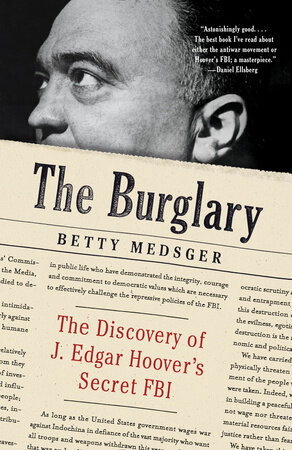
PenguinRandomhouse.com
INVESTIGATIVE REPORTERS & EDITORS (IRE) BOOK AWARD WINNER • The story of the history-changing break-in at the FBI office in Media, Pennsylvania, by a group of unlikely activists—quiet,...
 cedar fractal
Getting ready to order this one.

Dark Wire: The Incredible True Story of the Largest Sting Operation Ever
 dim sierra
I understand that this book was already discussed, but I’d be curious if anyone would be interested in revisiting it.
I know I’ve been an argumentative guy (it’s my nature, as seems to, appreciably, be the case for others here), but Belew makes - to me - extremely strong points that I’d love to explore with anyone interested. I’m skeptical but she’s been seemingly incredibly influential.
In particular, Belew has extrapolated points from a book discussed recently (will grab link and paste in next comment) - the turner diaries - as indicative of how the right is making decisions now.
For example, at 8:45 in the below interview, Belew claims that Jan 6 was equivalent to the books US Capitol assault in that it was intended as a radicalizing action
https://discord.com/channels/709752884257882135/1122437334860828692

A conversation with Dr. Kathleen Belew and Dr. Christopher McKnight Nichols.
Recorded September 8, 2021.
We’re grateful to all of the attendees whose generous contributions covered the costs of hosting Historians and the News and to Dr. Nichols and Dr. Belew for agreeing to make this conversation accessible to all. OHS relies on the generosity...
dim sierra
dim sierra
I understand that this book was already discussed, but I’d be curious if anyone ...
#far-right-monitoring message
knotty moat
dim sierra
I understand that this book was already discussed, but I’d be curious if anyone ...
If you want to do this can you use the post for the book, vs the book suggestions channel https://discord.com/channels/709752884257882135/1122437334860828692
runic void
This could be interesting

Scientific American
In a new book, a long-time foreign correspondent examines the underappreciated links between climate change and violent conflict
 solar spire
I keep thinking something like this one --
https://www.goodreads.com/book/show/33874545-shattered
-- might perhaps be worth the time. Certainly, I'd participate if we decided to make this happen. 🙂

Goodreads
#1 NEW YORK TIMES BESTSELLERIt was never supposed to be…
knotty moat

PenguinRandomhouse.com
How Israel makes a killing from the occupation of Palestine WINNER OF THE 2023 WALKLEY NON FICTION JOURNALISM PRIZE Shortlisted for the 2023 Moore Prize for Human Rights Writing Israel’s...
knotty moat
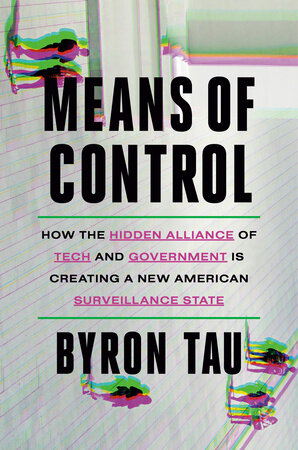
PenguinRandomhouse.com
You are being surveilled right now. This “startling exposé” (The Economist) reveals how the U.S. government allied with data brokers, tech companies, and advertisers to monitor us through...
lilac vector
This is probably the best book for understanding the current information ecosystem https://www.goodreads.com/book/show/138505710-doppelganger

Goodreads
What if you woke up one morning and found you’d acquire…
knotty moat
lilac vector
This is probably the best book for understanding the current information ecosyst...
I have this on my "to read" list 
strong mantle
Iv heard a lot of good things about it
cloud walrus
undone hawk
Hm, I know a fair few people who have huge issues with his work. I think (not re...
pop science, I raise you https://en.wikipedia.org/wiki/Humankind%3A_A_Hopeful_History

Humankind: A Hopeful History (Dutch: De Meeste Mensen Deugen: Een Nieuwe Geschiedenis van de Mens) is a 2019 non-fiction book by Dutch historian Rutger Bregman. It was published by Bloomsbury in May 2021. It argues that people are decent at heart and proposes a new worldview based on the corollaries of this optimistic view of human beings. It ar...
or this one https://en.wikipedia.org/wiki/Bullshit_Jobs 🙂

Bullshit Jobs: A Theory is a 2018 book by anthropologist David Graeber that postulates the existence of meaningless jobs and analyzes their societal harm. He contends that over half of societal work is pointless and becomes psychologically destructive when paired with a work ethic that associates work with self-worth. Graeber describes five type...
dim sierra
Has anyone read this? I don't know what he actually says. There are some descriptions of "great replacement" which just refer to demographic change, and the conspiracy element I've seen described is that there's a some organization or active effort by "elites" to cause immigration, and to cause it for the conscious, deliberate ends of demographic change
But there's obviously a lot of room for different forms of definition there - I guess I'm wondering if the form of "great replacement" most often described ("elites, or specifically jewish elites, are making mass migration occur so that white people are a minority in America and/or europe") is from this book, or, if its maybe coined that way but the definition I gave originated elsewhere/online
dim sierra
dim sierra
But there's obviously a lot of room for different forms of definition there - I ...
Then there's another claim that's even more specific, at least in America but applicable to democracies (that that stimulated migration is for the purpose of getting sympathetic/aligned voters) and I wonder if that started here too (electioneering and gerrymandering by gathering populations to vote is old but i don't know if the theory of this + immigration is from this book)
knotty moat
dim sierra
Then there's another claim that's even more specific, at least in America but ap...
Maybe you can talk about this in the #books channel as this particular channel is suggestions for book club
dim sierra
knotty moat
Maybe you can talk about this in the <#709794053830738082> channel as this parti...
Thank you! My mistake, I hadn't seen this channel
 boreal narwhal
A suggestion that was inspired by the latest QAA podcast episode >> Wild Faith: How the Christian Right Is Taking Over America by Talia Lavin
undone hawk
At the risk of it not being OSINT but being a recent and thorough deep dive into the topic of antisemitism that is well referenced and well written (imo of course) I'd like to recommend https://www.penguinrandomhouse.com/books/741043/safety-through-solidarity-by-shane-burley/

PenguinRandomhouse.com
Two activist journalists present a progressive, intersectional approach to the vital question: What can we do about antisemitism? Antisemitism is on the rise today. From synagogue shootings by white nationalists,...
 winter oxide
I am now finishing the first chapter. So far, it is about "what is the foundation of intelligence" (spoiler: it is society). There is some discussion about what is secret and mystery. For a start, it is very promising.
When I finish, I can suggest more about it. But for now, it is very interesting. https://www.amazon.com/Constructing-Cassandra-Reframing-Intelligence-1947-2001/dp/0804785805

When it was created in 1947, the CIA had a clear remit to prevent strategic surprises. On key occasions, it has failed spectacularly. How is this possible? Although there has been no shortage of studies exploring how intelligence failures can happen, none of them have been able to provide a unifi...
signal zealot
Given the number of reactionary white South Africans in Trump's inner circle now — Sacks, Thiel, and of course Musk — I feel like @quinnslobodian.com's work on the importance of apartheid South Africa to right-wing thought will sadly get only more relevant.
Likes
129
 Bluesky
·
Bluesky
·

Global white nationalism - Browse and buy the Paperback edition of Global white nationalism by Daniel Geary
winter oxide
Very complex and interesting history from WWII to current times. https://anniejacobsen.com/surprise-kill-vanish/
 azure dune
joke question that i expect a "no" from: Do fanfictions count?
azure dune
azure dune
joke question that i expect a "no" from: Do fanfictions count?
Ok cool, thats a firm "no" then (judging from the emoji reaction)
lilac vector
Finally read The Silent Brotherhood by Kevin Flynn and Gary Gerhardt (now being republished as The Order). I liked it more than Kathleen Belew's Bring the War Home: more detailed and paints a broader and more captivating picture. I know I've said before that we've been too many far-right books, but this could be a good chance to do a Bellingcat Discord Server movie night (when The Order movie with Nicholas Hoult comes out)
https://www.goodreads.com/book/show/325360.The_Silent_Brotherhood

Goodreads
This is the terrifying story of the most dangerous radi…
 crimson flare
winter oxide
Very complex and interesting history from WWII to current times. https://annieja...
crimson flare
winter oxide
Very complex and interesting history from WWII to current times. https://annieja...
Annie Jacobsen is a good author, I have read her books on Area 51 and she also has one about the pentagon papers
 next summit
Border and rule! https://www.haymarketbooks.org/books/1553-border-and-rule

haymarketbooks.org
In Border and Rule, one of North America’s foremost thinkers and immigrant rights organizers delivers an unflinching examination of migration as a pillar of global governance and gendered racial class formation.
Harsha Walia disrupts easy explanations for the migrant and refugee crises, instead showing them to be the inevitable outcomes of...
strong mantle
Oooo this looks interesting. Have you read it yet?
 quasi bison
lilac vector
This is probably the best book for understanding the current information ecosyst...
quasi bison
lilac vector
This is probably the best book for understanding the current information ecosyst...
I've just started reading Doppelganger. Thanks for the recommendation! Not sure what happened to Noami Wolf...yikes.
signal zealot
From the host of "The Dream" podcast that documents MLMs and the people in them
https://www.simonandschuster.com/books/Selling-the-Dream/Jane-Marie/9781982155773

Peabody and Emmy Award–winning journalist Jane Marie expands on her popular podcast The Dream to expose the scourge of multilevel marketing schemes...
knotty moat
tell me your best non-US centered books! we need more diversity in poll selections 🙂
 jolly scroll
Outlaw Ocean by Ian Urbina (Knopf, 2019) is a look at what I can only call maritime crimes against humanity and the environment. According to the Wikipedia page, it has led to ongoing projects to continue exploring the issues.
https://www.goodreads.com/book/show/43345615-the-outlaw-ocean

Goodreads
A riveting, adrenaline-fueled tour of a vast and lawles…
jolly scroll
Red Famine by Anne Applebaum (2017). A deep dive into the Holodomor, Stalin's attempt to destroy the Ukrainian people.
A little old in comparison to many of the suggestions, but I'm getting ready to reread it in light of the ongoing war between Russia and Ukraine. (On a more personal note, this book helped me understand the source of extremely anti-Russian "racist" attitudes held by my older Ukrainian relatives.)

Goodreads
The momentous new book from the Pulitzer Prize-winning …
dim sierra
I thought this could be interesting:
Prisoner Without a Name, Cell Without a Number by Jacobo Timerman
1981 memoir by the left-wing Argentine journalist and publisher Jacobo Timerman, who was imprisoned without due-process during the Dirty War in Argentina in April 1977
https://en.wikipedia.org/wiki/Prisoner_Without_a_Name,_Cell_Without_a_Number

Prisoner Without a Name, Cell Without a Number (Spanish: Preso Sin Nombre, Celda Sin Numero) is a 1981 memoir by the left-wing Argentine journalist and publisher Jacobo Timerman, who was imprisoned without due-process during the Dirty War in Argentina in April 1977 and subsequently tortured. Though acquitted by a military court in October 1977, ...
undone hawk
jolly scroll
Outlaw Ocean by Ian Urbina (Knopf, 2019) is a look at what I can only call marit...
Thanks for sharing. +1 from me for that one. The associated podcast was extremely good: https://www.theoutlawocean.com/the-outlaw-ocean-podcast/

The Outlaw Ocean Project
The Outlaw Ocean Podcast is a seven-part series that explores a gritty and lawless realm rarely seen: the high seas.
knotty moat
I'm excited about all of these. Keep them coming!
I'm rereading this book and it's so good so I'll just put it here too https://www.goodreads.com/en/book/show/10046142-dancing-in-the-glory-of-monsters
Goodreads
At the heart of Africa is Congo, a country the size of …
undone hawk
I have on my list (not read yet) some works on Dalit responses to Hindutva including https://harpercollins.co.in/product/maya-modi-azad/ & https://www.goodreads.com/book/show/54132700-hindutva-and-dalits

HarperCollins Publishers India Books, Novels, Authors and Reviews
Maya, Modi, Azad is one of the top 10 bestselling Others books by Sudha Pai. Discover Best Others Books and Novels from the best authors with HarperCollins India. HarperCollins India is one of the world’s largest publishing organizations working on various varieties of best novels and books, from entertainment to education.

Goodreads
Despite the teachings of Babasaheb Ambedkar against Hin…
undone hawk
knotty moat
I'm rereading this book and it's so good so I'll just put it here too https://ww...
Thanks for this rec
jolly scroll
knotty moat
I'm rereading this book and it's so good so I'll just put it here too https://ww...
That sounds interesting! On the African front, there is also China's Second Continent by Howard French:
https://www.goodreads.com/book/show/18373202-china-s-second-continent?ref=nav_sb_ss_3_10

Goodreads
[ China's Second How a Million Migrants Are Building a…
jolly scroll
And while I'm in a "colonialist" mood, Children of the Broken Treaty, on our (Canada's) relationship to the Indigenous peoples of the region by long-time NDP MP (and punk rocker!) Charlie Angus.
https://www.goodreads.com/book/show/25694379-children-of-the-broken-treaty
(Not specifically recommending them for book club, but for those interested in more detailed history of how things got started, search for "Metis and the Medicine Line" by Michael Hogue and "Clearing the Plains" by James Daschuk.)

Goodreads
Children of the Broken Treaty exposes a system of apart…
knotty moat
https://www.goodreads.com/book/show/125151907-graphic back and forth about this, can any EU folks speak to availability and price?

Goodreads
Today, almost anyone can upload and disseminate newswor…
Same for this one https://www.goodreads.com/book/show/48615946-digital-witness

Goodreads
From videos of rights violations, to satellite images o…
vague nimbus
knotty moat
https://www.goodreads.com/book/show/125151907-graphic back and forth about this,...
Yes they are available. The first is € 25 in paperback (I think 20, digital?).
The second one is quite pricey new, about 40 euros. But I found an as-new second-hand one for 29.
knotty moat

Goodreads
Data is fundamental to the modern world. From economic …
signal zealot
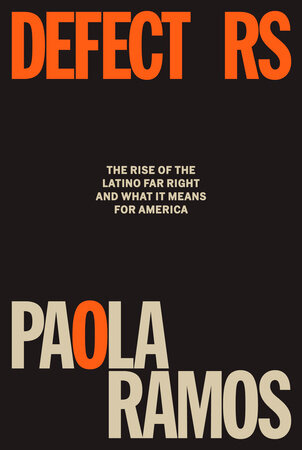
PenguinRandomhouse.com
AN NPR BEST BOOK OF 2024 • An award-winning journalist's exploration of how race, identity and political trauma have influenced the rise in far-right sentiment among Latinos, and how...
knotty moat

Why violence in the Congo has continued despite decades of international intervention
 spice geode

Goodreads
The riveting, untold story of the scholars, librarians,…
lilac vector

Goodreads
A revealing account of how Israel’s booming arms indust…
knotty moat
I'm interested in books about genocide studies (both academic and memoir-style, such as https://www.goodreads.com/book/show/215758.Shake_Hands_with_the_Devil ). some of these might be more about why international peacekeeping bodies (or international organizations writ large) can/have been ineffective. is that something you all are interested in? if so, i'll start listing ideas in this channel. but I'm also mindful that the topic is very heavy, and I can't assess things like SGBV descriptions ahead of time.

the talk with Alexa Koenig where she mentioned Gen Dallaire reminded me I wanted to bring this up to the crowd
 formal solstice
Just started this one, can't offer an opinion yet, but I am excited to share it and see if there is anyone else who's read it/what they think! The Mechanic and the Luddite: A Ruthless Criticism of Technology and Capitalism: https://app.thestorygraph.com/books/78a8446a-4b59-427d-a14e-a6edc97ae106
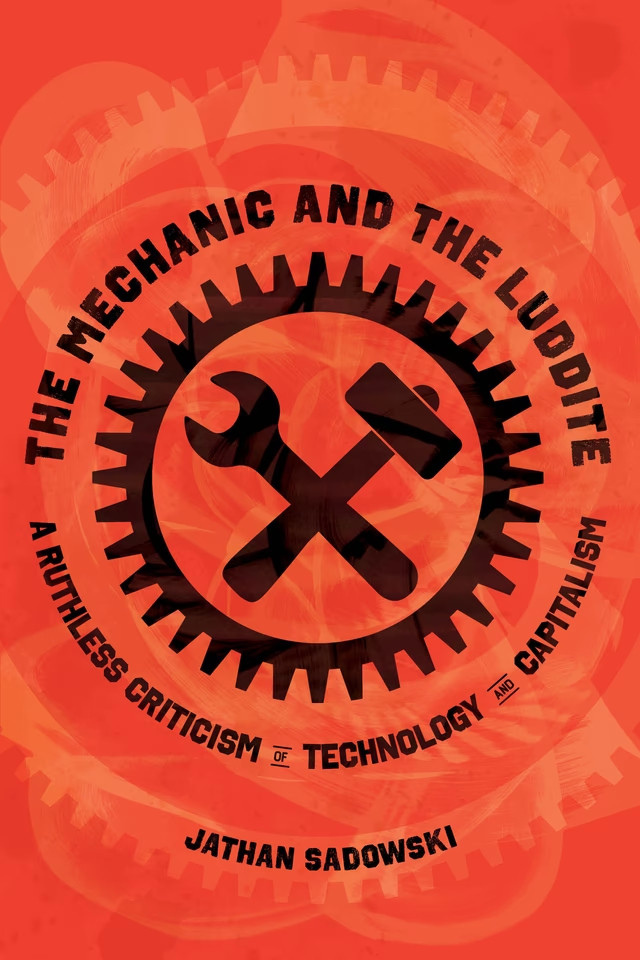 jolly scroll
I think my favourite part of this server is all the book recommendations. I joined right around the time when I was feeling like finding new books to read was becoming impossible. Now I have a backlog again!
knotty moat
jolly scroll
I think my favourite part of this server is all the book recommendations. I join...
I think next month's book club poll will be a selection of second place finishers - it's been a minute since we did that - so you'll get a chance to join us for any you missed!
jolly scroll
I loved the discussion on part 1 of "The Palestine Laboratory", but can't attend future ones unless I get internet sorted out. We gave up Starlink, so a "maybe" cell signal and a restricted hours library 20 km away are all that's left.
But I will continue to read every suggested book that I haven't already read!
knotty moat
We'll miss you and please let us know if you have any ideas about how to make things more accessible!
jolly scroll
Thanks. I've given this a lot of thought since the move away from dial-up. As far as I can tell, the accessibility problem is not one you can deal with. It's in the hands of governments and the activists who drive them.
lilac vector
formal solstice
Just started this one, can't offer an opinion yet, but I am excited to share it ...
This looks really interesting. I enjoyed Brian Merchant's history of the Luddite uprising
https://www.hachettebookgroup.com/titles/brian-merchant/blood-in-the-machine/9780316487740/

Hachette Book Group
"The most important book to read about the AI boom" (Wired): The "gripping" (New Yorker) true story of the first time machines came for human jobs—and how...
strange sun
formal solstice
Just started this one, can't offer an opinion yet, but I am excited to share it ...
This looks interesting!
 stuck iris
Been dying to read this book. I belive it will expand anyone's understanding of the shipping & logistics industry at the global level. Its especially interesting to me because I believe it will sharpen my mentel model of the world around me. https://www.goodreads.com/book/show/316767.The_Box?from_search=true&from_srp=true&qid=vVTEfGWB05&rank=1

Goodreads
In April 1956, a refitted oil tanker carried fifty-eigh…
I also recommend this book. I believe it's especially important for OSINT investigatitors/analysts to read. It will save them the time of diving deep into systemic issues that simply arise because of the geographic location, not neccessarly the people and their ideologies.
https://www.goodreads.com/book/show/25135194-prisoners-of-geography?ref=nav_sb_ss_1_23

Goodreads
Geography shapes not only our history, but where we're …
undone hawk
Another book on women and the far right https://www.jstor.org/stable/jj.25394243

12 rules for what have their latest episode with the author : https://podcasts.apple.com/us/podcast/103-taking-the-pink-pill-w-lois-shearing/id1453687129?i=1000700564062

Apple Podcasts
Podcast Episode · 12 Rules For WHAT · 03/24/2025 · 58m
 little wraith
Book suggestion for sometime later: https://www.goodreads.com/book/show/199798813-black-pill

Goodreads
This tour de force of investigative journalism—in the v…
vague nimbus
We get the most cheerful books in book club! 🤣
 slender pelican
Hi! any good books in spanish about the falklands war?
not only history books, but stories and memoirs are nice too
pine imp
https://www.amazon.co.uk/Other-Pandemic-QAnon-Contaminated-World/dp/1526642557
Pulitzer Prize-winning investigative journalist James Ball takes us into the depths of the internet to trace the origins and rapid ascent of QAnon, the movement that mutated from a niche online conspiracy theory into the world's first digital pandemic.

The Other Pandemic: How QAnon Contaminated the World
signal zealot

 limpid geode
https://www.amazon.com/Determined-Spy-Turbulent-Pioneer-Wisner-ebook/dp/B0D93D9BFV
This covers a bit more of a historical period but I offer it for its more unique edge focus - it gives a lot of insight and attention to Wisners BPD and how it impacted his work (both positively and negatively). Fantastic at offering that truly holistic human side of the folks that work in these careers, especially to the extent Wisner was.

Frank Wisner was one of the most powerful men in 1950s Washington, though few knew it. Reporting directly to senior U.S. officials--his work largely hidden from Congress and the public-- Wisner masterminded some of the CIA’s most daring and controversial operations in the early years of t...
pine imp

Goodreads
The untold story of the mysterious family dynasty at th…
that was very interesting^
tepid bronze
pine imp
https://www.goodreads.com/book/show/214490408-house-of-huawei
this was very good book.
signal zealot
https://www.penguin.co.uk/books/460044/the-ideological-brain-by-zmigrod-leor/9780241741214
Interview with the author. Timestamp: 51m21s
https://youtube.com/watch?v=BqvD6Ym_p4w&t=3087
https://www.nytimes.com/2025/04/08/science/ideology-neuroscience-politics-zmigord.html


Free speech warrior Mark Zuckerberg took the witness stand this week to defend Meta in a big antitrust case that, if successful, could break up the social media giant. Max and Jon run through the trial thus far, and discuss how Silicon Valley tycoons skewered themselves by supporting Trump. Then, the guys delve into the ever-improving state of A...

By Matt Richtel
In her new book, “The Ideological Brain,” the neuroscientist Leor Zmigrod outlines what makes some people prone to rigid thinking.
 indigo comet
Leah Sottile has a new book examining Love Has Won and the greater phenomenon of New Age influence on American culture. I started it today, and it's really good.
https://www.hachettebookgroup.com/titles/leah-sottile/blazing-eye-sees-all/9781538742600/

Hachette Book Group
In this "unflinching and wildly entertaining" investigation of the modern New Age movement in America, a journalist aims to understand how women like Amy Car...
signal zealot
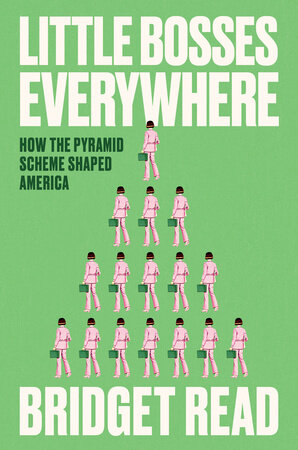
PenguinRandomhouse.com
A groundbreaking work of history and reportage that unveils the stranger-than-fiction world of multilevel marketing: a massive money-making scam and radical political conspiracy that has remade American...
signal zealot
If IP law is of interest https://www.hachettebookgroup.com/titles/jorge-l-contreras/the-genome-defense/9781649040763/

Hachette Book Group
In this riveting, behind-the-scenes courtroom drama, a brilliant legal team battles corporate greed and government overreach for our fundamental right to con...
limpid geode
Definitely second jedikvs recco
 lime snow

Routledge & CRC Press
This book offers a multidisciplinary exploration of how climate change is impacting conflicts, contention, and competition in the world.
The volume examines how climate change is creating and exacerbating insecurities for millions of people globally, and how states, inter-governmental bodies, and others are attempting to meet challenges today an...
Just finished reading this one
 earnest scaffold
vale lake
feel like a ton of them can have their own group focused discussion, like the on...
earnest scaffold
vale lake
feel like a ton of them can have their own group focused discussion, like the on...
I know this comment is from two years ago... Just wondering what the title of the book was? If you or anyone remembers?
earnest scaffold
I didn't see this mentioned but maybe I missed it. Rae Baker's Deep Dive: Exploring the Real World Value of Open Source Intelligence https://www.amazon.com/Deep-Dive-Exploring-Real-world-Intelligence/dp/1119933242

Deep Dive: Exploring the Real-world Value of Open Source Intelligence
strange sun
Related: #far-right-monitoring message
 main root
In Losing Reality Lifton makes clear that the apocalyptic impulse—that of destroying the world in order to remake it in purified form—is not limited to religious groups but is prominent in extremist political movements such as Nazism and Chinese Communism, and also in groups surrounding Donald Trump, showing how this destructive desire ultimately reached its apotheosis in the January 6 Capitol insurrection. Lifton applies his concept of “malignant normality” to Trump’s efforts to render his destructive falsehoods a routine part of American life. But Lifton nevertheless sees the human species as capable of “regaining reality” through our “protean” psychological capacities and our ability to serve as “witnessing professionals.”
https://www.amazon.com/gp/product/1620979535/ref=ewc_pr_img_1?smid=ATVPDKIKX0DER&psc=1

Also I think it would be, dare I say cruel, to not have or try to have Lifton as a guest speaker. He is 100 I believe but still actively makes appearances. (He wrote the book Totalism and the Psychology of Thought Reform I don't shut up about)
earnest scaffold
Conspirituality
How New Age Conspiracy Theories Became a Public Health Threat
Authors: Julian Walker, Matthew Remski and Derek Beres
https://www.penguinrandomhouse.ca/books/713402/conspirituality-by-derek-beres-matthew-remski-and-julian-walker/9781039005532
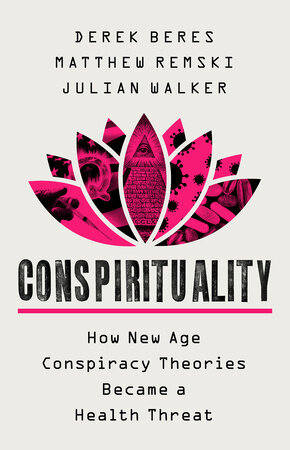
Penguin Random House Canada
Conspirituality takes a deep dive into the troubling phenomenon of influencers who have curdled New Age spirituality and wellness with the politics of paranoia—peddling vaccine misinformation, tales of child trafficking, and wild conspiracy theories.
undone hawk
earnest scaffold
Conspirituality
How New Age Conspiracy Theories Became a Public Health Threat
Au...
Is it any good? I've gone up and down with my estimation of the podcast
earnest scaffold
undone hawk
Is it any good? I've gone up and down with my estimation of the podcast
I’ve yet to read it. Charlie Angus mentioned it (a politician in Canada with 20 years experience, who has recently been mobilizing Canadians outside of government), and it seemed like it would provide more info than fluff, or at the very least a good place to start discussions for a book club.
signal zealot
They also have a podcast that runs alongside it
undone hawk
signal zealot
They also have a podcast that runs alongside it
Which was good for a while but I had to stop listening to because of some really bad takes
 hot wharf
What happened to August's book?
I thought Tor was getting the votes.
Im 4 chapters in, and its very insightful
hot wharf
earnest scaffold
I didn't see this mentioned but maybe I missed it. Rae Baker's Deep Dive: Explor...
Love this. Its become a reference book for me. The chapters are well organised like that, and her orientation to ethics is unambiguous. Wonderful text
Like a OSINT learner's dictionary, too.
signal zealot
Both academic and empathetic approach to the topic of social media and youth
Behind Their Screens
In Behind Their Screens, researchers Emily Weinstein & Carrie James explore the inner lives of teens growing up with social media.
signal zealot
https://www.penguinrandomhouse.com/books/715421/little-bosses-everywhere-by-bridget-read/
Interview with author
PenguinRandomhouse.com
A “gripping” (The Washington Post) work of history and reportage that unveils the stranger-than-fiction world of multilevel marketing: a massive money-making scam and radical political conspiracy...

#CashAppPod #CashAppPartner #CashAppPartner
Download Cash App Today: https://capl.onelink.me/vFut/2vjj5nrh as a Cash App partner, I may earn a commission when you sign up for a Cash App account. Cash App is a financial services platform, not a bank. Banking services provided by Cash App’s bank partner(s). Prepaid debit cards issued by Sutton ...
hot wharf
Just saw this
"Living under hybrid war."
Ashfaque Khan and Farah Naz
 dense dew
Is there a September book?
vague nimbus
dense dew
Is there a September book?
Hi! You are the second person in four months to ask about Book Club. (Sorry, @hot wharf ! I should have replied sooner, but part of me was also curious if anyone else would notice.)
This is in line with the amount of enthusiasm that there has been for the book club. There have been instances when we were still doing the voice meetings when it was entirely staff and moderators; the norm was maybe one or two members.
When both Sarah and Tristan stepped down I thought I could keep it going in threads, but the response there was minimal too.
jolly scroll
vague nimbus
Hi! You are the second person in four months to ask about Book Club. (Sorry, <@8...
I noticed, but that doesn't really mean anything. I made it to one discussion before we gave up our reliable internet and we'll probably be in that position for a couple more years.
dense dew
vague nimbus
Hi! You are the second person in four months to ask about Book Club. (Sorry, <@8...
Thanks for the response! I haven’t been able to join as much as I’d like to but I genuinely love book club and have gotten so much from it. Hopefully it returns!
 halcyon socket
Hey guys, I'm looking for book suggestions over relevant history about China and the pacific as a whole. Academic works are good too! I just want something that is as objective as possible.
hot wharf
Kevin Rudd is a good source about China
Particularly Xi
Try
On Xi Jinping: How Xi's Marxist Nationalism Is Shaping China and the World
quaint shard
halcyon socket
Hey guys, I'm looking for book suggestions over relevant history about China and...
I thought this was good. Only relevant to China post Mao though.
China After Mao: The Rise of a Superpower https://www.goodreads.com/book/show/60070311-china-after-mao

Goodreads
In China After Mao , award-winning author Frank Dikötte…
 gray trench
A book I really enjoyed, a novel a bit "brave new world" style, but at the digital era

 torn lintel
Hi folks. I'd like to propose a book for January, Chasing Shadows by Ronald Deibert of Citizen Lab. I'm about halfway through it. I definitely would also participate in / co-host a discussion in, say, late January. Any takers? Also, are there any rules for book club? 🙂 Like, 'the first rule of book club is that you have to make book club exist'.
 torn lintel
Hi folks. I'd like to propose a book for January, Chasing Shadows by Ronald Deib...
torn lintel
torn lintel
Hi folks. I'd like to propose a book for January, Chasing Shadows by Ronald Deib...
Here's the bibliographic info from Worldcat - https://search.worldcat.org/title/1423294758
 ornate cradle
I’m really enjoying this one. Sands does a good job of making international law compelling, while also allowing the reader to draw their own contemporary conclusions.

 oblique pawn
Danielle Lee Tomlinson, Kate Starbird and other folks from The University of Washington's Center for an Informed Public have come out with “Being Sensemakers: A Framework for University-Based Rapid Research of Elections, Crisis Events, and Beyond”, detailing the Election Rumor Research Project. The book is online! https://uw.pressbooks.pub/rapidresearchframework/

A framework for university-based rapid research of elections, crisis events, and beyond