#daggernauts
1 messages · Page 9 of 1
 sharp zealot
the only way for 2 modules to share a cache volume is by one module explicitly passing a cache volune as argument to another
 latent trellis
I just realized the term "module" is a bit overloaded in this context.
In my case, it's two instances of the same module and I want them to use different cache volumes.
sharp zealot
latent trellis
I just realized the term "module" is a bit overloaded in this context.
In my ca...
Ah I see! Well in that case that's different, yes all instances of a module share the same cache volume namespace. That can indeed cause issues for toolchains that don't support a globally shared cache directory, but I believe Go is fine with that?
latent trellis
sharp zealot
Ah I see! Well in that case that's different, yes all instances of a module shar...
The problem is (or at least used to be with Dagger Cloud, not sure anymore) that when two different pipelines are running in parallel the last one wins and overwrites the cache (they don't get merged)
Is the distributed cache feature still available in Dagger Cloud? Or is it disabled?
sharp zealot
latent trellis
Is the distributed cache feature still available in Dagger Cloud? Or is it disab...
yes still available (although we're not taking new signups at the moment, it's still operational for customers who signed up earlier).
But in the Dagger Cloud org setting you can disable sync for specific volumes
but then you don't get persistence for that volume of course..
By far the most powerful solution would be to implement a dagger-aware tool that can download the go cache without cache volumes
latent trellis
Which is why I started using unique names for each instance. But the default volume kinda defeats the purpose in that case. Hence my original question.
sharp zealot
Then you just run that in your module and you delete the cache volumes altogether - layers only. that is my dream
sharp zealot
latent trellis
Which is why I started using unique names for each instance. But the default vol...
yeah I guess the pragmatic solution is to have the DX I suggested, and in the case where you use dagger cloud volume sync, pass different cache volumes as arguments for different instances of the module
that way you get a pragmatic deployment without sacrificing a portable clean module API
latent trellis
sharp zealot
By far the most powerful solution would be to implement a dagger-aware tool that...
That might work for the module cache, not for the build cache.
Also, in my experience non-traditional tooling is often a pain to use if not well maintained enough and most build systems out there had to go through a really long journey to get to a maturity where the "average" user is confident enough to use it in the first place.
latent trellis
sharp zealot
yeah I guess the pragmatic solution is to have the DX I suggested, and *in the c...
and that goes back to my question about modules initialized inside modules: https://github.com/sagikazarmark/daggerverse/blob/main/golangci-lint/main.go#L62
GitHub
My Dagger modules. Contribute to sagikazarmark/daggerverse development by creating an account on GitHub.
I either add constructor arguments for the dependent module.
The "nice" API would be passing the dependency directly, but that's not possible at the moment.
 restive shore
The feedback from the TUI when publishing looks ominous and frozen. It's hard to detect what's going on because all of those spans looks frozen. When pulling an image I see the yellow dots and then green checkmarks. Can this be improved?
 sharp zealot
Fun fact: when refactoring a Go Dagger module, LLMs get confused by dagger.TYPE vs. dag.CONSTRUCTOR()
 willow rune
Hey is there some dagger command which is similar to docker system prune? Basically delete all cache, volumes, etc. Except restarting/removing the container.
sharp zealot
willow rune
Hey is there some dagger command which is similar to `docker system prune`? Basi...
yes check out the engine top-level function:
dagger -c 'engine | .help'
GitHub
Problem The default verbosity of the TUI is awesome, but... it's a lot. People get overwhelmed - like running shell scripts with set -x by default. Or stracing your unix tools by default. This ...
 spiral whale
it could be good idea to version docs, i was using Quick Start docs of the dagger to onboard devs to dagger faster but with new version it replaced all cli commands with shell version only and it became confusing for the devs since we're still using v0.16.x
willow rune
Hey,
I have a monorepo with go and typescript services.
I pushed a commit and the change only happened is in a go service, so I only want the CI to trigger go to the appropriate related service.
Can this be done using GitHub Actions and Dagger.io?
This can be done using path filters in GHA, but I'm optimistically aiming for 1 GHA yaml which trigger the pipeline and dagger takes care of the which service has changed.
sharp zealot
willow rune
Hey,
I have a monorepo with go and typescript services.
I pushed a commit and th...
At the moment there are 2 options:
-
No CI filters, Dagger job gets triggered for all changes BUT with good caching, it doesn't matter because Dagger correctly skips execution for unchanged inputs. This requires good cache configuration in your CI runner
-
Manual CI filters. Basically keep configuring GHA to filter by path. This is not ideal, should be a temporary stopgap only if all else fails.
-
Coming soon: Dagger Cloud will provide "smart events" telling you which Dagger module has actually changed. Then you can hook up your dagger pipelines to that. cc @dense canyon @lime comet @hallow gust
willow rune
Just to clarify if I opt for 1. having self-hosted CI runners is sufficient, since dagger will take care of it? considering I have optimised my dagger code to leverage cache.
sharp zealot
willow rune
Just to clarify if I opt for 1. having self-hosted CI runners is sufficient, sin...
If you use the official kubernetes daemonset, and your kubernetes nodes are not too ephemeral, then yes you should see good results (although still best effort). We are actively working on major caching improvements
willow rune
I am actually using docker in locally and podman in CI. Sticking to basics.
 dense canyon
willow rune
Hey,
I have a monorepo with go and typescript services.
I pushed a commit and th...
dense canyon
willow rune
Hey,
I have a monorepo with go and typescript services.
I pushed a commit and th...
@willow rune even though Dagger doesn't support it natively, it shouldn't be difficult to create a function that receives the GHA payload and runs whatever functions you need based of the changes that were introduced in the commit. Not sure if that might be an option for you.
sharp zealot
@upbeat herald 👋 where's your experimental Docker SDK?
I'm interested in taking a look for reference
 upbeat herald
sharp zealot
<@281874480651829250> 👋 where's your experimental Docker SDK?
upbeat herald
sharp zealot
<@281874480651829250> 👋 where's your experimental Docker SDK?
GitHub
Daggerverse modules made by Quartz. Contribute to quartz-technology/daggerverse development by creating an account on GitHub.
sharp zealot
@upbeat herald right off the bat: love the trick using constructor + default args to load useful directories in a less verbose way 
upbeat herald
sharp zealot
<@281874480651829250> right off the bat: love the trick using constructor + defa...
Yeah! Context directory is such a good feature! Really changed my way of building modules 😄
sharp zealot
@upbeat herald this snippet is... something. What does it do?
Is it basically a super complicated way to get the module source directory?
    modulePath, err := modSource.SourceRootSubpath(ctx)
    if err != nil {
        return nil, fmt.Errorf("failed to get module path: %w", err)
    }
    sourceDir := dag.Directory()
    _, err = modSource.ContextDirectory().Directory(modulePath).Entries(ctx)
    if err == nil {
        sourceDir = modSource.ContextDirectory().Directory(modulePath)
    }
The module Source root directory yeah 😄 (location of the dagger.json)
sharp zealot
And discarding the error is to gracefully handle cases where the target module has no source dir?
I'm confused: does SourceRootSubpath return the path of the module root, or the path of the module source?
(because it has both source and root in the name...)
upbeat herald
sharp zealot
And discarding the error is to gracefully handle cases where the target module h...
It's in case of dagger init, since it might be an empty directory yeah or a non-created directory, meaning that modSource.ContextDirectory().Directory(path) will fails, but there's no straigh forward way to verify it exist so I do that instead
upbeat herald
sharp zealot
I'm confused: does `SourceRootSubpath` return the path of the module root, or th...
module root path (location of the dagger.json)
sharp zealot
Ok so the word source shouldn't be there I guess
upbeat herald
SourceRoot
SourceSubpath = source code of the module, sourceRootSubPath, root of the modulesource
Source make sense IMO since a module is built from moduleSource
sharp zealot
Cool, let's add container as a prefix to every function of the Container type then
it makes sense, it's a container
😛
OK thank you I will copy-paste your snippet and never look at it again, I think you just saved me 2 hours of misery
(minus 10mn to complain about our API)
upbeat herald
Hmm it's because moduleSource has multiple important path, the contextdir, the sourceDir, the rootDir but rootdir != contextdir so it's named sourceRootDir because it's more clear that way that it's not the actual / root but the root of the source haha
contextDir == rootDir in a moduleSource
If user do modSource.RootSubPath, I'm not sure what they would expect to get
upbeat herald
sharp zealot
OK thank you I will copy-paste your snippet and never look at it again, I think ...
Np! What are you building?
sharp zealot
All good, the important thing is that thanks to you I will never have to look at that API again
upbeat herald
sharp zealot
All good, the important thing is that thanks to you I will never have to look at...
Sorry about that haha! After my iteration on SDK/Codegen/Introspection I'll try to improve this area
sharp zealot
upbeat herald
It's in case of `dagger init`, since it might be an empty directory yeah or a no...
Actually sorry, I didn't understand this part.
How can the module's root directory not exist?
upbeat herald
dagger init --name=foo --sdk=go ./foo/bar/baz -> ./foo/bar/baz is the root source dir but doen't exist yet
sharp zealot
it's the module root dir - please stop saying the "root source dir" it's confusing, because there is a "module source dir" and a "module root dir" - which is already confusing enough without mixing them
OK let me try running that command so I understand...
When I run dagger init --name=foo --sdk=go ./foo/bar/baz it does create ./foo/bar/baz. But you're saying the SDK will be loaded before the directory is created?
upbeat herald
sharp zealot
When I run `dagger init --name=foo --sdk=go ./foo/bar/baz` it does create `./foo...
It seems yeah, I mean, I also have this logic in the Typescript SDK: https://github.com/dagger/dagger/blob/84e21c755d35f26b2a6c8288840121cc80a8be81/sdk/typescript/runtime/main.go#L882
sharp zealot
@upbeat herald @kind carbon I'm making a toy SDK (for dogfooding purposes), want to declare a function that returns a core type (say, directory), what would that look like?
The closest I have is from my "compose-sdk" I made during your workshop @kind carbon, it has a function that returns a string:
objType := dag.TypeDef().
            WithObject("compose").
            WithFunction(
                dag.Function(
                    // Function name
                    "db",
                    // Function return type
dag.TypeDef().WithKind(dagger.StringKind),
                ),
            )
REQUEST: very very simple SDK skeleton, to help developers who want to experiment with the mechanics, but don't want to spend days just getting a skeleton to work. There is a LOT of undocumented arcane knowledge buried in there
upbeat herald
sharp zealot
<@281874480651829250> <@768585883120173076> I'm making a toy SDK (for dogfooding...
It should look like this : https://github.com/quartz-technology/daggerverse/blob/2fe856d7b645e25ad51ee86f20204e973d86dbbe/docker_sdk/src/module/docker/build.go#L125C2-L125C74
For your func that would be:
dag.Function("foo", dag.TypeDef().WithObject("Directory"))
Yeah, we should have a doc for both making a "language SDK" and a "non-language SDK", the structure and what you need to do is very different ^^
restive shore
hey, so I'm running source.AsGit().WithAuthToken().Tags(ctx) and realized it won't show the remote tags because it doesn't do a fetch. Would it be possible to add a AsGit().Fetch(branch or all)? The AsGit is very useful but I can't use it because I need to fetch before doing much with the repo. The fetch itself requires a PAT so I have to set up all of that whereas AsGit().WithAuthToken() handles it.
sharp zealot
restive shore
hey, so I'm running `source.AsGit().WithAuthToken().Tags(ctx)` and realized it w...
Would be worth an issue. My first instinct is to add source.AsGit().Remote("origin").Tags()
That way there are no side effects, seems less messy
restive shore
I'll open an issue. I was also checking out this https://github.com/dagger/dagger/pull/10195 where Jed is making inroads into adding some of this functionality

GitHub
What are you trying to do? I'm running source.AsGit().WithAuthToken().Tags(ctx) and realized it won't show the remote tags because it doesn't do a fetch. Would it be possible to add a A...
restive shore
In shell .refresh is not working for me after I make code changes. Is that bugged?
sharp zealot
restive shore
In shell `.refresh` is not working for me after I make code changes. Is that bug...
Are the code changes to the module itself, or to files that are loaded as arguments?
restive shore
to the module itself
sharp zealot
Ah yeah, it might be a bug then. I personally never use .refresh, so haven't noticed. cc @kind carbon
restive shore
Right now, I have to exit and then dagger again. But when I do that I have to re-create the variables I set.
sharp zealot
Yeah that's a pain
When I find myself in such a loop, I usually write the script to a file
restive shore
I'll probably do that for now. Thank you Solomon!
restive shore
I am seeing a strange behavior when using a forked repo as a ref. When I point a Directory arg to git fork, it sets the origin to upstream instead of the fork. Even if I explicitly tell it to use my default branch like github.com/private_org/repo.git#main it points to github.com/upstream_org/repo.git.
but,
If I use a branch other than default, it sets the right remote github.com/private_org/repo.git#custom_branch works.
 void widget
restive shore
I am seeing a strange behavior when using a forked repo as a ref. When I point a...
void widget
restive shore
I am seeing a strange behavior when using a forked repo as a ref. When I point a...
mmmh thanks for finding that out 🙏 Could you file an issue so that it doesn't get lost ?
void widget
sharp zealot
Ah yeah, it might be a bug then. I personally never use `.refresh`, so haven't n...
Yeah i've been bit by it too -- currently trying to fix it 👀
restive shore
void widget
mmmh thanks for finding that out 🙏 Could you file an issue so that it doesn't g...
Sure thing! https://github.com/dagger/dagger/issues/10208

GitHub
What is the issue? I am seeing a strange behavior when using a forked repo as a ref. When I point a Directory arg to git fork, it sets the origin to upstream instead of the fork. Even if I explicit...
latent trellis
Looks like dagger update doesn't update a module, the source specifies a version. For example, github.com/sagikazarmark/daggerverse/helm@helm/v0.13.0
Running dagger update helm. does nothing.
Either I remove the version manually or run dagger install github.com/sagikazarmark/daggerverse/helm.
Is that intentional?
I could see it working either way, but I find the current behavior a bit unintuitive, especially since there is a "pin" field present in dagger.json.
 mossy bay
Can dagger translate (compile? dagger-late?) one CI event into a different CI event, such that I could use it to syndicate events?
For instance, Could I syndicate a Github Event into a mirrored GitLab repository?
 wintry prism
Can dagger translate (compile? dagger-
restive shore
latent trellis
Looks like dagger update doesn't update a module, the source specifies a version...
This must be an issue with tags because if you specify a branch or a pull like github.com/org/repo@pull/123/merge it does update the pin.
sharp zealot
Yes I think it's unfortunately designed that way
The idea I think is that if you installed a module at a specific branch or tag, update means "give me the latest commit for this branch or tag".
sharp zealot
it's pretty cool when you installed from a branch. But I agree it's confusing when you installed from a tag
 deft rain
mm, i seem to remember designing it with the idea that we could/would do this later 🤔 would it make sense to always do this automatically? and have different behavior for branches/tags?
another idea i had was to add --patch/--minor/--major/--dev flags to control exactly what new versions are allowed (which would allow for exact control, bumping from v0.1.0 to v13.4.0 probably isn't super desirable as the default for example)
 subtle plinth
Is there anyway to expose a dependency module function to a local function without having to wrap it in every downstream dagger module?
Example: I have a module for generating migrations with drizzle-kit, but in every single project I want to use it I'm writing the same boilerplate to wrap it and call it
I know there's the verbose action, such as dagger call -m "../../daggerverse/drizzle-kit", but it would be nice if it was easier
sharp zealot
subtle plinth
Is there anyway to expose a dependency module function to a local function witho...
my dream
subtle plinth
Mine too. Without it, we're right back to needing mage or Justfiles and it feels like we're going round in circles a little bit.
sharp zealot
subtle plinth
Mine too. Without it, we're right back to needing mage or Justfiles and it feels...
I don't think mage or justfiles solve this at all.
Dagger doesn't have zero boilerplate (yet) but it gets you pretty close and will keep getting closer.
You can move everything to a shared module and call it from each app if that's your preference. The main feature you lose is contextual directories which makes me sad. But we will eventually find a solution.
I think it's reasonable to write a little bit of entrypoint code for each of your apps. After all, you're writing code for the app.. Makes sense to also write code for building & testing it. Of course the less boilerplate the better.. Dagger as a platform is striving towards that , like your app platform hopefully.
wintry prism
Not sure if same thing, but I was imagining getting any module directly from the dag:
dag.m("github.com/foo/bar").myFunc("baz")
you can load modules dynamically, the dagger API supports it. But it won't work the way you're hoping because your code won't have type information for the module. So that snippet is impossible without some sort of codegen like the one provided by dagger install
subtle plinth
sharp zealot
You can move everything to a shared module and call it from each app if that's y...
The problem for me is my Monorepo. I have many services that all need the same migration action, the same deploy action, and the same format and lint actions .
Writing a little bit of code is fine, repeating this N times isn't.
Of course, maybe I'm doing it wrong and I am hoping to find a solution
Perhaps I shouldn't be writing a Dagger module for each service and instead orchestrate it at a different level, perhaps per project
But I feel like Dagger shouldn't care too much?
sharp zealot
subtle plinth
Of course, maybe I'm doing it wrong and I am hoping to find a solution
> I am hoping to find a solution
I just saw your very public post about uninstalling dagger from your all your monorepos, in favor of another tool that "actually works".
So I suppose that was the solution in your case 😁
Sorry it didn't work out.
subtle plinth
This post isn't a "Dagger sucks" post, it's just not what I need today.
I share all my changes publicly
Dagger team are smart, they'll do what they need to make it better; but I needed to make things work now.
I am not trying to cause offence and my end goal is to have Dagger power it all, but right now that isn't possible
sharp zealot
I don't care what you post. If you want feedback on your posting style I'm happy to give it to you in another setting.
Right now I'm just trying to clarify the status of this support conversation. Should I continue investing time in it? It looked like you were still trying to find the right way to use dagger. But that post makes me think it's too late? Different time investment for me.
subtle plinth
Ok. The "actually works" was in poor taste and shouldn't have been posted, reading it back it provides FUD and that wasn't my intention or what I wanted to portray. My apologies.
You are right though, it is too late for right now. I needed the ability to share tasks across many services and another tool makes that possible today.
Thanks for your support
restive shore
hey there! What's the best way to get auth set up inside a container for private go modules? Is it upto me to configure it inside the container? Something like this? - https://github.com/dagger/dagger/issues/9858. I was somehow under the impression that for Go there's a better way. This is for PAT based auth. There's the ssh_auth_sock for SSH I believe?
deft rain
restive shore
hey there! What's the best way to get auth set up inside a container for private...
the thing that was for go was for the internal builder of your code to access the ssh socket - you still can't get it inside a container automatically
restive shore
Crying in PAT auth :*(
sharp zealot
@dense canyon it's back 😭 😭 😭 😭
(unreliable remote engine when using remote docker + high latency internet, ie. on a plane)
 dense canyon
Agh... forgot about keep investigating this one. Opening an issue for that
sharp zealot
dense canyon
Agh... forgot about keep investigating this one. Opening an issue for that
But I remember that you opened a PR with a fix? I just couldn't test it at the time, because I was afk
dense canyon
sharp zealot
But I remember that you opened a PR with a fix? I just couldn't test it at the t...
Yes, I opened a PR to minimize the error but it can still happen if the initial 10s timeout is reached
My initial findings led me to some stdio connection handling in buildkit but I didn't go through the rabbit whole
I bumped the timeout from the Dagger side to minimize the occurrence of that happening but seems like I need to go all the way on fixing this
 warped canyon
Just hit this bug on 0.18.5: https://github.com/dagger/dagger/issues/10298
A required argument to my function is missing from --help in dagger call but it shows up in shell .help <function>
GitHub
What is the issue? I have arguments missing from the arguments list in dagger call <function> --help. The arguments show properly in dagger shell .help <function>. Dagger version 0.18.5...
Actually it's worse, I just added a comment. My module doesn't work with dagger call but it works fine in shell
warped canyon
I'm also seeing a codegen problem on 0.18.5, opening an issue for that now
warped canyon
May be specific to typescript, I'm not positive https://github.com/dagger/dagger/issues/10300

GitHub
What is the issue? My typescript module does not have it's dependencies generated in it's client Dagger version 0.18.5 Steps to reproduce When I run my typescript module, it fails on dag.&l...
sharp zealot
@upbeat herald looking at your magic-sdk / docker-sdk implementation, it looks like you built a whole little framework for yourself, to abstract away the messy details of implementing a dagger runtime. I tried to use it, but it felt tightly coupled to your particular runtime. Do you think it would be possible to decouple it? Or not worth the effort?
upbeat herald
sharp zealot
<@281874480651829250> looking at your magic-sdk / docker-sdk implementation, it ...
I made the implementation as extendable as possible, most of the code except the actual object definition could be abstract easily.
If you can point me to what part of the code you're interested to split, I can do it 😄
void widget
sharp zealot
<@281874480651829250> looking at your magic-sdk / docker-sdk implementation, it ...
I'm interested too 👀
sharp zealot
upbeat herald
I made the implementation as extendable as possible, most of the code except the...
that's the thing, I don't know which part of the code, because I didn't fully understand which part of the code is specific to your implementation, and which part can be reused for other runtimes (like mine)
sharp zealot
@south helm just checking, in the latest release it looks like shell variables are not available by name to the CLI agent right?
eg. this doesn't work:
myctr=$(container | from alpine)
> I gave you a container called myctr. Do you see it?
this works for me on 18.5
✔ myctr=$(container | from alpine) 0.0s

● please install git in $myctr
yeah because you're relying on $myctr to expand
I don't to rely on that expansion because it's confusing to users
try please install git in myctr
warped canyon
looks ok with claude 3.5 https://v3.dagger.cloud/kpenfound/traces/5ce7bed37afc920fdd196c7a9a350c8b#f93246aeb98c3821

Browse and visualize Dagger traces.
 south helm
also seems to work on gpt4.1 https://v3.dagger.cloud/dagger/traces/430cae73fdac49dccb9d0a22dd2ae954#670881924b5d4865
Browse and visualize Dagger traces.
upbeat herald
sharp zealot
that's the thing, I don't know which part of the code, because I didn't fully un...
Do you have a public repo of your implementation? I can have a look to check
 dim falcon
latent trellis
Looks like dagger update doesn't update a module, the source specifies a version...
dim falcon
latent trellis
Looks like dagger update doesn't update a module, the source specifies a version...
I have the same issue. I would like to automatically update my Module dependencies with renovate or dependabot.
I tried to update to the "latest" version. E.g. dagger update github.com/sagikazarmark/daggerverse/helm@latest
This did not work.
To run renovate properly I'd need to get the latest version of a module on Daggerverse.
This, because I have to know about the new version before I run dagger update
Is there an API or URL providing this information? (Getting the target of the link "Go to latest version" is no very useful)
Thanks!
subtle plinth
Is there a heuristic for when to use with directory vs with mounted directory?
wintry prism
subtle plinth
Is there a heuristic for when to use with directory vs with mounted directory?
Yes! If you don't need the contents of the mounted directory in a final directory or container image then use with-mounted-directory for better performance. The mounted overlay will go away when you publish, export, etc.
If you DO need the contents to be persisted, then you should use with-directory as it will actually copy the contents in.
wintry prism
subtle plinth
So it's just a Docker file bind mount thing. Perfect!
Yep, except not bi-directional mount back to the source (#sandbox). Just a mounted snapshot.
subtle plinth
Yeah. I actually tried to sync to host. Works with withDirectory and then export which is sufficient 😁
wintry prism
subtle plinth
Yeah. I actually tried to sync to host. Works with withDirectory and then export...
nice, that prob deserves a diagram/snippet in docs to show the flow.
If you want to do this, here's how you do it.
sharp zealot
@warped canyon did you ever find a way to connect to a service from the function that created it?
I can't remember where that saga ended
I have the same problem now 😭
warped canyon
sharp zealot
<@135620352201064448> did you ever find a way to connect to a service from the f...
can't remember the context on that... do you remember what it was for?
sharp zealot
Something related to an agent or demo you were building... trying to remember
warped canyon
not sure. Is it related to self-calls?
sharp zealot
can't remember
@chrome pilot @mossy hazel @dense canyon this 👆 is a very common situation... Information lost in the discord & github firehose. I know "RAG" is not trendy anymore, but an agent with basic information retrieval with specialized knowledge (ie. Dagger development) would be super useful on its own
btw information retrieval can be done with tools, doesn't have to be old-school pre-prompt RAG
and information retrieval can be done on artifacts like files and directories, which dagger is very good at
sharp zealot
@upbeat herald I just used the client generator for the first time and it feels like magic 🙂
I encountered a few issues:
- Syntax of
client installdoesn't match the spec - Go generator fails when the dagger module is not a go module, but rather a subdirectory of a go module
- Generated client doesn't expose
dag.Host(), which breaks code that used that feature ofdagger.io/dagger
sharp zealot
sharp zealot
<@281874480651829250> I just used the client generator for the first time and i...
Also:
- It would be nice to have a separate generated file for each dependency, plus a separate generated file for core. They can all be in the same package & directory. But splitting them that way makes debugging and customization easier.
sharp zealot
sharp zealot
Also:
4. It would be nice to have a separate generated file for each dependency...
Actually it's failing to query:
panic: returned error 422: {"data":null,"errors":[{"message":"Cannot query field \"stdio\" on type \"Query\".","locations":[{"line":1,"column":7}],"extensions":{"code":"GRAPHQL_VALIDATION_FAILED"}}]}
(stdio is the name of my dependency)
sharp zealot
sharp zealot
<@281874480651829250> I just used the client generator for the first time and i...
Generated client doesn't expose dag.Host(), which breaks code that used that feature of dagger.io/dagger
If anyone needs this in Go, I manually extracted the missing Host part, you can drop the file alongside dagger.gen.go:
https://github.com/shykes/x/blob/main/mcp-sdk/cmd/mcp-runtime/internal/dagger/host.gen.go

GitHub
Solomon's experimental Dagger modules. Contribute to shykes/x development by creating an account on GitHub.
sharp zealot
Does anyone have any experience using the experimental generated clients feature? I can't get mine to work..
I'm wondering if it's because I'm trying to use it in the context of a dagger runtime. Maybe there's something that fundamentally prevents it from working in that context?
sharp zealot
sharp zealot
Actually it's failing to query:
```
panic: returned error 422: {"data":null,"er...
It's this error 👆
To repro: dagger -m github.com/shykes/x/mcp-sdk/examples/think-mcp-server functions
void widget
sharp zealot
Does anyone have any experience using the experimental generated clients feature...
It's gonna be this weekend rush 👀 so not yet
upbeat herald
sharp zealot
<@281874480651829250> I just used the client generator for the first time and i...
Host exposed PR in https://github.com/dagger/dagger/pull/10326 😄
/cc @deft rain @kind carbon @rocky harbor for review

GitHub
Update __schema to take as argument optional
types thay may be hidden from the API.
Update schemIntrospectionJSONFile to hide Host when generating for module.
Add host call tests in client generator.
wintry prism
I have the same issue. I would like to
sharp zealot
I opened an issue for the 80k char truncation: https://github.com/dagger/dagger/issues/10328
cc @south helm @thorn moat @void widget @muted plank

GitHub
What is the issue? When a LLM calls a function that returns a string, the string is truncated to 80,000 characters. The LLM is made aware of the truncation, but it cannot disable or configure it, a...
restive shore
Hey folks, seeing something strange with the latest build (v0.18.6)
I'm trying to build and push our custom image (no other changes since 0.18.5 which worked fine) and seeing this
failed to resolve git src: failed to resolve git src: select: Get "https://github.com/....-daggerverse/info/refs?service=git-upload-pack": dial tcp 140.82.113.3:443: connect: connection timed out
I haven't see that git-upload-pack before in logs. What is it?
 rocky harbor
restive shore
Hey folks, seeing something strange with the latest build (v0.18.6)
I'm trying ...
rocky harbor
restive shore
Hey folks, seeing something strange with the latest build (v0.18.6)
I'm trying ...
Is it consistent? It looks like a possible ephemeral networking error. git-upload-pack I'm not sure off the top of my head but seems like some internal git protocol endpoint. I know we expose more error details around git ops now after recent changes (though they were present in v0.18.5)
restive shore
I tried 2 times. Let me try again
rocky harbor
@deft rain is out today (silent ping) but back tomorrow, he is most familiar with the changes made to git implementation recently
restive shore
Let me also try 0.18.5 again just to be sure nothing changed on our side
0.18.5 still works so it is a regression in the engine.
 atomic citrus
I'd love to have that feature too!
atomic citrus
atomic citrus
I'd love to have that feature too!
For now, i'm doing something like this but if we could use Directory.walk instead, it would much better.
import dagger
from typing import AsyncGenerator
from dagger import QueryError
import pathspec


async def walk_directory(
    dir: dagger.Directory,
    current_path: str = "",
    ignore_spec: pathspec.PathSpec | None = None
) -> AsyncGenerator[str, None]:
    """
    Recursively yield all file paths inside a Dagger directory.
    Yields relative file paths like 'src/main.py' or 'Dockerfile'.
    """
    try:
        entries: list[str]  = []
        if current_path == "":
            entries = await dir.entries()
        else:
            subdir = dir.directory(current_path)
            entries = await subdir.entries()
    except QueryError:
        return

    for entry in entries:
        full_path = f"{current_path}/{entry}" if current_path else entry
        # Skip files or directories matching the ignore_spec
        if ignore_spec and ignore_spec.match_file(full_path):
            continue

        try:
            subdir = dir.directory(full_path)
            _ = await subdir.entries()
            # It's a directory — recurse
            async for path in walk_directory(dir, full_path, ignore_spec):
                yield path
        except QueryError:
            # Not a directory — treat as a file
            yield full_path
You can use Directory.glob() it supports a single include glob pattern. Better than nothing
dense canyon
sharp zealot
You can use `Directory.glob()` it supports a single include glob pattern. Better...
I've traced the buildkit code and changing this (https://github.com/moby/buildkit/blob/master/cache/util/fsutil.go#L116) to make a recursive call enables Entries to be fully recursive and return the whole directory tree. Having said that, not sure what the implicancies of changing that is. cc @rocky harbor @deft rain
 deft rain
it should be trivial to extend glob to take include/exclude patterns
I think the buildkit call allows those args
dense canyon
yep, it's here. https://github.com/dagger/dagger/blob/586956a5dd71574ccd7842a6d39b9af197fa1c33/engine/buildkit/ref.go?plain=1#L607. Should be trivial to implement indeed

GitHub
An open-source runtime for composable workflows. Great for AI agents and CI/CD. - dagger/dagger
subtle plinth
Can someone help me explain why this first example workds, but the second doesn't? From the docs, I feel like it should?
Thanks!
      dagger <<.
        . | build | export dist

        ../../dagger/cloudflare | deploy \
          ./dist \
          wrangler.toml \
          env:CLOUDFLARE_PAGES_TOKEN \
          env:CICD_COMMENT_TOKEN \
          --merge-request-id=env:$CI_MERGE_REQUEST_ID
vs.
        dist=$(. | build)
        ../../../dagger/cloudflare | deploy \
          $dist \
          wrangler.toml \
          env:CLOUDFLARE_PAGES_TOKEN \
          env:CICD_COMMENT_TOKEN \
          --merge-request-id=env:$CI_MERGE_REQUEST_ID
Can someone help me explain why this
 sonic vessel
Is it possible to include file/directory from outside module? My use-case came from Earthly that it can reference with relative directory like this:
FROM ../..+task-image-a
is it within the same git repo?
if so, yes, you can do this using a contextual directory
if not, then no, you need to pass it in as an arg
sonic vessel
deft rain
if so, yes, you can do this using a contextual directory
Oh great to know. Thank you. 🙏
wintry prism
@unique nymph 👆
Couple of relevant docs
https://docs.dagger.io/api/custom-types
https://docs.dagger.io/api/interfaces
If you have a simple code example of what you want to do (or detailed description), it could help a lot.
 unique nymph
i asked chatgpt for some help tidying my dagger module. it hallucinated a wonderful dream (which didn't work) but i feel it could be made to work.
it suggested defining this class (with hallucinated input_field decorator)
@object_type
class WPConfig:
@input_field
def admin_user(self) -> str:
return "admin" # default value if not specified
@input_field
def admin_password(self) -> str:
    return "password" # default value if not specified

@input_field
def admin_email(self) -> str:
    return "admin@example.com" # default value if not specified
define a function like this
@object_type
class Wordpress:
@function
async def setup_wordpress_stack(self, wp: WPConfig) -> dagger.Service:
pass
use it like so:
dagger call setup-wordpress-stack
--wp.admin_user=admin
--wp.admin_password=1234
unique nymph
wintry prism
<@418495196515270656> 👆
Couple of relevant docs
https://docs.dagger.io/api/cus...
Thanks. They seem to cover different use cases from what I was looking for.
 rustic thicket
unique nymph
Thanks. They seem to cover different use cases from what I was looking for.
rustic thicket
unique nymph
Thanks. They seem to cover different use cases from what I was looking for.
is your module public where we could take a look?
unique nymph
i was developing something. and i've changed the code to make it work. its more verbose. what can i do is go through my chatgpt history. and perhaps share a portion of it
restive shore
Verbosity of --progress=plain is still very unreadable. I see a lot of duplicate spans, on top of that, if I have a Stdout() and a dagger.File() in the same function it shows me the stdout 4 times. The Stdout was necessary for my test results to show up in the TUI. When I run this in Jenkins, it's virtually unreadable :(. Would it be possible to tune that way down? When I show that output with a comparison of a regular pipeline output, it's a huge turn off.

 thorn moat
--progress=plain too verbose
subtle plinth
How does one debug "Encountered an unknown error while requesting data via graphql" error? I'm seeing nothing of value in my logs 😦
dense canyon
subtle plinth
How does one debug "Encountered an unknown error while requesting data via graph...
Have a trace by any chance? Do the engine logs show anything interesting?
subtle plinth
I was passing a container to a function that wanted a directory 🤦♂️
I did run into an interesting gotcha though. My Bun function mounts /code/node_modules via a mountedCache.
I was calling bun install and then using directory function on it to get my code with node_modules, but you don't get back the mountedCache.
Is there a way to get everything?
I've removed the mountedCache for now but if I was using a third party module, I'm curious how I'd handle that?
warped canyon
to restate the question to make sure I have it right, you want to get a Directory out of a Container that includes a mounted cache volume? AFAIK the only way to do this is to do a copy (like withExec(['cp', '-r', '/mnt/cache', '/code/node_modules'])) but that can be really slow for something like node_modules where there's a huge number of files
I think the best way to handle that with a 3rd party module would probably be to pass around the Container instead of the Directory, that way the cache volume stays in the DAG until you need some artifact out
subtle plinth
I've revisited this code and it's tricky to get this right. I am now re-using the container, but it means I can't use independent modules for different steps.
My app uses a Bun module, which runs Bun install.
I then wanted to use a Cloudflare and WunderGraph module to handle deployment and supergraph updates, but these both need the node_modules dir, so I guess my option is to:
- Remove the node_modules cache
or - Pass these modules my container and assume I can install wrangler and wgc
or - Something else I've not thought of?
dense canyon
subtle plinth
I've revisited this code and it's tricky to get this right. I am now re-using th...
@subtle plinth have you considered passing the node_volumes dagger.CacheVolume around and mount that where needed?
cv := dag.CacheVolume("node_modules")
bun.Install(cv)
cloudFlare.Deploy(cv)
wunderGraph.Deploy(cv)
^ all those modules can just mount that CV in their respective container and do whatever they need
if you're looking to re-use the same node_modules in all the modules
warped canyon
One thing to watch out for with that - if multiple containers are using that cache volume at the same time and they have different dependencies, the node_modules can get changed and node apps tend to get mad about that
subtle plinth
Is this still being discussed? I like it's direction for solving the Env / Secret chaos that exists ATM

GitHub
Table of Contents Overview Bindings Filesystem Shell LLM TUI Env persistence Horizon 1: only scalars and secrets Horizon 2: files and containers? Horizon 3: lossless persistence with persistent obj...
sharp zealot
yes absolutely. want to make progress on it next week
 honest hearth
Is it possible to get a nonbuffered stdout stream from a container?
use case is streaming LLM responses back for rendering
dense canyon
honest hearth
Is it possible to get a nonbuffered stdout stream from a container?
not currently from the Dagger SDKs. There's some requirements for things like that here https://github.com/dagger/dagger/issues/6553
honest hearth
not currently from the Dagger SDKs.
sharp zealot
Update: Blueprint Modules (formerly known as "platform modules" and "inline dependencies") are making progress again. This is to help platform teams daggerize large codebases with many similar components, without getting overrun with boilerplate. Updated issue: https://github.com/dagger/dagger/issues/10464
GitHub
EDIT: clarified that this helps with large codebases, not specifically monorepos EDIT: renamed 'inline module' to 'blueprints' Problem When Daggerizing a large codebase with many si...
sharp zealot
sharp zealot
Update: Blueprint Modules (formerly known as "platform modules" and "inline depe...
The PR is ready for review. I included test instructions if you want to try it.
cc @restive shore @sweet nacelle @warped canyon @plucky ermine
 sweet nacelle
Thank you Solomon!! Will do 🙂
restive shore
My colleague is getting this error on a new Macbook. I can't reproduce it on mine. Does this make sense to anyone here?
dagger core version works for them.
 sharp zealot
restive shore
My colleague is getting this error on a new Macbook. I can't reproduce it on min...
sharp zealot
restive shore
My colleague is getting this error on a new Macbook. I can't reproduce it on min...
Could be related to uploading local files to the engine. Impacted by 1) workdir 2) location of nearest .git in the findup.
warped canyon
I was going to suggest dagger -M core version but it seems like the global -M flag doesn't work in core 🤔 is that a bug?
restive shore
sharp zealot
Could be related to uploading local files to the engine. Impacted by 1) workdir ...
Hm, I'll confirm but they were not in $HOME. It was a subdirectory which is a git repo.
deft rain
warped canyon
I was going to suggest `dagger -M core version` but it seems like the global `-M...
dagger core never needs to look for a module (so -M would always be the case if it existed, so it's not)
deft rain
restive shore
My colleague is getting this error on a new Macbook. I can't reproduce it on min...
what's the pwd
restive shore
I'll get that from them.. I'm acting as middleman as they don't have access to discord 🙂
wintry prism
sharp zealot
sharp zealot
The PR is ready for review. I included test instructions if you want to try it.
...
And it's merged 🙂 Module blueprints will ship in the next release (planned for this week)
restive shore
restive shore
I'll get that from them.. I'm acting as middleman as they don't have access to d...
Following up on this. That person just got a new laptop and a restart fixed their issue 🤷♂️
sweet nacelle
sharp zealot
And it's merged 🙂 Module blueprints will ship in the next release (planned for ...
This is big news for us Solomon! Thank you so much for getting this across!
sharp zealot
sharp zealot
And it's merged 🙂 Module blueprints will ship in the next release (planned for ...
FYI @subtle plinth this might interest you, based on your issues with dagger modules boilerplate 🙂
subtle plinth
sharp zealot
FYI <@399174842978533377> this might interest you, based on your issues with dag...
Fantastic feature! I have 20 micro services all using projen to generate the same Dagger module, so glad I can remove that soon 😄
void widget
sweet nacelle
This is big news for us Solomon! Thank you so much for getting this across!
Hi @sweet nacelle,
I’ve been playing with your dagger-deps-example and the GraphQL-ID trick you use to pass a live Secrets-Manager into downstream modules. My rough read is that the workaround exists because Dagger still lacks a first-class way to inject module-level dependencies ?
• If the new Env.withBinding() + generic ID proposal (dagger/dagger#10370) lands, would that fully cover your need—or are there edge-cases it misses?
• Does any part of your approach overlap with the unified private-package auth work (dagger/dagger#10693), or are they orthogonal? (Why do you need this injected secrets manager for, usually ?)
• Finally, if the engine shipped with an opt-in “engine-side auth” layer (credentials bundled into the engine itself), would that eliminate the ID-passing pattern for you?
sweet nacelle
Hi @void widget thanks for having a look at that. The main goal here is to implement a pattern that we often see in application which is being able to create a dependency and inject it into the constructor of another type that requires it.
In the dagger setup we intend to roll out at nine, we forsee having 2 major layers in dagger modules:
- workflow modules
- component modules
The workflow modules are like CI templates and will be eventually installed by the new blueprint feature to our repos.
They are meant to be a "single point of entry" i.e. most of the time repos will not use any other dagger modules directly.
The component modules are reusable components that the workflow modules will consume to get the job done.
We want to ship CI that can run both locally on the developers machine and remotely in the CI. However we have to also acknowledge that the environments are different. For example when authing locally to AWS we use the ~/.aws/credentials file, but when authing in CI we use the node role IMDS. Our AWS component module can support both, but because workflows are a single point of entry for all repos, we must proxy configuration flags through our workflow module to the AWS module. This is less than ideal as it requires us to add lots of extra flags to the workflow modules. A more elegant solution would be to construct the AWS module outside of the workflow (via dagger shell) and then pass it in. This is the approach we want to take.
The need to do this graphQL hack arises from then wanting to pass the AWS module a level deeper to any component module that is interested in it. For example one of our component module runs post deploy tests. As part of its running, it needs to pull from our private ECR. By passing it the AWS module, it can obtain the ECR credentials to do this.
I took a quick look at Env ( though I am not super familiar with it ) and it looks like an interesting concept. Not sure how it would fit into this picture persee but it could be useful. Feel free to correct me, but my rough understanding is that it is like a "context" object but more of a dagger one. You are able to attach containers, directories and other resources to it, then pass it through to anything that requires it. I am aware that Envs were originally intended for LLMs but now are being reworked for more general use. Something like this could be desirable and may eliminate the need to pass things around by interface.
Regarding your last point about an "engine side auth layer"... yes I believe this would eliminate the need to pass by interface. Right now we are simply trying to easily authenticate component modules to talk to our secrets manager, AWS and GCP.
sharp zealot
@sweet nacelle it seems like this issue would be of interest to you: https://github.com/dagger/dagger/issues/8740

GitHub
Problem I can't pass a module as argument to a function. This prevents a whole class of use cases that require one module dynamically loading another. For example, the "platform module&quo...
sweet nacelle
Dropped a comment on that issue thanks @sharp zealot 🙂
I have no idea if what we are doing is bad or not, but I guess the core problem we are trying to solve is auth. Certain modules hold an auth context for things like AWS, GCP and the secrets manager. We dont want to feed loads of parameters constantly throughout the code to give every module that might need these resources access ( and all the combinations of parameters depending on the auth method e.g. CI vs Local ). Passing by interface was the most obvious way to solve it right now. If it were easier to fetch these auth contexts from the engine runtime itself, this would probably change the game for us 🙂
void widget
sweet nacelle
I have no idea if what we are doing is bad or not, but I guess the core problem...
cc @dense canyon -- regarding https://github.com/dagger/dagger/issues/10693. Another validation that users request an engine auth layer. Orienting the proposal towards that, it does make sense 👍
sweet nacelle
Hey guys just to let you know. I am on leave for about 6 weeks so if you have any more comms please direct them to @vivid coyote
dense canyon
void widget
cc <@336241811179962368> -- regarding https://github.com/dagger/dagger/issues/10...
take into account that auth in this context means explicit set of credentials which the pipeline requires so it's able to accomplish its task. I think we should differentiate those kind of secrets that are not directly part of the pipeline and are usually "org/team deployment specific" like image registry tokens, SDK specific package manager tokens, etc. vs other secrets like the ones Chris is mentioning which here which are more module / pipeline specific like AWS, GCP etc.
sharp zealot
restive shore
@sharp zealot found a bug with blueprints. dagger update always sets/resets dagger.json to direct module path. If I set a PR or branch like module@pull/123/head and run dagger update it resets to module
I have to delete dagger.json and re-run dagger init with the PR refspec to use it
restive shore
Can dagger init --blueprint be a no-op if the module is already installed? Use case example: We have a common Jenkins pipeline that will make use of --blueprint and when a consumer of that pipeline has already installed (either blueprint or regular) module in their project, what's the best course of action for me to identify that and not re-init? I would like to support folks that don't use dagger at all in their project too and I don't want to maintain two pipelines for it. If dagger init --blueprint ignored an already installed module I think I can achieve that. Thoughts?
sharp zealot
restive shore
Can `dagger init --blueprint` be a no-op if the module is already installed? Use...
I think at the moment, dagger init will fail on a module that's already initialized... I can look into it but not sure how big of a lift it is (I only pulled off this feature by making a very minimal change to the load-bearing init & dependency management logic)
Side note, I wouldn't recomment running dagger init at runtime in CI, that seems like an anti-pattern to me
restive shore
sharp zealot
Side note, I wouldn't recomment running `dagger init` at runtime in CI, that see...
How would I use a blueprint module in CI then?
I guess by asking everyone to install it?
sharp zealot
Yes that would be the idea, since it's just one small dagger.json and no boilerplate, seems more realistic
 vivid coyote
Hey guys, should secret file mounts .WithMountedSecret() be accessible through .File()?
I got stuck today trying to access one this way, thinking it was possible as the comment on File() states "Mounts are included" , but that was not the case here.
I did some testing on the mounts:
#!/usr/bin/env dagger

# --- Directory mounts --- ✔
.core | container | with-mounted-directory /mounted-dir . | directory /mounted-dir | entries

.core | container | with-mounted-directory /mounted-dir . | mounts

# --- File mounts --- ✔
.core | container | with-mounted-file /mounted-file test-file | file /mounted-file | contents

.core | container | with-mounted-file /mounted-file test-file | mounts

# --- Secret mounts ---
# ✔
.core | container | with-mounted-secret /mounted-secret file://test-file | from alpine | with-exec "cat,/mounted-secret" | stdout

# ✘ no mounts listed
.core | container | with-mounted-secret /mounted-secret file://test-file | mounts

# ✘ fails at `file` with "empty reference"
.core | container | with-mounted-secret /mounted-secret file://test-file | file /mounted-secret | contents
👋 no, neither Secrets nor CacheVolumes can be retrieved. The "mounts are included" is referring to WithMountedDirectory
 sharp brook
@warped canyon your proxy module works in series for every withService, right? I could shave a few seconds off my startup time if that were parallelized.
GitHub
Contribute to kpenfound/dagger-modules development by creating an account on GitHub.
warped canyon
sharp brook
<@135620352201064448> your [proxy module](https://github.com/kpenfound/dagger-mo...
I think technically in the module the services would be started in parallel by the engine, however when the services are passed to the module from your module they're each resolved individually I think. If anyone has some ideas on how to avoid this I'm all ears 🙂
afaik this happens because each time with_service(Service) is called the service being passed in is fully resolved. I wonder if a with_services([]Service) would resolve them in parallel in the engine? not sure
dense canyon
warped canyon
afaik this happens because each time `with_service(Service)` is called the servi...
I just did a quick check and services are already being started and health-checked in parallel
with and without the proxy module cc @sharp brook
sharp brook
dense canyon
I just did a quick check and services are already being started and health-check...
It looks serial to me
 wintry prism

restive shore
A colleague pinged me on this. Is there a limitation of dagger shell not being able to refer to directories/files outside of the module root?
dense canyon
sharp brook
It looks serial to me
GitHub
A programmable CI/CD engine that runs your pipelines in containers - marcosnils/dagger
it's in parallel. Those WithService calls are the calls to register the services in the engine / the proxy module. It doesn't effectively start them
services are started when the DAG needs to be resolved which is when the StartBindingscall that I linked above happens
wintry prism
restive shore
A colleague pinged me on this. Is there a limitation of `dagger shell` not being...
hmmm works fine for me to do something like
dagger -c 'grep-dir .. foo'
demo ⋈ grep-dir .. foo
Shell dagger root escape
warped canyon
I'm running my slides in a dagger terminal now which is super awesome but for some reason when i exit the terminal dagger hangs 🤔 any ideas?
dagger -m github.com/kpenfound/slides call slides --presentation self_healing_ci.md
https://github.com/kpenfound/slides/blob/main/.dagger/main.go#L25
GitHub
My slides. Contribute to kpenfound/slides development by creating an account on GitHub.
restive shore
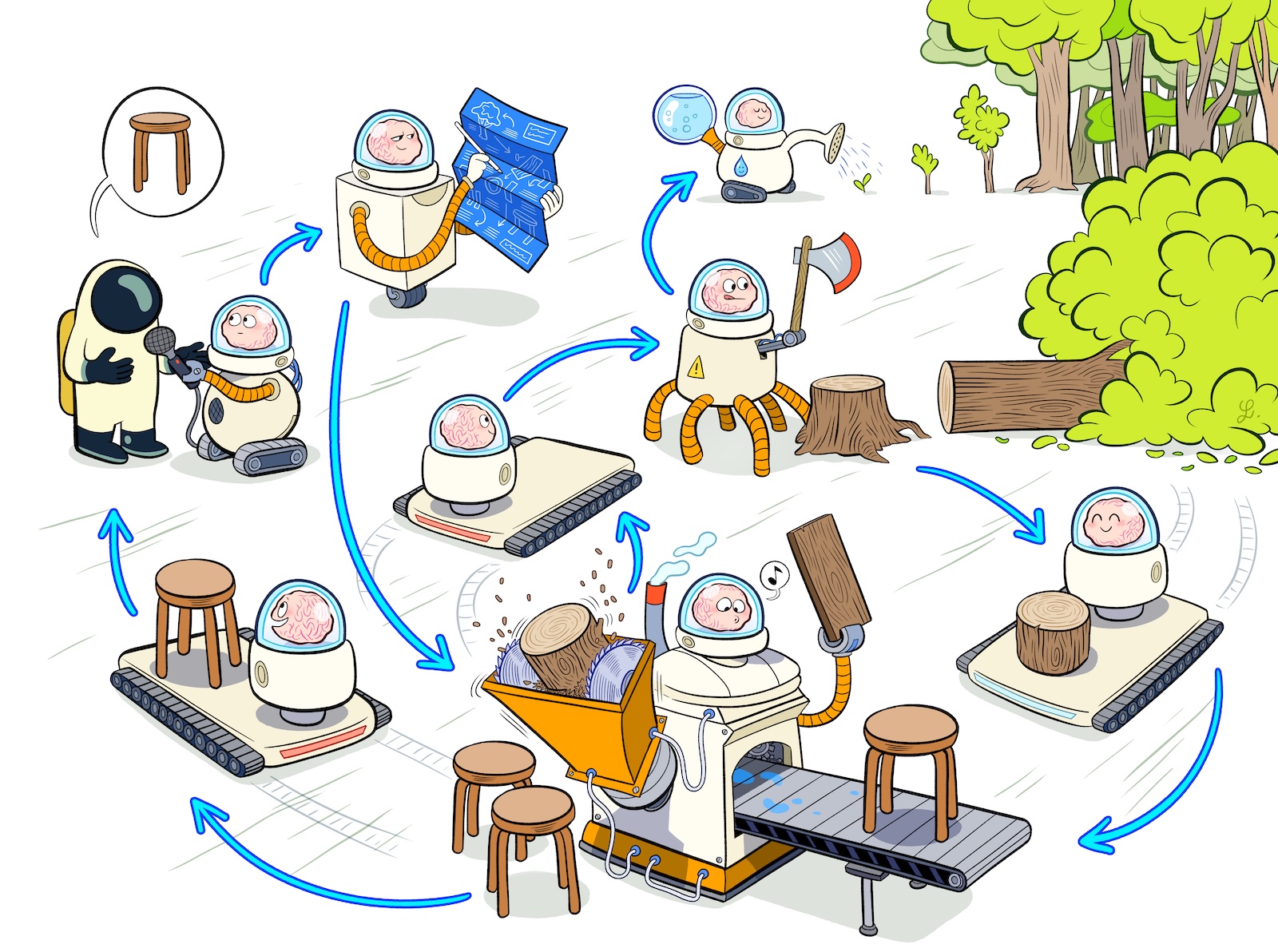
Should there be an example here to showcase that you can pass a context to the constructor and also return an error? https://docs.dagger.io/extending/constructors?sdk=go
Learn how to create and use constructors in Dagger modules, including simple and complex constructors, default values, and asynchronous usage.
 sour citrus
I'm daggerizing a docker compose stack.
The db component of my stack has a healthcheck and my app is waiting for the check to pass.
Is there a way to do that? I'm not seeing a way to easily run a command inside a started service
dense canyon
sour citrus
I'm daggerizing a docker compose stack.
The db component of my stack has a healt...
not currently at the Service level. Healtchecks could definitely use an improvement here. The way that I currently do this is by running a healcheck container after the service has been started or adding a healthcheck step after binding the service to a container to verify that everything's ok
healthchecks in general are a bit tricky since in some cases you might not even have the proper tools to perform the healthcheck at all in the service container. So there's been a never-ending back and forth about how and where healthchecks should effectively be performed.
sour citrus
In my case it's a healthcheck on a DB service. So it can't be from the outside, it's not an exposed endpoint, and it's tight to the entrypoint doing things.
But yes I agree, the question of tools is a good one (and also a reason why a lot of services don't have health checks, especially when you have something based on some kind of distroless)
sharp zealot
another tricky use case is db migrations... hard to do cleanly right now
dense canyon
sour citrus
In my case it's a healthcheck on a DB service. So it can't be from the outside, ...
I guess in this case you already have the tools in the service container, correct? Funny enough the RunningService sturct has a way to Exec stuff into it (https://github.com/dagger/dagger/blob/b9a64f6bf2dff6e9c851b9b5a73d569c163f8fa2/core/services.go?plain=1#L69-L71). I don't think we exposed that API yet since that probably requires some high level API design

GitHub
An open-source runtime for composable workflows. Great for AI agents and CI/CD. - dagger/dagger
spiral whale
Hey guys, prune cache button from dagger cloud is not working, i'm trying to prune caches from our cluster, how can i do it?
deft rain
spiral whale
Hey guys, prune cache button from dagger cloud is not working, i'm trying to pru...
by not working, do you mean you can't find it? cc @dense canyon i think we removed it
spiral whale
deft rain
by not working, do you mean you can't find it? cc <@336241811179962368> i think ...
no there is button but it returns prune failed error
dense canyon
spiral whale
no there is button but it returns `prune failed` error
@spiral whale that button is in effect not supported anymore. We've stopped serving the distributed cache service for a while now as we're working on new primitives that will allow us to provide a better service
spiral whale
dense canyon
<@805522498627043358> that button is in effect not supported anymore. We've stop...
okay debugging some go 1.25 tooling chance issue, i was resetting some caches. When i saw button i thought it's still active
dense canyon
spiral whale
okay debugging some go 1.25 tooling chance issue, i was resetting some caches. W...
I'll remove it in a bit
spiral whale
From the Go 1.25 Release Notes:
“The Go distribution will include fewer prebuilt tool binaries. Core toolchain binaries such as the compiler and linker will still be included, but tools not invoked by build or test operations will be built and run by go tool as needed.” 
This means tools like covdata, which weren’t previously invoked by default, are no longer bundled in the distribution. Instead, the go command will compile them on demand using the build cache.
When we combine this release with go build cache we're getting errors similar to go tool covdata: fork/exec /root/.cache/go-build/.../covdata: permission denied. The question here, are we mounting cache volumes with noexec option or is there such a limitation in k8s setup of the dagger engine?
We saw this issue only in our k8s cluster with our DS dagger engine setup
cc: @deft rain @dense canyon I'll translate this to issue as well but it's kind a blocker for us. want to raise it here first
deft rain
do you have an example of what you're doing to get this message?
spiral whale
you can have a look this trace: https://dagger.cloud/CASTAI/traces/333d805309de0f7aa191c813558576dc

Browse and visualize Dagger traces.
spiral whale
deft rain
do you have an example of what you're doing to get this message?
for command it's just gotestsum execution with code coverage option
deft rain
(just a note, i recommend that the error itself doesn't contain all of stderr, it makes the trace very hard to read)
if you remove the WithMountedCache for that directory, does it work properly?
we don't add the noexec flag as far as i can tell, i wonder if there's something specific about your configuration? are you using the dagger helm chart?
spiral whale
deft rain
if you remove the `WithMountedCache` for that directory, does it work properly?
yes, when we remove the build cache, it start working again.
spiral whale
deft rain
we don't add the `noexec` flag as far as i can tell, i wonder if there's somethi...
yes, we're using dagger helm chart and we're only setting some node affinity and tolerations nothing special
dense canyon
spiral whale
From the Go 1.25 Release Notes:
> “The Go distribution will include fewer prebu...
@spiral whale what about file permissions? If the container which originally wrote those files set them with a specific permission and a new container with different permissions try to access those, you'll get this permission denied message
spiral whale
dense canyon
<@805522498627043358> what about file permissions? If the container which origin...
this is standart go container we're using, these files created by go itself and we don't touch permissions. When we run same pipeline locally everything works. It's somewhat related dagger helm installation on our GKE cluster
dense canyon
spiral whale
this is standart go container we're using, these files created by go itself and ...
it shouldn't have to be any different in your cluster though
by any chance do you have access to the cluster via kubectl?
one thing that you could do is to connect to that cluster's engine and check what's effectively in the cache volume
those permission denied errors seems a bit strange though..
restive shore
When we combine this release with go build cache we're getting errors similar to go tool covdata: fork/exec /root/.cache/go-build/.../covdata: permission denied. The question here, are we mounting cache volumes with noexec option or is there such a limitation in k8s setup of the dagger engine?
Are you running your container asroot?
spiral whale
restive shore
> When we combine this release with go build cache we're getting errors similar ...
yes,
spiral whale
dense canyon
by any chance do you have access to the cluster via `kubectl`?
will try to do it today, i restarted cache volume, nodes couple of times before, behaviour is same in gke cluster.
spiral whale
one more issue, we started to see following log and connection drops in our CI?CD. Do we have a way to adjust this in helm charts
2025-09-11T04:50:39.743072756Z stderr F runtime: program exceeds 10000-thread limit

GitHub
What is the issue? Environment • GKE cluster • Self-hosted GitLab Runners • Dagger Engine v0.18.15 deployed as DaemonSet on runner nodes Problem We’ve recently started seeing random pipeline failur...
sharp brook
@dense canyon recently mentioned something about a new caching feature in tech preview. Can anyone say more?
upbeat herald
sharp brook
<@336241811179962368> recently mentioned something about a new caching feature i...
Hey, it's wip but: https://github.com/dagger/dagger/pull/10975 😄
GitHub
Go example:
package main
import (
"crypto/rand"
)
type Test struct{}
// My cool doc on TestTtl
// +cache-ttl="10s"
func (m *Test) TestTtl() string {
return ...
sharp zealot

GitHub
Problem Dagger takes a long time to load modules. As a result, every interaction with dagger starts with... waiting. This makes the Dagger experience less delightful than it should be. Solution Fin...
as discussed @rocky harbor 🙂 👆
spiral whale
i was playing with remote cache exporters locally and i'm getting following error during engine shutdown. How can I resolve this one? as far as i can see timout is hard coded it's not possible to increase it
Error: cleanup failed: "close dagger session": shutdown: do shutdown: Post "http://dagger/shutdown": context deadline exceeded
 sharp zealot
@thorn moat FYI https://github.com/dagger/dagger/issues/11288 🙏

GitHub
Problem When computing a diff with Directory.changes, I can't specify which paths to include or exclude in the comparison. This makes it more painful to eg. execute codegen commands and discard...
sharp zealot
sharp zealot
<@108011715077091328> FYI https://github.com/dagger/dagger/issues/11288 🙏
I don't mind taking it
Just want to make sure you're ok with it
thorn moat
Is the 2. Copy matching files from before necessary? Would have thought that excluding them from the incoming changes would cover that
hmm i guess unless it plants tombstones, and those layer over the original
sharp zealot
UX preference question. Which feels nicer:
dagger checks go/lint* helm/testdagger checks go.lint* helm/testdagger checks "go lint*" "helm test"
cc @warped canyon this is for supporting the toolchain pattern smoothly with checks
Heads up: renaming this channel to make its purpose more clear. It's a place for advanced Dagger users & fans ("daggernauts") to discuss their problems and ideas beyond the basics
restive shore
sharp zealot
UX preference question. Which feels nicer:
- `dagger checks go/lint* helm/test`...
I don't have a ton of context around the new checks feature. Is this something I would/could use locally? What's the difference between running dagger checks and dagger call? From the examples, it looks like it's aimed at testing/linting reports, what would be some other use cases? Not looking for immediate answers as things may be in flux. Just some questions that popped into mind 🙂
sharp zealot
restive shore
I don't have a ton of context around the new checks feature. Is this something I...
It's an opinionated layer on top of functions. It scans the module for functions that match the check interface, and gives you a convenient interface to listing and calling them.
A "check" can be anything that produces a red/green result useful to the end user. So: testing, linting, checking that your generated files are up-to-date, checking that you ran go mod tidy, whatever
Ideally, dagger checks would map 1-1 to Github checks for example
It gives you a simple entrypoint for CI, and for local development: run all the checks (dagger checks), and you know you didn't break anything 🙂
sharp zealot
Wrote my first module in Dang, took me 3mn, worked on the first try 🙂 10/10 would use again @thorn moat
(a tiny module, but still)
thorn moat
nice! is it pushed somewhere?
sharp zealot
yeah in my "more CI improvements" pr
thorn moat
ah cool
are you using Zed? any LSP issues? it's getting more and more featureful, added symbol renaming the other day
sharp zealot
thorn moat
are you using Zed? any LSP issues? it's getting more and more featureful, added ...
I had zero lsp support that I could see - but didn't try
thorn moat
if you install the zed extension, it should auto-configure it, if dang is in your $PATH
sharp zealot
thorn moat
if you install the zed extension, it should auto-configure it, if `dang` is in y...
should zed prompt me automatically to install the extension?
thorn moat
sharp zealot
should zed prompt me automatically to install the extension?
oh sorry it's not published, it's in the repo - so you'll have to clone https://github.com/vito/dang somewhere and do install dev extension, and select zed-dang/
sharp zealot
$ dagger -q checks -l

Name                                Description
scan                                Scan source code and artifacts for security vulnerabilities
check-generated                     Verify that generated code is up to date
ci-in-ci                            "CI in CI": check that Dagger can still run its own CI
lint-helm                           Lint the helm chart
test-helm                           Verify that helm works correctly
sdk/typescript/lint-typescript      CheckTypescriptFormat checks the formatting of the Typescript SDK code
sdk/typescript/lint-docs-snippets   CheckDocsSnippetsFormat checks the formatting of Typescript snippets in the docs
sdk/typescript/lint-go              CheckGoFormat checks the formatting of the typescript runtime, which is written in Go
sdk/typescript/test-node
sdk/typescript/test-bun
sdk/typescript/release-dry-run      Test the publishing process
sdk/elixir/lint                     Lint the Elixir SDK
sdk/elixir/test                     Test the Elixir SDK
sdk/elixir/release-dry-run          Test the publishing process
sdk/rust/check-format
sdk/rust/check-compilation
sdk/rust/test                       Test the Rust SDK
sdk/rust/release-dry-run            Test the publishing process
sdk/php/php-code-sniffer            Lint the PHP code with PHP CodeSniffer (https://github.com/squizlabs/PHP_CodeSniffer)
sdk/php/php-stan                    Analyze the PHP code with PHPStan (https://phpstan.org)
sdk/php/test                        Test the PHP SDK
sdk/php/release-dry-run             Test the publishing process
sdk/java/lint                       Lint the Java SDK
sdk/java/test                       Test the Java SDK
sdk/dotnet/lint
sdk/dotnet/test
sdk/go/test                         Test the Go SDK
sdk/go/release-dry-run              Test the release
sdk/python/lint-python              CheckPythonFormat checks the Python code formatting
sdk/python/lint-go                  CheckGoFormat checks the Go code formatting for the Python runtime
sdk/python/test                     Test the Python SDK
sdk/python/release-dry-run          Test the publishing process
scripts/lint-sh                     ShellCheck scripts files
scripts/lint-powershell             LintPowershell scripts files
scripts/test                        Test install scripts
docs/lint                           Lint the documentation
go/lint                             Lint the Go codebase
go/check-tidy                       CheckTidy checks that go modules have up-to-date go.mod and go.sum
release/dry-run                     DryRun performs a dry run of the release process

GitHub
By porting frequently imported modules, or even SDKs, to dang, we can make their downstream modules faster. To make the most of the performance boost, though, we need to embed a dang interpreter di...
restive shore
sharp zealot
```console
$ dagger -q checks -l
Name Descriptio...
What makes a dagger function a "check"?
sharp zealot
restive shore
What makes a dagger function a "check"?
- no required arguments (after user defaults appear)
- return a
CheckStatus
restive shore
Curious to see some real world examples. Would there be a case for chaining checks? Or is to meant to be an exit node?
sharp zealot
restive shore
Curious to see some real world examples. Would there be a case for chaining chec...
We're in the process of hooking it up in our own CI (see #daggernauts message)
sharp zealot
POV you're running your entire CI on a single cloud machine 😛

 sharp zealot
If anyone is looking for an easy core contribution to cut their teeth: https://github.com/dagger/dagger/issues/11313

GitHub
Dagger as a native File API, and a native JSON API, but it can't connect them directly. Clients have to 1) retrieve the contents of the file, 2) send the contents back to a JSON object. It woul...
sharp zealot
<@&946480760016207902> 🙏 🙏 how hard is this? https://github.com/dagger/dagger/issues/11317

GitHub
Dagger can natively load .gitignore and apply its rules to filter host directories pre-upload. This feature is disabled by default, and can be enabled as an argument to Host.directory(). But, it ca...
thorn moat
sharp zealot
<@&946480760016207902> 🙏 🙏 how hard is this? https://github.com/dagger/dagger...
my guess is not that hard, MVP is just passing a SDK pragma to a bool flag in an existing API (Host.directory), which is a well-beaten path, albeit with extra legwork across the SDKs.
sharp zealot
thorn moat
my guess is not that hard, MVP is just passing a SDK pragma to a bool flag in an...
Was wondering if piggybacking on the existing +ignore pragma might be less SDK legwork.. Just need to check if the SDKs enforce the string-array type, or will allow a string value to be passed. In which case I can handle both cases both, in the engine
thorn moat
sharp zealot
Was wondering if piggybacking on the existing `+ignore` pragma might be less SDK...
hmm I see the appeal, but I suspect that'll end up being just a different kind of change to make to each SDK (handling different types for +ignore vs. adding another pragma)
sharp zealot
thorn moat
hmm I see the appeal, but I suspect that'll end up being just a different kind o...
if that turns out to be the case, then no point in piggypacking, I agree
Just trying to avoid touching every sdk...

Maybe doug could do it? 🙂
thorn moat
maybe - i'll reply on the issue (didn't notice you asked about piggybacking there), so we can just point it at the issue
thorn moat
sharp zealot
<@&946480760016207902> 🙏 🙏 how hard is this? https://github.com/dagger/dagger...
replied with another idea: https://github.com/dagger/dagger/issues/11317#issuecomment-3458882319
sharp zealot
I swear I just saw a loading module span time elapsed counter drop down then start increasing again... First time I see that. It jumped back for a half second, maybe twice. Known issue @rocky harbor @thorn moat ?
Trace for reference: https://dagger.cloud/dagger/traces/716dc2f9839da9f19be9e9bb27c1b7a2#5826220a804a3119
rocky harbor
sharp zealot
I swear I just saw a `loading module` span time elapsed counter *drop down* then...
I have seen it go negative before and in the TUI do occasionally see it flash and back forth between two different intervals, but was never common enough to reach the threshold of looking into it
sharp zealot
@dense canyon I see filesync metrics 
But, filesync activity is still completely invisible on default verbosity...
sharp zealot
rocky harbor
I have seen it go negative before and in the TUI do occasionally see it flash an...
OK will let you know if it ever happens more than 3 times in the same day 🙂
(this was my first time ever)
dense canyon
sharp zealot
<@336241811179962368> I see filesync metrics <a:party_blob:1025065938523017326> ...
That's honoring the default visibility of the filesync span. We can make it appear with the default verbosity but I'm a bit unsure if it's the best choice given that it'll very likely spam the TUI wirh a bunch of info since it needs to also show all the parent spans above filesync
sharp zealot
dense canyon
That's honoring the default visibility of the filesync span. We can make it appe...
Yeah my issue is when everything visible on the TUI says ✅ and there's nothing else visible going on... So it looks like the TUI is just hanging... sometimes for a long time. I guess it would be OK for the filesync itself to be hidden, if its parent were visible
@dense canyon this is torture 😂 you're teasing me.


you just gave us the feature and we're already spoiled 😛
dense canyon
sharp zealot
<@336241811179962368> this is torture 😂 you're teasing me.
Lol. Gotta keep those docs under control 😄
50s to upload 12MB? :sus:
There seems to be something odd in the span duration calculation. Will 👀 tomorrow
Having said that... The whole filesync span actually took 2m so it's possible that it took that much time
Did you intentionally throttle your upload or something?
sharp zealot
dense canyon
Did you intentionally throttle your upload or something?
No! It's home internet -> PARC. My bandwidth is good. No idea why it's so slow
dense canyon
sharp zealot
No! It's home internet -> PARC. My bandwidth is good. No idea why it's so slow
it's definitely faster here using PARC.. having said that, 13 and 19s to upload the whole thing 😬 . I'd assume it's very likely since it's transferring files one by one and doesn't have an optimization to avoid several roundtrips. @rocky harbor surely knows better
 rocky harbor
dense canyon
it's definitely faster here using PARC.. having said that, 13 and 19s to upload ...
rocky harbor
dense canyon
it's definitely faster here using PARC.. having said that, 13 and 19s to upload ...
no it does transfers in parallel
dense canyon
dense canyon
it's definitely faster here using PARC.. having said that, 13 and 19s to upload ...
what makes me think of this is the directories that take the most (.git and sdk) have a bunch of files in them
rocky harbor
rocky harbor
no it does transfers in parallel
i think there's a semaphore though
dense canyon
rocky harbor
no it does transfers in parallel
I know, I know.. but it still has to do a bunch of roundtrips for each file
and it seems to hurt when there's hundreds (?) of them
rocky harbor
dense canyon
I know, I know.. but it still has to do a bunch of roundtrips for each file
yeah it's grpc so there's the tcp roundtripping, plus it also sends in chunks for large files. it's all one grpc stream though
the semaphore is fixed to be 4 though, i feel like it could be bigger
only being able to send 4 chunks in parallel at a time would probably hurt the "lots of little files" case
dense canyon
rocky harbor
yeah it's grpc so there's the tcp roundtripping, plus it also sends in chunks fo...
yeah.. for me each roundtrip to the US is ~120/150ms
dense canyon
rocky harbor
only being able to send 4 chunks in parallel at a time would probably hurt the "...
nice, I'll try playing with this tomorrow and see how it changes 🙏
rocky harbor
dense canyon
nice, I'll try playing with this tomorrow and see how it changes 🙏
the relevant part is in the client-side code, which is mostly still fsutil, so this is what you'd need to change https://github.com/tonistiigi/fsutil/blob/586307ad452fadb42e28be16d2b995b2eb6755e9/send.go#L69
sharp zealot
oooh could it be an east coast vs. west coast latency difference?
a good reminder that our VMs are... where, europe?
rocky harbor
sharp zealot
a good reminder that our VMs are... where, europe?
I think they are all in northern virginia
CI was hitting timeouts downloading a lot of stuff today, wondering if something is just up network wise w/ the infra
dense canyon
the relevant part is in the client-side
dense canyon
^ here's the time it took from a VM that I have in Virginia against PARC. Same thing on my local machine takes ~ 10x more

considering that the latency between Argentina and the US is around ~60 times worse than this VM.. doesn't seem that bad
sharp zealot
Orphan filesync: https://github.com/dagger/dagger/issues/11351
sharp zealot
FYI daggernauts: another massive performance optimization coming: https://github.com/dagger/dagger/pull/11336

 restive shore
I am trying to understand toolchains and I want to clarify the difference between blueprint and toolchain. From what I understand in docs, the only difference between the two are,
Given that my toolchain (mymodule) has a function called hello-world
if you install toolchain you use the toolchain namespace to call functions (otherwise they behave the same)
dagger toolchain install path/to/mymodule
dagger call mymodule hello-world
If you init a blueprint, I get to directly use my function as if it's in my module.
dagger init --blueprint path/to/mymodule
dagger call hello-world
Is that correct?
If so, feel like "blueprint" adds adds unnecessary complexity/confusion and probably should be deprecated.
sharp zealot
restive shore
I am trying to understand toolchains and I want to clarify the difference betwee...
A blueprint is useful when you need to daggerize many projects with the exact same stack, with minimal disruption and boilerplate for the end user.
It's exactly the same as dropping the same boilerplate on X different directories - but without actually polluting the repo with boilerplate
restive shore
Oh.. so toolchain adds boilerplate? just like regular dagger init?
sharp zealot
restive shore
Oh.. so toolchain adds boilerplate? just like regular dagger init?
(guessing you mean blueprint) No it achieves the same result as boilerplate, without the downside of actual boilerplate
restive shore
No I meant toolchain. When i do dagger toolchain install does it add more than a dagger.json to my project?
sharp zealot
restive shore
No I meant toolchain. When i do `dagger toolchain install` does it add _more_ th...
It's the same as installing a dependency, just a special kind of dependency that is exposed to the end user, instead of your code
Instead of adding the dependency to dependencies in dagger.json, it adds it to toolchains.
restive shore
I'm still confused why blueprint and toolchain are different from a consumer standpoint.
sharp zealot
Granted, we need some real-world testing to better understand how blueprint and toolchain will be used in practice, and if one emerges as more important than the other. The way they're designed, they are complimentary in how they work, and you can combine them.
restive shore
Sorry, I'm going just by docs. Let me play around with it first. That may answer my questions.
sharp zealot
restive shore
I'm still confused why blueprint and toolchain are different from a consumer sta...
It's mostly terminology. Initially "toolchains" were just called "multiple blueprints". But it feels weird to tell a user "you can install multiple blueprints in the same module". It doesn't really fit the meaning of the word "blueprint".
restive shore
sharp zealot
It's mostly terminology. Initially "toolchains" were just called "multiple bluep...
ah! so my understanding is correct. In that case, personally, I won't even introduce blueprints. I'll just let my users install toolchains. Because, I'm dreading introducing another feature that's almost exactly like the other.
sharp zealot
It is possible that toolchains turn out to be versatile enough to make blueprints unnecessary. But too early to tell.
I think it depends on how much you want to centralize vs. decentralize the ownership of Dagger modules.
- Blueprints are most centralized.
- Toolchains is intermediate
- Hand-rolled functions are most decentralized
warped canyon
I see the two paths as
- (blueprints) "i want my users to have exactly this module"
2 (toolchains) "i want to provide my users multiple tools they can use, in addition to their own customization"
sharp zealot
I think blueprints will be a powerful but niche feature, for large platform teams that need full centralized control
Toolchains IMO have the potential to become mainstream, the first thing you learn when setting up dagger. Because it strikes a good balance
restive shore
That makes more sense. If i have a module that handles CI/CD completely, that will be a blueprint. But parts of that blueprint (other modules used by that blueprint) can be adopted by users as toolchains if they want
Users could install that CI/CD module as a toolchain too. (that's where the confusion will happen)
So to avoid confusion, I may stick to toolchains only.
sharp zealot
Sounds reasonable
Also @restive shore there's another major feature coming up, which combines with toolchains -> checks
restive shore
ah! the next piece of the puzzle.
sharp zealot
dagger checks -l [FILTER] -> list available checks in the module
dagger checks [FILTER] -> run checks and show their results
dagger checks walks the entire module looking for checks, even top-level functions that return objects. That includes functions implemented by toolchains.
Example:
$ dagger toolchain install go
$ dagger checks -l
go/lint
go/test
go/check-tidy
$ dagger checks
<runs all go checks>
This is how we will standardize CI integration. New check = new CI entrypoint.
warped canyon
yeah this part is going to be so nice
sharp zealot
SO nice
warped canyon
like the biggest thing for making dagger easier to adopt since the Go SDK
restive shore
How do checks handle credentials?
sharp zealot
restive shore
How do checks handle credentials?
User defaults are applied, same as regular functions.
(you can't pass explicit CLI args, so only user defaults are available)
--> .env
(another important piece in the puzzle)
restive shore
Does the upcoming toolchain config allow for setting values like env://MY_SECRET?
sharp zealot
restive shore
Does the upcoming toolchain config allow for setting values like `env://MY_SECRE...
No
It's sandboxed, so you can only express in there what you could express in a custom module: +default, +defaultPath, +ignore etc
Otherwise it would be unsafe, any remote module could escape the sandbox
btw @restive shore we're looking for the right name for that field in dagger.json.
restive shore
sharp zealot
btw <@163822683799158784> we're looking for the right name for that field in `da...
Which field?
sharp zealot
restive shore
Which field?
 restive shore
I saw that.. but I guess it's already merged 😄
warped canyon
just merged 😄 here's what a dagger.json would look like to set a value for the message argument of the configurableMessage function https://github.com/dagger/dagger/pull/11359/files#diff-079f50f46cf3ce4cb1186f5cf20f138de9d57c857e8a7bf96997815254d781c9R175-R191
{
  "name": "app",
  "engineVersion": "v0.19.4",
  "toolchains": [
    {
      "name": "hello",
      "source": "../hello",
      "arguments": [
        {
          "function": ["configurableMessage"],
          "name": "message",
          "default": "hola"
        }
      ]
    }
  ]
}
This allows me to change defaults without touching or writing code. Sweet!!
sharp zealot
restive shore
This allows me to change defaults without touching or writing code. Sweet!!
Yes but only within the sandbox as we discussed just before. It's basically an ultra-lightweight middleware system, so you can "wrap" the toolchain with custom argument values, filters etc. without having to actually eject to the full-blown SDK system (which is particularly bad at middleware/wrapping)
restive shore
0.19.5 feels snappy! 🚀 At least in the TUI.
sharp zealot
sharp zealot
@restive shore it's because of this 👆 🙂
restive shore
sharp zealot
<@163822683799158784> it's because of this 👆 🙂
Right! I've been waiting for it to get released. Fired it up as soon as it was out 🙂
One more question about toolchains. Since toolchains, is there no benefit to doing a direct dagger install?
sharp zealot
restive shore
One more question about toolchains. Since toolchains, is there no benefit to doi...
Toolchains can only be called by the end user. You can't call them from your own module's code. For that you need a regular dependency (currently dagger install but we might alias that to dagger dep install to make it more clear)
restive shore
oops, I thought toolchains can be dag. called. Gotcha
sharp zealot
restive shore
oops, I thought toolchains can be `dag.` called. Gotcha
We went back and forth on it. But figured it would be easier to explain and understand this way.
restive shore
We'll put it in practice and see. I see why you did it that way, but that's also 1 more nuance to explain 🙂 I love all the new features but I am a power user. I can see it being overwhelming to someone new. I do like the direction with toolchains TBH. That may potentially make it easier for newcomers. It's still too early to tell.
sharp zealot
The features will continue until morale improves 😛
restive shore
are .env defaults not documented? I can't find any docs on it
sharp zealot
restive shore
are `.env` defaults not documented? I can't find any docs on it
not yet... 😔
sharp zealot
Dang feature request @thorn moat : builtins to decode/encode base64
Also: explicit error handling is not possible (I think). Which is good (I think), but prevents direct translation of code like this:
        if err != nil {
            var execErr *dagger.ExecError
            if errors.As(err, &execErr) {
                if strings.Contains(execErr.Stderr, "invalid reference: "+destTag) {
                    // this is a ref that only exists in the source, and not in the
                    // dest, so no overwriting will occur
                    return nil
                }
            }
            return err
        }
I've never liked this particular pattern of special-casing the errors, for the same reason it can't be translated: it's SDK-specific, and makes errors part of the workflow logic, which graphql really doesn't want us to do
thorn moat
sharp zealot
Dang feature request <@108011715077091328> : builtins to decode/encode base64
interesting, what's the use case? debugging/snooping around?
thorn moat
sharp zealot
Also: explicit error handling is not possible (I think). Which is good (I think)...
error handling is on the backlog, will think about it!
sharp zealot
thorn moat
interesting, what's the use case? debugging/snooping around?
porting .dagger/sdk.go 😁
thorn moat
encodedPAT := base64.URLEncoding.EncodeToString([]byte("pat:" + githubTokenRaw))

giga brain move: shell out to base64
(j/k, will add)
(edit: decided against:) side note: i think I'm gonna have to move where directives are declared in Dang - right now they're post-field, which matches GraphQL, but that doesn't work as well now that field declarations also have bodies:
pub test: Void {
  # ...
} @check # <- weird
I definitely considered it 😁 but worried I'd slow down the monolith


 sharp zealot
@thorn moat @warped canyon I had my agent write a manual for porting Dagger modules from Go to Dang. Then I feed it to the next agent, and ask it to improve the manual based on its own experience, and so on.
In case it's useful 🙂
Currently part of https://github.com/dagger/dagger/pull/11373
@thorn moat dang papercuts so far:
- Regular arguments can omit names, but directive arguments can't. It stumped both me and my coding agent.
- Does
letmean both "variable inside a body" and "private field or function in a type"? I still am not sure 100%.
warped canyon
pretty sweet! I wonder how much it'll trip over the corresponding Go and Dang examples not being exactly the same logic. Most of them are the same but a few have small differences.
Also curious if it would help to have an early section explaining when a Go module can't be converted to Dang
sharp zealot
sharp zealot
🤔
I figured it out, it was a name conflict (my module has the same name as one of its dependencies)... Error is wrong
sharp zealot
@thorn moat another dang request: path.Clean 🙏
(also a list of builtins so I know what to request 🙂
thorn moat
sharp zealot
<@108011715077091328> another dang request: `path.Clean` 🙏
(also a list of bui...
here's the list so far: https://github.com/vito/dang/blob/main/pkg/dang/stdlib.go
(i have an in-memory TODO to improve LSP completion so you can at least see them on strings/lists/etc)
 thorn moat
sharp zealot
<@108011715077091328> wait... Does dang have native self-calls?
thorn moat
sharp zealot
<@108011715077091328> wait... Does dang have native self-calls?
no, but i think it could at some point, not 100% sure
sharp zealot
Since there's no codegen, my first instinct was: "oh we get this for free?"
thorn moat
almost - i think my SDK needs to at least implement the new typedefs API in order to support that. would need to take another swing at it
sharp zealot
OK cool! Not a blocker for me
sharp zealot
thorn moat
almost - i think my SDK needs to at _least_ implement the new typedefs API in or...
Thinking about it some more... You could inject a custom span on every internal function call, since you control the runtime anyway. It's not technically self-calls, but it's more like a built-in parallel 🙂 Since unlike Go & other runtimes, you know for sure that every function call is traceable and desirable to trace
sharp zealot
Just thought of a cool pattern: blueprints for vendoring dependencies 🙂 Example:
- I'm porting a bunch of modules to Dang
- I want all my modules to use the exact same version of the Dang SDK
- Normally this requires manually updating N modules each time. Laborious and error-prone
- Instead, I can "mirror" the Dang SDK module by initializing a local module using the SDK as a blueprint. Then point all my modules at that local mirror. Now I only need to update the blueprint once, and all my modules get updated
--> This works for any dependency, not just SDKs 🙂
TLDR: we accidentally implemented vendoring 🙂
@thorn moat tried to port a Go module that uses parallel... Any plans for that in the stdlib or syntax? 😛
thorn moat
@sharp zealot that's been in the "fun things to figure out" pile for a bit but haven't had time to even think about what it should look like, feel free to mock some things up!
sharp zealot
thorn moat
<@488409085998530571> that's been in the "fun things to figure out" pile for a b...
First instinct: probably easier to just do it at the core API level. Then dang gets it for free
Could be a pragma on an array argument, or a special array type? That's the function telling the engine "when the caller passes an array with N elements, fan out to N instances of this function, and pass a single value to each instance.
It's a mirror image of parallel since the callee would be controlling its own parallelism, instead of the caller
Maybe too restrictive? But would dodge the issue of callbacks & generics
The other approach is to finish shipping generic objects, and build a generic dag.Parallel([]Object) []Object primitive that relies on laziness?
thorn moat
Side thing I wanted to try (haven't processed above but maybe related): having Dang just construct IDs client-side instead of sending a request to the server just to get the ID to pass an object as an arg somewhere. Then instead of N+1 queries, it's just one big query. Curious how many parallelization opportunities we lose in some SDKs. (I think the Go SDK at least parallelizes ID fetches, not sure about other SDKs though, it's a subtle thing to get right)
sharp zealot
thorn moat
Side thing I wanted to try (haven't processed above but maybe related): having D...
the exact relationship between query and ID still eludes me 😅
thorn moat
sharp zealot
the exact relationship between query and ID still eludes me 😅
in dang or in general?
sharp zealot
thorn moat
in dang or in general?
in general. skill issue 😁
what I mean is that I don't intuitively understand whether a client should be able to construct an ID like it can construct a query
thorn moat
oh, yeah, it would be tightly coupled ✨ vertically integrated ✨ for sure. but, it's been designed to support that since the start, at least
warped canyon
sharp zealot
Could be a pragma on an array argument, or a special array type? That's the func...
I think this is still relevant https://github.com/dagger/dagger/issues/5083

GitHub
Summary This proposal suggests adding an SDK helper for efficiently synchronizing multiple pipelines, in an easy to use way. Background This is based on one aspect of: #4205 Motivation Often times,...
sharp zealot
warped canyon
I think this is still relevant https://github.com/dagger/dagger/issues/5083
I'm really not a fan of doing it at the SDK level. Feels like a worst of both worlds between language-native and dagger-native
sharp zealot
@thorn moat just in case: in dang, can a default value reference a function? Or literal only?
thorn moat
it can be any expression
 thorn moat
i have no idea how that bubbles up to dagger sdk at the moment
like, if you do base: Container! = container.from("golang") or something
thorn moat
actual resolution (but both, i have all the questions)
sharp zealot
I think for resolution, it traces back to the kinds of questions @upbeat herald and @sour citrus are struggling with, re: how lazy can runtimes be? If a default value in the schema can be the result of a dynamic expression, then that expression must be resolved at registration time, which means you need a full runtime at registration, which means dagger functions requires a complete runtime build + load.
For most runtimes that's disastrous, but Dang might be a special case since it's so lightweight to begin with, and the build/run distinction maybe doesn't hold since there's no codegen?
sharp zealot
sharp zealot
Just thought of a cool pattern: blueprints for vendoring dependencies 🙂 Example...
Update: I just tried this with the dang SDK, and it doesn't work... Because any defaultPath will be resolved in the context of the caller... In the case of the Dang SDK, there is a dangRoot that resolves to the root of the repo with some filters... That completely breaks when loading it as a blueprint.
--> I don't know if the solution is to "fix" the dang module, or our blueprint feature? Or something else?
Once again our entangled filesystem model comes back to bite us
sharp zealot
@thorn moat is nevermind I found the root cause of my parse error: let foo="bar" allowed inside a if{} statement?if foo instead of if (foo)
thorn moat
sharp zealot
~~<@108011715077091328> is `let foo="bar"` allowed inside a `if{}` statement?~~ ...
ah yep, that was a recent change. there's also case (foo) { ... } now, which replaces pattern-matching.
re: let vs. pub (since you mentioned it was confusing before and I don't remember if I answered) - they both declare a new slot, only pub gives it public visibility (which only really matters within a type), and let makes it private (so it won't be exposed in a Dagger SDK for example, and can't be called from outside). If you omit let or pub and just do x = 1 it'll update the outer slot where x was declared. Kinda similar to Go := vs = semantics
sharp zealot
nice thanks
sharp zealot
@rocky harbor how do I enable function caching in the monolith?
rocky harbor
sharp zealot
<@949034677610643507> how do I enable function caching in the monolith?
it's enabled provided none of the dagger.json's have disableDefaultFunctionCaching: true, but I handled all that during v0.19.4, so it should be enabled
I added //+cache="session" in a couple places that needed it, but otherwise everything was cacheable
restive shore
I have curl --silent calls in my dagger module but in notty (--progress=report,dots,plain) I am still seeing the output in the logs. is that expected?
 crude gazelle
I've forwarded this to the #daggernauts as it's a good place to discuss pain points for advanced use cases.
sharp zealot
@thorn moat how do I mark a check in dang?
thorn moat
sharp zealot
<@108011715077091328> how do I mark a check in dang?
it goes just between the field decl and the block: https://github.com/vito/dang/blob/b94a4340f16f4fc60e78019068e5025468b1de9d/.dagger/main.dang#L203
sharp zealot
@thorn moat I think maybe I'm pinned to a version of dang that is too old
In the context of our kill-monolith PR, is it OK to just pin on the very latest? Not sure what to do with the misadventure you had that Tom was mentioning this morning
(I didn't understand the issue this morning)
thorn moat
it's a bit of a knot - if you pin to the latest, the latest stable engine won't be able to run it, only a dev engine
the issue was that the codegen module was un-pinned, so it strayed forward
sharp zealot
thorn moat
it's a bit of a knot - if you pin to the latest, the latest stable engine won't ...
OK. That's fine, we're actually going to ping the new CI to use main for now (because we need the latest dagger checks) cc @warped canyon did you expose that knob in the new action?
thorn moat
should be fine then 👍
sharp zealot
So, I'll just pin everything to today's main
dagger -M -c 'address https://github.com/vito/dang | git-ref | commit'
warped canyon
sharp zealot
OK. That's fine, we're actually going to ping the new CI to use main for now (be...
Yeah you can specify a commit for the engine
sharp zealot
@warped canyon one box I forgot to add to the checklist: how do we get a .env in there
btw @thorn moat -> https://github.com/vito/dang/issues/7
This would make it easier to manage the pinned version in a single place, via the magic of blueprints 🙂
GitHub
Problem The module github.com/vito/dang/dagger-sdk cannot be used as a blueprint from another repo, because it uses +defaultPath to access the dang runtime. This only works if the context is dang&#...
thorn moat
am i getting deja vu  https://github.com/vito/dang/issues/5
GitHub
Problem When using the Dang Dagger SDK as a dagger blueprint, the SDK fails to run. This prevents me from vendoring the SDK on my repo, which blueprints are unexpectedly great for (except when they...
 thorn moat
maybe cause its' closed 😂 - yea
warped canyon
sharp zealot
<@135620352201064448> one box I forgot to add to the checklist: how do we get a ...
Is this the part @dense canyon was thinking about?
sharp zealot
warped canyon
Is this the part <@336241811179962368> was thinking about?
I think he was talking about just having the plumbing to get secrets in native CI via 1password
But separately we haven't discussed the best practice for how to use that plumbing
(and one step removed from that, how to prepare for that best practice in GHA)
warped canyon
yeah I guess we could assemble a .env in bash from gha secrets but its not great
warped canyon
yeah possibly. What goes in there vs toolchain config in dagger.json?
sharp zealot
warped canyon
yeah possibly. What goes in there vs toolchain config in dagger.json?
toolchain config is part of the module logic itself. same across all environment, and sandboxed.
sharp zealot
@thorn moat does dang support optional args?
thorn moat
yep
sharp zealot
(ie. can I just omit an argument internally)
even without going through a dagger function call? ie. local function calling another local function?
thorn moat
not sure what you mean by that, but yeah. same semantics as graphql, either nullable type or has default
non-null-with-default translates to an optional/nullable type on caller side, and the default is applied on the callee side
GitHub
Experimental GraphQL scripting language. Contribute to vito/dang development by creating an account on GitHub.
sharp zealot
It's happening 😄 https://github.com/dagger/dagger/issues/11440

GitHub
The Exodus It's time! Let us boldly enter a YAML-free future! Why? Faster and more repeatable end-to-end tests Simpler and cleaner configuration No drift between local and CI execution A Golden...
sharp zealot
@thorn moat what quote characters does dang support beyond double-quote? single-quote, backtick, other?
thorn moat
no backtick or single, just double quote and triple-double-quote
triple-double-quote will automatically word wrap and trim leading whitespace, so it's great for prompts (+ docs)
sharp zealot
Was looking for a way to have literal double quotes without escaping them
No raw-strings then right?
thorn moat
not yet yeah, will have to figure that out for regexes (unless i make regexes more special like /foo/)
sour citrus
Maybe a dumb idea, but could we imagine to integrate the dagger.json inside a *.dang file? Like in some kind of header?
That way we could imagine to have a single file that declares the dependencies and settings. Not a big deal to have two, just wondering if that could be a good or bad idea.
thorn moat
sour citrus
Maybe a dumb idea, but could we imagine to integrate the `dagger.json` inside a ...
Kinda related thread that mentions import: https://discord.com/channels/707636530424053791/1440868206045691904
But in the end I don't think we can avoid dagger.json, we at least need it around to be able to identify where a module exists, and even the things I might want to 'import' in Dang (like GitHub's API) might need to be in dagger.json for secret integration (#1440868206045691904 message)
sharp zealot
@thorn moat not a fan of the top-level description= to add a description to the module in dang. A docstring on the type would make more sense to me
thorn moat
sharp zealot
<@108011715077091328> not a fan of the top-level `description=` to add a descrip...
oh yeah that's cruft
at the time description= was added doc strings were probably not a thing
sharp zealot
sour citrus
On SDKs if I'm right we have the description on the objects, and the description of the module.
Quite often we have modules with one single type. And there's always a main type.
IIRC on dagger shell we are displaying the module's doc and if it's not set the doc of the main object for the module. But it's only for shell, not for dagger functions for instance.
Maybe we can generalise that, saying the module description is the top level doc OR the main module doc.
It can be done at two different places: on the SDK, when registering the types, but it means each SDK need to do it. Or at the engine level, when we inspect a module. That way it's "just" a question of representation.
The advantage of the latest is it will work everywhere, with all SDKs with no change.
sour citrus
@thorn moat a dang suggestion, to support ruby-like arrays %w
Instead of
buildCtr.withExec(["go", "test", "-coverpkg=./...", "-coverprofile=.coverage", "-shuffle=on", "./..."])
it could be
buildCtr.withExec(%[go test -coverpkg=./... -coverprofile=.coverage -shuffle=on ./...])
or even something like
buildCtr.withExec(%"go test -coverpkg=./... -coverprofile=.coverage -shuffle=on ./...")
This is not a very important feature, but kind of sugar that would make things even better to write.
Happy to try to implement it if that's something that could make sense.
thorn moat
ha yea that's been on my mind. haven't jumped on it yet since i'm weighing the option of custom quoters, like %re{foo/bar/baz} for regexes, %w{1 2 3} for word splitting, %sh{echo 'foo bar'} for shell-aware splitting, etc.
happy to bikeshed that if you want to try implementing it, even though it's a bit more complicated
rough idea is it translates to a call like "raw contents".re and then we just define those String methods, but there may be a more sane way to organize them
sharp zealot
sour citrus
<@108011715077091328> a dang suggestion, to support ruby-like arrays `%w`
Instea...
Please no
Don't turn dang into perl 🙏
sour citrus
sharp zealot
Don't turn dang into perl 🙏
as much as I used to like perl (long time ago) that wasn't the goal 😄
that said, we can achieve the almost same thing with something like
"go test -coverpkg=./... -coverprofile=.coverage -shuffle=on ./...".words
that could return the string split by words, doing the same thing but without perl/ruby/black magic 😅
sharp zealot
I don't want to meddle too much - I just like that the syntax is pretty easy to guess, and feels like a logical continuity of graphql. If we start going in more esoteric territory... I'm just not going to learn it
thorn moat
sharp zealot
Don't turn dang into perl 🙏
Yeah there's a reason I haven't pulled the trigger on it yet. Ironically one of the motivations for quoters is to keep the grammar small, since we'll at least need one new string form to support regexes without escaping hell. MVP for that is raw strings, but if we have to add new syntax for that, quoters are tempting because it's still just one new syntax, with a straightforward desugaring rule, that can pay dividends later.
sharp zealot
@thorn moat I'm ready for dang query support in the CLI 😛
thorn moat
sharp zealot
<@108011715077091328> I'm ready for dang query support in the CLI 😛
in the REPL? or for flags? (anticipating a 'yes' lol)
 sharp zealot
looks like a phishing attempt on github???
thorn moat
lol yea. wild, seems hooked up to github events somehow, was almost immediate
reporting it
sharp zealot
And I blocked it
thorn moat
root@d84b9c256a7d:~# unzip -l 103c30e3eec8.zip
Archive:  103c30e3eec8.zip
  Length      Date    Time    Name
---------  ---------- -----   ----
        0  2025-11-25 21:23   Password - fix.txt
   936846  2025-11-25 21:24   Winver-x86-x32-fix10.18.25.rar
---------                     -------
   936846                     2 files

crude gazelle
I don't want to meddle too much - I just like that the syntax is pretty easy to guess, and feels like a logical continuity of graphql. If we start going in more esoteric territory... I'm just not going to learn it
As a community maintainer / end-user: I agree with this sentiment.
I appreciate DSLs, but by definition, I'm only going to be using it in that one Domain. It needs to be easy to learn and easy to remember.
thorn moat
crude gazelle
> I don't want to meddle too much - I just like that the syntax is pretty easy t...
Yep, that'll always be the design ethos - see https://github.com/vito/dang#design-philosophy
But, by the same logic of it being a domain specific language, it's worth exploring (which doesn't mean committing to!) ideas that help in that specific domain. With ["cmd", "arg1", "arg2"] being present in practically every Dang script it makes sense to think about a bit, just like Dagger Shell gave special treatment to args so you don't have to do with-exec foo,bar,baz and can type them more naturally.
Whether we commit to these ideas or decide it's worth it in the end is another story. We need to consider second-order effects, too - for example, what happens when I have %w{go test} but then want to have an expr arg. Does %w{} support interpolation? Is it worth that complexity? Is the pain of switching from %w{foo bar} to ["foo", "bar", baz] worth having %w{} in the first place? etc. etc. etc.
I promise this language isn't going to become a kitchen sink. Don't take my excitement for exploring ideas as getting distracted by shiny things and jingling keys. 🙂 It's the early days for a language, it makes sense to experiment a bit and try ideas and throw them out, which has been the process thus far.
thorn moat
Personally, I have some comfort in manually typing out ["foo", "bar"] and knowing exactly what's going into argv without worrying about whether %w{sh -c 'foo bar'} parses how I expect (it wouldn't - so I would only trust a quoter that understands shell syntax).
Also, the existing triple-quoted strings work great for sh -c:
withExec(["sh", "-c", """
  entire script
  goes here
  and is parsed nicely without leading whitespace
"""])
But, still, seems like we'll need some sort of new syntax for regexes to avoid escape hell, which is the real reason I'm considering general quoter syntax, vs. Python-style raw strings which are of similar complexity but more limited (can only be a raw String, can't one-shot a Regex literal)
crude gazelle
thorn moat
But, still, seems like we'll need some sort of new syntax for regexes to avoid e...
That's completely fair, the %w syntax is unfamiliar to me but I understand if it's necessary.
Out of curiosity, does the end-goal involve the other SDKs being written in Dang?
sour citrus
crude gazelle
That's completely fair, the %w syntax is unfamiliar to me but I understand if it...
That's something we discussed, yes. To write SDKs in Dang will improve performances. For now we're lacking a few features, but when possible that's the goal. We have already re-written some of the "dev" sdk modules (like the ones for java, go, typescript) in Dang for that.
crude gazelle
Sounds like a plan, since every SDK (besides Go) uses the Go SDK as glue already, makes sense to use a lightweight glue instead
sharp zealot

Browse and visualize Dagger traces.
What are those multipliers on each check line in the TUI? 3x, 4x, 5x...
 sharp zealot
What are those multipliers on each check line in the TUI? `3x`, `4x`, `5x`...
sharp zealot
sharp zealot
What are those multipliers on each check line in the TUI? `3x`, `4x`, `5x`...
@thorn moat @dense canyon @lime comet 👆
thorn moat
sharp zealot
<@108011715077091328> <@336241811179962368> <@628392087880073217> 👆
a UI trade-off, alternative ideas welcome. it's a multiplier for the number of dots to the right - it scales down when it would have exceeded the screen size
sharp zealot
OK my first thought was: re-runs / auto retries?
thorn moat
ha, yeah it's not ideal for such a nuanced thing to show up kind of prominently, but the alternative seemed worse since it's misleading (you might think your heaviest check is actually the lightest)
thorn moat
yeah exactly
sharp zealot
couldn't we just shrink the smaller ones, so the heaviest check always takes 100% of available space?
"just" 😛
thorn moat
yeah 😛 - i'd like to experiment with that
sharp zealot
could be a cool scale effect, like in some extreme cases, one check would absolutely dward the others
YES first successful run of a dynamic check!!
sharp zealot
Experiment: split each test in our e2e suite as a separate check. https://dagger.cloud/dagger/traces/e65f1fa8782d7ceff96fef129d348cab?span=be3d68b5aa0a3431
Next step: scale it out 😛

Browse and visualize Dagger traces.
sharp zealot
What's with the "xxx% dropped"? dropping telemetry?
 thorn moat
sharp zealot
What's with the "xxx% dropped"? dropping telemetry?
thorn moat
sharp zealot
What's with the "xxx% dropped"? dropping telemetry?
this was a surprise to me too, apparently it's packet loss? but i don't know where. i guess in the engine? (super cool that it shows up if it's actually relevant, like if there's network instability)
sharp zealot
@thorn moat any known bugs that might cause Missing.foo() spans in my module? I'm not doing anything with ctx, getting it straight from the go sdk...

 thorn moat
yeah calls made against array elements have that bug
sharp zealot
Ah that explains it yup
sharp zealot

GitHub
Problem The GO SDK won't let me expose a type that is an alias to another type. For example: type Container dagger.Container func (m *MyMod) Build() *Container { return Container(dag.Container(...
sharp zealot
@thorn moat Want to try a new mega-trace with engine test splitting? 😛

Browse and visualize Dagger traces.
well that did not go well 😂
 1

  ✘ engineDev:tests:core/integration_TestLegacy 3m48s ⣿⣿⣿⣿⣿⣿⣿⣿⣿⣿⣿⣿⣿⣿⣿⣿⣿⣿⣿⣿⣿⣿⣿⣿⣿⣿⣿⣿⣿⣿⣿⣿⣿⡇⡇⣿⡄ ERROR
  ┇ engineDev:tests:core/integration_TestLegacy:run › Missing.run ›
  ✘ withExec ln -s /.dagger-cli /usr/local/bin/dagger 32.3s ERROR
  ┃ runc run failed: unable to start container process: unable to start init: fork/exec /proc/self/fd/6: resource tempo
  ┃ ly unavailable
  ! exit code: 1
    cleanup failed: "runc delete container": /usr/local/bin/runc did not terminate successfully: exit status 1:
    container does not exist
Nice side effect of your new "checks view" UI @thorn moat : even our existing Github Checks from GHA get the UI improvement when you click on them
sharp zealot
If you're looking to make a first contribution to the dagger engine, this is a good one: https://github.com/dagger/dagger/issues/11569

GitHub
What are you trying to do? Sometimes, console commands return error codes >127. However, the ReturnType enum only accept exit codes from [1,127]. Some tools, such as aws-cli, return error codes ...
restive shore
I added a comment here - https://github.com/dagger/dagger/issues/11188#issuecomment-3697066336. But just FYI, I don't think the user defaults should be printed out when the terminal progress ends.

GitHub
This issue is tracking follow-up improvements to #11034 . Allow expanding system env variables (currently disabled because of a caching issue) dagger --env-file to select an alternative filename da...
sharp zealot
Yeah agree. Even during progress we're getting too many lines printed in some cases
restive shore
I am testing checks. I have the following pseudocode
jobs := parallel.New().WithLimit(3).WithRollupLogs(true).WithRollupSpans(true)

// +check
func Lint(...) error {
  ...some work...

  for _, module := range modules {
    jobs = jobs.WithJob(module, func(...stuff...) error {})
  }

  return jobs.Run(ctx)
}
When I run dagger check lint, I expected each job to show as a line item. However, I only see lint and everything else is hidden. I only see them when I expand (press Enter) into that span. Is that expected?
sharp zealot
restive shore
I am testing checks. I have the following pseudocode
```Go
jobs := parallel.New...
👋 there is no stable API (yet) for reporting subchecks in a check's telemetry. There is a hack to achieve it, but again, not stable 😁
look at toolchains/go and how I call parallel
restive shore
Understood! I thought I applied the hack with WithRollupLogs and WithRollupSpans. I was going by the dagger/dagger Go toolchain. Let me check again
sharp zealot
restive shore
Understood! I thought I applied the hack with `WithRollupLogs` and `WithRollupSp...
that's the one. the api is brittle atm.
restive shore
it has potential
sharp zealot
oh it's right there in your snippet - sorry
sharp zealot
🙋 https://github.com/dagger/dagger/discussions/11652
cc <@&946480760016207902> as discussed today!
GitHub
At the moment there is no clean way for a dagger function to behave differently depending on the current git context. By "git context" I mean: What's the current commit? Is it a clean...
sharp zealot
+ship 🙂 https://github.com/dagger/dagger/discussions/11653
cc <@&946480760016207902> also as discussed today
dagger ship let's go!

GitHub
Today we discussed the idea of a "ship function", in the same vein as "check" and "generate" functions. A check function is to check your project A generate function i...
 shadow notch
sharp zealot
`+ship` 🙂 https://github.com/dagger/dagger/discussions/11653
cc <@&94648076001...
shadow notch
sharp zealot
`+ship` 🙂 https://github.com/dagger/dagger/discussions/11653
cc <@&94648076001...
This is interesting, for a while I've been trying to formulate a somewhat related question.
I'd like to use dagger to replace an entire github workflow.
To use dagger terms our workflow has check jobs and ship jobs.
For PR events all steps execute in parallel, for merges ship jobs wait for check jobs.
This would make it theoretically possible to run both scenarios as a single dagger invocation.
sharp zealot
shadow notch
This is interesting, for a while I've been trying to formulate a somewhat relate...
exactly. We actually just unplugged GHA for all checks in our own CI 😇 Just straight git events to Dagger engines on scale-out infra.
Would like to do the same for releases/deployments
shadow notch
own CI?
I think this feature would allow for our merge events to work, it's just dagger check && dagger ship.
But for PRs, where we ship regardless of check results, would be nice to have a dagger ship --include-checks
or --include-checks=parallel vs --include-checks=first
sharp zealot
shadow notch
own CI?
Yes. We're onboarding our first early access customers this week if you're interested 😁
The issue with running this on top of legacy CI is that you still need to configure scale-out manually in a separate CI config
shadow notch
I only know about scale-out from looking at the code, now I can guess what it's for 🙂
and yes, I am interested
restive shore
I noticed that changesets are not documented at all. Do you want me to open an issue for it? It's not a hidden feature is it?
sharp zealot
restive shore
I noticed that changesets are not documented at all. Do you want me to open an i...
Mmm, I guess they are in the reference, but otherwise yeah - we have a docs bottleneck at the moment. A contribution would be appreciated! 🙏
restive shore
@thorn moat , I am not seeing my printf statements in the TUI even with -vvv. Is that a regression? I remember being able to see those with just -v. I have to use --progress=plain to get to those. v0.19.19
thorn moat
restive shore
<@108011715077091328> , I am not seeing my `printf` statements in the TUI even w...
what SDK? a repro would help too if ya have one
restive shore
thorn moat
what SDK? a repro would help too if ya have one
Go, I'll create a repro
Prints are not displayed in TUI
restive shore
With everything new going on recently, I wanted to clarify. Is there work happening on enabling native testing? Like using go test to test dagger? I am getting more folks that are adopting dagger and one of the big gaps is not being able to run test tooling to generate code coverage. It's a requirement for any project at the enterprise level.
For example, we can even generate test coverage for Groovy code written for Jenkins.
sharp zealot
restive shore
With everything new going on recently, I wanted to clarify. Is there work happen...
Are you talking about testing your non-Dagger codebase? Or testing your Dagger modules?
restive shore
sharp zealot
Are you talking about testing your non-Dagger codebase? Or testing your Dagger m...
Dagger modules. I can still use native tools to test other code.
sharp zealot
restive shore
Dagger modules. I can still use native tools to test other code.
Sorry for dropping. I believe @upbeat herald had a POC of native testing of your modules
Built on generated clients (which we're starting to use more)
dagger toolchain install vs dagger install 🧵 🍿
upbeat herald
sharp zealot
Sorry for dropping. I believe <@281874480651829250> had a POC of native testing ...
Yup: https://github.com/TomChv/dagger-native-test-example/tree/main/go
/cc @restive shore
restive shore
Native toolchain testing with generated clients
restive shore
How does function caching interact with image layer caching? Does function caching supercede layer caching? Or is layer caching still happening too? It wasn't clear to me from this doc https://docs.dagger.io/extending/function-caching/. Do I still have to do cache busting in certain scenarios?
restive shore
When I install a bunch of toolchains, and do dagger toolchain list their description is blank. Where is that description coming from?
warped canyon
restive shore
When I install a bunch of toolchains, and do `dagger toolchain list` their descr...
It should be the module description of each toolchain module, but I think it was broken on 0.19.8 or 0.19.9. Are you seeing missing descriptions on 0.19.10?
restive shore
warped canyon
It should be the module description of each toolchain module, but I think it was...
I don't think I have module descriptions. Is that something that goes in he dagger.json of each module? Or is it the package description?
warped canyon
restive shore
I don't think I have module descriptions. Is that something that goes in he dagg...
Yeah the package description, like https://github.com/dagger/dagger/blob/main/toolchains/engine-dev/main.go#L1
restive shore
I'll try that, thank you! One more question. Is there an issue with toolchains inheriting defaultPath? I have a situation like the following
Module A -> sets defaultPath
Module B uses Module A
Toolchain install Module B in a entirely different app. It doesn't seem to inherit Modul A's default path. Does it only inherit the default path for the immediate parent?
If I toolchain install Module A in that app, the default path work fine
sharp zealot
restive shore
I'll try that, thank you! One more question. Is there an issue with toolchains i...
I see Kyle typing with more details 🙂 I'll just say - the paint is not dry on this general area of the design
warped canyon
restive shore
I'll try that, thank you! One more question. Is there an issue with toolchains i...
Sounds like a case we don't have a test for, but also exactly why we're trying to create a better context API https://discord.com/channels/707636530424053791/1463332258453651569
For now, would you be able to use a defaultPath in B and pass that as an explicit argument to A?
restive shore
sharp zealot
I see Kyle typing with more details 🙂 I'll just say - the paint is not dry on t...
oops! Trying to sail ahead of the ship I see.. I am liking the toolchain design so far!
restive shore
warped canyon
Sounds like a case we don't have a test for, but also exactly why we're trying t...
Sounds like I'll need both. I want module A to be usable standalone too. So I'll have to enable that argument in Mobule B as a defaultPath. I was hoping to not expose that arg in module B.
sharp zealot
warped canyon
Sounds like a case we don't have a test for, but also exactly why we're trying t...
Yeah FYI @restive shore we want to give toolchains a new API for accessing their caller's context directory (their "workspace"), other than +defaultPath - because right now we are overloading the meaning of +defaultPath to mean very different things depending on how you use a module.
If we succeed in designing this API (want to get consensus on a proposal this week), then in the future we would revert +defaultPath to always mean "path in the current module's directory", and never "path in the caller's context directory". This would be a breaking change for current toolchains... But we'd make sure it's a seamless migration
warped canyon
restive shore
Sounds like I'll need both. I want module A to be usable standalone too. So I'll...
Yeah I should be able to support this, I was more proposing a workaround until I can make that change 🙂
restive shore
sharp zealot
Yeah FYI <@163822683799158784> we want to give toolchains a new API for accessin...
Yeah, even being a power user, it's not easy to understand. A new user will be totally lost
sharp zealot
restive shore
Yeah, even being a power user, it's not easy to understand. A new user will be t...
Yeah exactly, we've been layering features organically for a while, we want to take a step back and make sure the end-to-end UX makes intuitive sense
sharp zealot
Non-urgent dang question: how easy is it to embed code in my Go program that can evaluate a dang expression?
If hypothetically, I wanted to allow certain values in my config file format to be strings evaluated as dang expressions? 😇
[aliases]

playground="engine-dev.playground"
@rocky harbor @thorn moat I'm geting the same entrypoint/main.go:23:2: package dagger/dang/internal/querybuilder is not in std that you guys were talking about, while developing a module. I just upgraded to 0.19.11.
Am I holding it wrong?
thorn moat
try bumping the sdk pin, if it has one?
rocky harbor
sharp zealot
<@949034677610643507> <@108011715077091328> I'm geting the same `entrypoint/main...
Yeah need to bump the commit
I guess it was breaking-ish in that sense but in experimental territory
sharp zealot
ok I'm on it
sharp zealot
sharp zealot
ok I'm on it
GitHub
This fixes a loading error that breaks our main module
sharp zealot
sharp zealot
👉 https://github.com/dagger/dagger/pull/11810
@sour citrus this should fix it
sharp zealot
<@&946480760016207902> after talking with @upbeat herald and @sour citrus a few minutes ago, I am now up-to-speed on the whole "telemetry import" problem. Here is an issue: https://github.com/dagger/dagger/issues/11815
GitHub
Problem As of 0.19.11, generated clients are smaller: they import dagger.io/dagger for core types, instead of duplicating it. This includes dagger.io/dagger/telemetry. This broke a small number of ...
rocky harbor
sharp zealot
<@&946480760016207902> after talking with <@281874480651829250> and <@8094565132...
That's all done here https://github.com/dagger/dagger/pull/11809, discussion here #1468421235364073582 message
There's a remaining problem though that I just discovered: #1468421235364073582 message
sour citrus
As a way to catch this kind of issue earlier, would it make sense to do something like that? (adding one extra layer on ci:bootstrap)
That way it should ensure a built version of dagger can build itself.
diff --git a/toolchains/ci/bootstrap.dang b/toolchains/ci/bootstrap.dang
index 590b5ea88f..1104225457 100644
--- a/toolchains/ci/bootstrap.dang
+++ b/toolchains/ci/bootstrap.dang
@@ -18,7 +18,10 @@ type CI {
                                                playground().
                                                withMountedDirectory("./dagger", source).
                                                withWorkdir("./dagger").
-                                               withExec(["dagger", "checks", "**:*lint*"]).
+                                               withExec([
+                                                 "dagger", "call", "engine-dev", "playground","with-directory", "--source=.", "--path=.",
+                                                 "terminal", "--cmd","dagger,check,**:*lint*",
+                                               ]).
                                                sync()
                                null
                }
I am trying to install a toolchain in my CI but keep seeing this
module source "github.com/mydaggerverse/go-pipeline@main" kind must be "local", got "git"
What could it be? I can run the same command from my local machine and it works fine. Here's some more context. This is happening in 0.19.10 and 0.19.11 both
Error: failed to check if module already exists: module source "github.com/mydaggerverse/go-pipeline@main" kind must be "local", got "git"
My command dagger toolchain install github.com/mydaggerverse/go-pipeline@main
 urban granite
hey all... Trying to create a module. But when I install this module and try to return the main object from it I get the error failed to add object to module "app": failed to validate type def: object "App" function "debug" cannot return external type from dependency module "php" which seems weird. Can't we return objects from modules at all ?
sharp zealot
urban granite
hey all... Trying to create a module. But when I install this module and try to ...
Not at the moment... It's to avoid a dependency hell problem, explained in https://github.com/dagger/dagger/issues/8529
There are possible solutions, but we haven't prioritized them so far.
urban granite
I see... thanks for the link. It does create a hard limit on what's possible with dagger... I'll find a workaround at the moment. thank you
sharp zealot
urban granite
I see... thanks for the link. It does create a hard limit on what's possible wit...
Happy to look at code snippets to help find the best design for what you're trying to achieve!
urban granite
basically : a Php module to help php developpers to get started with dagger and easy setup pipelines. So a Php object of course. Then I have nested objects to easily add tools that are common such as Pie and Composer. So I created a withPie and withComposer methods on Php. Doing so it felt "logical" at the time to create a module that could be used in dagger shell to progressivelly build something in place of Dockerfile. Instead they must build it themselves and cannot debug intermeidary parts without breaking the online in Php into multiple ones so they can call container()->terminal() for example. I'm finishing a minor issue I have and will publish the draft here to get feedback
on another note for some reason: for a few eeks now, I don't have any error details locally. I always have to go on the dagger.cloud to undertsand why it failed. Would be nice to have full output of errors locally too.
urban granite
@sharp zealot : Here is my WIP https://github.com/Neirda24/dagger-php-module/tree/feature/php (started yesterday trully workign on it). I'll be pairing up with @fervent willow to try to submit a live coding at SymfonyCon 2026 of a pipeline from scratch based on a Php module + blueprint
GitHub
Contribute to Neirda24/dagger-php-module development by creating an account on GitHub.
restive shore
This feels like a bug. When I have a dagger module in a repo (say a go app), and I install a toolchain on to it and call the toolchain, it still calls the constructor of the module in my repo. That shouldn't happen IMO.
restive shore
dagger toolchain update seems to be a no-op 🙁
restive shore
I also noticed, when I install a toolchain to a existing module, I can also access it from the dag client. Is that intentional? I was under the impression toolchains don't work that way.
restive shore
Another one! Sorry, I'm on a frenzy plugging in toolchains to my pipeline
I have a scenario where I want to install a toolchain in a pipeline (in CI) regardless of whether the app repo set it as a toolchain. Basically, I want to run my toolchain in CI and not the version that the app has installed. To do so, my plan was to dagger toolchain install with a --name of first 7 chars of the git sha. The toolchain installs fine BUT when dagger exposes the function in the CLI, it does the hyphens between letters and numbers. For example, if my name was go-pipeline-e855c03, the function generated is go-pipeline-e-855-c-03. Which it makes it hard to determine the exact way to call it. Hope this makes sense.
warped canyon
restive shore
Another one! Sorry, I'm on a frenzy plugging in toolchains to my pipeline
I hav...
Yeah that's a tricky one 😂 Is this committed or just done in the CI environment and lost? If its ephemeral, I guess you could use a known safe name instead of the commit
sharp zealot
@restive shore FYI we are collecting all feedback on toolchains so far (from ourselves and others), including on these tricky edge cases, and incorporating them into "modules v2" a backwards-compatible overhaul of the module system, that will keep the best parts of toolchains and resolve the awkward parts. We will most likely retire the word "toolchain" in favor of "modules" (basically all modules will gain optional toolchain capability). It will include backwards compat and migration tooling 🙂
So, don't stop what you're doing, but be advised we're working on solving these rough edges.
PR if you're interested: https://github.com/dagger/dagger/pull/11812

GitHub
What
Introduces two interconnected concepts:
Workspaces: a new project configuration layer, separate from modules.
Modules v2: an upgrade to the module system built on workspaces. Modules can dyna...
restive shore
sharp zealot
<@163822683799158784> FYI we are collecting all feedback on toolchains so far (f...
Thank you! I've been following and I am excited for it! 🙂 I'll keep using toolchains and report issues 
sharp zealot
restive shore
Thank you! I've been following and I am excited for it! 🙂 I'll keep using toolc...
That PR addresses a big "knot" of interconnected problems... And as a result it drops a big "knot" of interconnected features 🙂 Usually we like to ship small and often, but this one is the exception. Hopefully everything will feel "cleaner" across the platform afterwards.
Among other features:
-
Module config (user defaults v2): instead of juggling cryptic
.envkeys (hard to guess) and the new toolchain "customizations" indagger.json(annoying that they're separate; no UX for setting them), you just set key-values directly in a little toml file. Will be sweet 🙂 Also when you install a module, all available config keys are added to the config file (commented out) to help you easily figure out what config is available -
Dynamic filtering. Unlike toolchains / +defaultPath, modules can dynamically read files in the their workspace, with arbitrary ignore filters. So for example, a module for go development can dynamically read and parse go.mod, find
replacedirectives, and load only those files from the workspace. etc. -
Happy path for project-specific modules.
dagger module init <foo>creates a module in a standardized location in your workspace (.dagger/modules/<foo>) and auto-installs it in the workspace. You can override it, but out of the box it's less decisions to make, and less internal concepts to learn. -
Remote workspace 🙂
dagger --workdir github.com/dagger/dagger@main check-> boom, load a workspace from a remote branch, run your checks on the fly. -
Compose modules and workspace.
dagger --workdir ./my/app -m github.com/dagger/jest check-> run the jest module in the context of my app's workspace. Nice separation of concerns. Also works with remote workspaces of course 🙂
restive shore
sharp zealot
That PR addresses a big "knot" of interconnected problems... And as a result it ...
Lot to take in, most of it makes sense, others I'll have to evaluate in practice 🙂
With user defaults v2. Are you taking away the ability to share user defaults? OR can a module define "env" defaults that will be inherited?
 quick wind
Glancing through that PR... Yep, a lot to figure out. I bounced off toolchains, didn't see what they would give me that I didn't already have (which probably means I'm not the target audience). Happy to see there's some effort into streamlining as well, features are well and good but one of Dagger's key selling points is usability, and complexity can quickly get in the way of that
sharp zealot
quick wind
Glancing through that PR... Yep, a lot to figure out. I bounced off toolchains, ...
The implementation of the PR is complex, and the design diff is large from the POV of a power user... But the result is a MUCH SIMPLER user experience. It's the design equivalent of a huge PR with 90% red
quick wind
More of user defaults is happy news, I'm using that feature heavily and it has streamlined my iteration cycles considerably
sharp zealot
The end result is:
- End users can setup dagger and get real value with zero code
- Power users (typically central platform team) has more control so they can focus on writing and distributing modules, and waste less energy helping end users write boilerplate code, and/or maintain a wrapper tool to "hide the complexity of dagger"
- Concepts are more familiar, less "weird and uniquely dagger" concepts that break your brain
quick wind
.dagger/config.toml — workspace config. Lists which modules are loaded when you run dagger call.
Now that is an excellent idea
sharp zealot
and how to configure them
quick wind
If I'm understanding correctly that solves two minor issues with adoption: distribution (user has to know there's a module at some git location, and to call it with dagger -m) and convenience (user doesn't have to spend as much time running dagger functions dagger call <method> --help)
sharp zealot
quick wind
If I'm understanding correctly that solves two minor issues with adoption: distr...
Exactly. Especially in combination with new higher-level commands like dagger check, dagger generate, and others yet to come. Modules can just extend those commands directly without end-users needing to pass extra arguments, write custom shell scripts, or write boilerplate dagger functions
sharp zealot
I think once this series of changes is shipped and stabilized, we should be able to start the countdown to 1.0
 restive shore
sharp zealot
<@163822683799158784> FYI we are collecting all feedback on toolchains so far (f...
restive shore
sharp zealot
<@163822683799158784> FYI we are collecting all feedback on toolchains so far (f...
Had a closer look at the PR and have a few questions:
- With user defaults v2. Are you taking away the ability to share user defaults? OR can a module define "env" defaults that will be inherited?
- Is there a change in how things are cached? Is function or layer caching changing? Cache volumes?
- Is it still possible to run dagger modules in a repo that doesn't have any dagger config? Today, from CI, I can
dagger init,dagger toolchain installand run CI without any user config. From what I'm gathering, that's no longer possible with workspaces? The end user will have to "initialize" a dagger module (with or without code)? - In the workspace world, how does an end user expand with code if they want to? Is it, initialize the repo as a workspace, and
dagger install [module]as usual? - How does this affect "daggerverse" type dagger monorepos? Would module producers also follow the workspace pattern or is it business as usual?
sharp zealot
- With user defaults v2. Are you taking away the ability to share user defaults? OR can a module define "env" defaults that will be inherited?
What do you mean by "sharing user defaults"? I don't think we'll be taking away any features there, but curious what you mean.
sharp zealot
restive shore
Had a closer look at the PR and have a few questions:
1. With user defaults v2....
- Is there a change in how things are cached? Is function or layer caching changing? Cache volumes?
No change.
sharp zealot
restive shore
Had a closer look at the PR and have a few questions:
1. With user defaults v2....
- Is it still possible to run dagger modules in a repo that doesn't have any dagger config? Today, from CI, I can
dagger init,dagger toolchain installand run CI without any user config. From what I'm gathering, that's no longer possible with workspaces? The end user will have to "initialize" a dagger module (with or without code)?
I don't think there will be any change in that regard. But wait, you re-run dagger init on every CI run? That's kind of unusual if so. Why not init once and commit the result? Anyway, this workflow should get easier actually: dagger -m <module> call ... will be the same as dagger install <module>; dagger call .... In both cases the module will run in the context of your workspace.
sharp zealot
restive shore
Had a closer look at the PR and have a few questions:
1. With user defaults v2....
- In the workspace world, how does an end user expand with code if they want to? Is it, initialize the repo as a workspace, and
dagger install [module]as usual?
Depends what you mean by "extend with code". Do you mean, write a project-specific module, eg. with project-specific build functions etc?
If so, from anywhere in your workspace you run dagger module init <foo>, and a new module is initialized in .dagger/modules/<foo>. The module is also added to your workspace config so it's ready to be used.
sharp zealot
restive shore
Had a closer look at the PR and have a few questions:
1. With user defaults v2....
- How does this affect "daggerverse" type dagger monorepos? Would module producers also follow the workspace pattern or is it business as usual?
Those will continue to work the same. But yes, developers of standalone modules (daggerverse style) can themselves create a workspace to help develop their modules. the workspace can be per-module, or repo-wide, up to you. This makes it more obvious how to develop dagger modules with dagger. Basically it's an evolution of the "dev module pattern"
restive shore
sharp zealot
> 1. With user defaults v2. Are you taking away the ability to share user defaul...
Today, we are able to upload a .env file to the module repo and the consumers of that module will get that env by default. They can of course modify that by having their own .env.
sharp zealot
restive shore
Today, we are able to upload a .env file to the module repo and the consumers of...
That's not supposed to work... Unless you're talking about fetching that repo locally, then running dagger against the local checkout
We intentionally disabled loading of .env from within the module when loading it remotely (I mean from the beginning of the user defaults feature)
restive shore
I'm pretty sure it works today. I'm not at a PC but I can confirm.
sharp zealot
restive shore
I'm pretty sure it works today. I'm not at a PC but I can confirm.
If it does work, then yes that would break with -m. But if you walk me through your use case, I can make sure there's a clean and pleasant solution
If it does in fact work and you rely on it, I'm sorry- that's a bug that we failed to avoid
quick wind
I've just read through https://github.com/dagger/dagger/blob/workspace/docs/design/proposals/01-module-vs-workspace.md, this is a brilliant direction.
"Only constructor arguments can be configured" -> this is a loss of functionality over the current .env files which can provide function arguments as well as constructor arguments. I think in most/(maybe)all of our modules we could shift stuff to the constructor but we're probably in for some overloaded constructor functions to do so.
".env files remain supported for non-constructor function argument defaults, which cannot be expressed in workspace config." -> I don't want to have to use two sources of values, and I don't want to explain this to users either. The workspace config move is a good one, is there a reason why workspace config doesn't allow function args?
Aliasing functions but not allowing workspace args to provide values for those now aliased commands feels like a missed opportunity.
sharp zealot
quick wind
I've just read through https://github.com/dagger/dagger/blob/workspace/docs/desi...
Well you're the one who worried about simplicity 🙂 A config file that only supports constructor arguments, is simpler for the end-user. It's just key-values per module. Supporting arbitrary functions & types made the .env system that much more complicated.
We're going to start more constrained - since it's always possible for module devs to move arguments into their constructor. Then we'll see what breaks. I suspect in practice, it will work fine.
Basically, you get a new interface with your end-users: a super user-friendly config interface. The price to pay is, if you want it exposed to the end user, you have to put it in your constructor. I say it's a good trade, for getting your end users to actually using dagger, and your modules
.env remains supported for backwards compat, but we won't steer new users towards it at all. It will be disabled by default, with a special config key to enable it in your workspace config (for power users who were using it before and need compat)
quick wind
Yeah, as I said I think this can be done with the outcome that constructors are going to be unusually large in a small number of cases
I'll take that over "so there's two sources of inputs, depending on where (in the module you didn't write) the value is required" which just won't land
I think I've gotten too used to dagger call <method> <method> and everything, constructor and both methods' inputs are envfiled away
I see a few "coming soon"s in and around this, do you have an estimate for this being released?
quick wind
Whilst I'm pondering, questions about the workspaces:
-
If I have a constructor that has args 1..10, args 1-4 are used in both local/ci, args 5..7 are used locally and args 8..10 are used in ci... Do I just duplicate args 1..4 in my workspace config, so workspace "local" has args 1..7 and workspace "ci" has args 1..4 & 8..10?
-
Related to the above, is the default workspace named? Is it clear from config files what you're adding to a default vs a provided workspace? Could the "local" just be default and I otherwise define a "ci" workspace and use the default for local?
restive shore
"Only constructor arguments can be configured"
I missed this when I read the proposal. IDK how I feel about this. For example, say I have a sonarScan function. The SONAR_TOKEN is only required for that function. I am sharing a pipeline module with the user that will selectively execute functions from that module. However, if only constructor args can be defaulted, the user will have to provide the SONAR_TOKEN even when they run alintoperation for example.
One way to avoid this would be the make the SONAR_TOKEN optional. But then, we'll be doing checks within the sonarScan function to fail if the token is not present. Do I have a duplicate required param for the function and do a check? What about other specific settings that I'd like the user to be able to default because there are a ton? Passing everything through the constructor seems cumbersome. Maybe I'm thinking too much into this and it'll be better in practice
The price to pay is, if you want it exposed to the end user, you have to put it in your constructor.
Most credentials can't be defaulted though. In my case, there are a lot more settings exposed to the user than not. Majority of functions require some sort of credential and not always the same within the module.
sharp zealot
restive shore
> "Only constructor arguments can be configured"
I missed this when I read the p...
In your case the answer is probably to move sonarScan to its own module
If your constructor becomes a kitchen sink of unrelated parameters, it could be a sign that you should split it up into more decoupled modules. Which modulesv2 makes easier
restive shore
It is a separate module. I have bigger pipeline modules that compose an e2e pipeline with that module.
Sticking to the same example, sonar is a thing that is required in every pipeline. Why would I require consumers to manually pull it in every time?
Let's say we did do that. Sonar can't work by itself. It needs artifacts from other steps like testing to do its job. End user will have to do some wiring (now in a config) again if I don't do it for them.
sharp zealot
restive shore
It is a separate module. I have bigger pipeline modules that compose an e2e pipe...
Yes there's a missing composition primitive for scanning I agree.
By "separate module" I mean: a separate top-level module to be installed directly in the project. In the particular case of scanning, that requires filling the composition gap.
thorn moat
for folks using Dang - just merged a new REPL, with autocomplete and a new docs browser, :doc: https://asciinema.org/a/kpZm7kn9l6FZeh2d
usage: go install github.com/vito/dang/cmd/dang@main; cd my/module; dang (works for any module, not just Dang modules)
 sour citrus
thorn moat
for folks using Dang - just merged a new REPL, with autocomplete and a new docs ...
sour citrus
thorn moat
for folks using Dang - just merged a new REPL, with autocomplete and a new docs ...
quick request: items under :help are not sorted, so each time you run :help it gives them in a different order 🫣
fixed, PEBKAC
sour citrus
sour citrus
~~quick request: items under `:help` are not sorted, so each time you run `:help...
I don't have the same output, for instance I don't have the loader, and no auto completion. am I missing something? I just tried dang in toolchains/java-sdk-dev
fixed, PEBKAC
restive shore
thorn moat
for folks using Dang - just merged a new REPL, with autocomplete and a new docs ...
Wow, this is really impressive. Won't this work for modules written in any language? Using dang in the shell
nvm! I can't read
really cool!
thorn moat
yep! i've started using it already to debug stuff during dev
sharp zealot
@thorn moat we should add that repl to the dagger CLI somehow (or maybe with modules v2, it can just be a module?).
Also we should talk about moving the sdk in the dagger repo maybe - or at least getting the "sdk": "dang" short name
thorn moat
sharp zealot
<@108011715077091328> we should add that repl to the dagger CLI somehow (or mayb...
tl;dr: completely agree with the end goal, need to investigate how to bridge the gap
longer context: this started as exploring Bubbletea v2, and then led to flipping the table and rolling my own TUI model inspired by pi's TUI, since Bubbletea is just inherently very bad at the REPL use case. Our current implementation is insanely complicated (you may remember me battling with scrollback behavior for days ages ago), so this was a weekend exploration to see if v2 somehow helps (it doesn't)
restive shore
Is it intended that we can't set flags like verbose and use it from the CLI because dagger already specifies it? I see ! flag already exists: verbose.. Lots of tools use verbose so it's not easily replaced
thorn moat
restive shore
Is it intended that we can't set flags like `verbose` and use it from the CLI be...
not intended, but known issue: https://github.com/dagger/dagger/issues/7032 - historically a bit of a pain for obscure technical reasons, could maybe be reconsidered
restive shore
thorn moat
not intended, but known issue: <https://github.com/dagger/dagger/issues/7032> - ...
That would be awesome! Thank you! Not a critical thing but helps with the DX for sure
restive shore
I tried to find some reference, but couldn't is there a // +deprecate pragma to deprecate a module function? I remember seeing something like that before
I see this - https://github.com/dagger/dagger/pull/11071. Hidden feature? 🙂
sharp zealot
restive shore
I tried to find some reference, but couldn't is there a `// +deprecate` pragma t...
indeed @void widget shipped this 😁
restive shore
I didn't see this in the notes @void widget for that PR but the Go way of deprecating functions with // Deprecated: details also seems to work. The generated code is marked deprecated. This would be a great feature to be documented! 🙂
void widget
restive shore
I didn't see this in the notes <@274903880343748619> for that PR but the Go way...
Thanks Nipuna, I'm glad you find it useful 🙏 I wanted to do another pass on top before fully documenting, but you're right. Adding a todo for this week 🙏
sharp zealot
Heads up Daggernauts. It's been several months since we've communicated about what we shipped, beyond this discord. I'm drafting a product Changelog, which we'll publish on our website, newsletter and social.
It's still WIP. Would love your feedback!
https://gist.github.com/shykes/c71882508105862c15ef37a5f40705d8

Gist
Dagger changelog draft since v0.19.0. GitHub Gist: instantly share code, notes, and snippets.
restive shore
sharp zealot
Heads up Daggernauts. It's been several months since we've communicated about wh...
lgtm. I have one question. I was under the impression that --progress=logs was more for LLM usage than for CI/terminal output. This comment by vito seems to suggest the same https://github.com/dagger/dagger/pull/11847#issuecomment-3888128540.
Should I be using logs over dots for CI?
restive shore
Does dagger vault secret provider handle oidc auth flow? (open browser to login)
warped canyon
restive shore
Does dagger `vault` secret provider handle oidc auth flow? (open browser to logi...
Not at the moment, but it should be possible to implement as we're just passing through to the native go client https://github.com/dagger/dagger/blob/main/engine/client/secretprovider/vault.go#L114
restive shore
Starting to enforce vault and oidc is the only option for auth 🙂 Would be awesome to have that capability ootb. Because afaik, the browser auth flow won't work anywhere else in dagger either right?
warped canyon
Yeah makes sense. We've been talking about how to support it for Dagger's native CI and that would apply to the open source client too. The browser flow should probably work since the secret integration is purely client side
restive shore
warped canyon
Yeah makes sense. We've been talking about how to support it for Dagger's native...
Do you think you would work on it in the near future? If not, I could take a stab at it with a little bit of guidance.
warped canyon
restive shore
Do you think you would work on it in the near future? If not, I could take a sta...
Its probably on the medium-term future vs near term, so any help is welcome 🙂 the code currently looks for an environment configured token or app role, and I think all thats needed is to fall back to try oidc if those are not set
sharp zealot
@thorn moat let's say hypothetically I gave a Workspace binding to a LLM. Would it work? (trying now 🙂
 sharp zealot
Ironically, passing a Workspace might improve LLM performance compared to passing a pre-fetched Directory, because there are way less functions 🙂
sharp zealot
@thorn moat anecdotal feedback: by far the most common issue with my dang code is nullable vs. non-nullable.
Error: cannot use String as String!
  --> /mod/modules/docusaurus/docusaurus.dang:119:7
     |
 117 |     } else {
 118 |       let docusaurus = json.field(["docusaurus"])
 119 |       docusaurus.field(["nginxConfig"]).asString
             ^^^^^^^^^^^^^^^^^^^^^^^^^^^^^^^^^^^^^^^^^^
 120 |     }
 121 |   }
     |
! failed to call module "docusaurus" to get functions: cannot use String as String!
--> I see variations of this error dozens of times a day
thorn moat
that's meant to be a feature - the thought being to handle both possibilities or disambiguate, rather than blowing up with a null panic or something (catch more errors prior to runtime)
so i wonder what should be fixed around the periphery, to find paths out of that state more easily
sharp zealot
Yeah not making a judgement on that, just dumping raw experience
thorn moat
sharp zealot
<@108011715077091328> anecdotal feedback: by far the most common issue with my d...
what's the resolution with this one? foo ?? ""? or maybe raise? (that's a thing now)
thorn moat
oh, it's saying that value is nullable, but your function signature says non-null, but a special message is def warranted given the frequency
sharp zealot
thorn moat
oh, it's saying that value is nullable, but your function signature says non-nul...
But the inline IDE doc says asString returns String!
So why do I need to add the ?? ""
 thorn moat
ah it's because the .field is probably nullable

 thorn moat
yeah - maybe that should be changed
sharp zealot
field of (nullable thing) == nullable (field of thing) ?
thorn moat
exactly

 thorn moat
will have to check if that's load-bearing. it might map to GraphQL semantics in some way
if it's likely to propagate into a type mismatch error anyway, maybe it's for the best that x.foo requires x to be non-null. feels less surprising, at least
could always add a ! postfix operator for non-null assertion/casts with better errors (foo.bar!.baz)
sharp zealot
Really felt the need for this today 😭 https://github.com/dagger/dagger/issues/11190

GitHub
Problem dagger call can apply a Changeset returned by a function. But it can't apply an array of Changesets. This requires re-implementing boilerplate to merge them explicitly before returning ...
sharp zealot
@thorn moat @warped canyon in case you remember - in LLM, can I block individual functions of a single type, or only top-level functions? (trying to give my LLM a workspace, but only allow calling Workspace.file() and not Workspace.directory()
thorn moat
sharp zealot
<@108011715077091328> <@135620352201064448> in case you remember - in LLM, can I...
you can block any function of any type i believe - it's LLM.withBlockedFunction("TypeName", "funcName") iirc
sharp zealot
oooh
thorn moat
(and it'll error if you give something unknown)
sharp zealot
Yay, IDE is happy (0.20.0 has Workspace)

@thorn moat can I cast a string to JSON (scalar byte-array wrapper type) in dang?
thorn moat
sharp zealot
<@108011715077091328> can I cast a string to `JSON` (scalar byte-array wrapper t...
"foo" :: JSON should do the trick
sharp zealot
Tried... will try again
ARG it was "foo" :: JSON! nullable strikes again
btw auto-completion in object chains is not working in IDE (even though the rest of the LSP works fine)
thorn moat
@sharp zealot while we're on nullability, wdyt of changing JSONValue.field to return null if the field is not found, instead of erroring and returning JSONValue!? seems like that would simplify a bunch of cases in your docusaurus module
sharp zealot
thorn moat
<@488409085998530571> while we're on nullability, wdyt of changing `JSONValue.fi...
Yes 1000% , that was on my todolist already- it even already returns a nullable ! we just never actually return null...
thorn moat
thorn moat
if it's likely to propagate into a type mismatch error anyway, maybe it's for th...
connecting dots for continuity - i'm seeing the value of null cascading, at least for this style of code, which might be common in Dang's domain: #1476967508354535587 message
in Haskell terms this is sort of like the Maybe monad 🤓 - which I also used heavily back in the day
thorn moat
@sharp zealot am I crazy or is json.withContents(toJSON(ws.id) :: JSON!).asString just toJSON(ws.id) with extra steps 😂
sour citrus
sharp zealot
Really felt the need for this today 😭 https://github.com/dagger/dagger/issues/1...
GitHub
Changesets will be merged and user will be promted to apply changes if there's no conflict
func (m *Multi) Foo() []*dagger.Changeset {
return []*dagger.Changeset{
dag.Directory().WithNew...
sharp zealot
thorn moat
<@488409085998530571> am I crazy or is `json.withContents(toJSON(ws.id) :: JSON!...
probably, I couldn't figure out a typing error so threw the ai at it. I'm sure it took a little over engineering detour
sharp zealot
@thorn moat do you have a gap in our progress outputs for LLMs? There's no frontend made specifically to give the AI maximum context on the trace, but in a readable way
--> no tty
--> span hierarchy presented as structured data, not visually
--> timestamps (to perceive slowness etc)
--> logs not dumped by default, but queriable with special flags on dagger trace?
--> span IDs?
sharp zealot
sharp zealot
<@108011715077091328> do you have a gap in our progress outputs for LLMs? There'...
Context:
 warped canyon
Makes sense. In the same way that spans are collapsed in the TUI to save human context, it would benefit the LLMs the same way. We'd still need a way to search for some pattern in all child spans rather than traversing span by span
thorn moat
sharp zealot
Context:
i wouldn't take much from that, dagger trace is bugged at the moment and doesn't produce any logs every time i try it
i'm also not convinced that an LLM would prefer structured data over visual representation, in my experience the human-readable representation always works better, but maybe that experience is outdated
i still expect --progress=report and --progress=logs to do a pretty good job
not discounting that there may be a better way, just contending with this specific repro, really need an example where it legitimately broke down since I've seen it work just fine locally for a while now
thorn moat
sharp zealot
btw auto-completion in object chains is not working in IDE (even though the rest...
just merged https://github.com/vito/dang/pull/37 - try that out! now the completion is powered by tree-sitter, and parse errors use it too so those should be much better
quick wind
sharp zealot
<@163822683799158784> FYI we are collecting all feedback on toolchains so far (f...
I see this has been incredibly active since it was linked, is this a 'sooner rather than later' thing? I've been talking about this already and how it can reduce the need for Makefiles / Gitlab components and the idea is well-received.
sharp zealot
quick wind
I see this has been incredibly active since it was linked, is this a 'sooner rat...
yes sooner rather than later. It's a major UX change (although with solid backwards compat & migration) and a multiplier on everything else. So the sooner we ship it, the better
restive shore
warped canyon
Its probably on the medium-term future vs near term, so any help is welcome 🙂 t...
I started working on this and I think I've gotten the impl working. However, I'm having trouble running the integ tests. Is there an easy way to run them on my Mac? When I try to run them, I see
go test -v -run "TestSecretProvider/TestVaultOIDC"
# github.com/dagger/dagger/engine/buildkit
../../engine/buildkit/executor_spec.go:1271:25: undefined: unix.OpenTree
../../engine/buildkit/executor_spec.go:1271:72: undefined: unix.OPEN_TREE_CLONE
../../engine/buildkit/executor_spec.go:1271:93: undefined: unix.OPEN_TREE_CLOEXEC
../../engine/buildkit/executor_spec.go:1271:116: undefined: unix.AT_RECURSIVE
../../engine/buildkit/executor_spec.go:1305:27: undefined: unix.OpenTree
../../engine/buildkit/executor_spec.go:1305:64: undefined: unix.OPEN_TREE_CLONE
../../engine/buildkit/executor_spec.go:1305:85: undefined: unix.OPEN_TREE_CLOEXEC
../../engine/buildkit/executor_spec.go:1320:20: undefined: unix.Unshare
../../engine/buildkit/executor_spec.go:1320:33: undefined: unix.CLONE_FS
../../engine/buildkit/executor_spec.go:1324:20: undefined: unix.Setns
../../engine/buildkit/executor_spec.go:1324:20: too many errors
FAIL    github.com/dagger/dagger/core/integration [build failed]
You can use the engine-dev toolchain 🙂 like this dagger call engine-dev test --pkg ./core/integration --run TestSecretProvider/TestVaultOIDC
I'm currently working on porting the test setup from that toolchain into the tests themselves so that go test would have worked. Close to being done with that!
restive shore
Here you go :). I can't add reviewers because of access. https://github.com/dagger/dagger/pull/11929
The hardest part was int testing the OIDC browser flow. I tested this on the enterprise vault as well.

GitHub
Summary
Adds OIDC support to the vault secretsprovider. This falls back to oidc auth of other forms of auth envs are not provided (making it the default). It supports opening the browser and waitin...
restive shore
@warped canyon how can I help get this merged? 🙂
warped canyon
restive shore
<@135620352201064448> how can I help get this merged? 🙂
I can review and test it this week! We had a team off-site last week so I didn't get a chance!
restive shore
I am always amazed at how awesome the TUI is! Yesterday I had to debug something and pressing t anywhere in the TUI to get a terminal came in really handy. One thing I felt missing is a text search. Like a / to search forward/backwards. How hard would that be to implement? Wonder if it's easier in the new TUI? 🙂
 keen dome
restive shore
I am always amazed at how awesome the TUI is! Yesterday I had to debug something...
keen dome
restive shore
I am always amazed at how awesome the TUI is! Yesterday I had to debug something...
Oh yes, please, a search would be awesome!!! Was thinking the same
thorn moat
restive shore
I am always amazed at how awesome the TUI is! Yesterday I had to debug something...
what do you want to search? span names? logs? both? (i'll go for both, just trying to understand the initial goal)
restive shore
thorn moat
what do you want to search? span names? logs? both? (i'll go for both, just tryi...
Both, yes. If it was output in the terminal, I want to be able to search. Including nested (folded by default) text.
thorn moat
restive shore
Both, yes. If it was output in the terminal, I want to be able to search. Includ...
restive shore
thorn moat
https://asciinema.org/a/831665
Fantastic! Exactly what I was looking for!! ❤️
thorn moat
thanks for asking for it lol, now i'm gonna be using this all the time
quick wind
That is a fantastic little addition
restive shore
warped canyon
I can review and test it this week! We had a team off-site last week so I didn't...
Updated the tests they all pass now 🙂 https://github.com/dagger/dagger/pull/11929
warped canyon
restive shore
Updated the tests they all pass now 🙂 https://github.com/dagger/dagger/pull/119...
Merged! Thanks for working on that one!
sharp zealot

Shipped: GCP Secret Manager is now a native Dagger secret provider.
`gcp://my-secret` works with ADC, service account keys, and Workload Identity on GKE. No wrapper scripts, no shell glue.
That's four cloud secret backends supported natively: AWS, GCP, Vault, 1Password. Which
 X
·
restive shore
X
·
restive shore
https://github.com/dagger/dagger/pull/11773 Gets me most of the way there but I still need our certs to be mounted so I still have to maintain a custom image. Any thoughts on auto mounting the system certs based on an env var?

GitHub
to support the dagger CLI provisioning engines with arbitrary env vars, e.g.
_EXPERIMENTAL_DAGGER_RUNNER_HOST='image+docker://registry.dagger.io/engine:v0.19.10?env=HTTP_PROXY=host.docker.i...
sharp zealot
Next chunk of the Modules v2 / workspace branch just dropped, and it's useful on its own: Dagger Lockfile.
--> Calling for pre-reviews 🙂

GitHub
What
Adds a lockfile system that records resolved values of mutable lookups (container.from, git branches/tags/refs) into .dagger/lock, so runs can be reproduced exactly or intentionally refreshed....
restive shore
Love this! Hope it enables a path to using dependency update bots like renovate and dependabot
sharp zealot
restive shore
Love this! Hope it enables a path to using dependency update bots like renovate ...
you mean for updating the code of your modules? or something else?
restive shore
Opening PRs to update dependencies. For example, if I have pinned to a alpine:1.2.3 I want renovate to open a PR to update to alpine:1.2.4. OR if I'm importing a dagger module from somewhere which is v1.2.3, open a PR to update that dagger module to the next version when one is available. Today we have to ignore go.mod and go.sum because it breaks things if renovate updates depds off band
sharp zealot
restive shore
Opening PRs to update dependencies. For example, if I have pinned to a `alpine:1...
Yeah should be as simple as calling dagger lock update and opening a PR with the result
restive shore
Does dagger lock update actually update // +default= values too?
sharp zealot
restive shore
Does `dagger lock update` actually update `// +default=` values too?
Can you give an example default value, so I'm sure I answer what you have in mind?
restive shore
This is fresh in my mind so I'll use it. I use trivy for container scans. I have a default set to // +default=v0.69.3. When a new version is available, I'd like dependabot or renovate to tell me to update it. They both have the ability to watch Dockerfile and suggest updates to the FROM line (if a version is provided). Same concept. This isn't probably possible without some sort of plugin so that renovate would understand how to update dagger deps. Today, dagger doesn't have any lockfile (or a single place where all versions are managed). I'm hoping there's some sort of a solution to this in future.
sharp zealot
restive shore
This is fresh in my mind so I'll use it. I use trivy for container scans. I have...
I see. This will be possible in the future using Dagger's lockfile, but not right away. The lockfile system is designed to be extensible, so we're starting with the absolute minimum feature set, and will expand over time
sharp zealot
At its core, a lockfile is a persistent record of lookup functions. Dagger has plenty of lookup functions, so over time the lockfile will persist more and more of them.
In the first version, we persist:
Container.from()(image address -> digest)GitRepository.branch()(branch name -> commit ID)GitRepository.tag()(tag name -> commit ID)GitRepository.ref()(generic ref name -> commit ID)
For your example to be covered by the lockfile, it would first have to be expressed as a lookup function.
Potentially it could be a new Container.fromLatest() operation which takes an image name, and returns the latest semver tag.
Or, you could define your own custom lookup function, and annotate it with +lookup, and it will be automatically persisted in the lockfile as well 🙂
restive shore
sharp zealot
I see. This *will be* possible in the future using Dagger's lockfile, but not ri...
Understood! That's what I assumed. With all the security breaches recently (cough!.. Trivy), we are under more pressure to use lockfiles and dependency update tools to manage versions.
sharp zealot
restive shore
Understood! That's what I assumed. With all the security breaches recently (coug...
yeah exactly 👍
Dagger is in a position to help with that. Orchestrating your CI/CD with Dagger will get you a universal lockfile basically
restive shore
Yes that's a huge plus for Dagger, honestly
sharp zealot
Open question. Modules v2 look pretty aligned with skills. Can we take advantage of this somehow?
restive shore
Are you referring to agent skills?
sharp zealot
yes
restive shore
So, yes! Any help we can get with agents is good.
wintry prism
If you make it easy for agents to use Dagger, they will.
I see a lot of projects that have a simple Makefile generated by the agents to do tasks. Guessing because make is on many systems, writing them is well-understood by the agents (even if fiddly for us), and running them is easy for humans.
sharp zealot
Would there be any interest in Dagger Cloud being a supported service in the new "Stripe Projects" tool? https://docs.stripe.com/projects#available-providers
Use the Stripe Projects CLI plugin to provision third-party services, manage credentials, and handle billing for service upgrades from the terminal.
sharp zealot
Is there a standard way for a client to serialize a client's public fields to JSON? Including its children objects, recursively?
sharp zealot
sharp zealot
Fellow daggernauts... if you know about project Theseus, you'll be excited to know: we're aiming to merge it this week 🤞
restive shore
I have a couple of dang questions 🙂
- To get benefits of no code generation, do all the modules in the tree have to be dang? Just having the consuming module be dang is not sufficient I would assume?
- Is there a skill/agent that you have been using to convert existing modules to dang?
sharp zealot
@sour citrus continuing separately: you know you don't actually need Workspace.path() - I'm curious why you use it
(ie. is there an actual use case where it's necessary)
sour citrus
sharp zealot
<@809456513298464798> continuing separately: you know you don't actually need `W...
I'll check again, but it was when replacing dagger develop by dagger generate, at some point I needed to know where the current directory is relatively to the root of the workspace. But maybe there's a different way to do that.
(IIRC)
sharp zealot
sour citrus
I'll check again, but it was when replacing `dagger develop` by `dagger generate...
Workspace.path() will give the location of the workspace directory relative to the filesystem boundary (eg. the git root)
sour citrus
sharp zealot
`Workspace.path()` will give the location of the workspace directory relative to...
yes, I think that was the need, because I was dealing with multiple workspaces (one per module) so I needed to know where they were.
But based on discussions the other day, maybe it will not be needed anymore
sharp zealot
sour citrus
yes, I think that was the need, because I was dealing with multiple workspaces (...
Ah of course!
Makes sense
(and yes I also hope you won't need it - but if anyone needs to deal with multiple workspaces in the repo, Workspace.path() would be very useful)
sour citrus
restive shore
I have a couple of dang questions 🙂
1. To get benefits of no code generation, ...
- Yes, if some modules are not in dang they will require their own codegen. This is going to change in the future as we are removing the codegen from the runtime phase to keep it on the develop phase only. Meaning the generated files will be committed and so a dagger call will only build, not codegen
- I'm not sure. I think people have some dang ones, but not 100% sure. I did use Claude to write some Dang code and it was good enough at it for my cases, but it wasn't to convert modules.
restive shore
It would be great if the dagger team could create a skill (or agent) that's capable of doing conversions between any lang SDK
sharp zealot
Calling daggernauts: we need testers for the workspace branch...
dagger -m github.com/dagger/dagger@workspace call engine-dev playground terminal
And in-progress new docs:
dagger -m github.com/dagger/dagger@workspace call docs server up
Is this the only way to test, or is building a cli/engine container from that branch an option?
sharp zealot
quick wind
Is this the only way to test, or is building a cli/engine container from that br...
you can use all the usual methods to build and test. These just happen to be convenient one liners 🙂
quick wind
So instead of terminal I can just export it and run as usual? I'll give it a go tomorrow.
sharp zealot
yes
sharp zealot
sharp zealot
yes
actually @quick wind if specifically you build playground, then that can only be used within dagger. It's a multi-container environment so can't be cleanly exported as a single container image to a registry (if that's what you meant by "export")
basically if you have a method fir building & testing dagger from source: that method will work with that branch too. Just make sure to test CLI & engine together (that's what playground makes easy)
@warped canyon FYI just pushing a docs commit that removes a bunch of FIXMEs in "Adopting Dagger"
quick wind
Testing .dagger/config.toml in the playground doesn't seem straightforward
sharp zealot
quick wind
Testing `.dagger/config.toml` in the playground doesn't seem straightforward
Yeah I just git clone repos, then use vi to edit 🙂
quick wind
Yeah that's basically what I'll have to do here
quick wind
Is this close to release or is there more rebasing/autotesting to do?
sharp zealot
Still some rebasing. Trying to get as much QA and polish done in parallel
This branch got triaged to merge after theseus (full removal of buildkit) -> and that one is in the final stretch.
So rebasing on theseus added some delay - worth it though, we should be on much more solid ground (and much faster) on the other side
Meanwhile we've had a pretty disastrous week trying to cut the final release before the theseus/workspace combo
So most of the team has been busy stabilizing that - adding further delay
quick wind
Yeah I've seen a lot of the rebasing / automated testing chatter, have been keeping a close eye on the modules v2 progress. For our use-cases it's a significant step towards further roll-outs in cases where my team isn't both maintainer and user, but only maintainer
sharp zealot
quick wind
Yeah I've seen a lot of the rebasing / automated testing chatter, have been keep...
Really appreciate that you're so locked in, and really sorry that it's taking so long. We're very anxious to get it out - IMO it's the single biggest blocker to adoption and expansion, you're very representative in that way.
sour citrus
quick wind
Testing `.dagger/config.toml` in the playground doesn't seem straightforward
Just sharing my workflow, when I'm testing it, I run this playground command: (that I have in a ~/.dagger loaded by my shell, with a lot more dagger aliases 😅 )
playground() {
    dagger call \
     engine-dev playground \
     with-directory --path=./src/current --source=. \
     with-directory --path=./src/dagger --source=https://github.com/dagger/dagger \
     with-directory --path=./src/demo-react-app --source=https://github.com/kpenfound/demo-react-app \
     terminal
}
That way I have the playground with:
- the current branch code (from my host) on
/src/current - the main of
dagger/daggeron/src/dagger(so I can enter it and run adagger migrate - a demo app on
/src/demo-react-appthat is simpler thandagger/daggerto quickly test
That way I don't have to think a lot and always have a read environment to cover a lot of different scenarios
sharp zealot
sharp zealot
<@135620352201064448> FYI just pushing a docs commit that removes a bunch of FIX...
@warped canyon now making a big change to "Developing modules". Trying to imagine the coolest possible docs structure, assuming awesome tooling that we don't yet have 🙂 Then if we like it we can back into actually having the tools
warped canyon
sharp zealot
<@135620352201064448> now making a big change to "Developing modules". Trying to...
Awesome sounds cool!
sharp zealot
Teasing thesus 😇 https://x.com/solomonstre/status/2044548400503472189



FYI, Dagger is about to move off Buildkit, to a cleanroom reimplementation.
This matters beyond Dagger. Buildkit is load-bearing infrastructure for a huge chunk of CI/CD. It has fundamental limitations that are getting harder to work around, but it's too entrenched and complex
X
·
quick wind
sharp zealot
Teasing thesus 😇 https://x.com/solomonstre/status/2044548400503472189
Considered writing a blog post about this? Many of us aren't buildkit experts and there's probably a lot to learn about the limitations, workarounds, and reimplementation outcomes
sharp zealot
quick wind
Considered writing a blog post about this? Many of us aren't buildkit experts an...
Oh yes. Perhaps a whole series!
After we ship it of course 🙂
restive shore
dagger update does not update toolchain pin. Has anyone else noticed that?
warped canyon
restive shore
`dagger update` does not update toolchain pin. Has anyone else noticed that?
yeah its under dagger toolchain update intentionally, but this will go away with modules v2
restive shore
warped canyon
yeah its under `dagger toolchain update` intentionally, but this will go away wi...
Oh, I didn't notice that! What will be the modules v2 way?
warped canyon
So in the current version dagger install | update | uninstall works with dependencies and dagger toolchain install | update | uninstall works with toolchains since they are separate configurations. In modules v2, its essentially flipped where toolchains get the top level, even though they won't be called toolchains anymore, just modules installed in a Workspace. This is because your .dagger/config.toml doesn't have dependencies or code, its a Workspace. All of the modules in it are used like toolchains today. And then modules themselves with a dagger.json will have dependencies
restive shore
gotcha!
restive shore
Is this something we can do today in 0.20.6? https://github.com/dagger/dagger/pull/13032 (Move Helm checks to native Go e2e
). I am very interested in adopting/teststing this pattern as I have a team that was put off by dagger becasue they couldn't write native go tests for dagger stuff.
sharp zealot
restive shore
Is this something we can do today in 0.20.6? https://github.com/dagger/dagger/pu...
yes 👍 but note that this test suite is not testing a dagger module
We're gradually switching everything to this pattern - which in turn decreases the need for project-specific modules
@restive shore what's the test scenario exactly?
restive shore
sharp zealot
yes 👍 but note that this test suite is not testing a dagger module
What is it testing then? The workspace integration?
My test scenario is testing any dagger module. Workspace or daggerverse (module monorepo)
sharp zealot
restive shore
What is it testing then? The workspace integration?
My test scenario is testin...
no it's testing our official helm chart.
Testing dagger modules adds another layer to the problem since the module runtime is involved. We also want to solve that but it's not a requirement for that e2e/helm PR
restive shore
I see! I got too excited then 🙂 So this PR is using the dagger SDK to run and test an arbitrary helm chart?
sharp zealot
restive shore
I see! I got too excited then 🙂 So this PR is using the dagger SDK to run and t...
Well it's running one specific chart, but yes could be changed to run any chart. Then runs a bunch of kubectl commands against it
restive shore
Gotcha! Sort of like the testcontainers pattern.
sharp zealot
restive shore
Gotcha! Sort of like the testcontainers pattern.
Yes exactly like that. It's actually a smaller version of what @warped canyon started doing for our main e2e test suite. I'm just doing it for 2 small and isolated suites, which made them easy to switch.
e2e/installers(testing our install scripts)e2e/helm(testing our helm chart)
The main benefit was removing custom module code, demonstrating our theory that we can reduce the need to write custom module code to adopt dagger (ie. the dream of modulesv2)
sharp zealot
If we shipped dagger --x-release=VERSION which auto-downloaded & ran a CLI of the given version and handed off the command to that CLI; and --x-release=next ran the command on a dev build; would that be useful?
restive shore
sharp zealot
If we shipped `dagger --x-release=VERSION` which auto-downloaded & ran a CLI of ...
It could be! I'd still be limited to testing use cases that don't involve (or need) ca certs. But I realize that's not a limitation for everyone.
restive shore
I am getting checksum failed when downloading the arm64 variant of the 0.20.7 CLI. I originally had the same problem with the amd64 version too but now that's resolved. Is this a propagation issue?
dense canyon
restive shore
I am getting checksum failed when downloading the arm64 variant of the 0.20.7 CL...
seems like. Let me prune the CDN entries just to double check Nipuna 🙏
@restive shore should be fixed 🙏
sharp zealot
Am I the only one who kind of wishes I could re-generate my Dagger go bindings with go generate? 😇
restive shore
Hm, haven't thought about it. What's the benefit? When I use dagger, I'd rather use dagger and not require the go toolchain too.
sharp zealot
Well you could still do it via dagger - by virtue of Dagger providing a standard module for Go projects that exposes go generate as a dagger generate function
It's part of a more general evolution towards avoiding stack drift -> embrace native tools, while wrapping them into a higher-level standard interface. Best of both worlds
restive shore
I think I understand. You are looking at a pure go project using the tooling they are already familiar with. Probably not the case for a daggerverse module?
sharp zealot
restive shore
I _think_ I understand. You are looking at a pure go project using the tooling t...
same principle that leads to "I want to test my module with go test", "I want to lint my module with a vanilla go linter", etc. Thinking about how far we could take this principle
restive shore
Yes, that makes sense!
warped canyon
Right I think at least in the case of generated clients where the native toolchain is intended to be the entrypoint anyway it would make sense to let that native toolchain hook into the client generation
warped canyon
Nice! How do I try it?
sharp zealot
on stable: dagger toolchain install github.com/shykes/dagger-go-sdk
on workspace branch: dagger install
might get annoying with toolchain since updates don't work i think?
warped canyon
dagger toolchain update should work
should dagger generate effectively do the same as dagger develop with this installed in a go module?
in an emtpy repo, I ran:
dagger init, installed the sdk toolchain, and then
dagger call go-sdk init --name testsdk:
read output: no .dagger directory found
dagger call go-sdk init --name testsdk --path .
failed to stat local path: failed to stat path: failed to get requester session: session for "ks8abq7coh9vfek02jhpv6gtl" not found
sharp zealot
warped canyon
in an emtpy repo, I ran:
`dagger init`, installed the sdk toolchain, and then
...
Sorry about that. I pushed a bunch of fixes, it should work now
restive shore
warped canyon
`dagger toolchain update` should work
Btw, on 0.20.8, running this command also generates codegen artifacts locally and even crates a scaffolded example module.
sharp zealot
@restive shore I would be interested in your testing also...
1. Install go sdk, to develop modules in go
$ dagger toolchain install github.com/shykes/dagger-go-sdk
2. Initialize a new module in your workspace (happy path)
$ dagger call go-sdk init --name=my-module
3. Re-generate all modules developed with the go sdk
$ dagger generate go-sdk
Or just:
$ dagger generate
4. Manage dependencies (coming soon)
Add a dependency:
$ cd my/module ; dagger call go-sdk mod deps add --source=https://github.com/my/dependency
Remove a dependency:
$ cd my/module ; dagger call go-sdk mod deps rm --name=my-dep
List dependencies:
$ cd my/module ; dagger call go-sdk mod deps list
Update dependencies:
$ cd my/module ; dagger call go-sdk mod deps update
Bump target engine verison:
$ cd my/module ; dagger call go-sdk mod engine-version bump
oh interesting! Is this what lets me use the go native tooling?
sharp zealot
restive shore
oh interesting! Is this what lets me use the go native tooling?
It's a structural change in how SDKs are delivered to module devs. By itself it doesn't add or remove features, it just changes the delivery vehicle for the features. But, it becomes much easier to improve the UX from there, because they will all be exposed in a regular module rather than trapped in the CLI and engine
restive shore
Ah, so this is part of removing the codegen at runtime
sharp zealot
restive shore
Ah, so this is part of removing the codegen at runtime
Orthogonal but yes very related
Also related to the workspace branch - we're refocusing the dagger commands on managing your workspace, NOT your individual module
restive shore
I see
sharp zealot
so in the workspace branch, dagger install will mean "install a module in my workspace", NOT "add a runtime dependency from my module to this other module".
Instead of moving module runtime dependency management to another command in the same CLI - and cause confusion with 2 different meanings of "install" and "dependency", we want to remove it altogether from the CLI -> and let each SDK control the experience of developing a module
restive shore
Cool! I think that makes sense
Manage dependencies (coming soon)
Is this something that's not merged yet?
sharp zealot
restive shore
> Manage dependencies (coming soon)
Is this something that's not merged yet?
I'm adding it now 🙂
restive shore
ok cool! I'll give it a spin when you add it
sharp zealot
restive shore
ok cool! I'll give it a spin when you add it
almost done😁 I think this is the future
so much easier to develop, decoupled from engine codebase!
restive shore
Nice!
sharp zealot
@restive shore ready 🙂
restive shore
sharp zealot
<@163822683799158784> ready 🙂
Late night for me, about to sign out. I will test tomorrow 🙂
quick wind
sharp zealot
so in the workspace branch, `dagger install` will mean "install a module in my w...
Actually quite happy to read this. I've wanted a clearer line between "commands that are for module developers" and "commands for users to use/install modules" for a while. Centering the developer experience on modules just makes sense.
Some of the example commands might be a bit verbose but as a first pass I think this is fine
sharp zealot
@warped canyon should be good to try again
warped canyon
Awesome I'll give it a go!
sharp zealot
I added support for custom init templates (by default no template)
Also disabke gitignore by default, but configure as a flag to init 🙂
So technically it already has more features than the builtin commands
warped canyon
Oh that's great!
sharp zealot
Also clean commands to manage required engine version explicitly
go-sdk mod engine requiredgo-sdk mod engine require --version=0.20.6go-sdk mod engine require-latestgo-sdk mod engine require-current
warped canyon
I must be doing something wrong with my testing flow. I was expecting go-sdk init to actually behave more like develop --sdk go since I must already be in an initialized module with the toolchain installed. Unless I should use -m for init?
sharp zealot
warped canyon
I must be doing something wrong with my testing flow. I was expecting `go-sdk in...
what's your command?
Remember it's designed to work in a workspace, so you have to pretend that top-level dagger.json isn't there
warped canyon
dagger init, dagger toolchain install github.com/shykes/dagger-go-sdk, then
dagger call go-sdk init --name testsdk or dagger call go-sdk init --name testsdk --path .
got it, i'll just test it with the workspace branch then instead of toolchains
sharp zealot
warped canyon
`dagger init`, `dagger toolchain install github.com/shykes/dagger-go-sdk`, then
...
it should work with both, just that by default it creates modules under .dagger/modules/
warped canyon
if I dont specify path, I get
✘ withExec module-source generate --local .dagger/modules/testsdk . /before /after (experimentalPrivilegedNesting: true) 0.2s ERROR
failed to mount directory: empty result reference [traceparent:4b2cac3d0863e4400a50cf6f77f489c9-07dfd28c2848b5b6]
and with path=. it fails because there's already a dagger.json there, which makes sense if its expecting a Workspace instead
sharp zealot
warped canyon
if I dont specify path, I get
```
✘ withExec module-source generate --local .dag...
-
damn I thought I fixed that... on it
-
yeah that's expected.. there's already a module at . in your case
sharp zealot
@warped canyon I can't repro the first issue... Can you give me an exact repro? Maybe dagger version is also a factor
warped canyon
sharp zealot
<@135620352201064448> I can't repro the first issue... Can you give me an exact ...
dagger initin empty git repo (with v0.20.8)dagger toolchain install github.com/shykes/dagger-go-sdkdagger call go-sdk init --name testsdk --path ./foofailed to mount directory: empty result reference
sharp zealot
@thorn moat any thoughts on the code? https://github.com/shykes/dagger-go-sdk/blob/main/go-sdk.dang
Large prod-ready dang modules get pretty unruly, I kind of give up on reading them. Have to trust the LLM, which sometimes makes things worse 😅
The mandatory if/else chains make things pretty verbose, not sure if there's an alternative there
Maybe there are patterns & tricks I don't know about
Also it is very quick to say "F this" and sneak in an inline python or go helper... I caught it doing that several times without asking
sharp zealot
warped canyon
- `dagger init` in empty git repo (with v0.20.8)
- `dagger toolchain install git...
Can you try again @warped canyon ?
thorn moat
sharp zealot
<@108011715077091328> any thoughts on the code? https://github.com/shykes/dagger...
nothing glaring - looks like to some extent there's just a lot of conditional logic involved, but aside from that:
- some strings might be more readable as triple-quoted literals to avoid all the escaping, e.g. search patterns, but they don't support interpolation so not a total win
- the
let config = ...could just be one bigtoJSON({{ ...}})instead of string-encoding and concat'ingtoJSONed values (LLM didn't know about object literals?) - i see a
if (foo) { raise } else if (bar) { raise } else { ... }that could un-nest the finalelse(i.e. raise early) - needs a
dang fmt - maybe supporting early returns would help? already have that for
raise, just not happy exits
sharp zealot
thorn moat
nothing glaring - looks like to some extent there's just a lot of conditional lo...
yes early returns would definitely help (assuming they don't cause problems elsewhere)
Also @thorn moat a random question popped in my head: since graphql-native is such a focus, why the mandatory pub - simply allowing some graphql fields to have implementation brackets { ... } would be more natural and idiomatic no? (basically an implicit pub)
type Foo {

   foo: String!

   bar: Boolean!

   baz(name: String!): String! {
      "hello, " + name + "!"
   }
}
Or maybe there's a parsing issue that makes pub necessary.
Anyway it's just a thought that popped in my head as I was drafting graphql schemas and dang implementations, it tripped me up a few times (I would forget the pub)
thorn moat
sharp zealot
```graphql
type Foo {
foo: String!
bar: Boolean!
baz(name: String!):...
default answer is that opens up to a world of parsing ambiguities - leading keywords help a TON. i can give it a try sometime, i agree the end state would be nice and have had the same temptation before. The keywords are also important for distinguishing local declarations vs. reassigning values in an outer scope (but maybe we could add :=)
warped canyon
sharp zealot
Can you try again <@135620352201064448> ?
looks like it was able to generate the changeset this time, but the changeset apply fails with internal error: Directory.diff received different relative paths: "/before" != "/after"
restive shore
does the //+cache pragma (function caching) work for private functions?
sharp zealot
restive shore
does the `//+cache` pragma (function caching) work for private functions?
Depends what you mean by private
restive shore
In a module, there may be functions that are used internally that aren't public. Some of them may be valid function caching targets. For example, if I have a function that retrieves an oauth token, I may want to cache the function that actually does the work but not the public function (which may do other things besides the token fetch).
I am in the process of converting some things I do with images into language native constructs. For example, instead of pulling a container image with curl in it, use the go http client.
sharp zealot
restive shore
In a module, there may be functions that are used internally that aren't public....
As long as they are invoked via dagger engine (as opposed to private to the native language runtime, eg. lower-case functions in Go) then yes I believe caching applies equally
sharp zealot
restive shore
I am in the process of converting some things I do with images into language nat...
there's also dag.Http() that will get you caching, tracing and lockfile support for immutable downloads
restive shore
sharp zealot
there's also `dag.Http()` that will get you caching, tracing and lockfile suppor...
dag.Http() is pretty limited in comparison to Go std lib client. For example I can't do a POST with it. If it is enhanced in the future, I could switch.
It also only supports binary data (Files) I think. Not text
sharp zealot
restive shore
`dag.Http()` is pretty limited in comparison to Go std lib client. For example I...
Makes sense. It's only worth considering dag.Http() for downloading artifacts anyway.
restive shore
sharp zealot
Makes sense. It's only worth considering `dag.Http()` for downloading artifacts ...
And I am using it for that purpose 🙂
sharp zealot
(if you want that HTTP resource to be materialized as part of your supply chain)
Oh I see. Then yeah we should definitely fill the gaps so you can use it
You need a POST to download an artifact? 🤔 Anyway fair enough, we can make the http method configurable
I'm guessing this is all much easier now post-buildkit
restive shore
sharp zealot
You need a POST to download an artifact? 🤔 Anyway fair enough, we can make the ...
No but some token endpoints use POST to "hide" data
sharp zealot
@thorn moat heads up issue incoming in the dang repo
restive shore
sharp zealot
As long as they are invoked via dagger engine (as opposed to private to the nati...
just to close on this. This means, only functions that are public (upper-case in Go) will work with function caching.
sharp zealot
restive shore
just to close on this. This means, only functions that are public (upper-case in...
More generally: only actual dagger functions, that are actually called by the dagger engine, can be cached
(less ambiguous that way)
restive shore
sharp zealot
More generally: only actual dagger functions, that are actually called by the da...
Understood!
sharp zealot
sharp zealot
<@108011715077091328> heads up issue incoming in the dang repo
https://github.com/vito/dang/issues/47 🙏
For the longest time I though the LLM was bullshitting me, as an excuse to do its stupid workaround hacks.
But it appears that there really is a dang problem. I execute a helper that takes a WorkspaceID + path, and spits out a ModuleSourceID. But the module can't use the returned ID for some reason 🤷♂️
The helper itself is a workaround for another (non-dang) bug, which is that modules cannot safely load certain types of ModuleSources...
GitHub
Dang seems to infer the id argument of loadModuleSourceFromID as ModuleSource! instead of ModuleSourceID!. This prevents a Dang module from loading a ModuleSource from an ID string produced elsewhe...
sharp zealot
Dang rejects ModuleSourceID in loadModul...
sharp zealot
@thorn moat another dang question... I'm trying to convert core JSON (scalar json bytes) to String! (to write it to a file...). Trivial to cast in Go, I can't get it to work in Dang though..
thorn moat
x :: String! didn't work?
ah guess not, huh could have sworn that was a thing. oh maybe it's only with literals
dang> "{}" :: JSON!
=> {}
dang> "{}" :: JSON! :: String!
parse error: Error: syntax error: unexpected ':: JSON!'
  --> repl:1:6
     |
   1 | "{}" :: JSON! :: String!
            ^^^^^^^^
     |

dang> ("{}" :: JSON!) :: String!
type error: type hint mismatch: expression has type JSON!, but hint expects String!
there's toString(x)
sharp zealot
I think I tried both...
thorn moat
toString works for me
dang> toString("{}" :: JSON!)
=> {}
dang> :type toString("{}" :: JSON!)
Expression: toString("{}" :: JSON!)
Type: String!
dang> toJSON(toString("{}" :: JSON!))
=> "{}"
(last call just to clear up repl induced formatting ambiguity)
sharp zealot
Mmm let me try again
sharp zealot
sharp zealot
Mmm let me try again
It worked 🙂
@warped canyon fixing your bug report pulled me into a cleanup, the go-sdk implementation was a mess. We hit several niche core API bugs, LLM went crazy with the workarounds, and workarounds for the workarounds...
thorn moat
@sharp zealot is there a way to control the image used by dagger/go? in dang for example I need an image with tree-sitter installed for go generate ./...
sharp zealot
thorn moat
<@488409085998530571> is there a way to control the image used by `dagger/go`? i...
That's next on my todolist... I also need it, to switch our go generate in dagger/dagger (need protoc and git to generate the engine shims for example)
Would be cool if you could control the container image globally, but also from a custom directive in the Go file 😇
thorn moat
as long as there's some way for me to provide it in code and not just an image ref 🙏 - maybe a directive could point to a function to call?