#How would you go about describing a new species?
1 messages · Page 1 of 1 (latest)
 odd sky
 round crow
https://entomologytoday.org/2014/11/15/how-to-describe-a-new-species-getting-into-the-spuh-nov-club/

By Dominic Evangelista One of my life-long dreams has been to discover and describe a species previously unknown to science. It’s something a lot of aspiring naturalists dream about. However, […]
odd sky
bet ty
odd sky
round crow
https://entomologytoday.org/2014/11/15/how-to-describe-a-new-species-getting-int...
why its genitalia
round crow
It's one of the most common and effective ways to distinguish between different species when you have insects that look very similar
odd sky
do u have any examples? its a bit weird to think that the only tell is that the genitalia is different
also how would you actually go about checking that on a dead specimen? I'd imagine its extremely difficult and unreliable to try to catch them mating on camera
round crow
I do not have any examples atm, but I could definitely try to look up something tomorrow. To check that on a dead specimen you have to carefully dissect it.
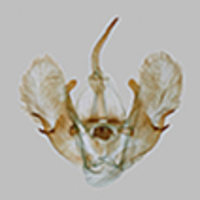
Nota Lepidopterologica
Characters of male and female genitalia in insects in general, especially in Lepidoptera, are essential for species identification as they display extensive morphological variation. In embedded genitalia, due to the positioning of the genitalia and the pressure of the cover glass, the appearance of some diagnostic characters might be confusing. ...
The genital organs is something that would be more constant that the general appearance of the insect
So if you have two beetles that look identical or very similar on a picture, you would have to maybe dissect them and check their genital organs to confirm they are in fact the same species (or not)
But no all of us have access to specimens or the skills to dissect insect genitalia. So I would argue that what we do in the #id-request-must-include-location channel is perfectly valid despite the disagreement on what "identification" means
odd sky
ic ic
gotcha :0
how would i go about purchasing (or finding) other species part of the same genus to compare? bc im still caught up on that
odd sky
round crow
But no all of us have access to specimens or the skills to dissect insect genita...
also yeah LMAO, i'm just interested in going a step further because my area is really biodiverse, and i've found a lot of things that don't seem to match up with any other species in the area (mostly hymenoptera)
also how would u go about dissecting em? 
round crow
odd sky
how would i go about purchasing (or finding) other species part of the same genu...
Mmhm for that I would probably ask an entomology department at your local university. I am sure that they are textbook examples, but I am not an entomologist or a taxonomist. If you want to check those specimens in your area, the best thing to do is try to find an expert that can either help you identify them or you can send the specimen to them.
round crow
odd sky
also how would u go about dissecting em? <:pikathink:999858568419344424>
I am guessing that this will be different depending on which family are you talking about, but I have never done it so I would not know. I am sure there are either books/classes about it thought.
odd sky
ic ic
odd sky
round crow
Mmhm for that I would probably ask an entomology department at your local univer...
hmmm, idk about doing the last part that seems lame 
 kind night
odd sky
also how would u go about dissecting em? <:pikathink:999858568419344424>
kind night
odd sky
also how would u go about dissecting em? <:pikathink:999858568419344424>
for many betles you just open the abdomens end and take out the penis with thongs
odd sky
my issues with beetles mainly though is finding other specimens to compare them too to actually prove it's different
kind night
odd sky
how would i go about purchasing (or finding) other species part of the same genu...
Look up for breeders or look up the geographic extension of different species and collect regardingly. It's as easy as that.
kind night
odd sky
my issues with beetles mainly though is finding other specimens to compare them ...
why do you need other specimens to prove?
to identify a new taxon?
odd sky
kind night
to identify a new taxon?
that's my hope, but you'd need other specimens anyways no? to find out if its actually different or not
kind night
odd sky
<:pikathink:999858568419344424> that's my hope, but you'd need other specimens a...
uhhhyes
no
Really depends on case
odd sky
hmm i am confused
kind night
Bro :T
odd sky
i expected describing a new species to be straight foreward but i still don't know if i need other specimens for comparisons
🫓
kind night
If you find specimens that don't fit any other species and they are ideally far from the genus's range, boom new species
odd sky
how would i know if they dont fit any other species without specimens for comparison though
kind night
keys
odd sky
and how would i know what species to use as comparison
kind night
Identification keys
kind night
odd sky
and how would i know what species to use *as* comparison
the most closely related ones therefore the species from the genus your new species belongs to
Do you understand?
kind night
If you don't know how to identify animals maybe you should say that beforehand
That would help a lot
odd sky

kind night
Jesus Christ
most common is the dichotomic key I believe
also haven't we gone through this stuff before? I answered this kinda question a few months back
In the end your new specimens will be compared by an expert side by side to known species to confirm their status as new taxon.
Not neccesarily that's done by yourself

In this Dichotomous key example of Insects, insect keys are designed as dichotomous, or paired, couplets. A couplet is a choice between 2 options based on a description of a particular feature. Example: the size of wings, size of rear legs, etc., and one can choose which option best matches the insect being identified. This choice leads to anoth...
Page detailing identification of insecta and arachnida.
@odd sky
odd sky
ic ic
round crow
Just to add to this conversation: even if you think you have found a new species, this needs to be confirmed by experts. That is why I think it is best to contact them. Most of them are really enthusiastic about non-experts finding specimens that might be something new
round crow
In my opinion the way to do that is do join an entomology department at a university.
kind night
odd sky
<:pikathink:999858568419344424> how would i go about working towards *being* an ...
Learn about species
Knowing a lot of species from the top of your head, their associated habitats and ranges is a good start.
Furthermore you should be able to ID them.
 sturdy mirage
odd sky
<:pikathink:999858568419344424> how would i go about working towards *being* an ...
sturdy mirage
odd sky
<:pikathink:999858568419344424> how would i go about working towards *being* an ...
I suppose one could say I'm working towards being one. Since I like bugs I'm majoring in biology and trying to spend my time in undergrad as a volunteer/intern in entomology labs at my uni
Moreover, afaik the way to describe a new species involves publishing an article with a description in a scientific journal as well as depositing the specimen in a museum/entomological collection
so you'd probably need to contact a specialist at some point since they curate collections
sturdy mirage
odd sky
why its genitalia
In a lecture I watched a few months ago they said that it's because even minor changes in its morphology can cause reproductive isolation