#Computer Cores
1 messages · Page 4 of 1
 tall grotto
big difference

That's a minimig
You can't expect the De10 nano to work the exact same
 worthy zealot
Its not the exact same, but that does not stop it from being possible. It would take work of course, but no reason why it should be impossible
tall grotto
impossible, maybe not. achieving the same results? I say unlikely
I challenge someone to prove me wrong, but to be honest I expect neither of us know how to develop a core, so no amount of proving if it's worth it or not is going to get the core made
lol
worthy zealot
The GPIO on the MiSTer already works as a direct connection to the FPGA. I do agree there are bottlenecks to be taken into account, but overall I would think there would be less bottlenecks than the Minimig would have, since it is a more powerful FPGA. Problem is having those 8 pin signals handles on both the Pi and in the MiSTer core.
tall grotto
It's a community project. People make what they feel like making for the MiSTer. Demands don't really mean anything without someone interested in doing it
worthy zealot
That is always the case for anything
tall grotto
Well I guess we'll see if someone wants to attempt it
worthy zealot
From what I have heard, there has already been some interest in it, just not sure who might be working on it. Hmm, I think Sorg even had some interest in it, but given that was more than 6 months ago I heard that rumor, I guess his interest is now elsewhere.
With a Pi as an extension there, so much seems like it could probably be offloaded to it, PiMidi, AO486 CPU, 68k CPUs. But a lot of cores need that SD RAM, and it would be such a big change to how it works now, and Pis are not even readily in stock these days. I think that might have to be the first thing to change before we might see it happen.
 chilly rain
If the bottleneck is imbalanced inherently and it would lead to a race condition, you need a fifo somewhere as well, and those aren't free, etc... It can cause more strain on meeting timing requirements. Not trying to be negative, just commenting on common challenges specific to FPGA dev
tall grotto
Yeah that's kind of what I was getting at. FPGA's require tight timings, something original hardware doesn't have to worry about because the original hardware is designed to work as intended
Original hardware can interface with pistorm because the cpu is the cpu. FPGA implementations of the cpu are not the same and will need adjustments to the core that would allow it to work with such a device, and based on how the device works, it would require a lot more work being done by the FPGA than the original hardware has to.
 stiff steeple
a real cpu 1) needs more than 8 pins 2) would be completely useless
there's just no value in it whatsoever
the speed you can do things at will depend on trace lengths and things as you get into higher clocks, this is why the speed of mister's memory ultimately becomes limited, because it's got long and uneven traces
it's hooked up to gpio pins
very not ideal
 abstract condor
Right. It might have been useful on a custom PCB.
worthy zealot
You can still connect a 68 pin 68000 CPU to the 40 pin GPIO on the MiSTer though using a custom interface board. Whether it will perform worse is hard to say without testing it, but it will probably not perform well at first. The PiStorm did not perform well in the beginning either, it required a lot of optimization. How specific the timings need to be in the core, while I am not an expert on FPGA development, that still ought to be something you can handle inside the FPGA, whether it will end up causing even more bottlenecks is hard to say, but in the end I think it mainly comes down to the bandwidth of the GPIO.
worthy zealot
Whether a real CPU would be useless... not if it would work. But it would have to be possible to connect something faster than a regular 68020 CPU at least. But even if you could only connect a 68000 and a 68020 CPU to it, then that would probably help make a cycle exactly implementation of an 020 CPU, and if you could connect a faster one that could probably also help gather data.
stiff steeple
worthy zealot
Whether a real CPU would be useless... not if it would work. But it would have t...
it's not really a debate, it WOULD be useless
I dont really understand why you keep bringing it up either
if someone was going to make a 020 cpu they'd do it by other means than this
 lunar trellis
Is this related to some sort of blocker to getting CD32 support in the Amiga core?
worthy zealot
stiff steeple
it's not really a debate, it WOULD be useless
Why would it be useless? Make a 020 CPU? They already exist. Ahh, you mean in FPGA. But for a faster CPU it would not be useless.
stiff steeple
im starting to suspect you're just trolling now
it kinda would. mister's cpu is already faster than real equivilents of each model
a pistorm would be faster if the pins and fpga could handle that clock speed, but it's pretty debateable of amiga even needs more speed, as the only stuff that really uses that is aftermarket crap
worthy zealot
The MiSTer is about as fast as a 25mhz 040 I think it is. So it would not take much of a CPU to be faster than that?
True... overall what the core really needs would be better CD32 and CDTV support and / or better floppy support
After that FPU and such, and that is where these solutions would be useful
stiff steeple
I dont know much about floppies for that system, but cd32 would be nice just for completeness
and there's ample space for someone to implement the fpu if some amiga enthusiast comes along with some time and coding skill
worthy zealot
IPF support or other advanced floppy image types, to have support for images with copy protection. That would be nice for completeness as well.
stiff steeple
sure, anyone is welcome to do that
worthy zealot
Someone is already working on CD32 support and he does sound open to also look into expanding on the floppy drive. He is already looking a bit into that to get this to work.
Well, I gtg.
 thick pendant
worthy zealot
The MiSTer is about as fast as a 25mhz 040 I think it is. So it would not take m...
thick pendant
worthy zealot
The MiSTer is about as fast as a 25mhz 040 I think it is. So it would not take m...
3/4th speed of a 040/25
tall grotto
Ultimately, bringing up the idea over and over isn't really going to get it made. The request has been listed. If someone wants to do it, they will. But constantly requesting it isn't going to help people want to make it. It actually probably does the opposite
 void belfry
Oh Bill, this never gets old 😄
 stiff steeple
95 was kind of amazeballs when it came out
 vestal ginkgo
and that marketing budget spent for it at the time 😲
thick pendant
Yeah, a friend of mine went to go to that launch event thing with Leno
with Balmer and Gates dancing
 gloomy bolt
All I got was Jim Allchin and Smash Mouth for XP's launch. :/ And Smash Mouth wouldn't stop joking about getting a free computer.
95's launch was historic...that was when they were bringing world class (at the time) comedians in to do standup for the company meeting, too. Missed that, and early retirement, by about 6 years. :/
thick pendant
I saw Neville Brothers & Kathy Metaia at a MICROS~1 TechEd in New Orleans... back then were the good old days where work would pay for you go to trade shows...
void belfry
Netscape downloader install in progress 😄
 worthy zealot
tall grotto
Ultimately, bringing up the idea over and over isn't really going to get it made...
worthy zealot
tall grotto
Ultimately, bringing up the idea over and over isn't really going to get it made...
I have not constantly requested it though, just replied to comments that seemed to refute that it was even possible
tall grotto
worthy zealot
I have not constantly requested it though, just replied to comments that seemed ...
Clearly you're not reading any of what we're saying if you claim we said it's impossible. Lol.
thick pendant
tall grotto
Clearly you're not reading any of what we're saying if you claim we said it's im...
Once you have an Amiga with 060 CPU you love it.... I currently have a A1200 with Blizzard 1260 . I used to have a tower converted A1200 with Blizard PPC 603e2@240mhz/060@50mhz with with GREX PCI bus with Voodoo card and SandBlaster.
So I see the appeal of more speed
Would be real interesting to try and emulate the PPC with the ARM for that WarpOS thing...
but its so niche
maybe you could run Amiga OS 4.0 classic
tall grotto
I mean, kitrinx has explained there's room for improvement. Pistorm is just probably not optimal for the mister.
thick pendant
Yeah, the 68080 vampire thing proves it
Amiga community is very fragmented
AmigaOS 4.0, MorphOS, Vampire, etc
stiff steeple
niche is the right word for all that stuff
worthy zealot
Yeah, I have a Vampire 1200 v2, Vampire IceDrake, an Apollo 1260 and a ACA1221. I must say I like the MAPRom of the ACA1221 and its compatibility.
I also have the TC64 v1 and of course the MiSTer. And a CDTV and a CD32. Long have I tried making an all in one Amiga. So far if it really is to be all in one, it still is to be a PC using emulation, or at least a Raspberry Pi setup. I do hope we will soon see CD32 and CDTV support for the MiSTer. For a long time I have been working on improving emulation options, making it possible to play CD32 and CDTV games on the MiSTer core.
I think I finally found a way to make it a ROM that will boot, mount the shared folder on the SD or USB card and then let you mount a CD image using SimCD32. SimCD32 is official CD32 emulation, made for Commodore developers. With that one I have been able to run most CD32 games on the MiSTer core, but it does not support CDDA. I had hoped to find emulation that might support mounting CD images with CDDA, but it does not seem possible, because the advantage of a CDTV and CD32 is that the CDDA playback would not use up any CPU ressources. That has been the advantage of it on most systems that used it. So doing it through emulation would remove that advantage.
worthy zealot
tall grotto
Clearly you're not reading any of what we're saying if you claim we said it's im...
I wrote "seemed".
worthy zealot
thick pendant
Yeah, the 68080 vampire thing proves it
indeed. It should be possible to make the Amiga core much much faster, but the 080 core was developed by people who seeked to make profit from it, so it was several people working together probably full time. It sure would be nice if a Kickstarter or something could be made that would buy out the 080 source code making it open source. But I suspect they would want more than a million and while the Amiga community is pretty strong, I suspect that would be a problem. Even if I personally would probably not mind throwing 1000 or maybe even 2000 USD at such a project.
 woven lava
@worthy zealot hello fellow TC64 v1 owner
haven't used mine in a while😅 Kung Fu Flash got more use on my c64
worthy zealot
woven lava
<@273689092049338368> hello fellow TC64 v1 owner
The Minimig developer for the TC64 Minimig core is working on adding CDDA support, so I am hoping that will be released soon. Got me to try it out again recently. It has gotten quite a few more cores over the last year or two. Its just a bit annoying that it uses VGA as the video output. But it is nice to see how it can work with just one FPGA and no CPU to manage the cores... or maybe it has two FPGAs I am not completely certain. But it works with just having to go back to the menu core after launching each core. I do think it needs to have each core it can use flashed into it. So it only has a certain number of core slots it can use.
woven lava
its been a while, but I tbink you have to preinstall cores in flash memory?
so it has no CPU to handle core switches or QoL functions like MiST and MiSTer
the PC Engine core for example has its own "CPU" implemented inside the FPGA alongside the PC Engine
(it is a cpu, but I put it in quotes as in it not being a physical discrete component)
 opal void
void belfry
Oh Bill, this never gets old 😄
opal void
void belfry
Oh Bill, this never gets old 😄
Bill Clinton 🥴
void belfry
 worthy zealot
woven lava
its been a while, but I tbink you have to preinstall cores in flash memory?
worthy zealot
woven lava
its been a while, but I tbink you have to preinstall cores in flash memory?
yup I think that is why there is a limit to how many cores it can have at once.
thick pendant
worthy zealot
The Minimig developer for the TC64 Minimig core is working on adding CDDA suppor...
From my understanding is that the 68080 (like the 68060) gets its performance increase from having a superscalar architecture meaning it can execute instructions in parallel and out of order...
 spice hound
Can someone please paste a screenshot of a Mister-FPGA running apple //e core?
I am really am curious...please.
woven lava
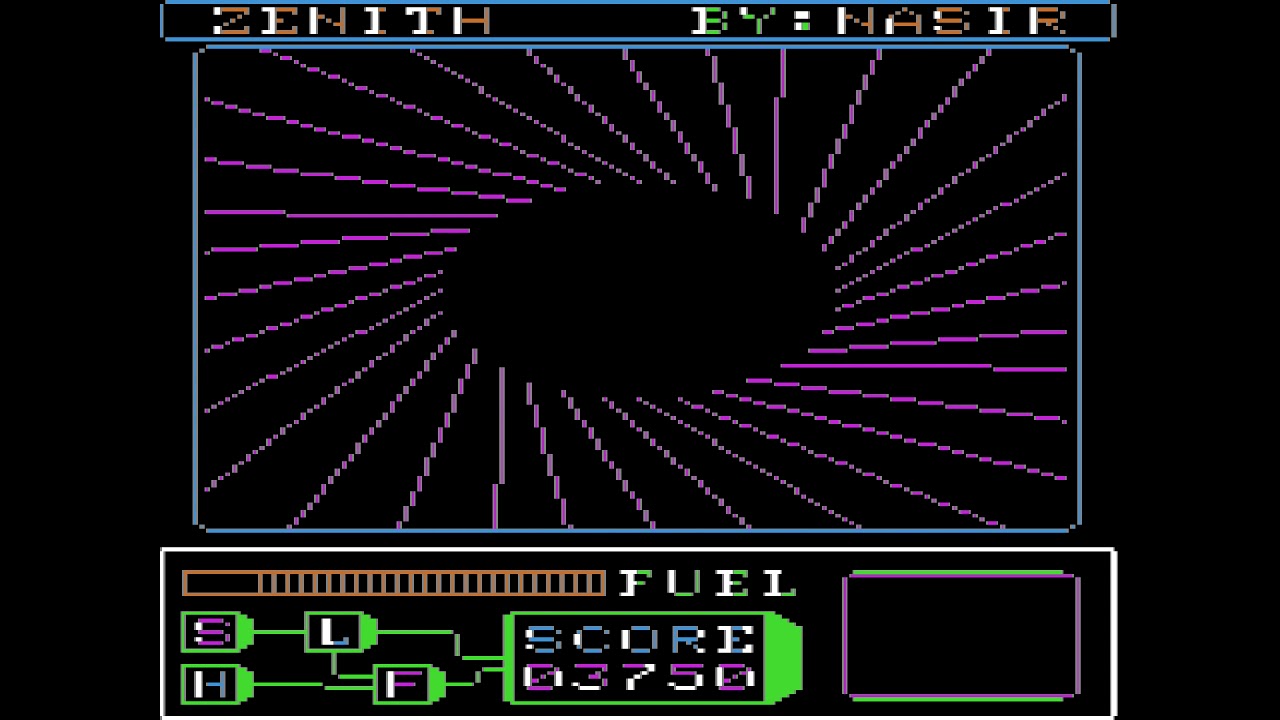
Zenith by Nasir
You need to save the city by destroying enemy ships, capture enemy pilots, and repairing buildings that are on fire.
I played this a lot as a kid... but realized in modern times I was doing a lot of it wrong.

 worthy zealot
thick pendant
From my understanding is that the 68080 (like the 68060) gets its performance i...
worthy zealot
thick pendant
From my understanding is that the 68080 (like the 68060) gets its performance i...
yes, so that even though it might be running at the same hz as a much slower CPU, it ends up being much much faster. We would probably also get a much faster core if we had 030 or higher implemented on the MiSTer because they do more with each instruction or run more instructions just because they are more efficiently designed. But I suspect it would require quite a bit of work to make a MiSTer alternative to the 080 CPU they designed. They also made FPU for it as well that... seems faster than the original FPUs even. I think they have some benchmarks.
For along time I have looked for some FPGA implementation of FPU, but one big problem is the fact that different CPUs often have their own FPU implementation. ARM, 68k and x86 all have their own type of FPU.
spice hound
AHAHAH THANK YOU!!
chilly rain
worthy zealot
yes, so that even though it might be running at the same hz as a much slower CPU...
you sound like just the person who should try and optimize ao486 for timing and logic space and then develop an fpu core for ao486. how soon can you get this completed? 😛
thick pendant
chilly rain
you sound like just the person who should try and optimize ao486 for timing and ...
If I want to run Autodesk 3D studio on MiSTer I have to resort to DOSBox(on the HPS) for the FPU support. It's OK, but will be ideal once @worthy zealot completes the FPU for the ao486 core. Its ok if he needs to get rid of CMS (Game Blaster) support to free up FPGA fabric . I'd think it could be done pretty quickly...
one that is done, I could create a really good animated ao486 logo or something....
Obviously refactoring ao486 CPU for logic space to fit the FPU would ideal, but I'm just offering up getting rid of the Game Blaster (make it a compile time option) would be acceptable to me.
chilly rain
I would love to see crazy shit go further and further on ao486.
It's a beast of a core, but I'm sure some people are brave enough to wrestle with it.
 fast kraken
someones working on an fpu? are they getting anywhere?
i thought they were comically impossible on fpga
thick pendant
fast kraken
someones working on an fpu? are they getting anywhere?
The Vampire has one...
I'm not sure if its a subset of the 68882 or what
but I understand it has some MMX stuff thrown in
 surreal marsh
I don't think a fpu fits in ao486. I'd just like to see someone fix the memory bug.
worthy zealot
chilly rain
you sound like just the person who should try and optimize ao486 for timing and ...
I must say I am getting more and more interested in looking into how to develop FPGA cores. Its just that I am a software developer and it would be quite time consuming... but I do love to learn new things and I do have an itch to dig into these cores.
I do not think anyone is working on FPU. I guess as it is, the AO486 or the Minimig core will probably not benefit much from FPU given the CPU speeds they have. But would be nice to have either way if there is room for it anyway.
void belfry
If I'm not mistaken, some Unix/Linux might need FPU (at least for what I have tried on ao486). Probably the IDE controller is also in need of some changes, got some IDE related errors if I remember correctly from last time I tried making old Unix versions to work
stiff steeple
I don't think you can just say "an fpu" like they are all the same
it's like say "oh 486 needs a cpu, throw a 68000 in it"
fast kraken
last time i did any research most games wouldn't even use an fpu on a 486 anyway
 inner relic
yeah, it was the next era with pentiums and 3d cards where the fpu started seeing real use
fast kraken
and the pentiums pipelining was a big part of that aswell
like an fpu doesn't get you quake, i don't think it even gets you better performance in duke3d
inner relic
early 3d cards relied on the fpu being there
lunar trellis
Sorry for the uninformed question, but what real world benefits would an FPU bring to the Amiga or 486 core? I know it is a maths processor, but I don't know what it all does in practice. Would it free up CPU resources allowing some games to run at a higher frame rate? Would it allow more things to run?
 coral coral
On Amiga it would give pretty much nothing
fast kraken
petty much same on ao486
it'd let you install win98 without disabling the fpu check....
some spreadsheet apps or something might go faster
coral coral
I had a 50MHz one in my Amiga and used it for 3D rendering bitd, but now? Nope
lunar trellis
Ah, so no games make use of it?
coral coral
It’s a similar case for 486.. 3D Studio etc could use it to good effect.. and probably a few more simulation type 3D games than Amiga
lunar trellis
Got you, thanks chaps for explaining.
Seems like that feature would be a niche labour of love for someone
coral coral
A 030 with MMU implementation would be more useful, but also incredibly niche
inner relic
it's probably not worth the effort, especially when the Amiga core can run at a much faster speeds that real machines ever ran, fpu or not
coral coral
It would be pretty useless for Amiga, but you would be able to build some 90s workstation cores
inner relic
that's true
but then again, how useful is it really really run old workstation software 30 years later
stiff steeple
lunar trellis
Sorry for the uninformed question, but what real world benefits would an FPU bri...
basically nothing of value, just some novelties nobody really has any good reason to use
so here's a question
why dont people just compile amiga OS for x64 machines with VM layer for older crap compatibility. Why this whole bizzare fpga fake 68k revision stuff?
I mean it's pointless enough to still be running amigas with some delusion that they are functional modern machines, but I dont get the invention of hardware to do it
coral coral
The Amiga scene is bizarre, that’s the whole gist of it
I think there were more modern AmigaOS-like things roughly like you describe, but that evolutionary branch may have ended on PowerPC based machines 🤪
Or actually, AROS exists for x86 and is open source. MorphOS was PPC-only and proprietary.
Anyway, I don’t know why people are into those things either
 hollow ice
well, the 030 + MMU wouldn’t be completely useless on amiga, it would put us closer to being able to run amix
would also be useful for implementing the Atari Falcon and TT030
I think the definition of novelties varies from person to person though; I can say that I obviously don’t care enough about Amix/Atari computers enough to do work myself!
stiff steeple
what is amix? is that a game?
hollow ice
hollow ice
what is the purpose of anything? is the goal of mister just games or is it hardware preservation?
stiff steeple
I mean, many things have purposes
the purpose of super mario bros is to amuse you
the purpose of chrome is to browse the web
the purpose of that appears to be simply to exist
the goal of mister is games, yes
hollow ice
the purpose of amix was to be a workstation operating system for “commodity” amiga hardware. personally, it amuses me to play around with old flavors of Unix
stiff steeple
it's so you can play things
hollow ice
I can get the same dopamine hit getting an old version of bash to compile as completing a level of super mario
abstract condor
Hehe
stiff steeple
it's to make games comfortably accessible using modern hardware and peripherals, to be more concise
abstract condor
People use Mister for non-gaming too
stiff steeple
people use it to hold down paper or prop open doors too, im sure
it doesn't mean that's it's raison d'etre
stiff steeple
no
abstract condor
Then it matters
stiff steeple
but there's a difference between actively prohibiting something and developing with a goal in mind, so as to dodge the random sematic salad
abstract condor
Right
hollow ice
which is why I said novelty is different per person above, and also claimed that it wasn’t novel enough for me to put in the effort, so I am not expecting someone else to. I just mention that having the processor available does open up actual functionality that existed in the lifespan of the computers mentioned above.
hollow ice
I mean, in all seriousness, bsd hunt was some of my fondest memories of multiplayer gaming
the issue being it is multiplayer only, so having amix running it won’t do me much good
and I should also note, we ran it on a decstation, so amix wouldn’t even be period accurate for my nostalgia
abstract condor
Aha
thick pendant
inner relic
it's probably not worth the effort, especially when the Amiga core can run at a ...
Um, that is simply not true. the A4000/040 is faster and the Amiga Technologies A4000 Tower Quikpak 060 is MUCH faster...
not to mention GVP, Phase5, Apollo, CSA, DKB, DCE.... all made contemporary accelerator boards faster than the current MiniMig Core on the MiSTer...
PP&S, probably like another 6 i forgot
worthy zealot
Yeah, the primary purpose of MiSTer is gaming, hardware preservation is probably a bit more of a secondary goal. FPU would not do much for AO486 or the Minimig core at least without getting a faster CPU as well. Well, there might be use cases on AO486, a few games can use FPU like Duke Nukem 3D, but it would probably still end up having slowdowns. Quake would still not be able to run... well, it would run, but it would run like a slideshow at maybe 1 fps.
So adding FPU would mainly be for the hardware preservation. Even if it was added it might end up being removed if it took up too much space for other features, and I think the AO486 core is already pressed for space.
Pretty sure things that use FPU on the Amiga generally also want an 060 CPU, or 060 compatible like the 080 and yes, not all FPUs are equal. There are several different ones, even on x86 alone there exists at least 3 types of FPU I think. ARM has its own type of FPU and 68k has its own FPU. The Vampire core has its own FPU and I am pretty sure its also just compatible with the FPU in original Amiga CPUs the same with the 080 core is compatible, but not the same as the original hardware.
The MiSTer Minimig core runs at a very fast 020 Amiga, but its still slower than an 040 Amiga with a 25mhz CPU I think.
woven lava
probably ao486 could be rewritten to save space
since a lot of it was automatically generated
 undone anvil
For sure if a 486 core were written based a standard IBM model(like PC XT), it would probably be a lot better, and driver compatibility wouldn't be an issue either.
inner relic
By the time the i486 CPU was released IBM models were irrelevant
And the biggest makers of clones were becoming household names
undone anvil
or a PC Series 300
I guess whatever model has the most resources available to assist in making it into an FPGA core is what would be most relevant. I kinda assumed an IBM model would
thick pendant
Packard Bell 🙂
 north haven
Would likely require re-architecting MiSTer, but there is probably enough power in the FPGA's HPS to emulate any of the 8, 16, and early 32-bit processors using C code and just implement the vintage peripherals and busses in the FPGA core -- interfacing with the CPU over AXI.
Or maybe it could be done now... The MCL86 is an x86 emulation running on a 7-instruction microsequencer running at 100 Mhz, but could easily be adapted to run on a very small process in the HPS which could use the exact same microcode as the FPGA version used in the PCXT core...
Or just run any other 8088 emulator written in C. Like the MCL86+ 🙂
worthy zealot
woven lava
since a lot of it was automatically generated
they already did rewrite... most the code I think... when they added the layer 1 and 2 CPU cache to the core. They had to because it was already out of space.
Whether there is more space that could be saved with leftover autogenerated stuff I do not know, but I suspect there might not be much left
north haven
or MCL65+, or MCL68, or MCL64, or MCLZ8
I only mention this because of the FPU discussion... If the CPU was already being emulated in the HPS, adding code for the FPU may not be that heavy of a lift. Implementing it in RTL is a very heavy lift...
worthy zealot
But still pretty sure starting over with a different basis would make for a more efficient core. Especially with what the core developers have learned since AO486 was released. If it is one of the ones with experience with the core that would make the new one.
But from what I hear x86 is very complex, so it might take much longer than f.ex. the PSX core to develop and the PSX core only got developed as fast as it did because the developer working on that was very dedicated. Seems like he must have worked on it full time or more. Or at least close to full time. I think he did do some work on the AO486 core though.
My impression though is that the developers that have worked on AO486 does not seem much benefit to be gained from starting over since AO486 already does cover most things.
So they generally seem to want to focus on other cores. Same with the Minimig core I guess... but I know at least one FPGA developer is working on the Minimig core now.
fast kraken
worthy zealot
they already did rewrite... most the code I think... when they added the layer 1...
not really, robert deliberately implemented the caches outside the main cpu so he wouldn't have to even look at it
its all at the memory controller iirc
the reason no-ones started from scratch is it'd probably take years of effort to match the functionality we have now and after all that you might still not of even freed any resources
worthy zealot
Well, I know a lot of time was spent on cleaning up auto-generated code. Not sure who did, I think it was Sorg.
But yeah... they do not see much to be gained from starting from scratch. It might clear up the memory issues and such, but performance might stay the same, and the issues with the memory while annoying only seems to be a problem with very few apps if you just go with alternatives to DOS4GW like DOS32A.
stiff steeple
north haven
or MCL65+, or MCL68, or MCL64, or MCLZ8
someone tried all that with amiga and tested it with x86 stuff, the HPS couldn't really provide any notable speed gains, it just isn't powerful enough to emulate more than the fpga can do natively
if you really want more from an x86 core we probably need a better fpga to work with, and then someone "just" needs to write the pentium chip
an fpu is just a waste of time and space for the era the core cover, no matter how you slice it
 storm maple
just had a disc on the ao486 core run a univbe test that warned it could seriously damage defective monitors, I take it that has no bearing on hdmi out right? not that I'm running a defective monitor
abstract condor
It's for VGA screens that didn't guard against weird timings.
In other words, nothing to worry about if you're running on a flat panel.
Or possibly it's to do with the DDC pin but shouldn't matter to you
storm maple
perfect, thanks! Hadn't come across that before, not even back in the day on original hardware
abstract condor
I remember a DOS tool that let me tweak timings and VGA registers to create custom screen modes, and it had no failsafes whatsoever. I made my monitor make a lot of strange sounds
It spat out a list of registers to use in your app, so it allowed me to create some weird but useful modes
256x256 was one
storm maple
ha, that's wild
abstract condor
Yeah very useful, as one could access all of VRAM in one memory segment (this was 16 bit code)
storm maple
my early computer days, pretty much skipped over vga, had monochrome, cga, ega for the longest time then jumped to svga
worthy zealot
stiff steeple
an fpu is just a waste of time and space for the era the core cover, no matter h...
also if an FPGA was implemented, 486 FPUs were not the same as Pentium FPUs I think. It would overall be nice to see FPU implemented in FPGA in some way but mainly just to see how well it might work, its accuracy and such. Practically... I have an 060 expansion for my A1200 and the Vampire IceDrake and you only really seem to need FPU for demos and ports of games like Quake.
I guess some speed might be gained if a 486 CPU was implemented in MiSTer from scratch, but I would be surprised if it made it something like twice as fast, and that would still leave it like a 60mhz 486, which is less than half the speed of a Pentium 100mhz I think.
It will be interesting with the Replay 2, but they again plan on using closed sources. Which is just much less interesting to me.
stiff steeple
worthy zealot
also if an FPGA was implemented, 486 FPUs were not the same as Pentium FPUs I th...
I doubt you'll see anyone design an x86 chip from scratch anytime soon. The chips are massive and complex. You just wait for the Replay2. I'm sure it'll be out one of these years.
inner relic
I think the approach the ao486 core currently uses could be cleaned up and improved and lead to better results
I'd like to see the bugs with real mode and IDE fixed first though
stiff steeple
I dont know what issue real mode has?
or IDE really
DPMI is the only major bug I know of
hollow ice
IDE has some issues for sure. An easy way to replicate is to use the openstep installer. At some point the BPS value gets reset to 0 (not sure if it is a race condition…I was never able to catch the problem when debugging) causing the OS to see the hard drive as zero size.
stiff steeple
using DMA based IDE would be nicer anyway
it seems pretty hacky and I hate that it needs a custom bios because of it
hollow ice
Agreed, but it does work well enough. It could also be the bios that is having the issue, which would explain why a custom bios will allow you to install nt4
I didn't see any issues with the code when debugging, just the reset of the, sorry i meant SPT value, not BPS
stiff steeple
I wouldn't say the IDE stuff is critical though
it seems rare to have HDD based blockers
mostly with odd late-era os's
hollow ice
Yeah, most things aren’t affected since most just care about the data, not restructuring the filesystem.
I was just interested because I saw two issues when playing with openstep- it also doesn’t like the special non standard iso format- I had to convert it to a chd.
The iso loader would choke on the header.
hollow ice
Nope
stiff steeple
that's another pretty big thing to get
hollow ice
Depending on implementation I don’t think it would be that bad. All the command stubs are there and from what I remember the loader knows about the different tracks. I was actually wondering if you could just use something like ffmpeg to play the data and mix it into the misters output.
I had planned to do a deep dive in IDE when I was looking into those problems, but both work and life swelled and I haven’t even spent more than half an hour playing games at any single point in time since
lunar trellis
Would it be possible to bring redbook audio across from one of the other cores that has it (PCE-CD, PSX, Mega CD)?
I know on Amiga it isn't straight forward to add
hollow ice
I haven’t looked at the others, but I would guess no— the ao486 core’s IDE implementation is “good enough”: half of it runs on the ARM side.
I would imagine those other implementations are completely fpga based so they have to be cycle accurate. I believe there are games that will break on pce-cd if the timing is too far out of spec
The way I was looking at doing it would in no way be cycle accurate— the arm side ide handling gets the ata command to seek/play/stop/etc and it just uses a static ffmpeg player to immediately decode the raw data on the iso and mix it in with the mister output
is that even doable? maybe not, I didn’t really get that far….it seems like such a simple solution that it would have already been done at this point
lunar trellis
It may just be nobody has really looked into it before
stiff steeple
hollow ice
Depending on implementation I don’t think it would be that bad. All the command ...
you can do this but I don't suggest it as you can't control the volume or mixing levels
it will always feel like a half assed solution imho
hollow ice
I mean, the IDE solution is similar, so it would be “good enough” until someone built something better
I have exactly one use case for red book— super street fighter 2. I played that a lot on PC when I was younger. It finally made me less jealous of the amiga, and the remixed soundtrack was amazing.
And it would technically be in the spirit of the original CD implementations where CD audio just came off a quarter-inch jack on the bezel.
well, make that two…the mechanical man song from command and conquer was pretty great
stiff steeple
I mean, lets put it like this
I would strongly encourage you not to ever use mister's linux side audio playback. It's absolutely shitty, aliased, unfiltered audio with level problems
it would be better to have nothing than this, because nobody will ever fix it once it exists
hollow ice
Yeah, but the alternative is never for sure.
stiff steeple
when someone does get around to doing it, they should just do it right
that's all
otherwise it will just stay in a junky state forever
it's actually more motivational to not have it than have it kind of work
hollow ice
I only disagree because with the amount of free time I have in the foreseeable future, my contribution could only be the shortcut method.
Maybe I can be the creature from “it follows”- the vague knowledge that sometime, somewhere a horrible implementation of red book might drop 😆
And that in and of itself could be the motivation for someone else 😉
worthy zealot
stiff steeple
I doubt you'll see anyone design an x86 chip from scratch anytime soon. The chip...
yeah, I do not have much hope to see the Replay 2. The Replay 1 was sold out very fast and then nothing for years and years, and it was closed source, so its not a project I want to support unless there are results, which will probably be too late because at that point its sold out.
stiff steeple
I'd put my money on 486 core and just hope the speed improves to another generation whenever the next hardware iteration comes out
the scope of the mister platform as a whole is roughly 1995ish and before
the 486 core isn't really too far from that
that's about what the underlying hardware can do
worthy zealot
Yeah, I am pretty happy with the state the 486 core is in. The speed is what I would expect from this FPGA I think, what I hope to see is improved memory handling and support for CDDA.
stiff steeple
im surprised alexey didn't implement it
it's mostly just sending it over ext_bus
like all the other cd cores
worthy zealot
Already many things have improved. Pretty sure there are less mouse problems now f.ex.
I used to try to play C&C on this core and the mouse would begin to act up after a while, but pretty sure that is no longer the case
Yeah, if you know what you are doing it seems like CDDA should be pretty simple to implement. I know someone is trying to do it on the Minimig core, based on what is being done on the TC64 Minimig core, but the two cores have gone down different paths in their development.
stiff steeple
it needs just a hair more to cover all of DOS and I think that's the scope of it
it would probably be more accurately called a DOS core
the windows 95 to XP era is a whole different can of worms hardware wise
worthy zealot
I suspect the Windows stuff would at least run more stable if the memory stuff got improved? But it might also just be Win9x being Win9x, it was never very stable.
stiff steeple
on an fpga I'd only ever expect really just the fringe of windows gaming at best
worthy zealot
I do like how Windows 95 and 98 can be used to run Total Commander on the core
stiff steeple
you start needing more advanced audio, much more advanced video, more advanced bus, and etc
worthy zealot
But yeah, when it comes to games... its Minesweeper and such. It can run Starcraft and Diablo f.ex., but it will lag and such
stiff steeple
and an exponentially faster cpu and ram
worthy zealot
I made this a long time ago:
https://www.youtube.com/watch?v=b7T1UmpFHbM
This video is to show the performance when running Diablo and Starcraft in Windows 95 on the MiSTer FPGA using a beta release of the AO486 core having level 2 CPU cache.
You can try the Shareware win VHD file in this link if you want to try to install and try this on your own MiSTer FPGA
http://dionysus.dk/software/DOS/
stiff steeple
a tidy way to break it down is DOS, Windows 95-XP, and XP-present
worthy zealot
I am surprised at how well it does run Diablo and Starcraft given its practically a 33mhz 486. Someone even got Diablo 2 running on it. It was completely unplayable, but still impressive that it can run at all on it
66mhz 486 with FPU would help a lot I think when it comes to how many more games would be supported, but I do not think that can happen on the MiSTer.
stiff steeple
as i've said about 100 times, it doesn't match any real clock speed as you would have known it which is why characterizing it as that is so disingenuous
it's faster at some things and slower at others
worthy zealot
Sure, but 33mhz 486 seems the closest approximation and generally matches the performance we see for the games it can run
stiff steeple
and yet, it's still completely misleading
it will run most games somewhere between a 486-25 and a 486-66 level
worthy zealot
But generally not at the 66mhz level in my experience. I was surprised to see how well Descent runs on it, but then I looked it up and it does have 33mhz as the required CPU
So 33mhz seems like a good rule of thumb. It can perform a bit better, but not stable. I do not think any game performs above a 33mhz on average
lunar trellis
worthy zealot
Already many things have improved. Pretty sure there are less mouse problems now...
It had the same issues with C&C, I haven't checked in a year or so though
void belfry
@worthy zealot https://www.youtube.com/watch?v=-mx2x5Zc-zo , also Fallout 1 run nice (some even better under Win NT actually)

Hello again and thanks for watching :)
This is a capture from #misterfpga ao486 core running Age of Empires under Windows NT 4 Workstation.
For more information on #MiSTerFPGA project, you can visit https://mister-devel.github.io/MkDocs_MiSTer/
 granite umbra
void belfry
<@273689092049338368> https://www.youtube.com/watch?v=-mx2x5Zc-zo , also Fallout...
granite umbra
void belfry
<@273689092049338368> https://www.youtube.com/watch?v=-mx2x5Zc-zo , also Fallout...
I tried one time Fallout 1 on Win95 or Win98 it is slow but it is great if it is playable on WinNT
void belfry
granite umbra
I tried one time Fallout 1 on Win95 or Win98 it is slow but it is great if it is...

Hello and welcome back to my channel :)
Fallout, developed and published in 1997 by Interplay, is one of my favorite video games of all times, and I am happy to finish it on MiSTer FPGA ao486 core.
In this video, I gathered 5 of my fave random encounters plus the ending video (and consequences of my actions through the game).
Sadly, I forgot N...
Fallout 2... not that much luck (as expected), becomes extremely laggy after Temple of trials/Aroyo quests :))))
granite umbra
We need to hope someday a new core with the capacity of playing those games.
In this case the real harware, VM or emulation are the good way to play them for the moment
void belfry
OS/2 is still a hard nut to crack lol , better video driver and/or slip/ppp not working, no matter what i've tried 😄

 thick pendant
void belfry
OS/2 is still a hard nut to crack lol , better video driver and/or slip/ppp not ...
thick pendant
void belfry
OS/2 is still a hard nut to crack lol , better video driver and/or slip/ppp not ...
same
thick pendant
void belfry
OS/2 is still a hard nut to crack lol , better video driver and/or slip/ppp not ...
did you ever get around all but 2.0 needing the l2 disabled?
thick pendant
 thick pendant
 vestal ginkgo
you mad man. that took you a day from when we talked about it 😄
now have it fix DPMI from within the core
thick pendant
It did help that I had ChatGPT write some of the code...
I did get kinda spooked when I said "My cat's name is Lulu." and it responded saying Lulu was a grey and white tabby with green eyes... I'm like how did it know? freaky... it never said that again though...
stiff steeple
it didnt want to scare you away
void belfry
thick pendant
did you ever get around all but 2.0 needing the l2 disabled?
nope, all versions higher than that needs L1 disabled
thick pendant
oh, right L1 not 2
And no SLIP or PPP, so do you have some terminal software which you prefer?
I was thinking at the very least maybe you could use winsock on the OS/2 windows...
void belfry
by far I prefer Terminate 4.0 (made for DOS but it also has OS/2 support) as terminal
thick pendant
os/2 serial drivers are a lost magic though
void belfry
PMCOMM also works, with standard serial drivers installed
I think Terminate required to use SIO drivers , if I remember correctly
SIO is a serial port driver package for OS/2 written by Raymond L. Gwinn. It is designed to not only improve performance over OS/2's default serial drivers, but also improve compatibility. SIO contains a virtualized FOSSIL (VX00) driver that can be loaded to provide FOSSIL support to DOS based communications software. SIO later added the ability...
thick pendant
I guess I remember just using my DOS term software under OS/2... That is an option too
I think I recall using the SIO drivers.
void belfry
from what I understood, default OS/2 serial drivers only supports speeds up to 57600 baud, SIO give you 115200
thick pendant
I had a "fancy" 16550 uarts back then and recall SIO
void belfry
Terminate (terminat.exe) was a shareware modem terminal and host program for MS-DOS and compatible operating systems, developed during the 1990s by Bo Bendtsen from Denmark.
The latest release (5.00) arrived in 1997, and the first release arrived on 2 April 1992 (according to the WHATSNEW.500 text file included with version 5.00).
Compared to si...
has quite a ton of features, and sadly there's no way (at least from my searches) to get a functioning 5.0 key for it.
v4.0 is doable though 🙂
 thick pendant
I'll try those 🙂
void belfry
From all my searches, could not find a mean to contact the original programmer, Bo Bendtsen , there were other who tried as well to get a hold of a license key for public, as the software it seems long abandoned
abstract condor
His son seems to be a web developer in Copenhagen.
Hm, read a Swedish forum now and the rights to Terminate seem to be in... confusion
void belfry
yeap...
abstract condor
It was hijacked by/sold to some guy who renamed it TERMINATOR 2 etc
void belfry
but there still is a BBS (maybe more) out there who still has a very old and dear way to 🦜 v.4.0. just sayin' , not encouraging
void belfry
abstract condor
It was hijacked by/sold to some guy who renamed it TERMINATOR 2 etc
yeah, there are quite long threads about this story. That gets this beautiful piece of software in such a legal limbo, though in my honest opinion it should be considered abandonware.
@thick pendant speaking of SIO drivers (1.60D for example), they are registered and released for public use by Ray himself 🙂

 abstract basalt
Maybe I'll have better luck here
GitHub
Contribute to MiSTer-devel/ZX-Spectrum_MISTer development by creating an account on GitHub.
 patent templeBOT
14: dout = ymreg[7][6] ? ymreg[14] & IOA_in : IOA_in;
why when PSG is set to output on port A (or B), is the corresponding register ANDed with the input?
fast kraken
 granite umbra
yes I tried it
for the release you need a hdd and unpack the lha file and click on launcher icon game
thick pendant
 sudden ice
https://z-team.itch.io/maria-renards-revenge
sudden ice
https://z-team.itch.io/maria-renards-revenge
Neat! just bought it


 thick pendant
 frosty compass
Any core able to run this OS?
frosty compass
Any core able to run this OS?
I the Mac+ core can run System some early versions of System 7, and the Minimig core can all System 7 releases (and 8.1) under ShapeShifter, and finally 7 & 8.1 can be run with BasiliskII on the HPS ARM, however that is not a core.
 waxen nymph
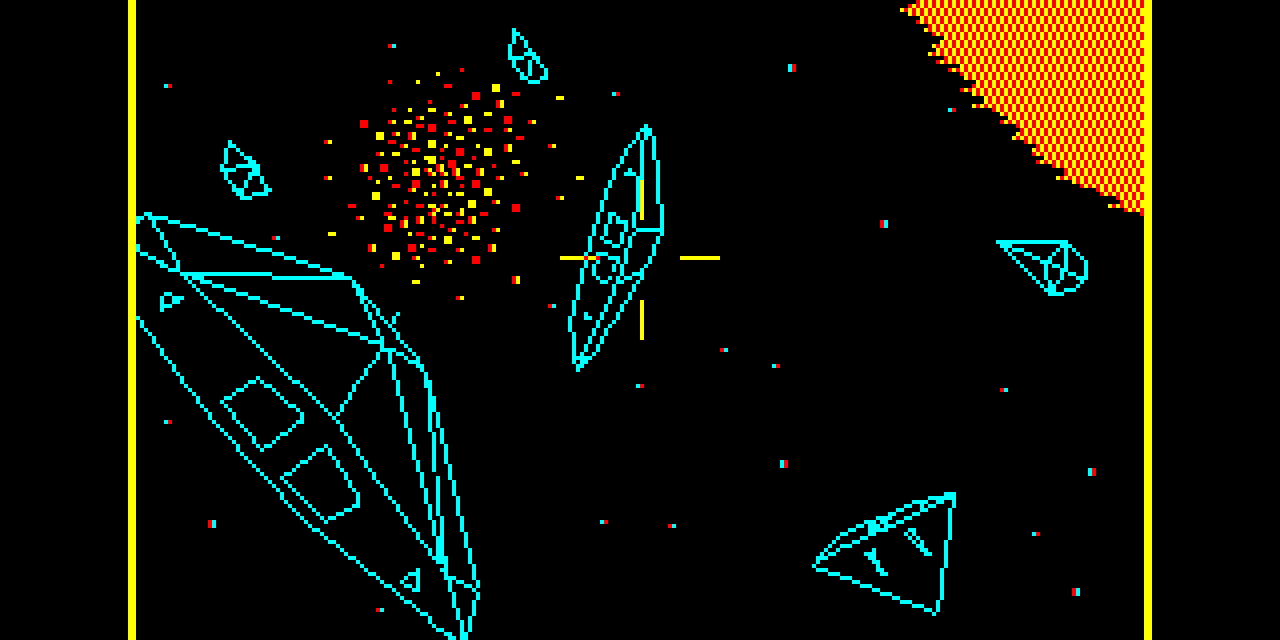
 rough edge
Has anyone tried the new C128 core?
undone anvil
hope that one handles IEC data storage within the core.. I really don't want to have to drop cash on adapters
rough edge
Data storage?
gloomy bolt
rough edge
Has anyone tried the new C128 core?
I tried it once back in August of last year, but haven't tried it since. I really wanted to play EotB on it with the secondary output if it is supported. I should check it out again.
rough edge
Iirc it still doesn't support two simultanious screens
gloomy bolt
Yeah, I just saw that. Maybe I'll throw some BBS software on it for funsies.
undone anvil
rough edge
Data storage?
yeah like SD2IEC
Basically so you can have a more elaborate file system
thick pendant

MiSTer FPGA - C=64 core - TCP Modem - ChatGPT - Pico TTS
undone anvil
Wow.
gloomy bolt
We were deprived our dystopian retrofuture. So by god, the community will MAKE it! This is legitimately delightful. Thanks @thick pendant !
thick pendant
gloomy bolt
We were deprived our dystopian retrofuture. So by god, the community will MAKE i...
That is why I made the "thanks" the exit keyword to return to the modem emulation. I think its important to thank the AI, so that it won't eventually kill all humans...
thick pendant
gloomy bolt
We were deprived our dystopian retrofuture. So by god, the community will MAKE i...
You do know the (original anyway) Terminator ran 6502 code.... Bender from Futurama as well
gloomy bolt
thick pendant
You do know the (original anyway) Terminator ran 6502 code.... Bender from Futur...
I knew about both but forgot about the T-800, or at least don't think about it when I see 6502. Bender for sure though. The F-ray showed it pretty clear. Hehe.
thick pendant
I believe the code it showed in the original movie was 6502 code
I remember seeing the movie and identifying that... and I laughed
granite umbra
For the C128, ready to be released 🙂
https://misterfpga.org/viewtopic.php?t=6186
lunar trellis
Oh nice
undone anvil
@twin scarab excellent work! can't wait to try it out!
lunar trellis
Does this need BIOS files added to the BIOS database so update all grabs them?
undone anvil
What I'm hoping for is C64OS in C64 mode without the use of an IEC2SNAC. perhaps using the secondary sdcard slot for storage, or a VHD
fast kraken
granite umbra
For the C128, ready to be released 🙂
https://misterfpga.org/viewtopic.php?t=618...
awesome! congrats wrong person 😄
@twin scarab awesome! congrats
 deep wharf
I was messing with the wii mote as a gun, does anyone know if you can use it at a mouse? It would make point click adventures easy
undone anvil
Hey so to hook up the mt32pi, any USB cable will do? or does it need to be 3.0?
well, in my case, I installed a synthesizer on an iPad, which accepts midi inputs via USB, and I want to try out some midi sequencers on amiga/atariST
lunar trellis
The cable depends on which version you have, for the original one (not PiZero) it was a very specific cable you needed. Midi channel is probably a better place to ask, I can't recall the ins and ours off hand so don't want to give you half remembered advice
undone anvil
oh I forgot there was such a channel, thank you for reminding me
 inland gorge
i'm loving playing with the ao486 core, thanks devs
I'm trying to get an old linux distro installed, I get that the IDE and FPU are hurdles, but I assume some distros work with patches
i tried Slackware 3.0, 3.2, 3.5 and 4.0 with various combinations of boot/root disks, and have built some custom kernels under qemu, but I can't get a combination that works
anyone had luck with an old 90's era distro on ao486?
thick pendant
inland gorge
i'm loving playing with the ao486 core, thanks devs
The best person to ask about that is @void belfry
inland gorge
cool, if they don't chime in i'll DM later
thick pendant
I've gotten OS/2 and NT to work...
no Linux though
You do know there these is a LXDE environment for MiSTer... that is probably a better option if you wanted a usable Linux
inland gorge
I'm looking more for nostalgia, since Slackware was the first linux distro i used back in the mid-90's, i will check out LXDE though
thick pendant
I remember running Slackware, but the the Halloween RedHat came out and I never looked back.
inland gorge
Yeah, good stuff. I think I was team Mandrake
surreal marsh
Wouldn't Linux be likely to tickle the memory bugs in ao486?
void belfry
inland gorge
anyone had luck with an old 90's era distro on ao486?
The only thing I found out to work for sure on ao486 (from Unix world) is ELKS/Minix variant - this works as well on PC-XT core. https://elks.sourceforge.net/FAQ-English.html
English FAQ for ELKS, a port of Linux for 16-bit Intel architectures
It can also be connected to internet via SLIP (there is a forum post where we debate that a bit) https://misterfpga.org/viewtopic.php?t=5307
also, there is a terminal (microterm I think or smth like that) on ELKS which can get you connected to BBSes via modem
I am dabbling now with SCO Unix, trying to install it on PCEm and then hope to get it running on ao486 (so far not much luck)
As for Linuxes, think they complain about FPU (or even requiring Pentium CPUs) and yes, some IDE or memory errors as well as far as i remember from my tests
Managed to install SCO Unix V386 ver 4.2 release 3.2.4l on PCEM (some of other versions are either corrupted or just fail to install/boot), will see over the weekend how ao486 handles it
 tall grotto
C128 WOOO!!
I legit was able to play around with a Commodore 128 before. Was very interesting...
looked gorgeous too
 vestal goblet
A special Thank You to the person/people that added support for the Recreated Spectrum Bluetooth keyboard! I backed that project on Kickstarter several years ago, and was really happy with it even then. I had actually recorded a video testing the keyboard on my color e-Ink Boox device with the Recreated app just a few weeks ago!
abstract condor
The 128 runs CP/M too
surreal marsh
From what I read the extra features were mostly useless for games. And it came out when CP/M had ceased being a thing.
inland gorge
void belfry
As for Linuxes, think they complain about FPU (or even requiring Pentium CPUs) a...
Thanks, I'll check out ELKS. I can bypass some FPU issues (for kernel at least) with 'no387', and I saw some YouTube videos about patching the kernel to stub out some IDE commands, but I haven't found a combo that works for me. This is good info though, at least I know it's not "just me" or some easy thing that I am missing
hollow ice
I would be interested in which IDE commands you would have to stub out
fast kraken

This was pretty much every game I played in the 90s. Support me on Kofi, so I can make more of this rubbish: https://ko-fi.com/misterabk. USE Finger WITH Subscribe Button. This video is presented in a 4:3 format to preserve the integrity of yada yada yada.
Music: Once In a While by Alex McCulloch.
undone anvil
I seriously hope C128 core will have internal IEC options
spice hound
How does one install mega65 core into mister fpga and is there a video showing the installation and running the mega65 core?
granite umbra
This core doesn't exist or it is not public if it exists
 hallow iris
Is there an Atari ST core that can simulate the original st chipset (not ste) and where the wakestate is configurable?
thick pendant
hallow iris
Is there an Atari ST core that can simulate the original st chipset (not ste) an...
There was a test ST core called FX-Cast by ijor in 2018 but it was never really released and the last test release used an ancient version of the MiSTer framework. Not sure if thats what you are referring to...
fast kraken

itch.io
A remake of the text-only Super Star Trek but with the look & feel of Star Trek: 25th Anniversary
not sure if this will work on ao486
hallow iris
Yeah, saw that, sent a message to ijor, we’ll see
void belfry
fast kraken
not sure if this will work on ao486
nope
 fast kraken
bummer
 crimson fulcrum
reading through some of the comments, seem like this was made in Adventure Game Studio, so makes sense
the style is of older Windows game but the engine is new
 white siren
are there plans for exodos converter to make mymenu friendly files? It took me a little bit of jumping through hoops to figure out how to add custom games directly to the top300
thick pendant
white siren
are there plans for exodos converter to make mymenu friendly files? It took me ...
you really just need to copy the game onto the drive...
white siren
Yeah I did and I had to redo the bat files as it was looking at a different dir than I was expecting
vestal ginkgo
I really had to make some sacrifices to keep the Top 300 pack able to be updated and support MyMenu, hence the E:\Games\MyMenu\Long File Name folder setup that is there. Which you obviously figured out
but yes, eventually need to remove TDL and add MyMenu to the converter. Eventually I will get to it, the mister.py file needs to be changed
and the way the directories are converted can be removed. The converter can be seriously simplified now that MyMenu is the interface and Long Folder Names are supported.
thick pendant
Well, you can't add too many games without running out of space, so I'd suggest adding the games to a separate VHD.
 tacit loom
thick pendant
Well, you can't add too many games without running out of space, so I'd suggest ...
tacit loom
thick pendant
Well, you can't add too many games without running out of space, so I'd suggest ...
That's what network shares are for.. theoretically endless storage for the Mister 🙂
granite umbra
An update for FM-Towns core
http://fpga8801.seesaa.net/article/498419020.html
8801 on FPGA
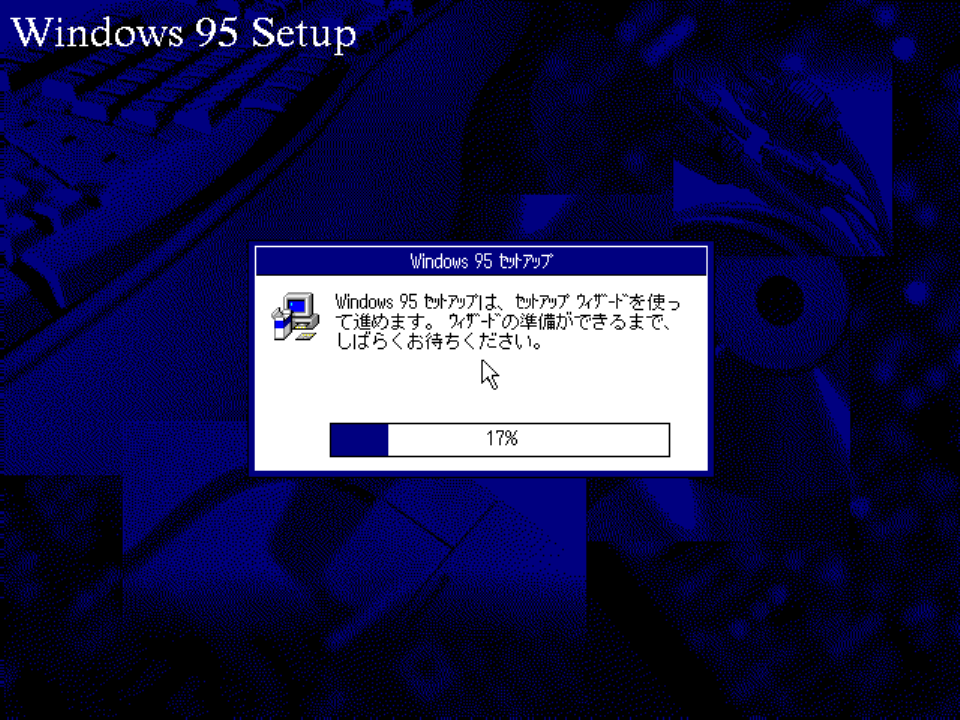
やっとDOSが起動出来たところだったので16色がやっとだったのですが、ふと思い立ってWindows95をインストールしてみよう、という気を起こし、インストーラを起動してみました。TOWNSのWindows95インストーラは640x480x256色を使用しているらしく、色々表示がおかしな所がありましたので修正しています。
lunar trellis
March 03, 2023
256 colors supported
At last I was able to boot DOS, so I could only use 16 colors. The Windows95 installer of TOWNS seems to use 640x480x256 colors, and there were various display problems, so I fixed them. For the time being, the installer started normally. For the time being, it seems to be able to go until the first reboot, but after that it seems to be stuck due to the unimplemented PCM relationship. Fix it again if you feel like it. Even TownsOS can't boot yet, but Windows 95 has progressed to some extent. . . release-TOWNS_221120.qar
 sweet scarab
Nice to see Puu making progress. If only he would use github
granite umbra
the sources proposed on the blog post are the same as the previous post.
maybe he misses to upload the new ones
thick pendant
tacit loom
That's what network shares are for.. theoretically endless storage for the Miste...
I mean separate (secondary) VHD file/hard disk as opposed to a single file/drive. Not talking about network vs local storage.
tacit loom
Ah that makes sense, like a D drive with all the games
Would make adding more game packs easier probably
Like could swap out VHDs with different game packs
granite umbra
granite umbra
An update for FM-Towns core
http://fpga8801.seesaa.net/article/498419020.html
the correct link for the sources and the RBF extracted (info from the forum)
https://fpga8801.up.seesaa.net/rtl/release-TOWNS_230303.qar
 meager mural
Anyone hear anything about disk/tape image write functionality for the Coleco Adam core? Still can't use applications or games beyond one round due to inability to write to images... would love for it to be a fully-usable core.
lunar trellis
@waxen nymph may have some insight
waxen nymph
meager mural
Anyone hear anything about disk/tape image write functionality for the Coleco Ad...
Spacexguy started working on write support but got busy with real life. It is on the roadmap
meager mural
@waxen nymph Thank you very much!
granite umbra
8801 on FPGA
FM TOWNSはキーボードは標準装備ではなく、マウスが標準装備のGUIを売りにしたコンピュータなのですが、マウス用コードは今まで準備していませんでした。やっとDOSが起動できるようになった状態であればマウスは無くても良かったのかもしれませんがWindows95のインストーラが起動できるようになりましたのでやはりマウスは欲しいです。 FM TOWNSのマウスはゲームパッドにつなぐATARI仕様(?)マウスと、正式にはサポート対象外な…
vestal goblet
Kevin really has outdone himself with his latest Atari Archives Annex: https://youtu.be/_v3YGQiY02s

In January 1978, Bally and Dave Nutting Associates debuted the Professional Arcade, a considerably powerful home video game system designed for computer expandability. For a myriad of reasons the system struggled to find an audience in the marketplace, with Bally licensing it out to Astrovision (later Astrocade) in 1980, which similarly faced pr...
anyone who’s a fan of Jeremy Parish’s videos/books and hasn’t dived into Atari Archives, should do so. I am learning so much about the ins and outs of this era of gaming and computing I never knew (or had forgotten)
 wheat folio
So MegaAGS has a new name? https://amiga.vision/
AmigaVision
The ultimate Amiga setup for MiSTer FPGA, emulators, and real hardware. Formerly known as MegaAGS.
 pallid cradle
vestal goblet
anyone who’s a fan of Jeremy Parish’s videos/books and hasn’t dived into Atari A...
pallid cradle
vestal goblet
anyone who’s a fan of Jeremy Parish’s videos/books and hasn’t dived into Atari A...
Thanks!
vestal goblet
pallid cradle
Thanks!
You’re welcome! I didn’t know you were on here, but it figures XD I’ve learned a lot from this video series, thanks for all the in-depth research and your holistic approach to calling the human, business, and technical context
 uncut void
anyone knows how to get lemmins 1 to work without graphic error in AO486?
it always has this color palette switching issue
 fast kraken
is that on the top300 pack?
disable L1 cache in the core OSD and launch it with the vga option:
lemmings vga
vestal goblet
some bank switching/cache timing issue, if I had to guess
uncut void
i will try
yes, I read it is some color palette switching issue..
This is from the 300 pack but I tried several disk downloads in dos 6.22, all the same.
nah, cache doesn't help... the only thing that works is not choosing "high performance pc"... it's playable then, but with less colors...
pallid cradle
Oh I’m not Jeremy Parish, I just have a similar approach
 warm flax
pallid cradle
Thanks!
warm flax
pallid cradle
Thanks!
Yeah I didn't know you were here either. Love the videos and am looking forward to the book!

 abstract condor
Ah
meager mural
I cannot seem to get to the title screen of the C64 version of CastleVania. Is anyone else having this problem? This is the HTL+NEC version.
 fresh geyser
meager mural
I cannot seem to get to the title screen of the C64 version of CastleVania. Is a...
fresh geyser
meager mural
I cannot seem to get to the title screen of the C64 version of CastleVania. Is a...
Is that homebrew?
woven lava
no it was released in 1990
opal void

With the recent attention on ChatGPT and OpenAI’s release of their APIs, many developers have developed clients for modern platforms to talk to this super smart AI chatbot. However I’m pretty sure almost nobody has written one for a vintage platform like MS-DOS.
who tried this on PCXT and AO486 yet 😄
void belfry
hmmm, it might actually work, maybe with a RasPi as https to http proxy (or other machine)
I've done in the past proxy/ssl offloading to a PI for Amiga core
void belfry
not to mention that mTCP suite works just fine under PC XT core (same config as for ao486 (https://mister-devel.github.io/MkDocs_MiSTer/advanced/computer/#ppp-connection-in-ms-dos-on-ao486)

MiSTer FPGA is an open source project that aims to recreate various classic computers, game consoles, and arcade machines, using modern hardware.
will give it a spin tonight/tomorrow, gotta dust off a RasPI lol
 karmic lynx
I'm interested in this, if I can manage to hook it to my other DOS PC I can play LAN Command & Conquer like I used to many years ago
actually it definitely wasn't lan, I have no idea what protocol was used
thick pendant
opal void
https://yeokhengmeng.com/2023/03/building-a-dos-chatgpt-client-in-2023/
MiSTer FPGA - C=64 core - TCP Modem - ChatGPT - Pico TTS
https://github.com/naggety/picotts
https://github.com/bbond007/MiSTer_MidiLink
Also works with ao486 and Minimig & PCXT
opal void
wow awesome! 🙂
thick pendant
I made a forum post about it here: https://misterfpga.org/viewtopic.php?t=6147
karmic lynx
any idea if games that support modem on DOS could make use of the networking mister offers?
thick pendant
karmic lynx
any idea if games that support modem on DOS could make use of the networking mis...
few examples there
thick pendant
yes
thick pendant
karmic lynx
I don't see any info on how it's done
You need to be familiar with how modems work...
karmic lynx
Unfortunately I'm not but if I need to I'll study them up
thick pendant
mostly you just use the "ATDT" command ATDT - Dial --> ATDT192.168.1.131:23 or ATDTBBS.DOMAIN.COM:31337 ( '*' can also be used in place of ':')
karmic lynx
neat, one day I'll do an old school serial modem lan party
thick pendant
generally modem playable games are only 2 player...
unless they are part of an online service or something.
void belfry
thick pendant
Also works with ao486 and Minimig & PCXT
yes, but not using a tcp/ip stack (like mTCP or MiamiDeluxe/RoadShow etc)
thick pendant
that was not my goal. there are no reason those operating systems can't establish a https connection to a REST API endpoint...
void belfry
the obvious advantage of your method (to me at least) is that you're not gonna need an extra machine as a proxy/ssl offloader
thick pendant
you could load a proxy on the HPS if you wanted...
void belfry
yeah... but too much hassle
i am lucky to have some PIs around 😄
used before for things like this: https://amiga-news.de/en/news/AN-2019-04-00006-EN.html
thick pendant
void belfry
yeah... but too much hassle
that sslstrip thing is a Python 2.5 program, so it would be totally trivial to run that proxy daemon on the HPS
void belfry
i'll give it a try in weekend
void belfry
for sure the app works , no crash/mem issues/etc on ao486 at least (but since it's default/no proxy set up yet, ofc it won't connect)
 thick pendant
I prefer using the modem as a proxy as I can get the TTS voice...
and that it works with C64 core
I really want to try to tweak the TTS so it sounds more retro or robotic
tall grotto
void belfry
for sure the app works , no crash/mem issues/etc on ao486 at least (but since it...
What you're doing is hilarious
void belfry
tall grotto
What you're doing is hilarious
yeah, I like these kind of challenges lol :D)

 void belfry
Network engineers are weird, i know 😛
i grew up with IPX, then TCP/IP LANs, plus slip/ppp for internet :D) via 14400 baud
was a bit late + unavailable BBSing or most of western computers/first networks in my time/area
tall grotto
lol
fair enough
I won't lie, I didn't have a computer of my own until I was about 12 or 13 which was around 2003
Parents didn't let me use the family computer so I was a gamer at first 😛
so BBS's, DOOM, and DOS and such escaped my childhood.
void belfry
mine was a 486 dx4 around '94 i think... I still have (and spinning lol) my first HDD, a 272 megs Seagate. with data intact (including savegames which I succesfully imported on MiSTer :D)
tall grotto
quite a feat that they're still going haha
void belfry
before, being comunist country, just had access to a very lousy Speccy clone and a same lousy Atari5200 clone
tall grotto
I see
void belfry
loved that DX4... 8 megs RAM, upgraded by myself to 12 megs, a cheap ESS SB clone and some 1 meg VRAM VLBUS card (don't quite remember the brand)
thick pendant
void belfry
before, being comunist country, just had access to a very lousy Speccy clone and...
Well my first computer was a Timex Sinclair 1000 which is a ZX81 rebrand... then I got a TI994a so that lousy Speccy clone sounds good to me...
The Timex 1000 was truly awful
void belfry
lol
thick pendant
and the TI was arguably a little better, but the software sucked because it was all made by TI
I guess both were a little better than the ZX80 which could not record keypresses simultaneously with showing video output...
void belfry
yeah, but it sucks when you ONLY have that lousy clone (and trust me, it was extremely poorly made) :D) I mean, we never even had the chance to see C64/Amiga/MSX/Apple and all JP stuff etc etc in that time - other than smuggled magazines
so we kinda started (i mean modern IT so to speak) kinda directly with x86 MS + Unix/Linux based systems
thick pendant
I consider the C64 to be my first "real" computer... The Timex and TIs were just calculators in my opinion...
Did the Soviet Spectrum clone use vacuum tubes or something? What made it so bad?
void belfry
thick pendant
Did the Soviet Spectrum clone use vacuum tubes or something? What made it so bad...
I remember that the CPU was some RU knockoff, the (already bad imho) excuse for a keyboard was brittle, most of times the power supply would cause issues, the boards themselves had missing traces and had manually being created with wires etc etc
thick pendant
I mean, not like anything made by Sinclair was the quintessential example of quality...
my 1000 with crash if you even breathed on the memory expansion.
void belfry
my best friend was lucky enough to get a real Speccy in that time (his uncle or smth had some relations). He recently donated me that machine (except for the keyboard membrane which had to be changed) everything worked as it was 30 years back
i would pretty much doubt that cheap crap clone would have resisted as much, and we are talking about very old machines lol
also i missed the 16 bit era until ofc software emulation and now fpga
karmic lynx
The earliest I remember of a computer was playing doom when I was 4, the command & conquer multiplayer side by side with my dad, all on DOS and I suppose through a serial connection.
Now I'm setting up both a mister and an old windows 98 computer and I absolutely loathe having to configure DOS, even Linux is not that annoying, no wonder I have dozens of floppy disks around labeled "config.sys autoexec.bat backup", the OS tended to become unbootable at the slightest provocation
After a few weeks of messing around with the physical windows 98 pc, trying to get dos mode to work properly, I tried ao486 and it was such a much more streamlined experience, I liked it a lot more
Also I'm tinkering with a Commodore 64 I got from a friend, the thing breaks down constantly and I'm sinking tons of money into peripherals and replacements, I don't even like the games but there's just something magical that attracts me about it
I tried the c64 core for for a bit and didn't manage to run a single game, I must be unlucky or something
Also I got tons of tapes for c64 (and some have zx sides) that I've been trying to dump unsuccessfully, I'm hoping I can get something running when the tape only module for the mister arrives, I'm curious about these zx tapes too
Also I want to try connecting to some BBS, both on c64 and 486, I completely missed on that culture
Actually my dad was into ham radio and at the time he was running a node for a BBS system that ran over radio antennas rather than the internet, it sounds absolutely incredible hearing of it today, it was a whole parallel network back when internet was expensive to connect to and it did pretty much the same thing, I don't think that survived until today but I still have a node server (ran on MS DOS) and dozens of floppy disks with the software
thick pendant
karmic lynx
Also I want to try connecting to some BBS, both on c64 and 486, I completely mis...
I'm definitely not the person to question about this, but HAM radio and computers definitely had a cross-over. Like you could view an image sent over HAM radio...
karmic lynx
Yeah but this went deeper, they had "packet radio", which I understand means sending data packets over radio
It seems that to get on packet radio you'd just need a box with presumably a serial connection and an antenna cable
And the client didn't even need much more than an antenna on the balcony and the box to encode and decide the packets
I swear I once saw internet explorer load a webpage thorough it on windows 95
We had the packet radio BBS node at home and I'd get on it and look at the interface, having no idea how to do anything except open some kind of chat with a friend of my dad, they convinced me it was actually the computer talking to me so I'd talk to this guy thinking he was an ai or something
In 1997 or something
I mostly asked for cheat codes for computer games
woven lava
I remembet a friend telling me about radio packet in the late 90s. He had setup an antenna to see what he could get, but a lot was encrypted so he only ever got one boring image. At least at the time
I figure that's how WiFi got started
thick pendant
I don't doubt that you could achieve ridiculously slow connections over HAM radio using old modems....
You can still apparently connect to the ISS space station via data over radio...


Who'd like to escape Earth for a bit? Can we contact the International Space Station from a 1982 Commodore 64 using amateur radio & a modem? It's gonna be out of this world! Made possible by our friendly sponsors http://PCBWay.com - great PCBs from just $5
🙏 Become a supporter: http://perifractic.com/patreon
🛠 Get the tools I use: 🇺🇸http://amzn...
karmic lynx
It's probably something like that
The cool part was that they had an extensive network of nodes placed on top of mountains to get it to work
(kind of how cellular networks work)
It's like web 3.0 before even web 1.0
I could definitely set this up on a mister but then it would be useless without the nodes
They were decommissioned
I'll do the next best thing and make a Commodore 64 BBS and connect to it from the real Commodore 64
void belfry
aaanyway 😄 DOS client of ChatGPT that @opal void posted above is confirmed to work on ao486 core, and for sure (will probably test in the evening) will work as well on PC-XT


because I am very lazy until I'll turn my eye on the HPS, I am using a Raspberry PI with GO 1.13.4 for ARM6 for HTTP to HTTPS proxy calls
for simplicity with a PI , same can be done for other architectures: get GO for ARM from here : https://go.dev/dl/ - I tried multiple versions, apparently 1.13.4 worked best (go1.13.4.linux-armv6l.tar.gz) , move it to /usr/local , unarchive it there

get https://github.com/yeokm1/http-to-https-proxy GO script and put it in a folder of choice

GitHub
A proxy that upgrades HTTP connections to HTTPS for systems which cannot make HTTPS requests. - GitHub - yeokm1/http-to-https-proxy: A proxy that upgrades HTTP connections to HTTPS for systems whic...
as sudo issue: export PATH=$PATH:/usr/local/go/bin
then just run the script as: go run http-to-https-proxy.go
on core side, edit the doscgpt.ini with your key, IP address of PI/other machine
load mTCP and have fun with DOS client
apparently I didn't pay any subscription, so yeah, the AI won't talk to me yet 😄 but from a network/program/core all seems fine
opal void
Too bad I'm very occupied with work nowadays to try it out 😦
void belfry
I am sure GO can be ran on HPS so it can be done all on MiSTer, but it complains also about GCC and didn't had the time/will to research more on this - i mean for the proxy side of things
void belfry
opal void
Too bad I'm very occupied with work nowadays to try it out 😦
I got lucky today, with lots of useless meetings in which I didn't have to say/do anything :D))
opal void
void belfry
I got lucky today, with lots of useless meetings in which I didn't have to say/d...
Too bad I have to talk a lot during meetings
Usually I have to do live troubleshooting and demonstration
Sessions, workshops etc
karmic lynx
I don't really feel like running chatgpt on DOS
but I should experiment with telnet and BBS
 burnt timber
I was able to figure out how to adapt the nfggames bootable X68000V4 HDS to an HDF for the X68000 core, though unfortunately the max size on an HDF is around 40mb so games have to be hand picked to fit in the size limit..
thick pendant
karmic lynx
but I should experiment with telnet and BBS
The Telnet BBS Guide is your complete listing of over 900 Telnet BBS systems in the world.
karmic lynx
thank you
wheat folio
It’s kinda annoying how many bbses don’t work with vintage clients.
thick pendant
some BBS now require SSL connection
burnt timber
That statement comes off as very.. anachronistic to me.
thick pendant
Well, whatever that mean, the truth is that there are more BBSs on Telnet BBS Guide that use SSH then POTs
burnt timber
I was just commenting on how weird it was to see those two technologies related to one another in one sentence. I guess BBS has changed a lot.
wheat folio
Modern bbses typically use telnet but people got paranoid that their confidential bbs chatter was getting snooped on so they have been moving to ssh
Like people do more than make a handful of “I’m on a bbs” posts and play LORD once before never coming back
Source: I ran a telnet bbs for a couple years
sweet scarab
burnt timber
I was able to figure out how to adapt the nfggames bootable X68000V4 HDS to an H...
???
burnt timber
?
burnt timber
wheat folio
Modern bbses typically use telnet but people got paranoid that their confidentia...
Thank you for explaining. I've been out of the BBS loop for a long time
thick pendant
¿
thick pendant
wheat folio
Modern bbses typically use telnet but people got paranoid that their confidentia...
I should look at adding SSL support to the TCP modem emulation anyway (for completeness), but I agree that its almost comical ppl would be worried about someone sniffing their correspondence with a retro BBS.
karmic lynx
so I finally got on a BBS and I'm surprised by the massive amount of questions I was asked about who I am
I didn't expect to be thoroughly profiled on a BBS
karmic lynx
thick pendant
I should look at adding SSL support to the TCP modem emulation anyway (for compl...
one of the BBS I tried yesterday literally had a disclaimer saying "don't expect any of your conversations with anyone on this BBS to be private"
also a thing I found odd is that on both of the ones I registered to one of the questions was "are you an IMAGE BBS SysOp?", I have no idea why everyone asks that
void belfry
hehe, BBSes were/are small communities, so all kinds of questions were asked on registration. With the last question, maybe they are looking for a co-SysOP , wh knows 😄
karmic lynx
I thought BBSes were more impersonal, although now that I learned they had mail system it makes a little more sense for having to ask people to register, since manually verifying people was the only way to do it and there was no global email, no captcha, no 2 factor, etc
wheat folio
You also had time limits to keep people from hogging up the physical line. Didn’t want people creating more accounts to get around it.
 copper slate
karmic lynx
I didn't expect to be thoroughly profiled on a BBS
copper slate
karmic lynx
I didn't expect to be thoroughly profiled on a BBS
Sounds like something a fed would say
woven lava
we had programs to download our email, and DOS clients to reply offline
all before gmail etc
I used them in Europe where you paid per minute (no free local calls) so everybody kept their connections as short as possible
karmic lynx
I too had email long before gmail was a thing but after the bbs
meager mural
@fresh geyser Can anyone get C64 CastleVania past the trainer screens? I really want to play this game.
void belfry
meager mural
<@365332635351908353> Can anyone get C64 CastleVania past the trainer screens? I...

have you pressed Y when asked about unlimited lives ?
wheat folio
woven lava
we had programs to download our email, and DOS clients to reply offline
BlueWave for the win
karmic lynx
my dad used eudora and kept using it long after it became so outdated it kept messing up incoming emails
abstract condor
 meager mural
@void belfry I think I tried both Y and N. With both, it left the trainer menu but didn't load the proper CastleVania title screen.
woven lava
I cant remember if I used bluewave or something else. I just recall that it looked like the Borland IDEs of the time with blue background and yellow text
burnt timber
Got a few games running on the PC98 core. Definitely needs some work but it's nice to see it somewhat implemented.


 burnt timber
Had better luck with PC88, Snatcher and Silpheed will not run but a lot of other good games will.


 gloomy bolt
The sword being 'me' in popful mail is really cute.
burnt timber
Star Trader is a pretty interesting game. An adventure game/shmup hybrid by Falcom. The X68000 version cut out all the adventure game elements and its just a shmup

On the second episode of PC-88 Paradise I do a full playthrough of Falcom's 1989 "shooter RPG" Star Trader.
Follow us on Twitter, Instagram, and Facebook!
https://twitter.com/basemntbrothers
https://www.instagram.com/basementbrothers/
https://www.facebook.com/basementbrothersyoutube/
crimson fulcrum
Falcom really made a lot of different things back then.
void belfry
meager mural
<@794151308620857395> I think I tried both Y and N. With both, it left the train...
weird.. the only thing I can think of is that I don't use the standard C64 ROMs, but a loadable Masterom one. I'll try to check in the evening if it also loads correctly when using JiffyDOS/DolphinDOS ones
karmic lynx
burnt timber
Got a few games running on the PC98 core. Definitely needs some work but it's ni...
There's a pc98 core? I need to get touhou on it ASAP
crimson fulcrum
the touhou games are a tall order for PC98 in general, they're made for the later models that were running the 386 and later cpus.
karmic lynx
Right, they barely run on software emulation on consoles
But we can run 486 on mister so it has to be possible eventually
burnt timber
karmic lynx
There's a pc98 core? I need to get touhou on it ASAP
It's a "beta" core still being worked on by puu, you can find it on the mister fpga forums
karmic lynx
Actively worked on?
opal void
NEC computers don't get much love 😦
burnt timber
It is what it is, I guess. Not my prerogative to make any changes to all that
lunar trellis
If I recall he switched a good while back to FM Towns, partly because the development of an FM Towns core would make it easier to go back to PC-98. They perhaps share parts?
I wrote this the other day on the subject of where we are with older Japanese PCs:
Off hand I think this is where we are at with the Japanese PCs that are part done:
Basic Master Jnr - Pierco has it loading but needs cassette loading so can load something
Sharp X1 - Jason has it booting but again needs cassette loading
PC-6001 - some code for something else allowed a start but very early on
PC-8001 - same boat as 6001 but Jason made a bit of progress
Famicom BASIC - can load BASIC and keyboard but no tape loading, hopefully Rysha will add that
Sega SG 3000 - need BIOS loading, BASIC cart support, keyboard and cassette loading added to SMS core
For ones we have, RX-78 needs cassette loading and I don't think PC-88 has cassette loading but may be wrong. Not sure about Sharp MZ
burnt timber
lunar trellis
I wrote this the other day on the subject of where we are with older Japanese PC...
Famicom BASIC sounds interesting. There have been a lot of efforts as of late on Famicomworld to preserve BASIC programs from magazines and such.
lunar trellis
Yeah, a number from Microm Basic have been typed out by the Gaming Alexandria community too, the core "just" needs cassette loading so they can be played.
burnt timber
The rabbit hole goes ever deeper!
lunar trellis
There seems to be an increasing swell of interest in typing out these old games for old Japanese systems, so hopefully we can support them on MiSTer
Still hoping 2023 will be the year we see really comprehensive coverage of the older Japanese PCs on MiSTer with cassette file loading. A lot of cores are almost there already but need some love/help to get over the finish line
I was wondering if the new open AIs could be used to feed scans of the code from magazines into and have them spit out decent code. Copying and pasting gives a load of typos, syntax and formatting errors, so they have to be done by hand currently.
Could be a good use of these AIs if someone can get it working well
burnt timber
I'd like to see that
lunar trellis
Need someone who knows what they are doing to give it a try
karmic lynx
I found old trs-80 tapes in the garage and I'm sad the core doesn't have tape input
burnt timber
https://www.youtube.com/watch?v=gGYNHn-i_fw
For all you Falcom fans out there \m/

Music: Xanadu
Composition and Arrangement: Anthem
Performance:
• Vocal: Eizo Sakamoto (Anthem)
• Guitar: Hiroya Fukuda (Anthem)
• Bass: Naoto Shibata (Anthem)
• Drums: Takamasa "Mad" Ohuchi (Anthem)
Album: Xanadu / Anthem
Anthem is a J-Metal band that was formed during 1981 in Tokyo, and they are considered to be one of the earliest pioneering ...
opal void
lunar trellis
I was wondering if the new open AIs could be used to feed scans of the code from...
I have a friend who already started doing that using Google lens
lunar trellis
Is it working?
karmic lynx
I'll now proceed to use this ancient cassette player to try and load zx tapes
 opal void
lunar trellis
Is it working?
opal void
lunar trellis
Is it working?
Oh yeah, spectacularly
He's using it to convert a lot of pc-6001 related basic and assembly code to actual text from IO magazine
lunar trellis
Oh wow, that's ace. Do you know what his workflow is?
opal void
Not really tbh, I asked him if he can document and archive his efforts
That dude is so hardcore
He's rewriting the nbasic interpreter in Lua just for kicks
opal void
lunar trellis
Is this English, Arabic or Japanese text do you know?
Do you mean the text in the I/O magazine?
lunar trellis
The text in the code being scanned, assuming there is non-code text in there (i.e. Microm Basic games in the magazines have Japanese characters which cause issues)
opal void
lunar trellis
The text in the code being scanned, assuming there is non-code text in there (i....
Hmmm i would say English
@lunar trellis checkout some of his work: https://zenithsal.com/pages/pc6002
he is also using Lens to translate technical reference

 lunar trellis
Very cool!
opal void
he wrote more stuff about it before
but he is busy nowadays with his indie gamedev projects
burnt timber

** All future OST rips are being uploaded to my second channel** https://youtube.com/@natariiVGM
MegaGRRL Desktop + OPNA MegaMod.
FLAC Download: https://cloud.natalie.ee/s/nJfxkyQLKb5M4N6
karmic lynx
Maybe I should try to run this on ao486
 burnt timber
Mm.. maybe go for 2.0 🙂
karmic lynx
That's the one I have
Aww no disks, just a massive manual and a ram chip

If anything it's a good decoration for the living room
I forgot, can ao486 use usb floppy disk drives?
Although all my disks are in various states of degradation so I better back then up anyway and then just load the img
burnt timber
Anyone having trouble building the Commodore 128 core boot roms, PM me
lunar trellis
The boot rom(s) should really be added to the bios database, so everyone using update all just has them
burnt timber
It's not fun to build them, but its doable. Just takes a bunch of copy /b commands
lunar trellis
I keep meaning to put some tickets on GitHub as there are a few cores that bios getter isn't grabbing the boot ROMs for, and would make life a lot easier for people
burnt timber
What other cores don't get BIOS?
karmic lynx
Tell me your favorite games for computer cores
I want to check out other people's favorites
burnt timber
I like adventure games for Amiga like Dark Seed, Waxworks, Elvira, etc. Thre might be DOS ports of those as well.
karmic lynx
Never heard of these, it'll be a novel experience
Ao486 maps menu to windows + f12 but the period accurate keyboard I'm using doesn't have the windows button, what a sad story
Oh wait mister has an osd button
burnt timber
ICOM's adventure games are fun too, ported across many platforms including NES
lunar trellis
burnt timber
What other cores don't get BIOS?
Offhand:
C128
PCXT
Ti99
Also Pokémon Mini is using an open source one baked in to the core, but no reason not to have the script grab the official one
Anyone know of any more?
burnt timber
Oh yeah, forgot I had to get a BIOS for PC XT
stiff steeple
does amiga get kickstarts?
lunar trellis
No, doesn't grab any Amiga files
Here is the json
GitHub
Bios DB for the MiSTer Downloader. Contribute to theypsilon/BiosDB_MiSTer development by creating an account on GitHub.
None of the Atari's need BIOS files?
burnt timber
https://www.youtube.com/watch?v=eyMVvawmjjg
Just going to leave this here.. Tim and Geoff Follin are legends

From the 2007 Saladedemaïs Follin Project.
- Ghouls and Ghosts – Title
- Ghouls and Ghosts – Level 1 and 5
- Ghouls and Ghosts – Level 2
- Ghouls and Ghosts – Level 3
- Ghouls and Ghosts – Level 4
- Ghouls and Ghosts – Game Over – Continue
- Ghouls and Ghosts – Hi Score
- LED Storm
- Sly Spy – Title
- Sly Spy – BGM 1
- Sly...
thick pendant
karmic lynx
Ao486 maps menu to windows + f12 but the period accurate keyboard I'm using does...
My MiSTer A1200 build does not have an F12 key, but the UK A1200 KB has a blank key near the Amiga(windows) key, so I was able to remap the key (inside the MiSTer menu core) by connecting a USB keyboard that did have an F12.
karmic lynx
sounds complex
I can just reach to the OSD button without keeping a controller plugged in
thick pendant
not complicated at all...
You say key you want to remap, it asks you to press a key, then the one you want to reassign it to...
Then you can unplug the modern keyboard
But maybe you have an Inspector Gadget arm or something 🙂
burnt timber

In this episode of PC-88 Paradise, I suffer through the original Mugen Senshi Valis from 1986 for your viewing enjoyment.
Follow us on Twitter, Instagram, Facebook, and Patreon!
https://basementbrothers.net/
https://twitter.com/basemntbrothers
https://www.instagram.com/basementbrothers/
https://www.facebook.com/basementbrothersyoutube/
https:/...
wheat folio
Are any of the Valis actually any good?
burnt timber
That's subjective. I think the 16 bit ones are, but that's me.
wheat folio
I played one on Genesis that apparently had a long unskippable intro every time you booted it so I never tried it again.
burnt timber
The "tecmo theater" is part of the charm
Personally I love the Sega CD and PC Engine CD games with the large animated sprites for cutscenes, especially if it has voice acting
undone anvil
I really enjoyed the SNES one. quite a bit of nostalgia for it. I remember the music being awesome
 carmine thunder
Can anyone point me in the direction of what I need to do to get text looking right in DOS on the ao468 core. Sending to a VGA monitor via the analogue I/O board. Doesn’t seem to matter what resolution / video_mode i try it always looks not quite right
karmic lynx
carmine thunder
Can anyone point me in the direction of what I need to do to get text looking ri...
I have that covered
let me grab my config
This is how you should configure audio and video in the core, one moment and I'll tell you settings for mister.ini

forced_scandoubler=1
vscale_mode=4
video_mode=800,600,60,cvt
vsync_adjust=2```these are the magic settings that work for me
resolution can't below than 800x600, the core will adjust the resolution based on the game and then scale accordingly
even if your monitor (like mine) supports resolutions as low as 640x480 it should still be 800x600 otherwise you'll go out of range when the core tries to display very low resolutions like 320x240 or the aspect ratio will just be messed up
carmine thunder
Oh awesome, thanks for that! Looks great. getting late here now so will give it a try tomorrow
Yeah monitor does 640x480 to 1280x1024. Had tried 800x600 but maybe not with that cvt setting
carmine thunder
Ah ok , got it
void belfry
void belfry
aaanyway 😄 DOS client of ChatGPT that <@404114742823616514> posted above is c...
No surprise, that MS-DOS ChatGPT client works perfect on PC XT core as well (same "recipe")

 south stirrup
karmic lynx
This is how you should configure audio and video in the core, one moment and I'l...
south stirrup
karmic lynx
This is how you should configure audio and video in the core, one moment and I'l...
setting that vsync switch to variable was a godsend for me
using a mitsubishi diamond pro crt and it made it a little bit darker but it seems like the text is scaling correctly now
discovered it by accident
karmic lynx
yesterday I wanted to play games but I found an amazing new bug in misterfs that breaks folders when copying them over from the shared folder
void belfry
Yeey, BBS-ing from Apple II core 😄

 wheat folio
Captain’s Quarters FTW
 summer dragon
Trying to play Tyrian in the Top 300 Pack on the ao486 core and having a couple issues:
-
No sound. I have it set to FM Sound for Music and SoundBlaster for sound effects
-
The game keeps speeding up and slowing down
Is this to be expected or are there some optimal settings I’m missing? I just went with HIRAM in the startup menu
also set game detail to normal
carmine thunder
karmic lynx
it's vsync adjust that does the magic
Seems I'm having issues with vscale_mode=4. Once I set that the monitor looks like its all out of sync. The rest seem to work ok though. So not sure what i need to do to get that going with my monitor
This seems best I can get it , but still seems vertically squashed
 hollow ice
I mean, is it something as simple as setting the geometry on the monitor?
carmine thunder
hmm dont think so. The mister menu isnt squashed

and looks fine / is full screen on the mister main menu and when in games themselves / other cores etc
 junior hemlock
One game I could never get to work on ao486 is Monuments of Mars, a fun little 2d platform game that I played a lot as a kid. It uses EGA, so maybe it might work on the pc XT core?
Also a pc-98 core would be awesome. Besides the Touhou series, there’s also Farland Story, the precursor to Evo for the the snes and Metal Jacket, which is like Front Mission
burnt timber
There is one now, it's just incomplete. I've gotten a few games running on it OK tho.
puu has it up on the MiSTer FPGA forum to play with
junior hemlock
Cool!
burnt timber
Uramander and ULife Force Work partially. Rude Breaker won't boot, Rusty might work, I got it through the intro but it threw an error after trying to start the game.
thick pendant
summer dragon
Trying to play Tyrian in the Top 300 Pack on the ao486 core and having a couple ...
At one point the game did run perfect on ao486, but now I run into the same issue as you.... https://www.youtube.com/watch?v=u_zZQl7AWis&t=277s
actually, i can still hear some issues there
maybe try an disable L2
because that video was before L2
burnt timber
Man that game has amazing FM music
thick pendant
i did not hear it before as much but its obvious the sound has tempo issues
thick pendant
junior hemlock
One game I could never get to work on ao486 is Monuments of Mars, a fun little 2...
PCXT has pcJR/Tandy GFX which is similar in capability to EGA but not EGA
thick pendant
void belfry
Yeey, BBS-ing from Apple II core 😄
I really need to try ChatGPT on the Apple II core. You ran over your quota? I've not managed to do that yet with all my stupid cat questions...
summer dragon
thick pendant
maybe try an disable L2
Tried that and no dice, unfortunately
thick pendant
I don't know what changed with the core, but do you agree it had better tempo (also considering modem play) than we experience now?
void belfry
thick pendant
I really need to try ChatGPT on the Apple II core. You ran over your quota? I've...
Neah, just didn't signed up for any billing plans to use those APIs. Didn't had any motivation until now to do that :))
Anyway, from my search for Apple IIe terminal programs, I found the following two working best. Will update the MkDocs later:
ACT - Apple Conference Terminal v3.0.3 - stable at 1200 baud, theoretically possible 19200 - not stable at those speeds
Easy/intuitive to use GUI
Apple II_Comm_Program a.k.a. Practical Peripherals Communication Program for Apple II v1.01 - max 2400 baud, stable at 1200
ESC 8 for 80 cols, ESC Q to return to menu etc
Serial card slot 2 default works, word length 8, stop bits 1 parity none
void belfry
When I say "not stable for speeds above 1200" I mean there will be sometimes missing characters like, usually a screen redraw fixes most of them
 carmine thunder
anyone know how to tame misterfs, i'm trying to copy over that chatgpt exe to dos. Seems I had to rename it for it to appear, but anytime I try and copy it , it reckons it cant see the file. Comes up ok in a 'dir' listing, but even if I do copy * it only finds '.' and '..'
void belfry
Make sure it is the latest version of misterfs (think it was some issue a while ago).
doschgpt.exe and doschgpt.ini should be ok to transfer (they respect 8.3 format and they are the only files you need), I used misterfs myself to copy them over
#help message -- see my discussion with LuckyNES, think you have the same issue
summer dragon
thick pendant
I don't know what changed with the core, but do you agree it had better tempo (a...
I only watched a little of that video, but yeah, the tempo of the music definitely seemed better albeit not perfect
carmine thunder
void belfry
doschgpt.exe and doschgpt.ini should be ok to transfer (they respect 8.3 format ...
It was weird, had to rename to doschgp.exe to copy ..
ended up getting misterfs to work under a freedos image
rather than the msdos 7 image I was using...
now struggling with getting mTCP to get to the outside world hah.
pings just timeout
void belfry
Have you modifies mtcp.cfg file to suit your network ?
lunar trellis
Are any of our Commodore cores backwards compatible with the MAX or would we need a bespoke core to run MAX software?

The Commodore MAX Machine, also known as Ultimax in the United States and Canada and VC-10 in Germany, is a home computer designed and sold by Commodore International in Japan, beginning in early 1982, a predecessor to the popular Commodore 64. The Commodore 64 manual mentions the machine by name, suggesting that Commodore intended to sell the m...
karmic lynx
carmine thunder
anyone know how to tame misterfs, i'm trying to copy over that chatgpt exe to do...
it has to be broken, even latest version is giving me problems, I just gave up on using it and I just mount the vhd
carmine thunder
void belfry
Have you modifies mtcp.cfg file to suit your network ?
Yeah, all looks ok…
carmine thunder
karmic lynx
it has to be broken, even latest version is giving me problems, I just gave up o...
Which vhd are you referring to ?
karmic lynx
the one I run the OS in
I mount it on another computer and add the files
shared folder just never works
btw I haven't figured out how to mount an extra vhd as secondary hard drive, it doesn't appear
carmine thunder
Ah ok
I was able to get misterfs working by booting into a freedos floppy (bottom of first page https://misterfpga.org/viewtopic.php?t=843&start=25) and then copying the files to my mounted vhd c: drive
karmic lynx
sounds more annoying to do than just mounting the vhd
carmine thunder
Depends if you have easy access to the vhd
karmic lynx
I have yet to try if it works through smb
carmine thunder
and how big it is etc. I’m just working over ftp
Have to take my case apart to get to the sd hah
karmic lynx
I have the acrylic one but I need tweezers to take it out because they didn't account for fingers not being able to grip the card when taking it out
carmine thunder
Yeah micro sds are always painful ha
void belfry
carmine thunder
Yeah, all looks ok…
https://mister-devel.github.io/MkDocs_MiSTer/advanced/computer/#ppp-connection-in-ms-dos-on-ao486 - just to make sure, it should work in most cases
MiSTer FPGA is an open source project that aims to recreate various classic computers, game consoles, and arcade machines, using modern hardware.
rare cases, when the router itself has .254 as local IP address (which is usually the one assigned to the core) might also be the problem
thick pendant
lunar trellis
Are any of our Commodore cores backwards compatible with the MAX or would we nee...
MAX cartridges should work on a Commodore 64...
void belfry
Browsing the web with MS-DOS Arachne browser :))

 karmic lynx
I need to try that
my dad told me about arachne
and seeing the screenshot is awakening some long forgotten core memories of having seen it
void belfry
burnt timber
Clearly I need to setup FreeDOS and some BBS-ing software
void belfry
doing a comparison between 286 and the normal one
ofc, don't expect https sites to work 🙂
karmic lynx
Basically the whole internet except for that specific site
void belfry
Vintage Computer Federation Forums
I was wasting a bit of time to day looking for stuff and come across http://www.386experience.com/ I haven't been there for many years but it is still useful for getting old programs from.
and ofc, might be a lot more of those 🙂
karmic lynx
but what about https://msfn.org/board/topic/182432-arachne-web-browser-community-edition-for-dos-with-tls-13-hack/
MSFN
== Arachne Web Browser Community Edition for DOS with TLS 1.3 Hack == = Overview = Arachne v1.97 (2013) is a DOS graphic internet client (web browser, FTP, email) that can technically be modified for TLS 1.3 web browsing support [1]. Although it does not handle encrypted web pages natively, a Wge...
void belfry
but yeah.. no more AltaVista.. and sooo many other sites lo
karmic lynx
altavista was my favorite homepage
then one day in early 2000s I started using this "less known google" to do special searches to keep altavista clean
little did I know...
burnt timber
geocities and tripod though
void belfry
haha, yeah.. those too. Lycos
void belfry
karmic lynx
I need to try that
Anyway, all you have to do (after getting mTCP started), when you first run the installer , when you get to Arachne TCP/IP Setup , go for Manual Setup, Resident packet driver (that would be the epppd loaded before) and enter manually the core's IP address (usually .254), Gateway, DNS, subnet mask etc
 karmic lynx
I need to take notes
I don't know if I'll do it, it's a lot of work to just browse a few sites, BBS feel more worthwile
and I don't really need an emulator to do it, I could browse them from my main pc
junior hemlock
If you've heard of Gopher sites, those are still around
karmic lynx
I heard of gopher protocol but have no idea what that was
junior hemlock
Pre-dates the web and is basically text only
undone anvil
did gopher at least support hyperlinks?
karmic lynx
like a BBS?
karmic lynx
my dad had a minitel
we still do but the transformer is broken and it's hard to find schematics with precise voltages for a replacement
but it seems there were minitel emulators for DOS
junior hemlock
I mean, basically Gopher(and the successor protocol Gemini) should be supported by Arachne I think? If not, there's always Links/Lynx I think?
karmic lynx
and I do have floppies of it
junior hemlock
Oh wait, Gemini isn't supported by Arachne, sorry
karmic lynx
if there's any minitel servers up at all they are all probably in french
junior hemlock
Would love to do some BBSing in DOS tho. I have several BBS accounts lol
karmic lynx
Arachne supports multiple image formats including JPEG, PNG, BMP and animated GIF. It supports a subset of the HTML 4.0 and CSS 1.0 standards, including full support for tables and frames.[6] Supported protocols include FTP, NNTP for USENET forums, POP3, SMTP and Gopher. Arachne includes a full-fledged TCP/IP connection suite, which has support for some dial-up and Ethernet connections. However, Arachne has no support for JavaScript,[2] Java[2] or SSL. Arachne can be expanded with the use of add-ons for such tasks as watching DivX movies, playing MP3 files, IRC chat, RSS and viewing PDF documents. Arachne also supports DOS Gateway Interface (DGI), a unique feature similar to Common Gateway Interface (CGI) scripting on the client.
junior hemlock
Aww
junior hemlock
You get used to it over time imho
wheat folio
void belfry
Anyway, from my search for Apple IIe terminal programs, I found the following tw...
I use ProTERM on my real Apple II along with telnet65 for my bbsing.
junior hemlock
BBS(Old ones) use Telnet
Or straight up dialup lol
Some more modern ones use SSH
karmic lynx
I know
wheat folio
I have a WiModem232 connected to my super serial card. It let's me "dial" ip addresses in ProTERM and basically tunnels the serial connection over telnet. telnet65 just plain uses my Uthernet II network card to connect.
karmic lynx
but if there's an arachne plugin then it may be worthwile to install
and have an all-in-one solution
junior hemlock
I agree, that would be sweet
void belfry
wheat folio
I use ProTERM on my real Apple II along with telnet65 for my bbsing.
It is on my list to try 🙂 thank you.
wheat folio
void belfry
It is on my list to try 🙂 thank you.
ProTERM will expect a serial card and to be "dialing" in some way. telnet65 expects a network card (Uthernet, Uthernet II) but I had to edit the executable because the slot is hardcoded.
I've spent way too much time and money upgrading and toying with my IIe.
void belfry
junior hemlock
Would love to do some BBSing in DOS tho. I have several BBS accounts lol
mTCP's telnet client works ok imho
junior hemlock
Ah I see, thanks!
karmic lynx
[56k warning]
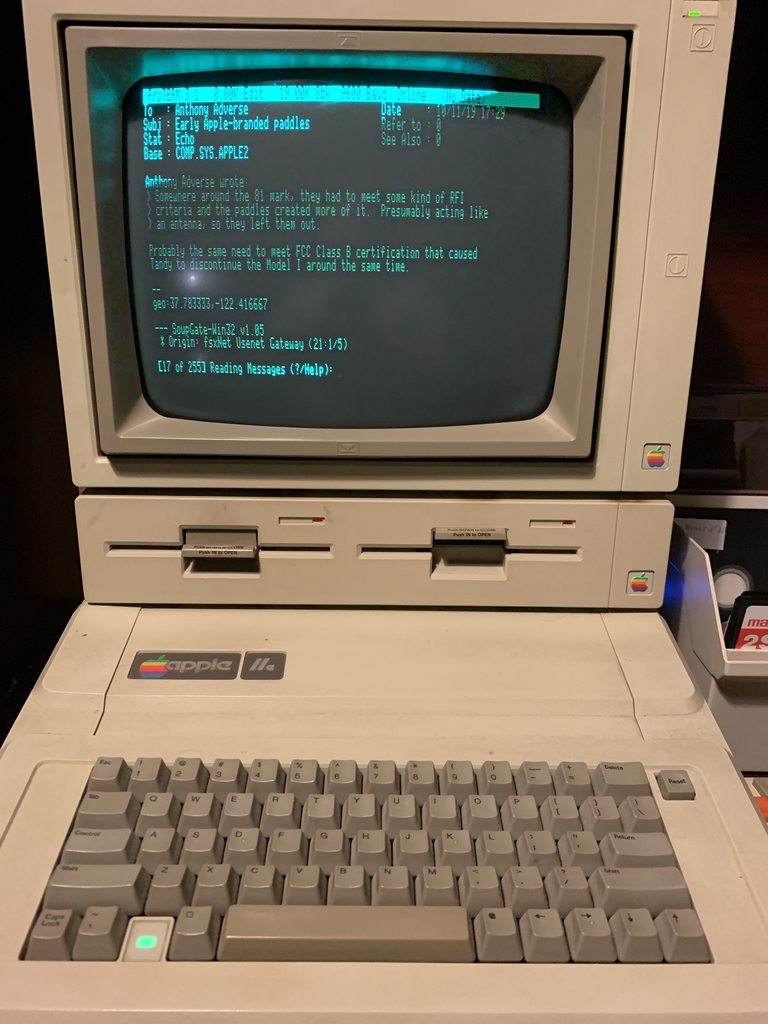 void belfry
now, if you go the other way (using Modem, not PPP), my fave DOS terminal prog is Terminate 😄
karmic lynx
I need to try again to get on a BBS on the C64 now that I have a sidekick, which supports georam and all the fun memory expansion stuff
and 80 columns mode
I can't find any of these fabled arachne plugins
google, as usual, is beyond useless
void belfry
speaking of decrypting SSL, I would say chances are low for present cores (without an external helper)
void belfry
I am doing some research on that (mostly because of that ChatGPT DOS client). And combined with previous SSL stripping for Amiga iBrowse. In theory, it could be possible (depending ofc also on the program itself to accept smth like proxyes) to offload the SSL from core to ARM (kinda Man In the Middle lol)
karmic lynx
oh right we could just MitM it out
void belfry
if for example Arachne does not support proxy functions (I just started meddling with it), this won't help at all
void belfry
no
karmic lynx
doesn't theoldnet.com have a proxy?
like not a proxy proxy but you just input where you want to go and does the loading for you
void belfry
but it would make more sense/security wise as well, to run it on ARM, no other exposure/device/etc
karmic lynx
yeah what if you infect your DOS with a virus
speaking of viruses, I got a bunch of virus floppy disks
backed up through linux
void belfry
karmic lynx
doesn't theoldnet.com have a proxy?
probablly, but it already translates the page for your old browser in plain http.
void belfry
karmic lynx
yeah what if you infect your DOS with a virus
lmao, do a VHD backup after fresh install 😄
karmic lynx
even if you can get around https then most sites still can't be rendered
void belfry
karmic lynx
even if you can get around https then most sites still can't be rendered
yes, ofc 🙂 NT/W95/98 is also in the cards
void belfry
karmic lynx
speaking of viruses, I got a bunch of virus floppy disks
haha, yeah, I saw a pic earlier lol
karmic lynx
I managed to install firefox 10 on my windows 98 but it's slooooooow
void belfry
still have some ASM virii on my first HDD :D) backed up, still working beast
karmic lynx
what's the difference between this page https://mister-devel.github.io/MkDocs_MiSTer/advanced/computer/#serial-connection-on-apple-iie
and this page? https://github.com/MiSTer-devel/Wiki_MiSTer/wiki/Internet-and-console-connection-from-supported-cores
or rather, the first one has up to date c64 instructions but the github one doesn't, are they managed by different entities?

GitHub
Contribute to MiSTer-devel/Wiki_MiSTer development by creating an account on GitHub.
MiSTer FPGA is an open source project that aims to recreate various classic computers, game consoles, and arcade machines, using modern hardware.
void belfry
maybe some day, when I'll get extremely out of any other meaningful ideas, would try to compile those on MiSTer
yes, Mk_Docs is more up to date
karmic lynx
is that in general?
 wheat folio
I use … whatever the latest version is?
void belfry
I have no idea :D) I am a complete noob on Apple computers
wheat folio
3.1 I believe. https://www.apple.asimov.net/images/communications/proterm/
void belfry
that crashes directly to * prompt
wheat folio
3.1 requires a iie enhanced - that could be the issue.
void belfry
the only one I find "working" is 1.9P
void belfry
nope 🙂


 void belfry
wheat folio
Yeah - looks like the core is based on a II+
void belfry
wheat folio
Yeah - looks like the core is based on a II+
anyway, can't figure how to use it, it looks like it doesn't save its config or smth. As I said, noob on this system
wheat folio
I think the core doesn’t support writing to disks. I should dig into it later, might be able to mount it as a prodos hard drive which it might be able to write to
void belfry
that would explain it 🙂
I didn't messed yet with HDV and that kind of stuff for Apple 2e
karmic lynx
I found apple 2e cartridges in the garage
completely useless since I don't have the computer
void belfry
Another "curios" thing, is that when I tried (when terminal program permitted ofc), perfect speed to use seemed to be 1200 baud, the more increase of it, the more missed characters for example.
This is what I've tried against this core and serial connection (some ofc are mistakes, like progs supporting other cards that SuperSerial)
 wheat folio
karmic lynx
I found apple 2e cartridges in the garage
wheat folio
karmic lynx
I found apple 2e cartridges in the garage
Cartridges? Pic? They had cassettes but no cartridges I know of.
karmic lynx
Huh
Ok not cartridges, they were cards
And I'm being told it was a clone, not the apple 2
void belfry
A 3rd working terminal would be Agate (A Graphical Terminal) v0.89. From brief tests, 1200 baud works perfect, 2400 baud looses characters but surprisingly 4800 works fine as well so far
In theory, it should go up to 14.400, will see how stable would be that
wheat folio
I think Agate supports color ANSI but is slow as a result
carmine thunder
void belfry
https://mister-devel.github.io/MkDocs_MiSTer/advanced/computer/#ppp-connection-i...
Ok cheers. In a twist no one saw coming, it ended up being user error.. I'd set the ip in the network.cfg to what I thought a free one would be on the network, rather than realising its allocated that .254 one from mister's os
copper slate
Amiga Vision got updated 👀
gloomy bolt
Get it while there's still an Archive.org!
 uneven cliff
Was just about to ask if anyone has tried Amiga Vision yet
Mine is downloading, very excited
coral coral
Since MegaAGS is my creation I’ll note that this is the last “classic MegaAGS” release, and I won’t spend time on it any more.
Future updates will likely include some quite big changes, but it’s in good hands
fast kraken
thanks optiroc, without it i'd probably never of enjoyed the amiga core realistically
void belfry
carmine thunder
Ok cheers. In a twist no one saw coming, it ended up being user error.. I'd set ...
yes, it should always be left .254 (the other octets modified to fit your network). Rare cases where router itself has that IP address would need you to make an additional modification in ppp_options file
copper slate
coral coral
Since MegaAGS is my creation I’ll note that this is the last “classic MegaAGS” r...
Thank you so much for you work! I wouldn’t have ever enjoyed the Amiga without MegaAGS. For classic computer platforms, packs like you made are equally as important as a core!
opal void
coral coral
Since MegaAGS is my creation I’ll note that this is the last “classic MegaAGS” r...
What's mega ags
coral coral
A hd image for Amiga with nice launcher and configurations: https://amiga.vision
AmigaVision
The ultimate Amiga setup for MiSTer FPGA, emulators, and real hardware. Open source, formerly known as MegaAGS.
 earnest lynx
Has anyone ever attempted to get a lan game of Warcraft 2 going on ao486?
karmic lynx
oh boy it's time to finally check amiga out
karmic lynx
earnest lynx
Has anyone ever attempted to get a lan game of Warcraft 2 going on ao486?
no but I'd like to know how it is done, for any sort of multiplayer
earnest lynx
I know little about how to do it, but I feel going through windows 95 with its tcp/ip or networking drivers would be the best bet, if only we could safely expose the DE-10 nano's Ethernet port to it.
Again, I plead ignorance.
Any thoughts on this @vestal ginkgo ?
karmic lynx
oh for starters it probably would use the same prerequisite for arachne on DOS
earnest lynx
Actually, let me break it down...
What EXACTLY is WC2 looking for?
A specific protocol? Or just something that gives it what it wants?
void belfry
if it is TCP/IP, I would assume it would actually work using mTCP
earnest lynx
I actually don't understand dos networking at al
earnest lynx
void belfry
if it is TCP/IP, I would assume it would actually work using mTCP
mTCP?
void belfry
simple terms: you have a COM2 virtual modem up to 115200. You will use a packed driver for it, provided by mTCP (Brutman's mTCP)
which will open a ppp connection with MiSTer's ARM side IP. Core usually gets the .254
void belfry
earnest lynx
mTCP?
MiSTer FPGA is an open source project that aims to recreate various classic computers, game consoles, and arcade machines, using modern hardware.
in a scenario that you have 2 MiSTer boxes, one would need a different IP (both in ppp_options and in mTCP configuration)
That way, and again I am just assuming, Warcraft 2 might see each other

no such luck
 still wren
There is nothing in the current mister main build that facilitates pvp
void belfry
buut i think it might be used with "modem" option
earnest lynx
Drat... I hoped I wasn't beating my head against a brick wall...
void belfry
maybe ?
 void belfry
no 🙂
void belfry
send me a free MiSTer and will test the crap out of their networking games 😛
earnest lynx
I didn't mean it like that.
void belfry
getting back to seriousness, I don't think (might be also wrong) IPX would work, be viable/possible to transport over mTCP then into what LAN we have etc
could be possible, but think overly complicated
void belfry
earnest lynx
I didn't mean it like that.
relax, was kidding 🙂
earnest lynx
void belfry
relax, was kidding 🙂
All good. Wanna try fiddling with it ov pms?
void belfry
sure
still wren
earnest lynx
And here I though actual research was occuring...
Same
karmic lynx
do you really need two misters? what about a mister and a computer?
void belfry
karmic lynx
do you really need two misters? what about a mister and a computer?
again depends: if TCP/IP, yeah, I think you can do it easy with another PC
karmic lynx
serial is going to be a problem isn't it
void belfry
not impossible, I can think also to some virtual modems, or even getting some PI/linux based stuff in equation
and for IPX based games.. that is another hassle entirely (though again it can be overcome)
for sure games supporting serial connection work (BinaryBond007 has some vids on games like that)
karmic lynx
neat
void belfry

YouTube
karmic lynx
commodore cat
thick pendant
That Warcraft II setup screen looks like you could connect 2 MiSTers either using the TCP/modem or UDP
I've never tried Warcraft II on the ao486 core... does it run OK?
void belfry
yeah, it runs fine
void belfry
thick pendant
That Warcraft II setup screen looks like you could connect 2 MiSTers either usin...
yup, same thought
Maybe IPX can be wrapped after all in the PPP/TCP used by mTCP packet driver, will give it some more read/test in weekend
 thick pendant
probably more stable to use TCP/modem
void belfry
probably :)) I can't test anyway
void belfry
had at some point a Novel IPX network, foggy memories from high-school
thick pendant
When I started in computers I worked with Netware servers, but eventually those were all changed over to WFWG 3.11
junior hemlock
I think the only IPX games I ever played were Descent and Duke Nukem 3D with friends. Great deathmatch games, but it was a nightmare to get connected.
burnt timber
I remember playing ROTT over dial up back in the day
void belfry
Organized a Doom 2 inter high-schools tournament at some point :)) fun memories lol
junior hemlock
LAN parties ❤️
thick pendant
I worked for this ISP that had a driver/server package for doom called APCiDOOM
junior hemlock
I think my cousin got ROTT shareware from a BBS, I think it took like an hour to download. Fun game, especially since it was a quasi-sequel to Wolf3D. Shooting Nazis never gets old!
Ooh sweet, APCiDOOM sounds awesome
burnt timber
Could I setup some kind of network translation layer to make IPX work over standard TCP/IP and play games over the internet on ao486?
thick pendant
I still have one of the special null-modem cables that linked multiple machines together...
kinda cool cable because it has both db25 and db9... like a universal null modem
junior hemlock
Oh wow
burnt timber
thick pendant
kinda cool cable because it has both db25 and db9... like a universal null modem
Is that the same cable used for interfacing with an A500 to write floppy disks? I cant recall