

66 messages · Page 1 of 1 (latest)
 heavy pelican
Is this in series or not?
 fossil jayBOT
heavy pelican
Is this in series or not?
fossil jayBOT
heavy pelican
Is this in series or not?
+close
Ok let me connect them in series to make sure that I got it right. Give me two seconds please I’ll get back to you. Thanks/
heavy pelican
 thin token
Hi, no. Led diodes are parallel connected.
thin token
Hi, no. Led diodes are parallel connected.
Above message
Why is this not in series?
heavy pelican
thin token
No!! it's in the short circuit!!!!
Ahhhh what do you mean?
What did I do wrong?
Another configuration
 heavy pelican
Another configuration
heavy pelican
heavy pelican
Another configuration
Only one light lights up in this case too
Which means it’s not in series either
thin token
But it is not in series!
wait!
first learn this:

you you must not connect two diode´s legs to the same row!
reason, why the second LED lights is here -> its not in short circuit!
heavy pelican
Both of them lit up this time around :p
 thin token
but the first yes
thin token
heavy pelican
Both of them lit up this time around :p
perfect
thin token
thin token
learn this, or you can break a expensive IO.
heavy pelican
thin token
you you must not connect two diode´s legs to the same row!
Why’s that?
heavy pelican
heavy pelican
Why did it not work over here?
heavy pelican
thin token
learn this, or you can break a expensive IO.
Dang
thin token
heavy pelican
Why’s that?
because you connected led´s legs together
heavy pelican
thin token
because you connected led´s legs together
Uhm I’m sorry I’m dumb
But why’s that a problem?
They were in two different holes
thin token
heavy pelican
They were in two different holes
let me explain it in your photo.
heavy pelican
thin token
let me explain it in your photo.
Could you draw the path of current
Using a marker?
Like why did one of them lit up and the other didn’t?
Where where the electrons flowing
thin token

look at this:
the red wires are connected together.
horizontally.
not vertically, but 5 holes are connected and you must to remember it.
heavy pelican
thin token
not vertically, but 5 holes are connected and you must to remember it.
I am aware of the five hole thinfg
thin token
no
heavy pelican
thin token
no
Did I get the orange part wrong or the read one?
Where did i fuck up?
thin token
 heavy pelican
thin token
heavy pelican
thin token
Ohhhhhhh
thin token
Can't electric current go through the PN-junction if it's shorted... If an electronic component is shorted, it doesn't work. The current will pass through the connection point (the legs of the component) and go to the next led.
heavy pelican
thin token
Can't electric current go through the PN-junction if it's shorted... If an elect...
Could you suggest some good YouTube tutorials on this?
I’d like to learn more
thin token
heavy pelican
Could you suggest some good YouTube tutorials on this?
about PN junction?
of course
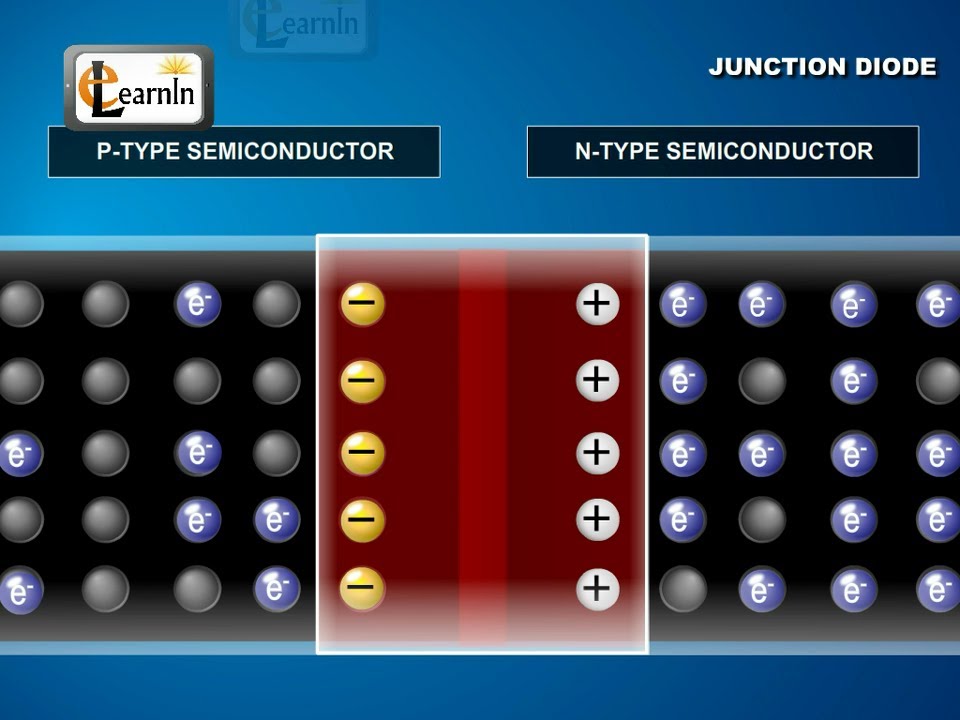
This is a physics video for Grade 11-12 students about p-n junction diode, its properties, characteristics and uses. The combination of p-type and n-type semiconductors results in a junction. When a p-type semiconductor is joined with n-type semiconductor, the resultant junction formed is called a p-n junction diode.
thin token
thin token
try and learn about breadboard from this:
don´t forget to read some chapter about electronics and pn junction


