#A way of calculating trigs I found
51 messages · Page 1 of 1 (latest)
 hot quarry
 cedar smelt
hot quarry
btw I made the diagram
cedar smelt
hot quarry
btw I made the diagram
Show another example w/ different trig value
hot quarry
cedar smelt
Show another example w/ different trig value
bisect it again, I'm making a newer diagram showing a step further
which calculates 15°
here's a small script that I wrote that calculates the angle closest to the "middle" diameter, though its got basically no comments for some reasons (I probably messed up when writing it and it worked so I didn't bother)
 fallen widget
hot quarry
bisect it again, I'm making a newer diagram showing a step further
fallen widget
hot quarry
bisect it again, I'm making a newer diagram showing a step further
so you can calculate sin(π/3*2^n)?
hot quarry
nvm the method doesn't really work
hot quarry
another way that I found
fallen widget
this will depend a lot on how you lay out your lines
if they are all equal angles apart, it will work
but going for sin(x) by approximating x/(π/2) and then going for the line in that index is probably not going to work in any other case
averaging the indices could work slightly better, or averaging the values of the lines in the 2 indices from sin and cos
not sure
calculating a set of equal-angle lines is not very hard
pick a starting slope (0.1, say) and apply (x+0.1)/(1-0.1x) repeatedly
0.1, 20/99, 299/970, ugh this gets tedious
 ripe karma
just use taylor series lol
hot quarry
ripe karma
just use taylor series lol
nah thanks that sucks
ripe karma
hot quarry
nah thanks that sucks
wdym its amazing?
you only need to expand it out until sinx is accurate at pi/4
3 or 4 terms is enough to calculate sinx for any x, to extreme levels of accuracy
its the way computers do it
fallen widget
do it by measuring a triangle
ripe karma
or just
 brittle nexusBOT
Xenon
 ripe karma
this will be more accurate and less computationally intensive
fallen widget
or just do the triangle thing
get a really big protractor
preferably with a radius of at least 1 m
very sharp pencil
ruler with fine marks
i mean unless you want to calculate 1.5^9/9!
that's fine
0.0001
ripe karma
fallen widget
i mean unless you want to calculate 1.5^9/9!
you wouldnt do 1.5^9
iits more accurate if you use the part between [0,pi/4]
the rest of the sin graph is just copies of this
fallen widget
ripe karma
iits more accurate if you use the part between [0,pi/4]
you need the part from [0,π/2]
hmm, unless i guess you can use some sin(x) = 2sin(x/2)cos(x/2) tricks
ripe karma
fallen widget
you need the part from [0,π/2]
Nono, you only need pi/4
The section from pi/4 to pi/2 is the same, it is just rotated 180 degrees around (pi/4,1/2)
fallen widget
ripe karma
The section from pi/4 to pi/2 is the same, it is just rotated 180 degrees around...
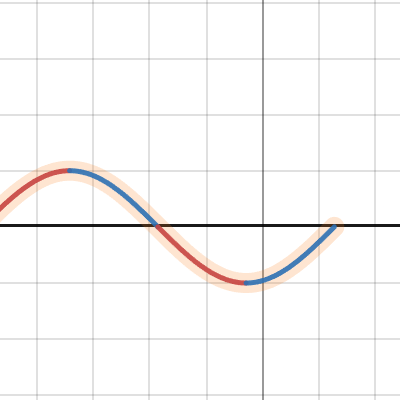
,w plot sin(x) from x = 0 to x = pi/2
brittle nexusBOT


 ripe karma
fallen widget
,w plot sin(x) from x = 0 to x = pi/2
ripe karma
fallen widget
,w plot sin(x) from x = 0 to x = pi/2
oops
i MEANT pi/2, idk why my hands wrote pi/4
i guess i misremembered
to specify, i mean the part of the sin graph, from 0, to the peak :)
fallen widget
fallen widget
hmm, unless i guess you can use some sin(x) = 2sin(x/2)cos(x/2) tricks
or rotate sin^2(x) around (π/4, 1/2)
that works too
sin(x) = sqrt(1 - sin^2(pi/2 - x))
that makes sense
ripe karma
Desmos