#Choosing which kind of leather for a white project

1 messages · Page 1 of 1 (latest)

fallow ibex
#

Leatherworking questions:
I want to make a scabbard out of white leather (yes, I know, no one likes white, there are reasons and yes, I'm determined, you can't talk me out of it. LOL!).

My plan is to make a sewn leather scabbard with tooling. I'll be working with 8-10 oz leather. Yes, I have a pattern and all that.

Option 1: VegTan and dyes: I can dye it myself with leather dye. Does anyone have experience dying it white who might share helpful tips? I have watched plenty of online tutorials and heard that white is a complicated color for obvious reasons. I am willing to grapple with this because it means a lot to the person I'm gifting this to.

Option 2: Analine: I can buy Analine dyed, how hard is that to work with when tooling? Recommendations on how to work with it, whether or not it's different from working with vegtan, or any other pertinent advice is welcome.

Other things I've considered:

  • Painting it: Yep, can do this, this is a fall-back plan. Not my top choice.
  • buying flowers instead. Yeah, I know, white is hard and choosing any other color may be easier to maintain, upkeep, etc. This is someone who has white leather boots which are in pristine and clean condition after 10 years of wear. They are interested in putting in the maintenance, I can be interested in working with their color of choice.
boreal tartan
#

Honestly i think you’re best bet would be to make a scabbard out of standard veg tan leather. Get it to function and what not. Then get white Crome tan leather and cover it

lilac tree
#

what kinda blade goes ointo it? Usually you use a felt, then wood, then the leather, and the outer leather can be a thin chrometan.

#

in the alternative, there's very good white fake leathers (actually PVC), whioch can be cleaned somewhat easily, and don't yellow.

fallow ibex
fallow ibex
# lilac tree what kinda blade goes ointo it? Usually you use a felt, then wood, then the leat...

This is the pattern: https://youtu.be/YyOhqwdCl2s

In this video, Chuck demonstrates how to create a beautiful side-sewn leather scabbard for a sword. The primary advantage of using the side-sewn method is that it allows you to stamp, tool and decorate your scabbard, where a wet mold would not. With this design, you can customize your scabbard any way you like, and even match your scabbard to a ...

▶ Play video
#

A flamberge rapier sword is going in it. 🙂

boreal tartan
fallow ibex
boreal tartan
fallow ibex
#

Oh. yeah. Sorry, left that detail out in the wheelbarrow under the albino. 🤣 (still love The Princess Bride)

Yeah. So I ordered VegTan and am going to attempt to dye it white.

boreal tartan
#

I was about to say it’s really hard to dye something a lighter color

lilac tree
heady garnet
#

Conforming down versus tooling down, conforming does larger details and misses small ones, while tooling gets small details sharply, but large details are a lot of work and sometimes don't happen because of that.

#

Also, conforming can do 3-d things like ridges, while tooling can't.

#

So use veg tan and do both.

fallow ibex
#

Yeah, I ordered the vegtan and am going to make a mess and see what happens. Largely I have grokked that the only way to make it white is to get the pigment into the grain of the leather. So it is going to be likely some kind of soaking (whether multiple passes of diluted paint or a bath, I don’t know which, yet. Can report on experiments.)

winter berry
#

Interesting, I'll be watching to see how it goes!

oblique sphinx
#

Unicorn Spit sounds perfect for this (withthe vegtan) If you can get it, I'd still suggest a tester with a few layers getting progressively less watered down, then seal it

fallow ibex
#

I bought a bottle and will check it out. It does not call out leather in its list. Have you used it on leather before?

fallow ibex
#

@oblique sphinx , with what would you suggest sealing it?

oblique sphinx
fallow ibex
fallow ibex
#

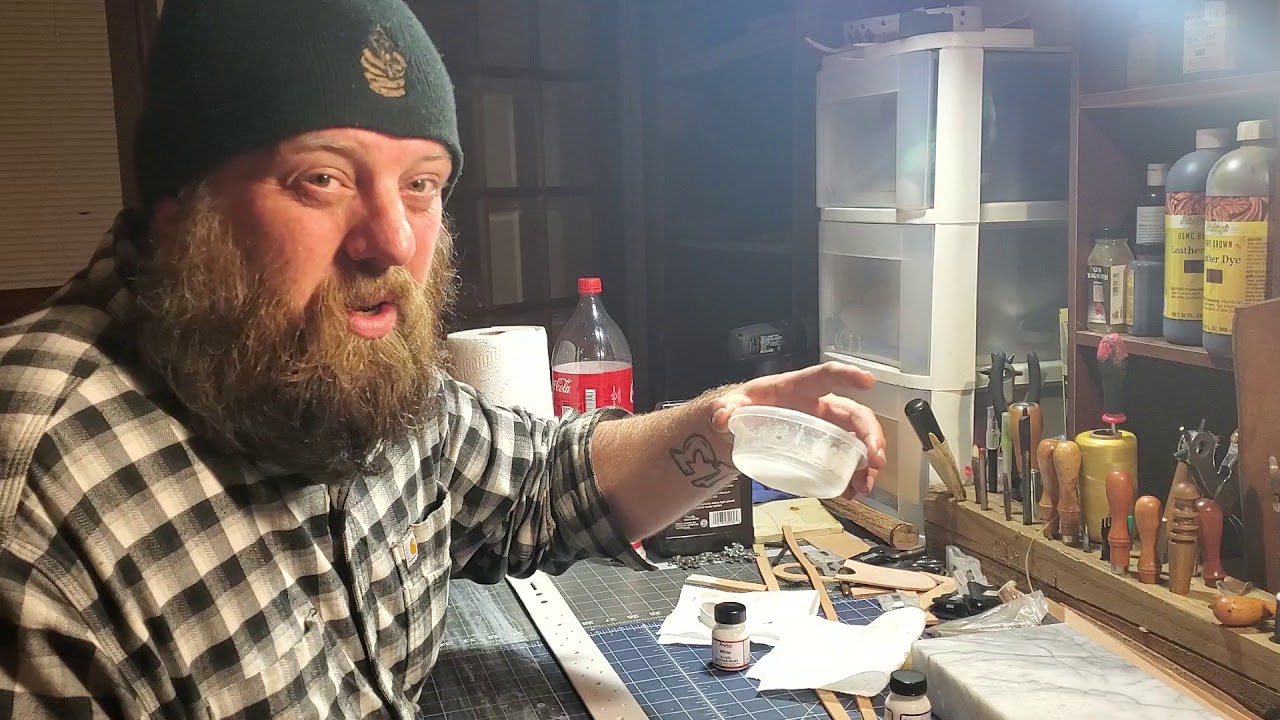
Initial report on testing samples (for the bored and/or folks needing a rabbit hole), things I have learned:

DON'T USE CHROME TAN FOR PATTERN OR TEXTURE WORK
Chrome tan (which uses Chromium salts for the tanning process to make it softer, faster) does not hold an imprint the way you want it to. Why? Because the whole point of chrome is to even out the leather, soften it up, and make it look smooth and pretty, the fiber tenacity is purposely loosened. That's what the chemicals DO. On purpose and everything. Can you do form work with it? Probably, ask someone who has tried it the rumors on the internet say it's not going to be a happy ending. I gave up on this rabbit hole.

WAYS YOU CAN "DYE" VEG TAN WHITE
Bleaching is not an option - Bleach turns it black. Fun fact! By which I mean any base (bleach, baking soda, etc). Also, makes it hard and stiff (and not in a fun way, folks!).

In this case, dyeing is just nestling the pigment between the fibers - Yep, that's basically what "dying" means in this case. Own it, say it out loud, believe it. You will fight it, you will want to fight it, you will search the internet, swear it's not true, know there is a secret spell out there which NO ONE HAS DISCOVERED YET...they haven't discovered it yet for a reason. And even if it's out there, you're gonna need to pursue it for the rest of your life. (Pick a battle...pick fewer battles, put some back this can be one of them, just back away slowly and it won't notice.)

Nestling it is. I want it to bleed white if I scratch it. I'm in, how? There are at least two ways I've learned how to do this:

  1. Waterbased: mixing your favorite white pigment paint, water it down A LOT (the internet varies but start with more water than paint and end with more paint than water). Water will harden your leather with that many coats (I do mean over 20). Yes, you can solve that, it's not awful and it can be a superpower. You do you, boo, and make it work for you. I found one video on the internet where it was successful. One. And I don't have that kind of time or rather, I have more fun things to pursue in that same time. Moving on.

  2. Oil based: Same idea using neatsfoot oil (or your favorite food-based oil although the stories of squirrels eating leather bags because of peanut oil are hilarious - pick your own adventure here). The solution I was told was 94% oil to 6% paint. 25 layers later it was definitely white hued. If it's mandatory, I recommend this of the options available. Invest time and patience.

WHAT DID TESTING PROVE
Being stubborn is time consuming. Oh, and to get the leather white more than skin deep takes time to let it soak in and time because while you're waiting for it to soak you have 15 minute increments and that's not quite enough time for many of the other things I wanted to get done.

It can be done. I preferred the oil/paint vs. the water/paint.

** WHAT DID I DECIDE?**
Paint the darn thing.

AFTER ALL THAT?!?!
Yep. I have the samples, I played with solutions and percentages and all that, I gave it 48 hours of testing and, I'm letting it go.

WHAT, PAINT?
Oh! Now here's where it gets fun!

Next up in my adventures:
Unicorn Spit vs Angelus White Paint vs Fiebings Acrylic Dye (White) vs Zelikovitz Professional Waterbased Leather Pigment Dye (White).

Planned tests:

  1. Paint and compare the colors
  2. Bend test - unsealed
  3. Bend test - sealed

I'll bring pictures for that one.

winter berry
#

@fallow ibex Sooooooo, I have painted leather with plain folkart acrylic craft paint slightly watered down.... Never done white before, but I'd definitely be interested to see how it compares to leather paint, if you're interested in throwing a cheapo version in the line up....

fallow ibex
#

Absolutely! I think I have some of that in my craft kit.

fallow ibex
fallow ibex
winter berry
#

Uhhhhhhh.... For full color coverage I'd go with something like 5 parts paint, 1 part water, and maybe 1 part mod podge..... I just eyeball it. I feel like the mod podge helps to keep it from crackling, but I don't have any proof of that.

ebon vine
#

If it's intended for leather in the first place, I'd look at the manufacturer's website for instructions first.

fallow ibex
lilac tree
#

also, I found a way how japan makes white or at least super lightly grey leather: https://www.hyohiren.or.jp/en/history.html :

At the center of this production was the Takagi district of Himeji, where white-tanned leather was produced. The skin was soaked in river water, depilated with the help of enzymes produced by bacteria in the hair follicles, rubbed with salt and rapeseed oil, and then exposed to the sun to produce a light milky-white leather. This technique was probably perfected by the mid-Edo period.
It's sun-bleached and not chemically tanned.