
#Artemis-1 Mission
1 messages · Page 1 of 1 (latest)
 dusky night
 fair bone
So Assuming we do Launch / Countdown updates in here?
 supple trout
NASA TV stream (currently scheduled to start at <t:1661769000>, which is <t:1661769000:R>): https://www.youtube.com/watch?v=CMLD0Lp0JBg

Watch live as our mega Moon rocket launches an uncrewed Orion spacecraft on a six-week mission around the Moon and back to Earth. During #Artemis I, Orion will lift off aboard the Space Launch System (SLS) rocket, and travel 280,000 miles (450,000 km) from Earth and 40,000 miles (64,000 km) beyond the far side of the Moon, carrying science and t...
supple trout
supple trout
NASA TV stream (currently scheduled to start at <t:1661769000>, which is <t:1661...
 swift yacht
nice
supple trout
fair bone
So Assuming we do Launch / Countdown updates in here?
Yeah I think that's what we're going with now
fair bone
Rog
dusky night
ICPS has been powered up.
NASA Test Director has given the go for booster power-up.
All non-essential personal have left the launch pad in preparation for propellant loading operations.
At L-: 09:40:00, the launch team is expected to start a planned 2 hours and 30 minutes built-in hold in order for mission management to do a status review of operations, receive a weather briefing, and do a “go/no-go” to proceed with tanking operations.
If all goes well and the team gives a “go” for tanking operations, the countdown will resume
swift yacht
The launch team has polled GO to begin tanking the rocket. https://blogs.nasa.gov/artemis/2022/08/28/mission-management-team-go-to-proceed-with-tanking-for-artemis-i-mission/
 cobalt egret
Preparations are complete for cryo loading. Actual tanking is still in hold due to increased chance of lightning.


Weather constraints dictate that there must be a less than 20% chance of lightning within 5 nautical miles of the rocket during the first hour of tanking and we are currently in violation of that. We also have wind constrains but we are not in violation.
 Twitter
·
Twitter
·
LC reporting that weather ops are seeing some dissipation within the storm cell. Positive trend. Still holding
It is now raining at LC-39B
cobalt egret
GO for tanking!!!
Earliest T-0 is now 9:03 EDT
The clock has started counting down
cobalt egret
LH2 Slow tanking has begun, LOX to follow
dusky night
LOX fast tanking has begun on the core stage. Chill down of the LH2 lines has begun for LH2 slow fill of the core stage
dusky night
Launch controllers have seen a spike in the amount of LH2 allowed to leak into the purge can, which is a housing that covers the tail service mast umbilical’s quick disconnect. This leak is outside of normal ranges, and engineers have begun reverse flowing LH2 into the core stage and are troubleshooting. While this leak was seen in a wet dress rehearsal, it may not be the same cause.
dusky night
Fast filling of the LH2 is resuming after manually chilling down the mating interface with the core stage, however, launch controllers and engineers are still monitoring and troubleshooting the leak.
supple trout
 dusky night
Teams have been given a “go” for ICPS tanking. Core stage is at 80% LOX, 61% LH2
dusky night
LH2 is at 100% capacity. LH2 is now cycling between venting and topping off to compensate for boil off
LOX is at 100% capacity. LOX is also cycling between venting and topping. Core stage is fueled for flight
Teams have been given a “GO” for the kickstart LH2 bleed. This will give teams their first look at the repair of the LH2 bleed line.
We have a “GO” for LOX loading on the ICPS.
T-: 02:30:00
LH2 now in fast fill mode on the ICPS
dusky night
T-: 02:00:00
Currently going through engine bleeding. LH2 is being fed through a system to chill the engines for flight operations. However, Engine 3 is not reaching the desired bleed performance, so teams are pressing the tank to hopefully increase the pressure on the overall bleed to hopefully reach desired performance.
LH2 tank on core stage is closed in order for this process, so LH2 is not being replenished currently.
 dusky night
Teams are also pressing core stage LH2 tank to flight levels to try and troubleshoot the bleed issue on Engine 3.
dusky night
NASA Test Director has approved troubleshooting suggestion to close pre-valves on Engines 1, 2, and 4 and allow the tank to vent through Engine 3 to try and solve the bleed issue in that engine.
Teams are now reopening pre-valves on Engines 1, 2, and 4 as they did not see the desired bleed on Engine 3.
supple trout
T-1h
supple trout
Unscheduled hold at T-40m
 tranquil dome
Hydrogen teams are briefing the launch director with their plans
supple trout
10m hold apparently
tranquil dome
NASA Livestream pushed until NET-8:00AM EST (12:00UTC)
This seems to signal a launch time of NET-9:15AM EST (13:15UTC) based on the previous Livestream start date
supple trout

With regard to he intertank "crack" issue, it is just with the foam, and not the tank itself. So not a problem for the launch. Main issue remains the problem with Engine no. 3.
Twitter
·
 eternal kestrel
Weather looks good
supple trout
Still holding, engineers looking at options for gathering as much data as possible
dusky night
We have now entered the launch window.
This means teams have little over an hour to find a solution to the engine bleed for Engine 3
dusky night
Teams are going to keep the vehicle in its current condition for the time being to gather data on Engine 3
tranquil dome
NASA will hold a live briefing later today with information regarding the delay
swift yacht
L-4 forecast
 swift yacht

Engineers continue to assess #Artemis I launch attempt data. On Tuesday, Aug. 30 at 6pm ET (22:00 UTC) we’ll provide an update on the status of the @NASAArtemis flight test. Details: https://t.co/aYUGR2rT2r
Likes
209
 Twitter
·
supple trout
swift yacht
Twitter
·
supple trout
swift yacht
Looks like discord is on the fritz again with embeds.
Quick note: unpinned the Artemis 1 launch stream from aug 29th as we are currently waiting on a new launch date be set at this time.
NASA is holding a teleconference to discuss the launch status of Artemis I.
https://www.youtube.com/watch?v=7BpRN5BiQxo&ab_channel=NASAVideo
 tranquil dome
NASA will try again on Artemis one soon! They're now targeting Saturday September 3rd at 2:17 PM Eastern
fair bone
#ARTEMIS I UPDATE:
⚡ @NASA_Orion spacecraft and @NASA_SLS core stage are powered up
🚀 Final core stage & engine preps complete
☁ 60%-80% 'go' for weather during 2-hour launch window
 Twitter
·
Twitter
·

 swift yacht
https://www.youtube.com/watch?v=JWAA5P-iFJs
https://twitter.com/nasagroundsys/status/1566003532746133505
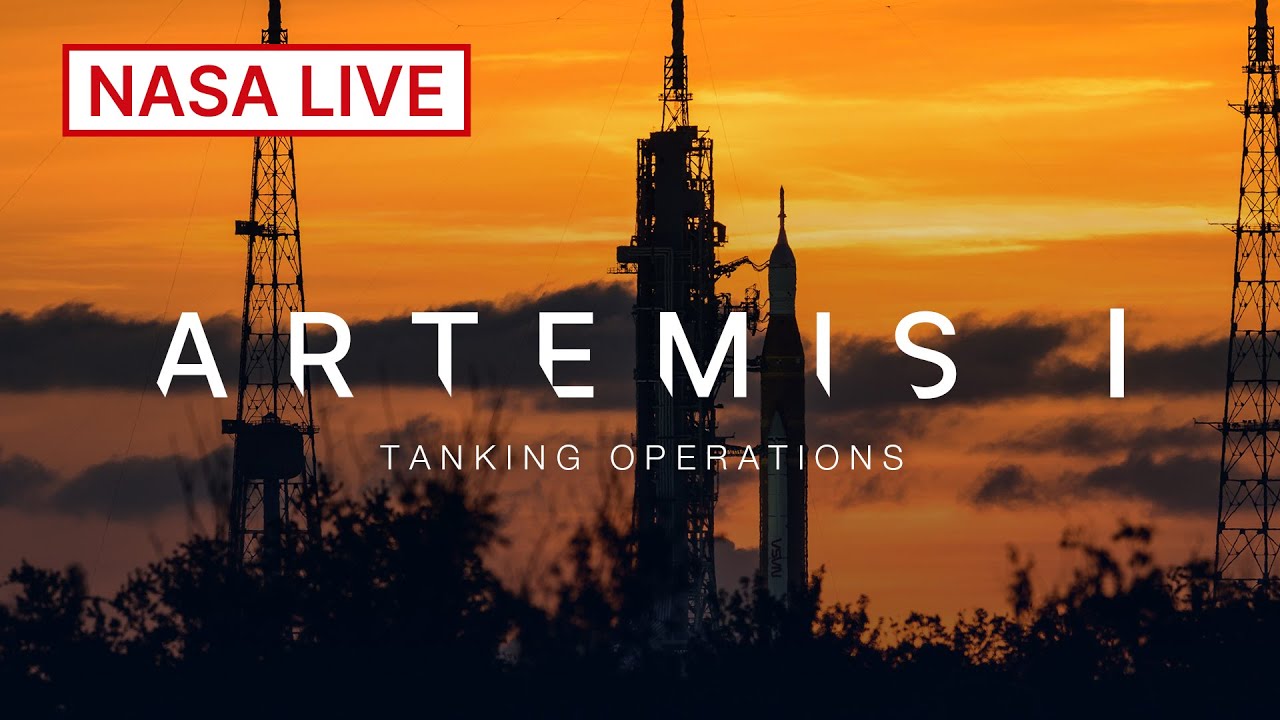
From NASA's Kennedy Space Center in Florida, live coverage with commentary of tanking operations to load propellant into the Space Launch System (SLS) rocket for the Sept. 3 launch of the Artemis I flight test.
Artemis I, the first integrated test of NASA’s Orion spacecraft, SLS rocket, and the ground systems at Kennedy Space Center. This uncre...
The liquid oxygen transfer line is now in chilldown. We are 'go' to proceed with @NASA_SLS core stage loading operations.
Twitter
·
swift yacht
swift yacht
https://www.youtube.com/watch?v=JWAA5P-iFJs
https://twitter.com/nasagroundsys/st...
https://twitter.com/NASAGroundSys/status/1566007730845908992?s=20&t=xA_mmh9yyRKx1oBWrnC7Dw
https://twitter.com/nasagroundsys/status/1566011136910262280?s=21&t=yJEn7EA3K4MZDbZ9K90H6g
We are now in liquid hydrogen slowfill.
Twitter
·
Liquid oxygen line childown is completed and teams are now in main propulsion system chilldown.
Twitter
·
swift yacht
swift yacht
https://twitter.com/NASAGroundSys/status/1566007730845908992?s=20&t=xA_mmh9yyRKx...
dusky night
Engineers have seen a reoccurrence of the liquid hydrogen leak on the quick disconnect to the core stage. Engineers are currently attempting to reseat the seal by stopping flow of LH2 to the tank, closing the fill & drain valve, then increase pressure on a ground transfer line using helium to reseal it. LOX loading is currently continuing on the core stage
This is the second occurrence of a LH2 leak detected in the quick disconnect cavity during propellant loading today.
The troubleshooting has not worked. Teams have gone back to the Anomaly Loop to asses next steps to troubleshoot. Bear in mind this is not the same leak that occurred Monday. The leak on Monday was deeper inside the tail service mast of the quick disconnect. Engineering teams were able to fix that issue when they went out to the pad after Monday’s scrub.
The current leak is with the 8-inch quick disconnect that connects to the vehicle.
T-: 04:00:00
tranquil dome
Engineers will try to restart Hydrogen flow in around 15 minutes
They're currently warming up the connection
Liquid oxygen is currently topping off
Engineers restarting hydrogen flow
As well as starting tanking of the second stage engine
Resumption of flow did not succeed
Evaluating next options
tranquil dome
NOT SCRUBBED YET
Hold configuration as the launch director has not accepted the no-go determination
SCRUB
tranquil dome
Tuesday is off the table
Looking at launch windows 26/26 which is September/October
Have to consider conflicts with crew 5
After October they have to look at limited life items and stay on the pad duration most likely talking about FTS batteries
Haven't decided whether to roll back or not yet
Either option however would not allow them to launch by Tuesday
Schedule update will be announced "early next week"
Either option is "several weeks of work"
Sounds like they have less than a month before FTS batteries need to be replaced
tranquil dome
Update for Artemis 1 launch date and seal:
-NASA will attempt to replace the leaky seal with the rocket still on the pad
-They're currently hoping to launch during the next launch window (which runs September 19th-October 4th)
-the FTS batteries would need to be replaced unless the Air Force grants them another waiver, if the waiver is not issue SLS would have to roll back to the VAB
-If they do have to roll back they would most likely need to go with the next launch window (October 17-31)
supple trout
This just in: Our #Artemis I flight test around the Moon will launch no earlier than Sept. 27, with a backup opportunity of Oct. 2 under review.
See the blog for details about ongoing work and testing, and potential launch windows: https://t.co/v3dY3xql7J
 Twitter
·
fair bone
Twitter
·
fair bone
Sept 27: 70-minute launch window opens at 11:37 a.m. EDT; landing on Nov. 5
Under review – Oct. 2: 109-minute launch window opens at 2:52 p.m.; landing on Nov. 11
September 27th Launch Window Opening: <t:1664293020>
tranquil dome
Artemis 1's Cryogenic Demonstration Test met test objectives with the hydrogen leak not reaching high levels for more than 5 minutes and full LH2 loading was completed
This puts them on track to attempt to launch in the next window at <t:1664293020> your time local time
tranquil dome
NASA no longer targeting September 27th
Preparing to rollback to VAB if weather forecast does not improve
Final decision about rollback will occur tomorrow night
fair bone
Artemis I Update: NASA will roll the Artemis I Space Launch System rocket and Orion spacecraft back to the Vehicle Assembly Building on Monday, Sept. 26. First motion is targeted for 11 p.m. EDT.
MORE: https://t.co/817ahBkTqy
 Twitter
·
dusky night
Twitter
·
dusky night
Next launch period opens November 11th and closes November 27th. Teams have conducted initial inspections during post-storm recovery operations on Friday and have concluded there is no damage to flight hardware. Teams will extend access platforms to conduct additional inspections and prepare for the next launch attempt
dusky night
It’s important to note that there will not be a specific launch date announced until managers have finished assessing the scope of work needed to be done before returning the vehicle to the launch pad.
dusky night
List of work currently being done for Artemis-1 inside the VAB
-Replacement of flight batteries for ICPS
-Replacement of batteries for FTS on boosters and core stage
-Recharging of CubeSats
Replenishment of batteries and specimens for biology investigations riding within Orion
-Recharging batteries associated with crew seat accelerometers and space radiation experiments
swift yacht
@NASA is targeting Nov. 14 at 12:07am EST for the next launch attempt of #Artemis I. Inspections of @NASA_SLS and @NASA_Orion have confirmed minimal work is required prior to the roll to Pad 39B, which is targeted for no earlier than Nov. 4. MORE: https://t.co/BsB1p9UiRB
Likes
625
Retweets
161
 Twitter
·
swift yacht
Twitter
·
swift yacht
On Oct. 12, teams replaced ICPS batteries and powered up @NASA_Orion for battery charging and to load flight software. Work is on track for @NASA_SLS to roll out of the VAB on Nov. 4 for our next #Artemis I launch attempt on Nov. 14 at 12:07 a.m. EDT.
Likes
437
 Twitter
·
swift yacht
Twitter
·
swift yacht

Platform F has been retracted in High Bay 3 of the Vehicle Assembly Building. Teams are performing final walk downs in preparation for @NASA_SLS and @NASA_Orion to roll to Pad 39B at 12:01 am EDT on Friday, Nov. 4.
Likes
541
Twitter
·

NASA's Jim Free says in a briefing that the agency is confident going into the next Artemis I mission attempt and is on track to roll out SLS to the pad this evening for a launch Nov. 14.
Twitter
·
swift yacht

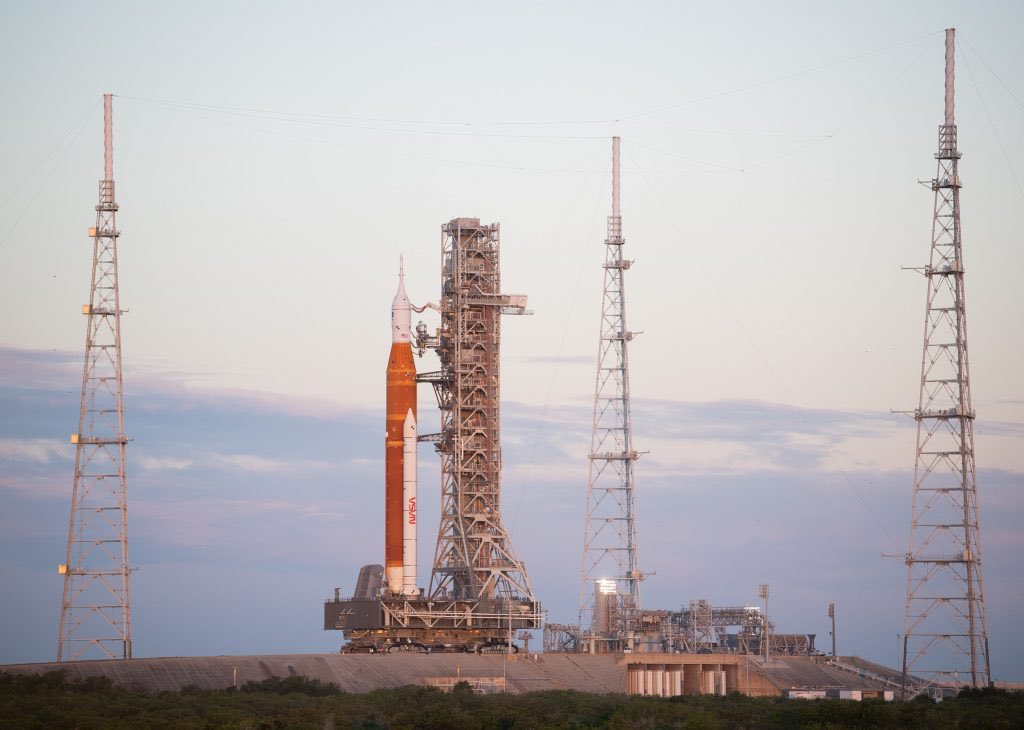
Around 8:30am EDT on Nov. 4, the @NASA_SLS rocket and @NASA_Orion spacecraft for the #Artemis I mission arrived at launch pad 39B!
Teams will continue working to configure SLS and Orion for the upcoming Nov. 14. launch attempt.
Likes
2111
Retweets
401
 Twitter
·
dusky night
Twitter
·
dusky night
Currently teams have re-targeted the launch for Wed. Nov. 16th, pending safe conditions due to Tropical Storm Nicole
KSC is currently in HURCON 3 status, which includes securing facilities, property and equipment at KSC as well as briefing and deploying a “ride-out” team. A “ride-out” team is a set of personnel that will remain at KSC to monitor center wide conditions as well as flight hardware for Artemis 1.
Teams decided Sunday that the safest option was to not rollback SLS and Orion. SLS is rated to withstand 85 mph (74.4 knots) winds at the 60-foot level with structural margin. Current forecasts predict that winds will not exceed SLS design limits, and teams have secured all hatches to prevent water intrusion, as well as powered down Orion, the SLS core stage, ICPS, and boosters. Teams have also installed a hardcover over the launch abort system window, retracted and secured the crew access arm, and configured ECS settings on the spacecraft and rocket elements.
Once weather has improved to safe enough conditions, teams will perform walk downs and inspections at the pad to assess the status of the rocket and spacecraft. The launch window is about 2 hours starting at 1:04am EST (6:04am UTC) on Nov. 16th, which puts splashdown on Dec. 11th. If needed, a backup launch opportunity will be on Nov. 19th, and NASA will coordinate with USSF to determine additional launch opportunities if needed.
swift yacht
MEDIA: NASA leader @JimFree will host a discussion today, Nov. 11, at 3pm ET (2000 UTC) about the status of our #Artemis I mission to the Moon following Hurricane Nicole touching down in Florida earlier this week. https://t.co/HTS6DWPVz5
Likes
1396
Retweets
187
 Twitter
·
swift yacht
Twitter
·
swift yacht
https://www.youtube.com/watch?v=N6XWSDwkzSY
ARTEMIS I POST-STORM BRIEFING
- Nothing currently preventing launch of Artemis I on 11/16
- Did not roll back SLS before Nicole because risk of rolling back in strong winds was too great, and did not have a very high risk of max winds out of limits on day of decision
- Minor damage to SLS and pad after Nicole; will either replace or repair all damages before launch
- Will power up vehicle today, perform program tests on Sunday 11/13, and have L-2 meeting on Monday 11/14 before pressing to launch countdown
 dusky night
Weather forecast today puts weather on launch day at 90% favorable. NASA teams will convene this afternoon to review additional analysis from overnight operations in preparation for launch. NASA will hold a teleconference at 6pm (EST?) to discuss the outcome of that meeting.
tranquil dome
Tanking is scheduled to begin at <t:1668544200>
swift yacht

From NASA's Kennedy Space Center in Florida, live coverage with commentary of tanking operations to load propellant into the Space Launch System (SLS) rocket for the Nov. 14 launch of the Artemis I flight test.
Artemis I, the first integrated test of NASA’s Orion spacecraft, SLS rocket, and the ground systems at Kennedy Space Center. This uncre...
Chill down for LOX transfer lines is complete.
Twitter
·
tranquil dome
A couple ground support connectors were damaged by the hurricane but not enough to delay the launch, so far tanking has been going very smoothly
Engine bleed complete
Had 4% H2 leak decreased throughout the test, in range the entire time
tranquil dome
Core stage Lox load 50% full
H2 load ~3/4 full
tranquil dome
LH2 being topped off in the core stage Lox in fast fill
dusky night
Currently at 18% LH2 and 44% LOX on the ICPS.
dusky night
LOX fast fill for the ICPS is complete
dusky night
Core Stage LH2 has been paused due to an intermittent leak detected in a hydrogen valve located inside the mobile launcher. The Red Crew, which is a team of personnel specially trained to operate with a fueled rocket is being assembled to go into the mobile launcher to make sure all connections and valves are tight. The leak detected surpassed a 1% allowable margin as the location of the leak is in a open air environment whereas other leaks in the past were in closed air environments.
dusky night
Launch director just gave a “Go” for Red Crew to go in and work the hydrogen leak
Red Crew going in now
tranquil dome
NASA Hosted Livestream starting in about 2min
https://www.youtube.com/watch?v=CMLD0Lp0JBg
Watch live as our mega Moon rocket launches an uncrewed Orion spacecraft on a six-week mission around the Moon and back to Earth. NASA is targeting Wednesday, Nov. 16, for the launch of the Artemis I Moon mission during a two-hour launch window that opens at 1:04 a.m. EST (0604 UTC). During #Artemis I, Orion will lift off aboard the Space Launch...
tranquil dome
Sounds like the red teams work has finished, launch team will most likely be restarting flow soon
RED CREW HAS LEFT THE PAD
tranquil dome
LH2 back in replenish mode! 🥳
Range is currently no go pending a resolution on a radar dish
dusky night
T-: 45 minutes
Work done by the Red Crew has resolved the LH2 leak
The issue reported by range regarding the radar came down to a faulty Ethernet switch. Range reported it will take some time to swap out the switch and verify the fix. So it will possibly cut into the launch window
T-: 30 minutes to the opening of the launch window
cobalt egret
(1 Hour)
dusky night
T-: 15 minutes to the opening of the launch window
At T-: 10 minutes teams will go into a 30 minute hold to assess status
 rich igloo
T-10 minute 30 minute hold, as expected.
dusky night
Getting ready to conduct readiness pull
Launch team is ready to proceed at this time
Launch director conducting final go-no go poll
We are GO for launch and to resume countdown!
T- 10 minutes
cobalt egret
New T-0 at 1:47 EST
dusky night
Core stage pressurizing to flight levels
FTS is armed
T-: 4 minutes
Core stage APU start
LOX vent closed
T-: 2:30 minutes
Engines gimbaling
T-: 2 minutes
ICPS internal power
T-: 1:30
Core stage internal power
T-: 1:00
T-: 0:45
T-: 0:30
GO for ALS
Sound suppression water
Engine start!
Liftoff!!!
T+: 0:30
Max-Q
Solid rocket boosters jettisoned!!!
Service module fairing jettisoned
LAS jettisoned
3 engine press
T+: 4:30
T+: 6:30
MECO
Core stage separation
T+: 9:00


 dusky night
Solar arrays released
 cobalt egret
 swift yacht

[Press Release]
Status of the JAXA CubeSats OMOTENASHI and EQUULEUS
onboard NASA Artemis I
https://t.co/txXS37trSo
Twitter
·
dusky night
At 6:32 AM EST, Orion performed a second outbound trajectory burn using the auxiliary thrusters on the European Service Module. Teams also collected additional images using the optical navigation camera and have activated the Callisto payload.

The Integrated Communications Officer, or INCO, also moved each solar array to a different position to test the WiFi transfer rate between the camera on the tip of the solar array panels and the camera controller to determine the best position to most efficiently transfer imagery files.
swift yacht
From yesterday: https://twitter.com/NASA/status/1594075766840516610
https://twitter.com/NASAArtemis/status/1594090801943891968
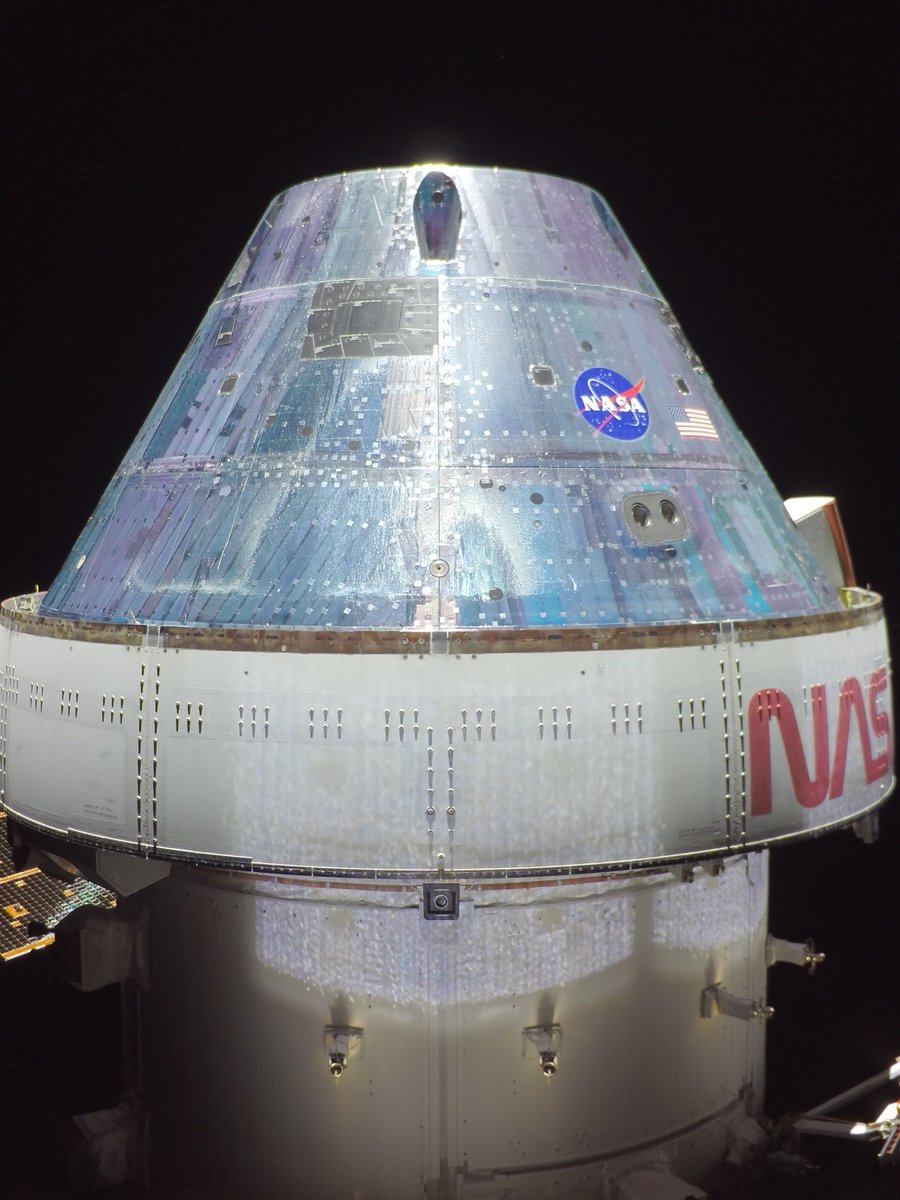
Just days from reaching the Moon, the @NASA_Orion spacecraft captured this selfie while flying through space.
The #Artemis I mission is preparing us to bring astronauts to the Moon. https://t.co/uQaCgAXaUm
Likes
10057
Retweets
1624
 Twitter
·
Twitter
·

Spacecraft get selfies, too.
While teams performed a checkout on the @NASA_Orion spacecraft, these images were captured of the outside of the vehicle.
The #Artemis I mission is just a couple days from reaching the Moon: https://t.co/7Y3o8TGU3C
Likes
7552
Retweets
1593
 Twitter
·
Twitter
·


We polled GO today to send @NASA_Orion on a powered fly-by approximately 80 miles above the surface of the Moon! Tune in to coverage of the maneuver on Monday, Nov 21 at 7:15 AM ET on https://t.co/olv5xmIEoG.
Likes
1807
Retweets
307
 Twitter
·
rich igloo
Twitter
·
rich igloo

Watch live as NASA's Orion spacecraft performs a close approach of the lunar surface on its way to a distant retrograde orbit, a highly stable orbit thousands of miles beyond the Moon. During the Artemis I flight test, launched on Nov. 16, Orion will travel 280,000 miles (450,000 km) from Earth and 40,000 miles (64,000 km) beyond the far side of...
A GO has been given for the OPF burn.
Orion LOS (Loss of Signal).
Expected AOS (Acquisition of Signal): 7:59 AM EST
rich igloo
OPF burn would have started around now.
OPF burn would have now completed, ~14 minutes from AOS.
supple trout
<1m now
rich igloo
NASA confirms that the OPF burn was successful.


The European Service Module boost for @NASA_Orion was right on cue.
The Orbital Powered Flyby lasted 149.65 seconds and used 1300 kg of propellant. 🔥👏
Twitter
·
supple trout

NASA will begin coverage of the Orion spacecraft performing the first of two maneuvers to exit lunar orbit, called the distant retrograde orbit departure burn, on Dec. 1 at 4:30 p.m. EST (21:30 UTC). The burn is scheduled to occur at 4:53 p.m. EST (21:53 UTC).
Orion launched aboard the Space Launch System (SLS) rocket at 1:47 a.m. EST (06:47 UT...
rich igloo

On Dec. 11, the Artemis I mission will conclude with the entry, descent, and splashdown of the Orion spacecraft. After 25.5 days in space, and a 1.3-million-mile (2.1-million-km) journey around the Moon, Orion is expected to splash down in the Pacific Ocean off the coast of California at 12:39 p.m. EST (17:39 UTC) on Sunday, Dec. 11. The explora...
CM/SM Sep
Orion raise burn
rich igloo
Entry Interface, blackout period #1
Reacquisition of signal, end of blackout period #1
skip entry maneuver in progress
Blackout period #2, this is the last blackout before splashdown!
Visual acquisition of Orion by one of the airborne vehicles
Reacquisition of signal, end of blackout period #2!
Forward bay cover jettison.
Drogue chutes out!
dusky night


 rich igloo
SPLASHDOWN!

 rich igloo
Stable 1 reported
