#archived-code-advanced
1 messages · Page 129 of 1
 echo coral
 sage radish
You can modify transforms with the job system using TransformAccessArray. It splits the work to a thread per root transform.
echo coral
sage radish
You can modify transforms with the job system using `TransformAccessArray`. It s...
Oh really? Oo i was not aware of this
 vague flame
are their any good docs for ECS outside the unity package one ?
just curious if the community wrote some external docs
sage radish
Something to note about multithreading on mobile: on PC and console, multithreading is like a free performance gain. There's basically no downside, just free hardware waiting to be used, if you can write the code to use it.
On mobile, it comes at the cost of more heat and battery drain. You'll get a performance gain, but it could mean the phone will overheat sooner and start slowing the CPU down to cool down.
vague flame
thanks for this important notice
since im working on a casual game users arent expected to be pluged in
so i guess ill focus on using the single game thread
echo coral
It still has its place. Its better to offload to a thread to prevent visible lag spikes every now and again.
 tired fog
Does anyone know what could be a reason on why this could create garbage once MeshRequets.Count is less than 1? It should leave the method, there shouldn't be any garbage. Somehow the sort changes the list in a way that it laters creates garbage, even when it's not called.
private List<TerrainConfiguration> GetCurrentRequests()
{
    if(MeshRequests.Count <= 1 || _GenerationMode == GenerationMode.AsTheyCome){
        return MeshRequests;
    }

    var currentCameras = viewSettings.GetCurrentCameras();
    MeshRequests.Sort((a, b) =>
    {
        Vector3 posA = infiniteLands.LocalToWorldPoint(a.Position);
        Vector3 posB = infiniteLands.LocalToWorldPoint(b.Position);
        float distA = currentCameras.Min(a => Vector3.Distance(a.transform.position, posA));
        float distB = currentCameras.Min(a => Vector3.Distance(a.transform.position, posB));

        if (LoadInViewFirst)
            return CompareWithVisibility(distA, distB, posA, posB);

        // Default sorting by distance without visibility consideration
        return _GenerationMode == GenerationMode.FarFirst ?
            distB.CompareTo(distA) :
            distA.CompareTo(distB);
    });
    return MeshRequests;
}
 sly grove
tired fog
Does anyone know what could be a reason on why this could create garbage once Me...
sly grove
tired fog
Does anyone know what could be a reason on why this could create garbage once Me...
The lambda itself is an object that creates garbage
tired fog
yeah, but if MeshRequests.Count <= 1, it shouldn't create any lambda
tired fog
it's consistent 32B and I got no clue why
tired fog
sly grove
How do you know it's creating garbage in that case?
I've verified with the profiler
let me send a screenshot
sly grove
Doesn't the profiler just give you a summary though? Like it doesn't differentiate between different calls of the same method afaik
it just tells you the number of invocations and the total amount of GC for all of them, IIRC?
tired fog
Indeed, this method however is called only once per one object one time at the frame

this is the method, and on the same frame I can see mesh requests is 0 (it doesn't increase neither before or after) also verified through debug.log that it goes through that and nothing else.
sly grove
Could it be that the runtime creates the lambda anyway even if it doesn't get to that point?
ILSpy could help
Or trying to move the lambda to a dedicated function for the moment.
tired fog
That's what I'm starting to worry, but then it would mean that code that shouldn't be called is being called. My only guess is that when calling sort that way, something changes inside the list that makes it create that garbage
sly grove
afaik Sort has no lasting effects on the list other than the rearranging of its elements
tired fog
sly grove
Or trying to move the lambda to a dedicated function for the moment.
tried that, still 32B
sly grove
What happens if you try this @tired fog ?
private List<TerrainConfiguration> GetCurrentRequests()
{
    if(MeshRequests.Count <= 1 || _GenerationMode == GenerationMode.AsTheyCome){
        return MeshRequests;
    }

    return GetRequestsWithLambda();
}

private List<TerrainConfiguration> GetRequestsWithLambda() {
    var currentCameras = viewSettings.GetCurrentCameras();
    MeshRequests.Sort((a, b) =>
    {
        Vector3 posA = infiniteLands.LocalToWorldPoint(a.Position);
        Vector3 posB = infiniteLands.LocalToWorldPoint(b.Position);
        float distA = currentCameras.Min(a => Vector3.Distance(a.transform.position, posA));
        float distB = currentCameras.Min(a => Vector3.Distance(a.transform.position, posB));

        if (LoadInViewFirst)
            return CompareWithVisibility(distA, distB, posA, posB);

        // Default sorting by distance without visibility consideration
        return _GenerationMode == GenerationMode.FarFirst ?
            distB.CompareTo(distA) :
            distA.CompareTo(distB);
    });
    return MeshRequests;
}```Also if you replace:
if(MeshRequests.Count <= 1 || _GenerationMode == GenerationMode.AsTheyCome){```
with:
```cs
if(1 == 1)``` just for a moment, does that do anything?maybe ther's some kind of boxing happening with one of those comparisons? 🤔 Or maybe _GenerationMode is a property that does some allocation? But that doesn't show in the profiler 🤔
tired fog
sly grove
What happens if you try this <@340856284259549184> ?
```cs
private List<TerrainC...
wtf, this seems to remove the 32B
sly grove
ok yeah that seems to support my theory about the lambda being allocated at the start of the method invocation
tired fog
wow
yeah, so
this bad
private List<TerrainConfiguration> GetCurrentRequests()
{
    if(MeshRequests.Count <= 1 || _GenerationMode == GenerationMode.AsTheyCome){
        return MeshRequests;
    }

    var currentCameras = viewSettings.GetCurrentCameras();
    MeshRequests.Sort((a, b) => SortingList(a, b, currentCameras));
    return MeshRequests;
}
this good
private List<TerrainConfiguration> GetCurrentRequests()
{
    if(MeshRequests.Count <= 1 || _GenerationMode == GenerationMode.AsTheyCome){
        return MeshRequests;
    }

    return GetRequestsWithLambda();
}

private List<TerrainConfiguration> GetRequestsWithLambda() {
    var currentCameras = viewSettings.GetCurrentCameras();
    MeshRequests.Sort((a, b) => SortingList(a, b, currentCameras));
    return MeshRequests;
}
 exotic trout
curious what the il difference on that is
sly grove
ILSpy can tell you for sure but my theory is that the runtime allocates the lambda at the start of the method for some reason.
tired fog
That feels extremely weird, I don't have ILSpy to check rn, but well, thank you for that. I guess I learnt something new
echo coral
You should be able to make a new Action one time to re use if it doesnt need to capture func scope things
 gritty ore
tired fog
That feels extremely weird, I don't have ILSpy to check rn, but well, thank you ...
gritty ore
tired fog
That feels extremely weird, I don't have ILSpy to check rn, but well, thank you ...
I made a very simplified (and pointless) version of your code here. You can see the lambda getting compiled even though the code is unreachable. If you comment out the lambda, the compiler generated Blah goes away.
C#/VB/F# compiler playground.
tired fog
gritty ore
I made a very simplified (and pointless) version of your code here. You can see ...
Ooooh, interesting! Thanks!
But I don't quite understand why this would create garbage tho
(not sure if Im doing this right)
but here for example, altough compiled and the new comparison is created, it shouldn't be called if thing is 1
C#/VB/F# compiler playground.
gritty ore
The way I understand it, is that once compiled, the outer method will create the object for the lambda call regardless. It doesn't yet know if the code is reachable, so has to create the object every time. It can't look ahead and decide each time.
 sacred jackal
Anybody had any success pre-allocating native memory and then assiging NativeArray's to that memory to be used in the jobs system?
 fathom geode
How do you keep the body above the ground in a proceduraly animated creature?
 dapper cave
oh, i never thought about that, but that assumes you only have 1 collider no?
 native beacon
fathom geode
How do you keep the body above the ground in a proceduraly animated creature?
native beacon
fathom geode
How do you keep the body above the ground in a proceduraly animated creature?
You procedurally animate the body position too
 regal lava
https://i.imgur.com/DKwmJ6M.png
Not entirely sure how to go about this, but I'm building a Mesh and using Graphics to draw it because using Handles or GL Lines makes the editor cry when there's too many lines going on. So far it works alright with my custom shader, but I'm at this point where if I try to zoom out it becomes more distorted. Any idea how to solve this without having to recreate the mesh?

I had it working by increasing the thickness of the lines using the GL immediate mode so I know that would work
I'm guessing it'll have to be in the shader
 dense echo
I assume this is probabaly the place for this question but im making a multiplayer game and im trying to use Scriptable Objects but using NGO Scriptable Objects dont network. So I come to ask what is the solution to still using the modularity of Scriptable Objects but still be able to network them
 tall ferry
dense echo
I assume this is probabaly the place for this question but im making a multiplay...
tall ferry
dense echo
I assume this is probabaly the place for this question but im making a multiplay...
there is #archived-networking and a unity multiplayer server pinned in there. Though this doesn't really make sense for a variety of reasons. This would be like saying "all my monobehaviours dont automatically network". They shouldnt. You define what is networked through network variables or the existing components NGO provides. This would also imply you're trying to change SO values at runtime, which you also shouldn't be doing
 scenic forge
tired fog
Does anyone know what could be a reason on why this could create garbage once Me...
scenic forge
tired fog
Does anyone know what could be a reason on why this could create garbage once Me...
Instead of a lambda you can use the IComparer<T> overload to avoid allocation.
fathom geode
native beacon
You procedurally animate the body position too
How exactly?
 fresh goblet
Need help:
I am using Motion Matching Locomotion Controller for Lower body movement (walk, run etc) and using Mecanim for Upper body. I have a knife aiming animation, my character goes into that state successfully but the animation doesn't play and my character is tilting forward/backward. What can be the issue?
tired fog
scenic forge
Instead of a lambda you can use the `IComparer<T>` overload to avoid allocation.
IComparer creates allocation every frame
scenic forge
You allocate one and keep reusing it.
scenic forge
You don't allocate one every time you call that function, you allocate one and keep reusing the same one, similar concept to pooling.
tired fog
Last time i checked, even catching was creating garbage every frame, same as it shows on the stackoverflow thread
scenic forge
Not sure how try catch comes into play?
scenic forge
It doesn't. You just create one, store it, and keep using it.
 hushed fable
IIRC it internally allocates regardless of how you use it
scenic forge
The IComparer<T> overload of Sort?
hushed fable
Yes
scenic forge
If true, that would be news to me.
Well, the function overload can be written to zero alloc too, you would just basically write the lambda capture yourself.
tired fog
scenic forge
Well, the function overload can be written to zero alloc too, you would just bas...
No, this creates garbage too

 tired fog
I also checked the creating an object and pooling, and it creates garbage too. The benefit is that it's creating only when actually using it, so empty arrays or skiping it doesn't create garbage. Not sure if performance is affected tho

 untold moth
tired fog
I also checked the creating an object and pooling, and it creates garbage too. T...
untold moth
tired fog
I also checked the creating an object and pooling, and it creates garbage too. T...
Generally, a little bit of GC is not gonna cause any issues. The overhead of releasing it is probably gonna be negligible.
As long as it doesn't happen every frame it's safe to ignore it.
tired fog
untold moth
Generally, a little bit of GC is not gonna cause any issues. The overhead of rel...
yeah, i know, im gonna go with this last option since it's the most readable and 128B every so often is not that bad, since it doesn't increase or change, constant 128B is good
scenic forge
tired fog
No, this creates garbage too
That's why I said "write the lambda capture yourself." That is still capturing, it's an instance method so it captures this.
If you instead use a Comparison<float> sort and do sort = SortingList once and reuse it, it would have zero alloc.
Actually if you look at the lowered C# code (eg with SharpLab https://sharplab.io/#v2:D4AQDABCCMAsDcBYAUCkBmKAmCBhFA3ihCVJiLBACID2AyjQE4AuAFAJQQC8AfBAHYBTAO4QAMgEsAzswA8E/sx4cAdAxatcNALYAHAIaNB7JMlIRipXYwkA3fc0EQFzPDoNHWLiPoA0zxQgAI05eHxUtPUNBABUaVhDTAF8gA==), it's a lot clearer why:
new List<int>().Sort(Compare)
// desugars to
new List<int>().Sort(new Comparison<int>(Compare))
And that's where the allocation comes from.
 stuck plinth
if you want to easily check if your lambda is capturing anything or not, put the static keyword in front it and see if you get errors 😄
 sick mural
Guys I'm pulling my hair out, no matter what I do, surfaceInput.emission is the only value that affects the output. Was this specific function deprecated? There's like zero documentation about it anywhereeee
float4 Fragment(Interpolators input) : SV_TARGET
{
    float2 uv = input.uv;
    float4 colorSample = SAMPLE_TEXTURE2D(_ColorMap, sampler_ColorMap, uv);

    InputData lightingInput = (InputData)0;
    lightingInput.positionWS = input.positionWS;
    lightingInput.positionCS = input.positionCS;
    lightingInput.normalWS = normalize(input.normalWS);
    lightingInput.viewDirectionWS = normalize(GetCameraPositionWS() - input.positionWS);
    lightingInput.shadowCoord = float4(0, 0, 0, 0);
    lightingInput.fogCoord = 0;
    lightingInput.vertexLighting = float3(.5, .5, .5);
    lightingInput.bakedGI = float3(0, 0, 0);
    lightingInput.normalizedScreenSpaceUV = input.uv;
    lightingInput.shadowMask = float4(0, 0, 0, 0);
    lightingInput.tangentToWorld = float3x3(1, 0, 0, 0, 1, 0, 0, 0, 1);

    SurfaceData surfaceInput = (SurfaceData)0;
    surfaceInput.albedo = colorSample.rgb * _ColorTint.rgb;
    surfaceInput.alpha = colorSample.a * _ColorTint.a;
    surfaceInput.emission = 1; // setting to 1 gives white, 0.5 gives grey, no other vars do anything.
    surfaceInput.metallic = 1;
    surfaceInput.occlusion = 1;
    surfaceInput.smoothness = 1;
    surfaceInput.specular = float3(1, 1, 1);
    surfaceInput.clearCoatMask = 1;
    surfaceInput.clearCoatSmoothness = 1;
    surfaceInput.normalTS = float3(0, 0, 1);

    //return float4(surfaceInput.albedo, surfaceInput.alpha); // This works as expected
    //return float4(lightingInput.viewDirectionWS.rgb, 1);
    return UniversalFragmentBlinnPhong(lightingInput, surfaceInput);
    //return UniversalFragmentPBR(lightingInput, surfaceInput);
}```Yeah static will force a check to make sure nothing gets captured. Another thing you can do is to hover over the => of a lambda and IDE will tell you what it captures, although this doesn't work for the case of .Sort(Compare).
tired fog
scenic forge
If you instead use a `Comparison<float> sort` and do `sort = SortingList` once a...
Aaaaah, okay, that does seem to be zero alloc then! Cool!
 muted root
Hello, I'm having an issue creating materials at runtime because my mesh has mutliple materials slot using the same material and I did create an array of materials with the amount of material required and the shared material is stored multiple time in the array. But when I use mesh.materials = matArrayl it seems to create an instance for each slot instead of using the shared materials.
Is there any way to fix this?
stuck plinth
muted root
Is there any way to fix this?
mesh.sharedMaterials = matArray sounds like what you need?
muted root
stuck plinth
`mesh.sharedMaterials = matArray` sounds like what you need?
But sharedMaterials will modify the materials for all models using this mesh at once, wont' it ?
stuck plinth
no, it only affects that renderer
muted root
OK I'll try
stuck plinth
if you modify the material object itself, that will affect everything using it of course
exotic trout
a reference to a sharedmaterial != the sharedmaterial
muted root
Hm, still not working, I get two different instances for the same material. How can I make sure my two materials in my array are the same reference ?
stuck plinth
can you share the whole bit of code?
muted root
The code is quite long because I load a lot of stuff.
My materials are created through XML files stored in StreamingAssets to allow modding
And I have a class which match the materials properties to the XML tags
This function is used after I've moved my data from my XML to my class. It then uses the class to create the material.
I store the existing materials in materialsUsed and in my XML, I have an attribute to tell if a material is a copy of another so I can use the reference instead of created a new one
I've added a debug log in the if, to check if my code does take the original reference and it does debug it so the reference should be ok
So I'm assuming there's something going on here
        for (int j = 0; j < mats.Count; j++)
            materials[j] = mats[j];
skinRenderer.sharedMaterials = materials;
cus this is advanced chat, debugger time
we dont do logs and guess here
that will help as you can check while debugging if references are the same via the immediate window
stuck plinth
there's a lot going on there so it's hard to tell at a glance but yeah, it'd be good to sanity check in the debugger for example that the number of items in materialsUsed is less than the number in the array
echo coral
Btw you dont need to make a new array as the managed material array is not used anymore by unity as it goes into native engine code so its a waste
muted root
Hm, never used the debugger. I'll have to look into it.
echo coral
oh boy
stuck plinth
i think that's because mats is a list but yeah, you can use SetMaterials to pass in a list directly
or SetSharedMaterials i guess
muted root
The variable mats is a List. I used mats.ToArray() but since I ended up with duplicate instances, I thought maybe the ToArray was duplicating the instance so I tried with a for loop to make sure it doesn't change
echo coral
SetMaterials() is better so you can re use the same list to avoid allocating many arrays
muted root
stuck plinth
i think that's because `mats` is a list but yeah, you can use `SetMaterials` to ...
Ah, I didn't know. I'll try.
echo coral
muted root
The variable mats is a List. I used mats.ToArray() but since I ended up with dup...
Dont do this as it does nothing beneficial here and allocates more
muted root
Yes I know, this was only intended to be used until I found why I get two instances.
echo coral
Right. If you dont make new Material instances then they are shared by those its given to.
muted root
Found my issue. Another part of my code was modifying the materials and was using .materials instead of .sharedMaterials. Now it's working as expected. Rookie mistake :x
 plain abyss
I'm trying to make a terrain editor that takes rectangular sections of the terrain via GetHeights and SetHeights. It works fine for bulk modifying a rectangle to a new value, but I want to add in some more resolution and more shapes. Is there some sort of set of mathematic formulae I can read up on that will give me a grid of "modifiers" for something like a tapered circle? Like, a grid of floats that I would multiply with the height I want to use to smooth it off in a sort of circular mound?
Basically, given a width, height, and "softness" can I generate a grid of normalized floats that make up an arbitrary shape (or just a circle, if making brushes would be too hard I could just not) with fuzzed edges?
Also if there's some sort of library out there that can do all the matrix math for me I'd greatly appreciate it
 compact ingot
plain abyss
I'm trying to make a terrain editor that takes rectangular sections of the terra...
compact ingot
plain abyss
I'm trying to make a terrain editor that takes rectangular sections of the terra...
Sounds like you want something based on signed distance fields and constructive solid geometry. (compositions of mathematical definitions of shapes) you would sample these at any grid resolution you’d like.
regal lava
https://i.imgur.com/B0zsVGX.png
Any idea why my mesh is being drawn on the scene toolbar? Using Graphic's immediate draw mesh method on the editor
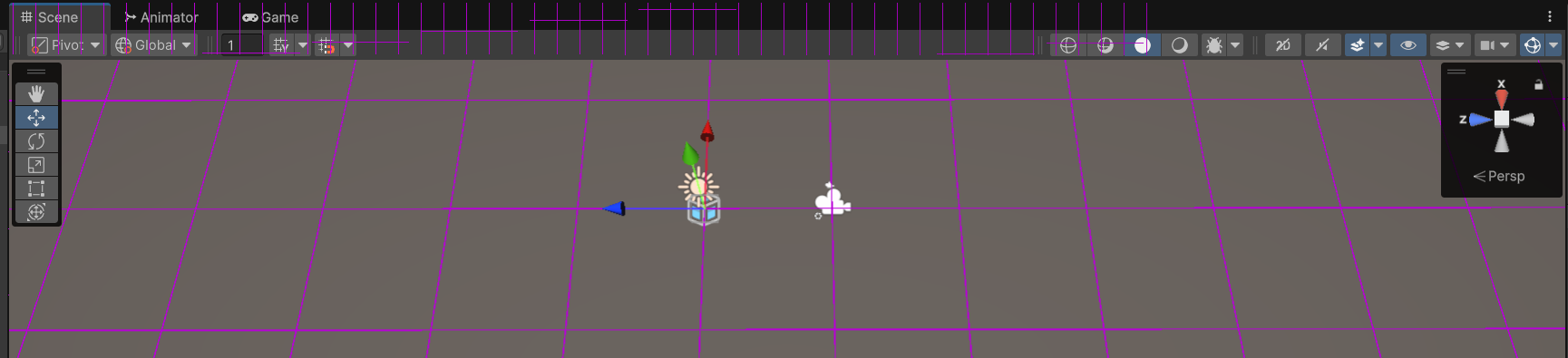
I assume it has to do with drawing the mesh to all viewports or something?
regal lava
Yeah, think that was the issue. Can't specify the viewport with DrawNow
 novel cairn
Does anyone know how i can debug stuff frame by frame? I have some NON Physics based movement which im running in fixed Update, In theory this script should be the only thing influencing my players position, im debug logging the results each frame, In theory Frame 6's starting position should be the same as Frame 5's Ending position, but its not (The Y has changed) and i have no idea whats influencing this change in position, Any ideas on how i can debug this its driving me crazy
Frame 5: StartingPosition = (495.00, 6.88, -10.00) Final Position = (495.00, 6.83, -10.00)
Frame 6: StartingPosition = (495.00, 6.95, -10.00) Final Position = (495.00, 6.90, -10.00)
sly grove
novel cairn
Does anyone know how i can debug stuff frame by frame? I have some NON Physics b...
show the code?
Also show which components are attached to the object
 jovial wyvern
novel cairn
Does anyone know how i can debug stuff frame by frame? I have some NON Physics b...
jovial wyvern
novel cairn
Does anyone know how i can debug stuff frame by frame? I have some NON Physics b...
I would recommend, Pausing the game then use the next arrow to play it frame by frame
novel cairn
sly grove
show the code?
These are the components attached to my player & This is my movement script, this will likely just confuse you as my Movement script is fairly large
 novel cairn
jovial wyvern
I would recommend, Pausing the game then use the next arrow to play it frame by ...
novel cairn
jovial wyvern
I would recommend, Pausing the game then use the next arrow to play it frame by ...
Someone else said this but this still wouldn't tell me what script/Component is causing the movement right? so im not sure what help this would be
sly grove
novel cairn
These are the components attached to my player & This is my movement script, thi...
I mean that's a lot of components. Try disabling them all one by one until you find which one is causing the issue
bisection is key
also there's networking involved here
which throws a big wrench in everything
novel cairn
I cant see how any of the scripts would be influencing movement, but i will give it a try, maybe disabling each of the others will give some results
novel cairn
sly grove
which throws a big wrench in everything
In this case it shouldnt change anything, as the movement is not acting as expected client side, So its essentially not working even in singleplayer
sly grove
novel cairn
I cant see how any of the scripts would be influencing movement, but i will give...
"When you have eliminated the impossible, whatever remains, however improbable, must be the truth."
novel cairn
sly grove
"When you have eliminated the impossible, whatever remains, however improbable, ...
Its defo gonna be something stupid which im missing
sly grove
my money's on the NetworkTransform
but it could easily be any of the movement scripts or animation
 graceful hill
I have this very weird issue in Unity, together with visual studio code and I don't understand it. Whenever I duplicate a file in visual studio code something runs and it creates a /bin and a /obj folder with a bunch of .net 8.0 stuff in it:

I have tried everything, its driving me crazy.
Unity version 6000.0.48f1.
graceful hill
Ok after uninstalling all my vs code extensions its fixed :), no idea what was going on here.
scenic forge
graceful hill
I have this very weird issue in Unity, together with visual studio code and I do...
Are you using the prerelease versions of C#/C# Dev Kit extension? I think the latest prerelease of one of them broke it, I just switched to release versions.
When you add a new file, it takes a moment for Unity to pick it up and add it to csproj, and I'm guessing something to do with one of the extensions seeing the file doesn't belong to a project and trying to set it up for you too eagerly.
graceful hill
scenic forge
Are you using the prerelease versions of C#/C# Dev Kit extension? I think the la...
I dont recall updating anything but visual studio code itself, maybe i accidentally did it. But removing all extensions and installing just the once vscode recommended worked for me. In on Mac btw.
scenic forge
Yeah I'm guessing you were using prerelease versions and one of them broke it. Installing extensions defaults to release.
graceful hill
scenic forge
Yeah I'm guessing you were using prerelease versions and one of them broke it. I...
Thanks good to be aware of!
novel cairn
sly grove
my money's on the NetworkTransform
You were right btw, I was doing some unnecessary syncing.
Ty
 terse inlet
novel cairn
Does anyone know how i can debug stuff frame by frame? I have some NON Physics b...
terse inlet
novel cairn
Does anyone know how i can debug stuff frame by frame? I have some NON Physics b...
breakpoints, logs, where you include the time.framecount, my guess is there is something in the network code updating your position outside of the fixed update loop
 visual spruce
Hello! Trying to get an example project built in Github with CI/CD. We get this error message, but it's ungoogleable?... We really need to know what it means ahah

We're using a YAML file to deploy a unity project, I can send it if needed
echo coral
visual spruce
Hello! Trying to get an example project built in Github with CI/CD. We get this ...
It appears to be a licensing issue (based on 'seat' being mentioned), how are you applying your license?
visual spruce
echo coral
It appears to be a licensing issue (based on 'seat' being mentioned), how are yo...
take the personal license, copypaste it into github secrets together with password and login
echo coral
Could be that the license cannot be transferred so it fails with that error
tbh i have no idea how it will work for CI seeing as nothing is kept
 flint mountain
hi
im not sure if i should ask it here or in editor extensions since its a editor code with custom inspector
i will try to simplify it
im currently making a dialog system. but since im the only programer and i have more people helping me with the project im doing a lot of custom inspector to make it more easy to edit
i have a catalog from all the characters in the game + user name + narrator + itens reference(that part is still on progress).
the catalog is a scriptable object with a static of it self (i made a simplifyed singleton basicly)
on the dialog system, i have a custom inspector to get when a character from the catalog is referenced then it colorizes, change the name to current nick names... and some more dumb stuff to easy the work.
who haves the information about it (names, colors, nick names, imagens...) is the catalog/scriptable object.
it itself has a on awake + on enable function to self put as static (becuse if its not initated my dialog custom inspector cant find the references)
the problem is:
the awake/enable funcion only plays when i CLICK the scriptable object.
i already have the same issue on the past, but recently i started learning more about editor scripts.
then i created one editor script. that on itself awake/on enable it will also initialize the awake.
yesterday it was working wonders...
today i just opened the project and realized it works the same as the scripable. i have to click to it initalize.
how can i solve this?
🫤 😅 i just spend 10m writing something that i know its dumb, but i cant solve it
this is the editor script


this is the important part on the catalog
 long ivy
inspectors only exist in the editor, so your design makes no sense already if you're relying on them to initialize stuff. Why are you making your SOs singletons? They can be referenced directly by scripts that need them, and if you need to make sure they don't get unloaded you can set hideFlags if necessary
flint mountain
the dialog system itself is not a singleton :/
currently i have 2
the catalog
and the editorbase
that suposed to start the catalogo
long ivy
what does the dialog not being a singleton matter? If you have multiple GameCatalog_ScriptableObjects, your Initialize method becomes an instant source of bugs. You can use serialized fields to specify the right catalog, and they'll have OnEnable called when needed
unless there's more going on here, this looks more like you designed around an imaginary problem
flint mountain
i dont know if im saying it right😅
i think im making it more confuse than it sounds right now
i just have 1 catalog
i will only use 1 for the entire game
long ivy
okay, let's try this another way: why isn't GameCatalog_ScriptableObject a serialized field in whatever things need it? Why does it have a public writable static field for itself?
flint mountain
becuse every dialog can be unique
for the tests i have like 6-7 i think
i dont want to reference it for everything on the game
thats why i try on the static thing
long ivy
okay, so it's about being lazy. The most self-contained way to do this would be to put your SO in a Resources folder, change Initialize to a private static method with [RuntimeInitializeOnLoad] attribute, load your SO from resources and assign it to your static field (which you should change to a public get/private set property), and for good measure set hideFlags on that instance to prevent unloading
I would directly reference it wherever needed btw, the above is going to be more brittle. I like being explicit with dependencies
flint mountain
long ivy
okay, so it's about being lazy. The most self-contained way to do this would be ...
ok ok
tks
i will try it
flint mountain
hi, just to give an update
i had so simplify it a little, and a had to make a ping pong with the editor
but in the end it works
tks @long ivy ^-^
long ivy
the phrase "had to make a ping pong with the editor" is ominous. Your original solution seemed to have a dependency on the editor so hopefully you didn't make that mistake again
exotic trout
long ivy
okay, so it's about being lazy. The most self-contained way to do this would be ...
I know it’s just for good measure but there’s two aspects here that should ensure it won’t unload without needing to set the flags right? First being the fact it’s in resources to begin with and second that you store a static reference to it from resources (as in it didn’t load in from a scene so it can’t ever unload from a scene).
asking just to confirm my understanding of stuff and things
long ivy
no, being in resources doesn't prevent it from unloading, just prevents the asset itself (and any of its dependencies) from being stripped from a build. The static reference itself should be enough to prevent unloading, but if the intention is it never unloads then for SOs I prefer to specify this explicitly with hideFlags. For example, if I had a SO that stored some state for use between scenes, I'd make sure I used hideFlags to prevent it from being cleaned up during any scene changes because there are plausible situations where the SO gets unloaded, losing that state and causing a surprising bug
exotic trout
Right just realised I was going off my previously misinformed understanding of Resources, apologies
heard chef
regal lava
I've never really had problems with SOs being unloaded besides sticking them into asset bundles
I mean if you have prefabs with those SOs, how exactly do you find yourself without a reference to one
unless you're making monos via constructor
exotic trout
if a SO is exclusively referenced by a mono in a scene that SO can be dependent on that scene being loaded
and resources can be explicitly unloaded
regal lava
wouldnt the SOs become loaded with the scene though?
long ivy
regal lava
I've never really had problems with SOs being unloaded besides sticking them int...
depends on your use of Resources.UnloadUnusedAssets. As an example, if you had MainMenu -> Loading Scene -> Game, and MainMenu puts some data into a SO for Game to use, and you used non-additive scene loading or explicitly called resources unload as some do, poof go your changes to that mutable SO
exotic trout
yes but if that scene is unloaded
muted root
Hello, I don't understand the point of the method Texture2D.Reinitialize. I wanted to resize my texture and the doc says to use this method but when I use it, my image loses its data?? The doc also says "This action also clears the pixel data associated with the texture from the CPU and GPU". What's the point of using this if you're goingto lose pixel data? This makes no sense to me. Could someone explain please?
sly grove
muted root
Hello, I don't understand the point of the method Texture2D.Reinitialize. I want...
It lets you reuse the managed Texture2D object rather than create a brand new one, to avoid garbage collection
 rough sky
Hey there. I am experiencing a strange audio ducking in my unity project. I have composed the scene entirely into two audio sources, one music and one sound effect, where it plays the sound effect on input
There is absolutely nothing in the scene besides this, and it is not hooked to audio mixers
decomposing the waveform, you can see it visually happening, and gradually gaining in volume again

Does anyone know of any unity feature that may be causing this?
this is the settings of the two sources
 rough sky
Turning off audio enhancements in the windows control panel fixes this
but it is strange that this is very audibly harming the audio quality, not sure how this can be fixed
 plucky dawn
Hello. I am pretty new to using Entities and DOTS, and I have been trying to convert my current game to it. It is running very badly though, even worse than before I had Entities. Since I have several scripts, I have gone ahead and put them in a Google Drive that people can look at: https://drive.google.com/drive/folders/1N2h8NGGaS8Epn_7kctV8-wozEphpojBd?usp=sharing
The idea is that it spawns ideally thousands of particles and they move around using some math. They are pairwise, which I realize is not ideal, but I figured that it would be more efficient in Entities. I have it running similarly with just Jobs and Burst, no Entities, and it runs much better.
If anyone is able to look this over and give me some suggestions, that would be greatly appreciated. Thanks. If you are going to respond to me, please @ me as I might not see the message otherwise.
sly grove
plucky dawn
Hello. I am pretty new to using Entities and DOTS, and I have been trying to con...
!code one of these sites would be better for sharing your code
 thorn flintBOT

Posting code
📃 Large Code Blocks
Use links to services like:
https://paste.mod.gg/, https://hastebin.skyra.pw/, https://paste.ofcode.org/, https://paste.myst.rs/, https://scriptbin.xyz/
📃 Inline Code
Surround code with three backquotes. Not quotation marks.
To format as C#, add cs to the first line:
```cs
// Your code here
```
Add a comment with a line number if there is an error message.
muted root
sly grove
It lets you reuse the managed Texture2D object rather than create a brand new on...
I see, but then, why is the resize method deprecated and telling us to use Reinitialize instead ? They don't do the same thing at all.
 livid kraken
Thats not how gpu’s work, resizing would create a new resource on the gpu anyway.
 amber kite
Having a very peculiar issue with querying the AssetDatabase:
- I have some code conditioned on
AssetDatabase.Contains(), which passes fine. - I then get the asset path from
AssetDatabase.GetAssetPath(), which returns a valid path string - However when I run
AssetImporter.GetAtPath()on the asset path I just retrieved, it returns null, despite the asset existing and the path being valid.
Any idea what could cause GetAtPath() to return null under these circumstances?
 autumn basalt
amber kite
Having a very peculiar issue with querying the AssetDatabase:
1. I have some cod...
autumn basalt
amber kite
Having a very peculiar issue with querying the AssetDatabase:
1. I have some cod...
show your code pls
Anyone know a good video course (can be paid) for intermediate / advanced C#, preferably for game dev.
Like how to write good, clean and future proof code. Info about design patterns and why/how to use them ... Probably a lot of other stuff I don't know about. Feel free to PM me.
 hybrid tundra
anybody has experience with Perforce?
 ebon abyss
I do, yes
hybrid tundra
I try to merge revisions up to a certain changelist
but when I do that, it gives me an error
"integration errors: no target files in both client and branch view
what does it mean?
@ebon abyss
ebon abyss
No clue
hybrid tundra
fantastic....
 robust pulsar
hybrid tundra
anybody has experience with Perforce?
robust pulsar
hybrid tundra
anybody has experience with Perforce?


 hybrid tundra
robust pulsar
https://dontasktoask.com/
hybrid tundra
robust pulsar
https://dontasktoask.com/
already wrote down my question...
hybrid tundra
ebon abyss
No clue
and do you know why "revisions up to" gives back only one changelist instead of million?
I also don't understand why merge/integrate files shows me changelists way before the time I made a merge last time
hybrid tundra
what if it says "all revisions already integrated", but in practice they're not?
@ebon abyss
gritty ore
Not sure where you're looking for "revisions up to". If you're in the "Find" tab of P4V, make sure all the search settings are what you want. Correct workspace, correct users, etc. There are a lot of options that can get you looking at something you're not expecting.
hybrid tundra
gritty ore
Not sure where you're looking for "revisions up to". If you're in the "Find" tab...
curently I think I fucked up the entire workspace
so I just want to rollback the last few changelists
because undo didn't work as expected and just caused more errors
gritty ore
You'll probably need to get help from someone who can see the same workspace. This can get messy.
 rich salmon
Is there a benefit to discarding a return value? For example _ = MethodWithNonVoidReturnType();
Rider recommends this a lot and I cant find an answer to why
 thin mesa
rich salmon
Is there a benefit to discarding a return value? For example `_ = MethodWithNonV...
thin mesa
rich salmon
Is there a benefit to discarding a return value? For example `_ = MethodWithNonV...
you know you can google this, right?
https://softwareengineering.stackexchange.com/questions/433115/why-use-the-discard-variable-in-c
rich salmon
thin mesa
you know you can google this, right?
<https://softwareengineering.stackexchange...
Ah shoot sorry haha, i was googling it in the context of unity and wasnt finding anything
thin mesa
even the documentation about discards is clear that its main purpose is to just provide the intent to ignore the return value of a method
hybrid tundra
if someone knows Perforce, is there a way to rollback 2-3 changelists (commits)? not undo them, really rollback
 lofty solstice
Anyone know if it is possible to draw Handles on top of Gizmos?
regal lava
Do they take in a material? Look for a way to change the transparent sorting queue
 lament salmon
lofty solstice
Anyone know if it is possible to draw Handles on top of Gizmos?
lament salmon
lofty solstice
Anyone know if it is possible to draw Handles on top of Gizmos?
Try Handles.zTest
 crisp temple
Any clever ways to write lots of files without tons of GC alloc forced by file path checking as part of FileStream?
 echo coral
Not practical for many platforms but could do it in cpp with std::filesystem instead?
ebon abyss
Pretty sure you could call fprint_s directly with a DLLImport
But you're bound to be spending so much time waiting on the filesystem here that GC'ing that whopping 46kb shouldn't be much of an issue
So just GC.Collect after you're done so the cost gets lumped together with what's already an expensive operation anyway.
 dusty wigeon
crisp temple
Any clever ways to write lots of files without tons of GC alloc forced by file p...
dusty wigeon
crisp temple
Any clever ways to write lots of files without tons of GC alloc forced by file p...
Cant you just offload to a thread ?
crisp temple
dusty wigeon
Cant you just offload to a thread ?
Could I? That sounds like a very good idea actually, didn't consider just putting it all on a separate thread
dusty wigeon
crisp temple
Could I? That sounds like a very good idea actually, didn't consider just puttin...
I mean, filesystem is basically the book example of offloading to a thread.
Usually, if you are doing save system that are periodic, this is the way to go.
crisp temple
Nice, yeah can't believe I didn't think of that, will give it a crack. Ty
 edgy shard
Trying to use max hits on a spherecast batch
currently writing another iteration of the code, was wondering if there's any intricacies to the whole "N * maxHits" thing
If I have two commands, both only hitting 1 collider, will the valid hits come one after another, or will they be like
valid hit, 15 invalid hits
valid hit, 15 invalid hits
I also want to make sure that
        for (int x = 0; x < castCommands.Length; x++)
        {
            for (int y = 0; y < maxHits; y++)
            {
                RaycastHit hit = hits[x + y];
            }
        }
Is an acceptable way to access this
sage radish
edgy shard
If I have two commands, both only hitting 1 collider, will the valid hits come o...
The results of each command will be laid out in order, so if your max hits is 16, the first 16 elements will be the results from the first command and the next 16 will be from the second command.
sage radish
edgy shard
I also want to make sure that
```cs
for (int x = 0; x < castCommands.Le...
With that in mind, this loop won't access the data correctly.
edgy shard
alright, thanks for the insight on that. What's the issue with the array?
sage radish
To get the correct index, you have to calculate what offset each command has in the hits array. The offset for the first command is 0. The offset for the second command is 16.
So the offset is the index of the command multiplied by max hits.
for (int x = 0; x < castCommands.Length; x++)
{
    int offset = x * maxHits;
    for (int y = 0; y < maxHits; y++)
    {
        RaycastHit hit = hits[offset + y];
    }
}
OH
goddammit, that would make sense as to why stuff wasn't working before...
thank you so much
multiply x by max hits and we get the offset for the next hits, thank you so much (again, lol)
edgy shard
New problem: somehow those hits are all invalid?
the hit point is coming back as {nan, 0, nan} on almost all of them
int offset = x * maxHits;
RaycastHit hit = hits[offset]
Collider c = hit.collider;
for (int y = 0; y < maxHits; y++)
            {
                hit = hits[offset + y];
                if (hit.collider == null || np.ignoredColliders.Contains(hit.collider))
                    continue;
                if(hit.distance != 0 && hit.distance < distance)
                {
                    Debug.Log($"Found new closest collider at {hit.distance} metres from origin", hit.collider);
                    distance = hit.distance;
                    c = hit.collider;
                    validHit = true;
                }
            }
I'm using the hit AND collider after this nested loop, so I have to assign them before the loop to use them outside of it
sage radish
Can you show how you are scheduling and completing the commands?
edgy shard
        JobHandle job = SpherecastCommand.ScheduleBatch(castCommands, hits, 1, maxHits);
        job.Complete();
Should the maxHits argument be commands * maxHits or just maxHits
im also using Unitialised memory for the two native arrays
one castCommand for every spherecast I want to do,
hits length is castCommands.length * maxHits
sage radish
edgy shard
Should the maxHits argument be commands * maxHits or just maxHits
Just maxHits
edgy shard
right, got it
sage radish
edgy shard
im also using Unitialised memory for the two native arrays
one castCommand for e...
Are you overwriting all the uninitialized data in the castCommands array?
edgy shard
I should be, yeah. I'll try with clear memory
I'm also adding debug rays to see if its actually casting from the right place
...It looks like its casting in the opposite direction?
so, im assigning the raycast command, then im drawing the ray from its origin, in the direction * distance, directly from that struct.
Its casting the ray in the opposite direction, so then distance on the hit is ~0, the point is reading nan/zero
so how is it even arriving at that??

is normalizing the direction somehow inverting it?
okay no its not inverting it, it IS casting in the right direction
im just so confused as to why this is doing what it is
even when i output the hit point and its like, (3, 3, 3)
the transform im moving USING that point goes back to the origin?
I FIXED IT!
I've moved everything that uses the hit retrieved via...
            for (int y = 0; y < maxHits; y++)
            {
                hit = hits[offset + y];
// more below
so that it executes inside the for y loop
im not 100% sure why it works this way but throws a fit if I use that hit outside - maybe something to do with scope? but it works this way and that's awesome <3
hybrid tundra
what can you do, if you get this?
Error building Player: 18 errors
Building completed with a result of 'Failed' in 219 seconds (218577 ms)
UnityEditor.BuildPlayerWindow:BuildPlayerAndRun ()
I received absolutely zero info about what these 18 errors are....
nothing in Editor.log, nothing in build errorlog
nothing anywhere...
sly grove
hybrid tundra
what can you do, if you get this?
Error building Player: 18 errors
Building comp...
- scroll up to see what any of the other errors are.
- click on that error and check the bottom of the console window to see the full message.
hybrid tundra
sly grove
1. scroll up to see what any of the other errors are.
2. click on that error and...
this is the full message 🙂
no other errors
there are 2 errors
error 1:
Error building Player: 18 errors
this one
this is the full message
error 2:
Building completed with a result of 'Failed' in 219 seconds (218577 ms)
UnityEditor.BuildPlayerWindow:BuildPlayerAndRun ()
and that's all
Unity is again pretty unusable 🙂
plain abyss
Show what you have for this section of your console
 sly grove
hybrid tundra
Unity is again pretty unusable 🙂
sly grove
hybrid tundra
Unity is again pretty unusable 🙂
When I get that exact error i also get the other errors above it
 hybrid tundra
sly grove
When I get that exact error i also get the other errors above it
hybrid tundra
sly grove
When I get that exact error i also get the other errors above it
I already wrote that, there's no other errors
I'm using Unity for million years now
and I have never seen like this before
Error building Player: 18 errors
only this and nothing else
sly grove
well me neither. I would definitely investigate all your console settings etc
hybrid tundra
sly grove
well me neither. I would definitely investigate all your console settings etc
default console settings
didn't modify that at all
sly grove
plain abyss
Show what you have for this section of your console
answering questions like this one would be a good start
hybrid tundra
maybe because I try to build to an NDA console
sly grove
sometimes things happen by mistake
hybrid tundra
plain abyss
Show what you have for this section of your console
well, I'm not in the office currently
its 8 pm here
sly grove
Next time ask when you're actually at the computer and able to troubleshoot
that will be much more productive
hybrid tundra
sly grove
that will be much more productive
obviously, I'm just extremely stressful and panicking
plain abyss
Most likely, the actual errors are getting cleared at some point during the build process, and only the result is getting to the log
hybrid tundra
plain abyss
Most likely, the actual errors are getting cleared at some point during the buil...
probably, but is there a way to make it not get cleared?
plain abyss
hybrid tundra
probably, but is there a way to make it not get cleared?
The menu I asked to see
hybrid tundra
plain abyss
The menu I asked to see
well, that should never clear the log during building
plain abyss
hybrid tundra
well, that should never clear the log during building
The second option is literally "Clear on build"
hybrid tundra
plain abyss
The second option is literally "Clear on build"
is that selected by default, when you install Unity?
its on the default menu
plain abyss
¯_(ツ)_/¯
hybrid tundra
whatever it was
hybrid tundra
but anyway
hybrid tundra
plain abyss
It's one click
one click, but only from the office, and if it won't be the case, I will waste hours again
and I'm already way behind schedule
plain abyss
hybrid tundra
one click, but only from the office, and if it won't be the case, I will waste h...
Well, what do you expect to do to fix it from here
hybrid tundra
plain abyss
Well, what do you expect to do to fix it from here
to gather possible reasons to check tomorrow morning
and don't waste time tomorrow with researching possible solutions
plain abyss
Well, there you go. You've gathered reasons. Try them then
hybrid tundra
it was just 1
I'm checking in my other PC what is the default setting
@plain abyss anyway, even if its "Clear on build", that clears console only before build
not during/after that
so its 90% can't be the reason
thin mesa
there is pretty much nothing that hasn't already been said that anyone can say about this issue until you are physically at the device that you can troubleshoot with so idk what you are expecting to get at this point
hybrid tundra
I mean here are some people who had undetailed errors
so its not new apparently
and it has nothing to do with @plain abyss suggestion about Clear on build
sly grove
hybrid tundra
so its not new apparently
so are you looking for moral reassurance that Unity is broken, or are you looking to solve the problem?
hybrid tundra
unfortunately I don't try to build to Android
hybrid tundra
sly grove
so are you looking for moral reassurance that Unity is broken, or are you lookin...
you're kind
plain abyss
hybrid tundra
and it has nothing to do with <@153950686088921088> suggestion about Clear on bu...
If you literally are not able to do the first step of troubleshooting then we can't really go any further. If you've been programming for a while you know that you check everything, even stuff you're certain you never touched because there are many many cases where you're wrong
sly grove
hybrid tundra
you're kind
i prefer "pragmatic"
hybrid tundra
plain abyss
If you literally are not able to do the first step of troubleshooting then we ca...
I will definitely check it, but the night should be used to find lot of other things to check as well
not just the "clear on build"
hybrid tundra
sly grove
i prefer "pragmatic"
I'm also pragmatic, but the working hours shouldn't be wasted with hours of googling, if this one suggestion wouldn't work
echo coral
@hybrid tundra When unity is opened in batch mode (-batchmode) it should print to std out, its what my work uses for unity on our jenkins. You can use execute method to start a build (-executeMethod) or the other args defined here: https://docs.unity3d.com/6000.1/Documentation/Manual/EditorCommandLineArguments.html

 obsidian loom
Hello. I'm trying to make a simple slash hitbox detection but sometimes seems to fail. The way it's made, the slash animation has 2 events(attack window), one that start the hit detection and one that stops the hit detection. Here's some code sample: https://paste.mod.gg/qwcqwzpnqisj/0
I also tried same implementation but with kinematic rigidbody and OnCollisionEnter and it still fails sometimes to hit the target. I'm not sure what's happening but I feel that sometimes, "1-2 animation frames" are skipped even if by debugging both animation events are fired. I also tried for debugging purposes to have the slash happening all the time (without a defined window), still same miss result sometimes. Another thing would be that if I start to increase the attack speed, the issue will happen more often. Thank you!
sly grove
obsidian loom
Hello. I'm trying to make a simple slash hitbox detection but sometimes seems to...
Just do the overlapbox directly in the animation event function not in FixedUpdate
obsidian loom
sly grove
Just do the overlapbox directly in the animation event function not in FixedUpda...
This means that if a slash window takes (4-5 animation frames), I should call that event on each frame? Is this a good practice instead of defining a window start/end?
sly grove
obsidian loom
This means that if a slash window takes (4-5 animation frames), I should call th...
I would venture to say that in the vast majority of games there is exactly one frame of actual attack damage.
But yes if you want it to last 4-5 frames make several events or make an event to start and stop a once-per-frame check
regal lava
obsidian loom
Hello. I'm trying to make a simple slash hitbox detection but sometimes seems to...
If you care about exact frames that your animations do damage then I wouldn't spawn colliders for that. The frame that you spawn the collider you may not even get the callback until the next frame anyway. Queries are the idea
Also if the collider spawns inside of the target, you won't get callbacks at all from Enter/Exit callbacks
obsidian loom
I was checking right now the issue while being in "Pause". Playing frame by frame, I discovered that sometimes (because of speed I guess), 1-2 frames from animation are skipped resulting in weapon missing that hit point
obsidian loom
sly grove
I would venture to say that in the vast majority of games there is exactly one f...
Thanks, I'll give this also a try
obsidian loom
regal lava
Also if the collider spawns inside of the target, you won't get callbacks at all...
I'm trying to stick with Physiscs.OverlapBox solution
 smoky maple
obsidian loom
Hello. I'm trying to make a simple slash hitbox detection but sometimes seems to...
smoky maple
obsidian loom
Hello. I'm trying to make a simple slash hitbox detection but sometimes seems to...
if you change the Update Mode on your Animator component to Fixed then it should be more consistent with hitting your event on the same frame, though you'd still have issues depending on the animation speed.
If you can it might be worth just basing the collision query on a fixed point relative to the character and not the weapon? then even if your event hits too late it'd still act as a hit.
hybrid tundra
@plain abyss @sly grove @echo coral the undetailed 18 errors message was 2-3 shader errors in practice... I needed to solve them and after that the build started working (badly). I needed to revert some of my stuff and redo everything to get the build working
echo coral
Are these your own shaders?
obsidian loom
smoky maple
if you change the Update Mode on your Animator component to Fixed then it should...
THIS, fixed my issue. I completely forgot about Animator Update Mode, and yes FixedUpdate mode on Animator works like a charm. Thank you everyone for the help!
 cold breach
Anybody know if there's already a class to cast the AnimationClip YAML format to? Not found anything myself, but maybe I wasn't looking in the right places. If not I'll be writing something today to do just that.
%YAML 1.1
%TAG !u! tag:unity3d.com,2011:
--- !u!74 &7400000
AnimationClip:
  m_ObjectHideFlags: 0
  m_CorrespondingSourceObject: {fileID: 0}
  m_PrefabInstance: {fileID: 0}
  m_PrefabAsset: {fileID: 0}
  m_Name: Deserialize 1
  serializedVersion: 7
  m_Legacy: 0
  m_Compressed: 0
  m_UseHighQualityCurve: 1
  m_RotationCurves: []
  m_CompressedRotationCurves: []
  m_EulerCurves: []
  m_PositionCurves: []
  m_ScaleCurves: []
  m_FloatCurves: []
  m_PPtrCurves: []
  m_SampleRate: 60
  m_WrapMode: 0
  m_Bounds:
    m_Center: {x: 0, y: 0, z: 0}
    m_Extent: {x: 0, y: 0, z: 0}
  m_ClipBindingConstant:
    genericBindings: []
    pptrCurveMapping: []
  m_AnimationClipSettings:
    serializedVersion: 2
    m_AdditiveReferencePoseClip: {fileID: 0}
    m_AdditiveReferencePoseTime: 0
    m_StartTime: 0
    m_StopTime: 1
    m_OrientationOffsetY: 0
    m_Level: 0
    m_CycleOffset: 0
    m_HasAdditiveReferencePose: 0
    m_LoopTime: 1
    m_LoopBlend: 0
    m_LoopBlendOrientation: 0
    m_LoopBlendPositionY: 0
    m_LoopBlendPositionXZ: 0
    m_KeepOriginalOrientation: 0
    m_KeepOriginalPositionY: 1
    m_KeepOriginalPositionXZ: 0
    m_HeightFromFeet: 0
    m_Mirror: 0
  m_EditorCurves: []
  m_EulerEditorCurves: []
  m_HasGenericRootTransform: 0
  m_HasMotionFloatCurves: 0
  m_Events: []
what do you mean "cast"?
cold breach
stuck plinth
what do you mean "cast"?
Like casting a JSON file to a native class.
99.9% sure YAML parser and the internal classes it casts to are in the C++ code, not the C#.
stuck plinth
you mean deserializing? it already gets imported as an AnimationClip, do you need it in some other form?
cold breach
stuck plinth
you mean deserializing? it already gets imported as an AnimationClip, do you nee...
m_Curve is an array of Keyframes. curve is a differrent class. There is no class that it corresponds to in C#. Animation clip itself is just a wrapper class that makes calls to the C++ part of the engine anyway. So yes, I need it in a form where I can openly access the keyframes because that's not currently possible via the current API.
 m_FloatCurves:
  - serializedVersion: 2
    curve:
      serializedVersion: 2
      m_Curve:
      - serializedVersion: 3
        time: 0
        value: 0
        inSlope: 0
        outSlope: 0
        tangentMode: 136
        weightedMode: 0
        inWeight: 0.33333334
        outWeight: 0.33333334
      - serializedVersion: 3
        time: 0.016666668
        value: 0.09
        inSlope: 0
        outSlope: 0
        tangentMode: 136
        weightedMode: 0
        inWeight: 0.33333334
        outWeight: 0.33333334
      - serializedVersion: 3
        time: 0.033333335
        value: 0
        inSlope: 0
        outSlope: 0
        tangentMode: 136
        weightedMode: 0
        inWeight: 0.33333334
        outWeight: 0.33333334
      m_PreInfinity: 2
      m_PostInfinity: 2
      m_RotationOrder: 4
    attribute: blendShape.vrc.v_aa
    path: Body
    classID: 137
    script: {fileID: 0}
    flags: 0
Some of these values exist within the C# reference code. m_RotationOrder is actually an enum.
stuck plinth
what are you trying to do? access animation data from existing clips?
you can access imported animation data (like in an FBX) through ModelImporter, but idk about clips created directly in Unity itself
cold breach
stuck plinth
what are you trying to do? access animation data from existing clips?
Yes.
The irony is the classes already exist for me to cast to in the engine's c# code.
But they're internal classes.
And because the smoothbrains over at unity corporate state that ThE tErMs Of UsE dO nOt PeRmIt YoU tO mOdIfY tHe C# cOdE it's completley fucking useless to me.
stuck plinth
you haven't really explained why you need to do this but is it possible you could just create the data you need in a serialized AnimationCurve[] array somewhere? or do you have a workflow where you need to create it as a clip then pull the data out of that?
if you have to deserialize it manually it seems simple enough to grab some YAML parser and load the results into an AnimationCurve
cold breach
stuck plinth
you haven't really explained why you need to do this but is it possible you coul...
I recently created 2 different tools. One uses mediapipe face landmarker, and the other uses Nvidia Broadcast ARSDK to create JSON files containing blendshape facial animation data.
NVIDIA decided to delete the MAXINE ARSDK github despite still claiming it exists in their documentation. Thankfully some nice chinese chaps gave jensen the middle finger and reuploaded it, so I was able to edit the C++ source code to allow for JSON output as well as live DATA streaming.
Unfortunately the JSON files it puts out are uh...

Humungous
exotic trout
cold breach
But they're internal classes.
What classes?
cold breach
exotic trout
What classes?
Here is an example of a class that I recreated in psuedocode
enum RotationOrder
OrderXYZ
OrderXZY
OrderYZX
OrderYXZ
OrderZXY
OrderZYX
end enum
That corresponds to the m_RotationOrder variable, but it's an internal enum, so it's not accessible or visable to us despite existing in the C# DLLs
exotic trout
Can’t reflection bypass that?
cold breach
Apologies for not being able to share it directly, but unfortunately the sub humans at unity corporate state that ThE tErMs Of UsE dO nOt PeRmIt YoU tO mOdIfY oR rEdIsTrIbUtE tHe C# cOdE (iN eItHeR sOuRcE oR bInArY fOrM).
cold breach
exotic trout
Can’t reflection bypass that?
Probably, I just wanted to see if someone had already done it.
Sounds like nobody here has, and unfortunately unity didn't respond to my source code access inquiry so it looks like I have to do it the arbitrarily hard way.
exotic trout
I know from modding experience that runtime animation stuff sucksssss. Less a solution and more shared trauma
cold breach
exotic trout
I know from modding experience that runtime animation stuff sucksssss. Less a so...
It only sucks because they won't let you modify the source.
Unreal lets you have source code access, for the low low price of sweet fuck all.
Also, before anyone decided to reply with WhY dOn't YoU uSe UnReAl EnGiNe?, pre-emptively shut up.
exotic trout
Your misassuming the crowd here abit
echo coral
Engine source comes with enterprise licenses: https://unity.com/products/source-code
cold breach
exotic trout
Your misassuming the crowd here abit
There's always one of them.
cold breach
echo coral
Engine source comes with enterprise licenses: https://unity.com/products/source-...

Wonder if this is the same AI chatbot for the email spam
echo coral
dw you get a real person assigned if you are an enterprise customer
cold breach
echo coral
dw you get a real person assigned if you are an enterprise customer
Lmao
Yeah they're going to give me an enterprise license
echo coral
i dont make the rules
cold breach
I have more chance of some rando on the internet giving me the source code than that happening.
cold breach
cold breach
This was the email response I recieved when I literally emailed sales about it.
echo coral
I dont know if this helps but there is a way to edit animation clips in editor: https://docs.unity3d.com/ScriptReference/AnimationUtility.html
cold breach
echo coral
I dont know if this helps but there is a way to edit animation clips in editor: ...
Sort of but not really. I.e. SetKeyBroken doesn't actually do anything, because it just calls SetKeyBroken_Injected.
SetKeyBroken_Injected is an external command, that again, only functions in the C++ code.
echo coral
why does this matter? don't you want to just make an animation from this imported data?
cold breach
echo coral
why does this matter? don't you want to just make an animation from this importe...
I can already make an animation.
But say I implement something like Curvature Corrected Moving Average smoothing for the selected keyframes in the dope sheet or curve editor, or, I want to apply keyframe reduction using the least squares method.
I can't.
AnimationUtility.GetCurveBindings returns EditorCurveBindings, literally every single one.
What I actually need is in this class here: https://github.com/Unity-Technologies/UnityCsReference/blob/master/Editor/Mono/Animation/AnimationWindow/CurveMenuManager.cs

GitHub
Unity C# reference source code. Contribute to Unity-Technologies/UnityCsReference development by creating an account on GitHub.
This is what generates the right click options when you select curves. It's a class that get's created by the curve editors, and has all the keyframes you just selected passed to it. KeyIdentifier tells it which curve the keyframe is on, the index of each keyframe on that curve, and also the index of the curve (which corresponds to editorcurve from the yaml.
 remote gyro
Hello. I'm trying to basically build a 'replay' system. I record positions and rotations of my gameobject to a json file.
Then, when I want to play it back, i read the positions and rotations from the json file, and try to lerp and slerp them so they are smooth.
But, what i end up with is smooth movement, until the gameobject reaches each new point. then it jitters a bit.
If I have camera follow it perfectly with no damping, you don't notice the jitter, because the jitter of the camera then matches the object.
But, i sometimes want to playback multiple recordings (on multiple objects) at the same time. Any suggestions on how to avoid the jitter?
_timer += Time.deltaTime;
float t = Mathf.Clamp01(_timer / segmentDuration);

Vector3 a = _data.positions[_currentIndex] + positionOffset;
Vector3 b = _data.positions[_currentIndex + 1] + positionOffset;
transform.position = Vector3.Lerp(a, b, t);

Quaternion offsetRot = Quaternion.Euler(eulerRotationOffset);
Quaternion qa = _data.rotations[_currentIndex] * offsetRot;
Quaternion qb = _data.rotations[_currentIndex + 1] * offsetRot;
transform.rotation = Quaternion.Slerp(qa, qb, t);

if (_timer >= segmentDuration)
{
    _timer = 0f;
    _currentIndex++;
    if (_currentIndex >= _data.positions.Count - 1)
        _isPlaying = false;
}
But as per usual with any of the actual useful classes, it's internal.
scenic forge
You can access internal classes with reflection IIRC.
cold breach
scenic forge
You can access internal classes with reflection IIRC.
I know, it's just tedious and I wanted to avoid it.
regal lava
remote gyro
Hello. I'm trying to basically build a 'replay' system. I record positions and r...
Quaternion offsetRot = Quaternion.Euler(eulerRotationOffset);
Smells like gimbal
I'd clarify on what you mean by jitter. If you mean it's correcting a rotation an odd way, then it's probably gimbal lock
Otherwise seems fine to me. Could try just creating animation clips and using the bicubic interpolation it provides
remote gyro
regal lava
```cs
Quaternion offsetRot = Quaternion.Euler(eulerRotationOffset);
```
Smells l...
rotation looks good. its the position itself. as it lerps from one point to the next, its fine (in between points). But when it arrives at a point, it vibrates forward/backward.
regal lava
remote gyro
rotation looks good. its the position itself. as it lerps from one point to the ...
Ah, could be overshooting in the end perhaps, then the next point is correcting that. I'd log those final values and see what's happening
remote gyro
ooh. that makes sense. which may be fixed by making my Vector3 a always be transform.position
regal lava
Clamp your position when you change to the next node to the max value
pretty standard but I feel like that may jiggle as well if you are continuously moving it
https://docs.unity3d.com/6000.1/Documentation/ScriptReference/Vector3.MoveTowards.html
MoveTowards can be another option here, but it does it by a constant speed
cold breach
Finally some good content
 gloomy nova
fun article on rotations and gimbal lock, since Unity quaternions are not immune https://ntrs.nasa.gov/citations/19770019231
anyway the original reason I came in here - I've got a setup where users should be able to import their own models for entities, buildings, etc. by specifying the file path in the XML for the definition of that entity/building/whatever. I'm trying to figure out how the hell I can force bake axis conversion at runtime - I'm able to set the mesh readable by using SerializedObject, which is necessary because I have to rebake navmeshes at runtime (both the player and NPCs can place building blueprints at virtually any time, which will modify the navmesh when completed), but I can't figure out which property corresponds to bake axis conversion.
I can't just do this via editor script - that would work for me, but I'm supporting mods and everything is set up for modders to simply work through config files + code a la Rimworld/Elin modding instead of having to make Unity projects for their mods. Trying to keep that familiar workflow in place.
tl;dr what property of Mesh actually corresponds to "bake axis conversion" if any? went through them with SerializedObject.iterator but no dice
alternatively, is there a better way of doing this? i could just provide the option to rotate the mesh when it's read as well, which would be simpler but more annoying for the user lmao
stuck plinth
gloomy nova
tl;dr what property of `Mesh` actually corresponds to "bake axis conversion" if ...
isn't that the bakeAxisConversion property of ModelImporter? which is the editor class that produces meshes from assets like FBXs - the idea of converting axes only makes sense in that context, meshes on their own are just data and don't care what order their components are in
gloomy nova
stuck plinth
isn't that the `bakeAxisConversion` property of `ModelImporter`? which is the ed...
actually yeah that's a good point...you can adjust isReadable, cooking options, etc. from the model importer, so I was thinking it'd be somewhere in the same vein? but maybe I just need to adjust the vertex data myself
 proper walrus
how does one fix the UnityEngine.Purchasing.Security error when including the CrossPlatformValidator and GooglePlayTangle for In-App Purchasing? I'm quite confused with the AssemblyDefinition references
 severe shell
I have a dout i have a cube i place camera inside i use raycast to spawn the object where the ray is hit how to do that please any one explain me
thin mesa
severe shell
I have a dout i have a cube i place camera inside i use raycast to spawn the obj...
that is certainly not an advanced question. but the answer is obviously if the raycast hits something you can get the hit point and use that as the location to Instantiate your object
thin mesa
severe shell
I have a dout i have a cube i place camera inside i use raycast to spawn the obj...
also do not DM users for help. ask your questions and answer follow up questions in this server. i will not be helping you privately.
severe shell
Sir just one thing camera is inside the cube and also child of it i try lot of things i want to spawn the game object top of the cube but it passes the cube
echo coral
proper walrus
how does one fix the `UnityEngine.Purchasing.Security` error when including the ...
You need to share the actual error you got for anyone to understand...
If you don't use your own asm def's then others in packages are referenced for you automatically.
proper walrus
echo coral
You need to share the actual error you got for anyone to understand...
If you do...
fixed it by adding an #if !UNITY_EDITOR guard before the offending code, the one that doesn't work for the UNITY_EDITOR.
actual error you got for anyone to understand
the error is vague as the editor is claiming it can't reference it. I've scoured the forums only for some people to say that the editor can't actually link it since it's a release-only code. would have been nice for unity docs to say that in the first place
echo coral
proper walrus
fixed it by adding an `#if !UNITY_EDITOR` guard before the offending code, the o...
Its probably because its only for ios and android but you solved it by accident by restricting it to non editor platforms
then you would do #if UNITY_IOS and #if UNITY_ANDROID
you failed to share the actual error text still and presumed because you did not understand, that we would not either.
When asking for help share the raw error
hybrid tundra
do anybody do NDA porting here?
I can't just ask my question, because its under NDA
untold moth
The question is under an NDA?
You should probably go look at the NDA related forums then. And ask there if needed.
plain abyss
Also, it's not like NDAs are transferrable. If someone is under a different NDA you're still exactly as unable to answer it
hybrid tundra
untold moth
You should probably go look at the NDA related forums then. And ask there if nee...
yeah, and they don't answer for half day
not very productive way to use something like that
my issue is that there's a namespace
and I can use that only from one specific folder
and I have no idea why
there's an NDA package, and if I install that, there are samples
untold moth
hybrid tundra
yeah, and they don't answer for half day
Could be even longer.
But it's not like you have a choice.
Wait or research yourself/ask your coworkers.
hybrid tundra
and if I import those samples
then the codes are only work from there
the namespaces I mean
but outside of the Samples folder, they can't be used
I have never seen anything like this before, and its very annoying...
untold moth
hybrid tundra
the namespaces I mean
Sounds like a case of assembly definitions or special folders.
hybrid tundra
untold moth
Sounds like a case of assembly definitions or special folders.
yeah, but what should I do with the assembly definitions...
the assemblies are in the Library folder
untold moth
You should learn about them and how they work
untold moth
No, I'm not talking about assemblies. I'm talking about an assembly definition. It's. A feature in unity.
And is documented very well. Check the manual.
hybrid tundra
untold moth
And is documented very well. Check the manual.
okay, and what should I do with the assembly definition?
untold moth
Reference it in your assembly definitions. If you want to use code in that assembly. It's all in the manual. Read it up. I'm not even sure this is your case at all. It was just an assumption
hybrid tundra
untold moth
Reference it in your assembly definitions. If you want to use code in that assem...
I have created an assembly definition reference
and an assembly definition
also the dll was already in an assembly definition in packages
hybrid tundra
untold moth
Reference it in your assembly definitions. If you want to use code in that assem...
maybe its working now
I'm working with Unity like since 2010, and never ever encountered this
plain abyss
hybrid tundra
and I can use that only from one specific folder
Assembly definitions
plain abyss
Every script belongs to the "nearest" assembly definition, either one in its folder, then back up to the root, and if it finds none, it belongs to Assembly-CSharp
So, if you plop one in your Assets directory, that becomes the new "default", since everything will eventually reach it. Then you can make that assembly definition reference every other runtime one in your project
so anything that doesn't have an asmdef can reach all the others
 untold needle
plain abyss
Assembly definitions
untold needle
plain abyss
Assembly definitions
@plain abyss why did u say ur not helping me with ai or crypto and block me
i was gonna ask about public float bc i had a issieu
ur ego is insane and unmatched
 plain abyss
Hm... perhaps there's a rule on this server about sending unsolicited DMs and publicly admitting to such is not a good idea
untold needle
plain abyss
Hm... perhaps there's a rule on this server about sending unsolicited DMs and pu...
bro ur ego is insane bro stop caring that much
its not that serious
also ai/crypto most of the time uses a preset msg bro
no ai/crypto will msg you with "digi" as your name
 torn rose
untold needle
bro ur ego is insane bro stop caring that much
torn rose
untold needle
bro ur ego is insane bro stop caring that much
do you see the irony
untold needle
what
i asked somebody for help and instantly get blocked
their ego to think they will be targeted by me
And a scraper for discord id's to dm would get the ones with ! first
torn rose
Well unsolicited dms aren't allowed here, so it's not exactly a reach to default to thinking it's a scam.
untold needle
understandable but why dont u just.. not block and wait for a response
understand u feel like its a scam but there are 0 signs for it being a scam bc of my profile aswell
and blocking takes the same time when i send my 2nd message compared to my 1st msg
plain abyss
untold needle
understandable but why dont u just.. not block and wait for a response
Because I don't do private tutoring either. You get blocked because I don't want to talk to someone who will just message me out of the blue
hybrid tundra
and what can be the reason not being able to add a script to a gameobject as a component, although there are no compile errors, the class name is the exact same as the script name (I copy-pasted the name from one to the other).
I'm exploding
plain abyss
hybrid tundra
and what can be the reason not being able to add a script to a gameobject as a c...
Is the script a component? Does it implement MonoBehaviour?
hybrid tundra
plain abyss
Is the script a component? Does it implement MonoBehaviour?
yes
untold needle
plain abyss
Because I don't do private tutoring either. You get blocked because I don't want...
no special rank, legit just saw you and liked ur pfp bro
hybrid tundra
its implementing monobehavior
plain abyss
So, I'd suggest restarting the editor first to force a recompile
hybrid tundra
plain abyss
So, I'd suggest restarting the editor first to force a recompile
I already tried
I tried to rename both the class and the file name
also
plain abyss
Can you show the !code of the script that you can't add?
thorn flintBOT
Posting code
📃 Large Code Blocks
Use links to services like:
https://paste.mod.gg/, https://hastebin.skyra.pw/, https://paste.ofcode.org/, https://paste.myst.rs/
📃 Inline Code
Surround code with three backquotes. Not quotation marks.
To format as C#, add cs to the first line:
```cs
// Your code here
```
Add a comment with a line number if there is an error message.
hybrid tundra
plain abyss
Can you show the !code of the script that you can't add?
nope, because its NDA
I never had issues like this
plain abyss
Then I can't really do anything more than say to check all the stuff you've said to check, but more thoroughly ¯_(ツ)_/¯
Maybe try deleting the Library folder while it's closed to force a re-import as well as a recompile?
hybrid tundra
plain abyss
Then I can't really do anything more than say to check all the stuff you've said...
after working on 4 published games, I feel like issues like this shouldn't happen
hybrid tundra
plain abyss
Maybe try deleting the Library folder while it's closed to force a re-import _as...
well, that would take like 2 hours waiting
so I would skip that part
plain abyss
Well, I can't see the code, and you won't do the only other step so there's not really anything further to try
So I guess we're done here?
hybrid tundra
I can still go crazy
torn rose
@hybrid tundra older versions of unity didn't like multiple classes within one script, any chances this is the case?
hybrid tundra
torn rose
<@568599411685326858> older versions of unity didn't like multiple classes withi...
it has nested classes, so...
nope, still not
even after ungrouping the classes
torn rose
yeah, nested shouldnt be an issue either way
 eternal maple
hello, anyone got experience with compute shader? i'm having a problem because my compute shader code keeps making my Unity crash, i already described my problem on Unity Disscussion: https://discussions.unity.com/t/my-computeshader-keeps-crashing-failed-to-present-d3d11-swapchain/1648319
gritty ore
eternal maple
hello, anyone got experience with compute shader? i'm having a problem because m...
#archived-shaders is probably where this should be asked.
 icy smelt
Do you guys know how I can define symbols for a C native plugin (not compiled, just the plain C file) to be used when I compile my game using IL2CPP? I don't need C# script defines; I need to create a definition for my C file when Unity compiles it using IL2CPP.
Found it, nvm:
https://docs.unity3d.com/6000.1/Documentation/Manual/handling-il2cpp-additional-args.html
 random shell
Does somebody know a wrapper to access Xamarin Secure Storage on iOS or Android?
hybrid tundra
can someone describe me how assembly definitions work?
because it seems to be that I still don't understand them
untold moth
hybrid tundra
because it seems to be that I still don't understand them
Did you read the manual? If so, what part do you not understand?
sly grove
hybrid tundra
can someone describe me how assembly definitions work?
All the scripts in the folder with one end up going in a single assembly (dll file) in the build.
hybrid tundra
untold moth
Did you read the manual? If so, what part do you not understand?
so the assembly definition needs to be in one folder with the scripts, if they try to use namespaces defined in the assemblies?
untold moth
hybrid tundra
so the assembly definition needs to be in one folder with the scripts, if they t...
Think of them as one layer above namespaces. An assembly can contain all kinds of code including namespaces, and are equivalent to dlls, as Praetor mentioned.
An assembly definition defines the assembly and it's properties, like references, preprocessing definitions and such. And yes, all scripts in the same or child folders of the asmdef end up in the same assembly.
hybrid tundra
untold moth
Think of them as one layer above namespaces. An assembly can contain all kinds o...
okay, and what if I can't see a namespace or a class?
the dll needs to be added into an assembly definition and placed near the blind code?
untold moth
You need to reference the target assembly via assembly references. Did you read the manual?
hybrid tundra
untold moth
You need to reference the target assembly via assembly references. Did you read ...
I had a hard time understanding it, just like with many other manuals
this assembly definition stuff works for one thing, but doesn't for another one
and no idea why
untold moth
This is a crucial skill for developers. If you're asking in this channel, we'd expect you to read and understand the docs.
hybrid tundra
untold moth
This is a crucial skill for developers. If you're asking in this channel, we'd e...
then I probably wouldn't need to ask anything here
untold moth
Ok, I'll correct myself: we expect you to read the docs and being able to point to a specific thing in the documentation that you don't understand. As well as to explain why you don't understand it.
hybrid tundra
untold moth
Ok, I'll correct myself: we expect you to read the docs and being able to point ...
based on the documentation, I wouldn't even needed to create an assembly definition, only an assembly definition reference to refer to an another assembly
but that simply doesn't work
untold moth
hybrid tundra
based on the documentation, I wouldn't even needed to create an assembly definit...
Share a link to the page you read that from.
hybrid tundra
To include scripts from a non-child folder in an existing assembly, create an Assembly Reference asset in the non-child folder and set it to reference the Assembly Definition asset that defines the target assembly. For example, you can combine the scripts from all the Editor folders in your project in their own assembly, no matter where those folders are located.
this is why I said I always have a hard time to understand these kind of technical English texts
I would prefer if these would be in my language
but that would never happen
dusty wigeon
hybrid tundra
https://docs.unity3d.com/2020.1/Documentation/Manual/ScriptCompilationAssemblyDe...
Take two step back.
Create a new project from scratch and play with assembly definition. Try to reproduce the issue you are having in your other project.
hybrid tundra
dusty wigeon
Take two step back.
Create a new project from scratch and play with assembly de...
I don't remember how to create dlls... I have created them back in 2010, and not within Unity
untold moth
hybrid tundra
based on the documentation, I wouldn't even needed to create an assembly definit...
If you're talking about an Assembly Definition Reference asset, then that is probably not what you want to use. This just includes the associated scripts in the referenced assembly. I assume you're assigning a plugin there. This would just make your project code compile as part of that plugin and be unusable in the project otherwise.
dusty wigeon
hybrid tundra
I don't remember how to create dlls... I have created them back in 2010, and not...
You do not need to create DLL.
hybrid tundra
untold moth
If you're talking about an Assembly Definition Reference asset, then that is pro...
but based on the documentation, it is what I should use
dusty wigeon
Except if the namespace comes from a dll.
hybrid tundra
at least this is what I understand from the text
untold moth
And yeah, if you have a reproducable case that you can share with us, it would make it much easier to help you.
untold moth
hybrid tundra
but based on the documentation, it is what I should use
No, it's not. What you need to use is reference the plugin in your project assembly
hybrid tundra
untold moth
And yeah, if you have a reproducable case that you can share with us, it would m...
nope, there are like 20-30 different dlls and even more namespaces
untold moth
hybrid tundra
nope, there are like 20-30 different dlls and even more namespaces
This is where what Simferoce said is relevant.
dusty wigeon
hybrid tundra
nope, there are like 20-30 different dlls and even more namespaces
That is not how you "constuct" a reproducable case.
You attempt to have the minimum of what is causing the issue.
hybrid tundra
I don't really have time to stuck with this issue and to make fully new projects, which are usually will be much different from my actual use-case
dusty wigeon
I have done it multiple time, it's no unusually to make a side project to test things.
dusty wigeon
hybrid tundra
I don't really have time to stuck with this issue and to make fully new projects...
Then stay stuck on your issue ?
I won't do it for you. I'm simply sharing with you attempts to fix complicated issue that I did in the past.
untold moth
hybrid tundra
nope, there are like 20-30 different dlls and even more namespaces
None of this talks about the reference asset
 dusty wigeon
I do porting for console professionally, I'm not saying things for fun.
hybrid tundra
dusty wigeon
I won't do it for you. I'm simply sharing with you attempts to fix complicated i...
I mean I don't even know if these are in dlls or in assembly definitions... I have no experience in this at all
dusty wigeon
hybrid tundra
I mean I don't even know if these are in dlls or in assembly definitions... I ha...
Find if they are in a dll or not then.
untold moth
hybrid tundra
but based on the documentation, it is what I should use
And if I click one of the links it literally tells you how to do it:
 dusty wigeon
Is is a Unity library ? Usually, you have a library given by Unity for each platform.
Maybe you simply does not have it in you project.
untold moth
And below there's another secion about referencing dlls
hybrid tundra
untold moth
And if I click one of the links it literally tells you how to do it:
I need to use translation for this
cause I don't understand the sentences at all
untold moth
hybrid tundra
cause I don't understand the sentences at all
What part of it? What words do you now understand?
hybrid tundra
untold moth
What part of it? What words do you now understand?
"If two types are in different assemblies, an assembly containing a dependent type must declare a reference to the assembly containing the type upon which it depends."
what does this sentence mean?
untold moth
hybrid tundra
"If two types are in different assemblies, an assembly containing a dependent ty...
Do you know what types are?
hybrid tundra
untold moth
Do you know what types are?
yes
untold moth
What assemblies are?
hybrid tundra
dlls
hybrid tundra
that is really context dependent
untold moth
what a reference is?
hybrid tundra
yes, I know that
untold moth
Ok, then what part of that sentence is not clear?
hybrid tundra
declare a reference -> is it the creation of an assembly definition reference
untold moth
No. it's what I shared on the screenshots.
torn rose
@hybrid tundra In simple terms, if your code depends on something defined elsewhere, you have to tell your project where to find it by adding a reference to the assembly that contains it.
untold moth
an assembly must declare a reference
hybrid tundra
torn rose
<@568599411685326858> In simple terms, if your code depends on something defined...
then why isn't this written down instead of that nonsense sentence...
its much clearer in this way
hybrid tundra
torn rose
doc predates AI I assume
I mean its like someone would learn math from definitions, not from examples
I never understood math only by looking at definitions
untold moth
hybrid tundra
then why isn't this written down instead of that nonsense sentence...
It all makes a lot of sense if you know what assemblies are.
hybrid tundra
I needed examples
hybrid tundra
untold moth
It all makes a lot of sense if you know what assemblies are.
aren't those dlls?
what else could an assembly be?
the language itself?
untold moth
hybrid tundra
aren't those dlls?
Yes and no. They are code constructs that define an "assembly" of code.
They can come in the form of a dll when compiled.
 ashen yoke
This is code-advanced...
hybrid tundra
untold moth
Yes and no. They are code constructs that define an "assembly" of code.
its very abstract
hybrid tundra
ashen yoke
This is code-advanced...
its pretty advanced topic
untold moth
hybrid tundra
its very abstract
Programming is abstract. It's the whole point of it.
hybrid tundra
I mean when I have dealt with gameplay programming, I have never needed to care with assemblies or with anything dll related
I just wrote my codes
ok, I try to figure out how this thing works...
untold moth
You can visualise it as a box where you put all your C# code in. Things inside the box can reference each other, but they can't reference things from other boxes normally. You need to connect the boxes with pipes to be able to do it(one way pipes). A very rough oversimplification, but you can start with this understanding.
untold moth
hybrid tundra
I mean when I have dealt with gameplay programming, I have never needed to care ...
Then consider this an opportunity to improve as a programmer.
And a developer in general.
hybrid tundra
untold moth
You can visualise it as a box where you put all your C# code in. Things inside t...
I understand this part, but why is that I create an assembly definition referring to the DLL I needed, and its still doesn't work?
sorry, assembly definition reference
I create an assembly definition, I refer to the assembly definition reference
untold moth
hybrid tundra
I understand this part, but why is that I create an assembly definition referrin...
You need to create an assembly definition for your code. And reference whatever you need referenced in it.
hybrid tundra
untold moth
You need to create an assembly definition for **your code**. And reference whate...
what is "for your code"?
untold moth
You don't need an assembly definition reference asset. As I explained earlier it's for a different purpose entirely.
hybrid tundra
I have created the assembly definition near my code
untold moth
hybrid tundra
what is "for your code"?
For code in your project
untold moth
hybrid tundra
I have created the assembly definition near my code
Great, then reference whatever your code needs in that assembly definition.
hybrid tundra
ok maybe I will ask the chatgpt to tell me the documentation page like if I would be a 5 year old
and maybe I will understand that kind of description
hybrid tundra
untold moth
Great, then reference whatever your code needs in that assembly definition.
already did that
this is what I'm writing
echo coral
an Assembly Definition asset and an Assembly Definition Reference asset are NOT the same
hybrid tundra
already referring to the other stuff needed
untold moth
hybrid tundra
already did that
Well, then it should work.
If it doesn't, you messed it up. And there's not much we can do without seeing your setup.
You should also remember that this is only gonna work for C# dlls(assuming you're referencing dlls). Platform specific stuff is often in C++ and requires extra setup if you need to access it in C#. This is a whole separate topic.
hybrid tundra
restarting Visual Studio solved half of the problems...
now other classes disappeared
unbelievable
dusty wigeon
Sometimes the project has issue, you can mostly resolve them by using:
 hybrid tundra
dusty wigeon
Sometimes the project has issue, you can mostly resolve them by using:
hybrid tundra
dusty wigeon
Sometimes the project has issue, you can mostly resolve them by using:
that would be minus 2 hours
so I would try to avoid that
untold moth
Also, always look if unity compiles successfully. Intellisense can be misleading .
dusty wigeon
Not really, it takes less then 1s on most project
hybrid tundra
is it normal that I created 3 assembly definition references
and I get 300 errors?
hybrid tundra
dusty wigeon
Not really, it takes less then 1s on most project
like the library creation?
untold moth
Again you don't need to create assembly definition reference assets
thin mesa
hybrid tundra
like the library creation?
that does not regenerate the library, it just recreates the csproj files
untold moth
You need assembly definition assets
hybrid tundra
untold moth
You need **assembly definition assets**
those didn't work at all
untold moth
You're saying it as if you don't have 300 errors now...
dusty wigeon
hybrid tundra
like the library creation?
It is two completly different process
Regenerate the library folder takes a lot of time
untold moth
hybrid tundra
those didn't work at all
If they didn't work, then you did something wrong. Reference assets are not gonna fix that.
hybrid tundra
untold moth
If they didn't work, then you did something wrong. Reference assets are not gonn...
ok, currently I have no idea how to fix the 300 errors appeared after creating assembly definition references...
I removed the references, but I still have errors...
untold moth
Try triggering assets refresh or restarting the editor.
Aside from that you'll need to read the errors and reason about what's causing them.
hybrid tundra
untold moth
Try triggering assets refresh or restarting the editor.
okay, how to figure out what stuff should I add into the assembly definition?
to refer to the other namespaces/classes, etc.?
because its not trivial
hybrid tundra
dusty wigeon
Take two step back.
Create a new project from scratch and play with assembly de...
okay, now I would make this, but I have absolutely zero idea how to reproduce the issue I have
because in every other 6-7-8 other projects I was in, we have never had issues like this
we just wrote everything in one assembly and that's all
dusty wigeon
hybrid tundra
we just wrote everything in one assembly and that's all
Start by trying to write in multiple assembly.
hybrid tundra
dusty wigeon
Start by trying to write in multiple assembly.
and how do you guys be calm about your upcoming deadlines?
I always feel stress, and sometimes I have moments of literal panic
dusty wigeon
hybrid tundra
and how do you guys be calm about your upcoming deadlines?
By knowing what you can do/cant do.
I know I can fix pretty much any problem, it is just a question of time.
hybrid tundra
dusty wigeon
By knowing what you can do/cant do.
well, I had no idea there are things in Unity I still can't do
dusty wigeon
hybrid tundra
well, I had no idea there are things in Unity I still can't do
There is mutliple things I do not as well. But I know how to know about them whenever I need.
If you ask you the question "Why I do not know X", you always find the answer to X
Maybe you do not have the appropriate experience. If it is the case, what would you need to do to acquire it ?
torn rose
hybrid tundra
and how do you guys be calm about your upcoming deadlines?
Push back! This is where you find if you're valuable 😆
dusty wigeon
This is your realistic timeline.
plain abyss
I'm not management, it literally is not my job to worry about deadlines. People above me get paid five times as much to do half the work so let them do the one job they're actually supposed to do
hybrid tundra
weird thinking
plain abyss
I don't make the schedules. As long as I'm consistent in my output setting deadlines is someone else's problem
It's literally their job to assess everyone's capabilities and estimate deadlines for things based on that. If they set one too short and no one is falling below expected quota then they made a bad assessment and they can worry about that
dusty wigeon
plain abyss
It's literally their job to assess everyone's capabilities and estimate deadline...
While this is true, you still have to be able to measure/deal with your "quota"
plain abyss
That's still someone else's job, I get performance reviews, if there's no problems brought up during those I've upheld my end of the contract
dusty wigeon
plain abyss
That's still someone else's job, I get performance reviews, if there's no proble...
How do you evaluate "your end of the contract".
plain abyss
dusty wigeon
How do you evaluate "your end of the contract".
I get assigned tasks with priorities
I complete tasks in order of priority
If a deadline is missed, someone didn't prioritize correctly.
dusty wigeon
plain abyss
I get assigned tasks with priorities
I complete tasks in order of priority
If a...
At no point you have to says: It is going to take 2 weeks to do X ?
plain abyss
If I have to give a time table, I'm usually pretty generous. If I don't have enough information to accurately give a time table, I'll give a time table for when I'll know the full time table. Like "One week of research, then I'll give the full spec" kind of thing
I'm basically a blunt instrument that management throws at programming tasks until they break. I'm not a manager and never really try to be
hybrid tundra
@dusty wigeon I could make an example in an empty project
and it was much easier to do this in here, than in the real project...
dusty wigeon
hybrid tundra
<@208422197348401152> I could make an example in an empty project
Now you can share easily what your issue is.
hybrid tundra
in here I don't have any issue, its working here
and I do the exact same in the project
dusty wigeon
So, you know that it is possibly not an issue with Assembly Definition.
hybrid tundra
but what I have seen is that in here, I recognized, where can I see which dll contains the script
and maybe this is what I did wrongly in the project
dusty wigeon
Given that you do understand how they works.
hybrid tundra
no, its just way more complex in the real project
about what script is in what dll
and what refers to what
dusty wigeon
You should be able to find the same way you did it
dusty wigeon
You could always use if it is in the project and not a DLL

It will generate the solution for others element that you did not wrote but are present in the project.
hybrid tundra
what if you have folder A, assembly definition A in there,
folder B, assembly definition B in there to refer A
but then what do you do with all other million scripts trying to refer to folder B scripts?
dusty wigeon
plain abyss
If I have to give a time table, I'm usually pretty generous. If I don't have eno...
If you are truly able to live like that than you are lucky. Because only a technical guy can make an estimation of a technical task. You cannot expect the management to shoulder such estimation.
dusty wigeon
hybrid tundra
what if you have folder A, assembly definition A in there,
folder B, assembly d...
Not exactly sure. I believe "other million scripts" would be in the default assembly which reference everything.
hybrid tundra
dusty wigeon
Not exactly sure. I believe "other million scripts" would be in the default asse...
well, there are a lot which are not in assembly definitions
at all
dusty wigeon
hybrid tundra
well, there are a lot which are not in assembly definitions
Which would be the default assembly.
hybrid tundra
dusty wigeon
Which would be the default assembly.
no idea
dusty wigeon
hybrid tundra
no idea
I'm saying it.
hybrid tundra
I just know that currently I have 20 errors
dusty wigeon
By defining assemblies, you can organize your code to promote modularity and reusability. Scripts in the assemblies you define for your project are no longer added to the default assemblies and can only access scripts in those other assemblies that you designate.
hybrid tundra
I understand
but now should I create assembly definitions in every single script folder?
echo coral
hybrid tundra
what if you have folder A, assembly definition A in there,
folder B, assembly d...
To make it clear, its not possible for assembly definitions to have cyclical dependencies (A -> B -> A for example)
You would need to re factor code or put more in 1 in a single assembly
dusty wigeon
hybrid tundra
but now should I create assembly definitions in every single script folder?
Do not
hybrid tundra
ok so what to do from the million scripts which tries to reach those script in one folder, which has now an assembly definition?
dusty wigeon
hybrid tundra
ok so what to do from the million scripts which tries to reach those script in o...
Those milion script should be able to access them.
Not the opposite.
hybrid tundra
I don't understand
dusty wigeon
The following works.
(Million Scripts - Default Assembly) => (Scripts) in Assembly Definition
The following works does not work.
(Scripts) in Assembly Definition => (Million Scripts - Default Assembly)
hybrid tundra
"The following works.
(Million Scripts - Default Assembly) => (Scripts) in Assembly Definition"
how?
because by default it doesn't
dusty wigeon
Default Assembly always exists
hybrid tundra
but now the default assembly scripts try to reach the defined assembly
dusty wigeon
it is Assembly-CSharp
dusty wigeon
hybrid tundra
but now the default assembly scripts try to reach the defined assembly
which should work.
hybrid tundra
dusty wigeon
which should work.
tell that to my Unity 😄
dusty wigeon
hybrid tundra
tell that to my Unity 😄
Tell that to yourself ...?
There is something that you are missing
Return to your example project and try
(Million Scripts - Default Assembly) => (Scripts) in Assembly Definition
vs
(Scripts) in Assembly Definition => (Million Scripts - Default Assembly)
If it works, then you know it should.
hybrid tundra
I just know there are scripts in a folder, the folder has an assembly definition
and now nothing can reach these scripts
plain abyss
I feel like I gave an answer to this one yesterday
 plain abyss
You put one "project level" asmdef in your Assets folder, and anything that doesn't already belong to another one belongs to that one
then you can have that asmdef reference all the others
dusty wigeon
hybrid tundra
and now nothing can reach these scripts
Mostly becuse they are in another asembly definition which does not reference this particular definition
hybrid tundra
dusty wigeon
which should work.
its not working
from the example project I made
it really works
but not in the actual project
this is what I've said
dusty wigeon
hybrid tundra
from the example project I made
Good, then modified till it does not work.
You know, there is also the possibility that what you are trying to access simply does not exists.
If you try to access something that does not exists from your working project, it should given you something similar to what you are seeing.
dusty wigeon
hybrid tundra
currently even things like TMPro can't be found
Yeah mostly because you are in an assembly definition that does not reference it
hybrid tundra
still have zero idea why it perfectly works in my sample project
okay, so, 2 scripts are in the same dll
but still they can't see each other
wtf
okay, now it works
don't really know why though...
tired fog
I have a problem. I'm running a simulation with jobs/burst. The simulation does X steps modifying and reading from the same array. This means than multiple "threads" read ans write at the same time.
That is not a problem by default, the results are correct! However it's not deterministic, meaning that running it again will produce really similar results but not exactly the same
How can i solve something like this? I had two options:
-
make "threads" wait each other, slightly reducing performance, but ensuring that they are writing at the same time and only one writes at a time
-
store the results in between:
Execute many jobs which read from the same but write to only one array (controlled)
Pass and swap the data around from the controlled to the original
Repeat until all steps
But this feels way too slow
Mmm i guess the second option is like double-buffering which could work
sly grove
tired fog
I have a problem. I'm running a simulation with jobs/burst. The simulation does ...
it's hard to say without understanding the algorithm that's being run. Basically you need to enforce an ordering of operations and really the one way to do that in the jobs system is to chain jobs with JobHandles.
tired fog
sly grove
it's hard to say without understanding the algorithm that's being run. Basically...
Yeah, so I'm doing erosiom simulation. Basically i schedule a job with 200000 internal loops, where each manages a single drop of water for 30 steps (a for loop in the job)
For each step i read the heightmap, calculate what sediment to move and to where and place it back to the height map.
The issue is obviously reading and writing to the same heightmap. Double buffering would help me if two droplets couldn't write to the same array index but that's not the case since each drop of water is independent
sly grove
tired fog
Yeah, so I'm doing erosiom simulation. Basically i schedule a job with 200000 in...
reading and writing to the same heightmap is fine so long as each execution has defined boundaries in the array that the other executions don't touch
this sounds like maybe one of those things where you touch your pixel and the 4 surrounding pixels, for example though?
tired fog
But done 30 times and moving according to the terrain normal
sly grove
sure sure the important thing is the data locality
which array elements does each execution touch?
their own + some adjacent ones?
tired fog
Potentially all, so one execution is one drop, and inside i do 30 steps
Like
Void execute(i)
{
 For 30 steps do X
}
but what is "do x"?
tired fog
And their positions are random, scattered around the height map
sly grove
you're traversing around the heighmap in there?
tired fog
Yup
The read height, check normal direction, remove sediment , move, place sediment, Repeat
sly grove
ok basically what you need to do is break this down into smaller, atomic operations
it's going to need to be like 30 job invocations rather than a single one with a loop in it
tired fog
Ywah, so like double buffering?
compact ingot
tired fog
But done 30 times and moving according to the terrain normal
Have you looked at any papers regarding parallelized erosion algorithms? There is no magic bullet here.
sly grove
sorta yea
tired fog
sly grove
sorta yea
So read from height A write to height B, swap. The issue I'm finding is still writing to the same array. Can i overcome that with atomic operations?
sly grove
tired fog
So read from height A write to height B, swap. The issue I'm finding is still wr...
To make it simpler let's start with a simpler example. Imagine you have an array that is all 0s and 1s. 0s have nothing. 1s have a droplet. Imagine the droplets always just move one pixel to the left.
You can make a job that, for each pixel, you read from the pixel to the right of it from the main array, and if there's a droplet in that pixel, you put a 1 in your pixel in a second array. If not, you put a 0.
Then, a second job depending on that first job runs, and for every pixel in the array, you read from the secondary array. If there's a 1 in the secondary array, you put a 1 in the main array. If not, you put a 0 in the main array.
Basically we separate reading from the main texture and writing to the main texture into two operations, where the writing won't happen until all the reading is done
Now we don't have to worry about atomic operations or anything, as we have formally separated out the two conflicting operations that could have a race condition (the read and the write)
If I understand the actual problem correctly you should be able to expand this technique to do the erosion algorithm. There would be 60 job executions. 30 reads, 30 writes.
tired fog
Aaaah i see what you mean, so instead of writing straight away to the height map, i store the theoretical deseriable writing, and do a second job that reduces that array
sly grove
yeah
that way you aren't writing to the main array and screwing up another thread's read.
tired fog
Neat! I will see how to implement something like that. Thanks!
sly grove
Good luck!
 gilded yarrow
How could I make a VR grab system kinda like boneworks/bonelab as im trying to make a fan game but I cant seem to figure out how its so smooth and how the weapons are perfectly grabbed and such. I have a basic grab system but its pretty bland
exotic trout
people get paid a full time wage answering that question 😛
gilded yarrow
im not looking for directly a 1:1
maybe even just the pickup system
not the whole darn game!
exotic trout
yeah, people can spend a majority of their time on a project working on a specific system like that.
Your question is too vague to answer
gilded yarrow
i mean i can rephrase it
atleast are there any videos
relating to what im asking?
like e.g. each finger with rigidbody and collider to interact smoothly
or something along those lines
exotic trout
have you looked
gilded yarrow
cant find one
all of them are like
really really basic
like just welding or something to the hands
not even using smooth physics
exotic trout
that's probably mostly whats available then. You might have some luck looking for GDC videos or similar
gilded yarrow
possibly
exotic trout
Outside of those kinds of releases your not gonna have too much luck looking for that level of implementation advice in full
gilded yarrow
exotic trout
Outside of those kinds of releases your not gonna have too much luck looking for...
is hurricane vr asset a good place to start if i dont want to make the entire thing
its a toolkit and it seems pretty nice
 kindred spindle
gilded yarrow
what about even partially explaining this?
kindred spindle
gilded yarrow
what about even partially explaining this?
How about using a optimized mesh collider that has limb extension limits to imitate it?
gilded yarrow
kindred spindle
How about using a optimized mesh collider that has limb extension limits to imit...
maybe
 little trench
What's the right way to post code in this channel? Gist? Copy/paste?
plain abyss
!code
thorn flintBOT
Posting code
📃 Large Code Blocks
Use links to services like:
https://paste.mod.gg/, https://hastebin.skyra.pw/, https://paste.ofcode.org/, https://paste.myst.rs/
📃 Inline Code
Surround code with three backquotes. Not quotation marks.
To format as C#, add cs to the first line:
```cs
// Your code here
```
Add a comment with a line number if there is an error message.
little trench
ty.
I have a basically 2D game (it does have a z-axis, but that's not really important for this question)... It's sort of an asteroids clone. I wrote the script below to wrap the bullets at the edge of the screen.
https://paste.mod.gg/ipswugdhqejn/0
The instructor wants us to use a box collider that is sized automatically with some fairly inscrutable code. Is there something inherently wrong with my version?
A tool for sharing your source code with the world!
plain abyss
Does it work?
little trench
is that a rhetorical question?
echo coral
well looks like line 26 is incorrect and this is not really advanced
plain abyss
little trench
is that a rhetorical question?
Well, you're asking if there's anything wrong with it, first identify if it actually has a problem
 sacred pivot
Curious question: How is dismemberment usually done in games? In my game I have robots and I'd like to make it possible to blow predefined body parts off the robot, for instance if you take a 12 gauge and shot it in the head, the head would disintegrate and the neck would show a hole with the internals visible if you looked into the stump. I'd also like to be able to dismember already destroyed robot corpses too, but I'm not sure where to begin
exotic trout
sacred pivot
Curious question: How is dismemberment usually done in games? In my game I have ...
You might like this re: left 4 dead 2 [cw: gore]
https://alex.vlachos.com/graphics/Vlachos-GDC10-Left4Dead2Wounds.pdf
 pallid wind
I'm trying to build an Android AAB using Unity 6000.0.41f1 in CI with the following command:I'm trying to build an Android AAB using Unity 6000.0.41f1 in CI with the following command:
    exit 1;
}
BuildScript.cs
PlayerSettings.Android.keystorePass = keystorePass;
PlayerSettings.Android.keyaliasName = keyAlias;
PlayerSettings.Android.keyaliasPass = keyPass;
However, during the CI build, Unity seems to use the wrong keystore.
The pipeline works fine with Unity 2022.3, but not with Unity 6000.0.41f1.
Has anyone experienced this issue or it's a Engine Bug ?
 vapid jay
what exactly causes scripts to be unefficient/laggy? what should I do and not do?
untold moth
vapid jay
what exactly causes scripts to be unefficient/laggy? what should I do and not do...
Code. You should use the profiler to identify bottlenecks.
vapid jay
untold moth
Code. You should use the profiler to identify bottlenecks.
does the profiler tell you what part of the code is causing issues?
 devout hare
That is indeed the entire purpose of a profiler
untold moth
vapid jay
does the profiler tell you what part of the code is causing issues?
Yes. If you need more details than it already provides, you can add custom profiler markers.
If you need even more than that, there are native profiling tools, like PIX
vapid jay
devout hare
That is indeed the entire purpose of a profiler
tbh i dont know where even to see the profiler, im rather new to coding so i thought i'd ask here because yall are going to be more knowledgeable than me
untold moth
vapid jay
tbh i dont know where even to see the profiler, im rather new to coding so i tho...
You'd get the same answer as in #💻┃code-beginner , which is probably the correct place to ask this question
devout hare
If you're new it's going to be a long time before you'll have to start worrying about profiling performance problems. It's a bit too early to start solving problems that you don't have yet
and the correct order is to first learn to write code, then learn to write code that works, and only then learn to write code that's fast
vapid jay
I do not know what to look at 😭
 vapid jay
devout hare
If you're new it's going to be a long time before you'll have to start worrying ...
vapid jay
devout hare
If you're new it's going to be a long time before you'll have to start worrying ...
true that, but im now just cleaning up code to start working on implementing stuff for the game
it was my school project that I want to continue
devout hare
According to the profiler your game runs at about 4000 fps. That's not something that needs optimizing.
untold moth
vapid jay
I do not know what to look at 😭
You need to read the manual to to learn about features you never used before.
Especially if you're asking in this channel.
 wild hatch
Hello, anyone know how to boost GPU Level to level 4 with passtrough enabled using Meta Quest 3 and Unity?
I know there are some apps that can do it despite the documentation tell different
untold moth
GPU level? What is that, an rpg?
If it's VR specific, better ask in #🥽┃virtual-reality
 pastel tusk
Can I get a Unity Cheat Sheet for application development, I'm new, starting out in Unity, but I'm a intermediate/advanced level C# programmer.
I would like to learn how to create proper scripts for PlayerMovement, GUI, etc.
stuck plinth
i don't know about one for the whole engine but here's one diagram you should get familiar with! https://docs.unity3d.com/6000.1/Documentation/Manual/execution-order.html
pastel tusk
Like in general C# we dont have Monobehavior
So, how do I learn these, the document doesn't teach it.
Also, like SeralizedFields, and other intialization things confuse me, and I want to get started, I've been trying to use and learn C# and Unity for a couple of weeks coming as a Java programmer.
stuck plinth
this isn't really a subject for the advanced channel, but just check out some beginner unity tutorials? if you already know C# you should pick it up fast from there
they'll all cover the basics like that
pastel tusk
I'll put this in #💻┃code-beginner since it seems like the content I need help with is at a beginner stage even though I'm advanced C# learner.
Thanks.
pastel tusk
stuck plinth
this isn't really a subject for the advanced channel, but just check out some be...
I have already, bland, generic content all over again.
stuck plinth
unfortunately starting at the bottom of something isn't always the most fun but you kinda have to lol
maybe grab one of the sample projects and start hacking?
dusty wigeon
pastel tusk
I'll put this in <#497874004401586176> since it seems like the content I need he...
You can quickly glance over
!learn
thorn flintBOT
:teacher: Unity Learn ↗
Over 750 hours of free live and on-demand learning content for all levels of experience!
gilded yarrow
Just made a finger pose system for a hand. I want it so like it dynamically moves with the object the fingers naturally interact with, would it be possible with the pose system or is that a whole different thing like IK, i think it should be
sly grove
gilded yarrow
Just made a finger pose system for a hand. I want it so like it dynamically move...
Sounds like IK to me
but I don't know anything about your pose system
you might have a combination of the two.
gilded yarrow
yeah
basically in a nutshell the pose system just stores rotaition of each hand
and you can load them
and save them into that data hand pose
 solar orchid
I have tried to ask it in general, but nobody replied. How to make graph with UI toolkit? Or should I use just unity ui? I would like to make nodes clickable, so I don't want to draw it with gizmos. I have created UI element in UI toolkit, but don't get how to put it in arbitrary. I can't just drug it it UI Builder
 pearl kiln
Is this the right way to do?
float currentValue = dashBar.fillAmount;
float decrement = currentValue / 3.0f;

dashBar.fillAmount = Mathf.Lerp(dashBar.fillAmount, dashBar.fillAmount - decrement, elapsedTime / _dashTime);
No. That's the "wrong lerp" (https://unity.huh.how/lerp/wrong-lerp). Also #💻┃code-beginner
compact ingot
pearl kiln
Is this the right way to do?
```cs
float currentValue = dashBar.fillAmount;
floa...
Image bar;
float velocity = 1f;
float to = 0.7f;
bar.fillAmount = Mathf.MoveTowards(bar.fillAmount, Mathf.Clamp01(to), velocity * Time.deltaTime);
I'm not clamping it
just lowering the fill amount by 0.3
compact ingot
pearl kiln
I'm not clamping it
just lowering the fill amount by 0.3
well, first of all, you should not read the fillAmount from the image to make any calculatons, the fill amount should be a variable in your script,
pearl kiln
compact ingot
well, first of all, you should not read the fillAmount from the image to make an...
I did it with variables in the script
just to make things clear I wrote it like that
 lilac sparrow
solar orchid
I have tried to ask it in general, but nobody replied. How to make graph with UI...
lilac sparrow
solar orchid
I have tried to ask it in general, but nobody replied. How to make graph with UI...
Hey there, if I get it, you're trying to make a working graph editor window in Unity with draggable nodes and everything. If yes i may have a good resource for you : Custom Dialogue System Unity by Indie Wafflus. I followed his tutorial and got it working after several hours of dev, but you can have the basics pretty quickly and then go on your own.
compact ingot
if you want to decrement that variable by 30% you simply do ```cs
_t -= 0.3f;
_t = Mathf.Clamp01(_t);
_bar.fillAmount = _t;
if you want to animate that change, you do what i did in the other script (in principle)
pearl kiln
compact ingot
if you want to animate that change, you do what i did in the other script (in pr...
so you mean if I set the _progress to 0f then animate the fill amount to 0f?
compact ingot
pearl kiln
so you mean if I set the `_progress` to 0f then animate the fill amount to 0f?
you need to add whichever math you want
the point is the lerp doesn't help you with controlling the animation... use https://docs.unity3d.com/ScriptReference/Vector3.MoveTowards.html instead
pearl kiln
i see
lilac sparrow
AnimationCurves can be pretty fun to look into if you're looking to make animations handled by scripts. It's mostly useful if the animation
- can vary among instances
- is pretty complex
- you just want to experiment animation types from in the editor
pearl kiln
compact ingot
the point is the lerp doesn't help you with controlling the animation... use htt...
on MoveTowards I'll have to put in a target value
but my dashbar fills up by time
compact ingot
the target value can be anything, including 1
 near creek
Can anyone tell me what is the issue here ?
 pearl kiln
compact ingot
the target value can be anything, including 1
pearl kiln
compact ingot
the target value can be anything, including 1
Solved it
near creek
When i call StopClient() This error occours.
near creek
ok
sly grove
solar orchid
lilac sparrow
Hey there, if I get it, you're trying to make a working graph editor window in U...
No, I don't wan't graph editor, I just wanted graph as UI for game
lilac sparrow
oh I got it wrong sorry
 hoary prawn
Hello!
I'm trying to build a lightweight custom Scriptable Render Pipeline (SRP) for OpenXR.
I've carefully followed all the Unity documentation I could find to build this SRP, and everything seems to work quite well overall.
I can confirm that in the editor, the rendering works perfectly.
Now there's only one remaining issue — but it's a crucial one: nothing shows up in the VR headset.
It's as if the rendering to the headset is simply not initialized.
The display stays completely dark, even without the slight variation in black you'd expect if something was rendering but broken.
In short: the rendering to the headset doesn't even start.
I have a custom Render Pipeline instance that inherits from RenderPipeline.
It calls a RenderXR function I placed in a separate file to handle XR rendering.
Here is how I call RenderXR from my pipeline instance:
foreach (Camera camera in cameras)
{
    if (!camera.TryGetCullingParameters(out var cullingParameters))
    {
        Debug.LogWarning("[MinRP_Instance] Failed to get culling parameters for camera: " + camera.name);
        continue;
    }

    CullingResults cullingResults = context.Cull(ref cullingParameters);

    BeginCameraRendering(context, camera);

    ShaderTagId shaderTagId = new ShaderTagId("SRPDefaultUnlit");

    DrawingSettings drawingSettingsOpaque = new DrawingSettings(shaderTagId, new SortingSettings(camera))
    {
        perObjectData = PerObjectData.Lightmaps
    };

    DrawingSettings drawingSettingsTransparent = new DrawingSettings(shaderTagId, new SortingSettings(camera));
    {
        var sortingSettingsTransparent = new SortingSettings(camera) { criteria = SortingCriteria.CommonTransparent };
        drawingSettingsTransparent.sortingSettings = sortingSettingsTransparent;
        drawingSettingsTransparent.perObjectData = PerObjectData.Lightmaps;
    }

    FilteringSettings filteringSettingsOpaque = new FilteringSettings(RenderQueueRange.opaque);
    FilteringSettings filteringSettingsTransparent = new FilteringSettings(RenderQueueRange.transparent);

    RenderTextureDescriptor cameraRTDesc = new RenderTextureDescriptor(Screen.width, Screen.height);
    XRDisplaySubsystem xrDisplay = XRGeneralSettings.Instance?.Manager?.activeLoader?.GetLoadedSubsystem<XRDisplaySubsystem>();

    MinRP_XR.RenderXR(
        context,
        camera,
        cullingResults,
        drawingSettingsOpaque,
        drawingSettingsTransparent,
        filteringSettingsOpaque,
        filteringSettingsTransparent,
        settings.PostProcessMaterial,
        cameraRTDesc,
        xrDisplay
    );

    EndCameraRendering(context, camera);
    Debug.Log("[MinRP_Instance] ======= EXIT XR SECTION =======");
}
Here is what my RenderXR function does :
    public static void RenderXR(
        ScriptableRenderContext context,
        Camera camera,
        CullingResults cullingResults,
        DrawingSettings drawingSettingsOpaque,
        DrawingSettings drawingSettingsTransparent, // conservé pour signature mais inutilisé
        FilteringSettings filteringSettingsOpaque,
        FilteringSettings filteringSettingsTransparent, // conservé pour signature mais inutilisé
        Material postProcessMaterial, // ignoré
        RenderTextureDescriptor cameraRTDesc,
        XRDisplaySubsystem xrDisplay
    )
    {
        Debug.Log("[MinRP_XR] ======== BEGIN XR RENDERING (OPAQUE ONLY) ========");
        Debug.Log("[MinRP_XR] Camera: " + camera.name);
        Debug.Log("[MinRP_XR] Camera position: " + camera.transform.position);
        Debug.Log("[MinRP_XR] stereoEnabled: " + camera.stereoEnabled);

        context.StartMultiEye(camera);

        if (!camera.TryGetCullingParameters(out ScriptableCullingParameters xrCullingParams))
        {
            Debug.LogError("[MinRP_XR] Failed to get XR culling parameters");
            return;
        }

        CullingResults xrCullingResults = context.Cull(ref xrCullingParams);
        context.SetupCameraProperties(camera);

        CommandBuffer cmdClear = CommandBufferPool.Get("Clear XR Target");
        cmdClear.ClearRenderTarget(true, true, Color.black);
        context.ExecuteCommandBuffer(cmdClear);
        CommandBufferPool.Release(cmdClear);

        context.DrawSkybox(camera);

        Debug.Log("[MinRP_XR] Drawing opaque objects only");
        drawingSettingsOpaque.perObjectData = PerObjectData.Lightmaps;
        context.DrawRenderers(xrCullingResults, ref drawingSettingsOpaque, ref filteringSettingsOpaque);

        context.StopMultiEye(camera);
        context.StereoEndRender(camera);
        context.Submit();

        Debug.Log("[MinRP_XR] ======== END XR RENDERING (OPAQUE ONLY) ========");
    }
As you can see, I make it super verbose to detect where's the problem but every step in my pipeline seams to work fine :
What did I miss ?
My last test build was the number 53 and i never succeeded to start a render in the headset.
I don't even succeeded to get an error message 😭
Please, Obi-wan Kenoby, Your are my last hope ^^
sly grove
 near girder
I'm writing a custom logging utility script and it appears in my stack traces. Anyone know if its possible to exclude it?
[HideInCallstack] doesn't work. This forum post talks about it, but it also doesn't work and my method is clearly in the stack.
Script:
public static class Logger
{
    [HideInCallstack]
    public static void LogInfo(
        string message,
        [CallerFilePath] string filePath = "",
        [CallerLineNumber] int lineNumber = 0
    )
    {
        Debug.Log(FormatLog(message, filePath, lineNumber));
    }
}
Console logs:
[LoggerTest:12]: Loggy log
UnityEngine.Debug:Log (object)
Game.Core.Logging.Logger:LogInfo (string,string,int) (at Assets/Scripts/Core/Logging/Logger.cs:27)
Game.Core.Logging.LoggerTest:Log () (at Assets/Scripts/Core/Logging/LoggerTest.cs:12)
(If you ever find a way, I would be interested)
devout hare
near girder
I'm writing a custom logging utility script and it appears in my stack traces. A...
Methods marked with HideInCallstack will only be hidden when that option is enabled in the console
To hide the marked methods, click the Console menu button then select Strip logging callstack from the menu.
https://docs.unity3d.com/6000.1/Documentation/ScriptReference/HideInCallstackAttribute.html
(it should say "right click the Console tab header")
near girder
Sweet, thanks!
pastel tusk
Hello! I need help with my code, it's giving my an ambiguity error, for reference I'm trying to add the new input system in my code.

Thanks! This is unity.
echo coral
pastel tusk
Hello! I need help with my code, it's giving my an ambiguity error, for referenc...
Usually it's because the same class name exists in multiple namespaces and using statements exist for both in this file.
Have a search for PlayerInputActions classes and see if there are 2+
A good example of this is System.Random and UnityEngine.Random
 blissful fiber
quick question so my scroll view works however it doesnt scroll every time i drag/try to scroll up and down it revert back to default. is there a inspector checkbox that im missing?
 sly grove
pastel tusk
Hello! I need help with my code, it's giving my an ambiguity error, for referenc...
sly grove
pastel tusk
Hello! I need help with my code, it's giving my an ambiguity error, for referenc...
you have two copies of the generated C# class from your input action asset.
blissful fiber
nevermind i figured it out LOL was a simple fix
hybrid tundra
hi
am I right that if memory usage of the game is extreme, and if Memory Profiler says textures eat the most of the memory, then it can be reduced with platform overriding of the textures with reducing max size can solve this issue, right?
sage radish
hybrid tundra
am I right that if memory usage of the game is extreme, and if Memory Profiler s...
Yes, if the max size is lower than the source texture resolution. The max size is just a max, so if the source texture is 512x512 and you go from a max size of 2048 to 1024, the texture will still be 512x512.
pastel tusk
sly grove
you have two copies of the generated C# class from your input action asset.
How do I do this?
sly grove
pastel tusk
How do I do this?
How do you do what
blissful fiber
hello i need some help. so i finish my project but it scales weirdly. how can i make the canvas and the noncanvas elements scale with the screen instead of looking weird
it seems to look ok for 1920 x 1080 but when i run my build it looks funky
nvm fixed. god i really gotta put in more effort looking at the documentations before asking when its that easy...
untold moth
blissful fiber
hello i need some help. so i finish my project but it scales weirdly. how can i ...
I'd point out that this channel is for advanced coding questions. Not beginner or ui related questions. Check the #🔎┃find-a-channel next time before posting.
 blazing jewel
A problem I often run into on projects that reach a certain scale is that my ability to refactor code to is heavily restrained by already having a lot of data (ie GameObjects configured by a designer in scenes/prefabs) that maps to the current layout of the code.
A (very simplistic) hypothetical to demonstrate the problem:
Suppose you have an 'NPC' component that stores a health variable, has a 'damage' method that reduces the health and spawns some effect when health reaches zero. Then you realize you want other kinds of objects to have 'health' and perform the same functionality, so you break out this functionality into it's own component called 'Healthable' (forgive the name...) that NPC now depends on.
But, designers on your team have already configured 10 different prefabs for different NPC types, many instances of which may or may not have overrides to NPC's health variable in scenes or prefabs they're nested inside. So a simple refactor of the code like this now requires finding all the instances of all these NPC prefabs and reapplying any overrides from the original NPC health to the Healthable's health. Nobody on your team has time to do this nor do you have a tool to do it efficiently, so you just keep the original functionality in NPC and live with duplication of code.
I find this kind of problem particularly difficult to avoid when the design is constantly evolving, making it impossible to predict from the start the code should be laid out to optimally fulfil the design.
Is this a problem anybody else feels like they run into often? If so, do you have any strategies for avoiding this kind of problem or handling it when you do?
exotic trout
Depending on where your at with this it might fall into a #archived-code-general question but off the bat it sounds like you'd be interested in ScriptableObjects and potentially Interfaces to help assist in some of this workflow?
blazing jewel
I mean I imagine the same problem would arise if you have lots of data crafted by designers in the form of ScriptableObjects too. Perhaps it's somewhat easier to run automation code on data stored in assets rather than scenes/prefabs? It would naturally disallow the use of prefab overrides though. And I'm not sure interfaces would really help the problem either.
 austere jewel
Most configuration data that gets refactored ends up in scriptable objects, and when refactoring I just keep the old and new data to port using a custom script via serialized properties, then remove the old data.
You can write an editor window to port serialized fields if you don't want to write/copy similar migration code every time, but it may be more annoying to maintain in certain cases.
It got a lot easier now you can use .boxedValue and not have to copy the whole property tree
blazing jewel
austere jewel
Most configuration data that gets refactored ends up in scriptable objects, and ...
Do you find you ever run into a similar problem with gameobjects/components?
scenic forge
You can still reuse code between NPC and Healthable components.
austere jewel
Not with my current game. Most of the configuration is in SOs. But previous games have needed refactoring tools for components, and it's not been much different, just some more annoying prefab code to deal with that once written is simple to reuse.
compact ingot
blazing jewel
A problem I often run into on projects that reach a certain scale is that my abi...
You can also work around this (together with SO for design config) if you make more use of type objects (pattern) and don’t create specific types for every domain concept. Keep APIs agnostic about much of what stuff means in gameplay terms. Make a strong distinction between code for systems and scripting
I would say if configuration prevents refactoring, the configuration operates on a leaky abstraction or isn’t entirely declarative
dusty wigeon
blazing jewel
A problem I often run into on projects that reach a certain scale is that my abi...
Usuage of Obselete/Readonly attribute can be useful in those case. You fallback on the old method whenever the new is not correctly defined.
 sage wadi
2 days and monster at 17 got me successful inf recursion script 🙂
ready for that section in college when it comes🫡
hybrid tundra
can I decrease font texture atlases in a way to not lose any characters from the atlases?
because if I just decrease the atlas size, then I lose characters as well
ebon abyss
hybrid tundra
can I decrease font texture atlases in a way to not lose any characters from the...
Is this a code question? 
You can't lower atlas resolution, no. They're the size they need to be. The only thing you can do is remove characters you don't need.
hybrid tundra
ebon abyss
Is this a code question? <:thinkies:721742224320102440>
You can't lower atlas ...
sorry, I couldn't find any better channels
hybrid tundra
ebon abyss
Is this a code question? <:thinkies:721742224320102440>
You can't lower atlas ...
and can't I just make the atlas smaller and thus the characters a bit less sharp?
ebon abyss
We're not talking bitmap fonts are we?
hybrid tundra
I'm trying to optimize memory usage currently
ebon abyss
This is TMP right?
hybrid tundra
yes, its TMP
ebon abyss
Yeah those aren't bitmap fonts so no. You can't lower the resolution and get a good result. They're SDF fonts, which are already optimized.
hybrid tundra
the assets taking the most place in memory are the 8K sized font atlases
hybrid tundra
ebon abyss
Yeah those aren't bitmap fonts so no. You can't lower the resolution and get a g...
that's pretty sad
ebon abyss
8K sounds pretty big though. Is this Chinese language?
They tend to be pretty small for Latin
hybrid tundra
ebon abyss
8K sounds pretty big though. Is this Chinese language?
haven't checked it yet, but there are like 6-7 pieces of 8K textures loaded into the memory all the time
hybrid tundra
ebon abyss
8K sounds pretty big though. Is this Chinese language?
chinese or japan, yeah
and there are 12 pieces of 2K sized font atlases loaded as well
ebon abyss
Found this anyway: https://killertee.wordpress.com/2021/04/23/optimizing-workflow-textmesh-pro-font-atlas-for-language-localization/

If you think this tutorial is helpful and would like to thank me: or via PayPal: Preface. As the game grow and reach out for more audiences, Localization becomes a must-have features. With Hierogly…
Has some helpful tips like sharing characters between languages. Chinese and Japanese have huge overlap so this might save you a whole atlas...
hybrid tundra
ebon abyss
Found this anyway: https://killertee.wordpress.com/2021/04/23/optimizing-workflo...
if there are empty unused "areas" in a font atlas, can I reduce dimensions to decrease the empty size?
ebon abyss
No if it could be smaller it would be
hybrid tundra
ebon abyss
No if it could be smaller it would be
well, its a rectangular texture, and on its right side its fully empty
like 1/3 of the texture is empty
ebon abyss
Yeah and the next resolution down from 8192 is 4096, which is only a quarter of the area
hybrid tundra
ok and really there's no way to make the characters uglier, but the texture smaller?
ebon abyss
Crunch compression? Dunno how well that'd work 😅
hybrid tundra
ebon abyss
Crunch compression? Dunno how well that'd work 😅
well, I only know that the memory is filled completely
and I need to reduce memory usage
and textures eat 30-40% of memory
stuck plinth
crunch compression only reduces disk usage iirc, it gets decompressed (well, into its usual block compressd format) into graphics memory
untold moth
hybrid tundra
and I need to reduce memory usage
Profile your game to see what's eating the memory
ebon abyss
Pretty sure we're past that already