#archived-code-advanced
1 messages · Page 5 of 1
 elder compass
 upbeat path
html is not a programming language and python barely so
 fresh salmon
These tutorials are especially nice because you can try out the code in the browser directly
elder compass
I know the MERE basics of C#, like how to declare a variable, how to write “Hello World” etc
It’s just that I’m a games development student, and I’m trying to learn C# because the software at where I am is a bit naff (Heard of Construct 2?) - as well as learning no programming
 rugged radish
start with thinking in python and just looking up the c# syntax for that, they're both general programming languages and pretty easy to transition to
upbeat path
then look at the MS stuff, it' can't hurt
elder compass
And I wanna start using Unity to up my game in games development.
upbeat path
Better to be proficient in C# before tackling Unity than to try to do both at once
elder compass
Are there any programming languages that are similar to C#?
upbeat path
Beef
 tender light
upbeat path
javascript is similar in syntax to c#
tender light
upbeat path
javascript is similar in syntax to c#
what?  Its the other way around. Java is super similar to C#. C# has almost no resemblance of Javascript.
 trim raven
ok i was able to find the visual studio editor but it still fails
upbeat path
tender light
what? <:wtf:488094304816988171> Its the other way around. Java is super similar ...
what, I can convert c# to javascript in a matter of seconds
elder compass
So would it be ideal to learn Java, before learning C#?
tender light
elder compass
So would it be ideal to learn Java, before learning C#?
Why take the step in-between? Just learn C#
 regal olive
Yes, I think starting with C# is okay. When you get comfortable with writing code, testing and design you can pick up Unity for extra challenge.
tender light
upbeat path
what, I can convert c# to javascript in a matter of seconds
What? Its -dynamically typed -interpeted -weakly typed
Half of the C# primitives don't exist in JS. 
The syntax is completly different. With most keywords also being different.
 placid violet
elder compass
So would it be ideal to learn Java, before learning C#?
placid violet
elder compass
So would it be ideal to learn Java, before learning C#?
just learn C#
 keen cloud
I posted in code general im coming to here now
how come enabling a box collider from a script isnt triggering an OnTriggerEnter2D event?

 sly grove
keen cloud
how come enabling a box collider from a script isnt triggering an OnTriggerEnter...
sly grove
keen cloud
how come enabling a box collider from a script isnt triggering an OnTriggerEnter...
it just doesn't work that way
unfortunately
keen cloud
how would i make this work this way
is there a workaround
i mean i know a workaround but im looking to see why this doesnt work first
 lavish sail
keen cloud
i mean i know a workaround but im looking to see why this doesnt work first
lavish sail
keen cloud
i mean i know a workaround but im looking to see why this doesnt work first
that's how unity is made
because technically the thing doesn't enter it when activated
keen cloud
:(
 wintry wind
Hi. I have a screen space ui. I have a script that works perfectly where I put a UI square on top of the target (first person camera). I want the square to stay in the screen (on the border) when the target leaves the viewport so the player knows where to turn
Any idea how to do this? I’ve tried way too many things. I can already remove it when it is facing the back of the camera but there’s an angle where the world space conversions start giving crazy values
 turbid cairn
wintry wind
Hi. I have a screen space ui. I have a script that works perfectly where I put a...
turbid cairn
wintry wind
Hi. I have a screen space ui. I have a script that works perfectly where I put a...
sound slike my problem. but i want my target icon to stay inside a circle.
Question guys and gals:
I have ascript that almost works. but i need your help to solve the issue.
Im targeting a 3D object thru a worldtoscreenpoint and showing it on a canvas UI.
that works. but i want to clamp the border in a circle, so the target icon doesnt go outside the circle, but still tracks the target.
here is the code. i need the last part to work with the following bit to work together.
Using the clampMagnitude with the anchorPos.
Right now, it just places the icon on top of the camera 0,0,0 position. And doesnt move.
here is the code:
            //2D Icon following a 3D object on a canvas.
            rawImage.texture = reticle;
            targetXY = thisCam.WorldToScreenPoint(target.transform.position);
            Vector2 anchoredPos;
            RectTransformUtility.ScreenPointToLocalPointInRectangle(parent, targetXY, thisCam, out anchoredPos);
            //Clamping the Icon inside this radius. How can this work with following the 3D object so its clamped but still move towards the object?
            image.anchoredPosition = anchoredPos;
            var positionXY = new Vector2(anchoredPos.x, anchoredPos.y);
            positionXY = Vector2.ClampMagnitude(positionXY, boundryRadius);
            //Positioning the Icon to match the canvas and the 3D object.
            image.anchoredPosition = anchoredPos;
im super greatful for all help.
regal olive
how to i get the device and and ad id? And directly from within the editor or even android studio for easy copy pasting?

 fresh vortex
regal olive
how to i get the device and and ad id? And directly from within the editor or ev...
fresh vortex
regal olive
how to i get the device and and ad id? And directly from within the editor or ev...
is this a code related problem?
regal olive
fresh vortex
is this a code related problem?
advanced problem
fresh vortex
it's a code related channel
regal olive
these channels are usually for anything generally related to unity. besides most of unity stuff is totally in the editor, so it's understood that non-code related questions are allowed
fresh vortex
"Ask questions and discuss anything related to advanced coding concepts in Unity"
I don't see how is this related to advanced coding
code channels are for code problems
regal olive
how do I get the ad id from the editor?
fresh vortex
I have no idea. Ask in a proper channel #🔎┃find-a-channel
 placid shell
wondering, if i alocate more memory than i need for something with Marshal.AllocHGlobal() will this cause issues or will it just be inefficient?
placid shell
placid shell
wondering, if i alocate more memory than i need for something with Marshal.Alloc...
ok it appears that it doesn't mind,
 hazy epoch
Anyone know why Plastic SCM constantly adds files to the Pending Changes list that haven't actually been changed...and how to stop it from doing that?
 wispy rock
building linux il2cpp player requires a linux sysroot package to be installed.
LinuxBuild support both mono and IL2CPP is installed.
Unity version 2021.2.19f1 M1 Chip
Could anyone help with this?
 next marsh
Does C# still not support operator overloading using extension methods?
 novel plinth
since when they changed that anyway 🧐
 timber flame
next marsh
Does C# still not support operator overloading using extension methods?
timber flame
next marsh
Does C# still not support operator overloading using extension methods?
I don't think so
timber flame
timber flame
I don't think so
Be happy, you should respect C#, if you have coded Java. Java does not have operator overloading at all
🤣
placid shell
how would i access a rendertarget of a render texture or really of anything that has one in unity? (i know it is possible according to the unity docs, it just doesn't really explain how)
 dark oar
Hello, I am fairly new to Unity 3d. So, I've been trying to make a FPS game in unity using raycasts for a college project. I've used the shooting code from Brackey's YT tutorial (I think so, I copied the code ages ago). Shooting seems to work on simple 3d objects like a cube but when I apply the "Target" component to a whole enemy AI character, nothing happens. If someone is willing to help me, I would more than love to explain more on the issue through dms!
I wrote this in advanced since Raycasts sound complicated 
 flat marsh
You should explain outside of dms in #💻┃code-beginner so everyone who can help has the chance without the need for one person clto commit to it
dark oar
Okayy I will then
placid shell
placid shell
how would i access a rendertarget of a render texture or really of anything that...
perhaps using https://docs.unity3d.com/ScriptReference/Graphics.SetRenderTarget.html , although i need to get a render target, rather than setting one... Unless perhaps i have to first set one to then get it?

it would be nice if i could just get a list of all render targets but it seems no one in the direct x discord group knows of a way to do that
 ocean raft
Hello, is it possible at all to have the mouse cursor appear on a completely different camera?
sly grove
The mouse cursor appears on the screen, not on any camera
ocean raft
ok...hmm
what I'm trying to do tho is control a cursor or the cursor on a canvas displayed on a different camera

as in a cursor within the monitor
sly grove
ocean raft
what I'm trying to do tho is control a cursor or the cursor on a canvas displaye...
so use a UI Image as a virtual cursor and move that around
ocean raft
ye but new input system go brrrr
sly grove
input system is irrelevant to the question you asked
Although it might make things easy for you to use that virtual cursor as an actual pointer using https://docs.unity3d.com/Packages/com.unity.inputsystem@1.4/manual/OnScreen.html
ocean raft
cheers
 undone coral
ocean raft
undone coral
ocean raft
this looks nice
doesn't graphic raycaster still work through the second camera?
you can use the event system to find the position of the pointer in that camera
ocean raft
undone coral
doesn't graphic raycaster still work through the second camera?
I have no idea lol very new to all this stuff ngl
however we found out that we can straight up interact with the hidden menu but its completely misaligned but doesnt move around if we move either A) the cam or B) the canvas itself
all I know is I've tried getting the mouse world position and the new input system forces me to use their system but I dont know exactly how to use theirs
undone coral
ocean raft
however we found out that we can straight up interact with the hidden menu but i...
hidden menu?
ocean raft
yeah so how it currently works is a main camera looking at the tv
whilst a separate camera is viewing the menu from somewhere else and using a render texture for the tv
undone coral
try messing with the camera field on the graphic raycaster on the canvas
attached to that secondary camera
yeah
i hear you
try setting the camera field in the graphic raycaster to the secondary camera
 ebon fog
using UnityEngine;
using System;
public class FixedCallbackManager : Singleton<FixedCallbackManager>
{
    //public Callback physicsSync;
    public Callback spawn;
    public void Update()
    {
        spawn.Update();
    }
    [System.Serializable] public class Callback
    {
        public float deltaTime;
        private float time;
        public void Update()
        {
            if (deltaTime < 0.001) deltaTime = 1;
            time += Time.deltaTime;
            while(time > deltaTime)
            {
                time -= deltaTime;
                callback();
            }
        }
        public Action callback;
    }
}
I keep getting this error and I don't know why
NullReferenceException: Object reference not set to an instance of an object
FixedCallbackManager+Callback.Update () (at Assets/TL-XRI/Managers/FixedCallbackManager.cs:24)
FixedCallbackManager.Update () (at Assets/TL-XRI/Managers/FixedCallbackManager.cs:11)
undone coral
ebon fog
```cs
using UnityEngine;
using System;
public class FixedCallbackManager : Singl...
what is this trying to do
what is your goal?
ebon fog
something akin to a seperate fixed update function
undone coral
is it supposed to interact with things in the scene?
ebon fog
So I could have multiple fixed updates running at different speeds
I would subscribe other methods to it
undone coral
ebon fog
So I could have multiple fixed updates running at different speeds
how do you imagine the speeds will work? in integer multiples (or fractions) of a frame?
ebon fog
floats for time in between
undone coral
so for example, 2x a frame, 1x a frame, once every 2 frames..
undone coral
ebon fog
floats for time in between
do you think that's possible?
or what the meaning of that would be?
undone coral
what is the gameplay objective?
i am suggesting your ead that blog post because, probably your idea of how time and pacing works in unity is wrong
would you like ot learn how it really works?
it would be helpful to know what hte gameplay objective is
ebon fog
The only problem I'm having is not being able to call an Action
undone coral
trust me that's not the problem you're having
i know a lot more about this than you
what is your gameplay objective?
ebon fog
seperate update loops running at various intervals, to save on performance, because they do not need to be ran every frame, or even every fixed fram
undone coral
ebon fog
seperate update loops running at various intervals, to save on performance, beca...
okay, can you give an example?
for example, are you trying to improve rendering performance, or something in your game logic that is expensive to compute?
ebon fog
an example could be pathfinding
undone coral
okay
ebon fog
or a global spawn method that is synced between multiple spawners
undone coral
ebon fog
or a global spawn method that is synced between multiple spawners
this doesn't sound expesnive
pathfinding does, but also, it usually is not
undone coral
or a global spawn method that is synced between multiple spawners
this doesn't sound like it has anything to do with trying to make your own player loop. that's the name of the thing you are trying to do, but currently incorrectly, but it would be the wrong thing to use anyway.
ebon fog
I know
undone coral
you can learn unirx, then this can be as simple as
ebon fog
honsetly, the I'm facing, is that I get an error whenever I try to call an action, regardless of whether there is anything subscribed to it or not
undone coral
int period = 5;
void Start() {
 Observable.EveryUpdate()
              // this is monotonic
  .Where(_ => Time.frameCount % period == 0)
  .Subscribe(_ => {
    // whatever you want to execute every period frames, e.g. every 5 frames
  })
  .AddTo(this);
}
this will be much more valuable to learn
because this obviates the entire thing you're trying to build
if you knew what unirx was
ocean raft
undone coral
try setting the camera field in the graphic raycaster to the secondary camera
where do I find the graphic raycaster?
undone coral
ebon fog
honsetly, the I'm facing, is that I get an error whenever I try to call an actio...
calling actions correctly is already figured out by unirx
undone coral
ebon fog
honsetly, the I'm facing, is that I get an error whenever I try to call an actio...
or you can do something like
void Start() {
  SpawnManager.instance.SpawnedAsObservable()
    .Subscribe(spawnData => {
      // do something whenever the spawn manager spawns a unit
    })
    .AddTo(this);
}
in other scripts
very succinct, simple, elegant, it already has the "callback" thing you are imagining - that's what a subscribe is.
@ebon fog does that make sense?
undone coral
ocean raft
where do I find the graphic raycaster?
caughtchya!
do you have a graphic raycaster ont he secondary camera?
if not, add one
now you can send event system events to its screen space canvas
ocean raft
oh damn is it a component that I need to add then?
ocean raft
undone coral
now you can send event system events to its screen space canvas
ohhhhhh
undone coral
you definitely have a graphic raycaster on your main camera's canvas
look carefully
i mean, not definitely, but probably - if UGUI has been working, you have one
 undone coral
ebon fog
honsetly, the I'm facing, is that I get an error whenever I try to call an actio...
undone coral
ebon fog
honsetly, the I'm facing, is that I get an error whenever I try to call an actio...
whaddya think?
or are you just getting mad
even though like 90% of the code in the snippet you posted doesn't make sense
 violet valve
using System;
public class FixedCallbackManager : Singleton<FixedCallbackManager>
{
    //public Callback physicsSync;
    public Callback spawn;
    public void Update()
    {
        spawn.Update();
    }
    [System.Serializable] public class Callback
    {
        public float deltaTime;
        private float time;
        public void Update()
        {
            if (deltaTime < 0.001) deltaTime = 1;
            time += Time.deltaTime;
            while(time > deltaTime)
            {
                time -= deltaTime;
                callback();
            }
        }
        public Action callback;
    }
}``` Reposting this for @ebon fog since I'm curious.Which lines are 11 and 24?
ebon fog
undone coral
or are you just getting mad
I had to go for supper
ebon fog
violet valve
Which lines are 11 and 24?
11 is in the update monobehaviours update function, 24 is the last line in the while loop
using UnityEngine;
using System;
public class FixedCallbackManager : Singleton<FixedCallbackManager>
{
    //public Callback physicsSync;
    public Callback spawn;
    public void Update()
    {
        spawn.Update();
    }
    [System.Serializable] public class Callback
    {
        public float deltaTime;
        private float time;
        public void Update()
        {
            if (deltaTime < 0.001) deltaTime = 1;
            time += Time.deltaTime;
            while(time > deltaTime)
            {
                time -= deltaTime;
                callback(); //error is here
            }
        }
        public Action callback;
    }
}
Okay, I actually don't see where callback is being set, ever. Is it managed outside this class somewhow?
ebon fog
how do you set it
violet valve
callback = MethodName.
ebon fog
?
 viral edge
You'd have to have already made the function or method somewhere else.
ebon fog
I want a way to create something similar in function to the RenderPipeline.beginCameraRendering, Is that not an Action?
violet valve
private void SomeMethod() {
    Debug.Log("Do something"):
}
void Start() {
    myAction = SomeMethod;
    myAction?.Invoke();
}```can you still add methods to that with += ?
violet valve
An Action is a method with no parameters. It is in the system namespace, not some unity mumbo jumbo.
No, it's not an event. Use public event Action MyEvent; to make events.
violet valve
Ahh, yes. Better to learn about observables, events, delegates, etc. without also trying to build a game at the same time.
In this case, Action is the delegate. If you wanted your method (or event, whatever) to take an argument, you would need to use one of the generic forms Action<T>, or for two arguments Action<T,T>, etc.
ebon fog
still getting an error

using UnityEngine;
using System;
public class FixedCallbackManager : Singleton<FixedCallbackManager>
{
    //public Callback physicsSync;
    public Callback spawn;
    public void Update()
    {
        spawn.Update();
    }
    [System.Serializable] public class Callback
    {
        public float deltaTime;
        private float time;
        public void Update()
        {
            if (deltaTime < 0.001) deltaTime = 1;
            time += Time.deltaTime;
            while(time > deltaTime)
            {
                time -= deltaTime;
                callback(); // error is still here
            }
        }
        public event Action callback;
    }
}
it has nothing subscribed yet
violet valve
Yeah, then that will happen. The value of an event is null if nothing subscribes to it.
You can't execute a null method (or list of subscribers in this case).
ebon fog
so how do I stop it when there is nothing subscribed
violet valve
How much programming experience do you have?
ebon fog
I've only used Unity, but I don't think I'm terrible.
violet valve
Oh, it's fine!
#archived-code-advanced is not really the place for this though, for next time.
ebon fog
sorry
violet valve
No problem... let's finish this one.
ebon fog
I didn't want to interrupt the other channels because they were in the middle of something though
violet valve
So, you have a goal in mind that you want to execute callback(), but don't know if the value might be null, right?
ebon fog
yes
violet valve
Okay. How, using the computer, can be determine if the value of callback might be null, then?
ebon fog
I didn't expect the callback to be null if nothing is subscribed to it since everything else only stays not null unless you set it null
violet valve
ebon fog
I didn't expect the callback to be null if nothing is subscribed to it since eve...
Same reason why arrays complain when they haven't been instantiated.
violet valve
ebon fog
I think
Right, because an empty array is still an array, as long as it has been instantiated like int[] ints = new int[0], though I've... never written that out before...
ebon fog
thanks again though
 maiden turtle
ebon fog
can you still add methods to that with += ?
maiden turtle
ebon fog
can you still add methods to that with += ?
yes
you can reassign to a sum too
action = action + anotherAction
ebon fog
Omi already solved this for me but thank you for trying as well
maiden turtle
it's just that events are generally annoying, I prefer just delegates
violet valve
maiden turtle
you can reassign to a sum too
action = action + anotherAction
Not on a delegate? Method groups don't accept + operations. Actions are delegates and not events. Unless I am misunderstanding.
violet valve
Just as a test...
 maiden turtle
((Action) ShowQuitModal) + ShowQuitModal will work I'm pretty sure
violet valve
Well, look at that. Learned somethin'.

I guess that puts the "group" in method group. Thanks!~ @maiden turtle
maiden turtle
it forces it to make the first delegate from the method, then the second is implicitly converted as an argument to + operator overload of the delegate type
I don't know what you mean by group in method group
@violet valve
violet valve
ShowQuitModal, with it's signature in this instance is a "method group" (before being cast to Action). You apparently can't add them to each other, but an Action will take a method group through the + operator. I don't know why they're called "method groups" and not just methods internally.
maiden turtle
I think that means an unknown overload of a method. like there could be functions with the same name that take different arguments. hence a group
violet valve
maiden turtle
I think that means an unknown overload of a method. like there could be function...
That makes sense, and why I might have come to discover that term.
maiden turtle
and it's a good thing they don't create delegates unless you explicitly assign or cast to a delegate type
delegates are objects, they aren't free
violet valve
This is interesting, and I might see how I can break from events in some cases. I didn't come here to learn things today, but y'know~
 grizzled sonnet
Hi there! I was just wondering, does anyone know what the new Input System package does to the game's performance? My team and I are trying to decide how to approach keybindings. And most of the pros of the Input System that I find online are about how easy it is to use and how it takes a lot of work away from the programmer. But we're a little iffy about just downloading packages into the project without fully understanding what it does to it. Would the game run faster with the new Input System or with a custom keybinding script? Thanks!
violet valve
grizzled sonnet
Hi there! I was just wondering, does anyone know what the new Input System packa...
What I love about it is that it's non-blocking and uses events, which means that your input detection code doesn't have to run for every frame, but only on demand.
grizzled sonnet
OH so it really only runs when it detects input, instead of checking for input every frame?
violet valve
If by using your "custom keybinding script", you mean building something relies on the Input class, it'll be inherently worse.
grizzled sonnet
violet valve
If by using your "custom keybinding script", you mean building something relies ...
Oh? How so? 
violet valve
grizzled sonnet
OH so it really only runs when it detects input, instead of checking for input e...
Because Input.GetXX is blocking and lives in the Update loop, which can't be as performant.
violet valve
It has a massive learning curve.
grizzled sonnet
Hahahaha fair enough
 inland delta
however its really worth
violet valve
inland delta
however its really worth
@grizzled sonnet It is. The first time you run through it may take some hours, depending on your deduction skills (and until you realize that it just requires a handler class that satisfies some generated interfaces), but I can whip up an input system in 5 minutes because I know how it works. It's great, but it's not as immediate as tossing code into the Update loops of all your MonoBehaviours, which frankly should never have been how it worked in the first place.
grizzled sonnet
violet valve
<@257883891464011776> It is. The first time you run through it may take some ho...
Ic ic ic!! I’m not really afraid of the learning curve tbh. I really just needed some sources to convince my boss to let me use the Input System HAHHAHA
 hard lily
grizzled sonnet
Ic ic ic!! I’m not really afraid of the learning curve tbh. I really just needed...
hard lily
grizzled sonnet
Ic ic ic!! I’m not really afraid of the learning curve tbh. I really just needed...
Once you get used to it, it's great!
violet valve
I will tell your boss that the old system is for sissies.
grizzled sonnet
violet valve
I will tell your boss that the old system is for sissies.
Half tempted to screenshot this and send it to him 
violet valve
The old system is not for programmers who can comprehend events and delegates. If you can reliably use the whole C# language, it should be immediately understood why input polling does not need to be run as many times per second as your game generates frames.
Tell them that.

The old system, however, is great if you need the entire input system to be understood by your artists and marketing team if they will be helping create actionable gameplay during crunch time, and you haven't feature-locked your inputs. @grizzled sonnet
grizzled sonnet
violet valve
The old system, however, is great if you need the entire input system to be unde...
Icicicic!! Thank you so much!! I’ll be sure to forward this 
undone coral
grizzled sonnet
Icicicic!! Thank you so much!! I’ll be sure to forward this <a:nodsnods:85905234...
are you using eventsystem?
for your game?
grizzled sonnet
undone coral
are you using eventsystem?
Yeah we are
undone coral
grizzled sonnet
Yeah we are
are you doing raycasts through the mouse position a lot?
like to implement a bunch of gameplay?
grizzled sonnet
undone coral
are you doing raycasts through the mouse position a lot?
Not really?
undone coral
okay
you're going to wind up using Input. in so few places, that you should use Input System instead
you're already in a really good place
grizzled sonnet
We haven’t implemented gameplay yet. We’re currently focusing on the Options/Settings of the game. And we’re trying to make the part where you can change your keybinding
undone coral
pretty much everywhere you're doing raycasts on Input.mousePosition you should use eventsystem instead
undone coral
grizzled sonnet
We haven’t implemented gameplay yet. We’re currently focusing on the Options/Set...
if that's important to you you should definitely 100% absolutely use input system
you can use an asset to help you with the rebinding UI, these things have traditions and you should just copy what people expect
grizzled sonnet
undone coral
you can use an asset to help you with the rebinding UI, these things have tradit...
Icic!!
Thank you!
undone coral
what kind of game is it?
undone coral
grizzled sonnet
We haven’t implemented gameplay yet. We’re currently focusing on the Options/Set...
without any gameplay it's hard to say what you guys know
do you know that there is an event system physics raycaster for 3d objects?
grizzled sonnet
I’m sure someone does, but it’s not me 
undone coral
grizzled sonnet
I’m sure someone does, but it’s not me <:MoxPanic:935576047792042024>
okay well that's a good quiz question
to find out what you should do
it really depends on the game though
violet valve
undone coral
it really depends on the game though
Either way, the takeaway is that polling routines are bad and by using the new input system, you may or may not make huge gains in terms of performance. It's good to know how it works and not tailor your environment to a low common denominator if it is a commercial product.
novel plinth
New inputsystem is nice, but the workflow is not... Glad we have much freedom to make our own thin wrapper with it compared to the legacy... The person who designed it proly just a coding nerd..
upbeat path
novel plinth
New inputsystem is nice, but the workflow is not... Glad we have much freedom to...
And the documentation leaves a lot to be desired, to put it politely
 manic charm
novel plinth
New inputsystem is nice, but the workflow is not... Glad we have much freedom to...
manic charm
novel plinth
New inputsystem is nice, but the workflow is not... Glad we have much freedom to...
At least changing input bindings in runtime is a lot easier now 😄
 tough knoll
violet valve
The old system is not for programmers who can comprehend events and delegates. ...
tough knoll
violet valve
The old system is not for programmers who can comprehend events and delegates. ...
Aside from the differences in design due to it using events, can you give me a quick rundown of the advantages of using the new input system?
The way my player control works is kinda like quake, it generates timestamped commands each frame (they need to be saved & sent during networking anyways to make sure the client and server agree on stuff) so I feel like the polling method is more straightforward. But are there real gains to using the newer system?
 deep peak
#🖱️┃input-system message (about advantages of using the new input system)
tough knoll
thanks
Sounds like it would make axes easier
Right now I have every possible axis defined so that they can be mapped to controls at runtime : S
 hollow prairie
For my game i am caching assetbundles via UnityWebRequest.LoadFromCacheOrDownload
How can i give a script an assetbundle name and asset name from that bundle, and then instantiate it from the cached bundle?
Ah, i think i get it
If i give it a url thats already downloaded it loads it from the cache?
From there i can just load the asset
 mystic widget
Hi guys,
I was wondering if an Action could store multiple variables at once. I.e.
-I have a function that requires: Name,Age,Occupation
-I have 40 clients. I need to run this function in sequences
-Each time it runs this functions many things happen in between so I can't have them run all at once
-Each time an Action finishes it will remove itself from the list then go onto the next one.
-Depending on the occupation, there might be cases where more actions get created in the same category but it will process on a different list.
undone coral
mystic widget
Hi guys,
I was wondering if an Action could store multiple variables at once. I...
is this a unity question
undone coral
hollow prairie
For my game i am caching assetbundles via UnityWebRequest.LoadFromCacheOrDownloa...
you can use addressables to cache assets
you shouldn't try to cache them yourself
caches expire and the content has to be immutable
 short atlas
what do i need to point to to access the TextMeshPro component thats a child of a button? I tried with TextMeshProUGUI and that still doesnt work

 high karma
yourob.transform.GetChild(indexhere).GetComponent<TextMeshPro>();
i assume they are on same object parent
short atlas
its ok, i fixed it by just making a public GameObject and dropping the Text(TMP) into it, now ill just access it from there
short atlas
high karma
yourob.transform.GetChild(indexhere).GetComponent<TextMeshPro>();
i assume the...
i did that originally to GET the component but then when i would try to change the text i would get error messages for NullReferences saying that i should use an instance of that component, and other things which i forgot already, but thanks.
upbeat path
short atlas
its ok, i fixed it by just making a public GameObject and dropping the Text(TMP)...
you will need a GetComponent<TMP_Text> to access that from your publicGameObject
short atlas
alright thanks
upbeat path
short atlas
alright thanks
Why not just make a public TMP_Text and drop your gameobject onto that. Much simpler
short atlas
because the TMP_Text is generated by a nested for loop (which is used to make a grid of buttons) so that TMP doesnt exist before runtime
upbeat path
ok, good response
short atlas
if i do this to access TMP what do i need to initialise 'child' as, because if i make it a GameObject then it will give me errors

like it will say "Cannot implicitly convert type TMP to GameObject" which makes sense but i have no idea what i should make child then, if i cant make iot a gameobject.
high karma
var parent = new GameObject();
var child = new GameObject();
child.AddComponent<TextMeshPro>();
child.transform.SetParent(parent.transform);
parent.transform.GetChild(0).GetComponent<TextMeshPro>();
Something like this
 devout hare
Using var is a pretty bad idea when you don't know what the type is. Whenever you do GetComponent<x> the type is x
anyway these questions should be in #💻┃code-beginner
high karma
I agree. Using var on transform foreach will turn it into object. But for the most part it should be correct.
short atlas
makes sense
short atlas
high karma
var parent = new GameObject();
var child = new GameObject();
child.AddComponent<...
yeah i have something similar to that. Is there any way i can now edit the text?
high karma
Assuming the component is not null. you can just set it after getting the component.
(getthecomponenthere).text = "blahblah";
 high karma
Yes. I dont know how you setup your object but the index and the textmeshpro must be a child of the parent you getting component from.
If youre not sure about the index but know there is only 1 component of this type then use yourOb.transform.GetComponentInChildren<TextMeshPro>()
short atlas
so the GenController is the parent here

and SpawnedTile is spawned as a child of GenController
yeah and it just spawns a clone of a prefab
high karma
How does the original button looks like
short atlas
as in the prefab?
high karma
Yes
short atlas
 high karma
The hierarchy.
 high karma
Show the button child.
short atlas


 high karma
Change the last line from GenController.transform into spawnedTile.transform.
short atlas
same thing happens
high karma
Whats the latest code. Also is Text (TMP) has TextMeshPro component.
 high karma
TextMeshPro textMesh = spawnedTile.transform.GetComponentInChildren<TextMeshPro>();
if (textMesh == null)
{
Debug.Log("nooooooooooo");
}
Try check if it exist.
short atlas
yeah so it says "nooooooo' but thats because i still need to get another child, because like this we are only in 'Button (clone)", but we need to get into that child as well to access TMP
 high karma
Using getcomponentinchildren traverse the child.
short atlas
hmm, but by getting 'spawned child' it should still work...
high karma
Are you sure you have added textmeshpro to text (tmp) object?
 high karma
TextMeshPro textMesh = spawnedTile.transform.GetComponent<TextMeshPro>();
if (textMesh == null)
{
Debug.Log("nooooooooooo");
}
Try check if it exist.
Then perhaps its on the button itself
short atlas
yeah it says it doesnt exist
ill just reshape the button to not have a child but have the TMP on itself
nvm it cant have more than one graphic so it needs to ahve TMP as a child
high karma
I really dont know the setup of your project but you can do
(spawnedTile.transform.GetChild(0).GetComponent<TextMeshPro>() ?? spawnedTile.transform.GetChild(0).gameObject.AddComponent<TextMeshPro>()).text = "blahblah";
It basically just create new textmesh if there isnt one found.
short atlas
thanks anyway for the help
short atlas
high karma
I really dont know the setup of your project but you can do
(spawnedTile.transfo...
that wont work because of this:

 high karma
Edited.
short atlas
🙏
high karma
Im writing all of this in phone so i apologize for the messy code.
short atlas
yeah, ill try figure it out on my own. i still get the same NullReferencError
 short atlas
lmao
high karma
the existing component you want to get is not textmeshpro. But rather textmeshprougui.
high karma
Yeah thats why i want to make sure its the right component on the object
 calm ocean
Suppose I want to replace a serialize field of a parent field by making the type more specific.
public class A : ScriptableObject
{
    [SerializeField] private AParentClass FieldToReplace;
}

public class B : A
{
    [SerializeField] private new SubclassOfAParentClass FieldToReplace;
}
Is it possible?
 high mirage
does anyone know how you can change the color of these black bars when using the pixel perfect camera component? i couldn't find any info about it on google

 misty glade
calm ocean
Suppose I want to replace a serialize field of a parent field by making the type...
misty glade
calm ocean
Suppose I want to replace a serialize field of a parent field by making the type...
Wouldn't you just have the child have AParentClass and then render whatever you need to? your B class shouldn't be concerned with how to serialize/display it, imho?
calm ocean
misty glade
Wouldn't you just have the child have `AParentClass` and then render whatever yo...
I want to somehow enforce B to allow a particular implementation of AParentClass in the inspector
misty glade
Your example is a little confusing because you're using generic names and not really saying what you're triyng to do.. but.. assuming your AParentClass and SubclassOfAParentClass have adequate editor/inspector integration, you'd just have B have an object of AParentClass
you'd design that logic in SubClassOfAParentClass, not in B
I don't know if this works in unity, I seem to remember walking down this path months ago and then giving up, but.. maybe try using a property that determines the type and gets depending on what it is
calm ocean
Let me replace the generic names with the actual problem I am facing, hopefully that will clear things up.
I have a CombatAction scriptable object that allows the player to do something and change the game to the next AGameState, which is also a scriptable object.
This CombatAction is a scriptable object that takes in an AGameState. I have a particular CombatAction that can should move to a particular AGameState called AttackState. The combat action needs to know it's specifically an AttackState so that it can initialise something for the state to work. So the idea here is that someone using the attack combat action scriptable object can drop drag and drop the attack state into the field.
I could just raise an exception if the given state is not the attack state, but I figured it would be better to add a constraint to the field.
Unless if that's not possible.
misty glade
What's your prefix A denoting, btw? ie, AGameState? Just "a game state"? if so, don't - just use GameState - is that an enum? some people consider it acceptable to postfix it with a word like Type if the base word is too short - like StateType, then you'd have things like:
public class Player : MonoBehaviour
{
  public StateType CurrentState;
  public StateType LastState;
}

public enum StateType
{
  Attacking,
  Resting,
  Dead,
}
@calm ocean It doesn't seem like a ScriptableObject is what you want here - is there... data related to the actions that you need? Animations, graphics, textures, sounds, etc? It seems like you're building a FSM with ScriptableObjects which... I suppose that's possible? But I'd do it "by hand" and just use a simple enum if my assumptions are right and that you're just doing a simple-ish finite state machine
calm ocean
I have a scriptable objects game state. It was previously an enum but that got unwieldy
misty glade
Hm.. so.. best approach for FSM in Unity is a few patterns put together.. A "business logic" POCO (or a MonoBehaviour) that manages the logic for state changes, a enum for the state itself, and scriptable objects that contain the data relevant to the states
I tend to use scriptable objects purely as data containers and don't put any logic in them.. you can, but.. i just don't. 🙂
calm ocean
I guess it depends on the size of the FSM. The issue I have with enum state is that there are a bunch of switch cases scattered throughout the code base, and every time you add a new state, you got to hunt down all the times there are switch cases.
Anyway, that's beside the point, I guess there's no way of limiting the type to a specific implementation of a serialized field in the parent class?
misty glade
Like, the kind of logic I put in them is super lightweight lookup type stuff -

So.. like I mentioned, I think you should centralize all your state changing logic in a single class to orchestrate it.. it'll do things like return a list of valid states that you could move to, get the current state, even publish events on state change that all your UI could subscribe to if appropriate (and you want to make it a singleton)
calm ocean
Well I got all that except getting a list of valid states one could move to
misty glade
then the rest of your game just does stuff like
if (StateSingleton.CurrentState == Jumping) // display jumping pose..

StateSingleton.JumpEvent += HandleJumpEvent; // start a jump

HashMap<StateType> validNextStates = StateSingleton.GetValidNextStates();
if (validNextStates.Contains(StateType.Jump)) // jump button is enabled
I dunno - it's not for everyone and it's a little bit more boilerplate work but it makes separation of concerns a bit easier.. nothing in your game except for the state manager singleton has to deal with state - everything else just consumes the state and asks the state manager for info about it. Business logic in one place, race conditions eliminated, etc.
If you start having your game have the state management logic all sprinkled around the game (ie, at the interface layer) then refactoring or changing logic is going to be a real pain
 woven kettle
hey,
is there is a performance benefit/disadvantage if I split a function into multiple smaller ones?
for example:
I've noticed that I'm using raycast a lot, and they all look similar to each other, just sometimes reacts differently when it hit an object of layer 2 ,4,8,30 .. etc
example :
original
// all adds up to be about 150 lines
 RayCastHit hit;
if (Physics.Raycast(source, forward, out hit, maxRange, ~layers))
{
   if(hit.transform.gameObject.layer.value == 2){ // do stuff  }
   if(hit.transform.gameObject.layer.value == 4){ // do stuff  }
   if(hit.transform.gameObject.layer.value == 8){ // do stuff  }
   if(hit.transform.gameObject.layer.value == 30){ // do stuff  }
   else{ // do stuff }
}
what I'm thinking of is to do something like that.
public RaycastHit StartRaycast(Vector3 source, Vector3  forward, float maxRange, LayerMasks ~layers)
{
    RayCastHit hit;
   if (Physics.Raycast(source, forward, out hit, maxRange, ~layers)) return hit;

}

public void ifLayer2(){// do stuff}
public void ifLayer4(){// do stuff}
public void ifLayer8(){// do stuff}
public void ifLayer30(){// do stuff}
am I overloading the system or wasting the resources if I split the raycast into separated functions? (that way i could swap any function I want with another without having to re-write the whole raycast instance)
 wary swift
I mean.. yes it does matter if you put code into methods
It's called call overhead
But it's usually not an issue
woven kettle
if the issue you are talking about is 0.0000000000000000000000000001 ms then I'm ok with that.
but Im building this for android devices, and I thought why do i need to rewrite the whole raycast script just to change a small tiny thing ?
unless ofc 0.0000000000000000000000000001 ms issue is a problem to android devices.
deep peak
you can afford to lose some for readability and maintanability
if you remove an unused and empty Update() method from a random component, you already freed up 20x times the performance you lost
woven kettle
I'll double check the update methods when I start to reoptimize everything, but as far as i know I usually add if(!foo)return; on all update functions
wary swift
You're only hindering your program more by doing that (if the compiler doesn't save you from yourself here)
 real talon
Personally I would just make the game, and do a few passes of optimization at the end on the biggest problems the profiler gives me.
That would be more efficient then doing it this way.
woven kettle
wary swift
You're only hindering your program more by doing that (if the compiler doesn't s...
but I dont think there is anything we can do about it.
for example in any networked game, you only want the localPlayerObject to respond to your arrow movement, and should not move any other playerObject ... so to avoid this we do something like if(!localPlayer) return under update before checking if the player pressed any arrow key.
 feral oriole
hello guys, I have a master script NOT associated with any gameobject in the hierarchy, which contains the classes used in my game. Is there any way I can point a GameObject field inside that script to a prefab?
wary swift
woven kettle
but I dont think there is anything we can do about it.
for example in any networ...
Ah I see that's different
I thought you meant adding an if statement to an empty update method
woven kettle
real talon
Personally I would just make the game, and do a few passes of optimization at th...
planning on doing that too but with optimizing on my mind, meaning to minimize the issue during the optimization process.
wary swift
You could try removing the script altogether or disabling it when it's not owned by the player
woven kettle
wary swift
You could try removing the script altogether or disabling it when it's not owned...
that might sometimes work, but it's more likely that u would still need to call stuff on the local script as well., like animating the Non-localPlayer's the gun shooting
misty glade
feral oriole
hello guys, I have a master script NOT associated with any gameobject in the hie...
Not really - if there's a script that's not tied to a gameobject then .. for all intents and purposes it doesn't exist, and you can't assign members to it. What are you trying to achieve? How does your script that isn't associated with any gameobject being created? If you're doing it run-time (by instantiating it as a component and assigning it to another gameobject) then you could write an Initialize method that takes a prefab or instance of a prefab and assigns it to a member of the script
regal olive
https://pastebin.com/umCjq1rz have this code and it says 555 formed a new party with 555 Creating Arena2 Instance with zOffset=250 Teleporting 555 to new instance=Arena2(Clone) with partyId=1 but it doesn't port him.
Pastebin
Pastebin.com is the number one paste tool since 2002. Pastebin is a website where you can store text online for a set period of time.
there is a nave mesh on the area he is on and the arena
it works fine over a local network, but once it's remote the thing doesn't port him
wintry wind
Hi, when I shoot my projectiles on FIxed Update while the player is moving, what happens is when physics updates, the player has moved from the position where the shot came from (projectile created during FixedUpdate, Physics Update after before render). Because the player can move at very high speeds (1000m/s) this looks very strange . Is there a way to run code immediatly after Unity processes physics?
 final steeple
calm ocean
Suppose I want to replace a serialize field of a parent field by making the type...
final steeple
calm ocean
Suppose I want to replace a serialize field of a parent field by making the type...
You'll end up with a serialization error due to conflicting fields (you can do the same thing by naming your field after one of Unity's own internal fields like m_Scene)
The issue sounds like you want polymorphic serialization but Unity's serializer doesn't have support for that
timber flame
Do you think how city building games or strategy games keep stats/attributes?
A list of generic stats? So all types have the same structure.
or separate classes for each type with specific attributes/fields.
In the first approach, I have to define key/value stats for each instance
In the second approach, I only set values but also, I have to define different stat panel (UI) for each type while in the first approach, there is just one stat panel because it can iterate over the stat list
wintry wind
wintry wind
Hi, when I shoot my projectiles on FIxed Update while the player is moving, what...
I get it, On Start doesn't run the frame that the object is created, only in the next frame.
And I was only adding velocity on start, so it was starting to move a frame later
undone coral
wintry wind
Hi, when I shoot my projectiles on FIxed Update while the player is moving, what...
Is there a way to run code immediatly after Unity processes physics?
yes, in Update for example, the transforms will already be after physics have processed
calm ocean
final steeple
The issue sounds like you want polymorphic serialization but Unity's serializer ...
Oh I see, thanks, I will find a way to work around that
 native nebula
Can someone help me calculate what the Big O is for this code?
https://pastebin.com/Uy8pS2Wy
Pastebin
Pastebin.com is the number one paste tool since 2002. Pastebin is a website where you can store text online for a set period of time.
sly grove
neither advanced nor unity related
regal olive
greetings praetor, do you have any experience with navmesh Warp?
undone coral
timber flame
Do you think how city building games or strategy games keep stats/attributes?
A ...
it really depends. if you're working with a pre-existing game; or, the game logic is coded to maximize performance, add interfaces to add "views" to existing code that will be referenced by your UI elements
for example
interface IHasTooltip {
  string name;
  string description;
}
can be added to many things - things you can mouse over, things that you can't... etc. etc.
in terms of how they are engineered, strategy / spell-like games, where the players can modify the rules over the time by putting things into play, "contain an ad hoc, informally-specified, bug-ridden, slow implementation of half of Common Lisp." https://en.wikipedia.org/wiki/Greenspun's_tenth_rule
sometimes this is done by using a dictionary of enum values ("list of attributes")
that are used as variables
in the more robust world it is coded in a scripting language (like lua) or the game stack looks exactly the same as the program stack (all your rules are in c#)
that is hard
timber flame
undone coral
it really depends. if you're working with a pre-existing game; or, the game logi...
//The second approach (separate UI/presenter class for each type)
public class BuildingTypeAPresenter:IBuildingPresenter{
    private BuildingTypeAStatPanel _statPanel;
    public void Show(int id){
        // find building by id
       _statPanel.Render(attributesA); // range, speed
    }
}
public class BuildingTypeBPresenter:IBuildingPresenter{
    private BuildingTypeBStatPanel _statPanel;
    public void Show(int id){
       // find building by id
       _statPanel.Render(attributesB); // count, ...
    }
}
public class BuildingController:MonoBehaviour{
     private Dictionary<BuildingType,IBuildingPresenter> _presenters;
     public void Show(int id, BuildingType type){
       _presenters[type].Show(id);
     }
}
In my mind, there are ONLY three ways to handle it.
1- Keep all atributes in one key/value list
2- separate data structure for each type
3- keep all fields in one structure (0 value for none)


Do you think how they have stored these buildings? stats
@undone coral Thanks, you have mentioned the first approach, it is really flexible and can ease when accessing data or showing UI (just one class to present) but I have to define key/value for each building/item in db/scriptableobject instead of only values
Maybe, I can have both worlds.
Define separate classes for each type and also fill stat list inside each type.
public class Building{
   protected Dictionary<string,int> _stats; // or enum instead of string
   public IReadOnlyDictionary<string,int> Stats => _stats;
}
public class BuildingA:Building{
  public int Attribute1Value;
  public int Attribute2Value;
  public int Attribute3Value;

  public BuildingA(){
    _stats.Add("Attribute1",Attribute1Value);
    _stats.Add("Attribute2",Attribute2Value);
    //...
  }
I think it depends how variable it will be. I don’t think there’s so much attribute variability in those kinds of games
I would use scriptable objects with each stat as a different attribute
And then create a attribute iterator when you want to show things in the UI (could use reflection or something more static)
In those kinds of games you spend a lot of time tweaking values so making them easier to tweak would be a priority for me
 magic skiff
Has anyone ever used the recording/playback function at runtime?
What I'm trying to do is similar to functions like POTG in Overwatch.
I want to save + - n seconds as an video from a specific trigger
The difference with the POTG system is that it needs reverse play (for rewind time directing)
Unity's basic Record package does not seem to be able to runtime.
can someone share a good experience about external package or asset?
sly grove
you will almost certainly need to build something bespoke
novel plinth
magic skiff
Has anyone ever used the recording/playback function at runtime?
What I'm tryin...
Unity's basic Record package does not seem to be able to runtime. sounds like a bad idea... Any games would not use such method for a replay... at least this simple 2d game did it properly https://www.raywenderlich.com/7728186-creating-a-replay-system-in-unity

raywenderlich.com
A replay system is a great way to let players relive their best (or worst) moments of gameplay, improve their strategy, and more! In this tutorial, you’ll build a simple state-based replay system and learn about how replay systems work.
 solar hawk
I have a problem
in my code
i have this function
in my player target script
and it has an if statement
which never seems to go off
any help would be apreciated
my player target script is:
https://paste-bin.xyz/73442
Player Target Script - pastebin -for Sharing Code and Text.
Player Target Script - pastebin Paste can store text, source code or sensitive data for a set period of time.
Player Target Script - pastebin -for Sharing Code and Text.
my movement script is:
https://paste-bin.xyz/73443
i am refering to line 27
Player Target Script - pastebin -for Sharing Code and Text.
Player Target Script - pastebin Paste can store text, source code or sensitive data for a set period of time.
Player Target Script - pastebin -for Sharing Code and Text.
Movement Script - pastebin -for Sharing Code and Text.
Movement Script - pastebin Paste can store text, source code or sensitive data for a set period of time.
Movement Script - pastebin -for Sharing Code and Text.
I used debug.log and health does decrease and does get below 0 so idk
I would appreciate any help
Player Target Script - pastebin Paste can store text, source code or sensitive data for a set period of time.
Movement Script - pastebin Paste can store text, source code or sensitive data for a set period of time.
 turbid tinsel
Where do you call that function?
TakeDamage
put a debug.log inside TakeDamage before the if, and put it inside the if as well
see if any go off
if none go off, you must be changing your health somewhere else
solar hawk
i call it in my hotbar script
sorry
lemme grab it
HotbarLogic Script - pastebin Paste can store text, source code or sensitive data for a set period of time.
here
@turbid tinsel
i have a debug log infront of the if and it works
so idk
this is rlly weird
turbid tinsel
why don't you do playerTarget.TakeDamage(damage); on line 152? shouldn't change much but it's weird
ah
solar hawk
what?
turbid tinsel
PlayerTarget inherits from target, yes?
solar hawk
yea?
solar hawk
wtf really
turbid tinsel
yea
 sly grove
PlayerTarget : NetworkBehaviour
turbid tinsel
and you call the same function on both
sly grove
I don't think so
solar hawk
nah my target script is dif
turbid tinsel
idk then
sly grove
solar hawk
i have a debug log infront of the if and it works
you put debug log printing what?
turbid tinsel
o yea
solar hawk
my target script is: https://paste-bin.xyz/73588
Target Script - pastebin Paste can store text, source code or sensitive data for a set period of time.
solar hawk
sly grove
you put debug log printing what?
the health
turbid tinsel
yea
solar hawk
it goes below 0
sly grove
solar hawk
the health
ok and?
solar hawk
and it seems fine
turbid tinsel
and the if doesnt go off?
sly grove
Ok and a log inside the if?
solar hawk
nothing
sly grove
show the code with the logs
turbid tinsel
double click the if
solar hawk
the if statement isnt going off
turbid tinsel
debug*
solar hawk
sly grove
show the code with the logs
wdym
turbid tinsel
the debug log in the editor, click it and check where it goes
sly grove
solar hawk
wdym
you said you added logs
solar hawk
yea
sly grove
let's see where you added logs
sly grove
and what they printed exactyl
I want to see the code with the logs in it and what the result is in the console, yes
sly grove
and the code?
solar hawk
i gave all the code above
lemme grab it hold on
my target script is: https://paste-bin.xyz/73588
Target Script - pastebin Paste can store text, source code or sensitive data for a set period of time.
sly grove
solar hawk
i gave all the code above
No, you gave the code without any log statements in it. I want to see what the code looked like when you ran the game and got that log output you just shared
sly grove
I'm really not sure how to be more clear
solar hawk
i havnt change it tho
turbid tinsel
PlayerTarget
turbid tinsel
then how are the Debug.Logs popping up
sly grove
solar hawk
i havnt change it tho
    public void TakeDamage(float amount)
    {
        health -= amount;
        if (health <= 0f)
        {
            Die();
        }
}```I don't see any log statements here
solar hawk
bc thats the target script
sly grove
it's PlayerTarget
solar hawk
not the player target script
turbid tinsel
no, that's playerTarget
sly grove
I literally just copy and paasted from here https://paste-bin.xyz/73442
solar hawk
Player Target Script - pastebin Paste can store text, source code or sensitive data for a set period of time.
solar hawk
for me there are
turbid tinsel
 solar hawk
yea
turbid tinsel
then send us the new one
solar hawk
its that
turbid tinsel
yea
solar hawk
here
solar hawk
using System.Collections.Generic;
using UnityEngine;
using Mirror;

public class PlayerTarget : NetworkBehaviour
{
    [SyncVar]
    public float health = 50f;

    public GameObject playerModel;
    PlayerMovement pm = null;

    [SyncVar]
    public bool isAlive = true;


    private void Start()
    {
        pm = GetComponent<PlayerMovement>();
    }


    public void TakeDamage(float amount)
    {
        health -= amount;
        Debug.Log(health + " = Health");
        if (health <= 0f)
        {
            Die();
        }
    }


    [Command]
    void Die()
    {

        isAlive = false;
        //gameObject.SetActive(false);
        playerModel.SetActive(false);
        Debug.Log(gameObject.GetInstanceID().ToString() + " has died!");

        pm.GetHealth(isAlive);
    }


}
thank you
sly grove
solar hawk
```using System.Collections;
using System.Collections.Generic;
using UnityEngine...
why didn't you add another log INSIDE the if statement
We are trying to verify that the if statement isn't working. It's incumbent you add a log inside the if statment
sly grove
solar hawk
bc there is a log in Die()
Which is a fancy [Command]
which may be part of the problem
turbid tinsel
change
health -= amount;
        Debug.Log(health + " = Health");
        if (health <= 0f)
        {
            Die();
        }
to
health -= amount;
        Debug.Log(health + " = Health");
        if (health <= 0f)
        {
            Debug.Log(health + " = Inside if Health");
            Die();
        }
that or [SyncVar] if the if really doesn't go off
sly grove
My guess is this object doesn't have a proper NetworkIdentity or something like that
turbid tinsel
although that'd be terrifying
solar hawk
        {
            Debug.Log("If statement is working!!!");
            Die();
}```just added that
so
why isnt the die thing working then?
sly grove
So it's an issue with [Command]
solar hawk
thats rlly weird
sly grove
sly grove
My guess is this object doesn't have a proper NetworkIdentity or something like ...
something like this
it's not that weird
sly grove
solar hawk
i have this under my main player prefab
but is this code running on a client
and does the client have authority over the object
sly grove
basically I believe Command needs to run from whichever host has authority on the object
solar hawk
how do i check
sly grove
I'd double check all that
solar hawk
hold on
sly grove
I've never really used Mirror but can't you check all that stuff on the NetworkIdentity? Like who has authority on the object etc
solar hawk
yea
it does have authority
so
idk the problem
would it work if i removed the [Command]
solar hawk
i just want it to show on the other client
sly grove
will it work properly across the network or whatever? Idk
sly grove
#archived-networking may be where you want to continue this
 chilly nymph
What pattern would you guys go with for a 2D game (point and click) sort of like civ but without 3D elements.
timber flame
wintry wind
I think it depends how variable it will be. I don’t think there’s so much attrib...
Perfect, yes setting only values is easier than adding/removing stats (key + value) and also adding/removing stats is error prone and finally, if I need to add an additional stat or remove it, I should do it for all of them. I know I can implement an editor but agree changing/updating stats when it is a list is harder than the method which defines explicit fields
timber flame
timber flame
Maybe, I can have both worlds.
Define separate classes for each type and also fi...
Also, I think it is similar to your suggestion. Keeping an iterator/list to iterate over all stats
but it depends on game. For example, if there are a bunch of stat modifiers, I think keeping stat list is really an elegant way to handle it. ( e.g. Adding x value to each range stat of a building)
feral oriole
misty glade
Not really - if there's a script that's not tied to a gameobject then .. for all...
Thanks for the reply. I have a master script in my project folder with a namespace, I reference it from the other scripts by the namespace. I'm trying to assign a prefab to it, instead of doing it, for example, from the player, every time I want to instantiate it, just like you suggested. From what I understand, it's almost impossible to do, though... I might have to reword my game architecture, maybe including this master script in one GameObject in the scene
 rapid flume
how to limit air control?
hard lily
rapid flume
how to limit air control?
If you have a way to track that you are in the air then it's as simple as multiplying the speed to a fraction of what you want it to be
rapid flume
hard lily
If you have a way to track that you are in the air then it's as simple as multip...
I have a way to track if I am in the air
hard lily
Let's say you want the air control to be 50% of grounded speed. Just multiply it by 0.5f.
rapid flume
I have a enum
rapid flume
hard lily
Let's say you want the air control to be 50% of grounded speed. Just multiply it...
ok lemme try
high mirage
high mirage
does anyone know how you can change the color of these black bars when using the...
I'm surprised there's no information about this, I've seen some games even have textures applied to these bars
rapid flume
hard lily
Let's say you want the air control to be 50% of grounded speed. Just multiply it...
something like this
 hard lily
Now you need a way to keep track of what is regular speed, like separate your moveSpeed into 2 fields: moveSpeed & currentMoveSpeed
That way when you are grounded again you can set currentMoveSpeed to moveSpeed
 compact ingot
maybe its just detected through a checksum of some sort
rapid flume
hard lily
Now you need a way to keep track of what is regular speed, like separate your mo...
what will be the difference between current moveSpeed and moveSpeed?

 formal gale
Hi. Some time ago i stumbled across weird issue with updating gradient editor in custom inspectors. I wasn't able to resolve the issue. So if someone would like to see and maybe help, feel free to check out the thread on unity forum: https://forum.unity.com/threads/gradient-propertyfield-not-updating-in-custom-inspector.1319796/
Unity Forum
I am trying to update gradient values in my custom editor of an object. But when i update values of the gradient property in my script, the gradient...
hard lily
rapid flume
what will be the difference between current moveSpeed and moveSpeed?
I don't understand the question. What do you mean by that? moveSpeed will be halved by being divided by 2 in that example.
And I see that you already have a way to track what is your regular speed so you can disregard the example I gave you about "currentMoveSpeed" and etc.
rapid flume
hard lily
I don't understand the question. What do you mean by that? moveSpeed will be hal...
https://gdl.space/fucusoroce.cs I tried your code and I tried also something similar to this idea but it dosen't work
hard lily
You can even simply it further by just having a airSpeed field instead
rapid flume
hard lily
You can even simply it further by just having a `airSpeed` field instead
but I want my player to keep its momentum
can you fix my code and send me?
hard lily
I can't fix your code but I can help you get there, line 77 and 78 is wrong. Again, I suggested you use fields such as currentMoveSpeed because I didn't know you already had fields to keep track of the base speed
rapid flume
hard lily
I can't fix your code but I can help you get there, line 77 and 78 is wrong. Aga...
no I added the currentMoveSpeed after you said(suggested)
hard lily
Does walking and sprinting work? Do they have different speeds when you try them?
If they do, you can do the same thing for when you are in the air, just use an "airSpeed" variable instead
// Jumping
else if (rb.velocity.y > 0)
{
    state = MovementState.jumping;
    moveSpeed = airSpeed;
}
That should work, right?
rapid flume
hard lily
Does walking and sprinting work? Do they have different speeds when you try them...
ya
rapid flume
hard lily
If they do, you can do the same thing for when you are in the air, just use an "...
ok
but then your air speed will be the same when you jump while walking and also jump while running
hard lily
Then the example I gave you first should do the trick, provided you only do it once
Because you run that method every frame, that would keep decreasing your speed by half each time. To circumvent this you can just check if the state is already the one you are going to change to, if it is then you can skip it. An example using a guard clause:
else if (rb.velocity.y > 0)
{
    if(state == MovementState.jumping) { return; }
    state = MovementState.jumping;
    moveSpeed = currentSpeed / 2;
}
Also you should check for air by using a ray cast to check if you are on the ground. Using y will give janky behavior on slopes, when falling, etc
rapid flume
hard lily
Because you run that method every frame, that would keep decreasing your speed b...
its working thank you bro very cool
rapid flume
hard lily
Because you run that method every frame, that would keep decreasing your speed b...
you edited it but I did what you said already
using my own tiny brain thing
if you dont have enough velocity your air speed will be very small too thx bro
hard lily
rapid flume
if you dont have enough velocity your air speed will be very small too thx bro
No probs, glad to help!
rapid flume
this is the code I used, I know it can be shortend but who cares for clean code(everyone does except me)
 upbeat path
rapid flume
this is the code I used, I know it can be shortend but who cares for clean code(...
upbeat path
rapid flume
this is the code I used, I know it can be shortend but who cares for clean code(...
currentSpeed / 2f; please
 spare elbow
im using google admob but when the user earns a reward through watching an ad, i get an error when im trying to reward the user with the reward
    {
        string type = args.Type;
        double amount = args.Amount;
        MonoBehaviour.print(
            "HandleRewardedAdRewarded event received for "
                        + amount.ToString() + " " + type);

        if (type == "revive")
        {
            Level2Referencer.Instance.deathTimerManager.Revive();
            Level2Referencer.Instance.manager.Revive();

            StatSaveManager.Instance.AdWatched();
            StatSaveManager.Instance.Save();
        }


}```the error is: UnityException: get_gameObject can only be called from the main thread.
The error points to this:
    {
        gameObject.SetActive(false);
}```this is on android btw
tender light
spare elbow
im using google admob but when the user earns a reward through watching an ad, i...
Easiest solution is to put all your code into a list of actions and invoke that from within some game objects update function and delete it from the list.
spare elbow
tender light
Easiest solution is to put all your code into a list of actions and invoke that ...
im not sure how to create a list of actions
could you link me to some documentation about it or something
can i also just set a bool about invoking an action
like: public bool invokeAction = false;
and then in the update:
{
  Action();
  invokeAction = false;
}```i think this is what you are talking about right?
Unity is the ultimate game development platform. Use Unity to build high-quality 3D and 2D games, deploy them across mobile, desktop, VR/AR, consoles or the Web, and connect with loyal and enthusiastic players and customers.
tender light
spare elbow
i think this is what you are talking about right?
Yes. Sorry.
You should just put the evaluation of the HandleUserEarnedReward args into some method and place it into a List<Action>.
In some monobehaviours update you check if there is anything within that list. If so you invoke it and remove it.
 high lake
Hi, Im trying to simulate rays of light passing through surfaces. I currently have a working system using raycasts and mesh colliders. However, with curved surfaces, mesh colliders are innaccurate so I want to use equations for curved surfaces (e.g x^2 + y^2 + z = 0). However I have no idea how to calculate the intersect between a curved surface and a 3D line. Another problem is that I want to be able to rotate the surface and move the surface similar to how you can rotate objects using Unity's gizmos, but I have no idea on the maths behind this problem. Does anyone know how to do this / can point me to some resources which I can read up on.
sly grove
high lake
Hi, Im trying to simulate rays of light passing through surfaces. I currently ha...
Could you get a good approximation by somehow finding adjacent mesh faces and doing some kind of weighted/interpolated average of the surface normals?
 fringe root
Bumping my problem. So... Im trying to create a recoil system for my FPS game.
I can sway the gun with the mouse, i can apply a kickback to z axis, everything is fine but getting the rotational recoil right. Would appreciate some help!
https://hatebin.com/aqsasflcuv
I have tried using lerp, slerp and even the smoothlerp function i use in my adc sistem
regal olive
https://i.imgur.com/hZRtgjc.png
Is this normal? I am experiencing this since upgrading to Unity 2021.3.7f1 . Before that the Project was on Version 2020.3.36f1 and nothing unsual was there. This is just Resources.Load. Any Idea from what this could come or how to fix it? Oh and it is on Android
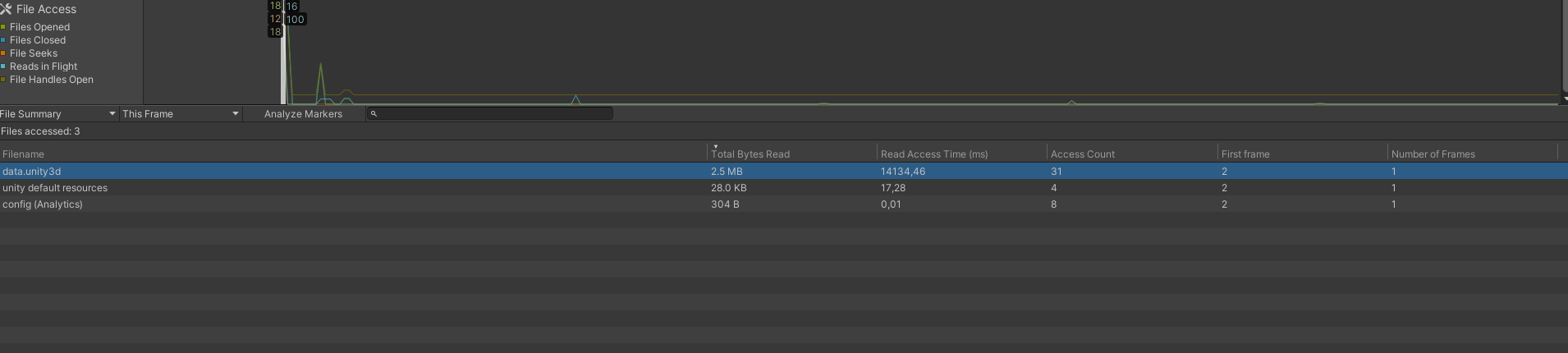
 gray pulsar
fringe root
Bumping my problem. So... Im trying to create a recoil system for my FPS game.
I...
gray pulsar
fringe root
Bumping my problem. So... Im trying to create a recoil system for my FPS game.
I...
what's wrong with it? "it's not working" is not very helpful debugging information
fringe root
You are Right
gray pulsar
fringe root
Bumping my problem. So... Im trying to create a recoil system for my FPS game.
I...
that said, my guess looking at your code is that you're seeing instability in the rotation. Sometimes it just freaks out and rotates weirdly. If that's true, it would be because you're both reading from and writing to the rotation using euler angles. The value that euler angles returns to you is not necessarily stable from frame to frame. It can flip by 360 from one frame to the next (ie 90 => -270)
so if you try to lerp or smoothdamp or w/e on an euler angle that you're not tracking yourself
fringe root
uhm.. i didnt know that. that helps already
gray pulsar
you could get some gnarly results
fringe root
that indeed happened
one other problem is that my targetWeaponRotation goes all the way to 360,0,0
and doesnt really come back
so its not lerping back to vector3.zero
and what happens is that my gun starts to point at the sky and doesnt come back. that happens very slowly tho
gray pulsar
you should either:
- store what you think the euler angles should be in your own variable rather than reading it from the transform and overwrite whatever the transform has every frame
or - do everything in quaternions rather than euler angles
gray pulsar
a separate issue is that Vector3.SmoothDamp and Vector3.Lerp is not designed for angles, so they don't wrap around
fringe root
Slerp?
gray pulsar
fringe root
Slerp?
not really. Vector3.Slerp is treating them as directions, not as euler angles
Quaternion.Slerp is really waht you want
but you need to pass quaternions into it, not euler angles
doing everything in quaternions is really a much better option than dealing with euler angles
like, are you just trying to recoil around one axis? Quaternion.AngleAxis
fringe root
but taking into consideration that i already have a bunch of vector3, i can just convert that into Quaternion.Euler and then pass it to Quaternion.Slerp?
It's both axis unfortunately
gray pulsar
you can, but you have to be calculating the Vector3s in a way that is appropriate for euler angles
ie it has to be treating them as angles, not as points in space or as directions
fringe root
math, not even once kids
nah im joking. I guess i never really thought of it that way
gray pulsar
yeah, unity overloads the Vector3 type to mean a lot of different things. It would be nice if there was a bit of type safety between its actual physical meanings rather than just "oh, a vector is a collection of 3 floats, duh"
fringe root
ok, just from changing to this newRecoilWeaponRotation = Quaternion.Slerp(newRecoilWeaponRotation, Quaternion.Euler(targetRecoilWeaponRotation), snappiness);
it already comes back, very slowly, but it does
if you dont mind me abusing of your good will sir, next step for me would be getting this recoil angle and applying to the raycast
but if i just do (origin - destination) + angle . normalized it gives me very weird results
like not even close to the direction it should be facing
gray pulsar
fringe root
ok, just from changing to this newRecoilWeaponRotation = Quaternion.Slerp(newRe...
kind of a side note, but this is using lerp "wrong": https://medium.com/swlh/youre-using-lerp-wrong-73579052a3c3
Quaternion.RotateTowards might be more appropriate for this use. But if you already know about that and are consciously doing it because its good enough, carry on.
gray pulsar
fringe root
but if i just do (origin - destination) + angle . normalized it gives me very we...
sorry, I don't see a raycast in the code you linked
trying to wrap my head around what you're asking
you have a raycast for where the gun would fire if unrotated, and you want to apply the rotation to that direction?
fringe root
yes
public void FireFullAuto()
    {
        if (bullets > 0 && canShoot)
        {
            if (Time.time > lastShotTime + fireRate)
            {
                IncreaseRecoil();
                bullets--;
                lastShotTime = Time.time;
                muzzleFlash.Play();
                RaycastHit hit;
                if (Physics.Raycast(cameraTransform.position, cameraTransform.forward, out hit, Mathf.Infinity))
                {
                    Vector3 direction = ((hit.point - weaponPivot.GetChild(0).transform.position) + newRecoilWeaponRotation.eulerAngles).normalized;

                    if (Physics.Raycast(weaponPivot.GetChild(0).transform.position, direction, out hit, Mathf.Infinity))
                    {
                        GameObject go = Instantiate(currentGun.bulletHolePrefab, hit.point, Quaternion.LookRotation(hit.normal));
                        go.transform.position += hit.normal / 1000;

                        if (hit.transform.CompareTag("Enemy"))
                        {
                            Debug.Log("hit enemy");
                        }
                    }
                }
            }

        }
        else StartCoroutine(Reload(reloadTime));
rotatedVector = quaterion * unrotatedVector
direction + eulerAngles is the same kind of nonsense I was talking about before, mixing up two different meanings of Vector3
"up" as a direction is (0, 1, 0), but up as eulerAngles is like (90, 0, 0). Adding those two things together gives you (90, 1, 0), which is.... very much not the value you were probably looking for
fringe root
i see
changed it to Vector3 direction = newRecoilWeaponRotation * (hit.point - weaponPivot.GetChild(0).transform.position).normalized;
and it has a pretty decent result to be honest
gray pulsar
fringe root
changed it to Vector3 direction = newRecoilWeaponRotation * (hit.point - weaponP...
yep, this looks about right
fringe root
alright sir, you've given me a better lesson in 10 minutes than many hours of classes in college
thank you so much. i'll make sure to treat my vector3s better after this
gray pulsar
you're welcome! glad to help
this conversation got me thinking about whether I can implement a wrapper for them myself so you actually get type safety
fringe root
that would indeed be very useful
wintry wind
<rant>I hate Quaternions...</rant>
misty glade
@fringe root Unsolicited opinion - your code would be a lot cleaner if you strived to adopt the "no else" and "only one indent" approach from object calisthenics. Because I'm a terrible person, I refactored your code to show what it might look like. https://pastebin.com/tCKLGYZZ
Pastebin
Pastebin.com is the number one paste tool since 2002. Pastebin is a website where you can store text online for a set period of time.
wintry wind
Quaternion.RotateTowards(_baseRotation, wantedRotation, maxAngle) => if maxAngle = 0, shouldn't this return _baseRotation ?
misty glade
(i didn't analyize the two-raycast-check thing, i don't quite know what it does, i just reformatted the code a tiny bit)
misty glade
wintry wind
Quaternion.RotateTowards(_baseRotation, wantedRotation, maxAngle) => if maxAngle...
I don't think so - i think you can have a different quat for the same base rotation, but i honestly don't know, that stuff is like black magic
(think of the case where you are aimed in the same direction but doing a barrel roll)
wintry wind
It currentlies go completely crazy (target is the result of that expression): Base: (0.00, 0.00, 0.00) | Wanted: (359.88, 0.12, 89.96) | Target: (359.99, 0.04, 20.00)
and each frame is different
This moved by 20 degrees, so it basically ignored my max angle
misty glade
what are you using to get your quats for Quaternion.RotateTowards?
wintry wind
Quaternion wantedRotation = Quaternion.LookRotation(rotatingTransform.InverseTransformDirection((targetPosition - rotatingTransform.position).normalized), rotatingTransform.up);
misty glade
and _baserotation?
wintry wind
it's localRotation at Start, so 0,0,0
misty glade
hm, weird.. probably shouldn't matter honestly if the 3rd parameter is 0
maybe there's undocumented/unpredictable behaviour if the parameter is 0.. try setting it to something small like 1
(i believe that's degrees per second, but i forget if it's in degrees or radians or whatever)
degrees
wintry wind
It should be degrees at least according to the example in the documentation
I think I’ve done something similar in the past, I guess I’ll search for it
Quaternions never work 😂
 split folio
@fringe rootthats one hell of a ladder
 wintry wind
How do I clamp a rotation to a given amount? I don’t want my transform to rotate more than X degrees (local rotation)
split folio
first get the local rotation of the transform
then call the clamp function and set axis float value to the clamped value
now set the new rotation with the new clamped value
wintry wind
There is no clamp function for quaternions
split folio
no but you can get the individual values still and clamp those
sly grove
wintry wind
How do I clamp a rotation to a given amount? I don’t want my transform to rotate...
drive your rotation from a float
float rotation = 0;

void AddRotation(float amount) {
  rotation += amount;
  rotation = Mathf.Clamp(amount, min, max);
  transform.localRotation = Quaternion.Euler(rotation, 0, 0);
}```This way is ideal because you don't need to deal with reading euler angles from the Transform, which are very finicky and sometimes give you the negative version etc.
fringe root
misty glade
<@276042981302206464> Unsolicited opinion - your code would be a lot cleaner if ...
i love it! Will search object calisthenics and try to adopt it more often! ty!
split folio
fringe root
i love it! Will search object calisthenics and try to adopt it more often! ty!
its also called guard clause
fringe root
Also just realized how dumb it was to have two identical functions called FireSingle and FireFullAuto, when they are already called in diferent conditions
🤦♂️
 wispy terrace
I installed the Navigation 1.0.0-exp.4 package which includes the NavMeshSurface component, but I can't create a variable in a script to store the component. Any ideas as to why?
I did include UnityEngine.AI
 misty glade
using UnityEngine.AI.Navigation;
wispy terrace
There seems to be nothing UnityEngine.AI can derive to

These are all the classes it gives me, and I think NavMeshLink is part of the Navigation package so, I guess the package has been imported
 wispy terrace
misty glade
sorry, not `unityengine`, but `Unity`
wispy terrace
misty glade
sorry, not `unityengine`, but `Unity`
That was it! Thank you very much
 buoyant leaf
having trouble debugging from vscode
gave me this error```[Window Title]
Visual Studio Code
[Content]
error while processing request 'launch' (exception: Object reference not set to an instance of an object. at UnityDebug.UnityDebugSession.CleanPath(String pathToEditorInstanceJson) in D:\prog\external\vscode-unity-debug\UnityDebug\UnityDebugSession.cs:line 339
at UnityDebug.UnityDebugSession.Attach(Response response, Object args) in D:\prog\external\vscode-unity-debug\UnityDebug\UnityDebugSession.cs:line 310
at CallSite.Target(Closure , CallSite , UnityDebugSession , Response , Object )
at System.Dynamic.UpdateDelegates.UpdateAndExecuteVoid3[T0,T1,T2](CallSite site, T0 arg0, T1 arg1, T2 arg2)
at UnityDebug.UnityDebugSession.Launch(Response response, Object args) in D:\prog\external\vscode-unity-debug\UnityDebug\UnityDebugSession.cs:line 257
at CallSite.Target(Closure , CallSite , DebugSession , Response , Object )
at System.Dynamic.UpdateDelegates.UpdateAndExecuteVoid3[T0,T1,T2](CallSite site, T0 arg0, T1 arg1, T2 arg2)
at VSCodeDebug.DebugSession.DispatchRequest(String command, Object args, Response response) in D:\prog\external\vscode-unity-debug\MonoDebug\src\DebugSession.cs:line 401)
[Open 'launch.json'] [Cancel]```
wintry wind
sly grove
```cs
float rotation = 0;
void AddRotation(float amount) {
rotation += amount...
My use case is basically, I want a turrent to be able to rotate towards a target but it has limits to how much it can rotate (so it has like a firing arc)
        _targetRotation = wantedRotation;
rotatingTransform.rotation *= _targetRotation;```now, I want to make sure the rotatingTransform.localrotation is not above a max angle or else turrets would be super janky (like rotating inwards to the player)
I can't seem to find a way
    private Quaternion ClampRotation(Quaternion rotation, float maxAngle)
    {
        Vector3 angles = rotation.eulerAngles;
        angles.x = ClampAngle(angles.x, maxAngle);
        angles.y = ClampAngle(angles.y, maxAngle);
        angles.z = 0;
        return Quaternion.Euler(angles);
    }

    private float ClampAngle(float angle, float max)
    {
        if (angle < 180f)
        {
            return Mathf.Clamp(angle, 0f, max);
        }
        else
        {
            return Mathf.Clamp(angle, 360f - max, 360);
        }
}```I tried this but it starts randomly rotating
I just found out in previous projects i basically used IK components but seems like an overkill in this situation
This seems like a pretty standard use case, I don't understand why it is so difficult lol
undone coral
wintry wind
This seems like a pretty standard use case, I don't understand why it is so diff...
there are right words for all this stuff and hardly anyone understands them
i read what you are trying to do and it didn't make sense to me
it's difficult to express in words what your hierarchy should be
and then reading this stuff it's tough because you don't use var
it gets really verbose
so it's a code style thing too

 undone coral
you should never ask the turret to rotate to an invalid target rotation
wintry wind
I want to rotate this turret towards a target position. But as you can see in the image, the turret can't rotate X more than 90 degrees or else it will hit the control tower above
undone coral
// pseudocode
// get the euler angles needed to point at the target
// then, clamp those angles.
the clamp ranges you need are specific to the hierarchy of the turret
you probably made it challenging to decompose the rotation of some simple vector "looking at" the target into the hierarchy you actually have
sly grove
wintry wind
My use case is basically, I want a turrent to be able to rotate towards a target...
Why did you just ignore what I wrote and show your implementation
I'm showing you how to do it - try to avoid reading back eulerAngles from the Transform because that gets you into trouble
wintry wind
because I don't know how to reach the float
sly grove
wdym "reach" it
wintry wind
How can I find the float.
sly grove
??
wintry wind
My code is super simple withoput clamping, it's just this:
Vector3 direction = (targetPosition - gimbalTransform.position).normalized;
Quaternion wantedRotation = Quaternion.FromToRotation(gimbalTransform.forward, clampedDirection);
gimbalTransform.rotation *= wantedRotation ;
sly grove
I understand that
but you can't do it that way if you want to clamp
You'll need to define your own rotation variable(s) and drive the rotation from there
wintry wind
That is what I don't know how to do it. Should I use Vector3.SignedAngles to discover those variables?
sly grove
"discover" them?
No like I said
define your own variables
drive the rotation from those variables
as per my example code
wintry wind
I don't understand how it fits my use case. How can I use your code to rotate to a specific point?
This is for AI, not player input
sly grove
determine the angle that would be required to aim at that point
then set the angle to that (but clamped)
wintry wind
that's what I called discovering them
sly grove
Ok yes, you could use Vector3.SignedAngle
basically comparing the turret's normal "forward" direction to the required direction
to find the correct number to use as the angle
then you clamp it
calm ocean
Currently, I have a scriptable object representing a player action. It contains the relevant stats (like the attack action has attack damage and range), and it can also be used to execute the action. In the game, the scriptable object can return a button so that it can display to the user what actions they want to pick. The issue I am facing now is that each of these scriptable objects require a button prefab for that method to instantiate. So if I have 100 of these scriptable objects, I would have to assign the prefab 100 times. I was wondering if there is a way for the method to know about the button prefab without dragging it in via the inspector. I was thinking of a making a factory singleton scriptable object that takes in the button prefab, and has a static method Create(), that returns the instantiated prefab. Is this a terrible idea and I should just have a button prefab field in that my player action scriptable object?
Or is there a better way?
sly grove
calm ocean
Currently, I have a scriptable object representing a player action. It contains ...
almost definitely just want a single button prefab that can handle any action
Assign it a delegate from the SO as you instantiate it
calm ocean
sly grove
Assign it a delegate from the SO as you instantiate it
So drag and drop the button prefab into the inspector window?
sly grove
calm ocean
So drag and drop the button prefab into the inspector window?
something like:
public class MyButtonScript : MonoBehaviour {
  Action theAction;
  TMP_Text buttonText;

  // Call this right after instantiating
  public void Init(String actionName, Action buttonAction) {
    theAction = buttonAction;
    buttonText.text = actionName;
  }

  // Assign this one as the button on click in the inspector inside the prefab
  public void OnButtonClick() {
    theAction?.Invoke();
  }
}```Yeah I have something like that
I was just wondering how to get the player action SO to reference this
Because all of the player actions ideally should have the same button prefab, I shouldn't have the ability to drag and drop a different button prefab for two different player actions.
sly grove
So then you'd have another script doing something like this:
public class SomeOtherScript {
  public MyButtonScript buttonPrefab;

  public void InitActions(List<MyScriptableObject> sos) {
    foreach (var so in sos) {
      MyButtonScript instance = Instantiate(buttonPrefab);
      instance.Init(so.ActionName, so.ActionMethod);
    }
  }
}```OOOOhhhh, okay
But I would have to expose some stuff from the SO
But I get the idea
Thanks
chilly nymph
What pattern would you guys go with for a 2D game (point and click) sort of like civ but without 3D elements.
sly grove
chilly nymph
What pattern would you guys go with for a 2D game (point and click) sort of like...
WDym by "pattern"? I'd probably use Unity's tilemap for the hex grid to save myself the trouble of implementing a hex grid.
chilly nymph
No, the actual design pattern.
sly grove
Although honestly Unity's "cell index" layout for hex grids is a bit nonsensical to me
What like MVC?
chilly nymph
I'm leaning towards MVC
sly grove
Idk I think design patterns like that are generally over-engineered and not really great for realtime applications
Definitely I would separate the game model (board state etc) from the GameObject world
chilly nymph
sly grove
Idk I think design patterns like that are generally over-engineered and not real...
?
misty glade
I'm an MVC enjoyer, I think it's good.
deep peak
games are usually too complex for well known application design patterns, you will break you design at some point anyway
misty glade
models can be shared/serialized/networked easily, app has a layer of singletons as the controller and the game objects/ui/input collectors as the "viewer"
chilly nymph
deep peak
games are usually too complex for well known application design patterns, you wi...
I'm asking for suggestions 😄
sly grove
you definitely want a well defined model for serialization/networking etc... he's right about that
but the distinction between view and controller doesn't need to be so well defined
chilly nymph
I understand the fundementals, just looking for suggestions.
misty glade
i mean, you should just have a single Model.cs class with 20,000 lines of code and pass a pointer to it around, right? /s
🙂
chilly nymph
This is advanced talk right?
misty glade
@chilly nymphFor games and game dev in general, I suggest not overengineering to start and literally proof-of-concept-pyramid your way to success.. ie, build a tiny POC then scrap it and start anew when it's too spaghet - keeping the relevant/useful logic and dropping it into a new project.
chilly nymph
That's not what I'm really asking...
misty glade
What are you asking, then? 😛
chilly nymph
I'm a 10th year SE looking for suggestions on what patterns I should use.
misty glade
chilly nymph
What pattern would you guys go with for a 2D game (point and click) sort of like...
👆 like this is ... sort of hard to parse what you mean
chilly nymph
I'm leaning on MVVC because it solves all my states as well as systems.
deep peak
there no good answer to this  really, we've been all there when the best patterns failed
chilly nymph
But if you guys can suggest something else I would be open too it.
chilly nymph
deep peak
there no good answer to this <:KEKW:776795158922002462> really, we've been all t...
For sure, and that's why I'm looking for suggestions from here 😄
sly grove
chilly nymph
I'm leaning on MVVC because it solves all my states as well as systems.
if it solves all your problems what do you need our advice for?
The design pattern I recommend for Unity is something like:
Model Controller.
Where you have some pure C# classes representing the model (which are serializable etc) and then you have GameObjects that are acting as both the controllers and the Views
Basically GameObjects and their Components are the presentation layer
chilly nymph
sly grove
if it solves all your problems what do you need our advice for?
The design patte...
Mate, you guys seem not to be able to read.
I'm looking for advice.
chilly nymph
Have you ever asked a question?
sly grove
chilly nymph
I'm a 10th year SE looking for suggestions on what patterns I should use.
You asked this question. I am answering it. You don't like the answer. Sorry about that. But you asked.
chilly nymph
sly grove
I can read, I'm giving advice
if it solves all your problems what do you need our advice for?
Advice doesn't mean I'm not open to others ideas.
sly grove
great, and right after that I gave some suggestions
chilly nymph
Then why make that comment?
woven kettle
hey,
I have 2 list of Property info
 public List<PropertyInfo> oldVarList = new List<PropertyInfo>();
 public List<PropertyInfo> newVarList = new List<PropertyInfo>();
how to look for every value in "oldVarList" and see if any variable with the same name/hash/whatever ...in newVarList and if true, try to replace the newVarList var variable value by the oldVarList var value
wary swift
It's up to personal preference what code design patterns you want to use
Some people like xyz and others will hate it, just do what you prefer, it's your project
chilly nymph
wary swift
It's up to personal preference what code design patterns you want to use
Some pe...
Yes, and in trying to find such a pattern I am looking for advice on what you guys have done.
sly grove
Anyway my point is Unity already has a forced design pattern of GameObjects/Components which you have to overlay whatever you're doing on top of. So I feel it's best not to try to get too pedantic about what's a Controller and what's a View when it comes to MonoBehaviour scripts.
chilly nymph
woven kettle
hey,
I have 2 list of Property info
```cs
public List<PropertyInfo> oldVarLi...
It seems like there's a better way to solve your problem, what are you trying to do?
woven kettle
wary swift
It's up to personal preference what code design patterns you want to use
Some pe...
just give me any example, I dont know much about how to do that
chilly nymph
sly grove
Anyway my point is Unity already has a forced design pattern of GameObjects/Comp...
Yes I understand how composition works 😄
woven kettle
chilly nymph
It seems like there's a better way to solve your problem, what are you trying to...
Im making a new class ,lets call it "NewClass", which is inherited(based) on an older class lets call it "OldClass" which would look in code, something like this
using UnityEngine;
public class NewClass : OldClass
{

}
the "OldClass" has lots of public variables that were setup on the editor, when I made the new class I found that all those value has returned to default. (in the NewClass component only ofcourse, the OldClass component still has all the public values)
is it possible to copy the variables value of the OldClass to the new one sense they are the same?
for example if i made a new gameobject and added OldClass to it I could simply go the other OldClass gameobject, click on the 3 dots and then copy component >>> back to the new gameobject >> past Component values
chilly nymph
woven kettle
Im making a new class ,lets call it "NewClass", which is inherited(*based*) on a...
What are you actually trying to do?
Make a factory?
woven kettle
I've just answered
factory?
no all what I'm trying to do is what I've just mentioned
chilly nymph
That is, you are trying to solve problem X, and you think solution Y would work, but instead of asking about X when you run into trouble, you ask about Y.```There's a simpler way to achieve what you want @woven kettle just let us know what you are trying to do, what functionality.
Not what your solution is.
To me it sounds like you want a factory.
is it possible to copy the variables value of the OldClass to the new one sense they are the same?
chilly nymph
Google factory pattern.
wary swift
woven kettle
Im making a new class ,lets call it "NewClass", which is inherited(*based*) on a...
I feel like you're struggling a bit with inheritance and how unity stores serializable data
fresh salmon
You can use the MovedFrom attribute to "move the values of a serialized type to another", iirc
woven kettle
ok, the factory thing is not what I'm doing, I do have a new class and I wanna copy the public value I set manually on the editor via script
because manually takes forever even when I tried it, it didnt works because I possibly have missed something
chilly nymph
woven kettle
ok, the factory thing is not what I'm doing, I do have a new class and I wanna c...
The inspector handles that for all your components.
wary swift
Would it be an idea to use scriptable objects to store settings and read them?
chilly nymph
If you want to create a new class create an object and pass in the constructor or a SO ^
BUT not being rude but a better understanding about classes will help you here.
sly grove
wary swift
Would it be an idea to use scriptable objects to store settings and read them?
like game settings that need to persist between play sessions?
you could certainly use them as data containers that persist outside of and between scenes but they don't persist between play sessions, you'd need to serialize the, externally for that
woven kettle
chilly nymph
If you want to create a new class create an object and pass in the constructor o...
not sure what do u mean by SO, Scriptable Object ?
wary swift
sly grove
like game settings that need to persist between play sessions?
I'm not really asking the question like that 😅
I meant it as a suggestion for zylog
sly grove
wary swift
I'm not really asking the question like that 😅
I meant it as a suggestion for z...
Yeah I just realized that as he responded to you
I'm drifting in and out of chat my bad haha
fresh salmon
chilly nymph
BUT not being rude but a better understanding about classes will help you here.
Their question isn't about inheritance.
They have a MonoBehaviour, with serialized fields, and an upgrade requires them to use another class, and they want to migrate the values in those serialized fields to the new class.
woven kettle
im down for the easiest way in doing that, I asked that yesterday and many ppl said you are on ur own you have to do it manually 😄 , so I'm happy to know that I have options today 😄
chilly nymph
fresh salmon
Their question isn't about inheritance.
They have a MonoBehaviour, with seriali...
A understanding of classes will help them.
and they want to migrate the values in those serialized fields to the new class. so a factory?
fresh salmon
No, automation
woven kettle
chilly nymph
A understanding of classes will help them.
`and they want to migrate the values...
its inherited from the same class. instead of doing it manually, I just wanna relay to the script to do it, I dont know if that is called factory or not, but whatever, that is what I want
chilly nymph
woven kettle
its inherited from the same class. instead of doing it manually, I just wanna re...
Their question isn't about inheritance.
You guys need to get your shit together 😄
fresh salmon
Factory is utility class that that constructs stuff for you, it's not relevant
deep peak
just do it by hand, it will take 30m, whatever, next time you wont change core components of your game
 hoary pendant
https://answers.unity.com/questions/1537920/copy-reference-from-one-component-to-another-deriv.html?childToView=1538287#answer-1538287
first result on google btw
Unity is the ultimate game development platform. Use Unity to build high-quality 3D and 2D games, deploy them across mobile, desktop, VR/AR, consoles or the Web, and connect with loyal and enthusiastic players and customers.
chilly nymph
woven kettle
its inherited from the same class. instead of doing it manually, I just wanna re...
You can pass a class to a constructor wherever you want. BUT I don't think this is what you're actually looking for.
fresh salmon
chilly nymph
You guys need to get your shit together 😄
Inheritance is one of the solutions they tried. That's not the question
woven kettle
deep peak
just do it by hand, it will take 30m, whatever, next time you wont change core c...
it took more than that and I missed something up, it didnt work... I dont wanna waste my time again, I just a small script that compares the two lists would do it
chilly nymph
Are you saying you need to literally copy the inspector values to another component?
woven kettle
chilly nymph
Are you saying you need to literally copy the inspector values to another compo...
YESS!
literally
chilly nymph
Copy the fkn component.
woven kettle
chilly nymph
Copy the fkn component.
it has a different name
deep peak
he wants those values inside the new component
fresh salmon
Well you can't
chilly nymph
If it has the same struct you can...
fresh salmon
Two different classes
sly grove
Oh man this question still?
chilly nymph
 sly grove
You've been working on this over a day, you could've probably copied the values manually by now
wary swift
You could hack your way around it with reflection, but I'm not going to go into that 😂
woven kettle
chilly nymph
If it has the same struct you can...
u kept focusing on Factory guess and didnt focus on the question 😄
sly grove
Also you could try hacking the yaml scene/prefab file to change the script GUID to point at the other script and if the field names are the same it might work 😛
chilly nymph
woven kettle
u kept focusing on Factory guess and didnt focus on the question 😄
"How do I copy inspector values to a new component" It's not hard. 😄
woven kettle
chilly nymph
#archived-code-advanced message check this example again ... oldClass is not the same as newClass
fresh salmon
chilly nymph
"How do I copy inspector values to a new component" It's not hard. 😄
That was mentioned in their original question, the text wall one that also mentioned the things they tried
 chilly nymph
OldClass != inspector component.
fresh salmon
A component is a class lol
chilly nymph
It's not a inspector element mate.
fresh salmon
Yes it is
woven kettle
i feel like u are talking about something else other than unity 😄
sly grove
the inspector copy component stuff doesn't work in this case - we have established that
chilly nymph
wtf are you talking about, a class doesn't represent a inspector component, it's a layer on top of unity.
A class is a object.
fresh salmon
MonoBehaviour : Behaviour : Component : Object
deep peak
dont mind them, we know your problem, there are multiple solutions, but no one going to just write it for you
chilly nymph
fresh salmon
`MonoBehaviour : Behaviour : Component : Object`
A inspector component is not a literal class, it's a representation of a class on top of unities front end.
fresh salmon
Lmao
woven kettle
I can copy inspector values from "OldClass" to another "OldClass" ... but I cant copy the inspector values from "OldClass" to "NewClass" because they are not the same.
so my solution to that is to make a script that compares the variables with the same name and then copy the value from "OldClass" to the "NewClass" (even though the "NewClass" is inherited from "OldClass" )
so I have right now 2 lists of PropertyInfo ... and I'm looking for the best way to compare the variable in each
that is all
wary swift
Just iterate over them all
Who cares if it's O(n^n)
It's just editor code, performance doesn't matter
chilly nymph
serialize to json and be done with it.
deep peak
what's the problem with ```
newComponent.myStuff = oldComponent.myStuff;
newComponent.myStuff1 = oldComponent.myStuff1DiffName;
newComponent.myStuff2 = oldComponent.myStuff2;
why you need reflection for this
sly grove
well
depends how lazy you are I guess
you either write some reflection code or your tediously write out each field name
deep peak
that would be a whole new level of laziness
sly grove
software developer laziness means building crazy tools if it means you don't have to manually copy 50 numbers from column A to B 😆
fresh salmon
It would probably take more time using Reflection and making sure it works, than writing it all out
fresh salmon
Oh please not a god object
sly grove
if it's 1000 fields (it's not i know) it could be faster to write the code
somewhere between 0 and 1000 is the sweet spot
wary swift
fresh salmon
It would probably take more time using Reflection and making sure it works, than...
Using reflection is guaranteed to take more time
woven kettle
sly grove
depends how lazy you are I guess
abslutely dont wanna go into making every field, i make mistakes a lot, this could take forever.
could you give me an example of how reflective function would look like ?
deep peak
with 1000 fields i would just edit the scene file, its just YAML
fresh salmon
It's probably faster than all solutions previously mentioned
Make a backup though, you definitely can corrupt the scene/project if you do something wrong
keen cloud
Do you guys know of a way to automate the NPC creation process? If I were to have x sprite sheets formatted the exact same way, how would I automate splitting each sheet then creating a bunch of animations
 gentle trench
Sorry if i did not explain this well, im trying to make tthe chunk that the player is in to generate higher detail
sly grove
Wikipedia has a good explanation and even some pseudocode https://en.wikipedia.org/wiki/Quadtree#:~:text=A quadtree is a tree,into four quadrants or regions.
gentle trench
sly grove
Wikipedia has a good explanation and even some pseudocode https://en.wikipedia.o...
never saw that part, thank you very much
 eager dust
Anyone can tell me why it can't find my GO? It's null... The GO is in Scene.
    [Test]
    public void ShuffleTest()
    {
        Deck deck = GameObject.Find("Deck").GetComponent<Deck>();

        //More stuff happens here
    }
 sly grove
eager dust
Anyone can tell me why it can't find my GO? It's null... The GO is in Scene.
```...
sly grove
eager dust
Anyone can tell me why it can't find my GO? It's null... The GO is in Scene.
```...
- Does the name have any spaces in it?
- Does the deck object exist yet at the time the code runs?
- Is the deck object active at the time the code runs?
eager dust
sly grove
1. Does the name have any spaces in it?
2. Does the deck object exist yet at the...
- No it doesn't
- It's preconfigured in scene so it should already be there when the code runs I guess
- Yes.
I just created a testing scene, added a Deck GO and added the Scripts to it. Nothing else and nothing happens at start.
sly grove
this is a unit test though right
eager dust
Yes
eager dust
Sec. will check
Dangit, yes you're right
So I should either load the scene in the test method or find a way to create the deck GO, add the Scripts to it and populate the list with the Assets from the Assetfolder..
sly grove
I htink people usually use like Resources.Load for unit tests
to load a prefab
Or build the GameObjects in code manually with AddComponent etc
undone coral
is there an aspect ratio fitter component that rescales its contents in UGUI
violet valve
undone coral
is there an aspect ratio fitter component that rescales its contents in UGUI
Yes, it is called Aspect Ratio Fitter, unless I misunderstood.
 quartz stratus
violet valve
Yes, it is called `Aspect Ratio Fitter`, unless I misunderstood.
quartz stratus
violet valve
Yes, it is called `Aspect Ratio Fitter`, unless I misunderstood.
I know that works with Unity UI, but does it also work with UGUI? Haven't used UGUI myself...
violet valve
quartz stratus
I know that works with Unity UI, but does it also work with UGUI? Haven't used U...
Aaahh, sorry- I don't know.
chilly nymph
I'm pooling my ui element, other than the memory allocation. Under the hood is there anything else that is processed? Does anything get dirtied if a canvas / component is off?
novel plinth
pooling a ui element is like the most unnecessary thing to do, unless your game consists of, well, UIs.. 🧐
as in 90% of your game is just.. UIs