#archived-code-general
1 messages · Page 432 of 1
 rigid island
 gloomy helm
 lyric veldt
does anyone know why
 red ocean
what
 lyric veldt
wut
red ocean
i need help with something
lyric veldt
chat what the sigma
 cosmic rain
lyric veldt
cosmic rain
lyric veldt
You probably have lighting disabled in the scene view.
This is not code related btw. Move to #💻┃unity-talk or #archived-lighting
lyric veldt
cosmic rain
You probably have lighting disabled in the scene view.
This is not code related ...
my bad
lyric veldt
cosmic rain
You probably have lighting disabled in the scene view.
This is not code related ...
how do i do that btw mind if i ask
i cant find it
 crisp rover
Is any one know what import do I need for ECS customized shader to support Dots rendering? I can not find any information on the official documentation?
 crisp rover
lyric veldt
i cant find it
crisp rover
lyric veldt
i cant find it
Click the eye means hide it, finger means make it can not drag and select in scene view

Oh, the reason why it looks different is that Light only show up in run time
which means that it will have light effect in game mode
but when you editing it, the light is not rendering for you.

 craggy veldt
when you're using a regular Tasks, they don't know exactly whether the continuation should happen this frame, next frame or start of frame .. basically it's out of sync with the main loop
- you either want to roll your own dispacher using the scarcely documented
PlayerLoopapi, or 2. you dispatch them with a coroutine later down the line with NextFrame, EndFrame etc, or 3. Make a poormans dispatcher by having awhile(myActionQueue.Count > 0)in Update method
or the ultimate way, use Awaitable<T>
 wheat spruce
lyric veldt
cookie???
wheat spruce
lyric veldt
cookie???
cookies let you use a texture to alter the shape of the light

Like this one for a flashlight
 scenic dome

 upper pilot
How do I change animation speed preview?
Changing animator layer speed to 0.1 works fine at runtime, but when testing the animation in "animation" it plays really fast.
How do I make it match the runtime speed?
 viscid plaza
Every time I generate a mesh, it's shape is completely wrong
This is supposed to be 512x512. I've tried my own code, ChatGPT, internet scripts, anything. All of them look like this.
And before you ask, the scale of the object they're attached to is 1 1 1. Changing it to 1 1 5 "fixes" it

 hexed pecan
viscid plaza
Every time I generate a mesh, it's shape is completely wrong
This is supposed to...
hexed pecan
viscid plaza
Every time I generate a mesh, it's shape is completely wrong
This is supposed to...
Oh you might be hitting the default max vertex count
Which is 65535
512 * 512 is 262144
Change this to 32 on the mesh:
https://docs.unity3d.com/6000.0/Documentation/ScriptReference/Mesh-indexFormat.html
(You should be getting a warning about this in the console)
 teal wadi
can someone help me with my code??
 pine olive
teal wadi
can someone help me with my code??
pine olive
teal wadi
can someone help me with my code??
What do you need help with?
teal wadi
i dont know what this means

ive been trying to fix it but its not working
this is the code

 swift falcon
Is there a way to enable / disable fullscreen render pass features at runtime via a script without changing the actual asset?
I can do this
public FullScreenPassRendererFeature fullScreenPassRendererFeature;
fullScreenPassRendererFeature.SetActive(true);
but when the game ends, it changes the asset in the editor too
 viscid plaza
hexed pecan
Oh you might be hitting the default max vertex count
viscid plaza
hexed pecan
Oh you might be hitting the default max vertex count
That appears to be it. Strangely, the actual script I was using it in, not the one I provided, still doesn't render the full mesh at 200x200. I'll have to do some investigating on that. Any idea how ancient a device has to be to not support that many vertexes?
hexed pecan
viscid plaza
That appears to be it. Strangely, the actual script I was using it in, not the o...
The example unsupported android GPU that the doc mentions seems to be from like 2011
viscid plaza
Ah, then I assume that will not be a problem.
hexed pecan
200x200 would fit into 16 bit format though
viscid plaza
Yeah, must be creating some extra vertices accidentally somewhere.
teal wadi
can someone help me idt it has anything to do with my code tho
 vestal arch
!ask
 tawny elkBOT
:thinking: Asking Questions
:mag: Search the internet for your question!
:book: Use the API Scripting Reference and User Manual and this troubleshooting site for commonly posted issues.
:wrench: Attempt to debug your issue.
:thought_balloon: Find an appropriate channel by reading the name and description in #🔎┃find-a-channel
:grey_question: And don't ask to ask, ask a full question illustrating with screenshots if needed.
-# For more posting guidelines, go to #854851968446365696
vestal arch
yeah that sounds like a physics setup issue, see #💻┃unity-talk
teal wadi
alr alr
 weak gale
how do i fix this issue? on start when i load up my game the main menu scene and the title scene load up at the same time, i have a script for the scene transitions here:
using System.Collections.Generic;
using UnityEngine;
using UnityEngine.SceneManagement;
public class SceneTransitionScript : MonoBehaviour
{
public List<string> sceneOrder;
private int currentSceneIndex = 0;
void Start()
{
    if (sceneOrder.Count > 0)
    {
        currentSceneIndex = sceneOrder.IndexOf(SceneManager.GetActiveScene().name);
        if (currentSceneIndex == -1)
        {
            currentSceneIndex = 0;
            LoadSceneByIndex(currentSceneIndex);
        }
    }
}

public void LoadNextScene()
{
    if (sceneOrder.Count == 0) return;

    currentSceneIndex = (currentSceneIndex + 1) % sceneOrder.Count;
    LoadSceneByIndex(currentSceneIndex);
}

public void LoadPreviousScene()
{
    if (sceneOrder.Count == 0) return;

    currentSceneIndex = (currentSceneIndex - 1 + sceneOrder.Count) % sceneOrder.Count;
    LoadSceneByIndex(currentSceneIndex);
}

public void LoadSceneByName(string sceneName)
{
    if (sceneOrder.Contains(sceneName))
    {
        SceneManager.LoadScene(sceneName);
    }
}

private void LoadSceneByIndex(int index)
{
    if (index >= 0 && index < sceneOrder.Count)
    {
        SceneManager.LoadScene(sceneOrder[index]);
    }
}
}
 rigid island
weak gale
how do i fix this issue? on start when i load up my game the main menu scene and...
rigid island
weak gale
how do i fix this issue? on start when i load up my game the main menu scene and...
use paste site !code
tawny elkBOT

Posting code
📃 Large Code Blocks
Use links to services like:
https://paste.mod.gg/, https://hastebin.skyra.pw/, https://paste.ofcode.org/, https://paste.myst.rs/, https://scriptbin.xyz/
📃 Inline Code
Surround code with three backquotes. Not quotation marks.
To format as C#, add cs to the first line:
```cs
// Your code here
```
Add a comment with a line number if there is an error message.
weak gale
rigid island
use paste site !code
ah sorry
rigid island
weak gale
ah sorry
so are you gonna fix it or
weak gale
rigid island
so are you gonna fix it or
yeah
tawny elkBOT
Posting code
📃 Large Code Blocks
Use links to services like:
https://paste.mod.gg/, https://hastebin.skyra.pw/, https://paste.ofcode.org/, https://paste.myst.rs/, https://scriptbin.xyz/
📃 Inline Code
Surround code with three backquotes. Not quotation marks.
To format as C#, add cs to the first line:
```cs
// Your code here
```
Add a comment with a line number if there is an error message.
weak gale
https://paste.mod.gg/ !code
A tool for sharing your source code with the world!
tawny elkBOT
Posting code
📃 Large Code Blocks
Use links to services like:
https://paste.mod.gg/, https://hastebin.skyra.pw/, https://paste.ofcode.org/, https://paste.myst.rs/, https://scriptbin.xyz/
📃 Inline Code
Surround code with three backquotes. Not quotation marks.
To format as C#, add cs to the first line:
```cs
// Your code here
```
Add a comment with a line number if there is an error message.
weak gale
ok there
rigid island
ok stop using the command plz
weak gale
sorry
rigid island
you are meant to read it
weak gale
oh alr
rigid island
you still sent it wrong.
Paste the code on the site, save and send back generated link
weak gale
alr
rigid island
for future reference these go in #💻┃code-beginner
rigid island
a video on a specific thing you're having issue with rather than someone looking over it ?
weak gale
well both methods did work for some other stuff before
rigid island
do ya thing
viscid plaza
hexed pecan
Oh you might be hitting the default max vertex count
Oh I thought that would have solved the issue, but it hasn't. They are still that size but they just overlap.
 hexed pecan
viscid plaza
Oh I *thought* that would have solved the issue, but it hasn't. They are still t...
hexed pecan
viscid plaza
Oh I *thought* that would have solved the issue, but it hasn't. They are still t...
Use a paste site please !code
tawny elkBOT
Posting code
📃 Large Code Blocks
Use links to services like:
https://paste.mod.gg/, https://hastebin.skyra.pw/, https://paste.ofcode.org/, https://paste.myst.rs/, https://scriptbin.xyz/
📃 Inline Code
Surround code with three backquotes. Not quotation marks.
To format as C#, add cs to the first line:
```cs
// Your code here
```
Add a comment with a line number if there is an error message.
viscid plaza
Apologies.
Also there's weird gaps in all of the "cubes" except the one at 0 0 but that's a problem for another day.
hexed pecan
So is this a completely different/new script? I'm confused
viscid plaza
The first script was just a test script. What happened was I got issues with the original script, so I made a test script to see if the issue was with my code or just Unity.
hexed pecan
I see you generating 512*512 but still not using 32bit index format
viscid plaza
Oh sorry, I override the size in the editor.
Or am I
Oh, that would explain it, would it.
 viscid plaza
I hardcoded 512 into part of the code, other parts change dynamically.
My bad.
Thx for picking that up!
Well now with it set to 128 and nothing else changed, they're invisible (instead of that horrible purple color). I can select them, and their bounds are visible, but they don't render
 hexed pecan
viscid plaza
Well now with it set to 128 and nothing else changed, they're invisible (instead...
hexed pecan
viscid plaza
Well now with it set to 128 and nothing else changed, they're invisible (instead...
Are they just upside down
Looks like your code is adding triangles in counter-clockwise order:cs triangles[triIndex++] = topLeft; triangles[triIndex++] = bottomLeft; triangles[triIndex++] = topRight;
Unity uses clockwise winding order
viscid plaza
You are correct, thank you sir!
lyric veldt
wheat spruce
cookies let you use a texture to alter the shape of the light
oh ok thanks
 atomic hatch
i'm trying to make my game look fancy. i'm new to this. i'm adding some vfx, some camera shake, lighting, and shadows. it's a top down. what other topics should i be looking into?
some "juice" i think i'm meant to call it
rigid island
atomic hatch
some "juice" i think i'm meant to call it
this isnt a coding question.
#archived-game-design
atomic hatch
... i guess to me, a question about buying shadow asset libraries is more a code question than an issue of game design? but okay, i'll try over there
rigid island
atomic hatch
... i guess to me, a question about buying shadow asset libraries is more a code...
where is the code question
"should I buy this asset" isn't directly a coding question
 quaint crypt
In unity 2022 I have attack animations and combos set up.
I need to implement a damaging system. (Melee combat, damageable entities, hp, etc)
I was thinking of creating 2 main components: Damageable and Damaging.
The Damageable component always adds a trigger collider to the object it is attached to.
It also adds HP (hitpoints) to the attached GameObject.
The damaging component listens to OnSwingStart and OnSwingEnd animation events to enable the collider on a weapon. (When the swing starts, the collider is enabled).
When there is a collision between the Damaging collider and the Damageable collider, damage is inflicted.
I really like this system because it's simple to implement, and can lead to interesting emergent properties between systems.
How can i improve this system? What are its drawbacks? Are there better alternatives?
swift falcon
Hi, does anyone by any chance know of a public UnityEvent drawer that enables collapsing of some type? Scripts in inspector can become too long
 leaden ice
quaint crypt
In unity 2022 I have attack animations and combos set up.
I need to implement a ...
leaden ice
quaint crypt
In unity 2022 I have attack animations and combos set up.
I need to implement a ...
Rather than enabling/disabling a collider and waiting for callbacks it would probably be better to do a direct physics query such as BoxCast for example
 latent latch
callbacks a pain for animations
leaden ice
swift falcon
Hi, does anyone by any chance know of a public UnityEvent drawer that enables co...
You could just use naughtattributes foldout probably? https://dbrizov.github.io/na-docs/attributes/meta_attributes/foldout.html
latent latch
rather, query is a pain*
I prefer trigger colliders and shaping them to animation frames
one problem though is the trigger information is usually not available till next fixed frame
leaden ice
but trigger colliders have the problem of not giving you contiguous detection
they're limited to discrete collision detection and yes you have the whole timing nightmare, no?
latent latch
true, I wish rigidbody had like collider.cast like box2d has
leaden ice
yeah you need to wait for physics sim before you get a hit
quaint crypt
leaden ice
Rather than enabling/disabling a collider and waiting for callbacks it would pro...
Thanks for the answer! Performance wise?
quaint crypt
latent latch
callbacks a pain for animations
Why?
swift falcon
leaden ice
You could just use naughtattributes foldout probably? https://dbrizov.github.io/...
Yes, that should do the work, thanks
leaden ice
quaint crypt
Thanks for the answer! Performance wise?
I don't think performance is really a primary concern either way tbh
quaint crypt
@latent latch Sorry, just saw your explanation
leaden ice
unless we're talking about hundreds of these things
quaint crypt
nope, just a player and max 10-15 damageable entities let's say
leaden ice
yeah I would worry more about functionality and clean architecture.
leaden ice
latent latch
rather, query is a pain*
I prefer trigger colliders and shaping them to animatio...
this is interesting actually - you mean resizing/shaping the colliders via the scrubsheet?
like setting BoxCollider.width/height for example?
quaint crypt
leaden ice
yeah I would worry more about functionality and clean architecture.
Okay, good point. Is there really a big change? If I have colliders, I enable the colliders, if I make raycasts I need to start casting rays OnUpdate when the swing starts, up until the swing ends. Is one really better than the other?
latent latch
Specifically how fighters do it. The'll usually have a 1 frame window for the hitbox
leaden ice
quaint crypt
Okay, good point. Is there really a big change? If I have colliders, I enable th...
Well think about your code. You enable a collider and then what? YOu need to wait for OnTriggerEnter to run right? That might not be until next frame
With the direct query you write all the code in one spot:
// do the cast
// check the result```Why would the hitbox only live for 1 frame?
quaint crypt
leaden ice
Well think about your code. You enable a collider and then what? YOu need to wai...
Yeap, does seem less disjointed
latent latch
full rigidbody detection would be nice for sword slashes, but that could run into detection problems if it's too quick. Depends how rigidbody is feeling, but usually I'm writing that interpolation.
leaden ice
that's my main reason for preferring the immediate query, but I'm sure colliders have other advantages.
 steady bobcat
swift falcon
Yes, that should do the work, thanks
steady bobcat
swift falcon
Yes, that should do the work, thanks
fyi you can sub to unity events in code (these get called faster too!)
swift falcon
steady bobcat
fyi you can sub to unity events in code (these get called faster too!)
Yes, thanks. I do some in the inspector to not create code dependencies
steady bobcat
well there are other better means like interfaces and in reality its still dependant on that script existing there with a named function
if you rename the func, it just silently breaks! If its via code, compile error!
 fiery iris
does anyone know how to access a global texture in a rendergraph renderer feature?
 vague cosmos
I cannot figure out why the top code logs to the combos list I have, but the lower code doesn’t? The upper code is the DPAD, and the lower are face buttons. The code executes in both, but just doesn’t save to the combos list?

 hard estuary
vague cosmos
I cannot figure out why the top code logs to the combos list I have, but the low...
hard estuary
vague cosmos
I cannot figure out why the top code logs to the combos list I have, but the low...
Make sure that logs are not commented during testing. It's worth checking out if the script was saved. You're using else if phrasing, which means the later ifs won't be checked if the earlier ones meet condition. Make sure that all actions are enabled (I think they're disabled by default). Sometimes Unity glitches and code changes don't affect the game - in such cases restarting Unity helps (I haven't got such error in newer Unity versions though).
steady bobcat
vague cosmos
I cannot figure out why the top code logs to the combos list I have, but the low...
use your ide's debugger to verify if these are truly being added or not
it may be a pain when debugging input related things but you can add trigger conditions to breakpoints to aid in this
vague cosmos
Ok, thanks!
 exotic crypt
sorry, posted some rubbihs without reading what was actually happening, ignore if you read it 🙂
 indigo verge
When using Unity's inbuilt Pooling system, is there a way to specify what is retrieved from the pool, or should I implement multiple pools when pooling objects of multiple (similar) types?
Example, I am currently setting up a setup to spawn Visual Effects based particle systems, for things like blood splatter and dust clouds, using different assets for different types. Should I be using a system that pools all of these "Particle Objects" in one Unity ObjectPool, or a system that makes one pool for each type of Effect-producing object?
rigid island
indigo verge
When using Unity's inbuilt Pooling system, is there a way to specify what is ret...
I separate the pools cause I find it easier this way, but its up to you how you approach it.
I do have a Generic pooling class I use that has everything i need though
public class ObjectPooling<T> : MonoBehaviour where T : MonoBehaviour
{
    public static ObjectPooling<T> Instance { get; private set; }

    private IObjectPool<T> objectPool;
    public IObjectPool<T> ObjectPool => objectPool;

    [SerializeField] private bool collectionCheck = true;
    [SerializeField] private T prefab;

    [SerializeField] private int defaultCapacity = 20;
    [SerializeField] private int maxSize = 100;

    [SerializeField] private int amount;
    [SerializeField] private int createdAmount;
etc
 inner yarrow
Has anyone ever had this problem before where stuff looks fuzzy when you zoom into it? (It's not in the video, but that triangle looks normal if you zoom out farther). I'm currently testing out Unity 6, and I was trying to make a basic mesh generator, but I can't figure out this problem, and it looks really ugly.
 unkempt cobalt
inner yarrow
Has anyone ever had this problem before where stuff looks fuzzy when you zoom in...
unkempt cobalt
inner yarrow
Has anyone ever had this problem before where stuff looks fuzzy when you zoom in...
i believe it might have something to do with scaling i had a similar effect on a mesh i had before
inner yarrow
unkempt cobalt
i believe it might have something to do with scaling i had a similar effect on ...
Do you have any recommendations for how to fix it?
unkempt cobalt
inner yarrow
Do you have any recommendations for how to fix it?
im not familiar with mesh generators really but did you assing the uvs?
inner yarrow
unkempt cobalt
im not familiar with mesh generators really but did you assing the uvs?
Oh that could be it. I forgot how to properly generate uvs. I'll google a tutorial on that, thank you.
inner yarrow
Huh, I don't think it worked.
It's confusing me so much, because it just looks like random noise, and to my knowledge, I don't have any sort of post-processing or global illumination turned on.
cosmic rain
inner yarrow
Has anyone ever had this problem before where stuff looks fuzzy when you zoom in...
- Try creating lighting settings(press "new" button). You don't have any assigned ATM.
Also, this has nothing to do with code. Next time post in #archived-code-general or some other relevant channel.
inner yarrow
cosmic rain
1. Try creating lighting settings(press "new" button). You don't have any assign...
Yeah, that didn't change anything. Thanks for the suggestion though. Also I know it's not really code related. I wasn't sure if it was somehow connected to the mesh generation stuff since the non-generated meshes are working fine, so I figured I'd do it in here in case someone had had a similar problem with mesh generation (also because other channels don't seem to get answered), but I'll relocate in future.
cosmic rain
inner yarrow
Yeah, that didn't change anything. Thanks for the suggestion though. Also I know...
It's unlikely related to code generation. Doesn't it happen with the capulsule as well? You're talking about noisy surface right?
Or is it just the video quality?
inner yarrow
Oh I'm stupid. I was missing this little line of code.
 cosmic rain
Then I didn't get what the problem was I guess.
inner yarrow
idk why that fixed it, but it did, so I'm not going to question it too much. It does happen slightly when zooming into the bottom of the capsule, but you shouldn't be doing that in game anyways, so I think this'll work. Thanks for the help!
 lean sail
!collab
tawny elkBOT
:loudspeaker: Collaborating and Job Posting
We do not accept job or collab posts on Discord.
Please, use Discussions to promote yourself as job-seeking, advertise commercial job offers, or look for non-commercial projects to participate in:
• Collaboration & Jobs
inner yarrow
cosmic rain
Then I didn't get what the problem was I guess.
I don't know if you care, but it was happening again with some other faces, and I finally remember what's causing it, so I figured I'd share for anyone curious. I forgot that normals are connected to the individual vertices instead of the faces, so if you have 2 faces sharing at a sharp corner, you ideally want to duplicate the vertex for each face, so that it can have all of its vertices' normals pointing in the same direction as the face to prevent weird lighting shenanigans.
 edgy ether
ok so i know this isnt necessarily unity's fault (or i dont believe it to be)
but is there a way to prevent visual studio from randomly automatically adding lines of code to my scripts?
was wondering why my game wasn't building
and it said a script i made was trying to use some things that i never asked it to use at all
me, obviously never put it in the first place realized visual studio's intellisence may have done this
i like the suggestions, but i dont want them to automatically do stuff behind my back
 night harness
edgy ether
ok so i know this isnt necessarily unity's fault (or i dont believe it to be)
bu...
night harness
edgy ether
ok so i know this isnt necessarily unity's fault (or i dont believe it to be)
bu...
what do you mean
as in the usings?
edgy ether
night harness
as in the `using`s?
ah yeah, actually yeah that seems to be the main thing happening
night harness
its what happens when you accept (intentionally or unintentionally) an ide auto complete recomendation that would require said using
edgy ether
ah, i need to find out how to turn that off

 daring cloud
anyone have any tips for cleaning up Physics2d.Collider2d.DestroyShapes? I am loading a scene and destroying existing colliders is taking minutes to execute (there are ~20,000 of them)
they arent simulating, half are used for static collision half are click colliders
 stable osprey
vague cosmos
I cannot figure out why the top code logs to the combos list I have, but the low...
stable osprey
vague cosmos
I cannot figure out why the top code logs to the combos list I have, but the low...
try cleaner code:
Dictionary<MyAction, string> actionToComboMap = new();

void Awake() {
    actionToComboMap.Add(LeftAction, "Left");
    actionToComboMap.Add(RightAction, "Right");
    // ...
}

void Update() {
    foreach (var (action, comboName) in actionToComboMap) {
        if (!action.WasPressedThisFrame()) { continue; }

        Debug.Log($"{comboName} was pressed");
        combos.Add(comboName);
        time = 0.35f;

        break;
    }
}
... and even cleaner would be if each action contained the combo name and maybe even activation logic:
List<MyAction> actions;

void Awake() {
    actions = new List<MyAction>() { LeftAction, RightAction, ... };
}

void Update() {
    foreach (var action in actions) {
        if (action.WasPressedThisFrame()) {
            action.OnPressed(combos, out time);
            break;
        }
    }
}
but your issue likely comes from the fact that each action breaks. So if LeftAction activates, the other actions won't even be checked.
craggy veldt
stable osprey
try cleaner code:
```cs
Dictionary<MyAction, string> actionToComboMap = new();
...
proly just Try pattern,
//LOOP
if(action.TryWasPressedThisFrame(out var OnPressed))
{
  var time = OnPressed(combo);
}
well might as if (action.TryPress(out time)) { break; }
hexed pecan
inner yarrow
Oh I'm stupid. I was missing this little line of code.
FYI, you might wanna call RecalculateTangents also. This is needed if the shader uses normal maps, for example. Otherwise you get more weird artifacts
 rancid gulch
I am looking at making a little battle game in unity, where you control circles that serve as divisions/batallions. My only problem is drawing frontlines. How would I go about drawing a dynamic frontline in unity 2d where the line would adjust to units moving around, split up into encirclements and all that? I thought about using line renderers, but I have no idea how I would go about doing this. Any suggestions?
leaden ice
rancid gulch
I am looking at making a little battle game in unity, where you control circles ...
Explaining in detail what a "Frontline" is would be a good start.
rancid gulch
Frontline would be a line that shows the border of the two players in a battle, the frontline would need to more around and adjust with the units and battle, as well as possibly splitting up at times in case encirclements form.
leaden ice
rancid gulch
Frontline would be a line that shows the border of the two players in a battle, ...
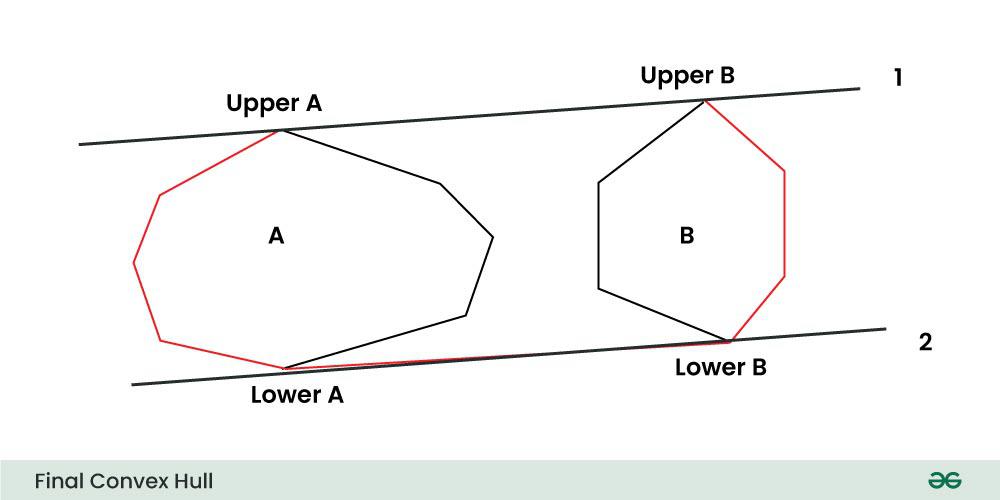
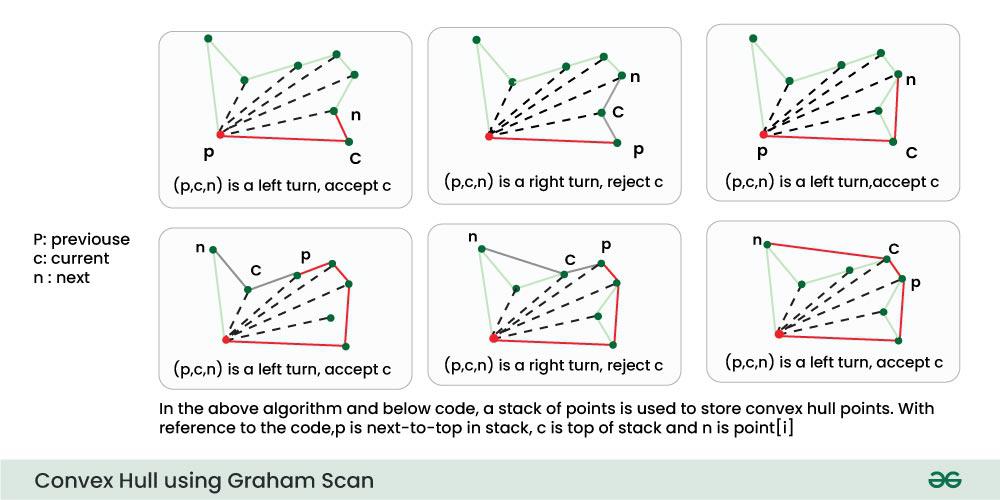
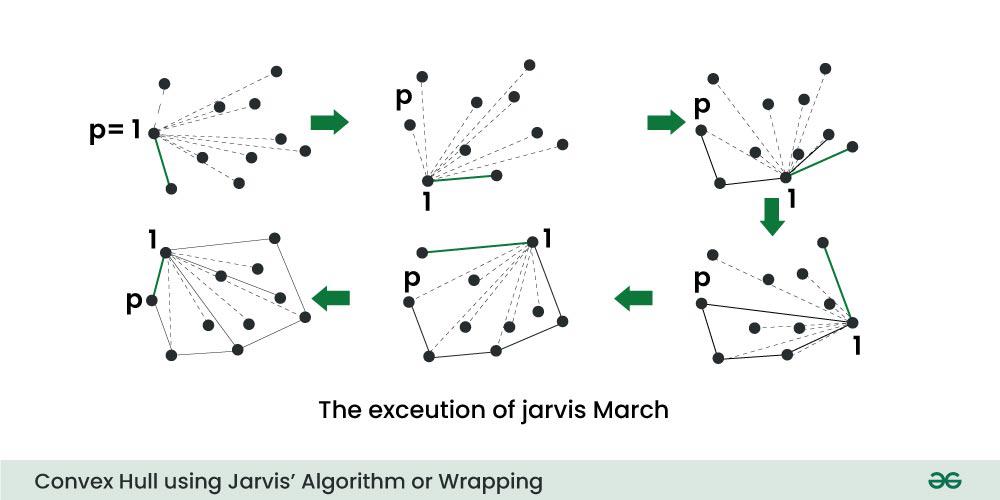
Maybe you want a convex hull?
https://www.geeksforgeeks.org/convex-hull-algorithm/
GeeksforGeeks
A Computer Science portal for geeks. It contains well written, well thought and well explained computer science and programming articles, quizzes and practice/competitive programming/company interview Questions.

 rancid gulch
leaden ice
Maybe you want a convex hull?
https://www.geeksforgeeks.org/convex-hull-algorith...
rancid gulch
leaden ice
Maybe you want a convex hull?
https://www.geeksforgeeks.org/convex-hull-algorith...
Looks promising, thank you
 torn aspen
Guys what do you think the maximum AI’s ability is for coding in Unity right now? Like, what functionalities would it be able to code (eg. a multiplayer 2d game, an endless 3d runner etc)?
 clear basin
Guys, what's better to do with killed enemies that don't respawn? Destroy() or disable them?
leaden ice
Why would you keep it around if you don't need it anymore?
clear basin
leaden ice
Why would you keep it around if you don't need it anymore?
Ok, got it, thanks
hard estuary
torn aspen
Guys what do you think the maximum AI’s ability is for coding in Unity right now...
It can solve most of simple problems. It can solve a huge amount of common problems. It struggles with some difficult problems. It's almost incapable of inventing new things. Pretty much the less common problem is, the higher is the chance it will give you insufficient, wrong or misleading answers.
hard estuary
clear basin
Guys, what's better to do with killed enemies that don't respawn? Destroy() or d...
In most cases (probably 95% of games) it's better to get rid of them. In some cases you might want to use pooling - hide them and use in a different place if needed (just because they don't respawn, it doesn't necessarily mean such enemy won't be spawned in another place). Some games might occasionally want to keep dead units on the scene for some extra interactions (e.g. looting or necromancy) or keep only a small piece of information (e.g. location of their death and who they belonged to).
steady bobcat
It's easy to use the unity ObjectPool<> to set this up
 old elk
vestal arch
https://docs.unity3d.com/6000.0/Documentation/ScriptReference/MeshFilter.html
old elk
vestal arch
https://docs.unity3d.com/6000.0/Documentation/ScriptReference/MeshFilter.html
i know. i know how to read the docs lol
old elk
vestal arch
it just got cut off, the period might be from ellipses
nope, it's just straight up not there. someone did not finish their sentence
ellipses use 3 periods
i just thought it was funny lmao
vestal arch
old elk
ellipses use 3 periods
i know, i mean the message was cut off leaving ellipses, then the ellipses got cut off due to the hover box size
old elk
Yeah that's what I thought initially but
 vestal arch
damn
old elk
I'm guessing the documentation in code is auto generated and what happened is it tried to find a link to a class called "mesh filter", but couldn't, since that hyperlink just leads to a manual page
so it just ended up omitting "mesh filter" entirely lmao
 knotty patrol
Hey I'm trying to create items with ECS and until now I've used Scriptable objects is there a way I could use it with ECS?
 somber nacelle
probably ask in the #1062393052863414313 channel where the ecs people hang out
knotty patrol
lol ok thx
 worldly stirrup
So, I kinda made my 2D character controller that can stick to surfaces a bit too good, as it can stick to any surface, but i want it to detach and move off of the ground

{
overlapped = Physics2D.OverlapCircle(groundCheckPos.position, groundCheckRadius, level);
RaycastHit2D hit1 = castRay(rb.position, -transform.up, slopeCheckLength1, Color.red);
rayed = hit1;
grounded = rayed && overlapped;
if (grounded)
{
getGroundValues(hit1);
}
else resetGround();
doSlopeCalc = Mathf.Abs(slopeDownAngle1) >= minSlopeAngle;
transform.rotation = Quaternion.Lerp(transform.rotation, Quaternion.Euler(0, 0, -slopeDownAngle1), timeOfRotation);
}``` urban summit
what's the best ide for unity?
also whether it does consume lots of ram or not
worldly stirrup
worldly stirrup
```private void checkGround()
{
overlapped = Physics2D.OverlapCircle...
    {
        if (ceilinged)
        {
            velocity.y = 0f;
        }
        if (!grounded)
        {
            velocity.y = Mathf.Max(maxFallingSpeed, velocity.y + delta * physicsMultiplier * playerGravityForce);
            isJumping = velocity.y > 0f;
            isFalling = !isJumping;
            return;
        }
        isFalling = isJumping = false;
        velocity.y = slopeDownAngle1 != 0 ? groundSpeed * -slopeNormalPerp.y : 0;
        rb.position = slopeHitPoint + (Vector2)transform.up * posOffset;
}```you have 3 options for supported ones, Rider which is only free for non-commercial use, Visual Studio, and VS Code (which isn't even an IDE, it is a text editor with plugins that make it function similar to an IDE). that order is also from best to worst
urban summit
somber nacelle
you have 3 options for supported ones, Rider which is only free for non-commerci...
thx!!!! I much appreciate your help!!
 snow siren
I have a problem: I have an animation for an attack with a sword, but the animation only plays for one frame instead of the full animation. Is it because I'm doing this in Update()? (I'm using Unity C#)
leaden ice
snow siren
I have a problem: I have an animation for an attack with a sword, but the animat...
Are you restarting the animation every frame? That would be why yes
 leaden ice
No, pay attention to your if statements, you're not doing it every frame.
Start debugging your code with Debug.Log and the Animator window
latent latch
What's the difference between:
https://docs.unity3d.com/6000.0/Documentation/ScriptReference/Physics.ComputePenetration.html
https://docs.unity3d.com/6000.0/Documentation/ScriptReference/Collider.ClosestPoint.html
Looking for the best way to get a contact point using a trigger collider and I know int he past that closest point was far from accurate

I guess a better question would be what's the best way to get contact points from a skinmesh render bone against a unity collider
 sullen urchin
hey does someone know why my camera Changes when im throwing my Item and why I cant pick it up ?
PlayerInventory:
https://pastecord.com/bymasyfoci.cs
leaden ice
latent latch
What's the difference between:
https://docs.unity3d.com/6000.0/Documentation/Scr...
ClosestPoint will return the same point you passed in if it's inside the Collider
It won't really tell you the penetration at all
leaden ice
sullen urchin
hey does someone know why my camera Changes when im throwing my Item and why I c...
Nothing in this script would directly move the camera so it's probably a script or component attached to one of the GameObjects you are instantiating or activating
sullen urchin
leaden ice
Nothing in this script would directly move the camera so it's probably a script ...
yea I found out why with the camera.
 wise kindle
What does [ExcludeFromDocs] do exactly?
cosmic rain
wise kindle
What does [ExcludeFromDocs] do exactly?
An attribute. Probably does what it says. Aside from that it doesn't seem like unity wants us to know.
wise kindle
Right, I'm trying to take a peek at the Quaternion.LookRotation method to see how the math behind it works, but I can't find where it is
cosmic rain
It's probably implemented on the C++ side, so we don't have the source code
But it should be pretty plain and similar to what other engines do
somber nacelle
yep, that method is implemented in c++, not in the c# bindings
https://github.com/Unity-Technologies/UnityCsReference/blob/b1cf2a8251cce56190f455419eaa5513d5c8f609/Runtime/Export/Math/Math.bindings.cs#L98
 desert mist
What approach is advisable for setting an Observer Pattern scripts observed class dynamically? For example, I have a Health class, and a HealthBarUI class. The Health class calls an Action when the health value is changed, and the HealthBarUI class observes this action and adjusts the UI element accordingly. This is working correctly.
However, this requires a reference to the specific Health instance on the player, as this Health class is intended to be re-used on any object that has health, including enemies and breakable environment objects. Would this be set as part of a game management class also in charge of spawning the player object?
wise kindle
Not an expert, but I'd make it an interface
Probably a wrong way to do it, but it's how I'd do it
desert mist
I just assume that having a lot of calls in awake or start all take place for that kind of function on the player is generally not advisable because maybe there is a different, better way to do it
wise kindle
Wait, how many destructible objects to you plan on having in a single scene?
desert mist
Not a whole lot, but I would like to keep my performance budget low to include low end devices
More than 10 but less than 100 on screen at any given time
wise kindle
I mean, if all you're doing is changing a float variable, I don't think it's going to be that big of a deal
desert mist
Well the player HP bar is not the only reference I need to be setting or calling, it was only an example. If I had 100 health instances(including 1 player), I dont want to loop through them all to find the one on the player if I dont have to
I also thought that the player spawn could call an action, with a reference to the player object, but then the HealthBarUI would also need to subscribe to that action as well, and I am having trouble with determining how to approach setting which class is observed since the objects are not pre-spawned in at scene load so setting the reference in the editor directly wouldnt work
wise kindle
You could use a method to find a gameobject with a specific name, or tag, and then search for its health bar class component, then call the method for decreasing health.
desert mist
Yeah but if I have a lot of classes that need references to different classes on the player, using Find would cause a spike for all of that

This class is placed on a UI element, not the player
Again, this is only a single class, but if other UI elements and other scripts need to also observe the player Health instance, using Find every time seems like not the right call to me
wise kindle
Hmmmm... I'm not too sure, but if instead of finding by name, you find it by tag? If say there is only one tag called Player, it's faster and more optimized than finding by name
Does the player change?
Like, is it destroyed at some point in the game?
desert mist
It does not change but the instance would sometimes be destroyed and instantiated, yes
As the game has multiple playable characters, each is a separate prefab
This is where my idea of an Action in the spawn logic came from, but then every object in the scene that needs it would have to observe that class as well
wise kindle
Okay, the idea I have is, instead of destroying the characters, why don't you just pool them? You deactivate them and then the data is still in cache, that way you don't have to find the players all the time, only once when they appear
desert mist
Well this still doesnt really solve the problem because the observed class is still not set
I appreciate your help though
wise kindle
I'm not sure how to solve that issue though, other than telling you searching by tag is better for large amounts of objects
desert mist
I guess I should just do it the way that makes it work first and then worry about it later if it causes a problem
cosmic rain
desert mist
What approach is advisable for setting an Observer Pattern scripts observed clas...
You should have a higher level manager that have access both to ui and the player(or any other object that has health), orchestrate the initialization of the relevant objects and passing references around.
 pale wagon
 night patio
is there a search term to find all missing script in a scene?
 hidden compass
night patio
is there a search term to find all missing script in a scene?
hidden compass
night patio
is there a search term to find all missing script in a scene?
https://web.archive.org/web/20130514114424/http://wiki.unity3d.com/index.php/FindMissingScripts nope but u can make u an editor script that does it
night patio
hidden compass
https://web.archive.org/web/20130514114424/http://wiki.unity3d.com/index.php/Fin...
nice, thanks
 twilit gull
`using StarterAssets;
using UnityEngine;
using UnityEngine.Playables;
public class CharacterSwapper : MonoBehaviour
{
public GameObject char1;
public GameObject char2;
private GameObject activeCharacter;
private bool playerState;
void Start()
{
    activeCharacter = char1;
    char1.SetActive(true);
    char2.SetActive(false);
}

void Update()
{
    playerState = activeCharacter.GetComponent<StarterAssetsInputs>().swapCharacter;
    if (playerState) // Check for input
    {
        activeCharacter.GetComponent<StarterAssetsInputs>().swapCharacter = false;
        SwapCharacter();
    }
}

void SwapCharacter()
{
    Vector3 position = activeCharacter.transform.position;
    Quaternion rotation = activeCharacter.transform.rotation;

    activeCharacter.SetActive(false);
    activeCharacter = (activeCharacter == char1) ? char2 : char1;
    activeCharacter.transform.SetPositionAndRotation(position, rotation);
    activeCharacter.SetActive(true);
}
}
`
I'm attempting to make this darn code swap between two charaters. This code is stored on an empty object, and char1 and char2 are the characters i wish to swap between. However, "playerState = activeCharacter.GetComponent<StarterAssetsInputs>().swapCharacter;" is not working. Does anyone know why it won't take the bool, and instead returns "NullReferenceException: Object reference not set to an instance of an object
CharacterSwapper.Update () (at Assets/Scripts/CharacterSwapper.cs:21)"
night harness
It’s failing to get that component
twilit gull
how can i fix that
night harness
That object needs to have that component
twilit gull
I need to give the empty object the StarterAssetsInputs script?
twilit gull
activeCharacter.GetComponent<StarterAssetsInputs>().swapCharacter;
right here, i'm referencing the activeCharacter, and grabbing the bool from the other object. Why isn't this sufficient for the code?
night harness
night harness
That object needs to have that component
becuase
either activeCharacter is null or activeCharacter doesn’t have a StarterAssetsInputs component
night harness
While youre there
You should have references to these components saved
Rather than getting them every frame on update
twilit gull
how would I make that change
night harness
on phone so a little tricky but like how you have your gameobject fields at the top you can have a field for each StarterAssetsInput and either set them drag and drop style like your gameobjects or set them by doing that kind of getcomponent in start
twilit gull
okay thanks
 hardy pasture
Shoud .meta files be source-controlled?
 west lotus
Yes
lean sail
hardy pasture
Shoud .meta files be source-controlled?
If you're using git, there is already a premade unity git ignore
 waxen matrix
i need waveform for some project
decided to use line renderer, and bake it into mesh
but im concerned about the verticles/triagles count
is there any other way to have runtime waveform?
 steady bobcat
good god 7M, can you not sample at a lower rate for this mesh?
Could also make/update a texture instead with a compute shader
waxen matrix
can i get sample data with lower rate? i still need audio to be good
about texture, not sure how to do that..
steady bobcat
depends how you are getting this wave form. instead of using every single sample, you can use say every 4th. Having a vert for each one is clearly not going to fly.
waxen matrix
hmm, let me try
steady bobcat
I think a compute shader could work by giving it a block of samples and you can have each compute thread produce a column of pixels for the sample
waxen matrix
if i only knew anything about shaders
steady bobcat
try sampling at a much lower rate first and see how it looks. If it doesn't yield good results you can perhaps change it to get the average of a range of samples instead
waxen matrix
used 4, 8, 16
the 16 cuts it to 449k verticles
much better but still a lot
and i imagine what would happen with much longer audio
 thick terrace
are you ever going to be able to see 449k verts at once? unless you're getting really close to this thing, maybe you can sample a number of times proportional to the size on screen?
waxen matrix
i guess id better off writing custom mesh gen for that 💀
 waxen matrix
thick terrace
are you ever going to be able to see 449k verts at once? unless you're getting r...
waxen matrix
thick terrace
are you ever going to be able to see 449k verts at once? unless you're getting r...
no, maybe i could cut it into pieces?
 cursive moth
We came to the conclusion it's most likely due to the asset having it's own asmdef, any way to get around this?

 late lion
cursive moth
We came to the conclusion it's most likely due to the asset having it's own asmd...
late lion
cursive moth
We came to the conclusion it's most likely due to the asset having it's own asmd...
You can create an Assembly Definition Reference and reference Unity.Timeline.asmdef. That will let you add your own code to that assembly.
cursive moth
late lion
You can create an Assembly Definition Reference and reference Unity.Timeline.asm...
Will try that, thanks.
late lion
cursive moth
Will try that, thanks.
Just remember that this is a hack, and Unity could change TrackAsset to not be partial anymore, in which case this won't work anymore. Assembly Definition References are not really intended for this, it just happens to work with Unity packages as well.
cursive moth
Additional question, is there a way to make these properties show up in the inspector?
https://github.com/needle-mirror/com.unity.timeline/blob/master/Editor/Activation/ActivationTrackInspector.cs



GitHub
Use Unity Timeline to create cinematic content, game-play sequences, audio sequences, and complex particle effects. 📦 [Mirrored from UPM, not affiliated with Unity Technologies.] - needle-mirror/co...
 mortal thistle
Hello guys ! I'm trying to make something really simple :
- Have a VideoPlayer that takes an URL to my remote server that hosts a video
- Play the video
But I'm getting this error :
WindowsVideoMedia error 0x80004004 while reading <myURL>
Context: IMFSourceReader::WaitForSample in StepAllStreams
Error details: Op볡tion abandonn맍
The video file seems fine since it works if I put it directly in Unity.
The weird thing is that it sometimes work, sometimes doesn't...
Any ideas what could be the root cause ? Or how to solve this ?
cursive moth
cursive moth
Additional question, is there a way to make these properties show up in the insp...
please @ me if you are able to help, I have no clue what to do
 distant trench
Hi guys, I am just wondering if I can get an input from somebody about my code. I have got an AI character which should be checking with a linecast to see if the player is in line of sight, and if the player does come within the line of sight of the AI it should start to move towards the player. however it doesnt seem to recognise that my player is there and doesn't want to find it
 true heart
does your player have a collider?
distant trench
yes
vestal arch
distant trench
Hi guys, I am just wondering if I can get an input from somebody about my code. ...
have you checked whether the cast is hitting?
distant trench
it isnt no.
vestal arch
have you debugged where the line actually is?
distant trench
I have a debug.drawline which isnt drawing the line
vestal arch
make sure you're looking in scene view
distant trench
it should draw from the ai character torso to the player torso but it doesnt
it doesnt show in scene view
tawny elkBOT
Posting code
📃 Large Code Blocks
Use links to services like:
https://paste.mod.gg/, https://hastebin.skyra.pw/, https://paste.ofcode.org/, https://paste.myst.rs/, https://scriptbin.xyz/
📃 Inline Code
Surround code with three backquotes. Not quotation marks.
To format as C#, add cs to the first line:
```cs
// Your code here
```
Add a comment with a line number if there is an error message.
distant trench
A tool for sharing your source code with the world!
its the FindATargetVIALineOfSight part. the rest works fine if I drag the player into the lock on myself
vestal arch
don't put your debug line inside the if
and add extra logs to check if that point is being reached
distant trench
I added some debugs to see what isnt getting reached and it appears that from the CanIDamageThisTarget if statement and below isnt executing
but I think thats due to the fact that the ai isnt finding my character with the Physics.OverlapSphere
steady bobcat
i guess verify that the layers are correct. Id say use a debugger + move the retrieval of the layers to be seperate so you can inspect it easier
distant trench
I did that earlier and found that it is detecting all of the different parts for the character but it isnt actually detecting the player prefab
like it will find the torso and the head colliders and whatnot
but isnt finding the player one
and I have tried to do a GetComponentInParent which didn't affect anything
steady bobcat
If it overlaps many colliders... then it will return them all as results.
so either adjust layers to better filter out other colliders or verify why get component in parent did not work (perhaps the hit collider is not on the correct object at all)?
distant trench
I have just changed it so the debug prints out the parents name and it is detecting itself and the player but it isnt setting the player as the current target.
steady bobcat
use a debugger so you can inspect better
hexed pecan
distant trench
I did that earlier and found that it is detecting all of the different parts for...
You can use collider.attachedRigidbody to quickly get the rigidbody object, which i assume would be your player's root
Alternatively, have a component on the bodyparts that have a reference to the player
 shadow wagon
I'm trying to figure out how I'd generate the map for my dungeon, on the left is what the in-game map would look like. On the right, I've simplified it down to a tree-like design. It feels like it shouldnt be that hard to generate something like that tree, but I dont really know where to start.

If I write it down as text, I get something like this
G1
G2
G3  ->  R1
G4      R2
        R3  ->  B1
        R4      B2
B3```I dont know if thats actually helpful to figure out the generation, but its as far as I've got. Any thoughts?Would it be grid based?
shadow wagon
does that matter? surely if I'm creating a tree/graph, that wouldnt actually care about the location of each node
hexed pecan
Doesn't really matter tbh
What I like to do is run a "physics" simulation on the graph
Each node can have a radius and some connections
And then you iteratively try to relax the graph
By separating them circles
shadow wagon
yeah, I'd do a force directed graph once its built
hexed pecan
Not the best example but something like this
https://www.youtube.com/watch?v=NpS5v_Tg4Bw
If the map doesn't have cycles then it's a lot easier
shadow wagon
I'd process it do actually produce the more aesthetically pleasing version of it, but thatd be a second stage
based off the rules I have with the dungeon itself, the more complex map on the left can be represented as the graph on the right

I lead with a simpler map as its easier to think about
shadow wagon
hexed pecan
Not the best example but something like this
<https://www.youtube.com/watch?v=Np...
something I should mention is the dungeon itself isnt 1 scene with all the rooms stored inside it that you move through, its more like a single scene for the room. Moving to the next room just reloads the scene with the new room info
hexed pecan
Yeah I see. Not a problem
I prefer to do procedural generation stuff purely with POCOs anyway, no gameobjects involved until everything is ready and the objects need to be spawned
shadow wagon
to quickly illustrate the way it works if its not clear, you must always travel in the direction of a boss, so even though the graph shows 3 different red-boss locations, they're actually just the same room

 dense rock
hey there, I want to make a text editor in unity similar to how notion works. Can I get some suggestions on how I could do that? I feel just a big inputField wouldn't quite do the job...
it's part of a bigger app that stores the written text in my database via my api, but I didn't think about needing a text editor
steady bobcat
dense rock
hey there, I want to make a text editor in unity similar to how notion works. Ca...
look at the UI toolkit to start cus that will be way better vs ugui
dense rock
is that a package from the unity asset store?
steady bobcat
dense rock
is that a package from the unity asset store?
newer UI system thats similar to html and css in terms of elements and layout styling
dense rock
that's great. I'll look into it!
shadow wagon
hexed pecan
I prefer to do procedural generation stuff purely with POCOs anyway, no gameobje...
I'd probably do game objects if I was going to do a traditional dungeon, a while back I saw a very clever thing where somebody generated a bunch of rigidbody boxes and unity automatically relaxed their distances. quite similar to the FDG approach in that video
honestly it would be so much easier if I my dungeon was going to be like that 😆
alas
so how could I generate the map like this?

Im not really sure what format to store it in
hexed pecan
Which stage is this exactly?
Just the layout?
I use a node graph (looks similiar to shader graph etc.) that defines the nodes that are allowed and what can be connected to what. I call it the layout source graph
I then toss it into a generator that makes sense of it and tries to place all the needed rooms while keeping them at certain separation distances and respecting other rules i have set up in some [SerializeReference] lists on the nodes
shadow wagon
this would be the first stage
hexed pecan
So it's sort of abstract
hexed pecan
shadow wagon
so how could I generate the map like this?
Does this part need to be generated or does the developer define it?
(I don't really know what you are actually asking about)
shadow wagon
shadow wagon
I'm trying to figure out how I'd generate the map for my dungeon, on the left is...
so the metro map here is the final thing I want, but in an abstract way, its nothing more than 3 lines that connect at an intersection. I basically want to figure out how I'd create the 3 lines, see how they intersect, and convert that into a usable graph
 teal wadi
hey so im makinga multiplayer game but whenever i kill a player this error pops up
can someone help me?
 shadow wagon
What sounds right is I draw a line, and that line MUST overlap at least 1 other line, then one side of the line after its intersection is found gets removed, then I draw the next line. Which would do this
 hexed pecan
Generate a line
Pick a random point along that line
Generate another line on the random point
Repeat
Make a simple graph data structure to start with
With nodes and edges
steady bobcat
shadow wagon
What sounds right is I draw a line, and that line MUST overlap at least 1 other ...
This is what I imagined when seeing your prev example
 hexed pecan
And like a helper method that splits an edge into two
 sacred estuary
teal wadi
hey so im makinga multiplayer game but whenever i kill a player this error pops ...
sacred estuary
teal wadi
hey so im makinga multiplayer game but whenever i kill a player this error pops ...
Are you destroying a networked gameObject with Destroy() instead of instead of calling Runner.Despawn()?
 soft shard
teal wadi
hey so im makinga multiplayer game but whenever i kill a player this error pops ...
soft shard
teal wadi
hey so im makinga multiplayer game but whenever i kill a player this error pops ...
This is a #archived-networking problem so it may be better to move it there, though the error suggests you may be trying to use Destroy on a networked object instead of PhotonNetwork.Destroy or your calling the network destroy on a object that does not have a PhotonView/invalid ID
shadow wagon
steady bobcat
This is what I imagined when seeing your prev example
yeah I noticed a lot of the maps do a tree shape like this
teal wadi
sacred estuary
Are you destroying a networked gameObject with Destroy() instead of instead of c...
Destroy
!code
tawny elkBOT
Posting code
📃 Large Code Blocks
Use links to services like:
https://paste.mod.gg/, https://hastebin.skyra.pw/, https://paste.ofcode.org/, https://paste.myst.rs/, https://scriptbin.xyz/
📃 Inline Code
Surround code with three backquotes. Not quotation marks.
To format as C#, add cs to the first line:
```cs
// Your code here
```
Add a comment with a line number if there is an error message.
steady bobcat
shadow wagon
yeah I noticed a lot of the maps do a tree shape like this
I guess its simple, you have a branch and you produce a new branch half way in some dir that alternates each time.
hexed pecan
Not sure how you could produce something like this with a branching tree
 sacred estuary
teal wadi
Destroy
sacred estuary
teal wadi
Destroy
You shouldn't call Destroy() for networked gameObjects, you have to call Runner.Despawn() on the server (if you're using Fusion, for Pun you should use PhotonNetwork.Destroy() instead)
teal wadi
sacred estuary
You shouldn't call Destroy() for networked gameObjects, you have to call Runner....
im like a beginner im sorry i dont know what that means heres my code though
A tool for sharing your source code with the world!
soft shard
sacred estuary
You shouldn't call Destroy() for networked gameObjects, you have to call Runner....
Is the error message the same in Fusion? Ive only seen that specific one in PUN's framework
hexed pecan
teal wadi
im like a beginner im sorry i dont know what that means heres my code though
ht...
I'm gonna say it. You shouldn't be making networked games yet
teal wadi
sacred estuary
You shouldn't call Destroy() for networked gameObjects, you have to call Runner....
i am using PhotonNetwork.Destroy()
unkempt cobalt
teal wadi
this is the first time im using PUN
study their docs before anything
it is a new way of structuring you have to adhere to at least for fusion 2 what im using it took a while to understand
soft shard
PUN also has sample projects and a discord as well, but I agree, multiplayer games is very difficult to make as a beginner, even difficult for experienced devs, so it could be a big undertaking to start with imo
teal wadi
i understand that but ive been trying to fix it for a while now and this is the only thing im stuck on everything else has been working perfectly
shadow wagon
hexed pecan
Not sure how you could produce something like this with a branching tree
i'll find my notes, but I managed to come up with a rule for a map like that where 3 colors share a single node, and it seemed like the solution
it might be that one, but if you copy a branch over to another side of the tree and change a color, it works
soft shard
teal wadi
i understand that but ive been trying to fix it for a while now and this is the ...
If its something you really want to learn, go for it, though after making 2 multiplayer games myself, I can say that this will likely not be the last problem youll run into, you may end up refactoring your code several times, and if you plan on releasing/publishing, there are also other considerations (and a subscription cost)
shadow wagon
there must only be 1 line per color, so the red meets yellow twice (at 1 and 2). the right hand side is what the basic graph would look like, and the middle is what I'd need to intepret it as
 teal wadi
soft shard
If its something you really want to learn, go for it, though after making 2 mult...
teal wadi
soft shard
If its something you really want to learn, go for it, though after making 2 mult...
yeah ive run into a couple problems but those were straightforward im just not able to figure this one out
soft shard
teal wadi
yeah ive run into a couple problems but those were straightforward im just not a...
Fair enough, I would try to isolate the problem, make a new script and compare it to the docs, try PUNs sample projects that already handle destroy, see if you can get it working then compare the difference, or try adding some Debug.Logs and breakpoints and try to see whats happening frame-by-frame, and make sure the object your trying to destroy has a PhotonView properly setup on it - also make sure the object your trying to destroy has an owner (IE: was instantiated with PhotonNetwork as well)
 feral oak
I have hundreds if not thousands of pngs (animation frames) that I need to apply normal maps to in the unity sprite editor. Is there no way to apply them automatically, or mass assign?
I've attempted asking AI and they keep trying to make an Editor script for it, but they haven't been working. Is it possible to make it work?
steady bobcat
feral oak
I have hundreds if not thousands of pngs (animation frames) that I need to apply...
apply where? In an animation clip?
feral oak
steady bobcat
apply where? In an animation clip?
No, apply _NormalMap as secondary texture in the sprite editor.
steady bobcat
Ah right, are you trying to use the texture importer then?
feral oak
steady bobcat
Ah right, are you trying to use the texture importer then?
No, so far the only way I know how to do it, is to click on each image individually, open the sprite editor and add a new secondary texture, input _NormalMap and selecting the normalmap, and then hit apply. Repeat. That will take hours, so I want to know if there's a way to automate it.
Like, so for example "tree1.png" will automatically get "tree1 normal.png" assigned as a normalmap to it.
steady bobcat
You can get a TextureImporter for the asset or assets and set the secondary texture array to what you wish:
https://docs.unity3d.com/6000.0/Documentation/ScriptReference/TextureImporter-secondarySpriteTextures.html
so make some static function and use [MenuItem] to call it in editor
if you want to automate it even better you can use UnityEditor.Selection to do this over many assets you select in the project window
shadow wagon
is there any way to do something like [DoNotSerialize], so if I was to write public int DefaultRoomWidth = 50; it will show 50 in the inspector and I can change the value in the inspector, but if I ever alter the value in the script, unity will update the inspector to match the change?
its annoying that once its set in the inspector, theres no way to get unity to read a new value that i explicitly set in my script
steady bobcat
well you cant have a serialized value AND it also use the default set in the class?
If you dont want to serialize it, use [NonSerialized]
vestal arch
shadow wagon
its annoying that once its set in the inspector, theres no way to get unity to r...
a value set in the script is treated as the default
the inspector value is the serialized, instantiated value
the inspector value takes precedence
shadow wagon
steady bobcat
If you dont want to serialize it, use ``[NonSerialized]``
which stops it appearing in the inspector
steady bobcat
indeed it does
shadow wagon
I still want it to show up there, but if I alter the code then that change should take priority
steady bobcat
then use something like naughty attributes (which can show extra "read only" values easily) or create a custom inspector editor
hexed pecan
It really means "save the data", but unity also shows serialized data by default
So they get used sort of interchangeably for saving and also showing in the inspector which is a bit misleading
shadow wagon
so why does unity not have something that detects whenpublic int DefaultRoomWidth = 50; changes to public int DefaultRoomWidth = 250; and overwrites the serialized value?
hexed pecan
Because you could lose work
thick terrace
it would be way more annoying if it wiped out all your changes in existing assets
feral oak
steady bobcat
You can get a TextureImporter for the asset or assets and set the secondary text...
I managed to work it out, thanks a lot!
shadow wagon
thick terrace
it would be way more annoying if it wiped out all your changes in existing asset...
only if it overwrites all inspector values every time you save, im talking about if I change a single property, i want that one to update
vestal arch
ok, what if you change multiple properties
wait sorry brainfart
what if you have multiple independantly configured instances of a given script
for example in prefabs or prefab variants
shadow wagon
vestal arch
what if you have multiple independantly configured instances of a given script
i see your point!
vestal arch
and there's no observable difference between a value that's just the default and a value that's been tuned and happens to be the default
like maybe you set the default speed to 0 just as a placeholder, and in one instance you explicitly want it to not move, if you change the default with the behavior you're proposing, it'd make that single instance suddenly be able to move
what you're proposing isn't useless, it'd just cause more problems than it solves, unfortunately
that is, if it were unity implementing it editor-wide
lean sail
shadow wagon
only if it overwrites all inspector values every time you save, im talking about...
if you wanna just see the value in inspector, click the 3 dots and swap it to debug mode. itll display everything so you probably wont have it on forever
or custom inspector
vestal arch
if you have a specific usecase where it does make sense and doesn't have these kinds of drawbacks, then it'd make sense to make an editor script or something
vestal arch
lean sail
if you wanna just see the value in inspector, click the 3 dots and swap it to de...
ehhh seems like debug mode causes a lot of problems... would not recommend that
shadow wagon
I dont see it
 lean sail
not on the component, on the inspector tab itself
hexed pecan
vestal arch
ehhh seems like debug mode causes a lot of problems... would not recommend that
What problems?
shadow wagon
ooh, the inspector
vestal arch
hexed pecan
What problems?
ive seen quite a few people having issues here where the issue was just that they had debug mode on
rigid island
btw you can right click the script and HIt Properties and you can Debug view only that popped out window so it doesnt touch the original inspector 
vestal arch
or was that a different thing 🤔
shadow wagon
i wonder if I do something generally wrong with using unity, like I rely a lot on code and not too much on the inspector
hexed pecan
vestal arch
ive seen quite a few people having issues here where the issue was just that the...
Pretty sure that's a non-issue, just turn it off when you need the normal inspector again
I mean it's an issue if you are so new that you don't realize that it's in debug mode
Which i have seen, yeah
But that's user error
vestal arch
shadow wagon
i wonder if I do something generally wrong with using unity, like I rely a lot o...
yeah you should use the inspector for config and stuff
if you edit everything in code you'll have to recompile just for tweaking values
rigid island
pop out the inspector for specific script you don't have to touch the original inspector
steady bobcat
some things dont need to be instance variables but some do. Id say it varies. If something can be static or const then i will use that.
needs to be shared by many instances? scriptable object!
lean sail
shadow wagon
i wonder if I do something generally wrong with using unity, like I rely a lot o...
unity is designed around doing a lot in the inspector. Though sometimes people try to set up too much from the inspector rather than doing it in code. It's really just a matter of whats easier for making the game
hexed pecan
Been recently trimming off a lot of static fields (like lists i reuse for procedural generation) after I started multithreading
And just pass around pre-allocated collections instead
Though I gotta see if I could still use static fields and lock 🤔
shadow wagon
something im trying to do more of is getting a scene in a state where most things are already configured and ready to go, too many times ive just constructed and configured loads of stuff in awake, like finding references to objects, when its far easier to just drag and drop to the fields instead
rigid island
shadow wagon
something im trying to do more of is getting a scene in a state where most thing...
ofc DI is always better than doing a GetComponent at runtime
hexed pecan
You can also add default references to a Monobehaviour if you select the script file
I recently heard that it works for non-monobehaviour stuff too, in unity 6 👀
dense rock
hexed pecan
You can also add default references to a Monobehaviour if you select the script ...
how does that work?
steady bobcat
that only works for newly made components in edit mode and well cant be instances in a scene
hexed pecan
dense rock
how does that work?


It's because these object references can't really have default value from code
shadow wagon
rigid island
ofc DI is always better than doing a GetComponent at runtime
Ive heard people mention zenject a lot, but DI isnt something I've played around much with
I mean, I do DI a lot but thats mostly just normal OOP design
thick terrace
doing DI the manual way is a pretty good idea anyway, the frameworks just automate some of the repetitive stuff
shadow wagon
ive struggled to find an example that actually explains it in a way that sounds useful
the theory of it, I understand
all the examples feel too daunting or "why would I need to use a DI library for that"
thick terrace
it's most helpful on larger projects with a lot of interconnected systems, especially if you want to write any unit tests
rigid island
shadow wagon
Ive heard people mention zenject a lot, but DI isnt something I've played around...
by the way just using the Inspector is a form of DI
steady bobcat
I make do manually providing required dependencies but sometimes its just easier having a system that "distributes" them for you
i expect most big projects dont only use monobehaviours so it fills that gap
rigid island
shadow wagon
all the examples feel too daunting or "why would I need to use a DI library for ...
You dont really need a library for that , but it helps.
most .net frameworks have their own systems already built in by MS , unity is a bit different cause it doesnt really expose a "main entry" program.cs
shadow wagon
i mixed up library and framework, i just meant something like zenject

most of this doesnt mean anything to me, (ive never heard of auto-mocking), which probably means its not of any use. But surely there must be something to it that could help me out
rigid island
personally done all other DI in .net but in unity I never really needed such a custom system
but also Im a solo dev and most of my projects have been small
its pretty easy to make a basic system by creating a simple Bootstrapper object
shadow wagon
atm I'm trying to ditch the way I was doing rooms in my dungeon, in hindsight it shouldnt have been done the way it is
 languid hound
What way are you currently doing it
thick terrace
shadow wagon
most of this doesnt mean anything to me, (ive never heard of auto-mocking), whic...
zenject in particular is pretty bloated haha, in projects where i've used it i've ignored 99% of the features
shadow wagon
languid hound
What way are you currently doing it
Load the dungeon scene, generate an array of RoomLayout (just a struct with dimensions and settings for a room). I pop the first item from the array, and the room gets built using it. Then once you move to the next room, I pop the next layout and reload the entire dungeon scene again, (only this time the map exists so it wont generate a new array)
it felt like a good idea at first
I think once I get the actual terrain generation for the room in a state thats not a bunch of placeholders, it should make it easier to correct my past mistakes
 bleak garden
I have a question about model clipping, is this the right channel?
hexed pecan
bleak garden
I have a question about model clipping, is this the right channel?
Like clipping in the camera?
Or polygon clipping/computational geometry?
 wintry crescent
Is there a nice built-in type to select a single layer in inspector in unity, that I can then easily assign to gameObject.layer?
LayerMask allows multiple selection and is a bitmask
so not easily convertable
rigid island
wintry crescent
Is there a nice built-in type to select a single layer in inspector in unity, th...
use LayerMask then do a bitmask shift
just dont put 2 layers or it will break
wintry crescent
yea but that is not the ideal solution isn't it
goddamnit why isn't there a proper way
rigid island
well its the closest imo
I guess if you enjoy strings you can use that...NameToLayer
hexed pecan
EditorGUILayout.LayerField does it but I don't know if there's an attribute that makes an integer draw with it
rigid island
not type safe tho
wintry crescent
strings are even worse than a bitmask
wintry crescent
hexed pecan
EditorGUILayout.LayerField does it but I don't know if there's an attribute that...
how tf does unity not have an attribute like that built in is beyond me
 balmy plume
rigid island
use LayerMask then do a bitmask shift
balmy plume
rigid island
use LayerMask then do a bitmask shift
i have been doing this for ages works for me
hexed pecan
wintry crescent
how tf does unity not have an attribute like that built in is beyond me
Bit odd yeah
rigid island
balmy plume
i have been doing this for ages works for me
yeah it works just fine, as long as you know not to slap 2 layermasks
hexed pecan
You could make a property drawer for it
Found this but it's for entities (?)
https://docs.unity3d.com/Packages/com.unity.entities@0.0/api/Unity.Entities.LayerFieldAttribute.html
rigid island
wintry crescent
yea but that is not the ideal solution isn't it
just gonna leave this here incase you want to look into it
https://discussions.unity.com/t/get-the-layernumber-from-a-layermask/462678/3
wintry crescent
I've seen it but thanks
I'm just devastated that this is still an issue in unity
rigid island
I guess. Layers and LayerMasks are different though so it makes sense
hexed pecan
Original question didn't have anything to do with layermasks though
There should definitely be a property attribute for drawing an integer as a layer dropdown
rigid island
i guess, but as of now, the layermasks just makes it easier to have all the layers in a dropdown already
 ripe stream
i need help with my code, the code is maked by me i tested it but it doesn't normally work. now i need help from nice C# unity programers to make it working. This is a code of raft spawning (i am making game like raft but more realistic). This is a hard question for me, i am 4 days thinking and relizing how i can make normal raft spawning script but still not normally work.
balmy plume
ripe stream
i need help with my code, the code is maked by me i tested it but it doesn't nor...
!code
tawny elkBOT
Posting code
📃 Large Code Blocks
Use links to services like:
https://paste.mod.gg/, https://hastebin.skyra.pw/, https://paste.ofcode.org/, https://paste.myst.rs/, https://scriptbin.xyz/
📃 Inline Code
Surround code with three backquotes. Not quotation marks.
To format as C#, add cs to the first line:
```cs
// Your code here
```
Add a comment with a line number if there is an error message.
ripe stream
balmy plume
!code
A tool for sharing your source code with the world!
all nice working on main raft but when i walk example forward


 hexed pecan
@wintry crescent ```cs
public class LayerAttribute : PropertyAttribute { }
#if UNITY_EDITOR
[CustomPropertyDrawer(typeof(LayerAttribute))]
public class LayerPropertyDrawer : PropertyDrawer
{
public override void OnGUI(Rect position, SerializedProperty property, GUIContent label)
{
property.intValue = EditorGUI.LayerField(position, label, property.intValue);
}
}
#endif
Just add ``[Layer]`` on your int field to use itthanks <3
hexed pecan
I'll need it too so thought I might as well make one 😁
ripe stream
ripe stream
all nice working on main raft but when i walk example forward
I will be glad if you help
steady bobcat
https://github.com/dbrizov/NaughtyAttributes Naughty attributes has a layer drawer attribute
pretty sure there are a few other packages like this that have it too
hexed pecan
That apparently supports string fields
Not sure why they do all this custom stuff instead of just using LayerField
https://github.com/dbrizov/NaughtyAttributes/blob/a97aa9b3b416e4c9122ea1be1a1b93b1169b0cd3/Assets/NaughtyAttributes/Scripts/Editor/PropertyDrawers/LayerPropertyDrawer.cs
wintry crescent
steady bobcat
https://github.com/dbrizov/NaughtyAttributes Naughty attributes has a layer draw...
I'm using EditorAttributes, which is allegedly better, and yet it doesn't have that one 🙃
steady bobcat
Ha yea there are too many variants of this kinda thing
wintry crescent
it has other cool things though, for what it's worth
the fact unity doesn't have a layer type built-in is a disgrace after so many years
I remember struggling with it in my first projects in unity 5
ripe stream
Osmal can you help me?
hexed pecan
steady bobcat
https://github.com/dbrizov/NaughtyAttributes Naughty attributes has a layer draw...
Looks like it doesn't have the "Add Layer..." button that the native layerfield has
In the bottom of the dropdown list
steady bobcat
huh guess they did a custom one?
hexed pecan
Yeah they dont use layerfield at all for some reason
I thought maybe it didn't exist back then, but it's been a thing for a long while
steady bobcat
maybe for string and int support
 stone rock
I am currently looking into downsampling the depth texture into a texture with mip maps enabled. so to generate a depth texture where each mip is a downsampled version of the previous mip. I notice you can't read from one mip and write to a different mip at the same time, is that correct?
cursive moth
cursive moth
Additional question, is there a way to make these properties show up in the insp...
bump
I tried overriding the OnInspectorGUI but that didn't work, any other ideas?
https://pastebin.com/MDERtikj
please @ me if you are able to help
hexed pecan
cursive moth
Additional question, is there a way to make these properties show up in the insp...
Maybe you can write your own custom editor that overrides that ActivationTrackInspector?
This is for #↕️┃editor-extensions
cursive moth
hexed pecan
Maybe you can write your own custom editor that overrides that ActivationTrackIn...
yes, that is certainly an option, I was just wondering if it was possible to somehow make it show up in the inspector to make the workflow a bit more intuitive
but so far, it looks like I'll have to go with the custom inspector
 keen pier
can anyone tell my why my player shows up perfectly fine before respawning, but after respawn the player's sprite disappears in game? it still shows in the scene tab, but in the game tab it only shows the background, platforms, and the point light that is attached to the player. i set the respawn point's z position to 0, is it supposed to be in front of the scene? the project is a 2d platformer if that's of any use.
here's my respawn script:
public class Respawn : MonoBehaviour
{
    public GameObject player;
    public Transform respawnpoint;
    public Camera view;

    private void OnCollisionEnter2D(Collision2D other)
    {
        if (other.gameObject.CompareTag("Player"))
        {
            player.transform.position = respawnpoint.position;
            view.transform.position = player.transform.position;
        }
    }
}
your camera is too close to the player on the Z axis so it cannot render it.
obligatory: use cinemachine to control the camera
keen pier
thank you!
 neat torrent
im trying to use my microphone but whenever i click play it is SO bitcrushed?
`` void microphoneToAudioClip()
{
string microphoneName = Microphone.devices[input];
microphoneClip = Microphone.Start(microphoneName, true, 20, AudioSettings.outputSampleRate);
_audio.clip = microphoneClip;
    _audio.loop = true;
    _audio.Play();
}
``
idk how to fix it can anyone help?
steady bobcat
do you know what the sample rate was for those past attempts?
neat torrent
is that in the project settings?
steady bobcat
I think so but if you have an audio file from a recording then you can see on that
 steady bobcat
Try putting the sample rate as an int manually such as 44100 for 44khz
steady bobcat
if 44k is bad then something else is wrong
neat torrent
what else could be wrong?
steady bobcat
as the docs say, did you check the sample rates supported by the microphone device?
twilit gull
what's the best way to setup a two-character system (like genshin or hsr)
should I have two meshes with animations and render them based on which one is being requested?
steady bobcat
neat torrent
and its still very bit crushed?
if you have an output audio file plz check that to see what its bitrate and sample rate is...
neat torrent
steady bobcat
if you have an output audio file plz check that to see what its bitrate and samp...
ok let me figure out how to get one rq
steady bobcat
neat torrent
ok let me figure out how to get one rq
you should be able to get these details from the audio clip too so you can log em all out
 glacial gull
Hello, is it possible to move the cursor position through code on webGL? It seems like Mouse.WarpCursorPosition works fine on desktop platforms but not on webGL.
steady bobcat
I presume no web browser allows a page to manipulate the cursor so you may need your own virtual cursor
glacial gull
steady bobcat
I presume no web browser allows a page to manipulate the cursor so you may need ...
So would locking the mouse cursor and making a fake cursor be the simplest solution?
steady bobcat
glacial gull
So would locking the mouse cursor and making a fake cursor be the simplest solut...
I think for supporting web yes, unless you can find something allowing cursor control in a html canvas
glacial gull
Ok, thanks
 deft timber
Use virtual mouse
 wintry gust
Hey all, I'm having a little trouble figuring out how to add renderers LOD Group from script. I'm working on a modular character where the base mesh is using 4 LODs. I'd like to add my clothing to each of these LODs.
var renderers = clothingLodGroup.GetLODs()[i].renderers;

// Combine the current renderers with the new renderers
var combinedRenderers = new List<Renderer>(baseLODs[i].renderers);
combinedRenderers.AddRange(renderers);

// Assign the combined list back to the LOD
baseLODs[i].renderers = combinedRenderers.ToArray();
I have this, looping through all the LODs, combining the renderers to one array and inserting the new array back in. But this does not seem to do anything.
 mossy snow
GetLODs() is probably returning a copy of the LOD array
hold a ref to it, modify the ref, assign it back
wintry gust
mossy snow
GetLODs() is probably returning a copy of the LOD array
That was it, thank you
 dawn nebula
Let's say I have an item that can cycle between 10 different sprites depending on the state of the item. How would you go about setting up the swapping between the sprites? Surely not 10 different slots in the inspector. Maybe a Scriptable Object to hold them?
lyric veldt
hey can anyone help me figure out why my jump animation is bugging out, the jump is jumping really quickly and then is already playing the idle or running animation.
https://streamable.com/ue7vi7
https://paste.mod.gg/csxwfkvvomeo/0 playermovement script


A tool for sharing your source code with the world!
bleak garden
ripe stream
here https://paste.mod.gg/iwxiayokmhkt/0
I think it would help a lot to find your error if you cleaned up your code, all those else if else and explicit angle settings are surely redundant..
cosmic rain
lyric veldt
hey can anyone help me figure out why my jump animation is bugging out, the jump...
Is it a code or animation issue? Do you see it transitioning from jump to idle state quickly?
lyric veldt
cosmic rain
Is it a code or animation issue? Do you see it transitioning from jump to idle s...
i figured out the issue
it was just becuase that i accidently connected a few wrong
animations

i thought it was a code problem
stable osprey
lyric veldt
You might wanna make use of Blending Trees -- you're duplicating states right now (like Idle/Falling_Idle and Running/Running_Backward)
lyric veldt
stable osprey
You might wanna make use of Blending Trees -- you're duplicating states right no...
i have no clue how to use blendtrees lol
i should probably learn it
also
but also my character is
clipping through my camera

 dense tinsel
!code
tawny elkBOT
Posting code
📃 Large Code Blocks
Use links to services like:
https://paste.mod.gg/, https://hastebin.skyra.pw/, https://paste.ofcode.org/, https://paste.myst.rs/, https://scriptbin.xyz/
📃 Inline Code
Surround code with three backquotes. Not quotation marks.
To format as C#, add cs to the first line:
```cs
// Your code here
```
Add a comment with a line number if there is an error message.
dense tinsel
hi im having a hard time finding unity 2d frustum culling on youtube
i got this very rough script that i think needed heavy improvement but dont know where to start
using UnityEngine;

public class FrustumCulling : MonoBehaviour
{
    [SerializeField] private Camera playerCamera;
    [SerializeField] private GameObject[] CullingObjectsParent;

    void FixedUpdate()
    {
        float cameraHalfWidth = playerCamera.orthographicSize * ((float)Screen.width / (float)Screen.height);
        float cameraRight = playerCamera.transform.position.x + cameraHalfWidth;
        float cameraLeft = playerCamera.transform.position.x - cameraHalfWidth;
        float cameraTop = playerCamera.transform.position.y + playerCamera.orthographicSize;
        float cameraBottom = playerCamera.transform.position.y - playerCamera.orthographicSize;

        foreach (GameObject parent in CullingObjectsParent)
        {
            if (parent == null) continue;

            foreach (Transform child in parent.transform)
            {
                Renderer objRenderer = child.GetComponent<Renderer>();
                if (objRenderer != null)
                {
                    Bounds bounds = objRenderer.bounds; // get sprite bounding box
                    float objLeft = bounds.min.x;
                    float objRight = bounds.max.x;
                    float objTop = bounds.max.y;
                    float objBottom = bounds.min.y;

                    // check any part of sprite in camera view
                    bool isInView = (objRight >= cameraLeft && objLeft <= cameraRight &&
                                     objTop >= cameraBottom && objBottom <= cameraTop);

                    child.gameObject.SetActive(isInView);
                }
            }
        }
    }
}
rolling your own culling system would rarely be more performant than Unity's
any reason why? I'm guessing for instanced stuff?
if it is, you may want to offload them to a dedicated thread (non-mainthread). Even for simple AABB intersection test it can easily kill your game's perf
dense tinsel
craggy veldt
rolling your own culling system would rarely be more performant than Unity's
any...
cause i have to implement my own
dense tinsel
dense tinsel
hi im having a hard time finding unity 2d frustum culling on youtube
i got this ...
for context this throw in gameobject parents, the script calc the camera bounds, loop through each child in given parents, get it's sprite renderer, calc sprite bounds, check 2 bounds collide then set child active or not
if anyone know any good public script for this purpose i would be a verry ahppy boy
 cedar wasp
dense tinsel
hi im having a hard time finding unity 2d frustum culling on youtube
i got this ...
cedar wasp
dense tinsel
hi im having a hard time finding unity 2d frustum culling on youtube
i got this ...
Have you tried just checking for Renderer.isVisible? It's true if the Renderer needs to be rendered because it's in camera view or casts shadows.
I also wouldn't trust checking bounds for re-activating the object. I'm not sure if the bounds get recalculated if the object is inactive, when it's Transform changes (for example, it gets scaled).
 mild goblet
i'm having issues adding a git url to the package manager. online people say to add the git.exe path to System Environment Variables. but my latest setup of Git doesnt even have a git.exe. it has the following.

 steady bobcat
mild goblet
i'm having issues adding a git url to the package manager. online people say to ...
steady bobcat
mild goblet
i'm having issues adding a git url to the package manager. online people say to ...
those are shortcuts... r click and go to location of the shortcut...
steady bobcat
mild goblet
i'm having issues adding a git url to the package manager. online people say to ...
the normal git for windows installer should have added git to your PATH already though, restart your pc if you just installed git
mild goblet
i managed to get it working! the image i sent isnt actually the git.exe that the SEV Path was looking for. it was here:
C:\Users\jacgu\AppData\Local\GitHubDesktop\app-3.4.16\resources\app\git\cmd
one day i'll wrap my head around git
steady bobcat
mild goblet
i managed to get it working! the image i sent isnt actually the git.exe that the...
er i would not add the embedded git from github desktop.
Install git correctly: https://git-scm.com/downloads/win
github desktop is a GUI program FOR git
mild goblet
okay will do but i actually used that setup
steady bobcat
then add the correct git installation to your PATH
mild goblet
so where is the git your are reffering to
steady bobcat
mine is C:\Program Files\Git
mild goblet
will give it a shot
steady bobcat
just the folder that contains it
mild goblet
thanks for your prompt assistance rob
steady bobcat
np 👍
 crisp flower
        {
            // Get the correct angle (this is confirmed correct!)
            float angleLabel = -(i * sectorAngle) - (actualSegmentAngle / 2f) - halfGap + globalRotationOffset;
            float radians = Mathf.Deg2Rad * angleLabel;

            GameObject spawnedImagePart = Instantiate(imagePrefab, radialPartCanvas);
            RectTransform childRectTransform = spawnedImagePart.GetComponent<RectTransform>();

            // Ensure pivot is correct
            childRectTransform.pivot = new Vector2(0.5f, 0.5f);

            // Calculate the exact position based on the correct angle
            Vector2 offset = new Vector2(Mathf.Cos(radians), Mathf.Sin(radians)) * radialMenuObject.centerDistance;
            childRectTransform.anchoredPosition = offset;

            // Make sure the image remains upright
            spawnedImagePart.transform.localEulerAngles = Vector3.zero;

            // Apply correct scale
            childRectTransform.localScale = Vector3.one * radialMenuObject.imageScale;

            // Attach text and adjust position
            TextMeshProUGUI childText = childRectTransform.transform.GetChild(0).GetComponent<TextMeshProUGUI>();
            childText.rectTransform.anchoredPosition = new Vector3(0f, radialMenuObject.textVerticalOffset, 0f);
            childText.text = radialMenuObject.entries[i].text;
            childText.color = radialMenuObject.radialText;
            spawnedLabelParts.Add(spawnedImagePart);

            // Debug: Draw red lines
            Debug.DrawRay(radialPartCanvas.position, Quaternion.Euler(0, 0, angleLabel) * Vector3.up * 2f, Color.red, 5f);
}```I have a radial pie menu I'm workig on, and for some reason I just can't get my images put in the exact center of each slice. I have red debug lines that correctly cut through the center of the pie whatever the number of the parts, but the placed position of the imagepart seems to be "rotated" around different amounts depending on the number of entries. It must be something obvious can anyone slap me in the face with it?
crisp flower
here is an image of what the above outputs
 steady bobcat
are you saying you want the image to be in the "center" of the green marked segments?
leaden ice
crisp flower
here is an image of what the above outputs
the images look fine to me - it's the text that seems off. Though if the green are the "slices" the red lines also don't seem to be centered properly
anyway why do you use different logic for the red lines as for the image position?
Vector2 offset = new Vector2(Mathf.Cos(radians), Mathf.Sin(radians)) * radialMenuObject.centerDistance;
vs:
Quaternion.Euler(0, 0, angleLabel) * Vector3.up * 2f
 dusk locust
These autogenerated files keep popping up. Does anyone know if I can/should just add these files to git-ignore?
 crisp flower
leaden ice
anyway why do you use different logic for the red lines as for the image positio...
crisp flower
leaden ice
anyway why do you use different logic for the red lines as for the image positio...
so the red line does cut through the blue pie chunk perfectly in the middle of the chunk (it takes into account the gaps between the segments. . There is actually a little white dot on the middle of the white texts which represents the origin of that label.
the intention with this
Vector2 offset = new Vector2(Mathf.Cos(radians), Mathf.Sin(radians)) * radialMenuObject.centerDistance;
was to get a 2d offset position that matches the angleLabel so that the position of the of label is centered in the slice. But it just seems to change with the number of parts anyway..
crisp flower
(essentially trying to get the white dot on the red line)

 hexed oak
are there any guides to integrating 3rd party scripts? I have inherited a project that has 150 scripts that all need to be tested/merged in
knotty patrol
Hey I'm trying to create a pick up system in dots and the way I do that is I have an Entity of an item lying in the world and when I pick it up it destroys it and adds it's prefab entity to the inventory. The problem is after it destroys the entity that was lying around in the world the prefab entity isn't working because it's referenced to the destroyed entity
does anyone know how can I solve this?
 vagrant blade
knotty patrol
Hey I'm trying to create a pick up system in dots and the way I do that is I hav...
vagrant blade
knotty patrol
Hey I'm trying to create a pick up system in dots and the way I do that is I hav...
Everyone who uses DOTs can be found in #dots, which is very active.
knotty patrol
oh thanks my bad
 minor swan
hexed oak
are there any guides to integrating 3rd party scripts? I have inherited a projec...
minor swan
hexed oak
are there any guides to integrating 3rd party scripts? I have inherited a projec...
Where did they like come from
Like if they’re c# and built for unity just paste them into ur project and reload unity
minor swan
dusk locust
These autogenerated files keep popping up. Does anyone know if I can/should jus...
I wouldn’t gitignore the urp settings
Everything else ur probably fine but im not 100% sure
swift falcon
started making a game that im gonna make possible to play in both singleplayer and multiplayer, have multiplayer sorted but am now wondering. When making my game, do i need to make different assets for singleplayer and multiplayer, with only the multiplayer ones having network object and transforms, or do i make the one player a host, or just how to handle differentiating between the two
 vestal geode
swift falcon
started making a game that im gonna make possible to play in both singleplayer a...
vestal geode
swift falcon
started making a game that im gonna make possible to play in both singleplayer a...
A multiplayer game that's not connected to the internet is a singleplayer game
I have not heard of any advantages to stripping out multiplayer components for the singleplayer mode, since it seems every feature needs to be supported in both modes anyway
 fiery steeple
Does anyone know how to solve this issue please ? It appears everytime I press Play, even thou I'm not using PlasticSCM so I guess it's maybe one of the assets I downloaded from the store that does that ? 🤔
 rigid island
fiery steeple
Does anyone know how to solve this issue please ? It appears everytime I press P...
rigid island
fiery steeple
Does anyone know how to solve this issue please ? It appears everytime I press P...
restart unity, or remove version control package maybe
fiery steeple
rigid island
restart unity, or remove version control package maybe
Thanks, it worked 👍
(Removing Version Control Package)
 hidden canopy
using System.Collections.Generic;
using UnityEngine;
using UnityEngine.UI;

public class Barricade : MonoBehaviour
{
    public GameObject Player; //Reference to the player object
    public GameObject QuestionPanel;
    public GameObject barricade;

    public Text pressE;
    private bool playerOnBarricade;
    public Text questionText;
    public Button closeButton;
    public InputField Q1;

    //Q&A
    private string question;
    private string correctAnswer;

    //Points
    public Text pointText;
    private int points;


    // Start is called before the first frame update
    void Start()
    {
        pressE.enabled = false; //Hide the text at the start
        QuestionPanel.SetActive(false);
        closeButton.onClick.AddListener(closeQuestion);
        Q1.onEndEdit.AddListener(checkAnswer);

        //Points
        points = 0;
        addPointsText();
    }

    // Update is called once per frame
    void Update()
    {
        if (playerOnBarricade && Input.GetKeyDown(KeyCode.E))
        {
            showQuestion();
            Debug.Log("Question Opened");
        }
    }

    private void OnTriggerEnter2D(Collider2D collision)
    {
        if (collision.gameObject.CompareTag("Player"))
        {
            playerOnBarricade = true; //Player is on the key
            pressE.enabled = true; //Shows the key
        }
    }

``` my points only go up to 10 points and stops updating after the first barricade is answered. {
if (collision.gameObject.CompareTag("Player"))
{
playerOnBarricade = false; //Player not near the key
pressE.enabled = false; //Hide the key
}
}
void showQuestion()
{
QuestionPanel.SetActive(true);
questionText.text = question;
Q1.text = "";
Q1.ActivateInputField();
}
void closeQuestion()
{
QuestionPanel.SetActive(false);
}
void checkAnswer(string answer)
{
if (answer == correctAnswer)
{
addPoints(10);
removeBarricade();
}
else
{
Debug.Log("Wrong Answer");
}
closeQuestion();
}
void removeBarricade()
{
barricade.SetActive(false);
Debug.Log("Removing barricade: " + barricade.name);
}
public void SetQandA(string newQuestion, string newAnswer)
{
question = newQuestion;
correctAnswer = newAnswer;
}
void addPoints(int amount)
{
points += amount;
addPointsText();
}
void addPointsText()
{
pointText.text = "Points: " + points.ToString();
}
private void OnCollisionEnter2D(Collision2D collision) //If player hits Barricade it cant go thorugh and prints Wall Hit to the console
{
if (collision.gameObject.tag == "Baricade")
{
Debug.Log("Baricade Hit");
}
}
}
Im not sure why it only goes to 10 points
lean sail
hidden canopy
Im not sure why it only goes to 10 points
!code
tawny elkBOT
Posting code
📃 Large Code Blocks
Use links to services like:
https://paste.mod.gg/, https://hastebin.skyra.pw/, https://paste.ofcode.org/, https://paste.myst.rs/, https://scriptbin.xyz/
📃 Inline Code
Surround code with three backquotes. Not quotation marks.
To format as C#, add cs to the first line:
```cs
// Your code here
```
Add a comment with a line number if there is an error message.
lean sail
that also does look like a #💻┃code-beginner question. you should add more debug logs or use the debugger to see whats happening exactly. Like see the value when you're adding points or if that method is being called at all
hidden canopy
Ok thanks
 naive swallow
hidden canopy
```using System.Collections;
using System.Collections.Generic;
using UnityEngine...
naive swallow
hidden canopy
```using System.Collections;
using System.Collections.Generic;
using UnityEngine...
So, every barricade has its own copy of points? Do you keep calling addPoints to this one particular Barricade?
somber nacelle
so I personally would do the one Enemy component that then reaches out to your other components for different things when necessary. But instead of designing your other components to be "enemy specific", make them reusable by other objects. for example, do you really need a specific component for enemy health, or can it just be a "Health" component? because lots of things could have health besides just the enemies
okay well it seems you're already on the right track, just do that for movement and combat related components too
sure, you can use an interface to communicate between the components, but i'm saying to create components specifically for the types of movement and combat you want so you can modularize the enemies. so one enemy could have a WalkLeftAndRight movement component and another could have a FlyStraight movement component (using goomba and bullet bill movement as examples)
lean sail
for a loot system, you could most likely make 1 class for that and use the inspector to handle any differences between enemies. Unless you plan to have functional differences, stuff like amount of loot, rarity, etc, can all be handled by just plugging in data.
As for your movement question, id try to avoid having like a EnemyNameMovement or similar. You'd wanna unify the goblin movement between anything that walks in the same way, so that code could apply to other creatures
somber nacelle
well zelda was made in an entirely different engine. modularized components is the Unity Way™️ because the engine was designed with the component pattern in mind
okay that's cool. and i'm saying that because zelda was made in a completely different engine that just because it may do something one way, does not make it the right way to do something in unity. unity was designed in such a way that you would create components for individual behaviors and mix and match relevant components to compose your objects
if you try to fight against that then you're just going to have a bad time in actually using the engine
lean sail
Well something else can disable and enable movement which "removes" the dependency. But you might just be overthinking this. I say "removes" because no matter what you do, your components depend on each other at the end of the day. Moving the dependency just changes which object is gonna call GetComponent or be assigned a value in inspector.
To give an example, lets say an enemy has an ability and becomes invincible during this time. In some way, whether it be directly or calling some character method, it has to eventually call a method to be invincible
This is just how games work. You can go the full SOLID path but it just becomes a pain to work with. The first pain already being interfaces. By default you cant reference something like IHealth in inspector
 signal moon
Hi. I have following functionality: I have chesspieces, that are supposed to dismember upon death. The problem is that the pieces (of the pieces xd) are not gaining the material of the original piece. For example, if black pawn dies, the shards it spawns are still white. Can't i do it by code somehow?

 lean sail
for abilities sure, but if you're talking about EnemyMovement, EnemyHealth, EnemyVisuals then you likely could just code each as 1 class where the difference is what you assign in inspector. I see no reason why they need to be enemy specific. The example you gave for an enemy with multiple health bars could make sense to split into a separate class but thats not really unique per enemy. That's reusable for a category of enemies
lean sail
signal moon
Hi. I have following functionality: I have chesspieces, that are supposed to dis...
your question implies you aren't doing this through code. How do you expect the pieces to gain the material of the original piece?
signal moon
lean sail
your question implies you aren't doing this through code. How do you expect the ...
I have no idea how to do it, thats why im asking
if you could give me a keyword or link, i would be grateful
lean sail
Just as an example, for health, whats the difference functionally between a players health and an enemies health? Both probably have a current and starting health. Both would subtract or add to their health when whatever situation happens.
The only difference could be stuff like their starting health. This doesn't require a unique class for player/enemy when you just need to change a value in inspector
naive swallow
None of that is fundamentally different, this all seems like "Number can go down, and notify some other scripts that my number went down"
lean sail
player can't die, they only get knocked unconscious
this isn't a functional difference, this is just language. something happens when their HP hits a threshold. The tutorial part could be a bool
enemies being stunned while the player cant is also just a bool
naive swallow
lean sail
> player can't die, they only get knocked unconscious
this isn't a functional di...
Also even as language it's not real. My level 100 Metagross using earthquate against the wild level 12 Pikachu, that Pikachu did not faint. It's fucking dead
It's not about creating a monolith, it's about creating a hierarchy
lean sail
thats just an event
naive swallow
Enemy and Player would both extend some DamageableEntity script or interface
Has some OnTakeDamage and OnDie methods that can be overridden
lean sail
it sounds to me that you have a lot of repeated code trying to avoid this "monolithic class"
somber nacelle
and that stuff is a separate component from the actual Health. why should the Health component know what happens when something "dies"? it should only notify other objects that it has reached that point of "death"
naive swallow
Yeah that's probably fine, but you can probably add more to it
Defining events to call on damage/death, for one
lean sail
we could make up stuff to worry about all day, about any implementation you do. I think the thing you should actually worry about is repeated code
Literally the only if statements mentioned here was if the character should be invincible during the tutorial and if the character can be stunned.
and the stuff like what happens when the player hits 0 hp should be an event. that way you have 1 health class, and subscribers which do something based on the event. This is already separate classes
Otherwise you have multiple health classes with the exact same logic because a few of them want to call a seperate method. This is comparable to having different health classes because one of them wants to start with more hp
Then you wake up one day and suddenly decide enemies should die when they hit 0.1 hp to make a smoother experience (just making up something to stay in the health example). Suddenly you have to go edit every health class. This really isn't good
The difference being it's not repeated code anymore. It's also not a new component per object. Surely you'd have more than 1 enemy that dies in the same way like playing an animation and being destroyed
steady bobcat
this is a strange conversaion. virtual methods exist for this reason, to override behaviours but share others
lean sail
You should just take it case by case. I dont really know enough about the other variables and stuff like rocks to suggest much.
 stark sun
anybody know why arrow curves like that? https://paste.ofcode.org/3sVVb9JGWNRsxKH6tMYwgE
code of bow
 steady bobcat
if you ever want a good example, source 2013 is all there to look at
but csgo leaked only 🤔
and tf2 was released in 2013 recently
dw im aware i do lots of stuff in the source community (worked on tfs2 for example)
lean sail
steady bobcat
if you ever want a good example, source 2013 is all there to look at
#archived-code-general message
I really dont think it's all that valuable just looking at other code.
steady bobcat
lean sail
https://discord.com/channels/489222168727519232/763495187787677697/1351663686099...
I see no harm if you want another perspective on how to potentially design something, not forcing you
stark sun
stark sun
anybody know why arrow curves like that? https://paste.ofcode.org/3sVVb9JGWNRsxK...
can someone take a look
lean sail
I mean yea you could look at every perspective of games that wasnt made in unity. It's not "harmful", it cant be since its learning. But the structure of what you make in unity is going to be different
steady bobcat
sbox which is based on source 2 has moved its design to be very unity like
they did? huh sounds strange
lean sail
Studying other projects can really just lead you down strange paths. And it seems you're already aware of how other games are structured.
Imo the best advice for you is literally  with the suggestions above
You dont need to make the best structure, or follow SOLID all the way down. You need a game that runs at the end of the day. Every weird decision you see in a game is because the game needed to run and that's how they chose to do it
naive swallow
Is there any way to get JsonUtility to make a Json array without a name? I'm trying to generate data to send on a POST request but it always slaps the variable name in front of the string if I try it. I'd rather not just built the array by hand.
steady bobcat
tried newtonsoft json?
naive swallow
steady bobcat
tried newtonsoft json?
Seems a bit heavy to add an entire extra dependency for something that JsonUtility really ought to be able to just do
steady bobcat
well the json utility uses the unity serialisation system which probably isnt going to do all you need it to
and unity has a package maintained already for it
its valid

the ol' "ill improve it later" but later never happens
Where I work rn we have a shared libs package, i've added some useful things to it over past years
always wise i think to build a good base of useful stuff
 steady moat
Beware of using too much interface. Healing/Attacking could make sense but GetHealth and GetMaxHealth might become an issue if you have a considerable amount of "Statistic".
Also, instead of using "setOnFire", "canAlertNearby", etc. you might want to use something else. Otherwise, if you have a lot of "Really Specific" behaviour, you will have a really, really long and non cohesive damage info class.
Obviously, it all depends on the depth you are looking for. If you do not believe you will scale more then that, it is way better to keep it simple as you do.
steady bobcat
and you 😎
steady moat
It is not uncommon to have a lot of "Statistic" in a more RPG still games. You might find yourself with more generic statistic such as health, armor, mana, etc. and more specific statistic such as Ability Damage, Trap Damage, Empowered Damage, Poison Resistance, Working Speed, etc. and it quickly become out of hand if every type of statistic is hiding behind an interface. The best way is to use composition instead.
By example, instead of accessing the health of a given object by doing:
object anObject = ...;

if(anObject is IHealth)
  ...
You would do:
Entity anEntity = ...;

if(anEntity.TryGet(...))
The advantage is that it scale really well an you can even easily define statistic purely as data if you have a system that read/use any statistic.
Yes, in the sense of statistic this amount of flexibilty is justified.
Usually, it makes thing harder to work with given that you loose the "Type" of each class.
No worries, as I said, it is better to keep what you have if you do not expect any explosion of statistic.
- If you keep what you have, at some point you might find yourself with a lot of parameters.
setOnFireseem to be a really specific an arbitrary effect for a given attack. I expect that you might have a lot of such effect in the futur. - If you keep what you have, you will most likely get into situation where you need multiple parameter for a given effect.
By example,setOnFiremight require the duration, the damage, the intensitity, etc...
But, again, if it is not the case and there is really a limited amount of effect an attack can take do not bother doing anything elaborate.
Composition again.
public struct DamageInfo
{
  public DamageInfo(List<Effect> effects ...);
}
Obviously, it come with a cost if you do not cache and do not use a data-oriented approach.
Not really, it is polymorphism in this case.
public class SetOnFire : Effect {
    public override void Apply(...);
}
 opaque vortex
So is it possible to have a function not apart of my job system burst to run at the same time the burst does? My issue is the function that is supposed to work during the time the burst is on in the main thread never is synchronous to the burst.
Is there ways around this?
Okay
steady moat
You can add a CanBeApply or a simply returning if you detect the effect should not be applied.
If you combine both solution I said earlier, you could easily see something like:
public class SetOnFire : Effect {
    public override void Apply(Entity entity) {
      if(entity.TryGet("FireImmunity", out bool fireImmune) && immuneToFire)
         ...
   }
}
It could be the first one or the second, but ideally you would use composition instead or at least an interface.
class SetOnFire...
bool CanApply(obj)
   if (obj is ICanBeSetOnFire)
      return false;
   return true;
I know where you are coming from, having most of the data be non typed can quickly become out of hand.
Oh, if you mean having something like a string to access the statistic ? Obviously this is bad, but it is the easiest to write. You usually, you might want to associate meta data to each statistic (icon, name, description, etc) hence they all have a ScriptableObject associated. Whenever I want to access the statistic, I use the ScriptableObject.
It has the down side that some of the statistic might not have any need of a visual representation but I live with it.
Yes.
Something like:
public class StatisticDefinition : ScritableObject
{
  [SerializeField] string title;
  [SerializeField] string description;
  [SerializeField] Sprite icon;
}
And, if you need more meta data you can even inherit from it.
No, the StatisticDefinition is mostly data. Also, GetValue would not be a function of it.
public class SetOnFire : Effect {
    public override void Apply(Entity entity) {
      if(entity.TryGet(Statistic.FireImmunity, out bool fireImmune) && immuneToFire)
         ...
   }
}

public class Statistic
{
    public StatisticDefinition FireImmunity => //Load and cached the ScriptableObject
}
To get the value, you still rely on the entity.
 fiery spruce
i have spent 8 hours trying to make system.speech work, is it possible even? i hope theres some easy solution i just havent found
 random oak
fiery spruce
i have spent 8 hours trying to make system.speech work, is it possible even? i h...
random oak
fiery spruce
i have spent 8 hours trying to make system.speech work, is it possible even? i h...
works but only on windows
fiery spruce
random oak
works but only on windows
im on windows, still doesnt just work
random oak
fiery spruce
im on windows, still doesnt just work
oh, then most likely unity creating some barrier
 warm badger
Hi, I am working on a kind of motorcycle controller... I am using rigidbody. No w I apply some forces at the center of mass while accelerating, this gives a realistic torque. Like tilting a bit backward when accelerating and tilting forward when braking. This tilting is visible on the bikes X axis. Now the problem is this cause a lot problems on the y and z axix(falls of, flips off etc)... Now when I freeze the Y and Z rotation, the x rotation doesn't happen naturally anymore. So what should I do to let the rigidbody control the X axis rotation as it gives realistic vibe but stop it from rotating y and z insanely?
cosmic rain
warm badger
Hi, I am working on a kind of motorcycle controller... I am using rigidbody. No ...
Apply a counter torque or force to stabilize it.
warm badger
cosmic rain
Apply a counter torque or force to stabilize it.
how do i calculate how much to apply? Can you elaborate a bit please?
 sturdy hatch
I do not know how advanced / beginner this is, but I am a little lost.
I got this code: https://pastebin.com/fWCyXsRg
It's my CameraController, everything functions perfectly. The only issue I got is.. the cameraAdjustSpeed should handle how fast the camera adjusts. But even if I lower this, the camera snaps right back into place the moment I move, while it should gradually move back into place based on cameraAdjustSpeed set.
Pastebin
Pastebin.com is the number one paste tool since 2002. Pastebin is a website where you can store text online for a set period of time.
 plucky inlet
sturdy hatch
I do not know how advanced / beginner this is, but I am a little lost.
I got t...
plucky inlet
sturdy hatch
I do not know how advanced / beginner this is, but I am a little lost.
I got t...
I do not see any logs, so you should start there, add some and see, if your if statements are entered or avoided correctly
 quartz vessel
Hi, I'm using an RCC controller with Fusion, but I'm experiencing issues with network transform and replication. Additionally, I'm having trouble with the network controller, where both cars move when I press the buttons. Can anyone help me resolve these issues?
leaden ice
quartz vessel
Hi, I'm using an RCC controller with Fusion, but I'm experiencing issues with ne...
 brave meteor
Hi! Please help me with the code, I am a novice developer in unity. You need to make a counter that will be replenished when a certain object is deleted.
cosmic rain
warm badger
how do i calculate how much to apply? Can you elaborate a bit please?
It depends. You'll need to look at what torque or forces are getting applied to it naturally an apply forces to counteract it.
You can also implement a sort of PID controller, that would constantly apply forces such that the object is returned to a balanced position/rotation.
leaden ice
brave meteor
Hi! Please help me with the code, I am a novice developer in unity. You need to ...
When you delete the object, add one to the counter.
brave meteor
leaden ice
When you delete the object, add one to the counter.
I did this, but it gives me an error, maybe I don't understand something because I literally started learning unity 3 days ago
leaden ice
brave meteor
I did this, but it gives me an error, maybe I don't understand something because...
"gives me an error" is much too vague for anyone to help you with
If you want help you need to share your code and your errors, and give a better explanation of what you're trying to do in the game
steady bobcat
derp wrong message
steady bobcat
brave meteor
Hi! Please help me with the code, I am a novice developer in unity. You need to ...
If this is some homework, is there extra info to help you?
plucky inlet
brave meteor
I did this, but it gives me an error, maybe I don't understand something because...
!learn should be you rplace for the first days
tawny elkBOT
:teacher: Unity Learn ↗
Over 750 hours of free live and on-demand learning content for all levels of experience!
brave meteor
leaden ice
"gives me an error" is much too vague for anyone to help you with
In my code, I need +1 point to be added to the counter when a word is deleted. ```using System.Collections;
using System.Collections.Generic;
using UnityEngine;
using UnityEngine.UI;
public class Score : MonoBehaviour
{
public static int scoreAmount;
Text scoreText;
void start()
{
    scoreText = GetComponent<Text>();
    scoreAmount = 0;
}
void Update()
{
    if (GetComponent<Word>() == null)
    {
        Score++;
    }
}
}```
leaden ice
brave meteor
In my code, I need +1 point to be added to the counter when a word is deleted. `...
startis not capitalized correctly and will not run.- You're using at least one variable that doens't exist (Score)
- This logic is really confusing and most likely makes no sense
somber nacelle
brave meteor
In my code, I need +1 point to be added to the counter when a word is deleted. `...
every single frame that this does not have a Word component attached it will increase the score by 1 (assuming you fix the issues Praetor pointed out)
leaden ice
What does it mean for a "word" to be deleted?
what's a word?
How are words being added/deleted/edited?
hard estuary
brave meteor
I did this, but it gives me an error, maybe I don't understand something because...
If you want to become Unity Developer, I would suggest following available tutorials step by step. If it's just a homework and you don't plan to master it, I would suggest the following approach instead:
- Open up ChatGPT.
- Describe your situation.
- Copy the exact error from the console and paste it into chat.
- Read what it responded and apply appropriate changes.
- If problem is not resolved, return to step 2. If you get stuck (ChatGPT can't come up with better solutions or starts writing stupid things), seek help somewhere else.
ChatGPT often writes stupid things, but it's more likely to write something useful if your problem is basic. Since you're beginner, your problems will be mostly basic. Remember: the more detailed your description is, the more likely you will be to get the correct answer. Otherwise, you'll only cause confusion.
vestal arch
hard estuary
If you want to become Unity Developer, I would suggest following available tutor...
i would not recommend any of those steps
plucky inlet
hard estuary
If you want to become Unity Developer, I would suggest following available tutor...
Thats how you limit your thinking to what ChatGPT provides no matter if you understand the terms of it or not
steady bobcat
plz dont make more "vibe coders"
vestal arch
following available tutorials step by step
just this part is plenty enough
they're quite brief
if you don't want to fully master unity, just don't go through the advanced tutorials
!learn
tawny elkBOT
:teacher: Unity Learn ↗
Over 750 hours of free live and on-demand learning content for all levels of experience!
vestal arch
this is plenty
hard estuary
plucky inlet
Thats how you limit your thinking to what ChatGPT provides no matter if you unde...
Good enough for people who just want to pass the subject they're not interested in and focus on things they're actually interested. 30% of subjects I was forced to study were useless in GameDev industry, so I understand someone's pain. If he really was interested in becoming Unity Developer, he wouldn't have a "do it for me" approach.
vestal arch
ah yes, because problem-solving in general is not a useful skill at all
to be blunt; the majority of your message, and the part that's listed as steps, is about chatgpt. we really don't need someone coming in and seeing just that part and thinking it's a good idea for learning.
hard estuary
vestal arch
ah yes, because problem-solving in general is not a useful skill at all
It is useful. But we can always learn problem-solving related to the topic we're interested in instead.
somber nacelle
hard estuary
Good enough for people who just want to pass the subject they're not interested ...
If he really was interested in becoming Unity Developer, he wouldn't have a "do it for me" approach
you are severely underestimating the amount of entitlement and laziness that many beginner devs have, especially when they come here for help
vestal arch
problem solving is not topic-specific
problem-solving in an unfamiliar topic is a great way to actually practice problem-solving, actually.
especially when there's plentiful resources to help, which is definitely the case here
hard estuary
somber nacelle
> If he really was interested in becoming Unity Developer, he wouldn't have a "d...
It might be the case. I was like this when I was 12.
hard estuary
vestal arch
problem-solving in an unfamiliar topic is a great way to actually practice probl...
The odds that problem-solving skills related to culture, electric current, gym exercises or radio waves will help me as Unity Developer are small, but never 0. 💪 The statistics and web development helped me a tad though.
plucky inlet
You got your point, no common ground between individuals here, lets let go
stark sun
stark sun
anybody know why arrow curves like that? https://paste.ofcode.org/3sVVb9JGWNRsxK...
can someone take alook
hexed pecan
stark sun
anybody know why arrow curves like that? https://paste.ofcode.org/3sVVb9JGWNRsxK...
Apparently you are making the arrow a child of the string
And the string has a weird scale
 fluid crown
Parent rotation possibly
hexed pecan
And some rotation weirdness going on too yeah
stark sun
but it has to follow the midpoint of string so I child it to him
hexed pecan
Find another way. Don't have a non uniformly scaled parent
fluid crown
You can simply spawn it at tthat position instead of make a child
hexed pecan
It needs to follow the string when it's drawn though
somber nacelle
or use a position constraint component
hexed pecan
Constraint or manually moving it are your main options
stark sun
Okay I will try constraints thanks.
 tacit gale
Hi, I need a save system that will store the state of objects in the scene, including which objects were added, which were deleted, etc. Is there any recommended package for this, or what's the best way to create such a system?
shadow wagon
why does the invoke in GenerateNewMap show an error? the RoomGenerator is subscribed too it, so its odd for it to show an error
public class MetroMap : MonoBehaviour {
  public static event Action MapGenerated;

  void Awake()   {
    GenerateNewMap();
  }

  void GenerateNewMap()  {
    MapGenerated.Invoke(); // NullReferenceException: Object reference not set to an instance of an object
  }
}

public class RoomGenerator : MonoBehaviour {
  [SerializeField] MetroMap _metro;

  void Awake()   {
    MetroMap.MapGenerated += GenerateRoom;
  }

  void GenerateRoom()
  {
  }
}```you invoke the event before anything is subscribed to it
shadow wagon
ah
somber nacelle
also you typically want to null check your events when you go to invoke them, you can use the ? operator to do so like MapGenerated?.Invoke();
 whole sorrel
I'm trying to recreate what the SOAP asset does by Scriptable Variables that can be of different kinds, even lists. Note: I am not familiar with the specific implementation as I don't have the money to buy it (otherwise the problem would be solved) so I'm trying to recreate it on my own.
Following git-amend's tutorial I manager to get this script:
public class ScriptableVariable<T> : RuntimeScriptableObject
{
    [SerializeField] T _initialValue;
    [SerializeField] T _value;

    public UnityAction<T> OnValueChanged = delegate { };

    public T Value
    {
        get => _value;
        set
        {
            if (this._value.Equals(value)) return;
            this._value = value;
            OnValueChanged.Invoke(value);
        }
    }

    protected override void OnReset()
    {
        OnValueChanged.Invoke(_value = _initialValue);
    }
}
That can be easily extended via inheritance and allows me to create a generic list:
public class ListVariable<T> : ScriptableVariable<List<T>> { }
Now my question is how can I make the list generic? Because of course I cannot create a scriptable that has a list of value T, I'd need to either ask the user to specify the type on creation or create different specific lists, which is not very flexible I gotta say...
#region Specific Implementations
[CreateAssetMenu(fileName = "Game Objects List Variable", menuName = "SOAP/Variables/Game Objects List")]
public class GameObjectListVariable : ListVariable<GameObject> { }
[CreateAssetMenu(fileName = "Integer List Variable", menuName = "SOAP/Variables/Integer List")]
public class IntegerListVariable : ListVariable<int> { }
[CreateAssetMenu(fileName = "Float List Variable", menuName = "SOAP/Variables/Float List")]
public class FloatListVariable : ListVariable<float> { }
[CreateAssetMenu(fileName = "Bool List Variable", menuName = "SOAP/Variables/Integer List")]
public class BoolListVariable : ListVariable<bool> { }
#endregion
Am I missing anything?
 shadow wagon
somber nacelle
also you typically want to null check your events when you go to invoke them, yo...
shadow wagon
somber nacelle
also you typically want to null check your events when you go to invoke them, yo...
I'll add that, though I want to ensure the order means it wont ever need the nullable type
somber nacelle
it's not a "nullable type", because Action is always nullable being a reference type, this is the null conditional operator.
but anyway, you just need to invoke the event later than you currently are, such as in Start instead of Awake
shadow wagon
what I'm struggling with is getting the order of things correct. I keep using Awake/Start interchangeably which isnt ideal. I keep trying to work where some Awakes need to happen before other Awakes, and then some Starts have to happen before other Starts
the Map has to complete its generation, before the Room can be generated, then that has to happen before I allow anything to spawn
somber nacelle
use Awake to initialize an object's own state (or subscribe to static events) and use Start to reach out to or affect other objects.
https://docs.unity3d.com/6000.0/Documentation/Manual/execution-order.html
hexed pecan
whole sorrel
I'm trying to recreate what the SOAP asset does by Scriptable Variables that can...
You can make a non-generic, abstract base class for ListVariable and then have a
[SerializeReference, SerializeField] List<ListVariableBase> ...```
You do need something custom for serializereference drawing in the inspector though. There are assets/repos for thatSerializeReference being the key here
Allows polymorhpism
shadow wagon
what would you suggest I do to ensure everything gets executed in the exact order I need? Events feel like the right approach, but I've felt sure of things in the past then later found that approach sucks
steady bobcat
Initialize components yourself as much as possible
I do this for basically everything
hexed pecan
@whole sorrel You can use this for inspector drawing: https://github.com/vertxxyz/Vertx.SerializeReferenceDropdown
somber nacelle
shadow wagon
what would you suggest I do to ensure everything gets executed in the exact orde...
whole sorrel
hexed pecan
<@178143750000738304> You can use this for inspector drawing: https://github.com...
So I need to create a Wrapper that doesn't have any generic and inside that wrapper have a ReferenceDropdown that changes the type of list, right?
shadow wagon
so subscribe in Awake, invoke in Start?
hexed pecan
whole sorrel
So I need to create a Wrapper that doesn't have any generic and inside that wrap...
Not so much a wrapper but it just needs to inherit from the non generic base class
But I think you kinda get the idea
SRef is really powerful
whole sorrel
Thank you, I didn't know that library
hexed pecan
whole sorrel
So I need to create a Wrapper that doesn't have any generic and inside that wrap...
The dropdown changes the type per-element, not for the whole list
somber nacelle
shadow wagon
so subscribe in Awake, invoke in Start?
for this, yes. that would be the way to do it, because without messing with script execution order (which ideally you wouldn't need to do), you cannot guarantee that one object's Awake is called before another's
whole sorrel
hexed pecan
The dropdown changes the type per-element, not for the whole list
Oh shit
This is OP
late lion
hexed pecan
You can make a non-generic, abstract base class for ListVariable and then have a...
SerializeField is not needed when using SerializeReference, fortunately
hexed pecan
Ah yeah waasn't sure, thanks for clearing it up
steady bobcat
hexed pecan
<@178143750000738304> You can use this for inspector drawing: https://github.com...
me who made my own system ages go when this exists 😐
hexed pecan
Me who made my own drawer even though I know this exists 🧑💻
(I really just wanted to learn)
shadow wagon
steady bobcat
Initialize components yourself as much as possible
its a habit im trying to get into more
even if two components share the same object, I'm avoiding a bunch of GetComponent calls like I usually do
steady bobcat
shadow wagon
its a habit im trying to get into more
Most of what i create will get initialized by something else that loaded the scene anyway but it gives greater flexibility (and means i can also await initializations if async!)
e.g. load level, await init + load, hide loading screen
plucky inlet
Hey everyone, I am trying to add a package dependency tarball file to my custom package. What is the correct path to fill in the package.json? Like would it be "file:../Library/PackageCache/com.mypackage/Packages or something? Not sure it belongs to coding, but it at least is a json file. Point me to another channel, if it fits better.
 trim schooner
 plucky inlet
If I would import it throuigh packagename thats available in unitys registry, yes. But its a custom package for visionos from unity, which only is distributed as tarball, the heck why 😄
 sullen zenith
Im currently working on a 2D roguelike, and made a prototype for handling active-use items - but before I move on, I wanna check if there's a more efficient way to go about this
I basically made an Item class, and from there I made a TNTItem script so I could make a scriptable object and use that? But it seems off because this would gradually be cluttered
 steady bobcat
plucky inlet
If I would import it throuigh packagename thats available in unitys registry, ye...
steady bobcat
plucky inlet
If I would import it throuigh packagename thats available in unitys registry, ye...
if you put the tar.gz in Packages/ it will probably be added automatically
a normal folder in there thats a package will be.
plucky inlet
steady bobcat
if you put the tar.gz in Packages/ it will probably be added automatically
So its a Package folder inside my package to deliver the file to other projects. I import my through github for example and inside the packagefolder of my package, there is a subfolder called Packages
steady bobcat
err what
shadow wagon
whats going to be tricky is getting the process to begin again once I need to load the next room. I've done it a few different ways but each time it feels like it introduces problems when I need to get the next room after one has already been created
 steady bobcat
OH GOD IM STUPID I JUST REALISED
plucky inlet
steady bobcat
OH GOD IM STUPID I JUST REALISED
if you refer to my text, no, it was just very badly explained 😄
hexed pecan
shadow wagon
whats going to be tricky is getting the process to begin again once I need to lo...
What's the issue about it exactly? Use a stack or queue maybe
steady bobcat
Now i understand, i think you would just have the package id dep but ofc how is the package manager meant to auto get this dep? it cant so i guess it just wont?
hexed pecan
So are you only generating the rooms next to the one you are currently in?
whole sorrel
@hexed pecan maybe I'm reading this incorrectly but with SerializeReferenceDropdown, don't I still need to give the list a type?
steady bobcat
git packages cannot have other git packages a deps so im gonna say unless the user installs the tar dep manually before it will just shit the bed @plucky inlet
whole sorrel
That still doesn't fix the issue of the scriptable not being instantiable
shadow wagon
hexed pecan
What's the issue about it exactly? Use a stack or queue maybe
well its because to do it the first time, I need to do the initialization and then as I write the code I progress through it. But the first time I tried to do it, I basically created an entirely different loop that allowed me to cycle through the maps
 plucky inlet
steady bobcat
git packages cannot have other git packages a deps so im gonna say unless the us...
plucky inlet
steady bobcat
git packages cannot have other git packages a deps so im gonna say unless the us...
But mine is having a git package as base and a tarball file inside the git package which should be referenced. Its not another git, so that should make a difference, probably 😄
hexed pecan
whole sorrel
<@136926228341850112> maybe I'm reading this incorrectly but with SerializeRefer...
Wdym? It would be a List<ListVariableBase> or something
steady bobcat
plucky inlet
But mine is having a git package as base and a tarball file inside the git packa...
maybe its possible to auto install the tar as a package when your package is first installed?
plucky inlet
steady bobcat
maybe its possible to auto install the tar as a package when your package is fir...
But "install" basically means, it is just adding the file as a dependency, isnt it? So you mean, using some unity api for packagemanager to load additional packages?
steady bobcat
there is an api to check some package stuff: https://docs.unity3d.com/ScriptReference/PackageManager.PackageInfo.html
you can maybe check if a dep is installed, and if not copy the .tar.gz into Packages/ ?
tbh im not sure what unity does when you install a tar package via the gui
 somber tapir
sullen zenith
Im currently working on a 2D roguelike, and made a prototype for handling active...
somber tapir
sullen zenith
Im currently working on a 2D roguelike, and made a prototype for handling active...
It's one way, but as you already noticed it's not really efficient since you only create 1 instance for each SO.
A better way is to have an SO for a generic item and the effects (or whatever makes the TNT different) be a field which can either be another SO or a plain C# class.
You would need to have a way to serialize those, like this package does: https://github.com/mackysoft/Unity-SerializeReferenceExtensions
Here is what a SO looks like for me:
 plucky inlet
steady bobcat
tbh im not sure what unity does when you install a tar package via the gui
plucky inlet
steady bobcat
tbh im not sure what unity does when you install a tar package via the gui
It just created a reference to that file
sullen zenith
I see, ill try it out. Thanks
whole sorrel
hexed pecan
Wdym? It would be a ``List<ListVariableBase>`` or something
Mhh thank you I'll think it over
plucky inlet
steady bobcat
tbh im not sure what unity does when you install a tar package via the gui
 "com.unity.services.vivox-visionos": {
      "version": "file:./Assets/MyPackage/Packages/com.unity.visionos.vivox.unityVisionOsSdk-16.5.4.tgz",
      "depth": 0,
      "source": "local-tarball",
      "dependencies": {
        "com.unity.services.vivox": "16.5.4"
      }
    },
Thats all its doing
steady bobcat
isnt that good, its installed now?
plucky inlet
no, thats when I import it right away through packagemanager. Thats not when I import it as a dependency of my package
In that case, it would be in the dependency array of
"com.unity.services.vivox-visionos": "file:./Packages/com.unity.visionos.vivox.unityVisionOsSdk-16.5.4.tgz",
But that gives me: Version 'file:./Packages/com.unity.visionos.vivox.unityVisionOsSdk-16.5.4.tgz' is invalid. Expected a 'SemVer' compatible value.
and semantic versioning is not working in that case, so im out of ideas 😄
steady bobcat
yea the value should be the version not some path to a file?
the dependencies are only package id and a version
plucky inlet
Yeh, thats why I wonder, where the heck do I put it if possible at all
shadow wagon
can you not install it similar to how UPM lets you? https://openupm.com/packages/com.boristhebrave.sylves/#modal-manualinstallation
steady bobcat
plucky inlet
Yeh, thats why I wonder, where the heck do I put it if possible at all
If you correct you dependency to be a version and try to install your package without visionos installed, what happens?
shadow wagon
 plucky inlet
steady bobcat
If you correct you dependency to be a version and try to install your package wi...
plucky inlet
steady bobcat
If you correct you dependency to be a version and try to install your package wi...
you mean, vivox without the visionos suffix?
steady bobcat
plucky inlet
you mean, vivox without the visionos suffix?
yea, does it deny the package install as it cannot resolve the package dep?
plucky inlet
I am actually testing it right now to just throw it with the number
steady bobcat
where I work we have our own packages hosted on jetbrains spaces for our internal packages
plucky inlet
expected: com.unity.services.vivox-visionos (dependency): Package [com.unity.services.vivox-visionos@16.5.4] cannot be found
yeh, hosting on a custom server would be the other option, for sure
steady bobcat
you can see if this is on open upm too but otherwise you can just inform users to install vision os first
plucky inlet
well, so somehow i gotta force the user to add the tarball file for now, from wherever, because unity does not provide any other form yet
steady bobcat
in the gui its doable and the error hopefully is good enough to remind them that this must be done first
plucky inlet
Yeh, not very convenient tho and I wish, there was another way. But maybe, they include the visionos part in the global registry some day or at least make an actual package in their registry out of it. Thanks tho for your time and suggestions! 🙂
steady bobcat
np, ive fucked with packages a bit but shame it cant do this. At least we have the package manager at all 🦾
 zinc parrot
If I have a gameobject with a script attatched to it, with the script containing a bunch of float[], int[], etc.(used for saving data local to that gameobject basically)
but now I want to replace those float[] and int[]'s with a structure as:
struct[] NewData;
where NewData instead contains those float and int arrays
is there an easy way to tell unity to transfer that data from the old arrays to the new array of structs?
late lion
zinc parrot
If I have a gameobject with a script attatched to it, with the script containing...
You can use ISerializationCallbackReceiver to get a callback after your script is deserialized, check if it has data stored in the old way and convert it to the new way.
It means you have to keep the old fields around, but you can make them private and mark them as obsolete to ensure they never get used.
zinc parrot
late lion
It means you have to keep the old fields around, but you can make them private a...
oooo awesome
tysm!!
late lion
This approach is ideal if you are making a plugin used by others. But if it's just your project, you can always go in and edit the scene or prefab files directly.
zinc parrot
late lion
This approach is ideal if you are making a plugin used by others. But if it's ju...
yeah this is for the former, tysm!
zinc parrot
late lion
You can use `ISerializationCallbackReceiver` to get a callback after your script...
do I want this to be its own script, or do I want to tack on the ISerializationCallbackReceiver to the main script itself?
trying to understand how this works and how I should use it
late lion
zinc parrot
do I want this to be its own script, or do I want to tack on the ISerializationC...
On the script itself.
zinc parrot
thanks!
Do I probably wanna do it in OnBeforeSerialize or OnAfterDeserialize?
ah probably onbefore
late lion
zinc parrot
thanks!
Do I probably wanna do it in OnBeforeSerialize or OnAfterDeserialize?
OnAfterDeserialize, for converting the old data after Unity has deserialized it.
 cold parrot
zinc parrot
does this run before or after OnEnable?
cold parrot
zinc parrot
does this run before or after OnEnable?
before
zinc parrot
ok
cold parrot
it runs before awake even
zinc parrot
oh wow
 low rapids
` private void Update()
{
 Vector3 worldPosition = mainCamera.ScreenToWorldPoint(Input.mousePosition);

 transform.position = worldPosition;
}
`
This script is supposed to make the Cursor go to the mouse Position. This Works, however the Cursor goes to the same X axis as the Camera, which results in the cursor not getting rendered. What can i do? im using cinemachine
 somber nacelle
low rapids
` private void Update()
{
Vector3 worldPosition = mainCamera.ScreenToWorl...
somber nacelle
low rapids
` private void Update()
{
Vector3 worldPosition = mainCamera.ScreenToWorl...
 fiery geyser
how do i fix the error: RuntimeError: Input type (torch.FloatTensor) and weight type (torch.cuda.FloatTensor) should be the same, when running Unity ML Agents? oh, and unity editor also likes to freeze after a bit it runs same for the built game
cold parrot
fiery geyser
how do i fix the error: RuntimeError: Input type (torch.FloatTensor) and weight ...
late lion
zinc parrot
trying to understand how this works and how I should use it
Here's an example of how to use it.
public class SerializationCallbackScript : MonoBehaviour, ISerializationCallbackReceiver
{
    [SerializeField, Obsolete]
    private float[] floats;

    [SerializeField, Obsolete]
    private int[] ints;

    public MyStruct[] NewData;

    void ISerializationCallbackReceiver.OnBeforeSerialize()
    {
        // This can be empty, or you can make sure the old fields are definitely empty.
        floats = null;
        ints = null;
    }

    void ISerializationCallbackReceiver.OnAfterDeserialize()
    {
        if (floats.Length > 0 || ints.Length > 0)
        {
            // Convert to struct.
        }

        // Clear the old fields to avoid duplicate data.
        floats = null;
        ints = null;
    }
oh thx
late lion
I made the interface implementations explicit, so you're not adding new public methods to a script others might be using.
zinc parrot
late lion
I made the interface implementations explicit, so you're not adding new public m...
tysm!
zinc parrot
late lion
Here's an example of how to use it.
```cs
public class SerializationCallbackScri...
if float[] and int[] were previously public is it fine to make them private now?
late lion
zinc parrot
if float[] and int[] were previously public is it fine to make them private now?
Well, that's up to you to decide. It would be a breaking API change if others might have been accessing it. If you're following SemVer, that would be a major update.
zinc parrot
yeah
late lion
But it's fine to make them private and add [SerializeField] for this
hexed pecan
For personal projects where you don't need to worry about backwards compatibility or such, can you get rid of the old fields after you have reserialized once?
somber nacelle
zinc parrot
they were [serializefield] public
just FYI, you do not need to use SerializeField for public variables
late lion
You can even go as far as renaming them and use [FormerlySerializedAs] to make it more clear they are not to be used.
[SerializeField]
[FormerlySerializedAs("floats")]
private float[] floats_OBSOLETE;
ah got it
 earnest fern
does anybody here know how to make my character controller jump continuesly while HOLDING spacebar, using the new input system?
I already have the code for jumping and I have a jumping cooldown
late lion
late lion
You can even go as far as renaming them and use `[FormerlySerializedAs]` to make...
But [Obsolete] also works well, IDEs will always list them last and crossed out.
 dense fog
late lion
But [Obsolete] also works well, IDEs will always list them last and crossed out.
dense fog
late lion
But [Obsolete] also works well, IDEs will always list them last and crossed out.
i think you are not mentallystable
earnest fern
I just want my character to continuesly jump while HOLDING the button
late lion
hexed pecan
For personal projects where you don't need to worry about backwards compatibilit...
They confirmed this is for a library/asset.
hexed pecan
Yeah, I'm just wondering
zinc parrot
heck
 late lion
Oh, yeah. That's a good thing to do. Rhys made a plugin to help with reserializing all assets to the new format.
https://github.com/rhys-vdw/dirty-boy
GitHub
Unity editor utility to manage dirty status of assets - rhys-vdw/dirty-boy
late lion
zinc parrot
heck
I was about to say, ISerializationCallbackReceiver can be called in a background loading thread, so you can't access most Unity APIs.
earnest fern
earnest fern
does anybody here know how to make my character controller jump continuesly whil...
I guess you guys need a reference to my existing code, right?
hexed pecan
earnest fern
I guess you guys need a reference to my existing code, right?
Start by looking up how to detect if a button is being held with the new input system
With CC, you would apply the jumping velocity every frame in Update when the jump key is being held
late lion
zinc parrot
was using thihngs lin this to initialize the new array
If this is necessary, you'll have to just do this conversion in Awake. There's also the undocumented __internalAwake() that is called before the normal Awake, if you need to ensure this happens before any user code.
zinc parrot
ooo ok
hexed pecan
Ah yes, the internal awakening
hexed pecan
late lion
Oh, yeah. That's a good thing to do. Rhys made a plugin to help with reserializi...
I didn't realize you need to do this
Or maybe im not understanding it
earnest fern
hexed pecan
With CC, you would apply the jumping velocity every frame in Update when the jum...
shouldn't it be FixedUpdate? Also in my script I have defined the jump method outside Update. Do I also have to change that?
late lion
hexed pecan
I didn't realize you need to do this
I think prefabs might automatically reserialize, but not scriptable objects.
hexed pecan
earnest fern
shouldn't it be FixedUpdate? Also in my script I have defined the jump method ou...
Nah CC is designed to be used in Update
Most other physics related stuff goes into FixedUpdate though
earnest fern
so I don't need to modify my existing jump method?
hexed pecan
earnest fern
shouldn't it be FixedUpdate? Also in my script I have defined the jump method ou...
Does not matter where it's defined really. You can still call it from Update
earnest fern
oh
that feels like it's the noobest question ever, sorry
I'm really new to game dev
hexed pecan
It depends. You can show your !code
tawny elkBOT
Posting code
📃 Large Code Blocks
Use links to services like:
https://paste.mod.gg/, https://hastebin.skyra.pw/, https://paste.ofcode.org/, https://paste.myst.rs/, https://scriptbin.xyz/
📃 Inline Code
Surround code with three backquotes. Not quotation marks.
To format as C#, add cs to the first line:
```cs
// Your code here
```
Add a comment with a line number if there is an error message.
earnest fern
hexed pecan
Start by looking up how to detect if a button is being held with the new input s...
I guess I'll do that and implement it in my existing jump method
and call it in Update
if it's not there already
 placid lagoon
can someone program me a mobile button that if you click it a sound plays please @somber nacelle no i didnt learnd for that or something i tryed to do it myself but i dont understand it
vestal arch
placid lagoon
can someone program me a mobile button that if you click it a sound plays please...
we're not here to make stuff for you, we're here to help you make stuff yourself
break that down in to separate portions
how to make a button, how to play audio
languid hound
placid lagoon
can someone program me a mobile button that if you click it a sound plays please...
This is like the second time you've asked
People have given you direct steps and resources for learning