#archived-dots
1 messages · Page 232 of 1
 sturdy rune
 velvet panther
am currently using static persistent nativeArrays as "blobs" but feel (not tested, don't know) that blobs might be faster for this kind of reference file usage between jobs.
 left oak
velvet panther
am currently using static persistent nativeArrays as "blobs" but feel (not teste...
left oak
velvet panther
am currently using static persistent nativeArrays as "blobs" but feel (not teste...
That might be the case. I'm no expert on Blobs, but they might be superior for that purpose, depending on too many factors for me to just generalize
velvet panther
left oak
That might be the case. I'm no expert on Blobs, but they *might* be superior for...
It's only my speculation, based on the fact that they're constantly discussed as being ideal for LUTs.
left oak
velvet panther
It's only my speculation, based on the fact that they're constantly discussed as...
I would say "go for it", but your caveat that you want to do this outside of normal Entities usage gives me pause
velvet panther
left oak
I would say "go for it", but your caveat that you want to do this outside of nor...
Cheers. My main issue with ECS is the extra time to compilation, ruining my iteration flow. I'm super enjoying stackalloc usage without Burst and Jobs, whilst getting everything working, because adding Jobs and Burst absolutely ruins the iteration workflow.
 haughty rampart
velvet panther
Cheers. My main issue with ECS is the extra time to compilation, ruining my iter...
haughty rampart
velvet panther
Cheers. My main issue with ECS is the extra time to compilation, ruining my iter...
if you have a 'problem' with your iteration workflow, just turn of burst compilation. it will then run your code just fine as normal interpreted c# code. when you build your game you can enable burst compilation again. don't make up problems when there aren't any.
velvet panther
haughty rampart
if you have a 'problem' with your iteration workflow, just turn of burst compila...
that's exactly what i was saying I do!
 sharp dragon
You won't use ecs cause compilation time, but you use burst... 😕
 spice steeple
any way to unload a subscene from a file that is not part of ComponentSystem
velvet panther
sharp dragon
You won't use ecs cause compilation time, but you use burst... 😕
you're not paying attention... I don't use Burst, ECS or Jobs when coding for iterative purposes, and have almost no other Packages installed, either. I code in a style (often) that's later suited to turning on Burst and Jobifying for performance gains once the work is proven and done. Was this hard to follow?
velvet panther
sharp dragon
You won't use ecs cause compilation time, but you use burst... 😕
the next time you want to be like this, do it somewhere else.
 digital kestrel
a lot of heat last night 😳
 gilded glacier
any good ecs practices ?
like whether a system should be able to disable other system (or interact with it in any other way) ?
 sinful cipher
gilded glacier
like whether a system should be able to disable other system (or interact with i...
sinful cipher
gilded glacier
like whether a system should be able to disable other system (or interact with i...
Im not exactly an expert, but ive done some complex stuff in DOTS.
Hard to say for me without knowing specifics. What are you trying to achieve?
gilded glacier
sinful cipher
Im not exactly an expert, but ive done some complex stuff in DOTS.
Hard to say ...
I have a command that spawns objects and stuff, which means those objects need to be loaded, initialized, placed, etc.
basically a sequence of complex stuff, but the thing is I have one system that queues for the command, and I intend to have this system controlling other "subsystems" that each does their designated part in the sequence
and I don't want those subsystems to run all the time, because they work with relatively large entities
but I ask generally, because there should be some practice for this kind of interaction between systems
(not found any book on this topic)
unless it's completely fine to go rogue in ecs ?
sinful cipher
gilded glacier
and I don't want those subsystems to run all the time, because they work with re...
So your thought here is:
Let system A disable system B if system A determines there are no (eligable) entities for system B to operate on?
gilded glacier
a bit simplified, but yes
 safe lintel
i feel as if your system should generally only run if there are entities to process, would that system end up repeating its work if left not explicitly disabled(ie double work)?
sinful cipher
I myself use 'flag components' for this purpose. I recall seeing a presentation featured by Unity about a studio doing something similar. I can try to look for it.
So regarding the flag components:
Say I have a piece of terrain of which the shape is modified.
I attach a TopographyChangedComponent to it.
Then some MeshUpdateSystem only iterates through terrain piece entities that have this _ TopographyChangedComponent_ , and removes it after its done.
safe lintel
like the whole architecture is generally built around entity queries and systems just run or dont run, ie like the transform system. if your platform is mobile then maybe want to handle more explicit disabling due to possible performance issues but that was with 300 or so systems which may or may not be way more than what you have going on
sinful cipher
This is also somewhat simplified, but should convey the basic idea.
gilded glacier
safe lintel
i feel as if your system should generally only run if there are entities to proc...
yes
gilded glacier
sinful cipher
I myself use 'flag components' for this purpose. I recall seeing a presentation ...
yeah, about that ...
I've encountered the issue that my entities are quite large
and also found some benchmarks that using a component with bool or something in it is more effective for that case
safe lintel
anyway I sorta do the same but reverse order of what onelemonarmy does, so in certain instantiation cases on my authoring conversion, I add a tag like "PlayerUninitializedTag", so a specific system catches that and then sets up the player, removes that tag and is never processed again unless another player is spawned from scratch
gilded glacier
but then, I cannot queue for just certain entities; I have to queue all of them
sinful cipher
gilded glacier
I've encountered the issue that my entities are quite large
...large? As in, literal bytes per entity?
gilded glacier
with the amount of items in buffer, plus additional components, the final size is up to a few kBs
safe lintel
with more thought, how do you handle not processing those entities again? ie
- instantiate x amount of entities
- system(that you are disabling) processes them. you disable the system
what happens when you spawn another batch of entities of y to be processed? if you enable that system again how are you currently handling not reprocessing x?
sinful cipher
gilded glacier
I've encountered the issue that my entities are quite large
How exactly did you determine that your entities are large? Are you running into actual performance problems?
Also, what kind of data are we talking about. Like, are you keeping all the vertices of a mesh in a buffer for each entity or something? (just an example)
gilded glacier
sinful cipher
How exactly did you determine that your entities are large? Are you running into...
I only did some calculations - took the estimated count of entities that can be processed at a given time, how much memory is needed to be allocated for all the components and buffers, and got a number that concerns me a bit
that's why I'm looking for any solution
but it confuses me more that I don't know technical details of how unity ecs is working with memory, caching, and stuff
gilded glacier
sinful cipher
Also, what kind of data are we talking about. Like, are you keeping all the vert...
voxels in a 3d grid
sinful cipher
gilded glacier
but it confuses me more that I don't know technical details of how unity ecs is ...
Man I'm just guessing my way through all of my problems most of the time lol. Usually I end up applying some trick or structure based on what I've seen elsewhere, or what I reasoned should work without a doubt based on what I do know.
sinful cipher
gilded glacier
voxels in a 3d grid
Is your 3d grid broken up in "chunks"? Say 32x32x32 chunks or something.
gilded glacier
safe lintel
with more thought, how do you handle not processing those entities again? ie
- i...
that's what I want to figure out
my current idea is to have a system that enables/disabled those subsystems (all the chunk entities will be queued, but only once in a while, instead of with every update)
sinful cipher
gilded glacier
that's what I want to figure out
my current idea is to have a system that enable...
Oh I think Im starting to understand what you're getting at. I have a similar issue with my terrain pieces where I have to generate normal maps for each patch.
gilded glacier
sinful cipher
Is your 3d grid broken up in "chunks"? Say 32x32x32 chunks or something.
each entity representing a single voxel chunk; the amount of voxel chunk is indefinite
sinful cipher
sinful cipher
Oh I think Im starting to understand what you're getting at. I have a similar is...
This is what I did:
- I determine the terrain patch currently occupied by the terrain "observer" (e.g. the player or camera).
- This patch is queued up for processing, as well as all patches that are directly adjecent to it.
- Next update, all processed patches now queue up their neighbouring patches, but check against a Dictionary/HashSet (whatever is applicable for you) so that no patch is processed twice. Note that this requires a system in which every patch (or in your case, voxel chunk) can be referenced with some kind of procedural ID (x,y,z for your case should work).
So this ends up looking like some kind of 'wave' that propagates from the starting point (where the camera/player is) up to some maximum determined LOD range.
@gilded glacier
Again, this is simplified, and there is more to it. But this is the basic principle.
And you can have a minimum LOD distance at which chunks are processed at all costs, so that for example objects will not fall through terrain if the terrain collision mesh was not generated yet.
Or am I talking about something totally different from what you're concerned with?
gilded glacier
so it looks like my approach - having entities representing chunks/patches, but data of these entities change over time sequentially
sinful cipher
gilded glacier
so it looks like my approach - having entities representing chunks/patches, but ...
Yes. Sequentially, and in order of priority (in this case: closer is more important, with a minimum range in which chunks are updated no matter how long it might take).
gilded glacier
but if you have a system for each step, and don't make any structural changes that would allow those systems to queue only for those entities they're supposed to process at the time
you somehow have to ensure those systems do their work in predefined sequence (like system A, then system B) at specific time
the easiest solution is to loop through all entities every update and check, whether they require some work by a system
sinful cipher
gilded glacier
the easiest solution is to loop through all entities every update and check, whe...
This is definitely the easiest, but will start getting relatively expensive if you have 1000s of entities.
By the way, here is some insight into how memory, entity and components work (although maybe you already know this):
Entity size (as the sum of sizes of its components) do not affect how performant a system is in iterating through them. Only the size of a component itself determines this.
So say you have an entity with 20 components, each very tiny, and your systems only need about 2 or 3 of these components at a time, this should be fast.
However if you have an entity with say a few components that are all very large, this changes. This will be slower.
gilded glacier
I suppose a buffer is considered a single component
sinful cipher
Entity-component systems in memory are, in a sense, laid out where each component type resides in its own 'array'.
Array of Transforms.
Array of Velocities.
Etc.
 amber flicker
sinful cipher
So say you have an entity with 20 components, each very tiny, and your systems o...
amber flicker
sinful cipher
So say you have an entity with 20 components, each very tiny, and your systems o...
*with the caveat that smaller components may lead to more fragmented chunks, which may lead to worse performance
sinful cipher
gilded glacier
I suppose a buffer is considered a single component
Oof, this I cant really comment on. I dont have much experience with dynamic buffers. Can these be of arbirary size, or do you always need to specify a maximum capacity?
sinful cipher
amber flicker
*with the caveat that smaller components *may* lead to more fragmented chunks, w...
Yes, this is a fair point.
@gilded glacier I honestly dont know how dynamic buffers look like in memory
amber flicker
gilded glacier
I suppose a buffer is considered a single component
Essentially yes. Either it has a fixed size or else the data itself is held in managed memory.
sinful cipher
amber flicker
Essentially yes. Either it has a fixed size or else the data itself is held in m...
Can you have a component containing a dynamic buffer that can be of different size for different entities? Or can it only be the same for all?
amber flicker
sinful cipher
Can you have a component containing a dynamic buffer that can be of different si...
It can only be the same for all - unless its capacity = 0 where upon the data will reside in managed memory
gilded glacier
sinful cipher
Oof, this I cant really comment on. I dont have much experience with dynamic buf...
the maximum size always has to be defined, but if you exceed it, the buffer is then moved into a managed memory or somewhere outside the chunk
I can make a loop that checks flag of mark components of an entity, save indices of those entities, and use it to access entities that require processing later in the system
sinful cipher
gilded glacier
I can make a loop that checks flag of mark components of an entity, save indices...
I believe I do something similar. Its been a while since I worked on it, so I cant say for sure.
amber flicker
I didn't really follow the earlier conversation (so this may not be that relevant). In general I agree with thelebaron's sentiment that a system should run whenever it's required data exists. That said, at least at the moment, it can be a pretty good optimisation when dealing with low entity counts and/or many jobs that sometimes don't run etc to enable & disable ComponentSystemGroups. It helps avoid dependency chain stuff etc.
sinful cipher
amber flicker
I didn't really follow the earlier conversation (so this may not be that relevan...
I never enabled/disabled Systems for this purpose, so I cannot judge for @gilded glacier whether this may give rise to complications later down the line.
sinful cipher
sinful cipher
I never enabled/disabled Systems for this purpose, so I cannot judge for <@!3274...
What I can say however is that I have not encountered any official resources from Unity where such a trick is utilized. I always encounter the 'flag component' design pattern instead.
amber flicker
My point was only that sometimes doing such manual system activation can be useful.
gilded glacier
enabling/disabling systems is possible (although I'm not sure whether another system should do that, because that would make a dependency), also I read that singleton entity existence can be used for a system as a requirement for run
sinful cipher
gilded glacier
enabling/disabling systems is possible (although I'm not sure whether another sy...
The singleton thing is something I hadn't heard of or thought of before.
gilded glacier
this is a rough realm, we really need a book or something
anyway, thanks for all the insight, the complicator in my brain should be satisfied for a while
sinful cipher
gilded glacier
this is a rough realm, we really need a book or something
This is really hard work yeah. All in the name of sweet sweet performance.
gilded glacier
that's our punishment for using experimental technology
sinful cipher
gilded glacier
that's our punishment for using experimental technology
Well, in all fairness, the whole ECS concept isnt new at all. The guys at Guerrilla games (studio behind Killzone and Horizon Zero Dawn) have been using a component-based architecture since way back for their first game (Shellshock: Nam '67, not Killzone lol) in 2004.
Here's a more recent presentation by them regarding the topic (in context of Killzone 4): https://d3ihk4j6ie4n1g.cloudfront.net/downloads/assets/Rouwe_Jorrit_Threading_Entity_Update.pdf?mtime=20200402093015&focal=none
Although of course, yes, the API and underlying mechanisms that Unity provides to us to implement ECS is very new and experimental.
Other examples of ECS implemented in AAA games:
- Overwatch: https://www.gdcvault.com/play/1024001/-Overwatch-Gameplay-Architecture-and
- Deus Ex? Although I cant remember which one.


'Overwatch' uses a cutting-edge Entity Component System (ECS) architecture to create a rich variety of gameplay. Each hero in 'Overwatch' must stand on their own in terms of depth. Blizzard's team leverages ECS to curtail complexity, even as they...
Although sadly I never found a lot of resources regarding more complex things such as terrain generation & synthesis
 remote crater
Week 5, still can't destroy an entity. Any help? I reduced it to two lines, one in each systembase: https://forum.unity.com/threads/entitycommandbuffer-isnt-happy-when-destroying-an-entity.1172360/#post-7549981

Unity Forum
When I send simply one destroy message to an Entity Command Buffer, it starts giving errors: https://pastebin.com/DRcF3M75 in code:...
 north bay
remote crater
Week 5, still can't destroy an entity. Any help? I reduced it to two lines, one ...
north bay
remote crater
Week 5, still can't destroy an entity. Any help? I reduced it to two lines, one ...
Two things that you can try out if you haven't done so already:
- Instead of using
ecbs = World.GetOrCreateSystem<EndInitializationEntityCommandBufferSystem>();try:ecbs = World.GetOrCreateSystem<EndFixedStepSimulationEntityCommandBufferSystem>(); - Make sure DroneFlyClass updates before DestroyNowClass by adding the UpdateBefore attribute to your DroneFlyClass
[UpdateBefore(typeof(DestroyNowClass))]
 karmic basin
sinful cipher
The singleton thing is something I hadn't heard of or thought of before.
remote crater
north bay
Two things that you can try out if you haven't done so already:
1. Instead of us...
karmic basin
sinful cipher
The singleton thing is something I hadn't heard of or thought of before.
remote crater
north bay
Two things that you can try out if you haven't done so already:
1. Instead of us...
Thank you kind sir. The helpful are the Kings of the next life. God bless you. I'll try those!
remote crater
north bay
Two things that you can try out if you haven't done so already:
1. Instead of us...
At first glance, it does appear that you solved my problem.
 robust scaffold
Just upgraded my project to 2022.1 Alpha and.... it works. Surprisingly well. Better than 2019.3
The UI doesnt need constant reimporting to work. Really nice.
 unborn totem
you can work with Entities/Hybrid Renderer/etc in 2022.1 Alpha?
safe lintel
generally seems like the incompatibilities have been fixed but some lingering issues. animation isnt compatible, also they will most likely ignore and close any bug report until entities officially gets another release
unborn totem
has kMaxGPUPersistentInstanceDataSize ever been exposed as something configurable somewhere since Hybrid Renderer V2 came out?
i always have to go into the package code to edit it to be larger in order to get all my entities to render
safe lintel
might be worth bringing it up again, they coulve forgotten but think it was their intention to make it editable
unborn totem
they do say this on the forums
Yeah in 0.10.0 and up we have a system to automatically increase the size of the buffer. You should not need to manually tweak the numbers any longer. The only hard limit we have is the limit is the 1 GiB set internally in Unity for ComputeBuffer size.
In your case it looks like the allocation fails due to fragmentation and/or already very high usage? Is it possible you are leaking renderable entities somehow? 1GiB of entitiy data on the GPU is quite a lot.
safe lintel
if you can repro it, im sure they'd appreciate it
unborn totem
i was on a 0.5.0, project I haven't opened for awhile, so trying to find my sea legs again about what versions of things are important now
safe lintel
ah, guess you havent updated then?
unborn totem
going to look into doing that now and hope it doesn't break absolutely everything 
 coarse turtle
safe lintel
generally seems like the incompatibilities have been fixed but some lingering is...
coarse turtle
safe lintel
generally seems like the incompatibilities have been fixed but some lingering is...
the one issue I've had with updating & testing to 2021.2b/2022.1a w/ entities so far is, sometimes clicking an entity in the EntityDebugger or DOTS editor might cause the editor to silently crash, nothing in the crash log for me to understand why it crashed tho 😦
safe lintel
ouch, that sounds annoying. ill personally be waiting to upgrade, could strip out animated stuff as its just tests but ive waited this long, hopefully its before the end of the year 🥲
new release would make for a nice thanksgiving 🦃
robust scaffold
coarse turtle
the one issue I've had with updating & testing to 2021.2b/2022.1a w/ entities so...
Yea. I just use Entities and the Debugger. There's a lot of errors behind the scenes in the Collections package in particular. I havent updated it because then it would break Entities itself
coarse turtle
Same
 deft haven
How to create "Definition" for ECS? like Scriptable Objects for Object Oriented.
sinful cipher
karmic basin
https://docs.unity3d.com/Packages/com.unity.entities@0.17/api/Unity.Entities.Sys...
🤔
 tribal pollen
Any ECS news for 2022?
 devout prairie
tribal pollen
Any ECS news for 2022?
devout prairie
tribal pollen
Any ECS news for 2022?
🤷 kinda..
#archived-dots message
sinful cipher
north bay
https://discord.com/channels/489222168727519232/497874303463850004/9011665548157...
Is it just me? Whenever I read Joachim Ante's name or see a picture of him, all I can think of is him being on stage saying the beautiful words over and over again:
"Great performance."
I see a picture of him and i go: hey its Mr. Great Performance guy!
digital kestrel
sinful cipher
I see a picture of him and i go: hey its Mr. Great Performance guy!
I see his pink shorts on stage and think ... ultimate power move
safe lintel
I miss the unites, they were a good incentive for unity to actually show whats upcoming.
spice steeple
For some reason, my Player object only collides with my subscenes when the subscenes were previously opened in the editor before starting the game. otherwise, the player just falls through them like there is no collider attached to the plane.
does anyone know what is going wrong there?
if i can't figure this out I am switching to Godot engine
safe lintel
can you reimport them? update any converterversion on your scripts if you changed the code?
or try dots>clear entities cache
spice steeple
will do
 golden ridge
What is the current "official" way to run job in parallel with Entities.Foreach. I've seen people use IJobPararallel but that's deprecated.
left oak
golden ridge
What is the current "official" way to run job in parallel with Entities.Foreach....
golden ridge
What's the difference with .Shedule?
left oak
Read the link: it parallelizes by chunk
sinful cipher
A question regarding principles/practices: Striving for zero memory allocation per frame with DOTS is not realistic for a large and complex game, is it?
I used to be able to do this, but with current up-to-date DOTS theres always some memory allocation going on here and there. Not a lot though.
golden ridge
I guess it schedules them at the same time compared to independently. But would that not be slower that just having one job per entity instead of entity query?
safe lintel
@gusty comet there is but its super work in progress, imo wait for the next release before diving in
its in the pinned messages though if you want to investigate it
 mystic quartz
Blugh
Instantiating an authored GameObject as a prefab? Would be kind of pointless to have an editor and not be able to use it for creating new Entities.
digital kestrel
no but there is a way to bake skinned animations into textures and instance render them
sinful cipher
I worked alot with DOTS but I never really looked a lot at what other people are doing and what common practices are.
I'm guessing what I'm doing here is not uncommon?
And is there a good publicly maintained repo where similar things can be found? I feel like what I'm doing here must have been done a thousand times before.

So what I'm getting at here is: useful extensions of existing DOTS-related classes.
It doesnt feel comfortable to be doing so much guesswork for so long, even though it does work in the end.
I also find myself often holding on to UnityEngine.Object instance ID's just so that I can retain these in Components and use them to refer to the corresponding UnityEngine.Object at some later point.
sinful cipher
sinful cipher
I also find myself often holding on to UnityEngine.Object instance ID's just so ...
This feels very janky. But so far I haven't come up with something else that is still fully Burst-compatible.
I end up with weird composites of Native Collections. It works, but doesnt feel 100% right.
Am I the only one?

This kind of crap works and is super fast, but omfg its almost too complicated.

So many collections just to sort and move data around
It starts feeling weird and off.
I have noticed a lot of the complexity arises from trying to associate GameObjects with entity data. Like for example when you're done generating a mesh for a piece of terrain on the DOTS side of things, but then need a GameObject with Renderer and Collider to represent it in the scene.
(Although maybe I'm trying too hard to squeeze out all the performance I can..)
coarse turtle
sinful cipher
(Although maybe I'm trying too hard to squeeze out all the performance I can..)
sometimes I feel the same way with writing my imgui framework. I just keep looking at the burst inspector to try and optimize the asm generated 😅
unborn totem
Has anyone got this error before when trying to render a lot of Entities with HybridRendererV2?
Maximum Hybrid Renderer batch count (65536) exceeded.
it looks like in code it's meant to be resizing an array everytime it happens
{
    if (!(m_InternalIdFreelist.Length > 0)) Debug.Assert(false, $"Maximum Hybrid Renderer batch count ({kMaxBatchCount}) exceeded.");
    int id = m_InternalIdFreelist[m_InternalIdFreelist.Length - 1];
    m_InternalIdFreelist.Resize(m_InternalIdFreelist.Length - 1, NativeArrayOptions.UninitializedMemory);
    Debug.Assert(!m_SortedInternalIds.Contains(id), "Freshly allocated batch id found in list of used ids");
    m_SortedInternalIds.Add(id);
    return id;
}```maybe it's happening for me, just doing so very slowly, not sure exactly.
I have over 2,000,000 entities, so... heh
makes me wonder if this dynamically resizing array is quite slow when I know it's going to be resized a bunch of different times before it reaches the size I want it to be
unborn totem
i believe DOTS is skipping 2021 entirely and going to 2022
there has not been a lot of external communication
i think this is the latest post known about DOTS https://forum.unity.com/threads/is-dots-being-abandoned.1183621/#post-7594702

Unity Forum
I was recently informed that in a forum post it was implied DOTS is no further a priority for Unity and is being abandoned. Something that I find hard...
I just made a build with 6 subscenes that each have 10,000 GameObjects that get converted into Entities
does anyone know why my build's .entities files would be so huge?

as far as I am aware, each one of my 60,000 entities (10,000 per .entities file) contains the following ComponentData

it's it possible each one of my entities is 16.181 kB in size inside of these files?
feels like a lot of those components aren't even something I want, but they're getting added for the sake of the Hybrid renderer it seems
velvet panther
sinful cipher
I worked alot with DOTS but I never really looked a lot at what other people are...
These issues are extreme in DOTS/ECS, Burst and Jobs. And present to a lesser extent in SRP materials. And Scene management. And Networking. And Audio. And VFX performance. And post processing. It's part and parcel of Unity's user base being shaped by Unity's claims, and the lack of rigour in those that make Unity for its users -- because they don't use Unity.
JacksonDunstan.com was almost single handedly doing something about this.
 hollow sorrel
unborn totem
does anyone know why my build's `.entities` files would be so huge?
hollow sorrel
unborn totem
does anyone know why my build's `.entities` files would be so huge?
maybe it's also storing the full mesh in there?
also that file size suspiciously lines up with 16kb per entity (1 entity per chunk) 
what does your chunk layout look like in the entity debugger?
 half jay
any tips what can be wrong with this system? I have this error
ArgumentException: An Entity index is larger than the capacity of the EntityManager. This means the entity was created by a different world or the entity.Index got corrupted or incorrectly assigned and it may not be used on this EntityManager.
in this system
 coarse turtle
half jay
any tips what can be wrong with this system? I have this error
```
ArgumentExce...
coarse turtle
half jay
any tips what can be wrong with this system? I have this error
```
ArgumentExce...
try scheduling with dependencies passed into Schedule? Maybe a different job is causing some structural changes while that current scheduled job is inflight
unborn totem
hollow sorrel
what does your chunk layout look like in the entity debugger?
I'll be honest, I don't fully understand the GUI for chunks or if this is good or bad
 hollow sorrel
ahhhh
ok yea that explains it
each of those 60000 entities gets their own chunk mansion to themselves
unborn totem
what determines that?
hollow sorrel
and since subscene serialization is just packing chunks 1:1 into binary it explains the filesize
it's probably because RenderMesh is a sharedcomponent
so each one of those entities have a different rendermesh
and sharedcomponents with different values get placed in different chunks
ideally you'd have your entities share the same RenderMesh if they have the same mesh
are you doing procgen?
unborn totem
hm, i created scenes full of GameObjects that get converted into Entities as Subscenes
as far as I know, every single one of them use the same mesh
 hollow sorrel
hmm
that is weird
same material instance too?
maybe it's a different sharedcomponent causing it but from that screenshot not sure which one it'd be
unborn totem
same material, yes, but I am using Hybrid Instances to pass different values to the material that are essentially unique to each Entity (there are definitely times where the values are the same though)
example of what I'm talking about

how do you tell if a component is a shared component or not?
oh is it this little icon?
 hollow sorrel
not sure what that icon is, maybe?
materialproperties should be fine though
unborn totem
oh, well it looks like it tries to communicate "shared"
that's what that triangle icon means on mobile devices
yeah I think it is what that icon means in the Inspector
i noticed there are some other shared components the Hybrid renderer adds
this one in particular seems like it generates unique ulong values
that was me just moving around to different entities in the debugger
not sure of the inner workings as to why
looks like it may have something to do with transparent shaders
    Entity entity,
    EntityManager entityManager,
    in RenderMesh renderMesh)
{
    if (IsMaterialTransparent(renderMesh.material))
    {
        int entityId = entity.Index;
        var hash = new xxHash3.StreamingState(true);

        hash.Update(entityId);
        if (entityManager.HasComponent<SceneSection>(entity))
        {
            var sceneSection = entityManager.GetSharedComponentData<SceneSection>(entity);
            hash.Update(sceneSection.SceneGUID);
            hash.Update(sceneSection.Section);
        }

        uint2 transparentPartitionValue = hash.DigestHash64();
        entityManager.AddSharedComponentData(entity, new HybridBatchPartition
        {
            PartitionValue = (ulong) transparentPartitionValue.x |
                             ((ulong) transparentPartitionValue.y << 32),
        });
    }
}```looks like there may be a pre-compiler flag I can set to stop this called DISABLE_HYBRID_TRANSPARENCY_BATCH_PARTITIONING
though adding it to my Project Settings seems to do nothing 
there we go, i think i got it

oh this is only for 10,000 not the 60,000 btw
there we go, back to 60,000

so now my .entites files should be 1500 * 16kb right?
hollow sorrel
@unborn totem yeah that looks correct
unborn totem
cool. I wonder why it maxes out at 40 entities per chunk
size of the entities I suppose?
i feel like a lot of those components on my entities put on there by the hybrid renderer aren't really necessary in my case, but who knows
 indigo atlas
Hello, I am having a, probably simple, issue but I am struggling to troubleshoot in online. I am trying to set a position for an object to move to if it is idle, but setting the position AND status means the position is 0,0,0. If I set the position continuously it works. If I set the agentStatus after a short delay then the script works as intended. My question is why, in this code below, could setting the agentStatus mean the destination is not set? Thanks for any help
{
  actorNavAgent.destination = claimablePositions[entityInQueryIndex];

  // including this line & the .destination is always 0,0,0. This is only place .agentStatus is set
  actorNavAgent.agentStatus = NavAgentStatus.Moving;
}```Standalone renders about 15x as efficient, watch 6000 entities with Ai script + collider + HDRP render at almost 60 FPS: https://www.youtube.com/watch?v=9UmanLjAsdQ
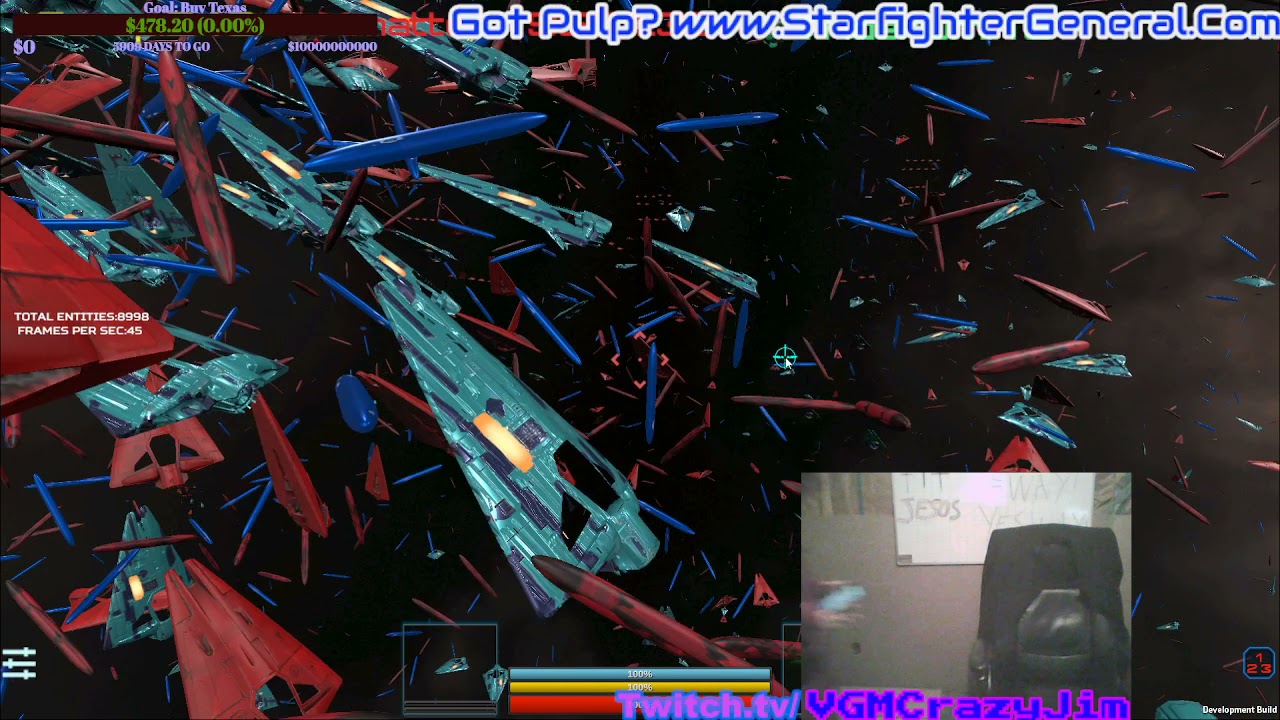
Starfighter General: One MMO to rule them all and in the light free them: https://www.starfightergeneral.com/
Starfighter General: A soul gamer indie in the age of boring corporate spew.
This action MMORPG will have live game masters. Those who role play well whether good guy bounty hunter, bad guy pirate, emporer or whatever will attract th...
Thank you everyone for helping me. I'm almost ready to release MOBA. Please pray my living conditions goes well. I have 20-60 hours to release, but I may have to move for the 4th time this year after my grandmother passing away and my family turning on me hatefully due to inheritance greed and covid fear.
indigo atlas
unborn totem
sorry I don't know anything about the nav agent system
It's a component I made with two properties. claimablePositions is a native array, and the code I posted is inside a Job. My issue is the destination for the actorNavAgent never seems to get set if I set the agentStatus, despite I am setting it in this same block. I believe the issue is either the claimablePositions array value has not been properly set when this code runs. I'm going to fix this morning and will post my findings.
I can post the OnUpdate method somewhere if anyone cares to have a look
indigo atlas
The issue is I am assigning claimablePositions based on positions of things I am instantiating, but since the instatiating happens after the jobs, on the main thread, they do not yet have their positions.
velvet panther
remote crater
Thank you everyone for helping me. I'm almost ready to release MOBA. Please p...
All the very best Jim! Good luck, and Godspeed!
remote crater
velvet panther
All the very best Jim! Good luck, and Godspeed!
Thanks bro, I need all the well wishing and prayer I can get. Super God bless ya!
velvet panther
remote crater
Thanks bro, I need all the well wishing and prayer I can get. Super God bless y...
Will pray for you! Make sure to focus on the real world as much (or more) than the digital one, at a time of stress and distress and grief. Give them all your love, all your patience, all your energy. Code waits.
tribal pollen
This might sound a bit odd... but is there a way to check component data of an entity from inside a monobehavior for that entity?
 karmic depot
tribal pollen
This might sound a bit odd... but is there a way to check component data of an e...
karmic depot
tribal pollen
This might sound a bit odd... but is there a way to check component data of an e...
I assume you're not using a subscene for conversion?
karmic depot
if nothing is in your scene, what do you mean "monobehavior for that entity"
tribal pollen
well I'm considering making a prefab of an object and have a mono on it
remote crater
yes
I do it all th etime
sec, let me get you code Ika
DOTS_MOBA_BOARD dmb = GameBoardModel.entityManager.GetComponentData<DOTS_MOBA_BOARD>(e2);
So DOTS_MOBA_BOARD is my entity data component
entityManager, you get that somehow
and Get ComponentData <type> (Entity from);
Boom then you just dmb (or whatever your var is called) dmb.variable in the DOTS_MOBA_BOARD struct or whatever you EntityDataComponent is
I actually mirror my entity off my player controller
Its the proper design pattern way
Then if I change the player controller, I only change once for my GameObject mode and Entity mode
I'm almost ready to do my big tutorial on youtube to make DOTS ez pz
Let me get my MOBA out this week or next first tho
 cerulean pulsar
tribal pollen
This might sound a bit odd... but is there a way to check component data of an e...
cerulean pulsar
tribal pollen
This might sound a bit odd... but is there a way to check component data of an e...
There's no formal relationship between monobehaviours and entities except during conversion. Any runtime relationship is custom. Changing your question to, "Is there a way to check component data of an entity from inside a monobehavior?" then the answer is yes, like Jim said, use YourWorld.EntityManager.GetComponentData<YourComponent>(yourEntity) . You can find your world in Unity.Entities.World.All
You can get a reference to your entity from a monobehaviour by tagging it and using YourWorld.Systems[0].GetSingletonEntity<YourUniqueTagComponent>() or by using an entity query
remote crater
Wow, I get even more performance if I don't launch a standalone debug build: https://youtu.be/dXyLOsHiwxM Now over 9,000 entities with scripted AI, collisions, rendered at 60 FPS!

Starfighter General: One MMO to rule them all and in the light free them: https://www.starfightergeneral.com/
Starfighter General: A soul gamer indie in the age of boring corporate spew.
This action MMORPG will have live game masters. Those who role play well whether good guy bounty hunter, bad guy pirate, emporer or whatever will attract th...
 heady vortex
I'm having an awfully hard time trying to understand DOTS in general
Does it basically revolve around multithreading your code?
unborn totem
Part of DOTS does that, yes.
Entities is another part. That part is meant to replace GameObjects one day. Though it is more complicated than that.
Biggest hurdle is that the editor has almost no GUI set up for any of this. There are some custom windows, but nothing as powerful as the GUI for GameObjects and Monobehaviours
heady vortex
How far into math do I need to know to work with DOTS?
indigo atlas
heady vortex
How far into math do I need to know to work with DOTS?
I don't think you need much maths to get started, it's more about how you think about your data and read/writing it. Then for me I spent time with the examples and watched a talk by Mike Acton at Unite which helped.
velvet panther
heady vortex
I'm having an awfully hard time trying to understand DOTS in general
If you aren't absolutely sure you need it, to the extent you're thinking of using another engine for performance gains, then you don't need to think about DOTS/ECS, Jobs or even Burst. And even then, it's best to go up the path, from Burst, to Jobs, to ECS... as you may not need more than Burst, and if you do, you might only need Jobs. ECS is in molasses, unfinished, undocumented and undergoing massive changes, avoid at all costs.
heady vortex
Is burst compatible with my regular old unity code?
velvet panther
Yes, to a large extent, you can just add Bursting versions of your algorithmic code, wherever you might need a ... wait for it... burst of performance.
heady vortex
why isn't it the default compiler then, if it's so performant?
velvet panther
It limits what you can make. It doesn't like objects and references, and preferring value types (structs) and standalone, strictly inline functions. It's like using only the invisible C part of C#
 vagrant surge
burst is fast because its limited vs normal c#
those limitations basically turn it into C
C is fast
heady vortex
ah I see
velvet panther
The best part about Burst is that you can use it in only the bits of your code that need to be faster. In most games you'll not need it, as graphics rendering (especially lighting and post processing) will likely be 10x slower than your game logic.
However, if you're wanting to custom make some special effect (visual or geometric moving, or something with lots of things being done in a single frame) then Burst can be great for that.
But, before then, I'd suggest taking a good long look at the Particle System (old one, known as Shuriken) because it's highly capable, and can be coded to do most any kind of visual effect that it doesn't do out of the box, and is aware of physics. It's a lot more capable than folks generally think it is.
"Jobs" is good for things that take a few frames to do, as it can spread a load across all the cores that aren't being used. So if you have a loading disaster that's taking too long to convert or decompress models and apply complex structures, then you can get as many cores as a machine has to speed that up, sometimes quite significantly. This is not simple code, and kind of requires that you understand Burst to get the most out of this, and has very few real applications.
ECS sits on top of Burst, primarily, but also Jobs, in providing a means to shape all your game as systems that Jobs and Burst can iterate over (hopefully efficiently) so that you can have 10x or 100x the objects animated and responsive in your game. However it requires you completely rethink how you make not only your objects, but how you deal with them, in terms of Systems (this is the S in ECS).
heady vortex
hmmm alright that sounds pretty cool
can you give a few basic examples of multithreading with jobs
like use cases
velvet panther
I'll give a very specific one, and hope this helps, and then ask me again if this isn't useful: I make sounds, that use quite complex shapes, to make the nuance of the sound, and it takes quite a deal of time to draw out that waveform, and I want to make many of them, somewhat dynamically, when you upgrade your engine in my game. So I "draw" those sound waves with Jobs, as that can spread the drawing load (many algorithms of sine/cos maths) across several cores, and get it done much faster than on one core, and off the main thread, so the game appears to keep running smoothly while I render this sound file.
This might take anywhere between 4 frames and 20 frames to do this rendering of the audio files, in the background, and then I know when it's ready, and can begin pulling from these "files" of audio information in realtime (they're really just arrays of complex audio).
heady vortex
So for example if I were doing a networked game. When the data comes in from the server it has to turn bytes back into values etc. Would it make sense to split up this operation using jobs? Like split it up between two threads?
velvet panther
heady vortex
So for example if I were doing a networked game. When the data comes in from the...
This is what the guy from DOTSNET is working on, a set of compression and decompression algorithms that use Jobs to do it better and faster, so yes, absolutely!
He's initially doing this in Mirror, which is MonoBehaviour based, and he's jobifying the compression, so you can follow along as he's doing it. And Mirror is astonishingly well documented, in and of itself, before you get into looking at what he's doing with the Jobs stuff for compression.
heady vortex
If I'm not mistaken, you can't update positions/rotations of objects in separate threads right? All has to be done after the jobs have returned the values to the main thread?
velvet panther
Yes, this is the main problem with Jobs, that it's really only suited for things that take more than a couple of frames, because of this limitation, and the setup costs of creating and distributing the Jobs, which is a bit much to be doing in a single frame cycle AND get the Jobs benefit from, and to then deal with the changed data.
heady vortex
would it make more sense to just keep a couple worker threads alive for the game duration then?
and just pass data to/from them?
velvet panther
If you're into threading, and know what you're doing, you'll likely get much bigger gains from doing it yourself than with Jobs, as Jobs is all about "ease of threading" rather than pure performance.
I'm a complete newb to threading and stackalloc, and my initial works are far faster than Jobs and even faster than Burst and Jobs.
heady vortex
and last question. Can I use burst and IL2CPP and still see performance gains with each other together?
velvet panther
I think so, this seems to be the big claim around Burst, that it's IL2CPP + IL2CPP with intrinsics focus!
heady vortex
👍 👍 👍
velvet panther
Of the three (Burst, Jobs and ECS) my gut feeling is that Burst is the most interesting, and the most educational (has been for me) and provides the most significant benefits with the least efforts. And understanding it and using it is portable to Jobs and ECS, if/when you may need either of them.
Having said, that I'm also tempted to suggest checking out using stackalloc and unsafe code within Unity, as it FLYS!!!
heady vortex
Any tips on what parts of code to use burst on? My code is heavily object oriented
velvet panther
My brain is heavily anti-OOP, so I've had an absolute blast with Burst and stackalloc and unsafe. It's the first time I've really enjoyed using Unity, so I'm probably the wrong person to ask about OO to Burst benefits. @wild onyx is probably able to answer this far better than I.
heady vortex
👍
velvet panther
heady vortex
Any tips on what parts of code to use burst on? My code is heavily object orient...
two things that I think you have to take a look at, are the NativeArray containers and the low level capabilities you get "out of the box" as they provide a great backbone for doing all the Burst stuff over your data, and automatically mean what you make is likely close to being ready to Jobify if you ever need to spread it out that way, plus they're all thread safe containers if you're making your own threads... hang on... link incoming...
Jump up and down through the (admittedly light) docs from here, then use Rider's decompile to see the details: https://docs.unity3d.com/ScriptReference/Unity.Collections.LowLevel.Unsafe.NativeArrayUnsafeUtility.html

Also, JacksonDunstan, if you've got a day or two for reading, covers HUGE amounts of insight into both Burst and Jobs: https://www.jacksondunstan.com/articles/tag/burst
JacksonDunstan.com covers game programming
velvet panther
heady vortex
👍
start "bottom up" - https://www.jacksondunstan.com/articles/5211
JacksonDunstan.com covers game programming
 wild onyx
heady vortex
👍
wild onyx
heady vortex
👍
since this is in #archived-dots, i'd do some napkin math at the beginning to see if i even need to worry about certain parts of my project becoming a performance bottleneck. particularly in regard to neworking i'd not worry about transport level stuff until i have to... and before writing my own transport i'd look very very hard at stuff others have done, that has been tested in multiple projects and multiple scales as getting that stuff right takes time. Also many problems, performance-wise can be solved by custom messages, custom serialization and compression via bit-stuffing and delta...
performance wise i'd first try to get there with SIMD before using fine-grained parallelism... to parallelize network messaging it must be done in continuously running background threads with a very keen eye always on overhead caused by context switching, latency, cache wipes ... might even behave differently on different CPU/OS... also sync primitives can have unexpected behaviour...
heady vortex
@wild onyx I've already written most of the netcode for my game. I'm simply trying to stuff as many players on to a single core as possible (serverside)
clientside however
when the client decodes the bytes into actual quaternions and vectors, it also applies a lerp to them, since the server is running at 30fps while the clients are running at 60+
I just feel like I could benefit from multithreading that part
wild onyx
heady vortex
I just feel like I could benefit from multithreading that part
maybe... .but your message pipe into that thread and out if it have to be designed carefully to actually get a benefit
wild onyx
yes, lock-free
maybe you can even use no synchronization at all... all depends on what you expect from the data, if glitches can be compensated elegantly
since its your project and not a generic solution you can probably get away with a lot of trickery
velvet panther
My gut feeling is that this: " the client decodes the bytes into actual quaternions and vectors, it also applies a lerp to them, since the server is running at 30fps while the clients are running at 60+" is exactly the kind of workload that will benefit hugely from stackalloc and SIMD considerations in how you structure the stacks you make for the incoming data, and the little results stack you pop the computed stuff onto after the SIMD magic before you apply it to your game objects.
wild onyx
would expect 10X over non-SIMD/parallel on a 8-core cpu
mind though that much of what you gain from cache & pipeline optimization (DOTS) gets wasted when data moves a lot between cores
but that again depends on how the CPU manages its cache
caveat: take that from someone who knows what DOTS is supposed to do but not how it does it in the current implementation
heady vortex
wild onyx
maybe you can even use no synchronization at all... all depends on what you expe...
Again I'm new to multithreading, so what do you mean by this? Literally just a generic queue instead of currentqueue or something?
wild onyx
if you don't care if two threads write to the same memory location in undefined order, you don't need sync
heady vortex
ah thats what you mean by glitches
wild onyx
so you probably care for x += a * b but you wouldn't for x += a + b, given that you never reset x
big maybe though...
also, race-cars crash and explode... and race car engineering's aim that all of the car's components break down 1 m behind the finish line all at the same time
velvet panther
wild onyx
also, race-cars crash and explode... and race car engineering's aim that all of ...
3asily the most programmery thing I'm going to read today!
tribal pollen
cerulean pulsar
There's no formal relationship between monobehaviours and entities except during...
Thanks. So then on conversion (of a prefab Gameobject with mono) would I be able to store a reference to it's entity inside the mono?
cerulean pulsar
tribal pollen
Thanks. So then on conversion (of a prefab Gameobject with mono) would I be able...
By default, the conversion systems destroy the GameObjects they process. You can override this behavior in different ways but we'd be in strange territory from my perspective. Also, you seem to not have any GameObjects for the conversion systems to process, because you said you don't have any subscenes and suggested that you don't have any GameObjects with ConvertToEntity on them, just a single GameObject with a setup script.
You could have the monobehaviour you're interested in create the entity you want a reference to, so when you instantiate that GameObject prefab via your setup script, the prefab instance will create the entity and will have the reference.
karmic depot
now that I think about it, depending on your use case, you could add your MonoBehaviour with AddHybridComponent. That would create a hidden GameObject with your script attached, for every entity. @tribal pollen and I think you can find the appropriate entity via CompanionLink component
 acoustic spire
What technology for parallel programming Unity Jobs built on? OpenMP?
robust scaffold
velvet panther
start "bottom up" - https://www.jacksondunstan.com/articles/5211
I wish Jackson could get back to digging into Burst. I miss him
velvet panther
robust scaffold
I wish Jackson could get back to digging into Burst. I miss him
think he's gone to greener pastures.
sinful cipher
Its been a while since I really delved myself into everything DOTS related. There is as of yet no integration with physics right? Like, no way to interact with physics exclusively though DOTS/ECS?
coarse turtle
sinful cipher
Its been a while since I really delved myself into everything DOTS related. Ther...
As in an alternative to Havok & Unity's DOTS physics?
Since those are the 2 libraries I'm aware of related to DOTS & Physics
sinful cipher
coarse turtle
As in an alternative to Havok & Unity's DOTS physics?
Uhm, not necessarily? I just want to do basic things such as apply forces without having to deal with UnityEngine.Object-based components such as the Rigidbody.
Because it becomes super complicated to make that fast and scaleable
coarse turtle
https://docs.unity3d.com/Packages/com.unity.physics@0.6/manual/index.html Might be worth browsing this and seeing if it fits your needs
I don't use it since I'm more in 2D land atm, but I know a few folks here use it
sinful cipher
Any idea when com.unity.physics 0.6 was released? I'm searching for it but maybe you already know
coarse turtle
Jan 2021
sinful cipher
Anyone here got any experience with Unity DOTS/ECS physics? Is it any good so far and worth investing time in?
haughty rampart
it's pretty good already.
from all the entities related packages probably the one with the most worked on features yet
 tight blade
so, I have a question, and I'm just looking for a broad strokes answer, because I'm fairly sure this is a major category of program design that can't be answered simply
so far I've just been designing systems that are supposed to be always doing something - updating derived values every frame. but now I want to make a system that executes a single set of instructions in response to infrequently met conditions. like a button press.
I'm fairly certain that what I'm talking about here might be described as an "event", but I'm frightened to use that word, because I'm scared the answer is "yeah, you have to homeroll your own concept of event based programming and bolt it onto the ECS framework"
I suppose the triggered collision jobs are an example of event that already exists in ECS
so, I guess my terrible, overly broad question is... what are my options when it comes to running systems that dont run every frame, other than having those systems poll for those conditions every frame? aka, what are my options for responding to events
tight blade
sinful cipher
Anyone here got any experience with Unity DOTS/ECS physics? Is it any good so fa...
hey, when you're digging into physics, feel free to @ me with questions. I'm not an expert in all of the niche use case things you might run into, but I've been working with it for a while
I can at least try to help with some of the initial gotchas
sinful cipher
tight blade
hey, when you're digging into physics, feel free to @ me with questions. I'm no...
That sounds great. Thanks alot!
left oak
@tight blade, have you looked at tertle's incredible event system? https://forum.unity.com/threads/event-system.779711/
Unity Forum
As the original post is a bit outdated now I've moved it to here
The project and documentation can be found here:...
digital kestrel

In this talk we will describe the design principles and goals for the Unity rendering engine architecture, as well as delve into the evolution of the architecture toward more flexibility and extensibility, while targeting wide platform reach with performance. Part of SIGGRAPH 2021 Rendering Engine Architecture in Games course (http://enginearchi...
SIGGRAPH talk on hybrid DOTS
haven't watched it yet but it's on yt now if you guys wanna watch
velvet panther
digital kestrel
haven't watched it yet but it's on yt now if you guys wanna watch
is Hybrid what we get when they realise the "templates" of HDRP and URP are failed initiatives?
velvet panther
tight blade
hey, when you're digging into physics, feel free to @ me with questions. I'm no...
Also, check out DreamLatios work on a "physics" system. Merely reading this will give insights, I think: https://github.com/Dreaming381/Latios-Framework/blob/master/Documentation~/Psyshock Physics/README.md

GitHub
A Unity DOTS framework for my personal projects. Contribute to Dreaming381/Latios-Framework development by creating an account on GitHub.
Generally speaking, the failure to get a DOTS/ECS integrated physics system, particle system and audio system anywhere near a full fledged alpha state, and locking down of the general commentary on rendering, shader and lighting problems with DOTS/ECS, give the most accurate insight into where things are at. Project Tiny could have been, and now should be, the evolving surface for experimenting with ECS, in a separate editor. Especially now that it's clear WebGL Unity Monobehaviour Export/Builds can be made reasonably sized and performant. Attempting to grow leaves with branches before a root system had been idealised has meant that all these systems are now in stasis, and will need to be rewritten and/or re-amalgamated with whatever comes of DOTS/ECS in 2022, and only then can an alpha process for these incredibly significant systems begin in earnest.
IOW, we are in 2018, all over again, as far as DOTS/ECS is concerned.
The good news? Burst and Jobs. And soon... Span<T>
golden ridge
I'd just like to check for support of DOTS/ECS in the 2021.2 version of the Unity editor.
 gusty comet
hi, I would like to do my end of degree project about high performance computing in unity, should I use dots/ecs or stick to C# jobs only? Because of the last messages I have my doubts
digital kestrel
gusty comet
hi, I would like to do my end of degree project about high performance computing...
your code will generally perform quicker with ECS
deft haven
Is it Possible to create a function in the blob asset script to Create and Return an Entity Archetype?
safe lintel
@golden ridge 2020 LTS is really the only officially supported version, though you may have success using 2021.2, if you have any issues you will just be referred to 2020
@gusty comet well its definitely incomplete, you should open up the sample projects and see for yourself if it suits your needs. i personally would recommend holding off now only because unity is not releasing updates for the time being, not necessarily because of the incomplete factor.
tight blade
velvet panther
Also, check out DreamLatios work on a "physics" system. Merely reading this will...
nice, thanks for the reference! I only use physics systems as lightly as I can anyway, but I love love love having the physics systems around to lean on for prototyping and stealing library code
almost everything I know about ECS (and quaternion math) has been from looting the Unity.Physics package
so definitely glad to have another library to loot
and.. it looks like DreamingLatios engine is philosophically tailored for that type of usage pattern
nice
 sharp dragon
There's no statement after your if
Just a ; which is an empty statement/does nothing as warning says
You can remove that whole line since the while loop breaks on the same condition already
 void ravine
gusty comet
arent bool comparisions single equal?
void ravine
gusty comet
arent bool comparisions single equal?
single equal sing is assignment not comparison
gusty comet
guess I should get some sleep, brain is super fried today. Good thing I aint programming anymore today.
 wise nacelle
I'm guessing this question gets asked 200x a day, but I couldn't find the answer in the pins: is there a good course/tutorial on learning about dots? Preferably applying real world solutions. I get the abstract concept, but I'm having a hard time applying it. I found a course on udemy but it was last updated a year ago, did a lot change? Or should that be fine? https://www.udemy.com/course/unitydotsfundamentals
Also, there's something I've been wondering. I understand how you can achieve better performance with dots. But I don't understands if this also affects rendering. I have never made a game where my code was the bottleneck. It's always the graphics and how many objects I want to render at once. Does dots also tackle that? Allow me to have more visible objects?
 muted star
wise nacelle
Also, there's something I've been wondering. I understand how you can achieve be...
muted star
wise nacelle
Also, there's something I've been wondering. I understand how you can achieve be...
I'm not experienced with DOTS but if graphics is your bottleneck DOTS is not going to help you much.
If you have thousands of objects doing stuff ECS can also be helpful to keep you code clean, other than that DOTS is mainly for performance.
muted star
wise nacelle
I'm guessing this question gets asked 200x a day, but I couldn't find the answer...
Turbo Makes Games has up to date tutorials on DOTS and ECS
The documentation is also good
wise nacelle
All right, thanks. I'll watch those.
The thumbnails are a bit cringe though :p
I did read the docs, the abstract is clear. It's just very different to apply it to real world problems. I found some CodeMonkey videos that apply dots, pretty decent.
muted star
Don't judge a book by its cover ^^
wise nacelle
I'm not judging, just entertained 😄
digital kestrel
hey guys
how do we see the assembly code for a specific function
that was burst compiled
        public bool PassFrustumCulling(float3 point)
        {
            bool pass = true;
            var dot0 = math.dot(-Planes[0].normal, point);
            var dot1 = math.dot(-Planes[1].normal, point);
            var dot2 = math.dot(-Planes[2].normal, point);
            var dot3 = math.dot(-Planes[3].normal, point);
            var dot4 = math.dot(-Planes[4].normal, point);
            var dot5 = math.dot(-Planes[5].normal, point);

            pass &= dot0 < Planes[0].distance;
            pass &= dot1 < Planes[1].distance;
            pass &= dot2 < Planes[2].distance;
            pass &= dot3 < Planes[3].distance;
            pass &= dot4 < Planes[4].distance;
            pass &= dot5 < Planes[5].distance;
            return pass;
        }
i wanna see if that gets vectorized properly
hollow sorrel
@digital kestrel toolbar > jobs > burst > open inspector
digital kestrel
hollow sorrel
<@!542556051317325835> toolbar > jobs > burst > open inspector
thanks
golden ridge
Should ISharedComponentData be used in projects? I saw someone on the forums stating to not use them at all cost.
coarse turtle
golden ridge
Should ISharedComponentData be used in projects? I saw someone on the forums sta...
Depends on scale, if you have unique data that is shared between many entities, then you can use it instead of each entity having a copy of said unique data. If your entities are large and structurally change frequently, then you'll be paying for the cost of copying the data of entities between chunks
golden ridge
Something I am unsure about is about the existence of tags and systems that are for example called MakeEnemyMove that act only on thing with the tag enemy. I've heard that in ECS and Data Oriented design systems should have no distinction that if it's an enemy or not it only wants to know if it needs that system.
left oak
golden ridge
Should ISharedComponentData be used in projects? I saw someone on the forums sta...

Game Torrahod
This is one of the most misunderstood feature of ECS. Usually results in question like "How could I get SCD data in a job? I can't? Useless!" when you don't know how it was designed. So let's get to know how it works throughly.
golden ridge
left oak
https://gametorrahod.com/everything-about-isharedcomponentdata/
Thanks you but do you also have any answers to my other question maybe?
left oak
golden ridge
Thanks you but do you also have any answers to my other question maybe?

Game Torrahod
Tag component or "zero-sized component" is a special case in Unity ECS where IComponentData doesn't contain any field. The use is to intentionally separate entities to more chunks because a chunk is defined by one set of archetype.
Though, note that in the future, tags might be a bit field header type of thing, but right now, they constitute a structural change
golden ridge
Can you explain it a bit more clearly?
left oak
Which part?
golden ridge
To reformuler my question, should tags exist in my code when using ECS.
*reformulate
left oak
Well, I tried linking you to a highly-informative article that would elucidate a number of uses for tags, but since you seem to want just a blanket statement: the only difference that makes a tag is that it is an empty component data; existential processing based on composition doesn't necessarily care what the values in a component are; so why not use tags?
golden ridge
left oak
Well, I tried linking you to a highly-informative article that would elucidate a...
Ok sorry I did not see the link you sent me. My phone didn't preview it.
left oak
Np, that author has a lot of articles (some technically outdated, but still principally sound) that might help guide you on understanding Unity's ECS
robust scaffold
golden ridge
To reformuler my question, should tags exist in my code when using ECS.
Tags are very important as they allow for rapid "alignment" of entities for use in Entities.ForEach. Sure, they dont have any data within themselves but by fragmenting a chunk deliberately allows for far more fluid data processing.
For example, I have individual and bank entities that have a "wallet" component data. The difference between the two is that banks have a "Bank" empty component data added to it. In a first stage ForEach, I need to calculate the "interest" upon the wallet for every entity. That can be done with a simple query of all entities containing "wallet". A second stage now requires that all banks subtract a certain amount from their wallet, now I do a ForEach that also has a .WithAll<Bank>() parameter. Even if the "Bank" component has nothing in it, I can now easily differentiate between the two different types of entities.
And most importantly empty components is a chunk based component. It takes 0 memory per entity basis (but a few per chunk). That is important when you have millions of entities and need to manage memory usage precisely but dont want to waste a SharedComponent on it.
 hearty musk
Can anyone recommend some “getting started with dots” resources?
 full epoch
Code Monkey has good tutorials but they are somehow outdated dots changed a lot meanwhile but still i think it might be good starting point to learn basic stuff however as i said its outdated a bit - one newer is unity ecs roll a ball dots tutorial 2020 - by turbo makes games - you can find these tutorials on yt - also very good is site - gametorrahod dot com - but havent checked it lately but i think it's up to date - probably there are other sites that someone else will point to - edit : also manual of latest entities version is extremely helpful once you learn the basics also this discord channel and also dont forget unity dots forum where u can find a lot of solved problems explanations etc
 viral sonnet
Does the ref work for anyone when using ElemenAt from a NativeList? I can't manage to write any values back to the struct but the return value of ElementAt is a ref, so, not sure why it's not working.
yeah, i dunno, ElementAt returns: return ref UnsafeUtility.ArrayElementAsRef<T>(m_ListData->Ptr, index); - though it's not working, so in that regard it's a useless method. huh
viral sonnet
ok, got it to work, code was wrong. this is how you correctly get it: ref var ele = ref nList.ElementAt(0);
digital kestrel
hearty musk
Can anyone recommend some “getting started with dots” resources?
not that many imo. Code Monkey is good. turbo squid is pretty good. Personally, I looked at ECSSamples on github, read the documentation, and looked through Unity Dots forum
do you guys have both game object colliders and physics shapes on your game objects?
where the GO colliders apply only to the player character
 carmine dagger
Hey im trying to implement a reward system (gold, xp, etc) before destroying an entity that has been tagged for death. I was able to get something working with a GameManager/Monobehaviours the downside being it had to be run .WithoutBurst(). Is there a way to implement something similar and retain the benefits of ECS? I tried updating another entity but couldnt figure out how to set component data of a different entity.
Im new to DOTS and ECS. Apologies if this is pretty basic. I tried searching here and google first along with a few youtube and Udemy videos which all seemed to use the monobehaviour workaround.
viral sonnet
@carmine dagger What's your actual question? Getting the entity with the tag component? Setting data on another?
carmine dagger
Setting data to another. I want the entity to be destroyed, and increment a value on another entity.
viral sonnet
There are 2 ways of setting. Linear or with random access. If you use a ForEach with your tag and a ref you can write to this data. Otherwise, ComponentDataFromEntity can lookup and write entity data.
The basic samples should get you started, in the beginning, it's easiest to utilize the Entities.ForEach
carmine dagger
Ill check out the ComponentDataFromEntity. The ForEach I couldnt get working. Tried adding a code snip but it was removed.
viral sonnet
removed?
carmine dagger
More specifically The ForEach is great when finding the things I want to destroy and cleaning them up. I couldnt get it to change the value of another entity.
Yeah. It flashes for a moment and gets deleted.
viral sonnet
not sure what that means 🙂 anyway, if you're in a ForEach and want to set other entities, CDFE as previously mentioned is the way to go
carmine dagger
This.

Its like being autodeleted. Either way. Appreciate the advice. Going to check out CDFE and see if I can get that working.
 inland depot
Strange question but does anyone know whats happening with the ECS worlds?
I've been messing around with them and I had a cool idea about how to split up some work across worlds so that a simulation world can do some thinking while the render world just shows the player some stuff and allows for camera control while it's waiting for the simulation world to do it's job
but then I had a proof of concept working and noticed that it all runs sequentially on the main thread whereas I was hoping that each world would get a main thread and I could then schedule the cross world communication on my own 😦
 frosty siren
Hi all! Should i add [BurstCompile] to my IJobEntityBatchWithIndex if i use it inside SystemBase in 0.17 ?
left oak
inland depot
but then I had a proof of concept working and noticed that it all runs sequentia...
I have no idea how you're implementing this, but it doesn't sound like you're utilizing jobs in any meaningful way, because if you were, you wouldn't have everything running on the main thread (here's an interesting article on how to minimize main thread blocking when preparing jobs: https://gametorrahod.com/minimum-main-thread-block-with-out-jobhandle-overload/) ... The only time you need to come back to the main thread is during synchronization of your worlds
 torn spruce
im having trouble installing entities
i installed from package manager using a git url, and the namespace is not showing up inside code
how on earth do you set dots up
half jay
what project settings should i use for app on android/iOS with ecs 0.16 and burst 1.3.9. Should i set ill2cpp or mono and .net4 or 2.0 ?
cerulean pulsar
torn spruce
i installed from package manager using a git url, and the namespace is not showi...
I install DOTS packages via MyProject/Packages/manifest.json. Add "com.unity.entities": "0.17.0-preview.42", for example
cerulean pulsar
golden ridge
Something I am unsure about is about the existence of tags and systems that are ...
If the enemy moves in a special way, it could be important for the moving system to distinguish between enemies and non-enemies. I wouldn't consider movement speed a special type of movement, though, since all movable objects need a speed. You might have a Movable component with a MovementSpeed field for that simple case, rather than a tag
inland depot
left oak
I have no idea how you're implementing this, but it doesn't sound like you're ut...
What I mean with sequential is that the simulation updates in the same thread as the render world. So by default I have really long wait in my Simulation world while all the systems run, but what I want is for the systems to run in parallel with the other world which might update 30-40 times per simulation world tick
left oak
inland depot
What I mean with sequential is that the simulation updates in the same thread as...
Did you actually make your own custom-bootsrapped simulation world, or are you just talking about the simulation system group, cause what you're describing shouldn't really be happening. You shouldn't be doing so much main thread work in one world that you're starving the other one. You should be able to offload most of your jobs to worker threads, and only come back to the main thread for synchronization and dispatching
You know, everything here sits atop Unity's underlying player loop. There's some stuff you can do to work around that, like calling update yourself at your own desired frequencies, but it's quite the rabbit hole
muted star
frosty siren
Hi all! Should i add [BurstCompile] to my IJobEntityBatchWithIndex if i use it i...
All jobs need the [BurstCompile] decorator as far as I'm aware of
inland depot
left oak
Did you actually make your own custom-bootsrapped simulation world, or are you j...
Custom boostrap with a custom IFixedStepManager implementation to manage the communication timing between worlds. So from my point of view the EntityManagers will never actually collide. The only thing that needs to be co-ordinated between them is the job scheduling but in an ideal world I would just give the render world 3-4 threads which take preference over simulation world jobs... cause for the most part The simulation world has few thousand items to go through but that could be split into jobs that take roughly 2-3ms each so that the render world can jump in and take resources
Actually triggering update is simple for me because I don't really care about the delta time it takes the simulation world, the render world just needs to stay responsive to movement when the simulation world has lots of stuff going on that makes it take long
I also don't really care about syncing up perfectly as long as the simulation world is essentially read-only when the updateManager tells the render world it's clear to read. Once all the transfers are done the render world will happily tell the simulation world todo another step so the time it takes the render world to do the transfer is essentially lost but that's an overhead that I can happily live with 🙂
But that whole thing doesn't really work if the simulation world is just scheduled for an update before/after the render world on the main thread 😦 as that just blocks it rather than being parallel. I really want a way to tell unity to stop managing the update cycle and just release the Simulation world and just give it a pseudo thread that acts as the main thread for that world specifically.
I feel like worlds are is just fighting the safety system though, at least the way it currently works 😦. It's not really a different world if it doesn't actually run separate to the main world, You can't really spin up a world to take the performance hit of a long calculation like you can with a job that just lives for a few frames 😦
left oak
Hmm... I think it's technically possible to call your updates entirely manually, but yeah, inter-world communication require coordination within the main thread. I'm a little surprised the transfer takes so long that it hangs your progress. If time is your limiter rather than memory, you could consider like a buffer world?
inland depot
It doesn't hang my progress yet, but if it does it's not an issue
left oak
Also, your simulation world can work during the transfer to your rendering world, but it cannot make structural changes safely
inland depot
My issue is that running the simulation world will eventually be on the order of Seconds-Per-Frame while the gameplay is fine with time-dilation. But I can't run them in parallel
At least I haven't figured out how yet
left oak
hmm, this might be elementary for you at this point, but there might be some hints here: https://gametorrahod.com/world-system-groups-update-order-and-the-player-loop/

Game Torrahod
If you have started using ECS, you might have heard of the "default world". You may notice that your defined systems are somehow updating magically. In this article, we will learn about that in reversed order.
inland depot
Currently my simulation world doesn't update until the render world moves it's data around (which is fine), so there aren't any data issues but some of the Simulation system have sync points which I don't see why the render world has to stop to wait for
Sure there is job scheduling stuff which might be more complicated but no data from sim world affect render world cause they are separate
Hence why I'd like to have the sim world have it's own 'Main thread' so that render world can happily keep going :/
left oak
I didn't think one world's sync point stopped all other worlds' jobs
inland depot
Well they all get scheduled on the main thread so you need to get all the stuff running from Sim world which means that Render world doesn't get it's update till it's all done
robust scaffold
inland depot
Hence why I'd like to have the sim world have it's own 'Main thread' so that ren...
Doesnt alternate worlds run on job threads?
as long as they dont have a presentation group?
inland depot
At the moment there is some stuff that I can't run from an Entities.ForEach so that all has to be done manually which causes a lockup, I'll need to have a another play with those at some point but either way scheduling should be done separately too (ideally)
but I can see why it's not cause it would complicate everything only for some edge cases like this
robust scaffold
Wait no, they're all stacked together in the player loop
inland depot
yeah :/
robust scaffold
inland depot
At the moment there is some stuff that I can't run from an Entities.ForEach so t...
If you're not already, you need a custom bootstrap solution. Something akin to the fixed step implementation
inland depot
inland depot
Custom boostrap with a custom IFixedStepManager implementation to manage the com...
See here
robust scaffold
except the player loop will instead access a public "end" dependency from this new world. Check for completion, if not then skip updating that entire world and continue on
Actually accessing the job scheduler I dont believe is possible. That's black box C++ code
so no "priority" scheduling sadly
The Render system already has their own specially allocated job thread, no need to worry about jobs locking the thread.
However, I do believe there is an issue about Entity jobs specifically lasting longer than 1 frame
The problem lies with the ComponentTypeHandles being invalidated at the end of every frame
inland depot
hence why I need an entire world for it which would in theory have it's frames last longer than the other worlds
robust scaffold
Normal Bursted Jobs can last however long they need because NativeContainers can be declared TempJob (4 frame lifetime) or Persistent (unlimited frame lifetime). ComponentTypeHandles are declared Temp for automatic memory disposal and thus cant last longer than a frame
So Entity.ForEach must be completed within a frame
inland depot
I have a feeling that I'm gonna have to go outside of Unity to keep playing with this little idea of mine at this point 😦
robust scaffold
The CTO's offer solution is somehow manually segment the chunk iteration, divide chunk count and then iterate over a number of chunk indices. Early return those outside the current frame's index values.
inland depot
Doing this using the job system is going to suck, I'd rather use ECS systems for the automatic schedule handling
robust scaffold
inland depot
I have a feeling that I'm gonna have to go outside of Unity to keep playing with...
Networking and additional worlds at this point straight up dont work. They're half baked ideas casually attached to unity DOTS by ducktape and hope
If you want to remain in the Unity ecosystem but do something like you're describing, you'll need to implement your own ECS from the ground up
juggle native-arrays and pointer operations manually
inland depot
Unity provided networking has never really worked and worlds will probably get implemented after core ECS goes production ready at this rate 😦
I'd just give Bevy a go and see how their worlds stack up :/
robust scaffold
Yea, worlds are... intended to be used like what you're describing. Functionally independent system groups that only need to come together when scheduling.
But in it's current forgotten implementation, it doesnt work
Unity really needs to implement a "shared - chunk" component data
Shared blittable component data that is readonly-accessable within a threaded job
inland depot
Nah, customisable dedicated threads so that I can make a thread play the player update cycle for my simulation world without it moaning
maybe since 2021.2 is out there will be an ECS update soon
robust scaffold
inland depot
Nah, customisable dedicated threads so that I can make a thread play the player ...
At that point, you'll need a custom engine
Bevy seems decent. The documentation is a bit sparse but it's not like Unity is any better.
I just cant abandon Burst. It's so fucking good. I'm running off 2.5 million entities with random and dynamic access and burst can make that functional
inland depot
let me see if I can find something that might give some insight on that

GitHub
Benchmarking Burst/IL2CPP against GCC/Clang machine code - GitHub - nxrighthere/BurstBenchmarks: Benchmarking Burst/IL2CPP against GCC/Clang machine code
It's likely that the main reason it's so good is because it's good compared to monoC# or IL2CPP
but yeah it's a good tool to have
robust scaffold
inland depot
It's likely that the main reason it's so good is because it's good compared to m...
Hrm, true. I'm not a comp sci or even a decent programmer. burst does all the auto-vectorization for me
and also the graphics engine. Yea fucking right can I make one of those myself
inland depot
some languages are better than others but it mostly depends on the compiler your using and if it does vectorisation/SIMD for you automatically
robust scaffold
I have 3 gameobjects actually rendered. A globe with a lot of fancy post processing. The entities thankfully never need to be rendered
 stone osprey
Just out of curiosity, is there any ecs faster than unitys ?
Well there arent that many ecs for c#... Entitas is not that fast i guess... But theres still default.ECS and liteecs. Can those be faster than unity ? What does this depend on ?
inland depot
stone osprey
Just out of curiosity, is there any ecs faster than unitys ?
Well there arent ...
Faster how?
Faster startup, Yes there is.
Faster queries, probably.
Faster runtime will depend on what the systems are doing and the optimisation the language provides for the platform your working on...
inland depot
Also parallelism is a factor as some ECS libraries will be parallel without locking, others will update each entity in parallel (like unity) while others will just run systems in parallel...
stone osprey
inland depot
Faster how?
Faster startup, Yes there is.
Faster queries, probably.
Faster ru...
Just faster in general, like faster iteration, queries or whatever :)
I just thought unity does some c++ magic under the hood which makes it just faster than any c# ecs lib out there
inland depot
stone osprey
Just faster in general, like faster iteration, queries or whatever :)
I just t...
Sure it has burst which will generate machine code from C# which is unique but other languages which make machine code in the first place will produce similaraly optimised code in a lot of cases.
I do think that burst will be a little better in the long run if your targeting consoles cause you don't have to make as many assumptions which the capability of the hardware... but you can also do those optimisations in other languages/engines it's just going to be more manual
sinful cipher
In Unity DOTS Physics:
If I author a composite collider object (say a cube + a sphere) and have it convert to entities at runtime, will the resulting composite collider be considered 'final'? As in: I can no longer move the sphere around in relation to the cube within the composite object?
sinful cipher
sinful cipher
In Unity DOTS Physics:
If I author a composite collider object (say a cube + a s...
@tight blade Hey, perhaps you happen to know something about this
(I suppose I could just try this out tomorrow. It just crossed my mind as I observed that all PhysicsShape components are stripped from child colliders and merged into a composite collider attached to the parent entity.)
 gilded palm
hi, i have problems with capsulecastCommand, i use the same params for both commands and normal call. While the normal call return hits correctly, i always get invalid RayCastHit with Commands!

 stiff skiff
Quick question, if I store an Entities.ForEach query with a WithStoreEntityQueryInField. Can I set a filter on this query?
I know I can do it through the Entities API, but the filter needs to be set conditionally, so doing this through the stored query sounds best
left oak
stiff skiff
Quick question, if I store an `Entities.ForEach` query with a `WithStoreEntityQu...
You can set a change filter or a shared component filter in Entities.ForEach, is that what you mean?
haughty rampart
stone osprey
Just faster in general, like faster iteration, queries or whatever :)
I just t...
There are definitely other ECS frameworks, but Unity's will definitely be a very highly optimized and efficient one. Probably the best goto for gamedev. Lots of this is because of the burst compiler, but no, they do not do any c++ magic under the hood. Burst will even generate faster code than c++ code in lot's of cases. There's a small blog about this too if you want to read more on it if you are interested. https://lucasmeijer.com/posts/cpp_unity/
Lucas Meijer personal website
stiff skiff
left oak
You can set a change filter or a shared component filter in Entities.ForEach, is...
Sorry let me clarify. I have an Entities.ForEach, that sometimes needs a change filter active, and sometimes doesn't
so instead of writing the whole thing twice, with and without, I want to know if I can use the WithStoreEntityQueryInField and set the filter conditionally on that
left oak
Here's some info about what you get from an Entities.ForEach stored query that I found in the docs: "The EntityQuery is created in OnCreate. This method gives a copy of that query that can be used at any time (even before the Entities.ForEach is invoked). Also, this EntityQuery does not have any of the filters that the Entities.ForEach invocation sets up." @stiff skiff
sinful cipher
haughty rampart
There are definitely other ECS frameworks, but Unity's will definitely be a very...
good post btw
stiff skiff
left oak
Here's some info about what you get from an Entities.ForEach stored query that I...
Super, got it all to work
sinful cipher
Despite reading numerous descriptions of what a 'blob' is, I still don't quite understand it.
So far it appears that the basic idea is that you have a pointer to a much more complex structure (e.g. a collider mesh) that you'd rather not try to cram into a (shared) entity component?
haughty rampart
sinful cipher
Despite reading numerous descriptions of what a 'blob' is, I still don't quite u...
a blob is just an immutable piece of memory where all your complex (object-)information is stored.
sinful cipher
haughty rampart
a blob is just an immutable piece of memory where all your complex (object-)info...
@haughty rampart Any idea where the name 'blob' came from? Just wondering. Maybe there was a particular thought behind it, and maybe knowing it might help it all click in my head.
Although if I had to guess: just a massive 'blob' of data or something
haughty rampart
sinful cipher
Although if I had to guess: just a massive 'blob' of data or something
pretty much. just a thing without any real shape, which still has all the (internal)properties you need XD i guess
sinful cipher
haughty rampart
pretty much. just a thing without any real shape, which still has all the (inter...
I see.
So here we have the Collider. And so it seems that it tells you "the data starts at pointer and ends after this size". And then all you get is the Type which informs you how to interpret this data, right?
 haughty rampart
about right
sinful cipher
Okay. Thanks
Something physics/math related:
I often encounter the word 'Jacobian' in Unity DOTS physics. Is this some kind of integration method like Verlet, Euler & RK4?
haughty rampart
short: jacobian: solving a constraint matrix by linear approximation.
sinful cipher
haughty rampart
short: jacobian: solving a constraint matrix by linear approximation.
Lol, luckily I just barely have enough math knowledge to even imagine what that's supposed to mean.
How many input constraints are we talking about? Arbitray number, or just two? Or is this a complete nonsense question I'm asking in this context?
Other than that, I have to say.. Its really cool all of this is just exposed to us like that in the DOTS physics library.
haughty rampart
yeah, more core parts of unity will also be rewritten in HPC#, so that might expose a lot more of unity itself too which would be great
haughty rampart
sinful cipher
How many input constraints are we talking about? Arbitray number, or just two? O...
i'm not too deep into these physics myself, but my guess is only for 1
at least the calculations are
sinful cipher
haughty rampart
yeah, more core parts of unity will also be rewritten in HPC#, so that might exp...
Its funny you can just dig around and stumble upon the place where they do the basic 'position += velocity * dt' for everything.
sinful cipher
haughty rampart
i'm not too deep into these physics myself, but my guess is only for 1
Oh right. I meant 'two' as in 1 joint between 2 bodies. So in that case my hunch seemed to be right.
torn spruce
where are the systems in the unity scene
im so confused
like where do they actually go in the scene
coarse turtle
torn spruce
like where do they actually go in the scene
they're not bound to a scene
systems will live in worlds effectively
torn spruce
coarse turtle
systems will live in worlds effectively
just by the script existing in the project?
coarse turtle
in a way yes
because unity uses reflection (iirc before the first scene loads) and construct the systems from the types which exist in the assemblies
torn spruce
ty!
deft haven
I might have missed it, but I've read the Rules there was no mention that I can't post a Link, so here it goes... here a link on a my Forum post asking for help about how to create a "X" Definition Database kinda of thing in ECS.
https://forum.unity.com/threads/how-to-create-a-x-definition-database-in-ecs.1192864/
Unity Forum
X Definition Database is what I call a Collection of Scriptable Object, for Area, Monster, Ability, Item.
I know about Blob Assets, but my problem...
haughty rampart
deft haven
I might have missed it, but I've read the Rules there was no mention that I can'...
what's your question?
deft haven
@haughty rampart how to create some kind of collections of "x" definition but for ECS, I use polymorphism in my Scriptable Objects
Ex: Item can be Equipment, Consumable, Material, Etc.
Abilities can be Passive or Active, that either have a Cooldown or Resource Cost. Or Both.
haughty rampart
deft haven
<@215504142947319808> how to create some kind of collections of "x" definition b...
that is generally not how you should think when working with ecs. your approach is incorrect
just create an entity with all the required data components you need. there's your item
stone osprey
Just out of curiosity... same archetypes are stored in the same chunk. Right ? So actually, a entity Player, Transform, Rotation is stored next to all other same entities. So if we wanna iterate over them, unity searches that archetype and iterates over those arrays.
But what happens if we wanna iterate over Transform, Rotation only ? They dont have their own archetype, because they are part of Player, Transform, Rotation. What does unity do in that case to get all Transform, Rotations from all archetypes ?
haughty rampart
stone osprey
Just out of curiosity... same archetypes are stored in the same chunk. Right ? S...
first, they aren't arrays.
second, all componentdata of same type is grouped together
stone osprey
haughty rampart
first, they aren't arrays.
second, all componentdata of same type is grouped tog...
What no arrays ? And how does that look like ?
haughty rampart
it's just continuous memory
stone osprey
So lets say we have an archetype Player, Transform... all entities of that archetype would be simply stored in an block of memory like this ?
Player, Transform, Player, Transform... ?
amber flicker
stone osprey
So lets say we have an archetype `Player, Transform`... all entities of that arc...
This post previously helped me get a better understanding - perhaps it will help here - https://forum.unity.com/threads/ecs-memory-layout.532028/
Unity Forum
I've read the ECS features in detail section of the documentation and want to see if my understanding of the data layout for entities/components is...
stone osprey
amber flicker
This post previously helped me get a better understanding - perhaps it will help...
Thanks ! 🙂 One thing i dont understand is... if everything is nicely sorted in arrays. How do we iterate over a combination of structs, which do not have their own archetypes ? An example
Player, Transform, Rotation, Mob, Transform, Rotation, Building, Transform, Rotation
Iterating over one of those archetypes is pretty simple, we search that archetype and start iterating.
But what happens if we simply wanna iterate over Transform, Rotation ? This one does not have its own archetype... wouldnt that slow down the speed ? What would unity do ?
amber flicker
stone osprey
Thanks ! 🙂 One thing i dont understand is... if everything is nicely sorted in ...
Did you read down a bit in the post? e.g. does this not help answer your q?
 stone osprey
Yes... but i dont really understand it ^^
Oh wait... probably now. So it simply looks into the matched archetypes and fetches the wanted components from there ?
amber flicker
it doesn't fetch - I think of it as just making an array of pointers to the memory. For any chunk there's a constant stride that can be used. Sorry - on phone - keep reading around it I think will help.
stone osprey
amber flicker
it doesn't fetch - I think of it as just making an array of pointers to the memo...
Alright thanks ^^
haughty rampart
pretty much
stone osprey
So unitys archetypes do use structs of arrays, right ? So the archetype looks like this : { Player player[], Transform transform[], Rotation rot[]... } ?
 feral minnow
how to run unity DOTS sample project (https://github.com/Unity-Technologies/DOTSSample) on Unity 2020.3 LTS? I have these errors:


GitHub
A third person, multiplayer sample project. Built with Unity and using the new Data Oriented Tech Stack (DOTS). - GitHub - Unity-Technologies/DOTSSample: A third person, multiplayer sample project....
sinful cipher
Does unity have an official article detailing/explaining Blob Assets? (not talking about the API reference/docs here)
although this one I found is decent: https://coffeebraingames.wordpress.com/2020/11/29/getting-started-with-blob-asset/

Blob asset is a concept used in Unity’s DOTS. Basically, it’s an asset that’s stored in unmanaged memory that can be accessed inside components. The term “asset” here …
sinful cipher
stone osprey
So unitys archetypes do use structs of arrays, right ? So the archetype looks li...
Thats how I always imagined it to be.
@stone osprey Although I wonder if each archetype has its own Rotation array for example, or if there really is just one single Rotation array shared by all archetypes/chunks
digital kestrel
hey guys, do you have a system where you switch between copying gameobject transform to entity and then entity to game object
like have physics handles entity transform, but when player activates some kind of root motion animation, the game object takes control of the entity
stone osprey
Can unity implement disabling/enabling of components ?
Or will they ? If so... how would they probably solve this issue ? How would they implement it internally ?
amber flicker
stone osprey
Or will they ? If so... how would they probably solve this issue ? How would the...
it's been planned for over a year - who knows when it will drop but they did come to the conclusion it was necessary so unless that's changed, hopefully they'll deliver at some point. They plan to implement it just with simd backed bools. If you search on the forums you should be able to find a few posts about it.
stone osprey
amber flicker
it's been planned for over a year - who knows when it will drop but they did com...
SIMD backend tools ? That sounds... pretty lowlevel to me 😮
Thought they just gonna add a flag or whatever to each cmp
amber flicker
stone osprey
Thought they just gonna add a flag or whatever to each cmp
Exactly. By simd backed, I just meant that the filtering chunks will be fully simd'd (& bursted). It will still presumably slow everything down though so it might be why we haven't seen it yet. Joachim seemed confident about it a year ago (from memory).

Unity Forum
Edit - repo available here https://github.com/WAYN-Games/MGM-Ability
edit - Changed title to better reflect most of the content of the thread.
Hi,
I...

May 2020... oof "internally this is done" - present tense
stone osprey
Omg thats some low level stuff i dont really understand 😄
So each component basically gets an additional bitflag/mask to mark them as disabled ? Im currently trying to implement such a mechanic into my serverside ecs which is also archetype based and just wonder how i could implement something like this.
haughty rampart
stone osprey
Omg thats some low level stuff i dont really understand 😄
So each component ba...
you can disable entities by adding the Disabled component
digital kestrel
if I have multiple entities adding damage components to the entity via command bufers
how do i ensure that
- the entity has a damage component to begin with
- the entity's damage component is stacking damage each time it gets added
Imo with command buffers, there's no way to query the value of the damage component until after the command buffer's sync point is run ... unless I just leave the damage component on the entity and reset the damage to 0
haughty rampart
You can't have multiple components of the same type on 1 entity
digital kestrel
does using dynamic buffer for damage component make sense
each system adds its own BufferElement for how much dmg it did that frame
haughty rampart
Why do you need multiple damago components for 1 entity?
digital kestrel
different sources of damage
haughty rampart
Why don't you just deal damage??
digital kestrel
idk
it made more sense to modify the health in a single system and have other systems add damage components than to have a bunch of systems manage the health directly
haughty rampart
digital kestrel
it made more sense to modify the health in a single system and have other system...
That is not how ecs works and this is not how you should think about ecs
digital kestrel
haughty rampart
That is not how ecs works and this is not how you should think about ecs
oh sorry, i got that idea from a Blizz dev who gave a gdc talk on ECS architecture, but if you'd like to elaborate on why, I'm all ears
 wanton plaza
could anyone explain how to properly convert a subscene manually?
i require determinism, but would like the subscene conversion workflow in the editor (then load that at runtime)
currently, i have to manually step the world a few tics just to get the subscenes loaded in, but i should be able to load them in immediatly.
I was pointed to serializeutilityhybrid for serializing subscenes, but fail to understand how to properly get the entityrepresentation of the subscene.
so, given a scene with autoring objects, how would i obtain a scene in entityrepresentation (that i can serialize in the editor and load at runtime?)
i couldnt find this in the docs:(
sinful cipher
Is it possible to take a pointer to a managed object (e.g. GameObject) into a Burst job?
(Not to actually use the GameObject in the Burst job of course. I intend to have a pool of available GameObject(-pointers) that I can assign to various Entities within said Burst job.)
Or is this really not safe to do?
 shell berry
You can try it and see if the Burst compiler spits out errors.
It's really not recommended. What you can do is copy the managed data to unmanaged one (either by entities or structs in NativeArray). Then use the unmanaged copy to Bursted jobs.
sinful cipher
Hmm, alright, thanks.
sinful cipher
shell berry
It's really not recommended. What you can do is copy the managed data to unmanag...
Yeah so far I already have something like that. But it always involves a lot of additional collections and tables just to be able to know where to take the data from and where to put the data back when the Burst job has finished. So I hoped I could just pass around a pointer and be done with it.
 ocean sparrow
Hey, I assume ECS is not really production-ready and should be avoided?
haughty rampart
ocean sparrow
Hey, I assume ECS is not really production-ready and should be avoided?
It is encouraged to test and play around with ecs. It is not recommended to use it for production. Some studios already used it to publish games though.
torn spruce
what do the GetSingleton() family of functions do
im having trouble finding documentation and how to use singletons in dots
left oak
It basically caches a query that consists only of the specified component and its associated entity, @duuke
haughty rampart
it also ensures that there will never be more than 1 entity that matches the query
it throws an error if more than 1 entity is found
viral sonnet
Wanna hear something funny? Dictionary is out-performing NativeHashMap. 100k loop -> 32.08ms vs 42.7ms - so much for a high performance container. lol I always wondered why my code with a hashmap was so slow. Even funnier, ComponentDataFromEntity outperforms both with 23ms
 zenith wyvern
viral sonnet
Wanna hear something funny? Dictionary is out-performing NativeHashMap. 100k loo...
zenith wyvern
viral sonnet
Wanna hear something funny? Dictionary is out-performing NativeHashMap. 100k loo...
Try using NativeHashMap with burst
Native containers are known to (usually) be slower than managed containers in managed code. Burst is where the speed comes from
viral sonnet
let me try something to confirm but I don't think that's really burst related
burst is enabled anyway, i'll move to a burst method maybe it does something
zenith wyvern
If you're not using burst then theres no point in measuring it against a dictionary
Yes you need to use burst compiled methods to write to your container. I can all but guarantee you will see a dramatic difference
viral sonnet
Compiled as static burstcompile method. no changes. You sure you know what you're talking about? My understanding is Burst can't improve NativeContainers unless they can be vectorized in a loop, and my test can't be vectorized.
zenith wyvern
You said you're writing to a container in a loop, that is what my assumption is based off of. From my experience there should be a dramatic difference doing that with a dictionary vs a bursted loop with nhm
Now you have me second guessing myself though, I will test this when I get home
viral sonnet
no, i'm just reading. all data is pre-filled before the test
well, this is getting weird. i mean, it's just a test. usually i use nhm in burst compiled jobs but I'm not able to get the test method burst compiled without some errors being thrown. i usually never have the use for single burst methods. it's only showing up when it's static and when it is, it complains about nhm being managed without ref and with ref burst tells me to use a pointer. i'll try some more 🙂
coarse turtle
i tihnk the shitty performance with NativeHashMap is pretty much the jitted code not being optimal outside of burst 🤔
it might be generating a ton of instructions in mono ¯_(ツ)_/¯
but yea got curious with what you said on 100k and it's pretty much what you described 👀
 viral sonnet
I scrapped the static method as I couldn't get it to work and wrote an IJob now with the same code. Now it's so fast I'm wondering if the code is running correctly haha - that's some really interesting performance characteristic. granted, the loop now probably gets heavily vectorized but that also the lookup itself is faster is pretty crazy. in nhm it's a lookup into a bucket and then iterating, guess this iteration vectorized is the big difference.
what I don't understand though is why the nhm isn't burst compiled from the get go then.
coarse turtle
dunno, think it might be how burst is still kind of separated from Unity in general so the compiler won't link the AOT generated code from the mono runtime.
viral sonnet
that must be it
coarse turtle
.net 7 will get NativeAOT so maybe there's some hope there, but afaik Unity will still stick w/ IL2CPP since it's more mature than NativeAOT
viral sonnet
sorry @zenith wyvern, you were correct 🙂 my test setup was garbage without utilising burst.
zenith wyvern
No worries, good to know I'm not crazy, hahah
viral sonnet
good thing I posted here, now I need to rewrite my other tests to burst too. basically I want to compare a few different methods of getting "database" items the fastest way possible. question was, use ecs with chunk access, CDFE or use hashmaps
zenith wyvern
Fwiw from my experience cdfe and hashmaps are pretty dang slow compared to a nice loop that burst can tear through
viral sonnet
yeah, that's for sure that that would be best. sadly, it's random access data that I can't change. I tried it the non-random access way but the overhead was massive because that meant i needed to either create new entities or write to a NativeStream and both cases were slower than just doing random access without all the writes
zenith wyvern
Yeah it sounds like you're on the right track with cdfe then. Also using a native container can introduce a lot of dependency headaches if you end up sharing it between systems too so I tend to avoid it if possible
If you're only ever reading from it I guess it wouldn't be an issue though
viral sonnet
yeah, the data is never changing
zenith wyvern
Have you looked at blob assets? I think someone on the forums made a dictionary blob. Not sure how it would compare to nhm
https://forum.unity.com/threads/hashmap-in-a-blob-asset.779000/ if you're interested

Unity Forum
I'm still wrapping my head around the proper usage of blobassets.
I was wondering if one can store a NativeHashMap in a blob asset, or if blob data...
viral sonnet
thanks, i'll take a look
haughty rampart
coarse turtle
.net 7 will get NativeAOT so maybe there's some hope there, but afaik Unity will...
that is correct. they'll be keeping an eye on nativeaot though
viral sonnet
the test is a little unfair for CDFE but my previous estimate was that one CDFE lookup is rougly the same as one nhm lookup. the test says now 1 nhm lookup = 1.25 CDFE lookup. i'm looking for a good solution that returns all comps from an entity. any ideas? the best I came up with is just building a struct with all the comps and throwing that in the nhm
the memory layout of ecs is not helping much for getting all comps from an entity because the comps are split up in arrays so no way of just reading the complete struct of icomps
haughty rampart
viral sonnet
the test is a little unfair for CDFE but my previous estimate was that one CDFE ...
just get all the components you NEED, it's not made for getting ALL components without knowing what you actually need
viral sonnet
I need to get at least 5 base comps. I could merge them but there are the optional comps then which need a HasComponent and then the get which adds up. i'm looking into pre-building a blobasset right now
i need to reduce the lookups to exactly 1 instead of 1 ... n
the lookup is for RPG spell data
torn spruce
how do you guys serialize properties to get them into ecs world
haughty rampart
wdym? you want to set things in the editor?
torn spruce
how do i get a reference to a mesh
or sprite
or material
to use for example as a tile sprite
for my native array of tiles
haughty rampart
to get it from an entity, get the shared component
torn spruce
haughty rampart
to get it from an entity, get the shared component
im not sure i understand
how would i geta serialized attribute on an entity in the first place?
and then how would i access the shared component of that specific entity?
left oak
please read the documentation: https://docs.unity3d.com/Packages/com.unity.entities@0.17/manual/index.html
Also an article on shared component data: https://gametorrahod.com/everything-about-isharedcomponentdata/
Game Torrahod
This is one of the most misunderstood feature of ECS. Usually results in question like "How could I get SCD data in a job? I can't? Useless!" when you don't know how it was designed. So let's get to know how it works throughly.
 valid hare
I've made a editor time monobehaviour to test my pathfind. It does allocate a NativeArray on OnStart, but OnDestroy not always run.
What method should I put my disposal action?
haughty rampart
OnDestroy()
 pliant pike
wouldn't OnStopRunning() be better 🤔
haughty rampart
actually yeah
gusty comet
Burst question: where does the code end up after compiling?
Regular script code goes into GameAssembly.dll. But Burst does native compilation from the start while IL2CPP runs later.
How do regular and burst code call each other?
 deft stump
are there tweening libraries that uses jobs and burst? I know there's jtween, but it's really old now
haughty rampart
gusty comet
Burst question: where does the code end up after compiling?
Regular script code ...
calling burst code from managed code comes down to PInvoke calls. so, depending on what you do, calling burst code from managed is somewhat slower
haughty rampart
deft stump
are there tweening libraries that uses jobs and burst? I know there's jtween, bu...
none that i know of. also: Unity is / has been working on .net 5 / 6 support for many months now 🙂
sinful cipher
Should I be modifying Blob asset data after it was already created? Or should I treat it as pure read-only data?
safe lintel
@deft stump timboc was working on one I believe
haughty rampart
sinful cipher
Should I be modifying Blob asset data after it was already created? Or should I ...
blobs should usually be immutable
shell berry
deft stump
are there tweening libraries that uses jobs and burst? I know there's jtween, bu...
There was someone years ago that shared a tweening library using DOTS in the forums.
amber flicker
Re tweening...yea.. probably me 😬 . I got pretty far with it (complete authoring solution for reusing animations and tagging arbitrary game objects or entities, fully dots backend, arbitrarily nested tweens etc) but it's on pause. At the very least until Unity starts releasing packages again. This was the most recent time I posted about it: https://twitter.com/timboc_/status/1448982080617070592


About 200k cubes animating on the CPU @ 60fps just because https://t.co/PkzpI5Wg8M
 Twitter
·
Twitter
·
Some surprisingly hard parts to this problem (in case anyone else is thinking about it) are:
- Being fast if you support a hierarchical/nested structure
- Being maximally parallel yet supporting e.g.
GoTo(x)- especially if you support relative values for your tweens (I attempt to) - Semantics - if you want to go fast, 'pause' doesn't pause immediately blocking on main thread - so if you type: tween.Pause(), tween.GoTo(4), tween.Play(), what should happen?
- When does an OnComplete fire?
- Designing an API - do you try and support ISB's? - when you want to do anything you have to pass ref systemState? Then what about when you're outside of an ISB? It means you need a tween to return completely separate representations depending what type of system it's used in? Static extension methods? etc etc. Refactor 5 of the API is currently where I'm paused.
Then once you have all that structure in place, cry as 1 tween takes as long as 5000 tweens due to system & scheduling overhead 😆.
I could go on forever.. already spent way too much time on it.
 last swan
Heyo, is there a way, to change this layer in a system?
 pliant pike
last swan
Heyo, is there a way, to change this layer in a system?
pliant pike
last swan
Heyo, is there a way, to change this layer in a system?
you can just get gameobject things same as you would in a monobehaviour
you just can't use them in full bursted jobs
last swan
I have tried to get the gameobject from the entity with GetComponentObject, but it returns null (with transform), or it says component is not added to entity (with gameobject). The picture shows the generated entity which's gameobject I try to get access to
 pliant pike
I haven't tried to do it the way you have but personally I would keep the gameobject as a gameobject if you really want the layer
I'm not sure if the entity type has a layer 😕
last swan
Well the problem is, I instantiate an object from as addressable prefab, which already contains the ConvertToEntity - So I thought, I could just query them and change the layer in a system instead of iterating through the complete scene with all gameobjects and check for the SerializeableAddressablePrefab Component and then set the layer..
pliant pike
maybe you could make and add your own layer component 🤔
last swan
thanks for the input, haven't thought of managing this in an own component
pliant pike
no prob, enums or tags should suffice
 amber flicker
@stiff skiff This is a pretty gold post on their progress and plans (though nothing dots specific): https://forum.unity.com/threads/unity-future-net-development-status.1092205/
Unity Forum
We’ve had a good bit of interest on various forum threads about Unity’s plans for C# and .NET in the future. Microsoft has been pushing the .NET...
 scenic oracle
Anyone has infos on the current future of ECS?
Recently wanted to start an actual project with it, only to find it scrubbed from the usual package manager, with an official forum post saying they gave up updating it for a year on modern Unity versions, which is kinda problematic for me.
... any news since then?
devout prairie
Is there an early exit for Entities.ForEach ?
frosty siren
scenic oracle
Anyone has infos on the current future of ECS?
Recently wanted to start an actua...
Unity Forum
I was recently informed that in a forum post it was implied DOTS is no further a priority for Unity and is being abandoned. Something that I find hard...
frosty siren
devout prairie
Is there an early exit for Entities.ForEach ?
you mean return; ?
devout prairie
frosty siren
you mean `return;` ?
hehe yeah i guess so 🤔
viral sonnet
How can we make sure ECB.Playback uses burst? I read a bunch of times that it should work with burst but it's slow and doesn't show up green in the profiler so, I'm not sure if this is working
should we run Playback in an IJob or something?
haughty rampart
scenic oracle
Anyone has infos on the current future of ECS?
Recently wanted to start an actua...
dots development will return at the end of the year or a bit later
entities package is currently only available for unity 2020 until further notice
pliant pike
I don't suppose anyone has any idea how I'd get info from a scene component, a GenerateAuthorComponent into a GameObjectConversionSystem
or maybe you can't because things don't exist at the same time 🤔
viral sonnet
Where do you want to get the data? Convert stage?
pliant pike
nevermind I just changed the generateauthoring to a monobehaviour and that seemed to work
viral sonnet
GenerateAuthoringComponent creates a hidden MB comp AFAIK. best to create a MB yourself
pliant pike
yeah I don't know its weird how it works
I can't get it when its a component like that in a Gameobjectconversionsystem probably because the component doesn't exist yet
viral sonnet
it is, I rarely use it over the 3-4 lines of code
yeah it's hidden and live under a componentName_Authoring.cs file. Not sure how it's handled under the hood
haughty rampart
viral sonnet
yeah it's hidden and live under a componentName_Authoring.cs file. Not sure how ...
it generates a simple monobehaviour under which just goes through the same conversion system. it's awesome for most components. but yeah, you can't customize the generated behaviour yourself
scenic oracle
@frosty siren
So the good new is that it's not abandoned, and the bad new is that 1.0 has no released date and will probably have drastic changes compared to current system?
... guess I will try another project in the meantime and wait.
Thanks for the link.
frosty siren
scenic oracle
<@!219868910223228929>
So the good new is that it's not abandoned, and the bad ...
There are a lot of speculations on forum. But yes, there is no release date, even no speech event date, so the only we can depend on is the knowledge that dots will be incompatible with 2021 unity at least for the end of the year.
There is a little less silence on forum from devs, we can hope we'll get updates soon, but there is nothing except hope, so yes, if you gonna develop your project fast, i think it is better to avoid using Entities package.
Also i have to point that we know great masters on forum who have already released projects written with Entities and they say that it is more then possible to make a game with 0.17 version.
safe lintel
I’m not getting my hopes up they get back to public releases in any reasonable time frame. There’s no reason to be optimistic about their estimates and every reason based on the past, to expect longer(would love to be wrong though)
frosty siren
safe lintel
I’m not getting my hopes up they get back to public releases in any reasonable t...
I agree
viral sonnet
I made a thread some days ago but it didn't answer the problem really. DynamicBuffers are painfully slow and I don't get why. Now I've rewritten the system to use blob data instead (which also has the same array data that was previously in the DynamicBuffers) and the timing got halved! I expected being a little slower or a little fast but not on that scale. The buffers are small enough to reside in a chunk. Replacing them with the blobdata made the chunk capacity much bigger though so that's some increase as well. I really don't get the performance characteristics.
I quickly had the thought, ah I've some write data but no, the write data is in a code path that's not used in what I'm testing right now.
and this is with 250k entity count. Maybe it's too much but I know the performance characteristics of 250k arrays and there it's not a problem
I've also not removed the dynamicbuffers yet, so they are still in memory. That means iterating over the blobdata is faster than iterating over the dynamicbuffers which makes no sense to me. Both should be pointers, but one is pointing at a random position, the blob, and one is in linear memory space
the only answer that would make sense is that the DynamicBuffers are actually randomly located in memory
 rotund token
viral sonnet
I made a thread some days ago but it didn't answer the problem really. DynamicBu...
rotund token
viral sonnet
I made a thread some days ago but it didn't answer the problem really. DynamicBu...
i've been watching the thread and i don't really get your results either
and it doesn't match our own testing of buffers so i'm not sure what's going on
and i don't really see why blob data would be any faster
viral sonnet
oh, hey tertle! yeah, eizenhorn said the same thing. something odd is going on :/
rotund token
unfortunately i just haven't had time to try replicate your tests
(this type of optimization is really interesting to me so i'll get to it at some point)
viral sonnet
i think it's best i make a small project to reproduce my problem. just to make sure everyones getting the same results or I'm doing something really stupid/easy to explain
the thread went a little off-topic and I never posted one
pains me to say, the more I write, the less of Entities i use
burst is really great though. it's really the kind of high performance code one would expect in 2021
rotund token
i agree if you're writing extremely high performant simulations
i find entities is the glue that keeps my implementations together
and lays out data in a way i can easily and quickly manipulate it for the specific simulation
viral sonnet
yeah, same here. it's not that i could completely ditch it, it's essential for lots of parts
funny thing I had yesterday. there was a race condition in a parallel system so I'm writing to a stream and then the stream is read and a nativehashmap is filled. that ran in parallel and performance was terrible. something like 10ms or something. Then I used a main-threaded IJob for it and the timings went down to <1ms.
NativeHashmap and NativeList seems terrible for ParallelWriting
anyway, to be expected with a little experience from anything that uses Interlocked. still always funny to see how multi-threading crashes and burns
and I kind of wish Unity removes either the Interlocked or the ParallelWriter altogether. It goes completely against the performance by default.
both are also terrible to use in parallel when you need to pre-allocate
rotund token
not sure how you would do a parallel write on a hashmap without some type of interlock
that said i have this extension method for parallel nativelist
            where T : unmanaged
        {
            idx = Interlocked.Add(ref nativeList.ListData->Length, length) - length;
            ptr = (T*)((byte*)nativeList.Ptr + (idx * UnsafeUtility.SizeOf<T>()));
}```that lets me allocate a chunk of memory at once if I know how many elements I'm going to write to avoid constant interlocks
then I can just directly write to the reserved memory of the list
much faster
viral sonnet
oh, interesting. so that avoids the interlocked waiting in AddNoResize?
rotund token
yes it's basically just AddRange except it doesn't add anything instead just reserving the memory for you and returning the ptr/length
so you can write direct
if you add 10 elements per thread, that's 10x less interlock calls
etc
viral sonnet
that's cool. thanks! that problem pretty much blocked me from using nativelists
say, i wanted to ask this some time ago since you have written a nativestream. would it make sense to add a ResumeForEachIndex? BeginForEachIndex clears the elements so the stream isn't really designed for adding an unsorted amount of indices
sadly it's the only nativecontainer i know which can add an array to indices that is also fast enough. can your trick be extended to a nativehashmap?
rotund token
it could probably be extended to native multi hashmap
assuming you were all using the same key
but it can't work for different keys, it needs to check the key is unique
viral sonnet
right, and I don't really know how much elements end up for an index
rotund token
and the only way to check this is really to lock other threads from writing while you do this
now a faster multi hashmap would be really beneficial to me
i have this Optimal Reciprocal Collision Avoidance implementation that can handle 200k entities in 6ms
but 3ms of this is is building a spatial map
funny enough, the fastest implementation i ended up finding was a spatial hashmap
it out performed units BVH in physics 4x
viral sonnet
whoa
rotund token
and while it was 10% slower than a native quadtree implementation for reading from aron granberg (a* pathfinding guy)
it was 2x faster for writing to it because the quadtree was single thread writing
if i could get a faster hashmap like structure i could really improve this
i just havent got around to looking in to write it
my only theory is do a stream like first pass without locks
viral sonnet
writing nativecontainers takes a lot of time
rotund token
then combine the different streams together on the key
maybe that would be faster, i'm not sure
viral sonnet
yeah i was thinking abusing the nativestream. you'd be restricted to the integer keys though but in entities you can get the entitychunkindex easily
rotund token
            this.Entities
                .WithAll<ORCANeighbours, ORCAAgent>().ForEach((int entityInQueryIndex) =>
                {
                    writer.Add(Hash(Quantized(agents[entityInQueryIndex].Position, quantizeStep, halfSize), quantizeWidth), entityInQueryIndex);
                })
                .WithName("Quantize")
                .WithReadOnly(agents)
                .ScheduleParallel();```

```        [MethodImpl(MethodImplOptions.AggressiveInlining)]
        private static int2 Quantized(float3 position, float step, int2 halfSize)
        {
            return new int2(math.floor((position.xz + halfSize) / step));
        }

        [MethodImpl(MethodImplOptions.AggressiveInlining)]
        private static int Hash(int2 quantized, int width)
        {
            return quantized.x + (quantized.y * width);
}```this is literally all it is
quantize the position as a int key
viral sonnet
yeah, really straight forward
rotund token
and finding nearest neighbour is just checking your quantized cell and the ones next to you
then just brute force checking all the candidates
but yeah, if i could improve that top job would be fantastic
but again, this is 200k entities which is basically the benchmark i stress test all my libraries on
but in reality i'm only looking at having 10k active agents in the world
which would let me run 20 really complex simulations!
viral sonnet
you go crazy like me with testing. i like that! 😄
i wouldn't catch anything with only 10k testing.
so, yeah, faster nhm would be great. maybe we come up with something
rotund token
well yeah it's hard to optimize on 0.1ms run times
that said i just spent 2 days at work optimizing away 0.3ms main thread code 😐
viral sonnet
hey that's a lot when you want to target 144fps
viral sonnet
hehe, well, slowly chipping away
coarse turtle
rotund token
that said i just spent 2 days at work optimizing away 0.3ms main thread code 😐
I can relate 👀
robust scaffold
imagine if there was a way to use a tag to [UpdateInWorld]....
sinful cipher
Is this a "valid" way of looking at chunk components: Useful for when you would like to use a shared components, but also want to use it inside of a job?
And is my understanding here correct: For all entities within a chunk, a single instance of a particular chunk component exists for all of them? (As in; the chunk component is not unnecessarily duplicated for each entity within the chunk.)
coarse turtle
robust scaffold
imagine if there was a way to use a tag to [UpdateInWorld]....
on a system? Yea it'd be nice out of the box, but otherwise still doable w/ ICustomBootstrap
robust scaffold
sinful cipher
Is this a "valid" way of looking at chunk components: Useful for when you would ...
It's really fucking annoying. I really wish Unity included a "static chunk" component, a component that could fracture entity chunks dynamically with blittable values that could also be accessable inside a job.
robust scaffold
sinful cipher
And is my understanding here correct: For all entities within a chunk, a single ...
Yes. The chunk component is a regular component located on a "header" entity that is unique per chunk.
robust scaffold
sinful cipher
Is this a "valid" way of looking at chunk components: Useful for when you would ...
If you want to access a share component within a job, you need to use a chunk component and a main-thread job that "mirrors" the value of the shared component to the chunk component.
it is incredibly fucking annoying
robust scaffold

Unity and crashing using pointers + burst, name a more iconic duo...
also im using entities on 2022.1 so that may be an issue... nahhh
robust scaffold
5 hours later, I've done it. I've offloaded my entities authoring onto a job thread.
Did you know: you can stick (almost) anything into a IJob? From managed lists to strings to Newtonsoft's JsonConvert. I've been blinded so much by Burst that I forgot there exists normal C# out there.
viral sonnet
is there any performance difference to doing a main-thread loop then? any job without burst seems rather pointless to me
viral sonnet
i've a test system now that pits DynamicBuffer against NativeMultiHashmap. NHM is a little faster, 3ms against 2.7ms. There is 1.66ms overhead for nhms to get the entity array for the keys which I don't account for. in that sense it's not completely fair but I don't care because the entity array can be cached. This is quite the odd performance characteristic
i don't quite understand why DynamicBuffer is not faster when the access should be completely linear
NHM has quite a lot of needless iterations to find the correct key in the bucket + GetHashCode
hollow sorrel
viral sonnet
i've a test system now that pits DynamicBuffer against NativeMultiHashmap. NHM i...
you can use .AsNativeArray() on dynamicbuffers and it should be faster to iterate
haughty rampart
viral sonnet
is there any performance difference to doing a main-thread loop then? any job wi...
jobs still let you multithread things.
viral sonnet
@hollow sorrel I've tried this before as it was suggested the last time to me but it makes no difference.
DynamicBuffer vs. NativeMultiHashmap
if anyone is interested, feel free to try and report if you get the same results
more details: https://forum.unity.com/threads/dynamicbuffer-t-performance-doesnt-scale-what-to-do.1185427/#post-7645039
Unity Forum
Hello all!
I'm having trouble with DynamicBuffer as performance doesn't scale that well, pretty horrible actually.
Scorr in Discord had the tip for...
ocean sparrow
Does ECS as it is right now benefit most games, or only specific games?
viral sonnet
I'd say most games just because the data oriented design is a lot more structured. On that front I'm not even talking about the performance gain but maintainability, extensibility and more stable code without the spaghetti nonsense
pliant pike
yeah I prefer it just for that, the performance aspect is just a bonus to me
robust scaffold
viral sonnet
is there any performance difference to doing a main-thread loop then? any job wi...
I spin up about 2.5 million entities so loading takes a solid half minute or more. But shifting this loading onto a job thread, loading no longer blocks main thread graphics update so now I can include a spinny circle so prevent people from thinking the game crashed on loading.
viral sonnet
ah, pretty cool
robust scaffold
viral sonnet
ah, pretty cool
It's actually slower due to it now being in one thread instead of partially multithreaded (ExclusiveEntityTransaction can not be used in multiple threads) but having no blocking loading sequence is worth it.
viral sonnet
i guess ECB would also be not much of help?
robust scaffold
ECB can be used with exclusive entity transaction, theres an overload for the playback function for EET specifically. Problem is, there is no way to schedule that playback as an IJob since it must be main thread......... maybe. I need to look into that. My jobs are passing around a lot of managed data like strings so I dont think itll work in IJobParallel anyways.
The fact that there is an overload for EET playback implies that it can be used inside a job. Hrm
viral sonnet
ah ok, maybe ECB makes some code better but in that regard, hard to tell. I don't think you'd get more performance out of it. That's only happening when entity instantiation can be batched
if that's even your bottleneck 🙂
robust scaffold
I'm keeping an eye on your DB thread and honestly, I'm stumped too. Never really bothered to profile the performance of them but yea. It is odd that NMHM is winning out
viral sonnet
my previous trigger system wrote buffer elements to the entity. now I pre-allocate a NHM (entity 2 index) and a NativeList with ref ElementAt to set flags. it's sooo fast
thanks! yeah, hope we get to the bottom of it. there must be some kind of explanation
robust scaffold
viral sonnet
my previous trigger system wrote buffer elements to the entity. now I pre-alloca...
You can cache ref element at into a list?
viral sonnet
not the ref directly but the list is pre-allocated
i think the ref could also be cached. lol, that would be something
robust scaffold
Can you paste the code here on what youre doing?
The only problem I see with using a NHM is that it cant be vectorized.
viral sonnet
true that. I could only post fragments, not sure if that makes more sense then
robust scaffold
Sure. I can maybe infer the context
viral sonnet
basically I'm writing a spellcast system for WoW/FFXIV like spells
robust scaffold
Never played either of those games but okay
viral sonnet
are any other RPG spells 🙂
the problem is many parts are not linear for processing. and I tried making it linear but that was overall much slower
as example, imagine a character has a trait that on every crititical hit he's taking he'll explode with an area of effect damage
robust scaffold
viral sonnet
as example, imagine a character has a trait that on every crititical hit he's ta...
Hrm. Yea. I can see why that might be an issue.
Having to check every single entity for validity will be problematic
viral sonnet
right, it's a lot to process. I'm testing with 250k spellcasters that are casting every 1.5seconds. as they are aligned one frame has to process 250k spells and everything included. been chipping away for 2 weeks now to get this down. some major jumps in performance improvements. I started with 330ms and now I'm at 36ms
I would really like to bring this down more but now I'm at a point where improvements are not that drastic anymore. most systems are not that spiky anymore
robust scaffold
How many effects are there? And 36ms for data check only or do you also have graphics (positional / rotational) changes as well?
Because 36ms is horrible for only 0.25M entities.
If you have a hard ceiling on the number of spells, say 128 or even 256, you might be able to instead use bit flags and check via component. Now I dont know if bit operations are vectorized though.
viral sonnet
yeah, not that great still, i read the wrong numbers and I've some testing parts currently running. From memory it's 10ms for the checks if the spellcaster is even allowed to cast (range, resource, angles, etc...) and spell creation. and 12ms for spell calculation.
some parts are pretty heavy like getting all the target info, distance, angles, etc...
but yeah, i also think this should run faster 😄
robust scaffold
Hrm that seems better but that's roughly the amount of time I'm smashing 2.5 million entities together for. Doing financial calculations: interest payments, dividend payouts. Lots of relational mathematics that I've managed to largely vectorize.
viral sonnet
I think most code is not vectorized so that's really an issue
robust scaffold
In my experience, taking a small 0.5ms or even 1 ms cost to use dynamic buffers over faster more specialized Collections is well worth it if you manage to twist the Burst compiler to vectorize the operation.
Because that slashes computation time by multiple ms when accomplished.
viral sonnet
need to check at some point about the vectorization. the spell batch should run completely in parallel because it has no race conditions
robust scaffold
Maybe copy paste the spell cast check here and I'll see if vectorization is possible.
The main problem of course is the random access to obtain the target of the spell... that can not be vectorized.
viral sonnet
yeah, there's so much stuff in there that can't be vectorized
and in the first/second iteration I was breaking down the systems in parts but that didn't really work out because I didn't know what to with half the data and how to send it to other systems
robust scaffold
At that point, ya gotta think about completely overhauling the foundational design of the system to something that can be vectorized. Step away from traditional game design of spells and maybe come up with something new and better suited for DOTS.
viral sonnet
like a spell can be either single target/multiple targets. so you don't even know how much targets you end up with
robust scaffold
Yea. Hrm that is an issue.
amber flicker
viral sonnet
like a spell can be either single target/multiple targets. so you don't even kno...
In that case, wonder if you could cast multiple single spells instead? Just a thought.
robust scaffold
The main problem here is the relational aspect between the caster and target(s). I managed to step around this using chunk components containing the "caster" and entities within that chunk being the "target". That allows for vectorization as theres one random access and a vectorized data process over all the targets.
But the "caster" and "target" are basically set at loading so theres largely no movement of entities. With actual spells though, that is a problem
viral sonnet
@amber flicker basically that's already happening
what's also problematic is you parallel the spells, then you end up with 1-n targets. then the attack results (hit, crit, miss, dodge, etc..) have to be rolled which needs the stats of the caster/spell and of the target.
and as I said, previously dedicated jobs were doing this one after another. but the how to get target data from one job to the next?
it's involving write to an array/collection and that is so much slower than staying on the stack
robust scaffold
The application of a spell from the caster to its target will always be slow. No way around the required random access and data transfer. But I dont see why the calculation of the effect of the various spells on a single target can not be done in parallel
If you transfer all relevant data of the caster to the target in the initial random access and data transfer, the processing of all spells on the target can then be collapsed independently of other entities
 visual tundra
viral sonnet
I'd say most games just because the data oriented design is a lot more structure...
visual tundra
viral sonnet
I'd say most games just because the data oriented design is a lot more structure...
If you swapped out "data oriented design" for "Object Oriented Programming", you'd be right back where/how we got here 😉
sinful cipher
Does each (job-)thread have its own piece of memory so that it can allocate some within a running job without having to lock anything? Is there perhaps a place where I can read up more about this?
robust scaffold
sinful cipher
Does each (job-)thread have its own piece of memory so that it can allocate some...
Welcome to DOTS. There is no documentation. What you are asking about is how Allocator.Temp works.
viral sonnet
@visual tundra ha, that's correct. only that cpu and memory speed changed and now memory is the bottleneck
robust scaffold
sinful cipher
Does each (job-)thread have its own piece of memory so that it can allocate some...
And look up JacksonDuncan. He did some digging into that.
visual tundra
sinful cipher
Does each (job-)thread have its own piece of memory so that it can allocate some...
You can use Temp allocations of NativeArrays in Jobs for this kind of thinking/approach, but also features of C# that don't create garbage (reference) objects - things like structs and local variables of structs, and Span<T> in the latest Unity, and the StackAlloc'ing of stack temporary memory, in any version of Unity.
sinful cipher
visual tundra
You can use Temp allocations of NativeArrays in Jobs for this kind of thinking/a...
I see. I noticed how slow large native array allocations can be on the main-thread, so it felt almost too good to be true to just tuck it all away in some job running on another thread. Felt like there must have been a catch somewhere.
viral sonnet
the part with random access is the largest one, the rest is pretty minor. I could bring this into another stage but I'd need to know how to handle the data exchange between these 2 stages. I have done this previously like that and I used DynamicBuffers, then NativeStream and now I scrapped all that and stay in 1 single loop
visual tundra
sinful cipher
I see. I noticed how slow large native array allocations can be on the main-thre...
if you turn off initialising of NativeArrays, they're allocated much, MUCH faster, as it makes the pointer only.
viral sonnet
staying in 1 job is by far the fastest
robust scaffold
viral sonnet
the part with random access is the largest one, the rest is pretty minor. I coul...
One single threaded loop?
sinful cipher
visual tundra
if you turn off initialising of NativeArrays, they're allocated much, MUCH faste...
Oh right I often forget about that one 😬 I should remind myself more often. Thanks
viral sonnet
eh, in 1 job which is parallel
visual tundra
sinful cipher
Oh right I often forget about that one 😬 I should remind myself more often. Th...
sinful cipher
Also, lifetime of Allocation.Temp is the shortest, followed by Allocation.TempJob, right?
viral sonnet
also, 1 spell was previously an entity with icomps and buffers. that was quite terrible. 😦 instantiation, deletion was massive. processing wasn't much better either. now spells are basically just simple create data and a pointer to a blob
visual tundra
sinful cipher
Also, lifetime of Allocation.Temp is the shortest, followed by Allocation.TempJo...
I think so. One of these is for up to 4 frames, one is just inside the method/Job. I always forget which is which.
sinful cipher
visual tundra
I think so. One of these is for up to 4 frames, one is just inside the method/Jo...
same, haha
They ought to rename these
robust scaffold
sinful cipher
Also, lifetime of Allocation.Temp is the shortest, followed by Allocation.TempJo...
Temp is cleared at the end of every frame, regardless of if you disposed it or not (calling dispose() on a temp allocation does nothing). TempJob has some checks for frame count and memory stack is more compressed. Persistent is located on a general very large stack.
I think TempJob and Temp share memory stack...
visual tundra
robust scaffold
Temp is cleared at the end of every frame, regardless of if you disposed it or n...
can you print this into my brain?
sinful cipher
robust scaffold
Temp is cleared at the end of every frame, regardless of if you disposed it or n...
About Temp being cleared automatically - Interesting! I did not know this.
robust scaffold
Temp being "managed" automatically is both a blessing and a curse.
In fact, from testing by people in this discord, a temp allocation gets invalidated after a job "chunk" is completed.
visual tundra
robust scaffold
In fact, from testing by people in this discord, a temp allocation gets invalida...
Think it's a stackalloc, wrapped. Which means that as soon as it's out of scope, it's gone.
sinful cipher
robust scaffold
In fact, from testing by people in this discord, a temp allocation gets invalida...
It kind of makes it sound its tied to the scope (the calling method) in which it is allocated
@visual tundra yeah
visual tundra
sinful cipher
It kind of makes it sound its tied to the scope (the calling method) in which it...
I think you said it better than me!
robust scaffold
Yea. But unity also puts some specialized reactions connecting with Burst and the JobSystem so it's not a pure stackalloc
Its a stackalloc to a specific preallocated memory chunk to enable better memory linearization and vectorization.
visual tundra
I suspect TempJob is also a wrapper of Stackalloc, that uses some kind of voodoo to keep it in scope for a few frames.
robust scaffold
Yea. If the job lasts longer than 1 frame, temp remains in scope and usable
sinful cipher
Probably a bit more going on with TempJob as it will be accessed across multiple threads
visual tundra
sinful cipher
Probably a bit more going on with TempJob as it will be accessed across multiple...
Pinned? Fixed?
robust scaffold
TempJob is basically Persistant but the "distance" between the end of one allocation and the start of another is "closer" than Persistant.
sinful cipher
visual tundra
Pinned? Fixed?
Not necessarily? I mean just standard locking by thread to prevent concurrent read/writes
robust scaffold
JacksonDuncan explained it a lot better
sinful cipher
robust scaffold
JacksonDuncan explained it a lot better
I'll try to find the relevant article
robust scaffold
It allows for a lot faster and reliable access (less cache misses) than a persistent allocation
robust scaffold
sinful cipher
Not necessarily? I mean just standard locking by thread to prevent concurrent re...
That's just NativeCollection safety checks. The allocator doesnt care about thread safety.
sinful cipher
Damn everytime I return to https://www.jacksondunstan.com/ I realize it has more information than I remember
JacksonDunstan.com covers game programming
robust scaffold
You can do a lot of crazy shit with tempjob allocated unsafeLists.
sinful cipher
robust scaffold
That's just NativeCollection safety checks. The allocator doesnt care about thre...
yeah you got a point
visual tundra
robust scaffold
You can do a lot of crazy shit with tempjob allocated unsafeLists.
where do you get unsafeLists from?
sinful cipher
lmao look at all it
 robust scaffold
visual tundra
where do you get unsafeLists from?
robust scaffold
visual tundra
where do you get unsafeLists from?
The Unsafe version of Native containers
NativeList = UnsafeList and so in
visual tundra
robust scaffold
NativeList = UnsafeList and so in
that's in the package, right? I don't have that installed and not getting an autocomplete for nativeList
robust scaffold
sinful cipher
Damn everytime I return to https://www.jacksondunstan.com/ I realize it has more...
JacksonDuncan unfortunately stopped doing things with Burst and DOTS. Real sad. Information still accurate because DOTS hasn't been updated in a while. Burst info a bit outdated.
robust scaffold
visual tundra
that's in the package, right? I don't have that installed and not getting an aut...
Yep. Its in the Collections package. Bundled with DOTS.
If you have NativeArray, you have NativeList
If you dont have NativeArray, you dont have DOTS
viral sonnet
is an IJobParallelFor itself able to be vectorized or just the innerloop?
visual tundra
robust scaffold
If you dont have NativeArray, you dont have DOTS
NativeArray is included without Jobs, Burst and DOTS/ECS in 2020.LTS
robust scaffold
viral sonnet
is an IJobParallelFor itself able to be vectorized or just the innerloop?
Yes.
haughty rampart
native array is in the Collections package
robust scaffold
visual tundra
NativeArray is included without Jobs, Burst and DOTS/ECS in 2020.LTS
Why would native array be shipped with Core? Without Burst or Jobs, it cant be used. I'm 99% sure the allocators aren't shipped with Core and without them, you can not create a NativeArray
sinful cipher
robust scaffold
Why would native array be shipped with Core? Without Burst or Jobs, it cant be u...
Mesh has SetVertexBufferData which accepts a NativeArray
visual tundra
robust scaffold
Why would native array be shipped with Core? Without Burst or Jobs, it cant be u...
I must be pulling off a miracle, then. I don't use Jobs and Burst most of the time, and don't have it installed, but I do use NativeArrays, so that when/if I want to use Jobs, I don't have to switch from builtin arrays.
robust scaffold
viral sonnet
is an IJobParallelFor itself able to be vectorized or just the innerloop?
Burst documentation has an example where two arrays are added together. So I'm pretty sure ParallelFor itself is vectorized.
robust scaffold
visual tundra
I must be pulling off a miracle, then. I don't use Jobs and Burst most of the ti...
My computers on campus and I'm quite far from checking my IDE for the various packages. Either way, the Unsafe versions are found inside the Collections package.
sinful cipher
sinful cipher
Mesh has SetVertexBufferData which accepts a NativeArray
So I guess they didnt want to have separate utility/extension methods for Mesh in yet another package
visual tundra
sinful cipher
Mesh has SetVertexBufferData which accepts a NativeArray
this, and for Unity Mathematics, and for the other buffers, I think the reasoning was "let's put a lot of the collections and low level stuff straight into the core, cause it's generally useful." or something to that effect.
robust scaffold
viral sonnet
is an IJobParallelFor itself able to be vectorized or just the innerloop?
Note. I've done testing with IJobEntityBatch and its Execute() is NOT vectorized. For loops must be located in a separate static bursted function to become vectorized.
robust scaffold
viral sonnet
is an IJobParallelFor itself able to be vectorized or just the innerloop?
Wait fuck, no. I remember now. I did some testing on IJobParallelFor a while ago and cross Execute() is not vectorized because it can be split into multiple threads. If you want vectorization, you need IJobParallelForBatch
And the For() loop within the Execute() is vectorized
visual tundra
Just checked, for sanity's sake, and so I don't have to suspect more nefarious activity from Package Manager... yes, NativeArray, and much more in the Core module: https://docs.unity3d.com/ScriptReference/Unity.Collections.NativeArray_1.html, in Unity.Collections, which is (of course) different from the Package Collections. Unity's naming wins, again.
robust scaffold
visual tundra
Just checked, for sanity's sake, and so I don't have to suspect more nefarious a...
What the fuck Unity
viral sonnet
thought so, I'll try IJobParallelForBatch
what would you say a good batch count is? at least 4?
haughty rampart
whatever makes most sense for how many entities you have
viral sonnet
hm, something is holding this back from being vectorized

not really obvious to me what that could be
hm, I hardcoded the batch count now in addition to the check. what was 10ms is now 0.28ms ... hm, not sure if this is real
yeah, something broke due to a change. not getting any vectorization or better timings :?
maybe I need to unroll the loop myself?
robust scaffold
viral sonnet
yeah, something broke due to a change. not getting any vectorization or better t...
Have you checked the Burst inspector? Purple is good. Purple means vectorized operations.
Although with that code, it looks like the for loop is being deleted. You're not doing anything within the loop (everything else commented out).
Give me a few minutes. I'm headed back to my laptop and I'll post something that's vectorized
viral sonnet
yep, i commened out the CalculaeSpell part because the Burst inspector output was huuuge 😄
i'll check for purple stuff
robust scaffold
Burst is really picky on what us and can be vectorized.
viral sonnet
can something that is not an arithmetic even be vectorized? you see i just make a method call
nothing purple with that code ... hm
robust scaffold
When ya think about it, everything is ultimately math in the end...
viral sonnet
maybe it gets culled when i uncomment
that's also not it, there was some directive i could give burst i read in the forum. i'll try that next
Unity.Burst.CompilerServices.Loop.ExpectVectorized(); - The type or namespace name 'Loop' does not exist in the namespace 'Unity.Burst.CompilerServices' (are you missing an assembly reference?) - damn is this gone?
it's still in the 1.6.1 guide
ah, I need to set the UNITY_BURST_EXPERIMENTAL_LOOP_INTRINSICS symbol
robust scaffold
viral sonnet
ah, I need to set the UNITY_BURST_EXPERIMENTAL_LOOP_INTRINSICS symbol
 robust scaffold
viral sonnet
Unity.Burst.CompilerServices.Loop.ExpectVectorized(); - The type or namespace na...
robust scaffold
viral sonnet
Unity.Burst.CompilerServices.Loop.ExpectVectorized(); - The type or namespace na...
Also that vectorization check doesnt work for all vectorized operations. Some it will throw an error stating that it detects non-vectorized but when you go into the inspector, it'll show up vectorized.
Basically, you must move the vectorized for loop outside the main Execute() function for Burst to vectorize it. Really annoying
viral sonnet
thanks for the code. yeah, i get the error message that it's not able to vectorize
robust scaffold
Same exact code, located on a separate function. One is vectorized, the other not
viral sonnet
i'll keep that in mind, maybe i get it to work.
robust scaffold
ExpectVectorized() only really helps in really simple, maybe 1 or 2 line for loops
Good for a first step to understand what can be vectorized, what is vectorized, and how it looks like in the inspector
For example, my VectorizedAddition() function will pass the ExpectVectorized check
robust scaffold
viral sonnet
i'll keep that in mind, maybe i get it to work.

But something like that will not pass, yet it is vectorized according to the burst inspector (3+ hours digging through and profiling these operations)
And yea, branches, even inlined conditionals, absolutely massacre performance
viral sonnet
does it have to be static?
robust scaffold
The function itself does not need to be labeled "static" but it can not access variables outside those defined in the parameter list. So yes. It needs to be static.
You must pass all relevant information into the vectorized function using the function parameters.
viral sonnet
any reason you pass the pointer and not the ref NativeArray?
sinful cipher
Ok before I spend too much time finishing something that has no chance of working...
[SEE SCREENSHOT FOR CONTEXT]
Am I supposed/allowed to add a chunk component to NEW entities on a per-entity basis like this?
 robust scaffold
Burst's auto-vectorization works entirely on pointers. It doesnt seem to understand that ref NativeArray<float> is identical to float*. The pointer will get vectorized. The ref Nativearray will not.
viral sonnet
ah, good to know! damn, I guess I have no luck then with reading the NativeStream
robust scaffold
sinful cipher
Ok before I spend too much time finishing something that has no chance of workin...
No. Chunk components are set onto "chunk" types. Not Entities.
And that is a really odd way to build an archetype
robust scaffold
sinful cipher
Ok before I spend too much time finishing something that has no chance of workin...
ECBs can not set chunk components due to the fact that ExclusiveEntityTransactions unable to access chunk components (no clue why).
sinful cipher
So I must first do a query on entities that already exist? Also, arent entities shifted around between chunks as entities are added or deleted?
sinful cipher
robust scaffold
And that is a really odd way to build an archetype
Haha, I know. I got sick of dealing with the parentheses so now I just chain the statements like this: .AddComponent().AddComponent().AddComponent(). Then finally an implicit cast turns it into the EntityQuery.
robust scaffold
sinful cipher
So I _must_ first do a query on entities that already exist? Also, arent entitie...
Yes.... kinda. I believe the intent is to use IJobEntityBatch / IJobChunk which has access to the chunk components that you then can set using the batchChunk.SetChunkComponent()
It's really annoying because I too have chunk components I need to set at creation
EntityManager itself can set chunk components but you need to first get an entity then get it's chunk then set the chunk component
robust scaffold
sinful cipher
So I _must_ first do a query on entities that already exist? Also, arent entitie...
EntityManager.SetChunkComponentData(EntityManager.GetChunk(Entity), IComponentData);
sinful cipher
Can I expect entities to remain in the same chunk for every frame/update?
Or are they dynamically shifted around to account for 'holes' where like deleted entities used to be or something.
robust scaffold
sinful cipher
Can I expect entities to remain in the same chunk for every frame/update?
If you do not do any structural changes: adding entities, changing components, changing shared component data, removing things. Entities will not move.
sinful cipher
Although as long as I update the chunk components to their newest state before doing any other queries on the entities, I should not have to worry about this, right?
robust scaffold
If you delete entities, then ya, things will change. Entities will not shift around to "fill" holes. They remain in place.
Thats why you can store an Entity as a property of a component and have it remain valid even if you're adding and removing other entities
sinful cipher
Man I wish Jackson Dunstan had an article on chunk components
robust scaffold
It doesnt seem that hard to understand. I use chunk components everywhere. But yea, adding, setting, and removing them are a real pain and only viable in struct based entity jobs.
sinful cipher
Maybe its because I'm trying to solve the wrong kind of problem with them
robust scaffold
Chunk components are like "shared" components except only shared with entities within that chunk and is readable inside a job
And dont fragment your chunks (good and bad)
god I wish there was a shared chunk component
My example of chunks, you can even see it above in my previous screenshot.
I have a group of people, all citizens of a single country. So there is a shared component with a single property that is an entity to the country they are citizens of. There's also a chunk component that is a mirror of that shared component
In the job, it determines the interest on loans from the national interest, located on the country entity
Only way I can obtain that is from the chunk component