
#history
1 messages · Page 71 of 1
 subtle prawn
 manic latch
This is actually good
If FCAS fails which I feel like it may
Rafale will go to Super Rafale upgrade levels by France
I do think it can outlive the upgrade blocks of F16
 junior trench
how is being stuck with a 4.5 gen eternally, good
manic latch
Better than no 4.5 I guess
 tribal mortar
Never seen two ships cuddled before.
 manic latch
Cold war Rock Island arsenal artillery concepts
 tribal mortar
American mine clearing concept.

 spiral cedar
What's with the speech bubble
manic latch
Never understood red names 
subtle prawn

#OTD in 1991, the Dayton 500 featured cars representing the 5 branches of the U.S. armed forces as a tribute to those serving in Operation Desert Storm. #NASCAR

 Twitter
·
Twitter
·
 alpine onyx
I hear ship cuddles?

 maiden citrus
oh my
alpine onyx
Ships in the North gotta cuddle up for warmth
 spring briar

 alpine onyx
Be snug like a bug in a rug
 chilly osprey
junior trench
how is being stuck with a 4.5 gen eternally, good
chilly osprey
junior trench
how is being stuck with a 4.5 gen eternally, good
I mean, at least you'll still be on par with the VKS :p
That said
I doubt we see a 'Super Rafale', as that would just sort of be a waste of money
Anything non VLO just isn't going to be survivable enough in the future
So at some point the French and Germans are going to either find a point at which they can compromise, or just shoot their military aviation industries in the foot for good.
 shrewd pecan
odds are if they can't produce a sixth gen aircraft at home
they'll likely import tempest or one of the American ones
chilly osprey
I mean, as it stands now it's probably got the best shot of actually succeeding out of any 6th gen program that doesn't say 'USAF' or 'USN' on its wings
 frigid karma
chilly osprey
I mean, as it stands now it's probably got the best shot of actually succeeding ...
frigid karma
chilly osprey
I mean, as it stands now it's probably got the best shot of actually succeeding ...
But what of 'USSF'?

chilly osprey
Space Force falls under XCOM, they're working with 10th generation aircraft
frigid karma
can you really call it aircraft, if there is no air in space, though?
that's just spacecraft
 uncut topaz

Naval History and Heritage Command (NHHC) confirmed the identity of a wreck site off the coast of Hokkaido, Japan, as USS Albacore (SS 218) Feb. 16.
chilly osprey
I mean, do we know if they're going to be space only craft?
frigid karma
great, now "kokomo" is stuck in my head
 frigid karma

what is that thing cvn-80 is holding?
if it is a helmet, it sure is sagging a lot
shrewd pecan
The F-35s helmet
 sullen canyon
And it's CVN-88
frigid karma
i have a very strong suspicion it is cvn-80
3 reasons
It says "The lengend continues" (sic)
The 0 looks different from the 8
and lastly, it says, "enterprise" on the left
sullen canyon
Oh yeah, the 0 looks a little weird there
If you don't zoom into it just right it looks like an 8 somehow
shrewd pecan
its a 0
 ivory ridge
chilly osprey
I mean, as it stands now it's probably got the best shot of actually succeeding ...
ivory ridge
chilly osprey
I mean, as it stands now it's probably got the best shot of actually succeeding ...
Isn't the usaf one way too dumb
frigid karma
ivory ridge
Isn't the usaf one way too dumb
the one with so many requirements it's effectively going to be more of a drone info FOB?
shrewd pecan
its AWACs meets next gen stealth meets next gen fighter capabilities
chilly osprey
Something, something, UFO
manic latch
Balloon?
chilly osprey
inb4 joke about US accidently shooting down NGAD prototype
frigid karma
no, those were definitely hobby balloons
and the ngad jokes were all over in the early days
manic latch
F22 fans explaining why it beats NGAD morbillion times in training
frigid karma
manic latch
F22 fans explaining why it beats NGAD morbillion times in training

ngad is literally designed as a replacement to 5th gen f-22s
there's also the small fact that
ngad doesn't even exist yet
manic latch
Someone missing the joke
frigid karma
the jokes only works if f22 fans claimed the f22 could do things it couldn't, like how a10 fans think that plane is relevant
manic latch
frigid karma
the jokes only works if f22 fans claimed the f22 could do things it couldn't, li...
And what F22 "can't" do according to those fans?
frigid karma
No one is running around claiming the f-22 can beat an ngad
mostly because no one knows what an ngad is yet
manic latch
frigid karma
No one is running around claiming the f-22 can beat an ngad
Thank God not yet
shrewd pecan
all we know is that sixth gen prototypes exist
manic latch
The moment someone mentions NGAD will have less maneuverability than F22 (which likely will) the vs battles will start on forums
Should be similar to ones of F35 vs F22 tho
maiden citrus
I prefer the term murmillion
 maiden citrus

 eternal veldt
alpine onyx
I hear ship cuddles?
eternal veldt
alpine onyx
I hear ship cuddles?
Instead of cuddles, how about a mom and her children?
 manic latch


 deep apex

SPONSOR INFO:
Thanks to HelloFresh for sponsoring today's video. Go to https://strms.net/MiniminutemanHelloFreshDecemberYT and use code POGMINIDEC70 for 70% off plus free shipping on your first box!
VIDEO INFO:
In this video we delve into the world we live in as seen through the eyes of a historian from 1855. We will see all sorts of views tha...
Let's be honest, we all know what's in it, but for the sake of laughing at how old it is, might as well read it
 zealous vine
The:
 eternal veldt
you called?

 shut wren
[Insert Flakpanzer Tiger]
eternal veldt
Dumb queston, where's this from? Garzke's Bismarck book? Can't find anything matching on Koop's book either.
spiral cedar
eternal veldt
Dumb queston, where's this from? Garzke's Bismarck book? Can't find anything mat...

Google Books
eternal veldt
Thanks. Somehow didn't end up in my search results. 
eternal veldt
@maiden citrus Have you by chance seen Tennessee's 1945 Booklet of General Plans yet?
maiden citrus
45? I don't think so
eternal veldt
guess what I found 
 frigid karma
kinda low res
eternal veldt
also found Prune barge's and this, will share later
 frigid karma
got anything higher
spiral cedar
Do you have a full res link?
maiden citrus
nice, new mex too!
frigid karma
too chonky for ALO
eternal veldt
It's more that my internet had a seizure, give me a minute
Doubly more fascinating, somehow there is a 1953 version of California
New Mexico
uhhh

Prune Barge, outboard only and hull form only, sadly


 eternal veldt
and the somewhat holy grail for Maka
As built coming up in a minute
https://drive.google.com/file/d/109CIAGaLqTKMPCEYjTCAJC_RYSKYoQWH/view?usp=share_link and there we go, BB-36, with a file size of yes
Google Docs
and I think jaba would also love this because...
 spiral cedar

eternal veldt
Fascinating too, different turret plate thickness for the twins and triples
frigid karma
pinged the wrong fellow
maiden citrus

frigid karma
which conditions are you proposing for this scenario
 shut wren
frigid karma
which conditions are you proposing for this scenario
shut wren
frigid karma
which conditions are you proposing for this scenario
CVs were never a thing,No funny Anti ship missiles and Plane mounted Anti ship missiles were never invented
frigid karma
spiral cedar
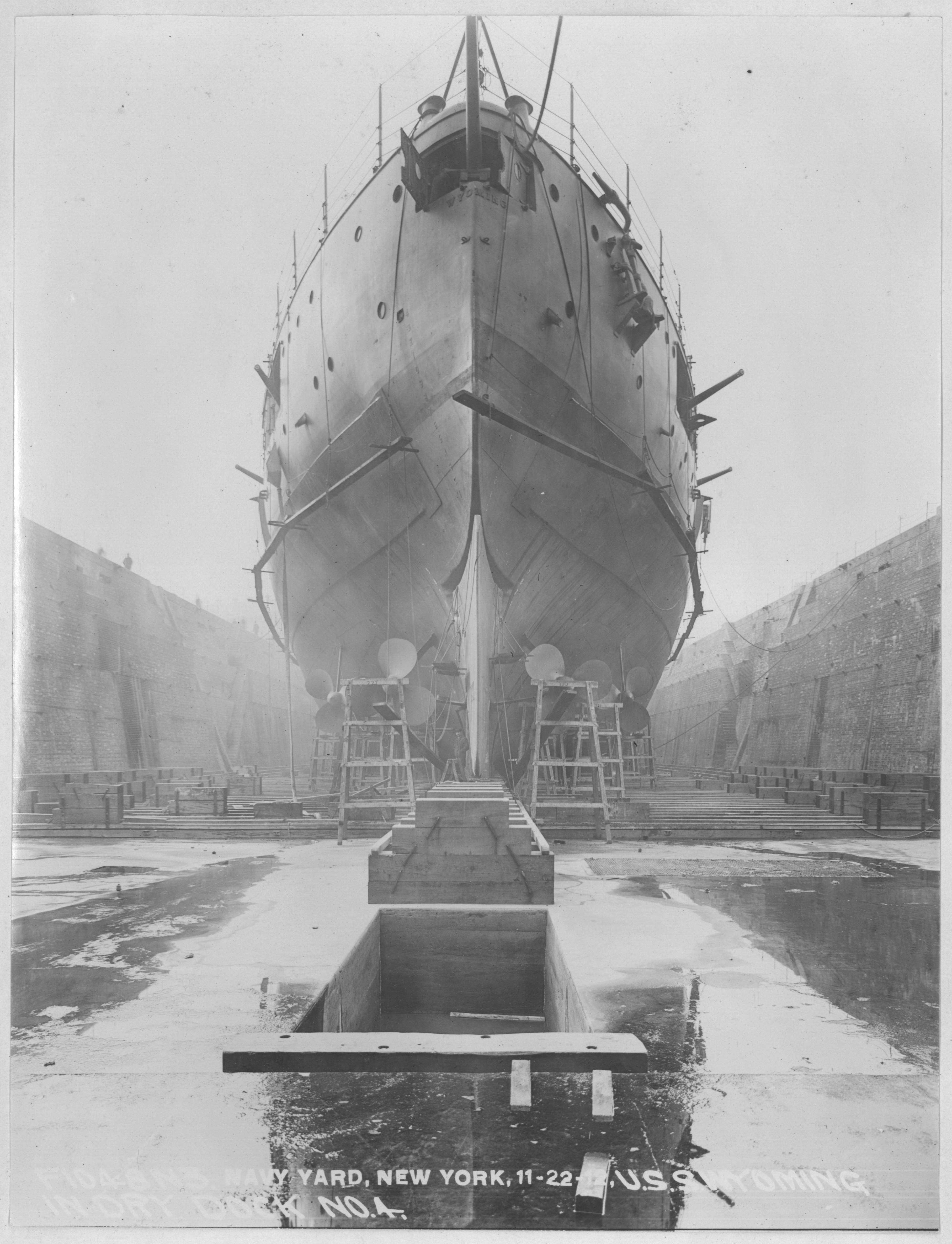
Hint: That is not Connecticut
4 12-inch guns?
seems odd, i don't recall any BBs having 4 12-inch guns concentrated in the front like an incredibly malnourished richelieu
 shut wren
Translate 12 inch to mms
frigid karma
louisiana?
spiral cedar
shut wren
Translate 12 inch to mms
305
frigid karma
is it louie louie?
spiral cedar
frigid karma
louisiana?
Not a Connecticut class
eternal veldt
Its likely Wyoming, isnt it
spiral cedar

eternal veldt
Classic mislabelling
frigid karma
spiral cedar
<a:EssexNod:842578013652516918>
a secondary battery of twelve 5 inch guns
aged like fine milk

@eternal veldt the funny thing is, this could unironically fit in wows as a tier five premium
shut wren
frigid karma
I rate it a Tier 1 WT coastal fleet
frigid karma
this thing would massacre any coastal fleet
aren't like rank 2 ships in bluewater DDs like fletcher/sumner?
shut wren
frigid karma
this thing would massacre any coastal fleet
watch some bozo torp this thing
two torps and this thing goes boom
 spiral cedar
STEEL DOORS ABOARD BATTLE SHIP TWISTED BY SHOCK OF HEAVY GUN FIRING IN FLEET TARGET PRACTICE
Inspection of the battleships of the First Division of the Atlantic Fleet, which are now lying in Hampton Roads and Lynnhaven Bay, shows that unexpected havoc was wrought on board by the firing of the big guns at target practice. Usually the twelve inch rifles are fired singly and in salvo, with no more damage than a little broken glassware in the wardroom or a smashed watch crystal. This time, however, there was a trail of litter all along the starboard deck of the Wyoming (BB-32), and the other vessel report similar casualties.
As the vessels fired while approaching the target obliquely the guns were swung to starboard and slightly forward, the muzzles were inboard. The concussion smashed a two inch port light in Rear Admiral Badger's cabin on board the Wyoming, blew out a headlight of the superstructure over the engine room and hurled the light to the grating below, smashed in the steel doors of the bakery on the main deck, ripped off name and number plates from the ash hoists and hatchways, and on board the Utah (BB-31) frightened a cat into jumping overboard.
 eternal veldt
You want the funny, do Mississippi
frigid karma
not getitng into the wows mindset, are you?
shut wren
frigid karma
<:BuckyPrideZoom:911042553221107714>
HE shells brrrrr
 shut wren
T-34 boat

 tough quail
swell
spiral cedar
 frigid karma
spiral cedar
https://cdn.discordapp.com/attachments/586627596884901898/1076362505707855882/qe...
frigid karma
spiral cedar
https://cdn.discordapp.com/attachments/586627596884901898/1076362505707855882/qe...
lvt-a chaffee 90mm?
that looks like a chafee turret and that gun is at the very least a 90

 lavish fable
frigid karma
lavish fable
frigid karma
what happened to this ship
 shut wren
It looks like they just put some plastic on the turrets
eternal veldt
Overall, as I recall, Wyoming was responsible for training quite a number of AA gunners in the USN
35,000, to be exact
shut wren
someone teach my monkey brain how did they train the AAA on the planes
eternal veldt
You mean, how the gunners on sea shot at planes?
eternal veldt
Have a remote controlled plane or a plane to tow a target
https://en.m.wikipedia.org/wiki/De_Havilland_Tiger_Moth like this one

The de Havilland DH.82 Tiger Moth is a 1930s British biplane designed by Geoffrey de Havilland and built by the de Havilland Aircraft Company. It was operated by the Royal Air Force (RAF) and other operators as a primary trainer aircraft. In addition to the type's principal use for ab initio training, the Second World War had RAF Tiger Moths ope...
In fact, that's probably where the modern word "drone" came into use
I.e. a bee drone that follows the queen bee, the plane posted above
Speaking of AA, thanks to Cleve again for this wonderful tidbit on how fucked the HACS is
In what is perhaps the best-known example of the state of Britain's pre-war anti-aircraft capability, in a 1937 firing exercise, a radio-controlled Queen Bee drone, a converted Tiger Moth, was able to fly straight and level at 85 knots around the entire Mediterranean Fleet for over an hour without being hit by a single shell.
alpine onyx
eternal veldt
Dumb queston, where's this from? Garzke's Bismarck book? Can't find anything mat...
dseehafer posted that a long time ago, so unless I find it myself, no idea
eternal veldt
Jaba answered it, thanks for trying.
eternal veldt
@maiden citrus @spiral cedar


Entire cross section of Nevada, laid bare 
Bonus: 3/4 SoDaks' BOGPs also acquired

Is this what euphoria feels like
 maiden citrus
oh my
eternal veldt
I found the big spud as well. I'll organize the whole thing and drop the whole bomb later.
 desert agate

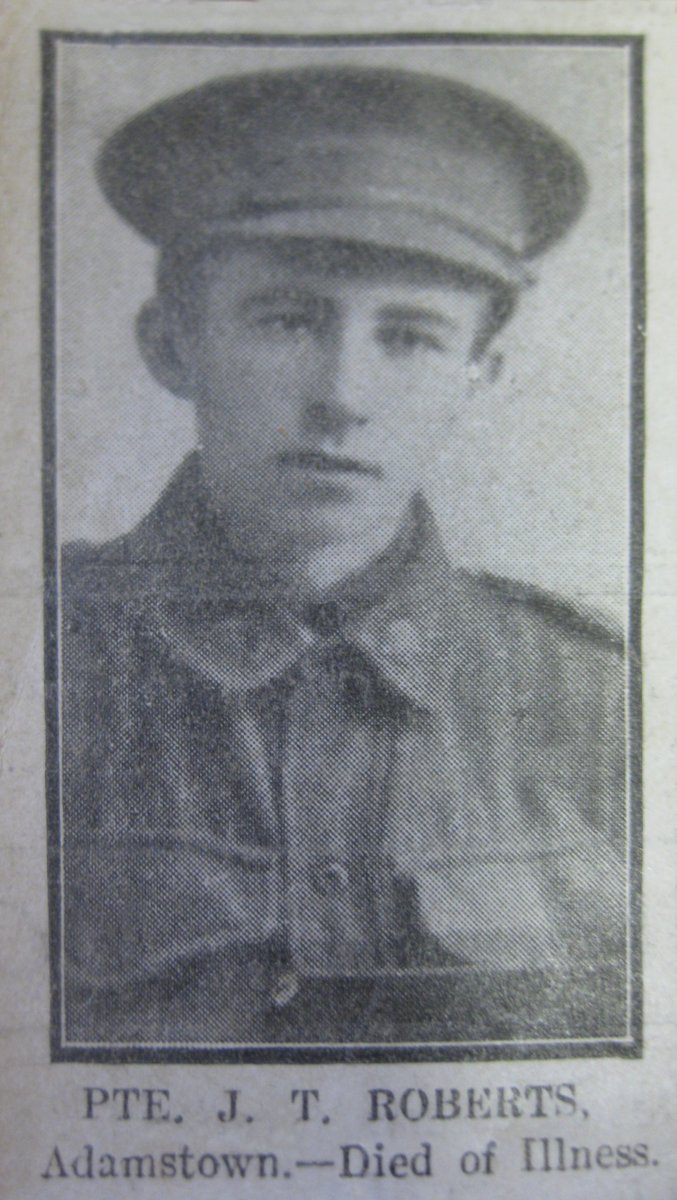
Died on this date - (Aust)Private John Thomas Roberts (b. 1897; Adamstown, NSW), Service number 4554, embarked from Sydney, NSW on RMS Osterley on 15 Jan 1916 with 3rd Infantry Battalion, 14th Reinforcements.
On 29 March 1916 he embarked from Alexandria on Troopship Transylvania
 Twitter
·
Twitter
·
 eternal veldt
Riche, I have Louisville
Please give me time, I have 40+ BoGFs now, and it's still growing
I even have Spon's favourites
eternal veldt
turns out I am indeed blind, never quite realized Idaho had 10 rather than 8 5"/38 enclosed single mounts
 ivory ridge

For years this loading screen in @WarThunder shows a wing tripple turret on the HMS Invincible.
It is not...
 Twitter
·
desert agate
Twitter
·
desert agate
i think i get what they were trying
they just did it poorly
artist clearly had no idea
eternal veldt
looks more like a layering error of sorts to me
 fierce sparrow

zealous vine
Why were German turrets so wide? Specifically their triple-gun designs
tough quail
breech mechanism
and the actual loading gear
they had a really goofy sliding block breech layout with the loading gear to the side of guns that in theory had GOOD RATE OF FIRE but needed enormous turrets
unfortunately it had no practical difference
great on firing trials in actual combat it didnt matter
 alpine onyx
The sliding breech thing had nothing to do with the turret width
The hoist arrangement and their decision to go for more redundancy, that's more what made them wider
Four hoists (each carrying shell and powder) in a twin turret
 delicate beacon
Them putting hoists next to the gun instead of behind did affect the width a bit didn't it?
The biggest reason is still redundant hoists though.
alpine onyx
yep
the hoists came up next to the breeches, not behind the breeches, so they needed to fit all hoists plus the breech blocks themselves next to each other
delicate beacon
Did the Littorios have hoists adjacent the breeches too?
alpine onyx
no idea
but Yamato's turrets and the USN had them coming up behind
Littorio's, honestly their turret width would match a likely German counterpart
if memory serves they had a 13m wide barbette, the German twin is 10m, and the trend for German twin to triple was to add 30%
eternal veldt
https://drive.google.com/drive/folders/1J2DieGhEJV44JvgbF0MuSHEnwvo-eqth?usp=share_link
A collection of 88 booklets of general plans for ships that participated in WWII, if anyone here needs them. Included are mostly ships of the US Navy, but ships from the Royal Navy and the Commonwealth, as well as the IJN, are present. Catalogue and year is inside the folder.
(Sorry for the crosspost, WoWS people.)
 solid mango

subtle prawn
#OTD in 1991, USS Tripoli struck an Iraqi mine in the Persian Gulf, ripping a 20-by-30-foot hole in the starboard side. Damage control quickly stabilized the ship. After 30 days of repairs, the CO removed a symbolic band-aid from the hull and the Tripoli returned to the Gulf.
 Twitter
·
Twitter
·
 desert agate

Business Insider
In May 1982, Argentine and British ships were circling each other in the South Atlantic when the usually turbulent weather took a turn for the better.
delicate beacon
Macaroni 
 ivory ridge
 shrewd pecan
zealous vine
alpine onyx
The hoist arrangement and their decision to go for more redundancy, that's more ...
shrewd pecan
zealous vine
alpine onyx
The hoist arrangement and their decision to go for more redundancy, that's more ...
Interesting.. (sorry for the late reply, it was night here)
In what situation would this redundancy be good for?? If damage reached the internal parts of the barbette or the turret, there should be bigger things to worry about right?
 delicate beacon
The turret could lose electrical power or the hoist can have technical difficulties.
spiral cedar
You can have a shell slip and fall onto the hoist and jam it
Is it worth the extra weight and being a bigger target? I don’t think so
zealous vine
Good point..
 deep apex

The Allies bomb the monastery atop Monte Cassino in Italy, but just to the Northwest it's the Germans attacking them at Anzio this week. In the Soviet Union, the Axis break out of the Korsun Pocket, but at great cost, and in the Pacific comes a major Allied raid on the Japanese base at Truk and landings on Eniwetok Atoll.
Join us on Patreon: ht...
Sidenote: New Jersey and Iowa sink light cruiser Katori with their main batteries in Operation Hailstone this week
Intrepid is also torpedoed however
frigid karma
nly a few months later, in July 1954, Teller made it clear he thought 15 megatons was child’s play. At a secret meeting of the General Advisory Committee of the Atomic Energy Commission, Teller broached, as he put it, “the possibility of much bigger bangs.” At his Livermore laboratory, he reported, they were working on two new weapon designs, dubbed Gnomon and Sundial. Gnomon would be 1,000 megatons and would be used like a “primary” to set off Sundial, which would be 10,000 megatons. Most of Teller’s testimony remains classified to this day, but other scientists at the meeting recorded, after Teller had left, that they were “shocked” by his proposal. “It would contaminate the Earth,” one suggested. Physicist I. I. Rabi, by then an experienced Teller skeptic, suggested it was probably just an “advertising stunt.”[4] But he was wrong; Livermore would for several years continue working on Gnomon, at least, and had even planned to test a prototype for the device in Operation Redwing in 1956 (but the test never took place).
However, a study from 1963 suggested that, if detonated 28 miles (45 kilometers) above the surface of the Earth, a 10,000-megaton weapon could set fires over an area 500 miles (800 kilometers) in diameter. Which is to say, an area about the size of France.
spiral cedar
Classic Teller
spiral cedar
“Delivery method: backyard”
frigid karma
In August 1961, Khrushchev summoned scientists to a secret meeting at the Kremlin. A colonel stationed at Arzamas-16 was tasked with bringing a wooden dummy of the massive bomb—considerably scaled down, but still large enough that it required several officers to bring it into the conference room. He later reported that, as the scientists briefed Khrushchev, the Soviet leader “stroked the polished surface of the model for a long time, and looked at the superbomb with drunken eyes.” The colonel speculated that perhaps Khrushchev believed the bomb “gave him unprecedented power over the world.”
frigid karma
welp, carter is probably gonna die soon
tough quail
 shut wren

alpine onyx
zealous vine
Interesting.. (sorry for the late reply, it was night here)
In what situation w...
I mean, yes, it's not the most useful thing to have and I don't know of any other country that did that. But it's something that WW2 Germany liked doing. They had a second set of fire control computing rooms in the citadel, up to three radio transmission rooms, several damage control coordination rooms, two master stable elements, ...
tough quail

what the actual fucking hell
the more i learn about US post-ww2 attempts at SPAA the more i feel like god is a cruel cruel lie

 subtle prawn
(So what do you think of the Bradley Linebacker?)
 shrewd pecan
the main thing is
the cold war ending
and the shorter range AA units never actually shooting at anything whenever they deploy
shrewd pecan
tough quail
https://cdn.discordapp.com/attachments/213011911002816513/1076773012709330964/ma...
tho honestly the JTLV SPAA platforms aren't the worse idea considering there primarily intended to counter drones
tough quail
the cold war era ones were also bad
shrewd pecan
what do you mean we had gods greatest prototype
tough quail
the ones that just went into service are also bad
 tough quail
in fact the shorad Stryker is more embarrassingly terrible than I ever imagined
shrewd pecan
again its
AA platforms being primarily made to counter drones and helicopters
over actual fixed wing assets
tough quail
it's also incredibly mediocre at doing that
tough quail
with it's glorious 200 rpm down rated apache gun, it's dollar store stinger box
and it's
you know how every picture of it doesn't have the hellfires loaded
 shrewd pecan
not surprising honestly
tough quail
and they literally cannot get the funding to replace them
shrewd pecan
it's just better humvee avenger
tough quail
so they're just driving around with them empty
subtle prawn
There was a proposed SPAA version of the Abrams…
 subtle prawn
Yeah, I'm thinking of that one
tough quail
anyway I'd continue to wail about literally putting in the bare minimum of effort into SHORAD but it's 3:40 AM
shrewd pecan
eh only I'm gonna end up being pissed if they fuck up MML
tough quail
I'm going to dream of stuff like stormers and the funny German missile van
 tough quail
(they're both important you're just coping)
shrewd pecan
(you don't need more than a 30 MM and stingers for anti drone duty)
tough quail

shrewd pecan
tho at the same time we used to be a real country


shame ADATs never took off
we could of had it all
ah
there at their XM29 arc

man that shit isn't even the QTS-11 they actually mace their own (even if its properly not functional)
 maiden citrus
you're underestimating my drones, drones I design require at least 3'' artillery to shoot down
frigid karma
maiden citrus
you're underestimating my drones, drones I design require at least 3'' artillery...
but what about EW
maiden citrus
if you use electronics near my drone it will flame you like a league of legends player
frigid karma
maiden citrus
if you use electronics near my drone it will flame you like a league of legends ...
who said anything about electronics?
EW = Eagle Warfare
 maiden citrus
my drones are also not environmentally friendly and have an apparatus to burn coal just to let out their personal beliefs
shrewd pecan


surprised no one has attempted to just
make a bunch of unmanned trucks with skyguards on them with a pair of command trucks as a air defense system
tho I suppose ripsaw is the closest we're gonna get to that for awhile


 scarlet ledge
GUESS THE TANK

hint: it saw action against the M50 Ontos and M48
this one is fucking juicy
 maiden citrus
I like the question mark for the date in service
scarlet ledge
this is one of those ifykyk pieces of military equipment
 scarlet ledge
maiden citrus
I like the question mark for the date in service
scarlet ledge
maiden citrus
I like the question mark for the date in service
the service history of this particular piece of obscure interwar military equipment has probably been researched by just one guy lol
scrambling through dodgy ethiopian service records in amharic trying to pinpoint when they stopped using it 💀
subtle prawn

Lockheed Martin is partnering with the U.S. Navy to integrate hypersonic strike capability onto surface ships.
scarlet ledge
there were turbocharged and supercharged variants of the kubelwagen
volkswagen been in the tuning business for longer than we thought
ferdinand porsche really was one of the designers of all time
bro really invented hybrid vehicles, the tiger (p), maus and involved in the v-1 only to create the 911
shrewd pecan
scarlet ledge
GUESS THE TANK

The Landsverk L-60 was a Swedish tank developed in 1934. It was developed by AB Landsverk as a light tank which included several advanced design features such as torsion bar suspension, periscopes rather than view slits and all-welded construction.The L-60 was progressively improved with several turrets, engines and guns offered by Landsverk. T...
scarlet ledge
shrewd pecan
https://en.wikipedia.org/wiki/Landsverk_L-60
can't have been that hard
the wikipedia list of swedish tanks is very brief
shrewd pecan
its a tiny shitbox that served for far longer than it should of outside of Sweden
shrewd pecan
I'm just gonna assume google translate is off its gloop
 scarlet ledge
i think we should all aspire to be like this man

just a bit
don't actually become an SS officer tho
shrewd pecan
what design multiple tanks that fail their trials?
 remote monolith
scarlet ledge
i think we should all aspire to be like this man
remote monolith
scarlet ledge
i think we should all aspire to be like this man
4 engineering nightmares that are collectively regarded as failures and mechanical burdens isn't something I'd like to aspire toward, even if Porsche was genuinely capable
scarlet ledge
remote monolith
4 engineering nightmares that are collectively regarded as failures and mechanic...
i just find it funny the guy went from the beetle to the tiger
remote monolith
other way around, the Beetle was only beginning to be mass-produced after the war, with Porsche spending his time more building the tanks than producing the Beetle for the masses. It was indeed designed earlier however
shrewd pecan
ah you gotta love German designations for the tiger II
where I can't actually find the porsche proposal


The Tiger II, often referred to as the King Tiger or even Bengal Tiger (Königstiger) was the largest and heaviest operational tank fielded by the German Army in WW2.
I'm still surprised that they thought this ammo storage solution was okay by this point of the war

 scarlet ledge
i fully seriously advocate for the bundesmarine to use these names on future major surface combatants

if they were happy to name DDG's Rommel, Molders and Lutjens in the 60's then why would they shy away from these
these names also lack obvious monarchist links
they have zero tie to the third reich because these names were barely used by them
scarlet ledge
it's better than another unoriginal city/state name
"ok guys we ran out of states to name this new ship after so who nominates their hometown"
they only have 16 states anyways
spring briar
Then use town names
eternal veldt
Conventions are conventions
scarlet ledge
no but Seydlitz sounds cool
Von der Tann sounds cool
"the bundesmarine is getting a new ship they're calling it the Hanover"
"oh damn it's the 17th time they've done that"
eternal veldt
Coolness is not enough of a factor to be considered.
scarlet ledge
bro is hitting me with full stops on discord
spiral cedar
Germany can only use battlecruiser names when it decides to have a serious navy again
scarlet ledge
he serious
spiral cedar
Until then, baby names only
spring briar

scarlet ledge
i'm cool with them retaining the alphanumeric naming scheme for submarines
i guess everybody dropped that convention when the days of having 4000 submarines came to an end
spring briar
Yes because building modern subs isn’t comparable to making those mass produced tin cans
delicate beacon
But do they vote?
desert agate
if the Germans ever build a proper DDG they can name it after a battlecruiser
AEGIS (or contemporary) and VLS are a necessity for proper DDG status
Sachsen doesnt count
 eternal veldt
Paris
 delicate beacon
I dont think that picture is taken in the Paris Prefacture Silver, not enough buildings in the background. /s
maiden citrus
le ship eu le chocoleute
 chilly osprey
scarlet ledge
if they were happy to name DDG's Rommel, Molders and Lutjens in the 60's then wh...
chilly osprey
scarlet ledge
if they were happy to name DDG's Rommel, Molders and Lutjens in the 60's then wh...
I would note that they also notably never did that again
So I would not really use that as a reference point - the current pattern of naming exists for a reason.
 shut wren
shrewd pecan
I'm still surprised that they thought this ammo storage solution was okay by thi...
shut wren
shrewd pecan
I'm still surprised that they thought this ammo storage solution was okay by thi...
Ehh we're losing anyways. Let just lose faster!
desert agate
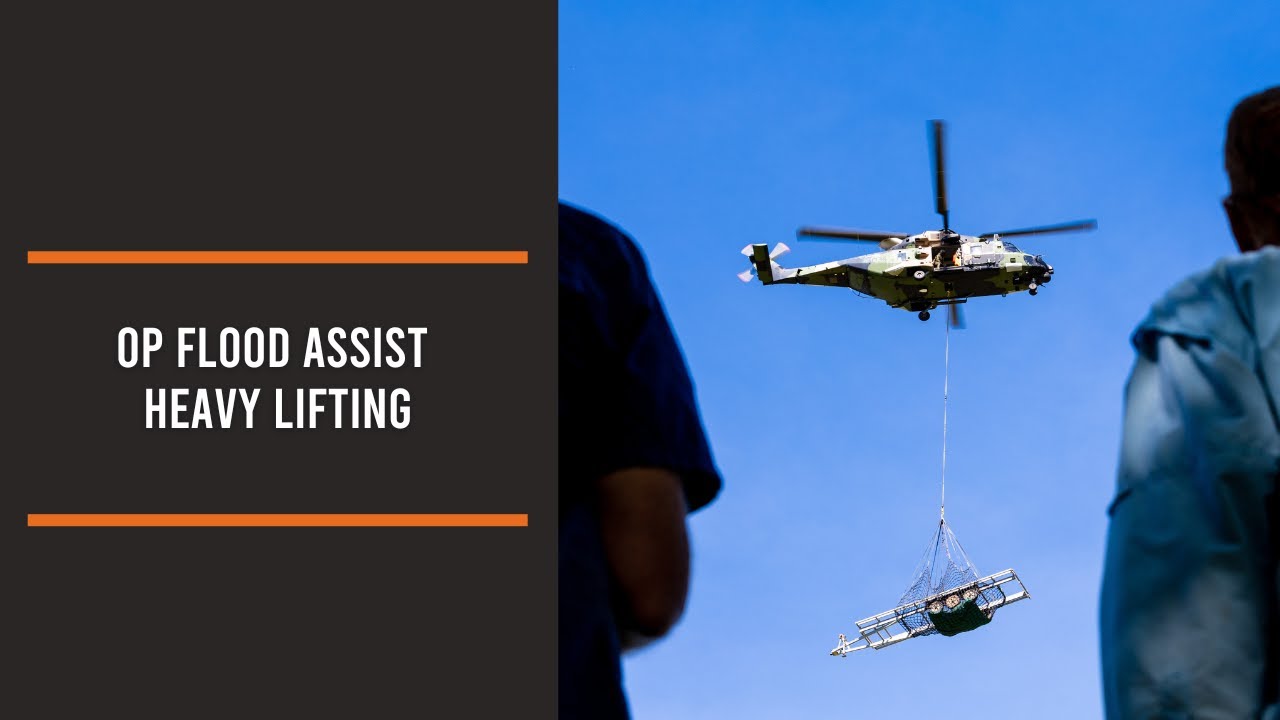
Heavy lifting!!! ADF personnel and assets were brought in to move heavy infrastructure from one side of the river to the other to enable the Fitzroy River community to conduct their own resupply
The Australian Defence Force is providing assistance to the Western Australian Government in the Kimberley Region where heavy rainfall from Ex-Tropical...
delicate beacon
Me: wow, these 75mm cannons sure are larger IRL. I wonder what model it is. Let's see... ca. 6m long, 40+ grooves..... It's a 15cm isnt it.
delicate beacon
maiden citrus
a french person said the thing
If not for him I would etranger.
desert agate

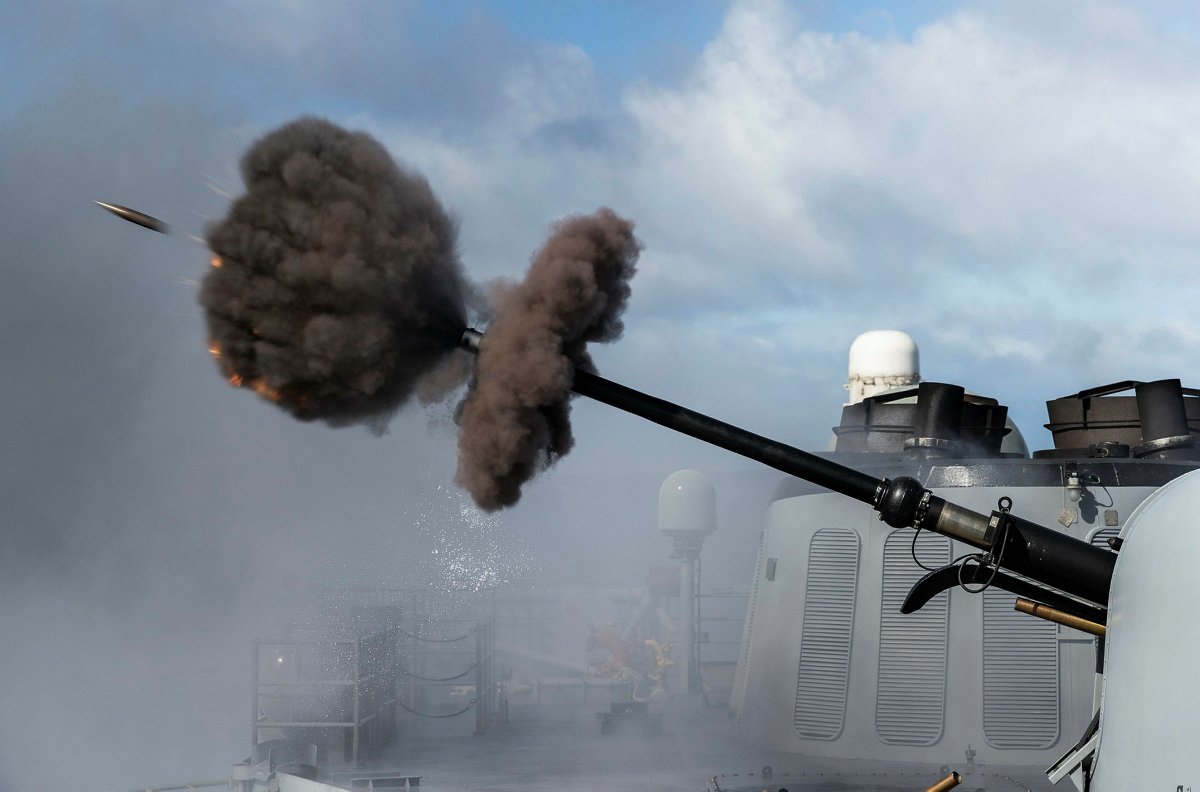
#AusNavy has always had the best photographers and this shot of a firing is right on target 🎯
Royal Australian Navy frigate #HMASMelbourne conducts a 76mm firing and leaves a brilliant cloud of smoke.
📸 LSIS Kieran Dempsey
#POTD #NavyStrong #NavyLife
 Twitter
·
Twitter
·
@ivory ridge mandatory 76mm ping
ivory ridge
my beloved
desert agate
unfortunately shes Chilean now
subtle prawn

Buy IS-2 - Development, Design & Production of Stalin's War Hammer ► http://is-2-tank.com/
In early 1942, the Pacific theater was dominated by the Empire of the Rising Sun. The Japanese flag now flew over much of the former British territories in the region, and by February, Japanese aircraft carriers had steamed into the Timor sea and begun la...
ivory ridge
fuck reading "queen of the jungle" just reminds me of the Jerma clip
i even read it as "Junjle"
tough quail
mods are asleep post matildas
junior trench

she's gonna rant at you
innit
speaking of innit
it's not actually desu
it's -ne
the japanese “-ne?” particle and the british slang term “innit” serve the same function
Japanese: Samui desu ne?
British: It’s fuckin’ freezin’, innit?
desert agate
tough quail
mods are asleep post matildas
if you insist
 junior trench
fun fact: "-ne" was inherited from the Portuguese settlers/priests that stayed in Japan in the 16th century. It comes from "né?", which the contraction of "não é?", "isn't it?".
It's LITERALLY "innit".
tough quail

spring briar

ivory ridge
it's also a thing in a bunch of dialects here in italy
Interrogative exclamation, emphatic in character, especially used in Piedmont and Lombardy, at the end of a sentence as if to ask for confirmation of what is being said
tough quail
so whats the japanese equivalent of bruv
 rapid junco
junior trench
> fun fact: "-ne" was inherited from the Portuguese settlers/priests that stayed...
rapid junco
junior trench
> fun fact: "-ne" was inherited from the Portuguese settlers/priests that stayed...
Ahh
Didn't knew that
And i'm Brazilian 
 humble mulch
tough quail
mods are asleep post matildas
humble mulch
tough quail
mods are asleep post matildas
Mods are awake post more Matildas
shut wren
Soviet Matilda pls


 shut wren
Also more Soviet lend least please
desert agate
very inconvenient that theres not many pictures of reverse lend lease
shut wren
They had to write Stalin on it
desert agate
since A/NZ mostly provided foodstuffs, clothing and medical supplies to the Americans
shut wren
desert agate
very inconvenient that theres not many pictures of reverse lend lease
The US kinda didn’t need it
desert agate
which are a lot less flashy than tanks and planes
desert agate
shut wren
The US kinda didn’t need it
A/NZ literally fed the Pacific theatre
like the whole thing
shut wren
Australia and New Zealand??
frigid karma
WOke up
desert agate
yes
frigid karma
what did i miss
desert agate
Australian research into jungle warfare and treatments for jungle diseases was critical to American troops in the Pacific as well
and most American troops in theatre we clothed with uniforms made in Australia with Australian and New Zealand cotton
frigid karma
Amphibious AC IV sentinel
desert agate
in fact as far as im aware New Zealand is the only country to have provided more back to America than it received
desert agate
again mostly foodstuffs from the Kiwis but regardless critical to the war as it meant that US Marines (and Army) fighting in the South Pacific could enjoy the benefits of extremely short supply lines back to where their food was coming from
which would not be the case if those supplies had to come all the way from the US
sure the Americans could have gotten by without it
but a lot more men would have died to jungle diseases and a lot of the South Pacific operations would have been a lot more difficult and a lot less ambitious
delicate beacon
Also guess how most the stuff in the Pacific got transported.
junior trench
desert agate
A/NZ literally fed the Pacific theatre
my man
convenience doesn't mean necessity
it means it was easier and cheaper
also the combat rations did get shipped from the US, which are the ones you scrutinize when looking for stuff relating to jungle disease
desert agate
OTD 81 years ago Darwin was destroyed for the second time in its history, not by natural forces but by Japanese bombs
After the crippling allied defeats in December and January with the loss of Singapore and the Dutch East Indes, Australia was a nation with an uncertain future
Many allied forces retreating from the formerly Dutch East Indes and their surrounds found themselves in Darwin supporting the final campaigns of the Allied retreat such as the brutal Guerrilla war on Timor, making the relatively undefended city a prime target for the IJN, and so Kido Butai would strike on February 19, launching over 200 aircraft at the city and the ships sheltering in its port
The Japanese would achieve almost complete surprise a lack of ground radar stations meant that the Japanese strike was not spotted until shortly before it made landfall, leaving precious little time for the handful of RAAF and USAAF aircraft to get airborne, made worse by RAAF officers believing the report sent to them by the coastwatchers was referring to a flight of 10 American P-40s returning from a patrol
As the attack begun, a Japanese pilot shot down 5 American P-40s without support and between 10am and 10:30 the Japanese would sink 3 warships, 6 merchants and damage 10 others
The MV Neptunia was an oil tanker moored at the primary dock in the city during the attack, resulting in a massive explosion and one of the most famous pictures of the attack, a further 30 allied aircraft were destroyed either in the air or on the ground
The second wave arrived at 12pm consisting of 54 medium bombers which dealt considerable damage to RAAF Base Darwin and sank a handful of survivors of the first wave
approximately 300 people were killed in the attack (some estimates go up to 1000) and up to 400 wounded including civilians
The Japanese meanwhile lost 4 aircraft and 5 aicrew, 3 to ground fire and one in the only Allied aerial victory of the battle, a singular RAAF Wirraway trainer which got airborne and managed to achieve the only Air to Air kill the type managed in the entire war, often reported to have been a Zero but today is widely believed to have been a D3A Val
The city itself would be mostly abandoned by the civilian population after the bombing, most civilian services such as electricity and water were destroyed or damaged and faith in the Allies ability to defend Australia from the Japanese had completely collapsed, many of whom would never return
The Allies meanwhile, recognising the vulnerability of Darwin would again relocate forces to the South. The American Asiatic submarine squadron, which was originally looking to base itself out of Darwin would decide to base themselves out of Broome, until a Japanese attack on that location resulted in a further relocation to Fremantle, where it would remain for the rest of the war
The Japanese would launch minor raids on Darwin a few more times after this, and also would attack other Northern bases but no further attacks of this scale would occur, as the military necessity no longer existed after the Allied flight from the city
Darwin would later become a refuelling base for Allied aircraft and ships heading North to attack the Dutch East Indes but would not until the end of the war be in a position to act as a significant player in Allied planning in the region

 desert agate
junior trench
it means it was easier and cheaper
desert agate
junior trench
it means it was easier and cheaper
fun fact i said that 
ivory ridge
Hit and Cleve on their way to have an argument in 2 servers at the same time about 2 different topics
 night heart
Hi man
night heart
desert agate
the more arguments the healthier it is
Damn true !!!!!!!
I would like to tell that I an have conowktely left the beilefe of hitler good
 alpine onyx
Wat?
junior trench
 frigid karma
ivory ridge
Hit and Cleve on their way to have an argument in 2 servers at the same time abo...
frigid karma
ivory ridge
Hit and Cleve on their way to have an argument in 2 servers at the same time abo...
 subtle prawn
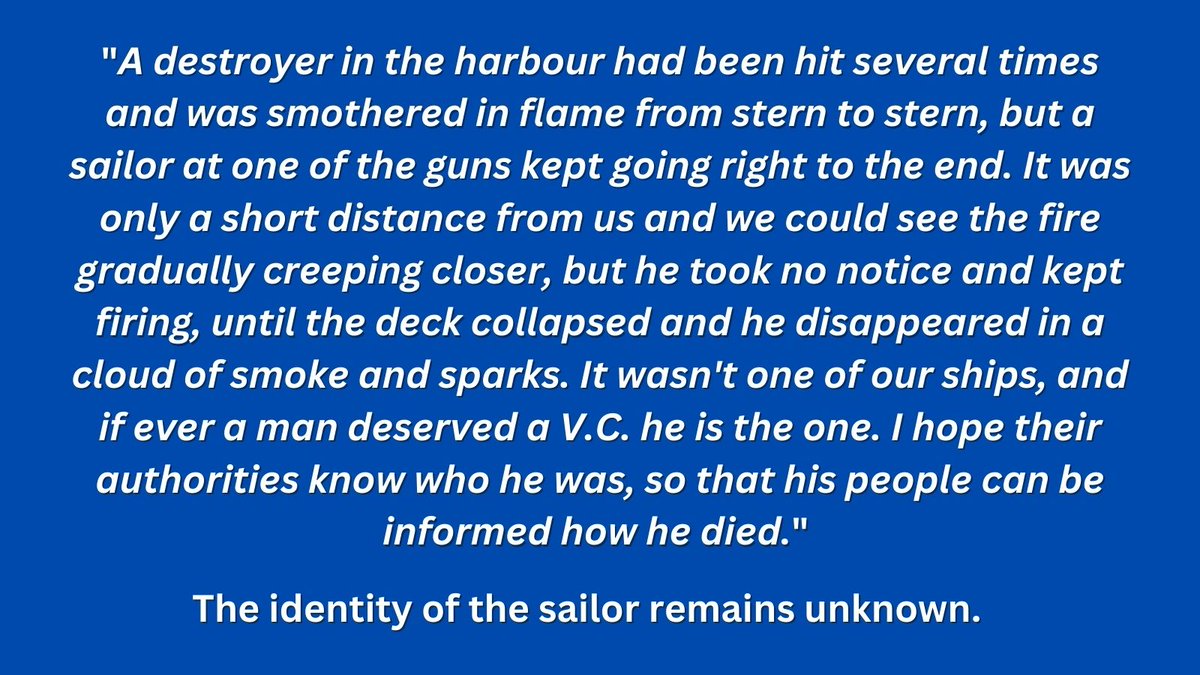
#OTD in 1942, the Clemson-class destroyer USS Peary (DD-226) was sunk by Japanese aircraft at Darwin, Australia. A seaman in the British Merchant Service witnessed the attack and reported one of the bravest acts that he had seen or read in all his life.
 Twitter
·
junior trench
ivory ridge
Hit and Cleve on their way to have an argument in 2 servers at the same time abo...
Twitter
·
junior trench
ivory ridge
Hit and Cleve on their way to have an argument in 2 servers at the same time abo...
we're also in bed together arguing irl

 shrewd pecan

junior trench
Tato is just jealous
 hearty fulcrum
Sex confirmed?
 thorn trail
People of History, may I ask something? What would be a realistic irl loadout of Georgia? I want to uh put a "realistic" Georgia loadout in AL and i wonder what the secondary guns and AA would be
junior trench
that purple USN twin 5" and quad bofors
the twin 18"
super heavies and the golden USN FC
 junior trench
 thorn trail
Oh
junior trench
the gold twin is 5"/38 Mark 12s in mount Mark 38
which is a DD mount
for whatever reason the purple version is a Mark 32 rather than Mark 28
which was used on the Essexes and Atlantas
but it's more appropriate for a BB and better as a secondary slot weapon than the Mark 38
thorn trail

junior trench
of course if you want to just make it "accurate" while also keeping to Georgia's never built prototype status
you could probably get away with the 5.4"
thorn trail
junior trench
you could probably get away with the 5.4"
the 5.4 is the gold one right?
junior trench
the 137mm
shrewd pecan
junior trench
Tato is just jealous
Sorry but tonight I get to dine with the great apes (it won’t let me send the picture)
junior trench
depression
the RN triple 15", the 5.25" secbat, octuple pom-pom, 6crh shells, and just whatever
thorn trail
junior trench
the RN triple 15", the 5.25" secbat, octuple pom-pom, 6crh shells, and just what...
5.25 secbat?
junior trench
 ivory ridge
thorn trail
People of History, may I ask something? What would be a realistic irl loadout of...
ivory ridge
thorn trail
People of History, may I ask something? What would be a realistic irl loadout of...

Google Docs
Home
Eagle Union
Dragon Empery
Iris Libre
Iron Blood
Northern Parliament
Royal Navy
Sakura Em...
thorn trail
ivory ridge
https://docs.google.com/spreadsheets/d/1-mzOsoYnYnQmaB9dN3RhaWO-SPgnFLKcHxYKPKIP...
Thank you
shrewd pecan
shrewd pecan
Sorry but tonight I get to dine with the great apes (it won’t let me send the pi...
 thorn trail
ivory ridge
https://docs.google.com/spreadsheets/d/1-mzOsoYnYnQmaB9dN3RhaWO-SPgnFLKcHxYKPKIP...
thorn trail
ivory ridge
https://docs.google.com/spreadsheets/d/1-mzOsoYnYnQmaB9dN3RhaWO-SPgnFLKcHxYKPKIP...
What do the red cells mean?
Like for this under Northampton's main gun
 ivory ridge
very similar gear but different year or model type if it's a red cell but with text on it
you can hover it
ah no, in that case it's different
thorn trail
It syas "No 203mm but 5in guns"
 thorn trail
ivory ridge
North II never had 203mm guns
thorn trail
ivory ridge
North II never had 203mm guns
but she was originally planned to have 203s?
ivory ridge
yes
thorn trail
Ah gets
thorn trail
I know North II was changed to a CLC
ivory ridge
converted as command ship before launch
maiden citrus
and they had a chance to make her really cool and unique but opportunity was lost and she is in game as a state she never existed in

 strong plank
only the Germans are allowed to have quirky and uncharacteristic weapon slots
 tough quail
also raaa raaa they made her art bad
maiden citrus
spring briar
Nimi having the capability to use the quad 152
german destroyer with quad 6'' sounds hilariously unusable
tough quail
tbf it's about as bad in-game as irl
junior trench
shrewd pecan
I had no idea what you meant at first
but
is that
the fuckin' rainforest cafe?
frigid karma
strong plank
only the Germans are allowed to have quirky and uncharacteristic weapon slots
Nimi has 150s and that’s..about it?
Don’t see why Germans specifically get that benefit
strong plank
The rondo banner
frigid karma
Plenty of ships have weird load outs like Seattle with 2 guns, Chen hai with a dd gun / plane slot
That’s emden
Not sure if there’s anything else from that event with gimmicky loadout s
strong plank
Literally the entire banner can sub in a dd gun for their aa slot
maiden citrus
they have full unique vanguards so eh
frigid karma
strong plank
Literally the entire banner can sub in a dd gun for their aa slot
Because they’re ww1?
strong plank
Ok and
frigid karma
If there was a British ww1 banner or
Get this
Any other faction’s
It would be the same
delicate beacon
We literally have 5¼" AA guns...
maiden citrus
hey you know what
delicate beacon
You can mount on DDs...
maiden citrus
do it
strong plank
frigid karma
If there was a British ww1 banner or
Funny how it’s like
maiden citrus
because like I say every time, if you're going to go super out of your way to do something, at least spread it around
 maiden citrus
no it didn't
frigid karma
Which ties into some of my actual complaints
maiden citrus
it jerked it off for [1 faction]
and then was never revisited
and probably never will be
[which is bad]
strong plank
And December jerked off “future” shit but they still fucked over Northampton
frigid karma
maiden citrus
it jerked it off for [1 faction]
Yep that’s what I said
IB favoritism
maiden citrus
strong plank
And December jerked off “future” shit but they still fucked over Northampton
that is indeed the crux of it
frigid karma
But for old ww1 and pre ww1 ships they have the weird load outs too
Bearn has Cl gun / DB slots
delicate beacon
Chat is being funny today.
strong plank
Warspite?
strong plank
Still a ww1 ship
frigid karma
In her ww2 config ingame
Look
You’re conflating
Ships being in their old configurations with Germany bias
maiden citrus
the bottom line is it's very clear which few factions they will put effort into and which ones they won't for special things like that
frigid karma
maiden citrus
the bottom line is it's very clear which few factions they will put effort into ...
The root problem is Germany gets over represented
strong plank
Also Bearn had guns in her carrier configuration
frigid karma
The unique gear loadouts is by no means
Exclusive to them
Which is why what regal is malding about is weird
maiden citrus
it's not weird, it's directly related
strong plank
Qwerty it’s literally
frigid karma
Does Chen hai not exist? Bearn? Seattle?
maiden citrus
as if the chinese faction isn't another one
frigid karma
They have dd guns in their aa slots because they’re ww1 ships sunk in ww1
You said, and I quote, “only the Germans are allowed to have quirky and uncharacteristic weapon slots”
strong plank
Bearn had 155mm guns in her carrier configuration but sure whatever
frigid karma
Which is factually untrue and you know it
maiden citrus
frigid karma
You said, and I quote, “only the Germans are allowed to have quirky and uncharac...
en mass due to dev appreciation*
frigid karma
Then specify that?
Otherwise you’re just making blanket - and incorrect - statements
maiden citrus
it's implied since you're naming like one ship per faction vs an entire event
all the little baby early carriers have a plane/gun slot
frigid karma
Yes, exactly
tough quail
which means its not really weird and quirky its just bog standard
also kind of a nerf that didnt apply to zep despite being very relevant to her
maiden citrus
'sure is sad we can't have ships with unique setups like they did for the germans in an entire event for some reason, especially since this is the ship's as built state'
'bro did you know a single ship in this entire faction can mount a gun'
strong plank
Be AL Devs
take the time to make sure every ship in Rondo has a funky slot load out to fit with their irl ww1 configuration
give Northampton the wrong gear slots bc same name, Wikipedia go brrrrr
tough quail
the ship i looked forward to the most done the driest of all in that event
strong plank
“Oh so she was Oregon city, which was basically a Baltimore, got it”
didn’t they fumble the skyraider icon too or am I misremembering
seem to recall folks talking about that when it dropped
maiden citrus
just glad I am holding the line of being disappointed in any faction getting stuff it didn't have
including myself
strong plank
something about the canopy placement
maiden citrus
consistency
tough quail
at least i can be smug that northampton 2 is i think
literally the least popular SSR
period
she has exactly three pieces of art made for her that aren't her skins of loading screens and one of them is a group shot of the entire event cast
strong plank
EU rolls worst received event, asked to leave event queue
strong plank
Charles retro
maiden citrus
indiana
ivory ridge
not counting retros, also she is like
a release purple
she likely has more than 1k
strong plank
for some odd reason I thought retros had separate comments
ivory ridge
yeah way more
 maiden citrus
one of those is mine
strong plank
don’t know why I thought that tbh
tough quail
should be higher
ivory ridge
tough quail
who
it's pretty obvious once you think about it
 ivory ridge
just know that it's not because of popularity
ivory ridge
No
ivory ridge
tough quail
kyubyshev???
1.3k
strong plank
oh bc likes didn’t get locked like comments were
ivory ridge
maiden citrus
leonardo
1.9k
tough quail
both should be higher
ivory ridge
roma is 2k
maiden citrus
-levitating pizza with brain meme-
giuseppe (sp??)
strong plank
you said ‘not bc of popularity’ and my brain went to the comment lock
tough quail
yeah im too stupid for this one
ivory ridge
 ivory ridge
just cuz
tough quail
that'll do it
ivory ridge
not a lot of people have her
tough quail
how low IS northampton though
ivory ridge

tough quail
maiden citrus
I was about to say if it is le triumphant
i would be furious
ivory ridge
tough quail
how low IS northampton though
1482
maiden citrus
I know she is eh to basically everyone but lmao
tough quail
im the one guy who likes letri the most of her class
tough quail
ivory ridge
1482
sufficiently low
strong plank
she’s just gray
tough quail

ivory ridge
le terr 1292
maiden citrus
The power of the Le Fantasque-class shall exceed your wildest fantasies.
the entrance line of a queen
tough quail
you may not like it but this is the ideal northampton
 maiden citrus
 tough quail
chad
ivory ridge
the actual bootleg Le malin, muse, is 2.1k
maiden citrus
goes to save
strong plank
Man Manjuu really released the Northampton class, gave em genuinely good designs, and then did fuck all with them
maiden citrus
already did... somewhere
strong plank
Y’all remember Chicago exists? Bc I didn’t
maiden citrus
I did
ivory ridge
anyway completely unrelated but fuck this cunt
 maiden citrus
but that's because I use the brainspace saved by jettisoning nameikazes to remember each us ship in detail
strong plank
You can have mine unde
tough quail
i only JUST got hiei during the belo rerun
strong plank
Get this child off my acc
maiden citrus

tough quail
i was so bewildered and scrambling to get a screenshot i fucked up locking her

 ivory ridge
chinese things
tough quail
unlimited cesares
delicate beacon
I dont think it occurred to a Chinese dev
maiden citrus
then again we still don't have an 'has empty equipment slots' filter
maiden citrus
 tough quail
effectively 10
ivory ridge
but still little for latin characters
delicate beacon
Be glad you're communicating in a somewhat Germanic language
maiden citrus
I'd do it
shut wren
at which Caliber does a AA gun become a AAA?
maiden citrus
anything can be if shot at a plane, just depends on the plane's performance for if it will work
shut wren
maiden citrus
even 0.3'' cal has been used as an aa weapon
shut wren
Yea but like at which point does AA become AAA
delicate beacon
What is your question
At which point does anti aircraft become anti aircraft armament?
shut wren
anti aircraft artillery
shut wren
Lets say USN
maiden citrus
3'' was the standard even early on for heavy aa
delicate beacon
Looks like the manuals call the 40mm a Machine gun but not the 76mm
shut wren
maiden citrus
3'' was the standard even early on for heavy aa
What about late ww2
shut wren
delicate beacon
Looks like the manuals call the 40mm a Machine gun but not the 76mm
does It count differently from aircraft to ships? cuz a 40mm on a plane would be a autocannon
delicate beacon
Probably ado with the arms branch too.
maiden citrus
opinion time but
there were a few funky things in service between those sizes of 1.6'' and 3'' but they mostly predate aircraft when they were made, there is a 2.25'' (that did have some aa mounts and were possibly used against planes in ww1, they had decent elevation) that could possibly be considered to be artillery as it was to originally be used against torpedo boats which is not the typical job of something considered a 'gun' (e.g., a 1.85'' was considered not good enough for that job and is probably considered an autocannon)
junior trench
AA becomes AAA at the point that it become artillery
if it were to be used outside of the AA role
which is to say
like... would it be on a multi-crew carriage on land?
which generally means 20mm and up
maiden citrus
shut wren
translate to mm
uhhh, I think it's 40mm = 1.6''
75mm = 3''
57mm = 2.25''
and 1.85'' = 47mm
so 47mm is an autocannon but 57mm was artillery
at least in consideration of what they expected the guns to at least do navally , so the sweetspot is probably lower 50mms
shut wren
I asked for the mm values so i can imagine it in T-34 form lol
Ok guys hear me out
what if
Ignoring the laws of physics n shit
we strap a 88 flak on to a stuka
maiden citrus
similar things have been done
shut wren
Not counting the 37mm and 70something mms on the german planes
subtle prawn
Somebody has tried putting a large caliber gun on the Mosquito before
shut wren
Send a photo or like a article or something about it
delicate beacon
The issues you'll be facing are the gun ripping itself off the airframe or the airframe itself after firing. As well as the recoil not doing too great for maintaining airspeed (even the A10 suffers from this). Ammunition weight also means you get very few rounds. Accuracy also leaves much to be desired since planes dont make good gun platforms.
I recall 75mms being installed on larger frames though. Such as the PBJ25 or whatever it was.
subtle prawn
 shut wren
delicate beacon
The issues you'll be facing are the gun ripping itself off the airframe or the a...
shut wren
delicate beacon
The issues you'll be facing are the gun ripping itself off the airframe or the a...
We said we ignoring the laws of physics
Just put a platform and put more ammo and a dude there or something
maiden citrus
if we're ignoring the laws of physics I can put battleship belt armor all over my planes and no one can stop me
shut wren
Engine lift laws n shit still apply
maiden citrus
my planes are solid aps systems that count as weapons then
shut wren
Alright next stupid idea
What if
P1000 ratte
But
A few of em and the top is a aircraft landing strip
delicate beacon
Why
junior trench
calm down Amiya
delicate beacon
Battle carriers were already a bad idea
shut wren
junior trench
calm down Amiya
Who is amiya
shut wren
delicate beacon
Battle carriers were already a bad idea
“Stupid ideas”
tough quail
amoya
junior trench
shut wren
Who is amiya
donkey
shut wren
junior trench
don't worry about it
shut wren
frigid karma
shut wren
we strap a 88 flak on to a stuka
a german recoilless 305 was put on a plane
it was terrible
 shut wren
88 is smaller though
rapid junco
@ivory ridge
 rapid junco

reddit
140 votes and 1 comment so far on Reddit
shut wren
Its a sub
rapid junco
shut wren
Stupid ideas:Submarine CV
Already tried out 
HMS M2, I-400, Surcouf (kind of, she was more like a cruiser submarine)

 rapid junco
Ah
shut wren
Ignoring all laws of physics
thorn trail
shut wren
with monoplanes
Are you Torres?
shut wren
thorn trail
Are you Torres?
who da hell is torres
 thorn trail
Who commands the Sumbersible carrier Alicorn
shut wren
oh
I think of stupid shit
and stupid ideas
Stupid Ideas:Dual or Tri Gustav cannon turret for BBs
rapid junco
rapid junco
https://www.reddit.com/r/submarines/comments/wdh9u4/the_italian_submarine_enrico...
Recently i have found out that on Valentine's Day 1942, Tazzoli was engaged by corvette Camaquã
Near Recife
So that kind of marks the "Baptism of Fire" of the Brazilian Navy
shut wren
https://i.redd.it/mk1d18cpi1ja1.jpg https://i.redd.it/87n3h9dv68ja1.jpg https://i.redd.it/8o71ub1b38ja1.jpg


THoughs on NK parade?
Just wanna know
shut wren
explain In freedom terms
strong plank
They have a great value brand version of the South Korean K11 DAW
shut wren
NK Be like:"Lmao why take time to develop shit when you can send some spys and steal the already effective designs"
delicate beacon
Why do those guns have two different mags
strong plank
It’s a 2 in 1
20mm Airburst grenade launcher with an integrated 5.56 rifle
The U.S. messed around with the concept in the 90s and early 2000s
Troops in Afghanistan didn’t like the grenade launcher, it’d malfunction and they didn’t think it was worth giving up an M4 for
South Korea’s had a bit more success with the concept
delicate beacon
The idea sounds as impractical as superimposed turrets
strong plank
The airburst grenade launcher is an interesting enough concept, since you could program the grenade to explode after traveling a certain distance
Handy against cover
Seems South Korea cancelled their program in 2019 though
shut wren
was boutta respond but was afk
anyways
More stupid Ideas
what if
we have a shit ton of tanks
without turrets
and It carriers a mobile airfield
strong plank
Somewhere there’s an alternate timeline where the ACR program actually yielded something that got adopted
I shudder to think what that looks like
shut wren
only saw those mfs in GTA
shut wren
???
strong plank
the Advanced Combat Rifle program
Flechette guns, duplex bullets, the G11, that shit
delicate beacon
PIAT
shut wren
H A N D G U N
junior trench
strong plank
Somewhere there’s an alternate timeline where the ACR program actually yielded s...
our current timeline is that timeline
the result is called mass issue of optical sights
thorn trail
what's the irl story behind the 137mm DD gun for secondaries in AL
Like what was it supposed to equip
shrewd pecan
 shut wren
translate please
shrewd pecan
I don’t speak French
shut wren
Gimme a second I know someone who does
shrewd pecan


 scarlet ledge
shut wren
https://i.redd.it/mk1d18cpi1ja1.jpg https://i.redd.it/87n3h9dv68ja1.jpg https://...
scarlet ledge
shut wren
https://i.redd.it/mk1d18cpi1ja1.jpg https://i.redd.it/87n3h9dv68ja1.jpg https://...
need to know what that goofy looking RPG-cum-rifle grenade thing is
shut wren
scarlet ledge
need to know what that goofy looking RPG-cum-rifle grenade thing is
I have no fucking Idea lmao
thorn trail
thorn trail
what's the irl story behind the 137mm DD gun for secondaries in AL
What's the irl ship this was planned to be used on?
 junior trench
none
it was a proposed 5"/38 replacement
but was too heavy to be worth it
so they scaled it back to the 5"/54



 subtle prawn
It didn’t get off the drawing board
In 1943, USS Gato surfaced to find an unexploded Japanese depth charge on the deck. Because the charge could not be rolled into the water for fear of it detonating, it was lifted into a life raft that had a slow leak and then placed in the path of a pursuing destroyer. #SubSunday
Likes
132
 Twitter
·
deep apex
Twitter
·
deep apex
Return to sender
rapid junco
Ah
i think i watched an episode related to that on the "The Silent Service" series 
 glass trail
subtle prawn
https://twitter.com/NavalInstitute/status/1627491597611896833
glass trail
subtle prawn
https://twitter.com/NavalInstitute/status/1627491597611896833
how it feels to chew five gum
shrewd pecan
shut wren
NK Be like:"Lmao why take time to develop shit when you can send some spys and s...
that assumes the design even works
shut wren
Idk I stole it off reddit
shrewd pecan
its similar to that tank they showed off a few years ago where there wasn't even holes in the gunners dog house for optics
shut wren
bruh
shrewd pecan


only person able to see is the driver
oddly the artist renditions make a more workable tank than this thing

 subtle prawn
They add missiles to their MBTs
glass trail
their main gun isnt enough because they cant see what theyre shooting at
shrewd pecan
it has dual kornets
glass trail
whats the point of a tow missile if you cant see the target
shrewd pecan
which makes sense for a country likely unable to make good APFSDS rounds
kornet's additionally have advantages over TOWs and gun launched ATGMs

 deep apex
Nice heli target practice
shrewd pecan
North Korea has like
multiple ideas that in theory make sense
then there unable to properly execute it
👁️ I'm still surprised we've never seen a CROWs with stingers
strong plank
shrewd pecan
“We have Abrams at home”
shrewd pecan
its a plastic T-62
deep apex
The amount of airstrikes that would be called in against all these would make the Battle of Sedan seem like a skirmish
tough quail
it'd be really funny seeing one slap a K2
shrewd pecan
the kornet?
tough quail
since apparently in south koreas own trials they were yeeting the K2s armor array
yeah
shrewd pecan
not surprising
shrewd pecan
there's a reason why the export K-2s are getting like 10 tons of armor added onto them
frigid karma
that looks like an abrams had a mutant child with a 99
except china has a history of doing hybrid eastern western stuff and that looks way better
shrewd pecan
curious to see what the future domestic South Korean production K2s are gonna look like
since I'm largely guessing there gonna start uparmoring them now they realized North Korea has Kornets up the ass
tough quail
yeah
hate to be the guy in charge of all these south korean armor designs watching the north korean dipshit parade with all these cardboard tanks
and suddenly going
"wait that missile looks familiar"
"FUCK"
shrewd pecan
idk we're at the era of
you can't really get away with a tank below 60 tons
without major design compromises
tough quail
shits gonna knock out your tank no matter how big it is
shrewd pecan
depends
M1A2C, the uparmored K2s and possibly Leopard 2A7 to the turret cheeks I think would be able to tank it
Merkava's additionally proven its ability to take kornets
shrewd pecan
APS is a bonus but solely depending on it can be problematic
tough quail
and a cheeky apc with a 30mm will just shred holes through their sides from a leisurely distance instead
tough quail
you're going to lose tanks to something, no matter what
glass trail
if youre russian you lose tanks to everything
tough quail
just like in ww2 there is no such thing as an invincible vehicle
shrewd pecan
o of course your going to lose tanks
here have a merkava that ate a kornet to the side

I'm just saying
its possible to armor tanks frontally against Kornets
glass trail
in any case, if nk army doctrine is in any shape or form similar to russian army doctrine i doubt theyd last long in a fight
tough quail
you just give up other things for it
shrewd pecan
 glass trail
and considering theyre putting antitank missiles on their tanks, russian doctrine looks like a possibility
shrewd pecan
depends North Korea has developed its armed forces to be a absolute cancer to fight
strong plank
What if you were to mount a comically large net on the front
shrewd pecan
I mean
glass trail
strong plank
What if you were to mount a comically large net on the front
torpedo nets:
scarlet ledge
if north korea was invaded i have no doubt there will literally be a rifle behind every blade of grass
to paraphrase a particular japanese officer
shrewd pecan
camo nets are stopping lancelets so possibly be some logic behind cope cages
scarlet ledge
the best way to describe fighting north korea is probably just cancer
shrewd pecan
I mean you can just
knock out most of North Korea's offensive capability with a crapton of cruise missiles
tough quail
i mean the goofy cages are just adhock slat armor
shrewd pecan
but that doesn't really change the fact you have to slog through the insurgent state
scarlet ledge
and then you have to deal with a population probably more indoctrinated than ww2 japan
glass trail
judging from their marching, the soldiers wont be the biggest concern
shrewd pecan
the population itself just devolves into providing a better alternative than what Kims offering