Hello! I'm planning to get a leopard gecko in the near future (by 2024) I'm reading the server provided care sheet right now, is there an itemized list of items I need to buy somewhere, or could somebody on the server provide me with one? Also please give me tips on breeding food for my leopard gecko as I have a 15 gallon tank which I can use for caring for and breeding prey
#Want to get a leopard Gecko, what do I need? Also how do I breed prey?
1 messages · Page 1 of 1 (latest)
 candid ether
 viral wraith
!shoppinglist
 fiery bobcatBOT

Google Docs
candid ether
viral wraith
!shoppinglist
Thanks a lot!
viral wraith
and that would depend on what you’re wanting to breed for food
candid ether
viral wraith
and that would depend on what you’re wanting to breed for food
crickets mostly
anything really
id prefer it to be quiet (crickets are not, just realized that) and the primary food source
Ill diversify but whats a good primary food source that I can breed in my house?
viral wraith
you may have better luck asking specific feeder colony questions in #invertebrate-chat
Ideally, you should have at least three regular !feeders for your leo
fiery bobcatBOT
https://imgur.com/a/TtO86QO
More nutrition info: https://reptifiles.com/feeder-insect-nutrition-facts-chart/
https://www.rainbowmealworms.net/
https://dubiaroaches.com/
https://www.joshsfrogs.com/live-insects-feeders.html
https://flukerfarms.com/
https://aafeeder.com/
https://www.rodentpro.com/
https://bigcheeserodents.com/
https://perfectprey.com/
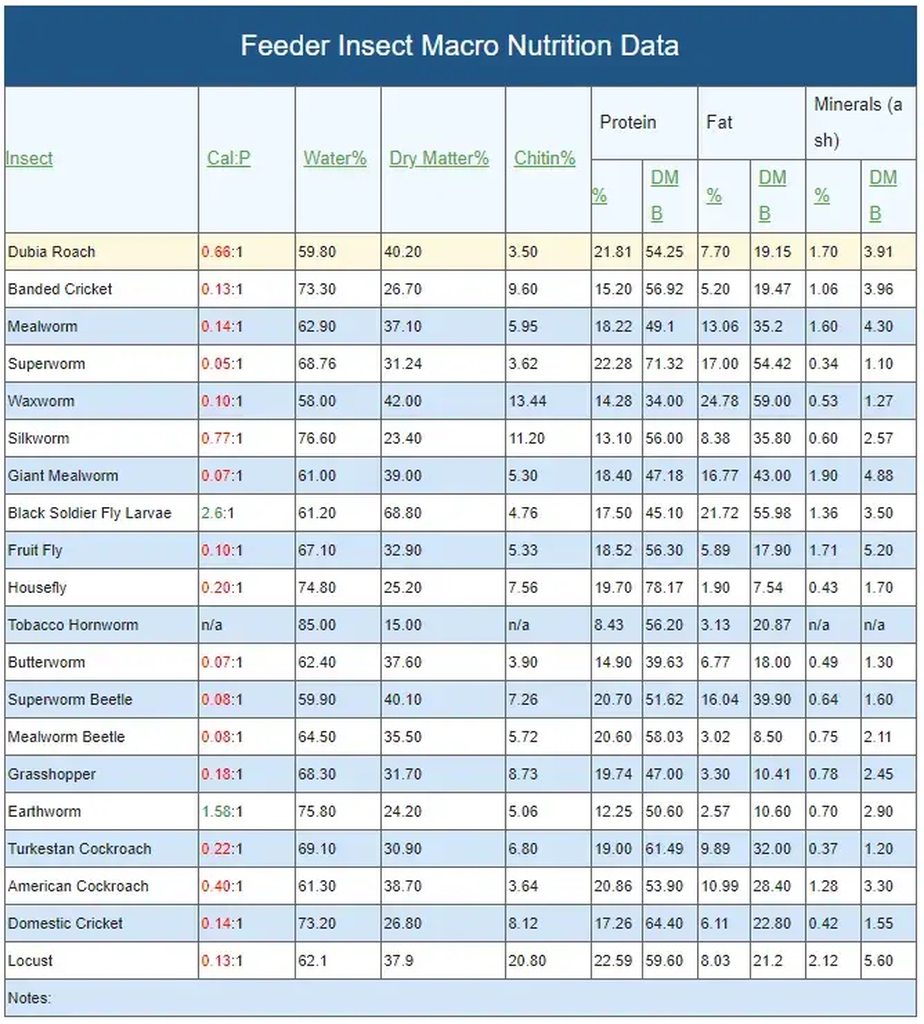 viral wraith
many people here breed various roaches and mealworms for their leo’s
candid ether
hmmmm
Is feeder breeding complicated?
and do I need a lot of space to house feeders?
candid ether
 limber zealot
depends on the feeder
limber zealot
depends on the feeder
What are the simple ones
limber zealot
mealworms and roaches are the easiest
candid ether
limber zealot
nqa breeding crickets is the most difficult
understood
candid ether
limber zealot
mealworms and roaches are the easiest
alright, and mealworms shouldnt be fed too much
limber zealot
candid ether
alright, and mealworms shouldnt be fed too much
nqa in a rotation of 3 staples, its fine to feed mealworms regularly. if weight gain is an issue you can slow down on them
candid ether
alright thanks
limber zealot
 candid ether
for the roaches, should I cut them up or just let the gecko swallow the entire thing?
viral wraith
let the gecko eat it
candid ether
alright
Last thing, is buying feeders from a place such as petco/petsmart a bad thing? Also is it alright if I buy supplies from one of those two places?
limber zealot
its not bad if you check if their feeders are alive before buying them
but petsmart isnt a very cheap option lol
employees might give you a cup of dead mealworms
candid ether
limber zealot
its not bad if you check if their feeders are alive before buying them
but pets...
will probably do petco, as its near a gym I go to
viral wraith
it’s also super easy and cheaper to just breed mealworms
candid ether
limber zealot
ok I know I already said last thing, but this is a just a curiosity question, will my gecko be alright if I cut the head off the superworm, immediately before feeding it to my gecko?
candid ether
fiery bobcat
https://drive.google.com/file/d/1zW8Nq-6wF5ZAeq7j4cE7Bwa9EpXqKhIX/view?usp=shari...
(I need to stop asking questions) How many of the heat sources do I need?
candid ether
limber zealot
its preferred, yes
alright
limber zealot
its better to ask questions to be safe. thats what this forum is for
viral wraith
!heating
fiery bobcatBOT
https://cdn.discordapp.com/attachments/811393932617056259/872297971654475796/bWCAO9aw.png
https://cdn.discordapp.com/attachments/811393932617056259/872298000079282176/jsHT-Z7w.png

 viral wraith
You will also need UVB in addition to the heat source
candid ether
viral wraith
You will also need UVB in addition to the heat source
So I need a primary, fixture and thermostat?
viral wraith
!setup
fiery bobcatBOT
 viral wraith
Does this help?
you can also get a dimming thermostat, where you would not need a dimming dome. There are also thermostats that come with timers, but that’s the general idea of what a heating/lighting set up will look like
candid ether
fiery bobcat
https://cdn.discordapp.com/attachments/446319772934864907/848716508532310036/hea...
helps a lot
so when building the enclosure, I need the hot, cool and humid hides, and a basking area?
viral wraith
yes, the basking area will be on your hot side
candid ether
Oh alright!
one side has a cool hide, and water
the other side has a hot hide and the heat source
viral wraith
so this is my tank. on the left, i have rocks that also make a hide. Right above those rocks is the halogen, and on the same side is the UVB
 candid ether
and the middle has a regular hide
candid ether
viral wraith
so this is my tank. on the left, i have rocks that also make a hide. Right above...
cool tank!
viral wraith
It is hotter on that side, and the right side is cooler, so they can navigate the tank to thermoregulate
the humid hide will be in the middle
it is burried at the back in that tank
candid ether
ok thanks, this sums up a lot
bruh, the video on the exo-terra is just really bad :/
Would this substrate work?
viral wraith
no, !ecoearth
fiery bobcatBOT
Eco Earth alone is not recommended as a substrate for leopard geckos. Eco Earth or any other coconut fiber substrate is meant to be used wet, which is not suitable for low humidity species like leopard geckos. When kept completely dry, it becomes quite dusty and very fluffy. Not only is the dust bad for leopard geckos (or any animal being kept in an enclosed space), but the fluffy, loose consistency is incorrect for leopard geckos, which generally live on firmer substrate that can be burrowed into. Eco Earth is best used in a substrate mix.
There is a common myth that coconut fiber substrates are easier for leopard geckos to digest, but this is entirely untrue. Coconut fiber, unlike the inorganic particles in soil or sand, would never be encountered by wild leopard geckos, so their body is not evolved to pass it. As insectivores, leopard geckos are most certainly not evolved to digest coconut fiber or any other plant matter, which is a biological feat in itself. Although coconut fiber is still passable, it is in no way more passable than dirt or sand, but is rather more likely to be a bit harder to pass.
viral wraith
!substrate
fiery bobcatBOT
https://cdn.discordapp.com/attachments/811393932617056259/872297236934057994/pwTu7ocQ.png
https://cdn.discordapp.com/attachments/811393932617056259/872297424553644134/VimXqF2Q.png

 candid ether
viral wraith
no, !ecoearth
candid ether
viral wraith
no, !ecoearth
alright
So I can probably just do something such as !lighting
fiery bobcatBOT
https://cdn.discordapp.com/attachments/811393932617056259/872297610310991902/mT9891pQ.png
https://cdn.discordapp.com/attachments/811393932617056259/872297666762125372/ZxguER9A.png

 candid ether
and it gives me a guide
 balmy kettle
!commands
fiery bobcatBOT
Server Commands - Use ! as a prefix for all
badbreeder - shows a list of bad breeders
badmorph - problematic morphs
bin - bin enclosure graphic
bioactive - explains what a bioactive enclosure is
breeding- a set of information about breeding leopard geckos
cohab - why leopard geckos and other solitary species should not be cohabited
ecoearth - information on coconut fiber substrate
enclosuresize - information on leopard gecko enclosure size and if enclosures can be "too big"
feeders - feeder nutrition chart and a list of websites to buy from
goodbreeder - qualities of a good breeder
guides - link to the server guide
gutload - feeder gutloading graphic
heating - moth's heating infographics
heatmat - information on heat mats
hides- moth's hides infographic
ir - information on the types of heat that can be utilized in herp keeping
lighting - moth's lighting infographics
loosesub - explains loose substrate and impaction
naturalistic - explains what a naturalistic enclosure is
newcaltemps - graph of average temperatures in New Caledonia
petstore - why not to buy from chain stores
pride - your pride is not more important than your animals
otherguides- links to the other leopard gecko guides
quarantine - information about quarantine and initial handling
repticarpet - information on repticarpet
setup - heating/uvb graphic
shoppinglist- A document filled with links for all leopard gecko related items
soil - safe topsoils
substrate - moth’s substrate infographics
supplement - information on supplementation
thermostats - information on the types of thermostats
thrive - thrive vs survive graphic
uvb - UVB information
vet - sends the links to the vet finders
weight - leopard gecko weight/body type graphic
Have a suggestion for a new command? Tell us! We're always trying to add more.
balmy kettle
Those are all the ones the server has :)
candid ether
Also how exactly would I use paper towel as a substrate, and why is it required?
candid ether
balmy kettle
Those are all the ones the server has :)
thanks!
balmy kettle
You just lay it down on the bottom of the tank, it's to monitor your new geckos bowel movements and its easier to clean 

Here's mine with paper towel
I need to fix it but I'm getting the general layout of it first
viral wraith
candid ether
Also how exactly would I use paper towel as a substrate, and why is it required?
It’s required for !quarantine
fiery bobcatBOT
Whenever bringing a new animal into your home, you should quarantine it. The main difference between a quarantine setup and a normal set up is substrate. A paper towel substrate should be used. This allows for the tank to be easily cleaned and for you to monitor poops easier. A quarantine setup should be just as cluttered as a normal setup. Quarantine should last for 60-90 days to ensure the animal is heathy before moving it to a setup with loose substrate. Additionally, when first bringing the animal home and when moving tanks or making large changes, handling should be avoided for two weeks. Reptiles do not get enjoyment out of handling, they tolerate it. Not handling for two weeks will avoid adding stress to an already stressful time. Their entire world has changed which takes an adjustment period.
candid ether
viral wraith
It’s required for !quarantine
alright thanks, and I want to build wide not tall right?
balmy kettle
Yes
candid ether
Alright
Do I need two seperate heat sources for IR-A and IR-B or just one with both, could you recommend me one?
viral wraith
You'll only need one heat source, ideally a halogen
and a uvb
!uvb may help explain this a bit better
fiery bobcatBOT
UVB light is essential to the vitamin D3 pathway in reptiles, and they would naturally get this from the sun in the wild. Reptiles cannot create their own D3, and insectivores, such as leopard geckos, and herbivores do not get enough D3 from their diet for survival, which is why supplementation is important in these animals especially. The big importance of D3 that reptile keepers pay attention to is that it allows the body to use the calcium it intakes, meaning that reptiles need D3 to properly get calcium. Without calcium, they will develop metabolic bone disease (MBD) as well as other issues, which can be deadly.
Unlike some reptiles, leopard geckos can get enough D3 through proper supplementation. However, it is still strongly recommended to provide leopard geckos with UVB to allow them to regulate their own D3 levels and for the additional benefits of UVB, such as bacterial and fungal management. The positives of UVB usage are well documented in the hobby, both with studies and anecdotal evidence, solidifying for many keepers that UVB is important to reptile welfare.
Leopard geckos in particular are Ferguson Zone 1 baskers, meaning they prefer to have fairly low levels of UVB, which makes sense for a crepuscular animal. We measure UVB exposure through UVI. **Most leopard geckos should have 0.5-1.5 UVI, but light sensitive morphs, such as albinos, should get closer to 0.5-0.7 at most. ** This is best provided with a linear/tube UVB bulb, for which there are two recommended brands: ZooMed and Arcadia. To find what bulb you need, look at UVI charts for specific bulbs, which show UVI levels at different heights. The Arcadia ShadeDweller or ZooMed T5 5.0 are good places to start looking. Keep in mind that T5s are much stronger than T8s and that screen tops filter out up to 30% of UVB.
Links:
http://bit.ly/2JQXKw4
http://bit.ly/3bdDv7a
http://bit.ly/3rZq14z
viral wraith
and !ir
fiery bobcatBOT
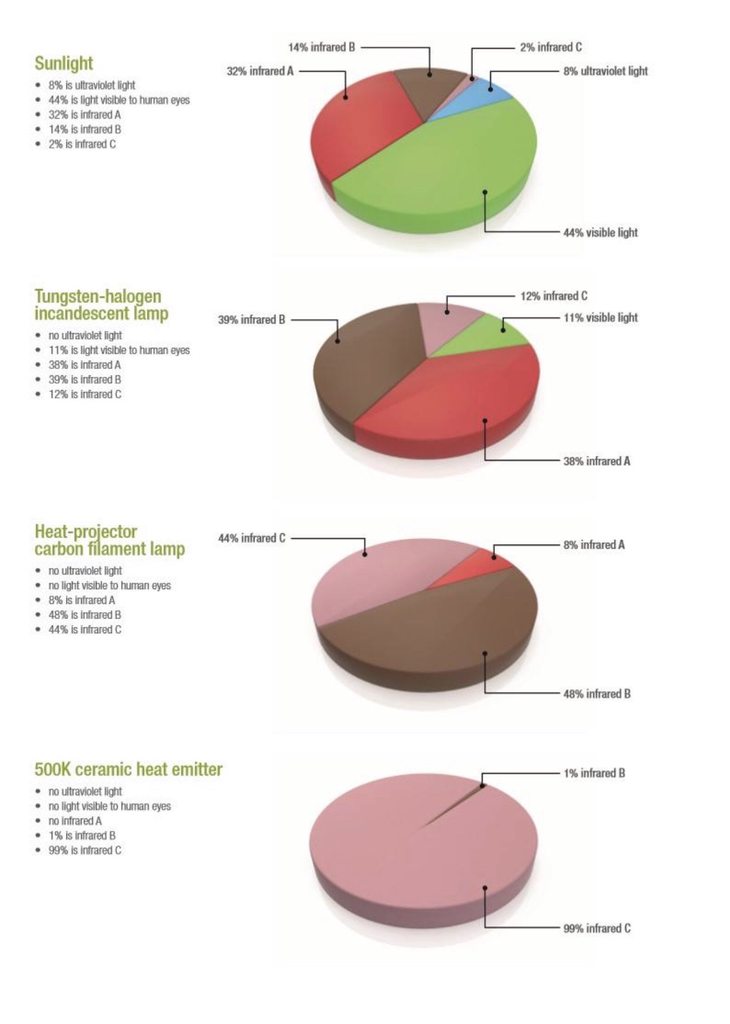
When you see someone talking about IR in reference to heat sources, they're talking about the type of heat that the source produces. The sun, which is what we aim to replicate for captive herps, is mostly IR-A and IR-B, which is the "deep heat" that penetrates to the muscle.
Some heat sources, like heat mats and ceramic heat emitters (CHEs), only produce IR-C, which is surface level heat. This is the type of heat that is most likely to cause burns, and it is the least efficient and natural type of heat. However, this is also the type of heat that objects, such as rocks, release as they cool down.
Halogens and deep heat projectors (DHPs) are currently the two heat sources that best produce IR-A and IR-B for herps. Halogens are better because they have a ratio of each type of IR that is closer to that of the sun.


 candid ether
viral wraith
You'll only need one heat source, ideally a halogen
candid ether
viral wraith
You'll only need one heat source, ideally a halogen
will the phillips link thats provided work or should I get something else
balmy kettle
Everything you need will be here !shoppinglist
fiery bobcatBOT
Google Docs
candid ether
alright
candid ether
balmy kettle
thanks! the image helps
balmy kettle
Np!
candid ether
and once the gecko is quarantined, do I take it into a carrier for a bit and rearrange the tank?
!substrate
fiery bobcatBOT
https://cdn.discordapp.com/attachments/811393932617056259/872297236934057994/pwTu7ocQ.png
https://cdn.discordapp.com/attachments/811393932617056259/872297424553644134/VimXqF2Q.png
balmy kettle
candid ether
and once the gecko is quarantined, do I take it into a carrier for a bit and rea...
You don't need to rearrange it and you can keep them on paper towel but it's suggested to move to substrate. But yes, you can take them out to rearrange it and put in substrate, big changes can stress them out
candid ether
Alright
Would these lights work as a heat source? was on the shopping list but I'm not sure since its a generic light bulb.

This dimmable, 72-watt bulb brings bright, warm, white light with a clear finish — adding spectacular sparkle to your indoor or outdoor living spaces. Versatile for multiple applications, this 2880-Kelvin bulb is ideal for use in indoor recessed cans and track lights, as well as outdoor flood lig...