#Vinix
1 messages · Page 2 of 1
 toxic river
also thanks, i will definitely use this flag soon on my code to make sure i'm not doing anything silly
 upbeat crest
now it has v -warn-about-allocs which does the same thing as the command above
but no escape analysis via commandline flags yet
toxic river
but it does do it internally, right?
upbeat crest
yeah
 toxic river
 lilac pewter
this is why I use C <:caret:830884897992212520>
lilac pewter
this is why I use C <:caret:830884897992212520>
in C you only have sprintf/strcat going past the bounds of the buffer and giving an attacker code execution so yeah!
much better
lilac pewter
no one is forcing you to use that garbage tho
struct string_view
but im not sure about your point, are you suggesting that solving potential memory bugs requires hidden allocations?
toxic river
lilac pewter
but im not sure about your point, are you suggesting that solving potential memo...
nah it doesn't
i meant that c isn't that much better with this
toxic river
lilac pewter
but im not sure about your point, are you suggesting that solving potential memo...
it doesn't fwiw
you can even see in the go output that "SDF" + s1 is marked as "does not escape", i.e. does not allocate on the heap (probably... definitely doesn't hit gc though)
lilac pewter
Anyway if you stick to legacy C with strcat and shit then yeah, you will probably have memory bugs
but with modern apis and tools you can avoid that
toxic river
ofc
toxic river
lilac pewter
but with modern apis and tools you can avoid that
modern apis as in "yeah so now you have to pass in the length manually and hope you don't have an off by one?"
lilac pewter
string_view like i mentioned
toxic river
still better than gets though
toxic river
lilac pewter
string_view like i mentioned
is that in the c standard?
lilac pewter
it was in some draft i think
toxic river
so no
lilac pewter
i mean lol
thats not a good point
C is not a language u can use solely with the standard library
its not like c++ with tons of shit there
toxic river
lilac pewter
C is not a language u can use solely with the standard library
true
i mean
you can
i did :^)
lilac pewter
mfw c++ still has no networking there
toxic river
until i gave in and pulled in a json parsing library because fuck that shit
lilac pewter
oh yeah and that
toxic river
(i mean i was writing c++ but let's call it c style c++, no stl involved)
lilac pewter
like yaml and json are supported as first class stuff in a lot of langauges now
lilac pewter
go is very nice with taht
toxic river
go only has json in the stdlib
lilac pewter
im not that familiar with it, but i worked with a codebase that had struct fields marked with yaml:whatever
toxic river
and the yaml parsing library i use (and iirc k8s uses) takes yaml
converts it to json
and then parses that with the stdlib
toxic river
lilac pewter
im not that familiar with it, but i worked with a codebase that had struct field...
it's reflection metadata
you can query it yourself
lilac pewter
yeah
toxic river
its like fieldinfo.structtag or something
toxic river
toxic river
and then parses that with the stdlib
which is (a) rather silly
lilac pewter
its for auto serialization right?
toxic river
but does work well enough
toxic river
lilac pewter
its for auto serialization right?
i mean, that's the intent i think
lilac pewter
yeah
toxic river
for renaming json fields mostly
because for the stdlib to deserialize into a field it must be exported (i.e. start with an uppercase letter)
and {"Foo":"bar"} is not a common style in json
lilac pewter
true
 orchid tartan
updated
upbeat crest
orchid tartan
updated
i've added 4 more sources of allocations to the warning as well
i think that covers 90% of them
i'll bring it up to 100% today
already found one missing (casts to sum types)
I'll add a per function option too, so that it doesn't spam
orchid tartan
on my end i have been fighting with trying to get better refcounting going for a few days now
orchid tartan
@upbeat crest uh i don't think this is working modules/time/time.v:25:18: warning: allocation (string concatenation) 23 | 24 | pub fn (mut this TimeSpec) add(interval TimeSpec) { 25 | if this.tv_nsec + interval.tv_nsec > 999999999 { | ^ 26 | diff := (this.tv_nsec + interval.tv_nsec) - 1000000000 27 | this.tv_nsec = diff
it literally warns for every addition
this is just an example, but this is an integer addition, not a concatenation
and it definitely doesn't allocate
upbeat crest
orchid tartan
and it definitely doesn't allocate
lol fixed
v up
and use -experimental for the interface nil fix to work for now, will remove that requirement later today
orchid tartan
@upbeat crest how do i make V's allocation warnings shut up if i am manually freeing?
(for a given allocation)
 candid yoke
i think it should be made so it automatically shuts up once it sees you free it manually
orchid tartan
yeah but it doesn't do that, plus in certain cases it cannot do that either
so there needs to be a method to make it shut up
manually
upbeat crest
orchid tartan
<@592103446384214044> how do i make V's allocation warnings shut up if i am manu...
do not use -warn-about-allocs
logic for detecting frees on allocating expressions is too complex
we'll get another rust this way 🙂
and it won't work anyway
if false {
 x.free() // will shut it up, but it's fake
}
couldn't this be sort of made a bit better with some syntactic sugar?
@upbeat crest can you not have a C-style, stack allocated array in V?
upbeat crest
orchid tartan
<@592103446384214044> can you not have a C-style, stack allocated array in V?
arr = [1,2,3]!
candid yoke
wtf
upbeat crest
! means fixed size stack allocated array
i couldn't come up with a better syntax
as opposed to [1,2,3]
candid yoke
why not just make [1,2,3] be a value
and then it becomes a dynamic array the moment you put it on the heap
upbeat crest
orchid tartan
couldn't this be sort of made a bit better with some syntactic sugar?
syntax like what. any ideas?
orchid tartan
upbeat crest
`arr = [1,2,3]!`
oh yeah! i forgot about that
orchid tartan
that's bound to save a lot of memory leaks
orchid tartan
upbeat crest
syntax like what. any ideas?
idk, perhaps something like uncheck ptr1, ptr2, ...
or maybe __uncheck
to avoid an extra "standard" keyword
upbeat crest
x := [1,2,3] // __uncheck
orchid tartan
sounds good
upbeat crest
ok will do
lilac pewter
// unchecked?
upbeat crest
that's a common word though
upbeat crest

lilac pewter
// unleaked 
orchid tartan
maybe // v:uncheck
upbeat crest
oh yeah lets use a utf8
candid yoke
i mean that v: part is a very good idea
lilac pewter
yup
upbeat crest
// 🤡
orchid tartan
orchid tartan
maybe `// v:uncheck`
i like this
candid yoke
also what is this even checking, i think its a good idea for it to be verbose
orchid tartan
and yeah the v: is a good idea but i prefer it without space
candid yoke
what if you add more diagnostics in the future
upbeat crest
orchid tartan
i like this
yeah me too
candid yoke
just make it work with both
orchid tartan
without space leaves less room for error
upbeat crest
although x := [1,2,3] // v:freed is probably clearer
orchid tartan
yeah that's fine too
lilac pewter
// v:trust me bro
orchid tartan
there are so many arrays for events allocated on the local scope on tight loops
they could've been all []! but weren't
no wonder there's a lot of leakage lol
lilac pewter
why are stack arrays not the default option?
 opal light
Are they allocated using alloca? Or only once at the entry of the function?
upbeat crest
V tries to balance between C and python
upbeat crest
opal light
Are they allocated using alloca? Or only once at the entry of the function?
they use C syntax for allocating arrays with known elements
no alloca
opal light
Nice
upbeat crest
known elements/known size
lilac pewter
very counter-intuitive imo, but if its like python then sure
upbeat crest
! thing was just a meme
(lets add this temp token for now)
4 years later i have no idea what's better
looks like it'll stay
i considered fixed([1,2,3])
[..][1,2,3]
etc
lilac pewter
dyn[1,2,3]
candid yoke
i still stand by my &[1,2,3] for heap allocated arrays
lines up with syntax for heap allocating other things
lilac pewter
i stand by anything that makes allocations opt-in
guess thats not something up for discussion?
candid yoke
yeah im confused about that too, clearly needs a change but i got no feedback on my idea (twice) :^)
upbeat crest
candid yoke
i still stand by my `&[1,2,3]` for heap allocated arrays
its not a bad idea
but would break so much existing code
and confuse python kids
i think 95% of arrays used are dynamic arrays, at least in vlang/v
lilac pewter
upbeat crest
i think 95% of arrays used are dynamic arrays, at least in vlang/v
is that because people wanted dynamic arrays or because they didnt know of the fixed syntax
and just assumed it was already fixed
candid yoke
i mean if you can't read the documentation it's your fault lol
lilac pewter
not the best philosophy for designing something lol
candid yoke
just read the damn docs and figure out that if you want a dynamic array you do the other thing instead
and if you can't read the docs you probably should pick another hobby
lilac pewter
no experienced engineer will go read "how to make array" most likely
they will just look at code examples
lilac pewter
candid yoke
but i mean if you get an error you can't push to an array
exactly
tahts why i want opt-in dynamic arrays, not the other way around
candid yoke
you probably go figure out why, and you hit the docs page and you figure out [] is a fixed array, to make it dynamic you do &[]
or as you said, you just find code examples and see people doing &[]
upbeat crest
lilac pewter
is that because people wanted dynamic arrays or because they didnt know of the f...
you can't use fixed arrays in things like parsers
lilac pewter
error: cannot push to a fixed-size array, did you mean &[...]?
upbeat crest
unless you write old school pascal/c style code
with [255]elems // >255? lol good luck
toxic river
upbeat crest
! thing was just a meme
(lets add this temp token for now)
4 years later i have ...
you could do [1, 2, 3]
for both
and then do escape analysis to figure out if the value escapes or can be kept on the stack
or [size]type{1, 2, 3} like in go works okay enough too
upbeat crest
interesting, a bit against the "be as explicit as possible", but could work
as soon as you try to append to an array or allocate too much, it escapes
it's similar to my idea of auto (de)referencing
good in theory, nice for the developer
but comes with lots of hidden issues
toxic river
upbeat crest
it's similar to my idea of auto (de)referencing
good in theory, nice for the dev...
it also means that the "default" approach is the optimal one already
which is good, that's what you want
go slices work like this, afaik
upbeat crest
go differentiates between basic arrays and slices (dynamic arrays)
[...]int vs []int
toxic river
upbeat crest
go differentiates between basic arrays and slices (dynamic arrays)
while the semantics of a go slice are always gc-allocated ones, go does not always allocate the backing buffer on the heap (instead, if they prove that the value cannot escape out of the function, they allocate it on the stack)
upbeat crest
toxic river
while the semantics of a go slice are always gc-allocated ones, go does not alwa...
arr := []int{1,2,3}
./a.go:18:14: []int{...} does not escape
So "does not escape" means that Go doesn't do an allocation, always?
candid yoke
they probably heap allocate if it's "big enough"
upbeat crest
once I added fmt.Println(arr), it changed to ./a.go:18:14: []int{...} escapes to heap
so probably yes
candid yoke
how do you get that print?
is this some compiler switch?
i didnt know go had something like that
upbeat crest
go build -gcflags -m a.go
toxic river
upbeat crest
```
arr := []int{1,2,3}
./a.go:18:14: []int{...} does not escape
```
So "does no...
yeah
toxic river
candid yoke
they probably heap allocate if it's "big enough"
quite possibly
upbeat crest
toxic river
yeah
ok sounds good, will do the same
orchid tartan
@upbeat crest how do you make V output all the warnings instead of stopping (and failing) if there are too many?
upbeat crest
orchid tartan
<@592103446384214044> how do you make V output all the warnings instead of stopp...
what message do you get?
need it to grep
orchid tartan
upbeat crest
what message do you get?
need it to grep
builder error: too many errors/warnings/notices
upbeat crest
@orchid tartan v -message-limit 10000 foo.v
toxic river
upbeat crest
ok sounds good, will do the same
it's a major performance gain too
orchid tartan
upbeat crest
<@379163868364275712> v -message-limit 10000 foo.v
thank you
ok this is good
@upbeat crest i just need that comment-based warning suppression and then i promise i'll stop bothering :p
upbeat crest
orchid tartan
<@592103446384214044> i just need that comment-based warning suppression and the...
no bothering 🙂 I'll do v:fixed today
it's a bit trickier than the previous fix
orchid tartan
ty!
orchid tartan
btw
i get a lot of warning: allocation (cast to interface)
these seem to be spurious if the previous fix is still in effect
upbeat crest
orchid tartan
i get a lot of `warning: allocation (cast to interface)`
can you paste a full example, with source code line it points to?
also btw what about this one? https://github.com/vlang/vinix/pull/139
GitHub
This is mostly ready functionality-wise enough to be able to run ossplay, but there are at least a few things that may need to be worked on:
[maybe fixed] it currently lacks volume control
it play...
orchid tartan
orchid tartan
these seem to be spurious if the previous fix is still in effect
actually it doesn't seem to be spurious
i do pass -experimental...
it still seems to allocate though
orchid tartan
upbeat crest
can you paste a full example, with source code line it points to?
also btw what ...
that is a good one but regrettably i haven't had the time to review it in depth
i'd like to do that before merging it
modules/sched/sched.v:357:78: error: invalid expression: unexpected token `,`
  355 |     }
  356 |
  357 |     mut new_thread := new_user_thread(process, false, pc, voidptr(0), stack, []!, []!, voidptr(0), false) or {
      |                                                                                 ^
omg
i think this should work?
upbeat crest
orchid tartan
i think this should work?
checking
upbeat crest
orchid tartan
omg
empty fixed size arrays aren't supported in C by default
Zero Length (Using the GNU Compiler Collection (GCC))
toxic river
upbeat crest
empty fixed size arrays aren't supported in C by default
you can just give them no storage in codegen though
or convert them to a struct emptyarray {};
upbeat crest
int main(int argc, char** argv) {
   int a[0];
   printf("a: %p; sizeof(a): %ld \n", (void*)a, sizeof(a));
   return 0;
}

this compiles with:
#0 17:16:52 ^ master /space/v/oo> clang-18 -std=c99 -pedantic x.c
x.c:3:10: warning: zero size arrays are an extension [-Wzero-length-array]
    3 |    int a[0];
      |          ^
1 warning generated.```this v:freed thing is very tricky because all comments are stripped for performance on the scanner level
unless the scanner is used for vfmt
i'd have to modify the scanner to look ahead at the comment and see if it has v:freed
toxic river
upbeat crest
```#include <stdio.h>
int main(int argc, char** argv) {
int a[0];
printf("...
yeah, i know, it's a very "fun" feature
orchid tartan
i thought []! arrays still had internal V structure like cap and whatnot, just that they pointed to data preallocated on the stack
therefore it would make sense to have one with length of 0, because i'd agree that passing a C struct of 0 size to a function directly is wrong
but i guess they are actually plain C arrays
that complicates things
since the functions i pass them to check for the length of the array, but in this case they cannot
orchid tartan
i fixed it by just using a variable and freeing that
a bit ugly but works
@upbeat crest could you please take a look at why your interface cast fix doesn't work even with -experimental?
upbeat crest
Sure. Will be home in 15
orchid tartan
aight
upbeat crest
orchid tartan
<@592103446384214044> could you please take a look at why your interface cast fi...
works for me
main__Resource* resource = /*nili*/((void*)0);
what's your code?
upbeat crest
orchid tartan
i thought `[]!` arrays still had internal V structure like `cap` and whatnot, ju...
that would mean using alloca?
upbeat crest
toxic river
or doing escape analysis like go
i mean i do escape analysis and still need to use alloca to allocate it on stack
toxic river
alloca bad
upbeat crest
exactly
toxic river
always
you can, however, make arrays by-value
i guess
and a zero length array is codegenned into an empty struct
and crucially, a slice can be coerced from a pointer to an array
toxic river
that just has cap=len
and then escape analysis on that to move it to stack if it's okay
and a slice literal is just
make an array
and slice it
upbeat crest
upbeat crest
works for me
@orchid tartan can you paste your code that resulted in an interface cast alloc
orchid tartan
upbeat crest
<@379163868364275712> can you paste your code that resulted in an interface cast...
oh yeah sorry i forgot, one sec, let me double check that i'm not saying stupid things
orchid tartan
upbeat crest
<@379163868364275712> can you paste your code that resulted in an interface cast...
i figured the issue out
the allocation happens when i cast from voidptr(0) instead of unsafe { nil }
no problem, i'll just change it all to unsafe { nil }
upbeat crest
orchid tartan
no problem, i'll just change it all to `unsafe { nil }`
that makes sense, it only checks for unsafe{nil} or just nil
i think nil should always be used instead of voidptr(0)
upbeat crest
i see
i can update vfmt to replace it with nil
orchid tartan
we could yeah
i can also do it manually with a sed
it should be a relatively safe thing to do
upbeat crest
we gonna build a GC in pure V this year and replace boehm with it
or at least provide it as an option (-gc new) until its super stable
boehm doesn't compile with tcc on all platforms, and that's an issue
upbeat crest
@orchid tartan v:freed via comments is hard to add, also comments are not safe (not checked, typos etc)
what about attributes?
x := [1,2,3] @[freed]
in the future [] will be removed
and it'll just be
x := [1,2,3] @freed
toxic river
upbeat crest
we gonna build a GC in pure V this year and replace boehm with it
that sounds cool!
toxic river
upbeat crest
<@379163868364275712> v:freed via comments is hard to add, also comments are not...
i think that's a better idea, lang-design wise
upbeat crest
yeah me too
orchid tartan
upbeat crest
<@379163868364275712> v:freed via comments is hard to add, also comments are not...
attributes sounds good
i do not have strong preferences as long as the general jist of it as is the same
toxic river
upbeat crest
yeah me too
might be easier to parse a prefix attribute though? unless you already have some suffix ones already
upbeat crest
toxic river
might be easier to parse a prefix attribute though? unless you already have some...
hm
toxic river
and it lines up with other attributes more (e.g. function attributes)
toxic river
also, note that the reason e.g. rust has [] around the name is because of operator precedence
because you could reasonably do like, @foo (3 + 4)
and then is it @foo(3+4) 5 or @foo (3 + 4);, you don't know until you parse the rest which is unfun
upbeat crest
yeah and i want to make it like # in python
entire line after @ is an attribute
toxic river
that matters if you have parametrized ones though
toxic river
upbeat crest
yeah and i want to make it like # in python
entire line after @ is an attribute
huh, why?
upbeat crest
to avoid extra() []
toxic river
okay fair enough
you could force @[] around parameter-having attributes only though
and @foo is then always unambigously parameter-free
upbeat crest
yeah good idea
orchid tartan
but isn't @ already used to disambiguate identifiers from keywords?
upbeat crest
orchid tartan
but isn't `@` already used to disambiguate identifiers from keywords?
that will be removed
upbeat crest
@orchid tartan lol i just made a 200 line GC in pure V that's only 2.5x slower than boehm and Go's GC (which both perform the same)
Go's GC has a better algo than boehm, but Clang's -O2 is a better optimizer
Custom GC benchmark completed in 125.95225ms
Boehm GC benchmark completed in 53.423 ms
Go's GC benchmark completed in 50.614583ms
this is insane:
Custom GC benchmark completed in 177.99275ms```
I'm almost at Go level
will need more advanced tests, perhaps I'm missing somethinginteresting
i think i will still stick to manual memory management for the reasons we've already discussed though
upbeat crest
sure, V needs it in general
boehm doesn't compile with tcc on macos
opal light
upbeat crest
this is insane:
```Go's GC benchmark completed in 119.351417ms
Custom GC benchma...
There are a lot of different things to measure like how well the GC responds to spikes in allocations and pressure, how well it handles a bunch of objects that are alive, how it handles a bunch of objects that are dead, how it handles multi-threading (and constantly changing mutators state)
There are some common tests that people use to test both single core and multi core, obv you would need to port the tests since I think they are mostly written for java
toxic river
and how bad your gc pauses are
opal light
That's where optimizing for single core and multi core differs
Or well, single thread or multi thread
upbeat crest
@orchid tartan new statement attrs and @[freed] will be available today
was a big project
orchid tartan
upbeat crest
<@379163868364275712> new statement attrs and @[freed] will be available today
w...
awesome!
upbeat crest
orchid tartan
awesome!
done, you can pull from here https://github.com/medvednikov/v2
will be live on vlang/v within ~2 hours (after tests)
fn foo() {
    x := [1, 2, 3] @[freed]
    unsafe {
        x.free()
    }
    println('x is freed')
}
i decided to make it a suffix attribute
similar to our suffix attrs for struct fields (like in Go), and takes less space, less invasive than
@[freed]
x := [1, 2, 3]
fwiw that's a massive margin
upbeat crest
toxic river
fwiw that's a massive margin
it has bugs, so performance will drop most likely, we'll see
i'd be happy with 3x slower
toxic river
3x is like, v -js margin isn't it
orchid tartan
@upbeat crest banter muted me in the Vinix discord lol
also, that banter is EOL, you may wanna kick it and either replace it with @strange hornet or just have no such bot
toxic river
banter2 ftw
upbeat crest
orchid tartan
also, that banter is EOL, you may wanna kick it and either replace it with <@123...
ok
 wild halo
@upbeat crest hey, if you add me on this new discord it would be nice
it would also be nice if we could continue working on Vinix!!
i miss working on the project, i have such a big backlog of fixes and improvements
@lilac pewter remind me to add uacpi
whenever i can work on this
i need to make all the bindings 😭
lilac pewter
letsgo
wild halo
at least it will be way less painful than Ada
 warped jackal
Cynix dead?
wild halo
hm no
upbeat crest
wild halo
it would also be nice if we could continue working on Vinix!!
yeah same
funding should come at the end of February, fingers crossed
upbeat crest
wild halo
<@592103446384214044> hey, if you add me on this new discord it would be nice
which one?
wild halo
upbeat crest
which one?
this very account
upbeat crest
ok, what happened to your old one?
wild halo
i wanted a bit of a clean break so i moved to a new account (which already existed, it was just dormant)
upbeat crest
FR sent
wild halo
accepted, thanks!
wild halo
i made it so interrupts are automatically disabled on spinlocks and it increased stability significantly
i still need to diagnose the memory leak(s) and an issue with the scheduler where stuff seems to be descheduled randomly (but it may also be an event system issue)
toxic river
wild halo
i made it so interrupts are automatically disabled on spinlocks and it increased...
wait, if your spinlocks used to not disable interrupts, what were they used for?
wild halo
poor man's mutexes
toxic river
synchronizing between different cores?
wild halo
i am not even sure myself
Vinix does not have mutexes, only spinlocks
which are used for synchr
toxic river
ah
wild halo
it's honestly fast enough like this rn
with just spinlocks (but disabling interrupts)
or rather
when i say fast enough i don't mean that i don't want mutexes
toxic river
it might become a bottleneck at some point, to be honest
toxic river
but if you arent heavily contending them
wild halo
especially with a lot of interrupts
toxic river
there's no real penalty
wild halo
also yes contention
toxic river
wild halo
especially with a lot of interrupts
and enabling/disabling interrupts is really pricey
wild halo
this is more of a band aid to make it not crap the bed when you blow on it
toxic river
it probably increased stability because something somewhere incorrectly wrote to state shared with interrupt handlers
wild halo
the idea is to replace the spinlocks with more granular mutexes once stability is achieved
 slow oriole
me when the (when the)
 lilac pewter
Damn
 covert geyser
nice!
 honest finch
nice
 turbid vector
nice
wild halo
@glad peak
wild halo
ty lol
wild halo
 glad peak
how hard is it
glad peak
how hard is it
not that hard tbh
wild halo
it kinda looks like Go
but not really
it's fast to compile if you use a lightweight backend yes
slow oriole
Rust in shambles crying and screaming
wild halo
@upbeat crest how can one use an enum from C in V?
something like enum C.whatever {} doesn't seem to work
@lilac pewter i encountered the first roadblock
trying to get enums to play nice
cc @candid yoke
wild halo
 wild halo
 lilac pewter
wild halo
trying to get enums to play nice
lilac pewter
wild halo
trying to get enums to play nice
Isnt that kinda the most basic c thing
lilac pewter
wild halo
https://github.com/vlang/vinix/commit/7929d65f40f19b4cd69c6c9f60f2fb4036b74ebc <...
Damn very few lines too
Btw u aren't calling namespace initialize etc
upbeat crest
wild halo
<@592103446384214044> how can one use an enum from C in V?
checking
@wild halo hm using a virtual C.enum would still require defining the values
so I'd just translate it with v translate
and use a V enum
once v translate is fully integrated into #include "foo.h" (right now it only translates function defs), it won't be necessary
upbeat crest
with the changes from today, type C.EnumName = int could work potentially
wild halo
interesting thanks, i just solved by not including the C header at all
and using different types, that way the compiler didn't complain...
...not ideal, but works
upbeat crest
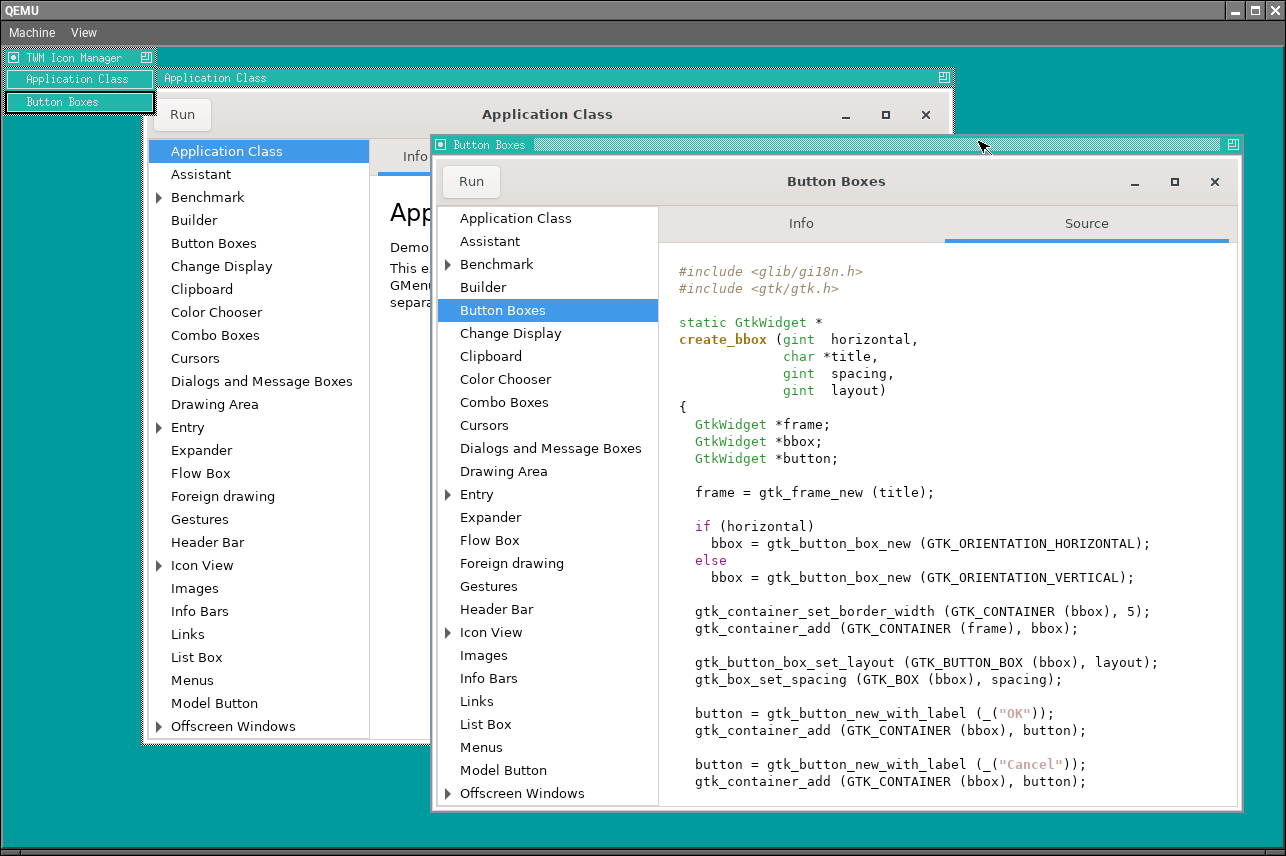
@wild halo i think it's the most liked tweet 🙂
Vinix, a new OS/kernel written from scratch in V, can now run GTK3!
 X
·
lilac pewter
X
·
lilac pewter
Congrats, that's p cool
wild halo
upbeat crest
<@563448614509215755> i think it's the most liked tweet 🙂
https://x.com/v_lang...
ah! amazing, i am glad to hear
wild halo
@upbeat crest why does V not autogenerate function prototypes for external C functions?
it seems like it would make more sense than plain #includeing headers manually, which at the end of the day don't really matter because V doesn't really parse them
plus they only really work on the C backend and not any other hypothetical backend like the native one
imho V should just rely on the user provided interface by means of actual V code (and autoemit prototypes in the C backend)
it seems like a significantly sounder design, unless i am missing something
i also understand that dropping #include now may be an issue if a lot of things rely on it, but one could opt into the new behaviour (or alternatively opt out of it if made default)
one thing the new behaviour would also help with is binding functions that have prototypes that V doesn't necessarily play nice with, but would be very cleanly bound by relying on V code only and emit a C prototype based on that
something like #592294828432424960 message comes to mind
the aforementioned workaround was me literally not including the C header, but of course that is not ideal without proper prototypes being emitted
upbeat crest
wild halo
<@592103446384214044> why does V not autogenerate function prototypes for extern...
it does with v -experimental
#includes are translated with c2v then
wild halo
hm
what i am saying is more akin to "why are includes necessary at all to begin with"
like i'd rather not have includes and/or V attempt to autotranslate them, perhaps unreliably
i just want V to create (very easily) prototypes based on my function definition for interfacing with C
(for the C backend)
for the native backend it doesn't even need the step of creating the prototypes, it should already know by default
btw this is how it works in most other languages like Ada
wild halo
( @upbeat crest )
upbeat crest
wild halo
i just want V to create (very easily) prototypes based on my function definition...
how would that look like?
wild halo
C.myfunction(arg0 voidptr, arg1 u64, arg2 u32) bool
->
bool myfunction(void *arg0, uint64_t arg1, uint32_t arg2);```you can already do that with
fn myfunction(arg0 voidptr, arg1 u64, arg2 u32) bool
just the definition
wild halo
upbeat crest
you can already do that with
`fn myfunction(arg0 voidptr, arg1 u64, arg2 u32) bo...
wouldn't the prototype end up being somemodule__myfunction?
wild halo
@upbeat crest error: cannot call a function that does not have a body
wild halo
i have been working on Vinix though
i have been reworking refcounting and that's annoying to debug and tedious
hence why not that many other commits
but it should make the system more stable
 rain mason
wild halo
i have been working on Vinix though
rain mason
wild halo
i have been working on Vinix though
fair
rain mason
wild halo
i have been reworking refcounting and that's annoying to debug and tedious
sounds fun /s
rain mason
wild halo
not at all
i meant with sacrasm lol
sorry shouldve added a tone indicator or smt
wild halo
oops
rain mason
wild halo
oops
nah my bad
 tender hornet
@wild halo please see if https://github.com/vlang/v/blob/master/vlib/v/gen/c/testdata/c_extern_on_C_fn_declarations.vv is suitable for your needs.
The TDLR is that:
@[c_extern] fn C.GifErrorString(ecode int) &char
generates:
extern char* GifErrorString(int ecode);
but it does not generate a separate .h file, the prototypes are still part of the .c file
we could add another tag, that could add them to a separate .h file, but it is not clear to me, how it should be named, and should that be parametrizable etc
if you have link(s) to info, about how other language do what you need, please post them
candid yoke
extern <function decl> is basically how most languages do that
so @[c_extern] <function decl> is pretty much what i'd expect from V
wild halo
tender hornet
but it does not generate a separate .h file, the prototypes are still part of th...
no, that's fine, i did intend that
thanks, this seems to do what i wanted
one slight suggestion i have is to allow @[import: 'c_function_name']
you already have @[export: 'c_function_name']
which allows a V function to be available via a C symbol name (as well as the V function name)
while this c_extern is fine for what i needed, i think it would be prettier to have import, which then allows you to define a V function name, available properly via a module, without C. prefix
often C functions have libraryname_whatever prepended to it, which in V can turn into libraryname.libraryname_whatever which is annoying
the import mechanism solves this
(and yes, i tried it and it doesn't work)
personally, if added, i'd remove c_extern entirely as it is just redundant and worse
here's an example of export
just to show how sensible adding import would be
wild halo
@upbeat crest @tender hornet 5439ff9cdebb3072a015cc0166206e90d6c1034a breaks Vinix
also please note what i said above, i think it would be a great improvement to V
tender hornet
wild halo
<@592103446384214044> <@344410584684560385> `5439ff9cdebb3072a015cc0166206e90d6c...
why?
wild halo
well that i am not sure
it was working before, now it isn't, and i bisected V to that commit being the issue
tender hornet
do you have a pub fn (mut a []string) free() { method in builtin?
previously it was not used
wild halo
no i don't have that, i am also not sure what that means exactly, sorry
tender hornet
the commit passed on the V CI, but it only builds vinix, it does not run it
wild halo
yeah, it builds fine
the issue is at runtime
should've specified
i didn't debug that yet, specifically
i will generate C output from the 2 commits and compare it guess?
tender hornet
before that commit, V called pub fn (a &array) free() {, so if you had a := ['abc', 'def'] for example, and used -autofree, the generated a.free() call would have freed only the memory for a itself, but not for the elements; after that commit, it frees first the elements, and then the array too
wild halo
so what happens could be that i have a call to .free() for the strings inside first, then for the array
would that result in a double free?
tender hornet
yes
tender hornet
after that commit, the loop that frees the elements is not needed anymore
since it is done inside the a.free() call
if you want, I can add a -d do_not_free_strings_in_array switch to restore the old behavior for now?
wild halo
i'd rather understand the actual issue
the diff isn't huge
it's mainly only a couple of calls to array_free being replaced with Array_string_free
tender hornet
yes, Array_string_free does a loop to free the elements first
wild halo
i fixed it
it was indeed about this issue in a spot in the kernel
btw
do you think it is possible to use a longer version of the commit hash in the commit messages of vc?
it only uses 7 characters but that could lead to collisions i think, given the amount of commits in v
tender hornet
yes, afaik they are not read by humans, only by automated systems
what do you think is a reasonable count?
the full commit?
wild halo
the full commit would be perfect because there is no chance of collision
tender hornet
@upbeat crest what do you think?
wild halo
else i guess something like 9 or 10? idk if there is a way to ask git how long the commit hash should be to have no collisions
tender hornet
can we replace the hash in the messages with the full one?
wild halo
i am saying this because i am automating pulling the right vc commit based on the v commit now, as seen in that commit above
i used this to make bisecting much easier
but i was always concerned about the possibility of collisions
tender hornet
afaik we do not shorten the hash ourselves, but use the result of git rev-parse --short HEAD
I'll have to see what its documentation is
I think that command guarantees that there will be no collisions, the output will be just longer if there would be:
https://git-scm.com/docs/git-rev-parse#Documentation/git-rev-parse.txt---shortltlengthgt
Same as --verify but shortens the object name to a unique prefix with at least length characters. The minimum length is 4, the default is the effective value of the core.abbrev configuration variable (see git-config[1]).
but using the full hash is better for automation anyways
I've changed it - see https://github.com/vlang/vc/commits/master/
tender hornet
happy to help when I can
upbeat crest
tender hornet
<@592103446384214044> what do you think?
i'm fine with 9
ah you did the full ones already
ok
wild halo
full ones are way better
wild halo
@upbeat crest @tender hornet it would be nice if, alongside labelled break/continue, you could support something like break 2
where 2 means to break to the 2nd level of loop
so it's unnecessary to manually label loops
so break without an argument is equivalent to break 1, then break 2, 3, and so on
wild halo
__global (
    freelist_head = &u64(unsafe { nil })
)

fn freelist_free(page u64) {
    unsafe {
        mut ptr := &u64(page + higher_half)
        *ptr = freelist_head
        freelist_head = ptr
    }
}```why would freelist_head get automatically dereferenced in *ptr = freelist_head?
like i get that i should be casting it to u64
but i would expect an error or warning rather than it silently dereferencing the var
upbeat crest
wild halo
but i would expect an error or warning rather than it silently dereferencing the...
you're right
should be an error
report via github please
will fix today
upbeat crest
wild halo
<@592103446384214044> <@344410584684560385> it would be nice if, alongside label...
wouldn't this mess up if more levels are added
i think readability would suffer compared to labels
wild halo
upbeat crest
wouldn't this mess up if more levels are added
depends? it would still refer to the loop containing the current loop, it is up to the user to make sure it makes sense, like many other things in code
the readability argument is matter of taste i guess, i personally find labels to be too cluttering but i accept a differing opinion
it's not a big deal, just a suggestion
wild halo
upbeat crest
report via github please
alright will do
toxic river
i think the other thing this messes with is the ability to use break <value> like rust and zig can
(where you can break a loop with a specific value)
though i guess they both have special syntax for labels to disambiguate?
wild halo
@upbeat crest https://github.com/vlang/v/issues/23991
GitHub
Describe the bug V should error out on wrong code that does not properly cast, but, instead, it generates broken code, and, in non-prod, merely generates a warning. In prod it errors out due to tha...
lilac pewter
toxic river
able to pass typeck
uacpi type system 
wild halo
toxic river
able to pass typeck
it's more about the dereference semantics being a bit wishy washy in V sometimes
but this at least had a warning
upbeat crest
toxic river
wtf how does the V compiler work if this is like
V has auto (de)reference which i'm going to remove for unsafe
and maybe for everything
V 0.4.10 is out! 400+ items in the changelog!
wild halo
awesome!
upbeat crest
@wild halo I fixed it: #592320321995014154 message
will be merged after tests pass
soon
wild halo
thanks!
upbeat crest
merged finally
had to fix a lot of stuff
wild halo
thanks, i'll update Vinix shortly
i'm glad this fix allowed you to fix bugs on the V side too
lilac pewter

warped jackal
Vinix more like goneix
upbeat crest
@wild halo I've added arm64 support to Vinix
 lilac pewter
Vinix is back to life???