#uACPI - a portable and easy-to-integrate ACPI implementation
1 messages · Page 3 of 1
 fiery turtle
 hollow elm
not all
fiery turtle
Hmm
hollow elm
another one is ```
0x50300009ac34 is located 4 bytes inside of 32-byte region [0x50300009ac30,0x50300009ac50)
freed by thread T0 here:
#0 0x5631214da536 in free /var/tmp/portage/sys-libs/compiler-rt-sanitizers-17.0.6/work/compiler-rt/lib/asan/asan_malloc_linux.cpp:52:3
#1 0x563121524d68 in uacpi_kernel_free /tmp/uacpi/tests/runner/interface_impl.cpp:217:5
#2 0x56312154d6e4 in free_object /tmp/uacpi/source/types.c:666:5
#3 0x56312154d6e4 in free_chain /tmp/uacpi/source/types.c:711:13
#4 0x56312154d6e4 in uacpi_object_unref /tmp/uacpi/source/types.c:749:9
previously allocated by thread T0 here:
#0 0x5631214da7de in malloc /var/tmp/portage/sys-libs/compiler-rt-sanitizers-17.0.6/work/compiler-rt/lib/asan/asan_malloc_linux.cpp:69:3
#1 0x563121525082 in uacpi_kernel_alloc /tmp/uacpi/tests/runner/interface_impl.cpp:188:17
#2 0x563121525082 in uacpi_kernel_calloc /tmp/uacpi/tests/runner/interface_impl.cpp:222:17
#3 0x56312154c571 in uacpi_create_object /tmp/uacpi/source/types.c:313:11
Thx
fiery turtle
That would be great
hollow elm
curious ```
[uACPI][WARN] invalid table 'DSDT' checksum!
[uACPI][TRACE] load of 'DSDT' (OEM ID 'ATC' OEM Table ID 'Cofbej')
[uACPI][TRACE] write to [_SB_.TP80] (2 bytes) TableData[0x0000000000000001] = 0x0
AddressSanitizer:DEADLYSIGNAL
==1950122==ERROR: AddressSanitizer: SEGV on unknown address 0x000000000001 (pc 0x556a1f6d71e9 bp 0x7ffcff823501 sp 0x7ffcff823490 T0)
==1950122==The signal is caused by a WRITE memory access.
==1950122==Hint: address points to the zero page.
#0 0x556a1f6d71e9 in memory_write /tmp/uacpi/source/default_handlers.c:270:35
#1 0x556a1f6d71e9 in table_data_region_do_rw /tmp/uacpi/source/default_handlers.c:322:8
lmao another aml blob that just segfaults iasl
Program received signal SIGSEGV, Segmentation fault.
AcpiDmCheckForSymbolicOpcode (Op=Op@entry=0x5555556cc4c0, Info=Info@entry=0x7fffffffd030) at ../../../source/components/disassembler/dmcstyle.c:429
429           Target = Argument2->Common.Next;
(gdb) p Argument2
$1 = (ACPI_PARSE_OBJECT *) 0x0
 hasty plinth
sure is, its here https://github.com/DeanoBurrito/northport, although if you're looking for how I'm using uacpi its not in the repo yet. I'm using it as a loadable driver, and am still playing around with how I want the api to look on the kernel side.
 north holly
I wanted to do that in my previous kernel, I don't think it's a good idea
The code was going to be messy
hasty plinth
I think its a good idea 
north holly
ok then gl
hasty plinth
ty
fiery turtle
hollow elm
curious ```
[uACPI][WARN] invalid table 'DSDT' checksum!
[uACPI][TRACE] load of ...
Huh
fiery turtle
hollow elm
lmao another aml blob that just segfaults iasl
Classic
fiery turtle
okay yeah this isnt a use after free
this is use of uninitialized pointer
the fuzzer made it so _STA returned nothing
in that case apparently nothing in the code overwrites the pointer to NULL
which is unfortunate

log with the fix applied
 north holly
fiery turtle
this is use of uninitialized pointer
north holly
fiery turtle
this is use of uninitialized pointer
This is why you should've listened to my static analyzer
Funnily enough, if the code path was simple enough the static analyzer might've been able to tell you what happened
fiery turtle
uacpi_execute_control_method must set the pointer to null if no return value was provided and the method exited successfully
that's just what any sane api would do
fiery turtle
north holly
This is why you should've listened to my static analyzer
probably
north holly
Tbf this path would've been buried in the 100s of one's like it
fiery turtle
yup
hollow elm
 fiery turtle
i wonder how many of these is just uninitialized pointer because of missing return value
hollow elm
a good chunk i presume
fiery turtle
probably
hollow elm
[uACPI][TRACE] load of 'DSDT' (OEM ID 'DELL\x' OEM Table ID 'UsbCTabl')
AddressSanitizer:DEADLYSIGNAL
=================================================================
==3975158==ERROR: AddressSanitizer: SEGV on unknown address (pc 0x55def6b6cdc0 bp 0x000000000007 sp 0x7ffea5f45180 T0)
==3975158==The signal is caused by a READ memory access.
==3975158==Hint: this fault was caused by a dereference of a high value address (see register values below).  Disassemble the provided pc to learn which register was used.
    #0 0x55def6b6cdc0 in bit_copy /tmp/uacpi/source/io.c:80:21
but cool nonetheless
hollow elm
wym unknown address
fiery turtle
lol
hollow elm
a good chunk of the crashes are also my fault
fiery turtle
wdym?
fiery turtle
ohh
hollow elm
[uACPI][TRACE] read from [\_SB_.PCI0.LPCB.LPC1] (1 bytes) PCI_Config[0x000000000000006B] = 0xFF
/tmp/uacpi/source/uacpi.c:634:23: runtime error: shift exponent 65 is too large for 32-bit type 'int'
SUMMARY: UndefinedBehaviorSanitizer: undefined-behavior /tmp/uacpi/source/uacpi.c:634:23 in
invalid free size: originally allocated 56 bytes, freeing as 32
that's an interesting one
fiery turtle
almost certainly
diff --git a/source/interpreter.c b/source/interpreter.c
index d6693a0..1aa24a8 100644
--- a/source/interpreter.c
+++ b/source/interpreter.c
@@ -5680,6 +5680,9 @@ uacpi_status uacpi_execute_control_method(
     }

 out:
+    if (out_obj != UACPI_NULL)
+        *out_obj = UACPI_NULL;
+
     if (ctx->ret != UACPI_NULL &&
         ctx->ret->type != UACPI_OBJECT_UNINITIALIZED) {
         uacpi_object_ref(ctx->ret);
this is the fix i made locally
see if that fixes like all of those
hollow elm
i wonder if i could teach afl that crashes in memory_read/memory_write are uninteresting
fiery turtle
probably
hollow elm
okay that seems to fix all the interesting crashes
hollow elm
no that went away too
fiery turtle
oh ok
hollow elm
or at least i don't see it
fiery turtle
yeah that shifts the type member
since it was a bogus pointer it was shfting by a bogus number
hollow elm
i wonder how we come up with a read from 0x000000ff
i can't see how is_physical_pointer can say it's not physical
fiery turtle
where did you see that?
hollow elm
[uACPI][WARN] invalid table 'DSDT' checksum!
[uACPI][TRACE] load of 'DSDT' (OEM ID 'DUC' OEM Table ID 'DkcVfdy')
AddressSanitizer:DEADLYSIGNAL
=================================================================
==263676==ERROR: AddressSanitizer: SEGV on unknown address 0x0000000000ff (pc 0x55cc0f480538 bp 0x7ffeba639cb0 sp 0x7ffeba639bc0 T0)
==263676==The signal is caused by a READ memory access.
==263676==Hint: address points to the zero page.
    #0 0x55cc0f480538 in memory_read /tmp/uacpi/source/default_handlers.c:254:16
out of bounds write because of a previous mapping being smaller and then that trashed this pointer?
potentially
because 0xFF seems like what IO reads return
hollow elm
hmm
fiery turtle
 void* uacpi_kernel_map(uacpi_phys_addr addr, uacpi_size size)
 {
+    std::printf("Mapping 0x%016" PRIX64 " with size %zu\n", addr, size);
+
try this
see if it maps the same thing multiple times
fiery turtle
yup..
hollow elm
so that's the realloc thing you mentioned
fiery turtle
yup
hollow elm
bit underwhelming to only find 1 real bug but that's still 1 bug less
fiery turtle
its a pretty important bug so yeah
i wonder if that unblocks more bugs
i also want to make aborts in methods unwind back to table level code so that will unlock even more bugs potentially
fiery turtle
yeah its pretty nice
north holly
@fiery turtle I get some warnings in uACPI related to variables possibly being used uninitialized.
uACPI/source/interpreter.c:2844:9: warning: 'arg1_buf.ptr' may be used uninitialized [-Wmaybe-uninitialized]
 2844 |         uacpi_memcpy(dst_buf + arg0_buf->size, arg1_buf.ptr, arg1_buf.len);
      |         ^~~~~~~~~~~~~~~~~~~~~~~~~~~~~~~~~~~~~~~~~~~~~~~~~~~~~~~~~~~~~~~~~~
uACPI/source/interpreter.c:2834:41: note: 'arg1_buf.ptr' was declared here
 2834 |         struct object_storage_as_buffer arg1_buf;
      |                                         ^~~~~~~~
uACPI/source/interpreter.c:2837:18: warning: 'arg1_buf.len' may be used uninitialized [-Wmaybe-uninitialized]
 2837 |         buf_size = arg0_buf->size + arg1_buf.len;
      |         ~~~~~~~~~^~~~~~~~~~~~~~~~~~~~~~~~~~~~~~~
uACPI/source/interpreter.c:2834:41: note: 'arg1_buf.len' was declared here
2834 | struct object_storage_as_buffer arg1_buf;```same warning around interpreter.c:1714:17
actually I might as well give you the entire log
you can ignore all analyzer warnings, those are for my kernel
everything in the log until it says [27%] Built target uacpi
north holly
I just love it though when the static analyzer yells at me because of nullptr dereferences as a result of a new call
It's so annoying
fiery turtle
@hollow elm I think I came up with a genius idea
diff --git a/tests/runner/interface_impl.cpp b/tests/runner/interface_impl.cpp
index cee0874..ae387f4 100644
--- a/tests/runner/interface_impl.cpp
+++ b/tests/runner/interface_impl.cpp
@@ -116,22 +116,7 @@ uacpi_status uacpi_kernel_pci_write(
return UACPI_STATUS_OK;
}
-static bool is_physical_address(uacpi_phys_addr addr, uacpi_size size)
-{
-#ifdef _WIN32
- return IsBadReadPtr((void*)addr, size);
-#else
- // https://stackoverflow.com/questions/4611776/isbadreadptr-analogue-on-unix
- int nullfd = open("/dev/random", O_WRONLY);
- bool ok = true;
-
- if (write(nullfd, (void*)addr, size) < 0)
- ok = false;
-
- close(nullfd);
- return !ok;
-#endif
-}
+bool g_expect_virtual_addresses = true;
static
std::unordered_map<void*, std::pair<uacpi_phys_addr, size_t>>
@@ -141,7 +126,7 @@ static std::unordered_map<uacpi_phys_addr, void*> phys_to_virt;
void* uacpi_kernel_map(uacpi_phys_addr addr, uacpi_size size)
{
- if (is_physical_address(addr, size)) {
+ if (!g_expect_virtual_addresses) {
auto it = phys_to_virt.find(addr);
if (it != phys_to_virt.end()) {
virt_to_phys_and_refcount[it->second].second++;
diff --git a/tests/runner/test_runner.cpp b/tests/runner/test_runner.cpp
index 891257e..d36daa6 100644
--- a/tests/runner/test_runner.cpp
+++ b/tests/runner/test_runner.cpp
@@ -131,6 +131,8 @@ static void run_test(
uacpi_status st = uacpi_initialize(¶ms);
ensure_ok_status(st);
+ g_expect_virtual_addresses = false;
+
st = uacpi_install_notify_handler(
uacpi_namespace_root(), handle_notify, nullptr
);
incredible
fiery turtle
lmao
fiery turtle
@hollow elm i made an insanely overengineered system that should be safe against everything
we should try fuzzing that
im about to merge it in a bit
@@ -118,31 +120,60 @@ uacpi_status uacpi_kernel_pci_write(

 bool g_expect_virtual_addresses = true;

+struct mapping {
+    void *virt;
+    uacpi_size size;
+
+    bool operator==(const mapping& m) const
+    {
+        return size == m.size;
+    }
+};
+
+template <>
+struct std::hash<mapping>
+{
+    size_t operator()(const mapping& m) const
+    {
+        return m.size;
+    }
+};
+
 static
 std::unordered_map<void*, std::pair<uacpi_phys_addr, size_t>>
 virt_to_phys_and_refcount;

-static std::unordered_map<uacpi_phys_addr, void*> phys_to_virt;
+static std::unordered_map<uacpi_phys_addr, std::unordered_set<mapping>>
+phys_to_virt;

 void* uacpi_kernel_map(uacpi_phys_addr addr, uacpi_size size)
 {
     if (!g_expect_virtual_addresses) {
         auto it = phys_to_virt.find(addr);
         if (it != phys_to_virt.end()) {
-            virt_to_phys_and_refcount[it->second].second++;
-            return it->second;
+            auto mapping_it = it->second.find({ nullptr, size });
+
+            if (mapping_it != it->second.end()) {
+                virt_to_phys_and_refcount[mapping_it->virt].second++;
+                return mapping_it->virt;
+            }
+
+            std::printf("WARN: remapping physical 0x%016" PRIX64
+                        " with size %zu\n", addr, size);
         }

         void *virt = std::calloc(size, 1);
+        mapping m = { virt, size };
+
         virt_to_phys_and_refcount[virt] = { addr, 1 };
-        phys_to_virt[addr] = virt;
+        phys_to_virt[addr].insert(m);
         return virt;
     }

     return reinterpret_cast<void*>(addr);
 }

-void uacpi_kernel_unmap(void* addr, uacpi_size)
+void uacpi_kernel_unmap(void* addr, uacpi_size size)
 {
     auto it = virt_to_phys_and_refcount.find(addr);
     if (it == virt_to_phys_and_refcount.end())
@@ -151,7 +182,18 @@ void uacpi_kernel_unmap(void* addr, uacpi_size)
     if (--it->second.second > 0)
         return;

-    phys_to_virt.erase(it->second.first);
+    auto phys_it = phys_to_virt.find(it->second.first);
+    auto mapping_it = phys_it->second.find({ nullptr, size });
+    if (mapping_it == phys_it->second.end()) {
+        std::printf("WARN: cannot identify mapping virt=%p phys=0x%016" PRIX64
+                    " with size %zu\n", addr, phys_it->first, size);
+        return;
+    }
+
+    phys_it->second.erase(mapping_it);
+    if (phys_it->second.empty())
+        phys_to_virt.erase(it->second.first);
+
     std::free(it->first);
     virt_to_phys_and_refcount.erase(it);
 }
basically this
it now successfully runs that blob you sent yesterday

okay merged
now I expect 0 crashes in the fuzzer
hollow elm
nice
fiery turtle
inb4 instant crash
hollow elm
for this round of fuzzing i'm enabling cmplog
which hooks comparisons and sends the values being compared against to afl which then tries to inject them into the fuzzer output
hopefully this should make it so more valid instructions appear
fiery turtle
Hmm
Im not sure what that means but if it makes the fuzzing more efficient sounds great!
Thank you
 lilac knoll
ig it means that if you have a branch if (x == 42) then instead of afl randomly trying values for x until it hits 42, it'd get a hint that it should shove the value 42 in there
hollow elm
yeah
fiery turtle
Ooh nice
hollow elm
i'm thinking it'll figure that it should shove more valid aml opcodes into the input
fiery turtle
Yeah thats definitely interesting
 left orbit
personally i think part of what made fuzzing great was the fuzzer throwing random opcodes everywhere so you can find weird ass edge cases with uacpi
also i kinda forgot but thanks for sized frees :^)
fiery turtle
Npnp
left orbit
not my uacpi kernel api free is no longer a stub
although i do not believe it was called either way
fiery turtle
left orbit
not my uacpi kernel api free is no longer a stub
Nice
fiery turtle
left orbit
although i do not believe it was called either way
Why is that lol
left orbit
i absolutely do not utilize any of the public apis just yet
ill replace table iteration with uacpi shortly
left orbit
oh no i do call init
fiery turtle
And namespace load as well?
 fiery turtle
Yeah there's uh
fiery turtle
U dont need the notify handler too
left orbit
yeah let me throw in some more calls and see what happens
fiery turtle
Its mostly for testing
Look at oberrows kernel or managarm init sequence
I should really make a tutorial
left orbit
is eval("\MAIN") required?
fiery turtle
Nope its the test runner abi
hollow elm
left orbit
personally i think part of what made fuzzing great was the fuzzer throwing rando...
well it's still gonna do that, but it's not gonna throw in invalid opcodes which just abort execution
left orbit
yeah i figured, just wanted to ask
left orbit
hollow elm
well it's still gonna do that, but it's not gonna throw in invalid opcodes which...
oh i see
hollow elm
or at least that's the idea
hollow elm
no way in hell it's doing that
fiery turtle
Well sometimes it does
hollow elm
did you see the kind of output it makes
fiery turtle
Else { else { else {
hollow elm
if it is even decompilable with iasl
hollow elm
i am inadvertently fuzzing iasl as well :^)
fiery turtle
It died almost instantly as well I think?
fiery turtle
lilac knoll
i wonder how much acpica has been fuzzed
Considering it dies if u return a reference to a local object
Probably not at all
hollow elm
i was about to say "i wonder how hard it is to go from aml -> taking over linux due to bugs in acpica" but then i remembered aml can poke at arbitrary memory already
fiery turtle
Yeah its trusted code basically
left orbit
[  0] (main) err: Kernel panic: switch on corrupt value
[  0] (debug) err: Stack backtrace:
[  0] (debug) err:   0xFFFFFFFF800827F7: <no symbol info> at kernel/src/mutex.zig:17
[  0] (debug) err:   0xFFFFFFFF800B96B4: uacpi_kernel_acquire_mutex at kernel/src/uacpi.zig:306
[  0] (debug) err:   0xFFFFFFFF8001F8ED: enter_method at kernel/./uacpi/source/interpreter.c:4232
[  0] (debug) err:   0xFFFFFFFF800167F6: prepare_method_call at kernel/./uacpi/source/interpreter.c:4892
[  0] (debug) err:   0xFFFFFFFF80015F97: uacpi_execute_control_method at kernel/./uacpi/source/interpreter.c:5635
[  0] (debug) err:   0xFFFFFFFF8000E896: uacpi_eval at kernel/./uacpi/source/uacpi.c:618
[  0] (debug) err:   0xFFFFFFFF8000E8E7: uacpi_eval_typed at kernel/./uacpi/source/uacpi.c:629
[  0] (debug) err:   0xFFFFFFFF80012813: uacpi_eval_sta at kernel/./uacpi/source/utilities.c:620
[  0] (debug) err:   0xFFFFFFFF8000F1E1: sta_eval at kernel/./uacpi/source/uacpi.c:460
[  0] (debug) err:   0xFFFFFFFF8000E54D: do_sta_ini at kernel/./uacpi/source/uacpi.c:504
[  0] (debug) err:   0xFFFFFFFF8005288A: uacpi_namespace_for_each_node_depth_first at kernel/./uacpi/source/namespace.c:476
[  0] (debug) err:   0xFFFFFFFF8000DFF0: uacpi_namespace_initialize at kernel/./uacpi/source/uacpi.c:0
[  0] (debug) err:   0xFFFFFFFF8008F0AF: init at kernel/src/uacpi.zig:41
[  0] (debug) err:   0xFFFFFFFF8008EE73: main at kernel/src/main.zig:155
[  0] (debug) err:   0xFFFFFFFF8008F2FA: _start at kernel/src/main.zig:111
[ 0] (debug) err: 0x0000000000000000: <no symbol info> at ??:0```something seems to be going really wrong
i'll have to fix my mutex bullshit, but thats for tomorrow
hollow elm
oh oops lmoa ```
[+] Found 44 unique tuples across 4578 files.
[!] WARNING: All test cases had the same traces, check syntax!
[+] Narrowed down to 1 files, saved in 'fuzz-in/'.
i threw out all blobs that time out after 0.8s
fiery turtle
left orbit
```
[ 0] (main) err: Kernel panic: switch on corrupt value
[ 0] (debug) err: S...
Lol
fiery turtle
hollow elm
oh oops lmoa ```
[+] Found 44 unique tuples across 4578 files.
[!] WARNING: All ...
What does this mean?
hollow elm
i forgot to tell it to pass the filename to the test runner so it reduced all the inputs to just one
fiery turtle
Lol
left orbit
holy SHIT i think i might just be retarded !!!
hollow elm
$ afl-cmin -i hw-blobs/ -o fuzz-in/ -T all -- _build-nocmplog/test-runner
``` vs ```
$ afl-cmin -i hw-blobs/ -o fuzz-in/ -T all -- _build-nocmplog/test-runner @@
Makes sense
hollow elm
left orbit
holy SHIT i think i might just be retarded !!!
lol
fiery turtle
Who knows maybe test runner segfaults at startup sometimes
left orbit
/// Returns a pointer to undefined memory.
/// Call `destroy` with the result to free the memory.
pub fn create(self: Allocator, comptime T: type) Error!*T {```HJAHA!!!!
WOW
WHO WOULD HAVE THOUGHT
[ 0] (phys) info: uacpi-info: namespace initialization done: 35 devices, 0 thermal zones, 1 processors
hollow elm
fiery turtle
Who knows maybe test runner segfaults at startup sometimes
well then the chance is less than 1 in like 30 million
fiery turtle
left orbit
`[ 0] (phys) info: uacpi-info: namespace initialization done: 35 devices, 0 the...
Nice
left orbit
uninitialized allocations strike again
fiery turtle
hollow elm
well then the chance is less than 1 in like 30 million
Lol
hollow elm
and less than 1 in 12 thousand on master
fiery turtle
Fuzzing the clone syscall
lilac knoll
left orbit
uninitialized allocations strike again
r-rust?
fiery turtle
Zig I think
 fiery turtle
Everything just hangs?
hollow elm
it's running very slow
fiery turtle
Huh
hollow elm
which is confusing because i threw out all the hw blobs that timed out
even before feeding it into afl-cmin
fiery turtle
Are you compiling llvm perhaps 
hollow elm
nah lol
fiery turtle
Strange
hollow elm
am i losing it, the cmplog variant runs fine
fiery turtle
Lol
hollow elm
okay no it also experienced slowdowns
im gonna run afl-tmin on the input corpus
and then maybe cmin again on the minimized files
i love gnu parallel ```
$ find ./ -type f | parallel afl-tmin -i {} -o ../fuzz-in-min/{/} -- ../_build-nocmplog/test-runner @@
Academic tradition requires you to cite works you base your article on.
If you use programs that use GNU Parallel to process data for an article in a
scientific publication, please cite:
Tange, O. (2024, January 22). GNU Parallel 20240122 ('Frederik X').
Zenodo. https://doi.org/10.5281/zenodo.10558745
This helps funding further development; AND IT WON'T COST YOU A CENT.
If you pay 10000 EUR you should feel free to use GNU Parallel without citing.
More about funding GNU Parallel and the citation notice:
https://www.gnu.org/software/parallel/parallel_design.html#citation-notice
To silence this citation notice: run 'parallel --citation' once.
Lmao
fiery turtle
Lol yes
hollow elm
okay i think i'm gonna look into it tomorrow
 vagrant hull
hollow elm
i love gnu parallel ```
$ find ./ -type f | parallel afl-tmin -i {} -o ../fuzz-i...
vagrant hull
hollow elm
i love gnu parallel ```
$ find ./ -type f | parallel afl-tmin -i {} -o ../fuzz-i...
what in the name of fuck
fiery turtle
@hollow elm did it crash?
hollow elm
havent had any crashes yesterday but i didnt do any long campaigns
fiery turtle
Made a basic uACPI page on osdev wiki: https://wiki.osdev.org/UACPI
for now this only has initialization tutorial but ill add some code examples later
north holly
Take some from my previous kernel :^)
fiery turtle
I might add a list of kernels to look at for examples
fiery turtle
Bro

Don't u just love when github ci runners randomly break every fucking week for no reason
 jaunty fox
fiery turtle
Don't u just love when github ci runners randomly break every fucking week for n...
jaunty fox
fiery turtle
Don't u just love when github ci runners randomly break every fucking week for n...
typical fickle python
fiery turtle
that's okay i fixed it 
 hollow elm
didn't know there was an env var
 rustic compass
fiery turtle
Made a basic uACPI page on osdev wiki: https://wiki.osdev.org/UACPI
rustic compass
fiery turtle
Made a basic uACPI page on osdev wiki: https://wiki.osdev.org/UACPI
maybe add example code to read some tables and maybe add some docs that list all api headers with a description on what functions they expose and their purpose
fiery turtle
yeah thats on the todo list
hasty plinth
whats the recommended course of action for handling the fatal type of firmware request? should that result in a panic or is it safe to keep running for a bit?
fiery turtle
hasty plinth
whats the recommended course of action for handling the fatal type of firmware r...
Linux just logs it and then ignores it
hasty plinth
OK cheers, I saw managarm doing the same
fiery turtle
Added a few more code examples in osdev wiki: https://wiki.osdev.org/uACPI
Also fixed a few misc things in uacpi, including namespace node attach order
jaunty fox
fiery turtle
Added a few more code examples in osdev wiki: https://wiki.osdev.org/uACPI
nice
i will implement shutdown at some point
uacpi will make the doing it easy it's the preparing that won't be
fiery turtle
yeah, unmounting everything and stuff is definitely not easy
fiery turtle
jaunty fox
nice
thank you
jaunty fox
proper shutdown is one of those features which i don't think i have ever seen a hobby OS
i'm not sure about unmounting either, which goes with it
fiery turtle
yup
best u get is just how mangarm currently does it
power button press == instant shutdown
hollow elm
we should probably implement sync sometime :^)
hollow elm
well yeah ideally we'd wire the power button to tell userspace to shutdown
fiery turtle
yeah
also usually power button is configured to actually trigger sleep instead
or bring up a gui prompt
hollow elm
but in the current situation having all managed memory objects (objects used to implement page caches) be told to do a writeback at least would be a good idea
if we want to just power off immediately
fiery turtle
but yeah all of that comes down to routing it to userspace
fiery turtle
hollow elm
but in the current situation having all managed memory objects (objects used to ...
thats a start for sure
 wind fiber
Yeah
That reminds me I have some shutdown related work still standing. I should get back to work and get that shit fixed
fiery turtle
Made method aborts while loading tables non-fatal (aka only the call chain is aborted and the table keeps loading)
 hollow elm
[uACPI][TRACE] write to [\PCI0.UHCI.TEST.PCIR] (1 bytes) TableData[0x0000000000000000] = 0x7
AddressSanitizer:DEADLYSIGNAL
=================================================================
==1140720==ERROR: AddressSanitizer: SEGV on unknown address 0x000000000000 (pc 0x5655286ea9d3 bp 0x7fff6db14201 sp 0x7fff6db14170 T0)
==1140720==The signal is caused by a WRITE memory access.
==1140720==Hint: address points to the zero page.
    #0 0x5655286ea9d3 in memory_write /tmp/uacpi/source/default_handlers.c:267:34
    #1 0x5655286ea9d3 in table_data_region_do_rw /tmp/uacpi/source/default_handlers.c:322:8
i suppose there's not much you can do about this?
hollow elm
well the connection between TableData[0x0000000000000000] and the pointer being 0x000000000000 seems obvious? but i don't know how it actually works
fiery turtle
oh actually i know exactly how this happened
so table data opregions are created via TableRegionDataOp
under the hood it uses the same opregion structure
but
this aml created it via OpregionOp by hijacking the address space type
address space type happened to match internal enum that corresponds to tabledata
and table data is mapped as just a plain virtual address
so it did not further validation on that

basically this "Internal type"
hollow elm
hm yeah ```
OperationRegion (PCIR, 0xFE, 0x00, Arg0)
Field (PCIR, AnyAcc, NoLock, Preserve)
{
REG0, 38
}
lmao
hollow elm
iasl managed to actually decompile it :^)
fiery turtle
technically this is invalid i think, because its a reserved address space
but yeah i guess i should add validation for this in the code
to at least check that its not 0xFE
hollow elm
that's the only crash so far, after about an hour
but i'm only using the tests as input
fiery turtle
technically this is a real bug, so nice

hmm well i guess its OEM defined
so maybe a u8 is not enough to represent it
idk
hollow elm
what's the TableData type used for?
fiery turtle
 fiery turtle
ye
these are basically system memory, but the base is a virtual address
at least in uacpi
hollow elm
makes sense
fiery turtle
Now that I think about why am I even doing _REG for it, thats not even a real opregion type
Good thing this bug was found
hollow elm
another crash found ```
[uACPI][WARN] error during _REG execution for operation region \PCI0.UHCI.TEST.PCIR@0x506000000b60: invalid argument
AddressSanitizer:DEADLYSIGNAL
==2406755==ERROR: AddressSanitizer: SEGV on unknown address 0x000000000000 (pc 0x562631cbcd83 bp 0x7fff8eebe010 sp 0x7fff8eebdf20 T0)
==2406755==The signal is caused by a READ memory access.
==2406755==Hint: address points to the zero page.
#0 0x562631cbcd83 in memory_read /tmp/uacpi/source/default_handlers.c:245:16
#1 0x562631cc1063 in dispatch_field_io /tmp/uacpi/source/io.c:229:11
#2 0x562631cc1063 in access_field_unit /tmp/uacpi/source/io.c:288:12
#3 0x562631cbf7fd in uacpi_read_field_unit /tmp/uacpi/source/io.c:364:15
i can't disassemble it, it has invalid opcodes, and if i just patch them to 0x00 iasl segfaults instead :^)
but it seems related, \PCI0.UHCI.TEST.PCIR is what used to be the TableData opregion in the previous crashing input
fiery turtle
can u send both crashes pls?
but yeah read is traced after the read so
there isnt like "about to read"
hollow elm
makes sense
so far there's 5 saved crashes but afaics they are all on a TableData opregion
fiery turtle
--- a/source/interpreter.c
+++ b/source/interpreter.c
@@ -1080,6 +1080,9 @@ static uacpi_status handle_create_op_region(struct execution_context *ctx)
     op_region = obj->op_region;

     op_region->space = item_array_at(&ctx->cur_op_ctx->items, 1)->immediate;
+    if (op_region->space == UACPI_ADDRESS_SPACE_TABLE_DATA)
+        return UACPI_STATUS_AML_BAD_ENCODING;
+
try this
hollow elm
yeah that fixes all the crashes
fiery turtle
ok nice
fiery turtle
I'm adding core API that should be used during initial namespace device discovery to bind corresponding drivers

Im thinking ill add a mode to the test runner to run this against every node, perhaps this will add better coverage for the fuzzer @hollow elm
hollow elm
sounds like a good idea
fiery turtle
maybe if its a device ill also run _CRS and _PRS against it
hollow elm
it'd probably also be useful for managarm for exposing all the legacy devices over mbus :^)
fiery turtle
yeah definitely
this api i basically stole from acpica
linux uses it for initial bus enumeration
Also i want to add a CI mode that decodes all 500 AML blobs from that repo and runs the test runner against all of them
sounds like useful regression testing
 vast kestrel
Is there a reason why the EC driver is not part of uacpi
fiery turtle
yes
because a proper implementation requires very tight coupling with kernel primitives
as well as being able to handle platform specific EC quirks
uacpi is not gonna take on that responsibility and provide a shitty half-working implementation
fiery turtle
fiery turtle
because a proper implementation requires very tight coupling with kernel primiti...
e.g. being able to asynchronously process transactions, or switch to poll mode as needed

GitHub
Linux kernel source tree. Contribute to torvalds/linux development by creating an account on GitHub.
this is completely outside of scope of what uacpi is doing
and uacpi philosophy is either do it well or dont do it at all
north holly
I thought you said an EC driver would be easy
fiery turtle
it is trivial for a blocking EC driver that works on 80% of hardware
a proper async one that handles everything is quite a bit more complex tho
fiery turtle
fiery turtle
it is trivial for a blocking EC driver that works on 80% of hardware
see: managarm ec driver
GitHub
Linux kernel source tree. Contribute to torvalds/linux development by creating an account on GitHub.
this file has so many bugzilla links
vast kestrel
Makes sense
I just always see the same EC driver in hobby osdev and am like "this looks tiny"
But seeing Linux explains everything :^)
Same vibe as xhci
fiery turtle
Yup
fiery turtle
Today i decided that i will add more tables to acpi.h
So that users dont have to roll their own
ill start with madt
but ill also do hpet and a few other
north holly
I got it, now what? /j
fiery turtle
stabilize it so it doesnt segfault when u blow on it
fiery turtle
also when rewrite 5
north holly
When I figure out if the kernel is truly unfixable
When it's damaged beyond repair
I think I might try testing the VMM a bit (after school)
With large page allocations
and frees (those are largely untested)
SetProtection is so trivial there is no point in testing
But I use that in the driver loader and it works fine
Actually, the reason it took me so long to finish the VMM for this rewrite is because I wasn't working on the kernel
So if I work on the kernel more, a rewrite could be feasible
Anyway enough littering this thread
fiery turtle
sure sounds good
north holly
I also kind of made a mistake where IRQs are non-preemptible like I originally wanted them to
(because otherwise the kernel shits itself)
jaunty fox
are the RISC-V entries official now?
i know drwe de vault was very upset that ACPI was being pushed for risc-v
 tired crater
i know i know dumb question but who is acpi talking to when someone says it interacts with firmware? Like does it talk to some seperate controller running some system control code or does it talk to some special device or what does it really do
fiery turtle
jaunty fox
are the RISC-V entries official now?
not yet i think
fiery turtle
tired crater
i know i know dumb question but who is acpi talking to when someone says it inte...
multiple answers:
- for more modern osses, mostly the firmware in terms of the embedded controller
- for older osses, AML invokes SMM
there's a data structure in ACPI NVS that has SMM opcode & args, that is configured and invoked by the AML bytecode
then bytecode waits for the smm to reply
and propagates the reply to the os etc
tired crater
I see thanks for clarifying
fiery turtle
np
lilac knoll
jaunty fox
i know drwe de vault was very upset that ACPI was being pushed for risc-v
lol
where was that?
 fiery turtle
i think the riscv structures might get added in acpi 6.6
6.5 is 3 years old at this point
fiery turtle
jaunty fox
why so mad
jaunty fox
fiery turtle
why so mad
being a linux user, it is unlikely he is accustomed to concepts like "suspend" or "power management"
fiery turtle
lmao
lilac knoll
probably mad because it makes the kernel complicated
fiery turtle
yes, for a hobby os like linux a fully static description of the state of the system at boot is totally enough
lilac knoll
but kernels are complicated so that's a cringe complaint
jaunty fox
lilac knoll
probably mad because it makes the kernel complicated
it's why one ought to use a pleasant library instead
granted it won't be doing much for you unless you lean in to what it offers
fiery turtle
tbh if u use something like uacpi u can implement suspend/resume in like 1000 loc
its not crazy difficult
plus some assembly for wake vector
jaunty fox
i would like to try it at some point
fiery turtle
i might do a PoC example for managarm evetually
for S1 suspend u dont even need assembly wake vector or saving ACPI NVS
it just resumes from where it left off
granted u dont save much power that way
lilac knoll
jaunty fox
it just triggers me because it reminds me of the casey muratori rant where he talks about hardware complexity
fiery turtle
yeah id say that complaint is more of a skill issue
jaunty fox
lilac knoll
it just triggers me because it reminds me of the casey muratori rant where he ta...
what's he upset about?
lilac knoll
he's upset that hardware is complicated
jaunty fox
"the world was better before branch predictors" sort of take?
jaunty fox
i will not watch a 3hr rant
lilac knoll
casey's take on acpi would be: 'oh my god shutting down the computer should just be a single memory access!!!!!'
fiery turtle
jaunty fox
i know drwe de vault was very upset that ACPI was being pushed for risc-v
didnt he port a huge library to implement ext4
and he complains about acpi complexity
lilac knoll
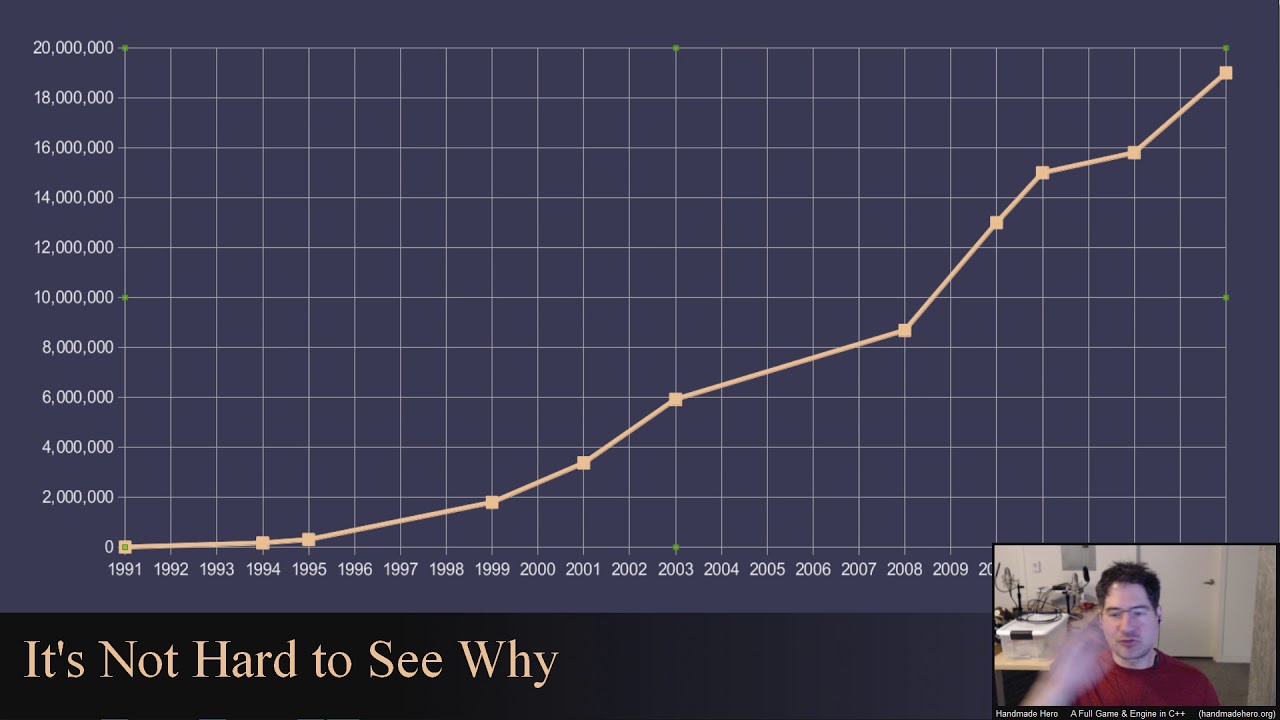
A historical argument for creating a stable instruction set architecture (ISA) for entire system-on-a-chip (SoC) packages.
Please note that although it's never mentioned in the audio there was a typo in the slide deck that makes the situation even more ludicrous when comparing 1990's machine to 2015's: the hard drive line erroneously said "gig"...
jaunty fox
fiery turtle
didnt he port a huge library to implement ext4
lwext4, it's of a reasonable size
it's designed to be low in memory use though
i looked at it before
lilac knoll
lilac knoll
https://youtu.be/kZRE7HIO3vk
TL;DR:
'operating systems are very complicated. that's because hardware and drivers are complicated. what if we just hits blunt made hardware not complicated?'
jaunty fox
it wouldn't work well for a kernel unless you reconstructed a lot of it (drop its custom caching, integrate it with your kernel's, drop its vfs, make it possible to use without holding a global lock around every read/write)
fiery turtle
yeah from what im seeing its targeting embedded
❯ cloc --vcs=git .
      90 text files.
      90 unique files.
       3 files ignored.

github.com/AlDanial/cloc v 1.90  T=0.09 s (916.7 files/s, 305922.9 lines/s)
-------------------------------------------------------------------------------
Language                     files          blank        comment           code
-------------------------------------------------------------------------------
C                               30           3411           2940          14145
C/C++ Header                    32            988           2819           3301
make                             2            191              2            555
CMake                           19             68             29            296
Markdown                         1             45              0            199
YAML                             3              5              1             38
-------------------------------------------------------------------------------
SUM:                            87           4708           5791          18534
-------------------------------------------------------------------------------
okay yeah that library is the size of uacpi
hollow elm
i imagine drew went for it since bunnix is just a unix-like os speedrun
fiery turtle
I also sometiems get tired of complex code and having to do everything properly and just end up wanting to speedrun something like that
jaunty fox
i fell into that mode and regretted it
well
i don't regret it as such, it's very inspiring
running x11 was fun but i need to make this thing elegant, teachable
jaunty fox
the benefit apart from the fun of making it run exciting software was perhaps the experience and familiarity it offered
fiery turtle
makes sense
jaunty fox
implementing something poorly can be a good prelude to implementing it well if you are too slow to turn out something beautiful the first time
fiery turtle
oberrow@
 hasty plinth
SLIT would be nice if you've got SRAT, but I don't know how many are actually using those 🤔
fiery turtle
yeah SLIT should be added def
hollow elm
there's a pr for lai about adding the tpm tables, but i'm not sure how useful it is or how well that fits
fiery turtle
any table is useful, i think eventually uacpi should have every table in that header
ill take a look at the tpm table
Also numa aware allocators in managarm when
hollow elm
:^)
rustic compass
fiery turtle
anything else people use these days?
I will give you a wishlist once i start working on things that need tables
wind fiber
jaunty fox
I remember that, I was there. Pretty sure I attended this specific talk lol
jaunty fox
fiery turtle
yeah SLIT should be added def
i will be using the SLIT table eventually
from time to time i get interested in extreme scaling on NUMA machines
so i want SLIT and SRAT
fiery turtle
fiery turtle
I'm adding core API that should be used during initial namespace device discover...
alright that's done
I made a nice namespace dumper in the test runner
e.g. heres a dump of pitust's chromebook namespace:

me when GOOG000A ps/2 keyboard
tired crater
fiery turtle
I made a nice namespace dumper in the test runner
Stealing this immediately
 rain nimbus
fiery turtle
me when GOOG000A ps/2 keyboard
rain nimbus
fiery turtle
me when GOOG000A ps/2 keyboard
That's the most HID of all time
fiery turtle
fiery turtle
e.g. heres a dump of pitust's chromebook namespace:
added a new --ns-dump switch for the emulation mode that makes a dump like that at the end
 loud ice
fiery turtle
me when GOOG000A ps/2 keyboard
loud ice
fiery turtle
me when GOOG000A ps/2 keyboard
your ps/2 keyboard isn't of the "google" brand?
fiery turtle
@hollow elm do u remember the argument that i made for why its difficult to implement proper while timeouts?
im thiking abut how to design it now and i dont see any problems
liek i dont remember what the problem was last time
hollow elm
that the aml can trigger calls to kernel functions and those take an unknown amount of time?
fiery turtle
hmm i dont think so?
well like an Event wait i guess
but thats not related to While timeouts
i think
anyway i added a start_ticks to every While codeblock, now i just check it at the beginning of that While
either when Continue or the end of block
 vagrant hull
you really should make a uACPI test image
fiery turtle
managarm
vagrant hull
i wanted to test it on this new board i got but running managarm is tedious lol
yeah, tedious
fiery turtle
yeah but a proper test image that supports everything uacpi needs will be an absolute ton of work
fiery turtle
otherwise it would be a piece of crap
fiery turtle
vagrant hull
is the latest CI image fine?
yeah
vagrant hull
it's from yesterday
fiery turtle
thats good enough!
fiery turtle
vagrant hull
i wanted to test it on this new board i got but running managarm is tedious lol
whats the board?
like a new pc motherboard?
vagrant hull
yeah
it's an MSI PRO B650M-B
i got it because it's one of the few AM5 motherboards with separate PS/2 keyboard and mouse
(it works well btw)
fiery turtle
nice
vagrant hull
ok i tried it
it seems to work
it gets to "waiting for /dev/sda0" and gets stuck there (of course it does)
but pressing the power button makes the machine shut down
fiery turtle
vagrant hull
but pressing the power button makes the machine shut down
nice
Fuck, never mind
The way While works right now is the code block is re-created every time when it gets jumped to
so the context of the while that was just being executed is lost
this will need some refactoring
lilac knoll
vagrant hull
it gets to "waiting for /dev/sda0" and gets stuck there (of course it does)
managarm moment
 verbal herald
vagrant hull
it gets to "waiting for /dev/sda0" and gets stuck there (of course it does)
verbal herald
vagrant hull
it gets to "waiting for /dev/sda0" and gets stuck there (of course it does)
live usb moment
fiery turtle
Managarm does have USB drivers btw
fiery turtle
Thats not why it doesn't work tho
verbal herald
sda0 usually corresponds to sata
with sdb0 being usb
shouldn't there be a boot option to use sdb0 instead like linux
fiery turtle
It corresponds to SATA only if u have a SATA drive
And thats not a problem in managarm anyway
It can boot like this too
verbal herald
yes but it always defaults to sda0 all the time
which is sata and not usb
if you have a sata drive
idk what the drive name is if you have nvme
maybe just like linux where its nvme0p0
so unless you only have usb, it always defauts to sata or whatever
hollow elm
i mean ideally we'd just run udev in init-stage1, let it set up /dev/disk/by-uuid and just mount by uuid using symlinks from there
fiery turtle
Yup
hollow elm
shouldn't even be that hard to do now, since the /dev/disk/by-uuid part was already working, and i recently merged some old patch that removes the size limitation for the initramfs
fiery turtle
tired crater
Stealing this immediately
tired crater
fiery turtle
https://github.com/UltraOS/uACPI/blob/1b1356523e164fd4c69239f9fa87509331d6a69b/t...

fiery turtle
fiery turtle
this will need some refactoring
nope, i think i managed to implement it in very few loc

the idea is to preserve the previous while expiration and code offset before re-evaluating it
Here's a blob that infinitely polls some HW register

previously it would run forever
And another one from @vast kestrel
 hollow elm
okay so i tried managarm on my laptop
and uacpi initialized fine, and there were even some queries happening and the aml was doing some notification (thermal zone related judging by the name), but unfortunately the power button didn't work
hollow elm
unfortunately i can't check if the uacpi init just failed since i didn't get into weston
looking at a disassembly of the acpi tables, it seems to use the new kind of power button
the acpi tables also apparently contain a (partial) list of bios settings? https://uwu.foundation/9SVYeaT.png https://uwu.foundation/7CvN1gC.png


oh it seems to be for WMI
fiery turtle
hollow elm
oh it seems to be for WMI
Yeah this looks like WMI
Does it have a power button object in the namespace?
Would be interesting to see full logs ofc
Also pls send the dump
fiery turtle
could also be related to _INI order, which I recently changed (but not yet merged into managarm)
so try git fetch && git checkout origin/master in the mangarm ports (although that will break find_by_signature a bit)
hollow elm
fiery turtle
Does it have a power button object in the namespace?
it does yeah
hollow elm
fiery turtle
could also be related to _INI order, which I recently changed (but not yet merge...
will try, and i can push the changes
fiery turtle
that would be great, and a dsdt dump would be awesome too
hollow elm
yeah i can post it later
fiery turtle
nice
hollow elm
fiery turtle
@hollow elm is there an ECDT table as well?
hollow elm
no ecdt, linux says ```
[ 0.964029] ACPI: _SB_.PCI0.SBRG.EC0_: Boot DSDT EC used to handle transactions
nop, nothing happens
fiery turtle
okay yeah its definitely the AML thinking we're a legacy os
hollow elm
there are some queries happening, and a notify that goes ignored for _TZ_.THRM, but nothing for the power button
fiery turtle
do the fn+whatever keys do anything?
hollow elm
hm good q, didn't think to try them
mmm i hate usb
qemu-system-x86_64 -m 2G -device qemu-xhci -device usb-host,vendorid=0x13fe,productid=0x4200 boots, but on my laptop the usb msd driver doesn't seem to pick the usb stick up
fiery turtle
lol
fiery turtle
fiery turtle
do the fn+whatever keys do anything?
also lid and AC
hollow elm
ac i can't test because the battery is kinda dead
fiery turtle
anyway its definitely a result of misconfiguration
could be order thats currently in managarm
could be some opregion is read incorrectly
they use indexfields a lot in your laptop
can you give the latest uacpi master a try before i do more debugging pls
hollow elm
yeah ofc
fiery turtle
thanks
also pls check that there's 100% no ECDT there ls /sys/firmware/acpi/tables | grep ECDT
because we had a similar issue in qwinci's laptop and that was because of that
hollow elm
qookie@selenium ~ λ ls /sys/firmware/acpi/tables | grep ECDT
qookie@selenium ~ λ ls /sys/firmware/acpi/tables
APIC  CRAT  dynamic  FIDT  IVRS   SSDT10  SSDT13  SSDT2  SSDT5  SSDT8  VFCT
BGRT  data  FACP     FPDT  MCFG   SSDT11  SSDT14  SSDT3  SSDT6  SSDT9  WSMT
CDIT  DSDT  FACS     HPET  SSDT1  SSDT12  SSDT15  SSDT4  SSDT7  TPM2
qookie@selenium ~ λ
yeah ok
hollow elm
/sys/firmware/acpi/tables/dynamic/ and /sys/firmware/acpi/tables/data/ are empty
fiery turtle
because it does feature detection in the _REG method
just like qwinci
so if thats called early it will set the bare minimum features
but if there's no ECDT that should be correct
fiery turtle
yeah basically the power button is unconditionally notified for query 28
            Method (_Q28, 0, NotSerialized)  // _Qxx: EC Query, xx=0x00-0xFF
            {
                Notify (PWRB, 0x80) // Status Change
            }
so its 100% EC programmed incorrectly by AML
but why is that I currently have no idea
hollow elm
i come bearing new findings
hollow elm
Fn+F2 (brightness down) and Fn+F3 (brightness up) trigger ec queries 16 and 17 respectively, which end up notifying the vga acpi node (which has no listeners), and this only works once (and io-apic irq 7 is left unacknowledged so perhaps it requires the host's ps/2 driver to work),
at random times query 128 happens, which notifies the thermal zone, but again no listeners,
opening and closing the lid triggers query 138, which notifies the lid object, but again no listeners,
holding the power button for a while (but not long enough that it triggers a hard power off, letting go just before it shuts down) triggers query 153, which does nothing (?),
short pressing the power button does nothing
fiery turtle
Yeah no listeners just means nothing in managarm hooked it up
Long press shutting down makes sense
Because it invokes smm
But yeah what you said confirms my theory
hollow elm
i'd expect it to be implemented in the chipset itself, but the query just before the hard shutdown happens is interesting
fiery turtle
Just need to figure out why it thinks were below windows 7
fiery turtle
hollow elm
i'd expect it to be implemented in the chipset itself, but the query just before...
Its like an emergency notification
hollow elm
yeah but it doesn't seem to notify anything
fiery turtle
Because managarm doesn't install any notify handlers for those devices
Its supposed to be listentened to by a host driver
hollow elm
i mean, there was no warning saying there are no listeners
fiery turtle
What device was it notifying?
hollow elm
oh _Q99 is literally a noop ```
Method (_Q99, 0, NotSerialized) // _Qxx: EC Query, xx=0x00-0xFF
{
}
forgor
fiery turtle
hollow elm
i come bearing new findings
Is this latest master?
fiery turtle
Nah I didn't
hollow elm
fiery turtle
Just need to figure out why it thinks were below windows 7
huh does windows vista and below not deserve the power button?
fiery turtle
I think it doesn't support Notify interface for it
hollow elm
god bless hp ```
Device (PS2K)
{
Method (_HID, 0, NotSerialized) // _HID: Hardware ID
{
If (W8OS ())
{
Return ("*HPQ8001")
}
Else
{
Return ("PNP0303")
}
}
Lmao
vast kestrel
WeightOS
fiery turtle
They did
vast kestrel
EC fun
fiery turtle
No idea why
vast kestrel
most likely custom memes they do which goes over the PS2 interface
hollow elm
also i wonder, do firmware developers have some special asl compiler that accepts longer names and just shortens them or do they actually suffer through 4 character names
vast kestrel
afaik they only use 4 letter names
hollow elm
ig the fact things like W7OS are even legible makes that pretty clear
vast kestrel
WsevenOS
fiery turtle
hollow elm
also i wonder, do firmware developers have some special asl compiler that accept...
They actually do
There isn't any extension or anything
vast kestrel
I mean, they could have made a simple custom preprocessor
hollow elm
yeah i was thinking as a non-standard thing on top of asl
vast kestrel
that just hex(os.urandom(2))
hollow elm
that'd make debugging annoying though ig
unless you teach the os about the random 4 characters -> name mapping
vast kestrel
The thing I wonder about is how they make the WMI memes
hollow elm
the wmi bios settings list made me curious
because it lists things not exposed in the actual bios
fiery turtle
hollow elm
because it lists things not exposed in the actual bios
Could be leftover from other laptops
vast kestrel
it allows windows (or well, HP prop programs) to change the settings
hollow elm
            Package (0x0F)
            {
                "Manufacturing Programming Mode Counter",
                "Place holder ",
                "\\Place holder for Path",
                One,
                Zero,
                One,
                0x0376,
                0x03,
                " ",
                " ",
                " ",
                Zero,
                Zero,
                0x0A,
                Zero
            }
Place holder for Path
that might actually be a read-only counter and not necesarily a write
hollow elm
probably yeah but still kinda interesting
left orbit
that is some cursed ass aml
but i don't think one should expect laptop firmware manufacturers to put in much effort and/or think too hard
 keen marsh
If my kernel does not yet support SMP can i just declare the functions from the api headers for locking as always returning true?
jaunty fox
keen marsh
If my kernel does not yet support SMP can i just declare the functions from the ...
they are supposed to sleepable locks, i think
so they are still important
keen marsh
Yeah but isnt the sleeping in case they were already locked? ("which cant happen")
left orbit
i think the return value specifies whether you could acquire it before the timeout
jaunty fox
keen marsh
Yeah but isnt the sleeping in case they were already locked? ("which cant happen...
as in they're not supposed to make the thread calling it nonpreemptible
fiery turtle
keen marsh
If my kernel does not yet support SMP can i just declare the functions from the ...
Should be fine
jaunty fox
i defer to the author's advice
fiery turtle
jaunty fox
so they are still important
Well technically yes
In reality probably won't matter
hollow elm
hollow elm
```
Package (0x0F)
{
"Manufacturing Prog...
            If (SRCM (MFLG, "MPMLock", 0x07))
            {
                If (SCMP (Local0, "Serial Number"))
                {
                    DerefOf (N00D [Arg0]) [0x03] = One
                }

                If (SCMP (Local0, "Product Name"))
                {
                    DerefOf (N00D [Arg0]) [0x03] = One
                }

                If (SCMP (Local0, "UUID"))
                {
                    DerefOf (N00D [Arg0]) [0x03] = One
                }
curious
SRCM is a strncmp afaics
keen marsh
fiery turtle
As long as you return false
So i have to implement the locks?
And cant just return "aquiring lock was successful" every time
hollow elm
hollow elm
```
If (SRCM (MFLG, "MPMLock", 0x07))
{
...
hmm and MFLG is just a 64 bit field at 0xFF007000
idk why i am digging into this but this is very interesting
fiery turtle
keen marsh
And cant just return "aquiring lock was successful" every time
Well
I cant promise it won't break, but for truly single threaded workflows yea
Since aml mutexes are recursive anyway


 hollow elm
fiery turtle
I cant promise it won't break, but for truly single threaded workflows yea
hollow elm
fiery turtle
I cant promise it won't break, but for truly single threaded workflows yea
couldn't you have issues if you do normal acpi work on one thread, and posted work on a separate thread, and query execution is posted from the irq handler?
they only mentioned not having SMP
fiery turtle
hollow elm
couldn't you have issues if you do normal acpi work on one thread, and posted wo...
Yeah of course
fiery turtle
hollow elm
```
If (SRCM (MFLG, "MPMLock", 0x07))
{
...
Lol
Okay so I would definitely debug this if I had the hardware, there are lots of things to check or dump, but idk how interested you are in that
uACPI doesn't have a way to override dsdt but would be interesting to recompile this with debug prints
And e.g force write WIN7 in EC as 1
Etc
Tons of things you could do
hollow elm
i'd be up for some debugging
i also need to figure out the parameter error i'm getting in the xhci driver when configuring the endpoint
but for that i think i have an idea from when i was talking with nooby about his xhci driver
fiery turtle
Yeah if we had working xhci we could also properly inspect logs
Right now I guess thats impossible as well
hollow elm
i am forgetting to set some fields in the device contexts :^)
hollow elm
fiery turtle
Right now I guess thats impossible as well
well we could just rearrange init and the initramfs a bit to put dmesg and less on it
and the ps2 driver
although not sure if less would work on the kernel console :^)
hollow elm
hollow elm
i am forgetting to set some fields in the device contexts :^)
i can try fixing this and seeing if it helps
iirc i am missing the ESIT and polling interval fields (oops )
ofc qemu doesn't care about the polling interval
even for hid
fiery turtle
Oh if you can fix it that would be amazing, if not we can come up with something else
@hollow elm and pressing the power button does do something for your Linux right?
hollow elm
yeah on linux it is handled and passed on to user space
fiery turtle
Ok ok just checking who knows
hollow elm
and triggers the kde shutdown prompt
fiery turtle
Yeah makes sense
Also I think we unconditionally enable the fixed event for the power button (without checking fadt), maybe this somehow messes with the ec
Could comment that out but I doubt thats it
hollow elm
i hate the xhci spec
vast kestrel
its fine™️
hollow elm
"Refer to section 6.2.3.8 for more information."
the 6.2.3.8 is a link, click it, get taken to the section
"Refer to section 4.14.2 for the definition of an “ESIT” [...]"
the 4.14.2 is not a link
at the very least 4.14.2 is the correct section
there are some references that are off because they added stuff inbetween
fiery turtle
Lmao
hollow elm
here's an example: in table 6-21:
TD Size. This field provides an indicator of the number of packets remaining in the TD. Refer to
section 4.10.2.4 for how this value is calculated.
section 4.10.2.4: "4.10.2.4 Babble Detected Error"
section 4.11.2.4: "4.11.2.4 TD Size"
fiery turtle
Lol
fiery turtle
Added very detailed examples on how to tie acpi into the driver system and enumerate the namespace https://wiki.osdev.org/UACPI#Namespace_Enumeration_.26_Finding_Devices
fiery turtle
Method (^BN00, 0, NotSerialized)
{
    Return (Zero)
}

Method (_BBN, 0, NotSerialized)  // _BBN: BIOS Bus Number
{
    Return (BN00 ())
}
least insane AML
verbal herald
prob could reuse the code from https://github.com/kora-org/ydin/blob/rewrite-old for an uacpi test kernel

GitHub
A very extendable and versatile hybrid kernel. Contribute to kora-org/ydin development by creating an account on GitHub.
slightly rewriting it too with codes from the main zig version translated into c
left orbit
managarm is a thing already
its much more advanced, basically ruling out kernel being broken at this point
no need to maintain a test kernel in addition to uacpi
hasty plinth
is there a particular reason detecting pointer size is done this way?
as opposed to something like sizeof(void*)?
Im asking because it causes my riscv tests to fail 
fiery turtle
hasty plinth
is there a particular reason detecting pointer size is done [this way](https://g...
Probably because sizeof is unusable from macros contexts
I dont even remember where this is used, id have to check
fiery turtle
hasty plinth
Im asking because it causes my riscv tests to fail <:nooo:750466870993223750>
Riscv should be added to the list definitely
hasty plinth
fiery turtle
Probably because sizeof is unusable from macros contexts
ah I didnt know that, dont do a lot of macro stuff
but yeah, riscv support would be helpful (for me lol)
hasty plinth
ah it does, nice
fiery turtle
Ye
hasty plinth
fwiw thats the only thing that prevents it from building on riscv
cant say if it runs just yet because clang generates relocations I havent implemented 😅
jaunty fox
very kind of you both to explore risc-v with uacpi
fiery turtle
fiery turtle
Oh also define UACPI_REDUCED_HARDWARE 1
I think that's the define anyway
jaunty fox
i would like to work on a risc-v keyronex against but i decided to wait until risc-v acpi is a bit more established (you needed a custom qemu for it to be any use, last i worked on it)
fiery turtle
jaunty fox
very kind of you both to explore risc-v with uacpi
Yeah thats nice for sure
Yeah riscv stuff is not yet officially there
hasty plinth
tbh its a totally selfish goal for me, I want my kernel to be as uniform as it can - will see how that goes when it gets uacpi loaded 😛
yeah riscv/acpi is a huge WIP
hasty plinth
fiery turtle
Oh also define UACPI_REDUCED_HARDWARE 1
will do, thank you 🙂
fiery turtle
This strips out huge chunk of code for supporting full acpi hardware
Its not mandatory to disable it ofc
Its autodetected otherwise
jaunty fox
i had a quick google search for risc-v acpi and someone is coping and seething about it

you posted cringe mdp_cs
fiery turtle
Giant skill issue
jaunty fox
there's more to it than acpi.sys and acpi-ca
the "easier to implement drivers for each power IC" bit also led me down the garden path, i thought he was being sarcastic at first
fiery turtle
This is just wrong on so many levels
jaunty fox
no one will ever deny acpi is complex, but such is the price of flexibility
fiery turtle
True
jaunty fox
it's a far cry from a format loosely inspired by Open Firmware's device tree but turned into a static blob
fiery turtle
Yeah
fiery turtle
left orbit
no need to maintain a test kernel in addition to uacpi
Basically yeah, and features like deferred execution from an interrupt handler are really difficult to get right from scratch
Which you must have for the full package
At this point the only bad thing about managarm is poor driver stability
But that dies in userspace luckily
lilac knoll
fiery turtle
Probably because sizeof is unusable from macros contexts
why?
fiery turtle
try #if sizeof(void*) == 4
tired crater
Because pointer size varies
 mortal yoke
fiery turtle
try `#if sizeof(void*) == 4`
mortal yoke
fiery turtle
try `#if sizeof(void*) == 4`
why not #if UINTPTR_MAX == UINT32_MAX?
tired crater
Have you tested on 32 bit machines copyobject abuser
lilac knoll
tired crater
Because pointer size varies
you don't generally need to branch on this
fiery turtle
mortal yoke
why not `#if UINTPTR_MAX == UINT32_MAX`?
because that means im relying on some other system header
that would have to be replacable by the user etc
fiery turtle
tired crater
Have you tested on 32 bit machines copyobject abuser
like 32-bit only pre amd64? no, i dont have one that old
but uacpi is tested in 32-bit mode in normal ci
mortal yoke
fiery turtle
because that means im relying on some other system header
I mean you are already using stdint.h in types.h (that can be overwritten by the user as uacpi_types.h)
fiery turtle
are those defined in stdint.h?
mortal yoke
yes
fiery turtle
ig i could do that
but then again im not sure thats better than checking the architecture
mortal yoke
at least it would work on more architectures without you needing to add them there
other than that probably not
fiery turtle
mortal yoke
at least it would work on more architectures without you needing to add them the...
that is true, yeah
but there's only so many architectures with acpi
itanium, x86, arm, and risc-v
vast kestrel
left orbit
managarm is a thing already
Managarm has a pretty big image and it doesn't actually boot on a ton of hardware, so it's not that useful as a debug image....
Like, even if the acpi init pass can't really test much when it dies somewhere else down the chain
fiery turtle
vast kestrel
Managarm has a pretty big image and it doesn't actually boot on a ton of hardwar...
it does boot almost everywhere, but drivers die in userspace so its not a big deal
vast kestrel
Does it reach deep enough for testing power button and stuff?
vast kestrel
It doesn't on my PC
fiery turtle
thats in the kernel so that almost always works
vast kestrel
It dies on USB
vast kestrel
And on my laptop it dies before even reaching the kernel
fiery turtle
vast kestrel
It dies on USB
that shouldnt prevent the power button from working
vast kestrel
Idk it's in a panic state
anyways it's still not a nice test image for quickly checking a bunch of functionality 
fiery turtle
well a proper test image would need a full blown kernel with a sophisticated scheduler, so thats like 10k loc of code
vast kestrel
Do you need a sophisticated scheduler tho
fiery turtle
can't test events otherwise
vast kestrel
I can take the core of my C# kernel very easily
It has a scheduler with events, it has a simple memory management
fiery turtle
well if it has a higher success rate at booting than managarm and you actually port uacpi there then that can work as a test image as well
vast kestrel
I might try it if I ever get free time :^)
fiery turtle
that would be great
 hollow crescent
jaunty fox
i had a quick google search for risc-v acpi and someone is coping and seething a...
hollow crescent
jaunty fox
i had a quick google search for risc-v acpi and someone is coping and seething a...
much easier for an OS to implement drivers for each power IC
hell naw
no way he said that
jaunty fox
hollow crescent
no way he said that
that's why i thought he was being sarcastic, but apparently not
fiery turtle
finally got around to extending the test suite to run the 500 publically available acpi dumps

a lot of them timeout because they infinitely poll some MMIO or IO regs
thats where my loop timeout detection PR comes in as well
 hollow elm
what's the 20 fails, timeouts?
fiery turtle
yeah, all of them are timeouts
hollow elm
nice
fiery turtle

Unfortunately 150 of these 500 don't have the AML to extract for DSDT
only its disassembled representation
which might not be compilable
or at least its not possible to even extract with any existing tools
so thats kinda unfortunate

fuuck this doesnt work on windows lol
ill have to modify the repo
ok that was just one file, great
okay so with the timeout branch only 3 are failing
and its really annoying blobs
Method (RR_M, 1, Serialized)
{
    If ((Acquire (MUEC, 0xFFFF) == Zero))
    {
        Local0 = Arg0
        Local1 = (Local0 & 0xFF)
        Local0 >>= 0x08
        Local0 &= 0xFF
        CDT2 = Local1
        CDT1 = Local0
        CMD1 = 0x80
        ESEM = 0x0F
        Local0 = 0x7F
        While ((Local0 && CMD1))
        {
            Sleep (One)
            Local0--
        }

        If ((CMD1 == Zero))
        {
            Local0 = EDA1 /* \_SB_.PC00.LPCB.EC0_.EDA1 */
        }
        Else
        {
            Local0 = Ones
        }

        Release (MUEC)
        Return (Local0)
    }

    Return (Ones)
}
it does 127 sleeps for 1 ms
and this shit is called a lot of times
so the blob takes longer than 10 seconds to load and test runner thinks it timed out
north holly
Firmware developers are very smart as we can see
fiery turtle

1 second total sleep time in the end
hmm on linux tihs only takes 1.8 seconds to load
runner/build-linux-64bits/test-runner 0.33s user 0.25s system 31% cpu 1.837 total
with UBSAN+ASAN
why is it so slow on windows
std::this_thread::sleep_for(std::chrono::milliseconds(msec));
like
maybe this takes longer on windows for some reason

Yayy all passes if i port my while timeout commit
thats with ubsan and asan
the only problem is on windows where sleep takes longer for some reason in debug mode
rustic compass
maybe allow longer timouts in debug mode?
fiery turtle
the timeout is in the python test runner
i could bump it, yeah
still annoying
its currently set to 10 seconds
hollow crescent
fiery turtle
a lot of them timeout because they infinitely poll some MMIO or IO regs
man that sucks
hollow crescent
fiery turtle
```
Method (RR_M, 1, Serialized)
{
If ((Acquire (MUEC, 0xFFFF) == Zero))
...
Is this decompiled from AML?
fiery turtle
hollow crescent
Is this decompiled from AML?
Yea
fiery turtle

me when firmware developers
and their error paths
Method (_CRS, 0, NotSerialized)  // _CRS: Current Resource Settings
{
    If ((TPTY == One))
    {
        Name (SBFB, ResourceTemplate ()
        {
            I2cSerialBusV2 (0x0015, ControllerInitiated, 0x00061A80,
                AddressingMode7Bit, "\\_SB.I2CA",
                0x00, ResourceConsumer, , Exclusive,
                )
        })
    }

    If ((TPTY == 0x02))
    {
        Name (SBFS, ResourceTemplate ()
        {
            I2cSerialBusV2 (0x002C, ControllerInitiated, 0x00061A80,
                AddressingMode7Bit, "\\_SB.I2CA",
                0x00, ResourceConsumer, , Exclusive,
                )
        })
    }

    Name (SBFI, ResourceTemplate ()
    {
        GpioInt (Level, ActiveLow, ExclusiveAndWake, PullUp, 0x0000,
            "\\_SB.GPIO", 0x00, ResourceConsumer, ,
            )
            {   // Pin list
                0x0009
            }
    })
    If ((TPTY == One))
    {
        Return (ConcatenateResTemplate (SBFB, SBFI))
    }

    If ((TPTY == 0x02))
    {
        Return (ConcatenateResTemplate (SBFS, SBFI))
    }
}
brooo are u fucking kidding

lmao
Method (_CRS, 0, NotSerialized)  // _CRS: Current Resource Settings
{
    If (GTPM ())
    {
        Return (Zero)
    }

    If (GCTP ())
    {
        Return (ResourceTemplate ()
        {
            Memory32Fixed (ReadWrite,
                0xFED40000,         // Address Base
                0x00005000,         // Address Length
                )
            IO (Decode16,
                0x0CB0,             // Range Minimum
                0x0CB0,             // Range Maximum
                0x08,               // Alignment
                0x10,               // Length
                )
        })
    }
    Else
    {
        Return (Zero)
    }
}
Thats not how you _CRS 
Brooo hand rolled fucking resource template
Method (_CRS, 0, NotSerialized)  // _CRS: Current Resource Settings
{
    Name (NAM, Buffer (0x0F)
    {
        "\\_SB.SDHB.BRCM"
    })
    Name (SPB, Buffer (0x0C)
    {
        /* 0000 */  0x8E, 0x18, 0x00, 0x01, 0x00, 0xC0, 0x02, 0x00,  // ........
        /* 0008 */  0x00, 0x01, 0x00, 0x00                           // ....
    })
    Name (END, Buffer (0x02)
    {
         0x79, 0x00                                       // y.
    })
    Concatenate (SPB, NAM, Local0)
    Concatenate (Local0, END, Local1)
    Return (Local1)
}
[uACPI][ERROR] invalid/unsupported serial connection type 192
i guess i should support that


Well ACPICA doesnt support it
so i wont either, whatever
vast kestrel
maybe just make it a warning instead
fiery turtle
well i have to be able to convert it somehow
for it to be a warning
because this aborts the _CRS invocation
vast kestrel
hmmm, you also want a way for drivers to have custom types in there probably
fiery turtle
probably, but acpica managed to not support it for 30 years and be fine
i guess no one uses it
vast kestrel
is that your inspiration
left orbit
ah, so that's (_CRS) what uacpi_get_current_resources calls and gives back to you? (message from nyaux chat, dont wanna pollute it)
vast kestrel

fiery turtle
vast kestrel
is that your inspiration
lol
like from a user perspective linux doesnt need that and it supports like all hw out there
vast kestrel
I do wonder what windows do
fiery turtle
probably some proprietary driver that handles this serial connection
fiery turtle
left orbit
ah, so that's (_CRS) what uacpi_get_current_resources calls and gives back to yo...
yeah
there's also possible_resources (_PRS)
which is a list of possible values that can be used to override the current resources
left orbit
setting everything up properly is quite involved lol
fiery turtle
yeah
and this resource conversion thing has a bytecode VM for converting them
its pretty insane

here's one for IRQ for example
Some of these public blobs do absolutely insane things

crazy uacpi survives all of that
good fuzzing experience because of qookie i guess
fiery turtle
Added a test case for infinite while loops

600k iterations with ASAN+UBSAN and O0 is pretty decent
(in 3 seconds)
hollow elm
can aml integers be arbitrarily large?
fiery turtle
only 64 bits
fiery turtle
yeah
idk if its worth guarding against 64-bit overflow lmao
unless this runs on nasa quatum computer
fiery turtle
hollow elm
or are they just a fixed-size int
if aml is revision 1 the ints are 32 bits, 64 for >= 2
hollow elm
ah right i remember something about 32-bit integers and acpi
fiery turtle
yeah its an annoying backwards compat thing
also if DSDT is rev 1 and SSDTs are 2 everything is still done as 32 bits
this can be seen on real hw too
hollow elm
huh
fiery turtle
basically only DSDT revision matters
hollow elm
do you actually support that?
fiery turtle
of course
hollow elm
how much do you even need to do to handle it? just & 0xFFFFFFFF on every arith operation?
fiery turtle
i have a UACPI_PARSE_OP_TRUNCATE_NUMBER
thats basically applied to any math operation
fiery turtle
hollow elm
how much do you even need to do to handle it? just `& 0xFFFFFFFF` on every arith...
yeah, basically that
hollow elm
hm what about a load from a 64-bit field?
fiery turtle
its loaded as a buffer
hollow elm
ah
fiery turtle
if in 32 bit mode
hollow elm
not sure what i expected
fiery turtle
also on NT if u have a qword immediate its still loaded as a qword
even in 32 bit mode
so i do that as well
and its never truncated unless u do math on it
hollow elm
interesting
fiery turtle
yet another acpica incompatibility
yup
well actually no
it would only store the first 4 bytes
the rest is zeroed
hollow elm

fiery turtle
but i guess its implementation defiend ofc
i know how nt does it
acpica recently fixed ToHexString
aka ToHexString(0xF) == "0xF" and not 00000000F
hollow elm
god bless
fiery turtle
a drop in the bucket but oh well
hollow elm
making that one machine where the fw engineer went insane work on linux
fiery turtle
lol
it was actually from a bug report yeah
Some firmware does ToHexString and then Mid to parse the serial number
So on linux it was printing out bogus serial
hollow elm
ig that use makes sense
fiery turtle
yeah
not the worst example i can think of
Yay large tests pass on CI as well!

In both 32-bit and 64-bit builds
Big

this bumps the ci up to like 6 minutes on ubuntu
but its fine i guess
left orbit
@fiery turtle are kernels using uacpi supposed to discover all devices using the uacpi methods? like you can find the ps2 keyboard using acpi, how about pci devices? or is that better done by probing manually
fiery turtle
Well you can discover PCI roots and from there match the devices
But not all devices are guaranteed to be in the namespace
So of course a pci subsystem lives on its own
And talks to acpi as needed
For pci acpi is more of a nice extension, not a replacement
left orbit
i see, i was just wondering since my way of enumerating pci devices is pretty janky and i thought that maybe there is some big brain acpi way to put me out of misery :^)
fiery turtle
What sort of jankiness?
fiery turtle
How do you do it?
left orbit
i can send the code if you want to take a look, its around 30-40 lines
ive written it more than a year ago
left orbit
i dont understand the way it works lmao
it might be that i just dont remember how exactly pci works anymore, but this isnt very good code either way, it doesnt support mmio which i think is preferred way of doing pci
fiery turtle
Looks fairly okay barring some magic numbers
fiery turtle
left orbit
it might be that i just dont remember how exactly pci works anymore, but this is...
Brush up on osdev I guess
left orbit
yeahhh
i had to do some msi-x stuff yesterday for xhci so it was a nice reintroduction into some parts of my old codebase
fiery turtle
Nice
left orbit
i discovered some funny bugs
like not having a separate stack for the page fault handler
fiery turtle
Are you reviving an abandoned project?
left orbit
and now when i add a field to my xhci controller struct i get an kvm error :D
fiery turtle
Damn
left orbit
ehh im not sure what i wanna do, i wanted to start from scratch
fiery turtle
left orbit
and now when i add a field to my xhci controller struct i get an kvm error :D
Similar bug like @kindred beacon
fiery turtle
Makes sense
left orbit
but zig i just meh, so i guess im working on it for experience so that i can make something better in the future, rather than have the zig kernel be actually good
left orbit
compiler is poo poo