#Retro Rocket OS - A BASIC powered Operating System (started 2009!)
1 messages · Page 3 of 1
 willow ginkgo
but it isnt a crappy computer i run retro rocket on
its old, sure, but its more than good enough to run windows 10, or linux
i even used to do unreal engine dev on it, thats why it has 32gb ram lol
i just have no need for it to run windows or linux rn so os dev test rig it is
 true ridge
willow ginkgo
i mean its not modern enough to game
true ridge
willow ginkgo
i mean its not modern enough to game
thats some very resource intensive games
willow ginkgo
true ridge
thats some very resource intensive games
nah just normal games
anything newer than cyberpunk 2077 is too new for it really
willow ginkgo
hah, standalone listen() test is horrible
    load_module("e1000");
    unsigned char ip[4];
    dprintf("Waiting for net to be ready\n");
    while (!gethostaddr(ip)) {
        __asm__ volatile("pause");
    };
    dprintf("listening 2000\n");
    int server = tcp_listen(0, 2000, 5);
    int client = -1;
    if (server < 0) {
        dprintf("Listen failure\n");
    } else {
        dprintf("waiting for client connection\n");
        while ((client = tcp_accept(server)) < 0) {
            __asm__ volatile("pause");
        };
        dprintf("Sending reply\n");
        send(client, "HELLORLD", 8);
        uint64_t ticks = get_ticks();
        while (get_ticks() - ticks < 3000) {
            tcp_idle();
            __asm__ volatile("pause");
        }
        dprintf("Closing client\n");
        closesocket(client);
        dprintf("Closing server\n");
        closesocket(server);
    }
 heavy linden
willow ginkgo
anything newer than cyberpunk 2077 is too new for it really
heavy linden
willow ginkgo
anything newer than cyberpunk 2077 is too new for it really
Silksong:
willow ginkgo
going to add BASIC support for LISTEN and ACCEPT today.
then, first connection into it remotely
i might make a telnet server, for shits and giggles.
true ridge
heavy linden
Silksong:
indie games dont count they run on microwaves
willow ginkgo
yeah
lol
ive changed the font to the BBC Micro 8x8 font

can fit a lot more vertically on screen now but i have another reason for this, VDU 23, x support
it looks very different to IBM 8x16 and might take some getting used to for some people
true ridge
willow ginkgo
ive changed the font to the BBC Micro 8x8 font
that last font looked like ass
congrats on switching
willow ginkgo
it was because it was bbc 8x8 stretched double height
this is the same font but at the aspect its supposed to be
willow ginkgo

zoomed in a bit
because discord's scaling of the image makes it unreadable without clicking
but you can see how the shape is right now?
they dont look so ass, obviously retro/oldschool but not ass
true ridge
willow ginkgo
they dont look so ass, obviously retro/oldschool but not ass
i never said this one was ass
this one's better
 true ridge
this palette hurts my eyes
true ridge
willow ginkgo
its exact match of mode 1 font
cool
can there be licensing issues though
heavy linden
true ridge
indie games dont count they run on microwaves
Black Myth Wukong
(or howevery you spell that; min system requirement includes a i5 8400, a hexacore cpu)
willow ginkgo
true ridge
can there be licensing issues though
no, these fonts are not licensed like ttf fonts are
true ridge
willow ginkgo
no, these fonts are not licensed like ttf fonts are
ok cool
willow ginkgo
they're just part of the os binary itself but not something anyone is asserting rights over
acorn went bust decades ago
willow ginkgo
tcp socket server in BASIC!
true ridge
willow ginkgo
tcp socket server in BASIC!
the name basic is clickbait atp (it's not basic at all anymore)
tcp server is insane
willow ginkgo
it is basic, see how simple a tcp server is?
its like 10 lines lol
admittedly that can only serve one request at a time, but its possible to make it scale simply by splitting the program in two, like a fork() model
server = SOCKLISTEN(NETINFO$("ip"), 2000, 5)
PRINT "Socket server listening on port 2000"
REPEAT
    client = SOCKACCEPT(server)
    IF client >= 0 THEN PROChandleConnection(client)
UNTIL INKEY$ <> ""
SOCKCLOSE server
END

DEF PROChandleConnection(client)
    PRINT "Handling connection, HELLORLD!"
    SOCKWRITE client, "HELLORLD!" + CHR$(10) + CHR$(13)
    SLEEP 1 ' Give the write time to finish
    SOCKCLOSE client
ENDPROC
@fork is this true
true ridge
willow ginkgo
```basic
server = SOCKLISTEN(NETINFO$("ip"), 2000, 5)
PRINT "Socket server liste...
nice
willow ginkgo
i need to fix that need to do SLEEP 1
because SOCKWRITE does not block, it isnt guaranteed the data is sent to the client before you SOCKCLOSE without it
willow ginkgo
server = SOCKLISTEN(NETINFO$("ip"), 2000, 5)
PRINT "Socket server listening on port 2000"
REPEAT
    client = SOCKACCEPT(server)
    IF client >= 0 THEN PROChandleConnection(client)
UNTIL INKEY$ <> ""
SOCKCLOSE server
END

DEF PROChandleConnection(client)
    PRINT "Handling connection, HELLORLD!"
    SOCKWRITE client, "HELLORLD!" + CHR$(10) + CHR$(13)
    SOCKFLUSH client ' Ensure data has been sent
    SOCKCLOSE client
ENDPROC
there, new keyword SOCKFLUSH, thats better
willow ginkgo
true ridge
do drivers need to add support for the keyword?
wdym
drivers don't implement the TCP stack if that's what you mean, a network driver only has a function pointer to send an ethernet frame and sends incoming ethernet packets to ethernet_handle_frame()
true ridge
willow ginkgo
drivers don't implement the TCP stack if that's what you mean, a network driver ...
a ok cool
 hot hound
@willow ginkgo can you add some kind of compatibility mode or emulator or something for microsofts ms basic? They've open sourced it under MIT a couple days ago.
Well at least I think that'd be pretty cool
willow ginkgo
hot hound
<@189759562910400512> can you add some kind of compatibility mode or emulator or...
probably not going to happen, it's more like BBC basic which was a much more advanced dialect, ms basic requires line numbers, doesn't have procedures, functions, while/endwhile etc
and Microsoft basic, the one they released, makes a lot of assumptions that it's in a 6502 environment with a 64k memory map
looks like it doesn't even have a divide operator lol
idk why you'd want to "emulate" it apart from as historical curiosity
hot hound
Mostly that
willow ginkgo
just optimised BASIC keyword dispatch to make it O(1), eliminate a huge switch statement, and mean theres one point where you have to go when adding a new keyword rather than about 3 different call points
 glad hemlock
willow ginkgo
just optimised BASIC keyword dispatch to make it O(1), eliminate a huge switch s...
glad hemlock
willow ginkgo
just optimised BASIC keyword dispatch to make it O(1), eliminate a huge switch s...
Are you using a jump table or what
willow ginkgo
glad hemlock
Are you using a jump table or what
yes
willow ginkgo
just done a ton of optimisations to the hot paths in BASIC
willow ginkgo
a webserver!
IF EXISTSVARI("client_socket") THEN
    PROCprocessRequest
    END
ENDIF

server = SOCKLISTEN(NETINFO$("ip"), 80, 5)
PRINT "Web server running. Press any key to terminate."
REPEAT
    client = SOCKACCEPT(server)
    IF client >= 0 THEN PROCspawnChild(client)
UNTIL INKEY$ <> ""
SOCKCLOSE server
END

DEF PROCspawnChild(client)
    GLOBAL client_socket = client
    CHAIN PROGRAM$, TRUE ' Spawn an async background instance
ENDPROC

DEF PROCprocessRequest
    SOCKREAD client_socket, REQUEST$
    VERB$ = TOKENIZE$(REQUEST$, " ") ' Get the request details
    FILEPATH$ = TOKENIZE$(REQUEST$, " ")
    IF FILEPATH$ = "/" THEN FILEPATH$ = "/index.html"
    PRINT FILEPATH$
    VERSION$ = REQUEST$
    FILEPATH$ = "/system/webserver" + FILEPATH$
    FH = OPENIN(FILEPATH$)
    IF FH > -1 THEN
        SOCKWRITE client_socket, "HTTP/1.0 200 OK"; CHR$(13); CHR$(10);
        size = FILESIZE(FILEPATH$)
        buffer = MEMALLOC(size)
        SOCKWRITE client_socket, "Content-Length: "; size; CHR$(13); CHR$(10);
        SOCKWRITE client_socket, "Connection: close"; CHR$(13); CHR$(10); CHR$(13); CHR$(10);
        BINREAD FH, buffer, size
        SOCKBINWRITE client_socket, buffer, size
        SOCKFLUSH client_socket
        MEMRELEASE buffer
        SOCKCLOSE client_socket
        CLOSE FH
    ELSE
        SOCKWRITE client_socket, "HTTP/1.0 404 Not Found"; CHR$(13); CHR$(10);
        SOCKWRITE client_socket, "Content-Length: 0"; CHR$(13); CHR$(10);
        SOCKWRITE client_socket, "Connection: close"; CHR$(13); CHR$(10); CHR$(13); CHR$(10);
        SOCKFLUSH client_socket
        SOCKCLOSE client_socket
    ENDIF
ENDPROC

less than 50 lines of BASIC
true ridge
hellorld?
 tall wedge
true ridge
hellorld?
tall wedge
true ridge
hellorld?
watch the usagi centurion videos and youll understand
willow ginkgo
true ridge
hellorld?

Once upon a time I made a typo, and that typo spawned some of the greatest things I’ve ever seen! I want to see your Hellorld!
Remember though:
- Must be in assembly or hexadecimal
- And preferably on a unique machine
Hellorld! Wiki:
https://github.com/Nakazoto/Hellorld/wiki
Centurion Wiki:
https://github.com/Nakazoto/CenturionComputer/wi...
true ridge
willow ginkgo
https://www.youtube.com/watch?v=gQ6mwbTGXGQ
thx
willow ginkgo
added a ton of new BASIC functions/keywords:
- FILESIZE - get size of a file by name without opening it
- MEMALLOC - allocate memory from the basic program's pool
- MEMRELEASE - release memory
- BINREAD - read raw binary buffer from file
- BINWRITE - write raw binary buffer from file
- SOCKBINREAD - read raw binary buffer from socket
- SOCKBINWRITE - write raw binary buffer to socket
willow ginkgo
hmm this is actually quickly becoming "the OS where making network software is easy"
 fierce swallow
that's hot work!
true ridge
willow ginkgo
hmm this is actually quickly becoming "the OS where making network software is e...
you have a 3d implementation
the os where making multiplayer shooters is easy 
willow ginkgo
working on a way to be able to redefine characters (VDU23,X) and draw text at any arbitrary graphics coordinate bypassing flanterms grid
 true ridge
everyone in the universe is using flanterm now
willow ginkgo
true ridge
everyone in the universe is using flanterm now
I'm using a heavily modified form, with extra features... flanterm can't do that thing above
nor can it report it's dirty-rect, which I use to improve graphics drawing performance
willow ginkgo
it didnt go crazy... i redefined character 32 😄

 wild sedge
lol
willow ginkgo
im adding support for the BBC Micro VDU keyword
its like ANSI, but Acorn's own rules
allows you to do crazy things like redefine character bitmaps
willow ginkgo
 rich scroll
willow ginkgo
ive changed the font to the BBC Micro 8x8 font
rich scroll
willow ginkgo
ive changed the font to the BBC Micro 8x8 font
that's actually a really good looking font. Good to know when the need for a small bitmap font arises
willow ginkgo
todays stuff.... make sure you got sound on 🙂
 timber dawn
oh thats cool :p
 latent tendon
lol nice
willow ginkgo
im still working on the BASIC interface and driver interface for it
but it will be done soon
timber dawn
chop chop
willow ginkgo

whats the usual thing to do.... something to do with an apple and black and white animation?

 plush estuary
timber dawn
plush estuary
timber dawn
no no no, its Black and White Apple Animation, not Bad Apple!
willow ginkgo
lol yeah, generic copyright free witch and apple music
timber dawn
perfect!
willow ginkgo
    load_module("ac97");

    fs_directory_entry_t* entry = fs_get_file_info("/system/webserver/test.raw");
    int16_t* data = kmalloc(entry->size);
    fs_read_file(entry, 0, entry->size, (unsigned char*)data);

    mixer_channel_t *music = mixer_open_channel();
    mixer_set_gain(music, 64);
    mixer_push(music, data, entry->size / sizeof(int16_t) / 2);

    kfree(data);
^ my test code for the mixer
willow ginkgo
really getting into the code now 😄
    void* wav_buffer;
    size_t wav_size;
    if (audio_wav_load("/system/webserver/test.wav", &wav_buffer, &wav_size)) {
        mixer_stream_t *music = mixer_create_stream();
        mixer_set_gain(music, 64);
        mixer_push(music, wav_buffer, wav_size_to_samples(wav_size));
        kfree(wav_buffer);
    }
IT WORKS!!!
 willow ginkgo
Sound support now done!
Gonna have a lot of fun with this 😄
willow ginkgo
ty 🙂
willow ginkgo
this is one deep rabbit hole
 willow ginkgo
now with codec support for loading MP3 files and FLAC files with SOUND LOAD:
true ridge
willow ginkgo
## now with codec support for loading __**MP3 files and FLAC files**__ with `SOU...
add WAV or i will destroy the universe
willow ginkgo
true ridge
add WAV or i will destroy the universe <:trl:829316641191886888>
wav is built in... 😄
 manic ridge
aac, ogg/vorbis, and opus?
 maiden kiln
awesome
willow ginkgo
manic ridge
aac, ogg/vorbis, and opus?
there would need to be a good header only lib for each
ii tried first to get stb_vorbis working before mp3, but it wouldnt compile, it does stupid shit like #including a c file instead of a header file, not letting me override the allocator properly
willow ginkgo
manic ridge
aac, ogg/vorbis, and opus?
adding ogg/vorbis 🙂
wont be adding AAC for now, it isnt a good fit for a kernel module. huge libs only like libfaac and the format is patent encumbered
heavy linden
willow ginkgo
## now with codec support for loading __**MP3 files and FLAC files**__ with `SOU...
flac my beloved ❤️
willow ginkgo
I'm adding adsr envelopes next with square, sine, sawtooth and triangle waves
for those who like it oldschool
willow ginkgo
OGG file loader, ENVELOPE and SOUND TONE.
You can now play basic square waves, sawtooth waves, sine waves, etc, and define ASDR envelopes!
https://retrorocket.dev/audio-basics.html#envelopes
https://retrorocket.dev/ENVELOPE.html
true ridge
willow ginkgo
these tests dont really do the power of it justice; im not a musician
true
its really cool tho
there should be like a tracker or something
willow ginkgo
yeah it's doable
I'm not musically talented enough to make it nice
or demonstrate it
really need a way to pitch bend samples for a proper tracker
maiden kiln
you could try to convert never gonna give you up
willow ginkgo
hahaha
i just converted the first few bars of bach
you know the famous church organ theme
REM The introduction to Bach's Tocatta and Fuges
REM Demonstration of ENVELOPE and SOUND TONE

ON ERROR PROCcontinue
MODLOAD "ac97"
ON ERROR OFF

REM Streams
STREAM CREATE lead1
STREAM CREATE lead2
STREAM CREATE lead3

REM ADSR envelopes
ENVELOPE CREATE 2, 1, 255, 128, 25,120, 220, 800, 0, 0, 0, 0, 0
ENVELOPE CREATE 3, 0, 220, 128, 10, 60, 180, 320, 0, 0, 0, 3,12
ENVELOPE CREATE 63, 0, 0, 128, 0, 0, 0, 0, 0, 0, 0, 0, 0

REM tune
PROCchord(880, 20, 3)
PROCchord(784, 20, 3)
PROCchord(880, 100, 3)
PROCchord(100, 40, 63)
PROCchord(100, 40, 63)
PROCchord(784, 20, 2)
PROCchord(698, 20, 2)
PROCchord(659, 20, 2)
PROCchord(587, 20, 2)
PROCchord(554, 90, 2)
PROCchord(587, 90, 2)

REM wait for tune to leave buffer
SLEEP 6000
END

DEF PROCcontinue
ENDPROC

DEF PROCchord(rootHz, durCs, env)
    SOUND TONE lead1, rootHz, durCs, env
    SOUND TONE lead2, rootHz * 1.2599, durCs, env   ' major 3rd
    SOUND TONE lead3, rootHz * 1.4983, durCs, env   ' perfect 5th
ENDPROC
youre welcome to try, im not musically inclined
i found the notes
gonna give it a go
never gonna give it up
never gonna let you down
😄
true ridge
willow ginkgo
hmmm i cant do it 🙁
:(
rich scroll
willow ginkgo
this can be a job for someone else
MIDI player? 
rich scroll
true ridge
passport.mid on retro rocket
No, canyon.mid on retro rocket!
rich scroll
willow ginkgo
i looked into this, because i did find a midi of never gonna give you up
add soundfont support too!
willow ginkgo
mods ahoy! anyone for a rickroll?
 willow ginkgo
i found a rickroll .mod in protracker format 😄
willow ginkgo
maiden kiln
you could try to convert never gonna give you up
enjoy!!!

Reddit
Explore this post and more from the osdev community
i should do bad apple. just because.
maiden kiln
willow ginkgo
enjoy!!!
love it
willow ginkgo
thats HDA driver support added, should cover most non-usb, non-hdmi audio devices out there
true ridge
willow ginkgo
enjoy!!!
the video clip is literally windows xp google chrome experience
144p 2fps
willow ginkgo
lol
thats intentional
i could run the frames at like 90fps
but it would just give people seizures
its not a video, its just 5 frames taken from the video
and i intentionally pixelated the frames
 willow ginkgo
true ridge
144p 2fps
willow ginkgo
true ridge
144p 2fps
^
true ridge
willow ginkgo
rick2.png
true ridge
willow ginkgo
^
real
willow ginkgo
willow ginkgo
fix hda driver bugs, was playing everything at 48000hz not 44100hz
now works perfectly
true ridge
willow ginkgo
fix hda driver bugs, was playing everything at 48000hz not 44100hz
til 100hz makes a difference
to be fair if you are listening to music even the slightest change will feel weird
willow ginkgo
it makes a huge difference to audio
its 8.84% faster and higher pitch
if you confuse the two
willow ginkgo
fixed all my maths primitives, log, pow, etc.
These are way beyond my ability to understand, the concepts are closer to "pure maths" than even comp sci. I used a combination of freebsd sources, libm, and chatgpt to figure out better solutions, because XM playback was skewing pitches of notes high due to assumptions i made in my simple implementation of pow, exp and log. theyre closer to the bsd and libm impl now, lots of floating point bit twiddling, little of it is understand. but, if bsd does it... means its battle hardened.
also, where i can, i used builtins.
 humble bison
true ridge
til 100hz makes a difference
humble bison
true ridge
til 100hz makes a difference
Listen to a 100Hz and a 200Hz tone
 digital leaf
humble bison
Listen to a 100Hz and a 200Hz tone
digital leaf
humble bison
Listen to a 100Hz and a 200Hz tone
our hearing is kinda logarithmic
if you know what i mean
meaning a 200hz tone will sound significantly higher than a 100hz tone, but a 10100hz tone will not sound significantly higher than a 10000hz tone
- you have to multiply a frequency by 2 to go up one octave instead of adding to it
humble bison
fair
Theres definitely an audible difference between 500Hz and 505Hz tone but tbh i wouldn’t know if I wasn’t presented both variants
digital leaf
audible, yes, significant, no
true ridge
humble bison
Listen to a 100Hz and a 200Hz tone
k
willow ginkgo
digital leaf
our hearing is kinda logarithmic
you thinking of decibels?
digital leaf
willow ginkgo
you thinking of decibels?
No
I'm thinking of frequencies
But that too is a logarithmic scale
willow ginkgo
44100 to 48000 is hugely noticeable though and then add on top another bug that pegged all the notes up the top of the scale in the xm player
it was like the naff recorder version lol
digital leaf
It's about a 4khz difference so probably
willow ginkgo
currently integrating mbedtls, so i can make ssl connections
once i have that my proof of concept will be to send a discord webhook!
willow ginkgo
well, it's integrated! I "just" need to test it now and debug any oofs
willow ginkgo
SSL works!!!
REM Socket test
HOST$ = "yahoo.com"
PRINT "Connecting to "; HOST$; " ";
IP$ = DNS$(HOST$)
PRINT " (IP: "; IP$; ")... ";

SSLCONNECT FD, IP$, 443, HOST$
PRINT "Connected! Socket descriptor="; FD

PRINT "Writing..."
SOCKWRITE FD, "GET / HTTP/1.0"; CHR$(13); CHR$(10); "Host: "; HOST$; CHR$(13); CHR$(10); CHR$(13); CHR$(10);
PRINT "Reading..."
SOCKREAD FD, TEST$
PRINT TEST$
PRINT "CLOSING"
SOCKCLOSE FD

PRINT "CLOSED"
 heavy linden
willow ginkgo
# SSL works!!!
```basic
REM Socket test
HOST$ = "yahoo.com"
PRINT "Connecting t...
heavy linden
willow ginkgo
# SSL works!!!
```basic
REM Socket test
HOST$ = "yahoo.com"
PRINT "Connecting t...
bro doxxed yahoo
willow ginkgo
heavy linden
bro doxxed yahoo
OH NOES i gave out yahoo's ip!
it was so secret, too!
willow ginkgo
taking a bit of a break from the really mind bending tls stuff, to add something simple
willow ginkgo
tree program!

 narrow elbow
willow ginkgo
tree program!
narrow elbow
willow ginkgo
tree program!
wait do you have unicode support ?
narrow elbow
willow ginkgo
tree program!
also maybee add some color
 tacit slate
narrow elbow
wait do you have unicode support ?
tacit slate
narrow elbow
wait do you have unicode support ?
Those are probably box drawing characters
narrow elbow
tacit slate
Those are probably box drawing characters
oh
tacit slate
Well that was poorly worded, but cp437 fonts can support then too
https://github.com/viler-int10h/vga-text-mode-fonts have a look at the fonts in this repo, most (if not all) of them have those characters near the end.
willow ginkgo
narrow elbow
wait do you have unicode support ?
flanterm maps Unicode to cp437
but in this os you can redefine font glyphs too
willow ginkgo
now changed the efi.fat image to a gzip compressed one. now the installer takes much less space, cuts the entire iso down to 24mb!
just needed to include zlib to decompress it
or rather, a subset of zlib
willow ginkgo
people keep asking, so i just had to
PRINT "Loading... ";
SPRITELOAD bad_apple, "/images/bad-apple.gif"
CLS
AUTOFLIP FALSE

GCOL &888888
RECTANGLE 0, 0, GRAPHICS_WIDTH - 1, GRAPHICS_HEIGHT - 1

REPEAT
    PLOT bad_apple, GRAPHICS_CENTRE_X - 160, GRAPHICS_CENTRE_Y - 100
    FLIP
    SLEEP 66
    ANIMATE NEXT bad_apple
UNTIL INKEY$ <> ""

AUTOFLIP TRUE
CLS
END
Hell yeah
tacit slate
nice lol
willow ginkgo
i was going to do the music too but there are copyright issues of embedding the mp3 for bad apple in retro rocket's iso
digital leaf
willow ginkgo
i was going to do the music too but there are copyright issues of embedding the ...
just record a video and thats it
- including the gif is already just as dicey legally speaking as the music
willow ginkgo
digital leaf
+ including the gif is already just as dicey legally speaking as the music
the gif is not associated with the original song
that was an art project someone did much later
digital leaf
willow ginkgo
the gif is not associated with the original song
and the gif is licensed freely or what
willow ginkgo
digital leaf
and the gif is licensed freely or what
not exactly, reuse is tolerated, which is why everyone else uses it. the music is a different matter
it is a grey area
true ridge
willow ginkgo
people keep asking, so i just had to
1994 power macintosh levels of framerate 😭
nice tho
"generic girl with apple video"
willow ginkgo
true ridge
1994 power macintosh levels of framerate 😭
nice tho
can take the frame rate up much higher but the speed felt wrong
sleep can go as low as 5 or even be removed
true ridge
fair
willow ginkgo
currently trying to make HDA work on real hardware
seems the firmware leaves it in a weird state
heavy linden
FW devs do be doing that
willow ginkgo
heavy linden
FW devs do be doing that
yup, "lets leave the device in bus mater mode, so it fails if you try it yourself, but leave all the codecs in D0 state"
willow ginkgo
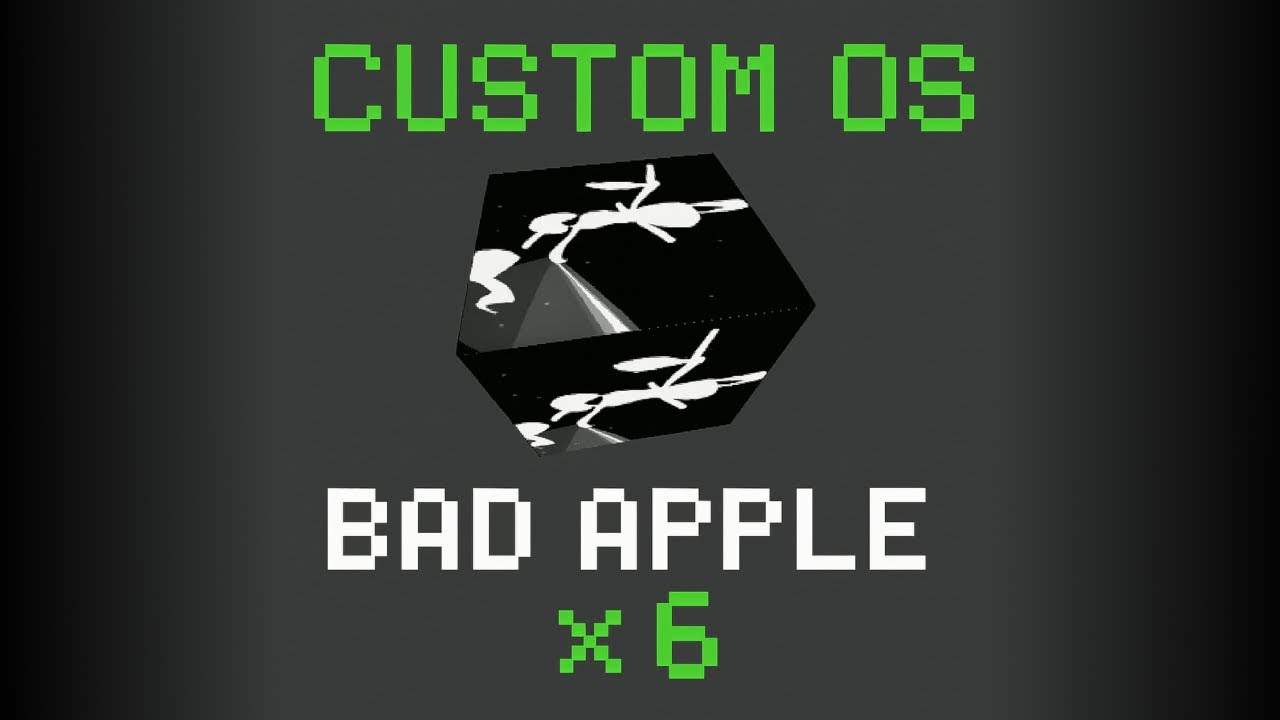
Booting into Retro Rocket, my homebrew 64-bit operating system inspired by the BBC Micro.
After landing at the BASIC shell prompt, I type a single word: demo.
The OS responds with:
Harvesting apples....
Bringing the noise...
…and then unleashes a full audiovisual demo: heavy dubstep, a rotating 3D cube, and every face of that cube playing ...
HARVESTING APPLES
 willow ginkgo
lol, innit
true ridge
gdt innit
willow ginkgo
true ridge
gdt innit <:trl:829316641191886888>
GDT OK
willow ginkgo
it's funny that I added a sound mixer and 3d graphics to retro rocket before paging functions. backwards lol. never needed them
true ridge
willow ginkgo
it's funny that I added a sound mixer and 3d graphics to retro rocket before pag...
just use relocatable file headers
willow ginkgo
true ridge
just use relocatable file headers <:trl:829316641191886888>
lol, everything in retro rocket is identity mapped, the default mapping provided by limine covered everything I needed, until I started dealing with 64 bit mmio BARs
so I was fine just deep copying limines cr3, until now
true ridge
ah
fair™
vmm's are just kinda scary idk
thats probably another problem but yeah idk address spaces look evil
willow ginkgo
nvme support works! needs some testing, and has some weird crashes. dont risk it on real devices yet.
 true ridge
willow ginkgo
nvme support works! needs some testing, and has some weird crashes. dont risk it...
true ridge
willow ginkgo
nvme support works! needs some testing, and has some weird crashes. dont risk it...
the installer looks like a certain linux tool but i forgot
its some old one idk
or new
willow ginkgo
true ridge
the installer looks like a certain linux tool but i forgot
i was inspired by linux text mode installers
true ridge
willow ginkgo
i was inspired by linux text mode installers
nice
willow ginkgo
virtio support is now added!
true ridge
willow ginkgo
virtio support is now added!
yay
willow ginkgo
[1829]: xhci.dbg: device VID:PID=0627:0001 class=03/01/01 mps=64 (port=5 speed=3)
nice, thats a usb keyboard!
willow ginkgo
I've had enough of USB, it isn't working quite right. it's a job for Ron
willow ginkgo
fixed FOR to support double STEP/TO
willow ginkgo
currently adding REGEX SUPPORT to BASIC
which required my libc to have wide char stuff
willow ginkgo
https://retrorocket.dev/MATCH.html
REGEX ahoy!
 fossil pagoda
I don't think your website should look like this...
 willow ginkgo
fossil pagoda
I don't think your website should look like this...
willow ginkgo
fossil pagoda
I don't think your website should look like this...
thanks lol it shouldnt
it used to be github wiki, i guess that didnt convert right to doxygen
omg, thats 10,000 lines
let me make a new one
willow ginkgo
fossil pagoda
I don't think your website should look like this...
fixed! thanks for letting me know. the correct docs page is: https://retrorocket.dev/cpuid.html
not (cpubrand)
fossil pagoda
willow ginkgo
fixed! thanks for letting me know. the correct docs page is: https://retrorocket...
Yay!
willow ginkgo
i didnt write that all myself btw, i passed the old page thru chatgpt and told it to sumamrise, convert to markdown, and convert the values to decimals (cpuid command take decimal not hex)
no way i can write that quick lol
this is exactly what LLMs are good at imho, parsing and converting text from one form to another
willow ginkgo
added support for captures, so the i can finally write a HTTP lib using REGEX to process URL!
willow ginkgo
so ive spent like 4 days spelunking into the old code.
i wanted to make a BASIC library so i can PROCget a URL and then get the HTTP(S) content.
- to do that i needed a HTTP library. wrote it with LEFT$, RIGHT$, etc, it was awful.
- so i decided to integrate a regex lib
- tried 3 different regex libs until i found one that worked
- just to be able to parse urls better and split them!
- to find that my http lib doesnt work because i'd put a blank line in the BASIC and my parser was being a dick
- fixed that, to find that my http lib doesnt work because a REM statement with brackets and : in the text kills the parser (couldnt make this shit up)
- fixed THAT, so now at least i can split urls!

before that, ive had to integrate a TLS lib so i can make https connections
true ridge
willow ginkgo
added support for captures, so the i can finally write a HTTP lib using REGEX to...
speaking of "captures"
do you have screenshots?
like make screenshot in the system
willow ginkgo
true ridge
speaking of "captures"
do you have screenshots?
i could do this, but theres no way to save it in the livecd
only on an installed system
true ridge
oh
true ridge
willow ginkgo
only on an installed system
add it for installed OS's idk
willow ginkgo
gonna start development of a package manager very soon!
willow ginkgo
https://retrorocket.dev/http.html
http request lib is done 😄
 willow ginkgo
LIBRARY LIB$ + "/http"

PROChttp_get("http://neuron.brainbox.cc/test.txt")
PRINT "HTTP status code: "; FNhttp_result$("code")
PRINT "Response body:"
PRINT FNhttp_result$("body")
easy to use lib 😄
tacit slate
Lol nice
willow ginkgo
currently working on a way to initialise and format a ramdisk from BASIC without an existing FS, so that there can be a ramdisk initialised when you start the live cd, giving you a place to save files and experiment properly.
REM Create a 1GB RetroFS ramdisk
RD$ = EMPTYRAMDISK$(1024)
MOUNT "/ramdisk", RD$, "rfs"
PRINT "Created RAM disk"
i mean what use is a live cd of an os designed for programming and tinkering, if you cant change anything
this will also give us somewhere to fetch http requested files to
willow ginkgo
decided we need a bootup mascot image 😄
 heavy linden
what's its name?
latent tendon
Gdt initter
willow ginkgo
heavy linden
what's its name?
rocky the retro rocket owl
he's an owl because the bbc micro logo was an owl
willow ginkgo
latent tendon
Gdt initter
GDT, innit!
willow ginkgo
should i put retro rocket into #1341905166907215954 ?
glad hemlock
willow ginkgo
should i put retro rocket into <#1341905166907215954> ?
Yeah it’s pretty awesome
The fact you can make drivers within your userspace is fucking insane
rich scroll
Yes
latent tendon
^
glad hemlock
It’s one of the most impressive feats I’ve seen here
Like that’s way higher level than almost everyone
Even the seasoned devs don’t have that yet
I mean some have self hosting which I guess could count but still
willow ginkgo
this is because the userspace isnt a ring 3 userspace, and the security is handled by the language runtime
it lets me sidestep some stuff and do things that usually are the realm of microkernels
i'll cook up a submission later then 😄
glad hemlock
willow ginkgo
this is because the userspace isnt a ring 3 userspace, and the security is handl...
Its how you do your userspace
I wasn’t necessarily talking about ring3
Imo there’s nothing wrong with running things in the kernel
willow ginkgo
really glad to see you got a place by the way, was worried for you
glad hemlock
willow ginkgo
really glad to see you got a place by the way, was worried for you
Thank you man ❤️❤️ I’ve been working 50 hour weeks along with school so it’s been rough
latent tendon
willow ginkgo
really glad to see you got a place by the way, was worried for you
same
glad hemlock
latent tendon
same
❤️
Love u guys
This is the only community I feel welcome and cared for in
Not even people at school or in my family are this supportive
Only you guys, my close friends irl, and my fiancee
Even tho my os is shit 😭😭😭
rich scroll
willow ginkgo
this is because the userspace isnt a ring 3 userspace, and the security is handl...
have you considered beefing up security later by using ring 3?
glad hemlock
Given the way he made the operating system I’m assuming it would be a simple process
Just another GDT entry
willow ginkgo
rich scroll
have you considered beefing up security later by using ring 3?
not sure. it wouldnt be the default thats for sure. if i did, it would be something you enable for your child processes
rich scroll
willow ginkgo
not sure. it wouldnt be the default thats for sure. if i did, it would be someth...
that would be a neat way to do it
willow ginkgo
basically, you'd set the option, and it would build a page table for each or something
glad hemlock
Command line argument I’m assuming?
willow ginkgo
like right now you have CHAIN "filename", booleanval and the booleanval is true if you want to background the process, false or missing if you want to basically waitpid on it
glad hemlock
Wait are the basic files executable after they’re ran
Like do they become elf’s?
Or are they just done in real time
Do you have an executable format you use?
Or is it just interpreted basic
willow ginkgo
BASIC files are BASIC files, theyre interpreted
glad hemlock
I see
willow ginkgo
compiled basic would be .... challenging
glad hemlock
Yeah
Do you plan on supporting soemthing like a C compiler? Potentially self hosting?
willow ginkgo
if you want compiled code, the only option rn is kernel modules, dynamically loaded
unlikely i'd do that
self hosting means too close to posix/unix
which isnt really my goal
willow ginkgo
still havent decided how or if i'll allow kernel modules to extend basic, would be nice, but also means you have programs that dont run unless you load specific ko's
glad hemlock
file descriptors and stuff too
willow ginkgo
file descriptors are the only thing thats posix-ish
in retro rocket
under basic is a posix-like libc-like open(), read(), write(), close()
glad hemlock
It’s kinda hard to do a lot of things without file descriptors
Yeah my syscalls are posix compat
glad hemlock
Yeah it’ll use an equivalent
rich scroll
like, NT handles are basically the same thing
willow ginkgo
there really isnt any sane way to do files without some kind of handles/descriptors, even the BBC Micro had them
rich scroll
ditto on classic Mac OS
glad hemlock
My file descriptors are hella basic 😭
tall wedge
Is your basic jit
willow ginkgo
i have shortcut functions in retro rocket's low level stuff, where i can give a file lookup result, which is a direct ptr to a vfs node, and then call a method to get a piece of a file.
so instead of opening a file, i hold a reference to it and say "give me x kilobytes from offset y"
its the same thing i guess, sorta, except theres no reference count
glad hemlock
willow ginkgo
its the same thing i guess, sorta, except theres no reference count
you should probably have re counting
you will run into many issues at somepoint without it
willow ginkgo
not for the low level file read
glad hemlock
your fs WILL leak memory at some point if you dont have ref counting
willow ginkgo
low level file read is for stuff like early boot
glad hemlock
yeah but you can still leak memory which isnt preferable
especially since memory is precious in early boot
willow ginkgo
nah you cant leak it
glad hemlock
idk maybe im wrong
willow ginkgo
its not a hadle you open, its a vfs node, it exists while the file exists
heres an example from my installer
    fs_directory_entry_t* info = fs_get_file_info(source);
    if (info && !(info->flags & FS_DIRECTORY) && info->size > 0) {
        void *file_contents = kmalloc(info->size);
        if (!file_contents) {
            return false;
        }
        bool read_success = fs_read_file(info, 0, info->size, file_contents);
        if (!read_success) {
            error_page("Error reading '%s' (%s)\n", source, fs_strerror(fs_get_error()));
            kfree_null(&file_contents);
            return false;
        }
        int fh = _open(destination, _O_APPEND);
        if (fh < 0) {
            error_page("Error opening '%s' for writing (%s)\n", destination, fs_strerror(fs_get_error()));
            kfree_null(&file_contents);
            return false;
        }
        if (_write(fh, file_contents, info->size) == -1) {
            error_page("Error writing to '%s' (%s)\n", destination, fs_strerror(fs_get_error()));
            kfree_null(&file_contents);
            return false;
        }
        _close(fh);
        kfree_null(&file_contents);

        char message[MAX_STRINGLEN];
        snprintf(message, MAX_STRINGLEN, "Copying '%s' -> '%s' (%lu bytes)\n", source, destination, info->size);
        display_progress(message, progress + ((block_progress++) / 3));

        return true;
    }
the low level fs_get_file_info() and fs_read_file() are used to read the whole file in one slurp from source
and then posix-like handles to write it to destination
glad hemlock
ohh then yeah youre fine
willow ginkgo
because i never made an fs_write_file()
glad hemlock
willow ginkgo
because i never made an fs_write_file()
was there rationale behind that choice tho?
willow ginkgo
by the time i got to fat32, retrofs, ram disks, i had the posix style open(... , O_CREAT)
glad hemlock
yeah fair enough
willow ginkgo
they map to a low level analog of fs_write_file but it made sense to just not make it a public api
willow ginkgo
open(), read() and write() and close() map to BASIC: OPENIN, OPENOUT, OPENUP, READ$(), BINREAD, BINWRITE etc
glad hemlock
willow ginkgo
open(), read() and write() and close() map to BASIC: `OPENIN`, `OPENOUT`, `OPENU...
clean. 👌
very nice design actually
good stuff
glad hemlock
willow ginkgo
did you venture into vfs yet
oh. yes.
glad hemlock
willow ginkgo
the vfs for me was one of the most fun things
100% AGREE
THAT SHIT WAS SO FUN
FELT SO GOOD
willow ginkgo
especially because im not really following any spec or standard, so i didnt feel like i was just writing out a script
glad hemlock
that is probably my fav subsystem
glad hemlock
willow ginkgo
especially because im not really following any spec or standard, so i didnt feel...
same i made it all myself
the op table, everything
it was lots of dopamine
very very fun
rich scroll
I love function pointers
willow ginkgo
my entire driver system is a bunch of function ptrs
glad hemlock
rich scroll
I love function pointers
YES
Top 5 C feature
i mean every lang has it but
willow ginkgo
basically:
typedef void* (*get_directory)(void*);
typedef int (*mount_volume)(const char*, const char*);
typedef bool (*read_file)(void*, uint64_t, uint32_t, unsigned char*);
typedef bool (*write_file)(void*, uint64_t, uint32_t, unsigned char*);
typedef uint64_t (*create_file)(void*, const char*, size_t);
typedef bool (*truncate_file)(void*, size_t);
typedef uint64_t (*create_dir)(void*, const char*);
typedef bool (*delete_file)(void*, const char*);
typedef bool (*delete_dir)(void*, const char*);
typedef uint64_t (*get_free_space)(void*);

/* Prototypes for block storage device drivers (see storage_device_t) */
typedef int (*block_read)(void*, uint64_t, uint32_t, unsigned char*);
typedef int (*block_write)(void*, uint64_t, uint32_t, const unsigned char*);
typedef bool (*block_clear)(void*, uint64_t, uint32_t);

typedef struct filesystem_t {
    char name[32];
    mount_volume mount;
    get_directory getdir;
    read_file readfile;
    write_file writefile;
    create_file createfile;
    truncate_file truncatefile;
    create_dir createdir;
    delete_file rm;
    delete_dir rmdir;
    get_free_space freespace;
    struct filesystem_t* next;
} filesystem_t;
this is what i do
unerneath that, is a set of block device drivers, they just have read blocks, write blocks, trim blocks, get geometry
glad hemlock
rich scroll
I love function pointers
look how clean this is:
 glad hemlock
willow ginkgo
this is what i do
glad hemlock
willow ginkgo
this is what i do
really nicely done, look at mine
what do u think of mine
@willow ginkgo
sorry for ping lol
willow ginkgo
it's nice
but I would typedef the functions
just makes it a bit less symbol soup
glad hemlock
willow ginkgo
but I would typedef the functions
Kinda like I did the rw thing?
willow ginkgo
yup
willow ginkgo
https://forum.osdev.org/viewtopic.php?p=202444&sid=01ca74a050144f63211834d3a4ed56c5#p202444
just found a really really old post, the first time i call the OS "retro rocket"
really old screenshot lol

its interesting that ive started measuring kernel complexity by symbol count now
back then it had 381 symbols, now it has 5596 😮
glad hemlock
willow ginkgo
back then it had 381 symbols, now it has 5596 😮
dang i just hit 1k
glad hemlock
willow ginkgo
i do have lots of third party stuff in the kernel though
That would make sense
Nothing is third party in my OS besides Flanterm
I like suffering
wild sedge
willow ginkgo
back then it had 381 symbols, now it has 5596 😮
bentobox only has 752 on x86-64 and 412 on aarch64
256 symbols on x86-64 are just the idt sooo
willow ginkgo
hah, same
i dont know if theyre exported symbols though
likely are
i need the third party stuff - no way im implementing my own compression, and definitely never my own TLS/SSL
then theres stb_image too
willow ginkgo
found a 16 year old bug in retro rocket last night
if you run the os for long enough, the keyboard buffer pointer wraps around
when it wraps around producer < consumer, and it thinks the buffer is full
because some things were treating it as a circular buffer when it wasnt quite
fix was simple enough, change some < to != in kgetc and kpeek etc. but, that went unnoticed for longer than some people on this server have been alive lol
wild sedge
dang that kernel is old
digital leaf
willow ginkgo
found a 16 year old bug in retro rocket last night
16?
how long ago did you start this thing
willow ginkgo
...16 years ago
the bug was in the ps2 keyboard driver
i only noticed it when i started mapping hci usb inputs to ps2 make/break codes
because i was hammering in kilobytes of garbage by keyboard mashing
digital leaf
willow ginkgo
...16 years ago <a:kekeke:959959620430995557>
it feels like an eternity ago to me because i was 4 and i barely just touched my first computer
willow ginkgo
wow that long ago
willow ginkgo
working on usb stick boot right now
been too long that I've had to say "lol use this obsolete metal pizza to boot the os"
willow ginkgo
UEFI USB BOOT!
 timber dawn
does that say toilet extensions
the red square is kind of blocking some text i think
wild sedge
timber dawn
does that say toilet extensions
joliet
willow ginkgo
timber dawn
does that say toilet extensions
yes! of course! skibbidi filesystem /j
timber dawn
genius :D
willow ginkgo
need to actually write docs now on how to burn the os to usb, and boot from usb
the usb image and the iso are now in the artifacts though 😄
https://github.com/brainboxdotcc/retro-rocket/actions/runs/18542273589

GitHub
Retro Rocket BASIC Powered Operating System. Contribute to brainboxdotcc/retro-rocket development by creating an account on GitHub.
willow ginkgo
usb boot support noiw fully documented!
 void phoenix
is it any easier to make an OS in baaic than in C?
willow ginkgo
well, you cant make a whole OS in any dialect of BASIC im aware of
ive still had to make the kernel in C and make a BASIC interpreter
void phoenix
ahh okay that makes more sense, i thought this whole thing was written in basic i was wondering how you did it 😭
willow ginkgo
lol, that would be interesting to attempt
some of the BASICs support compilation to standalone executables (e.g. no separate runtime lib) but, they only compile for linux or windows, not freestanding environments
in retro rocket the entire userland is BASIC, right from the very first 'init' program
and you can even write drivers in BASIC if you want
void phoenix
that is cool as hell, im probably gonna do a similar thing with my kernel when i get the motivation to work on it again (maybe not with basic though), impressive as hell well done
willow ginkgo
thanks, what language would you use
i almost chose to use javascript because of people saying "you cant write an OS in javascript", was going to integrate libduktape
void phoenix
go seems pretty nice, i know it better than C at the very least and it can be freestanding with gcc
willow ginkgo
ah nice
void phoenix
willow ginkgo
i almost chose to use javascript because of people saying "you cant write an OS ...
id probably do this if i knew js 😭
willow ginkgo
go is interesting.
haksell has monads. go has gonads
if you ever get the urge to help me out, i welcome PRs and especially userland programs, writing retro rocket BASIC is easy af
void phoenix
willow ginkgo
if you ever get the urge to help me out, i welcome PRs and especially userland p...
ill probably learn it, cause this OS is genuinely interesting to me so ill look into it 🙏
willow ginkgo
luckily for everyone i took time to document the language an theres like 60 different examples already in /programs
BASIC was the beginners language before python
void phoenix
ill have a read through all this when im at my PC next, ill definitely be giving it a go asap
willow ginkgo
nice 😄
willow ginkgo
added a page on creating boot media 😄
willow ginkgo
symbol file is now gzipped, its 40k instead of 205k
means its faster to load off usb/iso, and means that little less to download from github
willow ginkgo
fixed my msi support, so devices can at last enable msi and msi-x!
one bitmask value was wrong
willow ginkgo
added pci_setup_multiple_interrupts, have plans for it at a later date
willow ginkgo
now have support for S5 sleep/power button shutdown 🙂
narrow elbow
willow ginkgo
decided we need a bootup mascot image 😄
this look AI generated so much
willow ginkgo
narrow elbow
this look AI generated so much
who? rocky the owl?
willow ginkgo
probably because he is? you offering your amazing art skills?
narrow elbow
willow ginkgo
probably because he is? you offering your amazing art skills?
oh make sense
willow ginkgo
I'm a developer not an artist and I refuse to use "programmer art" in anything I present to the world. I commission, or I generate
narrow elbow
willow ginkgo
I'm a developer not an artist and I refuse to use "programmer art" in anything I...
fair
the only problem
is that using an AI generated mascot people tend more to thing the entire thing is low effort (which obviously your OS isen't)
willow ginkgo
meh, I think those people might get left behind as the world changes around them
LLMs and generative models are a tool like any other
and while some are harping on about "they be stealing my data" (but were never concerned when Google were making profiles of their entire lives and selling it to any bidder) others are innovating. I'm not sure the future is in openAI and spending trillions on destroying the world, but long term this research will bring benefits to development
narrow elbow
willow ginkgo
meh, I think those people might get left behind as the world changes around them
well it's that this people might think you use AI in your code and well AI coded OS don't have a very good reputation rn :kekw:
willow ginkgo
narrow elbow
well it's that this people might think you use AI in your code and well AI coded...
ai found a bug in my code nobody here could,
it's oddly good at static analysis and analysing for issues. my IDT was off by one, and my ahci structs were misaligned, I had asked for help so many times and in the end I gave up and put my project away for a while. I was bored one afternoon and asked GPT if it could find the issue in the code stopping it booting on real hardware, pasted in the c files, boom, a couple hours later (it didn't work first time, had to iterate some) I had my os working for the first time on real machines
many people just outright dismiss LLMs as useless, hallucinatory, or plagiarism, but if you feed them your own content they are very powerful
narrow elbow
willow ginkgo
ai found a bug in my code nobody here could,
it's oddly good at static analysis...
well that cool
willow ginkgo
but the code in my os pre dates LLMs by a decade, that gives it some weight too as not just "AI generated"
narrow elbow
willow ginkgo
but the code in my os pre dates LLMs by a decade, that gives it some weight too ...
yes but sadly some people don'r very look inside
they just read the readme or look at bit at thing and if they find something that look AI generated they call the whole thing AI 😔
i mean i can understand that you don't care about that kind of people
that probably what you should do actually
willow ginkgo
we create because we enjoy it
not to please someone who's got a stick up their ass and truly believes AI will take our jobs
I mean if you really think it will take your job, you were already replaceable by cheap foreign labour, or, you misunderstand the limits of LLMs and AI, there's always going to be a need for human creativity
and most importantly human review of generated output
because it messes up so often
humble bison
willow ginkgo
many people just outright dismiss LLMs as useless, hallucinatory, or plagiarism,...
Ive successfully used qwen3 to turn my awful hell of a "compile-and-run.sh" into a reasonably functional makefile without having to read too much into makefile syntax, it hasn’t broken yet
like I know exactly what I want and need to do, just not the syntax of the language
idk if that’s considered vibecoding
willow ginkgo
humble bison
like I know exactly what I want and need to do, just not the syntax of the langu...
nope, vibe coding is where you do "jesus take the wheel" and if it doesn't work you prompt it again and again until it compiles... russian roulette coding
humble bison
I was doing that with GitHub copilot before it was cool
before chatgippity even existed that is
over time I found myself less and less reliant on it to build things, I guess that’s how I accidentally learned how to code
also your os looks really cool
might see if I can contribute something :p maybe some random userland thing
(my own project is kinda stuck with a very intermittent and annoying bug)
if my basic skillz from being bored with a calculator in math class aren’t too rusty
willow ginkgo
humble bison
if my basic skillz from being bored with a calculator in math class aren’t too r...
all prs welcome, userland or kernel
I'm sure you're not too rusty
and thanks for the compliment 🙂
willow ginkgo
now working on a virtio-net driver... but alongside it I now need a way to select a driver on a per subsystem basis with priority, so I can say like "load me a network driver compatible with my detected hardware" without having to load every single network driver and try them all
willow ginkgo
added a load order system, now you can go MODLOAD "net" and it will examine all network modules and load the ones you have
its fed from /system/config/loadorder.conf that looks like this:
[net]
1AF4    1041    *       virtio_net
8086    100E    *       e1000
8086    107C    *       e1000
8086    153A    *       e1000
8086    10EA    *       e1000
10EC    8139    *       rtl8139

[sound]
*       *       0403    hda
*       *       0401    ac97

[codecs]
*       *       *       flac,mod,mp3,ogg,xm
toilet extensions 
willow ginkgo
true ridge
toilet extensions <:flobsh:779731076755095553>

 willow ginkgo
willow ginkgo
have you seen the unicorn poopy potty ad?
true ridge
willow ginkgo
have you seen the unicorn poopy potty ad?
no 😔
willow ginkgo

Buy at http://squattypotty.com - Pooping will never be the same. This Unicorn shows the effects of improper toilet posture and how it can affect your health. The Squatty Potty toilet stool has been featured on Shark Tank and Dr OZ show and has thousands of happy customers.
Press Contact - Bobby Edwards - [email protected]
The modern day...
willow ginkgo
need to return to the roadmap! i got a bunch of stuff added in to make a package manager so people can download/upload their BASIC programs! will be working on this
true ridge
when the rocket is retro
true ridge
willow ginkgo
need to return to the roadmap! i got a bunch of stuff added in to make a package...
please make it one big useless piece of trash where people can upload anything instead of "user repo" and "actual repo" like arch or whatever other distro does
i mean this might actually be somewhat good but the problem is that there might be a lot of bad software on it
no quality control
willow ginkgo
I wasn't going to have strict review of uploads to it yet
basically just user ratings and reviews
more like an app store
there's no point blocking people's contributions, it's not big enough for that to make sense and all contributions are good for the project
the plan isn't a linux distro or anything like apt with it's internal politics
willow ginkgo
true ridge
please make it one big useless piece of trash where people can upload anything i...
are you planning to upload anything? 😄
true ridge
willow ginkgo
are you planning to upload anything? 😄
well yesn't
i wish i could but i still dunno basic
i still have that core 2 duo laptop what if i actually install rr on there
willow ginkgo
you could write drivers instead, thats C
true ridge
willow ginkgo
you could write drivers instead, thats C
for whar 😔
true ridge
i think 99% of the stuff in my dell is proprietary and the non proprietary stuff you prolly made already
depression
true ridge
lemme check on it
windows 7 taking long on an ssd
or maybe modern tech brainrotted me
"intel 82567LM gigabit network connection"
fancy
willow ginkgo
hmmmm its an e1000 similar
my e1000 driver wont work on it, but i bet its not far off
true ridge
mayb
i wanna learn basic though im not gonna write drivers for an os idk how to navigate in
i think you made a documentation
absolute Docs
willow ginkgo
just added support for a ton of extra e1000 derived cards in the e1000 driver
[net]
1AF4    1041    *       virtio_net
8086    100E    *       e1000
8086    107C    *       e1000
8086    153A    *       e1000
8086    10EA    *       e1000
8086    10F5    *       e1000
8086    10CC    *       e1000
8086    10DE    *       e1000
8086    10D3    *       e1000
8086    1502    *       e1000
8086    150C    *       e1000
8086    15A2    *       e1000
8086    15E3    *       e1000
10EC    8139    *       rtl8139
thats quite significant coverage
i cant test all these, only own one of them and emulate the other via qemu
so YMMV
glad hemlock
willow ginkgo
```
[net]
1AF4 1041 * virtio_net
8086 100E * e1000
8086 ...
Straight heat
Bro is a prodigy
true ridge
willow ginkgo
```
[net]
1AF4 1041 * virtio_net
8086 100E * e1000
8086 ...
o
i need to check if my core2 laptops card is in the list
willow ginkgo
been too mentally exhausted to progress the past few days. just been gaming instead.
willow ginkgo
i need to improve my logger tbh
add log levels and categories
right now everything is just dumped to a dprintf ringbuffer
humble bison
is there an actual iso download for this or do i have to compile it myself
willow ginkgo
there is, or usb image
go to the github actions and grab it from the artifacts
https://github.com/brainboxdotcc/retro-rocket/actions/runs/18896881910
at the bottom @humble bison
the run.sh may need adjustments for your own use e.g. remove -vnc and the harddisk0
humble bison
ah neat
willow ginkgo
massively improved the speed of pci scanning 😄
true ridge
fire
willow ginkgo
really need to get around to my package management system
true ridge
willow ginkgo
really need to get around to my package management system
just use apt /j
willow ginkgo
true ridge
just use apt /j
that isn't an apt solution 
true ridge
willow ginkgo
that isn't an apt solution <:true:1276366887755714591>
just use pacman
idk
why is this so difficult
humble bison
it in the title
true ridge
willow ginkgo
nothing userland is compiled, or in C, perl, python, bash
just add compiled program support
willow ginkgo
the package manager has to be written in BASIC like the rest of the OS and download/install BASIC programs, and also allow submissions of new packages
true ridge
true ridge
just add compiled program support <:trl:829316641191886888>
no but seriously fair enough
willow ginkgo
it isn't actually very complicated client side I've just been lazy and a bit exhausted with dev
server side I need to make use of my day job skills, PHP, mysql, laravel
I already have client side support for https
true ridge

true ridge
willow ginkgo
I already have client side support for https
nice
willow ginkgo
you been working on an os?
true ridge
willow ginkgo
you been working on an os?
kilovolts ass
true ridge
i wanna rewrite it in c++ for some reason
willow ginkgo
I keep getting the urge to add c++ support to my kernel, things like templates and containers make a lot of things nicer
true ridge
true ridge
i wanna rewrite it in c++ for some reason
and also race conditions i want to mess around with multiprocessing but it didnt like it
terminal emulator had a heart attack
true ridge
willow ginkgo
I keep getting the urge to add c++ support to my kernel, things like templates a...
i honestly wanna do it just because of namespaces
true ridge
my dad taught me classes but i forgor
willow ginkgo

A lightweight C++ Discord API library supporting the entire Discord API, including Slash Commands, Voice/Audio, Sharding, Clustering and more!
like this one
true ridge
willow ginkgo
my bigger more popular projects are c++
fire
true ridge
willow ginkgo
https://dpp.dev
discbrod
true ridge
true ridge
i honestly wanna do it just because of namespaces
there are already a few os's in cc so it shouldnt be that bad
willow ginkgo
yeah it's only when you want stdlibc++ or exceptions things can get hairy
true ridge
willow ginkgo
yeah it's only when you want stdlibc++ or exceptions things can get hairy
fair
 serene stirrup
willow ginkgo
https://dpp.dev
serene stirrup
willow ginkgo
https://dpp.dev
Wait, did you make D++?
willow ginkgo
serene stirrup
Wait, did you make D++?
yup
willow ginkgo
nice! its a small world 😄
serene stirrup
willow ginkgo
nice! its a small world 😄
yea, I'm surprised I've found the guys who make the libraries I use in here tbh
This is such an niche server but still has so many creators of libraries that I use
willow ginkgo
yeah lol we all gravitate to making OSes in he end
i also made this back in the day
InspIRCd Internet Relay Chat Daemon is a modular, high performance IRC daemon combining stability and a rich and extensive C++ API with optional features such as SSL and permanent channels.
idk if thats something youll have used or heard of though
i havent contributed to that in decades though, i stepped back and let others take over
true ridge
willow ginkgo
i also made this back in the day
https://inspircd.org
wait i tried to use that like a crap ton of time ago but then i got a stroke from it 😭
no offense i was a 10 year old or smth
hot hound
willow ginkgo
https://youtu.be/YbYWhdLO43Q
Crazy part is, it actually works lol
true ridge
or you can move your toilet to be higher to like the point where its close to the ceiling, crap on the floor, and proceed to practice basketball throws
and/or not do the basketball part and not move the toilet and not crap on the floor
willow ginkgo
"missed... let's try that again*
when did this channel become discussion of how to poop, is this a subtle hint to do something so there's new technical chat
lol
willow ginkgo
I've improved the rendering time of sprites significantly by pre-swizzling the sprite buffer to the backbuffer/framebuffer pixel format, and also using traditional AND/OR with precalculated masks for transparent regions. makes things a LOT faster.
thinking of migrating the entire kernel/basic interpreter to strings with a length on the start (32 bit length) instead of null terminated. but this is a big thing, it will give me significant performance improvements in BASIC, but means a lot of changes. i dont need to really have null terminated strings everywhere as im not dealing with C at the user level
 broken ivy
idk if it fits the project but what about a compressed BASIC mode, something like a bytecode or similar?
that could be cool
not like true bytecode tho
just the same BASIC code but for example 1 char per function
willow ginkgo
pretty soon tokens will need to be 16 bits
that wouldnt fit even just to represent keywords and operators, but I get the idea
true ridge

willow ginkgo

willow ginkgo
thinking of something like this to quickly make constant string types from c strings
#define S(lit) \
({ \
    _Static_assert(!__builtin_types_compatible_p(__typeof__(lit), char *), "S() requires a string literal"); \
    _Static_assert(!__builtin_types_compatible_p(__typeof__(lit), const char *), "S() requires a string literal"); \
    static const struct { \
        uint32_t len; \
        char data[sizeof(lit)]; \
    } s = { (uint32_t)(sizeof(lit) - 1), (lit) }; \
    (const string *)&s; \
})
then I can S("foo") and it will create an anonymous static struct containing the counted string
digital leaf
willow ginkgo
thinking of something like this to quickly make constant `string` types from c s...
That bottom part will return a bad pointer though wont it?
Because the struct is only in the scope of your macro
 golden stag
It might return a bad pointer or cause undefined behavior because of aliasing shenanigans though (struct string and the anonymous type of the hidden variable s may or may not be allowed to alias).
In C, they are probably allowed to alias. In C++ I'm not so sure though.
willow ginkgo
it is fine in C
but in C++ would be UB because it's type punning
in practice it's fine on x64 which is my only target now and forever. but, I don't have to worry about it. the kernel is only C
willow ginkgo
my plan for the start of 2026 is to release a proper 1.0
i need to get package management working, and perhaps have a 'try now' on the website that launches a qemu instance and webscockify
willow ginkgo
true ridge
it owl
willow ginkgo
Support Server for Retro Rocket OS is officially moved to discord.gg/brainbox - i am consolidating my projects into one place to make moderation easier.
https://discord.com/channels/537746810471448576/1473717424388833341
https://discord.com/channels/537746810471448576/1473717476641476649
https://discord.com/channels/537746810471448576/1473717524054016070
serene stirrup
willow ginkgo
Support Server for Retro Rocket OS is officially moved to discord.gg/brainbox - ...
2K members, impressive
willow ginkgo
serene stirrup
2K members, impressive
absolutely not all there for the os lol, I have many projects
serene stirrup
willow ginkgo
absolutely not all there for the os lol, I have many projects
Ik you're famous tbh
You don't get famous by building an OS.
willow ginkgo
famous pfff, I'm not famous lol
and I guess you can get famous by writing an os if you're billions to one lucky and right place right time like Linus torvalds
willow ginkgo
im making a try it now page where you can just click and get a short lived vm session to try it online

running from a snapshot, so you can change the drive contents etc
im going to make this system a separate foss project, so other hobby OS projects can benefit from it
willow ginkgo
true ridge
is the time 30 minutes?
yes 30 mins max per session
and boots you after 2 mins idle
willow ginkgo
 willow ginkgo
https://github.com/brainboxdotcc/mission-control
https://discord.com/channels/440442961147199490/1478137330089852989

GitHub
A simple lightweight demo environment for hobby OSes - brainboxdotcc/mission-control
this is the first version
it will likely change a lot
willow ginkgo
im thinking of making this the front page blurb of retrorocket.dev
Do you remember when a computer was just… a computer?
You turned it on, got a prompt, and typed what you wanted to do. No assistants listening in. No ads popping up. No endless background services sending telemetry somewhere you never agreed to.
Just you and the machine.
Computing used to feel direct. If you wanted something done, you told the computer exactly what to do and it did it. Fast, predictable, and under your control.
Retro Rocket brings that feeling back.
It’s a modern system inspired by the straightforward machines many of us grew up with. Simple, responsive, and focused on the joy of actually using a computer rather than fighting with it.
No AI hype.
No subscriptions.
No nonsense.
Just a computer that does what you tell it.
Welcome back to computing.
humble bison
sounds a bit too professional/hypeful, idk. If I saw that in the wild i might assume it to be vibe coded
just something about the writing style/paragraphs
digital leaf
willow ginkgo
im thinking of making this the front page blurb of retrorocket.dev
----
## Do y...
the thing with No something. No something else. No whatever.
it makes me think this was written with AI
tall wedge
Its not X its Y is a very ai style writing
willow ginkgo
those are the things we want NO of lol
willow ginkgo
humble bison
sounds a bit too professional/hypeful, idk. If I saw that in the wild i might as...
am I not allowed to be professional or have pride in my stuff tho?
seems to be too much "yeah it's my os idgaf if anyone uses it, they won't so why bother"
humble bison
tall wedge
Its not X its Y is a very ai style writing
That’s probably it
willow ginkgo
I want to buck that trend, like I do with my other projects, put effort into SEO and visibility even if nobody cares
humble bison
totally subjective but nowadays SEO effort almost feels like a negative to me?
like it feels like it takes away credibility
willow ginkgo
like how people said don't bother promoting a discord lib... then got butthurt because I did, and all their users came to my project
humble bison
what is the library in question?
willow ginkgo
A lightweight C++ Discord API library supporting the entire Discord API, including Slash Commands, Voice/Audio, Sharding, Clustering and more!
humble bison
neat
willow ginkgo
there were about 8 C++ libs when I started now there's only one active and popular
I think part of it is that I put effort into making it visible
the other part is, it's just well maintained and kept active
humble bison
personally I’m a discord.js user, idk if some string operation heavy thing like a discord bot could be fun in c++
then again I only have c experience and no c++
willow ginkgo
discord.js is like the standard
I'm not a big fan of js, it's not my favourite language
humble bison
got its fair share of flaws but js is my guilty pleasure lmao
willow ginkgo
if I have to I will use it for web frontend
but I don't like react, Vue etc
they all feel over engineered
willow ginkgo
 hardy plover
I'm laughing so hard omg 😭
hardy plover
I'm laughing so hard omg 😭
I love old computers
and making a good basic interpreter with tons of features from scratch was a fun challenge
willow ginkgo
been putting some thought into how to do event driven programs in BASIC.
BASICally (pun intended) you could register an interest in an event by name, the os will implement some names or you could broadcast your own to specific pids or broadcast to all or a group.... so you could do like
ON EVENT "something" PROCfoo
then you can e.g. just stick an infinite loop at the end of your program so it waits and triggers the events when they happen
would be cool to be able to register for socket readiness as EVENT like this.
willow ginkgo
sockets is first target of this, gonna be able to do epoll like events
willow ginkgo
Added support for RTL8169/8161/8168 and clones based on the driver in https://discord.com/channels/440442961147199490/1061407633745125397
willow ginkgo
now with support for e1000e 😄
willow ginkgo
Now with a sound driver for ASUS Xonar D1 sound device! i have no way to test it yet though. Got a card on order 🙂
true ridge
willow ginkgo
Now with a sound driver for ASUS Xonar D1 sound device! i have no way to test it...
oof
willow ginkgo
for now the driver is guesswork and staring at how linux does it
but i wanted to make a driver for a sound device that isnt hda, and isnt ac97 and still works on modern machines
and isnt usb
true ridge
fair
willow ginkgo
being as i got a driver for 8168 too, i could get my onboard networking running at last on my test machine so i dont have to rely on a pci e1000 network card
if i can get that working perfect, i have a spare pci slot i can put the sound card in
willow ginkgo
added support for DPCs 😄
willow ginkgo
so, i have 3 programs for retro rocket that i'd like to make, in no particular order:
- Dragonfly - A side scrolling fast paced shoot-em-up inspired by R-Type
- Voyager - A text mode web browser, with graphical enhancements powered by Retro Rocket's graphical terminal
- Crypt Paint III - A full screen paint program
I'll get to each one when motivation takes me, or perhaps even work on all 3 at once and flit between them. Now getting to the point where what Retro Rockt needs are two things only:
User facing programs, and drivers.
Kernel features can wait!
When i say 'graphical enhancements' for the text mode browser, what i mean is forms that actually behave like forms, instead of showing an input box like:
[_________]
it will actuall show an input box etc. Can do this by the ability to redefine characters on the fly, plus the ability to draw primitives to the screen.
and yes, https will be supported, as TLS is already something Retro Rocket BASIC can do
Dragonly is a modern reimagining of my first attempt many years ago: https://www.youtube.com/watch?v=yI46gN83oos

It had bad programmer art. It had example music from tracker libraries. It ran slow unless you had a pentium 2. But it was mine, it was my game and i wrote it, way back in 1998 :-)
A poor imitation of R-Type, the classic sideways scrolling shoot-em-up.
Written in turbo pascal.
crypt paint II is a reimagining of this, but with modern 32 bit colour, proper modern file loading etc:
https://www.youtube.com/watch?v=YrRIlAWKgvg

This was one of my first ever distributed and released programs back in 1997. Developed on the BBC Master 128K and available on one double-density double-sided 640K ADFS disk, It was available to the 8 Bit Software users group (8BS) where i released many of my earliest works before finding my way to PC development.
This program was pretty advan...
if anyone else has any ideas for any programs they'd like to make, feel free! i'll happily make them part of the OS, just send a PR 🙂 check what you made works first though!
willow ginkgo
started on it 🙂
willow ginkgo
 willow ginkgo
progress!
 white shadow
Open Gl?
white shadow
willow ginkgo
progress!
Is this running on tcg or kvm?
willow ginkgo
white shadow
Open Gl?
software rendered
willow ginkgo
white shadow
Is this running on tcg or kvm?
the video is tcg, I had a nightmare of a time trying to get hardware virtualization working on windows, I use KVM when I run it on my Linux server
willow ginkgo
yeah it is isn't it
I spent a lot of time optimising the graphics stuff
gonna add enemies to it later
but I noticed an interpreter bug I should fix first
FOR X = 0 TO 500
PROCfoo
NEXT
END

DEF PROCfoo()
    FOR Y = 0 TO 500
        ENDPROC
    NEXT
ENDPROC
this exhausts the FOR stack
when I do ENDPROC or end a function with = while inside a loop it doesn't clear the loop from the stack
digital leaf
willow ginkgo
```basic
FOR X = 0 TO 500
PROCfoo
NEXT
END
DEF PROCfoo()
FOR Y = 0 TO 500
...
do you need to use the word PROC at the beginning of procedure names?
willow ginkgo
digital leaf
do you *need* to use the word PROC at the beginning of procedure names?
yes. that's the BBC basic syntax
it does make the parser easier and it is much easier to read else you have the question of for example;
foo(j)
"am I looking at a call to foo function with parameter j, or am I looking at a reference to array foo fetching index j"
basically it forces variables and functions and procedures to all have their own individual namespaces
willow ginkgo
willow ginkgo
when I do ENDPROC or end a function with `=` while inside a loop it doesn't cle...
got a fix in for this, will test it properly when I'm home later
willow ginkgo
fixed, this also fixes a bug older than I am
BBC BASIC had this bug:
5 GOSUB 10
10 FOR X = 0 TO 10
20 RETURN
30 NEXT
BBC BASIC has undefined behaviour. some programs on some MOS versions run out of space (No room) others crash the interpreter
Retro Rocket BASIC programs have defined behaviour. this one is RETURN without GOSUB
that bug is 50 years old, not joking
and yeah I had to think about what it would do
digital leaf
willow ginkgo
BBC BASIC had this bug:
```
5 GOSUB 10
10 FOR X = 0 TO 10
20 RETURN
30 NEXT
```...
that's weird, why wouldn'tRETURN just break out of any loops it's in until it reaches the return gosub
willow ginkgo
digital leaf
that's weird, why wouldn't`RETURN` just break out of any loops it's in until it ...
i guess you'd have to ask the original developers of BBC BASIC, if theyre still alive
willow ginkgo
gonna add enemies to dragonfly next, I keep getting the urge to do unrelated stuff like parallax background, but, gotta stay on track!
willow ginkgo
now with multi line shell repl!
 willow ginkgo
multiple entry PATH$ 
 willow ginkgo
decided on a solution to california and colorado's bullshit
 willow ginkgo
basically, show the Apache 2.0 license during installation, because why not? and have a bit at the bottom that says 'i confirm im legally old enough to agree to this license' which makes you over 18, or a liar (and if you lie, that isnt my problem according to the silly regulation, and what they gonna do, im in the uk)
willow ginkgo
digital leaf
they can't sue me in romania for laws elsewhere
youre correct there, they cant sue me either
but they could sieze my domain names, hosting, etc
digital leaf
but can they really
if they somehow pull that off you can always just get a .uk tld
willow ginkgo
yes, if they wanted to, if you were a big enough financial pain in the ass, or they wanted to make an example of you sure
digital leaf
they cant seize that one
willow ginkgo
unlikely, but possible
i happen to like my .dev tld 😄
besides, its nothing i shouldnt do anyway, as i didnt even place the apache license txt into my iso before
which i really DO need to do
and if im placing it on the iso, may as well show it at install time
(then nobody can say they didnt know what license the project is under)
willow ginkgo
added push and pop to rocketsh, to push and pop the current directory 🙂
 limber mica
unfortunately I live in the US, so I am slightly more worried  but I do think the chances they go after a hobby project are slim to none
willow ginkgo
limber mica
unfortunately I live in the US, so I am slightly more worried <:pepepray:1288883...
I think my approach is reasonable, not ignoring the problem but also not directly asking for age
working on the assumption that the thing you're doing needs you to be over 18 (agreeing to software terms) while also acknowledging how silly the concept is
willow ginkgo
adding history to show the command history
 narrow elbow
willow ginkgo
basically, show the Apache 2.0 license during installation, because why not? and...
narrow elbow
willow ginkgo
basically, show the Apache 2.0 license during installation, because why not? and...
that mean i can't use it ?
willow ginkgo
narrow elbow
that mean i can't use it ?
sure you can
if you tell the truth or not is not my concern, same as every other piece of software you agreed to the license to 😉
i did make the wording a bit less strict, too
        centre_text("This software is licensed under the %sApache License 2.0%s\n", VGA_FG_YELLOW, VGA_RESET);
        centre_text("You must review the license before continuing\n");
        kprintf("\n");

        size_t next_offset = render_license_page(license, fsi->size, offset, box_x, box_y, box_w, box_h);

        gotoxy(0, box_y + box_h + 2);
        centre_text("By continuing, you confirm that you are able to accept this agreement\n");
        centre_text("and agree to the %sApache 2.0 license%s as shown above\n", VGA_FG_YELLOW, VGA_RESET);
its a lot less legalese 😄
narrow elbow
willow ginkgo
if you tell the truth or not is not my concern, same as every other piece of sof...
oh okay
narrow elbow
willow ginkgo
sure you can
that actually a really good idea i might do the same
willow ginkgo
narrow elbow
that actually a really good idea i might do the same
nice, would like to see what you come up with 🙂
willow ginkgo
redid my site's theme, its now much prettier, less flashbang

Retro Rocket OS
A small operating system in the spirit of the 1980s micros. A system you can actually understand, not just use.
willow ginkgo
broken ivy
does it support binaries?
no, and no. thats the idea
so you can poke around and do anything you want
willow ginkgo
technically, you can run a binary if its a kernel module, but thats not really 'a user facing executable'
broken ivy
i mean yeah
willow ginkgo
and BASIC can load and unload those modules
broken ivy
most home computers of the 80s had binary support
still makes sense to not support it
willow ginkgo
yeah
i didnt add an assembler though
considered it, but its not something i want to support because x86_64 asm is a nightmare
broken ivy
only support flat binaries🔥
willow ginkgo
hah
broken ivy
willow ginkgo
considered it, but its not something i want to support because x86_64 asm is a n...
true
willow ginkgo
kernel modules are ET_REL elf binaries
broken ivy
what about some sort of vm tho?
like an intermediary
something like RISC-V for example
willow ginkgo
hmm, i mean yeah, i could make a 6502 assembler for the luls
"heres your 64k of vm ram, go go go" 😄
not sure i have the time to make a risc-v emulator lol
broken ivy
i am on a quest to make a vm that interacts fully with the whole ram lmao
sort of a side project
willow ginkgo
lol sounds fun
broken ivy
for some of my projects
willow ginkgo
btw you can PEEK/POKE ram from BASIC
broken ivy
willow ginkgo
lol sounds fun
its really not because im trying to make it JIT
willow ginkgo
only one restriction: you cant POKE ram that isnt paged in and writeable, you cant POKE ram that isnt paged in and readable
you can also read and write IO ports
 willow ginkgo
i guess, but youd have to find it
broken ivy
dayum
willow ginkgo
i suppose if someone exported a pointer variable into every basic program.... from a module... lol
have you tried the web version btw
broken ivy
willow ginkgo
have you tried the web version btw
couldn't try it since im on phone
but i will try it on qemu
tomorrow
broken ivy
willow ginkgo
the web version is a remote qemu
damn
i want to distribute my doohickey OS some day
tho its totally not finished
heck on the new rewrite i haven't got to the kernel yet
im still finishing the bootloader
willow ginkgo
technically im not at 1.0 yet
broken ivy
im not even at a version yet😭
willow ginkgo
but thats why im making more and more example programs, fun things, making the site nice and stuff
well, been at 0.0.1 for 17 years now
lol
just never bumped the version number
willow ginkgo
gotta add explosions next, then collision detection between enemy bullets and player!
 fervent nimbus
that's so cool
willow ginkgo
managed to get whpx accel working in windows so now i can play it at a reasonable speed with sound!
narrow elbow
willow ginkgo
managed to get whpx accel working in windows so now i can play it at a reasonabl...
is that a virtual gpu acceleration ?
willow ginkgo
narrow elbow
is that a virtual gpu acceleration ?
no all software rendered
with sprite blitting and scaling
narrow elbow
willow ginkgo
with sprite blitting and scaling
oh that cool
willow ginkgo
whpx is CPU virtualization like kvm on linux
so without it software rendering sucks balls
willow ginkgo
added a pixel perfect SPRITECOLLIDE function 😄
Retro Rocket OS
A small operating system in the spirit of the 1980s micros. A system you can actually understand, not just use.
also SPRITEWIDTH and SPRITEHEIGHT functions so i dont have to have an array of sprite sizes defined by hand
willow ginkgo
along with some optimisations to the hot path for sprite rendering, sprite render is now visibly faster (and it wasnt slow to start with)
willow ginkgo
added support for DATA, RESTORE, DATASET, DATAREAD, DATAREAD$, and DATAREADR, going to use these to store enemy timings 🙂
tall wedge
willow ginkgo
managed to get whpx accel working in windows so now i can play it at a reasonabl...
Reminds me of a bootsector game I wrote a long time ago
It was similar but using text mode
and also lacked like almost all the features
digital leaf
willow ginkgo
been trying to increase the performance a bit
do you happen to be using whpx here?
willow ginkgo
digital leaf
do you happen to be using whpx here?
yup
it was a pain to get it to work
c:\qemu\qemu-system-x86_64 -machine q35,accel=whpx -monitor stdio -smp 4 -cpu Westmere -m 4096 -drive id=disk,file=../../harddisk0,format=raw,if=none -device ahci,id=ahci -device ide-hd,drive=disk,bus=ahci.0 -drive file=rr.iso,media=cdrom,if=none,id=sata-cdrom -device ide-cd,drive=sata-cdrom,bus=ahci.1 -boot d -debugcon file:CON -netdev user,id=netuser,hostfwd=tcp::2000-:2000,hostfwd=tcp::2080-:80 -object filter-dump,id=dump,netdev=netuser,file=dump.dat -device e1000,netdev=netuser -audiodev dsound,id=snd0 -device intel-hda -device hda-output,audiodev=snd0 -drive id=nvme1,file=../../harddisk3,format=raw,if=none -device nvme,drive=nvme1,serial=nvme-rr0
the important bits are obviously accel=whpx and not so obviously -cpu Westmere
digital leaf
Im sure it was
willow ginkgo
if you do -cpu max it just refuses to start
digital leaf
I decided not to bother
willow ginkgo
i spent hours on it a few months back and gave up, then came back to it recently and got it working in minutes
digital leaf
I just run it in TCG and thats usually good enough for me; when I need more performance I boot up a VM
willow ginkgo
i usually run it remotely and vnc in, from a linux machine with kvm
but that doesnt let me test sound, and it really cant cope with fast moving graphics well
so for this i boot the iso image over a samba share
willow ginkgo
im adding a custom language definition for hljs on the retrorocket.dev website
 heavy linden
does Retro Rocket OS support multi processing?
willow ginkgo
heavy linden
does Retro Rocket OS support multi processing?
as in multitasking? yes
SMP? not quite, the code is there but its turned off as i havent had chance to test it fully, got other things to do first
it brings up APs and starts schedulers on them but the schedulers dont receive tasks
the IPI to hand them a task isnt implemented yet
willow ginkgo
made a new beginner tutorial for BASIC
Retro Rocket OS
A small operating system in the spirit of the 1980s micros. A system you can actually understand, not just use.
feedback welcome on this ^ its aimed at people whove never programmed before
latent tendon
Cool
narrow elbow
willow ginkgo
im adding a custom language definition for hljs on the retrorocket.dev website
how
willow ginkgo
narrow elbow
how
hljs's syntax highlight and language definition system is actually quite primitive
its just a bunch of arrays of keywords, and some regexes
so its 99% copy and pasting in the keyword lists from C
narrow elbow
willow ginkgo
https://retrorocket.dev/rrbasic.js
that cool
willow ginkgo
added MIN, MAX, MINR, MAXR, TICKS to BASIC and used it for precise frame timing in Dragonfly 😄
LIBRARY LIB$ + "/dragonfly/loading"
LIBRARY LIB$ + "/dragonfly/player_bullets"
LIBRARY LIB$ + "/dragonfly/enemy_bullets"
LIBRARY LIB$ + "/dragonfly/player_ship"
LIBRARY LIB$ + "/dragonfly/enemies"
LIBRARY LIB$ + "/dragonfly/parallax"
LIBRARY LIB$ + "/dragonfly/explosions"
LIBRARY LIB$ + "/dragonfly/hud"
LIBRARY LIB$ + "/dragonfly/audio"

CLS
GCOL 0
AUTOFLIP FALSE

game_ticks = 0
frame_len = 0
PROCl1_parallax()
PROCmusic_start()
REPEAT
    game_ticks = FNframe(game_ticks)
UNTIL (INKEY$(CHR$(27)) <> "") OR (INKEY$("") = CHR$(27))
CLS
END

DEF FNframe(game_ticks)
    start = TICKS
    PROCl1_scroll_parallax()
    PROCl1_draw_parallax_rear()
    PROCmove_player_ship()
    PROCmove_bullets()
    PROCmove_enemies()
    PROCmove_enemy_bullets()
    PROCmove_explosions()
    PROCcheck_enemy_bullet_collision_with_player()
    PROCcheck_enemies_collision_with_player()
    PROCdraw_bullets()
    PROCdraw_enemy_bullets()
    PROCdraw_enemies()
    PROCdraw_player_ship()
    PROCdraw_explosions()
    PROCl1_draw_parallax_front()
    PROCdraw_hud()
    frame_len = TICKS - start
    FLIP
    SLEEP MAX(0, 16 - frame_len)
= game_ticks + 1
added a whole new bunch of keywords to retro rocket BASIC. they have wide reaching use, but i needed them for the shoot-em up:
- https://retrorocket.dev/ROTATE.html - Rotate a sprite's stored data 90 degrees
- https://retrorocket.dev/SPRITEROW.html - Extract a row from a sprite into a BASIC array
- https://retrorocket.dev/ARRAYFIND.html - Search an array for a value, and return the indicies of all matches into a second array of integers
I can use these to represent my level data as PNG files like the one below. doesn't look like much, but zoom in on desktop.
Once loaded, it can be rotated 90 degrees so each row represents a game tick, like those tapes in old automatic pipe organs where it had holes for notes. Using SPRITEROW gets me that row, i then call ARRAYFIND on that row for each colour representing enemy types. currently red, green and blue:
DEF PROCdo_spawns(moment)
    row = moment / 4
    IF row <= last_moment THEN ENDPROC
    IF row >= SPRITEHEIGHT(level_data) THEN ENDPROC
    SPRITEROW level_data, row, rowdata
    last_moment = row
    FOR e_type = 1 TO ENEMY_TYPE_COUNT
        ARRAYFIND rowdata, enemy_colours(e_type), found_spawns, spawn_count
        IF spawn_count > 0 THEN
            FOR I = 0 TO spawn_count - 1
                PROCalloc_enemy(e_type, GRAPHICS_WIDTH, found_spawns(I))
            NEXT
        ENDIF
    NEXT
ENDPROC
 narrow elbow
willow ginkgo
```basic
LIBRARY LIB$ + "/dragonfly/loading"
LIBRARY LIB$ + "/dragonfly/player_b...
narrow elbow
willow ginkgo
```basic
LIBRARY LIB$ + "/dragonfly/loading"
LIBRARY LIB$ + "/dragonfly/player_b...
what is thr PROC prefix ? to call funtions ?
willow ginkgo
narrow elbow
what is thr PROC prefix ? to call funtions ?
PROC is procedure, FN is a function
FN may return a value, PROC cannot
narrow elbow
willow ginkgo
PROC is procedure, FN is a function
FN may return a value, PROC cannot
oh okay


 wild sedge
gaming
narrow elbow
willow ginkgo
damn that peak
tacit slate
willow ginkgo
level 2!
thats coming along nicely
willow ginkgo
thanks, yeah 🙂
its very very hard to play via novnc though lol

the fact that it CAN be played there though?
willow ginkgo
also to-do: add csprng_random to return uniform distribution in range and fill buffer of arbitrary size
willow ginkgo
improved MT PRNG BASIC RND function so that it does not have modulo bias:
https://retrorocket.dev/RND.html
added SECRND, CSPRNG random, like RND just secure
https://retrorocket.dev/SECRND.html
and added SECSTR$ for using CSPRNG to generate secure random strings of characters with a user defined alphabet
https://retrorocket.dev/SECSTR.html
 round sparrow
didn't realise retro rocket was on here. i think it's awesome! 😄 when i was at school, almost all the computers were bbc micros or masters. they hardly let me code on them though. 🙁 but in 2014 or so, i got bbc basic for sdl on my phone and was blown away by the teletext sim, including the demo/test pages exactly as they were in the 80s, and the BBC COW graphical earth which was so awesome on tv in the 80s, some graphics demos i'd seen in the 80s plus 1 or 2 which needed GLSL shaders all done with BBC BASIC. oh and sky baby which i've actually used a few times. maybe you should import some of its example programs. 😄 i'm not sure how their licenses look these days, especially sky baby's, unfortunately. i much prefer sb to modern glitzy stargazing apps
willow ginkgo
hah, nice, a fellow beeb fan
unfortunately many programs wont work right
we do support 90% or so of BBC BASIC's behaviour, but we have different syntax for variable types
round sparrow
ohh yeah, % for floats. i did see that
willow ginkgo
BBC BASIC:
integer: % e.g. FOO% with special behaviour of A% through Z% stored below PAGE
float: no suffix
string: $ e.g. STRING$
RETRO ROCKET:
integer: no prefix
float: '#' e.g. 'PI#'
string: $
so where BBC BASIC defaults to real/float, we default to integer, as its saner
and suffix reals
round sparrow
right
willow ginkgo
also retro rocket basic has a more modern view of the way things should work, line numbers are discouraged
modularisation by LIBRARY is strongly encouraged too
round sparrow
bb4sdl doesn't even support line numbers iirc. modularization is pretty old-school though
round sparrow
no, me either
willow ginkgo
also ? and ! operators are not in retro rocket basic, i went for explicit PEEK/POKE instead
i did like ? and !, but they really complicate expression parsing and make for expressions that might accidentally poke ram, instead PEEK/POKE are explicit
round sparrow
ooh... i forgot about those. didn't like them either, i like explicit poke. unless it's forth where all stores go via !, but that's consistent and it doesn't complexify parsing