#offtopic-discussion
1 messages · Page 163 of 1
 sullen merlin
 distant nymph
These are awesome 😊
distant nymph
These are awesome 😊
Yes they are very beautiful
 crimson marlin
Lizard
 nimble grail
awwwww lmao
 young gale


 full patrol
Black desert online is free to own through July 10th 
 sharp pilot
check this out

The very best version of Russian anthem (Bolshoi junior choir)
i really love this the beauty in my home
young gale
full patrol
Black desert online is free to own through July 10th <:PogBlue:83025320569366122...
Im broke
Just got 2 shiny eevees


 barren bear
What about a shundo
 cedar crescent
young gale
Just got 2 shiny eevees
cedar crescent
young gale
Just got 2 shiny eevees
I got a shiny tyrunt from the pass
young gale
barren bear
What about a shundo
Umm this is a shundo
 cedar crescent
Oh....
young gale
 barren bear
young gale
Umm this is a shundo
barren bear
young gale
Umm this is a shundo
oh
 real olive
pls help me

 harsh salmon
@cinder valve
@cinder valve
@cinder valve
@cinder valve
@cinder valve
can you help my friend?
@cinder valve
@cinder valve
@cinder valve
@valid nacelle
@valid nacelle
@valid nacelle
@valid nacelle
 pulsar crown
If only someone could help his friend
 digital sleet
I simply must tag a developer 48 times
pulsar crown
digital sleet
I simply must tag a developer 48 times
My body is a machine that turns minor inconveniences into 59 dev pings
 smoky mauve
young gale
Umm this is a shundo
smoky mauve
young gale
Umm this is a shundo
No
 unreal pier
smoky mauve
No
unreal pier
smoky mauve
No
What?

 scarlet wing
scarlet wing
scarlet wing
ive learnt 3 things doing this
- Animation is hard and takes time, that took like 5 hours
- had to learn jiggle physics
- I HATE WEIGHT PAINTING
 prisma plaza


 hallow parrot
scarlet wing
1. Animation is hard and takes time, that took like 5 hours
2. had to learn jigg...
hallow parrot
scarlet wing
1. Animation is hard and takes time, that took like 5 hours
2. had to learn jigg...
from what i understand, weight painting is universally disliked
i dont know a single person who has understood and gotten the hang of it
 wintry marlin
Runedelta
 smoky mauve
unreal pier
What?
smoky mauve
unreal pier
What?

 silent lake

 strong marten
silent lake
https://cdn.discordapp.com/attachments/1333597415877378168/1391886524911452210/c...
strong marten
silent lake
https://cdn.discordapp.com/attachments/1333597415877378168/1391886524911452210/c...

Subnautica 2 gonna be buns
strong marten
I love subnautica so much this just sucks bro
silent lake
dinosaur games and submarine games are cursed
strong marten
Wait can you give a link to the reddit post havent seen it yet
silent lake
everytime one looks to be cool God smites it down
silent lake
strong marten
I love subnautica so much this just sucks bro
its really sad and dare you say anything in the discord about youll get flamed
strong marten
silent lake
its really sad and dare you say anything in the discord about youll get flamed
Can you give me the reddit link
silent lake
strong marten
Wait can you give a link to the reddit post havent seen it yet
yea
ill dm you hold on
strong marten
ok
 woven moat
how do i request an unstuck???
 limber grove
woven moat
how do i request an unstuck???
limber grove
woven moat
how do i request an unstuck???
Try using /unstuck
woven moat
tysm almost died
sullen merlin
First Animal species of the day (479) :
Assassin snail / ( Anentome helena )

Anentome helena, common name assassin snail or bumblebee snail, is a species of freshwater snail with an operculum, an aquatic gastropod in the family Nassariidae, most of which are marine.[2]
Description
The assassin snail typically grows to 0.7–1.25 in (18–32 mm) in size, though this is dependent on food sources; they are usually smaller when kept in an aquarium.[citation needed] The shell, which is conical in shape, often consists of dark brown and yellowish tan bands, leading to some people to refer to it as the bumble bee snail, a name also applied to the marine snail Engina mendicaria. Some specimens have been identified with completely brown shells, lacking banding.
Habitat
The assassin snail spends much of its time buried in substrate. They are least active during mid-day; however, they can sense food and will become active if fed.[4]
Distribution
The assassin snail is found throughout southeast Asia, especially in Malaysia, Thailand, and in Lake Toba on the Indonesian island Sumatra.[3]

Feeding habits
Like all snails in the clade Neogastropoda, the assassin snail is carnivorous. It feeds on worms and gastropods, garnering it the common moniker of "assassin snail" for its habit of eating other snails. The snail will often feed on larger snails, often burying itself in order to ambush prey.[2]
Anentome helena may be a serious threat to native freshwater gastropods in countries when introduced.[5]
Life cycle
In A. helena the sexes are separated, meaning there are male and female individuals which are not hermaphroditic. Currently it is not known how to identify which is male and which is female. Both males and females seem to be the same size and shape. When a male and female mate, they lock together for many hours. The female lays several clear egg capsules which are square in shape and approximately 1.0 to 1.5 mm (0.039 to 0.059 in) in width and height. Each egg capsule contains a single small yellow egg. The egg capsules are generally laid on solid surfaces such as plastic and often on the base of plants. Fertile eggs usually hatch within a few weeks.[4]
Parasites
Like many snail species, Anentome helena can serve as an intermediate host to trematode parasites. It has been confirmed as an intermediate host to Echinostoma revolutum in the Chiang Mai province in Thailand.[6]
Human use
A. helena is a part of ornamental pet trade for freshwater aquaria,[7][8][9][10][11] where it is used to control populations of unwanted small snail species such as the Malaysian trumpet snail.[2]


@rustic badger
@cedar crescent
@distant nymph
@spice gyro
@wintry marlin
wintry marlin
sullen merlin
<@872830054982365195>
<@585846202705248276>
<@478213198458257409>
<@10241091...
Snail
sullen merlin
@modest isle
@lone star
@hallow parrot
@limber grove
@molten portal
@full patrol
@lilac dagger
@drowsy egret
@azure oar
 rustic badger

sullen merlin
@crimson marlin
@restive charm
@neat basalt
@pearl swan
@nimble grail
 modest isle
sullen merlin
First Animal species of the day (479) :
Assassin snail / ( Anentome helena )
modest isle
sullen merlin
First Animal species of the day (479) :
Assassin snail / ( Anentome helena )
Assassins snails !!!
They are well known in the aquarium hobby 🐟
sullen merlin
modest isle
Assassins snails !!!
They are well known in the aquarium hobby 🐟
I didnt know them untill now lol, i also didnt check if this one has been done for aotd yet. Its becomming a bad habit lol
I checked it after tho and we havent so its ok
nimble grail
sullen merlin
Good
full patrol
modest isle
Assassins snails !!!
They are well known in the aquarium hobby 🐟
Well known for being cannibals 
 distant nymph

 junior thistle
Man, I just started playing the isle this year, and it's so good. I really hope immersive ecosystem sims take off in the future
unreal pier
smoky mauve
https://tenor.com/view/cute-pig-pink-pig-blink-wink-piggy-gif-17321249
hmm i see
crimson marlin
Cool creature!
crimson marlin
modest isle
Fr <:TI_DT:529087411427213332>
Howdy sleepywheely! 👋
modest isle
crimson marlin
Howdy sleepywheely! 👋
 crimson marlin

modest isle
crimson marlin
Howdy sleepywheely! 👋
Btw new lore server was created
Oh nvm you are already in
modest isle
crimson marlin
Yeah lol
I will send u in dms what happend to the old server
modest isle
Most Generic looking Modern Car
Honda Accord
11th Gen (2023-????)

Who ever designed the 11th Gen Accord was clearly too bored to do his job
 sour mountain
modest isle
Most Generic looking Modern Car
sour mountain
modest isle
Most Generic looking Modern Car
what happened to old lore server?
young gale
sour mountain
what happened to old lore server?
Deleted
modest isle
young gale
Deleted
Yep i told him the entire story and gave him the invite,
We are Rebuilding the Lorecord again and finding the members who are left out so they can join back in to the new server
 inner mango
modest isle
# Honda Accord
# 11th Gen (2023-????)
inner mango
modest isle
# Honda Accord
# 11th Gen (2023-????)
does anybody remember swuidward's 2006 honda civic?
full patrol
modest isle
Yep i told him the entire story and gave him the invite,
We are Rebuilding the...
I haven't been invited to a new lore cord 👀 
young gale
full patrol
I haven't been invited to a new lore cord 👀 <:TI_Think:411454418031214592>
Yeah theres a new one now cuz old one got deleted
 austere robin
young gale
Yeah theres a new one now cuz old one got deleted
austere robin
young gale
Yeah theres a new one now cuz old one got deleted
i was wondering why it vanished from my server list
young gale
austere robin
i was wondering why it vanished from my server list
I can send invite if you want
austere robin
yes please
young gale
Interesting


 shell rapids
Nightreign is peak, best game
shell rapids
Its okay, i forgive you
young gale

shell rapids
 shell rapids
Ive never touched fortnite
young gale
I used to play it like everyday but eh it kinda just started not being fun
I play it a little bit here and there but i used to play it almost everyday like 5 years ago when it was actually fun
Stopped playing it after chapter 2 season 5 i think and now the game is on like chapter 7 or something
shell rapids
I remember playing pubg (on mobile, i didnt have a computer yet) and barely liked it, so i just never gave fortnite the chance
Now its just, a meme so i care even less
young gale
I play it a little bit just for the OG map but current fortnite with all the new stuff i just dont enjoy
Dont like the new map dont like the 50+ weapons and abilities
Dont like any of it
 hasty nexus
 split terrace
Lmfao hey the games fun
It terrifies you sometimes but fun ahahaha
Does anyone want to see my Sebastian michaelis art
barren bear
 barren bear
oh my
 naive gyro
barren bear
oh my
naive gyro
barren bear
oh my
This gif will be a fine addition to my collection
 sullen merlin
First Animal species of the day (480) :
Red swamp crayfish / ( Procambarus clarkii )

Procambarus clarkii, known variously as the red swamp crayfish, Louisiana crawfish or mudbug,[3] is a species of cambarid crayfish native to freshwater bodies of northern Mexico, and southern and southeastern United States, but also introduced elsewhere (both in North America and other continents), where it is often an invasive pest.[1]
Appearance
P. clarkii is typically dark red, with long claws and head, small or no spines on the sides of its carapace just below the head, and rows of bright red bumps on the front and side of the first leg.[4]
Invasiveness
In Europe, P. clarkii is included since 2016 in the list of Invasive Alien Species of Union concern (the Union list).[6] This implies that this species cannot be imported, bred, transported, commercialized, or intentionally released into the environment in the whole of the European Union.[7]
Range and range expansion
The native range of P. clarkii is from northern Mexico and far southeastern New Mexico, through the Gulf States to the Florida Panhandle, as well as inland north through the Mississippi Basin to southern Illinois.[1][4] It has also been introduced, sometimes deliberately, outside its natural range to countries in Asia, Africa, Europe and elsewhere in the Americas.[1][4] In northern Europe, the populations are self-maintaining but not expanding, while in southern Europe, P. clarkii is multiplying and actively colonizing new territories at the expense of the native crayfish, Astacus astacus and Austropotamobius spp. In some areas this species occurs in sympatry with another invasive crayfish, Pacifastacus leniusculus[5]. Individuals are reported to be able to cross many miles of relatively dry ground, especially in wet seasons, although the aquarium trade and anglers may have hastened the spread in some areas (anglers using P. clarkii as fishing bait are thought to have introduced it to the state of Washington). Attempts have also been made to use P. clarkii as a biological control organism, to reduce levels of the snails involved in the lifecycle of schistosomiasis, leading to the dispersal of P. clarkii in, for instance, Kenya.[citation needed]

Ecology
P. clarkii is most commonly found in warm freshwater bodies such as slow-flowing rivers, marshes, reservoirs, irrigation systems and rice paddies. It is considered to be the most ecologically plastic species in the order Decapoda and is able to grow quickly even in only seasonally present water, being able to tolerate dry spells of up to four months. P. clarkii grows quickly, and is capable of reaching weights over 50 g (1.8 oz) and sizes of 5.5–12 cm (2.2–4.7 in) long.[8] It is also able to tolerate slightly saline water, which is unusual for a crayfish. Additionally, P. clarkii are physiologically capable of tolerating relatively low dissolved oxygen concentrations.[9] The average lifetime of P. clarkii is five years, although some individuals are known to have reached ages (in nature) of over six years.[citation needed]
The burrowing activities of P. clarkii can lead to damage to existing water courses and to crops, particularly rice, and its feeding can disrupt native ecosystems. It may outcompete the native crayfish species and is a vector for the crayfish plague fungus Aphanomyces astaci, for crayfish virus vibriosis and for a number of parasitic worms on vertebrates. Their burrowing activities may also be a threat to civil infrastructure such as storm ponds and levees.[10]
In 2007, troglomorphic specimens of P. clarkii were found in central Portugal in the karst springs of the Rio Anços in the Sicó massif and of the Alviela River in the Estremenho massiff. In 2011, another cave-dwelling population was discovered in caves in the San Giuliano Terme municipality in the Province of Pisa in Italy. Both localities consist of karst landscapes with extensive cave formations. The Portuguese population is entirely depigmented, although pigmented specimens are present in nearby surface streams; the deepest recorded specimen was a male recovered at a depth of 240 metres (790 ft). 53% of Italian specimens displayed a blue-white coloration. The greater presence of pigmented individuals suggests either a more recent entrance, an external source of carotenoids, or movement between surface and underground waters. Collectively, these potations make up the first recorded instances of troglodytic crayfish in Europe. The invasive crayfish have the potential to pose an environmental threat to native stygobitic fauna, due to the crayfish's recorded ability to prey on diverse sources of food and the highly restricted ranges of native cave fauna.[11]
Economic importance
Harvests of P. clarkii for food account for a large majority of the crayfish produced in the United States and elsewhere. Crayfish farming began in Louisiana in the 18th century, taking place in rice fields in a concurrent or alternate culture system. The concurrent polyculture of rice and crayfish combination makes good use of land, resources, equipment and infrastructure already being used for rice production.
However, crayfish production has decreased in recent years due to an increase of imports from China, which is now the world's leading producer of farmed crayfish using a rice-based system.[13] A number of species of crustaceans were introduced to China to create markets for aquaculture and because they are better adapted to growing in a rice field than native fish species. Rice-fish farming originated in China and is once again growing as the yields from Green Revolution practices used to grow rice are no longer increasing, and resources such as land and water are becoming more limited.[14] Crayfish are also cultivated as animal feed for poultry farms, fish farms and Chinese edible frog farms, or used to add into organic fertilizers.[citation needed]
P. clarkii has also been introduced elsewhere for cultivation, such as Spain, where its success is attributable to its ability to colonize disturbed habitats that would be unsuitable for the native crayfish (Astacus astacus). P. clarkii is also marketed by biological supply companies for teaching and research. P. clarkii also exhibits different colour morphs, including white, blue and orange, which are commonly sold in pet stores.[citation needed]
The introduction of P. clarkii has also resulted in economic losses in some regions. In the Baixo Mondego region of Portugal, it caused a decrease in 6.3% of profits in rice fields.[15] However, this was on a wet-seeded field. All negative effects of crayfish can be avoided if adult crayfish are separated from the seed and seedlings.[16]

As food
P. clarkii is eaten in China, Cambodia, Thailand, Europe, Africa, the United States, Canada, Australia, New Zealand and the Caribbean. In the United States, crayfish are particularly popular in Louisiana, where the standard culinary terms vary between "crawfish", "crayfish", "crawdaddy" or "mudbug", and crawfish boils are popular social gatherings centered around eating the crustaceans.[17] Louisiana crawfish are usually boiled in a large pot with heavy seasoning (salt, cayenne pepper, lemon, garlic, bay leaf, etc.) and other items such as potatoes and corn on the cob. Many differing methods are used to season the dish, and there are an equal number of opinions on which one is correct.[18]
In 1990, Louisiana produced 90% of the crayfish in the world, and consumed 70% locally.[19] However, as early as 2003, Asian fish farms and fisheries produced more and continued to outpace production in any other part of the world. By 2018, P. clarkii crayfish production in the Americas represented just 4% of total global P. clarkii supply.[20] Louisiana crayfish remain in demand for local production and consumption. In 2018, 93% of crayfish farms in the US were located in Louisiana.[21]


@rustic badger
@cedar crescent
@distant nymph
@spice gyro
@wintry marlin
@modest isle
@lone star
@hallow parrot
@limber grove
@molten portal
wintry marlin
sullen merlin
<@872830054982365195>
<@585846202705248276>
<@478213198458257409>
<@1024109...
Crayfish
sullen merlin
@full patrol
@lilac dagger
@drowsy egret
@azure oar
@crimson marlin
@restive charm
@neat basalt
@pearl swan
@nimble grail
 distant nymph
sullen merlin
First Animal species of the day (480) :
Red swamp crayfish / ( Procambarus clark...
distant nymph
sullen merlin
First Animal species of the day (480) :
Red swamp crayfish / ( Procambarus clark...
Lots of Aotw again o:

Crayfish look cool, they're so weird though o:
naive gyro
barren bear
Thanks! This gif looks good, now I need to find more
modest isle
sullen merlin
First Animal species of the day (480) :
Red swamp crayfish / ( Procambarus clark...

 arctic wasp
Guess what guys
sullen merlin
distant nymph
Lots of Aotw again o:
<:yay:670710087098040321>
Yess i was busy with uni but i passed everything so i can chill all summer and post aotd again
crimson marlin
Neat crayfish!


 outer socket
modest isle
https://tenor.com/view/sinister-mark-maskless-mark-viltrumite-mark-masked-mark-m...
outer socket
modest isle
https://tenor.com/view/sinister-mark-maskless-mark-viltrumite-mark-masked-mark-m...
True
 upbeat valve
yo just wondering how can I get the id from a song I like ?
This is off topic so ye
 silent lake
yep subnautica 2 might be screwed
barren bear
why
silent lake
barren bear
why
Issues with its publisher
barren bear
silent lake
Issues with its publisher
WHYYYY
silent lake
barren bear
WHYYYY
Lots of shady stuff like out of the blue firing the original 3 founders/developers
barren bear
rip
 quaint scaffold
I wanna create my own primate but I wonder how this sounds like to you. Perhaps you have any cool advice?
 quaint scaffold
This monkey would look like this

 hasty kite
you know in which beta its posible to play with the rex?
 faint egret
hasty kite
you know in which beta its posible to play with the rex?
faint egret
hasty kite
you know in which beta its posible to play with the rex?
Evrima Branch, NERF server or Rebirth Server and many more, you don't need a beta branch
 plain hazel
sullen merlin
plain hazel
sullen merlin
First Animal species of the day (481) :
Malabar gliding frog / (Rhacophorus malabaricus)

The Malabar gliding frog or Malabar flying frog (Rhacophorus malabaricus) is a rhacophorid tree frog species found in the Western Ghats of India.
Description
Close-up of snout
This frog has a body length of about 10 cm (4 in), making it one of the largest moss frogs. Males are smaller than females. Its back skin is finely granulated and the color is vivid green without markings, distinguishing it from the otherwise quite similar R. pseudomalabaricus, which has a black-marbled back and was long included in the present species.[1] In preserved specimens, the back turns purplish blue. The belly is more coarsely granulated – particularly under the thighs – and pale yellow. There are skin fringes between and along the long limbs, and a triangular skin extension at the heel. The webbing between fingers and toes is large and orange-red.[2]
The vomerine teeth are arranged in two straight or slightly oblique series touching the inner front edge of the choanae. The snout is rounded but not very wide, about as long as the diameter of the orbit, the canthus rostralis is bluntly-angled, and the loral region is concave. The nostrils are located nearer to the end of the snout than to the eyes. The interorbital space is broader than the upper eyelid. The tympanum measures about 60–70% of the diameter of the eye.[3]
The disks of fingers and toes are large, about the size of the tympanum; the subarticular tubercles are well-developed, also. The tibio-tarsal articulation reaches at least to the eye, at most top the nostril.[3]

Distribution
The Malabar gliding frog is found in the Western Ghats of India and has been described in the states of Tamil Nadu, Kerala, Karnataka, Goa, and Maharashtra. It has been recorded at altitudes ranging from 43m to 1894m above sea level. It is found in various habitats such as primary forests, secondary forests, plantations, and urban habitats. It can be found on leaves of trees near stream or river banks. During the breeding season, they move to trees hanging above water bodies into which their tadpoles drop. [4]
Reproduction
Reproduction in this species typically occurs during the monsoon months of June-September. Males of this species sit by the banks of streams and emit calls to attract females. Females will often approach the focal male, the individual who will mate, and signal him to initiate amplexus. The males whip up the foam in which the females deposit the eggs. Peripheral males have been observed helping build the nests for the female and focal male pairs. After spawning, males will typically leave the female and the clutch and the female will cover the clutch in leaf litter. Nests are typically 78-112mm in length and 68-79mm in width. Number of eggs per clutch varied from 89-206 (N = 5) and individual eggs measured between 2.0-3.2 mm (2.8 ± 0.5 mm, N = 89, single egg clutch). The eggs are unpigmented and off-white in color. The tadpoles drop into the water after hatching.[4]

^Froglet


@rustic badger
@cedar crescent
@distant nymph
@spice gyro
@wintry marlin
rustic badger
sullen merlin
@modest isle
@lone star
@hallow parrot
@limber grove
@molten portal
@full patrol
@lilac dagger
@drowsy egret
@azure oar
@crimson marlin
@restive charm
@neat basalt
@pearl swan
@nimble grail
modest isle
sullen merlin
First Animal species of the day (481) :
Malabar gliding frog / (Rhacophorus mala...
 wintry marlin
sullen merlin
<@872830054982365195>
<@585846202705248276>
<@478213198458257409>
<@10241091...
wintry marlin
sullen merlin
<@872830054982365195>
<@585846202705248276>
<@478213198458257409>
<@10241091...
Frog
sullen merlin
Second Animal species of the day (482) :
Hell's fire anemone / (Actinodendron arboreum)

Actinodendron arboreum, commonly known as tree anemone or hell's fire anemone,[2] is a species of sea anemone in the family Actinodendronidae.[3] It is native to the Indo-Pacific where it grows at depths of down to 28 metres (92 ft).[4] Most sea anemone species are harmless to humans, but A. arboreum is highly venomous and its sting can cause severe skin ulcers (as also suggested by its alternative name, hell's fire anemone).[5][6]
Description
The oral disc of Actinodendron arboreum has stripes that radiate from the mouth, and can reach a diameter of 10 to 20 centimetres.[7] The column is elongated when expanded; it has a fairly small pedal disc and is thicker at the distal (upper) end. The tentacles are colourless, around 10 to 20 centimetres long and ramify fractally, being subdivided into branches and branchlets which makes the whole head of tentacles resemble a broccoli. The tentacles grow in whorls as the animal enlarges; the first whorl is six tentacles followed by further whorls of six, twelve and twenty-four tentacles. The first and third whorls of tentacles are endocoelic (set between the mesenteries in the column interior) and the second and fourth are attached marginally. The sea anemone is well-armed with cnidocytes which are of varying lengths, the ones in the central region of the tentacles being least variable.[8]
Biology
Breeding in Actinodendron arboreum takes place when gametes are shed into the body cavity and passed out into the water column. After fertilisation, the planula larva forms part of the plankton before settling on the seabed, undergoing metamorphosis and developing into a juvenile sea anemone.[4]
full patrol
Woo! Anemone


 rustic badger
sullen merlin
@modest isle
@lone star
@hallow parrot
@limber grove
@molten portal
rustic badger
Anemonemone
sullen merlin
@full patrol
@lilac dagger
@drowsy egret
@azure oar
@crimson marlin
@restive charm
@neat basalt
@pearl swan
@nimble grail
crimson marlin
Yay!!!
young gale
 full patrol
young gale
full patrol
young gale
I thought you didn't have any money 👀
 sullen merlin
Third Animal species of the day (483) :
Striped marlin / (Tetrapturus audax)

The striped marlin (Tetrapturus audax, also Kajikia audax) is a species of marlin found globally in tropical to temperate oceans not far from the surface. It is a desirable commercial and game fish, although conservation measures are in place to restrict its commercial landings. An epipelagic predator, it hunts during the day in the top 100 metres (330 ft) or so of the water column, often near the surface. One of its chief prey is sardines.
Description
The striped marlin has a torpedo-like body, dark blue or black above and silvery-white below, with an average length of 2.9 m (9.5 ft), a maximum length of 4.2 m (13.8 ft), and weight up to 220 kg (490 lb).[2] Its first dorsal fin is tall, of the same dimension or greater than its body depth, with 42–48 rays[clarify]; the second is much smaller. It has around 12–20 pronounced bluish stripes on the sides of its body, which display even after death. Chromatophores, specialized pigmentation cells, contract or expand to enable the stripes to transform from blue-tinged to lavender when the fish is excited.[3]
Distribution and habitat
The striped marlin is epipelagic, residing away from shore but near the surface of the water.[4] It is widely distributed around the world, and typically found in tropical and/or temperate water bodies.[5] A study on its habitat preferences utilized opportunistic occurrence data to determine that the eastern Pacific Ocean is among the most ideal bodies of water for the species to inhabit.[6] Additionally, it was discovered that its largest populations reside in water bodies with dissolved oxygen levels from 4.5 to 5.5 mL/L and a sea surface temperature between 20 and 28 °C (68 and 82 °F).[6]
It was also determined that chlorophyll a levels are of the greatest importance when it comes to striped marlin distribution.[6] High levels of chlorophyll a in a water body are indicative of high productivity, or nutrient level, within that aquatic ecosystem.[7] An abundance of nutrients supports the growth of aquatic plants and algae, which contributes to the congregation of species that feed upon them, the striped marlin's principle prey.[6]
The striped marlin has also demonstrated diel vertical migration patterns.[8] A study observed that it tends to occupy deep regions of the water during the day, and typically gather near the surface at night. These patterns were prominent in all of the regions tested in the study, including waters off of Australia, New Zealand, Mexico, California, and Ecuador.[8]

Life cycle
The striped marlin can live up to 10 years, and reaches sexual maturity at the age of 1–2 years or 1.4 m (4.6 ft) for males and 1.5-2.5 years or 1.8 m (5.9 ft) for females. It spawns serially during its summer spawning season, which consists of anywhere from 4 to 41 spawning events, with females releasing batches of their up to 120 million eggs every few days.[3][9][10]
Diet
The striped marlin is a top predator, feeding mainly on a wide range of fish such as sardines, mackerel, small tuna, and cephalopods. One study off the coast of Mexico found that it preferred schooling fish such as the chub mackerel, Etrumeus sadina and Sardinops caeruleus. It also feeds on some species of squid, most commonly the jumbo.[11]
Consumption
The striped marlin is consumed all around the world.[15] Its firm meat can range from light pink to orangish red in color,[13] and has a flavor comparable to but stronger than swordfish.[13] It is generally enjoyed grilled; limited uses include smoking and raw consumption.[3] Typical of other fish species, the striped marlin is an ideal source of omega-3 fatty acids and other essential vitamins and minerals. Also, it is a lean source of protein with minimal sodium and low levels of saturated fat, making it a practical choice for a nutritious meal.[13]
As indicated above, commercial landings are prohibited in most U.S. territorial waters, and additional global conservation measures are in place to protect it from overfishing. Greenpeace includes striped marlin on its "red seafood list".[14]
Landings of striped marlin peaked around 25,000 tonnes annually in the 1960s, but due to both overfishing and conservation efforts have returned to 1950s levels (of approximately 7,500 tonnes annually) in the first two decades of the 2000s.

Conservation
Striped marlin are protected in the United States by The Billfish Conservation Act of 2012,[12] which prohibits the distribution, sale, and possession with the intent to sell of billfish and/or billfish products. This highly restrictive law was enacted to help stem the significant downward trend in global billfish populations despite previously enacted management practices, likely due to generalized overfishing. Exemptions to this law on sale and custody with the intent to sell include billfish caught by U.S. fishing vessels and landed and retained in Hawaii or Pacific Insular Areas, and billfish landed by foreign vessels in the Pacific Insular Areas and exported to markets outside the U.S. or retained within Hawaii and the Pacific Insular Areas for local consumption.[12]
In spite of the U.S.'s ban on commercial taking in most of its waters, the overfishing status of the striped marlin varies by geographical region. For instance, the striped marlin population is stable in the Eastern Pacific Ocean but is overfished in the Western and Central North Pacific Ocean. The international conservation efforts for the striped marlin are managed by the Inter-American Tropical Tuna Commission (IATTC) and the Western and Central Pacific Fisheries Commission (WCFPC), whereas the domestic U.S. conservation efforts are managed by the National Oceanic and Atmospheric Administration (NOAA) and the Western Pacific Fishery Management Council.[13]
In 2010, Greenpeace International added the striped marlin to its "red seafood list", its list of commonly consumed fish which have a very high risk of being sourced from unsustainable fisheries."[14]


@rustic badger
@cedar crescent
@distant nymph
@spice gyro
@wintry marlin
rustic badger
sullen merlin
@modest isle
@lone star
@hallow parrot
@limber grove
@molten portal
@full patrol
@lilac dagger
@drowsy egret
@azure oar
limber grove
feemsh :D
sullen merlin
@crimson marlin
@restive charm
@neat basalt
@pearl swan
@nimble grail
modest isle
sullen merlin
They really hate the Atlantic Ocean
- 10000 Aura for the “Striped Marlins


sullen merlin
modest isle
They really hate the Atlantic Ocean
+ 10000 Aura for the “Striped Marlins <:TI...
I think theyre racist
Against atlantic marlinism
 hallow parrot
i love marlins
crin wherever you are
remember the fall event of like 2018 or smth in abyssirumn
omds
i had so many starry marlins
i loved them so much
nimble grail
MAGNIFICENT
young gale
whut da helly


(they literally didnt play for the first minute of the game and let me get 3 hooks for free)
 pearl swan
sullen merlin
<@1143554716492628089>
<@447769198593048607>
<@251781593172148226>
<@8751121...
pearl swan
sullen merlin
<@1143554716492628089>
<@447769198593048607>
<@251781593172148226>
<@8751121...
is that 2 AOTD in a single day!!!
 modest isle
pearl swan
is that 2 AOTD in a single day!!!
modest isle
pearl swan
is that 2 AOTD in a single day!!!
 wintry marlin
sullen merlin
<@872830054982365195>
<@585846202705248276>
<@478213198458257409>
<@10241091...
wintry marlin
sullen merlin
<@872830054982365195>
<@585846202705248276>
<@478213198458257409>
<@10241091...
Fish
pearl swan
sullen merlin
3!
WOAH

 worn glacier

TikTok
199.7K likes, 1178 comments. “LABUBU💰💜 #finalgrandma #finalgirl #LABUBU #whoisthisdiva #ancientdiva #fyp #trending #foryou @Ryan Roth”
full patrol
That's something alright
 limpid mauve

AUTOGRAPHED ALBUMS & MERCH: http://www.HangOverGang.com/store
SUBSCRIBE TO THIS CHANNEL & CONNECT W/ TOM MACDONALD!
FACEBOOK: http://www.facebook.com/TomMacDonaldOfficial
INSTAGRAM: http://www.instagram.com/hangovergang
TWITTER: http://www.twitter.com/IAmTomMacDonald
WEBSITE: http://www.hangovergang.com
SPOTIFY: http://spoti.fi/2H35BQR
iTUNES: ...
silent lake
holy cow...
they did it
the subnautica devs are filing a lawsuit against krafton this is wild
barren bear
yay
 lapis bay
Yo has anyone seen the new Jurassic world? Idk if i should see it or not cause ive heard its trash
full patrol
lapis bay
Yo has anyone seen the new Jurassic world? Idk if i should see it or not cause i...
seems to be mixed reviews
If you're going cause you want to see a movie with dinosaurs in it, you're good
If you're going because you really liked the book or want a interesting plot, not so good
Personally, I liked it but I didn't read the book and I didn't go for the plot
barren bear
Books
smoky mauve
full patrol
Personally, I liked it but I didn't read the book and I didn't go for the plot
How would you rank it compared to the other jp/jw movies
 smoky mauve
full patrol
smoky mauve
full patrol
Fair enough, hopefully i can go see it
full patrol
Eh I only ever saw all the JP movies except the original once over 10 years ago so might have to rewatch them someday and redo my rankings
Original JP I've seen a bunch of times
 echo quail
@umbral ferry yooooo
 digital sleet
full patrol
digital sleet
full patrol
original Jurassic park followed by rebirth is a sin
the first Jurassic world I can understand
echo quail
full patrol
unfathomably cursed ranking
barren bear
smoky mauve
Wow why is jp2 so low?
😔
book is 10 million times better
smoky mauve
barren bear
😔
book is 10 million times better
 barren bear
wow
 silk tinsel
We're supposed to be afraid of this?  lmfao
lmfao
 quaint scaffold
Guys I need some your help. I'll be coloring this but dunno what colors to give this primate. It's mostly a mix between mandrill and gorilla... any advice?

 simple forum
quaint scaffold
Guys I need some your help. I'll be coloring this but dunno what colors to give ...
simple forum
quaint scaffold
Guys I need some your help. I'll be coloring this but dunno what colors to give ...
Pretty easy, just go with mandril coat but darker grey/black like a gorilla
Keep the orange patterning i think it'd look cool
modest isle
quaint scaffold
Guys I need some your help. I'll be coloring this but dunno what colors to give ...
Mandrill + Gelada


Or
Bald uakari
 quaint scaffold
Thank you guys! These are great advice 😁
unreal pier
modest isle
Mandrill + Gelada
What?! What is this thing?
 sullen merlin
First Animal species of the day (484) :
Rainbow leaf beetle / (Chrysolina cerealis)

Chrysolina cerealis, the rainbow leaf beetle or Snowdon beetle, is a beetle belonging to the family Chrysomelidae.
Description
Chrysolina cerealis can reach a length of 5.5–10 millimetres (0.22–0.39 in).[5] Females are typically larger than males.[5] Coloration of the pronotum and the elytra is quite variable, usually it is metallic green with three blue and red longitudinal stripes, with golden reflections (hence the common name). The subspecies Chrysolina cerealis mixta has metallic blue pronotum and elytra. The underparts are dark blue.[6]
Distribution and habitat
This species is present in most Eurasian countries, from Norway to northern Italy, and from Ussuri in the east to Snowdonia (Wales) in the west.[3][4] These leaf beetles can be found in forests, woodlands, meadows, wastelands and montane grasslands over 600m above sea level.
Biology
Adults can be found from April to September. This beetle lives on base-rich screes and lays its eggs during June on grasses such as Agrostis capillaris and Festuca ovina, although both larvae and adults mostly feed on the wild thyme Thymus polytrichus,[6] preferring the flowers to the leaves.
Subspecies
Subspecies within this genus include:[2]
Chrysolina cerealis cerealis (Linnaeus, 1767) (Central and Western Europe)
Chrysolina cerealis cyaneoaurata (Motschulsky, 1860) (Siberia, Mongolia)
Chrysolina cerealis megerlei (Fabricius, 1801) (Central and South-Eastern Europe)
Chrysolina cerealis mixta (Küster, 1844) (Alps, Pyrenees)
Chrysolina cerealis rufolineata (Motschulsky, 1860) (Northern Caucasus, Crimea, Ukraine, European Russia)


@rustic badger
@cedar crescent
@distant nymph
@spice gyro
@wintry marlin
wintry marlin
sullen merlin
<@872830054982365195>
<@585846202705248276>
<@478213198458257409>
<@1024109...
Bug
sullen merlin
@modest isle
@lone star
@hallow parrot
@limber grove
@molten portal
@full patrol
@lilac dagger
@drowsy egret
@azure oar
@crimson marlin
@restive charm
@neat basalt
@pearl swan
@nimble grail
I found this beetle and thought it looked pretty cool
There wasnt a lot of info on it tho
distant nymph
That is a short post, yeah o:
It does look neat though 😊
crimson marlin
bug
 sullen veldt
Does anyone know the name of this song? Honestly, it's one of the best OSTs from The Isle
pearl swan
sullen veldt
Does anyone know the name of this song? Honestly, it's one of the best OSTs from...
i can find it rq
i got a full playlist on youtube of the OST (the one currently in game)
would u like it whole?
sullen veldt
pearl swan
i got a full playlist on youtube of the OST (the one currently in game)
would u...
sure! It would help a lot
pearl swan

YouTube
A collection of soundtracks from The Isle, an open world survival horror game where you choose between many dinosaur species to play as. Some of these osts m...
shared the vid not the playlist accidentally
but here it is
sullen veldt
pearl swan
shared the vid not the playlist accidentally
but here it is
thanks man!
pearl swan
sullen veldt
thanks man!
np at all! 😄
 sick ravine
National natural history museum of Paris


 modest isle
sullen merlin
First Animal species of the day (484) :
Rainbow leaf beetle / (Chrysolina cereal...
modest isle
sullen merlin
First Animal species of the day (484) :
Rainbow leaf beetle / (Chrysolina cereal...
Rainbow Beetle

 maiden marsh
did anyone else just lose all of the servers or just me?
I only got chinese servers
full patrol
maiden marsh
did anyone else just lose all of the servers or just me?
check that you're on evrima branch:
Right click the isle in your library
Go to properties
Betas
Click the drop down and choose evrima
There is no code
Press check code and a DL should start
 umbral ferry
echo quail
<@896121996025409586> yooooo
umbral ferry
echo quail
<@896121996025409586> yooooo

Hi block
sorry for the late response I was busy
umbral ferry
😭
 maiden musk
Does anyone here have a rtx 5070? If so what does the performance look like in the game?
full patrol
maiden musk
Does anyone here have a rtx 5070? If so what does the performance look like in t...
I have a nvidia 4070 and get locked 144fps on all high and ultraperformance DLSS
a rtx 5070 will probably do similar or better
 visual jasper
Anyone know how to fix this.. I can’t read anything and I tried uninstalling and reinstalling steam but that didn’t work and now I can’t even redownload evrima..

If no one can help, does anyone know where I could find help?
 north yacht
visual jasper
If no one can help, does anyone know where I could find help?
north yacht
visual jasper
If no one can help, does anyone know where I could find help?
Try chatgpt
digital sleet
@winter marten @finite girder god run

 finite girder
thanks
 winter marten
Im so confused rn
winter marten
digital sleet
<@282965514190323713> <@1227192616916090982> god run
sorry I legit just woke up what's going on
so out of it i thought those were rain world achievements for some reason
crimson marlin
Isle Of THE
digital sleet
winter marten
sorry I legit just woke up what's going on
i completed primordialis
crimson marlin
when in admin panel how do i accept that i want to grow 100%? Im pressing enter but it doesn't work
dead chat ..
crimson marlin
sullen merlin
Its off topic lol
I got it to work without anyones help lol, but fair, also hello there cave-goblino!! 👋
sullen merlin
crimson marlin
I got it to work without anyones help lol, but fair, also hello there cave-gobli...

 sour hornet
The second i build a bonfire it starts raining.

This is my first time playing the game and i have no idea what the progression of this game is
winter marten
digital sleet
i completed primordialis
OHH CONGRATS
full patrol
crimson marlin
I got it to work without anyones help lol, but fair, also hello there cave-gobli...
If you ever have questions about how to use the admin panel feel free to ask an official server admin or ping the role
crimson marlin
full patrol
If you ever have questions about how to use the admin panel feel free to ask an ...
Gotcha 👍 i'll keep that in mind.
 echo helm
For the DBD’ers

 lucid goblet
echo helm
For the DBD’ers
lucid goblet
echo helm
For the DBD’ers
Ngl PH got buffed
visual jasper
north yacht
Try chatgpt
I literally did bru and I did everything it said but none of it worked😔
lucid goblet
They did however nerf knight and clown lmao
 obsidian mist
echo helm
For the DBD’ers
obsidian mist
echo helm
For the DBD’ers
but thats legion why does he care
echo helm
lucid goblet
Ngl PH got buffed
Was buffed but can’t use said buff properly because input buffering
lucid goblet
echo helm
Was buffed but can’t use said buff properly because input buffering
I do find the input buffering weird
young gale
echo helm
For the DBD’ers
Clown got nerfed
echo helm
lucid goblet
They did however nerf knight and clown lmao
One of my friends is a knight main. He is pretty annoyed
lucid goblet
Idk, I play a metric ton of PH, I'll lyk how I feel about him in a week if you want.
echo helm
Ngl I really hope the changes don’t go to live
echo helm
Franklin’s demise truly lived up to its name
lucid goblet
Years of faithful service
For what?
It and BBQ
I'm so sad tbh Bubba ain't what he used to be
lucid goblet
young gale
Also pyramid head is getting buffed
I am so, so excited for PH add ons reworks
 rough hollow
Fortnite no build is peak
shell rapids
young gale
rough hollow
Fortnite no build is peak
I prefer build
 median hound
dinosaurs arent real
young gale
Oh
visual jasper
visual jasper
Anyone know how to fix this.. I can’t read anything and I tried uninstalling and...
#sendhelp
full patrol
visual jasper
#sendhelp
have you checked if you graphics driver is up to date?
visual jasper
full patrol
have you checked if you graphics driver is up to date?
I’m not sure how to do that?
full patrol
visual jasper
I’m not sure how to do that?
Idk what driver or kind of computer you have so I can't walk you though it entirely, but you can Google like "how to find what GPU I have on [windows verison]"
Then once you find that Google "how to update [gpu]"
That should give you the steps on how to find and update your computers GPU
visual jasper
Okie dokie, thank you
visual jasper
Well, I updated it but i still can’t read anything on steam.
unreal pier
visual jasper
Well, I updated it but i still can’t read anything on steam.
What?!
 modest isle
unreal pier
What?!
modest isle
unreal pier
What?!
Rip little soldier
unreal pier
modest isle
Rip little soldier
I hope the bird is gibing him a lift


 tepid skiff
Elmo tweaking on Twitter

 neat crater
hallow parrot
https://tenor.com/view/tim-gunn-eww-gross-yuck-meme-disgusting-sticks-tongue-out...
neat crater
hallow parrot
https://tenor.com/view/tim-gunn-eww-gross-yuck-meme-disgusting-sticks-tongue-out...
its bad?
hallow parrot
neat crater
its bad?
Models is awesome sauce
but Prior Extinction
bad community, bad lead dev
neat crater
sorry to hear that
 north tangle
i hate netease so much man, these rank reset deeply anger me
sullen merlin
First Animal species of the day (485) :
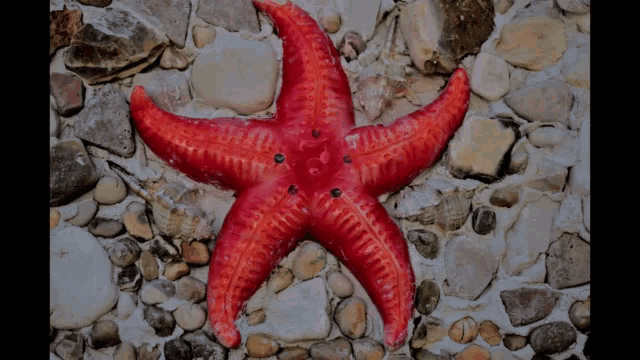
Granulated sea star / (Choriaster granulatus)

Choriaster is monotypic genus in the family Oreasteridae containing the single species Choriaster granulatus commonly known as the granulated sea star. Other common names include big-plated sea star, Hunter-five Seastar and doughboy starfish.[2] This species is harmless to humans.
Description
Choriaster granulatus is a large sea star with a convex body and five short arms. The arms have rounded tips, making it appear "phallic", leading to one of its common names being "the doughboy starfish". Relatively large in comparison with other sea stars, its maximum radius is about 27 centimetres (11 in). It is most commonly pale pink in colour with brown papillae radiating out from the centre but can also be colours ranging from grey to yellow and even red.[3] [4]
Location
This species is found in numerous tropical waters, including:[5]
East Africa[6]
Indo-Pacific region
Great Barrier Reef
Red Sea
Vanuatu
Fiji
Papua New Guinea
Habitat
Choriaster granulatus in Madagascar
Choriaster granulatus prefers shallow waters ranging from 1.5 to 53 metres (5 to 174 ft) deep and above average temperatures of 24 to 29 °C (75 to 84 °F).[7] Choriaster granulatus has been found individually or in groups along coral reefs in the Indo-West Pacific region.[8] It has also been found in the Red Sea, Fiji, and Great Barrier Reef.[9] The sandy habitat where it tends to live is characterized by rubble slopes and detritus. They have also been found among corals and sponges.[10]

Diet
Choriaster granulatus is a carnivore that, like other sea stars, has its mouth on the underside of its body. Food is digested and absorbed outside of its body by forcing its stomach out of its mouth onto the food.[11] Its food includes small invertebrates such as coral polyps as well as carrion.[12]
Life cycle and reproduction
Sea star embryos hatch into planktonic larvae before becoming juvenile sea stars with five arms. The Asteroidea class of organisms reproduce both asexually and sexually.[13]
Threats
The arms of Choriaster granulatus can become deformed when small parasitic limpets attach to their underside.[14] They are also threatened by habitat loss due to ocean acidification which can lead to coral bleaching. [15]


@rustic badger
@cedar crescent
@distant nymph
@spice gyro
@wintry marlin
@modest isle
@lone star
@hallow parrot
@limber grove
@molten portal
@full patrol
@lilac dagger
@drowsy egret
@azure oar
@crimson marlin
@restive charm
@neat basalt
@pearl swan
@nimble grail
distant nymph
That's a chonky Starfish o.
unreal pier
hallow parrot
i take it back, community is okay
What?!
 hallow parrot
unreal pier
What?!
hallow parrot
unreal pier
What?!
What?!
unreal pier
hallow parrot
What?!
hmm i see
hallow parrot
oh
crimson marlin
Sea Star
modest isle
sullen merlin
First Animal species of the day (485) :
Granulated sea star / (Choriaster granul...
 eager robin
Worst kinda games. All that effort just to draw. 
 unreal pier
modest isle
https://tenor.com/view/seestar-drone-droni-hippodrone-star-fish-gif-12206956
unreal pier
modest isle
https://tenor.com/view/seestar-drone-droni-hippodrone-star-fish-gif-12206956
what?!
 modest isle
unreal pier
what?!
unreal pier
modest isle
modest isle
unreal pier
what?!
unreal pier
modest isle


 young gale
eager robin
<a:Lick:1149036583866077296>
young gale
eager robin
<a:Lick:1149036583866077296>
Control yourself
eager robin
young gale
Control yourself
BARK BARK
There goes my ranked matches though, going to be distracted by every Loki.

young gale
Your powers are mine
 craggy raven
No power


 strong marten
At least they aren't only doing it to the girl characters
young gale
https://outplayed.tv/cod-black-ops-6/KJQZbW kinda insane i think

Outplayed - The ultimate capture app for gamers. While playing, it automatically captures your best moments and biggest plays. When the match is over, relive your best (and not so best) moments by watching them in the match timeline.
 sterile lynx
wrote a new song :3 https://suno.com/s/Jsq9mfEsTjevTUSw

 lean vale
neat crater
Roblox game , this is their giga model coming soon (prior extinction)
lean vale
neat crater
Roblox game , this is their giga model coming soon (prior extinction)
beautiful model wasted on a garbage game 
 rich radish

 ashen hamlet
neat crater
Roblox game , this is their giga model coming soon (prior extinction)
ashen hamlet
neat crater
Roblox game , this is their giga model coming soon (prior extinction)
Holy peak
that's an amazing giga model
 fickle hawk

neat crater
ashen hamlet
that's an amazing giga model
And it’s on Roblox
The other stuff from the same game
 tired hinge
neat crater
And it’s on Roblox
tired hinge
neat crater
And it’s on Roblox
Didn't even know roblox could do that many polygons


 tired hinge
Holy....
 abstract ridge
I was interested in this game until I saw it's gameplay
 neat crater
tired hinge
Holy....
neat crater
tired hinge
Holy....
Prior extinction on Roblox
neat crater
abstract ridge
I was interested in this game until I saw it's gameplay
What’s the part of it you didn’t like
abstract ridge
neat crater
What’s the part of it you didn’t like
I think it's visually ugly outside of the models.
neat crater
Like the map assets? Or lighting
neat crater
abstract ridge
I think it's visually ugly outside of the models.
Your smaller so the floor looks lower quality, it doesn’t look that bad when your grown

 neat crater
abstract ridge
Everything outside the models, and quests aren't ideal for me.
neat crater
abstract ridge
Everything outside the models, and quests aren't ideal for me.
Is it too hard to play as well?
abstract ridge
I mean, it being on Roblox does make it harder, yes.
neat crater
I should note that the game is in its legacy state rn, they are in the process of recoding the games, so the current state isn’t an ideal judge
abstract ridge
If that is the current state of the game you're playing, I think it's fair to criticize the state of the game you'll be playing.
neat crater
abstract ridge
If that is the current state of the game you're playing, I think it's fair to cr...
True
Some cool stuff they have


What game is that
abstract ridge
Prehistoric Kingdom
neat crater
abstract ridge
Prehistoric Kingdom
Is that a park builder or do you play as the Dino
abstract ridge
Park simulator
neat crater
Dang
neat crater
That’s cool

 limber grove
kitties c:
 void zinc
Pet softly with a paint brush.
eager robin
I am not ok.
 silent cargo
 eager robin
young gale
Yeah you are not ok
eager robin
young gale
Yeah you are not ok

 mortal echo

 eager robin
void zinc
https://tenor.com/view/jermichael-no-urn-spray-bottle-spray-gif-13258723
eager robin
void zinc
https://tenor.com/view/jermichael-no-urn-spray-bottle-spray-gif-13258723
😩 lET mE sImP

 void zinc
eager robin
😩 lET mE sImP
void zinc
eager robin
😩 lET mE sImP
Gettin' kinda close to that no NSFW/adult content, nerd.
eager robin
void zinc
Gettin' kinda close to that no NSFW/adult content, nerd.

well i guess, he is kinda naked.
 neat basalt
@shell ocean looks like emma is my next lord
i just hit cent w/ her
then after emma im going for jean
 shell ocean
bro ive been crazy collecting these lords
I have lord moonknight, emma, peni, luna, invis
oh and rocket too
eager robin
I have every Strat as lord, just not ultron or adam atm, not sure if i like the gameplay, but maybe one day. 🥹
New strat, wheeeeen.
 young gale
We are back
 echo quail
canes canes canes
young gale
👍

 abstract ridge
eager robin
I am not ok.
abstract ridge
eager robin
I am not ok.
Who drew your PFP if I might ask?
 abstract ridge
Thank you!

 ember vector
 sullen merlin
First Animal species of the day (486) :
Cuban trogon / (Priotelus temnurus)

The Cuban trogon or tocororo (Priotelus temnurus) is a species of bird in the family Trogonidae. It is endemic to Cuba, where it is also the national bird.
Description
The Cuban trogon is 23 to 28 cm (9.1 to 11 in) long and weighs 47 to 75 g (1.7 to 2.6 oz). Its plumage colors match those of Cuba's flag, and are the same for both sexes. The two subspecies also differ only slightly. Their beak is reddish pink with a dark culmen. Adults have a blackish face with reddish eyes, a dark metallic blue crown and nape, and a metallic green back and rump. Their cheeks, chin, and throat are white becoming clear gray on the breast and upper belly. Their lower belly and undertail coverts are red. Their tail is graduated, with the innermost feathers forming a point. The three innermost pairs of tail feathers are glossy blue-black with some bronzy highlights. The three outer pairs have blue-black bases and are mostly white beyond. The flight feathers and wing coverts are generally dark metallic green to black with a complex pattern of white spots. Juveniles have similar plumage to adults but generally are duller, with buffy gray underparts and reddish pink undertail coverts.[3]
Distribution and habitat
The nominate subspecies of the Cuban trogon is found throughout the main island of Cuba and on several large cays off the Camagüey Province shore. P. t. vescus is found only on Isla de la Juventud (Isle of Pines). The species inhabits both primary and secondary forest and also shrublands and smaller woodlands near watercourses. It favors humid shady areas within those landscapes and occurs at all elevations but is most common at higher ones.[3]

Behavior
Movement
The Cuban trogan is mostly sedentary but makes seasonal local movements in elevation or in response to the availability of food. Their flight style is rather choppy and noisy.[3][5]
Social behavior
The Cuban trogon is usually found in pairs though sometimes in groups of three or four. They seem "indifferent to human presence in the immediate vicinity."[3]
Feeding
The Cuban trogon usually forages at the middle level of the forest; it takes food by sallying from a perch or by hovering at foliage or fruit. Its diet is mostly insects, fruit, and buds but it also feeds small lizards to young.[3]
Breeding
The Cuban trogon's breeding season is mostly April to July. It nests in natural cavities or abandoned woodpecker holes, usually in trees but sometimes in arboreal termitaria. The clutch size is three or four eggs. The incubation period is about 18 days and fledging occurs about 21 days after hatch [3]
Vocalization
The Cuban trogon's song is "a pleasant toco-toco-tocoro-tocoro..., repeated for long periods at frequent intervals." It also gives "a steady, rapid series of staccato notes" and "a low and short mournful call that makes it difficult to locate."[3]
Status
The IUCN has assessed the Cuban trogon as being of Least Concern. It has a large range but its population size is not known and believed to be decreasing. No immediate threats have been identified.[1] It is considered common and widespread throughout the main island of Cuba but is rare on the small offshore cays and uncommon of Isla de la Juventud. "Deforestation and habitat fragmentation pose two of the greatest anthropogenic threats to the Cuban trogon."[3]


@rustic badger
@cedar crescent
@distant nymph
@spice gyro
@wintry marlin
wintry marlin
sullen merlin
<@872830054982365195>
<@585846202705248276>
<@478213198458257409>
<@10241091...
Bird
sullen merlin
@modest isle
@lone star
@hallow parrot
@limber grove
@molten portal
@full patrol
@lilac dagger
@drowsy egret
@azure oar
@crimson marlin
@restive charm
@neat basalt
@pearl swan
@nimble grail
 modest isle
sullen merlin
modest isle
sullen merlin
Beautiful Patterns
nimble grail
Woaahhh
sullen merlin
Yes beautiful bird, interesting tail feathers as well
rustic badger
modest isle
sullen merlin
Behavior
Movement
The Cuban trogan is mostly sedentary but makes seasonal local ...
Pretty generalist birds not picky eaters :
- Fruit
- Seeds
- insects
- Small lizards
- Fish
Meanwhile there are some species of birds out there that only eats one thing or like only a single species of insect 🪲 or a single type of seed
crimson marlin
pretty birb
silent cargo

 exotic wing

In today’s video we see if you could defeat a life sized T-Rex! I hope you enjoy the video and thanks for watching!
CLOTHING - https://kentuckyballistics.com/
SDI - https://www.sdi.edu/kyball/
Pepper Box TV! - https://www.pepperbox.tv/
Please support Kentucky Ballistics on Patreon! Please like and subscribe! Check out Kentucky Ballisti...
Can't wait to be killing dino sweats when humans have working guns
 surreal nacelle
Saw this, cool video
young gale
tiger
 rustic badger
New Dinosaur Manga about explaoring all the eras of earth's History : https://vxtwitter.com/AlpacaOkinawa/status/1945677901829128521?t=gbqV3_xGO4mcAkijg47RPw&s=19

The story of two female university students exploring natural history in prehistoric eras(1/8)

 vxTwitter / fixvx
·
vxTwitter / fixvx
·
 balmy cove
Does anyone know if reinforced tendons effect pouncing for raptors?
sullen merlin
First Animal species of the day (487) :
Common earthworm / (Lumbricus terrestris)

Lumbricus terrestris is a large, reddish worm species thought to be native to Western Europe, now widely distributed around the world (along with several other lumbricids). In some areas where it is an introduced species, some people consider it to be a significant pest for out-competing native worms.[1]
Through much of Europe, it is the largest naturally occurring species of earthworm, typically reaching 20 to 25 cm in length when extended.
Common names
Because it is widely known, L. terrestris goes under a variety of common names. In Britain, it is primarily called the common earthworm or lob worm (though the name is also applied to a marine polychaete). In North America, the term nightcrawler (or vitalis) is also used, and more specifically Canadian nightcrawler, referring to the fact that the large majority of these worms sold commercially (usually as fishing bait) are from Southern Ontario. In Canada, it is also called the dew worm, or "Grandaddy Earthworm". In several Germanic languages, it is called variants of "rain worm", for example in German Gemeiner Regenwurm ("common rain worm") or in Danish Stor regnorm ("large rain worm"). In the rest of the world, many references are just to the scientific name, though with occasional reference to the above names.
Although this is not the most abundant earthworm, even in its native range, it is a very conspicuous and familiar earthworm species in garden and agricultural soils of the temperate zone, and is frequently seen on the surface, unlike most other earthworms. It is also used as the example earthworm for millions of biology students around the world, even in areas where the species does not exist. However, 'earthworm' can be a source of confusion since, in most of the world, other species are more typical. For example, through much of the unirrigated temperate areas of the world, the "common earthworm" is actually Aporrectodea (=Allolobophora) trapezoides, which in those areas is a similar size and dark colour to L. terrestris.
Description
Lumbricus terrestris is relatively large, pinkish to reddish-brown in colour, generally 110–200 millimetres (4.3–7.9 in) in length and about 7–10 millimetres (0.28–0.39 in) in diameter. It has around 120–170 segments, often 135–150. The body is cylindrical in the cross section, except for the broad, flattened posterior section. Head end dark brown to reddish brown lateral, dorsal pigmentation fading towards the back.[1]
The worm has a hydrostatic skeleton and moves by longitudinal and circular muscular contractions. Setae – tiny hair-like projections – provide leverage against the surrounding soil, using slime liquid. Surface movements on moist, flat terrain were reported at a speed of 20 m/h and, based on measurements of the length of the trail, nocturnal activity away from the burrow was estimated at up to 19 m during a single surface foray. Such movement is apparent during and after heavy rainfall and usually happens when people become aware of relatively large numbers of earthworms in, for example, urban ecosystems. This form of activity is often considered a way to escape floods and waterlogged burrows. However, this cannot be the case since L. terrestris, like other earthworms, can live in oxygenated water for long periods of time, stretching to weeks. Under less severe environmental conditions where air temperature and moisture are sufficient, the worm often moves around on the surface. This may be driven by resource availability or the desire to avoid mating with close relatives.[2]

Ecology
Lumbricus terrestris is a deep-burrowing anecic earthworm,[3] that is, it builds deep vertical burrows and surfaces to feed, as opposed to burrowing through the soil for its food as endogeic species. It removes litter from the soil surface, pulling it down into the mineral layer, and deposit casts of mixed organic and mineral material on the soil surface.[3] It lives in semi-permanent burrows and can reside in or escape to deeper soil layers.[4]
Its activity is limited by temperature and humidity. High soil and night air temperatures inhibit activity, as do low night moisture and dry soil. During such times, particularly in the summer, the worms will retreat to the deepest parts of their burrows. Winter temperatures can also reduce activity, while activity in maritime climates can continue through winter.[1]
Lumbricus terrestris can strongly influence soil fungi, creating distinctive micro-habitats called middens, which strongly affect the spatial distribution of plant litter and litter-dwelling animals on the soil surface.[5] In the soil system, L. terrestris worm casts have a relationship with plants which can be seen in such scenarios as plant propagation from seed or clone. Worm casts initiate root development, root biomass, and in effect, increase root percentage as opposed to the soil and soil systems without worm casts.[6]
In parts of Europe, notably the Atlantic fringe of northwestern Europe, it is now locally endangered due to predation by the New Zealand flatworm (Arthurdendyus triangulatus)[7] and the Australian flatworm (Australoplana sanguinea),[8] two predatory flatworms accidentally introduced from New Zealand and Australia. These predators are very efficient earthworm eaters, being able to survive for lengthy periods with no food, so still persist even when their prey has dropped to unsustainably low populations. In some areas, this is having a seriously adverse effect on the soil structure and quality. The soil aeration and organic material mixing previously done by the earthworms has ceased in some areas.
Diet
Lumbricus terrestris is a detritivore that eats mainly dead leaves on the soil floor and A-horizon mineral soil.[1] Preference is associated with high concentrations of calcium and likely nitrogen. As a result, basswood, ash and aspen are most favored,[9] followed by sugar maple and maple varieties. Oak is less palatable due to its low concentration of calcium, but will be eaten if no higher calcium leaves are available.[3][10]
While they generally feed on plant material, they have been observed feeding on dead insects, soil micro-organisms,[11] and feces.[12]
Reproduction
Lumbricus terrestris is an obligatorily biparental, simultaneous hermaphrodite worm,[13] that reproduces sexually with individuals mutually exchanging sperm.[3] Copulation occurs on the soil surface, but partners remain anchored in their burrow and mating is preceded by repeated mutual burrow visits between neighbors. Additionally, when mates separate, one of them can be pulled out of its burrow.[14] Mating frequency is relatively high (once every 7–11 days). The relative size of the mate, the distance from the presumed mates, the chance of being dragged to the surface, and the size-related fecundity all tend to play key roles in the mating behavior of the nightcrawler.[14]
Sperm is stored for as long as 8 months, and mated individuals produce cocoons for up to 12 months after the mating.[3] Fertilization takes place in the cocoon and the cocoon is deposited in a small chamber in the soil adjacent to the parental burrow. After a few weeks, young worms emerge and begin to feed in the soil. In the early juvenile phase, the worms do not develop the vertical burrows typical of adults. Adulthood is likely to require a minimum of one year of development, with reproductive maturity reached in the second year.[1] The natural lifespan of L. terrestris is unknown, though individuals have lived for six years in captivity.[15]
As an invasive species in North America
Main article: Invasive earthworms of North America
Lumbricus terrestris is considered invasive in the north central United States. It does not do well in tilled fields because of pesticide exposure, physical injuries from farm equipment and a lack of nutrients.[16][17] It thrives in fence rows and woodlots and can lead to reductions in native herbaceous and tree regrowth.[18][19]


@rustic badger
@cedar crescent
@distant nymph
@spice gyro
@wintry marlin
rustic badger
sullen merlin
@modest isle
@lone star
@hallow parrot
@limber grove
@molten portal
@full patrol
@lilac dagger
@drowsy egret
@azure oar
@crimson marlin
@restive charm
@neat basalt
@pearl swan
@nimble grail
nimble grail
like these guys :)
sullen merlin
nimble grail
like these guys :)
Very important animals, also the favorite animal of the GOAT sir david attenborough
 frank ibex
how do i come to the south plains beach fast as a croc? what spawn point
distant nymph
sullen merlin
Very important animals, also the favorite animal of the GOAT sir david attenboro...
I didn't know that o:
That's cool!
full patrol
frank ibex
how do i come to the south plains beach fast as a croc? what spawn point
Swamp
wintry marlin
sullen merlin
<@872830054982365195>
<@585846202705248276>
<@478213198458257409>
<@1024109...
Worm
modest isle
sullen merlin
First Animal species of the day (487) :
Common earthworm / (Lumbricus terrestris...
 shell rapids
Did recently learn that earthworms are quite harmful to many north american forests
void zinc
Exceptionally.
 weary igloo
indubitably
crimson marlin
Worm
scarlet wing
Snail games released a new DLC got ASE
1,000+ reviews

overwhelmingly negative
👍
young gale
scarlet wing
Kinda deserved
 fierce matrix
I just found out that the original Jurassic world mosasaur is dead , it’s not 100% confirmed but it’s very likely
Rip😭
 astral arrow
fierce matrix
Rip😭
astral arrow
fierce matrix
Rip😭
yeah, beluga whale attacked it :/
shell rapids
scarlet wing
It broke the game so hard they were forced to push a "preaquatica" version of the game in the betas
 ebon scaffold
sullen merlin
First Animal species of the day (487) :
Common earthworm / (Lumbricus terrestris...
ebon scaffold
sullen merlin
First Animal species of the day (487) :
Common earthworm / (Lumbricus terrestris...
my people!
ebon scaffold
 solemn gulch
HEY IT'S ME!
 hard quarry
 unreal pier
ebon scaffold
HEY IT'S ME!
unreal pier
ebon scaffold
HEY IT'S ME!
what?!
 hallow parrot
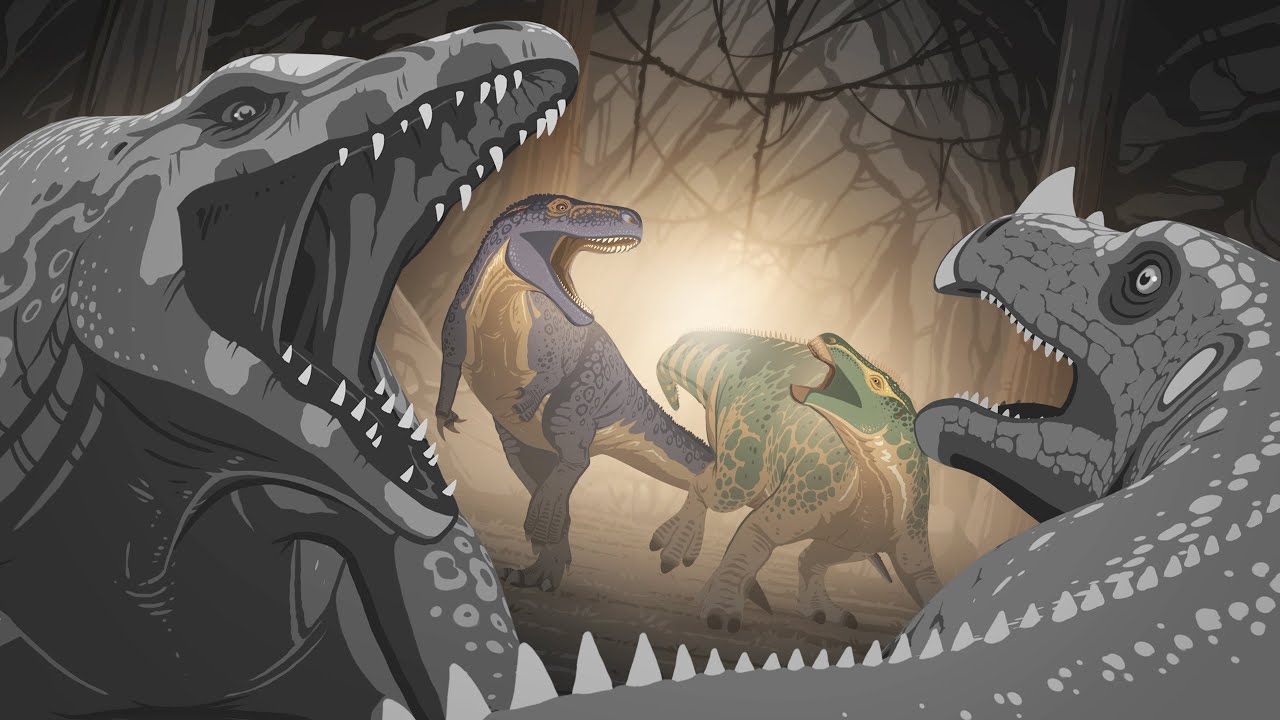
Created by David James Armsby.
https://www.facebook.com/davidarmsbyartist/
This is the sixth short film in my "Dinosauria Animated Series".
While all of the other films in my "Dinosauria Series" are almost faux documentary-style stories about accurately reconstructed dinosaurs living like real animals, this first film of Vol. 2 is a lot more e...
 nimble zinc
oh this is where we're supposed to post that
 tall lotus
@steady inlet if you wanna play again, I was the Mike Tyson let me know!
 limber star
dimosau
 rose crow
limber star
rose crow
limber star
chease
silent cargo
I was alive when internet explorer was a thing
full patrol
What about AOL?
echo quail
IE was my first 😌 ❤️
mortal echo


 fierce sphinx
GUYS! rate the song me and @vestal zephyr made we but are heart and soul into it!
 vestal zephyr
I think I cooked with the bass and drums
 static hemlock
god, taking care of an aging house is painful sometimes 🤦♂️
 lime briar
you got to be kidding me

 sick gyro
I remember when most no one had internet, except perhaps nerds.
The few computers in our schools ran games off Mac boxes like Number Munchers, and Treasure Mountian.
Our home computer booted games off of DOS.
 glossy coral
All day my gaming has been like this.
 cedar crescent
glossy coral
All day my gaming has been like this.
cedar crescent
glossy coral
All day my gaming has been like this.
I'm so jealous 
glossy coral
cedar crescent
I'm so jealous <:Sadge:715793709320372275>
she has been walking all over the keyboard all day. trying to be sneaky in trees while she mashes keys is not easy
scarlet wing
 scarlet wing
Yes
The background is a screenshot from space engine
But the creature is what I drew
echo quail
nice job
void zinc
Yo thats creepy. Nice.
fierce sphinx
scarlet wing
bro got the👽
 lilac hawk
what are the best performance graphic settings so i get the most fps while the game still looking as good as possible?
silent cargo
 silent cargo
thats not very nice
silent cargo
sorry
barren bear
@silent cargo @silent cargo

 polar radish
Petition to remove mosquitos from earth
young gale
Where do i sign
scarlet wing
 shell rapids
Look at this cat

 clever bear
Pokémon Presents in 25 minutes.
 hasty swan
did u guys know gojo died?
 half ether
hasty swan
did u guys know gojo died?
half ether
hasty swan
did u guys know gojo died?
yes
 dawn night
spoiler man
half ether
it saddens me
hasty swan
mb i was tryna spoil it for others
dawn night
guys heian sukuna wins spam domain
hasty swan
ong
half ether
dawn night
guys heian sukuna wins spam domain
idk think gojo could win but so could sukuna
it's based on environment for me
dawn night
gojo runs out of ce and rct before sukuna in my opinion heian has huge ce reserves
half ether
yeah but have we seen gojo being put to his limit by anyone other than sukuna and mahoraga
and don't say toji, cus he fought gojo before he awakened and then gojo awakened and won
dawn night
awakened wouldnt win if toji knew purple
dawn night
hmmm, mahoraga vs toji who wins
half ether
||wans't it confirmed by gege that gojo could've dodged the world cutting slash or am i misremembering||
half ether
dawn night
hmmm, mahoraga vs toji who wins
BIG RAGA THE OPP STOPPA
dawn night
gojo lost against meguna cuz meguna did binding vow for chantless, normally he would dodge
half ether
I thinl big raga wins that
dawn night
how tojis dodging all of it
half ether
jogo created a goddamn meteor out of a building
dawn night
panda dodged a meteor when it was right next to him
dawn night
jogo gets dagon treatment
half ether
alright alright
you put toji, gojo and sukuna in an indestructable room, who is leaving that room (no domains)
dawn night
what sukuna form
half ether
dawn night
what sukuna form
hmmmmm heian because if it's anything less he either has raga or get's stomped by gojo
i think sukuna would die first for ONE reason
could you imagine the bounty on bros head
dawn night
toji use his homeless man power\
half ether
toji would team up with gojo just to beat sukuna to death
and i think gojo could kill toji
dawn night
how big room
dawn night
gojo spams blue
half ether
like a bedroom or smth
half ether
dawn night
gojo spams blue
and then everyone died whilst gojo aura farms
alr imma go back in isle discussion
dawn night
kk
 radiant osprey
Any <@&933486433342222376> available to receive a lil DM?
young gale
Mega dragonite looks kinda silly

 ember wigeon
Yo can we get human that can do actual damage with guns
smoky mauve
young gale
Mega dragonite looks kinda silly
could be worse
surreal nacelle
radiant osprey
Any <@&933486433342222376> available to receive a lil DM?
yo
radiant osprey
surreal nacelle
yo
I added you cause your DMs isn't open
surreal nacelle
added
clever bear
young gale
Mega dragonite looks kinda silly
I kinda like it. Just wish it used its head wings to keep it airborne. Looks too static and awkward while idle.
Also, Ozzy Osbourne died today at age: 76.
It's weird, we're all going to die at some point, but for some odd reason, I never really considered it was going to happen to him. With everything he's gone through in his life, I just thought he and Death were mates that met up once a week.
shell rapids
Ozzy died round same time trisha paytas had her nect child
Makes you think
scarlet wing
Rest in peace, Ozzy Osbourne

 past pond
anybody wanna join our 4stack for val ranked
young gale
What rank
past pond
young gale
What rank
bronze but we on the grind
we locked in
developing a team for premier
 past pond
young gale
https://tenor.com/view/junkofalling-gif-16503562369384728459
past pond
young gale
https://tenor.com/view/junkofalling-gif-16503562369384728459
so yes?
past pond
what a waste of time smh 💀
young gale
Valorant makes me want to do bad things
young gale
I dont like valorant:(
Its not fun
Teammates throwing games and calling eachother slurs:(
young gale
Haven’t touched that game since last year
 cobalt glacier
Hello! A discord friend tried joining the server, but she's been banned for seemingly no reason... Could a <@&401466542140817419> help us out understanding the situation please?
(I didn't know which channel to use for this, I apologize if this is not the right one for this kind of conversation)
smoky mauve
young gale
Mega dragonite looks kinda silly
Not even 24 hours later and its already completely grown on me I love it, dragonite is supposed to be a silly whimsical guy
 willow grove
cobalt glacier
Hello! A discord friend tried joining the server, but she's been banned for seem...
willow grove
cobalt glacier
Hello! A discord friend tried joining the server, but she's been banned for seem...
Most likely this was an auto ban due to not having a profile picture on a new account. They will have to submit a ban appeal (link is in #rules-and-info ) or speak to a Senior Admin.
Unfortunately we have to remove sus accounts via the bot like that due to so frequently getting spam and NSFW hacked accounts joining the server
cobalt glacier
willow grove
Most likely this was an auto ban due to not having a profile picture on a new ac...
Thanks for answering so quickly! But... How should she submit the ban appeal, if she's not in the server? Can I do that for her?
willow grove
cobalt glacier
Thanks for answering so quickly! But... How should she submit the ban appeal, if...
No, she will have to do it. Her filling it out should link the account to the ban. Anyone else filling out the ban appeal form doesnt work, it has to be a user that was muted or banned
cobalt glacier
Alright, thanks a lot! I'll text her the link :)
modest isle
First Animal species of the day (488) :
Indonesian Superdwarf Fish / (Paedocypris progenetica)

Paedocypris progenetica (also known as Indonesian Superdwarf Fish[3]) is a species of tiny cyprinid fish endemic to the Indonesian islands of Sumatra and Bintan where it is found in peat swamps and slow flowing blackwater streams.[2] It was discovered by Singaporean ichthyologist Heok Hui Tan in 2006. He has written a description of the fish along with another species of the same genus called Paedocypris micromegethes.

It is one of the smallest known fish in the world, together with species such as Schindleria brevipinguis, with the females reaching a maximum standard length of 10.3 mm (0.41 in), and the males reaching a maximum st 9.8 mm (0.39 in) and the smallest known mature specimen, a female, measuring only 7.9 mm (0.31 in).[4] It held the record for the shortest known vertebrate until the frog Paedophryne amauensis was formally described in January 2012,

The fish's diet consists of small planktonic rotifers and cladocerans.
They are omnivorous and can be fed high-quality micro-pellets, powdered foods, and infusoria. Live foods like daphnia and brine shrimp can also be offered.
Feeding Frequency: Feed small amounts 1-2 times a day, ensuring they can consume everything within a few minutes.

Schooling: They are social fish, so it’s best to keep them in groups of at least 5-6 to reduce stress.
Tank Mates:
- chili rasbora
- Endler's livebearer
Paedocypris progenetica cannot be kept with most other fish. Avoid anything that may see them as prey. Even Guppies will see them as prey

Due to its size, the fishes' skeleton is very rudimentary. Its spine is made of 33 - 35 vertebrae and it has a roofless skull. The Indonesian Superdwarf Fish displays unique reproductive adaptations, including modified pelvic fins in males, with its survival threatened by habitat destruction.


The Smallest fish species 🐟
Or one of the smallest vertebrate ever 🦴
Here is a comparison that truly shows you how tiny they are compared to Guppies, Basically any fish around the size of a Guppy or Bigger will see them as prey

@rustic badger
@cedar crescent
@distant nymph
@spice gyro
@wintry marlin
@modest isle
@lone star
@hallow parrot
@limber grove
@molten portal
@drowsy egret
@full patrol
@lilac dagger
@azure oar
@sullen merlin
rustic badger
modest isle
@crimson marlin
@restive charm
@neat basalt
@pearl swan
@nimble grail
hallow parrot
little snack
modest isle
One of the smallest Vertebrates EVER 🐟
rustic badger
minifish
modest isle
Even The Guppies are like GODZILLAs to them
nimble grail
Oh crazy
crimson marlin
Woah thats a tiny fish
 median acorn
My first ever steam purchase was this game 👀
 full patrol
Same
hallow parrot
me too :>
 heavy rover
Snacks?


 feral fern
so i ned to the isle and in starting a server and im trying to get a dino storage into my discord to abe able to connect to my server. is there anybody that could help me figure it out.
 robust root
Yo anyone know if there's a normal art channel? I have some art of an inostrancevia thylacephalus ( species in a game im apart of ) attacking a soldier. But it doesnt have anything to do with the isle
Its a wip btw
 young gale
No
robust root
Dang
wintry marlin
modest isle
<@872830054982365195>
<@585846202705248276>
<@478213198458257409>
<@1024109...
Fish
barren bear
EyeSeeYou is finally retired 🥲
modest isle
First Animal species of the day (489) :
Devils Hole pupfish / (Cyprinodon diabolis)

The Devils Hole pupfish (Cyprinodon diabolis) is a critically endangered species of the family Cyprinodontidae (pupfishes) found only in Devils Hole, a water-filled cavern in the US state of Nevada. It was first described as a species in 1930 and is most closely related to C. nevadensis and the Death Valley pupfish (C. salinus). The age of the species is unknown, with differing analyses offering ranges between one thousand and sixty thousand years. It is a small fish, with maximum lengths of up to 30 mm (1.2 in). Individuals vary in coloration based on age and sex: males are bright metallic blue while females and juveniles are more yellow. A defining trait of this species is its lack of pelvic fins. The pupfish consumes nearly every available food resource at Devils Hole, including beetles, snails, algae, and freshwater crustaceans, with diet varying throughout the year. It is preyed on by the predaceous diving beetle species Neoclypeodytes cinctellus, which was first observed in Devils Hole in 1999 or 2000. Reproduction occurs year-round, with spikes in the spring and fall. Females produce few eggs and the survivorship from egg to adult is low. Individuals live 10–14 months.

Devils Hole is more than 130 m (430 ft) deep, though pupfish are only found in the upper 24 m (80 ft). The water is a constant temperature of 33 °C (91 °F) and dissolved oxygen levels are low. A small, shallowly submerged rock shelf provides critical feeding and spawning habitat for the pupfish.[4] Nearby agricultural irrigation in the 1960s and 1970s caused the water to drop in Devils Hole, resulting in less and less of the shelf remaining submerged. Several court cases ensued, resulting in the Supreme Court case Cappaert v. United States, which determined that the preservation of Devils Hole as a National Monument in 1952 implicitly included preservation of adequate groundwater to maintain the scientific value of the pool and its fauna. Other threats faced by the species include flash floods, earthquakes, and vandalism.

As its entire native range is a single locality, efforts to create other populations have proceeded since the 1960s and 1970s, most of which have failed. Three refugia were created in 1972, 1973, and 1990, though all were closed by 2007 as a result of maintenance failures, hybridization, and small founder populations. In the early 2010s

The age of the species is subject to considerable debate, with analyses recovering starkly different figures. Devils Hole was formed around 60,000 years ago, with some researchers assuming the pupfish has existed in isolation for 10,000–20,000 years. How it colonized Devils Hole is unknown; hypotheses include arriving via subterranean waters or over dry land. As Native Americans used pupfish species as food, it has been speculated that they introduced the pupfish to Devils Hole, intentionally or not. Its divergence from a common ancestor with C. nevadensis mionectes was estimated at 217–2530 years in one study.

The Devils Hole pupfish is the smallest pupfish species in the genus Cyprinodon,[18] with lengths up to 30 mm (1.2 in).[18] The average length is 23 mm (0.9 in).[19] Males and females differ in coloration. Males are overall dark brown with metallic blue on their sides. The margins of all fins are black, and the back has golden iridescence. Iridescence is particularly pronounced on the opercles (gill covers) which have a violet sheen on their posterior side. The iris is blue and also iridescent. Females and young are more yellow in color than the males. Females have yellowish-brown backs, and the margins of their pectoral and caudal fins are yellow, not black. The dorsal fin has a black margin like the males, however. Females' opercles are metallic green, and their eyes are tinted metallic blue. The young are overall colored as the females, though they have a faint vertical bar on their sides.

Devils Hole and the pupfish are located in the Amargosa Desert ecosystem, in the Amargosa Valley, of southwestern Nevada, US, east of Death Valley and the Funeral Mountains and Amargosa Range. The Amargosa River is part of Devils Hole and the region's aquifer hydrology.

The Devils Hole pupfish species is limited to a single site and highly susceptible to disturbance. In the 1970s, the species was threatened with groundwater depletion, as the withdrawal of groundwater lowered the water level of Devils Hole and limited their ability to spawn on the shallow shelf. After the groundwater withdrawal was limited, its population rebounded, but experienced a second decline from 1995 onward. The reasons for the second decline are unknown, but inbreeding depression, the loss of a prey species, changing algal and microbial communities, or shifting sediment dynamics have been hypothesized as potential factors. It could face threats in the future relating to climate change, as warming temperatures in the area are predicted to shorten the period of optimum recruitment, or the time when the next generation is produced and matures


Size of :
Devils Hole Pupfish

Their lake dried out around 20,000 years ago the only thing left of this prehistoric lake is the devils hole cave
Meaning all the fish that lived in that lake went extinct after it dried except for the “Devils Hole Pupfish” 🐟


@rustic badger
@cedar crescent
@distant nymph
@spice gyro
@wintry marlin
@modest isle
@lone star
@hallow parrot
@limber grove
@molten portal
@drowsy egret
@full patrol
@lilac dagger
@azure oar
@sullen merlin
rustic badger
modest isle
@crimson marlin
@restive charm
@neat basalt
@pearl swan
@nimble grail
modest isle
modest isle
Their lake dried out around 20,000 years ago the only thing left of this prehist...
Poor fish now they became the most inbred species on earth
distant nymph
astral arrow
<:TI_LUL:461642094671429634> <:TI_FeelsGoodMan:472582687249399848> <:TI_Succ:447...
DayZ was also one of my first purchases o:
 distant nymph
modest isle
Poor fish now they became the most inbred species on earth <:TI_Succ:44762642336...
distant nymph
modest isle
Poor fish now they became the most inbred species on earth <:TI_Succ:44762642336...
):
young gale
distant nymph
):
Rabbithorn
distant nymph
young gale
Rabbithorn<:TI_ava:629109794736701440>

 simple grotto

 pearl swan
median acorn
My first ever steam purchase was this game 👀
pearl swan
median acorn
My first ever steam purchase was this game 👀
all of us 🙏
sullen merlin
modest isle
Poor fish now they became the most inbred species on earth <:TI_Succ:44762642336...
Pov cheetahs: First time?
modest isle
sullen merlin
Pov cheetahs: First time?
At least our beloved Cheetah are starting to become less and less inbred overtime

 vague perch
 rough hollow

We’re not done with you. #FNAF2movie in theaters December 5.
--
They’re not just at Freddy’s anymore.
In 2023, Blumhouse’s box-office horror phenomenon Five Nights at Freddy’s, based on the blockbuster game series by Scott Cawthon, became the highest-grossing horror film of the year. Now, a shocking new chapter of animatronic terr...
young gale
I havent watched the first
echo quail
same
 unreal ingot
I can't figure out how to join a server, when I join any server, it says connection to the host lost, and I can't join any, except servers in a different language
hallow parrot
I drew something im actuaöly half proud of, eyes and hairline went rather squiffy, but the hair 😩


 pearl mirage
can anyone name me a Jurassic period dinosaur to draw? (excluding allosaurus)
full patrol
pearl mirage
can anyone name me a Jurassic period dinosaur to draw? (excluding allosaurus)
Cerato
pearl mirage
full patrol
Cerato
alr
shell rapids
shunosaurus is the only jurassic dino that matters
 compact haven
mmh
 smoky mauve
full patrol
Cerato
smoky mauve
full patrol
Cerato
Wtf why are you green
compact haven
smoky mauve
Wtf why are you green
retired staff
smoky mauve
I know why but why
barren bear
smoky mauve
Wtf why are you green
life
iirc, a family member passed
i wish Criniti well
Terrible moments
full patrol
barren bear
i wish Criniti well
Terrible moments
Ya my mom
 buoyant moon
full patrol
Ya my mom <:TI_Succ:447626423365271562>
buoyant moon
full patrol
Ya my mom <:TI_Succ:447626423365271562>
😦
feral fern
I'm looking for a custom bots for the isle legacy servers. Does someone know someone that can create one.... feel free to dm me
tired hinge
Y'all see that primitive war trailer? Looks pretty rad ngl
mortal echo
scarlet wing

 hallow mango
<@&933486433342222376>
 tall vigil
Hey, so can someone please explain to me the weight system in this game, because it makes no sense. For example, for something like the Maia, it grows to 2000 kilos when it becomes 1 ton. This would make sense if the kilograms was changed to pounds, then, yes 2000 pounds would be equal to 1 ton, but its kilos. Like shouldn’t the game begin to tell you how much you weigh in tons when you reach 907 kilos, which is actually 1 ton. It just makes no sense, because why does the game tell you that you weigh 1 ton at 2000 kilos when in reality, 2000 kilos is about 4.4 tons. Please explain cuz my brain hurts.
limber grove
1 ton is 1000 kg
tall vigil
1 ton in pounds is 907 kilos
Is there like a different measurement of tons for people who use kilograms or something?
limber grove
1 ton in kilograms is 1000 kilograms
tall vigil
Ok so correct me if I’m wrong
Maia is 3.8 tons = 3800 kilograms, which is 8400 pounds.
So Maia is 4.2 tons in pounds?
 wintry matrix
Beavers when they see a flowing body of water
🦫 : damn...
wintry matrix
tall vigil
Ok so correct me if I’m wrong
Maia is 3.8 tons = 3800 kilograms, which is 8400...
Yes
You gotta remember, metric vs imperial. The isle uses metric only.
1 metric ton is 1000 Kgs
1 imperial ton is 2000 Lbs
 stark iris
what does the UK have to do with NA?
stark iris
once again we are talking about North america i dont see where you are going with this?
yes i am from north america
the USA
7
i still dont get why you cant answer what all the countries in NA there are? you said there were 22
which america? north south or central?
and if there are 23 name them all
idk what youre tying to get at here, ive answered all of your questions and you wont answer mine
 soft lily
North America
South America
Europe
Asia
Africa
Oceania
Antarctica
soft lily
This is a public chat my good man
stark iris
soft lily
This is a public chat my good man
hes mad i called canada apart of america
limber grove
Then go to dms
 proud heart
stark iris
to*
proud heart
stark iris
to*
how many languages u speak?
soft lily
You are right now 🫵
soft lily
stark iris
hes mad i called canada apart of america
Canada is like cooler America
stark iris
soft lily
Canada is like cooler America
except for the more expensive housing
stark iris
soft lily
A very cool dinosaurus
alberto is pretty cool ngl
stark iris
proud heart
how many languages u speak?
i speak the most spoken language so one
proud heart
stark iris
i speak the most spoken language so one
krass
stark iris
no name all 23 countries in NA
soft lily
Africa is a continent
soft lily
The real question is… what county is the isle in?
stark iris
i mean it took you 30 minutes to answer me
soft lily
Big lizard
Bigger lizard
That one lizard from Pokémon you know the one
 soft lily
digital sleet
soft lily
digital sleet
The man knows the one
stark iris
digital sleet
smash
shell rapids
soft lily
Canada is like cooler America
WOAH now, the US sucks but lets not get it twisted, canada also sucks
silent cargo

 uneven horizon
Does snails have booty underneath their shells?
limber star
I know it has been many months but I finally found the pic of the chick that looks like a dinosaur

 lilac venture
limber star
I know it has been many months but I finally found the pic of the chick that loo...
lilac venture
limber star
I know it has been many months but I finally found the pic of the chick that loo...
awwww SO cute
i love the baby
 crimson knot
guys i get my lizard today and im naming him toro from camp cretaceous
 silver citrus
crimson knot
guys i get my lizard today and im naming him toro from camp cretaceous
silver citrus
crimson knot
guys i get my lizard today and im naming him toro from camp cretaceous
What kind?
crimson knot
bearded dragon i’m going in the store right now
silver citrus
Nice man
 mortal echo
crimson knot
mortal echo
crimson knot
meet baby toro

 spare garden

In this video, I put 1000 Minecraft players on 2 islands—one island has everything, the other has nothing. How will civilizations form? Will there be peace or war? The story that naturally unfolded was incredible.
If you want to play in events like these, join my Discord server:
https://discord.gg/state
More info:
Out of 8000+ applicants, 13...
spare garden
spare garden
https://youtu.be/ef568d0CrRY?si=uQ6mByL5xsQsU2Lf

not sure if this is allowed to post but the vid was very entartaining
barren bear
mortal echo
mortal echo
 small radish

But you better not kill that groove, NJ!
Gameplay courtesy of Meowhollymeow
'Murder On The Dancefloor' by Sophie Ellis-Bextor
© 2025 NotJah Witness
#TheAncientParadise #TheIsle #PvP
 proper escarp
Why ark devs why add the third most popular croc but not the third spinosaurid
dawn night
its so spiked and everything thats what i hate about ark desings, they look like monsters not dinons
Obraz
proper escarp
I cannot believe it
dawn night
 dawn night
mortal echo
dawn night
mortal echo
"dress"
sour hornet
dawn night
its so spiked and everything thats what i hate about ark desings, they look like...
I mean they have to be-
If it aint deadly they die

look at him though, he adorable
 proper escarp
Lazy fat croc


 sour hornet
really a pain in the ass taming method for a high mid teir creature
The dreadnoughtus in ark is a great design the only problem is its more of a lore accurate creature and not a paleoaccurate one.
It has a radiation blast attack...
sullen merlin
sour hornet
The dreadnoughtus in ark is a great design the only problem is its more of a lor...
Ark isnt really the best game if ur looking for paleoaccuracy lol
 rancid ginkgo
mortal echo
rancid ginkgo
mortal echo
What does this mean?
 deft flume
How to play rex in evrima?
mortal echo
rancid ginkgo
What does this mean?
It's Dolores and Isabella from JWR with Dolores and Isabella from Encanto singing.
rancid ginkgo
mortal echo
It's Dolores and Isabella from JWR with Dolores and Isabella from Encanto singin...
Ah
Gotchu
 marble turret
Lemme see the hype! https://vxtwitter.com/AppleTV/status/1950194660363948332?t=__mQhulIN8xbc-7_FjAajw&s=19

From towering giants to baby sloths, it doesn’t get cooler than this.
#PrehistoricPlanet: Ice Age — Streaming November 26 https://t.co/DTQffDt0iZ
 vxTwitter / fixvx
·
vxTwitter / fixvx
·


 late spire
 tight plover
<@127973180617785344> ^ Quetz news
tight plover
<@127973180617785344> ^ Quetz news

 glass cape
marble turret
Lemme see the hype! https://vxtwitter.com/AppleTV/status/1950194660363948332?t=_...
glass cape
marble turret
Lemme see the hype! https://vxtwitter.com/AppleTV/status/1950194660363948332?t=_...
 sullen merlin
First Animal species of the day (490) :
Maratus volans

Maratus volans is a species in the jumping spider family (Salticidae), belonging to the genus Maratus (peacock spiders). These spiders are native to certain areas in Australia and occupy a wide distribution of habitats. They have a specialized visual system that allows them to see the full visible spectrum as well as in the ultraviolet-range; this helps them detect and pursue prey. Males of this species are characterized by their colourful abdomen flaps that are used to attract females during courtship.
Description
Both sexes reach about 5 mm in body length. Females and immatures of both sexes are brown but have colour patterns by which they can be distinguished from related species.
Hunting and diet
Peacock spiders are diurnal cursorial hunters feeding primarily on insects and other spiders. The evolution of an acute visual system in salticids almost certainly originated as an adaptation for stalking prey. However, this development also facilitated a wandering lifestyle different from that of their sit-and-wait ancestors, enabling jumping spiders to roam and encounter many environments. Keen eyesight has probably been useful for peacock spiders in navigating, inhabiting and exploiting new types of habitats, and undoubtedly set the stage for the evolution of complex visual signals.[6] Like other jumping spiders, they do not rely on webs to catch prey. They use their keen eyesight to stalk their prey and eventually chase and leap on their target to deliver a fatal bite. They have been observed to jump up to 40 times higher than their body length.[16]
Distribution and habitat
Distribution
M. volans is confined to specific parts of Australia (Queensland, New South Wales, Australian Capital Territory, Western Australia and Tasmania).[17] They have a very wide distribution and occupy many different types of environments, unlike other species of Maratus that occupy only a niche habitat, like the M. Sarahae.[6]
Habitat
The majority of Peacock spiders are ground dwelling and found on leaf litter or dry twigs. The females are thought to mimic leaf scars on the dry twigs; however, they can be found in a wide variety of habitats such as sand dunes to grasslands.[6]

Behavior
Courtship
The red, blue and black males have flap-like extensions of the abdomen with white hairs that can be folded down. They are used for display during mating: the male raises his abdomen, then expands and raises the flaps so that the abdomen forms a white-fringed, circular field of colour. The species, and indeed the whole genus Maratus, have been compared to peacocks in this respect. The third pair of legs is also raised for display, showing a brush of black hairs and white tips. These legs are also used in a clapping motion to further attract a female's attention. While approaching the female, the male vibrates his abdomen while waving raised legs and tail, and dances from side to side.[2][3][better source needed] However, females are more attracted to the visual efforts of the dance done by the males rather than the vibrational signals.[4][5]
Vibrations
An important part of the male peacock spider's courtship is the vibrations that accompany the fan dance. The exact mechanism of how these vibrations are produced is not known, but it is known that they are produced almost solely from rapid movements in their abdomen.[6] There are three kinds of vibrations: rumble-rumps, crunch rolls, and grind-revs. Rumble-rumps are continuously emitted during the courtship, and can even start before the male sees the female. The name comes from the two distinct sounds, the rumble and the rump. The crunch rolls and grind-revs are observed right before the pre-mount display.[7] Males who put forth more effort in both the visual display and the vibratory signaling had a higher success in mating. Having a higher measured effort meant putting in more time engaged in the visual display or vibrating with more vigor. Both of these are postulated to indicate a healthier and more fit male. However, visual displays are more strongly linked to mating success than vibratory signaling.
Female choice
For females who do choose to mate with the male, copulation time is also positively correlated to visual displays and vibratory signaling. Other aspects that are important include persistence, staying within proximity of the female and maintaining constant visual contact with her.[6] If the female is interested she will occasionally respond to the approaching male by signaling with her third pair of legs. Her legs will be stretched out as they move, oftentimes one leg more engaged than the other.[8] In M. volans, they found that the females are only likely to mate once.[4]
Female aggression
If the male continues his dance when the female is not interested, she attempts to attack, kill, and feed on him; she may also do this after mating (sexual cannibalism).[9] The male may escape by jumping. The behaviour of the female M. volans suggests why the males have developed unique sexual dimorphic features and courtship behaviour.[10] If the female is already mated, then she will appear more aggressive, and less receptive to other males' displays. This can also occur if the female simply was not impressed by the male (fewer vibrations or less leg waving). She has an anti-receptivity signal that tells males she is not receptive. This serves a function to both the males and females. The males will stop wasting their energy on an unwilling female. The male's display is likely to attract predators, so stopping the performance is likely to protect both the female and male from potential dangers.[11]
Copulation and pre-mount display
During the courtship display the male will slowly approach the female, as he lowers his carapace almost to the ground[7] until they are about one body length apart. If the female does not flee then he will commence the pre-mount display.[6] The pre-mount display is a highly conserved behaviour; the Maratus volans will follow a specific sequence: the third legs are rotated to the front over the first and second legs, while he retracts his colourful fan flaps. The third legs are lowered and spread apart as they tremor. The first legs will be held erect in front of the body almost touching the female. After this, the male will advance towards the female.[7] Copulation can last a duration of several minutes to several hours.[6] Throughout the whole courtship event, the male performs pedipalp flickers either alone or along with the other courtship displays. However, the pedipalp flicker may not be specific to courtship because it is also observed in other contexts like eating.
Pheromones
Contact pheromones, which are often released onto the silk drag-lines, can be detected by chemoreceptors on both the legs and palps. These pheromones, which are released by the abdomen of the female spider, can trigger male courtship even in the absence of visual cues. Pheromones given off by the female may be an indication of if they are already mated, and can hint to any other males whether or not to pursue courtship.[6]

A male peacock jumping spider must dance for his life.
Please LIKE and SUBSCRIBE if you enjoyed! http://bit.ly/1Adl6ht
More info & videos below
"Nature's Miniature Miracles" premieres Wednesday, Nov 22 at 8pm ET on PBS. Check local listings. http://www.pbs.org/wnet/nature/natures-miniature-miracles/15712/
The male peacock jumping spider (...
Sexual selection
M. Volans use their colorful opisthosomal flaps to gain the attention of the female. Much of the mating ritual consists, however, of waving and vibrating the third legs for between four and fifty minutes.[12] Jakob Bro-Jorgensen, an evolutionary ecologist, states that "When both sexes are allowed to respond optimally by introducing adaptive dynamics to a standard runaway model of condition dependent signaling, multiple signals can coexist even if the signal preferences entail significant costs".[13] He explains that the potential sexual success outweighs the relatively low costs of the mating ritual. The mating behavior of M. volans is an example of runaway sexual selection where the male risks death when attempting to mate.[14][10][15]
Reproduction and lifecycle
Activity
M. volans are typically most active during the spring (Austral Spring), which is their breeding season. The mature males appear from August to December, while the females appear a bit later and survive longer. In December, the females will stay hidden in order to lay their eggs and guard them from predators.[6]
Life cycle
Immature female peacock spiders resemble the adults, except their pedipalps are colourless. The immature male peacock spiders lack an opisthosomal fan, a prominent white marginal band of the carapace, as well as specialization of the third legs. The males do not generate their colours until sexual maturity.[6] Their lifespan is reported to be about one year.[16]
Eggs
In December, the females are observed to create nests underground where they will lay eggs.[16] M. volans females have been observed to lay between 6 and 15 eggs per clutch. Some M. volans were observed to have several consecutive broods.[8] Males hatch in August and can survive through December, while females hatch a bit later and tend to survive longer than males.[6]
Physiology
Eyesight
Peacock spiders each have eight eyes that are equipped with a telephoto lens, tiered retina, and ultraviolet-sensitive photoreceptor. They have reached the physical limit of optical resolution given their size. This special visual system allows them to see the full visible spectrum as well as in the ultraviolet-range. They have a set of primary eyes that provide acute vision and secondary eyes that aid them to detect motion. Their superb eyesight is useful in pursuing prey.[6]
Scales
The male abdomen contains scales that produce its well known colorful display. Some male peacock spiders are able to change their scales from red to green to violet with slight movements, using their specialized abdominal scales that contain three dimensional reflective diffraction grating structures. They can reflect light in both the visible and the ultraviolet range.[6]
Name
The English arachnologist Octavius Pickard-Cambridge described the species. It was transferred to the genus Maratus by Marek Żabka in 1991,[18] noting that "it is difficult to describe adequately the great beauty of the colouring of this spider".[19]
The specific name volans means "flying" in Latin; O.P-Cambridge noted that the person who sent him the specimens from New South Wales had told him that he had seen the spiders "actually using [the flaps] as wings or supporters to sustain the length of their leaps."[19] This belief has been debunked by the Australasian Arachnological Society.[18][20]


@rustic badger
@cedar crescent
@distant nymph
@spice gyro
@wintry marlin
rustic badger
sullen merlin
@modest isle
@lone star
@hallow parrot
@limber grove
@molten portal
@drowsy egret
@full patrol
@lilac dagger
@azure oar
@crimson marlin
@restive charm
@neat basalt
@pearl swan
@nimble grail
nimble grail
LOVE THESE

 mortal echo
wintry marlin
sullen merlin
<@872830054982365195>
<@585846202705248276>
<@478213198458257409>
<@10241091...
mortal echo
wintry marlin
sullen merlin
<@872830054982365195>
<@585846202705248276>
<@478213198458257409>
<@10241091...
Spider
lean vale
mortal echo
HECK YEAHHHH
unreal pier
lean vale
HECK YEAHHHH
WHat?! how do they know about me now?
 mortal echo
unreal pier
WHat?! how do they know about me now?
mortal echo
unreal pier
WHat?! how do they know about me now?

An original song by Random Encounters
Suspicion is building among us... Can the Crewmates out the Impostor in this Among us musical, or will this Emergency Meeting be their last? Watch us PLAY AMONG US ➤ https://www.youtube.com/watch?v=v_51wmTTd5k
GET THE SONG ON ITUNES ➤ https://music.apple.com/us/album/emergency-meeting-among-us-song-fea...
unreal pier
mortal echo
https://youtu.be/spxh-_jZHeg?si=JmnbuL7nB-KS0o0l
hmm i see
 ripe cliff
well he ain't wrong
 rigid sand
2026 LETS GOOOOOOOOOOOOOOOOOOOOOOOOOOO
 rough hollow

From Director James Cameron, watch the trailer for Avatar: Fire and Ash.
Experience the film only in theaters December 19.
With “Avatar: Fire and Ash,” James Cameron takes audiences back to Pandora in an immersive new adventure with Marine turned Na’vi leader Jake Sully (Sam Worthington), Na’vi warrior Neytiri (Zoe Saldaña), and the Su...
young gale

Wage all-out war with infantry and vehicle combat, class-based squad play, and cutting-edge audiovisual immersion. Where Fighter Jets, Tanks, skydiving RPGS, Heavy Artillery, and high-intensity infantry combat become one.
Demolish your surroundings for a strategic advantage with Tactical Destruction. Turn your vehicle into a wrecking ball, bur...
 golden galleon

 wise badge
 barren bear
same
split terrace

 heavy temple
I loved using gas in RoN, but it just ain’t doing recently
austere robin
heavy temple
I loved using gas in RoN, but it just ain’t doing recently
ive swapped it out for more bullets and flashes now
heavy temple
Unless you’re using a submachine gun, or you know there’s 6 dudes in one spot, you really should only be using single fire
lucid goblet
Alright, you guys know about the actual one shot secret sauce in RoN right
Cause its not the 7.62x51
heavy temple
austere robin
ive swapped it out for more bullets and flashes now
Yeah, I use stingers
heavy temple
lucid goblet
Alright, you guys know about the actual one shot secret sauce in RoN right
Taser
lucid goblet
heavy temple
Taser
NL shotgun
It one taps dudes in body armor lmao
It might one tap headshot them in it
heavy temple
Taser is way quieter than suppressed and they surrender
heavy temple
lucid goblet
It one taps dudes in body armor lmao
I have something to show you
lucid goblet
Taser is good and you should always have one, but the non lethal shotgun is just stupid
Its what I used for my S ranks
heavy temple
lucid goblet
Its what I used for my S ranks
 lucid goblet
Is that new or a mod?
austere robin
mine is the exact same lmao
heavy temple
The flashes out of that are more powerful than the grenade versions
heavy temple
lucid goblet
Is that new or a mod?
New
lucid goblet
Time to reinstall Ron
young gale
Someone buy me ready or not
austere robin
i made the absolutely horrible mistake of using the flash launcher with no goggles
lucid goblet
heavy temple
https://media.discordapp.net/attachments/1361235302630555759/1400154308632248361...
Wear your backplates
heavy temple
lucid goblet
Time to reinstall Ron
Run the first mission with that loadout, its one of the most fun things


 lucid goblet
The first mission is one guy lmao
heavy temple
austere robin
i made the absolutely *horrible* mistake of using the flash launcher with no gog...
Oh no
lucid goblet
You're gonna burn out his retinas, rump
heavy temple
lucid goblet
The first mission is one guy lmao
It’s 4 guys
heavy temple
lucid goblet
You're gonna burn out his retinas, rump
Thats the entire plan with that loadout, I’m working my way through S rank for every mission with my buddy using that loadout
lucid goblet
I used the non lethal shotgun and gas for my s ranks
austere robin
heavy temple
Oh no
i had 2 other friends with me, i said
"okay as soon as we open this door, you two rush in after i bedazzle myself"
heavy temple
lucid goblet
I used the non lethal shotgun and gas for my s ranks
My buddy uses the nonlethal shotgun and the flashes