#offtopic-discussion
1 messages · Page 143 of 1
 tame python
 spice gyro
and the soil level is real low cause i was short on soil
tame python
and knock on wood the worst I ever had in 5 years was the gnats one time
spice gyro
tame python
I also repot and treat with neem oil EVERY single plant that comes into my house
yeah i should probably get some of that
i got a cutting of syngonium with a major scale problem a bit ago and went over the whole thing picking off each bug
spice gyro
thankfully it carried through and is now super healthy
spice gyro
tame python
mozzie bits
ah ok
tame python
aka like mosquito bits or something
tame python
they are super annoying I'm sorry, but yeah a full soil revamp and just timing waterings better, chunky perlite mixes and vigilance with the sticky yellow paper should clear it up hopefully within a month if not less
like I said, I let my soil dry right out which is sketchy but it helps a ton
spice gyro
cool, thats good to know cause i was kinda wondering if i should try getting like spiders or smth lol
tame python
I mean I do have a pitcher plant, you could get some sundews???
spice gyro
though i did find a jumping spider in my room the other day
tame python
sundews would be perf
spice gyro
how much light do those need?
tame python
and those other ones uhh pings?
idk the real name
yah pings

check that out
literally irl gnat traps
tame python
spice gyro
how much light do those need?
not sure tbh
 limber grove
pinguicula
spice gyro
tame python
lol
tame python
I saw a super nice ping the other week, and I was like "I should get this" then told myself I should research them first lol but never got around to it
spice gyro
tame python
not sure tbh
what about the pitcher?
tame python
look how pretty!!
 spice gyro
ooh
tame python
spice gyro
what about the pitcher?
tbh Im not sure how well the pitcher plants would attract them
spice gyro
that with the moss looks so nice and fresh
spice gyro
tame python
tbh Im not sure how well the pitcher plants would attract them
i kinda still want a pitcher plant lol
tame python
p sure they like bog like conditions tho
tame python
spice gyro
~~i kinda still want a pitcher plant lol~~
my pitcher plant is my oldest plant in my collection
I forget the species, starts with a v I think
spice gyro
oh very nice
tame python
it doesnt really thrive in the environment I have it in, since its just sitting out in open room but its fine and hardy
could put one of its babies someday in the bromeliad viv
tame python
I think you should def look into that tbh
spice gyro
i will
oh also, african violets are such a nice plant
them and pothos are the plants ive had the best luck with
and dragons tongue, in a cloche terrarium
tame python
now you got me looking up plants while my dibble starves
tame python
server crashed while my dibble was swimming 
spice gyro
the plants did it!
 full patrol
 young gale
I'm getting panda express
young gale
I'm getting panda express
What are you getting from panda express? 👀
young gale
full patrol
What are you getting from panda express? 👀
Chow mein and orange chicken
That's what I always get
full patrol
You pass the test
young gale

full patrol
If you said rice you were gonna get banned (jk)
 full patrol
I usually get half chow mein half veggies and orange chicken
full patrol
The mushroom chicken is good but they're almost always out of the chicken part of it so I end up with only mushrooms and zucchini 
young gale
Crunchy orange chicken is kinda peak I think
full patrol
It's good ya especially if you eat it with the noodles
young gale
Real
 eager moat
make that spicy 🤤
full patrol
I recently overdid it on the spicy foods and now my stomach gets mad if I eat spicy

 sullen merlin
First Animal species of the day (400) :
Fishing cat / (Prionailurus viverrinus)

The fishing cat (Prionailurus viverrinus) is a medium-sized wild cat of South and Southeast Asia. It has a deep yellowish-grey fur with black lines and spots. Adults have a head-to-body length of 57 to 78 cm (22 to 31 in), with a 20 to 30 cm (7.9 to 11.8 in) long tail. Males are larger than females weighing 8 to 17 kg (18 to 37 lb); females average 5 to 9 kg (11 to 20 lb). Since 2016, it is listed as vulnerable on the IUCN Red List. Fishing cat populations are threatened by destruction of wetlands and have declined severely over the last decade. The fishing cat lives foremost in the vicinity of wetlands, along rivers, streams, oxbow lakes, in swamps, and mangroves.
The fishing cat's main prey is fish. Other prey items include birds, insects, small rodents; molluscs, reptiles including snakes, amphibians and carrion of domestic cattle. The fishing cat is thought to be primarily nocturnal. It is a good swimmer and can swim long distances, even under water. The species is the state animal of West Bengal. As of 2015, there are estimated to be 10,000 living individuals.
The fishing cat is broadly but discontinuously distributed in South and Southeast Asia.[1] It is strongly associated with wetlands, inhabiting swamps and marshy areas around oxbow lakes, reed beds, tidal creeks and mangrove forests; it seems less abundant around smaller, fast-moving watercourses. Most records are from lowland areas.[15]
In Pakistan's Sindh Province, the fishing cat was recorded in the Chotiari Dam area in 2012.[16] In the Nepal Terai, it has been recorded in Shuklaphanta, Bardia, Chitwan and Parsa National Parks and in Koshi Tappu Wildlife Reserve.[17][18] In India, its presence has been documented in Ranthambore National Park,[19] in Pilibhit,[17] Dudhwa and Valmiki Tiger Reserves,[1] in Sur Sarovar Bird Sanctuary,[20] outside protected areas in West Bengal,[21] in Lothian Island Wildlife Sanctuary in the Sundarbans,[22] in Odisha's Bhitarkanika Wildlife Sanctuary and coastal districts outside protected areas,[23] in Andhra Pradesh's Coringa Wildlife Sanctuary, Krishna Wildlife Sanctuary and adjoining reserve forests.[24][25][26][27]
Reports in Bangladeshi newspapers indicate that fishing cats live in all divisions of Bangladesh but are severely threatened; villagers killed at least 30 fishing cats between January 2010 and March 2013.[28] In Sri Lanka, it has been recorded in multiple localities ranging from coastal to hilly regions.[1] In Myanmar, it was recorded in the Ayeyarwady Delta in 2016 and 2018.[29]
In Thailand, its presence has been documented in Khao Sam Roi Yot National Park and Thale Noi Non-Hunting Area along the coast, and in Kaeng Krachan National Park.[30][31] Between 2007 and 2016, it was also recorded near wetlands outside protected areas in Phitsanulok Province, Bang Khun Thian District, Samut Sakhon Province, Phetchaburi and Songkhla Provinces, and near a mangrove site in Pattani.[32]
In Cambodia, a single fishing cat was photographed by a camera trap in Kulen Promtep Wildlife Sanctuary in March 2003.[33] In 2008, a fishing cat kitten was found in Botum-Sakor National Park.[34] In 2015, it was also recorded in Peam Krasop Wildlife Sanctuary.[35] The island of Java constitutes the southern limit of the fishing cat's range, but by the 1990s fishing cats were scarce and apparently restricted to tidal forests with sandy or muddy shores, older mangrove stands, and abandoned mangrove plantation areas with fishponds.[36] There are no confirmed records in Peninsular Malaysia, Vietnam and Laos.[37]

The fishing cat is thought to be primarily nocturnal, and is very much at home near water. It can swim long distances, even under water. Adult males and females without dependent young are solitary. Females have been reported to range over areas of 4 to 6 km2 (1.5 to 2.3 sq mi), while males range over 16 to 22 km2 (6.2 to 8.5 sq mi). It has been observed resting in thick grassy habitats, often near a water body. Adults have been recorded to vocalise a "chuckling" sounds.[11]
The fishing cat's main prey is fish; scat collected in India's Keoladeo National Park revealed that fish comprises about three-quarters of its diet, with the remainder consisting of birds, insects, small rodents; molluscs, reptiles including snakes, amphibians and carrion of domestic cattle supplement its diet.[38] In the Godavari River delta, fish comprised three fifths of the fishing cat diet, whereas rodents and crustaceans made up the reminder of the diet. The diet make-up remained relatively constant throughout the year.[39] Fishing cats have been observed while hunting along the edges of watercourses, grabbing prey from the water, and sometimes diving into the water to catch prey further from the banks.[40] It prefers hunting in shallow water and spends about half the time lying in wait for prey to approach.[41]
It marks its home range using cheek-rubbing, head rubbing, chin rubbing, neck rubbing and urine-spraying to leave scent marks. It also sharpens its claws and displays flehmen.[42]
Wild fishing cats most likely mate during January and February; most kittens in the wild were observed in March and April.[11] However, fishing cats may mate as late as June.[15] In captivity, the gestation period lasts 63–70 days; females give birth to an average of two to three kittens; the litter size can be as small as one to as large as four.[42][15] The generation length of the species is 5 years.[1] They weigh around 170 g (6.0 oz) at birth, and are able to actively move around by the age of one month. They begin to play in water and to take solid food when about two months old, but are not fully weaned until six months old. They reach full adult size when about eight and a half months old, acquire their adult canine teeth by 11 months, and are sexually mature when approximately 15 months old. They live up to 10 years in captivity.[11]
Health
Fishing cats are susceptible to carnivore protoparvovirus, a disease known to kill them. The disease significantly damages the kidney, spleen and gastrointestinal tract.[43] The fishing cat is also vulnerable to diseases and medical conditions such as feline hemoplasmas, transitional cell carcinoma and canine distemper virus.[44][45][46] One captive individual was recorded with chlamydiota.[47] Additionally, young fishing cats have been recorded with Toxocara cati; mortality often occurs.[48]
Prionailurus viverrinus is included on CITES Appendix II, and protected by national legislation over most of its range. Hunting is prohibited in Bangladesh, Cambodia, China, India, Indonesia, Myanmar, Nepal, Pakistan, Sri Lanka, Thailand. Hunting regulations apply in Lao PDR. In Bhutan and Vietnam, the species is not protected outside protected areas.[15] Its survival depends on protection of wetlands, prevention of indiscriminate trapping, snaring and poisoning.[1] The species is the state animal of the Indian state of West Bengal.[53]
In areas where habitat degradation is a major concern, such as coastal Andhra Pradesh, NGOs are working to slow habitat conversion in collaboration with local villagers. Part of this work involves creating alternative livelihood programs that allow villagers to earn money without damaging natural habitats.[54][55] A Fishing Cat Conservation Alliance provides an umbrella for the cooperation of national fishing cat conservation groups, which began with the establishment of India's in 2010.[53]
In captivity
Fishing cat in Pessac Zoo
Fishing cat captive breeding programmes have been established by the European Association of Zoos and Aquaria and the American Association of Zoos and Aquariums. All the fishing cats kept in zoos around the world are listed in the International Studbook of the World Association of Zoos and Aquariums.[56][57] Zoos in Thailand house around 30 individuals; birth rates are not particularly high.[58] They have been placed in captivity as an "insurance population" due to their vulnerable status in the wild.[59]


@wintry marlin
@cedar crescent
@distant nymph
@spice gyro
@rustic badger
@modest isle
@lone star
@hallow parrot
@limber grove
@full patrol
@lilac dagger
@drowsy egret
@azure oar
 distant nymph
It's head is a bit weird o:
sullen merlin
@silent cargo
@crimson marlin
@restive charm
@neat basalt
sullen merlin
distant nymph
It's head is a bit weird o:
Ye its not the most beautiful cat thats for sure

bebe
 modest isle
sullen merlin
First Animal species of the day (400) :
Fishing cat / (Prionailurus viverrinus)
modest isle
sullen merlin
First Animal species of the day (400) :
Fishing cat / (Prionailurus viverrinus)

Fishing cat has an
extremely farward facing eyes
Short ears
Short tail
Webbed feet

 modest isle
 modest isle
sullen merlin
webbed paws
modest isle
sullen merlin
webbed paws

 hallow parrot
big forehead
 heavy temple
10/10 would headpat
 elder veldt
I swear I’ve seen this fisher cat all week
modest isle
elder veldt
I swear I’ve seen this fisher cat all week
This species of felines lives in the mangrove forests of Bangladesh one of the few felines species that enjoy swimming 🐱 since it eats fish daily 🐟
elder veldt
It’s got a very Jaguar like head
 rustic badger

 cedar crescent
sullen merlin
cedar crescent
sullen merlin
No selfies please
sullen merlin
cedar crescent
No selfies please
 cedar crescent
Limu Emu
rustic badger
From Dino Sanctuary's author on twitter
 full patrol
sullen merlin
https://tenor.com/view/the-urban-rescue-ranch-urban-rescue-ranch-kevin-threateni...
full patrol
sullen merlin
https://tenor.com/view/the-urban-rescue-ranch-urban-rescue-ranch-kevin-threateni...
Good old Kevin protecting his lady Karen and looking for them glizzys
 fringe hill
Any artist [this place is real?]
heavy temple
full patrol
Good old Kevin protecting his lady Karen and looking for them glizzys
Kevin is a demon
full patrol
modest isle
Fishing cat has an
extremely farward facing eyes
Short ears
Short tail
Webbed ...
River Clan 👀
fringe hill
Warrior cats?!?!?
 feral thistle
Any ultrakill players around here ?
 modest isle
full patrol
River Clan 👀
modest isle
full patrol
River Clan 👀
 fringe hill

 foggy lake
Guys did phase 3 stopped or just ended
elder veldt
Never read the warrior books but I had a cousin who read them all and gave me the books just never got into it
full patrol
Read the main series plus a couple of the extras in middleschool


 lone star
Hey look quetzalcoatlus 
 analog sleet
he vibin

 pulsar crown
feral thistle
Any ultrakill players around here ?
pulsar crown
feral thistle
Any ultrakill players around here ?
i play ultrakill (I am trying to do P-2 on Brutal and it is destroying my mind and soul)
 pine prism
Anyone have access to deadlock on steam?

 heavy temple
 rough hollow
This was day 2 of my carnivore diet
rough hollow
This was day 2 of my carnivore diet
Neato
feral thistle
pulsar crown
i play ultrakill (I am trying to do P-2 on Brutal and it is destroying my mind a...
Bro I can't even P rank the second gabriel fight
pulsar crown
feral thistle
Bro I can't even P rank the second gabriel fight <:TI_Succ:447626423365271562>
what difficulty?
feral thistle
Only standard 😔
rough hollow
I cant wait to build this beast!!
full patrol
rough hollow
I cant wait to build this beast!!
 rough hollow
full patrol
https://tenor.com/view/carissimo-high-price-expensive-shocked-gif-12012321
rough hollow
full patrol
https://tenor.com/view/carissimo-high-price-expensive-shocked-gif-12012321
Yeah I’m a sell my kidney rq lmaoo
That 4090 costs fr 😭💀
full patrol
I got a nvidia rtx 4070 new for $550
I feel like you're getting ripped off ngl
No way a 4090 should be almost $2k


 mortal echo
 orchid mulch
 rough hollow
full patrol
No way a 4090 should be almost $2k
rough hollow
full patrol
No way a 4090 should be almost $2k
Yeah it makes no sense, imma get the 4080 super version instead
hallow parrot
rough hollow
This was day 2 of my carnivore diet
 rough hollow
hallow parrot
https://tenor.com/view/you-need-carbs-colt-seavers-the-fall-guy-carbs-are-essent...
rough hollow
hallow parrot
https://tenor.com/view/you-need-carbs-colt-seavers-the-fall-guy-carbs-are-essent...
Naw I really don’t I’m good ✋🏽😂
No carbs or sugar of any kind, no soy, no vegetables, no fruit, all I eat now is beef, chicken, and seafood season with Himalayan salt, onion powder, garlic powder, and paprika all cooked in wagyu tallow and kerrygold butter
sullen merlin
First Animal species of the day (401) :
Eurasian spoonbill / (Platalea leucorodia)

The Eurasian spoonbill (Platalea leucorodia), or common spoonbill, is a wading bird of the ibis and spoonbill family Threskiornithidae, native to Europe, Africa and Asia. The species is partially migratory with the more northerly breeding populations mostly migrating south for the winter.
This species is almost unmistakable in most of its range. The breeding bird is all white except for its dark legs, black bill with a yellow tip, and a yellow breast patch like a pelican. It has a crest in the breeding season. Non-breeders lack the crest and breast patch, and immature birds have a pale bill and black tips to the primary flight feathers. Unlike herons, spoonbills fly with their necks outstretched. The Eurasian spoonbill differs from the African spoonbill with which in overlaps in winter, in that the latter species has a red face and legs, and no crest.
They are mostly silent. Even at their breeding colonies the main sounds are bill snapping, occasional deep grunting and occasional trumpeting noises.
This species is found widely in Europe, Asia and Africa. In Europe, it breeds from the United Kingdom and Portugal in the west, locally through the continent; ranging north to Denmark and east to the Balkans and the Black Sea. In Asia, it breeds in a broad band across the central part of the continent, from the Black Sea to the Korean Peninsula, as well as Kuwait, southern Iraq, Iran, southern Pakistan, India and Sri Lanka. In Africa, it breeds locally in coastal Mauritania, but more widely along the Red Sea and Gulf of Aden coasts. Whereas those breeding in warmer parts of Asia, in Africa and the Iberian Peninsula are resident or only move locally, more northern breeders generally migrate south to winter in southwestern Europe, the northern half of Africa or warm parts of Asia. However, some northern birds do remain in the general region during the winter, including the United Kingdom, the Low Countries and France.[1][12]
Eurasian spoonbills show a preference for extensive, shallow wetlands with muddy clay or fine, sandy beds. They may inhabit any type of marsh, river, lake, floodplain or mangrove swamp, be it fresh, brackish or saline water. They are especially attracted to locations with undisturbed islands for nesting and habitats with dense, riparian-emergent vegetation (e.g. reedbeds) and scattered trees/shrubs, especially willow Salix spp., oak Quercus spp. or poplar Populus spp. Eurasian spoonbills may also frequent sheltered marine habitats during the winter, such as deltas, estuaries, tidal creeks and coastal lagoons.[1]

More northerly breeding populations are fully migratory but may only migrate short distances while other, more southerly populations are resident and nomadic or partially migratory. In the Palearctic, the species breeds in spring (e.g. from April) but in tropical parts of its range it times breeding to coincide with rainfall. Breeding is normally in single species colonies or in small single species groups amidst mixed-species colonies of other waterbirds such as herons, egrets and cormorants. Outside the breeding season Eurasian spoonbills forage singly or in small flocks of up to 100 individuals. Migration is usually conducted in flocks of up to 100 individuals. Most activity takes place during the morning and evening (although in coastal areas foraging is governed by tidal rhythms), they often roost communally in roosts which are up to 15 km (9.3 mi) away from the feeding areas.[1]
The nest is a platform of sticks and vegetation which is either constructed on the ground on islands in lakes and rivers or in dense stands of reeds, bushes, mangroves or deciduous trees up to 5 m (16 ft) above the ground. Within colonies neighbouring nests are usually quite close together, no more than 1 or 2 m (3.3 or 6.6 ft) apart. Breeding colonies are normally sited within 10–15 km (6.2–9.3 mi) of feeding areas, often much less (although the species may also feed up to 35–40 km (22–25 mi) away).[1]
Food and feeding
The diet consists of aquatic insects, mollusks, newts, crustaceans, worms, leeches, frogs, tadpoles and small fish up to 10–15 cm (3.9–5.9 in) long. It may also take algae or small fragments of aquatic plants (although these are possibly ingested accidentally with animal matter).[1] They use sideways sweeps of their beaks to filter out the tiny fish and shrimps.[13]
Overall, the Eurasian spoonbill is not threatened and the total global population was estimated at 63–65,000 mature birds in 2015.[1] In Europe, the population experienced a significant decrease between 1960 and 1990,[14] but since then it has been increasing and was estimated to number c. 29,000 mature birds in 2020.[15] For example, in the Netherlands, the population had reached a low point of less than 150 breeding pairs in 1968, but due to better habitat protection and bans of toxins like DDT it rapidly increased from the 1980s, reaching almost 3000 pairs by 2015.[16][17] Up to the early 2000s, in Europe only the Netherlands, Spain, Austria, Hungary and Greece had sizeable breeding populations.[18] The northernmost part of the Eurasian spoonbill's range is in Denmark where the first known breeding was in 1900. Through the 1900s, this breeding population was small and highly irregular, including long periods with none.[19][20] The species became more thoroughly established in Denmark in 1996 (where a few birds, likely from the Netherlands, arrived and began breeding) and its population has since rapidly increased with multiple colonies; first passing 100 pairs in 2011,[20] and with almost 600 pairs as of 2021.[21] It is likely that this northward spread has been aided by increasing temperatures.[22] In the United Kingdom, it was extirpated around 1668, although in the previous century it had been a widespread breeding species in southern England and Wales, even near London.[23] There were breeding attempts again in the mid-1990s, with the first successful breeding in 1998.[24][25] This culminated with the formation of a small colony of 6 breeding pairs at Holkham in Norfolk in 2010. In 2011, 8 breeding pairs nested, successfully fledging 14 young, and in 2018 the colony had increased to 28 breeding pairs.[23][25]
Threats to the Eurasian spoonbill include habitat loss and degradation by drainage and pollution, it is especially adversely affected by the disappearance of reed swamps. In Greece disturbance from fishing once caused the population to decline, and human exploitation of eggs and nestlings for food has threatened the species in the past.[1] Breeding colonies are highly vulnerable to general disturbances and predators like red fox.[22][25] Consequently, colonies are often restricted to islands free of ground predators;[19] however, in some places, pairs in mainland colonies may breed successfully by nesting off the ground in trees and bushes.[17]
The research network Eurasian Spoonbill International Expert Group was formed in 1991.[26] It made an action plan for the bird in 2008.[27] In 2013 the group joined the Agreement on the Conservation of African-Eurasian Migratory Waterbirds.
@rustic badger
@cedar crescent
@distant nymph
@spice gyro
@wintry marlin
@modest isle
@lone star
@hallow parrot
@limber grove
rustic badger
distant nymph
That's a long one today o:
sullen merlin
@full patrol
@lilac dagger
@drowsy egret
@azure oar
rustic badger
Spoon...
 wintry marlin
Bird
sullen merlin
@silent cargo
@crimson marlin
@restive charm
@neat basalt
Oh man i forgot pictures oops
modest isle
Gorgeous bird
 wintry marlin
Birb
sullen merlin


 modest isle
wintry marlin
Birb
modest isle
wintry marlin
Birb
And the pattern on the beak is just Peak character design
full patrol
rough hollow
No carbs or sugar of any kind, no soy, no vegetables, no fruit, all I eat now is...
Rest in peace to the microfauna in your gut biome 💀
Vegetables and fruits help keep you and your digestive system healthy and happy containing essential fiber, vitamins, and minerals.
But you do you. If you wanna do carnivore diet, enjoy
sullen merlin
rough hollow
Day 3 of my Carnivore diet
Tf is all of this ma guy, looks like actual garbage. Get yo self some carrots and tomatoes or something
Bro gonna die of scurvy in like a month
full patrol
Mediterranean diet is one of the best for overall health studies show.
But studies also show that eating a balanced diet made from whole ingredients and trying to stay away from processed foods is also very good.
Comparatively to eating processed foods and over processed foods
Like, make real mashed potatoes instead of instant potatoes
sullen merlin
Variety is important, not only like different foods but also different brands of the same food item
sullen merlin
full patrol
Mediterranean diet is one of the best for overall health studies show.
But studi...
I think mediterranean gets carried a lot cuz of the olive oil etc, but ye the dishes are all fresh and varied. Lot of seafood and greens
Low fat and sugar overall
full patrol
Ya it's not just the olive oil lol
Meanwhile I totally didn't just eat instant ramen for lunch

rough hollow
I have this coming in the mail so I’m pretty good on the nutritional gaps
 sullen merlin
Brother, eating powder isnt gonna be as good as eating a varied diet. As long as u avoid processed foods etc ur good lmao. (if ur goal is to eat healthy ofcà
Idk if ur carnivore diet is just for the meme or not
rough hollow
Go look up Jordan and Mikaela Peterson on YouTube
There are so many people who swear by it so imma give it 30 days and see for myself if it’s worth it
rough hollow
Lmaoo
sullen merlin
If u ate unhealthy for a long time, only eating a certain diet for a month will not make u healthy just like that. Or they other way around for that matter. Also health advise on youtube is already questionable. I dont know the ppl so idk but id do some more research then just those 2 youtubers lol
Also another thing for the powder or other supplements. Its not that they are bad but they still lack a lot of other stuff other than minerals and vitamins that eating real food does get u, such as flavonoids, anti-oxidants etc
Those powder are supplements its says it itself, its to supplement ur diet, not to replace it with all greens lol
rough hollow
I appreciate you I do but I’m good man lol
full patrol
rough hollow
I have this coming in the mail so I’m pretty good on the nutritional gaps


Harvard Health
Americans spend billions on dietary supplements, but there is little evidence of benefits. While some people may need specific supplements to help with deficiencies, for the average healthy person,...
sullen merlin
this
Overall, read scientific literature if ur really serious about this. Not some scuffed ah youtube advise lol
although sources from multiple different platforms and sources is always better
full patrol
Most people on extreme diets that cut out essential nutrients see a specialized doctor weekly to make sure they're getting appropriate nutrition and 99% of the time are sponsored or totally bsing it (and eating properly behind the scenes)
 fleet cave
While yes, the idea is nice. Many vitamins need binders or other things to even be usable by the body and do what you need it to.
Parmesan cheese has a naturally complete protein Bec of the amino acids in it that allows the protein to be absorbed in an efficient way
You can't substitute vitamins for eating healthy.
rough hollow
God bless America
 fleet cave
Such as tumeric. Tumeric needs an agent given with it to be absorbed in the amount to make it worth it. Such as vitamin E and black pepper (curcumin)
full patrol
Just so you know, we aren't angry at you. We're genuinely letting you know you're gonna be pushing rope in a week if all you eat is meat and nothing else
Or it'll go straight through ya depending on if you give yourself IBS
sullen merlin
rough hollow
God bless America
 fleet cave
While following people you idolize is okay, doing your own research on your body's needs and doing a panel of what you're lacking is what you should be doing.
There are too many 'fad' pills out there that claim to do a lot more than they actually do
..
Like ritual....
sullen merlin
I wonder how many of those youtube ppl that claim stuff like this works are actually just victim of placebo effect themselves
full patrol
Who's the super muscle guy who pushed a raw meat diet only to be found out as a fraud and using steroids?
fleet cave
You mean 70% of body builders lol
sullen merlin
full patrol
Who's the super muscle guy who pushed a raw meat diet only to be found out as a ...
I found liver king
full patrol
Ya liver king!
fleet cave
But I took ritual and had a baseline test of my levels at the doctor done before I took them
sullen merlin
I just googled it, never heard of the guy lol
fleet cave
While I'll say they were easy to take, at the end of a month, there was no change...
I didn't feel any better
Getting exercise, incorporating healthy ingredients is a massive improvement
sullen merlin
Its like a trend i see now on tiktok to drink Okra water, cuz it would be good for all sorts of things. Idk if its real or not
But given the fact that its a tiktok thing its probably fake
fleet cave
The carnivore diet is NOT advised as you can completely overload your gallbladder and thyroid levels
full patrol
Sounds like a scam
(Okra water)
fleet cave
If you're young and doing the carnivore diet...don't. you will NEGATIVELY impact your growth and development
sullen merlin
fleet cave
If you're young and doing the carnivore diet...don't. you will NEGATIVELY impact...
Surely going full carnivore when being a biological omnivore is a good idea right?
sullen merlin
I thought okra was the brand, but apparently thats what the plants called
full patrol
Ya it's a plant
fleet cave
Yeah they look like lil peppers
sullen merlin
Cucumber X jalapeno ah plant
 full patrol
I'll stick to potatoes mmmm carbs
fleet cave
Not to mention you can get gout if you follow the carnivore diet to the T
Lol
And kidney stones

sullen merlin
And scurvy 
fleet cave
Yeah,
full patrol
Did you know fruit punch was technically invented by pirates
sullen merlin
"surviving"*
fleet cave
Yeee
sullen merlin
Wot
fleet cave
Scurvy is a vitamin c deficiency
full patrol
Ya! Originally it was a mix of fruits and a type of alcohol for a shelf stable drink to stay hydrated and not get scurvy on the high seas
fleet cave
Fruit has vitamin c. They would put oranges, limes, and other fruit in alcohol
Had that
They would put oranges in the community water
sullen merlin
Ye that ive heard
fleet cave
Part of why people are recommended to eat oranges to feel better
full patrol
Suck on a lemon, it'll make everything else feel less terrible for a moment
fleet cave
Oh crin
sullen merlin
lmao
fleet cave
I wanna do a taste party
sullen merlin
morfine does the same ive heard but for a longer time
fleet cave
With that special pill from that fruit that turns bitter and sour to sweet
full patrol
Ya!
fleet cave
Get a variety of foods to try
That'd be fun
Also, should come to the Ren faire over here and see how it compares to yours
full patrol
Is yours still going? Ours ended
fleet cave
Yeah it goes for a while
But, to the person doing that diet stuff. Research bioavailability of different vitamins and such. You'll learn a lot
Black pepper increases tumeric bioavailability by 2,000%
sullen merlin
Tbh i dont think the person really cares about the health benefits lol. Think its just for the meme or something
fleet cave
Hope not
sullen merlin
like YE CARNIVORE DIET RAHHHHH no vegetables for this guy
fleet cave
You can mess your body up doing that crap
full patrol
They're doing it for only 30days
fleet cave
Like yeah do it for the meme, then you trigger your body into a condition kek
full patrol
Not enough for irreversible damage
May have to deal with IBS for the rest of their life tho
fleet cave
As someone with IBS. It ain't worth it...

That's a good snippet. There's a lot of support for these statements but I always recommend people do their own research
full patrol
fleet cave
As someone with IBS. It ain't worth it...
Agreed, I just ate toast for the last 3 days straight or I'd be on the floor
sullen merlin
Luckily its not only carnivore diet for the person, theres some onion powder and garlic powder as well
and paprika ofc
fleet cave
That's not enough to be useful for their body. And a lot of times, those powders are so old, there's miniscule amounts of useable vitamins
full patrol
Should add butter for any steak 
sullen merlin
full patrol
Should add butter for any steak <:TI_Hungry:838078749119479819>
Theres a dude who bakes his meat in coke
fleet cave
Excuse me
sullen merlin
For breakfast no less
fleet cave
I don't wanna read that ever again
sullen merlin
Bro eats 2 sausage patties cooked in coke every morning
full patrol
Hm I can see that, instead of an acidic marinade you use coke. Weird choice but 
sullen merlin
Do yall have some weird food combos u like but other ppl are like wo die helll
fleet cave
If you want a meat tenderizer, use pineapple juice/crushed pineapple
full patrol
I like fish cakes with Dijon mustard
rough hollow
sullen merlin
Do yall have some weird food combos u like but other ppl are like wo die helll
Marshmallow fluff on a pb and j with bacon
full patrol
Ik someone who puts ketchup on their macaroni
sullen merlin
full patrol
I like fish cakes with Dijon mustard
Never had fish cakes in my life
fleet cave
Bromelain is lovely
full patrol
fleet cave
Calling me out like that
sullen merlin
Thats food crime right there
full patrol
I mean, I didn't say it was you lol
fleet cave

sullen merlin
So u just cook macaroni and put ketchup on it?
full patrol
I prefer ketchup on my scrambled eggs
sullen merlin
My sister used to mash potatoes and put ketchup on it
She ate ketchup with eveything, EVERYTHING
rough hollow
I used to put peanut butter on my burgers
full patrol
Some people like the tomato vinegary flavor
sullen merlin
One time she even ate like a piece of baguette with just ketchup on it
full patrol
Peanut butter for me is just nasty period. Hate the taste of boiled peanuts
sullen merlin
I dont even try pb out of principal
rough hollow
I do miss bacon wrapped asparagus
sullen merlin
Its not really common in europe anyways
Peanut butter seems like such an american food item
full patrol
sullen merlin
Peanut butter seems like such an american food item
It's just boiled peanuts with extra oils and some salt if you remove all the preservatives
rough hollow
True
sullen merlin
Its available in shops but like i feel like no one buys it here
Ive never in my life met someone in europe who said they ate it
full patrol
I invented the best sandwich over the weekend tho
Toast, butter, natural strawberry jam/preserves, and sliced banana
Strawberry banana toast
Delicious
rough hollow
I wanna go traveling around Europe
sullen merlin
Idk if this is considered a weird combo but just bread, with young cheese and strawbarry jam or whetever its called in english
so nice
full patrol
Ya that's a pretty common one but I don't like cheese enough to ever make it
 rough hollow
Like funnel cakes lol
sullen merlin
I have this with the four cheese pizzas as well
after like 1 slice its like well its just cheese
sullen merlin
rough hollow
Like funnel cakes lol
Never had those, also more of an american thing i think. Dont think ive seen that one in europe
Wait nvm i thought funnel cake was something completely different
rough hollow
My state fair is about to be in twin and I can’t eat any of the fair food 😭

 sullen merlin
Okay im gonna have to go for a midnight snack, talkin about food made me hungry
rough hollow
Lmfaoo


 soft lily
heavy temple
I found a decent sized moth
soft lily
heavy temple
I found a decent sized moth
WAR
heavy temple
spice gyro
oh wait its the moth form of the tomato hornworm
Are they native to southern missouri?
fleet cave
Yeah they are
heavy temple
Sick
hallow parrot
I cut my upper lip all the way back about half an inch inside my mouth and I dont know how I did it
right here of all places, and now I have this weird trench in my upper lip

Used to be like this, im gonna miss it now :(
 full patrol
hallow parrot
I cut my upper lip all the way back about half an inch inside my mouth and I don...
full patrol
hallow parrot
I cut my upper lip all the way back about half an inch inside my mouth and I don...
+10 skill points for whistling
hallow parrot
I used to be a better whistler without it
Now I whistle through my teeth and use my uvula to roll my whistles like rolling your tongue
full patrol
Imagine being able to whistle, I can't 💀
hallow parrot
Practise, I used to suck until I started whistling fife songs of all types
full patrol
Just gotta learn your new embouchure
hallow parrot
It was a bad idea putting "embouchure" in gifs :(
full patrol
Ya no I can whistle a tune and be in tune, but it's not a nice whistle lol
Some people have a nice crisp whistle
Lmao never put embochure into the gifs
Lol nice
You do bird calling?
full patrol
That's alright I believe you x)
Loons are awesome idk why people think they're spooky
It's like peak ambience
hallow parrot
hollywood's favourite birb
 barren bear
hallow parrot
I used to be a better whistler without it
Now I whistle through my teeth and use...
barren bear
hallow parrot
I used to be a better whistler without it
Now I whistle through my teeth and use...
nice
I can do both
albeit, when i whistle through my teeth, it's pretty slow
much easier to just whistle with my lips for me
but I do find the pitch of my whistle through my teeth is much higher
 vagrant cave
Lil sum I'm working on. Messing around with the feathers


I'll prolly end up changing the wings a bit
barren bear
bird
rough hollow
vagrant cave
Lil sum I'm working on. Messing around with the feathers
whoa thats realistic, nice
 versed tinsel
vagrant cave
Lil sum I'm working on. Messing around with the feathers
versed tinsel
vagrant cave
Lil sum I'm working on. Messing around with the feathers
I'm sorry, It literally looks like a naked chicken😂 But I suppose that's a good thing! Cause that means it looks really realistic
 willow knot
 vagrant cave
versed tinsel
I'm sorry, It literally looks like a naked chicken😂 But I suppose that's a good...
vagrant cave
versed tinsel
I'm sorry, It literally looks like a naked chicken😂 But I suppose that's a good...
haha it does


 elder turret
gamingbeaver has a child
sullen merlin
First Animal species of the day (402) :
Lettuce sea slug / (Elysia crispata)

Elysia crispata, common name the lettuce sea slug or lettuce slug, is a large and colorful species of sea slug, a marine gastropod mollusk.[1]
The lettuce slug resembles a nudibranch, but it is not closely related to that clade of gastropods; it is classified as a sacoglossan.
This species is called the lettuce slug because it is often green in color, and it always has a very frilly edge to its parapodia. This makes the slug resemble the curly kinds of lettuce, such as the lollo rosso variety. The maximum length of this species is about 5 cm and 3 cm in width.[2]
The lettuce slug is extremely variable in color: it can also be blue, or very pale with red lines or yellow lines.
This species lives in the tropical parts of the western Atlantic, and the Caribbean faunal zone. They are found in more coastal and tropical reef areas where the water is shallow and clear.[3]

E. crispata can be either heterotrophic or autotrophic throughout their lifespan.[4] As juveniles, food is consumed and digested quickly, with little chloroplast retention. Upon reaching maturity, kleptoplasty becomes an important energy source.[4] The primary food source of E. crispata is relatively unknown, although some individuals have been known to consume a diversity of algal species such as Vaucheria litorea, Caulerpa verticillata, Caulerpa racemosa, Halimeda discoidea, Halimeda incrassate, Halimeda monile, and Penicillus capitatus; C. verticillata being suitable for a limited amount of time.[4][5][6] This diversity in food sources is a different characteristic compared to other Sacoglossan’s who are specialized for one species of algae, and gives E. crispata a survival advantage when food is depleted or sparse.[6] Chloroplasts within their parapodia (fleshy dorsal protrusions) continue to produce energy products through carbon fixation throughout their life and have been found to function efficiently for a little over a month.[5]
Kleptoplasty
See also: Kleptoplasty
Also known as chloroplast symbiosis, kleptoplasty is the energy-providing mechanism that gives the Sacoglossan’s the nickname, “solar-powered sea slugs”, and E. crispata the name, “lettuce sea slug.” As algal food is being digested, the chloroplasts are absorbed into the cells lining the digestive tract and up into their parapodia.[7] How many chloroplasts the slug sequesters and the length of retention depends on the individual species of slug. Chloroplast retention in E. crispata tends to last around 40 days.[5] Given the variation in their diet, chloroplasts from different algal species have been found to be taken up into the same cells, functioning normally alongside the other.[6]
E. crispata is closely related to E. chlorotica, both having a long-term chloroplast retention ability, where other species within the same genus tend to have more short-term retention.[5] This ability makes it possible to withstand long periods of time without food. In the absence of food, E. crispata will invest energy trying to find food rather than slowing down and conserving energy.[5][7] Although it hasn’t been exclusively studied for this organism, one possibility of the mechanism behind long-term retention is due to the amount of extracellular components which prolong chloroplast activity, depending on the species of algae eaten.[5] As E. crispata continues to consume food, the chloroplasts ingested will continuously replace older chloroplasts while food is available.[7] Their long-term retention is an evolutionary adaption which allows a greater chance of survival during drastic environmental changes.[7]
Very little is known of the mating behaviors of E. crispata. Typically the egg mass is laid on flat, upright algae, and embryo development takes about 15 days.[8] Eggs are very small, between 106–113 micrometres, and eggs vary in average size by location.[8]
Newly hatched E. crispata demonstrate a dispersal dimorphism, not to be confused with poecilogony.[8] Babies can either undergo intracapsular metamorphosis, or post-hatching metamorphosis, giving E. crispata variation in their dispersal strategy.[8] This allows some clutches to remain stationary to that habitat, or allowing them to swim to a new habitat before metamorphosing.[8] Some species of Sacoglossan such as Elysia tuca, invest extra energy to create extra-cellular yolk which is weaved into their egg mass, providing a greater abundance of nutrients for larval growth, which in turn produces larger progeny.[8] E. crispata, however, does not produce extra-cellular yolk, which affects the size of the eggs.[8]


‼️ Sea slugs of the order Sacoglossa are the only animals believed to be able to use some form of photosynthesis by stealing and storing the chloroplasts of algae‼️
@rustic badger
@cedar crescent
@distant nymph
@spice gyro
@wintry marlin
wintry marlin
Slug
rustic badger
sullen merlin
@modest isle
@lone star
@hallow parrot
@limber grove
@full patrol
@lilac dagger
@drowsy egret
@azure oar
hallow parrot
cabbage
sullen merlin
@silent cargo
@crimson marlin
@restive charm
@neat basalt
full patrol
Shellos
distant nymph
sullen merlin
First Animal species of the day (402) :
Lettuce sea slug / (Elysia crispata)
Lettuce! o:
That one looks pretty
sullen merlin
Does any of u play dbd by any chance?
i have a weird error that i dont know how to fix
modest isle
sullen merlin
First Animal species of the day (402) :
Lettuce sea slug / (Elysia crispata)
 hallow parrot
this is sad...

this game actually used to be the best mobile game there was, like ads werent all over in your face, there wasn't 1000 different buttons on your screen at once, there was a pretty clear end goal and seasonal events brought something new each time

 brittle quartz
Where my croc buddy from last night at
modest isle
hallow parrot
this game actually used to be the best mobile game there was, like ads werent al...
I blame @cedar crescent for all of this
 cedar crescent
modest isle
I blame <@585846202705248276> for all of this <:TI_Succ:447626423365271562>
cedar crescent
modest isle
I blame <@585846202705248276> for all of this <:TI_Succ:447626423365271562>
 modest isle
full patrol
hallow parrot
this game actually used to be the best mobile game there was, like ads werent al...
Wait abyssrium is going NFT?
I had to uninstall it cause it kills my battery but I peek in on my coral every couple of months. That stinks
Kinda gross being like "make your aquarium your own NFT and we also have our own crypto currency you can use in the game!!"
hallow parrot
full patrol
Wait abyssrium is going NFT?
I had to uninstall it cause it kills my battery but...
Yup, its truly the end of the game, probably linked to the fact the rights to the game shifted about 4 times in its history 😔
full patrol
Ya wildcraft died shortly after getting into NFTs
Abyssrium is probably running low on funds and is trying something "new" to keep the lights on
hallow parrot
You would think after how long ago the nft craze was, implementing it would probably do worse than any good
full patrol
You would think so, but target is launching Stanley brand water bowls for dogs despite the craze being over for months now
That's why you never design anything around hype trends. If you can't get it from concept to shelf in 3 weeks or less you're screwed
hallow parrot
welp, i wouldnt play anyway mainly due to its ui layout being catered to that of the modern brainrotted child
used to be so simple :(
full patrol
Ya there's too many windows and tabs now to keep track of
There's like 4 different events or promos going on at the same time, all under different tabs and menus it's impossible to keep track of
Was nice when it was a chill game, collect your seaweed and urchins and stuff. Unlock your fish and customize. Now I get fomo just opening it x)
hallow parrot

 visual hound
this honestly looks really good, reverse flag of my country of origin

 still hornet
yo i jsut came in to contact with $60 what should i buy on steam
full patrol
Planet zoo
full patrol
Dlc for planet zoo?
They're $10 each
There's also
Ark survival ascended
Baldurs gate
Elden ring
Golf with your friends
Alternatively...
Save your money for something else later?
still hornet
elden ring is $100
and i have everything else
i ended up buying ready or not
but thank you

 full patrol
still hornet
full patrol
still hornet
Rip why is stuff so expensive everywhere
still hornet
full patrol
Rip why is stuff so expensive everywhere
didnt u see the base game price 😭
i just have abd currency
visual hound
still hornet
yo i jsut came in to contact with $60 what should i buy on steam
prehistoric kingdom
 digital sleet
still hornet
yo i jsut came in to contact with $60 what should i buy on steam
digital sleet
still hornet
yo i jsut came in to contact with $60 what should i buy on steam
slay the spire
youll get sucked in for like 200 hours nonstop
 vast cairn

The complete animation of the Circle of Life but with Dinosaurs! It took a long time but here is the final video. I hope you all enjoy it and thank you so much for watching! Like, share and subscribe for more videos like this! This video was also made in honor of James Earl Jones, the voice actor of Mufasa, thank you for your amazing talent and ...
vagrant cave
More birb


 stuck ruin
Waiting for the ants ....
digital sleet


Matabele ants must carefully look after the termite mounds they depend on - over-harvesting them can be devastating, but even worse, other denizens of the savannah are not so scrupulous about conservation. Driver ants, stink ants, and others will happily destroy an entire termite mound for a quick meal.
Play as the Matabele ants in 1.0 of Empir...
rustic badger
Guys.... I think Owl might be sponsered by Empire of Undergrowth
or maybe by... Ants
digital sleet
rustic badger
Guys.... I think Owl might be sponsered by Empire of Undergrowth
no, but they sent me a free shirt
wait that counts doesnt it
 valid garden
bought and payed for
rustic badger

digital sleet

Forge your empire in the world of ants, building extensive nests and managing an intricate hierarchy in a way that puts the real-time strategy genre under the microscope. Control a variety of warrior ant species in intense battles, command your workers to build and supply an ever-expanding base, and protect your queen at all costs while navigati...
Price
$29.99
Recommendations
12157
rustic badger
MODS RULE 9, KILL HIM
digital sleet
mods, feed the lions to ME
stuck ruin
30 god damn dollars
valid garden
SHOOT THAT MAN
modest isle
digital sleet
stuck ruin
30 god damn dollars
it has a HUGE amount of replayability
stuck ruin
okay i believe you
rustic badger
Yeah right ant scum
 frozen pond
HE WANTS TO ADVERTISE AN ANT GAME? THROW HIM IN A PIT FULL OF HUNGRY ANTS
rustic badger
FEED HIM TO THE WASPS
stuck ruin
i'm actually one of those people that genuinely believes that games should be expensive so it doesn't take much to convince me
digital sleet
i swear they arent paying me honest
 valid garden
I'LL EAT HIM
stuck ruin
i'll look more into these videos later
modest isle
Can we play as the Slaver Ants 
That practice Slavery
valid garden
digital sleet
i swear they arent paying me honest
how much playtime do you have on this game
digital sleet
modest isle
Can we play as the Slaver Ants <:TI_DiloSip:779083177238593556>
That practice Sl...
yes and no
digital sleet
valid garden
how much playtime do you have on this game
310 hours
nothing really, compared to the actual crackheads that really like the game
rustic badger
valid garden
how much playtime do you have on this game
 modest isle
🪓🐜
stuck ruin
i'll be honest, i'm actually really into the idea of an ant game, i just have to get the money for it first
 sage hearth
Why do people hate steam family sharing?
rustic badger
I do like the idea yeah of ant game
digital sleet
stuck ruin
i'll be honest, i'm actually really into the idea of an ant game, i just have to...
 stuck ruin
i think ants are one of the most fascinating creatures on earth of all time, right behind every single prehistoric creature
rustic badger
sage hearth
Why do people hate steam family sharing?
idk, adopting people takes too much paper work maybe
digital sleet
........lizzer.........
https://cdn.discordapp.com/attachments/767782499719577680/1228530472603353159/RainbowLizard1.jpg?ex=66e79629&is=66e644a9&hm=d116c8295ac122c8a1ffd76e8ac72c91d84a27350c72bb80bb8f8598b65a042e&
 digital sleet
stuck ruin
i think ants are one of the most fascinating creatures on earth of all time, rig...
digital sleet
stuck ruin
i think ants are one of the most fascinating creatures on earth of all time, rig...
what about termites
https://youtu.be/pIKkcbHVcMc
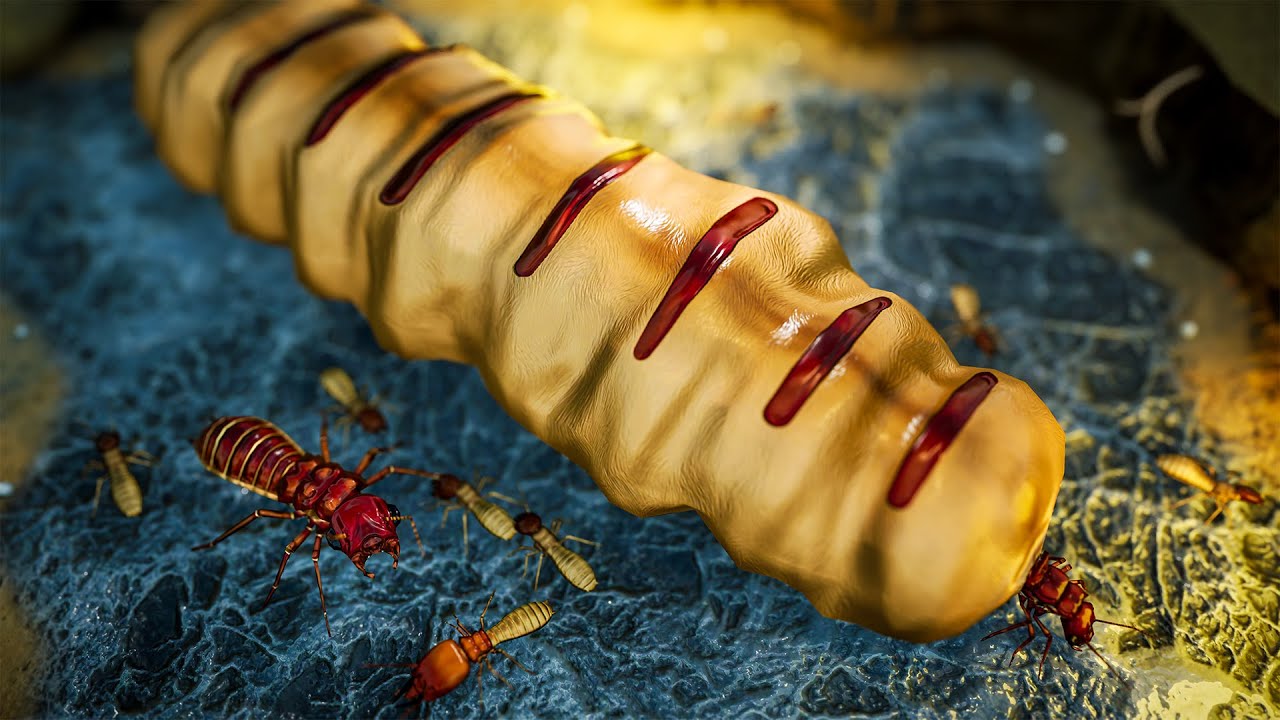
With cunningly crafted cathedrals towering over the savannah, the preferred termite prey of the Matabele ant - Macrotermes bellicosus - collects dead plant matter known as lignocellulouse to farm for edible fungus. Whilst they are inevitable victims of the Matabele, they are far from helpless, and have large soldier castes more than capable of m...
 digital sleet
im only posting videos/images of tier 5 content because their videos are the easiest to find
stuck ruin
rustic badger
idk, adopting people takes too much paper work maybe
i haven't seen any hate yet but i did anticipate it. my gut reaction is the sheer newness of it, but i'm not familiar with all of the things it does
not even steam is immune to people hating new things
rustic badger
idk how it works, have just seen memes of it
digital sleet
stuck ruin
i haven't seen any hate yet but i did anticipate it. my gut reaction is the shee...
i havent seen any hate about it, infact i havent seen anything about it
but i can understand where the hate is coming from
specifically, cheaters and hackers can abuse it
stuck ruin
digital sleet
i havent seen any hate about it, infact i havent seen anything about it
but i c...
yes, i haven't seen anything about it at all but i think that'll change as the week goes by. it's probably too early for me and my friend groups to have noticed anything
stuck ruin
digital sleet
specifically, cheaters and hackers can abuse it
if there's exploits and hacks involved with it, then i'll probably hear it downstream in the upcoming days and my opinion may change. i'm not informed about any of that stuff and i'm not even aware of what benefits it brings to people but at the moment i'm squarely in the "idk what it's even used for" category, because i already have plenty of alt accounts that are set up as "family" before this thing appeared
if it brings nothing but negatives for people then i'm against it, i already play games where people can abuse alt accounts through steam. the isle legacy being one of them, at least in the past
barren bear
digital sleet
what about termites
https://youtu.be/pIKkcbHVcMc

More from "HOODWINKED" listen in this playlist ⏭https://www.youtube.com/playlist?list=PLn3siVsWNqMAvnI0MMGBHb9G7PnQ5W9h6
#4K,
#432Hz,
 wanton grotto
 lofty blade
The Thief (of my chair)
 full patrol
lofty blade
The Thief (of my chair)
full patrol
lofty blade
The Thief (of my chair)
The theif (of my bagel)
 lofty blade
They gots no bones 
full patrol
Neither do bagels
lofty blade

modest isle
The real color of Neptune is actually closer to the color of Uranus ✅
We can truly now say that Neptune and Uranus are Twins

Old depiction of the color of Neptune ❌

 atomic wolf
modest isle
The real color of Neptune is actually closer to the color of Uranus ✅
We can tr...
atomic wolf
modest isle
The real color of Neptune is actually closer to the color of Uranus ✅
We can tr...
yes
cedar crescent
modest isle
The real color of Neptune is actually closer to the color of Uranus ✅
We can tr...
Ok but now reveal some real life aliens pls
modest isle
cedar crescent
Ok but now reveal some real life aliens pls
Spoiler alert : we might be alone in the universe
cedar crescent
I REFUSE to believe that 
 heavy temple
cedar crescent
I REFUSE to believe that <:Ghost_Stare:1049317895089438750>
heavy temple
cedar crescent
I REFUSE to believe that <:Ghost_Stare:1049317895089438750>
Someone has to be first
 sullen merlin
First Animal species of the day (403) :
Bold jumper / (Phidippus audax)

Phidippus audax, the Bold jumper or Daring jumping spider, is a common species of spider belonging to the genus Phidippus, a group of jumping spiders easily identified by their large eyes and their iridescent chelicerae.[1][2] Like all jumping spiders, they have excellent stereoscopic vision that aids them in stalking prey and facilitates visual communication with potential mates during courting.[1] Bold jumping spiders are native to North America and have been introduced to Hawaii, Nicobar Islands, Azores, and the Netherlands.[3][4][5] They are typically black with a distinct white triangle on their abdomen.[3]
Bold jumping spiders are solitary carnivores that use their highly specialized eyesight to actively hunt and stalk prey.[3] They prey on a variety of insects and non-insect terrestrial arthropods such as caterpillars, dragonflies, grasshoppers, and other spiders.[3][6][2] They are one of the most common spiders found in agricultural areas and have been studied to determine their impact on crop pest populations.[6] Unlike most spiders, bold jumpers do not build webs to catch prey.[6]
These spiders can be found in temperate climates in a variety of terrestrial habitats including grasslands, chaparrals, open woodlands, and agricultural fields.[3][4][2] The bold jumper is one of the most commonly occurring spider species within its range and is often found living in close proximity to humans.[2][7] Bites from Phidippus audax are rare but may occur if they feel threatened or are mishandled.[2][7]
Bold jumping spiders are native to North America.[3][4][5] They are widespread throughout the United States, southern Canada, and northern Mexico.[3][4][5] It is believed they were introduced to the arid regions of the southwest United States, surviving in areas where irrigation is practiced.[3] They were also introduced to Hawaii, Nicobar Islands, Azores, and the Netherlands.[5]
Bold jumpers prefer temperate climates and can be found in a variety of terrestrial habitats including grasslands, chaparrals, open woodlands, and agricultural fields[3][4][2] The bold jumper is one of the most commonly occurring spider species within its range and can be found living in close proximity to humans.[2][7] They are frequently seen in gardens, and insides homes, barns, and garages.[2] Jumping spiders require daylight to see and are thus more likely to be observed during the day.[24] At night, bold jumpers can be found sheltering in sac-like silk retreats near their hunting grounds.[19][1] They spin these retreats in concealed areas, frequently on vegetation and under stones and bark.[1][19][2] These retreats help protect the spider and are often used repeatedly.[19][2] Similar retreats are utilized in overwintering individuals.[2] Bold jumpers are one of the most abundant spiders in agricultural crops and hunt many crop pests.[4][6] In parts of its southern range, they can be found in grassy areas near water.[4]

The adult female bold jumper ranges from 8-15 mm in body length.[3] The males are smaller and adults range from 6-13 mm in body length.[3] They are typically black with an ovoid abdomen and round cephalothorax.[4] The presence of a distinct white triangle in the center of the back with two smaller spots below it is often used to distinguish this species.[3][4] On the upper abdomen, there is a lateral white band.[4] Bold jumpers are often recognized by their powerful legs that they use to jump.[3] The legs and pedipalp have white banding with fringes that are more prominent in males.[4] In females, the fourth pair of legs are typically the longest while in males the first pair of legs are the longest.[4] The chelicerae are iridescent green.[4] The adult males chelicerae and markings are much more striking than the females and they have tufts of hair over their eyes.[3][4] In spiderlings, markings are usually orange and turn white as the spider matures.[3] Bold jumpers may also vary in size and coloration amongst different populations.[4]
Vision
Further information: Spider vision
Like all jumping spiders, bold jumpers have exceptional eyesight.[1] Their unique visual system is widely regarded as the best amongst all spiders and plays an important role in courtship, hunting, and observational learning.[1][12][13] Bold jumpers have four pairs of eyes arranged in a semi-circle around their head, allowing them to see nearly 360° around them.[13] The forward-facing eyes are the largest and are known as the principal eyes or the anterior median (AM) eyes.[1] The retina of these eyes are able to rotate, allowing them to follow a moving target.[1][14] These eyes have the greatest resolution and are able to see color.[1][14] The remaining three pairs of eyes are known as the secondary eyes.[1] The first pair of secondary eyes are the anterior lateral (AL) eyes.[1] They are responsible for detecting approaching or "looming" objects.[14] Next is the posterior median (PM) eyes and the posterior lateral (PL) eyes.[1] These eyes help detect motion from the sides and behind.[1]
Behavior
Bold jumpers will quickly flee from animals that are too large to eat, jumping down and away or hiding in small crevices. At night they hide in a crevice or small cavity and make a silk retreat to avoid predators that hunt by touch.[15] Bold jumpers are shy spiders that retreat from humans when approached. If handled, they generally do not bite.[16] These characteristics make them appear to have a great deal of curiosity and personality.[17] Like most jumping spiders, bold jumpers hunt alone during the day.[18]
Bold jumpers are solitary carnivores.[3] They rely on their highly specialized eyesight to actively hunt and capture live prey.[6][19] Because they rely on their eyesight, they are diurnal.[6] They are often found hunting on fence posts and plants' leaves, stems, and branches.[19][2] Bold jumpers prey on a variety of insects and non-insect terrestrial arthropods such as caterpillars, dragonflies, grasshoppers, and other spiders.[3][6][2] As one of the most common spiders found in agricultural areas, they consume many crop pests including bollworms, boll weevils, spotted cucumber beetles, sorghum midges, fall webworms, cotton leaf worms, cotton fleahopper, tarnished plant bugs, stink bugs, lotus bugs, three-cornered alfalfa hoppers, and leafhoppers.[4][3][2] For many of these species, bold jumpers feed on both the larval and adult forms.[6] The size of the prey is correlated with the size of the spider.[2][6] Spiderlings feed on smaller prey than adults.[2] Feeding habits also differ by sex.[19] Females tend to spend more time feeding and consume more and larger prey than males.[3][19][20]
When Phidippus audax finds its prey, it first orients itself so its anterior median (AM) eyes are facing the prey.[1][6][19] It then stalks its prey, slowly approaching until it is within jumping distance.[19] Once close enough, it crouches and releases a silk dragline that will tether the spider if it falls or misses its target.[1][6][19] Next, it pounces with its legs raised.[6][19] It grasps onto its prey with its forelegs while sinking its fangs into the prey, immobilizing it with its venom.[3][19] Bold jumpers are able to distinguish between different types of prey and adjust their attack accordingly.[1][3][2][20] They have been observed attacking loopers from the front and biting their head in order to avoid being stricken by them.[2] Contrasting this, when attacking flies, they avoid attacking from the front in order to avoid alarming the fly and causing it to fly away.[2] Although bold jumpers don't build webs of their own, they have been observed invading the webs of other spiders to steal freshly caught insects or attack the spiders themselves.[1] Bold jumpers have extra-oral digestion and use their fangs to suck the liquid out their prey.[19]


@rustic badger
@cedar crescent
@distant nymph
@spice gyro
@wintry marlin
rustic badger
sullen merlin
@modest isle
@lone star
@hallow parrot
@limber grove
@full patrol
@lilac dagger
@drowsy egret
@azure oar
wintry marlin
Spider
sullen merlin
@silent cargo
@crimson marlin
@restive charm
@neat basalt
 azure oar
cute spider
spice gyro
Literally saw one of these in my room the other day
 sullen merlin
modest isle
https://tenor.com/view/aww-cute-gif-22121346
sullen merlin
modest isle
https://tenor.com/view/aww-cute-gif-22121346
 heavy temple
I saw a unit of a jumping spider as wide as my thumb once, I named him John and he stuck around for about a week
spice gyro
heavy temple
I saw a unit of a jumping spider as wide as my thumb once, I named him John and ...
hallow parrot
barren bear
https://youtu.be/9QwIaNzrJM0
not the schnitzel man
most terrifying man ever designed
spice gyro
John…
modest isle
sullen merlin
First Animal species of the day (403) :
Bold jumper / (Phidippus audax)
Also thank you the face is in the middle
I think it’s mostly some species of fish that suffer from the non centered face 💀
Thats why i used to cut the image in a werid way
Were only half of the body is shown


 sullen merlin
modest isle
Also thank you the face is in the middle
I think it’s mostly some species of f...
sullen merlin
modest isle
Also thank you the face is in the middle
I think it’s mostly some species of f...
ive tried cut images but it results in them being smalller like how they were when i posted first, like with the spoonbill from yeaterday
modest isle
sullen merlin
ive tried cut images but it results in them being smalller like how they were wh...
They all appear the same size maybe because im using mobile on my iPhone 12
Wait im gonna check on my 10th Gen/ iPad 10
Since the iPad shows the actual size of the image unlike the Phones UI
In the iPad it tries to make all the images the same time but there is some few outlliers
sullen merlin
Also every time u show the overview of all the pictures its shows the pfp of the poster but for me it never does so it not being centered didnt seem that big of a deal. I try to do it since its better overall but if i cant find it for fish it is what it is ig
On pc the media tab thingy doesnt exist so ye
modest isle
What 
That’s strange
fleet cave
sullen merlin
This is big booty Judy, she lives in my garden and is a sweet heart 🧡

She is also a bold jumper
sullen merlin
fleet cave
This is big booty Judy, she lives in my garden and is a sweet heart 🧡
Man why do yall have so many cool animals in ur backyard
fleet cave


 sullen merlin
The only interesting things in my yars are ringneck-parakeets, sometimes a hedhog and lately theres been a lot of peacock butterflys
fleet cave
She had babies this year too, this was before she had her brood.
Sometimes it just happens that way
Seen I'm jealous of the birds lol
sullen merlin
They arent even native thats the funny part, so the fact that i get to see something cool is cuz i got carried by an irresponsible pet owner
fleet cave
Oh, that is sad 😢
sullen merlin
Green woodpeckers are in my yard too
And very rarely red squirrels
And buzzards
thats it tho
 modest isle
 edgy pier
they stole evrything
edgy pier
they stole evrything
Strange that the isle devs didn’t copyright strike them
rough hollow

 visual hound
modest isle
The real color of Neptune is actually closer to the color of Uranus ✅
We can tr...
visual hound
modest isle
The real color of Neptune is actually closer to the color of Uranus ✅
We can tr...
not my neptune
hallow parrot
rough hollow
WHYYY
modest isle
visual hound
not my neptune
You are currently in the first stage :
- Denial
Then you will move on into the last stage : - Acceptance
visual hound
modest isle
You are currently in the first stage :
- Denial
Then you will move on into the ...
I will spray paint the entirety of neptune to bring it back to the REAL color
modest isle

hallow parrot
Real or AI?
 modest isle
hallow parrot
Real or AI?
modest isle
hallow parrot
Real or AI?
Ai
full patrol
Looks like ai
If not it's definitely photoshopped
Face and hair is too smooth
Also her fingers look weird
hallow parrot
It is ai
modest isle
Yeah the lighting
The hair
And her pants look weid
hallow parrot
modest isle
Ai
you learnt from your mistakes
 modest isle
Dont remind me 
hallow parrot
at a glance its fine, its only the weird grip on the torch, belt and the blurry looking hair that doesn't sell it
full patrol
Having to be good ai spotters because some people think they can pass off ai art as their own in the fan art channel
full patrol
You can always tell by the teeth
hallow parrot
you can look at the rgb gradients, they remain consistent for each one so it can told apart from photos
im just not sure about digital art atm
digital sleet
hallow parrot
you can look at the rgb gradients, they remain consistent for each one so it can...
the gradients are so goddamn obvious to me and im nowhere near the level of an artist
soon as i see that colour pallet i immediately know its AI
full patrol
Digital art is alot harder to tell for sure. That's when it helps to be a digital artist because you know what to look for
hallow parrot
If somebody showed me that picture and told me they were making the minecraft movie ( before the current one was released )
I'd admittingly believe them
hallow parrot
full patrol
Digital art is alot harder to tell for sure. That's when it helps to be a digita...
timelapses are always a good proof
but I wouldn't be surprised if AI starts mimicking that too
full patrol
Man if you put like 4 different MC movie stills infront of me and said "3 of these is fake, one is real. Which is the real movie" I would never in a million years pick the live action one.
When I saw the leak about the movie and Jack black playing Steve I literally thought it was a meme
hallow parrot
for how bad it looks, and probably how bad it will play out
I hope they just stop with live actions there and go back to fully animated
hell, even bring back 2d animation
full patrol
It was a really weird move tbh to make such a specific style that doesn't fit with live action at all and try to make it live action
A better move would have been to make MC world look like real world instead of keeping it cube style
But minecraft movie has been in Hollywood purgatory since 2014 so I'm not surprised it ended up this way
hallow parrot
 barren bear
hallow parrot
https://tenor.com/view/dxs-gif-26347066
barren bear
hallow parrot
https://tenor.com/view/dxs-gif-26347066
How I felt trying to run my old minecraft story mode pc disc
It no longer works...
hallow parrot
its been years since i've last used a disc
Last time i used one, it was for a playstation 4, and the ps5 was yet to be announced then iirc
 spice zephyr
rough hollow
spice zephyr
rough hollow
i love 2 unrelated images that sync perfectly with each other for absolutely no reason
hallow parrot
does anyone ever get this weird taste in their mouth when sleep deprived?
 neat basalt
edgy pier
neat basalt
edgy pier
roblox devs try not to steal from other developers and exploit children for money challenge:
 unreal pier
what?!

 proper escarp
Lmfao
modest isle
unreal pier
what?!
Truly a bruh moment 💀
unreal pier
modest isle
Truly a bruh moment 💀
yep 💀
sullen merlin
neat basalt
roblox devs try not to steal from other developers and exploit children for mone...
Business is business
tame python
??? is this what I think it is
@spice gyro

looks like it’s a store plant, seeing if they have smaller
it is
it’s massive though, too big for my place
$64 maybe I can convince my mom to get it so I can steal nodes lmao
it’s so pretty
spice gyro
Yessss
And that’s a mature one too
Mine only has baby little leaves cause it’s so young
tame python
it’s so gorgeous
like $64 isn’t bad either but I do not have the space in my apartment. gonna send that pic to my mom
spice gyro
Yeah true
I got mine, which is a similar size but just has smaller leaves, for only $15
Also got two absolutely giant pots of southern sword fern for $5 each
Also, I’m thinking of getting an alocasia frydek like the one you showed me, what kinda care do you give it?
tame python
I told her I’d pay for half if she gets it lol
tame python
spice gyro
Also, I’m thinking of getting an alocasia frydek like the one you showed me, wha...
will tell you more when I’m back at my pc!
that plant has def been a learning curve
spice gyro
Nice, thx
I’ve read that it can be difficult to care for
But I’d rather get info from someone who isn’t trying to sell me something or make me watch a video for ad revenue lol
sullen merlin
First Animal species of the day (404) :
Danube crested newt / (Triturus dobrogicus)

The Danube crested newt or Danube newt (Triturus dobrogicus) is a species of newt found in central and eastern Europe, along the basin of the Danube river and some of its tributaries and in the Dnieper delta. It has a smaller and more slender body than the other crested newts in genus Triturus but like these, males develop a conspicuous jagged seam on back and tail during breeding season.
For half of the year or longer, adults live in slow-flowing river margins, lakes, or ponds, where reproduction takes place. Males perform a courtship display, and females lay around 200 eggs individually onto leaves of aquatic plants. Larvae develop two to four months in the water before reaching metamorphosis. For the remainder of the year, the newts live in shady land habitats, usually forests. Although not yet considered threatened, Danube crested newt populations have declined significantly, the reason being mainly habitat loss. The species is protected by law in the European Union.
Measuring 13 to 15 centimetres (5.1 to 5.9 in) long in total, sometimes up to 18 centimetres (7.1 in) in females,[9]: 345 the Danube crested newt is the smallest crested newt species. It has a more slender, elongate body than the other species, well adapted to swimming, with a narrow head and relatively short limbs. This body shape has evolved through an increase in the number of rib-bearing vertebrae: there are 16–17 of them in T. dobrogicus, the highest number among the crested newts.[10]: 10–14
The Danube crested newt's back and sides are dark brown with black spots and white stippling. The belly is orange to red (in other crested newts, it is usually yellow or orange–yellow), with small or medium-sized black blotches that have sharp edges. Like all crested newts, T. dobrogicus males develop a crest on their back and tail during breeding phase, which can be quite high and jagged, usually starts between the eyes and nostrils, and is interrupted at the tail base. Another feature of males at breeding season is a bluish-white stripe along the tail.[10]: 10–14 [9]: 345 Females can sometimes have a yellow stripe along the back, similar to the Italian crested newt (T. carnifex).[9]: 345

The Danube crested newt is found in three allopatric areas of distribution from central to eastern Europe:
Pannonian basin: From easternmost Austria through Czech Republic (small part in the southeast), Slovakia, Hungary, nordeast Slovenia (river Mura backwaters[11]), northern Croatia, Bosnia-Hercegovina (marginally), northern Serbia to the east of Romania and southeast of Ukraine (Transcarpathian region). This includes the middle floodplains of the Danube river and some of its tributaries, including the Drava, Sava and Tisza.[7]
Lower Danube and Danube delta: Separated from the Pannonian basin by an area where the northern crested newt occurs, this central part ranges from southern Romania, northern Bulgaria, and small parts of southern Moldova to the Odesa region of southern Ukraine.[7]
Dnieper delta: This small area of distribution in southern Ukraine was reported in 2005. It is now isolated by steppe from the Danube basin, but it has been suggested that these areas were connected through marshlands during the last glacial maximum, when the level of the Black Sea was around 100 metres lower than today. This range may also extend to the lower basins of the Dniester and Bug rivers.[12]
An oxbow lake surrounded by trees.
The riparian forests of Danube-Auen National Park in Austria harbour important populations, breeding in a variety of temporarily flooded water bodies.[13]
In addition to the northern crested newt to the north, the Danube crested newt's range borders that of the Italian crested newt (T. carnifex) in the west, and that of the Macedonian (T. macedonicus) and Balkan (T. ivanbureschi) crested newts in the south.[10]: 16–17
Compared to the other crested newt species, the Danube crested newt is more adapted to life along a river system and frequently occurs in flowing water and together with fish. Typical breeding sites are slow-flowing river margins, oxbow lakes, flooded marshland, larger ponds, or ditches, provided abundant underwater vegetation is available.[10]: 44–48 [14]: 144–145 During land phase, the newts live in deciduous forests or groves, bushlands, or meadows.[1]
Danube crested newts have the longest aquatic phase in the genus Triturus. Adults move to their breeding sites in February or March and usually stay there for six months; occasionally, they may even stay longer or return to the water in autumn.[10]: 44 [14]: 144–145 Males court females with a display of ritualised body movements. When they have gained the female's interest, they guide it over a spermatophore they deposit on the ground, which the female then takes up with her cloaca.[10]: 80–89 The eggs are fertilised internally. As in other crested newts, a female lays around 200 eggs per season, which are folded individually into leaves of aquatic plants. Eggs and larvae are smaller than in the other crested newt species, and they take longer (two to four months) until they reach metamorphosis and leave the water.[10]: 61–65 [9]: 345
Both in water and on land, the newts are largely nocturnal. In their aquatic habitats, they hide under vegetation, and on land, they use structures such as logs, rocks, or small animal burrows for cover.[10]: 47–48, 58 They feed mainly on different invertebrates, but in the water may also prey on tadpoles and smaller newts.[10]: 58–59 Predators include herons and other birds, snakes such as the grass snake, and various carnivorous mammals.[10]: 78
The population of the Danube crested newt has declined significantly, and the International Union for Conservation of Nature has assessed its conservation status as "least concern". The main threat is habitat destruction by humans, especially through drainage, damming, or pollution. Hybridisation with other crested newt species and a loss of breeding ponds because of decreasing spring rain in the southern range (possibly due to global warming) are also seen as threats.[1] Like the other crested newts, T. dobrogicus is listed in the Berne Convention (appendix II) and the EU Habitats Directive (annexes II and IV), and capture, disturbance, killing, trade, and destruction of habitats are prohibited.[15][16]


^juvenile
@rustic badger
@cedar crescent
@distant nymph
@spice gyro
@wintry marlin
@modest isle
@lone star
@hallow parrot
@limber grove
@full patrol
@lilac dagger
@drowsy egret
@azure oar
@silent cargo
@crimson marlin
@restive charm
@neat basalt
modest isle
sullen merlin
First Animal species of the day (404) :
Danube crested newt / (Triturus dobrogic...
 modest isle
sullen merlin
modest isle
sullen merlin
The juveniles looks like an Axolotl
To be fair even the axlotols themselves we usually see are not the true adult stage
Axolotls can only go through adult phase if they were in a stressful environment with poor water quality

To the point the Axolotls as species being adult is unnatural for them
spice gyro
sullen merlin
First Animal species of the day (403) :
Bold jumper / (Phidippus audax)
Guess what I just found

Also there’s a small one building a home in one of my syngonium’s leaves
 full patrol
Bold jumpers aren't supposed to be where I am. But last year when I was researching them and thinking about getting one as a pet I saw one on my driveway!! I picked him up and put him in a bush deciding I probably shouldn't get a pet spider since my mom is an arachnophobe
Crazy coincidence
But I did secretly keep a smaller jumping spider for a while was super cute
 hallow parrot
heavy temple
hallow parrot
heavy temple
 tame python
spice gyro
Also, I’m thinking of getting an alocasia frydek like the one you showed me, wha...
tame python
spice gyro
Also, I’m thinking of getting an alocasia frydek like the one you showed me, wha...
The biggest thing is not letting the soil stay wet too long. I let it dry out fully before doing a big watering. If you are watering too much the tips of the leaves will disperse excess water, this is normal but too much and the leaf tips will start to rot.
Also because I am in PNW canada, my plants have to go through a long winter and my frydek def can go a little dormant or lose a few extra leaves and get kinda sparse. It always bounces back though. I have mine growing in not the most optimal spot so it kinda has a lean to it.

it puts out MASSIVE leaves though and usually some smaller ones around the base. Likely from smaller corms from the main plant
This was it when I first got it!

Which was June 2021
tame python
spice gyro
I’ve read that it can be difficult to care for
It takes some trial and error to find the right balances yeah. But as long as you have at least one leaf, it’ll bounce back.
Also repotting can be terrifying. Try to go up pot sizes super gradually. This is one of the few plants that I leave the root ball and whatever soil mixture it has in tact and just light add new stuff around it.
barren bear
plant
tame python
In short if it’s drooping it either needs water or light. the leaves need a LOT of light to keep upright when they get large. It can also drop and the leaves wilt if the soil is wet for too long. Some leaves will die naturally, don’t remove them until they are crispy as the plant will absorb the nutrients from the fallen leaves
hallow parrot
fussy plant
spice gyro
tame python
In short if it’s drooping it either needs water or light. the leaves need a LOT ...
Ok good to know. What kind of soil do you use?
hallow parrot
heh
funy ap
 spice gyro
lol
tame python
spice gyro
Ok good to know. What kind of soil do you use?
just regular potting mix with my own added extra chunky perlite
unreal pier
sullen merlin
First Animal species of the day (404) :
Danube crested newt / (Triturus dobrogic...
isnt this guy from jurassic park mobie?
spice gyro
tame python
just regular potting mix with my own added extra chunky perlite
Nice, thanks. I’m thinking of using a peat/orchid bark mix with some added sphagnum
tame python
spice gyro
Nice, thanks. I’m thinking of using a peat/orchid bark mix with some added sphag...
I use sphagnum, orchid bark and charcoal for my orchid mixes. but not for my alocasia, in my climate it would dry too fast
spice gyro
tame python
I use sphagnum, orchid bark and charcoal for my orchid mixes. but not for my alo...
Ok, sounds about right for me too. I have a potting soil mix that just has some peat, coco fiber, and a little bit of bark in it, and was thinking of mixing it with some of the sphagnum for aeration
sullen merlin
First Animal species of the day (405) :
Atlantic bay scallop / (Argopecten irradians)

Argopecten irradians, formerly classified as Aequipecten irradians, common names Atlantic bay scallop, bay scallop, and blue-eyed scallop, is a species of scallop in the family Pectinidae. An edible saltwater clam, it is native to the northwest Atlantic from Cape Cod to the Gulf of Mexico.
At the northern extreme of its range in Massachusetts germ and gonial cells complete development in winter and early spring according to Sastry 1970.[1]: 376 At the southern extreme the timeline is very different with Barber & Blake 1983 finding cytoplasmic growth stages occurred in July in Tarpon Springs, Florida, almost at the highest water temperature of the year.[1]: 376

AiPGRP is a peptidoglycan recognition protein (PGRP).[2]: 47 Its cDNA was cloned by Ni et al. 2007 and is the first bivalve PGRP to be cloned.[2]: 47 AiGal1 is a galectin discovered by Song et al. 2010,[2]: 49 CfToll-1 is a toll-like receptor (TLR) shared with other bivalves.[2]: 50 It was first found in this scallop by Song et al. 2006.[2]: 50 Song 2006 also found an inhibitor of κB (IκB).[2]: 51 AiBD is the first big defensin cloned from this scallop.[2]: 54–55 The gene is 531 nucleotides and the polypeptide product is 122 amino acids.[2]: 54–55 Recombinant AiBD is an antimicrobial for Gram-positive bacteria, Gram-negative bacteria, and fungi.[2]: 54–55 Manganese superoxide dismutase (MnSOD) mRNA expression increases in the gill and mantle in response to Vibrio anguillarum.[2]: 57
This species of scallop used to support a large wild fishery on the East Coast of the United States, but since the 1950s it has decreased greatly. This is apparently the result of several negative influences, one of which is a reduction in sea grasses (to which bay scallop spat attach) due to increased coastal development and concomitant nutrient runoff. By contrast, the Atlantic sea scallop (Placopecten magellanicus) is at historically high levels of abundance because the Magnuson-Stevens Fishery Conservation and Management Reauthorization Act of 2006 put a limit on catch numbers and led to a recovery from overfishing.
Scallop aquaculture is currently being practiced in Florida.[3] They were introduced into China in the 1980s and are the basis of a vibrant aquaculture industry in that country[4] and attempted elsewhere.
This species has five different subspecies:[5]
A. i. amplicostatus (Dall, 1898) [6]
A. i. concentricus (Say, 1822) [7]
A. i. irradians (Lamarck, 1819) [8]
A. i. sablensis (Clarke, 1965) - a fossil subspecies
A. i. taylorae Petuch, 1987 - the southern bay scallop [9]


@rustic badger
@cedar crescent
@distant nymph
@spice gyro
@wintry marlin
wintry marlin
Clam
distant nymph
Clam! o:
sullen merlin
@modest isle
@lone star
@hallow parrot
@limber grove
@full patrol
@lilac dagger
@drowsy egret
@azure oar
 sullen merlin
@silent cargo
@crimson marlin
@restive charm
@neat basalt
azure oar
Clam
modest isle
sullen merlin
The blue spots are his eyes
sullen merlin
Was it clams or snail that had their stomach go through their heart?
I remember something like that
azure oar
modest isle
The blue spots are his eyes <:TI_Scream:487710504270168074> <:TI_Scream:48771050...
Makes it look really cute knowing that, right?
wintry marlin
Clam clam
modest isle


sullen merlin
Its bivalves, The gut goes through the heart. Weird ah anatomy
 modest isle
Strange animals at least they have eyes unlike jellyfish 🪼
sullen merlin
Some jellyfish do
modest isle
Sea star/ Starfish have eyes too i think
sullen merlin
modest isle
Sea star/ Starfish have eyes too i think
These are the "eyes" of a box jellyfish

 azure oar
I only like animals that have between 0-8 eyes
sullen merlin
Echinodermates have visual sensory organs at the ends of their "limbs"
modest isle
azure oar
I only like animals that have between 0-8 eyes
2-8 eyes fixed it for you
azure oar
modest isle
2-8 eyes fixed it for you
Eyeless animals are cool
modest isle
azure oar
Eyeless animals are cool
Living your whole life being blind is not cool tho 
sullen merlin
azure oar
Eyeless animals are cool
 modest isle
Poor cat
azure oar
modest isle
Living your whole life being blind is not cool tho <:TI_BigBrain:782075528140161...
Ears, noses, touch
I‘m talking about animals that have evolved to live without eyes
 azure oar
I‘m talking about animals that have evolved to live without eyes
azure oar
azure oar
I‘m talking about animals that have evolved to live without eyes
also interestingly some animals (like seals) can survive pretty well with only one or zero eyes
distant nymph
modest isle
https://tenor.com/view/clam-seafood-cockle-gif-24787566
Clams are so weird
hallow parrot
I wonder what an apex predatory clam would look like
modest isle
hallow parrot
I wonder what an apex predatory clam would look like
I feel like it would be a normal clam but with the sharp teeth of the Venus fly trap 🌱
Being an ambush predator it will be Swimming slowly and patiently through the ocean looking fir his next prey a fish 🐟

The blue dots are his eyes
hallow parrot
i was thinking like a mouth if thise sharks that when striking, reach out further, im sure goblin sharks have it
full patrol
Sorry fish fall under the duress rule
heavy temple
hallow parrot
I wonder what an apex predatory clam would look like
Same as a normal clam, just so massive that it filter feeds things as large as sharks and small whales
modest isle
What is even scarier its that 90% of all deep sea fish has this type of mouth
not Just Goblin sharks

Extended jaw
hallow parrot
heavy temple
Same as a normal clam, just so massive that it filter feeds things as large as s...
yikes
modest isle
 heavy temple
hallow parrot
yikes
heavy temple
hallow parrot
yikes
Clam the size of the pentagon
modest isle
 modest isle
Gulper eel
heavy temple
I love gulper eels
modest isle
hallow parrot
https://tenor.com/view/eel-gulper-eel-marine-life-aquatic-gif-21746742

The gulper eel, also known as the pelican eel, has a massive mouth and, despite lacking rib restrictions in its stomach, primarily feeds on small prey such as squid. When hunting or feeling threatened, the gulper eel can inflate its mouth.
🌊 Join Our Patreon:
https://www.patreon.com/sqftfish
#cartoon, #animation, #cute, #shorts, #sqftfish
Gulper eel animation
hallow parrot
oh, no ribs
modest isle
hallow parrot
oh, no ribs
At least he is a vertebrae unlike that stupid octopus that didn’t allow him in since he has no ribs
Like bruh octopus dont have bones at all 💀
hallow parrot
then whats the beak made of :o
 jovial oar
unreal pier
jovial oar
unreal pier
What it be?
 digital sleet
i completed space marine 2
but now i cant do anything with the game because it doesnt register my internet
unreal pier
digital sleet
i completed space marine 2
but now i cant do anything with the game because it ...
maybe someone hacked into your interenet
unreal pier
We got a 4K photo of UFO before GTA 6
 hallow parrot
unreal pier
We got a 4K photo of UFO before GTA 6
hallow parrot
unreal pier
We got a 4K photo of UFO before GTA 6
nah thats just my LED Frisbee
rough hollow
Lol
modest isle
Gavril MD-Series
https://youtu.be/LHhY9FCgOrk?si=Lyi6Uk4iO0u6g4CQ

Available now in BeamNG.drive v0.33!
Steam: https://store.steampowered.com/app/284160/BeamNGdrive/
Read more: https://bng.gg/033
Discord: https://www.discord.gg/beamng
Twitter: https://twitter.com/beamng
Facebook: http://facebook.com/BeamNGPhysics
Instagram: https://instagram.com/beamng.official
It will be bigger than the D-Series and Snaller than the T-Series
Gavril D-Series :

Gavril T-Series :

 humble vigil
I love cyn from murder drones
 rocky quest
really

 hazy gate
 crimson marlin
modest isle
Gavril MD-Series
https://youtu.be/LHhY9FCgOrk?si=Lyi6Uk4iO0u6g4CQ
crimson marlin
modest isle
Gavril MD-Series
https://youtu.be/LHhY9FCgOrk?si=Lyi6Uk4iO0u6g4CQ
YEAH YOU KNEW!!! the update is awesome!!
modest isle
crimson marlin
YEAH YOU KNEW!!! the update is awesome!!
Indeed brother this is gonna be a fun to drive truck 🛻
crimson marlin
modest isle
Indeed brother this is gonna be a fun to drive truck 🛻<:TI_Perfect:735343168555...
Do you play on beamMP?
modest isle
crimson marlin
Do you play on beamMP?
Yeah i used to play it in my free time
crimson marlin
modest isle
Yeah i used to play it in my free time
Would be awesome if we could play together lol
modest isle
That would be be great
But isnt the online server feature is actually a Mod ?? Not vanilla 
crimson marlin
modest isle
That would be be great
But isnt the online server feature is actually a Mod ?? ...
Yeah you gotta download it on their beamMP site. Its safe since its the devs from beamng who made it.
 lusty helm
hallow parrot
lusty helm
hallow parrot
💀💀💀
crimson marlin
lusty helm
barren bear
lusty helm
 silent cargo
 cedar crescent
silent cargo
cedar crescent
silent cargo
DRG being based as usual
mortal echo
lusty helm
That is not the isle 🔥
mortal echo
lusty helm
That is not the isle 🔥
This is the offtopic chat anyway 🔥
sullen merlin
First Animal species of the day (406) :
Guinea worm / (Dracunculus medinensis)

Dracunculus medinensis (Guinea worm, dragon worm, fiery serpent[1]) is a nematode that causes dracunculiasis, also known as guinea worm disease.[2] The disease is caused by the female[3] which, at around 80 centimetres (31 inches) in length,[4] is among the longest nematodes infecting humans.[5] The length of specimens exhibits extreme sexual dimorphism, as the longest recorded male Guinea worm is only 4 cm (1+1⁄2 in).[4]
Guinea worm is on target to be the second infectious disease of humans to be eradicated, after smallpox. It was formerly endemic to a wide swath of Africa and Eurasia; as of 2023, it remains endemic in five countries: Chad, Mali, South Sudan, Angola and Ethiopia,[6] with most cases in Chad. Guinea worm spread to Angola c. 2018, and it is now considered endemic there. Infection of domestic dogs is a serious complication in Chad.
The common name "guinea worm" is derived from the Guinea region of Western Africa.
Dracunculus medinensis ("little dragon from Medina") was described in Egypt as early as the 15th century BCE and possibly was the "fiery serpent" afflicting the Israelites described in the Bible.[7]
In the mid-19th century, the nematode Camallanus lacustris, which infects freshwater fish, was discovered to develop in copepods. This led Russian naturalist Alexei Pavlovich Fedchenko to discover in 1870 that D. medinensis is similarly transmitted via copepod intermediate hosts.[8]
D. medinensis L1 larvae are found in fresh water, where they are ingested by copepods (small crustaceans) of the genus Cyclops. Within the copepod, the D. medinensis larvae develop to an infective L3 stage within 14 days.[9] When the infected copepod is ingested by a mammalian host drinking unfiltered water, the copepod is then dissolved by stomach acid and dies and the D. medinensis larvae are released and migrate through the wall of the mammalian intestine, and enter the abdominal cavity and retro-peritoneal space, where they mature into adults. After maturing and mating within the host, the males die and females (length 70–120 cm or 28–47 in) migrate in subcutaneous tissue towards the skin's surface. Around a year after the infection, the female causes the formation of a blister on the skin's surface, generally on the lower extremities, though occasionally on the hand or scrotum. When the blister ruptures, the female slowly emerges over the course of several days or weeks.[9] This causes extreme pain and irritation to the host. During those few days to hours before the worm exits the skin, the person may develop a fever, pain, or swelling in that area. When the host—in an attempt to alleviate the excruciating burning pain—submerges the affected body part in water, the female releases thousands of larvae into the water. From here, the larvae infect copepods, continuing the life cycle.[9] After the worm exits the skin the wound caused by the emerging worm often develops a secondary bacterial infection. Permanent damage can occur if the infection goes untreated around a joint. Most cases occur in areas without access to health care facilities.[10]

In 2020, Guinea worm was found in 1507 domestic dogs in Chad, 15 in Ethiopia, and eight in Mali, as well as in 61 domestic cats in Chad and three in Ethiopia. Small numbers have also been found in wildcats and baboons.[11] These findings are a potential problem for the eradication program.
D. medinensis is most commonly found in the subtropic to tropical regions, especially in India, south-west Asia (Iraq, Iran, Pakistan, etc.), and rural areas of Africa, where temperatures of 25–30 °C (77–86 °F) are best for larval development.[12] The parasite relies on people accidentally consuming microcrustaceans of the genus Cyclops (copepods), that dwell in stationary bodies of water such as ponds, large, open wells (with stairs), or rain-filled cisterns.[12] The infection occurs most during times of drought or the "dry-season" in humid climates, or during or just after the rain season in the "semiarid, wet-and-dry-climates".[12] This is due to the lower surface water of the stationary bodies of water, which are prime for the growth of the infected copepods, and main source of water for many.[12]
The female guinea worm slowly starts to emerge from the host's skin after the blister ruptures. The most common method for removing the worm involves submerging the affected body part in water to help coax the worm out. The site is then cleaned thoroughly. Then, slight pressure is applied to the worm as it is slowly pulled out of the wound. To avoid breaking the worm, pulling should stop when resistance is met. Full extraction of the female guinea worm usually takes several days. After each day's worth of extraction, the exposed portion of the worm is wrapped around a piece of rolled-up gauze or small stick to maintain tension.[14] This method of wrapping the worm around a stick or gauze is speculated to be the source for the Rod of Asclepius, the symbol of medicine.[15] Once secure, topical antibiotics are applied to the affected region, to help prevent secondary infections due to bacteria, which is then wrapped in gauze to protect the wound. The same steps are repeated each day until the whole worm has been removed from the lesion.[14]
In the 1980s, the Carter Center initiated a program to eradicate the guinea worm.[33] The campaign began in 1980 at the U.S. Centers for Disease Control and Prevention. In 1984, the CDC was designated by the World Health Organization as the "Collaborating Center for Research, Training, and Eradication of D. medinensis". More than twenty countries were affected by Guinea worms in 1986. That year, WHO started the eradication program with the Carter Center leading the effort.[34] The program included education of people in affected areas that the disease was caused by larvae in drinking water, isolation and support for affected people, and – crucially – widespread distribution of net filters and pipe filters for drinking water, and education about the importance of using them.
As of 2015, the species has been reported to be near eradication.[33] The International Commission for the Certification of Dracunculus Eradication has certified 198 countries, territories, and other WHO represented areas. As of January 2015, eight countries were yet to be certified as Guinea worm-free: Angola, the Democratic Republic of the Congo, Kenya, Sudan, Chad, Ethiopia, Mali, and South Sudan; of these, only in Chad, Ethiopia, Mali, and South Sudan does D. medinensis remain endemic countries.[34]


@rustic badger
@cedar crescent
@distant nymph
@spice gyro
@wintry marlin
@modest isle
@lone star
@hallow parrot
@limber grove
wintry marlin
Worm
distant nymph
huh o:
sullen merlin
@full patrol
@lilac dagger
@drowsy egret
@azure oar
@silent cargo
@crimson marlin
@restive charm
@neat basalt
distant nymph
D:
"The female guinea worm slowly starts to emerge from the host's skin after the blister ruptures"
sullen merlin
Ye its a parasite
It burrows into a humans skin
theres a lot of pics for it but i suppose its NSFW
 distant nymph

sullen merlin
its almost exticnt cuz of humans trying to eradicate it
rustic badger
hallow parrot
sullen merlin
it being in germany is so random lol
 void zinc
sullen merlin
its almost exticnt cuz of humans trying to eradicate it
void zinc
sullen merlin
its almost exticnt cuz of humans trying to eradicate it
Yeah we can kill that one off.
sullen merlin
void zinc
Yeah we can kill that one off.
 void zinc
You're on the list.
sullen merlin
void zinc
You're on the list.
 azure oar
I think I could have survived without knowing about this lifeform
lone star
Now you must survive with the knowledge
azure oar
Time to learn time travel so I can turn back time to before I saw it
sullen merlin
azure oar
I think I could have survived without knowing about this lifeform
Google elephantiasis
that one might be even worse
lusty helm
mortal echo
This is the offtopic chat anyway 🔥
This is not the isle🔥
full patrol
This guy fixed the minecraft movie trailer
https://youtu.be/K8pXbRESDfY?si=tGkT9Tmz2_YNPxcL

It didn't convince me, so I animated it :)
MINECRAFT TRAILER ANIMATED
💚
Tiktok: https://www.tiktok.com/@benlyy2710
Twitter: https://x.com/benlyanimations
if anyone wants to help haha
https://www.paypal.me/benlyy
#minecraft #minecraftanimation #minecrafttrailer #trailer #movie #animation
 toxic sage
crimson marlin
toxic sage
crimson marlin
 hidden raptor
would you guys recommend BoB?
 naive apex
not at all
 idle goblet
hidden raptor
would you guys recommend BoB?
idle goblet
hidden raptor
would you guys recommend BoB?
What
naive apex
it is dead/dying
hidden raptor
idle goblet
What
Beasts of Bermuda
idle goblet
Apparently it's not good
hidden raptor
naive apex
it is dead/dying
ah alright, hm, any other dinosaur survival games other than bob, pot, and the isle?
naive apex
nah not that would be worth your money
idle goblet
Path Of Titans is The Isle but more of a fighting game
hidden raptor
naive apex
nah not that would be worth your money
dang alright
idle goblet
Haven't played Path of Titans but apparently it's alright
limber grove
I only have found PoT to be fun on a heavily-modded server with a group of friends
The sound design and animations are bad overall, especially when compared to this
hidden raptor
limber grove
I only have found PoT to be fun on a heavily-modded server with a group of frien...
yeah I agree, it kind of relies on mods that are sometimes better than the og made dinosaurs
limber grove
Plus I just prefer the hardcore survival genre, PoT is way more MMO with selectable abilities and whatnot
Too bad Saurian basically isn't a thing, I bet it'd be fun
hidden raptor
limber grove
Too bad Saurian basically isn't a thing, I bet it'd be fun
dude yeah, I was looking at it, sad what happened to it
naive apex
however if you are interested in a genuinely good ecosystem sandbox game about fish i could help you there 😉
limber grove
is it fish game
idle goblet
My one problem with Path Of Titans is it isn't on something like Steam or even Epic
naive apex
limber grove
is it fish game
mmmmyesssss
unreal pier
How?

 sacred finch
 distant nymph


For context, that's supposed to be a list of fascinating Ornithischians

Ornithischian dinosaurs remain a fascinating and diverse dinosaur group. Below are ten impressive ornithischians you should know. Come and check them out!
 elder meadow
...
hazy gate
 full patrol
👀
 rancid nymph

 ocean bay

 tight plover
 onyx surge
https://tenor.com/view/ew-nope-no-nuh-uh-no-way-gif-21846503
onyx surge
https://tenor.com/view/ew-nope-no-nuh-uh-no-way-gif-21846503
biggest stinker of all
onyx surge
tight plover
biggest stinker of all
 void zinc
 silent hull
Trying to find someone to assist me in figuring out why my PC is suddenly shutting off then booting back up? Its only started in last maybe 1-2 weeks
There is no black or blue screen, its as if the power cord just got suddenly unplugged then plugged right back in. I tried different power outlets/surge protectors and the other things plugged into the same outlets remain powered... It will do it whether im simply sitting on the desktop or gaming and i can't figure out whats causing it or where to start looking.
 twin valley
have u put cooling gel on ur thingy
silent hull
You mean thermal paste on my CPU?
twin valley
i heard they sometimes shut off due to overheating
yeah
lol im getting there with pc knowledge
 sand warren
Saw a post on reddit about "pc randomly shutting off" the culprit was the processor.
twin valley
still in this damn queue
silent hull
Yeah, i've only had this PC since the middle of january the thermal paste should be good - its never had an issue with anything until this last week and i cant figure out why its powering off like that
twin valley
isnt it due for a redo then? i thought it was every 6 months
sand warren
Could also be ram, maybe try re-seating the ram sticks.
twin valley
(myself who just got this pc like an hour ago)
cant wait to destroy it on the isle :D
sand warren
You buy yours pre-built?
silent hull
sand warren
Could also be ram, maybe try re-seating the ram sticks.
Worth a shot next time i shut down my PC, im on it atm - hasnt "powered off" suddenly again - its completely random
twin valley
nah i got it off a friend who built it
he gave it to me for $600 and it plays isle on epic at 100 fps
sand warren
Nice, good to have friends like that.
 thorny geyser
based off of this your gonna wanna give slightly more detail. what you were doing at the time. how old your pc is stuff like that.
Sounds like you have an issue either with the device having an issue with heating. loads of things tend to "shut down" when they are over heating to prevent damage. is there a very slight change at the bottom of the screen? like a tiny flicker of green?
If its flickering Green it could be an issue with your GPU and its connection causeing the screen to flicker and maybe starting a restart that way?
Odd question, do you have loads of dust sitting around and that being said, is the machine clean? dust can cause restrictions to heating.
Are your drivers up to date. sometimes out of date drivers can cause issues with each other
silent hull
The heating i dont think is an issue my GPU core temps when playing the isles on all epic only gets to 75-80 on a warm day - but i have a 7900xtx so thats perfectly normal considering the game im playing, as for the CPU its liquid cooled and right now at desktop its sitting at 37 idle, the crash can happen whether im sitting here on the desktop screen watching youtube or playing any game
I built this PC myself in January, haven't experienced any issues with it up until just this last week
twin valley
how can u check the temp?
thorny geyser
twin valley
how can u check the temp?
windows has some stuff built in although i run an MSI motherboard so i use that to look
silent hull
Well i use the AMD software built in performance tab but there are 3rd party apps as well
sand warren
RTSS Rivatuner is the best way to check temps imo
thorny geyser
silent hull
I built this PC myself in January, haven't experienced any issues with it up unt...
it shouldnt be that dirty that dust is blocking it either. you may need to re-verify conenctions in it.
Odder question, did you make sure to get a powersupply big enough to handle what your doing with the pC?
silent hull
yeah its a 1,000w power supply
i dont overclock or nothing and the recommended was 850 iirc
thorny geyser
if it were me and my pc i would do this
1 - try to get it to crash while using the windows logger so you can see exactley what does it.
2 - fix it - if no issue present, "strip pc" to clean and ensure everything connected
twin valley
i have a 550w power is that good
thorny geyser
i also try not to let my temps go above 95c
thorny geyser
twin valley
i have a 550w power is that good
without context i have no idea
silent hull
thorny geyser
if it were me and my pc i would do this
1 - try to get it to crash while using ...
How do i use "windows logger"?
thorny geyser
i havent used it in years i got my own one i pay for....id have to google it
twin valley
i got an i5 and uh im playing the isle at 30-120 frames
silent hull
as for the reseating part i can do that yeah, i'll just unplug and replug all the ports/ram etc
thorny geyser
silent hull
as for the reseating part i can do that yeah, i'll just unplug and replug all th...
https://learn.microsoft.com/en-us/windows-hardware/drivers/debugger/logger-and-logviewer this should help

Logger and LogViewer
twin valley
how do i do the glowy neck thiong as herra again
thorny geyser
twin valley
i got an i5 and uh im playing the isle at 30-120 frames
as long as you arnt running anything to powerful to draw, seems good
silent hull
Why is it called a logger vehicle? lol
thorny geyser
idk i didnt make it lmao
windows comes with a whole heap of debugger tools id recommend you learn to use esp if you building your pc XD apart from getting hands on or saying " have you tried turning it on and off again" i think thats all i can give you
go on reddit and find tech forums. they are actually super helpful
twin valley
whats the weird lemon eye migration zone
thorny geyser
patrol zone
twin valley
ooh whats that
silent hull
thorny geyser
windows comes with a whole heap of debugger tools id recommend you learn to use ...
Question, could it be possible that a graphics driver could be causing my PC to completely shut off and start up again? idk how connected that would be but just a thought
thorny geyser
i have seen a bad connection trip a restart yes
silent hull
Well in my system logs
"The Secure Boot update failed to update a Secure Boot variable with error Secure Boot is not enabled on this machine.. For more information, please see https://go.microsoft.com/fwlink/?linkid=2169931" ID: 1796
and
"The RstMwService service terminated with the following error:
%%2684420176"
These are "Errors" and one person says its connected to display driver, and recommends uninstalling/reinstalling display drivers
thorny geyser
you can use the download driver client for your GPU to verify broken drivers and fix them. id recommend you do that first
silent hull
On AMD adrenaline?
silent hull
Yeahh i have a 7900xtx with a 7800x3d cpu
twin valley
so when u jump on somebody as herra do u just jump on them or do u have to bite/ right click?
 crystal axle
Anyone here know's how to enable DLLS swapper for this game??
I installed it, and added the DLSS version, but it still dosn't show in settings
 keen cargo
twin valley
so when u jump on somebody as herra do u just jump on them or do u have to bite/...
keen cargo
twin valley
so when u jump on somebody as herra do u just jump on them or do u have to bite/...
you have to be high enough that your herrera like spreads out its arms and legs while falling once youve aimed and jumped on whatever youre trying to kill and the higher up you are the more damage you do, you usually want to aim for the head (or body instead of head for dibble since the crest decreases head dmg) usually you want to get away as soon as possible - assuming they didnt die from the first hit, so dont bite just get up the closest tree 🙏🙏
keen cargo
twin valley
ooh whats that
a patrol zone is like a mini migration specifically for you/ your group, spawns in food for herbis and as carni sometimes players will be in the area too as well as ai sometimes ( i think??)
unreal pier
is this the isle anime
https://www.youtube.com/watch?v=qVqM2NzuwTk&ab_channel=DeadSound

Created by David James Armsby.
https://www.facebook.com/davidarmsbyartist/
"Rise of the Decayed" is the third film in my "SAURIA" Animated Series.
This film focuses on the dark and magical side of SAURIA. While the study of sorcery may grant the user fantastic power, this power comes with a sickness of the mind and the flesh.
While on patrol,...
full patrol
Reverse first animal of the day:
What the heck is this beetle and why is it saying they're not in the US yet I am seeing one in the US
@sullen merlin
@modest isle
 sullen merlin
full patrol
Reverse first animal of the day:
What the heck is this beetle and why is it sayi...
sullen merlin
full patrol
Reverse first animal of the day:
What the heck is this beetle and why is it sayi...
If its this, its a european snout beetle

Not entirely sure of its the same species as the one u sent, but its the closest thing i could find

I think it is tho
I was thinking about making it the actual animal of the day but the wiki looks like this

To answer ur question, its native to eurasia but has been introduced in the US and canada
First Animal species of the day (406) :
Spotted eagle ray / (Aetobatus narinari)

The spotted eagle ray (Aetobatus narinari) is a cartilaginous fish of the eagle ray family, Aetobatidae. As traditionally recognized, it is found globally in tropical regions, including the Atlantic, Pacific and Indian Oceans. Recent authorities have restricted it to the Atlantic (including the Caribbean and Gulf of Mexico) with other populations recognized as the ocellated eagle ray (A. ocellatus) and Pacific white-spotted eagle ray (A. laticeps). Spotted eagle rays are most commonly seen alone, but occasionally swim in groups. They are ovoviviparous, the female retaining the eggs then releasing the young as miniature versions of the parent.
This ray can be identified by its dark dorsal surface covered in white spots or rings. Near the base of the ray's relatively long tail, just behind the pelvic fins, are several venomous, barbed stingers. Spotted eagle rays commonly feed on small fish and crustaceans, and will sometimes dig with their snouts to look for food buried in the sand of the sea bed. These rays are commonly observed leaping out of the water, and on at least two occasions have been reported as having jumped into boats, in one incident resulting in the death of a woman in the Florida Keys. The spotted eagle ray is hunted by a wide variety of sharks. The rays are considered near threatened on the IUCN Red List. They are fished mainly in Southeast Asia and Africa, the most common market being in commercial trade and aquariums. They are protected in the Great Barrier Reef.
modest isle
full patrol
Reverse first animal of the day:
What the heck is this beetle and why is it sayi...
Snout beetle 
sullen merlin
Spotted eagle rays have flat disk-shaped bodies, deep blue or black with white spots on top with a white underbelly, and distinctive flat snouts similar to a duck's bill.[11] Their tails are longer than other rays and may have 2–6 venomous spines, behind the pelvic fins. The front of the wing-like pectoral disk has five small gills in its underside.[12]
Mature spotted eagle rays can be up to 5 meters (16 ft) in length; the largest spotted eagle rays have a wingspan of up to 3 meters (10 ft) and a mass of 230 kilograms (507 lb).[13][14]

One male, or sometimes several, will pursue a female. When one of the males approaches the female, he uses his upper jaw to grab her dorsum. The male will then roll the female over by grabbing one of her pectoral fins, which are located on either side of her body. Once he is on her ventral side, the male puts a clasper into the female, connecting them venter to venter, with both undersides together. The mating process lasts for 30–90 seconds.[2]
The spotted eagle ray develops ovoviviparously; the eggs are retained in the female and hatch internally, feeding off a yolk sac until live birth.[2] After a gestation period of one year the mother ray will give birth to a maximum of four pups.[1] When the pups are first born, their discs measure from 17–35 centimeters (6.7–13.8 in) across.[2] The rays mature in 4 to 6 years.[1][15] Genetic evidence indicates that the spotted eagle ray can undergo consecutive parthenogenesis.[16]
Spotted eagle ray preys mainly upon bivalves, crabs, whelks and other benthic infauna. They also feed on mollusks (such as the queen conch)[17] and crustaceans, particularly malacostracans,[18][19] as well as echinoderms, polychaete worms,[20] hermit crabs,[21] shrimp, octopuses, and some small fish.[22]
The spotted eagle ray's specialized chevron-shaped tooth structure helps it to crush the mollusks' hard shells.[13][14] The jaws of these rays have developed calcified struts to help them break through the shells of mollusks, by supporting the jaws and preventing dents from hard prey.[23] These rays have the unique behavior of digging with their snouts in the sand of the ocean. [24] While doing this, a cloud of sand surrounds the ray and sand spews from its gills. One study has shown that there are no differences in the feeding habits of males and females or in rays from different regions of Australia and Taiwan.[19]
Spotted eagle rays prefer to swim in waters of 24 to 27 °C (75 to 81 °F). Their daily movement is influenced by the tides; one tracking study showed that they are more active during high tides. Uniquely among rays they dig with their snouts in the sand,[24] surrounding themselves in a cloud of sand that spews from their gills. They also exhibit two motions in which the abdomen and the pectoral fins are moved rapidly up and down: the pelvic thrust and the extreme pelvic thrust. The pelvic thrust is usually performed by a solitary ray, and repeated four to five times rapidly. The extreme pelvic thrust is most commonly observed when the ray is swimming in a group, from which it will separate itself before vigorously thrusting with its pectoral fins. The rays also performs dips and jumps; in a dip the ray will dive and then come back up rapidly, perhaps as many as five times consecutively. There are two main types of jump: in one, the ray propels itself vertically out of the water, to which it returns along the same line; the other is when the ray leaps at a 45 degree angle, often repeated multiple times at high speeds. When in shallow waters or outside their normal swimming areas the rays are most commonly seen alone, but they do also congregate in schools. One form of travelling is called loose aggregation, which is when three to sixteen rays are swimming in a loose group, with occasional interactions between them. A school commonly consists of six or more rays swimming in the same direction at exactly the same speed.[25]


As traditionally defined, spotted eagle rays are found globally in tropical regions from the Indo-Pacific region from the western Pacific Ocean, the Indian Ocean, and the western Atlantic Ocean.[34]
They are found in shallow coastal water by coral reefs and bays, in depths down to 80 meters (262 ft).[13] Spotted eagle rays are found in warm and temperate waters worldwide. In the western Atlantic Ocean it is found off the eastern coast of United States of America, the Gulf Stream, the Caribbean, and down past the southern part of Brazil. In the Indian Ocean, it is found from the Red Sea down to South Africa and eastward to the Andaman Sea. In the Western Pacific Ocean it can be found near Japan and north of Australia.[2] In the Central Pacific Ocean, it can be found throughout the Hawaiian Islands. In the Eastern-Pacific Ocean, it is found in the Gulf of California down through Puerto Pizarro, an area that includes the Galapagos Islands. Spotted eagle rays are most commonly seen in bays and reefs. They spend much of their time swimming freely in open waters, generally in schools close to the surface, and can travel long distances in a day.[2]
Within these regions, there are significant variations in genetics and morphology.[6][4][5] As a consequence, recent authorities have split it into three: This restricts the true spotted eagle ray (A. narinari) to the Atlantic, while the Indo-Pacific population is the ocellated eagle ray (A. ocellatus) and the East Pacific is the Pacific white-spotted eagle ray (A. laticeps).[6][7]
Spotted eagle rays, in common with many other rays, often fall victim to sharks such as the tiger shark, the lemon shark, the bull shark, the silver tip shark, and the great hammerhead shark.[28][29] A great hammerhead shark has been observed attacking a spotted eagle ray in open water by taking a large bite out of one of its pectoral fins, thus incapacitating the ray. The shark then used its head to pin the ray to the bottom and pivoted to take the ray in its jaws, head first.[30] Sharks have also been observed to follow female rays during the birthing season, and feed on the newborn pups.[2]
As other rays, spotted eagle rays are host to a variety of parasites. Internal parasites include the gnathostomatid nematode Echinocephalus sinensis in the spiral intestine.[31] External parasites include the monocotylid monogeneans Decacotyle octona,[32] Decacotyle elpora[32] and Thaumatocotyle pseudodasybatis[32][33] on the gills.


@rustic badger
@cedar crescent
@distant nymph
@spice gyro
@wintry marlin
rustic badger
sullen merlin
@modest isle
@lone star
@hallow parrot
@limber grove
@full patrol
@lilac dagger
@drowsy egret
@azure oar
@silent cargo
@crimson marlin
@restive charm
@neat basalt
modest isle
sullen merlin
Spotted eagle ray
In popular culture :

 neat basalt
ANIMAL OF THE DAY
neat basalt
sullen merlin
Spotted eagle rays have flat disk-shaped bodies, deep blue or black with white s...
hes so COOL
sullen merlin
Bro's jaw
 modest isle
What will happen if somebody sticks his head in that jaw
sullen merlin
 distant nymph
full patrol
Reverse first animal of the day:
What the heck is this beetle and why is it sayi...
distant nymph
full patrol
Reverse first animal of the day:
What the heck is this beetle and why is it sayi...
Aw xD
distant nymph
sullen merlin
First Animal species of the day (406) :
Spotted eagle ray / (Aetobatus narinari)
Also cool 😊
rustic badger
Think this might be a Useful Image for ya
 modest isle
rustic badger
Think this might be a Useful Image for ya
modest isle
rustic badger
Think this might be a Useful Image for ya

Rabbithorn when she loses her chill
sullen merlin
rustic badger
Think this might be a Useful Image for ya
Rabbithorn when theres no carrots left
crimson marlin
Rays..cool!
full patrol
@sullen merlin
@modest isle
Now that I'm home I used google lens on it, looks like it's a type of cicada parasite beetle in the family Coleoptera: Rhipiceridae 👀
That family has some cool looking bugs in it


 twin valley
keen cargo
you have to be high enough that your herrera like spreads out its arms and legs ...
twin valley
keen cargo
you have to be high enough that your herrera like spreads out its arms and legs ...
how op is the herra jump ik it can one shot utah but what about a cera?
twin valley
visual hound
this is so cool
they should make it kfc cuz japanese eat kfc for christmas lol
 strong marten
twin valley
how op is the herra jump ik it can one shot utah but what about a cera?
strong marten
twin valley
how op is the herra jump ik it can one shot utah but what about a cera?
Probably like 4 jumps
twin valley
what if i was super high up
strong marten
4 jumps
twin valley
damn
strong marten
Probably takes like 20 from not high up lmao
twin valley
bruh why can stego be bright ahh purple lol
built like a freaking 3 year old drawing
neon ahh
unreal pier
what?!

 umbral hatch
Does anyone has an old (first) threatening call from Deinosuchus? It was more of a hissing
cedar crescent
umbral hatch
Does anyone has an old (first) threatening call from Deinosuchus? It was more of...

Locomotion and behavioral extrapolations of large crocodilian, genotype Deinosuchus.
Highly dangerous aquatic predator.
Steam: https://store.steampowered.com/app/376210/The_Isle/
Discord: https://discord.gg/survivetheisle
Website: https://survivetheisle.com/
#TheIsle
#Deinosuchus
#Animation
At the end of the video there are it's calls
umbral hatch
Thank You ❤️
visual hound
twin valley
they should make it kfc cuz japanese eat kfc for christmas lol
wait then which country was obsessed with mcdonalds
 rigid sand
i need to beat this thing to death with a stick RIGHT NOW!!!!!
 soft lily
rigid sand
i need to beat this thing to death with a stick RIGHT NOW!!!!!
soft lily
rigid sand
i need to beat this thing to death with a stick RIGHT NOW!!!!!
THE RAIL GUN
sullen merlin
First Animal species of the day (407) :
Rhododendron leafhopper / (Graphocephala fennahi)

Graphocephala fennahi (rhododendron leafhopper) is a species of leafhopper native to the United States. Its common name derives from it feeding on the sap of rhododendrons.[1] The species was introduced to Great Britain in the 1930s and continental Europe in the 1970s.[2] There has been suggestion that the rhododendron leafhopper contributes to the spread of a rhododendron fungus (Pycnostysanus azaleae) through Europe.[3]
They are small as 8–10 mm and have 4 orange stripes down their elytra. Their metamorphosis are incomplete, and those creatures are diurnal. Forewing colors are ranged from red to blue. Males are 7.4-8.8 mm long, and females are 8.2–9 mm long. They belong to the group "True bugs", very closely related to aphids and psyllids
Distribution
It is native to the mountains of southern Virginia, the western Carolinas, and northern Georgia. Recently observed (Aug 2024) in Northern Illinois (Suburban Chicago).
Habitats
They are recorded in grassy lands, as well as in mixed hardwood forests, usually found in rhododendron areas.
Contribution
Rhododendron leafhoppers are usually vital food for ladybugs, spiders, and some parasitic wasps. They are afraid of Harmonia axyridis, the Harlequin Ladybird.
Seasonal occurrence
The Rhododendron leafhopper emerges from late spring and dies in November (timeline includes: May, June, July, August, September, October and November).


@rustic badger
@cedar crescent
@distant nymph
@spice gyro
@wintry marlin
rustic badger
sullen merlin
@modest isle
@lone star
@hallow parrot
@limber grove