


1 messages · Page 1 of 1 (latest)
 dreamy ravine
I'll list my issues from first image to last.
The first two images show problems after glue up. I noticed the metal or paint on the metal off the clamp was coming off and seeping into the wood quite a bit. So when cleaning the glue off while still a bit soft, I had to go a bit deeper on these parts with the chisel. I really took my time there still and I was taking really small shavings off. However, the sapele part of the panel seemed to gave been just ever so slightly higher, and when trying to go with the grain on the walnut border, I chiseled across the grain on the sapele. And it looks like there's minor tearoit there now. What might be the best way to resolve this, or will sanding do the trick?
For the following two images, because of the way I had to put it through the tablesaw, I got tearout when going across the grain. Is the best solution here to just have something sacrificial behind it?
Finally, the last image is just about the aestheticness. I noticed that because the grain goes slightly at an angle, it made the top panel look not square visibly. So should I have cut my plank down so that the grain was essentially straight?
 round dagger
Not exclusive to black pipe clamps, but a brief explaination of why you got that staining and how to avoid it in the future. https://www.youtube.com/watch?v=2eD8O-CpIAQ
Grain runout/aesthetics is entirely personal whether you want to avoid it or not.
I hope thats not a solid panel in the middle
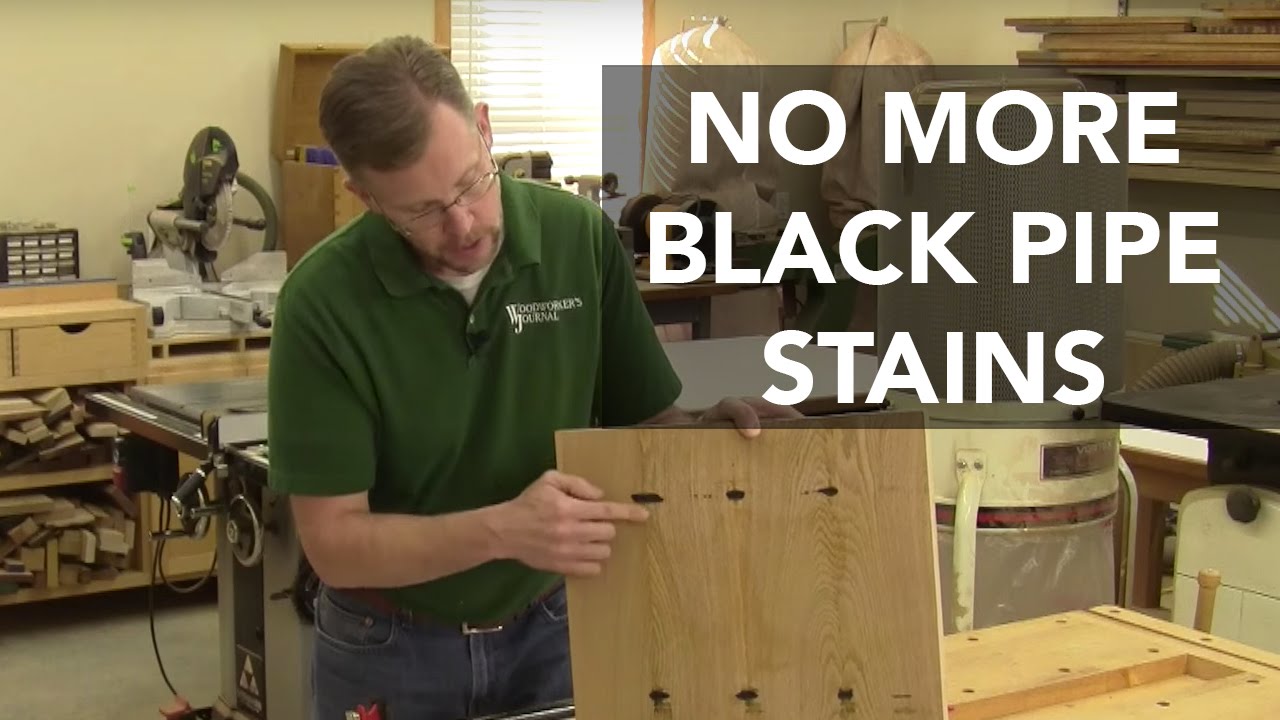
Black pipe clamps can leave ugly stains on wood during glue ups. These stains can be tough to remove. This simple trick creates a spacer between the pipe and the wood, so you'll never have black stains.
Subscribe to this channel for new weekly video woodworking lessons, tips and tricks:
https://www.youtube.com/user/WoodworkersJournal
Get more ...
dreamy ravine
round dagger
Not exclusive to black pipe clamps, but a brief explaination of why you got that...
What do you mean by a solid panel in the middle?
It's 2 planks of sapele glued together by the edge. they were about 10cm wide each.
round dagger
It'll probably maybe be fine at that size. Wood movement and all that.
dreamy ravine
So would it be wiser to go for slimmer planks glued together for less chance at movement? Because I can't see how one would make larger panels if it's a problem.
I will be putting the aprons and legs on asap anyway. But of course there's still the issue with cracking later, I suppose.
round dagger
Veneer, or not solid banding that can restrict wood movement
Just like you'd be using z-clips/figure 8 clips on the aprons so it doesn't restrict it, right?
 gaunt sparrow
Slimmer planks will solve nothing. You framed a panel in a border with the grain going the opposite direction. That piece of frame prevents the panels interior from expansion and contraction. This means that the only way for that center panel to expand is to tear itself apart or warp significantly.
This is the same fundamental problem that existed in the guitar body. I suggest spending some time learning about seasonal wood movement in different grain orientations. That understanding will prevent issues like the last two.
dreamy ravine
I do understand better now, to be honest. But I have seen furniture with the top panel having grains going in perpendicular directions. But now I think about it, it seems they would allow for that movement by having a slot with 1mm or so into the frame of the panel.
 errant ferry
You're probably thinking about breadboard ends which do account for wood movement
gaunt sparrow
Frankly, I think believing you understand if you don’t is very much a problem. I don’t know what you know, but I can infer from your questions that you don’t have a solid understanding.
dreamy ravine
How helpful.
gaunt sparrow
I'm sorry, I'll not try to help and will instead pretend you understand things you clearly do not. Good luck to you
 delicate forge
Buy Understanding Wood and read as far in as you can.
dreamy ravine
If your definition of help is "that's how it is, got it?", and when I say got it, you say "no you don't", then I'd appreciate that.
delicate forge
Lloyd, he’s explained wood movement to you about four times, that’s why this time was a bit brusque.
dreamy ravine
I will get the book now. Thanks.
delicate forge
It is not a thrilling read, but wood tech is very important.
And Hoadley knows his wood tech.
dreamy ravine
delicate forge
Buy Understanding Wood and read as far in as you can.
Thanks for the recommendation, by the way. The first chapter has already been incredibly informative/educational.