

12 messages · Page 1 of 1 (latest)
 dawn lily
Hey. Anyone got an idea why my gnd was burned? All three gnd cables from ESP32 to two BMS UART connection. First time it was a half year ago now again for the second time. I don't know why there's a high current on the ground.
Not sure it's the right topic. Sorry if not admins. Let me know where I need push.
 trim yacht
If the Daly uart devices have a separate power input then you probably have a ground loop there. IF the UART connections aren't electrically isolated.
dawn lily
But you need for communication ports the same gnd ... And the gnd is connected to power supply too. Also it works for 6 month
If that's the problem it will be doing by connecting directly
 vagrant basalt
u must use isolated RX an TX. ( using ADUM 1201 , or using opto's)
dawn lily
vagrant basalt
u must use isolated RX an TX. ( using ADUM 1201 , or using opto's)
Why? 😮
vagrant basalt
The fact that high current went trough your negative wire is proving something: grounds of your Daly's and your ESP32 where NOT ALL at the same voltage! ( or ground was not the reference voltage anymore... or ground was not floating... )
if you put your batteries in series => one battery is shorted 😉
if you power your ESP32 using on of those 2 batteries in serie => you short one battery also 😉
Another reason to have high current is: your batteries were in parallel and you disconnected the negative first between them => Now the only link remaiing is this litle tiny black wire between your left and right Daly 😉 ... guess what 😉
dawn lily
But on isolated connection I don't have a common gnd anymore. Battery being in parallel. But it's just the UART output of the BMS. So why I have high current on a protocol port 🤔
vagrant basalt
AH ok. I forgot to mention something. Having a communication between Daly and one UART port of your ESP32 do not require a physical connection. 🙂 Using an optocoupler is like having a IR remote conctrol . In fact optocoupler are 1 emiter diode and 1 revceiving diode in one small package, and obviously, a "one way" communication channel. You need two of these. One for the TX, one for RX. No need to build this on your own ( solutions like adum 1201 exists). 4 wires on one side ( +, TX,RX,-), and the same on the other side. So both side are now fully isolated. Side A use power from side A, Side B use power from side B. ( protection is usually well above 200 volts, ). It is the safest way to send / receive signals. It's like a fiber connection 🙂
Now back to your problem. Indeed no high current should flow on UART ports ( around 1 or 10 mA or so). You said that batteries , and thus BMS were in //. UART ports are either 3.3 of 5.5 volts, most likely referenced to their respective ground. Daly A, using most negative cell from pack A, Daly B using most negative cell of battery pack B. This is the tiny black wire on uart port.
WE expect the high current to flow on thick wires ( >25mm2) between your batteries , right ? ...and communication using UART 😉 ALL grounds are connected together, everything is (should) be fine. Remember tiny back wire is connected on most negative cell of each battery pack, through the BMS....
IF FOR ANY REASON the tick black wire is diconnected from your batteries then the current will now use the tiny black wire of the UART ports...
=> bad connection ?
=> u removed the black cable first ?
=> one Dally went into protection mode ? and cut of negative port ( but tiny negative uart port is still connected 😉 to the other battery ..... )
Who knows ? may be everything was fine,... till one Daly started to equalize and pull current ...trough UART port now ;-)))))
That's why we use isolated UART. We don't want any current ( not even ONE mA ) to escape/bypass the main connection.
Come on... $$$ of batteries, $$$ of BMSs, compared to a pack of 3 ADUM 1201 for 10$ delivered tomorrow at home using amaon ;-)))) ...
PS1: <joke on> That's a lot of money and complexity to start a fire ;-))))) <joke off>
PS2: Having said that, i'm using one ESP8266 to monitor my Victron MPPT in HA... 😉 ) ....
vagrant basalt
i'm currently building my own... 4.30 am, i just realized i'm not on the safe side too ;-))))
i'll try this: https://microcontrollerslab.com/pc817-optocoupler-pinout-working-examples-datasheet/
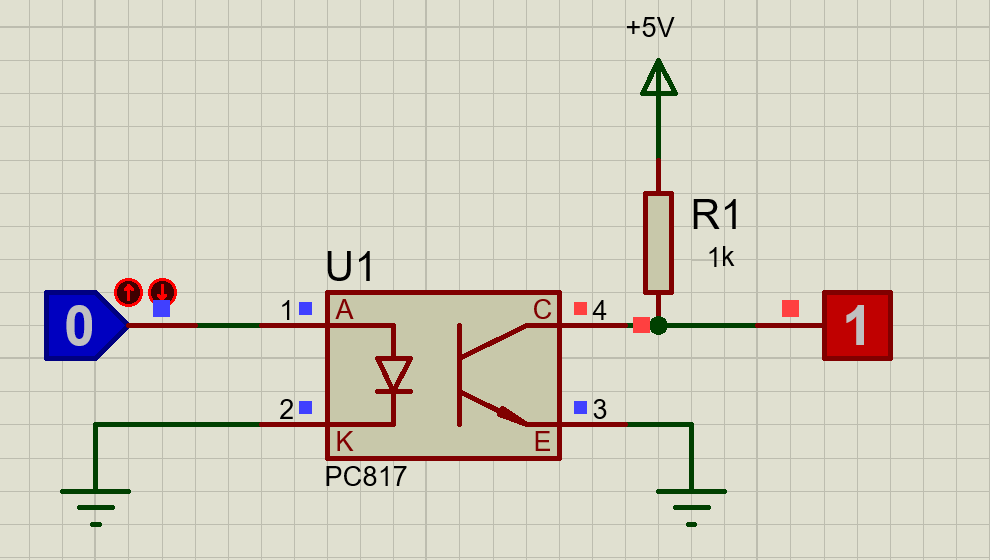
PC817 is an optoisolator consists of an infrared diode and phototransistor pinout, working and Example with Arduino, datasheet, applications and features