#HA water quality monitor
1 messages · Page 1 of 1 (latest)
 tulip orbit
I am not familiar with these exact sensors, but I am sure that they are no big deal. However using a full size Pi seems overkill for a job that any ESP or Pi Pico W could do for 2-5 bucks. Also they are not only cheap but available unlike the Pi.
Do you have an idea of how many things you want to connect?
2x PH sensor
1x Pump control relay
2x temp sensor
...whatever
HA water quality monitor
 honest turret
Dont have any experience with ESP, but seems to be the best option....
Project consists of the following for now
Reef Tank:
- PH Sensor
- Temp Sensor
- NH3 Sensor
- Salinity Sensor
- Water Level Sensor (Return pump chamber of sump filter)
Koi Pond:
- PH Sensor
- Temp Sensor
- NH3 Sensor
- Water Level Sensor
Pool:
- PH Sensor
- Temp Sensor
honest turret
SO in this thread im going to try and create a BOM/Build of Materials.
And try to document it as detailed as possible.
First choice is the foundation.... Andrino or ESP... and im going ESP
is ESP32 overkill? im considering it because of the CPU and extra GPIO pins
tulip orbit
honest turret
is ESP32 overkill? im considering it because of the CPU and extra GPIO pins
you will need it for the extra GPIO because esp8266 only has 1 analog pin. all the PH sensors I see online are analog. esp32 has 18 analog pins as far as I see.
honest turret
The PH sensors seem to be th emost exspensive part of this project
tulip orbit
~15 bucks for the cheapest, yes
I have experience with coding MQTT esp8266 devices so I could help with that because esp32 is pretty much the same and most libraries support both.
honest turret
I have NO coding experience with Either... So its going to be a huge learning curve....
I just want to get the correct components . Thats my biggest concern
Found a local supplier for ESP32 boards..... BUT for th esame price as 1 unit, I can get 10 from Aliexpress including shipping.....
tulip orbit
As long as you have the sensors with reasonable readings and wifi the rest is coding magic. I like to put OTA update code into my boards so I don't even need to move to refresh code version.
Most important is to get example code to read the sensors one at a time. then just add all the wifi and combine it all.
honest turret
Im based in South Africa, so shipping via Alliexpress takes 30-50 days...
tulip orbit
keep in mind ESP boards have 3.3v analog pins so you may need a voltage divider (2 resistors) to not damage the input pin
honest turret
This is what I need?
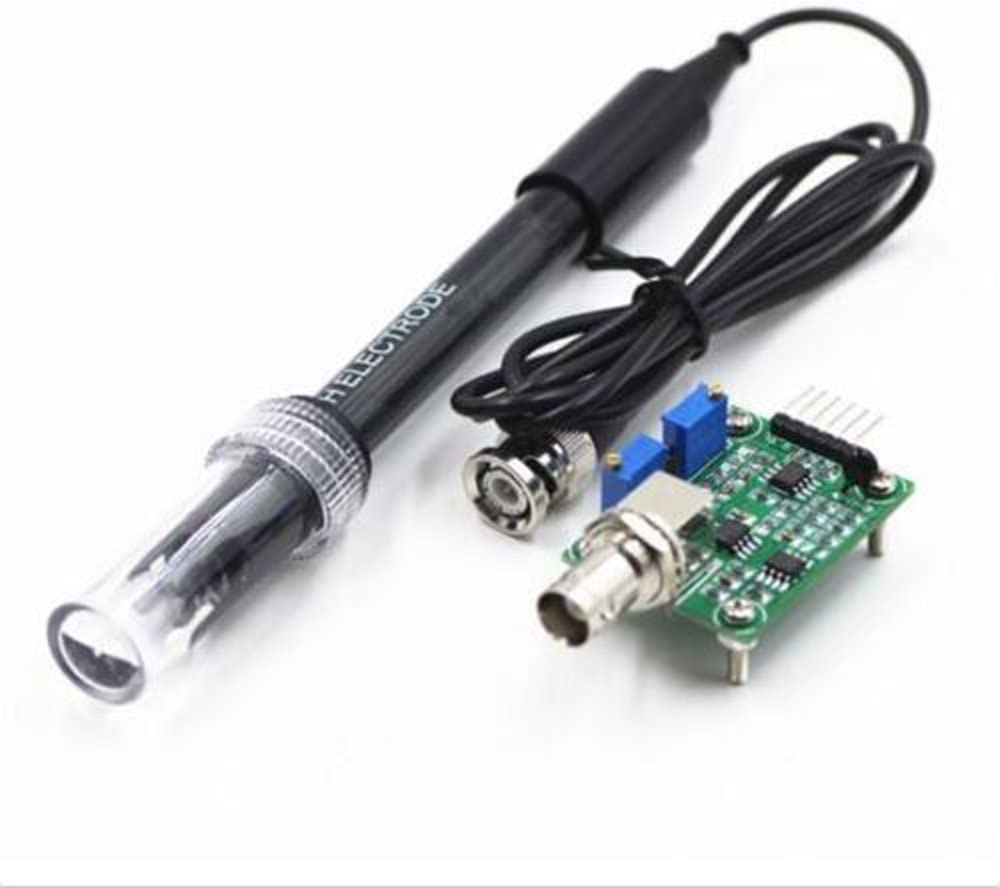
aliexpress.com
Smarter Shopping, Better Living! Aliexpress.com
tulip orbit
all of them seem to be the same with power and an analog output
I recommend looking at tutorials to see what kind of code and sensors people use. these tutorials should also show how good/bad a sensor is at reporting values.
also with this specific sensor you sent there should be no issue as long as PH does not go below 4 (aka go above 3.2v)
 honest turret
IF it does go below that, My fish will be allready dead 😂
tulip orbit
yeah
honest turret
Temp Sensors? DS18B20 is most common.....
tulip orbit
the voltage change is very small (just 1v between PH4 and PH10) with 12bit analog reading on esp32 (0-4095) 4095/3.3/6 gives you ~206 readings between each PH level. seems decent if we assume it is linear but there might be some reading inaccuracies
honest turret
Seems that you have a lot of experience with this... Im practically new to all this....
Stupid Question.... *Suitable platform: for Arduino and Raspberry Pi will it work with ESP32 module?
tulip orbit
well I want to make sure you don't end up buying a sensor that gives you +- 1PH readings at best because as far as I know fish are very sensitive to these conditions. I guess at least 1 decimal place with decent accuracy after calibration should do.
tulip orbit
honest turret
Stupid Question.... ****Suitable platform: for Arduino and Raspberry Pi*** will ...
you can get away with anything as long as there is a pinout provided. Look for specifications like analog output voltage range, I2C protocol (some things like gyroscopes use this to communicate data)
honest turret
👍
tulip orbit
and make sure it is meant for microelectronics so 5v or 3.3v and not 12v or mains voltage as those need extra hardware to safely hook up
Also feel free to DM me, but you wanna keep it in this thread that is fine too
honest turret
Temp Sensors some are just the probes....

aliexpress.com
Smarter Shopping, Better Living! Aliexpress.com
Other option
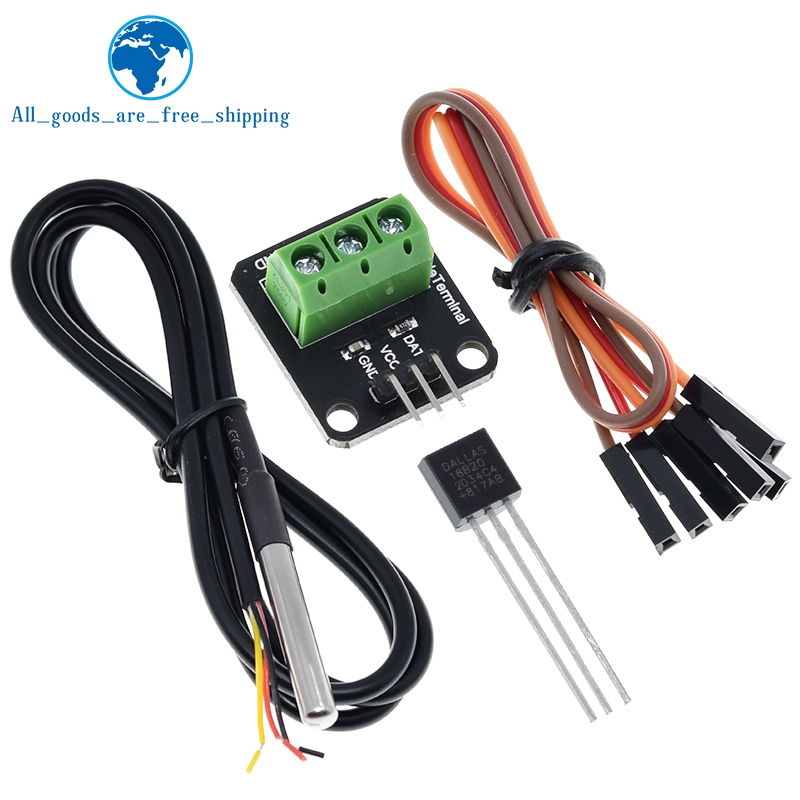
aliexpress.com
Smarter Shopping, Better Living! Aliexpress.com
tulip orbit
yep, they don't need a converter board

in this video, i have shown how to measure liquid temperature using the DS18B20 temperature sensor module. the module is waterproof and can be immersed in liquids.
Further i have also displayed the code on the LCD module
this module communicates through the onewire protocol. has a temperature range of -55 to 120 degrees C.
link to the code ...
same code should work. the fact they use an arduino is not very different
honest turret
I have alot of research still to do....
But thanx so much for your help thus far...
tulip orbit
you just need a (waterproof) temp probe there may be some with 3 wires (2 power + analog data) it just changes resistance with temperature and gives a different volatge output.
others have 2 wires if it is just the bare thermo-couple, but try to avoid those because they need external resistors
honest turret
tulip orbit
you just need a (waterproof) temp probe there may be some with 3 wires (2 power ...
Got them
tulip orbit
float sensors (triggers at a specific level) are also very simple and cheap. they are just water activated switches
honest turret
tulip orbit
float sensors (triggers at a specific level) are also very simple and cheap. the...
Going to need this for Auto Top up for the Reef Tank
difficulty i sgoing to be the Salinity sensor
is going
tulip orbit
so it just needs to tell you if the level good (triggered) or below (open)
all these sensors will need a lot of analog pins, poor digital pins will not be used
well float sensors are digital, but the rest all seem to be analog
tulip orbit
3x temp sensor (3 analog pins)
3x PH sensor (3 analog pins)
? float water level sensors (digital)
? salininty sensor (?)
honest turret
I will have 3 ESP32 Boards
tulip orbit
oh because of the different tank locations, that makes sense and also makes it easier to assign appropriate pins
honest turret
Yip
honest turret
tulip orbit
3x temp sensor (3 analog pins)
3x PH sensor (3 analog pins)
? float water level ...
Found Analog ones
Water Level Sensor...
tulip orbit
it gives you a range of water levels? I think it is simpler to have a float switch or 2 that just reports water/no_water. also depends on price and what you want
honest turret
aliexpress.com
Smarter Shopping, Better Living! Aliexpress.com
honest turret
tulip orbit
it gives you a range of water levels? I think it is simpler to have a float swit...
2 float switches sounds more reliable.....
tulip orbit
honest turret
https://www.aliexpress.com/item/1005001567092657.html?spm=a2g0o.productlist.0.0....
this thing uses infrared light so it seems very unreliable to me and it could be thrown off by external light
honest turret
Hence I will use ur advice and go with Float Sensors
tulip orbit
so one board would need:
2x float sensor
1x temp sensor
1x PH sensor
1x NH3 sensor
1x salinity sensor
at maximum (in case of the reef tank)
tulip orbit
not sure if it is worth putting redundant sensors in there. what is the worst that could happen if a sensor goes bad?
honest turret
Reef tank and Koi Pond has been runninh 3 & 5 yrs respectively without any sensors.... So thi sis just for me to keep an eye in betwen Bi-Weekly Testing of the water
tulip orbit
We could do it like in an airplane, have 2 of everything and if they have different readings you get an error, but I don't think it is worth the extra cost by any means
tulip orbit
honest turret
Reef tank and Koi Pond has been runninh 3 & 5 yrs respectively without any senso...
nice, so it is not a life or death situation for the fish if a sensor fails.
honest turret
tulip orbit
nice, so it is not a life or death situation for the fish if a sensor fails.
Nope...
Im gonna call it a night.
Thanx so much for your advice and help today...
Will let you know once I received everything..... in +-30days from now 😂