#templates-archived
1 messages · Page 8 of 1
 marble jackal
And there should be an ( before states() (you close it after `float*7)
- platform: template
sensors:
airconlr01a_current_corrected_power_usage:
friendly_name: AirConLr01a Current Corrected Power Usage
value_template: >
{% if states('sensor.airconlr01a_current_power_usage') | int > 10 %}
{{ (states('sensor.airconlr01a_current_power_usage')| float*7) | round(2) }}
{% else %}
{{ states('sensor.airconlr01a_current_power_usage') | round(2) }}
{%endif %}
availability_template: "{{ states('sensor.airconlr01a_current_power_usage') | is_number }}"
unit_of_measurement: W``` lapis quarry
yes that did it 👌
thanks guys you have been really really extremely helpfull today, I apreciate your time 🥰
need to implement this in a bunch of places but i think i can figure it out for now, will be back if not 🙏
marble jackal
Btw, now you updated, there is a complete new integration for template entities. The template integration
You are using what is now called the legacy template sensor format
lapis quarry
yes i know a lot has changed since 2021.04 to now
when you say template integration you mean in the gui or in yaml
ok got you, just found it
ill read about it thanks 😉
 nocturne chasm
how can I expand a domain and then search for attributes in a certain state? I tried this but it is blank:
{{expand('domain.climate')|map(attribute='preset_mode')| selectattr('state', 'eq', 'none') | map(attribute='name') | list |join(', ') | default(none) }}
 mighty ledge
attribute='attributes.preset_mode'
once you do that, the map(attribute='name') won't do anything
so if you're trying to find preset_mode eq none, then it should just be
{{expand('domain.climate')| selectattr('attribute.preset_mode', 'eq', 'none') | map(attribute='name') | list |join(', ') }}
does eq=equal?
mighty ledge
yep
nocturne chasm
cause that still comes up blank
mighty ledge
is preset mode equal to the word 'none'?
nocturne chasm
yes
mighty ledge
attributes.preset_mode, sorry
nocturne chasm
yes
mighty ledge
no i'm telling you to use attributes.preset_mode
not attribute.preset_mode
missing an s
nocturne chasm
gotcha, but still blank
mighty ledge
{{expand('domain.climate')| selectattr('attribute.preset_mode', 'eq', 'none') | list }}, blank?
oh duh
it's not domain.climate
it's states.climate
marble jackal
And no expand needed then
nocturne chasm
still blank
marble jackal
{{ states.climate | selectattr('attributes.preset_mode', 'defined') | selectattr('attributes.preset_mode', 'eq', 'none') | list }}
mighty ledge
shouldn't make a difference
marble jackal
petro's version was still missing the s
nocturne chasm
UndefinedError: 'homeassistant.helpers.template.TemplateState object' has no attribute 'attribute'
mighty ledge
I'm assuming that it's not actually equal to 'none'
marble jackal
My edited version has it
nocturne chasm
that gives a whole list of the entities attributes
current_temperature=73, temperature=73, target_temp_high=None, target_temp_low=None, fan_mode=auto, hvac_action=idle, preset_mode=none,
a partial list
nocturne chasm
mighty ledge
{{expand('domain.climate')| selectattr('attribute.preset_mode', 'eq', 'none') |...
yes, this is blank
but the attribute preset_mode clearly says none in dev tools / states
mighty ledge
can you show me it in the developer tools -> states page
nocturne chasm
Auh, I had to map the name 😉
mighty ledge
well yeah, trying to figure out if what you're saying is true 😉
hardest part about support
the templatse without the map were testing, not the solution
nocturne chasm
when assisting people who only kinda understand templates 😄
 tight canopy
a short question, i have a external light controller, currently controlled via nodered. but I would like to have them as a light switch in HA. is there a possibility to do this via restful api and/or templates?
 obtuse zephyr
tight canopy
a short question, i have a external light controller, currently controlled via n...
obtuse zephyr
tight canopy
a short question, i have a external light controller, currently controlled via n...
That controller isn't in HA at all? You could set up an input_boolean in HA and listen for state changes in Node Red to handle that
tight canopy
its a aquarium led controller and currently not available to HA. this is how I currently handle it
obtuse zephyr
https://www.home-assistant.io/integrations/input_boolean/, this is a toggle that you can use in HA
 rare linden
is there a way to check what set the last value of something? i have input_booleans that override certain automations but i have "scene"'s in the form of scripts (because real scenes are annoyingly limited) which will set the boolean themselves, i want to check if the input_boolean was changed by a script or not so i can avoid setting it in my "normal" scene if it was previously set manually
so basically i want to check if the last time 'input_boolean.override_light' for example was set by a script
marble jackal
You can use context
 azure drum
Hi again, I am still stuck. Maybe someone is willing to take a look? https://community.home-assistant.io/t/json-value-template/129626/5 I try to read values from the second instance as well....
rare linden
marble jackal
You can use `context`
ty
 sharp frigate
Hi all. Could someone help me please with how to select the lowest of a bunch of temperature sensors? I have created a generic_thermostat to control my heating but it's using one room's temperature. I'd like to template something to always return the lowest of them for the heating control?
sharp frigate
sharp frigate
Hi all. Could someone help me please with how to select the lowest of a bunch of...
I figured it out by using a min/max
rare linden
another way would be to sort the list by value and surround the whole thing with ()[0] and that will get you the highest/lowest depending on which direction you sort it, i do something similar to get the latest updated motion sensor
marble jackal
There's also a | min and | max filter. Sorting the list and taking the first item is not needed for that
 quiet creek
'[[[ return states["sensor.rm4_mini_temperature"].state + "°F" ]]]'
How can I change this template to read 76 degrees F instead of 75.96 degrees F?
 next patrol
Hi,
I want to add Watts and Amps entity values of 7 sonoff POW R2 devices and show them as separate entity(sensor). Can someone point me in right direction.
next patrol
I have managed to do this in template editor,
now i need help to post value from this script/template into my dashboard.
azure drum
Hello, how do I create a new entity using e.g. template that shall be used as a storage variable. And how do I initialize that once, upon creation.
´´´ - name: sunsp_fro_dc_0_power_to_knx
unique_id: sunsp_fro_dc_0_power_to_knx
state: "{{ 0 | float }}"
device_class: power
state_class: measurement ´´´
if I do that it stays 'state unknown'
azure drum
How do I initialize that entity?
azure drum
Well maybe you can tell me how to archive my goal? Can you give me a hint how it can be done?
I do not understand what you mean by "reload template entities from YAML" .
marble jackal
 == Developer Tools
azure drum
Maybe I don't understand the concept behind it? What I try to do. If sensor.A changes then check how much it changed, to then send out a knx packet if it has changed enough. So I thought I need a storage of the last sent value, compare the stored with the new value upon that change, to then update the storage and sent out to knx bus. Maybe there is another idea how something like that can be done in HA? Should I better try to do that using a python script? If so, I am willing to dig into that. But for the time I need to learn a lot...
azure drum
marble jackal
<:devtools:619094051878207520> == Developer Tools
Okay! This is what I did. There I get the entity, but it is undefined.
(the state is undefined...)
marble jackal
I would expect that template to have the state 0
azure drum
Okay, I keep trying, in developer tools templates, but fail. How do I copy a state from entity A to state entity B?
azure drum
I read that 50 times... One example please, that could help me.
marble jackal
But what I would probably do is:
- create an input number
- create an automation which triggers on state changes of sensor A
- compare the old and new state
- add the difference to your input number
- check the state of the input number to see if it is above the threshold
- if that is the case, send the knx command and set the input number to 0
azure drum
I understand the idea. But again, the maybe simple question, how do I write to an entity (B) or "the input" number in the action part of the automation? I find no "service" that is writing a value to my sensor.B. Maybe I don't see the obvious?
marble jackal
{{ states('sensor.cucumber') }} will give you the state of that sensor
But do note that all states are strings, so you'll have to convert it to a number
azure drum
I know, but you seem not to understand what I search. Maybe I am unable to phrase it correctly. I try to WRITE the state of sensor.B Something (this is not working!) like that {{ set 'state.sensor.sunsp_fro_dc_0_power_to_knx' = float( 1 ) }}
I keep trying in developers templates, but fail... 😕
marble jackal
No, a template will provide you with a value, you can not perform actions in it
Use the service call for the particular entity, and use the template for the value
Eg
service: input_number.set_value
target:
  entity_id: input_number.apple
data:
  value: "{{ states('sensor.cucumber') | int + 6 }}"
That clarifies it for me, finaly. Thank you!!!
´´´
service: input_number.set_value
target:
entity_id: sunspec_dc_1_power_to_knx
data:
value: "{{ states('sensor.sunsp_fro_mppt_module_0_dc_power') | float }}"
Message malformed: not a valid value for dictionary value @ data['action'][0]['target']['entity_id'] ????
But getting closer 😉
azure drum
How do I do that?
I did some reading on it. HA turns out to very complicated for that. Maybe someone has a link how to do something that I do using s python script?
marble jackal
You can easily create an input number in the GUI
Settings > Devices and Services > helpers
 dusty grailBOT
Command '.input_number' was invoked by: TheFes
azure drum
Thank you for your help!
But then I will write the value to that input_number, not to where I want it, the entity that will be send out to the knx bus. Okay, then I could use send.knx once difference is reached in that input value. But, that is scalar, a fixed or variable amount of change. But not a percentage of the monitored value of sensor.A. I guess that will not solve the problem, right. I can't believe, that there is no way to write a value to the state of an entity. If not, then I think I cannot do what I want. I will have to revert back to the knx visualisation hardware. Almost all time spent no with HA will be wasted. I am disappointed...
Is there a way to use python to Read,calculate and write to an entity?
Could there be a dummy device/integration created, that is "fed" by python script generated output to do the trick?
marble jackal
What is the actual service call you want to use at the end
azure drum
knx.send
I want to send out data from the inverter integration, but only if the value has changed by x% or if y time no update to the bus. That's all, because the knx bus gets flooded otherwise....
azure drum
marble jackal
I meant the complete service call
you mean:
service: knx.send
data:
address: 12/0/99
type: power
payload: "{{ states("sensor.sunsp_fro_mppt_module_0_dc_power") | float }}"
dusty grailBOT
To format your text as code, enter three backticks on the first line, press Enter for a new line, paste your code, press Enter again for another new line, and lastly three more backticks. Here's an example
Don't forget you can edit your post rather than repeatedly posting the same thing.
For over 15 lines you must use a code share site such as https://dpaste.org/ (pick YAML for the language), http://pastie.org/ (pick YAML for the language), or https://paste.debian.net/ (pick YAML for the language).
Command '.format' was invoked by: TheFes
 inner mesa
You need to fix your quotes
marble jackal
Use different quotes inside and outside the template
azure drum
inner mesa
You need to fix your quotes
What exactly do you mean, which where?
marble jackal
You are using double quotes inside your template, and the template is wrapped in double quotes as well
Replace one of those with single quotes
azure drum
Okay, what does it do if make that error? Fix like that?
service: knx.send
data:
address: 12/0/99
type: power
payload: "{{ states('sensor.sunsp_fro_mppt_module_0_dc_power') | float }}"
marble jackal
Yes
Before you had "{{ states(" sensor.sunsp_fro_mppt_module_0_dc_power ") | float }}"
And again, please format your code as code
azure drum
Thanks, I would like to understand what it does? And, I try formatting, but I am rather new to discord. Where can I find how to format it. Your code is in nice boxes. I haven't managed to find how that is done. I am doing a steep learning curve ... 😉
marble jackal
You are using single quotes when you try to format it, you need backticks
 half pendant
Is there anyway to create a dictionary helper? I'd like to associate motion sensors with lights and the build automations based on that.
 atomic blade
I'm trying to write a template which uses the last_changed time to make a decision. However, on reboot this value resets to the current time. What's the best way around this shortcoming of HA?
half pendant
Is this possible? I can easily write it in pseudo code but have no idea how to make it into a script or automation.
Basically i want to create a script that takes a motion sensor as an argument. Checks that sensor in a dictonary and gets a light back and then turns the light on or off depending on the sensors state.
inner mesa
that's straightforward
half pendant
Haha ⬆️ difference between amateur and professional at HA 🙂
Any clues on how to achieve it @inner mesa?
inner mesa
something like this:
test2:
  variables:
    lights:
      binary_sensor.one: light.one
      binary_sensor.two: light.two
  sequence:
    - service: light.turn_{{ states(binary_sensor) }}
      data:
        entity_id: "{{ lights[binary_sensor] }}"
pass in the sensor via "binary_sensor"
half pendant
Does States(binary_sensor) return On if its on (motion detected)?
half pendant
And i would then create an automation based on this?
inner mesa
you asked for a script
so that's a script
if you want an automation, it's easy to convert
inner mesa
it does matter
they're very different things
you don't pass a sensor into an automation, for instance
half pendant
Sure i get that. I meant for my self
inner mesa
this part:
Basically i want to create a script that takes a motion sensor as an argument.
I don't know what you're looking for with an automation
half pendant
So i would change out binary_sensor.one: light one to the pair matching? So
binary_sensor.downstairs_bathroom_motion_sensor_rorelselarm: light.hallway_lights
inner mesa
yes
half pendant
And - service: light.turn_{{ states(binary_sensor) }} should be - service: light.turn_on{{ states(binary_sensor) }}right?
half pendant
Oh ok. Trying to understand what happenes here
inner mesa
it will resolve to light.turn_on or light.turn_off based on the state of that sensor
half pendant
Cool!
Getting: Message malformed: Integration '' not found
Full script:
  variables:
    lights:
      binary_sensor.downstairs_bathroom_motion_sensor_rorelselarm: light.hallway_lights
  sequence:
    - service: light.turn_{{ states(binary_sensor) }}
      data:
        entity_id: "{{ lights[binary_sensor] }}"
your indentation is wrong
everything from the second line down needs to come back 2 spaces
half pendant
Would i call the script like this?
data:
  variables: {{ binary.binary_sensor.bathroom_motion_sensor_rorelselarm }}
a few things wrong with taht
half pendant
I mean in an automation action
inner mesa
still, it's broken
service: script.1662915872850
data:
  binary_sensor: binary_sensor.bathroom_motion_sensor_rorelselarm
Sorry.
data:
  variables: " {{ binary_sensor.bathroom_motion_sensor_rorelselarm }} "
I did.
inner mesa
I gave you the answer
this part is completely wrong: variables: " {{ binary_sensor.bathroom_motion_sensor_rorelselarm }} "
the relevant example there is:
automation:
  trigger:
    platform: state
    entity_id: light.bedroom
    from: "off"
    to: "on"
  action:
    service: script.notify_pushover
    data:
      title: "State change"
      message: "The light is on!"
you added "{{ }}" and "variables:"
half pendant
Ok. I think i understand, not entirely sure why my version didnt work though.
Was looking at this example:
automation:
  trigger:
    platform: state
    entity_id: light.bedroom
    from: "off"
    to: "on"
  action:
    service: script.turn_on
    target:
      entity_id: script.notify_pushover
    data:
      variables:
        title: "State change"
message: "The light is on!"```Ah i see
inner mesa
as it mentinos:
There are two ways to achieve this. One way is using the generic script.turn_on service.
The other way is calling the script as a service directly.
half pendant
Yeah i get it now.
inner mesa
still, you were trying to evaluate a template there rather than just passing the value
half pendant
yes it was two different errors. Still pretty much a novice on templating and writing stuff in yaml rather than in the UI
 tepid oak
Hi all, I'm currently running mostly the minimalist frontend. On my front page I have a number of room cards. On the card for the basement I'd like the main entity to be one of two entities, 1. the washing machine time left if it's in the running state. 2. If not, the temperature from a temp sensor in the basement. Am I allowed to put a template directly in the YAML for the page or do I have to define it as a template in one of my config files?
Current entry which isn't working.
dusty grailBOT
@tepid oak posted a code wall, it is moved here --> https://hastebin.com/bovumunihi
tepid oak
- type: "custom:button-card"
  template:
    - card_room
    - grey_no_state
  name: Basement
     # entity: sensor.basement_temperature
  entity_id: >-
    {% if is_state('sensor.washing_machine_machine_mode', 'Running') %}
      sensor.washing_machine_time_remaining
    {% else %}
      sensor.basement_temperature
    {% endif %}
  icon: mdi:home-floor-b
  tap_action:...
That card does not use jinja templates
tepid oak
Ah, I guess that would explain it
rare linden
what's the correct syntax to provide a default timestamp? for example state_attr('binary_sensor.contact_door_front_house', 'last_updated')|timestamp(now()) where timestamp is obviously not valid i've also tried the default filter but that doesnt work if state_attr returns 'None' as that's a valid value to the default filter
inner mesa
{{ none|default(now(), True) }} -> 2022-09-11 12:45:24.116846-07:00
rare linden
Thanks, so was just missing ", true" in the default param, i take it that tells it to act upon a nonetype
or if the type doesnt match the 1st parameter
 fossil totem
I'm trying to get a formatted time delta to tell me how much time is left on a 3D printer. I have octoprint configured which gives me a string with the estimated date/time of completion. i can convert that to a datetime, then subtract that value from now() to get the number i'm after. However, it's returned as a timedelta object which leaves me unsure of how to take that value and then format it correctly.
ex: {{ (states("sensor.octopi01_estimated_finish_time") | as_datetime() - now()) }} returns 9:18:28.877476
I'd like something along the lines of 9h:18m to be generated
I note in the docs that there are a couple functions timedelta and as_timedelta which both return a timedelta object. I think maybe what I'm trying to do is to go the opposite direction, take a timedelta object and format it via strftime or similar. strftime notably does not support timedelta objects.
rare linden
| timestamp_custom('%hh:%mm', True) i think is what you want
fossil totem
i'll try it!
rare linden
%H:%M
 spark pelican
Is there a good reference for old-style vs modern template sensors, along with when I can use icon_template and when I can't?
fossil totem
sadly, nope. it also is expecting a datetime object, which isn't a timedelta
spark pelican
I am trying to use an icon_template on a modern-style (I think) sensor and am gettin the error Invalid config for [template]: [icon_template] is an invalid option for [template]. Check: template->sensor->0->icon_template.
3:09:41 PM - (ERROR) config. py
fossil totem
{{ (states("sensor.octopi01_estimated_finish_time") | as_datetime() - now()) | timestamp_custom('%hh:%mm', True, "boo") }}
returns a booooooo
inner mesa
{% set secs = ((now() + timedelta(hours=1, minutes=30)) - now()).total_seconds() %}
{{ '%0d' % (secs//3600) ~ "h:" ~ '%0d' % ((secs//60) % 60) ~ "m" }}
if i leave out the default, it directly says that it doesn't think the input is a datetime, which it isn't.
@inner mesa i think i can work with that!
also i appreciate the latte art 😄
{% set secs = ((states("sensor.octopi01_estimated_finish_time") | as_datetime() - now())).total_seconds() %} BOOM
that was exactly what i needed and i like the approach. the "total_seconds" method was the missing link and i appreciate the help!
i feel like the mod math is just showing off lol 😛
 dry narwhal
Watching NFL and thinking about templating 😄
Anybody here using templating with auto-entities?
mighty ledge
dry narwhal
Watching NFL and thinking about templating 😄
Anybody here using templating with...
I think I do
I don’t remember tho
inner mesa
this would be easier, but I don't know why it doesn't work here: https://pynative.com/python-timedelta/#h-formatting-a-timedelta
marble jackal
I'm definitely not a python expert, but the way I read that it's formatting a datetime.
a datetime with a timedelta added to it, is a datetime again right?
But 20 days is also not a month, so there is more strange going on there 😛
inner mesa
oh, yeah, you're right
in any case, I'm regularly disappointed with what can be done directly with a timedelta
marble jackal
yeah, it would be nice if you could just format a timedelta
there is an as_timedelta function now, which converts a time to timedelta
would be nice if it could be done the other way
dry narwhal
mighty ledge
I think I do
I am trying to create a sensor on the fly (or perform the value adjustment on the fly) whilst using auto-entities.
Right now I am using creating a sensor where state is
state: "{{ now().timestamp - states('sensor.last_restart_time')|as_timestamp(0) }}"
Any idea how I could create these uptime sensors on the fly with auto-entities so I can plot all restart_time sensors in one graph?
 dense tinsel
Hey everyone! Perhaps is there a way to create a function to prevent me from calling repetitive code? Trying to follow the DRY principle in YAML has been difficult. I'm essentially looking to make a function with two arguments in which just checks to see if two media_player entities are grouped. I have everything working as pleased but it's not very redundant.
inner mesa
lol
that was repetitive
there's no easy way to create a function that returns a value like that, but you can create a script that takes parameters
dense tinsel
Hahaha my accidental dual messages or my statement, or both. 😂 No problem, I appreciate the prompt response.
dusty grailBOT
@dense tinsel posted a code wall, it is moved here --> https://hastebin.com/epanolafif
inner mesa
whenever you feel compelled to return "true" or "false", just use the test itself
without fully understanding the rest of it, you can replace the last several lines with:
{{ (master_ensuite_grouped and master_bedroom) or (master_ensuite_grouped and not ensuite) }}
Thank you so much, I forgot to bracket each of my statements which is what had caused me the headache.
Working code below for anyone who may want it.
https://hastebin.com/qutafoxoco
https://i.postimg.cc/63KT5D7F/Untitled.png
https://i.postimg.cc/jdnTmM2f/Untitled.png
I will be posting a write-up on all of it soon. I noticed a lot of people with the Sonos system trying to achieve exactly this with no solutions online.
 sacred sparrow
How can I make this template work for any state saying the word "On"
{{ is_state(''input_select.office_status'', ''on'') }}
eg. "On - Work", "On - Busy", "On - Standby" etc?
its for a condition so if theres a way not to use a template I'm happy to use that
mighty ledge
Your q doesn’t really make sense
inner mesa
{{ 'On' in states('input_select.office_status') }}
mighty ledge
inner mesa
`{{ 'On' in states('input_select.office_status') }}`
Oh, I get his q now 🤣. Over looked the select
 harsh ridge
how do I make a template condition that triggers if a sensor state contains a string? my current code doesn't seem to trigger even though it seems like it should
{{ 'Chrome' in sensor.darkstar_activewindow }}
marble jackal
{{ 'Chrome' in states('sensor.darkstar_activewindow') }}
you need to get the state of the sensor, you are now checking for a (probably) non-existent variable
harsh ridge
yup that works perfectly, thanks 👍
 hollow lily
Hi, I've got a simple mqtt sensor with it's state being updated by node-red. The only issue is that when the MQTT broker is restarted (or for any other reason) the state_topic no longer exists on the MQTT broker I get an 'unknown' state. Is there a way to default a state for MQTT sensor? Failing that, my plan is to run an automation when MQTT Broker add-on is restarted to manually create the topic with a default. The question then is if there is a way to trigger an automation when MQTT Broker (or any other add-on) has 'started'?
 open hound
Is there a way to check and see if the state is 'Unknown' and then assign a state if that is true?
marble jackal
open hound
Is there a way to check and see if the state is 'Unknown' and then assign a stat...
You can check for the state of a sensor to be unknown but you can't assign a state to that sensor
You can create a template sensor which shows the state of the source sensor, and something else if the state of that source sensor is unknown
open hound
Is there a way to assign a default value through the configure.yaml?
Or through the configuration UI?
I'm not as familiar with MQTT.
hollow lily
marble jackal
You can create a template sensor which shows the state of the source sensor, and...
Ah yes that's a good idea. Create a sensor on top.. will give that a go
hollow lily
open hound
Is there a way to assign a default value through the configure.yaml?
There isn't a default value
open hound
Ok.
half pendant
Can someone help me figure out how I'd make a sensor that reports back the entity name of the latest sensor in a group that changes state?
marble jackal
half pendant
Can someone help me figure out how I'd make a sensor that reports back the entit...
{{ expand('group.your_group') | sort(attribute='last_changed') | map(attribute='name') | list | last }}
half pendant
Thanks!
That gives me the friendly name. What do i use for the entity name?
Or where do i find the info on it
Found it (by guessing) it was entity_id
marble jackal
correct 🙂
half pendant
Can someone help me troubleshoot this?
        friendly_name: 'Motion Sensor Latest Changed'
        value_template: >
          {{ expand('binary_sensor.motion_sensors') | sort(attribute='last_changed') | map(attribute='entity_id') | list | last }}
        attributes:
          last_changed: >
{{ expand('binary_sensor.motion_sensors') | sort(attribute='last_changed') | map(attribute='last_changed') | list | last }}```what's the trouble?
half pendant
Getting an error message when checking the yaml
Invalid config for [sensor.template]: [attributes] is an invalid option for [sensor.template]. Check: sensor.template->sensors->motion_sensor_latest_changed->attributes. (See ?, line ?).
marble jackal
you are using the legacy template format, and need to use attribute_templates
half pendant
How would a non-legacy version look?
half pendant
Sure but if I'm writing new templates I should probably learn to write the new standard.
I'm guessing legacy doesn't mean deprecated, yet 😱
marble jackal
and that the new format falls under the template integration, not under sensor, so you can't use it in sensors.yaml or anything included under sensor
half pendant
I think all my templates live under the template integration.
marble jackal
no, what you posted above lives under sensor
sensor:
  - platform: template
    your_code:
You are correct.
So instead of ```yaml
sensor:
- platform: template
your_code:
It should be

```yaml
template:
  - platform: sensor
    your_code:
@half pendant posted a code wall, it is moved here --> https://hastebin.com/iheyibejut
marble jackal
template:
  - sensor:
      - name: friendly name (used to generate the entity_id)
        unique_id: a unique id used in the backend (allows changes of icon/entity_id/name in the GUI)
        state: the template for the state (value_template in the legacy format)
        attributes: templates for attributes (attribute_templates in the legacy format)
Thx
 unreal merlin
can I assign a template sensor to an area?
there's a few discussions in the forums about this, but haven't found anything definite (guessing: only devices, not entities)
marble jackal
unreal merlin
can I assign a template sensor to an area?
you can, but only using the new format
marble jackal
I just posted a link to the docs above, and an example
but the trick is to assign a unique_id: which allows changes in the GUI
including assigning an area
half pendant
Ok i managed to move it to the new format. But the attribute does not show up under ”Attributes” in developer tools.
  - sensor:
    - name: 'Motion Sensor Latest Changed'
    state: >
      {{ expand('binary_sensor.motion_sensors') | sort(attribute='last_changed') | map(attribute='entity_id') | list | last }}
    attributes:
      last_changed: >
{{ expand('binary_sensor.motion_sensors') | sort(attribute='last_changed') | map(attribute='last_changed') | list | last }}```try this:
    attributes:
      last_changed: >
        {{ (expand('binary_sensor.motion_sensors') | sort(attribute='last_changed') | map(attribute='last_updated') | list | last).isoformat() }}
okay, any other idea why it doesn't work then 🙂
mighty ledge
no, I'd wager it is
marble jackal
I must admit I was just guessing here 😉
mighty ledge
(working)
marble jackal
indentation is off though
at least in the posted code, but then it would not show a state as well
mighty ledge
ah yeah It should have indentations that's probably his reason
it would create the first sensor then bitch about the remaining config
marble jackal
template:
  - sensor:
    - name: 'Motion Sensor Latest Changed'
      state: >
        {{ expand('binary_sensor.motion_sensors') | sort(attribute='last_changed') | map(attribute='entity_id') | list | last }}
      attributes:
        last_changed: >
          {{ expand('binary_sensor.motion_sensors') | sort(attribute='last_changed') | map(attribute='last_changed') | list | last }}
@half pendant try it like 
half pendant
When i save the yaml and check it i get an error in the log:
Invalid config for [template]: extra keys not allowed @ data['attributes']. Got OrderedDict([('last_changed', "{{ expand('binary_sensor.motion_sensors') | sort(attribute='last_changed') | map(attribute='last_changed') | list | last }}\n")]) extra keys not allowed @ data['state']. Got "{{ expand('binary_sensor.motion_sensors') | sort(attribute='last_changed') | map(attribute='entity_id') | list | last }}\n" required key not provided @ data['sensor'][0]['state']. Got None. (See /config/configuration.yaml, line 235).
mighty ledge
read our last few posts...
half pendant
I’m on an ipad and stupid discord ios app doesn’t allow to copy just the code so when i copy it will mess up the indentation
mighty ledge
your error says otherwise
your error is the exact error we would expect if your spacing was off
half pendant
I’m not saying you are wrong. I’m saying i cant copy paste from discord. Where is the error, i have to fix it manually
marble jackal
everything under name should have 2 extra spaces
mighty ledge
you can copy text in discord
click and hold the fes's last post with the code and copy text is the 3rd option down
half pendant
That copys all of the text. Not just the code.
mighty ledge
 marble jackal
I also can not copy text on Discord mobile, I usually copy the post and on Android some small popup shows which I can click and then take out the part I need
mighty ledge
he only posted the template
marble jackal
Don't know about iOS
mighty ledge
so copying all the code is wha tyou want to do
marble jackal
it will include the backticks when you copy the entire message, but that's not so hard to take out
half pendant
Anyway, @marble jackal you were right. It’s working now
Also thx for helping me with how the new way of writing templates is! Gonna start moving stuff over!
 limber sparrow
Hi, i'm trying to scrape a website (works) but I want the output filtered out because it gives too much info back. So I used a strip command and that is also working. However the strip command I use can have 2 different values 'op' or 'om'. And also that is working with the following code.
'{{ (value.split("op")[1]) }}{{ (value.split("om")[1]) }}'
But the log is showing an error BUT it does work. Is there any better code to strip this when the value can either be 'op' or 'om'.
marble jackal
'{{ value.split("om")[1] if "om" in value else value.split("op")[1] }}'
limber sparrow
That easy haha thanks! 🙂 Kind of new to this
half pendant
I found this code snippet online that does exactly what i want, but i want to limit it to only sensors from a specific integration (mqtt). Is there an easy way to make that work?
   | selectattr('last_changed', 'lt', now()-timedelta(seconds=3600))
| map(attribute='entity_id') | join(', ') }}```{{ expand(integration_entities('mqtt'))
| selectattr('domain', 'eq', 'sensor')
| selectattr('last_changed', 'lt', now()-timedelta(hours=1))
| map(attribute='entity_id') | join(', ') }}
@marble jackal Can you point me to where i can read up on what the different arguments does? Trying to figure out what ’eq’, ’lt’ for instance does in this case.
marble jackal
in the jinja documentation, you can find a link in the pinned posts
but eq is equal to, you can also use equalto or ==
lt is lower than, you can also use <
half pendant
Ok so the argument selectattr(’domain’, ’eq’, ’sensor’) should read as ”filter all items where domain equals sensor”?
marble jackal
yes, but you should not use these fancy quotes
half pendant
Yeah sorry i’m on a swedish keyboard layout and that’s the default
marble jackal
and this selectattr('last_changed', 'lt', now()-timedelta(hours=1)) compares the last time the state of the sensor was changed to the current time minus one hour
so you start with all entities from the mqtt integration, then select which one of those are sensors, and then select which ones changed in the last hour
out of that you take only the entity_id, and not the entire state object, and that you stitch together using a comma
half pendant
Got it. Another question. Trying to read up on the map() function. Wanted to change it so that it keeps the entity_id and the last changed time but couldn’t make it work with passing multiple arguments to the map function.
mighty ledge
half pendant
Got it. Another question. Trying to read up on the map() function. Wanted to cha...
that's not possible.
nocturne chasm
I am trying to do this for a template condition:
{{ expand('group.inside_switch_card_2') | selectattr('state', 'eq', 'on') | rejectattr('entity_id', 'eq', 'light.master_bedroom_light') | map(attribute='state') == 'on' }}
but it always says false
mighty ledge
what are you trying to do with that?
are you trying to get a count?
== 'on' at the end doesn't make sense
nocturne chasm
I have a group that includes all switches and one light
half pendant
mighty ledge
that's not possible.
Thx, then i can stop looking 🙂
nocturne chasm
I want to exclude the light and see if any of the switches are on
mighty ledge
replace the == 'on' with | list | count > 0
nocturne chasm
perfect. thanks
half pendant
Can i use the selectattr() function to test if a string contains another string?
marble jackal
selectattr('entity_id', 'search', 'something')
 deep marsh
Hi all,
I am missing a very simple thing here. I want to subtract two datetime helpers from each other. This works using timestamps. But after that, I want to put the result in a new datetime helper. For some reason, it does not accept the value. I thought you can just put a timestamped value in a datetime helper, but it does not seem to work. I guess I am missing a very simple thing. Does anyone here have an example for this?
I think I got it...
 sour linden
Is there a better way I can write this. More specifically is there a way I can recall the value of another element like this().weeks?
{% set alice_week_age = {
  "weeks": ((now() - '2022-03-15' | as_datetime | as_local).days / 7) | round(0, 'floor', 1),
  "days": (now() - '2022-03-15' | as_datetime | as_local).days - (((now() - '2022-03-15' | as_datetime | as_local).days / 7) | round(0, 'floor', 1) * 7)
} %}
What I have works, I would just like to clean it up
inner mesa
Set a variable?
My strategy for such things is generally to set a bunch of variables and then use them in the data structure
mighty ledge
deep marsh
Hi all,
I am missing a very simple thing here. I want to subtract two datetime h...
it needs a specific format for the set_datetime or whatever the service is
sour linden
inner mesa
Set a variable?
I'll try to need to understand jinja a bit better.
deep marsh
deep marsh
Hi all,
I am missing a very simple thing here. I want to subtract two datetime h...
Fixed it. I forgot the quotes... duh
sour linden
Looking at https://jinja.palletsprojects.com/en/latest/templates/#variables doesnt make it clear to me how to set the value of a variable
marble jackal
{% set birthday = '2022-03-15' | as_datetime | as_local %}
{% set weeks = (now() - birthday).days // 7 %}
{% set days = (now() - birthday).days % 7 %}
{% set alice_week_age = { "weeks": weeks, "days": days } %}
so isnt that what I'm doing with set alice_week_age? how can I access alice_week_age.weeks within alice_week_age ?
marble jackal
like that
mighty ledge
yah, exactly how you wrote it
inner mesa
Right, you're already doing it
sour linden
that wasnt working but i'll try again 🙂
inner mesa
This is where I wonder where you may have copied that from, since you're clearly already using a variable
marble jackal
BTW congratulations with Alice being 26 weeks old tomorrow!
sour linden
{% set alice_week_age = {
  "weeks": ((now() - '2022-03-15' | as_datetime | as_local).days / 7) | round(0, 'floor', 1),
  "days": (now() - '2022-03-15' | as_datetime | as_local).days - alice_week_age
} %}
UndefinedError: 'alice_week_age' is undefined
marble jackal
you can not use the variable inside itself before you defined it once
marble jackal
but I've already provided the easy formulas for your calulations
sour linden
marble jackal
BTW congratulations with Alice being 26 weeks old tomorrow!
Thanks her name isn't actually Alice and thats not actually her birthday but she is still in the weeks/months age range 😄
mighty ledge
{% set offset = now() - '2022-03-15' | as_datetime | as_local %}
{{ {'weeks': offset.days // 7, 'days': offset.days % 7 } }}
Thanks!
marble jackal
Even better 🙂
sour linden
Thank you!
My next calculation (after I get this one in lovelace) that I want to make is going to be Months old but on the set day of the month, so counting how old she is by months.
So if birthday is 2022-03-15
On 2022-04-15 -> 1 Month
On 2022-09-15 -> 6 Month
sour linden
yea I feel like that one is going to be a far more of a challenge for me
learning experience 😉
mighty ledge
you can estimate the number of months with {{ {'months: offset.days // 30 ,'weeks': offset.days // 7, 'days': offset.days % 7 } }}
but to get Actual months... no
marble jackal
with a lot of code
But you'll have to take into account the years, and changes of the year, and if they are full months (so compare the days in the month)
sour linden
😆
inner mesa
I have no idea how many months old I am 🤷 . Many...
sour linden
haha ikr
marble jackal
I was trying to create the template, but I have to start preparing dinner now
{% set birthday ='1981-10-12' | as_datetime | as_local %}
{% set d = now().day >= birthday.day %}
{% set m = now().month >= birthday.month %}
{% set bday_this_year = birthday.replace(year=now().year) %}
{% set last_bday = bday_this_year if bday_this_year < now() else bday_this_year.replace(year=now().year - 1) %}
{% set years = last_bday.year - birthday.year %}
{% set months = now().month - birthday.month - (0 if d else 1) + (0 if m else 12) %}
You made some pretty good progress so far! 😄
nocturne chasm
I am trying to figure out how to turn off only things that are on in a group or lock only things unlocked. Turning the group on/off won’t work. I was using the expand template but if you try and turn an entity off when all of them are already off you get an error. Any ideas?
Conditions won’t work because I am working with several different domains.
marble jackal
You can use a template like you had, map the entity id, and use that for the target of your service call
marble jackal
sour linden
You made some pretty good progress so far! 😄
Leap years are an issue, and the days part isn't easy as well now
nocturne chasm
marble jackal
You can use a template like you had, map the entity id, and use that for the tar...
I did that but it would error if let’s say all the lights were off. Entity_id would be blank
sour linden
Well, I figure I would only be calculating this for the first 2 years so not sure how much leap year would be a problem
marble jackal
nocturne chasm
I did that but it would error if let’s say all the lights were off. Entity_id wo...
Put it in an if-then and check first if there is any light on
 fringe salmon
Hello! I've been pointed from the general thread over here to ask about color effects. Are there any good starting points for doing interesting color effects for something like a kids dance party? We have a few color zigbee bulbs that could be randomized or could have other effects applied to them, but I'm not sure what the best starting point would be. Thanks!
nocturne chasm
marble jackal
Put it in an `if-then` and check first if there is any light on
So this should not error if all covers are closed:
- service: cover.close_cover
  data:
    entity_id: >
      {% if expand('group.all_covers') | selectattr('state', 'eq', 'open') | map(attribute='state') | list | count > 0 %}
        {{ expand('group.all_covers') | selectattr('state', 'eq', 'open') | map(attribute='entity_id') | list |join(', ') | default(none) }}
      {% endif %}
that will still error
this is what you should use
- choose:
  - conditions:
    - condition: template
      value_template: "{{ expand('group.all_covers') | selectattr('state', 'eq', 'open') | map(attribute='state') | list | count > 0 }}"
    sequence:
    - service: cover.close_cover
      data:
        entity_id: "{{ expand('group.all_covers') | selectattr('state', 'eq', 'open') | map(attribute='entity_id') | list |join(', ') }}"
and if you want to optimize it..
- variables:
    lights_on: "{{ expand('group.all_covers') | selectattr('state', 'eq', 'open') | map(attribute='entity_id') | list }}"
- choose:
  - conditions:
    - condition: template
      value_template: "{{ lights_on | count > 0 }}"
    sequence:
    - service: cover.close_cover
      data:
        entity_id: "{{ lights_on | join(', ') }}"
I just realized they were covers, oops
inner mesa
this tactic seems to work:
{{ expand([states.light, 'switch.fr_reading_lamp'])|selectattr('state', 'eq', 'on')|map(attribute='entity_id')|list }}
you can add whatever other entities you want
nocturne chasm
mighty ledge
that will still error
i cant use a choose because i am doing multiple different things, lights, llocks, covers, switches i guess i am going to have to do multiple automations or just give it an else?
mighty ledge
just use that choose for that single action
or put all the remaining actions inside the choose
nocturne chasm
auh. multiple choose under each service?
mighty ledge
no
so the choose is only for that single action
you can put actions after it
or not
or you can put items inside that chooses sequence
nocturne chasm
auh, you can multiple action blocks?
mighty ledge
all you're trying to do is make it not error on that service call, so you use choose to conditionally call that service call
I'm not following your question
If all you want to do is make this service not error...
- service: cover.close_cover
  data:
    entity_id: >
      {% if expand('group.all_covers') | selectattr('state', 'eq', 'open') | map(attribute='state') | list | count > 0 %}
        {{ expand('group.all_covers') | selectattr('state', 'eq', 'open') | map(attribute='entity_id') | list |join(', ') | default(none) }}
      {% endif %}
you can replace it with this and it will be the same
- variables:
    lights_on: "{{ expand('group.all_covers') | selectattr('state', 'eq', 'open') | map(attribute='entity_id') | list }}"
- choose:
  - conditions:
    - condition: template
      value_template: "{{ lights_on | count > 0 }}"
    sequence:
    - service: cover.close_cover
      data:
        entity_id: "{{ lights_on | join(', ') }}"
if i have a light on, a switch on, a lock unlocked, and a cover open. a choose will get to complicated
mighty ledge
I still don't follow
the choose is literally for just that service
no other services
unless you want that
you can do this without any repercussion and it's not really complicated:
- variables:
    covers_open: "{{ expand('group.all_covers') | selectattr('state', 'eq', 'open') | map(attribute='entity_id') | list }}"
- choose:
  - conditions:
    - condition: template
      value_template: "{{ covers_open | count > 0 }}"
    sequence:
    - service: cover.close_cover
      data:
        entity_id: "{{ covers_open }}"
- variables:
    lights_on: "{{ expand('group.all_lights') | selectattr('state', 'eq', 'open') | map(attribute='entity_id') | list }}"
- choose:
  - conditions:
    - condition: template
      value_template: "{{ lights_on | count > 0 }}"
    sequence:
    - service: cover.close_cover
      data:
        entity_id: "{{ lights_on }}"
it'll still rip through the automation
nocturne chasm
ok, i see what you are doing
mighty ledge
You could even get super lazy (like i do) and just make a all in 1 turn off script
nocturne chasm
i thought about that but i like what you posted above
my alarm_away automation has become a complete mess with stuff i have been trying 🙂
mighty ledge
action_based_on_state:
  mode: parallel
  max: 1000
  variables:
    target_entities: "{{ expand(group) | selectattr('state','eq', target_state) | map(attribute='entity_id') | list }}"
  sequence:
  - condition: template
    value_template: "{{ target_entities | count > 0 }}"
  - service: "{{ service }}"
    target:
      entity_id: "{{ target_entities }}"
then your automation is just:
- service: script.action_based_on_state
  data:
    group: group.all_covers
    service: cover.close_cover
    target_state: open
- service: script.action_based_on_state
  data:
    group: group.all_lights
    service: light.turn_off
    target_state: 'on'
the choice is yours, personally I like to make scripts and reuse them so that I don't have to have super complicated automations
I know the script will work. at that point, you're just debugging the automation itself if something doesn't go right. and your compartmentalized script can be tested easily in the service caller
especially if you add fields and descriptions
take a look at my config, it's all scripts and like 10 automations that use all those scripts that are parallel
and if you want them all to turn off / close at the same time....
- parallel:
  - sequence:
    - service: script.action_based_on_state
      data:
        group: group.all_covers
        service: cover.close_cover
        target_state: open
    - service: script.action_based_on_state
      data:
        group: group.all_lights
        service: light.turn_off
        target_state: 'on'
it's cool to watch
nocturne chasm
i think i am on my way with the variables example - variables should line up with the - choose for proper yaml corect?
mighty ledge
yep, but you can put them in the variables section too
instead of in the action sequence
mighty ledge
nocturne chasm
i think i am on my way with the variables example - variables should line up wi...
just @ me if you have other q's
nocturne chasm
thank you
slowly building it then my alarm has to go to arm away so....may be a while
i really need to understand variables so some reading also
 spring zenith
inner mesa
you can add whatever other entities you want
spring zenith
inner mesa
you can add whatever other entities you want
Thanks !!
dusty grailBOT
@fierce hornet posted a code wall, it is moved here --> https://hastebin.com/qukocuwela
 fierce hornet
Could someone help me? I'm trying to create a system that cleans specific rooms using my vacuum based on some input bools. It seems like whatever I try gives an error. Most of the time it's ... required key not provided @ data['zone']. Got None
The template is moved to the link above
inner mesa
you have several extra "-"
mighty ledge
it also needs to output a list
not a yaml list
and you need to programatically add ,
not an easy template
service: xiaomi_miio.vacuum_clean_zone
data:
  repeats: 1
  zone: >
    {% set ns = namespace(items=[]) %}
    {% if is_state('input_boolean.stofzuig_kleed', 'on') %}
      {% set ns.items = ns.items + [25335, 25936, 27573, 27402] %}
    {% endif %}
    {% if is_state('input_boolean.stofzuig_keuken', 'on') %}
      {% set ns.items = ns.items + [21695, 25664, 24804, 28896] %}
    {% endif %}
    {% if is_state('input_boolean.stofzuig_woonkamer', 'on') %}
      {% set ns.items = ns.items + [24756, 25046, 28189, 28625] %}
    {% endif %}
    {{ ns.items }}
I was afraid of that yea. What you've got going on looks promising! Also outputs as a list now
Unfortunatly it doesn't work because it actually expects lists within a list. This just makes it one big list
Would you happen to know how to accomplish this? Have no idea how to come up with something like this. I believe the output in the end should be [[24756, 25046, 28189, 28625], [25242, 26014, 27662, 27272], [21695, 25664, 24804, 28896]] if all the booleans are enabled
I found this https://community.home-assistant.io/t/a-list-generated-by-a-template-is-it-possible-help/111239/7 online. But it's from some years ago and will be a mess with the 10 booleans I intend to use it with.
inner mesa
just add another set of square brackets around each list
    {% set ns = namespace(items=[]) %}
    {% if 1==1 %}
      {% set ns.items = ns.items + [[25335, 25936, 27573, 27402]] %}
    {% endif %}
    {% if 1==1 %}
      {% set ns.items = ns.items + [[21695, 25664, 24804, 28896]] %}
    {% endif %}
    {% if 1==1 %}
      {% set ns.items = ns.items + [[24756, 25046, 28189, 28625]] %}
    {% endif %}
    {{ ns.items }}
That works! Didn't know the last step would be so simple😅 Thanks guys!
mighty ledge
thanks @inner mesa
 gilded estuary
I have a water meter calculated in US gallons which I am converting to m3. When the HA restarts, sometimes the US gallons sensor spikes initially for a second before returning to normal, and unfortunately my m3 sensor adds this spike to itself. Because this spike only happens rarely and immediately after a restart, I'd like to make my m3 sensor wait like 3mins before starting after startup (this should ignore the spike). Question: Is it possible to add a delay to the following template:
  water_meter_water_consumed_m3:
    friendly_name: 'Water Meter - Water Consumed (m3)'
    icon_template: hass:water
    unit_of_measurement: cubic meters
    value_template: >
        {{ (states('sensor.water_meter_water_consumption_us_gallons')|float(0) * 0.0037854118|float(0))|round(4) }}
    availability_template: "{{ states('sensor.water_meter_water_consumption_us_gallons') not in ['unknown', 'unavailable', 'none'] }}"
No, that's not possible, but how high is this spike?
You could add it to the availability template, so it's unavailable if the source sensor value is above a certain threshold
gilded estuary
it's fairly significant... 107k to 279k, back down to 107k
gilded estuary
marble jackal
You could add it to the availability template, so it's unavailable if the source...
I wonder if I could add the threshold to be dynamic, like if greater than 50% the previous value then wait....
Here is a screenshot https://imgur.com/a/Ld9wUuQ
marble jackal
You could if you convert it to a trigger based template sensor
Then you can trigger on state changes of the source sensor, and compare the from_state with the to_state
Maybe it is not even needed to use a trigger based template sensor, you could use this.state and compare that to new calculation
But you are using the legacy format, which doesn't provide the this variable
gilded estuary
hmm, interesting. Can you provide me with a link to read an example on this?
Im happy to make the change if I know how 🙂
marble jackal
gilded estuary
"you could use this.state and compare that to new calculation"
Can you suggest how this code should look?
...now that I have it updated:
template:
- sensor:
- name: 'Water Meter - Water Consumed (m3)'
icon: hass:water
unit_of_measurement: cubic meters
state: >
{{ (states('sensor.water_meter_water_consumption_us_gallons')|float(0) * 0.0037854118|float(0))|round(4) }}
availability: "{{ states('sensor.water_meter_water_consumption_us_gallons') not in ['unknown', 'unavailable', 'none'] }}"
- name: 'Water Meter - Water Consumed (m3)'
marble jackal
{% set new = (states('sensor.water_meter_water_consumption_us_gallons')|float * 0.0037854118) | round(4) %}
{{ new if (not this.state | is_number) or new < this.state | float * 1.5 else this.state }}
Something like this
gilded estuary
ok, so that would go under the 'State' variable
inner mesa
you don't need the |float(0) here: 0.0037854118|float(0)
marble jackal
BTW, you can simplify your availability template to
availability: "{{ states('sensor.water_meter_water_consumption_us_gallons') | is_number }}"
Right, didn't look at the existing template, I only used it to create the variable
But indeed, that's not needed
The default for the other float is also not needed, because of the availability template
marble jackal
I forgot one thing, you should take into account what happens if the state of the template sensor is unavailable
Then you also want to use the new state
I've added that
And brackets, because I'm not completely sure to what the not applies
A quick check learns me the brackets are not needed
sour linden
I think I got my baby birth month counter figures out 😄
inner mesa
good thing you got it done before your baby is old enough to fix it for you 🙂
sour linden
lol
inner mesa
Ok, dad. Lemme just do it for you...
sour linden
I'll share it in a second, pulling up hastebin now
I didn't account for leap year math because for what I'm aiming for I don't see how that makes a difference
sour linden
That didn't actually work as planned. Is there a way to take a date and subtract a month such that 2022-09-18 becomes 2022-08-19 ?
I was thinking about something like set lastmonth = concat (now().year "-" (now().month -1) "-" now().day) but I can figure out how to do that
sour linden
Got it!! 😄 {% set last_month = now().year ~ "-" ~ (now().month - 1) ~ "-" ~ now().day %}
obtuse zephyr
Careful of months w/ 30 or less days
obtuse zephyr
There is something like this {{ (now() - timedelta(days=30)).date() }}, you can't provide "months" likely because it's ambiguous
mighty ledge
sour linden
Got it!! 😄 `{% set last_month = now().year ~ "-" ~ (now().month - 1) ~ "-" ~ no...
The way you have to manage it is create a datetime at the first of the current month you are in. Then perform your math
marble jackal
sour linden
Got it!! 😄 `{% set last_month = now().year ~ "-" ~ (now().month - 1) ~ "-" ~ no...
This won't work in January
 chilly locust
Thanks for this. I think this is what I need for tracking daily HVAC duration, but I'm trying to "beef it up" and clean up the state based on if it's just minutes or minutes and hours (ex. 17 minutes will say "17 minutes" and not "0 hours 17 minutes".) I've pasted the code I use for a few other sensors and removed seconds and adjusted sensor names, but I can't get it to work in the template tab. Thoughts?
https://hastebin.com/ohajanubeg.csharp
azure drum
No answer in general, maybe it belongs here?
Good morning, Is there a way to modify the time at which a meter helper (reset daily) resets? Why, I use a battery in my solar system and I would like to know how much energy is used since sunset, or a time in the afternoon. Any idea?
there is an attribute cron pattern... ????
unreal merlin
marble jackal
I just posted a link to the docs above, and an example
Thanks!
 fallow gulch
ok so why am I getting two decimal places from this template?
    - name: "Main Room Temperature"
      unit_of_measurement: "°C"
      device_class: temperature
      state: >-
{{ (float(states.sensor.kitchen_temperature.state) + float(states.sensor.lounge_rm_pro_temperature.state) ) / 2 | round(1) }}```my very basic understanding is that round(1) should give 1 decimal place
marble jackal
Because you are only rounding 2 which is already an integer
You should also use defaults for your float functions or use an availability template
And you should use states('sensor.whatever') instead of states.sensor.whatever.state
 fossil venture
Can this only be used in mqtt value_templates or any template sensor?
marble jackal
I think it's implemented in everything under the template integration
fossil venture
Sweet. That makes running totals a bit easier then.
marble jackal
that should be on my clipboard
it mentions all state based and trigger based entities
fossil venture
Thanks all I found was https://www.home-assistant.io/docs/configuration/templating/#using-value-templates-with-mqtt
I assume it will be a string and needs to have a float or int filter applied if doing addition?
marble jackal
this.state will always be a string
fossil venture
Thanks Fes.
sour linden
marble jackal
This won't work in January
Good point
marble jackal
sour linden
Good point
{% set m = 12 if now().month == 1 else now().month - 1 %}
{% set y = now().year - 1 if now().month == 1 else now().year %}
{% set last_month = now().replace(year=y, month=m).date() %}
This will work in January
 teal cove
Hi. How can I generate a hash of a string in templates?
Background is I want to secure a webhook event. My idea was this: (what I assume to be the normal secret key method)
On the device sending the webhook, I hash a string containing the current date and a secret key, then I send both date and hash as event_data with the webhook.
Then in HA templates, I use that date and the secret key to generate a hash and if it matches with the hash sent via the webhook event_data, continue.
mighty ledge
teal cove
Hi. How can I generate a hash of a string in templates?
Background is I want to...
there are no functions that hash things, you'd need to make it yourself.
teal cove
mighty ledge
there are no functions that hash things, you'd need to make it yourself.
okay, could you please point me in the right direction as to how I can make it myself?
mighty ledge
you'd have to come up with some algorithm. It may not be possible.
Jinja is limited
TBH, it'll be a waste of time
teal cove
Do you happen to have another idea on how to secure a webhook like I mentioned above?
(apart from just keeping the webhook url a secret lol)
mighty ledge
not really a way to do that
marble jackal
This also works in January:
{{ (now().replace(day=1) - timedelta(days=1)).replace(day=now().day).date() }}
sour linden
I think I finally got it 😄
https://hastebin.com/qimugokufe.csharp
mighty ledge
sour linden
I think I finally got it 😄
https://hastebin.com/qimugokufe.csharp
does it account for DST?
if not, it'll be off by an hour 🤣
the perils of time and coding
sour linden
It only counts months and days by day of month so 2022-08-22 -> 2022-10-24 is 2 months and 2 days
I think it would break for birthdays later in the month than the 27th but that isnt my case
The doctors office counts baby age by day of month, not sure what they would do with a birthday on the 31st for shorter months. didnt think to ask
mighty ledge
sour linden
The doctors office counts baby age by day of month, not sure what they would do ...
what Timezone are you in?
sour linden
EST
sour linden
not the end of the world 😄
mighty ledge
what matters is if DST is applied on your birthday, but not applied when you're counting
basically datetimes change the offset when DST is applied
sour linden
ah
mighty ledge
right now I think ESTs offset is 4 hours because we are in DST, but when out it's 5 hours
or vice versa
sour linden
yes something like that
mighty ledge
so, when you create a datetime in the past, it uses your CURRENT dst setting, not the DST setting at that point in time
super dumb
sour linden
oh interesting
mighty ledge
well, it's not dumb, it makes sense why they do it, so that time deltas are correct
but when you're manipulating datetimes like you are, it screws it up
sour linden
well i think it should be close enough, not doing rocket science with her age counter 😉 it's more of a quick reference / nice to know
sour linden
it's good to know thank you for letting me know
hahaha true
i often like to do things the long drawnout way 😉
dusty grailBOT
@sterile nacelle posted a code wall, it is moved here --> https://hastebin.com/iroworuyaf
 sterile nacelle
akvarie ones work fine, but the 3d_printer one throws error :/
The system cannot restart because the configuration is not valid: Invalid config for [sensor.template]: invalid template (TemplateSyntaxError: expected token 'end of print statement', got 'd_printer') for dictionary value @ data['sensors']['3d_printer_power']['value_template']. Got '{{ states.switch.3d_printer.attributes.current_consumption }}' invalid template (TemplateSyntaxError: expected token 'end of print statement', got 'd_printer') for dictionary value @ data['sensors']['3d_printer_voltage']['value_template']. Got '{{ states.switch.3d_printer.attributes.voltage }}'. (See ?, line ?).
marble jackal
mighty ledge
so, when you create a datetime in the past, it uses your CURRENT dst setting, no...
I'm in GMT +1 and I just recently realized why there was only one hour offset if you use timestamp_custom on a timedelta in seconds without adding false
there is no DST on 1st of January 1970
as it was winter then
marble jackal
sterile nacelle
akvarie ones work fine, but the 3d_printer one throws error :/
you shoud use {{ state_attr('switch.3d_printer', 'current_consumption') }}
same for the others
marble jackal
marble jackal
as it was winter then
or is the problem that it is DST now, and not on 1st of January 1970
mighty ledge
marble jackal
or is the problem that it is DST now, and not on 1st of January 1970
the problem was, you're taking a date from now which has the offset flag set to whatever the current dst is
and then making a date when dst may or may not have been active
so your made up time will have a +0400, when it should have had +0500
dst is fucked up

when you run that exact same command during a non dst time, the top becomes null or 0:00:00 and the bottom will be -05:00 for tz info
actually, it looks like this was fixed??!?!?!?!?! in python 3.10??? holy crap
ugh, my dst calcs will be wrong now 😕
 mighty ledge
oh, no that's UTC vs Local
marble jackal
there is an offset of 1 hour between the 2
mighty ledge
that flag at the end basically says "Is my timestamp local or is my timestamp utc"
marble jackal
yes, but as it is DST here now, I found it strange that the offset was one hour
but there is no DST on 1st of January 1970
it took me some time that the timezone of that actual date would be used

BTW why is %R not on strftime.org
mighty ledge
It's probably platform specific
marble jackal
and %F
mighty ledge
i.e. windows, linux, or mac
mighty ledge
I'm not 100% sure on that
strftime.org might also be out of date
ah no, look
it's only a linux thing
LOL so if you visit strftime.org on a linux machine, you'll see %F... those cheeky fucks
but i'm assuming you're visiting the page on windows, so it shows the windows items
or if you're on your phone it'll be mac
@marble jackal ^
mighty ledge
🤷♂️
marble jackal
but I don't have any Linux machines on which I can acutally view a browser
oh my android phone of course
marble jackal
it is, but I don't see them
mighty ledge
Maybe it doesn’t announce itself as linux to the browser
inner mesa
They should at least have a drop-down selection
marble jackal
is there a place for feature requests 😛
 charred maple
hello is there an good tutorial how to make an template?
teal cove
teal cove
Hi. How can I generate a hash of a string in templates?
Background is I want to...
I got it!
For anyone wondering: I can now generate SHA256 or md5 hashes using the pyscript integration, where I import hashlib and expose a service to HA which generates the hash and outputs it to sensor.generated_hash.
inner mesa
charred maple
hello is there an good tutorial how to make an template?
There are three links in the channel topic
 inland stag
Good morning everyone! I have a rest sensor which gets a JSON response looking like this:
{"html":"<h3>Hemer-Becke/Oese</h3><p class="klein"> gewässerkundlicher Pegel </p><p class='klein'>Pegelstände der letzten 3 Tage</p><img src='lib/php/gangl_p.php?stationsname=Hemer-Becke&breite=300&hoehe=210' width=300 height=210 ><table align="center">
<tr><td></td><td></td></tr> <tr><td class="klein"> mittleres Niedrigwasser: </td><td class="klein" align="right">4 cm</td></tr>
<tr><td class="klein"> Mittelwasserstand: </td><td class="klein" align="right">16 cm</td></tr>
<tr><td class="klein"> mittleres Hochwasser: </td><td class="klein" align="right">122 cm</td></tr>
</table>
<div align="center"><p class="klein">Wasserstand am 14.09.2022 09:05 : 14,00 cm</p></div><div align="center"><p class="wichtig">ungeprüfte Rohdaten</p></div><input type="hidden" id="hdnPgnr" value="Hemer-Becke">"}
so when I use value_json.html, I get the HTML code as state. How do I go from here to just get the 14,00 cm from the /div/p tag?
dusty grailBOT
@inland stag posted a code wall, it is moved here --> https://hastebin.com/buyomuhefi
inland stag
I cleaned those up
Home Assistant does it as well in the state output
right now I cannot get the state from HA as it exceeds 255 characters
(with only using value_json.html)
 jagged obsidian
{{ value_json.split(' : ')[1].split('</p>')[0] }} for that specific example
if you're extracting the value from <p class="klein">Wasserstand am 14.09.2022 09:05 : 14,00 cm</p>
this one might be safer {{ html.split('Wasserstand am')[1].split('</p>')[0].split(': ')[1] }}
inland stag
using split makes sense, I was investigating if I can use something like XPath
this is working now: {{ value_json.html.split('Wasserstand am')[1].split(' cm</p>')[0].split(': ')[1] | replace(',','.') | float(0) }}
jagged obsidian
there's probably more ways, this is all i know 😄
mighty ledge
inland stag
using split makes sense, I was investigating if I can use something like XPath
just use regex
{{ value_json.html | regex_findall(">([0-9]+) cm<")[0] }}
also, no need to cast to float
inland stag
Hm, this leads to a TemplateSyntaxError: expected token 'end of print statement', got '[') for dictionary value @ data['value_template']. Got "{{ value_json.html | regex_findall('>([0-9]+) cm<')[0] }}".
do I need to escape the <>?
mighty ledge
inland stag
Hm, this leads to a TemplateSyntaxError: expected token 'end of print statement'...
nope, did you quote the entire template? If you did, you have to change the interior or exterior quotes.
marble jackal
None of this is related to templates
mighty ledge
deleted messages??
marble jackal
Yes, can't remember what it was about, but but about templates
I was not referring to your post
 frank gale
Is there any way to get the last_changed of a device without entities? I have a zigbee device with 3 buttons that sends events and want to template the last_changed of a button
inner mesa
devices don't have states
you can build a trigger-based template binary_sensor and use its last_changed
frank gale
that was my plan if there was nothing else to do 🙂
thank you Rob
mighty ledge
frank gale
that was my plan if there was nothing else to do 🙂
thank you Rob
you can also expand a devices entities and get the last changed entity
{{ expand(device_entities('22bcb2d986098a5dc0f95614f727daa3')) | sort(attribute='last_changed') | map(attribute='name') | first | default }}
but if the device truly has no entities and relies on events, that won't help
frank gale
exactly, that doesn't help me. I want to know when a button last pressed, there is no entity for that, it's passed as an event
mighty ledge
sorry, i assumed button was the button entity
frank gale
I already did a trigger based sensor, but thank you very much for your tip petro
sacred sparrow
- trigger:
    - platform: state
      entity_id: light.hallway_front
      attribute: color_temp
  sensor:
    - name: "Hallway Lights - Colour Temp"
      device_class: power
      state: "{{ state_attr('light.hallway_front', 'color_temp') }}"
How can I make it keep the last state when the light is off? Right now its "None" when the light is off. Can i just have the last number is was set to?
I am happy to remove the trigger template as its probably not needed
 solar hemlock
Is there a way to convert any negative number to a positive number, and leave positive numbers and 0 alone? I'm wanting this for a temperature comparison automation.
inner mesa
Absolute value?
solar hemlock
That sounds right, I'll test now to learn how that works.
{{ (states('sensor.temperature_difference_indoor_to_outdoor') | float) | abs }} seems to work great for my purposes. Thank you for pointing me in the right direction.
solar hemlock
Any ideas for how I could return a true template when a value changes from positive to negative?
 rose scroll
You'd need to store the previous value somewhere, then use a boolean test to compare the previous and current values. But why do you want to do that?
inner mesa
a trigger-based template binary_sensor with a numeric_state trigger would do it
marble jackal
sacred sparrow
```
- trigger:
- platform: state
entity_id: light.hallway_front
...
- trigger:
    - platform: state
      entity_id: light.hallway_front
      attribute: color_temp
  sensor:
    - name: "Hallway Lights - Colour Temp"
      device_class: power
      state: >
        {% set ct = state_attr('light.hallway_front', 'color_temp') %}
        {{ this.state if ct is none else ct  }}
You probably want the trigger, as it will allow the state to be restored after template reload or HA restart
sacred sparrow
oh nice one - that makes sense
 grand ravine
How do I create a sensor that defines the possible outcome in the state, so that the automation trigger UI can detect which possible outcomes there is for the sensor? (quite new to HA)
This is what I got:
- sensor:
    - name: "Bed status"
      unique_id: bed_status
      icon: mdi:bed
      state: >
        {% if states("binary_sensor.sonoff_door_sensor_2_contact") == 'on'  %}
        open
        {% else %}
        close
        {% endif %}
To format your text as code, enter three backticks on the first line, press Enter for a new line, paste your code, press Enter again for another new line, and lastly three more backticks. Here's an example
Don't forget you can edit your post rather than repeatedly posting the same thing.
For over 15 lines you must use a code share site such as https://dpaste.org/ (pick YAML for the language), http://pastie.org/ (pick YAML for the language), or https://paste.debian.net/ (pick YAML for the language).
Command '.format' was invoked by: TheFes
marble jackal
You don't need a template sensor for this
you just need to assign the right device_class to the binary sensor you already have
mighty ledge
if the device has a unique_id, there's a dropdown in the UI that will change the display in the frontend on the device
grand ravine
Okay, so you would rather rename the device/entity, then creating new custom sensors?
marble jackal
no, we are not talking about renaming devices/entities at all

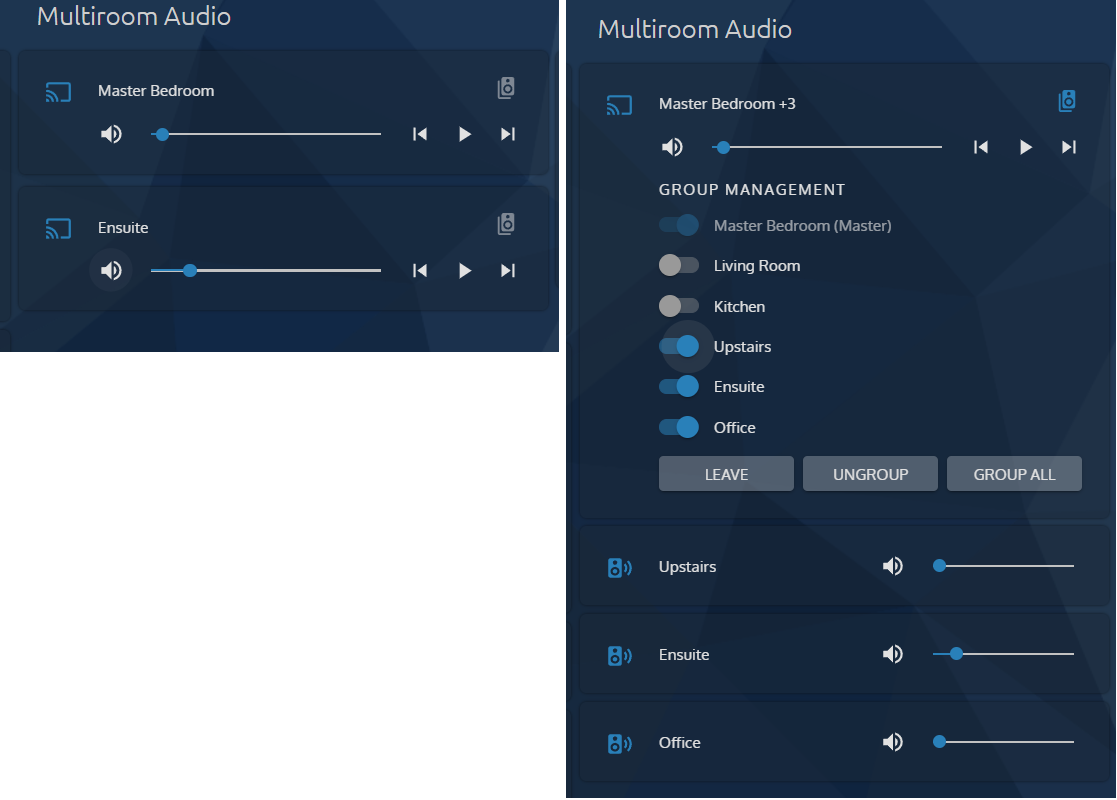
 marble jackal
(binary) sensors can have a device_class, which determines how they are treated by the frontend (Dashboard)
marble jackal
In the link I shared there are multiple device classes which use open/close
there is also opening
mighty ledge
yep
marble jackal
it will also have effect on the icon, if no icon is set
mighty ledge
if settings doesn't exist, then you have to do it in yaml
grand ravine
What if one wanted to use custom wording like made/unmade?
marble jackal
then you need to create a template sensor, or use something like https://github.com/thomasloven/lovelace-template-entity-row
grand ravine
okay, thanks. Appreciate your time
 ancient lynx
Hi all. Need some help with a notification template. I can never get my head around time-based stuff. I have a travel time sensor that has the commute time in minutes to a my kid's school that has the same pickup time every day. What is the best way to have a notification go off at the travel sensor's value before that fixed time? And maybe plus like a five minute buffer?
marble jackal
{% set pickup_time = '15:00' %}
{% set travel_time = states('sensor.travel_time') | float(30) %}
{% set buffer = 5 %}
{{ now() > today_at(pickup_time) - timedelta(minutes=travel_time + buffer) }}
The float filter on the second line defaults to 30 minutes now, in case the sensor is not available
ancient lynx
Super elegant. Thank you.
Haven't heard of the timedelta function. I'll have to look into it more. Appreciate it!
 neon laurel
is it possible to create a template color_temperature for a light that maps an rgbw light like this:
warmest temperature: 0,0,0,255 (only white channel on)
coldest temperature: 255,255,255,255 (all channels on)
dusty grailBOT
@rustic raft posted a code wall, it is moved here --> https://hastebin.com/okokidehad
 rustic raft
aw that was less than 15 lines
inner mesa
it was 19
rustic raft
less than 15 lines of yaml*
inner mesa
doesn't matter
rustic raft
noted.
inner mesa
and no, what you have there is not valid
you cannot generate a bunch of conditions from within a template
you can, however, do that with just a template
I suppose. I can't really figure out what you're trying to do
rustic raft
thanks, that's helpful. It's a blueprint that mirrors the value of one or more select entities into a single select entity. i'm trying to make something similar to a group with custom logic and helper entities.
if i wanted to create multiple yaml conditions from a templated for loop, would i be able to do that in a script?
inner mesa
no
I'm still not clear on exactly what you want out of those conditions
you want to know if a bunch of input_select entities are the same value?
rustic raft
" if either of these two entities state's === "active", then [do something]"
inner mesa
so that's easy
conditions are "and", BTW, so they won't be "or" unless you explicitly specify that
anyway:
{{ expand(['input_select.x', 'input_select.y'])|selectattr('state', 'eq', 'active')|list|length > 0 }}
or
{{ 'active' in expand(['input_select.x', 'input_select.y'])|map(attribute='state')|list }}
rustic raft
appreciated, i'll slap that in a template condition and it should do what i need it to
inner mesa
you can easily test it in -> Templates
lapis quarry
Petro I have let it run for a few days having added the changes you sugested to all my state_changed based automations but i still get the same kind of warnings: https://hastebin.com/onajeraqul.coffeescript
this is how one ot the automations looks like now, i have added it to pretty much every condition but does not seem to help: https://hastebin.com/ibuhuzojog.http
marble jackal
lapis quarry
Petro I have let it run for a few days having added the changes you sugested to ...
You are already referring to the object_id before you check if it is not none
new_state.domain == 'binary_sensor' and new_state.object_id.startswith('windowbr') and is_state(enable_window_switch, 'on')
               and new_state.status != 'unknown' and new_state.status != 'unavailable' and new_state.status is not none
               and new_state.entity_id is not none and new_state.object_id is not none
and is_state(window_auto_on, 'on') and 'tamper' not in new_state.object_id and not new_state.object_id.endswith('batt') ```you are using new_state.object_id.startswith('windowbr') on the first line, while your check new_state.object_id is not none is on line 3
acutally you are already using it here {%- set room_number = trigger.event.data.new_state.object_id[-3:-1] %}
lapis quarry
Mmmm I see
What would be the best aproach to avoid this?
I guess I need to wrap this condition in another one that does those checks first
would this work better?
    condition:
      condition: and
      conditions:
        - condition: template to make those check?
- condition: my template```no, you need to move it to the front of the template
but you also have a lot of redundant code in your templates
I did an attempt to improve it
btw, are you sure you mean new_state.status and not new_state.state ?
oh, and I just realized you create a variable with the old_state, but you never use it
lapis quarry
marble jackal
but you also have a lot of redundant code in your templates
good point
i do use old_state in other automations, just a copy paste thing, you are right can be removed in this particular one
i guess new_state.state would be right not status
but not sure other at this point lol
marble jackal
https://dpaste.org/Rqedd improved version with a typo fix, more consistant usage or quote-type, change of status to state and old_state removed
lapis quarry
thanks for the example im readind trought it 🙂
marble jackal
state would be the standard for the entity state, status would be something custom for these specific entities
lapis quarry
then its state
marble jackal
I'm also not sure why you are using format to concatenate the strings
{%- set window_auto_on_on = is_state('input_boolean.windowbr' ~ room_number ~ '_auto_on', 'on') %} this would work fine as well
without format()
lapis quarry
because it worked and did what i wanted 🤷♂️
its been 2.5 years since i wrote it, i have a bunch of automations using this style, chances are i did need it somwhere else and just copied it from that automation, as i say im not a programmer so this is quite out of my comfort zone ..
marble jackal
whoops, I left some code, in, this is the corrected correct version https://dpaste.org/jj1MC
marble jackal
lapis quarry
would this work better?
```yaml
condition:
condition: and
condit...
BTW, conditons are AND by default, no need to wrap it in an AND condition
Oh, and one other thing
If you add some checks to your trigger, it would't have to render all these templates on every state change
on all your conditions you check for state changes in the binary_sensor domain, why not add it to the trigger?
That might also remove the results which cause you to check on all those values being non none
lapis quarry
but the trigger is state_changed based, can i make it trigger only when a binary sensor changes state?
marble jackal
by adding it to the trigger
platform: event
event_type: state_changed
event_data:
  domain: binary_sensor
ok yes cool that makes a lot of sense
marble jackal
You could also add a lot of these variables you create again for each template to automation variables
so you won't have to recreate them in each template
trigger: []
conditions: []
action: []
variables:
  old_state: "{{}}"
  new_state: "{{}}"
correct me if im wrong but I dont think that could be done back in the day when i wrote this, variables werent introduced yet
marble jackal
might be, but no reason to not add that now
btw, your approach to do the checks in a separate condition would also remove more redundant code
as you now do these checks in every condition
lapis quarry
marble jackal
```yaml
trigger: []
conditions: []
action: []
variables:
old_state: "{{}}"
n...
ok, lets see step by step, to much info at once to process.. if i understand correctly you are saying if I just declare all the variables i need once in the begining of the action section I can delete all of them in the rest of the template and it will still work as before right?
like new state, old_state, room_number, windows_switch, etc, basicaly all the ones im constantly repeating in every section of the automation
and also that they will be local variables only persistent inside this automation
along these lines
trigger: []
conditions: []
action: []
variables:
  new_state: "{{trigger.event.data.new_state}}"
  old_state: "{{trigger.event.data.old_state}}"
  room_number: "{{trigger.event.data.new_state.object_id[-3:-1]}}"
  sensor_type: "{{trigger.event.data.new_state.object_id}}"
  window_switch: "{{"input_boolean.enable_windowbr" ~ '{}'.format(room_number)}}"
  window_auto_on: "{{is_state('input_boolean.windowbr' ~ room_number ~ '_auto_on', 'on')}}"
window_auto_off: "{{is_state('input_boolean.windowbr' ~ room_number ~ '_auto_on', 'off')}}"```and now i can use these variables without declaring them inside every condition, right?
marble jackal
correct, they are available in the entire automation, besides for the trigger
not sure why the bot compains about your yaml
the only thing is that you might need to check for the object_id not being none
lapis quarry
im testing it and the config checker also complains so the yaml must be wrong
marble jackal
so:
room_number: "{{ new_state.object_id[-3:-1] if new_state.object_id is non none else none }}"
in "/config/automations/Windows Automation Template.yaml", line 106, column 7
expected <block end>, but found '<scalar>'
in "/config/automations/Windows Automation Template.yaml", line 110, column 26
and you can use the variables you declared, so no need to use trigger.event.data.new_state if you already declared that to be new_state
marble jackal
lapis quarry
```Error loading /config/configuration.yaml: while parsing a block mapping
in "/...
no way to know what is wrong without the automation code
lapis quarry
ok let me dig a little
marble jackal
okay, I'm actually going to work now 🙂
lapis quarry
no worries, thanks men, ill try to implement all your sugestions see where it takes me 😉
its defenitly when i add the variable line that breaks the config checker:
    action:
    variables:
new_state: "{{ trigger.event.data.new_state }}"```I assume you are on a recent version of HA?
lapis quarry
latest release
marble jackal
and you have at least one action, or [] to define an empty list?
lapis quarry
all the same automation as before, but when I add this line after action adding the variable i get the error
marble jackal
it should be after all the actions
so
action:
  - some action
variables:
  some_variable:
not:
action:
variables:
  some_variable:
  - some action
at the end of the automation? I need the variables declared to use them in the the action
marble jackal
I know
that doesn't matter, it will load them after the trigger
the order in the dictionary is not relevant
but you can also put it before action
lapis quarry
ok that fixed it placing it after the first action
lapis quarry
marble jackal
but you can also put it before `action`
that worked also 😉
thanks for the help ill keep chiping at it, will be back for sure 👍
marble jackal
it will be available in the condition as well, so if you want the most logical order, but it right after the triggers
lapis quarry
yes that is what i did makes more sense
marble jackal
you can also define variables in the action sequence, but they won't be available in the conditions then:
action:
  - variables:
      some_variable:
  - service: some.service
i need them available in both as i have sequences and conditions that both use the same variables
marble jackal
yes I know, it was just FYI 🙂
lapis quarry
I need to correct my self, its actually its not working, i have tried to add the variables in a bunch of places in the automation and cant seem to add them without the config checker complaining, (i made a mistake before as I was editing wrong file as i have multiple windows open) i need to go now, working from home but wife just got back and need to take care of some stuff, will be back later see if we can implement this 🙏
lapis quarry
im back, been trying to figure stuff out one by one
lapis quarry
marble jackal
by adding it to the trigger
```yaml
platform: event
event_type: state_changed
ev...
    - platform: event
      event_type: state_changed
      event_data:
        domain:
          - binary_sensor
- input_boolean```would this also be correct to the state_change ongly triggers on only those 2 domains?
marble jackal
proably a combination
mighty ledge
shouldn't have to if he's using 2 triggers
marble jackal
I've seen the rest of the automation 😛
lapis quarry
its all posted here LOL
marble jackal
You could as well, just scroll up a bit
mighty ledge
that requires effort
marble jackal
Trying to remove a lot of redundant code from his automation
lapis quarry
i do have a specific question for you petro:
lapis quarry
marble jackal
btw, are you sure you mean `new_state.status` and not `new_state.state` ?
@mighty ledge im using your code it was written status, not sure if should be state or status
mighty ledge
what code?
lapis quarry
here
mighty ledge
I just copied what you originally had
if new_state is a state object, status isn't valid
lapis quarry
so state is right, just wanted to confirm
cool
TheFes, for adding the the variables I cant get them to pass the config checker no mattter what i have tried 😦
marble jackal
.share the entire automation
dusty grailBOT
Please use a code share site to share code or logs, for example:
- http://pastie.org/ (select YAML for the language)
- https://dpaste.org/ (select YAML for the language)
- https://paste.debian.net/ (you guessed it, select YAML as the language)
Please don't use Pastebin, since it can randomly add spaces to the main view. Please also don't share text as images since it makes it harder for people to help you. Remember that others may have colour blindness, impaired vision, etc.
Command '.share' was invoked by: TheFes
lapis quarry
anywhere i have tried to add them in the automation it doesnt pass
marble jackal
and the error code
lapis quarry
its prett much the same havent changed anything yet lol
just trying to add the variables (havent aplied any of your sugested changes yet) but han on i will share again
mighty ledge
I'm guessing you're a process engineer IRL?
lapis quarry
lapis quarry
mighty ledge
I'm guessing you're a process engineer IRL?
my self? i have no formal education background, work as drone developer test pilot
marble jackal
I don't see variables anywhere
I need to know what you are trying to see what is wrong
lapis quarry
yes they are not there, this is the working code, what im saying no matter where i add variables in any portion of the code it breaks
can you mention the line where i should add them i will test please?
mighty ledge
lapis quarry
my self? i have no formal education background, work as drone developer test pil...
I was just asking cause you're doing all this prep work without changes 🤣
lapis quarry
lol
marble jackal
  - alias: "Windows Automation"
    mode: parallel
    max: 30
    trigger:
    - platform: event
      event_type: state_changed
      event_data:
        domain: binary_sensor
    variables:
      variable_here: 1
      and_another_one:
    condition:
      your_code:
short story is basicaly i have a working supervised install at a rental house i have a few hundred miles away and im cloning it to a new HAOS install at my home and trying to fix all breaking changes and updates so i can just go over there and swap one for another, i cant afford to break the working install and its running on a raspian that hasnt been updated in 3 years expposed to internet with malware currently on it so i need to fix it
lapis quarry
marble jackal
```yaml
- alias: "Windows Automation"
mode: parallel
max: 30
t...
Error loading /config/configuration.yaml: while parsing a block mapping
in "/config/automations/Windows Automation Template.yaml", line 15, column 7
expected <block end>, but found '<scalar>'
in "/config/automations/Windows Automation Template.yaml", line 19, column 26
i get the same error no matter where i try to add the variables section in the code
i can share the full code but its the same as the first link
marble jackal
what is the code which generates this error
lapis quarry
adding
    variables:
      new_state: "{{trigger.event.data.new_state}}"
as per your intructions
if i comment it out it works
just to be clear and you can see all the code:
This works: https://dpaste.org/xP6fk
This gives the error: https://dpaste.org/4CCzG
only diference is adding the variables as you told me to do
mighty ledge
window_switch: "{{'input_boolean.enable_windowbr' ~ '{}'.format(room_number)}}"
uh, that's also poorly written
window_switch: input_boolean.enable_windowbr{{ room_number }}
TheFes also pointed it out allready thanks 🤣 🤣 🤣
mighty ledge
yes but that's what your error was coming from
in "/config/automations/Windows Automation Template.yaml", line 15, column 7
points directly to the error
it's hard to tell because you have those 2 commented out lines
which are not counted in the line number
 sudden parrot
Hi all, newbie here. One of my sensors is not loading on restart.
- sensor: - name: "^DJI Trending Color" statae: > {% if state_attr("sensor.yahoofinance_dji","trending")=='up' %} rgb(38,209,88) {% else %} rgb(255,69,58) {% endif %}
I even did a power set on the RPI3B
mighty ledge
sudden parrot
Hi all, newbie here. One of my sensors is not loading on restart.
` - sensor:
...
statae:
sudden parrot
😩 damn
lapis quarry
mighty ledge
which are not counted in the line number
yes i undertantand comented lines screw up the line count 😦 but on that note how are the columns interpreted in the errors, i mean when it says for instance line 15, column 7
i dont get the column thing
mighty ledge
number of characters
sudden parrot
mighty ledge
sometimes you just need new eyes on a problem
Thank you. very much
marble jackal
this looks suspicious

use single quotes inside the template, that is probably causing the error
mighty ledge
lapis quarry
i dont get the column thing
7 characters in is the start of your key 😉
you have 7 spaces
it's saying "that whole line is fucked", paraphrased
and it starts getting fucked at the 7th character
lapis quarry
window_switch: "{{ window_switch: input_boolean.enable_windowbr{{ room_number }}"```no
window_switch: input_boolean.enable_windowbr{{ room_number }}
or
window_switch: "input_boolean.enable_windowbr{{ room_number }}"
both are fine
marble jackal
or
window_switch: "{{ 'input_boolean.enable_windowbr' ~ room_number }}"
so with single quotes inside, and double quotes outside the template
mighty ledge
Personally I try to avoid string concatenation if I can
lapis quarry
mighty ledge
```
window_switch: input_boolean.enable_windowbr{{ room_number }}
```
I like this one, the less stuff in the line the better for me 😅
and yes now it passes config test 👍
let me restart and see
marble jackal
you can just reload automations
mighty ledge
If you want to avoid worrying about quoting, use multiline notation
lapis quarry
marble jackal
you can just reload automations
i have had multiple times i reload no errors and then i restart and i get errors, i rather restart to make sure
yep seems to work now 😄
so this other set line im using ```yaml
set enable_window_switch = "input_boolean.enable_windowbr" ~ '{}'.format(room_number)
would be writen like this correctly as variable:
enable_window_switch: input_boolean.enable_windowbr{{ room_number }}
ok cool
let me simplify this a little and then i can get back to your sugested code from before try to implement it 👍
marble jackal
something like this is also valid:
some_variable: switch.{{ other_variable }}_on
just to be clear and dont mess up this is the code you suggested: https://dpaste.org/jj1MC
its to replace this portion of the automation right?: https://dpaste.org/dgahz
marble jackal
well yes, but that was before you started using variables
because I still create the same variables in the template there
lapis quarry
yes
marble jackal
if you use variables, it can be shortened a lot
marble jackal
you can format code as jinja instead of yaml if you just post templates
same for dpaste (it's django/jinja there)
and you could the first part in a separate condition
lapis quarry
marble jackal
same for dpaste (it's django/jinja there)
updated the link
marble jackal
as it is the same for the others
- condition: template
  value_tempalte: >
    {{
      new_state.object_id is not none and new_state.entity_id is not none and new_state.state is not none
      and new_state.state not in ['unavailable', 'unknown'] and not new_state.object_id.endswith('batt')
      and 'tamper' not in new_state.object_id and (new_state.object_id.startswith('windowbr') or new_state.object_id.startswith('doorbr'))
    }}
- condition: template
  value_tempalte: >
    {{ enable_window_switch_on and (window_auto_on_on or window_auto_off_on) }}
not in is the same as !=?
lapis quarry
marble jackal
```yaml
- condition: template
value_tempalte: >
{{
new_state.object_...
I think this would not work because im using or as the condition, as i have 3 conditions one for bedroom, one for living rooms and one for kitchen
marble jackal
'banana' not in ['banana', 'apple'] would return false
'banana' != ['banana', 'apple'] wourld return true
so it's not the same
marble jackal
lapis quarry
I think this would not work because im using or as the condition, as i have 3 co...
you could use the same for the other rooms
the first condition is the same for all 3, if not, move the part which is not the same to the separate conditions
but most of it will be the same
lapis quarry
does this look like what you meant?
and now next in the action section i can also remove all the set = X and take advantage of the variables right
for your reference this was the old code: https://hastebin.com/ibuhuzojog.http
marble jackal
No, more like this: https://dpaste.org/rVauX
lapis quarry
sometimes i dont know if i hate you or envy you or love you or what I feel, you make it seem so easy 🤣 👍
yes makes sense a lot simpler
let see if i dont break anything 🙏
lapis quarry
how does this look? https://dpaste.org/im9AR
followed all your sugestions, removed all set functions as they are variables now, used your code as trigger condition, formated everything a little better and so far it seems nothing broke, at least HA restared fine 😅
i guess there is till a lot of redundant code but its a rabbit hole, i just wanted to get rid of the warnings in the logs 🤣
Actualy I need to thank you TheFes, im reading the code again now and I can allready see how i can implement all your sugestions further down the code to simplify things further in a similar way 🥰
 shell cypress
Hi all, I have a problem to setup the value template for a rest sensor correctly.
I get a list of values like this:
[{"datapoints":[[49.96519,"2022-09-16 13:55:23"],[49.9658,"2022-09-16 13:55:24"],.....
and I want to extract only the 49.96519 as value.
My current template looks like this:
value_template: "{{ (value_json.datapoints[1][0]) | round(2) }}"
but it just gives "undefined".
mighty ledge
lapis quarry
Actualy I need to thank you TheFes, im reading the code again now and I can allr...
you still got errors
many many errors
lapis quarry
im sure i have
that is why i was ashamed of sharing my code, but hey it worked
Petro im a highschool dropout im not an enginner and a lot less a programmer 🤣
but if you would kindly point them out maybe i can learn something
mighty ledge
I just have some questions
lapis quarry
it might, or might not, not all my binary sensors contain the room number as i have some unrelated to rooms
mighty ledge
so how do you know you have a valid room_number?
you have all these conditions in place, yet you don't know if you have a room number
also, is room number... a number
lapis quarry
if the sensor is named either doorbr, windowbr, doorlr, windowlr, doorkitchen or windowkitchen it contains the number i need
so for instance doorbr01a
mighty ledge
ok
lapis quarry
mighty ledge
so how do you know you have a valid room_number?
this is how, i name all my sensors like that and i know the placement of the number in the name
mighty ledge
ok
lapis quarry
the reason i did it this way is i wanted the template to be transparent, no matter if i have 1 sensor or 50
if i add a new sensor it should just work as long as the sensor has the right name
mighty ledge
yes I understand this
but you have 909840598304958 if statements that can be extinguished
just give me a moment
lapis quarry
sure take your time
 tepid onyx
that is one massive automation 😀
lapis quarry
🤣 its only one of a few same style 😅
mighty ledge
lapis quarry
🤣 its only one of a few same style 😅
what's the format of your binary sensors
same crap?
doorbr01 or windowbr01?