#tinyusb
1 messages · Page 3 of 1
 fallow birchBOT
 fallow birchBOT

Describe the PR
Due to a missed optimization in the compiler, code for constant address handling is being included in all builds. This change splits the code in different functions to avoid that.
Additional context
In some samd11 builds there's a difference of ~480 bytes in the final binary size.
Describe the PR
- Rename LUNA to Cynthion
- Add support for newer hardware revisions (>=0.6)
- Bootloader default size is now 2K
 fallow birchBOT

Describe the PR
Adding supported for hot plugging while using external power.
Additional context
fallow birchBOT

It looks fine to me (I think at the time, I only focused on bus-powered applications b/c I found it difficult to reliably put the MSP-EXP430F5529LP into self-powered mode.
I do have a few questions:
- Is
USBCTL &= ~FRSTE;andUSBCTL |= FRSTE;intended to prevent a race due to power transients causing a second reset while in the process of handling the first reset? What happens if the reset vector is entered while processing the current r...
fallow birchBOT
- As this was 6 months ago I had to wrack my brain to try and remember the justification. I believe this was a partial implementation of TI's software fix for the USB4 errata affecting the MSP430F5529. According to the linked document
FRSTEshould be cleared on receipt of the reset interrupt and set on receipt of the suspend, setup and endpoint 0 interrupts.
I'll be pushing a change later that correctly implements their...
fallow birchBOT

Describe the PR
console applications that expect "\r\n" as line ends will print lines ending only with "\n" in a star step fashion. They will not continue the next line at the beginning of the line, but at the current position.
Additional context
Most of the line ends in the log messages already were "\r\n" so I changed the few "\n" line ends to make it consistent.
fallow birchBOT

Sorry, just another addendum (doesn't change anything, but might prevent someone coming from Google drawing the wrong conclusions):
I might have mixed up bulk and isochronous in my testing. While preparing the 60fps MJPEG version for a beta release I stumbled upon a mistake in my defines, which mixed up both modes except for setting a smaller endpoint buffer size for the isochronous mode. I am not 100% sure, but I suspect that this mistake was already there when I did the bulk test before im...
fallow birchBOT

Current image with ncm_device_simple...
fallow birchBOT
Ack re: the errata; when I did this port originally, I don't recall looking at the errata. That's fine then (incl. your upcoming changes).
I'm using FreeRTOS for my project.
Ahhh I didn't know FreeRTOS ran on MSP430, tbh :D!
I want to wait and hear what @hathach has to say re: "using board_millis in portable/. #1987 is also relevant.
fallow birchBOT
Describe the PR
Rework RA family support
- Add RA to cmake (and make) build
- Add ra6m1 tested with usb fs
- Add ra6m5 only tested with led & switch. Trace ETM work well
- move ra bsp and generated files around
- move LTO check/enabled to family_support.cmake
- freeRTOS with cmake not working yet with RA since RA needs custom port (will update later)
fallow birchBOT
fallow birchBOT
I got my hand on ra6m5 ek, I am refactoring ra family https://github.com/hathach/tinyusb/pull/2137 and started to work on this PR. I have resolved the conflict and push update to this branch https://github.com/hathach/tinyusb/tree/renesas_ra_hs_rebased . Will try to get USBHS running with ra6m5 ek beforee making changes to the PR.
fallow birchBOT

Operating System
Linux
Board
stm32f746g-disco
Firmware
/device/video_capture
commit:433ffe2152ea3763fcd8d5b108f694d2c6cb826d
hs mode
What happened ?
ubuntu cannot enable UVC BULK transport
Don't support Linux?
Windows supports the display of images
How to reproduce ?
run demo
hs mode
CFG_TUD_VIDEO_STREAMING_EP_BUFSIZE 512
:~$ v4l2-ctl --device=/dev/video0 --set-fmt-video=width=640,height=480,pixelformat=YUYV --stream-mmap --stream-to=file.raw
VIDIOC_S...
:~$ v4l2-ctl --device=/dev/video0 --set-fmt-video=width=128,height=96,pixelformat=YUYV --stream-mmap --stream-to=file.raw
VIDIOC_STREAMON returned -1 (Cannot allocate memory)
fallow birchBOT
I tried to use bulk transport, but I couldn't get the video stream on Linux, and the picture could be produced normally in Windows
fallow birchBOT
Thank you very much for the PR and your patient, I am finally testing this out with actual hardware, ra6m5 ek first (then portenta C33 and Uno R4 Minima later on).
The PRs is great and both USB FS and HS work well. Though since there is a quite bit of changes I also want to make as well, mostly to refactor driver for better support multiple ports. I have pull and making more commits to this branch https://github.com/hathach/tinyusb/tree/renesas_ra_hs_rebased. There is a few more things bu...
do we need to enable NRDY interrupt, it seems not handled at all in the dcd_int_handler()
Could you please explain the value, I struggle to understand PIPEBUF. It seems that we need to select and configure pipe (PIPESEL, PIPECFG) first, before allocating memory with PIPEBUF. I am ok with not optimal value for now.
probably not needed if VBUS pin sensing is used. Do you have other boards without vbus pin ?
fallow birchBOT
I tried to use bulk transport, but I couldn't get the video stream on Linux, and the picture could be produced normally in Windows
You will have to give more details like dmesg after connecting, software used to access the stream, the log of this software and ideally some code of yours. I have developed my project using TinyUSB's UVC primarily under Linux and had no problems with bulk transfer.
fallow birchBOT
thank you @Staacks for more update, glad you get it all working. GB Inteceptor is a great project.
@rrrrrrobot Let keep the problem within your own issue, since you already opened one.
fallow birchBOT

Please let me know why this change needed.
I am concerned to fit for RX running as big-endian.
fallow birchBOT
@hathach I see that the non-os builds are failing on osal_task_delay. Can you chime in with your thoughts on the current discussion?
fallow birchBOT

There were typos in symlinks target names resulting in following warrning on checkout (at least in Mynewt newt tool):
- Warning: stat mynewt/repos/tinyusb/docs/contributing/code_of_conduct.rst: no such file or directory
- Warning: stat mynewt/repos/tinyusb/docs/info/contributors.rst: no such file or directory
Describe the PR
A clear and concise description of what this PR solve.
Additional context
If applicable, add any other context about the PR and/or screenshots here.
fallow birchBOT
It seems to be stripped by github preview but those symlinks have garbage suffixes:
[janc@ix tinyusb]$ ls -l docs/contributing/code_of_conduct.rst docs/info/contributors.rst
lrwxrwxrwx. 1 janc janc 26 07-10 16:21 docs/contributing/code_of_conduct.rst -> '../../CODE_OF_CONDUCT.rst'$'\n'
lrwxrwxrwx. 1 janc janc 23 07-10 16:21 docs/info/contributors.rst -> '../../CONTRIBUTORS.rst'$'\n'
@Staacks Thank you very much,issue at #2139
Device: ID cafe:4020 TinyUSB TinyUSB Device
Couldn't open device, some information will be missing
Device Descriptor:
bLength 18
bDescriptorType 1
bcdUSB 2.00
bDeviceClass 239 Miscellaneous Device
bDeviceSubClass 2
bDeviceProtocol 1 Interface Association
bMaxPacketSize0 64
idVendor 0xcafe
idProduct 0x4020
bcdDevice 1.00
iManufacturer 1 TinyUSB
i...
fallow birchBOT
ah, great reminder. I am updating this PR with this branch with more changes https://github.com/hathach/tinyusb/tree/renesas_ra_hs_rebased
I will try to double check big-endian as well as try to see if I could compile with big-endian mode for testing the changes.
@clhenry Just to be clear, @hathach may be very busy, and while I am a collaborator, I mostly focus on backend stuff. I want to wait for @hathach to be less busy so he can give guidance on "sometimes no OS needs a delay" problem.
You're already expected to instantiate an interrupt handler yourself and place a call into tud_int_handler in your application. I'm not against adding a function like e.g. tud_delay t...
fallow birchBOT
Sorry, I did not see that all the details are already in this issue when I asked for them in #1985.
So, I just checked out the latest master branch and built the video_capture example (in isochronous mode at first). Since I don't have an STM32 I tested it on a Pi Pico and ran your command:
    dicon@camelot:~$ v4l2-ctl --device=/dev/video4 --set-fmt-video=width=128,height=96,pixelformat=YUYV --stream-mmap --stream-to=file.raw
    <<<<<< 7.35 fps, dropped buffers: 3
    <<<...
Thank you so much for the split test
I pull up the latest code, commit: f1e006d09bd32088ab421d0b519eb89c531eda4e
Using full speed
wMaxPacketSize set to 64 B (default)
git diff:
// video streaming endpoint size
-#define CFG_TUD_VIDEO_STREAMING_EP_BUFSIZE 256
+#define CFG_TUD_VIDEO_STREAMING_EP_BUFSIZE 64
// use bulk endpoint for streaming interface
-#define CFG_TUD_VIDEO_STREAMING_BULK 0
+#define CFG_TUD_VIDEO_STREAMING_BULK 1
make cmd:
make BOARD=stm32f746disco DEBUG=1 LO...
fallow birchBOT
sorry, I was a bit busy atm, will check this out whenever I could. Thank you for your patient.
fallow birchBOT
Really strange. You Pi Pico results and comparing those should be interesting.
There is one thing that I am wondering about, though: If I am not mistaken, CFG_TUD_VIDEO_STREAMING_EP_BUFSIZE only has an impact on internal buffering in the examples, because the actual endpoint size is hard-coded in the example:
https://github.com/hathach/tinyusb/blob/f1e006d09bd32088ab421d0b519eb89c531eda4e/examples/device/video_capture/src/usb_descriptors.c#L120
and
https://github.com/hathach/tinyusb/...

@earlephilhower May I know what's blocking this merge?
fallow birchBOT

@doge-gif this isn't my repo or PR, so you'll need to ask @hathach . 😄 I've implemented it in the arduino-pico core already and will undo my private hacks once this PR merges and the Raspberry Pi team updates their SDK to include it.
fallow birchBOT
Sorry, maybe I didn't make it clear. I used stm32f746disco, USB IP is dwc2, and the purchased Pi Pico has not yet reached.
fallow birchBOT
No, sorry, I understood that. I meant that I am curious if the Pi Pico will work for you. And if it does, what would be the difference to the STM32 in Full Speed mode.
The other thing I was wondering about is that if I read the code correctly, the example should have set a 64B endpoint unless you changed lines 120 and 130. (Still, even if this was a problem, it should also be a problem in Windows.)
fallow birchBOT
I didn't change lines 120 and 130, as you can see from my descriptors (lsusb_bulk_uvc.txt), I actually needed to use the high speed mode of DWC2, which is the IP most common in STM32
Ah, ok. I really wish the Pi Pico could do High Speed...
Perhaps there are some compatibility issues with the dwc2 driver
As far as the current phenomenon is concerned, speed is not the most important, want to find out why DWC2 bulk mode does not produce images in Linux
fallow birchBOT

When buffer alignment isn't given for TUH, it defaults to 4. The iMX needs 32 to match the cache and is set using the universal setting in CircuitPython. Change the default to fall back to the universal setting before being 4.
If the alignment is 4, we risk invalidating addresses outside the buffer that haven't been written back.
fallow birchBOT

Related area
Teensy 4.1
Hardware specification
Imxrt
Is your feature request related to a problem?
Example of usb host high speed support for one wifi dongle..
Thanks
Describe the solution you'd like
Example code with reference
I have checked existing issues, dicussion and documentation
- [X] I confirm I have checked existing issues, dicussion and documentation.
fallow birchBOT
After stm32f746disco and pico pi tests, the same configuration parameters, the same Linux system, stm32f746disco can not open normally in Linux, pico pi can, it is likely that there is a compatibility problem with the dwc2 IP driver.
fallow birchBOT
this is host rndis, unfortunately, I don't have an plan/time to add support this. PR is welcome
fallow birchBOT
I actually needed to use the high speed mode of DWC2, which is the IP most common in STM32
Unfortunately, current UVC implementation only supports Full Speed but High Speed.
Packet format of UVC is difference between FS and HS. Current implementation makes packets for FS format.
If I had a HS device, I would try to add support for HS.
fallow birchBOT
Good catch. DCD has the same typo.
I actually needed to use the high speed mode of DWC2, which is the IP most common in STM32
Unfortunately, current UVC implementation only supports Full Speed but High Speed.
Packet format of UVC is difference between FS and HS. Current implementation makes packets for FS format. If I had a HS device, I would try to add support for HS.
Thank you very much for your support. After two different USB IP tests, it is determined that the stm32 UVC bulk transmission problem has n...
fallow birchBOT
@kkitayam yeah, I did fixed this with dcd with pending branch here https://github.com/hathach/tinyusb/blob/renesas_ra_hs_rebased/src/portable/renesas/rusb2/dcd_rusb2.c#L117 . Will make an PR soon, it is based on #2052 with more commits.
fallow birchBOT
[hathach/tinyusb] New branch created: imxrt-bsp
Describe the PR
make use of mcuxpresso clock config to correctly configure clock for imxrt board e.g previously running at only 27mhz instead of 500mhz on rt1011)
fallow birchBOT
fallow birchBOT
[hathach/tinyusb] New branch created: fix-etm-trace-h7
Describe the PR
fix trace clock div for ETM with h743 eval to run with normal 400Mhz cpu
fallow birchBOT
Describe the PR
This PR makes "flash-jlink" target work on Windows command prompt.
Because "echo" command of Windows command prompt can't handle line breaks in a variable, some errors occur when "flash-jlink" target running.

- include_guard requires GLOBAL as family.cmake is included in multiple non child places
- the following recently rp2040 added check is sueprfluous (
family_configure_host_exampleon rp2040 should do this already), and breaks if pico_pio_usb is not avaialble, so i have removed the rp2040 checkfamily_configure_host_example(${PROJECT} noos) # Add pico-pio-usb for rp2040 since user can choose to run on bit-banging host if(FAMILY STREQUAL "rp2040") family_add_pico_pio_us...
fallow birchBOT
oops, that is a pain, I was trying to clean up the script, but look like it isn't working out :D
oops, sorry, I am still getting used to cmake. Though you are right, I will try to include building a couple of usb examples from pico-examples into the ci as well.
fallow birchBOT
previously users of TinyUSB (e.g. pico-examples) would have to decide this for themselves. This function couples the check closer with the actual version of Pico-PIO-USB used (since TinyUSB picks)
fallow birchBOT
still reviewing and testing this, already complete with dcd test/update. Will start to test apply changes to hcd as well soon, though I am switched to other work atm (be back as soon as I could). Meanwhile @facchinm if you have some time, please comment on the above questions.
 robust walrus
@jolly scroll nice! that sounds really interesting!
 jolly scroll
let me make a thread, so i dont spam this up too much...
ah, no thread perms
] lan_run 0
] irq: raw 0x25000039 respecting mask 0x21000000
980.220600 [DWC2:dwc_check_interrupt]: masked HPRT: 0x8
980.234152 [DWC2:dwc_check_interrupt]: Port Enable/Disable Change
USB_HPRT:        0x1008
980.258991 [DWC2:dwc_check_interrupt]: port disabled
USB_HPRT:        0x1000
980.282697 [DWC2:dwc_check_interrupt]: Disconnect Detected Interrupt
980.296322 [DWC2:dwc_irq]: irq time: 88544

] irq: raw 0x4000035 respecting mask 0x4
981.219814 [DWC2:dwc_check_interrupt]: USB_GOTGINT: 0x40000
981.233683 [DWC2:dwc_check_interrupt]: A-Device Timeout Change
981.246713 [DWC2:dwc_irq]: irq time: 38933
so here for example, i pulled the reset pin of the onboard hub/nic low, and it dropped off the bus
robust walrus
it's all good
jolly scroll
] lan_run 1
] irq: raw 0x5000031 respecting mask 0x1000000
1062.745095 [DWC2:dwc_check_interrupt]: masked HPRT: 0x2
1062.758677 [DWC2:dwc_check_interrupt]: Port Connect Detected
1062.771711 [DWC2:dwc_check_interrupt]: a device is connected
1062.786042 [DWC2:dwc_irq]: irq time: 53376

]
]
i then pull reset high, and now the device connected irq fires
]
] dwc_root_reset
] irq: raw 0x5000031 respecting mask 0x1000000
1088.602327 [DWC2:dwc_check_interrupt]: masked HPRT: 0xc
1088.615952 [DWC2:dwc_check_interrupt]: Port Enable/Disable Change
USB_HPRT:        0x100d
1088.641013 [DWC2:dwc_check_interrupt]: port enabled
USB_HPRT:        0x1005
1088.664636 [DWC2:dwc_check_interrupt]: a device is connected
1088.677651 [DWC2:dwc_irq]: irq time: 87775
if i then assert the usb reset signal for 50ms, the port transitions to the enabled state
] addr0_get
...
  bLength: 128
  bDescriptorType: 0
  bcdUSB: 0x5
  class: 18 1
  protocol: 0
  max-packet-size: 2
oh, it seems to be totally corrupt on doing it a second time
  bLength: 18
  bDescriptorType: 1
  bcdUSB: 0x200
  class: 9 0
  protocol: 2
  max-packet-size: 64
if i reboot, and repeat, i now get a valid looking usb hub device descriptor
robust walrus
are you able to capture the usb bus? are you managing any caches between usb memory and cpu memory?
jolly scroll
i'm on a pi2, so the usb bus is just a diff-pair between the SoC and the onboard usb hub
so capturing it would be difficult
dwc2 dma mode doesnt work currently, so everything has to be done thru FIFO's by the cpu
and when running on the VPU, the cache control is managed by bit 30/31 of the addr
currently, everything is going thru the C-alias, raw uncached ram
robust walrus
(I've been wanting to add host support for the pcie connected xhci chip on the rpi sbcs)
jolly scroll
the pi4/pi400 has 2 xhci controllers
robust walrus
its the pi400 in particular I want since I just added usb host support to circuitpython
jolly scroll
the bcm2711 SoC, has both the old dwc2 controller, and a broadcom xhci
both dwc2 and xhci, share a single phy, and only one must be enabled at once
that phy is wired to the usb-c port, so it can only do usb1/usb2
otg_mode=1 routes the PHY to the xhci, and adds it to DT automatically
otg_mode=0 (the default) and the usual dwc2 overlays (like on the pi0) routes it to the dwc, and can do host or device
in addition to all of that, you have the vl805 pcie<->usb xhci controller, for the main 3/4 usb-a ports
jolly scroll
robust walrus
its the pi400 in particular I want since I just added usb host support to circui...
for the pi400, there is a holket MCU with write-once memory, that scans the keyboard matrix, and turns it into a USB HID device, taking up 1 port of the vl805
robust walrus
the pi400's keyboard is connected to the vl805 right?
jolly scroll
yep
robust walrus
👍 sorry to sidetrack you
jolly scroll
the holtek still scans the keyboard while "off"
and deals with the mosfet that turns the main 5v rail on/off
jolly scroll
jolly scroll
oh, it seems to be totally corrupt on doing it a second time
this makes me wonder, where is the rx irq...
there it is, bit 4 of GINTSTS, RxFIFO Non-Empty (RxFLvl)
irq: raw 0x4000039 respecting mask 0x10
 19.347122 [DWC2:dwc_irq]: irq time: 12106
irq: raw 0x4000039 respecting mask 0x10
 19.371715 [DWC2:dwc_irq]: irq time: 12149
yep, when i control-in EP0, it gets stuck in the irq handler, need to ack it and receive data
robust walrus
so you figured it out?
jolly scroll
ive at least found the rx irq
i suspect there is a packet i didnt pop right
and with the rx irq wired up, i can detect them immediately and pop right away
211   if (interrupt_status & BIT(4)) {
212     ack |= BIT(4);
213     logf("RX irq\n");
214   }
at first, i just ack it, so its not stuck in the irq handler
(and print, so i know)
ah, fail
bit 4 is read-only, you cant clear the irq like normal
it clears on its own, once you read the fifo fully
so, i must read the fifo in the irq handler...
robust walrus
generally tinyusb reads state and queues it into its own fifo in the irq handler so that should be fine
jolly scroll
 35.198403 [DWC2:dwc_check_interrupt]: RX irq
USB_GRXSTSP:     0x50080
  channel: 0
  byte count: 8
  PID: 2
  packet status: 2
so now, i need to pop 8 bytes from the hw FIFO, move it to a software FIFO on channel 0, and then wake the thread
jolly scroll
robust walrus
generally tinyusb reads state and queues it into its own fifo in the irq handler...
currently, its a 100% custom stack, but i plan to switch to tinyusb at some point
hmmm, what was the aligned malloc func again...
ah, memalign()
so, i memalign() an 8 byte buffer for the device-descriptor, 32bit aligned
because i'm popping 32bits from the dwc fifo, and just writing them to ram, and 32bit writes must be 32bit aligned
i pass that buffer to control_in(), which stores the buffer in a channel-0 struct
jolly scroll
jolly scroll
```
35.198403 [DWC2:dwc_check_interrupt]: RX irq
USB_GRXSTSP: 0x50080
cha...
and this irq handler, then has to fetch channel 0 from the state
pop 8 bytes from the fifo, and write them to channel 0's buffer
jolly scroll
@robust walrus for some more context, every model of rpi has a VPU processor in it
the VPU is a dual-core processor, with 32 x 32bit scalar registers
and 64x64x8bit vector registers
its mostly RISC in design, but the vector opcodes are fairly complex, and the instructions are variable length
pi2 and up runs the VPU at 500mhz
pi0/pi1 i think run the VPU at 250mhz
and functionally, the arm is more of an optional compute co-processor hanging off the side of the SoC design
robust walrus
How deep is the fifo from dwc?
I know the vpu starts first. That was convenient for me with getting cp going bare metal
jolly scroll
there is a large bank of internal ram on the dwc
robust walrus
So it should be able to hold any low level packet
jolly scroll
in device mode, that manages 17 fifo's, 16 IN fifo's (one per ep) and a single shared OUT fifo (all host->device traffic)
so you can queue up traffic on any IN endpoint, and the dwc can answer anything the host asks for
and the dwc can buffer OUT's from the host
in host mode, it only has 3 fifo's
the rx fifo, which is now the IN direction
and the periodic and non-periodic TX fifo's
so the same ram, now gets split across fewer fifo's
GRXFSIZ tells you the size of the rx fifo...
USB_GRXFSIZ: 0x306
which is 0x306 x 32bit
3096 bytes
USB_GNPTXFSIZ:   0x1000306
USB_GNPTXSTS:    0x80100
this is the non-periodic, and periodic tx fifo's, the lower 16bits is the starting addr within the ram
the upper 16bits is the depth, x 32bit
so periodic is 32 bytes??
and non-periodic is 1024 bytes
ah no, USB_GNPTXSTS is the status
HPTXFSIZ is periodic size
USB_HPTXFSIZ: 0x2000406
2048 bytes
jolly scroll
robust walrus
How deep is the fifo from dwc?
so i can see, that the rx fifo starts at 0, and is 0x306 * 32bit in size
the non-periodic fifo starts at 0x306, and is 0x100 * 32bit in size
and the periodic fifo starts at 0x406, and is 0x200 * 32bit in size
these registers are also RW, so you can re-allocate space, based on your needs
and that covers ~6168 bytes of FIFO space
oh, right, and something funky the dwc does
the "push/pop" addr for each fifo, is a whole 4kb wide
so you can use a 32bit load/store based memcpy, and not care about it incrementing the fifo addr
or use external dma bursts, and not care about the addr incrementing
and i think in host mode, reading anything in that whole 4kb*16 block, counts as a POP against the single rx fifo
there is also a 128kb addr range, to let you just read/write the fifo ram directly
bypassing the push/pop regs
its not clear how much ram is actually implemented
jolly scroll
jolly scroll
and this irq handler, then has to fetch channel 0 from the state
pop 8 bytes fro...
distraction (outside here) cleared, implemented this, testing...
  bLength: 0
  bDescriptorType: 112
  bcdUSB: 0x5f75
  class: 118 112
  protocol: 117
  max-packet-size: 95
that aint right!
 37.038617 [DWC2:dwc_check_interrupt]: RX irq
USB_GRXSTSP:     0x50080
  channel: 0
  byte count: 8
  PID: 2
  packet status: 2
...
 37.232129 [DWC2:dwc_check_interrupt]: RX irq
USB_GRXSTSP:     0x70080
  channel: 0
  byte count: 8
  PID: 2
  packet status: 3
status 2, in packet received
status 3, in transfer completed
i wasnt checking that, and was just popping data twice
had similar problems with device mode before
still corrupt, but all 0's now
and i think it wants me to pop on status 2, its corrupt if i pop on 3
 16.173940 [DWC2:dwc_check_interrupt]: RX irq
USB_GRXSTSP:     0x50080
  channel: 0
  byte count: 8
  PID: 2
  packet status: 2
IN complete, popping
popped 0x2000112 0xc4110150 0
popped 0x40020009 0xc4110154 4
  bLength: 0
  bDescriptorType: 1
  bcdUSB: 0x200
  class: 9 0
  protocol: 2
  max-packet-size: 64
the values it popped look right
but the values it then printf'd are corrupt, the length is wrong
because i printf'd the wrong buffer
robust walrus
jolly scroll
because i printf'd the wrong buffer
that'd do it
jolly scroll
  bLength: 18
  bDescriptorType: 1
  bcdUSB: 0x200
  class: 9 0
  protocol: 2
  max-packet-size: 64
i now get this same reply, every time i fire a control-in to get the dev-descriptor!
progress!
robust walrus
you are very much in the "hcd" layer of tinyusb
jolly scroll
and i havent even added tinyusb to the project yet!
but i now have a working control-in function, that i can just point tinyusb at
along with a decent handling of most of the irq events
is it reasonable to assume, that the IN size will always be wLength bytes, when doing control-in?
robust walrus
I think so
but I haven't really implemented any low level stuff myself. just debugged in there
jolly scroll
the dwc2 controller is also nasty, in many areas
for example, there are a lot of race-proof interrupt registers, where bits will set themselves, and you must write 1 to clear it
so you can just write BIT(4) to ack event 4, and not risk clearing other events
except, there are 2 or 3 control bits in the same register, that control things like port power
so if you just blindly write BIT(4) to the register, you turn power off, and kill the port!
robust walrus
oops!
jolly scroll
and if you blindly |= BIT(4), you ack interrupts you where not aware of
also, the main device vs host mode flag, is in bit 0 of the interrupt status register
but it doesnt trigger an irq
in device mode, you program a packet-count, and byte-count for an endpoint, and then it does the transfers for you
except surprise, EP0 only supports a 1 bit packet-count
if your EP0 data doesnt fit in 1 packet, you must want for the completion irq, and queue the next one in software
and some datasheets dont mention this
so you are left going in circles for a week 😛
also, if the integrated PHY is mis-configured, then usb will 99% work, but silently corrupt all tcp packets
@robust walrus how bald do you think youll be, by the end of such a thing? 😄
jolly scroll
yeah, i go months without touching this, then get the urge to work on it
so, now to turn off some irq debug logging
i get nearly an entire screen full of logs, for a single control-in
]
] addr0_get
USB_GNPTXSTS:    0x80100
USB_GNPTXSTS:    0x10700fe
 28.257143 [DWC2:control_in]: SETUP done
 28.268389 [DWC2:dwc_check_interrupt]: RX irq
USB_GRXSTSP:     0x50080
  channel: 0
  byte count: 8
  PID: 2
  packet status: 2
IN complete, popping
popped 0x2000112 0xc4110130 0
popped 0x40020009 0xc4110134 4
 28.366786 [DWC2:dwc_irq]: irq time: 98398
 28.379136 [DWC2:dwc_check_interrupt]: RX irq
USB_GRXSTSP:     0x70080
  channel: 0
  byte count: 8
  PID: 2
  packet status: 3
 28.443297 [DWC2:dwc_irq]: irq time: 64162
 28.455761 [DWC2:control_in]: IN done
  bLength: 18
  bDescriptorType: 1
  bcdUSB: 0x200
  class: 9 0
  protocol: 2
  max-packet-size: 64
 28.629317 [DWC2:dwc_addr0_get_desc]: 100ms later
dumping channel 0
  HCCHAR0: 0x108008
  HCSPLT0: 0x0
  HCINT0: 0x0
  HCINTMSK0: 0x7ff
  HCTSIZ0: 0x80000000
  HCDMA0: 0xc4189a88
]
thats better, but can still be shrunk more
@robust walrus a control-in, involves a setup token, a data token with 8 bytes
an in token from the host, and a data token with the descriptor from the device
and then an ack, a 0 length packet, is that in or out?
robust walrus
I don't remember off the top of my head. I'd check tinyusb 🙂
jolly scroll
https://beyondlogic.org/usbnutshell/usb4.shtml#Control i think says that its always the reverse of the data stage
so control-in ack's with out
and control-out acks with in
and distractions are back!
also, right now, all of these actions are manual, via a command line
ideally, things like the usb reset, and get-descriptor, should be event driven
jolly scroll
 14.579706 [DWC2:control_in]: IN done
channel 0 wants attention
dumping channel 0
  HCCHAR0: 0x100008
  HCSPLT0: 0x0
  HCINT0: 0x21
    xfer complete
    ack
  HCINTMSK0: 0x7ff
  HCTSIZ0: 0x20000000
  HCDMA0: 0xc4189a88
 14.695551 [DWC2:dwc_irq]: irq time: 104640
 14.590909 [DWC2:control_in]: 0-length OUT done
  bLength: 18
  bDescriptorType: 1
  bcdUSB: 0x200
  class: 9 0
  protocol: 2
  max-packet-size: 64
the 0-length data-out, immediately gets an ack and xfer-complete irq
so, i have control-in fully implemented, and in theory, i can just switch to set-addr
@robust walrus oh, and you mentioned circuitpython on the pi400, thats baremetal right? are you interested in gfx accel?
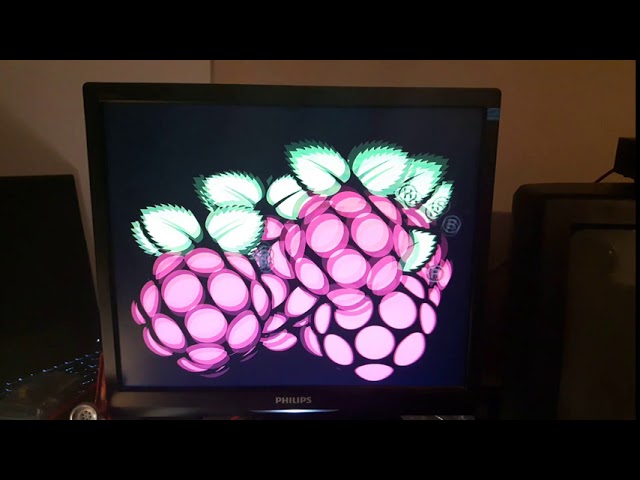
i can do this with 0% cpu usage, and only writing about 400 bytes/frame
robust walrus
jolly scroll
<@252717193496756235> oh, and you mentioned circuitpython on the pi400, thats ba...
Yup! It’d be fun to tie it into circuit pythons displayio. It’ll be very cool with usb so it is standalone
jolly scroll
at the most basic level, the 2d core on the rpi is basically a sprite-only gpu
you give it a list of sprites
for each sprite, you give:
- the pixel format *rgb/yuv, and bit depth
- the screen XY
- the source wh
- the dest wh (if scaling)
- the addr of the image data in ram (1 to 3 pointers, depending on if its planar)
- the stride (1 to 3 again)
- some misc flags, like alpha, and mirroring
write that entire list to a dedicated chunk of memory
and then write the index for the start, to a main control reg
if you do the control-reg mid-frame, youll get a tear, but thats it
if you modify part of the control-list thats in use, it can malfunction harder, and spit out 1 or 2 junk frames
a vsync irq is available, so you can modify the main control-reg during the blanking period
in my current driver, i do all of the list updating out of irq
and write the index to a global var
the vsync irq handler then copies it to the control reg, on every vsync
and the 2d core can do this for up to 3 displays at once, depending on scene complexity
each display has its own control reg, and they share the display-list memory
https://github.com/librerpi/rpi-open-firmware/blob/master/docs/pixelvalve.txt
            VC4           VC6
0x7e206000  pv0(DSI0/DPI) pv0(DSI0/DPI)
0x7e207000  pv1(DSI1/SMI) pv1(DSI1/SMI)
0x7e20a000                pv2(hdmi0)
0x7e216000                pv4(hdmi1)
0x7e807000  pv2(HDMI/VEC)
0x7ec12000                pv3(vec)
for the pi0-pi3 lineup, there are only 3 pixel valves, each hard-wired to a channel on the 2d core
and each hard-wired to 2 output ports, only one from each PV can be active
SMI isnt documented, DSI0 isnt routed to pins
so your only choice is DPI, DSI1, and then HDMI or VEC(ntsc/pal)
bcm2711 is more complex, it has 5 PV's, but only 3 can be in use at once
i think next, i should take my control-in function, and break it up into smaller pieces
in, out, setup
then i can reuse the in/out code, for regular in/out stuff
static void control_in(dwc_host_state_t *state, int channel, int addr, int endpoint, setupData *setup, uint32_t *buffer) {
  dwc_send_setup(state, channel, addr, endpoint, setup);

  dwc_host_in(state, channel, addr, endpoint, buffer, setup->wLength);

  dwc_host_out(state, channel, addr, endpoint, NULL, 0);
}
@robust walrus does this look much better?
now i just need to flesh things out more, multi-packet transfers, and it should be ready for tinyusb
oh, and split transactions are entirely unhandled
and all of the state to keep track of max packet sizes and what device is at each addr
robust walrus
jolly scroll
<@252717193496756235> does this look much better?
I'd suggest looking at the existing tinyusb hcd API: https://github.com/hathach/tinyusb/blob/master/src/host/hcd.h

GitHub
An open source cross-platform USB stack for embedded system - hathach/tinyusb
jolly scroll
robust walrus
I'd suggest looking at the existing tinyusb hcd API: https://github.com/hathach/...
ah:
// Submit a transfer, when complete hcd_event_xfer_complete() must be invoked
bool hcd_edpt_xfer(uint8_t rhport, uint8_t dev_addr, uint8_t ep_addr, uint8_t * buffer, uint16_t buflen);

// Submit a special transfer to send 8-byte Setup Packet, when complete hcd_event_xfer_complete() must be invoked
bool hcd_setup_send(uint8_t rhport, uint8_t dev_addr, uint8_t const setup_packet[8]);
looks like i could just map hcd_setup_send to my dwc_send_setup
and then hcd_edpt_xfer to either dwc_host_in or dwc_host_out
then i just have to handle the callbacks, and the basic attach/detatch events?
and thats basically 80-90% of it?
but then how are split transactions handled? i would need to know what speed a device is, and where in the path the speed drops
hcd_devtree_info_t seems to have the relevant info
extern void hcd_devtree_get_info(uint8_t dev_addr, hcd_devtree_info_t* devtree_info);
so, i could maybe cache that when hcd_edpt_open() is called, and also reserve a channel in the dwc
if i do reserve a channel, then i'm limited to 16 endpoints open at once
jolly scroll
jolly scroll
ah:
```c
// Submit a transfer, when complete hcd_event_xfer_complete() must be i...
if i dont reserve a channel, then i need to dynamically claim them, every time one of these 2 is called
that all looks fairly simple, and easy to tie in to what ive already got
i'll have to give that a stab tomorrow
jolly scroll
tossed src/tusb.c into my build, and set CFG_TUSB_MCU=OPT_MCU_BCM2835
and it at least compiles and links
but nothing uses it, so linker gc just deleted it all
 53 #if CFG_TUH_ENABLED && defined(TUH_OPT_RHPORT)
 54   // init host stack CFG_TUSB_RHPORTx_MODE must be defined
 55   TU_ASSERT( tuh_init(TUH_OPT_RHPORT) );
 56 #endif
but i think TUH_OPT_RHPORT is missing
jolly scroll
@robust walrus getting into tusb_os_custom.h now, and having some confusing compile errors
robust walrus
jolly scroll
<@252717193496756235> getting into `tusb_os_custom.h` now, and having some conf...
like what?
jolly scroll
typedef struct mutex {
    uint32_t magic;
    thread_t *holder;
    int count;
    wait_queue_t wait;
} mutex_t;
this is the mutex i have
void mutex_init(mutex_t *);
void mutex_destroy(mutex_t *);
status_t mutex_acquire_timeout(mutex_t *, lk_time_t); /* try to acquire the mutex with a timeout value */
status_t mutex_release(mutex_t *);
and all functions act on a pointer to it
typedef mutex_t* osal_mutex_t; is this then the right typedef?
jolly scroll
lib/tinyusb/upstream/src/osal/osal.h:50:33: error: unknown type name ‘osal_mutex_def_t’
   #define OSAL_MUTEX_DEF(_name) osal_mutex_def_t _name
and there seems to be 2 types for mutex
typedef struct mutex osal_mutex_def_t, *osal_mutex_t
reading the pico one as an example, there is a , in there that ive not seen before
i'm guessing osal_mutex_def_t is the non-pointer version?
that seems to have made that layer happy
lib/tinyusb/upstream/src/host/usbh.c:41:33: error: expected ‘)’ before numeric constant
 #define CFG_TUH_TASK_QUEUE_SZ   16
                                 ^
lib/tinyusb/upstream/src/host/usbh.c:222:42: note: in expansion of macro ‘CFG_TUH_TASK_QUEUE_SZ’
 OSAL_QUEUE_DEF(usbh_int_set, _usbh_qdef, CFG_TUH_TASK_QUEUE_SZ, hcd_event_t);
                                          ^~~~~~~~~~~~~~~~~~~~~
lib/tinyusb/upstream/src/host/usbh.c:223:8: error: unknown type name ‘osal_queue_t’
 static osal_queue_t _usbh_q;
now it seems to want a queue
@robust walrus should the queue be a stream of bytes, or a stream of pointers?
robust walrus
I think its bytes
jolly scroll
ah, rewrite time then
ah, but it seems tinyusb provides the fifo for me
i just need to protect it with a spinlock
jolly scroll
./build-vc4-stage2/lib/tinyusb.mod.o: In function `usbh_driver_set_config_complete':
/home/clever/apps/rpi/lk-overlay/lib/tinyusb/upstream/src/host/usbh.c:1080:(.text.usbh_driver_set_config_complete+0x52): relocation truncated to fit: R_VC4_PCREL27_MUL2 against undefined symbol `tuh_mount_cb'
./build-vc4-stage2/lib/tinyusb.mod.o: In function `process_removing_device':
/home/clever/apps/rpi/lk-overlay/lib/tinyusb/upstream/src/host/usbh.c:1080:(.text.tuh_task_ext+0x1ea): relocation truncated to fit: R_VC4_PCREL27_MUL2 against undefined symbol `tuh_umount_cb'
make[1]: *** [make/build.mk:27: build-vc4-stage2/lk.elf] Error 1
make[1]: Leaving directory '/home/clever/apps/rpi/lk-overlay'
make: *** [makefile:34: _top] Error 2
progress!
down to just 1 undefined function
it links!
cpu 0 LOAD: 100.00%, cs 0, pmpts 97, ints 159, tmr ints 99, tmrs 99
cpu 0 LOAD: 100.00%, cs 0, pmpts 99, ints 160, tmr ints 100, tmrs 101
cpu 0 LOAD: 100.00%, cs 0, pmpts 99, ints 161, tmr ints 101, tmrs 101
it is pegging the cpu
  4 static void auto_host_entry(const struct app_descriptor *app, void *args) {
  5   tusb_init();
  6   while (true) {
  7     tuh_task();
  8   }
  9 }
likely because this isnt blocking
@robust walrus i'm guessing its doing nothing, because i dont run any event callbacks, and tinyusb thinks no connect event has occured?
jolly scroll
191 // Called by HCD to notify stack
192 extern void hcd_event_handler(hcd_event_t const* event, bool in_isr);
] lan_run 0
] irq: raw 0x25000029 respecting mask 0x21000000
 17.040448 [DWC2:dwc_check_interrupt]: masked HPRT: 0x8
 17.054051 [DWC2:dwc_check_interrupt]: Port Enable/Disable Change
USB_HPRT:        0x1008
 17.078968 [DWC2:dwc_check_interrupt]: port disabled
USB_HPRT:        0x1000
 17.102769 [DWC2:dwc_check_interrupt]: Disconnect Detected Interrupt
ST_CLO: 17116407
Fatal VPU Exception: Misaligned
and kernel panic!
VPU registers:
     r0: 0x75757454  r1: 0xffffffff  r2: 0x00000000  r3: 0x00000258
     r4: 0x0000000c  r5: 0x00000000  r6: 0x55557555  r7: 0xffffffff
     r8: 0x00001008  r9: 0xc418f3dc r10: 0xc4014190 r11: 0x00000000
    r12: 0x0103d1e3 r13: 0x00000000 r14: 0x00001008 r15: 0x7e980440
     pc: 0xc4001c1e  lr: 0xc400442c  sr: 0x20000000
there is a setting for aligning the transmit buffers if you need to
jolly scroll
pc is inside mutex_acquire_timeout()
lr is inside tu_fifo_write()
static uint16_t _tu_fifo_write_n(tu_fifo_t* f, const void * data, uint16_t n, tu_fifo_copy_mode_t copy_mode)
{
  if ( n == 0 ) return 0;

  _ff_lock(f->mutex_wr);
so this mutex was probably not aligned correctly
c400441a <tu_fifo_write>:
c400441a:       a3 03                   stm r6-r9,lr,(--sp)
c400441c:       06 40                   mov r6,r0
c400441e:       19 40                   mov r9,r1
c4004420:       00 23                   ld r0,(r0+0xc)
c4004422:       00 80 05 c0             beq r0,0x0,c400442c <tu_fifo_write+0x12>
c4004426:       01 68                   not r1,0x0
c4004428:       ff 9f f1 eb             bl c4001c0a <mutex_acquire_timeout>
f was initially in r0
the value in r0+0xc was loaded into r0
ah wait, wrong fifo write
bool tu_fifo_write(tu_fifo_t* f, const void * data)
{
  _ff_lock(f->mutex_wr);
TU_ATTR_ALWAYS_INLINE static inline void _ff_lock(osal_mutex_t mutex)
{
  if (mutex) osal_mutex_lock(mutex, OSAL_TIMEOUT_WAIT_FOREVER);
}
ah, that explains the beq
so if the mutex pointer was null, it just doesnt lock
c4001c0a <mutex_acquire_timeout>:
c4001c0a:       a1 03                   stm r6-r7,lr,(--sp)
c4001c0c:       59 c0 7c cf             add sp,sp,-4
c4001c10:       06 40                   mov r6,r0
c4001c12:       17 40                   mov r7,r1
c4001c14:       00 08                   ld r0,(r0)
c4001c16:       40 e9 78 74 75 6d       cmp r0,0x6d757478
c4001c1c:       0b 18                   beq c4001c32 <mutex_acquire_timeout+0x28>
c4001c1e:       02 e8 d4 ea 00 c4       mov r2,0xc400ead4
so, r0 would be the raw pointer to the mutex
#define MUTEX_MAGIC (0x6D757478)  // 'mutx'

typedef struct mutex {
    uint32_t magic;
status_t mutex_acquire_timeout(mutex_t *m, lk_time_t timeout) {
    DEBUG_ASSERT(m->magic == MUTEX_MAGIC);
and first thing it does, is load the magic# at the start
r0: 0x75757454
r0 was also preserved into r6...
r6: 0x55557555
wut
 10.353948 [DWC2:dwc_check_interrupt]: Disconnect Detected Interrupt
osal_mutex_lock(0x55557555, -1)
ST_CLO: 10380314
Fatal VPU Exception: Misaligned
yep, confirmed
bool tu_fifo_write(tu_fifo_t* f, const void * data)
{
  _ff_lock(f->mutex_wr);
@robust walrus so, what is responsible for allocating the memory that mutex_wr points to?
TU_ATTR_ALWAYS_INLINE static inline
void tu_fifo_config_mutex(tu_fifo_t *f, osal_mutex_t wr_mutex, osal_mutex_t rd_mutex)
{
  f->mutex_wr = wr_mutex;
  f->mutex_rd = rd_mutex;
}
this func
bool tu_edpt_stream_init(tu_edpt_stream_t* s, bool is_host, bool is_tx, bool overwritable,
                         void* ff_buf, uint16_t ff_bufsize, uint8_t* ep_buf, uint16_t ep_bufsize)
{
  osal_mutex_t new_mutex = osal_mutex_create(&s->ff_mutex);
and its just using a mutex in the stream
robust walrus
@jolly scroll I'm not quite following. generally everything tinyusb uses itself is statically allocated
jolly scroll
robust walrus
<@204112578425782272> I'm not quite following. generally everything tinyusb uses...
narrowed it down some
its calling lock on a mutex it never created
so the fifo never went thru tu_edpt_stream_init()
is it illegal to send HCD_EVENT_DEVICE_REMOVE when tinyusb believes nothing was attached?
] lan_run 1
] irq: raw 0x5000021 respecting mask 0x1000000
 16.472800 [DWC2:dwc_check_interrupt]: masked HPRT: 0x2
 16.486334 [DWC2:dwc_check_interrupt]: Port Connect Detected
osal_mutex_lock(0x55557555, -1)
ST_CLO: 16511970
Fatal VPU Exception: Misaligned
i temporarily commented out the removable event, and bumped it, same thing on insertion event
] lan_run 1
] irq: raw 0x5000021 respecting mask 0x1000000
 72.801677 [DWC2:dwc_check_interrupt]: masked HPRT: 0x2
 72.815220 [DWC2:dwc_check_interrupt]: Port Connect Detected
tu_fifo_write(0x0, 0xc418f5bc)
osal_mutex_lock(0x55557555, -1)
ST_CLO: 72852147
Fatal VPU Exception: Misaligned
aha, because the fifo was null!
tu_fifo_write(0x0, 0xc418f5dc), lr=0xc4003870
c4003862 <hcd_event_handler>:
c4003862:       ef 03                   stm lr,(--sp)
c4003864:       01 40                   mov r1,r0
c4003866:       00 e7 4e 06 01 f8       ld r0,c4013eb4 <_usbh_q>
c400386c:       80 90 15 06             bl c4004496 <tu_fifo_write>
c4003870:       6f 03                   ldm pc,(sp++)
static osal_queue_t _usbh_q;
i think this is a pointer, and its been left as null
ah, and tuh_init() should init it
static void auto_host_entry(const struct app_descriptor *app, void *args) {
  puts("doing init");
  tusb_init();
uhhhh
it no longer panics
but it also doesnt issue a reset to the port
jolly scroll
if ( !osal_queue_receive(_usbh_q, &event, timeout_ms) ) return;
that is aborting out of tuh_task_ext()
so it never processes any events
jolly scroll
oh, my OSAL_QUEUE_DEF is missing things
yep, that did it!
] lan_run 1
 39.782533 [DWC2:dwc_check_interrupt]: a device is connected
osal_mutex_lock(0irq: raw 0x5000021 respecting mask 0x1000000
 40.418429 [DWC2:dwc_irq]: irq time: 88754
xc401417c, -1)
 40.603467 [DWC2:dwc_send_setup]: SETUP done
@robust walrus so, upon connecting a device, tusb now initiates the bus reset for me, and then sends the setup to enumerate
but i'm not firing the HCD_EVENT_XFER_COMPLETE, so it hangs
robust walrus
sounds like its working so far then
jolly scroll
yep
.ff = TU_FIFO_INIT(_name##_buf, _depth, _type, false) \
the problem, was i was missing this line
i had deleted it, when i thought i had to implement my own queue
then i realized, tusb provides its own fifo, and only wants you to wrap it with spinlocks
and i didnt undelete it
so all fifo's in tusb where broken
499   channel_wait_irq(state, channel);
500   logf("SETUP done\n");
so currently, the setup-done message, is printed by this
hmmm, and i dont actually need to ack it from the irq handler
or rather...
@robust walrus should hcd_setup_send() be blocking or async?
robust walrus
I don't know off the top of my head
jolly scroll
currently, its a blocking call, and the thread sleeps, and the irq wakes it
i feel like blocking is bad, because the entire tuh_task hangs
so it cant do anything else, and is stuck with 1 transaction inflight at any time
and the whole fifo stuff, is to not need the ability to wake threads
oh, nice
the 4bit endpointnr, and the 1bit in/out flag, are right next to eachother in the control reg
so the 5bit form that descriptors and tusb use, is already there
hmmm, or not, the shift is wrong, nvm
robust walrus
are you referencing https://github.com/hathach/tinyusb/tree/master/src/portable/synopsys/dwc2 too?
jolly scroll
not currently
i have done baremetal dwc device mode before, with an entirely custom stack
that was somewhat easier, because wireshark+usbmon on the host could snoop
] lan_run 1
channel 0 wants attention
    xfer complete
tu_fifo_write(0xc4013450, 0xc418f758), lr=0xc4003962
 18.795649 [DWC2:dwc_check_interrupt]: RX irq
USB_GRXSTSP:     0x50080
  channel: 0
  byte count: 8
  PID: 2
  packet status: 2
IN packet, popping
 19.003013 [DWC2:dwc_check_interrupt]: RX irq
USB_GRXSTSP:     0x70080
  channel: 0
  byte count: 8
  PID: 2
  packet status: 3
the SETUP completed, and then there was an 8 byte IN, for the partial dev desc
USB_GRXSTSP:     0x50000
  channel: 0
  byte count: 0
  PID: 2
  packet status: 2
USB_GRXSTSP:     0x70000
  channel: 0
  byte count: 0
  PID: 2
  packet status: 3
 19.950546 [DWC2:dwc_check_interrupt]: IN complete
something moved 0 bytes that time
need to adjust the logging, now that its getting a lot more chatty
] lan_run 1
 43.524700 [DWC2:hcd_edpt_open]:
 43.755486 [DWC2:hcd_edpt_xfer]:
 44.252193 [DWC2:hcd_edpt_xfer]:
 44.670280 [DWC2:hcd_edpt_xfer]:
 45.166930 [DWC2:hcd_device_close]:
 45.178700 [DWC2:hcd_edpt_open]:
 45.201919 [DWC2:hcd_setup_send]:
 45.409544 [DWC2:hcd_edpt_xfer]:
 45.587326 [DWC2:hcd_edpt_xfer]:
 45.655293 [DWC2:hcd_setup_send]:
 46.074043 [DWC2:hcd_edpt_xfer]:
 46.251873 [DWC2:hcd_edpt_xfer]:
thats definitely something, need to improve that more
 12.934628 [DWC2:hcd_setup_send]:
 12.957237 [DWC2:dwc_check_interrupt]: hcd_event_xfer_complete(0, 0x0, 8, success, true)

 12.997064 [DWC2:hcd_edpt_xfer]: (0, 0, IN 0x80, 0xc4013fb4, 8)
 13.085732 [DWC2:dwc_check_interrupt]: hcd_event_xfer_complete(0, 0x80, 0, success, true)
 13.204515 [DWC2:dwc_check_interrupt]: hcd_event_xfer_complete(0, 0x80, 0, success, true)

 13.244830 [DWC2:hcd_edpt_xfer]: (0, 0, OUT 0x0, 0x0, 0)
 13.259181 [DWC2:dwc_check_interrupt]: hcd_event_xfer_complete(0, 0x0, 0, success, true)
 13.323812 [DWC2:dwc_check_interrupt]: hcd_event_xfer_complete(0, 0x0, 8, success, true)

 13.363653 [DWC2:hcd_edpt_xfer]: (0, 0, IN 0x80, 0x0, 0)
 13.451725 [DWC2:dwc_check_interrupt]: hcd_event_xfer_complete(0, 0x80, 0, success, true)
 13.570521 [DWC2:dwc_check_interrupt]: hcd_event_xfer_complete(0, 0x80, 0, success, true)
aha, i'm ack'ing transfers twice
 16.126109 [DWC2:hcd_edpt_xfer:298]: (0, 0, IN 0x80, 0xc40141b4, 8)
 16.215694 [DWC2:dwc_check_interrupt:427]: hcd_event_xfer_complete(0, 0x80, 0, success, true)
 16.336404 [DWC2:dwc_check_interrupt:427]: hcd_event_xfer_complete(0, 0x80, 0, success, true)
[0:] USBH DEVICE ATTACH
[0:0] Open EP0 with Size = 8
Get 8 byte of Device Descriptor
[0:0] Get Descriptor: 80 06 00 01 00 00 08 00
 27.718375 [DWC2:hcd_setup_send:268]:
 27.730255 [DWC2:dwc_check_interrupt:427]: hcd_event_xfer_complete(0, 0x0, 8, success, true)
on EP 00 with 8 bytes: OK
ah, thats much better
 27.781177 [DWC2:hcd_edpt_xfer:298]: (0, 0, IN 0x80, 0xc40153b4, 8)
  packet status: 2
 27.880904 [DWC2:dwc_check_interrupt:427]: hcd_event_xfer_complete(0, 0x80, 0, success, true)
  packet status: 3
 28.001404 [DWC2:dwc_check_interrupt:427]: hcd_event_xfer_complete(0, 0x80, 0, success, true)
on EP 80 with 0 bytes: OK
and thats not right
HUB address = 5 is mounted
😮
@robust walrus other then some features/bugs, i think i'm ready to start working towards the next stage...
i would like to have keyboard, mouse, MSD(storage), ethernet(lan9514) all working
and i would like some kind of lsusb like interface, just to be able to debug things
any tips on all that?
jolly scroll
HUB Get Port Status: addr = 5 port = 1
fixed some issues with alignment and int ep's not having the int type
[0:0] Control data:
  0000:  12 01 00 02 FF 00 01 40                          |.......@|
 11.770494 [DWC2:hcd_edpt_xfer:305]: (0, 0, OUT 0x0, 0x0, 0)

 11.794516 [DWC2:dwc_host_out:585]: size=0
on EP 00 with 0 bytes: OK

Set Address = 1
[0:0] Set Address: 00 05 01 00 00 00 00 00
unhandled packet status on rx fifo
  channel: 0
  byte count: 0
  PID: 2
  packet status: 7
 11.944175 [DWC2:dwc_irq:494]: irq time: 52795
on EP 00 with 8 bytes: OK
it is now getting the dev descriptor of the ethernet part of the lan9514
but then set-addr fails with an unexpected error code
jolly scroll
jolly scroll
but then set-addr fails with an unexpected error code
ah, race condition, the channel didnt fully finish the previous transfer
jolly scroll
having trouble fixing that, with a 2nd usb device active, its trying to IN the hub interrupt, at the same time as control-in the new addr-0
so it has 2 pending transfers, and using another channel isnt working
USB_GHWCFG2:     0x228ddd50
  OtgMode: 0
  OtgArch: 2
  NumHstChnl: 7
ah, minor surprise there, the hw only supports 8 channels, not 16
but i'm failing on channel 1 and 5...
jolly scroll
aha, i mis-understood how the fifo's work
robust walrus
jolly scroll
<@252717193496756235> other then some features/bugs, i think i'm ready to start ...
All of the class level stuff should "just work" see the examples folder for test code.
fallow birchBOT

Add board support for XMC4700_RELAX, based on XMC4700_F144x2048.
Add support UART_DEV
fallow birchBOT
[hathach/tinyusb] New branch created: usbh-xfer-user-callback
Describe the PR
Per @tannewt request for CircuitPython full control over built-in driver
- When a transfer is complete on an endpoint, USBH will prefer application callback over built-in driver. This occurs when application uses tuh_edpt_xfer() on enabled driver e.g HID endpoint.
- When using built-in driver API, callback is set to NULL
- Take chance to add fine-grained debug support. CFG_TUD_LOG_LEVEL and CFG_TUD_MSC_LOG_LEVEL can be defined to requires higher level, can be useful wh...
fallow birchBOT

Operating System
Windows 11
Board
Raspberry Pi Pico
Firmware
examples/device/msc is the base of this.
I can incorporate msc/cdc/hid into a composite device using the examples provided and it works perfectly.
I can use MIDI as a standalone device using the example provided and it works perfectly.
I cannot, using any permutation or combination of settings, make MIDI work concurrently with any other device or devices. Windows rejects the device with a (not very useful) ...
jolly scroll
robust walrus
All of the class level stuff should "just work" see the examples folder for test...
i assume you mean examples/host/bare_api/src/main.c
and i'll need to mix several of those together, to get keyb/mouse/msd?
fallow birchBOT
Operating System
Others
Board
Customized RA4M2 board
Firmware
Custom Firmware.
RA
Host
Mass storage
No OSAL
What happened ?
The issue occurs during the enumeration of some MSC devices. The USB device report a stall, when I did some troubleshooting, I could notice that the first out token after enumeration is 32 and it is not 31.
I found a way to fix it, but I am not fixing it from the root cause.
I attached the Beagle files, before the fix and after t...
robust walrus
jolly scroll
i assume you mean `examples/host/bare_api/src/main.c`
and i'll need to mix sever...
bare_api doesn't really do class stuff. the folders next to it should have higher level class examples
jolly scroll
yeah
i'll need to read all of them, find what is useful, and mix them together
and then for a lsusb style debug...
robust walrus
bare api prints the device descriptor
cdc_msc_hid does three different classes at once
jolly scroll
[0:0:0] USBH DEVICE REMOVED
[0:] USBH DEVICE ATTACH
High Speed
[0:0] Open EP0 with Size = 8
Get 8 byte of Device Descriptor
[0:0] Get Descriptor: 80 06 00 01 00 00 08 00
on EP 00 with 56 bytes: OK
popped 0x2000112 0xc40155b4 0/8
popped 0x40020009 0xc40155b8 4/8
on EP 80 with 8 bytes: OK
[0:0] Control data:
  0000:  12 01 00 02 09 00 02 40                          |.......@|
on EP 00 with 0 bytes: OK
ok, so i believe that was tusb, finding the hub
Set Address = 5
[0:0] Set Address: 00 05 05 00 00 00 00 00
on EP 00 with 56 bytes: OK
on EP 80 with 0 bytes: OK
[0:5] Open EP0 with Size = 64
Get Device Descriptor
[0:5] Get Descriptor: 80 06 00 01 00 00 12 00
on EP 00 with 56 bytes: OK
popped 0x2000112 0xc40155b4 0/18
popped 0x40020009 0xc40155b8 4/18
popped 0x95140424 0xc40155bc 8/18
popped 0x200 0xc40155c0 12/18
popped 0x71520100 0xc40155c4 16/18
 10.785808 [DWC2:dwc_check_interrupt:384]: i 0, bytes_rem 2, word 0x71520100
on EP 80 with 18 bytes: OK
[0:5] Control data:
  0000:  12 01 00 02 09 00 02 40 24 04 14 95 00 02 00 00  |.......@$.......|
  0010:  00 00                                            |..|
then is made the hub device 5, and fetched the dev descriptor again
robust walrus
hubs get numbered after the device numbers. so 1-4 for device and then 5+ for hubs by default
jolly scroll
that descriptor, was 4+4+4+4+2 bytes in size
so 0x71520100 contains 2 bytes of the end
and if the buffer was not a multiple of 32bits, i need to write to it 8bits at a time, to finish it off
you mentioned something about alignment?
yeah, looking at those hexdumps, i have a bug there
and i corrupted the bNumberConfigurations
@robust walrus would it be possible, to enforce that all buffers are 32bit aligned, and a multiple of 32bits? then i can just drop this buggy code
for (int i=0; i<bytes_rem; i++) {
  bytes_rem--;
}
doh, thats why its buggy, lol
robust walrus
this is what I'm aware of: https://github.com/hathach/tinyusb/blob/master/src/tusb_option.h#L304
GitHub
An open source cross-platform USB stack for embedded system - hathach/tinyusb
it is 4 byte aligned by default
(but maybe the example doesn't do it)
jolly scroll
bare_api and i think hub, have both given me mis-aligned buffers
robust walrus
could be the example code
jolly scroll
popped 0x2000112 0xc40155b4 0/18
popped 0x40020009 0xc40155b8 4/18
popped 0x95140424 0xc40155bc 8/18
popped 0x200 0xc40155c0 12/18
popped 0x71520100 0xc40155c4 16/18
 10.913708 [DWC2:dwc_check_interrupt:384]: i 0, bytes_rem 2, word 0x71520100
 10.929047 [DWC2:dwc_check_interrupt:384]: i 1, bytes_rem 2, word 0x715201
this time, it wrote the last 2 bytes correctly
[0:5] Control data:
  0000:  12 01 00 02 09 00 02 40 24 04 14 95 00 02 00 00  |.......@$.......|
  0010:  00 01                                            |..|
and bNumberConfigurations is no longer a lie!
Get Configuration[0] Descriptor (9 bytes)
[0:5] Get Descriptor: 80 06 00 02 00 00 09 00
on EP 00 with 56 bytes: OK
on EP 80 with 9 bytes: OK
[0:5] Control data:
  0000:  09 02 29 00 01 01 00 E0 01                       |..)......|
yeah, that looks like a config desc
Get Configuration[0] Descriptor
[0:5] Get Descriptor: 80 06 00 02 00 00 29 00
on EP 00 with 56 bytes: OK
on EP 80 with 41 bytes: OK
[0:5] Control data:
  0000:  09 02 29 00 01 01 00 E0 01 09 04 00 00 01 09 00  |..).............|
  0010:  01 00 07 05 81 03 01 00 0C 09 04 00 01 01 09 00  |................|
  0020:  02 00 07 05 81 03 01 00 0C                       |.........|
[0:5] Set Configuration: 00 09 01 00 00 00 00 00
on EP 00 with 56 bytes: OK
on EP 80 with 0 bytes: OK

Device configured
HUB set config: itf = 0
[0:5] Class Request: A0 06 00 00 00 00 09 00
on EP 00 with 56 bytes: OK
the hub appears to be configured
HUB Set Feature: PORT_POWER, addr = 5 port = 1
HUB Set Feature: PORT_POWER, addr = 5 port = 2
and its bringing all ports online
HUB address = 5 is mounted
on EP 81 with 1 bytes: OK
HUB xfer callback
  Hub Status Change = 0x02
HUB Get Port Status: addr = 5 port = 1
[0:5] Class Request: A3 00 00 00 01 00 04 00
on EP 00 with 56 bytes: OK
and the interrupt endpoint seems to be working
the lan9514 claims a NIC was plugged into port 1
HUB Set Feature: PORT_RESET, addr = 5 port = 1
[0:5] Class Request: 23 03 04 00 01 00 00 00
on EP 00 with 56 bytes: OK
and now the hub should send a reset pulse
on EP 80 with 8 bytes: OK
[0:0] Control data:
  0000:  12 01 00 02 FF 00 01 40                          |.......@|
 28.740650 [DWC2:dwc_check_interrupt:467]: transaction error on channel 0
@robust walrus and now i'm not calling the right callback for this event
jolly scroll
@robust walrus and i'm getting confusing interrupt patterns
tusb asks to send a setup packet
i then get transfer complete + ack
ack
transfer complete
in 3 different interrupts!
oh, wait...
setup
data + 8 bytes?
robust walrus
¯_(ツ)_/¯
jolly scroll
i'm also getting a NAK from the NIC i think
ah no, that looks like the hub
on EP 00 with 0 bytes: OK

Device configured
  Queue EP 81 with 1 bytes ...
 36.091324 [DWC2:hcd_edpt_xfer:315]: (0, dev 5, IN 0x1, 0xc4015b47, 1)
 36.117668 [DWC2:dwc_host_in:603]: type 3, mps 64, addr 5, pid 2, buffer 0xc4015b47
channel 0 wants attention after 2 uSec
dumping channel 0
  HCCHAR0: 0xc15c8840
  HCSPLT0: 0x0
  HCINT0: 0x10
    NAK
  HCINTMSK0: 0x7ff
  HCTSIZ0: 0x80001
  HCDMA0: 0x0
 36.229418 [DWC2:dwc_check_interrupt:471]: NAK on chan 0
oh, i think i know why
it tried to read an interrupt endpoint, and it had nothing to interrupt about
so it NAK'd
@robust walrus should i tell tinyusb about the NAK, or poll it again after some interval myself?
robust walrus
jolly scroll
<@252717193496756235> should i tell tinyusb about the NAK, or poll it again aft...
I know the top layer code doesn't get info about the nak. I'm not sure about the lower layers though. My guess is not...
jolly scroll
and the pico datasheet mentioned the hw can poll for you
so the software never even gets the NAK
so i would guess tusb is expecting that level of inteligence
and the driver should hide the stupid
robust walrus
makes sense to me
jolly scroll
for the moment, i dont care about interrupt endpoints NAK'ing (so no hub hotplug, no key/mouse), so i'll just detect that, not flag the transfer as complete, and slap a // TODO on it
because this error is causing it to panic, and cant enumerate the rest of the bus
jolly scroll
Get Device Descriptor
[0:1] Get Descriptor: 80 06 00 01 00 00 12 00
on EP 80 with 18 bytes: OK
[0:1] Control data:
  0000:  12 01 00 02 FF 00 01 40 24 04 00 EC 00 02 00 00  |.......@$.......|
  0010:  00 01                                            |..|
class ff
subclass 00
protocol 1
max-packet 64
24 04 00 EC, vid/pid, bit odd
drivers/net/usb/smsc95xx.c: USB_DEVICE(0x0424, 0xec00),
but the drivers say its right
robust walrus
👍
jolly scroll
 32.565864 [DWC2:hcd_edpt_xfer:322]: (0, dev 1, OUT 0x0, 0x0, 0) chan=1
dumping channel 1
  HCCHAR1: 0xc0500008
  HCSPLT1: 0x0
  HCINT1: 0x80
    transaction error
  HCINTMSK1: 0x7ff
  HCTSIZ1: 0x60080000
  HCDMA1: 0x0
 32.762071 [DWC2:dwc_check_interrupt:488]: transaction error on channel 1
so, if the max-packet size is 64, why did i get an error on control?
i think this is a 0-length out, to ack the control-in
1387       // Get full device descriptor
1388       TU_LOG_USBH("Get Device Descriptor\r\n");
1389       TU_ASSERT(tuh_descriptor_get_device(new_addr, _usbh_ctrl_buf, sizeof(tusb_desc_device_t), process_enumeration, ENUM_GET_9BYTE_CONFIG_DESC), );
1390     }
process_enumeration 1397: ASSERT FAILED
ah, wrong lines
1393     case ENUM_GET_9BYTE_CONFIG_DESC:
1394     {
1395       tusb_desc_device_t const * desc_device = (tusb_desc_device_t const*) _usbh_ctrl_buf;
1396       usbh_device_t* dev = get_device(daddr);
1397       TU_ASSERT(dev, );
process_enumeration() daddr=0 state=3
Get 8 byte of Device Descriptor
process_enumeration() daddr=0 state=7
Set Address = 5
process_enumeration() daddr=0 state=8
Get Device Descriptor
process_enumeration() daddr=5 state=9
after a set-addr call, the callback is still ran with addr 0, as expected
so, state 8(ENUM_GET_DEVICE_DESC) is kinda ran with the wrong daddr, because it just changed
but it all works out
then with the 2nd device that fails...
process_enumeration() daddr=5 state=2
process_enumeration() daddr=5 state=3
Get 8 byte of Device Descriptor
[0:0] Get Descriptor: 80 06 00 01 00 00 08 00
 29.161900 [DWC2:hcd_edpt_xfer:322]: (0, dev 0, OUT 0x0, 0x0, 0) chan=0
 29.177310 [DWC2:dwc_check_interrupt:488]: transaction error on channel 0
 29.192878 [DWC2:dwc_irq:541]: irq time: 15569
on EP 00 with 0 bytes: OK

process_enumeration() daddr=0 state=7
Set Address = 1
wut
ah, ENUM_HUB_CLEAR_RESET_1=2
and while it claims daddr=5 in the triggering xfer, ENUM_ADDR0_DEVICE_DESC then switches to addr 0
then transitions to ENUM_SET_ADDR
jolly scroll
ok, so the hub port has been reset, and it has queried the dev-desc on port 1
Set Address = 1
[0:0] Set Address: 00 05 01 00 00 00 00 00
 29.801776 [DWC2:hcd_setup_send:284]: port 0, addr 0
 30.314873 [DWC2:dwc_send_setup:584]: dwc_send_setup(0xc4015e6c, 1, 0, 0, 0xc401579c)
process_enumeration() daddr=0 state=8
and set-address completed successfully
so it should now be in ENUM_GET_DEVICE_DESC state
Get Device Descriptor
[0:1] Get Descriptor: 80 06 00 01 00 00 12 00
 31.498097 [DWC2:hcd_setup_send:284]: port 0, addr 1
 32.011272 [DWC2:dwc_send_setup:584]: dwc_send_setup(0xc4015e6c, 1, 1, 0, 0xc401579c)
on EP 80 with 18 bytes: OK
[0:1] Control data:
  0000:  12 01 00 02 FF 00 01 40 24 04 00 EC 00 02 00 00  |.......@$.......|
  0010:  00 01                                            |..|
and it responds with the dev desc, all good
 32.643439 [DWC2:hcd_edpt_xfer:322]: (0, dev 1, OUT 0x0, 0x0, 0) chan=1
 32.658816 [DWC2:dwc_host_out:646]: size=0
dumping channel 1
  HCCHAR1: 0x508040
  HCSPLT1: 0x0
  HCINT1: 0x0
  HCINTMSK1: 0x7ff
  HCTSIZ1: 0x80000000
  HCDMA1: 0x0
channel 1 wants attention after 4 uSec
dumping channel 1
  HCCHAR1: 0xc0500008
  HCSPLT1: 0x0
  HCINT1: 0x80
    transaction error
  HCINTMSK1: 0x7ff
  HCTSIZ1: 0x60080000
  HCDMA1: 0x0
 32.839686 [DWC2:dwc_check_interrupt:488]: transaction error on channel 1
 32.854701 [DWC2:dwc_irq:541]: irq time: 110840
on EP 00 with 0 bytes: OK
and it ends, with a transaction error
jolly scroll
facepalm
when changing an 8->64, to increase the max packet size
i changed the wrong 8, the size of a setup packet
so every SETUP packet was configured to be 64 bytes in size
 18.994410 [DWC2:hcd_edpt_open:299]: dev 0 EP00 opened
 19.007343 [DWC2:hcd_setup_send:283]:   HOST0 SETUP 0.00 0xc401499c/8
 19.023054 [DWC2:dwc_check_interrupt:502]: hcd_event_xfer_complete(0, 0x0, 8, success, true)
 19.039029 [DWC2:dwc_irq:538]: irq time: 15976
 19.053048 [DWC2:hcd_edpt_xfer:315]:    HOST0  <-   0.80 0xc40149b4/8
 19.068046 [DWC2:dwc_check_interrupt:418]: hcd_event_xfer_complete(0, 0x80, 8, success, true)
 19.084122 [DWC2:dwc_irq:538]: irq time: 16077
 19.098233 [DWC2:hcd_edpt_xfer:318]:    HOST0  ->   0.00 0x0/0
 19.112703 [DWC2:dwc_check_interrupt:497]: transaction error on channel 0
 19.128289 [DWC2:dwc_check_interrupt:499]: hcd_event_xfer_complete(0, 0x0, 0, fail, true)
 19.143825 [DWC2:dwc_irq:538]: irq time: 31123
[0:0] Control FAILED, xferred_bytes = 0
80 06 00 01 00 00 08 00
Enumeration attempt 1
so, its detecting a device on port 1 of the hub, turning that on, sending a reset, and then begining to query the dev desc
it successfully got a 8 byte reply, then tried to ACK it with an OUT, and failed
and on every retry, it failed again
robust walrus
making progress!
jolly scroll
robust walrus
making progress!
but hit a bit of a dead-end, with the ack phase of get-descriptor failing every time
@robust walrus do you know if accessing a HS device behind a HS hub (technically, all one chip), is special, or do you just set the addr and it works?
jolly scroll
one thing i notice, i was getting a vid/pid for the ethernet
but now i'm not getting that far
what changed...
fallow birchBOT
midi work just fine with other class, try out arduino example here
Arduino always keep the cdc therefore this is cdc + midi. You probably get the descriptor incorrectly. You can troubleshoot this by enabling debug log and/or dumping configuration and use online parse tool to spot any error.
Btw your how-to-reproduce is not reproducible, it is best to post a link to your example repo.
write packet should be 31 for command and 13 for status. If it is not possible with current 16 bit fifo, We probably need to switch to byte access mode at the end of the packet. Though I think we probably didn't do it right. Thank for reporting the issue, I will pay attention and testing this when working with rusb2 host.
robust walrus
jolly scroll
<@252717193496756235> do you know if accessing a HS device behind a HS hub (tech...
I haven't done much HS stuff. The tinyusb github discussions is a good place to ask too.
jolly scroll
i can try there tomorrow
only other hack i can think of right now, is to modify tinyusb, so it doesnt enable port 1 of the hub
then it would enable an externally facing port, and i could at least probe it with a device i control (pico/scope)
oh, interesting, https://beyondlogic.org/usbnutshell/usb4.shtml#Control says its a DATA1 in the ack phase
but my code is using MDATA
@robust walrus bam! lol
Device 1: ID 0424:ec00
Device Descriptor:
  bLength             18
  bDescriptorType     1
  bcdUSB              0200
  bDeviceClass        255
  bDeviceSubClass     0
  bDeviceProtocol     1
  bMaxPacketSize0     64
  idVendor            0x0424
  idProduct           0xec00
  bcdDevice           0200
  iManufacturer       0
  iProduct            0
  iSerialNumber       0
  bNumConfigurations  1
a single bit in just one place, lol
so, the weird part, is how the hub half of the chip, allowed this invalid ack
but the ethernet part of the same chip, didnt!!
i also noticed, i need to keep track of the PID toggling, with the hub interrupt endpoint
so i'll need proper state, per endpoint
robust walrus
could be a tinyusb issue too. host support is pretty new
jolly scroll
with no devices connected (just the internal ethernet), i get 1 reply on the hub status port, and then a NAK
with a webcam on an external port, i get a second reply on the status port, but i messed up the data toggling
so it comes up with a dedicated error for that
i assume EP0 is special, and the SETUP token keeps resetting the toggle order
so ive been able to get away with hard-coding the PID's
but thats all good progress, and i can put more time in tomorrow
robust walrus
nice work!
fallow birchBOT
Related area
Host Driver (HCD)
Hardware specification
pi400
Is your feature request related to a problem?
Support xHCI host controller.
motivation
pi400 has an keyboard connected to xHCI controller via Holtek MCU. It would be nice to have ported so that we can have circuitpython as a PC. Note: xHCI is connected to bcm cpu via pci xpress which can be a bit of challange, we will see.
$ lsusb
Bus 002 Device 001: ID 1d6b:0003 Linux Foundation 3.0 root hub
Bu...Hello Mr Thach and thank you very much for your quick reply!
I'm going to attempt to put my code on here, but I've never used GitHub except for looking at code, so bear with me.
I've solved my problem by having two different code sets which I will use one at a time, as I don't actually really need composite (I just need the same port to be either MIDI or CDC depending on a switch).
I've posted all the code at https://github.com/PaulFortescue/Miscellaneous
(I think)
If anyone wants to put me right I'm listening. I probably don't know what I'm doing, so please don't shout at me.
All I know is that the code WILL work if I take MIDI out, or WILL work if I ONLY leave MIDI in. See original post for details.
fallow birchBOT

Operating System
Linux
Board
Raspberry Pi Pico
Firmware
examples/host/cdc_msc_hid
(With an extra printf to tuh_hid_report_received_cb to confirm that I was getting no reports)
What happened ?
This device is a bit weird in that it enumerates as a Nintendo Switch controller, then resets itself and enumerates as a generic xinput or HID controller.
With TinyUSB it fails in various different ways depending on the log level and other factors (timing issues?). Though...
fallow birchBOT

Operating System
Windows 10
Board
custom nrf52840
Firmware
- raw tinyUSB, master branch
(I am NOT using their built in tinyusb)
I have made simple example repo with all the code necessary including test app (in nodejs, but anything that can send data to hid usb will do the trick)
https://github.com/kaminaris/tinyusb-nrf52
What happened ?
USB halts after a completely random period of time, causing it...
fallow birchBOT
After some further testing with modified write function to this:
void USB::write(uint8_t* data, int len) {
	while (!tud_hid_ready()) {
		delay(1);
	}

	// Serial.printf("sending usb data\n");
	// for (int i = 0; i < len; i++) Serial.print(data[i], HEX);
	// Serial.println();

	if (tud_hid_report(0, data, len)) {
		//Serial.println("SENT!");
	}
	else {
		Serial.println("FAILED TO SEND!");
	}
}```

I am getting absolutely spammed with `USBD Func Call` for about 1-2 s...Device 1: ID 0424:ec00
Device Descriptor:
bLength 18
bDescriptorType 1
bcdUSB 0200
bDeviceClass 255
bDeviceSubClass 0
bDeviceProtocol 1
bMaxPacketSize0 64
idVendor 0x0424
idProduct 0xec00
bcdDevice 0200
iManufacturer 0
iProduct 0
iSerialNumber 0
bNumConfigurations 1
config descriptor
bLength: 9
bDescriptorType: 2
wTotalLength: 39
bNumInterfaces: 1
bConfigurationValue: 1
iConfiguration: 0
bmAttributes: 0xe0
bMaxPower: 1
interface
bLength: 9
bDescriptorType: 4
bInterfaceNumber: 0
bAlternateSetting: 0
bNumEndpoints: 3
bInterfaceClass: 255
bInterfaceSubClass: 0
bInterfaceProtocol: 255
iInterface: 0
endpoint 0
bLength: 7
bDescriptorType: 5
bEndpointAddress: 129
wMaxPacketSize: 512
bInterval: 0
endpoint 1
bLength: 7
bDescriptorType: 5
bEndpointAddress: 2
wMaxPacketSize: 512
bInterval: 0
endpoint 2
bLength: 7
bDescriptorType: 5
bEndpointAddress: 131
wMaxPacketSize: 16
bInterval: 4
@robust walrus and with this, i can now see the full descriptors for all devices, as they attach
jolly scroll
      bmAttributes: 2
      bmAttributes: 2
      bmAttributes: 3
a bit more casting, and i can see the endpoint attributes
lower 2bits is type
bulk, bulk, interrupt
makes sense, bulk in each direction for actual packets, interrupt for interrupts
looks like youll need to detect an incoming packet with interrupt, and then pull it with bulk
ah, interesting, linux is using usb_control_msg() to access various control regs
cmd=USB_VENDOR_REQUEST_WRITE_REGISTER
reqtype=USB_DIR_OUT|USB_TYPE_VENDOR|USB_RECIP_DEVICE
i think i just need to load up usbmon, and spy on things, to get a good idea
fallow birchBOT
Operating System
Linux
Board
iMX RT 1060 evk with usb drive
Firmware
On this branch: https://github.com/tannewt/circuitpython/tree/three_small
CP code.py is:
import usb.core
import storage
import struct
import time

device = None
while device is None:
    print("searching for devices")
    for device in usb.core.find(find_all=True):
        print("pid", hex(device.idProduct))
        print("vid", hex(device.idVendor))
print("man", device.manu... 17.265495 [DWC2:hcd_edpt_open:299]: dev 0 EP00 opened root port: 0 hub_addr: 0 hub_port: 0 speed: 2
17.292891 [DWC2:hcd_setup_send:283]: HOST0 SETUP 0.00 0xc401459c/8
17.308015 [DWC2:hcd_edpt_xfer:321]: HOST0 <- 0.80 0xc40145b4/8
17.323505 [DWC2:hcd_edpt_xfer:324]: HOST0 -> 0.00 0x0/0
19.457994 [DWC2:hcd_edpt_xfer:324]: HOST1 -> 1.00 0x0/0
~2.1 seconds, to enumerate, with some of the logging still enabled
and fail if i disable the logging
hub doesnt fully enumerate, if i remove logging
added a 10ms sleep on every transfer, now it works
 17.394355 [DWC2:hcd_edpt_open:299]: dev 0 EP00 opened root port: 0 hub_addr: 0 hub_port: 0 speed: 2
 18.588454 [DWC2:tuh_mount_cb:21]: Device attached, address = 1
~1.1 sec now
jolly scroll
oops, forgot about my uart refclk, when i tried cranking it to 1,000,000 baud!
the refclk is too slow, need to adjust more divisors
jolly scroll
doh, i had the gfxconsole on the whole time, so prints where extra slow
but they still slow things down enough, to not cause that bug
jolly scroll
 17.028167 [DWC2:hcd_edpt_open:305]: dev 5 EP81 opened       bLength: 7
      bDescriptorType: 5
      bEndpointAddress: 0x81
      bmAttributes: 3
      wMaxPacketSize: 1
      bInterval: 12
and with better debug, i can now report this, and now i can see what i have access to, to keep track thats its an interrupt ep
jolly scroll
 16.188543 [DWC2:hcd_edpt_xfer:351]:    HOST0  <-   5.81 0xc401411b/1 pid:0
 16.960768 [DWC2:hcd_edpt_xfer:351]:    HOST0  <-   5.81 0xc401411b/1 pid:1
  packet status: 5
hmmm, pid handling isnt working right
 16.122613 [DWC2:hcd_edpt_xfer:354]:    HOST0  <-   5.81 0xc401411b/1 pid:0
  channel: 0
  byte count: 1
  PID: 0
  packet status: 2
so first, i start the interrupt IN with DATA0
then i get an event that 1 byte has been transfered, and its still DATA0
  HCCHAR0: 0x15c8840
    mps:64 ep:1 dir1 type:3 mc:1 addr:5
  HCSPLT0: 0x0
  HCINT0: 0x20
    ack
  HCINTMSK0: 0x7ff
  HCTSIZ0: 0xc0000000
    size:0 packets:0 pid:2 ping:1
  HCDMA0: 0x0
but now the channel is in DATA1 mode
  channel: 0
  byte count: 1
  PID: 0
  packet status: 3
i also get a transfer complete event, that still has DATA0 on it
18.705305 [DWC2:hcd_edpt_xfer:354]: HOST0 <- 5.81 0xc401411b/1 pid:1
and a while later, it tries to read the EP again, but with DATA2?!
jolly scroll
 16.161292 [DWC2:hcd_edpt_xfer:354]:    HOST0  <-   5.81 0xc4013f1b/1 pid:0
 16.936092 [DWC2:hcd_edpt_xfer:354]:    HOST0  <-   5.81 0xc4013f1b/1 pid:2
 16.983842 [DWC2:hcd_edpt_xfer:354]:    HOST0  <-   5.81 0xc4013f1b/1 pid:0
 17.014021 [DWC2:hcd_edpt_xfer:354]:    HOST0  <-   5.81 0xc4013f1b/1 pid:2
 17.063989 [DWC2:hcd_edpt_xfer:354]:    HOST0  <-   5.81 0xc4013f1b/1 pid:0
 17.144614 [DWC2:hcd_edpt_xfer:354]:    HOST0  <-   5.81 0xc4013f1b/1 pid:2
that looks like its workin!!
20.476780 [DWC2:hcd_edpt_open:297]: dev 0 EP00 opened root port: 0 hub_addr: 5 hub_port: 4 speed: 0
i can confirm, my mouse usb dongle, is full-speed (both tusb and linux say so)
and with split transactions entirely unhandled, it just
20.504802 [DWC2:dwc_check_interrupt:550]: transaction error on channel 0
fails hard, as expected
if i have a high-speed webcam plugged into port4, i get this:
 18.745683 [DWC2:hcd_edpt_open:298]: dev 0 EP00 opened root port: 0 hub_addr: 5 hub_port: 4 speed: 2
 18.774829 [DWC2:hcd_setup_send:339]:   HOST0 SETUP 0.00 0xc4014b70/8
 18.794200 [DWC2:hcd_edpt_xfer:355]:    HOST0  <-   0.80 0xc4014b88/8 pid:153
 18.800272 [DWC2:dwc_check_interrupt:547]: TODO, NAK
it tries to query the dev descriptor, but fails with NAK
or a NAK packet indicating to the host that the endpoint is working, but temporarily has no data to send.
so i think i just need to try the IN again
same happens even with a 1 second sleep (but only 1 IN attempt), on 2 diff HS devices
jolly scroll
after some trial&error, i found a usb<->sd adapter, that doesnt NAK the first descriptor read
Device 2: ID 14cd:121c
Device Descriptor:
  bLength             18
  bDescriptorType     1
  bcdUSB              0200
  bDeviceClass        0
  bDeviceSubClass     0
  bDeviceProtocol     0
  bMaxPacketSize0     64
  idVendor            0x14cd
  idProduct           0x121c
  bcdDevice           0200
 54.544764 [DWC2:hcd_setup_send:344]:   HOST2 SETUP 2.00 0xc4013b70/8
 55.561734 [DWC2:hcd_edpt_xfer:361]:    HOST2  <-   2.80 0xc4013b88/18 type:0
 55.568501 [DWC2:dwc_check_interrupt:567]: TODO, NAK
 55.624272 [DWC2:dwc_in_retry:383]:     HOST3  <-   2.80 0xc4013b88/18 type:0 RETRY
 55.641496 [DWC2:hcd_edpt_xfer:367]:    HOST3  ->   2.00 0x0/0
looks like this is working
 55.649651 [DWC2:hcd_setup_send:344]:   HOST3 SETUP 2.00 0xc4013b70/8
 56.666622 [DWC2:hcd_edpt_xfer:361]:    HOST3  <-   2.80 0xc4013b88/9 type:0 pid:153
 56.673302 [DWC2:dwc_check_interrupt:567]: TODO, NAK
 56.728988 [DWC2:dwc_in_retry:383]:     HOST4  <-   2.80 0xc4013b88/9 type:0 pid:153 RETRY
 56.746127 [DWC2:hcd_edpt_xfer:367]:    HOST4  ->   2.00 0x0/0
@robust walrus found a possible bug for upstream
TU_ASSERT(total_len <= CFG_TUH_ENUMERATION_BUFSIZE, );
if any configuration descriptor is over 256 bytes, the enumeration halts, and it doesnt try any other device on the bus
a simple usb webcam was enough to break it
but that is in the tusb_config.h, so the user can increase it
plus, that is over the max-packet-size, so my code also cant read it
jolly scroll
@orchid cobalt ive also been working on rpi dwc host mode over here
ive nearly got interrupt endpoints working, but i dont have split transactions currently, so HS only
 orchid cobalt
jolly scroll
orchid cobalt
jolly scroll
if i get dwc host mode working fully, then the open firmware can boot from usb
orchid cobalt
I actually don't know much about it.
jolly scroll
the stock firmware is closed-source, and is required for the dram and arm to even start
orchid cobalt
Yeah, that much I know.
jolly scroll
so if you get rid of the closed-source blobs, the rpi cant even blink an LED
https://github.com/librerpi/lk-overlay and https://github.com/librerpi/rpi-open-firmware are projects to fix that
orchid cobalt
The same is true for virtually all x86 systems, despite some vendor claims to the contrary.
jolly scroll
https://github.com/librerpi/rpi-open-firmware can boot linux on the pi2/pi3, in 32bit mode, with no writable blobs present
(maskrom isnt being counted, read-only)
https://github.com/librerpi/lk-overlay can boot linux on the pi2, and is highly modular, so you can customize many parts
orchid cobalt
Interesting
jolly scroll
but currently, hdmi/camera/h264/mpeg2/vc1 dont work
and usb/network boot arent working, but will be possible
orchid cobalt
Just arriving at the theater to watch Oppenheimer though, so I'll have to look another time.
jolly scroll
usb-host works once linux has booted, and ssh/keyboard/mouse are all good
jolly scroll
Device 2: ID 054c:0243
Device Descriptor:
  bLength             18
  bDescriptorType     1
  bcdUSB              0200
  bDeviceClass        0
  bDeviceSubClass     0
  bDeviceProtocol     0
  bMaxPacketSize0     64
  idVendor            0x054c
  idProduct           0x0243
  bcdDevice           0100
after working at it all night, i can now detect a usb-stick being hotplugged
interrupt endpoints are semi working, and the NAK bugs are fixed
but interrupt just randomly stopped polling on its own
fallow birchBOT

Here I am working with a FRDM-K64F board and try to get the TinyUSB up and running.
It takes some time, but I could found the problem why it is not working at first.
In case of the K64 the USB clock will be set with e.g.
CLOCK_EnableUsbfs0Clock(kCLOCK_UsbSrcIrc48M, 48000000U);
This function will set inside some registers which are needed for the USB clock recovery:
if (kCLOCK_UsbSrcIrc48M == src)
{
    USB0->CLK_RECOVER_IRC_EN = 0x03U;
    USB0->CLK_RECOVER_CTRL |= USB_...
Operating System
Others
Board
PIC0 RP2040
Firmware
https://github.com/hathach/tinyusb/tree/master/examples/host/bare_api
What happened ?
Invoking control transfer now has issue with mounting hub with multiple devices attached. Only one device will invoke mount callback. We need to remove the hub, remove all device from it. Then plug the hub without device and connect the devices one by one.
Do you still plan to fix this issue as stated in the tiny usb host bare examp...
fallow birchBOT

Should fix a bug that the device state isn't reset when a bus reset happened as discussed here: https://github.com/hathach/tinyusb/discussions/2169
can you provide context of your setup and how to reproduce & test the issue.
[hathach/tinyusb] New branch created: cmake-4088
I use a USB setup with multiple USB hubs. I have a laptop where a screen is connected via USB-C and that has a built-in hub. A USB switch is connected to that, to that there is an active USB hub connected because the switch don't have enough ports and and can't provide enough power.
With that setup I noticed that my Wooting sometimes remains lit after I unplug the screen from the laptop. So I checked out the TinyUSB example and was able to reproduce the issue on a GD32 dev kit which uses t...
thank you for the PR, What is your GD32 mcu specifically ? even though it is generic, we will still want to reproduce the issue and verify the fix. Is your monitor has built-in battery. If yes, it looks to me that the reproducing steps would be
- Attached to self-power hub -> PC
- remove hub from PC, but still keeping power
right ?
Not sure how much you want to spend but this is my setup:
Asus Flow 13 (2021) <- USB-C PD -> Cooler Master Tempest GP27U <- USB-A 2.0 -> ATEN US424 (passive) <- USB A 3.0 -> TP-Link UH720 (active) <- USB A -> GD32303C-START
thank you for your detail setup explanation, I will try to simulate it with self-power hub of some sort.
fallow birchBOT
Looks like there must be note that the fall through is wanted.
Sadly the USB3CV compliance test program don't seems to test for the reset handling.
fallow birchBOT
Describe the PR
- rename CFG_TUSB_MEM_SECTION to CFG_TUD_MEM_SECTION in device stack, CFG_TUD_MEM_SECTION is default to CFG_TUSB_MEM_SECTION
- Move lpc4088 to its own family, add cmake support
- fix ohci warnings
[hathach/tinyusb] New branch created: imxrt-dcache-align
Describe the PR
also add tu_assert() check for aligned 32byte address for imxrt
fallow birchBOT
fallow birchBOT
Describe the PR
- Add hcd_edpt_abort_xfer() and tuh_edpt_abort_xfer()
- Implement HCD abort for ehci and rp2040 pio-usb. Which is used by circuuitpython currently
- Also clean up, rename and move helper functions around in EHCI.
- update pico-pio-usb to include https://github.com/sekigon-gonnoc/Pico-PIO-USB/pull/93
@tannewt
Operating System
Others
Board
Renesas RA
Firmware
custom firmware, Host, MSC , no OS , one device.
What happened ?
The system is becoming unresponsive or freezes the application (stuck in tuh_task). I am assuming the immature removing of the USB stick is causing this, however, I will say maybe there is a better way
How to reproduce ?
You must run into a situation where you write or read to the USB stick and then unplug it during the operation. Also during the enu...
The test was done with tinyusb at commit 8fa0b74d8016554d23f84981f78c656f215d76e8
I am not sure , but I guess the lead is in this part
yes, possibly, I did anticipate such as race between unplugged and application transfer. Never have enough time to test out al scenario though.
robust walrus
jolly scroll
<@252717193496756235> found a possible bug for upstream
`TU_ASSERT(total_len <= ...
I totally expect you to find bugs. 🙂 The host stack is pretty new
fallow birchBOT
hmm, I don't quite reproduce the issue, I got follow message from REPL and no TU_ASSERT breakpoint with debugger
You are in safe mode because:
CircuitPython core code crashed hard. Whoops!
Fault detected by hardware.
Please file an issue with your program at https://github.com/adafruit/circuitpython/i
ssues.                      ...
Agree, this should be reverted
Hi @hathach , sorry for disappearing but other releases + some vacation made my response running a bit late :slightly_smiling_face:
I'm answering in line with the issues you raised; some of them were workarounds for peculiar behaviours we experienced and might not be needed after all. We are willing to adopt your rebased branch and continue development there while testing for regressions on our side.
In particular, usb host enumeration was problematic and lead to most of them, but probably...
Enabling the NRDY irq and handling it was necessary to start the host transaction, may be fixed by handling VBUS separately but not all dev kits allow it (so I'd keep as a "workaround")
@facchinm no problem at all, everyone is busy. In addition, I saw lots of new boards from Arduino within a very short time. It must be very crazy time for you. I will wrap up the hcd for ra and then make an PR for your review/regression soon. Thank you for the awesome work :)
You are right, that hardcoded value is very strange; I asked a colleague and it was introduced to fix mass storage emulation by copying it from fsp sources (where it was hardcoded at the time but since I can't find it anymore probably Renesas could have fixed the surrounding code :slightly_smiling_face: )
To test if it doesn't regress we could use some of the MSC examples in the arduino core
Not in production but we had some during development; I would leave it in this position if it doesn't hurt anyway
fallow birchBOT
PS: can you specify which RA mcu and devkit you are testing with. Always better to be specific.
fallow birchBOT
Custom RA4M2 with IAR.

Operating System
Linux
Board
rpi2
Firmware
custom https://github.com/librerpi/lk-overlay/tree/master/platform/bcm28xx/dwc2 + https://github.com/librerpi/lk-overlay/tree/master/lib/tinyusb
What happened ?
TU_ASSERT(total_len <= CFG_TUH_ENUMERATION_BUFSIZE, );
during enumeration, tinyusb will check if a config descriptor fits into the available buffer space
a usb webcam has a config descriptor over 1024 bytes, but the buffer is only 512 bytes
due to this assert, ti...
jolly scroll
robust walrus
I totally expect you to find bugs. 🙂 The host stack is pretty new
^ ticket filed
fallow birchBOT
The issue is triggered on my system by USB switch which is in-between the host and the active USB hub.
The hub shuts all its ports down if it's up facing port isn't active but the switch provides the idling J state to it's down facing ports even if the selected host isn't present. Every time the host is toggled on the switch the UFP are reset and then J state of the plugged in device is present again.
To be clear, this setup only revealed the reset issue and shows that TinyUSB don't seem...
fallow birchBOT
jolly scroll
@robust walrus ive also got enumeration of HS devices and int endpoints stable
i can plug/unplug a HS device repeatedly, and it enumerates each time
but if i connect a LS device, the lack of split transactions causes failures, and a lack of cleanup causes it to run out of channels and the whole stack crashes
robust walrus
interesting! so thats due to the high speed hub in the middle?
jolly scroll
robust walrus
interesting! so thats due to the high speed hub in the middle?
yeah, there is a HS hub soldered to the board
so the dwc is always operating in HS mode (enless you force it to FS only)
so i would have to cripple the entire bus, to avoid split transactions
robust walrus
I wonder how that impacts imx hs
jolly scroll
imx?
robust walrus
imx rt 10xxx
jolly scroll
another mcu/board?
i also need to figure out the whole init sequence
because i'm cheating, and relying on the closed firmware
if i run the PHY init i already have, it just breaks entirely
jolly scroll
nope
robust walrus
kk
jolly scroll
just a bit about xhci
fallow birchBOT
This is still happening for me. The drive is labeled DT101 G2 16GB. Here is a screenshot of the beagle capture:
The OUT transactions to EP 02 are failing but CP is continuing. The IN transactions to EP 81 also fail and when they do, TinyUSB is finding the EP 02 failures a second time. The overlay isn't reset out of the failure state when the error is handled. I think there needs to be a check th...
Also, moving the housekeeping data out of the QHD will take more RAM but make cache management simpler and is probably worthwhile.
fallow birchBOT
I think my original error was caused by sending the wrong value in "set configuration" (0 instead of 1). Maybe that could help reproduce it for you.
fallow birchBOT
the fix is obvious, increase the configure buffer
@hathach but is that really effective, when you dont want to support such a device, and you can never know how big the buffer will be?
you always run the risk of your host-mode device breaking, because the user plugged in something with a bigger descriptor then you planned for
Ah i see, I skip the part where the host skip entirely rest of the hub. You are right, it should just skip device and continue though.
- Looks like there must be a note that the fall through is wanted. Not sure if
[[fallthrough]],/* FALLTHROUGH */or may__attribute__((__fallthrough__))does the trick.
you should use TU_ATTR_FALLTHROUGH; like https://github.com/hathach/tinyusb/blob/master/src/host/usbh.c#L664
- I cross checked the signal state (SE0) via a USB power tester (AVHzY CT3+).
- The problem to reproduce the issue is likely to trigger a reset without an enumeration attempt afterwards. It should ...
jolly scroll
reading some more, in slave mode (no dma), the high-speed ping protocol isnt very automated (likely due to low fifo space)
software has to manually send ping's, wait for a good reply, then send the true OUT data
but if in dma mode, you can queue up the data, and enable the ping protocol
and the dwc will ping the endpoint until it gets an ack, then fill its own fifo with dma and move the data
fallow birchBOT
Describe the PR
- Fix issue with hub status_change is not aligned
- EHCI use standard USB complete interrupt instead of custom chipidea async/period interrupt to be more compatible with other ehci implementation
- refactor usb complete & error isr processing, merge, update. Should probably fix #2166 . @tannewt please try it out when you have time.
fallow birchBOT

Thanks for your PR, please use an intermediate variable, otherwise IAR will emit warning since the order of 2 volatile read is not clear.
fallow birchBOT
Huh? I don't get why this matters. Sounds ridicules to me to use:
uint32_t int_status = USB->ISTR;
int_status &= USB->CNTR;
I don't get why a compiler should throw a warning here.
fallow birchBOT
Huh? I don't get why this matters. Sounds ridicules to me to use:
That's definitely is not non-sense
I don't get why a compiler should throw a warning here, the order shouldn't be defined by C either and the compiler is free to reorder instructions anyway. The order which register is read first here also don't matter.
The order of register access is important in some cases, register read has side effects such as clear/set bits.

Describe the PR
Adds HID SOF support.
Additional context
Tested and working on CH32V307
Describe the PR
Add SOF interrupt to CH32V307
Implements dcd_sof_enable
Additional context
Placed PID_SOF at the top since this is generally the most time critical if we are looking at the SOF packet.
fallow birchBOT
@hathach
As a warming, Wooting sent me a dev build with the changes of this PR for testing. So far I was only able to test it on a dev board. It seems I now that device get stuck in sleep every time I disconnect my host. This behavior depends on the MCU specific implementation. For the GD32 this should be addressed by the optimizations in the PR #2178. So it can be that fixing the bug causes the same issue for other MCUs as well which likely don't have the Start of Frame fallback to leave t...
fallow birchBOT
I think this is needed to write the detach values back to RAM:
// Remove an attached TD from queue head
static void qhd_remove_qtd(ehci_qhd_t *qhd) {
  ehci_qtd_t * volatile qtd = qhd->attached_qtd;

  qhd->attached_qtd = NULL;
  qhd->attached_buffer = 0;
  hcd_dcache_clean(qhd, sizeof(ehci_qhd_t));

  qtd->used = 0; // free QTD
  hcd_dcache_clean(qtd, sizeof(ehci_qtd_t));
}
I think this is needed to write the detach values back to RAM:
It may not be needed, since these are all software only field for managing driver accessed by CPU only. EHCI controller does know/need to access these values at all.
fallow birchBOT
I don't see the reason to add sof callback to hid driver ? Could you explain why this is needed.
fallow birchBOT
Hi hathach, ive added in the SOF callback to the HID driver specifically for fast mouse response and minimum latency.
I've put it here since I would like to use tinyUSB to follow the current fastest open-source mouse firmware on the market (after razer)
https://github.com/zaunkoenig-firmware/m2k-firmware/blob/main/mouse/Src/main.c
you can see here they wait for a SOF interrupt before starting the routine and getting data from the sensor/buttons then send it out. Since there is only ...
fallow birchBOT
Thanks for the explanation. Due to short of time, we will keep this magic as it is. And probably with a bit of comment for refactoring later on :)
could you elaborate host transaction a bit, since this is device controller driver. Do you handle this in application ?
fallow birchBOT
[hathach/tinyusb] New branch created: correct-hcd_edpt_clear_stall-API
Describe the PR
- due to legacy reason, signature of hcd_edpt_clear_stall() is not correct (missing rhport like others)

I don't see the reason to add sof callback to hid driver ? Could you explain why this is needed.
I'll chime in, as I've worked on high performance firmware for input devices before. I do see usefulness in a SOF interrupt, we can use it to assemble the HID packets at the very last second to minimize latency (Yes it is a very small latency gain, but the latency is there nonetheless), that said the vast majority of use cases will not need this so I think it might make sense to gate it behin...
fallow birchBOT
fallow birchBOT
I think this is needed to write the detach values back to RAM:
It may not be needed, since these are all software only field for managing driver accessed by CPU only. EHCI controller does know/need to access these values at all. Let me know ifthis PR help with your issue
They are software only but you invalidate the cache for QHD and QTD because there is data on the same cache line that the EHCI controller needs. That drops any values written to the cache but not RAM. So, you ...
 low kindle
Hey guys. I am using adafruit TinyUSB along with fastled. When I am using argb 10 outputs, I do not get any flickering. However, if I add two more outputs which totals out to 12 outputs, I get issues. Interestingly enough this issue is only on the first led on the first pin
For context, I am using rp2040 with 6 20 led strips and 6 27 led strips.
jolly scroll
    bInterfaceClass: 8
    bInterfaceSubClass: 6
    bInterfaceProtocol: 80
    iInterface: 0
    endpoint 0
      bLength: 7
      bDescriptorType: 5
      bEndpointAddress: 0x81
      bmAttributes: 2
      wMaxPacketSize: 512
      bInterval: 255
    endpoint 1
      bLength: 7
      bDescriptorType: 5
      bEndpointAddress: 0x2
      bmAttributes: 2
      wMaxPacketSize: 512
      bInterval: 255
i flipped on the MSC/MSD driver in tinyusb, and then things promptly crashed
i forgot to implement OUT transfers with a non-zero packet size, lol
49.274193 [DWC2:hcd_edpt_xfer:382]: HOST0 -> 2.02 0xc4014cec/31 opep:0xc4113bcc
tinyusb tries to do a 31 byte transfer to EP2
jolly scroll
SCSI Test Unit Ready
 36.811522 [DWC2:hcd_edpt_xfer:384]:    HOST0  ->   2.02 0xc4015b0c/31 opep:0xc411490c
MSC xfer callback
 36.879207 [DWC2:hcd_edpt_xfer:377]:    HOST0  <-   2.81 0xc4015b2c/13 opep:0xc41148c8 type:2 pid:153
    NAK
 37.910083 [DWC2:dwc_in_retry:402]:     HOST0  <-   2.81 0xc4015b2c/13 type:2 pid:153 opep:0xc41148c8 RETRY
    NAK
 37.875216 [DWC2:hcd_edpt_xfer:384]:    HOST0  ->   2.02 0xc4015b0c/31 opep:0xc411490c
0x43425355
0x54555342
0x0
0x60000
0x0
0x0
0x0
0x0
the 31 bytes send OUT, before it hung
0x43425355, the MSD signature
0x54555342, a tag on the request?
0x0, transfer size?
0x60000, flags=0, CDB length=6
LUN 0, command 0(test unit ready)
looks valid
cbw->tag = 0x54555342; // TUSB
yep, that looks all right
jolly scroll
same NAK issue on a 2nd drive
fallow birchBOT
Indeed, you are right, I am updating PR with suggested changes :)
an added complication to beware of
the vl805 pcie<->usb3 controller, normally has its own firmware in dedicated SPI flash, and once you configure the xhci scratch space, it will (ab)use the scratch space like swap, to store its own firmware/state
but RPF later found a way to save costs, if that SPI chip is omitted, thats 1 less part on the board
the 0x00030058/RPI_FIRMWARE_NOTIFY_XHCI_RESET mailbox call must be sent from the arm kernel to the VPU firmware, i think any time the pcie b...
fallow birchBOT

@xxx-88 is it possible to share the code for STM32 host MSC ? I would like to take a reference from that.
@Ryzee119 I used your code as well but I am stopping at the same place as shown by you in logs above. did you update the code after that and got that working?
fallow birchBOT
Operating System
Windows 11
Board
Raspberry Pi Pico
Firmware
uint8_t msg[2]={ 0x0A, // Pan MSB
0x60, // value 60
}
tud_midi_n_stream_write(0, 0, msg, 2);
What happened ?
This results in Reaper seeing a Pan MSB Value 0x00 followed by a Data Button Inc (96) message.
I suspect there is a problem in tud_midi_n_stream_write.
How to reproduce ?
as above.
I cannot find an example with a Control Change message. Program Change works, as do note on/off etc.
...
fallow birchBOT
Describe the PR
Host Library:
The unplugging process of the USB device might lead to an infinite loop. It is easy to run into this situation if unplugging occurs during the enumeration process. Also, it happens when unplugging while the host and the USB device are doing something.
The issue is really big. As the stack enters an infinite loop when this is happening.
Additional context
I am testing with the RA4M2 family, with no OS. I know this fix is not meant if you are host...
fallow birchBOT

I'll look what I still have, this project was done with another usbdrv because there wasnt much time alocation for usb development. I!ll get to you as soon as I'll find it.
jolly scroll
/* Submitted by Ren Bigcren <bigcren.ren@sonymobile.com> */
UNUSUAL_DEV(  0x054c, 0x02a5, 0x0100, 0x0100,
        "Sony Corp.",
        "MicroVault Flash Drive",
        USB_SC_DEVICE, USB_PR_DEVICE, NULL,
        US_FL_NO_READ_CAPACITY_16 ),
ack!
robust walrus
jolly scroll
```
/* Submitted by Ren Bigcren <bigcren.ren@sonymobile.com> */
UNUSUAL_DEV( 0x...
Where is this from? I wonder if my usb key is on it.
jolly scroll
robust walrus
Where is this from? I wonder if my usb key is on it.
linux source
but i notice, the PID differs, so i have a different problem
robust walrus
👍
jolly scroll
asking on another discord server, if i had sent an invalid scsi command, it would have reported STALL
NAK implies the command was valid, and the device just isnt ready yet
but its never ready, and stays in that state
fallow birchBOT

Description
There is a typo in the following line:
https://github.com/hathach/tinyusb/blob/86c416d4c0fb38432460b3e11b08b9de76941bf5/hw/bsp/rp2040/family.c#L152
The interface declaration should declare the UART_TX_PIN and UART_RX_PIN pin instead of declaring the UART_TX_PIN pin twice.
jolly scroll
after fiddling with the dwc core reset bit, and banging my head into interrupt problems, i now have dwc enumerating with just a custom bootcode.bin and nothing else
all closed-source blobs that could have been helping me, are out of the picture
jolly scroll
@robust walrus something i should get your help with later on
i can give you an rpi binary, and you can snoop what it does to an MSD with the 480, just to double-check if its doing what i we expect it to
jolly scroll
@robust walrus whenever your free, drop this onto a (u)SD card, and boot it on a pi0/pi1/pi2/pi3/pi02
it will print a bunch of debug on both the uart (115200) and the composite/ntsc output
when it hits the end, it will have printed the usb descriptors for the usb-nic, if present
then plug in a MSD device with the 480, and see what the capture caught
ive done most of my debug on a pi2, and confirmed it also works on a pi1, so the whole model range should work
robust walrus
I don't have the time for that unfortunately
jolly scroll
@robust walrus about your circuitpython pio/usb stuff
are the only changes youve done for debug? where you working from the main branch from github?
jolly scroll
ive got a pico and a cut up usb extension, so i'm considering wiring the pio-usb up
jolly scroll
ah, and some more good news
i put the above bootcode.bin onto my usb stick, and OTG'd it into a zero2 (rom is host capable)
SCSI Test Unit Ready
  Queue EP 02 with 31 bytes ...
0x43425355
0x54555342
0x0
0x60000
0x0
0x0
0x0
0x0
OK
on EP 02 with 31 bytes: OK
MSC xfer callback
  Queue EP 81 with 13 bytes ...
OK
it enumerates and hangs at the same place
so the hub isnt to blame, and i can take over after the rom used dwc
16.239077 [DWC2:dwc_check_interrupt:571]: port enabled at FS
if i plug a pico in BOOTSEL mode in, i get this
and enumeration proceeds all the way down to failing at the same place
robust walrus
jolly scroll
<@252717193496756235> about your circuitpython pio/usb stuff
are the only change...
Ya, I believe it is basically main. I can check on monday.
jolly scroll
so, if i connect my severed usb cable to the right pins, and build it, it should just work?
robust walrus
I fixed one issue with checking that host is active when looking for devices but that shouldn't be related
jolly scroll
as much as it worked for you?
robust walrus
I added host usb init to board_init
you can copy that code from the usb_host feather
and I uncommented the console uart config too
robust walrus
make -j 16 BOARD=<board name>

Adafruit Learning System
How to build CircuitPython yourself on different platforms
jolly scroll
pico, i assume?
robust walrus
same as the folder name inside the board/ dir
jolly scroll
[clever@amd-nixos:~/apps/rpi/circuitpython]$ ls board
ls: cannot access 'board': No such file or directory
ah, found em
ports/raspberrypi/boards/sparkfun_pro_micro_rp2040
ports/raspberrypi/boards/raspberry_pi_pico
ive got both of those
waiting on my cross-compiler to build now
i just had a crazy idea
you mentioned on stream, having co-processors attached over i2c
what if you ran circuitpython on the VPU, and then used the 4 arm cores as a co-processor, as the design originally intended! lol
jolly scroll
[nix-shell:~/apps/rpi/circuitpython/ports/raspberrypi]$ make -j 16 BOARD=raspberry_pi_pico
Use make V=1, make V=2 or set BUILD_VERBOSE similarly in your environment to increase build verbosity.
make: *** No rule to make target 'lib/PicoDVI/software/libdvi/dvi.c', needed by 'build-raspberry_pi_pico/genhdr/qstr.split'.  Stop.
seems i'm still missing some submodules, despite init'ing them all
fixed that
[nix-shell:~/apps/rpi/circuitpython/ports/raspberrypi]$ make -j 16 BOARD=raspberry_pi_pico
Use make V=1, make V=2 or set BUILD_VERBOSE similarly in your environment to increase build verbosity.
Traceback (most recent call last):
  File "../../py/maketranslationdata.py", line 30, in <module>
    import huffman
ModuleNotFoundError: No module named 'huffman'
python isnt playing nicely, even after installing everything, its missing things
fallow birchBOT
Thank you for your info, that is definitely helpful info.
 glacial stratus
jolly scroll
```
[nix-shell:~/apps/rpi/circuitpython/ports/raspberrypi]$ make -j 16 BOARD=ras...
glacial stratus
jolly scroll
```
[nix-shell:~/apps/rpi/circuitpython/ports/raspberrypi]$ make -j 16 BOARD=ras...
best place to ask about build problems in #circuitpython-dev . Did you do make fetch-all-submodules at the top level or make fetch-port-submodules in a port/ directory? That will fetch the lib/huffman submodule.
fallow birchBOT

Related area
Currently I maintain my own branch of TinyUSB with an XInput driver implemented. It would be really nice if I could simply define these within my application though.
Hardware specification
rp2040
Is your feature request related to a problem?
Rather than having to maintain a unique branch of TinyUSB with my XInput driver, it would be really nice to have a mechanism to add it through the config within my application. I dug around but there doesnt seem to be a way t...
jolly scroll
glacial stratus
best place to ask about build problems in <#327298996332658690> . Did you do `ma...
i had done git submodule init/update and i assumed huffman was done by pip
fallow birchBOT
the general solution i see in other projects, is some linker trickery
basically, every driver that defines a struct usbh_class_driver_t object, has to put it into a special section with __attribute__ ((section(".data.usb_class_drivers")))
the linker script will then put all of those objects into one block of memory, and generate start/end symbols
usbh.c can then convert that back into the old style array
the major benefit of this method, is that you dont need to #ifdef every...
glacial stratus
jolly scroll
i had done `git submodule init/update` and i assumed huffman was done by pip
No, it is our own version of huffman. `git submodule init/update works but fetches gigabytes of stuff from certain repos such as the raspberry pi firmware repo. The designated make targets (described here: https://learn.adafruit.com/building-circuitpython/build-circuitpython#fetch-submodules-3141425) use partial clones or shallow clones to save time and space.
jolly scroll
Changes not staged for commit:
  (use "git add <file>..." to update what will be committed)
  (use "git restore <file>..." to discard changes in working directory)
  (commit or discard the untracked or modified content in submodules)
        modified:   ../espressif/esp-idf (modified content)
        modified:   ../espressif/esp32-camera (modified content)
        modified:   ../silabs/tools/slc_cli_linux (modified content)
        modified:   ../stm/st_driver/stm32f4xx_hal_driver (modified content)
        modified:   ../../shared-module/displayio/Bitmap.c
and interrupting the submodule thing to kill that firmware repo, caused several dirs to be "modified" and empty
have to deinit and init each to fix em
huffman was one of those
jolly scroll
going backwards some, to add dma support
 17.335374 [DWC2:hcd_setup_send:372]:   HOST0 SETUP 0.00 0xc4015190/8 opep:0xc4114300
dumping channel 0
  HCCHAR0: 0x100008
    mps:8 ep:0 dir0 type:0 mc:1 addr:0
  HCSPLT0: 0x0
  HCINT0: 0x0
  HCINTMSK0: 0x7ff
  HCTSIZ0: 0x20000008
    size:8 packets:0 pid:1 ping:0
  HCDMA0: 0xc4015198
dma has advanced by 9 bytes
packets is 0, but bytes is still 8
but i had programmed it for 8 bytes and 1 packet
dumping channel 0
  HCCHAR0: 0x100008
    mps:8 ep:0 dir0 type:0 mc:1 addr:0
  HCSPLT0: 0x0
  HCINT0: 0x0
  HCINTMSK0: 0x7ff
  HCTSIZ0: 0x60080008
    size:8 packets:1 pid:3 ping:0
  HCDMA0: 0xc4015190
vs
dumping channel 0
  HCCHAR0: 0x100008
    mps:8 ep:0 dir0 type:0 mc:1 addr:0
  HCSPLT0: 0x0
  HCINT0: 0x0
  HCINTMSK0: 0x7ff
  HCTSIZ0: 0x20000008
    size:8 packets:0 pid:1 ping:0
  HCDMA0: 0xc4015198
before and after the enable flag
PID went from SETUP to DATA2, likely to prepare for the next packet
packets 1->0, implying it transmitted one
dma went up by 8, implying it read some
ah, an irq is firing, but its not proceeding to the next stage right
  HCINT0: 0x23
    xfer complete
    halted
    ack
yep, perfect, so why did my code not do the right thing
ah, my big else-if block
the halted irq has priority, and does nothing, and blocks all others
ok, SETUP appears to complete
tinyusb then does an 8-byte IN...
it would help if i set the dma dest, lol
and same as before, the interrupts firing differ, so i need to handle that
dma seems implemented, and enumeration works once more
  Queue EP 81 with 1 bytes ...
 20.461786 [DWC2:hcd_edpt_xfer:393]:    HOST0  <-   5.81 0xc4015c3b/1 opep:0xc4114784 type:3 pid:0
  Hub Status Change = 0x02
HUB Get Port Status: addr = 5 port = 1
the hub reported a change on a port...
Device configured
  Queue EP C1 with 1 bytes ...
 24.332040 [DWC2:hcd_edpt_xfer:393]:    HOST0  <-   5.c1 0xc4015c3b/1 opep:0xc4114784 type:3 pid:0
and then config was done, so it grabbed an invalid endpoint and resumed querying!!
ah, i think i see the problem
 43 typedef struct
 44 {
 45   uint8_t itf_num;
 46   uint8_t ep_in;
 47   uint8_t port_count;
 48   uint8_t status_change; // data from status change interrupt endpoint
 49
 50   CFG_TUH_MEM_ALIGN hub_port_status_response_t port_status;
 51   CFG_TUH_MEM_ALIGN hub_status_response_t hub_status;
 52 } hub_interface_t;
its doing a dma write, directly into line 48
it might round down, to the next 32bit
so, dma splats all over lines 45-48
@robust walrus now what?
jolly scroll

GitHub
typedef struct { uint8_t itf_num; uint8_t ep_in; uint8_t port_count; uint8_t status_change; // data from status change interrupt endpoint CFG_TUH_MEM_ALIGN hub_port_status_response_t port_status; C...
jolly scroll
on EP 00 with 1431655765 bytes: OK
overflow time! 😄
> (1431655765).toString(16)
'55555555'
oh, not even overflow, just undefined
fixed
jolly scroll
Device found: type = Mass storage, addr = 6
Trying booting from MSD device addr 6
Retrieving the config descriptor
Found ep_in = 00000001, ep_out = 00000002
GetMaxLun returned 0, max_lun = 0
Sending and retrying TEST_UNIT_READY
Sending SCSI_COMMAND_INQUIRY
Sending READ_CAPACITY
init_msd returned 0
oh, and i found this in the firmware logs
jolly scroll
confirmed why interrupt endpoints are broken
in PIO mode, each IN turns up in the rx-fifo, and thats where i toggle the PID
in DMA mode, the rx-fifo is dead-silent
fallow birchBOT
This looks like exactly what I need @cleverca22. 🙏
Do you happen to know off hand of any drivers using this approach that I can reference?
https://github.com/littlekernel/lk/blob/30dc320054f70910e1c1ee40a6948ee99672acec/platform/pc/lapic.c#L59
https://github.com/littlekernel/lk/blob/master/top/include/lk/init.h#L72
/*
 * Copyright (c) 2013 Travis Geiselbrecht
 *
 * Use of this source code is governed by a MIT-style
 * license that can be found in the LICENSE file or at
 * https://opensource.org/licenses/MIT
 */
#define LK_INIT_HOOK_FLAGS(_name, _hook, _level, _flags) \
const struct lk_init_struct _init_struct...Hi @xxx-88 ,
did you find anything related to above query?
Thanks
fallow birchBOT

Related area
DMA
Hardware specification
synopsys dwc2
Is your feature request related to a problem?
How can tinyusb support dma features when its operation seems to be all fifo based? It is recommended to add the implementation of dma to improve the transfer rate of usb
Describe the solution you'd like
It's difficult when I want to use the dma function with the tinyusb.I hope tinyusb can support dma feature.And I would be happy to port synopsys's dma to tinyusb.
I ...
fallow birchBOT
Hi,
We had some discussion regarding DMA support in the past. The difficulty is to have a portable abstraction layer to make DMA compatible with most MCUs, also DWC2 is used by many Cortex-M & RiSC-V MCU families.
It's welcomed if you want to make a PR.
fallow birchBOT
Not yet, I was home on my weekend, I'll be in office today so I'll look at that
 frosty abyss
Is tinyusb supported on UART programmers, such as CP2102?
fallow birchBOT
Describe the PR
Supersede #2052 (once this Pr is merged, the other will be marked as merged as well). Thank you @facchinm for original PR to add support for renesas highspeed USB. This PR rebased, merged with latest changes also add following changes to renesas port
- better multiple ports support, the port and speed support is dynamic instead of depending on CFG_TUSB_RHPORT0/1_MODE. This make otg support and switching role support easier in the future.
- move module start to part of...
fallow birchBOT
look great, thank you for your PR. I think making this as weak make sense.
Sure thing! I'm testing it right now inside the core with our test suite :slightly_smiling_face:
A couple of things I already spotted:
UNO R4 Minima doesn't work because the internal LDO must be enabled via
HS FIFO is 32-bit but its addressing is a bit odd. Strangely this isn't needd for host driver. In the future we should use 32-bit mode for HS since it is faster.
I don't really like attach atemp, it looks like a hack to me. It is probably signal bouncing for physical connection. Though I am reall out of time, and couldn't test this out. We will probably improve this in follow-up PR
I am finally able to wrap up the rebased/updated PR #2192 @facchinm @kkitayam If you could find some time, please review and test it out if possible. Thank you.
Sure thing! I'm testing it right now inside the core with our test suite 🙂 A couple of things I already spotted: UNO R4 Minima doesn't work because the internal LDO must be enabled via
#define USB_VDCEN 0x80
RUSB2->USBMC = (uint16_t) (RUSB2->USBMC | (USB_VDCEN));
I agree that this in not to be part of the actual driver but a configuration at board level, so we'll add the call in the core
oh really, let me test it out, maybe there is an BSP macro that give o...
fallow birchBOT

This is no longer working for MicroPython/RA6M5 (the device just doesn't enumerate) is the following config still valid ?
CFLAGS += -DCFG_TUH_RHPORT=0 \
          -DCFG_TUD_RHPORT=1 \
          -DCFG_TUH_MAX_SPEED=OPT_MODE_FULL_SPEED \
          -DCFG_TUD_MAX_SPEED=OPT_MODE_HIGH_SPEED \
          -DCFG_TUSB_RHPORT0_MODE=0\
          -DCFG_TUSB_RHPORT1_MODE=OPT_MODE_DEVICE
This is no longer working for MicroPython/RA6M5 (the device just doesn't enumerate) is the following config still valid ?
CFLAGS += -DCFG_TUH_RHPORT=0 \
          -DCFG_TUD_RHPORT=1 \
          -DCFG_TUH_MAX_SPEED=OPT_MODE_FULL_SPEED \
          -DCFG_TUD_MAX_SPEED=OPT_MODE_HIGH_SPEED \
          -DCFG_TUSB_RHPORT0_MODE=0\
          -DCFG_TUSB_RHPORT1_MODE=OPT_MODE_DEVICE
Let me pull out the https://github.com/micropython/micropython/pull/11405 to test...
CFG_TUSB_RHPORT0/1_MODE can be actually dropped now, but let me double check
I tried a few different things but none of them seemed to work. To build the board just:
make BOARD=ARDUINO_PORTENTA_C33
And this, followed by a reset:
dfu-util -a 0 -d 2341:0368 -D build-ARDUINO_PORTENTA_C33/firmware.bin
one area ive seen makes the fifo/dma stuff a bit more obvious, in dwc host mode
the high-speed ping protocol is manual when in non-dma mode
so you dont write to the fifo, you just enable sending pings
and when the ping gets an ACK, then you write to the fifo, and send the actual OUT
but in dma mode, you configure the DMA addr and enable pinging
it will ping, but not do dma
once it gets an ACK from the device, it will fill its own FIFO with DMA, and then perform the OUT
so at the ...
fallow birchBOT
Related area
HITL test
Hardware specification
DCD only for the moment
Is your feature request related to a problem?
I'm going to add more boards into the loop, currently planned:
- LPCXpresso LPC54608 OM13092 (HS port)
- STM32F746DISCO (both HS & FS port)
- NUCLEO-L412KB (like now)
Meanwhile maybe a good idea to wait #1970 to avoid mixing boards.
I'm also open to sponsorship if anyone wants other boards to be added.
PS: Made a tiny hub as I can't find one :)
![I...
fallow birchBOT
Dual host would be nice, but that can be solved using a standard hub.
but that wont cover a case like the rpi4(00), where it has 2 host controllers, routed to different places
there is the pcie/vl805/xhci controller, going to the main 4 usb-a ports
and there is either dwc or xhci, going to the usb-c port
if you limit yourself to one xhci controller, you have to choose which physical ports work
if you limit yourself to an xhci driver that can handle 2 controllers, you cant use dev...
robust walrus
frosty abyss
Is tinyusb supported on UART programmers, such as CP2102?
not that I know of. are they reprogrammable?
@jolly scroll I'm back now (was weekending)
jolly scroll
ah, wb
@robust walrus after enabling dma, i had a range of new problems, mostly fixed
status_changein the hub state was not aligned, so a 32bit write trashed the hub state, fixed- interrupts fire in a totally different order, and my handler stopped calling complete callbacks in tinyusb
- my code for IN DATA0/DATA1 toggling relies on the rx-fifo, but DMA just bypasses the rx-fifo entirely, so i have to replace that
also, while reading tinyusb tickets, i had a theory for why MSD is broken
somebody mentioned a 16bit fifo, and the 31 byte commands, and how the final byte isnt written right
and with my 32bit fifo, the same thing might be happening
but with dma, i would expect the hw to deal with that for me
robust walrus
jolly scroll
somebody mentioned a 16bit fifo, and the 31 byte commands, and how the final byt...
Got a link to this? I'll take any leads I can get
my next step was to use the saleae to sniff the bus
jolly scroll
i also had an idea, on how to better test your PIO usb stack, just take tinyusb out of the picture temporarily
keep the hcd, but disable tinyusb itself
then manually call something like hcd_setup_send()
verify it sent the right packet on the beagle480
verify the remote rp2040 received the packet
then move to hcd_edpt_xfer() and test IN and OUT the same way
if all 3 functions work in isolation, they should also work together
and test edge cases, like one byte above/below max-packet-size
i can see how you might even tie that into python
robust walrus
I'm not sure I have the patience to get that working in isolation. good idea though
jolly scroll
just dont link tinyusb
provide FFI code in python, to call hcd_setup_send() and hcd_edpt_xfer(), and make hcd_event_xfer_complete() run a python function
with just those ~3 bits, you can then implement the usb stack in python
but rather then implement a proper one, just call them with chunks of hex, from your existing REPL
it could be a good debug tool, for any future usb-host work, on any platform
next thing on my todo list, is to try and fix DATA0/DATA1 toggling, then maybe i'll take another stab at getting circuitpython to build
 19.216291 [DWC2:hcd_edpt_xfer:393]: ->>HOST0  <-   5.81 0xc4015e3c/1 opep:0xc4114988 type:3 pid:0
 19.224187 [DWC2:dwc_check_interrupt:626]: bytes 0, buflen 1
 19.229561 [DWC2:dwc_check_interrupt:627]: hcd_event_xfer_complete(5, 0x81, 1, success, true)

Operating System
Linux
Board
RP2040 Pico
Firmware
examples/host/cdc_msc_hid/src
With tusb_config.h:
#define CFG_TUH_HUB 2 // number of supported hubs
Compiled with
cmake -DFAMILY=rp2040 .. -DPICO_SDK_FETCH_FROM_GIT=1 -DLOGGER=RTT -DCMAKE_BUILD_TYPE=Debug
What happened ?
Output on RTT:
assertion "!ep->active" failed: file "/home/andre/GIT/tinyusb/src/portable/raspberrypi/rp2040/hcd_rp2040.c", line 602, function: hcd_setup_send
How to ...
jolly scroll
so currently, i start with a DATA0 expected, for the hub interrupt
22.379937 [DWC2:hcd_edpt_xfer:393]: HOST0 <- 5.81 0xc4015e3c/1 opep:0xc4114988 type:3 pid:0
then i expect a DATA0 again, on the next read! ❌
and because the hub responds with NAK, that doesnt fail asap
]  26.309054 [DWC2:dwc_check_interrupt:634]: HOST0 data toggle error
 26.313477 [DWC2:dwc_irq:702]: irq time: 4423
but upon inserting another device, it responds with DATA1, and fails
oh.....
i just realized, i'm entirely ignoring the toggling for OUT's
what happens if my MSD host sends the wrong DATAn for an OUT?
that might be my problem!
fallow birchBOT
I nearly forgot to tell you that I applied git bisect already.
The culprit is 2c48050993777c586210af503504e612f31228d8.
Before that, the systems seems to be fine with 2 Hubs.
robust walrus
¯_(ツ)_/¯
jolly scroll
i can see 3 ways to confirm that
1: just implement it right (logs would show i'm doing the wrong thing)
2: beagle480
3: rp2040 msd, and it should have its own data-toggle exception
ST_CLO: 91245210
Fatal VPU Exception: Zero
VPU registers:
     r0: 0x00000001  r1: 0x2000000a  r2: 0x2000000a  r3: 0xc71fff74
     r4: 0xb9c00000  r5: 0xfa000000  r6: 0xc401558c  r7: 0xc0080000
     r8: 0x00000300  r9: 0x00000001 r10: 0x8000cb60 r11: 0xc0100000
    r12: 0x8000cbc0 r13: 0x00c00000 r14: 0xc0020000 r15: 0x00000080
     pc: 0xc40025b6  lr: 0xc40025b6  sr: 0x60000000
Exception info (IC0):
   src0: 0x00000200 src1: 0x00000000 vaddr: 0x00000000
      C: 0x00000000    S: 0x07490740
Exception info (IC1):
   src0: 0x00000201 src1: 0x00000000 vaddr: 0x00000000
      C: 0x00000000    S: 0x00000000
dump_thread: t 0xc401558c (idle)
        state run, priority 0, remaining quantum 5
        stack 0x0, stack_size 0, stack_used 0
        entry 0x0, arg 0x0, flags 0x11
        wait queue 0x0, wait queue ret 0
We are hanging here ...
ive also noticed, this is firing randomly
PC is pointing to the middle of an infinite loop, that just calls arch_idle()
which just calls sleep and returns
i doubt this is a cpu exception, this hw has system and cpu exceptions mixed into the same table
i'll just ignore that for now, and finish the IN toggling
robust walrus
you may get more insight if you have a tinyusb device with logging on
jolly scroll
yeah
but i lack split transaction support, so i cant talk to a rp2040 on the pi2
and the pi0 cant network boot, so i have to swap an SD card on every compile
robust walrus
ah, you need split to do full speed from a high speed hub?
jolly scroll
yep
robust walrus
👍
jolly scroll
but, i suppose i could cheat
i can disable HS in the dwc
then the hub runs at FS
just to iron out the bugs, i'll disable MSC first
then see what it looks like, if i (un)plug devices repeatedly
 20.891483 [DWC2:hcd_edpt_xfer:394]:    HOST0  <-   5.81 0xc401301c/1 opep:0xc41119b0 type:3 pid:0
 20.926699 [DWC2:dwc_check_interrupt:629]: hcd_event_xfer_complete(5, 0x81, 1, success, true)
so we have a DATA0 on the int
24.336893 [DWC2:hcd_edpt_xfer:394]: HOST0 <- 5.81 0xc401301c/1 opep:0xc41119b0 type:3 pid:2
the ethernet has enumerated, so it waits for a DATA1 on the int
 59.510570 [DWC2:dwc_check_interrupt:628]: bytes 0, buflen 1, packets: 1, old next_pid: 2
 59.518463 [DWC2:dwc_check_interrupt:629]: hcd_event_xfer_complete(5, 0x81, 1, success, true)
and then it gets one
 61.627101 [DWC2:hcd_edpt_open:325]: dev 0 EP00 opened root port: 0 hub_addr: 5 hub_port: 2 speed: 2(HS) opep: 0xc4111a88
      bLength: 7
      bDescriptorType: 5
      bEndpointAddress: 0x0
      bmAttributes: 0
      wMaxPacketSize: 8
      bInterval: 0
Get 8 byte of Device Descriptor
[0:0] Get Descriptor: 80 06 00 01 00 00 08 00
on EP 00 with 0 bytes: OK
panic (caller 0xc4002e6e): timer 0xc4111a98 already in list
PM_WDOG: 0x7e100024
HALT: spinning forever... (reason = 9)
but then it panic's trying to open the MSC
for plain enumeration
jolly scroll
@robust walrus figured out the latest bug
in PIO mode, NAK kills the transaction, i was having to reset the channel, and retry on a timer
IN DMA mode, NAK isnt fatal, and it retries on its own!
jolly scroll
 27.470447 [DWC2:hcd_edpt_open:326]: dev 2 EP02 opened root port: 0 hub_addr: 5 hub_port: 3 speed: 2(HS) opep: 0xc4114d50
SCSI Test Unit Ready
 28.209798 [DWC2:hcd_edpt_xfer:403]:    HOST0  ->   2.02 0xc4016118/31 opep:0xc4114d50 type:2
 28.259239 [DWC2:dwc_check_interrupt:635]: bytes 31, buflen 31, packets: -1717986919, old next_pid: 153
 28.268347 [DWC2:dwc_check_interrupt:636]: hcd_event_xfer_complete(2, 0x2, 0, success, true)
msch_xfer_cb 331: ASSERT FAILED
its incorrectly reporting that 0 bytes have been transfered
fixed that
 26.432308 [DWC2:hcd_edpt_open:326]: dev 2 EP81 opened root port: 0 hub_addr: 5 hub_port: 3 speed: 2(HS) opep: 0xc4114d08
 27.333284 [DWC2:hcd_edpt_xfer:396]:    HOST0  <-   2.81 0xc4016138/13 opep:0xc4114d08 type:2 pid:153
  HCTSIZ0: 0xd
    size:13 packets:0 pid:0 ping:0
acking 0x10 (nak)
aha, my 31 byte OUT, was DATA1
even after i fixed the toggle tracking, the out function ignored it, was hard-coded!
changing it to DATA0, i now get a reply
jolly scroll
i think i did it
] bio list
block devices:
        usb2_0, size 4009754624, bsize 512, ref 1 (no erase geometry)
i think thats it
] bio dump usb2_0 0 512
0x00000100: 00 00 00 00 00 00 00 00 00 00 00 00 00 00 00 00 |................
0x00000110: 00 00 00 00 00 00 00 00 00 00 00 00 00 00 00 00 |................
0x00000120: 00 00 00 00 00 00 00 00 00 00 00 00 00 00 00 00 |................
0x00000130: 00 00 00 00 00 00 00 00 00 00 00 00 00 00 00 00 |................
0x00000140: 00 00 00 00 00 00 00 00 00 00 00 00 00 00 00 00 |................
0x00000150: 00 00 00 00 00 00 00 00 00 00 00 00 00 00 00 00 |................
0x00000160: 00 00 00 00 00 00 00 00 00 00 00 00 00 00 00 00 |................
0x00000170: 00 00 00 00 00 00 00 00 00 00 00 00 00 00 00 00 |................
0x00000180: 00 00 00 00 00 00 00 00 00 00 00 00 00 00 00 00 |................
0x00000190: 00 00 00 00 00 00 00 00 00 00 00 00 00 00 00 00 |................
0x000001a0: 00 00 00 00 00 00 00 00 00 00 00 00 00 00 00 00 |................
0x000001b0: 00 00 00 00 00 00 00 00 38 c1 43 18 00 00 00 21 |........8.C....!
0x000001c0: 03 00 0c 39 12 44 00 08 00 00 00 00 08 00 00 00 |...9.D..........
0x000001d0: 00 00 00 00 00 00 00 00 00 00 00 00 00 00 00 00 |................
0x000001e0: 00 00 00 00 00 00 00 00 00 00 00 00 00 00 00 00 |................
0x000001f0: 00 00 00 00 00 00 00 00 00 00 00 00 00 00 55 aa |..............U.
]
that looks like an MBR!
[root@amd-nixos:~]# hexdump -C /dev/sdc --length 512
00000000  00 00 00 00 00 00 00 00  00 00 00 00 00 00 00 00  |................|
*
000001b0  00 00 00 00 00 00 00 00  38 c1 43 18 00 00 00 21  |........8.C....!|
000001c0  03 00 0c 39 12 44 00 08  00 00 00 00 08 00 00 00  |...9.D..........|
000001d0  00 00 00 00 00 00 00 00  00 00 00 00 00 00 00 00  |................|
*
000001f0  00 00 00 00 00 00 00 00  00 00 00 00 00 00 55 aa  |..............U.|
00000200
So, I've searched through my project folder and also checked my backup of this project, but I couldn't find any symbol related to tinyusb. I also looked through the old commits of that project, but I only found that tinyusb was added as a submodule. However, my porting part for the MSC Host was not there. I believe it was probably in some branch which got deleted after the successful implementation of another library.
jolly scroll
bio list
block devices:
        usb2_0, size 4009754624, bsize 512, ref 2 (no erase geometry)

        usb2_0p0, size 268435456, bsize 512, ref 1 (no erase geometry)

]
and primary MBR partitions are now supported
jolly scroll
  iManufacturer       1     acked 0x20
ASSERT FAILED at (platform/bcm28xx/dwc2/dwc2.c:690): 0
i have a blue MSD, that i think has a 0 byte manufacturer string
my HCD isnt properly handling a zero-length packet on get-string-descriptor
] bio list
block devices:
        usb2_0, size 4009754624, bsize 512, ref 2 (no erase geometry)

        usb2_0p0, size 268435456, bsize 512, ref 1 (no erase geometry)

        usb3_0, size 2002747392, bsize 512, ref 3 (no erase geometry)

        usb3_0p0, size 31457280, bsize 512, ref 1 (no erase geometry)

        usb3_0p1, size 1817088000, bsize 512, ref 1 (no erase geometry)
if i comment out fetching that, then things do work
fallow birchBOT
added portenta_c33 to tinyub's bsp. Example works well, maybe it is mp configure. Pulling to test ...
Okay No, issues thanks for the checking.
fallow birchBOT
The idea might be useful. However, this implementation is causing me an issue, it is not working properly. and it pushes me to get stuck in an infinite loop. I prefer the device to be ignored and unplug and plug again, than devices crashing and not be able to go back to my main application
As you said it is hacky, but also I am able to crash the stack with this implementation
fallow birchBOT
@iabdalkader just pull and tested, you need update to correctly pass rhport to interrupt handler (1 instead of 0). It previously works, since the device stack is fixed to either port0 or port1 with CFG_TUSB_RHPORT0/1_MODE, but this rebased update to get it work dynnamically.
void usbhs_interrupt_handler(void) {
    IRQn_Type irq = R_FSP_CurrentIrqGet();
    R_BSP_IrqStatusClear(irq);

    #if CFG_TUSB_RHPORT1_MODE & OPT_MODE_HOST
    tuh_int_handler(1);
    #endif

#if CF...@abakosh unfortunately, I have to switch to other works and don't have the time to test/improve this now. This is added as part of #2052, arduino may need to to work with their board/setup. Merging this as it is wil allow them to have an working commit in upstream and easier to base their repo/release while waiting for a better solution. we will definitely need to change this, but with follow-up PRs.
@hathach Thanks for the insight, it now works again!
If you use
tud_init(rhport)(initialize port as device) instead of tusb_init(void), you could actually remove CFG_TUSB_RHPORT0/1_MODE
Is there a way to know/query if a port is configured as host or device, if I use tud_init(rhport) and remove CFG_TUSB_RHPORTx_MODE ? Or a common irq handler that knows which mode the port is configured for and calls either tuh_int_handler or tud_int_handler ?
thank you, that is great to hear, I can implement #1970 soon enough, your current list of board is great, it already cover 3 different usb ips. I have an Pi4 with pico rp2040 running tests and plan to add more boards (since I have several devkit laying around), since these aren't computing heavy as compiling IAR :).
We will probably need to spend more time to write more actual hardware tesing script :) . Only tested cdc, msc, dfu so far. Haven't tried testing with audio.
PS: what's up ...
thank you for your suggestion, the linker trick is nice but it requires linker script modification, which I don't really like since it is not partiular easy with some auto-linking IDE/project. External driver is possible with C code like devie stack with usbd_app_driver_get_cb(). We can do something similar to host stack.
We will probably need to spend more time to write more actual hardware testing script
Yes I'm also thinking about it.
what's up with the hub breakout, wouldn't it look nicer with consumer hub :)
For space saving, with male plug directly soldered on the hub I don't need to deal with cable mess ;)
@hathach I spotted one issue in the dynamic IRQ handling; since rusb2_controller_t rusb2_controller[] is static in a .h you get a different copy every time and tud_rusb2_set_irqnum() doesn't really work for multiple ports.
Where should I put the fix? The WIP core branch is https://github.com/facchinm/ArduinoCore-renesas/pull/new/tinyusb_mainline
@hathach Thanks for the insight, it now works again!
If you use
tud_init(rhport)(initialize port as device) instead of tusb_init(void), you could actually remove CFG_TUSB_RHPORT0/1_MODEIs there a way to know/query if a port is configured as host or device, if I use
tud_init(rhport)and removeCFG_TUSB_RHPORTx_MODE? Or a common irq handler that knows which mode the port is configured for and calls eithertuh_int_handlerortud_int_handler?
tud_init(rhport) ...
@hathach I spotted one issue in the dynamic IRQ handling; since
rusb2_controller_t rusb2_controller[]is static in a .h you get a different copy every time andtud_rusb2_set_irqnum()doesn't really work for multiple ports. Where should I put the fix? The WIP core branch is https://github.com/facchinm/ArduinoCore-renesas/pull/new/tinyusb_mainline
ah, you are right, hcd and dcd will have different copies of the controllers. I think we shoud add an common rusb2_common.c like rp2040 sin...
fallow birchBOT
@facchinm I just realized we are doing the same thing in different PR :smile: . I merged your commits from 2052, but also add some additional changes:
- rename new file to rusb2_common.c since it maybe handy for other port. We will probably move some common code (pipe write/read) to this file as well
- rename tud_rub2_set_irqnum to tusb_() since this function is called for both host and devie stack (sorry for more renaming)
- add `#if defined(TUP_USBIP_RUSB2) && (CFG_TUH_ENABLED || CFG_TU...
fallow birchBOT
fallow birchBOT
@hathach I checked the host functionality without the "retry" logic and it works fine across all the carriers, patch for removal submitted here https://github.com/arduino/tinyusb/commit/edee46e7941f56f5024bf60d56921cfe10d1f7a5
fallow birchBOT
@hathach I checked the host functionality without the "retry" logic and it works fine across all the carriers, patch for removal submitted here arduino@edee46e
Perfect, thank you
Perfect, thank you for updating it here. @facchinm @iabdalkader let me know when you think this passes your test and good to merge. Meanwhile we should also wait for feedback from @kkitayam (original author of rusb driver)
fallow birchBOT
Describe the PR
Fix complaining of missing HAL PWR & DMA source file.
/Src/stm32g0xx_hal_rcc_ex.o: in function `??HAL_RCCEx_DisableLSCO_1':
/home/tusb/tinyusb/hw/mcu/st/stm32g0xx_hal_driver/Src/stm32g0xx_hal_rcc_ex.c:(.text+0xb2e): undefined reference to `HAL_PWR_DisableBkUpAccess'
/opt/arm-none-eabi-gcc/arm-gnu-toolchain-11.3.rel1-x86_64-arm-none-eabi/bin/../lib/gcc/arm-none-eabi/11.3.1/../../../../arm-none-eabi/bin/ld: _build/stm32g0b1nucleo/obj/hw/mcu/st/stm32g0xx_hal_driver...Here are a couple hardware project for HITL. Thanks @esden for the pointers! https://github.com/probe-rs/hive https://github.com/esden/redcuttle
fallow birchBOT

I've desperately tried several solutions to achieve sleep/ wake HID function but none work. I found out that I could use TinyUSB to make an RP2040 into HID USB device. I installed Adafruit TinyUSB. I selected TinyUSB under Tools > USB Stack. I ran verify/ compile and started to get a bunch of missing library file errors. I tried to manually copy and paste missing libraries to no avail. What do I need to do to get this to work?
In file included from C:\Users\null\AppData\Local\Arduino...I resolved my issue by getting the right kind of board for the task! I purchased a micro-Leonardo clone (32u4 controller) and it worked right out of the gate with Nicohoods HID-Project library! You need a microcontroller that supports USB HID protocol natively. Most boards communicate using SERIAL via USB which is not the same thing. TinyUSB is a bit of a hack, and as you can see, requires too much effort to perform a simple (SLEEP/ WAKE) function! I'd also like to add that worse than adafrui...
fallow birchBOT
look great, yeah. G0 is build with cmake on ci. CMake hasa fine-grain control for cflags, and it build all sdk driver as an lib without warning which is out of scope for tinyub. Maybe I should change make to build sdk as lib as well when having time.
fallow birchBOT
perfect now, look good to me and ready to merge if everyone is happy.
jolly scroll
adding in my existing ext2/4 stack now, and hard crash
jolly scroll
ooo
fallow birchBOT
[hathach/tinyusb] Pull request opened: #2200 default class driver log level to CFG_TUH/TUD_LOG_LEVEL
Describe the PR
allow application to selectively disable usbd/usbh or driver log. The log level is the level where it is logged. To disable it, increase it to level > CFG_TUSB_DEBUG. (kind of counterintuitive). For example to disable device log while workingg on host CFG_TUD_LOG_LEVEL=10
@tannewt you may need this to troubleshoot host issue while running cpy.
jolly scroll
dumping channel 0: xfer comp
  HCCHAR0: 0x988a00
    mps:512 ep:1 dir1 type:2 mc:1 addr:2
  HCSPLT0: 0x0
  HCINT0: 0x0
  HCINTMSK0: 0x7ff
  HCTSIZ0: 0x80000000
    size:0 packets:0 pid:0 ping:1
  HCDMA0: 0x200
why does that say 200??
dumping channel 0: IN init
  HCCHAR0: 0x988a00
    mps:512 ep:1 dir1 type:2 mc:1 addr:2
  HCSPLT0: 0x0
  HCINT0: 0x0
  HCINTMSK0: 0x7ff
  HCTSIZ0: 0x40080200
    size:512 packets:1 pid:2 ping:0
  HCDMA0: 0xc4120220
so, the channel was in this state before being enabled
dumping channel 0: xfer comp
  HCCHAR0: 0x988a00
    mps:512 ep:1 dir1 type:2 mc:1 addr:2
  HCSPLT0: 0x0
  HCINT0: 0x0
  HCINTMSK0: 0x7ff
  HCTSIZ0: 0x80000000
    size:0 packets:0 pid:0 ping:1
  HCDMA0: 0x00000200