#smallsats
1 messages · Page 1 of 1 (latest)
 gleaming pollen
 polar spindle
 rapid violet
My personal preference would be for digital, since it isolates any analog noise ...
rapid violet
My personal preference would be for digital, since it isolates any analog noise ...
Makes sense, I too am a software guy but am learning all of this hardware stuff. I may share the same bias lol
polar spindle
rapid violet
It is an issue. You can usually get away without using rad-hardened chips for sh...
yeah, our mission doesnt have a super long time horizon. we're basically building a satellite entirely out of electronics from mouser/digikey/adafruit etc so we understand the components wont last years possibly even months
 compact stump
On the light sensor question: one thing that’s different about absolute space is the contrast, so a setup capable of high dynamic range is best for a Sun-sensor because you also have the Moon and Earth to deal with. In fact, you sometimes need a pretty good IR filter because Earth IR is about half your visible sky at any given time. A lot of that depends on the spectrum sensitivity of your detector. To deal with the Moon or Earth albedo, a high pass filter can sometimes help. Another option is to find a sensor with higher sensitivity into the blue-violet or UV range, as the Sun is way brighter than other objects over this range.
compact stump
rapid violet
I don't think that would necessarily be a huge concern. Solar panels are made fr...
Radiation damage with solar panels is definitely a concern. Some missions opt for thicker cover class on panels for exactly that reason. As far as general exposed electronic components the main threats are UV degradation, charged particles, cosmic rays, solar events, and atomic oxygen (which isn’t really radiation but both corrodes and embrittles material). AO is worst on the ram-facing side of the vehicle. Cosmic rays and solar events you can’t really do much about unless there is warming for a SPE. charged particles are highly dependent on the orbit- most CubeSats and similar are moderate inclination LEO. There are all kind of strategies to mitigate basic single-event upsets from hardening to hardware to software. Not much you can do about long term degradation after launch.
compact stump
polar spindle
yeah, our mission doesnt have a super long time horizon. we're basically buildin...
You can still conformal coat basic electronics if you have a radiation worry. Like all other complex systems there are balances between risk and everything else. Tons of people have utilized terrestrial hardware successfully in space. Several other have had the wrong component go pop or not be as reliable as the data sheet and mission over. It’s really all about risk tolerance, and what the team is comfortable with.
compact stump
compact stump
On the light sensor question: one thing that’s different about absolute space is...
Another thought on the analog sun sensor approach: the utility also depends on the vehicle attitude knowledge state and the software sophistication. Deriving a solution when you have a rough attitude fix, or partial measurements that fix you to a couple great circles or regions of the celestial sphere is very different from a "lost in space" initial acquisition while tumbling. If you have a general idea where the Sun, Moon, and Earth are, you can software yourself out of some of the calibration and noise issues, and/or use the light sensors to help refine the fix. Another common approach is to use pinholes, slits, or baffles to limit the directions light can be coming from (sometimes mechanically actuated). In theory a couple of simple photodiodes with orthogonal slits could make a halfway decent 2D sun sensor calculating only cosine losses, especially if differenced with the same setup on the opposite side.
As available computing power increases, I'm a huge proponent of trying to use software to solve some of these problems with very simple hardware but more complex algorithms. I wish more of my research was focused on attitude determination, because they are fun problems!
 opaque dock
compact stump
As available computing power increases, I'm a huge proponent of trying to use so...
opaque dock
compact stump
As available computing power increases, I'm a huge proponent of trying to use so...
Sensor fusion is great. It makes even the simplest sensors way more useful
Anyone have experience with writing to SDcards long-term? Is there any best practices?
At the moment I’m just appending text to a file… but if that is rewriting a full sector on the SDcard each time I write a line, I’m wondering if I should cache until I have >512 bytes. I don’t want write amplification
Main goal is to minimize the chance of corrupting the filesystem
rapid violet
Unless you are explicitly flushing the writes, it's likely that the filesystem driver is caching the data in memory until it gets to a full block already.
For corruption protection you might look into journaled filesystems. I think there are some lightweight ones for use with MCUs.
And there are industrial-rated cards with things like extended temperature ranges and single-bit flash cells that may be more robust.
 mighty rampart
journaling potentially doubles the writes
a copy-on-write system may leave a consistent version of the system intact always
there are "flash friendly" filesystems, what that means and how they do their thing is beyond my knowledge at the moment
crazy thought, possibly too crazy, RAID0 with sdcards :-)
opaque dock
Thanks for the input, I will look into higher rated cards and double-check where the driver is flushing its cache
For now i'm limited to Circuitpython-supported filesystems, which seems to be FAT only.. not the friendliest filesystem for flash
micropython seems to have added littlefsv2 support recently, so perhaps I can look into that
compact stump
mighty rampart
crazy thought, possibly too crazy, RAID0 with sdcards :-)
Given the current storage level of uSD cards, I've thought several times about something like this. I've actually seen a project where a guy did a raid array with SD cards as part of a deep-storage NAS (and probably also just to show it could be done). But, especially if you did away with the plastic housing and either encased everything in resin or thermal putty I think you can get serious storage / kg in a space environment where the throughput matters less (as long as the comm system has enough buffer). You'd have to trade it with reliability, but I don't think that's anything redundant architectures can't overcome. I think there's a market for better storage solutions as well in the SmallSat world (not necessarily just CubeSat). Last I looked, I really didn't like any of the options that didn't involve one of the major manufacturers doing all of the avionics themselves.
mighty rampart
oops, meant RAID 1, trying to protect, not destroy, and not measure the bandwidth of a volkswagen full of SD cards in LEO
compact stump
Well for example, I think an interesting use case would be something like MarCO-A&B which both did flybys of Mars in 2018. Notionally, they provided comm relay support for the landing of Insight (which MRO handled easily) but really a major goal was to show CubeSats (and microsats in general) could be suitable for actual deep space science. Taking that to the next step, you open up more flyby scenarios where you need to collect data much faster than you can send it via RF. Many current concepts call for bespoke solutions to handle the throughput & storage, but I think it would be interesting to explore distributing the immediate storage (almost like a "GoPro" model where payloads use on-instrument flash storage), with a storage controller to move that data to a central redundant array sourced from commercial parts.
polar spindle
hello, was wondering if this resistor:https://www.digikey.com/en/products/detail/cts-resistor-products/73M1R010F/1543431 would be a fine replacement for R3 on this pycubed board: https://vr3x.space/hardware/batteryboard-v01 ?
here is the circuit diagram for reference:
 rapid violet
polar spindle
hello, was wondering if this resistor:https://www.digikey.com/en/products/detail...
rapid violet
polar spindle
hello, was wondering if this resistor:https://www.digikey.com/en/products/detail...
It's not exactly the same, since it's a 1W-rated resistor instead of 3W in the original part. You'd need like 10A of current to exceed 1W, though, so it may not matter depending on how much power your satellite is expected to need.
mighty rampart
in a vacuum it is much harder to dissipate heat?
polar spindle
rapid violet
It's not exactly the same, since it's a 1W-rated resistor instead of 3W in the o...
I want to get as close to the original as possible so how about this one: https://www.digikey.com/en/products/detail/bourns-inc/CRA2512-FZ-R010ELF/1775029 ? Or in general I guess I should be asking what parameters should I pay special attention to when trying to find an alternative resistor?
rapid violet
mighty rampart
in a vacuum it is much harder to dissipate heat?
Yes, you have to radiate it, as opposed to relying on air circulation.
rapid violet
polar spindle
I want to get as close to the original as possible so how about this one: https:...
I think that's the same one you linked before. Major parameters would be (obviously) resistance, tolerance, package size, and power rating.
polar spindle
mighty rampart
in a vacuum it is much harder to dissipate heat?
yes, as @rapid violet mentioned conduction and convection rely on the presence of matter for heat transfer to occur, so in space it would be more difficult. Radiation does not require matter for heat transfer to occur
polar spindle
rapid violet
I think that's the same one you linked before. Major parameters would be (obviou...
this new one I linked is 3W-rated
so should be good then
polar spindle
rapid violet
I think that's the same one you linked before. Major parameters would be (obviou...
got it, thank you!
rapid violet
polar spindle
this new one I linked is 3W-rated
Double-check the URL? Seems to be the same.
polar spindle
my b youre right, didnt copy the new url for some reason. I updated the link
rapid violet
polar spindle
my b youre right, didnt copy the new url for some reason. I updated the link
Yep, that looks good. Bonus points for being automotive-rated, which is always nice for selecting parts for space.
polar spindle
alright thank you! @rapid violet
compact stump
polar spindle
yes, as <@382380426628562955> mentioned conduction and convection rely on the pr...
@mighty rampart It can also be difficult to keep things warm when you have to rely on rather inefficient conduction to do so. For full spacecraft, it's an integrated problem of not-too-hot and not-too-cold. For electronics, it's almost always a matter of getting the heat away from there to stay within the thermal design power. In fact, vacuum chambers have long been used to stress-test passive thermal designs if they were not intended to rely on air circulation (such as in the engine compartment of an automobile, tank, aircraft) to make sure the conduction plan works well enough and any convective heat transport is just a bonus. For higher-performing systems in a vacuum, there are two main concerns. The first is getting sufficient heat transport. The second is that there is no air to absorb the created thermal radiation. So, the T^4 power energy that does end up dissipated can be reabsorbed by nearby parts of a spacecraft that you would rather not be heating up (like other electronics, or a battery, etc). And computing the "view factors" of these internal parts is temperamental and approximate at best unless the design is completely final and tested on the ground. So, the only way to get heat out of the system is radiation and that's not really desirable internally, so efficient conduction toward the exterior is good. Hence, an entire market for heat pipes (which are actually convective systems, but they're closed and therefore rated on equivalent conduction)
It's also relatively easy to freeze things you would rather not have frozen, like batteries, or capacitors, or reaction wheel bearings. Thankfully, electric heaters are pretty robust technology and rarely fail. So, most designs are actually cold-biased: You spend most of your time on the lower end of acceptable temperatures because heat is hard to get rid of but easy to add to the system if needed.
polar spindle
Hello, I have a pycubed dev board connected to a muon sensor that registers a certain voltage when it detects a muon. This sensor will be connected via i2c to our dev board. The plan is to write any data received by the dev board to an sd card attached to it. I was wondering if there was a way to continuously check the i2c bus to see if there was a voltage measurement registered so that it only writes data it receives to the sd card? Otherwise, nothing should be written since there was no voltage measurement registered
rapid violet
polar spindle
Hello, I have a pycubed dev board connected to a muon sensor that registers a ce...
Well, I2C is a master-driven protocol, so the board will have to choose how often to read the sensor, and the code can have simple logic to not record a value if it doesn't see anything.
polar spindle
I see, I guess we can just do something like check once every millisecond and if data size != 0 then read otherwise pass
@rapid violet
rapid violet
polar spindle
I see, I guess we can just do something like check once every millisecond and if...
You might also check if the sensor has a separate interrupt pin.
 junior belfry
I've been looking a bit into the PyCubed board but I can understand that there is no current stock due to chip shortage, I've tried to upload the BOM to mouser but there indeed seems to be chips that are either not recognized or not in stock.
I heard there was a community effort to change a few of the out of stock chips, is there any update on this?
I'm fine with ordering from a board house (preferably with assembly) but of course if the chips are out of stock that will be difficult 🙂 ( @night lantern )
@compact stump I can also see you've mentioned getting some boards made, if you continued with this im interested in joining your order 🙂
compact stump
junior belfry
<@323656305426300929> I can also see you've mentioned getting some boards made, ...
I'm in the same boat here - I'm interested in having some PyCubed boards for further investigating their utility for my purposes. However, as it wouldn't be for a definitive flight project, I would not be a priority of the PyCubed community for sourcing chips. Additionally (and for the same reason) it's not a high enough priority to float to the top of my personal bandwidth to hunt down parts or delegate an employee. I'm hoping to try to stay apprised of any redesigns that would allow this to be a potential avenue to explore.
I'd be happy to be a flight guinea pig for a new design. We went through 3 different manufacturers of OBC units for this current sat, and none of them are really worth the price. I've got a project probably looking to launch in 2025-2026 that could afford a COTS board but is interested in evaluating a PyCubed as an option, and a project looking to launch in 2024 that needs to be on the cheaper end with either something like PyCubed or custom-built hardware. I've got a colleague with some flight heritage* on a carrier board design for a Pi CM with a conformal coating. I've got some concerns about the design but that's what we are working with for now unless something better works out. I actually prefer trying to come up with something custom long-term but I don't have the PCB design skillset
junior belfry
@compact stump you may be interested in the following thread https://github.com/pycubed/forums/discussions/75 (I'm nidlu)

GitHub
Hello PyCubed community! Does anyone know current lead times for the PyCubed Mainboard? At the time of this posting (Sept 2022), I've looked at the Unpacking & Hardware Overview sec...
compact stump
I'm definitely into buying and testing several if they get the issues sorted out. I love the switch to RP2040, which should be widely available. It looks like the point of the payload arrangement is to direct-solder (and screw-mount) a Pi-zero form factor board. I can see the attractiveness. I'm not a circuit designer, but as an integrator I have mixed feelings about trying to relocate the 40-pin connector. It could be fixed by a specialized connector, but you are right about wiring around the sides. It adds significant mass that people typically fail to account for and also adds a strain-relief concern. Myself, I disagree with the desire to "stack" boards on a shared header - having had significant issues with the standard PC-104 header. I prefer a world in which components need to explicitly define their interfaces, but that's a matter of choice. That opinion is not common among the CubeSat world.
One thing I would be interested in trialing (maybe an off-shoot design) would be a board where thermal transfer was a key component of the design. I don't know if it's possible to include a copper layer covering "almost" the entire board (you'd probably have to leave out areas near vias to avoid possible electrical contact) but I would love to have something we could affix a thermal strap to from the payload and spread the heat around the rest of the board - in particular the batteries. Another exposed pad somewhere could allow you to strap (or heat-pipe) the board thermal plane to a radiator. Most CubeSats almost completely ignore thermal design, but as increasingly high performance components are being selected by teams that may need to change.
compact stump
More importantly, if the payload area is designed around a SBC, It'd be nice to break out a UART and/or I2C closer to the edge of the board. That's a pain to connect in once everything is stacked, and not a good idea to leave wires hanging out. Teams that were concerned about this could then solder in some right angle headers, or a dedicated connector. On my student-learning flatsats, I have this implemented as a USB-TTL converter (with power running to the battery-charging circuit), but you could always have the conversion board externally.
I'm losing sight of the traces, but it seems like one of the USB is just used for charging and I don't see where the data lines go. So, something like this could be enabled by just running those data lines to either GPIO 2/3 or 14/15?
 agile patio
How do I get started with CubeSats? I've heard it's expensive (you basically need an organization funding you), but it would be insanely cool to build a very small one
rapid violet
agile patio
How do I get started with CubeSats? I've heard it's expensive (you basically nee...
Yeah, you probably need at least on the order of $100k to think seriously about getting something into orbit. Can I interest you in a balloon flight instead? 😅
 frosty pelican
rapid violet
Yeah, you probably need at least on the order of $100k to think seriously about ...
frosty pelican
rapid violet
Yeah, you probably need at least on the order of $100k to think seriously about ...
I’m doing balloon to space with a Chinese sized balloon
Hit max altitude and orient the vehicle for takeoff 😂
rapid violet
SpaceRyde just went bankrupt exploring that as a serious business model.
frosty pelican
Deploy small cube sat and drop rocket chunks on poor innocent bystanders below
I wouldn’t do it as a business, it would be too pricy
But getting 20 miles up is already 1/3 of the way to the Karman line or whatever it’s called
rapid violet
That's a little deceptive. Orbit is mostly about speed instead of altitude. You gain from being above the air resistance of the lower atmosphere, but your rocket still has to start from zero in velocity.
frosty pelican
rapid violet
That's a little deceptive. Orbit is mostly about speed instead of altitude. You ...
Well, not zero but negligible anyway
Things without speed fall
This makes me think of a video I saw about why things don’t just fall towards the sun
rapid violet
Well, the balloon would just be floating there, I mean, so pretty much stationary.
frosty pelican
And it’s fascinating the amount of energy required to send something the exact same velocity as earth in the opposite direction of its orbit in order to make it fall towards the sun
rapid violet
Indeed, I think the Parker probe needed a gravity assist or two just to head to the Sun.
frosty pelican
Yeah, it seems so simple yet the maths to actually do it are numbing in many ways
Anyway, launching a 70mm x 700 multi stage rocket with some Pico sats into orbit off a launch platform connected to a 200ft tall balloon would be fun.
I reckon you could probably get something up there to collect data for a few days before crashing down
You’d probably have to launch two at the same time to balance the weight and also fire a small engine under the carriage to counter act the downforce of the rocket
agile patio
In kerbal space program, it take more delta-v to get to Moho (Mercury) than it does to get to Jool (Jupiter).
frosty pelican
Yeah
 gray gale
Aren’t there companies you can contract to launch your satellite as part of a group payload?
 coral peak
gray gale
Aren’t there companies you can contract to launch your satellite as part of a gr...
coral peak
gray gale
Aren’t there companies you can contract to launch your satellite as part of a gr...
Yes... For example Exolaunch, which has their Exoport/Exopods on the Transporter missions...
gray gale
Ahh, thought so
gleaming pollen
You can get launches for 25k from Momentus for a 1U
CubeSat hardware can be made or bought
You could get something up there for $30k if you used cheap solar cells, but it’s not recommended
And licensing is a big issue too
Plus testing
I’d say $50k nowadays all inclusive is reasonable
gray gale
So I’ll need to save for like 30 years
frosty pelican
gray gale
So I’ll need to save for like 30 years
35, take it or leave it
gray gale
... Dyno, I didn't post a link here, how is that too fast
gleaming pollen
Nah
Wait for starship to make stuff cheap
And SOLESTIAL is making cheap cells soon
Could be like buying a Mac Pro in a few years
Not cheap, but something you can do if you really want to
compact stump
agile patio
In kerbal space program, it take more delta-v to get to Moho (Mercury) than it d...
This is actually a pretty good analog. It's a bit of a misdirection to refer to the Parker probe, because the intended mission there needed to take measurements at several different solar inclinations, and the only feasible way to do that is gravity assist. But, yes, if you want to get close to the Sun a gravity assist at Venus is a reasonable choice to decrease the cost. If you want to go any closer than a ratio of 11-15, though, (from Earth this would be within 14M km, or about half the orbit of Mercury) a bielliptic maneuver is a cost effective option. This involves going further away from the direction you want (out away from the Sun), so that the resulting drop in the closest distance is easier to accomplish. Since Jupiter is relatively easy to get to, and can have a massive effect post-gravity assist, it would not be unreasonable to head to Jupiter and use a gravity assist to drop in close to the Sun. Actually burning something up in the Sun would still be quite difficult. An example for going way out of your way to Jupiter in order to take advantage of the gravity would be the Ulysses mission, which rotated the plane relative to the Sun about 80 degrees (a huge amount, not possible any other way with current technology)
compact stump
gray gale
Aren’t there companies you can contract to launch your satellite as part of a gr...
Rideshare is a mature market, and it's fairly easy to contract these services, though the price varies widely. I've seen between $15k-$50k per kg. Additionally, there is a very active small-launch development in the launch vehicle industry right now (dedicated solely to smallsats or rideshare for CubeSats). Most are going out of business, but some may be successful. A somewhat interesting snapshot of the history here and claimed goals can be found at https://www.newspace.im/launchers

NewSpace Index
Concise original overview of small satellite launchers with under 1000 kg payload.
gray gale
compact stump
Rideshare is a mature market, and it's fairly easy to contract these services, t...
If only I could afford any of those services XD If it cost me $50k per kg I'd literally need to save for a decade
Or more
Still haven't paid off my $32k college loans...
rapid violet
If you launch your diploma into space, will that cancel out? 🤔
frosty pelican
rapid violet
If you launch your diploma into space, will that cancel out? 🤔
By that logic I should be able to send 2 1kg cubesats
rapid violet
No, no, you have to think about it the right way. Normally you build an expensive cubesat and you have to spend a lot of money to put it into space. But the diploma is worth negative $32k. So if you launch that into space, then it costs you negative money! 😁
frosty pelican
rapid violet
No, no, you have to think about it the right way. Normally you build an expensiv...
 gray gale
rapid violet
No, no, you have to think about it the right way. Normally you build an expensiv...
gray gale
rapid violet
No, no, you have to think about it the right way. Normally you build an expensiv...
Unfortunately the bank will still want the money even if the diploma is in space XD
frosty pelican
gray gale
Unfortunately the bank will still want the money even if the diploma is in space...
Send the bank to space instead?
gray gale

 old quail
some could want to send vault to space so its named spacevault of data what cubesats store
gray gale
I want to send my own Voyager-type mission
rapid violet
gray gale
I want to send my own Voyager-type mission
If I did that I would totally abuse the gold record. "This is a permanent message to explain Earth civilization to the rest of the universe? Well, let me tell you about Emperor EdKeyes and his amazing deeds..."
gray gale
rapid violet
If I did that I would totally abuse the gold record. "This is a permanent messag...
Aliens find it and come to praise this Emperor... and find you in your workshop tinkering XD
 polar wave
rapid violet
If I did that I would totally abuse the gold record. "This is a permanent messag...
polar wave
rapid violet
If I did that I would totally abuse the gold record. "This is a permanent messag...
My only message on the gold record would be "Have you heard about updog?" then they'd have to come to Earth to ask
 rocky citrus
gray gale
I want to send my own Voyager-type mission
rocky citrus
gray gale
I want to send my own Voyager-type mission
do it in low earth orbit (make sure to use solar panels/batterys instead of a RTG)
gray gale
rocky citrus
do it in low earth orbit (make sure to use solar panels/batterys instead of a RT...
Putting it in LEO wouldn't be very Voyager-like, lol... I wanna explore the solar system at large
But maybe a good first step
rocky citrus
I said it because getting something to LEO is probably cheaper than getting something to the outer solar system
gray gale
Definitely
Aren't the Voyager probs the only man-made objects we've sent out that far?
frosty pelican
gray gale
Aren't the Voyager probs the only man-made objects we've sent out that far?
Technically Cassini also has gone pretty far
frosty pelican
Wait
Was it Cassini…
Which one took pictures of Pluto and the peanut asteroid thing
gray gale
I should say I want to do extra-solar exploration
frosty pelican
New Horizons spacecraft
gray gale
Should I start a GoFundMe to go to deep space?
frosty pelican
Absolutely
My antisocial self: “and don’t worry, I have no plans to return to earth”
gray gale
We'll build our own Starship, with Raspberry Pi and Python!
rapid violet
gray gale
Aren't the Voyager probs the only man-made objects we've sent out that far?
There's also Pioneer, I think, but I forgot how far that's gotten versus Voyager.
gray gale
Looks like Pioneer 10 is about as far as Voyager 2

 compact stump
Pioneer 10/11 flew escape trajectories beginning in 1972/73, with Pioneer 10 the only spacecraft heading out generally in the trailing direction of the Sun's passage through the galaxy, and Pioneer 11 in the "forward" direction roughly. Pioneer 11 was shut down in 1995 and was modeled to lose the power required to contact Earth by 1996. Comms with Pioneer 10 were lost in 2003, most likely because it is no longer generating enough power for signals to reach Earth. Voyager 1/2both launched in 1977, roughly in the "forward" direction with Voyager 1 heading out above the plane of Earth's orbit, and Voyager 2 below. The speed from the final planetary encounters of these vehicles (Saturn and Neptune respectively) means they are moving much faster than Pioneer 10/11. Voyager 1 is currently the farthest away, and Voyager 2 should overtake Pioneer 10 as second-farthest in April 2023. New Horizons launched in 2006 at one of the fastest Earth-departure speeds ever, which was key to making it to Pluto on the desired timeline. After a flyby of Jupiter, it's escape speed from the Solar System was between that of the Pioneers and the Voyagers.
Cassini was locked in orbit about Saturn, and was crashed into Saturn's atmosphere in 2017
 raw gull
FYI -- interesting view into the testing of the JUICE mission. https://www.esa.int/Enabling_Support/Operations/Sabotaging_Juice
gray gale
Hehe, Juice
 deep oyster
hey, i'm expecting to do routine test flights in the future of a suborbital cubesat development platform prototype targeted at use in the classroom.
is there a company or group out there i can ship my prototypes to that will launch my and other cubesats together on a high altitude balloon?
i'd like to reduce cost everytime i want to test out a prototype or new experiment. my geographical location also makes it difficult to launch HaBs as i'm right next to the ocean and would have to go about 8 hours inland just for a single 1kg payload that i'll likely repeat within a few months
rapid violet
deep oyster
hey, i'm expecting to do routine test flights in the future of a suborbital cube...
You might checkout http://www.jpaerospace.com/ I'm not sure if they have that exact service, but it sounds up their alley.
deep oyster
thank you, i'll reach out to them about it
 spring bobcat
I heard there was rules with GPS that you can be high and slow or low and fast but not both so GPS model rockets is out right?
What's the altitude limit before you have to be going slow?
What if you made balloon assisted rocket launches so that when the balloon pops at the edge of space it triggers the rocket dangling from the balloon?
 gloomy pebble
I think you need to be reallly high and/or reallly fast to have issues. Depends on your receiver though
 royal wadi
In GPS technology, the term "CoCom Limits" also refers to a limit placed on GPS receivers that limits functionality when the device calculates that it is moving faster than 1,000 knots (510 m/s) and/or at an altitude higher than 18,000 m (59,000 ft). This was intended to prevent the use of GPS in intercontinental ballistic missile-like applications.
that's from a wikipedia page, then there's this page https://shop.bigredbee.com/blogs/news/high-altitude-gps-operation
The u-blox 'MAX' gps modules correctly implement the CoCom limits. This correct implementation has been observed on many flights. During ascent if the velocity exceeds 1,000 knots above 18,000m, tracking abruptly shuts down. When the speed drops below this limit (during the coast phase on its way up) tracking resumes. There will be a period where the GPS stops tracking mid-flight, but resumes correct operation prior to apogee and then all the way back down to the ground. For these flight profiles, the GPS can be used for recording peak altitude, and to aid in recovery of the rocket.

BigRedBee
There are several considerations when choosing a GPS for high altitude rocketry flights. The first is proper implementation of the CoCom limits. These regulations place a limit on GPS tracking devices that disables tracking when it determines that is is moving faster than 1,000 knots, and at an altitude higher than 18,000m. Some manufacturer...
spring bobcat
Epic thanks for all that information!!!
 last basin
I guess a third limit to cocom is being on another celestial body in case your smallsats really fails hard or even being at higher "altitude" than gps
coral peak
hi guys! I have a question... can I show you my cubesat? madbodger has already seen him in #general-chat , but ig it fits better here...
 young sinew
coral peak
hi guys! I have a question... can I show you my cubesat? madbodger has already s...
young sinew
coral peak
hi guys! I have a question... can I show you my cubesat? madbodger has already s...
There's also a weekly show and tell livestream on Wednesdays
https://learn.adafruit.com/show-and-tell/joining-show-and-tell

Show us what you are working on weekly on Adafruit's Show and Tell broadcast
coral peak
coral peak
hi guys! I have a question... can I show you my cubesat? madbodger has already s...
here he is! his name is Altair... he has just the arduino control unit rn, but I plan to upgrade him soon...
 frosty pelican
coral peak
here he is! his name is Altair... he has just the arduino control unit rn, but I...
frosty pelican
coral peak
here he is! his name is Altair... he has just the arduino control unit rn, but I...
Small starts are the best
coral peak
update! we got portable data monitor, solar panels and rbf switch!😄

 brazen zephyr
Hi Everyone! Just sharing my new EDU Cubesat project. feeback welcome! https://www.hackster.io/danbrunod/diy-cubesat-stem-satellite-with-esp8266-and-telemetry-b1b4f7

Hackster.io
Educational 1U CubeSat using ESP8266 WiFi sensors and real time telemetry to teach space engineering and embedded systems. By Daniel Brunod.
 wise hornet

NASA
The size and cost of spacecraft vary depending on the application; some you can hold in your hand while others like Hubble are as big as a school bus.
junior belfry
Great to see the birth of a new channel on nanosatellites! Thanks to @wise hornet from https://twitter.com/myfirstsatellit

Explore New Space & Blockchain. Nanosatellites concepts & meaning thru a journey of their history milestones #digitalcollectibles #nft #erc721 #BuiltOnEthereum
Tweets
22408
Followers
2076
 Twitter
 arctic mist
Mission Proposal: Cubesat for development of adaptive inertial control system via automated in-situ neural network training. Sensors: accel, gyro, star-field. Actuators: wheels, sails, ion thrusters.
 misty bough
Hi Smallsat fans!!
 frail condor
Hi, is there an open database of COTS components that have been flown successfully so that others in the community can use them in future missions?
misty bough
Not that I’m aware of. The main source of data for this area would be the many years of presentations from the Smallsat conference, and the Cubesat Develoers Workshop proceedings.
 wicked field
I know big commercial projects use expensive space-rated and mil spec parts, however, there's another class of parts that's very rugged and reliable, and much more affordable: "automotive spec". Parts designed for use in vehicles are expected to operate in a high vibration environment under demanding conditions of temperature, humidity, voltage spikes, and interference with zero maintenance for decades. They're generally similar quality to space rated hardware, but without the rigorous testing.
misty bough
NASA have a program that tests some of these parts. https://nepp.nasa.gov
NASA Electronic Parts and Packaging Program Website - Technology Information for Future NASA Missions
*has.
The temperature of satellites in LEO fits in the industrial/automotive range. Once you go further out, you start needing the more expensive rad-hard components or multiple redundancies to cope with the space environment.
frail condor
The menu on parts and components on the NASA NEPP is throwing back a 404 error.
The target audience for the open database is more of university students, amateurs or startups perhaps who can contribute to the database and use it as well.
There are possibility 100+ cubesats by universities which use such COTS components and lots of insights.
 obsidian sky
NASA has a database called SmallSat Parts On Orbit Now (NASA SPOON).
But in general, if you know your environment (thermal, vibration, radiation), you can design for it based off of any given part's specs and your needs. Spaceflight heritage provides little information on this front.
 night lantern
@frail condor and parts nerds in general:
+1 what @obsidian sky said
when searching for rad-tested parts I start with:
ESCIES
GSFC
JPL RAD Database
IEEE Radiation Effects Data Workshop
PMPedia (new open source effort by Aerospace Corp)
I've scraped and built my own databases, but IEEE ToS prevent me from sharing 🙁
frail condor
@obsidian sky Spoon is voluntary and information supplied more by suppliers rather than engineers/satellite builders.
 nimble cove
Hey everyone! I write Orbital Index (https://orbitalindex.com). Great to see this channel.
frail condor
Reaction wheels are becoming particularly important in the modern space industry, due to increasing demands for better for manoeuvrability, agility and precision control of small satellites.
Here is a primer I made with a colleague on how reaction wheels work, what to take into consideration when searching for a reaction wheel for your satellite, and give an overview of some of the currently available solutions. https://blog.satsearch.co/2019-07-25-reaction-wheels-an-overview-of-attitude-control-systems-available-on-the-global-marketplace-for-space
satsearch.co blog
satsearch.co blog - the latest on satsearch and newspace
 gusty ravine
Hi folks, thought i'd drop in. I'm a space instrument engineer contributing to an amateur satellite in TFTqube and working on a BLEO cubesat side gig in coldSTAR space systems
https://theflametrench.com/flagship#/tftqube/
https://coldstar.space

The Flame Trench
A collection of TFT.Flagship projects - major collaborative engineering projects by our members - including a pocketqube satellite, observatory, and advanced high powered rocketry.
coldSTAR SPACE SYSTEMS - Designing Cubesats for Science and Interplanetary Exploration
misty bough
Hi @gusty ravine !! 😜
 iron glade
Anyone have any favorite space related podcasts?
wicked field
I do like Vintage Space, but that's more videos than podcasts.
iron glade
I will have to check them out
misty bough
Main Engine Cutoff, The Orbital Mechanics, WeMartians, Planetary Radio
iron glade
Thanks!
frail condor
Hey folks! Over 50% of engineers report that suppliers in the space industry delay delivery of components by a few weeks/months. Add your voice to this important exercise of assessing the quality of engagement between the engineers and suppliers in the space industry.
The survey takes less than 5 mins to complete. Results will be published openly to the entire community here. Thank you! https://docs.google.com/forms/d/e/1FAIpQLSeYStdV_8E_JsXqkUJvcQYl6s_r_BflXlTn7dtBRLLSOaydjA/viewform

Google Docs
satsearch is conducting a survey on assessing the quality of engagement between the engineers and suppliers in the space industry. This will help suppliers get more insight into how they can streamline their practices to work more efficiently with engineers.
The survey take...
gusty ravine
I don't know if it's delaying delivery - flight components have giant lead times because they're bought in small batches, often made to order, and have insane qualification requirements...
wicked field
And if a batch doesn't pass testing, they have to go back and make another run (many space-rated components have requirements against remanufacturing)
 modest pivot
Hey everyone! I also write Orbital Index (https://orbitalindex.com). Great to see this channel. 😉
frail condor
A brief overview of over 60 satellite manufacturers that are operating in the space industry to put spacecraft in orbit that range from 0.1 to 150 kg.
https://blog.satsearch.co/2019-11-04-list-of-satellite-manufacturers
satsearch.co blog
The cubesat and small satellite revolution has changed the entire landscape of spacecraft manufacturing over the last decade by reducing the barrier to access space.
gusty ravine
working on adding another one to that list, hopefully sooner rather than later
gusty ravine
still essentially stealth mode but we're over at https://coldstar.space
wicked field
I'd ask if you were hiring, but I'm on the wrong side of the big pond.
gleaming pollen
Hopefully we'll have something to announce very soon.
https://skyline.earth/
gusty ravine
@wicked field yank?
wicked field
Yea and verily.
gusty ravine
interesting
i've had success with brit/yank partnerships in the past
see https://theflametrench.com - although my personal profile on there is about 2 years old :/
The Flame Trench
The Flame Trench is a group of British and American hobbyist engineers in the rocketry and space industry
coldSTAR is somewhat early days - looking for a couple of partners rn
junior belfry
https://www.celestrak.com/ still publishes.
https://www.celestrak.com/NORAD/elements/tle-new.php
/random
frail condor
Contrary to what many people assume about the space industry, over 75% of engineers actively assess alternative procurement options on the market.
If you are a new supplier trying to enter the market or an experienced supplier targeting new geographies, the door is for an open, vibrant, competitive marketplace!
Here are preliminary results from an on-going survey that we are conducting among engineers and managers of teams building space missions, to get insights into the current challenges they face when interfacing with suppliers in the space industry. https://blog.satsearch.co/2019-11-06-space-industry-suppliers-assessment-survey
satsearch.co blog
Engineering teams are under pressure to drastically reduce the time-to-orbit and cost of commercial and scientific space missions. Are suppliers in the space industry ready to embrace these expectations and deliver lower lead times, transparent pricing, greater reliability, b...
gusty ravine
wrt your question posed about ITAR - for me, at least, this is because space projects are long form and procurement is not a common activity
also, microelectronics aren't considered ITAR any more
frail condor
Here is a primer on selecting a GPS receiver for a smallsat mission and the commercially available receivers.
PS - If we missed listing any of them, please reach out to us so that we can include them. https://blog.satsearch.co/2019-11-12-an-overview-of-gps-receiver-products-for-small-satellites
satsearch.co blog
satsearch.co blog - the latest on satsearch and newspace
@gusty ravine ITAR restrictions at components level seem to affect many teams at least as reported by engineers in the survey!
gusty ravine
I'm surprised by that, rad hard stuff isn't shoehorned into ITAR any more
raw gull
I thought much of what was ITAR controlled was now considered EAR --- https://www.exportsolutionsinc.com/resources/blog/itar-vs-ear-difference/
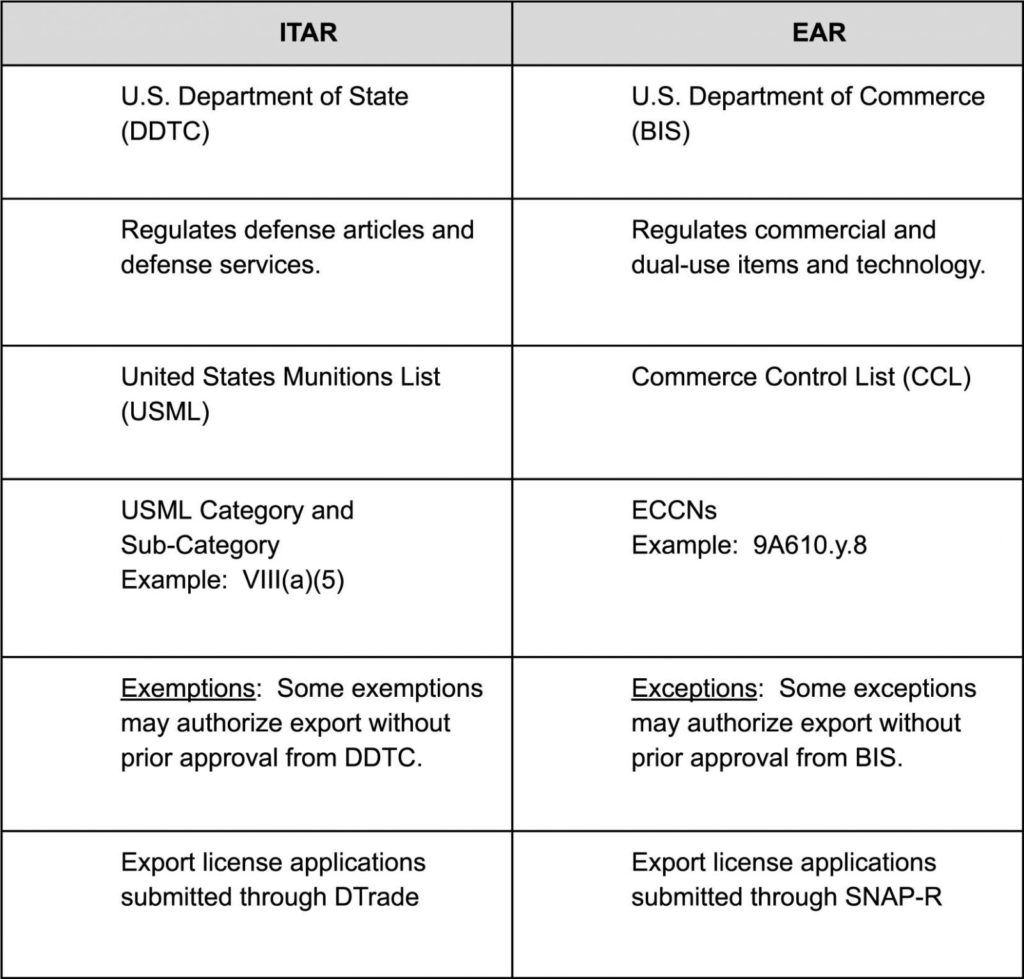
We field lots of questions about the difference between ITAR and EAR regulations, particularly with the changes from Export Control Reform in recent years. How can you distinguish ITAR vs. EAR?
gusty ravine
a lot has been relaxed, yeah
junior belfry
https://www.amsat.org/track/index.php
Pass Predictions from AMSAT.
(Didn't work in chromium (aka Chrome, for Linux) but works well in firefox-esr).
wise hornet

ESA Education and the Raspberry Pi Foundation congratulate all the entries of this year’s European Astro Pi Challenge: Mission Space Lab for their outstanding proposals. This has been another record-breaking year with Phase 1 receiving a grand total of 545 entries from 23 c...
frail condor
Overview of star trackers available for cubesats and small satellites. We've tracked down 14 suppliers who are providing solutions for star trackers for cubesats and small satellites. Please share any supplier we've missed. Thanks! https://blog.satsearch.co/2019-11-26-star-trackers-the-cutting-edge-celestial-navigation-products-available-on-the-global-space-marketplace
satsearch.co blog
For thousands of years explorers used the stars to navigate across the globe. Around 6,000 stars are visible to the naked eye under the best possible conditions (the sort you might get hundreds of miles out at sea for example) and mariners have typically used one or more of 5...
frail condor
Looking to get to orbit? Here are the mechanics and the challenges in finding a launch option for your satellite with an overview of launch service providers who can help you in the process. https://blog.satsearch.co/2019-12-04-find-a-launch-option-for-your-cubesat-or-small-satellite-an-overview-of-launch-service-providers
satsearch.co blog
satsearch.co blog - the latest on satsearch and newspace
obsidian sky
What does everyone use for solar cells?
I heard a couple years ago that spectro lab doesn't provide the corner cells anymore and it sounds like Alta Devices layed off most of it's staff.
gusty ravine
azurspace for the bigger ones
corner ones are sometimes available at trisolx but my experience with them has been less than stellar
Ixys are unproven in orbit but potentially pretty good for cheaper, shortlived missions
 small maple
Hey everyone! This community is awesome. Never realized how available smallsat resources are.
small maple
Can anyone point me in the right direction if I'm interested in the software behind how data is received from sats (ground based, that is)? This includes common ways to process that data.
junior belfry
p. 71 is suggestive of what may be going on (with CubeSats):
https://www.nasa.gov/sites/default/files/atoms/files/nasa_csli_cubesat_101_508.pdf
junior belfry
Schmidt, 2011:
Ground Station Networks for
Efficient Operation of
Distributed Small Satellite Systems
https://d-nb.info/1014932793/34
referenced in:
https://sst-soa.arc.nasa.gov/11-ground-data-systems-and-mission-operations
quote For an exhaustive treatise on the characteristics of small spacecraft ground data systems, refer to Schmidt, 2011.
quote
The primarily used protocol for data exchange between ground station and satellite is AX.25
p.20
So basically this is ham packet radio using TNC's (and, I think, IP nets) on 2 meters and 70 cm ham bands. ;)
@small maple Just some background, there. I don't know what's currently in use.
frail condor
@obsidian sky Apart from Azur Space, there is San’an Optoelectronics and CESI as well. DM me if you need help connecting with either of them.
obsidian sky
@frail condor Thanks!
 little lion
does anyone know of any projects that are working toward or have successfully used python based guidance navigation and control flight software algorithms for a satellite? #help-with-projects
 exotic zinc
Anyone know what became of the Fossa LoRa repeater satellite?
raw gull

FOSSA
A wild few days here at FOSSA Systems as our first satellite launches into orbit aboard the Rocket Lab’s Electron rocket and is successfully jettisoned and deployed! The first few hours post-deployment were a nail biting experience as it struggled to transmit its informatio...
and this -- looks like it is still being deployed http://groundstationdatabase.com/index.php
gleaming pollen
It is operational, but you need a very powerful ground station to receive it because the antennas haven't deployed.
 onyx wagon
Need some advice. How important is rad-hardened hardware for smallsats? I would expect the LEO to degrade quickly and make it less relevant, but how do you decide at what point you need rad-hardened electronics?
gleaming pollen
Almost never. Most CubeSats aren't actually rad-hard, Planet Labs even stopped using copper shielding for their electronics since the added weight wasn't worth the benefits. The MarCO satellites used a $185 Gumstix IronStorm-Y payload processor that is not rad hard in any way as well, so even for interplanetary you don't need it.
Rad-hard only really becomes necessary for +5 year missions and such usually, or if you're in an area with unusually high radiation.
wicked field
Renesas does offer rad-hard chips, but they're expensive and you don't need them.
raw gull
 onyx wagon
@gleaming pollen and @wicked field Thanks for the feedback. Hurrying through the initial proposal for two CubeSats to accompany the Mars2020 rover to Mars. The purpose is to record radiation levels during the whole transfer for human mission planning (if it hasn't been done already). Getting ready to send the PDF to NASA and ULA.
raw gull
I suppose, if the radiation monitor fails due to the level of radiation, then you still get some useful information 😉
gleaming pollen
@onyx wagon I'd love to see your proposal, I'm fascinated by this topic. Can you send it by any chance?
onyx wagon
I will, once I've sent to NASA and ULA....
wicked field
Mars bound CubeSats? Most cool!
 upper torrent
Kind of a late reply, but the mars InSight mission had a couple of cubesats in tow to provide a better relay during the landing. Cubesats to Mars seems fun. Definitely agree that sounds like a fun project
 hazy stag
short-term comm relays sound like a perfect use case for cubesats too. Shove an estes motor in there for a little delta-V or just launch them mid-transit so a small spring launch can give you a big position difference when you there
upper torrent
Totally. Actually it's super cool because they separated after the primary mission and made their way to Mars on their own. I'm guessing 1) to ensure no failure would compromise the mission and 2) to verify a little cubesat could do an interplanetary mission.
gusty ravine
@onyx wagon this something you're submitting formally?
also anyone got a source on the ironSTORM flying on MarCO? this is the first i've heard it had genuine CotS processor blocks in
ah, found it in an article, now to find a paper
FWIW the processor boards we're planning at my startup are a combination of rad-hard and designed to be tolerant, but for the latter case you have to watch TID figures
onyx wagon
Yes, I'm going to submit formally. I talked to Tory Bruno (CEO of ULA) and the RL-10 is almost finished (takes 45 months to build) and the booster is under construction in Alabama. Target launch date is July 2020. The problem is with all the flight certifications, he says it may be too late to get P-pods installed and approved. The Atlas has plenty of throw weight available, it's the paperwork that could be the problem. And getting the downlink time on the Deep Space Network....
gusty ravine
yeah i was going to say it's significantly late to be manifesting cubesats now
onyx wagon
Yeah. It's not an engineering problem, it's a flight risk management problem.
onyx wagon
Oh, I was just saying they can get it done. Whether they'll do it is another thing.
onyx wagon
They might have. I didn't find anything on the mission pages, so I'm looking at the more detailed reports. I haven't looked at it that closely, so you're probably right.
MSL wasn't powered up until landing. I want to measure the radiation gradient in the transit, so we know how much radiation astronauts will be exposed to. I have a hard time believing NASA hasn't done that already, though.
onyx wagon
That would make sense. I'm going to look at some TRs this afternoon or tomorrow.
upper torrent
There was a radiation experiment on the Mars Odyssey mission https://mars.jpl.nasa.gov/odyssey/mission/instruments/marie/. It says they collected data along the way, but I don't know if there are any reports.
onyx wagon
Thanks. I'll do some searches to see if I can dig up the reports. I appreciate the link, @upper torrent !
junior belfry
Unmanned Moon missions were still in the far future when I was born. ;)
Sputnik just before my first memories of life.
(and a photo of TelStar in my high school electronics textbook hi hi)
KeyHole satellites (classified) would be deorbited (sort of) to drop a package to be caught in mid-air.
And they hadn't yet gone to the Moon.
wicked field
There was a keyhole exhibit at the Air and Space Annex a while back
gleaming pollen
What I would do if I were building a processor for an interplanetary CubeSat is use a a $700 Vorago rad-hard M0 + a non-rad-hard Linux COM. You could till get a sub-$2000 computer with great performance. @gusty ravine
gusty ravine
That is exactly what we’re doing ;)
Vorago for platform control, possibly Zynq7030 for payload computation
upper torrent
So what's a typical cubesat budget? I'm used to seeing RH FPGAs that are $10k+ before testing, so on one hand that makes a $2000 SBC seem awesome, yet on the other hand, are they generally privately funded?
gusty ravine
depends, the difference between an educational 1U and a 6U cutting edge science demonstration is a couple of orders of magnitutde
i work with $50k FPGAs professionally so it needs some recalibration for me too - an educational 1U launch goes for ~40k, could probably build a 1U for ~10k including/excluding qualifying depending on how much you build yourself and how much you're buying commercially
i've seen instrument budgets for tech demonstration stuff reach 10s of millions tho so
upper torrent
Wow ok so it really runs the gamut! That's interesting. As demonstrator/launch costs go down, is cubesat becoming a more standard approach for new tech qualification? It would be cool if vendors started doing that to bring products to the market faster.
gusty ravine
It already is a standard for tech demonstration given that larger smallsat buses are still expensive comparatively
upper torrent
I'm interested in qual of tech for not-so-small-sats. To be really useful the smallsat demonstrator would need to operate in MEO/GEO for an extended period. I haven't seen that done, but maybe I've missed it.
gusty ravine
plenty of smallsat grade components are qualified at that level
gleaming pollen
@onyx wagon do you know if the Briz-M can be used to mount a CubeSat deployer? With ExoMars likely being launch delayed it may be more possible than ULA.
onyx wagon
I don't. I only have the user manuals for Falcon, Falcon Heavy, Ariane 5, and Atlas.
gleaming pollen
Talk to Glavkosmos, they can provide the necessary information you need for this.
gusty ravine
what you planning?
i thought exomars was doing alright wiht the parachute testing rn
not currently expecting a delay afaik
 mossy rock
I am a going down a cubesat rabbit hole, but not finding many good resources. You guys got any good places for me to look?
gusty ravine
what have you looked into so far?
there are many solid resources
https://www.nasa.gov/sites/default/files/atoms/files/nasa_csli_cubesat_101_508.pdf NASA cubesat 101 is good to start with if you've never heard of a cubesat before
mossy rock
yeah I read that cover to cover
gusty ravine
https://www.nasa.gov/connect/ebooks/nasa-systems-engineering-handbook/ which means you might be better served by this and a copy of SMAD

NASA
In 1995, the NASA Systems Engineering Handbook (NASA/SP-6105) was initially published to bring the fundamental concepts and techniques of systems engineering to the National Aeronautics and Space Administration (NASA) personnel in a way that recognized the nature of NASA syst...
for market level stuff, nanosats.eu or satsearch are good to go through what's out there
https://sst-soa.arc.nasa.gov/ also, the smallsat state of the art report
mossy rock
awesome thanks!
gusty ravine
if you're interested in developing cubesats, there's a farily large group of nanosat devs in here https://discord.gg/ZwrpbG9
mossy rock
😮
gusty ravine
(ping me in lobby if you join, you need a role setting to see the dev channels)
misty bough
@mossy rock Have you looked at past conference papers? The Smallsat conference and the Cubesat Developers Workshop have past papers online.
mossy rock
ooh good to know thanks
onyx wagon
@mossy rock I can also recommend Spacecraft Systems Engineering, though some of the concepts won't apply to SmallSats. Thermal and power management, prepping flight articles, etc., though, will still apply. https://smile.amazon.com/Spacecraft-Systems-Engineering-Peter-Fortescue/dp/047075012X/ref=sr_1_1?keywords=spacecraft+systems+engineering&qid=1578726408&sr=8-1
mossy rock
thank you! 😄
onyx wagon
You're welcome!
gusty ravine
In the same vein, and probably more detailed, SMAD is an industry standard
night lantern
Hi gang! If you're in the bay area next week, come by, say hi, and chat open-source cubesats with us. Admission is free 🙂
https://www.eventbrite.com/e/open-source-spacecraft-software-for-space-registration-85671256033
gusty ravine
any chance of a livestream?
also @night lantern the TFT server linked above is a little more active than the smallsat channel in here, migh tbe worth sharing in there
onyx wagon
Ok, printing my CubeSat structure. I have the mounting system for the Raspberry Pi. Now to understand the charge and discharge impact of the thermal cycling so I can plan batteries and BMS appropriately. Then figure out how much power and space I'll need for my other project components. This is kind fun.
(Yes, I know a 3D printed structure isn't a flight article - it's just an engineering prototype.)
frail condor
Overview of Optical communications for small satellites and CubeSats https://blog.satsearch.co/2020-01-22-optical-communications-for-small-satellites-and-cubesats-product-roundup
satsearch.co blog
As the numbers of satellites in orbit continue to rise there is a greater need for effective communication solutions that can handle increasing data volumes. Optical communications may hold the answer, enabling operators to get more data from space to Earth faster and more ef...
onyx wagon
Prototype 1. Too small for what we need. It's a cute toy though (and on Twitter). Moving to a 3U and designing my own flight computer.
mossy rock
^
gusty ravine
what are you trying to fit? 1Us can be plenty capable, but you generally have to design board level electronics from scratch
ie large SBCs = bad
 tribal oracle
oh hi @gusty ravine
gusty ravine
o7
 celest elk
Currently helping to design and build a CubeSat test bench in a joint effort between Villanova University and Rutgers University, for Rutger's STAR Organization. I am in charge of power systems testing and am interested in using the adafruit IO. Please find that the test "subject" will be here: https://github.com/alanbjohnston/CubeSatSim/wiki
Need advice on how we can implement testing into our test bench. We were thinking of using a microcontroller to run scripts to power the satellite and then shut down for safety protocols as well as watch dog circuits. Wondering if anyone has insight or suggestions on how to attack this maybe from a different angle and how to implement Ada IO!
Thank you!

GitHub
AMSAT CubeSat Simulator. Contribute to alanbjohnston/CubeSatSim development by creating an account on GitHub.
frail condor
An overview of all the sun sensors available for engineers building small satellites/cubesats https://blog.satsearch.co/2020-02-12-sun-sensors-an-overview-of-systems-available-on-the-global-marketplace-for-space
satsearch.co blog
Sun sensors are becoming increasingly important in modern satellites due to growing expectations of better maneuverability, agility and precision control of even very small craft.
frail condor
The demand for X-band transmitters has been increasing due to a boom in Earth Observation (EO) satellites in the past decade. Here are 15 suppliers in the industry we tracked down who are focusing on developing X-band transmitters. Interestingly, a lot of these suppliers are now optimising for CubeSat form factor in mind taking into account the power, mass and size constraints for their transmitters to align with the structure, volume and power consumption of CubeSats.
If we've missed someone, please do let us know. We're happy to include them. https://blog.satsearch.co/2020-02-27-x-band-transmitters-available-on-the-global-marketplace
satsearch.co blog
The demand for X-band transmitters has been increasing due to a boom in Earth Observation (EO) satellites in the past decade.
frail condor
We tracked down 30 on board computing / command and data handling available for engineers building cubesats and small satellites. Do point us to any other solutions we might have missed. https://blog.satsearch.co/2020-03-11-overview-of-on-board-computers-available-on-the-global-space-marketplace
satsearch.co blog
In this post we give a brief overview of how avionics on-board computer (OBC) systems operate and share listings of OBCs on the global marketplace - if you would like to skip the introductory material and instead get straight to the product listings, please click here.
 jade tendon
hmmm... don't see Beagle there. I know a number of cubesat people are using them. (https://bbb.io/jpl). I wonder if the KubOS folks should be invited here.
 slender willow
Hey everyone! I was just pointed here by @vale sandal during the Open Source Hardware Summit 2020 going on today. Just though if introduce myself and connect with the SmallSat community here. For those of you who don't know me, my name is Michael and I am currently leading Applied Ion Systems, developing ultra low cost open source propulsion systems for nanosats. I will currently have 2 of my pulsed plasma thrusters flown on the upcoming Amsat-Spain GENESIS PocketQubes, and am working on new PPTs and an exciting new ionic liquid ion source electrospray thruster, the AIS-ILIS1, as well as eventually some FEEP and higher power gridded ion/hall.
 vale sandal
Welcome @slender willow and @jade tendon
jade tendon
thanks @vale sandal

When the Portland State Aerospace Society started in 1999, the members likely never imagined their open source amateur rocket avionics systems would someday actually make it to space. Twenty years …
 reef grove
@jade tendon KubOS is represented here!
jade tendon
howdy @reef grove ! Excellent. Any of your boards on that list above?
reef grove
@jade tendon yup! We currently support the iOBC by ISIS and Pumpkin's MBM2. It looks like that list just mentions the first MBM. I'd bet we could easily support that OBC from Warpspace, though we haven't explored it yet.
celest elk
so, I am doing an independent study... I want to model optical communications in my professors lab, I saw someone posted a link earlier in the chat about optical comms for cubesats
wondering if anyone had any challenges they needed verification of or any ideas
also as I posted earlier another professor of mine has developed a cubesat simulator so I was thinking of maybe implementing the opt. comm into that
rapid violet
I'm not working in the field right now, but was involved in a long-distance optical comms project previously. A neat experiment that's coming up in a few years is the DSOC terminal on the mission to the asteroid Psyche, where they're going to try to do optical comms at interplanetary distances. That might be interesting to model, just as a random idea.
celest elk
thanks!
yea its a mini research semster or two long thing.. i decided to take the nonthesis with research option for my grad program
wondering what the price range is for such a device
rapid violet
For a DSOC-style terminal, it's a NASA-style budget, heh heh. But you can go much cheaper, down to just a LED and photodetector at the very low end. There's a wide range in the middle full of interesting options, too, depending on how much speed, range, and tracking capability you want.
celest elk
that sounds pretty compatible with the lab at Villanova
frail condor
List of cameras/optical payloads available for cubesats and small satellites https://blog.satsearch.co/2020-03-25-optical-payloads-for-small-satellites
satsearch.co blog
In this post we give a brief overview of how Earth Observation (EO) optical payloads are used in small satellites and share listings of multiple products available on the global marketplace - if you would like to skip the introductory material and instead get straight to the p...
frail condor
Off topic a bit.. But thought it might be interesting. I am trying to conduct a very brief survey to understand what stakeholders in the space industry believe the effects of COVID-19 will be on the sector. The survey should take less than 5 mins to answer! Will publish the results openly next week. Kindly consider contributing. https://forms.gle/2oewwYqy3uUAU4n79

Google Docs
satsearch is conducting a broad survey to understand what stakeholders in the space industry believe the effects of COVID-19 will be on the sector. The survey should take less than 5 mins to answer! Please participate and share among peers to help map the immediate after-effec...
frail condor
If any of you are looking to get some solar panels for your smallsat/cubesat, here is a handy list of things you need to consider while choosing a configuration. Have added some tips and tricks on how solar panels can double down to integrate with other satellite subsystems such as structures and can accommodate elements to support attitude control/power systems. A list of suppliers who can provide solar panels from 1U to 16Us is included. https://blog.satsearch.co/2020-04-03-cubesat-solar-panels-on-the-global-space-marketplace
satsearch.co blog
In this post we give a brief overview of CubeSat solar panels and share listings of multiple products available on the global marketplace - if you would like to skip the introductory material and instead get straight to the product listings, please click here.
 lapis tulip
what is the smallest and most powerful board there is for cubesats
if price is not a factor
gleaming pollen
This probably
@lapis tulip
If price is a factor, the Gumstix IronStorm-Y was used as the payload processor on MarCO.
It is a $178 commercial non-space-hardened COM.
Performed wonderfully as a payload processor on an interplanetary mission, what more could you ask for.
lapis tulip
thanks
gleaming pollen
Probably as much as a small plane lol.
mossy rock
wrong channel
 tawdry gate
 visual totem
 tepid sierra
i want to get involved in this but idk where to start....does anyone know any project to do with cubesats/smallsats that i could do or get involved in?
 fringe cedar
@tepid sierra take a look at the andreas spiess you tube channel, https://www.youtube.com/watch?v=9FM5HLqIRjk&t=42s, it may give you ideas

When we started our bonus project to communicate via the geostationary satellite QO-100, we created a to-do list:
- A high power 2.4GHz transmitter
- A sensitive receiver for 10GHz
- And an internet connection to the Adalm Pluto
In the last video, we built a prototype for the ...
mossy rock
Had a great conversation with a smallsat engineer

Stage 4: Spacenomics by Space Roots
Learn about the rise and fall of smallsats, true democratization of space, and the future of space (as always).
-Follow us on Twitter: JaynkyDIY
gleaming pollen
@mossy rock Thanks for the shout-out!
 copper talon
That name looks familiar @gleaming pollen I think I follow you on Twitter!
gleaming pollen
@copper talon You might! What's your Twitter handle?
copper talon
#cormachinarex 😉 I also chat here and there with an acquaintance Dennis Wingo @gleaming pollen
gleaming pollen
Ah, thanks!
 brave birch
Hello! I'm from a Brazilian university group called EPTA and we started a research with CubeSats. We don't have previous experience in this area, and i would really like to talk with someone who has already build one.
gusty ravine
@brave birch DM me, I run a cubesat networking group on discord
 keen yew
How much is a standard Cubs at development and launch cost?
gusty ravine
launch for a 1U cubesat is about 40k minimum right now
development cost varies significantly
gleaming pollen
Momentus is still offering $25K launches for February, as far as I know.
Talk to them.
wicked field
I'm oddly tempted to build a cubesat that emulates the ancient ANNA-1B satellite (which is still in orbit, as it happens). I probably could get it put together in time for a February launch, but that's a lot of money to spend on a whim.
mossy rock
do IT!
rapid violet
Crowdfund it!
 topaz furnace
yes!! do it!!
 craggy prism
My school is currently creating something called the Artemis project where we are planning on giving a couple cubesat kits to our undergrade and community colleges in our state for roughly 5k
obsidian sky
Momentus is still offering $25K launches for February, as far as I know.
@gleaming pollen
How did you contact them? Did you just use their website contact form?
Has anyone here done FCC licensing for a CubeSat yet? I have questions.
gleaming pollen
https://www.linkedin.com/in/jeanphilippe-divo/?originalSubdomain=sg
Worth talking to this guy.
@obsidian sky
topaz furnace
Hi, anyone knows what cubesats are transmitting photos from space(like lightsail 2) and if i can decode them?
 onyx vault
Hi, anyone knows what cubesats are transmitting photos from space(like lightsail 2) and if i can decode them?
@topaz furnace Are you looking for Amateur Radio satellites to gather data from over the air or jut open data published on the internet?
I am not aware of any HAM sats with imagery... (did quick search) but I could be wrong
misty bough
What about AMSAT Fox-1D - AO-92? That has a camera onboard.
onyx vault
That's pretty cool @misty bough !
https://www.amsat.org/tlm/showImages.php?id=4
AMSAT Telemetry Server
topaz furnace
@topaz furnace Are you looking for Amateur Radio satellites to gather data from over the air or jut open data published on the internet?
@onyx vault Yes, i´m looking for amateur radio satellites to gather data from over the air
onyx vault
@topaz furnace I have my U.S. General license, but I've not done any sat work. Are you already experienced with working HAM Sats? Just trying to see if you need how to get started info: https://amsat-uk.org/beginners/how-do-i-start/ or if you're looking for a satellite list: https://ka7fvv.net/satelliteFM.htm and of course operating rules will vary by the country you are licensed in & operating from. I hope that gets you going...

Here a few few quick pointers which might help you. We are sometimes asked if a licence is required to RECEIVE satellites in the Amateur Satellite service. The answer is ‘no’. You only …
wicked field
I've done a little work with ham satellites. I've had good luck with a simple cubical quad antenna.
 carmine sky
Hello
gusty ravine

Preparing to start a (very) small round of initial recruitment at @citadelspacesys. If interplanetary nanosatellites are your thing at an early-stage start-up, give me a bell! #InnovationInterplanetary
Twitter
tepid sierra
Is it possible to build a diy pulsed plasma thruster? I've been looking into them and I'm interested in building one just as a project
rapid violet
I mean, for various meanings of "possible". You'd have a better picture of your skills and resources to tackle something like that than we would.
wicked field
There are some folks here who have done stuff like that.
 swift estuary
Correct me if Im wrong, but I think if you wanted to get into that it would be better to start with an ion thruster if new to the scene.
tepid sierra
I saw the makezine ion thruster tutorial, but I dont really know how I could make any advancements to it. Reason I was interested in pulsed plasma is because I didnt see any other diy projects that had successfully pulled it off
And also yes I'm new to the scene
gleaming pollen
Didn't @slender willow make one?
slender willow
@gleaming pollen thanks for the ping! @tepid sierra I have built several, all my work is open source. Currently the only person as far as I'm aware out there doing advanced EP research at home. Actually will be testing my newest design next week!
All my info is on my site, and you can see my work on the applied Ion Twitter, Instagram, YouTube, etc
Here is one that is actually flying soon. Design files already released:
Besides PPTs I have also recently done testing on an ionic liquid ion source (ILIS) electrospray thruster, just completed a major round of testing with it
I'm also working on new designs for liquid metal fueled FEEP as well as a solid iodine fueled RF gridded ion thruster, RF plasma thruster, and micro resistojet
I would definitely say to build a pulsed plasma thruster first to get your feet wet. They are super cheap and easy. Ion thrusters are way harder, next level on all fronts. You will also need a proper high vacuum system for testing. Bare min of 10^-4 torr for plasma thruster testing, 10^-5 torr for ion thruster testing
The makezine ion thruster tutorial is very loosely an ion thruster, but not an actual true one in the sense of space ion thrusters. While you are accelerating ionized air, kind of creating an ionic wind, the physics and operation of vacuum ion sources are very different
slender willow
The biggest barrier of entry for any plasma or ion thruster is the high vacuum system. Once you have a well working system you can just turn on and go, but it can take a lot of work to just get to proper vacuum. I also have released all the designs for various chambers I built, as well as some thermal simulations, molecular flow simulations for high vacuum pumping, full design calculations, and design tutorials. Tons of surplus on eBay for vacuum parts, but I would strongly suggest taking a good while to really become familiar with vacuum engineering first, too many amateur vacuum physics rush in without taking time to understand the systems and severely struggle as a result.
slender willow
If you have any questions feel free to reach out and ask! EP is an unhealthy obsession of mine lol, AIS development literally takes all my spare free time and resources, and I already work a lot with the Cubesat and PocketQube communities to advance low cost open source EP.
wicked field
eyes turbomolecular pumps
slender willow
Turbos are nice since you usually don't have to cool them, unlike the diff pumps. Turbos though are more hit or miss on eBay, break easier. Diffusion pumps are bullet proof, but power and cooling hogs lol. Depends on size and pumping speed though. Bigger means higher speeds, and higher pumping speeds never hurt, better to have too much than too little, and makes pumpdown faster compensating for leaks. For the size thrusters I build, thrust is so low and pumping speed is so high vacuum levels are never affected by operation. Cooling is the biggest annoyance running my diff pump currently lol.
wicked field
Heh, the diffusion pumps I was looking at looked delicate
slender willow
Not much on them to break though, just an oil boiler with cooling lines. I'm glad I haven't had to service a turbo yet lol
wicked field
The ones I was looking at were glass
wicked field
I've seen both. 😬
slender willow
Yeah, glass mercury diff pump is sketchy af lol
tepid sierra
Oh wow thanks for all that info
I had gone to your website @slender willow and looked through your designs
I was wondering however, is it better to start off with a solid like teflon or a gas?
slender willow
Unfortunately the plans for new PPT I will be testing next week isn't up yet, won't be until after I test it
For a PPT?
tepid sierra
Yes, some designs I saw online used either teflon or a gas
slender willow
Absolutely Teflon. If you don't have experience with vacuum systems or gas fed ion/plasma sources, gas will be way overcomplicated. Also for gas for a PPT, (or even liquid) you need pulsed puff injection into the thruster, since PPTs are pulsed by nature
A PLT is literally just a block of Teflon sandwiched between a couple pieces of metal
tepid sierra
Between the cathode and the anodes right?
slender willow
You have a capacitor across the electrodes, then apply an ignition pulse to an igniter
Yeah
A PPT power supply is essentially the same as a flash camera circuit lol
tepid sierra
Ah that makes sense
slender willow
Albeit much higher voltages
tepid sierra
Also, you need a flyback arc between the the metal plates right to eat away at the teflon?
slender willow
Just a single ignition pulse, you don't want a continuous arc
I use a thyristor to fire cap through the primary of a pulse transformer onboard the thruster
tepid sierra
So does the ignition pulse fire at the teflon block?
slender willow
Ignition occurs via ablation ionization. The initial spark ionizes and vaporizes a tiny amount of Teflon, which allows for the main bank to conduct through the anode and cathode. The igniter should be placed very close to the Teflon and cathode. You also have to factor in breakdown at high vacuum, which is much harder than atmosphere, since vacuum is a very good insulator.
You don't need much for it to happen though. I work on the lowest energy PPT spectrum, with sub-joule level thrusters
Lowest bank energy I have fired is at 0.09J with the gPPT3
slender willow
Also the full systems are insanely small. 38x40x24mm for the entire thruster, electronics, and fuel
What do you mean what type of spark?
Like the spark plug itself or the source of ignition?
tepid sierra
Oh like how are you generating it and the source?
slender willow
You can see the schematic, PCB, and CAD in the design files. Essentially there is a micro HV supply on board that charges both the primary bank and ignition bank. The ignition bank is fired through a flash camera pulse transformer. The cathode/igniter setup is actually very unusual, which allows me to get it so tiny. Essentially a pin cathode sticking up into the bore of the igniter plate. Looking at the stack, from top to bottom you have cathode, insulator, igniter, fuel, anode
In the Gallery page you can see the steps of the build and test process
tepid sierra
Thank you!
slender willow
Sure thing! There is the gPPT3 thruster itself, and the completely integrated thruster itself
My new one, the ePPT1, is slightly larger but should be much cheaper and easier to manufacture and assemble
tepid sierra
Could please send the link to the ePPT1?
slender willow
This uses a conventional diverging plate electrode design and spring fed Teflon
The overview page and Gallery page for it are already up, but I don't release the design files until completion of the development phase
I haven't started building it yet, will be assembling it next week
wicked field
Hmm, most expensive part is the HV module, I'm guessing you either found a cheaper one or you're rolling your own?
slender willow
No, I'm going with the same ones. Original ones are Emco, I'm switching to Pico since they have higher efficiency and power output for the same size. They are insanely robust, and you can't get smaller in form factor. I'm using two Picos on my current Electrospray ion thruster, and the newest Pico for the ePPT1 arrived this week
Current PPTs on the market for for about $25k starting, so a couple hundred dollars for the micro HV supply is a small price to pay for a tiny one that is easy to build lol
The supplies also have space heritage which is a big plus too
I'm aiming for PocketQube deployable systems though, so if you are just doing it yourself for fun you can use whatever supply you can get your hands on and create a PCB around that as well
I just have extreme power and space constraints to work with lol
 fervent scarab
So, tl;dr: If you want to play with ion thrusters at home, it sucks to be you.
slender willow
Not at all lol. The most expensive part is honestly the vacuum system
wicked field
I'm always on the lookout for creative HV sources, but my parameters are different: those supplies are pretty much ideal for your use case, but mine weights "inexpensive" more highly than "small", "light", and "reliable"
slender willow
There is a whole community of DIY vacuum hackers though
swift estuary
Im glad I stood corrected on the ion thruster, this is way more interesting. How long does a teflon fuel block last?
fervent scarab
Yah, I was doing neon for a while.
slender willow
I don't know yet lol, the capacitors die before the Teflon is even ablated at these low levels lol
wicked field
I used to work with high vacuum (10⁻⁸ torr range) particle beam systems, it was a different world
slender willow
The real hard stuff has been the Electrospray thruster. That uses ionic liquid fuel, which is a room temperature molten salt
wicked field
You did neon too? I did for a while as well.
slender willow
It is passively fed via capillary action, and extracts both positive and negative ion beams from a porous glass emitter
tepid sierra
@slender willow, this might be a very noob-level question, but is it possible to use a flyback arc as the igniter for ablating the teflon? I have a small form-factor flyback arc generator that I've already built and I was wondering if I could repurpose that
slender willow
Technically yes, but you should pulse it. Arcing continuously is bad, if you char the Teflon it will cause the thruster to short out
tepid sierra
Ah so short bursts right?
slender willow
Yeah
You want to balance the ablation energy from the main bank and surface area to maximize propellant usage without dumping too much energy and causing it to burn. For ignition, you don't need much energy, just a tiny spark, but you need to get your spacing right
tepid sierra
How much spacing should there be between the spark and the teflon? Is it only enough so that it barely touches?
slender willow
Like you can see I severely charred the gPPT2 after only 500 shots at higher energy, where the gPPT3 doesn't char
wicked field
Normally you'd use the flyback to charge a capacitor and then either switch the capacitor to the plates/ignitor, or to a transformer (like the gPPT3 does)
slender willow
Yeah, flyback is better for charging. But you don't need too much voltage. 1kV on main bank, maybe 10kV for ignition
wicked field
As Applied_Ion correctly points out, it is rather like a strobe circuit in general operation
slender willow
The pulse transformer is nice because I step up only 350V on the input to 10kv out
Literally replace the xenon flash tube with a PPT in a strobe or camera circuit lol
Spacing depends on several things. The sharper the igniter, the easier it is for breakdown. Typically you want the igniter and cathode less than 1mm, and right near the surface of the Teflon. Anode/cathode spacing depends on energy, design, and voltage
Actually larger conventional PPTs often use aviation grade spark plugs for the igniter
tepid sierra
Is it a good sign if it chars a bit? Like I was wondering, do you want it to burn relatively larger amounts of teflon or just tiny subtle amounts?
Btw, I'm not aiming to make it amazingly efficient or compact, I just want it to work lol
fervent scarab
So, it seems like once you've got the stuff for ion and plasma thrusters, you've got a lot of other fun adjacent things as well, like vapor deposition.
Because when I was doing neon, now a zillion years ago, one of the crew was setting up her own homebrew neon setup for both regular neon and plasma art and a lot of the same things came up, along with this oddball gentleman who was doing his own chemical vapor deposition on lenses and walked around with a zoom fisheye lens when nobody had a zoom fisheye lens.
slender willow
No lol, you want no burning at all. Remember, for EP you are not burning fuel like chemical systems. For plasma and ion thrusters, you want to ionize the fuel.
Yeah, the vacuum systems for propulsion can be used for tons of other stuff. Beam systems, deposition, plasma systems, etc. I'm actually surprised with all the DIY vacuum projects out there no one has tackled propulsion yet
fervent scarab
So.... do you have your own utility pole-pig repurposed as a high voltage source?
slender willow
If you see signs of charring, it will eventually short over time. Of course it will happen anyway at really long lifetimes, best to delay charring as much as possible
No, this stuff is nice because I can just use tiny supplies lol
wicked field
I'm toying with using a pole pig as a bombarder transformer, as they're much cheaper and easier to find.
fervent scarab
When I was more into it, that's what a lot of people used.
wicked field
Also handy if I want to scale up my Tesla coils
fervent scarab
The optimized cheater setup was pretty much a pole pig and an old buzz-box stick welder as a choke.
I mean, there's no beating the "I'm a mad scientist" feeling of having a pole pig sitting around in the workshop.
wicked field
Truth. I'd still probably use a manual choke as a ballast, but that's in the nature of fine tuning
slender willow
First ignition test of the AIS-EPPT1 micro pulsed plasma thruster in action!
https://youtu.be/tx5uPRV7MVQ

On September 13th 2020, the first ignition test of the AIS-ePPT1 micro pulsed plasma thruster for nanosats and picosats was run. During the test, successful controlled ignition was achieved for a short period of operation, confirming the potential of the design to move forward...
Plasma plume capture:
slender willow
Ran the second ignition test of the thruster the other day. This time triggering to the anode which is very unconventional for PPTs but worked much better in this case. First video is at low rep rate: https://youtu.be/keJiKQbKdII

On September 22nd 2020, the second ignition test of the AIS-ePPT1 micro pulsed plasma thruster for nanosats and picosats was run. This one of several videos taken during the thruster testing. Vacuum levels during the test were around 10^-5 Torr.
In the prior test, while ignit...
Next video is 2Hz rep rate: https://youtu.be/6ENUEWXZRlY

On September 22nd 2020, the second ignition test of the AIS-ePPT1 micro pulsed plasma thruster for nanosats and picosats was run. This is the first of several videos taken during the thruster testing. Vacuum levels during the test were around 10^-5 Torr.
In the prior test, wh...
gleaming pollen
Today, after months of hard work, we are proud to announce Pandion Orbital, the world's lowest-cost launch service for CubeSats, with 1U launches starting at $15,000 a U. We designed the largest CubeSat deployer ever, Skyliner, to maximize every ounce of the EPSA ports on SpaceX rideshare missions. Skyliner is capable of carrying up to 98Us at full capacity. After a decade and a half of price increases, the launch barrier is broken. We can't wait to see what the community does with this new pathway to space!
Pre-orders now available. http://pandionorbital.com/
https://twitter.com/PandionOrbital/status/1316099764598059009?s=20

Welcome to Pandion Orbital. We provide a routine, fixed-cost service to orbit starting at $15,000 per U, allowing launching a CubeSat to be as easy as booking an airplane flight.
Pre-orders now open for late 2021 slots.
 Twitter
 slender willow
Just ran a new experimental test Sunday combining my original gPPT3 pulsed plasma thruster head with the newer EPPT1 electronics. I pushed the system beyond its limits and fired it at a rep rate of up to 4Hz, which is the highest yet for my Teflon fueled micro-PPTs to date. Already working out a new driver to push it even higher!

On Sunday, October 25th 2020 a series of tests were conducted for a new experimental micro pulsed plasma thruster system, which combines the AIS-gPPT3-1C micro pulsed plasma thruster head with the AIS-EPPT1 micro pulsed plasma thruster electronics. The thruster was overdriven ...
 bitter loom
Using Cubesat(s) to monitor deforestation of the Democratic Republic of the Congo, since it is so close to the equator, is it better to use a LEO that is equitorial or use a constellation of cubesats in polar orbit?
rapid violet
What's your ground-station situation like?
bitter loom
In what regard? I have 26 available
rapid violet
Well, you want your orbits to pass above your ground stations, so it depends a lot on where they are. 😉 That's what I meant.
bitter loom
But since my mission is remote censoring should I just stick with SSO? As it would be ideal to view the land at same illuminance
singapore
night lantern
@bitter loom I'd say your biggest drivers for constellation vs careful orbit are cost & response time. I'm sure you've heard of Planet? https://www.planet.com/
Planet
Planet provides global data daily, making changes visible, accessible, and actionable.
swift estuary
Hey, thats how they know how much oil we have on earth, looks like the same service
 opal raptor
@night lantern Will any of those sats talk LoRa?
I'm currently hosting a "fossa groundstation" and a satnogs groundstation, and I'm specially interested in receiving with cheap esp32+lora hw
The project is currently monitoring a russian sat called norbi or norby, and decoding it's telemetry.
night lantern
@opal raptor yep! LoRa UHF (915mhz) and Sband. I don't remember if fossa was 433 or 915?
night lantern
@opal raptor three are using both bands. :)
opal raptor
@night lantern This is the software we are using. If you scroll a bit down, there is a couple of links to the telegram group where we talk about the project.
It would be nice if you could joint, so that we can talk about the groundstations, freqs, ways to deliver the decoded data, etc.
opal raptor
If you cannot, feel free to use me as information relay.
Is the sync word you are using 16 bits? (if so, it could be problematic with some of the sx12xx chips)
opal raptor
Silly me. I didn't sent the software. The telegram groups are here.
https://github.com/G4lile0/ESP32-OLED-Fossa-GroundStation

GitHub
Groundstation for the the Fossasat-1 Satellite . Contribute to G4lile0/ESP32-OLED-Fossa-GroundStation development by creating an account on GitHub.
night lantern
@opal raptor sorry for missing this! I'll hop in the chat. 🙂
opal raptor
@night lantern Great, thanks.
opal raptor
It seems the distance is half of what it says, but here's my groundstation listening to a russian LoRa Sat in 433MHz.
https://fossa.apaluba.com/nodered/dashboard/packet/9a93888b03d536a095ab234fa4675b4ce591f345
opal raptor
What would be a good gps to use in a sat like a Pycubed?
rapid violet
I'm not an expert about what's currently available, but I had this one bookmarked: https://www.skytraq.online/product-page/gps-for-small-satellite-micro-satellite-cubesat

SkyTraq
PRODUCT DESCRIPTIONVenus838FLPx-L with special customized firmware for small satellite, micro satellite, CubeSat space applications, providing continuous accurate position and velocity determination. Our Venus838FLPx-L and equivalent GPS/GNSS modules for CubeSat-like applications are used by Boston, Chubu, Delft, Harvard, Kyutech universities. F...
opal raptor
@rapid violet Thanks.
 buoyant edge
Eric Guth is amazing. Not just in building amateur radio culture with his podcast, but also in creating the Ham Expo - an innovative and influential conference.
It’s an honor to to talk about the bright future of open source amateur satellite with him.
opal raptor
@worldly summit I hear that the PyCubed is going on a spacex launch on Jan 14th. Perfect for both your magnet launch calendar, and for the python newsletter.
"PyCubed-1" is the name of the sat.
If the community wants to start building Ground stations, there is a project that uses TTGO esp32+LoRa to receive LoRa packets with tiny antennas.
I'm guessing a circuitpython port would be nice. So that is earth-circuitpython talking to space-circuitpython 🙂
wicked field
I did not know LoRa was being used for communication to orbit. I might try whomping up a receiver with a Feather M4 or something.
opal raptor
@wicked field This project is tracking several sats, I have a couple of stations. Depending on the tx power of the sat, you don't need fancy antennas, lna, or anything.
https://github.com/G4lile0/ESP32-OLED-Fossa-GroundStation
GitHub
Groundstation for the the Fossasat-1 Satellite . Contribute to G4lile0/ESP32-OLED-Fossa-GroundStation development by creating an account on GitHub.
tepid sierra
Other than things like imaging or earth observation, what are some other use cases for small sats?
rapid violet
Communication. The company Swarm is using nanosats for low-bandwidth remote data collection, for instance.
 deep crater
Does anyone know the status of PyCubed? Is it functional and talking to any ground stations? @night lantern
night lantern
Hi @deep crater ! If you're referring to the V-R3x mission (three sats running pycubed boards). It deployed on Sunday and is doing excellent! I spoke to it this morning.
I'll announce things more once I get a handle on everything. I'm a one man mission ops team :)
There are lots of folks in the TinyGS community receiving vr3x packets tho!
deep crater
@night lantern Thanks for the reply. Yes, I am referring to the V-R3x mission. I completely understand what it's like to be a one-man show. I'll wait for things to settle down for you before asking any specific question (related to the SX1276 vs SX1280 performance).
frail condor
I am looking for a supplier recommendation for an actuator for a cubesat
Type of actuators: electromagnetic;
o Solenoid (preferably pull type)
o Electromagnets;
-
Forces: 5-20 N range; -
Stroke (in case of solenoid): 3-6 mm; -
Voltage: 24 Volts; -
Expected temperature range: -30° + 60° C; -
Mass: < 80 grams; -
Envelope: 20mm x 20 mm x 60 mm length (we have margin on the volume, that can be changed); -
Compatibility with outgassing requirement*
grateful for any help 🙂
deep crater
@night lantern Are you planning on successors to the vr3x satellites?
night lantern
@deep crater Not during grad school at least. i have a mountain of papers to write on VR3X
opal raptor
Oh btw. A sat has started acting as a message relay for the community in the TinyGS project. Also Andreas Spiess just got a new video about it.

Satellites are fascinating but costly and therefore only available to governments, the military, and, recently, also billionaires like Elon Musk (SpaceX) or Jeff Bezos (Amazon).
Undiscovered for most, there is another trend: Universities and small companies can build and launch satellites. Because most of these satellites use open transmission ...
If you haven't, now is a good time to.
 night elk
Hello everyone, This is Rifath here, CTO of Space Kidz India. We're the one who recently launched the Satish Dhawan Satellite a.k.a SDSAT which I currently being tracked in satnogs, tinygs and also by our private ground station and it's the one which has the LoRa digipeater capability. Just now found this discord and I'm a great fan of adafruit from young age. Great to be here...
old quail
there is groundstations for it and services what help for it
opal raptor
night elk
Hello everyone, This is Rifath here, CTO of Space Kidz India. We're the one who ...
Great to have you here as well. I'm a fan of your project, and from info I've gathered in the tinygs telegram channel, and in general talking to people on how cool it is. Also, building a nice antenna to get packets from it, so far I haven't had luck.
 eternal silo
As watching LoRa becoming popular among smallsats developers and teams, please have in mind some details about this proprietary protocol, especially when it touches amateur radio frequencies: https://community.libre.space/t/lora-protocol-in-space/7275

Libre Space Community
I know this question may have raised here and there in the past but I thought I would be nice to have it all in the same topic. Can someone expand on what’s the deal with using LoRa for satellites and in SatNOGS? Is it only legal or also technical? How do well-known cubesats like those from Lacuna or FossaSat overcome those issues? Thanks in ad...
 elder widget
Hi everyone! I'm Owen Kosman, co-founder of Edias Space. We are on a mission to build software tools to help teams work with the complexity of building CubeSats 🙂 We would like to talk to as many CubeSat developers as possible in this channel, as part of our preliminary study into the challenges of a CubeSat project. If you are working (or have worked) on a CubeSat project in any capacity, please fill in this form so that we can arrange a time with you: https://aly89mntouk.typeform.com/to/M65wAqsL
Once you're done with the form, we will be in contact with you to arrange a virtual chat 🙂 Rest assured that we will keep you in the loop of our product development, and perhaps be our first few users!
Note: The information you provide will be kept in accordance to the GDPR regulations.

Turn data collection into an experience with Typeform. Create beautiful online forms, surveys, quizzes, and so much more. Try it for FREE.
obsidian sky
@elder widget Have you talked to the KuBos team? They're transitioning focus from KuBos to their ground station service and there may be a way for you to pick up where they left on KuBos.
elder widget
obsidian sky
<@824234596924915712> Have you talked to the KuBos team? They're transitioning f...
Hey @obsidian sky ! No I haven’t, what sort of things were they working on? Is there a way for me to contact them directly?
obsidian sky
Yeah, did you try the contact email on their website? If that doesn't pan out, let me know and I'll might be able to help you get in touch.
 steady wave
So can lora actually reach earth from orbit?
ok i'll read
ok so in short it works as expected but frequencies used are able to interfere in this 125Khz range "duh"
 winter cliff
was wondering how to join or start a smallsat team/project....
frosty pelican
winter cliff
was wondering how to join or start a smallsat team/project....
Search for open source cube sat projects on Google or GitHub even
You can get starter kits like those sold by XInABox
elder widget
obsidian sky
Yeah, did you try the contact email on their website? If that doesn't pan out, l...
Yeah I did, but there's no reply 😦 If you can, that'll be great!
 raw garden
does anyone know whether there's a wiki/repository of space-heritage sensors
 hollow cedar
one your up in space , now what ? what to do up there
opal raptor
Measure, look, smell, listen to ambient or to others, talk, repeat, spin, pick up and object, take aerogel with you and let dust crash into it, travel, storage-and-forward, etc.
Take live things and see how they interact (virus for example crystalize very different in low G), take things like a simple microscope to study how bad it travels, test how other things degrade on that ambient, try to balance and focus on a fixed point with more and more precision...
gray gale
Pictures, maybe?
rapid violet
You want to check out The Lee Company. They're kind of the go-to for stuff like that on the gas and fluid side.
opal raptor
hollow cedar
so need - micro pumps , solenoid , servos - to make things move
There are lots of ways to move in space. For example, for some sats to balance and orient themselves, they use magnetism.
Other larger ones use gyroscopes.
And if it was a question about providers, I normally don't recommend stuff from amazon, but they have some micro-stepper motor kits, very cheap and easy to use.
winter cliff
Sounds like your doing a realibility test on what you could find on digikey. Populsion research requires hardware that can pass saftey requirements for deployment, in addition to functionality. In the end, this would require a team and cash to establish your infastructure before you can do that reasearch,,,,, good luck!
opal raptor
A team and cash isn't really necessary, at least not in all cases. This person makes ion trust engines in miniature with 3d printed parts and very little hw.
https://twitter.com/Applied_Ion

Open-source R&D, engineering, and testing of plasma and ion thruster systems for nanosatellites at a hobbyist-level budget.
Tweets
7611
Followers
3595
Twitter
I love how people find different and weird ways to make things cheaper and easier.
@hollow cedar Did you find something useful for what you are looking for?
hollow cedar
no , im in information overload - the idea is to see what is cheaply available for parts or 3D print ( big dream ) , valves , pumps , servos , ........ - for cubesat or bio , tiny is key then hook em' up to a fancy microcontroller
this is very cross discipline stuff i feel
opal raptor
Then, why not try talking with applied_ion?
The work is open source, so you could replicate, it's 3d printable, very small, etc.
hollow cedar
I saw a video few years ago , it was a cubesat to do BIO experiments , tiny plumbing , mix chambers ... pumps - amazing stuff , also i looked at https://appliedionsystems.com site for stuff
hmmmm how much compute power does a cubesat need ?
opal raptor
hollow cedar
hmmmm how much compute power does a cubesat need ?
Not much. People do it with atmega328p sometimes, but I would recommend
https://circuitpython.org/board/pycubed_mram/
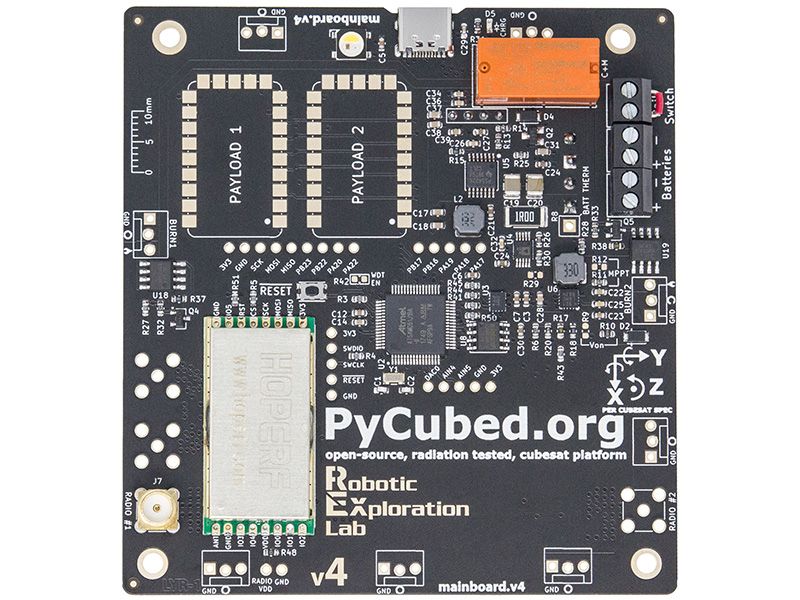
The hardware and software pitfalls associated with satellite development greatly contribute to the nearly 60% failure rates of initial CubeSat missions. As the role of small satellites in commercial and scientific endeavors evolves beyond an “engineering exercise,” basic aspects of the spacecraft...
(btw, it's I think one of 3 sats listed on the  page)
page)
hollow cedar
i have to find the old vid - it was about innovationj around the world will need to did it up
dig it up
opal raptor
The thing with the appliedionsystems, is that the engines he builds are open source, and one is already installed on a sat and waiting to fly (last I checked)
hollow cedar
well im open to the idea of what hardware is needed , pumps ,,, ect -- then a mini OS ( RTOS ) to run it
hollow cedar

Why are CubeSats / Cube Satellites so expensive? Entry level 1U satellites for basic science missions often cost at least $10 or $20K, and I figure that they shouldn't, given how cheap consumer electronics are. 2U / 3U and above satellites are even more expensive, not to mention the much much larger launch cost. Is the high cost justified by the...
 silent hedge
Hey is anyone here? I have a question about cubesat missions
rapid violet
People come and go, so it's best to just ask your question so that they can answer when they see it.
silent hedge
Does anyone know where I can find detailed schematics for past cubesat missions? Ideally a .pdf file that outlines the thermal, communications, and power subsystems
hollow cedar
ohh good question ....
The following is a list of CubeSats, nanosatellites used primarily by universities for research missions, typically in low Earth orbits. Some CubeSats became their country's first national satellite. The extensive Nanosatellite and CubeSat Database lists over 2,000 CubeSats that have been and are planned to be launched since 1998.
pick one - send a email , many are proud to show off their designs
obsidian sky
hollow cedar
one your up in space , now what ? what to do up there
@elder widget scroll through the posts on this channel. There's a website that regularly posts lists of COTS for various parts.
obsidian sky
silent hedge
Does anyone know where I can find detailed schematics for past cubesat missions?...
The Oresat GitHub is extensive, albeit unflown. Also the FossaSat repo is pretty good.
 glad zodiac
Hey yall, im currently working on a PyCubed V4 small sat project and im running into a few issues. Specifically with programming the bootloader. We cant seem to get a voltage read on the boards, anyone have any tips or wouldnt mind hopping in a call with me?
opal raptor
Since the Pycubed is a samd51, this guides could be useful: https://learn.adafruit.com/how-to-program-samd-bootloaders
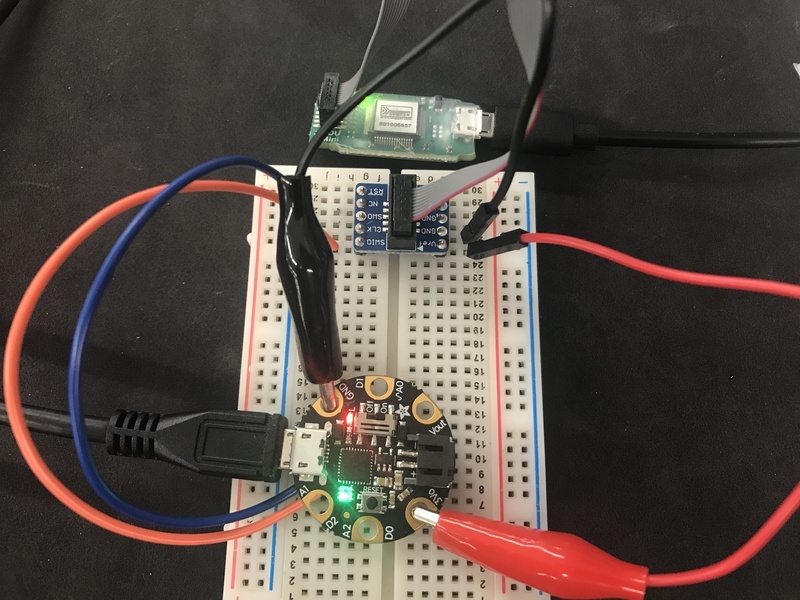
 opal raptor
@glad zodiac Also, you can try putting the firmware on a more common/cheaper board, and then retry doing it on the pycubed.
If there is a problem reading V from it, there might be a soldering issue?
glad zodiac
We got the boards made by a company who specializes in creating them so im almost positive im just doing something dumb
this is the current setup right here
Then we’d plug it in directly to the boards pin headers
 wicked field
Are those even soldered? Normally they'd go on the other side of the board so they don't keep the connectors from engaging too.
glad zodiac
Theyre not, it was a very jank process haha
Though the new ones we are using pins and placing them directly into the breadboard
theoretically it shouldnt make a big difference right?
wicked field
It's hard to get a reliable connection that way, and can cause all sorts of problems.
night lantern
@glad zodiac sorry for not seeing your question. I made a PyCubed forum to centrally locate questions. If you're having still having trouble post your question there: https://pycubed.org/forums
There's also https://pycubed.org/resources. I even have a page on programming the bootloader 🙂
 stark yarrow
Question: how much is radiation a problem in LEO?
rapid violet
stark yarrow
Question: how much is radiation a problem in LEO?
It's a big enough problem that you need to think about how to handle SEU-induced crashes and lock-ups, but it's not a big enough problem that it prevents you from using off-the-shelf chips. A common compromise is to have a COTS main processor with some sort of a rad-hard watchdog.
wicked field
The rad-hard 1802 chips are still made, but they're expensive low speed 8-bit CPUs.
 autumn sable
Is it practical to use shielding on smallsats or is their lifespan and overall mass too low to warrant using shielding?
rapid violet
autumn sable
Is it practical to use shielding on smallsats or is their lifespan and overall m...
Yeah, I think you'd generally need a thicker shield than a cubesat could fit, or justify, and even then there'd be a long tail of energetic events that you'd need to deal with anyway.
autumn sable
Ah so looking up the Van Allen radiation belts at least, it seems they're mostly made up of highly charged electrons
When I think of radiation I typically think of alpha/beta particles or gamma, but I think I see how shielding would still have issues if it's struck by highly charged electrons
Oh i'm silly I forgot beta particles are electrons
 fickle ice
I started a Discord channel "Space Imagineers" to discuss and share knowledge about all aspects of microsats... (not just the software) ... is it OK to post the link, or is it a no-go? 🙂
 echo root
fickle ice
I started a Discord channel "Space Imagineers" to discuss and share knowledge ab...
echo root
fickle ice
I started a Discord channel "Space Imagineers" to discuss and share knowledge ab...
Sure, fine to announce it here.
it's relevant
fickle ice
Ah the bot does not like it 🙂 ... If anyone is interested let me know, I can try to share it via pm
 chilly crystal
glad zodiac
Hey yall, im currently working on a PyCubed V4 small sat project and im running ...
chilly crystal
glad zodiac
Hey yall, im currently working on a PyCubed V4 small sat project and im running ...
Did you ever resolve this issue?
chilly crystal
@night lantern do you know if the adcs software of the V-R3x sats written in python?
night lantern
chilly crystal
<@492049388152029185> do you know if the adcs software of the V-R3x sats written...
Yes it was! Circuitpython (and the ulab library) were sufficient for adcs control on V-R3x.
I'm still waiting to publish my serial bus protection paper before I release all the V-R3x hardware/software/firmware
If you want to know more post the question to https://pycubed.org/forums and I'll follow-up there so folks will find it when googling 🙂
night lantern
chilly crystal
Did you ever resolve this issue?
See "programming the bootloader" page at https://pycubed.org/resources. I have a lengthy write-up for using AS7 to program adafruit UF2 bootloaders with solutions to common problems I've had students run into.
night lantern
rapid violet
It's a big enough problem that you need to think about how to handle SEU-induced...
@stark yarrow my absolutely favorite introduction to this topic is "Radiation Effects and COTS Parts in SmallSats". It's publicly available and touches on the many things that have to be considered. I also cover this briefly in my 2019 smallsat paper as well as provide detailed discussion of parts selection and the tremendous impact CircuitPython has on the equation.
Careful COTS paper: https://digitalcommons.usu.edu/cgi/viewcontent.cgi?article=2934&context=smallsat
2019 PyCubed Paper: https://digitalcommons.usu.edu/smallsat/2019/all2019/65/
buoyant edge
Greetings all! I have a booth and video conference instance available through Open Research Institute for the weekend of Ham Expo.
ORI is a 501(c)(3) dedicated to open source amateur radio satellite service R&D.
Any open source amateur radio or amateur radio satellite service content/projects/talks are welcome. Let me know what I can do to help you present your work to the attendees?
It's been a very nice show in the past with well-educated and enthusiastic participants.
 main zephyr
I am wondering if anyone has used the Macropad as a keypad in games? I have tried to program it with different characters and use those characters as the movement keys in games like Destiny 2 or CS GO but they never work. Other keys work for other movements but never the forward, back, left, or right commands. Am I doing something wrong or is it the game themselves that are preventing its use? Any ideas?
 icy locust
main zephyr
I am wondering if anyone has used the Macropad as a keypad in games? I have tri...
icy locust
main zephyr
I am wondering if anyone has used the Macropad as a keypad in games? I have tri...
Please post this question to #help-with-circuitpython if you're using CircuitPython, or #help-with-projects if you're not. We discourage cross-posting, but you won't get the assistance you need in this channel, so in this case, it's ok. Choose one of the channels I suggested and post there.
main zephyr
icy locust
Please post this question to <#537365702651150357> if you're using CircuitPython...
Thanks! I will.
 desert vector
Hello! I am Dennis, working on building application development platform in space that includes a fair bit of satellite subsystem simulation.
Our hardware
 frosty pelican
Cool! Great work so far
 royal turtle
Hello! saw a couple mentions of KubOS back in the history here and wanted to mention that im trying to help kickstart a community to keep KubOS alive, provide software/support and help beginners learn how to use it.
The group is called KubOS preservation group. info should be easily google-able online too if anyone wants to join the discord
 pastel summit
Hey! Hello guys.
I'm working with a team of students on cubesat. Our objectives for now is to identify the different subsystems (power, data and communications, ADCS, structure and Thermal management...) and how how they interact with each other..
I'm asking if there is an open source (I mean CAD files and the requirements needed for the systems to work in space) to begin with
desert vector
Open source of what exactly?
desert vector
You can find hardware and book knowledge fairly easy, but open-source satellite system software is scattered in bits and pieces all over the Internet
pastel summit
I found the psas's cubesat project on github(withe the name "oresat0" ) . They have an amazing files. I am asking if there are other
 dense edge
Pycubed has a lot of discussion about arch as well
mostly OBC and battery, but the OBC covers a lot of the functional side
PSAS is great, and if you want more student orientated cubesat developers, dm me, I can put you in touch with PSAS and others
pastel summit
Thanks @dense edge. I would really appreciate that. I will be grateful if you can help me with that 😁
royal turtle
@pastel summit I've been trying to put a document together lisying different flight software/platforms. Hope this helps: https://docs.google.com/document/d/1RqeasExobmd0mup7YJbBoXBqgbX_wQCgracwYh8BDt4/edit?usp=drivesdk

Google Docs
This is a list of known flight software to aid in future comparisons Flight Software KubOS https://github.com/KubOS https://docs.kubos.co https://kubos-preservation-group.github.io OreSat website: oresat.org Read this Proposal: OreSat: Oregon’s First Nanosatellite Github: github.com/oresat/get...
pastel summit
Hey @royal turtle! It's very helpful. Thank
royal turtle
pastel summit
Hey <@212925419521835009>! It's very helpful. Thank
Np! Feel free to add to it if you find anything else
pastel summit
royal turtle
Np! Feel free to add to it if you find anything else
I think I can help with that. Soon I will add all useful things in my research . Inchalh 😍
 mossy tangle
Does anyone know of any open source projects like pycubed that use microprocessors instead of microcontrollers?
night lantern
mossy tangle
Does anyone know of any open source projects like pycubed that use microprocesso...
I know of a few projects that run a Raspberry Pi as the flight computer and use pycubed to handle all the low level hardware stuff. Most implementations use a GPIO on pycubed to control whether or not the Raspberry Pi is powered or not
mossy tangle
Can the raspberry pi even survive in space though? I was not sure if radiation / reliability would be an issue @night lantern
Also, by the way didn't there used to be a manufacturing guide on the pycubed site? It disappeared so I was wondering if the new v5 version isn't fully ready yet for manufacturing
frosty pelican
Small sats rarely ever stay in space long enough for radiation to be a major concern
mossy tangle
Ah okay, I was wondering because I figured I'd have to use some parts with radiation testing
I would image it is still a good idea to have external radiation shielding though
Off topic, but how does pycubed deal with radiation? I saw that it said it was radiation tested, but was curious what specific mitigations it used to deal with it
night lantern
mossy tangle
Also, by the way didn't there used to be a manufacturing guide on the pycubed si...
I hid the old manufacturing guide since I haven't had the time to update it for v05
night lantern
mossy tangle
Off topic, but how does pycubed deal with radiation? I saw that it said it was r...
The smallsat paper on pycubed outlines how it approaches it: https://digitalcommons.usu.edu/smallsat/2019/all2019/65/
mossy tangle
Ah okay, but v05 is ready correct? Is there any cpl files at all if we want to have someone like jlcpcb install the components on the board for us?
I found a bom but not cpl
night lantern
@mossy tangle yes many folks building v05 now. What's cpl? component placement? If I forgot it in the github I'll generate one tonight for ya
mossy tangle
Thanks so much! Also, can you export a BOM file too? If I remember correctly there is a BOM but it is not able to be read by jlcpcb since it’s a html file. I can also just manually make it though too if it’s too much of a trouble to export it @night lantern
night lantern
mossy tangle
Thanks so much! Also, can you export a BOM file too? If I remember correctly the...
@mossy tangle I added position files to the zipped gerber folder as well as a csv BOM. See https://github.com/pycubed/hardware/tree/master/mainboard-v05
GitHub
Pycubed PC104 layout design files . Contribute to pycubed/hardware development by creating an account on GitHub.
mossy tangle
Thank you so much @night lantern
mossy tangle
@night lantern you might want to revert the commit actually because adding cpl actually breaks the gerber files for many pcb manufacturing sites since they usually have cpl created separately not integrated into the gerbers. As a result they fail to read the gerbers. Also, sorry to bother you about this
night lantern
@mossy tangle no bother at all! Thanks for the heads up. I've moved the position files to their own folder. 👍
mossy tangle
Thanks!
royal turtle
mossy tangle
Does anyone know of any open source projects like pycubed that use microprocesso...
im so very late to this party but i believe Beaglebone Black boards are open source hardware and can run KubOS, an open source linux-based flight software. not sure if that helps at all
 silent compass
Does anyone have experience with OpenLST?
 glossy oracle
night lantern
<@!416380473779027990> my absolutely favorite introduction to this topic is "Rad...
glossy oracle
night lantern
<@!416380473779027990> my absolutely favorite introduction to this topic is "Rad...
do you have any recommendations for resources on how to approach modelling radiation effects? i'm particularly interested in the tools mentioned in the pycubed paper (SPENVIS, Geant4, COMSOL, VisualTCAD), from what I understand SPENVIS gives information on the particles present, Geant4 models these particles and their transport through material allowing for the energy deposited in sensitive regions to be calculated, what is the purpose of COMSOL and VisualTCAD? are the same four tools used to quantify SEE potential as well as TID? are there any other tools I should know about? which ones are the most important to learn well?
night lantern
glossy oracle
do you have any recommendations for resources on how to approach modelling radia...
It all comes down to the scale at which you're modeling. You summarized the tools fairly well. I'd point out that SPENVIS uses many many tools. One of which that's very useful for applied stuff is SHIELD-DOSE2.
So in regards to scale, VisualTCAD is a semiconductor physics modeling suite. It's used heavily in transistor design. They also happen to have physics packages that let you apply radiation environments and see how your 1,10,1000 transistors might behave, but it's far from comprehensive.
COMSOL is used in many fields, and has immense depth to it like geant4. It's powerful at carefully capturing the countless individual particle interactions as atoms interact.
VisualTCAD, Geant4, CONSOL, these are tools that take tremendous time and knowledge to use properly. SPENVIS is more of an "end user" tool where (by making a bunch of assumptions and approximations) you can easily generate actionable data for an application through behind-the-scenes application of small pieces of these complex physical models.
The SPENVIS documentation is actually extremely useful because it concisely summarizes what why and where they're using a model or tool for a specific task. It also explains some of the physics.
Ultimately it comes down to what you're wanting to accomplish. Are you applied and creating spacecraft? Then you likely need ballpark SPENVIS stuff. Do you want to advance the field of radiation effects modeling? Then you'll likely want to take the plunge into geant4 or COMPSOL.
glossy oracle
night lantern
It all comes down to the scale at which you're modeling. You summarized the tool...
I'm hoping to get a better idea of what the space radiation effects industry involves to understand better if I want to consider it as a career choice, it's interesting to me since it's one of the ways I can apply and develop further the skills I learnt during my particle physics PhD (particularly referring to Geant4), and I'm trying to gauge how different simulating sensitive electronics is to simulating detectors (ideally for me they will be quite similar), but it's still quite unclear to me how Geant4 is used here, I read a paper where the TID was computed by using geantinos to find the equivalent aluminium shielding thickness and then applying dose depth curves from shieldose-2, I don't understand the advantage of this over just simulating the radiation environment directly in Geant4 and finding the energy deposit that way, looking at some companies hiring radiation effect engineers SpaceX wants one or more of GEANT4, MCNPX, NOVICE, SpaceRad, FASTRAD or CRÈME, Amazon wants one of FastRAD, NOVICE or GEANT4 and Ax8/Ax9, CREME96, SPENVIS, so it would seem Geant4 specifically has a lot of use in this field but it's still unclear to me how it is used exactly and if Geant4 alone contributes enough to the field such that I can rely on it to compensate my lack of experience and interest in other tools, and although I can see how Geant4 would be useful for TID I'm not sure if it is useful for SEE or if another tool is required for that - would you say that experience with Geant4 only and none of the other tools is sufficient to a) enter the industry and b) work in the industry without having to spend a lot of time working with other tools that are likely less interesting to me?
 bright heart
Hey all!
Anyone here with an interest in space/astronautics and Raspberry Pi Coding?
Because I need someone for my startup who knows Raspberry Pi coding, AND has an interest in space sciences as well.
frosty pelican
bright heart
> ***Anyone here with an interest in space/astronautics and Raspberry Pi Coding?...
Look on the Adafruit Jobs board: https://Adafruit.com/jobs
Find maker jobs in 3D and CAD, Art, Design, Education, Embedded Development, Engineering, Fabrication, Marketing and Communications, and Web Development
bright heart
frosty pelican
Look on the Adafruit Jobs board: https://Adafruit.com/jobs
Okay thanks
frosty pelican
bright heart
**Any idea if Lora Radios can communicate from Low Earth Orbit?**
Well, they bounced a LoRa signal off the moon an received it back, plus lots of LEO cubesats use LoRa for sending telemetry data. So I would definitely say yes
The very first satellite built entirely with open hardware was only put into orbit in May last year. It was the UPSat cubesat, and was…
bright heart
Amazingggg!
bright heart
frosty pelican
Well, they bounced a LoRa signal off the moon an received it back, plus lots of ...
So, is there an alternative to building a LoRA Receiver by myself?
Something like LoRA Satellite IoT...?
 covert inlet
Just don't try to launch your own satellites. Unless you're playing Kerbal Space Program, then it's A-OK.
covert inlet
bright heart
**So, is there an alternative to building a LoRA Receiver by myself?**
What are you trying to accomplish with LoRa?
bright heart
covert inlet
Just don't try to launch your own satellites. Unless you're playing Kerbal Space...
Well well well... I am trying this exact thing
I will be launching a ChipSat by the end of 2022
Eveerything is done, the PCB design is also complete
Just that I am totally confused about what communication module I should use
covert inlet
So, wait, you're launching a satellite but you can't decide on how to talk to it once it reaches orbit?
bright heart
Yup
Thats the truth
See, I can use LoRA, or RockBlock by SparkFUn
But I want it to somehow use Satellite IoT
covert inlet
Does that exist?
rapid violet
The RockBlock uses Iridium, so it would be a slower data rate, but the Iridium system would handle all of the radio stuff for you, so on the ground it would connect via the internet to you.
covert inlet
Iridium is a bit pricey, for sure.
bright heart
covert inlet
Iridium is a bit pricey, for sure.
Yup it is
rapid violet
I also don't know offhand if Iridium is happy with talking to things which are themselves in orbit.
bright heart
250$ for the module itself, then you gotta purchase credits for sending and receiving messages themself
bright heart
rapid violet
I also don't know offhand if Iridium is happy with talking to things which are t...
Lol yeah another drawback
covert inlet
I am pretty sure Iridium have everything pointed downwards (apart from possibly meshing with other Iridium sats), so how would they send to something else in orbit?
and I mean, they'd have to know where your satellite is to actually be able to direct a signal at it, no?
rapid violet
They are up at about 800km, so I presume the chipsat would be beneath them, but it would be transitioning between beams pretty fast, and would have some Doppler frequency shifts, so it's not obvious that it would work.
bright heart
covert inlet
and I mean, they'd have to know where your satellite is to actually be able to d...
No I honestly am not worried about uplink messages from ground to the sat
bright heart
rapid violet
They are up at about 800km, so I presume the chipsat would be beneath them, but ...
Yeah the altitude difference is what satisfies me
Okay so
How do I receive LoRA Signals here on Earth?
covert inlet
yeah, that's going to be wild to try to figure out
covert inlet
bright heart
**How do I receive LoRA Signals here on Earth?**
I mean, you can listen to satellite commands with HAM radios, I doubt it would be different with a LoRa signal?
rapid violet
Ideally you'd probably want a tracking satellite dish hooked to a relatively garden-variety LoRa module.
Although again the Doppler may be a little weird, so in the general case you might need a SDR transceiver instead.
covert inlet
I have several LoRa modules, mostly RFM9x in 433 MHz.
bright heart
Amazing mate
covert inlet
I guess? Why you ask?
I like using them with the bbq10keyboard featherwing by solderparty, makes great communicators... they get about 1-2km without obstructions, and if you use a directional antenna, you can get upwards of 15-20km. And I always forget what those antennas are called... there's a Y in there, I swear.
Yagi, that's it.
swift estuary
They can certainly go further than 1-2km if you have a good whip antenna and no obstructions, in fact with directional antennas and optimized radio settings, the longest lora transmission recorded was limited by the curvature of the earth. Though as soon as you hit something you're done, and your air time is going to be well over a second for a short message, lmao
swift estuary
bright heart
**Anyone here who has a LoRA Module please?**
Satellites are fascinating but costly and therefore only available to governments, the military, and, recently, also billionaires like Elon Musk (SpaceX) or Jeff Bezos (Amazon).
Undiscovered for most, there is another trend: Universities and small companies can build and launch satellites. Because most of these satellites use open transmission ...
bright heart
Thankssss
 sharp mural
Hello Adafruit community, the CubeSat I designed, INfiniti ONE, will have its first test launch tomorrow. Tune in on the live tracking or receive its broadcasted messages on rtty/4fsk ->> 434.737 MHz https://www.nausolaris.com/post/infiniti-one-launch-announcement

NAUSOLARIS
The time has finally come - INfiniti ONE CubeSat prototype is about to fly on 11th December. It will be launched by a high altitude balloon (HAB) from a tower near the Hague. The predicted launch path, given a launch around noon, can be seen below as the black stripe. Each red dot is a predicted landing spot given an one-hour difference in laun...
bright heart
sharp mural
Hello Adafruit community, the CubeSat I designed, INfiniti ONE, will have its fi...
What time exactly please?
Anyone here who knows Raspberry Pi Coding, and has an interest in space sciences aswell?
 tiny sluice
bright heart
**Anyone here who knows Raspberry Pi Coding, and has an interest in space scienc...
tiny sluice
bright heart
**Anyone here who knows Raspberry Pi Coding, and has an interest in space scienc...
Me ✋✋✋
bright heart
tiny sluice
Me ✋✋✋
Amazing
bright heart
tiny sluice
Me ✋✋✋
I will carry on further in the private chats
obsidian sky
rapid violet
I also don't know offhand if Iridium is happy with talking to things which are t...
Iridium modules has been used on multiple satellites. We actually use RockBlock ourselves. But you have to work with Iridium directly which can be tricky to get through to them.
obsidian sky
rapid violet
They are up at about 800km, so I presume the chipsat would be beneath them, but ...
It does work, but coverage is spotty. We get a connection once or twice a day. Sparse, but reliable.
obsidian sky
bright heart
Yeah the altitude difference is what satisfies me
What happens is the coverage at, say 400 km, is maybe 50%, so you go in and out of coverage. IMO Doppler is not an issue.
obsidian sky
bright heart
**Anyone here who knows Raspberry Pi Coding, and has an interest in space scienc...
Aerorust and Kubos Preservation Group discords are good for this.
obsidian sky
bright heart
250$ for the module itself, then you gotta purchase credits for sending and rece...
For this these costs were nothing compared to cost of working with iridium to get them to file the experimental authorization they need to talk to a third-party satellite
bright heart
obsidian sky
For this these costs were nothing compared to cost of working with iridium to ge...
Oh...
bright heart
obsidian sky
What happens is the coverage at, say 400 km, is maybe 50%, so you go in and out ...
Thankssss
royal turtle
@bright heart whats your satellite project's mission? You got any fun payloads or any particular software youre running?
bright heart
royal turtle
<@790933153178714122> whats your satellite project's mission? You got any fun pa...
Technology demonstration is the main aim
Then we are aiming for the Breakthrough StarShot Mission
The software is C++
bright heart
royal turtle
<@790933153178714122> whats your satellite project's mission? You got any fun pa...
If you wish to have your payload onboard, please contact me via personal chats
eternal silo
@bright heart what frequency are you planning to use for the satellite? Is there any limitation?
bright heart
Hey
Yup, there is the limitations of the allowed frequency in every continent
We will be going with the 433Mhz frequency, transmitted in LoRA, OOK, FSK Modulation
eternal silo
@bright heart 433 MHz is a amateur radio band ---- edit: it is not I misread, see my messages bellow.
oops my bad, radio amateur frequency is 435-438MHz... 433MHz is ISM band.
But not sure if it is for space applications
@bright heart in what region are you going to transmit?
eternal silo
I guess there will be a GPS module to control where to transmit or not, right?
bright heart
eternal silo
I guess there will be a GPS module to control where to transmit or not, right?
Yup
bright heart
eternal silo
<@!790933153178714122> in what region are you going to transmit?
Asia on the first satellite
Will try for Europe on the 2nd try
eternal silo
I see, thanks for the info! 🙂
frosty pelican
simple 1U cube satellite chassis

first iteration will always be a wee rough, but doing more to get a feel for size
12hrs to prototype. nice.
 frosty pelican
Curious for those who’ve 3D printed for space. Aside from ABS, are there any other plastics that are suitable for cube satellites?
rapid violet
In another server, there was a discussion about this recently. PerFORM, PEEK, and Ultem were mentioned as good for vacuum. There was also a reference to a paper that argued PLA was surprisingly good over longer lifetimes: https://digitalcommons.usu.edu/cgi/viewcontent.cgi?article=4647&context=smallsat
frosty pelican
I had seen some groups using PLA with Carbon Fiber for their chassis material which seems like it might be a good option for short missions.
 polar spindle
Not sure if this is the right channel but does anyone have a bmx160 imu available that I could buy off of them? It's the same imu thats on the pycubed v5
This is what im looking for: https://www.bosch-sensortec.com/products/motion-sensors/absolute-orientation-sensors/bmx160/
Bosch Sensortec
The small, low-power, low-noise, absolute-orientation sensor BMX160 for wearables enables immersive gaming, high performance and optical image stabilization.
gleaming pollen
@polar spindle I think I have a BMI160 - not the same thing, but it might be useful for you.
polar spindle
Thank you but Don’t think that’ll work… we need it to also have a magnetometer in it
rapid violet
There are some BMX160 breakout boards from DFRobot in stock at various places, if you were willing to desolder the chip...
fickle ice
a little on the side, but this is interesting: a hackathon for applying blockchain to cubesats: https://www.canva.com/design/DAE6Xf9goyU/3L6b0BM3ad34jbtyQApbng/view?utm_content=DAE6Xf9goyU&utm_campaign=designshare&utm_medium=link&utm_source=publishpresent#1
polar spindle
hey so we bought these 3v3 temporary regulators for our pycubed v5 board: https://www.adafruit.com/product/2166 and was wondering which holes you would recommend we solder it to? There are 3 pins on the regulator (Vin, Gnd, Vout). We see a place where the Gnd and 3v3 holes are next to each other, but wasn't sure where the Vin should go. Is it on a different part of the board and would we have to use a jumper for Vin?

Need a nice little 3.3V regulator? We rather like the very-low-dropout L4931 from ST! This little guy will help you get your 4-20V battery or wall adapter down to a nice clean 3.3V with 2% ...
rapid violet
polar spindle
hey so we bought these 3v3 temporary regulators for our pycubed v5 board: https:...
I don't really have the context for what you're doing, but it looks like the Pycubed v5's 3.3V regulator normally runs off of VBATT, so if you're replacing the onboard switching regulator with this one, that's what you'd probably hook to VIN.
night lantern
polar spindle
hey so we bought these 3v3 temporary regulators for our pycubed v5 board: https:...
@rapid violet is correct, you want your VIN to be connected to the VBATT for that regulator you linked. There are dozens of places you could bodge the LDO into place. I threw together a quick picture (attached) of one of many places that came to mind. This will work fine for bench testing, software development, etc.. but don't fly this 😜
 polar spindle
Got it, thanks ! @rapid violet @night lantern
So without the regulator we’ve been having to connect the pycubed to a bench power supply, but this will allow us to test code on the pycubed etc without needing the bench power supply, correct?
As in , could we now just connect it to a laptop via usbc and be able to test out the board?
night lantern
polar spindle
So without the regulator we’ve been having to connect the pycubed to a bench pow...
Yep! 👍
polar spindle
night lantern
Yep! 👍
Ok got it thanks!
compact stump
Hello, spacecraft designer here - new to the maker world but not to software / engineering applications. I just discovered this Discord. I've got a few questions. First, a chunk of my work involves K-12 outreach. The Pycubed project is new for me but it looks interesting, so I'll direct my first two questions there:
- Do people with experience with this design have any recommended fab houses that are willing to do the small SMD components? We can do the larger chips in-house but most of our automated electronics fab groups are booked up and very expensive to use.
- Does anyone know of a similar project that is microcomputer-driven? I've a need to figure something like this out (What they want is similar to AMSAT's simulator software-wise) and one of the learning outcomes is operating in Linux.
Second, I have upcoming projects and lab equipment that might mesh somewhat with this project if there are people interested: - Does anyone know if there is a thermal management component to this project already? I've got thermal imaging and a thermal/cryo vacuum chamber that'll hold a 3U test article, plus materials that we could rig a radiator and small thermal straps.
- I'm teaching an ADCS class in the Fall, and will be developing a small test board this summer for a lab component. It's possible that could work its way into a similar open-source project if someone is interested in helping with this. For starters I need to figure out a prototype board with more than one gyro.
frosty pelican
compact stump
Hello, spacecraft designer here - new to the maker world but not to software / ...
Cyber City Circuits is great for local US fab houses. They also help with design so they could probably help you develop what you’re looking for.
As for microcomputer driven cube sat projects/software. I believe there is a platform called Cosmic but I’d have to look it up to verify
It’s a flight control software that runs on top of a raspberry pi
 tulip yew
Hello Guys,
Myself Atharva, Just recently started making Cubesat,
I want some for from someone who make on-board computer using Raspberry Pi zero 2w or CM 4 or atleast rasp. Pico,
Is here any raspberry Pi developer, Who can please help me Little to get started,
Please help me
frosty pelican
tulip yew
Hello Guys,
Myself Atharva, Just recently started making Cubesat,
I want some f...
Adafruit jobs board is a great place to start if you’re looking for someone to help you with designing it
Be aware that SBCs are huge undertakings so it could be rather expensive vs buying a Raspberry Pi, even at scalper prices
rocky citrus
i'm working on a PongSat but i can't think of anything to put in it. Any suggestions?
it already has a qt py m0 as the processor along with a flash chip, accelerometer, and pressure sensor
compact stump
rocky citrus
i'm working on a PongSat but i can't think of anything to put in it. Any suggest...
Like all satellite design, it's worth starting with your requirements. Consider Size, Weight, and Power (SWaP) to begin with. What volume is available, and is the available space sufficient for a small breakout board, or do you need an analog sensor or other small standalone? Is there a mass limit? How close are you to your power limits? (Generally, there are minimum 3 to consider: peak amperage draw, battery life/storage, and thermal limits). I've seen some small CO2 & volatile sensors included in projects this size. GPS is power hungry but could work - most breakouts are too large however. If you have open sight lines during the mission you could have an ambient light sensor and/or UV sensor with pretty low overhead. Same with any other optics. If you have an on-board battery a cheap option to get some telemetry could be including a current sensor to measure draw on the battery. There are all sorts of options, but a good place to start is with the applicable requirements
 fallow wadi
Hi, I've published an article on smallsat design. I'm teaching myself how to do it. Please feel welcome to comment on the post: https://jbcurtin.io/smallsat-design-one-en/
compact stump
fallow wadi
Hi, I've published an article on smallsat design. I'm teaching myself how to do ...
What type of feedback are you looking for? Review of the resulting design in context of the proposed objectives? Or, review of the approach taken toward the design? For example, you could have an awesome, simple, elegant design that you have absolutely no evidence outperforms alternatives. Or, you could follow a meticulous, well-documented design process that results in a satellite that is far from optimal.
Also, I feel I should note that "smallsat" and "CubeSat" are not synonyms, rather CubeSats are a subset of smallsats with very specific, standardized properties. Thus, designing a CubeSat is a fairly different process than SmallSats in general. The hard constraints of the CubeSat form factor (notably mass and dimensions) make for slightly different approaches.
compact stump
I can try to leave more specific comments on your post if I get a chance/remember to. But as a big picture note a good way to approach subsystems goes something like
A) Determine Requirements (for example you say you need to be able to point the camera - be more specific: pointing accuracy within 1 degree, hold angular velocity less than 0.1 deg/s for at least 2 seconds);
B) Identify and Select Alternatives: List the various ways of implementing a subsystem (for example the power source could be batteries that deplete over time, or solar panels, or a reaction wheel that stores kinetic energy). Then, selecting which option to choose can be simplified (pros/cons list, scoring rubric, etc) or more complicated (in-depth trade study backed by simulation);
C) Implement Design Alternative: Suppose we selected batteries, now we need to determine how large, which chemistry, etc. If we have solar panels we need to size them based off of peak loading, eclipse periods, equipment duty cycles, etc;
D) Verify Design Meets Requirements: Analysis here would check off that the requirements are met - level of fidelity depends on maturity of design from book equations and datasheets to full simulations including the other subsystems;
E) Integrate the design of subsystems into a full system, verify that the system-level objectives are met, and determine if there need to be changes on the requirements for each subsystem (for example they need to be lighter or use less power), then return to A;
For a basic introduction to systems engineering, which is useful for breaking down more complex projects, I recommend Matlab's video series at https://www.mathworks.com/videos/series/systems-engineering.html . From your post, I would guess that you have more of a software background. I'm not sure how many people are interested in this subject that didn't go to school for it, but if it seems like a lot I might go through the effort of moving my design lectures from our in-house video system to something like YouTube. I just usually don't bother to think about them after they are posted.
This series provides a broad overview of how systems engineering helps you develop complex projects that meet program objectives in an efficient way.
fallow wadi
Thank you for these notes, @compact stump . I'm going to review today and respond promptly
fallow wadi
After review, it seems I'll need to perform quite a bit more research on what you've shared with me @compact stump . Please be patient as I learn more about your recommended approach.
Yeah, I have a software engineering background. The Microcontroller I bought to experiment with is a Cortex M0, but I might upgrade to a Cortex M3 when I have "good enough" soldering skills.
I'd watch the videos, if you posted the lectures on Youtube. I too, don't know how large the audience is to design satellites. I know I'm just starting this process, but I'd like to consider opening a shop showing k-12 students at some point. Right now, I'm on track to open-source the designs I come up with, as templates for others to learn from or use.
I didn't include sources on my post because it was meant to be high level. In the more detailed posts, I plan on providing sources. Would you mind sharing a credential with me so I may credit you? ( I'm novice at academic/journal writing style, but I do take from the format as much as I can. )
In future posts, my plan is to do two things. Expand design on each subsystem, I'm first starting with Communications Subsystem. Secondly, I'll expand my understanding around mission planning. Specifically, Identifying what kind of scientific missions are needed by various organizations around the world. I'm starting with US based organizations, and as I gain more experience I'll include Japan and EU.
compact stump
email me at bkaplinger@ku.edu and I can follow up. It's easy to get lost in your expertise (for example Comms and C&DH) because that comes easier, but I would encourage you to start with the mission-level requirements and use that to determine your initial focus. In the world of CubeSats, some do not need attitude control at all, for example, while some have needed arcsecond-level pointing accuracy. A system you can model on the desktop using I2C sensors probably does not need a very extensive communications system, but a high-resolution camera or high-throughput payload would. So mission requirements takes you to modeling the payload and what it needs to be capable of, and for example data collection rate plus some minor telemetry would tell you what the communications systems needs to be capable of. I often tell my students that they should be able to tell me what a system is composed of (or "looks like"), but even if they can't arrive at that solution yet they need to be able to tell me what it should be capable of doing. In the "real world" sometimes a totally acceptable solution is to take your requirements to a contractor and ask them to figure it out (though that costs extra money). For comms systems in CubeSats, I've seen everything from 433 MHz monopole wires connected to basic transceiver module chips, to a deployable Ka-band parabolic dish with a 1U dedicated communications hardware. It highly depends on what you need to pump through it and required reliability. It also depends strongly on the ground segment, which is typically a huge unknown in early stage design. Some build a dedicated ground station. There are also amateur networks, and dedicated professional networks. Or even, you can just pay Amazon Web Services ! There are tons of options that drastically change what the on-orbit system needs to do.
fallow wadi
compact stump
email me at bkaplinger@ku.edu and I can follow up. It's easy to get lost in your...
Thank you @compact stump , I'll send an Email Friday or Saturday. I only have the weekends to work on this project.
polar spindle
Hello everyone! Im currently prototyping a light sensor for a cubesat to help w attitude determination and I was wondering if there is a "limit" to how much light this sensor could handle: https://www.adafruit.com/product/2748#description . When I put an iphone light to it it registers ~3.3V output, but we will ofc be using it in space so if anyone had any insight into if this would be a good idea/how the sensor would fare with direct exposure to the sun it would be greatly appreciated. Thanks!

Add a teeny analog light sensor, the ALS PT19 analog light sensor is a great way to upgrade a project that uses a photocell and needs RoHS compliance. Due to the high rejection ...
rapid violet
polar spindle
Hello everyone! Im currently prototyping a light sensor for a cubesat to help w ...
Yeah, I don't think this is going to be suitable for you, as it seems to be optimized for mostly indoor sorts of illumination levels. The datasheet graphs only go up to 10klux, and full sunlight is more like 100k.
On the plus side, if you have a sensor which is happy with full sunlight on the ground, it will just be slightly brighter in space, so it should still work.
polar spindle
ah, got it okay
rapid violet
If you can deal with digitial interfaces, you might consider https://www.adafruit.com/product/4162

Vishay has a lot of light sensors out there, and this is a nice simple lux sensor that's easy to add to any microcontoller. Most light sensors just give you a number for brighter/darker ...
polar spindle
I will see how the previous sensors perform in daylight tmrw, as Im currently just trying it in my room at night. But yeah if it's 10x less capacity then will prob need to switch
polar spindle
rapid violet
If you can deal with digitial interfaces, you might consider https://www.adafrui...
thanks! will def check this out too. Do you have an opinion on whether digital or analog sensors are better for cubesat applications or do you think it does not matter too much?
rapid violet
My personal preference would be for digital, since it isolates any analog noise considerations inside a chip designed by professionals instead of exposing it to external wiring and stuff. But that's probably my bias as a software instead of a hardware guy... get things into bits as fast as possible, heh heh.
frosty pelican
Could probably also use a photodiode and a filter
 wise sedge
polar spindle
Hello everyone! Im currently prototyping a light sensor for a cubesat to help w ...
wise sedge
polar spindle
Hello everyone! Im currently prototyping a light sensor for a cubesat to help w ...
Radiation up there in cubesat orbit? 🤷♂️
rapid violet
It is an issue. You can usually get away without using rad-hardened chips for short-life missions if you have things like watchdog circuits to reboot on corrupted memory, etc.
wise sedge
rapid violet
It is an issue. You can usually get away without using rad-hardened chips for sh...
I'm thinking life-span of a piece of silicon photo-sensor exposed directly to the radiation...
rapid violet
I don't think that would necessarily be a huge concern. Solar panels are made from exposed silicon, for example.