#circuitpython-dev
1 messages · Page 33 of 1
 proven garnet
 jaunty juniper
though we could use rp2040js to verify that it is


 devout jolt
Hi! I have a (quick?) CircuitPython library aesthetics vs efficiency question. This is not critical, but I am curious: does const() really help? How do I test this? I've not found any real data on the benefits of const.
In the adafruit_seesaw library there are two approaches for defining a configuration class:
https://github.com/adafruit/Adafruit_CircuitPython_seesaw/blob/main/adafruit_seesaw/attiny8x7.py
https://github.com/adafruit/Adafruit_CircuitPython_seesaw/blob/main/adafruit_seesaw/samd09.py
The "attiny8x7" approach is obvious & readable, while the "samd09" approach uses const for most everything, The result is rather verbose for the amount of information conveyed. Is it worth it? Also, is const() useful when inside of tuples like analog_pins? For Seesaw, every bit of speed can really help, so I'd like to regularize these config classes if so. Thoughts?
 slender iron
const() only helps in very specific cases
In this case, I don't think the names in the samd09 file provide any extra info
devout jolt
too bad we can't have const int tuples
slender iron
I'm not sure what you mean by that
devout jolt
like analog_pins = (1,2,3) vs analog_pins = (const(1), const(2), const(3)) I assume the latter does nothing useful
slender iron
ya, the latter will just leave in extra function calls during the tuple construction
b"\x01\x02\x03" is the most compact way of expressing it
devout jolt
(this is the crux of my question: the samd09 version uses const() and then puts those in tuple)
jaunty juniper
the samd09 version pretty much compiles to the same as the attiny8x7
slender iron
and by "compiles" that includes mpy-ification
jaunty juniper
_PWM_0_PIN = const(0x04)
_PWM_1_PIN = const(0x05)
_PWM_2_PIN = const(0x06)
_PWM_3_PIN = const(0x07)
pwm_pins = (_PWM_0_PIN, _PWM_1_PIN, _PWM_2_PIN, _PWM_3_PIN)
becomes:
pwm_pins = (4, 5, 6, 7)
both in memory when loaded and in mpy
slender iron
its a way to give a value a name without the name being included in the compiled version
 sage elm
hi, I am trying to mount my circuitpython storage on an android device via termux. Does anyone know what drivers are needed on a linux device to mount it? I am hoping if I can find an equivalent for termux/android I can get it to work.
sage elm
yea the mass storage. I am able to see the device in lsblk and in /sys/bus but nothing from fdisk -l. When connected to an x86 linux laptop it shows as fat12 and I am wondering if somehow it can't read that fs type
devout jolt
slender iron
its a way to give a value a name without the name being included in the compiled...
yeah so bummer there's no way to have a const tuple (e.g. mapping to int16_t[] or similar)
slender iron
sage elm
yea the mass storage. I am able to see the device in lsblk and in /sys/bus but ...
jaunty juniper
note that the micropython import itself does add some bytes to the mpy though, so that's not quite free 🤔
(but it beats keeping the variable names)
(but it doesn't beat not using names)
(except in readability)
sage elm
slender iron
<https://learn.adafruit.com/using-the-android-circuitpython-editor/overview>
yea, read that and it vaguely mentions an issue and says it is unsupported but I was hoping with a little work I could get it working. This is a headless server so that android editor doesn't work in this case
slender iron
@lone axle is the guide author
devout jolt
slender iron
I don't know what you mean by const tuple
in the same way that const(int) essentially does a preprocessor fill-in of that int to where it's used (instead of making a python number), it would be cool there was a similar fill-in from tuple(ints) to an array of ints, and get comparable speed benefits from doing if num in my_tuple
devout jolt
correct, but I assume a linear search of int_t would be faster than a linear search of mp_obj_t (or whatever the appropriate type is), especially for small lists like analog_pins
jaunty juniper
no but it's still python, there is no int_t, a tuple remains a tuple, you want an array if you want optimized for type
or a bytearray
devout jolt
jaunty juniper
no but it's still python, there is no int_t, a tuple remains a tuple, you want a...
yeah so this answers my original question of "should I make attiny8x7.py look like samd09.py?" with "no"
slender iron
agreed. samd09 would be fine like the attiny8x7 version
devout jolt
because that pinmap is accessed for every adafruit_seesaw analog call, so making it as fast as possible is worth it. but looks like, not much I can do
slender iron
because the names don't add aty value
jaunty juniper
devout jolt
yeah so this answers my original question of "should I make `attiny8x7.py` look ...
I would usually say yes, for readability, it has no cost when in use, but in this case i don't see the point in replacing "18" with "_PIN_NUMBER_18"
 lone axle
@sage elm I do not know how to mount the device from terminal, so can't offer much help on that front. I do think the issue was that Android didn't have support for FAT12 or whatever was needed to read from CIRCUITPY drive. I've noticed that some newer devices do have support for that though. On my newer phone if I plug in a circuitpython device with an OTG cable the OS notices when it's connected and basically mounts it automatically just like it would for a thumb drive or external hard drive. I maybe had to choose the "transfer files" or similar option from a thing in the notifications, but I'm not 100% certain, it's been a little while since I messed with it from Android.
The guide hasn't been updated to reflect it, but at least some devices can now connect it like storage and use it basically the same way that a PC does rather than requiring any extra mechanism to transfer files.
jaunty juniper
devout jolt
because that pinmap is accessed for every `adafruit_seesaw` analog call, so maki...
or in this case _PWM_PIN_POSITION_IN_THE_LIST
lone axle
This page makes it seem like you might need to run a command in order for it to request permission for accessing storage, which I do think would be required to get it to be able to see or edit files on CIRCUITPY. If you haven't run this command and accepted the permission I would give that a try. https://wiki.termux.com/wiki/Internal_and_external_storage
jaunty juniper
devout jolt
because that pinmap is accessed for every `adafruit_seesaw` analog call, so maki...
are you having speed issues with seesaw ?
 tulip sleet
lone axle
<@349769145740558348> I do not know how to mount the device from terminal, so c...
tulip sleet
lone axle
<@349769145740558348> I do not know how to mount the device from terminal, so c...
@sage elm @foamguy that's right, FAT12 was not supported on Android, at least in the past
sage elm
@lone axle thanks for the pointers!
tulip sleet
there were some third-party programs that did support it, maybe "manually"
sage elm
@tulip sleet @lone axle that should be a software thing right? I am running a custom firmware with root access so I am wondering if I might be able to get around it if it is not a hardware issue
tulip sleet
Some quick websearching does not turn up "now it's supported". The latest Android device I have is a Samsung tablet that's Android 11
lone axle
one more gotcha I found, if you are using an OTG cable with either micro, or USB C on the Android side... When I was messing with it, it was pretty particular about which way the stuff was plugged in (i.e. OTG on the android side, vs. OTG on the microcontroller side. iirc it liked on the android side better, but I'm not 100% certain any more.)
tulip sleet
sage elm
<@329766224093249548> <@382939733107408897> that should be a software thing righ...
it is not just a matter of turning it on; somebody has to have written the code
devout jolt
jaunty juniper
are you having speed issues with seesaw ?
in general, yes. reading 8 pots or 8 encoders at once introduces enough lag in a UI that some tricks have to bring the lag down to make a UI responsive
lone axle
There is support in some newer devices. I assume support was added to Android itself, because I think it's unlikely the manufacturer of my specific device would have done the work for it, but I also don't know that for sure, or when it may have been added. Just know my current phone can work with them successfully whereas my older ones could not.
sage elm
fair, but I guess if it is a driver that I might be able to install from a repo then it could work? termux has access to linux repos (I think debian) so was hoping they might have a package for a driver
tulip sleet
lone axle
There is support in some newer devices. I assume support was added to Android it...
what android version is your newer phone
lone axle
Current phone says Android 9.
sage elm
mine is running lineage os version of android 11
I might mess with changing cables or something but serial port works fine from the terminal so I think that should mean that data connection is working
I guess if it is a FAT12 issue maybe I can bug the lineage OS folks to see if anyone has info on that.
tulip sleet
Thonny uses the REPL to do file I/O, so in principle you can avoid needed to access directly. There are other tools (ampy, outdated, and various tools for MicroPython) that do similar things. Whether they will run on Android is a q
lone axle
I just verified on my device with a USB C OTG cable when I plug it in like Phone> <OTG> <Micro USB Cable> <PyGamer Device. It shows up automatically in my notification drawer with 2 entries. One about being connected as a keyboard (I assume because CP presents as HID also), and another that says "Adafruit USB Drive, For transfering photos and media". If I click on that latter one it opens up a file browser and I can see the contents of CIRCUITPY.
sage elm
oh interesting. thanks! so somehow it is possible. what type of phone is this?
jaunty juniper
note that the official command line tool for Micropython is now mpremote, it's not fully supported with CP, but maybe we could look into some of it (not support mount but check that it can run and upload files)
lone axle
Mine is a CAT S61, not exactly widely known or used.
tulip sleet
jaunty juniper
note that the official command line tool for Micropython is now **mpremote**, it...
some of these tools used uos internally and similar stuff. It would be nice to have some kind of tool like that besides Thonny.
what does mount do that we can't do?
sage elm
oh ok nice I will check out ampremote. I mostly just want to be able to use my local ide and then scp the files over to update the code
tulip sleet
local IDE on Android?
sage elm
local ide on pc
lone axle
interestingly it seems microcontroller dependent too though. When I plug in a Feather ESP32S2 TFT with the same cabling, the microcontroller turns on and Android has a notification entry that says "Android system charging connected device via USB". If I click on it, it takes me to a menu of different ways to connect, but all of them are grey'd out. I can't actually select anything in there. And I do not have the the entry about file transfer and it doesn't seem like Android can see any of the files for this device as opposed to the PyGamer.
tulip sleet
i'm confused, why not just plug the board into the PC?
I wonder if the PyGamer is big enough to have a FAT16 filesystem
sage elm
I have an led matrix panel connected to my wall which has the usb c connected to the android device. I wanted to use the android device as a server to be able to scp the files to. I don't want to take the device down everytime I want to test something
the circuitpython device is a Adafruit matrix portal which has the M4 chip
jaunty juniper
tulip sleet
what does `mount` do that we can't do?
it's really interesting, it mounts a HOST directory onto the board. Meaning from the mpremote REPL you can execute code and import modules that are not on the board - for a speed cost on import
lone axle
does it have it's own seperate power source? Another potential concern would be if the Android USB port will supply enough power to drive the matrix.
jaunty juniper
mpremote uses uos.ilistdir() I noticed, and maybe ubinascii, but i got it to work by creating those as .py files
tulip sleet
jaunty juniper
it's really interesting, it mounts a HOST directory onto the board. Meaning from...
ah ok, I thought maybe it was a FUSE filesystem
sage elm
it seems to be giving it enough power so far. I can also connect to the serial console so data seems to possibly be working over the same cable
lone axle
I will try a Matrix Portal with the same setup so you can have at least one other data point with that hardware.
sage elm
thanks @lone axle !
lone axle
The matrix portal behaves the same as the ESP32S2 Feather TFT, so does not connect and allow editing files :(. Dan may be right about the PyGamer using a different FAT because of it's larger storage.
tulip sleet
PyGamer is only 8MB, so I wouldn't expect it to be FAT16, hmm
sage elm
yea from my linux laptop. fdisk -l shows it is formatted as FAT 12. is pygamer a version of circuitpython?
lone axle
it's a hardware device: https://circuitpython.org/board/pygamer/
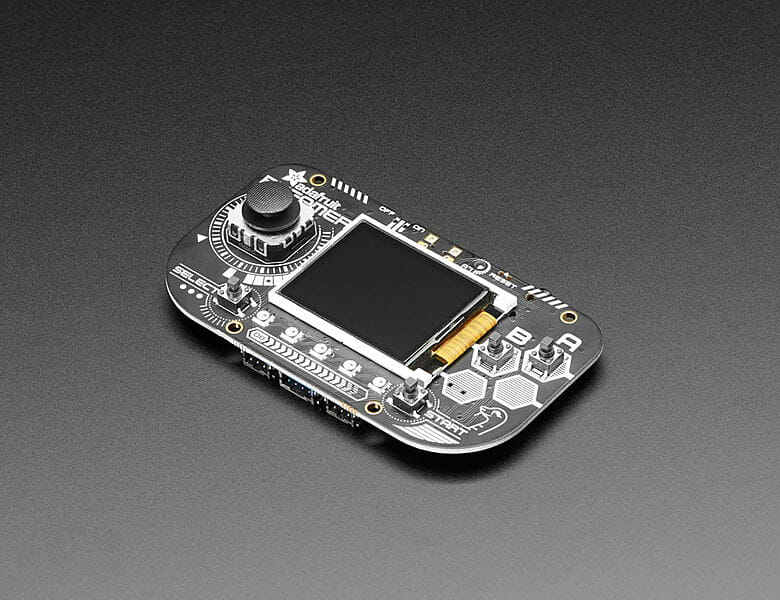
The Adafruit PyGamer is an entry-level gaming handheld for DIY gaming and maybe a little retro-emulation, all in one compact dev board.The PyGamer is powered by the ATSAMD51 microcontroller with 512KB of flash and 192KB of RAM. There is an additional 8 MB of QSPI flash for file storage, handy for...
sage elm
oh ok, sorry, just looked back at your message, this is the device that worked
lone axle
Yep, the PyGamer does allow my phone to see its files.
tulip sleet
I plugged in my PyGamer. fdisk -l says it is FAT12
I am baffled as to why you would see a difference between the two
lone axle
I have one other Android device I'll try. It's Android 11 or 12, I'm not sure which. It is much less standard than typical smartphones though, so I'm not sure how much knowledge of it's behavior will carry over, I am curious now though.
This one was a bit of a mix of the others. It has the 2 entries in notifications, one for keyboard, and one that I assume tried for storage. But the mssage is different and it says "this device isn't in a supported format" or something similar, and if I click on it, it's going to a wizard which looks like it's going to try to format it, which I definitely don't want it to do. So perhaps slightly closer to working than on my phone, but still not quite working all the way. This was with the Matrix Portal. And this device has regular USB ports so there is no OTG cable in the mix.
sage elm
thanks for checking! I am gonna look into mpremote and check with the lineage OS folks. it seems like it could be possible since you have had mixed results
tulip sleet
@lone axle @sage elm On my Samsung Tablet, Android 11, I can use a regular USB stick with the OTG cabling I have. A FAT12 CIRCUITPY does not show up, but the fake UF2 BOOT drive does show up, and it's also FAT12. So it might be because it's presenting as a composite device
I could turn off everything but CIRCUITPY in boot.py, but it would still be a composite device with just one device, the MSC device
haven't tried that yet
lone axle
Interesting, another different behavior. I do like Android, but it's consistency or lack thereof is maddening sometimes 😅
I have Samsung phone with Android 9 as well and it doesn't work with the PyGamer the same way the Cat S61 does. It's similar with 2 notification entries, but the storage one says "drive corrupted click here to fix" but I'm too scared to click it.
I thought I had success with more devices in the past, but don't remember any specifics about which combinations worked.
tulip sleet
lone axle
Interesting, another different behavior. I do like Android, but it's consistency...
What version of CircuitPython is on the PyGamer?
I get "Unsupported Adafruit USB Drive" on any of these. It offers to reformat, but letting it reformat brings up the same message again.
slender iron
 tulip sleet
The PyGamer is slightly unusual in that it has its own power source. I don't think this has anything to do with composite devices
proven garnet
@devout jolt thanks for asking about the const usage, I caught up (thanks everyone who chimed in). Maybe it's worth making the others like your file then as the improvement 🙂
lone axle
tulip sleet
What version of CircuitPython is on the PyGamer?
Adafruit CircuitPython 8.1.0-beta.1 on 2023-03-30; Adafruit PyGamer with samd51j19
Board ID:pygamer
updating to that didn't help for me. OK, file this away as clues
There is something about the filesystem that Android doesn't like. I'd like to see the system log, not sure if that's possible
lone axle
System log from the Android side? I can collect those at some point.
tulip sleet
yes, I will see if I can do it on the tablet
plug it in and see what syslog says and why it doesn't like the filesystem
lone axle
I verified just now on my phone that I can edit code.py and save it and everything works as expected. I had done that in the past but not recently. Works out perfectly on that phone with the PyGamer.
One, tricky bit for getting the logs I guess is by default those go though USB and communicate with a tool called ADB on the computer. Since the microcontroller needs to be plugged in though it occupies the typically sole USB port.
tulip sleet
so i think the problem is not FAT12 support (any more), but something else. But why that PyGamer is special I have no idea. It's some accident of the filesystem. I'll bet if you storage.erase_filesystem()d it, it would stop working
 unique python
lone axle
it's a hardware device: https://circuitpython.org/board/pygamer/
unique python
lone axle
it's a hardware device: https://circuitpython.org/board/pygamer/
I'd love to have one of these! Hope you guys have them in stock again!
 idle owl
unique python
I'd love to have one of these! Hope you guys have them in stock again!
idle owl
unique python
I'd love to have one of these! Hope you guys have them in stock again!
Don't hold your breath for that one to come back in stock. Definitely sign up to be notified in case they do though! Chances are though that the next one you see will be respun with a better microcontroller chip. 🙂
lone axle
unique python
I'd love to have one of these! Hope you guys have them in stock again!
fwiw it looks like digikey still has some: https://www.digikey.com/en/products/detail/adafruit-industries-llc/4242/10230001 It's definitely one of my favorites as well. Hoping for a next gen one to drop sometime.
 still zephyr
devout jolt
Hi! I have a (quick?) CircuitPython library aesthetics vs efficiency question. T...
still zephyr
devout jolt
Hi! I have a (quick?) CircuitPython library aesthetics vs efficiency question. T...
Late to the conversation, but according to my experience, const would only help when you are in the edge for a library to work in memory constraint board. the Definition of some_variable = const( ) as previously mentioned will add some memory usage too. However, we have used the names across the libraries as it is more readable. AKA easier to understand the name, than a Register Hex Address. I do like the way you define the pins and it could help to define some things in some of the libraries.
 manic glacierBOT

I tried this on a production (non-green) board, and could not get it to fail after about 10 minutes of waiting. I made the loop as fast as possible:
import board
from adafruit_neokey.neokey1x4 import NeoKey1x4
keys = NeoKey1x4(board.STEMMA_I2C())

while True:
    keys.digital_read_bulk(0xff)
I am going to close this for now, but please reopen if you see it again on a production board.
I have noticed CIRCUITPY problems on the Metro M7 1011. I have had CIRCUITPY intermittently be reformatted after a reset, and have also written files that never show up (e.g. write test.py, but can't import it, even after a Linux sync). Something about filesystem writes appears to be flaky.
sage elm
@tulip sleet @lone axle I tried using logcat on the android device to view logs when plugging/unplugging the m4 I see it recognizing the device but no (obvious) errors
this was from termux as root. I can possibly try from adb because my device has two usb ports
unique python
Thanks Kattni, Foamyguy!
tulip sleet
sage elm
<@329766224093249548> <@382939733107408897> I tried using logcat on the androi...
thanks - i am surprised there are no errors reported in the log, since there are other errors reported, higher up, I think
sage elm
tulip sleet
thanks - i am surprised there are no errors reported in the log, since there are...
I was seeing the device show up when I opened my file explorer app and it asks if I want to mount it. it fails and I got this in the logs for that app:
53 D/SYSFAC> Checking FAT
54 D/SYSFAC> FAT FAILED suspicious sectors per cluster count 0
55 D/SYSFAC> Checking ExFAT
56 D/SYSFAC> ExFAT FAILED invalid FAT count
57 D/SYSFAC> Checking NTFS
58 D/SYSFAC> NTFS FAILED suspicious sectors per cluster count 0
59 E/TABLE> FileSystem Error: libs.va1
60 D/PartitionTable> MasterBootRecord
61 D/UsbMSDevice> Initializing 1 partition...
62 D/UsbMSDevice> Partition 1, Logical Block Pos: 1
63 D/UsbMSDevice> Create partition 1
64 D/SYSFAC> Checking FAT
65 D/SYSFAC> FAT Type:0, FAILED length=131072; index=131072
66 W/Partition> Unsupported fs on partition libs.va1
67 D/UsbMSDevice> Done!
68 D/UsbHelper> No partitions!
 brazen hatch
slender iron
brazen hatch
slender iron
Circuitpy laptop eta wen.
Jokes aside, congratulations!
slender iron
🙂
tulip sleet
@slender iron which HDMI display are you using for testing? I think maybe I should get one.
slender iron
@tulip sleet adafruit has some. I'd use one of those. not exactly sure where I got this one
tulip sleet
ok, thought it was an adafruit one. There is one in a case: the rest are bare with driver boards. I could make a case
what res is yours
slender iron
jaunty juniper
say I don't think we support "RGB" TFT display interface in Circuitpython ?
slender iron
not yet. though it's on our radar
jaunty juniper
or parallel 16 bits ? (only 8)
(I was browsing larger screen ESP32 boards on aliexpress)
slender iron
we do 8 bit parallel
rgb displays typically don't have their own ram
but 8 bit parallel still assumes the display does
 worldly escarp
Hello! I've written some cybersecurity labs in circuitpython but I'd like some help making more for an upcoming kids cyber camp. Where would be the best place to find circuitpython devs for paid educational projects?
 stuck elbow
there was a job board on adafruit website
worldly escarp
I just looked it up, thank you!
jaunty juniper
thanks for the quick release @tulip sleet
tulip sleet
you're welcome; no problem
manic glacierBOT

Thanks @silabs-ChatNguyen, sorry for my delayed response. This week is a bit hectic with some travel thrown in the mix. It doesn't look like I'll be back home again to pick this up until early next week.
Could you pull code and try again with ubuntu or rebuild without option -j ?
make BOARD=explorerkit_xg24_brd2703a slc-clean (clean code)
make BOARD=explorerkit_xg24_brd2703a V=2 (without -j )
I did pull the code again this evening and tried without the -j option. I think the bui...
 jade rivet
Hello. I am having issues installing Circuit Python. it seems cargo is too old on debian distros.
I have some log files. Is this where I post log files?
Sorry. I thought I had log files.
Let me retry and show the output if that would be okay...
jaunty juniper
yeah
jade rivet
minify-html keeps hanging the system (armv7l) and then gnarly output presides.
I installed rustc and some other dependencies. I will post the output of the build errors if anyone will get to it. Anyway, thank you in advance.
jaunty juniper

GitHub
minify-html, required in requirements-dev.txt, uses Rust underneath. This is fine when the pre-built wheels exist, but otherwise it makes rust be a dependency. minify-html is nice and fast, but we ...
jade rivet
Yeppers. minify-html is the issue for me so far...
jaunty juniper
(doesn't help, but shows that it's known to be an annoying dependency)
jade rivet
Would you like my output?
jaunty juniper
I won't know what to do with it, but go on, others might (if not today, tomorrow)
jade rivet
Anyway, I will post in case others may find it useful:
Okay.
Is there a way to just not use minify-html?
For instance, say I do no have a need for use in html pages. Maybe I can erase or not install that specific package?
or would I need to install an updated version of cargo via the rust compiler?
Anyway. It is probably too late now. Off into slumber!
 mental nexus
jaunty juniper
or parallel 16 bits ? (only 8)
mental nexus
jaunty juniper
or parallel 16 bits ? (only 8)
I got 16 bit parallel working with FrameBuffer on the ESP32-S3 it was hackety-hacky but worked for the HACKTablet. Here’s the issue: https://github.com/adafruit/circuitpython/issues/6049

GitHub
The ESP32-S3 has a built-in LCD controller, including the ability to drive parallel (8080) and dot-clock driven displays. If CircuitPython can directly drive RGB displays, it may allow the use of l...
manic glacierBOT

Lol.. What is completed? Nothing.. Excellent work sir!
On Tue, Apr 11, 2023 at 9:52 AM Dan Halbert @.***>
wrote:
Closed #3763 https://github.com/adafruit/circuitpython/issues/3763 as
completed.—
Reply to this email directly, view it on GitHub
https://github.com/adafruit/circuitpython/issues/3763#event-8975658511,
or unsubscribe
https://github.com/notifications/unsubscribe-auth/ARRY7JLGAZ2BCMYV5IA5JQTXAV43PANCNFSM4UCPIZMA
.
You are receiving this because you ...
lone axle
jade rivet
For instance, say I do no have a need for use in html pages. Maybe I can erase o...
Try CIRCUITPY_WEB_WORKFLOW = 0 inside of mpconfigboard.mk for the board that you are building. I think web workflow is what uses minify html. My environment has a lot going on, so I'm not certain I tested properly, but I got a successful build of a ESP32S2 Feather with this configuration set after having uninstalled minify-html in my python interpreter.
manic glacierBOT

@kmatch98 hi, i've been working recently on esp32s3-wroom1-n16r8 and rgb lcd, i just read all the messages here and i would like to ask you if you can help me understand here what's happening with my code.
I have two different TFTs, one is 7 inch (800 x 480) the other is 10 inch (1024 x 600) the only way i found to make the screens go decent without errors or so is using double buffers, but to maintain synchronisation with the two buffers, i need to set the "full refresh" to true.
I past...
manic glacierBOT

This looks like great work. As for the frame per second. Based on your dot clock and all the timings, if you calculate the max possible frame rate, does it match to what LVGL is saying. From what I remember (it’s been a while since I worked on this), I think getting 30 fps was really at the high end. I suspect you can’t achieve this for the larger display but you can calculate your best case based on your settings and the number of pixels.
If you redraw the full framebuffer each time, I t...
manic glacierBOT

The Onewire reset function returns false when it finds one or more devices on the bus by detecting a presence pulse following the reset low state. Unfortunately, if the bus faults to a stuck low condition for an number of reasons (i.e. 2 terminal device attached backwards, no pullup, hardware failure, etc) the reset will also return false indicating the presence of devices.
A stuck low bus will report a serial number of all zeros, which again unfortunately resolves to a valid crc8 of 0, in...
manic glacierBOT
Thank you for your reply.
After some tests i can say that:
-
if i have to redraw little portions of screen but i use the double frame buffer, nothing changes (as expected)
-
if i have to redraw little portions of screen but i use singla frame buffer + bounce buffer, i also can set the lcd clk at higher speed so i can get 50 fps (that would be the case of some static interfaces with little widgets and no animations).
-
i am going to 80Mhz with octal PSRam in DDR and the DMA is automati...
slender iron
manic glacier
Deleted this comment. Not nice
manic glacierBOT

extmod is the MicroPython implementation. The CircuitPython one is:
The link is here: https://github.com/adafruit/circuitpython/blob/main/shared-bindings/onewireio/__init__.c#L40
Would you mind making a PR to fix these two issues? Thanks!
I don't think this should block 8.1. iMX is still very much in flux.
Also, can you please explain if i have to use esp-idf "draw_bitmap" or the init of the lcd screen, because i saw from the other messages here that you override those and you used your own, do you think that it could solve my problem?

CircuitPython version
Adafruit CircuitPython 8.0.5 on 2023-03-31; Adafruit Feather M4 Express with samd51j19

and also tested on ItsyBitsy 8.0.5 with same results.

Tested with the Feather M4 on versions as far back as 6.3.0 with same results.
Code/REPL
Adafruit CircuitPython 8.0.5 on 2023-03-31; Adafruit Feather M4 Express with samd51j19
>>> import analogio
>>> import board
>>> a = analogio.AnalogOut(board.A0)  # A0 slowly climbs to 3.3v and holds
...I overrode some of those functions because an earlier revision of the esp-idf didn’t support some of the functions that I needed. I think the latest version has added all of those. So At first glance I don’t suspect that is affecting your performance. It may be primarily limited by the PSRAM access speeds.
As for “arbiter” I’m haven’t heard that term so unfortunately can’t provide any new insight. Keep digging, sorry I can’t be more helpful.
Thank you for the clues, your help is fundamental since i'm new to this and i'm trying to figure out what is the correct direction to take, i'll keep digging.
Much appreciated!
manic glacierBOT

Currently on esp32-s3, jtag support is broken.
On none of the board definitions is #define CIRCUITPY_ESP_USB_SERIAL_JTAG (1) enabled like it is on C3.
Enabling it creates linking errors.
Those linking errors can be fixed by appending:
ifeq ($(IDF_TARGET),esp32s3)
SRC_C += \
	supervisor/usb_serial_jtag.c
endif
after line 242.
But still, after compiling a debug build with those fixes and #define CIRCUITPY_ESP_USB_SERIAL_JTAG (1) in the board definition, we can see:
`...
brazen hatch
tl;dr usb resets & disables jtag
ran through source
couldn't find anything
searched all refs of jtag
searchef on micropy as well
tulip sleet
jade rivet
Is there a way to just not use minify-html?
and @lone axle It's been hard to find a Python-only minifier that's not really old. https://pypi.org/project/html-minifier/ is very simple; it might be good enough
manic glacierBOT
It's been hard to find a Python-only minifier that's not really old. https://pypi.org/project/html-minifier/ is very simple; it might be good enough.
jaunty juniper
@crimson ferry I have a PR for allowing HEAD requests with files on httpserver (as in curl -I someurl) which currently return a 400 error, but I want to make it return the header (with file size or 404 for example).
I can look into other behaviors to fix with it.
- getting
http://192.168.1.28/existingdiris an empty page - getting
http://192.168.1.28/existingdir/is a 404
Since we don't have directory listing, a directory URL could send a 403 like apache does instead.
jaunty juniper
I was also looking into adding some syntax like @errohandler(404)
 crimson ferry
@jaunty juniper Ignore my comments-thrashing on that PR... combination of some existing quirks in the library, test code amplifying those quirks, and bad test hygiene. HEAD could be handy. I'm no expert on web servers, I just know how I use them. Standard behaviors are good. Some .htaccess features (like directory listings and default index file name) could be simulated with an appropriate route (and server code.py). We may be starting to get complex enough with this library where un-obviously-malformed code runs but gives unexpected results.
tulip sleet
I'm not sure it's true now, but it would also be good if the file access stuff disallowed /../ etc.
crimson ferry
I tried that, doesn't sem to work, fortunately
# PATH = "/www"
% curl -i http://192.168.6.161:8080/../settings.toml
HTTP/1.1 404 Not Found
Content-Length: 0
Content-Type: text/plain
Connection: close
it looks like curl might fix the URL, I'll see if a raw request makes a difference
crimson ferry
oh, yeah, -v shows that
jaunty juniper
b'HTTP/1.1 200 OK\r\nContent-Length: 143\r\nContent-Type: text/plain\r\nConnection: close\r\n\r\nAdafruit CircuitPython 8.1.0-beta.1-23-g0aea45516 on 2023-04-12; Adafruit FunHouse with ESP32S2\r\nBoard ID:adafruit_funhouse\r\nUID:C7FD1A71736D\r\n'
that's in response to b'GET ../boot_out.txt HTTP/1.1 \r\n'
crimson ferry
oops
jaunty juniper
I can fix
 plucky tulip
Currently it just adds root path and filename together as strings, it could be prevented by checking if file path contains ".."
crimson ferry
this would be within the root path http://192.168.1.50/subdir1/../index,html but is there really a use case for it?
do we need a CP library channel?
plucky tulip
If you specify subdir1 as root, this would prevent accessing file outside subdir1
jaunty juniper
curl, python requests, and browsers translate that kind of url
tulip sleet
this is a very elementary security provision
jaunty juniper
you don't want someone to access ../settings.toml
also I was thinking that root_path shouldn't default to "/" but to not serving files because of that
crimson ferry
is there a way currently to wildcard a route (so that any file in a directory can be accessed)?
stuck elbow
you can set the root directory iirc
plucky tulip
There are wildcards, haven't tested it with files though
jaunty juniper
server.start takes a root_path that defaults to "/"
stuck elbow
so set it to something like /static
idle owl
Wait, are you all talking about hosting a tiny site on a microcontroller? Sounds like yes, and if yes, sounds like you're saying it would actually be quite simple for folks to get to the settings.toml file if it's public? (Maybe I'm way off here on what you're even talking about.)
tulip sleet
idle owl
Wait, are you all talking about hosting a tiny site on a microcontroller? Sounds...
yes
tulip sleet
a PR by somebody would be welcome
plucky tulip
I can work something out
crimson ferry
@plucky tulip can you say more about wildcards? is there a syntax?
idle owl
An explanation of how to use the update would also be appreciated.
plucky tulip
crimson ferry
<@699200371909853216> can you say more about wildcards? is there a syntax?
There is a doc about it
https://docs.circuitpython.org/projects/httpserver/en/latest/examples.html#url-parameters
It is a newly added feature
unique python
Pretty interesting
idle owl
jaunty juniper
the simpletest example exposes settings.toml:
That does not seem good.
crimson ferry
but URL params aren't paths
plucky tulip
It should be possible to make a simple handler that takes "/<file_name>" and returns HTTPResposne.send_file with that file_name
jaunty juniper
I can make it default to "/static" or I like "/www"
crimson ferry
it seems like the combination of "/" root and raw requests are a problem, any other security holes?
plucky tulip
jaunty juniper
I can make it default to `"/static"` or I like `"/www"`
or maybe remove default and require people to provide the parameter manually
stuck elbow
crimson ferry
it seems like the combination of "/" root and raw requests are a problem, any ot...
what's your threat model?
stuck elbow
if you open it up to the internet, there is no hope
stuck elbow
sure, so define what situations you want to handle
and which you don't
otherwise talking about security is pointless
crimson ferry
we want to plug known. holes that make it easy to exfiltrate secrets
jaunty juniper
plucky tulip
or maybe remove default and require people to provide the parameter manually
yeah it makes sense to me, to avoid unexpected default behavior
stuck elbow
easy for whom
it shows as a usb drive when you connect it, there is very little that could be easier
plucky tulip
stuck elbow
it shows as a usb drive when you connect it, there is very little that could be ...
But still, it is a server
stuck elbow
plucky tulip
But still, it is a server
what does that mean?
plucky tulip
Can be accessed not only via USB
crimson ferry
you could have it physically secured, but it's on the network
stuck elbow
if you forward a port from your microcontroller device, you are as good as hacked
dos-ed at the least
plucky tulip
Maybe we want it configurable with default to false, something like, "directory_ascending"
stuck elbow
and the local network is already protected with a password
tulip sleet
i think we just shouldn't allow it; it has very little real-life use
DOS is certainly an issue, but it doesn't leak secrets. Let's fix the obvious holes.
plucky tulip
Preventing DDOS on microcontroller would be hard in my opinion
tulip sleet
o
plucky tulip
without other tools
stuck elbow
it doesn't even have to be distributed
you can just send it a request that doesn't fit in memory
tulip sleet
that is not a secret-leaking threat, it's a denial-of-service threat. I'm willing to have the latter but not the former
stuck elbow
tulip sleet
that is not a secret-leaking threat, it's a denial-of-service threat. I'm willin...
right, so that kind of decision is part of the threat model
it would be nice to have it written down, so we can refer to it later
plucky tulip
Ok, so to sum it up:
- no accessing files in parent directories
- no default "/" as root path
Anything else?
stuck elbow
so that we don't get scope creep fixing things that fall outside our threat model
tulip sleet
@plucky tulip If you could add a sentence to two to the README re the threat model as part of your PR, that would be great
plucky tulip
tulip sleet
<@699200371909853216> If you could add a sentence to two to the README re the th...
Sure thing. I will work on it during weekend
stuck elbow
plucky tulip
Ok, so to sum it up:
- no accessing files in parent directories
- no default "/"...
are the urls considered case sensitive?
plucky tulip
stuck elbow
are the urls considered case sensitive?
yes
It will introduce breaking changes though
stuck elbow
because the filesystem isn't
crimson ferry
some are
stuck elbow
the fat12 on the circuitpython devices isn't
tulip sleet
open("CoDe.Py") works, so for file paths, it won't be case-sensitive
stuck elbow
not sure about other fat types on sd cards
tulip sleet
ok by me if routes are case sensitive but file accesses are not
stuck elbow
so I suggest the file paths are normalized to lower case before being used, to avoid a situation when you can sidestep a blacklist by using different case
plucky tulip
plucky tulip
It should be possible to make a simple handler that takes "/<file_name>" and ret...
If you do it this way, it should work in theory
stuck elbow
also, maybe unicode normalization?
what about things like slashes that are url-encoded in the path?
would that let me escape from the web root directory?
tulip sleet
i think we don't handle escapes at all now
stuck elbow
should we?
plucky tulip
Can you give an example of what you mean?
stuck elbow
http://example.com/%2fetc%2fshadow
tulip sleet
% escapes are not currently parsed
jaunty juniper
yeah url decoding is out of scope as far as I'm concerned
tulip sleet
if/when they are added, then we'll need to up the security
stuck elbow
so if your file name has a space, you can't access it?
tulip sleet
this is a SIMPLE HTTP server
plucky tulip
I believe you can just use space in url
stuck elbow
plucky tulip
I believe you can just use space in url
I believe you believe wrong
the browser encodes it behind your back for you
I'm not saying we need to add this, I just want the decision to be documented
mapping urls to filesystem paths is a huge can of worms
lone axle
idle owl
Wait, are you all talking about hosting a tiny site on a microcontroller? Sounds...
fwiw with the implementation here: https://github.com/FoamyGuy/CircuitPython_PyBadger_Snake/blob/main/code_badge_with_wsgi.py the server does not expose any directories. The only file on the device that it will the contents to is static/index.html and even that is for convenience of updating. It could be a hardcoded string in the .py file I'm pretty sure and then no other files would ever be read or returned by the code that handles the web requests.
plucky tulip
stuck elbow
I believe you believe wrong
You are right, my bad, just tested it
jaunty juniper
url decoding is too big, I wouldn't do it
idle owl
lone axle
fwiw with the implementation here: https://github.com/FoamyGuy/CircuitPython_PyB...
Oh excellent. Thank you. That was my concern.
jaunty juniper
lone axle
fwiw with the implementation here: https://github.com/FoamyGuy/CircuitPython_PyB...
we are talking about adafruit_httpserver
tulip sleet
the original motivation for HTTPServer was to serve Wordle-ish sites. It has grown, of course
lone axle
jaunty juniper
we are talking about adafruit_httpserver
I know, and this code uses something different (WSGI), but wanted to make sure Kattni knew that this things she's trying to use next week isn't going to expose her important files.
stuck elbow
there is also the problem of guessing the mime type
tulip sleet
right, so when I was asked to make a Wordle server, the existing WSGI servers weren't that helpful. So I took a tiny file-serving server and adapted that.
stuck elbow
do we trust the content of the files? that is, no files uploaded by external users?
plucky tulip
stuck elbow
do we trust the content of the files? that is, no files uploaded by external use...
By default there is no way to upload files, but one might code the request handler to do that
plucky tulip
stuck elbow
there is also the problem of guessing the mime type
Can you give an example?
stuck elbow
plucky tulip
Can you give an example?
well, you have to serve the file with the right mime type for that file, html files with text/html, javascript files with application/javascript, images with image/jpeg, image/png, image/gif, image/webp, image/tiff, image/bmp and so on...
plucky tulip
yes, but where is the problem
stuck elbow
you have to know the type of the file to serve it
plucky tulip
it is now determined by its name
stuck elbow
how
plucky tulip
stuck elbow
and if the extension is not on the list, or there is no extension?
plucky tulip
then "text/plain"
stuck elbow
so if I put, say, a .cbr file in there, it will be served as text?
wouldn't application/octet-stream make more sense?
sorry, I got carried away, please ignore me
I need to go to bed, goodnight
plucky tulip
It could be considered, it was "text/plain" in the first version of the lib and I left it that way
stuck elbow
by the way, I'm using that library in fluffbug, and it made things a lot easier for me, thanks
crimson ferry
it's a really nice library, I've loved it from the beginning
plucky tulip
stuck elbow
by the way, I'm using that library in fluffbug, and it made things a lot easier ...
Glad to hear that 🙂
So, let's maybe start with the ".." in path and root path issue, and then expand on that if necessary, @tulip sleet ?
stuck elbow
I usually do this by converting the path to absolute with abspath, and then checking that it starts with the directory I need, in big python at least, that's much more proof than searching for forbidden character combinations
stuck elbow
there has to be something like it internally, no?
in the filesystem code, if nowhere else
tulip sleet
it's pretty crude, I think
stuck elbow
if you want to do it by searching for ../ then you also need to check for a leading /
plucky tulip
Not only for ../ but for .. in general
stuck elbow
like http://example.com//etc/shadow
stuck elbow
plucky tulip
Not only for `../` but for `..` in general
you can have .. in a file name
plucky tulip
I remember an issue with nginx static files and paths that starts with ..
stuck elbow
it's a tricky thing
plucky tulip
stuck elbow
like `http://example.com//etc/shadow`
This probably wouldn't work due to concat with root path
stuck elbow
in fact you could have .. at the end of a directory name too, like /foo../bar
and that's a perfectly valid path
plucky tulip
These are very edge cases I believe, as it a simple http server on microcontroller, I believe we can just force some rules on users
stuck elbow
plucky tulip
These are very edge cases I believe, as it a simple http server on microcontroll...
as long as you document them
plucky tulip
stuck elbow
as long as you document them
Fair point
jaunty juniper
I would filter for "../", I don't want to filter every path with a complex RE or something
stuck elbow
and you probably want to disallow backslashes alltogether
plucky tulip
I will try to come up with something
plucky tulip
slender iron
the web workflow also hosts files from the fs
This a a bit different scenario, as it is during development
stuck elbow
but it allows access to the whole filesystem, so there is no problem of escaping from a directory
plucky tulip
Can we do a milestone for v3 of adafruit_httpserver, we could bundle all incoming changes and then release it as a new major version, I am also working on authentication system and some unifications/name changes so I could also add that? @tulip sleet
manic glacierBOT

just throwing this over the wall while I'm on vacation. It adds envelope (A/D/S/R) to synthio. I hope to work on it further by the end of pycon...
tulip sleet
plucky tulip
Can we do a milestone for v3 of `adafruit_httpserver`, we could bundle all incom...
https://github.com/adafruit/Adafruit_CircuitPython_HTTPServer/milestone/1 We really appreciate your work on this library
plucky tulip
jaunty juniper
```py
b'HTTP/1.1 200 OK\r\nContent-Length: 143\r\nContent-Type: text/plain\r\nCo...
May I ask how did you made that request, mine from Chrome, curl and VSCode extension have the .. truncated before the request gets to server
crimson ferry
you can do it with a raw TCP socket
I'm not sure how Neradoc did it, but something like this https://gist.github.com/anecdata/80bb4b685b19ca5d27f443d5e278d61e
plucky tulip
Thanks
manic glacierBOT
adsr = np.concatenate(
    (
        np.linspace(3277, 32767, num=40, dtype=np.int16, endpoint=False),
        np.linspace(32767, 0, num=20, dtype=np.int16, endpoint=True),
    )
)
#...
synth = synthio.Synthesizer(sample_rate=48000, waveform=waveform, envelope=adsr, envelope_hold_index=42)
A basic linear volume ramp, then slight decay, followed by a sustain at about 80% of full scale. At 48kHz, it takes about 0.2s to ramp to full volume.
The envelope can in principle ...
 deep acorn
good evening, I was pointed here for the individuals that could answer a technical question about adding libraries before compile
I could be wrong but Ive only ever gotten my code in python [https://github.com/FriendlyNGeeks/PiVAC] to work with the _thread lib, running a http/json server on one thread and a seprate fetch loop on another thread. If a dev were to accidently point me to the make files I could copy over from micropython it would save me days in trying to write custom driver support for the feathers3 reverse tft and 8pwm feather servo
manic glacierBOT
looks like the ci docs failure is due to weblate being down for maintenance.
manic glacierBOT

Set up AtomS3 Lite ESP32S3 Dev Kit uf2 file
In circuitpython AtomS3 Lite ESP32S3 Dev Kit Downloads page
I pushed DOWNLOAD BOOTLOADER ZIP button.
web browser shows 'Not Found'.
How can I get tinyuf2-m5stack_atoms3_lite-0.13.0.zip file ?
manic glacierBOT

Thanks @silabs-ChatNguyen, sorry for my delayed response. This week is a bit hectic with some travel thrown in the mix. It doesn't look like I'll be back home again to pick this up until early next week.
Could you pull code and try again with ubuntu or rebuild without option -j ?
make BOARD=explorerkit_xg24_brd2703a slc-clean (clean code)
make BOARD=explorerkit_xg24_brd2703a V=2 (without -j )I did pull the code again this evening and tried without the -j opt...
manic glacierBOT
Ah, yea. I knew this day would come. I've never made a Git PR and I'm by no means an experienced Git user or proficient C programmer. So this will take time and probably significant hand holding. Time to watch some YouTube videos.
manic glacierBOT
@jedgarpark @todbot in case this is of interest, I'm working on adding ADSR-style envelope to synthio. I think it's ready for somebody to try. However, I'm on vacation :grinning: so I won't necessarily act on feedback in a timely fashion. The changes also give another bump in loudness, because I improved (I hope) how the overall envelope of all playing notes is bounded.

@jepler that's great, I'de love to try it out.
manic glacierBOT
@jepler it works, thanks so much! Going to see if i can figure out how to adjust the ADSR values.
It has been merged into tinyuf2 but not yet released.
You can get a version from the CI here: https://github.com/adafruit/tinyuf2/suites/12173228814/artifacts/642620143
The JTAG/serial and native USB peripheral share pins. CircuitPython is switching from the JTAG/serial unit to the full usb peripheral. Without doing this, the CIRCUITPY drive and such wouldn't work. I'd suggest using the native JTAG pins if you really need it. I do my ESP debugging with printfs and panic backtraces.
tulip sleet
@slender iron do you want to try again for a triage meeting? I have to stop kind early today, like around 1pm your time
slender iron
I'm gonna go get my package right now but then can in 5 min or so
tulip sleet
sounds good
manic glacierBOT
Alright, thanks.
A final note as I close the issue: This isn't in any of the docs I could find. Perhaps it should be added.
slender iron
@tulip sleet I'm in the Amelia voice channel
manic glacierBOT

This frickin' rules. Thank you @jepler!
To investigate: whether TinyUF2 is causing this problem, and was it a recent TinyUF2 change?
Will merge, but will open an issue assuming it needs to be addressed further.
adsr = np.concatenate(
    (
        np.linspace(3277, 32767, num=40, dtype=np.int16, endpoint=False),
        np.linspace(32767, 0, num=20, dtype=np.int16, endpoint=True),
    )
Why is the first value "3277"? I would expect it to be zero.I think the solution for this is to save the monotonic value when the rtc is set and the new value. Then, monotonic going forwards will be "monotonic offset + (rtc time - rtc set time)".
Add guidance on these pins names to the "how to add a board" Learn Guide
@jepler this seems to be an ASR envelope, and is working very nicely (or maybe I haven't found the decay time control?) Here's my guess at what the adjustable values are:
attack_time =  40
sustain_level =  32767
release_time =  140
asr = np.concatenate(
    (
        np.linspace(3277, sustain_level, num=attack_time, dtype=np.int16, endpoint=False),
        np.linspace(sustain_level, 0, num=release_time, dtype=np.int16, endpoint=True),
    )
)
synth = synthio.Synthesizer(
...Could not assign SPIM3 unless the speed is >8MHz, and then reassign the device to that in that case.
@rich123 Would you be interested in working on this?

@rich123 Would you be interested in working on this?
I can see if I can give it a go. Will have to see what I need to install to actually build the code for the ESP chip first.
@anecdata is this still an issue for you? There was a timer fix that helped this to some extent, we seem to remember.
@anecdata are you still seeing this?
Here is an issue this would be nice for: https://github.com/adafruit/circuitpython/issues/7405
Would updating the documentation be enough to fix this? I'd rather not have to track all returned values to filter duplicates.
@anecdata TinyUSB has been updated with significant fixes since this report. If you have time, could you re-test?
Let's close this and open a new issue that's more precise if this comes up again. It's really hard to follow what's going on here.
Re-test after DVI changes are merged. There are some interrupt fixes being done for that.
 blissful pollen
Just curious of the DVI changes were merged or if there is a PR for them? Saw the update on AAE but only in passing. Just got the feather for it
manic glacierBOT
May have been fixed by #7845, so let's re-test.
slender iron
blissful pollen
Just curious of the DVI changes were merged or if there is a PR for them? Saw th...
I'm still prepping them for a PR. My branch is here https://github.com/tannewt/circuitpython/tree/feather_dvi
blissful pollen
Thanks
crimson ferry
lots of issues need to be re-tested, I guess I know what I'm doing this weekend :p
manic glacierBOT

I'll check internally. Not sure that the RMT carrier feature supports 0/100% duty cycles in hardware. I suspect the driver is not validating these edge cases. Wiring the pin to constant high or low signal could be a reasonable workaround for the time being.
manic glacierBOT
I don't have any devices with me to test, so please feel free to remove the workaround if your testing indicates it's not needed. I don't have any specific recollection, so I can only rely on what was in the related commit message:
After this change, it's possible to connect multiple times to wifi in different runs of code.py or the repl after soft rebooting.
so it sounds like @DavePutz 's testing shows this is no longer needed.
I can't do any testing before May so I recommend going ...
manic glacierBOT

Adafruit CircuitPython 8.1.0-beta.1-23-g0aea45516 on 2023-04-12; Raspberry Pi Pico W with rp2040
Reset between testing each type of socket.
Web Workflow not enabled, same as before:
5 SOCK_STREAM, then RuntimeError: Out of sockets
3 SOCK_DGRAM, then RuntimeError: Out of sockets
4 SOCK_RAW, then RuntimeError: Out of sockets
Web Workflow enabled, same as before:
5 stream
2 dgram
4 raw
<details>
<summary>(test code...)</summary>
import wifi
import sock...
0% duty cycle is constant low. But 100% duty cycle isn't constant high, it's a pulse chain without a carrier (which has plenty of real use cases). The RMT should be able to do this by disabling the carrier option, but I haven't tried.
manic glacierBOT
I think this should be a fully configurable ADSR (instead of jepler's original where the decay rate is the same as the release rate), but perceptually the sound seems to "bounce" down-then-up, after the decay. Weird.
attack_time =  100
decay_time = 50
release_time =  300
attack_level = 32767
sustain_level =  5767

adsr = np.concatenate( (
    np.linspace(2, attack_level, num=attack_time, dtype=np.int16, endpoint=False),
np.linspace(attack_level, sustain_level, num=d...@lone axle you mentioned trying the adafruit_httpserver library with ESP32SPI, but ESP32SPI doesn't have socket.bind() and other server related methods, were you talking about another library ?
lone axle
jaunty juniper
<@382939733107408897> you mentioned trying the adafruit_httpserver library with...
I thought it was httpserver, but perhaps not. Maybe this one is what I was thinking: https://github.com/adafruit/Adafruit_CircuitPython_ESP32SPI/blob/main/examples/server/esp32spi_wsgiserver.py
in which case, I also notice now that I could probably lower the chunk size to help the RAM trouble.
jaunty juniper
I see
jaunty juniper
I took the UniversalSocket class I made for websockets, added some server functions and was able to run httpserver on a PyPortal, at least right now I have a page that sends a text to the pyportal's screen without changing the code inside adafruit_httpserver or adafruit_esp32spi, which is a testament to duck typing
lone axle
Nice!
crimson ferry
how did you get os.getenv to work in that environment?
jaunty juniper
os.getenv is just one way to get the ssid and password
the issue is just sockets, I've put my current version here:
https://github.com/Neradoc/Circuitpython_Universal_Sockets
crimson ferry
that's where I saw the os.getenv
jaunty juniper
are you under the impression that it's not implemented on all ports ?
crimson ferry
oh I guess it is 🤦♀️
jaunty juniper
I use the same names as the web workflow because I just copy my settings.toml, even though the web workflow is not on the pyportal
crimson ferry
gotcha, i don't mess with esp32spi much anymore and I use settings.toml mainly for native-wifi-specific stuff, so I just didn't associate it
jaunty juniper
I'll upload my full test code, a web page with a text, size and color fields, that sets what is shown on the screen of the board, tested on FunHouse and PyPortal
crimson ferry
I guess there's still CIRCUITPY_BLE_NAME and CIRCUITPY_PYSTACK_SIZE
I think the ESP-equivalent of listen is client socket connected and available
not so clean though
no, it just doesn't seem to map well
manic glacierBOT

I haven't revisited my weather station project because of that bug, it completely derailed my project. The bug was in 7.x and continued into 8.x beta. We're now past the 8.x stable release date. It's been permanently off for months. Got sidetracked with other projects. I'll make it a point to load this one back up tonight and test with the current stable version of 8.0.5. I am still hesitant to close this issue as it was a doozy of a bug. Will check and report back.
manic glacierBOT
I switched to the Adafruit ESP32-S3 which was exhibiting the same symptoms at the time during 7.x and 8.0 beta. Gave up on it at that point.
Adafruit CircuitPython 8.0.5 on 2023-03-31; Adafruit Feather ESP32S3 4MB Flash 2MB PSRAM with ESP32S3
Board ID:adafruit_feather_esp32s3_4mbflash_2mbpsram
Been running like a dream for an hour. Everything is much much faster too. I don't want to swap the UM FeatherS3 back in because it's deep inside an enclosure and would take about 20 m...
 midnight ember
Closed 6791. Runs great on 8.0.5 so far. No more hard faults. 👍
S3 has stability now with wifi projects. Looking good.

It's been off since January. Nice to have it back on my desk working. Thank you to all the developers who work on circuit python every day. ❤️
I still have no idea what the original culprit was or what fixed it. As long as it's working it doesn't really matter.
manic glacierBOT


I installed
Adafruit CircuitPython 8.1.0-beta.1 on 2023-03-30; M5Stack AtomS3 Lite with ESP32S3
successfully.
midnight ember
Running 6 hours, no hard faults, definitely fixed.
manic glacierBOT
- If the first element of ADSR is 0, it's just like starting the sound 1 time-unit later, so start with nonzero. 3277 was left over from when the attack portion was 10 units long, so it's about 32768/10.
- it is ADSR, not ASR, because you can set the "envelope hold index" to set a sample within the envelope array which is used during the sustain portion. So for instance if you have the very simple ramp [10000, 20000, 30000, 20000, 10000] and set the hold index to 2 (indicating the element ...
# Time is in units of 256 samples, e.g., ~5ms at 48kHz
attack_time = 40
peak_level = 30000
decay_time = 40
sustain_level = 20000
release_time = 140 ...renamed the parameter to envelope_sustain_index
manic glacierBOT
ref: issue #7859
Added a second read to onewireio reset function to verify reset line transitions to high state to detect stuck low faults. A return value of True indicates no devices present (i.e. no presence pulse detected) or a stuck low or stuck high fault.
@silabs-ChatNguyen Thanks! that did it :smile:
Adafruit CircuitPython 8.1.0-beta.0-68-g5c4dfcf59-dirty on 2023-04-15; Sparkfun Thing Plus MGM240P with MGM240PB32VNA
@crimson ferry are you able to use adafruit http and continue to do other task while server is waiting for socket connections?
manic glacierBOT
Code changes to allow 64 character hex WiFi passwords to be used with wifi.radio.connect.
Fixes adafruit/circuitpython#7677.
The pull request I just pushed worked when built for my Adafruit ESP32-S2 Feather. My 64-char WiFi password was accepted and the Feather authenticated with my AP.
 lone sandalBOT
 manic glacierBOT
The Magtag Google Calendar from the learning guide uses some Arial PCF fonts that apparently contain bitmap elements with a width and height of 0. The DisplayIO argument validations introduced in https://github.com/adafruit/circuitpython/pull/7548 cause the example code to fail.
Traceback (most recent call last):
  File "code.py", line 233, in
  File "adafruit_magtag/magtag.py", line 170, in set_text
  File "adafruit_portalbase/__init__.py", line 291, in set_text
File "adafrui...@deep acorn You can poll with adafruit_httpserver https://github.com/adafruit/Adafruit_CircuitPython_HTTPServer/blob/main/examples/httpserver_simple_poll.py. Tight loop or asyncio will let you cooperatively multitask.
manic glacierBOT
manic glacierBOT
I'm realizing the only reason I hesitated adding the test for the 0 width/height object for the border wrap issue is that I don't know how to call a micropython max() function. Is there a way to call something like mp_MAX(0, source->width - 1) rather than adding an if statement and two assignment statements?
i.e.
int16_t x = mp_arg_validate_int_range(args[ARG_x].u_int, 0, mp_MAX(0, source->width - 1), MP_QSTR_x);
rather than:
if (source->width == 0) {
int16_t x = m...@slender iron Hope you see this after the weekend I did try the DVI support for a while with some success. If you need any testing let me know.
Couple notes:
- Disk access would go at times, more so if I created my own display. Many times this would corrupt the FS.
- Something in ColorConverter is causing an issue when colors change. If I just hard coded a the conversion code from 565->8bits color it worked. I can show an example later if needed.
16 bit didn't seem to go smoothly and I didn't look into it any further.
Was fun to play with overall though!
manic glacierBOT
MIN() and MAX() macros are defined in py/misc.h. This may already be included by something you're including, so just try it first.

- Move loading .js scripts from to end of for faster rendering
- Add back-button support for file system/editor navigation.
ref: https://stackoverflow.com/questions/43043113/how-to-force-reloading-a-page-when-using-browser-back-button - Close WebSocket when navigating away from /cp/serial. Don't leave it dangling.
ref: https://stackoverflow.com/questions/4812686/closing-websocket-correctly-html5-javascript - Use better looking Blinka icon (32x32 - adds ~1.5K to image)
Hope you find ...
manic glacierBOT
Thanks @dhalbert! I'm pretty sure you already pointed me at those macros a while back, sorry for may poor memory :cry:. I really appreciate all the support you've given me over the past couple years :grin:
manic glacierBOT
 manic glacierBOT
Thanks @jepler, that makes sense. This is a lot of fun to play with and already so very useful.
Some comments from trying it out:
-
On key release, the envelope currently plays from
envelope_sustain_indexwhich causes a jump in loudness if the note is still ramping up from. The more expected behavior would be to play from equivalent loudness. -
Synths often use MIDI velocity to change the amplitude envelope: both peak/sustain levels and attack & release rates. e.g. play softly t...
 analog bridge
@onyx hinge pinging you regarding #7718 in case it has fallen off your radar
https://github.com/adafruit/circuitpython/pull/7718
lone sandalBOT
manic glacierBOT
Hello @dhalbert,
I have made some changes based on your previous feedback.
Could you help me to review it again?
Thank you in advance!
manic glacierBOT
Got an error on the S3 using the LC709203F, might be related?

[As suggested by anecdata](#help-with-circuitpython message) I've now added into my 500 line weather station script to try/except the error.
i2c = board.I2C()
battery_monitor = LC709203F(board.I2C())
battery_monitor.thermistor_bconstant = 3950
batter... onyx hinge
analog bridge
<@426200547024961539> pinging you regarding #7718 in case it has fallen off your...
onyx hinge
analog bridge
<@426200547024961539> pinging you regarding #7718 in case it has fallen off your...
Traveling, won't be able to review right now.
manic glacierBOT
Thank you! -- just a request for three trivial alphabetizations.
@DJDevon3 Yes, this seems like the same issue.
tulip sleet
analog bridge
<@426200547024961539> pinging you regarding #7718 in case it has fallen off your...
Scott and I triaged the 8.1.0 and 8.x.x issue list on Friday. We moved #7718 to 9.0.0 given that it is a behavior change.
manic glacierBOT
Still occurring with Adafruit CircuitPython 8.1.0-beta.1-25-g4d7e54310 on 2023-04-16; Adafruit PyPortal with samd51j20.
Even simpler to demo is to control-C during run, the KeyboardInterrupt pops into the title bar. Hard reset, and the KeyboardInterrupt is still in the title bar after the tio reconnects and code.py is runing and printing to the serial console.
The title bar otherwise stays current: for example, control-C then control-D will refresh away the KeyboardInterrupt...
lone axle
I found a driver library that runs successfully on microcontrollers (ESP32 S2 only one tested). But seems to raise an exception consistently when running on RasPi w/ Blinka.
With a bit of experimentation, I've discovered that a small time.sleep(0.1) inserted during the initialization of the driver after an existing RESET command, and before it starts doing anything else seems to resolve the issue and allow the Pi to use the driver and hardware.
Since it does seem to work as-is on microcontrollers, I assume the Pi can just get through the execution faster and happens to be "too fast" so the sensor isn't fully back up and running after the reset yet.
I can PR the library to add that sleep, but I hesitate since it does work on microcontrollers as-is. Should it use an optional argument or something to signify to sleep so that devices that don't need it don't have to spend any time on it? Or if the sleep time is small enough is it okay to just include it and have it wait for everyone?
The issue is documented more here: https://github.com/adafruit/Adafruit_CircuitPython_SI7021/issues/35
slender iron
blissful pollen
<@252717193496756235> Hope you see this after the weekend I did try the DVI supp...
were you running a debug build?
blissful pollen
slender iron
were you running a debug build?
I wasn't so far, just a normal build
slender iron
hrm. ok. I suspect the second core is executing some code from flash during a flash operation then.
I'll check it all
I'm rapidly approaching the moment I hack on lld to make it do what I need
"move this function and everything it needs to ram"
blissful pollen
It seemed to only occur if I created my own framebuffer. I don't think I saw it occur when I was using the one created automatically
slender iron
hrm ok. I didn't get the framebuffer creation working for myself
were you trying on a board without a built in display?
I was finding that it didn't start a second time on the feather dvi
blissful pollen
Tried it on the feather DVI board only.
I would release displays. Create the new framebuffer and framebufferio and then saves wouldn't work. But I didn't dig too deep
blissful pollen
It did
slender iron
hrm. I was seeing it hang in start up
blissful pollen
I can try it out some more too. I know its extra preliminary so didn't dig too deep yet
slender iron
nah, I'm still poking at that bit
hoping my fresh eyes today will see something
the picodvi lib doesn't have a deinit so I've gotta do it myself
I think folks will want to be able to switch modes though
blissful pollen
Yeah if you want to specify your own bit depth or resolution not sure how else you can do it
slender iron
ya. I know retro computers can switch between monochrome text mode and lower res color
so I want us to be able to do that too
 turbid radish
The Python on Microcontrollers Newsletter is ready to crib from for the 2PM meeting, in GitHub
 digital shoreBOT
manic glacierBOT
digital shoreBOT
manic glacierBOT
Yes, right now releasing just jumps from whatever spot in the envelope to the first index after the sustain index. Given the underlying table-based approach I chose, what else would be sensible to do? Or should I abandon the table-based approach? (it's not too late for that)
I'd like to directly support velocity (as relative note volume), but I don't know what the API would look like. Notes would either become objects with multiple properties, or all the 'parts' would be packed together in...
Thank you! -- just a request for three trivial alphabetizations.
Hi @dhalbert @tannewt
I have alphabetized them.
Unfortunately, build CI/docs failed, CI has problems when downloading some required packages.
Could you help me to fix this problem?

Tried various combinations of printing as fast as possible before serial is connected, and calls to supervisor.runtime.usb_connected and supervisor.runtime.serial_connected.
Not able to reproduce with:
Adafruit CircuitPython 8.1.0-beta.1-25-g4d7e54310 on 2023-04-16; Raspberry Pi Pico W with rp2040
Though I don't think we ever saw a reproducible procedure. I also haven't seen this in Discord since the two previous occurrences mentioned above.
I think this can be closed.
idle owl
@lone axle I have some guide feedback on the PyCharm and CircuitPython page in the Welcome guide. They're using a newer version, and evidently the UI has changed significantly. I didn't confirm this. Can you take a look at the page and update it if indeed an update is needed? Thanks!
lone axle
idle owl
<@382939733107408897> I have some guide feedback on the PyCharm and CircuitPytho...
Yep, I'll take a look and update as needed. I've got a brand new version now as well so should be able to get it updated for the latest.
idle owl
Excellent. Thank you!
manic glacierBOT
I don't consider this a bug. tio is reconnecting after the "clean" status bar is sent. This is just a client timing issue. CP can't really know the best time to send the new title bar.
The title bar is not sent if USB is not connected, so, yes, this sounds like a timing issue.
I don't think 0 width or 0 height blitting should be valid. It should always have some pixels to blit. The client code shouldn't try it.

Same, haven't heard of it since.
@silabs-ChatNguyen I reran it. This can happen because GitHub Actions is unreliable.
I don't think 0 width or 0 height blitting should be valid. It should always have some pixels to blit. The client code shouldn't try it.
I kind of disagree, since it makes some client-side algorithms easier for the edge cases. Similar to how drawing things off the edges are OK, [3] * 0 is OK, zero-byte transfers in other cases are OK, etc.
One typo. Looks good otherwise. Thanks!
// test if bus returned high (idle) and not stuck at low
<@&356864093652516868> The weekly meeting will take place here on Discord at the normal time of 2pm Eastern, about 90 minutes from now. We look forward to hearing from you! You can fill in your hug reports and status updates and review the document ahead of time here: https://docs.google.com/document/d/1qghGAtx8DGO8UV_0hIy9R8n3UWM9ICSSSMR0Wkgs0u4/edit

Google Docs
CircuitPython Weekly Meeting for April 17, 2023 Here is the notes document for next Monday’s CircuitPython Weekly meeting. It is at the normal time of 11am Pacific / 2pm Eastern here on Discord. Everyone is encouraged to attend! Please add your hug reports and status updates even if you’ll be ...
manic glacierBOT
@tannewt Still fail. Seem CI needs to update the package cache (sudo apt update) before installing the package.
lone axle
@slender iron are you available to read the core section when the time comes?
still zephyr
lone axle
I found a driver library that runs successfully on microcontrollers (ESP32 S2 on...
I think the time is the case. The sensor does have a required conversion time that is not present in the library. however this time is max=10.8 ms (table 2 datasheet) for a temp 14 bit resolution. We do have, sleep time in some sensor libraries to allow the sensor to get back to normal, and as you mentioned in the issue the library does this when using the function _data(self). I do have seen problems with this sensor when you try to read the temp or humidity and the sensor is already doing a conversion, that is why the library uses the start_measurement function
midnight ember
I'm still dealing with internet dropping occasionally for 2-6 minutes just a heads up.
 random junco

Hackster.io
New expansion to an already-close relationship adds greater weight to suggestions of AI acceleration on the Raspberry Pi 5.
midnight ember
Represent!
random junco

Python Software Foundation Blog
After reviewing the proposed Cyber Resilience Act and Product Liability Act , the PSF has found issues that put the mission of our organizat...
 ember iris
I'll be at pycon as well!
random junco

Universal programable device in pocket calculator style
There is numerical block for better native enter numbers
and QWERTY block for write programs
Instead of searching 2nd,3th colorful symbols on chaotic ABCD keyboard you can type SIN,COS etc.... on well known QWERTY keyboard
Your formulas are send to REPL for execution
Common features:
-w...
midnight ember
That's a lot of new contributors. That's awesome.
Scott got his 1 page finally? 🎉
crimson ferry
what generates the stats?
lone axle
There are scripts in adabot that compile them.
slender iron
@tulip sleet want to merge https://github.com/adafruit/circuitpython/pull/7833 even though the docs build is having trouble? I don't think it is their issue
tulip sleet
slender iron
<@329766224093249548> want to merge <https://github.com/adafruit/circuitpython/p...
I deleted all the relevant caches, re-ran and was going to check again. I will take a look.
midnight ember
I was really impressed with tabler
turbid radish
Yay PyLadies!
midnight ember
debounce isn't easy without keypad library you're not alone.
idle owl
It was all we used to have. I have some pseudocode that works, but it's a bit extraneous. Neradoc's suggestions were slimmer, which is good because this demo is already pretty beefy.
🎉
midnight ember
The django tabular dashboard is gorgeous. Worth checking out his stream to see that one.
Went deep on the DAC testing. Very nice CGrover!


 silver tapir
Of course wait until the meeting is over to watch the video.
https://www.youtube.com/watch?v=_IGj-wyZRRc

This pedal uses demucs to split any song into 4 tracks: vocal, drums, bass and others (which includes guitar, keyboards, winds, etc), and then you can use the pedal itself to control playback and mixing of those channels, with a rotary encoder assigned to each track.
It's all open hardware and open software, using a case from a Jícara instead o...

GitHub
Pedales y efectos para guitarra, bajo y otros instrumentos. Sencillos de construir. - GitHub - fede2cr/pedales: Pedales y efectos para guitarra, bajo y otros instrumentos. Sencillos de construir.
There is a comic in there that explains what is that weird green wood thingy. Working on an english translation of this comic.
midnight ember
 ember iris
👋 😁
 modern wing
Hope y'all have a most excellent time!
turbid radish
Thank you, Melissa!
midnight ember
Hope your move and your projects go well Melissa.
 gilded cradle
Thanks
midnight ember
ohh danh on the circuit python show? ❤️
random junco
yup!
slender iron
yup, and I'm hosting
modern wing
Thanks for another excellent meeting!
gilded cradle
Thanks
ember iris
Thanks all, have a wonderful week!
midnight ember
@crimson ferry Did you notice the whizz-bang I named after your suggestion? 🙂
crimson ferry
i remember you mentioned a plan, but didn't see the #thing
crimson ferry
the sewer scout?
manic glacierBOT
Link to Onewire software reference has changed since Analog's acquisition of Maxim Integrated.
lone axle
Here is the notes document for next Monday’s CircuitPython Weekly meeting. It is at the normal time of 11am Pacific / 2pm Eastern here on Discord. Everyone is encouraged to attend! Please add your hug reports and status updates even if you’ll be attending the meeting - it’s super helpful! If you are unable to attend but would still like to include updates, feel free to include them in the notes and we’ll read them off during the meeting. Hope to see you there! <@&356864093652516868>
https://docs.google.com/document/d/1O1R88xjW7HiJjJ1zOHpSwMhXNh-jX7-BOy8P8jLgLyA/edit?usp=sharing

Google Docs
CircuitPython Weekly Meeting for April 24, 2023 Welcome to the CircuitPython Weekly meeting notes! Feel free to add your Hug Reports and Status Updates early. During the meeting, we go through them as a round robin sorted by username. If you can’t make the meeting and would still like to parti...
lone axle
lone axle
Here is the notes document for next Monday’s CircuitPython Weekly meeting. It is...
manic glacierBOT
CircuitPython version
Adafruit CircuitPython 8.0.5 on 2023-03-31; Adafruit Feather ESP32-S2 TFT with ESP32S2
Code/REPL
import board
from analogio import AnalogOut

a0 = AnalogOut(board.A0)
a1 = AnalogOut(board.A1)

while True:
    for i in range (0, 65535, 64):
        a0.value = i
        a1.value = i
Behavior

When inst...
manic glacierBOT
The GitHub Actions bug is a GitHub problem; there's an issue about it: https://github.com/actions/runner-images/issues/7452. I'll merge now anyway, because this should be a transient problem.
Thank you for this excellent PR!
ember iris
@lone axle I'll let you merge the pull request if that's alright, as I'm really rusty with the process 😅
manic glacierBOT
Given the underlying table-based approach I chose, what else would be sensible to do? Or should I abandon the table-based approach? (it's not too late for that)
Oh, if the API is still fluid, I have opinions! 😀
The current waveform approach is interesting and allows for complex envelopes, so it'd be great for LFOs, but I don't see how to make it work easily as an ADSR envelope, where the envelope can constantly change based on user playing.
Most of the synth APIs I have come acros...
lone axle
ember iris
<@382939733107408897> I'll let you merge the pull request if that's alright, as ...
Will do. Thank you!
tulip sleet
@slender iron I did not realize that the silabs PR has 150MB of .zip files (I thought they were much smaller). This is much larger than anything in any of other port directories. I think we really don't want this: we want that stuff to be a submodule. And we don't want it in the history either. I think I need to revert the PR and clean out the history of those large files.
@slender iron do you think I should do a force push, or do something trickier to get rid of that history?
slender iron
we don't want the files in the history because we then need to download them?
force push is ok with me
tulip sleet
I will do that immediately
@slender iron I have to undo the branch protection rule temporarily
slender iron
kk. I'll be up from my desk soon when ari wakes up
tulip sleet
@slender iron talk to you in Amelia for a bit?
onyx hinge
https://github.com/adafruit/circuitpython/actions/runs/4723264172/jobs/8379062335#step:5:124 anyone know if this is fixed in main yet? Needs an apt-get update I think
tulip sleet
onyx hinge
https://github.com/adafruit/circuitpython/actions/runs/4723264172/jobs/837906233...
This is some problem at GItHub Actions, I believe: https://github.com/actions/runner-images/issues/7452
tulip sleet
onyx hinge
https://github.com/adafruit/circuitpython/actions/runs/4723264172/jobs/837906233...
@onyx hinge I just did a push -f to adafruit/circuitpython with Scott's overseeing, because of some large files that were in the SiLabs PR. (see above).
so if you just pulled within the past hour, you will want to pull again to get rid of that merge commit.
onyx hinge
No, I just got back from the trails
Suspect the problem is missing apt-get update though
tulip sleet
but why should we have to do apt-get update? That is their Ubuntu image problem
onyx hinge
I mean, I agree but in the past they've closed it as "meh"
(the Ubuntu archive now only has a package newer than the one referred to in cached data in the Ubuntu azure image)
manic glacierBOT
@silabs-BelaV @silabs-ChatNguyen I merged this PR, and then realized that the ports/silabs/tools/slc_cli_linux/* files were 150MB. That is much larger than anything else in this repo. We would really like these files to be somewhere else. Do you have another repo you can submodule them from, or just fetch them as necessary in the Makefile, say?
I undid the merge commit by force-pushing to get rid of the history with these files.
tulip sleet
onyx hinge
I mean, I agree but in the past they've closed it as "meh"
Let's wait a bit (like until tomorrow) and see if they fix it. It's only breaking the doc build
tulip sleet
I deleted all the caches that might be causing this
onyx hinge
Oops phone use problems
Please note: https://docs.github.com/en/actions/using-github-hosted-runners/customizing-github-hosted-runners
Note: Always run sudo apt-get update before installing a package. In case the apt index is stale, this command fetches and re-indexes any available packages, which helps prevent package installation failures.

GitHub Docs
(having the indexes be there at all is an attractive nuisance)
tulip sleet
:throws up hands: oh well, it will slow down things, and notice in that 6486 above it says that it didn't work even after that
This error occurs even after adding sudo apt-get update in the command:
https://github.com/actions/runner-images/issues/6488#issuecomment-1295789463
@mimartin12, @abulka : Please always use
sudo apt-get update: Duplicate: #6486
onyx hinge
They should remove the index from the runner images so it just always fails when not following the instruction without which it works most of the time
tulip sleet
@onyx hinge so in build.yml:
      run: |
        sudo apt-get install -y latexmk librsvg2-bin texlive-fonts-recommended texlive-latex-recommended texlive-latex-extra
        pip install -r requirements-doc.txt
add sudo apt-get update as the line before? Simple as that?
onyx hinge
I think so!
tulip sleet
there are few other apt-get install lines in other places
but I think we can just do it once there, since the other things run after that
onyx hinge
Not necessarily, each one gets a fresh vm right?
Each job that does an apt get needs it afaik
tulip sleet
workflows/build.yml
177:        sudo apt-get install -y latexmk librsvg2-bin texlive-fonts-recommended texlive-latex-recommended texlive-latex-extra

workflows/pre-commit.yml
33:      run: sudo apt-get install -y gettext uncrustify

actions/deps/ports/broadcom/action.yml
10:        sudo apt-get install -y mtools

actions/deps/external/action.yml
33:      run: sudo apt-get install -y ninja-build
build.yml and pre-commit, yes, but the actions.deps/... I think those are used inside the workflows
hmm, maybe not, because they are used in individual board builds
from custom-board-build.yml
manic glacierBOT
This is to fix issues like https://github.com/actions/runner-images/issues/7452, and is recommended by https://docs.github.com/en/actions/using-github-hosted-runners/customizing-github-hosted-runners.
Thank you! Good to merge if green
manic glacierBOT
I don't have a logic analyzer, but AnalogIn measurements indicate the same issue with:
Adafruit CircuitPython 7.3.3 on 2022-08-29; Adafruit Feather ESP32S2 with ESP32S2
It's amazing this hasn't been noticed until now.
Mini module:
2 IO18 on the module is pulled up to VDD33 through a 10 kΩ resistor. For details, please refer to Figure
5 and Figure 6."
(https://www.espressif.com/sites/default/files/documentation/esp32-s2-mini-1_esp32-s2-mini-1u_datasheet_en.pdf p.11 via <https:/...
manic glacierBOT
I don't have a logic analyzer, but
AnalogInmeasurements indicate the same issue with:Adafruit CircuitPython 7.3.3 on 2022-08-29; Adafruit Feather ESP32S2 with ESP32S2It's amazing this hasn't been noticed until now.Mini module:
2 IO18 on the module is pulled up to VDD33 through a 10 kΩ resistor. For details, please refer to Figure
5 and Figure 6."
manic glacierBOT
GPIO18 is apparently used for serial bootloading as a TX line for UART1. I guess that's in the ROM. It is a strong design suggestion that this pin be tied to 3.3V to prevent it floating.
From https://www.espressif.com/sites/default/files/documentation/esp32-s2_hardware_design_guidelines_en.pdf:
GPIO18 works as U1RXD and is in an uncertain state when the chip is powered on, which may affect the chip’s entry into download boot mode. To solve this issue, add an external pull-up resistor....
manic glacierBOT

I'm experiencing the same bug on Adafruit CircuitPython 8.1.0-beta.1-27-g3871501b5 with QT PY ESP32-S2.
It would be very helpful to get this fixed especially when working with Adafruit IO.
Here's my code:
from microcontroller import watchdog
from watchdog import WatchDogMode
from time import sleep

wdt = watchdog
wdt.timeout = 10
wdt.mode = WatchDogMode.RESET

counter = 0
while True:
    counter += 1
    if counter >= 5:
        raise Exception("Simulated Error.")
...The decision about blitting zero width or height bitmaps is above my pay grade :grin: but in case it helps I poked around the libraries for awhile.
I believe the MagTag issue stems from this code fragment in the adafruit_bitmap_font.pcf libarary:
                width = metrics.right_side_bearing - metrics.left_side_bearing
                height = metrics.character_ascent + metrics.character_descent
                bitmap = bitmaps[i] = self.bitmap_class(width, height, 2)
       ...
Looks like the weblate branch is messed up. Can it be configured to rebase instead of merge?
manic glacierBOT
Ran it with the try/except for 24 hours successfully. The device rebooted when I unplugged my multi-card reader. Windows must have gone around and touched every other USB device because the S3 weather station rebooted. That reset the clock back to 0 for me in looking into this issue. 24 hours without a single error is definitely an improvement as before it was about 10-12 hours reliably failing two days in a row. Granted I've only had the feather weather station up and running for 2 days s...
manic glacierBOT

@dhalbert @tannewt @RetiredWizard We appreciate your quick and extensive assistance to merge our pull request, and we are thrilled to have made it to this stage. Our new Pull Request for submoduling the ports/silabs/tools/slc_cli_linux/ is created: https://github.com/adafruit/circuitpython/pull/7874
I used the weblate administrator interface to reset changes back to our main branch.
I used the weblate administrator interface to reset changes back to our main branch.
Thank you!
manic glacierBOT
Thank you for your patience with this, and for doing the submoduling. This PR does still have at least one commit (50d82ef30e9392186dd43a449429d48c5277664d) in it that adds the original .zip files (and then one that takes them away). So after a regular merge, the intermediate commit will still be in the history, and the .zip files will be part of the history, and will get fetched when the rjepo is cloned.
I think we could do a squash merge (these are currently disabled on this repo), and g...
Brought this in up in our discord #help-with-git: #help-with-git message
manic glacierBOT
LGTM! Thanks @CanyonCasa.
Don't do extra work yet, because I think the squash merge on our end may be easiest, once I confirm it's OK.
I am surprised codespell didn't catch that.
slender iron
@tulip sleet what's the state of everything?
tulip sleet
silabs resubmitted the PR. They made a repo for the .zip files and submoduled it, which is great. I plan to merge that PR as a squash merge, so the intermediate commits with the .zip file history disappear.
It may or may not be true that the .zip files are still accessible via the reflog even after I did git reset --hard HEAD~1; git push -f. If so I can clean that up later. Or, I think that the reflog will get gc'd after 90 days or something (I may be confused about that, but I know some things have a limited lifetime.)
slender iron
why did they leave the files zipped?
you could squash the branch before doing a merge
tulip sleet
slender iron
you could squash the branch before doing a merge
the branch is in their repo; not sure I have sufficient access to do that.
The .zip files contain CLI executables, part of their IDE or similar
it's like 150MB
I think the squash merge PR will be fine, and GitHub will figure out the squash, instead of my having to do it by hand and possibly make a mistake. I just have to temporarily enable squash merges and then disable it again.
slender iron
ya, I think that's ok. theres a lot of noise in the commits anyway
tulip sleet
yeah, thanks, I'll proceed.
slender iron
looks like the repo they submodule doesn't have zips
we should probably add a CI check for large files
or turn off lfs some how if that's our limit
tulip sleet
slender iron
or turn off lfs some how if that's our limit
I think these were smaller than LFS limit
slender iron
didn't retiredwizard need to enable lfs for them?
tulip sleet
slender iron
looks like the repo they submodule doesn't have zips
yes, looks like they unzipped it. https://github.com/SiliconLabs/circuitpython_slc_cli_linux it's only a few hours old
tulip sleet
slender iron
didn't retiredwizard need to enable lfs for them?
comment here, maybe: https://github.com/adafruit/circuitpython/pull/7833#issuecomment-1508219340
regular file size limit (before LFS) is 50MB, so these were just under (or at least some of them were).
slender iron
ah, from the other sdk
tulip sleet
actually I see different sizes, maybe 100MB is the limit
tulip sleet
slender iron
ah, from the other sdk
yeah
manic glacierBOT
slender iron
we should have a CI test for file size
manic glacierBOT
Ok, makes sense. 0 width or height is fine with me.
We already request an update once serial is connected here:
 vague geyser
I am trying to understand how CircuitPython works on Micro:Bit v2. I looked at https://github.com/adafruit/circuitpython/pull/5002. But I am unsure how the published hex file gets loaded (https://downloads.circuitpython.org/bin/microbit_v2/en_US/adafruit-circuitpython-microbit_v2-en_US-8.0.5.combined.hex). I understand that I need to use Bluetooth on https://code.circuitpython.org/ to edit the code.
I'm glad to write some documentation if I can get an understanding of it all.
manic glacierBOT
I can imagine a
synthioshape of the above takingenvelope_levelsandenvelope_ratesReadableBuffers params. The user would adjustenvelope_levels[2]to change the sustain level andenvelope_rates[0]to change attack rate.
I'd prefer 8 separate parameters with better names. indices are hard to understand.
I'd prefer 8 separate parameters with better names. indices are hard to understand.
Me too. But for some reason I was assuming we need to stick to ReadableBuffers to allow real-time control of these params. I am probably wrong about that.
jaunty juniper
vague geyser
I am trying to understand how CircuitPython works on Micro:Bit v2. I looked at ...
the Micro Bit works by showing a MICROBIT drive on which you drop hex files (it's a programmer chip)
like hex files downloaded from make code
unless it changed in a new version of v2 ?
I guess the site also has a feature to directly send the code to it
as far as I know it doesn't need to be put in bootloader mode though, the drive is always there
tulip sleet
it appears to be the same. They seem to have tried hard for upward compatibility, even to the extent of NOT taking advantage of the USB on the nRF52833
manic glacierBOT
Maybe have a separate data class that holds config params, or use a namedtuple?
jaunty juniper
yeah the USB pins are not connected
tulip sleet
the original design seemed to try to get as many manufacturers involved as possible 🙂
jaunty juniper
vague geyser
I am trying to understand how CircuitPython works on Micro:Bit v2. I looked at ...
note that the "display" is not handled in Circuitpython. We have the
_pew module for the pewpew, so the fastest way might be to port that to NRF
(it's an LED matrix, requiring to actively "scan" through rows and columns)
manic glacierBOT
I did a test build and got this error. Only extra thing I did beforehand was sudo apt install default-jre, on Ubuntu 22.04.
...
arm-none-eabi-gcc -mcpu=cortex-m33 -mthumb -mfpu=fpv5-sp-d16 -mfloat-abi=hard -T"build-devkit_xg24_brd2601b/autogen/linkerfile.ld" --specs=nano.specs -Xlinker -Map=build-devkit_xg24_brd2601b/circuitpython_efr32.map -Wl,--gc-sections @build-devkit_xg24_brd2601b/linker_objs -Wl,--start-group -lgcc -lc -lm -lnosys /home/halbert/repos/adafruit/scircuitpython/por...
I did a test build and got this error. Only extra thing I did beforehand was
sudo apt install default-jre, on Ubuntu 22.04.... arm-none-eabi-gcc -mcpu=cortex-m33 -mthumb -mfpu=fpv5-sp-d16 -mfloat-abi=hard -T"build-devkit_xg24_brd2601b/autogen/linkerfile.ld" --specs=nano.specs -Xlinker -Map=build-devkit_xg24_brd2601b/circuitpython_efr32.map -Wl,--gc-sections @build-devkit_xg24_brd2601b/linker_objs -Wl,--start-group -lgcc -lc -lm -lnosys /home/halbert/repos/adafruit/scircu...
I did a test build and got this error. Only extra thing I did beforehand was
sudo apt install default-jre, on Ubuntu 22.04.... arm-none-eabi-gcc -mcpu=cortex-m33 -mthumb -mfpu=fpv5-sp-d16 -mfloat-abi=hard -T"build-devkit_xg24_brd2601b/autogen/linkerfile.ld" --specs=nano.specs -Xlinker -Map=build-devkit_xg24_brd2601b/circuitpython_efr32.map -Wl,--gc-sections @build-devkit_xg24_brd2601b/linker_objs -Wl,--start-group -lgcc -lc -lm -lnosys /home/halbert/repos/adafruit/scircu...
vague geyser
jaunty juniper
the Micro Bit works by showing a MICROBIT drive on which you drop hex files (it'...
So after dropping the hex file to MICROBIT, then edit and run using code.circuitpython.org?
jaunty juniper
edit with the mobile app or code.circuitpython.org yeah, Thonny should work I think
manic glacierBOT
I am not sure the intent of the CORS implementation in Web Workflow is correct. From my
limited understanding of the feature, it is not for server based request validation but
for informing the client what domains are OK for requests following. As it is currently
implemented in "web_workflow.c:_origin_ok", HTTP requests are rejected if the "Origin:"
HTTP header attribute is set and does not match one of the built-in domains or IP.
Returning a 403 error in this case does not seem correc...
All set, built successfully, thanks!
Validate Origin/Host headers as follows:
- If No Origin: specified, then return OK
- If Origin: does not have http: scheme, treat as # 1 above
- If No Host given, and Origin: specified, return 403
- If both Host: and Origin: are specified, check for hostname match (including port #)
Origin: is OK if same as Host: --> return Origin:, otherwise 403. - Special debugging case allowed for Origin: equal "localhost" (ignoring port #)
See discussion in #7875 for rationale and deta...
slender iron
@brazen hatch I think I found a stack checking bug. It might be related to what you are seeing
slender iron
STATIC void start_mp(supervisor_allocation *heap, supervisor_allocation *pystack) {
    supervisor_workflow_reset();

    // Stack limit should be less than real stack size, so we have a chance
    // to recover from limit hit.  (Limit is measured in bytes.) The top of the
    // stack is set to our current state. Not the actual top.
    mp_stack_ctrl_init();

    uint32_t* stack_bottom = stack_get_bottom();
    if (stack_bottom != NULL) {
        size_t stack_length = stack_get_length();
        mp_stack_set_top(stack_bottom + (stack_length / sizeof(uint32_t)));
        mp_stack_set_limit(stack_length - 1024);
    }
ctrl_init will set the top the stack to where it currently is
but we likely want it higher than that if it is fixed
this is my corrected version
where we set the top explicitly
otherwise our checking won't kick in until it is too late
brazen hatch
Well, I will try it on all esp.
slender iron
(that's in main.c)
slender iron
it didn't fix my crash though 🤦
(gdb) bt
#0  HardFault_Handler () at supervisor/port.c:313
#1  <signal handler called>
#2  0x98d5613c in ?? ()
#3  0x33f3deee in ?? ()
really helpful
brazen hatch
yea stack debugging do be like that
I still havent gotten jtag working on esp so I can’t even do that
slender iron
the panic handler will dump a backtrace for you on esp
and there is a way to add code to do it too
brazen hatch
yea that looks the same like your snippet though
it’s unknown addresses
slender iron
did you use the backtrace decoder tool?
brazen hatch
nothing really helps for stack debugging
tried it all
slender iron
👍
brazen hatch
it’s been the pot I have been boiling in for 2 months now
slender iron
🤞 this stack_ctrl thing fixes it
it does look like it applies to esp
since esp has a fixed stack too
 wraith crow
Looks like the crash is gone, the recursion depth hard limit still is there but it probably make sense that this fix doesn't impact that
manic glacierBOT
 brazen hatch
I’m in kind of a mess, testing will take more
manic glacierBOT
Related? #5233
In this particular case, USB is connected, so I don't think it's directly #5233. However, SPIM3 is flaky in various ways, so in the long run, I think we should avoid assigning it unless the user really wants/needs it.
brazen hatch
Said mess:
Dynamic console support.
It works, some prints are forgotten though and I need to swap em.
This was a nightmare.

Now finally going to test the pystack change.
brazen hatch
So my diff is now:
diff --git a/main.c b/main.c
index 6ff6202d6..f41d3956d 100644
--- a/main.c
+++ b/main.c
@@ -153,18 +153,17 @@ STATIC void start_mp(supervisor_allocation *heap, supervisor_allocation *pystack
     supervisor_workflow_reset();

     // Stack limit should be less than real stack size, so we have a chance
-    // to recover from limit hit.  (Limit is measured in bytes.)
+    // to recover from limit hit.  (Limit is measured in bytes.) The top of the
+    // stack is set to our current state. Not the actual top.
     mp_stack_ctrl_init();

-    if (stack_get_bottom() != NULL) {
-        mp_stack_set_limit(stack_get_length() - 1024);
-    }
-
-
     #if MICROPY_MAX_STACK_USAGE
     // _ezero (same as _ebss) is an int, so start 4 bytes above it.
-    if (stack_get_bottom() != NULL) {
-        mp_stack_set_bottom(stack_get_bottom());
+    uint32_t* stack_bottom = stack_get_bottom();
+    if (stack_bottom != NULL) {
+        size_t stack_length = stack_get_length();
+        mp_stack_set_top(stack_bottom + (stack_length / sizeof(uint32_t)));
+        mp_stack_set_limit(stack_length - 1024);
         mp_stack_fill_with_sentinel();
     }
     #endif
I just merged it with the existing code with my last braincell. It's cooking now. Pi 1fps.
Also, that is stack, not pystack.
tulip sleet
@brazen hatch do you do make -j4 on the Pi 4?
slender iron
wraith crow
Looks like the crash is gone, the recursion depth hard limit still is there but ...
what do you mean by hard limit?
it may be limited by the esp stack size now
(not sure which stack limits recursion)
there is a separate error for running out of pystack though
brazen hatch
You are in safe mode because:
CircuitPython core code crashed hard. Whoops!
NLR jump failed. Likely memory corruption.
I think I did it wrong.
slender iron
I didn't change the max stack usage part
brazen hatch
slender iron
I didn't change the max stack usage part
He is prolly talking about the effectiveness limit of pystack.
Passed a certain point, you don't get any increased. It's different for every mcu.
@wraith crow Could you toss me your main.c?
slender iron
the c stack still limits recursion I think
on some ports it is fixed and others it is dynamic
brazen hatch
tulip sleet
<@614096041083404300> do you do `make -j4` on the Pi 4?
Yes. It's got 4 cores so why not?
tulip sleet
i just meant if you're not doing that, try it
tulip sleet
🚤
manic glacierBOT
FYI this breaks turtle because it changes subscr errors from IndexError to ValueError. I'll look at fixing this.
brazen hatch
 wraith crow
I'm actually out at the moment I'll send over the main.c when I'm back home, although I just pasted in Scott's code segment. And yep I was talking about the effective limit of the pystack
brazen hatch
wraith crow
I'm actually out at the moment I'll send over the main.c when I'm back home, alt...
I got it booting, it's prolly good now. Thanks anyways.
Now I will test it.
 wanton topaz
Hi folks, apologies, this is probably a silly question. I am using the latest build (8.0.5) for the Raspberry Pi Pico W. I want to use GPIO24 to tell if the board is charging or not, I can do this pretty simply in MicroPython with charging = Pin(24, Pin.IN) but I can't seem to find anyway to do this with CircuitPython.
When I look at the board pins.c file, I can see that it's not 'mapped' (Sorry if that's not the right term) and then I try to do things like charging = digitalio.DigitalInOut(board.GP24) it errors with AttributeError: 'module' object has no attribute 'GP24', as I would expect it to as it's not in the 'board' class.
Is there any way that I can read if this pin is 1/0 to tell if the board is charging using CircuitPython?
brazen hatch
24? I can't see it on the silk screen even.
Perhaps it has to do with the wifi module.
Wait let me fetch a normal pico.
Uhh, that isn't broken out even on a normal pico.
Am I blind or something?
Pins of the cpu not broken out, are not defined in the board pin definition.
If you want to map that pin, you will have to do a custom build.
tulip sleet
wanton topaz
Hi folks, apologies, this is probably a silly question. I am using the latest bu...
I'm not sure what you mean by "charging". GPIO24 is used to talk to the radio module
on the regular Pico, GPIO24 is used to sense that VBUS (USB voltage) is present
slender iron
There is microcontroller.pin which usually has all pins on the microcontroller even if they aren't broken out on the board
tulip sleet
there is no microcontroller.pin.GPIO24 on the Pico W; I thought there would be, but there's not, because it's reserved for radio module comm,
we didn't bother to make it accessible
tulip sleet
wanton topaz
Hi folks, apologies, this is probably a silly question. I am using the latest bu...
GPIO24 is not useful to monitor for VBUS on the Pico W, because it's used for another purpose
brazen hatch
brazen hatch
So my diff is now:
```
diff --git a/main.c b/main.c
index 6ff6202d6..f41d3956d 1...
ESP32S3: PASS (12k pystack)
def test(no):
  try:
    test(no+1)
  except RuntimeError:
    print("Done")

a = "for i in range(10): test(0)"
for j in range(3000): exec(a)
exec (at this scale) was immediately safemoding on all
Hopping on s2 now.
I also did a stack integrity check, pass.
Passing diff:
diff --git a/main.c b/main.c
index 6ff6202d6..f007154e1 100644
--- a/main.c
+++ b/main.c
@@ -153,22 +153,17 @@ STATIC void start_mp(supervisor_allocation *heap, supervisor_allocation *pystack
     supervisor_workflow_reset();

     // Stack limit should be less than real stack size, so we have a chance
-    // to recover from limit hit.  (Limit is measured in bytes.)
+    // to recover from limit hit.  (Limit is measured in bytes.) The top of the
+    // stack is set to our current state. Not the actual top.
     mp_stack_ctrl_init();

-    if (stack_get_bottom() != NULL) {
-        mp_stack_set_limit(stack_get_length() - 1024);
+    uint32_t* stack_bottom = stack_get_bottom();
+    if (stack_bottom != NULL) {
+        size_t stack_length = stack_get_length();
+        mp_stack_set_top(stack_bottom + (stack_length / sizeof(uint32_t)));
+        mp_stack_set_limit(stack_length - 1024);
     }

-
-    #if MICROPY_MAX_STACK_USAGE
-    // _ezero (same as _ebss) is an int, so start 4 bytes above it.
-    if (stack_get_bottom() != NULL) {
-        mp_stack_set_bottom(stack_get_bottom());
-        mp_stack_fill_with_sentinel();
-    }
-    #endif
-
     // Sync the file systems in case any used RAM from the GC to cache. As soon
     // as we re-init the GC all bets are off on the cache.
     filesystem_flush();
@tulip sleet @slender iron - Ah right, that makes sense. I had used it with MicroPython on a regular pico so that is why I could do it. No bother. Thank you both so much for your help anyway. I forgot the RP2040 can't just grow extra pins because I want them.
slender iron
anyone use a stack larger than 4k on rp2040?
brazen hatch
slender iron
anyone use a stack larger than 4k on rp2040?
While deving pystack, I used it with 7k, rp2's effective limit
And that was stable.
tulip sleet
wanton topaz
<@329766224093249548> <@252717193496756235> - Ah right, that makes sense. I had ...
yeah, on micropython you're monitoring some changing value that is not vbus if you do that on a Pico W. We do have GPIO24 on CircuitPython on the plain Pico. It is board.VBUS_SENSE or board.GP24.
wanton topaz
tulip sleet
on the regular Pico, GPIO24 is used to sense that VBUS (USB voltage) is present
Sorry, i am using the pico lipo shim from pimoroni and USB Voltage being there means it will be charging.
I fully didn't explain myself. Long day.
brazen hatch
wanton topaz
Sorry, i am using the pico lipo shim from pimoroni and USB Voltage being there m...
You could hook a wire to the red led if you really wanted to.
I have 2 of those.
wanton topaz
brazen hatch
You could hook a wire to the red led if you *really* wanted to.
I have 2 of thos...
The soldering iron is packed away. I will just do without. It was a 'nice to have' and my soldering isn't that precise.
Ah I can just rely on my voltage figure being > 5v for charging! Sweet
brazen hatch
ESP32S2 PASS (12k stack)
Do I feel like firing up C3? Naaaahhh.
I do not have a working ESP32 board for now. So can't test that now either.
@slender iron I'd say go ahead and pr it.
It's a fix for this much. Since S3 is stable, the others will also be.
S3 was the worst in crashes with big pystacks.
manic glacierBOT
@ladyada
Board name
Name is "Prop-Maker", with a hyphen, to match the FeatherWing name; not "PropMaker", and not "Prop Maker".
Pin names
Board-specific pin names were a bit tricky to decide on. Let me know if you have other ideas.
I2S pins
I2S pins match the argument names for the constructor:
audiobusio.I2SOut(
    bit_clock: microcontroller.Pin,
word_selec...missing parameters in wifi module on 8.0.3 can anyone confirm these wifi.radio.connected returns boolean on 8.0.5 or 8.1 eps32boards
 slender iron
deep acorn
missing parameters in wifi module on 8.0.3 can anyone confirm these wifi.radio.c...
slender iron
deep acorn
missing parameters in wifi module on 8.0.3 can anyone confirm these wifi.radio.c...
the docs are newer than 8.0.3
deep acorn
thank you i will proceed to update @slender iron
slender iron
they usually match the state of main
tulip sleet
deep acorn
thank you i will proceed to update <@252717193496756235>
https://docs.circuitpython.org/en/8.0.x/README.html for 8.0.x stream
there is a selector at the bottom of the left sidebar
deep acorn
tulip sleet
there is a selector at the bottom of the left sidebar
doesnt seem to be selectable in either chrome or edge for version btn left
8.0.5 seems to also be missing the same few params

possibly missing from shared-bindings/wifi/Radio.h
jaunty juniper
it's only in main, it's 2 weeks old
https://github.com/adafruit/circuitpython/pull/7823
Add wifi.radio.connected, wifi.radio.ap_active
prior to that, you would test if there is an ip_address to know if you are connected
deep acorn
@jaunty juniper thank you for finding the implantation date. would there be a docker image i could clone down and build main firmware for my feathertftreverse
jaunty juniper
tulip sleet
<https://docs.circuitpython.org/en/8.0.x/README.html> for 8.0.x stream
interestingly it says 8.0.4 in the title 🤔
was there no docs build for 8.0.5 ? (might not have been needed)
tulip sleet
or the doc build failed for some reason
jaunty juniper
deep acorn
<@199811382793863168> thank you for finding the implantation date. would there ...
no, but we have a guide
https://learn.adafruit.com/building-circuitpython
jaunty juniper
deep acorn
<@199811382793863168> thank you for finding the implantation date. would there ...
oh but you can download main
deep acorn
just to confirm main on git is not the prebuilt 8.0.5
jaunty juniper
on the board page on https://circuitpython.org/ there is a absolute newest link

The easiest way to program microcontrollers
every merged PR is built and uploaded there
deep acorn
yeah i can download whole main which i did last week to read through some source code to compare with micropython i can redownload it but a bit confused on build process as i got me an expressif docker container and was using a one line docker CL to build micropython for S3
yeah i have 8.0.5 installed as we speak still no connect boolean
jaunty juniper
no I mean you can download the binary for latest
deep acorn
bin update?
jaunty juniper
what board is it ?
deep acorn
feather s2 tft reverse
jaunty juniper
which for en_US leads to
https://adafruit-circuit-python.s3.amazonaws.com/index.html?prefix=bin/adafruit_feather_esp32s2_reverse_tft/en_US/
and the top UF2 is latest
remember it's beta though
deep acorn
standby for confirm pretty sure its gonna be 8.1.0
slender iron
it will be newer than 8.1
jaunty juniper
yeah, latest
slender iron
(newer than the current beta)
deep acorn
we are in there ppl
jaunty juniper
a version like 8.1.0-beta.1-23-g0aea45516 means about 23 commits after 8.1.0
deep acorn

@jaunty juniper @slender iron @tulip sleet thank all three of you for directing me to various trouble shooting. hope version filter gets fixed on site
tulip sleet
the version filter was broken in 8.0.x due to a Javascript problem, but it works with latest, at least for me
deep acorn
someone get me a frontend dev lolz jp looks like a jquery not defined error not related to circuitpython
wraith crow
brazen hatch
Do I feel like firing up C3? Naaaahhh.
I do not have a working ESP32 board for n...
I'm a glutton for punishment so I went ahead and ran your test script on the C3, no crash, but the effective pystack size is pretty low on the C3, around 2200.
slender iron
wraith crow
I'm a glutton for punishment so I went ahead and ran your test script on the C3,...
what do you mean by effective pystack size?
wraith crow
The size at which increasing pystack no longer increases the recursion limit. I thought you said that the c stack was probably the limiting factor after pystack reaches a certain size.
slender iron
ya, I think the cstack is restricting recursion
pystack will hold the frames themselves I think
the python portion of the frame at least
(instead of the heap potentially)
wraith crow
That's consistent with what I was seeing when I ran stackless builds. I believe I was turning off the cstack use as well in that case.
slender iron
I'm not sure how stackless works
wraith crow
I don't think the stackless builds were running into the recursion limits.
brazen hatch
wraith crow
I'm a glutton for punishment so I went ahead and ran your test script on the C3,...
My condolences. Thanks for testing it though.
brazen hatch
wraith crow
I don't think the stackless builds were running into the recursion limits.
Yea, stackless is still superior for massive recursion.
But for anything else, the depth settable pystack reaches, is plenty enough. Except for c3 I guess.
wraith crow
Dinner bell is ringing, but I'll build the ESP32 Huzzah image tonight and test on that as well. I'm really excited the dynamic pystack looks like it's getting close to done 😁
wraith crow
brazen hatch
But for anything else, the depth settable pystack reaches, is plenty enough. Exc...
c3 can't have much of a CP user base though considering how hard it is to work with
brazen hatch
hard horrible
wraith crow
Feather ESP32 Huzzah ran through the test script without a crash with pystack set to 9000, the recursion limit appears to be around a pystack size of 3900.
brazen hatch
Thanks for testing it!
So this issue is entirely fixed by this change.
The effective limit seems so smaller on esp than on rp2.
Perhaps combining 'reserved psram' and 'resizable pystack', we can go even further.
manic glacierBOT

Add a new mode to OnDiskGif with the use_palette keyword. Set to true the GIF will decode to an indexed bitmap and a palette. On a 240x240 GIF this saved around 54KB. Yay! I have not done any speed comparisons.
As the GIF gets smaller the palette becomes less efficient because (right now) I do not dynamically change the palette size which I believe can change per frame. So it allocated 256 entries to use (largest possible).
import time
import gc
import board
import...I have only done an initial test on an ItsyBitsy M4. Seemed to work on the RP2040 DVI while I was experimenting with that but having some DVI issues and have not tried on a TFT on a RP2040 yet.
manic glacierBOT
Still occurs with:
Adafruit CircuitPython 8.1.0-beta.1-25-g4d7e54310 on 2023-04-16; Raspberry Pi Pico W with rp2040
It probably isn't worth the extra code to filter, easy enough to find uniques in Python. I thought it might arise from something in the driver or sdk.
manic glacierBOT
Does TinyUF2 touch the RTC?
After many rabbit holes in the circuitpython code, I didn't find where the default seconds are set. It seems possible that some code path is missing a check for whether to reset the date, or using an unitialized date to set the RTC.
But with more testing, I did find that the issue trigger is more complex. Hard reset always resets the date to 2000, as expected. Early CP8 versions will maintain the year 2000 date after a hard reset and through several UF2 loads...
manic glacierBOT
I think there's no reason that synth.envelope = synthio.Envelope(attack_time=37, ...) couldn't be made to work.
If it's what y'all want I can abandon the arbitrary-buffer-based way of this PR as it stands, and switch to something more like the mozzi's envelope generator.
switching synthesis to be based on frequency in (possibly floating point) Hz instead of MIDI notes would be a topic for a future PR.
 tall finch
Is there any way for me to add a built-in module to a circuitpython uf2? The end goal is to have these custom libraries available to users of a robot I am designing (using Pico W) without having to install the libraries manually/separately.
tulip sleet
tall finch
Is there any way for me to add a built-in module to a circuitpython uf2? The end...
Yes, you can "freeze" CircuitPython libraries in when you build CircuitPython: https://learn.adafruit.com/building-circuitpython/adding-frozen-modules (and see that whole guide.
tall finch
Thank you!
plucky tulip
There are two waiting PRs from Neradoc and one from me on adafruit_httpserver, anecdata already reviewed Neradoc's ones. Could someone please review mine and merge them all so that it is possible to continue working on v3.0.0 of the lib?
manic glacierBOT
@todbot in the mozzy way what parameters define a 'plucked' note's envelope?
slender iron
brazen hatch
Thanks for testing it!
So this issue is entirely fixed by this change.
The effec...
I suspect you'll need to increase the c stack size to get more recursion
brazen hatch
Well, that can already be done the old way.
So are you pr'ing the fix?
Or do you want us to handle it?
It's your find afterall.
slender iron
I was going to include the fix in my dvi PR
which is getting closer and closer
the c stack size is only dynamic on some ports. I don't think it is on ESP
because we inherit the stack size from esp-idf
manic glacierBOT

-
Changed attenuation value from ADC_ATTEN_DB_0 to ADC_ATTEN_DB_11. This change increases the measurable input voltage range from range of 100 mV - 950 mV to range of 150 mV - 2450 mV. Reference: https://docs.espressif.com/projects/esp-idf/en/v4.4.4/esp32/api-reference/peripherals/adc.html#adc-attenuation
-
Scaling the 12-bit values received from ADC DMA engine to 16-bit value before returning the data. This change makes the values returned via
anlogbufio.readintocall 16-bit values simi...
Q: do these changes match up (attenuator included), with the values returned by analogio.AnalogIn? If so, that's great, and is what should have been intended.
Here's what I tentatively have (only this draft documentation) for a more mozzy-like envelope:
class synthio.Envelope(attack_time: float, decay_time: float, release_time: float, _attack_level: [float](https://docs.python.org/3/library/functions.h...
If it's what y'all want I can abandon the arbitrary-buffer-based way of this PR as it stands, and switch to something more like the mozzi's envelope generator.
I'm ok with a buffer if it is a shape. I'd avoid a buffer if you'd want each index to mean something else. In that case, it should be named values.
(I leave the synth decisions to folks who've done it.)
crimson ferry
@plucky tulip Dan has looked at the code, I will test. Should Neradoc's two be merged, or what's the desired sequence once these three are all approved?
plucky tulip
crimson ferry
<@699200371909853216> Dan has looked at the code, I will test. Should Neradoc's ...
In my opinion both Neradoc's PRs can be merged and released as 2.5.0, as they do not contain any breaking changes. Then if everything is correct, mine could be merged, without releasing it as 3.0.0 as there are more changes to come, I already have files but not PR yet as there would be some conflicts
crimson ferry
OK, I'll merge Neradoc's two and use that as the baseline for testing, thanks.
plucky tulip
Ok, If there are any conflicts with my branch after merge I will fix them right away, Thank you
slender iron
@blissful pollen when testing the gif stuff with dvi did you update to my latest branch?
manic glacierBOT
Nice optimization! Just a couple things.
Please rename this to something more descriptive while you are in here.
mp_obj_t filename = all_args[0];
Why make this sub-struct?
plucky tulip
@crimson ferry Conflicts resolved, thank you for merging and in advance for testing
manic glacierBOT
I implemented a lot of the CORS stuff before realizing browsers wouldn't allow .local access from non-local pages. So, it's probably overly complex.
Q: do these changes match up (attenuation included), with the values returned by
analogio.AnalogIn? If so, that's great, and is what should have been intended.
Yes, the changes match up with analogio.AnalogIn. Typically one would expect the input voltage range to be from 0v to 3.3v for ESP32 ADC pin. So this change brings it to best possible range 150 mV - 2450 mV.
@todbot in the mozzy way what parameters define a 'plucked' note's envelope?
This is the problem with ADSR envelopes in general. Many synths solve the problem by defining a curve shape (linear, exp, inv exp) to the rates. But the synth libraries I know only do linear rates for their ADSR (e.g. Mozzi, TeensyAL, [DaisySP](https://github.com/electro-smith/Daisy...
Here's what I tentatively have (only this draft documentation) for a more mozzy-like envelope (and the Synthesizer object will have a runtime-assignable
envelopeproperty):class synthio.Envelope(attack_time: float, decay_time: float, release_time: float, _attack_level: [float](https://docs.python.org...
blissful pollen
slender iron
<@228322543507865601> when testing the gif stuff with dvi did you update to my l...
Not yet. I am planning to try when I’m off work today.
slender iron
kk. I think I need to update the picodvi module. should be good when you are off work 🙂
limor is testing now
manic glacierBOT
 thorny jay
slender iron
limor is testing now
thorny jay
slender iron
limor is testing now
Spoiler alert on both "Show and Tell" and "Ask an Engineer"!
Did you ear about an incoming Pimoroni product that use two RP2040 and SRAM chip to do a higher resolution DVI output.
Apparently it permit to dedicate the RP2040 to making the DVI signal, and the added memory use as a buffer where on RP fill in write mode, then the display connected RP read that same memory.
This is what I have understood from a Tom's hardware video.
slender iron
ya, I saw mention of that. I was a bit worried when they said "I assume that means they'll support 1080p"
my understanding is that clock speed is a limiting factor as well as ram
thorny jay
Not sure that is even possible, but all of this is above my league.
manic glacierBOT
It was never the complexity - just the restrictions on device naming that irked me. I couldn't figure out what problem it was solving and it seemed a bit backward (client/server roles reversed) from the spec. If there is no real specific need for it, it should be removed.
blissful pollen
@slender iron Got the latest code, haven't done a lot of testing yet but the colors in the GIF using either colorconverter and palettes are off. Trying to figure out why still.
slender iron
got a pic?
 blissful pollen
The CC one may be something about processing speed. I previously cut CC down to the bare minimum and seemed better. Palette confuses me. The colors are slightly off (compared to the CC colors that are correct but missing in places)
slender iron
do you have test code I could run in my branch?
blissful pollen
Sure though the GIF palette code is on that PR I just submitted
slender iron
I can start with the cc version
blissful pollen
import board
import gifio
import displayio
import time
import picodvi
import framebufferio
import gc

display = board.DISPLAY
splash = displayio.Group()

odgcc = gifio.OnDiskGif('/homer-64x64.gif', use_palette=False)
odgp = gifio.OnDiskGif('/homer-64x64.gif', use_palette=True)

start = time.monotonic()
next_delay = odgcc.next_frame() # Load the first frame
odgp.next_frame()
end = time.monotonic()
overhead = end - start

facecc = displayio.TileGrid(odgcc.bitmap, pixel_shader=displayio.ColorConverter(input_colorspace=displayio.Colorspace.RGB565_SWAPPED))
facep = displayio.TileGrid(odgp.bitmap, pixel_shader=odgp.palette)
facep.x = 64

#splash.append(facecc)
splash.append(facep)

display.root_group = splash

# Display repeatedly.
while True:
    #time.sleep(max(0, next_delay - overhead))
    time.sleep(0.3)
    next_delay = odgcc.next_frame()
    next_delay = odgp.next_frame()

Sorry down to one monitor so I can't have discord nicely on the second while testing this
blissful pollen
Okay one small fix line #60 in the shared-module ColorConverter.c it shifts green 12 to the right. It should be 13:
uint32_t g3 = (color_rgb888 >> 13) & 0x7;
That fixed a lot for the palette
blissful pollen
I'll send another picture of the palette only with a larger GIF. There are some missing pixels still but much less
 slender iron
seems like the black pixels could be incorrectly transparent ones
ah, missed a return
on line 319
slender iron
😄
blissful pollen
Seems to work for me
manic glacierBOT
PicoDVI in CP support 640x480 and 800x480 on Feather DVI, Pico and Pico W. 1 and 2 bit grayscale are full resolution. 8 and 16 bit color are half resolution.
Memory layout is modified to give the top most 4k of ram to the second core. Its MPU is used to prevent flash access after startup.
The port saved word is moved to a watchdog scratch register so that it doesn't get overwritten by other things in RAM.
Right align status bar and scroll area. This normally gives a few pixels of pad...
blissful pollen
I'll try to test it some more hopefully tomorrow
slender iron
are you going to show and tell it today?
(otherwise I will)
I can do turtle instead
blissful pollen
I was thinking of it, to show off the Palette PR too
slender iron
👍 I'll do turtle
blissful pollen
I loaded up a 320x240 gif that would not otherwise fit
blissful pollen
Welcome, thanks for adding the support! You did the heavy lifting. Now to think where I can plug a RP2040 DVI into an unsuspecting TV with HDMI 🙂
slender iron
🙂
manic glacierBOT
OK, I'll re-work this PR so that it uses a parameter-based envelope instead of a table-based one. Thank you for the input.
manic glacierBOT
The part where it fixes the stack crashes, has been tested by me and and Retiredwizard, across all esp mcu's.
manic glacierBOT
Thanks @jepler! I am astounded that we can get polyphonic synth functionality in CircuitPython.
manic glacierBOT
Tested new stack code on RP2040 and SAMD51, no issues....
This is from the PR artifact:

manic glacierBOT
jaunty juniper
@tulip sleet is it worth adding this to the 8.0.0 release notes ? It's not referenced in any release, and somebody didn't find the info when looking for it
- The property
supervisor.runtime.autoreloadreplacessupervisor.disable_autoreload()andsupervisor.enable_autoreload()
tulip sleet
jaunty juniper
<@329766224093249548> is it worth adding this to the 8.0.0 release notes ? It's ...
Thanks - I missed that when I did the others. Updated in GitHub and in the original 8.0.0 blog post.
jaunty juniper
thanks 
manic glacierBOT
Thanks for this!
I tested with a Metro ESP32-S2 and a Pi Pico W. Works great. I translated my current ASCII passphrase to hex and that worked fine.
I made a couple of changes:
- Moved validation routine out of
argcheck.c, since it was rather specific, and not like the other validation routines. Usedunichar_isxdigit()to do hex-digit checking. - Added
password-length documentation. - Ran
make translate.
I will merge when/if the build succeeds.
lone sandalBOT
 jaunty juniper
I just ran into that, maybe the instructions to allow read/write to the actions should be not only in the troubleshooting, but prominent as a step of the setup for releases
manic glacierBOT

@sean-bayarea I've tested the connection issue of this example without problems on a Pico W running CircuitPython 8.0.5 and the latest MiniMQTT library. I am connecting to the HiveMQ public MQTT broker.:

Below is a copy of the ipynb file you uploaded earlier. At the bottom, I've updated your code snippet a bit to move the try/except inside the while True: loop.:
[CPX_blin...
I would say the device/server side is fixed if CORS support is desired (What problem is is solving??? Example, please).
The REST / Serial API is now fully functional independent of device host name used. As far as the web-editor goes, that is not fixed - it needs some code changes to allow normal naming without restrictions.
BTW - not all environments / platforms support mDNS out-of-the-box and/or may not resolve .local names. mDNS does not traverse subnets. However, there exists p...
 slim aspen
Hi, has anyone programmed the KTIR0711S reflective sensors in CircuitPython? I don't know how to go about it, and I can't find anyone doing anything with them on the internet.
manic glacierBOT
8.1.0-beta.1 works fine for me on my Odroid Go. The issue must have been fixed.
@makermelissa Do we need this for S2 and S3? Looks like the web installer will use mass storage when needed.
manic glacierBOT
@VictorioBerra Are there any other boards that the UC8151D doesn't work with? I can't find my S3 TFT. I tried mimicking it by having my feather rp2040 EPD init a display to simulate an on board display but the UC8151D still works fine.
Great! Code looks good for consistency, etc. Other people tested the actual video, so I did not do that.
manic glacierBOT

@tannewt All I have is the two tri color 2.9" EPDs and the S3 TFT. I plan on getting more in the future but im just now diping my toes into all of this.
brazen hatch
8.1.0 as time goes on is looking tastier and tastier.
manic glacierBOT
In the beginning, Jepler created the attack and the sustain. And synthio was without form and void and darkness was upon the face of the delay. And the Spirit of Jepler moved upon the face of the waveform. And he said, 'Let there be synth.' And there was synth.
Ok, no problem. I'll pick up another S3 TFT with my next order.
Tagging @kvc0 and maybe @FoamyGuy:
Compilation generates this mild warning:
../../shared-module/vectorio/Circle.c: In function 'common_hal_vectorio_circle_get_pixel':
../../shared-module/vectorio/Circle.c:26:22: warning: taking the absolute value of unsigned type 'uint16_t' {aka 'short unsigned int'} has no effect [-Wabsolute-value]
   26 |     int16_t radius = abs(self->radius);
      |                      ^~~
The radius struct element is already unsigned:
https://githu...
 edgy edge
the STEVAL-MKSBOX1V1 https://www.st.com/resource/en/data_brief/steval-mksbox1v1.pdf has a rich set of sensors and other capabilities. Has anyone done a port, or interested in doing one? What will be the best starting point?
slender iron
edgy edge
the STEVAL-MKSBOX1V1 https://www.st.com/resource/en/data_brief/steval-mksbox1v1....
it looks like there may be STM32L4 support already
L4R5 has a linker script
edgy edge
but maybe a lot undone: ifeq ($(MCU_SERIES),L4) # Not yet implemented common-hal modules: CIRCUITPY_ANALOGIO ?= 0 CIRCUITPY_AUDIOBUSIO ?= 0 CIRCUITPY_AUDIOIO ?= 0 CIRCUITPY_COUNTIO ?= 0 CIRCUITPY_FREQUENCYIO ?= 0 CIRCUITPY_I2CTARGET ?= 0 CIRCUITPY_NEOPIXEL_WRITE ?= 0 CIRCUITPY_NVM ?= 0 CIRCUITPY_ROTARYIO ?= 0 CIRCUITPY_RTC ?= 1 # todo - this varies between devices in the series # This slide deck https://www.st.com/content/ccc/resource/training/technical/product_training/98/89/c8/6c/3e/e9/49/79/STM32L4_Peripheral_USB.pdf/files/STM32L4_Peripheral_USB.pdf/jcr:content/translations/en.STM32L4_Peripheral_USB.pdf # cites 16 endpoints, 8 endpoint pairs, while section 3.39 of the L4R5 datasheet states 6 endpoint pairs. USB_NUM_ENDPOINT_PAIRS = 6 UF2_FAMILY_ID ?= 0x00ff6919
and bluetooth coprocessor BlueNRG-M2SP
any other ports to use as template?