#Registries Overhaul
1 messages · Page 3 of 1
 ripe storm
 hoary umbra
then don't write bad code idk™️
ripe storm
I suspect there's some more complicated reason about it making type solving exponentially harder or something
Anything with super like this can be rewritten with extends, generally, so it's no big deal
 quaint pagoda
ok so I left and came back, what was decided
hoary umbra
dual generic is good idea but bin breaking
so we can either put the whole thing off, or leave it single generic and add the second later
quaint pagoda
how did you confirm it was binary breaking
ripe storm
Another option is to add the second generic to both RO and DH
Which would be source but not binary breaking
Which may be alright
hoary umbra
quaint pagoda
how did you confirm it was binary breaking
bc to keep RO's single-generic signature I had to do this #1131130393144336385 message
type erases to DH which is bin break
sure I could fix it with a coremod but ew™️
quaint pagoda
ripe storm
Another option is to add the second generic to both RO and DH
yes
hoary umbra
that one is source breaking™️
idk if we care though
@shrewd garden @outer pulsar do we have a policy on source-breaking changes 
 shrewd garden
as long as it's damn near trivial to fix
quaint pagoda
well
you have to add the base type for every single registry object
which depends on what registry objects you have
so I wouldn't call it trivial
Since you can't do a mass find replace
hoary umbra
it would be RegistryObject<T> -> RegistryObject<R, T>
quaint pagoda
it's context dependent
hoary umbra
or we can just keep single generic with a Holder<X> downcast method for now
I guess its an upcast
not a downcast™️
 past saffron
quaint pagoda
so I wouldn't call it trivial
past saffron
quaint pagoda
so I wouldn't call it trivial
It's trivial with multi-line selection since all the field declarations should be identical in length up until the generic
hoary umbra
So yeah, either double generic on both or I add this to DH for now
    /**
     * As a workaround, this method is provided to allow upcasting the generic type of this DeferredHolder to properly use the Holder methods.
     * @param <X> The target type. Should be a supertype of the current type.
     * @return this
     * @apiNote This method will be removed in a future release, and DeferredHolder will have two generic types.
     */
    @SuppressWarnings({"unchecked"})
    public <X> Holder<X> cast()
    {
        return (Holder<X>) this;
    }
 true tangle
Could the vanilla methods that do not support subtypes be patched to support subtypes, if I am understanding this correctly?
hoary umbra
some but not all of them
i.e. is(X) can be
unwrap(), unwrapKey(), canSerializeIn and tags() cannot be
ripe storm
That basically means that we have to extend Holder<Block> otherwise we have issues
hoary umbra
in the interest of compat (which was the goal, anyway) I'll just add cast()
like
this is kinda ugly™️
if(BLOCK.<Block>cast().is(BlockTags.STAIRS))
granted the vanilla alternative is not much better
this.getBlock().builtInRegistryHolder().is(pTag);
oh well
its a stopgap anyway
 deep lance
quaint pagoda
Since you can't do a mass find replace
deep lance
quaint pagoda
Since you can't do a mass find replace
no but you can alt click drag, you're going to have a bunch of RegistryObject< in a line that you can replace with DeferredHolder<Item, in ModItems, etc
past saffron
That's what I said, yes 
deep lance
it's the first thing on the line so it'll all be at the indent
ah sorry i was scrolled
hoary umbra
quaint pagoda
one thing i don't like is how disjoint the todos are, how are we supposed to ever find them again?
we should standardize a tag for todos for the next breaking change period or something
or at least standardize them across this pr so they can easily be found with a project wide search
quaint pagoda
sure
as long as its consistent exactly like that
I just found a really crufty old coremod
"getLanguage_bouncer": addBouncer("net.minecraft.network.play.client.CClientSettingsPacket", "func_149524_c", "getLanguage", "()Ljava/lang/String;"),
it's still setup to be loaded!
but this class and method obviously don't exist anymore
 winged iris
Iirc 1.14 to 1.15 timeframe
quaint pagoda
should we automatically create a world backup if a user loads and entries are deleted?
ripe storm
If there's some system to delete it later automatically if there were no issues - then sure
But otherwise, saves can take up a lot of space in general
hoary umbra
we used to show a warning before joining the world
just bring that back
(it got turned into a log message at some point)
ripe storm
Warning with a button to make a backup maybe?
hoary umbra
the thing is there's already substantial data loss in the current system
because it only keeps blockstate data
honestly from my experience the user expectation is that removing a mod, loading the world, and then adding it back should nuke all of its content
quaint pagoda
hoary umbra
we used to show a warning before joining the world
extra work
at that point I'll just leave a TODO and maybe add it once I guess the rest actually working
hoary umbra
yeah honestly dw about it
warning screen is nice to have but i think people are aware of the consequences
winged iris
hoary umbra
just bring that back
It went away because mojang made world loading a lot more complicated and no one has had the time/could figure out where to put such a hook back. So thank you for volunteering
The bigger issue imo is when game errors but you still somehow make it to the main menu, and you don’t realize it errored so you open the world without the mods present/loaded
quaint pagoda
Consumer<Map<ResourceLocation, Map<ResourceLocation, IdMappingEvent.IdRemapping>>> remapsConsumer
I feel yucky
 lofty citrus
...what
is that a map in a map 
at what point is it better to switch to a Guava Table 
quaint pagoda
this is legacy code jank that I don't want to entirely overhaul rn
lofty citrus
ah
hoary umbra
what is it? I might be able to de-spaghettify it
if this is for the fuckin missing mappings event just delete it
aliasing solves that problem
this code is haunted Map<ResourceLocation, Map<ResourceLocation, Integer[]>> remaps
honestly what even is this for, who needs this event
might be something @keen thicket should waifu
deep lance
iirc some of the missing mappings code is half broken but in a way that doesn't matter because it was meant for the era when it was important to persist the numeric id map
whereas these days that isn't important at all
[well, mostly - i think chisels & bits might still rely on it]
quaint pagoda
yeah waifu data is good
@hoary umbra you can make your own queries btw
I might later
for now I will just comment out missingmappingsevent it's garbage and too spaghetti to revive
hoary umbra

quaint pagoda
I feel a little evil
Iterable<? extends Registry<?>> registries = registryAccess == null
                ? BuiltInRegistries.REGISTRY
                : () -> registryAccess.registries().<Registry<?>>map(RegistryAccess.RegistryEntry::value).iterator()

quaint pagoda
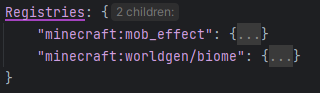
I had to do a little bit of thingies to get biome ids to save
I went through and looked at every single vanilla registry manually to find the ones that need syncing of int ids / saving int ids to disk
I found that only mob effects and biomes need saving to disk
            Registries.MOB_EFFECT, // Required for MobEffectInstance serialization
Registries.BIOME // Required for chunk Biome paletted containers```and I documented each one
ForgeRegistriesSetup
what I forgot to do is make it so I can serialize non-builtin registries
so I had to fix that
now ModifyRegistryEvent fires for all builtin & datapack registries :)
my code needs a lot of testing
@hoary umbra is the mods button being back new?? is that from upstream?
nice, saving the biomes worked https://i.imgur.com/InPKPHy.png
 quaint pagoda
hoary umbra
ye its upstream
quaint pagoda
hoary umbra
ye its upstream
I hate it
 keen thicket
yes I hate it too
 heavy zephyr
What's the problem with it?
keen thicket
muscle memory
heavy zephyr
would it be possible to have a DR register method that doesn't return a supplier, but rather directly constructs the object?
working on the capability rework, I have the following code in a test mod:
    private static final Supplier<AttachmentType<ItemStackHandler>> HANDLER = ATTACHMENT_TYPES.register(
            "handler", () -> AttachmentType.serializable(() -> new ItemStackHandler(1)).build());
the supplier is kinda unnecessary here because constructing the objects is safe
it might be cool to have something like
    private static final AttachmentType<ItemStackHandler> HANDLER = ATTACHMENT_TYPES.registerEager(
            "handler", AttachmentType.serializable(() -> new ItemStackHandler(1)).build());
just an idea
quaint pagoda
not worth it imo
there's no way to reliably tell people to not do that for intrusive objects
which is like, most of what people register anyways
heavy zephyr
yeah I guess it would cause hard-to-diagnose crashes
quaint pagoda
you can already do this for your mods and it's called hold the instance in a static field but we wouldn't officially recommend it to anyone cuz it could theoretically break at any moment in a new update
heavy zephyr
    private static final AttachmentType<ItemStackHandler> HANDLER = AttachmentType.serializable(() -> new ItemStackHandler(1)).build();
    static { ATTACHMENT_TYPES.register("handler", HANDLER); }
yeah that works
quaint pagoda
@hoary umbra well my registry overhaul works and runs
and at the very least doesn't crash with forgedev and saves the ids properly to disk and syncs the ids thru network
true tangle
quaint pagoda
for now I will just comment out missingmappingsevent it's garbage and too spaghe...
Create uses this. There should be a way to remap ResourceLocations of registered objects.
hoary umbra
true tangle
Create uses this. There should be a way to remap ResourceLocations of registered...
the registries will have the ability to register aliases of old names -> new names
quaint pagoda
yeah that's already done
it also allows chains of A -> B then B -> C but I'm not even sure that's useful
oh actually it is because we save aliases to disk
 cerulean oxide
winged iris
The bigger issue imo is when game errors but you still somehow make it to the ma...
cerulean oxide
winged iris
The bigger issue imo is when game errors but you still somehow make it to the ma...
this behavior sounds very concerning, I do not know how it would be triggered
winged iris
Honestly may just userdev and some bug that makes it rarely not include the mods or something
heavy zephyr
could we make intrusive holders thread-safe and unfreeze registries at mod construction time?
that might be beneficial for performance because instantiating blocks is quite expensive due to their shape calculations
that would also allow us to get rid of suppliers 🤔
 gloomy sinew
 I should put all my voxelshapes in my main mod class
I already put everything else there
 cerulean folio
heavy zephyr
could we make intrusive holders thread-safe and unfreeze registries at mod const...
cerulean folio
heavy zephyr
could we make intrusive holders thread-safe and unfreeze registries at mod const...
What benefit would you get?!?
Do you mean that would allow you to construct blocks outside of registration time?
I don't think that is a great idea
Cause it will cause several hard to trace issues
gloomy sinew
if you have so many voxelshapes that classloading your block classes on the main thread is causing problems, then you can init the shapes on mod construction instead of in block class static init
ripe storm
Yeah, that seems like a Bad Idea™️. The unfreezing early or whatnot. The making intrusive holders threadsafe option would eventually be necessary for parallel construction during registration events if that's eventually a thing
cerulean folio
Yeah
For parallel registration
Which we will eventually look into
We need the combination of Suppliers
And ThreadSafe Holders
heavy zephyr
cerulean folio
Cause it will cause several hard to trace issues
which issues will it cause?
I am thinking about parallel registration in the context of an eventbus rework, and it is a big PITA
ripe storm
Things that take a Block and aren't the method registering it generally expect it to be already registered
So violating that assumption by passing around unregistered Blocks or Items is a bad idea
If you were to allow stuff like that... Why would you even need the registration event? Like, it would be better to do fabric style registration than to keep the registration events but throw out suppliers
And that's got a slew of issues, as we all know, even if it comes with some advantages too
The suppliers are the advantage of registry events. They let you avoid classloading order issues, dependency issues where you can't make items till blocks exist, etc., in a way where the assumptions vanilla makes still hold true
heavy zephyr
I mean, the end goal is to make mod loading faster - I spent some time thinking about parallel registration, but it stops working the moment someone tries to read a registry from the registration event
ripe storm
Not necessarily
cerulean folio
heavy zephyr
I mean, the end goal is to make mod loading faster - I spent some time thinking ...
Which is a nono anyway
ripe storm
Eh, you can read the registry during that event just fine
cerulean folio
ripe storm
Eh, you can read the registry during that event just fine
Possibly
But realistically if your mod is doing that
ripe storm
And there's reasons you would have to
heavy zephyr
right now you can; but that might change indeed
cerulean folio
Then you are already on the wrong path
ripe storm
As in, I have a mod that does and there's no alternative
cerulean folio
Cause what in gods name would be a good reason to do that?
heavy zephyr
he's registering copies of some blocks, kind of
cerulean folio
You can do that with a single block
ripe storm
Blocks whose stuff depends on other blocks, and you're locked into needing it at block construction due to vanilla constraints
cerulean folio
That you always register.....
See C&B
You don't need to know what is in the registry
ripe storm
Hmm? I don't see how that's related
cerulean folio
Or going to be in the registry
cerulean folio
ripe storm
Blocks whose stuff depends on other blocks, and you're locked into needing it at...
I am not aware of such blocks existing in vanilla
And if taht is the case
heavy zephyr
yes but that is a very complex approach - in theory we could provide a "tail register" event that would allow you to register extra registry entries that depend on previous entries; and that event could run on the main thread
cerulean folio
Then we need to patch it out of vanilla and into a supplier
cerulean folio
heavy zephyr
yes but that is a very complex approach - in theory we could provide a "tail reg...
No
ripe storm
cerulean folio
Then we need to patch it out of vanilla and into a supplier
Hah! Good luck doing that with blockstate properties...
cerulean folio
Cause that is a viscous cycle
cerulean folio
ripe storm
Hah! Good luck doing that with blockstate properties...
?!? Example
ripe storm
But all of this aside, we don't really need parallel registration. We just need parallel construction
heavy zephyr
how so? we need to make the common use case parallel, but I think that registering block "copies" is a valid use case
ripe storm
cerulean folio
?!? Example
The blockstate properties of a block must be known at construction. Period. In my case, those properties are dependent on the properties of other blocks
cerulean folio
ripe storm
The blockstate properties of a block _must_ be known at construction. Period. In...
But 95% of all blockstate properties can be also overriden in the implementing block
So I am not sure what the issue is
You can pass in a default for the properties
And then override the method in the block
And pass it along for handling there
ripe storm
heavy zephyr
how so? we need to make the common use case parallel, but I think that registeri...
Basically, the slow part we want parallel isn't actually registering stuff. It's constructing it. I'm thinking, basically, each registry event would get split into two phases - a parallel construction phase and a non-parallel registration phase
ripe storm
cerulean folio
But 95% of all blockstate properties can be also overriden in the implementing b...
The fuck? No they can't. I'm talking about FACING, LIT, those ones. Not BlockBehaviour.Properties
cerulean folio
ripe storm
Basically, the slow part we want parallel isn't actually registering stuff. It's...
Due to intrinsic holders: That is not possible at the moment
heavy zephyr
assuming we fix intrinsic holders, I suppose DR could instantiate the objects in parallel in the backend and then register them serially
cerulean folio
ripe storm
The fuck? No they can't. I'm talking about FACING, LIT, those ones. Not BlockBeh...
WTF
ripe storm
Those properties must be provided at block construction
cerulean folio
Why would you need some other blocks STATICALLY DEFINED properties in your own?!?
All properties are statically defined in vanilla
ripe storm
I don't copy them. I add or don't add various properties based on what certain target blocks have
And I don't know what those blocks will be at compile time so...
cerulean folio
Are you mimicking or what?
Cause C&B does all of that....
Granted not stuff like Facing
ripe storm
cerulean folio
Are you mimicking or what?
Sorta. This is for Excavated Variants. A, for example, nether gold ore embedded in basalt ought to have the same facing-ness as basalt has, but one in sandstone shouldn't
ripe storm
I can't work with a single block; I have to register separate blocks for everything
heavy zephyr
well luke's stuff would work if we made DRs register instantiate in parallel in the background
ripe storm
Also keep in mind that if someone is doing something where they need to access the same register that they're registering to during construction, and expect to get stuff, they're probably working with some sort of registry callbacks anyways
Like, I'm doing this with registry callbacks, mostly, except for stuff based only on vanilla blocks
(I mixin my own registry callbacks at present cause forge doesn't have them)
cerulean folio
I think your idea could indeed work much better with something like a registry callback
heavy zephyr
couldn't you instead iterate the block registry right before it gets frowzen?
ripe storm
heavy zephyr
couldn't you instead iterate the block registry right before it gets frowzen?
I could but then it becomes a game of who wants to do that last, and someone always wants to get the last say, and then my stuff breaks Contenttweaker or something like that
ripe storm
cerulean folio
I think your idea could indeed work much better with something like a registry c...
Yeah, that's what I do. I think we shouldn't worry about block ctors looking for non-vanilla entries in the block registry, so long as registry callbacks are an option. So basically, parallel construction, then register everything, would be a great option in my opinion if we make intrusive holders threadsafe. But that's probably a longer term sort of change
cerulean folio
ripe storm
Yeah, that's what I do. I think we shouldn't worry about block ctors looking for...
realistically if we do registry callbacks
Then we don't need to care for the seperation of registration and instantiation
Cause it means that they should be considered to run in parallel anyway....
Or am I seeing this wrong?
ripe storm
My thought was that ctors would be parallel, and registration serial, and within registration callbacks would be parallel, to offset the potential performance issues of callbacks
cerulean folio
If the callback is already in parallel
I see no reason for the actual registration to not be in parallel as well
ripe storm
Also, keep in mind that people will still want to read from the register during construction. And that's fine, as long as they only read vanilla entries
ripe storm
cerulean folio
If the callback is already in parallel
Well, it's basically just writing to a map. Meaning that you've got to sync it every operation, basically, anyways
So, no huge benefit
But the big issue with parallel registration is that the contents of the register, during construction, will not stay the same run to run; and, you can't (and shouldn't !) stop people from reading the registry during registration, which would cause risks of modification while reading causing issues
Hence, why I'd separate out the ctor stuff
cerulean folio
Again, I don't think that reading the registry is a good idea.....
I think poeple should use callbacks to do it
ripe storm
cerulean folio
Again, I don't think that reading the registry is a good idea.....
If you're looking for vanilla entries it should be fine, no?
cerulean folio
No
ripe storm
Orion: I can't use callbacks to listen for vanilla stuff to be registered
Cause it's already registered
cerulean folio
Due to registry replacements, when you are running in parallel, there is no guarantee
cerulean folio
Well there were some reasons to use them, for example with cauldrons
ripe storm
But fundamentally, callbacks won't work for stuff where I need to inspect vanilla registry entries
ripe storm
cerulean folio
Well there were some reasons to use them, for example with cauldrons
No, there is nowhere to use them where a mixin wouldn't suffice and be more compatible
cerulean folio
I mean we could offer a snapshot of the state from before the registration process......
And that way you can at least see the vanilla blocks
keen thicket
registry replacement is gone for good, forge regs existed 60% just to half-ass the buggy registry replacement and it's a lot of patches
cerulean folio
Okey
Then yeah luke
What do you think
A snapshot of the registry before the registration process starts
ripe storm
Basically, my current flow, for Excavated Variants, is:
- during the normal registration event, register anything where the dependent blocks are already registered
- register everything else in callbacks
I have to do this cause - during the normal registration event, lots of stuff I need isn't registered yet in all likelihood
- callbacks will never catch vanilla entries
cerulean folio
Plus callbacks
ripe storm
What benefit does that bring over just separating out the ctors?
cerulean folio
Not sure
Just discussion different approaches
I think a dual stage process, is a bit meh
ripe storm
It's also... Workable but painful for multiloader mods
Cause now I have to handle grabbing that snapshot and whatnot which could be painful, but eh, doable
Also, I really want to move away from neoforge providing its own version of registries - ditching the forge registries is a good idea. I worry that a snapshot would be, once again, basically just recreating a vanilla system that already exists
cerulean folio
No i mean it should be trivial to get you a nice Map<ResourceLocation, T>
Trivially enough
It would not be a full registry
Just a copy of the contents
Cause that is what you are interesting in, is it not?
ripe storm
cerulean folio
No i mean it should be trivial to get you a nice Map<ResourceLocation, T>
I mean, yes, but we already have that. It's a registry. But I see your point
The other option is to make registries backed by a concurrent map of some sort. That way this all sorta becomes a moot point
But I also don't know how intrusive that would be
cerulean folio
My point is that during parallel processing of the event, the view of the registry might not be consistent from run to run, or even have problems with Concurrent modifications during iterations.
ripe storm
Or what sort of performance issues might arise from it later on
keen thicket
that sounds slow
synchronizing maps with thousands of put calls isn't exactly efficient
ripe storm
cerulean folio
My point is that during parallel processing of the event, the view of the regist...
Yeah, exactly. That's why the snapshot approach or the separate out ctors approach would be better
cerulean folio
You can make the map concurrent during registration and then readonly / immutable during freeze
ripe storm
Eh, seems iffy to me
cerulean folio
We have the relevant methods already:
freeze and unfreeze
Simply change the backing map
ripe storm
You're poking around in vanilla registries too much
We want to try not intrusively modifying the system beyond recognition
So yeah, I'd say a snapshot could work, though I don't see a benefit over separating out ctors
(also yeah, concurrent backing map has issues of non-deterministic-ness)
ripe storm
Separate ctors leads to less possibilities for weirdness in my mind - it's impossible to screw up and access the registry in a block ctor when you shouldn't - something which would lead to difficult to reproduce bugs
And neither would really have many user facing changes
heavy zephyr
indeed we should run some tests but separate ctors sound promising to me
quaint pagoda
ripe storm
Orion: I _can't_ use callbacks to listen for vanilla stuff to be registered
You cannot but you could use a bake callback at the end or have some sort of Boolean in your add callback that only runs the first time but I think the one modded entry would be added after this.
quaint pagoda
cerulean folio
No i mean it should be trivial to get you a nice Map<ResourceLocation, T>
Currently my registry rework has registry snapshots for vanilla and when the game is frozen but these are up to be deleted.
And also in internal classes
 stuck lava
why not go through the vanilla entries before the register event and run the callbacks manually
quaint pagoda
well that is a possibility I guess
ripe storm
quaint pagoda
You cannot but you could use a bake callback at the end or have some sort of Boo...
Yeah but to do that I need to grab vanilla stuff from the registry somehow, which involves either enqueueing work (I can probably do this, actually) or running it at the beginning to avoid parallel stuff. Though yeah, I feel like maybe the solution here is to do all registry stuff as enqueued work. So, like, in the registry event - you construct the block normally, then enqueue registration
ripe storm
stuck lava
why not go through the vanilla entries before the register event and run the cal...
Because I can't register stuff before the register event
Oh wait, you mean forge doing that?
Hmm, maybe. That could be interesting
Though honestly I don't think it's too necessary
quaint pagoda
the parallel registration is entirely outside of my current rework, although it could be added with proper discussion
I just feel that's a separate topic altogether
ripe storm
Yeah, I think it's a future issue
heavy zephyr
I brought it up because I am working on EventBus
deep lance
heavy zephyr
that might be beneficial for performance because instantiating blocks is quite e...
don't most vanilla shape calculations happen at classloading time? could we do something to parallel preload all vanilla block classes?
stuck lava
deep lance
don't most vanilla shape calculations happen at classloading time? could we do s...
you mean before mod construction?
deep lance
idk exactly when would be good
hoary umbra
I had an idea™️
what if instead of the dual generic that we need to fix holder, we reduce to one generic for the base DeferredHolder class, and introduce a DeferredHolder.Strict subclass with two generics
then DeferredHolder instances may be referred to with less verbosity, and those who need stronger typing can use the subclass
stuck lava
why? even vanilla does the hacky casting
hoary umbra
Vanilla does no such casting, vanilla holders only match the registry type
that's why were in this mess in the first place
stuck lava
hoary umbra
Vanilla does no such casting, vanilla holders only match the registry type
I saw a helper method for exactly that casting somewhere in vanilla/forge code before tho
hoary umbra
I assume you just mean why in general?
I don't want to manually downcast all my things
keen thicket
I have a feeling youre talking about that Class<T> cast back when forge regs had a class type
deep lance
vanilla doesn't have this problem because vanilla has statically typed fields [of the correct type rather than the registry type] that are used 99% of the time
so maaaayybe the solution is to rework ObjectHolder
keen thicket
how exactly does object holder help in any way
deep lance
because then mods can use correctly typed static fields too
you don't need a Holder<MyBlock> if you can have a MyBlock
heavy zephyr
or... go back to static fields 😄
cerulean folio
We are not going back to static fields
At least I would not......
We are planning on doing parallel instantiation
With delayed serial registration still right?
So....
Holder<X> is way better
stuck lava
why exactly does the registration need to be serial?
 warped forge
the registries and some constructors aren't threadsafe
you'd have to patch all of that to be threadsafe
or you can just have registration happen in the main thread
 abstract scarab
Even though it does sound like trouble
It is an excellent target for parallelised optimisation
Its definitely worth at least thinking about
stuck lava
I think synchronizing the register method would be the easiest (a single patch)
keen thicket
construction would benefit more than registration probably
abstract scarab
Disagree
keen thicket
that defeats the purpose of parallel
abstract scarab
IO will be a bottleneck on its own
lofty citrus
i've had the thought of a parallelized registry event holding the registered objects in itself, and then later they all get registered serially
abstract scarab
Registration is all in memory objects created from all in memory objects, isolated from each other
Its about as perfect a target as we could ask for
lofty citrus
technically possible right now with changing the impl for RegistryHelper
abstract scarab
The only exception is mods that dep on other mods, but that’s workable
heavy zephyr
stuck lava
I think synchronizing the register method would be the easiest (a single patch)
that would also be super inefficient
heavy zephyr
keen thicket
construction would benefit more than registration probably
definitely, yes
stuck lava
class loading would benefit most
abstract scarab
Construction is inherently limited by io, which for many small objects is often a bottleneck of its own
abstract scarab
Disk io
keen thicket
heavy zephyr
block construction is also quite slow
yeah, state definitions..
cerulean folio
abstract scarab
Disk io
?!?
stuck lava
registry stuff doesn't do any IO
abstract scarab
keen thicket
yeah, state definitions..
And shapes
cerulean folio
keen thicket
yeah, state definitions..
They are loaded later are they not?
abstract scarab
keen thicket
construction would benefit more than registration probably
This?
stuck lava
abstract scarab
And shapes
those are static tho
cerulean folio
Like yeah it creates the default values on construct
But the actuall parsing of the file happens way later
abstract scarab
stuck lava
those are static tho
But classloaded at registration
Well, construction
cerulean folio
Given that all jars are loaded into memory by NIO
The IO is not really such a problem for classloading.....
stuck lava
abstract scarab
But classloaded at registration
we'd need to control when the class loading happens tho
abstract scarab
cerulean folio
Given that all jars are loaded into memory by NIO
Nah
I thought they meant data loading
Like asset loading
keen thicket
cerulean folio
They are loaded later are they not?
state definitions? no, they're done in the block ctor
cerulean folio
keen thicket
state definitions? no, they're done in the block ctor
Nope.....
I am going to check
But I am like 90% sure that they are loaded later
abstract scarab
Then how does default state definition work lol
cerulean folio
abstract scarab
Then how does default state definition work lol
That is defined in code.....
There is no file needed for that
Additionally the blockstate files only exist on the client
heavy zephyr
pretty sure it's the block ctor
abstract scarab
What..?
keen thicket
blockstate jsons aren't state definitions?..
cerulean folio
The state definition is not loaded from disk
It is done in code
There is no IO involved here
abstract scarab
I dropped io ages ago and explained it was a misinterpretation
cerulean folio

See
They are fully in code
The Client then loads the blockstate file later during resource reloading
heavy zephyr
so, that part should be parallel
keen thicket
yes.. and that's why we've said block construction is slow. not sure where you're trying to get at 
heavy zephyr
we all agree that block construction needs to happen in parallel
abstract scarab
^
stuck lava
yes but the question is if and when we need the synchronisation point
cerulean folio
createIntrusiveHolder needs to be made parallel capable
stuck lava
yea that is step 1
lofty citrus
lets get rid of intrusive holders
cerulean folio
There i no real performance degradation
keen thicket
you basically need to make the holder map concurrent. which is a problem since it slows reads
cerulean folio
Becaue the map only holds unregistered holders
And as the blocks are registered they are drained
And then not used at runtime anymore
heavy zephyr
keen thicket
you basically need to make the holder map concurrent. which is a problem since i...
concurrent maps have fast reads
and yes what Orion said is correct
cerulean folio
keen thicket
you basically need to make the holder map concurrent. which is a problem since i...
Nope, again that map only holds them temporarily untill they are registered
stuck lava
keen thicket
you basically need to make the holder map concurrent. which is a problem since i...
use a synchronized wrapper for intrusive
cerulean folio
So the performance on them really does not matter
cerulean folio
stuck lava
use a synchronized wrapper for intrusive
Not needed, also way to expensive
A concurrentmap is much cheaper

That is the line that needs to be patched
And done
stuck lava
is there a concurrent variant of the identity hash map?
heavy zephyr
sadly no
lofty citrus
i believe the IdentityHashMap in unique in that regard
cerulean folio
What is the key property of that hashmap?
heavy zephyr
it replaces equals by ==
as long as Blocks etc don't override equals or hashCode we'll be fine]
stuck lava
he meant the key type
lofty citrus
IdentityHashMap goes counter to the Map interface by comparing with == (identity) rather than with Object#equals
ah, map key
see, this is why English is trash
keen thicket
T
keen thicket
which is why it should probably still be a identity map
quaint pagoda
disable writes entirely and just give it a holder later
keen thicket
otherwise a concurrenthashmap is a further perf degradation
stuck lava
lofty citrus
~~see, this is why English is trash~~
let's use german instead
cerulean folio
I asked for the key property that makes it special
keen thicket
so collections.synchronizedmap?
cerulean folio
The answer for the reference comparison is the right one 😄
heavy zephyr
keen thicket
so collections.synchronizedmap?
we're NOT gonna use synchronized it is way too slow
and we'll have high contention
keen thicket
both of them are right answers 
heavy zephyr
what we can do is patch a final equals and hashCode that call super in intrusive holder types (Item, Block, etc) to ensure that mods don't override them
keen thicket
the duplicate checks of a normal hash map are going to bite us back
quaint pagoda
this sounds like a lot of overengineering when you can just turn off intrusive holders and add them back during registration or someplace later when it's serial
heavy zephyr
it's a single patch + optionally some safeguards for mods not to get things wrong... I personally think we'll be fine with ConcurrentHashMap
keen thicket
quaint pagoda
this sounds like a lot of overengineering when you can just turn off intrusive h...
that makes them completely useless
lofty citrus
time for a record ValueHackery<T>(T data) { @Override public boolean equals(Object other) { return other instanceof ValueHackery<T> otherVal && otherVal.data == this.data; } }
cursed solutions for cursed problems
(fun thing is I did write that kind of code in ParchmentJAM; don't remember if I kept it)
quaint pagoda
keen thicket
that makes them completely useless
I mean they should be really. they shouldn't exist. but it not existing before registration time doesn't really matter as it's just as useless until then when it's bound
keen thicket
and if you don't create them on construction they're completely useless since you can't check it the object was registered
the only uses of the intrusive holder is to check that the object ended up being registered, that you don't construct them when you shouldn't, and that there's always a holder available in the deprecated builtin holder methods
cerulean folio
heavy zephyr
it's a single patch + optionally some safeguards for mods not to get things wron...
Somebody check this
I think the types that currently use intrusive holders
quaint pagoda
keen thicket
the only uses of the intrusive holder is to check that the object ended up being...
how is that first one true
cerulean folio
Are reference equals anyway....
heavy zephyr
yeah that's what we need to check
cerulean folio
So it does not matter whether it is an identity map or not
quaint pagoda
well, I guess yes the registry validates all intrusive holders get registered but that's not very useful
keen thicket
the registry can't be frozen with unregistered intrusive holders
that makes them useful since you at least know somewhere you did something wrong
and with debugging you can figure out where
quaint pagoda
intrusive holders should be on their way out anyways
if the perf hit for the concurrent maps is significant (see: benchmarking) then it should be turned off
the features that intrusive holders provide are simply insignificant
keen thicket
I disagree with that but w/e
quaint pagoda
Personally, I think parallel registration is entirely out of scope until event bus changes are finalized, and the core rework is finalized. That includes moving everything to vanilla registries and reworking all the registry sync/save code to work off vanilla registries aswell.
heavy zephyr
The more I think about it the more it seems that eventbus won't change a lot
It should only change to support new features imo, to limit breakage
ripe storm
hoary umbra
then DeferredHolder instances may be referred to with less verbosity, and those ...
Which generic would you be keeping in DeferredHolder? If you're keeping the less specific Block there then yeah, makes sense to me - I think in the long run, we want it to be a Holder<Block> and easily provide a Supplier<MyBlock>
hoary umbra
Yeah, DeferredHolder<Block> with something like DeferredHolder.Strict<Block, MyBlock>
ripe storm
I don't like Strict
It's still a Holder<Block>, right?
The only difference is that the get method has a more specific return type
But yeah, sounds good to me I guess, especially as DeferredHolder won't be final or anything
So the register function returns an instance of the specific one, but that doesn't have to be kept around
stuck lava
this will break stuff because for my datagen I use Supplier<? extends X> where X is not necessarily the reg type but that is not possible since Holder is a Supplier (it can not be a Supplier<Thing> and a Holder<RegType>)
and no I won't do ::get since the whole point of the suppliers is to be able to just use the RO
ripe storm
I think we're talking breaking changes anyways here
Since for now there's no alternative to doing unsafe casts somewhere until breaking changes are made
Because yeah, at the end of the day it must be a Holder<Block> to avoid tons of vanilla issues, and that means letting people use ::get if they really need a more specific type
stuck lava
yes but that would make any DeferredHolder for blocks a supplier for Block and not the more specific type which is a problem for things that require Supplier of a more specific type (one example is FlowerPot i think)
ripe storm
stuck lava
yes but that would make any DeferredHolder for blocks a supplier for Block and n...
Hence why you use ::get, as necessary, to get the more specific supplier
stuck lava
then it no longer makes sense to even implement Supplier in the first place if you have to do ::get anyway
keen thicket
well yes
ripe storm
stuck lava
then it no longer makes sense to even implement Supplier in the first place if y...
It's still a Supplier<Block> though, and it allows vanilla holders to be passed as suppliers which is useful
stuck lava
ripe storm
It's still a Supplier<Block> though, and it allows _vanilla_ holders to be passe...
but many (if not most) things need suppliers of the more specific type not the base type
that is not vanilla but modded stuff
ripe storm
Sure, and for those cases ::get would exist
stuck lava
::value exists too for vanilla Holder
ripe storm
Oh, hmm, then yeah, I say we drop the supplier from holders altogether
heavy zephyr
hmmm, assuming we make intrusive holders threadsafe, instantiating them directly seems to end up being the simplest solution
heavy zephyr
does the registry rework get rid of the ModLoadingContext.get().getActiveNamespace(); calls?
lofty citrus
@hoary umbra and @quaint pagoda?
wait, I didn't need to pong, since they'll read this anyway 
ripe storm
I'd suspect that it does get rid of it, since if I remember right that silly namespace check was done in the forge registry stuff
quaint pagoda
heavy zephyr
does the registry rework get rid of the `ModLoadingContext.get().getActiveNamesp...
Need links
heavy zephyr
these two:
- https://github.com/neoforged/NeoForge/blob/70b5d784b7f1eefbaaef4a48fd6b67593ece27a5/src/main/java/net/minecraftforge/registries/GameData.java#L787
- https://github.com/neoforged/NeoForge/blob/70b5d784b7f1eefbaaef4a48fd6b67593ece27a5/src/main/java/net/minecraftforge/registries/ForgeRegistry.java#L393
there is also this one that I will deprecate in a Neo PR in a few hours: - https://github.com/neoforged/NeoForge/blob/70b5d784b7f1eefbaaef4a48fd6b67593ece27a5/src/main/java/net/minecraftforge/registries/RegisterEvent.java#L128
keen thicket
the 3rd one is so unneedlessly expensive..
thread local lookup for every registered object
heavy zephyr
well that's just a map lookup
the registration does some of these already, so it isn't a big difference
also fun fact: the third one is not even used??? 
nothing is using that RegisterHelper, right?
(well, unless some mods decided to)
ripe storm
Is there any reason that the new registry system actually needs the mod context stuff at all?
quaint pagoda
heavy zephyr
(well, unless some mods decided to)
that's the point
quaint pagoda
heavy zephyr
these two:
- <https://github.com/neoforged/NeoForge/blob/70b5d784b7f1eefbaaef4a4...
the first two are gone the third one easily can be aswell
at least in my version of it
is this feature going away or what?
heavy zephyr
maybe, I don't know
it forces any event using it to be dispatched on the mod event bus
quaint pagoda
Oh, true
shrewd garden
Some people think that the current system (that being, registries locked until register event, and unlocked forever after) is a better system than unlocking until the register event, and locking after.
We should discuss this before we go any further with an overhaul (further than the current non-breaking stage, that is)
It's worth noting that mods' static initializers run in dependency order, so mod registry ordering is still preserved with unlocked-for-static-init.
heavy zephyr
Surely you inversed locked and unlocked?
keen thicket
registries are not thread safe you cannot open up registration at random points during mod loading
shrewd garden
Yes I did
This is what I get for wanting people to discuss stuff while on holiday
There's a very clear disparity between how I remember these discussions going and how they actually seem to have gone
So clarity is great
heavy zephyr
The first step would be to investigate making intrusive holders threadsafe
Once that is done, I think static init as an option would be fine
keen thicket
static init yes, you can do it for any registry w/o an intrusive holder (which in 1.20.2 is basically none lol), Registry.register on the other hand
heavy zephyr
I think we'd want to keep registries locked, but allow intrusive holder creation
That would remove a lot of the current supplier-based patches
shrewd garden
Maybe I confused static register and static init
quaint pagoda
How it works right now is vanilla registers everything and locks itself before mods can do anything. Then, register event unlocks every registry, runs all the register events, then locks every registry.
It makes the most sense to me to keep it like this
cerulean folio
To me too
stuck lava
me too, I also see no point in changing except being more like fabric
heavy zephyr
A big advantage is to remove the supplier-based patches for many things
And we also get parallel object construction for free that way
The suppliers only existed to support registry replacement in the first place, then it turned out they accidentally helped with the 1.18.2 holder changes; neither of these things is a serious limitation: RR is going away and we need to patch intrusive holders to make them threadsafe already
stuck lava
that would technically make DR and RO obsolete which I don't think I like
heavy zephyr
DR will still be useful since registration will remain locked to the registry event
stuck lava
so DR.register would return the object instead of RO
heavy zephyr
RO doesn't need to be mandatory, maybe do two overrides for DR so that people who want RO can keep it
Idk if mojang plans on replacing Blocks and Items fields by holders
stuck lava
wasn't there a discussion about making entry construction parallel
heavy zephyr
Indeed - but enabling static construction makes some things nicer and kinda comes for free once you have the patches for parallel entry construction
stuck lava
but it removes the parallel aspect since it would happen in dep order
ripe storm
The benefits of static init are, in my mind, twofold: first, it's possible to make construction parallel at some point in the future, though that's honestly not a huge worry for me. The biggest advantage is that it guarantees that stuff is constructed and registered in the same order as vanilla does
Which can help avoid all sorts of weirdness
And also makes using stuff from other mods easier as a weak dependency
Like, if stuff is allowed to be statically registered - and I want to register an item that needs someone else's block, which currently I can do just fine - then there's no guarantee that that is registered when my mod loads. Heck, there's no guarantee that they do it in static init instead of instance init. And it requires a hard dependency, not just getting the block by location
As for static construction - maybe
The risk there is that Mojang makes a lot of assumptions that things being passed around will be registered
And heck, mods do too
heavy zephyr
Static construction was fine before 1.18.2
heavy zephyr
stuck lava
but it removes the parallel aspect since it would happen in dep order
No? Mod ctors are not ordered in a specific way I think
Well in any case I don't care much - you can fake static init using the block register event if you want 😛
deep lance
The suppliers only existed to support registry replacement in the first place
It was also needed for e.g. spawn eggs before we fixed the registration order to do entities before items which I think wasn't until 1.18
also I don't know if registration order is reliable for things like stairs [blocks that depend on other blocks] - something to think about if we're considering removing them
quaint pagoda
this idea sounds a bit concerning to me and that mods could stumble upon static init loops that break all assumptions and cause NPEs
it would only take two mods for things to go wrong.
Mod A could have a block which depends on a block from Mod B.
Mod B could also have a second block which depends on a second block from Mod A.
Depending on the ordering of the fields and assuming only one class for block init per mod, this could just cause NPEs and people would be forced to move to suppliers anyways.
and this probably could get more complicated across registries where mods add new registry ordering which does not exist in vanilla
say, requiring an Item definition in a Block constructor, for example
you could run into territories where it is impossible to linearly sort registry order
deep lance
i mean the most common case is going to be that a mod has a block that depends on another block from itself, i.e. i register a solid block and a stair
but i suppose an addon to a mod could register a stair of a solid block from that mod
we could have a guarantee that mods are called in dependency order [within each registry, i.e. mod A blocks mod B blocks mod A items mod B items], and that blocks in each DeferredRegister are called in the order they are added
and possibly also that multiple DeferredRegisters belonging to the same mod are called in the order that their event listener was registered, if that's not too difficult
hoary umbra
I don't believe listeners are ordered in registration order, at least I was having issues with that
deep lance
possibly the event would have to be replaced (or augmented) with a system that provides more ordering guarantees
like I don't think it would be impossible to get rid of the supplier patches, but it'd need to be done carefully
like i am not saying we should try to make all kinds of dependencies possible, just that we should make it predictable which ones work or not. People who need items to construct blocks can use suppliers, the important thing is that nothing in vanilla does it
quaint pagoda
that seems like a slippery slope
how are modders supposed to know what they can and can't use without a supplier?
you would have to effectively memorize the order of registries + how classloading of static fields work and check that with other mods you depend on
deep lance
i am not advocating for static init
just saying that removing the supplier patches from vanilla classes is worth looking at independent of that
quaint pagoda
Entirely fair, actually
heavy zephyr
quaint pagoda
this idea sounds a bit concerning to me and that mods could stumble upon static ...
That won't happen in practice - it's not happening on Fabric
heavy zephyr
quaint pagoda
you could run into territories where it is impossible to linearly sort registry ...
That's fine... assuming all the objects are constructed it doesn't matter in which order you register them
abstract scarab
uh..
it does though?
the vast majority of blocks need to be registered before items
entitytypes are also an oddity cus you tend to end up registering egg items for them too
stuck lava
except it does because I use my DRs registry order to construct my creative tab
stuck lava
I think tech has spent a bit too much time in fabric land
because "it's not happening on Fabric" is not a valid argument in forge sence we have so vastly different systems
abstract scarab
yep
heavy zephyr
stuck lava
because "it's not happening on Fabric" is not a valid argument in forge sence we...
Well, the underlying vanilla classes are the same
heavy zephyr
abstract scarab
the vast majority of blocks need to be registered before items
Ah hmmm is that the case? I forgot
heavy zephyr
stuck lava
because "it's not happening on Fabric" is not a valid argument in forge sence we...
The only meaningful difference is that Forge mods are constructed in parallel... Everything else can be changed
 rocky estuary
heavy zephyr
And we also get parallel object construction for free that way
rocky estuary
heavy zephyr
And we also get parallel object construction for free that way
Does this imply the removal of deferred registries? I think not having to worry about classloading when registering or having a step when each category registers things is really handy
abstract scarab
that is the general implication for eventually™️
stuck lava
rocky estuary
Does this imply the removal of deferred registries? I think not having to worry ...
I would definitely not like not having DR because I use those to fill my creative tab
heavy zephyr
I am talking about the underlying system... I would hope that the high-level API (i.e. DR) isn't changed too much to make migration easy
heavy zephyr
abstract scarab
the vast majority of blocks need to be registered before items
I checked this and it's not true
the mapping (in Block#asItem) is lazily computed
the only thing is that you should not call Block#asItem before both the block and the item are registered
heavy zephyr
abstract scarab
entitytypes are also an oddity cus you tend to end up registering egg items for ...
well if the EntityType were constructed beforehand you could just pass it to the item 😄
past saffron
This might be an unpopular take, but I significantly prefer the fully deferred nature of the current implementation, especially when registration helpers come into play to make registration of large amounts of blocks not even more of a chore. One of the cases where the lack of deferral is especially annoying is registration of items referring to multiple blocks (i.e. signs and torches) because it causes field order to matter when it shouldn't IMO. The amount of BS it took to basically replicate deferred and ordered registration and then jam that into things Forge patches to take suppliers was absurd when I dabbled a bit with ML.
rocky estuary
past saffron
This might be an unpopular take, but I significantly prefer the fully deferred n...
Yeah same. I hate having to balance classloading order since many registry entries need other ones to be registered beforehand and so on. I like just registering stuff and forgetting about it. Plus having dedicated steps at which you are sure all blocks have been registered allows for nice things too. Definitely in favor of not doing things the vanilla way of it means keeping deferred registries
So I'm strongly advocating to keep the supplier based stuff also because migrating would be a pain otherwise
Intact what would even be the benefit of not having that? Seems like just removing something useful just for the sake of removing it
heavy zephyr
not having it would significantly reduce the patch surface
is it just a matter of personal preference? assuming you split your objects in files by type (i.e. all items in one file, all blocks in one file, etc...) static creation should just work™️
rocky estuary
I like having all on one class or generally not having to worry about it. Tbh one of the main things I like about forge
heavy zephyr
actually, having all in one class will also work with static definitions because javac will yell at you if you try to refer to a field that hasn't been initialized yet 😛
so in that sense it is more robust than just doing supplier.get() in the block constructor and hoping that the supplier is already ready
keen thicket
I don't think anyone was suggesting static registration
registration isn't construction
past saffron
heavy zephyr
is it just a matter of personal preference? assuming you split your objects in f...
I don't do that separation because in my case blockitems are just a necessary evil and not something I explicitly store in fields. Instead, my block registration helper also handles item registration, which is where the issue I mentioned occurs when deferral is not a thing.
past saffron
heavy zephyr
so in that sense it is more robust than just doing `supplier.get()` in the block...
That's why the patched constructors don't immediately resolve the supplier 😉
heavy zephyr
well these patches don't currently exist for everything - and they sound annoying to maintain
past saffron
I can't think of any relevant case where such a patch does not exist
heavy zephyr
past saffron
I don't do that separation because in my case blockitems are just a necessary ev...
I don't really understand why that would happen - if the block is registered sufficiently late shouldn't it be fine to construct the item at the same time?
it doesn't seem to exist for StandingAndWallBlockItem
past saffron
heavy zephyr
I don't really understand why that would happen - if the block is registered suf...
No, because the issue is the construction of the item. Blockitems are the singular case that is not patched because the surface would indeed be far too large. In my case the block implementation controls which item is used, mainly because it significantly simplifies the implementation, which creates a dependence on the construction order when it's not deferred
heavy zephyr
but if you had static construction javac would enforce the correct dependency order for you
past saffron
It would not because it can't see through the indirection of the item construction
heavy zephyr
class MyBlock extends Block {
    public MyBlock(..., Block dep1, Block dep2) {
        this.myItem = new MyBlockItem(..., dep1, dep2);
    }
}
or am I missing something?
past saffron
That's not what I'm doing, my implementation is closer to this:
registerBlock(BlockFactory factory) {
  Block b = register(factory.get());
  register(b.makeItem());
}
ah yes I see
could be refactored to not use a supplier with static init 🙂
in any case I don't think the existing supplier patches should be removed for now; but maybe the recommended pattern is worth reconsidering
past saffron
heavy zephyr
could be refactored to not use a supplier with static init 🙂
Not without either relying on field order or separating block init from item init
heavy zephyr
I am saying that you would rely on field order, and javac would check it for you
worst case you get a startup crash if you get it wrong
past saffron
Javac cannot see through the indirection of the item factory method, making it blow up on startup instead. Field order should not be relevant for this
heavy zephyr
"Field order should not be relevant for this" I disagree, this is just your opinion
it sounds completely arbitrary to me... maybe it's not the cleanest but it is also really easy to live with / work around
past saffron
It is just my opinion, yes, but it has benefits in terms of simplicity and safety
cerulean folio
I kind of agree with XFact here.
I like the lazy init / deferred init with suppliers
I like it even so much that I implemented it Fabric
heavy zephyr
hmmm, I have the impression that it doesn't change much on the user side overall, it's just a small matter of convenience - if you're already working with suppliers it's nicer to be able to pass a supplier directly, and if you're working with direct object references it's nicer to pass the reference
the thing is that the former requires a number of patches to add supplier support, whereas the latter matches vanilla and thus doesn't require patches
rocky estuary
I did have many issues when I tried this stuff on fabric. Sure nothing you can't get by without but I think the matter of convenience is nice. Plus stuff feels less fool proof as you don't risk ending up with null stuff in your object if you clasload wrong
heavy zephyr
for me personally (as in for my mods) I don't care as long as we fix intrusive holder creation to be thread-safe... then I can do the static init which I prefer and everyone else can keep doing whatever
heavy zephyr
rocky estuary
I did have many issues when I tried this stuff on fabric. Sure nothing you can't...
I think it's more a matter of having designed your mod around Forge's supplier paradigm and then encountering unexpected difficulties on Fabric which encourages the other paradigm... but if the mod had been written on Fabric from the start you would probably have paid more attention to the issue and it wouldn't have happened as much (my case - I don't remember having issues with this)
rocky estuary
Having holders instead of registry object sounds like an awesome change tho
rocky estuary
heavy zephyr
I think it's more a matter of having designed your mod around Forge's supplier p...
For me personally I use deferred stuff on fabric too with a crappy system I wrote
cerulean folio
heavy zephyr
I think it's more a matter of having designed your mod around Forge's supplier p...
I actually had no unexpected difficulties
heavy zephyr
Didn't you have to make your own supplier-based versions of some block/item classes?
cerulean folio
Where needed yeah
gloomy sinew
ANY time a registrable needs a reference to a registrable of the same registry, it should use a supplier/holder to reference it (and we can patch vanilla stuff where necessary)
though, how many places does vanilla still have that have blocks having direct references to blocks (or whichever registry)
past saffron
The one remaining case that comes to my mind without an IDE is the stairs block
ripe storm
In my opinion, the use of static fields for construction/registration - either deferred registers or otherwise - is not the best practice in general because it relies on classloading to have side effects. At least with deferred registers you have to add the register to the mod bus so it's not quite as egregious, since the side effects are then dependent on registering the register, but that's a particular practice that I think vanilla has accustomed to even though it's not too great.
But that's also a very opinionated view and I recognize that writing stuff that way is not always convenient
heavy zephyr
past saffron
The one remaining case that comes to my mind without an IDE is the stairs block
forge patches it in 1.19.2 at least
past saffron
Yes, I was referring to it in general, not in the sense of being an unpatched case
cerulean oxide
Isn't static init impossible to ever run in parallel for a single mod?
It's limited to parallelizing several mods
heavy zephyr
that sounds fine 😄
cerulean oxide
Macaw's mods would like a word with you
gloomy sinew
ripe storm
In my opinion, the use of static fields for construction/registration - either d...
I create my defregs during the constructor instead of static init because I use a one-liner function to both create the defreg and register it to the mod bus, and I don't like touching the mod bus in static init
keen thicket
for the record, mod bus in static init is completely safe to do as long as you don't go through the thread local container
gloomy sinew
which one's the thread-local container
is FMLJavaModLoadingContext.get().getModEventBus() safe or unsafe
keen thicket
unsafe
ripe storm
How do you get at the mod bus without going through the container?
gloomy sinew
what's the safe way to get it
keen thicket
get the container from ModList
ripe storm
That makes sense
heavy zephyr
keen thicket
get the container from ModList
do you call container.extension<FMLJavaModLoadingContext>().getModBus() then?
ripe storm
The paradigm I've been trying to switch my stuff over to is:
- set up deferred registration on instance init, in instance fields if I want to reference them other places
- store the mod instance in a nullable static field on the class after construction
keen thicket
cast the container to FMLModContainer
gloomy sinew
and that exists before my main mod class static inits?
keen thicket
no because the container static inits your class
heavy zephyr

GitHub
This allows mod to optionally receive their mod bus and mod container via constructor arguments.
As a next step, I imagine methods like registerConfig and registerExtensionPoint will be moved from ...
gloomy sinew
keen thicket
no because the container static inits your class
okay I can't use that then
keen thicket
why
gloomy sinew
because you said no?
I interpreted that as "I can't get the container during my main class's static init"
keen thicket
wait nvm the container doesn't use the forName overload that inits the clas
gloomy sinew
can I get the mod bus via the container in static init main or not
gloomy sinew
right but I wanted to know whether it was likely to work or not before I refactored everything :p
deep lance
heavy zephyr
the mapping (in `Block#asItem`) is lazily computed
the items take the block as a constructor parameter. Yes technically this means the blocks need to be constructed before the items, not registered, but it is still an ordering requirement.
oh, that's been covered
anyway i don't think "jvm enforces it through class loading order" is a valid solution, too easy to fuck up, especially between mods
at least if we have a deterministic order then when you fuck it up it crashes in the same place every time and it's clear who is wrong
(on the other hand, if we did do static init, most cycles could be safely broken by separating problematic constructs off into separate classes instead of having one singular ModItems etc class - but that relies on modders being able to correctly identify what is problematic)
 high raptor
ripe storm
The paradigm I've been trying to switch my stuff over to is:
- set up deferred r...
high raptor
ripe storm
The paradigm I've been trying to switch my stuff over to is:
- set up deferred r...
my approach is to still use static fields but have a Things.register(bus) method which does the classload; the fact that registration is done in clinit is an implementation detail though
ripe storm
high raptor
my approach is to still use static fields but have a `Things.register(bus)` meth...
This isn't too bad because the actual side effects - registering the DR - is done in the method
But if construction or registration were done in clinit, that's where you start seeing the paradigm that I think isn't the best approach
high raptor
Yeah, definitely
The main reason I use clinit is because I hate mutability and there's no sane way to make an immutable field and stuff without it 😜
ripe storm
I mean, if you do it on instance init and pass around your mod instance to whatever needs it that'd be immutable
quaint pagoda
I just pushed a new commit to https://github.com/SizableShrimp/NeoForge/tree/1.20.x-overhaul-registries-cherrypicked which entirely removes registry serialization to disk.
It was actually rather easy because I coded the system in such a way that it is mostly modular and only requires a few hook points to delete, being unified with other codepaths in a sane way.
Basically: fuck the legacy registry system!!
I removed this feature cuz of 23w32a which officially makes vanilla no longer serialize registry int ids to disk. Mods should follow suit.
Since this overhaul is targeting 1.20.2 or later, it obviously makes sense to just get rid of now.
Basically the only thing left for me personally is fixing up MissingMappingsEvent / RegistryRemapHandler to actually do something.
However, MissingMappingsEvent is kinda awful. I would much rather just delete the system now and readd it later if someone needs it with a properly designed API.
Using IForgeRegistry#addAlias is just such a better system and should be preferred in all cases. I don't really see how people would need more than that, but it's likely someone out there does /shrug
so basically: review time maybe?
I guess another important thing is waiting for Shadow's PR to be merged with DeferredHolder, and rebasing on that, as that will probably fuck up a good bit of my work
hoary umbra
quaint pagoda
I just pushed a new commit to <https://github.com/SizableShrimp/NeoForge/tree/1....
are the numeric ids not used in save data at all? Everything is paletted?
quaint pagoda
well not in 1.20.1
but in 23w32a, yup!
even confirmed by mojang staff
And this has also been verified by me personally
hoary umbra
same same
i know there's a difference
but mcp name is entrenched deep in my mind
Potion/PotionType™️
vs moj MobEffect/Potion
I believe missingmappings can be axed entirely
quaint pagoda
I agree, for now
I wouldn't be surprised if some modders still need it for whatever reason
But I'm almost sure that the scope of it does not need to be as large as it currently is
and the implementation is just fucking awful
hoary umbra
i mean it just lets you do the same thing that aliasing does, unless you have some other need to react to the presence of a saved registry entry being lost
but, you aren't saving the registries, so you can't know that anyway
true tangle
Do aliases allow a renamed entry to be mapped from its old key to the new key on world load?
hoary umbra
aliasing allows you to place an entry in the registry such that, for a resource key A, all Registry#get(A) calls will return value B, which can have any name
true tangle
That seems to cover the use case I described then
Do aliases already exist or are they something that will be added as part of the registry refactors?
true tangle
I cannot find them
hoary umbra
until a less-forever-ago PR by me they have been useless
and even now they are not api-accessible
See ForgeRegistry#addAlias
true tangle
Are mods not supposed to use them?
hoary umbra
lex wanted it to be "properly" exposed and thus wouldn't let me just make it available via IForgeRegistry
I would say its probably stable api
actually what the hell let me just go expose it
I don't think I want to deal with making it available in defreg because bleh
don't want to introduce merge conflicts with the DH PR
true tangle
I assume after the registry refactor it will be accessible from all places that regular registration is accessible
quaint pagoda
hoary umbra
I don't think I want to deal with making it available in defreg because bleh
my rework does this already /shrug
keen thicket
if you remove saving to disk how can you prompt the "missing registry entries, do you want a backup" screen?
quaint pagoda
hrm
ripe storm
MissingMappings should be reimplemented in a way that makes sense with the new system eventually but isn't necessarily the most important for now
Unless aliases would work for that use
hoary umbra
aliases cover everything the mappings event does except notifying you about which entries are missing
but you are the mod whose entries are missing, so you know which entries are missing
cerulean oxide
keen thicket
if you remove saving to disk how can you prompt the "missing registry entries, d...
I think Fabric is adding back a very stripped down form of saving to disk (just saving a stable list of names) to get around that
heavy zephyr
indeed
keen thicket
yeah the fabric pr is what reminded me lol
oh also
can we hook into the datafix for effecttype int -> RL and use the data that's saved to disk by forge if exists
otherwise you wreck any world updating
keen thicket
quaint pagoda
I just pushed a new commit to <https://github.com/SizableShrimp/NeoForge/tree/1....
unless we're registering a built-in biome registry for reasons?..
gloomy sinew
slap a deprecated on it and delete in in 1.20.2
keen thicket
slap a deprecated on all vanilla "redirects" in that class right now
and delete in 1.20.2
it's fully binary breaking and the vanilla API doesn't match the old forge one anyways
also make sure to test simple forge client/server w/ vanilla server/client
also shouldn't this be 257
nvm it's 0 indexed
heavy zephyr
shouldn't it be 255
shouldn't the whole ForgeRegistries class be deprecated?
ah no, not Forge's own registries
cerulean oxide
keen thicket
can we hook into the datafix for effecttype int -> RL and use the data that's sa...
I forgot you guys can do that lol
shrewd garden
Yeah, lol
Being able to modify the game code directly through patches is neat for this kinda stuff
keen thicket
 that shouldn't be much worse with a mixin tho
cerulean oxide
keen thicket
<a:hmmm:1030417406834774068> that shouldn't be much worse with a mixin tho
depends whether it uses a lambda
keen thicket
nope, it's a map lol
tho aagh, at the same time you need a world context
that's not going to be fun
cerulean oxide
keen thicket
that's not going to be fun
forge's serverlifecyclehooks thing might help with that?
quaint pagoda
so I guess I do need to fuck with this more, ugh
quaint pagoda
all the registries in ForgeRegistries were just a holdover so I didn't have to fix as many compile errors at that moment in time
they can be removed whenever
heavy zephyr
we can either mark them for removal or delete them
keen thicket
imo same field different type will just cause more confusion
keen thicket
mhm
quaint pagoda
I did it purely for the writing process
IForgeRegistry means something completely different now
I wonder if the data fix runs before or after we load registry snapshots from disk
keen thicket
we should probably nane it IRegistryExtension
heavy zephyr
it should be named the same as other extension interfaces imo
quaint pagoda
the name is pretty pointless for mods
given that Registry extends it
that's all anyone will use
keen thicket
heavy zephyr
it should be named the same as other extension interfaces imo
yes, and the new stanard is Extension
quaint pagoda
it can be put to a vote by maintainers /shrug
renaming it would maybe be less confusing for modders porting
So I might just sway to that
heavy zephyr
feels a bit pointless renaming the extension interfaces to me idk
probably doesn't affect source code though
true tangle
Are the I prefixes staying? I really dislike them.
quaint pagoda
yes
heavy zephyr
I like them 
keen thicket
heavy zephyr
was that agreed upon by the whole team?
psure yes, the new stanard is already in practice
quaint pagoda
true tangle
Are the I prefixes staying? I really dislike them.
it was put to a vote by the team and the vote said yes
 fierce wren
Can't we do a renaming pass on 1.20.2 for all of them? Once we determine which naming scheme to use, obviously
quaint pagoda
With how my rework is currently designed, IForgeRegistry should almost never be touched by mods and everyone should just pass around a Registry instance
heavy zephyr
probably best to rename then yeah
quaint pagoda
therefore it probably makes sense to rename and explicitly inform modders to use Registry in the documentation of the new class
the more pressing matter is the mob effect datafix thing
Assuming the datafix runs after the level.dat is loaded (I think it would have to in order to know if datafix needs to run), THEN it would not be too hard to revive that data and inject it into the running copy of registries
rather than patching the datafixer to hell
And it is also apparent to me that I need to rework RegistrySnapshot to store the list of entry names for every single registry to store to disk.... that's a lot of fucking data
keen thicket
quaint pagoda
Assuming the datafix runs after the level.dat is loaded (I think it would have t...
uhm that's not how the datafix works, it's a hard-coded int to string map
keen thicket
lol
cerulean oxide
technically that map could be replaced each time a world is loaded?
hoary umbra
Generally mods don't support version upgrading anyway
plus if the registry is no longer on-disk we can't fix the ID->name mapping
because that ID->name mapping is level.dat dependent
 glacial galleon
so let me get this straight, are we using some form of suppliers now as a registry output or are we just going vanilla style and registering like Fabric/vanilla?
high raptor
no, DR gives out holders is the main thing, so it works like vanilla registries
but the actual registration is handled as before using the registry events
fierce wren
The goal is to move to more vanilla-style registering, but not fully vanilla-style
heavy zephyr
you get a holder which is a super-supplier
glacial galleon
high raptor
no, DR gives out holders is the main thing, so it works like vanilla registries
makes sense, reading through all of this was kinda confusing
high raptor
yeah, the forge way of doing registration still exists, it's just more compatible with vanilla now
hoary umbra
Yeah I should probably pin this here, it's easier to digest
Primary github issue for registry overhaul: https://github.com/neoforged/NeoForge/issues/37
hoary umbra
hoary umbra
Primary github issue for registry overhaul: <https://github.com/neoforged/NeoFor...
 indigo pine
So is the end goal of the registry overhaul to do away with the forge registries entirely and register things the normal way they're done in vanilla?
i.e.
public interface ModItems {
     Item MY_CUSTOM_ITEM = register("my_custom_Item", new Item(new Item.Settings()));

     private static <T extends Item> T register(String name, T item) {
           return Registry.register(Registries.ITEM, new Identifier("modid", name), item);
     }

     public static void bootstrap() {} // called somewhere else
}
``` (how I normally do it)nah, the deferredregister apis will still exist
hoary umbra
It would basically be that pattern but defreg, you might be able to use static init like that in some cases
but objects which depend on other objects existing gets tricky when using static init
fierce wren
But will we still be forced to use defreg, or will that end up being a helper?
gloomy sinew
and some objects do crash if constructed at the wrong time due to mojang (so defreg helps there anyway)
indigo pine
So long as I'm able to have static consts containing my registered objects I think it should be fine.
I agree registration order is a concern, though I've rarely every had issues with it.
I do have some places where a bootstrap() method calls bootstrap method for other things, but in general it all just sits in the initializer, and since in fabric mods are initialised after the rest of the game, so long as I keep my stuff straight in terms of which references the other, it's okay.
As far as vanilla is concerned, I have seen them doing some deferred registration and it largely involves using RegistryKey<?> in place of the public constant values. Particularly anything that's loaded dynamically from datapacks is done that way.
(wouldn't be surprised if we see more registries move in that direction in the future, tbh)
So if forge's defreg stuff made use of RegistryKey as well, I think that would be something I'd accept
stuck lava
indigo pine
So is the end goal of the registry overhaul to do away with the forge registries...
no it will not work like fabric, you still need to use the registry event and DR is not going anywhere, not even getting overloads that take the object instead of the supplier ... this has been discussed further up in the conversation already
ripe storm
The forge registries and the deferred register system are two entirely different things
hoary umbra
Importantly you will be a lot more free with how DR works because RO is non-final
keen thicket
hoary umbra
Generally mods don't support version upgrading anyway
well yes but also no
if the mod is solely about mob effects or whatever then it won't have its data nuked ahem BEs
something that we need to test is if the datafix runs with server context
because if so we can definitely provide old ids
quaint pagoda
indigo pine
So is the end goal of the registry overhaul to do away with the forge registries...
we won't be officially supporting static registration but there also isn't anything we can do to stop you from unfreezing the registries yourself to do this so /shrug
heavy zephyr
some numbers on why registry object creation should be parallel

for DR usage (see bottom of the trace) we have 7.5s to construct the objects and 0.4s to register them
note that it's not a single mod being extremely slow, but just a bunch of mods doing a lot of work each... no good solution other than parallel creation
 hoary umbra
You mean the actual instantiation of the registered things?
heavy zephyr
yes
rocky estuary
Hm so what's the catch? Or is it just a free load time decrease?
heavy zephyr
same catch as parallel setup events: be careful if you access game state otherwise it's free yes
rocky estuary
Well so doing stuff like accessing some other mod object to say copy its properties won't work anymore. Previously it was possible since mod load order is a thing
Guess not much of a big deal. Would parallelization still be done in steps? Say first register all blocks in parallel and then items and so on
heavy zephyr
probably yes
heavy zephyr
rocky estuary
Well so doing stuff like accessing some other mod object to say copy its propert...
well we don't really know what the requirements are
are mods actually relying on that?
rocky estuary
Copying properties? It's nice in some cases for addons and such but we can live without
I suppose
Performance improvement on load times sounds exciting
heavy zephyr
in principle we can respect mod dependencies while still doing stuff in parallel
independent mods could still construct their objects in parallel
rocky estuary
So like grouping mod dependencies in blocks and running those sync?
heavy zephyr
more like building a graph out of completable futures
you might run on a different thread than your dependency but you will run after it is complete so it will still be ok
details TBD
rocky estuary
Maybe would be better to just enforce the new requirements for the sake of performance
heavy zephyr
depends what is necessary
I'll probably look into it around the 1.20.2 release (assuming we decide that we start BCs there)
shrewd garden
do note that parallel events do follow mod dependencies
heavy zephyr
no, right?
warped forge
I have heard that mentioned but I have also heard the opposite
last time I checked parallel events were just conceptually foreachmod(post).joinAll()
but that was a few years ago
shrewd garden
i remember putting a lot of work into making it work
so i sure as hell hope it does lol
warped forge
👌
ripe storm
rocky estuary
Well so doing stuff like accessing some other mod object to say copy its propert...
Should still be possible with registry callbacks once those exist
Or yeah, mod dependency ordering which would work too
rocky estuary
oh true that is also nice
stuck lava
is this far enough to just need a rebase once 1.20.2 lands?
quaint pagoda
it should really probably be ready before 1.20.2 drops
since it is a huge change that we don't want modders to have to switch to mid version
heavy zephyr
Same situation for the capability rework
Can't we announce the first 1.20.2 builds as "very unstable" or similar? Maybe not even a public release on the maven... To give us some time to land a first set of overhauls
 wary delta
heavy zephyr
Can't we announce the first 1.20.2 builds as "very unstable" or similar? Maybe n...
wary delta
heavy zephyr
Can't we announce the first 1.20.2 builds as "very unstable" or similar? Maybe n...
Maybe publish to maven but not public for players to install / use? To allow modders to start porting / updating to 1.20.2 before it publicly releases?
stuck lava
my idea is you doing the rebase on rc1 next week so it can be merged as a batch (with the update and caps) before anything is released
wary delta
quaint pagoda
Those are the same thing lol
You can't publish mdk and stuff without the installer?
But I understand if it can't be done, just thought I would ask, "don't know the answer if you don't ask"
quaint pagoda
wary delta
You can't publish mdk and stuff without the installer?
But I understand if it ca...
You can but that's awful
in my personal opinion
cerulean oxide
heavy zephyr
Can't we announce the first 1.20.2 builds as "very unstable" or similar? Maybe n...
this'll have the same outcome as the 1.19 refactor
quaint pagoda
part of testing a mod is putting it in prod/modpacks. Also players would probably be mad if modders can play but they can't and they see modders preparing builds and shit
I just don't think it's a good idea to stagger releases between userbases
quaint pagoda
cerulean oxide
this'll have the same outcome as the 1.19 refactor
Which is what?
if we were to do anything like this, my opinion is that it would have to be the one where we keep it only on GitHub/discord while we refactor things
quaint pagoda
stuck lava
my idea is you doing the rebase on rc1 next week so it can be merged as a batch ...
Merging on the public branch would be a good idea I guess yeah. but also it will be an awful rebase and it's not feature complete and I don't think I have the time or energy
the overhaul can wait or if someone wants to take it over
keen thicket
the refactors shouldn't come squashed with the port anyways
stuck lava
not squashed but the build doesn't run for every merge so if we merge it in right after the update the first build will be a .1 and include the registry overhaul
heavy zephyr
Can't we disable publish for a few days when 1.20.2 is released?
cerulean oxide
quaint pagoda
Which is what?
A bunch of 1.19/1.19.1 mods got released before the refactor, and then broke until they were updated
quaint pagoda
this update definitely has some tooling that needs to be done
Like turning off SRG and maybe writing a compat layer like maty said
And making sure NG6 supports NeoForm
And fixing S2S
like all that should be done before release
ripe storm
cerulean oxide
A bunch of 1.19/1.19.1 mods got released before the refactor, and then broke unt...
And then they fixed themselves. It wasn't that big of a deal honestly
true tangle
The same reasoning can be applied to making breaking changes at any point, so I don't agree
ripe storm
Nah, because people expect it early on in a release and neoforge doesn't make any guarantees of "this won't break" early on
Like, if your stuff has been stable for 3 months and forge decides to break something - that's different
heavy zephyr
shadows does your 1.20.1 PR make any sense to have in that version?
(probably no)
does it make sense to review it anyway?
(probably yes)
hoary umbra
It is fully workable for 1.20.1
Technically it would be nice for something I have in placebo, as currently I'm reflecting into RO to accomplish something that would just work™️ with DH
heavy zephyr
am I correct in saying the following:
there are 3 types of holders:
- direct holders, used by dynamic registries
- intrusive reference holders, used by the 5 intrusive object types
- stand-alone reference holders, used by the 5 other static registries
keen thicket
the intrusive holder count is probably bigger in 1.20.2
ripe storm
Oh god did they start using those for more stuff?
keen thicket
yes
hoary umbra
"intrusive reference holders" are just ref holders that are a field on the registered object
keen thicket
(and we have to make them thread safe if we ever want to be able to construct blocks in parallel)
hoary umbra
So there are only two types, direct and ref
and direct ones are worthless because they return false to all the key checks or smth
heavy zephyr
wtf
 warped forge
I still have no idea what direct is useful for
like, it can only be used to pass into something which ONLY cares about value()
hoary umbra
Yeah, idk
holders seem rushed
DH is what I would think holders should be
which is a ResourceKey that is bound if present
heavy zephyr
yeah it's quite confusing
ripe storm
warped forge
I still have no idea what direct is useful for
Direct is used in datapack registries for places where you have something holding something that isn't actually registered
Which is possible, because of wacky codecs and inline definitions
hoary umbra
Seems contrary to the point of the holder
ripe storm
And registry-or-direct codecs
Which give you a holder, that's either a reference to the registry or a direct
And can encode the same way. Yes it's weird. I don't try to think about it too much
Technically you could probably inline features in a biome modifier or something silly like that if you tried
hoary umbra
datapack regs are fairly cursed
heavy zephyr
RegistryObject<MyItem> vs DeferredHolder<MyItem, Item>
hoary umbra
like if you deserialize an object with dependencies and discard it, it has side effects that will require the dependencies be resolved even if the object is not retained
Did I keep the two types?
heavy zephyr
it's a TODO
ripe storm
heavy zephyr
won't that be awkward for modders?
Eh. I'm not too worried. If they really want it's possible to use one generic too - just assign to a Holder<Item>
hoary umbra
I thought I just went with cast <X>
ripe storm
I'd definitely keep two types
heavy zephyr
the cast is gross yeah
hoary umbra
right two types is binbreaking
ripe storm
If you're going to erase one, it should be the more specific one in my opinion, leaving the generic Item
ripe storm
hoary umbra
right two types is binbreaking
Good news is that that no longer matters
ripe storm
ripe storm
If you're going to erase one, it should be the more specific one in my opinion, ...
(and this is currently possible with a two type class by assigning to the normal old Holder type)
heavy zephyr
ripe storm
If you're going to erase one, it should be the more specific one in my opinion, ...
having the exact type is quite important
hoary umbra
it doesnt matter in most cases
Usually the specifics of an item type are just overrides
or other registry type
heavy zephyr
the generic type of BlockEntityType is quite useful for example
would it be sensible to cast the Holder<T> to Holder<R> where R super T?
although, having a Holder<MyItem> doesn't make sense anyway
what types are holders useful for again?
ripe storm
heavy zephyr
having the exact type is quite important
Yes, and in that case you could use ::get at the end to capture a supplier
If you need the specific type only -> grab a supplier
If you need the generic type only -> grab a holder
If you need both -> grab the normal old deferred holder
heavy zephyr
well there should only be one recommended one way to say declare items or blocks or BETs
ripe storm
heavy zephyr
well there should only be one recommended one way to say declare items or blocks...
The "one recommended way" that works for every use case is the third - grab both
The others are for the people who don't want two generics because they think it's too much to type or whatever
quaint pagoda
keen thicket
yes
nooo wtf why? like what??
hoary umbra
Yeah that's weird
the existing intrusives are all deprecated
and from discussions with Boq I thought the intention was to remove them entirely
high raptor
heavy zephyr
`RegistryObject<MyItem>` vs `DeferredHolder<MyItem, Item>`
so if we're keeping two parameters, can we please have the most-derived-type on the right? I think DeferredHolder<RegistryType, RegisteredType> personally is easier to reason about than DeferredHolder<RegisteredType, RegistryType>
though this might be a reason to keep RegistryObject, so we can have RegistryObject<RegistryType, RegisteredType> implement DeferredHolder<RegistryType> to make the holder API cleaner, while still exposing the registered type for people who need it
deep lance
i'm sorely tempted to say that we should have e.g. BlockDeferredHolder<B extends Block> extends DeferredHolder<Block, B> implements ItemLike
quaint pagoda
that's not really possible without providing an overloaded BlockDeferredRegister and etc. in every part of the API that would return DeferredHolder
which is pretty yucky
hoary umbra
Eh, we could maintain something like this for common / simple types https://github.com/Shadows-of-Fire/Placebo/blob/1.20/src/main/java/dev/shadowsoffire/placebo/registry/DeferredHelper.java
This would give us such capability
quaint pagoda
that just looks like overload spaghetti to me
heavy zephyr
Why not use a DR per registry type though