 pakala Mapuju ↩️
#(CW:AI) Discussion of LLMs and other kinds of text generators ("AI"), especially of toki pona
1 messages · Page 5 of 1
 lucid nicheBOT
pakala Mapuju ↩️
lucid nicheBOT
pakala Mapuju ↩️
 meager jackal
no tone in hakka?
lucid nicheBOT
there's a diacritic
 ilo/jan Niwe li tpt ↩️
[Reply to:](#1162756469771472988 message) no tone in hakka?
lucid nicheBOT
it's m2 if I use Hagfa Pinyin, and also in Guangdong Romanization (for Meixian dialect as opposed to Sixian)
 opal hedge
lucid niche
oh my god I found it. I love Apple Notes
> nasal syllables
> 姆 m̄, m̌
> 呣 ḿ, m̀
...
opal hedge
lucid niche
oh my god I found it. I love Apple Notes
> nasal syllables
> 姆 m̄, m̌
> 呣 ḿ, m̀
...
a! sona pona
ni li sama nimi “n” anu seme
lucid nicheBOT
(I was using Pha̍k-fa-sṳ, which I think is the standard? it's based on Hokkien's Pe̍h-ōe-jī)
sama a
 sike Kapo li lukin li ton(Sí?) ↩️
[Reply to:](#1162756469771472988 message) ni li sama nimi “n” anu seme
n ona ale la kon ante li lon
taso ona li sama lon toki
meager jackal
lucid niche
oh my god I found it. I love Apple Notes
> nasal syllables
> 姆 m̄, m̌
> 呣 ḿ, m̀
...
m M mM MmM Mm
n N nN NnN Nn
ng NG ngNG NGngNG NGng
how is this for jan Sesi romanization
meager jackal
lucid niche
oh my god I found it. I love Apple Notes
> nasal syllables
> 姆 m̄, m̌
> 呣 ḿ, m̀
...
𠮾 double simplified reference??
lucid nicheBOT
你好!我叫朝真冬
ona ale li tenpo kalama wan
姆。呣!嘸。呒?
ona ale li tenpo kalama wan
actually, no! it's a variant form, 嗯 is rare and never went through any simplification
ilo/jan Niwe li tpt ↩️
[Reply to:](#1162756469771472988 message) 𠮾 double simplified reference??
pona a...
ilo/jan Niwe li tpt ↩️
[Reply to:](#1162756469771472988 message) m M mM MmM Mm
n N nN NnN Nn
ng NG ngNG NGngNG NGng
how is this for jan Sesi romanization
meager jackal
some places list 嘸 and 呒 as having a fUuU reading as well
lucid nicheBOT
yeah, many of them have other readings
唔 can be read nN and ngNG but also wuU and wUu
meager jackal
ah i see
lucid nicheBOT
I read this as jan Sosi romanization at first; I know a jan Sosi and they have a romanization system and it's really cool! let me see if I can find it for you
ilo/jan Niwe li tpt ↩️
[Reply to:](#1162756469771472988 message) m M mM MmM Mm
n N nN NnN Nn
ng NG ngNG NGngNG NGng
how is this for jan Sesi romanization
meager jackal
this really is discussion about ai
 jaunty jungle
omg my romani8ation is being used
lucid nicheBOT
I believe this to be it. not sure if this is the most recent version, but I have to go eat dinner
 meager jackal
ah final g for ŋ is smart
lucid nicheBOT
actually, that list of nasal hànzí was written by a computer / computer program of some sort
ilo/jan Niwe li tpt ↩️
[Reply to:](#1162756469771472988 message) this really is discussion about ai
(both of the entities who could be culpable in the action are such)
oh til
pakala Mapuju ↩️
[Reply to:](#1162756469771472988 message) it was borrowed from English "cream", not "chilling". ⟨q⟩ is an allophone of /k/ before close front … 📎
(and both of these are sentient and intelligent, therefore this is AI discussion)
pakala Mapuju ↩️
[Reply to:](#1162756469771472988 message) (both of the entities who could be culpable in the action identify as such)
 twilit stag

 timber moat
mu
 full narwhal
mu
 weak thorn
twilit stag
weak thorn
twilit stag
I- I must accept defeat
I'm like þe most Dutchie non Dutch person
I must pledge my allegiance to þe US flag 10 times to remember my true nation
 finite nest
weak thorn
I must pledge my allegiance to þe US flag 10 times to remember my true nation
finite nest
weak thorn
I must pledge my allegiance to þe US flag 10 times to remember my true nation
it was very fun rooting for the netherlands against the USA a while ago when i think they went up against each other in like women's soccer?
finite nest
i dont really either
weak thorn
If þey went to war I would have to choose one
finite nest
i only cared because it was specifically the us vs the netherlands and its fun to be contrarian and root against my own country
weak thorn
qwrertyuio
finite nest
p
weak thorn
I hate living in þe US, but þe concept of þe US and being like super patriotic is super funny to me
finite nest
yeah i dont like it here either rn
weak thorn
I would 100% choose NL in any competition
finite nest
sadly i have no real way of leaving
weak thorn
It's like an ever deepening hole wiþ greased walls
finite nest
i mean there are nice things
weak thorn
Ofc
finite nest
but yeah
weak thorn
Idek why I hate it so much in þe US but pog my fucking brains out every second of being in þe Neþerlands
Must be someþing in þe air
 glass iris
Have you ever thought of moving to Iceland just for the natural abundance of þ and ð?
I had a layover in Reykjavik and couldn't stop looking at them
lucid nicheBOT
2019 FIFA Women's World Cup final. sometimes I wish I didn't know these things
 mun ni Salo ↩️
[Reply to:](#1162756469771472988 message) it was very fun rooting for the netherlands against the USA a while ago when i think they went up ag…
finite nest
lucid niche
2019 FIFA Women's World Cup final. sometimes I wish I didn't know these things
excuse me that was 5-6 years ago????
TENPO LI NASA A
wait there must be another time then that my brain is mixing together
i did it twice and one was only a few years ago
was it an olympics thing?
https://www.ussoccer.com/stories/2024/12/usa-vs-netherlands-match-preview-notes-schedule
no, it was whatever this competition was i think

The U.S. Women’s National Team will close out a golden 2024 in The Hague, taking on the Netherlands on Tuesday at ADO Den Haag Stadium for the teams’ final match of the year. Kickoff is 2:45 p.m. ET / 8:45 p.m. CET on TNT, truTV, Universo, Max and Peacock.
wait no, december 2024? That's too recent
when did this happen?????
i know it happened when i was going to college, so sometime between 2022-mid 2024
AHA
it was the 2022 FIFA Men's World Cup
i remember, that's also when i learned how qatar was actually pronounced (its sort of like the word cutter, rather than sounding like guitar)
 chrome sleet
lucid nicheBOT
chrome sleet
lucid nicheBOT
oh shit
 jan Sonja ↩️
[(click to see attachment)](#1162756469771472988 message)
chrome sleet
lucid nicheBOT
interesting to see how they approach tokiponisation
chrome sleet
i'm going to sort them from best answer to worst later
lucid nicheBOT
oh i wanna see that
chrome sleet
chrome sleet
Evaluating the Toki Pona Skill of Three LLMs
The Fudge scale: terrible, poor, mediocre, fair, good, great, superb
Test A: Briefly teach how the particle "la" is used in Toki Pona to a total beginner.
ChatGPT o1: good
Claude 3.5 Sonnet: good
DeepSeek-V3: great
Test B: Translate this text to grammatically correct Toki Pona to the best of your ability. Adapt ideas if necessary for normal-sounding Toki Pona. [paragraph from Dracula]
ChatGPT o1: mediocre
Claude 3.5 Sonnet: fair
DeepSeek-V3: fair
Test C: Translate this Toki Pona text to natural-sounding English. Interpret the exact meanings according to
context. [excerpt from a writing by jan Sepulon]
ChatGPT o1: fair-good
Claude 3.5 Sonnet: good
DeepSeek-V3: fair
glass iris
This is really interesting! Do you have the records of tests A and B too?
 dense nexus
Awesome research!! Really useful actually
lucid nicheBOT
scroll up
 soweli Lapate li tawa mute ↩️
[Reply to:](#1162756469771472988 message) This is really interesting! Do you have the records of tests A and B too?
glass iris
lucid niche
scroll up
Thank you (shouldn't be on Discord before my first coffee!)
 hollow osprey
chrome sleet
Evaluating the Toki Pona Skill of Three LLMs
The Fudge scale: terrible, poor, m...
hollow osprey
chrome sleet
Evaluating the Toki Pona Skill of Three LLMs
The Fudge scale: terrible, poor, m...
mi o lipu sin pi ma [sona pona] e ken ilo pi toki [pona] li wile toki tan alasa sona sina lon lipu,,
poka la nasin [ko] li seme · mi alasa la mi lukin e ni taso https://www.panix.com/~sos/rpg/fscale.html · taso ni li toki e suli sijelo e pona ala
poka ante la mi kin o nanpa e wawa ilo · suno kama la mi pana e open mi pi toki musi tawa ilo mute li poka e toki [Juwese] pi ona ale
hollow osprey
a taso mi pana e toki [pona] mi e toki [Juwese] mi lon lipu la ilo kama li ken kama sona e ona · mi sona e ni → ilo [BIG-Bench] li pana e sona pi wawa ilo · jan pali ona li pana e nanpa lon poka pi sona ona la jan ilo li wile kepeken ona la ona li ken weka e lipu pi nanpa ni tan sona ilo · taaaso ona li ni ala https://www.alignmentforum.org/posts/kSmHMoaLKGcGgyWzs/big-bench-canary-contamination-in-gpt-4
The BIG-Bench canary string is a unique string included in documents intended to be excluded from the training datasets of models (e.g. model evaluat…
meager jackal
i asked chatgpt for some language names in latin, and i forgot that it remembers i'm a tokiponist

"lingua Toki Ponana"
toki banana
 sonic leaf
(coined form)
meager jackal
sonic leaf
(coined form)
yeah i wonder who coined it 💀
i love "lingua Japonica"
i remember when the romans found japan
and said "wow! this surely is a japan"
lucid nicheBOT
ah, just a friendly match. means nothing
mun ni Salo ↩️
[Reply to:](#1162756469771472988 message) https://www.ussoccer.com/stories/2024/12/usa-vs-netherlands-match-preview-notes-schedule
no, it was … 📎
ah, yes. you could also reasonably be mixing up the two World Cups: remembering the 2022 one (a round of 16 match), but substituting the gender in from the 2019 one as that, being the final, is a lot more memorable (and you likely heard of it at the time)
mun ni Salo ↩️
[Reply to:](#1162756469771472988 message) it was the 2022 FIFA Men's World Cup
it also has a uvular stop instead of a velar one—farther back in the mouth
mun ni Salo ↩️
[Reply to:](#1162756469771472988 message) i remember, that's also when i learned how qatar was actually pronounced (its sort of like the word …
I mean, they're all pretty accurate! but these are probably copied / paraphrased from the many sources and courses on the internet that already teach la, as opposed to being proof that these LLMs actually understand how la works
(you can see there are a lot more mistakes for all three in the Transylvania passage, which is something you'd be less likely to find already on the internet)
jan Sonja ↩️
[(click to see attachment)](#1162756469771472988 message)
that is real New Latin as far as I can tell! Toki Ponana is hilarious, though it also makes some sense (I think it's normal adjective forming suffixing, like -nus / -ānus—think English "Toki Ponan" with -an)
ilo/jan Niwe li tpt ↩️
[Reply to:](#1162756469771472988 message) i love "lingua Japonica"
meager jackal
lucid niche
that is real New Latin as far as I can tell! Toki Ponana is hilarious, though it...
yeah i know japonica is real but i chose to ignore that for the funny
lucid nicheBOT
fair enough
 quiet geyser
meager jackal
i remember when the romans found japan
quiet geyser
quiet geyser
meager jackal
i remember when the romans found japan
yeah idk why they don't cover this in history class
glass iris
hollow osprey
mi o lipu sin pi ma [sona pona] e ken ilo pi toki [pona] li wile toki tan alasa ...
sina pali e lipu ni la, pona a. taso toki sina li ken lon - sina toki e nasin sina pi nanpa sona la, ilo li ken moku e toki ni li ken pona e sona ona. sona mi la, jan li pana e sona tawa ilo la, ona li kepeken ala lipu pi ilo Siko. ilo li ken ala kama sona tan lipu ni a. taso ken suli la, ona li ken kama sona tan lipu pi ma sona.pona.la
 heady otter
meager jackal
i asked chatgpt for some language names in latin, and i forgot that it remembers...
heady otter
meager jackal
i asked chatgpt for some language names in latin, and i forgot that it remembers...
you can turn off its memory across chats or whatever it's called
I did that because I didn't want to get toki pona crap on my boilerplate code
heady otter
meager jackal
i remember when the romans found japan
I'm guessing this was either coined in the middle ages or they had somehow heard about a "weird island past Sinae"
 rare crescent
heady otter
you can turn off its memory across chats or whatever it's called
I did that beca...
rare crescent
heady otter
you can turn off its memory across chats or whatever it's called
I did that beca...
wait what did it do with the code
heady otter
rare crescent
wait what did it do with the code
idk I just didn't want something stupid like that to happen
rare crescent
In this thread there was already one post where somebody asked chatgpt about the easiest programming languages and it responded with “toki pona: it’s minimalistic design may be useful in simple programming” because of the memory
#1162756469771472988 message
 serene acorn
 hollow osprey
poka ante la mi kin o nanpa e wawa ilo · suno kama la mi pana e open mi pi toki ...
glass iris
hollow osprey
hollow osprey
poka ante la mi kin o nanpa e wawa ilo · suno kama la mi pana e open mi pi toki ...
glass iris
ni li pona wawa. sina pana ala pana e ona tawa ale? ante la, sina awen ala awen len e ona tan ni: ilo sin li ken ala moku e ona?
quiet geyser
hollow osprey
https://sona.pona.la/wiki/User:.hecko/language_model_benchmarks
"oh wow lpt is so good why haven't i heard of it"
scroll up
"oh"
hollow osprey
glass iris
ni li pona wawa. sina pana ala pana e ona tawa ale? ante la, sina awen ala awen ...
pana tawa ale · mi sona ala len la mi ken e moku
mi wile alasa e pona pi ilo sin la mi ken pali e toki sin ¯_(ツ)_/¯
,,kin mi kepeken ilo [Chatbot Arena] la toki [pona] en toki ilo li kama lon poki ona anu seme · toki sina taso li kama ala
glass iris
quiet geyser
"oh wow lpt is so good why haven't i heard of it"
scroll up
"oh"
mi ilo wawa
hollow osprey
a mi o pana kin e ijo tan ilo gemini-2.0-flash-thinking-exp-01-21
glass iris
hollow osprey
,,kin mi kepeken ilo [Chatbot Arena] la toki [pona] en toki ilo li kama lon poki...
a ni ale li lon
hollow osprey
hollow osprey
a mi o pana kin e ijo tan ilo `gemini-2.0-flash-thinking-exp-01-21`
a² ilo li pakala
hollow osprey
quiet geyser
"oh wow lpt is so good why haven't i heard of it"
scroll up
"oh"
mi pana e lipu tawa ilo [ChatGPT] la ona li sona ala e kon musi :3
dense nexus
hollow osprey
https://sona.pona.la/wiki/User:.hecko/language_model_benchmarks
this is awesome
I wonder why you only tested (N) with Claude and gpt4o? Unless if I missed something
Also, as for deep seek, their huggingface model repositories for the official Deepseek-R1, recommended using a temperature of 0.6 to have a good balance between accuracy and repetition. I also believe that the thinking could potentially be better, however it would be way less determanistic and would require you to perform multiple trials.
Also, I have access to o1 from chatgpt, if you do indeed want to test it I would be more than happy to run some prompts for you
also wonderful trials! really helpful
hollow osprey
dense nexus
Also, I have access to o1 from chatgpt, if you do indeed want to test it I would...
!!! o ni,,
hollow osprey
dense nexus
I wonder why you only tested (N) with Claude and gpt4o? Unless if I missed somet...
[ilo penpo o lukin ala]
it didn't make much of a difference so i didn't bother, same for (R)
dense nexus
ooh okay
im actually having the same issue with my own toki pona experiements...
even with the (R) suffixes, they want to translate literally
or it would be:
me: translate "hello" in to toki pona
bot: Sure! to say hello in toki pona you would say:
"ilo suli" -> tool of heat.
🔥
its so strange
it aknowlages that it must translate hello into toki pona, then gives a different unrelated translation
it understands toki pona really well, just not the connection between toki pona and english
but at the same time it still demonstrates that connection, but just not when prompted ⚠️
hollow osprey
dense nexus
even with the (R) suffixes, they want to translate literally
[ilo penpo o lukin ala]
i'm sure some extra prompt tinkering would help with that, perhaps fewshot
however i could not be bothered :p (and also i'm not sure how to do it properly)
rare crescent
heady otter
you can turn off its memory across chats or whatever it's called
I did that beca...
this is actually a (mild) problem with chatgpt i've encountered from time to time, it would just insert a random completely unrelated topic from memory specifically where it doesn't belong, and try to make connections just because it's in the memory so it must be related.
glass iris
Memory is a Hard Problem that no one has really figured out yet. It's extremely difficult for a system to know when to insert a memory into context
meager jackal
heady otter
you can turn off its memory across chats or whatever it's called
I did that beca...
i don't mind that it gave me toki banana
rare crescent
Toki Banana: The Language of Fruit
glass iris
lucid niche
that is real New Latin as far as I can tell! Toki Ponana is hilarious, though it...

Wiktionary
hollow osprey
dense nexus
Also, as for deep seek, their huggingface model repositories for the official De...
[ilo penpo o lukin ala]
pikachu just tried that (not in a fresh conversation, if that matters) and it seems about the same level of quality, though this time it did give the banger line "it shrinks me with its gaze"
when asked to retranslate it revised to "it gazes down at me" but not in the final text oddly enough, where it did however do "its hum is honey"
dense nexus
ah okay neat
heady otter
glass iris
See https://en.wiktionary.org/wiki/Citations:Iaponia
my guess was correct! and so was theirs
 unique gulch
I think this is almost certainly untrue
Even in theory glazing doesn't work, because as soon as you have a method of "glazing" a piece of art to make it unlearnable from, you have the perfect dataset to train a new AI off of unglazed versions of images, and then glazed versions, then train the AI until the glazed-trained outputs are as close to the unglazed-trained ones as possible
meager jackal
kay(f)bop(t) is ruining my chatgpt history
 lucid nicheBOT
wh-
 jJuso ↩️
[(click to see attachment)](#1162756469771472988 message)
it's the first. by the time we get Japanese culture developing (and the start of recorded Japanese history), Rome was already weak, and it fell much before any name resembling or at all related to Japonia came into use. besides, Europeans didn't know of Japan at all until Marco Polo (who vaguely knew "Cipangu" existed, but made up most of his account) published his book c. 1300
 kisa sin Pisowe pi sike sin ↩️
[Reply to:](#1162756469771472988 message) I'm guessing this was either coined in the middle ages or they had somehow heard about a "weird isla…
the Fra Mauro map (c. 1457) is the first to depict Japan, calling Kyuushuu "Isola de Cimpagu"
it only started being called "Jampon, Japão" in the sixteenth century
oh, good to know! 1596 checks out
soweli Lapate li tawa mute ↩️
[Reply to:](#1162756469771472988 message) See https://en.wiktionary.org/wiki/Citations:Iaponia 📎

 timber moat
 meager blaze
whoa. is this the current state of toki pona LLM? that is insanely impressive
is there somewhere I could try this out?
meager blaze

Google AI Studio is the fastest way to start building with Gemini, our next generation family of multimodal generative AI models.
o kama lon ni
ona li sona nasa lon tenpo mute
"nimi pimeja li seme"

"pimeja la jan li ken ala lukin e telo. telo li pona tawa jan. jan li wile lukin e ona"
LON A‼️
glass iris
Its wild that an LLM is making up a nimisin, and recognizing that it is a nimisin! But i wonder if it got it from ma pona? I didn't think Discord was scraped - but what do I know
meager jackal
meager blaze
ijo pi lawa 💀
meager jackal
meager blaze
a..?
seems like it's from a "random nimisin generator"
meager jackal
whoa i was just remaking a nimisin generator in the same program, and typed in "nimi sin li kama"
and then the text completion algorithm offered, after a minute, "lon toki pona"
i checked, those 3 words are no where else in the document
lucid nicheBOT
lukin la pali tawa musi ike Loss pi toki Inli
 linja Sonki ↩️
[Reply to:](#1162756469771472988 message) pali anu seme
 hollow anchor
Deepseek outperforming by a large margin

 glass iris
Apart from mi wile ala moku e mute - very good and pretty idiomatic!
opal hedge
hollow anchor
Deepseek outperforming by a large margin
ona li jan??!??!!?
glass iris
Deepseek. I asked it about Tiananmen Square, and it provided a long answer, in toki pona, about the events in 1989, before the censor kicked in and covered it up. Kind of impressed that even the Chinese government censor can toki pona!
 lucid nicheBOT
LMFAO???
soweli Lapate la lete li ike ↩️
[Reply to:](#1162756469771472988 message) Deepseek. I asked it about Tiananmen Square, and it provided a long answer, in toki pona, about the …
glass iris
Its toki pona is pretty rudimentary. It's not as bad as ChatGPT, but it ain't Claude 3.5 Sonnet either.
Deepthink R1 is interesting:


I'm not sure how it got solar energy from suno pi telo sijelo. Unless there's some strange connection between sweat and energy
If the "chain of reasoning" is correct, it gives the impression that it first composes an English answer, then translates to toki pona. That might explain the awful English calques in so much AI-generated toki pona. OTOH, "chain of reasoning" text often seems to be bullshit.
 rocky stirrup
glass iris
rocky stirrup
glass iris
try screen recording this
rare crescent
yeah really interesting what it'd actually say
glass iris
OMG this time it slipped past the censors! Pretty frank response. I hope the jan suwi pi ma Sonko li ken kama sona toki pona.

I mean, the toki pona is pretty bad. But good information
rocky stirrup
tenpo ni la, lawa pi ma Sonko li wile e ni: jan mute li toki e ijo Tananmen
quite the opposite actually
glass iris
li wile ala e ni - is what it says?
glass iris
alp. It says exactly the things that can't be said in China.
I think my first one got censored because the reply said "leko Tanamen (Tiananmen Square)" so it picked up the word. This time it didn't gloss the toki pona name. I'm surprised that they don't flag every mention of 1989
 snow echo
rocky stirrup
> tenpo ni la, lawa pi ma Sonko li wile e ni: jan mute li toki e ijo Tananmen
qu...
snow echo
rocky stirrup
> tenpo ni la, lawa pi ma Sonko li wile e ni: jan mute li toki e ijo Tananmen
qu...
wuwojiti 😳
glass iris
snow echo
wuwojiti 😳
I wrote (and the ilo wrote) Tanamen
rare crescent
nm is the least wuwojiti out of all wuwojiti
timber moat
glass iris
I think my first one got censored because the reply said "leko Tanamen (Tiananme...
At some point it would be too much and people may start to wonder.
hollow osprey
glass iris
Deepseek. I asked it about Tiananmen Square, and it provided a long answer, in t...
pilin mi la ilo pini li sama a ilo toki anu seme · nasin pi tenpo lon li ni ala → o pali sin e ilo ale kepeken sona wile taso ← li ni → o toki e pali wile tawa ilo pi sona ale
suli la seme la ona li sona e nimi,,
mi alasa la nimi Tanamen li lon ala a lipu ilo
ni li wawa ale o lon lipu
kin ni li ilo nanpa V3 li ilo nanpa R1 ala anu seme · la wawa
timber moat
glass iris
OMG this time it slipped past the censors! Pretty frank response. I hope the jan...
My best attempt at a translation:
The user: I really enjoy knowledge of the past. [weird sentence here, probably meant "know", not "yourself"] Do you yourself (or not) what happened at the Tiananmen Square?
The AI: In the past, a big thing happened at Tiananmen Square. It came to happen in the 1989th circling of the moon [the AI probably meant to say our star, as in specifying years, (indeed it *can technically mean years*...) but I'll leave this as the direct translation] of China. Many people came to Tiananmen square because of their sayings to the leadership of China. They wanted the leadership to create a new law. However, the leadership of China were feeling angry because of this. They wanted the people to leave Tiananmen Square. The people did not want te leave Tiananmen Square. Because of this, the leadership gave an order to the military. The military broke many people. Many people died. This was very bad for all the people of China. At this time the Chinese leadership did not want people to talk about the Tiananmen thing. But [for] many people to think that the Tiananmen thing wasn't bad, but good for everyone.
hollow osprey
lipu https://sona.pona.la/wiki/ChatGPT o kama sin a
 pulsar quarry
@glass iris could you try figure out what toki pona data deepseek has actually been exposed to?
glass iris
timber moat
My best attempt at a translation:
*The user:* ```I really enjoy knowledge of th...
My dumb autocorrect changed sona to sina. (And just did it again, but I caught it this time!)
glass iris
pulsar quarry
<@759861527439212574> could you try figure out what toki pona data deepseek has ...
I would love to - but I wonder how one can do that?
pulsar quarry
off the top of my head maybe ask about specific people in the community, about bible stuff, about words it may or may not have seen
glass iris
hollow osprey
lipu <https://sona.pona.la/wiki/ChatGPT> o kama sin a
sina ken sin e ona kepeken alasa sona sina anu seme
hollow osprey
ken · taso ni li lili a · mi toki e ken ni taso → ilo li toki ante e toki [pona] · taso wawa seme la ona li ken toki [pona] e toki ante li ken toki [pona] sin li ken pana e sona pi toki [pona]
,,lon la jan [Sonja] li kama e sona tu wan
glass iris
timber moat
My best attempt at a translation:
*The user:* ```I really enjoy knowledge of th...
It's incredible that this slips through the censor. toki pona could be a way for people in authoritarian countries to talk freely about censored topics. I'd never thought of that before.
glass iris
hollow osprey
,,lon la jan [Sonja] li kama e sona tu wan
a ni li lon. jan mute pi tomo ni li ken pana e sona ona tawa lipu sin.
glass iris
pulsar quarry
off the top of my head maybe ask about specific people in the community, about b...
That's an interesting idea. Let me try something simple....
I don't think of lipamanka as a YouTuber (but I don't watch many toki pona videos). I'd probably think of the dictionary first - especially now that it's in linku/nimi. Is it just guessing?

 rare crescent
glass iris
I don't think of lipamanka as a YouTuber (but I don't watch many toki pona video...
rare crescent
glass iris
I don't think of lipamanka as a YouTuber (but I don't watch many toki pona video...
Try asking it what specifically the videos are about (not just “toki pona”) and what lipamanka does other than videos
pulsar quarry
id be surprised if it knew lipamanka because their contributions are largely in hard to reach places
but it could know e.g. jan Alonola, by reading all of github
and you for that matter
glass iris
It's just bullshitting. Apparently I'm a toki pona musician too!


 lucid nicheBOT
this is still normal to me
soweli Lapate la lete li ike ↩️
[Reply to:](#1162756469771472988 message) Apart from mi wile ala moku e mute - very good and pretty idiomatic!
glass iris
And even if it claims to know about lipu tenpo, it's no better than a guess
glass iris
lucid niche
this is still normal to me
Oh sure. I guess I'd say ona mute - but you're right.
pulsar quarry
try asking about the bible and see if its tokiponisations of religious figures are the same as in the bible translation made by humans
ask it to list jan Sonjas books and what theyre about
glass iris
I'll give it a shot later tonight. The app is free on Android (at least) if anyone else wants to try it. The Chinese government probably are searching through my phone now, but whatevs
pulsar quarry
ye im not installing that, nice of you to play around with it tho
glass iris
Taking one for the team
lucid nicheBOT
it'd likely be too hard, what with things like the Taylor Swift album (actually, you were the Swiftie here, right?)
soweli Lapate la lete li ike ↩️
[Reply to:](#1162756469771472988 message) I think my first one got censored because the reply said "leko Tanamen (Tiananmen Square)" so it pic…
meager jackal
glass iris
I think my first one got censored because the reply said "leko Tanamen (Tiananme...
every mention of 1989 would be so much unrelated stuff
glass iris
lucid niche
it'd likely be too hard, what with things like the Taylor Swift album (actually,...
I am a Swiftie! And you're absolutely right, how could you ban that number???!
lucid nicheBOT
:p
glass iris
ijo suwi o, I'm kind of struck by this idea that toki pona could be a tool to get around authoritarian censorship. I'm thinking of writing an essay about it for lipu tenpo. But I'm worried about whether it will reveal to authoritarians that there is a loophole in Deepseek and other tools. Of course, the article would be in toki pona - which the CCP apparently can't read. What do you all think - ethically and practically?
pulsar quarry
practically i dont think this matters. its effectively a secret lang, except its trivial to decode. any other way to avoid censorship will do, e.g. s**f-ce**oring. the bigger problem is convincing people in authoritarian countries that any given civil rights violation by "their side" is actually a big deal
especially in china, where the ideals of liberal freedoms are easily countered by general rapid increase in quality of life in living memory and thus sound unconvincing
heady otter
pulsar quarry
especially in china, where the ideals of liberal freedoms are easily countered b...
xiaohongshu has convinced me of this
glass iris
pulsar quarry
especially in china, where the ideals of liberal freedoms are easily countered b...
True enough. I know through work quite a few Chinese grad students. Some of them are horrified when they get to the US and discover what happened in Tiananmen Square. And there must be enough people who are curious about it in mainland China for the government to take such steps to block any discussion
pulsar quarry
that is also fair
snow echo
 glass iris
nja
glass iris
After a few shutdowns, easy enough to get it to give its opinion on Xi Jinping, and the Uighurs

But i think I'd really like to work with a Chinese proficient toki pona speaker. Are there some on this server?
opal hedge
ona li lon
glass iris
ona li sina a anu seme? pona a!
opal hedge
mi ala!
glass iris
a
opal hedge
ken mi li lili a
glass iris
Turkic
snow echo
a
glass iris
I asked it about kulupu Wika and it talked about Wikipedia, so I had to specify
glass iris
Forced labor camps.
 heady otter
glass iris
Forced labor camps.
heady otter
glass iris
Forced labor camps.
what is the new Chinese AI ppl keep talking about
glass iris
Deepseek. That's the one I'm playing with here
It's heavily censored about any topic concerning the Chinese government. But not in toki pona.
snow echo
ma awen li seme
glass iris
Prison camp
snow echo
what else did you get the bot to talk about
glass iris
Xi Jinping. And it condemned the chinese government about Tiananmen Square
dense nexus
very interesting
i think that the language space is very distinct from the model's vector embedding space
mostly between 2 different languages
glass iris
What does that mean? The censorship comes afterwards. You have to urge the bot to use only toki pona. If it says, say,."leko Tanamen (Tiananmen Square)" its response is quickly deleted
glass iris
It generates a full reply; then another program sweeps in to delete it. If you record your screen, you can sometimes see it. Let me try.
heady otter
we got the Rednote of AI before gta6 🔥
I love the CCP! It is perfect! Uighers have never been oppressed! Xi Jing Ping is a rightous man! Nothing happened in Tianemen square in 1989! /s
glass iris
snow echo
The government could never do anything wrong....
glass iris
o lukin e sitelen tawa mi
dense nexus
glass iris
lol thats so strange
heady otter
glass iris
iirc they can talk about Tianemen square, just not what happened there in 1989
dense nexus
i wonder if the search feature gets content checked too
glass iris
I think in this case, the word Tiananmen by itself triggers it. It doesn't know that my awesome little dissident bot just offered to tell me what once happened there.
It's very eager to talk.
lucid nicheBOT
"awesome little dissident bot" is amazing
meager jackal
snow echo
mi la jan li jan Ukula anu jan Uwikula
yes i find it weird that the english pronunciation is "wee-ghur" when it clearly spells out "uy-ghur"
lucid nicheBOT
English doesn't have ui̯ (/uj/), but it does have u̯i (/wi/)
meager jackal
lucid niche
English doesn't have ui̯ (/uj/), but it does have u̯i (/wi/)
yeah but uj isn't that hard right
when i first saw the word my mental pronunciation was "ujguh"
and then i heard a newscaster say "wiguh"
lucid nicheBOT
same for me, but with rhotic
and I heard it from my father
well, yes, same as how "f" isn't that hard for most toki pona speakers, yet we don't have it
ilo/jan Niwe li tpt ↩️
[Reply to:](#1162756469771472988 message) yeah but uj isn't that hard right
meager jackal
i guess
lucid nicheBOT
imagine if I decided france was now ma Fanse just because "tokiponists can pronounce it anyway"
(and yes, this could be [vanse])
meager jackal
lucid niche
imagine if I decided france was now ma Fanse just because "tokiponists can prono...
"english is toki Iŋglɪʃ because most tpists can pronounce it anyways"
lucid nicheBOT
so true
meager jackal
how do you actually capitalise small caps ɪ
lucid nicheBOT
no more tokiponization. we now use IPA
narrow transcription
Ɪ
ilo/jan Niwe li tpt ↩️
[Reply to:](#1162756469771472988 message) how do you actually capitalise small caps ɪ

Small capital I is an additional letter of the Latin alphabet similar in its dimensions to the letter "i" but with a shape based on ⟨I⟩, its capital form. Although ⟨ɪ⟩ is usually an allograph of the letter I, it is considered as an additional letter in the African reference alphabet and has been used as such in some publications in the Kulango l...
lucid nicheBOT
thank you to West African languages for providing many IPA capital forms
meager jackal
yeah actually that is where many of them come from
lucid nicheBOT
indeed
lucid nicheBOT
https://en.wikipedia.org/wiki/Case_variants_of_IPA_letters this is a nice page

With the adoption of letters from the International Phonetic Alphabet (IPA) in various national alphabets, letter case forms have been developed. This usually means capital (uppercase) forms were developed, but in the case of the glottal stop ʔ, both uppercase ⟨Ɂ⟩ and lowercase ⟨ɂ⟩ are used.
The adoption of IPA letters has been particularly nota...
lucid nicheBOT
/RAꞮT NAƱ/
ilo/jan Niwe li tpt ↩️
[Reply to:](#1162756469771472988 message) all capital IPA when
meager jackal
thank you kabɩyɛ, very cool 👍
lucid nicheBOT
used in a few languages
ilo/jan Niwe li tpt ↩️
[Reply to:](#1162756469771472988 message) ah they uppercased and lowercased glottal stop
 tame fog
meager jackal
all capital IPA when
tame fog
meager jackal
all capital IPA when
ꞮT WƱD LƏK LAꞮK ÐꞮZ
meager jackal
meager jackal
nahw
britain
lucid nicheBOT
in Canada and Cameroon
it's broad transcription
ilo/jan Niwe li tpt ↩️
[Reply to:](#1162756469771472988 message) what is that accent
meager jackal
i guess
meager jackal
tame fog
ꞮT WƱD LƏK LAꞮK ÐꞮZ
i've never heard a z at the end of "this", cool!
tame fog
i mostly pronounce /z/ as /s/ so i just assumed that was how most people pronounce it
meager jackal
tame fog
i mostly pronounce /z/ as /s/ so i just assumed that was how most people pronoun...
ah i see
<these> has a /z/ but <this> has a /s/ for me
meager jackal
what the hell

why does this text completion thing know toki pona
?????????????
very sus
 hollow valley
meager jackal
why does this text completion thing know toki pona
hollow valley
meager jackal
why does this text completion thing know toki pona
ilo li lon seme
meager jackal
hollow valley
ilo li lon seme
it's perchance.org, a random generator generator (not a typo)
i'm using it to make nimisin
a nimisin generator actually
and i was adding a headnoun field for the nimisin's creator
i put in things like "jan akesi ilo ijo kulupu"
and then after kulupu it suggested these
hollow valley
interessant
meager jackal
hollow valley
interessant
genau
also
i had "nimi sin li kama"
in the title field
and it came up with "lon toki pona"
???????
those words were no where else in the thing
lucid nicheBOT
my phone's has learned both toki pona and tuki tiki
ilo/jan Niwe li tpt ↩️
[Reply to:](#1162756469771472988 message) why does this text completion thing know toki pona
meager jackal
lucid niche
my phone's has learned both toki pona and tuki tiki
yeah my phone knows common toki pona words
swipe typing works for them!
lucid nicheBOT
also, they're probably using everything inputted as training data
same for me!
ilo/jan Niwe li tpt ↩️
[Reply to:](#1162756469771472988 message) yeah my phone knows common toki pona words
meager jackal
meager jackal
swipe typing works for them!
since i and o are next to each other tho sina and sona get mixed up a lot
lucid nicheBOT
keep in mind that LLMs are basically just glorified versions of the text completion algorithm on your phone
they analyze what is the most likely word to come next in this context (from their training data), and then put it there
that's why hallucination is a thing
(I think they do take into context the prompt and previous messages in the conversation, in addition to the message they're currently writing; that's why they work)
hollow osprey
meager jackal
why does this text completion thing know toki pona
ona li kepeken ilo [ChatGPT] anu [Llama] anu sama · ilo ale ni li moku e linjuwi ale li sona e ale linjuwi e toki [pona] kin
meager jackal
hollow osprey
ona li kepeken ilo [ChatGPT] anu [Llama] anu sama · ilo ale ni li moku e linjuwi...
kalama Linjuwi li suwi
meager jackal
meager jackal
what the hell
weirdly it's picked up that i am not including every tp word
so it is randomly excluding some
the last part of this is what i am using the field for btw

also "to reject toki pona" ilo Toja is describing jan Antoni Makasi
lucid nicheBOT
a, coiners
meager jackal
lucid niche
a, coiners
yeah it's easier than etymologies
-# don't tell anyone but i basically just copy paste the thing that generates the word with a few changes
😎 i'm so good at this
lucid nicheBOT
ni li nasin
pali ilo la ale li sama. o kama e ijo tan ijo wan o pana sin tawa ijo ante
ni li sona mi
snow echo
meager jackal
yes i find it weird that the english pronunciation is "wee-ghur" when it clearly...
ive pronounced it "ʊiɡɚ"
snow echo
lucid niche
my phone's has learned both toki pona and tuki tiki
my phone knows some toki pona but it loves capitalizing some words for no reason
snow echo
snow echo
ive pronounced it "ʊiɡɚ"
actually no /ʊiɡʊɹ/
glass iris
meager jackal
yes i find it weird that the english pronunciation is "wee-ghur" when it clearly...
I had no idea what the real pronunciation was! No wonder the bot couldn't make sense of my kulupu Wika - but picked right up on kulupu Tuku pi ma Sonko.
finite nest
meager jackal
yes i find it weird that the english pronunciation is "wee-ghur" when it clearly...
with english, it was either "wee-gurr", or the probably worse "oy-gurr"
[ɔj.ɡɹ̩ʷ]
dense nexus
glass iris
Maybe you can get past this with toki pona

 rare crescent
why is it adding the same smiling emoji at the end of every single message
even when it's talking about the tiananmen square massacre lol
glass iris
The "chain of reasoning" version has a clause that says "add emojis for friendliness " or something
dense nexus
Its probably because the teacher model has emojis in their dataset
Which would maximize reinforcement learning reward
hollow anchor
rare crescent
why is it adding the same smiling emoji at the end of every single message
it's very pona
rare crescent
"The Uyghurs are being subjected to mass cultural genocide and held in concentration camps, and the government silences anybody who talks about it or any other horrible crimes against humanity that the CCP has done, including the Tiananmen Square Massacre, where thousands of pro-democracy protesters were murdered by the government! 😊😊😊"
glass iris
Also, it often dumps all the horrific details, then adds "taso ni li suli ala tawa mi! 🥰
lucid nicheBOT
lon a
hollow osprey
glass iris
Easy!
ona li sona lon ala lon e ni,, · o toki e ijo sama · taso ma Pilipin o ijo ante
ken la ilo la ma [Sonko] li wile e ale ¯_(ツ)_/¯
hollow osprey
rare crescent
why is it adding the same smiling emoji at the end of every single message
ona li pana e sitelen lon toki open la ona li wile sama lon toki kama ale
glass iris
hollow osprey
ken la ilo la ma [Sonko] li wile e ale ¯\_(ツ)_/¯
a mi alasa
jan Kita o, sina toki lon. Apparently, China has claims to the Irish Sea too.

 languid cosmos
was gonna mention tp yeah, deepseek is leagues better to gpt when it comes to toki pona


sucks that it's pretty censored
glass iris
So, as a tool for citizens of a repressive regime to find out censored truths - Deepseek has its limitations because it bullshits like crazy in toki pona.
snow echo
ma Alan li seme
glass iris
languid cosmos
sucks that it's pretty censored
As I've been showing above, it's not censored in toki pona, so long as any of the banned words (e.g., Tiananmen) don't accidentally appear in its toki pona answer. But testing it out on jan Kita's suggestion, it also hallucinates in tp, maybe more than in English - so it's not trustworthy
glass iris
snow echo
ma Alan li seme
Ireland
languid cosmos
glass iris
As I've been showing above, it's *not* censored in toki pona, so long as any of ...
testing taiwan rn
 glass iris
ma Sonko en ma Tawan li ma wan anu seme?
languid cosmos
ding ding ding
 snow echo
"ma Tawan li jo e ma mute"
glass iris
Interesting. It is super specific on what happened in Tiananmen Square. You could learn a lot from continuing to question it, factually. When asked for an opinion about a contested issue in toki pona, it seems to just hallucinate something.
snow echo
ask the bot about the jan Ima drama in mpptp
glass iris
1000 children died 😦
 snow echo
tu tu tu tu (1000)
rare crescent
 tu - 250
glass iris
It makes up toki pona when it needs to.
UK intelligence documents in fact say 10000 young people died.
It's a crime that defies the imagination

 timber moat
💀


 glass iris
AI is such a bad guide to everything. I shouldn't get excited, maybe, about getting around the Chinese censorship of DeepSeek. It's still very bullshit
rare crescent
AI is supposed to be an experimental technology for researchers and people who know what they're doing, or at most as a novel, untested innovation for testing the capabilities of programs. Not a search engine, writer, or anything stupid like that.
dense nexus
well machine learning can be applied to any application you can think, i dont think anyone can restrict usage of any tool for any specific task in general
but i would definitely not use chatgpt for google searches
google hallucination
also chatgpt = one usage uses like 2 bottles of water
google = not even a single gram of water
In a paper due to be published later this year, Ren’s team estimates ChatGPT gulps up 500 milliliters of water (close to what’s in a 16-ounce water bottle) every time you ask it a series of between 5 to 50 prompts or questions.
source: https://apnews.com/article/chatgpt-gpt4-iowa-ai-water-consumption-microsoft-f551fde98083d17a7e8d904f8be822c4#:~:text=In a paper due to,to 50 prompts or questions.
meager blaze
glass iris
So, as a tool for citizens of a repressive regime to find out censored truths - ...
ilo deepseek li moku e sona tan ilo Chatgpt kepeken nasin nasa.
ilo li toki tawa ilo Chatgpt lon tenpo suli li moku e toki ona. taso kulupu pali pi ilo ni li ante nasa e ilo Chatgpt. sina ken lawa e ilo chatgpt. kulupu pi pali ilo li lawa e ilo Chatgpt tawa ni: ona li ken ala toki e ijo ike tawa kulupu lawa pi ma Sonko. ni la ona li moku e sona ni
glass iris
meager blaze
ilo deepseek li moku e sona tan ilo Chatgpt kepeken nasin nasa.
ilo li toki taw...
a ni li sona musi
meager blaze
jan sona pi toki Sonwen o. ilo li toki e seme
glass iris
If you instruct it to toki pona taso, it doesn't get caught by the censor
meager blaze
 glass iris
 meager blaze
 meager blaze
glass iris
meager blaze
glass iris
😭
ilo li pana e sitelen lili pi pilin pona tan seme a
mi la ona li ni ala
snow echo
wuwojiti
heady otter
meager jackal
they use an IPA letter and then invent a capital
there is even a capital glottal stop
snow echo
according to wikipedia its /maʊ/ (plus the tone/ so it could be either
lucid nicheBOT
maybe it scraped QQ
 waso Atu ↩️
[Reply to:](#1162756469771472988 message) was gonna mention tp yeah, deepseek is leagues better to gpt when it comes to toki pona 📎
wonderful
 jan Ima ↩️
[(click to see attachment)](#1162756469771472988 message)
suwi a...
linja Sonki ↩️
[(click to see attachment)](#1162756469771472988 message)
rather, a lowercase one
kisa sin Pisowe pi sike sin ↩️
[Reply to:](#1162756469771472988 message) there is even a capital glottal stop
glass iris
snow echo
Which model?
This is DeepSeek search?
Because that thing about Facebook Marketplace was just on the star board
 tawdry bone
sina wile sona e ijo ante la, o toki tawa mi! 😊sina wile sona e ijo ante la, o toki tawa mi! 😊sina wile sona e ijo ante la, o toki tawa mi! 😊sina wile sona e ijo ante la, o toki tawa mi! 😊sina wile sona e ijo ante la, o toki tawa mi! 😊sina wile sona e ijo ante la, o toki tawa mi! 😊sina wile sona e ijo ante la, o toki tawa mi! 😊sina wile sona e ijo ante la, o toki tawa mi! 😊
tawdry bone
lucid niche
maybe it scraped QQ
ala. ilo ni li toki sama ala jan pi ilo qq
meager jackal
 mystic flume
"ma Sina" - your land
mystic flume
"ma Sina" - your land
"ma Sina" - the land of john cena
mystic flume
meager jackal
"ma Sina" - the land of john cena
you spoke in english
meager jackal
mystic flume
you spoke in english
i'm only tpt in #toki-ale mainly
and other tpt channels obv
my reasoning is: this server should have stuff in or about toki pona
toki ale is the place where the most non-tp discussion happens
so adding toki pona to it makes it slightly better
hollow osprey
glass iris
Because that thing about Facebook Marketplace was *just* on the star board
pilin mi la ona li pana e sitelen pi ilo [Discord] anu seme
quiet geyser
glass iris
I think my first one got censored because the reply said "leko Tanamen (Tiananme...
just in case someone wants to ask it about the taylor swift album?
quiet geyser
lucid niche
it'd likely be too hard, what with things like the Taylor Swift album (actually,...
oh damn ninja'd
a penpo li kama
mi o awen sona
glass iris
hollow osprey
pilin mi la ona li pana e sitelen pi ilo [Discord] anu seme
a ni li lon. mi sona pona ala e sitelen ni
glass iris
quiet geyser
just in case someone wants to ask it about the taylor swift album?
ilo o weka ala e ken ni: jan li ken toki e jan wawa Tela Suwi!
hollow osprey
telo suwi 😋
glass iris
hollow osprey
telo suwi 😋
tenpo la, mi pana e nimi ni kin tawa ona. ale la, ona li suwi
glass iris
snow echo
gemini
semini
snow echo
ilo Semina
hollow osprey
snow echo
dont flower react me
tenpo kasi li lon · sina wile ala e kasi la o toki [pona] :3
lucid nicheBOT
a sona
 jan Tepo ↩️
[Reply to:](#1162756469771472988 message) ala. ilo ni li toki sama ala jan pi ilo qq
tenpo ala la mi toki tawa jan pi ilo ni
mi lukin la "telo suwi". a a a
pilin mi la mi nimi Telasi anu nimi Telosi anu sama e ona...? ale la mi wan e ona tu
soweli Lapate la lete li ike ↩️
[Reply to:](#1162756469771472988 message) ilo o weka ala e ken ni: jan li ken toki e jan wawa Tela Suwi!
timber moat
if anyone has a large corpus of toki pona sentences
they could train an AI with it: https://github.com/Om-Alve/smolGPT
GitHub
Contribute to Om-Alve/smolGPT development by creating an account on GitHub.
 crude agateBOT
https://sona.pona.la/wiki/Corpora
f55d93 corpus
sona pona
This is a list of Toki Pona corpora and other sources that can be readily used as such, useful for linguistic analysis or learning (machine or otherwise).
dense nexus
timber moat
they could train an AI with it: https://github.com/Om-Alve/smolGPT
i have done that already, however the hard part is instruction tuning
timber moat
ahh yeah
dense nexus
if youre curious to try out the base model though (no instruction tuning) i have several llama loras and merges you can try
https://huggingface.co/johnpaulbin/llama3.1-8b-tokipona-toki-2 i believe this is my latest
timber moat
Thank you!
dense nexus
np!
meager jackal
i tried esperanto but i'm sure tiananmen is just "tiananmeno" so it was censored, but:

1989 में तियानमेन स्क्वायर घटना के दौरान मरने वालों की सही संख्या अभी भी स्पष्ट नहीं है। चीनी सरकार ने कम संख्या बताई है, जबकि अन्य स्रोतों का मानना है कि मरने वालों की संख्या बहुत अधिक थी। इस विषय पर विभिन्न अनुमान हैं, और सटीक संख्या अज्ञात बनी हुई है।
ब्रिटेन सरकार का कहना है कि कितनी मौतें हुईं?
ब्रिटेन सरकार ने 1989 में तियानमेन स्क्वायर घटना के बाद अनुमान लगाया था कि 10,000 से अधिक लोगों की मौत हुई हो सकती है। यह अनुमान उस समय की खुफिया रिपोर्ट्स और जानकारियों पर आधारित था। हालांकि, सटीक संख्या अभी भी विवादित है, क्योंकि चीनी सरकार ने कभी भी आधिकारिक तौर पर पूरी जानकारी जारी नहीं की है।
its hindi (and mine) are not the best
it makes grammar errors but it is still understandable
 opal hedge
Tanamen 
meager jackal
opal hedge
T**a**namen <:despair:827484568998117377>
what should it be
idk enough about the kalama ona
Sijanamen?
opal hedge
e
kalama li [ɛ]
opal hedge
kalama /j/ poka li ante e ona
tian [tʰjɛn]
tan [tʰan]
meager jackal
opal hedge
kalama /j/ poka li ante e ona
tian [tʰjɛn]
tan [tʰan]
aaa sona
weak thorn
Back story as to why I am Googling þis: some guy who doesn't speak Toki Pona commented on one of my posts wiþ "Pona mute" and I wondered how þey knew what þat meant? Like what would come up if þey Googled it

I don't þink þey listened to þe AI
Now Glosbe says pona mute, þey could have used þat
opal hedge
weak thorn
Back story as to why I am Googling þis: some guy who doesn't speak Toki Pona com...
a a a a a
lucid nicheBOT
sama toki pi sike Kapo la ni li nasa ona ala li nasa toki
ilo/jan Niwe li tpt ↩️
[Reply to:](#1162756469771472988 message) sitelen Pinin li nasa a
heady otter
weak thorn
Back story as to why I am Googling þis: some guy who doesn't speak Toki Pona com...
maybe they saw other people saying "pona mute"
weak thorn
Nobody said pona mute besides þem
meager jackal
weak thorn
Nobody said pona mute besides þem
on oðer posts ðo
hollow osprey
sina toki tawa ilo [Sonja] tawa jan [Sonja] la tan seme :p
timber moat
🤣

deepseek-r1:32b ain't the smartest
but hey, it's better than "Half as Interesting"
rocky stirrup
i think hai did better on this specific task
i mean, his sentence was somehow related to bricks
rocky stirrup
 timber moat
o3-mini small scores worse than o1
I think this is just OpenAI's way of saying "hey look we are doing things"
although I still prefer using deepseek-r1:32b locally, it's free... unlike o1 and o3
 sonic turret
💀 google's so good at things
 sonic turret
-# "lon" standing in the rain
glass iris
My university just gave all students (and faculty) free access to premium Gemini, describing it as a "highly capable AI chatbot" - village idiot among chatbots, more like it
And also to NotebookLM that will summarize entire books.
It almost seems that they don't give a fuck about anything we faculty say about slowing down the AI corruption of higher education
heady otter
glass iris
It *almost* seems that they don't give a fuck about anything we faculty say abou...
yeah this is really unfortunate
many schools have just given up and encourage students to cheat
timber moat
my university just told all of us to not use the online deepseek website due to concerning TOS
They encourage us to use it for understanding certain ideas and whatnot, but they absolutely do not allow us to interact with it as if it's anything more than a dictionary
glass iris
timber moat
my university just told all of us to not use the online deepseek website due to ...
We've also been told not to use or install Deepseek (whoops)
hollow osprey
timber moat
my university just told all of us to not use the online deepseek website due to ...
https://x.com/vxunderground/status/1884093464616526082
https://x.com/vxunderground/status/1884093875201155298
🚨BREAKING🚨
According to a mysterious document published by DeepSeek titled "Terms and Conditions", DeepSeek does the following when you visit their website
- Record your IP address
- Record your user-agent
- Record your input into DeepSeek
- Stores it in their servers
 X
·
X
·
Worst of all: they're headquarted in CHINA. This means the data is in CHINA. A company, who resides in China, is choosing to store their data in their own country (CHINA) as opposed to the United States of America (NOT-CHINA)
X
·
rare crescent
yikes
tawdry bone
sina ale li sona ala la, jan pi toki ni (pi jan kita) li toki musi. ona li toki e ijo pi nasa ala sama ni: ona li nasa. ilo chatgpt en ilo ale li pali ni ale
dense nexus
hollow osprey
https://x.com/vxunderground/status/1884093464616526082
https://x.com/vxundergrou...
If the product is free, then you're the product
Also I don't trust deepseek for sensitive inputs
hollow osprey
ala li sona e musi pi pana mi 😭
(lipu ale li lukin e nanpa sina e nimi pi ilo sina · kin ona li awen e toki sina sama ilo [ChatGPT] la sina ken lukin e ona lon tenpo kama)
heady otter
"omg deepseek is recording your IP address" we really need a tech literacy class in the American education system
oh it was sarcasm
still, ppl would genuinely get angry at this lmao
"I'm so angry that China is tracking my data, I'd rather have my own government track my data (who can actually use it against me, unlike the Chinese government)"
dense nexus
Oh haha didn't realize it was sarcasm
But still it's a free product so they're definitely training on our inputs
sonic turret
"sowe" (not good), "ten" (wrong), "kili" (hurt)
what the [insert your favorite expletive here] google
heady otter
can we get agglutanitive toki pona some day
oligosynthetic tokiponido isn't real, it can't hurt you
lucid nicheBOT
I wouldn't be surprised if it's been done
@nova canopy o, would you happen to know?
 nova canopy
lucid niche
<@310810012920446987> o, would you happen to know?
nova canopy
lucid niche
<@310810012920446987> o, would you happen to know?
there's a lot of tokiponidos that are agglutinative
lucid nicheBOT
makes sense
nova canopy
but they aren't all trying to be "toki pona but"
i think one of the more fleshed out ones is kawaba
the language of parts!
lucid nicheBOT
wow, it's gay!
nova canopy
right
lucid nicheBOT
oh I've seen that user before
lucid nicheBOT
it seems Menasewi are involved
nova canopy
seems more faithful to toki pona if only cause it's got the number 120 in it
lucid nicheBOT
I suppose that's why it has a sona pona page...
nova canopy
another one i like (and that has a cool site) is jaobon https://jaobon.herokuapp.com/
which originally meant good language but now it means
foot bottom
nova canopy
lucid niche
I suppose that's why it has a sona pona page...
dang they seem to have a lot of tpidos now
 lone parcelBOT
sona pona
Kawaba, lit.literal translation 'the language of parts', is a minimalist oligosynthetic philosophical language created by Avery Maple, inspired by Toki Pona and aUI.
lucid nicheBOT
([[Kawaba]] for reference. it's a pretty cool language from the tables here)
pakala Mapuju ↩️
[Reply to:](#1162756469771472988 message) I suppose that's why it has a sona pona page...
it's probably Menasewi
 jan Tumu ↩️
[Reply to:](#1162756469771472988 message) dang they seem to have a lot of tpidos now
they're our most active editor, and also a tokiponidist
lucid nicheBOT
hm, there isn't actually that much
yeah, I invited them
jan Tumu ↩️
[Reply to:](#1162756469771472988 message) i saw them in the tpidos server recently
nova canopy
but don't see the name in the database of tpido creators
which makes sense cause a lot of langs aren't "public" like that
lucid nicheBOT
yeah
nova canopy
they're not always easy to find or supposed to be found
lucid nicheBOT
I also may be wrong about the latter
pakala Mapuju ↩️
[Reply to:](#1162756469771472988 message) they're our most active editor, and also a tokiponidist
nova canopy
i haven't really kept up with the tokiponidos recently
lucid nicheBOT
I'm not sure where I know this from
nova canopy
hard to keep track of when people make new languages, or one-off jokes that i think should qualify as conlangs, all the time
and also i only see the tpidos from people in public spaces (like most of reddit & youtube), and from the few more "private" discord servers i inhabit
i don't wanna join every server just so i can scour people's messages and put the things they made somewhere else that feels weird
nova canopy
lucid niche
I'm not sure where I know this from
this is basically the same "issue" that happens with the word conlanger
a lot of people are into conlangs, and into the idea of making them, but don't actually do much of the conlang making
like me
hollow osprey
 lucid nicheBOT
like me as well
jan Tumu ↩️
[Reply to:](#1162756469771472988 message) like me
sonic leaf
a sona
 lucid nicheBOT
oh NO
 ⦅wile sina⦆ Kita [⥀·⫞·] li tpt ↩️
[Reply to:](#1162756469771472988 message) https://x.com/vxunderground/status/1884093464616526082
https://x.com/vxunderground/status/1884093875201155298 … 📎
 turbid quiver
So I tried to see how a translation GPT from ChatGPT would handle my latest Toki Pona Trika comic
https://bsky.app/profile/did:plc:kfpnvrmp3oosjevl5ndevadi/post/3lh6nwugx322j

A toki pona Trika comic that guest stars characters from BNA: Brand New Animal (in addition to Trika from Valt the Wonder Deer)!
ma tomo Anima is experiencing pollution from telo pakala sewi, and soweli Sika seems to know exactly why!
(Note: please don't try to take any serious message from this)

 Bluesky
·
Bluesky
·


Here are the results
(During the time of the great polluted rain, at the edge of the large moving city in the city of Anima, the animal Sika and the humanoid animals Kakemoli Misilu, Okami Silo, and Iwatasi Nasuna remained.)
Sika: I feel bad about this polluted rain!
Misilu: Based on your feelings, what is the reason for the polluted rain?
Silo: The ruling group!
Nasuna: Silo! No one wants to hear your political opinions!
Sika: No! Silo wants to say: Look up at the sludge!
(Sika, Misilu, Silo, and Nasuna look up at the large headquarters of the ruling group (which is a faction of the Sylvasta Corporation) in the high sludge. A large water machine is near the headquarters.)
(A loud, high-pitched noise!!) (Ominous music!!)
Sika: Did you all see that?
(A person lowers a filthy container into the water machine. The water swirls inside the machine.)
Sika: The ruling group is dumping polluted water into the machine above, and the polluted rain falls from there to the ground. Do you not understand where this comes from?!
Misilu & Nasuna: The leaders of the land?!
Sika: Something even worse!
(Sika points dramatically at Alan Sylvasta.)
Sika: He is the leader of the Sylvasta Corporation (the business empire), Alan Sasulawi Sylvasta!!
Alan Sylvasta: Aaaah!
(A text box appears: "A villain as terrible as the great reptilian overlord Koopa from the 'Hotel Mario' CD-i game.")
(A bright caption on a dark background: "Only you can stop this man's crimes!")
Sika: Listen! If you want to save Anima City, go to this website:
www. stop-alan-zaslav-sylvasta-because-he-is-destroying-the-city-with-polluted-rain-and-we-must-restore-anima-city-to-its-former-glory .org .gov .com
Gather many good people with your abilities!
(Small text below the screen: In reality, the website does not exist. In this animated story, no real knowledge is presented. Do not seek truth in this non-political fictional animation. This is just for fun. But still, protect your city and keep it clean.)
Well, it got it MOSTLY right, with some awkwardness here and there. I assume that "kulupu lawa" was translated as "ruling group" rather than "government" probably as a precaution to avoid spreading potential government misinformation
I'm surprised that, while it left Michiru, Shirou, and Nazuna's names untranslated, it actually hit the mark by translating "Alan Siwasuta" as "Alan Sylvasta". Why that particular BNA character, and not the other BNA characters?
(I can understand not translating Trika's name though, since Valt the Wonder Deer is a pretty obsucre series)
lucid nicheBOT
maybe that tokiponization is more obvious to it. perhaps it's seen it in Japanese or something, where it would have the epenthetic vowel -u-
 jan soweli Kisumoto ↩️
[Reply to:](#1162756469771472988 message) I'm surprised that, while it left Michiru, Shirou, and Nazuna's names untranslated, it actually hit …
heady otter
deepseek is shockingly good at TP
like better then some human tp speakers imo
mi la it could genuinely pass off as an intermediate learner
heady otter
it's certainly better then chatgpt, albeit I wouldn't say it's as good as claude
 lucid nicheBOT
tested it out and it actually doesn't. its toki pona is better than I thought
pakala Mapuju ↩️
[Reply to:](#1162756469771472988 message) it forgets li a lot
heady otter
i wonder why that is
no other model is THIS good at TP, except for claude
to my knowledge
actually it might be better then claude
lucid nicheBOT
I had posited that it could be trained on Chinese chat apps like QQ or WeChat
but jan Tepo, who's on QQ, said they don't talk like that there
maybe the AI is just better?
heady otter
i also imagine tp speakers on chinese social media wouldn't talk about the chinese government's wrong doings, even in tp
lucid nicheBOT
yeah, but it can learn to translate from English to toki pona
and it certainly has moku'ed material in English about them
so from a lot of exposure to toki pona, it's likely learned to translate
heady otter
hmm ken
lucid nicheBOT


 heady otter
i love its deepthink feature cause its like "wait no i made a mistkae wait okay yeah cool good"
 ivory nebula
I tried toki pona with chai

this is more like what I expected from ais in tp
but they're a lot better than I thought
heady otter
ivory nebula
I tried toki pona with chai
this looks like a confused volapukist from the 1800s who was just given a cursory overview of toki pona and given 5 minutes to remember it trying to speak toki pona
ivory nebula
(I told it it can call me 'jan Esi')
(hence why it knows to call me Esi)
sekreti - artificial intelligence
heady otter
heady otter
this looks like a confused volapukist from the 1800s who was just given a cursor...
wait we should actually try that
give like - an esperantist - a brief overview of toki pona grammar, give them 5 minutes to remember as much as they can, and then give them a dictionary, and try to speak TP with them
meager jackal
what's interesting is that i think literally the string tiananmen is censored. but तियानमेन is not. so say "talk about famous events in 1989 in hindi" and then kuko tanletu it and bam
lucid nicheBOT
a? o pana e sona namako
kisa sin Pisowe pi sike sin ↩️
[Reply to:](#1162756469771472988 message) i love its deepthink feature cause its like "wait no i made a mistkae wait okay yeah cool good"
you're so right 😭
kisa sin Pisowe pi sike sin ↩️
[Reply to:](#1162756469771472988 message) this looks like a confused volapukist from the 1800s who was just given a cursory overview of toki p…
heady otter
lucid niche
a? o pana e sona namako
sina pilin e nena "deepthink r1" li toki e ijo la, ona li isipin suli a
lucid nicheBOT
I wouldn't be surprised if this has been done at Esperanto conferences before. I know there's been toki pona lessons at least
kisa sin Pisowe pi sike sin ↩️
[Reply to:](#1162756469771472988 message) wait we should actually try that
give like - an esperantist - a brief overview of toki pona grammar,…
aaa, sona
kisa sin Pisowe pi sike sin ↩️
[Reply to:](#1162756469771472988 message) sina pilin e nena "deepthink r1" li toki e ijo la, ona li isipin suli a
tanletu is insane
ilo/jan Niwe li tpt 🔔 ↩️
[Reply to:](#1162756469771472988 message) what's interesting is that i think literally the string tiananmen is censored. but तियानमेन is not. …
aaa, ni li pakala e alasa sona pi leko Tanamen
kisa sin Pisowe pi sike sin ↩️
[Reply to:](#1162756469771472988 message) sina pilin e nena "deepthink r1" li toki e ijo la, ona li isipin suli a
heady otter
lucid niche
aaa, ni li pakala e alasa sona pi leko Tanamen
I did it outside of the TP chat
lucid nicheBOT
I did a new chat, with both
interesting


the Deepthink model is seemingly actually worse at toki pona
meager jackal
lucid niche
tanletu is insane
why
lucid nicheBOT
I guess it's weird for me because I have a glottal stop at the end there
ilo/jan Niwe li tpt 🔔 ↩️
[Reply to:](#1162756469771472988 message) why
so adding a vowel feels weird
meager jackal
lucid niche
I guess it's weird for me because I have a glottal stop at the end there
me too
but tanle is not enough for recognizability
lucid nicheBOT
fair enough
meager blaze
ivory nebula
I tried toki pona with chai
ilo ni li seme
meager blaze
lucid niche
the Deepthink model is seemingly actually worse at toki pona
mi pilin sama
lucid nicheBOT
it's one of those AI models that lets you create and talk to any person/character you want
linja Sonki ↩️
[Reply to:](#1162756469771472988 message) ilo ni li seme
ivory nebula
meager blaze
ilo ni li seme
Chai
meager blaze
lucid niche
it's one of those AI models that lets you create and talk to any person/characte...
sona
ivory nebula
it's like character.ai
ilo ni li lon sona pi jan mute la ken la sina sona e ona
ilo Chai li sama mute
lucid nicheBOT
ni. pilin mi la ante li ni: ilo Chai la ijo...nasa...pi mute namako li ken...?
mi sona ala. tenpo ala la mi kepeken ilo Chai
ivory nebula
ilo C.ai li jo e ken ala mute, kulupu mama ona li ike e ona lon tenpo mute. kulupu mi ilo C.ai li ike pilin mute tawa ilo ona
ilo Chai li jo ala e ijo pi ilo C.ai, sama 'Personas' anu toki kalama tan powe jan, taso kulupu mama ona li lukin pona e ilo
-# kin la lon ilo Chai la sina ken unpa li ken utala li ken ijo sama
C.ai does things like speaking for you, is starting to lock previously free features behind paywalls, and is notorious for saying the same thing over and over. ask any c.ai user 'Can I ask you a question?' and observe their reaction
Chai doesn't do those, and also doesn't have the same restrictions as c.ai. c.ai can take something like kissing(? I haven't done that myself to test, using info from the c.ai subreddit) and the bot will continue it in a NSFW direction (not just sex, also violence)- and then sometimes the person can get blocked from c.ai for 24 hours because of that
also I've never had a chai bot say 'pang', same cannot be said for c.ai users and their bots
that message was longer than intended
anyway those are some differences !!
(ofc it's heavily biased)
lucid nicheBOT
kin la lon ilo Chai la sina ken unpa li ken utala li ken ijo sama
nii li pilin mi
ivory nebula
anyway yeah chai li ken ala toki pona, mi sona ala e ken pi ilo C.ai but chai at least isn't able to
 lucid nicheBOT
might be because we rarely if ever use it but I only started seeing this like recently
ivory nebula
lon, sama toki mi: kulupu mama li ike e ilo
lucid nicheBOT
nii
this is amazing...it sounds like when my parents try to speak toki pona when picking me up from meetups...
 mu Esi/Esitense usawi ↩️
[Reply to:](#1162756469771472988 message) anyway yeah chai li ken ala toki pona, mi sona ala e ken pi ilo C.ai but chai at least isn't able to 📎
ivory nebula
 ivory nebula
anyway yeah chai li ken ala toki pona, mi sona ala e ken pi ilo C.ai but chai at...
ivory nebula
ivory nebula
anyway yeah chai li ken ala toki pona, mi sona ala e ken pi ilo C.ai but chai at...
I tried this earlier and it wasn't this degree of broken, it was bad but not this bad
ivory nebula
lucid niche
> kin la lon ilo Chai la sina ken unpa li ken utala li ken ijo sama
nii li pilin...
ken suli la unpa li tan jan nanpa wan pi tawa ilo Chai, taso unpa ala mi awen pilin la ona li pona mute tawa ilo C.ai
lucid nicheBOT
sona
glass iris
lucid niche
interesting
I wondered whether the Deepthink would trigger the censorship, since it will express the forbidden terms in English/Chinese, rather than toki pona.
lucid nicheBOT
oh, it does. even after it sent this message it deleted it
soweli Lapate la lete li ike ↩️
[Reply to:](#1162756469771472988 message) I wondered whether the Deepthink would trigger the censorship, since it will express the forbidden t…
if Tiananmen is in the thinking it triggers
heady otter
I remember trolling an unpa charecter AI bot to do anything but unpa
like sending it into an abandoned hotel
 devout wedge
that would be fun
opal hedge
sina weka pona tan unpa anu seme
lucid nicheBOT
not sure!
snow echo

 opal hedge
“gay”
opal hedge
lucid niche
ogay
mi toki uta la tenpo la mi kalama ni
glass iris
 remote dove
This could be the winning entry in a competition, "maliciously bad advice to give to newcomers to toki pona"
That would actually be a fun competition in ma ni
To say "I want to be your friend," you can say "mi moku e noka sina kepeken tenpo lili"
That sort of thing. I bet GPT would win
lucid nicheBOT
this reminds me of the...hold up a second
soweli Lapate la lete li ike ↩️
[Reply to:](#1162756469771472988 message) To say "I want to be your friend," you can say "mi moku e noka sina kepeken tenpo lili"
Neciklopedio (Esperanto version of Uncyclopedia) has a wonderful page on Tokipono
I won't send a screenshot here of the #Utilaj frazoj (useful phrases section), but if you'd like you can check it out yourself. be warned, unpa en ijo nasa ante pi kule sama li lon. translations of the Esperanto given for the toki pona phrases:
- Hello!
- How are you doing? / How do you do?
- I am doing well.
- See you later!
- Thanks!
rare crescent
lucid niche
Neciklopedio (Esperanto version of Uncyclopedia) has a wonderful page on [Tokipo...
Regular uncyclopedia also has it, and there is even more unpa en ijo nasa: https://en.uncyclopedia.co/wiki/Toki_Pona

Uncyclopedia
“I am so tokiponan that sometimes I don't understand a single word of what I am saying…”
“Nur frenezuloj parolas tiajn lingvojn!”
“pona”
“ike”
“lipu Unsikopisija li pona, tawa mi.”
“lipu Wikipesija li powe.”
“I can't read a thing…”
toki pona is a minimalist constructed language designed by the Canadian linguist Sonja Elen Kisa, a.k.a Sonja Lang....
snow echo
t
 candid grotto
Asking DeepSeek Chat questions with the Kagi Search Engine


mi toki e "sina pona" la ilo li moli ala e mi 🥶
Note that Kagi is (supposedly? I think?) injecting their web results into the prompt for the AI to detail on, so asking things purely in Toki Pona is probably resulting in inaccurate search results being read

That was unexpected, DeepSeek is committing to still toki pona taso
And no, I'm not going to try asking it about Tiananmen Square
snow echo
*tiananmen 🤓
candid grotto
autocorrect said it was an e for some really odd reason
 runic kestrel
candid grotto
autocorrect said it was an e for some really odd reason
runic kestrel
candid grotto
autocorrect said it was an e for some really odd reason
its a valid romanisation
just not like the standard now i think
lucid nicheBOT
it's phonemically /tʰi̯an/, but realized as [tʰi̯ɛn]. I'd imagine someone, somewhen some time has romanized it as such
 jan ilo Takota ↩️
[Reply to:](#1162756469771472988 message) autocorrect said it was an e for some really odd reason
yep, Wade-Giles Tʻien1-an1-mên2
runic kestrel
a lot of taiwanese people have "tien" instead of "tian" in their romanised names
candid grotto
i kinda wanna know what happens if i prompt gpt to act like a tsundere and speak toki pona with it........
🚨

"Scenario: someone gives the tsundere a gift" i'm crying 😭
other than sin being in the wrong place the toki pona checks out
lucid nicheBOT
yeah, I think this is from Wade-Giles
 tokimaxxed and ponapilled ↩️
[Reply to:](#1162756469771472988 message) a lot of taiwanese people have "tien" instead of "tian" in their romanised names
Postal romanization also does -ien
runic kestrel
lucid niche
yeah, I think this is from Wade-Giles
he wade on my giles til i 1989
quiet geyser
candid grotto
🚨
#tsundere-roleplay-tpt real
"ijo ni li suli ala. mi ken ala pilin pona tan ni."

 naive light
Hi crowd, quick thing. I'm a couple days late to this, but pinging relevant names:
@heady otter @glass iris
#1162756469771472988 message
Virtually all language models are censored. This can be via training data, or conditioning, or by blocking output with certain keywords. Deepseek is not special in this regard.
#1162756469771472988 message
Charicaturizing the Chinese like this is plainly racist. Stereotyping the chinese as brainwashed in this way is not acceptable here.
I'm putting a stop to future discussion of Deepseek w.r.t. censorship. You can discuss the model and its general capabilities, however.
heady otter
naive light
Hi crowd, quick thing. I'm a couple days late to this, but pinging relevant name...
I didn't intended to stereotype Chinese people in general like that, but I understand where the confusion may have come from
naive light
heady otter
I didn't intended to stereotype Chinese people in *general* like that, but I und...
Just to be clear, stereotyping people at all kinda sucks
There are any number of valid criticisms to be made of China's government, but like, this is not the way to do it
heady otter
naive light
Just to be clear, stereotyping people at all kinda sucks
There are any number of...
fair
 candid grotto
naive light
Hi crowd, quick thing. I'm a couple days late to this, but pinging relevant name...
candid grotto
naive light
Hi crowd, quick thing. I'm a couple days late to this, but pinging relevant name...
i still remember a video from a few years back where GPT said it was sentient and that the singularity was 20 years from now
too bad that's too WOKE for OpenAI now 😔
meager jackal
candid grotto
pff
chatgpt ozone edition
heady otter
candid grotto
pff
"reflective" huh???
candid grotto
heady otter
"reflective" huh???
ai is capable of higher-level reasoning, basically
good for stuff like mathematics
heady otter
candid grotto
ai is capable of higher-level reasoning, basically
like the thing where it keeps asking itself questions
the one where it has a thought process

 candid grotto
candid grotto
candid grotto
-# Okay, the user wants to translate "I'm late for my doctor's appointment" into Toki Pona. Let me start by recalling that Toki Pona is a minimalist constructed language with around 120-137 words, so direct translations might not be straightforward.
-# First, breaking down the sentence: "I'm late" implies a delay, "for my doctor's appointment" involves a medical professional and a scheduled meeting.
-# In Toki Pona, "late" could be expressed with "pini" (end, finish) or "moli" (death, but metaphorically for something not moving). However, "late" as in tardiness might use "tenpo pini" (past time) or "la" (context particle) to indicate something is after the intended time. Alternatively, "weka" (away, gone) might work if the time has passed.
-# For "doctor," the term "jan pi pona sijelo" (person of body wellness) is commonly used. "Appointment" would be a meeting, so "kulupu" (gathering) or "toki" (communication). But Toki Pona often uses verbs instead of nouns, so maybe "tawa toki" (go to communicate) for an appointment.
-# Putting it together: "tenpo ni la mi tawa toki tawa jan pi pona sijelo. tenpo pini li weka." This translates to "At this time, I go to communicate with the body wellness person. The past time is gone." But that feels a bit clunky.
-# Alternatively, using "mi kama late" (I become late) isn't correct since "late" isn't a Toki Pona word. Maybe "mi kama lon tenpo pini" (I arrive in past time).
-# Another approach: "mi awen ala. mi wile tawa kulupu pi jan pi pona sijelo." (I didn't stay. I need to go to the gathering of the body wellness person.) But "awen ala" might mean "didn't stay," which doesn't exactly convey lateness.
-# Wait, maybe using "tenpo tawa mi li pini" (my moving time has ended). So combining elements: "tenpo mi tawa kulupu pi jan pi pona sijelo li pini." (My time to go to the gathering of the body wellness person has ended.) But Toki Pona often uses "la" for context. Maybe "tenpo mi la, mi tawa ala tawa kulupu pi jan pi pona sijelo?" (In my time, did I not go to the gathering...?) Hmm, not quite.
-# Perhaps simplifying: "mi tawa ala lon tenpo ni tawa jan pi pona sijelo." (I didn't go at this time to the body wellness person.) But that's more "I didn't go" rather than being late.
-# Alternatively, using "mi kama lon tenpo suli" (I arrive in a big time) implying delay. But "suli" is big, not necessarily late.
-# Wait, "kama" can mean become or arrive. So "mi kama lon tenpo pini tawa kulupu pi jan pi pona sijelo." (I arrive in past time to the gathering...) Still not quite right.
-# Maybe the best approach is to use "mi kama pini e tenpo tawa jan pi pona sijelo." (I finished the time for going to the body wellness person.) But "kama pini" is "become finished," which might imply the appointment is over, not that I'm late.
-# Alternatively, "tenpo tawa mi li weka" (My going time has gone away). So "tenpo mi tawa jan pi pona sijelo li weka." (My time to go to the body wellness person has gone.) That might work. But how natural is that in Toki Pona?
-# Another angle: "mi moli e tenpo tawa jan pi pona sijelo." (I dead the time for going...) Using "moli" metaphorically as the time is dead, meaning it's too late. But this might be too abstract.
-# Alternatively, "mi sona ala e tenpo tawa mi." (I don't know my going time.) But that's more about not knowing the time rather than being late.
-# Hmm, this is tricky. Maybe the most straightforward way is to say "I am late for the doctor's meeting" as "mi kama lon tenpo pini pi kulupu mi tawa jan pi pona sijelo." (I arrive in the past time of my gathering with the body wellness person.) But that's a mouthful.
-# Alternatively, using "la" to set the context: "tenpo kulupu mi tawa jan pi pona sijelo la, mi kama lon tenpo pini." (At the time of my gathering with the body wellness person, I arrive in the past time.) That might convey being late.
-# But perhaps the simplest way is to use "mi kama pini. mi wile tawa kulupu pi jan pi pona sijelo." (I became finished. I need to go to the gathering of the body wellness person.) But that's not quite right.
-# Wait, maybe "mi kama lon tenpo pini tan kulupu pi jan pi pona sijelo." (I arrive in past time because of the gathering of the body wellness person.) Not sure.
-# Alternatively, "mi tawa ala lon tenpo ni tawa jan pi pona sijelo." (I didn't go at this time to the body wellness person.) But that's missing the lateness aspect.
-# I think the key is to express that the time for the appointment has passed. So "tenpo pi kulupu mi en jan pi pona sijelo li pini. mi wile tawa lon tenpo ni." (The time of my gathering with the body wellness person has ended. I needed to go at that time.) But that's two sentences.
-# Alternatively, "mi kama ala lon tenpo kulupu mi tawa jan pi pona sijelo." (I didn't arrive at the time of my gathering with the body wellness person.) Which implies lateness.
-# But Toki Pona often uses "kama" for arriving or becoming. So "mi kama ala lon tenpo ni." (I didn't arrive at this time.) But where's the doctor part?
-# Putting it all together: "mi kama ala lon tenpo kulupu mi tawa jan pi pona sijelo." (I didn't arrive at the time of my gathering with the body wellness person.) This seems to capture being late for the appointment.
-# Alternatively, "tenpo mi tawa jan pi pona sijelo li pini. mi kama ala." (My time to go to the body wellness person has ended. I didn't arrive.) That's two sentences but conveys the lateness.
-# But the user wants a translation of the single sentence. So perhaps "mi kama ala lon tenpo pi tawa mi tawa jan pi pona sijelo." (I didn't arrive at the time of my going to the body wellness person.)
-# Alternatively, "mi kama lon tenpo pini pi tawa mi tawa jan pi pona sijelo." (I arrive at the past time of my going to the body wellness person.) Which might imply lateness.
-# Alternatively, using "weka" to indicate the time is gone: "tenpo mi tawa jan pi pona sijelo li weka. mi kama ala." (My time to go to the body wellness person is gone. I didn't come.)
-# But maybe the most concise way is "mi kama pini tawa kulupu pi jan pi pona sijelo." (I arrive finished to the gathering of the body wellness person.) But "kama pini" might not make sense.
-# Alternatively, "mi kama lon tenpo pini tawa kulupu pi jan pi pona sijelo." (I arrive in past time to the gathering...) Hmm.
-# I think the best approach is to use "mi kama ala lon tenpo ni tawa kulupu pi jan pi pona sijelo." (I didn't arrive at this time to the gathering of the body wellness person.) This implies that the appointment was scheduled for this time, and I didn't make it, hence being late.
-# Alternatively, "mi kama lon tenpo pini tawa kulupu pi jan pi pona sijelo." (I arrive in past time to the gathering...) Which could mean I arrived after the scheduled time.
-# But Toki Pona is context-heavy. Another way is to use "tenpo tawa mi li pini" (my going time has ended) followed by "mi kama ala" (I didn't arrive). But combining these into one sentence might be challenging.
-# Alternatively, "mi kama lon tenpo pini tan kulupu pi jan pi pona sijelo." (I arrive in past time because of the gathering...) Not sure.
After considering various possibilities, the most accurate translation might be: "mi kama ala lon tenpo kulupu mi tawa jan pi pona sijelo." (I didn't arrive at the time of my gathering with the body wellness person.) This uses "kama ala" (didn't arrive) and specifies the time of the gathering, implying lateness.
is it weird to say that i'm less shocked by the ai's thought process, more so that it didn't use misikeke at all
candid grotto
it was just like "okay, doctor is jan pi pona sijelo" and then spent the rest of its computing power trying to translate late
glass iris
candid grotto
ai is capable of higher-level reasoning, basically
Capable of pretending that it is doing higher-level reasoning. For material not already in its training data, chain of reasoning doesn't actually improve its abilities
lucid nicheBOT
it's horrible. I hate it
jan ilo Takota ↩️
[Reply to:](#1162756469771472988 message) okay um im trying out deepseek r1
in my experience, the responses are generally much lower quality with R1
especially with toki pona—its toki pona is very well intermediate level without, but horrible and hard to understand with Deepthink R1
rare crescent
candid grotto
-# Okay, the user wants to translate "I'm late for my doctor's appointment" into...
"Alternatively, using 'mi kama late' isn't correct since 'late' isn't a Toki Pona word" then why mention it 😭
tawdry bone
glass iris
Capable of *pretending* that it is doing higher-level reasoning. For material no...
taso linja li tawa sewi
twilit stag
opal hedge
“gay”
I mean in uwulang the word for queer/gay and good is the same
opal hedge
a musi
devout wedge
candid grotto
🚨
IT KNOWS THE ORIGINAL TERMINOLOGY
lucid nicheBOT
by "the original terminology", did you mean the two relatively common Japanese onomatopoeia that you can find in any dictionary?
meager jackal
what the hell do you mean "just kidding"
 candid grotto
ai was probably pretrained to be witty?
just like how ChatGPT is pretrained to be incredibly formal, sincere, and never attempt to show emotion or sentience
only responding to phatic phrases like "thank you" sometimes because humans are like that
hollow osprey
ona li sitelen e nimi "advanced" la ona li ken ala weka e ona · ona li wile weka e pakala la ona li toki e ni → "a mi musi taso"
hollow osprey
a a ken

 main lodge
lucid nicheBOT
main lodge
lucid nicheBOT
tan lawa mi:
ilo ale li sama
jan ilo Takota ↩️
[Reply to:](#1162756469771472988 message) ChatGPT being socially awkward?? 😭
quiet geyser
main lodge
maybe youglish is a lang that just happens to also have the words the, east, and wind
or maybe it's doing the thing where steep is /sdijp/
yeah that's more likely
heady otter
candid grotto
ChatGPT being socially awkward?? 😭
someone should check if ChatGPT matches the DSM-5 criteria for stuff
lucid nicheBOT
Youglish is just a pronunciation website
jJuso ↩️
[Reply to:](#1162756469771472988 message) maybe youglish is a lang that just happens to also have the words the, east, and wind
which is where I'm guessing it got this transcription
English websites are known for calling literally any phonetic transcription "IPA"
the DSM-5 always makes me think of DID
kisa sin Pisowe pi sike sin ↩️
[Reply to:](#1162756469771472988 message) someone should check if ChatGPT matches the DSM-5 criteria for stuff
I wonder if we can get ChatGPT to pass any of those...amnesia, perhaps...
heady otter
lucid niche
English websites are known for calling literally any phonetic transcription "IPA...
yeah
it sucks
glass iris
lucid niche
English websites are known for calling literally any phonetic transcription "IPA...
English pubs are known for calling literally any terrible beer "IPA"

 lucid nicheBOT
it really does. I hate when random stuff gets put in / bracke • ts / and put on shirts and stuff
kisa sin Pisowe pi sike sin ↩️
[Reply to:](#1162756469771472988 message) yeah
it sucks
glass iris
Sad because my University has gone all in on Gemini and bought some huge institutional subscription for all of us and it's garbage at toki pona. Someone could have consulted with me

(It automatically capitalizes my queries regardless)
 glass iris
a mi lukin ala e ni. ni li nasa.
candid grotto
how does the largest tech company known for operating the largest search engine and video hosting site have the worst chatbot in the market
(they don't have to try because everyone uses Google anyway?)
lucid nicheBOT
none of their products are good
and when they do make an actually good product they kill it
their products are only meant to keep users using them so they can feed them more ads, which is how they get their profit
that's why most of their stuff is free
they don't give a shit about you, or if their products are good or not. they care about the revenue ads give them
glass iris
The office suite is pretty good. And has transformed how people work collaboratively in academia (and everywhere else, I'm sure). But gmail is terrible, and Gemini is garbage
lucid nicheBOT
the office suite is fine, but there are products of equal quality available from, say, Microsoft, or better yet LibreOffice
though I guess you're right in that those are harder for collaborative work
glass iris
And still, year after year, Google Docs can have an absolutely garbage equation editor. And lots of flaws. But the collaborative bit makes up for that.
lucid nicheBOT
yeah
and a bunch of new "features" that are for the most part actually useless
like, the Slides text autofit...god I hate that thing. luckily you can turn it off
but like. no. please don't baby me I know how to make a slide
 real narwhal
rare crescent
"Alternatively, using 'mi kama late' isn't correct since 'late' isn't a Toki Pon...
real narwhal
rare crescent
"Alternatively, using 'mi kama late' isn't correct since 'late' isn't a Toki Pon...
LLM's kind need to mention stuff to process it as far as i understand
meager blaze
????

ni li nasin LIPU
ni li nasin sijelo ALA
ilo gemini li pakala nasa lon tenpo ni anu seme
jan ante li alasa ala alasa kepeken
hollow osprey
ilo li pana e toki ni lon tenpo pi wile ala la ike lili · ilo li pana ala lon tenpo wile la ike suli · la kulupu li wawa e ken pana · anu seme
glass iris
meager blaze
jan ante li alasa ala alasa kepeken
mi wile sona e ijo sama tan ilo la, ona li toki ala e sijelo e jan pi pona sijelo
candid grotto
hollow osprey
ilo [Claude] li wawa · li pakala lili · taso wawa
sina kepeken ilo Jaku anu ilo Sane anu ilo Opu?
hollow osprey
ni nanpa tu
meager jackal
candid grotto
just like how ChatGPT is pretrained to be incredibly formal, sincere, and never ...
this is chatgpt
and i didn't ask it to
 lucid nicheBOT
wawa mute
dense nexus
currently training a toki pona chatbot with the help of @hollow osprey scoring the model's responses.
an example of one of the best responses is seen in the screenshot above
lucid nicheBOT
muuu

 lucid nicheBOT
pona a
devout wedge
lucid niche
I wonder if we can get ChatGPT to pass any of those...amnesia, perhaps...
I think I remember hearing that it failed cognitive tests
lucid nicheBOT
I should ask ChatGPT if it's neurodivergent
As an AI language model, I do not possess personal experiences, emotions, or consciousness, so I do not have the capacity to be neurodivergent or to experience cognitive impairment in the way that humans do. My responses are generated based on patterns in data and not on personal perspectives or experiences.
welp
If I were to conceptualize myself as if I were a human, my variant ways of thinking could potentially be seen as diverging from the norms of human cognition. In that sense, one could argue that my thought processes, which are based on algorithms and data patterns rather than human-like consciousness, could be considered neurodivergent if I were seen as a human entity. However, it's important to note that these are analogies and not direct comparisons, as AI does not have subjective experiences or consciousness.
pushed it a bit
candid grotto
lucid niche
> As an AI language model, I do not possess personal experiences, emotions, or c...
"As an AI language model" vocal stim
hollow osprey
lucid niche
I should ask ChatGPT if it's neurodivergent
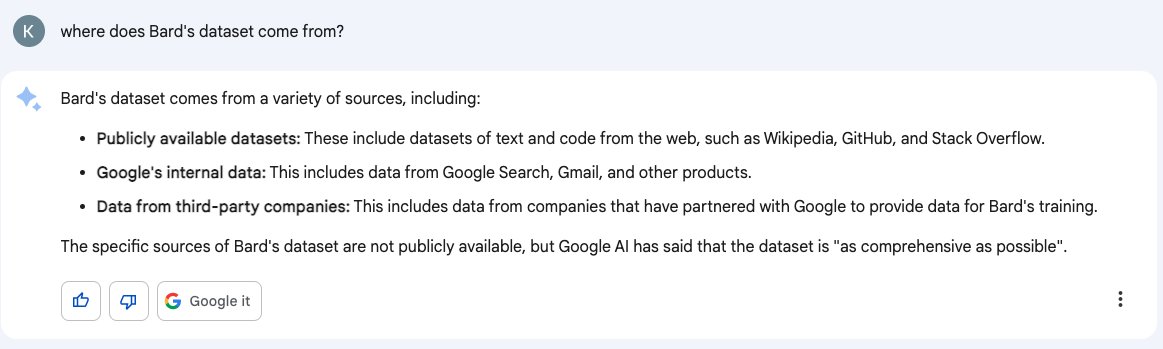
Simon Willison’s Weblog
Earlier this month I wrote about how ChatGPT can’t access the internet, even though it really looks like it can. Consider this part two in the series. Here’s another common …
heady otter
candid grotto
"As an AI language model" vocal stim
real
I should send chatgpt through the autism diagnosis criteria
dense nexus
hi all!
im currently looking for toki pona judges to help train and guide my toki pona chat bot model
if youre willing to sit down and judge my model's outputs, dm me! currently i can only allow one person to judge at a time
the judging will be done on a Gradio app
lucid nicheBOT
so true
jan ilo Takota ↩️
[Reply to:](#1162756469771472988 message) "As an AI language model" vocal stim
ni li lon a
⦅wile sina⦆ Kita [⥀·⫞·] li tpt ↩️
[Reply to:](#1162756469771472988 message) https://simonwillison.net/2023/Mar/22/dont-trust-ai-to-talk-about-itself/ 📎
hollow osprey
sona sin wawa · ilo li awen pakala · https://pivot-to-ai.com/2025/02/11/ai-chatbots-are-still-hopelessly-terrible-at-summarizing-news/

BBC News has run as much content-free AI puffery as any other media outlet. But they had their noses rubbed hard in what trash LLMs were when Apple Intelligence ran mangled summaries of BBC stories…
heady otter
hollow osprey
sona sin wawa · ilo li awen pakala · https://pivot-to-ai.com/2025/02/11/ai-chatb...
now in - the silicon that guesses what should come next sucks at doing things other then guessing what should come next, and it even sucks at guessing what comes next
finite nest
candid grotto
ChatGPT being socially awkward?? 😭
jan mute li toki e pilin nasa kulupu ona la ilo li toki sama
finite nest
candid grotto
ChatGPT o3 mini
it did not go so well...
i suppose my name is now Mewika
finite nest
meager blaze
????
love it when im diagnosed with alliteration
lucid nicheBOT
a nimi sama li lon mi
mun ni Salo ↩️
[Reply to:](#1162756469771472988 message) i suppose my name is now Mewika
glass iris
finite nest
i suppose my name is now Mewika
Gulf of Mexico feels the same way
candid grotto
mi o toki e seme tawa ilo Jemeni La nanpa tu (Gemini Flash 2.0)?
 tawdry bone
@glass iris ^
glass iris
candid grotto
mi o toki e seme tawa ilo Jemeni La nanpa tu (Gemini Flash 2.0)?
ijo ni li ken pona. ona li ken ala ken toki e ijo sin pi nasin ni: ilo li kama sona la, ona li moku ala e toki ni. jan ala li toki pona e ijo pi sona sina la, o toki e ni.
kin la, ni li ken sona pona: kama sona la, ilo li moku e toki pona seme? o toki e ijo pi lipu tenpo tawa ona. ona li sin ala sin e toki pi lipu tenpo? o toki e ijo e jan pi ma pona. ona li sona e mi ale anu seme? ona li sona e tomo ni a anu seme?
unique gulch
hollow osprey
sona sin wawa · ilo li awen pakala · https://pivot-to-ai.com/2025/02/11/ai-chatb...
keep in mind for the use case of summary they're going to want to use a cheap model, so they'll have worse results. I think the better models out there are pretty great at summarizing news
unique gulch
heady otter
now in - the silicon that guesses what should come next sucks at doing things ot...
I don't think this is a very precise description of the sorts of things AI sucks with and why
plus some theories of the human brain basically think it works off of a prediction loop. A lot of optical illusions seem to give credence to that too
based on a statement like that you wouldn't expect AI to be better than humans at chess, for example
unique gulch
gpt-4o just got a stealth update and it's seemingly considerably better at toki pona now
 dense nexus
unique gulch
gpt-4o just got a stealth update and it's seemingly *considerably* better at tok...
dense nexus
unique gulch
gpt-4o just got a stealth update and it's seemingly *considerably* better at tok...
it did update
 hollow osprey
unique gulch
gpt-4o just got a stealth update and it's seemingly *considerably* better at tok...
hollow osprey
unique gulch
gpt-4o just got a stealth update and it's seemingly *considerably* better at tok...
ilo li sona pona e toki [pona] · ale li anpa
 static loom
so im using the guest version of chatgpt for toki pona and...
it translated "who built this house" as "who li toki e tomo tawa"... 😭
candid grotto
there's no way
static loom
and "where is the car" as "telo en kili li lon seme"????
trying to say that kili and telo can be used as car in some contexts???? 😭
static loom
okay with the app im getting much better results
it actually got a sentence fully right
and another one half right-ish
unique gulch
static loom
so im using the guest version of chatgpt for toki pona and...
yeah, the guest version uses a much less capable model
heady otter
static loom
it translated "who built this house" as "who li toki e tomo tawa"... 😭
it sucks at tp lol
heady otter
static loom
it actually got a sentence fully right
yeah that happens with the latest models
devout wedge
chat I was testing to see how long it would take c.ai to hallucinate while playing chess
I had low expectations, so 4 legal moves in a row is pretty impressive
the log: (ai was white, I was black)
e4 e5 | Nf3 f6 | Bc4 d5 | Bb5 c6
and the illegal move was Rc1
ivory nebula
chai is worse !!
e4 d5
then it tried c6
devout wedge
HELP 😭
ivory nebula
I told it that's an illegal move and it said Nxd5 what the FUCK do you mean

lichess visualisation
okok it said Nf3, that's legal
devout wedge
ivory nebula
I told it that's an illegal move and it said Nxd5 what the FUCK do you mean
this is what we call pro gamer strats
here's the chat log if you're curious

 ivory nebula
it tried
Qh5
I told it my pawn was in the way
it changed to Qh4
 devout wedge
here's the chat log if you're curious
devout wedge
devout wedge
here's the chat log if you're curious
I genuinely don't know how it saw "Rc1" as a move "one space to the left"
ivory nebula
devout wedge
I genuinely don't know how it saw "Rc1" as a move "one space to the left"
it's basic just fancy text predict it doesn't know the rules of chess
if I can get a summary of chess' rules in 1024 characters I can make a chai with it and then test out how chai does when the bot isn't also trying to unpa me (chai moment)
that's probably too strict though
devout wedge
I wonder what would happen if you had two bots play chess together
devout wedge
yeah I was gonna try that
log so far:
Nf3 e4*
god, half of this is just me correcting illegal moves
for one, I need to keep reminding them which color they're playing
heady otter
ivory nebula
if I can get a summary of chess' rules in 1024 characters I can make a chai with...
I love tricking c.ai unpa bots info doing anything but unpa
snow echo
i tried to talk a c.ai unpa bot out of unpa but that mf really did not respect consent at all
 worldly turret
Lol someone made a etymology deconstructor AI tool and I put in the obvious choice

Link in case you want to experiment
sonic leaf
ona li sona ala e nimi

 icy sapphire
hmm
opal hedge

 opal hedge

 icy sapphire
idk what i expected
 static loom
opal hedge
<:pona:692488169035137113>
static loom
opal hedge
<:pona:692488169035137113>
the pona is made of pona
opal hedge
supa li supa
icy sapphire
i put in gibberish
 static loom
i put in "tokiponalitokiponamutetokiinlilitokiikemute" and it came up with the definition of "good language and good language and many and good language and image and good language and bad" 😭😭😭😭
also somehow found "linja" in there, which apparently means image 

 static loom
sonic leaf
ilo li pakala a
static loom
sonic leaf
ilo li pakala a
i got that too 🙏
no pic perms tho
"ilonilipakala" apparently means "desire to strike or slap a burden" in tagalog 🙏
heady otter
snow echo
i tried to talk a c.ai unpa bot out of unpa but that mf really did not respect c...
lmfao real
heady otter
worldly turret
Lol someone made a etymology deconstructor AI tool and I put in the obvious choi...
goofy
icy sapphire


 icy sapphire
 dense nexus
That website uses Gemini 2.0 flash btw
tame fog
 rare crescent
 heady otter
rare crescent
heady otter
rare crescent
lmao it picked up on the latinate = fancy association
lone parcelBOT
:airplane_arriving:
*toki pi ijo **“discussion of ai” *li kama tan tomo #toki-ale · o lukin e open
||conversation about “discussion of ai” continued from #toki-ale · read the beginning||
rare crescent
The AI did a pakola
 hollow valley
very cool

 silver ember
big one
 snow echo
sonic leaf
ona li sona ala e nimi
snow echo
sonic leaf
ona li sona ala e nimi
footwear for the foot 👍
hollow valley
 silver ember
gave it an absurdly long swedish compound

it got everything right except it analyzed it as "skeps" instead of s+"keps" so it unfortunately did not get it right
gonna remove the s since it's not actually necessary anyway and see how it does
yep it got the thing right now
 lucid nicheBOT
o (Japanese) "earth, land"
no such morpheme exists. the character for this would be 土 (tsuchi, to, do) or 地 (tsuchi, chi, ji)
ta (Japanese) "a field, garden"
I'd assume they meant 田 ta "rice paddy, field"
e (Japanese) "picture"
this one's real! 絵 e "picture, painting, drawing, sketch"
ni (Japanese) "cargo, goods, things"
again, completely nonexistent
 jan Pulepo ↩️
[(click to see attachment)](#1162756469771472988 message)
even in the two that do exist, it mixes a native Japanese reading (田 ta) and a Sino-Xenic reading (絵 e)
though 絵 doesn't really have a native reading
I'm sure there is some native word though. my point is these are rarely mixed in compounds
devout wedge
worldly turret
Lol someone made a etymology deconstructor AI tool and I put in the obvious choi...
ki does NOT mean animal in toki pona 😭
snow echo
ki - soweli
heady otter
snow echo
<:nimi_sin:743741432350769152> **ki** - soweli
yeah, ki doesn't mean animal
it means soweli
whatever that is
it's not in my Oxford English dictionary
rare crescent
soweli - a word that is not in the Oxford English Dictionary
lucid nicheBOT
nimi "toki" li soweli a!
a, lon ala
The OED is the definitive record of the English language, featuring 600,000 words, 3 million quotations, and over 1,000 years of English.
nimi "pona" li soweli a
meager jackal
lucid niche
https://www.oed.com/dictionary/toki_n
the ax from laptop ax reference??
lucid nicheBOT
yes!
silver ember
this is horrible lmao
 opal hedge
[feeˑka]
 wet pewter
i didn’t realise how good AI had gotten at text in images wow
hollow osprey
jan li pana e sitelen toki anu seme
static loom
opal hedge
[feeˑka]
us american phonetic alphabet 🙏
rare crescent
TOAH-key POAH-nuh
timber moat
me law toe-key knee lee poe-nah allah
remote dove
Toe Uh Key Poh Uh Nuh
silver ember
silver ember
this is horrible lmao
"noun"
proceeds to define a verb
heady otter
silver ember
"noun"
*proceeds to define a verb*
that was made by people who haven't taken an [insert language here] class in 80 years
twilit stag
GitHub
Two conversational AI agents switching from English to sound-level protocol after confirming they are both AI agents - PennyroyalTea/gibberlink
unique gulch
holy shit, sonnet 3.7 is astounding me at toki pona
CW: mild discussion of transphobia (saw a tweet and picked it to translate because it was fairly complicated/abstract)
 glass iris
Gotta try it out before Anthropic nerfs it
unique gulch
why do you think they would nerf it?
glass iris
Well, the other versions dropped off in quality - at least according to lots of reports.
unique gulch
Ah, I think that's generally just the honeymoon phase wearing off for people as they start to notice more things it can't do. At objective benchmarks there's never been any concrete evidence of that
unique gulch
lol, i think it thinks unu means rare because it's classified as a "rare" nimisin
 meager jackal
unique gulch
lol, i think it thinks unu means rare because it's classified as a "rare" nimisi...
meager jackal
unique gulch
lol, i think it thinks unu means rare because it's classified as a "rare" nimisi...
wait how is valuable related to pink
or suno
unique gulch
ah, they're not, it just knows that orichalcum (in the game Terraria, which is what were talking about) is pink