#toki Sonko - 中文
1 messages · Page 2 of 1
 faint reef
 fallen needle
Acceptable but a bit hard to understand for newcomers
fallen needle
Acceptable but a bit hard to understand for newcomers
thanks! I've merged it for now, if you'd like to submit improvements please go ahead!
 autumn mist
faint reef
thanks! I've merged it for now, if you'd like to submit improvements please go a...
autumn mist
faint reef
thanks! I've merged it for now, if you'd like to submit improvements please go a...
so it's the version you gave me right?
(still going through, being slightly nit picky :P )
faint reef
yes
autumn mist
https://discord.com/channels/301377942062366741/1267828517442162721 li kama!
sina sona toki ni la o kama!
autumn mist
什麼問卷
"人口"普查或用字問卷
 fair cosmos
大家好,今天我吃肉
 dusk cave
恁合事的么道有。《原神》根底,他米哈游上海底自般由来制底有。
 stone zinc
哞
autumn mist
喵
 waxen isle
 pearl drift
haha
stone zinc
哞
 forest phoenix
哞啊
 mellow radish
牛逼
 plucky delta
kulupu pi <@&834350913811644487> o! jan pi poka mi li wile pali lon toki sina lon toki Sonko la ona li toki e ni:
i'm a third year linguistics student and for my coursework i need data from five native speakers of mandarin chinese and three native speakers of japanese. if you feel like helping me out and have time to translate 60 short sentences from english into your native language please reach out to me at @misfortunehula on discord
they're a friend from uni who needs help, they're not on this server so i'm relaying.
stone zinc
plucky delta
kulupu pi <@&834350913811644487> o! jan pi poka mi li wile pali lon toki sina l...
ike a mi jan native speaker ala a :(((((
mellow radish
mi kama sona e toki Sonko a, ni li toki mama mi ala 😭
 wintry nimbus
plucky delta
kulupu pi <@&834350913811644487> o! jan pi poka mi li wile pali lon toki sina l...
wintry nimbus
plucky delta
kulupu pi <@&834350913811644487> o! jan pi poka mi li wile pali lon toki sina l...
ona li toki mama mi, taso mi toki mute e toki Inli la ona mi li pona mute ala. o toki e ni tawa jan pona sina; ni li pona tawa ona la mi ken pali e ni :)
 wise lily
plucky delta
kulupu pi <@&834350913811644487> o! jan pi poka mi li wile pali lon toki sina l...
wise lily
plucky delta
kulupu pi <@&834350913811644487> o! jan pi poka mi li wile pali lon toki sina l...
jan pi toki Sonko mentioned
native speaker
 autumn mist
jan li wile e jan pi toki Sonko :D
toki Putonwa pi toki Sonko taso, mi jan pi toki Konton -_-
ken la ona o tawa kulupu pi lipu Tencent CC , taso mi sona ala e nasin
jan wan pi tomo ni li ken sona
 honest pilot
mellow radish
mi kama sona e toki Sonko a, ni li toki mama mi ala 😭
honest pilot
mellow radish
mi kama sona e toki Sonko a, ni li toki mama mi ala 😭
samaa
虽然不是母语的,但是我们还好奇的话也不能看一下翻译问题吗。。。
(lon la ona li suli ala. suli la ni li musi taso)
plucky delta
wintry nimbus
ona li toki mama mi, taso mi toki mute e toki Inli la ona mi li pona _mute_ ala....
sina ken toki e ni tawa ona!
mi ni la o ala
plucky delta
wintry nimbus
ona li toki mama mi, taso mi toki mute e toki Inli la ona mi li pona _mute_ ala....
- mi sona e mute toki e ale ala, o pana e kon
- toki mama ona li toki Sonko taso ona li toki Inli mute la wawa pi toki mama li kama lili
ni li pona ala pona tawa sina - lon la pona a!
- pona
- ona li ken ala sona e toki la ona li ken toki e ni

o pana a a
wintry nimbus
plucky delta
- mi sona e mute toki e ale ala, o pana e kon
- toki mama ona li toki Sonko taso...
a a ok, mi ken alasa
mi o toki tawa ona lon ilo Siko anu seme?
plucky delta
wintry nimbus
mi o toki tawa ona lon ilo Siko anu seme?
lon a
nimi @misfortunehula la sina ken toki
 teal socket
toki!


 pearl drift
ni li pona mute
fallen needle
pona a
teal socket
这里还有一些基于《鹿精灵》的搞笑漫画,以及一个同样基于《SPY×FAMILY 间谍过家家》的漫画


其中一部漫画改编自一部名为“VALLE VERDE (绿色山谷)”的虚构游戏恐怖视频系列
这是第一个视频的链接(西班牙语):
https://www.youtube.com/watch?v=YECctVNc9xY

Material encontrado en el Parque Ecológico Municipal de La Plata. Estuve revisando los primeros veinte minutos del metraje casi cuadro por cuadro estos últimos meses para evitar el riesgo de subir algo potencialmente ilegal (He visto cosas aparecer y desaparecer en instantes en varias partes del vídeo y tuve que revisarlo entero para asegurarme)...
fallen needle
ni li suwi mute a
 wintry bear
pona
fallen needle
toki!
fallen needle
哈喽
 hasty summit
toki
 stiff trail
fallen needle
哈喽
stiff trail
fallen needle
哈喽
早上好
stone zinc
哞哞哞哞哞哞
teal socket
我又根据《鹿精灵》里的喵妹画了两幅漫画

我把整个 jan lawa Oliki 转录成 sitelen sitelen 的书写系统,只是为了这个笑话。
还有另一部长篇,整个世界都被喵妹的克隆人占领了。还有一部像《阿滋漫画大王》一样的校园喜剧

这部漫画中,2017 年的喵妹与 2020 年的喵妹展开对决
我还想谈谈如何将角色的名字转录成道本语。我使用英文名称(我相信是原名)作为道本语翻译的基础。
以下是名称的简要指南:
Valt (迪尔) = soweli Wa
Cobalt (蓝宝) = soweli Kopa
Alia (丽娅) = waso Alija
Kem (芥末) = monsuta Ken
Trika (喵妹) = soweli Sika
Yark (壕哥) = soweli Ja
我尝试赋予它们名字的sitelen pona意义,但并不总是完美的。
喵妹的名字由四个字母组成,分别是sona, insa, ken, alasa。大致意思就是“我能读懂你的心思”。
teal socket
说起来,我确实有一个问题想问这一段聊天。在2020年版的《鹿精灵》动画片中,喵妹可以露出第三只眼睛吗?
如果有的话,您可以展示一下其截图吗?
尽管《鹿精灵》有部分内容在美国制作,但 2020 年重启版仍未在美国上映,而且很难找到英文版。
所以这确实会在某种程度上帮助我。
pearl drift
teal socket
我把整个 jan lawa Oliki 转录成 sitelen sitelen 的书写系统,只是为了这个笑话。
ni li pali epika!
li sewi!
teal socket
本周,我根据《鹿精灵》松散地创作了更多有趣的漫画。

一位导师采用非常规的教学方法,利用数学和逻辑语。

中裕司揭示其电子游戏杰作《巴兰的异想奇境》的秘密

我不确定我画的中裕司是否真的像真人。作为参考,这就是他的样子。
https://upload.wikimedia.org/wikipedia/commons/thumb/e/e0/Yuji_Naka'_-_Magic_-_Monaco_-_2015-03-21-_P1030036_(cropped).jpg/800px-Yuji_Naka'_-_Magic_-_Monaco_-_2015-03-21-_P1030036_(cropped).jpg
https://images.nintendolife.com/5b11046463b16/yuji-naka.large.jpg

 pearl drift
epiku!
teal socket
这周只发了一篇《鹿精灵》漫画,这期讲的是迪尔和喵妹去游乐园玩,和主题公园的吉祥物有一次普通的邂逅。

这部漫画改编自恐怖电子游戏《Indigo Park》。我其实不知道游戏的中文名称,但非正式名称我认为是《靛蓝乐园》?我不知道,你能帮我确认一下吗?
浣熊吉祥物的名字是Rambley Raccoon(浣熊兰布利, kijetesantakalu Lanpuwi)
浣熊兰布利本来应该是友好的,但显然他讨厌这只名叫狮子洛伊德 (Lloyd the Lion, soweli wawa Lowi)。
honest pilot
我不确定怎么确认,不过我在网上看到的也是《靛蓝乐园》
honest pilot
好的
teal socket
或者用游戏原来的英文名《Indigo Park》来称呼游戏名称是否更容易?

我能找到的最接近名字的翻译。
我甚至不知道这款游戏是否有官方中文支持,而不需要粉丝制作的补丁。
我发现的每个游戏视频都是英文配音,没有中文配音。
honest pilot
我对这款游戏很陌生,不知道
honest pilot
teal socket
我看一下这部,你介意我帮你修改一下你的道本语吗?
honest pilot
好的,我等会就可以
teal socket
我又创造了两部《鹿精灵》漫画。第二部漫画非常长。
这算是中二病吗?

谁把频道从《鹿精灵》换到了《新世纪福音战士》?

おめでとう おめでとう おめでとう おめでとう おめでとう
autumn mist
曾參與過騰訊QQ的toki pona漢字方案的人:
為什麼nena的解釋是這樣的? 我不明白
 autumn mist
【】是什麼意思?
 frigid marten
我个人的打字习惯
中文互联网上,有的人会在句末加上括号
表示“话里有话”
有点像tone indicator
“道本语居然是这样的(乐)”→“道本语居然是这样的(”
autumn mist
sona
frigid marten
总之我觉得这个汉字方案已经不适合使用了
autumn mist
我剛剛發現 a a
這個檔案也沒有ma 啊
 autumn mist
frigid marten
总之我觉得这个汉字方案已经不适合使用了
autumn mist
frigid marten
总之我觉得这个汉字方案已经不适合使用了
原因是當中的解釋太多錯誤嗎?還是其他原因?
autumn mist
啊
現在也沒有太大原因使用吧
我自己做的方案也沒多用 :P
frigid marten
主要是汉字方案有很多设计思路
是使用节省笔画的简体字呢,还是使用传统的繁体字呢
是尽量使用各个地区含义一致的字呢,还是看到哪个字某项含义对得上就用这个字呢
(我看到munjan方案用“磨”对应melome,笑喷了)
frigid marten
frigid marten
(我看到munjan方案用“磨”对应melome,笑喷了)
不过不知道词源的人只会一脸懵吧
pearl drift
autumn mist
曾參與過騰訊QQ的toki pona漢字方案的人:
為什麼nena的解釋是這樣的? 我不明白
“世界”
这应该是很旧的方案了
当时有人在翻译的中文教程中误认word为world翻译成“世界”,导致中文社区这边很多人都错学了这个单词
这个错误现在已经被修正了,我之前稍微修订了一下那个教程,改正了其中发现的错误。
autumn mist
pearl drift
“世界”
这应该是很旧的方案了
是大概甚麼時候來的?
pearl drift
我难以确定,原译者好像没有留翻译时间
至少2022年以前
因为旧群被解散,所以这个信息来源于现在的新群中旧文件的上传日期。
而据我所知旧群创立于十一年前
难以置信那么长时间都没有人修复那个有许多问题,并且排版崩坏的PDF教程。
没记错的话我是今年才修订了那个东西,所以在今年之前那个错误都一直存在。(虽然可能会口头地纠正)
fallen needle
frigid marten
不过不知道词源的人只会一脸懵吧
|| 路加福音讲被提之日有两个男人在一张床,其中一个会被选中,两个女人磨在一起,其中一个会被选中 ||(内容警告:过分的玩笑)
honest pilot
pona
teal socket
我在两周内制作了两部有趣的《鹿精灵》漫画
哇,这就像90年代的美国情景喜剧!

喵妹的笑点台词出自《凡人琐事》
喵妹再次奇迹般地拯救了世界!

本次第二部漫画的灵感来自于间谍过家家的第69话(尚未改编成动画)
原始漫画,供比较:


有趣的是,喵妹和阿尼亚·福杰都有读心术。
pearl drift


 pearl drift
pona a
 final sage
ni li pona ala pona? https://tokipona.org/#zh
autumn mist
ona pi toki Sonko li pona tawa mi
taso ken la sitelen Sonko pi nasin majuna kin o lon (lipu sin)
final sage
autumn mist
ona pi toki Sonko li pona tawa mi
taso ken la sitelen Sonko pi nasin majuna kin ...
a pona! mi pali.
autumn mist
pona a
 honest juniper
道本语的介词短语可以直接修饰名词吗
比如jan pi tan ma pona这种词合法吗?
🥺
@final sage Is the expression "jan pi tan ma pona" lawful in grammar?
final sage
= Prepositions within a noun phrase
Although this is a valid style according to some Toki Pona users, mirroring their own languages, and we should respect that, the majority style (and also pu style) is to not squeeze a prepositional phrase inside a noun phrase.
Many people in the field were hungry.
jan mute lon ma li wile moku. (acceptable to some but not most)
It would be wrong to squeeze the prepositional phrase inside a pi phrase:
jan mute pi lon ma li wile moku.
Many people of the field’s existence were hungry. (actual meaning)
It’s simply more clear to phrase it differently by adding one li:
jan mute li lon ma li wile moku.
Many people were in the field and were hungry.
Or we can change the prepositional phrase into a single modifier or into a pi phrase without a preposition:
jan mute ma li wile moku.
Many people of the field were hungry.
jan mute pi ma suli li wile moku.
Many people of the large field were hungry.
honest juniper
sina pona 🥰
autumn mist
mi tan ma Onkon
teal socket
嗯,我知道 Discord 在中国被严格屏蔽了,而且大多数中文道本语使用者主要使用 QQ。
但我确信你们中至少有一些人正在使用 VPN
我在美国写这篇文章,所以我没有受到影响
pearl drift
擅长玩游戏的人和找某些“学习资料”或者学习资料的人基本都会用vpn
autumn mist
聽聞連github在香港都將不能正常用🫠
fallen needle
[[kulupu pi toki pona lon ilo QQ]]
 hushed bisonBOT
sona pona
kulupu pi toki pona lon ilo QQ is a Chinese-language Toki Pona community on Tencent QQ. The group was founded on 4 May 2013. However, the current group was reestablished at a later date.
teal socket
是的,我知道有一个 道本语言 QQ 社区聊天
然而,我不是中国公民,中文也不是我的母语。
此时,就连业余爱好者也可能已经意识到,机器正在帮助我用你们的语言与你们交谈。
frigid marten
机翻伟大,无需多言
teal socket
(我的中文水平足够让我不用机器就能理解事情的要点,但要真正地说话并形成更复杂的句子,我会尝试借助机器)
多年来我一直对中国文化、语言和媒体非常感兴趣。
这就是为什么我有时想在这里聊天。
fallen needle
mi pilin e ni: jan mute lon ilo Discord li ken toki kepeken toki Sonko
我发《上帝的庄园》时也被告知如此
final sage
hushed bison
https://sona.pona.la/wiki/kulupu_pi_toki_pona_lon_ilo_QQ
a mi o pana e sona ni lon lipu https://tokipona.org/#zh
teal socket
sina wile ala wile e ni: mi toki kepeken toki pona, kepeken ala toki Sonko, lon ma/tomo ni?
(您希望我在这个聊天室里用道本语而不是中文讲话吗?)
(Would you like me to speak Toki Pona (instead of Chinese) in this chat section?)
我知道我现在正在犯“kokosila”这项罪行,但是现在我并不确定。
fallen needle
讲什么语言都没关系
teal socket
是的,我知道这个聊天室里的几个人也不是来自大中华区,他们主要也不说中文。
wintry bear
final sage
a mi o pana e sona ni lon lipu https://tokipona.org/#zh
toki! mi tan kulupu pi toki pona lon ilo QQ. tenpo pi mun tawa la mi mute li wile e pali e kulupu sin: ona li sama e toki Viossa. lon ma ni la jan ale ken ante lili e toki pona.
mi mute li wile sona e ni: toki pona li ken ante tawa seme kepeken nasin sin ni.
ni la mi wile sona e ni: mi mute ken pali seme la kulupu ni li pona? mi pilin wile tawa nimi sina!
basically, this is an idea that suddenly came into my mind, we were just wonder what would it be like if the "Viossa" mode happens in toki pona.
We set up few rules(of course they are far from enough), like you have to preserve the "li...e..."structure, while doing your own little changes to the vocabulary.
I want to introduce this little project to Sonja and you guys and ask for advice, so you can ask questions, I'll try to answer
这个主意差不多是灵光闪现的,我们当时非常好奇,viossa模式会在道本语里面产生什么奇妙影响。我们有制定一些规则,比如得保留最基本的“li…e…”句型等等(当然这些还远远不够),同时还可以对道本语原有的词汇做一点自己的修改。
我主要是想把这个项目拿出来,给Sonja和大家看看,问问大家的意见,大家有什么问题都可以提,我都会尽量解答喵(
pearl drift
ijo mute li kama ala la mi sona ala e ni:ijo ni li pona anu seme. mi wile awen lukin li awen pali.
taso ijo ni li musi a tawa mi
teal socket
本周又制作了两部《鹿精灵》漫画。
舞蹈比赛!谁会是胜利者?

五页漫画!喵妹想赚钱买_su_系列的第二本新书,所以她尝试制作动画。不幸的是,她与任天堂的律师发生冲突,项目很快就被搁置了。


请记住,第一部米老鼠短片《汽船威利号》自 2024 年 1 月 1 日起属于公共领域,因此您可以随意将其用于您的项目,而不会惹恼迪士尼。不过,马里奥的版权仍归任天堂所有,如果您试图在没有获得适当许可的情况下利用他获利,他们的律师会非常愤怒。
pearl drift
不应该是非常喜悦么 lol
final sage
ni li pona ala pona?
 hasty summit
wawa mi pi toki Putonwa li lili, taso mi la kalama R li ken kalama L kin
fallen needle
Questions like ‘which is close’ is rather subjective
However, we may accept English r as w for it is attested in accents and casual borrowings
Under the same logic
fallen needle
hasty summit
wawa mi pi toki Putonwa li lili, taso mi la kalama R li ken kalama L kin
Mandarin r is actually, but rarely, corrupted to l

This is excerpted from the section 校正方音 of 国语留声片课本 The National Language Recording Textbook (1922)
The Item 15 reads
15 r (日), l (勒) referred to [pronunciation in] Peking. Hubei, northern Jiangsu, western Shandong take notice (i.e. where the phonemes are typically corrupted)
ruran 如然 rulan 如兰 luran 蘆燃 lulan 卢兰
Personally the two phonemes are not quite alike. As a person with a narrow social circle, I have heard the accent from one streamer only (||他就是未明子…||), where the two phonemes are sometimes (not always) confused
And it is more common (?) that r is pronounced like toki pona j, e.g. being allophone in Wuhan.
autumn mist
fallen needle
And it is more common (?) that *r* is pronounced like toki pona *j*, e.g. being ...
huh
thinking about it most init /r/ in mandarin are /j/ in cantonese
wintry bear
@final sage so how do you think this program
final sage
wintry bear
<@344322368178618369> so how do you think this program<:zkijetesantakalu:8542599...
seme?
wintry bear
the "natural developing project of toki pona" I mensioned the other day ()

 wintry bear
toki! mi tan kulupu pi toki pona lon ilo QQ. tenpo pi mun tawa la mi mute li wil...
wintry bear
wintry bear
toki! mi tan kulupu pi toki pona lon ilo QQ. tenpo pi mun tawa la mi mute li wil...
however, it is just an experiment though
final sage
pona! o musi!
wintry bear
sina pona
 mystic cape
今天腊八节,o moku e ko pimeja. 也不是拉粑节,o moku ala e ko pimeja!
dusk cave
wintry bear
the "natural developing project of toki pona" I mensioned the other day ()
--(ki) sina ken moku e telo? 你喝水吗?--ala,mi wile insa telo. 不,我要买水。
dusk cave
dusk cave
--(ki) sina ken moku e telo? 你喝水吗?--ala,mi wile insa telo. 不,我要买水。
道本语,但是缝了点别的语言的特征进去
fallen needle
mi wile sona e luka pona
 rare gust
mi wile lon kulupu pi toki pona lon ilo QQ. taso mi lon ma Mewika li tawa ma Sonko lon tenpo ala... nasin seme la mi ken kama lon ilo QQ?
fallen needle
rare gust
mi wile lon kulupu pi toki pona lon ilo QQ. taso mi lon ma Mewika li tawa ma Son...
pona la o jo e ilo QQ lon ilo toki (📱). sina sitelen e nanpa pi ilo toki lon ilo QQ la, sina lon ilo QQ. tenpo kama la, o alasa e nanpa pi kulupu mi: 904582553.
(ken la, nanpa pi ilo toki lon ma Mewika li ike tawa ilo QQ. mi sona ala e ni. linluwi la jan li toki: nanpa lon ma Mewika li pona tawa ilo QQ. sina ken alasa (||try||).)
rare gust
lon la nanpa pi ma Mewika li ike tawa ilo QQ
mi alasa lon tenpo pini
mi pana e nanpa mi la ilo li toki e ni: https://media.discordapp.net/attachments/1126573079372513361/1309680006955401226/image0.jpg?ex=678509ce&is=6783b84e&hm=ec92130c0c7cdef53756ec128d9c0bfa7c4c59ca8689b693f2142893c87dd76f&
 autumn mist
fallen needle
rare gust
mi pana e nanpa mi la ilo li toki e ni: https://media.discordapp.net/attachments...
autumn mist
fallen needle
rare gust
mi pana e nanpa mi la ilo li toki e ni: https://media.discordapp.net/attachments...
ni li nasa a
如果区号正确还到这里那只能是注册功能做错了
fallen needle
rare gust
mi pana e nanpa mi la ilo li toki e ni: https://media.discordapp.net/attachments...
It should results from erroneous design of QQ. Some more sophiscated online tutorials might help but there is no guarantee
pearl drift
rare gust
mi pana e nanpa mi la ilo li toki e ni: https://media.discordapp.net/attachments...
sina wile toki lon QQ la mi jo e lipu sin wan. mi ken pana e ona tawa sina li lukin pali e ijo ni.
rare gust
lipu seme? mi wile alasa
pearl drift
tenpo pini la mi pali e ona tawa jan Sonja. taso ona li wile pali ala tan ni:ona la ijo ni li ike.
pearl drift
fallen needle
如果区号正确还到这里那只能是注册功能做错了
QQ一点没做国际适配罢(
pearl drift
wintry bear
the "natural developing project of toki pona" I mensioned the other day ()
↑
@rare gust sina wile ala wile tawa ni?
rare gust
o pana e nasin
fallen needle
pearl drift
QQ一点没做国际适配罢(
理论上可以注册,我觉得是后来者弄乱了
autumn mist
我今日原本約了其他人玩,但是太遲起床,所以用空了的時間打完這個翻譯...
https://github.com/AromaticWaffle/lipu-sona/blob/zh-more/pages/zh/x1.md
喜歡的話可以看看...
GitHub
An open-source toki pona course. Contribute to AromaticWaffle/lipu-sona development by creating an account on GitHub.
pearl drift
@rare gust Ĉu vi interesiĝas registri en Ruĝa Libreto?
a, ni li lon toki Epelanto ala. mi weka e sona ni
rare gust
pearl drift
<@155417194530996225> Ĉu vi interesiĝas registri en Ruĝa Libreto?
a n ala
n toki pona li lon ala lon
final sage
nasin ni li pona ala pona? @everyone
- toki Sonko: Chinese languages, especially Mandarin Chinese
- toki An: Mandarin Chinese specifically
- toki Ju, toki Kontun: Yue Chinese (Cantonese)
- toki U, toki Sane: Wu Chinese (Shanghainese)
- toki Panlan, toki Okijen: Min Nan Chinese (Hokkien)
ken ante la mi ken kepeken nimi sama ni: toki Sonko pi nasin U, toki Sonko pi ma Kontun, etc. mi sona ala.
autumn mist
nimi An li tan seme?
pearl drift
rare gust
n toki pona li lon ala lon
jan mute lili li lon
jan pi toki Epelanto la jan pi toki pona li mute
a, jan Sonja o, toki a
final sage
toki
pearl drift
kalama pi Ju li sama ala Yue. mi la mi pilin
final sage
普通话: toki Sonko pi jan ale, anu seme?
pearl drift
ni li pona
 pearl drift
ken la, toki Kanton li pona mute?
toki e 广东话, e 粤语 ala?
mi la o toki tawa jan Kanton. ona mute li wile e seme?
final sage
 autumn mist
final sage
mi toki pakala anu seme?
autumn mist
final sage
mi toki pakala anu seme?
nimi 汉 li toki e jan ale pi toki Sonko
mi la nimi Putonwa(普通話) li pona
autumn mist
pearl drift
mi la o toki tawa jan Kanton. ona mute li wile e seme?
mute la mi kepeken nimi Konton
pearl drift
autumn mist
nimi 汉 li toki e jan ale pi toki Sonko
mi la nimi Putonwa(普通話) li pona
n, ni li pona
pearl drift
final sage
Kontun
namako ni la jan Konton li sona pilin seme. taso mi ken ala sona pona
mi toki pona ala e toki Konton
autumn mist
kin la sona mi la toki Ju li ken toki Konton suli li ken toki Osan (台山話) kin anu toki lili ante
ona li lon kulupu toki sama, taso ante li lon
autumn mist
autumn mist
mute la mi kepeken nimi Konton
mi toki Konton
pearl drift
final sage
kulupu An: 汉族
toki An: 汉语
taso ken la kalama ante ni li ken:Kan(tan ni:h li ken /x/). ni li toki insa mi taso.
pearl drift
final sage
nasin ni li pona ala pona? @everyone
- **toki Sonko**: Chinese languages, espe...
ken la toki Sane li wan pi toki U. taso toki U li toki Sane ala.
autumn mist
pearl drift
namako ni la jan Konton li sona pilin seme. taso mi ken ala sona pona
mi toki e alasa sona lon tomo pi toki ni
pearl drift
final sage
ona li [h] ala. ona li [x] sama *k*.
taso tenpo la ona li ken /h/ kin. mi la ona li ante mute.
li jo e kalama mute
final sage
 pearl drift
lon
“喝水” lon toki Putonwa la ona li kalama sama /x/.
mi sona ala e ni:tenpo seme la ona li sama mute /h/
taso h pi toki Putonwa li sama ala j pi toki Epano
li kalama wawa lili mute
autumn mist
ken la kalama /a/ li wile e open uta suli la kalama /h/ li kalama [h], open suli ala la ona li kalama [x]
ni li pilin taso
toki Putonwa mi li wawa ala :p
pearl drift
a a a
final sage
pilin sina la nimi pi ijo "Standard Mandarin Chinese" o seme?
- toki Sonko pi jan ale
- toki Kan pi jan ale
pearl drift
toki pona pi jan Sonko ale. musi
final sage
a a a
autumn mist
mi la toki Sonko suli
pearl drift
toki suli pi jan Sonko ale?
autumn mist
anu toki lawa pi ma Sonko
final sage
普通 = pi jan mute; pi jan ale; pi nasa ala; nasin; pi ijo ale; pi tenpo mute ; suli; pi kulupu suli ?
pearl drift
kulupu li ken?
final sage
a, mi lukin e ni: jan pi sona toki li kepeken nimi "Yue". taso jan mute li kepeken nimi "Cantonese".
pearl drift
普通 = 普遍、共通
pearl drift
final sage
a, mi lukin e ni: jan pi sona toki li kepeken nimi "Yue". taso jan mute li kepek...
taso lon la, ona tu li ken toki e toki mute. kon toki li lawa e ona.
tenpo mute la, 粤语 li “广州话” taso
autumn mist
final sage
a, mi lukin e ni: jan pi sona toki li kepeken nimi "Yue". taso jan mute li kepek...
mute la jan li toki e 廣東話 lon mute, taso jan li toki e 粵語 kin, taso ni li pana e pilin "書面語?" anu pilin "formal?"
pearl drift
pearl drift
普通 = 普遍、共通
ni la, pi kulupu suli?
autumn mist
ken...
final sage
pi jan ale: public
pearl drift
tu wan ni li ken. ni li pilin mi...
autumn mist
ken la jan alae ala pi toki Sonko li toki Putonwa anu seme
pearl drift
jan ala ala😨
 arctic roverBOT
toki An: Mandarin Chinese specifically
mi tan ala kulupu pi toki ni. taso nasin ni li nasa wawa a tawa mi
mi toki la nasin mi li ni:
toki Son (中文 Zhōngwén): all Chinese/Sinitic languages (sama ma Son)
toki Kuwan (官話 Guānhuà): Mandarin Chinese (of any variety)
toki Puton (普通話 Pǔtōnghuà): Standard Chinese (specific variety of Mandarin)
toki Konton (廣東話 Gwong2dung1waa2): Cantonese (prestige variet[y/ies] of Yue) (sama ma Konton)
taso mi toki Son pi mama ala la nasin mi li suli ala a
 jan Sonja ↩️
[Reply to:](#1079068746792046682 message) nasin ni li pona ala pona? @everyone
- toki Sonko: Chinese languages, especially Mandarin Chin…
pearl drift
Son li nimi kulupu ala li nimi ma ala
Sonwa “中华” li nimi ma. “汉” li nimi kulupu.
Sonko li nimi ma kin
li
nimi ma en “ma”
ni la “中” li nimi wan ala.
jan li toki ala e ni:mi jan 中. taso ni:mi jan 汉, li jan 中国.
普通话 li nimi wan li nimi tu ala
ni la, mi la Putonwa li pona mute
pearl drift
pearl drift
普通话 li nimi wan li nimi tu ala
ona li toki ala e ni:话 ni li 普通. taso ni:jan Sonko ale li wile toki e toki ni.
nimi pi toki ni li 普通话
mi la ni li sama ni:
toki pona en “toki pona”
arctic roverBOT
mi sona a e ni. tan ni la mi toki ala e nimi "kulupu Son". kulupu li "kulupu An". taso kulupu An li taso ala lon ma Son. tan a ni la nimi ma li nimi kulupu ala. sina toki e ni: sina "jan pi kulupu An" ("jan An") anu "jan pi ma Son". "kulupu Son" li lon ala.
mi kepeken nimi "ma Son" tawa ma tan ni: toki "中國" la nimi "ma" li lon. mi weka e ni la "Son" taso li awen. toki "ma Son" li ante toki pi toki "中國"
sama la "toki Son" en "toki Kuwan" en "toki Puton" en toki "Konton" la mi weka e 文 anu 話, tan ni: ni li sama mute tawa nimi "toki". toki "toki Puton" li ante toki pi toki 普通話.
mi toki ala e nimi "toki Nijonko" tawa toki Nijon, tan ni: nimi 語 li sama nimi "toki".
rare gust
final sage
nasin ni li pona ala pona? @everyone
- **toki Sonko**: Chinese languages, espe...
@proven girder
final sage
mi pali e lipu. tenpo ni la lipu li toki e ni:
- toki Sonko (pi jan mute): Standard Mandarin Chinese
- toki Kontun: Cantonese (Yue Chinese)
- toki Sane: Shanghainese (Wu Chinese)
- toki Okijen: Hokkien (Min Nan Chinese)
mi ken ante e ona.
rare gust
rare gust
<@315345450020634625>
@wanton dagger kin
 proven girder
ni li sona jan la mi sona ala
pearl drift
arctic rover
mi sona a e ni. tan ni la mi toki ala e nimi "kulupu Son". kulupu li "kulupu An"...
taso jan li ken ala kipisi e nimi ni
Putonwa li nimi wan li nimi tu ala.
“toki pona” li ni ala:toki pona ale. toki pona li nimi la toki pona li toki Pona ala
arctic roverBOT
mi sona e ni
 jan Emejo ↩️
[Reply to:](#1079068746792046682 message) Putonwa li nimi wan li nimi tu ala.
pearl drift
namako ike li kama mute lon toki. mi la jan li wile ala weka kiwen e ijo ni
arctic roverBOT
taso sina toki ala e 普通話語 / 普通話文 / 普通話話. anu seme
"toki Putonwa" li sama ni tawa mi
seme la nimi "toki" li lon tenpo tu a! nasa mute
pearl drift
pearl drift
namako ike li kama mute lon toki. mi la jan li wile ala weka kiwen e ijo ni
词义冗余在翻译中很常见,没有必要一定要避免
arctic roverBOT
n
pearl drift
有些词拆开后可辨识度会降低
arctic roverBOT
mi pilin e ni: mi tu li lon nasin ante (pi toki pona). ni li ike ala
pearl drift
ale li pona 🙂
pearl drift
final sage
mi pali e lipu. tenpo ni la lipu li toki e ni:
- toki Sonko (pi jan mute): Stan...
toki Sane la mi jo e toki ante
toki U li jo e toki Sane la toki Sane li wan pi toki U.
ma Sane li ma tomo wan taso
taso toki U li lon ma ante mute
ma Kontun li ma suli. taso ma Sane li ma tomo wan taso.
en la mi wile sona pona e nimi Okijen
arctic roverBOT
我覺得 Okijen = Hokkien
福建話
"Hok-kiàn-ōe"
n ni li nasa tawa mi. nimi "福建" li toki e ma wan pi ma Son. taso toki ni li lon ma ni taso ala
kin la jan pi toki ni li nimi ni ala e ona. nimi pona li ken "toki Panlan". ni li tan nimi 閩南語 Bân-lâm-gú li tan nimi 閩南話 Bân-lâm-ōe. sona mi la jan pi toki ni li kepeken nimi ni tawa toki
pearl drift
mi sona e jan pi ma ni. mi wile toki tawa ona a. mi tawa
arctic roverBOT
lon la Bân-lâm li toki e kulupu ni. ona li suli namako lili tawa "toki Okijen". taso ona li awen suli pakala ala. kin la jan pi toki ni li kepeken nimi ni tawa ona la pona
o pona a!
jan Emejo ↩️
[Reply to:](#1079068746792046682 message) mi sona e jan pi ma ni. mi wile toki tawa ona a. mi tawa
toki Okijen: Hokkien (Min Nan Chinese)
aaa sina toki e "Min Nan Chinese" a. ni o toki Panlan (anu seme)
pearl drift
但是闽语的范围不局限于福建
ma ni la toki ni li suli mute
arctic roverBOT
nii. ona li lon ma Tawan kin li lon ma ante mute
ona li lon ma mi a lon ma Kaliponja pi ma Juwese
pearl drift
湛江 pi ma Kontun, 海南 kin lon toki Min
arctic roverBOT
nimi "Okijen" li nasa
- tan ni: ona li toki e ma wan. toki li lon ma ante mute kin
- tan ni: jan pi toki ni li nimi e toki ona la ona li kepeken ala nimi ni li kepeken nimi Bân-lâm
- tan ni: kulupu Panlan (Min Nan) la kule ante toki li lon. ni la nimi kulupu li pona
teal socket
我又做了一部《鹿精灵》漫画,喵妹卷入了疯狂的零食广告。这部漫画的客串人物是壕哥和丽娅的 2021 年版,以及阿滋漫画大王的千代父!


我想问所有使用道本语的人:牦牛应该翻译为“soweli”(如之前的漫画中那样),还是“mani”(像这部漫画中那样)?
 hasty summit
mi la nimi “mani” li ken toki e soweli lon ni taso: ona li lon esun
teal socket
因为:“mani”的最后一个定义是“大型家畜”
teal socket
从技术上讲,动画片《鹿精灵》中的“壕哥”被认为是牦牛,而牦牛通常是“大型家养动物”
teal socket
但问题是,在《鹿精灵》电视剧里,壕哥并不“属于人类”(因此符合“驯养”的定义)。
那么,“soweli Ja” 还是“mani Ja”?
(壕哥 = Yark = "Ja")
rare gust
jan la mi toki e 人 e 人間 ala (lon toki nijon...mi sona ala e toki sonko a a a)
"jan" la mi toki e ni: ona li ken pilin li ken wile li ken toki
"mani" la sama ni: ona li ijo lon esun, jan li lawa e ona
a, mi sona ala
teal socket
好吧,我通常将所有动物角色都标记为“soweli”,即使这些动物是拟人化的并且会说话。
Or "waso", or "akesi"
饕餮应该被贴上“soweli”还是“monsuta”的标签?
我只是不知道“soweli/maniJa”这个物种应该被视为"牦牛"(mani)还是"野牦牛"(soweli)。

牦牛(学名:Bos grunniens,藏語:གཡག་,威利转写:g.yag,藏语拼音:Yag),又作犛牛,是一种生活在青藏高原及其周边海拔4000米以上地区的长毛牛属动物。
rare gust
mi la nimi nanpa wan o soweli
rare gust
rare gust
"mani" la sama ni: ona li ijo lon esun, jan li lawa e ona
nimi nanpa wan li mani la ike ni^
teal socket
有很多拟人化的牛角色“不属于人类农民”,尽管从技术上讲它们的物种已经被驯化 (e.g. Clarabelle Cow)
rare gust
mi la "soweli" taso li nimi pona
teal socket
我想你说得对。从现在起,我将使用“soweli”这个词来指代电视剧“鹿精灵”中的“壕哥”这个角色。
也许我是想评论一下 2021 年重启的《鹿精灵》是为了吸引更多普通观众而做的圈钱举动?所以这是无意的讽刺?
So "mani" fits in this one instance
fallen needle
autumn mist
可唔可以看中文相對應的排序
autumn mist
ante la 喜歡的話請校對:
https://github.com/AromaticWaffle/lipu-sona/blob/zh-more/pages/zh/x2.md
(我故意不翻譯sitelen telo部分。如果你可以成功用毛筆舒暢地書寫sitelen telo的話我才再加入那部分 :P)
GitHub
An open-source toki pona course. Contribute to AromaticWaffle/lipu-sona development by creating an account on GitHub.
autumn mist
autumn mist
mi toki e alasa sona lon tomo pi toki ni
ante ante la alasa li pini lon ni #1267828517442162721 message
 pseudo bear
你好
hasty summit
你好
final sage
mi o kepeken nimi seme?
- 索尼娅·兰 Suǒníyà Lán: alasa en kalama en suwi en kasi kule
- 朗宋雅 Lǎng Sòngyǎ: suno en kulupu mama lawa en pona lukin
- 朗松雅 Lǎng Sōngyǎ: suno en kasi suli awen en pona lukin
seme li pona lon pilin sina? seme li nasa ala? tenpo mute la mi lukin e nimi pi jan ni:
- Fritz Lang (li tan ma Tosi)
- k.d. lang (li jan pi kalama musi lon ma Kanata)
- meli lawa Sonja pi ma Norway
- Sonia Gandhi
pseudo bear
final sage
mi o kepeken nimi seme?
1. 索尼娅·兰 Suǒníyà Lán: alasa en kalama en suwi en kasi k...
我是美国人
arctic roverBOT
girl
 中文 ↩️
中文 ↩️
[Reply to:](#1079068746792046682 message) 我是美国人
mi la ale li ken, ale li pona. taso nimi sina li wile sama jan pi ma sonko la nanpa tu li pona mute a
jan Sonja ↩️
[Reply to:](#1079068746792046682 message) mi o kepeken nimi seme?
- 索尼娅·兰 Suǒníyà Lán: alasa en kalama en suwi en kasi kule
- 朗宋雅 Lǎng Sòng…
nanpa tu li pona tawa mi
nanpa san la kipisi nanpa tu li nasa lili tawa mi (taso ona kin li ken)
nanpa wan li ken taso sina wile alasa e nimi sina pi toki sonko la pilin mi la ni li nasa lili
wise lily
大家好
hasty summit
早上好
wise lily
上午好
arctic roverBOT
mi toki sama tawa ona la ni ale li open! a a a
 tonsi lili (o pona tawa mi) ↩️
[Reply to:](#1079068746792046682 message) nanpa wan li ken taso sina wile alasa e nimi sina pi toki sonko la pilin mi la ni li nasa lili
pilin pi mi kin la ni tu wan la nimi nanpa tu li pona nanpa wan a
arctic roverBOT
mi la nanpa wan li pona lon ni: jan ante li wile toki e sina kepeken toki sonko, taso ona li ken ala sona e wile sina (lon nimi sina). ni la ona li ken kepeken ni
fallen needle
Someone in kutokiju actually use 宋雅琅 (or corrupted as 松雅狼 or whatsoever)

语圈山海经 Wiki
Sonja Lang(中文译名:索尼娅·兰)是一名加拿大翻译员,道本语的发明者。 2001年,在与抑郁症疾病作斗争的时期,她创造了一门极简的人造语言——道本语,并于当年8月8日在网上发布了该语言的早期版本。 这一年被按照国内道本圈提出的道本纪年法,被定为“道本元年”。 2014年,她出版了《道本语:好的语言》(英语:Toki Pona: The Language of Good),该书被称为…
(btw this wiki is focused on some random interested topics for one specific conlanging community)
arctic roverBOT
based
 物灵 jan Malin ↩️
[Reply to:](#1079068746792046682 message) Someone in kutokiju actually use 宋雅琅 (or corrupted as 松雅狼 or whatsoever)
also i just realised this thread has flags


 arctic roverBOT
wawa a
fair cosmos
哦,你在小红书!
hasty summit
fair cosmos
好看
arctic roverBOT
oh my god
 ian Kisinia ↩️
[Reply to:](#1079068746792046682 message) 我是智梦
没想到这里会有这么多我认识的人
fallen needle
arctic rover
based
‘based’ li seme
arctic roverBOT
toki inli la ona li sama "lon"
物灵 jan Malin ↩️
[Reply to:](#1079068746792046682 message) ‘based’ li seme
"pilin mi la nasin ona li pona/wawa"
arctic roverBOT
SIKE SIN O KAMA PONA
autumn mist
🏮 🧧
hasty summit
新年快乐!
autumn mist
mani mute o tawa sina :p
final sage
Only if you are a native Chinese speaker, please vote.
如果您是中文母语人士,请投票。
🌻 索尼娅·兰 Suǒníyà Lán: alasa en kalama en suwi en kasi kule
☀️ 朗宋雅 Lǎng Sòngyǎ: suno en kulupu mama lawa en pona lukin
🌲 朗松雅 Lǎng Sōngyǎ: suno en kasi suli awen en pona lukin
autumn mist
mi ken ala ken toki e nimi tu
frigid marten
final sage
**Only** if you are a native Chinese speaker, please vote.
如果您是中文母语人士,请投票。
🌻 索...
中国大陆对于外语人名的翻译有一套官方标准,一般遵从“名从主人”的原则。索尼娅·兰是官方场合最有可能采用的默认翻译。
不过索尼娅·兰是严格对应原语言的transliteration,感觉不太适用于非正式场合
final sage
autumn mist
mi ken ala ken toki e nimi tu
sina ken.
pearl drift
final sage
mi o kepeken nimi seme?
1. 索尼娅·兰 Suǒníyà Lán: alasa en kalama en suwi en kasi k...
mi la, sina o lawa e ni.
mi mute li jo e toki ante tawa ijo ni. taso sina wile e wan la mi ken toki e ona.
nanpa wan en nanpa tu li pona sama tawa mi.
nanpa wan li jo e kon suli. nanpa tu li jo e kon musi.
en la mi toki mute e nanpa tu ni
宋雅
ni li pona kute
arctic roverBOT
mi toki Sonko tan ala mama (li awen wawa mute ala lon ona). taso a nanpa tu li suwi a tawa mi
autumn mist
翻译完lipu sona pona剩下的一页
有空的话请寻找需要更改的地方
(可以自己于github上做,或把错的地方列给我看,让我改正)
https://github.com/pona-la/lipu-sona/pull/25
GitHub
This will probably need someone else to proofread before merging.
Also the two versions cant automatically merge, but I've implemented the changes since the last common version (should just...
3點了...
arctic roverBOT
wawa a
 jan lili Enta ↵ ↩️
[Reply to:](#1079068746792046682 message) 翻译完lipu sona pona剩下的一页
有空的话请寻找需要更改的地方
(可以自己于github上做,或把错的地方列给我看,让我改正)
https://github.com/pona-la/lipu-sona/pull/25 … 📎


 teal socket
这是《鹿精灵》/《动物新世代 BNA》漫画的完成版。ANIMA CITY正遭受酸雨污染,喵妹想要查明原因。


请不要从这部漫画中寻找任何实际的政治或环境意义。这纯粹是为了开玩笑而写的。
stone zinc
final sage
mi o kepeken nimi seme?
1. 索尼娅·兰 Suǒníyà Lán: alasa en kalama en suwi en kasi k...
2 anu 3
sina pana e kon nimi. kon nimi ni li lon ala - toki Sonko la nimi pi ma ante li kepeken nimi pi kute sama taso tawa mi
tenpo mute mute la jpm Sonko li lukin ala e kon nimi ni
stone zinc
hasty summit
早上好
中国
 versed verge
stone zinc
中国
versed verge
stone zinc
中国
现在我有
stone zinc
versed verge
现在我有
冰
autumn mist
淇淋
versed verge
我爱吃
stone zinc
autumn mist
淇淋
我很喜欢
honest pilot
冰淇淋
versed verge
👏
stone zinc
honest pilot
冰淇淋
但是
fallen needle
wawa en nasa nanpa luka tu tu
honest pilot
比冰淇淋
final sage
jan pona mi li toki e ni: " o kepeken nimi ni: 索尼娅·朗 "
versed verge
ni li pona
final sage
mi o ante e lipu tokipona.org lon tenpo kama
jan li wile ante e lipu Wikipesija pi toki Sonko e lipu ante la jan li ken kepeken toki ni: https://bsky.app/profile/tokipona.org/post/3lhnwv3j6b22j

ma Malesija la jan pona Keli li toki e ni tawa mi: "toki Sonko la sina o kepeken nimi ni: 索尼娅·朗"
 Bluesky
·
fallen needle
Bluesky
·
fallen needle
sina wile e nimi ni, anu seme?
final sage
wile
teal socket
我又创作了一部《鹿精灵》漫画。在这部漫画中,喵妹是一位骑士英雄,她要打败一个邪恶的恶魔。但她面临着法律上的繁文缛节,她必须注册获得执照才能被允许执行这项任务。


这是受到漫画《魁!!天兵高校》中的一个序列的启发。


 teal socket
我只找到了繁体中文版的《魁!!天兵高校》。据我所知,这部漫画没有简体中文版。不过,我还是希望你能看懂这部漫画。
arctic roverBOT
(mi ni)
jan Sonja ↩️
[Reply to:](#1079068746792046682 message) jan li wile ante e lipu Wikipesija pi toki Sonko e lipu ante la jan li ken kepeken toki ni: https://bsky.app/profile/tokipona.org/post/3lhnwv3j6b22j … 📎
final sage
pona!
final sage
arctic rover
(mi ni)
tenpo ni la mi ante e lipu ni: https://tokipona.org/#zh
arctic roverBOT
pona a!
autumn mist
ken la jan o ante e nimi ona lon lipu sona pona
mute la tenpo mi li ken ala tawa ni
final sage
ken la @feral perch li sona e nasin
 feral perch
mi sona lili e wile. mi sona ala e pali wile. jan ante li ken pali pona
autumn mist
Find"索尼娅·兰", replace with"索尼娅·朗" for all pages
arctic roverBOT
perhaps also 兰 for 朗? but this can be a problem because 兰 is in Finnish and Dutch
I know on zhwiki I found some 兰 referring to Sonja, and also some 兰 in the latter two
versed verge
arctic rover
perhaps also 兰 for 朗? but this can be a problem because 兰 is in Finnish and Dutc...
do you mean 芬兰 and 荷兰 anu seme
arctic roverBOT
yes
specifically 芬兰语、荷兰语 which are in toki pona etymologies, and so could reasonably show up
arctic roverBOT
oh, that's not the point here
 jan Sikiliposa ↩️
[Reply to:](#1079068746792046682 message) nah using 兰 is ok
Sonja's using 朗 in her Chinese name, and so we're trying to change that in all places that currently use 兰 to talk about her
what I was saying is you can't just find and replace 兰 to 朗 in things about toki pona because then it would also make 芬朗语、荷朗语 which is wrong
versed verge
then you can replace "•朗" to "•兰"
autumn mist
i don't think there's any references to Finnish and Dutch in lipu sona pona, and it always uses the full name there
but in general, what kiwen lete said
fallen needle
有人做过其他语言的 musi supa 棋盘么
arctic roverBOT
in Chinese Wikipedia, there were a lot of times when it just referred to Sonja as 兰, such as as the subject of the sentence. I guess that doesn't happen in lipu sona pona though
jan Sikiliposa ↩️
[Reply to:](#1079068746792046682 message) then you can replace "•朗" to "•兰"
兰出生于加拿大新不伦瑞克省蒙克顿的一个双语家庭,其母亲说法语,父亲说英语。
兰曾在一家传媒机构工作数年,为机构提供翻译和媒体服务。
2001年,为了在重性抑郁疾患期间简化自己的思想,兰创造了一门极简人工语言——道本语。
2001年8月8日 ,兰在网上发布了道本语的早期版本,很快它就受到了关注。
 karmic roost
Starting to translate 頭髮 in the 衛斯理系列. Help appreciated.
https://discord.com/channels/301377942062366741/1335101869961248851
(Not very used to written Chinese (I speak Cantonese) so apologies for that)
<@&834350913811644487>
stone zinc
哞
 quasi halo
karmic roost
Starting to translate 頭髮 in the 衛斯理系列. Help appreciated.
https://discord.com/ch...
quasi halo
karmic roost
Starting to translate 頭髮 in the 衛斯理系列. Help appreciated.
https://discord.com/ch...
Can't read any of these words lol
stone zinc
quasi halo
Can't read any of these words lol
头发
 ivory sky
karmic roost
Starting to translate 頭髮 in the 衛斯理系列. Help appreciated.
https://discord.com/ch...
ivory sky
karmic roost
Starting to translate 頭髮 in the 衛斯理系列. Help appreciated.
https://discord.com/ch...
ooo
 clear elk
seme li kama i've never read 衛斯理
quasi halo
stone zinc
头发
oh thats what bro mu'd about
 narrow quail
quasi halo
linja lawa maybe
narrow quail
quasi halo
linja lawa maybe
ni li lipu
karmic roost
tomo mi la

 stiff trail
karmic roost
<@&834350913811644487>
stiff trail
karmic roost
<@&834350913811644487>
toki a
wise lily
karmic roost
<@&834350913811644487>
那是什麼
fallen needle
好多人呐
 tacit dock
jan pi toki Sonko o! lipu “nasin utala” pi jan Sun Su li tan ma sina. taso ona li kepeken e toki Sonko majuna. ni la sina ken lukin e ona lon ante toki taso. sina pilin ala pilin e ni: ante toki ona tawa toki Inli li ike tawa ante toki ona tawa toki Sonko pi tenpo ni?
#1335147216133689346 message
fallen needle
tacit dock
jan pi toki Sonko o! lipu “nasin utala” pi jan Sun Su li tan ma sina. taso ona l...
mi sona ala e kon pi toki sina
Have you asked that ‘do you think that English translation is more ike than contemporary Chinese translation’?
tacit dock
fallen needle
Have you asked that ‘do you think that English translation is more *ike* than co...
Basically. Do you think the modern chinese version is a better translation then the english one?
fallen needle
三次叕恶顶
fair cosmos
fallen needle
I alluded in the project in QQ
我要加qq但我的手机不可以有
honest pilot
我也是啊,美国电话号不行
teal socket
我又做了一个《鹿精灵》的漫画。喵妹觉得某个很火的“无厘头节目”被高估了,于是就尝试了一下单口喜剧。


我在这一个笑话里提到了“宋飞传”(90年代在美国流行的喜剧节目)和“小丑牌”(最近流行的纸牌视频游戏)。
大中华地区有人像美国人一样知道“宋飞传 (Seinfeld)”是什么吗?
fallen needle
fair cosmos
我要加qq但我的手机不可以有
nasin kama pi ilo QQ li nasa
autumn mist
taso ilo QQ li wile ala wile sona e nimi sina lon?
rare gust
ona li wile e ni: sina lon ma sonko
autumn mist
la jan pi ma Sonko ala o kepeken ilo vpn tawa ni anu seme
(mi lon ma Sonko, taso mi wile ala pana e ijo mi tawa kulupu tawa lawa)
fallen needle
autumn mist
taso ilo QQ li wile ala wile sona e nimi sina lon?
ona li sona e nimi lon kepeken nanpa pi ilo toki
fallen needle
autumn mist
la jan pi ma Sonko ala o kepeken ilo vpn tawa ni anu seme
(mi lon ma Sonko, taso...
lon
mi la nimi mi lon li suli ala. lon la mi wile ala e nimi powe. mi jo e nimi powe tan ni: tenpo ni la mi lili. mi pilin monsuta tan ni: jan ike li sona e nimi mi la, ona li ken alasa e mama mi.
tenpo li tawa. mi awen monsuta tan ni: mi awen kama jo e mani kepeken mi ala. mi toki e ni tawa mama mi. ona li toki: ‘sina kama jo ala e mani. taso sina awen sina a!’
jan ali li wile e nimi lon mi la mi ken toki. taso mi sona e ni: jan li wile ala.
kalama pi nimi lon mi li sama lili e nimi Zion. (toki Iwisi anu toki Inli? tu li pona a!)
fallen needle
||
tan ni:
nimi Zion lon toki Iwisi = nimi mi lon toki Mantalin
nimi Zion lon toki Inli = nimi mi lon toki Konton
||
rare gust
autumn mist
la jan pi ma Sonko ala o kepeken ilo vpn tawa ni anu seme
(mi lon ma Sonko, taso...
lon la ala. taso ona li wile e nanpa pi ilo toki. mi ken esun jo e ilo toki pi ma sonko lon ma sonko taso
autumn mist
mi lukin e tomo toki ante la mi kama wile sona e pilin pi sina Sonko...
pilin sina li seme lon sitelen telo?
arctic roverBOT
lon la ala...? sona mi la ona li wile e nanpa ilo taso pi ma Sonko
—a sina kama toki pi sama mute a. musi
 jan Tepo ↩️
[Reply to:](#1079068746792046682 message) ona li wile e ni: sina lon ma sonko


 teal socket
部分灵感来自于奇怪的街机游戏PULIRULA
https://www.youtube.com/watch?v=UpSsMUKriEA

この動画のプレイヤーであるNOA氏のチャンネル
「風雲児でナイスGUYなゲーム野郎」
https://www.youtube.com/channel/UCYp-B1mjIa_8IdELeYPP9DQ
動画視聴、チャンネル登録、よろしくお願いします。
プ・リ・ル・ラ / PuLiRuLa (Japan) Taito 1991 2P協力ワンコインクリア Player P21&NOA 収録Ver DDEmeMAME0.37b16.98.4 1P P21 2P NOA 世にも珍しいプリルラの協力プレイです。イカれた世界にしょっくのぱー!!
mame replay site https://replayburners.web.fc2.com/
プ・リ・ル・ラ
発売年:1991.11
開...
fallen needle
fallen needle
mi lukin e ni: tenpo ni la mi pana e nimi ‘kasi’ tawa lipu ali lon ilo nanpa
ken la tan li ni: lipu pi tenpo lili li ‘草稿’
fallen needle
lan sipi 要 isipin epiku
fallen needle
说到 isipin epiku,我之前也想弄一个没有常用汉字的汉语,叫 “𪛎 (⿱洎龠) 嚁”
只是至今还没造下几个词
𪛎 (⿱洎龠) = jaki, 嚁 = kalama
teal socket
在这部《鹿精灵》漫画中,喵妹遇到了她的老对手:一个脸是计算器的机器人!计算器脸对我们的英雄有什么邪恶计划?


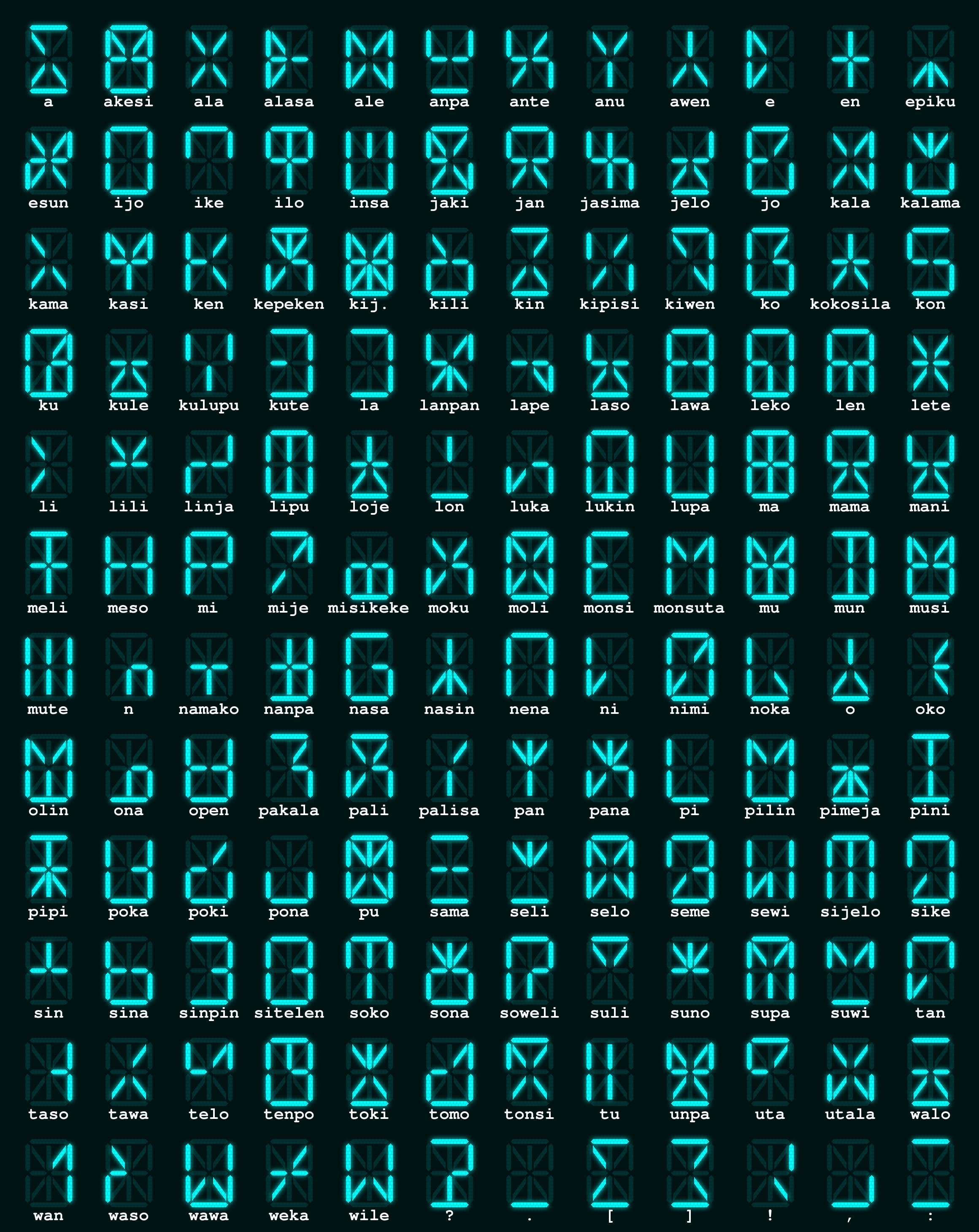
我使用sitelen palisa书写系统来进行机器人的对话
https://raw.githubusercontent.com/abalidoth/sitelen_palisa/refs/heads/main/full_table.png
 pearl drift
teal socket
我使用sitelen palisa书写系统来进行机器人的对话
https://raw.githubusercontent.com/abalidoth/sitel...
pearl drift
teal socket
我使用sitelen palisa书写系统来进行机器人的对话
https://raw.githubusercontent.com/abalidoth/sitel...
ni li musi a
li pona lukin
teal socket
toki!
final sage
o pana e nasin pi toki Sonko https://sona.pona.la/wiki/Toki_Pona_speaker#In_other_languages
sona pona
A Toki Pona speaker is a speaker of the Toki Pona language. This English noun phrase best translates the endonym jan pi toki pona according to lipu ku. When an adjectival compound is needed, most modern style guides recommend using an en dash, for example a Toki Pona–language organization or a Toki Pona–speaking teenager. The two previous tr...
fallen needle
I will edit when I reach out my computer
In Mandarin
道本语使用者 (Dàoběnyǔ shǐyòngzhě)
讲道本语的 (jiǎng Dàoběnyǔ de)
fallen needle
But I worry that the list will become too long since everyone will add a different language
autumn mist
道本人 xP
last time I wrote 道本语用家 when I was helping translating stuff but I wasnt sure about that phrasing
pearl drift
中文没有“用家”这种说法
autumn mist
之所以依然感覺有點奇怪 x|
final sage
toki! sina ale li lon ala lon lipu ni? https://ma.pona.la/
fallen needle
pearl drift
中文没有“用家”这种说法
可能主要用于香港
teal socket
散步时发现一只鹿从我面前经过。啊,你好,《鹿精灵》的迪尔!
teal socket

#chiikawa #吉伊卡哇 #ちいかわ #hachiware #animation #cartoon
rare gust
 fallen needle
几个点
ma Konton 是按 #1267828517442162721 的投票意见
西藏在 Wikipesija 是 ma Po,图作后我也决定用了,因为照顾拼写 bod
浙江改为 ma Sikon,虽然这个无法统一(取值大概在 (si~se~so)(kon~kijan))但原来的写法似乎纯粹是我不懂吴语弄错了
更麻烦的江西是权且按南昌
我不想跟 Wikipesija 作对
Tokiponization 对我而言好玩的一点就是它能消泯许多小差异
ken la sitelen ni li ike lukin
tan li ni: mi jo ala e tenpo. mi pali mute
mi kama jo e sitelen pi kule taso lon lipu linluwi pi tomo lawa pi ma Sonko
mi sitelen taso e toki pona
fallen needle
pearl drift
中文没有“用家”这种说法
不过广东也不用用家么?
teal socket
有人玩过这些类似宝可梦的游戏吗?
如果有,你在实体GAME BOY COLOR (GBC)上玩过吗?
https://www.youtube.com/watch?v=DPMGUb1qjIE&list=PLXWBjLL29d06DyxuDSA9V026zZKsQ74CN&index=4
https://www.youtube.com/watch?v=BUNowxq6sB0&list=PL_7SZhTmUFWlC7T7N2LTNs_k11bh3Nrkr

Turn on subtitles for translation! Available in english and french.
Activez les sous-titres pour la traduction! Disponible en français et anglais.
Shui Hu Shen Shou (Water Margin Sacred Beasts) is an unlicensed Pokémon-like RPG for the Game Boy Color, developed by Vast Fame. It's great! It's fun! It deserves to be better known! So that's why...

Another unlicensed title by Vast Fame, in the vein of Pokemon. Pretty well done once more!
顺便说一下,这些游戏在中文里被称为《水浒神兽》和《时空星兽》。
"kulupu soweli sewi pi kulupu utala lanpan tan ma pi linja telo"?
"kulupu soweli mun pi kon tenpo/tenpo kon"?
这些游戏是由台湾公司 《广誉科技有限公司 》(VAST FAME) 制作的。这些游戏未获得任天堂的官方授权,因此是在未经任天堂批准的情况下销售的。
fallen needle
mi olin mute e kalama musi Je m’appelle Hélène (mi jan Ilen)
ma Sonko la kalama musi ni li mute
mi wile kin alasa e olin
teal socket
你好!抱歉,我已经一个多月没画也没发新的搞笑漫画《鹿精灵》了。
为了恢复状态,我把一部《吉伊卡哇》漫画翻译成了道本语。听说这部漫画在中国特别受欢迎。希望你喜欢我的翻译!我希望能尽快创作一部新的《鹿精灵》漫画。


我还翻译了以可怕的嵌合体怪物角色为特色的《吉伊卡哇》漫画章节。

 teal socket
有一款名为《小牛翻译》(NiuTrans)的机器翻译器,支持道本语。它可能是第一个提供道本语的机器翻译网站。
小牛翻译云平台采用最新神经网络机器翻译技术自主研发,支持400+语言间的双向互译,包括英、法、日、俄等主流语言及聪加、隆迪等极小众语言;全面支持维藏蒙哈朝彝壮七大少数民族语言;覆盖大部分“一带一路”周边国家及联合国会员国。可提供翻译API、...
遗憾的是,该程序对道本语文本的翻译效果并不理想。但即使如此,它被添加到神经机器翻译器中,也应该是一件大事。该机器翻译器目前已支持四百五十种语言!


 teal socket
终极翻译实验


 fallen needle
之前某处部署过一个很 raw 的翻译器,现在这个好用多了
翻译器始终是个好参考。隔壁理语我长期只知道这个翻译器 ( https://www.stars21.asia/translator/lojban/ ),号称是百度提供的。这个翻译很不准,不过可以看看词
Lojban Translators to translate a text or website from Lojban into 299 world languages.
 hushed bisonBOT

sona pona
Toki Pona is often called ambiguous, especially in comparison to other languages. While Toki Pona grammar allows some ambiguity, Tokiponists such as jan Misali argue that the property usually being described is actually vagueness.
Something ambiguous could mean multiple separate things, whereas something vague can only mean one thing—it is jus...
final sage
forms.gle/pgqYsMaDWFNP...
Public Consultation for Names of Some Countries and Languages
DEADLINE: 2025-06-05
#tokipona
Bluesky
·
teal socket
以下是与华人社区最相关的问题:
- Cantonese
(广东话/廣東話/粤语/粵語)
Kontun, Konton, Kantun, 还是其他?
- China, Chinese languages (especially Mandarin Chinese and other Sinitic languages)
中国或汉语(尤其是普通话/华语或其他汉语)
中國或漢語(尤其是國語/華語或其他漢語)
Sonko 还是其他?
- Chinese (Hanyu)
(汉语/漢語)
An, Kan, 还是其他?
- Chinese (Putonghua)
(普通话)
toki pi sona ale, toki pi jan ale, toki kulupu, toki pi sona kulupu, toki pi jan mute, 还是其他?
- Hokkien
(福建話/Hok-kiàn-ōe/閩南話/Bân-lâm-gú)
Okijen 还是其他?
- Malaysia
(马来西亚)
Malesija, Malesa, Malesi, Malasija, 还是其他?
- Shanghainese
(上海话/上海話/沪语/滬語/吴语/吳語)
Sane 还是其他?
- Singapore
(新加坡)
Sinapula, Sinapo, Sinkapo, 还是其他?
- Taiwan
(台灣)
Tawan 还是其他?
表格底部写着:
"We will start other lands and languages later, but you may unofficially start the discussion here:"
("我们稍后会开始讨论其他国家和语言,但你可以在此填写空间非正式地开始讨论:")
我希望我向您翻译的解释是好的。
honest pilot
teal socket
- Cantonese
(广东话/廣東話/粤语/粵語)
Kontun, Konton, Kantun, 还是其他?
我听过的是 Kanton,然后对于普通话 我跟别人通常说 toki Putonwa 不过形容的说法应该可以的
honest pilot
teal socket
- Taiwan
(台灣)
Tawan 还是其他?
这两个国家的话,mi kute e ma Sinkapo e ma Tawan lon tenpo
其他的那些语言和国家我个人不确定
@cinder hound 你有什么看法吗
尤其是福建话吧
final sage
honest pilot
这两个国家的话,mi kute e ma Sinkapo e ma Tawan lon tenpo
taso kulupu 马来族 li nanpa wan lon ma Singapura lon tenpo suli. ni la kulupu 新加坡华人/华裔新加坡人 en kulupu pi toki Inli li kama lon tenpo pini lili.
teal socket
啊,抱歉,我之所以在聊天中提到马来西亚和新加坡,是因为:
马来西亚拥有庞大的华人及华语人口,以至于华语是当地最常用的语言之一。
新加坡也拥有庞大的华人人口,中文是新加坡官方认可的语言之一,仅次于英语、马来语和泰米尔语。
如果您认为我在中文聊天中错误地列出了这些国家,我深表歉意。我只是觉得住在这些国家的人喜欢使用这个聊天服务器的这个版块,并且愿意回答调查问卷。
虽然我也应该考虑到这一点:


所以,马来西亚和新加坡都没有源自中文的名字。
karmic roost
honest pilot
我听过的是 Kanton,然后对于普通话 我跟别人通常说 toki Putonwa 不过形容的说法应该可以的
Kanton 似乎是 mpptp 用得比較久的,之前廣東話的 post 也是用 toki Kanton(其實是我命名的,英文說得多所以當時拿了 Cantonese 的 Canton 來譯 #1079029669791268895 message)但用廣東話發音來說 Konton 比較接近(Kontun 應該也可以,不過「廣東」聽起來好像比較像 o)現在我也是用 Konton
主流也是用 Konton #1267828517442162721 message
autumn mist
mi kin li kepeken nimi Konton
🇸🇬 la kulupu Malaja li lon tan tenpo weka, taso tenpo ni la kulupu An li kama kulupu suli nanpa wan. ante la toki Inli li kama toki pi kulupu ale lon ma ni, ni tu la nimi pi toki Sonko en nimi pi toki Inli li suli tawa pilin mi
honest pilot
final sage
taso kulupu 马来族 li nanpa wan lon ma Singapura lon tenpo suli. ni la kulupu 新加坡华人...
a lon la mi sona ala e nasin pona. mi kute e nimi Sinkapo tan kala pona Tonju lon tenpo pini la mi kepeken
honest pilot
karmic roost
Kanton 似乎是 mpptp 用得比較久的,之前廣東話的 post 也是用 toki Kanton(其實是我命名的,英文說得多所以當時拿了 Cantones...
sona pona a
 leaden wren
teal socket
- Hokkien
(福建話/Hok-kiàn-ōe/閩南話/Bân-lâm-gú)
Okijen 还是其他?
leaden wren
teal socket
- Hokkien
(福建話/Hok-kiàn-ōe/閩南話/Bân-lâm-gú)
Okijen 还是其他?
我們家的人好像都把白話字-ian結尾的字念成ɛn,沒有i,但我不確定其他人是怎麼唸的
fallen needle
btw tenpo ni la mi sitelen a e ‘toki Sonko Mantalin’. ken la ni li ike. taso tenpo pini la mi lukin e ‘중국 만다린어’ lon lipu linluwi
honest pilot
英文里我们也会这么说 但在中文里没有这样的说法 对吧
karmic roost
我是直接叫「中文」或是「普通話」的
frigid marten
表示语言的话,“汉语”(toki An/Kan)比“中文”(toki/sitelen Sonko)更正式
有点类似于“castellano”(toki Katejano/Kasija)和“español”(toki Epanja)
fallen needle
In the sike pona landing page I wrote,
suwi pi jan Late li mute tawa suwi mi
If it were a group chat I would write
jan Late li suwi tawa mi
but in a webpage I worry that ‘tawa mi’ will be recognised as ‘for me’
autumn mist
mi la?
final sage
toooki!
For languages like Shanghainese, Hokkien, Cantonese, is it better for Toki Pona people to say:
- 🍍 toki Konton en toki 福建 (Okijan? Okijen?)
- 🐿️ toki 粵 (Ju? I?) en toki 闽南 (Panlan?)
<@&834350913811644487>
 sacred crater
question 🙋♀️ is this asking between using the placename vs using the linguistic~ethnic group name for the particular language?
as a person who knows minimal toki pona i dont see a reason why these cant both exist to mean different things, except if it's maybe in pursuit for conceptual simplicity if that's ultimately the point
because i would interpret toki广东 or toki福建 pretty differently than say toki粤 or toki闽南 if i was hearing it in a sinophone context
fallen needle
sacred crater
as a person who knows minimal toki pona i dont see a reason why these cant both ...
Sonja may be asking the words for general purpose, for example some l10n interface caring no much about the essence/anthropology of each language
wise lily
Use endonym when possible
fallen needle
fallen needle
Sonja may be asking the words for general purpose, for example some l10n interfa...
And using nuanced word for some specific people is always OK
wise lily
teal socket
有一个新的 DELTARUNE 老板,出于某种原因,他会随机说中文。
I am playing this game are you telling me there are hungry Chinese speaking ghosts in chapter 4?
sacred crater
fallen needle
Sonja may be asking the words for general purpose, for example some l10n interfa...
i mean 😅 yes that's fair but i think it's also just that the sociolinguistic situation is complicated and i dont feel necessarily comfortable saying "which approach is the best" without actually knowing what kind of varieties we're talking about
fallen needle
sina lon
sacred crater
like, for example are we saying "(guangfu) cantonese (that's used as a lingua franca in many yue-speaking regions and diasporas)" or "all yue varieties spoken there etc" and maybe it doesn't matter as much here but i'm wary that even though "standard" cantonese is often referred to as 廣東話 at least in hong kong, that there's many non-cantonese-speaking people and non-han people in ma konton, and not all people who speak yue varieties might have a variety that's even indigenous to ma konton
fallen needle
And same things exist as well for Flemish or something else
sacred crater
compared to shanghainese which i'm also a speaker of, i'd be more comfortable saying toki sanke if it's again referring to "standard" urban shanghainese, maybe if clarifications are needed i'd say idk toki sanke pi ma tomo wawa (urban, kind of used-to-be lingua-franca in the city?? or something), but i'm also wary that people just use "shanghainese" to be The Representative for Wu Languages on interfaces sometimes which is far from accurate as shanghainese has like no reach beyond shanghai and the wu speaking region is huge. and that being why i didnt think just saying place or ethnicity felt very clear if that was the question
final sage
mi kama sin. one moment
right now the priority is sending language names and place names for CLDR (Unicode)
so like what are we asking the world to call software that is localized to Cantonese aka Yue
fallen needle
To be a bit off-topic it is impossible to be ‘fully local’ for names of languages, otherwise we will have a ton of 白话
sacred crater
for cantonese i think (also since realistically speaking i'm assuming the interface would probably be localized to standard hk-guangfu cantonese if it ever is, i'm ok with toki konton or toki kanton)
fallen needle
There are real people translating softwares into Wu; but hard for their works to fit into any specific variant
sacred crater
if by shanghainese this means "Wu (the representative of it being Shanghainese)", i'd much prefer it be toki U since shanghainese is one weird wu language spoken in a rich city that just happened to get famous out of all of the wu languages. and it's just not fair if they all got called toki sanke
final sage
sacred crater
because i would interpret toki广东 or toki福建 pretty differently than say toki粤 or ...
if we offer foreigners like in europe and africa the simplest way to call the sinitic languages like Hokkien vs Minnan, would it be better if everyone learned to say Minnan as the most useful general language name instead of naming Hokkien that is only applicable in SE Asia?
final sage
fallen needle
And same things exist as well for Flemish or something else
we are treating flemish as toki Netelan (pi nasin Flemish) or toki Netelan Flemish
sacred crater
that i dont feel as confident to speak on since i don't speak min or have much personal connection to that. 😅 i'd really just say that i interpret hokkien to be like one very specific variety of the minnan family ig, spoken near the southern coasts fujian or taiwan, or as some kind of an umbrella for any language that's perceived as similar to those
sacred crater
sacred crater
if by shanghainese this means "Wu (the representative of it being Shanghainese)"...
also on this note. even though i dont think software localization infrastructure really exists much for wu 😅 but still toki U would be much more preferable to me if it's meant to equate to "Wu Chinese"
final sage
sacred crater
compared to shanghainese which i'm also a speaker of, i'd be more comfortable sa...
is it more likely for software, let's say speech to text transcription for example, to be called shanghainese or wu?
sacred crater
i think usually from what i've seen the exact name of the city or town tends to be there, like shanghainese (wu) or wu (shanghainese). just "wu" often seems to me just like negligence if its specifically developed for shanghainese
but there's also the trouble in that a lot more text to speech for example tend to be available for shanghainese compared to other wu languages
final sage
foreigners might be more familiar with words like cantonese and shanghai and such, but we could ignore them and use the linguistically more accurate names like yue and wu to talk about languages, and leave the place names like shanghai or guangzhou to be a totally different thing?
sacred crater
but others do exist, like suzhounese has tts and things, and i would be happier if that was labelled suzhounese for what it is, or as Wu, instead of shanghainese
also a problem being that the Wu family is very big (its also linguistically kind of contested) 😅 the degree to which varieties are mutually intelligible can be very limited in some cases
final sage
so maybe we have 3 layers of detail? toki Sonko (any language in china, especially a sinitic one, and especially mandarin) > toki Yue > toki Konton ?
sacred crater
yes that would be the way i'd think of it
final sage
ok, that works for me
it lets people choose the level of generality or specificity they need
sacred crater
and essentially even with Yue, im good with it being toki U/ edit: oops clashJu or something, but it's also important to me that it means what it's used as in practice ig
yesyes! i think that's what i meant :)
fallen needle
pona a
teal socket
Wow, big discussion. I thought this survey was just for the country and language dictionary of lipu pu sin. Didn't expect Unicode to get involved.
final sage
in that case, i think i have almost everything i need, but we could comfirm how to tokiponize Yue, Wu and all others in this level or category according to the main pronunciation in that language itself
it is for CLDR
we are not allowed to change it later if we think of a way to improve one letter. so we have to only send within 48 hours the parts we are 99% confident that the affected local people will see as #1 best option for them
and next year we can send more
fallen needle
Would it include 莆仙 and 邵将? I suspect if they are truly recognized names
final sage
for all the languages in south africa 🇿🇦 we are sending those the govt considers official
because it is complex there too
honest pilot
final sage
*toooki!*
For languages like Shanghainese, Hokkien, Cantonese, is it better for ...
mi toki tawa jan pona mi pi ma tomo 成都. pilin ona la 四川话 li ken toki Sitan
final sage
is there some version of this that would match how the chinese government would group the different varieties spoken?

i see things like this on english wikipedia, showing that different projects might group differently:
Huizhou, previously included in Wu.
Pinghua, previously included in Yue
what would be the best list of varieties that need names?
honest pilot
a, wile sona suli a
fallen needle
final sage
is there some version of this that would match how the chinese government would ...
‘汉语方言地图集’ is a meticulous academic work. But it would not solve your problems on Flemish-like transitional languages
 hybrid skiff
final sage
is there some version of this that would match how the chinese government would ...
hybrid skiff
final sage
is there some version of this that would match how the chinese government would ...
Where cantonese
sacred crater
hybrid skiff
Where cantonese
yue
hybrid skiff
Oh
final sage
looking at chinese wikipedia, maybe one of these is the list we work from?


realistically we should focus this year on maximum 9 names for different varieties of chinese at different levels of generality or specificity, according to the ones most needed to prioritize.
fallen needle
我刚知道琼崖话也有ISO代号 xD
final sage
and next year we can solve all the smaller others
sacred crater
i dont necessarily speak with confidence on all the varieties but i do think it's probably good to be conservative with them if that's the case
i think the usual official-not-official narrative that i'm most familiar with is the 七大方言 (7 big [branches/families of] dialects), including Mandarin [Guanhua], Wu, Yue, Min, Xiang, Hakka, Gan = 7 branches
this framework subsumes Jin under Mandarin, Ping under Yue, Hui under Wu, and further divisions can and eventually should probably be made but it seems to be a framework that's small enough thats agreed upon to work down from
 sacred crater
final sage
looking at chinese wikipedia, maybe one of these is the list we work from?
sacred crater
final sage
looking at chinese wikipedia, maybe one of these is the list we work from?
out of these lists i think this second one is the one that looks the most reasonable to me (also potentially the most easily standardizable, since it says it has ISO standardization?), but essentially what it's done is also just from the big 7, it splits Min into 5 subbranches and it separates Jin and Hui out to be their own branches (so adding 4 from Min, and 2 from Jin and Hui, 7+4+2 making 13 in total here). but essentially the classification framework seems to bounce off of that 7-branches idea still
i think maybe a minimalist approach i would recommend in this case is to include names for the 7 big branches, and maybe optionally include Jin and Hui this time round if enough data and ideas can be found about them
 final sage
ok. if almost everyone agrees with this, 7 names are a good number we can accomplish
i also see 13 in that image which is also realistic if those 13 are very often agreed upon
ok you also suggested a 9 of 7+2
sacred crater
yesyes
it does say that the groupings are disputed on that page
the most splits it seems to have made in one big family seems to be the 5 subgroupings of min it's added and unfortunately im not familiar enough with min to verify if those are good groupings
final sage
yeah it is always complicated because reality is a spectrum and not simplified categories
sacred crater
but Jin and Hui seem to be at least established enough to me to have a name
hence the 7(optionally +2) i suggested
esp if these are all also defined in the ISO639-3
final sage
would it make sense to name 7 + Jin, Pinghua, Huizhou, Taishanese, Teochew + maybe Zhenan/Min variants? + up to 3 more recognizable or more specific names like Konton?
where is the line between useful/commonly needed and too much complicated work?
karmic roost
okay I'm a bit late, 粵語 is kinda written chinese-y for me, I really only say 廣東話
for me the semantic space of 廣東話 covers all dialects, but idk what other thinks
final sage
karmic roost
okay I'm a bit late, 粵語 is kinda written chinese-y for me, I really only say 廣東話...
you (personally) are able to call other yue varieties "cantonese" as well?
karmic roost
eh I call all Chinese varieties (including Cantonese) Chinese
but I can specify if I want
sacred crater
i would advise against it since there are yue varieties that are spoken not in Canton (廣東) but Guangxi (廣西) as well. on wiktionary this is kind of a bag we're dealing with since Yue=Cantonese is hard-wired into the code and it generates lect labels where "Cantonese" can mean Hoisan or Guangxi Yue which is really not ideal
final sage
there is also the difficult question of do we want to ask everyone to change Sonko to just Son, so toki Son (any language of china, especially sinitic languages, especially mandarin) and ma Son (china) don't have the weird -ko that only means "ma", also avoiding the need for Sonwen and other variations of Son? in 2001 we decided that Sonko was okay because you can say zhongguo, zhongguoren, and zhongwen
sacred crater
to me as a L2 Cantonese speaker who migrated to hk "Cantonese" = Yue feels like a very hong-kong based usage
final sage
final sage
so maybe we have 3 layers of detail? toki Sonko (any language in china, especial...
i think we are in agreement of the multiple levels way of naming
fallen needle
final sage
there is also the difficult question of do we want to ask everyone to change Son...
‘ko’ can be seen as a part of proper name
karmic roost
final sage
there is also the difficult question of do we want to ask everyone to change Son...
unlike other names where when you remove the affix it's a place name or the name of the group of people, 中 isn't really any of those
it's 中華
sacred crater
final sage
there is also the difficult question of do we want to ask everyone to change Son...
can i suggest 漢 Han (maybe tokiponaizable as An or Kan) for the usage (any sinitic language, especially mandarin)? since i think toki Sonko carries the territorial baggage where speakers of non-sinitic languages that are of non-Han ethnicities in the territories of China are kind of implicitly erased here
中 Son itself is not the name of ethnicity but idk maybe it gives more the intended meaning of (any language of China, esp sinitic, esp standard mandarin) better 🤔
fallen needle
This proves nothing, but in my impression books using proper name line tend to write 泰国 rather than __泰__国
final sage
sometimes we have toki Akan (Afghan) and ma Akan (Afghanistan) because -stan only means "ma". but sometimes this is not true because ma Pakitan has people who are not called kulupu Paki in their language but they are called kulupu Pakitan
final sage
sacred crater
can i suggest 漢 Han (maybe tokiponaizable as An or Kan) for the usage (any sinit...
yes An was the preferred version of Han (An vs Kan) in the consultation so it will appear as a name people can use
sacred crater
final sage
would it make sense to name 7 + Jin, Pinghua, Huizhou, Taishanese, Teochew + may...
i'm ok with adding pinghua (tbf i dont know enough about it to rlly say if it should be added or not), but putting Taishanese and Teochew in there as well seems bizzarre to me since they are technically more enregistered as actual "singular languages" instead of "language families" under those bigger 7+2 classifications
final sage
sacred crater
i'm ok with adding pinghua (tbf i dont know enough about it to rlly say if it sh...
teochew is like cantonese then? just another level below another name, right?
sacred crater
yes it would be, under min :)
karmic roost
The problem seems to be around how much precision we want and how we group the different dialects
final sage
one moment i have a first draft
fallen needle
sina jo e draft la, mi o wile sona lon kulupu pi ilo QQ
honest pilot
toki 四川话 li ken ala ken lon poka pi toki 普通话 lon anpa pi kulupu 官话, jan pi sona toki o
fallen needle
Seemingly mostly correct. (Taishan in Taishanese is hᵘɔi²² san³³) (Yes, memorable t→h!)
sacred crater
Shanghai is slightly wrong. in shanghainese it should be more something like [zɑ̃22 he44]
also depending on the Wu lect, 吳 is often something like [vu~ɦu~ŋu~ŋ]. there's also some register-related phenomena in many wu lects short of some zhenan varieties, where a "formal" or "literary-layer" word like 吳語 is more likely to take a reading like [u] compared to [ŋu~ŋ].
i would maybe recommend toki U since it seems to approximate both [u] and [ŋu] the best compared to the other two plausible candidatestoki Nu or toki N?
also not a Min speaker but maybe it would be good to try and take into account the pronunciations of the name in different min varieties apart from the Minnan reading listed in this draft?

also last slight nitpick, are Son and An going to be the same thing or slightly different? it seems like it would make sense to me to have both toki Son and toki An, but only ma Son
final sage
yes we can say for example that toki Son and toki An mean the same thing but there is no ma An
is this better? what still needs improving? we won't keep the IPA in the final, but we need enough information to convert to toki pona phonology
Zhōng / Hàn (中 / 汉) [ʈʂʊŋ˥] / [xan˥˩]
  ├─ Mandarin (官) [kwan˥]
  │   ├─ Putōng (普通) [pʰu˨˩˦ tʰʊŋ˥]
  │   └─ Si-chuan (四川) [sz˨˩˧ tsʰwan˦˥]
  ├─ Wu (吴) [ŋu²³]
  │   └─ Shang-hai (上海) [zɑ̃²² hɛ⁴⁴]
  ├─ Yue (粵) [jyːt̚˨]
  │   ├─ Guang-dong (廣東) [kʷɔŋ˧˥ tʊŋ˥]
  │   └─ Hoi-san (台山) [hɔi˧ san˨]
  ├─ Min (閩) [bãn˨˩]
  │   └─ Southern Min / Bân-lâm (閩南) [bãn˨˩ lam˧˨]
  │       ├─ Ē-mn̂g (廈門) [e˥ mŋ̍˨˩]
  │       ├─ Teo-chew (潮州) [ti̯o˧ tsio˥]
  │       └─ Zhang-zhou (漳州) [tsã˧ tsau˥]
  ├─ Jin (晋) [tɕin˥]
  ├─ Hakka (客) [hak̚˥]
  ├─ Xiang (湘) [ɕjɔŋ˥]
  ├─ Gan (赣) [kɔŋ˧˩]
  ├─ Ping (平) [pʰeŋ˧˥]
  └─ Hui (徽) [fi˧]
yea I started to say Sonwa because of this but it never caught on
final sage
sacred crater
also depending on the Wu lect, 吳 is often something like [vu~ɦu~ŋu~ŋ]. there's a...
is it roughly accurate to say that only the Hangzhou people or approximately 10% of Wu speakers say U, and most say Nu?
sacred crater
no
autumn mist
one potential problem if using 漢 is that An might clash with 韓 (s Korea, also An in tp), and Kan isn't as close as An to how most pronunce it
sacred crater
in fact there's probably more /ɦu/ than /ŋu/, specifically for the language name
in shanghai in fact it's usually /ɦu/
final sage
on kakaotalk the koreans all agreed they wanted ma Anku and toki Anku
autumn mist
huh ok
sacred crater
since /ŋu/ is widespread but it's kind of a "colloquial substrate" reading which means it's often reserved for the surname, colloquial words, etc, but in my experience often not in the sense of this specific language name
final sage
sacred crater
in shanghai in fact it's usually /ɦu/
ok that is important. one moment
sacred crater
(granted that the distribution of what /ɦu/ and /ŋu/ respectively mean also manifests differently across regions, for shanghainese at least ive very rarely heard /ŋu/ at all)
autumn mist
final sage
is this better? what still needs improving? we won't keep the IPA in the final, ...
also I still don't like calling Putonghua "toki Puton" only (instead of toki Putonwa) since 普通 by itself isn't associated with a place or people, and hardly associates to the language when detached from 話
final sage
autumn mist
also I still don't like calling Putonghua "toki Puton" only (instead of toki Put...
i agree. for names like this in non-sinitic cases, we usually translate the understood meaning and don't treat it as a unique name for phonetics. so i have to look again in my survey if people wanted toki Son kulupu or toki Son pi sona ale or toki Son suli or toki Son pi jan ale and other ways to translate the meaning of putong.
unless there is a special reason to treat it as a phonetic name and not a word that explains what kind of "hua" it is
we often do the same for east and west in place names
sacred crater
sort of on a related tangent i also kind of wonder if the Guan in Guanhua should be translated meaning-based instead of sound-based? since Guan is not an ethnicity but a social marker (at least most directly interpretable that way), it's understood as "Officials'/Governors'/Mandarins' language" in Chinese. along with how the semantics of Son is kind of like "language in China > (esp) Sinitic > (esp) Mandarin(ic?)" so i wonder if it would be better to say like toki Son pi jan wawa (bad example, my toki pona is bad) or something like that
but i guess there's also no harm in having whatever toki pona sound equivalent of Guan just sort of mean what Guanhua is understood as in chinese either :d
final sage
yes we should definitely consider that
a governor is jan lawa or we can just use the lawa part
it could produce something like "toki Son lawa" giving the general idea of "official chinese language "
Son could even become insa, but this is probably going too far, because almost all countries are a phonetic name, even if we can understand a meaning it came from
is this more accurate? if we count all Wu speakers, about 60% pronounce 吴 closer to Nu, and about 40% closer to U?
Zhōng / Hàn (中 / 汉) toki Son anu toki An
  ├─ Mandarin (官) toki An lawa anu toki Son lawa
  │   ├─ Putōng (普通) [pʰu˨˩˦ tʰʊŋ˥] toki Son/An + translation of putong
  │   └─ Si-chuan (四川) [sz˨˩˧ tsʰwan˦˥] toki S_suwan?
  ├─ Wu (吴) toki U
  │   └─ Shang-hai (上海) toki Sane
  ├─ Yue (粵) [jyːt̚˨] toki Ju anu toki I?
  │   ├─ Guang-dong (廣東) toki Konton
  │   └─ Hoi-san (台山) [hɔi˧ san˨] toki Osan/Josan/Owisan?
  ├─ Min (閩) toki Pan
  │   └─ Southern Min / Bân-lâm (閩南) toki Pan pi ma seli
  │       ├─ Ē-mn̂g (廈門) [e˥ mŋ̍˨˩] toki Em_n
  │       ├─ Teo-chew (潮州) [ti̯o˧ tsio˥] toki Sijosijo? Sosijo?
  │       └─ Zhang-zhou (漳州) [tsã˧ tsau˥] toki Sansa/Sansaju/Sansaw_?
  ├─ Jin (晋) toki Sin
  ├─ Hakka (客) [hak̚˥] toki A/Ak_?
  ├─ Xiang (湘) toki Sijon
  ├─ Gan (赣) toki Kon
  ├─ Ping (平) toki Pen
  └─ Hui (徽) toki Pi
is this moving us in the right direction? underscore _ means we need to decide the best vowel.
sacred crater
final sage
is this more accurate? if we count all **Wu** speakers, about 60% pronounce 吴 cl...
i think it's maybe more like
70% can say something like U (counting [u~vu] etc, and also potentially diphthongized variants like Ewu/Owu [əu~ɛu] in places)
- 30% of the 70% can only say U
- 60% of the 70% can say U and N (usually [ŋ] or a sometimes a similar syllabic nasal)
- 10% of the 70% can say U and Nu
20% can only say something like Nu or No ([ŋu~ŋuɔ~ŋø~ŋy] etc)
10% can only say something like N ([ŋ] etc)
and, out of the many places that can say both U and something else, often either it doesn't really matter which or U is likely preferred for the language name Wuyu
https://www.wugniu.com/map?char=吳 (<map for reference, the varieties plotted are all Wu)
final sage
sacred crater
i think it's maybe more like
70% can say something like U (counting [u~vu] etc,...
do i understand better now? about 2/3 of Wu speakers use closer to U. about 1/3 rely on closer to Nu. toki U would win.
sacred crater
sina lon! its something like that i would say 
final sage
ok thanks
final sage
final sage
```
Zhōng / Hàn (中 / 汉) toki Son anu toki An
├─ Mandarin (官) toki An lawa anu ...
updated this.
for kwan mandarin and putong, are both Son and An acceptable for both? or sometimes it is only Son or only An?
if we decide to translate as "lawa" and as "kulupu or pi jan ale or suli or other"
mi lape! i will catch up tomorrow 若主愿之
karmic roost
I think I prefer toki Ju for Yue
sacred crater
i'm inclined to say that for Guanhua, it's a bit more toki An lawa than Son since "Guanhua" as a linguistic grouping isn't nationally prestigious in Ma Sonko, it's that it's historically the prestigious Han language that officials spoke, toki jan An lawa
with putonghua since it's actually enforced as a nationally-mandated l1 in education i'm more ok with it being both Son and An
final sage
ok
final sage
final sage
```
Zhōng / Hàn (中 / 汉) toki Son anu toki An
├─ Mandarin (官) toki An lawa anu ...
i updated this
i need help where you see question marks and underscores (missing vowel)
english speakers combine mandarin and putonghua as the same idea. is that logical in the chinese understanding too or a bad idea that only simplifies for foreigners?
autumn mist
final sage
english speakers combine mandarin and putonghua as the same idea. is that logica...
as a jan pi toki Konton, Mandarin and Putonghua are the same in my mind, but apparently Mandarin refers to the larger group of language under Guanhua, so i can imagine someone from like Sichuan being more opposed to this, like how a Hoishanese speakers wouldnt want ppl to think that Yue=Cantonese
how opposed they would be or whether they would really mind, la mi sona ala
autumn mist
final sage
```
Zhōng / Hàn (中 / 汉) toki Son anu toki An
├─ Mandarin (官) toki An lawa anu ...
Hakka can prob be Aka for 客家, "家" almost always isnt left out in cantonese and it prob also isnt in hakka too?
final sage
without being chinese, i can think of majuna for traditional and pona for simplified but i am sure it is not that simple
is it offensive to imply that traditional is less pona?
autumn mist
personally i wouldnt go as far as to say its offensive but i wouldnt prefer or like it
id say pona and simple are more decoupled for a lot of ppl anyway
pi sitelen lili would be most accurate, but might be a bit long
honest pilot
nimi lili li ken ala ken lon taso
toki Sonko lili / toki Sonko suli
autumn mist
i thought about sin but idk if its appropiate for sth thats been around for ~100yrs
final sage
pi ijo mute = complex
the ijo can be sitelen or linja or something
suli is too vague and was also suggested for putong where i think it is also too vague
- pi sitelen lili
- pi nasin pini, majuna, pi tenpo suli
pini as in the past but people didnt stop using overseas
of a long time
majuna is a close match for traditional but is sometimes also used for ancient or medieval stuff
like old english
or ancient greek
putonghua:
- 🐰 toki kulupu
- 🍄 toki pi jan ale
- 🍺 toki pi jan mute
- 🦄 toki pi sona ale
- 🦝 toki pona
- 🎲 ijo ante
final sage
does this look ok? not yet finished of course. anything we're not 100% sure, we won't send this year.
https://docs.google.com/spreadsheets/d/1JiFapXK73qNF9WKjAJsLrrh1WJl_O7X-n-1_qOUeEa4/edit?usp=sharing

Google Docs
honest pilot
lon poka pi toki 四川话 (sichuanese) la sina ken pana e toki Sitan? (taso jan pona mi li sona ala e toki pona la ken la nasa)
final sage
mi pana
final sage
the codes for these are strange and long. i wonder if we should not define these this year. some can be added in 2026. some are actually included in shorter codes like "zh".

the sinitic languages with short ISO codes are:
- cmn "toki An lawa, toki Son lawa, toki Sonko lawa?" "Mandarin Chinese (Guanhua) ... mainly an academic or historical term? deprioritize as not needed in 2025 software? merge with Putonghua?"
- cnp toki Pen pi ma lete??? Northern Pinghua Chinese
- csp toki Pen pi ma seli??? Southern Pinghua Chinese
- czh toki Pi??? Huizhou Chinese
- gan toki Kon??? Gan Chinese
- hak Hakka Chinese
- hsn toki Sijon??? Xiang Chinese
- nan toki Pan pi ma seli Southern Min Chinese
- wuu toki U Wu Chinese
- yue toki Ju? Yue Chinese
- zh toki An, toki Son, toki Sonko? "Chinese (Hanyu, Zhongwen) same as ""cosc"" (Putonghua)?"
- zh_Hans
- zh_Hans-long
- zh_Hant
- zh_Hant-long
- zh-menu
- zhx toki Sonko? (toki Son? toki An?) Sinitic or Chinese languages (in general, but especially Mandarin)
quasi halo
all southern min sound the same imo
fallen needle
我煋了,我才知道toki Sonko还可以指西里西亚语
fallen needle
I have written Sisuwan for Sichuan
The use of the word guanhua for (all varieties of) Mandarin is recent. If we accept ‘toki Pen pi ma lete’ we may accept ‘toki Sonko pi ma lete’ for cmn. But for me ‘pi ma lete’ is a curious idea
final sage
I will be finishing many names in the next 3 hours
look at both tabs (Languages and Territories) and find anything Sinitic marked EXTREMELY HIGH in bold. https://docs.google.com/spreadsheets/d/1JiFapXK73qNF9WKjAJsLrrh1WJl_O7X-n-1_qOUeEa4/edit?usp=sharing

Google Docs
<@&834350913811644487>
anything we are not 99% sure of, we will just omit it and send those ones in 2026.
let me summarise what we need to resolve:
- CN: China
- zh: Chinese (Hanyu, Zhongwen), same as "cosc" (Putonghua)?
- zh_Hans: Simplified Chinese
- zh_Hans-long: Simplified Mandarin Chinese
- zh_Hant: Traditional Chinese
- zh_Hant-long: Traditional Mandarin Chinese
- zh-menu: Chinese, Mandarin
- cmn: Mandarin Chinese (Guanhua): mainly an academic or historical term? merge with Putonghua or code zh?
- zhx: Sinitic or Chinese languages (in general, but especially Mandarin)
- cosc: Standard Chinese (Putonghua)
What we know so far:
- Sonko 6. Son or Son + something else 4. Tonko 1.
- Sonko 6. Son or Son + something else 4, An 3.
final sage
3 and 4. 简体中文 / 简化字 Simplified -- What is literal meaning of 简体 or 简化??
- 🦝 pona
- 🐰 lili
- 🐟 pi kipisi lili
- 🐻 pi sitelen lili
- 💚 pi selo lili
- ❤️ pi nasin lili
- 🐐 pi linja lili
- 🍄 pi pali lili
- 🍕 pi ijo lili
- ⚜️ pi ijo ante lili
- 🐗 sin
5 and 6. 繁體中文 / 正體字 Traditional
- 💊 pi kipisi mute (zhītǐ, fánxīng)
- 🥔 pi sitelen mute
- 🌿 pi selo mute (tǐzhì, lìtǐ; fánxīng)
- 🫎 pi nasin mute / pi nasin suli (wéntǐ, fánxīng)
- 🍍 pi linja mute (bǐchù?)
- 🦄 suli
- 🎥 pi pali mute / pi pali suli
- 🩸 pi ijo mute
- 🦒 pi ijo ante mute
- 🐿️ majuna
kepeken pi suno ale la kon li sama ala sama? (synonyms in everyday use or not?)
-
zh: Chinese (Hanyu, Zhongwen)
-
zh-menu: Chinese, Mandarin
-
cmn: Mandarin Chinese (Guanhua)
-
cosc: Standard Chinese (Putonghua)
-
🌿 sama
-
🍍 sama ala
Same root we use for China (ma ...)?
-
zhx: Sinitic or Chinese languages (in general, but especially Mandarin)
-
🦝 sama
-
🐟 sama ala
@hazy junco @rare gust sina ken ala ken alasa e nimi ni. nasin CLDR la nimi seme pi toki Sonko/Son/An li kon sama pi sitelen lili ilo ale ni? for example can you copy and paste what unicode calls "zh-menu" or "cmn" in chinese characters?
 final sage
ni li sona sama. nimi li lon toki Han/Zhong ala, anu seme?
final sage
rare gust
ni taso li lon
mi lukin e nimi lon toki pona. o sona: ona ale li ken kama ante.
rare gust
final sage
ni li sona sama. nimi li lon toki Han/Zhong ala, anu seme?
toki sonko ale, toki sonko pi sitelen suli, toki sonko pi sitelen lili
ilo mute li sona e toki ni taso (tan ni: "toki ante ale li toki uta taso")
final sage
i'm asking what does Unicode call zh_Hans in actual chinese, not in english as "Simplified Chinese". sona ni li lon ala lon?
rare gust
A mi lukin pona ala
final sage
rare gust
the information here is already known, and sitelen lili/suli is one of the options we are considering among others.
and be prepared for Sonko to possibly change to Son or An

 rare gust
rare gust
rare gust
n...sitelen ni li toki e ni: tomo toki la, toki li lon. sitelen jelo la, ken la jan li awen toki li sona pona ala e wile? taso mi lukin open e tomo toki la ilo li toki e ni: "sina ken ala lukin"

ante la, toki "cantonese" kin li lon, mi lukin ala lon tenpo pini

 final sage
rare gust
final sage
rare gust
pona muuuuute
@rare gust these are next, but we need to solve the HIGH PRIORITY ones first:
- Jin: toki Sin?
- Hakka: toki A? toki Aka? toki A........?
- Yue: toki Ju?
- Southern Min: toki Pan pi ma seli?
- Gan: toki Kon?
- Xiang: toki Sijon?
- Taiwan: ma Tawan?
Actually we don't need the Chinese names. We already know them.
a a a! ma Asija la jan ale li lape lon tenpo pimeja.
10 p.m. Toronto time is 10 a.m. in China, which might be our deadline for what we know about Chinese languages.
autumn mist
I remember waso Petowali supporting toki Ju for yue, and I also feel the same
mi tu li tan ma Onkon
final sage
i heard from another person preferring toki Ju so that one is confirmed now
final sage
final sage
## 3 and 4. 简体中文 / 简化字 Simplified -- What is literal meaning of 简体 or 简化??
- 🦝 ...
do we have enough people to vote here please? <@&834350913811644487>
final sage
rare gust
对于任何称为“中”的词,例如“中文”和“中国”:
- 🍄 toki Son 和 ma Son(你感觉更好,因为 -ko 表示土地,而且更准确或更尊重,并且与 toki pona 中的其他所有语言保持一致)
- 🐰 toki Sonko 和 ma Sonko(最好保留外国人已经使用的 toki pona 的用法,以免造成混淆)
final sage
I see An in the codes "zh_Hans-long" and "zh_Hant-long". is that correct?
"zh-menu" has a different word.
i will try to solve as much i can for the sinitic languages by 4 pm toronto, then reconfirm a final time at 10pm toronto when a few more people wake up
final sage
rare gust
ante la, toki "cantonese" kin li lon, mi lukin ala lon tenpo pini
this is what the chinese characters say, if i'm not wrong:
 autumn mist
rare gust
autumn mist
rare gust
rough translation
zh_Hans: simplified Chinese
zh_Hans-long: modern standard Chinese (simplified)
I'm guessing one just indicates the writing system and the other specifies more that it is mandarin?
漢语 & 中文 are basically synonyms (to me), but 現代标准 specifies that it is the standard dialect
rare gust
autumn mist
rough translation
zh_Hans: simplified Chinese
zh_Hans-long: modern standard Chin...
sona mi li ni
autumn mist
final sage
this is what the chinese characters say, if i'm not wrong:
seems right to me
final sage

am i right so far? if the character reads as Han, we write toki An
if the character reads af Zhong, we write Son(ko)
zh-menu calls itself Putonghua, so we haev to decide if that's toki An + common or toki Son(ko) + common
and anything called Son or Sonko, we need to decide to keep Sonko to not break the way foreigners speak toki pona, or recommend Son for cultural respect and accuracy because -ko means ma
@rare gust mun Kekan San forbade me pinning rights in #wile-kulupu because of security cornerns, so i'll need your help
final sage
final sage
## 3 and 4. 简体中文 / 简化字 Simplified -- What is literal meaning of 简体 or 简化??
- 🦝 ...
to pin
final sage
final sage
**putonghua:**
- 🐰 toki kulupu
- 🍄 toki pi jan ale
- 🍺 toki pi jan mute
- 🦄 ...
to pin
final sage
final sage
对于任何称为“中”的词,例如“中文”和“中国”:
- 🍄 toki Son 和 ma Son(你感觉更好,因为 -ko 表示土地,而且更准确或更尊重,并且与...
to pin
autumn mist
I'm reading sth rn, but from what I see it does seem that there are only some technical differences between 中文 &漢語, but colloquially are the same (and which one we should is more situational than clearly defined)
id say choose either one and stick with it, but should also listen to others when they wake up
don't ask why I'm not asleep :P
autumn mist
final sage
am i right so far? if the character reads as Han, we write toki An
replying to this
rare gust
final sage
## 3 and 4. 简体中文 / 简化字 Simplified -- What is literal meaning of 简体 or 简化??
- 🦝 ...
rare gust
final sage
**putonghua:**
- 🐰 toki kulupu
- 🍄 toki pi jan ale
- 🍺 toki pi jan mute
- 🦄 ...
rare gust
final sage
对于任何称为“中”的词,例如“中文”和“中国”:
- 🍄 toki Son 和 ma Son(你感觉更好,因为 -ko 表示土地,而且更准确或更尊重,并且与...
autumn mist
ok
I'm seeing some contradictory takes but seems like:
中文 is just whatever ppl say they speak, more colloquial and often used
漢语 is the more technical term, may have more emphasis on ethnicity, add 標準 before it and it's definitely the standard and regulated form of Chinese aka standard mandarin
but otherwise quite interchangable (prob why in the trad Chinese version above only one of them is used for everything)
anyway should we just react one (or more?) emotes to the pinned messages?
autumn mist
final sage
**putonghua:**
- 🐰 toki kulupu
- 🍄 toki pi jan ale
- 🍺 toki pi jan mute
- 🦄 ...
I reacted both 🐰 and 🎲 but I prefer 🎲 (toki lawa) more
mi lape
final sage
lape pona
rare gust
 final sage
rare gust
final sage
rare gust
based on the chinese versions of those codes, which does something totally different than the english translations, it gives us this

for Kurdish we cannot figure out this year.
for the literal translation from the chinese wording jan Tepo showed us, we have this so far. again, it's totally different from the english. the chinese community uses the codes to emphasize different things than the english community does.
somehow they find it useful for -long to be repurposed to change Son(ko) to An
the best we know so far...
 final sage
对于任何称为“中”的词,例如“中文”和“中国”:
- 🍄 toki Son 和 ma Son(你感觉更好,因为 -ko 表示土地,而且更准确或更尊重,并且与...
final sage
final sage
对于任何称为“中”的词,例如“中文”和“中国”:
- 🍄 toki Son 和 ma Son(你感觉更好,因为 -ko 表示土地,而且更准确或更尊重,并且与...
we should localize this super important question to chinese
autumn mist
final sage
somehow they find it useful for -long to be repurposed to change Son(ko) to An
ok I'm looking at this with fresh eyes
-# (actually I couldn't sleep but I'm less tired rn)
even though 中文 & 漢語 are similar, 現代標準漢語 is a (lexicalised) term specifically refering to the standard Chinese adopted by the sinosphere countries (aka 普通話, 國語 etc)
it uses 漢 instead probably because it's a more technical term
this I'm not so sure: unlike 普通話, this term could encompass more varieties of standard Chinese (even tho they are very similar) instead of the one standard used in mainland china, but I'm kinda doubtful since I see only the mainland officially using this exact term
so I'm thinking now: if 現代標準漢語言 can indeed cover all standards, and you're also using An for han Chinese ppl, then you could use An here,
but if you're already using Son(ko) for han Chinese, or that 現代標準漢語 only refers the mainland standard, then it would be better to also use Son(ko) for this, and add the same modifier as Putonghua
sona mi li pakala la jan ante pi toki ni o pana e sona sin a
final sage
autumn mist
Hakka can prob be Aka for 客家, "家" almost always isnt left out in cantonese and i...
there is no risk of someone preferring toki A or something different?
final sage
final sage
对于任何称为“中”的词,例如“中文”和“中国”:
- 🍄 toki Son 和 ma Son(你感觉更好,因为 -ko 表示土地,而且更准确或更尊重,并且与...
this one is super important so we will need at least 4 votes i think to see the trend
i want to send toki Pan pi ma seli if no objections, because i spend a lot of time in singapore and malaysia
this is not much to work with, but the fact that 2 felt the same way about using linja for simple or complex brush strokes among like 7 different options signals something promising
 autumn mist
final sage
there is no risk of someone preferring toki A or something different?
autumn mist
final sage
there is no risk of someone preferring toki A or something different?
id say low? but I'm not completely confident, especially when idk ppl who speak Hakka
I'm seeing now in written Chinese there's sometimes just 客語, but the Hakka clips that I see they all say 客家话
final sage
final sage
对于任何称为“中”的词,例如“中文”和“中国”:
- 🍄 toki Son 和 ma Son(你感觉更好,因为 -ko 表示土地,而且更准确或更尊重,并且与...
<@&834350913811644487> 这里有一个非常重要的问题


 quasi halo
singapore mentioned 🤯
 terse saffron
maybe mandarin as "toki Pekin" for it is the beijing dialect and seems a bit less ambiguous than "toki An"
 quasi halo
zh-menu ig
final sage
this is the chinese version of that code
 quasi halo
putonghua just means standard language 
quasi halo
toki An is for 汉语 right? han is just the race of chinese people
quasi halo
final sage
the language of the kulupu
ambiguous too
final sage
quasi halo
toki An is for 汉语 right? han is just the race of chinese people
which code?

 runic sleet
Simplified characters are a script tho innit
sitelen pi tenpo lili
(then 草书 can be sitelen kasi who knows)
final sage
are you talking about zh_Hans-long ?
runic sleet
terse saffron
maybe mandarin as "toki Pekin" for it is the beijing dialect and seems a bit les...
You do have to consider modern Mandarin isn't exactly Pekingese tho
If anything it's based off a nearby dialect
runic sleet
final sage
are you talking about zh_Hans-long ?
Just in general
runic sleet
quasi halo
putonghua just means standard language <:lon2:1049900649254506516>
It does and its a very PRC way of referring to the langauge too
华文/华语 or wawen wawan wayu wawi or just wa or a wld be more exact and neutral, id say
ig toki Sonko can be a way of referring to just the Mandarin Chinese of PRC tho
Just my two cents not vehemently against any of the suggestions a decision made is better than none
ivory sky
quasi halo
singapore mentioned 🤯
period
quasi halo
ivory sky
period
时间
ivory sky
runic sleet
华文/华语 or wawen wawan wayu wawi or just wa or a wld be more exact and neutral, i...
is that a globally known term though
fallen needle
final sage
对于任何称为“中”的词,例如“中文”和“中国”:
- 🍄 toki Son 和 ma Son(你感觉更好,因为 -ko 表示土地,而且更准确或更尊重,并且与...
mi la kalama wan taso li ike. nimi Sonko li kalama tu la jan li ken kute pona e nimi ni
autumn mist
fallen needle
mi la kalama wan taso li ike. nimi Sonko li kalama tu la jan li ken kute pona e ...
aa ni kin li pilin mi, taso ijo ante la ona tu li kama pona sama
mi toki e nimi Son, taso nimi Sonko li sewi la ni li ike ala tawa mi
ivory sky
runic sleet
For mandarin users?
yeah
narrow quail
final sage
maybe Kontun would be closer for Cantonese?
and i'm not sure what's the best way to deal with the -t in Yue (/jyt/ in Standard Cantonese); what happens for other names ending in -t?
aha, now i see there was a vote for Kontun vs. Konton and the latter won by 3:2
then i guess it's more complicated
karmic roost
narrow quail
aha, now i see there was a vote for Kontun vs. Konton and the latter won by 3:2
one of them who voted for Kontun is me
And I switched to Konton now
which technically makes it a 4:1
final sage
i also find Kontun more accurate and consistent with how most toki pona names are formed, but when the affected community itself leans towards Konton, i obey that
the vowel is kinda between u and o, so it is not a major issue
final sage

如果不加“lawa”(标准)、“kulupu”(标准)、“tenpo ni”(现代)这些字,可以接受吗?英文名不需要,但我们尊重大家喜欢用“An”还是“Sonko”的喜好。
Is it OK if we don't include "lawa" (标准) or "kulupu" (标准) or "tenpo ni" (现代)? The English names didn't need it, but we respected the preference for Han or Zhong.
- 🍄 可接受 it's OK
- 🍕 不太理想 it's not ideal
<@&834350913811644487>
final sage
感謝


.jpg/800px-Yuji_Naka'_-_Magic_-_Monaco_-_2015-03-21-_P1030036_(cropped).jpg)