#Small questions while re-learning java
1 messages · Page 1 of 1 (latest)
 fickle zephyr
 valid mirageBOT
<@&987246399047479336> please have a look, thanks.
Here is an AI assisted attempt to answer your question 🤖. Maybe it helps! In any case, a human is on the way 👍. To continue talking to the AI, you can use </chatgpt:1108714622413963314>.
Yes, that is correct. The strictfp keyword in Java ensures that floating-point calculations are performed in a consistent manner across different platforms. If you encounter strictfp in a project using Java versions prior to Java 17, you only need to use it when defining floats and doubles to ensure consistent behavior. It does not have any impact on other data types or methods in your code.
fickle zephyr
Small questions while re-learning java
 formal relic
fickle zephyr
About the keyword strictfp - If I encounter it in a project sub Java 17, I only ...
formal relic
fickle zephyr
About the keyword strictfp - If I encounter it in a project sub Java 17, I only ...
I'm not sure what you mean?
It can be applied to classes, non-abstract methods & interfaces
 void walrus
ChatGPT is correct but you rarely even need to use strictfp
fickle zephyr
formal relic
I'm not sure what you mean?
Just the keyword "strictfp" it only affects the way floats and doubles are calculated, right?
so if I find it in a project with a java version sub 17, I need to use it when defining new classes, non-abstract methods & interfaces, I don't have to do anything or know anything else. It does not impact me otherwise, yeah?
fickle zephyr
void walrus
ChatGPT is correct but you rarely even need to use strictfp
Yeah, hence why I am asking :D there is not a lot of info out there, because it is rarely used.
void walrus
It's only a problem if you're using hardware from like pre year 2000 and pre java17 lol
But yes it only affects double and float
fickle zephyr
and from Java 17, basically every float and double is strictfp anyways.
formal relic
Ah in that way, yes basically useless nowadays.
void walrus
SSE2 (Streaming SIMD Extensions 2) is one of the Intel SIMD (Single Instruction, Multiple Data) processor supplementary instruction sets introduced by Intel with the initial version of the Pentium 4 in 2000. It extends the earlier SSE instruction set, and is intended to fully replace MMX. Intel extended SSE2 to create SSE3 in 2004. SSE2 added ...
formal relic
fickle zephyr
jep ?
formal relic
Basically what drives the language forward, that explains the strictfp changes in 17
fickle zephyr
void walrus
JEP = JDK Enhancement Proposal
Got to say, that one? I never heard :D
instead of const Java uses static and final, which is fine I guess :D
The native keyword is neat, only now learned about it, no questions but... huh, neat :D
"throws" keyword... Ok I guess, can lead to some wacky code design I feel :D
fickle zephyr
"synchronized", "transient" and "volatile" seem to be the 3 keywords I struggle most understanding. I guess I will have to look into multi-threading and serialization in java.
formal relic
Throws was already around, that's exception related
for transient keep in mind from which package it is. There are 2 flavours.
fickle zephyr
formal relic
Throws was already around, that's exception related
Yeah I know, but I did not remember it :D
fickle zephyr
formal relic
for transient keep in mind from which package it is. There are 2 flavours.
oh?
formal relic
And things threading wise will get even more interesting in 22 with structured concurrency, but I'll first let you catch up.
there's also a json related transient
fickle zephyr
formal relic
there's also a json related transient
How? Ah well :D
I will look into all that tomorrow
If you got something to type, please do :D
formal relic
Certainly, but I don't want to give an overload.
I do advice is: also appreciate the little things
fickle zephyr
Oh yeah, if I do get too much info I say so, no worries :D
I do understand "synchronized", "transient" and "volatile" by themselves, but that is kind of useless without the context of multi-threading and serialization
which are imo too big of a topic to learn today too.
formal relic
like text blocks
String multilineText = """
some
lipsum
"""
The var keyword
Sequenced collections from 21 so we can now do getFirst() rather than get(0)
The new Math clamp functions
...
fickle zephyr
Oh yeah! I got no idea anymore how collections work at all! :D
Onto the list it goes!
new Math clamp functions? like what?
formal relic
Previously when you wanted to bound a number you had to write the logic yourself, now we have: https://docs.oracle.com/en/java/javase/21/docs/api/java.base/java/lang/Math.html#clamp(double,double,double)
declaration: module: java.base, package: java.lang, class: Math
oh right, that's another enhancement: searchable javadoc
fickle zephyr
Neat! :D
 ancient fossil
fickle zephyr
The native keyword is neat, only now learned about it, no questions but... huh, ...
ancient fossil
fickle zephyr
The native keyword is neat, only now learned about it, no questions but... huh, ...
You shouldn't use it anymore
fickle zephyr
ancient fossil
You shouldn't use it anymore
Why?
ancient fossil
fickle zephyr
"synchronized", "transient" and "volatile" seem to be the 3 keywords I struggle ...
You shouldn't use java default Serialization mechanism, and so transtient
fickle zephyr
ancient fossil
You shouldn't use java default Serialization mechanism, and so transtient
Why?
ancient fossil
fickle zephyr
Why?
Because JNI is getting replaced by Panama's Foreign Function and Memory API
fickle zephyr
ancient fossil
Because JNI is getting replaced by Panama's Foreign Function and Memory API
When?
ancient fossil
fickle zephyr
Why?
Because java default Serialisation is bad
There are talks about that
formal relic
fickle zephyr
fickle zephyr
When?
officially? or is it just best practice?
formal relic
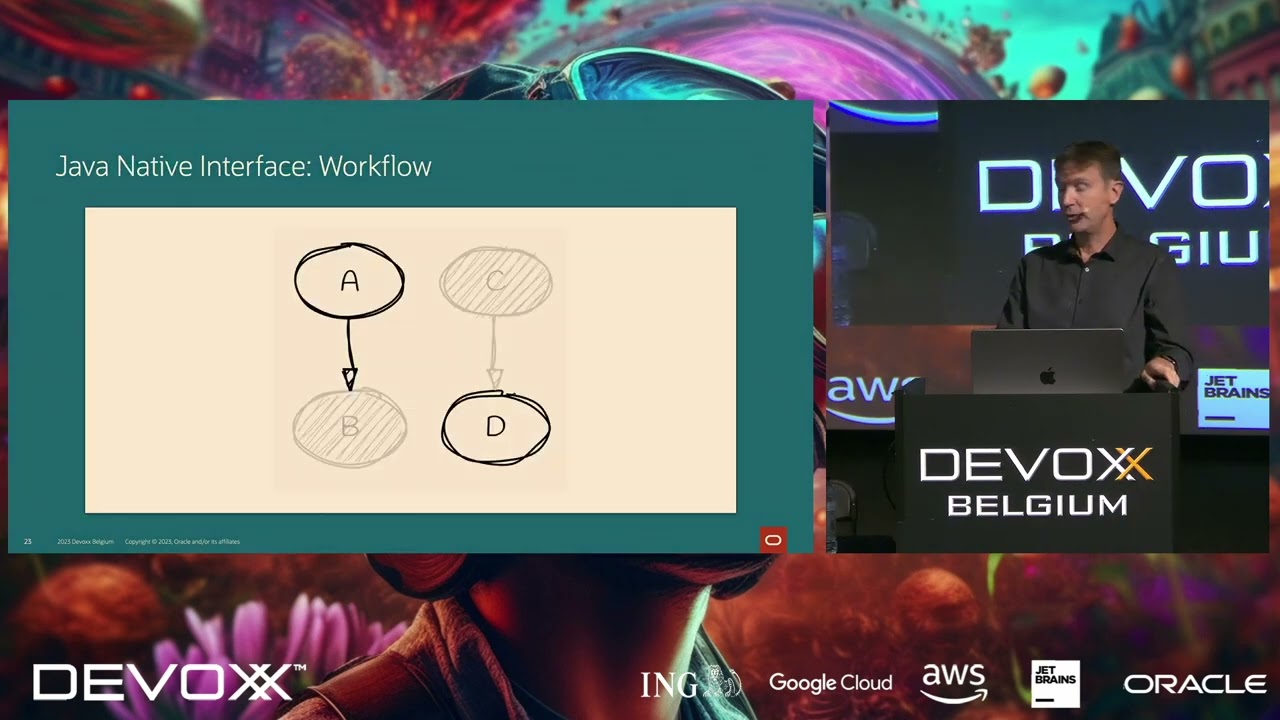
One of the two major parts of Project Panama is the "Foreign Function and Memory API" (the "FFM API") which saw its third preview in Java 21 and will be finalized in Java 22. In this talk, we will explore how the FFM API enables native methods and memory access with pure Java code and how high performance and safety can be achieved at the same t...
ancient fossil
fickle zephyr
When?
It is currently in the process of getting replaced by it
And it will officially released next month
fickle zephyr
ancient fossil
It is currently in the process of getting replaced by it
And it will officially ...
Oh I see, good to know!
ancient fossil
@fickle zephyr note that most of what you said exist since the start of java
formal relic
And given you asked about floating points, also look at BigDecimal
fickle zephyr
ancient fossil
<@197845876478181376> note that most of what you said exist since the start of j...
Yeah, I was very much a beginner when I used Java, was my first language and I did not pick it up since.
I wanted to do my training with Java, but I ended up in Webdev and moved to Python, but now I got a new job and will be using Java.
For the first time since 2017, so I start at the basics. I can draw from my web and python experience and relearn java in a better way.
The school part which used Java was admittedly rather basic.
I call it re-learning because I genuinely started at the complete basics 5 hours ago.
formal relic
you might also like
valid mirageBOT
MOOC is a completely free introductory Java course created by the University of Helsinki, it is a great way to learn Java from the ground up.
It consists of two parts, one at beginner, and another at intermediate level. The end of the course is marked by creating your own Asteroids game clone!
Even though the instructions show how to configure and use NetBeans for the course, you can use IntelliJ. To use IntelliJ, simply install the TMC plugin by opening IntelliJ -> File -> Settings -> Plugins and searching for TMC. You will then be able to use IntelliJ to complete MOOC.
Visit MOOC here: https://java-programming.mooc.fi/
(the course is available in both English and Finnish)
simon_verhoeven • used /tag id: mooc
·
About the course - Java Programming
formal relic
Oh right, since you said 2017 if you're still on SVN take a look at git
formal relic
subversion
fickle zephyr
fickle zephyr
Yeah, I was very much a beginner when I used Java, was my first language and I d...
I am afraid my approach back then to Java was "MAKE" and not at all structured or otherwise sensible. I started with Minecraft mods, then started making my own game engine. No Prior experience with Java. I did learn a lot and in some areas (visual programming with AWT/Swing/JavaFX) I got pretty far, but I do have holes in my knowledge I want to fill.
valid mirageBOT
@fickle zephyr
Your question has been closed due to inactivity.
If it was not resolved yet, feel free to just post a message below
to reopen it, or create a new thread.
Note that usually the reason for nobody calling back is that your
question may have been not well asked and hence no one felt confident
enough answering.
When you reopen the thread, try to use your time to improve the quality
of the question by elaborating, providing details, context, all relevant code
snippets, any errors you are getting, concrete examples and perhaps also some
screenshots. Share your attempt, explain the expected results and compare
them to the current results.
Also try to make the information easily accessible by sharing code
or assignment descriptions directly on Discord, not behind a link or
PDF-file; provide some guidance for long code snippets and ensure
the code is well formatted and has syntax highlighting. Kindly read through
https://stackoverflow.com/help/how-to-ask for more.
With enough info, someone knows the answer for sure 👍
fickle zephyr
Hey, I got time again! :D
I want to understand the transient keyword's interaction with the final keyword.
final Strings will be serialised and the transient keyword has no effect on them, what about other datatypes?
I have read, that the final modifier makes no difference when it has literal initialization, but what does that mean?
ancient fossil
fickle zephyr
I want to understand the transient keyword's interaction with the final keyword....
What? How is this even related?
Final don't prevent transient to work
In fact, they have literally nothing in common
fickle zephyr

Baeldung
Learn about the transient keyword and see its behavior through examples
Behavior With final and Behavior With final String Using new Operator have their own sections
 silent dew
that has nothing to do with transient though
its just how final and string literals work as per jls
which u can also see nicely here

Stack Overflow
So far I thought that effectively final and final are more or less equivalent and that the JLS would treat them similar if not identical in the actual behavior. Then I found this contrived scenario:
fickle zephyr
So, the transient keyword has no effect on them?
silent dew
final String a = "a";
System.out.println(a + "b" == "ab"); // outputs true

// versus

String a = "a";
System.out.println(a + "b" == "ab"); // outputs false
and that's about it?
silent dew
the transient keyword plays no role in this particular example
ancient fossil
fickle zephyr
https://www.baeldung.com/java-transient-keyword
Ah that's the difference between a true constant and a final variable
fickle zephyr
But realated to this, https://www.baeldung.com/java-transient-keyword I am not sure I am right, so I'll ask again, examples 4 and 4.1 would be the same without the transient keyword?
@ancient fossil @silent dew
My understanding is classes, variables, objects, or fields can be marked as transient, and will be exported and imported with their default values instead. the exception is that the keyword has no effect when used with the final keyword.
silent dew
fickle zephyr
But realated to this, https://www.baeldung.com/java-transient-keyword I am not s...
no. ur misunderstanding
silent dew
in the first example with final and a literal, u dont have a variable to begin with
the variable bookCategory does essentially not exist
its not part of books
the jls determines that (bc of final and a string literal), its a compile-time-constant
so its inlined
bc of that, the transient keyword cant have effect on it
the variable that would be marked transient or not doesnt really exist
so transient preventing it from being serialized has no effect
since its absent already anyways
in the second example, u have a "regular object" that isnt compile-time-constant
so the variable is an ordinary variable
and having transient there will prevent it from being serialized
fickle zephyr
I see, thank you :)
fickle zephyr
ancient fossil
Because java default Serialisation is bad
There are talks about that
So, now that I looked at it, it is time to ask why it is bad.
Certainly error prone, when used incorrectly, but is that all?
silent dew
fickle zephyr
So, now that I looked at it, it is time to ask why it is bad.
Certainly error pr...
also security risks
there have been a few bigger incidents
with attacks
for example london substation was offline for a few days
fickle zephyr
yeah... understandable.
ancient fossil
fickle zephyr
So, now that I looked at it, it is time to ask why it is bad.
Certainly error pr...
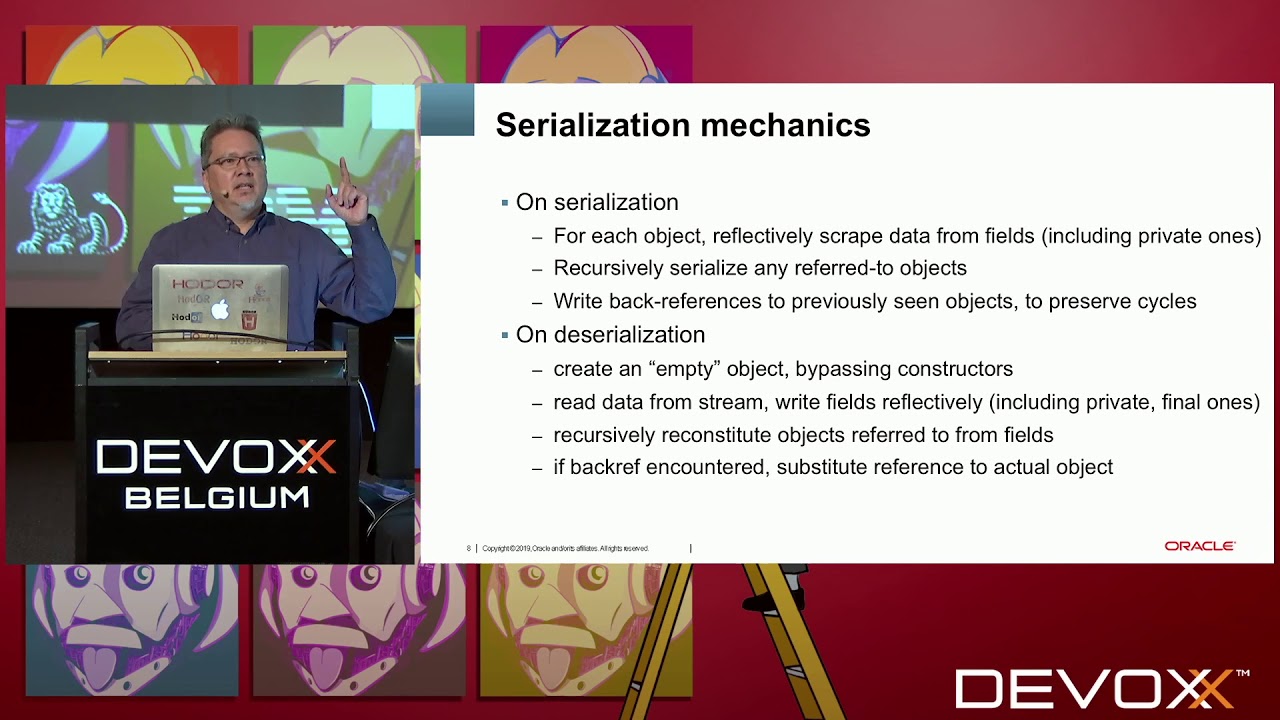
Java Serialization is well known to be one of the worst features of Java. It's been mentioned as such in various "Ask the Experts" panels over the past few years. Joshua Bloch's book "Effective Java" describes many dangers of serialization, and it devotes an entire chapter to the topic. But isn't this merely a recent group of Java platform desig...
silent dew
since java serialization doesnt use any data scheme but supports deserializing arbitrary java objects. and worse, also graphs with cycles
and not just single objects
its the one big difference that no other serialization mechanisms offer
like json for example
no cycles, no arbitrary object graphs
- support for data schemes so that u dont deserialize other unrelated data
fickle zephyr
oooooooh wow, okay that is much worse than I expected :D
silent dew
and thats just the security aspect
the other problem is, similar to the deprecated Clonable interface, it attempts to create objects by black magic
bypassing constructors
so it can easily bypass any invariants u check in ur constructor/setters
and its almost impossible to get it right with inheritance
since it just bypasses all ur constructors that u setup carefully
so unless u literally only have simple objects to serialize, chances are it will just get it wrong
fickle zephyr
Okay, I guess I see why it is that way, but damn is it bad
silent dew
but sure, if ur just making some smaller personal use program, why not, its easy to use and boom u have a "save state" and "load state" mechanic in ur program in just 10 minutes
which is kinda cool tbh
it was also a major pillar of javas success back in the 90s
being the only programming language at the time with a proper serialization mechanism
fickle zephyr
Yee, still, I did not think it did all that
fickle zephyr
silent dew
so it can easily bypass any invariants u check in ur constructor/setters
guess if it is propperly exported and imported doesn't really matter, but yeah, I can see it being error prone.
Or just duplicate code and do the same checks :D
ancient fossil
fickle zephyr
guess if it is propperly exported and imported doesn't really matter, but yeah, ...
It does
fickle zephyr
?
fickle zephyr
ancient fossil
It does
care to elaborate? :D If you properly export and import data that you are sure was not manipulated and do the checks yourself again... I think it's ok.
It is not a good system, and I'd use alternatives, but it is not the worst.
silent dew
yeah so the main issue with that is that its super cumbersome
suppose theres some data in ur class that u want to recreate each time its created
u would put that code in ur constructor
fickle zephyr
Absolutely, that all is incapsulated in "error prone" for me :D
silent dew
or some code that u need to trigger each time the objects are created
u would put that code in ur constructor
but deserialization doesnt use constructors
so u would likely run into that pitfall
fickle zephyr
Or make a method that is called by your constructor AND import method
Like, yeah. still, cumbersome, error prone, whatever you want to call it.
silent dew
java deserialization goes through a magic method called private void readObject(java.io.ObjectInputStream stream) instead
so thats its "constructor"
but this method doesnt work correctly in presence of inheritance
u would want the animal class to setup its base class part
before the dog class takes its part
fickle zephyr
silent dew
but this method doesnt work correctly in presence of inheritance
Wait, that's... new information
silent dew
but instead, only dogs method is called
fickle zephyr
so it is even worse??? :D
silent dew
and dog must then setup everything
same issue as with Clonable
if u make Animal and Dog Clonable, Dog must do all the clonable shit of animal
fickle zephyr
So... what do you use instead? I'd just export and import as JSON, but that's just me.
fickle zephyr
hmm, alright.
fickle zephyr
xml
fair
csv
jucky
bson, protobuf
the what?
ancient fossil
fickle zephyr
care to elaborate? :D If you properly export and import data that you are sure w...
Check the video I shared
fickle zephyr
ancient fossil
Check the video I shared
I might, not sure I'll have the time.
silent dew
bson is json but in binary instead of text.
protobuf is the same idea but driven to an extreme. its even better
they are primarily used when u have to send sth on the wire, since they are as compact as possible - instead of json which is just looong text
fickle zephyr
But thank you very much none the less :) @ancient fossil
fickle zephyr
silent dew
bson is json but in binary instead of text.
protobuf is the same idea but driven...
Yeah, there are so many out there, and people told me not to use JSON and use something instead.
People don't even remember that anymore :D I don't either.
ancient fossil
fickle zephyr
I might, not sure I'll have the time.
Java Serialization is well known to be one of the worst features of Java. It's been mentioned as such in various "Ask the Experts" panels over the past few years. Joshua Bloch's book "Effective Java" describes many dangers of serialization, and it devotes an entire chapter to the topic. But isn't this merely a recent group of Java platform desig...
silent dew
protobuf is as compact as it can be. suppose u have a class with 2 ints and a double.
then protobuf will just save it as single binary compact stream consisting of 32+32+64 bits with the data in exactly that order
the "disadvantage" is that u cant make sense of this data unless u know its scheme
i.e. "2 ints, one double in that order"
if u know that scheme, u can read the data
therefore, its as compact as it can be. only transporting the pure data, no structure or type information at all
fickle zephyr
Yeah, that's neat! :D
@silent dew Thank you for your time! I'll keep learning and asking stuff here if anything comes up :)
 cyan knoll
fickle zephyr
Yeah, there are so many out there, and people told me not to use JSON and use so...
cyan knoll
fickle zephyr
Yeah, there are so many out there, and people told me not to use JSON and use so...
Those people that told you not to use JSON either work at a FAANG (where it actually matters), or haven't built any decent sized application at all
fickle zephyr
cyan knoll
Those people that told you not to use JSON either work at a FAANG (where it actu...
Nope, gamedevs
cyan knoll
I use JSON just because it's readable. Esp in bigger projects this is immensely helpful
fickle zephyr
Could have been YAML or Something with L or E
It was a fad, they are back to JSON :D
cyan knoll
well, if you have a ton of binary data yeah, then maybe json is not that great of an idea, I wouldn't make a model format with json 😄
But for metadata, sure why not
look at GLTF
They have GLB, json + binary buffers
fickle zephyr
GLTF?
fickle zephyr
TBH I don't instantly see any use for it,
fickle zephyr
Yeah, that sure, but saving whole scenes is special about it
and I wonder what anyone would use it for
I'd just save like until now too, and then rebuild the scene
cyan knoll
yeah, just an example of where I think they used json correctly. as metadata, and store all other information binary
ALTHOUGH base64 can be decoded pretty much instantly nowadays
fickle zephyr
Java's default multithreading is not bad, right?
I see it kinda encuraging bad code design too (Syncronise shouldn't exist imo) but it's fine, right?
cyan knoll
It works, and if you know what you're doing, it's actually good
also synchronized is fine in cases, commited some code with synchronized last week
But yeah, in a new code base, there exist better things
fickle zephyr
cyan knoll
also synchronized is fine in cases, commited some code with synchronized last we...
Sure but why multithread if you need to synchronize a part anyways, it seems like an awful bottleneck.
cyan knoll

In computer architecture, Amdahl's law (or Amdahl's argument) is a formula which gives the theoretical speedup in latency of the execution of a task at fixed workload that can be expected of a system whose resources are improved. It states that "the overall performance improvement gained by optimizing a single part of a system is limited by the ...
Depends on how much you can actually split off in a separate thread
When I multithread it's usually independent blocks that have nothing to do with each other, and of which I just want to synchronize on the actual results
fickle zephyr
cyan knoll
But yeah, in a new code base, there exist better things
in a new code base - That's how legends start :D
cyan knoll
Like for example, downloading files in chunks, or rendering out png's, stuff like that
fickle zephyr
Jokes aside, what is there?
cyan knoll
there's parallel streams, completablefutures, a whole lock system, mutexes, virtual threads, etc etc
fickle zephyr
I see! that is quite a bit to research! so I won't! I got other stuff to learn first :D
silent dew
javas multithreading is good
it depends on what exactly ur looking at though
ideally u use the newer stuff
so the future api
and executor services
avoid manual thread management
and soon we will get virtual/green threads as well, in which case u can create millions of mini tasks with the future api without performance impact
cyan knoll
silent dew
and soon we will get virtual/green threads as well, in which case u can create m...
"soon"
 cyan knoll
virtual threads work, spring boot now has first class support
silent dew
yeah but there are still significant changes planned for them
formal relic
And for more functionality you want structured concurrency from 22
fickle zephyr
Yeah, will look into that too :)
But first, I need to relearn the basics. I was a kid when I learnt Java, so I got some holes in my knowledge and then catch up to the newest version
That said I am keeping notes of stuff to look into later, if you think anything would be benefitial for me, feel free to tell me all the same :)
formal relic
that's for way down the line
fickle zephyr
I know:)
fickle zephyr
ancient fossil
https://youtu.be/dOgfWXw9VrI
I am not too sure about Json being just as bad. Again, error prone, you need to cherrypick data exported, check data imported, but doesn't have the same exploits, does it?
Watching the video right now, btw :)
- that was 4 years ago and there still is not anything done about it???
ancient fossil
fickle zephyr
I am not too sure about Json being just as bad. Again, error prone, you need to ...
No
fickle zephyr
Like yeah, not optimal but not as dangerous.
cyan knoll
yeah, so for json usually this gets done via reflection. Which is arguably a tiny bit safer than using serialization
But, there's tools, like immutables or kotlinx.serialization that can do compiletime code generation
These generate reflectionless deserialization code for you
Which is arguably a lot safer
fickle zephyr
No idea about kotlin or groovy :D
I want to get deep into java first, before I try any other flavors.
Except if I need some other language for a project.
 crude mango
cyan knoll
yeah, so for json usually this gets done via reflection. Which is arguably a tin...
crude mango
cyan knoll
yeah, so for json usually this gets done via reflection. Which is arguably a tin...
Well no
deep reflection - meaning anything where you bypass a constructor or use setAccessible(true) - is just as unsafe as serialization
but normal reflection - meaning just magically calling methods you already have permission to - is a bit safer
cyan knoll
Afaik unless you allow it just the regular constructors get called
For gson and Jackson
fickle zephyr
the private field thing? :D
fickle zephyr
Sure
crude mango
public class Main {
    public static void main(String[] args) throws Exception {
        var thing = new Thing();

        var field = Thing.class.getDeclaredField("value");

        // Try commenting out this line
        field.setAccessible(true);

        field.set(thing, 5);

        System.out.println(thing.getValue());
    }
}
public class Thing {
    private int value;

    public Thing() {}

    public int getValue() {
        return this.value;
    }
}
it will, if it can't do it another way, set private fields as acessible
and it will set them reflectively
which bypasses any checks you might have
like
fickle zephyr
The fact you can set private fields accessible at all... Is a scary fact to me
crude mango
public class Thing {
    private int value;

    public Thing() {}

    public int getValue() {
        return this.value;
    }

    public void setValue(int value) {
        if (value < 0) { throw new IllegalArgumentException(); }
        this.value = value;
    }
}
so gson could put a negative value in there
crude mango
fickle zephyr
The fact you can set private fields accessible at all... Is a scary fact to me
right, so thats what modules are for
if you have code in a module, other modules can't set private fields
fickle zephyr
crude mango
if you have code in a module, other modules **can't** set private fields
What?
crude mango
like you can no longer set private fields on java.lang.ArrayList
setAccessible won't work
fickle zephyr
Actually for the first time, I don't get something :D
fickle zephyr
crude mango
like you can no longer set private fields on java.lang.ArrayList
I don't have to context to that :D
crude mango
fickle zephyr
I don't have to context to that :D
well see how i do this
        var field = Thing.class.getDeclaredField("value");

        // Try commenting out this line
        field.setAccessible(true);

        field.set(thing, 5);
you used to be able to do
fickle zephyr
Yes?
crude mango
var field = ArrayList.class.getDeclaredField("size");
field.setAccessible(true);

field.set(list, -124);
which obviously, if you are the person who maintains Java is annoying
crude mango
so they introduced a mechanism called modules
crude mango
module java.base {
   exports java.lang;
}
so all the classes in the java.lang package can't be "deeply reflected" on by classes outside the java.base module
module java.base {
   exports java.lang;

   opens java.lang to jdk.internal;
}
Modules, I did not read that at all, but still... I think you shouldn't be able to modify access state PERIOD
crude mango
right, and yet they allowed it in the past
and java doesn't break backwards compatibility
fickle zephyr
Honestly, the most horrifying thing about java for me right now.
fickle zephyr
That just means you need to find a way to execute code in another module, it's not good.
fickle zephyr
Yeah, it would have to be an exploit, but I can totally see that being possible.
IMO access states should be permanent.
crude mango
well what modules do is make it a local analysis
you just need to look through the code for the library
not the entire program
to make sure nothing is set strangely
fickle zephyr
I see
crude mango
obviously if you have a big module thats not much of a benefit
but you also are guarenteed that none of your libraries (like gson) set private fields
which is where the real risk is - your supply chain
fickle zephyr
Yeah, totally. But once it is in the same module it could possible set every possible field public, read and redirect.
crude mango
you can re-enable that capability if you need to
module my.project {
   opens my.project.thing to com.google.gson;
}
To me it is a nightmare by design.
crude mango
fickle zephyr
To me it is a nightmare by design.
well, compare it to other languages
Python has zero protections against it
C# can set private fields too
fickle zephyr
crude mango
Python has zero protections against it
Other languages having the same problem does not make me less worried about it xD
crude mango
(idk if they have a module thing)
crude mango
fickle zephyr
Other languages having the same problem does not make me less worried about it x...
but in the scope of things, being able to prevent it is better than not being able to prevent it
fickle zephyr
crude mango
but in the scope of things, being able to prevent it is better than not being ab...
True
crude mango
the people in charge of java are more or less aware of all the parts that suck
the next big thing is going to be the ability to make your own primitive types
like NonZeroInt
which is going to include the ability to do stuff like
ArrayList<int> list = new ArrayList<>();
so if there isn't progress on something else you care about its probably because that is the focus
fickle zephyr
Alright :D
No, I don't think this will ever be focus tbh, it's just a security risk.
@crude mango Thank you for your time ^^
crude mango
fickle zephyr
No, I don't think this will ever be focus tbh, it's just a security risk.
well people were pretty pissed with the module system because they decided to spend time on it before any of the stuff they are doing now
basically they are writing more of the JVM in java
and in that context invariants matter a lot
so features like virtual threads wouldn't exist without the module system
fickle zephyr
Yeah, the more I learn about what they do the more I think they are doing the right thing.
But yeah, Java is... a big Project, there will be parts to dislike.
fickle zephyr
Holy crap, I don't know absolute basics anymore.
Until now, basically I just looked at hello world xD
I am not joking, because I got the idea to look at all keywords because of it, which lead me down a few rabbitholes.
So, absolutely basic question.
System.out.println()
How do I structure my code like that? I can make Class.method, but the out in System.out.println() point at the line
"public static final PrintStream out = null;" which makes me ask myself a few questions.
Why null?
What is it exactly? an instance of PrintStream called out?
This is confusing for multiple reasons :D
"out" is also OutputStream which is basicly the super of PrintStream, so... ???
 sweet parrot
this one?
fickle zephyr
yes
 torpid tendon
fickle zephyr
Holy crap, I don't know absolute basics anymore.
Until now, basically I just loo...
torpid tendon
fickle zephyr
Holy crap, I don't know absolute basics anymore.
Until now, basically I just loo...
System is a class out is a public field of type PrintStream in the System class and the PrintStream class has a method called println along with many other methods
so the code will be
public class System {
  public static final PrintStream out = new PrintStream(...);

  ...
}
and u usually shouldn't do this
this is a bad design
crude mango
fickle zephyr
Holy crap, I don't know absolute basics anymore.
Until now, basically I just loo...
System.out is an extremely wierd special case
torpid tendon
public static final PrintStream out = null;
r u recompiling it from bytecode? maybe it is initialized somewhere else not directly in the decleration
crude mango
there is even a setOut method even though it is a final field
don't look too close at the physics
fickle zephyr
crude mango
System.out is an extremely wierd special case
Yeah :D
torpid tendon
an instance of PrintStream called out?
yes it is exactly that nothing fancy
fickle zephyr
So
class BasicConceptTesting {
    public static void main(String[] args) throws Exception {
        thing.test.testprint();
    }
}
public class thing {
    public static final thing2 test = null;
}
public class thing2 {
    public void testprint() {
        System.out.println("done");
    }
}
Would this be a common method way of structuring methods?
valid mirageBOT
fickle zephyr
So
```
class BasicConceptTesting {
public static void main(String[] args) th...
Detected code, here are some useful tools:
Formatted code
class BasicConceptTesting {
  public static void main(String[] args) throws Exception {
    thing.test.testprint();
  }
}
If not, what is the common way of structuring methods?
and why is it = null?
@torpid tendon @crude mango If you don't want pings, tell me, but I'd like to get past hello world today xD
Even if I am doing a technical anaysis of it, I am still stuck on hello world xD
crude mango
fickle zephyr
So
```
class BasicConceptTesting {
public static void main(String[] args) th...
no
System.out is strange
fickle zephyr
Exactly why I don't move on yet xD
torpid tendon
dont try to replicate System.out
torpid tendon
fickle zephyr
<@494830783765151754> <@242066553183404032> If you don't want pings, tell me, bu...
if i dont want pings i'll delete my discord account
fickle zephyr
Okay, so. How would I do it? If I just want to structure many methods?
fickle zephyr
fickle zephyr
and why is it = null?
.
torpid tendon
fickle zephyr
and why is it = null?
it will get initialized somewhere else in the code
for example
public class System {
  public static final PrintStream out = null;

  static {
    out = new PrintStream();
  }
}
Like this is very funny to me, because System.out is so elemental, yet I can learn things from it.
alright, that's cool!
torpid tendon
fickle zephyr
Like this is very funny to me, because System.out is so elemental, yet I can lea...
yea thats true, its just more u notice more u learn
fickle zephyr
fickle zephyr
Okay, so. How would I do it? If I just want to structure many methods?
.
torpid tendon
fickle zephyr
Okay, so. How would I do it? If I just want to structure many methods?
structure many methods? wdym?
public class TogetherJava {
  public static doSomething() { ... }
  public static doOtherThing() { ... }
}
like this?
torpid tendon
fickle zephyr
So
```
class BasicConceptTesting {
public static void main(String[] args) th...
yea this is how u do that
but when writing real code u'll just never need to do that is what we mean
fickle zephyr
Oh, alright then. But nah, I can see a reason to do it this way :D
fickle zephyr
torpid tendon
but when writing real code u'll just never need to do that is what we mean
What if I write something big? Let's say I make a game engine, I can see the Animation controller getting over 100 methods, what would you do to structure it?
torpid tendon
fickle zephyr
What if I write something big? Let's say I make a game engine, I can see the Ani...
idk i never saw any other instance of smth like that
fickle zephyr
Alright that's fair :D
I'll make a solo post about it, I find the question interesting
ancient fossil
fickle zephyr
Like yeah, not optimal but not as dangerous.
We are not talking about the same thing
Let's say you use Jackson
It's not error prone, wdym cherrypick data exported
Serialisation is literally black magic, it bypass every feature that you know in java, it bypas constructors, it bypass final, everything is wrong
And in order to implement it correctly, you have to use this extremelly convoluted boilerplate code which is very error prone, which ask you to duplicate code, which prevents you from using final, and there are so many ways it could go wrong
All of this is shown in the video
fickle zephyr
fickle zephyr
I am not too sure about Json being just as bad. Again, error prone, you need to ...
Yeah, I am on the fence about it.
I am unsure if it is as dangerous when It comes to exploits.
But having more details, yes, it is bad.
fickle zephyr
That said, with "Hello world" out of the way (Which I looked into soo deep I went into serialisation and multi-threading), I can kind of burn trough the rest, types, conversions, getter, setter, time ect... Not really much in there that I'll have questions about.
crude mango
fickle zephyr
That said, with "Hello world" out of the way (Which I looked into soo deep I wen...
well getter and setter aren't really the thing anymore
fickle zephyr
crude mango
well getter and setter aren't really the thing anymore
what :D
you are pulling my leg, right?
crude mango
fickle zephyr
you are pulling my leg, right?
well, for data aggregates
public class Person {
   private String name;
   private int age;

   public Person(String name, int age) {
      this.name = name;
      this.age = age;
   }

   public String getName() {
      return this.name;
   }

   public void setName(String name) {
      this.name = name;
   }

   public int getAge() {
      return this.age;
   }

   public void setAge(int age) {
      this.age = age;
   }
}
this is no longer popular
this is
public record Person(String name, int age) {}
which doesn't have setters
(there is a notion of a reconstruction protocol...but yeah)
fickle zephyr
record? 👀
crude mango
but the age of just slapping getters and setters on a data aggregate is over
the age of immutable data is here
fickle zephyr
crude mango
the age of immutable data is here
Oh yeah, people are all over it. Kind of a fad imo, give it 5-10 years.
fickle zephyr
crude mango
```java
public record Person(String name, int age) {}
```
That said, java 14? what year was that
2020, Oh I see.
Why do people prefer it? @crude mango

Lombok?!? :D
fickle zephyr
Does lombok not just autogenerate getter and setter?
I had to, less than a year ago. Was part of my training as a dev :D
crude mango
well lombok works by using internal parts of the java compiler
the java team want to make people acknowledge that "risk"
and add a bunch of --add-opens jdk.compiler/java.internal.whatever=lombok flags when they run the compiler
which, if you remember, opens things to deep reflection
or --add-exports
which exports packages they didn't export
the risk is that they are going to act as if nobody relies on the details in those packages
so lombok can break in any java version
and absent effort from the lombok maintainer it will break any time they change internals
fickle zephyr
crude mango
so lombok can break in any java version
That's true.
crude mango
ron pressler is on the java team
renier zswitserloot is the lombok maintainer
so lombok currently uses some loopholes in the module system so people dont need to add special flags
fickle zephyr
crude mango
```java
public record Person(String name, int age) {}
```
but back to this, why do people like records, rather than getter and setter?
crude mango
and the jdk team thinks doesn't like that and will close the loopholes soon-ish
crude mango
fickle zephyr
but back to this, why do people like records, rather than getter and setter?
Well that comes down to immutability
immutable data is easier to reason about
which is a way larger topic
but people are going to prefer it because its way shorter
and as a consequence they accept the (better) semantics of immutable data
fickle zephyr
I see, well thank you :)
crude mango
and the methods are no longer called .getThing() its just .thing()
fickle zephyr
But it is past 1 am, I will get back in a few days after reading a bit myself with a list of topics I got grasp of, and hope someone will jump in if some of it is too old :D
torpid tendon
crude mango
and the methods are no longer called `.getThing()` its just `.thing()`
Convention 2.0
idk y ppl decided to call it get in the first place
crude mango
(90s gui builders)
torpid tendon
it always seemed so weird to me, but i didn't wanted to go against convention
ancient fossil
fickle zephyr
but back to this, why do people like records, rather than getter and setter?
records are special, they are named tuples, which implies many things
fickle zephyr
implies... what things :D
fickle zephyr
ancient fossil
records are special, they are named tuples, which implies many things
I don't mean to be annoying, just geuenly interested.
ancient fossil
fickle zephyr
implies... what things :D
Their fields are parts of the record
So they must be accessible, so the record can be constructed and deconstructed from those, etc
fickle zephyr
Read a bit about it... Sure. If it is not changed then you can use it instead of getter and setter, the same would you cound have a class without setter, but if you need to change those while in memory, getter and setter are still the way to go, no?
ancient fossil
records do have getters
fickle zephyr
I don't see how records replace getter and setter :D @crude mango
fickle zephyr
ancient fossil
records do have getters
Yes.
crude mango
fickle zephyr
I don't see how records replace getter and setter :D <@242066553183404032>
public record Person(String name, int age) {}
well today this is not enough
ancient fossil
fickle zephyr
Read a bit about it... Sure. If it is not changed then you can use it instead of...
Immutability is great
crude mango
public record Person(String name, int age) {
    public Person withName(String name) {
        return new Person(name, this.age);
    }

    public Person withAge(int age) {
        return new Person(this.name, age);
    }
}
var p = new Person("bob", 40);
p = p.withAge(41);
wait for withers 👀
fickle zephyr
crude mango
```java
public record Person(String name, int age) {
public Person withName(...
Honestly I might just be too tired, creeping closer to 2 am :D
Like I get the code, but I don't really get why it's better than getter/setter.
fickle zephyr
Sure, I'll see :D
Would like keeping this one for the basic questions tbh, once I am trough everything basic I will make a new one.
cyan knoll
Lombok still has valid uses even with records
I use both 🤷♂️
If all you did with Lombok was Data and Value yeah records replace it
cyan knoll
fickle zephyr
Read a bit about it... Sure. If it is not changed then you can use it instead of...
I try to avoid setters and give methods that change an objects internal state meaningful names. But those objects are usually quite rare in any new project I write
fickle zephyr
Good Morning! :) @cyan knoll @crude mango I don't get why records are better than getter setter. In gamedevelopment for example, the great thing about OOP is that you can change atributes of Objects on the fly. Sure for Webdev I can see usecases where you don't have a single setter, you get data from a database and write to it. But seems dependent on usecase.
cyan knoll
Gamedev in general is quite different from regular java application design. "Don't allocate anything" is something I've heard when developing games
So yeah, you'd want to do mutable everything, but man that's code that I definitely do not want to write lol
fickle zephyr
Gamedev is defo code noone wants to write. And gamedevs are paid bottom of the barel.
But yeah, you can't say records are better, depending on the designpatterns you need, they could be.
cyan knoll
Well, unless you REALLY want to minimize allocations (find me usecases), then immutable is always better
Well, as return values at least, what you do behind the scenes of an api, 🤷 , as long as you don't keep to much state on hand
fickle zephyr
cyan knoll
Well, unless you REALLY want to minimize allocations (find me usecases), then im...
See above :D If data is changed a lot, while having the same properties, but different values.
fickle zephyr
cyan knoll
Well, as return values at least, what you do behind the scenes of an api, 🤷 , a...
Yeah for webdev I can see this working, I can't even thing of a usecase I'd absolutely need setters in the backend.
cyan knoll
fickle zephyr
See above :D If data is changed a lot, while having the same properties, but dif...
You'd be surprised how little data is changed in general 🙂
Well, we can argue about usecases all we want, but the general gist is: immutable good, mutable state bad. So records are definitely a good add
fickle zephyr
Yeah, records good. But you can't replace every use of setters with them without making it wastly unreadable and inefficient.
cyan knoll
well no, if you need to modify the data in place, you need to modify the data in place
But I've noticed, it's surprisingly rare
In a project I'm working on right now, I have exactly 100 records, and 99 classes
fickle zephyr
Even if data is edited 3 times, you could draw a line, and use 4 different records for example.
but for any type of non linear workflow it gets worse. create a new record for every change.
fickle zephyr
cyan knoll
But I've noticed, it's surprisingly rare
Yeah. Webdev, QA data science, all have no need for mutable data most of the time.
fickle zephyr
cyan knoll
In those 100 records I have 4 `with` methods
Oh? what do you mean?
cyan knoll
Like, when I need to set a property at a different time
fickle zephyr
Can you give me a code example? I have not yet looked further into records.
cyan knoll
public record StreamDbEntry(
    long identity,
    int offset16,
    int length
) {
    public static final int BYTES = 16;

    public static StreamDbEntry read(BetterBuffer buffer) {
        var identity = buffer.getLong();
        var offset16 = buffer.getInt();
        var length = buffer.getInt();
        return new StreamDbEntry(identity, offset16, length);
    }

    public long offset() {
        return offset16 * 16L;
    }
}
For example
public record Mesh(
    VertexBuffer faceBuffer,
    Map<Semantic, VertexBuffer> vertexBuffers,
    int materialIndex
) {
    public Mesh {
        Check.notNull(faceBuffer, "faceBuffer must not be null");
        vertexBuffers = Map.copyOf(vertexBuffers);
    }

    public Optional<VertexBuffer> getBuffer(Semantic semantic) {
        return Optional.ofNullable(vertexBuffers.get(semantic));
    }

    public Mesh withMaterialIndex(int materialIndex) {
        return new Mesh(faceBuffer, vertexBuffers, materialIndex);
    }
}
Detected code, here are some useful tools:
fickle zephyr
Everything I said is just from records being immutable. Which... yeah. The trend of immutability is kind of dubious to me.
cyan knoll
This one has a .with
fickle zephyr
cyan knoll
This one has a `.with`
Yes, but as I said, those create a new record too, no?
cyan knoll
fickle zephyr
Everything I said is just from records being immutable. Which... yeah. The trend...
yeah, so? 😄
fickle zephyr
Are the references to the old one updated and old entries garbage collected?
cyan knoll
I map these in a stream
so I don't have the old references anymore
Don't make hierarchical records if you need to change the lowest level lol, that's pain
fickle zephyr
fickle zephyr
Are the references to the old one updated and old entries garbage collected?
Sooo... no. Yeah then my point stands, in non linear workflows they have less use.
fickle zephyr
Fair :D