#Combinatorics
117 messages · Page 1 of 1 (latest)
 slate pondBOT
 indigo island
what have you tried?
 viral sapphire
indigo island
what have you tried?
viral sapphire
indigo island
what have you tried?
Total number of distinct pairs = 15C2 = 105 pairs
each group of 5 creates pairs, 5C2 = 10 pairs
Maximum number of groups = 105 / 10 = 10.5 ≈ 10
the exact answer needs to be 7
indigo island

groups of 5 are formed
how many groups of 5?
the final answer is supposed to be 7?
i really cannot make sense of the question if the answer is supposed to be 7
 queen anvil
does it make sense if those groups are formed simultaneously?
(sorry for jumping in.)
indigo island
don’t worry you are welcome here
viral sapphire
indigo island
i really cannot make sense of the question if the answer is supposed to be 7
The question is asking you to form as many groups of 5 students as possible from a total of 15 students, with two conditions: first, a student is allowed to appear in multiple groups (so people can repeat), but second, and this is the key rule, no pair of students should ever appear together more than once across all the groups. In simple terms, if two students have already been in the same group once, they are not allowed to be together in any future group. Your task is to figure out the maximum number of such groups you can create while strictly following this rule.
and about the answer i don't strictly know it's seven but it's definitely less than 9
indigo island
oh ok i understand now
viral sapphire
queen anvil
does it make sense if those groups are formed simultaneously?
Pardon, could you please ask more clearly?
indigo island
it’s not about how many possible assignments there are. it’s about what the largest number of groups possible for an assignment is (which i don’t think was clear from the original but i digress)
viral sapphire
indigo island
it’s not about how many possible assignments there are. it’s about what the larg...
Yes
queen anvil
viral sapphire
Pardon, could you please ask more clearly?
never mind, I don't think my idea leads anywhere. sorry to have bothered.
viral sapphire
queen anvil
never mind, I don't think my idea leads anywhere. sorry to have bothered.
No worries, you can share
queen anvil
hm, I cannot find a way to construct more than 3 of these groups.
indigo island
1,2,3,4,5
1,6,7,8,9
2,9,10,11,12
3,6,13,14,15
queen anvil
if I label the students from A to O, then
[ABCDE] [FGHIJ] [KLMNO]
are the initial groups.
but after this, each group must have students from different initial sets, but there are only three of them.
or was it a bad idea to start with disjoint groups?
indigo island
you can get more than 3 starting with not disjoint groups
but i'm still skeptical of 7
queen anvil
hm. in that case...
queen anvil
7 seems to be impossible (speculated, not a solution).
indigo island
after 3 groups are formed, there are at most 3 unused people left
seems difficult to get to 7 groups from there
queen anvil
I was thinking of it another way.
not sure if this helps, but I think that a student appearing more than once links the groups they appear in pairwise.
that is, suppose A appears in groups 1, 4, 7. then the pairs of groups linked are 1 and 4, 1 and 7, and 4 and 7.
this should mean that no two students can link the same two groups together.
 queen anvil
(SPOILERS!)
||the number of distinct pairs of groups is 7C2 = 21. with seven groups, there will thus be 35 student appearances.||
||then, we want to minimize the number of pairs of groups linked by every student, which amounts to minimizing and spreading the number of appearances per student.||
||for 15 students, the most even spread is five 3s and ten 2s, but that gives 5(3C2) + 10(2C2) = 15 + 10 = 25 group-pairs, 4 more than the 21 allowed.||
please let me know if this is considered a solution, I'll scramble some things up if necessary.
indigo island
hm what is the significance of five 3s and ten 2s?
queen anvil
||five students will appear in 3 groups and the other ten in 2.
this even spread is to reduce the number of group-pairs they contribute (as nC2 grows faster the larger n is), so the minimum total group-pairs happens when the number of appearances are evenly spread across the 15 students.||
(again, please let me know if it is safe to unspoiler, since I see this as potentially solution-revealing.)
indigo island
what about like one 3 and sixteen 2s?
queen anvil
there aren't 17 students, and we need the number of appearances to total to 35.
indigo island
i see
queen anvil
we could do something like, say, five 4s, five 2s, and five 1s, which does indeed make 35 appearance, but assuming this arrangement is even somehow possible, we'd get 5(4C2) to be 30 group-pairs already.
indigo island
there also can't be any 4s because if e.g. 1 shows up in 3 groups, there are at least 12 other numbers that can't go with it in a group anymore
queen anvil
right, and there's that too.
(disclaimer to OP: I may be very wrong! I am not at all good at combinatorics, so take my words with a sea of salt!)
indigo island
no you're doing great
queen anvil
anyway another way of arranging is possibly ten 3s and five 1s, but that would also give 10(3C2) = 30 group-pairs already, let alone the remaining 5.
so for an exercise in ||minimizing the number of group-pairs|| this is probably not the best candidate arrangement.
(I am also not sure this arrangement is possible.)
but then again, the impossibility of these arrangements are themselves quite the answer to what's going on here, so maybe it is?
indigo island
||the only solution to
x + y = 15
3x + 2y = 35
is (5,10) so that should settle the appearance numbers||
queen anvil
oh! that... was quite the approach that my brain had somehow missed. 
queen anvil
I was trying to reduce the number of times any student appears in groups, because the more times a student appears in a group the more restrictive any future solution involving them is, intuitively.
(I am sure I am horribly wrong here though.)
indigo island
one mutual friend towa, the self deprecation sure checks out
queen anvil
and again, I believe that no two students can link the same pair of groups together, because that would mean that they have both shown up in the same pair of groups, which is against the rules.
queen anvil
indigo island
one mutual friend towa, the self deprecation sure checks out

anyway I think I may have said too much without OP's input, so I will wait for OP to respond.
 faint moss
1,2,3,4,5
1,6,7,8,9
1,10,11,12,13
2,6,10.14.15
3,7,11,14,12
4,8,13,15,9
5,12,14,7,9
 snow silo
indigo island
one mutual friend towa, the self deprecation sure checks out
snow silo
indigo island
one mutual friend towa, the self deprecation sure checks out
math makes you do that ._.
faint moss
indigo island
1,2,3,4,5
1,6,7,8,9
2,9,10,11,12
3,6,13,14,15
i tried ur way , can u check errors or any other possible pair
indigo island
faint moss
1,2,3,4,5
1,6,7,8,9
1,10,11,12,13
2,6,10.14.15
3,7,11,14,12
4,8,13,15,9
5,12,14,...
11,12 shows up twice
in groups 3 and 5
faint moss
oh yeah
indigo island
i am pretty sure 7 is impossible as per chiaki's solution
queen anvil
faint moss
1,2,3,4,5
1,6,7,8,9
1,10,11,12,13
2,6,10.14.15
3,7,11,14,12
4,8,13,15,9
5,12,14,...
groups 2/7 have 7 and 9.
groups 5/7 have 12 and 14.
groups 5/7 have 7 and 12.
groups 5/7 have 7 and 14.
and I think it ties back quite nicely to my numbers: ||4 extra group-pairs||.
oh wait there's more as well. then maybe not.
indigo island
there was also 11,12 repeated
queen anvil
I missed that one. my bad.
faint moss
yup that was a disaster
snow silo
okay I probably made a mistake here but I think the max is four? proof: ||if there were three groups, then if they were all disjoint then you couldn’t make a fourth since all the students are used up and creating another one would cause an overlap of > 2 by pigeonhole.
suppose two groups share a student, and the third is disjoint, then again, this means there’s one student who isn’t in any group but you could only pick one from each the three original groups so that wouldn’t work either.
the only case that works if all groups share one student. there’s 5*3 - 2 =13 students used up so there’s 2 free students. adding these two to one group from each of the other three groups makes the maximum four. if you wanted to make a fifth, you can only take 1 from each of the four groups but there are no free students remaining so you can’t make another one||
queen anvil
||I think I can construct a set of 6.||
snow silo
O_O
faint moss
0_o
queen anvil
but I've already pushed nosols as far as it can go with my statements above, so I'll wait for OP.
snow silo
queen anvil
||I think I can construct a set of 6.||
wait can you show it in spoilers? because I don’t see what’s wrong with my proof
queen anvil
||ACEIJ
ADFGM
BDHIL
BJKMN
CFHKO
EGLNO||
queen anvil
snow silo
okay I probably made a mistake here but I think the max is four? proof: ||if the...
you are assuming that ||the first three groups are either pairwise disjoint, share one student, or two sharing one student and the third disjoint from both two||.
but you can have ||chain overlaps, like groups 1 and 2 sharing one student, groups 2 and 3 sharing a diff. student, and groups 1 and 3 sharing nothing. this is not covered by your proof||.
snow silo
queen anvil
you are assuming that ||the first three groups are either pairwise disjoint, sha...
ahhh
okay that does make sense
viral sapphire
alright i guys i used AI for this and here is it's solution
queen anvil
!noai first of all, but if you were going to use AI, respectfully, why did you ask here, if I may ask?
slate pondBOT
Please do not trust ChatGPT or similar AI tools for mathematical tasks, as they often generate output which "sounds correct" but has numerous factual or logical errors. Use of these AI tools to answer other people's help questions is strictly against server rules (see #rules).
viral sapphire
queen anvil
!noai first of all, but if you were going to use AI, respectfully, why did you a...
I wasn't going to, but I am not getting a clear problem
queen anvil
wasn't what we have been trying to do here for the past two hours trying to understand your problem?
viral sapphire
It's a specific problem from Combinatorial specifically from maximum packing problem
queen anvil
that changes nothing, in my opinion.
viral sapphire
queen anvil
wasn't what we have been trying to do here for the past two hours trying to unde...
I understand but there's something off, Total number of groups as 3 is not possible
queen anvil
but have you seen the conversation after that point?
viral sapphire
queen anvil
that changes nothing, in my opinion.
If you only formed 3 groups, you would be leaving many "pair slots" unused
indigo island

queen anvil
viral sapphire
If you only formed 3 groups, you would be leaving many "pair slots" unused
I know. the point is that helpers have spent two hours refining their understanding of the problem.
viral sapphire
queen anvil
but have you seen the conversation after that point?
Okay, but why be rude, i thought you all might get some reference from it? i know AI can't solve properly but just as reference, what's wrong with that?
viral sapphire
queen anvil
I know. the point is that helpers have spent two hours refining their understand...
I understand and i am not dismissing all of urs effect, i appreciate it
what my intention was to give a reference, if not, it's fine
queen anvil
well, I suppose you can try helping someone for a couple of hours next time and have them tell you that "it's all good, I pawned my question to a machine and it solved it for me".
regardless, I'll disengage, as this is becoming unproductive and you've probably gotten what you need anyway.
(also, not sure where I was being rude, but sure.)
all the best.
viral sapphire
People are so rude, i am never asking questions again
indigo island
queen anvil
indigo island
<:ducky_skull:1121451613224173689>
OP seems to have left the server. can this be closed then?
also I apologize to the people in this thread for having to witness this.
slate pondBOT
 Solved
Post marked as solved by @indigo island.
Use .unsolved if this was a mistake.
snow silo
🦫
 reef stag
queen anvil
well, I suppose you can try helping someone for a couple of hours next time and ...
reef stag
queen anvil
well, I suppose you can try helping someone for a couple of hours next time and ...
Well said.
snow silo
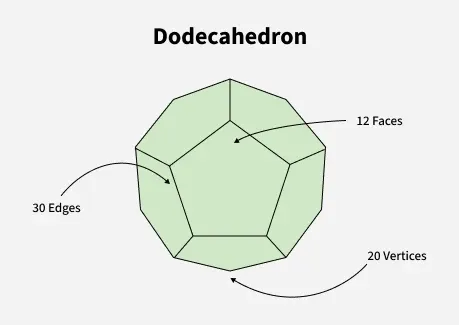
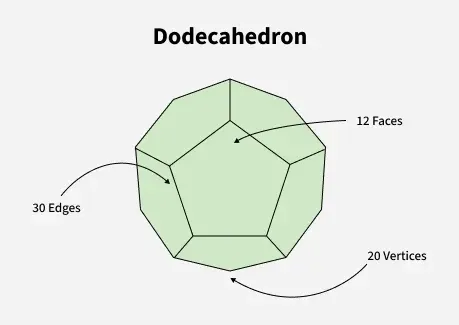
ooh I was just thinking about this again before heading to sleep and the solution can be visualized as half of a dodecahedron!! (where edges are students and the other half represents a mirror of the original)
how’s that for an answer chatGPT
 snow silo
oh tis same channel as where it occurred though
faint moss
what happened here!
 tranquil condor
faint moss
what happened here!
tranquil condor
faint moss
what happened here!
see the above messages
TL;DR: While the helpers were trying to understnad problem, the OP used AI to get answer. Helpers crashed out, and he left the server