
#Help
47 messages · Page 1 of 1 (latest)
 shy drum
 spice karmaBOT
shy drum
spice karmaBOT
shy drum
I found the first and second derivate
I’m not sure how to solve for X when setting equal to 0
 modern loom
What did you get?
 frigid sleet
shy drum
frigid sleet
shy drum
show the work you currently have so far
its better if you type in the answers you believe is true into the boxes before screenshotting
if you want more general help that doesnt address what youre stuck on, theres a video on doing this: https://youtu.be/15awMHeP1Yc
fyi you can use Win + Shift + W or Cmd + Ctrl + Shift + 4 to screenshot the screen instead of taking a picture on your phone
the command save the part of the screen you want into your clipboard, then you can Ctrl + V that here
its fast and more "proper" that way
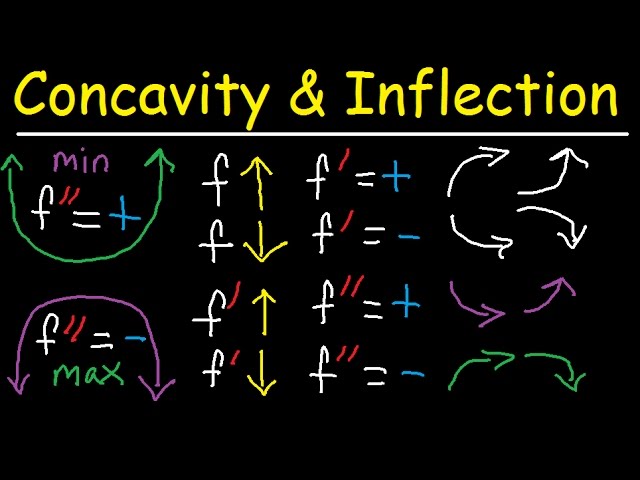
This calculus video tutorial shows you how to find the intervals where the function is increasing and decreasing, the critical points or critical numbers, relative extrema such as local minimum and local maximum values using the first derivative test, concavity, and inflection points using the second derivative.
Introduction to Limits: ...
shy drum
I dont have discord on my laptop
But i know i have to set the first derivative equal to 0
The problem im having is solving for x
I have the first and second derivate
frigid sleet
@shy drum
 shy drum
Well no id have to set the first derivative equal to 0
To find increasing or decreasing
And i cant remember how to solve for X for exponentials
And i know they have to be positive so im not sure how that changes things
frigid sleet
whats your first derivative then
shy drum
2e^2x+e^-x
frigid sleet
thast not correct
shy drum
How so
frigid sleet
you can use chain rule on e^(2x)
the outside is e^x
the inside is 2x
so e^(2x) * 2
shy drum
Oh 2e
frigid sleet
so the derivative of e^(2x) is 2 e^x
dont say 2e
thats a misnomer
say 2 e instead
frigid sleet
also use the chain rule on e^(-x)
shy drum
-e^x
frigid sleet
-e^(-x)
shy drum
Right
frigid sleet
shy drum
Well no id have to set the first derivative equal to 0
being bold and being careless dont mix well
shy drum
Mybad i glanced at it im ar work right now
frigid sleet
"no" you say?
shy drum
But still the problem im having is solving for X
frigid sleet
you should put some more weight on your Nos next time
frigid sleet
frigid sleet
<@456226577798135808>
then take a second glance at this
the bottom line has one x
then you can "isolate for x" since there is only one x in the equation
that means you just do operations to repeatedly move stuff from the LHS to the RHS
moving e^ to the RHS is done by ln() both sides
use these hints to work out the value of x
shy drum
I see
shy drum
.solved