#Taylor Series
41 messages · Page 1 of 1 (latest)
 neon siloBOT

 thorn night
@merry kestrel The last part, if you’re taking a derivative then you don’t put in an extra constant
That’s only done for indefinite integrals to account for the zeroth order term that gets eliminated by the power rule
 merry kestrel
Ok, thank you, the important thing is whether the result of the series is good
thorn night
merry kestrel
Ok, thank you, the important thing is whether the result of the series is good
I’ll have to work it out on paper and get back to you. Can you explain to me how you applied the power rule to get the first derivative? I can’t read your work very well
merry kestrel
is thishttps://www.youtube.com/watch?v=Jmn8gx3eziI&t=188s&ab_channel=MateFacil
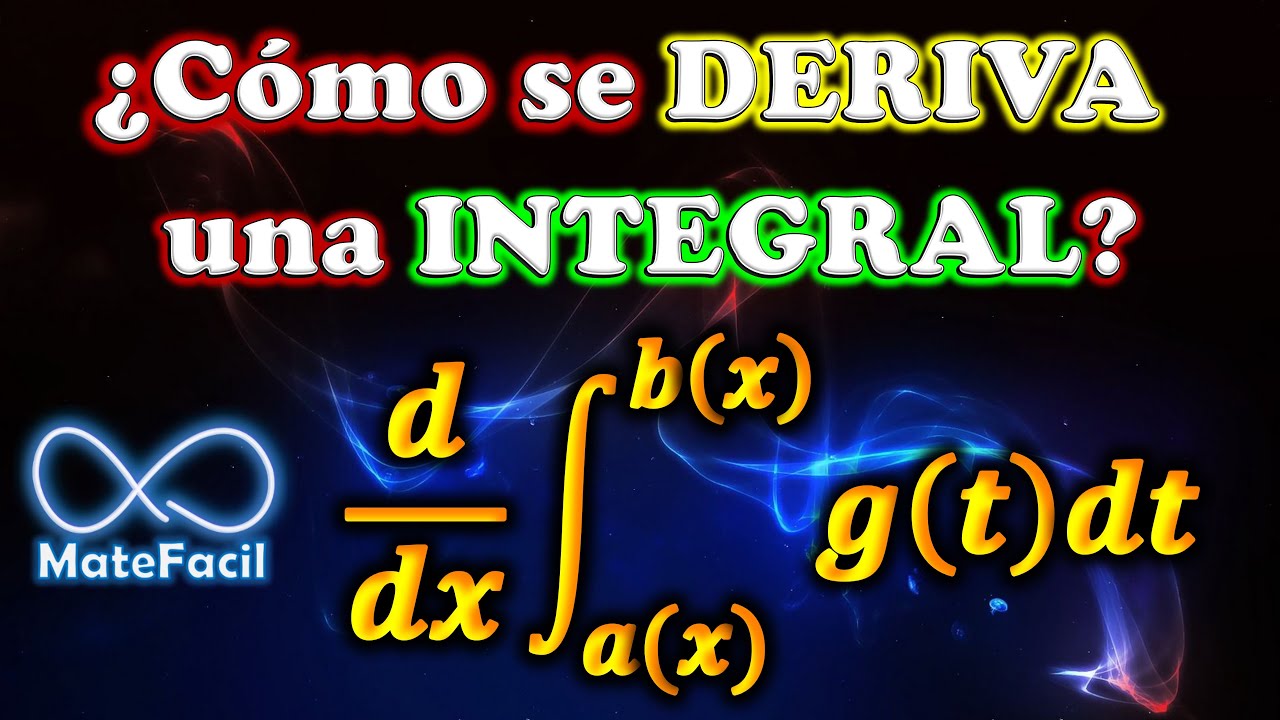
Curso de Derivadas: https://www.youtube.com/playlist?list=PL9SnRnlzoyX1kIbHdA7GN-6g-hvkyLbWp
Aplicaciones de las Derivadas: https://www.youtube.com/playlist?list=PL9SnRnlzoyX1Iczh6ssp4N36eDPlhwpoI
En este video daré una explicación completa de cómo calcular la derivada de una integral (cómo se deriva una función definida por una integral, con va...
thorn night
Here's my work for the first derivative. I am not sure that video you looked at works exactly as expected; I just used the Fundamental Theorem of Calculus (specifically the part that says that for a function G(x) which outputs the integral of a function from 0 to x of a function f(t) has the derivative G'(x) = f(x).)

@merry kestrel
merry kestrel
If so, use the fundamental theorem of calculus
you have a error here

you don't need to grab x as u
thorn night
You do, because you have two functions of x so you have to use the product rule
that u is just code for u(x)
 thorn night
merry kestrel
Oh I think I made a mistake
thorn night
merry kestrel
Oh I think I made a mistake
It's definitely better than doing it on a test
 thorn night
the second line, second term on the RHS should have a coefficient of x by the product rule
merry kestrel
oh forget the x you are multiplying, ok so this answer is definitely fine
 thorn night
merry kestrel
thorn night
merry kestrel
hmm, alright then
merry kestrel
The question I have is, what function am I trying to approximate, the F(x)?
thorn night
merry kestrel
The question I have is, what function am I trying to approximate, the F(x)?
Yes, which is why you are taking its derivatives and evaluating them at x = 0.
The rest of your solution is fine then
merry kestrel
But I don't think this is a good approximation xdddd
 thorn night
merry kestrel
But I don't think this is a good approximation xdddd
thorn night
merry kestrel
But I don't think this is a good approximation xdddd
They're usually not great approximations when the order is low. Your g(x) is wrong as well, should be x(1-e^3x)
merry kestrel
oh

I still don't think it's a good approximation, but it must be as you say, because of the degree.
Thanks for the help bro
thorn night
No problem. One last thing - your taylor series coefficient for the x^1 term should not be there
merry kestrel
where?
thorn night
merry kestrel
where?
the term in the taylor series, -x is actually x * 0 = 0. Evaluate the 1st derivative again at x = 0
